Archive
Environments of Wine
We all love to wax-poetic about the wine – about the magic in the glass, about the liquid which can transport us through time, bring back memories, change our mood, brighten up any happy moments in our life and put smiles on our collective oenophile faces in the myriad of mysterious ways.
With all that magic, it is easy to forget that first and foremost, the wine is an agricultural product. The grapes are grown in exactly same way as tomatoes, cucumbers, cabbage, wheat, apples, and potatoes. Same as with any agricultural product, the success of growing the grapes depends on many conditions which we collectively call “the environment” – condition of the soil, conditions of the plants, climate/weather conditions, availability and quality of the water, avoidance of diseases and pests, ability to protect plants and fruits from animals and birds and many other factors.

Once the grapes are successfully grown and harvested, this is where similarities with most (not all) of the rest of the agricultural products end, and grapes start their transformation to become that magic in your glass. But let’s leave that aside for now, and let’s get back to the grape growing environment.
Every year, the same process starts anew – with the first warm weather, the dormant plants come alive. The branches which looked completely dead just a day ago, are breaking with the tiny green leaves, and then at some point, a tiny clusters of future goodness show up, taking all the nutrients from the soil and the air, getting bigger and changing color from young green to golden and purple, until the time comes to collect them all and start creating the magic.
Every year, to get from the naked branches to the beautiful, sun-filled clusters, the vines have to be taken care of. They need enough water, they need enough sun, they need enough nutrients in the soil, they need to be protected from frost, excessive sun, mildew, and rabbits. The grape grower has to decide how to provide all of this. You can water the plants when you think you need to. You can bring in synthetic fertilizers. You can spray your vines with pesticides which will kill bugs and mildew. For many years, this is how the grapes were often produced, especially when they were produced in the large commercial quantities.
Little by little, grower by grower, winemaker by winemaker, the realization started that this might not be the right way to go. The chemicals and pesticides often bred resistance. Overfertilized and overwatered grapes simply lack the flavor and can never become the magnificent wines. With this realization, wine industry started changing its ways – the wines became “organic”, “biodynamic”, “sustainable” and even “natural”. All of these terms relate to the environment where the grapes are grown, but they are not interchangeable – organic is not always sustainable, and sustainable doesn’t equate organic. Let’s take a deeper look.
Sustainable might be my favorite term. There are many wine regions which define their own so-called “sustainable practices” – Australia, New Zealand, California, Oregon, Canada – all have their own sustainable practices defined, and for all I know, all those practices might be slightly different, but I’m sure they are all pursue the long-term relationship with the Mother Nature. Sustainability means that whatever we do to grow grapes successfully today, should ensure that the future generations will be able to continue to do the same with equal success. While we tend to the vines, we shouldn’t harm that environment, that habitat – use natural deterrents for the pests, use only natural fertilizers, ideally, generate our own power (think solar, for instance), be very cognizant about discarding the waste, or maybe have no waste at all, allowing land to rest and recuperate – the list can go on and on and on. At the same time, sustainable doesn’t mean organic – for instance, if you believe that one time use of the pesticide is warranted as the best way to deal with the problem (before it spreads or worsens), the sustainable rules will generally allow for it – but not the organic. All in all, the goal of sustainability is to leave the environment a little bit better than it was before – and I definitely like this approach.
We all know what “organic” means – only all natural elements are allowed in the whole entire process of getting from the first leaf to the harvested grapes – all organic fertilizers, all organic pesticides and so on. Do organic means better grapes? Yes, but only in the sense of absence of any harmful, bad elements. Organic doesn’t necessarily mean you would maximize grapes’ potential by utilizing dry farming. Organic doesn’t mean you will discard the waste in the ways least harmful to the environment. Organic doesn’t mean your power was generated in the sustainable ways. Don’t get me wrong – I’m all for organic, but… I guess you understand where my preferences are.
Biodynamic? First, taking about biodynamic winemaking can be an endless endeavor – if we are talking about the magic of the glass of wine, biodynamic principles might be the most in tune with the subject of magic. Are the biodynamic methods sustainable? I believe they are to the largest degree as the end goal here is to create harmonious habitat, the best possible environment for the grapes and all other living beings to grow happily and successfully. Is biodynamic the same as sustainable? Probably not, as sustainable methods still cover more elements, such as power which we mentioned. But all the kudos to the biodynamic practitioners and their perseverance with magic.
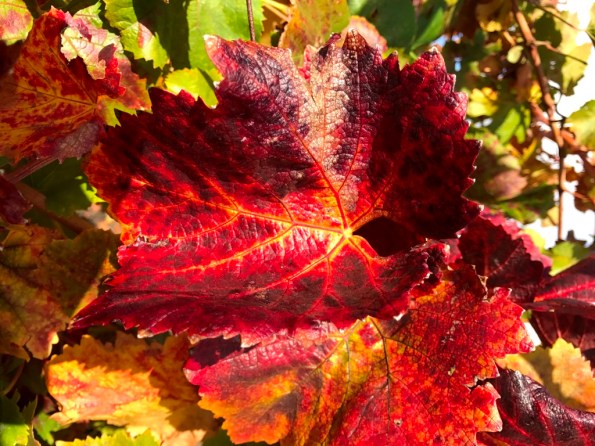
And now, let’s touch on the most controversial “environmental affiliation” of them all – natural wines. It is interesting to see the first reaction of many people when they hear the term for the first time – “natural wines”???? “All wines are made from the grapes, aren’t they all natural”? The idea behind natural wines is low intervention. During the grape growing part of winemaking, the process is somewhat similar to the sustained/biodynamic principals with the exception that some of the rules are made absolute, like no irrigation under any circumstances – but unlike all other methods, where there are external bodies which certify and enforce the rules, the natural wines are the truth in the eye of the beholder – the winemaker, in this case – whatever the winemaker believe “natural” means, that is what she will be practicing.
The wine was first made about 8,000 years ago. Nobody would ever tell if it was sustainable, organic, biodynamic or natural – we can only guess that it was made from grapes. But if we want the wines to be made for the next 8,000 years, we need to take care of the environment. Sustainable, organic, biodynamic – let’s leave this place a little bit better than we found it, for all of those who will come after us.
This post is an entry for the 36th Monthly Wine Writing Challenge (#MWWC36), with the theme of “Environment”. Previous themes in the order of appearance were: Transportation, Trouble, Possession, Oops, Feast, Mystery, Devotion, Luck, Fear, Value, Friend, Local, Serendipity, Tradition, Success, Finish, Epiphany, Crisis, Choice, Variety, Pairing, Second Chance, New, Pleasure, Travel, Solitude, Bubbles, Smile, Winestory, Obscure, Faith, Translation, Once Upon A Time, Memory, Eclipse
And if you really like this post, please vote for it here: #MWWC36
Celebrate Zinfandel – 2017 Edition
– “Would you like a glass of Zinfandel”?
– “ahh, sorry, I don’t drink sweet wines”
Have you ever witnessed such dialog, at a bar, restaurant or a tasting? For all of us, oenophiles, the word “Zinfandel” has only one meaning – dense, smokey, brooding, concentrated red wine, with a good amount of fruit and spice. However, for many wine drinkers, the descriptor associated with the Zinfandel is “white” – and the white zinfandel, indeed, is a sweet wine, and it still confuses people.
Zinfandel is often called “an American grape”, despite the fact that it came to America from Croatia (or maybe Italy), where it had a few names on its own. From point of view of the science, Crljenak Kaštelanski, Tribidrag, Primitivo and Zinfandel are all different names for the same grape. From point of view of the producers – not so much, but this is not the subject of to0day’s post.
Zinfandel is really an American phenomenon. It shows the best results in California, and there it can be produced pretty much in any AVA. Napa Valley and Dry Creek Valley are considered two of the top AVAs for Zinfandel. However, last year I visited Lodi as part of the wine bloggers conference, and I absolutely fell in love with the Zinfandel wines Lodi produces.
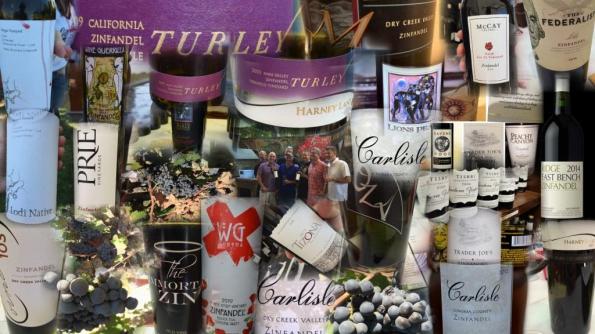
Forty percent of all Zinfandel in California is growing in Lodi, which is rightfully crowned as “Zinfandel Capital”. Lodi is a home to some of the oldest Zinfandel vineyard, dating back to 1888. Lodi also has 750 growers tending to 110,000 acres of the vines. In 2013, winemakers in Lodi started the project called “Lodi Native” – 6 winemakers set the minimalist rules to how the wine can be made, and all 6 winemakers followed the same rules regarding fermentation, use of oak and ageing, so you can taste the difference in the vineyards which bore fruit, unadulterated. Last year I had an opportunity to taste all of the Lodi Native Zinfandel wines, which were pronouncedly different – hopefully, I will still write that post one day…
Good Zinfandel wines might be called the most playful red wines – my favorite descriptor for Zinfandel is “smokey raspberry”, and I’m always very happy to find that in the glass. Even when the label says “Zinfandel”, there are typically few other grapes added to the blend, often in minuscule quantities – Petite Sirah, Cinsault, Alicante Bouschet are all popular blending partners of Zinfandel. There are lots of Zinfandel producers, but I have my own list of personal favorites which I’m happy to share, in no particular order: Carlisle, Rober Biale, St. Francis, Turley, Harney Lane, Bruce Patch, Ridge.
How did you celebrate Zinfandel Day? Who is your favorite producer? Cheers!
WBC17: Speed Tasting, Reds
As with any typical wine dinner, you start with the white and continue with the red, right? Well, right or wrong, but this is what we did at the Wine Bloggers Conference 2017. White and Rosé speed tasting was followed by the Reds speed tasting the next day.
Instead of standard 10 wines, we managed to squeeze in 11 – of course, because Table #5 was the most awesome table in the entire room!
Here is what we tasted:
Wine #1: 2013 Acumen Cabernet Sauvignon Napa Valley (14.1% ABV, $60) – have to say that nose was better than the palate. Too young.
Wine #2: 2010 Rodney Strong Vineyards Upshot Sonoma County (14.5% ABV, $28) – not only this wine has a super-creative label, it also has 5% of the Riesling in the final blend – how about that for creativity? Very tasty wine.


Wine #3: 2015 Pedroncelli Mother Clone Zinfandel Dry Creek Valley Sonoma County (14.9% ABV, $19)
Wine #4: 2015 Pedroncelli Bushnell Vineyard Zinfandel Dry Creek Valley Sonoma County (15.2% ABV, $30) – this was our bonus wine. I liked it way more than the previous Zinfandel…
Wine #5: 2014 Papapietro Perry Peters Vineyard Pinot Noir Russian River Valley (13.8% ABV, $58) – excellent.
Wine #6: 2015 Naked Winery Oh! Orgasmic Sangiovese Columbia Valley (14.4% ABV, $70)
Wine #7: 2014 NakedWines.com Domaine O’Vineyards Trah Lah Lah Cite de Carcassonne IGP (13% ABV, $11) – nicely restrained. Least expensive in the tasting.
Wine #8: 2015 1000 Stories Zinfandel Bourbon Barrel Aged (15% ABV, $19)
Wine #9: 2015 Paradise Ridge Walter’s Vineyard Pinot Noir Russain River Valley (13.8% ABV, $54) – needs time
Wine #10: 2015 Gracianna Pinot Noir Reserve Russian River Valley (14.8% ABV, $72) – love the label, but the wine needs time.
Wine #11: 2015 Stone Hill Winery Norton Missouri (13.8% ABV, $25) – easily might be my favorite wine from the reds speed tasting. Was also very happy to try a wine from the state I never had the wines from before.


This completes the second WBC17 speed tasting report. More updates to follow. Cheers!
WBC17: Speed Tasting, White and Rosé
Here we go again – living through the madness of the Wine Bloggers Conference – this is where wine geeks get together, taste incredible amounts of wine (thank you, liver, I hope you can forgive me again), talk about the wine all day (and good portion of the night) long, but above all, share their common passion – the wine.
This is my third conference, and speed tasting is definitely one of my favorite exercises. During an hour-long session, wineries from all over the world line up to present their wines to the bloggers. Each winery gets 5 minutes to present their wine – which includes pouring, talking and answering questions. Bloggers sit in groups of 10 at the tables and each group gets the same 5 minutes to taste the wine, ask questions, take pictures, and share the wines on the social media. Yes, it is very intense.
This is definitely a fun session (fun is not universal here – I know a number of very well respected bloggers who refuse to participate in the speed tasting) – however, it should be well understood that this is really “shoot from the hip” type of tasting – 5 minutes is absolutely not enough to truly understand the wine, and you get the wine in whatever state it is (you can’t let it open in the glass, nope). However, this is how the wines are evaluated at any large trade tasting, sans the social media sharing, so this is all about your first reaction – that’s what is going into your quick notes.
Our session at WBC17 included wines mostly from California, with the addition of some international wines. While the session was called “white and Rosé”, we didn’t get to taste any Rosé – but keep in mind that we only were able to taste 10 out of more than 25 wines. I shared all of my impressions and pictures on twitter – however while working on this post I realized that I forgot to include 2 pictures, and all of my tweets went out as replies. Yeah, live and learn.
Nevertheless, here is the blog report of the same, with the addition of missing pictures:
Wine #1: 2016 Ledson Winery Viognier Sonoma Coast (13.5% ABV, $32) – I always approach Viognier with trepidation – this is one of the grapes which are easy to screw up. To my delight, this was very well done wine – nose, palate – very enjoyable. Reasonable value at $32.
Wine #2: Naked Wines Naked Cowboy Sauvignon Blanc (13% ABV, $32) – the wine states appellation America on the front label, however, all the grapes come from the vineyards in Washington. This is a good wine – I’m not sold on QPR, though…
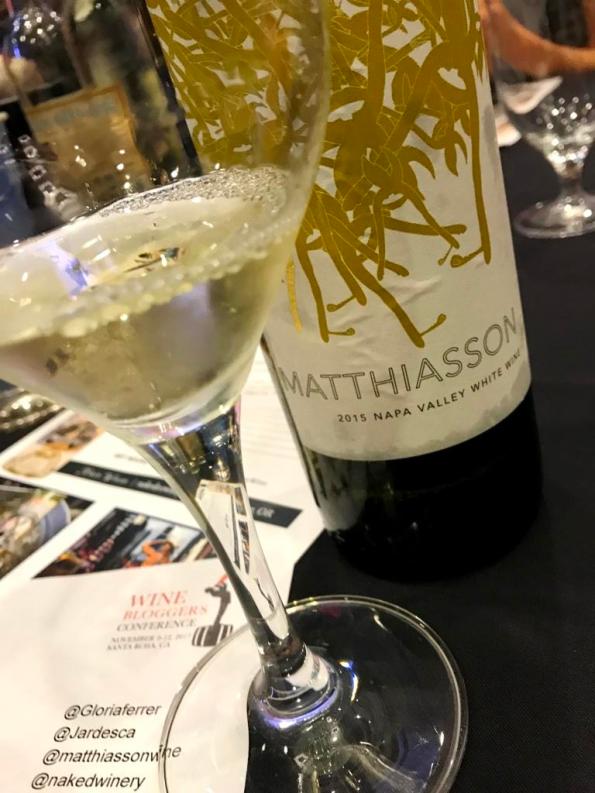
Wine #3: 2015 Matthiasson Winery White Blend Napa Valley (12.9% ABV, $40) – a blend of 4 grapes, mostly Italian varietals.
Wine #4: Jardesca White Aperitiva California (17% ABV, $30) – this is fortified wine with the addition of fruit – just add ice, and you can start entertaining. Love the label.
Wine #5: 2010 Gloria Ferrer Anniversary Cuvée Carneros (12.5% ABV, $40) – love Gloria Ferrer wines. This was big and voluptuous sparkler, slightly bigger than a typical Brut.
Wine #6: 2016 Selva Capuzzo Turbiana Lugana ($18) – not bad, and the least expensive wine in the tasting.
Wine #7: 2015 Mt. Beautiful Chardonnay New Zealand (14.5% ABV, $22) – this was a very good rendition of Chardonnay and an excellent price for the New Zealand Chardonnay overall.
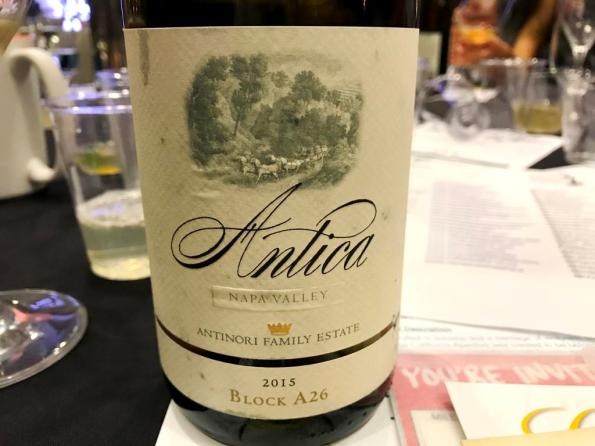
Wine #8: 2015 Antinori Estates Antica Chardonnay Napa Valley (14.5% ABV, $55) – interesting wine. QPR didn’t work for me…
Wine #9: 2016 Hanna Winery Sauvignon Blanc Russian River Valley (13.2% ABV, $19) – Hanna is one of my favorite producers, and this Sauvignon Blanc was delicious. Was super-excited to find a classic cat pee on the nose…
Wine #10: 2014 Leto Cellars Chardonnay Napa Valley (14% ABV, $30) – this wine was an enigma. We tasted multiple bottles and still couldn’t figure it out. Oh well, this was the last one anyway.
This completes my first WBC17 speed tasting report. Red wines will be next! Cheers!
Daily Glass: An Australian Score
I pride myself with very wide wine horizon. I scout wines from literally everywhere in the world – China, Japan, Croatia, Bulgaria or Hawaii – bring it on, the more obscure, the better, I will be happy to try them all.
Nevertheless, a majority of my daily drinking evolves around Italy, Spain, and California, with a little injection of France. The rest of the wine regions make a very sporadic appearance at our house – without any prejudice or malicious intent – just stating the fact.
Nevermind China and Japan, which are still going through an adolescence as wine producing countries – let’s talk about Australia instead. About 20 years ago Australia was leading wine imports in the USA. As you would enter a wine store, you were greeted with countless Australian wine selections.
Today, Australian wines are relegated to the back shelves, and they are definitely not on top of the wine consumer’s mind (in the USA for sure). Ups and downs are hard to analyze in the wine world (think of the devastating effect of the movie Sideways on Merlot consumption), and such an analysis is definitely not the point of this post, no matter how interesting such a discussion could’ve been.
As I stated before, Australian wines are rare guests at our table, and this is not deliberate – I enjoyed lots and lots of excellent Australian wines, and have an utmost respect to what this country can deliver. I’m always ready to seize an opportunity to try an Australian wine, especially if it comes with a recommendation.
Such recommendation can present itself in lots of different ways – a friend, a magazine, an Instagram post, a tweet – or an offer from the Last Bottle Wines, especially during the Last Bottle’s infamous Marathon events. During the Last Bottle Marathon, you can buy the wines in single bottle quantities, which I like the most as you can create your own tasting collection quickly and easily.


If the wine is offered for sale by the Last Bottle, it definitely serves as an endorsement for me. The folks at Last Bottle know the wines – if they offer something, it means the wine really worth trying. During the last Marathon, the 2015 Gemtree Uncut Shiraz McLaren Vale (14.5% ABV) attracted my attention. I don’t know what made me click the “buy” button – the name “Gemtree” (sounds interesting, isn’t it?), or the word ‘Uncut” (again, this somehow sounds cool to me as well), but I did click that button quickly. You see, you only have a split second to get the wine – you blink, you lose – and I scored the bottle of this Australian Shiraz.
I pulled the bottle from the wine fridge, twisted the top and poured into the glass. Dark ruby color, a whiff of the blackberries. The palate had a tremendous amount of salinity over the crunchy blackberries – I guess this was an effect of drinking this wine at a cellar temperature. But it was still attractive. While admiring the simple label I saw the word which made me very curious – “Biodynamic”, and then the back label provided lots more information about how this wine was made. To me, “sustainable” is a very important wine keyword, and whatever extras “biodynamic” entails, the biodynamic wine is always a sustainable wine – and it is definitely important for me.
After warming up, the wine became generous, layered, showed soft tannins and perfect crunchy backbone of dark fruit with some dark chocolate notes and touch of a spicy bite – all perfectly balanced and delicious (Drinkability: 8+). The name “Gemtree” kept me intrigued, and the picture on the label was very attractive in its simplicity, so I went to the Gemtree Wines website to learn a bit more. I rarely quote from the winery websites, but I think in this case this is quite appropriate (here is the link to the source):
“This is our Gemtree story…
There was once a tree. Not the tallest tree, nor the oldest tree, but a tree that had put its roots in just the right part of the paddock. Here the soil was deep and layered – sometimes hard and rocky, elsewhere soft and sandy – and the wind had just enough room to move, and even the rain – when it was kind enough to visit – would fall evenly and gently.
Because of its favoured position, the grasses grew tall against its trunk, and the wild flowers were easily encouraged to grow closely around it, and the insects and birds that looked to trees for shelter and for vantage, eagerly moved in.
One day a farmer approached the tree and wondered: “You do not grow the strongest, nor the fastest, so why is it that you grow the best fruit?”
The tree let the answer whisper through the wind in its branches: “If I am shown a patient mind and a gentle hand, if I am left to follow the rhythms of my seasons – to rest in Winter; to revive in Spring; to make busy in Summer; and to provide in Fall – then I can offer fruit that tastes not just of the ground upwards, but also of the sky downwards, and of everything around me.”
The farmer thought to himself: “This is truly a Gemtree – it takes only what it can give back to the land, it contributes to its surroundings, and it provides for those that live around it.”
This is the heart of the Gemtree story: growing better wine ~ naturally.“
Here you are, my friends. I don’t know how often you drink Australian wines, but Gemtree is definitely the name to keep in mind for your next round of wines from down under – I think you will be happy with your score. Cheers!
Wine News and Updates
The wine world enjoys ever-increasing popularity and attention, and respectively, the wine news are coming at us at a neck breaking speed as well. I wanted to share with you some of the most interesting updates I recently came across.
First, an interesting update from Coravin. I’m sure the name rings the bell, but just in case it is not, Coravin produces a wine gadget, which can be somewhat classified in the “wine preserver” category – Coravin helps you to pull small amount of wine from the bottle through the cork without much impacting the wine, thus allowing aficionados to enjoy their prized bottle of Petrus slowly over the years. Coravin recently got $22 million in funding from the group of investors. One of the projects touted by the company is a “flavor booster”, for the lack of the better term – special attachment to the main Coravin device will allow consumers to specify the desired level of acidity, fruit and tannins, and the “favor booster” will be able to affect the wine on the molecular level, delivering ultimately tailored treat to the individual palates. The project is well underway, however, it is still mostly in the experimental stages. The rumor on the street had it that Riedel, producer of the finest glassware, is on the lookout for the same technology, so it will be interesting to see which company will deliver better solution first.
Now we need to move from Earth to space. Well, okay, not exactly, not yet anyway. The NASA and Space-X recently started a collaborative project aiming at converting wine into a paste concentrate. As Space-X is readying their space tourism program, having wine on the board of the spaceship is highly desirable. However, transporting the wine in its usual form – bottles – is extremely impractical as bottles are both bulky and heavy. Having the wine in “just add the water” form would be extremely beneficial. Of course, the key is to preserve the taste and uniqueness, to ensure that every wine is recognisable and maintains its individuality. Some of the best wineries in the world are sponsoring this work (Latour, Krug, Penfolds, Antinori, Mondavi, Heitz just to name a few) and are very much interested in the results. The work is only in the initial stages so we will need to keep an eye on it.
Now, let’s talk again about the paste – this time, a toothpaste out of all! If you find the flavors of the toothpaste boring, you are not alone – mint, peppermint, really? That’s all we can have? What if we had an amazing glass of wine right before the bedtime, now we need to use that mint toothpaste to destroy that wonderful Cabernet Sauvignon flavor lingering in the mouth? It seems that Colgate understands us, wine lovers. Colgate recently announced an upcoming availability of the wine-flavored toothpaste. Cabernet Sauvignon and Chardonnay flavors are expected to hit the market first, and Sauvignon Blanc and Pinot Noir are in the works. The price was not revealed yet, but it is expected to be close to the $10 per tube. Crest and Sensodyne are expected to announce similar products in the near future.
The name Nomacork might not be familiar to many of the wine consumers. Most of the corks used in winemaking today are produced from the bark of the tree. The reason corks are such great enclosures for the wine is due to the fact that while cork fully retains the wine inside the bottle, it is still porous enough to allow trace amounts of oxygen to get through and reach the wine – and oxygen is very important for the evolution of the wine in the bottle. Nomacork produces so-called “engineered corks” which can be constructed for the different levels of oxygen penetration, thus allowing winemakers to use the ideal enclosures for the different types of wines, depending on how slow or quick they would like the wine to age. While this all sounds too technical for the wine consumers, Nomacork recently announced the brand new type of engineered cork, this time squarely looking after the wine consumers. The new type of cork will have a microchip inside and will allow consumers to select the month and the year when they want to drink the wine, and cork will automatically change its properties to ensure the wine will be at its peak at the required time. Nomacork filed more than 50 patents associated with this technology and this work might be one of the most guarded secrets in the wine research today.
Over the last few years, violent “wine riots” shook South of France, with French vignerons dumping wines and setting fires to protest imports of the cheap Spanish wine juice. The unexpected offer to help came unexpectedly from the world renowned supplier of the fine meats, D’Artagnan. The company, known for its gourmet meats, game, duck, foie gras and lots more, offered to buy the inexpensive Spanish wine in the large quantities. Based on D’Artagnan research, it appears that most of the water in ducks’ diet can be perfectly replaced with wine, which leads to the much tastier meat and unbelievable smooth and delicious foie gras. It was also stated that red and white wines create different flavor profile of the meat, so soon we are going to see ever tasting products available from D’Artagnan.
That’s all I have for you for today. Cheers!
Top Twelve of 2016
 And now, the moment you’ve been waiting for … cue in the drum roll… Talk-a-Vino Top 12 wines of 2016. Well, okay. I’m sure you were not really waiting for this moment, but nevertheless, I made up my mind about best of the best wines I experienced this year, and now I’m ready to present you with my list.
The list of top wines of 2016 consists of 2 dozens of wines – here you can find the first half of this list, containing the wines from 13 to 24 – note, the order is not essential, it doesn’t mean that I liked wine #13 more than wine #14. That first post also explains how the wines are selected for this Top Dozen list. In this post, I would like to share the top wines of 2016 (the order is not essential with the exception of the top 3 wines.
Here we go:


12. 2010 Fields Family Wines Tempranillo Lodi ($25) – I’m a Tempranillo buff, a snob, if you will, and this was one of the very first wines I tasted while attending the welcome reception at the Wine Bloggers Conference in Lodi. And I have to honestly say that table of the Fields wines was the closest to the food. Once I had a sip of this Tempranillo, everything changed – Ribera del Duero style, fresh and firm, just outstanding.
11. 2012 Viña Maipo Syrah Limited Edition DO Buin Valle del Maipo ($35) – Here is another great discovery of 2016 – Chile is not only the land of Cabernet, it makes perfect Syrah. This wine was spicy, dark, vibrant but restrained, a classic, classic Syrah. Yum!
10. 2013 McCay Cellars Grenache Abba Vineyard Lodi ($32) – Here is another standout from Lodi – the smoke and roasted meat over the violets. A “dangerous wine”.
9. 2013 Tenuta San Guido Sassicaia Bolgheri Sassicaia ($200) – ahh, the layers. The layers of goodness. Silky smooth, mouth-coating nectar. This is not called “Super” Tuscan for nothing. The most amazing part – this 3 years old wine was ready to drink. Wow.


8. 2013 Viña Maipo Protegido Cabernet Sauvignon Valle del Maipo ($50) – World-class Chilean Cabernet at its best. Fruit, herbs, balance. Smooth, powerful and delicious.
7. 2016 Field Recordings Pét Nat Arroyo Grande Valley ($20?) – I might be just lucky around Field Recordings wines, as I understand that Pét Nat wines can be all over the place – but this wine had a perfect finesse of bubbles in a very simplistic package – a bottle topped with a beer cap, and delicious, classic sparkling goodness of Chardonnay in a glass. A perfection.
6. 2012 Tenuta dell’Ornellaia Bolgheri Superiore Ornellaia ($210) – I now learned my ways at Gambero Rosso, so I know to start from the most “cult” wines first (after missing on Massetto 5 years ago). The Ornellaia was definitely a personal surprise – didn’t expect 4 years old Super Tuscan to be so ready to drink – but it was. Generous fruit, perfect structure, layers of pleasure – this is the wine you finish with “ahh”.


5. 2001 The Lucas Winery Chardonnay Lodi California ($37?) – there are 4 wines from Lodi among the 24, and I had to hold myself from including more. An absolute surprise of the tasting – I couldn’t expect 15 years old California Chardonnay to taste this fresh and vibrant. Yes, the wine was made by Heather Lucas, an owner/winemaker, in Burgundian style – nevertheless, I’ve seen way too many failed California Chardonnay to truly appreciate what was done here.
4. 2005 Domaine des Monts Luisants Les Genavriéres Morey-Saint-Denis Premier Cru ($50) – I.want.to.drink.this.wine.every.day. That’s it.
3. 2015 Vidon Vineyard Chardonnay Estate Chehalem Mountains, Oregon ($35) – Oregon’s supremacy is unquestionable when it comes to Pinot Noir. Pinot Gris from Oregon are also a safe bet anywhere you find them. But Chardonnay? Considering this wine from Vidon Vineyard, the Chardonnay is also a thing in Oregon. Bright, beautiful, vanilla laced golden delicious apples chased by the pure lemon. I wish your white Burgundy would be as good as this wine.
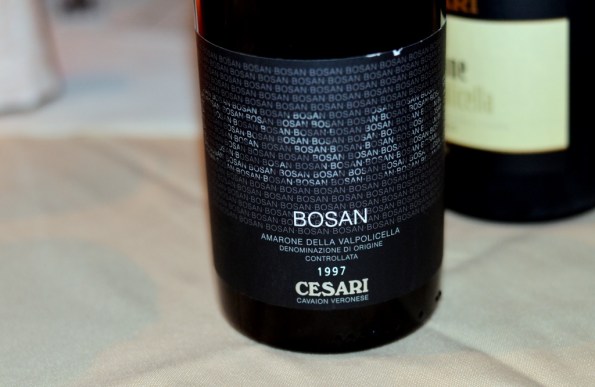
2. 1997 Cesari Bosan Amarone Della Valpolicella DOC, Italy ($85) – Amarone might be my “curse of oenophile”. Ever since trying this wine for the first time and been blow away with the contrast of beautiful nose of dry fruit and perfectly dry, powerful and balanced palate, I had been on the quest to repeat that experience. And I keep failing and failing over that, with Masi single vineyard wines providing an occasional salvation. This Cesari Bosan single vineyard Amarone brought that old memory back – dry fruit on the nose and polished, structured wine on the palate. A pure delight.
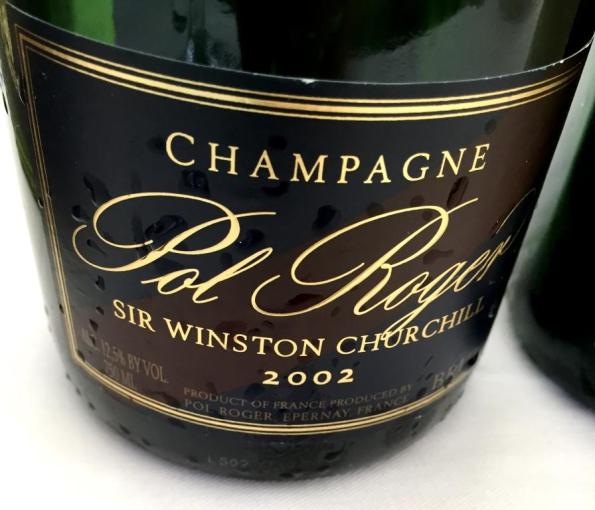
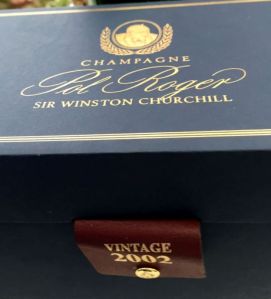
1. 2002 Pol Roger Sir Winston Churchill Champagne ($230) – definitely surprised myself with this choice of the wine #1 of 2016. I had vintage Champagne from the very solid producers before – Krug, Piper-Heidsieck, Dom Perignon, Roederer Cristal; in the same tasting there was ’02 Bollinger RD and ’06 Roederer L’Ermitage, both superb. But this Winston Churchill Champagne… The interplay on the nose, the complexity and richness were stunning. Before you take a sip, you have to smell this wine. And smell. And smell. Reflect. And smell again. Wow. Too emotional? Might be. Find the bottle of this wine, invite me over, let’s smell it together, then talk.
This is it, my friends. Two dozens of most memorable wines of 2016. Can’t wait to see what 2017 will bring. Cheers!
Obama’s Last State Dinner – Analyzing Wines
Today the President Obama and the First Lady will be hosting the last (presumably, according to all the notes in the press – but he still has another 2+ months in the office) State Dinner in honor of the Italian prime minister Matteo Renzi and his wife, Agnese Landini.
Yes, this is not typical for this blog to talk about the state dinners, but you know, I’m always curios about the food, and most importantly, the wines which the most powerful man on Earth chooses to serve at such grand events as State Dinners – not sure if the President of the United States personally decides on the wines, but I’m sure he can weight in on the decision.
As this State Dinner will be honoring an Italian PM, it is very appropriate that the food theme will be Italian. What is even more appropriate that Mario Batali, one of my absolute favorite Chefs, will be in charge of this dinner event, working together with the White House kitchen staff.
So far, the Eater provided the description of the event and it is the only web site which posted the dinner menu, including the wines. I took the liberty of copying the menu from the Eater’s web site, so here it is:
First Course
Sweet Potato Agnolotti with Butter and Sage
Wine: 2015 Patina Vermentino “Santa Ynez”
Salad Course
Warm Butternut Squash Salad with Frisee and Pecorino di New York
Wine: 2012 Villa Ragazzi Sangiovese “Napa”
Main Course
Beef Braciola Pinwheel with Horseradish Gremolata and Broccoli Rabe
Wine: 2014 Ridge Vineyards Zinfandel “East Bench”
Dessert
Green Apple Crostata with Thyme Caramel and Buttermilk Gelato
Petit Fours Display:
Sweet Corn Cream and Blackberry Cup
Concord Grape Bittersweet Chocolate Leaf
Orange Fig Slice
Pumpkin Cranberry Tart
Tiramisu
Food sounds very delicious, and I’m sure Mario Batali’s work will be flawless. Let’s talk wines now.
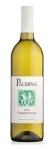 2015 Patina Vermentino “Santa Ynez” – well, to begin with, there is no wine under such name, or at least I was unable to find it. As with my grape explorations, I had to play a “wine sleuth” many times, so in this case, I can only make an assumption that we are talking about the Vermentino wine from Palmina Winery in Santa Barbara county:
2015 Palmina Vermentino “Santa Ynez” ($28?) – the winery doesn’t list 2015 as available vintage yet, and 2014 vintage of Vermentino is sold out. The 2014 vintage is listed on the web site at $28. Overall, Palmina seems to be specializing in Italian varietals, so this should be an interesting wine. Note that the only bottle image available on the web site was from 2013, so this is what I’m using here.
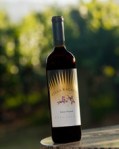 Next wine comes from another California winery I never heard of – Villa Ragazzi. The web site modestly advertises Villa Ragazzi Sangiovese as the best Sangiovese produced in Napa Valley – may be it is, I will let those who tried it be the judge.
2012 Villa Ragazzi Sangiovese “Napa” ($36) – 2012 vintage is not available at the winery anymore, and according to wine-searcher, there is only one shop in US which offers it at $39. The winery offers 2013 vintage at $36 per bottle – with the total production of 112 cases, I can imagine that this wine is pretty hard to find anywhere.
 The last wine on the list comes from the one of the most iconic producers in the USA – Ridge Vineyards. Ridge Vineyards needs no introduction to the wine lovers, producing cult Cabernet Sauvignon wine called Monte Bello and the range of Zinfandel wines from the number of appellations in California, plus many other wines.
2014 Ridge Vineyards Zinfandel “East Bench” ($25 – $30) – 2014 is the current vintage of Ridge East Bench Zinfandel, so all the information is readily available on the winery web site. According to wine-searcher, this wine can be found in many shops, in the price range of $25 to $30.
There you are, my friends – 3 California wines, hand selected for the State Dinner. I’m curious if the sparkling wine will be served before the dinner, and what would be the choices of dessert wines/drinks, assuming those will be served as well – but at this point we can only speculate about those.
Have you had any of these wines? What do you think of the wines, both on their own and as a choice for the State Dinner event? What do you think of intended pairings? Cheers!
Expanding My Wine Map
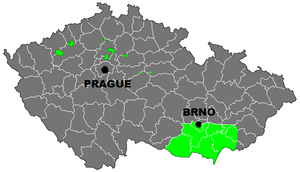
Czech Republic wine regions. Source: Wikipedia
We all have our own versions of the wine maps. This is how we learn about wine, and this is what makes it easier to understand it. “Oh yes,of course – France makes famous wines. California? Absolutely, yes, very famous. Italy? Bellissimo! Spain? Yes, I had a few of those. Australia? I heard about Yellow Tail, right?”. I’m simplifying, no doubts, but I’m sure the picture I’m presenting here is quite fitting lots of wine consumers (no, I’m not talking about you, wine geeks and bloggers).
My wine map would be a bit wider than that – I’m not bragging, but I seek new and different grapes all the time, and with this you are destined to try the wines from Turkey, Greece, Georgia, Croatia and many, many other not-so-well-known places. Nevertheless, my wine map has also plenty of white spaces, and I’m glad to use any opportunity to fill those up.
Last week the opportunity presented itself in the form of the tasting at my favorite local wine store, Cost Less Wines. I was told to stop by to taste the wines made in the Czech Republic. You see, to me, “wine” and “Czech Republic” in one sentence sounded almost like a misnomer. A while back, I visited the Czech Republic (which was known as Czechoslovakia back then), and I can tell you that beer is the very first thing which comes to mind when I think about the Czech Republic – Pilsner, anyone? Well, but it is a free tasting, so after all – why not?


The first wine which was poured was 2014 Templar Cellars Komtur Ekko Pinot Gris. I have to honestly admit that I became a convert after the very first sip – creamy, medium bodied, clean, well structured, with perfect balance of white fruit and acidity – it was on par with the best Oregon Pinot Gris wines, which is my personal hallmark of quality for the Pinot Gris. With such a great start, I was really eager to listen to the explanations.
It turns out that the wine had been produced in Moravia – this is how the area is called – from the beginning of the last millennium! Moravia is centrally located in Europe, for the Romans to use it as their base – and of course wine was part of the culture for them. Templar Cellars proudly shows 1248 on their label – this is when the actual cellars had been built, and this is where winemaking traditions are taking their roots. The wine, of course, is perfectly modern, but I love the medieval look of the labels and even the bottle design – you can read more about Templar Cellars here.
As you can see on the map above, the wine production in the Czech Republic is concentrated in the area down south – that is the Moravia we were just talking bout. Bohemia, up north, also has a bit of the winemaking activity, but it is of course known as a beer capital. Despite the seemingly unimpressive size of winemaking area in the Czech Republic, do you care to guess how many wineries it has? I will give you a little time to think, but whatever you think, take it higher. Yep, and higher.
What if I would tell you that the Czech Republic has about twice as many wineries as we have in the US, would you believe me? Well, it appears that the Czech Republic has about 18,000 wineries. Yes, many of those are simply “Mom’s and Pop’s” operations, but still, they are the independent wineries. Don’t know about you, but I was duly impressed with what I heard.


I was even more impressed after trying two of the red wines. 2013 Templar Cellars Komtur Ekko Pinot Noir was clearly a cold climate Pinot Noir with juicy cranberries at the core and perfect acidity. It is very different from a Pinot Noir from California or Oregon, much lighter, really crispy and crunchy, but with enough body weight to stand up to a powerful cheese or some spicy fish.
2009 Vino z Czech Ludwig Cabernet Moravia was even more interesting. Cabernet Moravia is its own grape, first created in Moravia (hence the name) in 1975, and it is a cross between Cabernet Franc and Zweigelt. It tasted like a classic Cabernet wine, with cassis, mint and eucalyptus, but also with an oversized herbal component. I actually like this line from the official description: “it incorporates all of Cab Franc’s leafy herbaceousness and Zweigelt’s tart, cranberry flavors in a refreshing wine”. Of course as an extra bonus, I’m adding a new grape to my collection.
There you go, my friends – a new region and new delicious wines. I truly love the endless learning opportunities the world of wine is offering to us. Have you ever had wines from the Czech Republic? What were your recent wine discoveries? Cheers!
New and Noteworthy: Two Classic Regions, Three Classic Pairs
I tend to abuse certain words in the conversation, especially when talking on the subject of wine. As you might easily guess, one of such words is “Classic”. I use this word in hope that it is the quickest way to convey my impressions about the wine. For instance, the words “Classic Red Bordeaux” or “Classic White Burgundy” would most likely paint a quick and vivd picture for the most of oenophiles to imagine how the wine actually tastes. While the wine is produced all around the world, such a broad stroke reference can be only applied to the well known and well referred to regions – saying “Classic Red Bio-Bio” (wienmaking region in Chile) or “Classic White Valais” (winemakiing region in Switzerland) would be an empty sound for majority of the wine lovers.
Looking past the regions, we can also apply the word “classic” to the grapes themselves. There are probably 15-20 grapes which can be easily referred to in this way – “classic Cabernet Sauvignon” or “Classic Sauvignon Blanc”, for example, would give you quick pointers to how the wine might taste like. Yes, “Classic Bobal” or “Classic Resi” will leave most of us with no information at all.
As this is not an epistolary exercise on the applications of the word “Classic” in the wine world, let’s get closer to the subject at hand, and talk about few wines in the practical terms. Today I want to talk about 2 classic regions and 3 classic grapes – for sure for those regions. So the classic regions are: California and Oregon. Would you agree that it is easy to refer to these two world renowned winemaking regions as “Classic”? I hope you are nodding. And for the grapes, I also hope you would share my “classic” sentiment – Pinot Noir and Chardonnay from California Napa Valley – aha, I see you smacking your lips. And Pinot Noir and Pinot Gris from Oregon – need I say more?
Talking about the wines from Oregon, the Pinot Noir is of course an uncontested king of the Pacific Northwest of the USA. Commercial Pinot Noir production in Oregon started in the 1960s, and then from the beginning of the 1990s, Pinot Noir from Oregon needed no introduction anymore. With Oregon Pinot Gris, you might argue with my “classic” designation, however, today, you will practically not find a single Oregon winery which will not produce Pinot Gris. Oregon Pinot Gris has its own, easily recognizable style and character, so in my mind, Pinot Gris wines are the “classic” element of the Oregon winemaking.
Thus let me present to you the first two of the “classic” pairs – Pinot Gris and Pinot Noir from two wineries in Oregon: Willamette Valley Vineyards and Pike Road Wines.


Willamette Valley Vineyards was established in 1983, planting Pinot Noir, Pinot Gris and Chardonnay vines where blackberries and plums were growing before. The original Estate vineyard spans 53 acres at the 500 to 750 feet in elevation. Today, Willamette Valley vineyards farms more than 250 acres of vines, including one of the oldest in Oregon, Tualatin Estate, which are all LIVE (Low Input Viticulture and Enology) certified. I had a pleasure of trying Willamette Valley Pinot Gris and Pinot Noir wines earlier in the year, so here are my notes:


2014 Willamette Valley Vineyards Pinot Gris, Willamette Valley, Oregon (12.4% ABV, SRP: $16)
C: straw pale
N: white stone fruit, touch of grass
P: hint of candied lemon, white stone fruit, nicely round, refreshing, good acidity, medium to full body
V: 7+/8-, very pleasant
2013 Willamette Valley Vineyards Pinot Noir Estate Willamette Valley, Oregon (13.7% ABV, SRP: $30, retail: ~$20)
C: beautiful Ruby
N: fragrant, fresh, cranberries with touch of cherries, sweet raspberries
P: wow, lots of fresh fruit – cranberries, raspberries, fresh, super-clean, touch herbal, great restrained finish
8+, one of the most delicious Pinot ever, perfect.
Our second Oregon winery takes its name from the Pike Road, which winds through the hills of Yamhill-Carlton AVA. This is the second winery for the Campbell family, who founded Elk Cove Vineyards in 1974. Pike Road takes advantage of 5 generations of the farming experience, including 40 years of tending the wines.
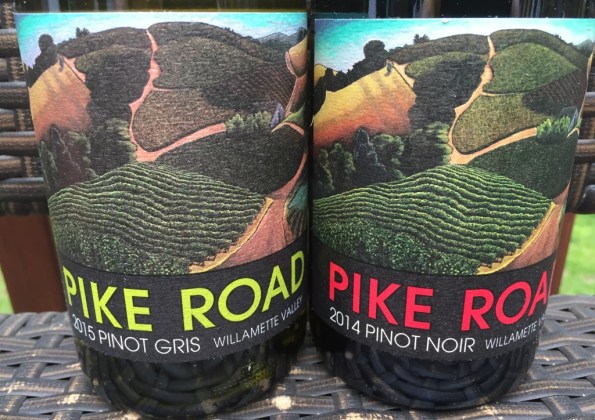


Here are my notes:
2015 Pike Road Pinot Gris Willamette Valley, Oregon (13.5% ABV, SRP: $15)
C: pale greenish color
N: tropical fruit, candied lemon, fresh, intense, inviting
P: crisp, clean, perfect fresh acidity and white stone fruit, creamy. Outstanding.
V: 8-/8, delicious white wine, perfect year around and superb during summer
2014 Pike Road Pinot Noir Willamette Valley, Oregon (13.5% ABV, SRP: $19, 10 month in French oak barrels)
C: dark Ruby
N: delicious. Touch of sweet fruit, open, inviting, raspberries, herbs, super-promising, wow
P: soft, layered, silky, spices on top of traditional smokey profile, triple-wow
V: 8+/9-, wow, totally unexpected and amazing. I know Oregon Pinot delivers, but this far exceeded my expectations. Might be the best QPR for Oregon Pinot Noir in existence. Love rustic labels too.
Our last classic pair comes from the classic of the classics, none less than Napa Valley, and it is Chardonnay and Pinot Noir from Artesa winery. Artesa winery is located in Carneros region of Napa Valley. While Artesa recently celebrated is 25th vintage, their winemaking traditions go way, way, way back – say by another [almost] 500 years. How come? Artesa winery was founded by Codorniu Raventós family from Spain, which takes its winemaking heritage 17 generations back to the 1551. Artesa sustainably farms 150 acres of vines, all Napa Green Land certified, and produces a range of wines, starting with a few sparklers and finishing with another Napa classic – Cabernet Sauvignon. Two wines which I had an opportunity to taste are the new Estate Reserve release from the winery:
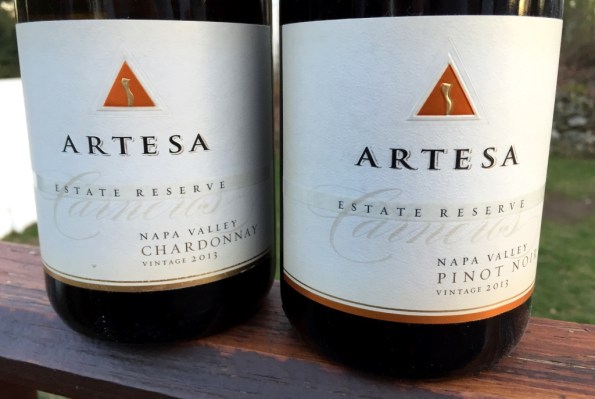
2013 Artesa Estate Reserve Chardonnay Napa Valley (13.9% ABV, SRP: $40)
C: light golden
N: touch of vanilla, hint of butter, white fruit, intense
P: touch of butter, green apples, good acidity, medium to full body, vibrant and balanced
V: 8-, a classic Chardonnay
2013 Artesa Estate Reserve Pinot Noir Napa Valley (14.4% ABV, SRP: $40)
C: dark garnet
N: warm, inviting, sweet plums
P: round, polished, present silky texture, touch of smoke, more plums, minerality, restrained
V: 8-, nice, smooth and restrained
There you have it, my friends – some new and interesting wines worth seeking. And whether they will hit the “classic” note for you – it is entirely your decision. Cheers!
Last Bottle Sign Up ($10 credit)





