Archive
Asti: Everyday Wine You Love To Drink But Afraid To Admit It
 Let me ask you a favor: can you please be honest with me?
No, scrap that. Can you please be honest with yourself?
When/if you read this, can you honestly answer a question for yourself: do you like sweet wines?
Be honest with yourself. This is strictly between you and you. Nobody will ever know what you will say. But if you do, have at least the courage to admit it to yourself – “yes, I like sweet wines”.
We are afraid of sugar. When we consume it, we prefer not to even think of it. We are so ashamed at the thought that someone might think we like sugar. You are supposed to hate sugar. We are supposed to enjoy things that are not associated with sugar. Sugar is bad news. Period. This is why nobody would ever want to publicly admit they like sweet wines, as they are evil.
Even if you are not afraid to admit to your affection, sweet wines are a special category. It seems that even the smallest bottle is usually too big. And by the time the dessert is served, nobody wants to drink more wine. But leaving that aside, there is a critical element for the sweet wine to be called enjoyable. I’m sure you can easily guess it, but I will give you a moment to think about it.
Got it?
That element is important across all wines, but in the sweet wines it is really critical – and this element is balance. Balance of all elements can make or break any wine, but in sweet wines, it has to be impeccable for the wine to be enjoyable. The sweetness must be balanced by acidity. If it is not, the wine becomes simply cloying, and not enjoyable (yes, I’m talking about lack of acidity in the sweet wines – never tasted the one with too much acidity). And perfectly balanced sweet wine becomes an ultimate indulgence. Perfectly balanced sweet wine is so sensual, so seductive that… well, I better let your imagination run wild.
Now, is there a way to make this sweet wine experience better? Of course – what if we will add some fizz to this perfectly balanced sweet wine? And make it affordable? And reduce the amount of alcohol – not eliminate, but simply reduce? Would you enjoy it every day? I’m sure the answer is yes. And I have a wine to suggest which will perfectly fit this profile – Asti wines from Northern Italy.

Source: Consorzio Asti DOCG

Source: Consorzio Asti DOCG

Source: Consorzio Asti DOCG
Sweet wines of notice were produced around the towns of Asti and Alba in southeastern Piedmont as early as the 17th century using a grape called Moscato Bianco. It is possible that the wines were produced even earlier, as Moscato Bianco had been growing in Piedmont as long as the Piedmont’s king was, Nebbiolo. The Classic Method of Champagne production has traveled to Piedmont and the first sweet classic sparkling wine was produced in the region in 1870. After the Martinotti method of producing sparkling wines in the tank instead of the bottles was invented in 1895 by Federico Martinotti, it quickly displaced Methode Champenoise as less expensive and significantly less time-consuming. The same method is used in the production of Prosecco. Oh, and look at these beautiful vineyards…

Source: Consorzio Asti DOCG
In 1932, Consorzio per la Tutela dell’Asti (Consortium for the Protection of Asti) was established to develop and ensure the guidelines for the production of Asti wines, known at that time as Asti Spumante. Things were going well until Asti Spumante became a victim of its own success. After World War II, American soldiers coming back were bringing light, sweet, fizzy Asti wines with them, bringing a surge in popularity. As the history of many wine regions shows (Chianti, Amarone, Australian wines at the beginning of the 2000s), such an increase in demand leads to overproduction and a dramatic drop in quality – exactly what happened with the Asti wines which subsequently lost their popularity due to poor quality.
Moving forward, Asti had to redefine itself, step by step. When Asti Spumante DOC was promoted to DOCG status in 1993, producers decided to ditch the Spumante portion of the name, becoming simply Asti instead of Asti Spumante. Producers also changed their production methods and quality controls, often moving towards a less sweet, drier style. The consortium also established a maximum yield for the grapes’ harvest and minimum alcohol levels that need to be achieved after fermentation.
While Asti wines are perfectly enjoyable on their own, they also make one of the very best food-pairing wines. Craving spicy food? Asti will work perfectly with that. Something substantial and salty? Bring on the Asti. Maybe most importantly – and uniquely – Asti wines are incomparable when it comes to pairing with desserts. If you never experienced a glass of Asti with an apple tart or a peach cobbler, you are missing on some of the greatest pleasures in life – you really should try it next time.
As Consorzio is expanding its presence in the US, I had an opportunity to sit down (virtually) with Consorzio per la Tutela dell’Asti Director Giacomo Pondini and ask him a few questions about Asti wines. Here is what transpired in our conversation.
[TaV]: What is the history of wine production in the region? Is Moscato Bianco the only grape that has been cultivated in the region? What kind of wines were produced there before the introduction of sparkling wines in 1865?
[GP]: As in many other places around Europe, the Romans have imported the wine production in Piedmont. And since then, it has thrived. Beyond Moscato Bianco, the historical grapes in the region are red varieties: Barbera, Freisa, Nebbiolo. Probably the most important step towards a more modern style of winemaking, at that time, was made by Camillo Benso Conte di Cavour. Before becoming a fundamental politician in Italian history, he devoted himself to the production of a wine based on Nebbiolo, named Barolo. In the history of Asti wines, the production of vermouth has laid the economical basis for developing the sparkling wine industry, based on Moscato Bianco grapes.
[TaV]: What is the difference between Asti Spumante DOCG and Moscato d’Asti DOCG wines?
[GP]: The main difference lies in the pressure – Asti Spumante, a proper sparkling wine, has to have at least 3.5 bar pressure, while Moscato d’Asti, which is a fizzy wine, 2.5. Then the difference lies in the residual sugar, higher in Moscato d’Asti, where sugars are less fermented and, therefore also less alcohol.
[TaV]: I understand that Asti Spumante wines can be produced using Classic and Charmat methods. What are the styles of Asti Spumante wines produced in the region, the official classification?
[GP]: The classification goes from pas dosè to sweet. Historically speaking, the sweet typology was the only one allowed until 2017, when extra dry, dry, demi-sec were introduced. From 2020, pas dosé, extra brut and brut were also authorized.
[TaV]: What are the best food pairings for the Asti Spumante wines? I know that in Sauternes in France, the region famous for its sweet wines, it is possible to have a full dinner paired with sauternes wines, from appetizer through the dessert. Is it possible to do the same with the Asti Spumante wines? If yes, can you share a sample menu for such a dinner?
[GP]: We know that in many countries Moscato d’Asti and Asti spumante are paired with a wide range of food: from the traditional desserts to cheese, from barbecue to Thai soups, to raw fish and curry.

Source: Consorzio Asti DOCG
[TaV]: What is the annual production of the Asti Spumante wines across all styles and including both DOCGs? How many producers and grape growers are in the region? Any other statistics you would want to share?
[GP]: In 2022 the annual production has reached 102 million bottles, 60% Asti Spumante and 40% Moscato d’Asti. Around 3,000 grape growers and 250 producers.
[TaV]: What countries are the main importers of the Asti Spumante wines? What percentage of annual production is going for export versus domestic consumption?
[GP]: Export covers 90% of the production, both for Asti Spumante and Moscato d’Asti. The main export markets for Asti Spumante are the USA, Russia, Great Britain, and Germany; USA by far is the most important market for Moscato d’Asti.
[TaV]: What is ahead of the Asti Spumante wines, let’s say, over the next 10 years?
[GP]: In commercial terms, an increasing presence in the Asian markets, while also growing the value and the perception. And also, a reason to visit Langhe-Roero Monferato, the area of production in Piedmont, UNESCO world heritage.
[TaV]: Sustainability and organic viticulture – are they used in the region? What percentage of the producers practices sustainable viticulture? Same for the organic?
[GP]: Around 25% of the growers are sustainable or moving in that direction. As a Consorzio we have just started the process of becoming a “sustainable territory”, a certification that involves all the grape growers and wineries in our area of production.
[TaV]: If someone had never had an Asti Spumante wine, how would you convince that person to try the wine for the first time?
[GP]: The aromatic profile of Asti Spumante, as well as Moscato d’Asti, cannot be found in any other wine. An immediate pleasure that makes these wines suited for any pairing or in any joyful moment.
I had an opportunity to taste several Asti wines of different styles – dry (it is Asti dry, not Champagne Brut Nature dry), sweet, sparkling and still. Acidity rules the pleasure in Asti wines – as long as the wine has enough acidity, all of the sweet elements – peaches, apricots, apples, pears, honey – will appear utmost delicious. As a reference, here are the wines I tasted and am happy to recommend – the first two being the most favorite:
NV Acquesi Asti DOCG (7% ABV)
NV Capetta Asti DOCG (7% ABV)
NV BOSCA Esploro Secco (dry) Asti DOCG (11% ABV, sugar 17–23 g/l)
NV Giacomo Scagliola “SiFaSol” Moscato d’Asti Canelli DOCG (5.5% ABV)
NV Bersano Monteolivo Moscato d’Asti DOCG (5.5% ABV)
NV Cascina Cerutti Siri Sandrinet Moscato d’Asti DOCG (5.5% ABV)
NV Matteo Soria Bric Prima Bella Asti DOCG Extra Dry (12% ABV)
2022 Vittorio Bear Moscato d’Asti DOCG (5% ABV)
NV Sanmaurizio SATI Asti DOCG Secco (11.5% ABV)
NV Arione Asti DOCG Extra Secco (12.5% ABV)
NV Tosti Asti DOCG (12% ABV)
NV Bussi Piero Moscato d’Asti DOCG (5.3% ABV)
Before we part, let me ask you something.
Are you convinced now that sweet wines are not evil, or do you still need more convincing? Let’s do a simple math here. A typical glass of Asti wine contains between 8 and 12 grams of sugar (dry Asti will have only about 4, but let’s leave dry Asti aside for now). That same glass of Asti, at 5% ABV, will have about 7 grams of alcohol (1 standard wine glass is 5 oz, which is equal to 142 (rounded up) grams, 5% from 142 is 7.1). According to the formulae I presented in this post, considering that 1 gram of sugar has 4 calories, and 1 gram of alcohol has 7, that glass of Asti will cost you 4*12+7*7 = a whopping 97 calories. Plus lots and lots of pleasure. Considering that a can of Coke has 140 calories, what would you choose?
The choice is yours, of course, but my choice would be pleasure. Any day. Wine should give you pleasure, this is the only reason to drink it, and Asti is good at that.
The holidays are upon us. But even between the holidays, you have to celebrate every day whose name ends with the “y”. And please promise me that you will try a glass of Asti with dessert. You owe it to yourself. Please…
Let’s drink sweet wines and to the sweet wines. There is nothing to be ashamed of. Cheers!
Everyday Bubbles: Prosecco FIOL
 It might be hot outside. It might be a holiday, birthday, or a celebration. Or you just might be craving something refreshing after a long day.
May I suggest a glass of cold wine?
Wait, we can make it even better – how about cold wine with refreshing bubbles? May I interest you in a glass of Prosecco?
Prosecco is so popular today that it is an easy choice when one wants to enjoy some fizz in a glass. At the same time, it is interesting to note that Prosecco’s real story only started in 1989, literally being sold door to door in London. For comparison, Champagne was already in demand by the kings more than 200 years before that. But just to put things into perspective – based on 2023 data, Prosecco produced 2.5 times more bottles than Champagne – 880 million versus 299 million, and there were 4 times more of the Prosecco bottles imported into the US in 2022 – 134 million versus 33.7 million.
While both Champagne and Prosecco belong to the category of sparkling wines, they are different in many ways – grapes, production method, blending, ability to age, prices, and so on. But we should look at them exactly as they are – these are two types of wines in two different categories, each one suitable for different life moments. Yes, even the cheapest Champagne is typically at least twice as expensive as Prosecco – but in wine, the price is not a guarantee of pleasure – we can enjoy a glass of Processo as much as we might enjoy a glass of Champagne. Heck, we might enjoy a glass of Prosecco a lot more than a glass of Champagne. First-hand example – I really enjoyed a glass of Aperol Spritz in Italy, made with a no-name Prosecco – and I was really not happy about seemingly the same glass of Aperol Spritz proudly made with Mumm Champagne while in France – no-name Prosecco in this particular case was way better than the coveted Mumm. Don’t get me wrong – by no means am I encouraging you to stop drinking Champagne and wholeheartedly switch to Prosecco – I’m merely suggesting that each one can have its own joyful moment. The wine has to give you pleasure, that’s what matters – and pleasure is subjective.
So today, let’s enjoy a glass (or two or more) of Prosecco, and I have a Prosecco for you in mind.
Let me present Prosecco FIOL to you – a beautiful rendition of Prosecco that is well worth seeking.
First, let’s talk about the name. As per Prosecco FIOL’s website:
FIOL (/fee-ol/ • noun)
a term of endearment for a young man, originating from the old Venetian Republic language (1400s), similar to “son” or “chap” in English.
Prosecco FIOL was started in 2011 by 3 lifelong friends – Giovanni, Gian Luca, and Pietro, who found a way to express their passion for the land and the Italian and Venetian way of life. It is interesting to note that the fruit for production of FIOL is selected from about 2,300 (not a typo!) farmers, accounting for a combined 14,800+ acres of vineyards and terroirs to achieve the perfect blend.
I had an opportunity to try both Rosé and regular Prosecco, so here are my impressions.
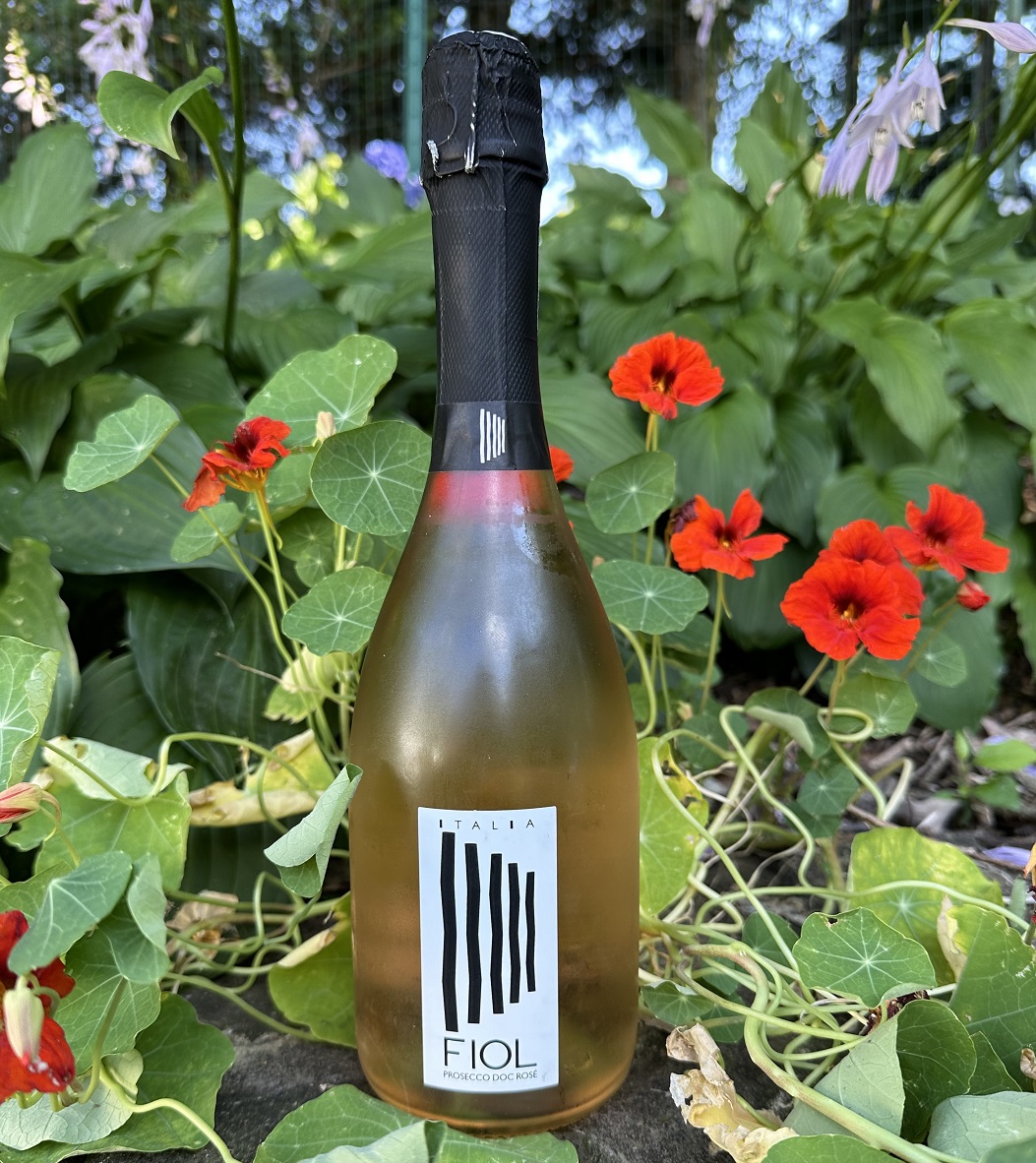
2021 FIOL Rosé Prosecco DOC Millesimato (11% ABV, $22, 85% Glera, 15% Pinot Nero)
Beautiful Salmon pink color
A whiff of strawberries on the nose, also a hint of strawberries on the palate, very generous mousse with lots of energy, a bit more plump than a typical brut champagne, exquisitely refreshing, and constantly encouraging another sip.
Superb.
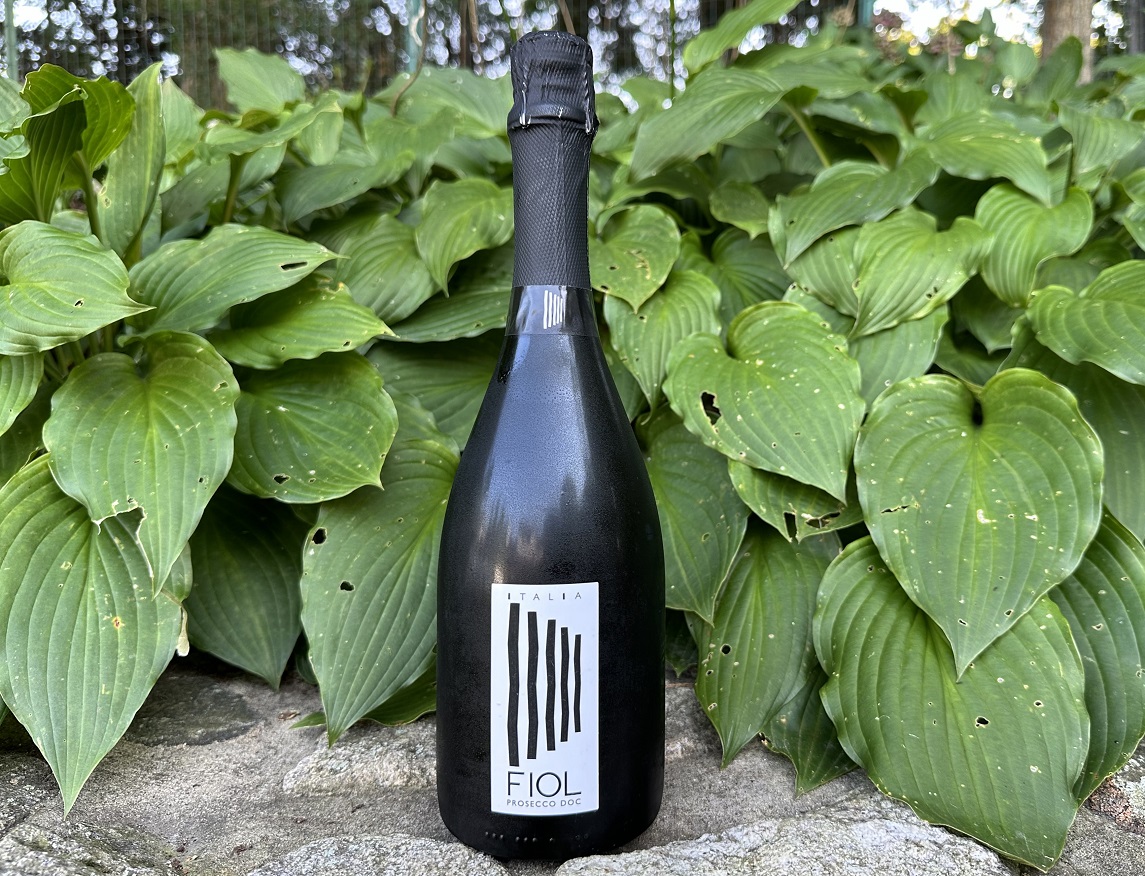
NV FIOL Prosecco Extra Dry Prosecco DOC (11% ABV, SRP $19/750 ml | $39/1.5 L)
Beautiful straw pale color, fine mousse
Apples, white flowers, fresh pear, light, inviting
Delicious apples on the palate, good body weight, light plumpiness, off-dry, long pleasant finish.
Made for a delicious Aperol, better than 90+ Prosecco
Here we go – two Prosecco bottlings, both delicious and perfectly suitable for everyday’s consumption without worrying about breaking the bank.
“Every day above ground is a great day”, so let’s celebrate it. With FIOL Prosecco in hand. Cheers!
Brilliance of the Bubbles
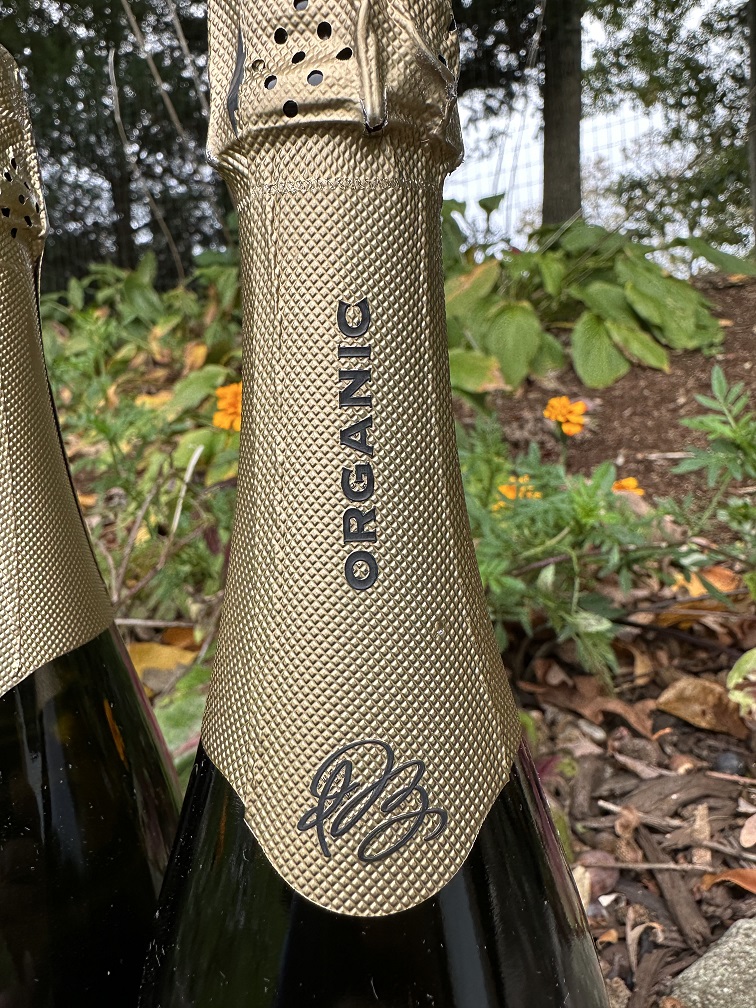 Champagne, anyone?
Well, I’m not in the mood to celebrate anything going on in the world right now. But I still drink wine, and while Champagne = Celebration is deeply ingrained in our minds, here I’m just talking about Champagne as a type of wine, the same as white, red, and Rosé. And I need to further correct myself – I’m not even talking about Champagne, the sparkling wine produced only in the Champagne region of France. The subject of today’s post is generic “bubbles”, the sparkling wine produced elsewhere in the world.
Simplistic on the surface, “bubbles” is an interesting wine category. Nobody is born craving wine, wine is an acquired taste. Bubbles might be the next level of acquired taste compared to wine, especially if we can exclude social pressure from consideration. Classic Champagne typically boasts cut-through acidity and is expected to be devoid of any traces of fruit for the joy of purists. And god forbid any sweetness can be detected in the glass… Not the wine someone intuitively craves. But this is not the biggest issue with the “bubbles”. The bigger problem is that people are well-trained to recognize the word Champagne, and once they hear that word, whether they truly love the liquid in the glass or not becomes irrelevant – “ahh, it is Champagne!”.
As anecdotal evidence, my favorite example is Kevin Zraly’s Windows on the World wine classes. The last class in the series of 8 started with Champagne. 4 wines were poured blindly to the group of roughly 120 students. After tasting all 4 wines, we were asked to have a show of hands for our favorite Champagne. I don’t remember details about wines #1, #2, and #3, but there was a somewhat equal spread between these three wines. Wine #4, however, had barely any hands raised. As the wines were revealed, Kevin Zraly said “and this is why, people, you shouldn’t drink vintage Champagne” – wine #4 was Dom Perignon, creme de la cream of Champagne world. Have we known that we were drinking Dom Perignon, I guarantee that wine #4 would be adored by everyone.
Before you get any wrong ideas, let me assure you – this is not a Champagne-bashing post. I love good Champagne as much as any other hard-core Champagne aficionado is. 2002 Pol Roger Sir Winston Churchill Champagne was my wine of the year in 2016. I have enjoyed immensely Krug, both vintage and non-vintage. Champagne Lanson, Duval-Leroy, Piper-Heidsieck, Bollinger, and on, and on, and on. But the point I’m trying to make here is that when looking for bubbles, you shouldn’t hang up on Champagne and only Champagne – sparkling wines are made everywhere today, and there are lots and lots of very worthy bubbles you can enjoy, as long as you are willing to accept that great sparkling wines don’t have to come only from Champagne.
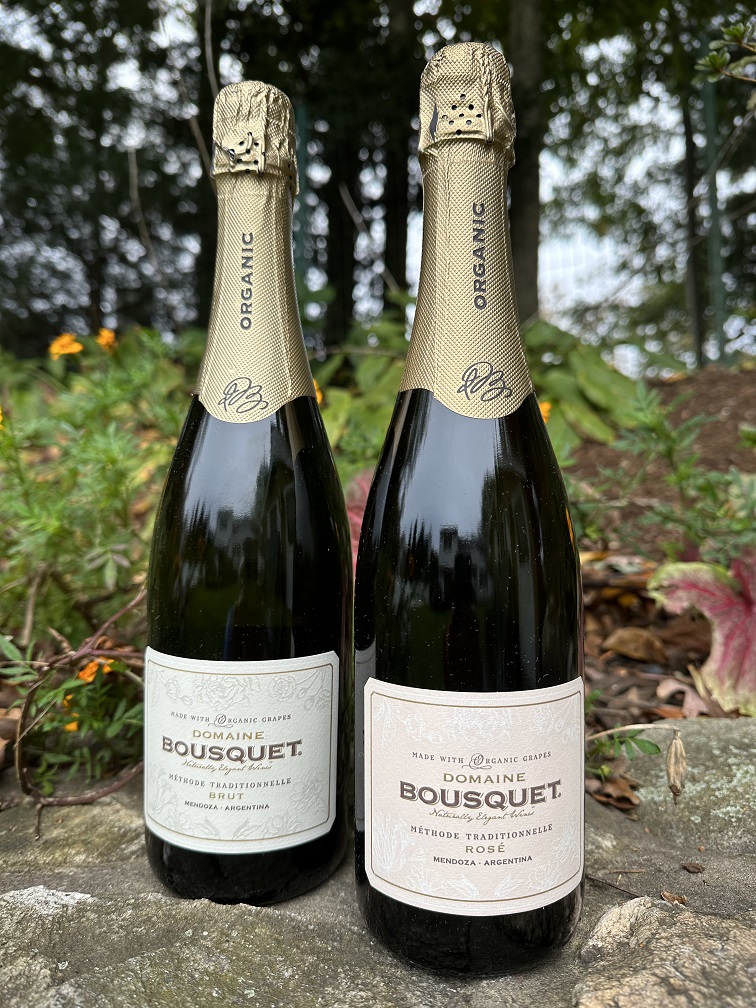
For an example of the great bubbles from outside of Champagne, let’s take a trip to Argentina. On a world scale, Argentina arguably didn’t reach yet the status of a world-class sparkling wine producer. And for me as a wine lover, this is very good news – it means I can still enjoy sparkling wines from Argentina at reasonable prices. Just to give you an example, we can look at the sparkling wines of South Africa, known as Cap Classique. Back 3 years ago, Graham Beck Brut Rosé Methode Cap Classique, one of my favorite sparkling wines from South Africa, could be found at my local wine shop for $16.99. The price two weeks ago? $30.99. So before it happens to Argentinian bubbles, let me bring you into the know.
Please meet Domaine Bousquet. Well, this might not be the correct way to introduce Domaine Bousquet here – if you are reading this blog regularly (are you??) then you already met Domaine Bousquet on multiple occasions. If you look at the Domaine Bousquet website, you will see that they present themselves as the #1 organic, regenerative and sustainable winery in Argentina. When I think of Domaine Bousquet, especially after tasting their wines, my first thought usually is “how do they do it???”. As an example of “how do they do it”, Domaine Bousquet offers USDA-certified organic wines (!) called Virgen that taste great and cost only $13 as the suggested retail price. And my latest discovery in the “how do they do it” category is two of their classic method sparkling wines.
I wrote about Domaine Bousquet sparkling wines before. Those were excellent wines produced using the Charmat method (secondary fermentation in the tank), the same method that is used in the production of Prosecco. These two new wines I’m talking about are produced using the classic method, with the secondary fermentation in the bottle – the same way classic Champagne wines are produced, hence the name Classic Method, a.k.a. Méthode Champenoise, a.k.a. Méthode Traditionnelle.


From the very first whiff, both wines were just spectacular. NV Domaine Bousquet Brut Organic Méthode Traditionnelle Mendoza Argentina (12% ABV, $18 SRP, 75% Chardonnay, 25% Pinot Noir, 6 months on the lees) had a perfect nose of freshly toasted bread, brioche and apples. The palate was followed with the same toasted bread notes, perfectly fine mousse, crispy profile with just apple notes, just a pure delight.
And NV Domaine Bousquet Brut Rosé Organic Méthode Traditionnelle Mendoza Argentina (12% ABV, $18 SRP, 75% Pinot Noir, 25% Chardonnay, 6 months on the lees) was even better – the wine had an absolute precision that only the best Champagne and sparkling wines possess. Salmon pink in the glass, freshly baked, just out of the oven toasted bread on the nose – I couldn’t and didn’t want to put my glass down for a few minutes. After appropriately admiring the bouquet, the first sip perfectly matched the expectations – fine mousse, cut-through acidity, brioche, green apples, perfect structure, impeccable balance.
If I were to pair dinner with these two wines, I would have fresh oysters and seafood with the Brut, and then a steak with the Brut Rosé – you can keep the salad.
Here are two brilliant sparkling wines from Argentina – organic and delicious. In a blind tasting, these two wines can safely challenge any Champagne or sparkling wines – and I would definitely put my money on the Domaine Bousquet wines to win the popular vote.
Taking the price into account, and the holiday season upon us, these are definitely case-buy recommendations – these wines are perfect as a gift and perfect to enjoy at any moment, knowing that you didn’t have to break the bank to get the pleasure.
Have you had these wines? What are your favorite sparkling wines outside of Champagne? Cheers!
Californian Stars, Italian Flair
 Californian stars.
Of course, we are talking about wines and grapes. What would those be?
I recently called California Cabernet Sauvignon a king. We can safely designate Chardonnay as a queen. But who would you call a prince? Capricious, spiky, moody royalty? Whatever grape you think of, the correct answer is Pinot Noir, because this is the grape I mostly would like to talk about today. And tell me if you think Pinot Noir is not qualified for the role of the royal prince – finicky, demanding, and unpredictable.
Okay, we got our stars for the day. Now, the Italian flair. How would you add the Italian flair to the Californian grapes?
There are a few options. For example, you can call your sparkling wine a Spumante. Or you can call your winery Castello, and build it in the form of a medieval Italian castle. You can also make wines out of Sangiovese – but this we will discuss later. Anyway, as you can see, you got options.
Vittorio Sattui, an Italian immigrant, founded St. Helena Wine Cellars in 1885. The business had to be closed due to the prohibition in 1920, but the Sattui family continued living at the winery. In 1975, Dario Sattui, great-grandson of Vittorio, restarted the family business by opening V. Sattui winery in St. Helena.
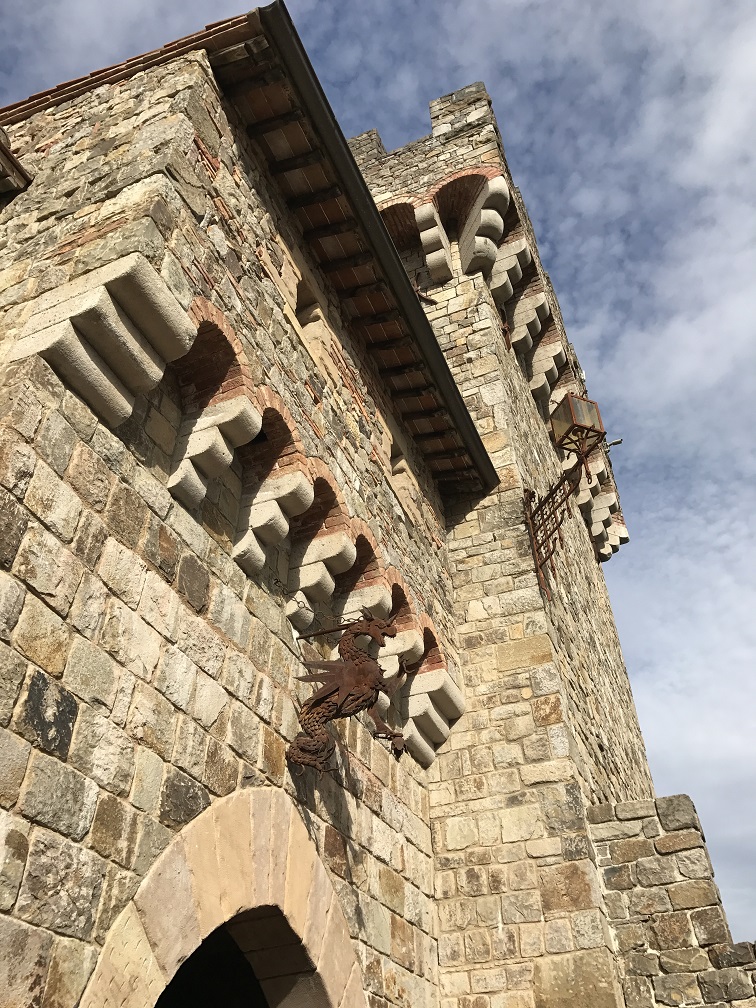
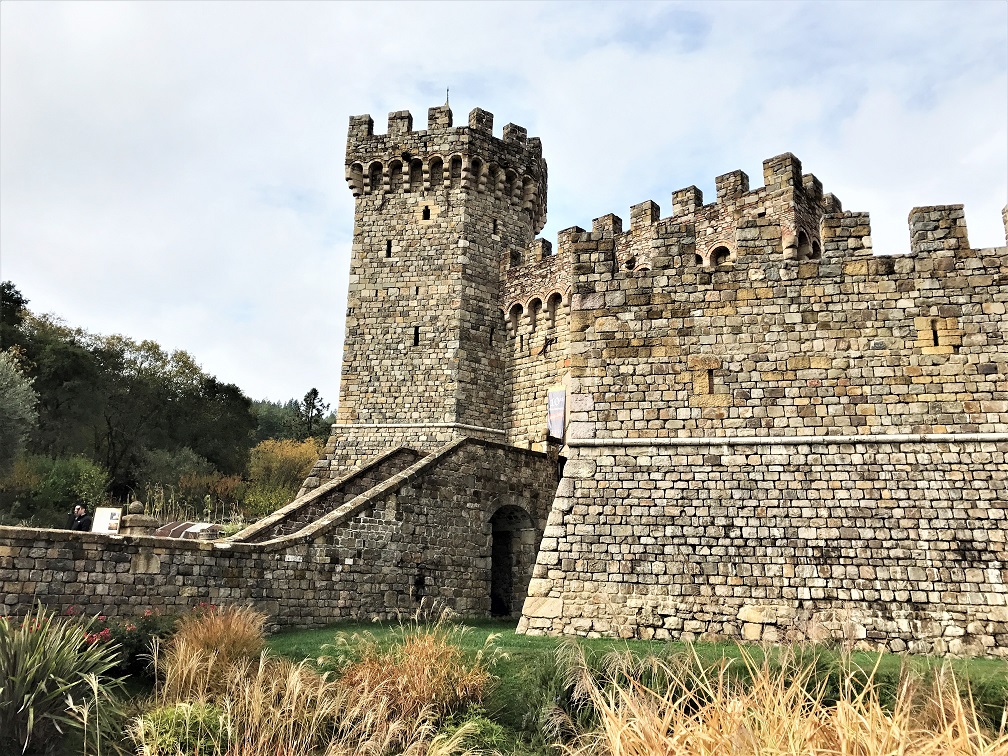
After finishing college, Dario traveled around Europe and became obsessed with medieval castles, monasteries, farmhouses. In 1993, Dario found the next home for his future winery – 171 acres parcel near Calistoga. In 1994, the construction began initially for the 8,500 sq. ft building without cellars. That slowly morphed into a 121,000 sq. ft. 13th-century Tuscan castle with 107 rooms, drawbridge, five towers, high defensive ramparts, courtyards and loggias, a chapel, stables, an armory, and even a torture chamber. Lots of bricks and artifacts were delivered directly from Europe to ensure the full authenticity of the castle. Castello de Amorosa (Castle of Love) opened its doors to visitors in 2007 after 15 years of construction.
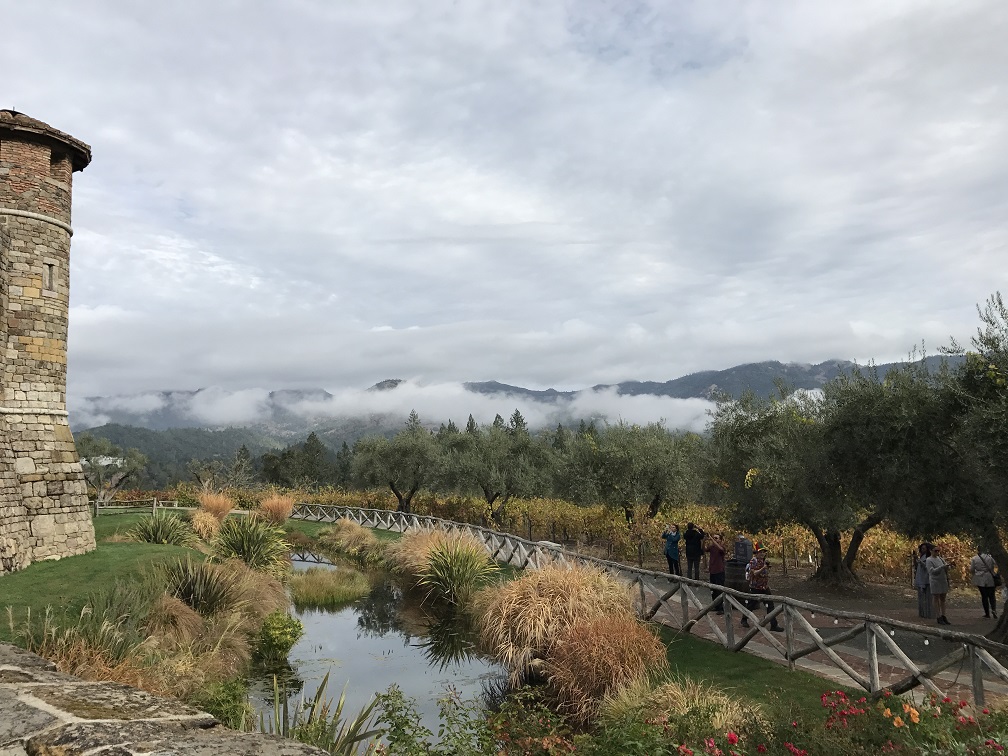
I was fortunate enough to visit the Castello di Amorosa in 2017 as part of the Wine Bloggers Conference 2017 in Santa Rosa, so I can share (inundate is a better word, of course) my first-hand impressions:


Thinking about misbehaving? Might not be recommended:


Touring the cellars:


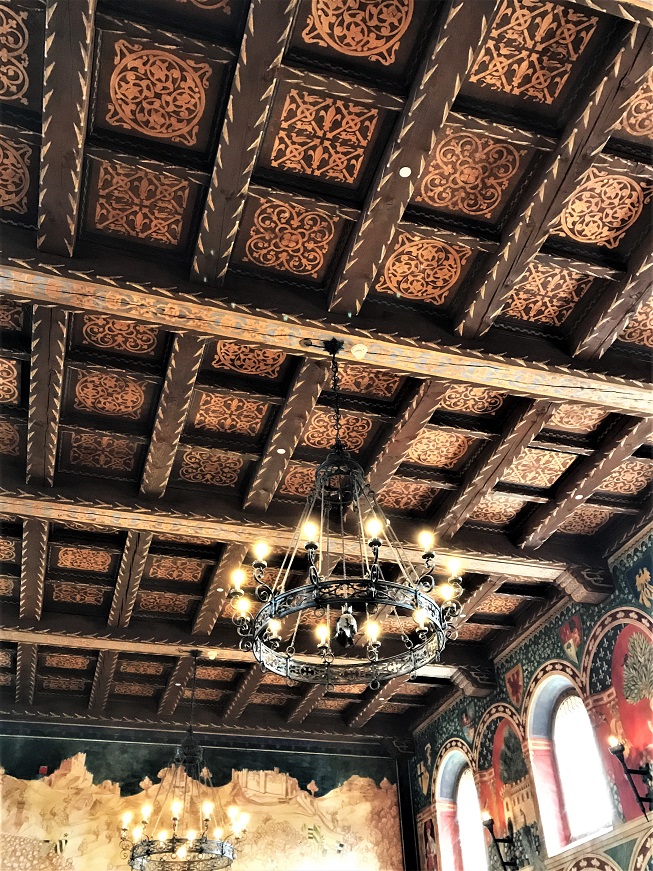
The ceiling of the room where we had our tasting in 2017:
A bit of education – Napa Valley Regions:


Castello di Amorosa works with 14 vineyards, most of them in Napa and Sonoma, out of which 6 are estate vineyards. The focus of winemaking is on showcasing each individual terroir and on the small-batch production.
I had an opportunity to taste a range of Pinot Noir expressions from Castello di Amorosa, and I have to honestly say that I was very much impressed with what I found in my glass.


First, two sparkling wines, both produced using the classic method.
2017 Castello di Amorosa Spumante del Castello Brut Napa Valley (12.5% ABV, $39, 73% Chardonnay, 27% Pinot Noir)
Light Golden, fine bubbles
Toasted bread, apples, gunflint
Toasted bread, Granny Smith apples, more gunflint, great minerality, a touch of sweetness, bigger body than typical champagne.
8, excellent,
2017 Castello di Amorosa Spumante del Castello Brut Rosé Napa Valley (12.5% ABV, $49, 100% Pinot Noir)
Salmon pink, fine mousse
Steely strawberries, a hint of toast
Dry, crisp, strawberries, clean acidity, good minerality
8, excellent
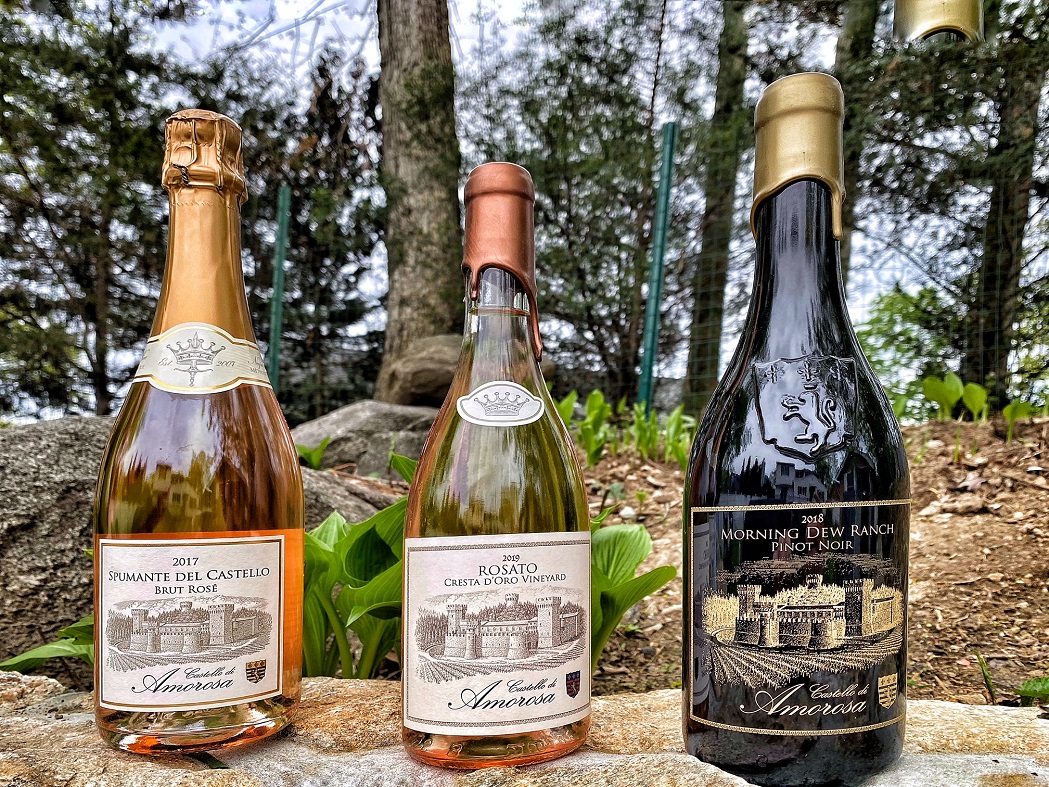
Next up, Rosé. The grapes for this wine come from the Green Valley area in the Russian River Valley AVA, and the wine is partially aged in concrete egg. I had an opportunity to taste both 2019 and 2020 vintages over a few months timeframe, and you can see that my tasting notes are almost identical for both wines. Somehow I missed including this wine into my 2021 top wines list, which makes me upset – this was one of the best Rosé wines and wines overall that I tasted during 2021.
2019 Castello di Amorosa Rosato Cresta d’Oro Vineyard Green Valley of Russian River Valley (13.6% ABV, $39, 100% Pinot Noir)
Light bright pink
Fresh ripe sweet strawberries, good intensity, inviting
Beautiful ripe strawberries, a touch of lemon, clean acidity, impeccable balance. Wow.
9-/9, one of the best Rosé I ever had. Just wow.
2020 Castello di Amorosa Rosato Cresta d’Oro Vineyard Green Valley of Russian River Valley (12.5% ABV, $39, 100% Pinot Noir)
Light bright pink
Fresh strawberries, a touch of herbs, crisp, inviting, and invigorating
Beautiful ripe strawberries, a touch of lemon, clean acidity, impeccable balance. Wow.
9, one of the best Rosé I ever had. Just wow. Superb.
Last up – Pinot Noir from Morning Dew Ranch in Anderson Valley. This vineyard was purchased in 2015 from Burt Williams, founder of the iconic William Selyem Winery. The 12-acre vineyard is in a very cool microclimate and divided into 9 blocks of Pinot Noir planted with DRC, 115, 777, Rochioli, 23, and 828 clones. All the blocks and clones give quite a bit of room to experiment to the winemaking team.
2018 Castello di Amorosa Morning Dew Ranch Pinot Noir Anderson Valley (13.1% ABV, $75, 11 months in Burgundian oak barrels)
Dark ruby
Somewhat unexpressive on the first day, a hint of fruit
Closed up, concentrated, dark fruit, not amazing
Classic Pinot on the second day – iodine, violets, underbrush
Beautifully elegant on the palate – good acidity, smoke, tobacco, fresh berries, cherries, firm structure combined with medium body, medium-long finish.
8+ second day, super-enjoyable.
Here you go, my friends – a little Italian oasis – scratch that – a large Italian Castle in the middle of Napa Valley, producing magnificent California wines. Castello di Amorosa is definitely a unique travel destination and a must-visit if you are ever in the area.
Sparkle Every Day
Ohh, festive times… Bubbles, laughter, smiles, more bubbles, and more laughter and smiles.
We still think of bubbles as a holiday or otherwise celebratory wine, but it doesn’t have to be like this – every day is worth celebrating, and good bubbles bring something special – they have a magic power to make things better.
But now the bubbles are on everyone’s mind – the last two weeks before the New Year celebration, bubbles need to be consumed and gifted. Very appropriately, I’m inviting you on a trip around the world, to taste some sparkling wines, and maybe even find new favorites or discuss the old and familiar.
You can’t beat the classics, so let’s start in the place which started it all (I know it is contested, like everything else nowadays, but let’s just skip that discussion) – the Champagne, of course.


I’m starting today with Champagne which is unique and different, and in reality should warrant a full post, as this is Champagne with the story. In 1975, Bruno Paillard, tracing his family grower and negociant heritage back to 1704, started working as a Champagne negociant. In 1981, at 27 years of age, Bruno sold his old collectible Jaguar and started his own Champagne company with the vision of producing a different style of Champagne. In 1984, he designed a unique above-ground cellar to be able to fully control temperature during the production of Champagne. By 1988, he already was collecting raving reviews from the critics such as Hugh Johnson, and others.
Bruno Paillard calls his approach to Champagne production Multi-Vintage, as even non-vintage-designated wines still have known proportions of reserve (vintage) still wines used during production. Also, every bottle of Bruno Paillard Champagne carries a disgorgement date on its back label. I had an opportunity to taste Bruno Paillard Premiere Cuvee Champagne, which comprises 35 out of 320 Champagne crus, with up to 50% of the wine coming from 25 reserve vintage wines since 1985:
MV Bruno Paillard Premiere Cuvée Champagne (12% ABV, $60, 45% Pinot Noir, 33% Chardonnay, 22% Pinot Meunier, 36 months on the lees, 5 months in the bottle, disgorged in June 2020)
Fine mousse, crisp
Classic nose – toasted bread, very clean, delicate
Classic palate – toasted bread, minerality, a hint of apples, fresh, round, great energy, cut-through acidity, delicious overall
8+, superb. If you can drink it every day, more power to you – but it is well worth at least an occasional celebration.
As we are in Europe, let make another stop along the way – all the way down to the South of Italy – in Sicily.
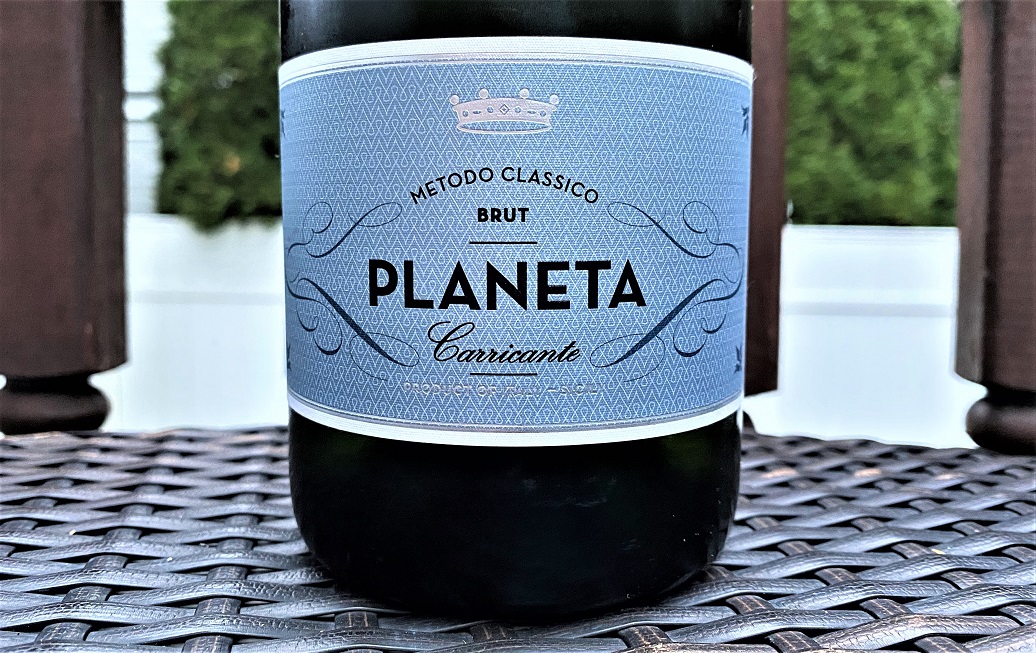
Italy is no stranger to spectacular classical style (method Champenoise) bubbles – powerful Ferrari and others up north in the Trentodoc, majestic Franciacorta in Lombardy, and more classic sparkling wines everywhere in between. However, this was my first encounter with the classic-style bubbles from Sicily.
Not to be overdone, this wine comes from Planeta, which is one of the most famous and best producers in Sicily – still, I never heard of their sparkling wines. This wine was made out of the local white grape called Carricante, but if you would try it blind, it would be very hard to distinguish this wine from an actual classic Champagne.
NV Planeta Carricante Brut Methodo Classico Sicilia DOC (12% ABV, $42, 100% Carricante)
Light Golden color
Beautiful intense nose, minerality, a touch of gunflint, toasted notes
A touch of green apple, minerality, toasted bread, good acidity, medium to full body.
8+, outstanding. Mostly available in restaurants, but you still can find it in a few liquor stores.


Now, let’s cross the Atlantic all the way and then some, going to the west side of North America – we are stopping by in California, to be precise. Here I have two wines to offer to your attention.
If you like California sparkling wines, then you don’t need an introduction to Scharffenberger. Found in 1981 by John Scharffenberger, the winery was built from the get-go for sparkling wine production, showcasing the terroir of Mendocino country.
In 2004, the winery became a part of the Roeder Collection. Overall, it continues the same traditions as 40 years ago, and today the 120 acres estate is sustainably farmed and Fish Friendly Farming certified.
Scharffenberger produces a range of Non-Vintage sparkling wines, all made using the classic method, all made from various proportions of Chardonnay and Pinot Noir. The wine I want to offer for your holiday festivities and casual daily life celebrations is Brut Rosé:
NV Scharffenberger Brut Rosé Excellence (12.5% ABV, $26, 55% Chardonnay, 45% Pinot Noir)
Salmon pink
Toasted bread, brioche, a touch of strawberries
Tart strawberries, hazelnut, freshly baked bread, crisp, generous, invigorating
8+, excellent bubbles for any day
Now, we are still staying in California, but moving about 2 hours south and east from Mendocino to the Russian River Valley. Here, in 1984, Judy Jordan started her J Vineyards and Winery (at the age of 25). Throughout the years, Judy acquired 9 vineyards, managing 300 acres of vines around the area. Her brother John Jordan manages the eponymous Jordan winery in Sonoma, producing “Chardonnay, Cabernet, and Hospitality” (I really love this quote of his as I had an opportunity to experience all three at the wine bloggers conference 2017).
During my first wine bloggers conference in 2014 in Santa Barbara, I attended joint Jordan reception, hosted by J Vineyards and Jordan Winery, creating the most magnificent experience between delicious J Vineyards bubbles and Jordan Cabernet verticals.
Why am I telling you all of this and how is it relevant to the J sparkling wine I tasted? Actually, there is no real connection, except the sad feeling of the loss of true authenticity, after J Vineyards was sold to E and J Gallo in 2015. If you visit the J Vineyards website today, it is all about selling the wine. There is no “about” section. There is no history of the estate. Just buy, buy, buy. Buy this or buy that. Okay, okay – I get it – wine is a business. But it can be a business with soul – sadly, I don’t think E and J Gallo know how to operate one.
This J Vineyards Cuvée 20 was originally produced to celebrate the 20th anniversary of the winery but then became a standard feature in the sparkling wine lineup.
NV J Vineyards Cuvée 20 Russian River Valley (12.5% ABV, $38)
Straw pale, fine mousse
Gunflint is a primary element
Toasted bread, gunflint, a touch of lemon, crisp, energetic, perfect cleansing acidity
8/8+, needs food – oysters, cheese, steak – any food.
Let’s now take a long flight down south, to the Argentinian desert, to visit Domaine Bousquet in Tupungato.


Actually, I already wrote a long post about Domaine Bousquet sparkling wines, at the beginning of this year. These are essentially the same wines I tasted before, only with the new labels. If you are interested in learning more about Domaine Bousquet, please refer to the post above, and I will just share my latest tasting notes here:
NV Domaine Bousquet Brut Tupungato Argentina (12% ABV, $13, 75% Chardonnay, 25% Pinot Noir, Charmat method, organic grapes, vegan)
A yellowish tint in the glass
A hint of apple, fresh, clean
Perfectly round, good acidity, a touch of toasted notes, apples, easy to drink
8-, very good
NV Domaine Bousquet Brut Tupungato Argentina (12% ABV, $13, 75% Pinot Noir, 25% Chardonnay, Charmat method, organic grapes, vegan)
beautiful salmon pink
fresh, a touch of strawberries
more strawberries on the palate, fresh, clean, good acidity, nice body
8-, perfect for every day
And we are done. I’m leaving you here with a few of the options for your festive and daily bubbles – different prices, different wines, but all worthy of a life celebration as it happens. Cheers!
Vilarnau Cavas – Always a Pleasure for an Eye, and Now Organic Too
Here we go – I’m following up a post about Cava with another post about Cava.
Oh well…
It is really appropriate to drink bubbles every day. Really. And it is even triple appropriate to drink bubbles around holidays. And gift them. And every day has something worthy of a celebration. So yeah, let’s talk again about Cava.
First, a pleasure for an eye – take a look – aren’t these bottles gorgeous? I would certainly use them as a decoration if the content wouldn’t be so good. I love this Trencadis design of the bottles – “Trencadís” is a kind of mosaic that is created from tiny fragments of broken ceramic tiles, used by Catalan architects Antoni GaudÍ and Josep MarÍa Pujol in many of their designs. I talked about the trencadís extensively in a few of the older posts (in 2017 and 2018), so I would like to direct you there if you want to learn more.
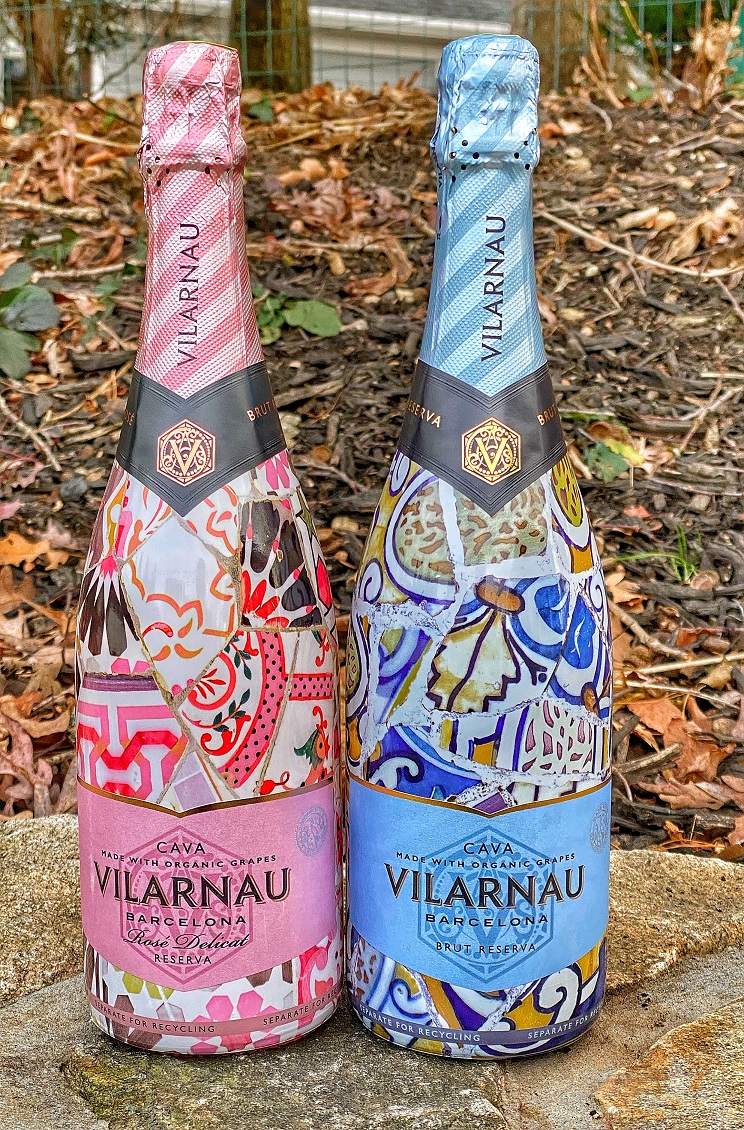


Now, you still have a ground for complaint – I already talked about Vilarnau Cavas less than 6 months ago – what gives? Are there not enough wines to discuss?
Yes, you are right. Or, almost right, to be more precise. The reason to talk about Vilarnau now is a significant change – all of the Vilarnau wines are now made with organic grapes.
Why would winery change its [successful] ways to become organic? What can be a motivation for that? Is that organic wine any different from non-organic wine? I decided to ask all these questions (virtually) Eva Plazas, Cavas Vilarnau Winemaker – and here is our short dialog:
2. Why is using organic grapes important for you?
3. Can you taste the difference?
4. Is the whole range of Vilarnau Cavas already using organic grapes (talking about new vintages)?
5. Did you have to make any changes in the winemaking process since you started using the organic grapes?
I have stopped using these products or have looked for alternatives to proteins with the animal origin, using pea or potato proteins instead, that is why all Vilarnau cavas are now Vegan too.
NV Vilarnau Brut Reserva Cava DO (11.5% ABV, $14.99, 50% Macabeo, 35% Parellada, 15% Xarel Lo, 15+ months in the bottle)
Light gold
Herbal, earthy, apple, lemon
Fresh, clean, apples, creamy, good body
7+, perfect for every day
NV Vilarnau Brut Reserva Rosé Cava DO (12% ABV, $15.99, 85% Garnacha, 15% Pinot Noir, 15+ months in the bottle)
Salmon pink
Fresh strawberries, a touch of gunflint
Fresh strawberries, crisp, clean, energetic, delicious.
8, excellent
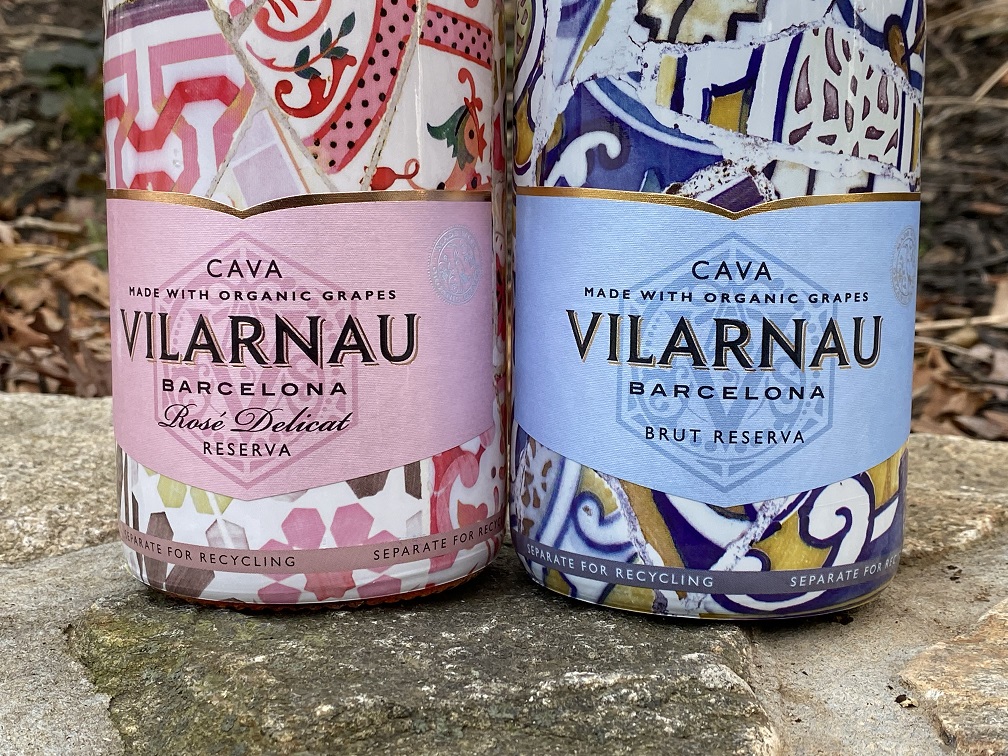
Now, a placeholder for the wines to be tasted in a week – updated on December 29, 2021
NV Vilarnau Brut Reserva Cava DO (11.5% ABV, $14.99, 50% Macabeo, 35% Parellada, 15% Xarel Lo, 15+ months in the bottle, Organic grapes, Vegan)
Light golden color, small persistent bubbles
Freshly toasted bread, gunflint, medium intensity
Freshly toasted bread, a hint of granny smith apples, a hint of gunflint and minerality, nice creaminess
7+/8-, simply delightful
Looking for Bubbles? Roger Goulart Got Everything You Need
 First question: how often do you crave bubbles? (My answer: almost every day).
Second question: how often do you actually drink bubbles? (My answer: not often enough. Read – once in a blue moon).
If you answered “not often enough”, here is the third (and fourth) question(s): Why is that so? What stops you?
I can only speak for myself here – I have a few reasons for not drinking bubbles often enough – price; having the right bottle on hand; not being able to finish a bottle once it is opened. Now, can we solve these problems? Let’s take them one by one.
The third problem (not being able to finish the bottle once it is opened) is the easiest problem. No, you don’t need newly minted Coravin for this. The standard Champagne bottle stopper will do the trick.
For the first and second problems – price and having the right bottle on hand – I have a simple answer – Cava.
Cava is a sparkling wine from Spain, made using exactly the same method as Champagne, with the secondary fermentation in the bottle, and aging requirements on par or even stricter compared to Champagne – minimum of 9 months for the regular Cava, minimum of 15 months for Reserva, and the minimum of 30 months for Gran Reserva. Good Cava offers a pleasure comparable to any Champagne in the same category, at half or even a third of the price per bottle, especially considering today’s Champagne prices.
If you noticed, I used the descriptor “good” in conjunction with Cava. As you can never assume that all of the Oregon Pinot Noir is equally good, all of the Riojas are equally good, or all of the Australian Shiraz are equally delicious, not all of the Cavas are equally good. So let me offer my helping hand and make a suggestion – Roger Goulart Cava will not fail you, no matter what the occasion is.
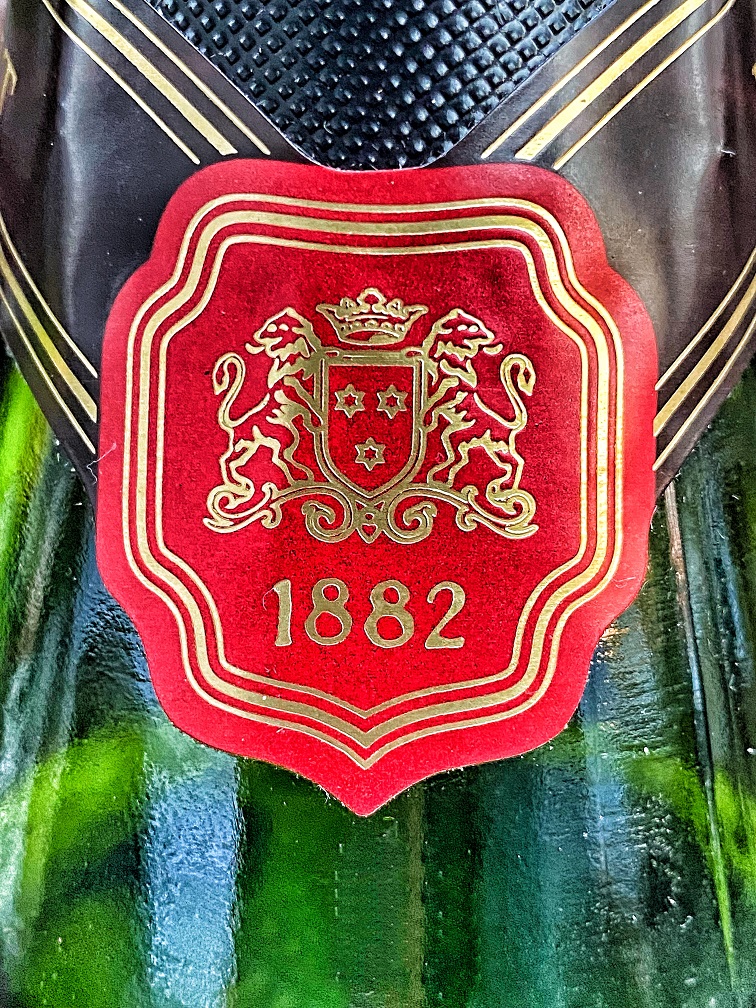
The history of Roger Goulart Cava started in 1882 when Magí Canals dug a wine cellar in the garden in the back of the house, where he started making Cava, in those days still known as Champagne. 17 years later, his son Josep bought the land adjacent to the Canals’ house from the Goulart family – we can consider that an official beginning of the Roger Goulart Cava. In 1919, a beautiful cathedral building was built by Ignasi Mas i Morell, a student of Antonio Gaudí – this became a new home of the Roger Goulart Cava. When Cava DO (destination of Origin) was created in 1972, Canals were one of the founding families. In 1997, 3,000 feet (1 km) of underground caves (more of a tunnel) were dug at the depth of 100 feet (30 meters), to provide ideal aging conditions for the Cava, maintaining a constant temperature of about 57°F-59°F (14°C-15°C).
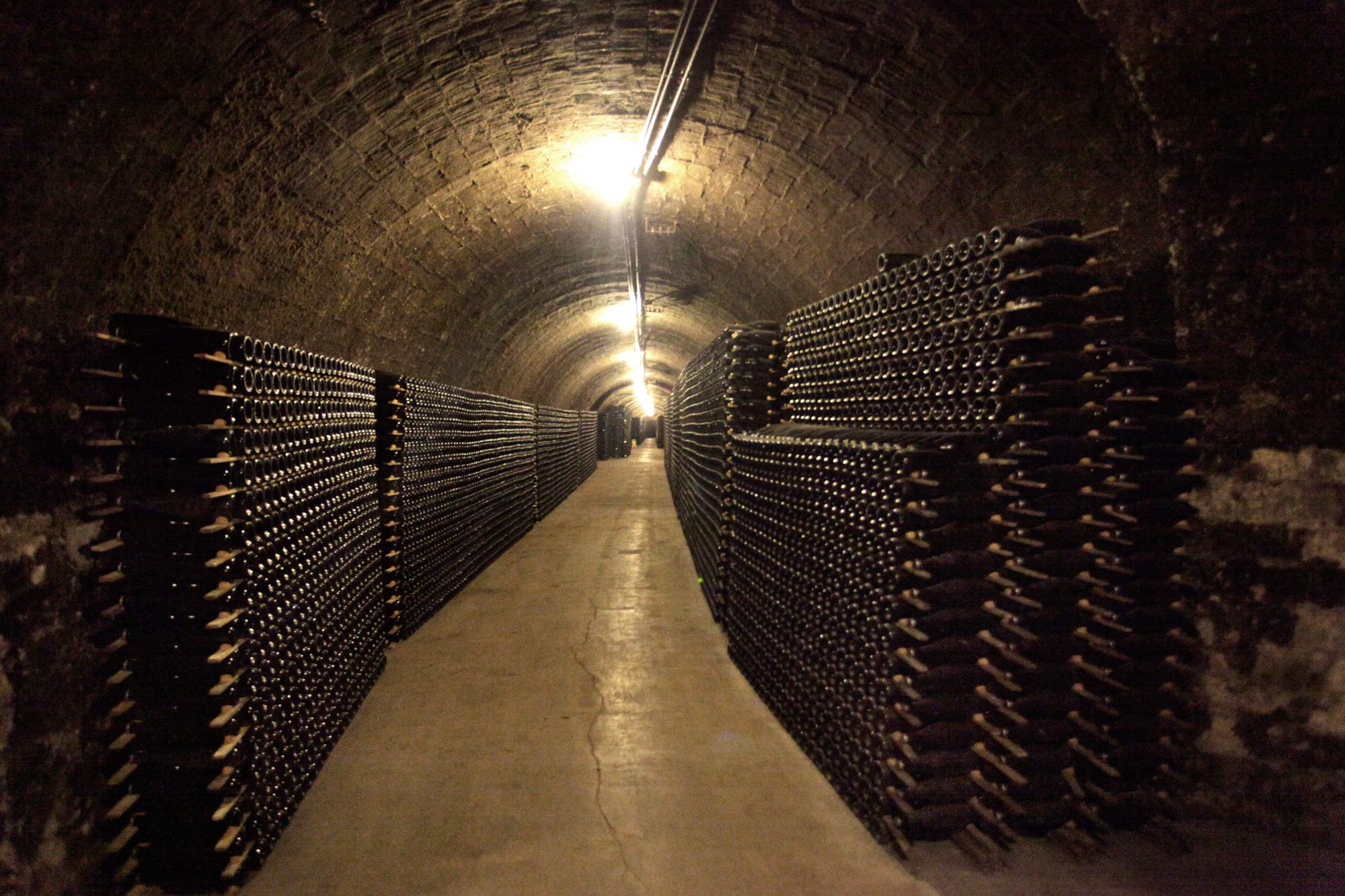
Roger Goulart Cava Caves. Source: Roger Goulart
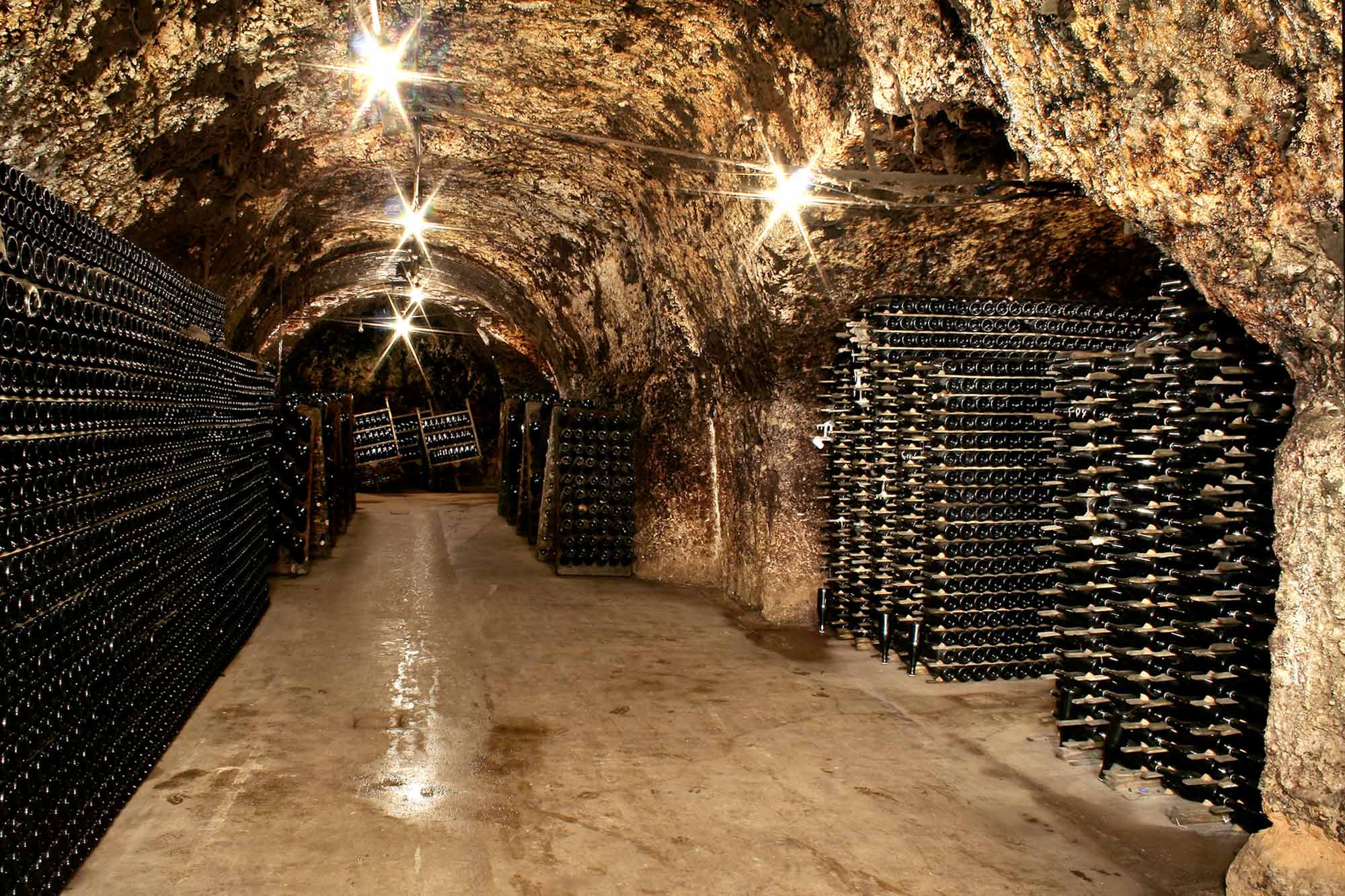
Roger Goulart Cava Caves. Source: Roger Goulart
Roger Goulart Cava offers a range of sparkling wines, including Brut Nature (zero dosage) and a range of Gran Reservas – Roger Goulart Gran Reserva cavas are actually not disgorged until the purchase order comes in, to ensure the freshest possible wine being delivered to consumers. The majority of the non-Rosé Cavas are made with three traditional varieties – Xarel·lo, Macabeo, and Parellada, but some of the Cavas might also include Chardonnay. The Rosé Cavas are primarily Garnacha driven, with the addition of other red grapes (Pinot Noir, Monastrell). The new Cavas are also produced from certified organic grapes, so we should expect to see more of Roger Goulart Cavas made with those in the future.
I had an opportunity to taste 4 different Cavas, and even catch a beautiful winter sunset with one of them (as you will see below in the picture). What was surprising to me was the level of freshness across all four wines – the 2012 and 2018 tasted equally fresh. Another interesting tidbit was the fact that the older Cavas, also been Gran Reservas, benefited from additional breathing time. I used the stopper I mentioned before, and I actually enjoyed those wines even more on the second day out of the refrigerator.
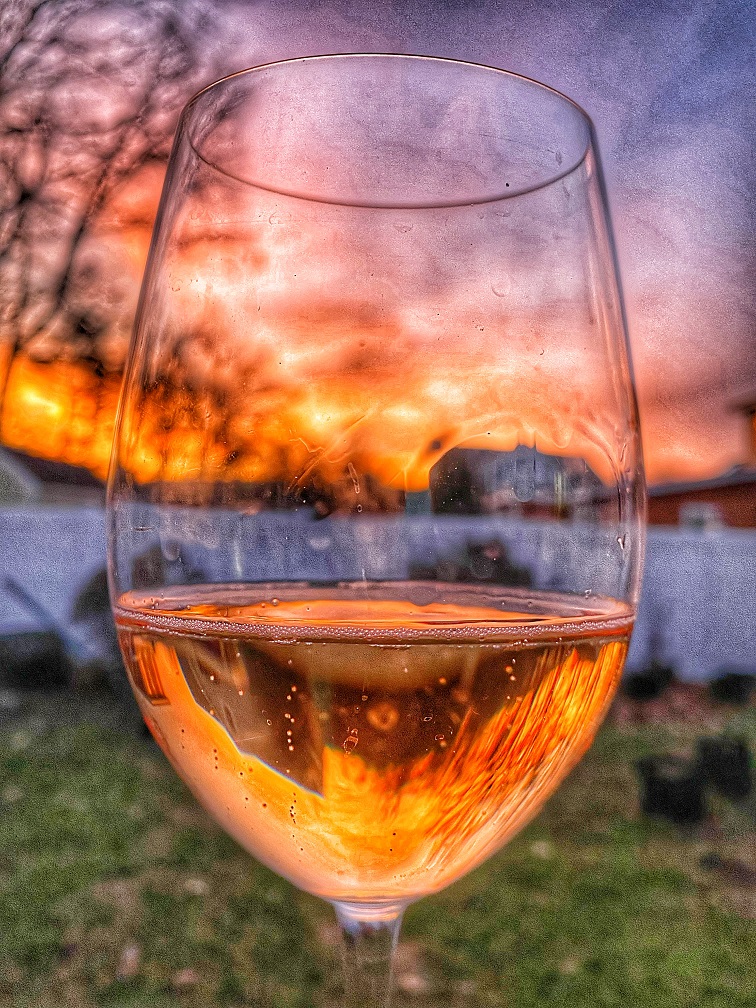


Here are my notes for what it is worth:
2018 Roger Goulart Cava Reserva (12% ABV, $19.99, 50% Macabeo, 35% Xarel-lo, 15% Parellada, min. 15 months in the bottle, organic grapes)
Fine bubbles
Freshly toasted bread on the nose, a hint of apples
Perfect amount of yeast, toasted notes, crisp, fresh, creamy mouthfeel.
8, excellent. Great with food (had it with salami and cranberry encrusted goat cheese)
NV Roger Goulart Coral Cava Brut Rosé (12% ABV, $19.99, 70% Garnacha, 30% Pinot Noir, min. 9 months in the cellar, bottled in December 2016)
Fine bubbles, beautiful salmon pink color
A hint of brioche and strawberries on the nose, nicely restrained
Toasted notes, toasted bread, creamy mouthfeel, delicious.
8+, outstanding.
2014 Roger Goulart Cava Brut Rosé Gran Reserva (12% ABV, $19.99, 85% Garnacha, 15% Monastrell, min. 36 months in the cellar, bottled in March 2015)
Deep reddish color
A touch of toasted bread notes.
Dry, concentrated, a hint of fresh bread, needs time to open up, then crisp and fresh.
8, very good, better on the second day
2012 Roger Goulart Cava Brut Gran Reserva (12% ABV, $19.99, 60% Xarel-lo, 20% Macabeo, 20% Parellada)
Toasted bread, clean, fresh
Perfect balance, apple, a hint of toasted bread, cut-through acidity, tight, vibrant, full of energy, would perfectly compare to any champagne in a blind tasting. Most likely, would beat the competition.
8+/9-, I loved it even more two days after the bottle was opened. Superb.
As you can see all of these Cavas are priced the same, and at $19.99 they are worth every penny, as the comparable Champagne will be at least in the $45 – $50 range. And the great thing about this pricing is that you can choose the wine based only on how you feel at the moment, and not on the price.
The holidays are upon us, but with or without the holidays – every day deserves a glass of bubbles. Try Roger Goulart Cavas and send me a thank you card later. Cheers!
Everyday Bubbles
 Do you have an everyday wine? An everyday wine is a wine you are happy to open on any day that has a name ending with “y”, like Monday, without any second thoughts. For the wine lover, there is always a ritual to choose the proper wine for each and every occasion (read: an evening after work), so the everyday wine is the wine allowing to circumvent that ritual, just open a bottle, get a glass, pour wine, and instantly feel better.
I would bet that for the majority of the wine lovers, the everyday wine would be a still wine – white, red, maybe a Rosé, but a still wine. There is an aura surrounding the sparkling wines – you can’t open bubbles without a special occasion, and “just another Monday” might not be it. There are many reasons the sparkling wines not considered appropriate for a casual evening. Sparkling wines have the whole celebratory mindset attached to them – “if I’m drinking sparkling wine I have something to celebrate”. Sparkling wines are usually more expensive than quality-comparable still wines. And so it is somewhat difficult to find a sparkling wine that can be designated as an “everyday wine”.
Difficult, but not impossible. Well, yes, it all depends. If you insist on drinking only Champagne, an “everyday Champagne” might be a challenge – at least a financial one. But if you are willing to look outside of Champagne, then Cava, Cremant, and Prosecco offer some good options. I want to bring two of such “everyday bubbles” to your attention.


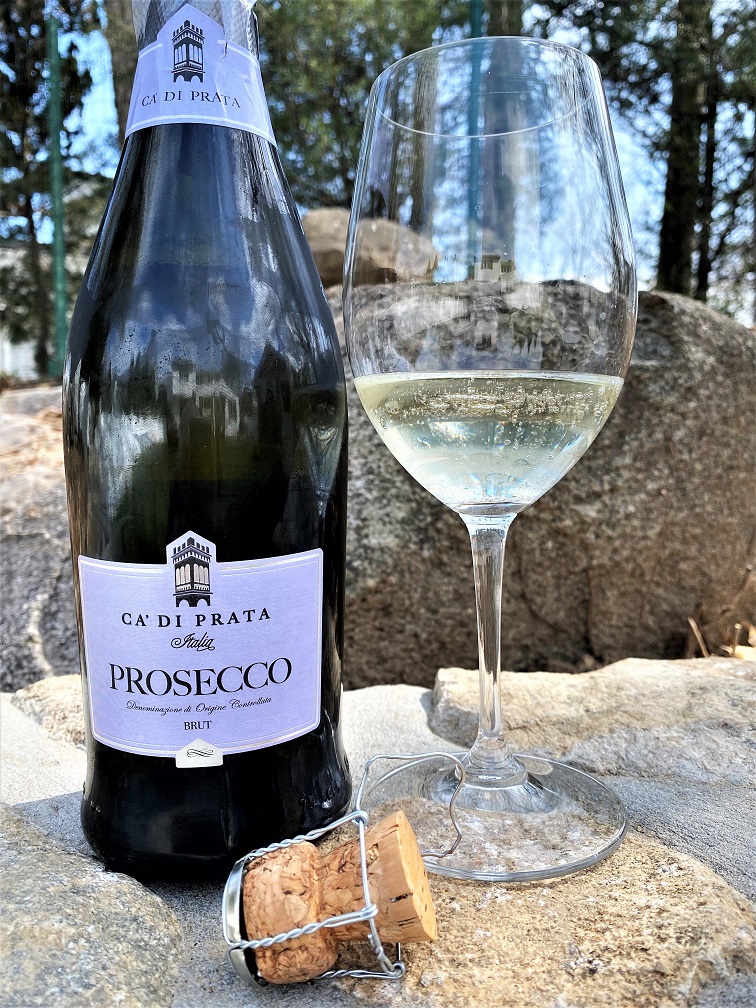
First, Prosecco. Prosecco, produced in Northern Italy, is a sparkling wine that had been around almost as long as Champagne – with the only difference that it became internationally known only about 30 years ago (you can read the story here). But today, Prosecco is everywhere, and it offers lots of great options to consider for everyday bubbles. As, for example, Ca’ Di Prata, produced by Latentia Winery, and distributed by Mack and Schuhle I already wrote about a few months ago. Ca’ Di Prata takes its name from the town of Prata di Pordenone in Friuli, one of the epicenters of Prosecco production. I had an opportunity to try a few of the Ca’ Di Prata Prosecco wines (samples), and below are my notes:
Ca’ Di Prata Brut Prosecco DOC (11% ABV, $15.99)
Practically clear, nice tangy mousse
Touch of tropical fruit, a hint of honey
Refreshing, Meyer lemon, good acidity, mellow, good volume, a hint of sweet apples
8, very good, easy to drink, simple. Quaffable on its own, but should be perfect for cocktails (Mimosa, anyone?)
Ca’ Di Prata Rosé Extra Dry Prosecco DOC (11% ABV, $16.99, 85% Glera, 15% Pinot Nero)
Light pinkish color, abundant bubbles
Hint of strawberries
Strawberries all the way, a touch of lemon, creamy, inviting, a touch of sweetness, very well balanced.
8-, perfect everyday bubbles
Ca’ Di Prata Extra Dry Valdobbiadene Prosecco DOCG (11% ABV, $17.99)
Almost clear with a greenish hue, good amount of bubbles
Distant hint of an apple and flower petals, refreshing
Green apple, fresh, crisp, initially had a hint of sweetness which subsided, a touch of lemon.
8-, excellent for what it is – easy bubbles.
And then, of course, there is Cava – another perfect candidate for everyday bubbles. Cava is a Spanish sparkling wine, produced in exactly the same way as Champagne (secondary fermentation in the bottle) in Penedes in Catalonia. Cava is currently trying to change its image of simple, inexpensive, and often mediocre quality wine by introducing new categories and new subzones in the region – but this should be a subject for a separate post.
The Cava which I want you to consider for the everyday wine is one of my favorites, both aesthetically and taste-wise – Vilarnau Barcelona. I already wrote about Vilarnau at length before, so for the history, I would like to offer you this link. For this post, I tasted two wines (samples) from the beautifully appointed, Gaudi inspired bottles – here are my notes:
NV Vilarnau Brut Reserva Cava DO (11.5% ABV, $14.99, 50% Macabeo, 35% Parellada, 15% Xarel Lo, 15+ months in the bottle)
Light gold
Herbal, earthy, apple, lemon
Fresh, clean, apples, creamy, good body
7+, perfect for every day
NV Vilarnau Brut Reserva Rosé Cava DO (12% ABV, $15.99, 85% Garnacha, 15% Pinot Noir, 15+ months in the bottle)
Salmon pink
Fresh strawberries, a touch of gunflint
Fresh strawberries, crisp, clean, energetic,
Delicious.
8, excellent
What do you think? Would you make any of these wines your everyday wine? Cheers!
Everyday Bubbles – Domaine Bousquet
In my wine lover’s journey, bubbles were never essential. I grew up with only sweet sparkling wines available, and I still have no idea if those wines were even made out of grapes. Plus, the bubbles were strictly associated with only a celebration – New Year, maybe a big birthday, and a wedding. I have no idea what was the first Champagne I ever tasted, but the first Champagne I actually appreciated was vintage Krug, and ever since I have a full appreciation for a tasty glass of bubbles – and no, I didn’t become “Krug or nothing” zealot.
I can imagine drinking Champagne every day. No, let me take that back. I can imagine drinking Champagne on any day I crave bubbles – yes, this is a better way to put it, as drinking Champagne every day would quickly become really boring. However, while I have no issues with the imagination, drinking Champagne at will is hardly practical. I can find a tasty bottle of still wine for around $10 – no matter what “premiumization” trend dictates – but most of the drinkable Champagne today pushes the $40-$45 boundary (unless you find your success on WTSO) – and this is hardly an “at will” range for me. If you are craving bubbles but want them to be reasonably priced, you can find better luck with Prosecco or a Cava, but you better know producers by name.
And here I come, extending my helpful hand, to bring to your attention delicious bubbles which you really – and I mean it, really – can afford to drink on any day. And not only to afford but also to enjoy. Cue in Domaine Bousquet Charmat-method sparkling wines from Argentina, made from organic grapes and priced at a whopping $13 – and this is the suggested retail price, which means you can probably even find them in the stores for less.
Before I will share my impressions of the wines, let’s take a quick look at the Domaine Bousquet, the product of vision, obsession, and dedication. “Vision, obsession, and dedication” are not just words. In 1990, during his vacation, Jean Bousquet, a French third-generation winemaker, fell in love at a first sight with the high altitude remote area in Argentina – Gualtallary Valley in the Tupungato district of the Uco Valley in Mendoza. You really need to have vision and dedication to leave your country and buy 1,000 acres of essentially a desert (real estate broker told Jean Bousquet that he is making a mistake of his life) – you would probably think so too if you will look at the picture below:
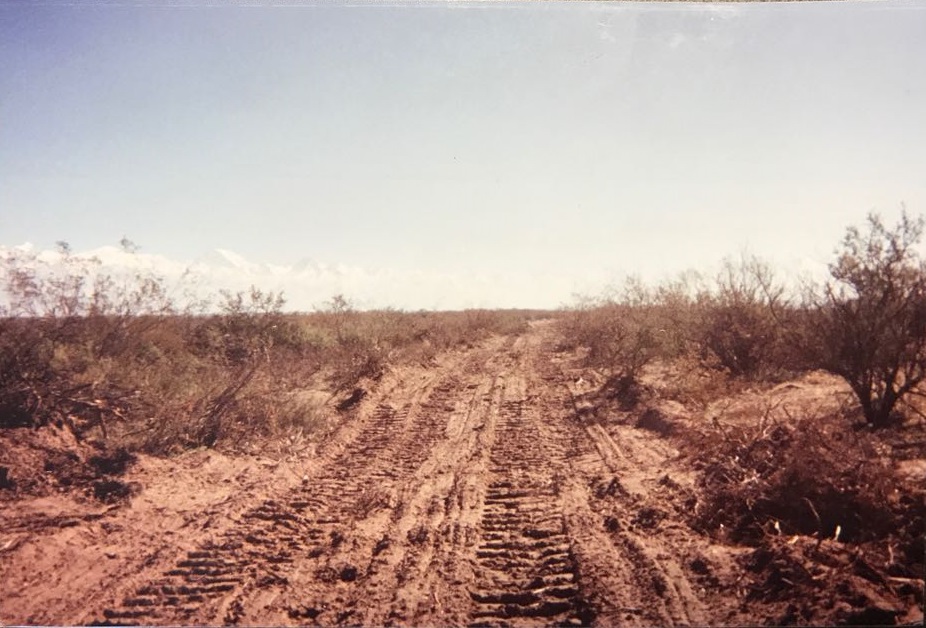
Source: Domaine Bousquet
Jean Bousquet had a vision and dedication, and most importantly, he knew what he is doing, he knew the importance of water and proper irrigation. You would never tell that the picture below represents the same land today (also note that today Gualtallary Valley represents one of the most expensive farmlands in all of the Mendoza):
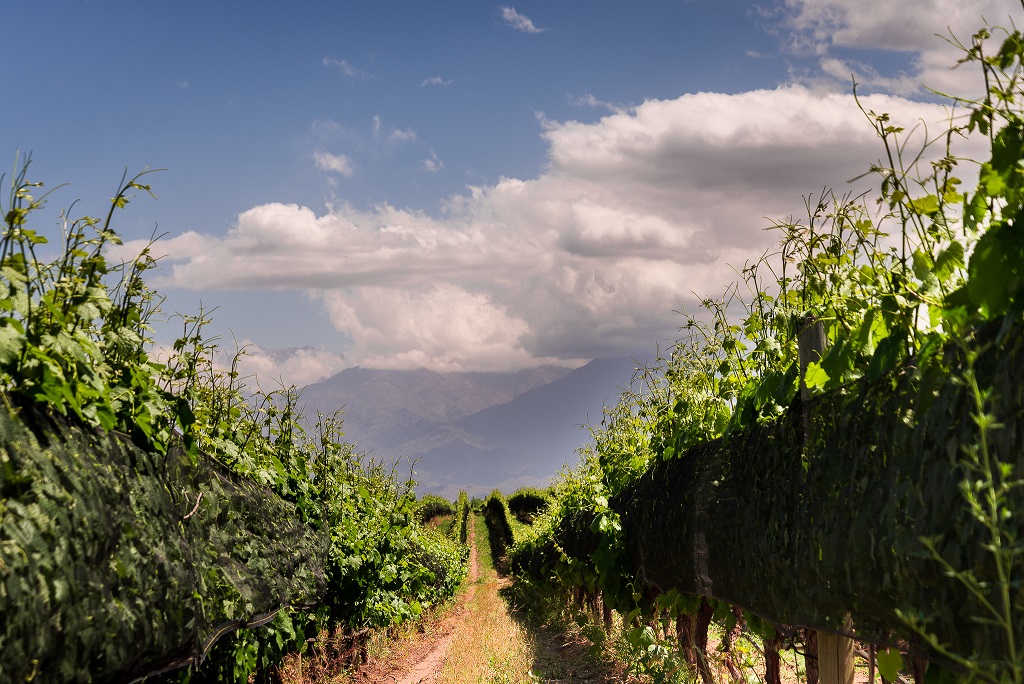
Source: Domaine Bousquet
Fast forward to today, Domaine Bousquet sustainably and organically farms 667 acres of land, produces 50 million liters of wine, 95% of which is exported to 50 countries around the world, and ranks among the top 20 Argentinian wineries in terms of export and a leader in the organic wine.
The winery produces a large range of still wines from traditional Argentinian varieties – Chardonnay, Malbec, Cabernet Sauvignon, etc, and it also offers a series of sparkling wines, both traditional method and Charmat. I got samples of Charmat-method wines, both white and Rosé, made from the Chardonnay and Pinot Noir in different proportions.


NV Domaine Bousquet Brut Tupungato Uco Valley Mendoza (12.5% ABV, SRP $13, 75% Chardonnay, 25% Pinot Noir, certified organic, vegan friendly) offers a nice fresh nose of golden delicious apple, crisp, fresh, energetic on the palate with cut-through lemony acidity. It is definitely enjoyable by itself and will play nicely with a wide range of dishes (Drinkability: 7+).
NV Domaine Bousquet Brut Rosé Tupungato Uco Valley Mendoza (12.5% ABV, SRP $13, 75% Pinot Noir, 25% Chardonnay, certified organic, vegan friendly) is a beautiful Rosé in its own right. It is not only the color, but it is also the wine which presents itself as a classic still Rosé would, with a nose of fresh strawberries and a full range of strawberry flavors on the palate, from tart to candied, perfectly balanced, fresh, vibrant, and full of life (Drinkability: 8-/8). Out of the two, Rosé was definitely my favorite.
At $13, these are the bubbles that you can consume any day without feeling guilty. You should, actually, feel guilty while drinking these wines, as the amount of pleasure you will derive is unproportionally more than what you are paying for them. But I will let you deal with your conscience, while I’m off to look for more values. Cheers!
Versatile Bubbles – Make Any Day Sparkle
Here is the question, wine lovers: what is your attitude towards sparkling wines? I’m not looking for a “politically correct” answer – “Champagne is for every day”, “bubbles every day” and so on. Yes – in theory, you can drink Champagne or any other sparkling wine for that matter (is there still a winery left which doesn’t make bubbles in some form?) – Champagne, Cremant, Cava, Prosecco, Sekt, Sparkling Shiraz or any other bubbles from anywhere else in the world – every day. Yes, you can – but do you?


No matter how much you love wine, I can bet that bubbles are not your average daily choice of beverage. There are many reasons for this. Of course, the price is one issue. Most of the typical Champagne today is pushing $40 per bottle, and this classifies as a “special occasion” type of beverage. This goes well beyond Champagne – all the random sparkling wines nowadays made literally everywhere, will set you back even further. Another reason – once opened, Champagne doesn’t last very long – two days in the fridge is probably okay, but the longer the bottle is open, the fewer bubbles are left. I’m sure there are many other reasons, some more personal than the others – for example, my wife loves red wine, but she would only have half a sip of Champagne if I will force her, so it is obvious that bubbles are not our daily beverage of choice.
It is hard to solve the personal issues, but if we will look at the price as the major issue, we can find some solutions to that. For example, how about some Prosecco? Yes, Prosecco is very different from Champagne – it is made from different grape; it comes from a different place – the Veneto region in Italy; it is made using a different process. But Prosecco is still a sparkling wine, usually costing about a third of the price of the typical Champagne bottle – and if you are looking to brighten up any day, Prosecco will do the trick (and the day will be even brighter knowing the amount of money you save).
Don’t take Prosecco for granted- it is a number one selling sparkling wine in the world today in terms of volume. Champagne roots can be traced back to the 15th/16th century, and Prosecco origins can also be traced to almost the same time. However, the production method for Champagne, called méthode champenoise was first described in the 1660s, while the production method used for most of Prosecco, Charmat-Marinotti, was invented in 1895. But these are minor technical details. The major difference is that while Champagne was craved by royalties and wannabes around the world for a few centuries, Prosecco first commercially appeared outside of Italy, in the UK, in 1989. And now, mere 30 years later, Champagne has to chase Prosecco’s success.
Okay, let’s stop talking and start drinking. Back in April, I attended a virtual tasting of 5 different Prosecco wines. It was done over Zoom, with 5 winemakers presenting their wines from their homes – but while tasting was virtual, the wines were not. For what it worth, here are my notes on the wines we tasted.
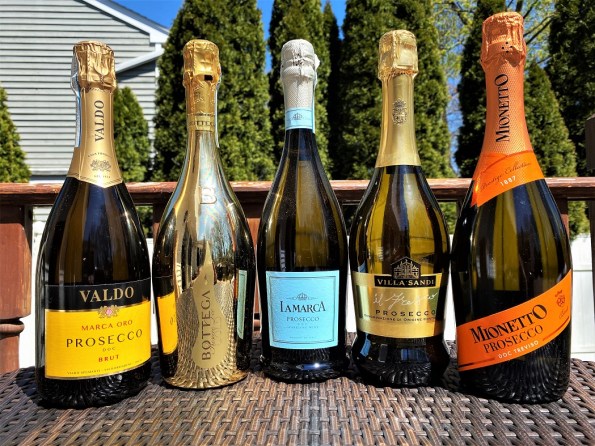
Villa Sandi takes its name from the historical villa, built in 1622. Villa Sandi produces a wide range of still and sparkling wines, including Prosecco from Cartizze, the most prestigious Prosecco vineyard.
NV Villa Sandi il Fresco Prosecco DOC Treviso (11% ABV, $15)
Pale green, fine mousse
Lemon, lemon zest, minerality
Fine bubbles, generous, crisp, fresh, Meyer lemon, pleasant and easy to drink
8-, a perfect summer quaffer or everyday bubbles
History of Bottega goes back to 1635 when Andrea Bottega started cultivating the grapes. Until 1992, Bottega was best known for its Grappa, and then in 1992, Il Vino dei Poeti Prosecco Spumante was created. Today, Bottega produces a large number of spirits, as well as wines. The range of Prosecco and sparkling wines includes more than 20 different bottlings.
NV Bottega IL Vino dei Poeti Gold Prosecco DOC Treviso (11% ABV, $29.99)
Straw pale, fine bubbles
A hint of apple, tropical fruit
Clean and refreshing mouthfeel, good acidity, lemon, a touch of Granny Smith apples, distant hint of nutmeg.
8-/8, restrained and elegant rendition.
The story of Mionetto started in 1887 when Francesco Mionetto opened the winery in Valdobbiadene, which is now known as the epicenter of Prosecco production. In 1982, Mionetto adopted the Charmat method for productions of the sparkling wines and introduced temperature-controlled fermentation. Mionetto had been leading the way in Prosecco production since then.
NV Mionetto Brut Prosecco DOC Treviso (11% ABV, $12.99)
Straw pale
Hint on peach and apple on the nose
Fine bubbles, crisp, fresh, touch of peach, fresh acidity of Granny Smith apples
8-, perfect everyday bubbles
Well, there is not a lot I can tell you about La Marca, as the winery website is excellent for marketing purposes, but doesn’t talk much about history. If anything, lots of cocktail ideas can be found there – see for yourself.
NV La Marca Prosecco DOC (11% ABV, $14)
Straw pale, large bubbles
Ripe peach, guava, pear, nose intense and inviting
Surprising contrast on the palate, dry, crisp, nice textural presence, tart lemon notes, good balance
8-, again- perfect everyday bubbles.
Valdo was founded in 1926 to produce sparkling wines in the areas of Valdobbiadene and Cartizze. Valdo was quickly acquired by the Bolla family and continued producing a wide range of sparkling wines. Right now, Valdo offers 29 (!) different sparkling wine bottlings, including some made using méthode classico and one organic Prosecco. This wine was also happened to be my favorite in this tasting.
NV Valdo Marca Oro Prosecco DOC (11% ABV, $13)
Straw pale, fine bubbles
Touch of yeast, toasted bread, and apples.
Fresh, crisp, cut through acidity, lemon, good minerality
8/8+, might be my favorite in the tasting, very reminiscent of champagne.
Here you are, my friends. Summer is here, and Prosecco’s refreshing qualities can brighten up anyone’s day. I’m off to pour another glass. Cheers!
Last Bottle Sign Up ($10 credit)




 Talk-A-Vino