Archive
Rioja Worth Seeking – El Coto de Rioja
 I love Rioja wines.
This is not a secret for anyone who has been following this blog for some time.
But despite such a strong proclamation, this love is not unconditional. Rather, it is very selective.
I have more of an exclusive club in Rioja. This is a club with a very limited membership. Anyone can apply, but only a select few can become members. Those in the club enjoy unconditional love and forgiveness for their little mistakes. For the rest of them… well, good luck making the cut.
I guess I need to change my opening line.
I’m a Rioja snob.
I love Rioja, but this love is very selective.
There, this would be a better opener.
The founding members of my exclusive club are CVNE with all of their lines (Vina Real, Imperial, Contino, …), La Rioja Alta, and Lopez de Heredia. Bodegas Tobias, Bodegas Beronia, and Bodegas Lan also have full membership.
Okay, let’s put another spin on this snobbish endeavor.
Rioja is a large region in Spain. There are about 14,800 grape growers, and about 574 wine producers in Rioja. That means lots of different styles and lots of different quality levels – even though all bottles will say “Rioja” on them. Seeing a bottle of Rioja doesn’t make me excited – seeing the name of a familiar producer who I know makes quality Rioja wine does. Hence my exclusive Rioja “club” – simply the list of my favorite Rioja producers.
What might be more important is that this “club” is actively taking applications (the approval rate is very low though), and I feel that it is time to formally add one more member there – El Coto de Rioja. El Coto wines were mentioned a few times in the blog already, but now let’s make it official.
El Coto de Rioja was founded in 1970 located in the town of Oyón. Over the 50 years of its history, El Coto de Rioja became the largest winery in Rioja, farming 1804 acres of estate vineyards. El Coto de Rioja plantings include 8 individual vineyards located across all Rioja DOCa sub-zones, such as Rioja Alta, Rioja Baja and Rioja Alavesa. One of the vineyards, Finca Carbonera, located in Rioja Alta, is the highest altitude vineyard in Rioja DOCa. In addition to all of the traditional Rioja red grape varieties, a significant portion of plantings are dedicated to the white grape varieties including new ones for Rioja – Verdejo, Chardonnay, and Sauvignon Blanc. El Coto de Rioja also built a winery directly in the vineyard, dedicated to the white wine production.
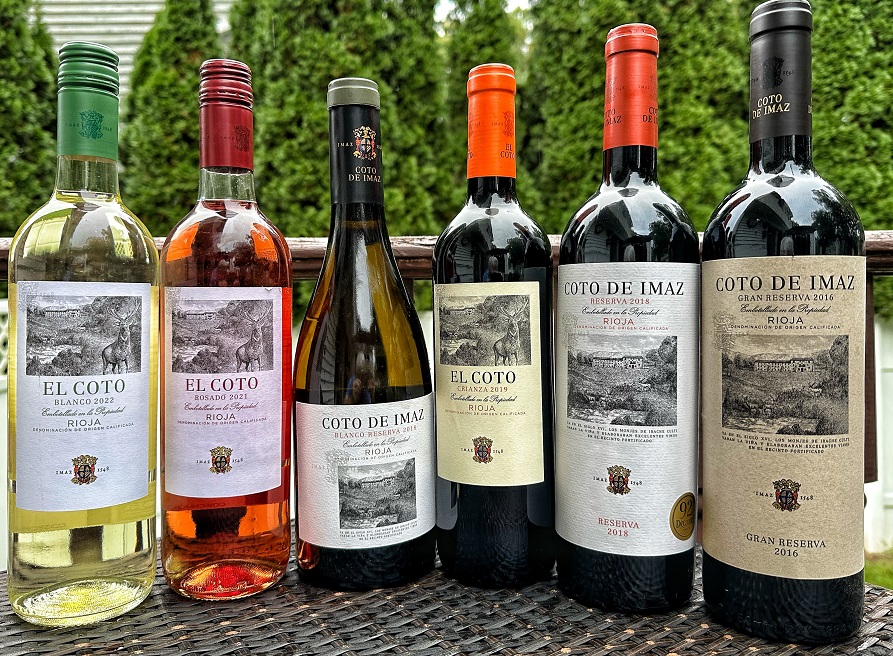
I had an opportunity to taste (samples) a range of wines from El Coto de Rioja – here are my notes:
2022 El Coto Coto de Imaz Blanco Rioja DOC (12% ABV, $11.99, 93% Viura, 4% Sauvignon Blanc, 3% Verdejo)
Pale green
An enticing nose with lemon, acidity and minerality, fresh and vibrant
Lemon, Whitestone fruit, crisp, clean, refreshing.
8, delicious.
2021 El Coto Coto de Imaz Rosado Rioja DOC (13.5% ABV, $11.99, 90% Tempranillo, 10% Garnacha)
Intense salmon pink
Beautiful, inviting, fresh strawberries
Fresh strawberries and cranberries on the palate, pleasant tartness, fresh and round
8, excellent
2018 El Coto Coto De Imaz Blanco Reserva Rioja DOC (12.5% ABV, $24.99, 100% Chardonnay, 12 months in new French oak)
Beautiful light golden color
A touch of butter and vanilla
A hint of butter, vanilla, Granny Smith apples, crisp, elegant, good acidity.
8, I want to try it in 5 years, I expect it to develop beautifully
2019 El Coto Imaz Crianza Rioja DOCa (14.5% ABV, $16.99, 100% Tempranillo, minimum of 12 months in American oak, at least 6 months in the bottle)
Garnet
Dark fruit, sapidity, gunflint, intense
Bright, uplifting, medium body, dark berries, smoke, crisp acidity, very “new world” in style, good balance, tannins show on the finish – will age and evolve well
8-
2018 El Coto Imaz Reserva Rioja DOCa (14.5% ABV, $22.99, 100% Tempranillo, minimum of 18 months in American oak, at least 18 months in the bottle)
Dark garnet
Dark fruit, earthy, being of herbs, medium intensity
Brilliant, classic Rioja, succulent cherries, cedar box, sage, salivating acidity intermingling with well integrated tannins, perfect balance.
8, delicious.
2016 El Coto Imaz Gran Reserva Rioja DOCa (14.5% ABV, $34.99, 100% Tempranillo, minimum of 24 months in American oak, at least 36 months in the bottle)
Dark garnet
A touch of minerality, cigar box, hint of cherries
Black fruit, concentrated, firm structure, well-integrated tannins, good acidity, good balance.
8, very good but will benefit from time in the cellar
I have to honestly say that while the red El Coto wines were good, I loved both whites and Rosé even more. The El Coto Rioja Blanco is a perfect quaffer any time you want a glass of refreshing white wine. Blanco Reserva is in the category of its own, a delicious Chardonnay rendition for any occasion when you crave a thought-provoking white wine.
El Coto de Rioja wines are well worth seeking – they are both delicious and still reasonably priced for the quality they deliver. And they are also widely available, so off you go to the store. Cheers!
New Releases From Bodegas Beronia
 When it comes to Rioja, Bodegas Beronia is a relative newcomer, founded in 1973 by a group of friends who fell in love with La Rioja while visiting on a holiday – compared with many of the Rioja’s finest taking its roots from the 19th century.
I wrote about Beronia wines many times before, so instead of sending you to this link to read about the winery itself, here is simply an excerpt from that post:
The name Beronia is not random – here is the explanation: “name linked to the history of the land where the winery is found. In the 3rd Century BC, the area known as Rioja today was inhabited by a Celtic tribe called the ‘Berones’. They inhabited the towns of Tricio, Varea, and Leiva, marking the limits of the Berones region, today La Rioja.”
Originally, the wines were produced literally by friends for the friends, without much thought of commercial sales. In 1982, Bodegas Beronia became a part of González Byass family, and at that point, wines of Bodegas Beronia started to appear on the international markets.
Beronia style starts in the vineyard, practicing sustainable viticulture. Different vineyards are used for different types of wines – Crianza, Reserva, Gran Reserva. For example, Gran Reserva wines are typically produced from 80-90 years old vineyards. And talking about the style, wines are manipulated as little as possible.
Bodegas Beronia Rioja wines represent an intersection of tradition and modernity. While “traditional” and “modern” styles of Rioja can be a subject of great debate with a lot of wine consumed to prove the point, I would offer a very simplistic viewpoint. Tempranillo has a great affinity to the oak; the resulting Rioja wine is well influenced by the oak regimen. Traditionally, Rioja is matured in American oak casks. Modern-style Rioja often uses French oak. Here is your style distinction – American oak versus French. Bodegas Beronia goes a step further than many. They create their own barrels, using both American and French oak elements in one barrel. Thus the wine is not defined by blending of the separately aged components, but instead, it is aging in a mixed environment.
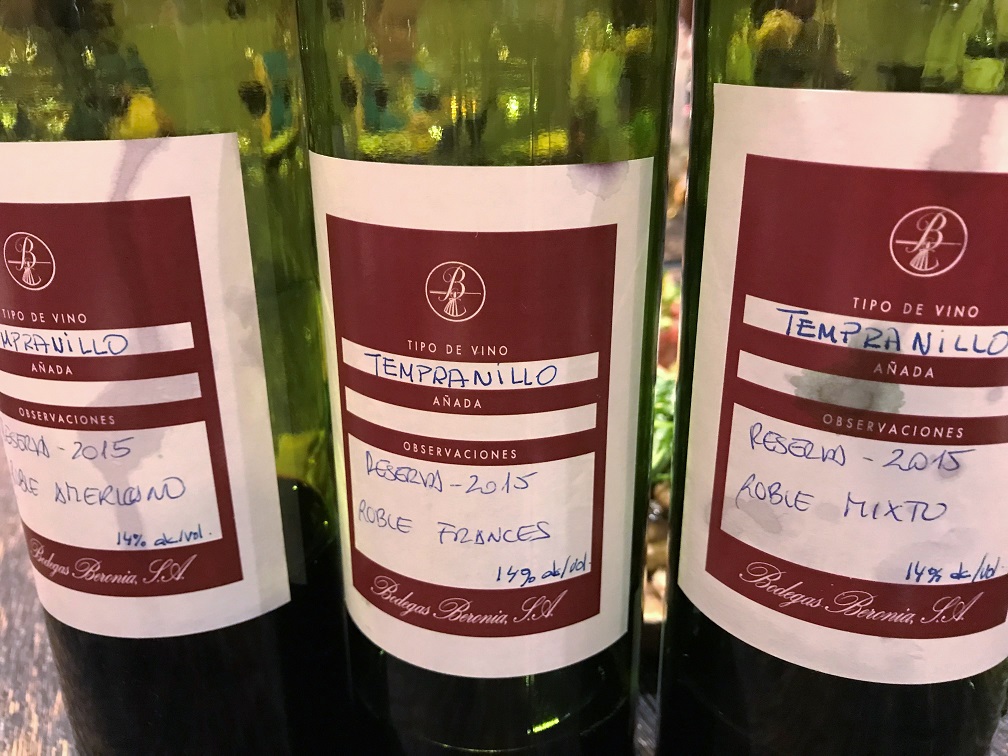
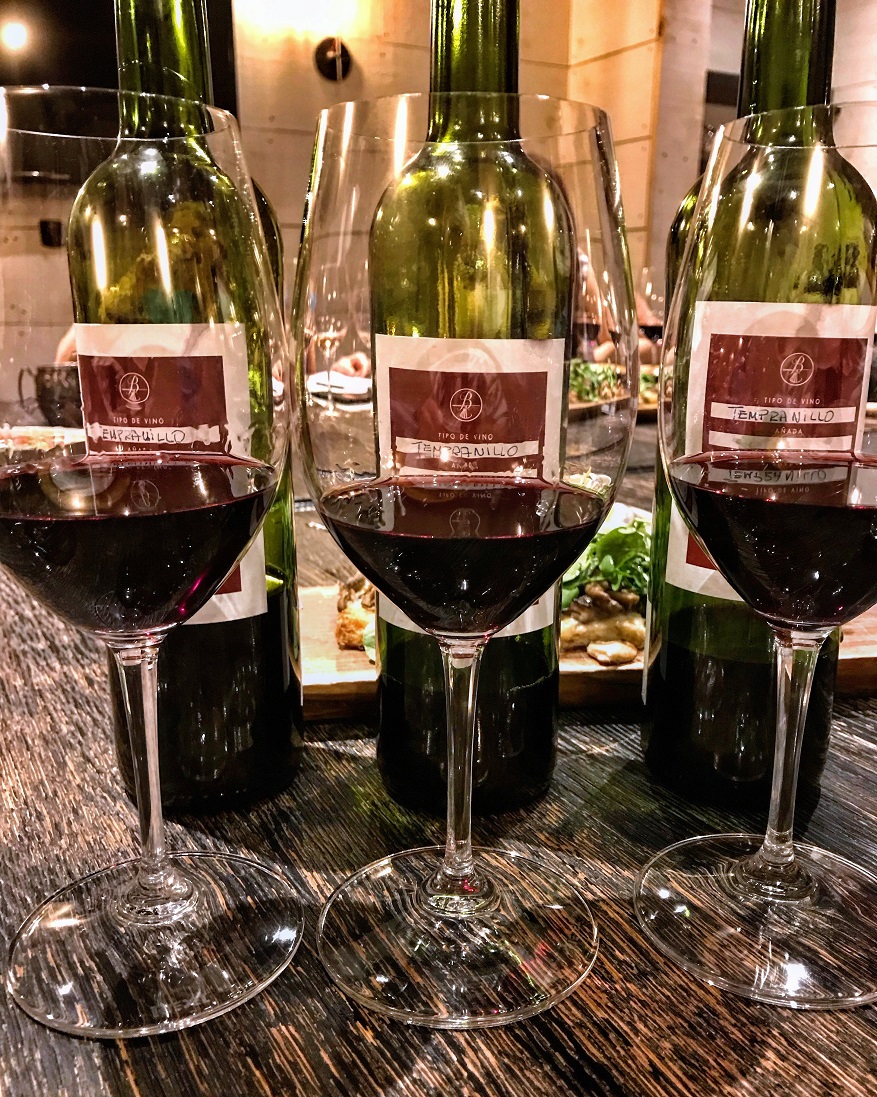
Now, here is something I never shared before. In June of 2018, I had an opportunity to attend a lunch with Bodegas Beronia winemaker, Matias Calleja. During that lunch, we were able to actually taste the differences between the same exact wine, 2015 Tempranillo, aged for 18 months in 3 different types of oak – French, American, and Beronia’s own, mixed.
When we tasted these three wines side by side, the wine aged in the American oak had the brightest fruit. The French oak-aged was more earthy and had a bigger presence on the palate. The wine aged in the mixed barrels provided the most complexity, and fell in the middle, with interesting spicy notes. Pepper, which is not a typical Tempranillo descriptor, was very pronounced on the mixed barrels. The mixed-barrel one was my favorite.

Now, we can talk about the latest release from Bodegas Beronia – pay attention to the notes on the oak regimen:
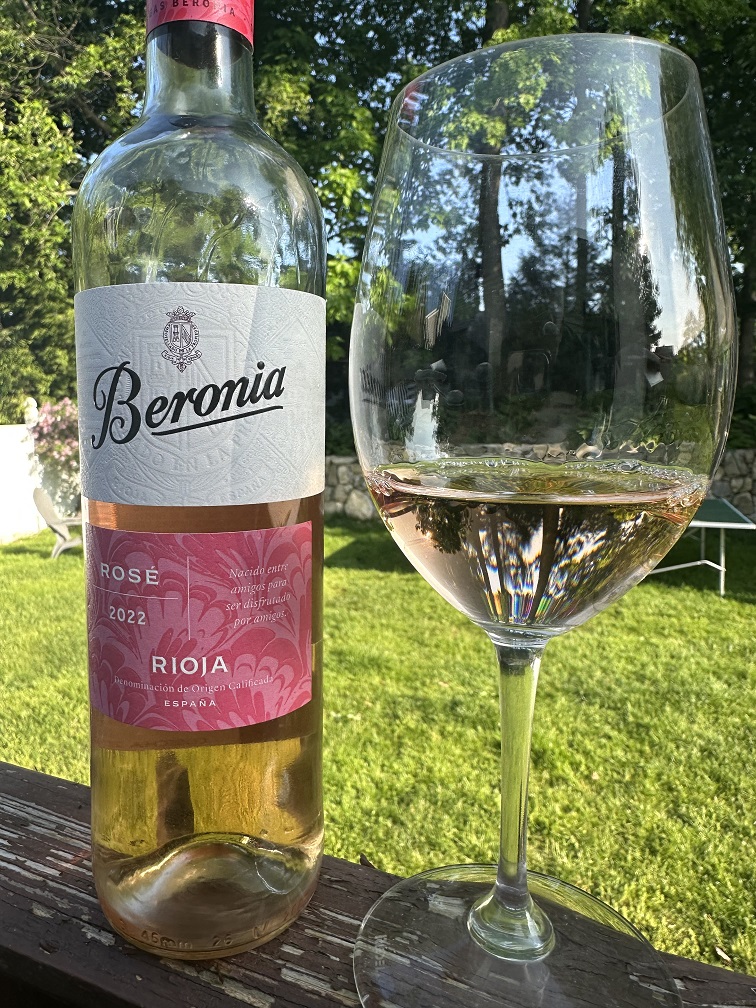
2022 Bodegas Beronia Rosé Rioja DOC (13.5% ABV, $12.99, 55% Garnacha, 45% Tempranillo)
Very light pink, almost a rose gold
Very restrained, a hint of underripe strawberries
Crisp, tart, very limited fruit, a distant hint of strawberries with a tartness of cranberries, medium finish
8-, Provençal style, clean, refreshing
2019 Bodegas Beronia Rioja Crianza DOC (13.5% ABV, $14.99, 95% Tempranillo, 4% Garnacha, 1% Mazuelo, 12 months in mixed American oak (staves) and French oak (ends) barrels, 3 months in the bottle)
Dark garnet
Cherries, cigar box, a hint of sweet tobacco
On the first day, the wine had a lot of baby fat, too round
Second day – much better, tart cherries with good acidity and earthy undertones.
8-, needs time. The wine is either genuinely too young, or this is a problem with the screwtop enclosure, not allowing the wine to properly breathe, therefore properly mature.
2018 Bodegas Beronia Rioja Reserva DOC (13.5% ABV, $24.99, 95% Tempranillo, 4% Graciano, 1% Mazuelo, 18 months in mixed American and French oak barrels, 18 months in the bottle)
Dark garnet
Earthy, dense, inviting
A hint of barnyard, tart cherries, vanilla, good acidity, good balance
8-/8, elegant and round. Asking for food
2015 Bodegas Beronia Rioja Gran Reserva (14.5% ABV, $29.99, 94% Tempranillo, 5% Graciano, 1% Mazuelo, 28 months in French oak barrels, 36 months in the bottle)
Dark Garnet
A touch of barnyard, dark and earthy, anis appeared on the 3rd day
Cigar box, sapidity, roasted meat, cherries and plums, clean acidity, firm structure, well-integrated tannins. On the third day, a touch of espresso on the finish.
8+, delicious. Will evolve. I would love to taste this wine in 10 years. And then in 20.
Just to summarize this tasting experience – the Rosé was excellent. I really didn’t love the screw top on Crianza – I believe it doesn’t let the wine properly mature in the bottle. And the Gran Reserva for $30 MSRP is the wine to get by the case and let it gracefully mature…
What were your latest Rioja discoveries?
Spanish Wines: Old and New
 If I start calling wines “friends”, does it make me an alcoholic or a sad psychopath?
Whatever. We are who we are.
If you love wines, what are the emotions you experience when looking at a familiar bottle? “Ahh, I know you. Of course, I remember you. Oh, we had a great time together. Remember what happened the last time we met?” Wouldn’t that be very similar to a meeting with an old friend? I’m not equating humans and bottles in any way, but emotions connect us, and good wine always solicits emotion.
What happens when you see a new wine? If something strikes your interest – label, region, producer, grape, anything – your think “yeah, I want to get to know you better”. Making new friends in the human world would work pretty much the same – but I think we better get back to talking about wines before I will dig myself too deep.
I love Spanish wines – and you are well aware of this. I’m always happy to meet old wine friends. I’m equally excited to make new acquaintances. Especially when both old and new friends are Spanish wines.


The first wine I would like to talk about… Well, speaking of friends, it is an old and wonderful friend who makes you feel uneasy at a first sight. You know the feeling when you see an old friend and you are super-happy to embrace him (or her), and then your joy is instantly blemished with the next thought of “ohhh, I promised to send him the book, and I never did”. So this Godello from Arano wines is this exact friend. I had this wine a few years ago, was blown away, promised to myself to write about it – and yet never did. Yep, that feeling.
Speaking about Spanish white wines, most people would probably think of Albarino first, followed by Rueda/Verdejo, and then probably get to white Rioja (usually made from the Viura grape). Meanwhile, Godello might be the most interesting Spanish white grape, in many instances producing white wines easily rivaling the best renditions of Chardonnay. This Godello is definitely in the group:
2020 Virgen Del Galir Pagos del Galir Godello Valdeorras DO (13.5% ABV, $21)
Light golden
Whitestone fruit and lemon
Whitestone fruit, plump, mouthfeel between Chardonnay and Roussanne, round, perfect acidity, delicious.
8+, would perfectly compete with any Chardonnay
Here comes another old friend – Bela, one of the new projects of the Rioja powerhouse CVNE in the Ribera del Duero region. I tasted the 2017 vintage of Bela 3 years ago, which gives me the “old friend” rights. There are some notable differences between 2020 and 2017 vintages – 2017 was well-drinkable almost from the get-go, and 2020 needed 3 days to become the beauty it had become. I don’t know if the oak regimen can actively contribute to such a dire difference (the 2017 vintage spent 6 months in the mix of 1-year-old French and American oak, and 2020 seems to spend 9 months in the new French oak) – but nevertheless, this is definitely the wine for the long haul.
2020 CVNE Bela Ribera del Duero DO (14.5% ABV, $18, 95% Tempranillo, 5% Cabernet Sauvignon and Merlot, 9 months in French Oak barrels, 3 months in the bottle)
Dark Garnet
Earthy spicy herbal nose with dark fruit undertones and a touch of tasted meat
Cherries and cherry pit, tart, focus, firm, concentrated – beautiful on the 3rd day. Day one needed time and day 2 was completely closed.
Drinkability: (day 3): 8+


Now, my most beloved wine category – Rioja.
As you know, everything in life has two sides. Rioja is my favorite wine – but on the flip side, I’m very particular about my Rioja. Despite the absolute world-class of CVNE, I never saw this Bakeder Rioja before, which to me means “proceed with caution”. It appears that this wine is a tribute to the car-free village of La Guardia. As this is a new wine for me, let me quote from the CVNE website: “Bakeder, pronounced back-aid-er, is a wine from Laguardia, a village from Rioja Alavesa. The name, “beautiful as peace” is a loose translation from the Basque language. Let the Whole World know the beauty of the fortified medieval village of Laguardia, protected by its great sierra; its solemn churches and monuments; its historic vineyards, and of course, its magnificent wines.” All my fears dissipated with the first sip:
2019 CVNE Bakeder Rioja Alavesa DOC (13.5% ABV, 100% Tempranillo, 10 months in French oak barrels)
Dark ruby
Cherries, cigar box, eucalyptus
Cherries, plums, well-integrated but present tannins, earthy, firm structure, good acidity, perfect balance. Lots and lots of pleasure.
8+, pop’n’pour the wine you don’t want to stop to drink
The last wine for today comes from the legendary Spanish producer – René Barbier from Clos Mogador in Priorat. Clos Mogador needs no introduction to wine lovers as a producer of some of the most coveted wines in the world. Com Tu, which I never had before, is a relatively new wine, commercially produced only since 2005 from 35-50 years old Garnacha vines. The wine’s name can be summarized as ” I am like you (Com tú), you are like me”, has a lot of meaning and history as a special project, so I would like to simply direct you to the Clos Mogador website to read about it.
2019 Clos Mogador Com Tu Garnatxa Negra de la Figueroa Montsant DO (14.5% ABV, 100% Garnatxa (Grenache), 18 months in a foudre)
Dark ruby
Dark ripe fruit and dark chocolate
Cherries, plums, chocolate, good acidity, sage, good balance.
8, light and pleasant on day 1
Here you are, my friends – some old and some old new “wine faces” – each delivering lots and lots of pleasure.
I wish you many pleasant encounters with friends old and new. Cheers!
When in Spain…
My last trip to Europe was in September 2019. Next were the 3 strange years (you know what I’m talking about). And then suddenly I had to come to Europe for work meetings for 2 straight weeks – first week in Spain, then in France. It honestly felt very strange, visiting Europe after such a long break, but I’m afraid I will start sounding very stupid if I will continue complaining…
Before we talk about Spain – I love sunsets and sunrises around the planes – I’m sure you know that there will be quite a few pictures in this post, so here you go…


So what one does do upon arrival to Spain? Okay, I have no idea what people actually do when they come to Spain. And my course of action is largely independent of the destination – I need to find sparkling water for my hotel room, as this is the form of water I always prefer. And of course, being in Europe, I need to check the prices of wine and probably get a bottle or two for the room.
Arriving in Malaga on Sunday didn’t really help with things. Why? I don’t know if this is very typical of Spain (I suspect so) or just for Malaga, but no matter what Google says the absolute majority of the supermarkets are closed (as well as most of the regular stores). I made 2-3 attempts to rely on Google’s recommendations only to find places closed. I almost gave up but decided to give it one more try. This walk was successful, and I ended up with 3 bottles of wine, 3 bottles of seltzer, and some other provisions to make hotel room life more fun (glad I had a little fridge in the room).
Of course, the point of the excursion was not just to get the wine, but also to see the prices and selection. A good number of wines were priced in the range which doesn’t exist in the USA, no matter what and where you are buying – from €2.50 to €4. You can also see a variety of “Tetrapak” wine options, priced extremely reasonably, barely a €1 for a liter and similar prices for the six-packs. Definitely beats “wine-in-the-can” prices in the US which can easily exceed an obnoxious $10 for a can and more.
Later in the week I managed to get to a supermarket, so you can see the price observation in the pictures below. It is interesting the Albariño wines were priced almost at the level of the prices in the US – while many of the wines were available for a “buck fifty” or so. Go figure…
Anyway, I settled for two bottles of red and one white, each under €4.


After getting back to my room, I happily enjoyed both of the reds, which both happened to be Tempranillo wines. I did like 2017 Félix Solís Winery Viña Albali Reserva Valdepeñas DO (13% ABV) a bit more as it was perfectly approachable from the get-go, with elegant dark fruit and spices. The 2019 Bodegas Los Llamos Señorio de Los Llamos Tempranillo Valdepeñas DO (12.5% ABV) was a bit more restrained and needed more time to open. Both wines lasted pretty much through the entire week by just putting the cork back. The 2021 Sitial Verdejo Rueda DO (13% ABV) was opened a few days later, and it was a perfectly happy Verdejo rendition with a touch of freshly cut grass and lemon, fully matching the expectations.


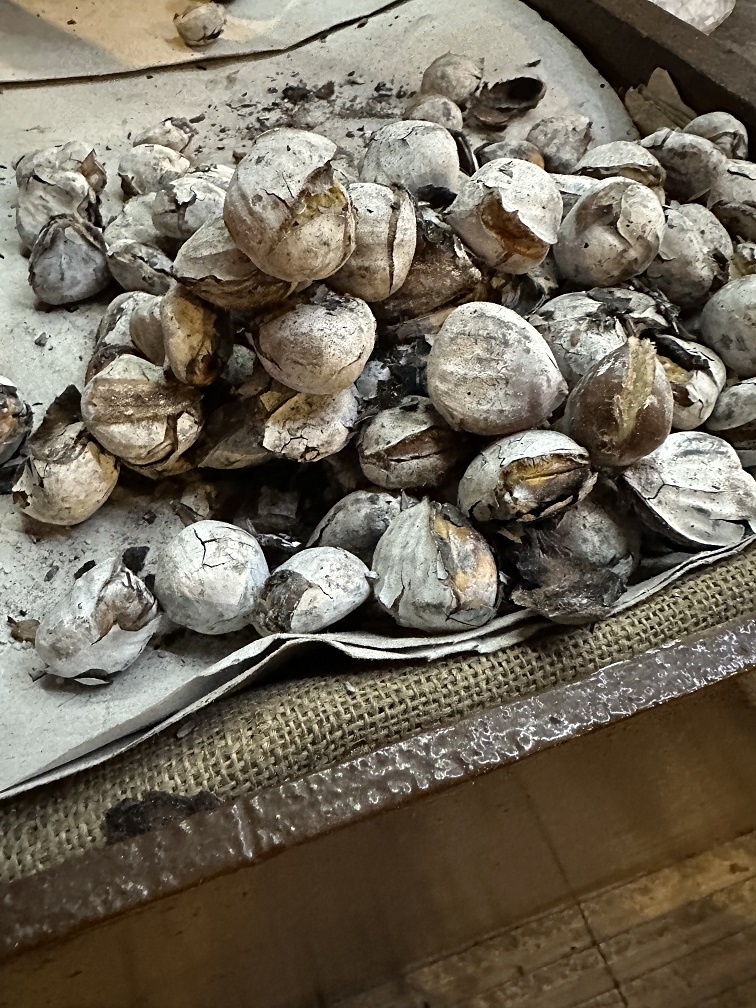
After my colleagues arrived in the evening, we took a little stroll to the historical town, where in addition to the very enjoyable walk and pleasant sightseeing I came across one of the tastiest discoveries of the entire trip – roasted chestnuts.
Before you say “duh”, let me explain. Of course, I read many times that roasted chestnuts are “the thing”. I tried to roast them at home in the oven – never happy with the result. Yes, it might be me, might be the chestnuts we get in the US, might be the method. Nevertheless, the chestnuts were in my “I don’t get it” book.
Walking in Malaga, first I noticed the smell. The delightful smell of food and smoke. And then we saw the street vendors, roasting chestnuts in the little stands, looking similar to the hot dog stands in Manhattan. That aroma in the air… absolutely dreamy…
But what’s more important is that the taste was sublime. You take this warm chestnut in your hands, break the thin shell and enjoy the crumbly, slightly sweet and barely starchy “nut” which falls apart in your mouth. I’m salivating as I’m writing this – that food experience pretty much beats Jamon in my book.

This was my first time visiting Spain, so of course, it was nice to see the words of others materialize in the Jamon abundance everywhere – little stores, restaurants, everywhere. I love how those sandwiches are presented – it is really hard to walk by and not get one.


Speaking of food, I found an unexpected dish to be interestingly widespread – Russian Salad. We had it with the catering during lunches and I saw it on the menu of a number of restaurants and even in the eateries at the airport.
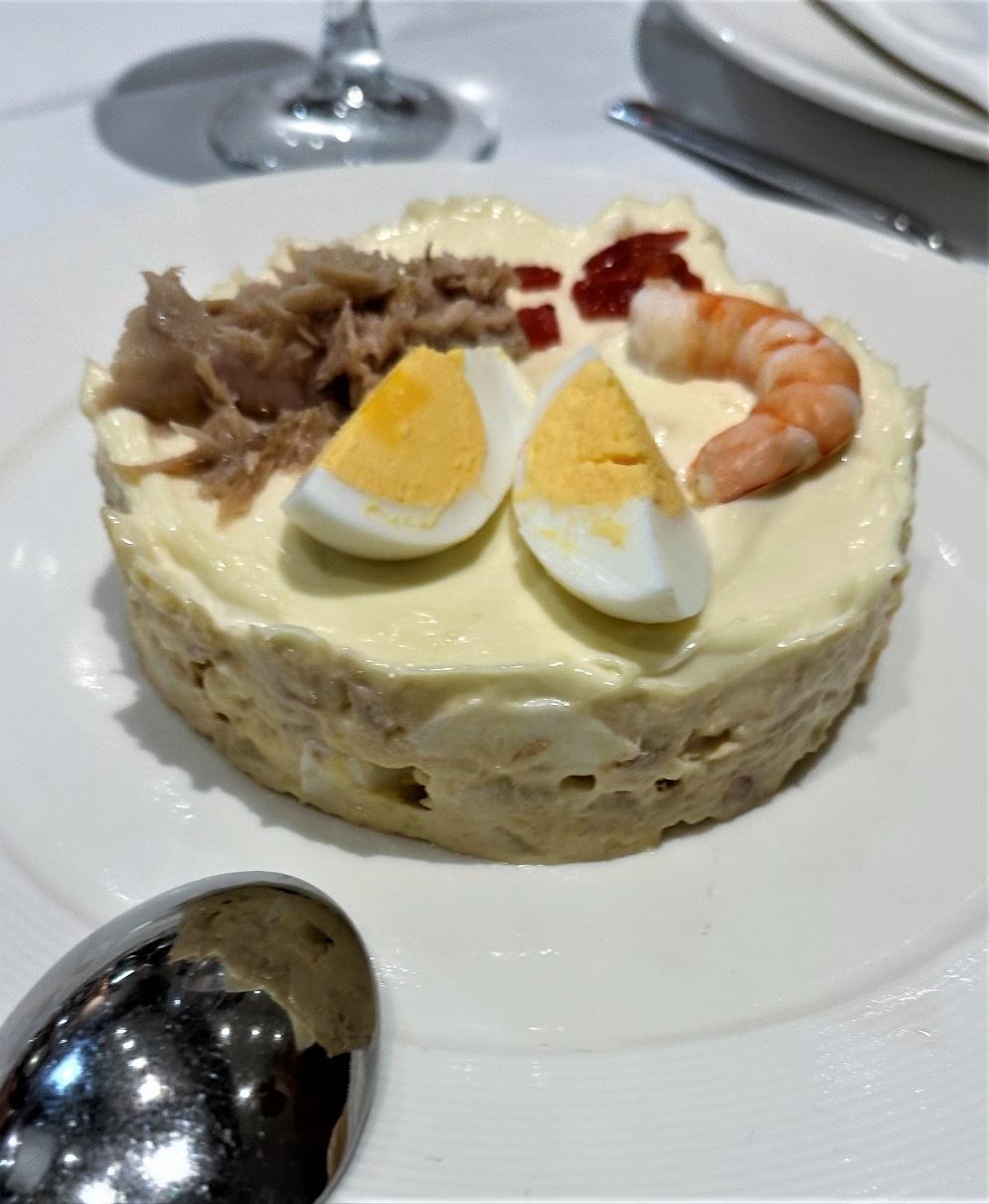
I don’t know if this dish is popular only in Malaga or in Spain overall – Malaga used to be very popular among Russian tourists, and this might have something to do with this dish. Anyway, if I was able to dissect correctly, the salad consists of boiled potatoes, eggs, salmon, and mayo. It was quite tasty on a few occasions I had it.
Now, let’s talk more about wines. We had an event dinner at the restaurant in the old town. The wine was simply offered by the color – white or red – with a sheepish comment by the waiter “ohh, the red is local”. I decided to start with the white and to say that I thoroughly enjoyed my choice would be an understatement. This 2021 Bodegas Barbadillo Castillo de San Diego Palomino Fino (13% ABV) had a deep inviting nose of whitestone fruit with minerally undertones, and the palate had a great depth of white plums and sage with the roundness and plumpness which I typically observe on the best renditions of the Roussanne. Outstanding.
Then, of course, I asked to try the red, not having much of an expectation remembering the shy enforcement.


Wow! I couldn’t understand what was happening. I was supposedly drinking local Malaga wine which I know nothing about, but we are in Spain – how come this wine tastes like a perfectly round, exuberant, in-your-face Bordeaux at its peak? What is this all-around beautiful cassis doing in the local Malaga wine? Something happened to my palate? When I got a chance to look at the back label of this 2012 Bodegas Excelencia Los Frontones Crianza Sierras de Málaga DO (13.5% ABV), things got back to normal – Cabernet Sauvignon, Cabernet Franc, Tempranillo, and Syrah. I did a bit of the reading afterward and it appears that the Malaga area had a lot of French winemaking influence, hence the use of Bordeaux varieties. For the 10 years old, this wine was absolutely in its prime and absolutely enjoyable.
Later during the week, I had another enjoyable encounter with local Malaga wine – 2018 Bodegas Pérez Hidalgo Vega del Geva Sierras de Málaga DO (14% ABV), a blend of Syrah, Cabernet Sauvignon and Merlot. A bit tighter than the previous wine, but still very much cassis and eucalyptus forward, round, layered, and delicious.
My last evening in Malaga was full of pure, hedonistic pleasure – but this deserves a post on its own.


Here you are, my friends. I have to declare my first visit to Spain a success, and I truly hope to be back in the near future.
Daily Glass: Yin and Yang
 Obey your inspiration.
Yin and Yang are too big of a concept to casually use while discussing everyday wines. Black and white. Darkness and light. Night and day. Passive and active. There is a lot of meaning behind the revolving black and white semi-spheres, and we would need a few (4, 5, …) bottles of wine to discuss it. So what gives?
I was drinking a bottle of wine for 5 days. Open, pour a little into a glass, drink, hope to be amazed, close, pump the air out, put aside. Repeat. And then I opened a bottle for a Friday night dinner of homemade tacos, and the wine was delicious and approachable from the moment it hit the glass. Yin and Yang, the brain said. This is a perfect title for the post. Who am I to argue?
Yin is a black portion of the circle of life. 2014 Bodegas Riojanas Rioja Gran Reserva (13.5% ABV, $19.99 at WTSO, $49.99 on the web) was the Yin at the moment.
Bodegas Riojanas was founded in 1890 by the Artacho family which had a long winemaking history prior to that. Unlike many other Rioja’s Greats, who set up their wineries close to the train station in Haro, Bodegas Riojanas winery was built in Cenicero, where the grapes grew. Bodegas Riojanas was among the 13 founding wineries behind the Rioja DOC denomination. Today, Bodegas Riojanas farms 250 acres of vineyards and produces a large number of white, red, Rosé, and sparkling wines.
Bodegas Riojanas Gran Reserva is one of the flagship wines. 100% Tempranillo, aged for 24-30 months in the casks, produced in traditional Rioja style. 2014 vintage was rated “good” in the official Rioja vintage classification – the best years are identified as “Excellent”, then “very good”, and then “good” – so we can say that this was an okay year. Traditional style Gran Reserva wines are typically tight and need time – and so was this wine. For 5 days, as I was tasting it little by little, the wine was opening up ever so slightly. Don’t get me wrong – it was drinkable for someone who likes the power and likes to drink super-structured, super-tight wines. On day 5, there was a glimpse of cherries and a cigar box, which was slowly replaced by the tannins on the finish. This is the wine with promise, but we need to wait until the Yin will turn.
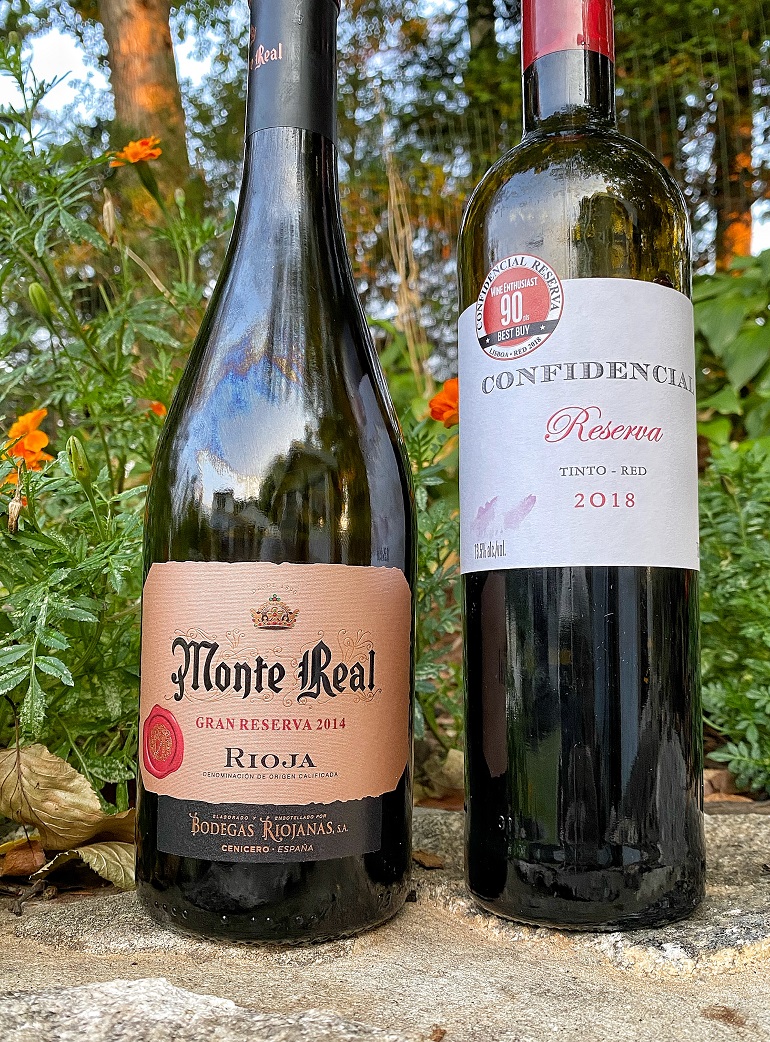
Now, the Yang – 2018 Casa Santos Lima Confidencial Reserva Vinho Regional Lisboa (13.5% ABV, $9.99, 10+ grape varieties, 6 months in the French oak cask).
Casa Santos Lima also has a history that lasts more than 100 years. The company had great success as a producer and exporter at the end of the 19th century. In 1990, the company was restarted, and today 90% of the produced wines are exported to more than 50 countries on 5 continents. Casa Santos Lima produces a wide range of wines in all the regions in Portugal, with a significant focus on providing value.
It is not for nothing this wine is called Confidencial. You might know that I excel and take pride in being a very capable grape sleuth. And nevertheless, as the name says, I was only able to find out that the wine is produced out of more than 10 confidential varieties – nowhere there are any hints on what those grapes might be.
This is not necessarily surprising. Yes, it can be a clever marketing play (humans love mystery), but at the same time, lots of grapes in Portugal are growing as field blends, where the grape grower doesn’t exactly know what grapes are growing in a given vineyard or a given plot – this might be a great idea to simply declare such blend as “confidential”.
Based on my experience with Portuguese grapes varieties, I would think that Touriga Nacional is a part of the blend, with the wild strawberries being a telltale sign. In any case, the wine was delicious with soft and supple wild strawberries and raspberries forming the core, and sage and other garden herbs playing a supporting role. Layered, velvety, and round – perfectly approachable and enjoyable right at this moment. (Drinkability: 8-/8).
Yin and Yang are all about harmony, and things that are changing in life – what was white can become black, and the other was around. The light can bring warmth or it can kill. The darkness can be scary, or it can be comforting.
With time, these two wines can completely change places. The Rioja might become absolutely stunning in 25-30 years., The Portuguese red might be past prime even in 10. The Yin and Yang can swap places. But we don’t know what will happen in the future, and that makes it all fun. Let’s drink to the harmony in life. Cheers!
A Refreshing Trip Around The World
Have wine, will travel.
I love saying that.
Have wine, will travel.
While we might be dreaming about all those ways to instantly travel from our living room to Mount Everest, Bora Bora, or Singapore, wine has this magical ability to transpose, to let us be where we want to be in a blink of an eye. It works best with the bottle of wine you are familiar with, especially if you have had a chance to visit the winery and acquired some great memories. But even if you have never visited the winery, a bottle of wine is quite a unique product – every bottle of wine proudly advertises where it was made, right on the front label – when you see “Italy”, it is not difficult to picture Rome or Bologna. France probably would solicit the image of the Eiffel tower. Does Australia bring up an image of a boxing kangaroo? Oops, this can be just me. Anyway, I’m sure you know what I’m talking about.
So today, let’s take advantage of the instantaneous travel only wine can offer, and let’s go on that trip around the world.
The weather is hot in the Northern hemisphere, so today we will hop onboard of the white wine express.

Our first stop will be in Spain. Thinking about Spanish white wines, what grapes come to mind? To ease up on this question – boy, it is hot outside – what is the first Spanish white wine you can think of? While you are pondering that question, I can give you my answer – Albariño. Of course, you have Viura, Verdejo, Godello, and others, but to me the first association for the Spanish white wine is Albariño.
As you might have suspected already, our first stop is in Rias Baixas, roughly a 3,000 square kilometers region located along the Atlantic ocean’s coast in Galicia, in northwest Spain, where Albariño is the king. Pazos de Lusco winery is farming 12.5 acres of Albariño grapes in the south of the region, 40 km away from the coast. The name of the winery comprises two typical Galician words – “pazo”, which stands for home, usually in the countryside, and “lusco” which defines the beautiful moment between dusk and nightfall.
2021 Pazo de Lusco Albariño Rias Baixas DO (13% ABV, $24.95, Vegan)
Straw pale
Intense aromatics, ripe white fruit, peach, tropical fruit
Nicely restrained palate, crisp, tart, lemon, the wine makes you salivate and want food even if you are not hungry.
8, excellent. Should be great with oysters.
For our next stop, we are staying in Spain but traveling east almost to the French border, to the region called Somontano, where the wine had been produced for more than 2,000 years. In Somontano, there lies the Secastillo Valley (the valley of 7 castles), boasting 100 years old Garnacha vines at 2,100+ feet of elevation and a special Mediterranean microclimate defined by close proximity to Pyrenees mountains. This is where our next wine is coming from, Garnacha Blanca produced at the Pagos de Secastilla:
2020 La Miranda Secastilla Garnacha Blanca Somontano DO (13.5% ABV, $18, 4 months in French oak)
Straw pale
Minerality, a touch of gunflint, underripe white fruit
Beautifully playful, fresh white fruit and berries medley, crisp and clean acidity, excellent balance, delicious.
8


As I was deciding when I will taste these wines, the overarching thought came in – oysters. I want fresh oysters. Luckily, we have a new fish monger opened nearby, so procuring a few dozens of oysters was really simple. I tried Albariño and Garnacha Blanca with the fresh oysters, and while the pairing with Garnacha Blanca was not bad, the Albariño and oysters were simply a match made in heaven. Albariño was a perfect chaser, amplifying the delicious salinity of the oyster juice and if you would close your eyes, it was very easy to imagine yourself standing right next to the ocean waves and smelling the salty, fishy water. If you will have an opportunity – spoil yourself, oysters and Albariño are really tasty together.
Now that we are not hungry, we can continue our journey. We are now traveling northeast to the heart of Europe – we are going to Austria. Let me ask you the same question as before – what grape would you associate with Austria first and foremost? I hope your answer will be the same as mine, as mine is rather obvious – Grüner Veltliner.
Grüner Veltliner is unquestionably the most famous Austrian grape, with more than 37,000 acres planted. It appears to originate in Austria and as it was recently established, it is a natural cross between Traminer and St. Georgen (an almost lost grape, only recently rediscovered). Gruner is capable of a wide variety of expressions, depending on the soil types and the yield. But what sets the grape apart in the world of white grapes is rotundone, which is present in the skin of Grüner Veltliner. I only recently mentioned rotundone in the post about Syrah – rotundone is a chemical compound found in the skin of the grape that is responsible for the peppery flavors in the wine. Such peppery flavors are usually attributed to red wines – but Grüner Veltliner can happily join the “peppery family”.
The first mentions of Domäne Wachau go back to the 12th century. Today, this is one of the leading wine cooperatives in the world – 250 vintners sustainably farm about 1,000 acres of vines, and the wines are exported to 40 countries. Talk about Grüner Veltliner – Domäne Wachau produces more than 3 dozens of different Grüner Veltliner wines. As a fun historical fact, I want also to mention that in the 1930s Domäne Wachau was already producing single-vineyard Grüner Veltliner wines. And if you are a wine nerd like me, Domäne Wachau has assembled a wonderful collection of the Nerd Notes on their website, offering in-depth coverage on the terroir, soils, sustainability, cork stoppers, and lots more.
I had an opportunity to taste two of the Domäne Wachau wines – both delicious:
2020 Domäne Wachau Loess Grüner Veltliner Austria (12.5% ABV, $14 1L bottle)
Straw pale
Whitestone fruit, apple, fresh lemon – inviting and bright
Crisp, grassy notes, cut through acidity, fresh, delicious.
8, delicious and outstanding QPR
2021 Domäne Wachau Grüner Veltliner Federspiel Terrassen Wachau Austria (12.5% ABV, $18.99)
Straw pale
Tropical fruit, candied lemon, herbal undertones, generous, inviting
Crisp, fresh, lemon, a hint of grass, cleansing and vibrant, perfectly balanced.
8, I should’ve tried it with oysters too – the acidity is pronounced, it could’ve worked well.
Now we will have to travel to the Southern hemisphere for our last stop – Chile.
Chilean wines need no introduction to wine lovers. All classic grape varieties are doing extremely well in Chile, producing world-class wines. But as we are taking the white wine express, that reduces the number of available options. The spotlight today is on the Sauvignon Blanc, produced by one of my favorite, all-organic Chilean wineries – Ritual. I extensively wrote about Ritual before, so instead of regurgitating the information here, I would like to ask you to read that post. Ritual Sauvignon Blanc was exactly as one could expect – delicious:
2019 Ritual Sauvignon Blanc Casablanca Valley (13.5% ABV, $20.99, organic grapes)
Straw pale
Open, inviting, clean, intense, a hint of freshly cut grass and currant leaf
Clean, round, full of energy, uplifting, lemon, freshly cut grass, delicious.
8, outstanding.
This concludes our wine journey around the world. Well, of course, you can continue it on your own. And if you will find something tasty, please share it with the rest of us.
Rethinking Grenache with Wines of Cariñena
I love how the wine world affords us endless learning opportunities – as long as we are willing to learn, of course. Wine is an indelible part of the culture, thus learning about wine extends our understanding and appreciation of the world.
More often than not we simply focus on what’s in the glass – is it tasty, what is that peculiar flavor, do I want another sip or another glass. That is exactly how it should be – after all, wine is just grape juice. But if we are willing to take a step back, think about the wine in the glass, maybe read an article somewhere online or attend a webinar (which usually doesn’t cost anything), in addition to getting hedonistic pleasure from what is in the glass we might also get fascinated by the history and its strong connection to the wine.
The webinar I’m talking about here today took place almost a year ago (yes, I already confessed that I have a lot of catching up to do), but it is still worth talking about.
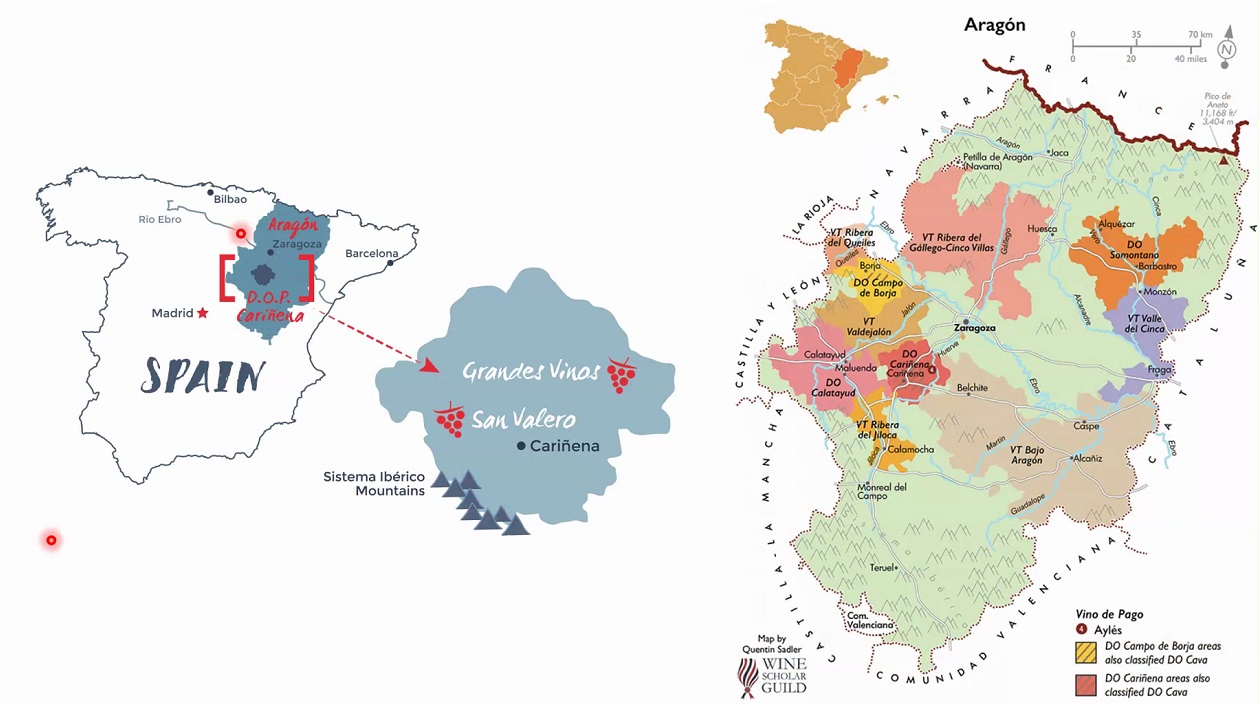
Cariñena is not the oldest winemaking region in the world, but with the first vineyards planted by the Romans around 50 BC, it is definitely old enough. As you can see on the map, Cariñena is located in the Aragon region in Spain. Before Spain became Spain in the last quarter of the 15th century, the Kingdom of Aragon held tremendous power in the 14th-15th centuries over a large portion of present-day eastern Spain, parts of what is now southern France, the Balearic Islands, Sicily, Corsica, Sardinia, Malta, Southern Italy and parts of Greece (source: Wikipedia). While this all should interest the historians, this is also relevant to our wine story. In 1415, King Ferdinand I of Aragon declared a preference for Cariñena wines “above all others.” The red wines of Cariñena were made out of Grenache, better known in Spain as Garnacha, and also known under one of its early synonyms as Tinto Aragonés (red of Aragon).
An interesting sidebar here for you: Sardinia claims that Grenache, locally known as Cannonau, originated in the island. It is entirely possible that it is actually true, and maybe Grenache made it from Sardinia to Cariñena where it became so famous – we have to leave it to the grape historians and detectives to unravel.


Going back to the Aragon Kingdom, what I never realized is that political influence is not limited to laws, money, and goods – the vines are also a subject of political influence. The Kingdom of Aragon presided over its territories and pushed down not only the laws but also grapevines, helping to spread Grenache into all kingdom-controlled territories. Grenache plantings appeared all over Spain, in Souther Rhone and Languedoc, and other areas. Way later, in the 18th century, Grenache also made it to Australia and South and North America, to become one the most planted red grapes in the world.
What is interesting about Grenache is that it doesn’t have its own varietal character. Cabernet Sauvignon and Merlot have bell pepper and cassis. Syrah has its signature black pepper. Grenache doesn’t have its signature profile. It perfectly adapts to a place, becoming a conduit for the terroir. For example, if you ever had Grenache from Washington (No Girls Grenache would be an excellent specimen), and some of the most classic Spanish Grenache such as Alto Moncayo, you would know the tremendous difference in taste profile – Grenache from Washington perfectly conveys the “liquid rock” of mostly volcanic soils, where Alto Moncayo would offer layers of dark chocolate and succulent berries – literally two wines from the different planets.
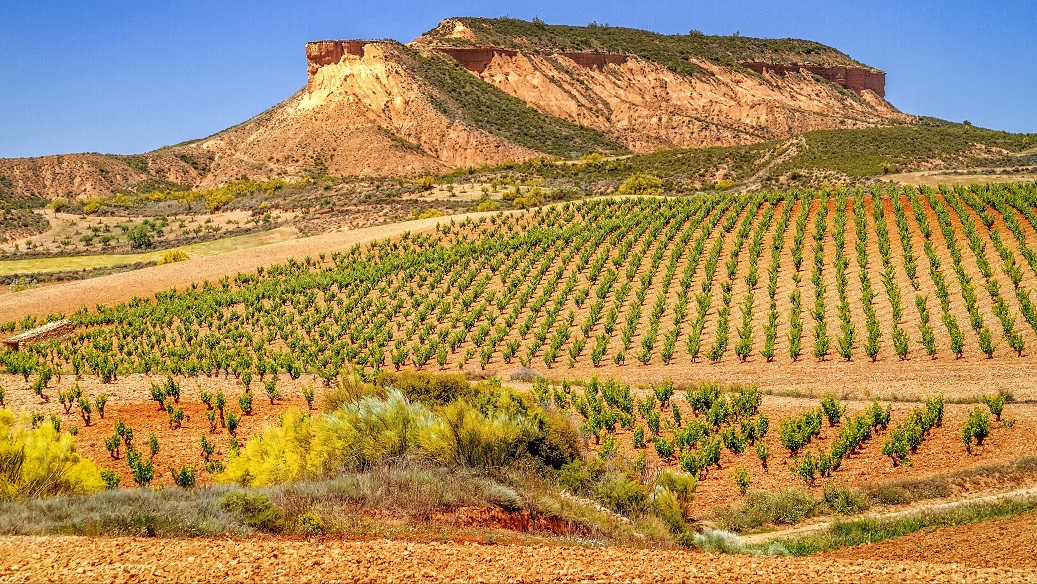
Source: Cariñena Wines
Cariñena is a perfect region for the grape growing – protected by the mountains, it offers long dry summers, cold winters, and very little rain, making the grapes work hard. Cariñena is also a mountainous region, with the majority of the vineyards located at the 1,300 to 2,800 feet elevation – that creates a significant diurnal variation which helps grapes to concentrate flavor. This rather harsh climate also plays a role of a great defender against vine diseases – while most of Europe was devastated by phylloxera in the late 19th century, Cariñena was largely unaffected.
A few more interesting facts about Cariñena. In 1909, King Alfonso XIII of Spain awarded Cariñena a city charter for their growers’ role in helping European vineyards recover from the phylloxera blight. The quality of Cariñena wines was also recognized in modern times when in 1932 it became the second wine region in Spain to receive the status of DO (Denomination of Origin) – the first one was Rioja. And Cariñena is the only region in Spain that has an eponymous grape – Cariñena, better known in the rest of Spain as Mazuelo and Carignan in the rest of the world. Cariñena is another native red grape grown in that region.
In 2016, Wine Enthusiast named Cariñena The Region To Watch, which since then became a slogan for the region, focusing on promoting its wines around the world.
As part of the webinar, I had an opportunity to taste two wines that are well representative of the capabilities of the region.
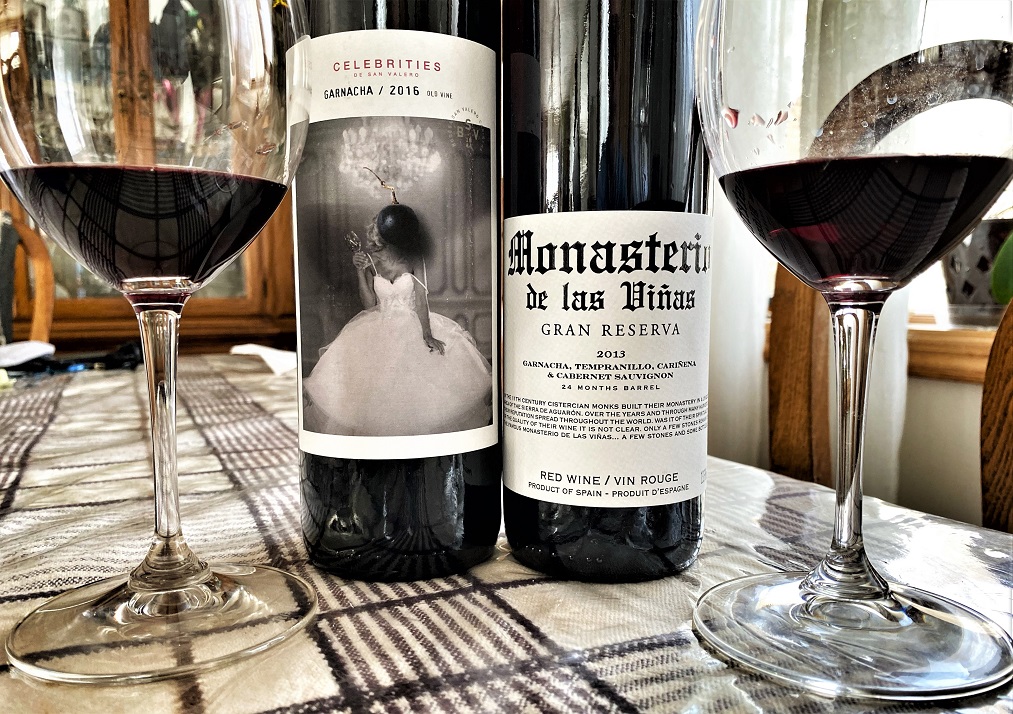
First wine was produced by Bodega San Valero. Bodega San Valero just celebrated 75 years, formed in 1944 by 66 partners. Today, Bodega San Valero works with 500 growers who farm 9,000 acres of vineyards, which represents 30% of the Cariñena DO. They also use 20,000 French and American oak barrels to produce the wines, and 100% of production is done on the property. I wrote about a number of Bodega San Valero wines in this blog, their Particular Grenache being one of my favorite Grenache renditions. This time, I had an opportunity to taste the 2016 Bodega San Valero Celebrity Grenache Old Vines Cariñena DO (14% ABV, $12.99). The wine had blackberries and chalk on the nose, with a hint of dried herbs. After about an hour in the open bottle, the wine became round, with dark fruit, strawberries, and blackberries, pronounced minerality and a touch of chocolate, crisp acidity, and mouthwatering finish. This was rather a food wine, but still nice and easy to drink.
While Grandes Vinos is taking its roots from a number of Cariñena cooperatives beginning from the 1950s, it was officially born in 1997. The cooperative comprises 700 winegrowers, farming more than 11,000 acres of vineyards spawning over 14 Cariñena districts and growing 10 grape varieties. Grandes Vinos produces wine under 9 different wine ranges. One of those wine types is called Igulp and it is a lightly sparkling grape beverage distributed in beer bottles – I would love to try that.
The wine I tried this time was from the Monasterio de las Viñas range. Monasterio de las Viñas pays homage to the actual monastery built by Cistercian monks in the 11th century, in a privileged place of the Sierra de Aguarón, well known for both their spirituality and high quality of their wines.
2013 Monasterio de las Viñas Gran Reserva Cariñena DO (13.5% ABV, $21.99, blend of Garnacha, Tempranillo, Cariñena, and Cabernet Sauvignon, 24 months in the barrels) had an uplifting, vinous nose, inviting and complex – it was creating great expectations about the wine. On the palate, the wine offered red and black fruit, round, good minerality, perfectly balanced, and perfectly integrated. Easy to drink and dangerous.
This was a great learning experience, making me take another look at the wines and try to see just past of what is in the glass. Let’s drink to the learning experiences of our lives, and may you never stop learning. Cheers!
Vilarnau Cavas – Always a Pleasure for an Eye, and Now Organic Too
Here we go – I’m following up a post about Cava with another post about Cava.
Oh well…
It is really appropriate to drink bubbles every day. Really. And it is even triple appropriate to drink bubbles around holidays. And gift them. And every day has something worthy of a celebration. So yeah, let’s talk again about Cava.
First, a pleasure for an eye – take a look – aren’t these bottles gorgeous? I would certainly use them as a decoration if the content wouldn’t be so good. I love this Trencadis design of the bottles – “Trencadís” is a kind of mosaic that is created from tiny fragments of broken ceramic tiles, used by Catalan architects Antoni GaudÍ and Josep MarÍa Pujol in many of their designs. I talked about the trencadís extensively in a few of the older posts (in 2017 and 2018), so I would like to direct you there if you want to learn more.
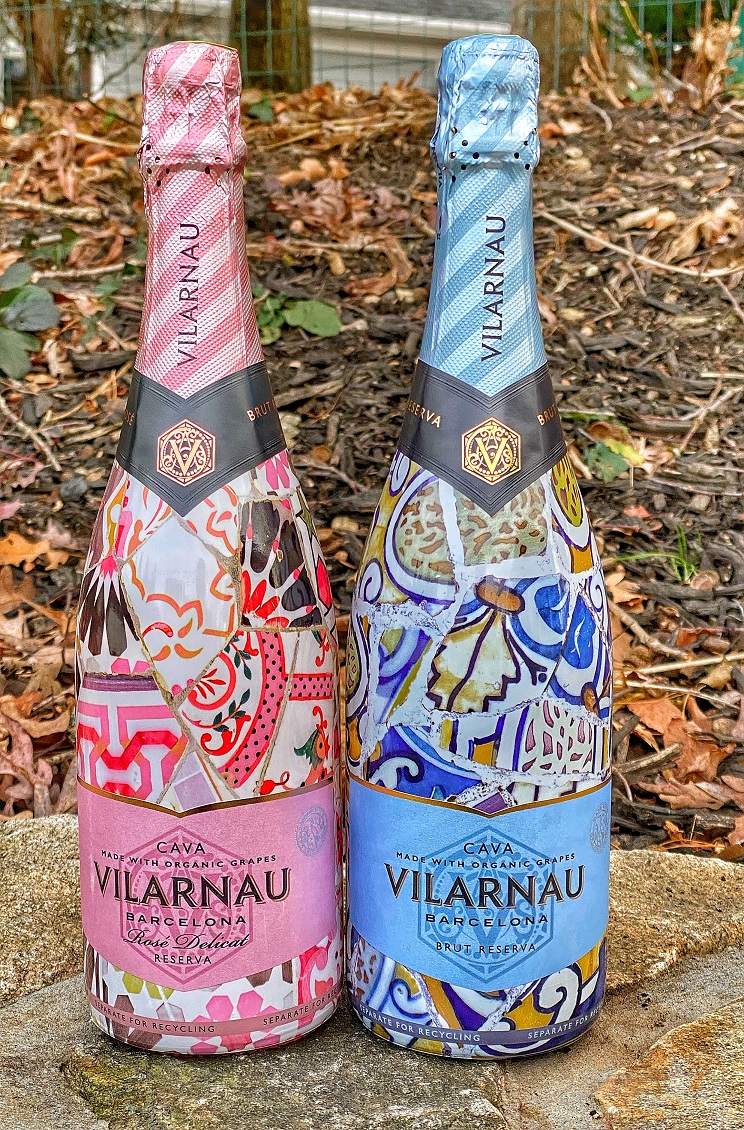


Now, you still have a ground for complaint – I already talked about Vilarnau Cavas less than 6 months ago – what gives? Are there not enough wines to discuss?
Yes, you are right. Or, almost right, to be more precise. The reason to talk about Vilarnau now is a significant change – all of the Vilarnau wines are now made with organic grapes.
Why would winery change its [successful] ways to become organic? What can be a motivation for that? Is that organic wine any different from non-organic wine? I decided to ask all these questions (virtually) Eva Plazas, Cavas Vilarnau Winemaker – and here is our short dialog:
2. Why is using organic grapes important for you?
3. Can you taste the difference?
4. Is the whole range of Vilarnau Cavas already using organic grapes (talking about new vintages)?
5. Did you have to make any changes in the winemaking process since you started using the organic grapes?
I have stopped using these products or have looked for alternatives to proteins with the animal origin, using pea or potato proteins instead, that is why all Vilarnau cavas are now Vegan too.
NV Vilarnau Brut Reserva Cava DO (11.5% ABV, $14.99, 50% Macabeo, 35% Parellada, 15% Xarel Lo, 15+ months in the bottle)
Light gold
Herbal, earthy, apple, lemon
Fresh, clean, apples, creamy, good body
7+, perfect for every day
NV Vilarnau Brut Reserva Rosé Cava DO (12% ABV, $15.99, 85% Garnacha, 15% Pinot Noir, 15+ months in the bottle)
Salmon pink
Fresh strawberries, a touch of gunflint
Fresh strawberries, crisp, clean, energetic, delicious.
8, excellent
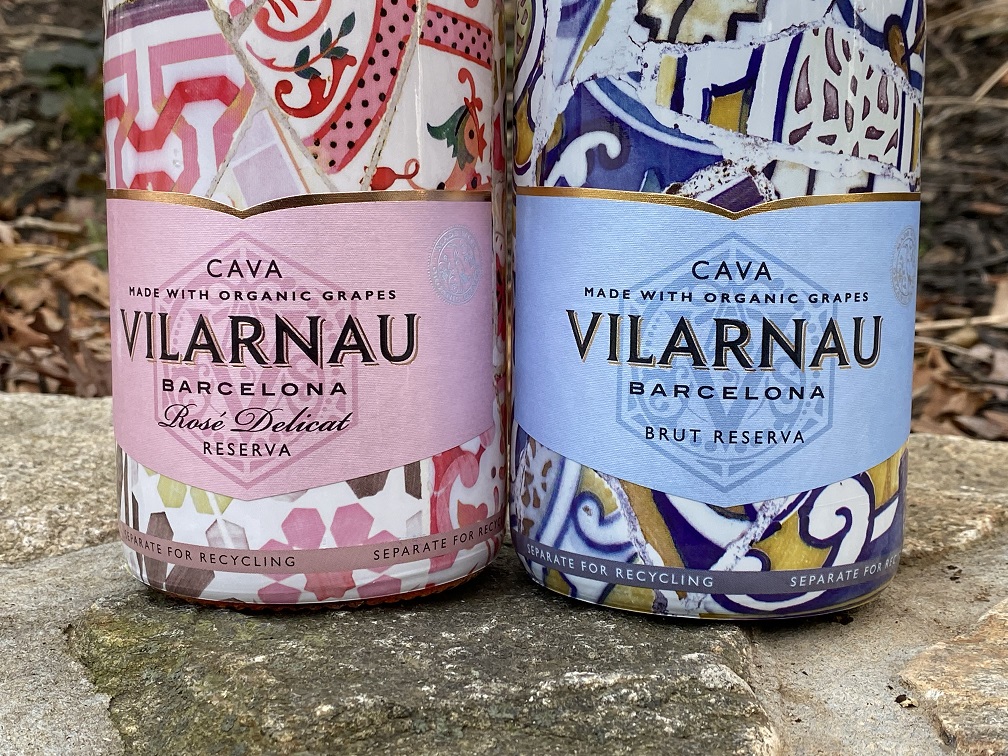
Now, a placeholder for the wines to be tasted in a week – updated on December 29, 2021
NV Vilarnau Brut Reserva Cava DO (11.5% ABV, $14.99, 50% Macabeo, 35% Parellada, 15% Xarel Lo, 15+ months in the bottle, Organic grapes, Vegan)
Light golden color, small persistent bubbles
Freshly toasted bread, gunflint, medium intensity
Freshly toasted bread, a hint of granny smith apples, a hint of gunflint and minerality, nice creaminess
7+/8-, simply delightful
Looking for Bubbles? Roger Goulart Got Everything You Need
 First question: how often do you crave bubbles? (My answer: almost every day).
Second question: how often do you actually drink bubbles? (My answer: not often enough. Read – once in a blue moon).
If you answered “not often enough”, here is the third (and fourth) question(s): Why is that so? What stops you?
I can only speak for myself here – I have a few reasons for not drinking bubbles often enough – price; having the right bottle on hand; not being able to finish a bottle once it is opened. Now, can we solve these problems? Let’s take them one by one.
The third problem (not being able to finish the bottle once it is opened) is the easiest problem. No, you don’t need newly minted Coravin for this. The standard Champagne bottle stopper will do the trick.
For the first and second problems – price and having the right bottle on hand – I have a simple answer – Cava.
Cava is a sparkling wine from Spain, made using exactly the same method as Champagne, with the secondary fermentation in the bottle, and aging requirements on par or even stricter compared to Champagne – minimum of 9 months for the regular Cava, minimum of 15 months for Reserva, and the minimum of 30 months for Gran Reserva. Good Cava offers a pleasure comparable to any Champagne in the same category, at half or even a third of the price per bottle, especially considering today’s Champagne prices.
If you noticed, I used the descriptor “good” in conjunction with Cava. As you can never assume that all of the Oregon Pinot Noir is equally good, all of the Riojas are equally good, or all of the Australian Shiraz are equally delicious, not all of the Cavas are equally good. So let me offer my helping hand and make a suggestion – Roger Goulart Cava will not fail you, no matter what the occasion is.
The history of Roger Goulart Cava started in 1882 when Magí Canals dug a wine cellar in the garden in the back of the house, where he started making Cava, in those days still known as Champagne. 17 years later, his son Josep bought the land adjacent to the Canals’ house from the Goulart family – we can consider that an official beginning of the Roger Goulart Cava. In 1919, a beautiful cathedral building was built by Ignasi Mas i Morell, a student of Antonio Gaudí – this became a new home of the Roger Goulart Cava. When Cava DO (destination of Origin) was created in 1972, Canals were one of the founding families. In 1997, 3,000 feet (1 km) of underground caves (more of a tunnel) were dug at the depth of 100 feet (30 meters), to provide ideal aging conditions for the Cava, maintaining a constant temperature of about 57°F-59°F (14°C-15°C).
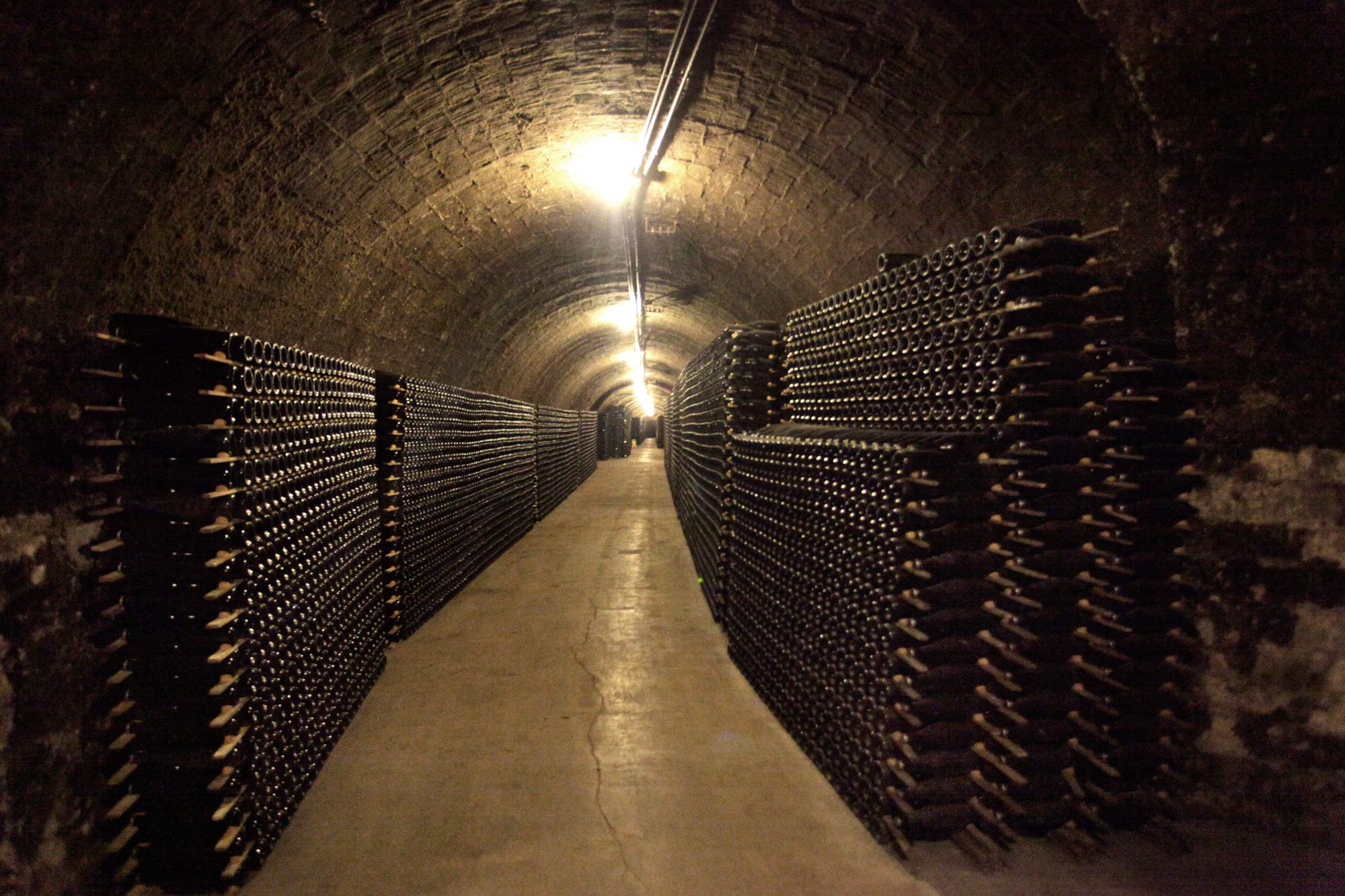
Roger Goulart Cava Caves. Source: Roger Goulart
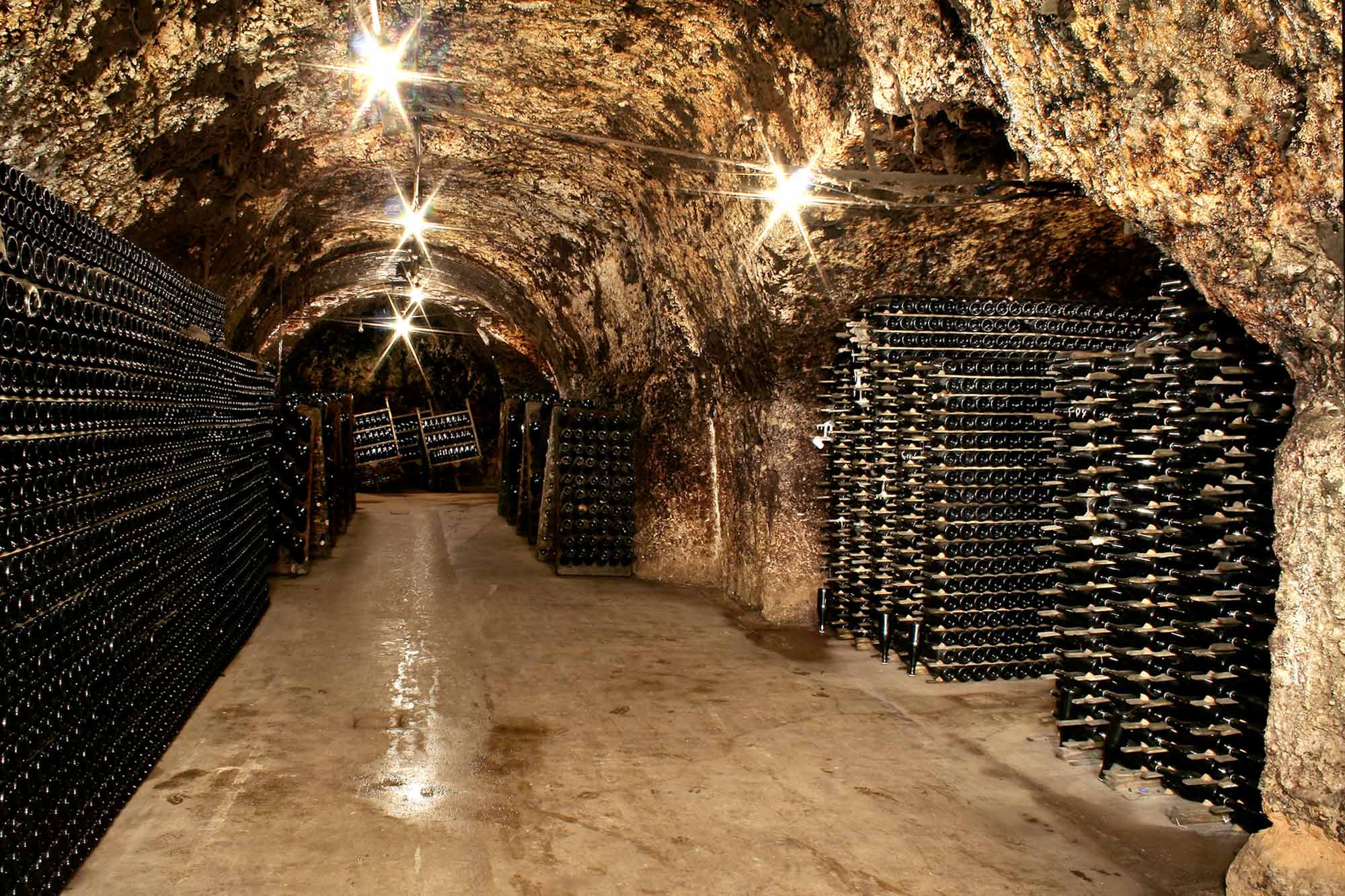
Roger Goulart Cava Caves. Source: Roger Goulart
Roger Goulart Cava offers a range of sparkling wines, including Brut Nature (zero dosage) and a range of Gran Reservas – Roger Goulart Gran Reserva cavas are actually not disgorged until the purchase order comes in, to ensure the freshest possible wine being delivered to consumers. The majority of the non-Rosé Cavas are made with three traditional varieties – Xarel·lo, Macabeo, and Parellada, but some of the Cavas might also include Chardonnay. The Rosé Cavas are primarily Garnacha driven, with the addition of other red grapes (Pinot Noir, Monastrell). The new Cavas are also produced from certified organic grapes, so we should expect to see more of Roger Goulart Cavas made with those in the future.
I had an opportunity to taste 4 different Cavas, and even catch a beautiful winter sunset with one of them (as you will see below in the picture). What was surprising to me was the level of freshness across all four wines – the 2012 and 2018 tasted equally fresh. Another interesting tidbit was the fact that the older Cavas, also been Gran Reservas, benefited from additional breathing time. I used the stopper I mentioned before, and I actually enjoyed those wines even more on the second day out of the refrigerator.
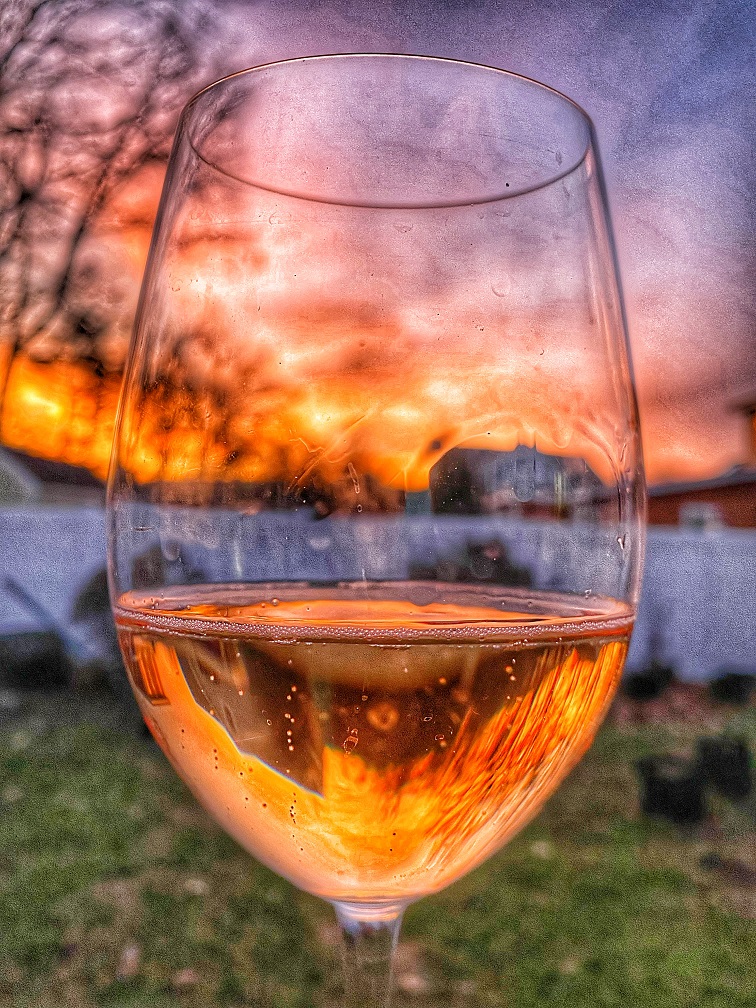


Here are my notes for what it is worth:
2018 Roger Goulart Cava Reserva (12% ABV, $19.99, 50% Macabeo, 35% Xarel-lo, 15% Parellada, min. 15 months in the bottle, organic grapes)
Fine bubbles
Freshly toasted bread on the nose, a hint of apples
Perfect amount of yeast, toasted notes, crisp, fresh, creamy mouthfeel.
8, excellent. Great with food (had it with salami and cranberry encrusted goat cheese)
NV Roger Goulart Coral Cava Brut Rosé (12% ABV, $19.99, 70% Garnacha, 30% Pinot Noir, min. 9 months in the cellar, bottled in December 2016)
Fine bubbles, beautiful salmon pink color
A hint of brioche and strawberries on the nose, nicely restrained
Toasted notes, toasted bread, creamy mouthfeel, delicious.
8+, outstanding.
2014 Roger Goulart Cava Brut Rosé Gran Reserva (12% ABV, $19.99, 85% Garnacha, 15% Monastrell, min. 36 months in the cellar, bottled in March 2015)
Deep reddish color
A touch of toasted bread notes.
Dry, concentrated, a hint of fresh bread, needs time to open up, then crisp and fresh.
8, very good, better on the second day
2012 Roger Goulart Cava Brut Gran Reserva (12% ABV, $19.99, 60% Xarel-lo, 20% Macabeo, 20% Parellada)
Toasted bread, clean, fresh
Perfect balance, apple, a hint of toasted bread, cut-through acidity, tight, vibrant, full of energy, would perfectly compare to any champagne in a blind tasting. Most likely, would beat the competition.
8+/9-, I loved it even more two days after the bottle was opened. Superb.
As you can see all of these Cavas are priced the same, and at $19.99 they are worth every penny, as the comparable Champagne will be at least in the $45 – $50 range. And the great thing about this pricing is that you can choose the wine based only on how you feel at the moment, and not on the price.
The holidays are upon us, but with or without the holidays – every day deserves a glass of bubbles. Try Roger Goulart Cavas and send me a thank you card later. Cheers!
Tempranillo, Transposed
How do you transpose a grape, any grape?
What does this title even mean? You transpose matrices (in algebra), or, at the very least, the notes of music. But Tempranillo???
Let me put my geek’s hat on, and let’s look at the definition of the “transpose” as the infinitely wise internet presents it:
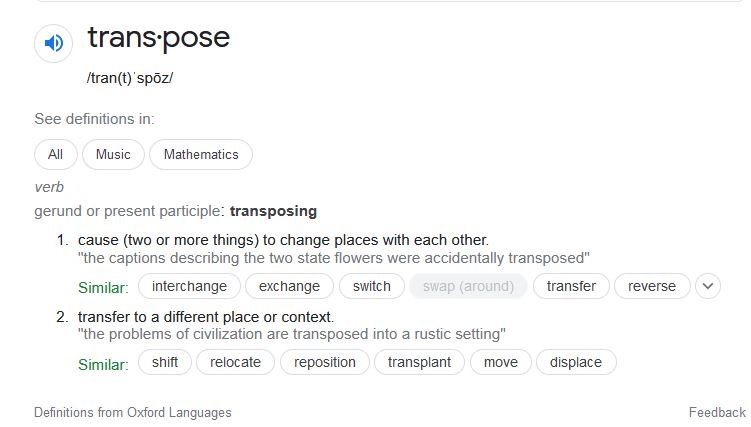
“transfer to a different place or context”
The legendary CVNE had been producing Tempranillo wines in Rioja since 1879. Step by step, new vineyards were planted, and new styles of Rioja were going into production, each one with its own unique style and character – CVNE, the original earthy Rioja; softer and gentler Viña Real, powerful and concentrated Imperial, elegant and modern Contino. These are all Rioja wines, a blend of Tempranillo and a few other varieties, each one with its own personality and its own following.
Achieving success, some of us can just sit quietly and enjoy it. And some of us just want to say “I’m here now, and this is great, but I can’t stop. Let’s go further”. And down south CVNE decided to go, into the Ribera del Duero area.
Rioja is unquestionably famous with its Tempranillo wines, with producer such as CVNE, Muga, La Rioja Alta, Lopez de Heredia, and Contador. Ribera del Duero, down south from Rioja, got Vega Sicilia, Pingus, Pesquera, Emilio Moro – all amazing Tempranillo renditions as well. Now, the question is – why would a famous Rioja producer expand into a different region? Well, this is somewhat of a “why did the chicken cross the road” type of question – simply to get to the other side. CVNE doesn’t want to stop. CVNE goes beyond Rioja, into Ribera del Duero, the land of 100% Tempranillo wines – and the folks in Rioja know a thing or two about Tempranillo…
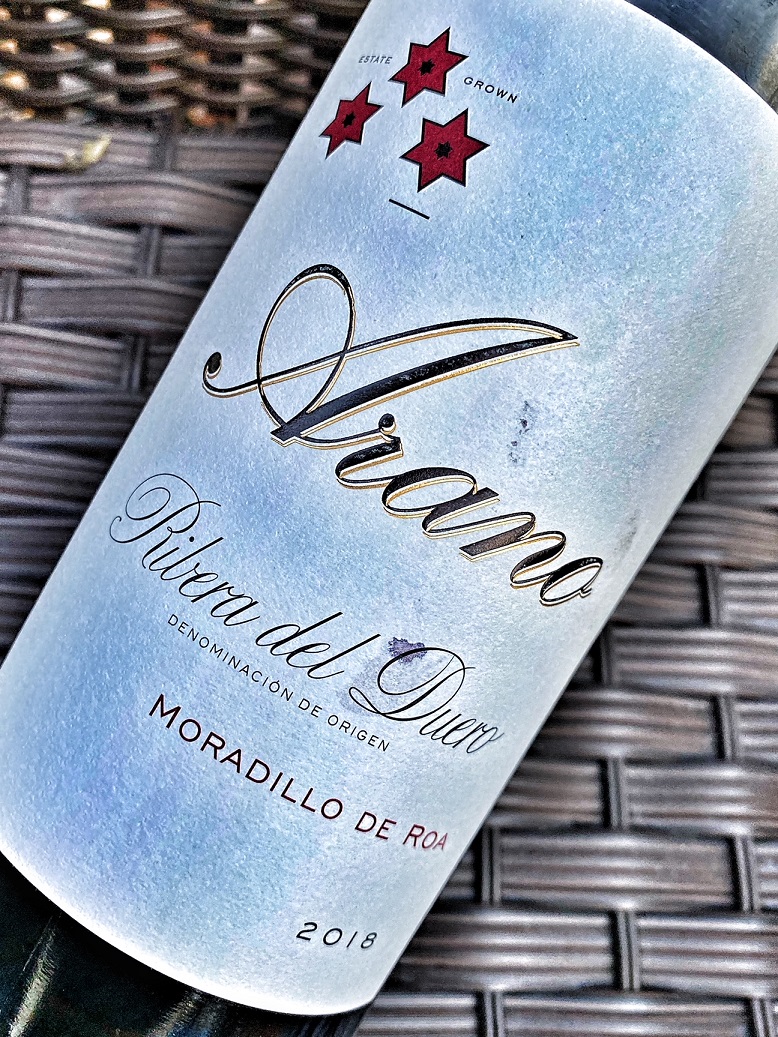
This is how the new brand of CVNE wines from Ribera del Duero was born – and it is called Arano. I had a few questions about this new adventure for CVNE, and so I asked those questions of Victor Urrutia, CEO of CVNE, to understand why the Arano name, why Tempranillo from Ribera del Duero, and what does the future hold. Victor graciously agreed to answer my questions – here is our conversation:
[TaV]: Why Arano label? What is the relationship between Arano and CVNE?
[Victor Urrutia]: CVNE is the owner and founder of Bela and Arano. The Bela and Arano labels are facsimiles of a label of ours, that is to say from CVNE in Rioja, from 1910. It is a simple and beautiful label from our archives. When we try and invent things we realise that we’re not very good at it, and that in fact, what our forefathers did is far better. CVNE is a family company and has been since it was founded in 1879. The 3 stars on the label represent the 3 children of CVNE’s cofounder, Eusebio Real de Asúa. He had 2 daughters and one son. Their names were Sofia, Ramon, and Aurea Minerva. The eldest, Sofia, was known as Bela. That is the name we have given to this winery, and it is also the first estate wine that we have made in Ribera del Duero. It’s the first star. The second star is for Arano. The only son was called Ramon and his mothers’ maiden name was Arano. We chose this name for the second estate wine to be released from the winery.
Bela is Tempranillo from our vineyard in the village of Villalba, on clay soils. Aged for 9 to 12 months in barrel. The vineyard is around 70 hectares. Arano is Tempranillo from our vineyard in the village of Moradillo de Roa, on limestone and pebbled soils. Aged over 12 months in barrel. The vineyard is around 9 hectares.
[TaV]: Why Ribera del Duero? What was the inspiration for CVNE to expand into Ribera del Duero?
[Victor Urrutia]: We want to bring our take on rioja’s elegance to rugged Ribera del Duero. The latter makes excellent wines and is a historic region. As ambassadors for Spain across the world, we felt it was our obligation to own vineyards and make wine in Ribera del Duero; and to make these known everywhere.
[TaV]: What is the future hold for Arano Ribera del Duero wines? Do you plan to produce Reserva and Gran Reserva?
[Victor Urrutia]: In Ribera del Duero we are making wines that express the vineyards that we own in this appellation. We label some of these as Crianza, for instance, because some consumers find it helpful; but it is not an important consideration for us when we conceive the wine. As we get to work and know our vineyards better, we will consider releasing new wines from this winery. After all, there is another star in the label, that we need to make a wine for. We haven’t yet found this vineyard. Or rather, haven’t found the way to express what must be our grand cru in this region. But we are working on it.
[TaV]: Any future plans for CVNE to expand further south, maybe into the Toro region?
[Victor Urrutia] There are some great producers in Toro, like the García family behind Mauro. But in general, we find the wines of Toro to be very dense and powerful, and I’m not sure we know how to make wines in that style. Our future lies in continuing to make wines of elegance and age-worthiness.
We need to continue looking for vineyards that will allow us to make those kinds of wines. They’re probably in higher elevations and northern exposures. There’s much to continue doing in Rioja, Ribera and of course, Galicia, where our Virgen del Galir winery has started to make wines of great depth from the vineyards that we bought as well those we’ve planted there. We bottle Godello, Mencia as well as Merenzao, varieties that we hardly knew about some years ago and the wines are phenomenal. We even have Palomino (locals call it Jerez, or sherry) that, arguably, expresses the terroir better than anything, given its neutral profile as a grape variety. Is it perfect? No, but it’s honest. And also quite interesting. Like everything that we try to do.
Now let’s talk about CVNE’s latest and greatest – 2018 Arano Crianza. As Victor mentioned, the grapes for this wine are coming from 4 different plots in the Moradillo de Roa vineyard, located at an altitude of about 3,000 feet above sea level. I had an opportunity to taste this wine, and it was unquestionably Ribera del Duero in style, much leaner and tighter than a typical Rioja wine. Here are my notes:
2018 Arano Crianza Ribera del Duero DO (14.5% ABV, $30, 15 months in French oak barrels, Vegan)
Dark garnet
Aromas of roasted meat and earth jump out of the glass at least a foot away from it. Espresso and herbs come at you at high intensity.
The palate is somewhat unexpectedly mellow, with dark fruit and herbs, good acidity, long and supple finish.
Better concentration on the second and third day, the wine feels tighter with more energy.
Drinkability: 8-. Enjoyable now, built for the long haul
The journey is getting more and more exciting by the minute. This is not algebra, but we are definitely looking at the case of the successful transposition of a grape – go find the results of this Tempranillo transposition, and we can compare notes. Cheers!
Last Bottle Sign Up ($10 credit)




 Talk-A-Vino