Archive
Struggles of the Winelover

Source: Pexels Cup of Couple
Yes, I’m on the streak. A self-focused experiment. I’m curious to see how many posts in a row I can write. Not just “hello – goodbye”, but posts with substance. Well, whatever. This is definitely not the topic of this post.
Oh, and here is a full disclosure – this post is about first-world problems. If you are not interested, you know where to click.
I bet you had no idea that winelovers struggle. No, not when we enjoy a glass of wine. When we enjoy wine, we simply ask for another glass. And no, not when we don’t enjoy wine. Then it is a very simple ask: “Can I have something else, please?” It is really that simple. If you don’t like the particular wine, there is no struggle – you just move on to the next.
The struggle starts when we need to choose the wine. At that moment, the struggle is real. A chain of thought might depend on the setting, but the unending back and forth is always the same.
When you are presented with the wine list at a restaurant, you need to decide based on price, based on mood, based on company, based on food. It always goes “this. Wait, no – this one. Hmmm. No, let’s go to a different region. Ah, yes, this one. No, wait, maybe this? Why is this so expensive? Ohh, why is this so cheap?” Well, got you. The last one is not real. If you know what you are doing, “why is it so cheap” is not the question you concern yourself with. But the rest of it? If you love wine and have ever chosen a bottle in a restaurant, tell me that I’m wrong. I dare you. Tell me that in the comments section. Go ahead, make my day.
The second one might be even worse. Now you need to select a wine for a dinner, get together with friends, a holiday, a birthday, an anniversary – you got the idea, right? This is where the struggle becomes even worse. When you need to choose a wine in the restaurant, you have a limited amount of time and a reasonably limited wine selection. None of it is in play at home. You start worrying about the wine months and months before the event – you can choose not to, of course, but only if you let yourself do this. Now think how many of us allow ourselves not do it, huh?
And here you are really screwed, as you have plenty of time to go “This! No, wait, that! Wait, no, no, I need something else”, following with “Is it too early? Can this already be past prime? It is my only bottle, should I open it now? What if it will be so much better in 10 years?”. And let’s not forget “Will they like it? Is that a good choice for that holiday? Is that special enough for the occasion? Maybe I can do better?” On, and on, and on. Endless. Frustrating. Annoying.
Why all of a sudden all of this soul-pouring sentiment? That’s easy, let me explain.
Any February is a tough month for the struggling winelover. You got Valentine’s Day in the middle of the short month, and then you have Open That Bottle Night (OTBN) on the last Saturday in February. And to add to the struggle, this particular February, we are flying to Florida to see our close friends, and they will have their wedding anniversary during our visit, so I definitely feel that I need to bring something appropriate to celebrate. There you go – three opportunities to struggle.
Source: Pexels Polina Tankilevitch
I still don’t know how we are celebrating Valentine’s Day. I’m sure we are not going to the restaurant, but we might decide to have some company. And it falls on Saturday this year, which is all the more reason to select a good bottle(s). In any case, what should we drink on Valentine’s Day? Yes, bubbles first, that is clear, but even that presents a dilemma. And what should follow the bubbles? What kind of red wine offers the best pairing for Valentine’s Day? If you have any thoughts – go ahead, don’t be shy.
Then the wedding anniversary – do I even have the right bottle for that? I have some vintage Champagnes, but nothing grand enough for the occasion. And while my friends generally like the wine, they are not wine geeks, so well-aged reds might not solicit the response I would want.
Last but not least is the mother of all winelover struggles – OTBN. The holiday was invented to help people crack open that special bottle still waiting for the right moment, which might never come. And yet OTBN is only one night, how many bottles can you open? Selecting the bottle for OTBN is ultra-difficult, especially when one has lots of wines in the quantity of … 1. When you have only one bottle, you need to decide if this is really the time, if the bottle can still improve, if the bottle is special enough. Ah, and please understand that “special” doesn’t mean “expensive”. A special bottle is simply a bottle with an attached memory, and for OTBN, we need to ensure that the bottle is special enough.
Here, I just shared my frustration with you, and I feel better. I even got some ideas for the wine to open on Valentine’s Day. And I’m pretty much decided on the OTBN bottles (it means nothing, really, everything can – and will – change quickly). But I do feel better at the moment.
So what would you tell me? Is this struggle real, or am I a spoiled, undeserving brat? You be the judge of it, but I know how it feels selecting a bottle for a month, in the endless loop between all the wine fridges and shelves. For me, it is definitely real. And for you? Hey, do tell your stories, I’m all ears…
Frustration of the Oenophile
We have enough sources of frustration in our lives, so wine shouldn’t be one of them. This statement works fine until you become obsessed with wine. Then it becomes a source of joy, happiness, fun, and, of course, frustration.
The concept of frustration is very personable, there is really nothing objective about it. It is generally a choice – you can decide to get frustrated, or you can choose to ignore whatever bothers you. It is not always that simple, of course.
For example, corked wines are a great source of frustration for oenophiles. A corked bottle bothers me very much, but considering my experience with corked wines is not anywhere near the proverbial 8% (knock on wood), I just accept it as an unfortunate part of the wine world. Plastic corks can be a great source of frustration, and so are the bottles with wax tops when the wax is not done right. We can go on with this list and I’m sure every oenophile can choose what frustrates them the most. Most importantly, we feel frustrated with different things on different days.
What prompted this post was frustration with my own choices. And Cayuse wines.
Many years back I was closely following wine writer W. Blake Gray, who was writing a wine column at that time, I believe, for the San Fransico Chronicle. In one of the articles, he mentioned Cayuse Vineyards wines as possibly the best wines produced in the United States. Talk about influences… These got stuck in my head, and getting my hands on the wines of Cayuse became one of my obsessions. I signed up for the mailing list and stayed on the waiting list for close to 10 years until I finally got on.
Cayuse wines are produced by Christophe Baron, a French-born winemaker who fell in love with the rocky soils of Walla Walla Valley. While Cayuse was his original project which brought fame and recognition, Christophe Baron also started a number of other successful projects – No Girls, Horsepower Vineyards, Hors Catégorie Vineyard, and Champagne Christophe Baron (with this he really went back to his roots as he was born in Champagne). While waiting for Cayuse, I actually managed to get on all other mailing lists – but let’s leave those wines aside for a moment and get back to Cayuse.
I’m sure you are curious to see where the aforementioned frustration is coming from – and let me tell you, it is not related to the long wait. My frustration is tied to the wine itself. How? Easy. I don’t enjoy it.
Here, I said it.
Okay, let’s not generalize. I actually enjoyed very much a 9-year-old wine from Cayuse – 2011 Syrah from En Cerise Vineyard in Walla Walla Valley which I had on Thanksgiving in 2020. I liked the wine so much that it became wine #2 on the Top Wines list of 2020. But this happened once. And a few Cayuse bottles that I opened made me question my choices – and became the source of frustration.
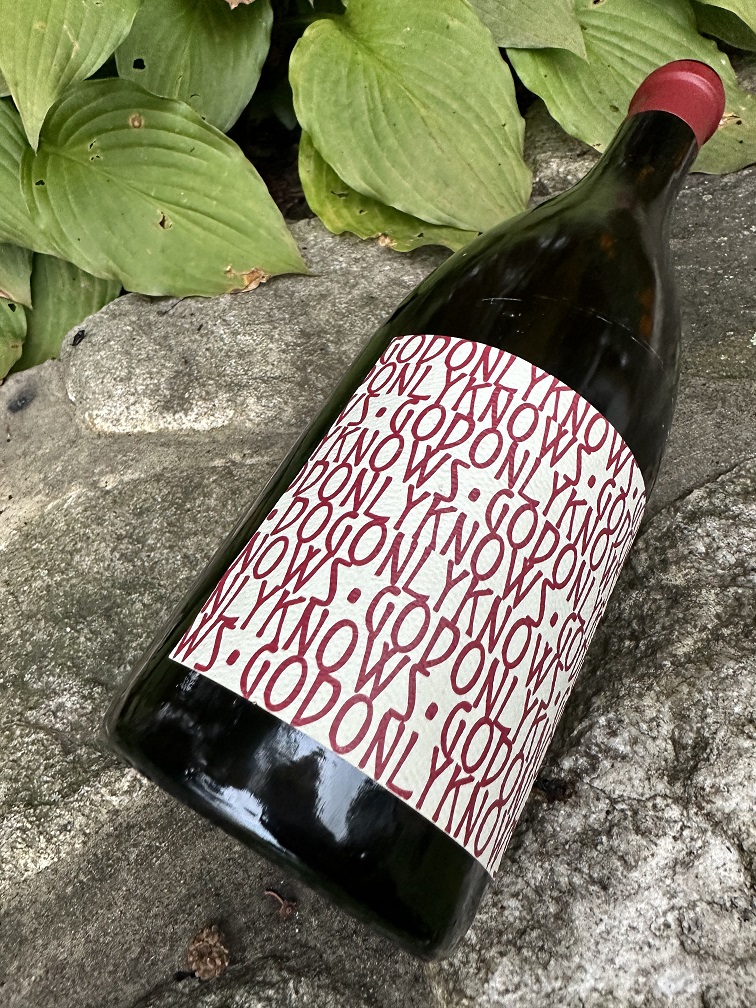
The latest case in point – 2017 Cayuse God Only Knows Armada Vineyard Walla Walla Valley (13.8% ABV). This is 100% Grenache. The wine had somewhat of a muted nose, mostly mineral. At first, the palate had a lot of “liquid rock” power – iodine, pencil shavings, granite, maybe cherry pits. I thought that maybe the wine was too young at 6 years of age, pumped the air out, and let it stand until the next day. The next day didn’t improve the situation much. On the third day, the wine simply became bitter.
When I’m supposedly drinking one of the best wines produced in the US, and I derive no pleasure from it, it becomes concerning. It becomes frustrating. What is wrong with me? How come I can’t appreciate this wine? If I look a the reviews, frustration only deepens. Jeb Dunnuck gave this wine 99 points in 2020, and described it as having a “gorgeous nose of framboise, wild strawberries, sweet mulch, sappy flowers, ground pepper, and liquid violets” – how come I don’t get any of this? Do I have to be a professional wine critic to be able to enjoy the wine? By the way, the continuation of the same review made me say WTF: “This carries to a medium to full-bodied, Burgundian Grenache” – Burgundian Grenache? But Grenache is not produced in Burgundy? Yeah, whatever. The same review also suggests the drinking window between 2021 and 2033, so I’m perfectly in the range. And yet I didn’t enjoy the wine.
I love Grenache wines. Admittedly, many of my great Grenache experiences are connected to Spain, where it is known as Garnacha – how about some Alto Moncayo, for example. I very much enjoy Grenache from France – CdP, Gigondas, other places. Also, California is perfectly capable of producing the most delicious Grenache – we don’t even need to go to the Rhone Rangers – Bokisch and McCay in Lodi do a damn good job representing delicious Grenache. And yet I don’t enjoy what should be one of the best renditions of Grenache in the world. Frustrating.
Cayuse will not be the first “serious” wine I’m unable to enjoy (serious = expensive here, this bottle costs north of $130). Opus One, Joseph Phelps, Corison, Chateau Montelena, many of the Heitz bottlings, Far Niente… There are a number of wines out there I do not seek. But I was really dreaming about getting my hands on Cyuse bottles. This wine was an object of desire and now… this?
I believe Bionic Frog was the wine that made Cayuse famous. Bionic Frog (made from Syrah) is still not a part of my allocation, so I will try to stay the course for now. I will give more chances to Cayuse wines to prove that my latest experience was just a fluke, but I’m afraid I have to leave Cayuse wines aside at the moment and see if time will be able to bring out the pleasure.
Yes, I realize full well that my frustration is the first world problem – and if you have a problem with that, feel free…
For now, I will remain oenophile frustrated.
Rare Grapes, Obscure Tasting
 What is your take on wines made from rare, unknown grapes? I can tell you about mine – I love them.
I have two reasons for that. Well, it might be even just one, but with two sides, I guess. First, I’m a wine geek. As a wine geek, I love tasting each and every type and style of wine, made from whatever grapes they are. I’m willing to taste absolutely any wine at least once. After the opinion is formed, this might be the first and the last time, but nevertheless, I’m willing to try anything.
The second reason is that I’m not only a geek, I’m also a collector. I like collecting experiences. As such, for example, I keep track of the US states and world countries I had a chance to taste the wine from. And I keep track of grapes I ever tasted, after being bitten by The Wine Century Club‘s bug. If you are reading this blog on a PC, look to the right side of the screen, and you will see “grape count” – this is the number of grapes I have tasted to date (if you are reading on the phone, just scroll down). With my goal of reaching 600 grapes, I can only increase the current count further by finding rare, obscure, unknown grapes to taste.
When I got an invitation to attend the Wines of Crete trade tasting, the key words which made me say “yes” was exactly that – “rare grapes” – there were lots of grapes mentioned in the invitation, and I didn’t recognize at least a half of them, so the opportunity to taste new grapes (and increase the count) was definitely enticing.
I have to tell you upfront – this was the most peculiar trade tasting I have ever attended. Being only an advanced amateur, if this makes any sense, I attend maybe about 10 trade tastings in a good year, so I wouldn’t pretend that “I’ve seen them all”. Nevertheless, I have a frame of reference for successful and unsuccessful wine tastings, for sure in my personal book – so when I tell you that this was the most peculiar one, I mean it. Let’s talk about it.
First, notwithstanding of any peculiarity, we need to acknowledge the wines of Crete. Any time a passionate wine lover has an encounter with a region that has a deep wine history, it creates an emotional response, almost awe. The wine history doesn’t go much deeper than it is on Crete – Crete, the largest island in Greece and 5th largest in Europe is the cradle of European winemaking, having its winemaking history spanning more than 4,000 years, going well beyond 1,500 BC.
Crete represents the first real wine culture in Europe. There is evidence of wine presses (first in Europe from about 1,600 BC), pressed grapes and stems, clay pots and amphorae. The wine was produced commercially, and it was praised by many poets. Shortly after the beginning of the first millennium, Crete became famous for producing sweet wine from sundried grapes, Vinum Passum. Crete wines reached Switzerland, France and Italy, and so did the cuttings of the Cretan vines.
From the 14th to 17th centuries, Crete became famous for producing sweet wines from Malvasia grapes (interesting tidbit: American Journal of Enology & Viticulture registered 49 different varieties of the Malvasia grape). Malvasia vines made it to Italy during the same timeframe.
Cretan winemaking history is not all warm and fuzzy. For almost 200 years Crete was under Turkish occupation, and wine production was truly minimized, mostly for family consumption only. Then at the beginning of the 20th century, immigrants brought Sultanina grapes to Crete – a.k.a. Thompson Seedless – not the grape you want to use in wine production. In 1972, Crete experienced the invasion of Phylloxera.
The rebirth of Cretan winemaking started in the 1990s, and today young winemakers continue looking for their own path, often using indigenous grapes to their advantage.
There are 4 mountain systems on Crete, the island of 160 miles long and about 40 miles wide. The majority of the vineyards on Crete are located on the mountain slopes, at altitudes from 800 to 3,000 ft. Mountains play an important role in protecting vineyards from the hot winds coming from Africa. The climate is warm Mediterranean with annual rainfall between 250 and 900 mm.
There are about 10,000 acres of vineyards on Crete, which are spread between 6 Protected Geographical Indication (PGI) and 7 Protected Denomination of Origin (PDO) winemaking regions. There are 36 wineries on Crete, producing about 4 million bottles of wine annually. There are 11 indigenous grape varieties growing on Crete (White: Vilana, Vidiano, Dafne, Thrapsathiri, Malvasia di Candia, Muscat of Spina, Plyto and Red: Kotsifali, Liatico, Mandilari/Mandilaria, Romeiko), as well as international varieties. And as I already told you before, these indigenous grapes were the main attraction for me.
Okay, so now I shared with you almost everything I learned about the rich history of the wines of Crete – let’s talk about the peculiar part.
Upon arrival at the tasting, I got a booklet listing all the wines which we would be tasting. The booklet was organized by grapes – but interestingly enough, the description of the wines didn’t include any producer names – just vintage, variety(ies), ABV, style of wine, and maturation notes. I never saw anything like that at any of the tastings – unless you maybe run a blind tasting, but never mind.
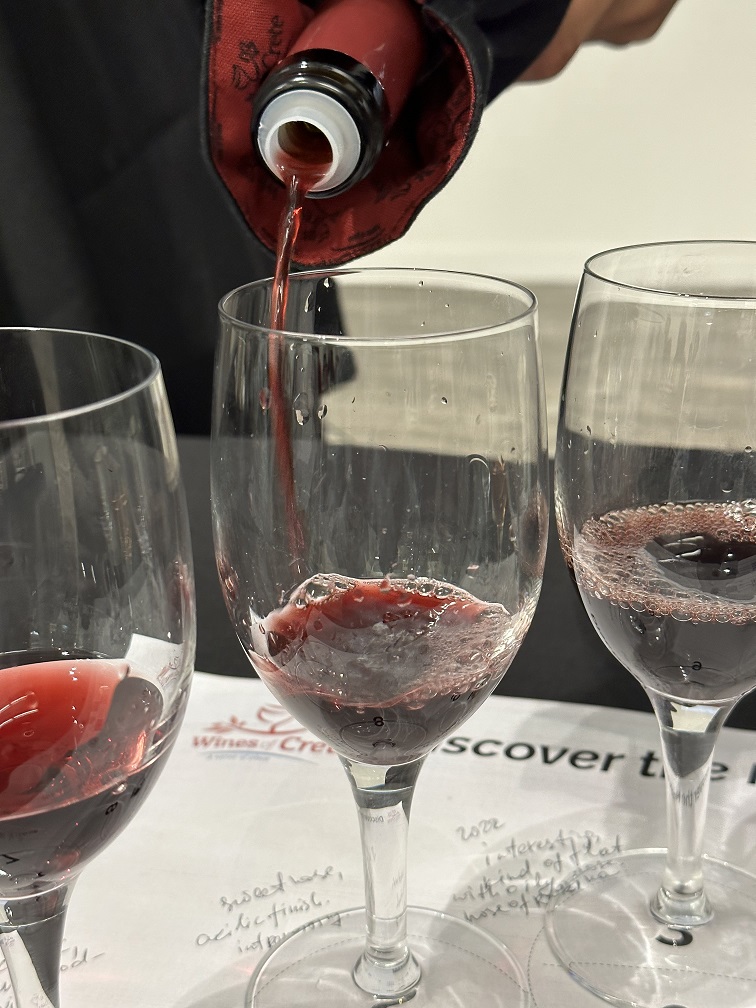
Next, we proceeded with the masterclass, where we learned about all the history and present day, and had an opportunity to taste 11 wines. While poured, all of the wine bottles were hidden inside the black pouches. In the presentation, there were no producer names mentioned – only grapes and regions were presented.
As we learned, this was not an oversight. As the event was sponsored by the European Union, it was the requirement not to mention the wine producers in the masterclass and in the tasting, so the producers not present at the tasting wouldn’t get upset.
I’ll let this sink in for a moment.
Think about it.
Now, let me ask you – how stupid, unbelievably stupid is it? [I guess this is what happens when lawyers run the business – I didn’t have to say it, but this is my blog, so I can].
I’m a blogger, and I’m only interested in education and tasting some obscure grapes. But let’s say you work at a restaurant. You taste the wine, you like it, and you would like to start offering it at your restaurant – but officially, you are not allowed to know the name of the wine you just tasted. Say what??? What is the point of this tasting? With this “blind tasting” move, you brilliantly hurt everyone – those who sent their wines for the tasting, and those who have not.
Okay, let’s get back to masterclass tasting.
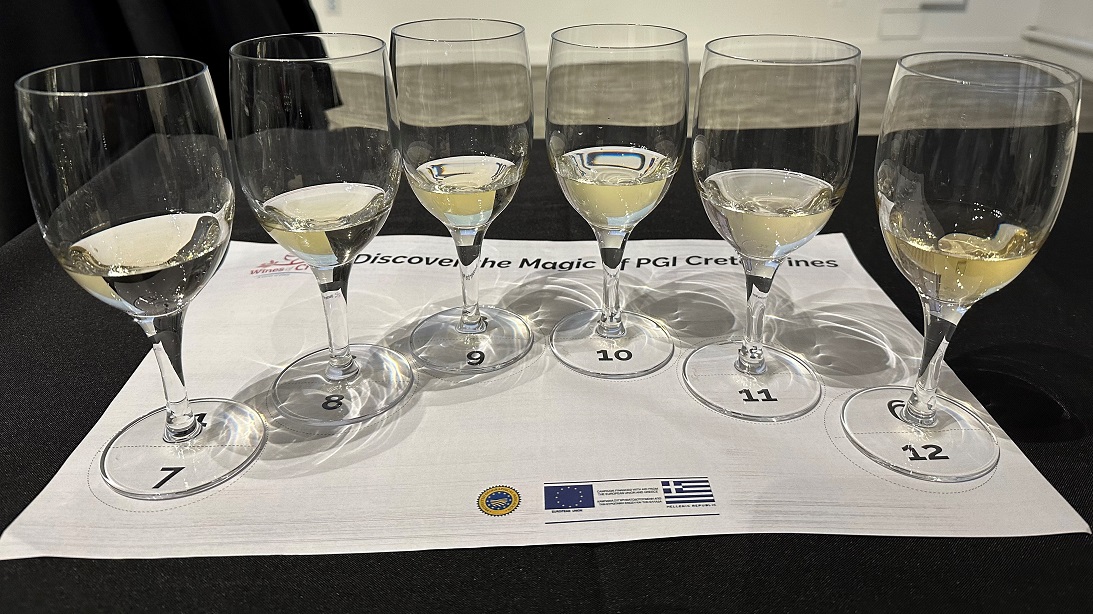
First, we tasted 6 white wines, made from Vilana, Vidiano, Thrapsathiri, and Assyrtiko. Thrapsathiri was a new grape for me, the rest I had tasted before. I don’t believe I liked any of the white wines, unfortunately…
Wine #1 – Vilana grape
Acidic, lean, food-craving
Good
Wine #2 – Vidiano
sweet nose, acidic finish, interesting
Wine #3 – Vidiano
interesting, kind of flat, oily nose, reminiscent of Retsina
Wine #4 – Thrapsathiri
interesting, herbaceous, cut through acidity. Very acidic finish
Wine #5 – Assyrtiko
Smoke, almost moldy on the nose
Corked?
Wine #6 – Vidiano (oak aged)
Plump, oily, full-bodied, crispy finish


Next were 5 reds, made from Liatico, Kotsifali, Mandelaria, and Romeiko. Again, one new grape here – Romeiko. Wine #10 was strange but drinkable. I really loved the Romeiko wine, but this was somewhat of a curveball red wine – it was actually made in the “orange wine” style. Still, this was my favorite wine from the masterclass tasting.
Wine #7 – Liatico 2022
interesting nose, sweet oak
super-tart, tannic, lacks fruit, tart finish
Wine #8 – Liatico/Kotsifali 2016
smoke on the nose, smoke on the palate, insane acidity
Volatile acidity?
Wine #9 – 60% Kotsifali, 40% Mandelaria, 2015
Raisins on the nose, oak, tertiary aromas
flat, tannic, ohhh
Wine #10 – 60% Kotsifali, 40% Syrah, French/American oak aging, 2017
Brett? Spoiled egg level
This is actually drinkable, a little flat on fruit, but good overall
Wine #11 – Romeiko, red grape made as an orange wine
Excellent, delicious, good balance, harmonious, good fruit and acidity, fresh


We managed to convince the staff to show us the wines we tasted, at least some of them, so you can see some of the wines we tasted in the picture above.
Main room tasting had its own issues – it appears that due to some issues with the customs, instead of 64 wines only about 15 were present in the tasting. All black bagged, unfortunately. I tasted another grape I never had before – Plyto, and the wine was quite pleasant, but this is all I can tell you.
There you have it, my friends. For me personally, this was not a waste of time, as I managed to pick up three new grapes I never tasted before. But in the large schema of things, this was a wasteful tasting – and it is sad. The effort was put into organizing it, but would it really help to advance the Wines of Crete in the US – I doubt so very much.
I really hope my next wine tasting will fare better…
Low Calories, Low Alcohol Wines – First Encounter
Low calories, low alcohol.
In my book, these are trigger words.
Don’t get me wrong – watching your caloric intake is definitely a first-world problem, and I generally pay attention to it when it comes to daily food. However, wine is an indulgence. I drink wine for pleasure. Wine is not a necessity. Yes, it is possible to live perfectly happily without drinking wine – however, this is a choice. And you already know what choice I made.
As I drink wine for pleasure, the number of calories is not a criterion I would ever use when selecting a wine to drink. The company, food, mood, ambiance, grape, region, winery, winemaker – there are lots of factors influencing the decision, but the number of calories in a glass of wine is definitely not one of them. If one selects wine by the number of calories, what is the point of drinking the wine? May I suggest water as a better choice?
Now, let’s scrap all of this. Let’s pretend I didn’t say yet anything in this post.
Apparently, knowing the calorie count in the glass of wine is important, especially if you are a part of Gen Z (not my opinion – this is what I read). Apparently, there is a demand for wines to have the same labels as any food product, listing all the ingredients and providing the breakdown of nutrients, calories, etc. ( I hope this will never materialize as a law – but oops, I’m not supposed to be expressing my opinion). And apparently, there is enough demand for low-calorie, low-alcohol, and alcohol-free wines that my friend Zak even allocated specific shelf space for such wines at his wine store in Stamford, as there are enough people asking for them.
As I visited the store and chatted with Zak about wine trends, he showed me these shelves with low-alcohol wines, and I surprised both him and myself by grabbing a bottle to taste.

There are a few reasons to be surprised. The first one, of course, is the fact that I decided to try a type of wine that I consider simply a gimmick. A bigger surprise was that I grabbed the bottle of Meiomi Pinot Noir – the wine I normally can’t stand. I don’t like pretty much any wine the Wagner family produces, including the flagship Caymus – and my dislike for Meiomi Pinot is very strong as I can’t get through the sweet and burning mouthfeel this wine delivers. And yet here I am – getting a low-calorie version of the wine I normally don’t drink. Talk about surprises.
Let’s continue on the subject of surprises. To my yet another surprise, I didn’t dislike this 2021 Meiomi Bright Pinot Noir California (8% ABV, $19.99, 90 calories, 9.7g of carbs per 5 oz glass). I guess the reduced alcohol was good for this wine as it was showing a nice dark berry medley with blueberries and blackberries taking the leading role, supported by sweet oak and a nice silky mouthfeel. If it would not be for the cloyingly sweet finish, this would be a good wine experience overall – but again, the wine was quite palatable, even during re-tasting over the next 4 days.
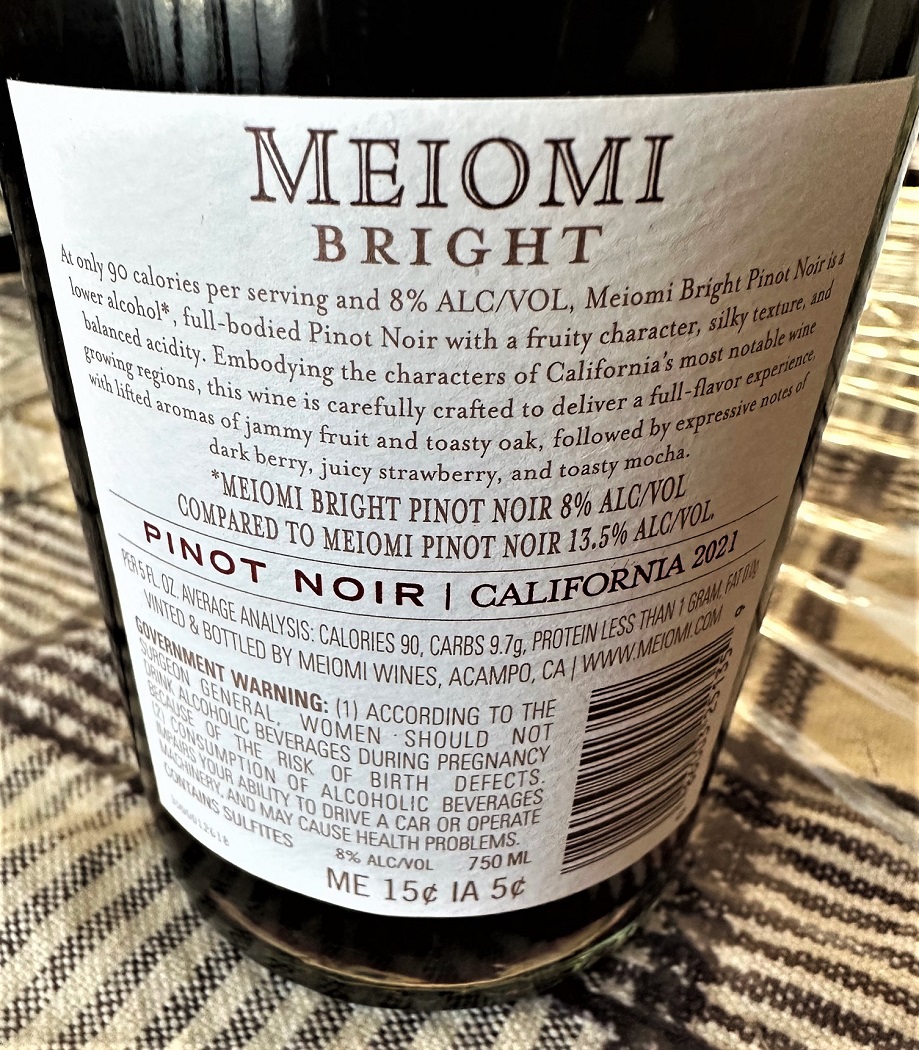
This encounter with the low-alcohol, low-calorie wine made me do something which I had never done before – trying to understand the calories in wine.
I don’t pretend to be a scientist here, so below is my layman’s understanding of what we are dealing with when counting the number of calories in a glass of wine. I’m fully open to criticism, and if someone thinks this is all baloney and the calculations are all wrong, I will be delighted to correct this text to set things straight.
First, some basics. Calories in a glass of wine come from 2 sources – alcohol and sugar. There are 7 calories in one gram of alcohol (there are multiple sources of info on this, I used this one), which by the way makes alcohol the second highest source of calories after fat, which delivers 9 calories per gram. There are 4 calories in a gram of sugar (you can verify via google search). One more important point – a standard wine pour is considered 5 ounces glass, and there are 5 standard pours in a bottle of wine, which contains approximately 25 oz of wine. As we measure calories per gram, we need to convert between ounces and grams. One ounce is equal to 28.3495 grams – however, as I don’t want to deal with a calculator all the time, we will assume that 1 oz is equal to 30 grams, for the simplicity of this exercise.
Alcohol is always presented on the label in the form of ABV – Alcohol By Volume. Thus the percentage shown with the ABV letters simply identifies what percentage of the bottle content is pure alcohol, the one which clocks 7 calories per gram. To provide a simple example, a 1 liter of 10% ABV wine will contain 100 grams of alcohol. By the same token, a standard pour of such 10% ABV wine which amounts to 5 oz, will contain 0.5 oz of pure alcohol. If you want to do it in grams, with our previous assumptions, 5 oz is equal to 150 grams, which will translate into 15 g of pure alcohol – which in turn will deliver 15*7 = 105 calories per glass just for the alcohol portion of the content.
Now, let’s analyze our Meiomi wine based on what we just learned (yes, I know it says on the bottle “90 calories” front and center, but let’s see if we can come up with the same number). This Meiomi Pinot Noir has 8% ABV, which means that the standard pour/serving of 5 oz (150g) contains 12g of pure alcohol. 12*7 = 84, which brings us to the perfect proximity of the 90 calories. However, according to the information on the back label, the same 5 oz of wine contains 9.7g of carbs, and the only source of carbs in wine is residual sugar – this is the sugar left in the wine after fermentation was finished. We can safely round our 9.7g to 10g, and when multiplied by 4 (calories per gram of sugar) we will get 40 calories. Adding 84 and 40 brings us to 124 calories in that glass of Meiomi Pinot.
I wanted to compare this caloric count with any regular wine. As an example, I took information from the technical note of the 2020 Barra Cabernet Sauvignon from Mendocino. This wine has 14.5% ABV and 3.2 g/l of residual sugar. At 14.5% ABV, our 150g of Barra Cab (5 oz, standard pour) will contain 21.75g of pure alcohol, which will give us 152 calories from alcohol. 3.2 grams of sugar per liter will translate into approximately 0.5g of sugar per same standard pour which in turn will only add 2 calories, for the grand total of 154 calories. That also means that there is only 30 calories difference between low-calorie, low-alcohol, manipulated wine and normal wine. You can make your own conclusion, but I’m sure you can figure out mine.
There is one more thought I would like to share. I’m afraid that a low-alcohol wine can give people a false impression that they can simply drink more of it because each glass supposedly contains less. So it is not impossible to presume that someone can drink 3 glasses instead of two, based on the premise of “light wine”. Using our calculations above, there will be 372 calories in these 3 glasses – 2 glasses of Barra Cabernet Sauvignon will set you back 308. Again, you can (and should) make your own conclusions.
I clearly understand that my personal viewpoint and perception are not important at the scale of the market – when there is a demand, the product will appear. Low-calories, low-alcohol wines are here to stay, no matter what I think of them. But I’m glad this Meiomi Bright Pinot prompted me to do some research and acquire some understanding of the calories in wine.
I guess when they say “liquid diet”, they are not really kidding. Cheers!
The Case for $3.49 Wine
My latest (hopefully the last for the year) travel took me to Washington, DC. After arriving in the evening, I wanted a glass of wine and a bite to eat. The restaurant at the hotel was closed. I’m sure it would have been easy to find a place to eat nearby, but Whole Foods right across the street offered a different option.
I walked into the store only thinking about the food. But the entrance took me directly to the wine section, so obviously, I had to stop and look around. There were definitely some interesting options available, including some Virginia wines. And then I saw Cabernet Sauvignon for $3.49. When I travel, I love to explore the wine options, especially the cheap inexpensive wines, so the wine looked absolutely irresistible.
When in Europe, I’m very confident about such inexpensive wines – chances for disappointment are quite low. The US is a different story. Trader Joe’s is the only place where you can find wines for $4-$5, and sometimes you win, and sometimes you learn. Of course, Trader Joe’s has its own $3.49 wine, Charles Shaw, formerly known as Two Buck Chuck. I had Two Buck Chuck before, and my curiosity was satisfied. Now I needed to find out how this $3.49 wine would fare.
Before we talk about this particular wine let’s talk about the concept of inexpensive (cheap?) wine. “Cheap wine” sounds almost offensive so let’s use the gentler “inexpensive” term.
I’m sure a lot of serious wine lovers in the US would frown upon the wine at such a low price. They might get a bottle for cooking, but even then there is a well-known adage that you should cook with the wine you will enjoy drinking. But beyond cooking, to buy a bottle for $3.49 to drink or entertain friends would be a big “no-no”.
My case for such an inexpensive wine would be for both uses, of course assuming the wine is palatable – this is clearly the most important requirement. Cooking is no brainer – when I make a beef roast in a slow cooker for 7 hours, I honestly believe that whether I will use a $3.49 bottle, or $349 bottle of La Joie Vérité, it wouldn’t make a detectable difference, so even if one can afford it, the question is why.

Now the friends’ entertainment aspect is also essential. You see, I have a group of friends who all love wine. I would never offer $3.49 wine to these friends at dinner, with the exception of maybe a curiosity sip. I’m always ready to open whatever bottle I have in the cellar when we get together, with no exceptions. And then I have other friends, who I love equally as much, but who don’t care about wine at all. $349 wine would not make them excited even the tiniest bit and would be clearly a waste of wine (not even talking about the money).
Don’t get me wrong – this is not for the lack of trying. Believe me, I tried. We don’t need to single out those really expensive bottles, as nobody tries to show off or prove any points. There are plenty of absolutely amazing wines under $20 which would bring me literally into the nirvana state – and would never extort even the hint of “wow” from my friends, just at the best a polite “hmmm, this is nice”. Serving a $3.49 bottle under such circumstances makes absolutely perfect sense – especially if you, the wine snob in disguise approve that $3.49 bottle.
Those of you who know me well already figured that I wouldn’t go into such a diatribe if I wouldn’t have the $3.49 wine I want to bring to your attention. But of course…
Non-vintage Three Wishes American Cabernet Sauvignon (13% ABV, $3.49), produced by Three Wishes Vineyards in California – in a few words, well-balanced and inoffensive – or maybe smooth is a better word. This is not a concentrated Napa Cab, which instantly takes ownership of your palate – this wine is mellow, it has black and red berries to offer, it is not sweet, and it has a good amount of acidity. Yes, it is simple. Yes, it is not thought-provoking. But for the price, there are plenty of people who enjoy an occasional unpretentious glass of wine who would be absolutely delighted with this wine. What’s important is that majority of the wine drinkers should be either unaware of the price, or simply grow up above the wine snob level. This is unfortunate, but wine is really one of those products where people are afraid to spend too little (and this can be the subject of another post). Bottom line – if you are simply looking for a glass of wine with your meal and not for the wine experience – you can get it with this wine.
And now I rest my case.
I Still Don’t Understand…
This is not really a rant. I guess this can classify as rambling. Or “asking for a friend” might be the best way to classify this post.
Nevertheless, let me share my frustration.
The question is as simple as it is proverbial. When you take a sip of wine (you can make it a glass, doesn’t matter), do you judge the wine at that moment?
Hold on, while you ponder this, let me add a few layers.
You read the description of the wine. The wine sounds great. The wine sounds like something you want to buy and you want to drink, so you buy it.
Some time later (let’s say, 10 months later), you open a bottle. You remember it came with the recommendation, so you are full of anticipation – or not, maybe you even forgot the raving review. But this bottle is in your cellar, as you had a reason to buy it. So it is rightfully expected to be a good bottle of wine.
You pour a glass. You take a sip. The wine is perfectly fine, no faults, all is good, but the wine gives you nothing. Forget pleasure – the wine is flat and pedestrian, it doesn’t deliver anything, doesn’t cause any emotion. Just flat and boring. You let it breathe for an hour or even two, and still, there is nothing. Does this story sound familiar? Can you picture yourself in this situation?
So here is the first part of the question. How do they do it? The people who reviewed the wine and called it “Killer Bourgogne Rouge” – how come you can’t see an eye to eye with them? I get it when the wine solicits emotion and it is not your wine – this I understand. I remember Robert Parker raving about Ball Buster Shiraz, and the wine was incredibly overdone to my taste, I couldn’t enjoy it at all, but at least that wine didn’t leave me indifferent. But this is not my point. Let’s continue.
While I was not happy – I rarely get to drink Burgundy, so I really want every Burgundy experience to be special – I still did what I always do. Pumped the air out and left the bottle on the counter.
The next evening, I poured another glass to decide on the fate of the half bottle which was left. I took a sip, and couldn’t believe that I’m drinking the same wine that was flat and boring the day before. The wine opened up, it had depth, the fruit, minerality, forest underfloor, hint of smoke, acidity – all were at a beautiful interplay. The wine instantly went into the “delicious” category, and that half a bottle didn’t last for too long.
This brings us to the second part of the question. How do they do it? The wine critics and professional reviewers – are their palates so much more sophisticated than mine? There is no way they wait for the wine for a day or two to open up. Where I see “flat”, they can really see the full beauty? Or is there something I miss?

Domaine Rebourgeon-Mure is one of the oldest in Burgundy, tracing its roots back to 1552. The property spreads over 3 appellations – Pommard, Volnay, and Beaune, allowing wines to be produced in each one of those applications. The domain practices sustainable viticulture; the grapes are harvested by hand, and the wines are aged in 17th-century cellars in partially new oak for 14-18 months.
The wine I’m talking about here was 2019 Domaine Rebourgeon-Mure Cuvée de Maison Dieu Bourgogne (13.5% ABV, $26.98 at Wine Exchange), and after giving this wine time to open, I have to fully agree with “Killer Bourgogne Rouge” definition. Yet I know that I couldn’t enjoy this wine from the get-go.
So what can you tell me? Is this simply my personal handicap, or is there something fundamental I’m missing?
Whatever you want to say, I’m all ears…
Making The Same Mistakes
Are we humans prone to repeat ourselves all the time? Good and bad – first we repeat what was done again and again, then wonder why we achieve exactly the same result as before. There is nothing wrong with repeating the good things, except that we might be limiting ourselves – think about bench-pressing 150 lb all the time, without ever trying to increase the weight. That’s a good weight to press, of course, but you need to increase the weight if you want your muscles to grow.
The process of repeating the bad things is far more peculiar. We know that something doesn’t work. We know that we did something in the past and it painfully didn’t work. Should we learn? Should the brain have a mental capacity to remember the bad result of the past and then simply remember not to repeat it? You think? This is so obvious, and yet unattainable at the same time. Why? Really, why?
Case in point. My business trip took me to Anaheim in California. Going to Anaheim, people who travel occasionally would fly to LAX (Los Angeles airport), and then have quite an expensive (and potentially very long) taxi ride to get to Anaheim. People who travel know that the closest airport to Anaheim is John Wayne, a.k.a. Orange County a.k.a. Santa Ana airport. As I belong to the second group (I generally travel for business), I took an early morning flight from Newark, NJ to John Wayne airport, arriving even faster than anticipated and enjoying the easy trip.
When traveling inside the US, ideally you want to take the early flight – outside of mechanical and horrible weather issues, you stand the best chance to arrive at your destination on time and in a happy state of mind. As the day progresses, travel becomes more chaotic, as flight schedules start shifting, and every slight delay aggregates to bigger and bigger ones. See, I know my flying rules. And what I said is 10 times true for the most overloaded (and badly run) airports in the country – Newark, Washington Dulles, Houston, Boston are all stand out in this category – by the end of the day, Newark would typically aggregate about 2 to 3 hours delay – and this is in the best weather throughout the country, God forbid it rains somewhere.
See, I know my traveling stuff, right? Do you think this knowledge helped me? Yep. Of course, you figured out the answer already. No, it did not. Instead of taking 6:30 AM out of John Wayne airport to fly back to Newark, I decided to fly at 12:30. Would you expect me to apply my knowledge? Of course, but I didn’t not. After arriving at the airport about two hours prior to my on-time departure, I spent the next 4 and a half hours (that includes 2.5 hours of an actual delay) literally swearing at myself, at United, at Newark, and back to myself. What’s even worse, I managed to repeat yet another old mistake again.
Insanity – repeating the same thing over and over again, every time expecting a different result
If you like wine, and if you ever traveled through Austin, Portland, San Francisco (and many other) airports, I’m sure you noticed restaurants/bars called Vino Volo. There are more than 50 Vino Volo locations around the country. Everything in Vino Volo revolves around wine. Every restaurant has a great selection of wines by the glass and wines to buy by the bottle – as they are located past security, you can buy a bottle of wine to bring to your destination if you are so inclined.
However, my main attraction at Vino Volo is wine tasting flights. At any given moment, Vino Volo offers 6-8 different tasting flights, red, white, Rosé, each flight typically consisting of 3 wines. Each flight is accompanied by detailed tasting notes. Very often you can find a selection of local wines offered as part of the flights – Oregon wines in Portland, Texas wines in Austin, and so on. When I have time, I never pass on an opportunity to visit a Vino Volo store and taste some new wines.
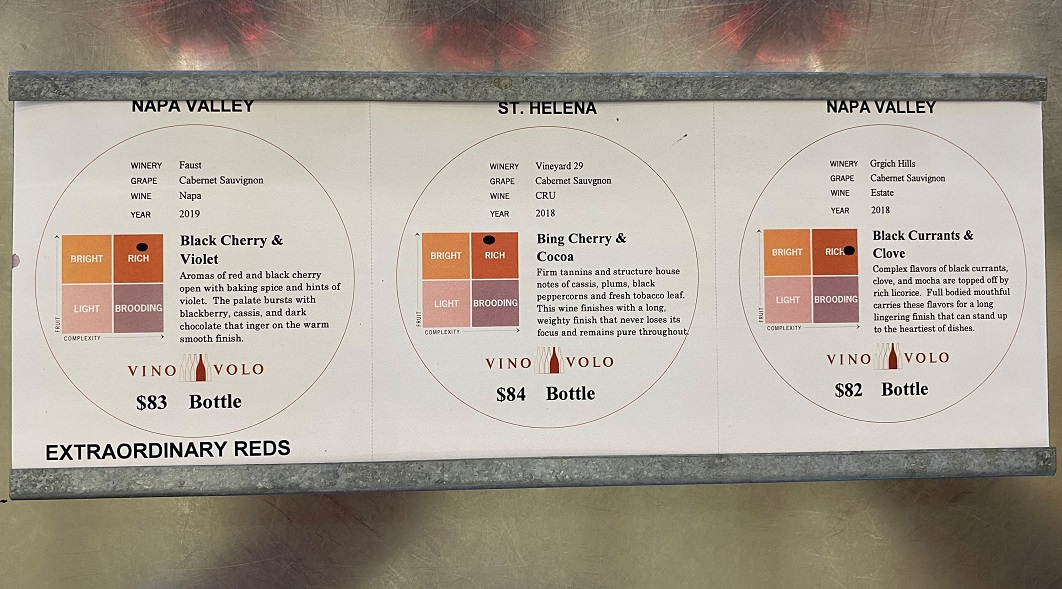
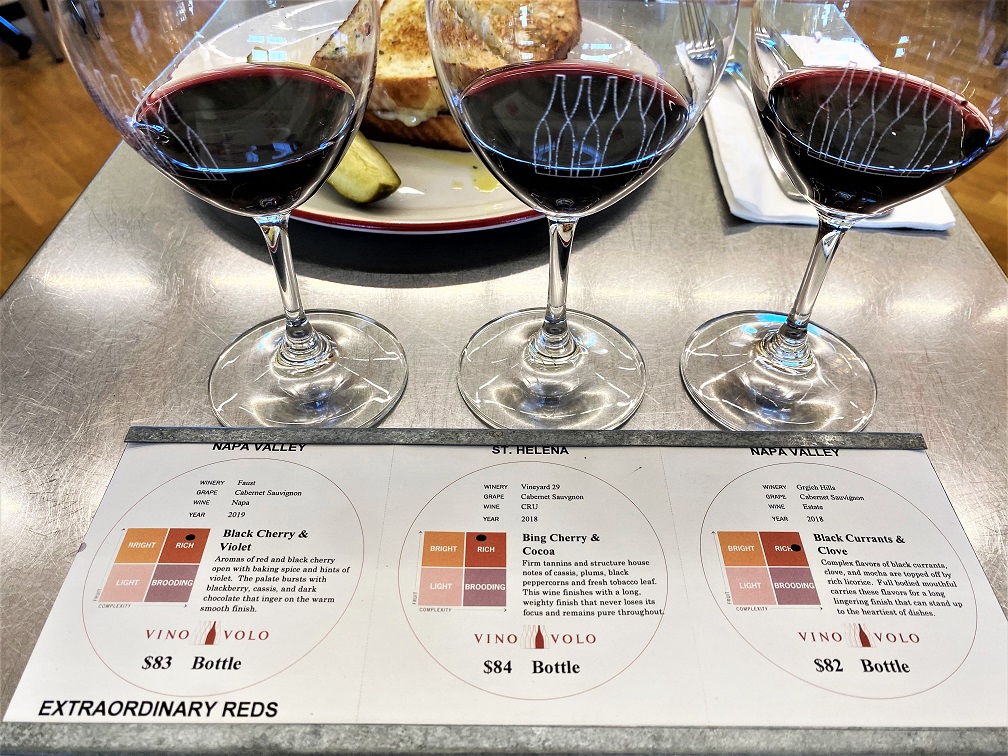
This brings us back to the subject of repeated mistakes. I know full well that young and expensive California Cabernet Sauvignon wines are undrinkable, 9 out of 10. I generally enjoy Vino Volo flights, with one memorable exception being Californian Bordeaux blend Overture, the second label of Opus, which I didn’t enjoy at all. And now, while at the John Wayne airport, I chose the flight of 3 high-end but young California Cabernet Sauvignon wines, instead of taking one of the other 7 or so. Why? Was a driven by the bad mood due to the flight already being delayed? Was there a hidden, subconscious desire to exacerbate the pain? I don’t know. But this was the flight I ordered. And it successfully exacerbated my pain – which you can see in these tasting notes:
2019 Faust Cabernet Sauvignon Napa Valley ($83)
Black currant, cherries, eucalyptus
Gripping tannins, green notes, black currants, tart finish.
Not enjoyable now.
2018 Vineyard 29 CRU Cabernet Sauvignon St. Helena ($84)
Cherries, dust
A bit more balanced than the previous wine, still weaved on the core of green notes, but definitely more approachable and enjoyable than the previous wine. Glimpses of greatness. Maybe decanting for an hour would make a miraculous change.
7+
2018 Grgich Hills Cabernet Sauvignon Estate Napa Valley ($82)
Distant hint of black currants and nutmeg
Tart, green, fruit is hiding. Almost flat in terms of soliciting an emotion.
Why do we do these bad things to ourselves? This question is half rhetorical, half actual. If you know the answer – or have a story to tell – please, I’m all ears.
Wine Reflections on the Go, and Cognac Ramblings
 While in San Diego for work, I was on a very strange quest. I wanted to find cognac in miniature bottles (50 ml). Strange and dumb, you say? No problems, I accept the criticism. It is strange, but not criminal or immoral by any means, so let me continue my story.
I don’t know if you drink cognac, but if you do, you could’ve noticed that it is generally in a short supply, and often absurdly priced. Some stores carry no cognac at all. Some stores have a very limited selection, incomparable with other liquors – look at a typical tequila or bourbon selection – the ratio would be 10 to 1.
Why cognac all of sudden? A dear friend is coming over in a few weeks, and we always do a serious tasting of scotch/whiskey with her. What does “serious” mean? At any given moment I have 15–20 (or more, I honestly have no idea) bottles of whiskey open – some might be for 10 years – unlike wine, whiskey doesn’t care, nothing can change in the 46% – 70% ABV weather – as long as the bottle is closed well. This time around, the said dear friend said that she doesn’t want to do a scotch tasting, and would much prefer that we would change the subject – for example to the cognac.
While I love cognac, I prefer scotch for my occasional hard liquor sip. It is much more difficult to find a palatable, never mind tasty cognac which one also can afford – delicious whisky can still be acquired for less than $30, but drinkable cognac in that prices range is mostly a dream.
Okay, so back to that tasting. I set for myself a goal to have at least 15 different cognacs to taste, without spending a small fortune. I probably have 2 or 3 open. I procured two tasting sets (they are very hard to come around), and found one miniature of Courvoisier to include in the tasting, but that’s about it. So I went on the mission to find at least the main brands (Martell, Hennessy, Courvoisier, Remy Martin) and maybe some others – but seemed to be mission impossible in Connecticut and even in New Jersey.
Wine Reflections, as promised
Which brings us to the wine store in San Diego. I honestly went to the wine store creatively called The Wine Bank to look for my cognac miniature bottles. Who goes to the store called The Wine Bank to buy cognac? Happy to be ostracized again, but if I would be looking for tequila, bourbon, or even gin believe me I wouldn’t leave the store empty-handed. But cognac? Nowhere to be found in any size.
The store was “much bigger on the inside” with a huge basement filled with wine shelves. So what should the wine lover do when he encounters wine heaven? At least take a look, right? Just a look. No touch. I promise. I was well behaved. But would you believe me if I would tell you that I left the store called The Wine Bank without buying a bottle? Even if you are naive, my reader(s?), don’t trust the wine lover visiting the wine store.
I was looking for something interesting, yet inexpensive. Interesting means I don’t readily have it at home and would love to drink often but drink rarely. And so I found my beloved Chinon (Cab Franc) and a white blend from the Rhône, $17 and $16 respectively.
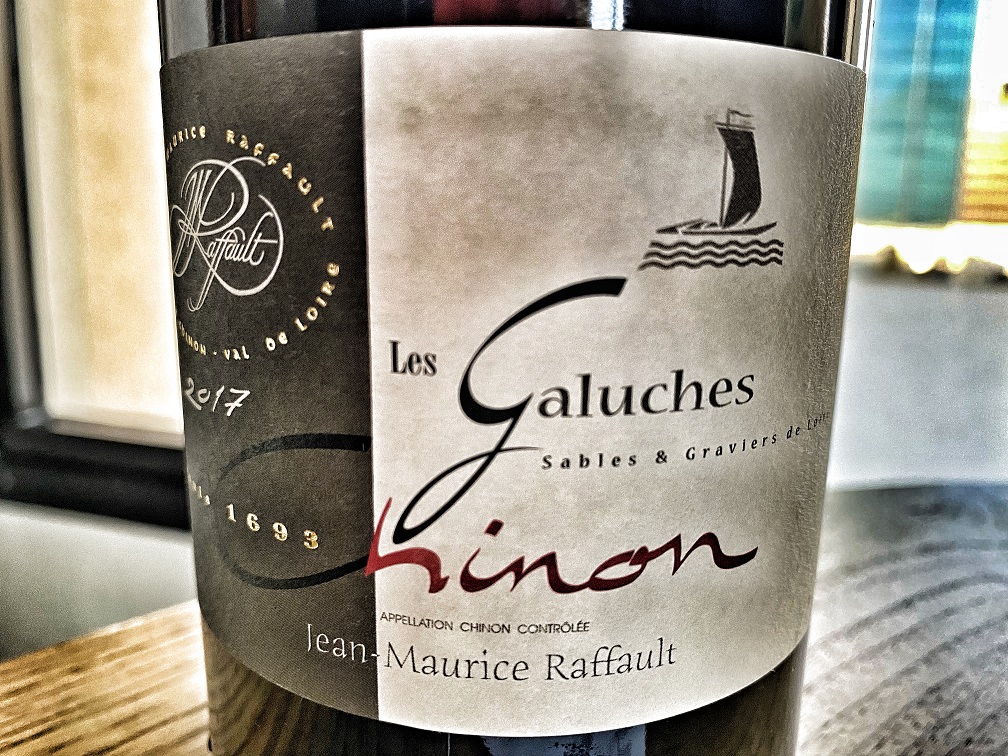
I really like Chinon wines, a classic, cold climate, old world renditions of Cabernet Franc. This wine was from the 2017 vintage, so it had 5 years of age on it. I previously had an amazing experience with Chinon wine from Olga Raffault, so now seeing the same name (Raffault family had been cultivating vines in Chinon for 14 generations!) together with the reasonable price has given the rationale for the decision.
I rarely drink white Rhône wines because there are very few of them available at most of the wine stores, and finding tasty ones is not an easy task as well. However, seeing 60% Roussanne on the back label – and Roussanne might be my favorite white grape – together with a reasonable price again made it an easy decision.
2017 Jean-Maurice Raffault Les Galuches Chinon AOC (13% ABV, $16.99, Les Galuches is the name of the vineyard, had been organically farmed since 2016) was interesting. When I just opened it, it had a beautiful classic nose with a touch of bell pepper, and an almost jammy load of the black currants on the palate, very generous. On the second day, the nose was somewhat closed, and black currants were still pleasant though somewhat scarce. On the third day the wine pretty much closed and offered mostly bell pepper and tart acidity. I don’t believe the wine turned – it should be either consumed upon opening or left alone for 10+ years to enjoy it later.
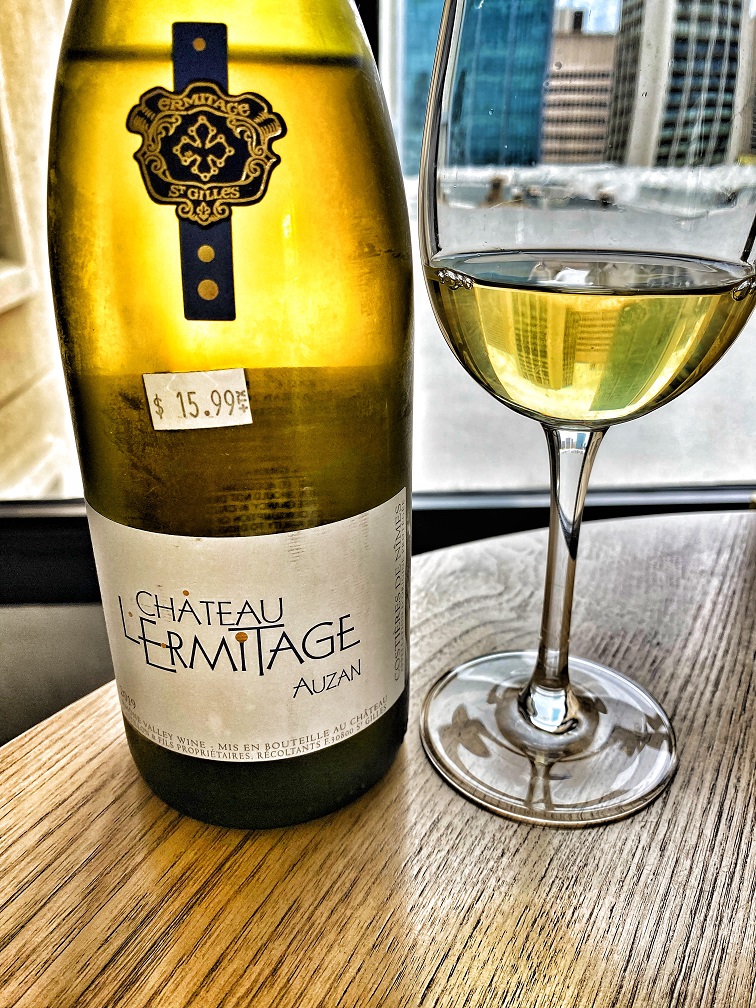
2019 Chateau L’Ermitage Auzan Blanc Costieres de Nimes AOP (13% ABV, $15.99, 60% Roussanne, 20% Grenache, 20% Viognier) was even more interesting. I chilled this wine first overnight in the fridge. When I opened it, I really wanted to like it, but I couldn’t. It was disjointed, with fruit and acidity randomly poking in different directions. As the wine warmed up, it became a lot more palatable and enjoyable, but the magic didn’t happen.
I left the wine bottle on the table overnight. When I tried it in the morning, I literally slapped myself on the forehead – this wine is 60% Roussanne, and Roussanne wines are showing much, much better at the room temperature or gently chilled compared to the full-blown “wine from the fridge”. The wine had gunflint on the nose, and boasted powerful, fully textured, plump, and round white stone fruit on the palate. A beautiful, classic, full-bodied Roussanne rendition.
Here you go, my friends – my wine (and cognac) reflections [directly and figurately] on the go. Drink well, whether you travel or not.
How Art The Wine Is?
 <rant>
Wine is Art.
I always say this, and I’m willing to fight anyone who disagrees.
Same as a painting, a classical music piece, a sculpture, an architectural masterpiece, or an elaborate flower garden, well-made wine solicits the emotional response, hence it is an art form. Defining this art, there is one key difference between, let’s say, a painting and a bottle of wine – we only need to look at the painting to trigger an emotion – but we need to drink the wine to make it an ultimate art form.
A few months ago, a friend told me “I have a wine question for you”. He is a wonderful friend, but he typically drinks Bartenura Moscato, so the wine question? Okay, let’s hear it. So the question was about the wine and NFTs. NFT, which stands for Non-Fungible Token is a form of cryptocurrency, typically used to guarantee authenticity and ownership of unique forms of art or objects – this article might help if you want to learn more. So the friend was asking if he should buy NFTs of some obscure wine (there was a choice in the catalog) – and if not this wine, then maybe that wine.
Literally the next day I got a call from another friend who was asking if he should invest a good amount of money in the fund which invests in fine wines. Technically, you pay for the case (or 5, it depends on availability and demand) of unreleased wine (futures). The fund company will take ownership of that case, will store it in the proper conditions, and will report back to you a current market value of your case, so you can sell it when you think it is time – with a very large profit, of course.
It seems that these investments are flying out faster than hot potatoes in the hands of an amateur chef. That same friend called me to complain that because I didn’t give him good advice right away, the wine he was asking about was already sold out and he had to get on the waiting list for the wine of supposedly a lesser pedigree.
During last month I also heard about the same offerings from yet another friend, and then even received a direct ad in the Instagram stories, to invest in wine with a guaranteed incredible return.
Now, my question to you – a collective “you”, anyone who would spend time – is this how it should be? Yes, I get it, it is capitalism, supply and demand, of course, but the wine is made to be drunk, consumed, mesmerized upon, start crying, laughing, grabbing someone excitedly on the shoulder – but not just to be another form of the stock certificate?
Of course, there is wine collecting. There are people with access, who accumulate lots and lots of bottles, many of them very expensive and very limited, but I would assume that even the wine collectors acquire the wine to be consumed and enjoyed – not all of it, but at least some of it? This wine investment fund idea relegates wine simply to the form of another agricultural commodity – corn, wheat, cattle. Commodity trading had been around forever – nobody owns 100 bushels of rice, but anyone can make (or lose) money on it. But rice is not art – rice is simply a necessity, and yes, if you are hungry, it will solicit the emotion, but it will not be the same as when you are truly enjoying a glass of wine.
The latest entrant into the NFT craze – Robert Mondavi winery. Three of the star winemakers produced 1966 magnums of wine called MCMLXVI (that is 1966 in Roman numerals – 1966 is the year when Robert Mondavi winery was founded), Cabernet Sauvignon and Cabernet Sauvignon blends from 2019 vintage. This wine will be packaged into specially designed porcelain bottles by the French porcelain designer Bernardaud, with each bottle having a unique QR code, and sold at $3,500. Now, when you will buy the bottle, you will get an NFT, which will assure your ownership, and there will be a connection between an NFT and that QR code on the bottle. In addition to the bottle of wine, each purchase will somehow include the generative artwork (you look it up – I guess it means a visual object/ painting generated by computer algorithm) by the artist Clay Heaton. Also, the QR code with NFT will serve as protection against counterfeiting – like the porcelain magnum bottle by itself is not enough.
So I wrote all of this, then took a pause and had to ask myself – what is your problem, dude? Everything sounds great in this picture – great winemakers, perfectly artful presentation of the perfect wine, guaranteed authenticity, and even a bonus in the form of the hot piece of art. What is my problem, really?
This wine is not created to be enjoyed as wine. This product is strictly a financial instrument. Star winemakers will attract attention. Unique packaging will attract attention. But then this is strictly sold as a financial instrument. NFTs are typically sold through an auction-like mechanism, so there clearly will be open bidding, with $3,500 being an initial price. There is also an opportunity to resell that piece of digital art, so all in all, this is strictly a money transaction. I wonder if any of these bottles will be ever open, or they will strictly exist for their monetary value.
Yes, wine is business. Yes, I’m naive. Yes, I’m romanticizing wine. Yes, you can call me old and stupid. That’s all fine. But the only way to enjoy wine is by drinking it. I love money as much as anyone else here, but still, if someone is buying wine only for its resale value, they don’t love wine, they only love money. Connecting NFTs to wine only amplifies the conversion of the wine into a financial instrument. And if wine is becoming only an abstract monetary instrument, one day someone will realize that it doesn’t matter what is in the bottle – any plonk will do. And then another day, someone will open that bottle… and… I really have no idea what will happen then. Or what will happen if one day, unhackable blockchain will be hacked, and all the NFTs will disappear – will someone then decide to drink that wine?
Wine is art. To be more precise, the wine in the closed bottle is only a potential art – or just another monetary instrument. Wine becomes art the moment it is poured into your glass. And that is the only reason for wine to exist.
</rant>
Am I missing something? Do NFTs have anything to do with enjoying the wine? Are NFTs really connected to the future of wine? Am I just jealous of the people with unlimited monetary resources? I’m ready to discuss…
Zoom Rhymes With Wine
Zoom rhymes with wine. Nonsense, you said? Of course, silly, they don’t. Not in a traditional poetic sense for sure. Maybe only in a haiku?
Sun setting down
Zoom glimmers seductively
Pour the wine
Well, if this was the worst thing you ever read, feel free to disavow me. But for those who want to talk, let’s have a conversation about wine and technology? Or maybe just today’s life?
While wine is my passion, it is my hobby. Obsessive? Maybe. But still a hobby. My daytime job is in the computers and technology field, and if you will allow me to be even more precise, it is IP communications technologies, which cover almost everything from the internet to videoconferencing and to your toaster conspiring against you with your microwave (don’t worry, it is early and they still can be stopped). In this technology space, I was lucky to meet Jeff Pulver, who was a pioneer and a visionary, and not only in the space of technology but also in social media.
Before Twitter was even a concept, Jeff came up with a concept of a social breakfast. You see, many of the technologists are socially very conservative, and when those people get together, the hardest thing is to start a conversation. Every attendee of Jeff’s breakfast was given a few stickers to either tag oneself or a person they were talking to with random “identifiers” you would come up with during conversation, such as “wine”, “music”, “VC”, “video” – as you move around the room, those tags were easy conversation starters. If someone has a tag “garden”, you don’t need to think about what to ask that person, you can simply ask about that tag.
The attendees also had to come up with the tagline which would describe them in a short sentence. Mine was “I like wine and technology that works” – again, you don’t need to think hard about your first question when presented with an opener like this.
Believe it or not, but the technology part in my tagline above is more relevant to today’s world than the wine. How so? The company I was working for was in the videoconferencing space. And in those days (the early 2000s), the technology was subpar at the best – typical video conferencing call inflicted a lot of pain and suffering on all the participants, and every 10-15 minutes you could talk without significant quality degradation or a call simply dropping, was almost a reason to celebrate. And all that technology was really expensive and available only to businesses with deep pockets.
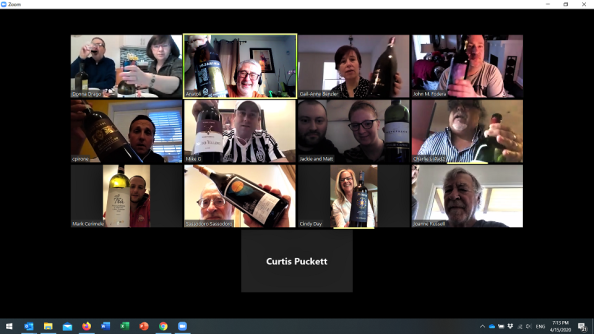
The situation is dramatically different today. There is a gazillion of platforms offering video communication capabilities, either streaming (Facebook live, Instagram live, Youtube live, …) or interactive video for two or more people (skype, Facebook messenger, WhatsApp, Google hangouts and then serious commercial ones such as Zoom and Microsoft teams) – and nevertheless, the video was not really a tool in the wine world.
Even in the early days, the wine industry realized the value of social media and the “word of mouth” opportunity it offered to educate wine consumers and promote wine producers, wine brands, and individual wines. As the internet was becoming more accessible and easier to use, at first there were the wine blogs. Twitter quickly became a social media darling of the wine world, offering not only the ability to reach anyone with the twitter handle, no matter how famous those people were, but also becoming an enabler of the group conversations, better known as the twitter chats.
Over the years, I participated in lots of different twitter chats, run under #winechat, #winestudio, #WiningHourChat, and the others. Twitter chats were always fun exercises that were difficult to follow – try to have 10 conversations at once, all with your hands, also trying to taste wine at the same time – not that easy. There were also a few of the video wine presentations, where winemakers would get together and present their wines (Montefalco Sagrantino presentation was one of the most memorable for me), with the audience running the discussion via chat – Snooth also conducted quite a few of those. But through all the years, I attended only one or maybe two tastings at the most which were done in the interactive video format, where all the participants were able to discuss the wines among themselves and talk to the winemakers and presenters – winemaker lunches and dinners were unquestionably much better venues. Until the virus happened.
The appearance of the COVID-19 has put everyone’s world upside down. With all the people stuck in homes, video communication became a lifesaver. Literally. It allowed people to reduce the pain of isolation. It gave us the ability to share our experiences, even if we were drinking different wines – but we were still able to do it together. Many winemakers embraced the opportunity which new world order had offered to meet their customers face to face – the tasting rooms became virtual, but luckily, the wines were not. Remember my tagline – “technology that works”? Zoom is a perfect example of that – it simply works. The level of communication experience which Zoom provides was not yet possible even 5-6 years ago. And today, we can have as many live video conversations as we want – for as long as we want them. I’ve been myself on the few calls which were not expected to last even for an hour, and instead, they lasted for 3 – all of it without a glitch. Yes, color me impressed. very impressed. And do you see now my point that zoom rhymes with wine?
The most interesting question for me if this newly found love between wine and video communications is here to stay. Once the world goes back to normal (yes, it will), will we have the time for 3 hours zoom call on a moment’s notice? I would argue that yes, the video-enabled virtual tasting room will become a newfound convenience – but it will not replace the actual clinking of the glasses around the table.
What do you say? Does zoom rhymes with wine for you? Cheers!
Last Bottle Sign Up ($10 credit)




 Talk-A-Vino