Archive
One on One with Winemaker: Steve Lutz of Lenné Estate
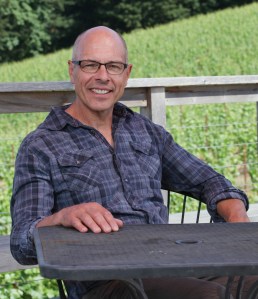
Steve Lutz. Source: Lenné Estate
For many years, I was trying to start my garden. Every year I would order my tomato plants, some peppers, and some herbs, plant them and then meticulously make sure to water them on a regular basis and hope for the best. Every year my reward would be a nice rosemary and sage (basil would always die) and maybe 10 mediocre tomatoes from 8 or so plants.
This was the story until this year, when I built raised beds, got a perfect top soil, premixed with all the proper organic fertilizers, planted tomatoes and lots more, and still collect (it is October now) a nice daily harvest of tomatoes, eggplants, and cucumbers. The soil is the king, you know – that rich, soft, almost greasy dark goodness of the good dirt.
Don’t worry, this post is not about me and not about my amateur gardening escapades. Talking about wine, do you think the soil is important? Would you want the best possible soil for your vines, the richest and the most nutritious? Or would you believe that someone would purposefully choose the plot with the poorest possible soil, and plant there the vineyard of their dreams? Enters Steve Lutz, who did exactly that.
In the year 2000, after searching for the perfect vineyard site for 8 months, Steve Lutz climbed a steep hill on the outskirts of the town of Yamhill in Northern Oregon, and after an hour of negotiations became an owner of the plot where Lenné vineyard was planted. The chosen site had peavine soil, which is not all that rich in the nutrients. Couple that with the steep slope and no irrigation, and you got the ideal farming conditions, right?
In 2001, 11 acres of Pinot Noir vines were planted, consisting of 3 blocks (one Pinot Noir clone per block). In the first year, Steve lost 35% of his plantings. In 2003, the additional 2.5 acres were planted, only to lose practically all of it to the record heat in the same year. It was only in 2007 that Steve was able to harvest enough fruit to vinify individual Pinot Noir clones. Also in 2007, Steve opened the tasting room, and the rest of it is a history which you can read for yourself on Lenné Estate web site.
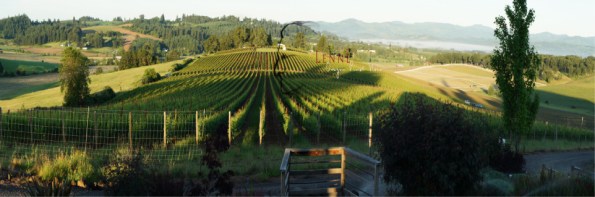
Source: Lenné Estate
I had an opportunity to [virtually, of course] sit down with Steve and ask him a few questions – here is what came out of our conversation:
TaV: Before you purchased that parcel of land that became Lenné, what made you believe that that soil can produce great Pinot Noir wines?
SL: All great soils for growing grapes have low nutrient value that limits the vines vigor. The soil type I am on is classified as the poorest Ag soil in Yamhill County. I knew the shallow, low nutrient, sedimentary soil would produce smaller clusters and berries with more concentration.
TaV: It took you about 6 years (from 2001 to 2007) to get to any level of commercial success. How many times (if ever) you were ready to declare the project to be a failure?
SL: Well there was too much sweat equity and personal money involved to turn back, but after we planted a 2.5 acre block in 2003 (one of the hottest springs ever) and lost all of it, we came close.
TaV: The soil at Lenné sounds it can produce some other interesting wines – have you thought about planting grapes other than Pinot Noir, let’s say Syrah?
SL: Well, we have grafted some Pinot to Chardonnay and have thought about grafting a little over to Gewurztraminer. The issue is that you can’t do much because it isn’t economically viable. We do have a neighbor that grows syrah which I find interesting but it’s a little like swimming upstream; cool weather Syrah is fascinating with bottle age but a hard sell young.
TaV: Outside of your own wines, what is your most favorite wine what you ever tasted?
SL: Well, years ago I had all the DRC wines about a half a dozen times and those would have to be my favorites.
TaV: Looking at the names of your wines, I’m assuming Jill’s 115 and Eleanor’s 114 are named after your daughters?
SL: No, Jill is my mother in law who lives in England and Eleanor is named after my late mother. We also have a wine called Karen’s Pommard named after my wife.
TaV: Along the same lines, I’m sure there should be a story behind the name of “Kill Hill”?
SL: Yes, that is the most shallow, stressed soil in the vineyard and we had many dead vines when we planted there in spite of burning out a clutch on a tractor trying to keep them watered the first year. I always referred to it as “kill hill” because of all the mortality. When we finally got it established I decided to blend the two clones there (114 and 667) and call it “Kill Hill.”
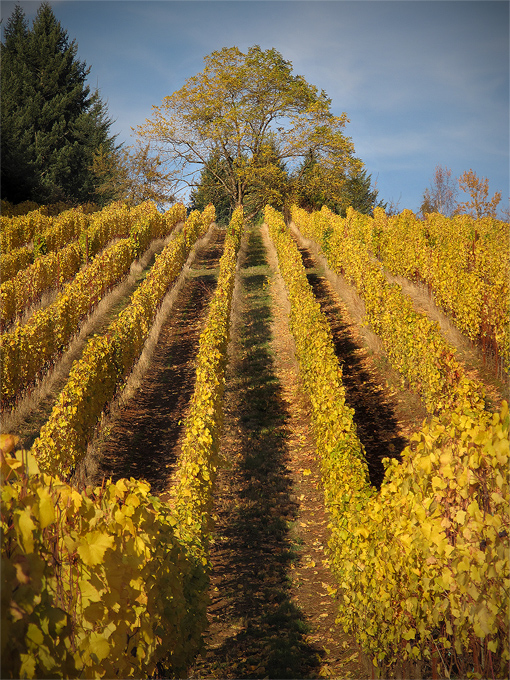
Source: Lenné Estate
TaV: You are teaching a class for the wine consumers on Dundee Hills and Yamhill-Carlton District soils, Red and Black, which includes blind tasting. How often do your students identify the wines correctly to the type of soil?
SL: Probably about 70% of the time.
TaV: Do you plan to expand the vineyard in the future?
SL: No, we have planted most of which is plantable.
TaV: If you are to expand the vineyard, would you ever consider planting white grapes, such as Pinot Gris or Chardonnay?
SL: Refer to above.
TaV: I understand that you are using low intervention, dry farming. Do you have any plans to obtain any certifications, such as LIVE, or maybe even going all the way into biodynamics?
SL: We are looking at the LIVE program right and I have thought about experimenting with biodynamics though I think some of the practices are more about marketing than having anything to do with good farming practices.
TaV: I’m really curious about the particular significance of “11 months in oak” which seems all of your wines are going through. Why exactly 11 months? Do you ever change the duration of time the wine spends in oak based on the qualities of the particular vintage?
SL: No, not really. The practice is based partially on practicality in that we like to get the wines out of the barrel before harvest. But having said that my philosophy is to get the wines in the bottle as intact as possible. Letting them sit in oak for extended periods of time leads to oxidation. Pinot is very sensitive to oxidation and I would rather put it in the bottle with as much of a reflection of the vineyard as possible and let what happens in the bottle happen. Some vintages could benefit in terms of mouthfeel with extended barrel aging, but they will get that in the bottle and have less oxidation than if you gave them extended barrel age.
TaV: If you would have an opportunity to “do over”, would you choose any other location for your winery, or maybe more generally, what would you do differently?
SL: I would do a lot of things differently in terms of the way we started, attention to detail in terms of farming the first year. We were in such a hurry to put the plants in the ground that we didn’t have our farming practices completely dialed in with the right equipment. As far as the site I can honestly say there is not another 21 acre site in Oregon that I would even think about trading my site for. The one thing we got completely right was finding the site.
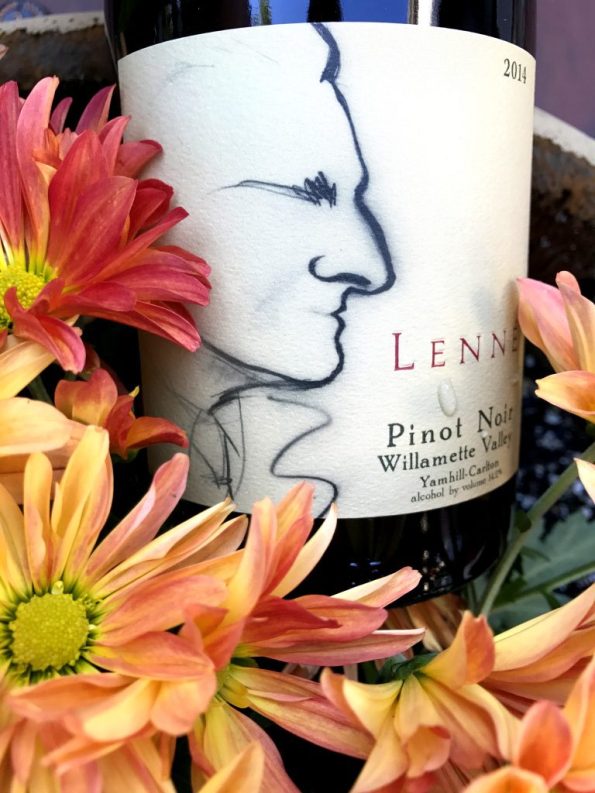 Time to taste some wine, isn’t it? I had an opportunity to taste Steve’s basic Pinot Noir, and I can tell you that left on the kitchen table, the bottle was gone in no time. Here are my notes:
2014 Lenné Pinot Noir Willamette Valley (14.2% ABV, $38)
C: Garnet
N: Smoke, lavender, ripe blackberries, medium intensity
P: tart cherries, fresh, vibrant acidity, firm tannins and firm structure, earthiness, excellent balance
V: 8-, very good wine, food friendly, will evolve with time
Here you are, my friends – another story of Passion and Pinot – now it is all about the soil and believing in yourself. We are not done yet, so until the next time – cheers!
To be continued…
P.S. This post is a part of the “Stories of Passion and Pinot” series <- click the link for more stories.
One on One with Winemaker: Wayne Bailey of Youngberg Hill Vineyards
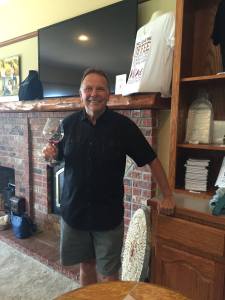
Wayne Bailey. Source: Youngberg Hill Vineyards
What do you think of biodynamic winemaking? As an oenophile, do you embrace it or shrug it off?
Well, it is easy for us, oenophiles, to have an opinion, informed or uninformed – but then there are people who actually live by it, meaning – practice every day.
Biodynamics was born almost 100 years ago, in 1924, when German scientist, Rudolf Steiner, presented a course of 8 lectures on agriculture. At the core of the biodynamics is a holistic approach to the agricultural work, embracing the whole sustainable, natural ecosystem – akin modern day organic agriculture. However, biodynamics goes further and adds what many perceive as voodoo element – bladders, intestines, skulls and many other “strange” items play role in the full biodynamics approach, and that puts a lot of people on the offensive.
I’m sure at this point you are probably looking back at the title of this post and trying to figure out what biodynamics has to do with promised winemaker’s interview? In 2003, Wayne Bailey purchased the vineyard in the Willamette Valley in Oregon, called Youngberg Hill. The Youngberg Hill vineyard was planted in 1989 by Willamette Valley pioneer, Ken Wright, and it produced its first vintage in 1996. When Wayne Bailey was looking for the property to buy, Youngberg Hill was recommended to him as the place which has “good vibrations” – and rest is now history. These “good vibrations” also set Wayne on the path for the holistic farming, starting with all organic in 2003 and upgrading to biodynamic farming in 2011 – and this is why you had to get the refresher course on what the biodynamics is.
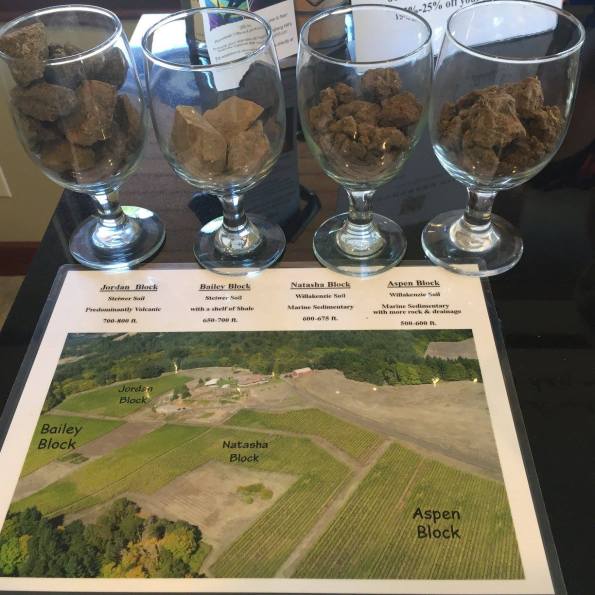
Vineyard Map. Source: Youngberg Hill Vineyards
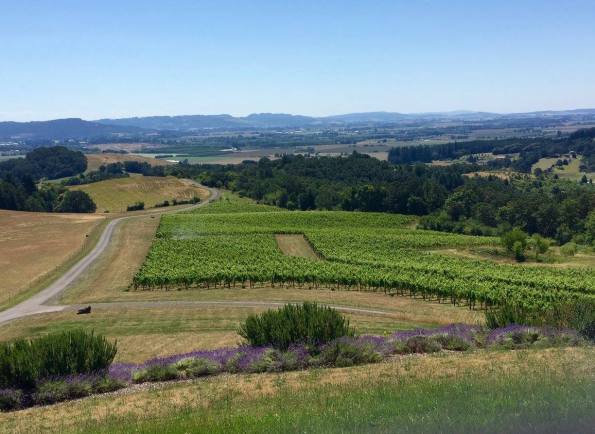
Source: Youngberg Hill Vineyards
Lots of things are happening at Youngberg Hill Vineyards today, but I will let you read about it on your own, as now I would like to share with you my [virtual] conversation with Wayne Bailey:
TaV: First vineyards were planted on Youngberg Hill in 1989. How much did you have to change between then and now?
YHC: Those 11 acres continue to produce and are healthier now than 14 years ago as a result of switching to organic and biodynamic farming practices. We have planted four additional acres of Pinot Noir in 2008 and five acres of Pinot Gris in 2006. In 2014 we grafted over half of the Pinot Gris to Chardonnay.
TaV: 1996 was the first vintage at Youngberg Hill. Have you had an opportunity to taste those wines?
YHC: Yes. The only vintage I have not had was 1997. I had a few bottles of ’96, ‘98’, ’99 that were part of our purchase.
TaV: What do you think of them?
YHC: They were very good and reflected both the quality of the fruit coming off the hill and the ageability of the wines.
TaV: Are there any of those wines still around?
YHC: I have 1 bottle of ’98 and a few 2000, etc.
TaV: Your first vintage was in 2003. How are those wines aging?
YHC: Only have a few bottles left, but had one only a couple of months ago that was beautiful. Aging very well and was still not showing signs of deterioration.
TaV: You produce Pinot Noir and Pinot Gris from Youngberg Hill vineyards, and Chardonnay is on the way. Do you have plans for any other grapes (Tempranillo, Syrah,…)?
YHC: No, I am not convinced that we will see global warming impact us to the extent that we can consistently ripen big red varietals in my lifetime. That will be up to my daughters.
TaV: Do you have any plans to expand plantings beyond the 20 acres you have right now?
YHC: No
TaV: You went from traditional (whatever it was) farming to organic and now to biodynamic. How those transitions manifest themselves in wines? Can you taste them?
YHC: Yes. The fruit is much healthier coming out of the vineyard and into the winery, meaning that the fruit is much more balanced and more balanced ripening of the fruit across all parameters of ripeness. That shows up in the wine as higher quality (depth and complexity and balance) and more vibrancy as the wine ages in the bottle.

Youngberg Hill vineyards aerial photo Source: Youngberg Hill Vineyards
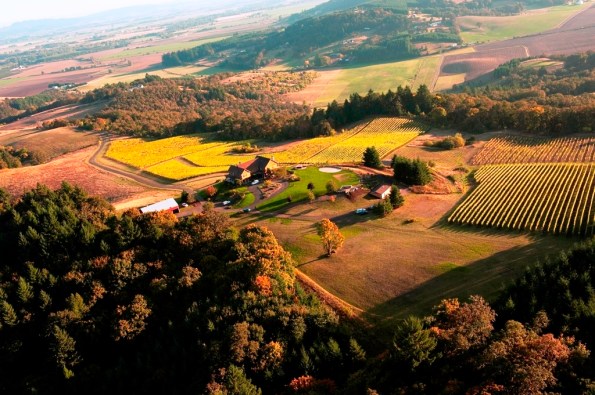
Jordan Vineyard. Source: Youngberg Hill Vineyards
TaV: Is the day in the life of biodynamic farmer much different from the “traditional” one?
YHC: Yes, in that you spend more time walking the vineyards and knowing each plant more intimately.
TaV: Is going all the way to biodynamic worth the effort for the grapes and wines, or is it just better for the farmer’s soul and the environment?
YHC: All of the above. You grow healthier grapes which are of higher quality, resulting in better wines. At the same time the soil and plants are healthier and will sustain better in the long run and there is no negative effects to the environment.
TaV: Youngberg Hill might be the only winery (to my knowledge) producing Pinot Noir Port. How traditional is your Port in making and style? Would you compare it to any of the Porto wines? Do Pinot Noir grapes accumulate enough sugar to be made into the Port? Lastly, do you produce Port every year?
YHC: Our Pinot Port is slightly lighter in overall structure and a little drier, not because there was not enough sugar accumulation, but because I let primary fermentation go a little longer. The production process is the same and the style is similar except for the varietal characteristics. We do not produce every year. It depends on many factors related to the vintage.
TaV: What were your most favorite and most difficult vintages at Youngberg Hill and why?
YHC: Of past vintages, 2005 and 2010 are two of my favorites for their balance, elegance, and complexity. However, 2005 was significantly reduced in quantity due to mildew; and 2010 was greatly reduced in yield due to the birds. 2015 may become my best vintage to date (currently in barrel).
TaV: When the Youngberg Hill is called a “good hill”, is this more of a gut feeling, or is it more of specific terroir parameters – soil, climate, wind, temperature range, etc.
YHC: Both. It is good from the standpoint that the terroir is excellent for growing Pinot Noir; higher altitude, marine sedimentary and basalt soils, southeast facing slope, altitude change from 500 to 800 feet, coastal breezes coming off the coast, cooler temperatures both day and night, etc. but also the peace, serenity, isolation, aquafer, underground water, and much more “natural” setting also attribute to the “good hill”.
TaV: As a biodynamic farmer I presume you are well attuned with Mother Nature. From 2003 to now, do you see the material effects of climate change? Do you take this into account with the grape growing and wine production?
YHC: Having been in agriculture throughout my life, I have experienced the 20 year cycle of hot and colder temperatures, so I believe in another couple of years we will see temperatures going down again. However, over the long term (hundreds and thousands of years) the earth is getting warmer and the highs and lows are tending to be more extreme along with weather incidents. Does it impact my grape growing practices? No.


Hope you are still with me, and it is the time for some wine, right?
We have an open conversation among friends here, so I will dare to confess an interesting experience. I opened the bottle of Youngberg Hill Pinot (screwtop), poured a glass. Swirl, sniff, sip – nothing to write home about. Swirl more intensely, another sip – just a touch of acidity and not much else. I closed the bottle, put the wine aside and decided to give it a day. Before I tasted it the second day, my thought was – please, please, please – if the wine the same as the previous day, this post is going to be published without the tasting notes. Luckily, the wine evolved dramatically, so I’m happy to share my tasting notes with you:
2013 Youngberg Hill Pinot Noir Cuvée Willamette Valley (13% ABV, $35)
C: Dark Ruby
N: lavender, cherries, earth, fresh, open, medium intensity
P: the first day was very tight; sweet red fruit showed up on the second day, bright acidity, vibrant, firm structure, good concentration, dark powdery medium-long finish. Still delicious on the third day, so definitely this wine can age.
V: 8/8+, well-made wine, needs time to open, can age for another 10+ years
Here you are, my friends – another story of Passion and Pinot – with rocks, soils and a bit of biodynamics. We are not done yet, so until the next time – cheers!
To be continued…
P.S. This post is a part of the “Stories of Passion and Pinot” series <- click the link for more stories.
Stories of Passion and Pinot: Ghost Hill Cellars
Wine and mystery go hand in hand, don’t they? How about a little ghost story? Take a sip from your glass, and say it with me: “It was dark and stormy night…” – now take another sip – do you taste the difference between the first one and the second? So here is a little ghost story for you. Legend has it that during the Gold Rush in Oregon (the 1800s), the miner was on his way to Portland with a load of gold. He decided to set an overnight camp on top of the hill. During the night, someone got into the camp, killed the miner and took his gold. Ever since, the miner (his ghost, of course) is wandering around that hill, looking for his gold; quite appropriately, the hill became known as the Ghost Hill.
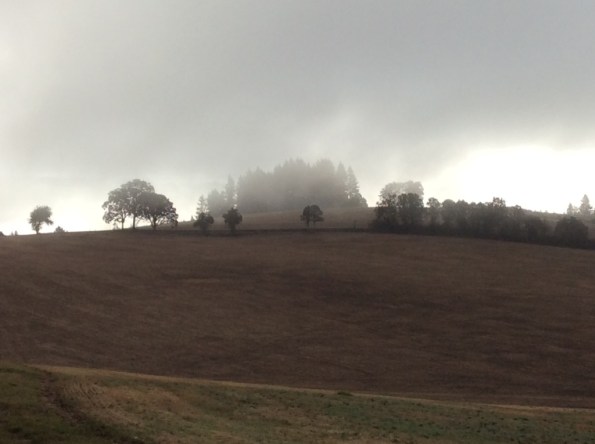
Source: Ghost Hill Cellars
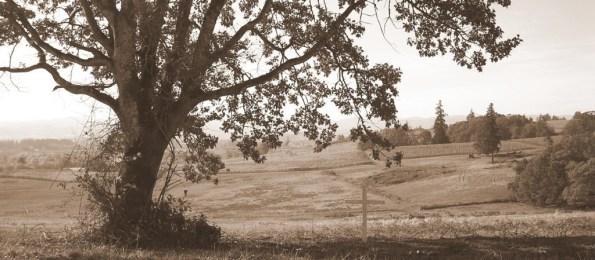
Source: Ghost Hills Cellars
In 1906, brothers Daniel and Samuel Bayliss purchased about 230 acres of land around that Ghost Hill and started their farm. That farm is now staying in the family now for 5 generations, with all the cattle, sheep, hay, wheat and clover growing there. Being in the heart of Willamette Valley, it is hardly possible not to catch the Pinot Noir bug. In 1999, the Bayliss-Bower Vineyard was planted with the Pinot Noir. The Oregon wine pioneer, Ken Wright, once asked Mike Bayliss if he would sell the vineyard and how much he would want for it – as you can guess, the answer was “no”.
I had an opportunity to [virtually] sit down with Mike Bayliss and Bernadette Bower, his daughter and 4th generation owner of Ghost Hill Cellars, and ask them a few questions – here is what transpired from our conversation:
TaV: Ghost Hill farm is 234 acres, and the Ghost Hill vineyard today is 16 acres – do you have any plans to expand it?
GHC: At the moment, we have no plans to expand, but we are not ruling out expansion. We will have to see what the future holds. We have 90 acres deemed plantable to Pinot Noir.
TaV: How did you come up with the idea of producing Pinot Noir Blanc? Did you see/hear someone else do this (or maybe you even tasted someone else’s wine), or was it a pure moment of bliss?
GHC: Actually, the idea of Pinot Noir Blanc came from our winemaker at the time Rebecca Shouldis. She was talking to a fellow winemaker from France who suggested a Pinot Noir Blanc for our younger plantings of 115. He told us that in France, half of the champagne is usually Pinot Noir Blanc, so that would be a good white option for us. We agree, it has been very successful for us.
TaV: You use Pinot Noir to its full capacity, producing white, Rosé and red, all from the same grape. So the only type of wine which is probably missing is a sparkling wine, for which Pinot Noir is perfectly suitable. Do you have any aspirations to start producing your own sparkling wine?
GHC: We have discussed it, but we have no plans to start production of a sparkling in the near future. Again, you never know what the future holds!
TaV: Did you ever meet the ghost of the deceased miner, looking for his gold?
GHC: The presence of the miner has been felt many times. Neighbors have seen and felt the presence of the ghost at dusk while riding horses. They will not ride in that area anymore. When the kids were little, Mike used to tease the kids and tell them he could see the ghost on the hill, but that is as close as we have come.
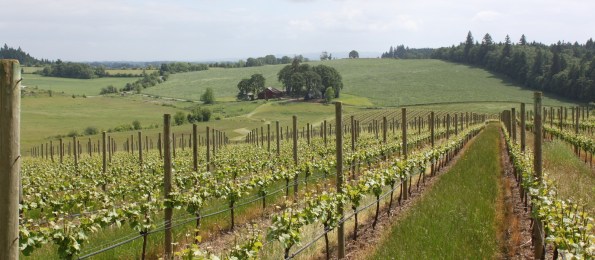
Source: Ghost Hill Cellars
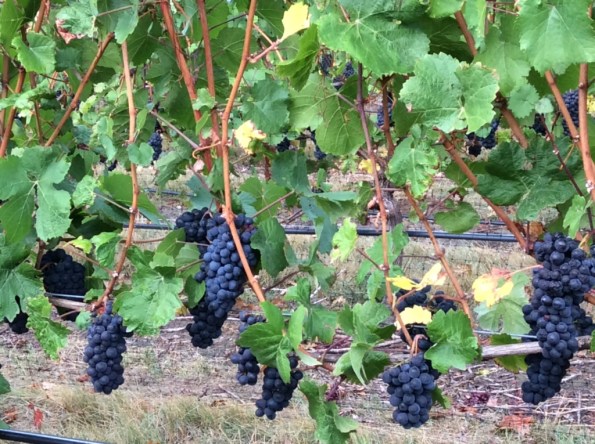
Source: Ghost Hill Cellars
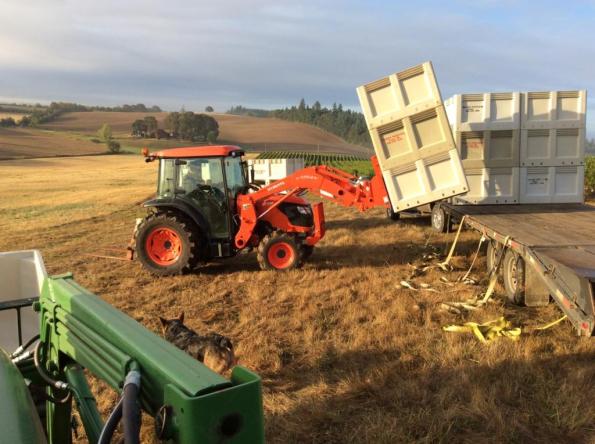
Harvest. Source: Ghost Hill Cellars
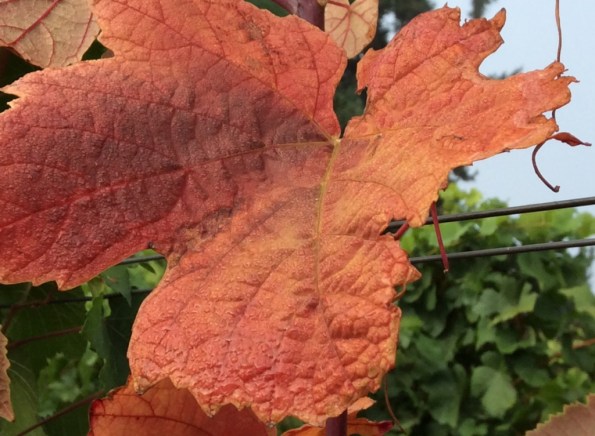
Source: Ghost Hill Cellars
TaV: Do you have any plans to start growing other grapes, such as Chardonnay or Pinot Gris, for example, or do want to stay Pinot Noir all the way at the moment?
GHC: At the moment, we are staying Pinot Noir all the way. We have been considering Chardonnay for future planting, but nothing has been decided.
TaV: Do you have any plans to convert your vineyards to all organic or biodynamic?
GHC: We will not go to all organic or biodynamic. It takes away too many tools to deal with emergency situations in the vineyard, but we are certified sustainable and salmon-safe, and plan to continue those practices, as sustainability is very important to us.
TaV: On your farm, you grow more than just grapes. Is farming for the grapes much different from all other plants?
GHC: Yes and no. Some of the same rules apply to farming other crops, but grapes are incredibly labor intensive, much more so than other crops we have grown. Grapes need your attention all the time.
TaV: Did you ever regret not selling the land to Ken Wright?
GHC: Depends on which day you ask us… But really, no. We want to keep the land in the family. 110 years is a long time, we aren’t ready to give that up. The land holds so many memories for our family, we would feel lost without the farm.
TaV: Your life had been intertwined with the farm pretty much forever. With the grapes or not, but I’m sure you got some interesting stories to tell. Can you share some of your most fun (or most dreadful) moments
GHC: When we were raising beef cattle, the cattle were always getting out and had to be chased. We appreciate that the grapes never escape or have to be chased. Our daughter will tell you her least favorite day was the morning the cattle got out and she was out chasing them in her pajamas when the school bus went by, full of her friends who were laughing at the whole situation. Our vet from the cattle days is writing a book and has promised to devote an entire chapter to The Bayliss Farm.
TaV: You use only the very best of your wine to produce the Prospector’s Reserve. Was there a year when you decided not to produce the Prospector’s Reserve, or do you see such a situation possible?
GHC: For the 2013 vintage, we do not have a Prospector’s Reserve as we did not have enough grapes to make a reserve blend. We will only be releasing 2013 Bayliss-Bower.
TaV: When you are not drinking your own wines, what other wines from what producers and what regions do you like to drink?
GHC: Of course, we drink Hamacher. We are discovering fabulous new Oregon wines all the time, there are so many new producers in the region.
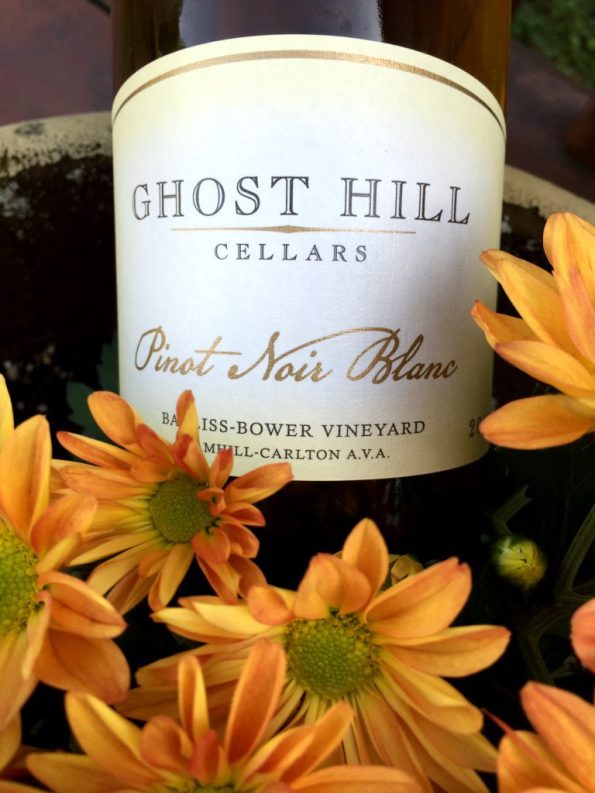 To tell you the truth, once I heard that Ghost Hill Cellars makes Pinot Noir Blanc, I was really intrigued, so I was happy to try this wine:
2014 Ghost Hill Cellars Pinot Noir Blanc Bayliss-Bower Vineyard, Yamhill-Carlton AVA (13.9% ABV, $25)
C: light copper, reminiscent of Rosé
N: initially intense, yeasty, Granny Smith apples, citrus, then evolving to the notes of honey and then showing hint of gunflint
P: creamy and round, a touch of strawberries, minerality, lemon, green apples, good structure, good acidity, medium long finish, with acidity prevalent
V: 8, very enjoyable
Here we go, my friends. I can’t tell you if the ghost of the deceased miner is affecting the wines – you can try to find out on your own, by either visiting the Ghost Hill Cellars or, at least, drinking their wines. And, of course, stay tuned, as more of the Passion and Pinot stories are coming out soon. Cheers!
To be continued…
P.S. This post is a part of the “Stories of Passion and Pinot” series <- click the link for more stories.
One on One with Winemaker: Don Hagge of Vidon Vineyard
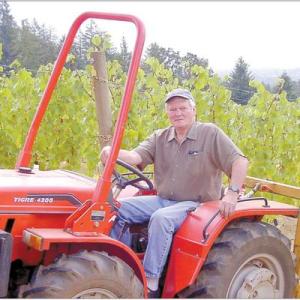
Don Hagge. Source: Vidon Vineyard
What do most people do at the age of 69? Retire, or at least, semi-retire, right? Humans live longer than ever before, and many still have enough energy and desire to continue doing what they are doing. But let me rephrase the question a bit – how many people do you know who would start a totally new business at the age of 69? Might be a difficult question, I understand. Sure it would be for me, but now I can proudly say that I know at least one person like that. Let me introduce to you Don Hagge.
So what does rocket scientist (with degrees from UC Berkeley in physics and business from Stanford), whose resumé includes Lawrence Berkeley Laboratory, Centre d’Etude Physiques Nucleare in Paris, Apollo Mission at NASA and Silicon Valley high-tech industry, upon retirement? Of course, starts his own winery! Well, it sounds radical, but considering that Don grew up on a farm in North Dakota, and had an opportunity to live in France and experience wines of Burgundy, maybe it is only logical?
Vicky and Don Hagge started Vidon Vineyard in 1999 in Willamette Valley, in the Chehalem Mountains AVA of Oregon (you can probably figure that name of the winery, Vidon, is made up after Vicky and Don). Fast forward to today, Vidon Vineyard produces primarily Pinot Noir, plus small amounts of Chardonnay, Pinot Gris, Pinot Blanc, Viognier, Syrah, and Tempranillo. Vidon Vineyard is sustainable, LIVE and Salmon-safe certified, and practices minimal intervention winemaking. Don Hagge not only makes wines, he also plays the role of a handyman when it comes to various winemaking tools and equipment. Plus, he is very opinionated about the use of glass enclosures instead of corks…
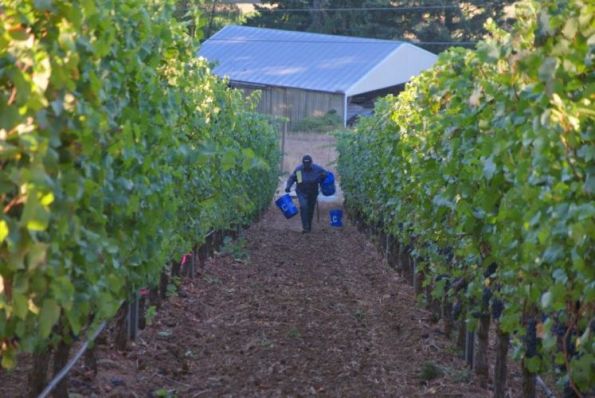
Source: Vidon Vineyard
I had an opportunity to [virtually] sit down with Don Hagge and ask him a few questions, so here you can find our conversation:
TaV: For many years, you had been living and working in California. Why have you decided to build a brand new winery in Oregon and not in California?
DH: I was recruited to Oregon by a venture capitalist as the CEO of a startup semiconductor company. During this time, I biked in the Willamette Valley regularly and loved the vineyards. Since I lived in France some time ago, Pinot Noir has been a favorite wine. I grew on a farm and decided to make a career change and what could be better than buying land, planting a vineyard and learning how to make wine? Oregon was gaining a reputation for Pinot Noir so here I am.
TaV: Your very first wines were made in 2002. Do you still have any of those bottles left? If you do, how do they drink today?
DH: Unfortunately, the 2002 vintage is gone. I made only 40 cases and didn’t label it, only for friends and personal use. We just had a 2006 vintage this evening which is fantastic.
TaV: During all the years of Vidon Vineyard existence, what was the most difficult vintage for you and why?
DH: Probably the 2007 vintage. This was the first year I used my own winery so many things were new. I saw the forecast for heavy weather, got a crew and pulled in 16 tons on September 25th. Before we finished cleaning the equipment it started raining and didn’t stop for a month. Most people suffered through the rains and the vintage got a bad rap in the press. We were lucky – it’s still a beautiful wine!
TaV: For how long do you typically age your Pinot Noir wines in French oak Barrels?
DH: Most of my wine carries the 3-Clones label and gets 11 months in French oak barrels which are on average 30% new. I’m not a fan of big oak in any wine.
TaV: You are an enthusiastic proponent of glass enclosures instead of traditional cork. When did you start using glass enclosures? Also, did you ever try to bottle the same vintage both with glass enclosures and traditional corks and then compare the results of the aging?
DH: Until the 2008 vintage I used corks and usually quite expensive ones. However, I determined that no matter what they cost, they still taint wine because of TCA and pre-oxidize occasionally. Therefore, in 2008 I began using Stelvin screw caps. In 2009 I started using Vinoseals for the Single Clone labels. No, I’ve never done a comparison of cork vs Vinoseal glass closures. It’s not necessary, I know what corks do and Vinoseals and screw caps don’t do. I don’t understand why anyone uses a closure that ruins a percentage of their wines when there are alternatives that don’t.
TaV: Today, you are producing a number of different white and red wines. Do you have any plans (if not plans, may be at least some thoughts) about starting to produce Rosé and/or Sparkling wines?
DH: I made Rosé for two vintages and one was great, I was told. I’d like to do a Sparkling but my winery is too small given what I’m now doing. That’s not to say I’m not dreaming of a winery expansion and interested in trying more and different wines.
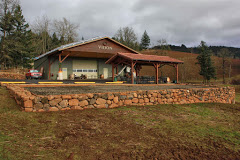
Vidon Winery. Source: Vidon Vineyard
TaV: Outside of your own wines, which are your favorite Pinot Noir producers in the world?
DH: Good Bourgogne wines are what I like to emulate. The 2004 vintage was the nearest to a great Bourgogne that I’ve made.
TaV: If you would have an opportunity to start your winery again, would you do something different?
DH: Given the resources I had, not much. Perhaps I’d build a better winery instead of an expensive house, but I have a wife. 🙂
TaV: You describe your approach in the vineyard as “minimal intervention”, and your winery is LIVE Certified. Do you have any plans to become certified organic or biodynamic winery?
DH: I’m a scientist and Biodynamic winemaking isn’t scientific. Many of their practices are good, how they treat the land, etc. But I don’t believe in VooDoo. I don’t’ believe that Organic Certification results in better wine or land management than what we do in the LIVE program.
TaV: I understand that you have built your own bottling line wine dispenser for the tasting room. What are the other technological tools which you built at your winery?
DH: I don’t think I’ve built anything for winemaking that any good farm boy couldn’t have. I’m always trying to find ways to simplify tasks and become more efficient in using time and material. I have an idea about saving wine and labor in barrel topping but haven’t implemented it yet. My use of Flextanks to replace some barrels is already saving wine and labor by eliminating barrel topping while producing wine that’s equivalent to that from barrels.
TaV: You already work with quite a few grapes (Chardonnay, Pinot Gris, Pinot Noir, Tempranillo, Cab Franc, Syrah). Do you plan to add any other grapes in the vineyard?
DH: No more varieties. No more land to plant. However, I do hope to plant a small plot of Coury clone Pinot Noir next year. Planting of the clone date back 50 years to the original plantings.
TaV: What drives your passion? You started Vidon vineyards at the age when most of the people are happily retiring, so there must be some deep reason for you to engage in such a – of course, a labor of love – but hard labor?
DH: I like to live. I’m not ready to “stop” and watch TV. I think having a ToDo list every morning and a little anxiety and stress about getting things done will result in a longer life. To have no challenges is pretty dull and boring. When one is doing things that one enjoys, it’s not labor.
What do you say, my friends? This interview continues our Stories of Passion and Pinot series, and I think it is a perfect sequel to the conversation with Ken Wright – Don Hagge exudes the same righteousness, passion, and confidence in everything he does.
And you know what supports Don’s ways and means? His wines! I had an opportunity to try his Chardonnay and Pinot Noir, and in a word, I can tell you – what a treat! Two stunning, perfectly balanced and perfectly Burgundian in style – made with passion and care in Oregon.
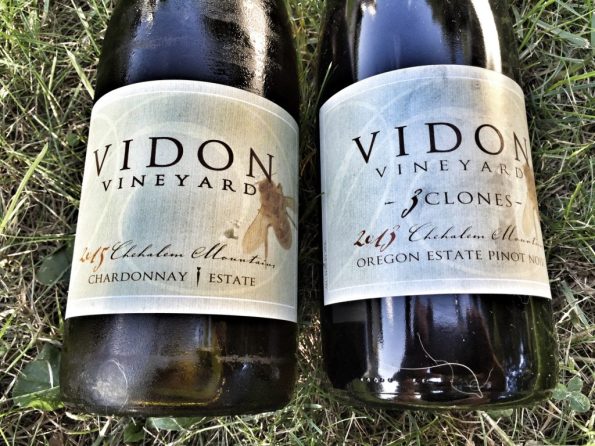
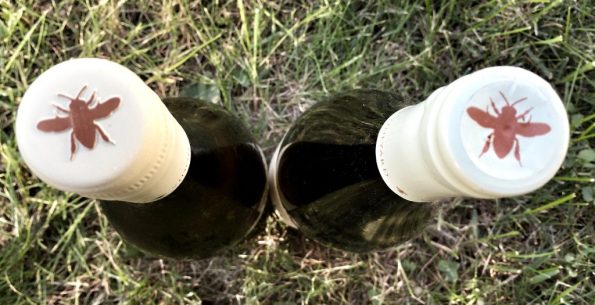
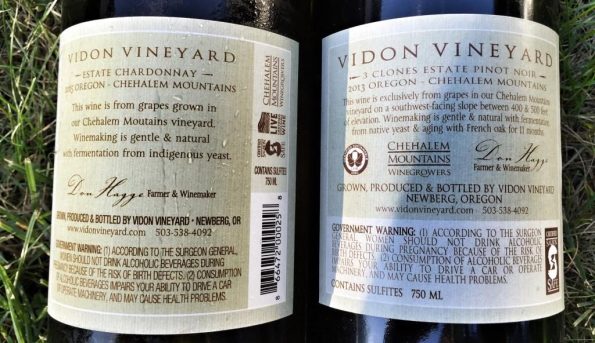 For what it worth, here are my notes:
2015 Vidon Vineyard Chardonnay Estate Chehalem Mountains, Oregon (12.9% ABV, $35)
C: golden color
N: initially, very restrained, mostly minerality. After 2 days in the fridge, honey and vanilla, quite spectacular
P: initially tight, minerally and acidic. Two days later – exuberant, golden delicious apples, perfect acidity, vanilla, medium finish. Every sip leaves you craving for more
V: 9, simply outstanding, delicious.
2013 Vidon Vineyard 3 Clones Pinot Noir Estate Chehalem Mountains, Oregon (14.3% ABV, $40)
C: bright Ruby, cranberry undertones
N: inviting, intense, a touch of smoke, lavender, red fruit
P: nicely restrained, minerality, crushed red fruit, mouthwatering acidity, fresh, elegant, lots of finesse
V: 9-, outstanding wine, Burgundian style
Here you are, my friends – another story of Passion and Pinot. And I have more for you, so until the next time – cheers!
To be continued…
P.S. This post is a part of the “Stories of Passion and Pinot” series <- click the link for more stories.
One on One With Winemaker: Ken Wright of Ken Wright Cellars
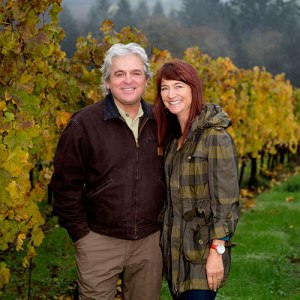
Source: Ken Wright Cellars
Grape grower. Pioneer. Visionary. Winemaker. Mentor. Teacher. Philanthropist.
It makes perfect sense to start our “Stories of Passion and Pinot” series by conversing with Ken Wright. After starting making wines in Willamette Valley in Oregon in 1986, Ken came to the realization of a tremendous diversity of soils and microclimate conditions in the region. Ken was instrumental in establishing 6 AVAs in the region; he also focused his winemaking on showcasing terroir through single-vineyard bottlings. The rest is the history which you can read on Ken Wright Cellars web site and various publications, such as Wine Spectator May 2015 issue.
I have limited exposure to Ken’s wines – the production is small, and there are lots of people who love to drink his wines. But even my limited encounters resulted in long-lasting impressions – and not only the wines but also the labels which you need to see only once to remember forever. Thus when I had an opportunity to ask Ken a few questions, albeit virtually, I was very happy to do so – and the outcome of our conversation you can see below. This might be a tad long, so arm yourself with a nice tall glass of Pinot – and enjoy!
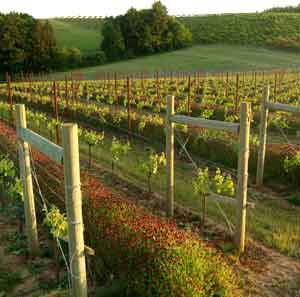
Source: Ken Wright Cellars
- When it comes to the winemaking, is there someone who you would name as your mentor or a teacher?
KW: My first position was in California and included working with Dick Graff of Chalone on their Gavilan brand. Dick started a research group, in 1979 I believe, that met once a month at Mount Eden Vineyards. The group included many of the best wineries in the state including Mt. Eden, Kistler, Calera, Sanford, Acacia, Forman, Chalone and the Paragon group among others. The opportunity, as a novice winemaker, to be part of that group of successful producers allowed me to be part of cutting edge winemaking discussions. Ears were perked, respectfully my mouth was generally closed. I was a sponge.
- As a pioneer and a long standing and successful winemaker, I’m sure many young winemakers look up to you and want to learn from you. Are there any winemakers who you would call your students?
KW: Once I moved to Oregon, in 1986, to pursue the production of Pinot noir I had a learning curve to understand the new area that I was in. During those early years I fell in love with the ability of Pinot noir to connect myself and our buyers with the qualities of individual sites. After blending sites for several years I began in 1990 to produce site specific wines that connected us to place.
In the mid 90’s I was part of a group we created, quite similar to the California research group, that focused on research both in the vineyard and winery. My partners were Bethel Heights, Cristom, Solena and Penner-Ash. Beaux Freres joined at a later date. Our experiments provided a volume of information that I believe changed the way in which we all grew grapes and made wine. That information was openly shared with anyone who cared to ask. Many viticulturists and winemakers are now approaching their craft with the lessons we learned whether or not they are aware of where this information came from. I would not want to take any personal credit for the success of those that have benefited from this work or from my many direct relationships. Information comes from so many sources. If I have benefited someone along the way that would be great but I would only be one of many.
- You personally helped to define 6 AVAs in Oregon. Do you think there are still areas in Oregon which would benefit from their own designated AVAs?
KW: It is a natural evolution for regions to define themselves. All areas must first identify which wine varieties have inherent superiority. It’s a process. What is clear at this time is that the Willamette Valley, particularly the area of the six new AVA’s, is world class. We are producing Pinot noir that is riveting. While there are regions that can say they are older there is no area on the planet that can say they are better, period. I suspect there will be new AVA’s within the six new identified AVA’s that will further define each region in more detail.
- In the description of the Freedom Hill vineyard, there is a mention of Phylloxera. How did it come around? How difficult was it to contain it and deal with it? Is that the only one of your vineyards which was affected?
KW: Phylloxera reared its ugly head in 1990 at Fuqua Vineyard in the Dundee Hills. With the first inexpensive own rooted plantings of Eyrie in 1966, the industry coasted until this time with the hope the blight would never come. But it did. It is impossible to know what the source of the “infection” may have been. This was an older vineyard so unless they were purchasing replacement vines on a regular basis from a nursery that had an issue it would be hard to assign blame on the source of vine material. Not impossible though.
Phylloxera became real in the mid 90’s. Freedom Hill began to fail. Guadalupe began to fail. Shea began to fail. There were a number of others. Vineyard owners, hoping to forestall the infection, did whatever they could to protect their sites. At the time the concern was that the insect was being transferred on soil. We had chlorine foot baths. Incredible cleaning of vineyard equipment. It did not help. It is only my opinion but I believe most of the “infection” was directly from the replacement vines from nurseries that had the bug in their soil material that came with new or replacement vines.
- Can you make parallels between any of your vineyards and Burgundy vineyards, in terms of wines which they are capable of producing?
KW: Burgundy could only hope to make wine that consistently produces the quality of wine that we produce. They are in our rear view mirror. It’s sad that people automatically assume age of region is related to quality. Do truly blind tastings and you will not be able to assign label prestige to the result.
- Same question regarding your wines – would you compare any of your wines with any of the wines from Burgundy, and if yes, which with which?
KW: If there is any comparison I would say that Oregon Pinot noir has a perfect fresh fruit profile. Burgundy tends to be more acidic, angular in youth and less forward.
- It seems that you only produce Pinot Noir from all of the vineyards you are working with, and the only white wine you are producing comes from Washington. Is there a reason why? Have you ever thought of planting white grapes in Oregon?
KW: As a business, anything we produce that is not Pinot noir is harder to sell and less profitable. The entire world recognizes the quality of Pinot noir from our region but no other variety resonates. We have a half acre of the Chardonnay Dijon 548 clone at Savoya. It is delicious but only sold to our mailing list. We will not plant more Chardonnay in my lifetime.


- I find your wine labels fascinating. How do you come up with the designs? Are you making those yourself or you are working with an artist? Do you change any of the labels from vintage to a vintage?
KW: The artist that created our labels is David Berkvam, a Portland native. He is a dessert chef at a local Italian restaurant named Geno’s. The original artworks are 100% beeswax carvings. Incredible depth that we attempt to relay on paper. Our relationship with David began with seeing his work at a gallery in 1999 in Portland.
Our original label for Ken Wright Cellars was a clean, straightforward text only label. It was not memorable or noticeable. My wife Karen and I decided to make a significant change to the look of our label. We asked David to produce a label that showed the efforts of the Mexican laborers in our vineyards during the difficult time of winter pruning. There was no other labor that would do this work. Yet the Mexican women and men who did this work did so with graciousness and humor. That was our first label with David. Now each vineyard has its own artwork from him and each is quite personal for us.
- What is your approach to the oak aging? For how long do you typically age your wines? What type of oak do you use most often?
KW: Unfortunately, we have to use French oak for our wines. Would prefer to buy from the US but our native oak species are very resinous which does not rhyme with Pinot noir. Pinot noir spends 11 months in oak before bottling.
- Based on the information on the web site, your general philosophy around winemaking is “minimal intervention”. Did you ever consider going into organic or even biodynamic wine production?
KW: Winemaking has nothing to do with your farming approach. Yes, the winemaking at the highest level is minimal intervention, assuming a very high level of professional babysitting. All inherent quality comes from the vineyard. Any winemaker at the highest level knows they are subservient to the quality of what they receive.
- You’ve been making wine in Oregon for the very long time. Did you have any scary (okay, most difficult) moments you can share with us?
KW: The beauty of our area is that we do in fact have “vintages”. No robotic wines. The year is reflected in the wine. A great example of a “scary” vintage was 1991. A cool year that produced wine that was at first reticent. With age this vintage proved to be perhaps the best of the decade for most producers.
- Among all the wines you made in Oregon since the beginning, can you share a few of your most favorite vintages and particular wines?
KW: 1990 was the best vintage I have seen in Oregon. An unusual year in that it was amazing for so many regions in the world, Germany, Italy, Champagne, Burgundy and more.
- Do you export your wines outside of the US? If yes, what are your top export destinations?
KW: We export to all provinces of Canada, Sweden, Switzerland, Denmark, France, Italy, Japan, China, Singapore, Hong Kong, Puerto Rico, the Bahamas, South Korea and of course Luxembourg.
- Today, Oregon wines are well known and well recognized by the wine lovers. What is ahead for the Oregon wines? What are the latest trends and new directions for the Oregon wines?
KW: We will always hang our hat on Pinot noir because we truly have a world treasure with this variety. As world markets emerge we will find a place at the table in each of these markets.
- You have a very extensive list of charities you support. How do you go about deciding which charities you are going to support?
KW: Karen and I normally choose to support local charities that keep our immediate area healthy. We have hosted Flavors of Carlton for 15 years which is by far the most impactful event that keeps the pre school, after school, summer work experiences, 12 sports programs and more financially sound. We are founding sponsors of Salud, started in 1992, which is a combined effort of Wineries, hospitals, clinics and Medical Teams International that has provided health care for vineyard workers. Karen and I were the initial 50K endowers of the local Community College program for their vineyard curriculum.
We partnered with the local FFA Alumnae, High School FFA teacher, YC Board, the curriculum writers from the local college and members of our AVA board to create a path for our local young people to get real world experience in growing grapes. We created a 1.5 acre vineyard on the high school property so they would have real world experience, not book knowledge.
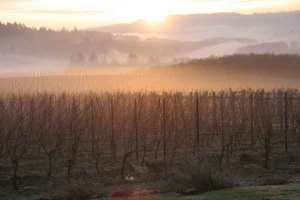
Source: Ken Wright Cellars
We are done – and I hope you are still here, as there was a lot to read (and I thank you for that). Hope you found this interesting, and now have an increased desire to drink Ken Wright Cellars Pinot Noir (good luck with that unless you already have one in your cellar). I also believe that this was an excellent opening into our Stories of Passion and Pinot – you can clearly feel passion and pride in every word of Ken’s answers…
We will continue our series next week, so for now – cheers!
To be continued…
P.S. This post is a part of the “Stories of Passion and Pinot” series <- click the link for more stories.
WBC16: Day 2 – Speed Tasting, Reds
A few days ago I told you about the live blogging session at the Wine Bloggers Conference 2016, dedicated to the White and Rosé wines. On the second day, we had a similar session, only now dedicated to the red wines. The same format – 60 minutes, 19 (or so) tables, 25 (or so) wines, 5 minutes to taste, take pictures, ask questions and share impressions in the social media, of course. Also with the higher chance of damage – clothes damage, it is, as we were dealing with red wine and time-pressed pourers. But this is part of fun, isn’t it?
Same as before, I would like to offer to you my twitter notes. Just to make it even more fun, you can compare my notes with Jim Van Bergen’s, a fellow blogger we had a pleasure of sharing the table with (alongside other great people – I think we had the most fun table in the house).
Here we go:
Wine #1: 2014 The Federalist Zinfandel Lodi ($17.76 MSRP) – very nice start for our Reds extravaganza
Wine #2: 2013 Windrun Pinot Noir Sta Rita Hills (100% Pinot Noir, blend of 5 clones from Lafond Vineyard) – nice and classic California Pinot
Wine #3: 2012 Corner 103 Zinfandel Dry Creek Valley Sonoma County – clean and varietally correct
Wine #4: 2012 Prie Vineyards Zinfandel Lodi – another excellent Zinfandel
Wine #5: 2012 Trione Vineyards Henry’s Blend Alexander Valley (35% Cabernet Sauvignon, 34% Merlot, 13 % Petite Verdot, 13% Cabernet Franc, 5% Malbec) – a welcome deviation from Zinfandel, a classic Bordeaux blend. I also realized that my tweet didn’t have the picture, so picture is now included:
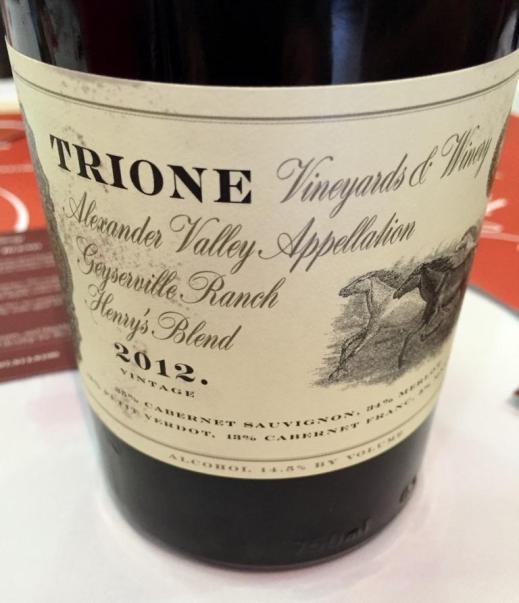
Wine #6: 2013 Peirano Estate ‘The Immortal’ Zin Old Vine Zinfandel (120 years old vines!) – if anything, the age of the vines commands utmost respect. Note that my tweet incorrectly puts the vintage as 2012, where it is 2013 (I blame it on the speed).
Wine #7: 2013 Klinker Brick Farrah Syrah Lodi – an excellent rendition of one of my most favorite grapes
Wine #8: 2013 Abundance Vineyards Carignane Lodi (90% Carignane, 10% Petite Sirah)
Wine #9: 2014 Oak Ridge Winery OZV Old Vine Zinfandel (Zinfandel/Petite Sirah blend) – Number one selling Zinfandel in California and a great value at $10.99
Wine #10: 2013 Harney Lane Old Vine Zinfandel Lizzy James Vineyard Lodi – one of the best Zinfandels in the tasting
Wine #11: 2013 Michael David Winery Inkblot Cabernet Franc Lodi – in the land of Zinfandels, we finished tasting with an absolute standout of 100% Cabernet Franc – you have to taste it for yourself
Here we go, folks. As you can tell, I can’t even count – we had 11 wines and not 10 during these 60 minutes, but yes, it was lots of fun. And I’m far from being done talking about Wine Bloggers Conference 2016 in Lodi.
Until the next time – cheers!
Stories of Passion and Pinot
An important note: Stories of Passion and Pinot is a series that was started in 2016 and it keeps updating year after year with new stories. This post will serve as the starting page for the series and will be constantly updated as new stories are added…
It is easy to declare this grape a king. It is a lot more difficult to have people agree to and support such a designation. And here I am, proclaiming Pinot Noir worthy of the kingship, despite the fact that this title is typically associated with Barolo (made from Nebbiolo grape) or Cabernet Sauvignon.
Barolo might be a king, why not – but its production is confined strictly to Italy, and can be considered minuscule in terms of volume. Cabernet Sauvignon is commanding attention everywhere – but I would argue that it is more because of the ease of appeal to the consumer and thus an opportunity to attach more dollar signs to the respective sticker. Don’t get me wrong – I love good Cabernet Sauvignon as much or more than anyone else, but having gone through so many lifeless editions, I developed a healthy dose of skepticism in relation to this noble grape.
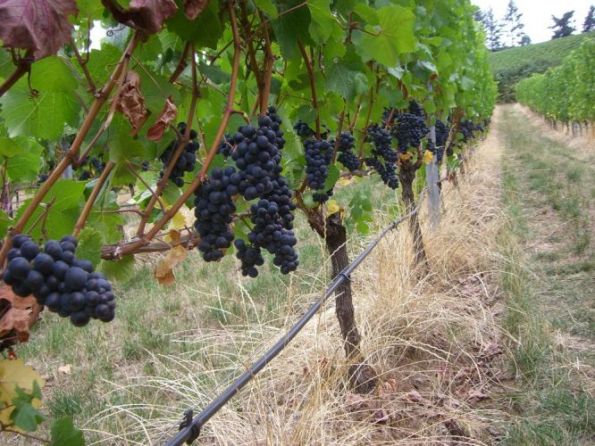
Pinot Noir grapes. Source: Vidon Vineyard
Talking about Pinot Noir, I’m not afraid to again proclaim it a king. If anything, it is the king of passion. Hard to grow – finicky grape, subject to Mother Nature tantrums, prone to cloning, susceptible to grape diseases – and nevertheless passionately embraced by winemakers around the world refusing to grow anything else but this one single grape – a year in, year out.
Historically, Pinot Noir was associated with Burgundy – where the love of the capricious grape originated, and where all the old glory started. Slowly but surely, Pinot Noir spread out in the world, reaching the USA, New Zealand, Australia, Chile, and Argentina – and even Germany, Italy, Spain, Canada, and South Africa are included in this list. Looking at the USA, while the grape started in California, it then made it into Oregon, and now started showing along the East Coast, particularly in Hudson Valley.
I don’t know what makes winemakers so passionate about Pinot Noir. For one, it might be the grape’s affinity to terroir. Soil almost always shines through in Pinot Noir – it is no wonder that Burgundians treasure their soil like gold, not letting a single rock escape its place. While soil is a foundation of the Pinot Noir wines, the weather would actually define the vintage – Pinot Noir is not a grape easily amended in the winery. But when everything works, the pleasures of a good glass of Pinot might be simply unmatched.
However important, terroir alone can’t be “it”. Maybe some people are simply born to be Pinot Noir winemakers? Or maybe this finicky grape has some special magical powers? Same as you, I can’t answer this. But – maybe we shouldn’t guess and simply ask the winemakers?
Willamette Valley in Oregon is truly a special place when it comes to the Pinot Noir. Similar to the Burgundy, Pinot Noir is “it” – the main grape Oregon is known for. It is all in the terroir; the soil is equally precious, and the weather would make the vintage or break it. And passion runs very strong – many people who make Pinot Noir in Oregon are absolutely certain that Oregon is the only place, and Pinot Noir is the only grape. I’m telling you, it is one wicked grape we are talking about.
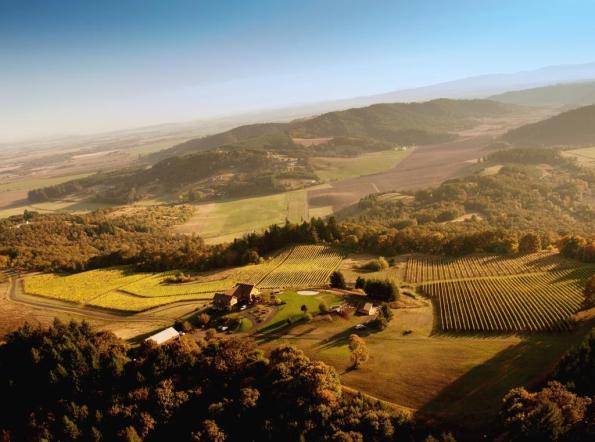
Aerial view of Oregon vineyards. Source: Youngberg Hill Vineyards
I see your raised eyebrow and mouse pointer heading towards that little “x”, as you are tired of all the Pinot Noir mysticism I’m trying to entangle you in. But let me ask for a few more minutes of your time – and not even today, but over the next few weeks.
You see, I was lucky enough to have a conversation (albeit virtual) with a few people who combined Pinot and Passion in Oregon, and can’t see it any other way. What you will hear might surprise you, or maybe it will excite you enough to crave a glass of Oregon Pinot Noir right this second, so before you hear from a pioneer, a farmer, a NASA scientist, and a few other passionate folks, do yourself a favor – make sure you have that Pinot bottle ready. Here are the people you will hear from:
- Ken Wright of Ken Wright Cellars
- David Nemarnik of Alloro Vineyard
- Mike Bayliss of Ghost Hill Cellars
- Wayne Bailey of Youngberg Hill Vineyards
- Steve Lutz of Lenné Estate
- Don Hagge of Vidon Vineyard
I would like to extend a special note of gratitude to Carl Giavanti of Carl Giavanti Consulting, a wine marketing and PR firm, who was very instrumental in making all these interviews possible.
As I publish the posts, I will link them forward (one of the pleasures and advantages of blogging), so at the end of the day, this will be a complete series of stories. And with this – raise a glass of Pinot Noir – and may the Passion be with you. Cheers!
2017 – 2020 Updates:
This Passion and Pinot Series continues to live on. Here is what had been added during these 4 years – and you should expect to see more stories as we continue talking with the winemakers who made Pinot Noir their passion:
- Page Knudsen of Knudsen Cellars
- Tony Rynders of Tendril Cellars
- Dave Specter of Bells Up Winery
- Richard Boyles of Iris Vineyards
- Tom Mortimer of Le Cadeau Vieyard
- Dan Warnshuis of Utopia Vineyard
2021 Updates:
2021 was a good year as I added one more “Passion and Pinot” interview and also met in person with a number of winemakers I only spoke with virtually before – and this resulted in Passion and Pinot Updates.
New interview:
Passion and Pinot Updates:
P.S. Here are the links to the websites for the wineries profiled in this series:
Alloro Vineyard
Battle Creek Cellars
Bells Up Winery
Ghost Hill Cellars
Iris Vineyards
Ken Wright Cellars
Knudsen Vineyards
Le Cadeau Vineyard
Lenné Estate
Tendril Cellars
Vidon Vineyard
Utopia Vineyard
Youngberg Hill Vineyards
WBC16: Day 1 – Speed Tasting, White and Rosé
One of my favorite sessions at Wine Bloggers conference is one hour of pure madness, called Live Blogging, or Speed Tasting. Everybody sit at the round tables, 8 people per table. Each table has a number. There are winemakers with their wines, and typically there are more winemakers than there are tables. Each winemaker gets exactly 5 minutes to pour and present their wines. Each blogger has this exact same 5 minutes to taste, write notes, take pictures and do whatever else they are pleased. At the end of 5 minutes, each winemaker has to move to the next table – no exceptions.
This session usually has love/hate reception from bloggers. I personally love it, and I take that “live” part of this speed tasting very seriously :), twitting about each and every wine as we get to taste them. Now I would like to present to you the recap of this session, so here are all the wines and all of the tweets as this session was evolving in the real time – you can read my notes as part of the tweet:
1st wine – NV J Vineyards Brut Rosé Russain River Valley – delicious start, don’t you think? One of my favorite Californian sparkling wine producers
Next wine: 2014 Concannon Vineyard Asemblage Blanc Reserve Livermore Valley (Sauvignon Blanc and Sémillon blend):
Wine #3: 2014 Peirano Estate Vineyards “The Other” Lodi (65% Chardonnay, 25% Sauvignon Blanc, 10% Viognier)
Wine #4: 2014 Kenefick Ranch Pickett Road White Napa Valley Calistoga (75% Grenache Blanc, 20% Maarsanne, 5% Viognier) – the winery describes this wine as “possibly the best food wine on the planet” – considering the acidity, they might not be too far off. Plus, look at the varietals used in the wine – very interesting.
Wine#5: 2015 Left Coast Cellars White Pinot Noir Oregon – had an opportunity to taste this wine before – 100% Pinot Noir and 100% White, delicious:
Wine #6: 2015 Troon Vineyard Longue Carabine Applegate Valley Southern Oregon (blend of Vermentino, Viognier, Marsanne and Roussanne)- I already wrote about this wine, so here was the second encounter 🙂
Wine #7: 2015 Corner 103 Sauvignon Blanc Sonoma Valley
Wine #8: NV Oak Ridge Winery OZV Rosé California (blend of Zinfandel and Chardonnay):
Wine #9: 2014 Peirano Estate Vineyards Chardonnay The Heritage Collection Lodi – very classic and an excellent value at $14.99 (mentioned in the tweet):
Wine #10: 2001 The Lucas Winery Chardonnay Lodi – this wine deserves its own post, and I wish I had time to visit the winery. This 15 years old California Chardonnay was absolutely mind blowing, deserving the highest praise. The balance and freshness on this wine were just spectacular. Might be easily the best California Chardonnay I ever had (okay – too bold – one of the best for sure):
And we are done here – 10 wines, 60 minutes, lots of fun. The red wines speed tasting took place on the Day 2, and the report is to follow.
Until the next time – cheers!
Restaurant Files: Off The Chart Experience at Portside Tavern in Hyannis
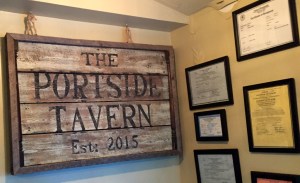 Yes, I love food. This never been a secret in this blog. And yes, I get overly excited when I come across really tasty experiences.
Concept of “food” is multidimensional. At home, tasty food and family (and friends) around the table is usually all you need. Mix in a bit of ambiance and a glass of a good wine, and you got a great experience, right there.
When it comes to visiting the restaurant, you need a bit more than just food for the great and memorable experience – good service is important; another element which is near and dear to me is cost. This is not even the “cost” in the absolute terms – it is more the perceived value which matters, the infamous “price/performance” – an amazing burger for $20 might be a great experience, and tasteless, rubbery steak for $15 will not be the one.
As you can see in the title of this post, I want to talk about “off the chart” experience. The source of this exuberant designation was our recent visit at the Portside Tavern in Hyannis on Cape Cod (love weekend getaways, even with 5 hours in traffic). To go along the lines of a great experience in the restaurant, I was with the family, food was amazingly tasty, service was great, and the value was unbeatable – that’s all.
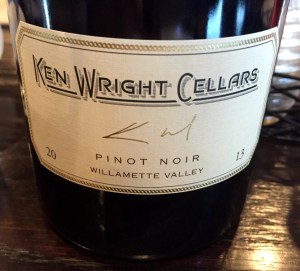 First, of course, was the wine. Don’t get me wrong – the restaurant also offers full bar with interesting cocktails, but my attention was on the wine list, which offers lots of great options, both by the glass (most of the wines priced in $7 – $12 range), and by the bottle (prices starting from $30 and some even for less). I couldn’t pass by the 2013 Ken Wright Pinot Noir Willamette Valley for $50 – talk about value – even if you can find this wine in retail, which is not easy, it will cost you at least $25, so I consider $50 at the restaurant to be a great value. After a bit of the breathing time, the wine was gorgeous, dense and powerful, with the signature Oregon aromatics of earth and cocoa.
Next, there was a pure indulgence from start to finish. Chowder (Local clams, new potatoes, applewood smoked bacon, cream) was not too heavy, not too thick, very well balanced in flavor.
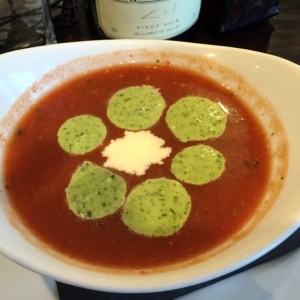
Watermelon Gazpacho (Sweet basil drizzle, whipped feta) was different and refreshing – outstanding on any hot day, light, and again, very tasty.
One of my favorite ways to cook chicken wings is to slow roast them at a low temperature (say 215ºF or so) – they develop great flavor and then easily fall off the bone this way. I was happy to find the same style chicken wings at the restaurant – Confit Chicken Wings (Choice of harissa, rhubarb BBQ, or sweet basil sauce – we chose BBQ sauce) were super-tasty and the chicken wings were literally melting in the mouth. Continuing to deliver a great dining pleasure was Poutine (House cut fries, cheddar curds, foie gravy) – love this interpretation of French fries. This rendition was on par with best of the best I had in Quebec – flavor, texture, cheese, gravy – everything was just spot on. Finishing our divine appetizer experience was perfectly executed Mac & Cheese (Gemelli, local cheeses, buttered crumbs) – again, very tasty.


Our main course dishes were equally delicious. Chicken Risotto (Asparagus, prosciutto, baby tomatoes, balsamic reduction) was very well executed, great smokey flavor, nice contrast of balsamic, very tasty. Half-Pound Burger (Caramelized onions, bacon, garlic aioli, tomato jam, brioche) had an excellent fresh beef flavor, was cooked as requested and overall was very enjoyable.


Cuban (Braised pork, ham, Gruyere, dijon aioli, house-made pickle, grilled french bread) was done exactly as I like it – good amount of meat, flat pressed bread, great combination of flavors – one of the best Cuban sandwich experiences. It was also served with a side of Wedge salad (one of the available choices), which is one of my favorite salads any time I see one. Grilled BBQ Chicken Pizza (Bacon, red onion, cheddar) was delicious, good crust and again, great flavor combination.


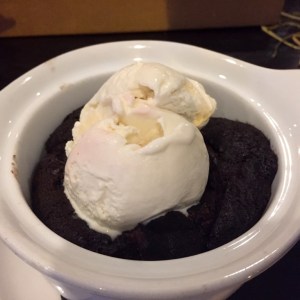
As you can imagine, we were absolutely full at this point. But considering how good all the food was, we had to try at least one dessert. After back and forth, we settled on Double Chocolate Cookie (Vanilla Ice Cream), which was more resembling a chocolate lava cake, and was instantly devoured with the help of four spoons.
 There you have it, my friends. If travel will take you to Cape Cod, make sure not to miss Portside Tavern – and then leave me a thank you note here. Cheers!
Portside Tavern
72 North Street
Hyannis, MA 02601
Ph: 508-534-9600
http://www.theportsidetavern.com
New and Noteworthy: Two Classic Regions, Three Classic Pairs
I tend to abuse certain words in the conversation, especially when talking on the subject of wine. As you might easily guess, one of such words is “Classic”. I use this word in hope that it is the quickest way to convey my impressions about the wine. For instance, the words “Classic Red Bordeaux” or “Classic White Burgundy” would most likely paint a quick and vivd picture for the most of oenophiles to imagine how the wine actually tastes. While the wine is produced all around the world, such a broad stroke reference can be only applied to the well known and well referred to regions – saying “Classic Red Bio-Bio” (wienmaking region in Chile) or “Classic White Valais” (winemakiing region in Switzerland) would be an empty sound for majority of the wine lovers.
Looking past the regions, we can also apply the word “classic” to the grapes themselves. There are probably 15-20 grapes which can be easily referred to in this way – “classic Cabernet Sauvignon” or “Classic Sauvignon Blanc”, for example, would give you quick pointers to how the wine might taste like. Yes, “Classic Bobal” or “Classic Resi” will leave most of us with no information at all.
As this is not an epistolary exercise on the applications of the word “Classic” in the wine world, let’s get closer to the subject at hand, and talk about few wines in the practical terms. Today I want to talk about 2 classic regions and 3 classic grapes – for sure for those regions. So the classic regions are: California and Oregon. Would you agree that it is easy to refer to these two world renowned winemaking regions as “Classic”? I hope you are nodding. And for the grapes, I also hope you would share my “classic” sentiment – Pinot Noir and Chardonnay from California Napa Valley – aha, I see you smacking your lips. And Pinot Noir and Pinot Gris from Oregon – need I say more?
Talking about the wines from Oregon, the Pinot Noir is of course an uncontested king of the Pacific Northwest of the USA. Commercial Pinot Noir production in Oregon started in the 1960s, and then from the beginning of the 1990s, Pinot Noir from Oregon needed no introduction anymore. With Oregon Pinot Gris, you might argue with my “classic” designation, however, today, you will practically not find a single Oregon winery which will not produce Pinot Gris. Oregon Pinot Gris has its own, easily recognizable style and character, so in my mind, Pinot Gris wines are the “classic” element of the Oregon winemaking.
Thus let me present to you the first two of the “classic” pairs – Pinot Gris and Pinot Noir from two wineries in Oregon: Willamette Valley Vineyards and Pike Road Wines.


Willamette Valley Vineyards was established in 1983, planting Pinot Noir, Pinot Gris and Chardonnay vines where blackberries and plums were growing before. The original Estate vineyard spans 53 acres at the 500 to 750 feet in elevation. Today, Willamette Valley vineyards farms more than 250 acres of vines, including one of the oldest in Oregon, Tualatin Estate, which are all LIVE (Low Input Viticulture and Enology) certified. I had a pleasure of trying Willamette Valley Pinot Gris and Pinot Noir wines earlier in the year, so here are my notes:


2014 Willamette Valley Vineyards Pinot Gris, Willamette Valley, Oregon (12.4% ABV, SRP: $16)
C: straw pale
N: white stone fruit, touch of grass
P: hint of candied lemon, white stone fruit, nicely round, refreshing, good acidity, medium to full body
V: 7+/8-, very pleasant
2013 Willamette Valley Vineyards Pinot Noir Estate Willamette Valley, Oregon (13.7% ABV, SRP: $30, retail: ~$20)
C: beautiful Ruby
N: fragrant, fresh, cranberries with touch of cherries, sweet raspberries
P: wow, lots of fresh fruit – cranberries, raspberries, fresh, super-clean, touch herbal, great restrained finish
8+, one of the most delicious Pinot ever, perfect.
Our second Oregon winery takes its name from the Pike Road, which winds through the hills of Yamhill-Carlton AVA. This is the second winery for the Campbell family, who founded Elk Cove Vineyards in 1974. Pike Road takes advantage of 5 generations of the farming experience, including 40 years of tending the wines.
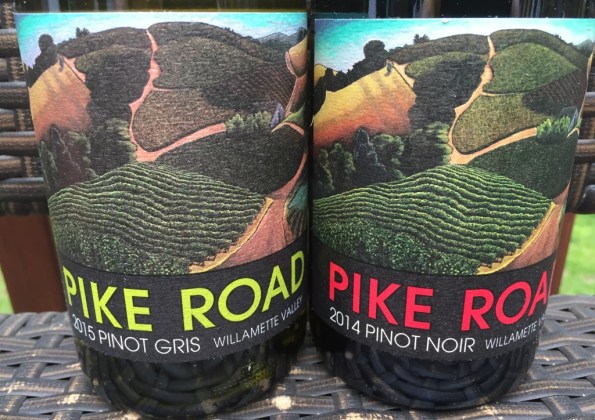


Here are my notes:
2015 Pike Road Pinot Gris Willamette Valley, Oregon (13.5% ABV, SRP: $15)
C: pale greenish color
N: tropical fruit, candied lemon, fresh, intense, inviting
P: crisp, clean, perfect fresh acidity and white stone fruit, creamy. Outstanding.
V: 8-/8, delicious white wine, perfect year around and superb during summer
2014 Pike Road Pinot Noir Willamette Valley, Oregon (13.5% ABV, SRP: $19, 10 month in French oak barrels)
C: dark Ruby
N: delicious. Touch of sweet fruit, open, inviting, raspberries, herbs, super-promising, wow
P: soft, layered, silky, spices on top of traditional smokey profile, triple-wow
V: 8+/9-, wow, totally unexpected and amazing. I know Oregon Pinot delivers, but this far exceeded my expectations. Might be the best QPR for Oregon Pinot Noir in existence. Love rustic labels too.
Our last classic pair comes from the classic of the classics, none less than Napa Valley, and it is Chardonnay and Pinot Noir from Artesa winery. Artesa winery is located in Carneros region of Napa Valley. While Artesa recently celebrated is 25th vintage, their winemaking traditions go way, way, way back – say by another [almost] 500 years. How come? Artesa winery was founded by Codorniu Raventós family from Spain, which takes its winemaking heritage 17 generations back to the 1551. Artesa sustainably farms 150 acres of vines, all Napa Green Land certified, and produces a range of wines, starting with a few sparklers and finishing with another Napa classic – Cabernet Sauvignon. Two wines which I had an opportunity to taste are the new Estate Reserve release from the winery:
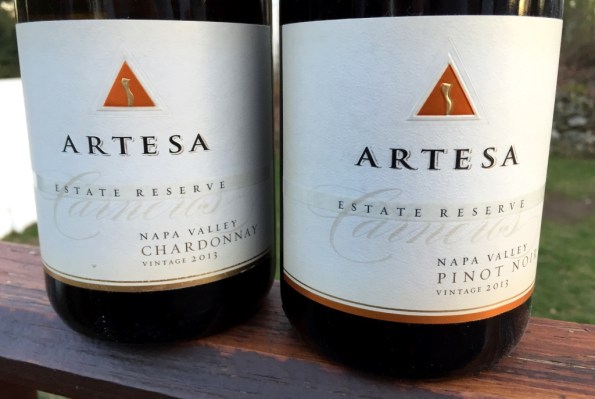
2013 Artesa Estate Reserve Chardonnay Napa Valley (13.9% ABV, SRP: $40)
C: light golden
N: touch of vanilla, hint of butter, white fruit, intense
P: touch of butter, green apples, good acidity, medium to full body, vibrant and balanced
V: 8-, a classic Chardonnay
2013 Artesa Estate Reserve Pinot Noir Napa Valley (14.4% ABV, SRP: $40)
C: dark garnet
N: warm, inviting, sweet plums
P: round, polished, present silky texture, touch of smoke, more plums, minerality, restrained
V: 8-, nice, smooth and restrained
There you have it, my friends – some new and interesting wines worth seeking. And whether they will hit the “classic” note for you – it is entirely your decision. Cheers!
Last Bottle Sign Up ($10 credit)




 Talk-A-Vino