Archive
Passion and Pinot Updates: Lenné Estate
 Out of the 13 Oregon wineries profiled to the date in the Stories of Passion and Pinot series, Lenné Estate stands aside. I had my first encounter with Steve Lutz and Lenné Estate in 2014, two years before the Stories of Passion and Pinot series was born, when Steve participated in the #WineChat event on Twitter. This is when I heard for the first time about Peavine soils, a mixture of clay and rocks, and Steve’s relentless, passionate pursuit of Pinot Noir winemaking in the place where it seems no vine can ever grow – read this original post to see what I mean. This passion I learned about while “listening” to Steve for the first time, the passion for the finicky grape became the reason for the name of the series.
When I spoke (virtually) to Steve in 2016 (you can find this conversation here), I learned a lot more about all the hard work establishing the vineyard, about Kill Hill, and about the wines which Steve produces, so when we arrived at Lenné Estate with Carl Giavanti, I felt like I knew Steve for a long time, and almost felt at home in the vineyard.
It is one thing to listen to someone talking about the soil, and it is totally different when you look at it (you can touch it too if you want) and think “how anything, really anything can grow in this soil”? Dry farming, no irrigation, and then you look at the soil – and you look at the grapes which it perfectly produces, and you can only say “wow”. I can tell you that out of the number of vineyards we already visited during the trip, the grapes at Lenné looked the best – tight bunches, beautiful colors of veraison, just a pleasure to look at.


More grapes:


We took a walk to the top of Kill Hill, and I can tell you that it was one steep walk. But the views from the vineyard were nothing short of spectacular.


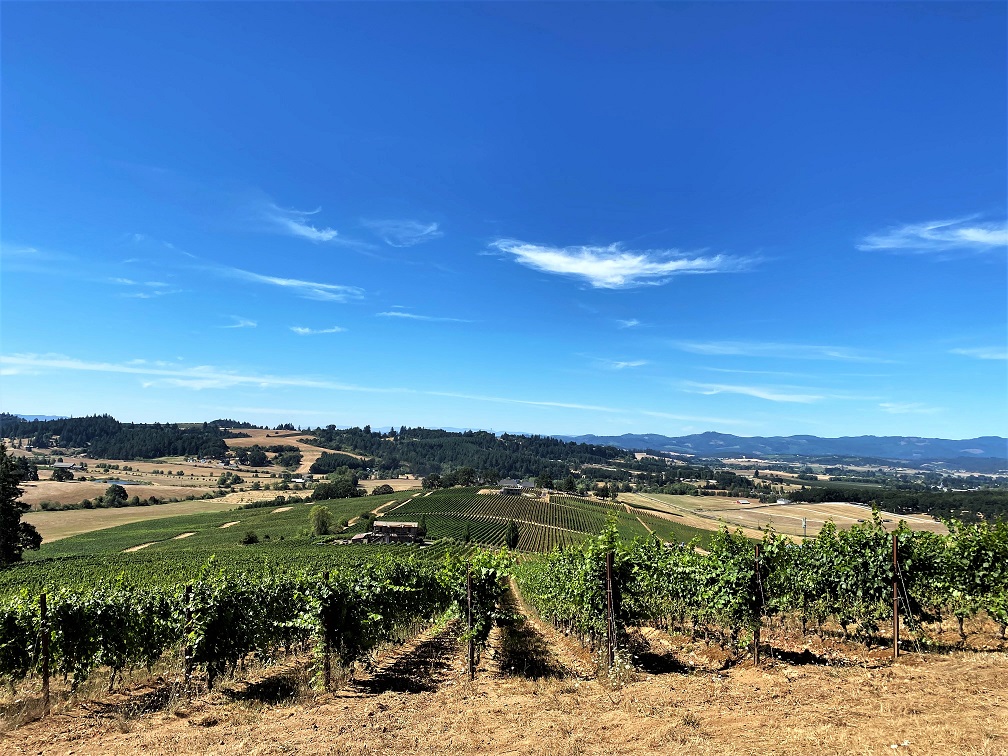

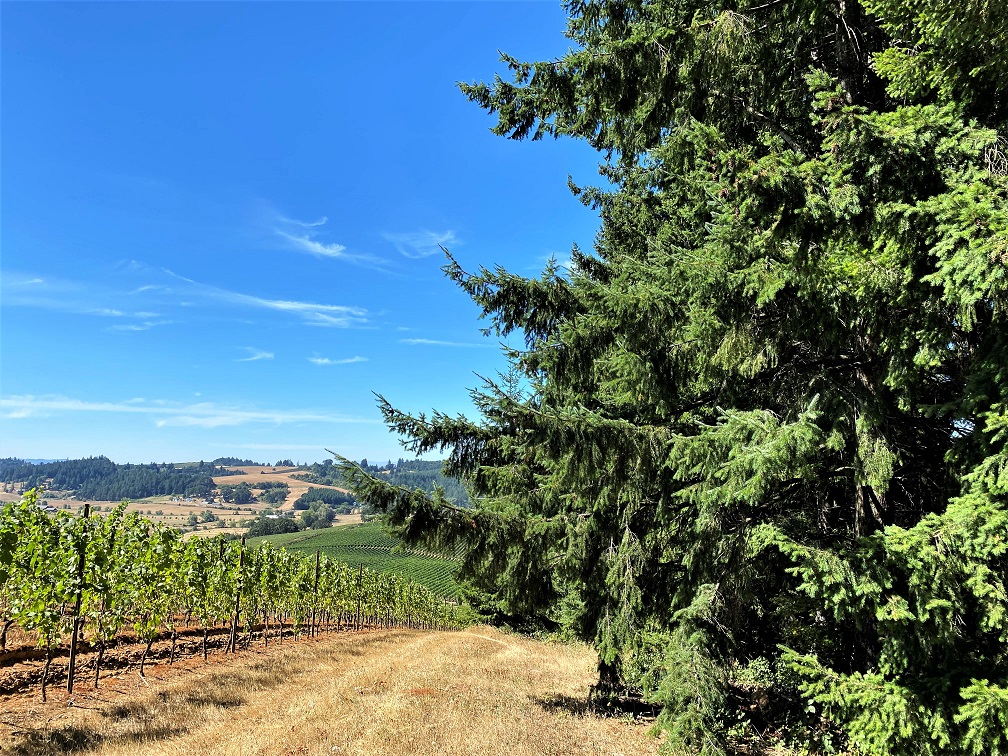
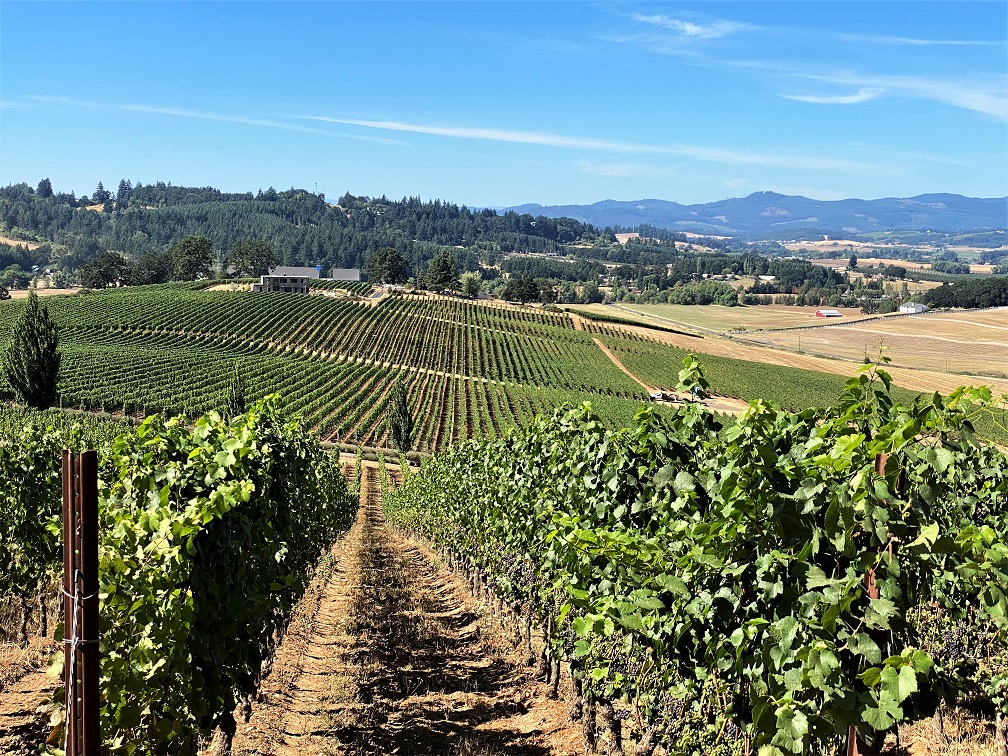
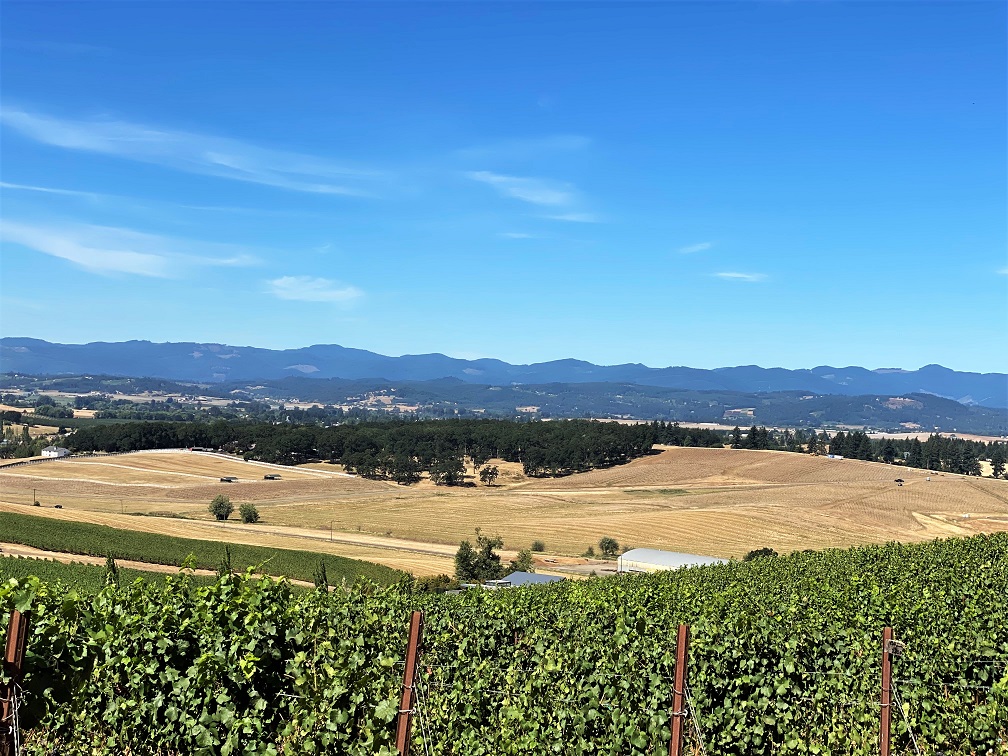
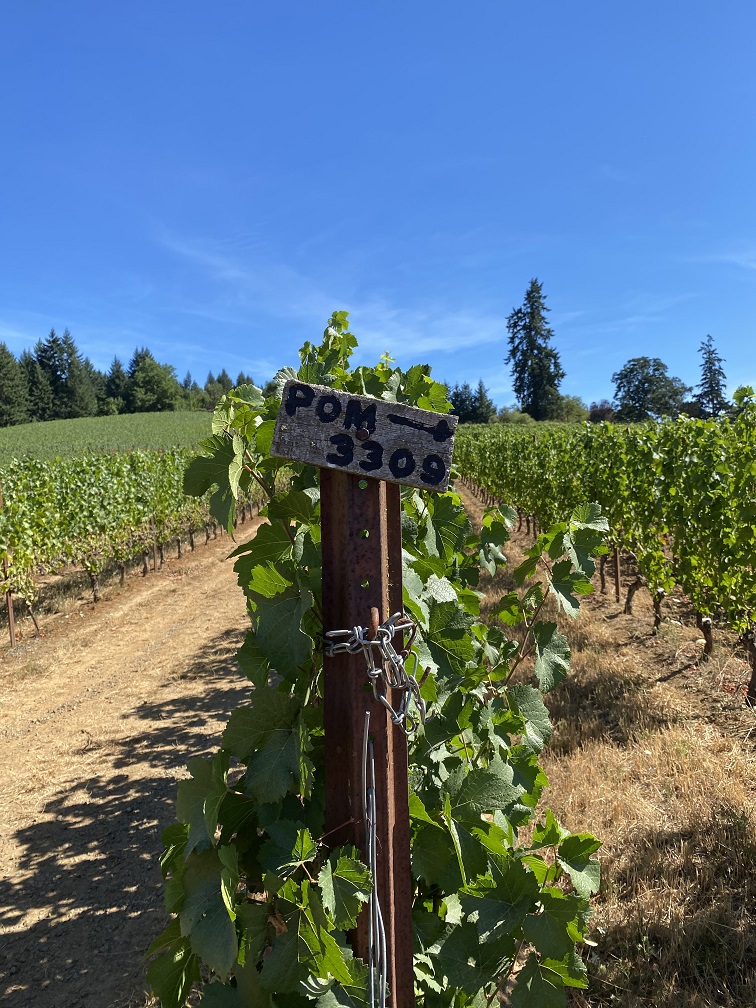
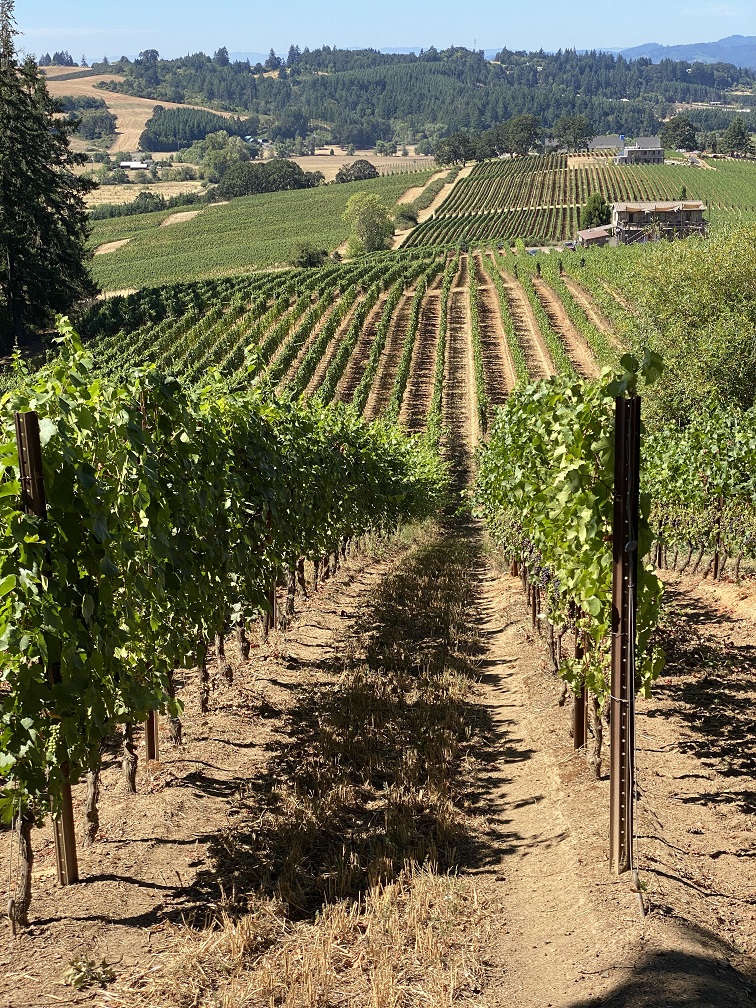
Yes, it is steep!
We talked about winemaking, and Steve mentioned that he typically prefers using commercial yeasts, because they produce more reliable and predictable results – however, he is not foreign to the idea of indigenous yeast, as we tasted in one of the wines. When we spoke back in 2016, Steve was not very big on producing white wines – I was happy to see that he changed his mind and now offers Lenné Estate Chardonnay. However, more as an exception to the rule at this point, Steve is still not ready to produce sparkling wines – however, I hope that this will change at some point – we will have to see.
After the walk, we went back to the tasting room, where Steve set up a full tasting, including the charcuterie and cheese boards.


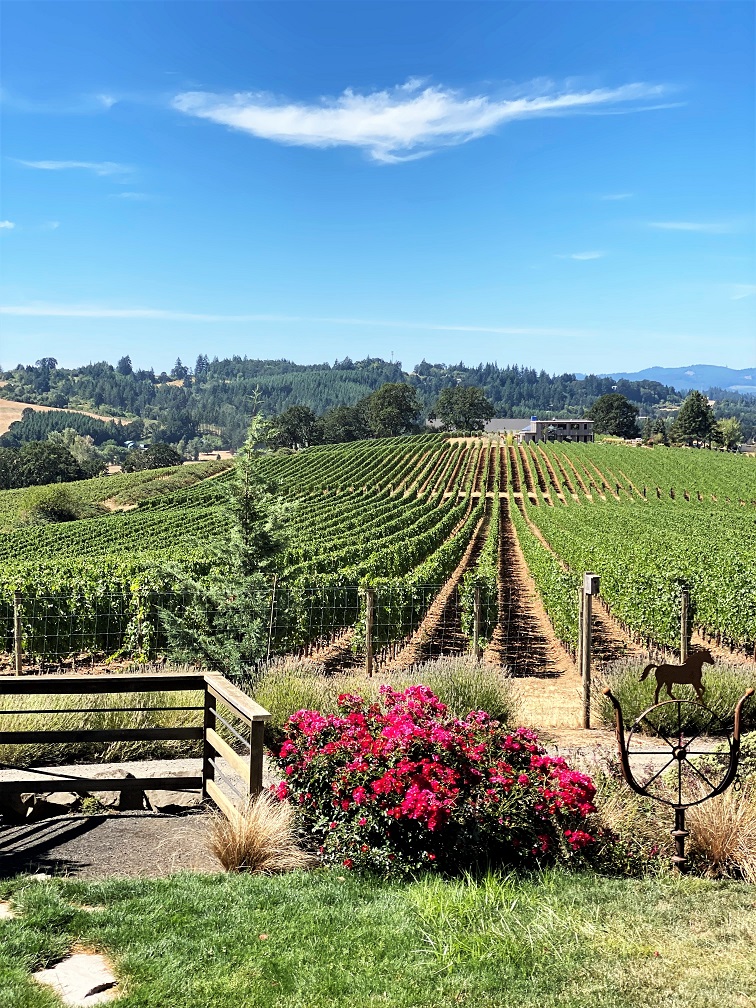
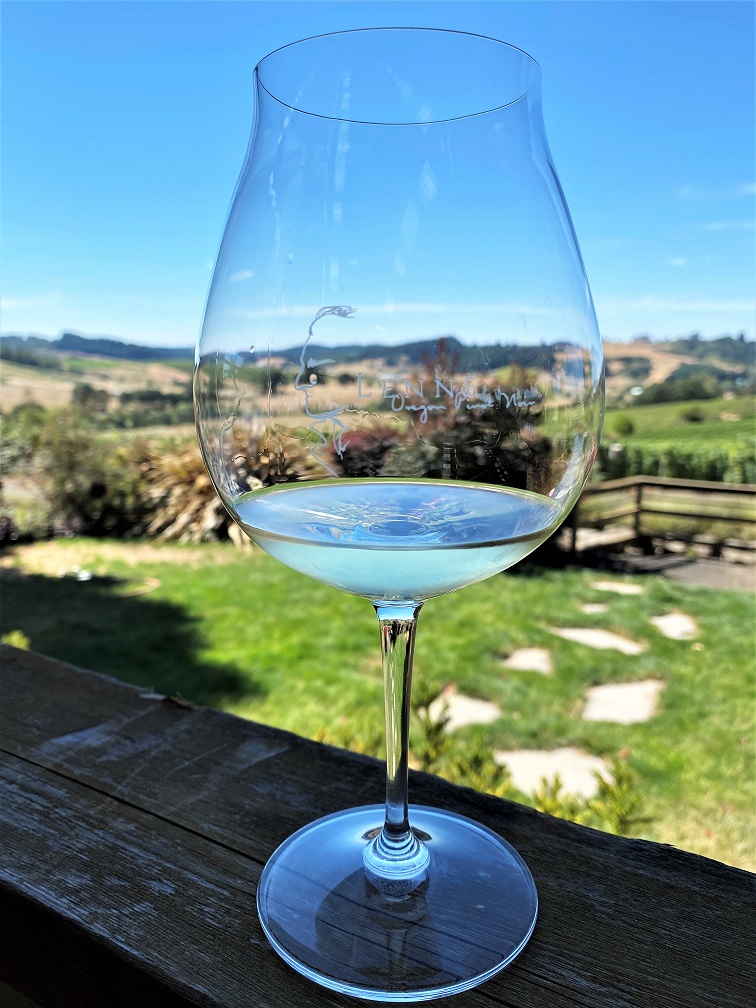
View from the tasting room
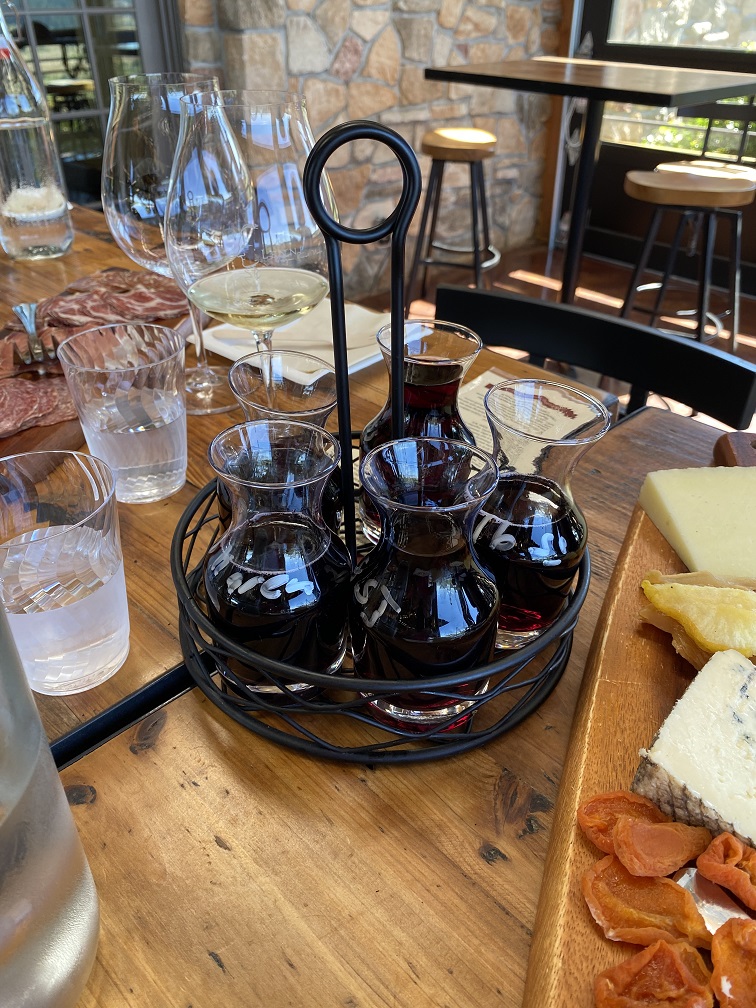
We started tasting with the Chardonnay, which was excellent
2019 Lenné Estate Scarlett’s Reserve Chardonnay Yamhill-Carlton AVA ($58)
A touch of honey, herbs, restrained
Crisp acidity, fresh, bright, Granny Smith apples, a touch of vanilla, creamy, excellent
8
Next, of course, we moved to the Pinot Noirs, where we tasted the whole range – here are tasting notes for the wines including some additional comments regarding the vintage and winemaking:
2017 Lenné Estate South Slope Pinot Noir Yamhill-Carlton AVA ($55)
Hot vintage with a big fruit set
Beautiful nose of sweet cherries and raspberries
Wow, red fruit all the way, cut through acidity, perfect balance
9-, superb
2016 Lenné Estate South Slope Pinot Noir Yamhill-Carlton AVA ($55)
Early vintage, cool August, harvest done by mid-September
Cherries, sage, floral notes
Clean, tart cherries, warm notes, good acidity,
8-
2018 Lenné Estate Sad Jack 777 Pinot Noir Yamhill-Carlton AVA ($55)
Indigenous yeast, spontaneous malolactic
Tart cherries, a hint of cherry pie, savory note
Tart cherries, clean, balanced, crisp, superb
8+
2018 Lenné Estate Karen’s Pommard Pinot Noir Yamhill-Carlton AVA ($60)
Commercial yeast and forced malolactic
Cherry, cherry pie, sweet oak
Tart cherries, dark fruit, good balance, well integrated tannins
8


The last wine was a culmination point of the tasting. “Cinq Élus” means “five chosen”, which in the case of this wine means five best barrels and 5 clones. The wine was simply superb:
2018 Lenné Estate Cinq Élus Pinot Noir Yamhill-Carlton AVA ($85)
5 best barrels from the vintage, 5 clones
The succulent nose of red and black berries, distant hint of gunflint, herbs, great complexity
Restrained, cherries, layered, complex, perfectly integrated, tannins come through on the finish, superb
9-
While we were tasting the wines, we also talked about blind tasting events which Steve runs at the winery, where attendees get an opportunity, for example, to compare Oregon Pinot Noir with the Burgundy, or Yamhill-Carlton Pinot Noir with Dundee Hills Pinot Noir and so on – here you can see what blind tastings are offered. Steve also leads European wine cruises where everything revolves around food and wine, as you can imagine – here you can find information about those.
On the Lenné Estate website, there is also an interesting section called Vintage Charts. Here you can find general information regarding the suggested drinking window for Oregon Pinot Noir in general, as well as particular recommendations specifically pertaining to the Lenné Estate wines.
There you are, my friends. If you are looking for mature, confident, and simply delicious Oregon Pinot Noir, you don’t need to look further than Lenné Estate.
But we are not done here yet. More Passion and Pinot updates are coming – stay tuned…
This post is a part of the Stories of Passion and Pinot series – click the link for more stories…
Passion and Pinot Updates: Youngberg Hill Vineyard
I virtually met with Wayne Bailey of Youngberg Hill Vineyards in September of 2016. Now, 5 years later, I was able to actually shake his hand, listen to the stories face to face and taste the latest wines.
We arrived at the winery in the morning and went on to meet Wayne at the winery building, which also serves as Bed and Breakfast. The views from the terrace of that building were simply incredible – I walked around trying to snap as many pictures as I could.
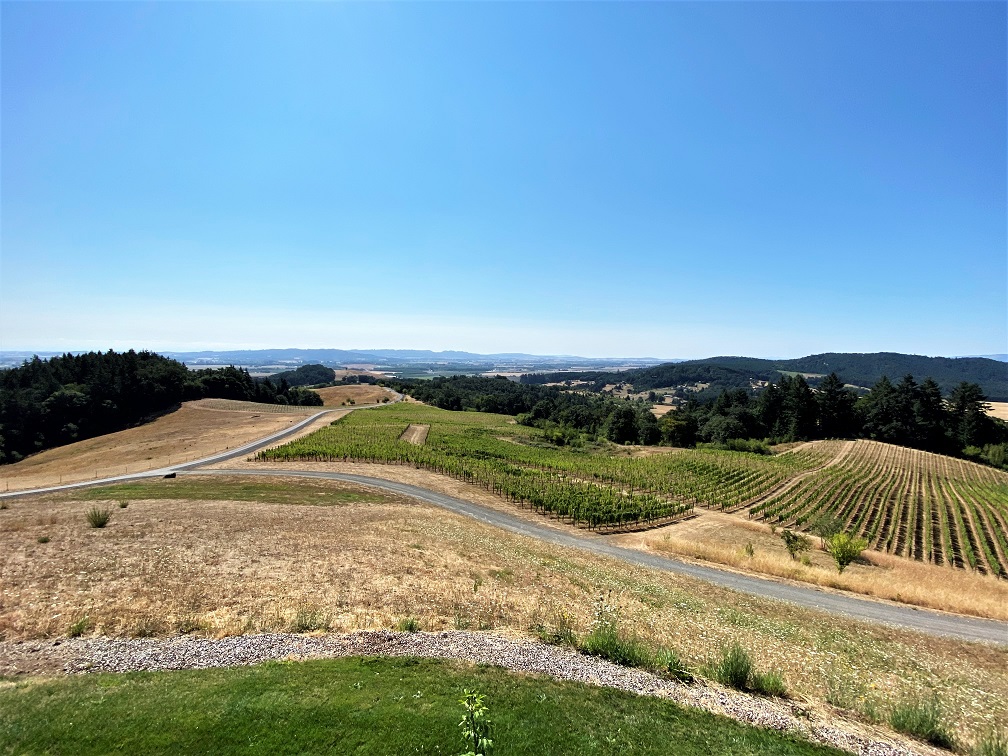
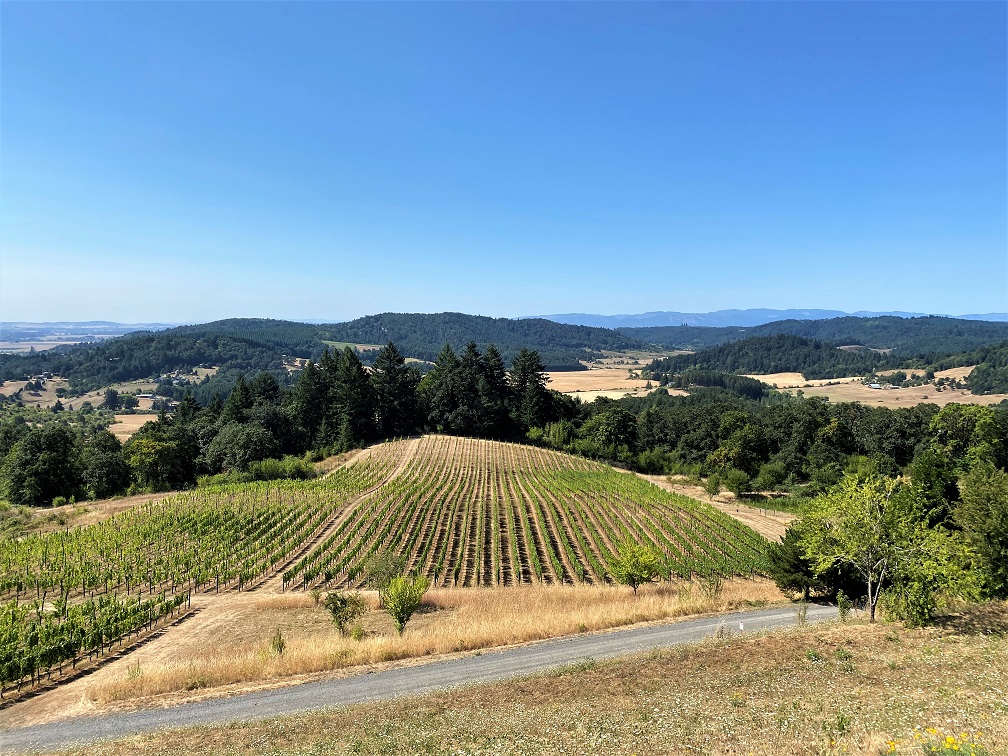
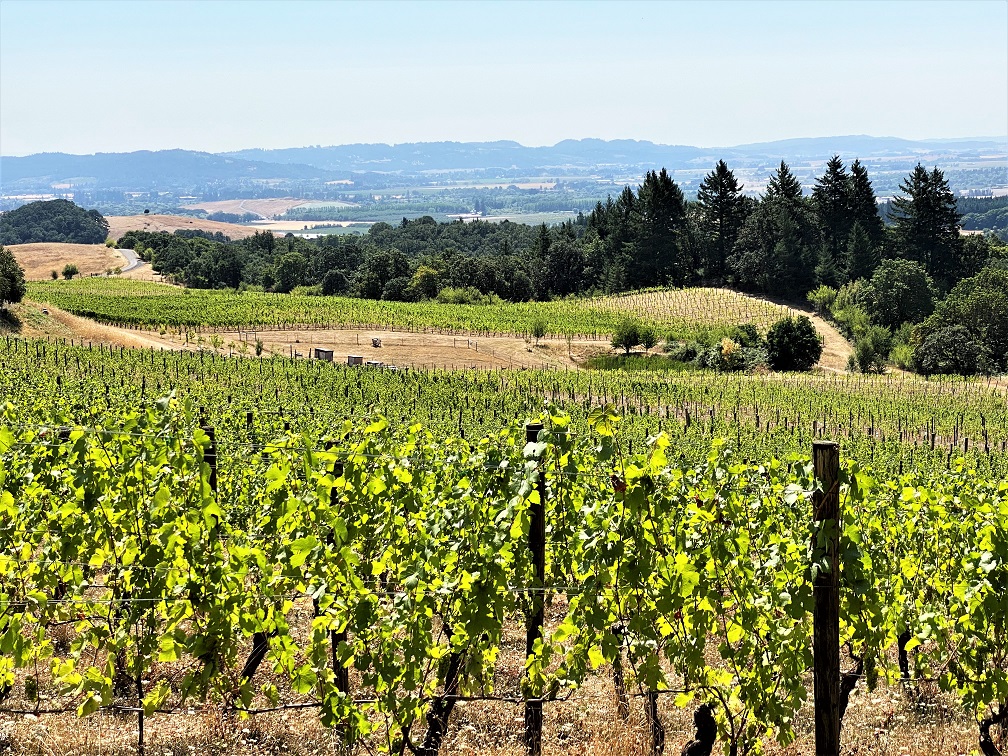
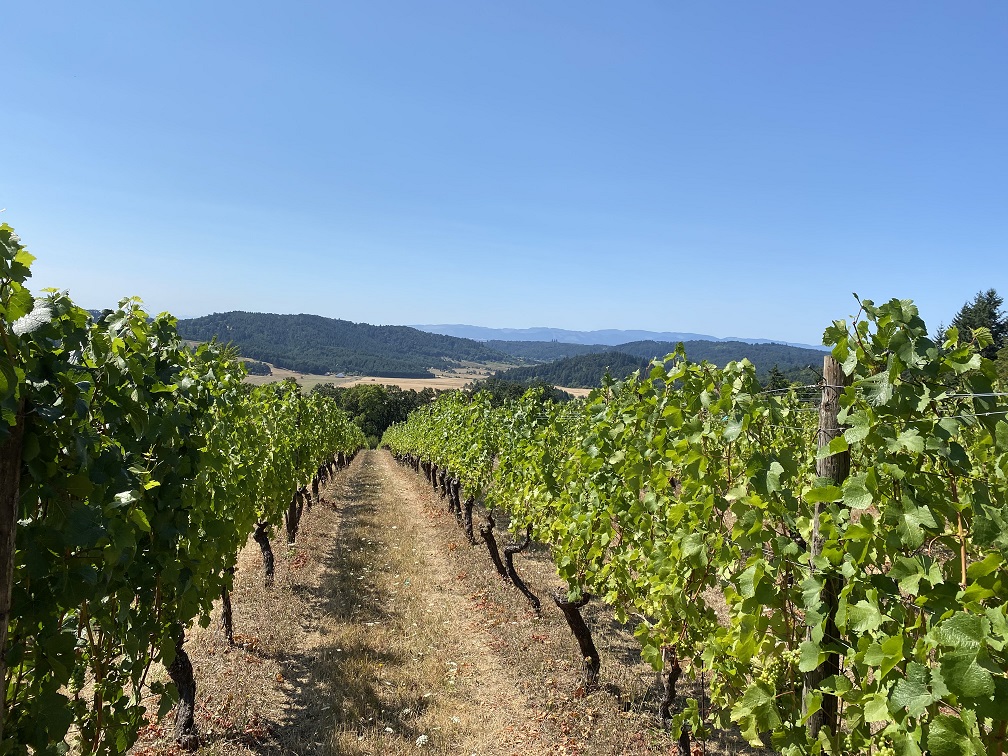
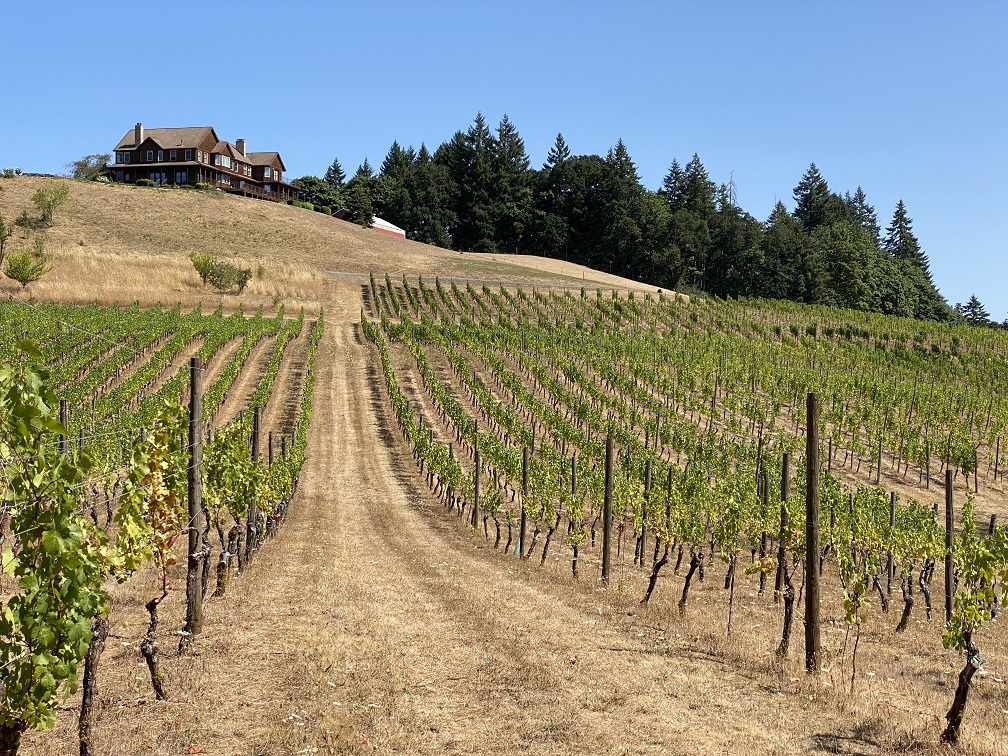


After meeting Wayne, we went on a tour of the estate. Actually, we drove around the vineyards in the baggie which Wayne was driving. Again, more of the beautiful views all around. We also got to meet a few of the cute animals which call Youngberg Hill home.


At the Youngberg Hill estate, it is all about the Bailey family – Wayne, his wife Nicolette, and daughters Natasha, Jordan, and Aspen. The Youngberg Hill vineyards were first planted in 1989 when the estate was founded, 12 acres of Pinot Noir vines. These 12 acres are divided into two blocks – 7 acres of Natasha block at the altitude of 600 feet on marine sediment soils, and 5 acres of Jordan block on volcanic soils at the altitude of 800 feet. There is 2 degrees difference in average temperatures between these two blocks, and as the Jordan block is a little bit cooler, the grapes usually ripen later than the ones on Natasha Block, with about 10 days difference in pick time.


Aspen block was first planted in 2006 with 5 acres of Pinot Gris. In 2014, half of the block (2.5 acres) was grafted over to Chardonnay. In 2008, Bailey’s block was planted with 3 acres of Pinot Noir, at 700 feet altitude and predominantly volcanic soils.
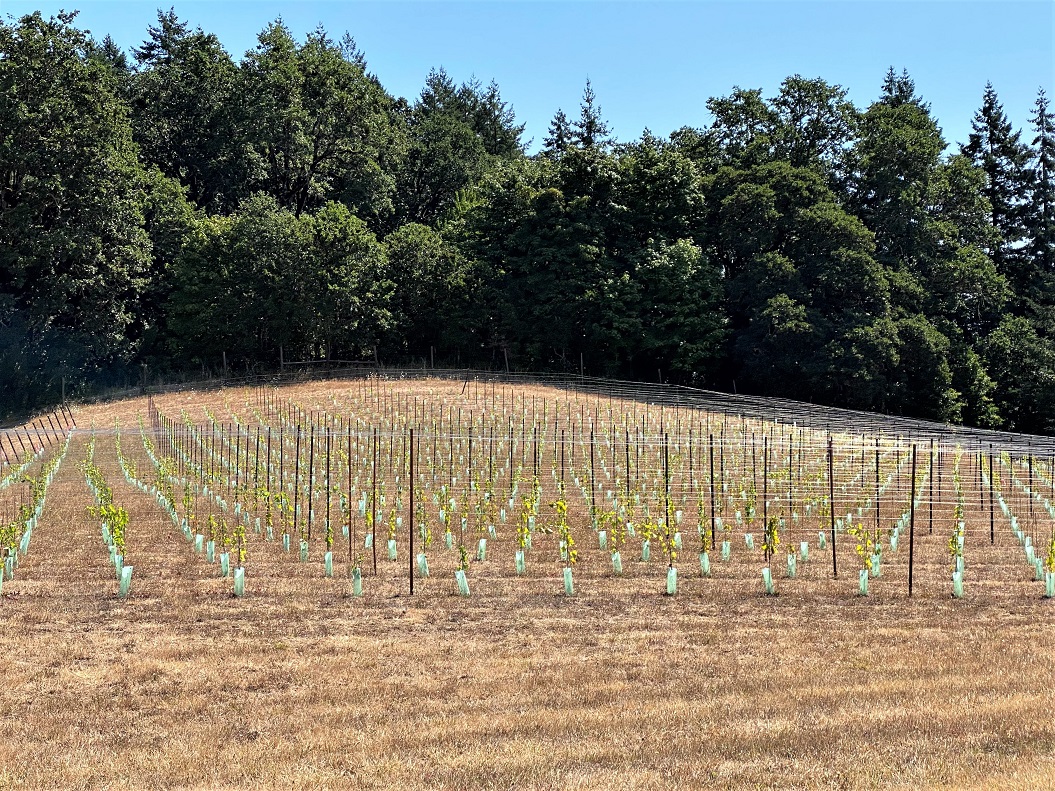
When we spoke back in 2016, 20 acres of vineyards were planted on the 50 acres estate. I asked Wayne if he has any plans to add additional plantings, and got a simple “no” answer. Well, I guess the old adage of “never say never” is perfectly at play here, as in 2018, 3 acres of Wayne’s World block was planted with two more clones of Pinot Noir, bringing a total to 5 clones, if I’m not mistaken. This block was planted mostly on marine sediment soils at an altitude between 500 and 600 feet.
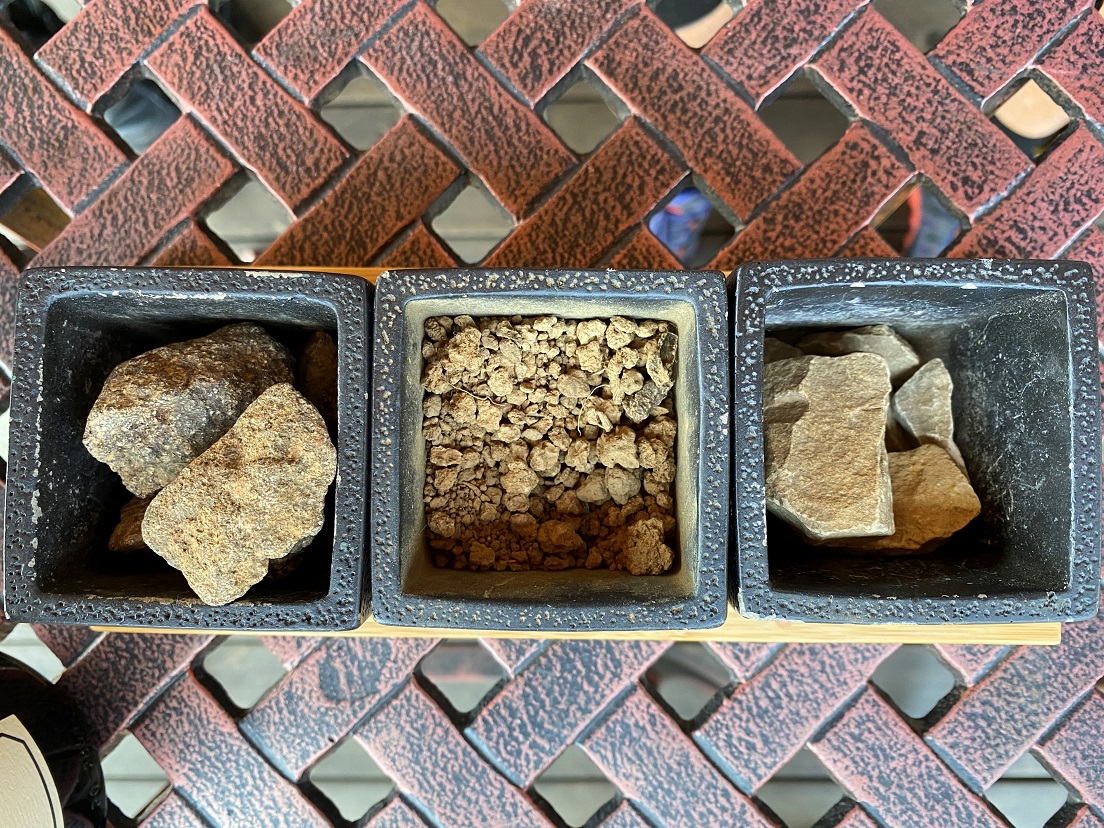
 Here you can see a sample of the soils at Youngberg Hill Vineyards.
After we finished the tour, it was time to taste the wines.


I was happy that we started our tasting with the sparkling wine – this is almost something you now expect from Oregon wineries. Similar to the sparkling wine we had at Le Cadeau, this wine was also made with first-pass grapes. The wine spent 2.5 years on the lees, so it is called the Extended Tirage sparkling.
2018 Youngberg Hill Vineyards Extended Tirage Sparkling Eola-Amity AVA (12.5% ABV, $55)
A touch of apple and vanilla
Crisp apple notes, fresh, good acidity, good body, delicious. Lingering acidity on the finish
8, excellent


Next, again to my delight, we had a couple of Chardonnays:
2019 Youngberg Hill Vineyards Aspen Chardonnay McMinnville AVA (12% ABV, $45)
Beautiful nose of apples, vanilla, and a touch of honey
Crisp, clean, great acidity, wow.
8, it would be amazing with age
Another change at the Youngberg Hill Vineyards since we last spoke was the new wine label introduced in 2019 – Bailey Family Wines. Bailey Family wines comprise a selection of the best plots and barrels. In addition to sparkling, Chardonnay, and Pinot Noir, the Bailey Family wines range also includes Grenache sourced from the Rogue Valley. We tasted the latest vintage of Bailey Family Chardonnay which was superb:
2018 Bailey Family Chardonnay McMinnville AVA Willamette Valley (13.4% ABV, $85)
Herbal notes, a touch of butter, honey, minerality
Great complexity, mouthwatering acidity, lean, green apples, a touch of sage. Perfect balance
8/8+


Next, we had the pleasure of going through the selection of the Pinot Noir wines, both current vintages from Natasha and Jordan blocks, as well as reserve wine, Nicolette’s Select:
2018 Youngberg Hill Vineyards Natasha Block Pinot Noir McMinnville AVA (14% ABV, $60)
Ripe cherries and cranberries
Restrained, tart cherries, firm structure, dusty palate, excellent balance.
8+
2018 Youngberg Hill Vineyards Jordan’s Block Pinot Noir McMinnville AVA (13.8% ABV, $60)
Cherries and violets
Bright popping ripe cherries, good acidity, perfect balance.
Both [Natasha Block and Jordan Block] are built for the long haul.
8+
2015 Youngberg Hill Vineyards Nicolette’s Select Pinot Noir McMinnville AVA (14.1% ABV, $85)
Great bouquet on the nose, cherries, pencil shavings, underbrush
Wow, an interplay of cherries, cranberries, mushrooms, dusty palate, layered, balanced
9-, superb.
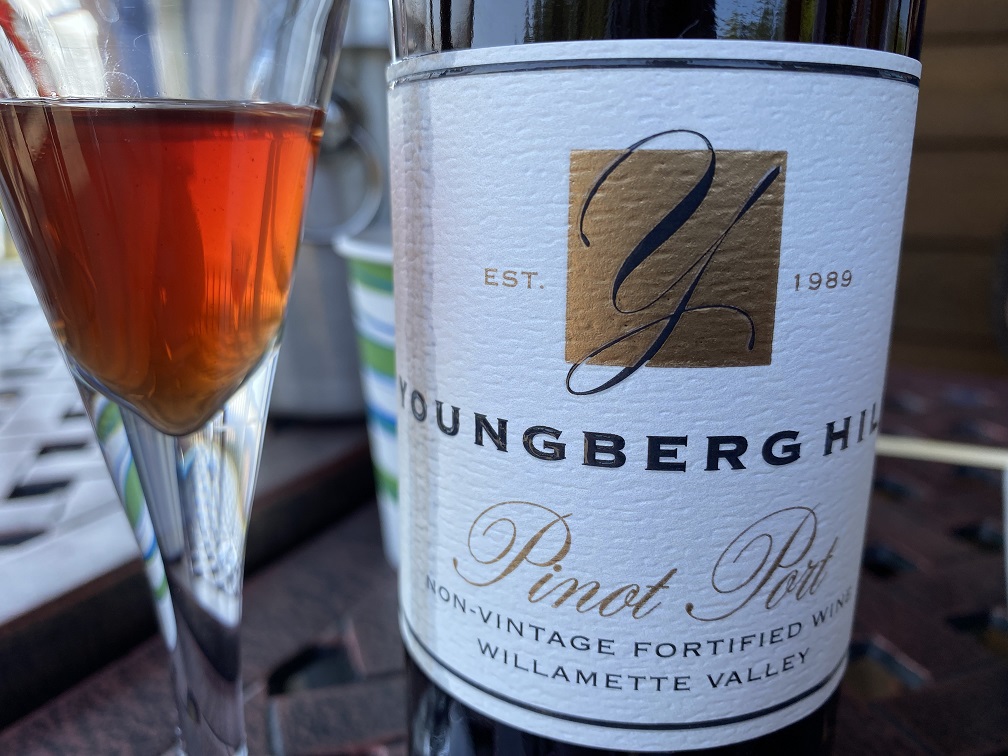
I keep going back to our 2016 conversation with Wayne. While preparing the interview questions I learned that Youngberg Hill produces a really unique wine – Pinot Port, as it was called – a Port-style wine made out of Pinot Noir grapes, something which I never heard of before. So now, being at the winery, I couldn’t miss the opportunity to taste the Pinot Port. Wayne was somewhat hesitant about it, as I don’t believe he is making this wine anymore, but I had my wish granted and had a sip of this delicious beverage:
NV Youngberg Hill Vineyards Pinot Port (19% ABV, $NA, 25 cases produced)
Nicely aged wine, dried fruit, good balance, very pleasant
There you are, my friends. Another story of Passion and Pinot, with the Pinot Noir (and Chardonnay, and bubbles) of truly a world-class, and in its own, Oregon style. These wines are worth seeking, and if you want to spend a few days in the wine country, surrounded by incredible views and delicious wines, that Inn at the Youngberg Hill sounds really, really attractive.
I got more of the Passion and Pinot updates to share with you, so until the next time…
This post is a part of the Stories of Passion and Pinot series – click the link for more stories…
Passion and Pinot Updates: Le Cadeau Vineyard
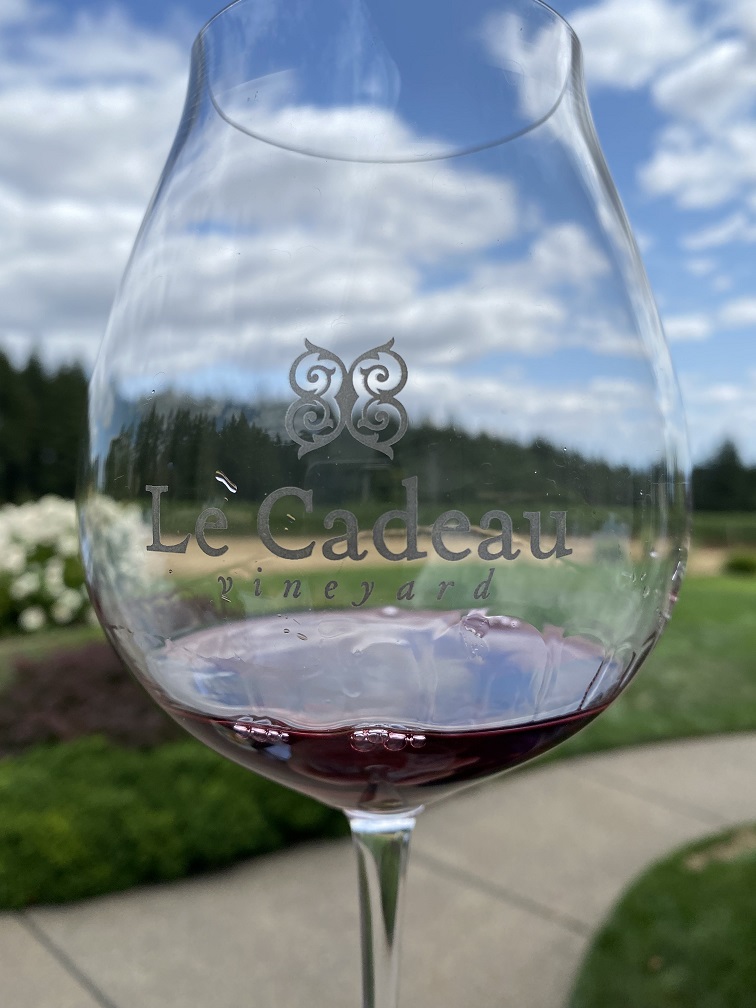 Five years ago, I started a new project in this blog called Stories of Passion and Pinot. The goal of the project was to interview winemakers in Oregon, who passionately went on to grow Pinot Noir and make wines often in conditions that many others would find impossible and untenable. All the way until August of 2021 my interviews were all virtual – I would read about the winery, come with the questions, get the answers, and then publish those conversations in this blog (you can find them using the top menu).
This year I attended Wine Media Conference 2021 which conveniently took place in Eugene, Oregon. After the conference was over, we drove with Carl Giavanti to meet some of the winemakers face to face – and now I can offer you updates, mostly in pictures, lots of pictures, and tasting notes for the wines I had an opportunity to taste.
Le Cadeau Vineyard was our first stop after we left Eugene.
Where do I start? First of all, the views. Le Cadeau Vineyard is a stunning oasis, surrounded by tall pine trees (I already told you how much I love those), and offering amazing views. You be the judge:
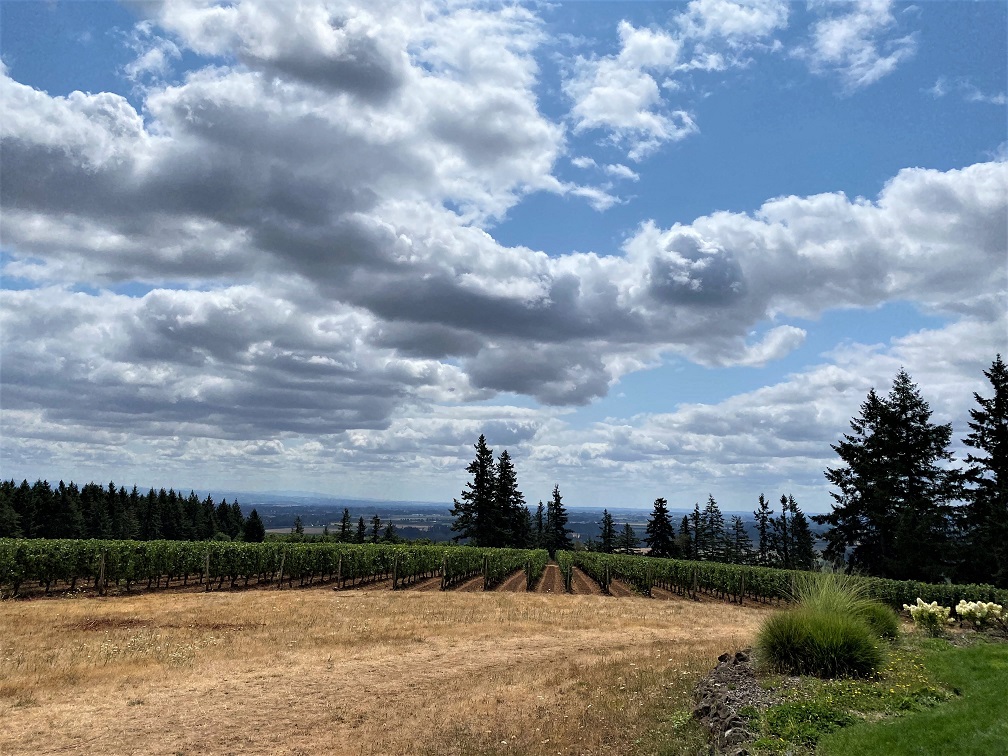
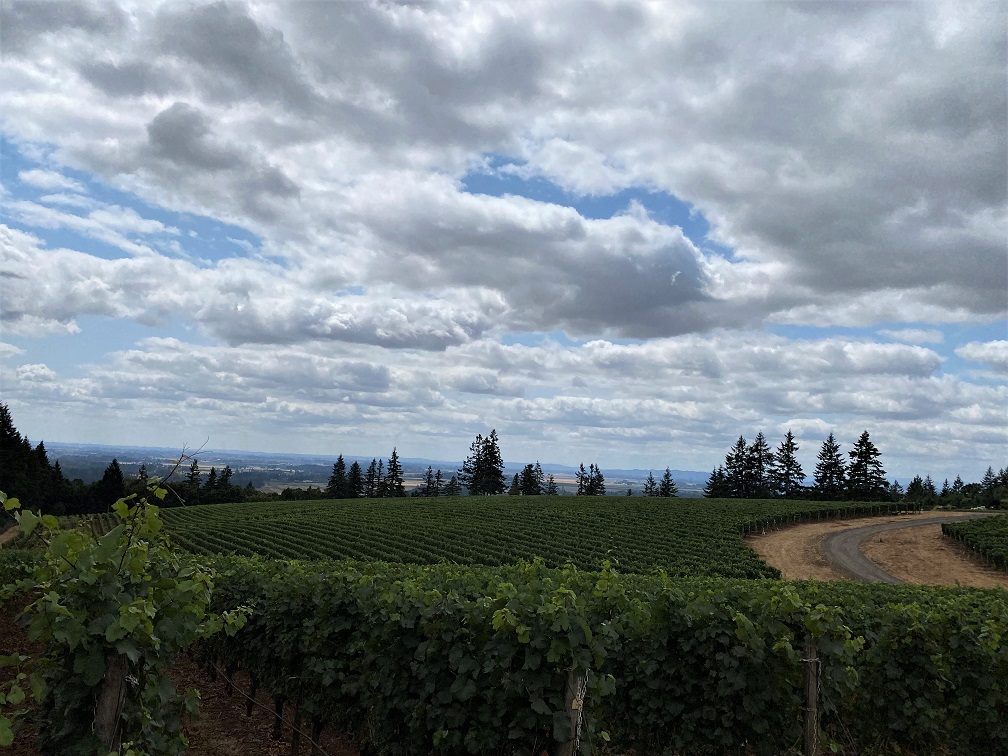
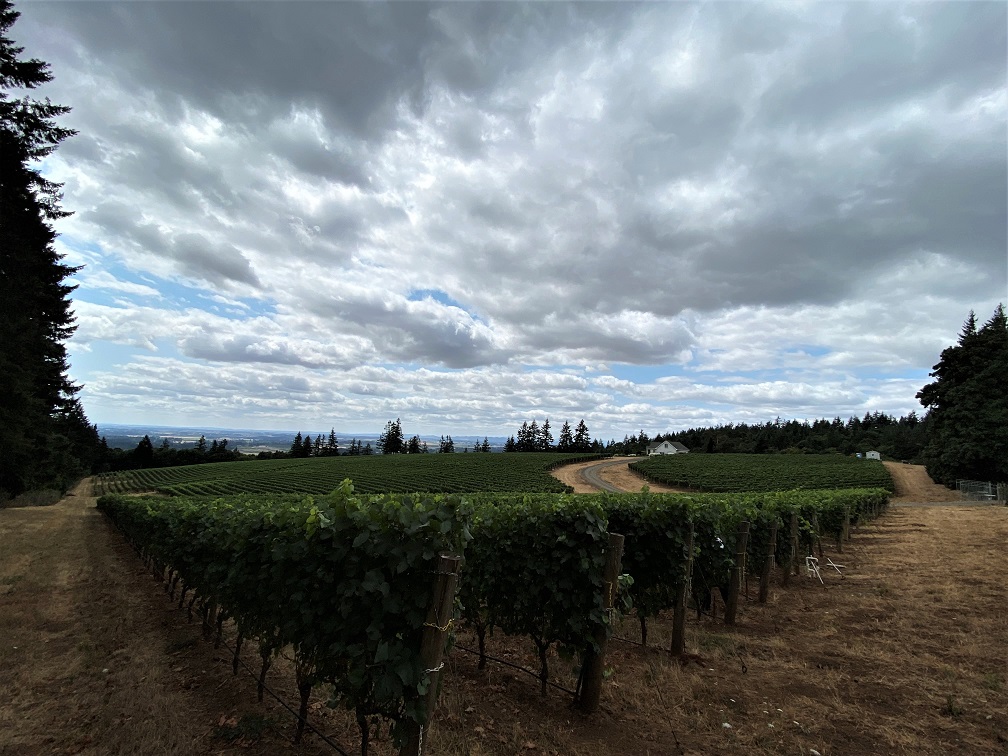
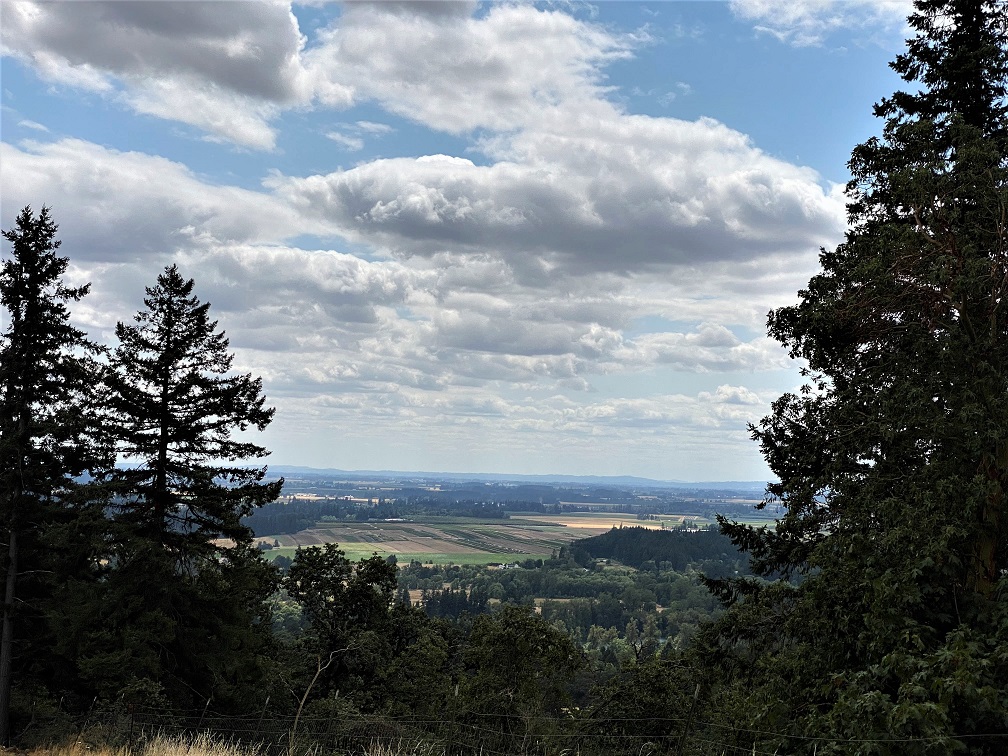
Tom Mortimer slowly walked us through the vineyard, talking about clones and all the work he invested into creating this vineyard simply on top of the rock (you can find the details in the original interview). It turns out that there are 18 Pinot Noir clones used in wine production at Le Cadeau – while I was somewhat shocked to hear that number (sounds high), it was simply due to my ignorance – for example, Sanford winery in Sta. Rita Hills uses more than 50 clones. Considering that Sanford winery is about 25 years older than the Le Cadeau, it is all makes sense. Tom was particularly proud of some of the clones, such as the Calera clone which is based on the DRC, and some additional Vosne clones (not trying to impress with the words here – Vosne here stands for Vosne-Romanée, one of the most coveted Pinot Noir production areas in Burgundy; DRC stands for Domaine Romanée-Conti, probably the most famous Pinot Noir producer in the world; Calera is one of the legendary California Pinot Noir producers and pioneers from Central Coast).
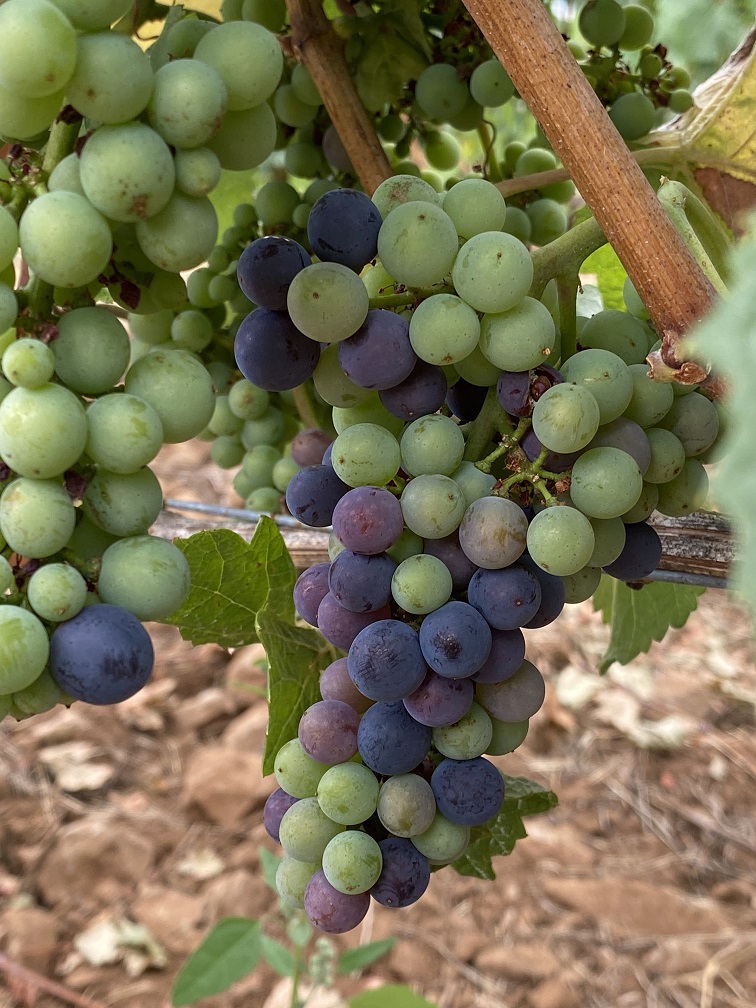
The beginning of August of this year (2021) happened to be the veraison time – the onset of ripening of the grapes when the grapes start changing their color. This was my first time actually being in the vineyard during veraison, so I couldn’t stop taking pictures as I saw bunches with more and more color – here are more pictures:




We also saw Chardonnay grapes growing:
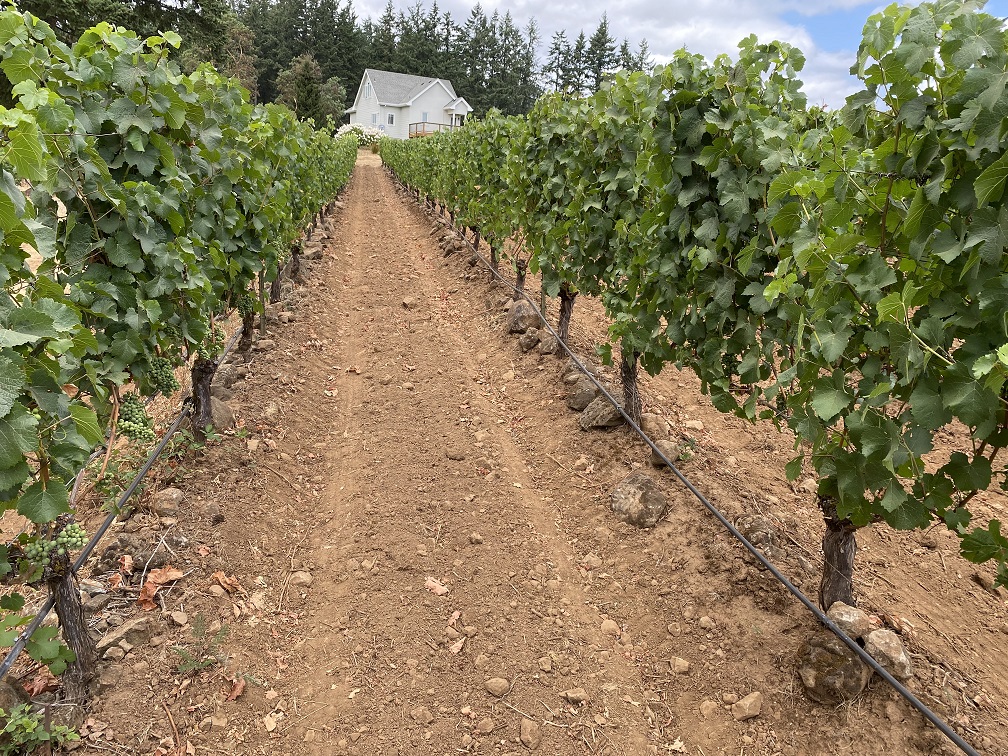
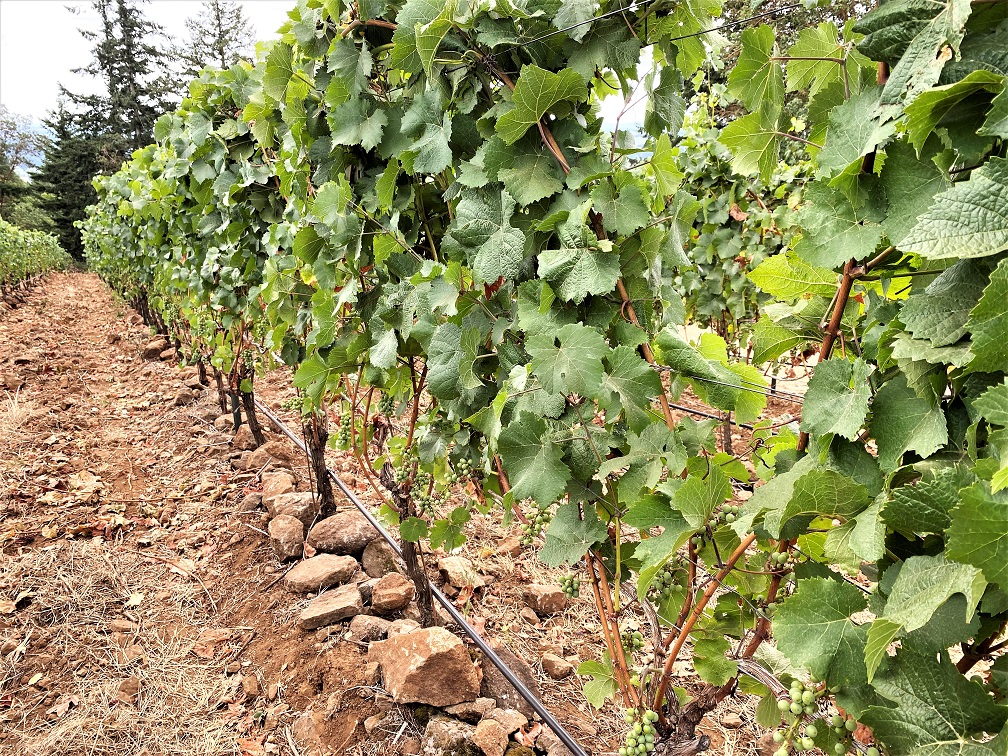
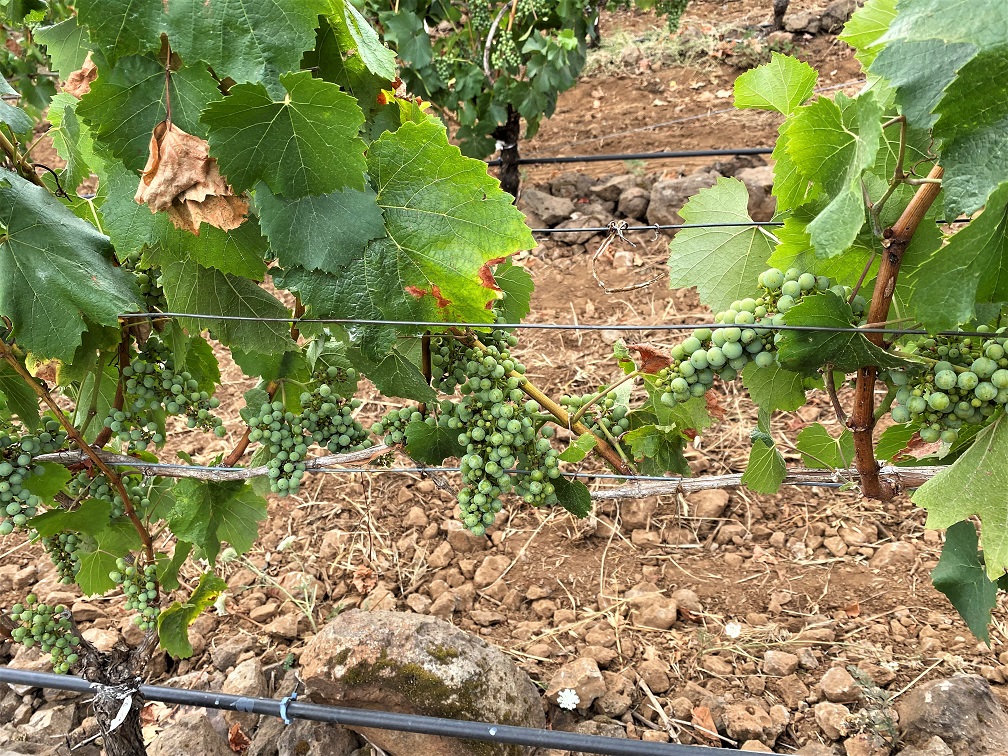
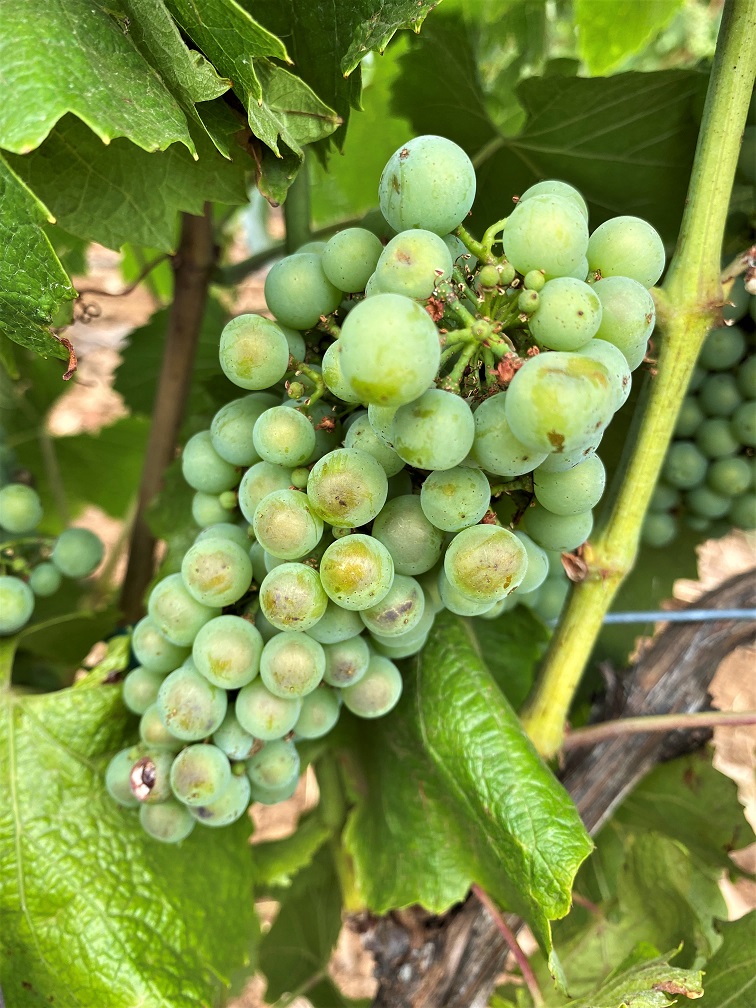
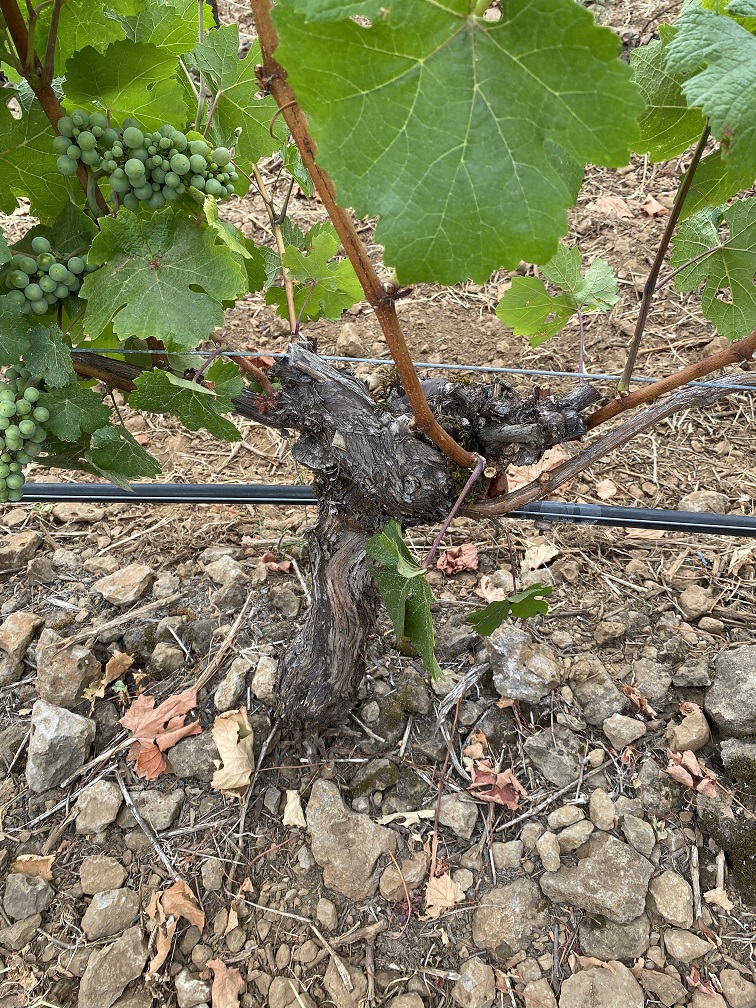
Remember, we are talking about passion here. The amount of labor of love and passion which this vineyard required to be established was simply incredible. Tom had to use a special machine to break through the basalt to help the vine roots to get established. There were a few rows where he decided not to use the machine, and those rows look particularly different from the rest of the vineyard. The rocks which you can see in these pictures give you a good idea of what he had to deal with while establishing the vineyard.


After we finished walking around we sat down to taste the wines with Tom and to continue the conversation about the winemaking. Tom is highly analytical, he uses a lot of different charts, such as Degree Day reports to estimate when he might need to start picking up the grapes based on the historical data and what is the potential weight of the grapes might be at the harvest. Harvest is usually done in multiple passes, depending on the year – in 2015 and 2018, for example, he had to pick grapes 5 times; in 2016 and 2020 there were three picks made.


We started our tasting with 2018 Chardonnay, which was outstanding:
2018 Le Cadeau Vineyard Chardonnay Willamette Valley (14.1% ABV, $45)
Beautiful nose of vanilla with a hint of butter
Vanilla, butter, Granny Smith apples on the palate, beautifully clean and balanced
8+
It is really amazing to see the level of finesse Oregon Chardonnay has developed over the years.
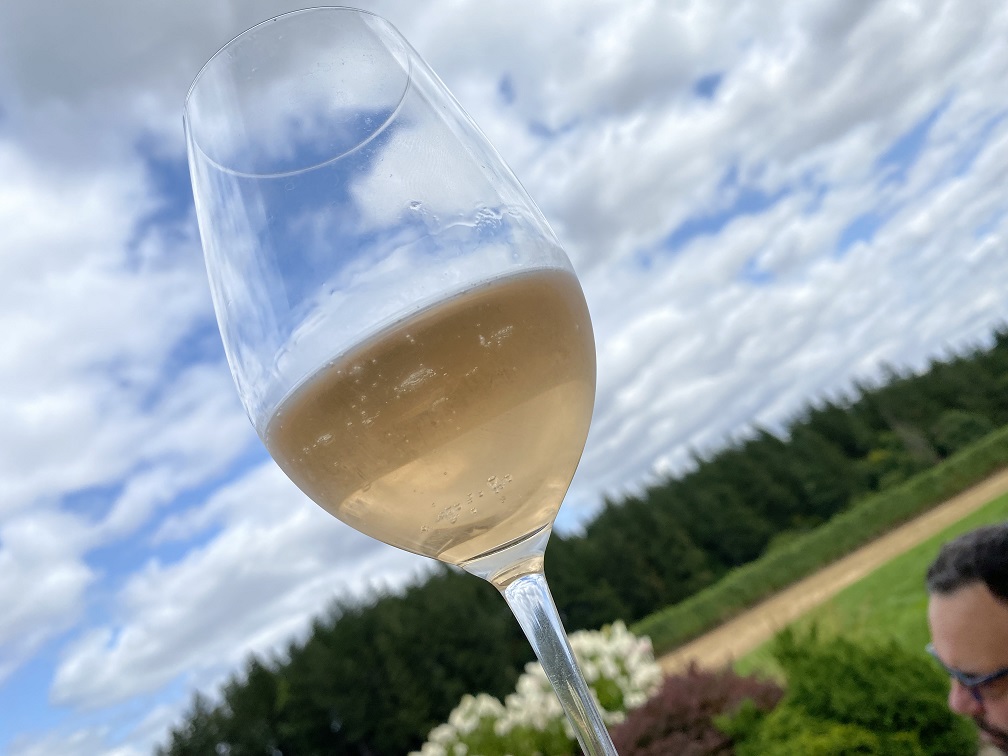


It appears that Tom also makes sparkling wines, and he loves it, as making sparkling wines nicely complements making still wines – you remove perfect grapes for the sparkling (high acid), and the other grapes can ripen better. The sparkling wine we tried, was again, in a word, outstanding:
2013 Le Cadeau Rosé Brut Oregon (13.1% ABV, $50, 4.5 years on the lees)
A touch of funk and toasted bread
Sapidity, yeast, toasted notes, clean acidity, delicious.
8+


Now we moved on to the Pinot Noir. Tom is working with the winemaking team to produce his wines, including the consultant from Burgundy. Le Cadeau makes some of the reserve wines, but those are only produced in the best years. We tasted through the 4 Pinot Noir wines which were all excellent in their own right.
2018 Le Cadeau Côte Est Pinot Noir Willamette Valley (13.9% ABV, $60)
Beautiful cherries on the nose
Cherries on the palate, clean, round, soft, a touch of earthiness, delicious.
8
2018 Le Cadeau Diversité Pinot Noir Chehalem Mountains AVA (14.1% ABV, $60)
Beautiful minerality, sweet cherries, a hint of cranberry
Tart cherries on the palate, pepper, clean, fresh, light
8+
2018 Le Cadeau Rocheux Chehalem Mountains AVA (13.5% ABV, $60)
Stunning nose, cranberries, cherries, violets, a hint of sage
Superb balance of power, fruit, acidity, structure – everything is in perfect harmony.
9-/8+
2017 Le Cadeau Merci Reserve Chehalem Mountains AVA (13.3% ABV, $80)
Incredible aromatics, floral, violets
Beautiful, round, clean, open
8+
It is interesting that when I tasted the 2017 Le Cadeau vintage for the interview post, Diversité was my favorite, and Rocheux was a close second. This time, Rosheux was my favorite Pinot Noir from the tasting.
That’s all I have for my update. I don’t drink much of Burgundy, so I can’t really offer any comparisons – but I don’t think comparisons are needed. Oregon Pinot Noir are unquestionably world-class wines in their own right. I remember reading in Wine Spectator Matt Kramer’s article where he mentioned that the main characteristic of a world-class Pinot Noir is finesse. Going by this measure, Le Cadeau definitely got it – finesse is the virtue of all their wines. If you are looking for the Pinot Noir for a special occasion – don’t look any further than Le Cadeau.
This post is a part of the Stories of Passion and Pinot series – click the link for more stories…
Stories of Passion and Pinot, And Not Only Pinot: Battle Creek Cellars
I love urban wineries (or city wineries as they are often called). Solvang, Woodinville, Walla Walla – each place was different but similar at the same time – unique wines, unique stories, unique experiences. I would venture to say that winemakers at the urban wineries have more freedom to create and experiment, as they can choose the vineyards they want to work with and the style of the wines they want to produce. My latest experience in Portland is a direct confirmation of this.
My last winery visit in Oregon was at the city winery called Battle Creek Cellars, located in Portland’s Pearl District. I was told that I’m going to meet a winemaker who not only makes wines but also plays American football professionally, and has a unique personality. And I had about one hour before I had to start heading to the airport to make my flight – somewhat of a challenge for me as it is in my nature to worry about not missing a flight.
Sarah Cabot, the winemaker, was already waiting for us as we arrived at the tasting room. We grabbed glasses, a few bottles and headed out to the patio in the back to taste wines and to talk.
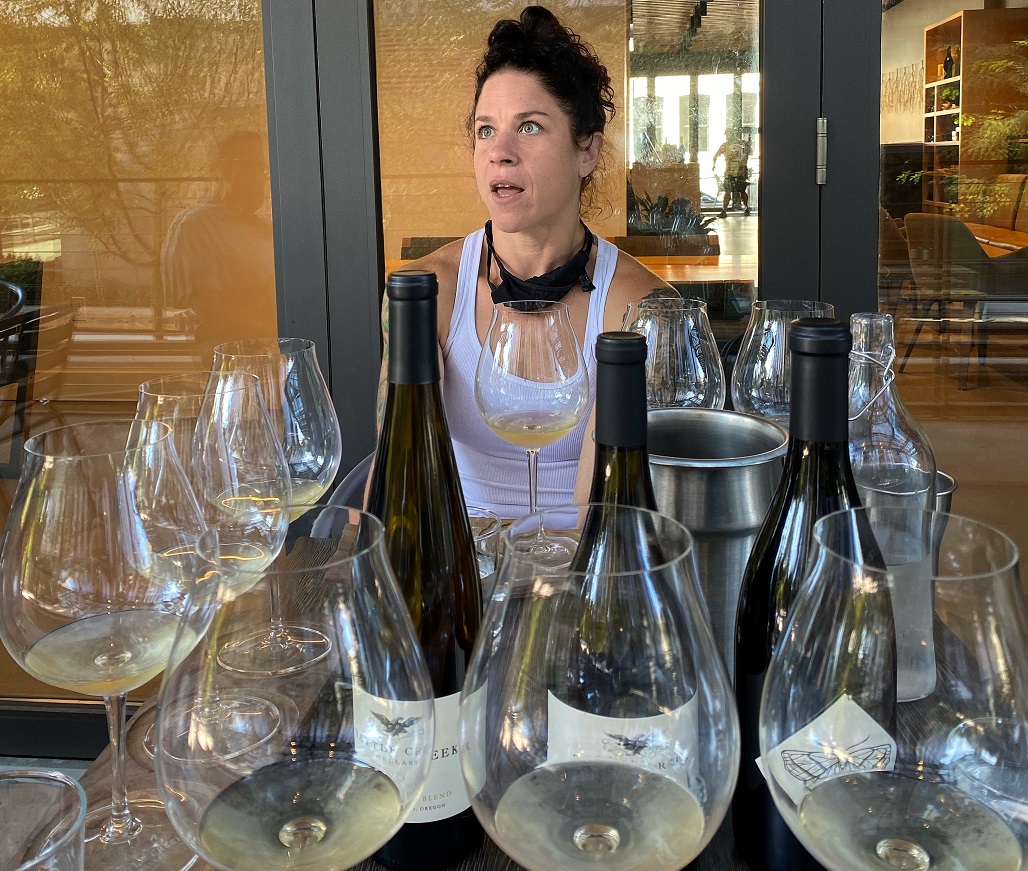
At the city winery, you can expect to find great wines, but you are not necessarily expecting to be blown away by what you taste and what you learn. The wines were absolutely spectacular, starting with the very first one 2018 Battle Creek Cellars Reserve White Blend – the wine had a distinct spicy nose, honey notes, and on the palate was clean, crisp with great acidity, creamy, and very different from the nose. This is where the unique sides of Sarah were already showing – she was getting the fruit from the vineyard where the vinegrower refused to tell her the exact composition of the blend – she only knew that Riesling and Gewürztraminer are a part of the blend, but the exact composition was not known.
Not only Sarah works with unknown grape blends, but she also uses a range of tools to produce the wines. For example, her 2019 Chardonnay Reserve was spectacular – round inviting nose with a hint of honey, and clean, crisp, and creamy green apple driven on the palate, a delicious rendition of Chardonnay – fermented in the sandstone jar.
Talking to Sarah I learned that while Battle Creek Cellars production is about 10,000 cases overall (6000 cases for unconditional Pinot Noir, 4000 cases of the other wines), Sarah is responsible for the production of more than 100,000 cases annually for her parent company, Precept Wine, Northwest’s largest private wine company. I also learned that Sarah greatly values the freedom to experiment which she has while working with her Battle Creek Cellars portfolio and that esoteric elitism, so common in the wine industry, is making her uncomfortable. And the amount of energy Sarah was exuding during our conversation, explaining all the different ways she utilizes when looking for the right vineyards and the right grapes and deciding how she would ferment and age any particular wines, was simply contagious.
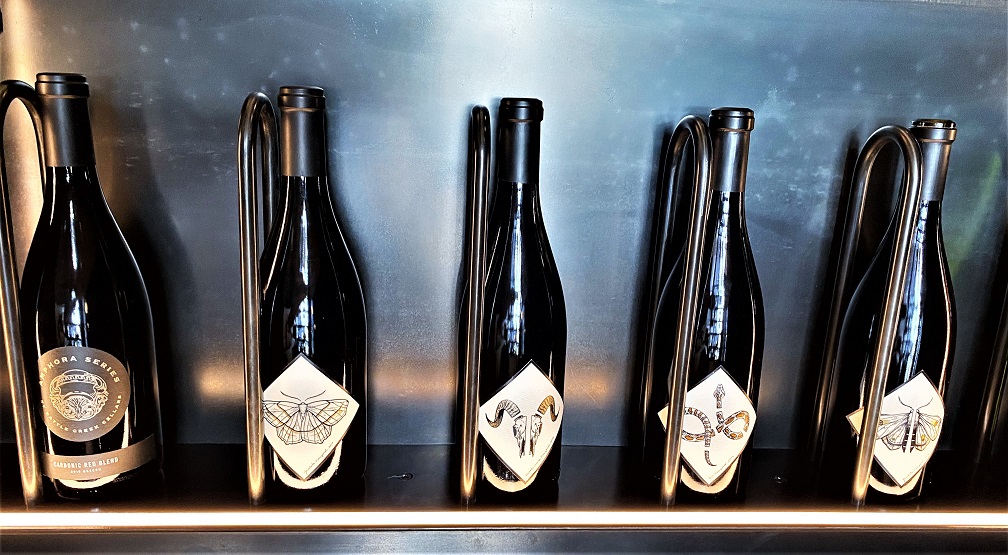


We tasted more wines:
2018 Battle Creek Cellars Reserve Rosé was simply outstanding, offering a whole array of sensory experiences – onion peel color, and the nose which prompted you to imagine yourself walking in the garden and smell strawberries, flowers, and just open meadows. The palate offered great acidity and was fresh and crisp.
2015 Battle Creek Vineyard Pinot Noir from the vineyard planted in 1998 was excellent, with cherries, mushrooms, chocolate on the nose, and more cherries, lean and crisp on the palate. Definitely an aging-worthy wine.
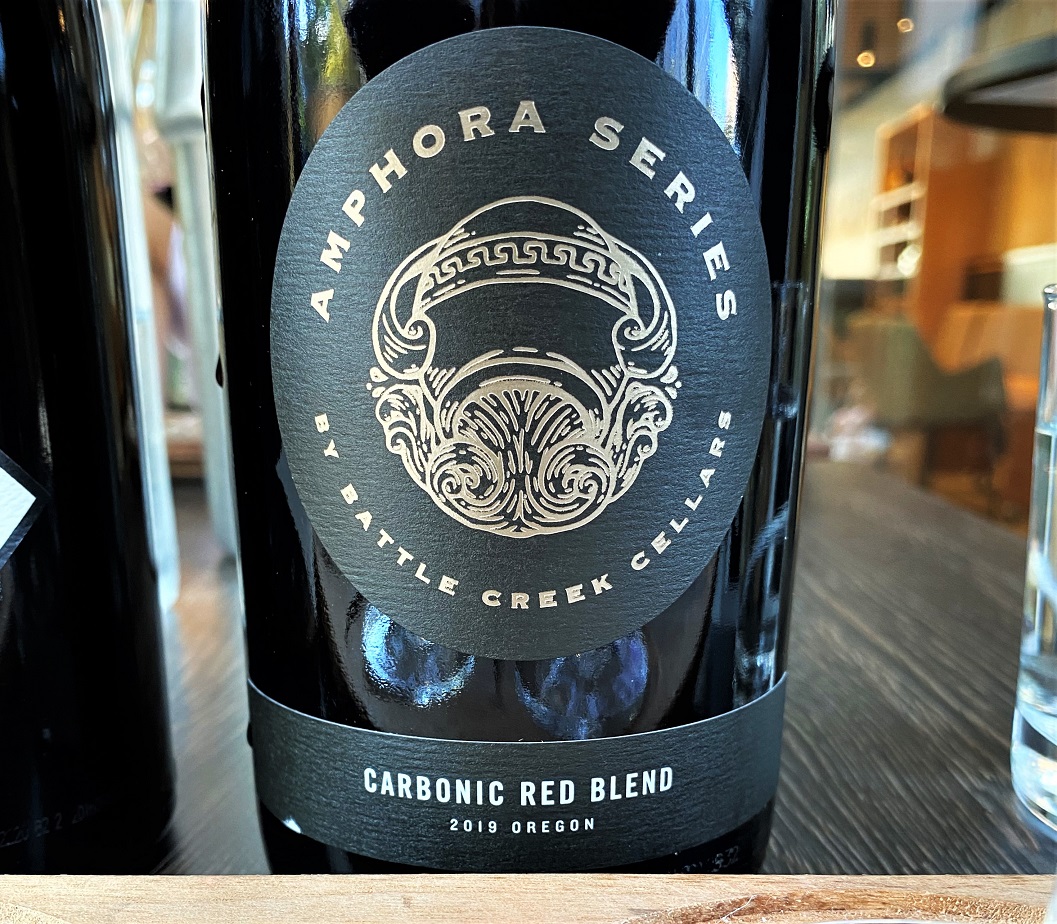 And then there was the 2019 Amphora Series Carbonic Red Blend Oregon which literally blew my mind… Grenache/Malbec blend, fermented whole cluster in amphorae for 30 days with skins. The nose was amazing with crunchy raspberries and cranberries, and then fresh fruit on the palate with beautiful supporting tannins was simply incredible, the wine you have to experience to believe it.
Next, we were out of time – but we agreed to continue the conversation, which we did using both emails with questions and a phone call, so I really had here the full experience as the writer.
Here is what transpired during our follow up conversation:
[TaV]: How did you get into the wine? When did you realize that making wine is your calling?
[SC]: I was working in casual fine dining restaurants as an undergraduate student in Boston and developed an initial fascination with wine there. Eventually, my life brought me back to the West coast and a sommelier I used to work with suggested that I go back to school for enology/viticulture when I mentioned to him that I was feeling unfulfilled in the service industry. I followed his advice and I knew, beyond a shadow of a doubt, that I had found my calling after my first day of classes.
[TaV]: What was the first memorable wine you made, the wine you were completely happy about?
[SC]: I guess that, to me, they have all been memorable in some way. As far as a wine that I’ve been “completely happy” about…I think that would be the 2018 Amphora Riesling. That wine made its own decisions and I couldn’t have made better ones if I had tried. Now, 3 years later, I feel even more ecstatic about it as I notice the developing notes of petrol that I’ve always coveted about fine Rieslings.


[TaV]: You seem to be working with lots of vessels to ferment and age wines – in addition to the standard vessels such as stainless steel and oak, you also use amphora, sandstone jars of different shapes, and probably a bunch of others. How do you decide when to use what, what grapes to put into what vessel and for what wine?
[SC]: This will probably sound a little silly, but the right fruit just seems to end up in the right vessel. It’s a combination of varietal, timing, and my whim in the moment. There’s no real formula to it.
[TaV]: When you were talking about your 2020 carbonic red blend, you mentioned that you instantly fell in love with Merlot you saw, and you wanted to make the wine exactly with the Merlot. How does it work for you? What was so special about that Merlot?
[SC]: More than the grapes themselves, it was the site where they were growing that made me feel inspired to work with Merlot for the first time since I was in school. It’s a special, beautiful, steep and windy vineyard in the Columbia Gorge AVA called Wind Horse Vineyard. The grower is passionate and engaged and I haven’t ever stood in a vineyard quite like it. I thought…if Merlot from anywhere is going to be extra interesting, it’s going to be from here. Sure enough, the aromatics and texture of the finished wine did not disappoint.
[TaV]: Do you use natural or commercial yeast? Winemakers often get religious about their yeast approach – what is yours?
[SC]: Since I make all my wine in a large winery among other producers, I can’t claim that my ferments are all completed by “native” yeast. I do often allow my ferments to begin spontaneously and finish on their own/without the addition of commercial yeast. I do have a few commercial yeasts that I particularly like to use which are all blends of Saccharomyces and non-sacch yeasts. I’ll use these in certain cases when it is a challenging fermentation environment and I don’t want an unwelcome microbial load to mask the fundamental sensory characteristics of the vineyard.
[TaV]: When you select fruit for your next wine, do you take into account factors such as sustainably/organically/biodynamically grown? Do you have any viticultural preferences?
[SC]: More than anything, I prefer to work with growers whose priority is to cultivate a healthy and long-term-sustainable ecosystem in the vineyard. Don’t necessarily have a strong feeling about the certification, but care about the ethos of the grower, how the vineyard is treated, and the surrounding area, not just the production environment. I try to work with the growers who take this symbiotically – sustainability is a key. The intention behind farming matters more than a certificate on a piece of paper.


[TaV]: Is there a winemaker you would call your mentor?
[SC]: Brian O’Donnell at the Belle Pente winery. Brian is the owner and winemaker, and this was my first job in Oregon right after enology school – he definitely created the framework that holds up my knowledge now as a winemaker. He taught me what his philosophy is and left me to my own devices to sink or swim. I made a few mistakes of my own, nothing too costly, but this was the best way to learn. I know general ethos and philosophy, and now it is my time to grow, improvise and get on my feet. There are other incredible winemakers I had mentorship moments with, but Brian is the closest to the real mentor.
[TaV]: Is there a dream wine you always wanted to make? What would that be?
[SC]: The perfect Pinot? Nah. High elevation Ribolla Gialla, oxidized. Similar to what Gravner produces in Friuli, it should have acid but should be ripe enough. I have yet to find the fruit in Oregon.
[TaV]: Your single-vineyard wine labels have beautiful simplicity and different images – what do these images represent?
[SC]: The avatar on each label represents the character of the wine, and it is unique to the vineyard. There are explanations of all the avatars on the back labels. The avatars are used for single-vineyard wines. Even when there is a vintage variation, the barrels selected to be bottled under a single-vineyard label have a consistent profile. The barrels selected to be the most identifiable features of the vineyard – power, finesse – and this is what characters represent.
[TaV]: As I promised, we need to talk about football. Does playing football helps you make wine? How about your work as a winemaker influencing the way you play?
[SC]: Football definitely helps me to do everything. That level of extreme physical exhaustion and violence is very cathartic, and this helps me to be a better winemaker dealing with pressure.
My work as a winemaker has had both positive and negative impacts on my game. As the negative impact, winemaking experience makes me second guess my decisions. However, as a winemaker I learn to react quickly and make decisions quickly, which helps, When I will retire from playing football I will need to start coaching because I will need this in my life.
[TaV]: During our conversation, you mentioned that working with Chardonnay is easy, but working with Pinot Noir is a pain in the butt. Do you care to expand on this? Can you be very specific?
[SC]: Chardonnay is not easy, but easier than Pinot. Working with Pinot is difficult because of the thinner skin and lower levels of phenolics, and it is not as protected by phenolics from the mistakes as Merlot or Syrah and is susceptible to all sorts of issues. Growing Pinot, if temperatures reach 88F, that affects the fruit, the vine can shoot down, and you don’t want to irrigate too much, so there is a constant worry. Because of thinner skin, it raisins a lot easier than others; when it is too wet, it breaks a lot easier than the others. With Pinot Noir, you can’t look away for one second.
[TaV]: Was there a pivotal wine for you, or a pivotal wine experience?
[SC]: There are 3. There is one that made me decide I love Pinot when I was 19 and working at the restaurant – 1996 Hartley-Ostini Hitching Post Pinot Noir from Santa Barbara. It tasted like candy, I was 19, and I loved it.
The red wine which made me realize how versatile the grape variety can be and how much where it grows to make a difference was Guigal Côte-Rôtie. I had learned about Syrah as a blending grape in Southern Rhone or Washington Syrah, and then I tired Côte-Rôtie, and my head was blown.
The white was really an assortment of whites from Trimbacbh – big, round, acidic, ultimate food wines.
[TaV]: Do you have an all-time favorite wine or wines?
[SC]: It will be Morgon. Duboeuff or Jean Foillard grand cru. Moulin-a-Vent would be a close second.
[TaV]: Given the opportunity, is there a winemaker you would want to make the wine with, or the winery you always dreamt of working at?
[SC]: I would love to have the opportunity to work side by side with Gravner or Radican, or anywhere in Jura, producing the traditional wines. Gravner is the ultimate. Gravner is the reason I got amphorae. I love their wines very much and I would love to learn there.
I can tell you that after the conversation with Sarah, I definitely want to try Gravner wines, and I can’t wait to experience the 2020 Amphora series which should be made with that magnificent Merlot…
Here you are, my friends. Another story of passion, Pinot, and not only Pinot, and pushing the envelope as far as it can go. If you are planning to visit Portland, make Battle Creek Cellars your “must stop”. Cheers!
This post is a part of the Stories of Passion and Pinot series – click the link for more stories…
Re-Discovering Oregon
It’s been more than 20 years since my first visit to Oregon. It’s been more than 20 years since I tried Oregon Pinot Noir for the first time. More than 150 posts in this very blog mention Oregon one way or the other, including 14 interviews with Oregon winemakers. And nevertheless, this year 2021 was the one when I really discovered Oregon as a winemaking region.
A picture worth a thousand words. When it comes to creating memories, a picture is definitely stronger than just words. What would be even better at creating memories than a picture? An experience. Seeing something with your own eyes, touching, smelling – a full sensory experience would certainly create the most lasting impressions.
In August of 2021, I attended the Wine Media Conference in Eugene, Oregon. Three days of the conference were so filled with wines, conversations, and more wines that these 3 days really became more like just one. One long, very eventful day. It was only after the conference was over, and I stayed behind for another 3 days to meet with winemakers and yes, drink more wine, that I finally had a moment to reflect and create an actual new impression.
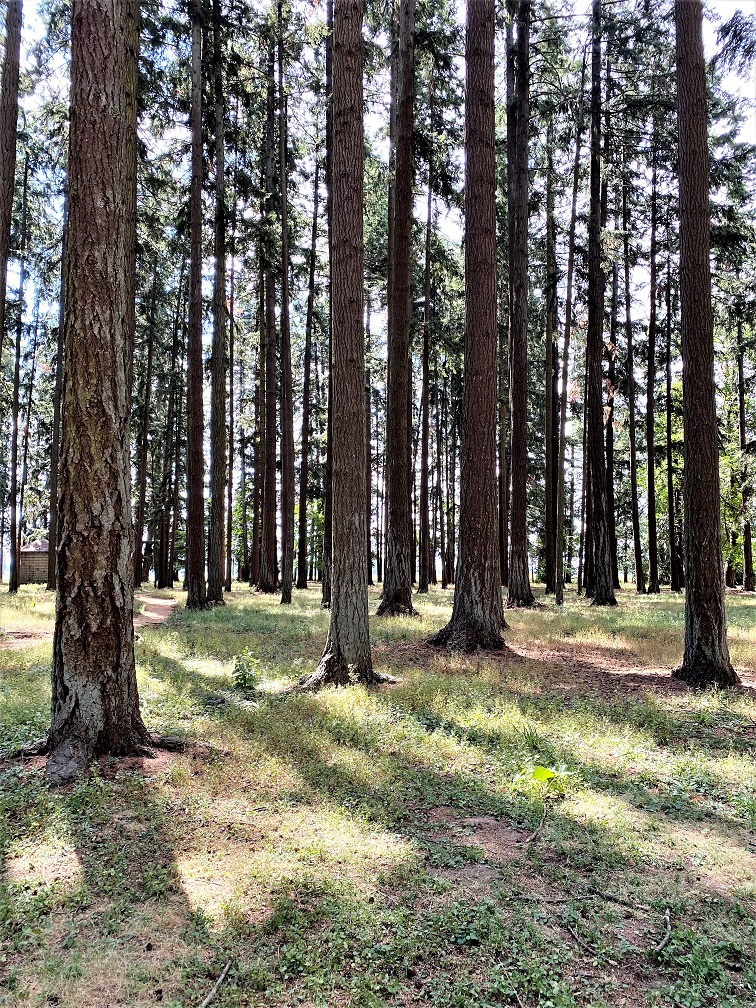
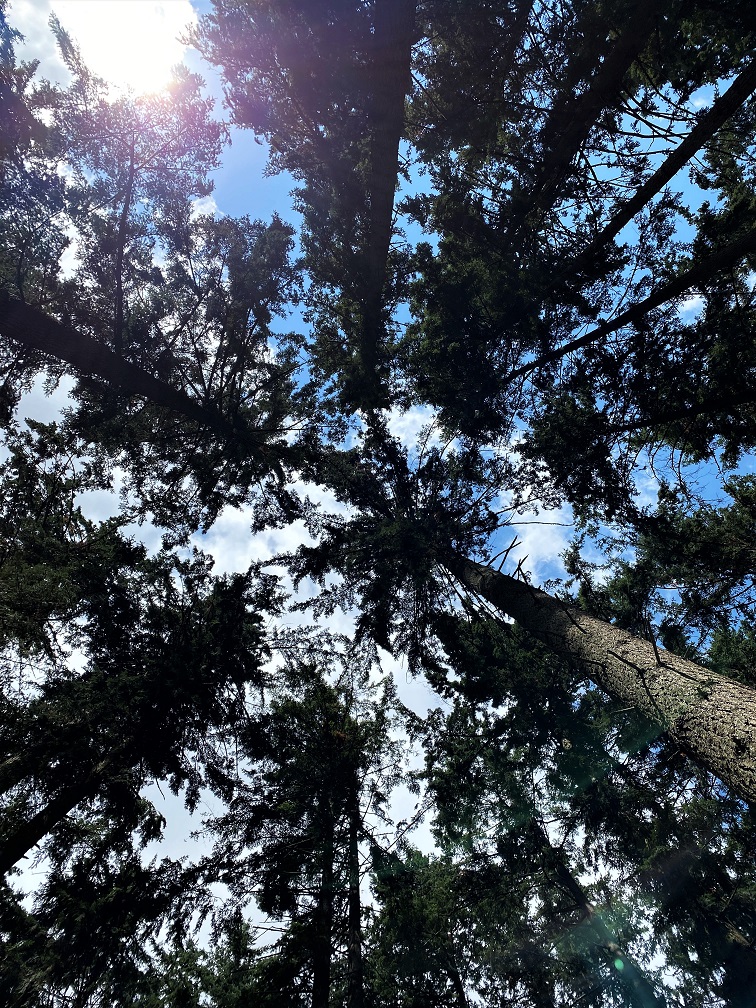 We stopped at the rest area off the highway while driving to the first appointment at Le Cadeau with Carl Giavanti, and I found myself surrounded by the beautiful, tall, straight pine trees, standing magnificently over the clean forest floor. This view instantly transported me to my childhood – growing up in Belarus, this was the forest I was used to, full of tall, magnificent trees, perfectly suitable to become ship masts. And the air, the air – you breathe differently in a forest like that. This was a great beginning for my deep dive into Oregon.
And then, of course, seeing the vineyards, seeing the Kill Hill at Lenné and absorbing magnificent views from the vineyard, seeing and touching the rocks at Le Cadeau, and tasting the wines surrounded by the grapes – all of it guaranteed the creation of the long-lasting impressions. Even more, for the first time ever seeing the vines while they are going through veraison, the magnificent promise of the vintage was also a great way to create a strong proverbial “memory knot”.
During these 3 days, I met with winemakers I already virtually talked to before (Bells Up, Le Cadeau, Lenné, Utopia, Youngberg Hill, as well as winemakers I met for the first time, and I plan to talk about those experiences later on. But based on my leanings during the conference, and conversations with the winemakers, let me summarize my realizations about Oregon wines.
One important idea to keep in mind – when it comes to wine, Oregon is not just a Willamette Valley, and Oregon is not just Pinot Noir. Yes, winemaking in Willamette Valley got its initial boost in the early 1970s when winemakers from California started moving up north in search of locations to grow cool-climate Pinot Noir, hoping that cooler weather will push vines to produce less fruit of a higher quality. Considering the quality of the Oregon Pinot Noir, this plan definitely worked – however, as we were visiting the McMinnville area of Oregon, the temperatures during the day were pushing 95F, which is not the idea of a cool climate of course. Leaving that aside, yes, the Pinot Noir is a king of Willamette Valley, but we shouldn’t discount Riesling, Merlot, Cabernet Franc, Cabernet Sauvignon, Tannat, and many, many other grape varieties successfully growing around the state. But as I spent all of my time in the McMinnville area, let me share with you my observations for this Pinot Kingdom.
Pinot Noir is a King, but Chardonnay is a Queen.
Not letting Burgundian parallels stop at the Pinot Noir only, Oregon producers now fully embrace Chardonnay. And this Chardonnay is stunning. I tasted lots of Chardonnays during the three days, and I don’t think I had a single one I didn’t like. And the best Chardonnays were showing purely Burgundian, with vanilla, apples, and honey, my absolute favorite Chardonnay profile.


It’s all about the rocks.
Rocks. Seemingly nutrient-devoid soils. You just need to see this land to simply ask yourself – how is that even possible? The vine needs so much strength to reach the nutrients through the rocks and basalt – no wonder Steve Lutz at Lenné was ready to give up on his work as the vines couldn’t establish year over year. You need lots of patience. And you need to believe that one day, the vine will fully establish, and the fruit will be worth it. And it does.
Clones Rule!
It is the clonal game here in the Pinot Kingdom. Le Cadeau grows 18 different clones of Pinot Noir, all of which are used in the production of the wines. At Utopia, there are 12 clones of Pinot Noir growing there, and one of the Utopia Pinot Noir wines uses all 12 clones. The same Utopia is growing 3 clones of Chardonnay, all 3 are used in the estate wines.
The grape juice is clear
I don’t know how much of the trend is this, but as you know, the juice of most of the red grapes is clear – and thus you can produce white wines from the red fruit, which many of the producers already do quite successfully. Will this become a big deal? Maybe. Either way, creativity is always great.
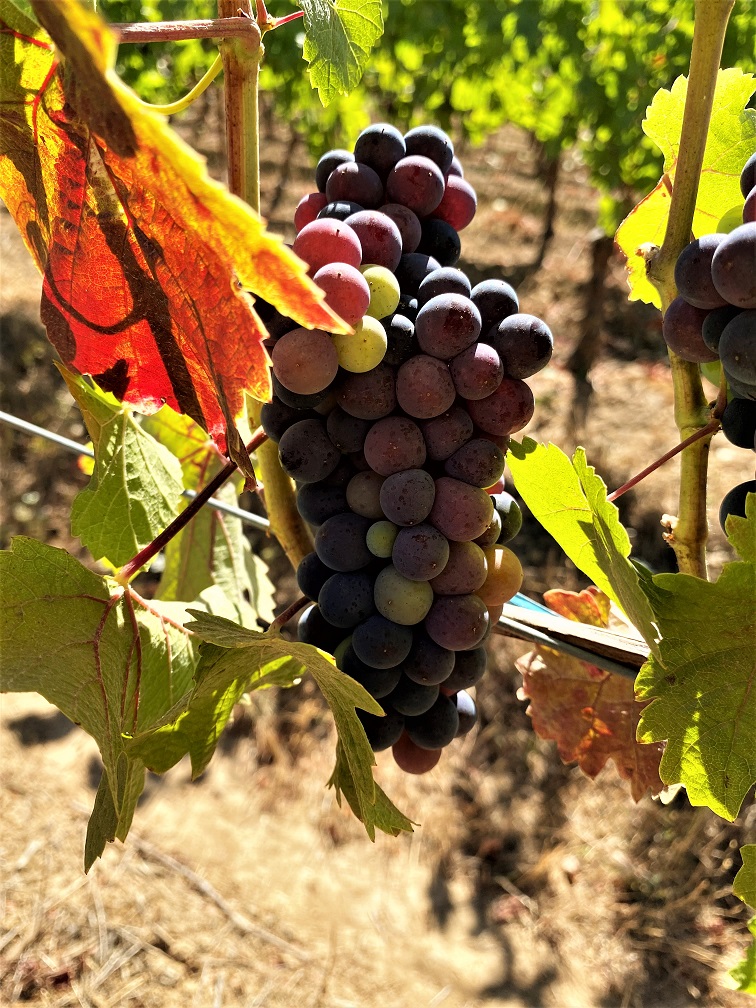
The bubbles are everywhere
Almost everyone we talked to produces already sparkling wines. Whatever way it is done – either by harvesting some of the grapes earlier to preserve acidity, or growing the grapes specifically for the sparkling wines, but the sparkling wines make perfect sense as been based on the same Pinot Noir and Chardonnay. The bottling is easily done with the mobile bottling line, so adding bubbles to the repertoire is easy and makes sense, especially as an important addition to the wine club inventories.
Oh yes, the wine clubs!
The wine clubs are the key model. While it is great to have nationwide distribution and demand, selling directly to consumers is a lot less involved, and offers much better margins. You don’t have to deal with the three-tier system, you don’t need to deal with extensive marketing – just create a loyal following, make sure members are happy, interested, and get the royal treatment, and you can achieve your financial goals right there and then.
Don’t hope for Rosé
While it seems that producing Rosé is a no-brainer, and it theoretically makes as much sense as sparkling wines in terms of extending the offerings, it doesn’t make much economic sense. When you harvest grapes for the sparkling wines, you are either using the fruit which will never ripen enough to go into the estate wines, or you will do a first pass collecting fruit for the sparkling wines and thus directing all the strength of the vines to the remaining grapes, making your estate wines even better. To make good Rosé, you need to use exactly the same fruit as you would use for the estate wines – only you can’t charge for Rosé as much as you can charge for the estate wines. So yes, while it sounds fashionable and proper to us, consumers, it doesn’t make much business sense.
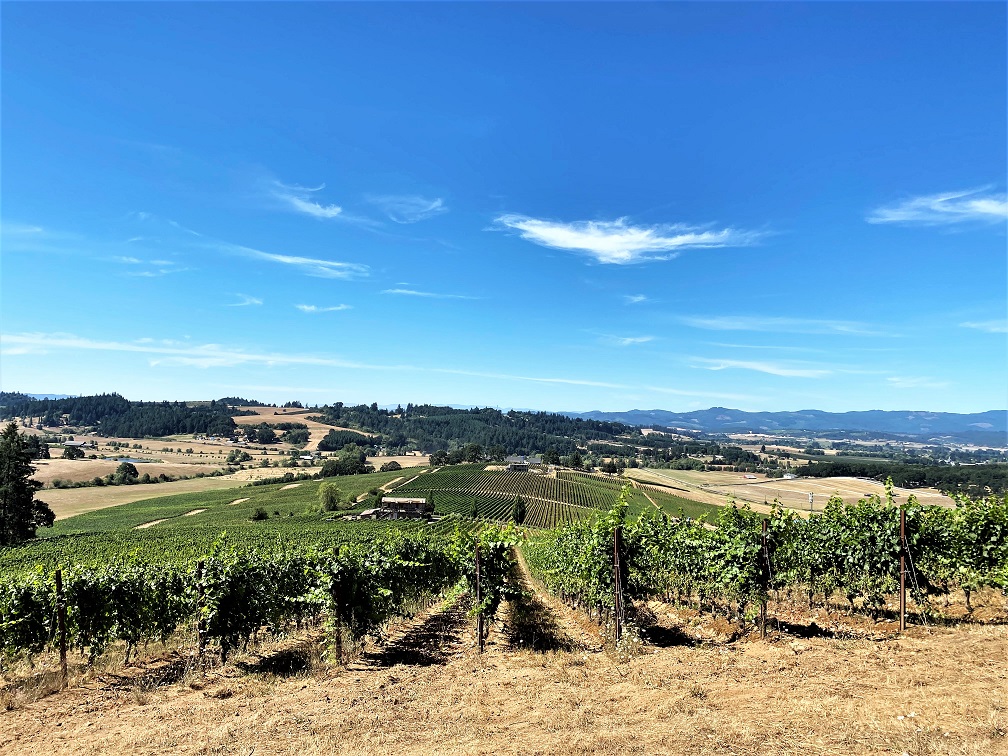
The view from Lenné vineyards
This is where I can stop this little summary. The rest of this story is really in the wines, delicious wines I had an opportunity to taste. There will be updates to the stories of Passion and Pinot, and there will be new conversations to share. Until then – cheers!
WMC21: Day 1 Highlights
Wine Media Conference 2021 was distinctly different from all of the previous years. The conference started in 2008 in Sonoma, so this was the 13th annual conference bringing together a bunch of people who love talking about wine – for passion and for business. 2021 was a special year, having everyone battle through the 2020 pandemic, so quite expectedly, the attendance and conference program took a toll – but I sincerely believe that those of us who attended for their love of wine definitely got at least their money worth, and lots more, as you can’t put a price tag on the camaraderie of the wine people.

View from Valley River Inn
This is the second time the conference took place in Oregon. In 2012, it was hosted in Portland with most of the attention focused on the Northern Willamette Valley. 2021 conference took place in Eugene, a town about 120 miles down south from Portland and home to the University of Oregon, hosted at the Valley River Inn. While the previous Oregon conference focused on the wines of Northern Oregon, going down south allowed everyone to explore the lesser-known wineries of the South Willamette Valley and even much further beyond.


Before we get to talk about Day 1, we have to talk about Day 0. First, there was an opening reception and walk-around tasting. There were a few interesting wines – particularly, I want to mention two of the California wines. 2018 Cuda Ridge Petit Verdot Livermore Valley was a perfect example of 100% Petit Verdot, with the concentrated power of the dark fruit, supported by well-integrated tannins. Then there were Knotty Vines – a new line of wines from Rodney Strong, made to be playful and accessible. I tasted 2018 Knotty Vines Chardonnay California which was simple and elegant, having all the Chardonnay traits (vanilla, green apple, a touch of butter), neatly packaged together. At $15, it is your perfect everyday wine. 2018 Knotty Vines Cabernet Sauvignon California was a great example of a well-made California Cabernet Sauvignon suitable for any budget – perfectly noticeable cassis on the nose and the palate, easy to drink, and delightful wine.
Now, for the most important part of the Day 0 – parties. There were at least two of such parties taking place. The first one was at the house of Neal Benson and Alyse Stone who live in Eugene and run the service called Winery Wanderings. Alyse and Neal graciously invited what seems to be a whole conference to their backyard and everyone was able to find a spot. There were lots of wines, lots of hugs, and conversations. While there were lots and lots of bottles opened and consumed, my unlikely favorite was 1971 Fontanafredda Barolo, brought by Jeff Burrows – the wine still had enough fruit left, and the palate gently evolved toward dried fruit – lightweight, but very pleasant.


The second afterparty was kindly hosted by Rodney Strong. Not only we had an opportunity to taste many of the Rodney Strong single vineyard Cabernet Sauvignon wines (Rockaway, Alexander Crown, Brothers – all delicious), as well as Davis Bynum Pinot Noir, pure and classic, we also had a large selection of Voodoo Doughnuts, a local (Portland) crave and a cult. While Cabs and Pinot were excellent, my favorite wine of that evening was the 2018 Rodney Strong Chardonnay Reserve Russian River Valley, which was perfectly bright with vanilla and apple tones on the nose, and a hint of vanilla and butter on the palate. While doughnuts looked great, I really didn’t get the excitement and the cult status of these Voodoo doughnuts – they didn’t offer any special taste or flavor – but of course, they are fun to look at.
Day 1 started with the keynote from Cyrill Penn, the editor of Wine Business Monthly magazine, who primarily talked about the history of his publication and how it morphed over the years.
My favorite session of the Day 1 was delivered by Austin Beeman who works for the wine distribution company and runs a few of the wine blogs. Particularly, Austin was talking about the great difficulties wine shipping and logistics are facing right now and will continue having the issues for a while. I plan to interview Austin to discuss all of these in greater depth.
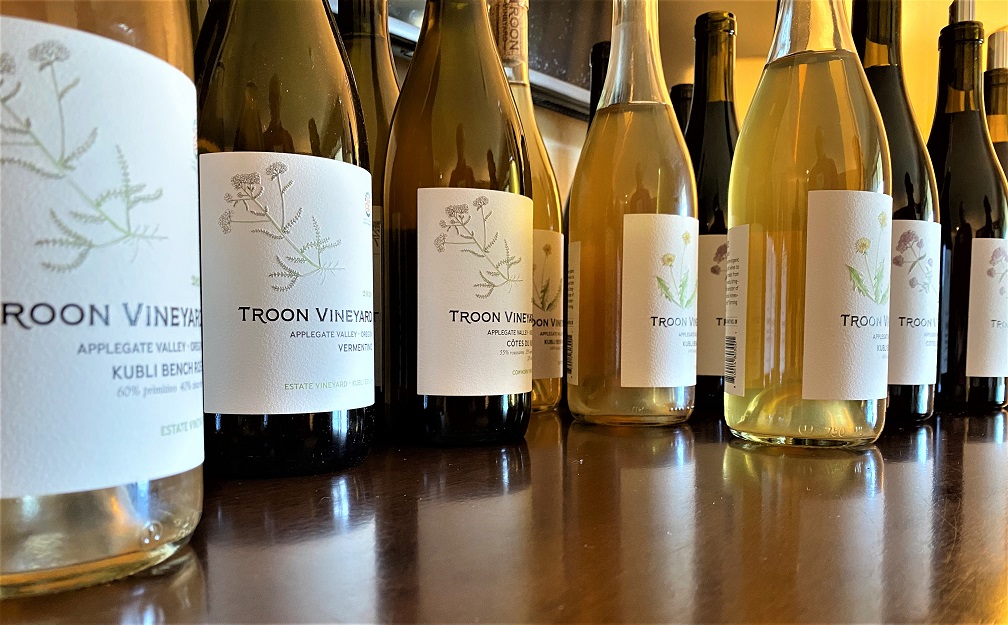


The next highlight was the tasting of the wines of the Troon Vineyard. Troon Vineyard is located in Southern Oregon, in Applegate Valley, and if there is one wine Troon doesn’t make it would be a Pinot Noir. But is not a major differentiator. Troon Vineyard is not only a certified biodynamic winery, but it is the second winery in the world to hold Regenerative Organic certification, which is a serious achievement in itself. I always loved Troon wines, and tasting them was always a major highlight of the WMC events, as Craig Camp, GM of Troon Vineyard, was always a big supporter of the conference, and he always brought a large assortment of Troon wines. And despite the fact that Troon wines were always pure and delicious, this year they manage to deliver even more.
Troon brought 3 sparkling wines, all made as Pet Nat (single fermentation in the bottle). While all 3 were delicious, my personal favorite was 2020 Troon Vineyard Kubli Bench Pet tanNat Applegate Valley, made out of 100% Tannat. Beautiful and clean cut-through acidity made this wine an ultimate refresher – and made me crave oysters right on the spot. My other two favorites were 2019 Troon Vineyard Estate Syrah Applegate Valley and 2019 Troon Vineyard Siskiyou Estate Syrah Applegate Valley, two beautiful expressions of the cold climate Syrah, clean, elegant, smell-forever Syrah wines with a perfect black pepper finish – best Syrah I’ve tasted in a long time.
In the afternoon, we had a good session on the wines of newly minted delle Venezie DOC from Italy, followed by the Wine Social Live tasting of white and Rosé, which was an adjusted version of the traditional speed tasting. Both sessions were very good and I plan to cover them in the later posts.
It is traditional to have winery excursions on the evening of Day 1. Out of the two options, I went with the tour of urban wineries in downtown Eugene. Before we went around the town, we gathered at the newly opened Gordon Hotel – it opened in late 2020, so I have to definitely tip my hat to the courage of the people behind this modern, ultra-contemporary hotel and the whole affiliated Market street complex.


A few of the highlights of the walk-around tasting were 2016 King Estate Brut Cuvée Willamette Valley, delicious sparkling wine with a toasty nose, and refreshing and crisp palate, and 2019 Iris Vineyards House Call Red Blend Rogue Valley, a round and delightful concoction made out of Cab Franc (50%), Merlot and Malbec.
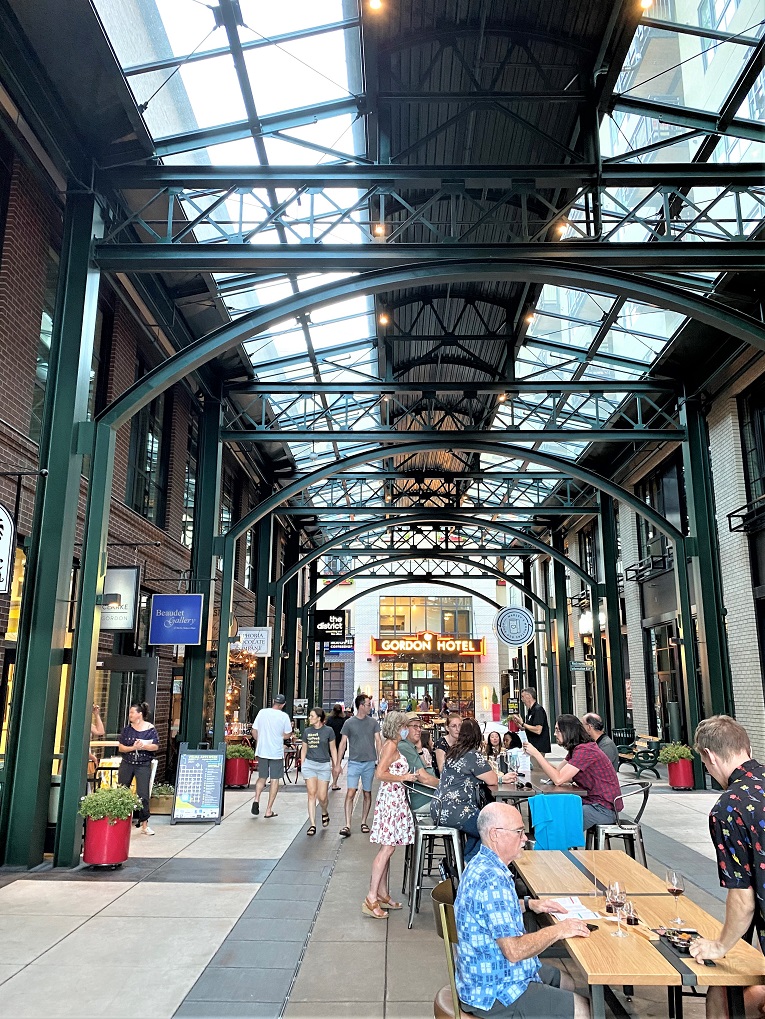
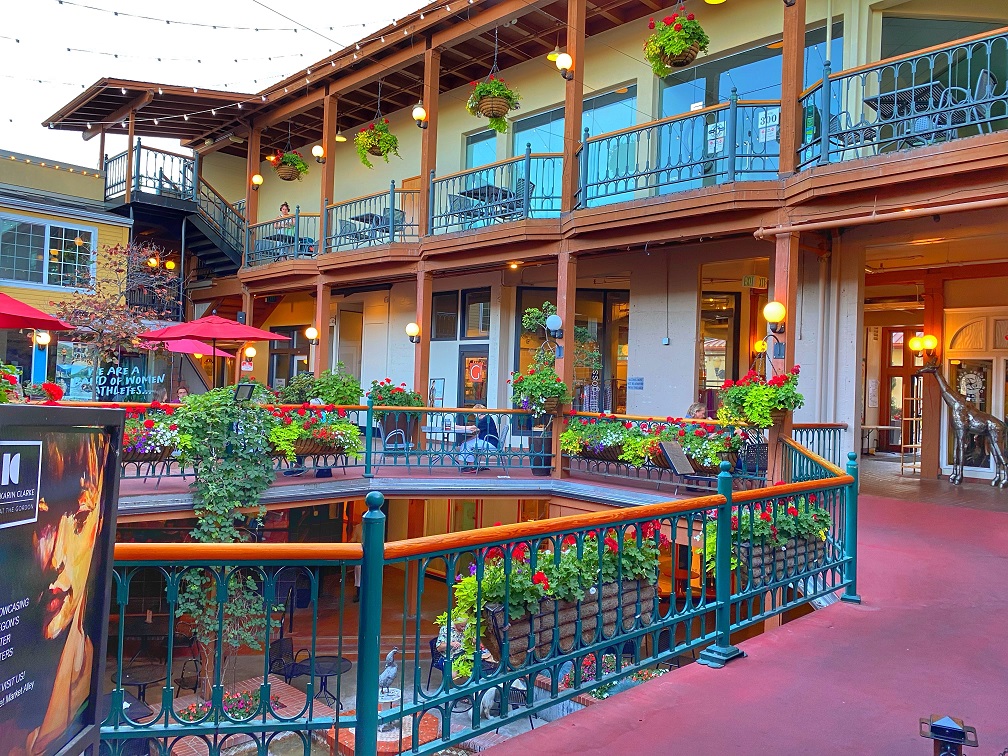
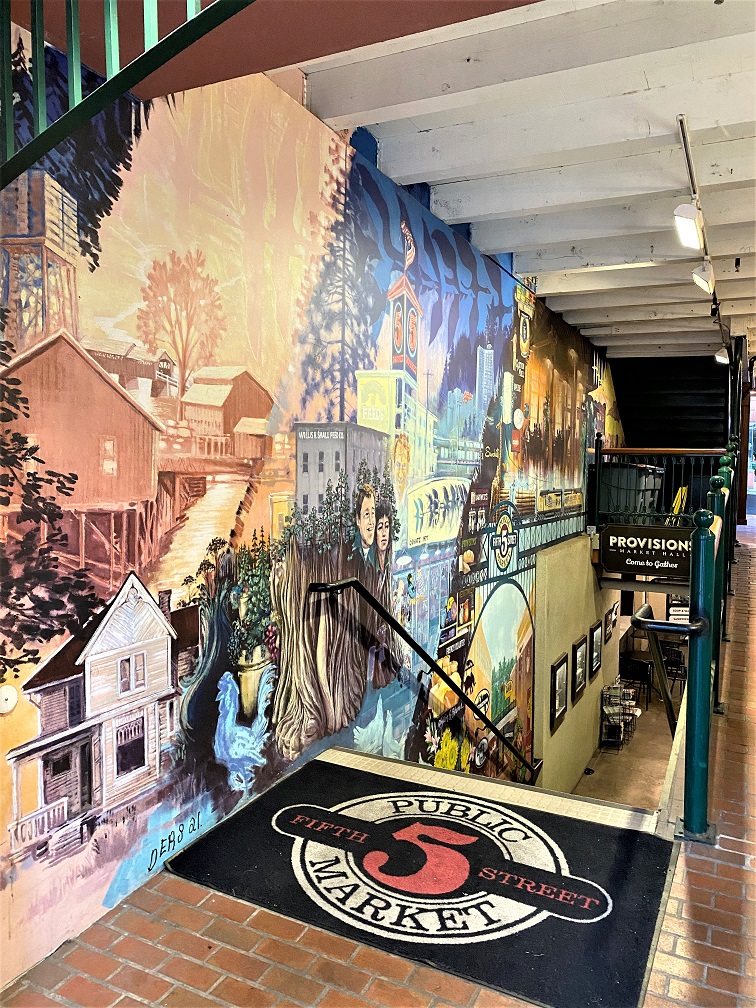
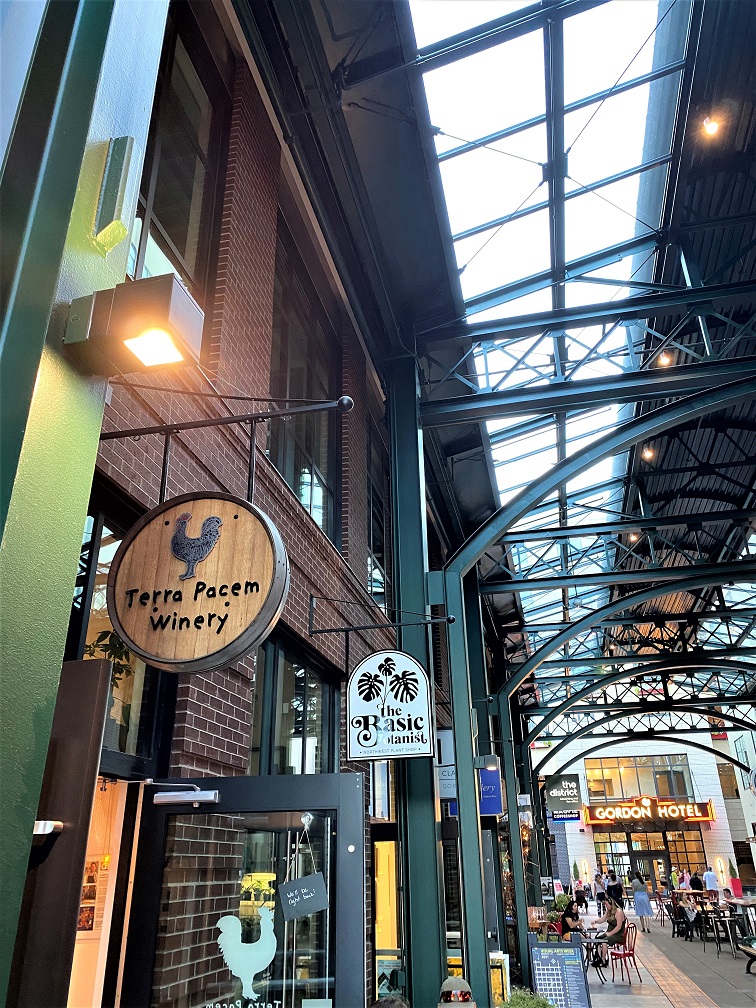
Walking out of the Gordon Hotel we quickly stumbled upon the winery called Terra Pacem, which in translation from Latin means “Peaceful Earth”. Terra Pacem is not just an average urban winery – it is a winery with a great social mission. The winery employs adults with intellectual and developmental disabilities and provides community, training, and employment for them. And I’m happy to say that Terra Pacem can boast not only about the great mission but also about delicious, very well made wines. We had “3 out of 3” success with our selection.


NV Terra Pacem Brut had a beautiful toasted nose, with similar toasted notes on the palate, crisp and refreshing, how you would want your sparkling wine to be. 2018 Terra Pacem Cabernet Franc Columbia Valley was concocted to be a perfect Old World example of Cabernet Franc wine – just enough of the bell pepper on the nose to know that it is there, with bell pepper and cassis on the palate, lean and delightful.
I was tasting the wines with Jeff Burrows, and we were both concerned if we would like the 2018 Terra Pacem Tempranillo Rogue Valley, as for both of us, Tempranillo means Rioja, and I’m very particular about the Rioja’s I like. The wine didn’t disappoint – fresh berries on the nose, same round berries with a hint of the cedar box notes – in a blind tasting, I would happily take it for a Vina Real Crianza, so this was one delightful wine.
And that concludes my report. If you are still with me – thank you, as I feel quite exhausted just by writing it. Until the next time – cheers!
Oregon Wine Reflections – On The Way To The Wine Media Conference 2021
 I like flying. And it is not only the excitement of travel, arriving at the new place, meeting new people, having new experiences. The plane itself, the cabin, offers one of the rare sanctuaries, an opportunity to do some undisturbed work and reflect. Yes, the economy plane seat is not the most relaxing accommodation in the world, but if I chose to do something useful (oh so many times I ended up binge-watching movies instead of doing anything productive), comfort is not the most important thing.
Right now I’m on the small plane, connecting from Denver, Colorado to Eugene, Oregon – the location of the Wine Media Conference (previously know as Wine Bloggers Conference) 2021, WMC21 for short. It could’ve been equally called WMC20, as you can imagine that WMC 2020 never took place, but hey, at least we are getting together in 2021.
This will be my 5th WMC (I started in 2014, skipped 2015, and attended 2016, 2017, and 2018), and I’m really excited to visit Oregon for that.
As I was thinking about the location, I also tried to recall how did I discover Oregonian wines – you know, wine solicit the emotion, makes you dig into your memory.
I have no way of tracing it back to the exact year, but I believe the very first Oregonian wine which made me say “wow” was Archery Summit Pinot Noir, and I would think it happened 15–16 years ago. I probably had some wines from Oregon before and after which were just “meh”, but Archery Summit was definitely a pivotal wine. I think the next super-impressive Oregon wine was the Evening Land Pinot Noir, followed by Ken Wright (I was blown away by the massive power that wine was packing), followed by some of the high-end Adelsheim Pinot Noir wines when I wished for an expense account. And let me not forget Antica Terra, with absolutely spectacular Pinot Noir and Pinot Noir Rosé wines (among many others).
This was ancient history. The modern history (ha!) of my Oregonian wine embrace is closely associated with Carl Giavanti, the winery publicist out of Portland, Oregon. We met with Carl at WBC14 and maintained contact from thereon. At some point, I started doing winemaker interviews in the blog, and Carl asked if I would be interested to create a series of interviews of the Oregonian winemakers – this is how the Stories of Passion and Pinot series was born 5 years ago. Working on those interviews afforded me to discover amazing wines – and amazing passion behind them. Vidon, Lenné, Youngberg Hill, Ghost Hill Cellars, Le Cadeau, Alloro, Iris, Utopia, Bell’s Up – each one had a unique story and unique wines. As part of the series I also interviewed Ken Wright, and I always remember that when I asked him how Oregon Pinot Noir compares to Burgundy, he said that for the long time, Oregon sees Burgundy in the rearview mirror, having found its own unique style.
While Pinot Noir is a king of Oregon, it is not the only wine produced here. Riesling, Chardonnay, Pinot Gris, Tempranillo, Tannat, Vermentino, and many others also call Oregon home, and if you ever had wines from, for example, Troon Vineyards, you would know how good those wines can be.
Yes, color me excited – I finally get to meet the people and visit the wineries I’m already so [virtually] familiar with – and now it will be real.
Wine Media Conference 2021 – here we go!
United In Ink
How about some ink, friends?
Does it sound strange?
In my wine vocabulary, wine is wine. I’ve heard people sometimes referring to wine as “juice” – if this term is used by the winemaker, they definitely have a pass – for the average wine consumers, it sounds a bit disrespectful. But that’s not the point here.
So it appears that the wine can be also referred to as “ink”. I only know of “Ink of Toro”, a different name for the Tempranillo growing in the Toro region in Spain, but otherwise, I never heard this term in conjunction with wine – until now.
When I’m offered the wine for the review, there is always the decision process involved – where the wine is from, do I expect to like it, would I be able to write about it, do I like the label. Labels, yes, let’s talk about labels.
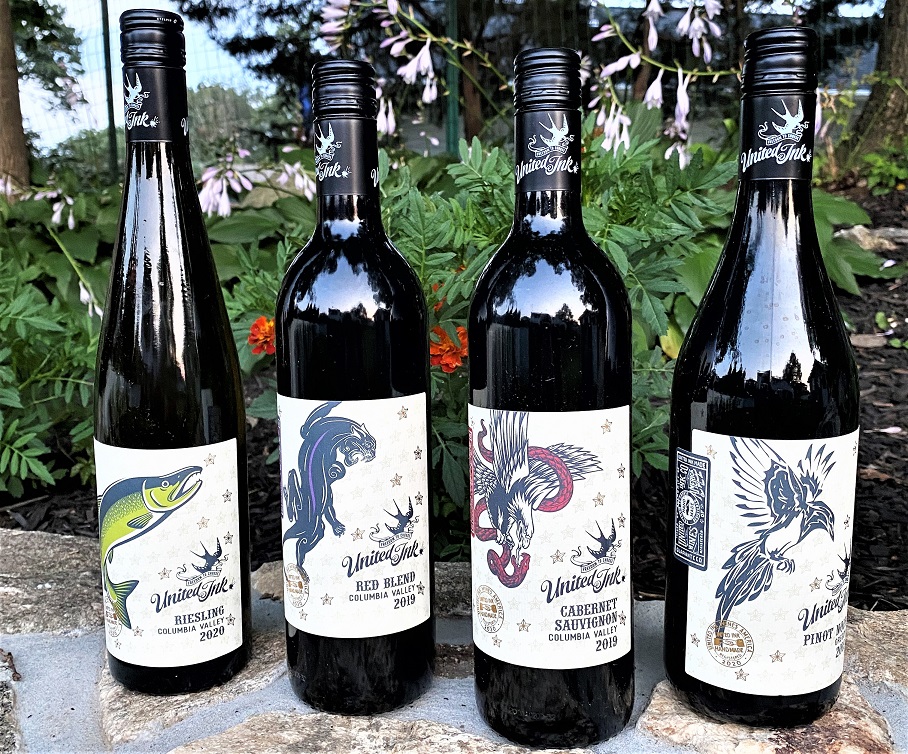
When I got an offer to review new series of wines from Mack and Schuhle called United Ink, the first thing which caught my eye was the labels, cool-looking labels. After reading that wines are from the Pacific Northwest, the region I well respect, and having a previous positive experience with Mack and Schuhle wines, I quickly agreed to taste the wines.
If you look at the labels carefully, it is not only the majestic creatures you can observe – each label also features a variety of stamps:
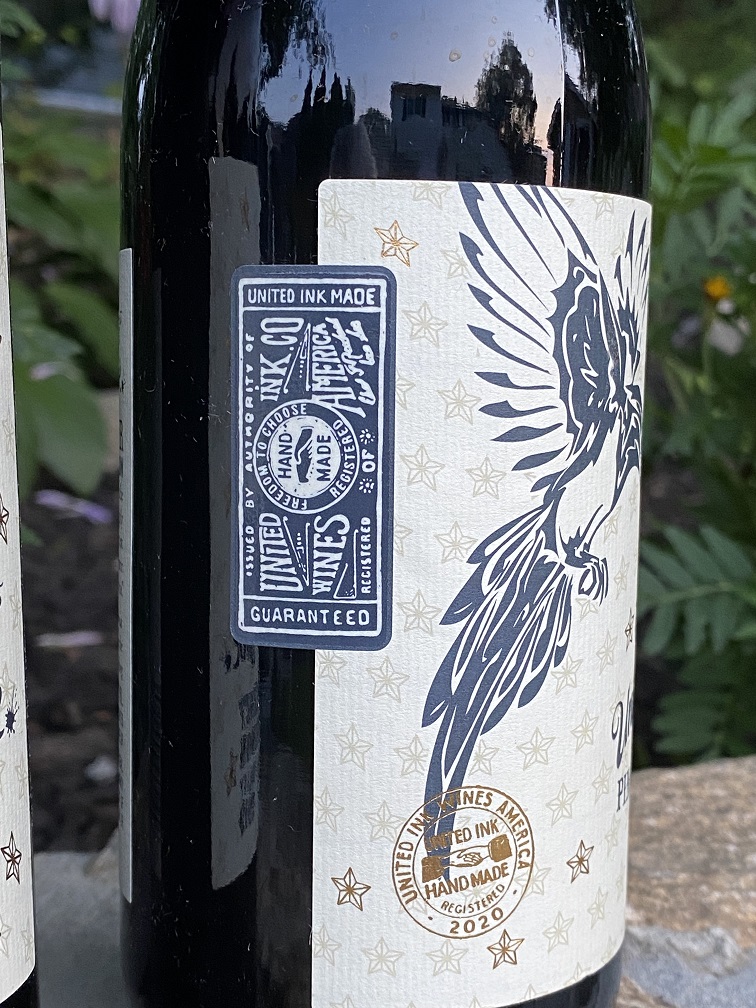


I tried to find explanations for the label design on the Mack and Schuhle website, but there was nothing offered, so I reached out to the PR agency and got the following answers to my questions:
- Why United Ink? What is the story/significance/idea behind this name?
The brand concept has to do with championing American viticulture and incorporating symbols including stars, traditional American tattoo art, and the idea of ink as a metaphor for wine
- Freedom to Choose is written on all labels – what is the idea of this statement?
Freedom to choose great wines instead of the everyday, homogenized, manufactured wines at the everyday price points, not having to pay big $$ for wines of similar quality
- “Hand made” stamp – any story behind it?
Hand crafted and blended by our winemakers Joe Dobbes and David Forsyth who are well respected in their regions
- “Guaranteed” mark/stamp attached to all the labels – any reasons for that? The idea behind it?
Guaranteed quality and authenticity is our cornerstone. We used a union stamp to express this contract with our customers/consumers.
The wines themselves were rather an enigma, akin to their mythical counterparts on the labels. With the exception of Riesling which was tasty from the get-go, the three reds didn’t show well initially – to the point of me having doubts if I would be able to write a post about the wines (remember – I don’t write negative reviews). I shared my concerns with the PR agency and got an answer that the wholesaler mentioned that it seems that screw caps somehow play a negative role, causing the wines to dumb down for a few days. This is exactly what happened as you can see from my tasting notes:
2020 United Ink Riesling Columbia Valley (12% ABV, $12)
Straw pale
Intense nose of white peach, white plums, and honey
Tropical fruit, guava, ripe white plums, honey undertone, fresh, good acidity, well balanced.
7+/8-, it appears sweeter than one might want from Riesling, but good balance definitely helps. Should be great with tangy cheese. Excellent with Comte (complements). Excellent with Manchego.
8 over the next 3 days – good balance and lots of pleasure.
2019 United Ink Red Blend Columbia Valley (14.1% ABV, $18, 60% Merlot, 20% Syrah, 20% Cabernet Sauvignon)
Dark garnet, practically black
Cherries, a touch of sapidity, black plums
Tart, tart cherries, nutmeg, salinity, good acidity on the finish, forest underbrush – an unusual expression. Spicy long finish with mouthwatering acidity.
7+, needs time. Was better on the second day.
8-/8 on the 3rd day – astringency disappeared from the finish, the wine became a lot more balanced.
2019 United Ink Cabernet Sauvignon Columbia Valley (14.1% ABV, $18, 90% Cabernet Sauvignon, 5% Merlot, 5% Cabernet Franc)
Dark garnet, almost black
Cinnamon, vanilla, sweet tobacco
Sweet tobacco, espresso, and dark chocolate on the palate, blackberries with undertones of the roasted meat. Unusual.
7+ initially
8- on the third day, a hint of cassis, improved balance.
2019 United Ink Pinot Noir Oregon (13% ABV, $22)
Dark Ruby
Plums, anise, a hint of smoke
Plums, smoke, light, appears under-extracted on the first day. A clear cigar profile on the finish.
7+ on the first day – need to see how the wine will evolve.
8 on the day 3 – violets joined plums with a touch of smoke and vanilla, round, well balanced, delicious
Here you are, my friends – the Ink of Pacific Northwest, for your imbibing pleasure. I’m happy the wines came around. If you will come across these wines, remember to decant them for at least 3-4 hours before drinking. Cheers!
Alit Wines – Follow The Flow. Lava Flow
 Here is a question which can never be answered: where the wine is made, in the vineyard or in the cellar?
There are many arguments towards the vineyard being The Place where the wine is made. Mother Nature offerings are everchanging – they change every year, never repeating themselves. But it is not only the climate that never repeats itself – the land which seems to present itself as chunks of sameness is very far from it. Only identifying different pieces is the work of art – the mastery of the winemaker.
Alit Wines is a very young winery, by all means – it was founded only about 5 years ago, in 2016. You would not think that once you taste their wines, which come through elegant and mature – but we need to keep in mind that Alit is only one piece to a bigger story.
Oregon is often compared with Burgundy – Pinot Noir and Chardonnay are stars in both regions, and both regions produce well ageable wines of finesse. Burgundy is built on the concepts of terroir and soils – I’m sure you’ve heard the stories of Burgundian vignerons going any distance to protect their soils from erosion and any sort of loss. The whole concept of Crus is based on terroir differentiation, and it took Burgundy centuries to find their best of the best parcels which earned the right to be called Grand Crus.
If you ever listened to the Oregon winemakers, they often talk about soils, first in monolithic terms, in terms of big blocks. But with every subsequent harvest, they start seeing differences between different plots in the vineyards, and those become specific plot-designated wines. This is Oregon’s path towards finding their Grand Crus.
We probably shouldn’t speak for the whole of Oregon, as Alit’s approach to this Grand Cru quest is different. Let’s get back to our “bigger story” around Alit. We usually think that wines are all about grapes, but they are actually all about people – people who stand behind those wines. In the case of Alit, the first person we need to mention is Mark Tarlov. After leaving his first successful wine project, Evening Land (a unique enterprise, if you ask me, making wines under the Evening Land label both in Burgundy and Oregon), Mark continued his wine endeavors with Chapter 24 Vineyards, which he started in 2012. Chapter 24 wines are extremely terroir focused – if you will look at the Chapter 24 Vineyards website, you will see that it produces only two wines – one called The Fire which comes from the volcanic soils, and The Flood, with the grapes coming from vineyards planted in riverbed soils.
In 2015, Chapter 24 Vineyards opened the “last chapter” as it is called – Rose and Arrow winery, as well as the subsequent (2016) “sister” operation – Alit. In case you are curious, the “About” page explains the Rose and Arrow name: “The “rose” and “arrow”, innately connected yet conflicting, each defined by the existence (or absence) of the other. Our favorite wines make us appreciate the harmony of opposites: acid/sweet, simple/complex, solid rock/sprouting vine. The latter is where our narrative begins, as every great wine is ignited by unique tensions in the rock of its origin.“. Also in 2015, Mark Tarlov was joined by Chilean winemaker Felipe Ramirez, who became the winemaker for Chapter 24, Rose and Arrow, and Alit wines, working together with consulting winemaker Louis Michel Liger-Belair.
Remember, we need to follow lava flow, as these wines are all about soils, basalt soils, rich in unique nutrients. Enters Dr. Pedro Parra, who wine writer LM Archer called Terroir Whisperer. Dr. Parra is one of the leading soil specialists in the world. Explaining Dr. Parra’s methodology would require a long, very long, and dedicated post, so instead, you should read Lyn’s article where she does a great job explaining what Dr. Parra does – but in essence, he is capable of identifying microsites, some can be 0.5 acres or less, capable of producing wine with very specific characteristics – all of it based on soil and climate analysis before (!) the vineyards are planted. To make it all practical, one of the first projects at Rose and Arrow was the vinification of about 100 wines harvested from such microsites – this is what makes Rose and Arrow wines unique.
When you think of “vineyard plots”, what image comes to mind? My imagination stops at squares or rectangles – but in our case, a correct answer is a polygon. Chapter 24/Rose and Arrow/Alit all operate with polygons, where the shape of microsites can be very complex. Here is the snapshot from our zoom call with folks from Alit where Felipe Ramirez shows the map of one of the sites (sorry that you can’t see Felipe):
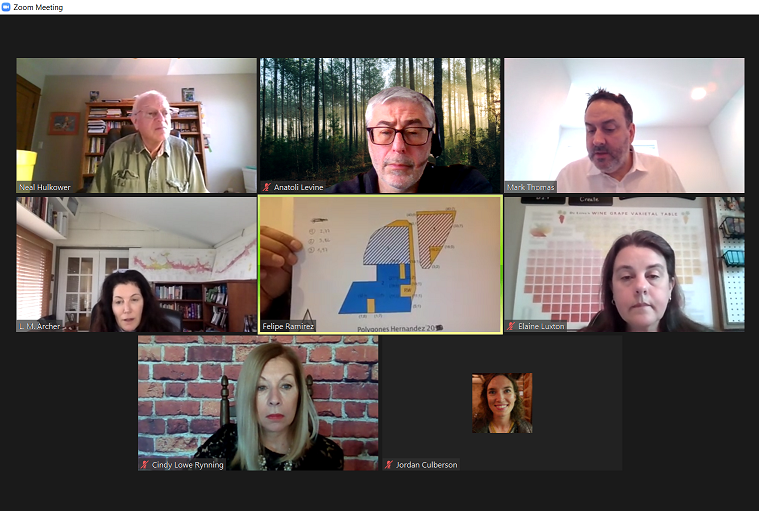
How these microsites are identified? Using a method called electrical conductivity. Measuring the electrical conductivity of soil allows to create maps – this is exactly what the folks from Alit and Rose and Arrow are doing. Once you have a map, the rest is easy 🙂 now it is all about mastery of the winemaker – harvest each microsite (polygon) separately, vinify separately – and create the magic.
Now that we understand how the road to the Oregon Grand Crus looks like, let’s discuss the role Alit is playing in this quest.
Talking about Alit wines, we need first mention the Collective. Alit Collective is similar to the wine club, but it is very different from the typical winery club. To become a member of the Collective, you need to pay a $100 annual membership. After that, you can buy Alit wines at a cost – however, it is you who decide what to buy and when. To give an idea of the cost, Alit Pinot Noir (2015) costs $15.10 for Collective members and $27.45 for non-members – this means that once you buy 8 bottles, you will recoup your $100 investment, and every bottle afterward gives you great savings. How does selling at cost makes sense, you probably wonder? It wouldn’t if Alit would be on its own, but in conjunction with Rose and Arrow, it does make sense, as it helps to finance the overall operation.
What else can I tell you? Ahh, the wines, let’s not forget about the wines!
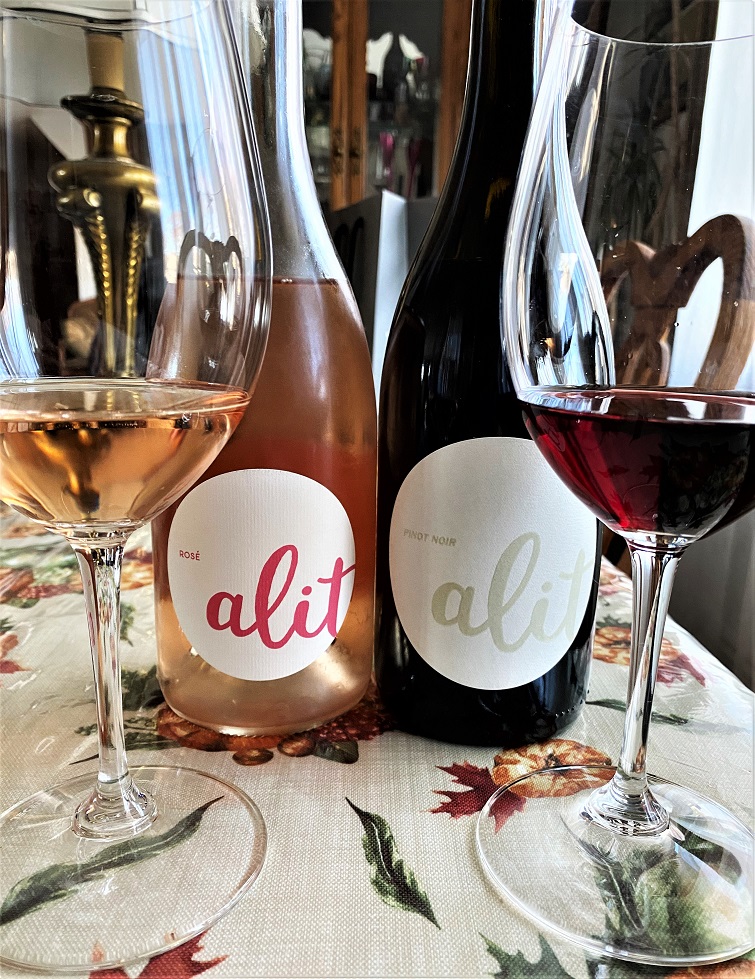
We tasted two of the Alit wines, Rosé (of Pinot Noir, of course), and Pinot Noir.
2019 Alit Rosé Willamette Valley (13% ABV) had a salmon pink color. Gunflint (volcanic soils!), strawberries, and onion peel on the nose. Nice touch of fresh strawberries and lemon, crisp, refreshing, nicely restrained, and well balanced with lemon notes on the finish (Drinkability: 8) – unquestionably delicious any time you want a glass of light, refreshing wine.
2017 Alit Pinot Noir Willamette Valley (13.6% ABV, native yeast fermentation, 10-12 months in oak) – beautiful bright ruby color – it is seldom for me to see a red wine of such a beautiful color. Beautiful nose, herbal, open, inviting, with mint, cherries, and a touch of the barnyard. Now, I have to say that the palate made me work for it. During the tasting, with the freshly opened bottle, the wine showed light, with red and blue fruit, good acidity, fresh, food-friendly, and restrained – we can even say “under-extracted” (Drinkability: 7+/8-). Over the next two days, the wine opened up, it obtained body, became round and supple, and became an object of pleasure (Drinkability: 8+). Definitely needs time, either in the cellar or in the decanter if you are in a hurry.
Alit Wines and Rose and Arrow enterprises are definitely something to watch. Mark Tarlov believes that sometime around 2030, it will be possible to understand if his quest for the Oregonian Grand Cru was successful. As for me, I practically always enjoy the journey more than the destination, so I will be happy to tag along, and yes, actually enjoy the journey with Alit wines – hop on, we can follow the lava flow together.
Stories of Passion and Pinot: Utopia Vineyard
Pinot Noir excites passion. All grapes do, of course, and good winemakers are always passionate, often to the point of obsession. But some of the most desired wines in the world are made out of Pinot Noir, and Pinot Noir is notoriously finicky, mutation-prone grape, difficult to work with. Hence passion is winemaker’s best helper to work with Pinot Noir and produce the best possible wines.
Yes, I’m sure you figured me by now – I’m introducing a new post in the Passion and Pinot series – you can find all the past posts here. And I’m sure today’s subject resonates perfectly with the world we live in right now (for those who might read this post a few years later, look up “covid-19 pandemic”, and you will understand my point). I’m sure we would all much rather live in utopia compare to the self-quarantine and fear of sneezing – and it is the utopia we will be talking about here (don’t worry, there will be plenty of wine).
According to the dictionary, utopia is defined as “an imagined place or state of things in which everything is perfect”. I guess Daniel Warnshuis saw this complete perfection in the 17 acres parcel of land he found on the Ribbon Ridge in the heart of Ribbon Ridge Appellation in Yamhill County in Oregon in early 2000, hence the name Utopia Vineyard.
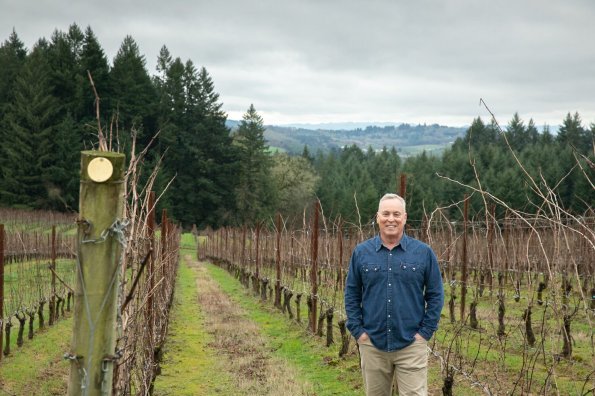
Daniel Warnshuis. Source: Utopia Vineyard
UTOPIA Vineyard had its first commercial vintage in 2006, 413 cases of Pinot Noir. Since then, Pinot Blanc, Chardonnay and a number of other wines had been produced at the winery, and numerous accolades were won at multiple competitions. Utopia, which uses dry farming methods, was L.I.V.E. certified in 2008.
I had an opportunity to [virtually] sit down with Daniel Warnshuis and ask him some questions – here is what transpired in our conversation:
[TaV]: First and foremost – why Utopia? Utopia means an unreachable dream, so what is the reason for this name?
[DW] The classic definition of UTOPIA is the perfect and no place. I am trying to make the perfect Pinot-noir but realize that as a human being I will not achieve perfection. It is, therefore, the goal that I constantly strive for without compromise to make the wine better each and every vintage.
[TaV]: You bought the vineyard in 2000, your first vintage was in 2006. How were those years in between? Did you have any major challenges, or did you just have to wait for the vines to mature?
[DW]: You are correct that I consider 2006 my first commercial vintage (413 cases of Estate Pinot-noir) but I did produce 97 cases of Estate Pinot-noir in 2005. Just to be clear, it was more of an experiment than a vintage. There were a number of challenges in getting the vineyard bootstrapped. First, I had to decide which clones I wanted to plant. I looked around the valley at the time and found that most of the vineyards contained only 2-3 clones and they were mostly the same 2-3 clones, e.g.. Pommard and Dijon 115 or Wadenswil. Or one of the other Dijon clones, mostly 667 and 777. I also detected a certain homogeneity in the wines being produced at that time and I wanted to do something very different. This is what convinced me to plant a total of 12 Pinot-noir clones including several heirloom clones from various existing vineyard sources in CA and OR. Once I settled on the makeup of the vineyard it was mostly a waiting game until the vines began to produce.
[TaV]: You were born and raised on California wines, why build the vineyard in Oregon and not in a Napa or Sonoma?
[DW]: I got exposed to Willamette Valley Pinot-noir early in my wine journey working for Tektronix where my first boss was an avid wine collector and amateur chef who exposed me to Oregon wines. The raw beauty of Oregon and especially Willamette Valley wine country was also a major draw for me along with its nascent state as a wine producing region. It presented a relatively affordable opportunity to get in on the ground floor of the next NAPA. I was a big proponent of Willamette Valley Pinot-noir while still living and running my NAPA wine business at a time when even most savvy wine drinkers were still unaware of what was happening in Oregon.
[TaV]: You’ve been a farmer for 20 years now. What are your main takeaways from this experience?
[DW]: Owning the land is the ultimate advantage for a winemaker because the best wines almost always come from the best fruit. 100% control from vine to wine is the maximum level of control and as a small producer here in Willamette Valley I am as close to a small producer (vigneron) in Burgundy that I can be without being in Burgundy. At Utopia I always want to make the best wine possible for any given vintage, again just like in Burgundy the wine should always be a reflection of the growing season and therefore unique each and every year.

Source: Utopia Vineyard
[TaV]: Do you have a pivotal wine, the one which clearly made you see the wine world differently?
[DW]: Burgundy wines from any small producer in Volnay, Pommard, Mersault (and Mersault, Chassagne and Puligny Montrachet for whites) were pivotal wines for me. The only thing I have found that compares with them are Willamette Valley Pinot-noir’s and now Chardonnay’s from small producers who are owning the land and making the wines in the same tradition.
[TaV]: Is there one Pinot Noir producer or winery you would consider a hallmark, something you would compare your wines to?
[DW]: Dominique Lafon is someone who I have followed for several decades and admire his approach (biodynamic farming and terroir driven) especially for his White Burgundy which I think is sublime. DRC is always mentioned as the ultimate but I would say that I have always and still do admire the smaller producers who are risking everything to make the best wine. This means organic/biodynamic farming even in a challenging vintage, minimalist approach to winemaking and focus on terroir.
[TaV]: What is the difference between the various Pinot Noir wines you are producing? Is it grape selection, individual plots, different oak regimens?
[DW]: Yes, it is all those things, in addition, location in the vineyard, clonal selection for the blends, oak regimen (ex: riper fruit deserves more new French oak such as in my Reserve “Eden” bottling).
[TaV]: Any plans for Utopia sparkling wines? You already growing all necessary components, so do you plan to take the next step?
[DW]: Yes, I would like very much to make sparkling wine. It is challenging as it requires a different setup and 3-4 years to produce the first vintage, but, I have not given up on the concept. I produced my first Port Style wine in 2018 and will bottle it this Fall.
[TaV]: You are now offering Grenache, Mourvedre and GSM wines. For how long you had been producing those? I understand that you source Grenache from Rogue Valley, what about Mourvedre and Syrah? Do you also plan to offer single varietal Syrah?
[DW]: I started producing those varietals in 2009 and actually started with a Syrah and Viognier but switched to Grenache in 2013 and added a GSM in 2014 and a Mourvedre in 2016. As long as I can get quality fruit I will continue to make different varietals. I would like to produce a Cab Franc and maybe even a Bordeaux blend in the future as well. I plan to plant some of these different varieties here on my new property to prepare for the inevitable change in our climate over the next 10 – 20 years.
[TaV]: What are your favorite wines or wine producers in Oregon? In the USA? In the world?
[DW]: In Oregon, Brick House, Beaux Freres, In California, Joseph Phelps, Spottswoode, In the World, anything Burgundy especially any small producers farming organic/biodynamic and terroir driven as well as Mouton Rothschild in Bordeaux.
[TaV]: Did your utopia materialize in your vineyard? Did you find everything you were looking for?
[DW]: Yes, I live on my vineyard and work with my family to produce a unique product that we share with the world. We preserve the land for future generations (organic farming), we give back to our communities, we promote culture of all types and we make our living doing what we love the most. I cannot be any happier than I am at UTOPIA.
[TaV]: Where do you see Utopia Vineyard in the next 10-15 years?
[DW]: More plantings of different varieties especially Rhone and Bordeaux. Possibly produce sparkling wine, continue well managed growth and keep experimenting to make it better each and every time. Create a long lasting legacy and keep it in the family for future generations.


If you are still reading this, I’m sure you are ready for a glass of wine, preferably, an Oregon Pinot Noir. I had an opportunity to taste two of the Utopia Pinot Noir wines, here are the notes:
2014 UTOPIA Pinot Noir Clone 777 Estate Reserve Ribbon Ridge AVA (13.8% ABV, $75)
Dark ruby
Smoke, plums, violets, earthy undertones
Bristling acidity, tart cherries, medium body, minerality, refreshing, inviting, good balance.
8, fresh, clean, easy to drink.
2011 UTOPIA Paradise Pinot Noir Estate Reserve Ribbon Ridge AVA (13% ABV, $85)
Dark garnet
Upon opening, the very extensive barnyard smell was apparent. It disappeared on the second day. Tobacco, earth, tar, and smoke are prevalent on the second day.
The palate is beautifully balanced with tart cherries, plums, violets, a touch of vanilla, baking spices and roasted meat.
8+/9-, delicious, hard-to-stop-drinking wine. Superb.
And we are done here, my friends – one more story of passion, and yes, it involves Pinot Noir.
Obey your passion!
P.S. Here are the links to the posts profiling wineries in this Passion and Pinot series, in alphabetical order:
Alloro Vineyard, Bells Up Winery, Ghost Hill Cellars, Iris Vineyards, Ken Wright Cellars, Knudsen Vineyards, Le Cadeau Vineyard, Lenné Estate, Tendril Cellars, Youngberg Hill Vineyards, Vidon Vineyard
Last Bottle Sign Up ($10 credit)




 Talk-A-Vino