Archive
Pleasures of the Obscure – New Discoveries
If you follow this blog for some time, you might (or might not) know that I identify as an obsessed wine geek. There is definitely more than one trait that would allow such an identification, so the particular one I want to talk about here is the love of obscure grapes.
I was bitten by The Wine Century Club bug more than 15 years ago, and since then I’m on the quest to seek the most unusual wines made from the most obscure grapes. The Wine Century Club offers to wine lovers a very simple proposition – for every 100 different grapes you taste, you get to the next level in the club. With more than 1,300 grapes used in wine production today, this shouldn’t be very difficult, shouldn’t it? Yet, of course, it is, as an absolute majority of the wines readily available today in the supermarkets, wine stores, and even from the wineries direct, are made from 50–60 mainstream grapes – the rest requires quite a bit of work of procuring as most of the wines made out of the rare grapes are produced in minuscule quantities and not sold anywhere outside of the immediate area of production.
So if finding those rare and unusual wines is that difficult, why bother you may ask? I can give you a few reasons. One – I can simply tell you that I tried 555 grapes at the time of writing this post, so it kind of “mine is bigger than yours” type of reason. Yep, lame. Let’s leave it.


The better reason is the fact that every bottle of wine made from grapes one never heard of before is an opportunity to experience great pleasure. The grape is unknown, so we have no expectations whatsoever. While drinking Cabernet Sauvignon, that simple little piece of information – the name of the grape you are well familiar with – has a tremendous effect on how you perceive the wine. The level of pleasure will depend on how well the particular wine matches your expectations. It might be the best ever for you in the blind tasting, but in the non-blind setting, you are instantly influenced by your prior experience and thus your level of pleasure is limited by your expectations.
When you pour yourself a glass of Bobal, Trepat, or Hondarrabi Zuri, you are presented with a blank canvas – you can draw any conclusions you want. You will decide if you like the wine not in comparison but simply based on what is in your glass and if it gives you pleasure, or not. Simple, straightforward, easy.
Here, let me share with you my latest encounter with obscure grapes.


Let’s start with the white wine – 2017 Paşaeli Yapincak Thrace Turkey (12% ABV, 100% Yapincak). Yapincak is a native variety of Şarköy – Tekirdağ region in Northern Turkey. The grapes for this wine, produced by Paşaeli winery in Turkey, come from the single vineyard located at about 500 feet elevation, 35 years old vines. Upon opening the wine showed some oxidative notes, I even thought it might be gone already. A few hours later, it cleared up, and presented itself as a medium to full-bodied wine, with fresh lemon and a touch of honey notes, crisp, fresh, easy to drink. This can be a food wine, but it doesn’t have to be, quite enjoyable on its own. (Drinkability: 8-/8)
My rare red wine was really a special experience, as it brought back really special memories. I got this 2014 Agricola Vallecamonica Somnium Vino Rosso (12.5% ABV, 100% Ciass Negher) 4 years ago, during a press trip to the beautiful region of Franciacorta. As we were the guests of the Franciacorta consortium, we were mainly focusing on the Franciacorta sparkling wines. During one of our lunches, I noticed this wine and had to bring it home, albeit only one bottle. This wine is made out of the ancient grape called Ciass Negher in the local dialect, used in the winemaking by the Romans about 2,000 years ago, and resuscitated by Alex Belingheri in his vineyards at Agricola Vallecamonica.
This wine was absolutely unique – as you would expect considering its rare pedigree. I perceived this wine as something in a middle between Pinot Noir and Chianti/Sangiovese. A touch of Pinot Noir’s sweetness, smoke, and violets, with the undertones of leather and tobacco, and a little funk. Each sip was begging for another – easy to drink, perfectly balanced, and delightful. If this would be my everyday wine, I would be perfectly happy about it. (Drinkability: 8+)
Here you are, my friends. The wine pleasures are everywhere – you just need to look for them.
Open That Bottle Night 2021 – What A Night!
Traditions, traditions, traditions.
Traditions need wine. Wine needs traditions. Makes sense? If not, express your disdain with a flaming comment. But if you are an oenophile (wine aficionado, wine snob, wine geek, …), you understand and can easily relate.
Open That Bottle Night, or OTBN for short, is one of the shortest living traditions of the wine world, where thousand years might be a good measure for some – OTBN was first celebrated in 1999 when it was created by the wine couple – Dorothy Gaiter and John Brecher, wine writers behind the “Tastings” column in Wall Street Journal. The OTBN was created to help wine lovers part with the special wine bottles which might otherwise become a waste.
There are two parts to any wine tradition – the first is a special wine itself, always carefully selected to match the tradition, and the second is sharing – sharing of that bottle with the world. Not with the whole world at once, but with the friends.
Let’s talk about finding and sharing.
Finding a proper bottle is never easy – and it might be even worse for the holiday such as OTBN, which was created specifically to help us part with the special bottle, the bottle which has a special meaning for us – no matter why and how, but special in whatever way. Sharing is typically not a problem – unless it is 2021 and the world is still mostly in lockdown – and that includes all of one’s wine friends.
I was lucky for the past many years to have wonderful celebrations of the OTBN with the friends, sharing the most amazing wine experiences (here is the first-hand account for 2017, 2019, and 2020). The only possible way to share OTBN 2021 was the one using for the majority of the gatherings during 2020 and 2021 – the virtual one. I’m not complaining – I’m grateful that at least we have the technology with allows us to spend time with each other face to face, no matter how physically distant we are. So sharing portion was rather easy, and now let’s talk about finding.
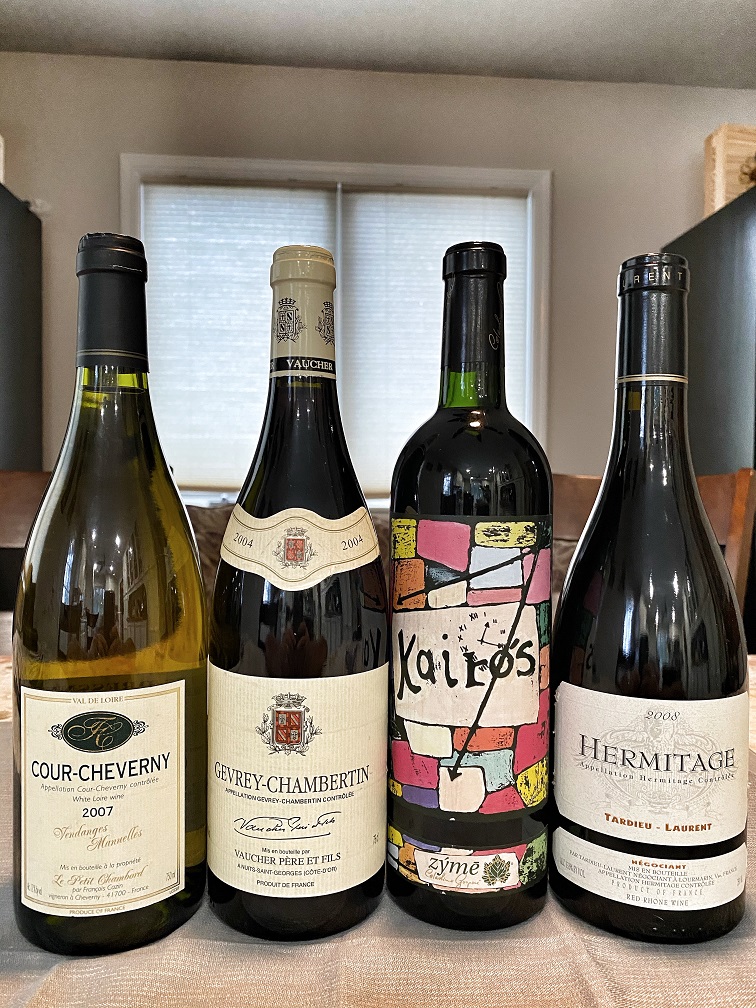
Finding is not even the right word. Finding is easy – but selecting is not. OTBN asks for that special bottle. Deciding on what makes one bottle more special than the other, when your cellar is full of unique bottles all present in the quantity of 1 (one), is the hard part. After some amount of deliberations, which included pulling numerous wine fridge shelves back and forth, back and forth, I settled on these four bottles:
Let me explain my selection logic so you will see why it is such a daunting process for me.
First, the white wine, as I’m a big proponent of the balanced diet. 2007 François Cazin Le Petit Chambord Cour-Cheverny AOC might be called my unicorn wine, at least when it comes to whites. The first time I tried a different vintage of this exact wine when it was 10 years old and this wine became one of the brightest memories for me – the beauty and interplay of bright fruit, honey, and acidity were simply unforgettable. When young, this wine from the Loire, made out of the rare grape called Romorantin, is a single note acidic. With age, it develops into an absolute beauty. When I opened the bottle of this wine back in 2015, the wine was superb. When I brought it to Jim’s house for the OTBN 2019, 4 years later, it was “interesting” but absolutely not exciting. I was hoping for redemption, so this was an easy choice.
My next selection was 2008 Tardieu-Laurent Hermitage AOC. When I see Hermitage written on the label, you can literally hear me sigh. Hermitage to me is synonymous with the Syrah, and I love classic Syrah. And so does my wife – Syrah is her favorite grape. I have very few Hermitage wines in my cellar – and this one was calling my name for a long time (meaning: it was pulled off the shelf and placed back many times). Considering that 2008 had a rainy growing season and the vintage has low ratings (WS86, for example) and “Drink now” recommendation, this was an easy decision – no point in waiting any longer.
How many unicorns can one have? Well, having a unicorn would be nice, but I guess I’m talking about chasing them. So how many unicorns can one chase? Clearly, it seems that I’m chasing many. Good Amarone is the wine I’m always chasing. Giuseppe Quintarelly Amarone is more of an ephemeral dream for me, considering the price and availability – and it is definitely one of those unicorns I’m talking about. With 2004 Zýmē Kairos Veneto IGT, I’m getting as close to that unicorn as I can. This wine is produced by Celestino Gaspari, the winemaker for Giuseppe Quintarelli. As the label says “Produced from 15 varietals of grapes of Verona, it is a reflection and interpretation of our soil and the culture of its terroir”. In case you are curious, the 15 grapes are Garganega, Trebbiano Toscano, SauvignonBlanc, Chardonnay, Corvina, Corvinone, Rondinella, CabernetSauvignon, CabernetFranc, Merlot, Syraz, Teroldego, Croatina, Oseleta, Sangiovese, and Marzemino. This was my last bottle, and I scanned the pages of this very blog for a good 20 minutes last night as I couldn’t believe that I could’ve never written about this wine before – apparently, I have not. Anyway, I was afraid that it might be the time for this wine, thus it was added to the OTBN group. By the way, another interesting tidbit about this wine is that the name “Kairos” means “timely”, “appropriate”, and “the perfect moment”.


Every good plan A needs plan B, right? The backup. Have you ever went to a friend’s house with a bottle of wine, while another bottle stayed in your car just in case the first one would be corked? Yep, that’s the plan B we are talking about. 2004 Vaucher Pere et Fils Gevrey-Chambertin was my plan B. I don’t have a lot of Burgundies, so opening one is always a special moment. 2004 vintage was so so, with WS88 rating and “drink” recommendation, so this bottle was rightfully on the OTBN list, should the need and opportunity come.
Now you know all about selecting, and I want to say a few more words about sharing. Sharing wine is one of the best pleasures of drinking wine. The approving, understanding nod from the fellow wine lover after he or she is taking the sip from the bottle you brought really fills you up with joy. It might be even more satisfying than your own enjoyment of the same wine. Yet in today’s world, sharing the wine face to face is literally impossible, OTBN or not. To at least share the moment, I reached out to the technology which seemed to save the world from going mad – a virtual get-together over video. Zoom is my tool of choice, so after sending the invites to the group of bloggers, we got together at 7 pm on the OTBN Saturday.
We were not a big group – even in the virtual world, people are busy and have their own plans. But I’m really grateful to everyone who was able to spend that special Saturday time together – some for the whole 2 hours, some for 20-30 minutes, talking about wines, sharing life stories and experiences, and most importantly, having fun. You can scroll through the pictures below, I’m sure you will see some familiar faces.
So how was my OTBN? In other words, let me tell you more about the wines.


The miracle didn’t happen, and the white wine didn’t become suddenly magical. If I need to describe this 2007 François Cazin Le Petit Chambord Cour-Cheverny AOC in one word, the word would be “strange”. At some moments, it was oxidative and plump. In other moments, it was acidic. It never showed that amazing lemon and honey notes I was expecting. I still have one more bottle, but now I really need to forget it for as long as possible and see if the miracle will happen.
The Hermitage was … superb. First of all, opening it was a breeze – cork was perfectly intact, regular waiter’s corkscrew worked just fine. Drinking this 2008 Tardieu-Laurent Hermitage AOC was a great pleasure – a touch of pepper, a distant hint of a barnyard, round and delicious fruit. The wine was just right – perfectly balanced, round, and smooth. I don’t have a lot of experience with Hermitage, but this wine was clearly one of the best renditions of Syrah I had in a long time. “Elegant” would be the single word descriptor I would use.
The Kairos was the bottle I was concerned about the most. It could’ve been gone by now, especially considering such an eclectic blend of grapes. When I started opening this 2004 Zýmē Kairos Veneto IGT, first I decided to use the regular corkscrew, which worked perfectly fine for the Hermitage. Looking at the way the screw was going in, the cork seemed to be too soft, so I decided that it was the job for Ah-So – I’m glad this decision was not an afterthought I usually have after the cork is already broken in half – Ah-So worked perfectly well and the cork came out with no issues.
And the wine… The wine was magical. Dark fruit with a hint of dried fruit on the palate, perfectly firm and structured, powerful and elegant, with clean acidity and an impeccable balance. The wine was delicious on Saturday, and I also enjoyed that over the next two days. So now I regret not having any more bottles left – but I’m glad I had this special experience. Magical would be the word.
As two bottles of red had no issues whatsoever, the Burgundy was left aside and now will be waiting for its special moment to be opened and enjoyed.
And that, my friends, concludes my OTBN 2021 report. While the sharing was virtual, the experience and pleasure of the wine and the company were real, and it will stay in my memory as yet another great OTBN night. Hope you had fun too. Cheers!
Hey French – Drink Italian
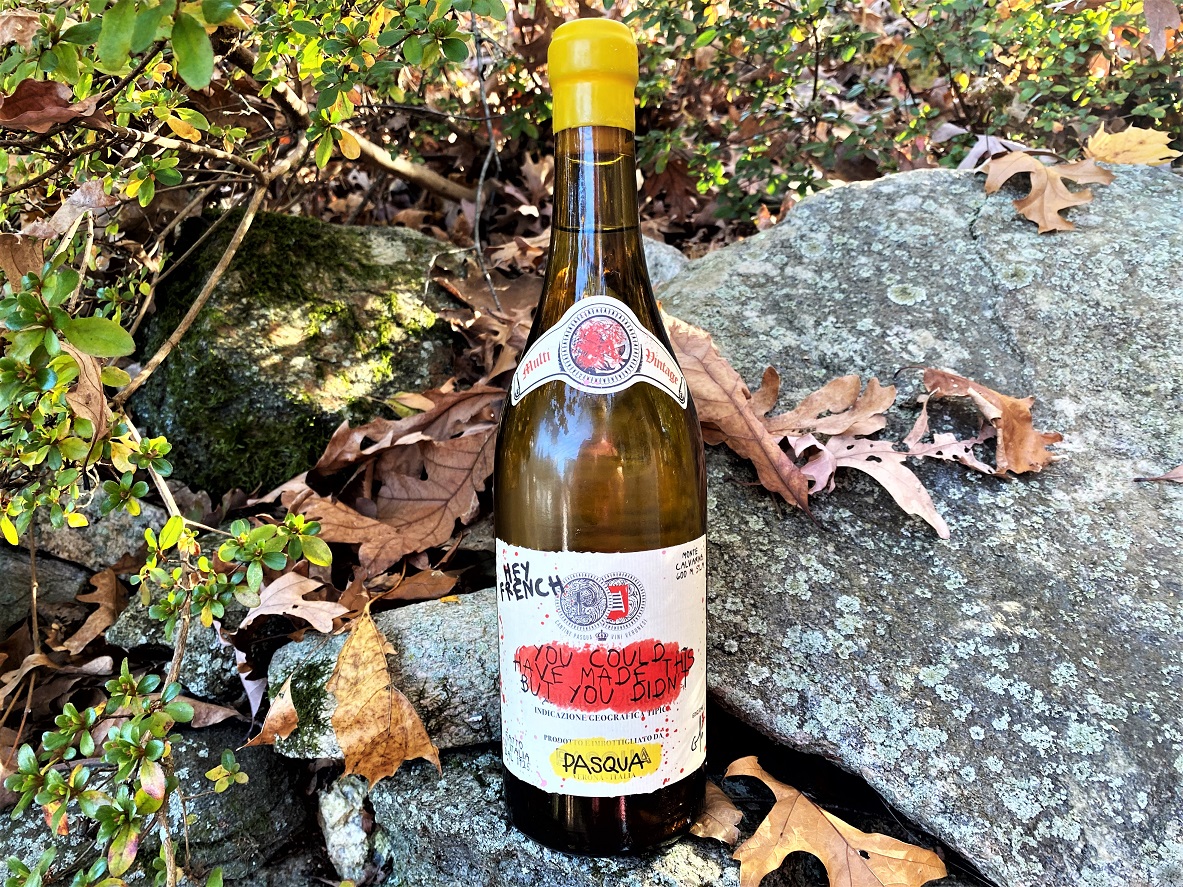 I mean no disrespect.
The title of this post is only suggesting that you should drink Italian wine. A particular Italian wine. And it doesn’t mean that French people should drink Italian wine – even though they will not regret if they will. Everybody can (should?) drink this Italian wine – Hey French.
The Pasqua brothers started Pasqua Vigneti e Cantine winery almost 100 years ago, in 1925 near the town of Verona in Northern Italy. Now with the family’s third generation at the helm, the winery continues and advances its traditions. I came across Pasqua wines for the first time almost 10 years ago – I found Pasqua Amarone at Trader Joe’s in Boston, and it was as good as Amarone under $20 can be. Then I discovered (also at Trader Joe’s) PassimentoSentimento, a tribute to the most famous Italians from Verona – Romeo & Juliet. At the beginning of this year, 2020, I had the pleasure of tasting Pasqua Famiglia Amarone at the Gambero Rosso event in New York. And then I was offered to try a sample of the latest addition to the Pasqua portfolio – maybe even a winner of the longest wine name contest – Hey French. You Could Have Made This Wine But You Didn’t.
This wine is definitely unique. To begin with, the wine is identified as “multi-vintage”, which is not a typical term in the wine world. The standard term is non-vintage, it is typically applied to Champagne and some other sparkling wines. And of course, a typical Champagne is a blend of multiple still wines from multiple vintages – however, it is rare to find a non-vintage still red or white wine. Hey French is deliberately identified as multi-vintage and it takes its inspiration from Champagne (hence Hey French in the wine’s name). The wine is made out of the grapes coming from the 4 best vintages of the decade – 2013, 2015, 2016, 2017, from one of the best vineyards in the area, Monte Calvarina, and 3 grapes – primarily Garganega (the grape used for the production of Soave Classico), with the addition of Pinot Bianco and Sauvignon Blanc. A total of 18 wines were used to produce Hey French Edizione 1.
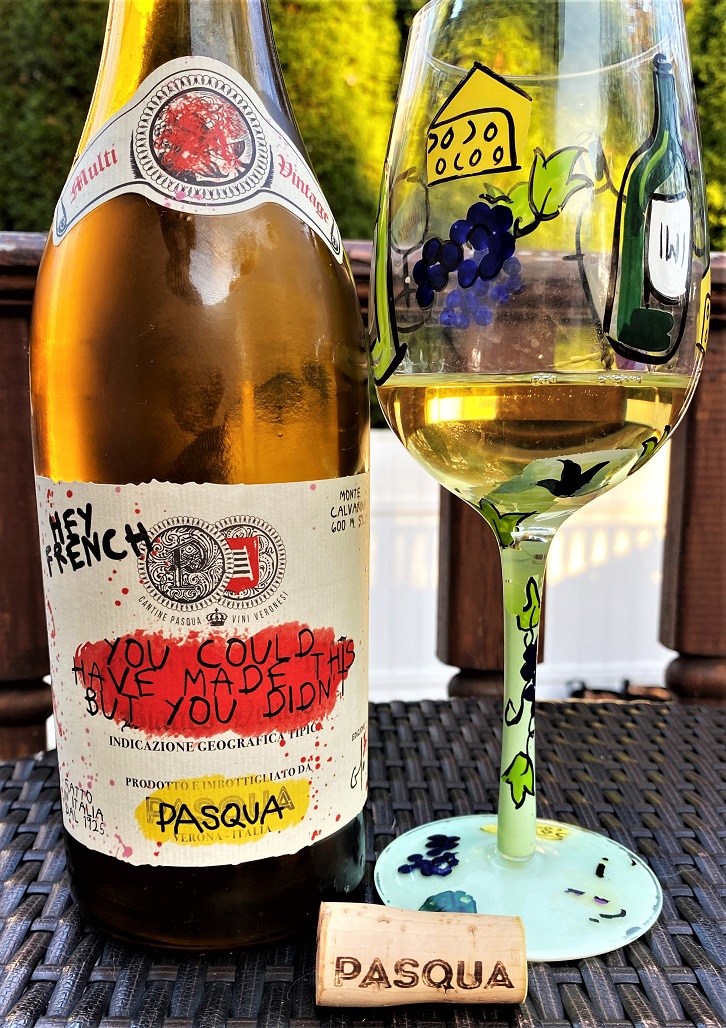
How was the wine? In a word, delicious.
Multi-vintage Pasqua Hey French You Could Have Made This Wine But You Didn’t Edizione 1 Veneto Bianco IGP (13.5% ABV, $40, blend of best 4 vintages of last decade)
Intense gold
Vanilla, apples, plums, Chardonnay-like
Fresh, lip-smacking, precise, clean acidity, whitestone fruit, granny smith apples, a hint of nutmeg, a hint of butter, round, plump, herbs, perfectly dry, delicious.
8/8+, superb.
Based on my experience with Pasqua wines so far, the company is accustomed to making bold moves (drinkable Amarone under $20 at Trader Joe’s clearly is a good indicator). This multi-vintage wine should also be categorized as such – $40 still wine without vintage designation with a playful label (designed by the celebrity Cuban-French artist CB Hoyo) might not be an easy sell. Once you try this wine, which is an absolutely solid, world-class wine, you would be happy to drink it again and again, but you know how preconceived notions work with wine…
The bottom line is simple – find this wine and try it. Additionally, offer it to your friends to taste blind, and then watch for the surprise on their faces once you reveal the wine – life’s little pleasures. Cheers!
A Weekend Of Wine Experiences
What makes the wine experience for you?
If you drink wine pretty much every day, is that every glass an experience? Is that even possible?
The experience should be something memorable, something you can bring up in your thoughts on the moment’s notice. The experience is not always positive – I well remember some bottles I had to pour down the drain – luckily, it doesn’t happen all that often. The experience triggers the emotion – pain or pleasure – and this is what makes us remember.
During our recent Cape Cod visit with the family, in addition to the ocean, flowers, and sunsets, we also had lots of wine. While some wines were good and simple – and not necessarily memorable – some were just at the level of creating a lasting memory. Let me present my case.
I try not to associate the color of the wine with the weather, but fresh and crisp white wine always brightens up a hot summer day better than a big red. Both wines we had were somewhat of an experience. 2018 Hanna Sauvignon Blanc Russian River Valley (13.2% ABV) was a reminder for how much I love this wine, which I consider one of the best California Sauvignon Blancs in general – fresh, citrusy, with plenty of the freshly cut grass and vibrant acidity. A sip of such wine makes you say “ahhh”, and immediately go for another.
The second wine was rather an unexpected disappointment – it had nothing really to do with the wine itself, I guess it was a self-inflicted disappointment, but this is how it will be remembered. 2016 Duckhorn Sauvignon Blanc Napa Valley (13.5% ABV) didn’t offer much anything in the glass. It was a white wine without a sense of place or much in terms of the expected taste profile. It had no obvious faults, just the taste of “some white wine”. Maybe it was supposed to be consumed two years ago (my wife got it as a present from a coworker and then it was forgotten on the bottom shelf of the cellar). Maybe it was in a “sleeper mode” at the moment. No idea, but this was definitely not something I expected from the Duckhorn.


I continue to surprise myself with an inability to find a bad tasting Rosé nowadays. Either something is wrong with my palate, or I don’t drink enough, or everybody simply mastered the art of Rosé to its fullest, but I like every Rosé I have an opportunity to taste. 2018 Etude Rosé Santa Barbara County (13.2% ABV) was excellent, strawberries all the way, both on the nose and the palate, very elegant and round. Etude is a Pinot Noir specialist, so this was a Pinot Noir Rosé. Santa Barbara designation also brought back lots of happy memories of my first Wine Bloggers conference in 2014. The second Rosé, 2017 Baron de Fumes Rosé Garnacha Cariñena DO (13.5% ABV) was a bit lighter but sharing mostly the same strawberry profile with a bit more acidity – still every drop delicious. This was also a great value at $8.99 at my local wine store – I now have a few bottles in the fridge ready to be open on any hot day.
Time to move to reds – and to elevate the experience.
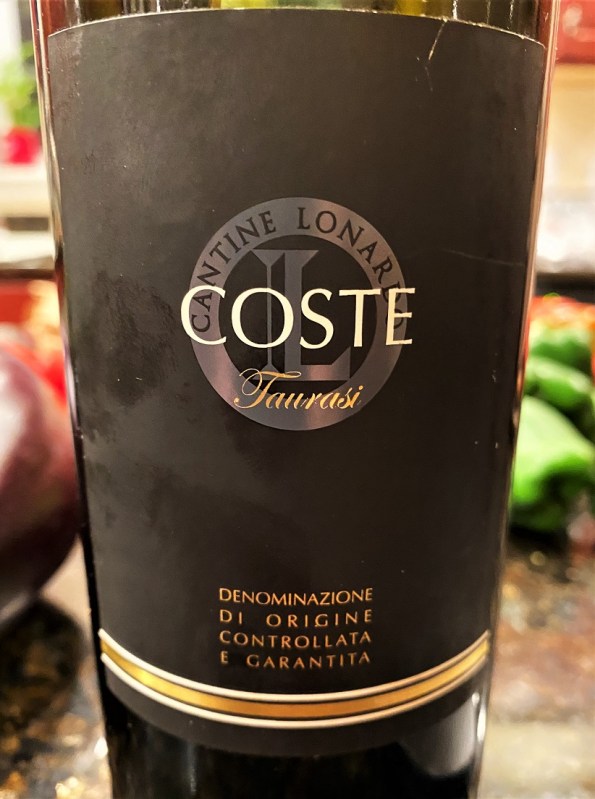
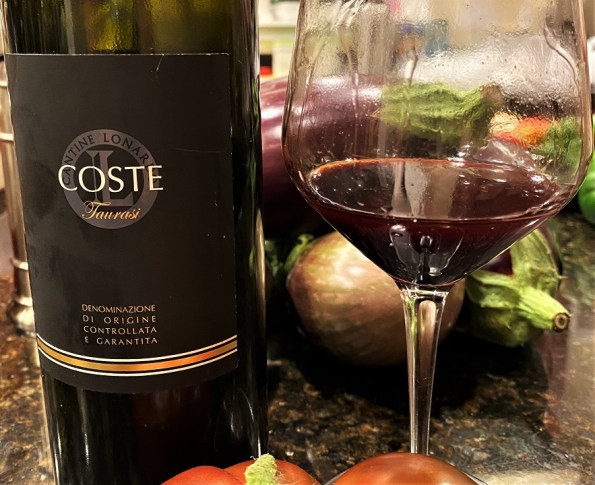
Everyone’s cellar has bottles that appeared out of nowhere. You know how this works – you host a party, someone walks through the door with a bottle. You say thank you, hastily put a bottle aside as you are rushing to meet another guest. The bottle is never opened as you had enough wine prepared, and after the party, it is just put away and you have no memory you ever saw it. This was my story with the bottle of 2008 Cantine Lonardo Coste Taurasi DOCG (14.5% ABV, 100% Aglianico). I have no memory of how the bottle made it into the wine fridge. I saw this bottle many times looking for the wine to open – as I’m not familiar with this wine and never bothered to research, I would always skip opening it just on the basis of the vintage – too young, next time, too young, next time. This time around, as our family on The Cape loves the Italian wines, I decided that the time has come to open it.
As we arrived Thursday evening, this was the first bottle we opened. Oh my… As soon as the wine made it to the glasses, the aromatics stopped everyone in their tracks. I can’t even describe it. Mature Italian wine at its peak literally gives me shivers. You can’t put down the glass, you don’t want a sip – you just want another smell, and then another one. Succulent cherries, eucalyptus, tobacco, iodine, ocean breeze – the bouquet delivered such an interplay of flavors that you simply forget the time. When you finally decide to take a sip, you are blown away anew – juicy cherries with herbs, sweet oak, silky smooth tannins, and impeccable balance – just a divine experience (am I going to far? Can’t tell you. Wish you were there…). Hands down, this wine is an excellent contender for the top wine of 2020, rivaling Soldera experience (Drinkability: 9/9+).
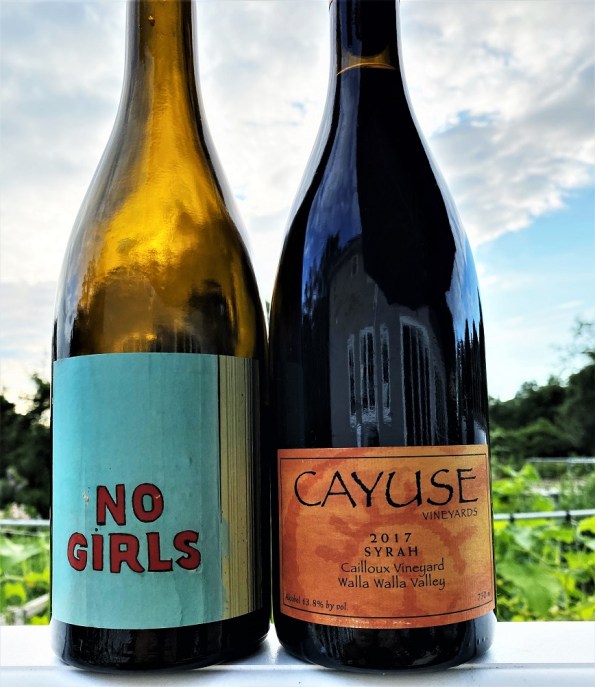


As I had no idea about Coste, I decided to bring a couple of big guns – two of the Christophe Baron wines – No Girls and Cayuse. I knew that I’m committing a crime by opening 3 years old Cayuse – but this was my very first taste of Cayuse wine, after finally making it on the mailing list, so I decided to take my chances. 2010 No Girls Syrah La Paciencia Vineyard Walla Walla Valley (14.8% ABV) was as good as I expected it to be – a little bit of funk, black fruit, black pepper, full body, good structure and concentration, excellent balance – definitely a very enjoyable wine. 2017 Cayuse Syrah Cailloux Vineyard Walla Walla Valley (13.8% ABV), however, was a disappointment. I knew I’m opening the wine prematurely (the one can only hope. I wonder how Sassicaia does it, making their wines perfectly drinkable upon release), but I still expected the wine to come to its senses at least on the second day, and especially with the help of decanter.
The decanter didn’t help, even on the second day. The wine had some amount of fresh crunchy cherries in it, but that was the maximum excitement. The wine never demonstrated the body I would expect from the Washington Syrah, nor the depth of flavor and the textural experience on the palate. Again, this was not a bad wine, just not enjoyable for me. As this was my very first experience with Cayuse, I don’t want to jump to any conclusions – maybe the wine will completely change in a few years, or maybe the wine is just meant to be like this – I anticipate that the wine will need at least another 7-10 years before it will become fully enjoyable, but we will see. And if it just supposed to taste like that, this will be a serious disappointment, especially considering the price of this wine (around $100).
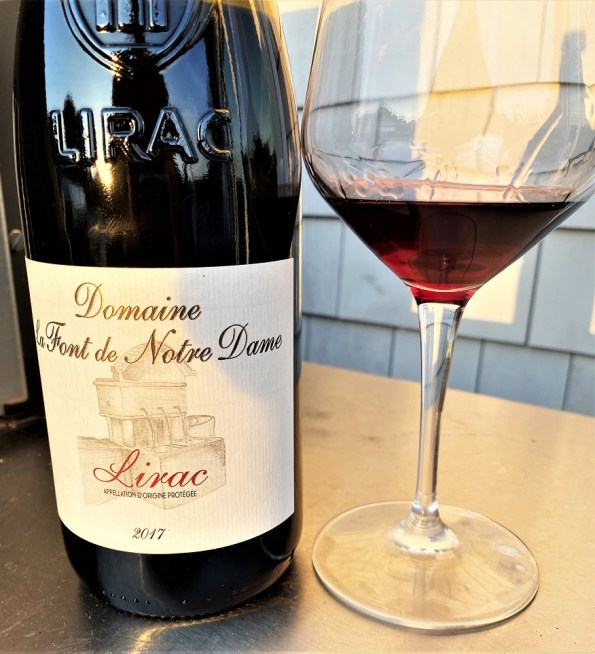
One more wine I want to mention here – 2017 Domaine La Font de Notre Dame Lirac AOC (14.5% ABV, 70% Grenache, 25% Syrah, 5% Mourvèdre). This wine was opened to compensate for the Cayuse not being very drinkable – and this GSM blend didn’t disappoint – perfectly drinkable and enjoyable from the moment the cork was pulled out. Bright fruit, medium to full body, good minerality, and perfect balance. The wine has limited availability, unfortunately, but if you can find it, it should set you back for less than $20 and this can be your perfect every day red for any time of the year.
There you go, my friends. This is how experiences form into the memories. The pleasure of drinking Coste will stay long in the memory – this was one of the most exciting wines this year. The absence of pleasure in my first sip of Cayuse will also become a long-lasting phenomenon. What are your strongest memories associated with wine?
Seeking, Overcoming, and Finding: Amarone for the Father’s Day
Let’s take this step by step, starting with seeking. What am I seeking?
If you read this blog for some time, you know that Amarone is my pet peeve. Ever since falling in love with Le Ragoze Amarone during Kevin Zraly’s Windows on the World Wine School session, Amarone has a special place in this wine lover’s heart. I generally would never admit the existence of the pivotal wine in my wine journey, but if I would really think about it, this will be the one. The combination of the dried fruit on the nose with the firm, powerful, impeccably balanced palate really created an everlasting memory. I had this experience about 17 years ago, in 2003, drinking 5 years old wine (1998 vintage) – and ever since I’m trying to replicate it. Which brings us to the next step: overcoming.
We are talking wine here, so what is there to overcome, you say? Fear. Trepidation. An attempt to avoid disappointment – over and over again. While seeking to replicate the amazing experience, over the years I tried many, many Amarone. A few times I managed to get close to that magical Le Ragoze experience – but the majority was really, really far from it. Why? Lack of balance. Let’s make it more precise: severe lack of balance. Often expressed in the form of the alcohol burn.
In the last 20 years, Amarone’s alcohol level progressed from the typical 14.8% ABV to the typical 16.5% ABV. I get it. What makes Amarone an Amarone is an additional step in the winemaking process, which is rarely used with any other wines – drying of the grapes before they are pressed. After the grapes are harvested, they are placed outside (historically, on the straw mats, but now, on specially arranged shelves) to dry under the sun, to literally shrivel into the raisins before they will be pressed – this process typically takes between 3 and 4 months. Drying concentrates sugars (and dramatically lowers the yield, which explains the high prices), and thus you can expect higher alcohol in the resulting wine. Yes, I get it – but still…
At 16.5% ABV, true mastery is required to achieve balance. True mastery is rare – and the real downside here is personal self-doubt. While tasting yet another hot and biting wine, a tiny voice in your head says “what is wrong with you? You really say you like this type of wine? Are you sure you are even remotely qualified as an oenophile? Maybe water should be your drink of choice?” So yes, tasting yet another Amarone requires overcoming this fear – who wants to prove oneself wrong time and time again?
Now, let’s continue to finding.
When I was offered a sample of Zenato Amarone I said (not without fear) “of course, thank you”. Zenato, which started producing wines about 60 years ago, in the 1960s, initially white wines in Lugano, produced its first Amarone in 1988. The grapes for Zenato Amarone wines come from the Valpolicella Classico area, grown in Sant’Ambrogio township.
So what did I found in that bottle? The first sip instantly quelled all the fears and brought back happy memories. What made that Le Ragoze so memorable was the contrast. I know, I already said it – the wine had an intense nose of the dried fruit. I don’t know about you, but I love dried fruit – especially figs and raisins. But dried fruit is sweet, and this is what I expected from the wine to be – only it was not. The wine was dry, absolutely dry, massive, concentrated, and firmly structured. It was also perfectly balanced.
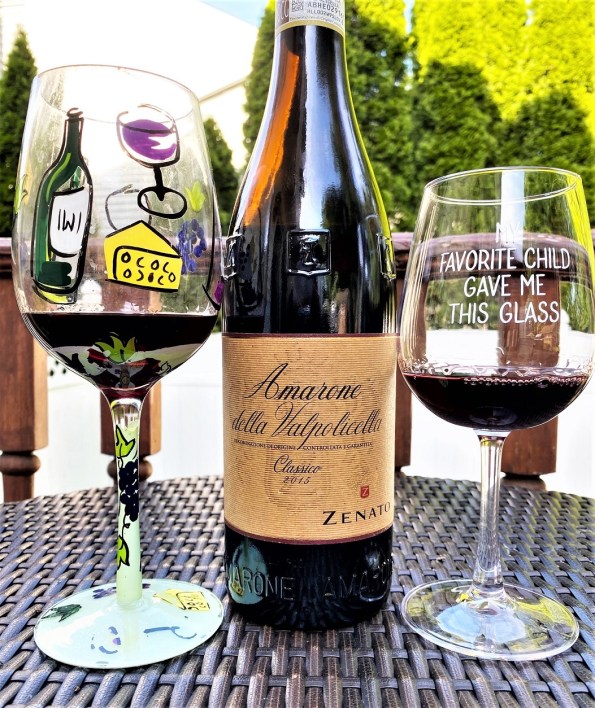
Those were the memories. And 2015 Zenato Amarone Della Valpolicella Classico DOCG (16.5% ABV, $60, 80% Corvina Veronese, 10% Rondinella, 10% Oseleta and Croatina, 4 months of drying, 36 months in oak) instantly brought them back with the delicate nose of the dried fruit and dry, massive, concentrated, but a perfectly balanced body. Firm structure, a touch of dried cherries, sage – just an excellent wine overall (Drinkability: 8+/9-). Wine is all about the balance. And pleasure. Zenato Amarone delivered both.
As I opened this bottle on Father’s Day, you can see in the picture a dilemma I now will be facing – I got another glass from another kid – now I will be forced to pick and chose the glass and try to avoid playing favorites… Oh well, not the worst problem to have, isn’t it?
Do you have a favorite Amarone that never disappoints? What’s your most memorable wine? Is there a wine out there you always crave?
Wine Opinions, Forming and Changing
Well, this might be a dirty laundry type of post which I might regret later – but sometimes, it is good to look into the mirror, so let’s talk.
How do you form an opinion about the wine? Is it on the first sip? Is it after a glass? Is it based on tasting the wine, let’s say, for an hour or two and slowly deciding if you like the wine or not, sip by sip? Equally important – what other factors contribute to that said opinion? Critic’s 95 rating – would that affect your opinion? Respected friend’s recommendation – how important is that? I’m not even talking about ambiance, mood, food, or any other factors.
Okay, now I have another question.
Your opinion about the wine is formed. What would it take to change it? Is it enough to taste the wine once to change your opinion completely? Or would you need multiple encounters to have your opinion changed completely, doesn’t matter in which direction? Well, actually I think here we need to differentiate here between positive and negative opinions. If your opinion was positive, it will probably take a few unsuccessful encounters with the same wine to decide that you made a mistake the first time. But in case of a negative opinion… it gets more complicated. Would you even be willing to give the wine a second chance in such a case? What would make you pick again the bottle of wine you didn’t appreciate before?
Let’s make it more practical.
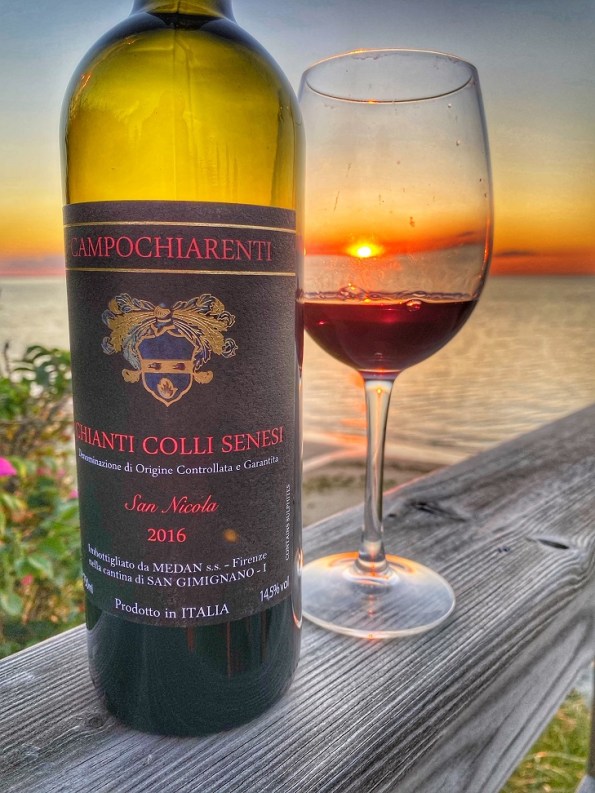
For a long time, I saw John Fodera, who is an expert in Italian wines, give the highest praise to the wines of Campochiarenti from Tuscany. I had an opportunity to finally taste one of the Campochiarenti wines – 2016 San Nicola Chianti Colli Senesi, one of the most basic wines in the Campochiarenti portfolio. Granted, I tasted this wine during the grand festivities of the open house John hosted during the OTBN Saturday – after tasting a variety of Gran Selezione, Super Tuscans, and a magical 1999 Soldera. And in the middle of all that extravaganza, the Campochiarenti Chianti’s appeal was lost on me. I mentioned in the post that the wine was “classic and simple”, but the major point was the price – it was an okay wine for the expected $12 when the wine will finally make it into the USA. Not that I didn’t like the wine, but I didn’t care much for it either – my palate perceived it as too dry and unidimensional.
Erich Russell, who I wrote recently about, has a business relationship with Daniele Rosti, the winemaker at Campochiarenti (Rabbit Ridge soon will be releasing the wine which will be a blend of Italian and California wines), and Erich happened to import a good number of Campochirenti wines to be able to showcase his future joint releases, which he now has available via his website. A few weeks ago, while I was ordering the birthday present for my sister-in-law in the form of the Rabbit Ridge wines, I recalled that she and her husband love Italian wines, so I decide to include a few bottles of the Campochiarenti wines in my order.
This past weekend we visited my sister-in-law who lives on Cape Cod. While deciding on the wine to take with us to see the sunset, I realized that this was a great opportunity to see what am I missing about this 2016 Campochiarenti San Nicola Chianti Colli Senesi – considering the universal love the wine has, I needed to try it again. It only took me one sniff and sip to have my opinion changed completely. The wine was absolutely mindblowing, in both bouquet and the taste, bursting with succulent cherries and offering velvety mouthfeel and impeccable balance. The picture above perfectly summarizes the way I felt about the wine – a double score, an amazing sunset paired with a superb wine.
After coming back and ordering my own case, I can now offer you another case buy recommendation. Visit Rabbit Ridge wine shopping page here, and look for the wine called Danielle – at $15, this wine is an absolute steal. You can also try Campochiarenti Vernaccia di San Gimignano, which supposed to be on par with the Chianti (when ordering, you can specify how many bottles of white and red you want) – I’m waiting for mine to arrive soon.
That is my story of a changed wine opinion. It was very easy for me, one sip and done. How about you? Have you changed your wine opinions and how? Do tell! Cheers!
Chemistry of Wine
I don’t want to mislead you – if you are expecting to see any scientific chemical analysis and/or formulae of the wines – you came fo the wrong place. The chemistry I’m talking about here is the one which usually sparkles between the people, creating instant attraction and inability to let go. You know how it is – you meet a person for the first time, and after two sentences, you feel that you knew the person forever and you can now talk endlessly, for hours and hours, and still wanting to talk more. “It’s chemistry” we often say in such cases – and it is the chemistry we want to talk about here, only not between the two persons, but rather a person and the wine.
This chemistry is something hard to explain. It is unexpected. It is a mystery. You don’t know when the chemistry will engage. You meet a person for the first time. You never met the person before. You have no idea as to what to expect. You are careful and reserved. But some words are exchanged, body movements are observed, and the next thing the conversation flowing and 3 hours later you think it was only 15 minutes which have passed, and you want to spend just another 15 minutes with your new friends.
It works exactly the same with the wine. You open a bottle. You pour, swirl, sniff, and sip. You take another sip, murmur something to yourself, and sip again. Next thing you are looking at the two fingers worth of wine left in the bottle and you ask yourself “what just have happened? Was someone else here drinking the wine with me?”. We can call it chemistry. I also like to call this a “dangerous wine” – this is the wine you casually enjoy so much that you lose the sense of time – and measure, of course.
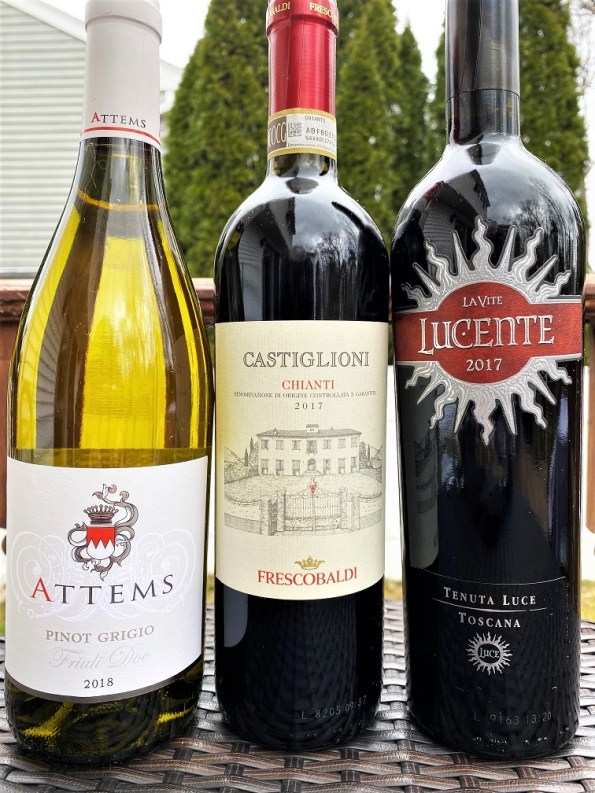
I recently encountered such chemistry with not one, but 3 wines. All three were Italian. All three were dangerously delicious. It was hard to stop replenishing the glass, one sip after another. Do I have a special chemistry with Italian wines? I don’t think so. This has happened in the past, with wines from many regions. But the point of the matter stands – this was an encounter with three delicious wines, which happened to be made in Italy. So let’s talk about them.
Before we talk about individual wines, let’s touch on the common theme which ties them all together – Frescobaldi family. There are more than 700 years of Tuscan wines connected to the Frescobaldi family, Today, Frescobaldi family holdings are spread through the 7 estates in Tuscany (Ammiraglia, Castelgiocondo, Castiglioni, Nipozzano, Perano, Pomino, Remole), plus some of the best of the best in Italian wines – Ornellaia, Masseto, and a few others.


Attems‘ name is associated with winemaking in the Friuli Venezia Giulia for almost a thousand years. Since 2000, Attems is the part of Frescobaldi family holdings. I had Attems wines in the past, such as Attems Ramato, an “orange” wine made out of Pinot Grigio, and I really enjoyed that wine. This time around, I was able to try Attems Pinot Grigio, and I was really happy with what I discovered:
2018 Attems Pinot Grigio Friuli DOC (12.5% ABV, $20)
Straw pale
Lemon, herbs, earthy profile, welcoming
Soft white fruit profile, plums, some tropical fruit, good acidity, nicely present.
8-/8, dangerous, so easy to drink.
Tenuta Castiglioni had been at the center of the Frescobaldi wine story from the very beginning. Owned by the family since the 11th century, the estate takes its history from the Romans who built it along the strategic path connecting northern Tuscany with the city of Rome. I don’t believe I had Tenuta Castiglioni wines before, so this was my first and delicious encounter:
2017 Frescobaldi Castiglioni Chianti DOCG (13% ABV, $16)
Dark garnet
Plums, cherries, vanilla
Soft, round, tobacco, succulent cherries, layered, inviting.
8+, delicious, outstanding, dangerous. Really, really easy to drink.
Tenuta Luce (“luce” means “light” in Italian) is a unique product of the imagination of two of the wine world’s greatest – Vittorio Frescobaldi and Robert Mondavi. After meeting in the nineties, the two men decided to build a new estate in one of the most coveted areas in Tuscany – Montalcino, home to Brunello di Montalcino wines. What makes Tenuta Luce unique is not just the partnership between Frescobaldi and Mondavi, but surely a bold move of planting the Merlot grapes in the land of Sangiovese Grosso. While Tenuta Luce produces Brunello, the flagship wine is called Luce and it is a Merlot/Sangiovese blend. I tasted Luce before and really enjoyed it. This time around, I had an opportunity to try Tenuta Luce second wine, again a Merlot/Sangiovese blend called Lucente – yet another delicious wine:
2017 Tenuta Luce Lucente Toscana IGT (14% ABV, $30, Sangiovese/Merlot blend, 12 months in old and new barriques)
Dark garnet, practically black
Dark cherries, fennel, violets
Cherries, coffee, leather, perfectly structured, crisp acidity, perfectly integrated and balanced tannins.
8, delicious, and hard to stop.
As you can tell from the notes above, I really liked all three wines. Not just liked – after the first glass, there was an unconscious craving for another. And another. And another. It would be quite safe to call this a chemistry – I don’t know if I have a special bonding towards the Italian wines, but these three wines were drinking more like an obsession rather just some other tasty wines. And as it works in human relationships, chemistry is a good thing between the man and the wine. Have you found yours? Cheers!
What a night! Notes from OTBN 2020
 Open That Bottle Night is the best wine holiday out there. It is nice to celebrate all the individual grapes – Chardonnay Day, Albarigño Day and the likes – but that can’t compare with an opportunity to open a special or the most special bottle you have in your possession, and most importantly, share it with fellow oenophiles, the people who appreciate and respect that special bottle.
I’ve been lucky for two years in the row to be invited to someone’s house to celebrate OTBN – last year Jim VanBergen of JvBUncorked fame was our host, and this year John Fodera of the Tuscan Vines hosted of amazing wine night.
John did a great job organizing this memorable night for the group of people most of whom he never met face to face (yours truly included – we had been following each other for close to 10 years, but managed to avoid any face-to-face contact until now) – he developed a loyal group of followers as Italian wines expert, and I’m sure everyone was happy to finally meet him in person.
John managed to come up with a great program. After the round of Lambrusco bubbles (which is the rave nowadays) we started the evening with two blind tastings. We had 2 groups of 3 wines each, trying to identify at least a place and type of wine, and ideally even the producer. We also voted for the group’s favorites. I generally suck at blind tastings, so I did poorly (as expected). I also decided not to use the external factors in the tasting (I.e., John is Italian wine guy, so we should simply expect all the wines to be Italian; another guess would be that as John’s blog is called Tuscan Vines, all the wines will be from Tuscany).
Here are my notes for the first flight:
Wine 1: Touch of mint, full-body, good structure, a touch of black currant – super Tuscan?
Wine 2: great concentration, dark fruit, layered, silky smooth – Montepulciano di Abruzzo?
Wine 3: nice fruit, bright, good structure. Super Tuscan? New World?
Needless to say that I was absolutely wrong with all three. Again, I could’ve used a bit of psychology and figure out that John would be pouring only Tuscan wines, but I deliberately refused to do so. The wines were perfectly polished and complex, all three, without screaming “I’m Chianti” with the appearance of leather, tobacco, or tart cherries. To make a long story short, all three wines happened to be Chianti Classico Gran Selezione from 2016 vintage, provided to John by Chianti Classico Consortium. In the order of appearance, these were the wines:
2016 Fèlsina Chianti Classico Colonia Gran Selezione DOCG ($NA, 100% Sangiovese)
2016 Rocca delle Macìe Riserva di Fizzano Chianti Classico Gran Selezione DOCG ($NA, 95% Sangiovese, 5% Merlot)
2016 Fontodi Vigna Del Sorbo Chianti Classico Gran Selezione DOCG ($NA, 100% Sangiovese)
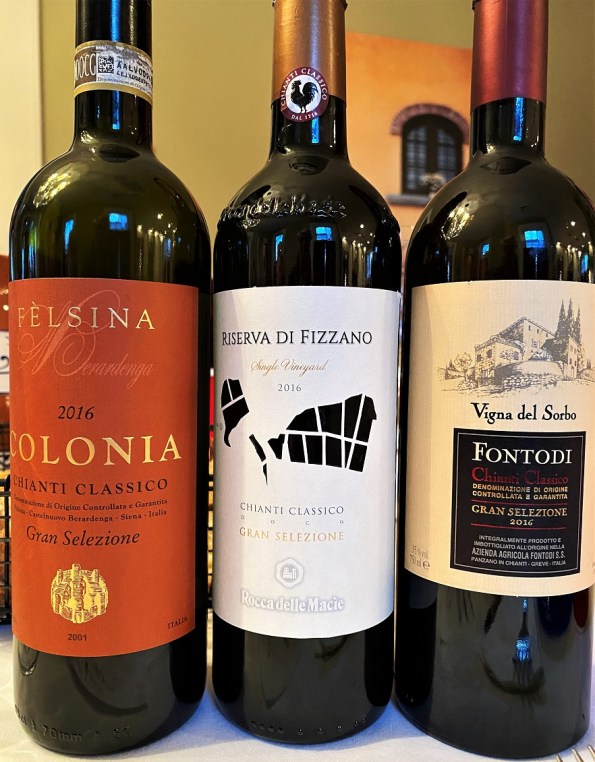


I want to add that the second wine, Rocca delle Macìe Riserva di Fizzano, won a popular vote with 5 votes out of 10 – this was also my favorite wine.
The next flight consisted again of three wines. Here are my notes:
Wine 1: dark fruit, eucalyptus, crushed berries, green tannins – Bordeaux blend, can be from anywhere
Wine 2: Roasted meat, plums, salami, plums on the palate – Grenache/GSM? Can be from anywhere
Wine 3: too aggressive, green tannins, black currant. Bordeaux blend, can be from anywhere.
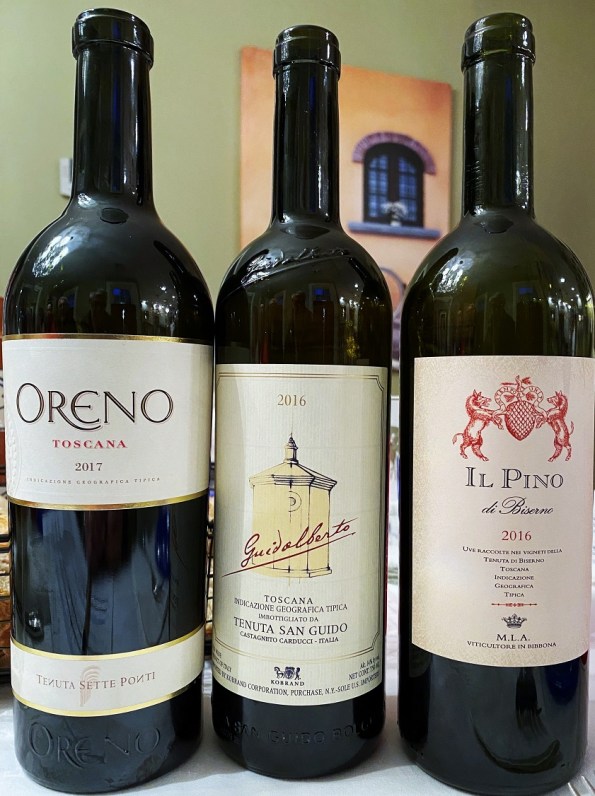
Again, I should’ve expected another line of Italian wines, but I thought John could play some tricks, so I didn’t go with an obvious idea of Super Tuscans. And I was wrong. All three wines were well-known Super Tuscans (these three wines were courtesy of Kobrand Wines):
2017 Tenuta Sette Ponti Oreno Toscana IGP ($75, 50% Merlot, 40% Cabernet Sauvignon, 10% Petit Verdot)
2016 Tenuta San Guido Guidalberto Toscana IGP ($54, 60% Cabernet Sauvignon, 40% Merlot)
2016 Lodovico Antinori Tenuta di Biserno Il Pino di Biserno Toscana IGP ($70, Cabernet Franc with Merlot, Cabernet Sauvignon, and Petit Verdot)
I really didn’t appreciate the tannic nature of wines number one and number three, and those tannins were not only aggressive but literally biting. Oh well. Wine #1, Oreno, was the crowd’s favorite (7 votes out of 10). This time around my vote didn’t match the majority, as I went with the wine #2, Guidalberto, as this was the only drinkable wine for my palate.


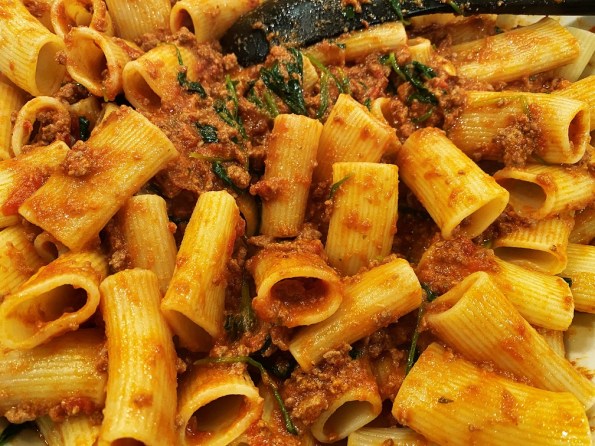
After finishing the tasting and discussing the results, it was time to eat. First, there was pasta bolognese, which John masterfully prepared:
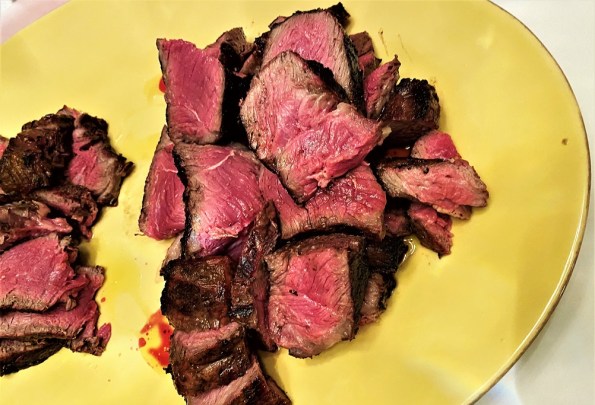
And then there was meat. John decided to spoil the group with 2.5” porterhouse steaks, to make Bistecca Fiorentine:


We went to work the grill which was an interesting adventure, mining the grill to prevent flare-ups on a cold night. We actually had to make two attempts to get the steaks right, as they were still mooing after the first pass. But we managed to produce something delicious in the end and not ruin the amazing steaks.
Now, time to meditate. Nope, this was not an organized food prayer session. What happened was that the bottle of Soldera Brunello di Montalcino was poured out of the decanter. Mike Giordano brought a bottle 1999 Soldera Brunello de Montalcino in a completely unassuming, low-key, way. Gianfranco Soldera was a legend, who bought a property called Case Basse in Montalcino in 1972, with an aim to produce the best Brunello wines. By 1990s Soldera wines reached cult status, coupling impeccable quality with small production. Talking about Gianfranco Soldera and his wines would be best suited for a separate dedicated post, as controversy completely surrounded him; I have to say that I never expected to taste his wines – until this memorable OTBN.
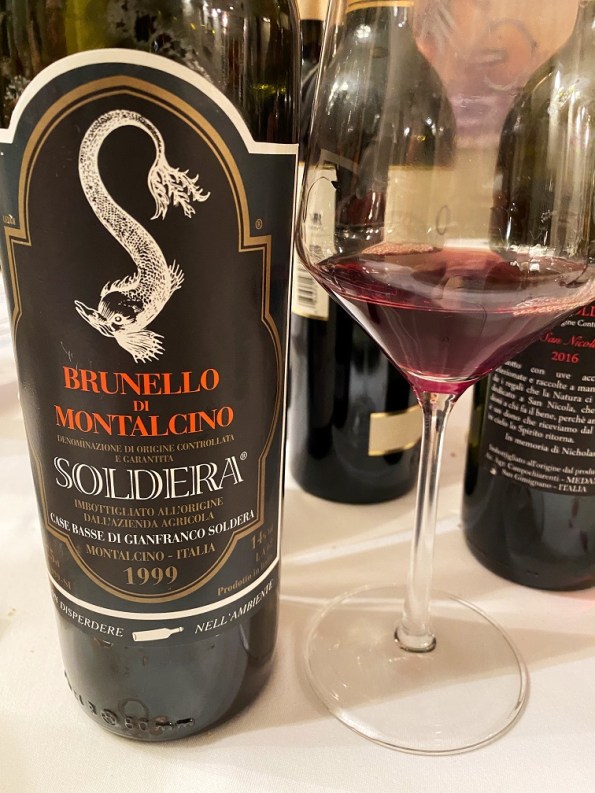
Just look at this color…
1999 Soldera Case Basse Brunello di Montalcino DOCG was truly a meditation wine. “Meditation wine” might not be a simple term to explain in words, but if you like wines, there is a chance that you experienced it at one time or the other. The nose, the aroma, and the bouquet of this wine were simply magical. Taking the whiff from the glass, the time was stopping – no need to try to analyze the amazing palette of flavors to come up with individual descriptors – this wine should be described purely on the sensory level, as every smell was bringing a pure, hedonistic pleasure. I didn’t care for food, I didn’t care for talking – I just wanted to take another smell, and another, and another. When I finally took a sip, the wine was magnificent on the palate too – a perfect balance of plums, cherries, textural layers, structure, sage, and rosemary – a perfect harmony of flavors. It is quite possible that this was my wine of the year 2020 – I know it is only March, but this was an experience that is seriously hard to beat. I don’t feel that I should even try rating this wine, but if I would dare, this would be my second ever 10- (don’t ask me why not 10, I have no idea what my perfect 10 wine should smell and taste like).
After the meditation session, just a few words on the dinner. In addition to the delicious meat, John made a couple of side dishes – the sautéed white beans were an absolute hit, adored by all literally as much as the beef. John actually promised to share a recipe – you can find the recipe in this post.
This was not the end of our wine program. We also had 2016 Campochiarenti San Nicola Chianti Colli Senesi – Campochiarenti is a producer John is always raving about in his posts, so it was definitely interesting to finally taste this wine (Campochiarenti wines at the moment are not imported into the US, but available directly from the winery). The wine was classic and simple, and for about $12 (if it will be imported into the US, this is the expected retail price) it will be definitely a great value. I brought a bottle of 2010 No Girls Grenache from Walla Walla in Washington, which was very tasty but radically non-Italian, so I don’t think it was well-received. I also brought one of my recent finds – 2016 Pedra Cancela Selecção do Enólogo from Dão, which was an old world and a lot closer to the overall theme, and an amazing QPR at $9 per bottle at the local Bottle King store. 2010 Capanna Brunello Di Montalcino was delicious, but it was a tough call to get everyone excited after experiencing the Soldera. Lastly, we had 1999 Natale Fantino Nepas Nebbiolo Passito Piedmont which was interestingly dry and light, but not necessarily my favorite.


That gives you more or less a full picture. We also had a wonderful spread of Italian desserts, and truth be told, for the first time ever I tasted cannoli which I liked. It appears that the good cannoli should be filled with cream at the moment of purchase and not before – now I will know.
And now we are done. How was your OTBN 2020? Cheers!
Tre Bicchieri 2020: A Mixed Bag
 Tre Bicchieri is the highest distinction awarded to the Italian wine by the popular Italian wine guide, Gambero Rosso. About 45,000 wines are reviewed annually by the team of wine professionals, and about 1% of those wines (465 in 2020) receive the right to put coveted sticker depicting three wine glasses (Tre Bicchieri) on their wine bottles – if they so desire, of course.
Every year these best wines are presented around the world in the series of wine tasting events. I attended Tre Bicchieri tasting in New York which was one of the stops in this annual extravaganza.
I always make an effort to attend the Tre Bicchieri tastings – it is a great opportunity to taste the wines which at least someone considers to be the best Italy can produce. This tasting is typically quite overwhelming with more than 200 wineries, some of them presenting not 1, but 2 or even 3 wines, 4 hours, and a very constrained space with lots of people roaming around. 2020 event included 204 wineries – even with 1 wine per winery, you would have to taste one wine per minute to be able to taste them all – and this is only assuming that all wineries show only one wine, which is mostly not the case.
I always complain about the organization of this event – instead of grouping the wineries by the region, they are all grouped by the distributor. I’m sure this simplifies the logistics for exhibitors, but this doesn’t help attendees even for a bit. Another gripe is that you are given one single glass to use during the tasting, and you have no options of changing is once it becomes sticky and such. Of well… maybe one day organizers will read this blog? … yeah…
This year I decided to use a different navigation tactics – instead of trying to go sequentially from table 1 to table 204, or trying to frantically scavenge the show guide which is only available upon entering the event, and trying to find who you want to see by running through a 200-strong list, I decided first just to walk around, look for familiar names and taste what I want to taste first. Using this method, my first sip at Tre Bicchieri 2020 was 2016 Sassicaia, which provided a perfectly elegant opening to the event. Once I was done with a first walk, I took a pause to now look through the show guide and identify who did I miss and then go again and revisit.

Tre Bicchieri 2020 – busy as always
Thinking about the experience of Tre Bicchieri 2020, I’m not sure I can easily give you a simple and coherent summary of the event. One interesting observation was a noticeable number of Rosato wines represented at the event. I missed Tre Bicchieri tasting last year, but from the previous years, I don’t remember seeing much, if any, Rosé. I also tried to do the Amarone run (meaning: taste as many Amarone as I could), and it was not successful. With the exception of the Pasqua Amarone, which was not amazing but at least drinkable, the most of the rest simply were way too tannic and lacking any pleasure – I really don’t understand what was a rationale of awarding the coveted Tre Bicchieri to the insipid wines, outside of just recognizing the pedigree of the producers.
There were some excellent whites (Italian white wines still grossly underrated on the global scale), excellent sparkling wines (Giulio Ferrari, anyone?), and amazing values (like stunning $9 Sangiovese again from Ferrari), so, all in all, it was a good tasting, but overall I felt a bit underwhelmed. Anyway, here are my “best of tasting”, “worst of tasting” (if it’s okay to be so obnoxious), and notes on other wines I found worth mentioning. I’m using my “plus” ratings here, with “+++” meaning “excellent”, and “++++” being better than excellent :). With the exception of one wine, no wines with less than +++ are included in the list.


Tre Bicchieri 2020 Show favorites:
NV Barone Pizzini Animante Extra Brut Franciacorta – ++++, superb
NV Ruggieri & C. Cartizze Brut Veneto – ++++, outstanding, dry, clean
2008 Ferrari Giulio Ferrari Riserva del Fondatore Trento – +++, excellent
2018 Elena Walch Alto Adige Pinot Grigio Vigna Castel Ringberg – ++++, outstanding
2017 Leonildo Pieropan Soave Classico Calvarino – ++++, excellent
2018 Donnafugata Sicilia Grillo SurSur – ++++, excellent
2016 Tenuta San Guido Sassicaia Bolgheri Superiore – ++++, beautiful, perfect balance
2016 Le Macchiole Paleo Rosso Bolgheri Tuscany – ++++, 100% Cabernet Franc, excellent, perfectly drinkable
Sparkling:
2014 Bellavista Franciacorta Brut Teatro alla Scala Lombardy – +++, superb
2011 Barone Pizzini Franciacorta Dossagio Zero Bagnadore Riserva – +++, excellent
2018 Ruggieri & C. Valdobbiadene Extra Dry Giustino B. – +++, excellent
2018 Andreola Valdobbiadene Rive di Refrontolo Brut Col Del Forno – +++, excellent


White:
2016 Il Colombaio di Santachiara Vernaccia di San Gimignano L’Albereta Riserva – +++, excellent, clean
2018 Rosset Terroir Spraquota 900 Valle D’Aosta – +++, Petite Arvine grape
2017 Ottella Lugana Molceo Riserva – +++
2018 Ottella Lugana Le Creete – +++, excellent
2018 Elena Walch Alto Adige Gewürztraminer Vigna Kastelaz – +++, amazing aromatics, excellent
Rosé:
2018 Varvaglione 1921 Idea Rosa di Primitivo Puglia – ++-|. I was told that it was an attempt to create a Rosé for the red wine drinkers. I’m not sure it was ultra-successful, but it was drinkable.
Red:
2018 Corte Sant’Alda Valpolicella Ca’ Fiui – +++, high acidity
2013 Corte Sant’Alda Amarone della Valpolicella Valmezzane – +++, not bad but too tannic
2013 Masi Amarone della Valpolicella Classico Costasera Riserva – +++
2016 Donnafugata Etna Rosso Fragore Sicily – +++, tart, clean
2017 Pasqua Passimento Rosso Veneto – +++, excellent, approachable, excellent value (sold at Trader Joe’s)
2015 Pasqua Amarone della Valpolicella Famiglia Pasqua – +++, excellent
2011 Paolo Conterno Barolo Ginestra Riserva – +++, excellent
2018 Montalbera Ruché di Castagnole M.to Laccento – +++
2018 Montalbera Ruché di Castagnole M.to la Tradizione – +++, nice, needs time
2016 Ferrari Tenuta Podernovo Auritea (Cabernet Franc) Toscana IGT – +++, excellent
2017 Ferrari Tenute Lunelli Montefalco Rosso Ziggurat – +++, excellent
2011 Bertani Amarone della Valpolicella Classico – +++, very good
2015 Bertani Tenuta Trerose Vino Nobile di Montepulciano Simposio Riserva – +++
2016 Planeta Noto Nero d’Avola Santa Cecilia – +++, excellent
2018 Elena Walch Alto Adige Schiava – +++, easy to drink, light
2015 G.D. Vajra Barolo Bricco delle Viole – +++, excellent
2016 Varvaglione 1921 Primitivo di Manduria Papale Linea Oro – +++, good
Dessert:
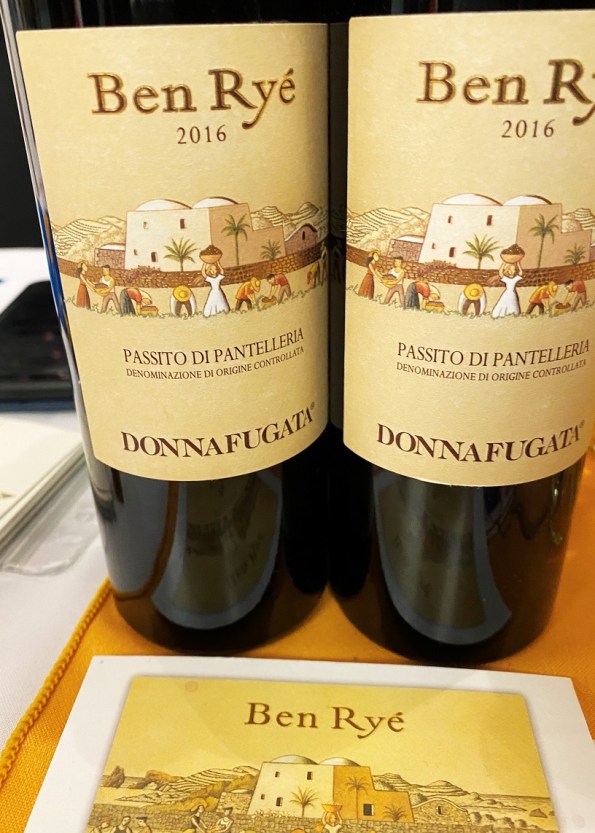
2016 Donnafugata Passito di Pantelleria Ben Ryé Sicily – +++, good
Amarone run:
Tenuta Sant’Antonio (burnt finish, the real impression of a burnt wood), Allegrini (too much oak), Speri (too much oak), Masi single vineyard (too much oak), Corte Sant’Alda (too much oak), Pasqua single vineyard (too big, too tannic), Monte Zovo (too much oak)
This is my story of visiting the Tre Bicchieri 2020 in New York. Have you attended any of the Tre Bicchieri events? What is your take on those? Salute!
An Evening With Friends
 What is your favorite part about wine? Is it the taste? The buzz? The sheer appearance of the bottle sometimes resembling the work of art? The joy of owning an exclusive object? The coveted status symbol?
My answer will be simple. My favorite part about wine is the ability to share it. Take a sip, reflect, have a conversation, preferably a slow-paced one. Friends are the best pairing for wine. Opportunity to share the experience, pleasure, and joy. Sharing makes it all worth it.
New Year celebration (the main holiday for anyone with the Russian upbringing) is a multi-step process for us. We like to celebrate the arrival of the New Year as many times as possible – the evening before the New Year, a midnight Champagne toast, the New Year’s day dinner, and more dinners shortly after (this is when the bathroom scales are the worst nemesis). Some or all of these dinners have to include friends – and it is the best when friends share your wine passion.
Such was our dinner on Saturday, bringing together a group of friends who truly enjoy what the wine world has to offer. We all contributed to the evening, both with food and wines, to make it fun and interesting. Below is the transcript of our wine extravaganza, with highs, lows, and surprises.
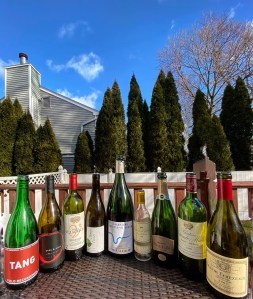
While we were getting ready to start our dinner, our first wine was something unique and different – how many of you know what Piquette means? It appears that Piquette is yet another type of sparkling wines. The story of Piquette goes back to 18th century France when the whole wine industry was in full disarray. Piquette is literally made by converting water into the wine – using water to rehydrate grape skins left after the wine production. We had 2019 Field Recordings Tang Piquette Central Coast (7.1% ABV, Rehydrated skins of Pinot Gris and Chenin Blanc) which was made using this exact process – grape skins were hydrated in well water for a week, then pressed, after which a little bit of the table wine was added, and the wine was bottled with leftover yeast and sugar to continue fermenting right in the bottle. To me, the wine was reminiscent of cider – light fizz, fresh apple notes, cloudy appearance of a nice unfiltered cider. Would I drink this wine again? On a hot summer day – yes, why not, but this is not the wine I would actively seek.


It is difficult to assess the “uniqueness” of the wines. There can be many reasons for the “unique” wine designation – small production, wine not produced every vintage, the wine which is no longer produced. There are, of course, many other reasons. How about spending 10 years to finally make about 200 (!) bottles of a drinkable wine? Don’t know about you, but this is unquestionably unique in my book. And so there was 2017 Olivier Pittet Les Temps Passés Vin de Pays Romand Switzerland (14.2% ABV, Arvine Grosso). Petite Arvine is a popular white grape in Switzerland, producing nice, approachable white wines. On another hand, Petite Arvine’s sibling, nearly extinct thick-skinned Arvine Grosso (or Gross Arvine), is a nightmare to grow and to work with. This was the Arvine Grosso which took about 10 years to restore the plantings and achieve a drinkable result. The wine needed a few minutes to open up – then it was delicious, fresh, with a touch of underripe white plums, bright acidity and full-body, similar to Marsanne/Roussanne. I wish this wine would be a bit easier to procure and not just through a friend who lives in Switzerland…
I was happy that Stefano brought a bottle of 2008 Berlucchi Palazzo Lana Satèn Riserva Franciacorta (12% ABV) – I love Franciacorta sparkling wines, they always offer a playful variation of the classic Champagne. Berlucchi is the founder of the Franciacorta sparkling wine movement. This wine was also a Satèn, a unique Franciacorta creation, which is specifically made to be a bit gentler than a typical Champagne with the lesser pressure in the bottle. The wine was soft, fresh, delicate, and admired by the whole table enough to disappear literally in the instance.
The next wine was as unique as only inaugural vintage can be. Christophe Baron is best known as Washington Syrah master, with his Cayuse, No Girls, and Horsepower lines. But Christophe’s roots are actually in Champagne, so it shouldn’t be terribly surprising that he decided to embrace his heritage. The first bottling, with a promise of many more, was as unique as all Christophe Baron’s wines are – pure Pinot Meunier, vintage, and bottled only in magnums – 2014 Champagne Christophe Baron Brut Nature Les Hautes Blanches Vignes Charly-Sur-Marne (12.5% ABV, 100% Pinot Meunier, 1613 1.5L bottles produced). I made a mistake of slightly overchilling the wine, but it came to its senses shortly after it was opened. The wine was nicely sublime, with all the Champagne traits present – the acidity, brioche, apples – everything balanced and elegant. This was definitely an excellent rendition of Champagne, but to be entirely honest, at around $300 it costs considering tax and shipping, I’m not sure it was unique enough to justify the price. Oh well… definitely was an experience.


Before we move to the reds, a few words about the food. The New Year celebration is a special occasion, which is asking for a special menu. Our typical New Year dinner menu is heavy with appetizers and salads. Our staple salads are “traditional” – Olivie and “Herring under the fur coat”. For the appetizers, we had red caviar, bacon-wrapped dates, stuffed Belgium endives, different kinds of cold cuts and cheeses, tiny prosciutto/pecorino sandwiches, and I’m sure some other stuff. Tea-smoked duck and delicious lasagna comprised the main course, then finishing with loads of baked goods and candies. Yeah, don’t even think about dragging me onto a bathroom scale.
Let’s get back to wine.


The next wine belongs to the “interesting” category. NV Channing Daughters Over and Over Variation Twelve Long Island (12.5% ABV, Merlot, Dornfelder, Syrah, 208 cases produced), a multi-vintage wine which is produced using Ripasso and Solera methods. The name “Over and Over” is emblematic of the production method of this wine – there are many manipulations which I will not even try to describe – you better read it here. I’m all for the fun and complexity, but my problem is that I tasted the standard vintage Channing Daughters red wines which were literally identical to this Over and Over wine. It is great to play with your wine, no questions – but only if the end result is different, and better than the individual parts. The wine showed very youthful, with fresh crunchy fruit and cut through acidity – but it was lacking complexity. It is not a bad wine, but I was not moved by it.
Next up – 1996 Château Sociando-Mallet Haut-Médoc AOC (12.5% ABV) – this was a happy wine. The cork came out easily in one piece, and the wine was perfect from the get-go. The perfect minty nose of Bordeaux with a touch of cassis, some hints of mature fruit on the palate, but only the hints – still good acidity, solid core, excellent balance – the wine to enjoy. Yep, was gone in no time.


Of course, the duck on the menu is calling for the Pinot Noir, and what can be better than the Burgundy? 2007 Louis Jadot Grands Echézeaux Grand Cru AOC (13.5% ABV) was our designated match for the duck. The wine opened up beautifully, with succulent plums and a touch of smoke, a delicious, classic Burgundy. However, the joy lasted in the glass for about 10 minutes or so – next, all the fruit was gone, and while you know you are drinking wine, this wine had no sense of place of origin. I don’t know what happened – the wine closed up, needed more time, or was already at the last stretch of its life? Don’t know, and don’t think I will ever find out. Well, there is always another bottle, right?
Now, let’s talk about surprises. No, not the Chateau d’Yquem, which you would assume should qualify as a surprise – the 1999 Finca Villacreces Crianza Ribera Del Duero (13% ABV) was a real surprise. I heard the name of Finca Villacreces as one of the venerable Ribera del Duero producers, but I never had it before. When I was able to score this wine at the Benchmark Wine, I was very excited. The New Year’s celebration seemed to be a perfect opportunity to open it, especially as nobody had it before and we were all looking forward to getting acquainted.
The cork came out easily, in one piece with no sign of any issues. Once I poured the wine into the glass, on the first whiff, the scary thought instantly showed up – the wine might be corked. I tasted the wine, and it seemed just a touch off – it didn’t feel unquestionably corked, but the fruit was not coherent and the wine had sharp, raspy undertones which in my experience are associated with the corked wine. We moved the wine into the decanter and continued tasting it throughout the evening – it stayed practically unchanged.
This was not some random bottle I can get replaced at any store, so I really couldn’t just pour it out. And I’m an eternal optimist. So I used plastic wrap to cover the top of the decanter and left the wine standing there overnight. The next day, about 22-23 hours since the wine was opened, I decided to check on it. Oh my god. The wine completely changed. The hint of the musty cellar was gone. The mighty fruit appeared on the palate, layered, present, velvety and powerful, covering your whole mouth and making you extort “ohh, this is good”. I thoroughly enjoyed the wine after 24 hours in the decanter, and even the next day the tiny leftover was still drinkable. How is this possible? What has happened? I don’t have any answers, but if you have any ideas, please share.
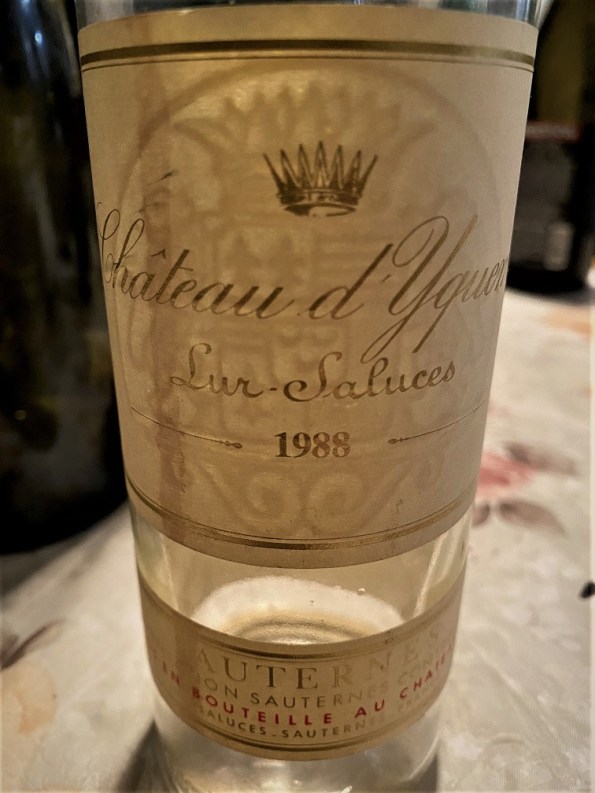
We finished the dinner on the high note – 1988 Château d’Yquem Lur-Saluces Sauternes AOC (13.5% ABV). I’m you sure you don’t need any introductions here – Château d’Yquem is the Bordeaux legend, an absolute hallmark of the Sauternes region, with every other Sauternes wine simply measured against the Château d’Yquem. A perfect pop of the cork from this bottle was music to my ears. The nose and the palate of this wine were in full harmony – it was all about apricots. Fresh apricots, dried apricots, candied apricots – the taste kept moving round and round. The apricots were supported by clean acidity, which became more noticeable as the wine had an opportunity to breathe. Well, this was a short time window in any case, as this half bottle was simply gone in the instance. This 32 years old wine was truly an experience and a perfect finish to our great evening with friends.
That’s all I have for you, my friends. How 2020 started for you? What did you have a chance to discover over the last few days? Cheers!
Last Bottle Sign Up ($10 credit)