Archive
Another “How Do They Do It?” Set of Trader Joe’s Wines
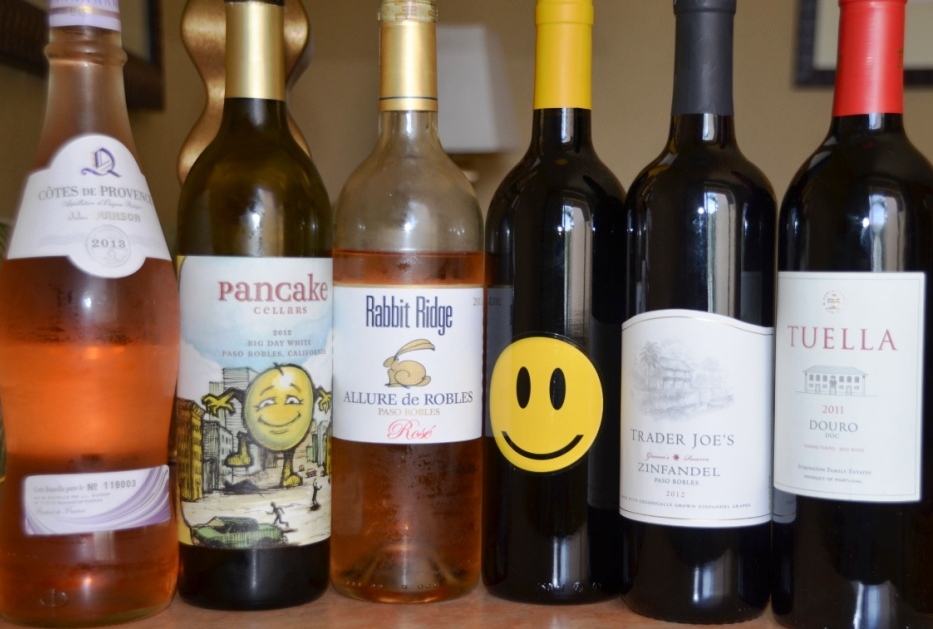 On the multiple occasions, I wrote about Trader Joe’s wines in this blog. I generally only can taste them when I travel, as Trader Joe’s stores in Connecticut can’t sell wine. Thus if I’m in the close proximity of the Trader Joe’s store, and schedule allows, I always make an effort to taste something new.
While Trader Joe’s wine selection generally includes wines at the different price levels, my focus is always on the most inexpensive wines. The rationale is simple – at $9.99 and above, there is a great selection of wines in my neighborhood wine store. At the same time, there is practically nothing in the $4.99 – $6.99 price range, thus it is very interesting how good (or how bad) such wines can be.
In general, I can’t complain about Trader Joe’s wines. My typical “success rate” is somewhat of the 3 out of 4 ratio – if I would taste 4 wines, at least 3 of them would be at “I want to drink it again” level. But this time, while in San Diego, California, I was simply blown away – 6 out of 6, 3 wines at $4.99 and 3 at $5.99, where perfectly drinkable wines which I would gladly drink again on any day! This was definitely a “how do they do it???” moment, as I would never expect, for instance, Rosé or Zinfandel from California to have such a QPR, to taste as good as they did considering the amount of money I had to pay for them.
Without further ado, let me present to you my 6 out of 6 set of “how do they do it?” wines from Trader Joe’s.
2012 Pancake Cellars Big Day White Paso Robles, California (13.5% ABV, $4.99, 37% Chardonnay, 23% Sauvignon Blanc, 15% Viognier, 15% Pinot Blanc, 10% Muscat Canelli) – I can only guess this is modeled after the Conundrum, only this wine I actually enjoyed (and it costs 1/4 of the Conundrum)! Very nice and refreshing nose of white fruit with herbal undertones. On the palate, nice, round, good acidity, white fruit, white apples, very good balance. While not the most complex, definitely very enjoyable! Drinkability: 7+/8-
2013 Rabbit Ridge Allure de Robles Rosé Paso Robles, California (13.5% ABV, $4.99, Mourvedre 49%, Grenache 26%, Syrah 25%) – you can safely assume that I had zero expectations opening a bottle of Rhone-style Rosé from California which cost $4.99. Boy, was I wrong. The wine was simply outstanding – bright, cheerful, full of strawberries and cranberries, perfect acidity – get it by the case to make your summer days super enjoyable. Drinkability: 8-
2013 J.L. Quinson Cotes de Provence AOP (12.5% ABV, $5.99) – same as the one above, zero expectations for Provence Rosé for $5.99 – sorry, the internal snob is speaking. First sniff and sip – wow, I’m convinced. Perfectly restrained, mineral, light, refreshing acidity – as classic as Provençal Rosé gets, only at half price or even less, depending on the bottle. Another case buy for the summer, in case you need my recommendation. Drinkability: 7+
2012 Oreana Wines Project Happiness Syrah California (13.5% ABV, $5.99) – see the happy face on the label? This is what this wine is – happy. No, this is not the most thought provoking Syrah you can drink, but it is simple, easy to drink, round and balanced, good fruit on the palate, a tiny bit of pepper. Throw in a little barbequed meat – and your face might look exactly as the one on the label. Drinkability: 7
2011 Symington Family Estate Tuella Douro DOC, Portugal (13.5% ABV, $5.99) – Douro wines are slowly but surely gaining their international reputation, so this is definitely a good deal of a very solid wine which you can also age. It was showing a little tight, with reserved fruit expression, but good overall balance and acidity. At this price, if you got some space in the cellar, forget a few bottles there – you might thank me in a 3-4 years. Drinkability: 7
2012 Trader Joe’s Grower’s Reserve Zinfandel Paso Robles (13.5% ABV, %4.99) – the first smell exhorts the “wow”. Good Zinfandel at $4.99 didn’t sound to me even as a remote possibility. And then this Grower’s reserve comes in – perfectly open, with clean smokey raspberries and blackberries, very round fruit expression on the palate, with the same smokey berries being very present and well matching the nose – the QPR on this wine simply goes through the roof. No, this wine doesn’t have the richness of Turley or Carlisle, but then you don’t need to cellar it for 10 years before you can really enjoy it. If you like Zinfandel – this is definitely the wine you have to experience. Drinkability: 7+/8-
I tip my hat to whomever is responsible for sourcing the wines for Trader Joe’s stores – to say “well done” is almost to say nothing – great job, and please keep doing it over and over again, to the delight of all the wine lovers out there. Cheers!
Pinot Noir On The Go – At Vino Volo in Newark Airport
This is not the first tine I write about Vino Volo wine bar (you can find previous posts here). Just in case you are not familiar with Vino Volo, it is a great chain of the wine bars, offering all the wine lovers a refuge, alleviating dreadful and tiresome airport travel experience. Vino Volo is the place where you can sit down and enjoy a glass of good wine, or a tasting flight, at the reasonable price, accompanied by a tasty bite of food – a sandwich, olives, a little cheese platter and more.
Actually, this was my first time at Vino Volo wine bar at Newark airport. Generally, I’m flying in the morning, way before Vino Volo would be open, so I walked past the restaurant many times, only promising myself to hopefully come back at some point. This time, on the way to California, I had an early afternoon flight, so Vino Volo sounded like a perfect late lunch option.
As Vino Volo wine bars located in the different airports throughout the country, the wine offerings very often include local wines. You can expect to have an opportunity taste Texas wines while in Austin, and Virginia wines while in Washington, and Oregon wines in Portland. Typical selection on the Vino Volo wine menu would include 6-8 different wine flights, white, rose and reds. While Vino Volo in Newark didn’t offer any New Jersey wines (not sure I’m courageous enough even if they would), it was not easy to make a decision. Somehow, I settled on the Pinot Noir flight, which consisted three wines from Germany, Oregon and California. While I’m well familiar with Oregon and California Pinot Noirs, I have very limited (and until now, unsuccessful) exposure to the German Pinot Noirs – however, so many bloggers had being raving lately about German Pinot Noir wines, that I simply had to try it.

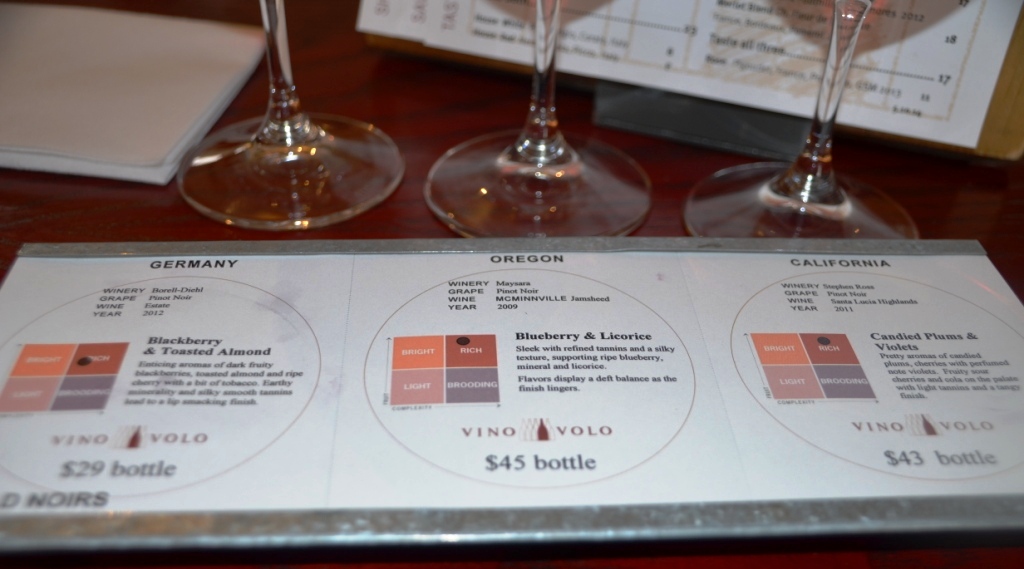 Here are my notes:
2012 Borell-Diehl Pinot Noir Estate, Germany
Color: Garnet
Nose: Blackberries, red fruit, clean, hint of minerality
Palate: Fresh, clean, bright acidity, very good balance, herbs, nice red fruit.
Verdict: Perfectly worked with my warm Tuscan chicken sandwich, great pairing. Overall very nice, food friendly wine. Drinkability: 7+
2009 Maysara Pinot Noir, McMinniville AVA, Oregon
Color: Ruby
Nose: Mocha, herbs, lavender, hint of root beer (I can’t believe I would say it, but Kirsten The Armchair Sommelier was right!)
Palate: Complex, delicious, nice acidity, good structure and backbone
Verdict: Also worked perfectly with the warm Tuscan chicken sandwich, very good wine overall. Drinkability: 8-
2011 Stephen Ross Pinot Noir, Santa Lucia Highlands, California
Color: Ruby
Nose: Concentrated, dark chocolate, pencil shavings, smoke, roasted plums
Palate: open fruit, bright, perfect balance, medium-long finish.
Verdict: didn’t work with the sandwich, but was delicious by itself. Drinkability: 8
There you have it – three excellent Pinot Noir wines on the go. Next time you are in the airport – remember, you have options. Vino Volo is continuing expanding, so there is a good chance that your airport experience will not be that dreadful after all. Cheers!
Vino Volo
Newark Airport
Terminal C, Gate 74
Phone: (973) 565-9250
Hours:
Monday – Saturday: 9 am – 9 pm, Sunday: 12 pm – 9 pm

Weekly Wine Quiz #103: Grape Trivia – Blends, Part 7
 The Wine Quiz series is not meant to intimidate. The whole idea here is to have fun and learn something new. When answering the questions, it is fully encouraged to use all available sources of information, including Google or any other search engine. There are no embarrassing answers – the most embarrassing thing is not giving it a try…
Welcome to the weekend and your new wine quiz!
We are continuing our grape trivia series, focusing on the blends, even if it is a blend of 1. White, Red, Rosé, Sparkling, Still, Fortified and Dessert – all goes. Oh yes, and we will blend in some regions and even wineries as well, just to make it more fun.
So how do you feel about red blends for today? I know, the temperatures in US and Europe are rising, but quite honestly, while I know that it is very popular and appropriate to set the wine preferences based on the temperature outside (red for the winter, whites and light red for the summer), I personally go by the mood and general desire, no matter what the thermometer says. So for today, it is reds.
And now, to the quiz!
Q1: As you know, Merlot is one of the Bordeaux stars. Below are some of the best Merlot wines Bordeaux can produce, but only some of them are made from 100% Merlot. Do you know what wines are those?
a. Château Le Pin
b. Château Petrus
c. Château Hossana
d. Château Certan Marzelle
Q2: What is common between the following 3 Bordeaux producers: Château Trotte Vieille, Château Belle Assise, Château Le Bel
Q3: Wine lovers around the world are well familiar with so called GSM wines and their great range of expression, coming from Rhone valley in France, Australia, US and may other places. If we are to replace the Syrah in GSM blend with the Cinsault, which will produce powerful, dense, concentrated, long living red wines, where do you think such a wine most likely will come from? You need to name not just the country, but the exact region in order to get a full point here.
Q4: Sangiovese is a star grape of Italy, used in many regions and producing great range of wines. Montepulciano is another well known red Italian grape, most often associated with juicy, delicious and versatile wines made in the region of Abruzzo. If the wine is made as a blend of Monteluciano and Sangiovese, often in 50/50 proportions (doesn’t have to be always 50/50), can you name the region where these wines would most likely come from?
Q5: Below is the [partial] list of grapes which I personally call “Power Grapes” (I’m contemplating the blog post under the same name for a while). When used on their own (at a 100%, no blending), these typically black-skinned grapes produce powerful, dense, extremely concentrated wines, often with gripping tannins. For each grape below, can you identify the region(s) and the country(ies) making best known wines from those grapes? You don’t have to name all countries and the regions, one per grape is enough:
a. Alicante Bouschet
b. Sagrantino
c. Saperavi
d. Tannat
e. Vranec (or Vranac)
Good luck, enjoy the quiz and your weekend! Cheers!
Rediscovering Chianti – Cool? Traditional? How about Fun and Tasty!
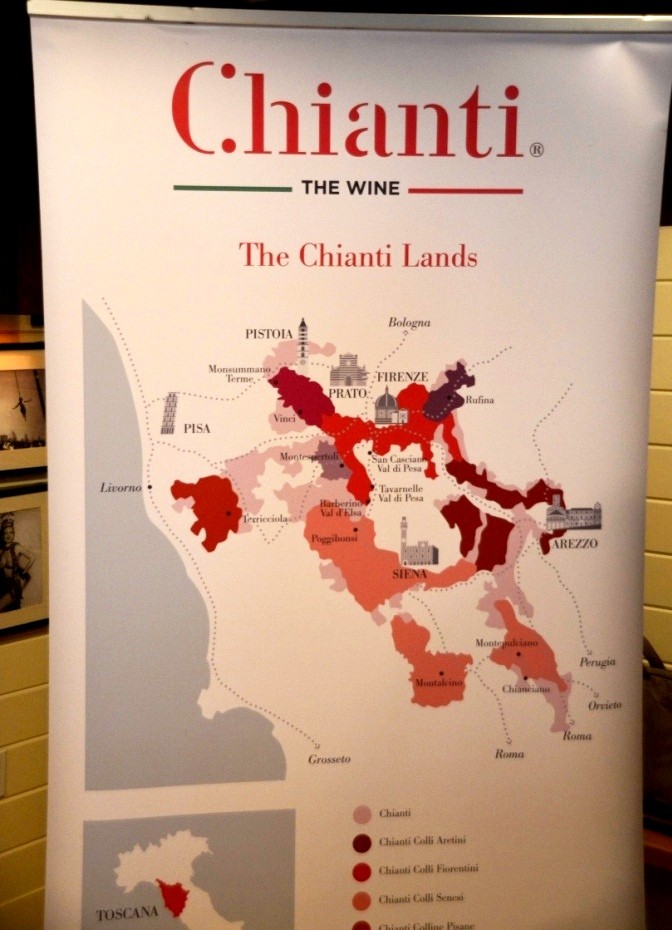 What is the major pleasure of the wine journey? You never arrive! No matter how much you know, how many wines did you taste, how familiar you are with the producers, there is always something new, something unexpected, something to learn and discover. Case in point – Chianti. Say the word “Chianti” – what image comes to mind? Come on, don’t even start on Fiasco, please. The “image” here is more of “what do you think of the Chianti”? Outside of being (sometimes) a safe and inexpensive choice at the restaurant, or a no-brainer selection to accompany the pasta dinner, how often do you dream of a bottle of Chianti, left alone salivate at one thought of the particular bottle of Chianti wine? Yeah, I thought so. But – the wine is a never ending journey – so let’s take a look at what is going with the Chianti nowadays.
A few weeks ago I attended a Chianti seminar and tasting in New York. The goal of the seminar was simple – to convince the group of wine bloggers, writers and wine trade professionals that Chianti is cool. Actually, this was the request from the event organizer, Consorzio Vino Chianti, that the seminar attendees would tweet about the event using the hashtag #ChiantiCool. To showcase the “cool” factor, 6 wines which we tasted during the seminar were presented in the semi-blind way. Of course all the wines were Chianti, but we were not given the information about the producers – and all the bottles were wrapped in the tin foil, so nobody would get any ideas.
The very first wine we tasted simply put me on the offensive. It was so tremendously acidic, it was hard to enjoy it at all – some people in the audience claimed that this was a “traditional Chianti the way it should be” – well, may be, but this was not cool at all in my book. Going from one wine to another, it felt like the wines were slowly improving, with the wines #5 and #6 been quite decent. Here are the brief notes, for what it worth:
- Chianti DOCG Riserva 2010 (12.5% ABV, 80% Sangiovese, 10% Canaiolo, 10% Trebbiano) – dark ruby color. Pure ripe tart cherries on the nose, hint of earthiness, touch of herbs. Palate – astringent and acidic, ouch! Drinkability: 5
- Chianti DOCG Riserva 2010-(14% ABV, 80% Sangiovese, 15% Merlot, 5% Syrah) – Dark Ruby color, Caramel and blackberries on the nose. On the palate, some cherries in the back, lacks depth. Drinkability: 7-
- Chianti Rufina DOCG Riserva 2010 (12.5% ABV, 90% Sangiovese, 5% Canaiolo, 5% Colorino) – dark ruby color. Cherries, earthiness, similar to the wine #1. Prevalent biting acidity on the palate – definitely a food wine, more balanced than the wine #1, but lacks depth. Okay as food wine, not a sipping wine by all means. Drinkability: 7
- Chianti DOCG Riserva 2010 (13% ABV, 90% Sangiovese, 5% Canaiolo, 5% Colorino) – Dark ruby color. Interesting dustiness on the nose, herbs, cherries, touch of plum. On the palate, lots of tannins in front, soft acidity, some cherries. Drinkability: 7+
- Chianti Montalbano DOCG Riserva 2010 (13.5% ABV, 100% Sangiovese) – Dark garnet color. Beautiful legs from switling. On the nose, the wine is beautiful, complex, with nutmeg and herbs. On the palate, it is sweet and savory, with good fruit, many layers and very good balance. Drinkability: 8-
- Chianti Colli Fiorentini DOCG Riserva 2010 (14% ABV, 90% Sangiovese, 10% Cabernet Sauvignon) – Garnet color, a bit lighter than the others. On the nose, there is lots of earthiness, cherries and savory notes. Palate shows matching earthiness (great!), herbs (thyme, sage), perfect complexity and nice long finish. Drinkability: 8


I don’t know what was the principal of selecting wines for the seminar, but cool they were not really. Thus after the seminar ended, I was questioning the whole presence of myself at the event, especially considering that now I had to wait for another hour before the walk-around tasting would start. I definitely glad that I was there with Stefano (Clicks & Corks), as it made the wait a lot more palatable.
Without any expectations, we started our walk-around tasting with the table number one. The very first sip of the very first wine literally made me shake my head in disbelief. The wine was simply delicious (tasting notes will follow). And wine after wine after wine made me to go wow, and then wow and wow again. Power, finesse, clarity, perfect balance – literally each and every wine we tasted was at the top of the game. It was almost mind-boggling to hear the winemakers explaining that their wines are made in the traditional style. Yes, I get it – it is a traditional style, as many wines were made as a blend of Sangiovese, Canaiolo and Colorino, but then the Chablis-like minerality on the nose, coupled with the layered, luscious fruit instead of just leather and tobacco notes – I have a hard time calling this “traditional” – but I will gladly call these wines “cool!”.
What gives, you ask? I think there are a couple of factors which are dramatically changing the story of the Chianti wines. First factor, or rather factors, are the modern winemaking techniques – in one word, the Quality. Better quality of the grapes, harvesting at a pick, reducing yield, improved fermentation capabilities, the barrels and tanks are better and cleaner, and so on. And then, it is the …. Terroir! When I commented to one of the winemakers that a few of his Chianti bottlings from the same year taste so incredibly different, he answer was “of course”. His property, which is about 100 acres in size, has 5 (!) different micro-climatic zones… Most of the people come to think of Tuscany, the land of Chianti, as something universally monolithic. Yes, with the idyllic moniker of “rolling hills of Tuscany”, but one and the same. At the same time, Chianti is a huge grape growing area, with probably a hundred of the sub-zones and microclimates, all producing “traditional”, but oh-so-different wines. In most of the cases, people can think of Chianti, Chianti Classico and Chianti Rufina, but actually Chianti is so much more than just these three regions – Colli Aretini, Colli Fiorentini, Colline Pisane, Colli Senesi, Montalbano, Montespertoli are some additional sub-zones, never mind single vineyards. Winemakers are learning all the time, what works and what doesn’t, and we are lucky to be able to taste the products of their labor of love.
Did I get you tired of my rambling by now? Okay, time to talk about wines. Below you will find the tasting notes. Yes, there were lost of wines, and they were so good! I also made an effort to extend above and beyond my simple “+++” ratings to give you more descriptors. I don’t throw those “+++” ratings easily – and here, a lot of wines were simply outstanding, table after table after table.
Here we go:
Azienda Agricola Corbucci – this was a very impressive start – very nice and approachable wines, made in the “drink any time” style
2012 Chianti DOCG “Corbucci” – ++, dry, leather, good acidity, a bit astringent
2012 Chianti DOCG “9Code” – +++, old vines, 7 days fermentation. fruit, earth, balance!
2009 Chianti DOCG Riserva “Corbucci” – +++, aged for 2 years in French barriques, excellent!
Azienda Agricola Emanuela Tamburini
2012 Chianti DOCG “Mauro” – +++, 90% Sangiovese, 10% Canaiolo, light, open, earthy nose. Very much Bordeaux in style on the palate.
2010 Chianti DOCG Riserva “Italo” – +++, aged for 24 mo in combination of cement tank and oak barrels, beautiful, open, layered
2008 Vin Santo del Chianti DOC “D’Incanto” – ++, oxidized style, aged in small open barrels for 5 years without topping off


Azienda Agricola La Cignozza
2010 Chianti DOCG – +++, 80% Sangiovese, 15% Canaiolo, 5% Mammolo, aged for 1 year in big barrels. Roasted meat on the nose, perfect acidity, dark fruit – excellent!
2008 Chianti DOCG Riserva – +++, 80% Sangiovese, 20% Canaiolo. Sweet open nose, nice fruit, multi-layered – outstanding!
Azienda Agricola Lanciola – harvesting by hand, 2 green harvests, 5 different microclimates within one vineyard!
2012 Chianti DOCG “Podere Elisa” – +++!
2012 Chianti Colli Fiorentini DOCG “Lanciola” – +++, outstanding, open
2011 Chianti DOCG Riserva “Podere Elisa” – +++ excellent!
2011 Chianti Colli Fiorentini DOCG Riserva “Lanciola” – +++, barnyard and roasted notes, wow!
2008 Vin Santo del Chianti Colli Fiorentini DOCG “Lanciola” – ++++, unoxidized style, caramel, apricot, candied fruit, perfect balance, wow!
Azienda Agricola Malenchini
2012 Chianti DOCG – +++, 5% Merlot, stainless steel, nice, light, smokiness, pleasant
2012 Chianti Colli Fiorentini DOCG – +++, 10% Canaiolo, smokiness, balance, power, a bit of tannins


Azienda Agricola Pietraserena – Arrigoni
2011 Chianti Colli Senesi DOCG “Poggio al Vento” – +++, Sangiovese/Syrah (10%), 1 year in barrique, 1 year in bottle. Restrained nose, beautiful!
2011 Chianti Colli senesi DOCG “Caulio” – +++, 100% Sangiovese, roasted nose, nice fruit, open, clean, easy to drink
2012 Chianti Colli Senesi DOCG – ++, 10% Canaiolo, cement tanks. Coffee, roasted notes, a little short on palate
Bindi Sergardi
2012 Chianti DOCG “Poggio al Sorbo” – +++, 100% Sangiovese, vineyard at 750 ft elevation, stainless steel, Raspberries and smoke, mocha, chocolate on the nose, clean and open palate
2012 Chianti Colli Senesi DOCG “Bindi Segrardi” – +++, red fruit, clean, elegant, beautiful
Cantina Sociale Colli Fiorentini Valvarginio
2010 Chianti Colli Fiorentini DOCG “Collerosso” – +++, organic wine, pure tobacco on the nose, same on the palate, beautiful balance
Cantine Fratelli Bellini – traditional and very good
2013 Chianti DOCG “Bellini” – ++-|, 5% Canaiolo, 5% Colorino, young, simple, easy to drink
2010 Chianti Rufina DOCG Riserva “Bellini” – ++-|, aged for 2 years in oak, nice, easy, simple, soft, touch of leather
Cantine L’Arco
2012 Chianti DOCG “L’Arco” – ++-|, 10% Merlot, touch of smoke
2011 Chianti DOCG “Principe del Sole” – ++-|, soft, round
2009 Chianti DOCG Riserva – ++-|, 10% Canaiolo, nice, soft
Castel di Pugna
2012 Chianti Colli Senesi DOCG “Ellera” – ++, simple, clean
2008 Chianti Colli Senesi DOCG “Ellera” – +++, excellent, sweet fruit, nice, elegant
2011 Chianti Superiore DOCG “Villa Cambi” – ++-|, nice, elegant, open
2007 Chianti Superiore DOCG “Villa Cambi” – +++, aged for one year in Tonnau, roasted fruit, plums, spices, excellent!
2008 Chianti Colli Senesi DOCG Riesrva “Ellera” – ++-|, 5% Canaiolo, nice, elegant, restrained
Castello del Trebbio
2013 Chianti DOCG – ++-|, Sangiovese/Canaiolo, stainless steel, brilliant ruby color, fresh berries, sweet fruit, good acidity, simple!
2009 Chianti Rufina DOCG Riserva “Lastricato” – +++-|, nice complexity, leather, spices, fresh, elegant


Le Fonti a San Giorgio
2012 Chianti DOCG – ++, 5% Pignatello, nice, soft, simple
2013 Chianti DOCG – ++, fresh, clean
2011 Chianti Montespertoli DOCG – ++, Sangiovese/Merlot, very goo, unusual garden herbs
2009 Chianti Montispertoli DOCG – +++, smokey blueberries, roasted notes, liquid steak, wow
2010 Chianti Montispertoli DOCG Riserva – ++3/4, 15% Merlot, nice, round, strawberries, good tannins, pepper, tobacco
Pietro Beconcini Agricola
2012 Chianti DOCG “Antiche Vie” – +++,excellent, clean, blackberries, mocha
2010 Chianti DOCG Riserva “Pietro Beconcini” – ++, cherries, nice, round, supple
Pieve De’ Pitti
2011 Superiore Chianti DOCG “Cerretello” – +++, Sangiovese/Canaiolo/Black Malvasia, nice, balanced, unusual fresh fruit notes
2010 Superiore Chianti DOCG “Cerretello” – ++++ nose/+++ overall. Nose – wild berries, perfect balance, fruit, very fresh overall
2009 Superiore Chianti DOCG “Cerretello” – +++-|, amazing nose – Barolo!
2008 Superiore Chianti DOCG “Cerretello” – +++, wild berries on the nose, perfectly powerful palate
2007 Vin Santo del Chianti DOC – ++, Trebbiano and San Colombano, aged in Chestnut wood, nice, could use a bit more acidity
Podere Volpaio – organic and beautiful
2010 Chianti DOCG “Volpaio” – ++, nice, simple
2010 Chianti DOCG “Terre De’ Pari” – +++, Beautiful, open, fruit on the nose, perfect balance on the palate, delicious tannins
2004 Chianti DOCG Riserva “Terre De’ Pari” – +++, Tobacco, smoke, barnyard on the nose – wow, beautiful
2001 Chianti DOCG Riserva “Terre De’ Pari” – +++, same as 2004, with even more complexity.


Ruffino
2012 Chianti DOCG – ++, nice, light, simple, good fruit
2012 Chianti Superiore DOCG “Il Superiore” – ++-|, nice, good fruit, good balance, good acidity
Val di Botte
2013 Chianti DOCG “Val di Botte”– ++, nice simple, $3 wholesale!!!
2012 Chianti [Classico] DOCG “Val di Botte” – +++, excellent, soft, round, clean, beautiful.
Villa Artimino
2012 Chianti DOCG – +++, nice, round, touch of smokiness, tobacco
2011 Chianti Montalbano DOCG – +++, pure minerality, gunflint, cherries, tobacco, earth, nice fruit, excellent balance
Overwhelmed? Well, I really wanted to share these notes. I don’t know if you read them at all, if you did not – just scroll back for a second, and then tell me – how often do you describe Chianti wine as “smoke, gunflint, wild berries, liquid steak, smokey blueberries, mocha, chocolate”? And yes, I had to use all of those descriptors – as this is what these wines were calling for. Is that cool? You bet. This is also traditional – but now, the beauty and diversity of Tuscan terroir shines through these wines. Don’t take my word for it – while I insist that Chianti now are fun and tasty (and cool!) wines, go grab a bottle and prepare to be blown away, as I had. Cheers!
Of Ancient Vines and Rhone Varietals – #winechat with Cline Cellars
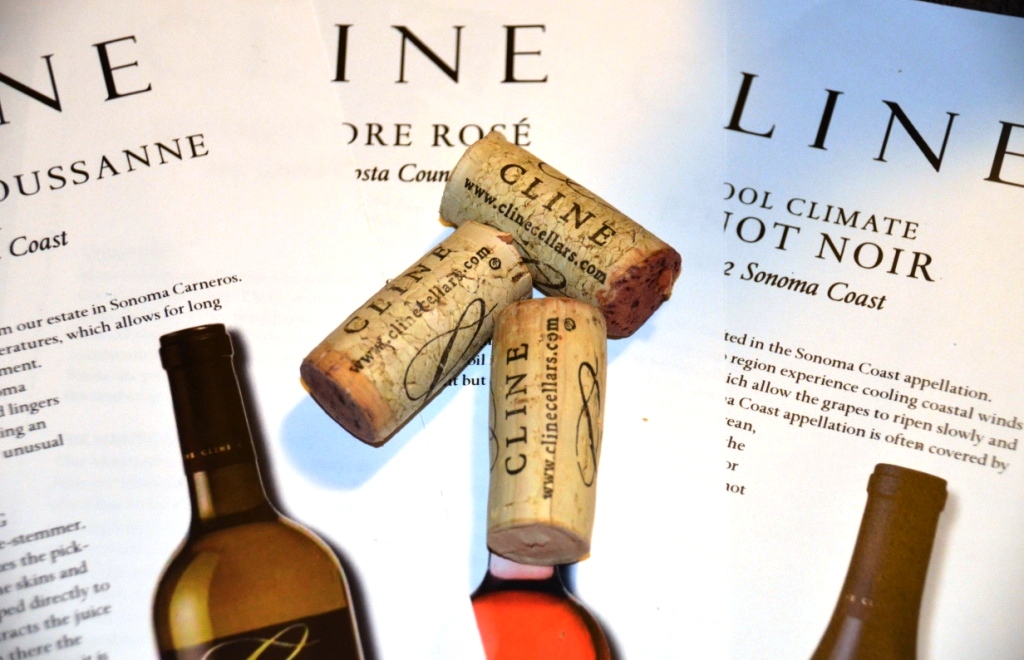 Think California wines, think California grapes – what is the first grape which comes to mind? I would guess that Cabernet Sauvignon would be the first. Zinfandel, Merlot, Pinot Noir and Chardonnay will trail near by (not in this exact order, of course). Are those the best grapes making the best California wines? Yes, before you beat me up, “best wine” is highly subjective, so let’s not drill on that. But – what else is there in California? Ever heard of Rhone Rangers? In the 1980s, a group of California winemakers made a significant effort to popularize Rhone varietals – Syrah, Grenache, Mourvèdre, Roussanne, Marsanne and many others. While this group of winemakers didn’t have any set structure, they became collectively known as Rhone Rangers. As the result of the work of this group, Syrah and Grenache became prominent players on the California wine landscape, with the other traditional Rhone varietals taking more on the supporting roles.
Fred Cline, the founder of the Cline Cellars winery in Contra Costa County, was one of the original Rhone Rangers. While Cline Cellars is most famous for their Zinfandel wines (7 different bottlings are produced), it also makes a number of wines from the traditional Rhone varietals. On Wednesday, April 30th, the worldly virtual tasting room, called #winechat, opened its doors to all the wine lovers, coming in to experience and to talk about the Cline Cellars Rhone-style wines. While Cline Cellars winery was officially founded in 1982, the family owned the vineyards since 1800s. After founding the winery, Fred Cline spent a lot of time and efforts to preserve and where necessary, to restore the ancient vines (some of the vines are 80 – 120 years old), hence the name “Ancient Vines” which you can see on the labels of many Cline Cellars wines. Today, Cline Cellars uses sustainable farming methods and it is Green String Certified winery. Wonder what it means? As explained by the @ClineCellars during the #winechat: “Since 2000, Cline Cellars farms the Green String way: naturally & sustainably &avoid chemical pesticides, fungicides & fertilizers”

So, how were the wines, you ask? During the #winechat, we had an opportunity to try 3 different wines. We started with 2012 Cline Marsanne Roussanne Sonoma Coast (14.5% ABV, 66% Marsanne, 34% Roussanne). Every time I say “these are some of my favorite grapes/wines/etc.”, I feel a bit uneasy. The reason is simple – when it comes to the wines, I like them all. Every time I talk about the subject, I can come up with the new list of favorites, so using that “some of my favorites” moniker feels almost like lying, just a tiny bit. Oh well. So yes, Marsanne and Roussanne are some of my favorite white grapes – the wines from Marsanne and Roussanne, both are core Rhone white grape varietals, are quite rare, no matter where they come from, so every opportunity to taste such wines is always very exciting.
When it comes to Marsanne and Roussanne wines, the interesting thing is that those wines should be consumed at the room temperature. I tried chilling various Marsanne/Roussanne wines, and it never worked for me. This wines works the best at the 18°C – 20°C/64°F – 68°F. Here are the notes:
Color: Light golden
Nose: Minerality, white flowers, touch of honey, touch of white peach, white grape aroma as the wine opened up.
Palate: Touch of sweetness, caramelized sugar, minerality, very complex.
Verdict: This is one delicious wine, which you can enjoy on its own or with some chicken and mushrooms dish, for instance. Drinkability: 7+
Our next wine was 2013 Cline Mourvèdre Rosé Contra Costa County (13.5% ABV, ~100 years old vines), another traditional Rhone varietal. I tried to play with the temperature on this wine, but it really didn’t work – this wine should be only served well chilled.
Color: Intense pink
Nose: Fruit forward, with lots of ripe strawberries
Palate: Strawberries, cranberries, nice acidity (when well chilled!). Very classic and supple Rosé.
Verdict: Ahh, it pairs so well with the strawberries! Serve either as an Aperitif, or with the fresh light salad (like kale and strawberries), or with the fresh fruit after a meal. Very refreshing. Drinkability: 7+


Last, but not least was 2012 Cline Cool Climate Pinot Noir Sonoma Coast (14.5% ABV, aged for 9 month in oak) – yes, not a Rhone varietal, but a California classic, coming from the classic area as well. The climate conditions of Sonoma Coast, with the fog settling down and cooling off the grapes every evening, allow grapes to ripen slowly and to build up a structure and nice acidic core. This wine was very much on par with the good California Pinot Noir expectations:
Color: Dark garnet
Nose: Smoke, minerals, touch of cherries, mushrooms, forest floor, roasted notes
Palate: Minerality, plums, nice acidity, well balanced.
Verdict: Very versatile wine. Perfectly enjoyable on its own, also paired well with wide variety of foods – fresh strawberries (!), roasted chicken, and believe it or not, but bacon cheddar (cheddar cheese with pieces of bacon) was the best pairing! Drinkability: 7+
As an added bonus, this wine even comes with the recipe attached to the back label – very clever idea!


That concludes yet another #winechat report. What is left to say is Thank You. First of all, thank you to the @ClineCellars for providing the excellent wines and enduring the barrage of questions during the intense one hour conversation. And of course, thank you to the Protocol Wine Studio, spearheading the whole #winechat program. And for you, my dear readers? Thank you for reading and come on over! See you next Wednesday on Twitter in the #winechat room. Cheers!
Month in Wines – April 2014
April was a good month for the good wines, with some of the gems worthy of Top Dozen consideration. Syrah and Pinot Noir were probably the biggest stars, but not the only stars. I already wrote about some of the wines before, so I will not inundate you with the repetitive details, and instead will simply give you the reference to the prior post. All the wines are rated on the 10 points scale, with + and – adjustments. These summary posts only include the wines with the ratings of 8- and higher – in the very very rare cases, I might include 7+ wines if I feel that the wine was simply unique.
Let’s go!


2010 Lenné Estate Pinot Noir Yamhill-Carlton AVA, Oregon (14% ABV, $45) – dark and delicious, and will age well for the next 10-12 years. 8+
2010 Renieri Invetro Rosso Toscano IGT (14% ABV) – delicious Super-Tuscan, powerful, round, a pure joy. 8+
2011 Michel Chapoutier Tournon Mathilda Shiraz Victoria, Australia (13% ABV, $14.99) – simply spectacular. A clear pepper profile on the nose and the palate. A stunning beauty. 9
2003 J.L. Chave Offerus Saint-Joseph, France (13.5% ABV) – Barnyard, touch of spice (pepper), dark and delicious. 8
2005 Domaine Philippe Bornard Arbois Pupillin La Chamade Ploussard (12.8% ABV) – beautiful, powerful, multi-layred. Pleasure in every sip. 8+
2012 J Wrigley Estate Pinot Noir Proposal Block McMinnville AVA (14% ABV, aged 10 Month in French oak, 250 cases produced. $45 SRP) – chocolate, mocha, a bit of mushrooms. Nice and balanced, and will age well. 8-
2010 Joel Gott Cabernet Sauvignon Napa Valley (SRP: $47.99) – perfect Claret, if you will. This wine would rival many top California Cabernet Sauvignon wines, which would also cost at least 2-3 times as much. 8
2007 La Rioja Alta Vina Alberdi Rioja Riserva, Spain (SRP: $19.99) – Perfect balance of fruit, structure, power and earthiness which only Rioja possess. Beautifully round and delicious. 8+
2001 La Rioja Alta 904 Rioja Gran Riserva, Spain (SRP: $47.99) – Mature and delicious, with lots of subtle nuances. A thought provoking wine. 8+


2009 Shiloh Legend Judean Hills, Israel (14.2% ABV, 45% Shiraz, 40% Petite Sirah, 9% Petite Verdot, 6% Merlot, each grape vinified and oak-cask aged separately for 8 month, then blended and aged for another 8 month) – round, velvety, delicious, with dark fruit core and firm structure. Perfect balance of power and concentration. 8
2012 Tousey Chardonnay Estate, Hudson River, New York (12% ABV) – a Chablis on Hudson would be a good way to define this wine. Chablis style minerality and hint of gunflint on the nose, creamy and round on the palate, with subtle apple and vanilla notes. Delicious Chardonnay. 8-
2012 M. Chapoutier Les Vignes des Bila-Haut White Côtes-du-Roussillon (13% ABV, $13.99, blend of Grenache Blanc, Grenache Gris and Macabeu) – in a word, delicious. Bright white fruit on the nose, fresh lemon, some earthiness. Perfect balance on the palate, each sip makes you crave for another. 8+
2004 Bodegas Ondarre Rioja Reserva Rioja DOC (13% ABV) – dark fruit on the nose, with the hint of eucalyptus and cigar box. Palate full of dark fruit with earthy profile, supple tannins and bright acidity, very balanced. 8-
2010 Chapelle-St-Arnoux Côtes du Rhône AOC (13.5 % ABV, $10.99) – nose of inviting dark fruit, the same on the palate with addition of dark chocolate notes and rounding acidity. Very dense and well structured for Côtes du Rhône. A steal for the price (sorry, it was some sort of closeout). 8
2010 Les Trois Chemins Côtes du Rhône AOP (13% ABV, $8.99) – fresh red fruit on the nose, blackberries and cherries, more of the same on the palate, coupled with bright acidity. Simple and elegant, and beyond steal at the price (again, a closeout of sorts). 8-
That concludes my report on the April wine highlights. Did you taste any of these wines? What were your best wine experiences of the month? Cheers!
J Wrigley #WineChat – Continuing Oregon Pinot Noir Deep Immersion
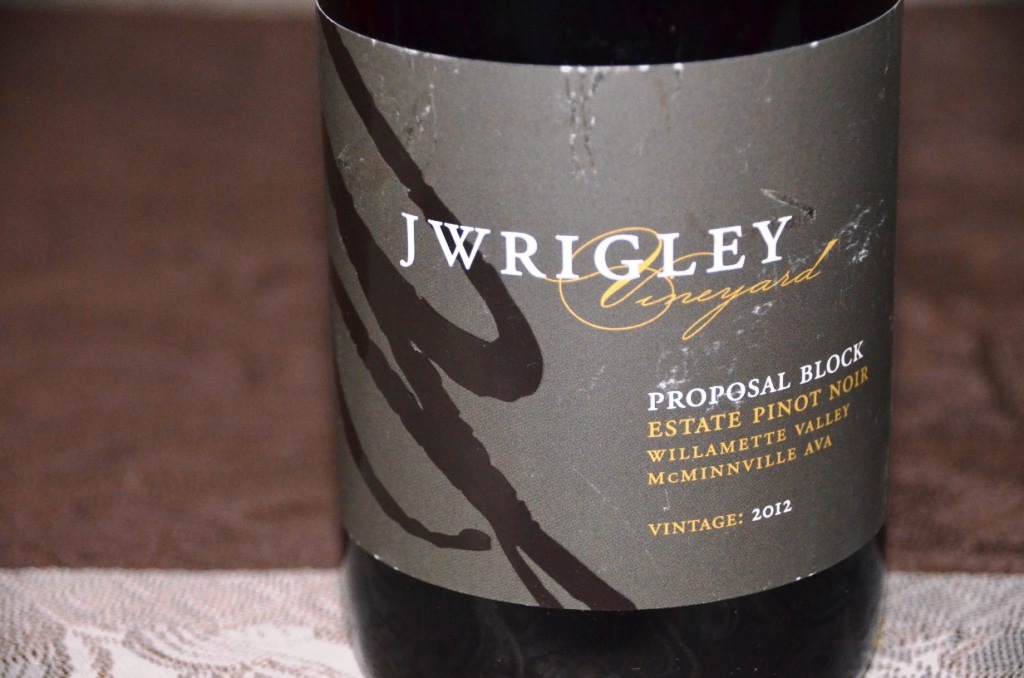 Last Wednesday, April 23, the virtual tasting room opened its #winechat doors to discuss for the third time in the row the endless subject of Oregon Pinot Noir. Presiding over in the hot seat was John Wrigley, the grape grower and winemaker at the J Wrigley Estate in McMinnville AVA in Oregon.
Let me start from the conclusion and tell you what I learned. The terroir, the soil, the elevation, and the winemaker are all matter. Duh, you wanna say? Well, yes, this sounds very pedestrian for the oenophile, like teaching an alphabet to the fifth-grader. However, when you drink the wine made with the soul, when you drink a thought-provoking wine, and when you also get a chance to discuss that thought-provoking wine with the someone who actually made it, and the group of like-minded people, the concept of soil and terroir stops being abstract, and rather becomes something you can…put in your mouth and taste!
We learned a lot during this #winechat. Once again we heard about the peavine soils, which make vines work really hard. We also heard about volcanic rocks and marine sediment soils. You can learn about the soils too – here is the link to the very interesting article about J Wrigley wines, which also includes the video of John Wrigley talking … dirt (not as a matter of speech, but as a substance).
We learned about something called Van Duzer effect. Ever heard of it? A narrow stretch of open land, called Van Duzer corridor, connects Willamette valley to the ocean. Every evening, the cold ocean air runs through that open space to cool off everything in the valley, especially all the grapes growing on elevations. The temperature drop can be in the range of 20°-30°, making grapes to ripen slowly, to retain acidity and concentrate sugars, which in turn means … better wines for us! Here is an article where you can read about Van Duzer effect in far more details.
We also learned about very interesting experiment, called the Cube Project. 3 wineries, 3 winemakers, 9 wines. 3 wineries – Anne Amie from Oregon, Bouchaine from Carneros and Lincourt from Sta. Rita Hills, each took their best Pinot Noir plots, capable of producing at least 6 tons of grapes each, and divided it into 3 equal parcels. Each winemaker had an opportunity to make wines from all three parcels, thus producing 9 different wines. When the wines were tasted by the group of professionals, it was concluded that winemaker style prevails over the terroir – the wines from different plots made by the same winemakers tasted closer than the wines made within the same parcels. I would really love to try all those wines by myself, or at least learn more about how the tasting was conducted – were the wines tasted blind, how many people tasted the wines and the number of other factors would all matter to me. But – as I can’t report first hand, here is a link to the article which explains the experiment in lots of details.
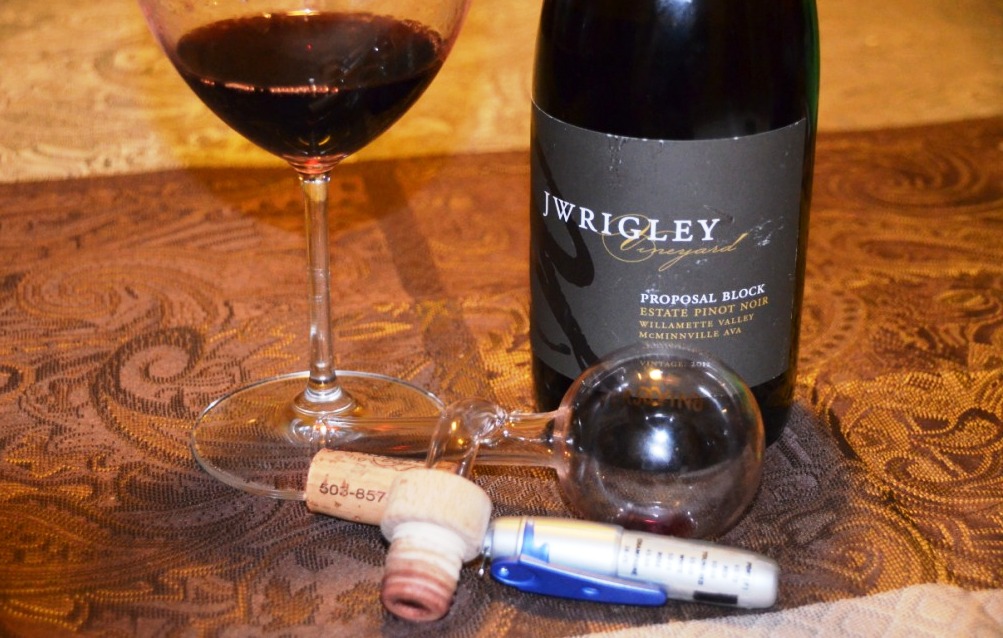
J Wrigley Pinot Noir and tools of the trade
Yes, we learned a lot, but how was the wine, you are probably wondering? This time around, I didn’t play with the temperature, I only measured it once – it was at 22.3°C/72°F. I played a bit with rapid decanting using VersoVino. This 2012 J Wrigley Estate Pinot Noir Proposal Block McMinnville AVA (14% ABV, aged 10 Month in French oak, 250 cases produced. $45 SRP) was very supportive of our conversation. Oh, by the way, can you guess where the name “Proposal Block” comes from? There is a good chance that you guessed it – this was the very first Pinot Noir planted vineyard at the estate, where John Wrigley proposed to his wife (wine and romantics – unbeatable!).
Now, here are some notes regarding the wine:
Color: Garnet
Nose: Fresh, ripe raspberries, floral notes, chocolate, mocha. Smokiness showed up later on.
Palate: Soft, round, good acidity. nice earhiness, dark fruit, very balanced. After a while, smokiness showed up in the back, and the the roasted notes.
Verdict: powerful and balanced Pinot Noir. Will drink well by itself, and can be well paired with food. For the full enjoyment, about one hour decanting is recommended. Will also age well for the next 10-12 years (or may be more, my crystal ball is broken, so I can’t be more precise). Drinkability: 8-
That conclude my report about J Wrigley #winechat and it also concludes the overall Oregon Pinot Noir series – definitely was learning, fun and entertaining experience for me. Don’t be shy – you should really try the #winechat for yourself (every Wednesday, at 9 PM Eastern/6PM Pacific) . Until then – cheers!
Weekly Wine Quiz #100: Grape Trivia – Blends, Part 4
The Wine Quiz series is not meant to intimidate. The whole idea here is to have fun and learn something new. When answering the questions, it is fully encouraged to use all available sources of information, including Google or any other search engine. There are no embarrassing answers – the most embarrassing thing is not giving it a try…
Welcome to the weekend and your new wine quiz!
We are continuing our grape trivia series, focusing on the blends, even if it is a blend of 1. White, Red, Rosé, Sparkling, Still, Fortified and Dessert – all goes. Oh yes, and we will blend in some regions as well.
And now, to the quiz!
Q1: True or False: Even if the bottle of wine states the vintage and is made out of 100% of the same grape, there is a very good chance that the wine is still a blend. Explain your answer.
Q2: This white grape is known to produce beautiful, delicately perfumed wines. In some appellations in France, it is also the only white grape allowed to be blended into the red wines. Do you know what grape it is?
Q3: Whats is common between Cabernet Franc, Riesling and Vidal?
Q4: Which one is missing?
Rondinella, Corvina, Molinara, ?, Croatina, Negrara, Oseletta
Q5: I’m drinking a delicious French white dry wine, made out of Clairette and Roussane. What AOC designation this wine most likely has?
Good luck, enjoy the quiz and your weekend! Cheers!
Wednesday’s Meritage – Wine Quiz Answer, Wine and Biodynamics, Rioja Week in New York, Water Witching and #winechat tonight
 Meritage time!
Let’s start with the answer to the wine quiz #99, Grape Trivia – Blends, Part 3.
For the long time, the grape trivia series was focused on the single grapes. But now we are stirring things up, so all the questions in the quiz are about blends (well, even if it is a blend of one), as most of the wines in the world are actually blends. As usual, there were 5 questions in the quiz.
Here are the questions, now with the answers:
Q1: Sangiovese is the main grape used in production of Chianti. By itself, sometimes it might lack the intensity of the color. For a while, another grape was added to Sangiovese wines specifically to enhance their color. Can you name that grape?
A1: Colorino. It was popular addition for a short while, but now only very few producers still add it.
Q2: I’m blending together Xarel-lo, Macabeo and Parellada. Which wine I’m most likely making?
A2: Cava – the Spanish sparkling wine. These three grapes are generally a classic blend for a Spanish Cava.
Q3: In the past, this white grape used to be blended into the Chianti wines, and now its use is simply prohibited in some of those Chianti wines. Can you name that grape?
A3: Trebbiano, a.k.a. Ugni Blanc, a.k.a. Malvasia Fina (be careful – just using the name Malvasia is incorrect). It used to be a required grape in the Chianti blend, which was leading to diluted, dull wines. Since 2006, Trebbiano use is banned in Chianti Classico wines.
Q4: You can say whatever you want, but Bordeaux and Burgundy are the hallmarks of wine world, and everybody try to measure up to them. Name two regions in Italy, one sometimes compared to Bordeaux, and another one to Burgundy.
A4: Tuscany is often compared to Bordeaux, and Piedmont, or to be more specific, Barolo wines, are often compared to the Burgundy. While Tuscany/Bordeaux parallel is more of the terroir/climate based, the reason for Barolo/Burgundy comparison lies in complicated Vineyard/Sub-zone/Cru/Parcel system of wine identification in Barolo.
Q5: Name the missing grape: Crljenak Kaštelanski, Primitivo, ?, Zinfandel
A5: Tribidrag. All the listed grapes are close relatives of Zinfandel, with Tribidrag being recently discovered as direct predecessor of Zinfandel.
When it comes to the results, we had a great participation in the quiz, and we have a winner – Julian of VinoinLove, who correctly answered all 5 questions! Julian get the coveted prize of unlimited bragging rights. Also (no web site), Jeff a.k.a.the drunken cyclist and Mario Plazio (no web site) are all answered correctly 4 questions out of 5, and they get the honorable mention. Well done, everyone – and we are going to continue blending things up for a while.
Now, to the interesting stuff around the vine and the web!
Last week’s #winechat was all about Biodynamics – we were talking about the wines of Youngberg Hill, the winery in Oregon, were the wines are made using biodynamics. I understand that there is a lot of controversy surrounding the concept of Biodynamics, with all the cow horns, bladders and water manipulations – but a lot of it makes sense if you think about the whole approach holistically. I want to share with you a great article from The Oregonian, which explains in detail how biodynamics works in the vineyard.
Rioja is coming to New York City! Starting Saturday, April 26, there will be a whole slew of events taking place all over the city – seminars, tastings, grand tasting, wine and tapas event and more. Don’t miss the opportunity to experience the vibrancy of the magical Rioja – here is your link for all the information regarding the Rioja festivities. I will be attending the trade tasting and seminar on Thursday – drop me a note if you plan to be there as well.
Heard of water witching? It appears that Marc Mondavi, a son of the legendary winemaker Peter Mondavi, not only makes wine in California – he also possesses special abilities to find water under ground, using set of two special rods. Whether you believe in the water witchery or not, this video and the blog post are quite interesting.
Last but least for today – don’t miss the #winechat tonight! Last from the Oregon Pinot Noir series, tonight we will be talking about the wines of J Wrigley Vineyard – #winechat is easy to join on twitter, just follow the #winechat hashtag, and they are always fun! 9 PM Easter/ 6 PM Pacific – don’t miss it!
And we are done here. The glass is empty – but the refill is on its way! Cheers!
Passion for Jura – The Land
 Let’s say you are talking to an oenophile. Ask her to name the major wine regions in France. I’m sure that Bordeaux, Burgundy and Champagne will be first. With the small pause, Loire and Rhone will follow, and then may be (may be!) Languedoc. I wonder how many of the oenophiles will mention Jura? Next question might be even more “tricky” – how many oenophiles tasted Jura wines? And the trickiest question of all – how many of you, my readers, tasted Jura wines? No, you don’t need to answer – Jura wines are almost impossible to find in US, and very difficult to find outside of France in general, so it is not surprising that they are not winning popularity contests, and thus it is really not your fault that you are not familiar with Jura wines.
We live in the times of the dramatic globalization of wine. Not only wine is exceedingly produced in the new and unusual places, but wine availability is becoming more and more global. No, Jura is not a newcomer to the world of wine, if anything, it is quite the opposite – Jura wines had been produced for more than two thousand years. The global availability is what changed – as consumers demand more and different wines, Jura wines, which are definitely unique and different, are becoming better known and more demanded.
Few days ago I was lucky to attend the wine tasting in New York City, called Passion for Jura, which was a great learning experience. The event consisted of seminar and walk around tasting, with more than 20 producers represented. Before we talk about wines themselves, lets take a look at the Jura region and many of its unique qualities first.
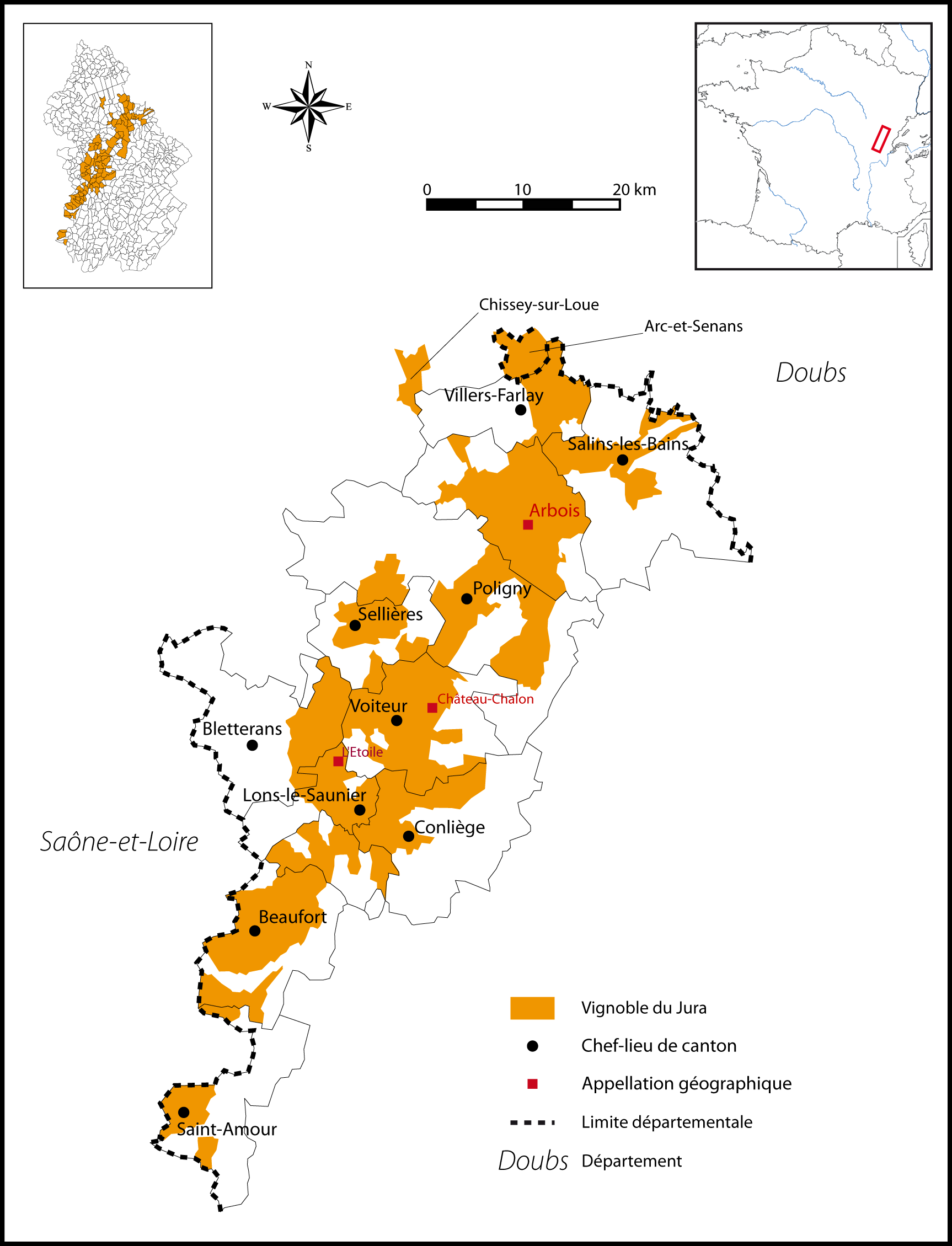
Jura region is a narrow stretch of land, about 50 miles long and less than 2 miles wide, in the north-west part of France, sandwiched between Burgundy and Switzerland. First mentions of the Jura region go all the way back to 80 A.D. When it comes to the different aspects of terroir, climate in Jura is somewhat similar to Burgundy, with the potential for more severe cold temperatures, especially during winter time. Soils are probably the most unique aspect of Jura terroir, with some of the shale formations aging between 200 and 230 million years – so yes, you can probably find dinosaur imprints in that soil, if you look deep enough. Overall, the difference in the age of soil can be quite dramatic, tens of millions of years between the neighboring vineyards.
Jura wines were well regarded in France, with Arbois (one of the main towns in the region) wines being known for what they are since the 10th century, and Château-Chalon wines (this is where the famous Vin Jaune is made) being well known since the 16th century. Similarly to all other winemaking regions in France, Phylloxera wrecked havoc in Jura’s wine industry. Before the Phylloxera, Jura region had about 50,000 acres under the vine, with 42 grape varieties, out of which 14 were identified in 1774 as “good grapes”. Today, Jura region has only about 5,000 acres planted, and only 5 varietals are used in the winemaking. Of course everything has two sides – only the best areas were replanted after the Phylloxera epidemic, and only with the grapes which produced the best results, so yes, there is silver lining in most everything in this life.
It is impossible to talk about Jura and not to mention a few of the famous people who dramatically impacted the wine world, while living in Jura at the same time. First, of course is Louis Pasteur, whose seminal work “Studies its diseases, their causes and new preservation and aging process“, published in 1886, was really a key element of the modern oenology. While Pasteur’s name is probably familiar to many, I wonder how many people will recognize the name of Alexis Millardet, also of Jura – meanwhile, he came up with the technique of grafting French vines on the American rootstock, which allowed to restart the French wine industry after the Phylloxera devastation. And the last person I would like to mention here is Joseph Girard, a resident of Arbois, who founded INAO (National Institute of Denominations of Origin) and was instrumental in establishing the AOC system of quality, which was subsequently copied all over the world. It is probably not very surprising that the very first AOC in France, established in 1936, was … the Arbois AOC!
Let’s talk about the grapes. Now, this is somewhat of the simple task, as there are only 5 grapes growing in Jura – 3 reds and 2 whites. Here they are:
Poulsard – indigenous red grape of Jura, sometimes also called Ploussard. Most planted red grape in Jura (about 40% of all red grape plantings), and about 14% of total grape plantings. Produces bright looking wines, almost Rosé in color, which are very refreshing and age quite well.
Trousseau – another red grape of Jura, part of the Savagnin family, most likely originated in Jura. The same grape is known as Bastardo in Portugal. Has about 8% of the total planted area, and about 22% of the red grape plantings. Often blended with Pinot Noir.
Pinot Noir – was introduced in Jura in 14th century. Has about 13% of the total plantings, and a bit less that 40% of the red grape plantings. Early ripening variety, thus has high degree of risk of frost damage in spring.
Chardonnay – same as Pinot Noir, was introduced in Jura in 14th century. Also known as Melon d’Arbois in the north, and Gamay Blanc in the south. Few vignerons are still growing Melon á Queue Rouge, a rare red clone of Chardonnay. Chardonnay is the most popular grape in Jura, at about 43% of total area plantings and 2/3 of the white grapes plantings.
Savagnin – most famous grape of Jura, and the only one allowed to be used in Vin Jaune. Late ripening variety with low yield. makes up about 22% of the total grape plantings and about 1/3 of the white grape plantings.
Before we get to the styles of wines and regions, let me give you a few interesting numbers. With 5,000 acres planted, there are about 300 grape growers in Jura, each taking care of about 17 acres of vineyards. There are also about 200 producers and about 100 villages in the Jura region.
With only 5 grapes, Jura produces a great variety of stylistically very different wines. Historically, Jura wine were very unique, as oxidation always played a very important role in the white wines of Jura. While oxidation is great, as the oxidized wine can be preserved almost forever, it doesn’t necessarily appeal to the tastes of the mass of the wine drinkers in the world. Starting in 1990, the style of Jura wines started to change, to move from oxidized to fresh, generally more acceptable style. As the result, there is a number of styles which you need to be aware of in order to make sure the wine will actually taste as you would expect instead of “OMG, what is it???”. Additional problem is that these styles are not necessarily clearly indicated on the from label, so sometimes you really need to look through all the information on the labels and outside in order to understand what type of wine it is. The oxidation is only relevant to the white wines, so the styles of the white wines are:
- Ouillé – non-oxidized
- non-Ouillé – oxidized
- Naturé – Savagnin wine in the oxidized style
- Tradition – a blend of oxidized Savagnin and Chardonnay
For what I understand, all it means is that if you don’t see the word Ouillé somewhere on the label or description of the wine, there is a good chance that the wine will be oxidized – if anyone who reads this post has better knowledge of the subject, I would greatly appreciate the comment!
Tired yet? We are almost done! Last part – let’s talk about wine styles and appellations. Before we get to the Jura details, one general note. Have you noticed the words AOP showing up more and more on the wine labels, especially on the latest releases of wine? This is because the French government, following overall EU requirements, is changing the AOC (Appellation d’Origine Contrôlée) nomenclature to the AOP (Appellation d’Origine Protégée), so you should expect to see the words AOP more and more on the bottles of French wines.
Jura uses total of 6 appellation designations – 2 of them are product designations, and 4 are geographical designations. Additionally, there are two wines which can be made in different appellations but they still have very specific product requirements. Here we are:
 Crémant du Jura AOP – this is the product AOP for Sparkling wines in Jura. Made by the traditional (méthode champenoise) method, with 9 month minimum aging on lees. The wine can be produced anywhere in Jura, using all 5 varietals. Grapes should be harvested by hand and whole-cluster pressed.
Macvin du Jura AOP – this is the product AOP for fortified dessert wines. Can be made anywhere in Jura AOPs using any of the 5 grapes. The wine is made by blending of 2/3 of unfermented grape juice with 1/3 of the local brandy, called Marc du Jura, which should be made at the same property from the grape skin pomace. The wine should be aged for at least 12 month in the oak barrels before release.
Arbois AOP – geographic AOP, the biggest in terms of production. All 5 grapes are grown and permitted in production of the wines, with all types of wine allowed for production.
Château-Chalon AOP – a dedicated geographic AOP for production of Vin Jaune. Savagnin is the only allowed grape, harvested late. If any other wines are made, they are designated as Côtes du Jura. For more details, please see below.
Côtes du Jura AOP – a geographic AOP. All 5 grapes are allowed to be used, and all styles of wines can be produced.
L’Étoile AOP – a geographic AOP, the smallest in Jura, consisting of only 4 villages. Only Chardonnay, Savagnin and Poulsard are allowed. All styles of the wines can be produced.
Vin Jaune – Most famous wine of Jura, so called “yellow” or “golden” wine. Can be made only out of the 100% Savagnin, in any of the 4 geographic AOPs. The grape is harvested late, and vinified as any other white wine would. After that, the wine is aged in the oak barrels which are not completely filled up. The barrels are never topped off and never racked. Similar to the Jerez, the thin film is formed on the wine’s surface, which is called The Veil – it allows the wine to age gently. The minimum age of the wine before it can be bottled is 6 years and 3 month. The wine requires pre-tasting prior to the bottling, and it is produced only in the good years. Vin Jaune is bottled in the special bottles called Clavelin, which contain 620 ml – Jura winemakers had to endure a long fight with the authorities in order to keep the historical, but not EU standard size (750ml) of the bottle.
Vin de Paille – the dessert! Generally produced from Chardonnay, Savagnin, Poulsard and sometimes Trousseau in Arbois, L’Étoile or Côtes du Jura AOPs. The grapes are harvested early and then dried up either in the boxes or hanged up in the air for 3 -5 month. After pressing, the wine have to age for at least 3 years with minimum of 18 month in the oak.
Whew, and we are pretty much done. Believe it or not, but I think this is probably the longest ever post with the least number of pictures – if not The longest, then definitely one of the longest. Jura is unique and special region, as you will see when we will be talking about the wines in the next post, and I really wanted to give you all the information together, without breaking it into the pieces. If you are still reading it – I definitely want to thank you for your patience. I hope you learned something new here. Also, if you have an experience with Jura wines, your comments and opinion will be greatly appreciated. Hell, your comments will be greatly appreciated even if you never heard of Jura wines till today. With that, until the next time – cheers!
Last Bottle Sign Up ($10 credit)




 Talk-A-Vino