Archive
Stories of Passion and Pinot: Bells Up Winery
Do you know by any chance what “bells up” means? If you do, you can already pat yourself on the back and pour yourself a glass of wine. If you don’t – you can pour yourself a glass of wine and ponder at the question for a bit – the answer will follow.
Meanwhile, let’s talk about the passion, an indelible component of winemaking, possibly even a key ingredient in a delicious wine.
Dave Specter started making wine in the basement of his home back in 2006. By 2009, he realized that passion for winemaking trumpets his (successful!) career of a corporate tax attorney, and Dave decided to let his passion lead the way. In 2012, Dave and his wife Sara found themselves in Newberg, Oregon, purchasing a dead Christmas tree farm in the Chehalem Mountains AVA, where they started planting their estate vineyard. The rest is history – of passion and Pinot, there is.
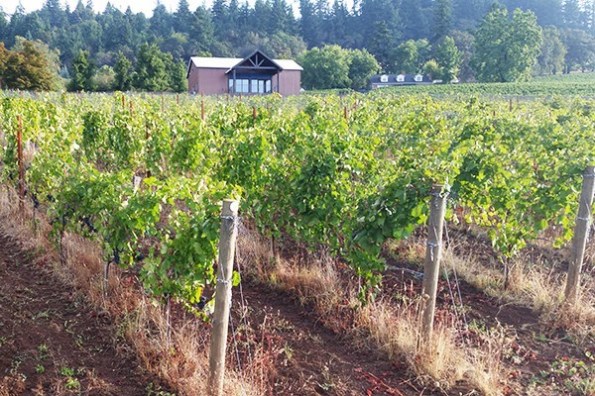
Bells Up vineyards. Source: Bells Up Winery
Before there was wine, there was music. For more than 20 years Dave had been playing the French horn. In classical music, there is always a moment which needs to be stressed – “Bells up” is the conductor’s instruction to the French horn players to lift the bells of their instruments and produce the sound of maximum intensity. “Bells up” became Dave’s motto in life, and it also gave the name to his winery – now you have your answer in case you are still wondering.
While Pinot Noir was the first grape planted at the newly minted Bells Up winery, the passion also led Dave to plant half an acre of Seyval Blanc, the grape he successfully used back in Ohio. That Seyval Blanc planting became the first in the Chehalem Mountains AVA, and second in Oregon. If you look at Bells Up winery website, you will see that the winery bills itself as micro-boutique and un-domaine – planting Seyval Blanc and not Pinot Gris in Oregon is clearly an un-domaine move. By the way, the “un-domaine” was one of the words which caught my eye while researching the Bells Up winery information. So I took the opportunity to sit down (virtually, albeit) with Dave and listen to him share his passion for wine. Here is what transpired in our conversation:
[TaV]: What kind of wine(s) did you make in your basement in Cincinnati?
[DS]: In the beginning, when my wife Sara and I started making wine in 2006 as a couple’s activity for our fifth wedding anniversary, we started with kit wines—juice in a bag, essentially. When I moved on to grapes, I sourced from both local and regional vineyards for Seyval Blanc, as well as through a Cincinnati vintners club that would truck in fruit from vineyards in California. From that I made Syrah, Petit Syrah, Cabernet Sauvignon, Cabernet Franc, Merlot—even a Pinot Noir, although that fruit was sourced from Lodi, and was completely unlike the Pinot I work within Oregon today. Essentially, it was a hobby that grew out of control.
[TaV]: Why Oregon? As a young winemaker, you had many options – what made you decide to go to Oregon?
[DS]: First, thank you for calling me young. We were a whole lot younger when we started this journey. After that first kit wine, I was hooked on the process and wanted to learn more. Sara graciously let me take over the basement, then the garage, then the dining room. And we started taking wine vacations to “hidden gem” wine regions—Texas Hill Country, Finger Lakes, and finally Oregon in 2008.
We had already visited Oregon briefly in 2004 and loved it. In 2008 we spent two weeks roaming the state, with the last few days in Newberg at a bed and breakfast just 400 feet up the mountain from the property that is now ours. We fell in love with Oregon, the scenery, the climate, the wines, and the intimate experiences tasting wines at the tiniest wineries with the winemaker. We decided then that this was the place for us.
[TaV]: Seyval Blanc is one of the most popular grapes in the Eastern US. But why Seyval Blanc in Oregon?
[DS]: When we moved to Oregon in 2012, we knew we wanted to plant a vine that connected to our story. I’d been working with Seyval Blanc for years in Ohio and when I won two amateur national winemaking competitions in 2011, one was with a 2010 Seyval Blanc. So, it was a great tie-in.
But also, we see an opportunity to differentiate ourselves with a white wine that nobody else has in the Willamette Valley—and only one other winery has in Oregon. Plus, we believed it would grow well here, and after two small harvests that resulted in some beautiful wine, we’re happy to be proven right. Note, however, we didn’t plant a lot of it: only about 250 vines (and not all of them made it—so Sara’s been propagating like crazy ever since for replants). We figured if it was a failure, we could always graft over it.
[TaV]: Any future plans for more mainstream Oregon white grapes – Chardonnay, Pinot Gris, Riesling?
[DS]: From a business perspective, we’ve taken a really close look at what other wineries in the area are making, and for a 500-ish case production winery like ours it’s best to have just one white wine available for sale at a given time. That’s because we don’t move enough volume and the whites generally don’t age as long as reds.
We currently make Pinot Blanc and we like it quite a bit. It’s a bit rarer in these parts than Pinot Gris or Chardonnay, which again helps to differentiate us. But as for expanding our white wine program, the ultimate plan is to phase out Pinot Blanc for Seyval Blanc and that will be the only white in our line-up. There are a lot of similarities between my Pinot Blanc and my Seyval
Blanc, so the transition from one to the other won’t be as jarring as a shift from another white varietal, such as Chardonnay.
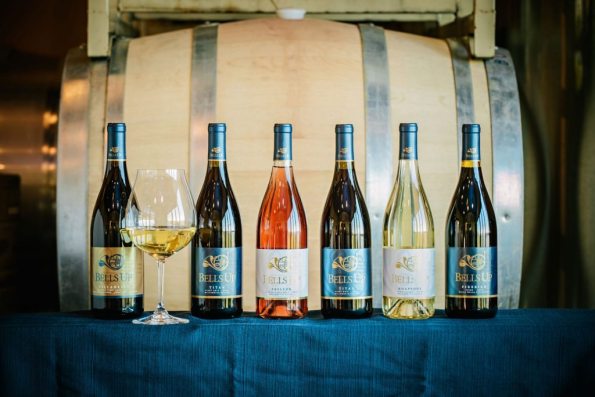
Bells Up wines. Source: Bells Up winery
[TaV]: Today you already make white, rosé, and red. Any plans to join seemingly the hottest Oregon trend and start producing sparkling wine?
[DS]: No. I know I keep coming back to the numbers, but I’m a finance guy with an MBA and a corporate tax law career. While we think there’s a place in the market for adding bubbles to still wines, if I made a sparkling wine I’d want to do it the right way (traditional method). That takes time, space and money. And at our volumes, what we’d have to charge per bottle to justify that type of investment is more than what the market would reasonably bear.
[TaV]: Continuing the same question – as you already produce Seyval Blanc, which makes very good dessert wines, any plans for some Late Harvest Seyval Blanc goodness?
[DS]: Don’t give Sara any ideas! Actually, we’ve been so focused on just getting these Seyval Blanc vines established and proving that our concept had legs that we really haven’t thought much farther than straight up Seyval Blanc. Our 2017 harvest yielded 100 pounds and made 23 bottles (yes, bottles)! Our 700-pound 2018 harvest produced 15 cases and we’ve made that available exclusively to our wine club members on a 2-bottle allocation. Give me a few years when I’ve got Seyval Blanc growing out of my ears and I’ll get back to you on a Late Harvest version.
[TaV]: Who are your winemaking mentors (if any)?
[DS]: First and foremost, Joe Henke of Henke Winery in Cincinnati. Joe took me under his wing as a basement winemaking hobbyist. He offered me a position as an unpaid cellar rat but promised he’d teach me everything he knew—open book—and he did. He even showed me his books because he wanted me to understand what he called “the good, the bad and the ugly of being a professional winemaker.” He’s an award-winning winemaker who makes 2,000 cases across roughly 15 different types of wines (including a phenomenal sparkling Chardonnay and an incredible Norton) in the basement of a 100-year-old house in an urban neighborhood with the bare essentials: barrels, a pump, a press, a pallet jack. I learned so much from him about the process of winemaking and the business of winemaking; that you don’t need a bunch of expensive equipment to make incredible wines. You just need to do a ton of cleaning. Amazing mentor.
Additionally, I did a harvest internship in the Fall of 2012 at Alexana in Dundee, Oregon under Bryan Weil. It was Bryan’s first harvest there as winemaker and Lynn Penner-Ash of Penner-Ash Wine Cellars was still working alongside Bryan, as she had been consulting winemaker for the label prior to Bryan coming on board. I soaked up as much as I could about working with Pinot Noir from both of them. Because, at age 39, I was not your typical harvest intern—plus I had three years of time at Henke Winery under my belt—Bryan was gracious enough to build my internship around what I needed to learn. He put me in the vineyard for sampling fruit, for example, something I’d never had the opportunity to do before. He had me set up the lab for him and run lots of testing because I knew how to do it. We’re still very close today and I appreciate everything he was gracious enough to share with me.
As far as winery business mentors, there have been so many people in the Willamette Valley who have generously offered advice and shared their successes and failures that it would be impossible to name them all. But they know who they are.
[TaV]: What is your view on sustainable viticulture, dry farming, organic methods?
[DS]: That’s what we do here in our own vineyard and at the vineyards we source from. We think it’s very important to be good stewards of the Earth—we’re farmers now! It also produces stronger vines that develop more flavorful grapes and ultimately better wines.
[TaV]: How did you choose the music pieces as the names of your wines? What was your thought process, what criteria? What message are you trying to convey with those names?
[DS]: Let me start by explaining the name of the winery. I played French Horn for more than 20 years (I’m horribly out of practice now—Sara says I only make noise) including after business and law schools, so it was a key part of my life. When it came time to name the winery, we wanted to name it something personal that wasn’t our last name (people are terrible at remembering names!) and I really wanted to tie it into the French Horn. Coincidentally, the property Sara found was on Bell Road in Newberg. So that tied in perfectly to the term “Bells Up,” which is a notation by the composer in the score of a piece of music. At a dramatic moment, it directs the French Horns to lift the bells of their instruments to project their sound with more intensity. It’s our time to shine—which is why I say the winery is my #bellsupmoment.
The pieces of music I chose to name each wine are all ones that prominently feature the French Horn, as well as epitomize the wine itself. George Gershwin’s “Rhapsody in Blue” inspired our Pinot Blanc to be named “Rhapsody” because it’s a jazzy, energetic white wine. Gustav Mahler—the French Horn player’s best friend because his pieces tend to be horn-heavy—wrote his Symphony No. 1 in D Major, called “Titan,” and it’s become regarded as his flagship work. Therefore, our Willamette Valley Pinot Noir, which we consider to be our flagship Pinot, is “Titan.” And so on. There’s a link at the top of our wines page to a playlist of all the pieces for those interested in hearing them.
[TaV]: Why “un-domaine”?
[DS]: It was a term that came up as we were discussing how to describe our casual tasting room vibe, our keep-it-simple winemaking approach, and our distinctive brand with a good friend who happens to be a wine writer. A couple of years ago after we opened our doors in 2015 there was a trend of new wineries opening in the Willamette Valley with the word “Domaine” in their name. We just aren’t. Our property is humble, our tasting room is a converted pole barn, you won’t find a marble fireplace. While Sara and I enjoy wine, nobody would ever confuse us with wine snobs.
Does “un-domaine” mean we’re not for everyone? Absolutely. There’s no cachet associated with owning or drinking a bottle of Bells Up wine. And that’s perfectly fine with us. We’d much rather be the bottle on your table every day of the week than the one gathering dust in the wine rack because you spent a ton of money on it and are waiting for a special occasion—and friends who will appreciate it—before it’s opened.
[TaV]: Did you have a pivotal wine in your life, the one which changed your wine worldview?
[DS]: Not so much a specific wine but a wine experience I had very early on. I had the pleasure of visiting some friends in Europe after graduating from law school and they took me to Beaune (in the heart of Burgundy) for a weekend. We did a lot of tasting in the touristy cellars, but also in garages and co-operatives where the atmosphere was much more down-to-earth. I knew absolutely nothing about wine prior to that but I was in awe of what I saw, smelled, and tasted. I couldn’t put my finger on it at the time, but I was in the heart of a culture that valued wine as an everyday experience—that part really resonated with my soul. Looking back, I’m sure that I would appreciate that experience more fully if I took the same trip now, but that time in Beaune has fueled my passion for wine ever since.
[TaV]: With the exception of your own wines, what are your favorite Oregon wines and /or producers?
[DS]: We truly have an embarrassment of riches here in the Willamette Valley—so many quality producers call this place home that a list of my favorite producers would fill about 3 dozen barrels. With every producer having their own unique style—plus the trailblazing nature of the Oregon wine industry—innovation is happening all the time: new grapes, new techniques, and so on. I think many people assume that a winemaker drinks only his or her own wine at home, but the truth is I almost never drink my own wines outside of the professional setting. I’d much rather be exploring the styles and fresh ideas that other winemakers here are creating and perhaps get inspired to try some of those ideas myself!
[TaV]: What are your favorite wines and/producers outside of Oregon?
[DS]: Again, way too many to answer! The wines I enjoy most are ones where I have a personal connection in some way and I’m fortunate to have so many talented friends in other parts of the winemaking world. Back in Ohio, my mentor Joe Henke at Henke Winery, of course, but also my friends Greg Pollman of Valley Vineyards and Bill Skvarla of Harmony Hill Vineyards make fantastic wines from grapes grown locally and regionally. Up in Woodinville, Washington my friend, Lisa Callan of Callan Cellars is making a name for herself with her Washington-focused program. And up over the border in Naramata, British Columbia my friend Jay Drysdale has founded Bella Sparkling Wines, BC’s only winery dedicated to sparkling wines. I know that some other friends have projects in the works and can’t wait to brag about them in a few years too.
[TaV]: Where do you see Bells Up Winery in 20 years?
[DS]: Not in the grocery store. Our customer base is national, but we have no aspirations for retail distribution. We’re perfectly content to sell direct-to-consumer and to a couple of local restaurants and a wine bar in Downtown Portland. When we hit 1,000-case production, that’s it. We won’t make any more than that annually because we both enjoy and believe wholeheartedly in the micro-boutique winery experience we’ve created. We want to have personal relationships with our customers. We specifically don’t have an online ordering portal because we want to have a conversation with our buyers either by phone or email. Making and maintaining those connections is really important to us, and we hope to grow those relationships over the next 20 years and beyond.


I’m sure you are ready to taste some wine by now. Before I will share with you my notes after tasting 3 of Dave’s wines, I want to bring something to your attention. By now you know that Bells Up wines are named after different musical compositions. In case you want to experience those musical compositions, either by themselves or together with the wine, Dave has a link to Spotify playlist of all the relevant music pieces available on the winery website. And now, here are my notes:
2018 Bells Up Helios Seyval Blanc Chehalem Mountains AVA (13.1% ABV, $38, 15 cases produced)
Light golden
Restrained, minerality-driven, touch of gunflint, a touch of fresh green apples
Excellent acidity, Granny Smith apples all the way, crisp, fresh, good texture. Has traits of Seyval Blanc (tropical fruit intent, I would say, like a hint of guava without any fruit notes), but put on a different core
8-, very interesting, thought-provoking and food friendly wine (acidity lingers on the finish for a good couple of minutes)
2018 Bells Up Prelude Rosé of Pinot Noir Chehalem Mountains (13% ABV, $22, 126 cases produced)
Light red
Medium plus intensity, distant hint of the barnyard, underripe cranberries, herbal notes
Bone dry, crunchy cranberries, excellent acidity, food-friendly wine, fruit showing up a bit later, excellent balance
8/8+, delicious and dangerous. I can keep drinking it until the bottle will be empty
2016 Bells Up Titan Pinot Noir Willamette Valley (13.1% ABV, $40, 12 months in French oak (39% new), 131 cases produced)
Dark ruby
Plums, a hint of smoke, violets
Slightly underripe plums, crisp cherries, sage undertones, good acidity, light to medium body,
8-, light, easy to drink, food friendly. Should improve with time.
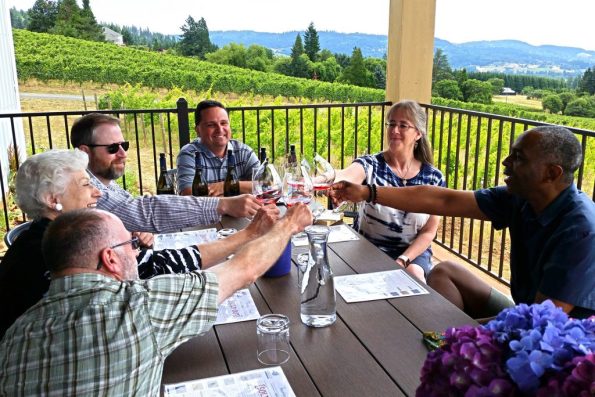
Dave Specter conducts the private tasting. Source: Bells Up Winery
Here you are, my friends. Another story of Passion and Pinot.
To be continued…
P.S. Here are the links to the posts profiling wineries in this Passion and Pinot series, in alphabetical order:
Alloro Vineyard, Ghost Hill Cellars, Ken Wright Cellars, Knudsen Vineyards, Lenné Estate, Tendril Cellars, Youngberg Hill Vineyards, Vidon Vineyard
Friday Night Wine
Isn’t Friday the best day of the week? Or to narrow it down even more – isn’t Friday night the best time of the week?
I know, it is considered lame. The right thing to do is to love Mondays, as this is your new chance to make a difference, and yada yada yada. Whatever.
So really, isn’t Friday night great? Especially when you don’t need to go anywhere. You don’t need to entertain anyone. The whole weekend lies ahead. Life is good.
Does such quiet Friday night deserve a special wine? This is a tough question, especially for someone who drinks wine only on the special occasions, such as days which names end with “y”. I can actually argue this both ways – I guess it only depends if you feel like making it special, or treat it as any other day and just open a random bottle. Well, but still – quiet Friday night is special, so a special bottle feels appropriate more often than not.
Finding the right bottle for the Friday night is an as difficult exercise as selecting a bottle for any special holidays or birthdays. On one side, it is the Friday night – on another side, it is just a Friday night, one of the 52. A Friday is not a special enough occasion to pull one of your most prized bottles, but you do want to celebrate the weekend coming, so it should be at least something unique and different.
It is hard to figure out how the brain decides on the bottle. After about 10 minutes of pulling the wine fridge shelves back and forth, I came across the 2011 Cahors, and the brain (or whatever is there) said: “that will do”.

2011 Jean-Luc Baldès Triguedina Clos Triguedina Cahors AOP (14.5% ABV, 85% Malbec, 10% Merlot, 5% Tannat) was one of my favorite discoveries of the past year while attending the Wines of Southwest of France event. I had only one bottle, but that is the same story with the absolute majority of my cellar, so I typically go through the regretful “second thoughts” process no matter what I decide to open.
Boy, was that a lucky decision… This wine had everything one can desire to make any day special – from the first smell to the first sip to the last sip; a perfect oenophile wine. Its major quality, outside of balance, was a tremendous range of expression. The nose started with a little funk, a touch of the barnyard, and fresh berries. The palate offered an exquisite bouquet and an ability to travel in the instant. The first sip squarely established – I’m not sitting on my deck anymore, I’m now in the winery’s cellar, breathing the vinous aromas which accumulated there during the centuries.
The wine continued evolving, offering tobacco, fresh blackberries, a touch of pepper, dark power, dark magic, and layers of pleasure. The acidity, the tannins, the fruit – everything was there in complete harmony. I call such wines a “vinous vino”, as these are the only words which come to mind. The wine was a beautiful rendition of Malbec – unquestionably an “old world”, and unquestionably delicious. If Cahors wines produced back in the middle ages were anything similar to this Clos Triguedina wine, I fully understand why it was so popular in Europe and Russia.
There you are, my friends. I hope your Friday night was filled with pleasure, just like mine was. Do you think Friday night wine should be special? What would you open to celebrate a quiet Friday night? Cheers!
Rediscovering Beaujolais
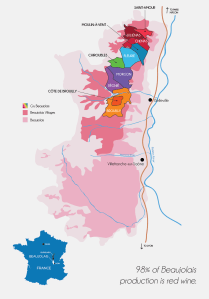
Source: Discover Beaujolais website
I remember learning about wine many moons ago at Kevin Zraly’s Windows on the World Wine School, where Beaujolais was one of the first French wine regions we discovered. We learned that there are general Beaujolais wines, which are not worth seeking, Beaujolais Villages, which are a bit better than the regular Beaujolais, and ten Cru wines (Brouilly, Chénas, Chiroubles, Côte de Brouilly, Fleurie, Juliénas, Morgon, Moulin-à-Vent, Régnié, and Saint-Amour) – and the Cru wines are something worth looking for.
There might be a few reasons why Cru Beaujolais wines are worth looking for – we should remember that Beaujolais is part of Burgundy, and thus it shares similar soils and climatic conditions as the rest of the Burgundy. Beaujolais wines are made out of Gamay Noir, not Pinot Noir, which is a king of Burgundy, but still – well-made Cru Beaujolais wines can offer a poor man’s alternative to its rarely affordable cousins.
But then there is this thing… Beaujolais Nouveau. The wine which became a glorious marketing success – and Achilles hill of Beaujolais wines. Beaujolais Nouveau became an international celebration of the new vintage, where the wine produced from the grapes just harvested a few months ago, hits the shelves of the wine stores worldwide on the third Thursday in November. While the success of Beaujolais Nouveau is unquestionable, its marketing message has a simple consequence – say “Beaujolais”, and most of the wine consumers immediately add the word “Nouveau” – overshadowing all the great Cru Beaujolais wines.
Yours truly is guilty as charged – in almost 10 years of blogging, I wrote about Beaujolais Nouveau literally every year – and I have only two posts covering Cru Beaujolais, after attending the tasting of the Duboeuf Cru Beaujolais portfolio back in 2012 (here are links to the Part 1 and Part 2 posts, if you are interested). I have to also say that the avoidance of Beaujolais wines was not conscious – there are few regions and types of wines which I intentionally avoid, such as generic Cotes du Rhone or similarly generic Argentinian Malbec – but the Beaujolais avoidance was rather subconscious.

Château de Bellevue. Source: CognacOne/Chateau de Bellevue
When I got the email from CognacOne, an importer with an excellent collection of French wines, introducing the new Cru Beaujolais wines from Château de Bellevue, something piqued my interest, and I got the sample of two Cru Beaujolais wines from Morgon and Fleurie.
Château de Bellevue was built at the beginning of the 19th century in the village of Villié-Morgon, with the addition of the cellar behind it in 1830. Today, Château de Bellevue is both the winery and Bed and Breakfast Inn. Château de Bellevue vineyards span 37 acres across a number of the Cru Beaujolais appellations (Moulin à Vent, Morgon, Fleurie, and Brouilly) – needless to say, Gamay Noir is the only grape which can be found there. While it is all Gamay grapes, the terroir rules, and wines from the different appellations are perfectly distinguishable.
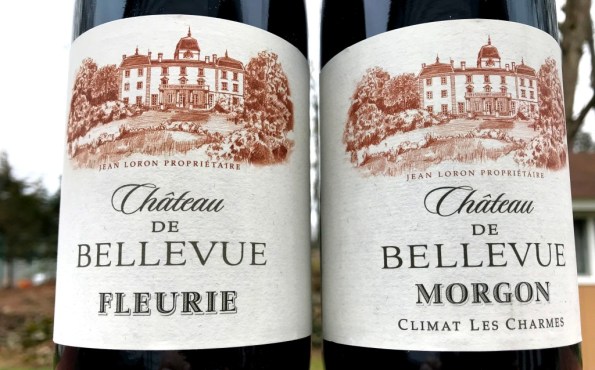
Here are the notes for the two wines I had an opportunity to try:
2015 Château de Bellevue Fleurie AOP (13% ABV, $25, aged 9 months in steel tanks)
Dark garnet
Crushed rock, iodine, underbrush, cherries
Medium plus body, crunchy berries, minerality, good tannins, good acidity, good balance
8, easy to drink, dangerous.
2015 Château de Bellevue Climat Les Charmes Morgon AOP (12.5% ABV, $25, aged 9-10 months (partially) in large French oak barrels)
Dark garnet
Raspberries, minerality, hot rocks
Nicely tart, well present tannins, tart cherries, excellent balance
8, a bit more earthy and bigger bodied, delicious.
Second day: 8+, the wine opened up magnificently, adding beautiful layers of fruit and spices.
Here you go, my friends. I know – too many wines, too little time – but I definitely intend on adding more Beaujolais wines to my cellar. How do Cru Beaujolais fare in your wine world? Cheers!
Celebrate Malbec!
While performing the traditional morning ritual – checking in with all the social media sources, something caught my attention – ohh, I almost missed the Malbec Day, or to be even more precise, the World Malbec Day. So not to miss a celebration of one of the 10 major red grapes, let’s talk Malbec.
Today, when you hear “Malbec”, people instantly think “Argentina”. Yes, Argentina is the best-known source of the Malbec wines at the moment. However, Malbec story originated in France, where it was known initially under the name of Cot – this is the name which is still used in the wines of Cahors, the region in South of France, where Malbec was really a star for a long time. In Cahors, the wines were and still are required to contain at least 70% of Malbec – while popular in most of the other regions in France, there Malbec typically played a supporting role in the blends, such as Bordeaux, for example.
It was Argentina where Malbec really flourished starting at the end of the 19th century and became the star it is today. However, the popularity of Malbec goes way beyond Argentina, with excellent Malbec and Malbec-based blends coming from Australia, Chile, Israel, many regions in the USA, and other places. In Argentina, where Malbec is by far the most planted red grape (with more than 106,000 acres planted), the viticulture dramatically evolved over the years, with high altitude, ultra-premium bottlings being the latest craze.
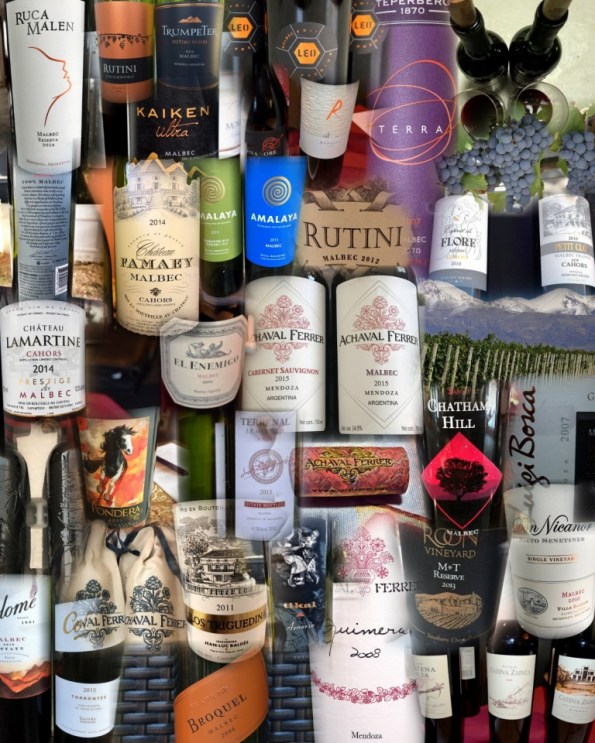
Over the years, Malbec was always present on the pages of this blog. Want to test your knowledge of Malbec? Here is the Malbec wine quiz for you. Looking to add some sensuality to your evening? How about Kaiken Malbec? Do you think you know Malbec? How about a blind taste challenge from one of the best in the business, Achaval-Ferrer? Everyone love Argentinian Malbec but don’t ignore the classics – Southwest of France can deliver amazing Malbec renditions, and I had a pleasure of tasting them more than once. Do you have a favorite Malbec bottle? The one which you are always happy to see in the store or a restaurant wine list? I can tell you that mine is Trapiche Broquel, which never disappoint.
Well, it is time to round it up and proceed with celebration. Do you have a favorite Malbec wine or wines? Feel free to share it with the world. Cheers!
Valentine’s Day Experiences
 Cooking is the ultimate expression of love. This is always true, but even more though on Valentine’s Day, as the whole holiday is all about love – the holiday which exists since about the 5th century – it is really fun to celebrate something so deeply rooted in history.
Our personal love story was simple – yet, probably, equally uncommon – the love at first sight. It took three days since the moment we saw each other for the first time until everything was decided. So you can imagine that Valentine’s Day was always an important holiday for us. At first, we tried to follow to common path, working hard to score coveted restaurant reservation – until the dinner at one of the most expensive, and supposedly, best Italian restaurants in Connecticut, which we left asking each other “what was that???”. That was the end of our “eating out” Valentine’s Day celebrations, and the beginning of the “eat in” tradition.
One of the advantages of “eat in” celebrations is a much better wine program. You don’t need to desperately comb through the pages of the wine list, finding that you can’t afford any of the wines by the bottle you want to drink, and common sense preventing you from getting any of the wines by the glass which can be classified as a “seemingly affordable rip off”. Instead, you can spend hours combing through your own wine shelves, looking for the bottles which you will deem worthy of a special celebration – and which will also work with the menu you have in mind.

Martinelli Syrah which you see in the picture was a backup wine in case anything will be wrong with the Pinot. Now it is back in the cellar, waiting for its turn.
Last year’s celebration was about steak and Cab – obviously, I couldn’t repeat myself, so the search was on to find an appropriate protein replacement. Somehow that resulted in the duck breast – and what wine does the duck breast call for? Of course, the Pinot Noir!
Before we talk Pinot we need to talk bubbles. Bubbles don’t have to exclusively narrow down to Champagne. Champagne is a wonderful sparkling wine, perfectly appropriate for any celebration – but the world of wine moved up tremendously over the past 15-20 years. I don’t have any stats to prove this objectively, but I have a feeling in the USA at least a third of all wineries if not half of them produce sparkling wine – if not for the wide distribution, then at least for the wine clubs and tasting room visitors.
I also have to say that ever since I visited the Franciacorta region in Lombardy, Italy, Franciacorta sparkling wines became my go-to choice of bubbles for any special celebrations. In my mind, Franciacorta wines are very consistent, and today, as they honed their production methods to perfection, this translates into the “you can’t go wrong with” Franciacorta wines in general. La Valle was one of my top highlights of that Franciacorta trip and the La Valle Rosé really hit the cord then – and it continues to do now. This 2011 La Valle Brut Rosé Franciacorta was superb – fine mousse, delicious strawberries on the nose with the hint of the toasted bread, and more strawberries on the palate – a perfect opener for our evening.
Now, the Pinot time. Similar to the bubbles, Pinot Noir also enjoys quite a universal appeal around the world nowadays. There some regions, however, which do a better job than the others – and California Russain River Valley is definitely one of them. I tried 2007 Charles Mara Pinot Noir for the first time back in 2010. It was silky smooth and powerful at the same time. I was so impressed with this wine that it became the top wine of the inaugural Talk-a-Vino Top Dozen Wines list. I still had a bottle of 2007, and I decided that it would be a perfect choice for our Valentine’s Day dinner – and the wine didn’t disappoint. Now, 9 years later, this 2007 Mara Laughlin Road Ranch Pinot Noir Russian River Valley became even more round and less “in your face”. Characteristic California Pinot plums and smoke on the nose, succulent dark fruit on the palate with a hint of violets, perfect acidity, perfect balance, lots and lots of pleasure. And it also worked perfectly with the duck.


Let’s talk about the duck. I had it a number of times before, either made by friends or at the restaurant – but duck is rarely my go-to dish. The form of duck I cooked before was either duck legs as part of the Cassoulet or the whole duck as part of the Turducken. I never attempted cooking the duck breast before, so obviously was concerned with the outcome. After studying a number of recipes, I was concerned even more, as a number of commentators complained about rendering duck inedible even after repeated attempts, so I was really not sure about my own success.
I don’t know if it was a quality of the ingredient, Moulard Duck Magret, which I got at our local Fairway Market, or the cast iron pan, a combination of the above, or the beginner’s luck, but the duck breast came out perfectly. I also made a Port (you saw it in the picture above) and berries reduction, which elevated the nicely gamey taste of the duck breast and was a bridge to connect it all to Mara Pinot Noir – all in all, a delicious dinner. Nevermind the paper plate in the picture – everything in life has a story, but this is not the story for this blog post.
There you go, my friends – not a timely share, but still an experience worth sharing. If you still remember, I’m curious to know how was your Valentine’s Day dinner. Cheers!
Daily Glass: The More I Drink, The Less I Understand?
Wine is an enigma.
But you already know that.
The wine had been a serious object of obsession for more than 20 years for me. I went through multiple education programs. Read an uncounted number of wine books and articles. Most importantly, drunk a lot of wine – from the bottles, from the barrels, the juice of freshly harvested grapes and the juice which only had been fermented for a few days. Two days old wine and 80 years old wine. I taste roughly thousands of wines every year (with the help of trade tastings). Yes, the wine is an object of obsession. And yet, I would never say that I figured it out, that I fully understand it.
Wine is an enigma.
 The curse of wine is rather simple – until the cork is pulled (or unscrewed), you don’t know what to expect. A lot of wine bottles look ultimately attractive outside – bottle’s shape and weight play an important role, and then you got the label which, when properly done, is an ultimate seduction device. But once the cork is out, it is only the content that matters – and here we learn that not all the beauty from outside can be found on the inside. The worst part? Until the first sip, we have no way of knowing what we will find, even if we tasted and loved the wine before! Sadly, this is a classic case of any investment prospectus disclaimer – “past performance is no guarantee of the future results”. It is quite possible that you tasted and loved the wine before – nevertheless, every new bottle is a perfect screw up (or a beautiful surprise) opportunity. The wine is an enigma.
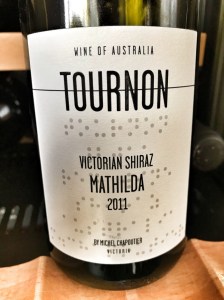
Back in 2014, I tasted 2011 Michel Chapoutier Tournon Mathilda Shiraz Victoria, Australia (13% ABV, $14.99) and was blown away by the beautiful purity of that Shiraz. The wine had a clean, herbs-driven profile full of freshly ground pepper – you really had to taste it to believe it. I was so impressed with that wine that it became wine #4 on my Top Dozen list in 2014. I got 6 bottles or so (at $14.99, a great QPR) and was slowly enjoying it over the years. But not always. I remember trying to impress a friend with this wine when I found it available in a restaurant in Florida by the glass. That simply did not work – the wine was flabby and mostly insipid. Then I had opened a bottle last year, only to be able to say “what just happened???”. The wine had just some single note fruit, no pepper, limited acidity, and in a word, was not fun. I was further put down with this wine last year after tasting the current vintage release at the trade tasting – that wine was insipid, cherry cough medicine style.
When I pulled my last bottle from the shelf a few days ago, the thought was – yeah, whatever, let’s just free up some space. Unscrew, pour, sip – oh, my, everything was back as when I fell in love with this wine – fresh pepper, sage, rosemary, intensely herbal with tasteful addition of ripe black plum – as wow wine as it can be. Don’t ask me for explanations or theories – as I said, the more I drink, the less I understand.
Wine is an enigma.
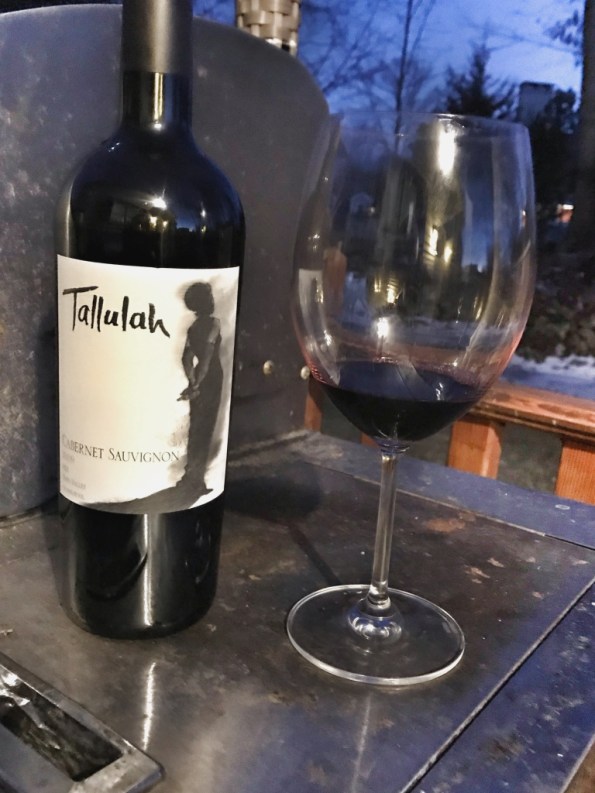
The second story is less unusual, but still in line with what we are talking about here. I got the 2009 Tallulah MD1 Cabernet Sauvignon Napa Valley (14.1% ABV, $75) after reading the skillfully crafted sales pitch by the folks at Benchmark Wine Company. What’s not to like there? Excellent winemaker, Mike Drash; beautiful label, great story of naming the wine after winemaker’s daughter, and maybe most importantly, the cult grape from the cult region – Cabernet Sauvignon from Napa Valley. The first experience with the wine was at the “ohh” level – tight, closed, by all means not ready. The next time I had the same wine was back in 2014, it fared better – I gave it 8- rating, but mostly for the potential, not so much for the actual pleasure delivered by the wine back then.
Looking for the wine to drink last Saturday with the steak (looking for the wine is a physical process of moving the shelves of the wine fridges in and out – I don’t have any record-keeping in place), I saw the bottle top with the characteristic “T” on it. Similar to the wine we discussed before, the thought was “well, why not – I need to free some space anyway”. The first sip solicited an instant “oh, wow” – a Cabernet perfection in the glass, vibrant cassis, eucalyptus, touch of cherries, sweet oak, perfect mid-palate weight, clean acidity, impeccable balance – the wine Napa Valley is so famous for was right there – in my glass.
While working on this post I looked for my previous notes on this wine, and I only found a short reference in the post about “Month in wines”, written precisely 5 years ago, in February of 2014. To my big surprise, in that post, I found the following line: “…definitely needed more time, let’s say, at least 5 years…” – the fact that I randomly pulled this MD1 bottle exactly 5 years after and the wine evolved beautifully – well, I guess, this is just a happenstance…
Wine is an enigma.
But that what makes it an ultimate fun.
Tale of Two Reds – Are All Wine Lovers Eternal Optimists?
Let’s talk about red wines. And optimism. The connection between the two? You will see – give me a few minutes.
Let’s start from a simple question – how many chances do you give to a bottle of wine? Fine, let’s rephrase it. You open a bottle of wine. It is not corked, or if you think it is, you are not 100% sure. You taste the wine. The wine is not spoiled, but you don’t like it – doesn’t matter why, we are not interested in the reason – the bottom line is that it doesn’t give you pleasure. What do you do next?
Of course, breathing is the thing. You let the wine breathe – you pour it into a decanter, and let is stand – few hours, at least. You taste it again – and it still doesn’t make you happy. Your next action?
Let’s take a few notes here. First, we are not talking about the wine you feel obliged to drink – it is not a $200 bottle, it is not a first-growth Bordeaux – it is an average bottle of wine, let’s say, of $20-$40 value. Second, it is a quiet evening – let’s say, it is you and your spouse, and you have a luxury of opening another bottle of wine to enjoy.
As we said, two hours in decanter didn’t do anything. And another 4 hours didn’t help either. Or maybe you didn’t use the decanter, as you only wanted a glass, and dealing with moving the wine in and out of decanter was not your priority, so the wine was standing in the open bottle. In any case, it is the end of the day, and it is time to go to sleep – and the wine is still not what you want to drink. What is next?
At this point, you got a few options – leave the bottle on the counter, dump it into the sink, put it aside into the “to cook with” section, or pump the air out and see what the next day will bring. Let’s assume you’ve chosen the latter option, but the next day didn’t improve the situation – for how long will you keep trying?


While I’m sending you on the trip down the memory lane (or maybe not), let me share with you my most recent experience. On December 31st, I opened the bottle of 2012 Codice Citra Laus Vitae Riserva Montepulciano d’Abruzzo DOP (14% ABV, $32). I had very high expectations of this bottle for a few reasons. First, the bottle itself is a BAB (for the uninitiated, it stands for Big Ass Bottle – a heavy, thick glass, pleasant to hold, bottle), which always creates high expectations for me. Second, I have high respect to the Montepulciano d’Abruzzo – was surprised with the quality more often than not. Third, I just tasted through the samples of a new line of wines from the same producer, Codice Citra (the line is called Ferzo), four delicious wines, more about it in a later post – obviously, all of this added up to the expectations. Only the first sip delivered nothing but disappointment.
I took a sip of the wine, all ready to say “wow”, and instead the first thought was – “heat damage”? Most prominent note on the palate was stewed fruit, which is definitely a problem for the 6/7 years old wine, clearly meant to have a long cellar life. What happened? Was the wine stored improperly? No way I can pour this to my guests, so put the cork in, pump the air out and let’s see what will happen.
Every day from there on, I would pull the cork out, pour a glass, taste, and sigh. Still, the stewed fruit in various amounts – day three seem to show some improvement only to go back on day 4. Can you see me winding up the drama? What do you expect happened on day 5?
January 4th, I’m pouring another glass, not expecting anything good, but willing to finish the “experiment”, and subconsciously still surprised that BAB didn’t deliver. The first sip extorts “wow” and the thought of “what just happened”? The core of pure, ripe, tart cherries with a touch of a cherry pit, the hallmark of good Montepulciano, is laughing at me. Firm structure, fresh tannins, balancing acidity – the transformation couldn’t have been more dramatic. I thoroughly enjoyed every last drop of that wine, still utterly amazed at how little I understand in the mystery of the wine.


The second wine, which I happened to open a day later, but played with in parallel to the Montepulciano, worked in a very similar fashion. I got the bottle of 2014 Ernesto Catena “Tikal Amorio” Malbec Mendoza Argentina (13.5% ABV, $30) as the present from Chuck Prevatte of Food, Wine, Beer, Travel blog as part of the “Secret Wine Santa” fun originated and run by Jeff Kralik, a.k.a. The Drunken Cyclist. Chuck sent me a bottle with the message that Malbec is his favorite wine, and he was hoping that I will also enjoy his selection.
Okay, so here is another gaping hole in my “I don’t discriminate against any wine” adage – Argentinian Malbec is not my thing. I will gladly jump at Cahors, but given an option, unless I perfectly know the producer and the wine, I will avoid Argentinian Malbec as a generic category (as an example Broquel, Kaiken, Achaval-Ferrer, Trapiche are all on the “good list”). Yes, I will still try the Malbec I don’t know (someone has to eat the broccoli, right?), but only if asked. If you are interested in the reason, it has something to do with the flavor profile – I had a lot of Argentinian Malbecs which lack acidity and have too much of the overripe fruit and baking spices – interestingly enough, that exact flavor profile often wins the “easy to drink” praise among wine consumers.
Anyway, the Tikal Amorio Malbec had a very attractive label and sounded good from the description – the wine was created for the love of the grape and represented a blend of Malbec grapes from 3 different vineyard sites in Mendoza. Besides, it was recommended, so as I was opening the bottle, the thought was a happy “what if…” The first sip, however, brought (I’m sure you guessed it) the “this is why I don’t like the Argentinian Malbec” sigh – flabby fruit, very little acidity, and lots of baking spices. Ooh. I will spare you the day by day description – not much changed over the three days. But on the 4th day… The first sip brought in perfectly ripe blueberries with the core of acidity – nothing flabby, perfect structure, firm, fresh “pop in your mouth” blueberries with undertones of tobacco. The wine beautifully transformed (another mystery), and similarly to the Montepulciano, was gone in no time.
Here it is, my friends, a tale of two reds – and an ode to the optimism, don’t you think? Have you been in a similar situation? What do you do when you discover the wine you don’t like at first sight? How many chances would you give it? Cheers!
Top Wines of 2018
And the time has come to summarize the most memorable wine experiences of 2018 – here is the list of about dozen of wines which made a lasting impression. The top wines list at Talk-a-Vino typically consists of two parts, as I can never limit myself to one dozen of wines – you can find the second part of the Top Wines of 2018 list here. That “second dozen” post also provides a bit more explanation behind the logic of this list. Without further ado, let me present to you my top wines of 2018:


13. 1997 Chalone Vineyard Pinot Blanc Monterey County California ($NA) – there are always those wines which you look at and say “yeah, whatever, let’s just try it before we will pour it out”. And then your thought (after the sip) is “what, wait, really?” This was one of such wines – 21 years old white wine, Pinot Blanc from California – no doubts it already turned into vinegar, right? Wrong! Whitestone fruit, good acidity, nicely plump – it was a great surprise and an excellent evening opener.
12. 1995 Caves São João Quinta do Poço do Lobo Reserva Bairrada DOC Portugal ($22 @ Last Bottle) – despite the serious age, this wine was just released, and I scored a few bottles thanks to the Last Bottle. I know that Portugal makes great wines which can age, but this wine still went beyond expectations – perfectly fresh, perfectly concentrated, perfectly delicious. I brought a bottle to share during the after-party at the Wine Bloggers Conference this year, and poured it blind for two wine pros, asking them only to estimate the vintage – they both were 10 years off, suggesting that the wine was from 2005 instead of 1995. Another interesting fact about this wine that one of the 3 grapes it is made out of, Moreto, is not even growing in Portugal anymore…
11. 2015 Smith-Madrone Riesling Spring Mountain District Napa Valley ($32) – a pure revelation. I had no idea Napa Valley is capable of producing a beautiful Riesling. Chardonnay, Sauvignon Blanc – of course, but varietally correct Riesling? Yes, Smith-Madrone can! It even had a touch of my beloved petrol, which always makes me very happy. Look for this wine, you will not regret it.
10. 2014 Tiefenbrunner Turmhof Sauvignon Südtirol Alto Adige ($30) – A pure stunner. Of course, Italy is best known for its reds, and when it comes to whites, it is autochthonous varieties which usually shine, such as Pecorino, Falanghina, or Verdicchio. However, I had a pleasure of experiencing mind-boggling renditions of Chardonnay and Sauvignon Blanc, and this was exactly one of such a mind-boggling Sauvignon Blanc encounters. Recognizable Sauvignon Blanc in its core, but plump, complex and silky smooth. The fact that the wine comes from Alta Adige, unique mountainous region, also contributes here. A memorable wine.


9. 2002 d’Arenberg The Dead Arm Shiraz McLaren Vale Australia ($70) – while typically not a word to use to describe Shiraz, my key descriptor for this wine will be “finesse”. This wine was mature and elegant, offering complex earthy undertones with a touch of barnyard, and lean and clean in its overall expression. It still got time to evolve, but already offers lots of pleasure.
8. 2008 Grosset Polish Hill Riesling Clare Valley Australia (~$50 for current vintage) – For me, this wine was a pure encounter with the legend – in many ways. Clare Valley in Australia is famous for its Riesling, same as Hunter Valley is famous for its Semillon. Polish Hill is one of the best vineyards in Clare Valley, and Grosset is a pioneer and one of the very best producers in Clare Valley and Australia overall. To top it all off, I had this wine during the dinner with my [not virtual anymore] friend Oz in Singapore. Memorable wine? You bet.
7. 1986 Chateau Cordeillan-Bages Pauillac AOC ($54.97) – I have no idea where and how this bottle ended up in my cellar, but I’m glad it did. 32 years old Bordeaux, elegant, balanced, showing no sign of age, delicious from the first sip to the last. Also coming from the Chateau with minuscule production. Need I say more?
6. 2015 Domaine Jean-Noel Gagnard Chassagne-Montrachet Blanc 1er Cru Les Caillerets ($100) – The only thought I have when drinking such a beautiful white Burgundy is that I need, really need to drink more of the white Burgundy wines. Good Burgundian Chardonnay is amazing when young, and surreal once it picks up some age. This is practically the only time when I wish for an expense account to be able to drink the wines like that.
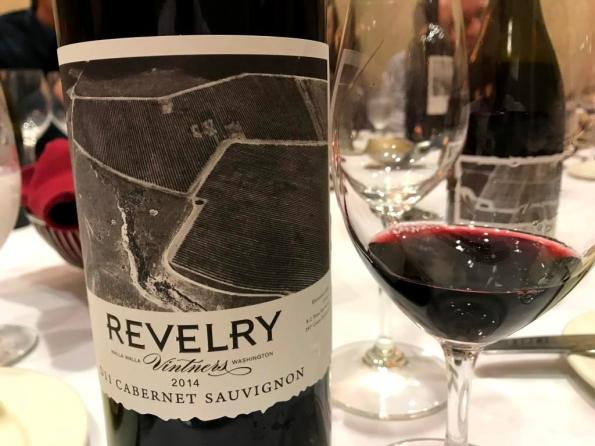
5. 2014 Revelry Vintners D11 Cabernet Sauvignon Walla Walla Washington ($80) – yet another great highlight of the Wine Bloggers Conference this year. Imagine beautiful blackcurrants weaved around a perfect, firm structure of the crunchy tannins – that was this wine. I’m really surprised at myself – on a normal day, I would definitely take Syrah over Cab – and Revelry Block 19 Syrah, which we had at the same time as this Cab, was equally beautiful – but it is the Cabernet Sauvignon which got stuck in my head.

4. Bodegas Beronia Rioja ($NA) – so this will be a bit strange, as I’m including here more of the experience than a single wine. I was lucky to be invited to the lunch with Bodegas Beronia winemaker, Matias Calleja, in New York. I love Rioja unquestionably, but at that lunch, my takeaway was a lot bigger than just a taste of another excellent Rioja – we were able to experience the effect of the type of oak on the same young Tempranillo wine, and see how American oak affects the wine versus French oak versus Bodegas Beronia own oak combination. An incredible experience in my book. And then I was able to save a business dinner with the 2011 Bodegas Beronia Rioja Reserva, so if you need a particular wine designation for the list, it can be the one.
3. “This line was intentionally left void” – keep reading, you will see why.


2. 2010 Antica Terra Rosé Willamette Valley ($75) – OMG. Is that enough of the description? I pulled this bottle without much expectation – Antica Terra makes incredible terroir-driven wines, but 8 years for Rosé is rather too much, right? Wrong! A stunning color, and the cranberry-loaded palate of liquid granite – the only thing I could extort was that “OMG”. Back in 2012, Antica Terra Phantasi was my wine of the year – this Rosé was hair-splitting close to becoming the wine of the year again.
1. 2008 Zenato “Sergio Zenato” Amarone della Valpolicella Classico DOCG ($100) – I love Amarone. I expressed my love to this great Italian wine many times on this blog – together with my utmost frustration while looking for a good Amarone (before you start cursing – “good wine” is highly subjective, personal definition). This wine was amazing, one of the very best I ever experienced – dry fruit on the nose (figs, raisins) and crisp, dry, clean, full-bodied palate of impeccable balance. A pure, pure delight.


1. 2013 Three Wine Company Suscol Creek Cabernet Sauvignon Block 5 Napa Valley ($60) – yes, I did it again – I have two #1 wines this year. I can’t do that? Of course I can – my blog, my rules. I had this wine at the dinner with friends during our annual adults getaway. This was literally a mind-blowing rendition of a California Cabernet Sauvignon – beautiful extraction, cassis with eucalyptus, anise and mint, silky, velvety tannins – this wine was screaming in my face “I am the California Cab” – and with a perfect balance of all elements, it was simply a “wow experience” – I would gladly drink it at any time.
Here it is – the presentation of the Talk-a-Vino Top Wines of 2018 is now complete.
As today is the December 31st, and New Year 2019 is about to arrive, I want to wish you all happy, healthy, and peaceful New Year. Yes, it should be prosperous too, and I hope all your wishes will come true. Much love to all. Cheers!
We Are Creatures of Comfort
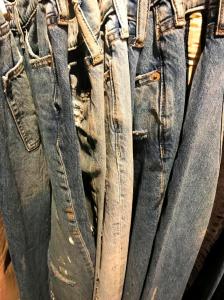 We are creatures of comfort. If you are feeling particularly wound up today and comfort is the last thing on your mind (especially considering that we are living through the typical hectic holiday season), maybe you need to look for a post about coffee – but for the rest of us, let’s talk about comfort (there will be wine at the end, I promise).
Everyone has their own elements of the comfort. Favorite coffee mug. A big old chair which hugs you as soon as you touch it. Favorite room in the house. Favorite corner in the backyard, the one where you feel the most relaxed. Maybe a favorite bench in the park. The shoes which slip on your feet like they are part of the whole. And clothes, let’s not forget may be the easiest, most simplistic, everyday purveyor of the comfort – clothes.
Let’s talk about clothes a bit more. Outside of the office, when you need to run errands, go to the movies or drive to see your friends, what are your most comfortable pants? For me, it is jeans. Jeans are my most versatile type of clothes, anywhere I go, whether driving for 10 minutes to the supermarket or flying around the globe to Japan. Definitely an essential element of comfort in my book – and I suspect that many of you share the same feeling.
Now, let me take you out of the comfort zone, as I have a question for you. Without scrolling forward (please), can you tell me what is the connection between the jeans and the wine? The brand of jeans plays absolutely no role – jeans as the clothing category can be directly connected to the world of wine. I will give you a few minutes to ponder at it.
I’m still here, take your time.
Still here – got any ideas?
Okay, let me give you a hint. The material the jeans are made of is called denim. Does it help?
It is entirely possible that you easily figured it all out already. Whether you did or not, here is my answer and the explanation. We can go from “denim” to “de Nim”, and then it can be further changed to “de Nîmes”. Heard of Nîmes, the town in the Rhone valley in France? Denim became an abbreviation for the “serge de Nîmes”, where “serge” means a specific type of fabric, as Nîmes was the town where this fabric was created. It turns out that Nîmes was the center of the textile industry in France in 17th – 19th centuries – however today no fabric is manufactured in this medieval town. But – in the true spirit of life actually moving in circles, here you can read the story of a company which dreams of reviving the textile industry back in Nîmes – note that this story has actually no connection to wine, so let’s move on.
And the connection to the wine, you ask? Costières de Nîmes, the region surrounding the same town of Nîmes, where the history of winemaking goes all the way back to the third century.
Costières de Nîmes is the region in the Southern Rhone, which carries forward all of the Rhone Valley traits (all Costières de Nîmes wines even have a designation on the bottles for the Vins de la Vallée du Rhône). Instead of me retelling you all the facts about the appellation, I have a better idea – how about some creative infographics where you see all the fun facts about the region? Here you go:
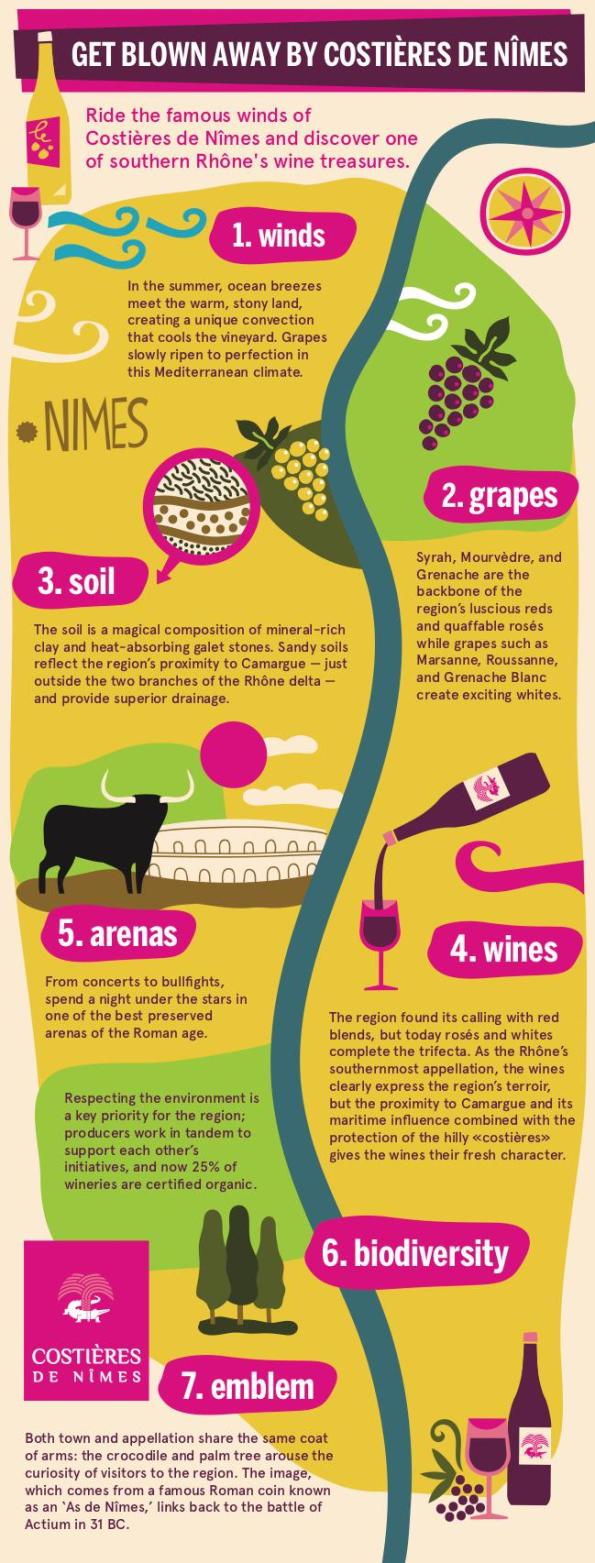 At this point I’m sure you are wearing your comfortable clothes (jeans, perhaps) and sitting in your comfortable chair, so I’m sure you are ready for some wine. I had a chance to taste 3 wines from the Costières de Nîmes, so here are my notes:


2016 Domaine de Poulvarel Costières de Nîmes (14.5% ABV, $22, 65% Syrah, 35% Grenache)
Dark ruby
Raspberries, lavender
Raspberries, pepper, well integrated but noticeable tannins, baking powder, firm, medium plus body, excellent acidity.
8-/8, very good overall
2015 Château Vessière Costières de Nîmes AOP (13% ABV, $9, 50% Shiraz, 50% Black Grenache)
Dark ruby
Raspberries and tar
Raspberries and lavender on the palate, light to medium body, good acidity. Perfect charcuterie wine – paired well with salami and cheese.
7+/8-, excellent food wine
2016 Château Beaubois Cuvée Expression Costières de Nîmes AOP (13.5% ABV, $9, 70% Syrah, 20% Grenache, 10% Marselan)
Dark Ruby
Tart, minerally notes, blackberries, granite, anis, roasted meat. While nose is not exuberant, it is very expressive.
Raspberries, tar, medium body, good acidity, some green notes, a touch of pepper.
7+/8-, nice, simple, works great with meat and cheese.
Here you are, my friends. A bit unusual (I hope) connection between our daily life and the world of wine. The Costières de Nîmes wines I tasted might not be mind-boggling, but they are definitely comfortable, and fit our story well. I don’t know what one expects from the $9 bottle of wine, but I know that I would be perfectly comfortable having this wine daily – and my wallet would be very comfortable too. Have you had Costières de Nîmes wines before? What do you think of them? Put on your denim jeans, and let’s go have another glass. Cheers!
Embracing Inner Dude At Halloween
I like action movies. Well made action movies it is – those which have a plot and intrigue, and especially those which might keep you on the edge of your seat. Oh yes, and they better be American made movies. Nope, this is not a patriotic statement – Japanese action movies are beautiful (I love Martial Arts), but in 99 out of a 100, the main character dies at the end. In our, American made action movies, the good always wins – yep, the proverbial “happy end” is literally warranted.
And then there are those American movies where the plot is based on pure absurd, and the only supposedly entertaining element is unstoppable, relentless use of the F-word by everyone, including kids and animals – I guess the endless F-word variations are supposed to create serious drama around, well, pretty much nothing.
Okay, okay, you are still reading (if you are actually reading – and I want to thank you for that) the Talk-a-Vino blog so we will be actually talking wine – I’m not turning into a movie critic all of a sudden.


Sometimes I know that the wine sample had been shipped to me only through a UPS or FedEx notification, without any prior conversations with “the source”. So when the box arrived a few weeks ago from Donna White, I got really curious about what is inside, as the box looked quite big – however, its weight really didn’t support the size, so yes, color me very curious. Inside the box, I found the Halloween costume, the bottle of wine, and the note. From the note, I found out that I’m a Lebowski (and everyone I know is also a Lebowski). Which instantly triggered “The Big Dude Lebowski” to come to my mind – without much of the basis, as I knew the phrase but had no idea it came from the movie.
Now you have the movie connection. I found some movie clips on YouTube, and whatever I watched, didn’t give me an encouragement to sit down and spend time watching the whole movie (hence my opening thoughts in this post). The strong association of the word Dude and “The Big Lebowski”, which is an actual title of the movie, even prompted me to do a bit of the research on the meaning of “Dude” – I was happy to see that the word itself has a much longer history and somewhat easy to relate to (from Wikipedia): “Dude is American English slang for an individual, typically male. From the 1870s to the 1960s, dude primarily meant a person who dressed in an extremely fashionable manner (a dandy) or a conspicuous citified person who was visiting a rural location, a “city slicker”. In the 1960s, dude evolved to mean any male person, a meaning that slipped into mainstream American slang in the 1970s. Current slang retains at least some use of all three of these common meanings.” So “The Dude” can exist on its own, without the “The Big Lebowski” parallels.
Okay, so I explained the movie opening of this post, but we still didn’t get to wine – and it is the time to do it. The Dude actually plays an important world in the wine world – as the name of the Australian Shiraz. Two Hands winery from Barossa Valley in Australia produces the wine called Gnarly Dudes, which has the picture of the old Shiraz vines on the label – which looks like, well, gnarly dudes – hence the name and this whole connection between the Dudes and the wine.
I mentioned the Halloween costume in the box, didn’t I? Can you guess what the costume was? Yep, of course, it was the outfit of The Dude himself, exactly as they show it in the movie. My first reaction was: no. Just no. I will not wear this. A few days later, after the initial desire to reject slowly dissipated, the next thought was “well, this is Halloween after all. Why not?
The end result was simple. I wore The Dude’s costume and I opened the bottle of The Dude wine, just as it was envisioned by whoever put this package together. Below, you can see a proof – lame, but my best version of The Dude. By the way, when I was giving out candies in this outfit, nobody complained – and one person even managed to correctly identify the character I was impersonating.


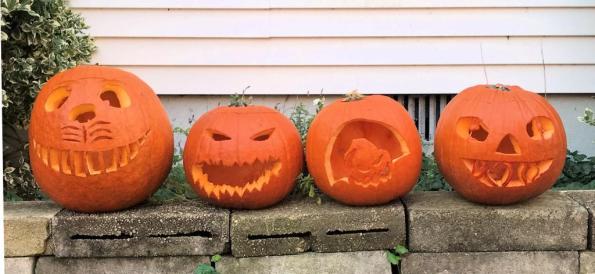
For the longest time, our family tradition is to carve pumpkins for the Halloween. None of us has any carving skills, but once we finally acquired a good pumpkin carving set from the Williams-Sonoma, we managed to achieve the level of the personal content with the results of our carving efforts.
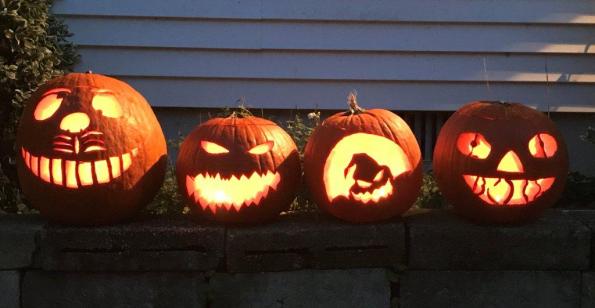
And now, let’s finally talk wine – 2017 Two Hands Gnarly Dudes Shiraz Barossa Valley (13.8% ABV, $30, 100% Shiraz, 12 months in French Oak). The wine perfectly demonstrated its “dudiness”. Upon opening and for the most of the evening, it was simply an okay wine. Here are the notes:
Roasted meats on the nose, quite dominant
Dark, earthy fruit, blackberries, a touch of pepper, noticeable sapidity, overall earthy notes, good balance. This is a food friendly wine.
So in terms of drinkability, it was a 7/7+ wine at the best on the first day. The second day (without pumping the air out, just putting the screwtop back on) brought far more enjoyable wine – blackberries appeared on the nose, and on the palate, the wine clearly added multiple dimensions – velvety texture, round dark fruit, both blackberries and blueberries, sage and violets joined the chorus – absolutely next level wine compare to the first day, definitely an 8 wine (my own 1-10 Drinkability scale, yes). I want to mention that the wine remained equally beautiful even on the 3rd day, and showed a touch “over the hill” signs on day 4. An excellent wine, but you have it either give it some time or look for the one which has some age on it. And yes, forget a few bottles in the cellar for the next 10 years – somehow, I expect you to be handsomely rewarded.
Here is my Dude story for you. How was your Halloween? Cheers!
Last Bottle Sign Up ($10 credit)




 Talk-A-Vino