Archive
From $5 to $95
Taste of the wine is subjective. This is a very simple statement, but it is important to keep it in mind. It really helps to avoid disappointment, when, for example, you tell your friend that the wine is amazing, and your friend politely explains that “ahh, sorry, this is really not my thing”. This is also why all the ratings and medals simply mean that someone liked the wine – but they don’t offer any guarantee that you will like the wine too.
Not only the taste of the wine is “objectively subjective” (hope this makes sense to you), but it is also easily influenced (blind tasting is the only way to remove all the external influences and leave you one on one with the wine). There are many factors which influence the taste – bottle appearance, label, ratings, medals, friends and store clerks recommendations, and maybe most importantly, price.
Think about how you buy a bottle of wine as a present for someone. You would typically set yourself a price limit, and you will do your best not to exceed it. Let’s say you decided to spend $30 on a bottle. But what happens if the store’s employee would recommend you a bottle of wine at $15, saying also that the $15 bottle is equally good or even better than the one for $32 you hold in your hand. What will be your first thought? I bet your brain will say “ohh, this is too cheap! You can’t do this, take the one for $32!”.
It is obvious that price affects your buying decision. But the price is even more influential when you start drinking the wine, as the price sets the expectations. Feel free to tell me how wrong I am, but I’m willing to bet that you expect $10 bottle of wine to be mediocre, and you will be ultra-excited faced with the glass of $100 wine. The fun part about $10 bottle is that there is a great chance for a pleasant surprise. The sad part about the $100 bottle that there is a chance of a great disappointment. The best thing to do is to keep your expectations at bay and simply taste the wine and decide whether you like it or not – but this is usually easier said than done. Oh well, just keep working on it.
The message I’m trying to convey with all this pricing/influencing talk can be summarized like this: tasty wines exist at all price ranges. You can enjoy the wine for $5, and you can enjoy the wine for $95. Will you enjoy them equally? This is a tough question only you can answer. But let me share with you my experience with the wines from $5 to $95 which I tasted throughout this year – and then we can compare notes later on. Here we go:


Under $10:
2016 San Pedro Gato Negro Pinot Noir Valle Central DO Chile (13.5% ABV, $4.99)
Garnet
Characteristic Pinot Noir cherries and lavender on the nose, medium intensity
Simple, light, touch of tart cherries, baking spice, good acidity, overall not weary powerful, but offers lots of pleasure.
7+, simple but very nice glass of wine, and an amazing value.
2016 San Pedro 9 Lives Cabernet Sauvignon Reserve Chile (13.5% ABV, $9.99)
Garnet
Tobacco and cat pee
Pretty tannic, with some fruit notes hiding behind.
Not very good from the get-go.
After 3 days open – dramatic change, raspberries and blackberries on the palate, ripe fruit, good acidity, eucalyptus notes, medium body – very nice. Truly needed time ( even 2 days was not enough).
8- after 3 days.


Under $20:
2014 Domaine du Raifault Cuvée Tradition Chinon AOC (13% ABV, $17)
Bright Ruby color
Tobacco and cassis on the nose, bright and explicit
The same continues on the palate – cassis, tobacco, perfect acidity, bright, soft, round, delicious.
9, I can drink this wine any day, every day. Superb. This is the Cab Franc I want to drink.
2014 San Marzano Talò Salice Salentino DOP (13% ABV, $16.99, 85% Negroamaro, 15% Malvasia Nera, 6 months in French oak)
Dark garnet
Cherries, leather, earthy notes, granite, fresh, open, inviting
Ripe cherries, vanilla, toasted brioche, sweet tobacco, succulent, open, fresh acidity, medium+ body, excellent balance
8-/8, perfect from the get go
8+ on the second and next 3 days – lots of chewy dark fruit, generous, voluptuous, outstanding.


Under $40:
2013 Xavier Flouret Kavalier Riesling Kabinett Trocken Mosel (11% ABV, $25)
Bright Golden color
A touch of honey, lots of tropical fruit – guava, mango, white flowers, intense, pleasant
Cut trough acidity, lemon, green pineapple, intense minerality, excellent
8, great Riesling as it should be – I want to try it in 10 years.
2015 Markham Vineyards Merlot Napa Valley (14.5% ABV, $27, 86% Merlot, 12% Cabernet Sauvignon, 2% Petite Sirah, 15 months in barrel)
Dark garnet
Muted nose, a touch of blackberries, right, mint, minerality
The palate is also restrained, tart dark fruit, good structure, good acidity
8-, needs time.
2013 Attems Cicinis Sauvignon Blanc Collio DOC (13.5% ABV, $30, 8 months in French oak Barriques and 2 months in the bottle)
Light golden
Minerality driven nose, with a touch of truffle and sweet sage
Medium body, crisp, firm, excellent acidity but overall nice plumpness, savory lemon, crisp finish
Drinkability: 8, I would gladly drink it again any time


Above $40:
2013 Frescobaldi Castello Nipozzano Montesodi Toscana IGT (13.5% ABV, $44, 18 months in oak, 6 months in the bottle)
Garnet color
Leather, forest floor, minerality, cedar, medium+ intensity
A touch of smoke, tart cherries, tobacco, clean acidity, well integrated.
8, delicious from the get-go. Excellent aging potential.
2014 Domaine Ostertag Muenchberg Riesling Alsace Grand Cru Contrôlée (14% ABV, $50)
Light golden
Rich, intense, tropical fruit, guava, pineapple, distant hint of petrol
Delicious palate, a touch of honey and hazelnut, good acidity and tons of minerality. This is minerality driven wine right now, which will evolve into a total beauty over the next 10 years.
8, excellent.
2014 Luce Della Vite Toscana IGP (14.5% ABV, $95, Sangiovese/Merlot, 24 months in French oak)
Dark garnet
Pungent, dark chocolate, truffles, licorice
From the get-go, super gripping tannins. A little bit of dark fruit is immediately displaced by the tannins. Based on the initial sensation, lots of French oak.
Not drinkable from the get-go. Needs time.
3 days later – superb. Succulent cherries, firm structure, a touch of leather and tobacco, unmistakably Italian, and unmistakable super-Tuscan. Great acidity.
8+
As you can tell, I was equally struggling with the wines at $10 and $95, and my most favorite wine from the group was a mere $17 wine – but overall, there were no bad wines in this group. How do you see the prices of wine? How influential are prices when you buy the wine and when you drink it? Cheers!
We Are Creatures of Comfort
 We are creatures of comfort. If you are feeling particularly wound up today and comfort is the last thing on your mind (especially considering that we are living through the typical hectic holiday season), maybe you need to look for a post about coffee – but for the rest of us, let’s talk about comfort (there will be wine at the end, I promise).
Everyone has their own elements of the comfort. Favorite coffee mug. A big old chair which hugs you as soon as you touch it. Favorite room in the house. Favorite corner in the backyard, the one where you feel the most relaxed. Maybe a favorite bench in the park. The shoes which slip on your feet like they are part of the whole. And clothes, let’s not forget may be the easiest, most simplistic, everyday purveyor of the comfort – clothes.
Let’s talk about clothes a bit more. Outside of the office, when you need to run errands, go to the movies or drive to see your friends, what are your most comfortable pants? For me, it is jeans. Jeans are my most versatile type of clothes, anywhere I go, whether driving for 10 minutes to the supermarket or flying around the globe to Japan. Definitely an essential element of comfort in my book – and I suspect that many of you share the same feeling.
Now, let me take you out of the comfort zone, as I have a question for you. Without scrolling forward (please), can you tell me what is the connection between the jeans and the wine? The brand of jeans plays absolutely no role – jeans as the clothing category can be directly connected to the world of wine. I will give you a few minutes to ponder at it.
I’m still here, take your time.
Still here – got any ideas?
Okay, let me give you a hint. The material the jeans are made of is called denim. Does it help?
It is entirely possible that you easily figured it all out already. Whether you did or not, here is my answer and the explanation. We can go from “denim” to “de Nim”, and then it can be further changed to “de Nîmes”. Heard of Nîmes, the town in the Rhone valley in France? Denim became an abbreviation for the “serge de Nîmes”, where “serge” means a specific type of fabric, as Nîmes was the town where this fabric was created. It turns out that Nîmes was the center of the textile industry in France in 17th – 19th centuries – however today no fabric is manufactured in this medieval town. But – in the true spirit of life actually moving in circles, here you can read the story of a company which dreams of reviving the textile industry back in Nîmes – note that this story has actually no connection to wine, so let’s move on.
And the connection to the wine, you ask? Costières de Nîmes, the region surrounding the same town of Nîmes, where the history of winemaking goes all the way back to the third century.
Costières de Nîmes is the region in the Southern Rhone, which carries forward all of the Rhone Valley traits (all Costières de Nîmes wines even have a designation on the bottles for the Vins de la Vallée du Rhône). Instead of me retelling you all the facts about the appellation, I have a better idea – how about some creative infographics where you see all the fun facts about the region? Here you go:
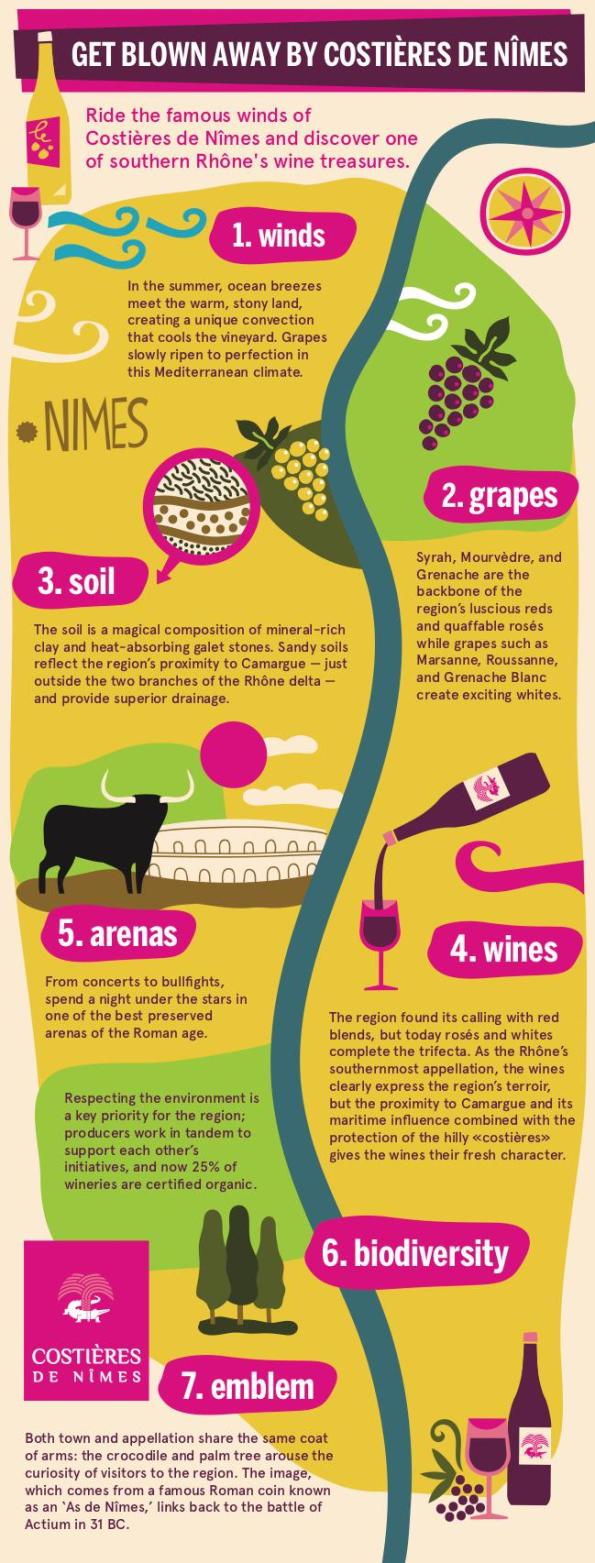 At this point I’m sure you are wearing your comfortable clothes (jeans, perhaps) and sitting in your comfortable chair, so I’m sure you are ready for some wine. I had a chance to taste 3 wines from the Costières de Nîmes, so here are my notes:


2016 Domaine de Poulvarel Costières de Nîmes (14.5% ABV, $22, 65% Syrah, 35% Grenache)
Dark ruby
Raspberries, lavender
Raspberries, pepper, well integrated but noticeable tannins, baking powder, firm, medium plus body, excellent acidity.
8-/8, very good overall
2015 Château Vessière Costières de Nîmes AOP (13% ABV, $9, 50% Shiraz, 50% Black Grenache)
Dark ruby
Raspberries and tar
Raspberries and lavender on the palate, light to medium body, good acidity. Perfect charcuterie wine – paired well with salami and cheese.
7+/8-, excellent food wine
2016 Château Beaubois Cuvée Expression Costières de Nîmes AOP (13.5% ABV, $9, 70% Syrah, 20% Grenache, 10% Marselan)
Dark Ruby
Tart, minerally notes, blackberries, granite, anis, roasted meat. While nose is not exuberant, it is very expressive.
Raspberries, tar, medium body, good acidity, some green notes, a touch of pepper.
7+/8-, nice, simple, works great with meat and cheese.
Here you are, my friends. A bit unusual (I hope) connection between our daily life and the world of wine. The Costières de Nîmes wines I tasted might not be mind-boggling, but they are definitely comfortable, and fit our story well. I don’t know what one expects from the $9 bottle of wine, but I know that I would be perfectly comfortable having this wine daily – and my wallet would be very comfortable too. Have you had Costières de Nîmes wines before? What do you think of them? Put on your denim jeans, and let’s go have another glass. Cheers!
Impromptu Evening With Friends? A Bottle of Golden Bordeaux is All You Need
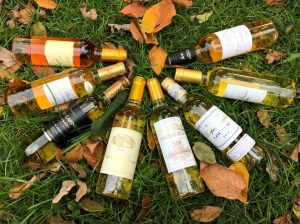 You just came home from work. It was a hard day. The boss [again] didn’t get your idea, and you didn’t get much support from your coworkers either. All you want to do is to crawl into the old trusted chair with your feet, open the book, and get lost in its pages. Tomorrow will be another day, and all the problems will magically solve themselves. Or you will force them to solve themselves. No matter what, but “me evening” is about to begin.
The doorbell rings. Really? The doorbell? What the heck? You sure didn’t invite anyone over. Get the sleepers on, let’s see, maybe it is just a late package. Ahh, it is not a package. It is your friend. And she just had a rough day at work, and she needs at least an ear, and hopefully not a shoulder.
Walk her in, get her situated on the couch. Then you get this burning feeling – something is amiss. Oh yeah, of course – there is nothing on the coffee table, and your friend sheepishly confirms that she is really “not that hungry”, and your perfectly know what it means – while nobody is looking for a 5-course meal, a little something would be great.
You didn’t shop for a while, and all you got is some crackers, some chips, salami and a bit of cheese. And of course, you need to bring a bottle of wine, which is a must for the free-flowing conversation, but what wine would pair well with such an eclectic spread of crackers and salami?
So let’s stop here, as I’m not writing a fiction novel, and let’s analyze the situation. We got chips, crackers, cheese, and salami – what would pair well with it? I’m sure you have your own take on this, but let me give you mine – how about some Golden Bordeaux to pair with this eclectic mix?
If you are curious what Golden Bordeaux is, I’m sure you can easily guess it – heard of Sauternes? Have you ever seen a bottle of Sauternes? Yes, it typically looks like a liquid gold, hence the reference to the Golden Bordeaux.
The term “Sauternes” here is used rather generically, and Golden Bordeaux might be more suitable than just Sauternes – however, while the Golden Bordeaux makes sense, I’m not sure how common the term is.
Of course, first and foremost, Bordeaux is known for its reds (anyone who experienced Bordeaux whites from Pessac-Léognan would easily disagree, but still). However, Bordeaux is a lot more than just the reds. On the left bank of the Gironde river, which splits Bordeaux in half, lies the region called Graves. Inside of Graves resides the small region of Sauternes with its neighbors Monbazillac, Cérons, Loupiac and Cadillac, as well as Barsac which is a sub-region of Sauternes. Together, all these regions are the source of the Golden Bordeaux, the unique white wine made from the partially raisined grapes due to their contact with so-called Noble Rot. It is common to describe Sauternes as sweet, dessert wines – but the flavor profile of these wines goes way beyond just sweet, offering layers of complexity, and therefore suitable for a lot more than just a dessert course.


A few weeks ago, a group of wine aficionados got together for the virtual tasting of the Golden Bordeaux, hosted and guided by the kind folks from Snooth. This tasting went beyond just a standard format of tasting and discussing the wines – we also had an opportunity to experiment with the variety of savory and spicy snacks, which included Sweet Potato and Beet Crackers from Trader Joe’s, Sriracha Cashews, Jalapeno Chicken Chips, Gusto by Olli Calabrese Spicy Salami, and Jack Link Sweet & Hot Jerky. Spicy and sweet, as well as sweet and salty are well-known combinations for anyone who likes pairing wine and food. However, these Golden Bordeaux wines go beyond just sweet, often adding a layer of forest mushrooms and herbs to their taste profile, which helps to complement the ranges of savory dishes.
I had a few surprises and personal learnings in this tasting. I never paid attention to the mushroom undertones in the Golden Bordeaux, so this was definitely an exciting discovery. I also never thought that those wines need some breathing time – and I was wrong, as you can see in the notes below – another little memory knot is in order. I also found out that not all food can be good for the tasting – the Chicken Jalapeño crackers were so spicy for me, that I had my lips burning for an hour in the tasting. It would be fine if this was a pairing and conversation with a friend, but for the next time around, I plan to taste the wines first, and only then try it again with spicy food.
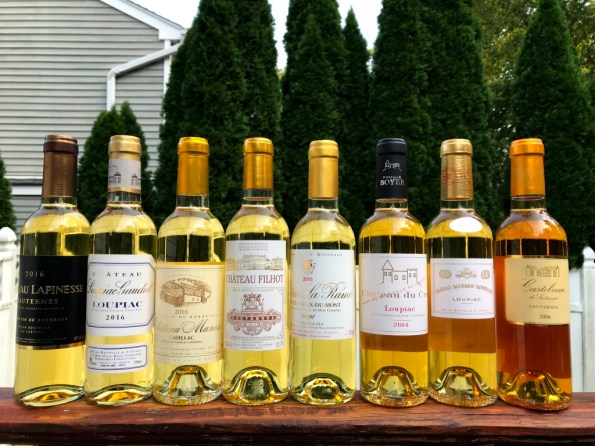
Now, here are my notes from the tasting:
2016 Château Manos Cadillac (13.5% ABV, $12.99, 95% Semillon, 2.5% Sauvignon Blanc, 2.5% Muscadelle)
Light golden color
Peach, honey, beautiful nose, very inviting
Delicious palate, peach, candied peach, caramel, good acidity 8/8-
Very nice with beets crackers from Trader Joe’s
2014 Château du Cros Loupiac (13% ABV, $12, 90% Semillon, Sauvignon Blanc, Muscadelle
Golden color
Complex nose of caramel and herbs, a touch of spicy notes, great complexity
Beautiful concentration on the palate, candied fruit, golden raisins, perfect balance. 8+
Amazingly elevates sweet and hot beef jerky, wow
2016 Château Loupiac-Gaudiet Loupiac (13% ABV, $17, 90% Sémillon, 10% Sauvignon Blanc)
Light golden color
Sweet apples, herbs. Later on: truffles!
First reaction: Sweet apples on the palate – need more acidity
After 20 minutes: good acidity, mushroom, forest floor. 8-
Excellent with hot beef jerky
2011 Château Dauphiné Rondillon Loupiac (13.5% ABV, $28, 80% Semillon, 20% Sauvignon Blanc)
Golden color
Honey, plums, candied plums
First reaction: Burned sugar, then medicinal. Ouch
After 20 minutes been open: sugar plums, white plums, good acidity showed up. 7+/8-
Later on – mushrooms on the nose (really a discovery for me), caramel. Savory caramel on the palate. Interesting – definitely a food wine.
Very good with salami and sweet potatoes crackers
2015 Château La Rame Sainte-Croix-du-Mont (13% ABV, $22, 100% Sémillon)
Golden color
Very restrained, a touch of tropical fruit, distant hint of honey, gasoline added after 20 minutes
First reaction: Candied fruit, really sweet, can use more acidity. 7
After 20 minutes: vanilla, cookies’n’cream, light, good acidity. 8-/8
Tried with hot beef Jerky – not bad
2016 Château Lapinesse Sauternes Grand Vin de Bordeaux (14% ABV, $20, 100% Sémillon)
Golden color
Lemon, lemongrass, touch of honey, white plums
Candied fruit, apples, good acidity. 8
Didn’t make much difference with spicy salami
2006 Castelnau de Suduiraut Sauternes (14% ABV, $90, 99% Semillon, 1% Sauvignon Blanc)
Dark gold color
Honey, candied lemon, touch of caramel
Beautiful palate, fresh caramel, butterscotch cookie, good acidity. Very rich. 8-
Very good with beef jerky, also with jalapeño chicken strips
Here you are, my friends – Golden Bordeaux and eclectic snacks. Get a few bottles on hand – the wines are versatile, and can be enjoyed in many ways – especially when the late night friend pops in.
The Golden Bordeaux wines are definitely underrated – here is the great opportunity to surprise yourself and your friends. And you can thank me later. Cheers!
Sent with Writer
Beaujolais Nouveau Est Arrivé! 2018 Edition
 I find myself lately talking a lot about traditions. These are not cultural or societal traditions, of course not. Much simpler. These are only the traditions of this very blog. One needs time to claim something a “tradition”. This blog had been around continuously for more than 9 years, so I hope I get the right to call some of the permanent, repeated year after year, themes a “tradition”. A tradition such as the yearly Beaujolais Nouveau post.
I’m sure hope the majority of the wine drinkers are familiar with the Beaujolais Nouveau phenomenon. Every year we celebrate the new vintage by drinking the young, simple wine just made a few months after the harvest. As the tradition of celebrating the new – Nouveau in French – vintage originated in the Beaujolais region in France, we call this celebration the Beaujolais Nouveau. And to set the expectations right, the Beaujolais Nouveau is always celebrated on the third Thursday in November – this is when the Beaujolais Nouveau wines officially hit the shelves of the wine stores around the world.
Every “new” Beaujolais Nouveau celebration brings something new and unique with it. I remember huge celebrations held a few years in the row. Then there was a period when the “Nouveau” movement was joined by the number of US producers. Last few years, however, were rather uneventful – it is, of course, possible that I missed something.
This year 2018 brought in quite a few things which might not be designated as “new”, necessarily, but for sure they were different. First, I almost missed the whole Beaujolais Nouveau celebration, as it came up quite unexpectedly – the earliest possible celebration overall. Beaujolais Nouveau can only be released on the 3rd Thursday of November, which fell this year on November 15th – can’t happen any earlier than that. Okay, I know this is insignificant. Next interesting fact was … the snow. Yep, we got 5 inches in Connecticut right in the middle of November – this is something which generally doesn’t happen. But I was able to take the pictures of the bottles in the snow.
The last “new” was truly a Nouveau event – Georges Duboeuf released Beaujolais Nouveau Rosé. Rosé was never a part of the Beaujolais Nouveau celebration – until now, that is. Not only it was a beautiful looking wine, but it was also a tasty one too!
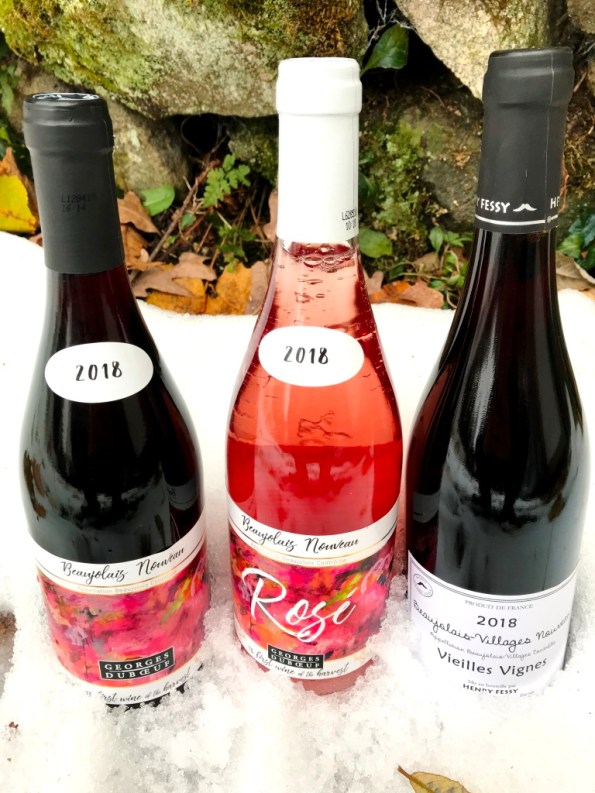
I know that bashing of the Beaujolais Nouveau as only a marketing stunt is quite popular among wine professionals and consumers alike – and I honestly don’t support it. Even this year, I saw someone asking in one of the wine forums on Facebook “does anyone drinks Beaujolais Nouveau wines”. I didn’t want to get into that conversation, but I can, of course, answer here – I do! The Rosé I would actually gladly drink at any time at all. And I would never refuse the second glass of either one of the reds, so there, you have my answer.
Here are a bit more detailed notes:
2018 Henry Fessy Beaujolais-Villages Nouveau Vieilles Vignes (13% ABV, $12.99)
Dark ruby color
Fresh raspberries with the characteristic Beaujolais Nouveau acidity, mineral notes
Fresh tart raspberries, good structure, good balance, overall quite pleasant. 7+/8-
2018 Georges Buboeuf Beaujolais Nouveau Rosé (12.5% ABV, $9.99)
Beautiful light pink color, very inviting.
Beautiful fresh strawberries on the nose. Strawberries and cranberries on the palate, clean acidity, excellent balance. There is nothing “Nouveau” about this wine – it is just an excellent Rosé. 8
2018 Georges Buboeuf Beaujolais Nouveau (12.5% ABV, $9.99)
Garnet color
Raspberries and violets on the nose
Raspberries and strawberries on the palate, interesting minerality, some baking spices, good concentration, medium plus body, well integrated mouth-plucking acidity. A very solid wine. 8-/8, one of the very best Beaujolais Nouveau.
What do you think of Beaujolais Nouveau phenomenon? Did you taste the 2018 wines? If you did, what do you think of them? Cheers!
Seeking Pleasure in Bordeaux

Source: Cotes de Bordeaux website
Let me take a safe guess: if you consider yourself a wine lover (oenophile, wine aficionado – you can choose your own designation), the word “Bordeaux” is sacred for you. Even if you hadn’t had a glass of Bordeaux in five years, I would safely bet that there was a period in your oenophile’s life when Bordeaux was “it”, the wine to admire and worship, and you would never pass a glass of a good Bordeaux if an opportunity will present itself – and if you ever had that “glass of a good Bordeaux”, you will happily attest to that.
Of course, the clout of Bordeaux is often linked to the so-called First Growth chateaux, 5 of the most famous producers in Bordeaux and in the world, and a few others having a similar level of influence, such as Chateau Petrus. However, for the most of oenophiles, First Growth and other wines of the same caliber are mostly a dream – you can never find them, and even if you will find them, you can’t afford them. However, Bordeaux, being one of the largest wine regions in France, both in terms of the size of vineyards and a volume of wine production, is so much more than just the First Growth – there are lots and lots of Bordeaux wines worth seeking.
Case in point – Côtes de Bordeaux appellation – approximately 1/10th of the Bordeaux appellation, both in size of vineyards and wine production. In exact terms, Côtes de Bordeaux consists of 6 sub-appellations (Côtes de Bordeaux, Blaye Côtes de Bordeaux, Cadillac Côtes de Bordeaux, Castillon Côtes de Bordeaux, Francs Côtes de Bordeaux and Sainte-Foy Côtes de Bordeaux). However, based on the old adage of “rising tide floats all boats”, the Union des Côtes de Bordeaux was created in 2007 and it united all sub-appellations under the single AOC Côtes de Bordeaux, which was launched in 2009. The individual sub-appellations are still indicated on the label under their names (Blaye, Cadillac and so on) to signify differences in the terroir, but we all know the power of the brand marketing…
Leaving all the technical details aside, the beauty of the Côtes de Bordeaux is in its artisanal wine producers, many of whom are certified organic and biodynamic, and more and more producers embracing sustainable methods – which all translates into the quality of the wines. Also, considering that most of the producers don’t have big brands to support, the wines also deliver great QPR.
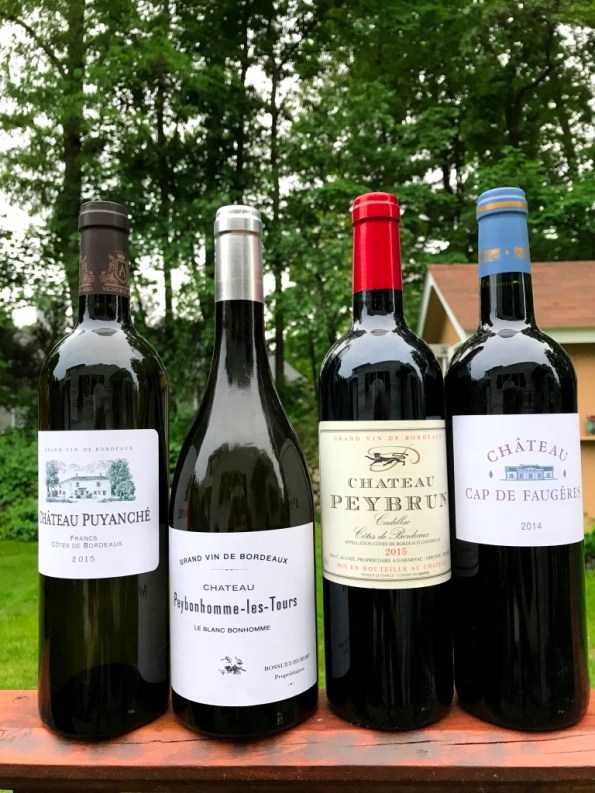
Let’s move from the theory to practice – yes, you got me right – let’s taste some wines. I had an opportunity to taste 2 white and 2 red wines from the region and was literally blown away by these beautiful wines and the value they delivered. As usual, I also played a bit with the wines to see how they will evolve – you will see it below in the notes.


2015 Château Puyanché Blanc Sec Francs Côtes de Bordeaux AOC (14% ABV, $14, 55% Sauvignon Blanc, 45% Semillon, 7 months in 30% new oak)
Light golden color
Ripe white stone fruit, vanilla, touch of butter.
Ripe white fruit, minerality, round, mellow, touch of butter, beautiful
8+, lots of pleasure
2016 Château Peybonhomme-les-Tours Blaye Côtes de Bordeaux (13%, $20, 50% Sauvignon, 50% Sémillon, Vin Demeter)
Light golden color
White stone fruit, apricot, tropical fruit notes
Beautiful ripe white fruit, vanilla, apples, butter, clean acidity, can be easily mistaken for Chardonnay
8+/9-, superb, just wow. Lots of pleasure.


2014 Château Cap de Faugères Castillo Côtes de Bordeaux AOC (14% ABV, $17, 85% Merlot, 10% Cabernet Franc, 5% Cabernet Sauvignon)
Dark Garnet, almost black
Mint, eucalyptus, green bell pepper, touch of underripe berries
Underripe blackberries, tart, crisp, firm, mouthwatering acidity. Finish extends mostly into mouthwatering acidity with a touch of tannins and slight alcohol burn.
7, needs time. Might work well with food, but on the first day, not tremendously enjoyable on its own.
Day 2: 8-, cassis, ripe fruit, good power good balance
Day 3: 8-/8, soft, layered, full body, great aromatics on the nose, voluptuous and generous. Great transition.
2015 Château Peybrun Cadillac Côtes de Bordeaux AOC (13% ABV, $18, 80% Merlot, 17% Cabernet Sauvignon, 3% Cabernet Sauvignon, aged in thermo-regulated tanks)
Dark garnet
Green bell pepper, baking spices, intense, distant hint of barnyard, touch of nutmeg
Pepper, tart cherries, noticeable acidity, medium-light body, well noticeable tannins on the medium-long finish.
7, needs time.
Day 2: 8-, dark fruit, soft, round
Day 3: 8-, great aromatics, touch of roasted meat, licorice, sweet cherries. Eucalyptus and cherries on the palate, touch of iodine, soft, well integrated, good balance.
As you can tell, the reds were excellent, and the whites were stunning (which is great considering that only 3% of the total wine production in the region are whites – 97% are red). If you will take into account the prices, these wines represent simply some solid and unbeatable deals (yep, a case buy, if you will).
Côtes de Bordeaux common message is Bordeaux, Heart & Soul – after tasting these wines, I have to agree. If you are seeking pleasure in Bordeaux wines, maybe you don’t need to look any further. Cheers!
Sequel in Reverse – More About Wines of Southwest France
What’s up with the “sequel in reverse”, you ask? Easy. All we need to do is flip the timeline. This post is a continuation of the previous post about wines of Southwest France – however, the tasting I want to share with you took place almost 6 months ago, at the end of the last year 2017, hence the “reverse” notion.
Outside of the sequence of the events, the two tastings are perfectly aligned – they are both squarely dedicated to the wines of one of the oldest wine-producing regions in the world – Southwest France.
I can’t explain why, but I feel that I need to make a confession. If you look through the pages of this blog – and there are a few here – I’m sure you will come to a conclusion that I primarily drink wines from California, Spain, and Italy, with an occasional sprinkle of everything else. And you will not be wrong. However, truth be told, my true love to wine started from French wines. I read the most about French wine and French wine regions. I was obsessed with trying to find an amazing Bordeaux for less than $10. Côtes du Rhône wines were a staple at the house. I spent countless hours in the France aisles of the wine stores (luckily, I was working in a close proximity of the Bottle King in New Jersey), looking for the next great experience with the wines from the Loire, Rhône, Bordeaux, Chablis, and others. French wines were “it” – unquestionably, a sacred territory. As the time was going by, and Bordeaux and Burgundy prices were going up faster than the weeds growing after the rain, the French wines moved mostly into a category of a rare encounter.
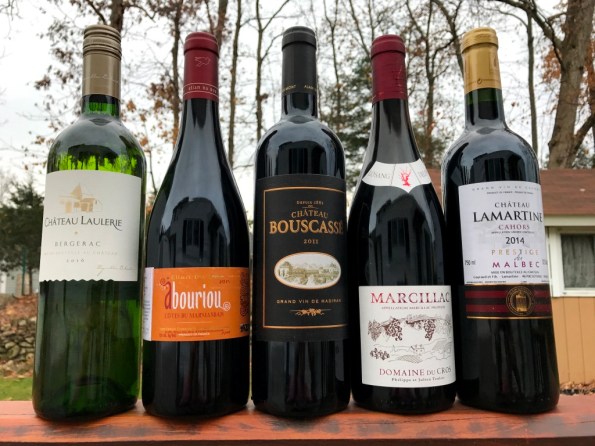
Last December was not the first time I participated in the virtual tasting about the French wines – but somehow, when I opened the box with these wines, something warm and fuzzy came over, and my first reaction was “ahh, I really, really want to drink these wines!”. There is nothing special about this particular set – no big names (I don’t believe Southwest France has much of “big names” anyway), no flashy, ultra-modern labels – and nevertheless, there was a promise of a great time in their simplicity and authenticity. These wines also perfectly played to my other “wine obsession” – the love to obscure and lesser-known wines, so altogether, I took a great pleasure in anticipation of the tasting.
As this was a virtual tasting, I had both the wines and time at my disposal, so unlike the previous post, here are my detailed notes in the usual format:


2016 Chateau Laulerie Bergerac AOC (12% ABV, $12, 85% Sayvignon Blanc, 15% Semillon)
C: Light gold
N: beautiful, fresh, medium+ intesnsity, honeysuckle, white flowers, peach
P: fresh, crisp, excelllent lemony acidity, white stone fruit, restrained
V: 8-, delicious, will be great with food and without, great QPR
2015 Domaine Elian Da Ros Abouriou Côtes du Marmandais AOC (12% ABV, $23.99, 90% Abouriou, 10% Merlot)
C: dark ruby
N: freshly chrushed berries, leafy notes, cherries, anis
P: ripe plums, sweet tobacco, eucalyptus, medium long sweet tobacco finish
V: 8-, would love to try it with an actual cigar. Needs a bit of time. And a new grape – Abouriou


2015 Domaine du Cros Marcillac AOP (12.5% ABV, $15.99, 100% Fer Servadou)
C: Ruby
N: earthy notes, mint, some medicinal notes (iodine?)
P: beautiful fresh pepper on the palate, tobacco, cherries – that pepper is delicious, love the wines like that
V: 8/8+, delicious, excellent QPR
2014 Château Lamartine Prestige du Malbec Cahors AOC (12.5% ABV, $17.99, 100% Cot (Malbec))
C: dark garnet
N: vegetative, tobacco, a touch of cherries
P: bright acidity, dark fruit, tart cherries and cherry pit, noticeable tannins.
V: 8-, pleasant, will work great with the steak, but needs time
2011 Château Bouscassé Grand Vin de Madiran (14.5% ABV, $17.95, 60% Tannat, 25% Cabernet Franc, 15% Cabernet Sauvignon)
C: dark garnet
N: eucalyptus, forest floor, a touch of eucalyptus,
P: initial tannins attach, pepper, dark round fruit, excellent extraction, layers of flavor, firm structure
V: 8+, outstanding, powerful, balanced, needs time!
The Southwest France wines are a treasure trove for the wine lovers – they capitalize on tremendous history, experience, unique terroir and unique grapes, offering oenophiles lots of pleasure in every sip. Look for the wines of Southwest France – and you can thank me later.
The Region Which Started It All
 The wine had been made in the Southwest of France ( Sud-Ouest in French) almost forever – in terms of human life, 2,000+ years well classified as “forever”. The region is considered one of the “cradles of winemaking” in Europe, and it maintains its uniqueness and diversity today – for example, out of 300 grape varieties used in the winemaking in the region, 120 are not found anywhere else.
Of course, we know that winemaking started about 8,000 years ago, and not in the Southwest of France. So what’s up with “started it all” claim? Glad you asked! Let me explain.
We live in the times when the wine is a part of daily life of many. Drinking wine is a norm and normal, simply a part of the daily routine for many, not a luxury or a weird exception anymore. Yes, that’s how it was in Europe forever – but now I’m talking about the rest of the world, countries such the USA, and even China now heading that way. The demand for wine had been constantly increasing since the late 1990s, and even Great Recession of 2008 didn’t kill it (just shifted the “acceptable” price ranges). Is it all just a normal course of events? We can, of course, settle for this. However, I believe that on a deeper level, there are exact reasons, “tip the scale” moments for many things which seem to happen just on its own – however, sometimes it is not easy to identify those “reasons”.
Remember the impact of the movie Sideways on consumption and production of the Merlot in the USA? That movie was the reason for a huge slump after 2004, and production and interest to Merlot are still in the recovery mode even now, 14 years later.
Late in the 1980s, the world started talking about The French Paradox – French eat cheese and foie gras, cook with butter and duck fat daily, and nevertheless, the coronary disease rates are much less than in the countries with comparable living standards and much lesser fat consumption. Possible explanation? Red wine. French consume lots of red wine, and resveratrol, one of the prominent substances found in seeds and skins of the red grapes, acts as a defense against clogging of the arteries. That was the outcome of the extensive medical research study conducted in France, which became known in the world as French Paradox.
In 1991, CBS in the USA dedicated one of their popular programs, 60 Minutes, to the French Paradox, and you know how Americans are, right? We are always looking for an easy way out, so wine sounded like an easy enough cure, and I believe this became a pivotal moment which triggered a renewed interest in the wine. Almost 40 years later, it seems that the wine successfully keeps the momentum. And before you will attack me with all the facts from the latest research – yes, I’m aware of many articles pointing to the issues with the study. Whether French Paradox study conclusions were medically solid I have to leave to professionals to debate and decide on. But it was still that pivotal “tip the scale” moment which changed the perception of the wine for many in the world.
At this point, I’m sure you want to see the connection between the title, the Southwest of France, and the story of the French Paradox, right? Here it is. While attending the tasting of the wines of Southwest France, I was listening to the presentation by sommelier André Compeyre, who mentioned that Southwest France has the biggest number of centenarians in France and it was one of the main regions where the French Paradox study was conducted – here we go, now everything is connected and explained. Is it time for a glass of wine?


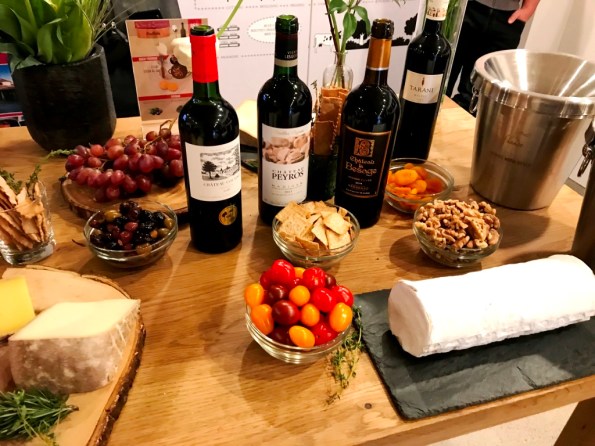
The tasting took place at the little store in New York called the French Cheese Board – what can be better than wine with a little cheese, right? Especially if both come from the same region, where they trained to live together for a few thousand years…
We started tasting with the sparkling wine, moved to the white and then red. As usual in such events, there was not enough time (and desire) for the formal notes, so below is the best I can offer. However, overall, the word is “outstanding” – the wines of Southwest France are well worth seeking – and you will not be disappointed.


NV Domaine du Moulin Mauzac Méthode Ancestrale Gaillac AOP (12% ABV, $15, 100% Mauzac) – very nice and simple. 7+
2017 Domaine du Tariquet Premières Grives Côtes de Gascogne IGP (11.5% ABV, $14, 100% Gros Manseng) – semi-sweet wine. It appears to be a traditional wine in the Southwest of France, which people are accustomed to drinking. It is possible that the wine was not cold enough when I tasted it, but I really didn’t appreciate it. If you like sweeter wines – this might be the one for you.
2016 Héritage Blanc Saint-Mont AOP (13% ABV, blend of Gros Manseng, Petit Courbu, Arrufiac) – excellent, bright, crisp, but very complex and thought-provoking. A touch of grass, vanilla, ta ouch of honey on the palate, green apples, wow. Excellent acidity. Great complexity. 8. And let’s not forget 2 new grapes – Petit Courbu and Arrufiac
2017 Domaine de Joy l’Eclat Côtes de Gascogne AOP (12% ABV, $7, blend of Colombard, Ugni Blanc, Gros Manseng and Sauvignon Blanc) – crisp, clean, superb. 8


2012 Château de Haute Serre Cahors AOP (13.5% ABV, $22) – superb, ripe berries, blueberries, round, delicious, acidity, vanilla, the backbone of minerality. 8+
2012 Château Montus Madiran AOP (15% ABV, $32.99, blend of Tannat and Cabernet Sauvignon) – smoke, campfire, tobacco, great concentration, powerful, excellent, great acidity, outstanding. 8
2011 Jean-Luc Baldès Triguedina Clos Triguedina Cahors AOP (14.5% ABV, $40, 85% Malbec, 10% Merlot, 5% Tannat, 12 months in oak) – touch of barnyard on the nose, delicious fruit, ta ouch of funkiness on the palate, great acidity. 8
2015 Domaine de Terrisses Terre Originelle Gaillac AOP (13% ABV, $16, blend of Braucol (Fer) and Prunelart) – beautiful Cabernet nose, crisp, cassis, Bordeaux style -outstanding. 8. and a new grape – Prunelart
2015 Réserve Bélingard Côtes de Bergerac AOP ($15, 50% Cabernet Sauvignon, 50% Merlot) – beautiful, warm nose, vanilla, cassis, beautiful, soft. 8
2013 Chateau Peyros Vieilles Vignes Madiran AOP (13% ABV, $18, 80% Tannat, 20% Cabernet Franc) – excellent, soft. 8-
2017 Domaine de Joy l’Eclat Côtes de Gascogne AOP (12% ABV, $7, blend of Colombard, Ugni Blanc, Gros Manseng and Sauvignon Blanc) – crisp, clean, superb. 8
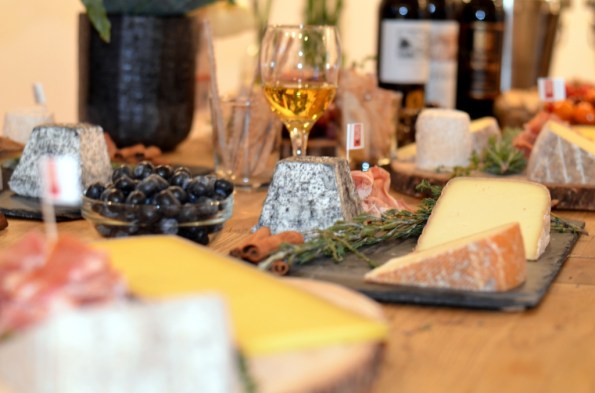


In addition tot he wines, we had an opportunity to indulge on the local cheeses of Southwest France – Ossau Iraty, Buche de Lucay, Bethmale Chèvre, Chabichou, Valencay, and Comté. Sorry, I’m not going to give you any individual notes, but all the cheese were superb. If you are like me and accustomed to the Comté cheese from Costco – that Comté in the tasting was the whole different game (go visit the store and taste, you don’t have to believe me).
There you go, my friends. Have you had wines of Southwest France lately? Any favorites you want to mention? Let’s raise the glass to many happy wine discoveries – and some red wine as a solution to all our problems. Cheers!
From Lodi And Provence, With Love
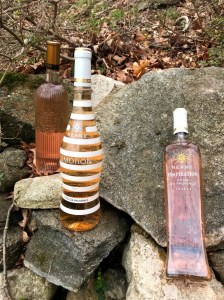 We drink wine because it gives us pleasure. Yes, it is that simple (and I didn’t come up with this – I learned it from Kevin Zraly, maybe the best wine educator in the world). We are looking for pure and simple sensual pleasure in every sip of that white, pink or red colored liquid in the glass, and, of course, it makes us happy when we find it.
When it comes to giving pleasure, I have to state that Rosé has an unfair advantage. We start drinking with our eyes, and while white and red have to compete for our attention with creative labels or sometimes even bottle shapes, Rosé takes a lot more simplistic approach – it just stands in front of us – naked. Clear bottle, nothing to hide – here I am, and I know I’m beautiful, so yes, do look at me and feel free to admire.
I don’t know if colors have universal meaning around the world – for instance, red is typically associated with danger or daring in the Western world – and red is the color of luck in China. So the pink color is usually associated with love and happiness in the Western world, and this is why the bottle of Rosé is so good at driving our emotions, no matter what shade of pink it actually boasts.
Acceptance, appreciation, and demand for Rosé stand at all times high today – and it continues climbing to the new “high” every year. Rosé still has a stigma of “summer wine”, but this is slowly changing as people start recognizing how much pleasure every sip of good Rosé packs, and how versatile it is with food – I would dare to say that in its food pairing versatility, it can well compete with Champagne, which is very hard to beat in its pairing range of cuisines from traditional Chinese to fiery Indian, sublime French, or big and bold Texas BBQ.
Today, Rosé is made everywhere – literally everywhere in the world. It is hard to find a winery which didn’t add Rosé to its repertoire. But before Rosé became so fashionable, there was Provence. More than 90% of the wines made in Provence are Rosé, and then they’ve been practicing for about thousand years, so Rosé is really a way of life in Provence, which is easy to see once you take a sip from the glass. I might surprise you with a choice of a close contender to the dominance of Provence – and they are not at all if you will think about the production volume – but when it comes to the taste, Rosé from Lodi in California will easily give Provence a run for the money.
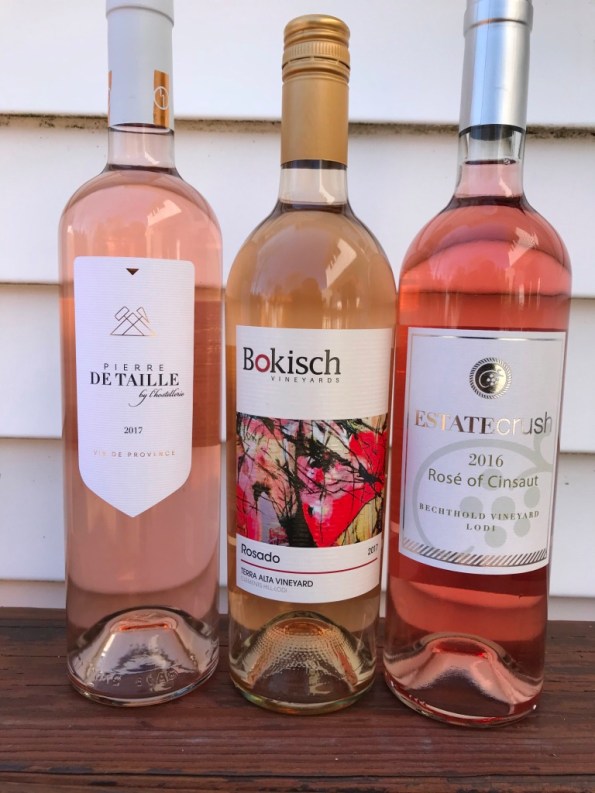
Just look at these colors! Don’t they scream “pleasure”? The Provence Rosé in this picture is only for the color reference purpose, was not part of the tasting
Ever since visiting Lodi in 2016 for the Wine Bloggers Conference, I use every opportunity to confess my love to the region. Lodi might be one of the best-kept secrets in California wine. While a lot of wineries and regions are contemplating their approach to sustainability, Lodi grape growers already developed so-called Lodi Rules (now being analyzed and copied in many regions) for sustainable viticulture, and they have the certification program in place to ascertain that rules don’t just stay theoretical. What starts in the vineyards, continues in the wineries, and the result is simply better wines.
Most of the times Lodi is associated with Zinfandel. Of course, Zinfandel is one of the best known and important grapes in Lodi, but on a big scale, Lodi is a home of the Mediterranean grape varieties – Albarino, Grenache Blanc, Carignan, Grenache, Syrah, Tempranillo and many others, made into delicious, perfectly restrained wines. Lodi goes beyond just the grapes – we need to talk ancient grapes here. lodi is home to some of the oldest in the world plantings of Carignan and Cinsaut (Cinsault), original Mediterranean varieties, also planted on its own rootstock (phylloxera doesn’t survive in Lodi’s sandy soils). Definitely another level – and should be a subject of a separate post.


I had a pleasure of tasting 5 different Rosé for this post – two from Lodi and 3 from Provence. One of the Lodi Rosé is coming from Markus Bokisch, truly a master of Spanish (yes, Mediterranean) grape varieties. Second Lodi wine is produced by Estate Crush from ancient vines Cinsaut, from 130 years old vineyard. Provence wines are coming from two estates owned by Provence Rosé Group – two wines from the Château de Berne, the estate tracing its origins back to the 12th century. The last Provence Rosé is from the Ultimate Provence, the experimental estate which combines traditional Provence with urban design. Before we talk about the wines, just look at those Provence bottles – each one is practically the work of art, uniquely appealing beyond just the color.
Here are my notes:
2017 Bokisch Bokisch Vineyards Terra Alta Vineyard Rosado Clements Hill – Lodi (13.6% ABV, $18, 80& Garnacha, 20% Tempranillo)
Beautiful salmon pink color, very delicate
Fresh tart strawberries on the nose, medium intensity, touch of Meyer lemon
Strawberries all the way on the palate, the wine is definitely more present on the palate than any from Provence, a touch of sweetness, medium body, good acidity, very good balance. Refreshing and quaffable. Sweetness significantly subsided on the second day. Outstanding.
Drinkability: 8-, will be perfect with any spicy food.
2016 Estate Crush Rosé of Cinsaut Bechthold Vineyard Lodi (12.5% ABV, $21, 100% Cinsaut, 130 years old vineyard)
Bright strawberry pink
Strawberries and caramel on the nose, even the toffee flavor, sweet condensed milk. Caramel and toffee are mostly gone after first swirl and sip 😦
Nicely restrained palate, a touch of strawberry with very high lemon acidity and Long, acidity-driven finish – I keep salivating for about 30 seconds already. This will compete neck in neck with any Provence wine
Drinkability: 8, excellent. This wine also perfectly passes room temperature test.


2017 Château de Berne Emotion Côtes de Provence AOP (13% ABV, $16, 50% Grenache Noir, 25% Cinsault, 25% Syrah)
Light salmon pink/onion peel
Strawberries on the nose, ripe strawberries on the palate, excellent balance, clean, fresh, easy to drink.
Drinkability: 8, excellent, delicious from the get go (as one would expect from Rosé). Was also excellent with food!
2017 Château de Berne Inspiration Côtes de Provence AOP (13% ABV, $19.99, 70% Grenache Noir, 20% Cinsault, 10% Syrah)
Salmon pink
Delicate nose, lemon notes, minerality, a touch of funk
Pretty rough edges on the palate initially, interesting vegetative undertones.
Drinkability: 7+, might be a food wine.
3 days later, the palate is better integrated, clean and balanced. Totally unexpected. Drinkability: 8-/8
2017 Ultimate Provence Urban Provence Côtes de Provence AOP (12.5% ABV, $22.99, 45% Grenache Noir, 35% Cinsault, 15% Syrah, 5% Rolle)
Delicate light baby pink
Complex nose, strawberries, raspberries, rhubarb, a touch of flowers, a cheese note (light, disappeared after some breathing time)
Clean, bright, fresh palate, strawberries and strawberry compote, crisp acidity, very refreshing – but all the fruit quicky fading, and the wine doesn’t appear balanced.
Drinkability: 7+, unique and unusual nose. Palate might be too dry after all.
3 days later – 8-/8, round, strawberries and raspberries with white stone fruit undertones, clean, totally different level of pleasure. Another surprise.
Here you are, my friends – 5 very interesting Rosé to brighten up any day, summer, winter, holiday, and not.
Tomorrow is Mother’s Day, so you still have time to surprise Mom with your good taste in wine. And if you are a mom reading this – Happy Mother’s Day to you and thank you for everything you do!
Where In The World is Gigondas?
Do you think I’m dumbing it down way out of proportion? Do you think every wine consumer is perfectly familiar with whereabouts of Gigondas and its wines, and thus taking offense in the title of this post? Well, if this is the case, please share your anger in the comments section below and click the “x” in the corner. And if you are still here, let’s talk about the tiny speck of land in the southern part of the Rhone appellation in France.
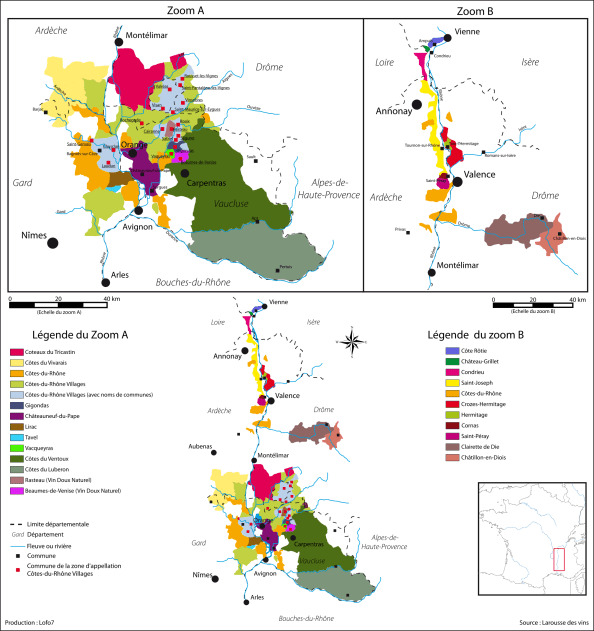
Source: By DalGobboM at French Wikipedia, CC BY-SA 3.0, Link
Size matters, but probably not in this case. Gigondas has only about 3,000 acres of vineyards for the whole appellation (for comparison, E.& J. Gallo in California owns 20,000 acres of vineyards). Nobody knows where Gigondas name came from, but it is known that the wine was consumed in the Gigondas region more than 2,000 years ago. First records of Gigondas vineyard go all the way back to the 12th century. I guess the wine in Gigondas was really good even in the early days, as in 1591 there were first laws enacted, particularly prohibiting the sales of the wine to foreigners. In 1971, Gigondas became the first appellation in Côtes du Rhône-Villages to receive its own AOC status.
Gigondas is the land of Red and Rosé (just Red, mostly). Yep, that’s right – no white wines are produced and no white grapes are grown – at least for the wines produced under the Gigondas designation. The wines of Gigondas stylistically similar to the wines made in the neighboring – also much larger and a lot more famous – appellation of Châteauneuf-du-Pape – despite vignerons mostly working with 4 grapes in Gigondas (out of 8 varieties officially permitted), while folks in Châteauneuf-du-Pape allowed to use 18 in production of their red wines, 9 of which are white. At the end of the day, it is not for nothing both Gigondas and Châteauneuf-du-Pape wines are often classified as “GSM” – which stands for Grenache, Syrah, Mourvèdre – these are the main three grapes, with Grenache typically been a workhorse here (up to 80% allowed in Gigondas wines).
Now, the time has come for an ugly truth. I’m actually not familiar with Gigondas wines. I know and had many of the Châteauneuf-du-Pape wines, but I usually would pass by one or two bottles of Gigondas which most of the stores would offer, and go to the Châteauneuf-du-Pape in the same price range. Thus when I was offered to try 3 different Gigondas wines, my “yes, please!” was very enthusiastic.
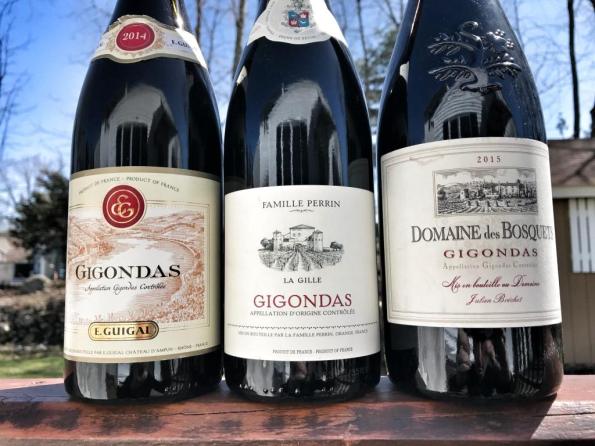
When I mentioned on Twitter that I’m going to play with err, taste a few of the Gigondas wines, I got back an instant outpour of love – and not only to the wines, but to the place. Take a look at these tweets:
It is time to talk about the wines I was able to taste. I had three wines, two from the 2015 vintage and one from 2014. Let’s take a look at the producers first.
The Domaine des Bosquets traces its history back to 14th century. Today, Domaine des Bosquets farms 64 acres of vineyards (50 years old vines), primarily growing Grenache and small amounts of Syrah, Mourvedre, and Cinsault.
The Famille Perrin needs no introduction to the wine lovers. It takes roots in the same 14th century, with its historic Château de Beaucastel. In the 1950s, Famille Perrin became a pioneer of the organic farming, later on extending into the Biodynamic. The Famille Perrin also involved in the multiple projects in France and around the world, and the wine I tasted comes from their La Gille property in Gigondas.
Unlike the two wineries we just talked about, the Guigal Estate was founded in 1946 by Etienne Guigal in Ampuis, a small village Côte-Rôtie appellation. From there on, however, E. Guigal moved to the great prominence, with its so-called “La La” bottlings from Côte-Rôtie (La Mouline, La Turque, La Landonne) becoming an object of desire and obsession for the wine lovers around the world. Guigal Estate produces the wines in multiple appellations throughout both Northern and Southern Rhone, and “Guigal” name on the bottle is typically associated with quality.


I have to honestly tell you – with the exception of E.Guigal, this was not the love at first sight. However, all three wines perfectly evolved on the second day. Here are my notes:
2015 Famille Perrin La Gille Gigondas AOC (14.5% ABV, $38, 80% Grenache, 20% Syrah)
Garnet
Beet juice, mocha, raspberries, medium intensity, minerally undertones
Dense, chewy, blueberries and blueberry compote, eucalyptus, dark chocolate, medium to full body. Long finish.
7+, I would like a bit more balance.
8- second day, the wine is a lot tighter, has firm structure, shows hint of white pepper and by all means a lot more enjoyable. Apparently will improve with time.
2015 Domaine des Bosquets Gigondas AOC (15% ABV, $35, 70% Grenache, 20% Syrah, 10% Mourvèdre and Cinsault, total 30 month aging in oak and concrete)
Dark garnet, almost black
Intense nose of freshly cut berries, vanilla, eucalyptus. Noticeable alcohol as well.
The palate is very intense but also astringent at the same time, black pepper, surprisingly medium body (was expecting bigger body). After 30 minutes in the decanter, the aggressive alcohol is gone. Still, feels that the wine needs time – not ready to drink now. Putting aside for a day.
Day 2 – cherries, mocha, and coffee on the nose. No alcohol, all nice and integrated. The palate shows tart cherries, pepper, vanilla, cut through acidity, medium plus body. Nicely drinkable. 8-/8, very good.
2014 E. Guigal Gigondas AOC (14.5% ABV, $36, 70% Grenache, 20% Syrah, 10% Mourvèdre)
Intense garnet
Open and inviting nose, black pepper, raspberries, mint, cassis
Fresh raspberries and blackberries, hint of mushrooms, nice minerality, a touch of vanilla and pepper, firm structure, good acidity, good balance
8-, a very pleasant and nicely drinkable wine from the get-go.
Day 2: 8+, sweet vanilla, dark chocolate and blueberries on the nose, extremely inviting. The palate evolved dramatically – pepper, raspberries, graphite, nutmeg, violets, firm structure, superb.
Here you are, my friends – my first serious encounter with Gigondas. Looking at the pictures, I would really love to visit Gigondas, and I will be happy to drink the Gigondas wine – just need to fiorget them in the cellar for a while. What is your eperience with Gigondas? Cheers!
Discover Wines Of Loire Valley
What do you think of the wines from the Loire Valley? Why, you say you are not sure? Come on, give yourself a credit – there is a good chance you had Loire Valley wines, but maybe you simply didn’t associate those wines with the Loire Valley? Let me help you – Sancerre, Pouilly-Fumé (not to be confused with Pouilly-Fuissé), Muscadet, Vouvray, Touraine, Anjou, Saumur, Chinon – had any of the wines with these words on the label? Ah, of course, you are saying? Then now you know – those are all the wines from the Loire Valley in France.
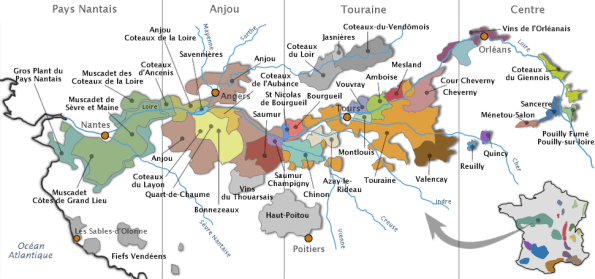
Loire Valley appellations map. Source: http://www.loirevalleywinetour.com/
The Loire Valley is not the most famous winemaking region in France, but it deserves the utmost respect. Here are some facts for you. Number one region in France for production of the white wines. The largest producer of the sparkling wines in France outside of Champagne. Number two producer of Rosè wines in France after Provence. The largest in France vineyard declared UNESCO World Heritage site. 79 sub-appellations and denominations and more than 2,000 years of winemaking history. These numbers speak for themselves. And to round up the stats – five grapes (Sauvignon Blanc, Chenin Blanc, Melon de Bourgeois, Cabernet Franc and Pinot Noir) comprise most of the Loire wines, but a total of 24 grapes are used there.
A few weeks ago, I was happy to attend the “Spring To Loire” trade tasting in New York City, alongside the inimitable, one and only JvB Uncorked – we definitely had lots of fun tasting through the Loire wines together. It was also literally the first tasting this year which I managed to attend, so “happy” is the right word. Besides, I love Loire wines, with Chinon and Saumur been personal pet peeves, as producers of delicious Cabernet Franc.
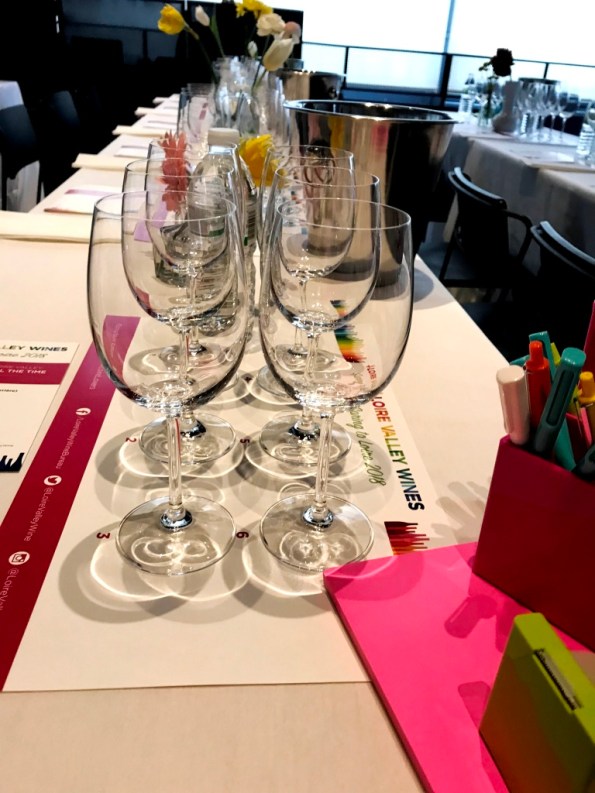
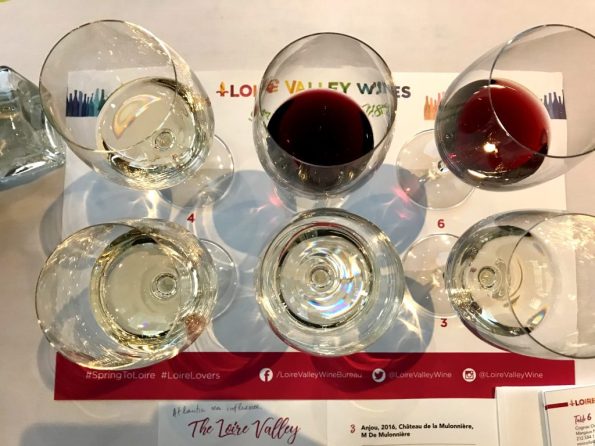
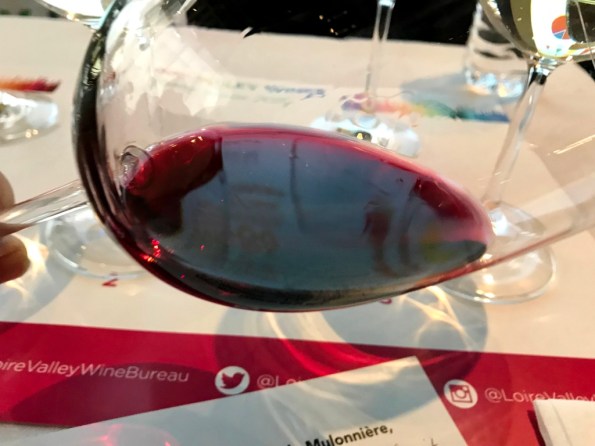
The tasting was unquestionably interesting. First, it had a couple of curious moments. There was a seminar which offered an excellent introduction to the region, tasting all major styles and varieties. Two of the reds in the tasting were rather green and aggressive. At the end of the tasting, I asked a lady sitting next to me how did she liked the wines, and she told me that she didn’t like the red wines individually, but she mixed them (!?!?) and they became more palatable – truly a wow moment in the professional tasting. And then it was another lady who (accidentally or not) dumped what seemed like a whole bottle of perfume on herself – trying to smell nuances of the wine standing next to her was beyond mission impossible. Some memorable moments…
Okay, let’s talk about the wines. I have a few favorites which I will be happy to mention, but first, let me give you my broad stroke impressions.
- Sancerre had a much lesser amount of fresh cut grass than I was expecting. Okay, I’m not an expert on Sancerre evolution, as I rarely drink them. However, based on what I remember from my education and some of the previous experiences, classic Sancerre is supposed to have pronounced grass and cat pee notes – didn’t find much of the Sancerre like that. Touraine Sauvignons, on another hand, were delicious across the board with an abundance of the freshly cut grass.
- Many of the Muscadet-Sèvre-et-Maine wines were lacking the characteristic acidity. When going for Muscadet, I’m expecting acidity which will plucker my mouth and make the cheeks to go meet each other. Many Muscadet in the tasting were nice white wines, but they were lacking their prized quality.
- The Chenin Blanc was a star. We had a number of delicious Vouvray and not only wines, which offered bright acidity, sometimes a touch of sweetness, a round mouthfeel – all which you would expect from a nicely done old world Chenin.
- Many of the Chinon and Saumur Reds were too tannic. This was a total surprise – the wines were fermented and aged in stainless steel tanks, nevertheless, the mouth was drying up almost as much as if you would be tasting the young Barolo. I was told that the whole cluster fermentation and aging was a culprit, but this was not a pleasant surprise. I really expect much more elegant and approachable wines to come from those regions. Nevertheless, we managed to find a few of the superb reds.
Done with my general impressions – here are some limited notes on my favorite wines.


Sparkling:
Crémant de Loire:
NV Maurice Bonnamy Crémant de Loire Brut (SRP: $16.99, 65% Chenin Blanc, 20% Chardonnay, 15% Cabernet Franc) – nice, refreshing, yeasty
NV Maurice Bonnamy Crémant de Loire Rosé (SRP: $16.99, 100% Cabernet Franc) – toasted bread and strawberries, nice, refreshing, great mouthfeel
NV Ackerman Crémant de Loire Brut (70% Sauvignon Blanc, Chardonnay and Cabernet Franc for the rest) – this wine was presented in the seminar, so I had a bit more time to spend with it – great nose, toasted bread, fresh, a touch on a sweeter side but still very nice
White:


Melon de Bourgogne:
2017 Sauvion Muscadet-Sèvre-et-Maine AOC (SRP $13.99) – crisp, fresh, great acidity
2014 Château de la Cormerais Monnieres-Saint Fiacre Muscadet Sèvre et Maine (SRP $19.99) – outstanding. fresh, clean
2012 Domaine de Colombier-Mouzillon-Tillières Muscadet Sèvre et Maine (SRP $19.99) – great complexity


Sauvignon Blanc:
2016 Domaine Pascal Jolivet Les Caillottes Sancerre AOC (SRP: $38) – steely acidity, crisp, a touch of grass.
2015 Domaine Pascal Jolivet Sauvage Sancerre AOC (SRP: $73) – this wine was just ok. The only reason to include it – this was probably the most expensive wine in the tasting, and it really didn’t deliver.
2016 Domaine Michel Vatan Calcaire Sancerre AOC – presented at the seminar – on the nose, minerality, lemon, distant touch of the grass, crisp, fresh. Excellent acidity on the palate, very nice overall.
2017 Raphael Midoir De Silex et Tuffeau Touraine AOC (SRP $14.99) – outstanding. Classic nose, delicious.
2016 Pierre Prieuré & Fils Domaine de Saint-Pierre Sancerre AOC (SRP $19.99) – excellent, fresh
2016 Raphael Midoir La Plaine des Cailloux Touraine-Oisly AOC (SRP $19.99) – outstanding, great complexity.


Chenin Blanc:
2016 Château de la Mulonnière M De Mulonnière Anjou – presented at the seminar – delicious. White stone fruit, peaches on the nose. A touch of sweetness and perfect balance on the palate. Outstanding.
2017 La Croix des Loges Anjou White AOC (SRP $14.99) – outstanding. Clean, fresh, touch of sweetness.
2014 La Croix des Loges Trois Failles Anjou AOC (SRP $22.99) – outstanding, gunflint on the nose, clean, balanced palate.
1977 La Croix des Loges Bonnezeaux AOC – yes, 1977, this is not a typo – this was an off the list, off the charts treat – a Chenin Blanc dessert wine, still elegant and complex.
Other:
2017 Domaine du Colombier Vla de Loire IGP ($14.99, 100% Sauvignon Gris) – excellent, fresh, complex.


Reds:
Cabernet Franc:
2015 Domaines des Varinelles Saumur-Champigny AOC (SRP: $20) – amazing similarity with Lodi wines on the palate – soft, aromatic, touch of cinnamon, ripe blueberries and raspberries, hint of blueberry compote. The similarity with Lodi is mind-boggling. Let’s not forget that this is Cabernet Franc wine, so there must be something there which can explain it. Need to dig deeper into this, I’m really curious.
2015 Domaines des Varinelles Laurintale Saumur-Champigny AOC (SRP: $24) – muted nose, and practically identical on the palate to the previous wine from the same domain. I will look into it… But two superb wines by all means – the wine are coming from the old world, but clearly, are screaming “new world”.
2017 Domaine du Raifault Chinon AOC (SRP: $17.95) – wow! Cassis on the nose, cassis on the palate – spectacular. This was my best of tasting red wine. This wine is not available in the US yes (we tasted one of only two bottles brought in for tasting) – in the process of being imported. Once it arrives, do yourself a favor – go find it and buy a case, or two. You can thank me later.
2016 Sauvion Chinon AOC (SRP: $17.99) – interesting dense nose, great palate, sandalwood, smoke, fresh, present. Tannins are still aggressive, but not as much as others.
Pinot Noir:
2014 Xavier Flouret Domaine de Chatenoy Menetou-Salon AOC (SRP: $20.95) – great Pinot Noir – excellent fresh nose, great balance of dark fruit on the palate, outstanding. 15 generations of vignerons know what they are doing. Definitely one of the highlights of the tasting.
2015 Domaine Gérard Millet Sancerre Red (SRP: $25) – fresh, crisp, herbs, spices, light.
Blends:
2014 Domaine de la Chaise Touraine-Chenonceaux AOC ($22, 70% Cabernet Franc, 30% Côt) – fresh, delicious, cassis and tobacco, excellent balance
The Spring is finally here (or at least it seems so in New York), so go on, find some Loire wines to explore on your own. Cheers!
Last Bottle Sign Up ($10 credit)




 Talk-A-Vino