Archive
I Know Nothing. Notes From The Desk of Puzzled Oenophile
 I know nothing.
Of course, I’m aware of the proverbial circle of knowledge. When your knowledge is represented by the tiny dot, it seems that the surrounding unknown is equally tiny. As your circle of knowledge increases in size, you get to understand that the surrounding unknown is vast and grows together with your knowledge.
Nevertheless, today’s wine lesson proved that I know nothing about wines. Or maybe I am just bad at predicting the future.
A long time ago I attended a wine tasting event to celebrate the anniversary of The Wine Century Club. The event was hosted in New York by the folks from Snooth with the idea that everybody should bring a bottle or a few of the wine(s) made from rare grapes. I have no memories of the wines I brought – I believe one of them was a blend with lots of different grapes in it, but this is really not important for our story. My absolute highlight of that get-together was a bottle of Loire white wine, made from the grape called Romorantin coming from the Cour-Cheverny AOC, which I never heard of before (both grape and appellation). If I’m not mistaken this event took place in 2008, and this bottle of Romorantin was from 1998 vintage. The wine was amazing in its youthfulness and brilliance, vibrant lemon and honey, crisp and fresh. Again, if I can still trust my memory, the person who brought wine said that he (or she) got the bottle at one of the Manhattan wine stores for around $50. I made a note to myself that I want to find this wine and age it – as you know, I’m a super-fan (read: geek and zealot) of aged wines.
I think literally next year I got lucky – I found 2007 François Cazin Le Petit Chambord Cour-Cheverny AOC available at my local wine shop, for about $15 per bottle. I got 6 bottles and prepared to happily and patiently wait for the right moment to open this wine.
I don’t remember when I opened the first bottle of this, maybe 2-3 years later, and the wine didn’t wow – it was acidic all the way, without much salvation.
My next attempt to replicate the amazing experience of the first encounter with Romorantin, was made in 2014. Here are my notes:
2014
2007 François Cazin Le Petit Chambord Cour-Cheverny AOC (12% ABV, 100% Romorantin) – bright white stone fruit on the nose, citrus (lemon) notes on the palate, medium to full body, zinging acidity. It is getting there, but needs another 4-5 years to achieve full beauty and grace. 8-
As you can tell we are moving in the right direction but still far from the destination. Another year, another attempt – again, a copy and paste from the previous post:
2015
This is a rare French white wine made from 100% Romorantin grape. I remember a few years back trying this wine at 10 years of age – and I remember being simply blown away by the exuberant beauty of this seemingly unassuming wine (new vintages retail at around $15 – the QPR is through the roof on this). The nose of that 2007 was amazing, with fresh white fruit, guava, mango, honeysuckle, lemon, and lemon zest. On the palate, behind the first wave of Riesling-like appearance with a touch of sweetness and tropical fruit notes, there were layers and layers of acidity and minerality. After about 10 minutes of breathing time, the wine was almost bone dry, very crisp, and refreshing. I still have 3 bottles of 2007, and now the trick will be to keep my hands away from them, as they still benefit from time.
It is quite possible that this was this wine at its peak? The next attempt was much less successful, despite the fact that we are passing 10 years mark now. I brought the bottle to Jim Van Bergen’s (JvBUncorked) house to celebrate Open That Bottle Night 2019. I was really hoping for a “wow”, or at least an “omg” from the group, but this definitely didn’t happen:
2019
2007 François Cazin Le Petit Chambord Cour-Cheverny AOC
Why: This is one of my favorite wines. When it was 10 years old, was literally blown away
How was it: Underwhelming. A touch of petrol, clean, good acidity, bud no bright fruit. Still delicious in its own way – I would gladly drink it any time. But – lucking the “umpf” which was expected… Still have 2 more bottles – will open them later on and see.
Underwhelming was the word. Okay, down to the two bottles.
At the virtual OTBN2021, I made another attempt to experience greatness. Here’s how it went:
2021
The miracle didn’t happen, and the white wine didn’t become suddenly magical. If I need to describe this 2007 François Cazin Le Petit Chambord Cour-Cheverny AOC in one word, the word would be “strange”. At some moments, it was oxidative and plump. In other moments, it was acidic. It never showed that amazing lemon and honey notes I was expecting. I still have one more bottle, but now I really need to forget it for as long as possible and see if the miracle will happen.
And now we are down to one, my last bottle.
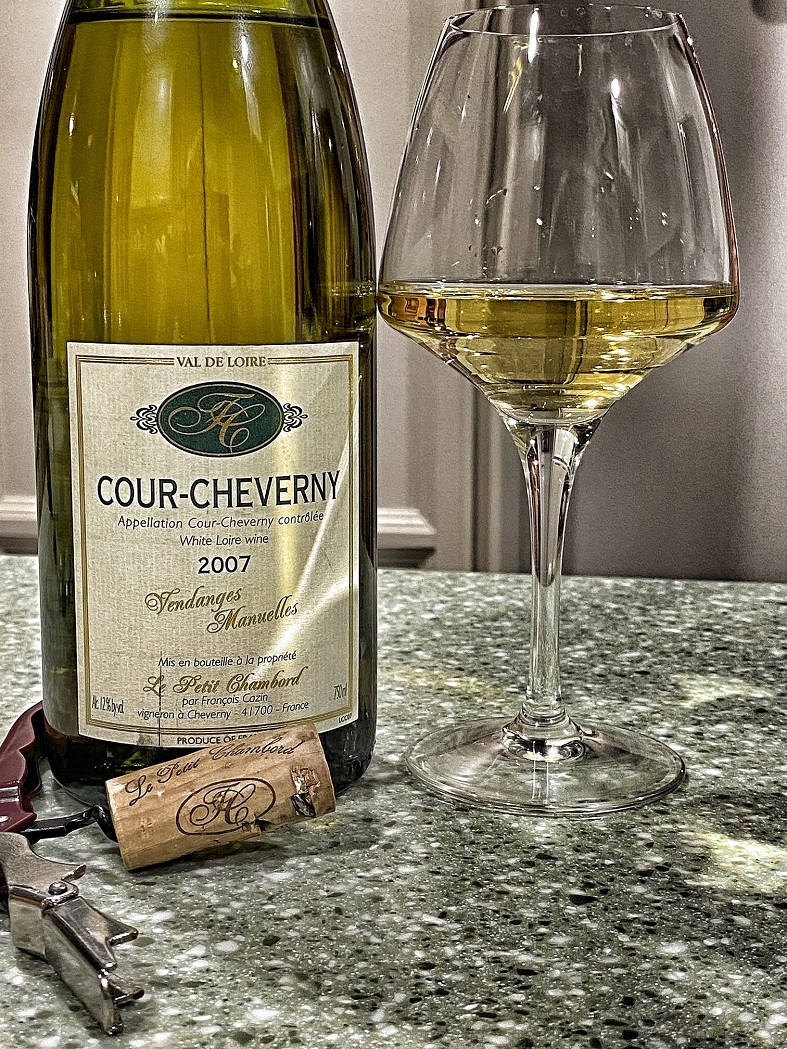
I was feeling blue, and I needed a “pick me up” bottle. Considering my loving relationship with wine, a “pick me up bottle” is nothing specific – it can be something very different every time. This time I wanted a white wine with some age on it. Marsanne/Roussanne would be ideal, but I had none of those. A have a few bottles of Peter Michael with a nice age on them, but this would be a bit too lavish and still not fitting the mood. And then I saw my last bottle of Romorantin, and the thought was “yeah, I can appreciate some oxidative notes right now”
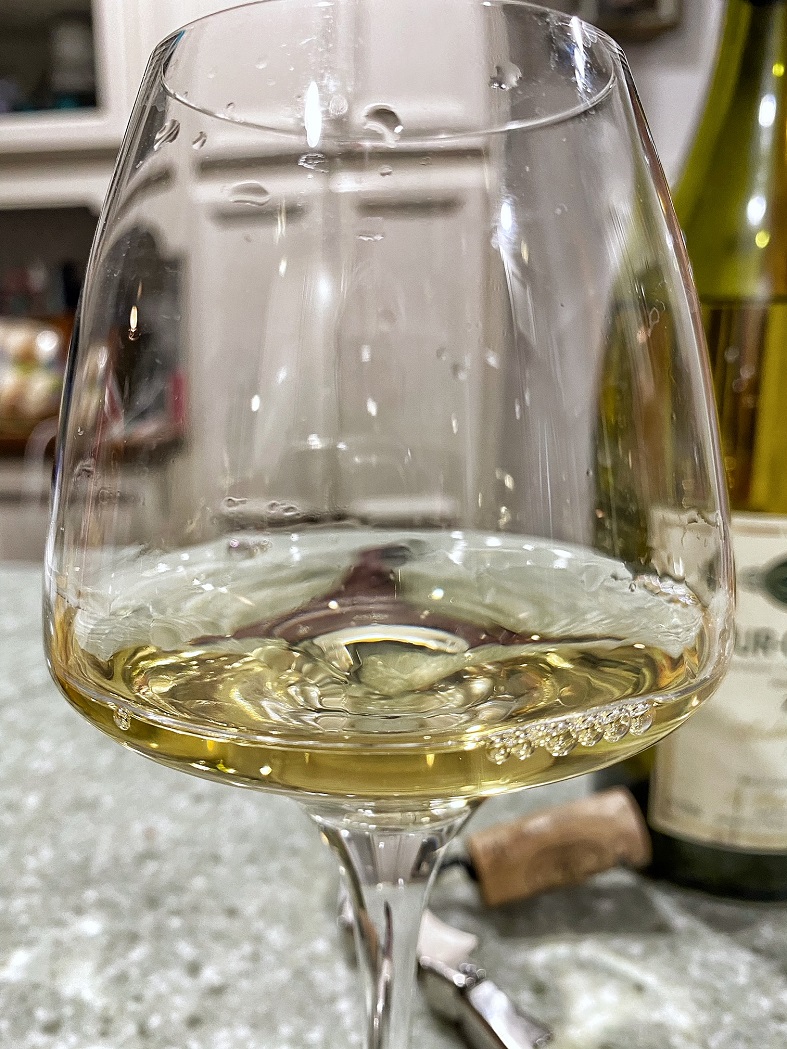
The bottle is out of the wine fridge. Cork goes out in one piece with no issues. I poured wine into the glass to take a picture. Beautiful color, between light golden and golden – remember, this is 15 years old white wine.
The first whiff from the glass was clean, with lemon and minerality, an impression of a young, confident white wine. The first sip simply confirmed that first impression – whitestone fruit, crisp, minerally-driven, vibrant, and refreshing. A distant hint of petrol showed up on the nose, very faint, and a touch of honey. The wine was alive, the wine was fresh, the wine was perfect.
The wine continued its finesse on the second day (it was a heroic act of not polishing the whole bottle on the first day), behaving as young and fresh white wine of the new harvest. In a blind tasting, I would be completely sure that his wine is one or two years old at the best.
Anyone cares to explain this to me? I stored all 6 bottles the same way. Maybe the wine was strangely not ready in 2019 (sleeping stage), and last year’s bottle simply had an issue of cork? Maybe what I tasted in 2015 was actually a peak, and so this vintage needed only 8 years and not 10? Why 1998 was amazing at 10 years of age, and 2007 was amazing at 8 and 15? Vintage variations? Change in winemaking between 1998 and 2007? Wine Spectator vintage charts consider 2007 Loire wines past prime. Wine Enthusiast’s vintage rating for 1998 is 86, and 2007 is 92. And none of it helps.
If you have any ideas, please chime in.
I know nothing. But I will continue learning.
Open That Bottle Night 2021 – What A Night!
Traditions, traditions, traditions.
Traditions need wine. Wine needs traditions. Makes sense? If not, express your disdain with a flaming comment. But if you are an oenophile (wine aficionado, wine snob, wine geek, …), you understand and can easily relate.
Open That Bottle Night, or OTBN for short, is one of the shortest living traditions of the wine world, where thousand years might be a good measure for some – OTBN was first celebrated in 1999 when it was created by the wine couple – Dorothy Gaiter and John Brecher, wine writers behind the “Tastings” column in Wall Street Journal. The OTBN was created to help wine lovers part with the special wine bottles which might otherwise become a waste.
There are two parts to any wine tradition – the first is a special wine itself, always carefully selected to match the tradition, and the second is sharing – sharing of that bottle with the world. Not with the whole world at once, but with the friends.
Let’s talk about finding and sharing.
Finding a proper bottle is never easy – and it might be even worse for the holiday such as OTBN, which was created specifically to help us part with the special bottle, the bottle which has a special meaning for us – no matter why and how, but special in whatever way. Sharing is typically not a problem – unless it is 2021 and the world is still mostly in lockdown – and that includes all of one’s wine friends.
I was lucky for the past many years to have wonderful celebrations of the OTBN with the friends, sharing the most amazing wine experiences (here is the first-hand account for 2017, 2019, and 2020). The only possible way to share OTBN 2021 was the one using for the majority of the gatherings during 2020 and 2021 – the virtual one. I’m not complaining – I’m grateful that at least we have the technology with allows us to spend time with each other face to face, no matter how physically distant we are. So sharing portion was rather easy, and now let’s talk about finding.
Finding is not even the right word. Finding is easy – but selecting is not. OTBN asks for that special bottle. Deciding on what makes one bottle more special than the other, when your cellar is full of unique bottles all present in the quantity of 1 (one), is the hard part. After some amount of deliberations, which included pulling numerous wine fridge shelves back and forth, back and forth, I settled on these four bottles:
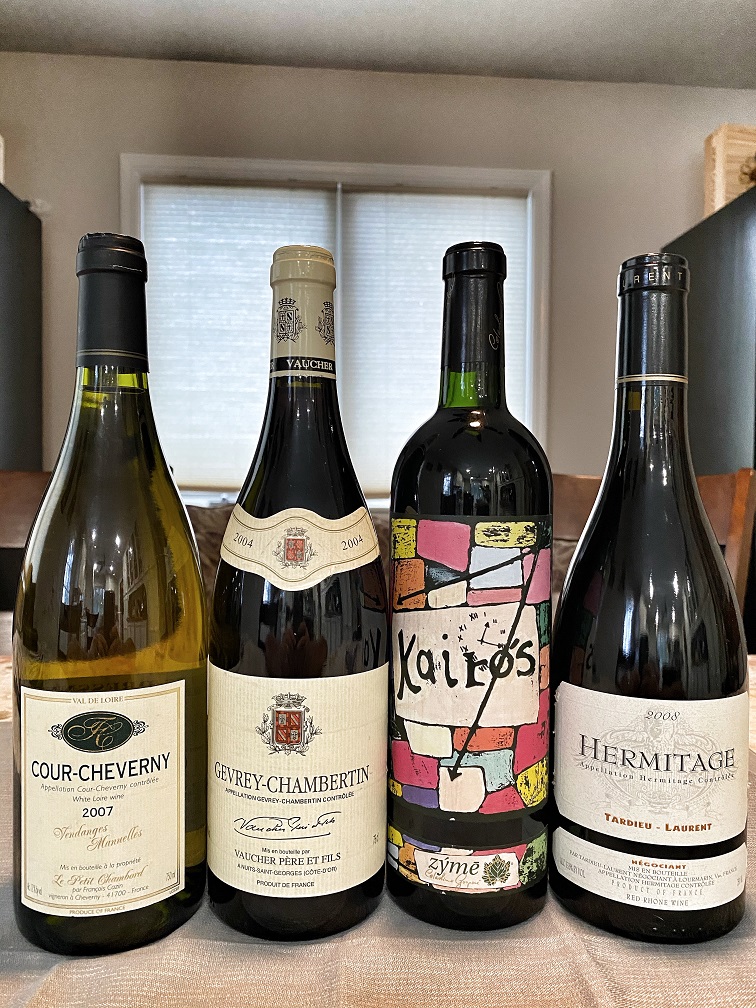
Let me explain my selection logic so you will see why it is such a daunting process for me.
First, the white wine, as I’m a big proponent of the balanced diet. 2007 François Cazin Le Petit Chambord Cour-Cheverny AOC might be called my unicorn wine, at least when it comes to whites. The first time I tried a different vintage of this exact wine when it was 10 years old and this wine became one of the brightest memories for me – the beauty and interplay of bright fruit, honey, and acidity were simply unforgettable. When young, this wine from the Loire, made out of the rare grape called Romorantin, is a single note acidic. With age, it develops into an absolute beauty. When I opened the bottle of this wine back in 2015, the wine was superb. When I brought it to Jim’s house for the OTBN 2019, 4 years later, it was “interesting” but absolutely not exciting. I was hoping for redemption, so this was an easy choice.
My next selection was 2008 Tardieu-Laurent Hermitage AOC. When I see Hermitage written on the label, you can literally hear me sigh. Hermitage to me is synonymous with the Syrah, and I love classic Syrah. And so does my wife – Syrah is her favorite grape. I have very few Hermitage wines in my cellar – and this one was calling my name for a long time (meaning: it was pulled off the shelf and placed back many times). Considering that 2008 had a rainy growing season and the vintage has low ratings (WS86, for example) and “Drink now” recommendation, this was an easy decision – no point in waiting any longer.
How many unicorns can one have? Well, having a unicorn would be nice, but I guess I’m talking about chasing them. So how many unicorns can one chase? Clearly, it seems that I’m chasing many. Good Amarone is the wine I’m always chasing. Giuseppe Quintarelly Amarone is more of an ephemeral dream for me, considering the price and availability – and it is definitely one of those unicorns I’m talking about. With 2004 Zýmē Kairos Veneto IGT, I’m getting as close to that unicorn as I can. This wine is produced by Celestino Gaspari, the winemaker for Giuseppe Quintarelli. As the label says “Produced from 15 varietals of grapes of Verona, it is a reflection and interpretation of our soil and the culture of its terroir”. In case you are curious, the 15 grapes are Garganega, Trebbiano Toscano, SauvignonBlanc, Chardonnay, Corvina, Corvinone, Rondinella, CabernetSauvignon, CabernetFranc, Merlot, Syraz, Teroldego, Croatina, Oseleta, Sangiovese, and Marzemino. This was my last bottle, and I scanned the pages of this very blog for a good 20 minutes last night as I couldn’t believe that I could’ve never written about this wine before – apparently, I have not. Anyway, I was afraid that it might be the time for this wine, thus it was added to the OTBN group. By the way, another interesting tidbit about this wine is that the name “Kairos” means “timely”, “appropriate”, and “the perfect moment”.


Every good plan A needs plan B, right? The backup. Have you ever went to a friend’s house with a bottle of wine, while another bottle stayed in your car just in case the first one would be corked? Yep, that’s the plan B we are talking about. 2004 Vaucher Pere et Fils Gevrey-Chambertin was my plan B. I don’t have a lot of Burgundies, so opening one is always a special moment. 2004 vintage was so so, with WS88 rating and “drink” recommendation, so this bottle was rightfully on the OTBN list, should the need and opportunity come.
Now you know all about selecting, and I want to say a few more words about sharing. Sharing wine is one of the best pleasures of drinking wine. The approving, understanding nod from the fellow wine lover after he or she is taking the sip from the bottle you brought really fills you up with joy. It might be even more satisfying than your own enjoyment of the same wine. Yet in today’s world, sharing the wine face to face is literally impossible, OTBN or not. To at least share the moment, I reached out to the technology which seemed to save the world from going mad – a virtual get-together over video. Zoom is my tool of choice, so after sending the invites to the group of bloggers, we got together at 7 pm on the OTBN Saturday.
We were not a big group – even in the virtual world, people are busy and have their own plans. But I’m really grateful to everyone who was able to spend that special Saturday time together – some for the whole 2 hours, some for 20-30 minutes, talking about wines, sharing life stories and experiences, and most importantly, having fun. You can scroll through the pictures below, I’m sure you will see some familiar faces.
So how was my OTBN? In other words, let me tell you more about the wines.


The miracle didn’t happen, and the white wine didn’t become suddenly magical. If I need to describe this 2007 François Cazin Le Petit Chambord Cour-Cheverny AOC in one word, the word would be “strange”. At some moments, it was oxidative and plump. In other moments, it was acidic. It never showed that amazing lemon and honey notes I was expecting. I still have one more bottle, but now I really need to forget it for as long as possible and see if the miracle will happen.
The Hermitage was … superb. First of all, opening it was a breeze – cork was perfectly intact, regular waiter’s corkscrew worked just fine. Drinking this 2008 Tardieu-Laurent Hermitage AOC was a great pleasure – a touch of pepper, a distant hint of a barnyard, round and delicious fruit. The wine was just right – perfectly balanced, round, and smooth. I don’t have a lot of experience with Hermitage, but this wine was clearly one of the best renditions of Syrah I had in a long time. “Elegant” would be the single word descriptor I would use.
The Kairos was the bottle I was concerned about the most. It could’ve been gone by now, especially considering such an eclectic blend of grapes. When I started opening this 2004 Zýmē Kairos Veneto IGT, first I decided to use the regular corkscrew, which worked perfectly fine for the Hermitage. Looking at the way the screw was going in, the cork seemed to be too soft, so I decided that it was the job for Ah-So – I’m glad this decision was not an afterthought I usually have after the cork is already broken in half – Ah-So worked perfectly well and the cork came out with no issues.
And the wine… The wine was magical. Dark fruit with a hint of dried fruit on the palate, perfectly firm and structured, powerful and elegant, with clean acidity and an impeccable balance. The wine was delicious on Saturday, and I also enjoyed that over the next two days. So now I regret not having any more bottles left – but I’m glad I had this special experience. Magical would be the word.
As two bottles of red had no issues whatsoever, the Burgundy was left aside and now will be waiting for its special moment to be opened and enjoyed.
And that, my friends, concludes my OTBN 2021 report. While the sharing was virtual, the experience and pleasure of the wine and the company were real, and it will stay in my memory as yet another great OTBN night. Hope you had fun too. Cheers!
Playing With Celebrity Wines
Celebrity wine – is there such a thing?
Of course.
If you will look at this Wikipedia page, you will see the list of 100+ famous people who own vineyards, wineries, or both. Like all of us, some of the celebrities happen to love wine, and they are not shy of associating with what they love.
Every year or so, a new celebrity finds their love of wine and joins the ranks. 2020 had two celebrities (so far) joining the wine club of their own making – singer Post Malone and actress Cameron Diaz brought to the market their wine offerings – which I was eager to try, hence this post.
I’m always curious about celebrity wines. Celebrity status greatly simplifies the marketing of the product, no matter what the celebrity associates with. The celebrity status easily overshadows the product itself – this removes the need for the product to be excellent, as we love our celebrities so much that we are willing to blindly take whatever they are endorsing – and so my inner skeptic always wants to know – how good is the particular product? Is it a real deal or simply a cover up for something mediocre?
I had no idea who Post Malone is until I saw a Netflix movie called Spencer Confidential. Afterward, I learned that Post Malone is actually a popular singer. Then I read an article talking about the upcoming release of Post Malone’s wine, so here it is – a celebrity wine which needs to be tasted. After waiting for almost a month, the wine finally appeared in Connecticut, and I was able to buy my bottle.
When I’m faced with celebrity wine, the celebrity factor goes aside. I’m happy to know that somewhere there is a famous name associated with the wine – but the only thing I care about is the wine itself. Where was it made, what grapes it is made out of, terroir, winemaking, smell, taste, and pleasure – this is what is important. Knowing I’m drinking the wine associated with a famous person doesn’t give me pleasure – tasty, delicious wine does. I always say that the proof is in the glass – that is the only thing that matters. So celebrity wine or not, I treat it exactly like any other bottle.
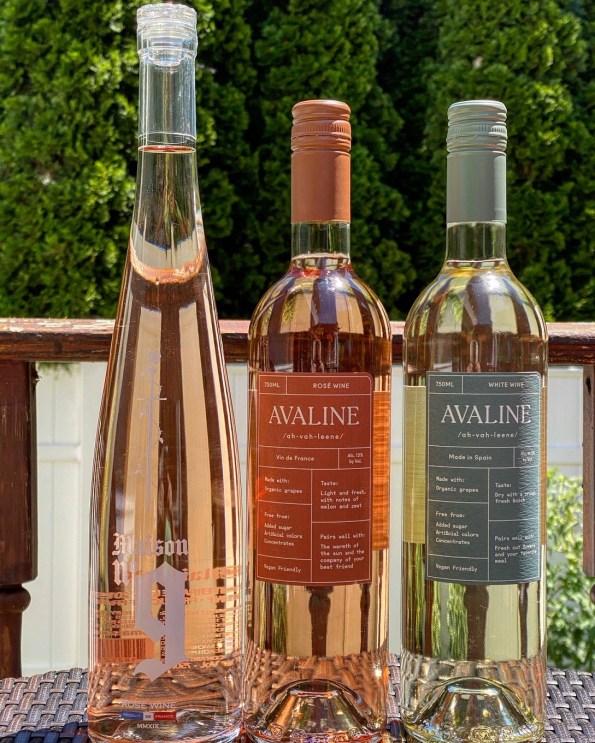
From that point of view, Maison No 9 represents a mixed bag. When it comes to the wine – it is superb. 2019 Maison No 9 Rosé Méditerranée IGT (12.5% ABV, $24, blend of Grenache, Merlot, Cinsault, Syrah) has a beautiful light pink color, has a nose of fresh strawberries with a touch of lemon, and bursts in your mouth with fresh strawberries and lemon, perfect minerality and raw, vibrant energy – all scrumptiously balanced (Drinkability: 8+). I love the bottle, it definitely stands out with an engraved front label depicting the sword and the rose. However, the problems start as soon as you try to dig deeper.
The website of Maison No 9 has no information about the wine, the vineyards, or the winemaker. All pictures on the web site feature Post Malone, and the only purpose of the website is to make sure you will buy something – either merchandise (T-shirt? Would it make wine taste better?), or the wine. This is in stark contrast with Miraval website, for example – Miraval is clearly a celebrity wine project (Angelina Jolie and Brad Pitt) – where it is all about the land, terroir, and wine. Website or not, but my problem is that the only place with any information about the Maison No 9 wine was this Forbes article. That is where I learned the story behind this wine, or that the wine was made by a well known French winemaker Alexis Cornu, or that the “new wine is named Maison No. 9, a reference to the Nine of Swords tarot card” (by the way, I searched the meaning of Nine of Swords tarot card and seems to be nothing good, but I’m not going to talk about things I have no idea about). So the bottom line here is that the wine is good, but the whole story is lacking. Does it worth $24? If this is your budget for Rosé, yes, but if not – you got options.
The Maison No 9 story, while almost non-existent, is still perfect compared to our next two wines, Avaline, which come with quite a story – and not really a good one. Avaline, which I believe means “bird” in Latin, is a product of the imagination of two long time friends, Cameron Diaz, a famous actress, and Katherine Power, a well-known entrepreneur. The duo decided to come up with a concept of a “clean wine” to advertise their creation, and this was a grave mistake, as it made the professional wine world fuming.
I’m not going to regurgitate any of the articles – just go search “clean wine Avaline”, you will find plenty of “critical acclaim”. The problem with using terms such as “clean wine” is that as soon as you designate your wine to be “clean”, you automatically imply that all other wines are “dirty” because no other wines advertise themselves as “clean”. When someone says on the label “Free from added sugars, artificial colors, concentrates”, I can’t keep my eyebrow from going up as my immediate reaction is “huh”? Really? I can’t speak with confidence about Two Buck Chuck, but I have serious doubts that they use any of these said additives. I don’t know who was advising Avaline on the wine marketing, but to me, this is a complete failure. Forget “clean wine” – another serious problem I have with these wines is that there is no information whatsoever about the wines – who made them, where the wines were made, from what grapes… yes, Wine.com, which sells both wines, has information on the grape composition. But then the white wine is designated as “Product of Spain” – another “huh?” from me as I never saw another wine with such designation, and the Rosé is identified as Vin de France. Another interesting element here (strategy????) is that both wines don’t list the vintage. So when you come to buy the wine in the store, you have no idea for how long the wine was sitting on that shelf… Nice…
So how were the wines? Both wines were actually quite tasty: NV Avaline White Wine Spain (11.5% ABV, $24, blend of Xarel·lo, Macabeo, Malvasia) – white stone fruit on the nose, nicely restrained, fresh flowers, a touch of minerality. Fresh ripe plums, sage, Meyer lemon, clean acidity, medium-long finish (Drinkability: 8, nicely done). NV Avaline Rosé Vin de France (13% ABV, $24, blend of Cinsault, Grenache, Cabernet Sauvignon, Syrah, Caladoc) – gentle pink color, a hint of sweet ripe strawberries, nicely restrained, candied strawberries and strawberry jam on the palate, good acidity, good balance, not over the top. Short finish, easy to drink (Drinkability: 8-).
While the Avaline are tasty wines, I see a serious problem here, outside of any “clean/dirty” concepts. You are asked to pay $24 for the wines of unknown pedigree, unknown vintage, made by someone somewhere, with a clean (pun intended), but a seriously unattractive label. I can splurge $5 on such a wine if I will get a recommendation – I guarantee you I will pass a wine like that if I will just see it on the shelf.
Here you go, my friends – 3 celebrity wine for your attention. All three are well drinkable, but you seek them at your own peril. Cheers!
Have Grenache, Will Travel
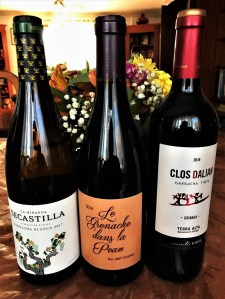 “Have wine, will travel” is one of my favorite openings for a post about wine because this is exactly what wine does – even before you take a sip, just a glance at the label is often sufficient to let your imagination run wild and yes, imagine yourself instantly somewhere 5,000 miles away from where you are now. But never in my scariest, horror-filled dreams, I would imagine that wine, along with pictures, might become the only way for us to travel, even for a day. Sigh.
So today I want to offer you a quick trip with the help of one of the most versatile, most widely planted grape in the world – Grenache, also known as Garnacha.
Grenache is a versatile grape on many different levels. First, it is widely planted. While supremacy of Grenache can be debated between France and Spain, literally every other winemaking country – Australia, Argentina, Chile, Israel, Italy, South Africa, USA, New Zealand – all have significant plantings of Grenache. Next, when we say Grenache, we typically assume red grape and red wine, of course – but Grenache family also includes Grenache Blanc and Grenache Gris. Grenache is capable of an ultra-wide range of expressions – from light and simple, such as Borsao Tres Picos or Delas Côtes du Rhône to bombastic, tremendously concentrated expressions, such as Clos Erasmus, Horsepower and Sine Qua Non. Last but not least is pricing versatility. It wouldn’t surprise anyone that $100 bottle of wine drinks well – any grape can do this. But in under $10 range, very few grapes can excel – but Grenache is one of them, for example, in the form of Honoro Vera.
Today our journey will not be too long, but we are going to make two stops in the countries which can be designated as “classic” Grenache – France and Spain. To help with our travel we can even enlist the help of the website put together to promote European Grenache and Garnacha – you can find the link here.


Our first stop is in the south of France, in the small region called Maury, which in turn is a part of the Roussillon wine region. Winemaking in that area goes back a few thousand years. Maury located on the border with Spain, and it became a part of France only after 1659, so even today there is a lot of Spanish influence in the region. Grenache is the main grape used in the production of Maury wines, and it is considered to be one of the best in France. Maury is best known for its fortified wines, produced in the style similar to port, with the addition of the spirits in the middle of fermentation, which kills the yeast and leaves the sugar level high in the resulting wine. However, it is not the Maury AOC wine I want to offer to you today, but Maury Sec, which is a designation for the dry wines produced in the same region. Our first wine is produced by Jeff Carrel, and it is predominantly Grenache with the addition of Syrah:
2016 Jeff Carrel Le Grenache dans la Peau Maury Sec AOP (15.5% ABV, 80% Grenache / 20% Syrah)
Dark ruby
High Intensity, sweet cherries, cherry compote, tobacco, sweet basil
Sweet cherries, unexpected astringency, good acidity. High alcohol is surprisingly unnoticeable.
7/7+ on the first day, 5 minutes after opening.
8-/8 second day, much more balanced and round, adds a touch of pepper, astringency is gone, excellent.
Now, let’s go to Spain. As we are now in Spain, let’s switch to the proper name for our grape – now it is Garnacha to you. Once here, how about some Garnacha Blanca? The wine had been made in Somontano, an area up north close to the French border for more than 2000 years. Garnacha Blanca is one of the permitted and popular varieties in Somontano. Once in Somontano, we are going to visit Secastillo, the valley which takes its name from the seven castles overlooking it.
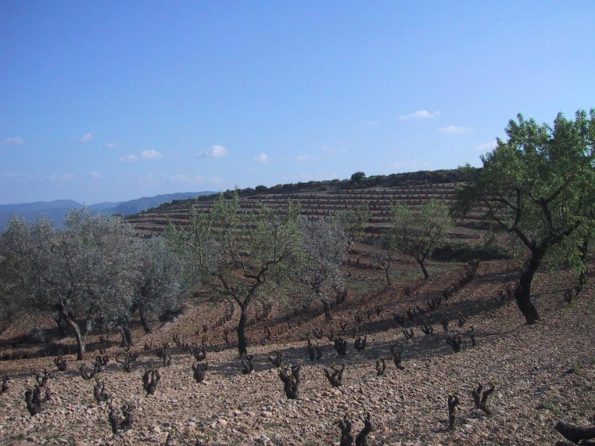
Vinas del Vero vineyards in Secastilla. Source: Gonzales Byass
Viñas del Vero produces the wines here, sourcing the grapes from 100 years old Garnacha vines, growing mostly at the elevation of 2,100+ feet.
2017 Secastilla La Miranda Garnacha Blanca Sonomontano DO (14% ABV)
Straw Pale
Lemon, fresh grass, lemon zest
Whitestone fruit, Meyer lemon, clean acidity, nice and refreshing
7+/8-, very good
Let’s continue our trip going a bit more down south. Now we are in Catalonia, in Terra Alto DO (Terra Alta means High land), where Cellers Unió had been producing wine from the beginning of Terra alto DO been formally established in 1982 (Cellers Unió is a conglomeration of cooperatives which operates across 5 DOs, 11,000 acres of vineyards and includes 20,000 families of growers across 186 cooperatives). Now it is time to drink some classic Garnacha:
2016 Cellers Unio Clos Dalian Garnacha Tinta Crianza Terra Alta DO (13.5% ABV)
Dark Garnet
Cherry Coolaid, sweet cherry, candy
Cherries, fresh sour cherries, wow. Touch of tobacco, earthy undertones, perfect balance, soft and round.
8, excellent
Our trip is over, unfortunately – but see how easy it was? I wish you many great journeys, all enabled with the power of wine glass in your hand. Until we travel again – cheers!
An Evening With Friends
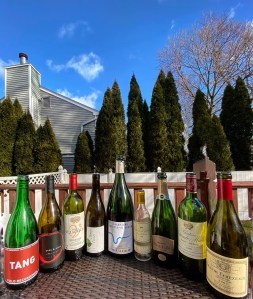 What is your favorite part about wine? Is it the taste? The buzz? The sheer appearance of the bottle sometimes resembling the work of art? The joy of owning an exclusive object? The coveted status symbol?
My answer will be simple. My favorite part about wine is the ability to share it. Take a sip, reflect, have a conversation, preferably a slow-paced one. Friends are the best pairing for wine. Opportunity to share the experience, pleasure, and joy. Sharing makes it all worth it.
New Year celebration (the main holiday for anyone with the Russian upbringing) is a multi-step process for us. We like to celebrate the arrival of the New Year as many times as possible – the evening before the New Year, a midnight Champagne toast, the New Year’s day dinner, and more dinners shortly after (this is when the bathroom scales are the worst nemesis). Some or all of these dinners have to include friends – and it is the best when friends share your wine passion.
Such was our dinner on Saturday, bringing together a group of friends who truly enjoy what the wine world has to offer. We all contributed to the evening, both with food and wines, to make it fun and interesting. Below is the transcript of our wine extravaganza, with highs, lows, and surprises.
While we were getting ready to start our dinner, our first wine was something unique and different – how many of you know what Piquette means? It appears that Piquette is yet another type of sparkling wines. The story of Piquette goes back to 18th century France when the whole wine industry was in full disarray. Piquette is literally made by converting water into the wine – using water to rehydrate grape skins left after the wine production. We had 2019 Field Recordings Tang Piquette Central Coast (7.1% ABV, Rehydrated skins of Pinot Gris and Chenin Blanc) which was made using this exact process – grape skins were hydrated in well water for a week, then pressed, after which a little bit of the table wine was added, and the wine was bottled with leftover yeast and sugar to continue fermenting right in the bottle. To me, the wine was reminiscent of cider – light fizz, fresh apple notes, cloudy appearance of a nice unfiltered cider. Would I drink this wine again? On a hot summer day – yes, why not, but this is not the wine I would actively seek.


It is difficult to assess the “uniqueness” of the wines. There can be many reasons for the “unique” wine designation – small production, wine not produced every vintage, the wine which is no longer produced. There are, of course, many other reasons. How about spending 10 years to finally make about 200 (!) bottles of a drinkable wine? Don’t know about you, but this is unquestionably unique in my book. And so there was 2017 Olivier Pittet Les Temps Passés Vin de Pays Romand Switzerland (14.2% ABV, Arvine Grosso). Petite Arvine is a popular white grape in Switzerland, producing nice, approachable white wines. On another hand, Petite Arvine’s sibling, nearly extinct thick-skinned Arvine Grosso (or Gross Arvine), is a nightmare to grow and to work with. This was the Arvine Grosso which took about 10 years to restore the plantings and achieve a drinkable result. The wine needed a few minutes to open up – then it was delicious, fresh, with a touch of underripe white plums, bright acidity and full-body, similar to Marsanne/Roussanne. I wish this wine would be a bit easier to procure and not just through a friend who lives in Switzerland…
I was happy that Stefano brought a bottle of 2008 Berlucchi Palazzo Lana Satèn Riserva Franciacorta (12% ABV) – I love Franciacorta sparkling wines, they always offer a playful variation of the classic Champagne. Berlucchi is the founder of the Franciacorta sparkling wine movement. This wine was also a Satèn, a unique Franciacorta creation, which is specifically made to be a bit gentler than a typical Champagne with the lesser pressure in the bottle. The wine was soft, fresh, delicate, and admired by the whole table enough to disappear literally in the instance.
The next wine was as unique as only inaugural vintage can be. Christophe Baron is best known as Washington Syrah master, with his Cayuse, No Girls, and Horsepower lines. But Christophe’s roots are actually in Champagne, so it shouldn’t be terribly surprising that he decided to embrace his heritage. The first bottling, with a promise of many more, was as unique as all Christophe Baron’s wines are – pure Pinot Meunier, vintage, and bottled only in magnums – 2014 Champagne Christophe Baron Brut Nature Les Hautes Blanches Vignes Charly-Sur-Marne (12.5% ABV, 100% Pinot Meunier, 1613 1.5L bottles produced). I made a mistake of slightly overchilling the wine, but it came to its senses shortly after it was opened. The wine was nicely sublime, with all the Champagne traits present – the acidity, brioche, apples – everything balanced and elegant. This was definitely an excellent rendition of Champagne, but to be entirely honest, at around $300 it costs considering tax and shipping, I’m not sure it was unique enough to justify the price. Oh well… definitely was an experience.


Before we move to the reds, a few words about the food. The New Year celebration is a special occasion, which is asking for a special menu. Our typical New Year dinner menu is heavy with appetizers and salads. Our staple salads are “traditional” – Olivie and “Herring under the fur coat”. For the appetizers, we had red caviar, bacon-wrapped dates, stuffed Belgium endives, different kinds of cold cuts and cheeses, tiny prosciutto/pecorino sandwiches, and I’m sure some other stuff. Tea-smoked duck and delicious lasagna comprised the main course, then finishing with loads of baked goods and candies. Yeah, don’t even think about dragging me onto a bathroom scale.
Let’s get back to wine.


The next wine belongs to the “interesting” category. NV Channing Daughters Over and Over Variation Twelve Long Island (12.5% ABV, Merlot, Dornfelder, Syrah, 208 cases produced), a multi-vintage wine which is produced using Ripasso and Solera methods. The name “Over and Over” is emblematic of the production method of this wine – there are many manipulations which I will not even try to describe – you better read it here. I’m all for the fun and complexity, but my problem is that I tasted the standard vintage Channing Daughters red wines which were literally identical to this Over and Over wine. It is great to play with your wine, no questions – but only if the end result is different, and better than the individual parts. The wine showed very youthful, with fresh crunchy fruit and cut through acidity – but it was lacking complexity. It is not a bad wine, but I was not moved by it.
Next up – 1996 Château Sociando-Mallet Haut-Médoc AOC (12.5% ABV) – this was a happy wine. The cork came out easily in one piece, and the wine was perfect from the get-go. The perfect minty nose of Bordeaux with a touch of cassis, some hints of mature fruit on the palate, but only the hints – still good acidity, solid core, excellent balance – the wine to enjoy. Yep, was gone in no time.


Of course, the duck on the menu is calling for the Pinot Noir, and what can be better than the Burgundy? 2007 Louis Jadot Grands Echézeaux Grand Cru AOC (13.5% ABV) was our designated match for the duck. The wine opened up beautifully, with succulent plums and a touch of smoke, a delicious, classic Burgundy. However, the joy lasted in the glass for about 10 minutes or so – next, all the fruit was gone, and while you know you are drinking wine, this wine had no sense of place of origin. I don’t know what happened – the wine closed up, needed more time, or was already at the last stretch of its life? Don’t know, and don’t think I will ever find out. Well, there is always another bottle, right?
Now, let’s talk about surprises. No, not the Chateau d’Yquem, which you would assume should qualify as a surprise – the 1999 Finca Villacreces Crianza Ribera Del Duero (13% ABV) was a real surprise. I heard the name of Finca Villacreces as one of the venerable Ribera del Duero producers, but I never had it before. When I was able to score this wine at the Benchmark Wine, I was very excited. The New Year’s celebration seemed to be a perfect opportunity to open it, especially as nobody had it before and we were all looking forward to getting acquainted.
The cork came out easily, in one piece with no sign of any issues. Once I poured the wine into the glass, on the first whiff, the scary thought instantly showed up – the wine might be corked. I tasted the wine, and it seemed just a touch off – it didn’t feel unquestionably corked, but the fruit was not coherent and the wine had sharp, raspy undertones which in my experience are associated with the corked wine. We moved the wine into the decanter and continued tasting it throughout the evening – it stayed practically unchanged.
This was not some random bottle I can get replaced at any store, so I really couldn’t just pour it out. And I’m an eternal optimist. So I used plastic wrap to cover the top of the decanter and left the wine standing there overnight. The next day, about 22-23 hours since the wine was opened, I decided to check on it. Oh my god. The wine completely changed. The hint of the musty cellar was gone. The mighty fruit appeared on the palate, layered, present, velvety and powerful, covering your whole mouth and making you extort “ohh, this is good”. I thoroughly enjoyed the wine after 24 hours in the decanter, and even the next day the tiny leftover was still drinkable. How is this possible? What has happened? I don’t have any answers, but if you have any ideas, please share.
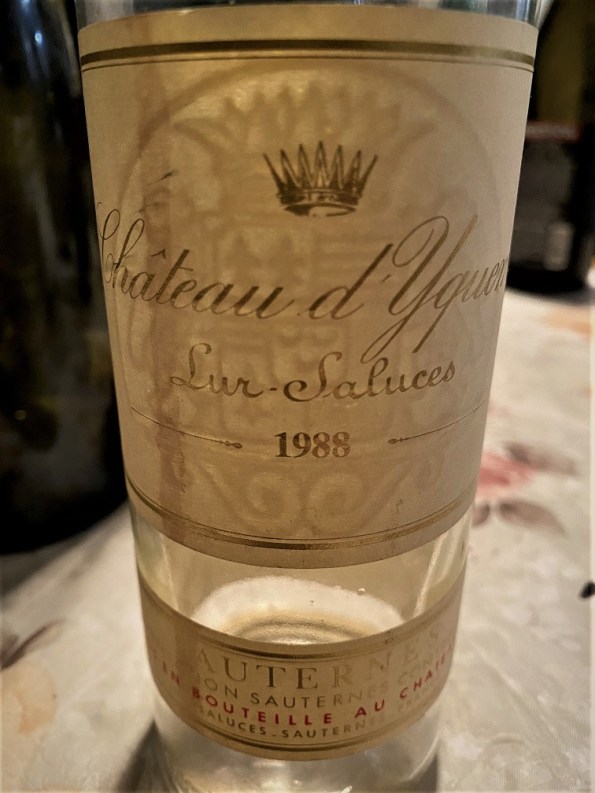
We finished the dinner on the high note – 1988 Château d’Yquem Lur-Saluces Sauternes AOC (13.5% ABV). I’m you sure you don’t need any introductions here – Château d’Yquem is the Bordeaux legend, an absolute hallmark of the Sauternes region, with every other Sauternes wine simply measured against the Château d’Yquem. A perfect pop of the cork from this bottle was music to my ears. The nose and the palate of this wine were in full harmony – it was all about apricots. Fresh apricots, dried apricots, candied apricots – the taste kept moving round and round. The apricots were supported by clean acidity, which became more noticeable as the wine had an opportunity to breathe. Well, this was a short time window in any case, as this half bottle was simply gone in the instance. This 32 years old wine was truly an experience and a perfect finish to our great evening with friends.
That’s all I have for you, my friends. How 2020 started for you? What did you have a chance to discover over the last few days? Cheers!
Beaujolais Nouveau Est Arrivé! 2019 Edition
Traditions, Traditions, Traditions.
I’m not sure how much I care about Beaujolais Nouveau at this point, but – I need to keep the traditions. I’m not talking about the tradition of the Beaujolais Nouveau, an annual celebration of a new vintage in Beaujolais – this tradition has a life of its own and surely doesn’t care if I will uphold it or not. I’m now talking about the tradition of this very blog, where I didn’t skip writing about a single Beaujolais Nouveau release since this blog started (proof is here), hence this post is unavoidable. I’m all about traditions, and 2019 will not be an exception.
Every third Thursday in November is celebrated as a Beaujolais Nouveau Day. What was the local French phenomenon for a very long time, celebrating the end of the harvest with a young and simple wine, became an international movement, largely due to the efforts of Georges Duboeuf, French negociant. In France alone there are more than 120 celebrations related to the Beaujolais Nouveau. The most famous festival, called Les Sarmentelles, is held in the town of Beaujeu, the capital of the Beaujolais region. The festival starts one day before the third Thursday and lasts for 5 days.
Beaujolais Nouveau wine has its share of controversy. Many professionals and consumers alike dismiss the Beaujolais Nouveau wine as a gimmick, simply a marketing plot to sell something which is not supposed to be sold. I wouldn’t say that I’m buying the Beaujolais Nouveau wines by the case, but they are as mysterious as any other unopened bottle, and having a tradition in place helps undecisive wine geek at least to know what he will be drinking around third Thursday every November.

How were the 2019 Beaujolais Nouveau wines? Let me offer you my tasting notes:
2019 Henry Fessy Beaujolais-Villages Nouveau Vieilles Vignes (13.5% ABV, $12.99)
Dark ruby color
A hint of fresh raspberries, sage, lavender, more reminiscent of a regular Beaujolais
You can clearly perceive a young wine on the palate, but it doesn’t have characteristic Nouveau grapiness – zesty raspberries, crushed rock, nice herbal component, clean acidity, medium-plus finish
8-, an excellent effort – at this point, this is simply a young wine, not “just another Nouveau”. I bet this wine will age well past recommended 5 months. It would be interesting to taste it again in 3-4 years. And if this is any indication of the quality of the 2019 vintage, this is the one to look forward to.
2019 Georges Buboeuf Beaujolais Nouveau (13% ABV, $9.99)
Garnet color
Upon opening, the nose had the characteristic Nouveau freshly crushed berry medley, but after an hour or so, it morphed into a raspberry jam, a well-made raspberry jam
Ripe raspberries, good minerality, sage, a hint of eucalyptus, good acidity, good finish
8- after an hour of breathing in the open bottle, another perfectly drinkable wine which has little in common with Beaujolais Nouveau as it used to be
Color me impressed. I say every year that I’m impressed with the quality, and that the quality of Beaujolais Nouveau keeps improving. Yet I have to say again that this was the best Beaujolais Nouveau I ever tasted. Is that the 2019 vintage? Is that just global warming? Is that winemaker’s capability to arrive at better and better grapes before the crush? I don’t know – and if you do, please share your opinion. But first and foremost – try the Beaujolais Nouveau 2019 and say if you are impressed as I am. Cheers!
Trader Joe’s Wines: Combining Great and Value
 I travel for business (let’s get it straight – I actually like it). One of my small personal pleasures in such travel is exploring the local wine scene if time allows. I always check for the wineries close to my location (if I have a car, sometimes, those wineries don’t even have to be close). If I can’t find wineries, I’m happy to visit local stores, especially when they come with recommendations, as during my recent visit to Texas and discovering the Spec’s wine store.
When it comes to the wine stores, I have one which stands aside. It is not really a wine store, it is a grocery store that also sells wine. I’m not trying to be mysterious here, you already saw it in the title – yes, I’m talking about Trader Joe’s stores. Trader Joe’s stores can be found pretty much everywhere in the USA, and the store which is less than a mile from my house is considered best on the East Coast (you should see the line of cars trying to enter the parking lot Saturday morning, ohh). But – Trader Joe’s in Connecticut only sell beer, so I have to look for Trader Joe’s wines elsewhere, and this is where the travel comes handy.
What so special about Trader Joe’s wines? Glad you asked, as the answer is very simple – QPR, which stands for Quality Price Ratio. While Trader Joe’s sells some wines from the producers you would easily recognize, the absolute majority of the Trader Joe’s wines are so-called “private labels”. Trader Joe’s is working with producers all around the world to find very inexpensive wines, which also happen to be really tasty. I don’t know how it is possible to have consistently good tasting wines in the $4.99 – $9.99 range, but they actually manage to do it. Those wines might not blow your socks off (some might), but the wines are solid, well made, and yes, tasty. Here you can find an account of some of my past Trader Joe’s visits to check it for yourself. – the question “how do they do it” is always paramount in these explorations.
My visit to Trader Joe’s in Reno, Nevada gave me another round of excitement and envy. Magnums of French Blanc de Blancs sparkling wine and Prosecco for … wait for it … $12.99? How do they do it? No, I didn’t taste these two but based on my prior experience with Trader Joe’s wines, I can imagine that these will be decent wines. I can continue this “how do they do it” theme for a long time, as the prices for most of the wines are just mind-boggling. Here is a glimpse of the shelves, see it for yourself:


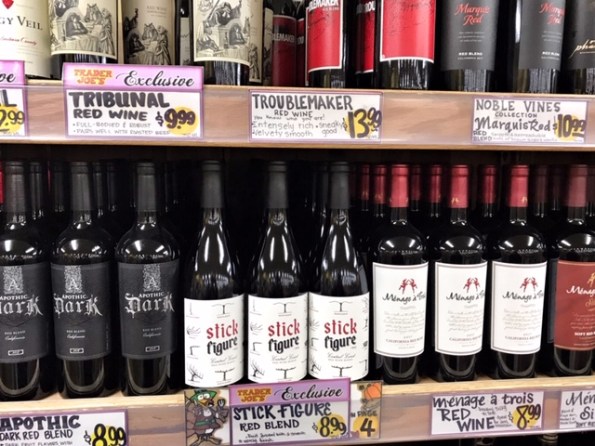

Obvously there is a limit to how many wines I can taste during a short trip, so here is what I do. I set myself a limit, which is practically always at $20, to get as many wines as will attract my attention. I don’t believe I was ever been able to stay within this exact range, but I usually cut it pretty close. First of all, I select the wines by the label, but then I think if I want to try a Portuguese wine or a California wine more. There is no science to my decision process, it is more of a spur of the moment – but having a price limit set helps to make it more organized.
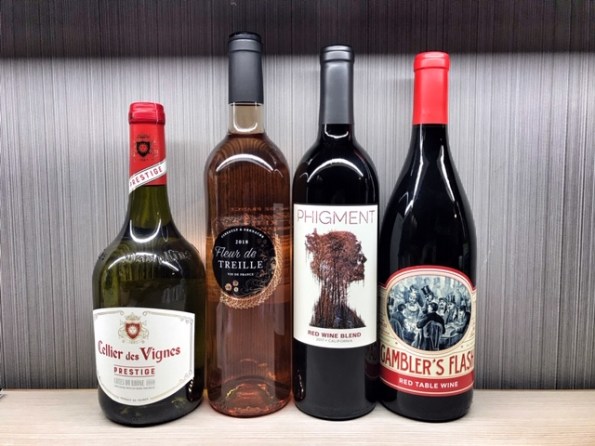
My selection this time consisted of 2 wines from France and 2 wines from Califonia – without having any intent for it to happen this way. I saw two very attractive labels for the California wines, and then Cote du Rhone white wine for $5.99 and French Rosé for $4.99 – there is absolutely no chance those would be good, right? Yes, I blew my budget by $4 to the grand total of $24 for 4 wines – do you expect any of those wines to be any good?
Here is a graphical account of my loot:
And here are the tasting notes:
2017 Phigment Red Wine Blend California (13.5% ABV, $5.99)
Concentrated Ruby
Dark fruit, mint, coffee, a touch of cassis
Fresh crunchy berries, sweet tobacco, baking spices, soft texture, good acidity. Characteristic Lodi touch of cinnamon. Long, pleasant finish.
7+, excellent QPR.
2018 Cellier des Vignes Prestige Côtes DI Rhône AOC (13% ABV, $5.99)
Light golden
Whitestone fruit, a touch of smoke, a hint of pineapple
Clean, fresh, good acidity, a touch of golden delicious apples and white plums, medium finish
8-, excellent, good by itself, should be even better with food
2018 Fleur de Treille Rosé Vin de France (12% ABV, $4.99, 55% Cinsault, 45% Grenache)
Onion peel pink
Strawberries on the nose, nice, clean
Strawberries on the palate, good concentration, good acidity, a nice presence of fruit, nice lemon notes on the finish
8-/8, outstanding QPR, an excellent wine. Really impressive.
NV Gambler’s Flash Red Table Wine Paso Robles ( 13.9% ABV, $6.99, a blend of grapes from 2 vintages)
Dark Garnet, practically black
Serious gunflint, a touch of funk, tart cherries, sage, pleasant
Wow, dark fruit, smoke, touch of coffee, medium-plus body, sweet cherries undertones, perfect balance
8-/8, this is a lot of wine for the money! Great QPR, easy to drink, lots of pleasure, just wow
Definitely an 8 on the second day.


I don’t know how it is possible. 4 out 4 are nicely drinking wines. I would buy either one of them again in the instant – it would be perfect with or without a meal, with a friend and without a friend, these are just good wines at good prices.
Three out of four are a bit of a mystery in terms of grape composition. I would only take a guess on Gambler’s Flash to say that in my opinion, Grenache or Malbec should be a part of the blend – just a guess, don’t think I will ever know if this was correct.
But what I know for sure is that Trader Joe’s did it again – 4 wines, 4 outstanding values, and one happy wine lover.
Have you recently discovered any Trader Joe’s gems on your own? Cheers!
Friday Night Wine
Isn’t Friday the best day of the week? Or to narrow it down even more – isn’t Friday night the best time of the week?
I know, it is considered lame. The right thing to do is to love Mondays, as this is your new chance to make a difference, and yada yada yada. Whatever.
So really, isn’t Friday night great? Especially when you don’t need to go anywhere. You don’t need to entertain anyone. The whole weekend lies ahead. Life is good.
Does such quiet Friday night deserve a special wine? This is a tough question, especially for someone who drinks wine only on the special occasions, such as days which names end with “y”. I can actually argue this both ways – I guess it only depends if you feel like making it special, or treat it as any other day and just open a random bottle. Well, but still – quiet Friday night is special, so a special bottle feels appropriate more often than not.
Finding the right bottle for the Friday night is an as difficult exercise as selecting a bottle for any special holidays or birthdays. On one side, it is the Friday night – on another side, it is just a Friday night, one of the 52. A Friday is not a special enough occasion to pull one of your most prized bottles, but you do want to celebrate the weekend coming, so it should be at least something unique and different.
It is hard to figure out how the brain decides on the bottle. After about 10 minutes of pulling the wine fridge shelves back and forth, I came across the 2011 Cahors, and the brain (or whatever is there) said: “that will do”.

2011 Jean-Luc Baldès Triguedina Clos Triguedina Cahors AOP (14.5% ABV, 85% Malbec, 10% Merlot, 5% Tannat) was one of my favorite discoveries of the past year while attending the Wines of Southwest of France event. I had only one bottle, but that is the same story with the absolute majority of my cellar, so I typically go through the regretful “second thoughts” process no matter what I decide to open.
Boy, was that a lucky decision… This wine had everything one can desire to make any day special – from the first smell to the first sip to the last sip; a perfect oenophile wine. Its major quality, outside of balance, was a tremendous range of expression. The nose started with a little funk, a touch of the barnyard, and fresh berries. The palate offered an exquisite bouquet and an ability to travel in the instant. The first sip squarely established – I’m not sitting on my deck anymore, I’m now in the winery’s cellar, breathing the vinous aromas which accumulated there during the centuries.
The wine continued evolving, offering tobacco, fresh blackberries, a touch of pepper, dark power, dark magic, and layers of pleasure. The acidity, the tannins, the fruit – everything was there in complete harmony. I call such wines a “vinous vino”, as these are the only words which come to mind. The wine was a beautiful rendition of Malbec – unquestionably an “old world”, and unquestionably delicious. If Cahors wines produced back in the middle ages were anything similar to this Clos Triguedina wine, I fully understand why it was so popular in Europe and Russia.
There you are, my friends. I hope your Friday night was filled with pleasure, just like mine was. Do you think Friday night wine should be special? What would you open to celebrate a quiet Friday night? Cheers!
Rediscovering Beaujolais
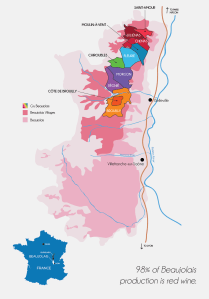
Source: Discover Beaujolais website
I remember learning about wine many moons ago at Kevin Zraly’s Windows on the World Wine School, where Beaujolais was one of the first French wine regions we discovered. We learned that there are general Beaujolais wines, which are not worth seeking, Beaujolais Villages, which are a bit better than the regular Beaujolais, and ten Cru wines (Brouilly, Chénas, Chiroubles, Côte de Brouilly, Fleurie, Juliénas, Morgon, Moulin-à-Vent, Régnié, and Saint-Amour) – and the Cru wines are something worth looking for.
There might be a few reasons why Cru Beaujolais wines are worth looking for – we should remember that Beaujolais is part of Burgundy, and thus it shares similar soils and climatic conditions as the rest of the Burgundy. Beaujolais wines are made out of Gamay Noir, not Pinot Noir, which is a king of Burgundy, but still – well-made Cru Beaujolais wines can offer a poor man’s alternative to its rarely affordable cousins.
But then there is this thing… Beaujolais Nouveau. The wine which became a glorious marketing success – and Achilles hill of Beaujolais wines. Beaujolais Nouveau became an international celebration of the new vintage, where the wine produced from the grapes just harvested a few months ago, hits the shelves of the wine stores worldwide on the third Thursday in November. While the success of Beaujolais Nouveau is unquestionable, its marketing message has a simple consequence – say “Beaujolais”, and most of the wine consumers immediately add the word “Nouveau” – overshadowing all the great Cru Beaujolais wines.
Yours truly is guilty as charged – in almost 10 years of blogging, I wrote about Beaujolais Nouveau literally every year – and I have only two posts covering Cru Beaujolais, after attending the tasting of the Duboeuf Cru Beaujolais portfolio back in 2012 (here are links to the Part 1 and Part 2 posts, if you are interested). I have to also say that the avoidance of Beaujolais wines was not conscious – there are few regions and types of wines which I intentionally avoid, such as generic Cotes du Rhone or similarly generic Argentinian Malbec – but the Beaujolais avoidance was rather subconscious.

Château de Bellevue. Source: CognacOne/Chateau de Bellevue
When I got the email from CognacOne, an importer with an excellent collection of French wines, introducing the new Cru Beaujolais wines from Château de Bellevue, something piqued my interest, and I got the sample of two Cru Beaujolais wines from Morgon and Fleurie.
Château de Bellevue was built at the beginning of the 19th century in the village of Villié-Morgon, with the addition of the cellar behind it in 1830. Today, Château de Bellevue is both the winery and Bed and Breakfast Inn. Château de Bellevue vineyards span 37 acres across a number of the Cru Beaujolais appellations (Moulin à Vent, Morgon, Fleurie, and Brouilly) – needless to say, Gamay Noir is the only grape which can be found there. While it is all Gamay grapes, the terroir rules, and wines from the different appellations are perfectly distinguishable.
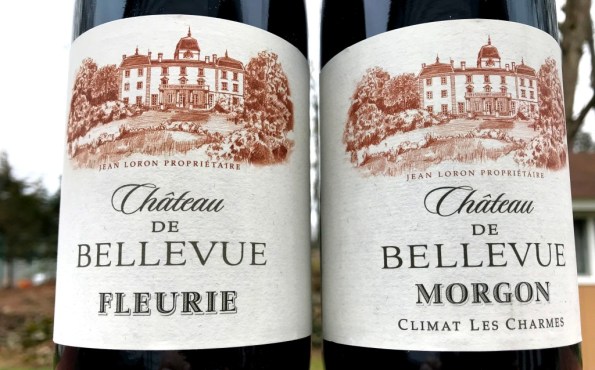
Here are the notes for the two wines I had an opportunity to try:
2015 Château de Bellevue Fleurie AOP (13% ABV, $25, aged 9 months in steel tanks)
Dark garnet
Crushed rock, iodine, underbrush, cherries
Medium plus body, crunchy berries, minerality, good tannins, good acidity, good balance
8, easy to drink, dangerous.
2015 Château de Bellevue Climat Les Charmes Morgon AOP (12.5% ABV, $25, aged 9-10 months (partially) in large French oak barrels)
Dark garnet
Raspberries, minerality, hot rocks
Nicely tart, well present tannins, tart cherries, excellent balance
8, a bit more earthy and bigger bodied, delicious.
Second day: 8+, the wine opened up magnificently, adding beautiful layers of fruit and spices.
Here you go, my friends. I know – too many wines, too little time – but I definitely intend on adding more Beaujolais wines to my cellar. How do Cru Beaujolais fare in your wine world? Cheers!
OTBN 2019 – What a Night!
Open That Bottle Night (OTBN for short) is my favorite “wine holiday”. Of course, the absolute majority of celebrations in our lives – holidays (Mother’s Day, Father’s Day, Thanksgiving…), birthdays, weddings, anniversaries, promotions – include wine, but strictly in the supporting role. All the “grape days” are about wine, yes – but typically restricted to a specific grape. OTBN is a special day when the wine is a front and center of our celebration – OTBN is all about showing respect to those special bottles which all need the special, perfectly appropriate moment to be opened. OTBN allows us to say “the perfect moment has arrived” and just open That Bottle.
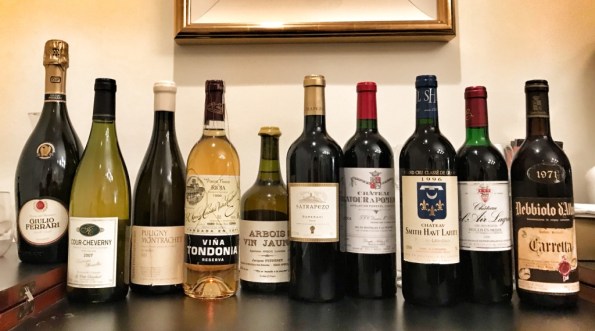
Almost full line up – few bottles are not shown
While I’m celebrating OTBN for a long time, this year’s event helped me to better appreciate the true purpose of this “holiday”. Okay, I have to say that I never had such a massive amount of wine opened for the OTBN – we went through 14 bottles – and each bottle was special in its own way. But until now, all of my OTBN experiences where strictly positive – the majority of the wines opened for OTBN were either at its peak or well drinkable at the moment but still promising to improve with time. But this year, in addition to absolutely stunning, mature, unparalleled wines we had wines which were either past prime or in the strange sleeping mode (yes, I’m an optimist), adding a good reason to follow the founding principals of the OTBN and pull the cork from That Bottle now.
Here are my notes for the wines we opened this year, together with a bit of explanation as to what made this wine special and my impressions.


2001 Giulio Ferrari Riserva del Fondatori Metodo Classico Trento DOC (100% Chardonnay)
Why: I was looking at this bottle for a long time. Ferrari makes some of the very best sparkling wines in Italy, and this is their flagship wine. At 18 years, it is a good age for the sparkling wine – and OTBN is a perfect reason to open a wine like that.
How was it: Amazing. Light bubbles, but the balance is amazing, light toasted notes, wow. The wine stayed fresh throughout the whole evening and was one of everyone’s favorites.
2013 Pierre-Yves Colin-Morey Puligny-Montrachet Le Trezin, Cote de Beaune
Why: Jim had multiple bottles of this wine and was worrying about Premox (Premature oxidation). Thus he put it out just to try.
How was it: Superb. delicious, classic burgundy, beautiful, elegant, round. Another one of the top choices for everyone.


2007 François Cazin Le Petit Chambord Cour-Cheverny AOC
Why: This is one of my favorite wines. When it was 10 years old, was literally blown away
How was it: Underwhelming. A touch of petrol, clean, good acidity, bud no bright fruit. Still delicious in its own way – I would gladly drink it any time. But – lucking the “umpf” which was expected… Still have 2 more bottles – will open later on and see.
2014 Damien Laureau Le Bel Ouvrage Savennières AOC
Why: Well, OTBN is an all-inclusive celebration. I rarely drink Savenniers, so it is always fun to experience something new.
How was it: Ok. For the 5 years old Chenin Blanc from the Loire, it was quite decent. Nice white wine – can’t say much more than that.


1996 Lopez de Heredia Viña Tondonia Blanco Reserva Rioja DOC
Why: why not? Lopez de Heredia is one of the very best Rioja Producers, and their Viña Tondonia Blanco might be one of the best white wines in Spain – at least from point of view of the wines which can age
How was it: A flop. Unless there was a flaw with this particular bottle, this wine was past prime and had no joy in it.
2015 Royal Tokaji The Oddity Hungary (100% Furmint)
Why: Furmit is the grape used in the production of the Hungarian Tokaji wines, some of the very best dessert wines in the world, easily rivaling the best Sauternes. Problem is – it is very difficult to prevent Furmit vineyards from the Noble Rot settling on the grapes – and thus it is rare – and difficult – to produce dry Furmint wine. Here comes The Oddity – dry Furmint wine.
How was it: Very good. Nice, clean, great minerality, balanced well-integrated palate, good acidity. Thank you, Lori, for this delicious find.
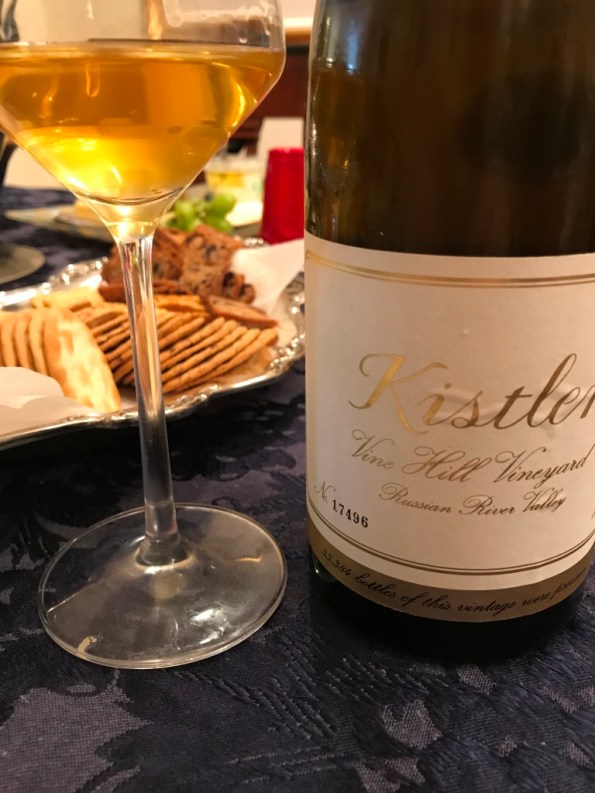
No filter – look at the color of this 24 years old Chardonnay
1995 Kistler Chardonnay Vine Hill Vineyard Russian River Valley
Why: Kistler is one of the best Chardonnay producers in California, so this alone is enough to include such wine into the OTBN line up. But then California Chardonnay rarely built to last for so long, so it was definitely the time to open this bottle.
How was it: Amazing. Almonds, apples, still present vanilla, a touch of smoke, good acidity – amazing for 24 years old white wine


2008 Jacques Puffeney Vin Jaune Arbois Jura
Why: Trying to explain the wine such as Vin Jaune to the uninitiated wine lovers presented an interesting challenge – I failed to explain what “oxidative” means. Anyway, putting this aside – Jura wines are rare. Vin Jaune wines are rare. Jacques Puffeney wines are beyond rare – 2014 was the last vintage which he commercially produced. This wine is absolutely OTBN worthy (thank you, Jim!)
How was it: Amazing. An oxidative nose which was also incredibly attractive, mature fruit, good acidity, elegant, present, delicious wine.
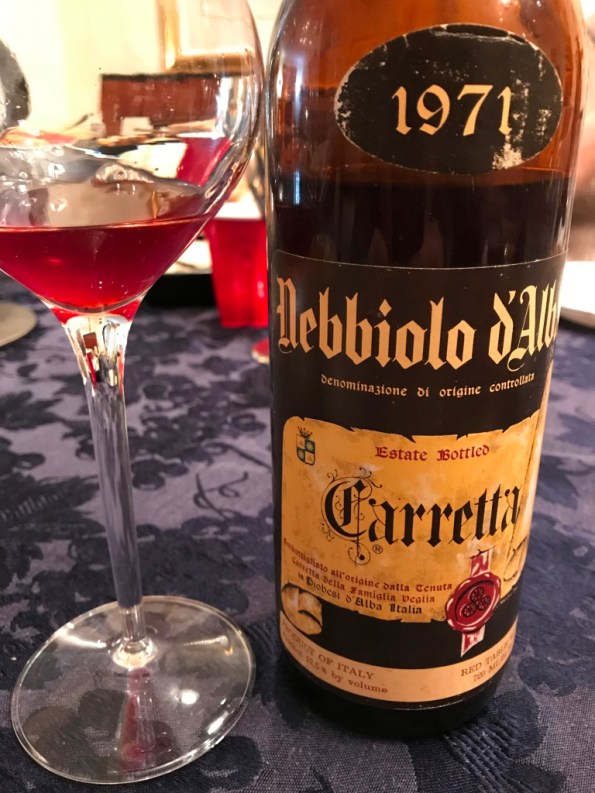
No filter – just look at the color of this wine! Amazing.
1971 Tenuta Carretta Nebbiolo d’Alba DOC
Why: 1971. Need we say more? Yes, the wine of such age is absolutely meant for OTBN.
How was it: Amazing, absolutely amazing. We poured it without decanting. The wine changed dramatically over the course of an hour. My first impressions were: pungent, with clean acidity, mature restrained fruit, still has lots of life left. Wow. About 15 minutes later, the wine totally changed and was the most reminiscent of a nice, concentrated Rosé – cranberries, a touch of strawberries, good acidity, very refreshing. Another 15 minutes made this wine most reminiscent of Jura red, a Poulsard if you will – light, great acidity, a touch of red fruit. Truly an amazing experience. And don’t forget to look at the color of this wine…


1986 Château Bel-Air Lagrave Moulis-en-Médoc AOC
Why: 33 years is a very respectable age for any wine – you really want to ask such wine “how ya doin”
How was it: Wow. Young, beautifully balanced, beautiful Bordeaux, just perfect. In a blind tasting, I would never identify this as a 33 years old wine. Yes, you can call me a failure.
1996 Château Smith Haut Lafitte Pessac-Léognan
Why: My exact question – why? Only because we could?
How was it: not ready. Needs time, mostly locked up. You would never think that 23 years old Bordeaux is not ready to drink, but it was not.


2004 Château Latour à Pomerol Pomerol AOC
Why: Same as previous wine – really, why?
How was it: Not ready. Closed nose, mostly cherries on the palate, need another 10-15 years.
2006 Telavi wine Cellar Satrapezo Saperavi Kakheti Georgia
Why: One of my most favorite Georgian wines. Limited production, a beautiful example of Georgian Saperavi. Most of the wine lovers are still unfamiliar with Georgian wines, so I really wanted to introduce this wine to the people.
How was it: Excellent. Still tight, beautiful fruit, big wine, could use more time. I was a bit concerned that this wine is reaching its peak – I was wrong. I’m sure another 5 years would do wonders here. Oh well…
2005 Weingut Petri Herxheimer Honigsack Scheurebe Trockenbeerenauslese Pfalz Germany (100% Scheurebe)
Why: For one, it is very appropriate to finish a great wine program with the dessert wine. And then how many of you even heard of Scheurebe? Scheurebe grape is a cross between Sylvaner and Riesling. It is quite rare, so yeah, a perfect choice for OTBN.
How was it: Spectacular. Not only it had great acidity which is essential in enjoyable TBA-level sweet wine, but it also showed a mix of honey and herbs – rosemary, sage, thyme – just an unbelievable concoction and ultimate pleasure in every sip. Thank you, Stef, for this treat.
Obviously, I can’t complain about such an amazing OTBN – however, as you saw, we had our share of disappointment. At the same time, the good greatly overweight the bad – 1971 Nebbiolo, 2001 Giulio Ferrari, 1995 Kistler, 2008 Vin Jaune, 1986 Bordeaux were all personal favorites and I would be glad to experience those wines again at any time.
Now that I told you about our OTBN, how was yours?
Last Bottle Sign Up ($10 credit)




 Talk-A-Vino