Archive
Wine and Bacon? Why Not?!
There is a good chance that you love good food and wine pairing as much as the next connoisseur. We all know that successful pairings are very far from trivial, and we also know that not all the foods are good with the wine.
So have you ever thought of pairing bacon with wine? I’m sure that there is a very good chance that such a pairing never crossed your mind, despite the fact that you might love each one on its own – bacon and wine – almost religiously (there are lots of people in this world who will start drooling just at a sound of the word “bacon”).
Before we continue – or before you stop reading this as you don’t eat bacon for whatever reason (religious, veganism, anything) – I need to ask you (beg you?) – please do not fret. Bacon doesn’t have to be made out of pork! In today’s world, besides turkey bacon, which I agree is generally very pedestrian and not satisfying, there are also Beef Bacon, Duck Bacon, and even variety of Vegan Bacon – your life doesn’t have to be bacon-less, even if pork is off the menu for good.
What wine to serve with bacon is typically not the question you are facing, though. The main reason is that in the direct form – a slice of bacon and a glass of wine – they belong to the different, non-overlapping “time zones”. Bacon is a morning food, and wine, umm, really not. Yes, bacon easily takes on the role of a condiment at lunch and dinner, but then it is a whole another story in terms of the wine pairing.
But then there is brunch, where bacon is still a star, and who doesn’t like a glass of wine with their brunch? Or have you ever enjoyed bacon-wrapped dates stuffed with the blue cheese, so popular in many Spanish restaurants? So maybe bacon can be and should be paired with wine? Folks at Drinkable Gifts surely think so, and they even came up with infographics to illustrate their bacon and wine suggestions. As I’m an infographics junkie, I’m happy to share it with you. You can find all the detailed bacon recipes and pairing suggestions here.
I’m also curious in your opinion if you think suggested pairing combinations will work. Enjoy!

Source: DrinkableGifts.com
Japanese Cuisine Beyond Sushi – Experience Fresh Energy of Kashi in Stamford, Connecticut
What is the first association you get when you hear “Japanese restaurant” or “Japanese cuisine”? If you say “Sushi”, this, of course, would be a good answer, but keep in mind that if you will visit Japan, sushi will not be the first food option you will find – ramen, chicken, pork, or veggies would be more readily available (and cheaper).
I don’t know if you are contemplating a visit to Japan (you really should!), but even if you are, this post will not help you to get ready. Instead, I would like to tell you where you can experience Japanese cuisine well beyond sushi – how about Kashi Japanese restaurant, located in downtown Stamford, Connecticut?


Kashi means “fresh energy” in Japanese, and this is what you get at the restaurant. Beyond the eclectic decor, there is creative, off the beaten pass Japanese cuisine, offering literally the “tapas”-style dining with lots of unique dishes. As usual, we need to talk about drinks first before we will get to the food.


As expected in the Japanese restaurant, the wine list includes a good selection of sake. Truth be told, I’m not really a sake connoisseur, but one of my favorites is sparkling sake. The restaurant had a few to offer – Ozeki Hana Awaka Sparkling Sake, and Ozeki Hana Fuga Peach Sparkling Sake. Both were tasty, with my slight preference toward Ozeki Hana Awaka as it was more complex. I also had Cucumber Saketini, which was an ultra-dry cocktail, and then we shared Scorpion Bowl (Vodka, Gin, Rum, Fresh Fruit) – great presentation for sure, and most reminiscent of sangria taste-wise. The restaurant also offers a number of wines, but I decided to stay with the cocktails and sparkling sake for the rest of the evening.


I hope you are not ultra-hungry, as there is a lot of food coming. We had an opportunity to experience a wide range of dishes, many of them coming from the Seasonal Special Menu. We started with Grilled Fresh Octopus (seasonal vegetable, piquillo pepper in yuzu kosho pepper sauce), which was well cooked (always appreciated with the octopus) and very tasty. Kashi Tacos (Tacos with pork, cajun, shrimp, corn, onion, avocado, cilantro & wasabi sour cream) was a great play on a classic Mexican dish, offering a nice amount of heat. Bone Marrow (Teriyaki glazed roasted bone marrow, salt, garlic, shichimi powder, ikura teriyaki sauce) is not something you get to eat every day. The dish was definitely interesting and unusual. I like the way it was served with the toast. If you like roasted bone marrow, this one was expertly done.


We continued with the Double Wrap (Soy paper wrap with spicy lobster salad, shitake, salmon, mango chili; naruto cucumber wrap with spicy tuna, yuzu Squirt), a sushi-like dish without any rice – great texture, excellent dish, very nice kick of spices. This was followed by the Grilled Lobster (grilled seaweed, cheese lobster, chili sauce) – expertly cooked lobster, very creative dish, then Seared Yellowtail (seared yellowtail, cucumber, celery, tuiles, yuzu, kosho gel and yuzu dashi sauce), which was nicely done, and then a surprising Avocado Tempura (spicy tuna topping, yuzu dressing) – I know avocado is everywhere nowadays, and I love it, but this was my first experience with avocado tempura, definitely unusual.


Thai Basil Chicken (wok sauteed chicken, mushrooms, onion, carrot, fresh basil, chili paste, sweet basil sauce) was homey and tasty, a “comfort food” type. It was followed with two of the Kashi Signature Rolls – Volcano (tuna, salmon, yellowtail, cucumber, topped with tuna, salmon, served with sriracha & spicy kabayaki aioli) – nice and spicy, and Deep Blue Sea (Blue crab, avocado, shrimp, mango, topped with seared spicy tuna and spicy eel sauce) – delicious fresh fish undertones. To complete the sushi experience, we had Sushi and Sashimi for 1 (5 pcs sushi, 15 pcs sashimi 7 spicy tuna roll) – very good.


We finished our main course with Blue Crab Fried Rice, which was delicious (another comfort food), and Shrimp and Angus Steak Hibachi – who doesn’t like well-cooked hibachi offerings?


Not every Japanese restaurant offers a dessert menu, but Kashi does. We had an opportunity to taste Yuzu Cheesecake, which was an interesting rendition of the classic dish, as well as Green (Macha) Tiramisu, which was very well executed, with excellent texture and flavor combination.
Here you go, my friends – if you want to experience Japanese cuisine beyond sushi, Kashi might be just the place. And if you be visiting, drop me a line – I will be happy to join you. Cheers!
Thanksgiving with Smith-Madrone, And a Few More Delights
Holidays are all about pleasure. The pleasure of the company. The pleasure of food. The pleasure of wine. As the very least, they should be.
Let me tell you about the pleasures of my recent Thanksgiving – in one picture:

If this would be an Instagram, I could end my post here, but in this blog, I can add a few words, right?
Let’s talk about the wine first. Everyone has their ideas as what is the best Thanksgiving wine. Some talk about how difficult it is to pair any wine with the Thanksgiving table, due to the large variety of dishes and often prevalent sweet flavors (this is not universal, of course). I have a very simplistic view of the wine and food pairing – give me tasty food and good wine, and if they don’t work together – no problems, I’m happy to consume them one by one. Difficult or not, pairing is not the focal point of my Thanksgiving wine selection. I really have only one strong preference for the Thanksgiving wines – they should be all American. Thanksgiving we celebrate here in the USA is all about this country, and so the wine should match that. And thinking about American wines, you understand how easy it is nowadays to have all-American wine experience.
How many of you heard of Napa Valley? Okay, I see that look, this was a stupid question, I know. But let me go on. How many of you heard of Spring Mountain District? Okay, I see your facial expression changing to say “hmmm, I’m not so sure”. And the last question – how many of you heard of Smith-Madrone? Okay, don’t feel too bad, at the end of the day it is one of the about 400 wineries located in the Napa Valley, so of course, one can’t know all of them. But – this is why I’m talking about it – this is the winery you might want to get better acquainted with.
Smith-Madrone is one of the oldest wineries in Napa Valley, started by brothers Stuart and Charles Smith in 1971. Smith-Madrone property is about 200 acres, with some parts of the vineyards planted more than 100 years ago, all located near the top of the Spring Mountain in Napa Valley. The name Smith-Madrone combines the family name with the name of the evergreen Madrone trees, prominently growing at the property. Well, instead of me trying to regurgitate the past and present of the Smith-Madrone winery, let me direct you to this article – it is a good story, well worth a few minutes of your time.

When was the last time you had Napa Valley Riesling? If you answered “never”, it could’ve been my answer too – until I discovered this Smith-Madrone Riesling. Riesling is simply not a common grape for the Napa Valley, but Smith-Madrone produces the absolutely beautiful rendition of the famous grape. It might be due to the mountain fruit – all the Smith-Madrone vineyards located at the altitude of 1300 to 2000 feet, with slopes reaching 34%. Sustainable dry farming and winemaking practices also play a role, but one way or the other, the 2015 Smith-Madrone Riesling Spring Mountain District Napa Valley (12.9% ABV, $32) was just delicious. varietally correct both on the nose (honeysuckle, a touch of tropical fruit, lemon, apples) and the palate, which was beautifully balanced with golden delicious apples, a touch of honey and acidity. To make me ultra-happy, the Riesling is sported a distant hint of petrol, which is my pet peeve.
2015 Smith-Madrone Chardonnay Spring Mountain District Napa Valley (14.4% ABV, $40, 10 months in French oak) was equally beautiful. Again, the wines of that styling I call in my book “classic”. A touch of vanilla and apples on the nose, a distant hint of butter, continuing with the same vanilla and white apples on the palate. Clean acidity, noticeable minerally undertones, restrained, balanced – a very classic example of “how to do chardonnay right”.
With the risk of sounding very boring and repetitive, I have one more classic wine for you – 2014 Smith-Madrone Cabernet Sauvignon Spring Mountain District Napa Valley (13.9% ABV, $52, 85% Cabernet Sauvignon, 8% Cabernet Franc, 7% Merlot, 70% new French oak, 30% one-year-old French oak for 18 months). How classic was this wine? Bordeaux-classic. The mountain fruit was shining, showing great restraint. This was not an exuberant typical Napa Cab – lean, tight, well-structured, with cassis both on the nose and the palate, the wine was very enjoyable now, and it will be equally or more enjoyable in 30 years.
So that was my main wine story on the Thanksgiving day. The rest was about the food – starting the smoker as 9 am in the 21°F weather (about -6°C), and then watching the turkey slowly getting to the right temperature. The silver lining of that cold weather was the fact that instead of 4-4.5 hours in the smoker, it took about 6 hours to get that big bird to the right doneness – and slower cooking results in more tender and more flavorful meat. A glass of Smith-Madrone Riesling was adding to the cooking enjoyment.


After celebrating Thanksgiving at our house, we went to see our close friends in Boston. What I love about that house is that there are always a few of the older wine bottles laying somewhere on the shelf. You never know what you will find in the older bottle, but that is what makes it fun, isn’t it?


The first bottle I opened was 2007 Tishbi Cabernet-Petite Sirah Shomron Israel (12% ABV, 70% Cabernet Sauvignon, 30% Petite Sirah). Judging by the pronounced brickish, almost orange, color, my first thought was “this probably fully turned”. And it was not! Complex nose of dried fruit and herbs was supported by plums and prunes forward, but balanced palate. Good amount of acidity, tertiary aromas – this was a very enjoyable glass of wine. Only one glass, I have to say – by the time I wanted the second, the wine was gone.
Without much thinking, I pulled another wine, realizing later that I opened another wine from the same vintage – 2007 Marani Kondoli Vineyards Saperavi-Merlot Kakheti Georgia (13.5% ABV). This wine couldn’t be more different from the previous 2007 – dark garnet color, not a sign of any aging, tight, fresh, blackberries and blueberries on the nose and the palate, firm, fresh and young. I’m really curious about how much longer this wine could’ve last.
One last wine to mention – 2010 Massandra White Muscat Crimea Ukraine (16% ABV). Massandra winery roots go back to the old Tsar’s Russia in late 1800, but their cellars hold wines from the 18th century (if you are not familiar with Massandra wines, here is an article by Jancis Robinson). Massandra is best known for sweet fortified Muscat wines, like the one we tasted. To me, this 2010 was most reminiscent of a Sherry, and not necessarily an ultra-balanced one. But then the same Jancis Robinson’s article says that Massandra wines require 45-60 for the full maturity, so I guess the wine tasted within the expectations…
Spring Mountain District in Napa Valley, Israel, Georgia, and Ukraine – not a bad wine play for the holiday, what do you say?
Here you go, my friends. I will leave you with some beautiful wines to look for. And how was your Thanksgiving, if you still remember it? Cheers!
For The Love of Chowder – 2018 Edition
Blogging is all (mostly?) about traditions, isn’t it? I’m talking about topics, things or experiences we like to write about. If you blog for a while, you have a number of posts which can be called traditional, as they cover the same subject – yearly, monthly, weekly, daily? (ouch!). For sure it works this way for me – there is a number of experiences I like to talk about on the regular basis – as those experiences take place.
One of such experiences is the Chowdafest, a fall event dedicated to the humble (or not) soup, generally known as Chowder – if you want a bit of an education on what the chowder is, I can offer you the post I wrote after attending my first Chowdafest back in 2015, which provides a few details on the different types of chowders.
The 2018 event took place at around the usual time (Sunday, September 30th), at the usual place – Sherwood Island State Park in Westport, Connecticut. Even the weather was the usual – sunny, bright and not too cold. However, the summer and early fall in New England saw an incredible amount of rain, so the grounds were unusually wet and people had to be careful walking around.
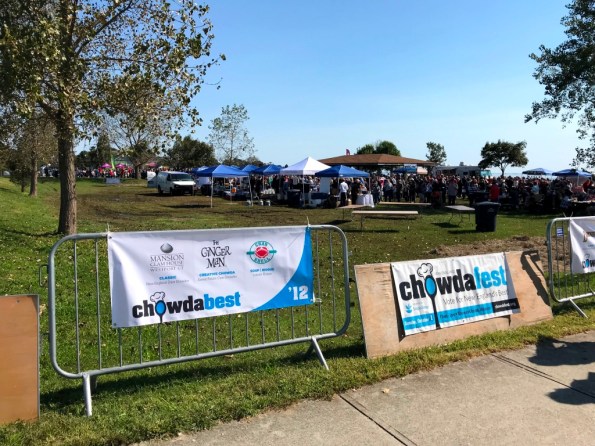

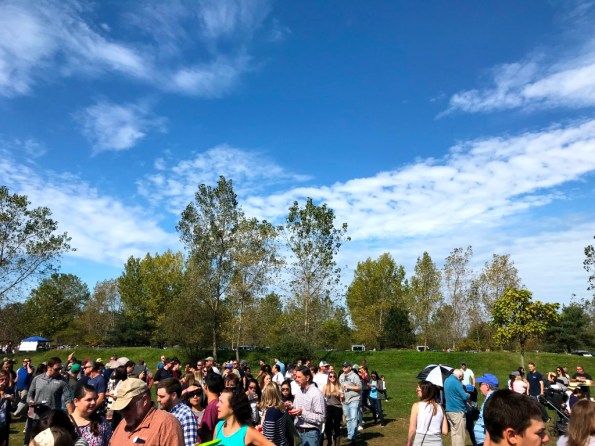
As we entered, all visitors were given a ballot and a pencil, to mark down their favorites. The back side of the ballot had a map of the event, as in addition to all the competitors, there were lots of vendors (sponsors) offering other tasty treats, so one didn’t have to survive on the chowder alone. Cabot Creamery, Harney & Sons Tea, Ocean Spray, Stop & Shop, Polar Beverages, and many others were serving Mexican and Italian food, ice cream, juice, tea, coffee, sparkling water – you had a lot of fun food options beyond chowder.


Same as last year, there were 5 categories were participants were competing for the title of “the best” – Classic New England Clam Chowder, Traditional Chowders (Manhattan/Rhode Island’s), Creative Chowder, Soup/Bisque, and Vegetarian. The participating restaurants this year represented states of Connecticut, Massachusetts, New Hampshire, New York, Rhode Island, Vermont, and Washington.


Obviously, I’m not going to give you much of a detailed report here about all the chowders I tasted, so here are my overall impressions:
- For the 4 years that I’m attending the event, I’m happy with the overall quality and variety. It is not boring and once I get out of the food coma at the end of the event, I’m instantly happy to think about next year’s Chowdafest.
- The overall level of booth decorations in 2018 was less than in the previous years. Many places would just have a serving station and maybe a recipe. It takes away a bit from the “Fest[ival]” experience. Hopefully, in 2019, we can go back to more festive booth settings.
- A few vendors run out of chowder/soup in the middle of the day. I saw one just pack up and leave, and another one saying “more soup is coming in 30 minutes” – not good for visitors, and really a bad plan for competitors – you can’t win by serving only half of the visitors.


- I’m still puzzled how Pike’s Place from Seattle always wins the New England Clam Chowder category – I think it is a combination of service – they carry their chowder around so people don’t have to wait in line, and intimidation – they display all their trophies from the past years, and people automatically think “ahh, they must be the best with so many awards” (works the same way as multiple medal pictures on the wine bottles). To me, their chowder is not bad, but for instance, I preferred the one from 250 Market far more than Pike’s Place. Oh well, the people have spoken…
- I’m happy that at least in one category – Vegetarian – my top choice matched the people’s choice. Truffle Mushroom Bisque from Old Post Tavern in Fairfield, CT was delicious, and it won the category.
- I’m also happy that Drunkin Pumpkin Seafood Chowder from Our House Bistro in Winooski VT took the top spot in Creative Chowder category – their soups are always good, the presentation is excellent with lots of “self-serve” condiments, and the booth is always a pleasure to look at.


- For the first time, I saw the competition trophies. At first, I didn’t understand the collection of the old ship memorabilia in a middle of the field – until the later when I saw the plaques and realized that those were actually the trophies.
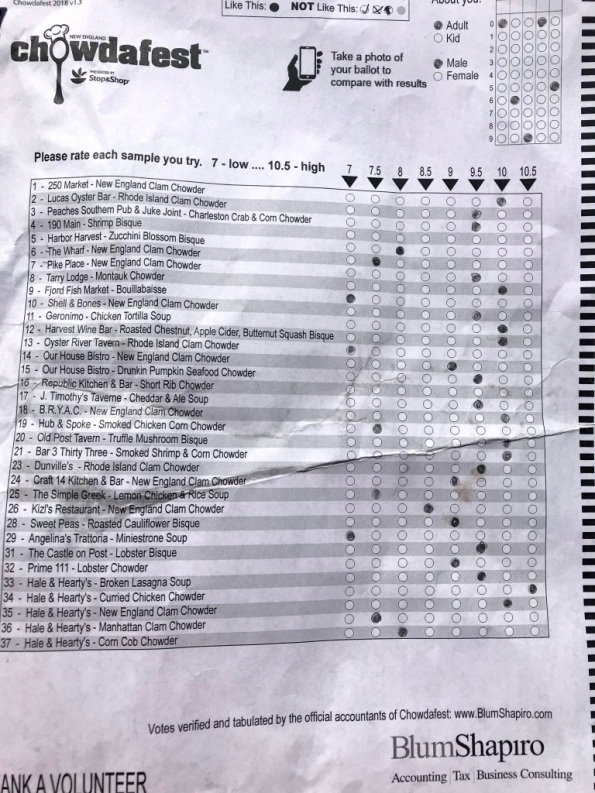
- Believe it or not, but in the Chowdafest 2018, my favorite soup was not really a chowder at all – it was a Curried Chicken Chowder from Hale & Hearty from Boston, MA – the only soup I gave the top 10.5 rating.


Here is the list of winners in the 5 categories we mentioned before (Classic New England Clam Chowder, Traditional Chowders (Manhattan/Rhode Island’s), Creative Chowder, Soup/Bisque, Vegetarian). For the more detailed list, which includes 2nd and 3rd place winners, please use this link.
Pike Place Chowder
Our House Bistro
Geronimo Tequila Bar & Southwest Grill
Dunville’s
Old Post Tavern
As usual, let me leave you with a copy of my ballot – just to prove that I take the Chowdafest competition very seriously 🙂
 You can already mark your calendars for Sunday, October 6th, 2019 – the 12th annual Chowdafest competition.
Before we part, you might want to check out Chowdafest’s sister event – the Great Mac & Chili Challenge, taking place this Sunday, November 4th at 11 AM at the same Sherwood Island State Park in Westport, CT. The weather should be great! Cheers!
CLASSIFIED Brunch
 How many emails do you get per day? I would safely bet that we all get at least 50 emails per day (don’t laugh too hard out there, please – of course, it is on a slow, really slow day).
The real question is – how many of those emails do you open? Speaking for myself, I delete at least 90% of all the emails after just glancing at the subject line and the source. For the rest, I would open them to read at least the first couple of lines and then decide what to do with it. Okay, bear with me, please – it all will make sense in a second.
I’m a frequent flyer with United, so of course, I get emails from them. Most of those emails are deleted right after reading the subject line (sorry, United). When I received the email from United with the subject line “Your invitation to CLASSIFIED”, the mouse pointer quickly advanced toward the “delete” symbol. However, something prompted me to open the email and read through at least a few lines.
The email was inviting me to experience the new secret (!) restaurant in the Newark airport, called CLASSIFIED. Secret restaurant? In Newark? I fly from that airport all the time, and I know of all the restaurants there, I never saw anything called “CLASSIFIED”. “It must be a scam” my thought continued as my hand was directing the pointer towards the big X. Again, something prompted me to stop and do a bit of a research on the internet – and it appeared that yes, there is a secret (semi-secret) restaurant in the Newark airport, which a number of people already visited and wrote about.
I was still puzzled as to what was the criteria for United to send me this invitation – I don’t have such a high status with them – I struggle to make to the “gold” every year, I’m not a million miles flyer, it was really a puzzle. But hey, I’m a foodie, so if you tell me “new restaurant”, “unusual experience” – you definitely got my ear.
So once you are invited, you need to make a reservation. I had to wait a bit to find a good occasion to make a reservation, as I wouldn’t want to come much earlier to the airport if I don’t have to, and if we are talking about the “experience”, I need to allow the sufficient time for a restaurant visit. The opportunity presented itself as I was connecting in Newark and had 5 hours to kill between my flights this past Saturday. I logged into United with my invitation, got to the restaurant website, and after browsing the menus, made the reservation for Saturday brunch. I got the confirmation email which stated the following:
When you arrive at the airport, please make your way to Saison, a restaurant located in Terminal C near Gate C120. After you let the host know that you’re dining at CLASSIFIED, you’ll be escorted to a private entrance and seated at your table.
After arriving at the Newark airport on a beautiful day

I did exactly as I was told, and was quickly escorted to an indiscreet section of the wall in the far back corner of the Saison restaurant, which simply happened to be a door. After a short walk in the dimly lit corridor, I entered the small dining room – the CLASSIFIED restaurant.


As I got situated at my table, my excitement started dissipating as soon as I saw the familiar iPad screens, used for food ordering everywhere throughout Terminal C. The waiter confirmed my suspicion when he asked if I know how to use those iPads, which I confirmed with the sigh. Considering that food at CLASSIFIED is priced at the level of New York’s fine dining establishments, I was expecting the real menu. Oh well, the iPad ordering it is.


Just to set your expectations right, this was the last “low-down” I experienced during the brunch.
First, the Rosé arrived – the Juliette Rosé from Provence, which was delicious, perfect acidity, slightly bigger body than a typical Provence Rosé with a touch of residual sugar – very enjoyable, and a great value at $11. It even arrived with a little extra, courtesy of the restaurant.


The next surprise was the appearance of the Amuse Bouche – a White Bean and Tomato Bisque, which was superb – good texture, nice and warming, good seasoning – really a great start.
Then my main brunch dish arrived – Salmon Eggs Benedict with Home Fried Potatoes and the side of Chanterelle Mushrooms:


The eggs Benedict were cooked perfectly – runny yolk, delicious hollandaise with just the right amount of acidity, generous amount of smoked salmon – one of the very best I ever had. Home fried potatoes with some fried onions were outstanding. And chanterelles… I really have no comments – simply outstanding, just the right amount of seasoning, just the right crunch, a mushroom orgasm on the plate (hope you can relate). 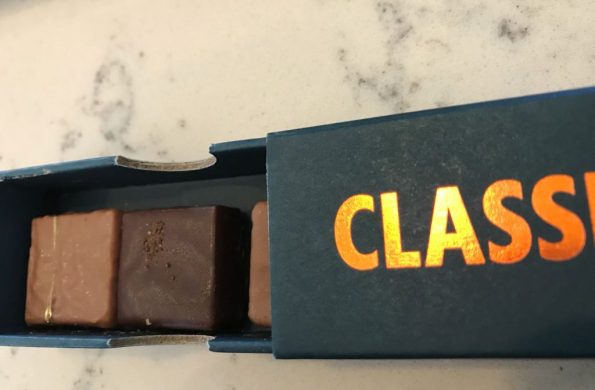
I was too full to have any dessert, but still, the little box appeared on the table, containing a set of chocolates. Yet another nice touch, which all together, one little detail after another, adds up to what we call “the experience”. A fine dining experience at the Newark airport. Thank you, United, for making flying something you can look forward to.
Note to self – sometimes, it makes sense to read the emails. Cheers!
Perfection, or When Everything Works Together…
 If you are into wine and food (or food and wine, whatever your preferences are), I can safely bet you were looking for that climactic moment of combining the food and wine to reach a new, higher level of pleasure. Yes, I’m talking about that “oh my God” moment when your taste buds experienced that already exceptional bite of food becoming something beyond exceptional in combination with the sip of the wine. By the same token, if you were looking for that moment, I’m sure that more often than not (actually, a lot more often than not) you couldn’t find it – those beautiful pairings are often equally evasive.
Here I want to share with you my account of my recent encounter with perfection, that climatic experience if you will.
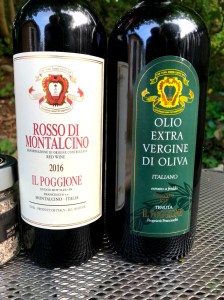
A few months ago I got a box in the mail (one of the little perks of the wine blogger). Inside, there was a bottle of wine, a bottle of olive oil, a jar of sea salt and a recipe – for Bistecca alla Fiorentina.
Bistecca alla Fiorentina is a dish coming from Tuscany (Florence) and depending on the historical account, it traces its origins either to the 16th or the 19th century – well, the history of Bistecca all Fiorentina is definitely not something we will be talking about here, so let’s move on. I’m sure you understand that “Bistecca” simply stands for “beef steak”. However, the recipe calls not for any steak, but specifically for the porterhouse or T-bone steak, which should be simply prepared rare or medium-rare over the charcoal. As the recipe is very simple, here it is in its entirety:
Ingredients (serves 4):
2 (1.5″ thick) bone-in porterhouse steaks (3.5 lb)
1/4 cup Il Poggione EVOO
Tuscan sea salt and freshly ground black pepper, to taste
2 sprigs rosemary


Get the charcoal ready. The distance between the hot charcoal and the steak should be about 4 inches (10 cm). The steak should be at room temperature before you start grilling (it should be out of the fridge for about 10 hours to get to room temperature). Grill steak on one side for 5-8 minutes, flip it with tongs (no forks of any kind!), salt the top surface with Tuscan sea salt and pour some olive oil. Cook for another 5-8 minutes, then stand the steaks on the bone and cook for another 5 minutes. Take it off the heat, put it down to rest, salt the other side and put some olive oil on it. After 5 minutes of rest, you can slice and serve your steak. See, can it get any simpler?


Now, it is time to talk about perfection.
First, the perfection started with the exceptional meat. In addition to what I already described, the box contained a gift card for Pat LaFrieda. The story of Pat LaFrieda Meat Purveyors started at the beginning of the 20th century when Anthony LaFrieda arrived in the USA and opened his first butchery – you can read the rest of the story on Pat LaFrieda website. Whatever the story is, the proof is always in the pudding – or on the fork in this case. I have to honestly tell you that I never had a better steak than this – the meat was sublime and was simply melting in the mouth – a good start for the perfect experience.


The second element of the perfection was, of course, the wine – 2016 Il Poggione Rosso di Montalcino (14% ABV, $27, 12 months in large oak barrels). Tenuta Il Poggione is one of the oldest producers in the Montalcino area, started to make Sangiovese wines – now known as Brunello – at the beginning of the 1900s. Today, it is one of the largest wineries in Montalcino, with 1500 acres, out of which more than 300 acres are under vines and 170 acres planted with olive trees (that Il Poggione EVOO in the package was superb).
The wine actually happened to be one of the best Rosso di Montalcino wines I tasted in a long time. The key word to describe this wine is finesse – it had a welcoming nose of tart cherries, medium intensity, and a hint of herbs. That profile perfectly continued on the palate, where delicate fresh cherries were joined by sage and rosemary, with clean acidity and excellent balance. Definitely one lip-smacking, delicious wine (8+).


Let’s not miss any details – we are talking about the perfect pairing here. As the devil is in the detail, there was one more element – little, but essential – to this amazing pairing, besides superb meat and outstanding wine. The last element? Tuscan sea salt. This was not some random sea salt – this one was Tuscan Sea Salt from AG Ferrari, listing the following ingredients: “Italian sea salt, fresh rosemary, fresh garlic, sugar, fresh sage, ground black pepper” – this Tuscan Sea Salt became the bridge which connected the flavor of the seasoned meat with the perfectly aligned flavor profile of the Il Poggione Rosso di Montalcino, delivering the genius pairing and an amazing experience.
I have to honestly tell you – I tried to replicate this experience two days ago – and failed. I used the same Tuscan Sea Salt, but I had a steak from the local supermarket butcher shop (1/3 of the price compared to Pat LaFrieda), and the wine was 2015 Collosorbo Rosso di Montalcino. The steak was simply not good (happy to be blamed for it as a cook – but I cooked the one from Pat LaFrieda too). The wine was okay, but a lot fruitier than Il Poggione, thus the pairing simply didn’t work. This once again proves my point about the evasive nature of a great wine pairing.
Did you have any climactic food and wine pairing experiences you care to share with the world? Or maybe you want to recount the worst moments? Will be happy to hear about it either way. Cheers!
Restaurant Files: Smoke, Fire, and Spice, and Everything is Nice – at Bobby Q’s in Norwalk, Connecticut
 I love food – well, of course, this is not a secret. Let me refine that. I love good food. That would be a much more precise statement (duh, who doesn’t). Same as with the wine, where I can never name my favorite grape or wine, I can’t tell you what my favorite food is. Except for that one type – good food. Good food is what I love – will it be sushi, steak or vegan burger – as long as the food is tasty, it will be my favorite food of the moment.
And then there is barbecue. Is that my most favorite food? No, it is not – this is why I gave you the opening statement. But, nevertheless, I really appreciate good, tasty, smoky, spicy food. The barbecue (or BBQ, as it is often abbreviated) might be the only authentic American cuisine – okay, the Southern cuisine is, but BBQ is indelibly a quintessence of Southern cooking – whether it is Texas, Tennessee, Kansas, Georgia, or Alabama – the BBQ there is “it”. And on the East Coast of the US? Well, BBQ is popular, and many restaurants say that they do it – only to fail the actual taste test. This is why the visit to Bobby Q’s in Norwalk, Connecticut was so vibrantly refreshing.


Bobby Q’s restaurant had been around since 2004 – however, located in Westport, just a next town over from Norwalk. It won numerous accolades of “Best in Connecticut”, “Best in Fairfield County” and many other “bests”. But in 2016, the building it was in was sold, and the restaurant had to find a new home – which it did at the Waypointe District in downtown Norwalk, where it opened its doors last year.


Before we talk about food (have you had dinner yet? take a moment, go eat something first, will you?), let’s talk about the drinks. The drinks menu is heavily focused on the whiskey and bourbon (that’s what BBQ is typically calling for, right?), but also includes a good number of cocktails. I had Smoking Gun (Bulleit Bourbon, maple, black walnut & creole bitters, hickory smoke), which was tasty and very potent, first. Then I continued with Bramble On (Buffalo Trace, maple, lemon, blackberries, lime & rosemary) which was not too sweet (my pet peeve – don’t like sweet cocktails) and very refreshing. There is a limited number of wines on the drinks menu, but we decided to stay only with the cocktails for the evening.


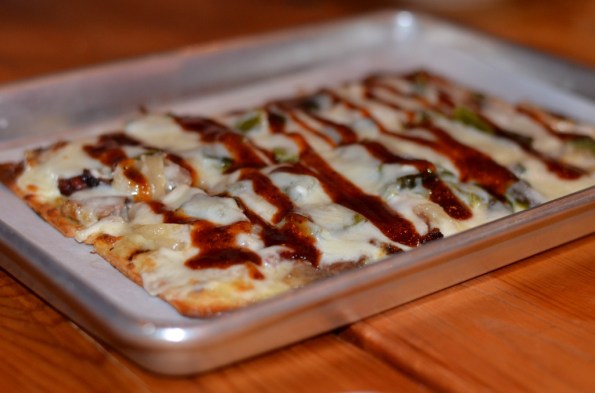
We started our dinner with Spicy Brisket Hand Pie (Guacamole, chipotle aioli, empanada crust) – very tasty, and then Bobby Q’s Classic BBQ Nachos (crispy tortilla chips, pulled pork from the pit, jack and cheddar cheese), served in the ‘Q It Up Version (pit beans, sour cream, guacamole, house pickled jalapeño) – I love nachos, and I love loaded nachos even more – so this was Super-Loaded nachos dish, absolutely delicious (healthy? of course not!), with perfectly cooked pulled pork, perfectly flavorful, with pickled jalapeños, just yum. Wood-kissed Wings (Korean BBQ, Nashville Hot) were outstanding. Nashville Hot were my favorite, as I really appreciate the dry rub on the wings, and these were superb, with a good, but the very controlled amount of heat, and a perfect amount of smoke. Austin City Limits Flatbread (brisket, roasted poblano peppers, caramelized onion, gruyere, Big Rack Bold BBQ drizzle) finished our introductory course and was also very tasty.


Next, we had a Vegan/Vegetarian BBQ Sandwich (Jackfruit, coleslaw). I heard that cooked Jackfruit has the texture similar to the pulled pork – this was definitely the case here. Without cole slaw, this sandwich can be served as vegan, and the addition of coleslaw makes it vegetarian. Cue’bano Sandwich (pulled pork, smoked turkey, Swiss, pickles, caramelized onions with Carolina Mustard sauce, grilled sourdough) and The Colonel Sandwich (Fried chicken, pickles, jalapeno-bleu cheese slaw, hot sauce, bun) were both excellent. The Cue & Co Burger (Pimento cheese, tomato, arugula, bacon jam) was served with Fire Fries (Ghost Chili dust, Basin’ BBQ, jalapenos, habanero, chipotle mayo), which was one of my favorite dishes of the evening. The Fire Fries looked quite innocent, and at first, they even tasted like that. A few seconds later, the fire started – these fries are not called Fire Fries for nothing – 15 seconds later, the whole mouth was on fire, albeit delicious.


And now, the time has come for the main attraction – BBQ platter (house pickles), which included Beef Brisket, Beef Burnt Ends, St. Louis Ribs, Texas Pork Sausage, served with the sides of Mac & Cheese (sharp cheddar, smoked gouda), Yankee Corn Bread (maple bacon butter) and Pit Beans (molasses, burnt ends, finished in the pit) – I don’t even know where to start. Yankee corn bread – superb, Pit Beans – outstanding, with a delicious amount of smoke and excellent addition of meat. Brisket was tender, juicy and perfectly smoked. The ribs had dry rub and were excellent, burnt ends – in general, one of my all-time favorite BBQ foods, and this rendition didn’t disappoint at all; sausage was flavorful and had the perfect texture. Simply a great smoked food extravaganza.


Do you think we left without having a dessert? Think again! The Apple Cider Doughnuts (Vanilla Anglaise) were melting in your mouth, Banana Pudding (Ripe bananas, Nilla Wafers, melted butterscotch drizzle) was sublime, and Bacon-laced Ice Cream Sandwich (soft baked chocolate chip cookies, vanilla ice cream, bits of bacon)… Ice cream with the bacon. Do I need to say anything else? Yep, it was as good as you think it should be, and maybe even slightly better.
Here you are, my friends – an account of smoky, spicy and even fiery experience. If barbecue is your crave, Bobby Q’s is well worth a special trip – and you can thank me later. Cheers!
Restaurant Files: Art of Food And Wine at Domaine Hudson in Wilmington, Delaware
 Almost for as long as this blog exists, and practically every year around this time, I confess my love of traditions. The reason it happens every year around August is rather simple – this is the time when we typically have our “Adults getaway” – a group of friends going away for a weekend of food, wine, and laughter, an insane amount of laughter.
We always spend time arranging for a special dinner – this year was not an exception. It took a bit of work, but after calling and emailing many places around our destination – Longwood Gardens in Kennett Square in Pennsylvania – we found the place which was willing to accommodate our group and seemed to offer good food and wine options. Typically we try to find the restaurant which will offer a tasting menu and allow us to bring our own wines. It does take a bit of effort to come up with wine pairings for the dishes we never tasted – but usually, we fare reasonably well at that exercise. This year, for a change, we found the restaurant which offered us a tasting menu – and paired all the dishes with wines, so all we needed to do is to come and enjoy (one would hope, at least).
It was not just the fully paired tasting menu which was different this time. Typically, when we select a restaurant, we go by Yelp ratings and close proximity to the place we are staying at. As we usually stay in small towns, the restaurants we find are more of a “local significance”. The story with Domaine Hudson is quite different as the restaurant has Wine Spectator’s Best of Award of Excellence. There are only about 1200 restaurants with this type of awards in the whole of the United States, so I hope you agree that it builds some level of expectations.
All the planning behind, and finally we arrived at the Domaine Hudson in Wilmington. Once we got situated, the dinner started with the “Chef’s Surprise” (the Amuse-bouche), which became a double-surprise. The first part of the surprise was in the fact that it was not expected, of course. But the second surprise was the dish itself – Deviled Eggs.
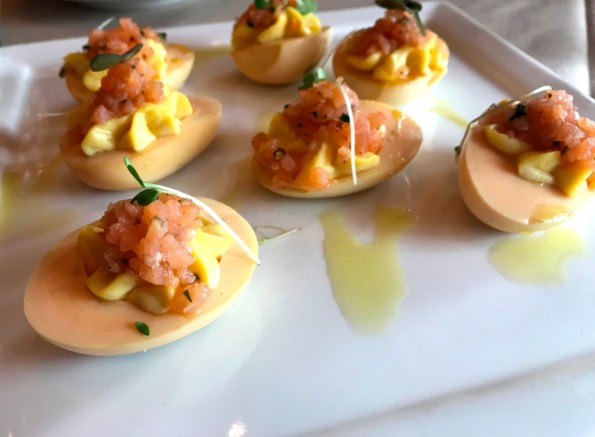
Okay, what can be surprising about the deviled eggs, you ask? You see, for people with Russain heritage, deviled eggs is a staple of the party, and I’m very, very particular to how this simple dish is executed. I had deviled eggs on multiple occasions in the restaurants, and don’t mean to offend anyone, but in the absolute majority of the cases the dish could be described simply as “blah”. Not here. At Domaine Hudson, this was one superb deviled eggs – the egg white was smoked, the filling was creamy and perfectly seasoned, and the smoked salmon on top gave the texture and completed the dish. The simply delicious beginning of the evening.
Before we continue, I have a confession to make. Every once in a while, you want to forget all your social media obligations (obsessions?) and just be a normal person on vacation – don’t take pictures, don’t take notes, don’t try to memorize the experience, just relax, have fun and enjoy the moment. This is what I honestly tried to do. I didn’t bring my SLR, I decided not to take any pictures, just enjoy the dinner and the company. After the first sip of wine and bite of food, which were both excellent, all good intentions went out of the window, and the need to “document the story” kicked in, more as an instinct, a muscle memory so to speak. But – I was left with only my cell phone (meaning – mediocre pictures), and any missed picture opportunities are just that – missed picture opportunities. Now, let’s get back to our dinner and the wine pairings.
Duck Liver Mousse (port wine aspic, pickled stone fruit, grilled bread)
Wine: 2015 Rubus Old Vine Zinfandel Lodi
Superb is a word. The mousse was delicious – texture, flavor combination with all the condiments – I finished the full ramekin by myself, couldn’t stop until the last morsel. The wine was excellent as well – nice raspberries profile, a touch of fresh fruit, not overbearing, but enough sweetness to perfectly complement the mousse. A successful pairing by all means.


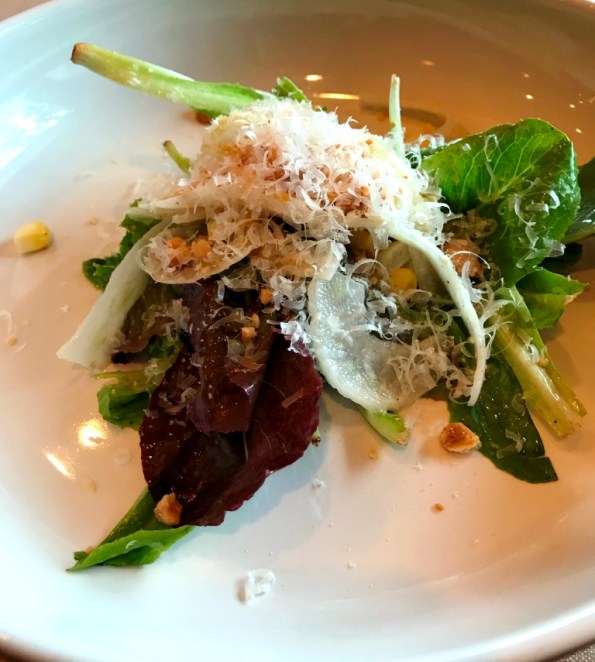
Culver Farms Baby Greens (grilled corn, fennel, Marcona almonds, lemon aioli, Pecorino)
Wine: 2017 Gateway Vinho Verde DOC, Portugal
Another delicious dish. Fresh, simple, light, very summer-y, fun to eat with all the different crunch elements. Vinho Verde was fresh, grassy and lemony, just as you would expect, and it obviously played perfectly with the salad. Another successful pairing.


Ricotta Gnocchi (forest mushrooms, hazelnuts, summer truffle cream)
Wine: 2016 Domaine Cornu-Camus Bourgogne Hautes-Côtes de Beaune, France
I love mushrooms, so this dish definitely delivered that – great variety of mushrooms, a perfect textural addition of hazelnuts, truffle cream was very flavorful. The gnocchi, which were supposed to be the star of the dish were too dense, I would definitely prefer for them to be lighter and fluffier. Still, not the dish you can really complain about. The wine was fresh and young, red crunchy berries, great minerality, very firm and structured, with excellent acidity – an excellent young Burgundy. However, the pairing didn’t work. I guess the idea was to pair on the contrast, but that didn’t work for me. But – I definitely enjoyed the wine on its own.


Nordic Halibut (Fava beans, Holland leeks, forest mushrooms, lemon butter sauce)
Wine: 2015 Talley Vineyards Estate Chardonnay Arroyo Grande Valley
Crispy fish? Check. Fava beans? One of my personal favorites; check. Mushrooms? Check. You got all my happy ingredients, and they worked very well together. Chardonnay was spot on – varietally correct, just a touch of butter, vanilla, apples, fresh, well balanced with good acidity. And a successful pairing for sure.


Prime Holstein New York Strip (fingerling potatoes, Fois Gras butter, braised greens, red wine demi)
Wine: 2013 Three Wine Company Suscol Creek Cabernet Sauvignon Block 5 Napa Valley
Steak and Cab – need I say more? The steak was perfectly cooked, great flavor, juicy, good sauce – nothing else I can say – if you like steak, you would like this dish. But then the wine… This was easily the best Cabernet Sauvignon I tasted in a long time (bold statement for me, I know). This was in-your-face, juicy, powerful, super-extracted, luscious wine only California can produce – imagine having a ripe bunch of cassis in your hand, and just taking a full bite right there – cassis, blackberries, mint, eucalyptus, everything is there – but perfectly balanced, with good acidity and unquestionably dry – wow. I would never guess this wine had 15.3% ABV – it was just perfectly integrated. Bottom line – superb wine and excellent pairing.
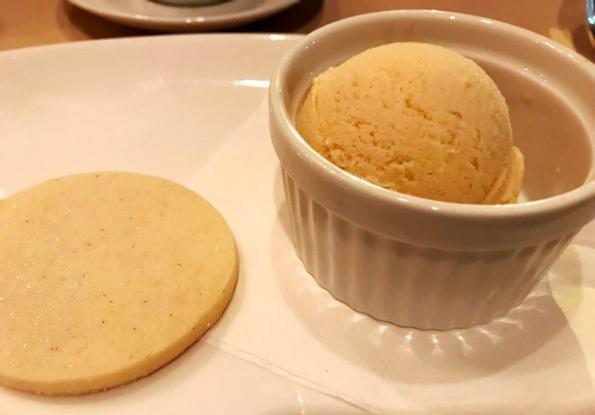
Plum Gelato with Sugar Cookie
The meal should have a sweet ending, right? Excellent gelato, light, fresh, good flavor. A perfect finishing touch.
Let’s summarize the experience – in a word, outstanding. The food was very good, and the wine program was excellent, most of the pairings worked, so I have to say that the Best of Award of Excellence has a good merit, and it definitely makes sense to me.
Have you dined at the restaurant with similar distinctions? How was your experience? Cheers!
Restaurant Files: Flinders Lane – Visiting Australia in Stamford
 For those of us who like to travel, why do we like it so much? More often than not, the travel itself is not fun – the stress of the airport, cramped planes with the seats getting narrower by the minute, airline food – it leaves lots to be desired. But once we arrive, it is the experience that makes all those travel troubles worth it – the culture, the people, food, wine – this is what we are looking for.
Visiting Australia is squarely on my “bucket list” – I’m sure one day I will be able to experience the culture. I had been drinking Australian wines for a long time – this doesn’t replace visiting the winery, but it is as close as it can get. When it comes to food, the only place in the USA which can be associated with Australia is a chain of Outback Steakhouse restaurants – they constantly run the ads on the TV, with supposedly an Australian-accented narration – this is as much of the Australian experience as you can get there (the voice in the ad might be the most authentic part of experience).
And then Flinders Lane Australian restaurant opened in Stamford. Of course, when I was invited to visit, I was excited – not as much as if it would be an actual country, but still. I would guess the name of the restaurant takes its roots from one of the oldest streets in Melbourne, Flinders Lane, which now hosts a variety of little shops and the restaurants.


What authentic Australian food should you expect to find at the Flinders Lane? I actually know very little about authentic Australian food, so let’s see: Kangaroo? Check. Vegemite (have you heard of it? I will explain later)? Check. That’s about all I know, so let’s just talk about our experience.


You have to start the evening with a cocktail, right? Well, even if you disagree, it is still right – and this is what we did. Fresh Grapefruit Mule (Absolut Elyx Vodka, Cucumber, Grapefruit, Lime, Bundaberg Ginger Beer) was very refreshing. Floral Cucumber Margarita (Blanco Tequila, Elderflower, Cucumber, Thai Chili Tincture, Lime, Agave) was different but equally refreshing. Limoncello Collins (Villa Massa Limoncello, Vodka, Lemon, Club Soda) – just look at that presentation, isn’t it too pretty to drink? Nicely lemony and very tasty overall.
If we are talking cocktails, we have to talk about the wines. The wine list is not very large, but diverse and versatile, with reasonable prices and a good selection of wines by the glass. I also was happy to see the Australian wines on the list (which is not common for the most of the restaurants, but hey – if not at Flinders Lane, the Australian restaurant, where else?). I had prior experience with Hewitson Baby Bush Mourvèdre, and this 2014 was outstanding – soft, round, supple, perfectly balanced – it was an excellent accompaniment to our dinner.
The dinner was divided into the courses, so here is what transpired:


Course 1
We started with Arancini (black garlic mayo, pecorino cheese), which were outstanding, very good texture and flavor. Pork Sausage Rolls (sambal mayo) was more of a traditional Australian style (at least this was my understanding), and a very tasty bite. And Heirloom Tomato, Burrata, Truffle Soy dressing was perfectly presented just for the single bite – and there are very, very few things which are more delicious than a combination of fresh burrata and heirloom tomato. Yum!


Course 2
Next, we had Tuna Tartare (soy mirin dressing, cucumber, plantain chip) – I’m extremely particular about my tuna tartare, and I have to honestly say that this was not bad, but not my favorite. Something was not matching in the flavor profile – for my palate, of course. Pork and Veal Meatballs (ricotta salata, grilled baguette) were delicious, crispy on the outside, but airy enough inside.
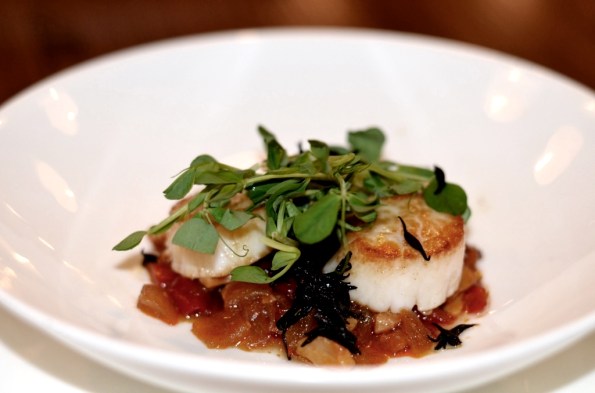

Course 3
Truth be told, scallops are probably my most favorite choice of protein. If there is a scallop dish on the menu, there is a very, very good chance that that would be the dish I would pick. Diver Scallops (cashew chili relish, hijiki) didn’t disappoint – perfectly cooked, perfectly spicy – very tasty. And then the Kangaroo salad (chili lime dressing, cilantro, crispy garlic) – my first taste of the kangaroo, lean and gamey taste profile, rather as expected, overall quite tasty.


Course 4
Branzino is another one of my favorites, and this Pan-seared Branzino (sesame ginger broth, bok choy) was excellent – delicious, great flavor combination, might be the tastiest dish of the whole dinner. Of course, you have to have the Australian lamb if you are visiting the Australian restaurant – Braised Lamb Gnocchi (tomato, pecorino) had a nice flavor, but very lamb-y in your face, which is generally not my thing, but overall this was not a bad dish.
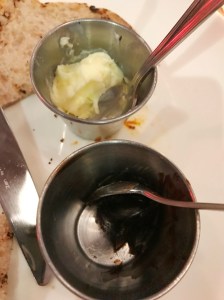
Okay, now let’s talk Vegemite. First, the disclaimer – Vegemite was not a part of our dinner – this was something I knew as quite famous in Australia (not always in a good sense) and was very much interested in experiencing, so I asked Chef Brad Stewart if we will be able to try it, and he gladly obliged. If you are wondering what the heck is Vegemite, you can read about it here. It is a paste made from yeast, and it has an extremely (my opinion) pungent flavor. It plays somewhat of a role of peanut butter in the Australian school lunches, typically used a spread on a piece of bread or a toast. I made a mistake of not trying it with butter as it was offered to us, and I can tell you – it is not my thing. But – I tried it, that what matters! 🙂


Course 5 – Chef’s selection desserts
Do you think Australians eat dessert? Of course they do – and here what had an opportunity to try
We had Lamington (traditional Australian dessert), Sticky Date Pudding (another traditional Australian dessert and Chef Brad’s grandma’s recipe), Carrot Cake (Chef Brad mom’s recipe) and Pavlova – don’t ask me for individual notes, please – they were all one better than the other, absolutely delightful, and a great finish to our dinner.
Here you are, my friends, I hope I didn’t make you too hungry – while you are contemplating your trip to Australia, you can come to Flinders Lane here in Stamford to get a little taste of it now. No boarding pass required. Cheers!
Flavor, Next Level – Beyond Salt And Pepper
 I love cooking. Cooking allows you to be creative, and you are only limited by your own imagination in what will show up on the table in the end. That and maybe some skill – but skill, of course, can be learned and mastered.
While creativity, imagination, and skill are important, one quality will separate success and failure in the final dish – flavor. Of course, the situation is not that dramatic in real life – this is what “not too bad” and “interesting” descriptors are for, but the flavor rules. This for sure is true in the home cooking. If dish on the table looks great – excellent, definitely a bonus. The texture typically is important too – if the rice more resembles mashed potatoes, that is not really cool. But flavor rules – once we take the first bite, the presentation becomes secondary and the flavor is what we are looking for to either jump of joy and pleasure or make face and say “ouch” (don’t strangle that inner kid in you, let the reaction come out).
One of my favorite shows on the TV is “Beat Bobby Flay” on the Food Network. Bobby Flay, who is an Iron Chef and a well-known restaurateur, is challenged by some other, also well established and well-regarded chefs, to cook the dish of their choice, their own “signature dish”. The panel of three judges decides on who made a better dish in a blind taste test. Quite often, Bobby Flay wins even when he has to cook the dish he only tried once in his life and never cooked before – and sometimes even those which he never tried. What makes him the winner? When you listen to the judges explaining their decision, there is one most important word which you hear over and over again – flavor. The dish might not look anything like the classic version, and sometimes even not taste anything like the classic version, and nevertheless, the Flavor is the word you hear the most often, explaining the vote of A versus B.
If you see home cooking as a chore, this is probably not the post you want to continue reading. If, however, you are after the pleasure of both cooking and then eating the tasty food, let’s talk more about flavor. As a home cook, you have an arsenal of tools available to you to achieve the flavor – you start simply with herbs and spices, and then enlist the help of various techniques and methods – marinating, basting, slow cooking, pressure cooking and on, and on, and on. I personally like cooking with open fire, and thus grilling is definitely one of my preferred methods, especially when the weather is cooperating.
One of the things I like using to enhance the flavor of the food on the grill is a cedar plank. I would typically make salmon on the cedar plank so the salmon would have that delicious sweet smokey flavor. There is only one problem with this – I typically forget to pre-soak the plank at least for an hour – and unless the wood is soaked, it will burn in no time on its encounter with open flames.
It appears, that my problem (don’t tell me it is only my problem, and looking on a gorgeous piece of salmon you never had to hit yourself on a forehead saying “why I didn’t prepare the plank before”) had been solved! Here comes Beyond Salt and Pepper – a company which was founded (I’m very happy to give you full disclosure here) by my close friend Henry. We always shared our love for cooking with Henry, but Beyond Salt and Pepper takes that passion to the next level.
Pre-soaking of the plank is required before using it for cooking. I’m sure that when you think about soaking of the wood, you think water. But why only water? Wine is a liquid too, and wine is used in cooking, so maybe…? That’s right – we can use the wine, but not only the wine, also beer, rum, bourbon and any other type of alcohol – each one bringing its own unique flavor profile to the table – your table.
I visited my friend – and essentially, the headquarters of Beyond Salt and Pepper, located in the garage, as any self-respecting startup should – and we had a blast (a feast would be a better word).


First, I saw the process – the pre-cut planks of cedar – but not only cedar, Henry uses white oak too and says that imparts particularly nice flavor on the steaks – are soaked in the liquid of choice for days. Then the planks are getting into the machine where they are vacuum-sealed. Put on the label, pack, and voilà, ready for shipping.
And then there was cooking, lots of cooking. If you are still thinking planks are only for salmon, forget this notion as soon as possible. Unleash your imagination – you can make anything you want on the planks – and you can see the proof here in the pictures.


When cooking with the planks, there is a bit of technique which goes into the process – all explained in the recipes available on the Beyond Salt and Pepper web site. In most of the cases, you need to pre-heat the plank by putting in on a hot grill for 1 – 2 minutes on each side. And then you slightly pre-cook the food – for instance, sear steak on one side, and then flip it over on the plank and let it continue cooking as usual – that’s about all the special technique you need.


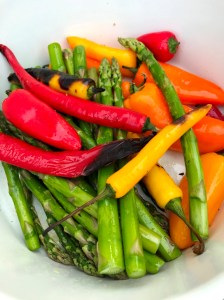
We had asparagus, artichokes and snap peas cooked on the Chardonnay-soaked planks – we couldn’t keep the snap peas on the table, everyone loved them. How about some little red wine infused smoke on the mushrooms and potatoes? Salmon and tiger shrimp on the Bourbon soaked planks? Yes, please! Chicken with some Merlot smoke on it – yum! Then the steak on the white oak and rum planks – superb. And then some cheese for dessert – but of course, made on the Chardonnay infused plank. Flavor, flavor, flavor – there are no limits to one’s creativity.

Here you are, my friends – a simple tool to add to your cooking tools arsenal, to get the flavor to the next level. If you are interested in trying these planks for yourself (and you should, seriously), you can get them directly from the website, or on Amazon (the website offers a bit wider selection). If you need some inspiration and cooking ideas, follow Beyond Salt and Pepper on Instagram. And by the way, while on the website, look for their selection of gourmet peanut butter… Mmmmm… Happy cooking!
Last Bottle Sign Up ($10 credit)




 Talk-A-Vino