Archive
Chilean Carménère – World-Class and So Hard To Choose
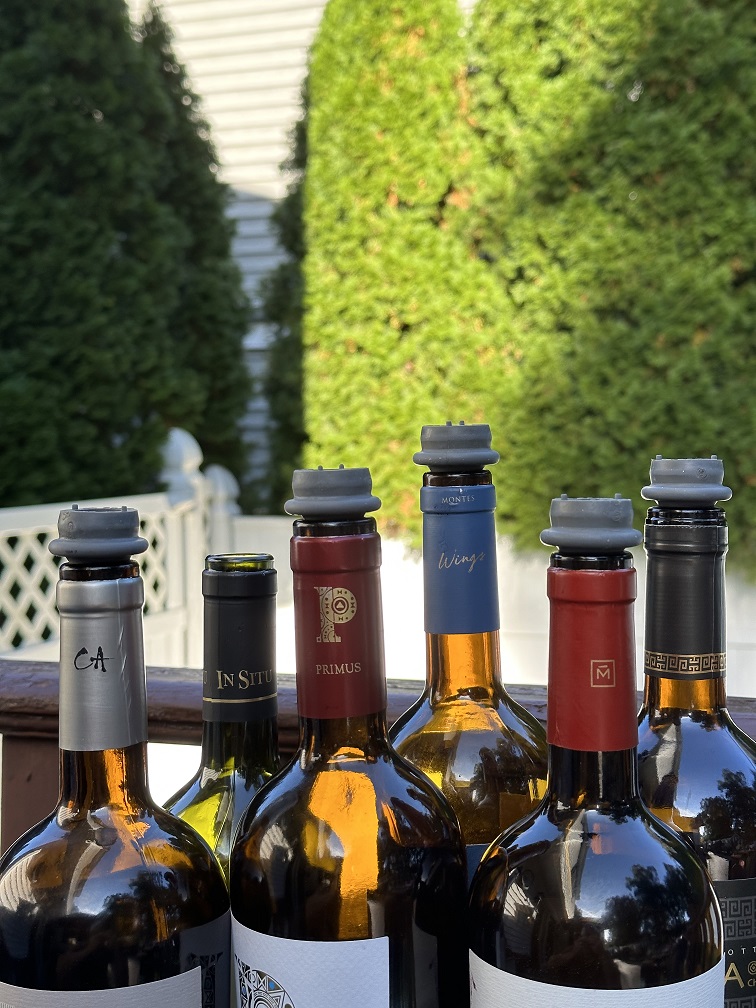 Is 30 years a lot of time or not, what do you think? It depends. If we compare 30 years to the approximate age of Earth at around 4 billion years, it is much smaller than a spec of dust. For a human, that’s quite a bit of time, subject to a personal perception. How about grapes?
Almost 30 years ago, in 1994, it was discovered that the Chilean Merlot grape is not exactly a Merlot. Approximately one-third of the plantings considered to be Merlot happened to be of Merlot’s almost extinct relative – the grape called Carménère. In 1994, there were only 25 acres left in France of the grape which used to be one of the important elements in the Bordeaux blend, now ready to disappear. This discovery also helped to explain the distinct taste of Chilean “Merlot”, loaded with so-called Pyrazines, the compound which leads to the pronounced green bell pepper characteristics in the wine, both in smell and taste.
Chilean winemakers gladly took ownership of the grape which they now could rightfully call “their own”, and the plantings expanded from around 9,000 acres in 1994 to almost 34,000 acres in 2014, eventually steadying at about 25,500 acres in 2021. Along the way, Chilean winemakers worked hard with this grape to literally get rid of the green bell pepper profile, creating a rounder, more fruit-forward wine. Their mission was a total success – for example, looking through the notes of my previous tasting of 7 Carménère wines 3 years ago, not a single wine had any mention of the green bell peppers. Nevertheless, it is interesting that now the pendulum has started swinging the other way, and Chilean winemakers have started thinking about bringing the green bell pepper profile back.
Nothing is instantaneous in the world of wine. Thinking about green bell pepper doesn’t mean it can elegantly show in the wine at will. At least among the 6 Carménère wines I just tasted, only one of them had a distant hint of bell peppers – but the important part was that all 6 were outright delicious. While I managed to choose a favorite, it was like splitting the hair.
Just to give you a perspective on where these 6 wines came from here is the map:
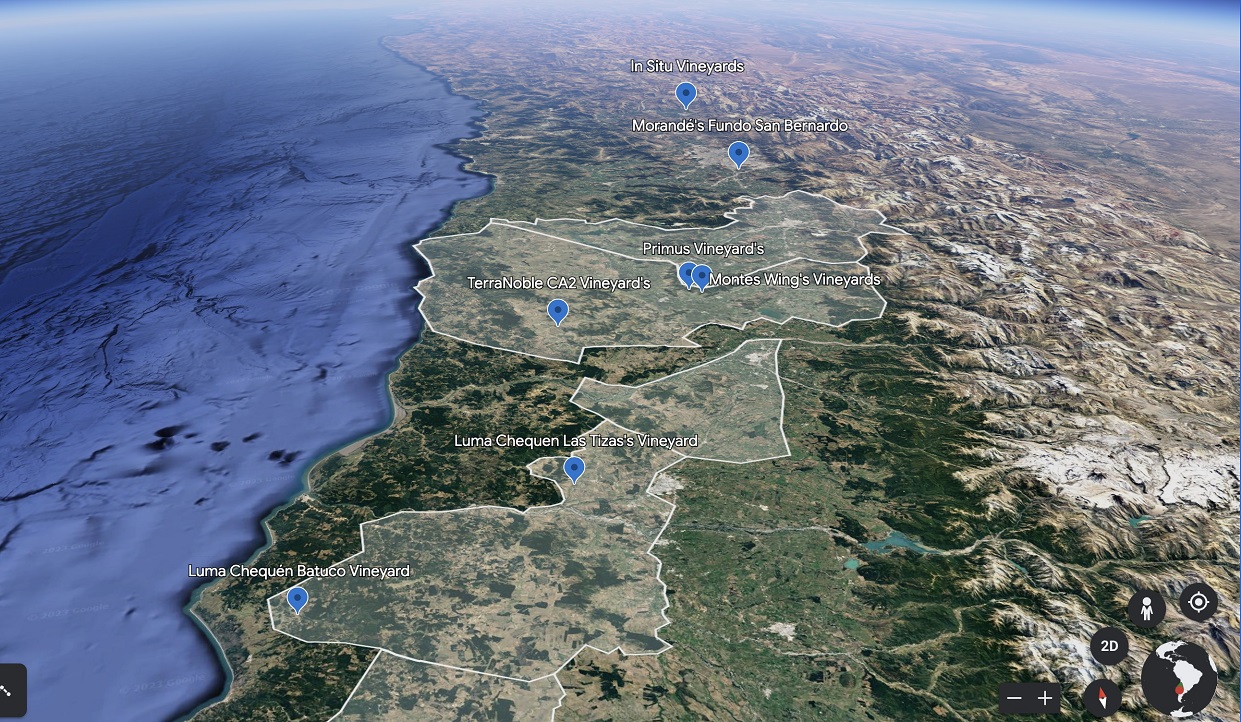 You can see here the proximity to the coast as well as get an idea of the altitude and overall terroir. While there seems to be a good variety of the terroir, all the wines were showing in a similar way – yes, with stylistic differences, but you could tell that the wines are related.
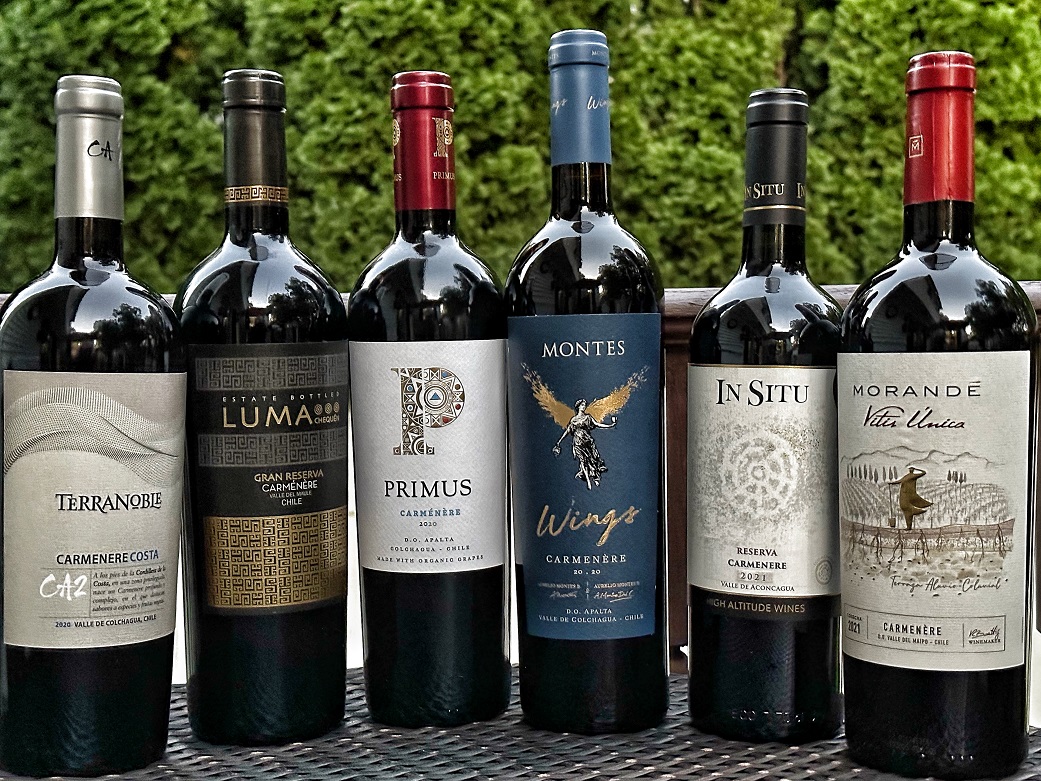
Here are my notes:
2021 Viña San Esteban In Situ Carménère Reserva Valle de Aconcagua DO (13% ABV, $13, 95% Carménère, 5% Cabernet Sauvignon, aged in for 12 months in 50% French and 50% American 225-litre oak barrels, 3+ months in the bottle) – In Situ Family Vineyards was established in 1974 by José Vicente. In 1994, the vineyards were replanted, and the modern winery was built. This certified sustainable winery produces a range of high-altitude wines in Aconagua Valley.
Dark garnet
Beautiful restrained nose of dark fruit, blackberries
Blackberries and raspberries on the palate, crisp acidity, tart, crisp, refreshing, well integrated but present tannins
8
2021 Morandé Vitis Única Carménère Valle del Maipo DO (13.5% ABV, $20, aged for 16 months in 80% in French oak foudres and 20% in new 225 liters French oak barrels) – Viña Morandé was founded in 1996, and went on to become one of the leading wine producers in Chile. The winery is truly innovative and “off-the-beaten-pass”, producing wines from Mediterranean grapes such as Cinsault, Carignan, and Garnacha, and using concrete eggs and large oak foudres for the aging of the wines. The winery was the first in Chile to produce late-harvest wine and the first in Chile to be recognized as 100% sustainable.
Dark garnet
Dark fruit, cedar, a hint of bell peppers
Tart cherries, black currant, zippy acidity, acidity on the finish.
8-/8
2020 TerraNoble CA2 Carménère Costa Valle de Colchagua DO (14.5% ABV, $36, aged 16 months, 42% in new 300-liter barrels, the rest in untoasted foudres) – TerraNoble is one of my favorite Chilean producers. I wrote extensively about TerraNoble in the past, covering particularly the full line of their Carmenere wines.
Dark Garnet, almost black
A touch of barnyard, warm spices, inviting, black currant
Bright, firm structure, cassis, distant hint of bell pepper, good balance, good acidity
8/8+
2020 InVina Luma Chequén Carménère Gran Reserva Valle del Maipo DO (13.9% ABV, $17, 12 months in oak barrels) – InVina was founded in 2007 by the Huber family and went on to become one of the premier producers in Maipo Valley
Dark garnet
Beautiful, nutmeg, sweet oak, superb. Best of tasting so far
Sophisticated, great bouquet, cassis, dark fruit, a touch of dark chocolate, excellent balance.
8+, the favorite of the tasting
2020 Primus Carménère Apalta DO (14.5% ABV, $21, organic grapes, 12 months in French oak barrels, 18% new) – Primus wines are a part of the Viñedos Veramonte, another one of my favorite Chilean producers. I also wrote about Primus Carménère wine extensively in the past, so this was one of the familiar wines in the tasting.
Dark garnet, almost black
Cassis, cassis leaf, sage, inviting, delicious
Dark, brooding, concentrated, earthy, well-integrated but present tannins, full body, needs a steak.
8+, superb on the day 3.
2020 Montes Wings Carménère Apalta DO (14.5% ABV, $55, 85% Carménère, 15% Cabernet Franc, aged for 16 months in 80% new and 20% second-use French oak barrels) – Feng Shui, Gregorian monks chants helping wines age – we can talk about Montes Winery forever. Instead, I will offer you to read my interview with the Founder and Chief Winemaker of Montes Winery Aurelio Montes Sr – here are Part 1 and Part 2 of our conversation.
Dark garnet, almost black
Sage, a hint of cassis, earthy
Bright, elegant, dark fruit, fresh acidity, seeet oak, eucalyptus, layered, luscious.
8+, as good as Luma
Here you are, my friends. Six excellent Carménère wines, making it very difficult to select a favorite. I settled on Luna Carménère Gran Reserva, but honestly, every one of these six are world-class wines I would be happy to drink any day. Do you have your favorite Carménère wines?
The Land Whispers… You Just Need To Listen
 I love wine dinners. Especially the wine dinners with the winemaker.
I dread wine dinners. Especially the wine dinners with the winemaker.
I know, I don’t make much sense at the moment. Wine dinners are wonderful, and I really do love them. The dreadful part comes from the experience of not being able to write about those wine dinners in a timely fashion. “Timely fashion”, huh – there are wine dinners I never wrote about in 5 years and such memories can hunt you down – they definitely do for me. I don’t know why this is happening on a regular basis – the elation often experienced during open and engaging conversations about wine becomes an ephemeral spirit, woefully resistful and easily escaping the slightest attempt to capture it in the form of words…
Let’s see if I will be able to break my unsettling tradition.
Last week I had a wonderful time and experience tasting the wines of Viñedos Veramonte and speaking with Gonzalo Bertelsen, General Manager and Head Winemaker in a small group of wine lovers, around the dinner table at the Monterey Brasserie in New York. The conversation topics were ranging from low-alcohol wines (is that really a trend? Are people really asking for it or is that just a gimmick?) to the production of organic and biodynamic wines to “why Germans don’t want to drink organic wines from Chile” (I will not tell you why but you are welcome to guess) and to many other far and between. But most importantly we got to enjoy Viñedos Veramonte wines with and without the food.
Viñedos Veramonte was one of the first wineries in the Casablanca region, founded in 1990 by Agustin Huneeus, a Chilean wine pioneer. From the very beginning, the winery embraced organic viticulture – and more recently, the winery spent more than 6 years making estate vineyards officially organic certified, obtaining ECOCERT® organic certification, one of the most respected in the world. The project involved the conversion of more than 1,200 acres of vineyards in Casablanca and Colchagua valleys to organic and biodynamic farming, with the aim to also become fully Demeter’s biodynamic certified – which requires making changes in the winery, not only in the vineyard – plus importers also have to be biodynamic certified.
Viñedos Veramonte produces 4 distinct lines of wines – Veramonte, Ritual, Primus, and Neyen – all from organic grapes, of course. We had an opportunity to taste wines from all 4 lines.


We started with the 2022 Veramonte Sauvignon Blanc Reserva Casablanca Valley ($13.99 SRP). This wine has one of the biggest productions, and it is very important for Veramonte. Preserving freshness is paramount, so special care is taken to prevent any oxidation of the grapes and juice, and the wine is bottled as soon as possible. The wine was herbaceous and crisp, delicious on its own but also nicely supporting our first course – Grande Plateau of seafood containing oysters, clams, tuna tartare, and lobster. The Sauvignon Blanc pairing with the oysters was the best – and the oysters were delicious, probably my favorite component of the Grand Plateau.


Next, we moved on to the 2019 Ritual Chardonnay Casablanca Valley ($20.99 SRP, fermented in oak barrels and concrete tanks). I wrote about Ritual wines many times, last time only a few months ago – the wines are consistently delicious. The wine was paired with a choice of appetizer – crispy artichokes or barbecued prawns. I selected crispy artichokes, forgetting that artichokes are notoriously difficult to be paired with wine. The dish was delicious on its own, and the wine was also good – on its own.
We also tried the 2020 Primus Carmenere Apalta DO ($20.99 SRP) with our appetizer course. The wine was excellent and had a nice profile of cassis supported by the bell peppers, showing off the pyrazines. Some of the winemakers are trying to prevent the pyrazines from showing up by changing growing conditions, harvesting regime and more – but I personally enjoy the pyrazines’ flavor very much, it adds to the authenticity of the wine. While Carmenere was still not a perfect match for the artichokes, it offered a bit better pairing than the Chardonnay.
Now we were ready for the main course, and the new wine arrived.
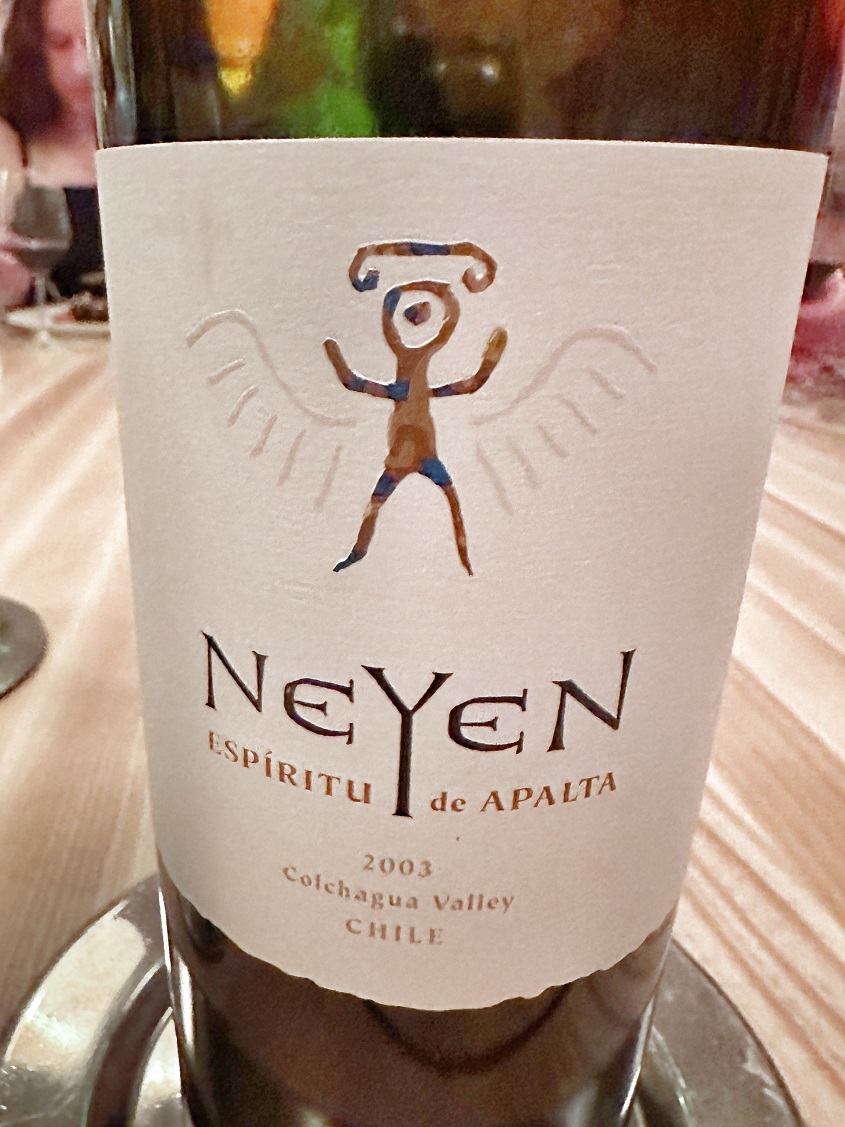


Last December I had an opportunity to try for the first time yet another Veramonte wine called Neyen. Neyen vineyards are located on a small parcel of land situated between the Andes Mountains and the Coastal Range. Neyen wines are literally always a blend of 50% Cabernet Sauvignon and 50% Carmenere, both coming from truly the old vines – Cabernet Sauvignon vines were planted in 1889, joined by Carmenere in 1936, which makes the vines respectively 134 and 87 years old.
In the local dialect, Neyen means “whisper”. The land whispers, you only need to listen to her – low intervention is what the Neyen winemakers practice. And this is the whisper you can taste.
The wine literally stopped me in my tracks. You know that stupid smile that you can’t control when something good is happening? This was my face upon the first whiff of the 2003 Neyen Espíritu de Apalta Apalta DO ($N/A) – the first vintage of Neyen wine ever produced. The time stopped – there was only the endless pleasure of aromatics that only mature wine can bring.
Time, wait. Don’t move. I’m still enjoying it. Please, just a few more moments.
Cassis and eucalyptus on the nose. Cassis and eucalyptus on the palate, silky smooth, perfectly integrated tannins, full body of the mature wine at its absolute peak, pleasure slowly descending layer after layer. This is the case where the words are clearly insufficient to describe the joy of the oenophile, but I hope I offered at least a glimpse.
For the main course, I selected Bluefin Tuna au Poivre with baby beets and citrus sauce – and to my delight, the 2003 Neyen offered a perfect pairing, elevating every bite of the food.
We also had the 2016 Neyen, Espíritu de Apalta Apalta DO ($N/A). Tasting 2016 after 2003 was somewhat of a mistake. 2016 is an excellent wine, but the beautiful core we were able to experience in 2003 was still covered by layers of baby fat, the wine showing a lot richer, almost jammy on the first sip, and in need of time to open up.
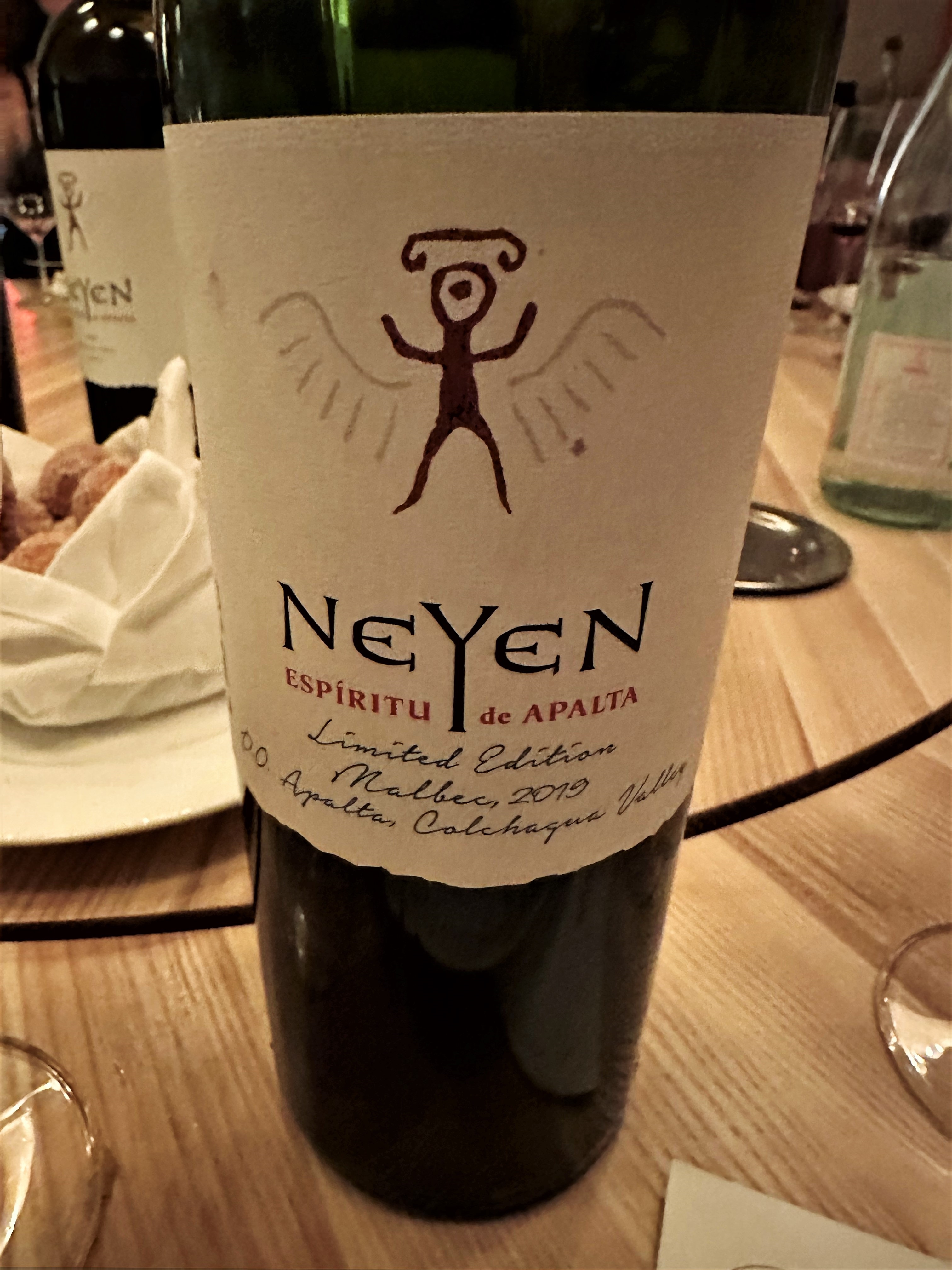
The culmination point of our evening, though, was … a bit unexpectedly, as we are talking about Chilean wines … the Malbec. 2019 Neyen Espíritu de Apalta Malbec Apalta DO ($149.99 SRP). 2016 was the first released vintage of this super low-intervention wine – harvested and destemmed by hand, fermented in small tanks, no machines, no electricity used in the production of this wine, aging only in 3rd and 4th use French oak barrels. This is the crown jewel of the Veramonte Neyen collection – even James Suckling agrees, rating this wine at 100 points. Only 200 cases of the wine were produced in 2019, with the US allocation standing at 40 cases.
The main word I would use to describe this wine would be “elegant”. The wine was showing beautiful eucalyptus notes, a lot leaner than most of the Argentinian Malbecs, begging comparison with old world Malbec, the Cahors. Elegant, layered, delicious.
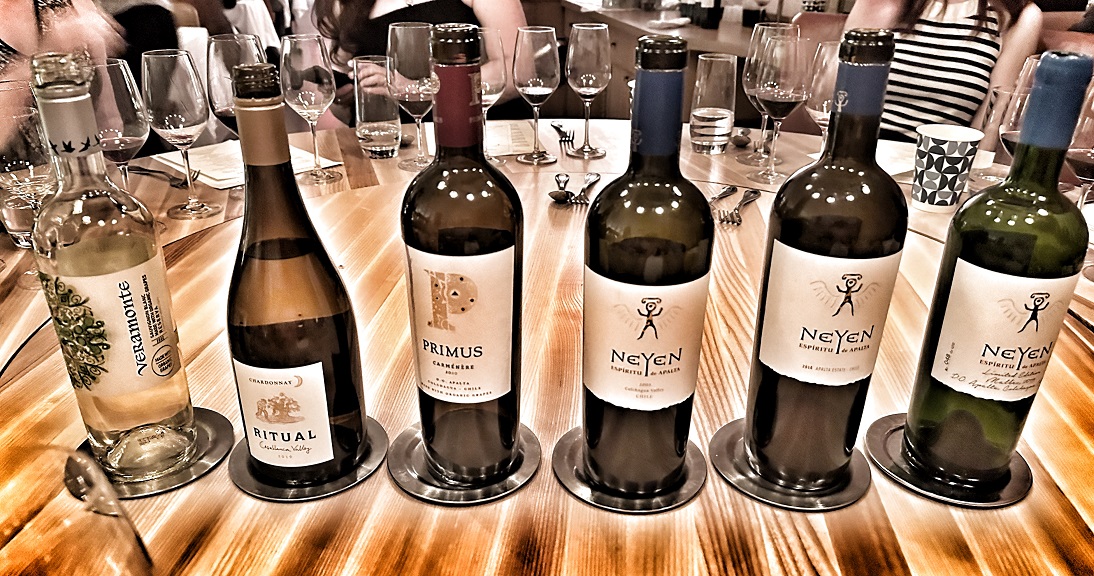
And this, my friends, brings us to the end of the wonderful evening. The company was great, the food was excellent, the wines were amazing.
Mother Nature whispers, and good things happen when we listen. I wish I had a case of this 2003 Neyen Espiritu de Apalta – that would really make me happy. Well, we generally don’t get to have all the things we want – and I’m grateful for the opportunity to experience such wines at least once.
Veramonte wines offer a great selection for every budget and every palate – check them out when you will have a chance. Cheers!
Chilean Sauvignon Blanc – The Adulthood
This post was supposed to be written last year… And then I almost made it in time for the Sauvignon Blanc day which was celebrated two days ago, on May 6th. Well, it is definitely a “better late than never” post, so for what it worth, let’s dive into it…
Today, friends, we are going to talk about Sauvignon Blanc.
If I would just “shoot from the hip”, Sauvignon Blanc doesn’t stand up as a grape with tremendous clout. Yes, it is one of the three major white wine grapes, along with Chardonnay and Riesling. And yet if there were a grape popularity contest, I would guess the championship would be decided between Cabernet Sauvignon and Chardonnay. Of course, Pinot and Syrah would-be contenders, but I still think the former two are really at the top of wine lovers’ minds.
But let’s take a closer look at Sauvignon Blanc. There is hardly a wine region in the world where Sauvignon Blanc is not growing – no point in recounting them, Sauvignon Blanc is successfully growing everywhere. Sauvignon Blanc makes sparkling, still, and dessert/late harvest wines. It shines solo everywhere, and I’m not talking about “usual suspects” – Sancerre, New Zealand, Chile, California – but I’m talking about some of the world’s best producers. Screaming Eagle, the “cult of the cults” producer in Napa Valley makes Sauvignon Blanc which is more allocated than their Cabernet Sauvignon. Gaja Alteni di Brassica and Poggio alle Gazze dell’Ornellaia, two of the 100% Sauvignon Blancs from Italy – I hope these names need no introduction. Let’s not forget the “Y” dry wine produced by Sauternes legend, Chateau d’Yquem. And then of course, there are countless blends… Sauvignon Blanc is everywhere.
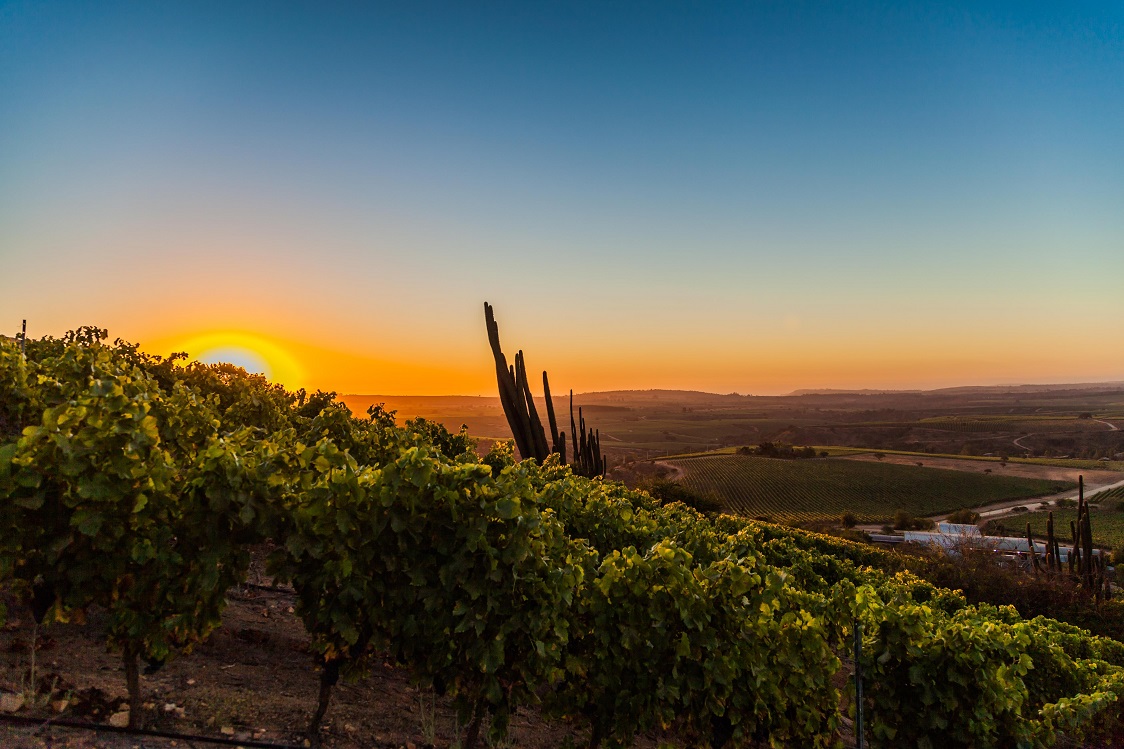
Garces Silva vineyard at sunset credit Jody Hortons
Never mind the blends – let’s talk about pure Sauvignon Blanc wines. In my opinion, there are 4 main distinct styles of Sauvignon Blanc – as there are 4 main production regions that we already mentioned – Sancerre, New Zealand, Chile, and California (Napa Valley primarily). Maybe I should say “there used to be” 4 main styles… In the old days, Sancerre could be identified by aromas of cat pee and freshly cut grass. New Zealand Sauvignon Blanc had a currant profile with currant leaves showing very well. It was popular to refer to the main component of the New Zealand Sauvignon Blanc profile as Gooseberry – I remember wine critics angrily saying that 90% of those who use the descriptor never tasted gooseberry in their lives. Chilean Sauvignon Blanc was similar to New Zealand, only shifting more towards grapefruit and a bit more sweetness in the profile. All three (Sancerre, New Zealand, and Chile) have changed today. And only Napa Valley style has not changed since the moment I tasted Napa Sauvignon Blanc for the first time – freshly cut grass is weaved together with bright but not sweet fruit – it is succulent, it is seductive, it is “in-your-face-beautiful-and-not-ashamed-of-it” – but we will have to talk about Napa Sauvignon Blanc some other day.
For a long time, New Zeland Sauvignon Blancs were consistent, with only Cloudy Bay standing apart from the rest, in a very delicious way. Then New Zealand decided to look for a new Sauvignon Blanc identity at some point, and I had an opportunity to taste this “new identity” at a tasting 8 years ago – it was an interesting experience, please read my notes if you are interested. I don’t know if the Chilean wine industry is closely following New Zealand, or if is this just a common trait of growing up, but this brings us to today’s subject – Chilean Sauvignon Blanc wines.
Compared to the Cabernet Sauvignon, the Chilean staple, Sauvignon Blanc is a very young grape. The first plantings of the Cabernet Sauvignon in Chile go back to the middle of the 19th century. The story of Sauvignon Blanc in Chile only started in the late 1970s. In 1978, there was a total of 8,154 acres of Sauvignon Blanc in Chile, accounting for 3.1% of all grape plantings (land under vine), mostly concentrated in Maule Valley. In the 1980s, new plantings of Sauvignon Blanc started to appear in the coastal regions of Casablanca, as well as Coquimbo, Valparaíso and O’Higgins. Coastal areas offered cooler weather, which brings herbal, citrussy expression with cut-through acidity in Sauvignon Blanc, contrasting with the areas with a continental climate, known to bring those grapefruit/tropical fruit notes I mentioned before as an old signature of Chilean Sauvignon Blanc.

Ventisquero vineyard. Source: Viña Ventisquero
Going beyond just new cooler coastal areas, winemakers also started paying attention to the inherent grape qualities, by choosing to experiment with different clones. Of course, it is only fair to assume that clonal selection is not just Pinot Noir or Chardonnay prerogative – nevertheless, until I started working on this article, I had no idea that Sauvignon Blanc clones are even a thing. Turns out that Davis Clone (#1) is known to impart citrusy qualities, Sancerre Clone (#242) is more herbal and fruity, and then there are other popular French clones #107, #241, and #317.
Today, Sauvignon Blanc is the second most planted grape variety in Chile with 37,614 acres under vine in 2019, accounting for 40% of all white grapes plantings. Sauvignon Blanc is the second most widely produced wine in Chile, with 13% of all the Chilean wine production volume (based on 2021 data). The majority of the Sauvignon Blanc plantings are now located in the coastal regions. Chilean Sauvignon Blanc has definitely grown up and it is ready to conquer the world.
To make the encounter with modern Chilean Sauvignon Blanc wines more practical, I had an opportunity to taste 8 Sauvignon Blanc wines, all coming from different producers and representing a number of regions. Here are my notes:

2021 Montes Sauvignon Blanc Limited Selection Leyda Valley DO (13.5% ABV, $15) – Montes is a very interesting winery in general – I had an opportunity to speak with the winemaker, and to learn more about the winery, you might want to read part 1 and part 2 of our conversation. Sauvignon Blanc grapes used in this wine, clones 1 and 242, were harvested from the vineyard located about 9 miles away from the Pacific Ocean on the western slopes of the Cordillera de la Costa mountain range.
Greenish pale
Inviting nose of fresh berries, grass, cassis leaves, some tropical fruit undertones, Napa SB-like presentation
Fresh, vibrant, tart, lean, lemon, a distant hint of freshly cut grass – truly refreshing on a hot day. Delicious.
8+, superb. Nicely complements creamy goat cheese.
2020 Casas del Bosque La Cantera Sauvignon Blanc Las Dichas Casablanca (13% ABV, $18) – Casas del Bosque is one of my favorite Chilean producers, I had a number of their wines on different occasions. The grape for this wine came from the vineyard located about 10 miles away from the Pacific Ocean, located on the mountain slopes.
Greenish pale
Freshly cut grass, green herbs, medium+ intensity, cassis leaves
Clean, light, good acidity, herbaceous profile, a touch of freshly cut grass. Lean.
8, excellent wine.
2021 Viña Koyle Costa La Flor Sauvignon Blanc San Antonio Leyda (12.5% ABV, $18, organic grapes) – Viña Koyle is one of the well-known Chilean organic wine producers – I had an opportunity to try some of their wines last year while working on the Chilean wines sustainability story last year. The grapes for this wine, clones 1 and 242, came from the vineyard located 5 miles away from the Pacific Ocean. The wine was aged for 4 months on the lees to soften the sharp acidity – as you can see in my notes below, cut-through acidity was still acutely present.
Light golden
Very restrained, distant hint of peach and guava
High acidity, a touch of freshly cut grass which quickly dissipated just leaving a tart finish.
8-, will be interesting with seafood.
2020 Viña Garcés Silva Amayna Sauvignon Blanc Leyda Valley DO (14% ABV, $25) – the grapes were harvested at the vineyard located 8.5 miles from the Pacific Ocean. The wine was aged for 6 months on fine lees.
Greenish pale
A hint of freshly cut grass
Tropical fruit profile with a hint of sweetness and a touch of grass
8-, nice
2020 Matetic EQ Coastal Valle Hermoso Casablanca DO (13.5% ABV, $20) – grapes for this wine came from the biodynamic vineyard in the Rosario Valley in Casablanca, just 3.5 miles away from the ocean.
Straw pale
Steely undertones, a distant hint of gunflint, a touch of lemon
Whitestone fruit, herbs, a touch of cassis leaves, finish is round and gorgeous with a whiff of freshly cut grass. Reminiscent of the Italian renditions of Sauvignon Blanc such as Ornellaia and similar.
8+/9-
2019 Viña Ventisquero Grey Glacier Sauvignon Blanc Atacama Valley (13% ABV, $25) – yet another winery I’m well familiar with. Curious fact – founded in 1998, Viña Ventisquero is turning 25 this year. The vineyard where the grapes for this wine came from is located 15 miles away from the ocean and in the middle of the Atacama desert, taking full advantage of the poor soils. The wine was aged in foudres to enhance its texture and improve aging capabilities.
Greenish pale
A hint of gunflint, earthy undertones, Dias tang hint of lemon
A hint of gunflint, crisp, clean, refreshing, clean acidity on the finish, nice textural presence with some salinity – should be a great oyster chaser.
8/8+, excellent
2021 Viña Tabali Talinay Sauvignon Blanc Valle de Limarí DO (13% ABV, $24) – the vineyard, called Talinay, eponymous with the mountain ridge where it is planted, is located 7 miles away from the ocean.
Greenish white
Minerally-driven nose, limestone, lemon, medium+ intensity
Crisp, fresh, lemon, minerality, a tiny hint of fresh cut grass which comes and goes.
8, this wine is asking for food. I want oysters… works well with Boursin cheese
2020 Viña Morandé Sauvignon Blanc Gran Reserva Casablanca Valley DO (13.5% ABV, $20, 12 months aged in oak foudres and concrete eggs) – Pablo Morandé was a Casablanca Valley pioneer, who started planting Sauvignon Blanc in the 1990s. Grapes for this wine came from Belén vineyard is in the Lo Ovalle region, 14 miles away from the ocean.
Straw pale
Fresh-cut grass with herbal undertones and minerality, sapidity (almost “meaty” smell if it makes any sense)
Clean, crisp palate, freshly cut grass, lemon, crisp acidic finish.
8, elegant and balanced.
Here you are, my friends. Beautiful, minerality-driven, world-class wines, with their own unique and delicious expressions. As you can tell from my notes, the tasting was 8 out of 8 success, which is generally not given.
I don’t know what is your take on Chilean Sauvignon Blanc and when did you taste it last time – it is definitely worth revisiting. and get ready to be pleasantly surprised.
Neyen, The Spirit Of Apalta
What do you think of Chilean wines? Have you had Chilean wines which took your breath away?
While you ponder that, let’s talk about Chilean wines.
Nobody can question today’s grandstanding of the Chilean wines in the world. According to Wikipedia, Chile is 7th largest wine producer in the world and 5th largest exporter – the ranking positions change every year, but there is a clear growth trend for Chilean wines, both in terms of volume and value. And Chile is one of the worldwide leaders in sustainable and organic viticulture, setting a clear example for the rest of the wine-producing world.
Not changing the subject, but what do you think of organic wines? I remember that 10-12 years ago, organic wines were few far and between, and those proudly displaying “organic” on the labels were largely undrinkable. The situation changed, mostly unnoticeably, and I can say that today at least 25% of the wines I get to drink during a year are made with organic grapes, and this number is definitely higher if we are talking about the samples I receive for the reviews.
If we are touching memory lane, who remembers Chilean flagships, Fronterra and Concha y Toro Cabernet Sauvignon and Chardonnay available for around $10 in 1.5L size? Those were the stars of any party, taste being much less important than the price. And again, slowly but surely this all changed, and Chilean wines now commend the full respect of wine lovers around the world, on the level of prized Bordeaux, Napa Cabs, and Brunellos.
Now, the reason behind this little Chilean wine excerpt is my recent encounter with pure pleasure – you know how much I value that element of wine drinking – the wine should give pleasure, otherwise, what is the point of drinking it. The wine I want to share with you today is the 2017 Neyen Apalta Estate Chile (13.5% ABV, $64.99, 50% Cabernet Sauvignon, 50% Carmenere, 14 months in 225L French oak barrels, 6 months in 3,000L foudres).
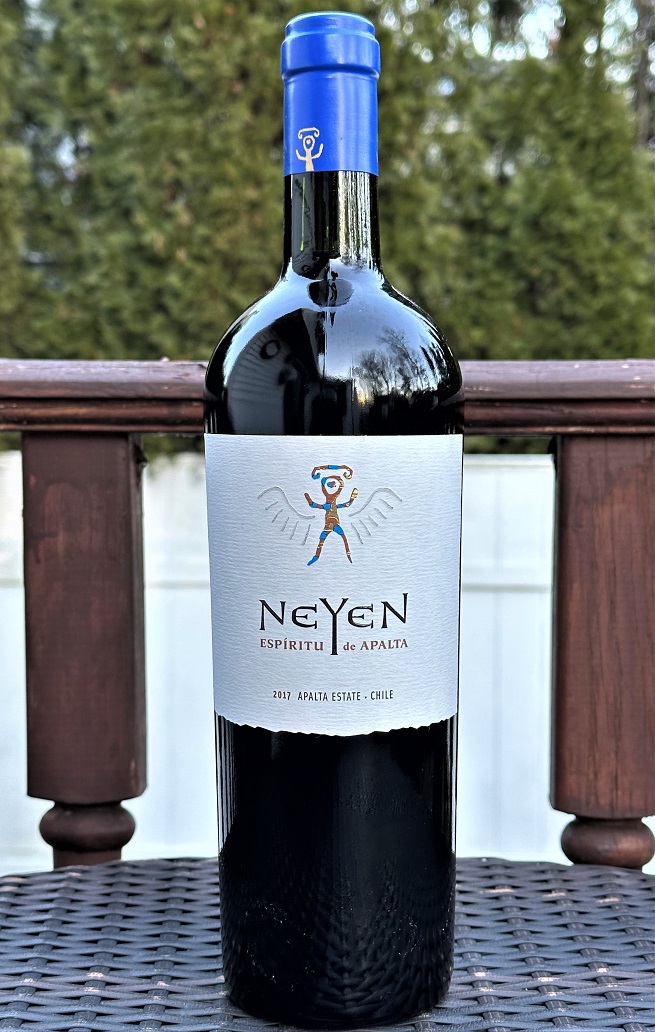
Neyen is a unique estate, a parcel of land situated between the Andes Mountains and the Coastal Range. Cabernet Sauvignon vines were planted there in 1889, joined by Carmenere in 1936. Soils at this organically farmed, low-intervention vineyard provide good drainage, and the semi-arid climate allows for the slow ripening of the grapes, maybe with the assistance of the Neyen, the Spirit of Apalta. Grapes are harvested by hand at the first light, sorted, destemmed, and subjected to the magic of winemaking. In most of the years, the blend stays at a consistent 50% Cabernet Sauvignon and 50% Carmenere, even though in some of the years different proportions are used.
When I opened the bottle and poured the first glass, I was really unconvinced. The wine was drinkable but didn’t incite any “oh my god” reactions which I expected at least based on the price. I pumped the air out and put the bottle aside for the evening.
The next day, I pulled the stopper out, poured a glass and the very first whiff brought the sacred “oh wow”. The cassis and eucalyptus were enveloping the senses, making it impossible to put the glass down and promising a lot more to come with the sip. Wine requires time to be enjoyed, you can’t hurry it. Finally, after a minute or so of just enjoying the aroma, I went for a sip. To my delight, the aromatic experience continued in full force on the palate. More cassis, more eucalyptus, layers of dark fruit, and silky, soft tannins were making the taste buds dance. The experience was taking me precisely between the worlds – the precision and structure of the old world Bordeaux was perfectly coupled with the youthful exuberance of the new world Napa Cab. Don’t get me wrong – this wine doesn’t need Bordeaux or Napa references, this wine perfectly exists in a class of its own, a perfect combination of ungrafted French Cabernet Sauvignon from 130 years old vines and Chile’s own Carmenere. (Drinkability 9-)
Here you are, my friends. A superb Chilean wine that is sure to bring a smile to your face. With holidays or without, winter or summer – this wine has a lot to give. Magic of the Neyen, the Spirit of Apalta? I will let you find the bottle and decide on your own.
By the way, how about the question I asked you at the beginning? Can you name some Chilean wines that took your breath away?
A Refreshing Trip Around The World
Have wine, will travel.
I love saying that.
Have wine, will travel.
While we might be dreaming about all those ways to instantly travel from our living room to Mount Everest, Bora Bora, or Singapore, wine has this magical ability to transpose, to let us be where we want to be in a blink of an eye. It works best with the bottle of wine you are familiar with, especially if you have had a chance to visit the winery and acquired some great memories. But even if you have never visited the winery, a bottle of wine is quite a unique product – every bottle of wine proudly advertises where it was made, right on the front label – when you see “Italy”, it is not difficult to picture Rome or Bologna. France probably would solicit the image of the Eiffel tower. Does Australia bring up an image of a boxing kangaroo? Oops, this can be just me. Anyway, I’m sure you know what I’m talking about.
So today, let’s take advantage of the instantaneous travel only wine can offer, and let’s go on that trip around the world.
The weather is hot in the Northern hemisphere, so today we will hop onboard of the white wine express.

Our first stop will be in Spain. Thinking about Spanish white wines, what grapes come to mind? To ease up on this question – boy, it is hot outside – what is the first Spanish white wine you can think of? While you are pondering that question, I can give you my answer – Albariño. Of course, you have Viura, Verdejo, Godello, and others, but to me the first association for the Spanish white wine is Albariño.
As you might have suspected already, our first stop is in Rias Baixas, roughly a 3,000 square kilometers region located along the Atlantic ocean’s coast in Galicia, in northwest Spain, where Albariño is the king. Pazos de Lusco winery is farming 12.5 acres of Albariño grapes in the south of the region, 40 km away from the coast. The name of the winery comprises two typical Galician words – “pazo”, which stands for home, usually in the countryside, and “lusco” which defines the beautiful moment between dusk and nightfall.
2021 Pazo de Lusco Albariño Rias Baixas DO (13% ABV, $24.95, Vegan)
Straw pale
Intense aromatics, ripe white fruit, peach, tropical fruit
Nicely restrained palate, crisp, tart, lemon, the wine makes you salivate and want food even if you are not hungry.
8, excellent. Should be great with oysters.
For our next stop, we are staying in Spain but traveling east almost to the French border, to the region called Somontano, where the wine had been produced for more than 2,000 years. In Somontano, there lies the Secastillo Valley (the valley of 7 castles), boasting 100 years old Garnacha vines at 2,100+ feet of elevation and a special Mediterranean microclimate defined by close proximity to Pyrenees mountains. This is where our next wine is coming from, Garnacha Blanca produced at the Pagos de Secastilla:
2020 La Miranda Secastilla Garnacha Blanca Somontano DO (13.5% ABV, $18, 4 months in French oak)
Straw pale
Minerality, a touch of gunflint, underripe white fruit
Beautifully playful, fresh white fruit and berries medley, crisp and clean acidity, excellent balance, delicious.
8


As I was deciding when I will taste these wines, the overarching thought came in – oysters. I want fresh oysters. Luckily, we have a new fish monger opened nearby, so procuring a few dozens of oysters was really simple. I tried Albariño and Garnacha Blanca with the fresh oysters, and while the pairing with Garnacha Blanca was not bad, the Albariño and oysters were simply a match made in heaven. Albariño was a perfect chaser, amplifying the delicious salinity of the oyster juice and if you would close your eyes, it was very easy to imagine yourself standing right next to the ocean waves and smelling the salty, fishy water. If you will have an opportunity – spoil yourself, oysters and Albariño are really tasty together.
Now that we are not hungry, we can continue our journey. We are now traveling northeast to the heart of Europe – we are going to Austria. Let me ask you the same question as before – what grape would you associate with Austria first and foremost? I hope your answer will be the same as mine, as mine is rather obvious – Grüner Veltliner.
Grüner Veltliner is unquestionably the most famous Austrian grape, with more than 37,000 acres planted. It appears to originate in Austria and as it was recently established, it is a natural cross between Traminer and St. Georgen (an almost lost grape, only recently rediscovered). Gruner is capable of a wide variety of expressions, depending on the soil types and the yield. But what sets the grape apart in the world of white grapes is rotundone, which is present in the skin of Grüner Veltliner. I only recently mentioned rotundone in the post about Syrah – rotundone is a chemical compound found in the skin of the grape that is responsible for the peppery flavors in the wine. Such peppery flavors are usually attributed to red wines – but Grüner Veltliner can happily join the “peppery family”.
The first mentions of Domäne Wachau go back to the 12th century. Today, this is one of the leading wine cooperatives in the world – 250 vintners sustainably farm about 1,000 acres of vines, and the wines are exported to 40 countries. Talk about Grüner Veltliner – Domäne Wachau produces more than 3 dozens of different Grüner Veltliner wines. As a fun historical fact, I want also to mention that in the 1930s Domäne Wachau was already producing single-vineyard Grüner Veltliner wines. And if you are a wine nerd like me, Domäne Wachau has assembled a wonderful collection of the Nerd Notes on their website, offering in-depth coverage on the terroir, soils, sustainability, cork stoppers, and lots more.
I had an opportunity to taste two of the Domäne Wachau wines – both delicious:
2020 Domäne Wachau Loess Grüner Veltliner Austria (12.5% ABV, $14 1L bottle)
Straw pale
Whitestone fruit, apple, fresh lemon – inviting and bright
Crisp, grassy notes, cut through acidity, fresh, delicious.
8, delicious and outstanding QPR
2021 Domäne Wachau Grüner Veltliner Federspiel Terrassen Wachau Austria (12.5% ABV, $18.99)
Straw pale
Tropical fruit, candied lemon, herbal undertones, generous, inviting
Crisp, fresh, lemon, a hint of grass, cleansing and vibrant, perfectly balanced.
8, I should’ve tried it with oysters too – the acidity is pronounced, it could’ve worked well.
Now we will have to travel to the Southern hemisphere for our last stop – Chile.
Chilean wines need no introduction to wine lovers. All classic grape varieties are doing extremely well in Chile, producing world-class wines. But as we are taking the white wine express, that reduces the number of available options. The spotlight today is on the Sauvignon Blanc, produced by one of my favorite, all-organic Chilean wineries – Ritual. I extensively wrote about Ritual before, so instead of regurgitating the information here, I would like to ask you to read that post. Ritual Sauvignon Blanc was exactly as one could expect – delicious:
2019 Ritual Sauvignon Blanc Casablanca Valley (13.5% ABV, $20.99, organic grapes)
Straw pale
Open, inviting, clean, intense, a hint of freshly cut grass and currant leaf
Clean, round, full of energy, uplifting, lemon, freshly cut grass, delicious.
8, outstanding.
This concludes our wine journey around the world. Well, of course, you can continue it on your own. And if you will find something tasty, please share it with the rest of us.
2 Regions, 3 Glasses, 1 Wine Geek
The assignment was simple. Compare 6 Cabernet Sauvignon wines from 2 famous winemaking regions in Chile. Find differences. decide on a favorite.
As with any assignment, let’s start with the theory.
Cabernet Sauvignon is unquestionably a king of Chilean wines – it is the best-known Chilean wine worldwide and it is the most widely planted red grape variety in Chile. It accounts for about 20%+ of all vineyard plantings in Chile, covering an area of about 99,000 acres, stretching through the entire country from north to south. At the same time, 97% of the Cabernet Sauvignon plantings are located in the Central Valley, spread between O’Higgins, Maule, and Metropolitan Region.
Narrowing it down to the wine-producing DOs, we are looking at the Maipo Valley and Colchagua Valley, two of the best-known Cabernet Sauvignon areas in Chile. These are also the two regions that are the subject of our assignment.
Maipo Valley is one of the oldest winemaking regions in Chile, with its terroir shaped by the Maipo River, which begins at the Maipo volcano, creating a patchwork of valleys at the elevation of 2,500 feet above sea level. Some of the areas in Maipo Valley see a minimal number of sunny days required for the red grapes to fully ripen, with a climate somewhat similar to Bordeaux.
Colchagua Valley lies about 80 miles south of the city of Santiago. Parts of the valley are crisscrossed by the Tinguinirica River, taking its roots from the volcano crater in the Andes, and descending from about 2,000 feet to the 360 feet of elevation above sea level. Colchagua Valley generally offers much warmer daily temperatures compared to the Maipo Valley.
Here are some of the views of the beautiful regions:
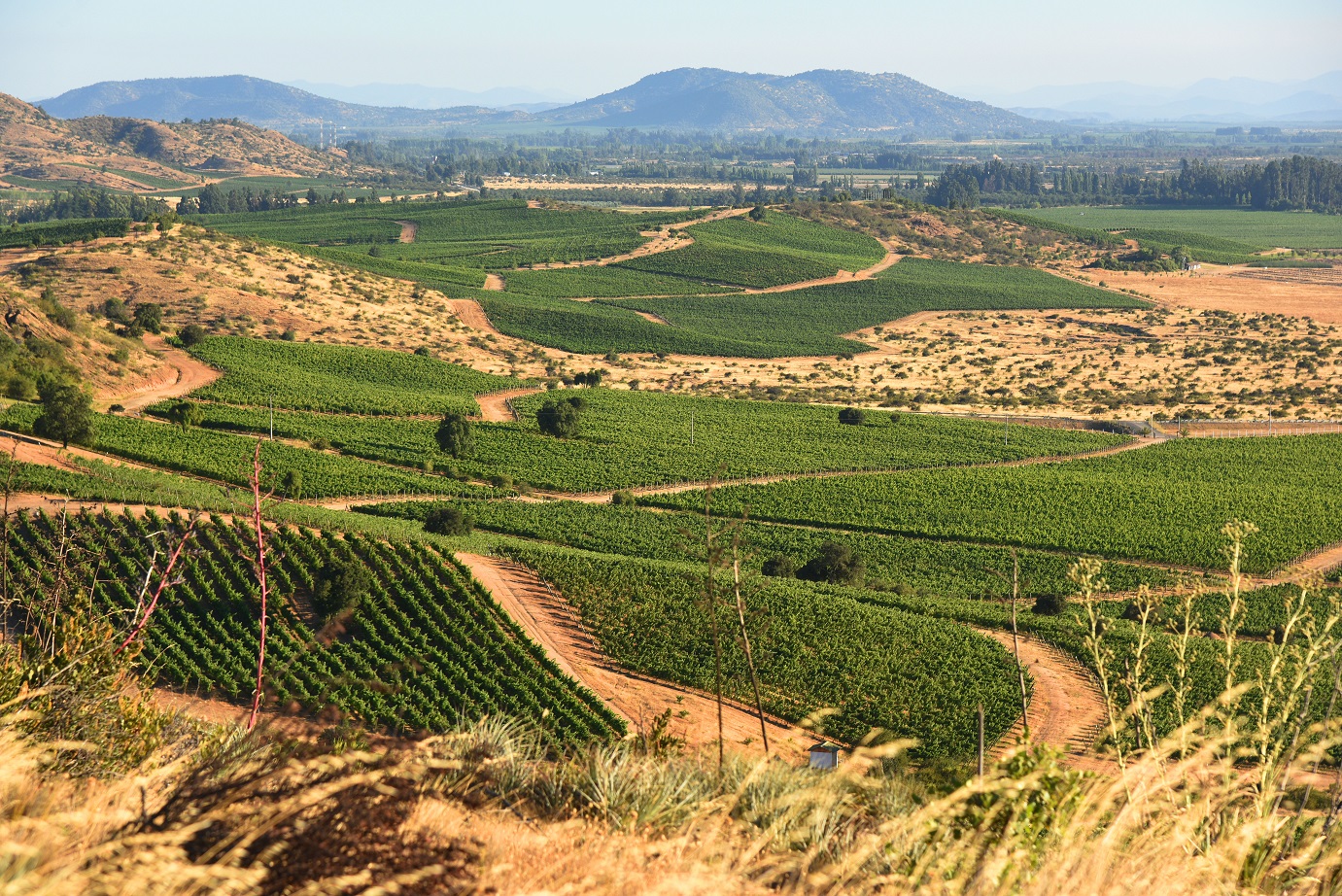
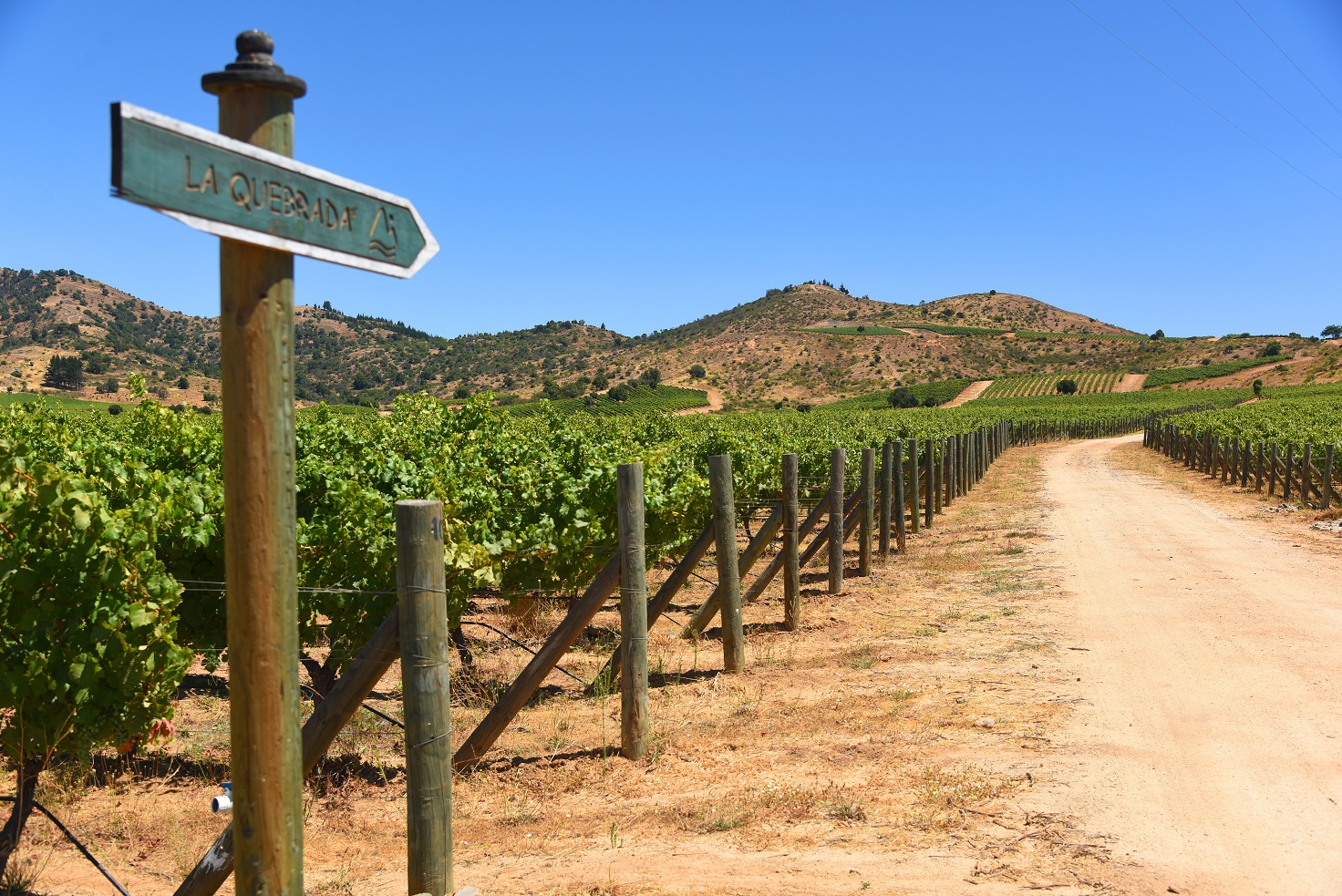
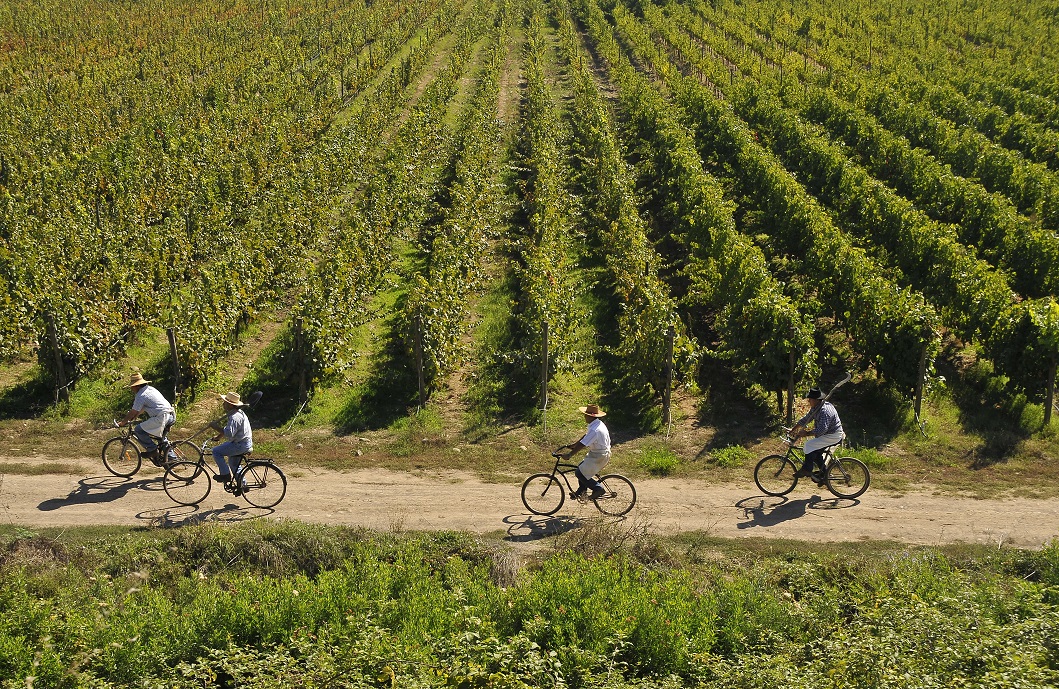
I’m purposefully avoiding descending into the discussion about the different soil types throughout both regions but of course, alluvial soils, colluvial soils, gravel, clay are all intermixed around both regions. I don’t believe I can intelligently speak to the effect of a given soil type as it comes to the resulting taste profile of the wine, but our main difference between the wines from the two regions should be driven by the warmer versus cooler climate and some differences in the elevation.
I hope this is enough of the theory and it is time to get to practice – the lab portion of our assignment.
This is where the inner geek came out guns blazing – and this is where everything all of a sudden became muddy and complicated.
I decided that the challenge of comparing the 6 wines is insufficient, and to make things more fun, I decided to was possessed to try each wine from three different glasses: Glass 1- Riedel Universal tasting glass (this is the one typically offered at all of the wine tastings), Glass 2 – Chef & Sommelier Open’Up glass, one of most aesthetically pleasing glasses for the daily drinking, and Glass 3 – Riedel Radical Cabernet glass (my favorite glass for the Bordeaux varieties).
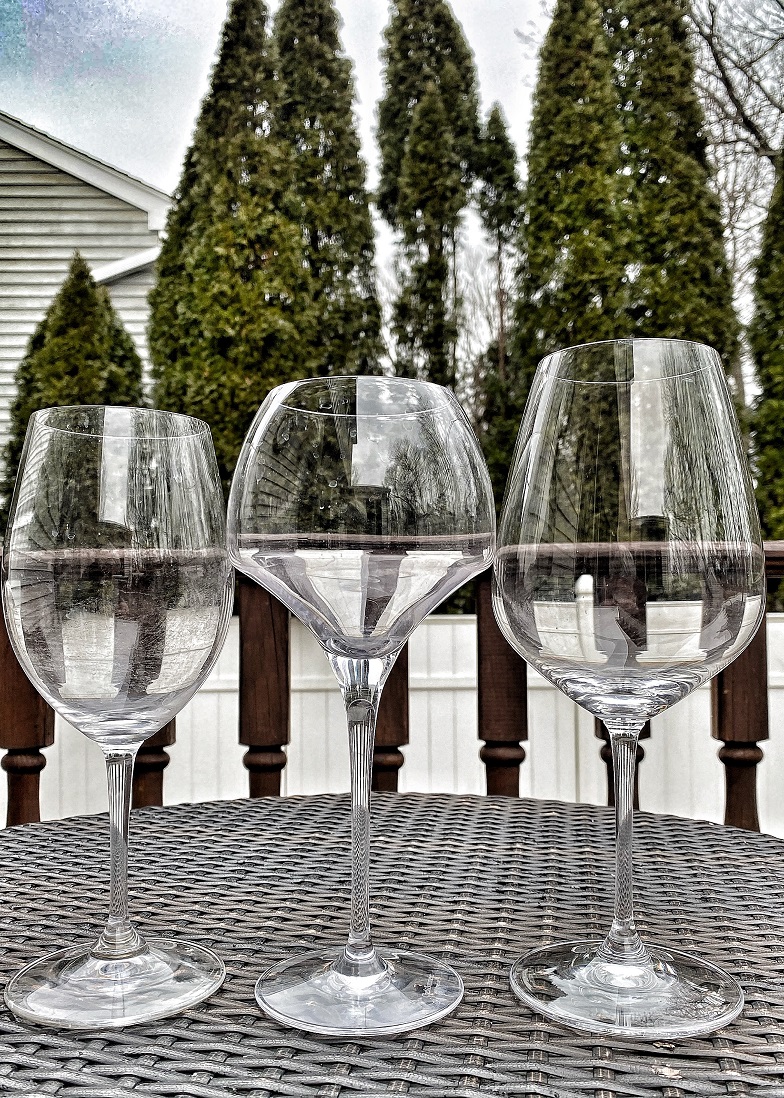
The wines I tasted all come from well-known producers. I was familiar with some prior to this tasting (Los Vascos, TerraNoble, Maquis) and I had a lot of Los Vascos and TerraNoble Cabernet wines in the past. Regardless, this was quite a respectful selection of the wines, expectedly illustrative to represent the two regions. Three of the wines were 100% Cabernet Sauvignon, and 3 had Cabernet Sauvignon as a dominant component.
To explain in more detail what I did: on the first day, I poured each one of the 6 wines into the 3 glasses – non-blind, one by one. I then tasted each wine from those 3 glasses – you will see the notes below, describing my perception of the same wine in each of the 3 glasses. The glasses had their effect, even though Radical Cab and Open’Up glasses offered mostly similar experiences. Open’Up glass required the bottom section to be sufficiently filled or the nose of the wine was becoming lost. All of the second and third day tastings were done only using the Universal tasting glass. Below you can see all of the tasting notes, from which it is very easy to conclude that I was unable to come to any meaningful conclusions and find any meaningful, region-conforming differences between the wines.
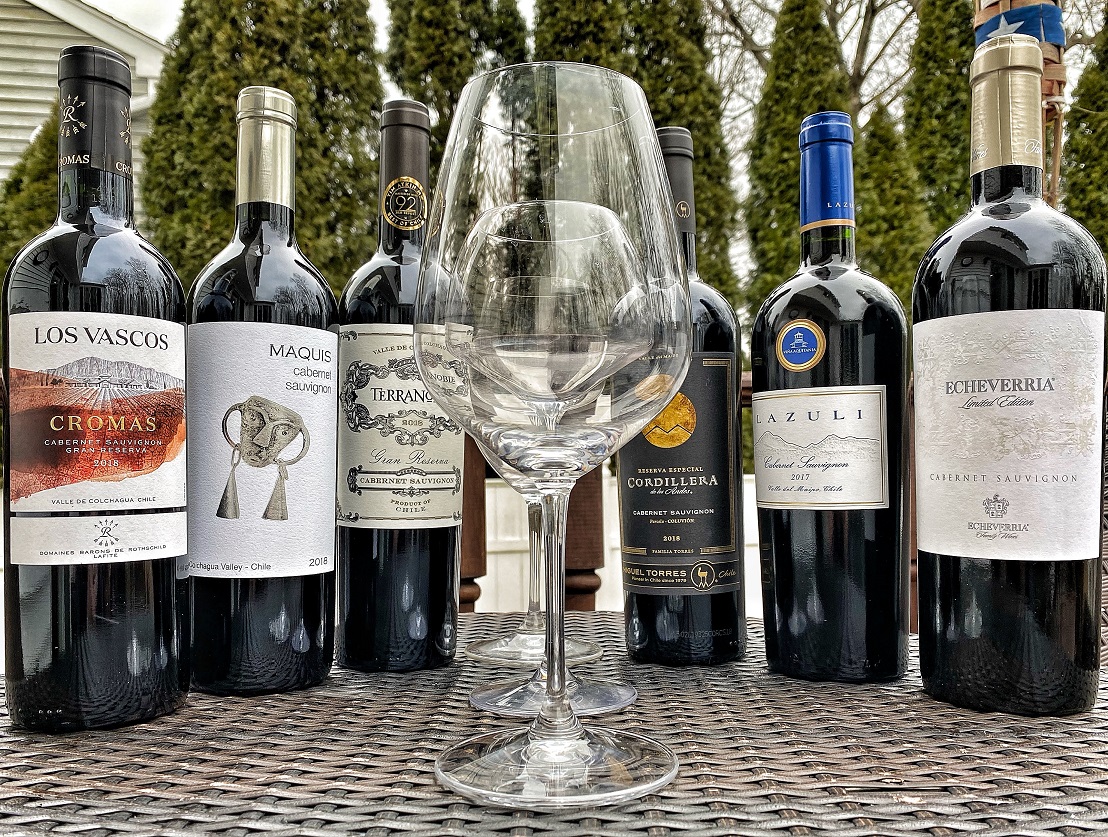
Here we go:
Team Maipo Valley:
2017 Lázuli Cabernet Sauvignon Valle del Maipo (14.5 ABV, $45, 100% Cabernet Sauvignon)
Garnet
Glass 1: dark fruit, concentrated, iodine, forest underbrush, pyrazine
Interesting. Quite restrained. Not a lot going on.
Glass 2: much less expressive, just a hint of pyrazine
It is showing better. No idea how. Crunchy berry, soft tannins, still not very expressive
Glass 3: dark fruit, more focused than glass 1, a hint of bell pepper
Similar to glass 2. Dark fruit, baking spices, lots of minerality. Not very much Caberneish if you ask me.
Day 2: not good
Day 3: Fruit showed up. Fresh berries and eucalyptus. Is this a Cab? Not sure. Is it drinkable? Sure, on the third day.
2018 Miguel Torres Cordillera Cabernet Sauvignon Reserva Especial de Les Andes Valle de Maipo (14% ABV, $20, 100% Cabernet Sauvignon)
Concentrated ruby with bright hues
Glass 1: very similar presentation to the first wine. Dark fruit, a hint of bell pepper, very distant hint, a touch of eucalyptus.
Definitely a Cabernet profile, more explicit than the previous wine. Eucalyptus, cassis, bell pepper practically non-existent.
Glass 2: this glass requires much higher pour to get to the aromatics.
The wine appears more refined and elegant on the nose than glass 1, more focused on eucalyptus and cassis.
Delicious, earthy cab. Good acidity, cassis, earthy and restrained.
Glass 3: interesting. Almost gets to the barnyard space. Definitely more earthy than glass 2.
The best experience. Dark fruit, cassis, pencil shavings, crisp tart finish.
Day 2: good
Day 3: excellent. Dark fruit, eucalyptus. Round tannins, good structure, dark and supple.
2016 Echeverría Cabernet Sauvignon Limited Edition Maipo Valley (14% ABV, $25, 85% Cabernet Sauvignon, 10% Syrah, 5% Carménère)
Dark Garnet
Glass 1: very concentrated. Dark fruit, sapidity, earthiness, a hint of eucalyptus. Interestingly enough, all 3 wines so far are really similar.
The nice initial appearance of the fruit is instantly replaced by tannins. Serious French Oak tannins, front of the mouth is locked.
Glass 2: a much more elegant appearance than Glass 1. A hint of eucalyptus and bell pepper.
Fruitier than the previous 2 wines, nice load of dark berries, and then it is all tannins. Again, the wine appears to be more elegant.
Glass 3: similarly elegant to glass 2. Eucalyptus, bell pepper, and a touch of black pepper.
Berries, eucalyptus, and tannins. Should be outstanding with the steak.
Day 2: Excellent
Day 3: very good, open fruit – but not very much of the cab? I liked it more on the day 2
Overall notes: all 3 wines are very similar on the nose, showing differently on the palate. Earthy, concentrated wines. All need time to open.


Now, team Colchagua Valley:
2018 Maquis Cabernet Sauvignon Gran Reserva Colchagua Valley (14% ABV, $20, 90% Cabernet Sauvignon, 6% Cabernet Franc, 3% Carmenere, 1% Petit Verdot)
Garnet
Glass 1: bright and clean aromatics, cassis, eucalyptus, a hint of bell pepper
Plums, a touch of cherries, not a textbook Cabernet Sauvignon
Glass 2: interesting. Volcanic undertones, gunflint, almost a hint of sulfur, fresh crisp berries
Better showing, brighter fruit, some bitter undertones appeared (whole cluster?)
Glass 3: somewhat similar to the glass 2, but a bit more restrained
Amazing how much glass matters. This is almost at the expected level of Cabernet Sauvignon – a hint of cassis, mint. Still very restrained.
I’m so confused that I had to wash the glass.
Re-taste: it is not bad, but didn’t make a difference. Still, dry restrained, with some bitter notes on the finish.
Day 2: tight and closed
Day 3: definitely better. Bitter notes are gone. But the whole presentation is plum/cherry, not so much of the Cab Sauvignon
2018 Los Vascos Cromas Cabernet Sauvignon Gran Reserva Colchagua Valley (14.5% ABV, $22, 85% Cabernet Sauvignon, 10% Syrah, 5% Carmenere)
Concentrated ruby
Glass 1: dark berries, a hint of cassis, vanilla, bell pepper might be a product of my imagination
Delicious. Fresh, open, clean, dark berries, cassis, bell pepper, eucalyptus. A pretty classic cab if you ask me. Best of tasting so far.
Glass 2: Cassis and mint, medium intensity
Delicious. Very similar to glass 1, somehow with a bit more intensity of the flavors.
Glass 3: very restrained, cassis, bell pepper, a touch of tobacco
Delicious. Exactly as two previous glasses. Happy to drink every day.
Day 2: not good. Tight, closed.
Day 3: lots of tobacco and smoke on the nose. Dark fruit, borderline bitter. I don’t get this wine
2018 TerraNoble Cabernet Sauvignon Gran Reserva Valle de Colchagua (14% ABV, $20, 100% Cabernet Sauvignon)
Garnet color
Glass 1: dark berries, eucalyptus
Delicious. Open, bright, good acidity, ripe fruit, not necessarily a textbook cab, but fresh and delicious.
Glass 2: dark berries, sapidity, earthy, a hint of bell pepper
Fresh, delicious, crisp berries, a touch of cherries, a bit of dark chocolate.
Glass 3: a hint of bell pepper, dark fruit, earthy
Bright, open, good structure of tannins. A cab? Maybe…
Day 2: good
Day 3: beautiful, supple, good tannins, good structure, open fruit, good finish.
On the day 2, my preferences were with these three wines:
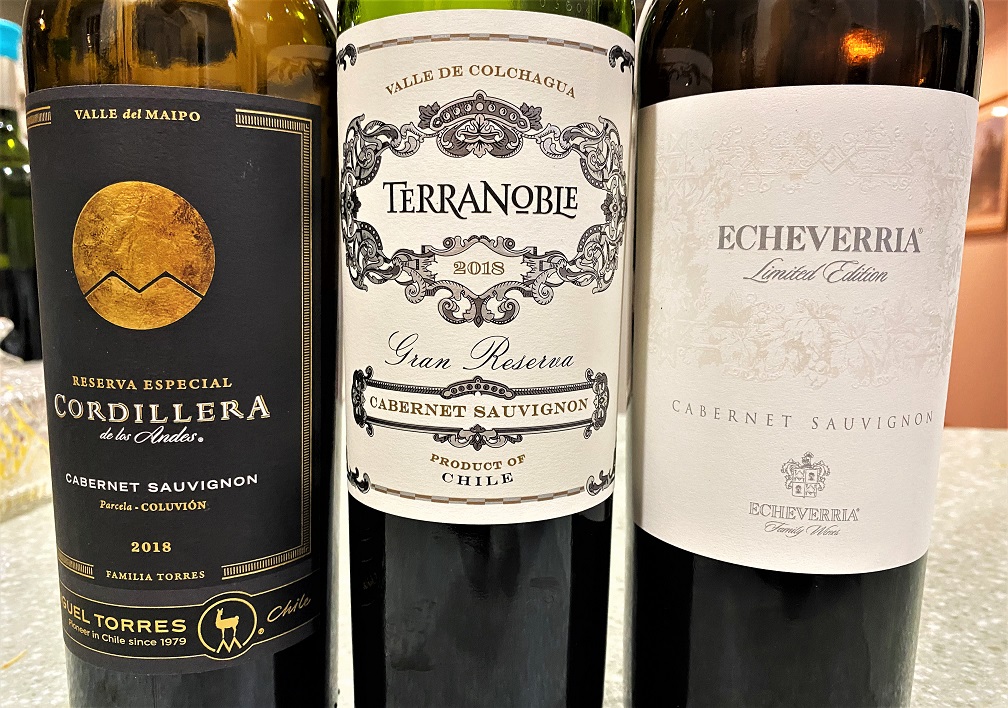
And then there were two. On the third day, I had two wines as my favorites – and they represented two regions.
For the final decision – Torres versus TerraNoble.
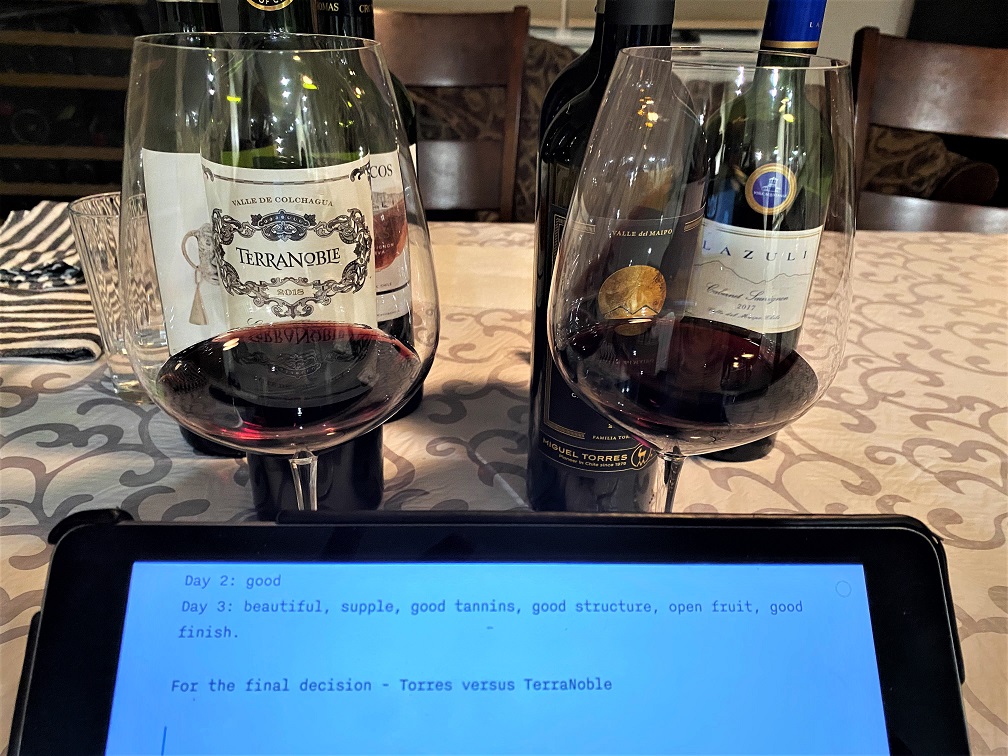
Wine geek at work
Nose: advantage Torres – dark chocolate, a hint of bell pepper. TerraNoble mostly closed
Palate: slight advantage Torres – better structure and better precision. Dark and concentrated. Will continue improving.
The winner: 2018 Miguel Torres Cordillera Cabernet Sauvignon Reserva Especial de Les Andes Valle de Maipo
So we can conclude that Maipo Valley won this strange competition, at least with a margin of error.
The assignment is complete. So what did we learn?
- Don’t play with your glasses, unless this is actually a goal of your exercise. Wine glasses matter and wine glasses
canwill confuse you. - Hey, wine glass matters.
- I probably should’ve done the blind tasting instead
- Chilean Cabs need time. Practically all showed better on the second day.
- I was unable to find the real differences between Colchagua and Maipo wines
Oh well. Play with your wine. Have fun. One way or the other, experience is still an experience, and as long as you desire, there is always something to learn.
Do you have a favorite Chilean Cabernet Sauvignon? Care to share? Cheers!
Chilean Wines: Sustainability is a Long Game
 Sustainability is a journey.
Sustainability is a lifestyle.
Sustainability is a long game.
Have you ever dieted in your life? Did you achieve the intended results (let’s say, lose 20 pounds)? Did you go back where you started shortly after you stopped the diet? Of course, you already heard this a million times and you know what I’m going to say – diets don’t work. You need to change your lifestyle if you want those lost pounds to never come back, because the diet is a hack, and as such, it can give you only a quick and non-lasting, non-sustainable result.
Sustainability is a lifestyle.
When I think of sustainability my first thought goes to the vineyard. How vineyard integrates into the environment, how vineyard, land, soil, and everything around can happily co-exist now and in the future. My second obvious thought goes to the winery operation – sustainable energy use, recycling, waste reduction.
In 2011, the Chilean wine industry defined its Sustainability Code, a voluntary certification system aimed to improve sustainable practices in the wine companies in Chile. In 2011, it all started in the vineyard. Today, the Sustainability Code for the Chilean Wine Industry (SCWI) represents a colorful flower, consisting of 4 areas, and featuring 351 individual requirements:
- Viticulture (98 individual requirements /Green)
- Vinification, Bottling, and facility operations (65 individual requirements /Red)
- Social (118 individual requirements /Orange)
- Wine Tourism (70 individual requirements /Purple) — new category added in 2020
In the ten years since its inception, SCWI has been adopted by all the country’s leading wine producers and accounts for 80% of Chile’s bottled wine exports. Wines from certified producers come from 123,550 acres of vineyards, out of 485,000 acres of total vineyard space in Chile, so roughly 25%.
The certification is done by the accredited international bodies (ECOCERT from France, NSF from the USA, and SGS from Switzerland, a few more should be added soon), and it is an ongoing process, as re-certification has to be done every two years. Certification has a substantial cost, so Vinos de Chile has a special program in place to help small and medium producers to achieve certification. To date, 80 wineries achieved full certification – if you will look at the list, you will see a lot of familiar names. Some, such as Casa Lapostole, one of the most famous Chilean wineries, use its own set of sustainability rules.


I had an opportunity last year to taste a number of wines from the certified sustainable Chilean wineries. Let’s talk about them.
Viñedos Emiliana (now known as Emiliana Organic Vineyards) was founded in 1986. However it is interesting that if you will check the history section on Emiliana’s website, the time count starts from 1998 – this is when Emiliana began its journey to convert into a sustainable, organic, and biodynamic winery. In 2001, Emiliana became 1st winery in Chile, and 7th in the world to obtain ISO 14001 certification in environmental management. Two years later, Emiliana produced its first organic wines (Coyam was one of them). In 2006, the winery obtained its Demeter certification and produced its first biodynamic wine, 2003 Gê. Moving forward, Emiliana obtained multiple certifications in social responsibility, fair trade, carbon neutrality, and more. As a fun fact, with 2,760 acres in size, Emiliana is the largest biodynamic, sustainable, and organic vineyard in the world.
The wine I tasted for this post was 2018 Coyam. Back in 2015, the 2011 Coyam was my wine of the year. The 2018 Coyam was good, but really needed lots of time to open up.
2018 Emeliana Coyam Colchagua Valley DO (14.4% ABV, $35, 42% Syrah, 39% Carmenere, 6% Cabernet Sauvignon, 5% Garnacha, 3% Malbec, 3% Carignan, 1% Tempranillo, 1% Mourvedre, organic vineyards, vegan)
Dark garnet
Bell pepper, cherries, cassis
Beautiful, cassis, mint, medium-plus body, good balance, good acidity
8, these are the 3rd day notes, this wine needs time.
Viu Manent‘s history began in 1935, when Catalonian immigrant Miguel Viu-García and his two sons founded Bodegas Viu, bottling and selling their own wines. In 1966, Miguel Viu-Manent, one of the sons, acquired an estate in Colchagua Valley which also included 375 acres of vineyards, planted with pre-phylloxera vines. In 1993, Viu Manent became the first Chilean winery to produce, bottle, and label Malbec under its name. In 2001, as a tribute to the founder, Miguel Viu-Manent, Viu Manent produced its single-block Malbec from approximately 100 years old vines. In 2003, the winery started producing its Secreto de Viu Manent line of wines. In 2007, Viu Manent joined the environmental biodiversity program run in Chile by the University Austral of Chile’s Ecology & Biodiversity Institute. In 2018, 3 solar panel energy plants were put into production at the winery and in the vineyards. The winery also participates in wastewater and solid waste management programs and other environmentally-friendly initiatives.
2019 Viu Manent Secreto Malbec Valle de Colchagua (13.5% ABV, $15, Malbec 85%, 15% “Secret”)
Dark garnet, almost black
Raspberries, blackberries, cigar box
Fresh raspberries on the palate, fresh, open, good minerality, a bit astringent on the finish even on the second day. Needs time.
7+ On the second day
8- on the third day
Viña Maquis, an estate located between two rivers, the Tinguiririca River and the Chimbarongo Creek, traces its roots to the 18th century when Jesuit priests were producing noble wines on the property. In the 19th century, the property belonged to the two Chilean presidents who even hosted cabinet meetings at that location. In 1916, the property was acquired by the Hurtado family with the goal of producing fine wines. Viña Maquis was one of the first wineries to obtain sustainability certification. They use in the vineyard energy recovery system based on geothermal heat pump technology for which the winery won the 2013 Innovation Prize for energy saving and carbon footprint reduction awarded by the British-Chilean Chamber of Commerce. They also use biological corridors which host beneficial insects, birds, and animals, and more than 2,600 sheep help control the weeds and fertilize the vineyards.
2018 Viña Maquis Cabernet Franc Gran Reserva Colchagua Valley (14% ABV, $24, 90% Cabernet Franc, 7% Carménère, 3% Petit Verdot)
Dark garnet
Cassis, cassis leaves, a touch of bell pepper
Cassis, blackberries, good acidity, fresh, crisp, medium body.
7+/8-


Concha y Toro is one of the oldest wineries in Chile, founded in 1883 by Melchor Concha y Toro with a dream of producing the best wines. He brought in vines from the Bordeaux and built the winery with all the best equipment at a time. As Concha y Toro was transitioning from a family business to a corporation, 50 years later the wine export started, the Netherlands being a first international destination. In 1987, Concha y Toro released the first vintage of its iconic Cabernet Sauvignon, Don Melchor, named in the honor of the founder. In 2020, James Suckling awarded 2018 Don Melchor a perfect 100 score.
In 2021, Concha y Toro received B Corporation Certification, which recognizes companies around the world that meet the highest standards of environmental management, governance, and social performance. This B Corporation certification included metrics such as 100% drip irrigation, 97% of waste reused/ recycled, 24% reduction of waste over 2018, 83% of energy coming from renewable sources. Concha y Toro also works with the scientific community and Wines of Chile to develop a measurable roadmap for carbon footprint reduction.
2019 Concha y Toro Cabernet Sauvignon Serie Riberas Gran Riserva DO Marchigue (13.5% ABV, $17, 94.5% Cabernet Sauvignon, 3% Carmenere, 2.5% Syrah)
Dark garnet, practically black
Summer meadows, a touch of cassis, hint of mint
Open, fresh with happily gripping tannins (French oak), firm structure, fresh fruit, needs time
8-, will be great with the steak.
8+ second/ third day – wine became more integrated, polished, layered, perfect balance, pleasure in every sip.
In 1885, Francisco Undurraga imported vines from France and Germany and founded the Viña Undurraga winery. In 1903, Viña Undurraga became the first Chilean winery to export its wines to the USA. In 1942, under the management of Pedro Undurraga Fernández, the winery becomes a pioneer in exporting Chilean wines, reaching more than 60 countries. In 2006, the Los Lingues far was acquired, giving a start to Viña Koyle, which in 2009 started the transition to Demeter-certified biodynamic viticulture.
2019 Viña Koyle Carmenere Gran Reserva Alto Colchagua (13.5% ABV, $17, 85% Carmenere, 9% Tempranillo, 6% Petit Verdot)
Dark garnet, practically black
Cassis, a hint of underbrush, fresh dark fruit, inviting
Fresh berries, dark chocolate, a hint of sweet tobacco, round, succulent, excellent t balance, medium-long finish
8, excellent
In 1874, the winemaker Don Franciso de Rojas founded the winery in Maipo Valley which he called Viña de Rojas. In 1876, one of his wines received Silver Medal at a competition in Philadelphia in the USA. Now here is the rare happenstance with the transition of the name from Viña de Rojas to Viña Tarapacá. In 1892, the winery was acquired by Don Antonio Zavala and it became Viña Zavala. After the divorce, the winery became alimony assigned to his wife, who renamed the winery Viña Tarapacá ex Zavala to express her gratitude to her divorce lawyer Don Arturo Alessandri who had a nickname “The Lion of Tarapacá”. In 1992, the winery was acquired by the holding company with a focus on international expansion. In the same year, the winery acquired El Rosario Estate, 6,500 acres parcel, out of which 1530 acres are planted with vines, right in the heart of Maipo Valley. In 2008, Viña Tarapacá became a part of VSPT Group, the second-largest exporter of Chilean wines.
The winery holds a large number of environmental and sustainability certifications, and in 2016 it also became the Chilean winery to build a hydroelectric plant, capable of supplying 60% of all winery’s energy needs.
2018 Viña Tarapacá Red Wine Blend Gran Reserva Maipo Valley (14% ABV, $20, 31% Cabernet Franc, 26% Syrah, 22% Carmenere, 11% Merlot, 10% Cabernet Sauvignon, organic wine)
Dark garnet, almost black
Delicious nose of mint, currant, a touch of sweet basil and thyme
Ripe berries, firm structure, gripping tannins, a touch of cherries and black pepper, good acidity, excellent balance.
8+, delicious, but will be amazing in 10-15 years.
Here you go, my friends. Chilean wineries take sustainability seriously and show the world how it should be done. And they also support it with delicious wines. Sustainability is a lifestyle.
Made With Organic Grapes: A Few Wines From Chile
Chile is a unique winemaking place.
So is each and every wine region in the world – each wine region, big, small, or tiny, can safely state the same – they all have something unique about them, aren’t they?
But really, Chile is unique.
Chile is literally the only wine region in the world untouched by the blight of phylloxera. While it is a big deal, it is not all.
It is easy to grow grapes organically in Chile. The absolute majority of the rain falls in winter, and Chilean vineyards generally enjoy the dry growing season. Dry growing season means no need to worry about fungi, which is where most of the “inorganic” efforts typically go. And Chilean winemakers take advantage of this fact, actively pursuing organic, sustainable, and biodynamic winemaking. Taking its inspiration from the association of organic winegrowers of New Zealand, leading Chilean wineries, such as Viña Emiliana, Odfell, Koyle, Viña Miguel Torres Chile, are all joining forces to create a similar organization that will help with the promotion of Chilean organic wines around the world.
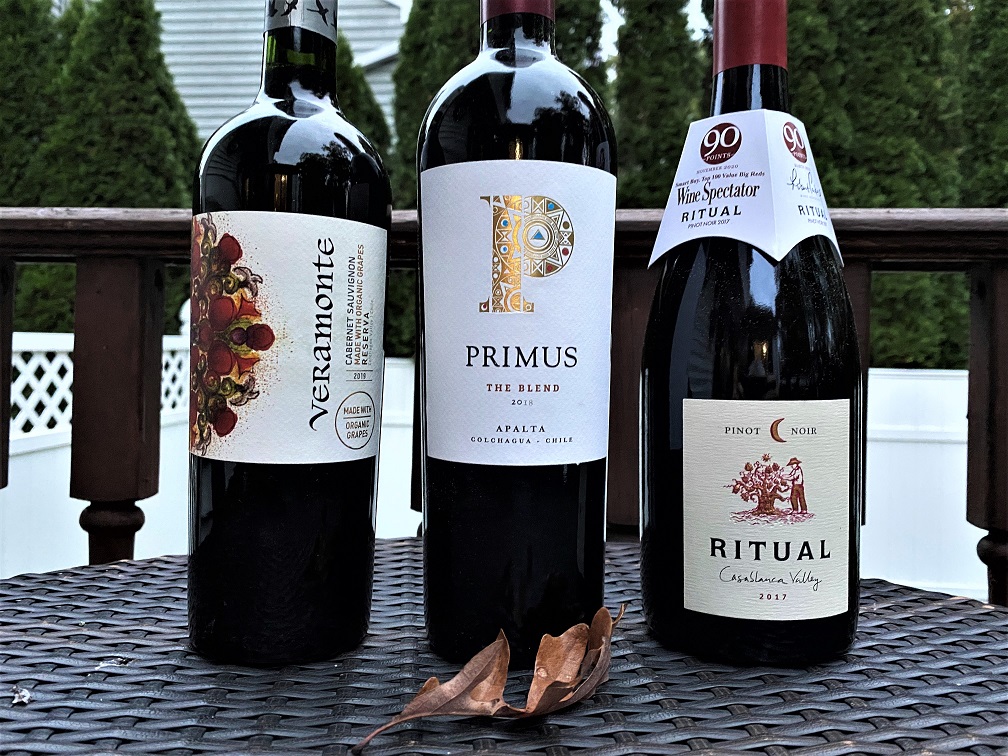
Let’s take a look at a few examples of Chilean organic wines.
Viñedos Veramonte was founded by Agustin Huneeus, a Chilean wine pioneer, in 1990, one of the first wineries in Casablanca Valley. Veramonte’s journey started with Sauvignon Blanc, gradually adding all of the traditional Chilean varieties – Cabernet Sauvignon, Carmenere, and more. In 2019, the winery obtained ECOCERT® organic certification, after 6 years-long journey. The project involved the conversion of more than 1,200 acres of vineyards in Casablanca and Colchagua valleys to organic and biodynamic farming (full Demeter’s biodynamic certification is the next goal). The wine I had an opportunity to taste was Veramonte Cabernet Sauvignon:
2019 Veramonte Cabernet Sauvignon Reserva Colchagua Valley (14% ABV, $11.99, made with organic grapes, Vegan, Certified Sustainable)
Dark garnet
Bell pepper, tobacco
A touch of cassis, tart, medium body, minerality, green notes
7/7+, I would prefer more fruit
The same Agustin Huneeus founded Primus winery more than 20 years ago. The word Primus comes from Latin and it means “the first” or “the first among others”. Primus was one of the very first to create the blend of Cabernet Sauvignon and Carmenere, which became the standard wine of the winery throughout all the years, joined by single-varietal Cabernet Sauvignon and Carmenere wines. The fruit for The Blend comes from Marchigue, a sub-region of Colchagua, and Maipo, from all-organic vineyards.
2018 Primus Red Blend Apalta Colchagua Valley (13.5% ABV, $18.99, 55% Cabernet Sauvignon, 20% Carménère, 10% Syrah, 5% Cabernet Franc, Vegan, Certified Sustainable)
Dark ruby
Cassis, Cherries
Soft, easy to drink, medium body, cassis, cherries, well balanced
8-, good aging potential
Ritual is located in the eastern corner of the Casablanca Valley, not far from the Pacific Ocean. All organic vineyards are surrounded by 6,000 acres of natural forest, which enforces biodiversity and helps with organic and sustainable farming. The estate approaches organic winemaking from all possible angles, making compost from stems and pomace, using cover crops to protect the soil, using sheep to mow the grass and fertilize. Everything in the vineyard and in the winery is done in full harmony with nature.
2017 Ritual Pinot Noir Casablanca Valley (13.5% ABV, $19.99, certified organic vineyards)
Dark garnet
Smoke, plums, minerality
Cherries, plums, violets, herbs, round, soft, restrained, good acidity, clean finish, perfectly balanced.
8, a long-haul wine. Should definitely improve over the next 5-7 years, might be considerably longer.
Here you are my friends – a few of the organic wines from Chile which you should feel good about drinking.
It is not just organic – Chile is leading the world in sustainable winemaking, and we will talk about it in a few days. Stay tuned…
.
Made With Organic Grapes: Find Your Ritual
The world of wine is full of eternal questions. Here is one of the most prolific ones: where is the wine made – in the vineyard or at the winery?
Many would argue that, of course, the wine is made in the vineyard. To make good wine you have to start with good grapes. You need good, healthy, properly ripened grapes to make good wine. “Good grapes” might seem obvious as a concept, but it actually entails a lot of hard work, love, and care, from the moment the first bud will appear on the vine (and even before that) until the moment when harvested grapes are reaching the winery. “Good grapes” are not defined by the taste alone – it is important how the grapes were growing, were any pesticides used, were all the methods organic, or better yet, sustainable? “Good grapes” for sure means a lot of work.
Then some might argue that no matter how good the grapes are if the winemaker will not take good care of the grapes from the moment grapes arrived at the winery, the good grapes will not result in good wine. How the grapes were manipulated from the very beginning – sorting, cleaning, de-stemming, pressing, fermenting, aging, storing – each of these steps has to be performed properly, as even the very best grapes will not convert themselves into the good wine.
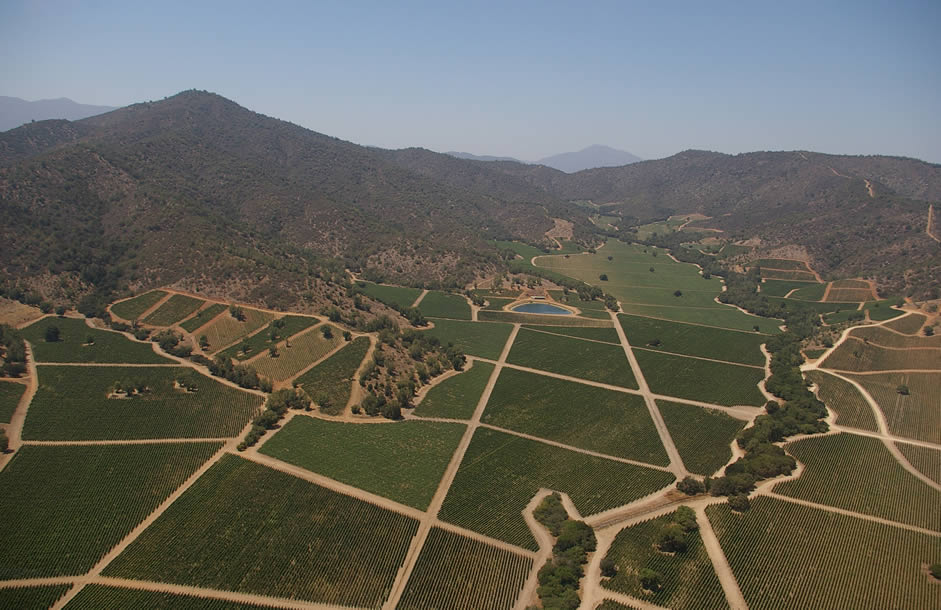
Source: Ritual Winery

Source: Ritual Winery
The folks at Ritual winery in Chile clearly don’t want to answer this eternal question. Or rather their answer is “both”. Estate vineyards in the eastern part of the Casablanca Valley in close proximity to the Pacific Ocean are surrounded by 6,000 acres of the native forest, creating a unique biome. All the vineyards are certified organic. Estate uses its own compost, made out of the pomace and manure of the local animals. Sheep help mow the grass and fertilize the vines.
The grapes are hand-harvested early in the cool morning at the first sunlight. After sorting, the grapes are fermented in the open-top tanks, using basket press and native yeast. To achieve desired characteristics, 4 different vessels are used for the aging of the wines: Oak Barrels to enhance the structure, Concrete eggs for the texture, Stainless steel Drums elevate freshness, and Stainless steel Tanks help with aromatics.


Below are my tasting notes, where you can also see all the different vessels used to produce particular wines:
2018 Ritual Sauvignon Blanc Casablanca Valley (14% ABV, $19.99, organic grapes, 8 months in stainless steel, concrete eggs and neutral barrels)
Light golden
Very complex, white stone fruit, good minerality, fresh herbs
Round and velvety, creamy texture, a hint of vanilla, even butter, nice lemon core, clean and crisp finish
8+/9-, outstanding. A different and delicious Sauvignon Blanc. Borderline a Chardonnay experience.
2019 Ritual Sauvignon Blanc Casablanca Valley (13.5% ABV, $19.99, organic grapes, fermented and aged for 8 months in concrete eggs, neutral oak, and stainless steel)
Light golden color
The nose is not very expressive, minerality, a hint of whitestone fruit
On the palate, a full spectrum, changing as the wine warms up – starting from steely Muscadet-like acidity, adding a bit of the creaminess after a few minutes in the glass, and then showing Chardonnay-like fuller-bodied notes and expressive minerality.
8/8+, Delicious
2018 Ritual Chardonnay Casablanca Valley (13.5% ABV, $20.99, aged in concrete eggs and French oak barrels)
Light Golden
Characteristic touch of vanilla and apple on the palate, a whiff of honey
Vanilla, apple, a hint of butter in the palate, perfect balance, crisp acidity, wow, a superb rendition of Chardonnay. Give it 5–10 years, and it will rival the white burgundy.
8, Outstanding
2017 Ritual Pinot Noir Casablanca Valley (13.5% ABV, $21.99, aged 11 months in French oak barrels)
Dark Ruby
The dusty nose of fresh plums with a touch of vanilla
Plums, violets, a touch of mocha, good acidity, fresh, excellent balance
8+, delicious from the get-go
Tasting Ritual wines will not help us to find an answer to our eternal question – these wines are clearly made both in the vineyard and at the winery. Have you tried any of these wines? If you did, I guess you already found your Ritual, if not – well, here is your chance.
Made With Organic Grapes: Viñedos Veramonte
“Made with organic grapes”. If you see these words on the wine label, are you more inclined to buy it, less inclined, or indifferent? Are you willing to pay more for the organic bottle of wine, as we accustomed now for the meat and produce?
Organic production implies that no synthetic pesticides, fungicides, insecticides were used in farming. It doesn’t mean that no pesticides etc. were used at all – it only bans the use of synthetics, and natural pesticides, etc. can still be used. Truth be told, organic doesn’t automatically mean better for consumers or the environment – even natural pesticides can have bad consequences – you can learn more in this excellent in-depth article.
When talking about organic wines, we need to keep in mind that “organic” is only a part of the story of the “better wines”. Sustainable viticulture, which doesn’t always overlap with organic, and then biodynamics, which again may or may not intersect with the other two, are important to take into account when talking about wines that are better for humans and the environment. Though considering the title – made with organic grapes – let’s stick to that part of the story.
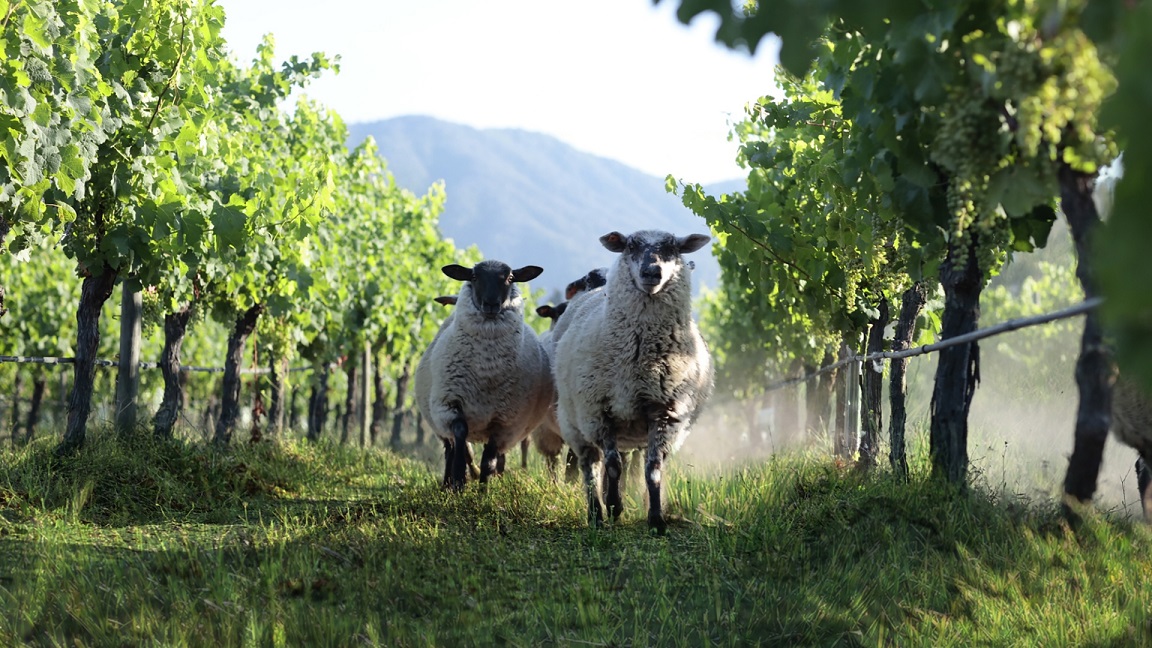
How to convey the organic farming concept in one picture. Source: Viñedos Veramonte
I remember the early days of seeing “organic” on the wine labels. Most of the organic wines I tasted 10-15 years ago were undrinkable. The “Organic” label is a big selling factor in itself, and I can only assume that some of the winemakers decided that good tasting wine is not a necessity if the wine is labeled as organic (I will refrain from putting names on the table, even though it is difficult to resist the urge). Even today, when “organic” designation is not just a marketing gimmick (in most of the cases), wine consumers seek first familiar producers, grapes, and region – the “organic” designation comes to a play only after all other requirements had been satisfied, as a “nice to have”. Of course, in the world of wine, most of the concepts are multidimensional, so I don’t want to oversimplify the “organic wine” – it goes well beyond of choice of pesticides and fertilizers, it also includes “no added sulfites” and other factors – but then again this is not the organic wine 101 post, so let’s leave this discussion for some other time too.
Lately, I tasted quite a few of the organic wines and was pleasantly surprised not only with the taste but also with the QPR (Quality Price Ratio) – while labeled “organic”, most of the wines didn’t command the premiums on the scale of organic apples or meat, and thus offer a great QPR. Here I want to share with you my encounter with delicious organic wines suitable for any budget. Let’s talk about it.
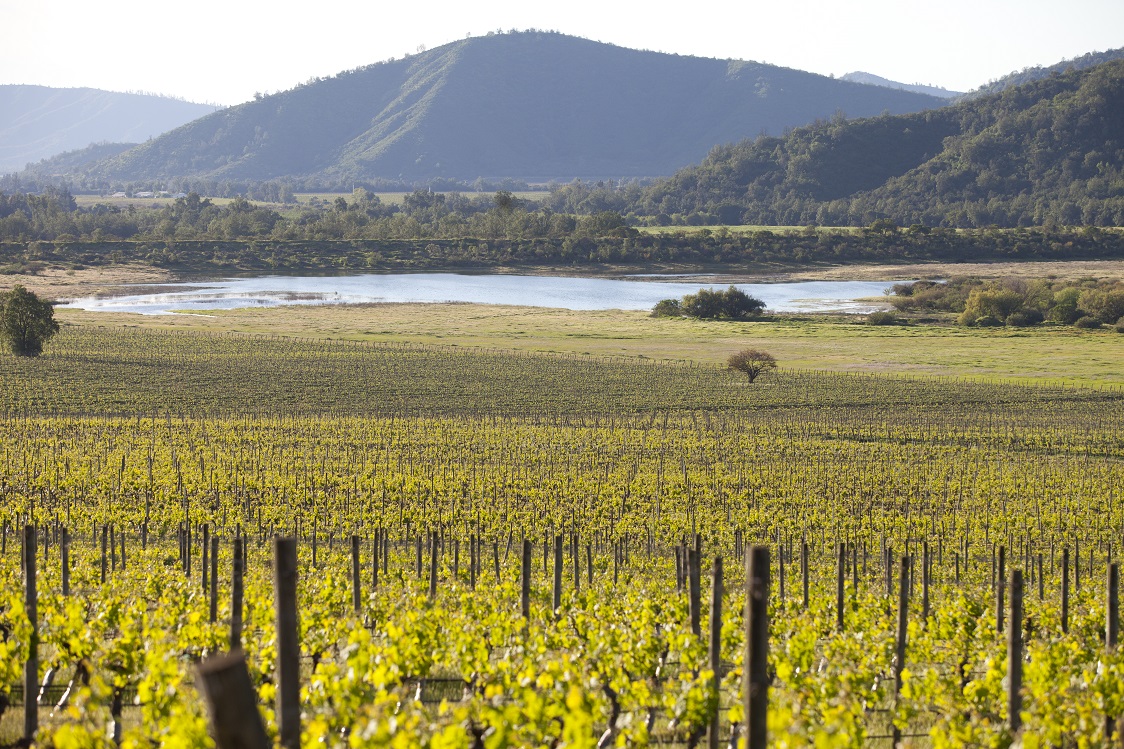
Source: Viñedos Veramonte
Agustin Huneeus, a Chilean wine pioneer, planted 100 acres of Sauvignon Blanc in the northern part of Casablanca valley in the late 1980s. In 1990, he founded Viñedos Veramonte, which became one of the first wineries in the region. From the moment the winery was found, the focus was on growing grapes in harmony with nature. After 6 years of hard work, in 2019, the winery obtained ECOCERT®organic certification, one of the most respected in the world. The project involved the conversion of more than 1,200 acres of vineyards in Casablanca and Colchagua valleys to organic and biodynamic farming, with the aim to also become fully Demeter’s biodynamic certified. The organic practices don’t stop at the vineyard – natural yeast and low intervention methods are used to produce the wine.


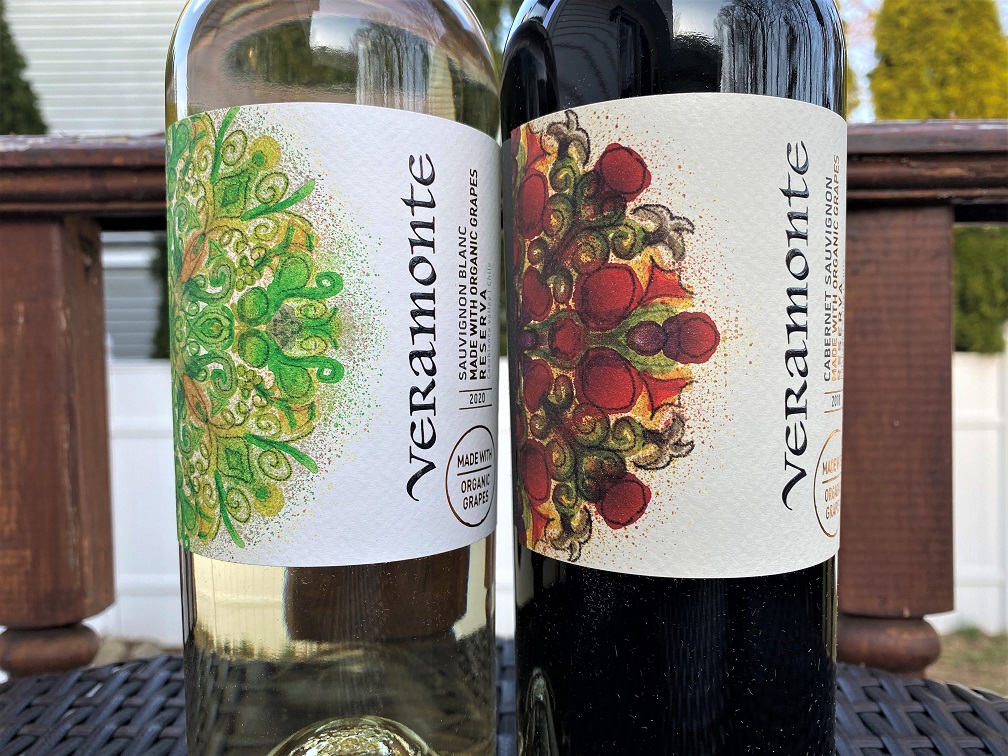
Can you taste all this care and attention in the glass? I think you can. I had the pleasure of trying a number of Veramonte wines (samples), and I think they were consistently delicious while offering an unbeatable QPR – see for yourself:
2019 Veramonte Sauvignon Blanc Reserva Casablanca Valley (13.5% ABV, $11.99, Vegan, organic grapes)
Straw pale
Distant hint of Whitestone fruit, a touch of cassis
Crisp, fresh, creamy, lemon notes, a touch of herbs – excellent
8/8-, perfect for summer, perfect for winter.
2020 Veramonte Sauvignon Blanc Reserva Casablanca Valley (13.5% ABV, $11.99, organic grapes)
Straw pale color
Touch of freshly cut grass, cat pee, medium+ intensity
Creamy and balanced on the palate, lemony acidity, freshly cut grass, elegant, restrained.
8/8+, outstanding.
2018 Veramonte Pinot Noir Reserva Casablanca Valley (14.5% ABV, $12.99, 8 months in oak, organic grapes)
Pale Ruby color
Touch of smoke, earthy undertones, classic Pinot
After about an hour – plums, earthy, medium body, well present sapidity, good acidity, good balance
8-, nicely drinkable
2018 Veramonte Carménere Reserva Casablanca Valley (14% ABV, $11.99, organic grapes)
Dark garnet, practically black.
Mint, black currant leaves
Black currant, coffee, very focused, good acidity, the wine shows tight, like a spring ready to snap.
8-, herbal notes are prevalent. Will see how it will be on the second day.
Second day- very concentrated, espresso, cherry pit. Good balance, but asking for the food to pair.
2019 Veramonte Cabernet Sauvignon Reserva Colchagua Valley (14% ABV, $11.99, 8 months in French oak, organic grapes)
Dark garnet
Cassis, a touch of bell pepper
Cassis and bell pepper on the palate, good balance, good acidity, medium body.
8, very enjoyable.
When it comes to organic wines, Viñedos Veramonte delivers wines you can drink every day and feel good about yourself, nature, and your wallet. Isn’t that a great combo?
What do you think of organic wines? Do you actually seek them out? Do you have any favorites?
Last Bottle Sign Up ($10 credit)




 Talk-A-Vino