Archive
Passion and Pinot Updates: Youngberg Hill Vineyard
I virtually met with Wayne Bailey of Youngberg Hill Vineyards in September of 2016. Now, 5 years later, I was able to actually shake his hand, listen to the stories face to face and taste the latest wines.
We arrived at the winery in the morning and went on to meet Wayne at the winery building, which also serves as Bed and Breakfast. The views from the terrace of that building were simply incredible – I walked around trying to snap as many pictures as I could.
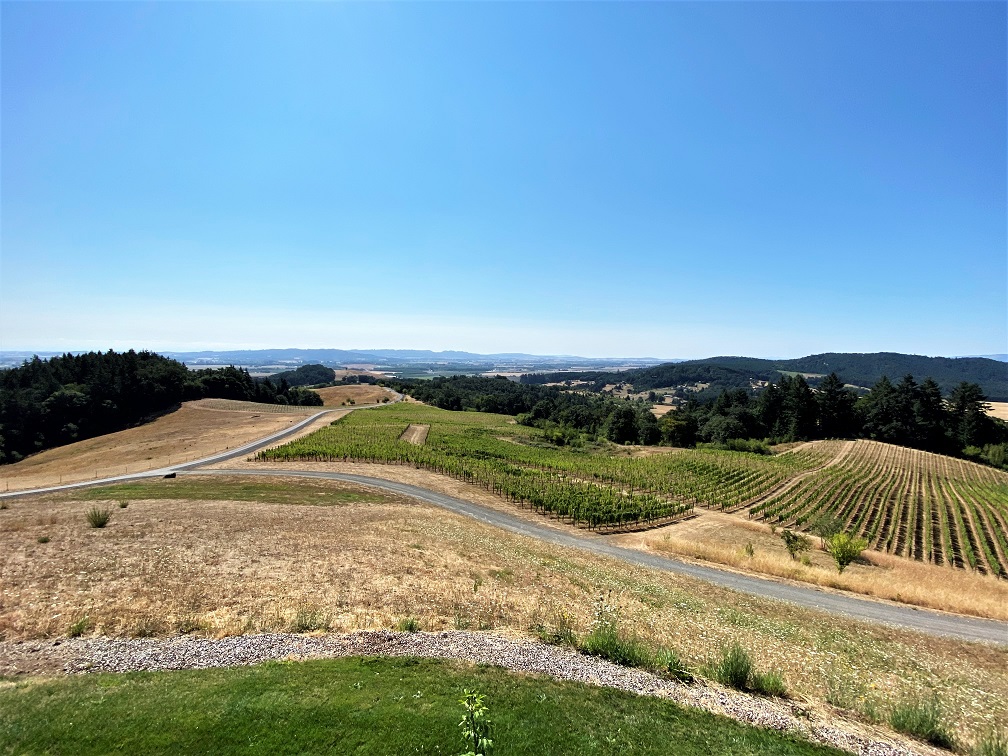
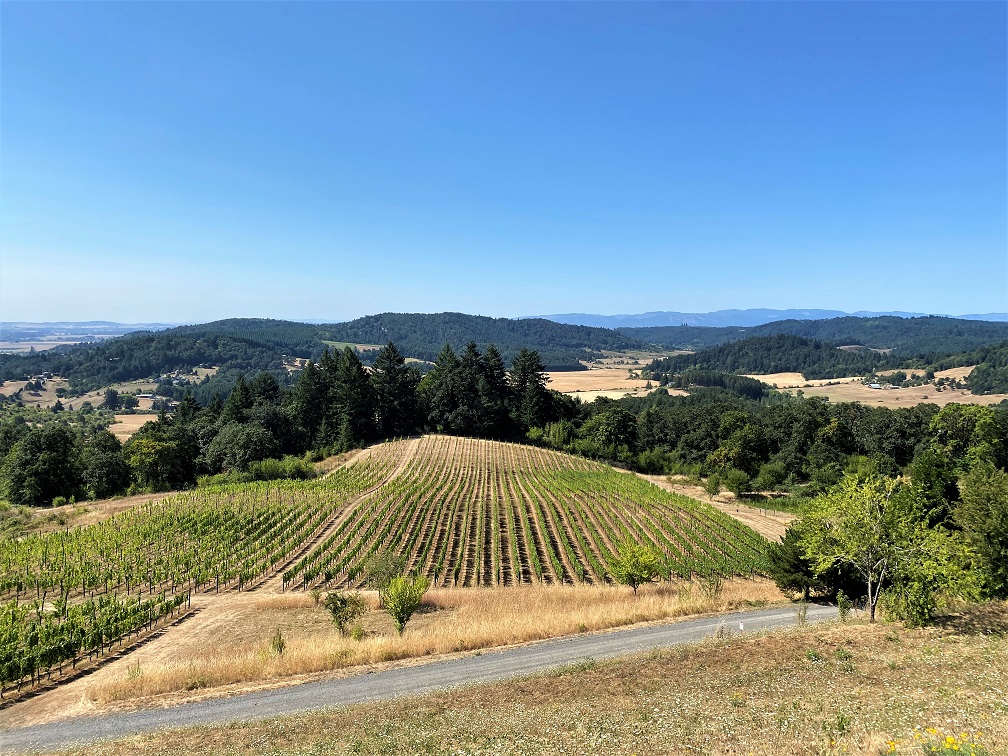
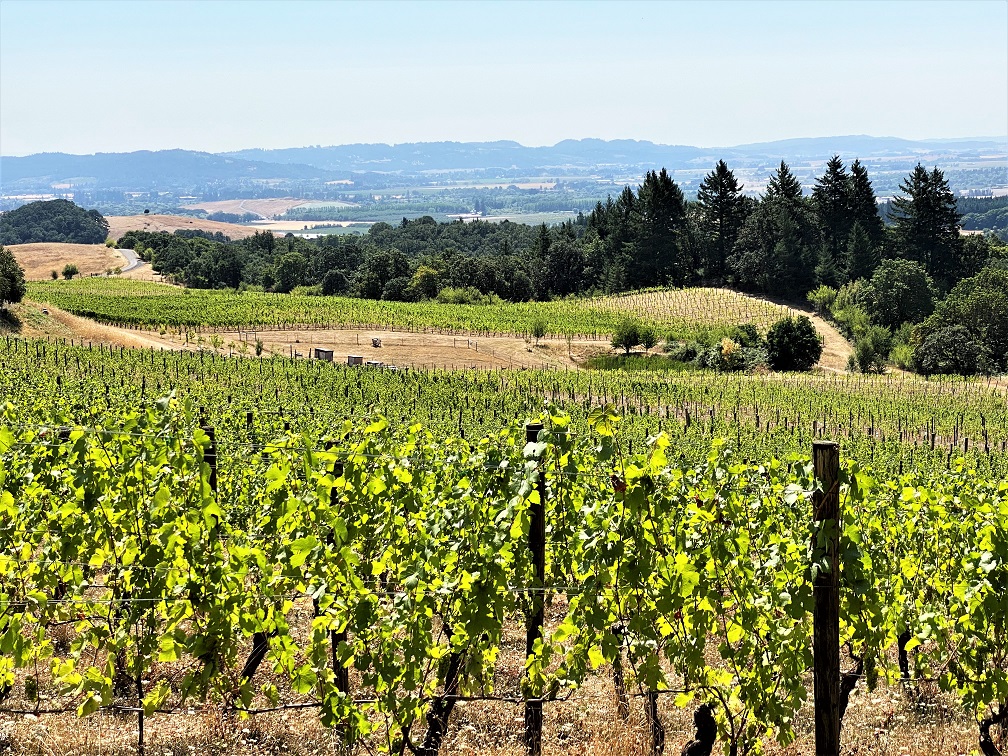
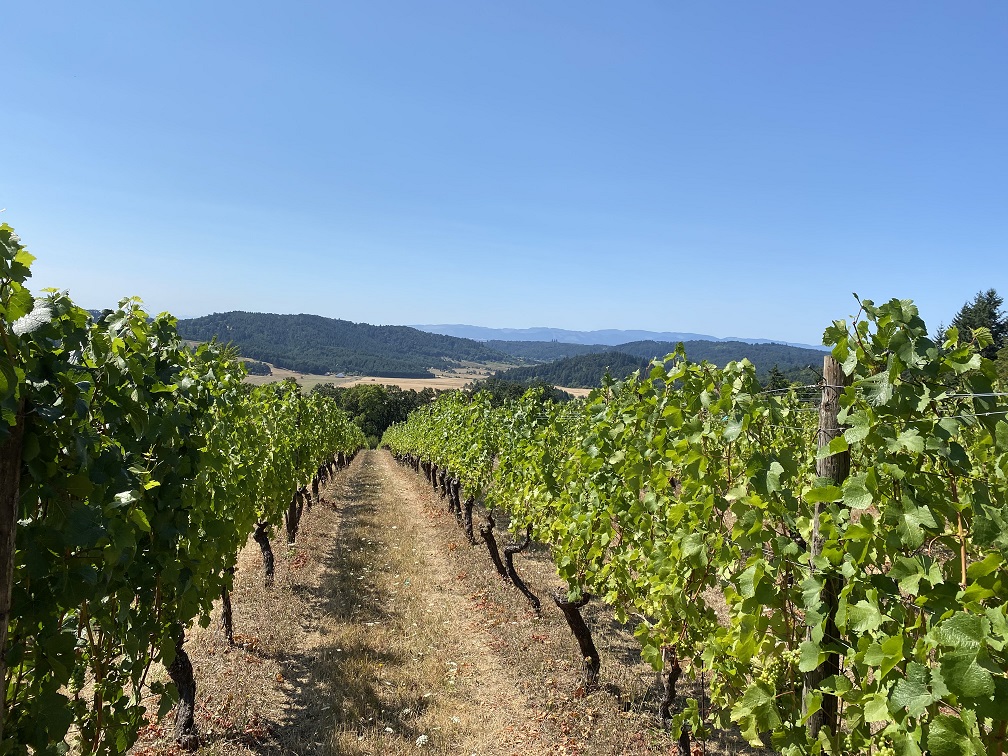
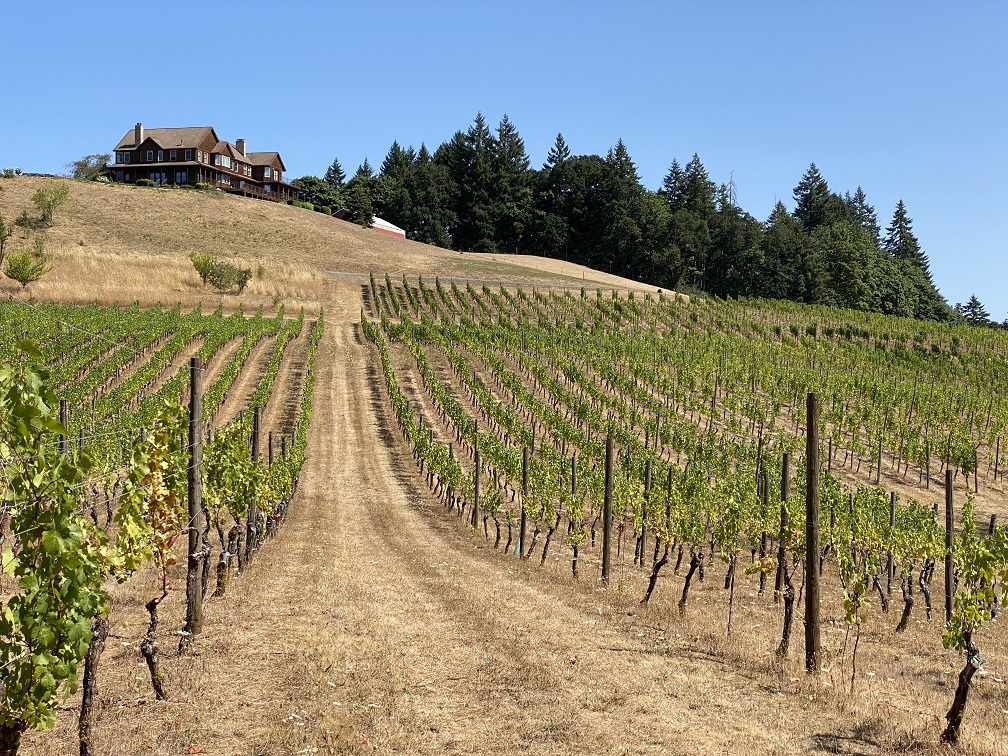


After meeting Wayne, we went on a tour of the estate. Actually, we drove around the vineyards in the baggie which Wayne was driving. Again, more of the beautiful views all around. We also got to meet a few of the cute animals which call Youngberg Hill home.


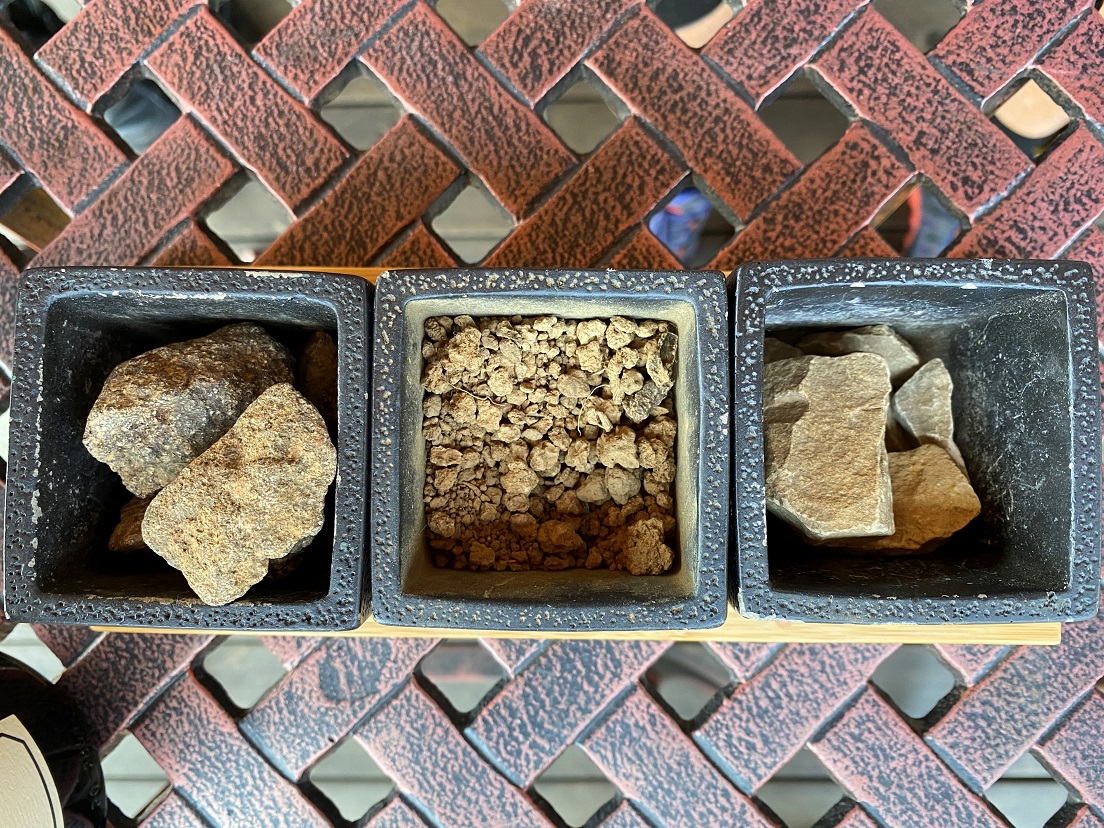
At the Youngberg Hill estate, it is all about the Bailey family – Wayne, his wife Nicolette, and daughters Natasha, Jordan, and Aspen. The Youngberg Hill vineyards were first planted in 1989 when the estate was founded, 12 acres of Pinot Noir vines. These 12 acres are divided into two blocks – 7 acres of Natasha block at the altitude of 600 feet on marine sediment soils, and 5 acres of Jordan block on volcanic soils at the altitude of 800 feet. There is 2 degrees difference in average temperatures between these two blocks, and as the Jordan block is a little bit cooler, the grapes usually ripen later than the ones on Natasha Block, with about 10 days difference in pick time.


Aspen block was first planted in 2006 with 5 acres of Pinot Gris. In 2014, half of the block (2.5 acres) was grafted over to Chardonnay. In 2008, Bailey’s block was planted with 3 acres of Pinot Noir, at 700 feet altitude and predominantly volcanic soils.
When we spoke back in 2016, 20 acres of vineyards were planted on the 50 acres estate. I asked Wayne if he has any plans to add additional plantings, and got a simple “no” answer. Well, I guess the old adage of “never say never” is perfectly at play here, as in 2018, 3 acres of Wayne’s World block was planted with two more clones of Pinot Noir, bringing a total to 5 clones, if I’m not mistaken. This block was planted mostly on marine sediment soils at an altitude between 500 and 600 feet.
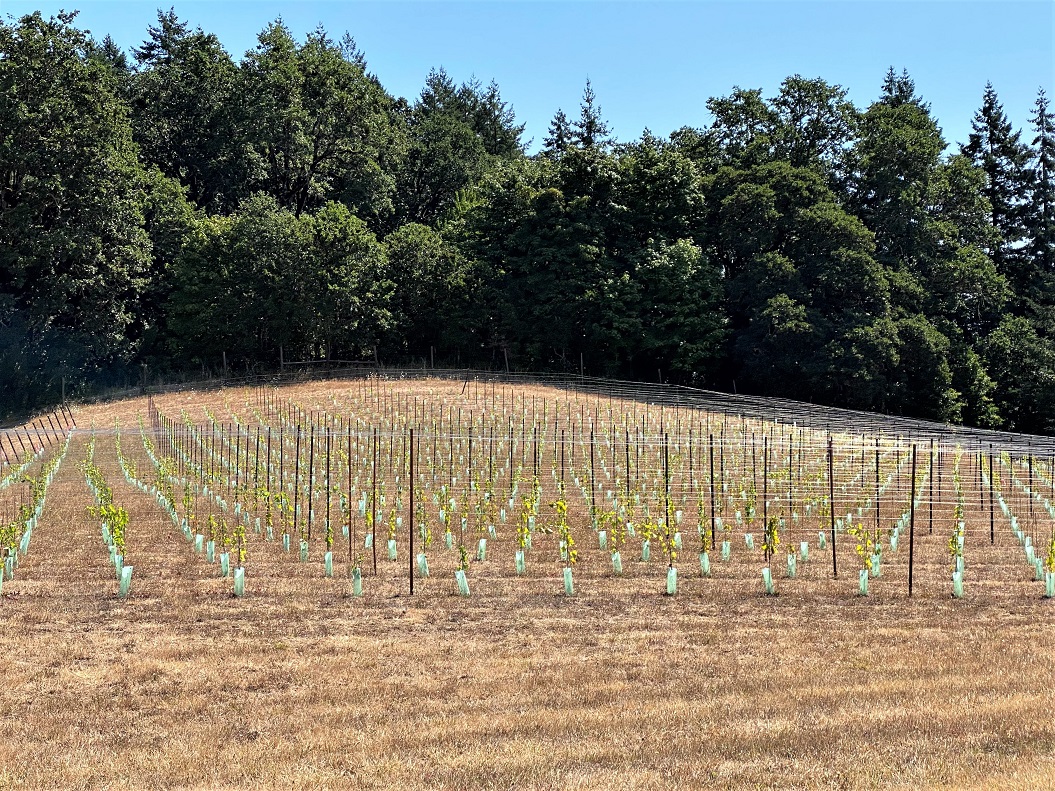 Here you can see a sample of the soils at Youngberg Hill Vineyards.
After we finished the tour, it was time to taste the wines.


I was happy that we started our tasting with the sparkling wine – this is almost something you now expect from Oregon wineries. Similar to the sparkling wine we had at Le Cadeau, this wine was also made with first-pass grapes. The wine spent 2.5 years on the lees, so it is called the Extended Tirage sparkling.
2018 Youngberg Hill Vineyards Extended Tirage Sparkling Eola-Amity AVA (12.5% ABV, $55)
A touch of apple and vanilla
Crisp apple notes, fresh, good acidity, good body, delicious. Lingering acidity on the finish
8, excellent


Next, again to my delight, we had a couple of Chardonnays:
2019 Youngberg Hill Vineyards Aspen Chardonnay McMinnville AVA (12% ABV, $45)
Beautiful nose of apples, vanilla, and a touch of honey
Crisp, clean, great acidity, wow.
8, it would be amazing with age
Another change at the Youngberg Hill Vineyards since we last spoke was the new wine label introduced in 2019 – Bailey Family Wines. Bailey Family wines comprise a selection of the best plots and barrels. In addition to sparkling, Chardonnay, and Pinot Noir, the Bailey Family wines range also includes Grenache sourced from the Rogue Valley. We tasted the latest vintage of Bailey Family Chardonnay which was superb:
2018 Bailey Family Chardonnay McMinnville AVA Willamette Valley (13.4% ABV, $85)
Herbal notes, a touch of butter, honey, minerality
Great complexity, mouthwatering acidity, lean, green apples, a touch of sage. Perfect balance
8/8+


Next, we had the pleasure of going through the selection of the Pinot Noir wines, both current vintages from Natasha and Jordan blocks, as well as reserve wine, Nicolette’s Select:
2018 Youngberg Hill Vineyards Natasha Block Pinot Noir McMinnville AVA (14% ABV, $60)
Ripe cherries and cranberries
Restrained, tart cherries, firm structure, dusty palate, excellent balance.
8+
2018 Youngberg Hill Vineyards Jordan’s Block Pinot Noir McMinnville AVA (13.8% ABV, $60)
Cherries and violets
Bright popping ripe cherries, good acidity, perfect balance.
Both [Natasha Block and Jordan Block] are built for the long haul.
8+
2015 Youngberg Hill Vineyards Nicolette’s Select Pinot Noir McMinnville AVA (14.1% ABV, $85)
Great bouquet on the nose, cherries, pencil shavings, underbrush
Wow, an interplay of cherries, cranberries, mushrooms, dusty palate, layered, balanced
9-, superb.
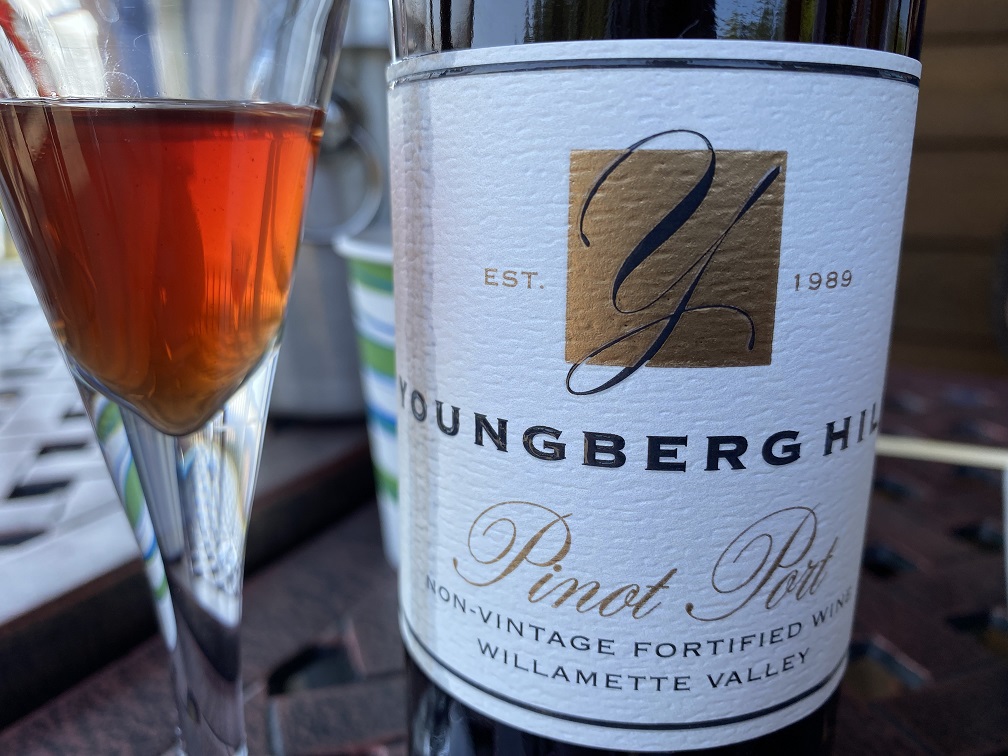
I keep going back to our 2016 conversation with Wayne. While preparing the interview questions I learned that Youngberg Hill produces a really unique wine – Pinot Port, as it was called – a Port-style wine made out of Pinot Noir grapes, something which I never heard of before. So now, being at the winery, I couldn’t miss the opportunity to taste the Pinot Port. Wayne was somewhat hesitant about it, as I don’t believe he is making this wine anymore, but I had my wish granted and had a sip of this delicious beverage:
NV Youngberg Hill Vineyards Pinot Port (19% ABV, $NA, 25 cases produced)
Nicely aged wine, dried fruit, good balance, very pleasant
There you are, my friends. Another story of Passion and Pinot, with the Pinot Noir (and Chardonnay, and bubbles) of truly a world-class, and in its own, Oregon style. These wines are worth seeking, and if you want to spend a few days in the wine country, surrounded by incredible views and delicious wines, that Inn at the Youngberg Hill sounds really, really attractive.
I got more of the Passion and Pinot updates to share with you, so until the next time…
This post is a part of the Stories of Passion and Pinot series – click the link for more stories…
Sanford Winery: Evolution Of Growing Up
In the 1960s, two friends, Michael Benedict and Richard Sanford were looking for a good cool-climate site in California where they would be able to make wine rivaling in quality the best European wines.
In 1971, after successfully completing very extensive research, they decided on the location in the Sta. Rita Hills area, a part of the Santa Ynez Valley about 15 miles east of the Pacific Ocean. They first planted the vineyard to Chardonnay and Riesling, but in 1972 they were the first in the region to plant Pinot Noir (and now these are the oldest Pinot Noir plantings in the country).
In 1997, an adjacent hillside vineyard was planted next to Sanford and Benedict, named La Rinconada, which also became a home to the winery building and the tasting room. In 2001, Sta. Rita Hills area was officially certified as an AVA (American Viticultural Area). In 2002, the Terlato family became involved with the Sanford winery (the winery was only carrying the Sanford name as Michael Benedict part his ways with Richard Sanford in 1980), and in 2005 Terlato family became majority owners and partners at the winery. In 2006, John Terlato got closely involved with the winery operations, and that really opened a new chapter for Sanford winery.
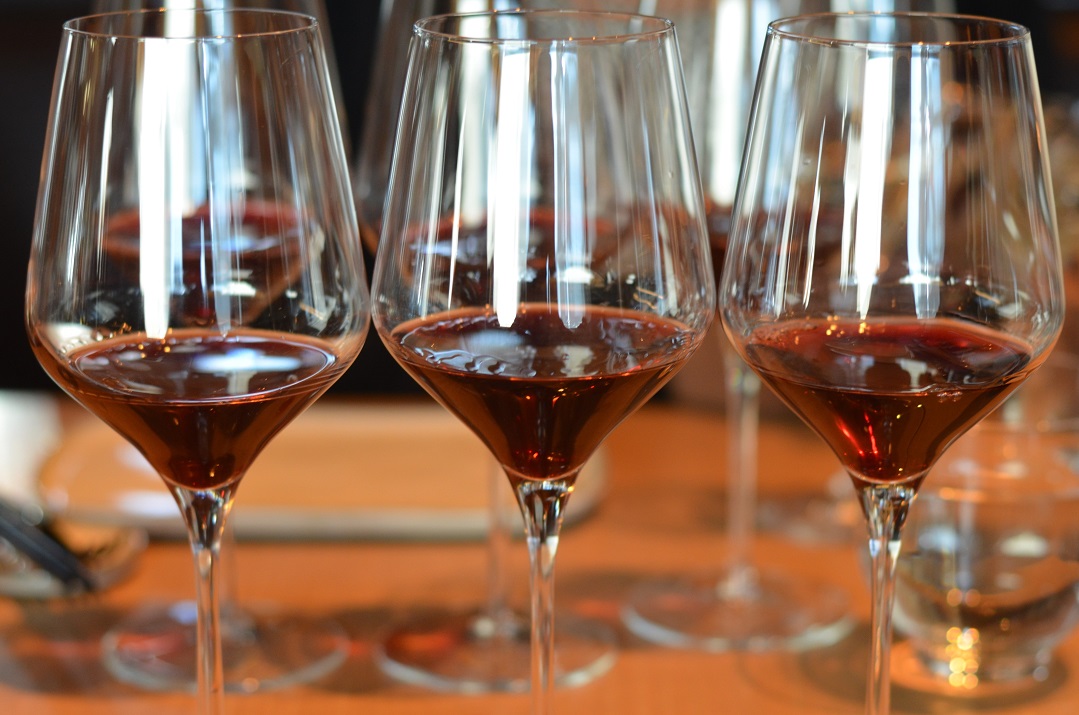
In June of 2019, I got invited to the Sanford winery tasting dinner with John Terlato and Michael Benedict at the Wild Ink restaurant in New York, in one of the hottest neighborhoods – Hudson Yards. I was, obviously, very excited. Which helped me to fail as a wine writer – read on, I will explain.
As we situated at the table, the wines started to appear in rapid succession – 2011 Sanford and Benedict Pinot Noir, 2012 Sanford and Benedict Pinot Noir, then 2013, 2014, 2015, 2016… I didn’t check the press packet in advance of the dinner, and was unprepared for the sheer number of wines presented – also the wines were just brought up one after another, without much of the pause, much of presentation, and too cold – I remember complaining about the wines being too cold and thus really not allowing for a proper evaluation. Don’t get me wrong – I loved the wines, but I had no opportunity to actually compare the vintages and understand the differences. We also tasted 2016 La Rinconada Chardonnay, 2015 Founders’ Vines Chardonnay, 2015 La Rinconada Pinot Noir and 2014 Founders’ Vines Pinot Noir – for which again I didn’t capture a single tasting note, carried away with a conversation, food, delicious wines, and amazing views of the sunset over Hudson.
Or maybe the tasting notes were not that important? In 2006, when John Terlato got involved in Sanford winery operations, he started learning about the best Pinot Noirs in the world. He went to Burgundy, met with winemakers, and tasted lots and lots of wines to understand what can be done differently at Sanford, what is next. He started the vineyard block program at Sanford, identifying unique vineyard blocks at both Sanford and Benedict and La Rinconada, with unique soil, microclimate and terroir, to let literally every bunch of grapes be the best they can be. John brought his notebooks to the dinner, and he was showing us pages and pages of copious notes, both about the wines he tasted in Burgundy and all the experiments and work done at the Sanford vineyards.


Both John and Michael were obviously proud of what they achieved, but what is important, they were both optimistic about their work at the winery and the best yet to come as the learning process doesn’t stop. “I want you to come to the winery and taste 2017, 2018, 2019, 2020, 2021… I want you to see how they [wines] change. I want you to see how much better they will become” said Michael Benedict in his quiet voice sitting next to me.
If I would’ve done my homework before coming to the dinner, I would’ve come armed with some incredible facts summarizing 13 years of hard work at the Sanford vineyards. Here are some numbers for you. 30% of the Sanford and Benedict vineyard are still planted on its original vines, which is very rare in California considering the spread of Phylloxera. The vineyard is home to the oldest Pinot Noir vines in Santa Barbara County, planted in 1971. Sanford and Benedict Vineyard has a total of 144 acres under vines – 109 acres of Pinot Noir, 33 of Chardonnay, and 2 of Viognier. There are more than 20 vineyard blocks identified, and there are more than 11 clones growing there.
La Rinconada, which was planted in 1997, is 117 acres in size, 63 acres of Pinot Noir, and 54 acres of Chardonnay. It also has 20 vineyard blocks and 12 clones. Between 2 vineyards, there are 261 total vine acres, 50+ Vineyard Blocks, 20+ clones, 6+ soil blends.
Taking all of this into perspective, it is amazing how Pinot Noir is becoming an obsession of the winemakers – I see this through all of the Stories of Passion and Pinot, through the deep research of soil done by Alit in Oregon. Identifying vineyard blocks, vinifying blocks separately, using multiple clones, blending, trying, and trying again. Passion and Pinot, truly.
Not writing about that memorable dinner was one of my biggest disappointments – to my disdain, I have a good memory for disappointments, so it was really hunting me down. But sometimes, life offers us second chances.
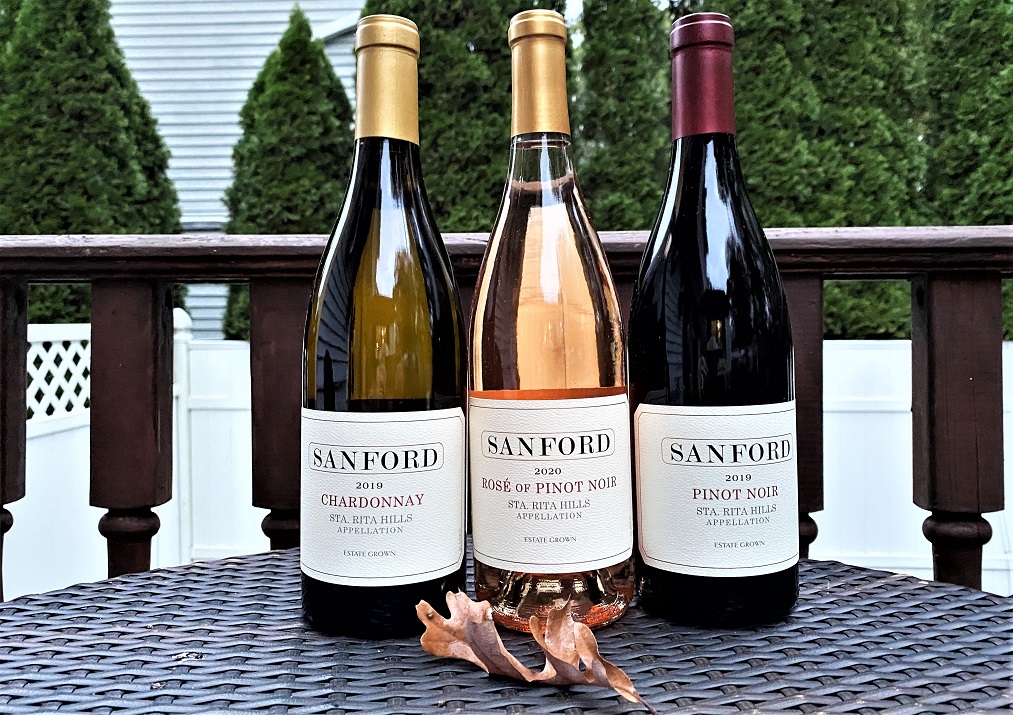
Trey Fletcher got schooled in world-class Pinot Noir and Chardonnay during his tenure at Littorai Winery, also learning biodynamic, organic, and sustainable viticulture at the same time. In 2011, Trey moved to Santa Barbara to become Winemaker and GM at Bien Nacido Vineyards. A few years back, Trey joined the Sanford team as Senior Winemaker, and 2019 became the first vintage where he was responsible for all the winemaking and blending decisions. I had an opportunity to taste Trey’s wines and here are my impressions:
2019 Sanford Chardonnay Sta. Rita Hills (13.5% ABV, $40, aged 11 months in French oak, 25% new)
Light golden
A hint of minerality, vanilla, apple, elegant, inviting
Similar profile on the palate – vanilla, apple, a distant touch of honey, perfect acidity, clean, fresh, delicious
8, an outstanding example of California Chardonnay
2020 Sanford Rosé of Pinot Noir Sta. Rita Hills (13% ABV, $20, aged 6 months in stainless steel and neutral barrels)
Salmon pink
Strawberries, nice mineral component
Tart strawberries, lemon, crisp, fresh, bigger body than a typical Provence, but still light and perfectly balanced. Nice medium-long finish.
8/8+
2019 Sanford Pinot Noir Sta. Rita Hills (13.5% ABV, $45, aged 11 months in French oak, 25% new)
Dark ruby
Plums, cherries, smoke. Classic Pinot nose
Sweet plums, tart cherries, probably a whole cluster fermentation based on a tiny hint of a green bite. Restrained, elegant, the sweetness is just hinted, and overall wine is well structured.
8, Should age well. A California Pinot with a lot of restraint
Pinot and Passion. There is truly something magical about the grape which becomes an obsession and an object of desire. The best proof, however, is always in the glass.
May you never stop growing.
Vilarnau Cavas – Always a Pleasure for an Eye, and Now Organic Too
Here we go – I’m following up a post about Cava with another post about Cava.
Oh well…
It is really appropriate to drink bubbles every day. Really. And it is even triple appropriate to drink bubbles around holidays. And gift them. And every day has something worthy of a celebration. So yeah, let’s talk again about Cava.
First, a pleasure for an eye – take a look – aren’t these bottles gorgeous? I would certainly use them as a decoration if the content wouldn’t be so good. I love this Trencadis design of the bottles – “Trencadís” is a kind of mosaic that is created from tiny fragments of broken ceramic tiles, used by Catalan architects Antoni GaudÍ and Josep MarÍa Pujol in many of their designs. I talked about the trencadís extensively in a few of the older posts (in 2017 and 2018), so I would like to direct you there if you want to learn more.
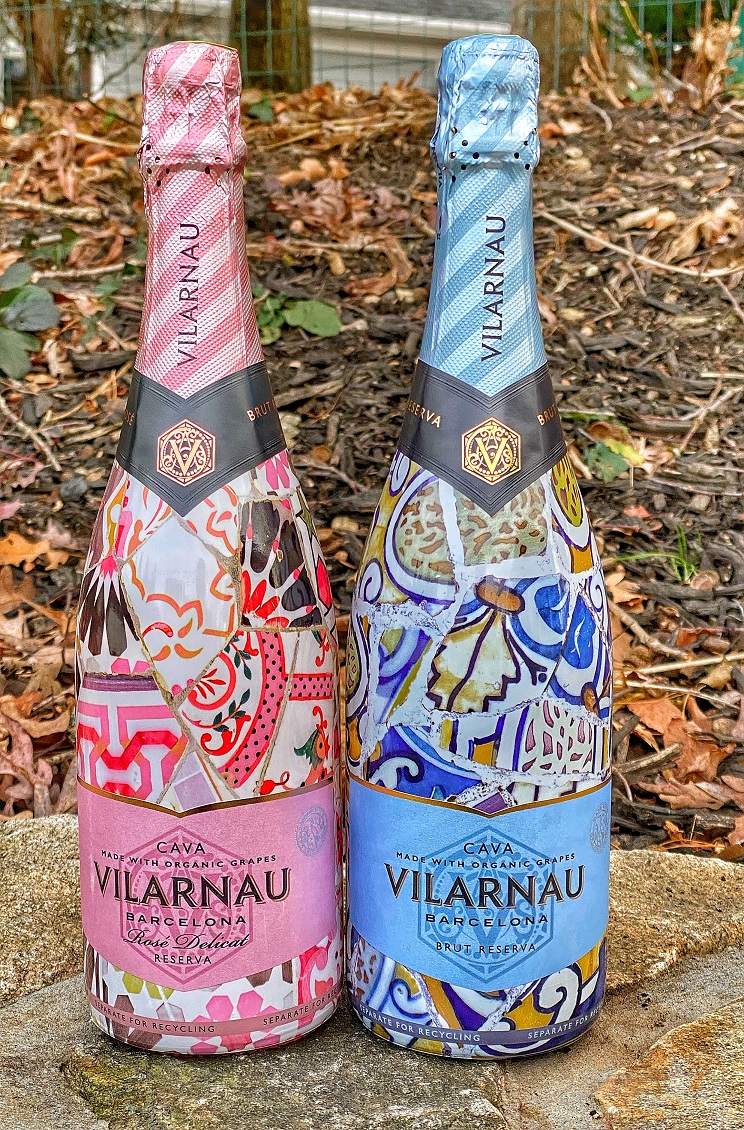


Now, you still have a ground for complaint – I already talked about Vilarnau Cavas less than 6 months ago – what gives? Are there not enough wines to discuss?
Yes, you are right. Or, almost right, to be more precise. The reason to talk about Vilarnau now is a significant change – all of the Vilarnau wines are now made with organic grapes.
Why would winery change its [successful] ways to become organic? What can be a motivation for that? Is that organic wine any different from non-organic wine? I decided to ask all these questions (virtually) Eva Plazas, Cavas Vilarnau Winemaker – and here is our short dialog:
2. Why is using organic grapes important for you?
3. Can you taste the difference?
4. Is the whole range of Vilarnau Cavas already using organic grapes (talking about new vintages)?
5. Did you have to make any changes in the winemaking process since you started using the organic grapes?
I have stopped using these products or have looked for alternatives to proteins with the animal origin, using pea or potato proteins instead, that is why all Vilarnau cavas are now Vegan too.
NV Vilarnau Brut Reserva Cava DO (11.5% ABV, $14.99, 50% Macabeo, 35% Parellada, 15% Xarel Lo, 15+ months in the bottle)
Light gold
Herbal, earthy, apple, lemon
Fresh, clean, apples, creamy, good body
7+, perfect for every day
NV Vilarnau Brut Reserva Rosé Cava DO (12% ABV, $15.99, 85% Garnacha, 15% Pinot Noir, 15+ months in the bottle)
Salmon pink
Fresh strawberries, a touch of gunflint
Fresh strawberries, crisp, clean, energetic, delicious.
8, excellent
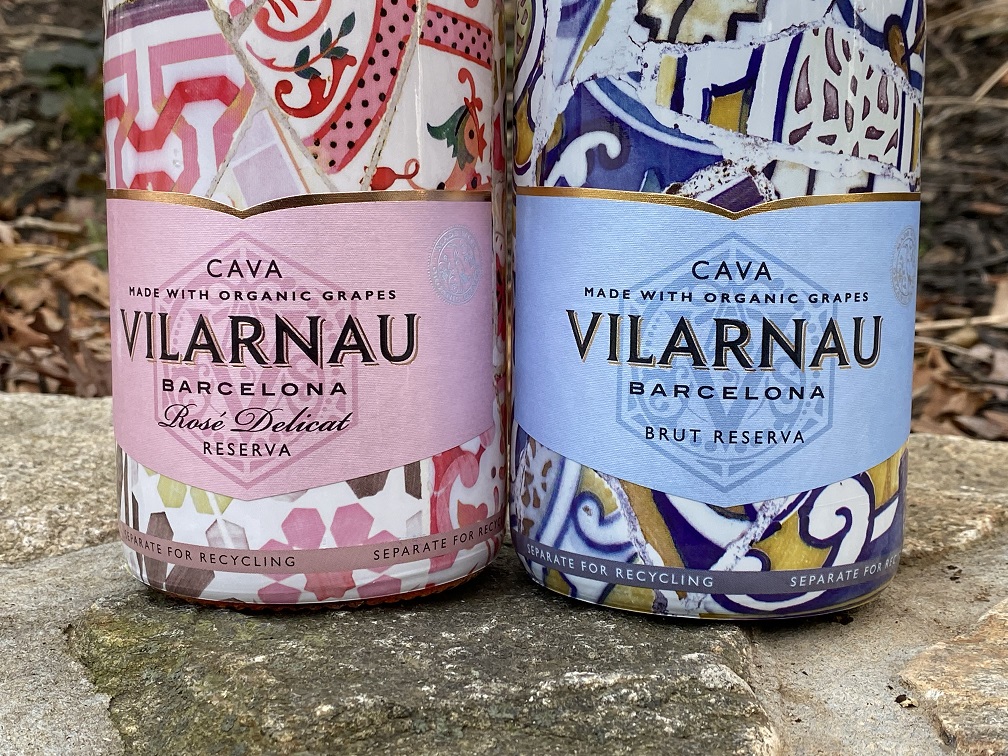
Now, a placeholder for the wines to be tasted in a week – updated on December 29, 2021
NV Vilarnau Brut Reserva Cava DO (11.5% ABV, $14.99, 50% Macabeo, 35% Parellada, 15% Xarel Lo, 15+ months in the bottle, Organic grapes, Vegan)
Light golden color, small persistent bubbles
Freshly toasted bread, gunflint, medium intensity
Freshly toasted bread, a hint of granny smith apples, a hint of gunflint and minerality, nice creaminess
7+/8-, simply delightful
How Art The Wine Is?
 <rant>
Wine is Art.
I always say this, and I’m willing to fight anyone who disagrees.
Same as a painting, a classical music piece, a sculpture, an architectural masterpiece, or an elaborate flower garden, well-made wine solicits the emotional response, hence it is an art form. Defining this art, there is one key difference between, let’s say, a painting and a bottle of wine – we only need to look at the painting to trigger an emotion – but we need to drink the wine to make it an ultimate art form.
A few months ago, a friend told me “I have a wine question for you”. He is a wonderful friend, but he typically drinks Bartenura Moscato, so the wine question? Okay, let’s hear it. So the question was about the wine and NFTs. NFT, which stands for Non-Fungible Token is a form of cryptocurrency, typically used to guarantee authenticity and ownership of unique forms of art or objects – this article might help if you want to learn more. So the friend was asking if he should buy NFTs of some obscure wine (there was a choice in the catalog) – and if not this wine, then maybe that wine.
Literally the next day I got a call from another friend who was asking if he should invest a good amount of money in the fund which invests in fine wines. Technically, you pay for the case (or 5, it depends on availability and demand) of unreleased wine (futures). The fund company will take ownership of that case, will store it in the proper conditions, and will report back to you a current market value of your case, so you can sell it when you think it is time – with a very large profit, of course.
It seems that these investments are flying out faster than hot potatoes in the hands of an amateur chef. That same friend called me to complain that because I didn’t give him good advice right away, the wine he was asking about was already sold out and he had to get on the waiting list for the wine of supposedly a lesser pedigree.
During last month I also heard about the same offerings from yet another friend, and then even received a direct ad in the Instagram stories, to invest in wine with a guaranteed incredible return.
Now, my question to you – a collective “you”, anyone who would spend time – is this how it should be? Yes, I get it, it is capitalism, supply and demand, of course, but the wine is made to be drunk, consumed, mesmerized upon, start crying, laughing, grabbing someone excitedly on the shoulder – but not just to be another form of the stock certificate?
Of course, there is wine collecting. There are people with access, who accumulate lots and lots of bottles, many of them very expensive and very limited, but I would assume that even the wine collectors acquire the wine to be consumed and enjoyed – not all of it, but at least some of it? This wine investment fund idea relegates wine simply to the form of another agricultural commodity – corn, wheat, cattle. Commodity trading had been around forever – nobody owns 100 bushels of rice, but anyone can make (or lose) money on it. But rice is not art – rice is simply a necessity, and yes, if you are hungry, it will solicit the emotion, but it will not be the same as when you are truly enjoying a glass of wine.
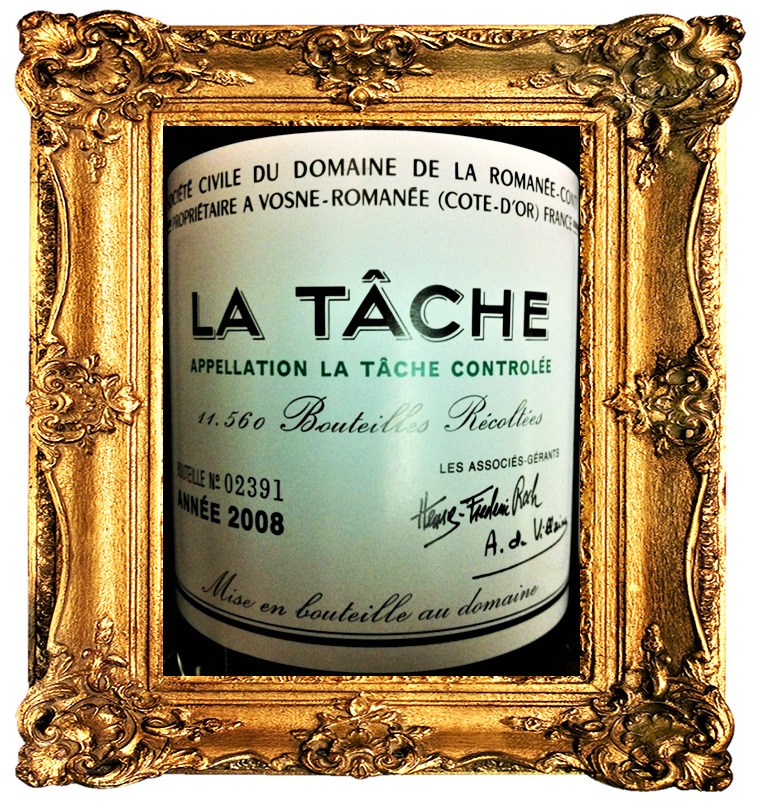
The latest entrant into the NFT craze – Robert Mondavi winery. Three of the star winemakers produced 1966 magnums of wine called MCMLXVI (that is 1966 in Roman numerals – 1966 is the year when Robert Mondavi winery was founded), Cabernet Sauvignon and Cabernet Sauvignon blends from 2019 vintage. This wine will be packaged into specially designed porcelain bottles by the French porcelain designer Bernardaud, with each bottle having a unique QR code, and sold at $3,500. Now, when you will buy the bottle, you will get an NFT, which will assure your ownership, and there will be a connection between an NFT and that QR code on the bottle. In addition to the bottle of wine, each purchase will somehow include the generative artwork (you look it up – I guess it means a visual object/ painting generated by computer algorithm) by the artist Clay Heaton. Also, the QR code with NFT will serve as protection against counterfeiting – like the porcelain magnum bottle by itself is not enough.
So I wrote all of this, then took a pause and had to ask myself – what is your problem, dude? Everything sounds great in this picture – great winemakers, perfectly artful presentation of the perfect wine, guaranteed authenticity, and even a bonus in the form of the hot piece of art. What is my problem, really?
This wine is not created to be enjoyed as wine. This product is strictly a financial instrument. Star winemakers will attract attention. Unique packaging will attract attention. But then this is strictly sold as a financial instrument. NFTs are typically sold through an auction-like mechanism, so there clearly will be open bidding, with $3,500 being an initial price. There is also an opportunity to resell that piece of digital art, so all in all, this is strictly a money transaction. I wonder if any of these bottles will be ever open, or they will strictly exist for their monetary value.
Yes, wine is business. Yes, I’m naive. Yes, I’m romanticizing wine. Yes, you can call me old and stupid. That’s all fine. But the only way to enjoy wine is by drinking it. I love money as much as anyone else here, but still, if someone is buying wine only for its resale value, they don’t love wine, they only love money. Connecting NFTs to wine only amplifies the conversion of the wine into a financial instrument. And if wine is becoming only an abstract monetary instrument, one day someone will realize that it doesn’t matter what is in the bottle – any plonk will do. And then another day, someone will open that bottle… and… I really have no idea what will happen then. Or what will happen if one day, unhackable blockchain will be hacked, and all the NFTs will disappear – will someone then decide to drink that wine?
Wine is art. To be more precise, the wine in the closed bottle is only a potential art – or just another monetary instrument. Wine becomes art the moment it is poured into your glass. And that is the only reason for wine to exist.
</rant>
Am I missing something? Do NFTs have anything to do with enjoying the wine? Are NFTs really connected to the future of wine? Am I just jealous of the people with unlimited monetary resources? I’m ready to discuss…
One on One with Winemaker: Dennis Murphy, Caprio Cellars
Source: Caprio Cellars
It is a known fact that wine is produced in all 50 states in the US. And I will clearly risk it to alienate many people, but with all due respect to New York, Texas, and Virginia, there are only three belonging to the “big three” – California, Oregon, and Washington. It is Washington I want to talk about today.
I don’t know how this works, but when I think about Washington wines, I feel warm and fuzzy. I don’t know if it relates to wonderful experiences, such as the visit to Chateau Ste. Michelle, getting lost in Woodinville or exploring Walla Walla, or maybe it is because of some of the most amazing American wines being produced in Washington, such as the whole range of Cayuse wines, L’Ecole No41, Guardian Cellars, Mark Ryan, and countless others.
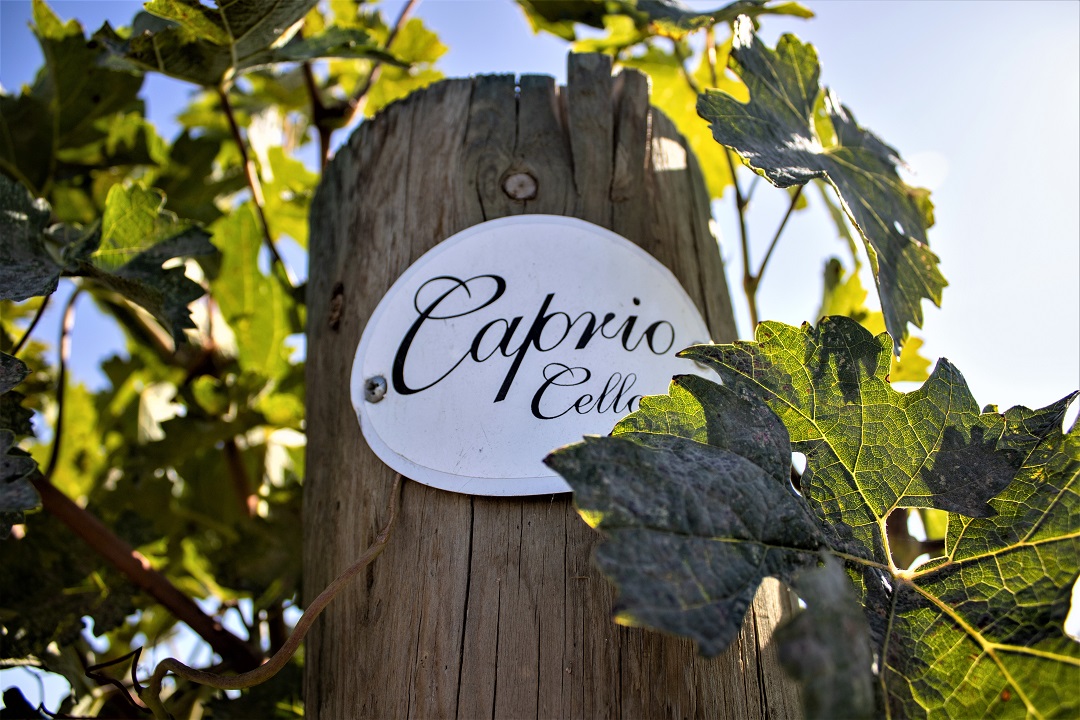
And today, I want to bring to your attention one of my very latest Washington wine discoveries – Caprio Cellars in Walla Walla.
On one side, Caprio Cellars’ story is absolutely “normal” (yes, an interesting choice of word here – what does “normal” even mean, right?). Dennis Murphy purchased a plot of land in Walla Walla Valley (previously a wheat field) in 2003. The first vines were planted in 2005, and the vineyard was called Eleanor in honor of Dennis’ grandmother, Eleanor Caprio; after the first harvest in 2008, the winery got the name of Caprio Cellars, and the rest is history. The second vineyard, Octave, was planted on the hillside in 2007. The latest high-altitude vineyard, Sanitella, was planted on the Oregon side of the Walla Walla AVA. Bordeaux varieties – Cabernet Sauvignon, Cabernet Franc, Merlot, and Malbec are planted across all three sustainably farmed vineyards, with the addition of Sauvignon Blanc planted on Sanitella.
This is where “normal” ends. What is unique about Caprio cellars is that your tasting is always complimentary (okay, yes, this still can happen in the other places). You also have complimentary chef-prepared dishes accompanying your tasting flight, with the seasonal menu – yes, complimentary, as in “free of charge” (I hope you are getting as impressed as I am because I’m not sure where else you can find that). And Dennis is very passionate about charities he supports. That definitely puts Caprio Cellars in the category of its own.
After tasting a few of the Caprio Cellars wines, I was ready to talk to Dennis. While we were unable to meet in person (something I really hope to rectify in the near future), we sat down with Dennis virtually, and he patiently answered all of my questions – and now I would like to share our conversation with you. Before we begin, one small note – this is a long conversation, and you definitely shouldn’t miss the answers to the questions at the end of this conversation. So I suggest you will settle in your favorite chair, pour yourself a glass of wine, and come along!
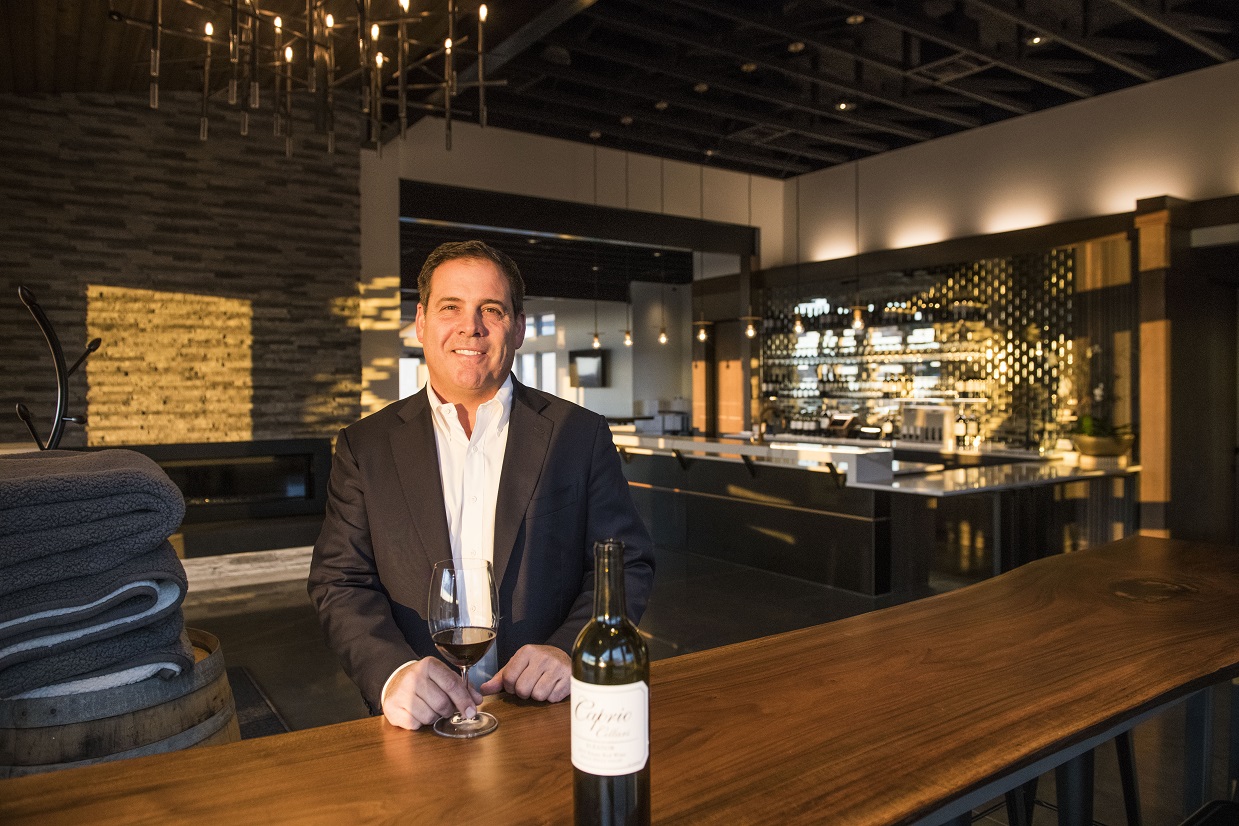
Dennis Murphy. Source: Caprio Cellars
[TaV]: Growing up, what was your exposure to the wine culture?
[DM]: Growing up, I remember my dad and grand parents making wine in the garage or the basement. Some was good, some was not so good. Wine was always a part of the dinner celebration, holidays and family gatherings.
[TaV]: Was there a pivotal wine in your life?
[DM]: The wine that brought me to Walla Walla was L’ Ecole No. 41 Merlot. I tasted this wine at a restaurant in Seattle and was blown away. I then started stopping at the winery and collecting the wine and eventually moved to Walla Walla.
[TaV]: When and how have you decided that you will own a winery?
[DM]: After tasting some Walla Walla wines and visiting Walla Walla, I fell in love with the town and moved. I could feel the energy in the wine scene emerging and moved to Walla Walla in 1999. There were just a hand full of wineries, so I started to make myself available during harvest and made some friends in the wine industry. In 2003 I purchased the winery estate property and in 2005 I planted my first vineyard, the Eleanor Vineyard.
[TaV]: Any plans for stepping outside of Bordeaux play – how about Syrah or Grenache which are so popular in Washington? Or maybe some Sangiovese or Tempranillo?
[DM]: I only make wines that I love to consume. I would look at Grenache, I love Grenache and think that the valley can produce some good fruit. We are making sparkling wine, I am intrigued to make a sparkling Rosé. I believe that focus is required to make world-class wine. I am focused on making world-class red Bordeaux-style wines from Walla Walla.
[TaV]: Considering your Italian heritage, do you have any favorite Italian wine regions, wines, or producers?
[DM]: It will not surprise you, I am a Super Tuscan guy. I think that the Cabernet Sauvignon and Merlot show very well. One of my favorite all time wines is the 1997 Ornellaia.
[TaV]: Are there any wineries and/or winemakers in Walla Walla who you would consider as your source of inspiration?
[DM]: Seven Hills/ Casey McClellan makes my favorite wine in the valley, the Pentad. Casey is a great winemaker, makes solid wines and the valley is fortunate to have him.
Source: Caprio Cellars
Source: Caprio Cellars
[TaV]: You are practicing sustainable farming – what does it entail in your daily routine?
[DM]: Sustainable farming is really about being as hands off the vineyard as possible, letting the land and crop do their thing naturally. Sustainable farming is very important for the industry and the environment. Mother Nature can provide anything that a chemical or synthetic can provide, you just have to work at it.
[TaV]: Any plans to advance your farming towards biodynamics?
[DM]: I do not have any current plans to farm biodynamic, but I have not ruled it out either.
[TaV]: First harvest at Caprio Cellars was in 2008. Do you still have any of those wines in your cellar? How are they evolving?
[DM]: Yes, I have the 2008 Caprio Cabernet Sauvignon, it was the only wine we made that year. I keep about 50 cases per vintage in the library, this would be considered a lot, but I like to keep more wine around for winemaker dinners, etc. The 2008 Caprio is holding up well and we get to visit it occasionally.
[TaV]: Any plans for more white wines in the future?
[DM]: Caprio grows Sauvignon Blanc and Semillon, these two varietals do well in our higher elevation Sanitella Vineyard. We release our Sauvignon Blanc in the spring, it is a crowd-pleaser and sells out quickly. We also make a rose’ of Cabernet Franc, this is a beautiful spring released wine as well.
[TaV]: Where do you see Caprio Cellars in 10-15 years?
[DM]: Caprio will be at our production goal of 5,000 cases per year. I believe this production is a sweet spot for a winery and you can still maintain quality. We will continue to provide a unique approach to hospitality, I am not sure what is next on that front, but we will continue to be the thought leader in our industry in the Walla Walla valley and push the envelope, it is in our DNA.


Let’s take a little break and taste some wines. I had an opportunity to taste two of the estate wines, Bordeaux blend, Eleanor, from 2017 and 2018 vintages. Here are my notes – and some related conversation right after:
2017 Caprio Cellars Eleanor Estate Red Walla Walla Valley (14.5% ABV, $48, 50% Cabernet Sauvignon, 28% Merlot, 12% Malbec, 10% Cabernet Franc, 65% Octave Vineyard / 35% Eleanor Vineyard, 18 months in 100% French oak – 35% new oak / 65% neutral barrel)
Dark Garnet
Minerality, underbrush, herbal profile – fruit undetectable
Expressive minerality, cherry pit, espresso, massive presence – typical Washington red which needs time (and hope) – and these are second day notes. Too big for my palate on the first day.
7+/8-
2018 Caprio Cellars Eleanor Estate Red Walla Walla Valley (14.5% ABV, $48, 59% Cabernet Sauvignon, 19% Merlot, 15% Malbec, 7% Cabernet Franc, 53% Octave Vineyard / 47% Eleanor Vineyard, 18 months in 100% French oak- 35% new oak / 65% neutral barrel)
Dark garnet
Blackberries, a touch of eucalyptus and cassis
Beautiful. Perfect mid-palate weight, silky smooth and velvety, cassis, cherries, supple, voluptuous.
8+, superb from the get-go.
[TaV]: This question is two-part about the wines I tasted:
First, the bottle of 2017 Eleanor is capped with foil, and 2018 is not. Why the change? Is this going to be the style moving forward?
[DM]: I am a traditional guy, I do love a foil cap on a bottle of wine. In line with our sustainability efforts, we held a customer focus group and it turns out that most customers prefer not to have the foil. We decided to leave it off in 2018 and it has been well received. I believe all future wines will not have a foil cap.
Now, the question which I never ask, but this time I have to. I tasted first 2017 Eleanor Red, and the wine was massive and tight – very typical for Washington reds, I call this type of wines “liquid rock” – lots of minerality and limited fruit. The wine opened up a bit on a second day but still was very tight. 2018 Eleanor Red, on the other hand, was approachable from the get go – Bordeaux style fruit, layered and smooth. Can you explain such a dramatic difference between these two wines? The grape composition is very similar, was that the terroir? Winemaking?
[DM]: Acid – the 2018 was the first vintage I nailed the acid level. It is a tight rope when it comes to acid, but 2018 and the 2019 are near perfect. I was pretty excited when I opened the 2018 Eleanor after bottling. Additionally, the vintages differed, 2017 was a tough year to get ripe, there were some photosynthesis issues that vintage. The 2018 vintage was a playbook vintage. What is funny is that in the tasing room we would taste the 2017 and 2018 side by side and the verdict was a 50/50 split. The 2017 was the fastest selling Eleanor we have produced, but the 2018 Eleanor is a critic’s favorite.
[TaV]: I understand that Caprio Cellars also supports a number of charities. What was the motivation behind this program? How do you decide what charities to support?
[DM]: Giving is a part of my every day living, it is in my fabric as a human. I created the phrase “give as you go”, this phrase is at the core of the purpose statement for my construction company. It was only natural for me to carry this belief to Caprio when we started. Caprio gives resources to many charities, mostly in the form of auction donations of wine and winemaker dinners. The winemaker dinners are very popular and bring a large amount of funds to the charity. Caprio focuses most monetary giving to First Story and Big Brother Big Sister. My construction company founded First Story and it helps families that otherwise would not have a home to get a home of their own. I have been a Big Brother for 18 years now and was on the board of directors, so it is a cause near and dear to me.


[TaV]: Last question is from the “how do they do it???” line. I understand that the wine tastings at Caprio Cellars are complementary. Not only that, but you also feed people! I read a number of discussions on professional wine forums with explanations that winery is a business and that literally how dare the wine lovers to expect their tasting to be complementary. And here is Caprio Cellars which does exactly that. So how do you do it and why? How is it working for you?
[DM]: I had no interest in opening a tasting room and charging a tasting fee. It seems like our industry has evolved into that business model. That model doesn’t make any sense to me. I wanted to disrupt the industry and focus on hospitality and the customer. Specifically focusing on the customer journey. We held focus groups at the beginning with Joseph Michelli (NYT bestselling author and consultant) from the Michelli group. Joseph believes that most businesses do not pay attention to their customers’ needs until it is too late in the customer journey. The Caprio tasting experience is based on the equity theory, I do something nice for you and in return, you will do something nice for me. The majority of the industry takes a tasting fee from the customer and gives it back “if you decide to buy”. We are all adults here; I do not need to take your money and give it back. I spent hours in other tasting rooms watching the customers sit in their group and have an agonizing group discussion on “how are we going to get out of here alive with our tasting fee”, discussions about you not liking the Syrah or him not liking the Chardonnay. Why put your customer through this process? At Caprio, we skip this pain point and we add the pleasure of a hand-crafted food pairing from our Executive Chef Ian Williams. My grandmother Eleanor Caprio is to blame or credit for the food pairing, if she knew I invited you over for a glass of wine and I didn’t offer you food, she would be very disappointed in me. The food program at Caprio was nonnegotiable when we opened, it is part of our program and a distinguishing advantage to our experience. Here is the punch line, if you like the food and wine pairing, we ask you to purchase a couple of additional bottles of Caprio to pay it forward to the next guest in our care. So far it is working out well and the ecosystem is taking care of itself, it is a beautiful thing, but somebody had to have the guts to try it.
Here we are, my friends. A wonderful story of passion, good wine, and a unique business approach. If your travel will bring you to Walla Walla, Caprio Cellars should be on your visit list. And if your travel will not bring you to Walla Walla … change your travel plans! Cheers!
New England’s Fall Colors, 2021 Edition
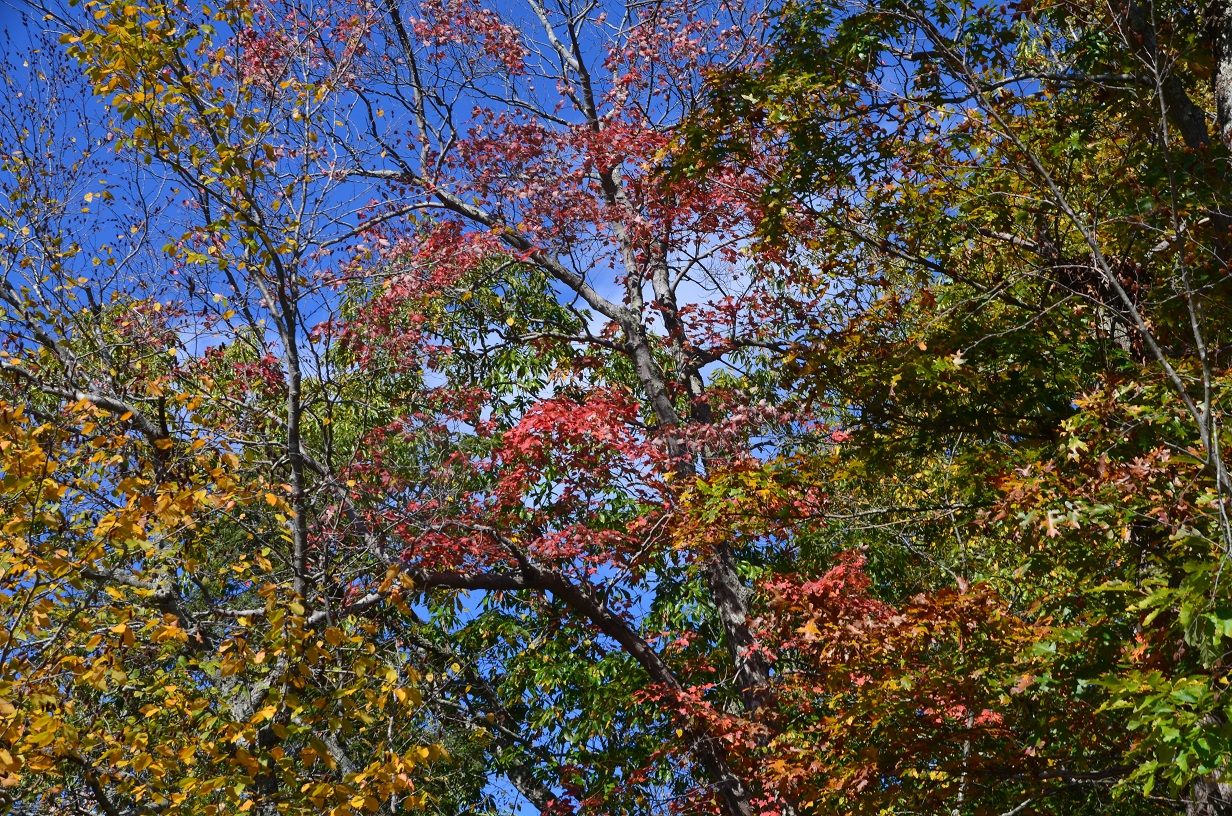
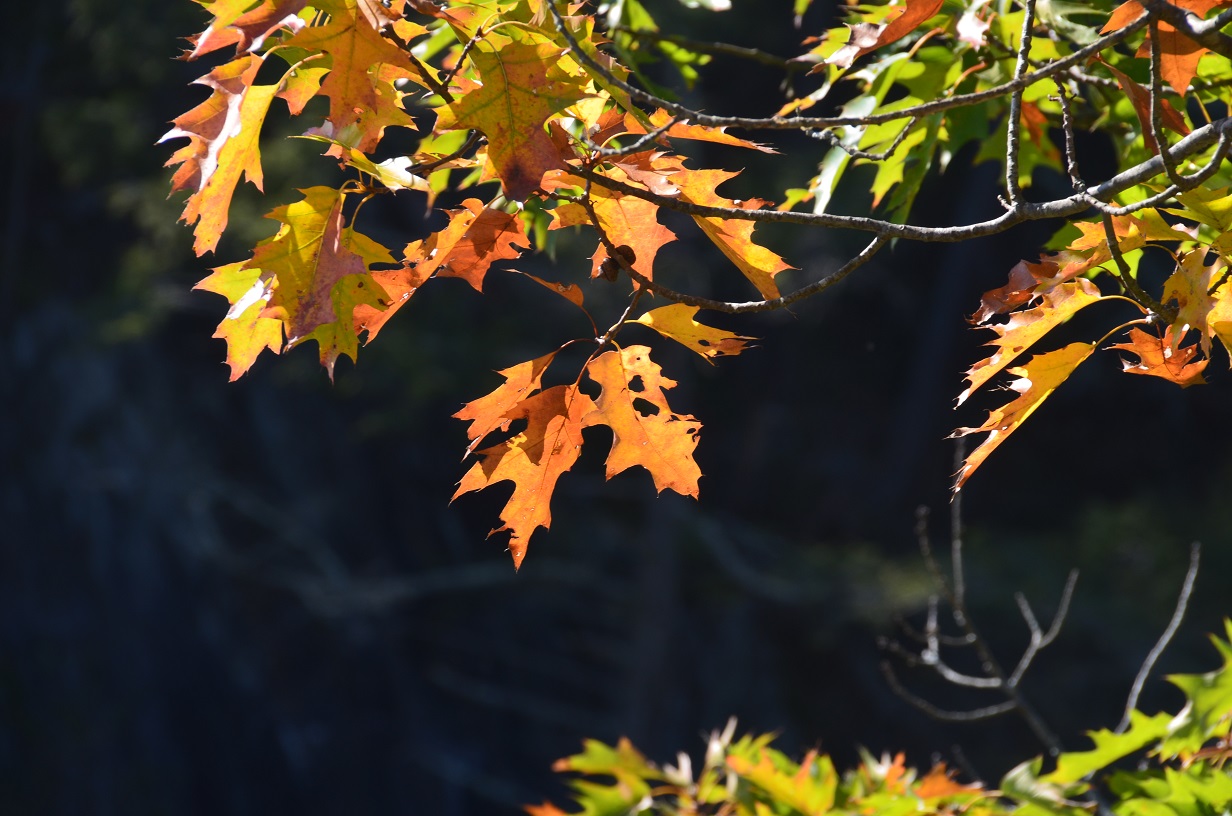
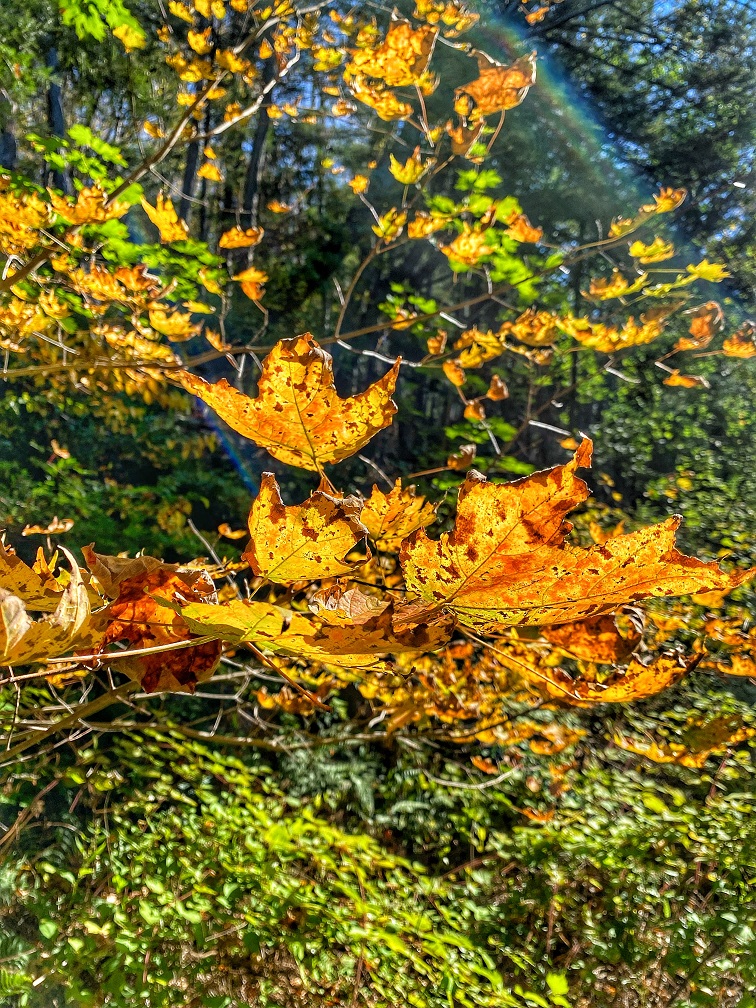
And here we are again in my favorite season – fall. It is still warm enough to enjoy the outdoors lightly clothed; running the air conditioning is no longer a necessity to survive indoors. And the colors, the abundance of colors – every season has its beauty, but fall offers the most profound expression of it.

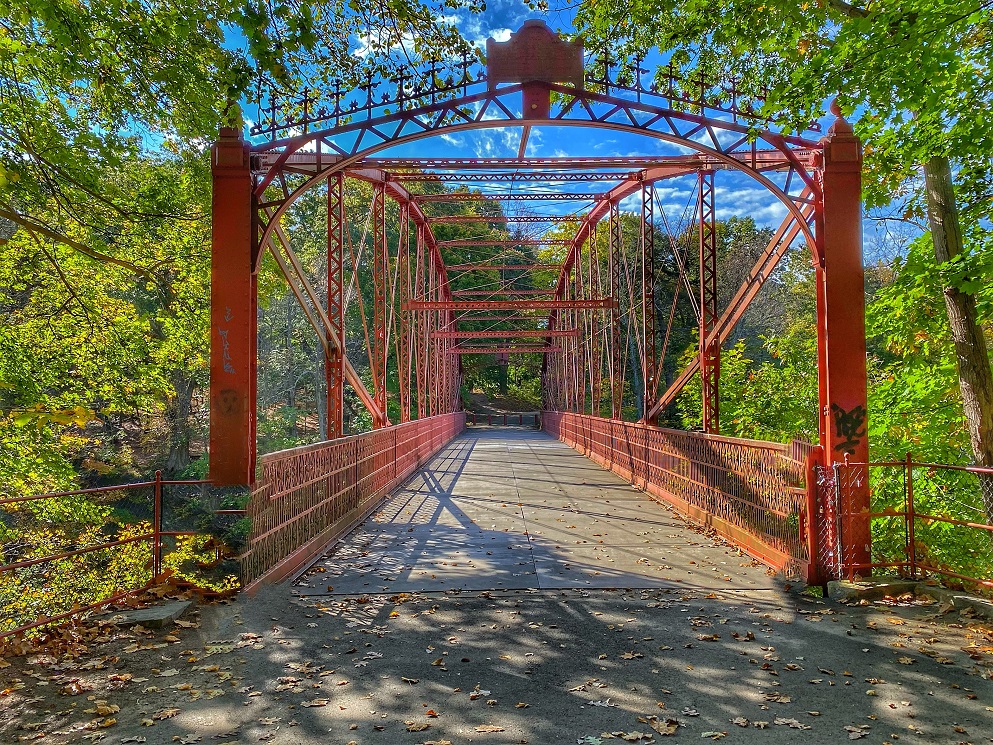
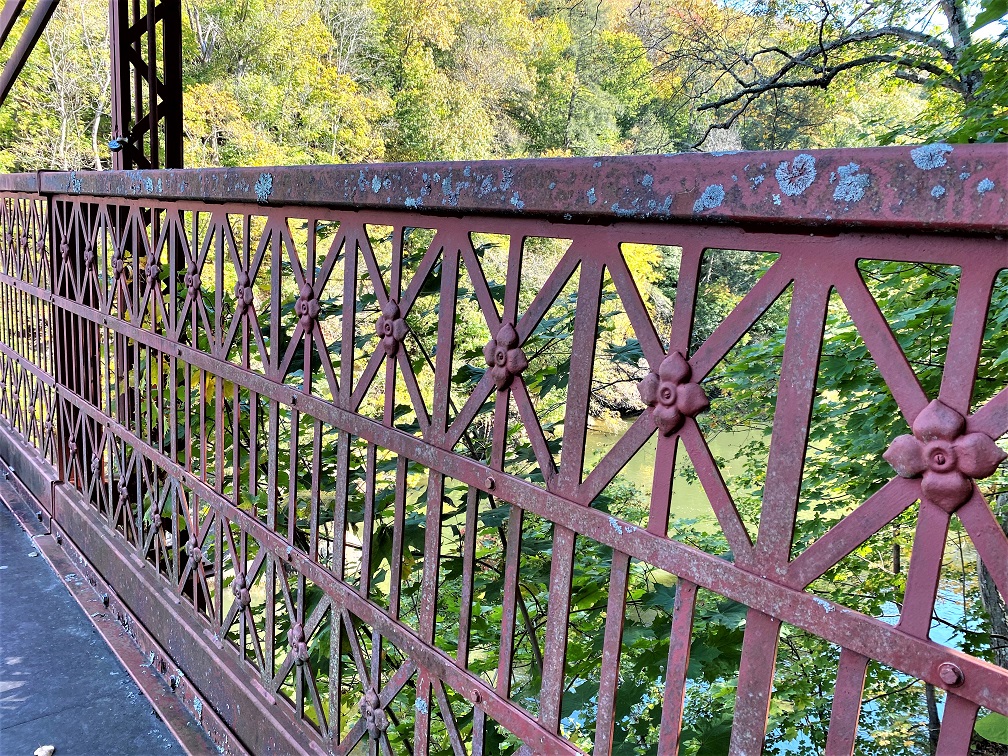
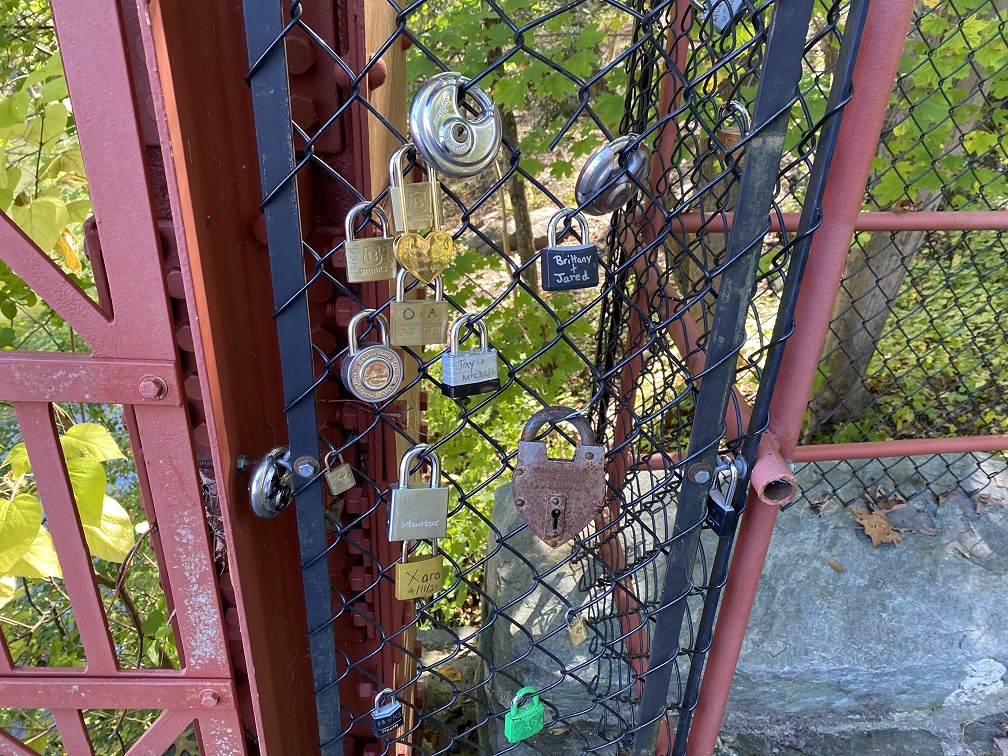
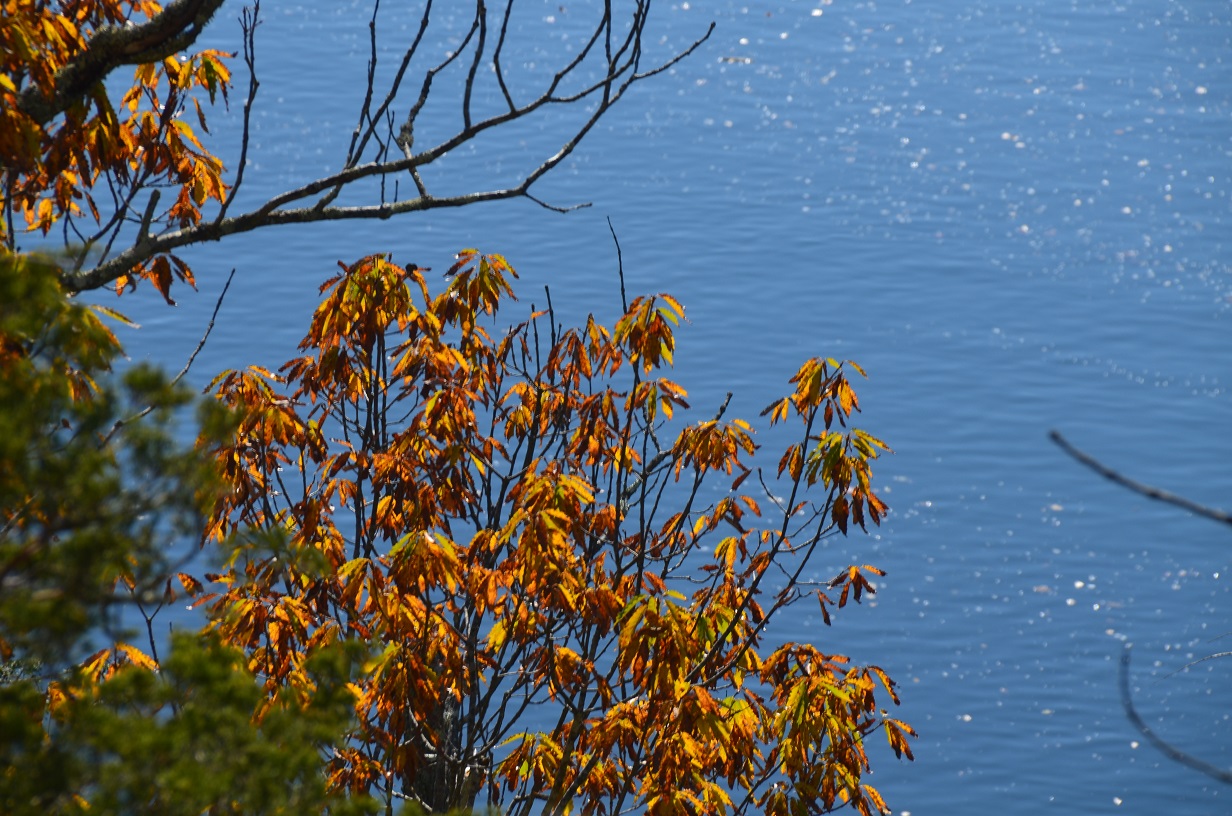
This 2021 fall season is interesting (it is not over yet). It is still continuously warm, and so the leaves are still mostly green – it is occasional branches and individual leaves which all of a sudden offer a full brilliant display of red, golden, and orange. In this traditional New England fall post, I usually share pictures from my neighborhood walks, a tiny circle of two streets next to the house. Yesterday we wanted to get out of the house, and so we took about an hour drive to New Milford up north in Connecticut to visit Lover’s Leap State Park. We spent there about an hour, slowly walking the narrow path covered with fallen leaves, and admiring, or rather indulging, on absolute silence, crisp fall air, and views of the Housatonic River.
Absolute silence is a rare treasure – somehow, in the middle of the park you are far enough from the road, and maybe we just got lucky, but it was really an amazing feeling – not being disturbed by anything. It is hard to convey the silence and the smell of the autumn leaves through the words – so I have pictures for you – many, many pictures. Yes, pictures also don’t do justice to the perfect fall day outdoors but let me at least try…
Without further ado, here they are for your viewing enjoyment:

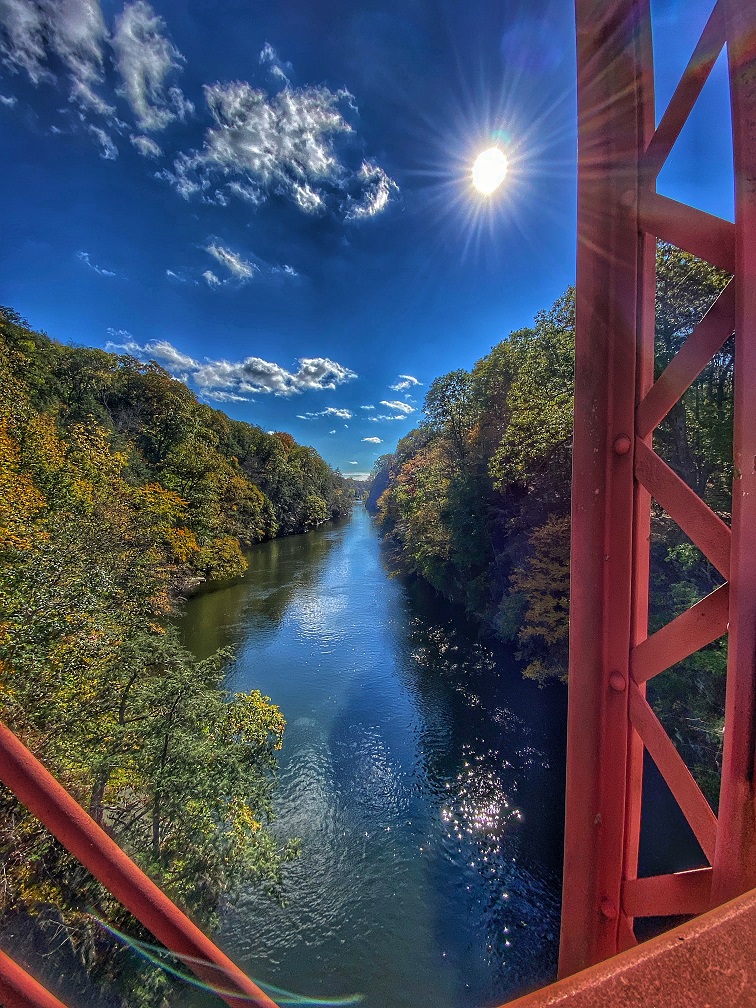
Here are more of the river views:


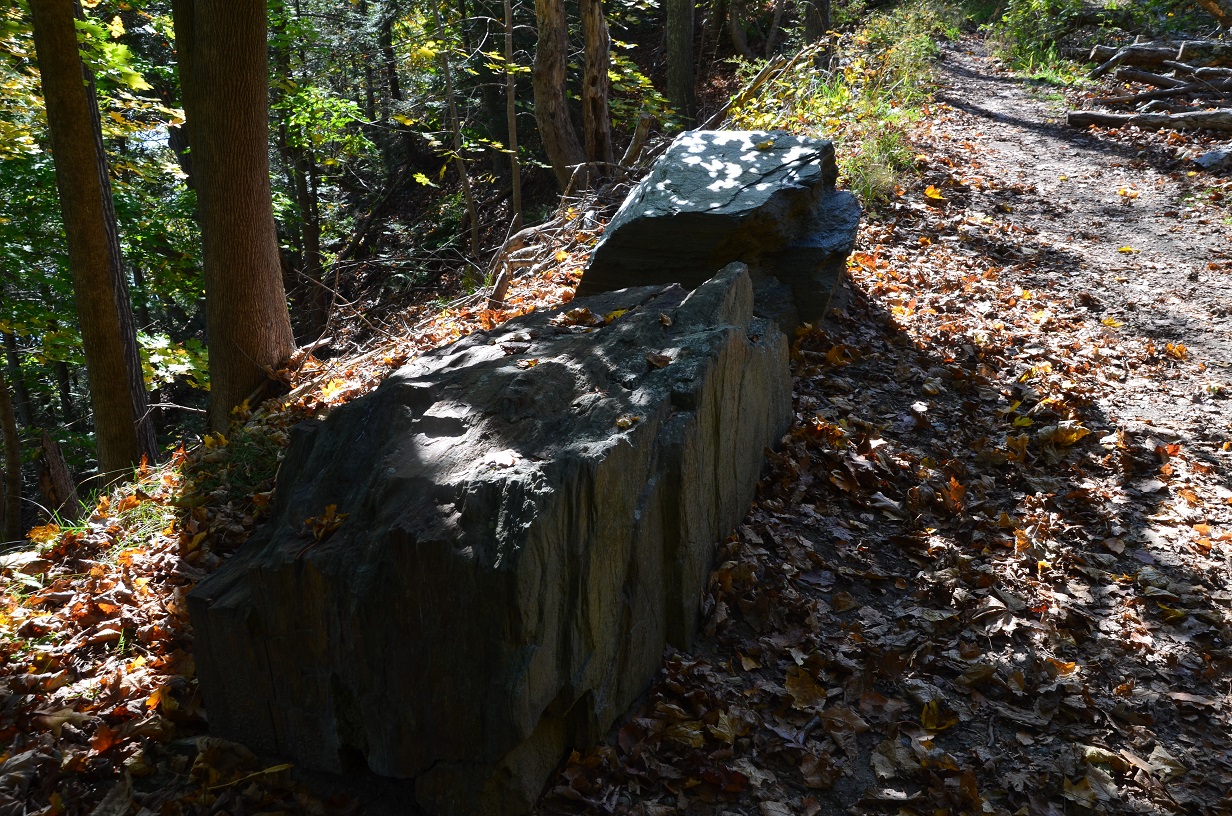
 The trail:

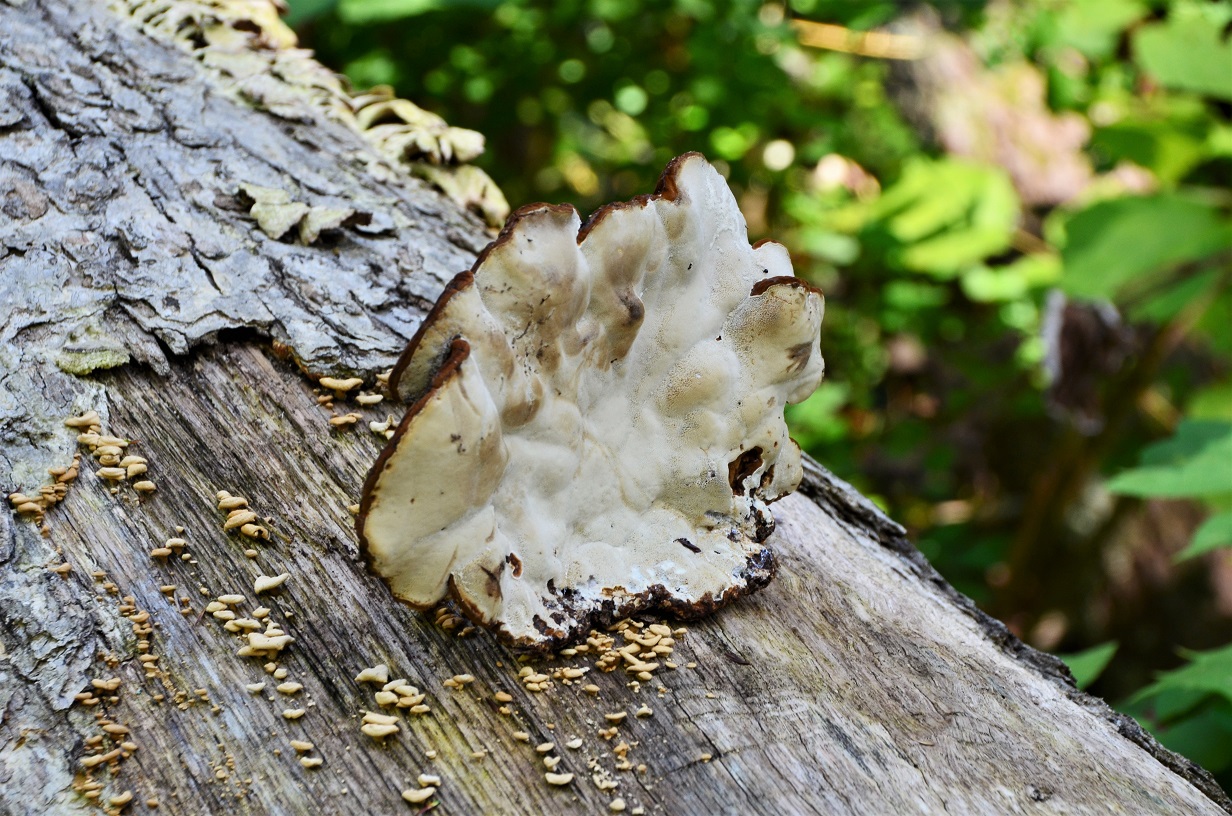
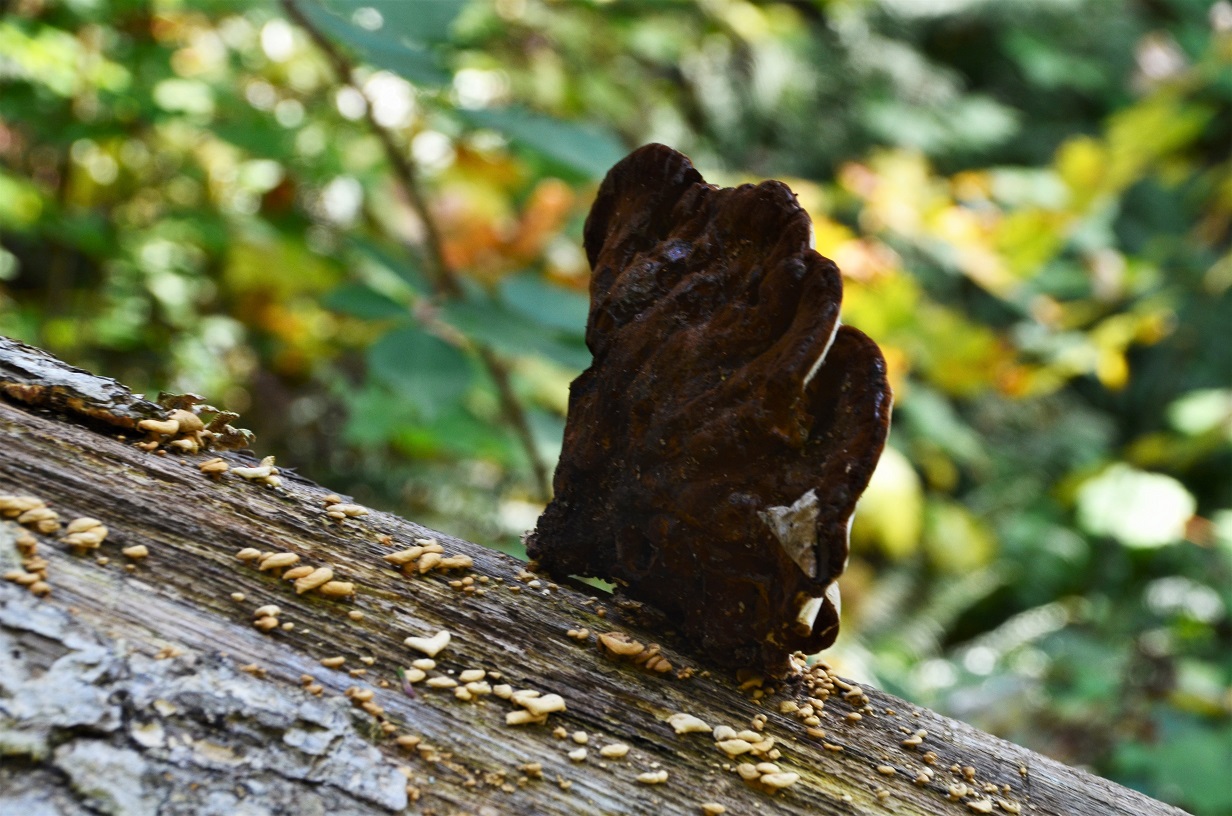
Few of the random tree mushrooms:

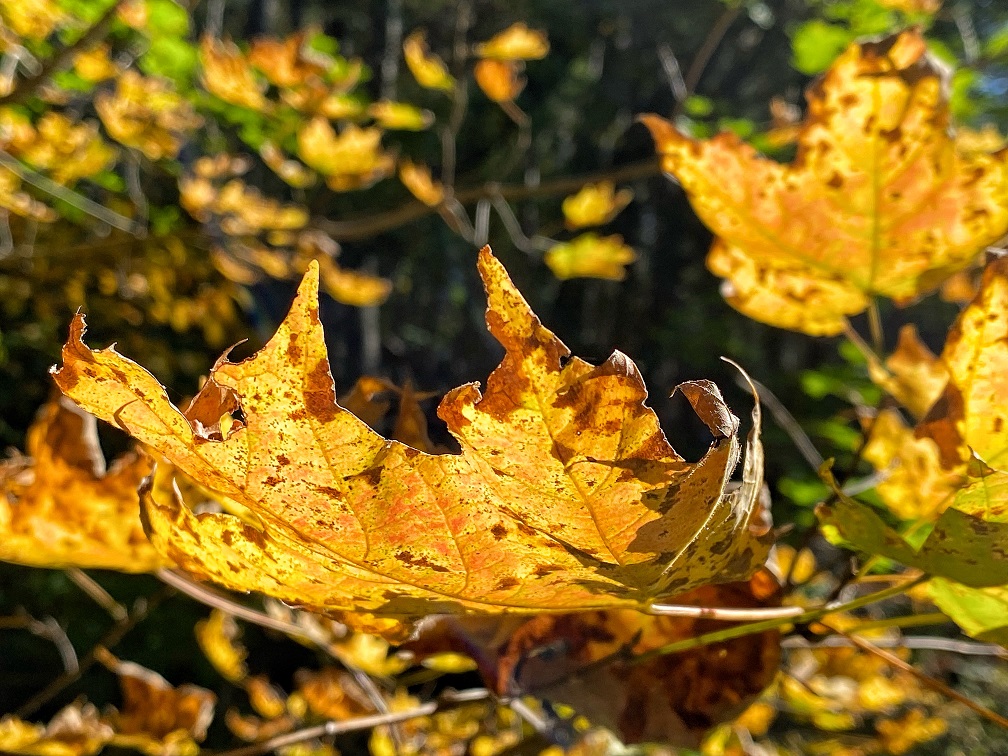
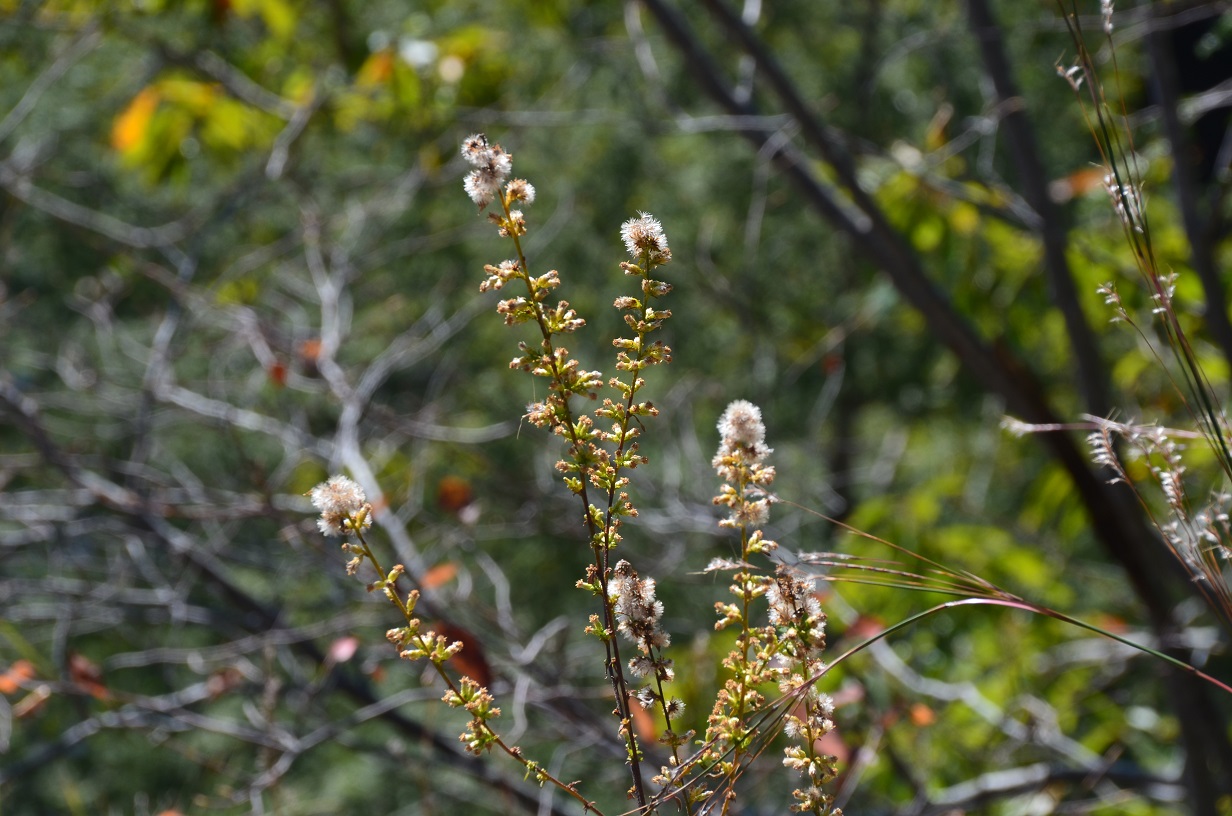
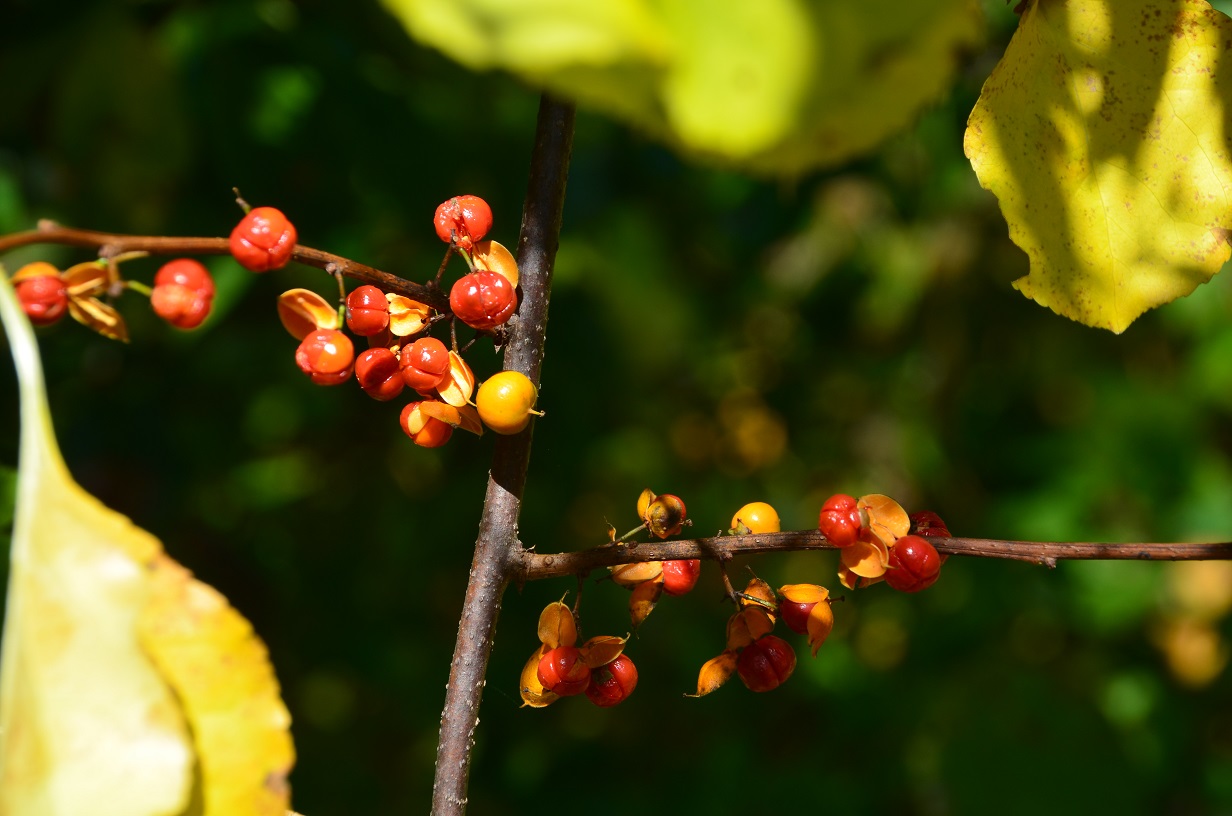
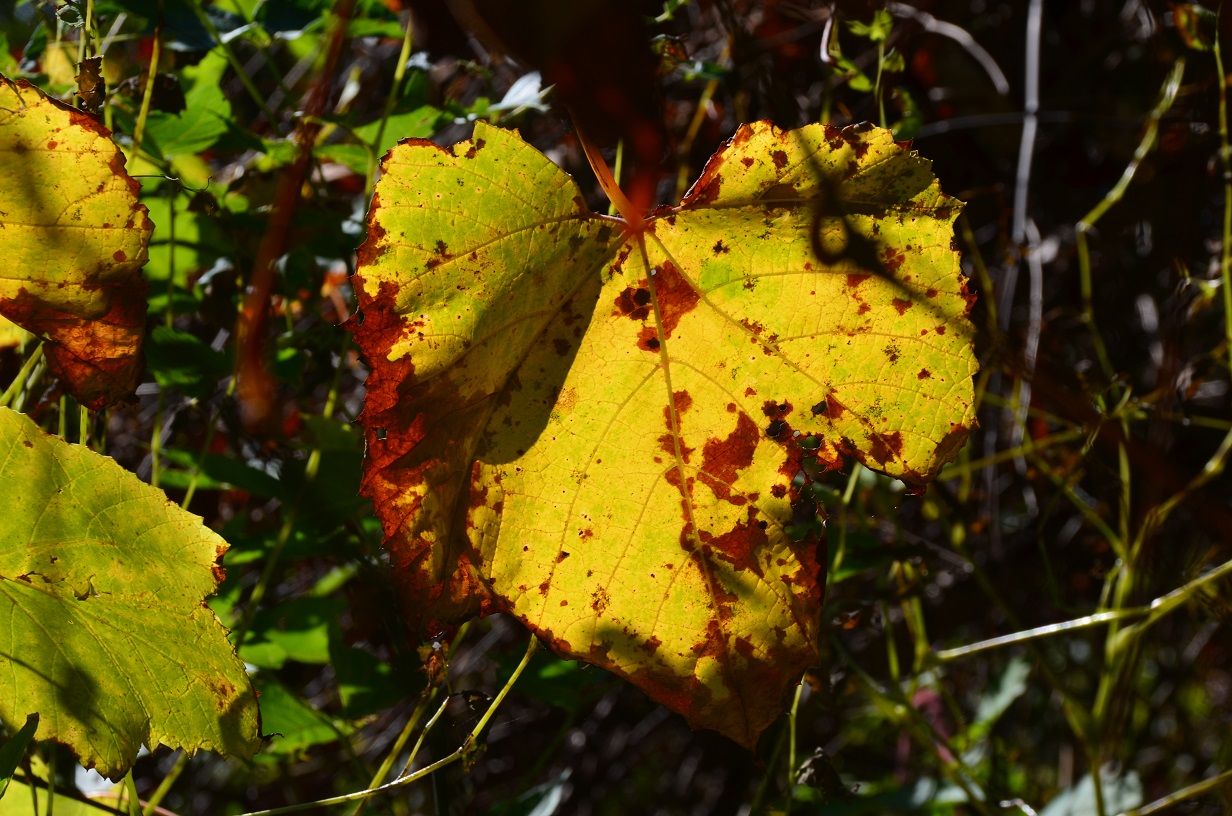
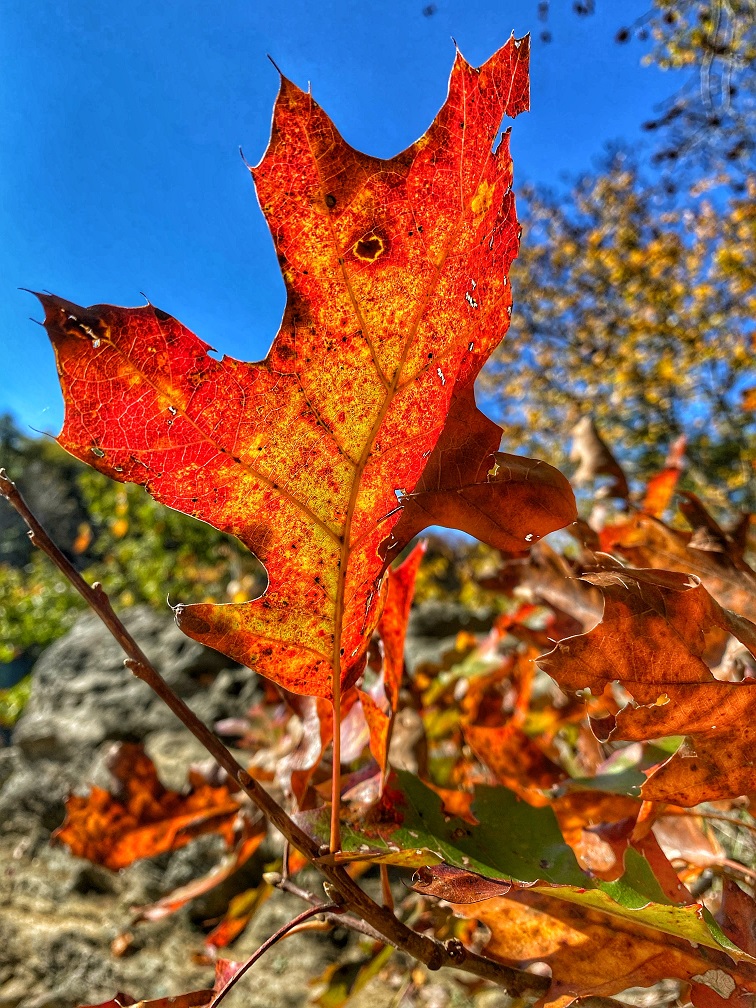
And now, the color display:


Daily Glass: Uncomfortable Wine
 “Uncomfortable wine”??? What utter nonsense, right? Did the author had one too many glasses while writing this post?
The wine can be spoiled. The wine can taste bad. We can call it plonk, we can pour it out. But uncomfortable?
Shoes can be uncomfortable. The dress can be uncomfortable. The shirt’s collar might be too tight. Not knowing how to start a conversation with an attractive stranger might be uncomfortable. Not knowing how to answer a live interview question for the position you dreamed of your entire life is uncomfortable. Many, many things can be uncomfortable. But wine?
When I refer to wine as an art, the typical association in my mind is painting. As an art form, I imply that there are similarities between the bottle of wine and the painting on the wall. But maybe a book would be a better art form to compare?
Reaction to painting is instantaneous – you can, of course, spend hours looking at elaborate details and discovering new elements even if you saw the painting a thousand times before – but your first impression is unlikely to change, it might only deepen as time goes on. But with the book, first we see the cover, then we start reading, and if we found the book which speaks to us, by the time we reach the second page, nobody cares about that cover anymore.
When it comes to the wine, the bottle and the label matter – until we take the first sip. If we found “our wine”, the same as 300 pages book can be obsessively consumed within a few hours, a good bottle of wine will be gone in no time. And while you will be enjoying it, most likely you wouldn’t even remember how the label looked like.
What’s with this interlude and our comfort/uncomfort discussion you ask? Don’t worry, this is all connected.
So what can be uncomfortable about wine? Actually, many things. Remember – in the wine world, it is all about perception – except the taste, the pleasure, and your desire to have a second glass – of course, if you chose to be honest with yourself. Otherwise, perception is everything. Enjoying a glass of 2 buck chuck is uncomfortable. Bringing a $5 bottle of wine to your friends’ house is uncomfortable – knowing that it is an amazing bottle of wine without any regard for a price doesn’t make it less uncomfortable. Enjoying the glass of wine while your best friend hates it is uncomfortable. And then there are labels.
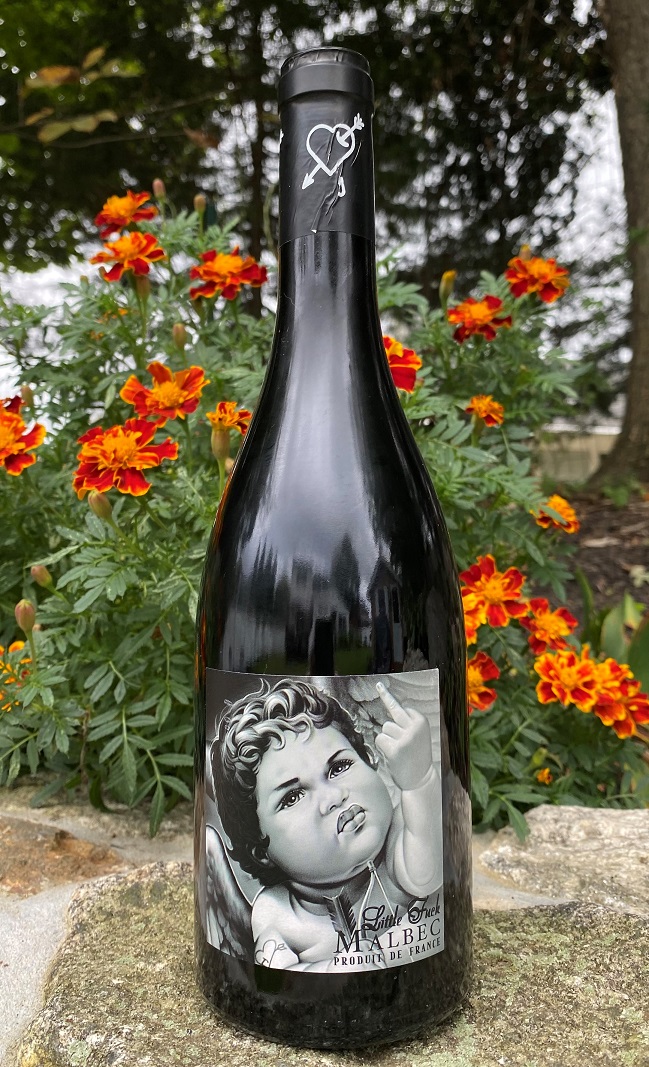
Okay, call me “captain obvious”, but this is where I was leading you all the way – the label can make you uncomfortable. There are enough wines in this world that have, for example, sexually suggestive or simply offensive words or images on the label. Ever saw the bottle of If You See Kay? This is a perfect example of suggestive language on the label – the book cover – for a perfectly delicious wine produced by Jayson Woodbridge. And there are wines that don’t even use suggestive language anymore – like the Little Fuck Malbec from Cahors.


When a friend sent me a picture of this label a few days ago, my first reaction was literally WTF – how can such a label be even approved (Jayson Woodbridge had lots of trouble getting his If You See Kay label approved 9 years ago)? But as the wine was available, I decided that I would not judge the book by its cover, and actually try reading it – and so I got the bottle.
I have to say that as soon as I got a hold of the bottle my negative impressions instantly started to diminish. This is hard to explain, as I don’t know if all the oenophiles feel the same way, but there are bottles that express “comfort” with its shape, weight, and overall feel in your hands. Once you take such a bottle in your hands, you can’t help yourself but say “oh, this is nice”. This was precisely the bottle. Outside of the wine name and the image on the label, the bottle was very comfortable and really created the anticipation – “oh yeah, I do want to open that bottle”. Even the label looked well designed in its shape and size and added the overall “comfort” feeling.
The wine didn’t disappoint – 2020 Vellas Père Et Fils Little Fuck Malbec Cahors AOP (14% ABV) was unapologetically a New World Malbec – big and brooding – and in a blind tasting I would confidently place it into Argentina, but never into the old world. The wine was full of raspberries, smoke, and sweet tobacco – on the nose and on the palate. Big, full-bodied, and powerful, but also well balanced and delicious – a very unapologetic Malbec I might be ashamed to bring to the acquaintance’s house but would be happy to drink at home or with close friends.
I’m really curious about the backstory of this wine. I don’t believe the name and images are random. Nicolas Vellas is a vigneron in the 4th generation at Vignobles Vellas, farming 300 acres of vines and producing a wide range of wines in the South of France. If this would be the only wine produced at the winery, yes, we could dismiss it as a gimmick. But this is simply one of many and the only one with such a unique label, so I truly believe there is a story for this wine, which is not easy to figure out – I even sent a message to the winery asking them to share the story if they can, but I’m not very hopeful. Well, actually lots of Vignoble Vellas wines have very creative labels – you can see them here, but I don’t know if there are any more of the “uncomfortable” ones.
Here you go, my friends. Uncomfortable wine which also happened to be delicious. Yeah, I’m okay with that. I’ll take delicious any day. And comfort? It comes after delicious.
Of Hydrangeas, Ocean, Sunsets, and Wine
I’m sure this cryptic title leaves you wondering what are we going to talk about in this post, right?
Yeah, a lame attempt at self-humor.
And as you can see I want to talk about some of my most favorite things – flowers, waves and sand, sunsets, and, of course, wine. Mostly in pictures – except the wine part.
We just came home after a weekend in Cape Cod, and if you ever visited The Cape as it is typically called, I’m sure you noticed the abundance of hydrangeas. There is rarely a house that doesn’t sport a beautiful hydrangeas display.
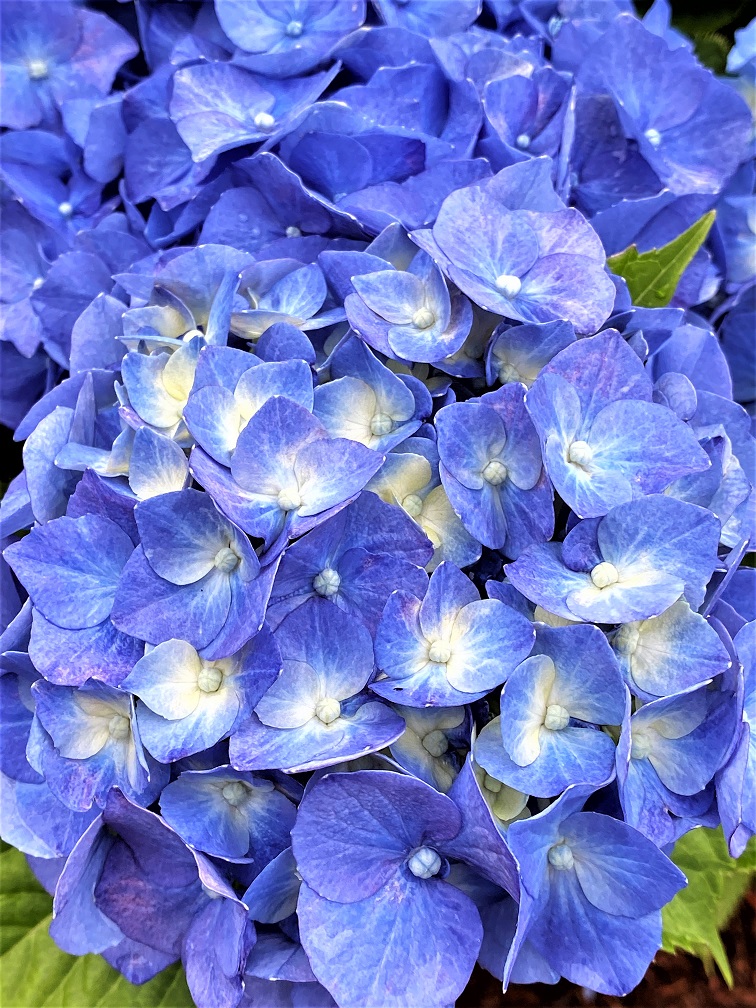
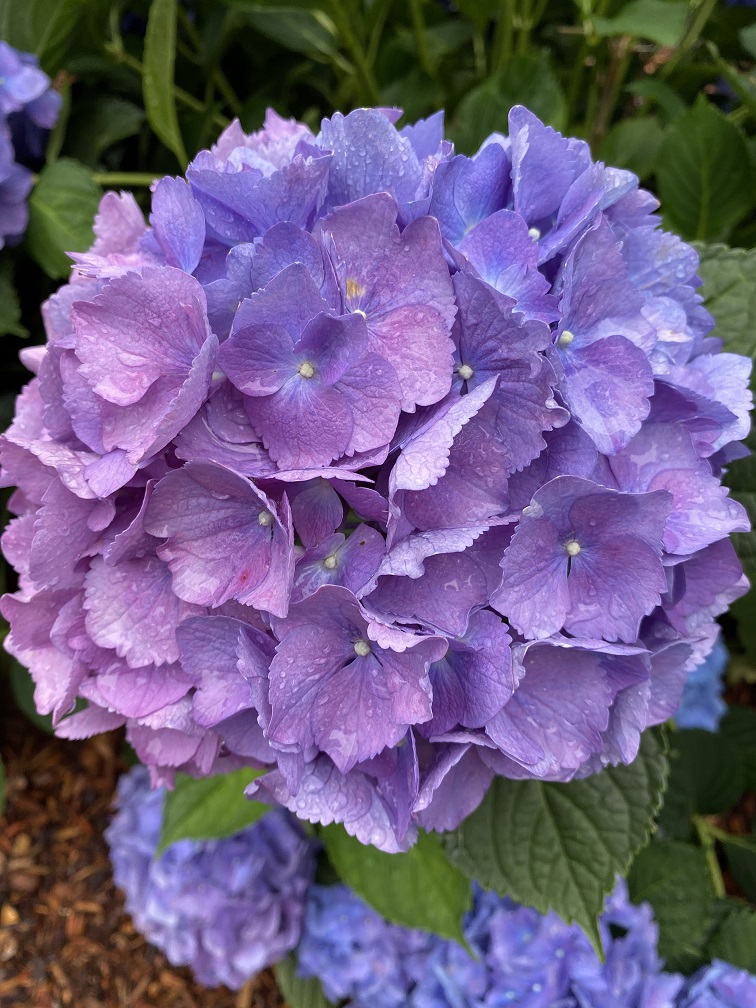
Hydrangeas come in many colors, which can be also influenced by what you feed the flowers. They typically bloom the whole summer and deliver non-stop pleasure – at least in my world. Let me share some of my favorites with you:


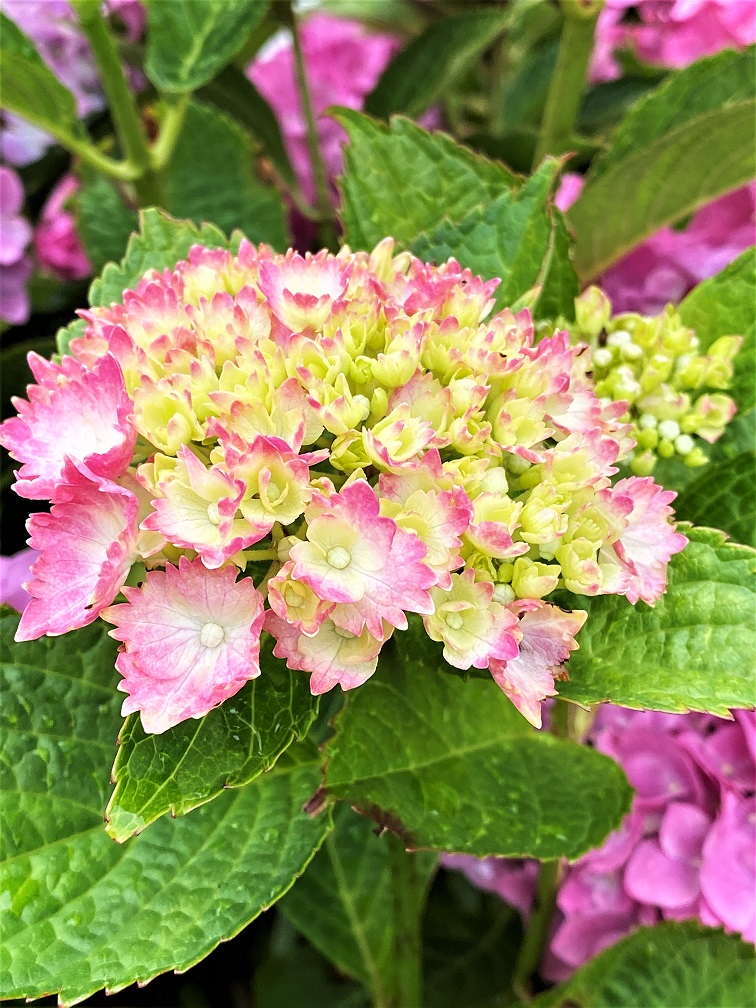

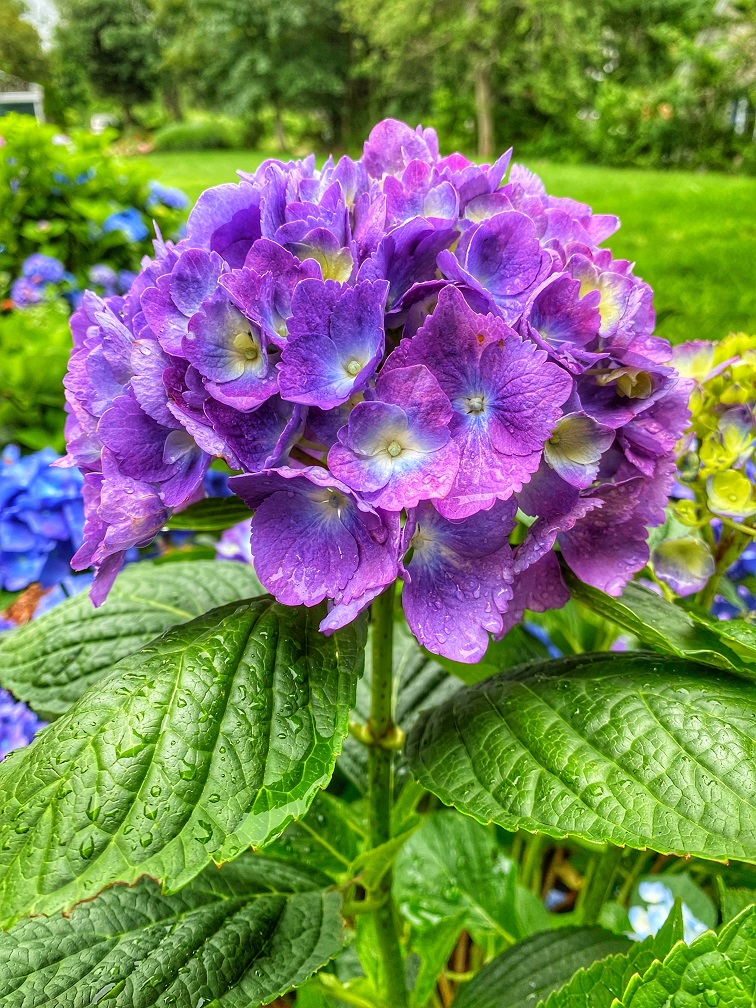
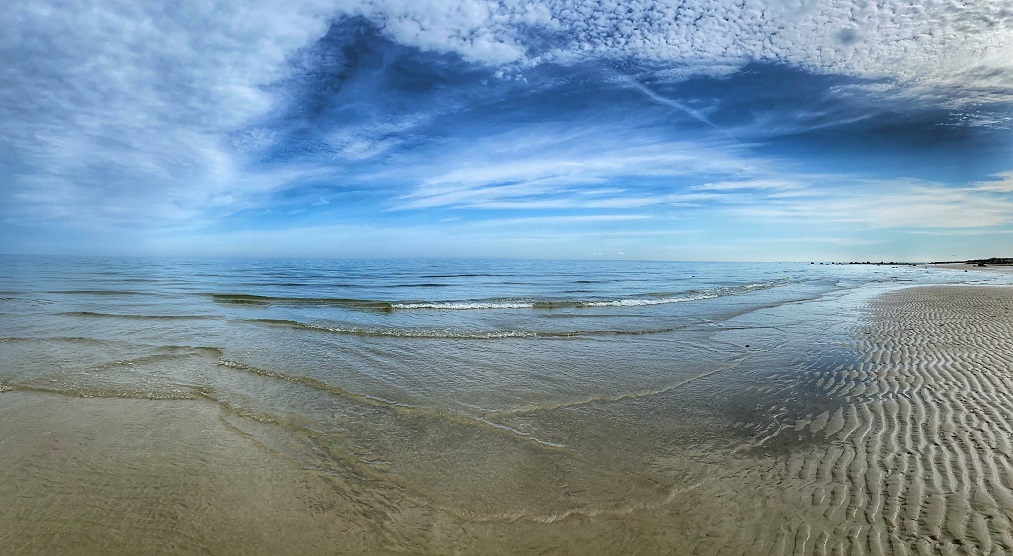
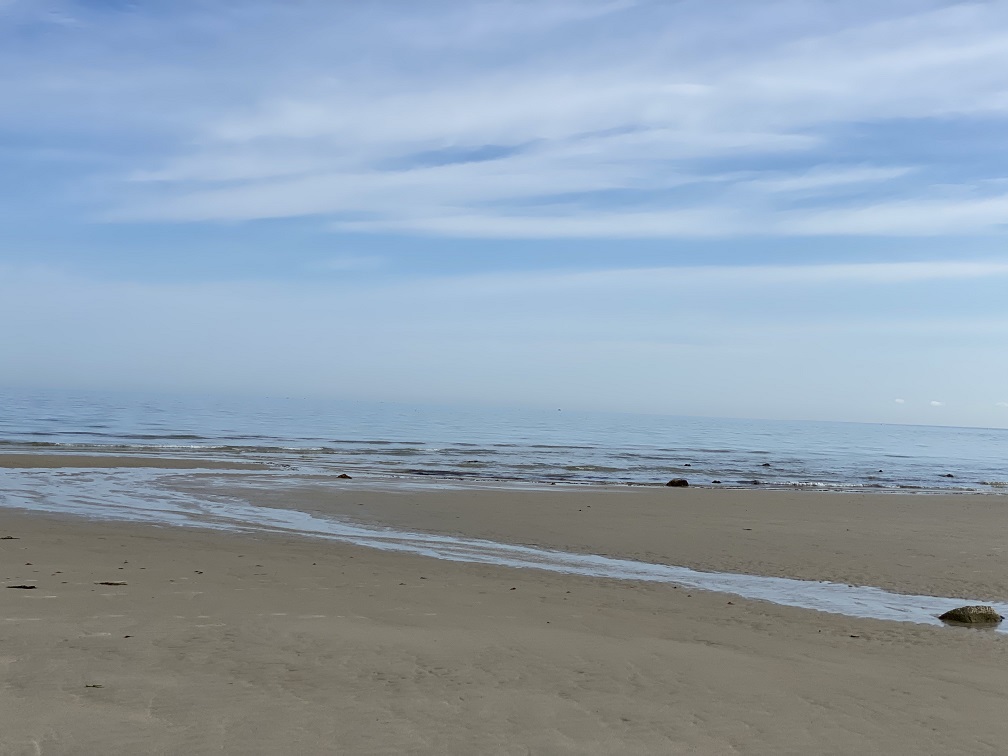
Our next subject is the ocean. Cape Cod is a special place, where you can find huge swathes of water only a few inches deep, or simply a wet send that goes for miles and miles during low tide. The water and the sky magically connect, creating an ultimate rhapsody in blue – see for yourself:
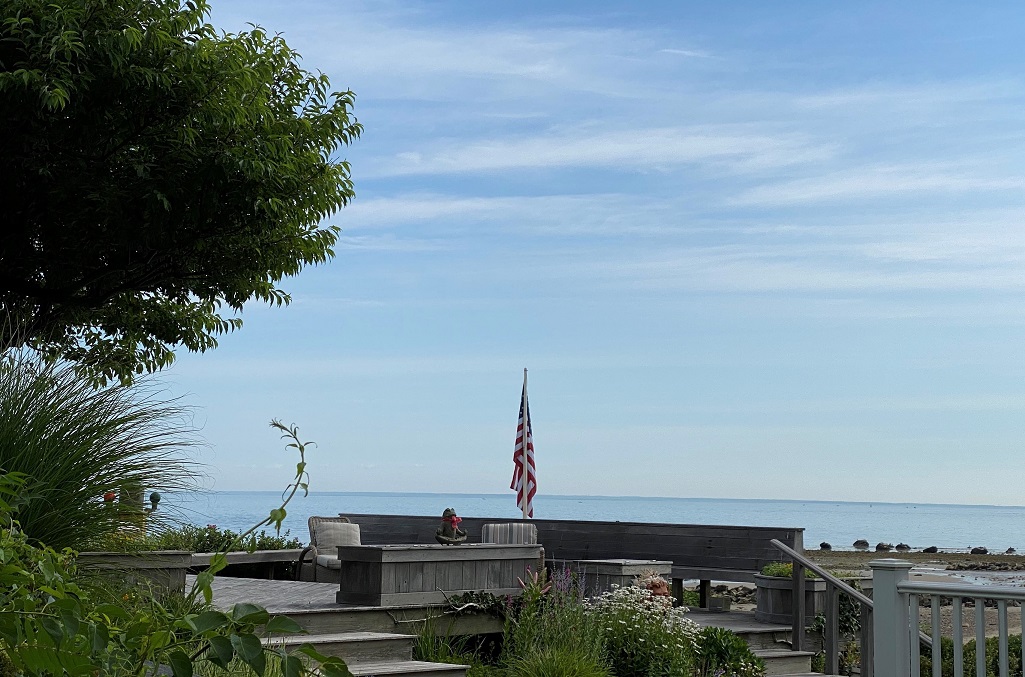


 The sunsets were challenging this time around. Two days out of three that we spent on The Cape, the weather was not good at all – rain, wind, and more of the rain and wind. Nevertheless, the weather was taking a break in the evening to present a beautiful sun setting imagery, which we enjoyed from the comfort of the deck – with a glass of wine in hand:
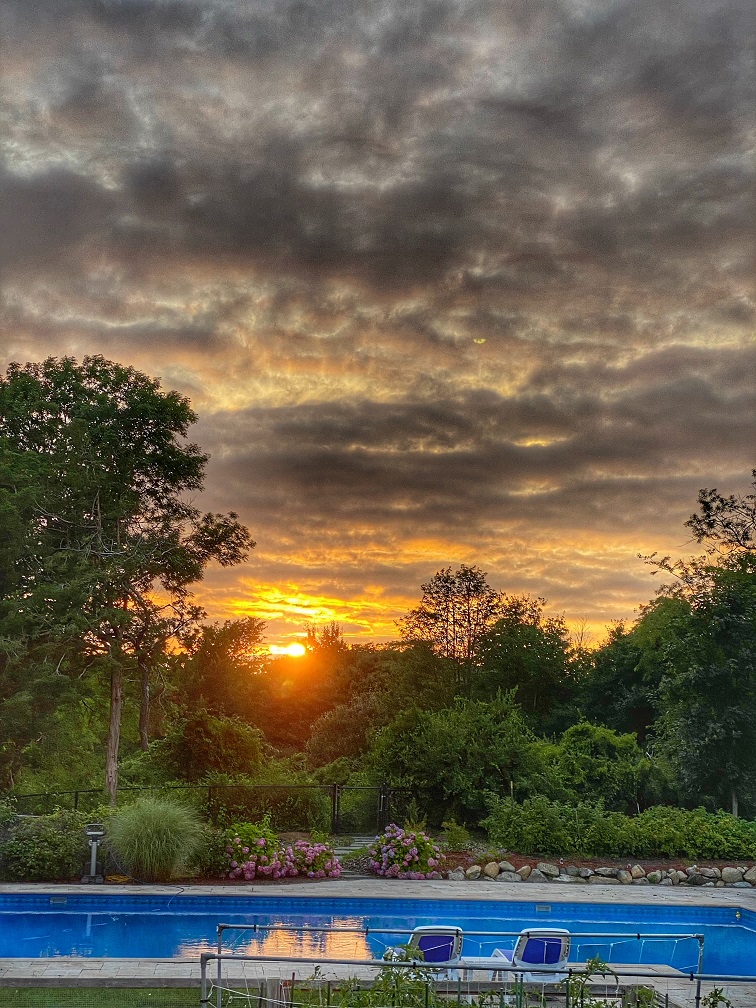
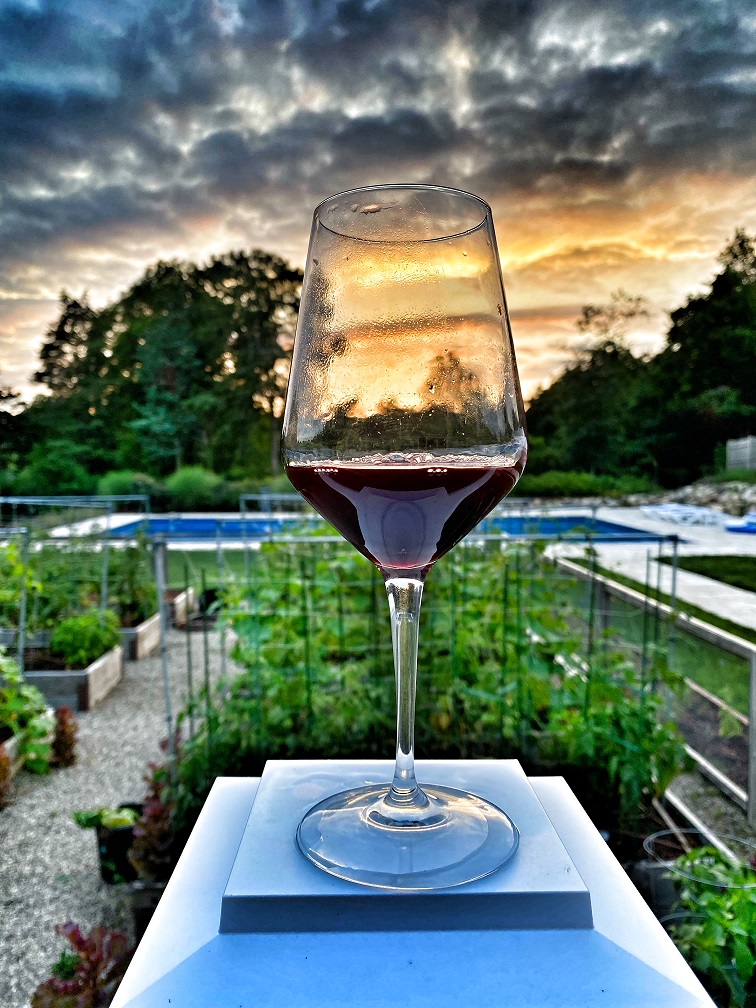
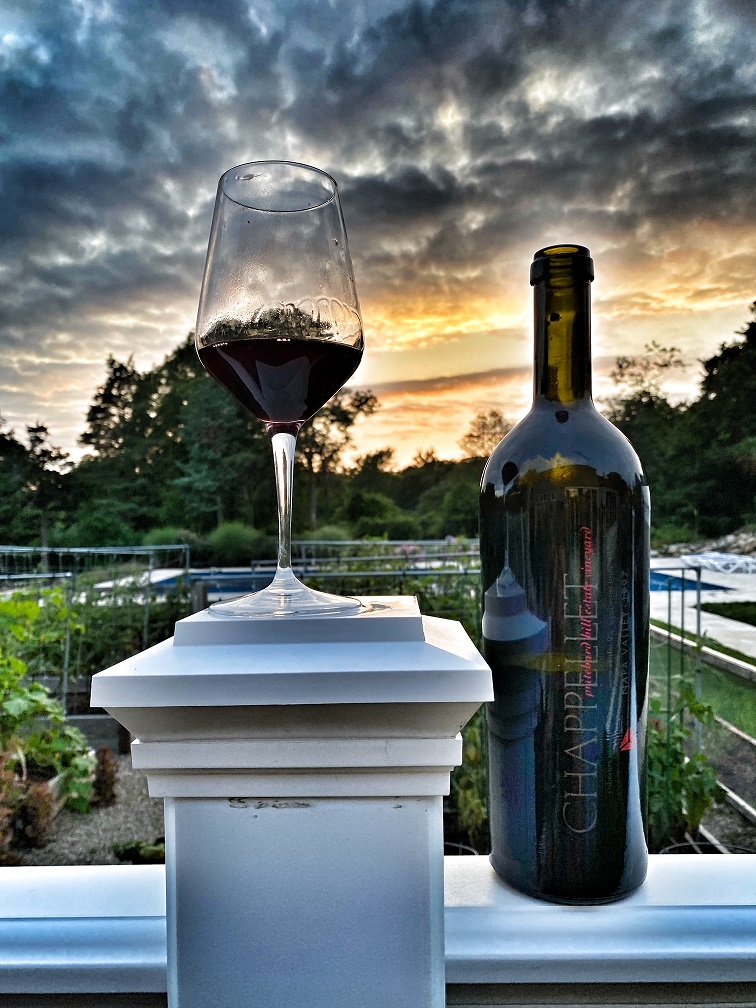 And this brings us to the last subject of today’s post – the wine. This was a vacation, and I was absolutely not interested in taking any sort of formal notes. But somehow, the majority of the wines we had were so good (with the exception of some sort of homemade wine from Moldova, which we had to pour out) that I can’t help it not to share the pleasure. Here are my brief notes.
We started with 2020 Hugues de Beauvignac Picpoul de Pinet AOP (14.1% ABV) – fresh, clean, well balanced. The wine offered a touch of the whitestone fruit and was a perfect welcome drink after 4 hours of driving. It is also very well priced at about $12 at Total Wines in Boston, which is almost a steal at that level of quality.
2019 Golan Heights Winery Yarden Sauvignon Blanc Galilee (13.5% ABV) offered a beautiful Sauvignon Blanc rendition with a hint of freshly cut grass and beautiful creaminess. This wine was more reminiscent of Sancerre than anything else – an excellent effort out of Israel.
2016 Sonoma Mountain Steiner Vineyard Grüner Veltliner (14.1% ABV) – one of the perennial favorites (I’m very disappointed when my Carlisle allocation doesn’t include Gruner Veltliner). Beautiful fresh Meyer lemon, grass, clean acidity – in a word, delicious.


The last white wine we had was 2016 Château de Tracy Pouilly-Fumé AOP (13% ABV). Another Sauvignon Blanc – plump, creamy, delicious. Nicely restrained and round. It is definitely a fun wine as long as the price is not taken into the consideration – otherwise, at about $40, both Yarden (under $20) and Picpoul wines would give it a great run for the money.
Our Rosé was fun 2020 Samuel Robert Winery Pinot Noir Rosé Vineyard Reserve Willamette Valley (13% ABV) – the Oregon Rosé is just not very common. This wine had nice strawberries all around – on the nose and on the palate. I would probably want it to be a tiny bit less sweet, but the wine was still quite enjoyable.
2017 Campochiarenti San Nicola Chianti Colli Senesi (14.5% ABV) is one of my favorite wines to surprise friends and even myself with. It starts as a solid Chianti would – cherries, tobacco, leather, iodine. But in a few minutes of breathing, it magically evolves to add sandalwood, nutmeg, and exotic spices. An incredibly heart-welcoming sip.
And to top of everything else, the 1997 Chappellet Pritchard Hill Estate Cabernet Sauvignon Napa Valey (87% Cabernet Sauvignon, 9% Petite Sirah, 4% Cabernet Franc) was thrown into the mix by my brother-in-law. This wine was a testament to California Cabernet Sauvignon; a simple proof that well made California Cab might be the best wine on Earth. This wine had no – none – signs of aging. Fresh, young, concentrated, cassis and cherries with a touch of mint and coffee, beautifully layered and well structured. This wine was not yet at its peak – I wonder how many more years it would require to reach the top…
And now, an absolute surprise – 2000 EOS Tears of Dew Late Harvest Moscato Paso Robles (10.5% ABV) – a late harvest wine from Paso. Beautiful orange color, and nose and palate loaded with ripe apricots – a hedonistic pleasure on multiple levels.
Now that is the whole story I wanted to share. What is your favorite flower? Have you tasted any amazing wines lately? Cheers!
My Friends’ Roses
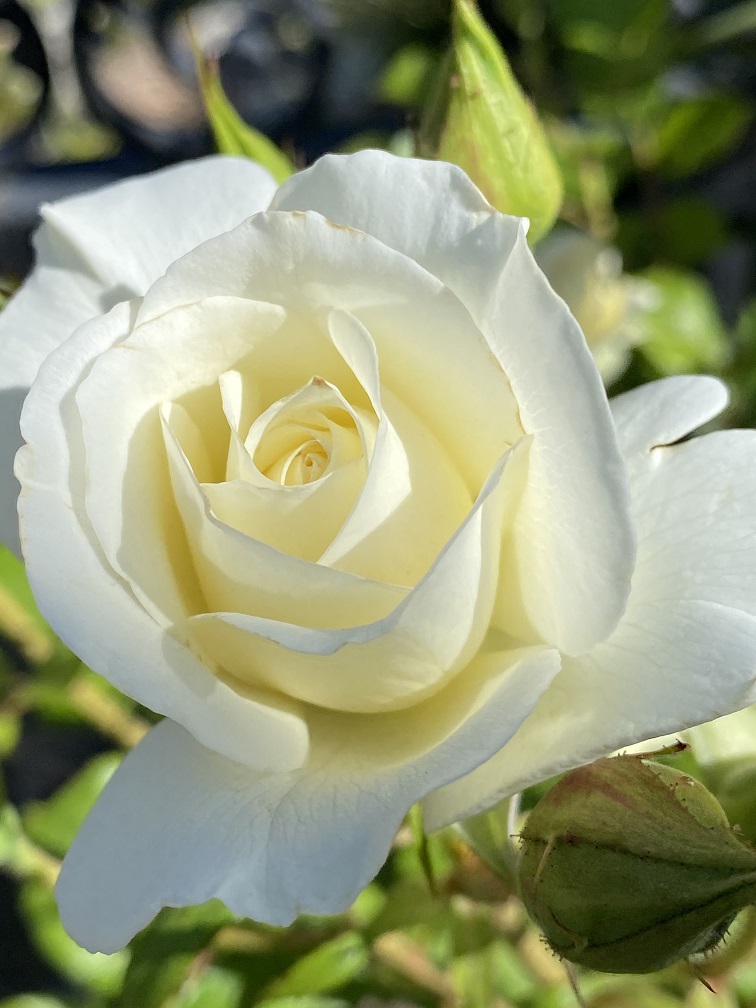
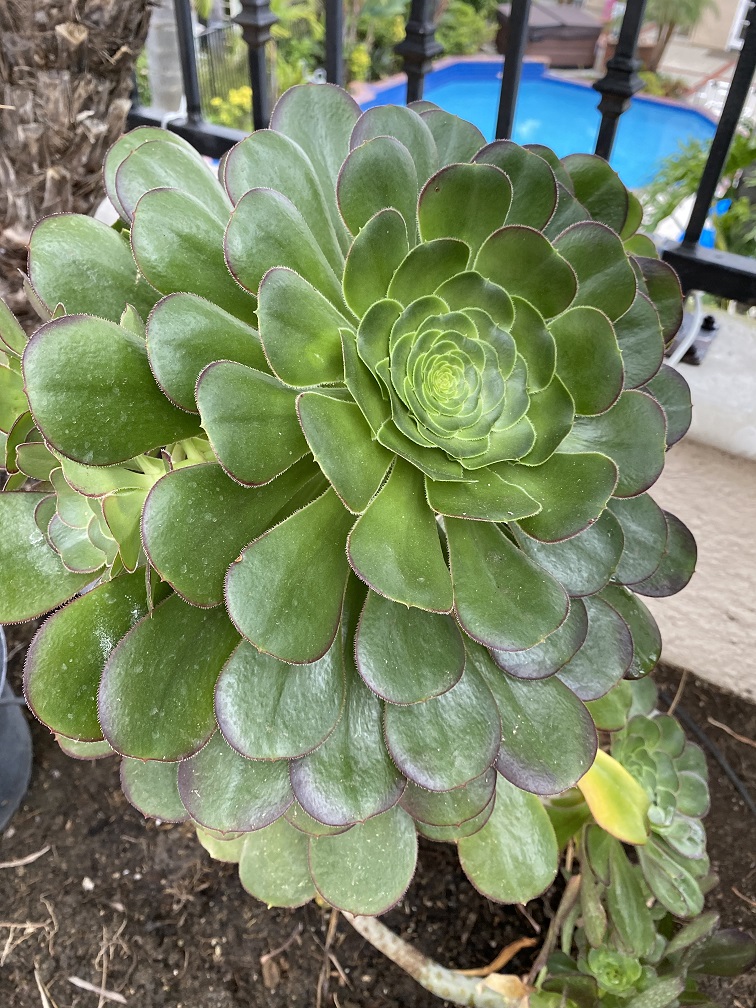
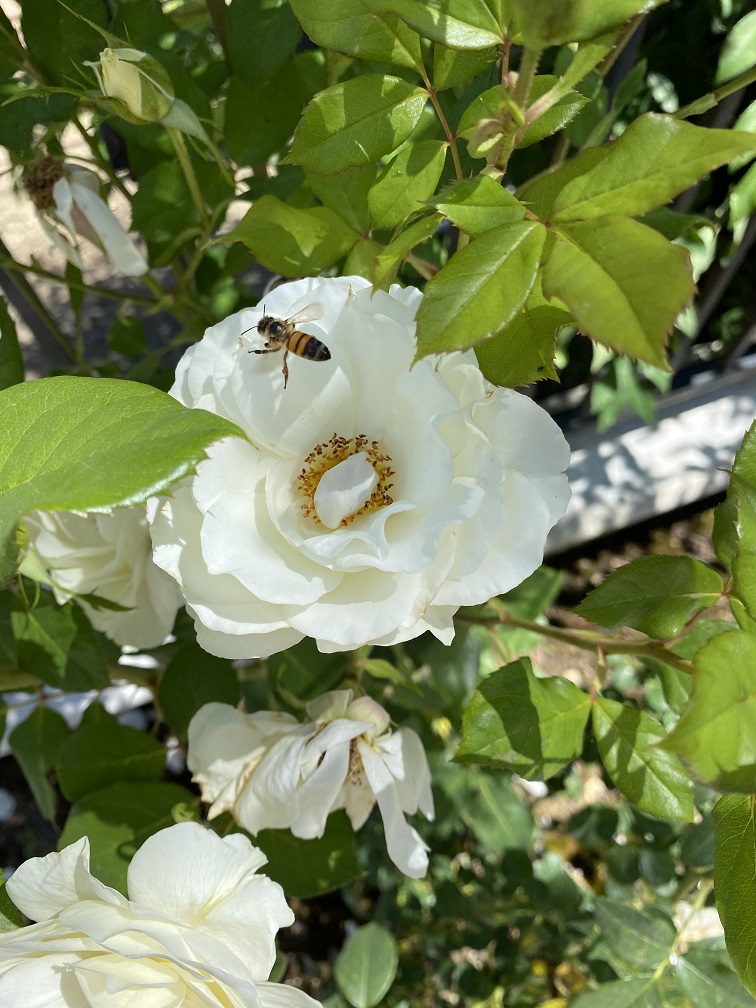
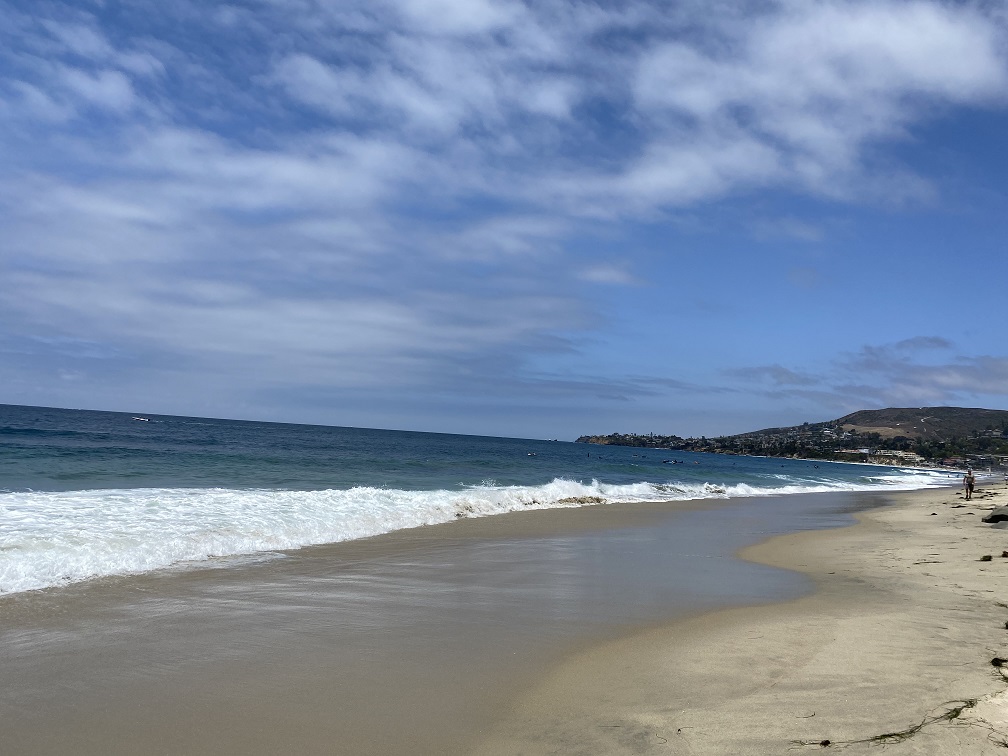
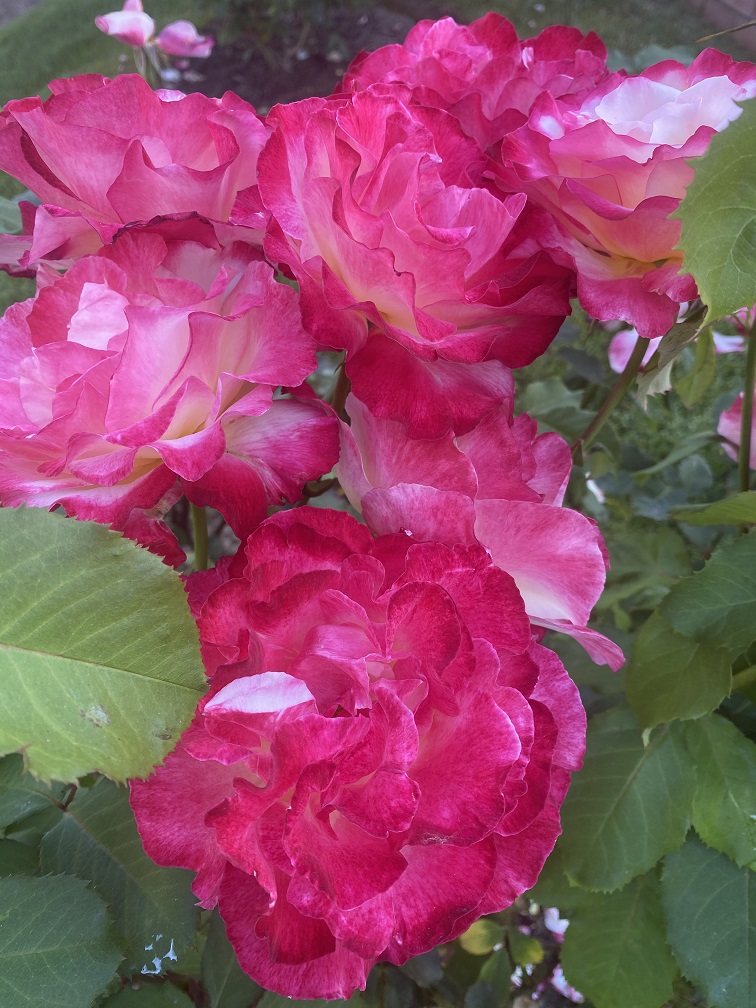
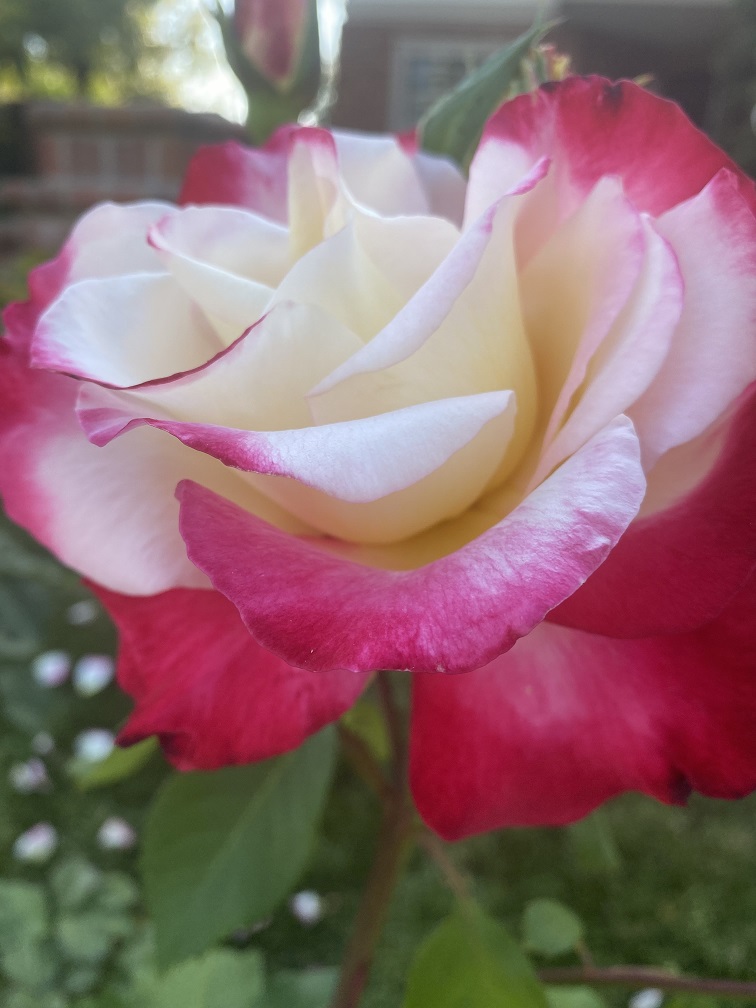
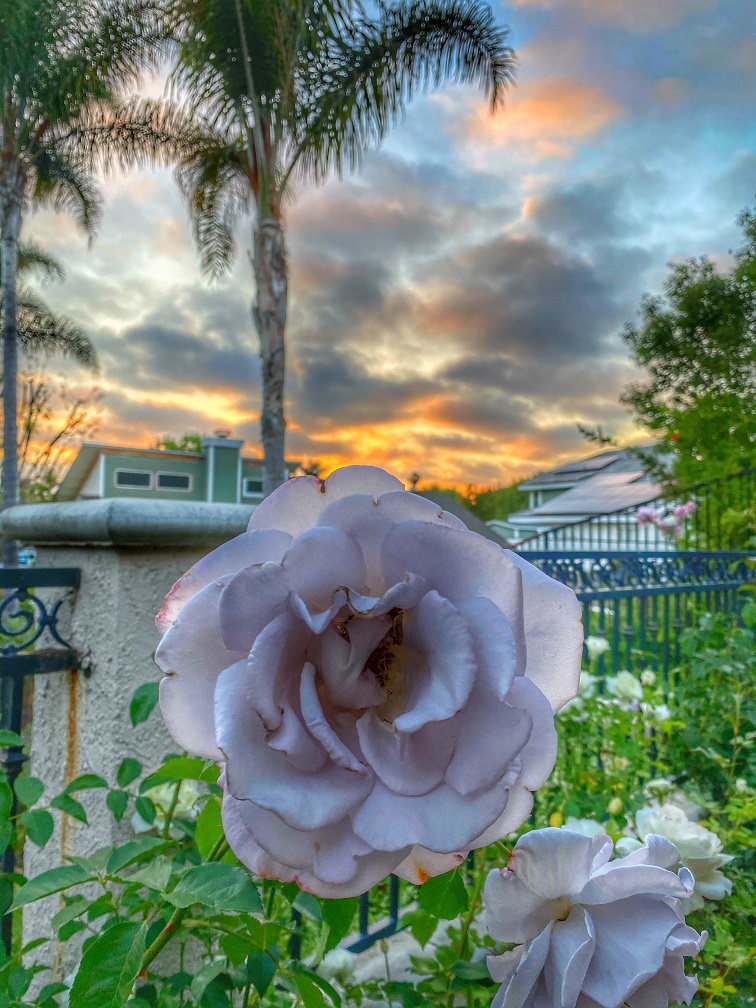
I love flowers. They are some of the most beautiful things Mother nature produces. And the miracle of life – when you drop a seed, which appears to be a tiny speckle of dust into the soil and start watering it, a plant appears in front of your eyes, and then the beautiful flowers follow. When you look at the grown-up plants, flowers, bushes, trees, it is easy to take things for granted – but if you ever had grown anything from the seeds, I’m sure you can fully appreciate that miraculous transformation from dust to beauty.
We visited friends in Southern California last weekend. They have roses growing all around the property, and I couldn’t stop taking pictures of the magnificent flowers. And now I simply want to share that beauty with you. It is not only roses,k but a few other flowers too, a few sunsets, a few palm trees, and a bit of the waves too. Hope you will enjoy!







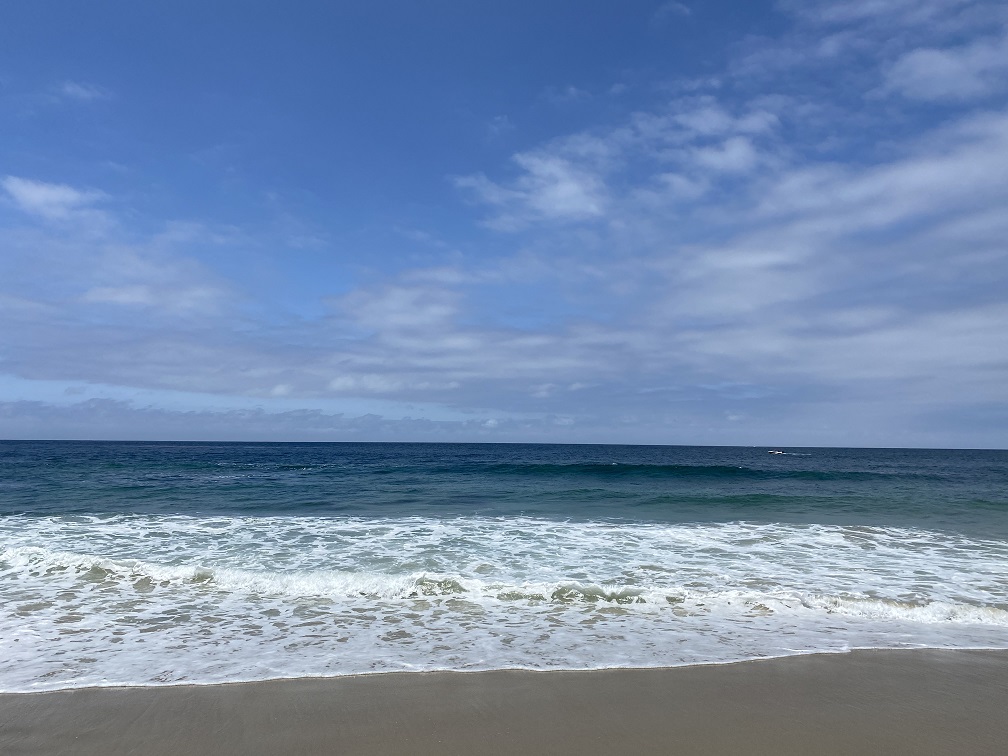
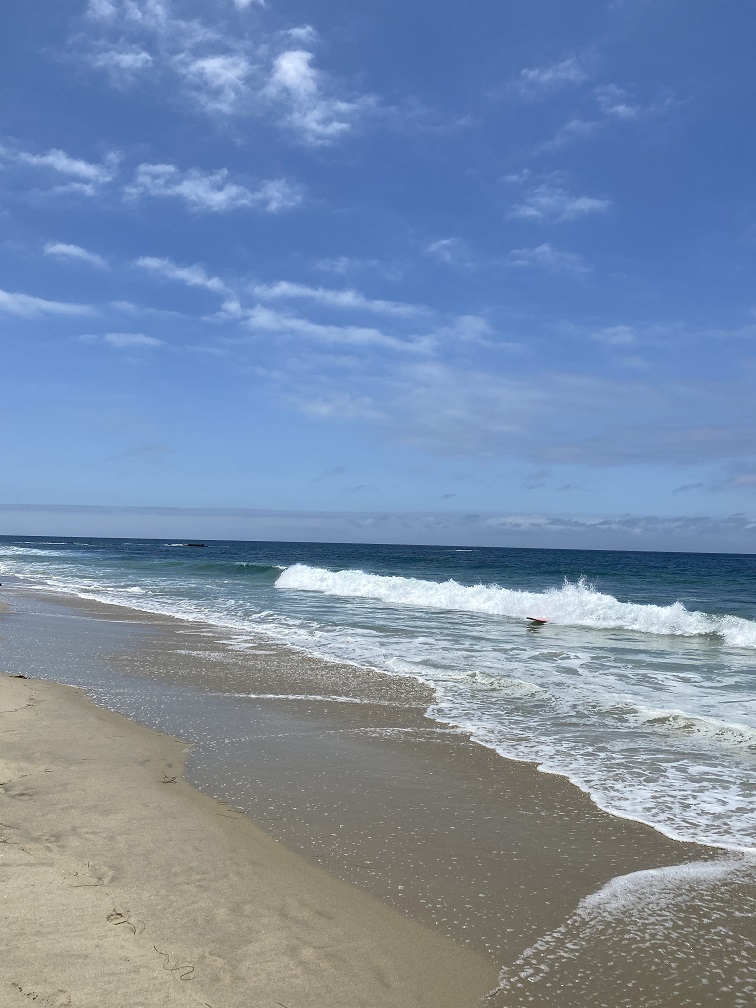

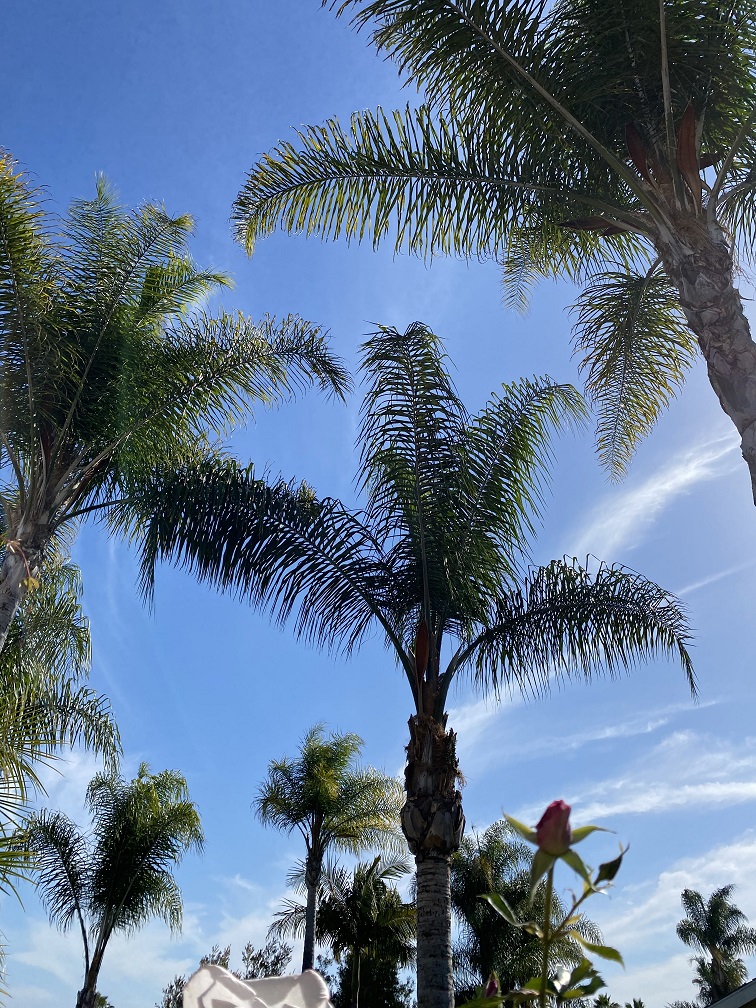
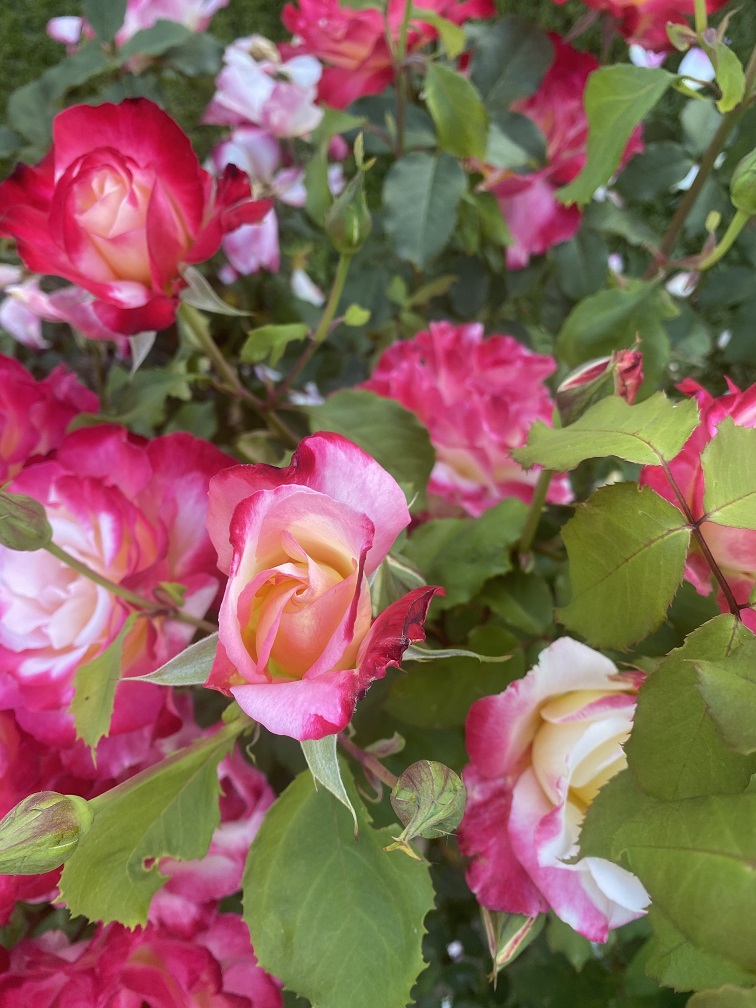
Pretty in Pink
I love photography.
You already know that.
Yes, this is a wine blog, and while this analogy might thin-stretched (yeah, really thin), same as wine, photography helps to bring beauty into our lives, so from time to time, you will have to bear with me here.
It is easy to find beauty around us at any time. I love sharing pictures from a short walk around the block where I live. Usually, those pictures are taken in the fall, when the leaves are the most colorful. I also shared the beauty of the snow a few times on these pages. But this year’s spring, while started way too early, was cold enough to afford all of us a long, slow and beautiful transition of colors.
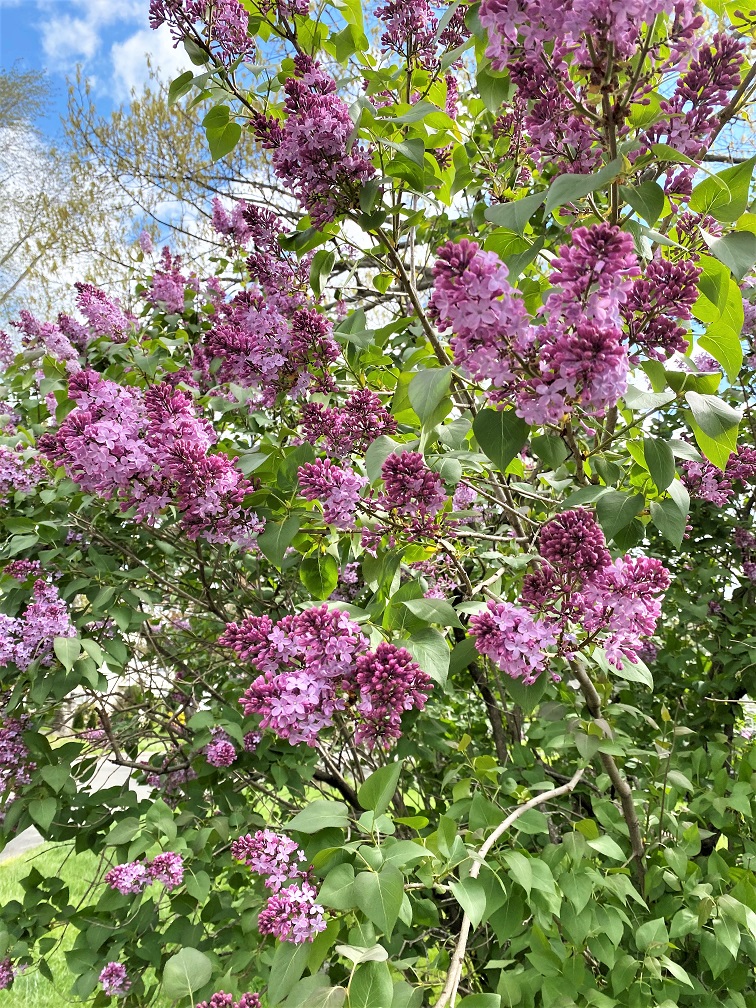
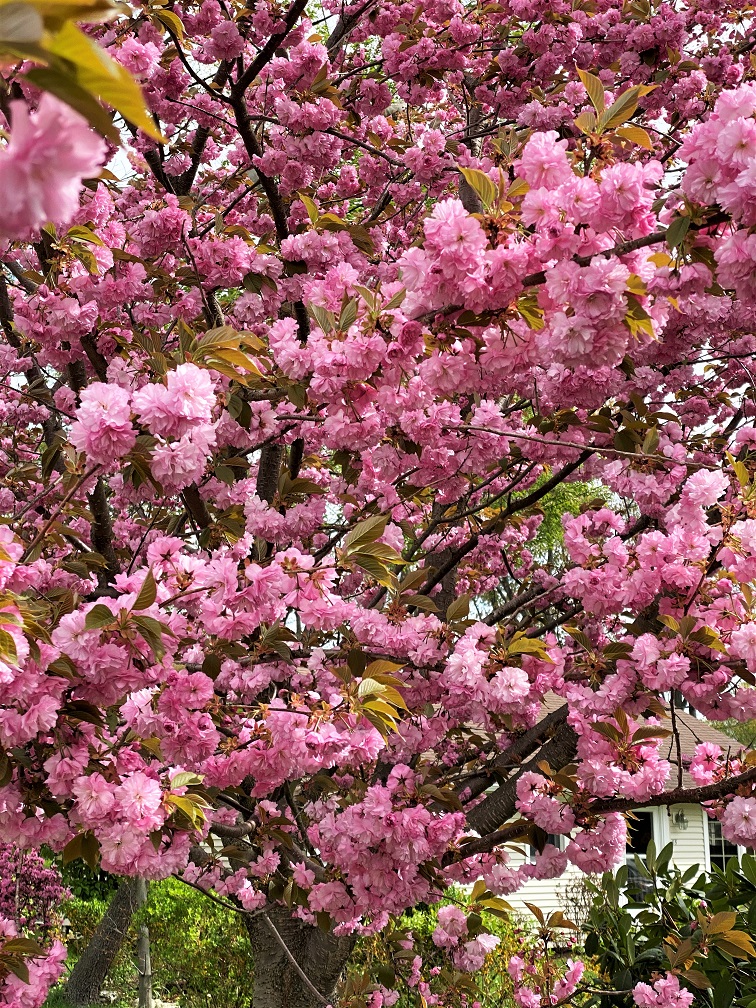
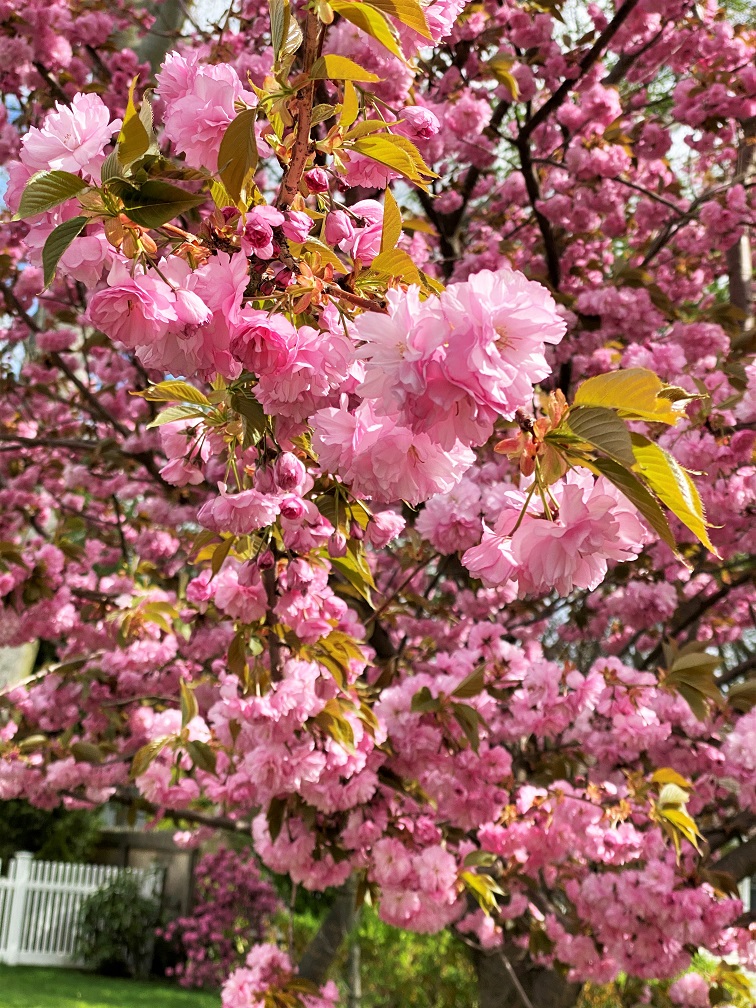
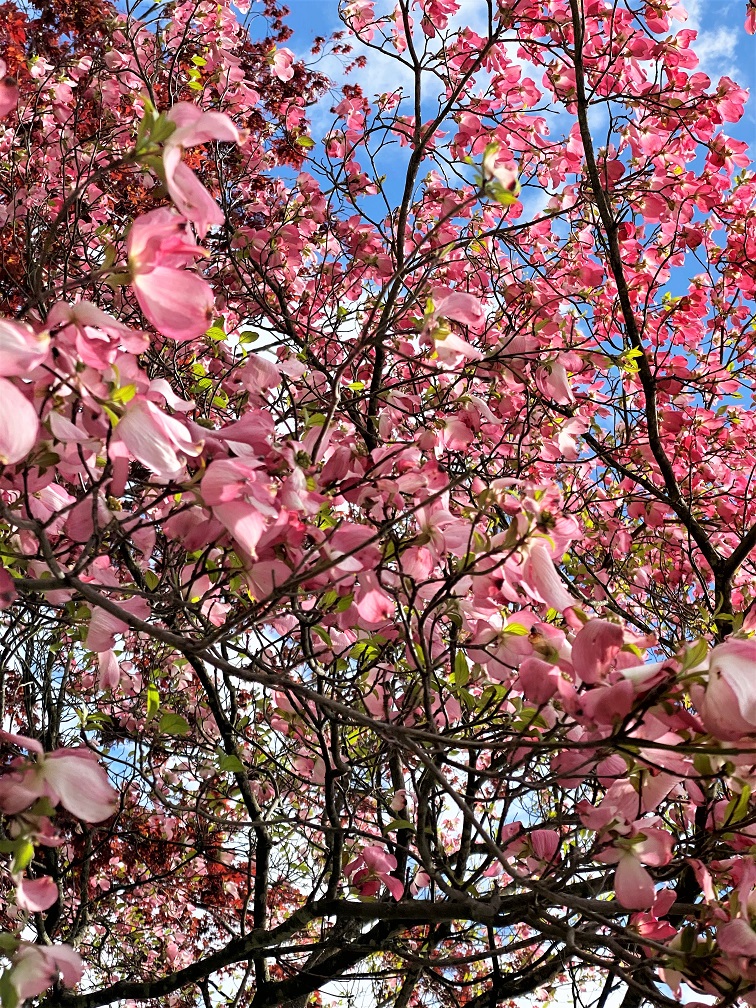
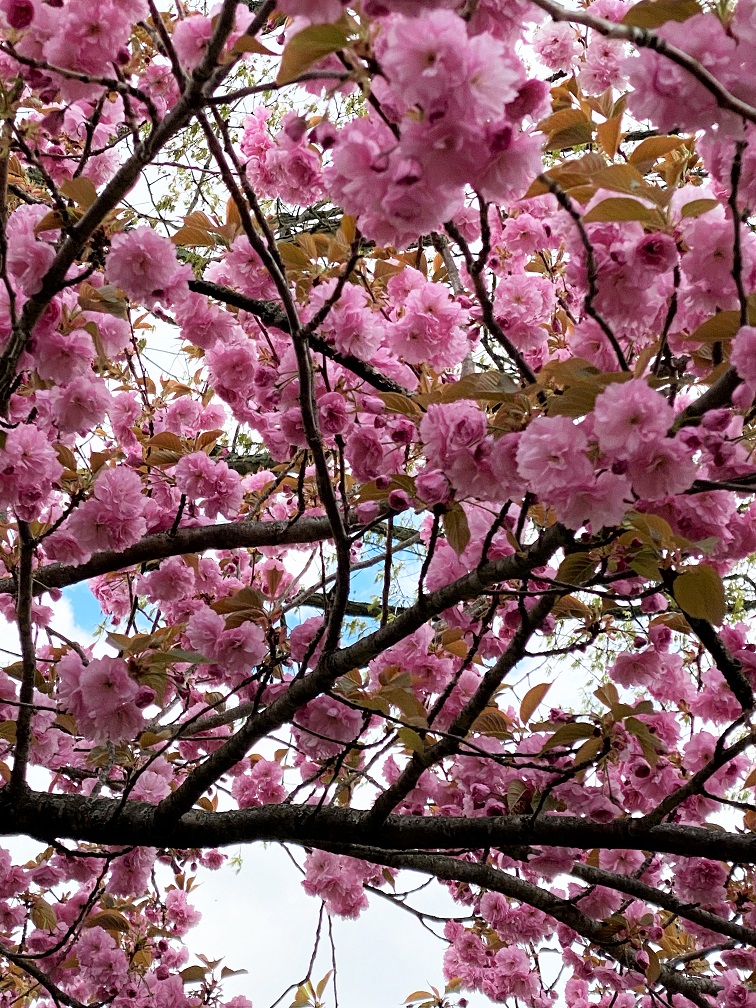
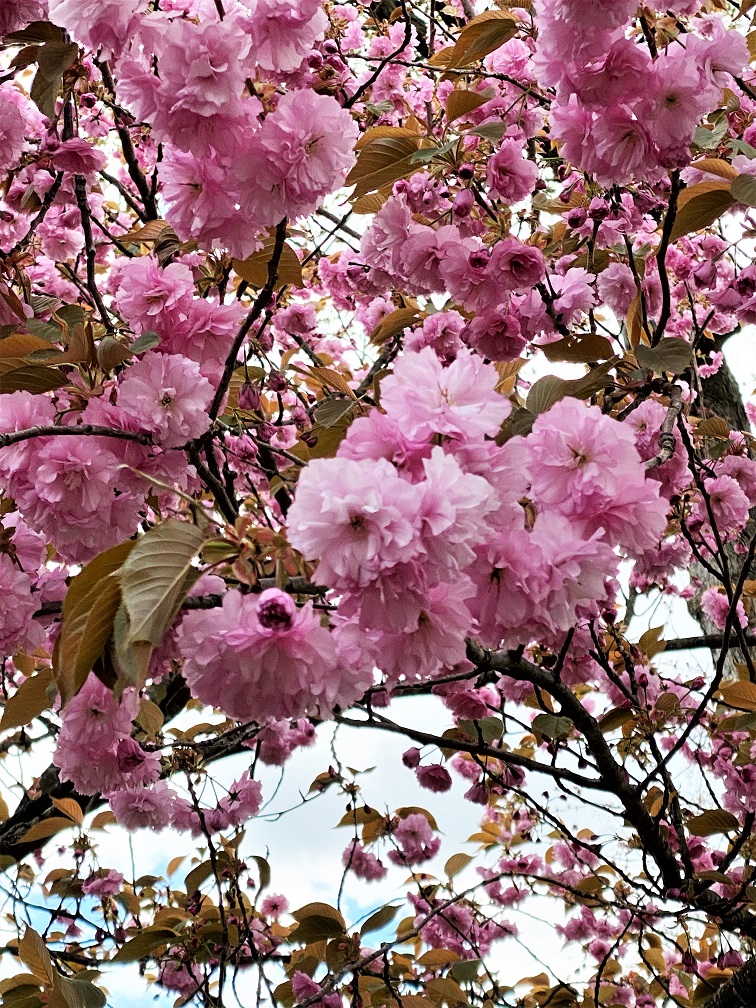
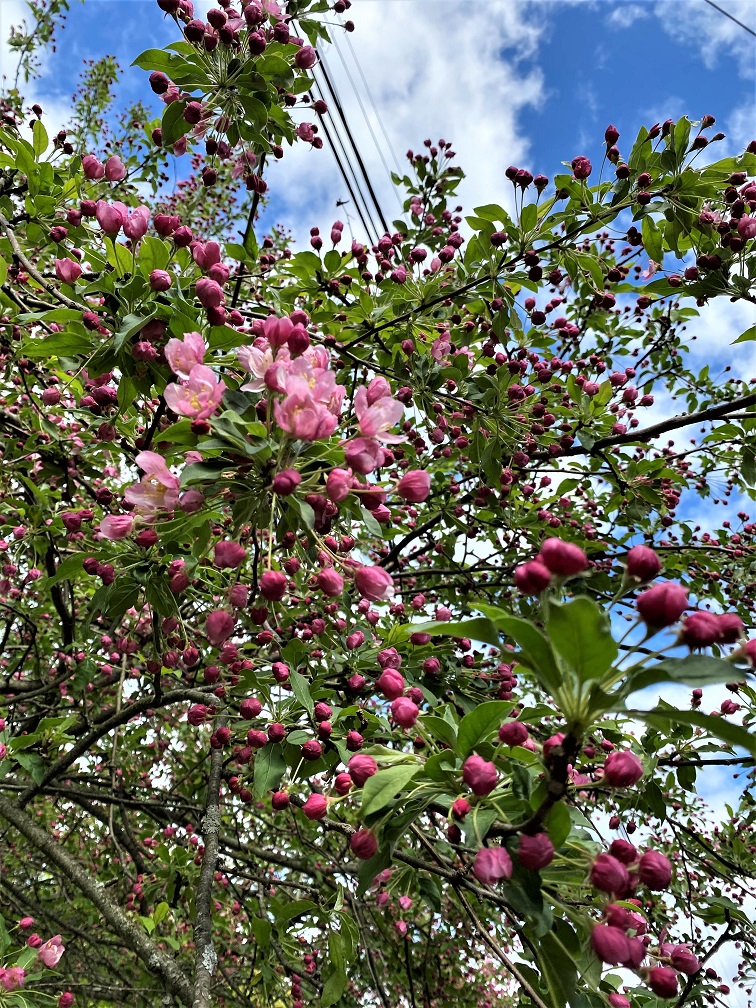
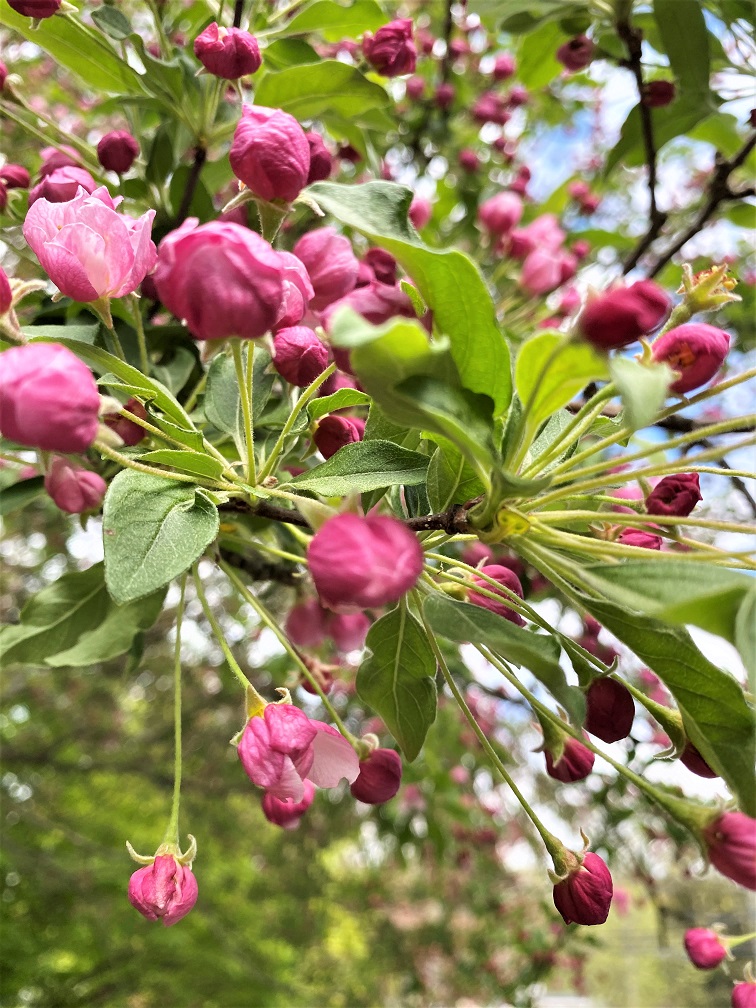
During one of the recent walks, I noticed how many shades and shapes of pink we have on our street. I love all things pink, and thus I decided to share these beautiful colors with you.
Enjoy!
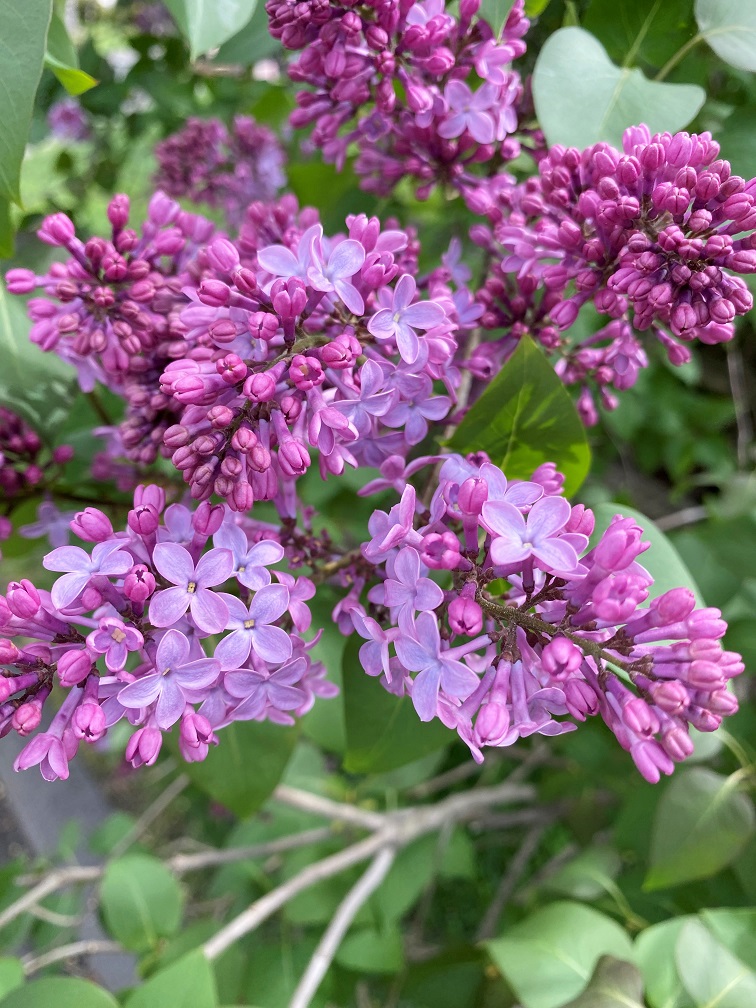 Lilac… I wish you could smell this too…
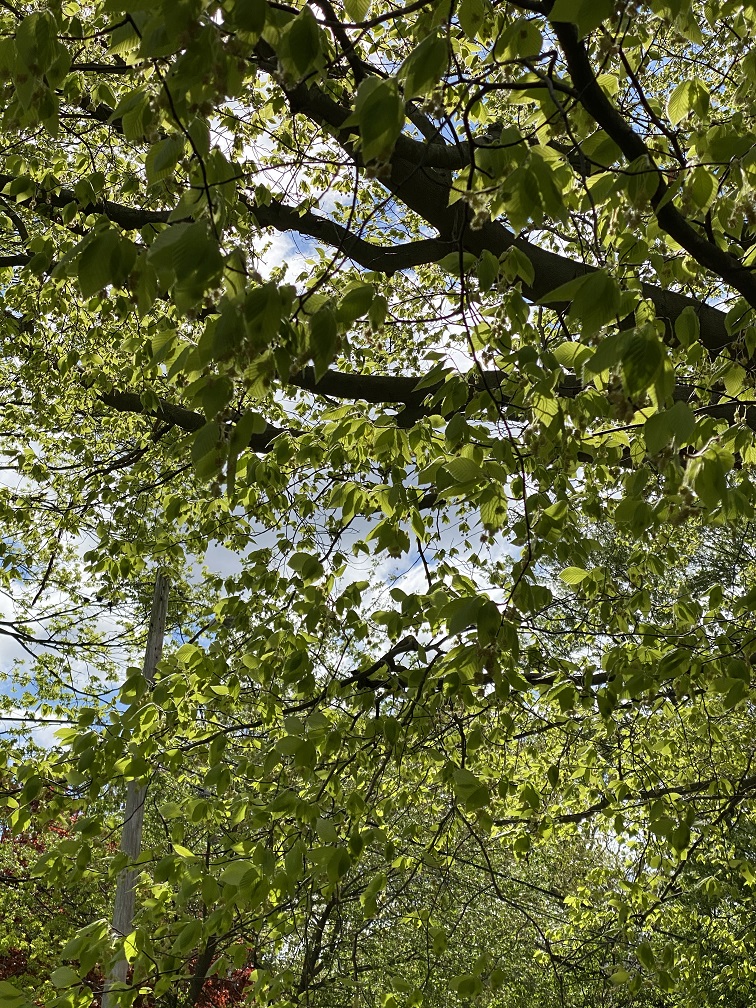
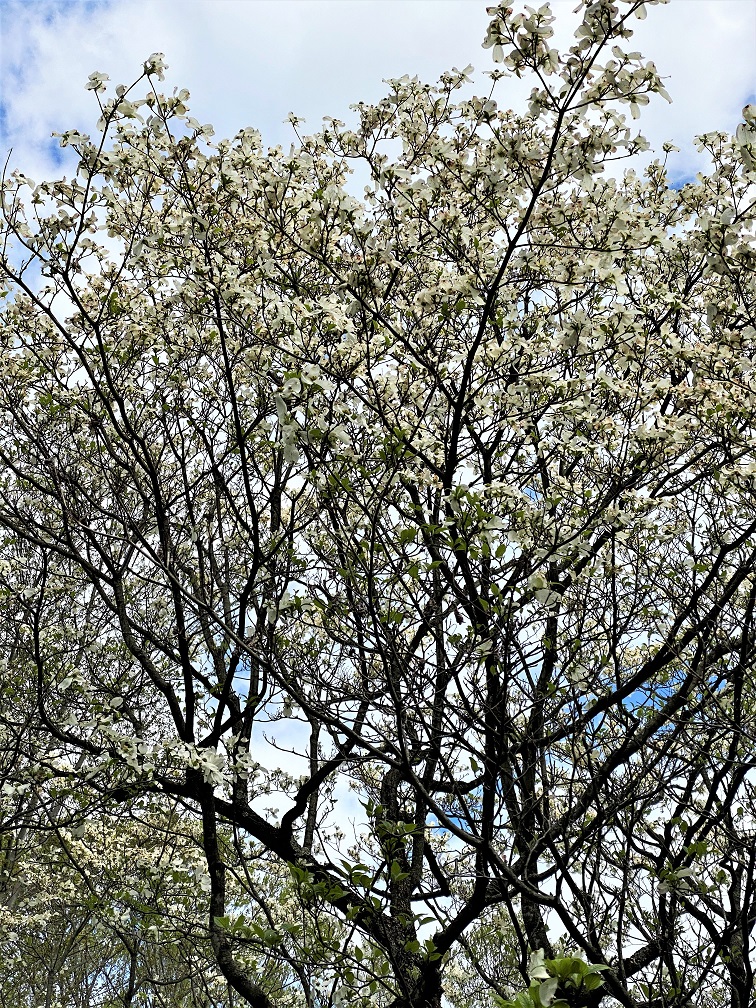
Of course, it is not only pink – young, bright green and pure white are equally beautiful:
Last Bottle Sign Up ($10 credit)




 Talk-A-Vino