Archive
Happy Wines of Barra
What are happy wines you may ask? Can the wine be happy? Can the wine be unhappy? Can the wine actually express emotion?
The first two questions probably don’t have an answer. But can the wine express emotion? You bet. That’s the whole point of wine appreciation. The wine that gives you joy. The wine that brings back happy memories. The wine that gives you happiness. The wine that gives you pleasure. The wine that doesn’t leave you indifferent. Not every wine in your glass will do that for you – but some will. I think it will be fair to call them Happy Wines.
Happy wines are those that put a smile on your face. You open a bottle, put the liquid into the glass, swirl, sniff, sip – and smile, because the wine is actually that good. It doesn’t have to be the best wine you ever tasted. It doesn’t have to be expensive or inexpensive. As long as the wine puts a smile on your face and makes you happy, you can call it a Happy Wine.
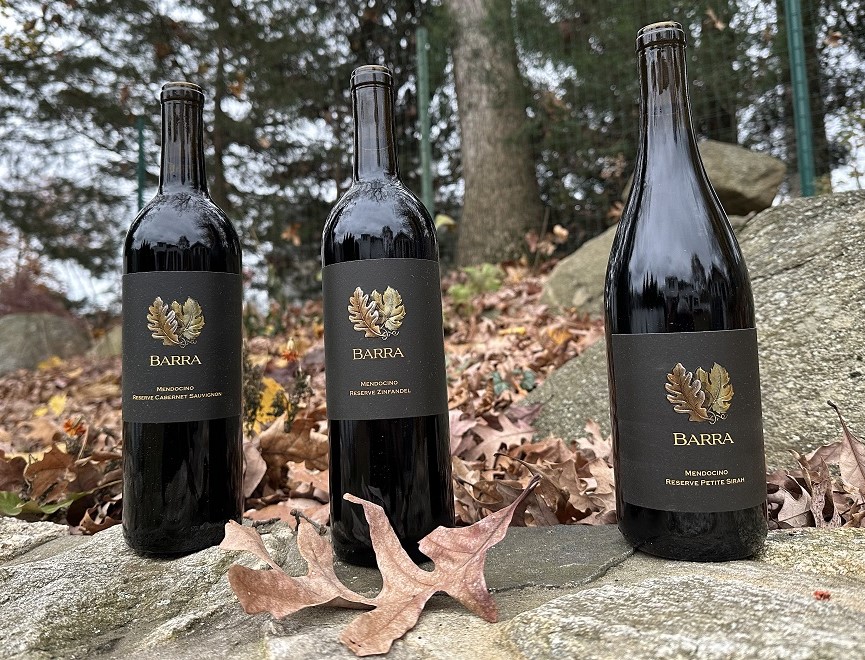
My latest happy wine discovery was the latest release of red wines from Barra of Mendocino. I already wrote about the winery before – you can find the complete two-part story here (part 1 and part 2) with all the details about this 50-year-old, 350-acre organically farmed estate located in Northern California, in Mendocino. Everything I tasted so far from Barra was outstanding, and this latest release of the 3 reserve red wines made from organic grapes didn’t disappoint either.
2020 Barra Reserve Petite Sirah Mendocino County (14.5% ABV, $28, 18 months / 30% new French oak, balance in neutral barrels, organic grapes)
Dark Garnet, practically black
Beautiful nose of red and black fruit
Sweet cherries, perfect acidity, well-integrated luscious tannins, layered, delicious.
8+, outstanding, and a unique rendition of PS which doesn’t require waiting.
2020 Barra Reserve Zinfandel Mendocino County (14.5% ABV, $26, 16 months / 25% new French oak, balance in neutral barrels, organic grapes)
Bright Ruby
Dark fruit and herbs on the nose, a hint of fresh coffee, tobacco
Tobacco, cherries, luscious texture, round, pleasant, with long finish.
8, excellent
I just wrote about Barra Cabernet Sauvignon in the previous post where I tasted it alongside two superb Napa Valley Cabs – but I’m happy to talk about this wine twice in a row 🙂
2021 Barra Reserve Cabernet Sauvignon Mendocino County (14.5% ABV, $28, 18 months / 30% new French oak, balance in neutral barrels, organic grapes)
Garnet
Eucalyptus, cherries, a hint of cassis
Eucalyptus, dark berries, cherries, cassis, well-integrated tannins, perfect balance, medium-long finish.
8, delicious
All three were happy wines – ready to drink from the moment the bottle was open, and thoroughly delicious, putting a smile on your face. I can also tell you that all three of these wines lasted for almost 7 days after being first opened, standing on the counter, with the air being pumped out – this is definitely a testament to the quality and to the longevity of these wines – while these wines will not set you back by anything comparable to any cult Californian wines, I guarantee you that they will age equally well or possibly even better.
Have you tried Barra of Mendocino wines? I would love to see the smile on your face once you do. Cheers!
Ode to Cab
 Ode to Cab.
Or we can just call it a Love Letter to Cabernet Sauvignon.
As an oenophile, I always try to maintain my “grape neutrality”. I can never name my favorite type of wine, never mind favorite wine. If you will hard press me against the wall with this question, I might say that it is Rioja, but the reality is a lot more complex than that.
If you search through articles in this blog, you will find a full range of wine styles and grapes. There are many blogs out there that cover specific region(s) or specific types of wine – but when I started writing close to 15 years ago, I knew that I would not be able to do that. This blog is about wine appreciation – any wine. “Wine should give you pleasure” – and so this is what my writing is primarily after – sharing the joy, the pleasure of wine, no matter what is the pedigree. Wines made from little-known grapes – Bobal, Trepat, Kekfrankos, Romorantin by tiny producers can give you as much pleasure as first growth Bordeaux, cult California, or best super-Tuscans. The liquid in the glass matters, and the only opinion that matters is yours and only yours – you can not enjoy the critic’s 100 points in your mouth.
This is my approach – try any wine with an open mind, and always be ready to be pleasantly surprised – or even blown away for that matter. And yet there is something about Cabernet Sauvignon that makes my heart race, especially coming from the producer I know or have heard of. Listen, I’m doing my best to tell you the truth, even though the “thought spoken is a lie”. But the brain gets all excited when I’m opening a bottle of the familiar Cabernet Sauvignon because I already know how good it can be. Very different from the excitement of the possible taste of DRC, Petrus, or Quintarelly (I’m yet to taste either) – because with those I wouldn’t know what to expect. But I do know what to expect from the well-made Cabernet Sauvignon that is ready to drink.
Even with the wines I happily call the favorites, I can’t tell you what I’m expecting to taste. I can’t describe my expectations when tasting La Rioja Alta, Ken Wright Pinot Noir, or Loacker Corte Pavone Brunello di Montalcino. I expect that I will like those wines as I know the producers and had their wines many times before – but I can’t tell you my exact expectations of the aroma or the taste of the wine. With Cabernet Sauvignon, I have very precise expectations of the aroma and the taste for me to like the wine. If I do not find the cassis (black currant) on both nose and palate when the bottle says “Cabernet Sauvignon” on it, there is no way I will like the wine, no matter how good the wine is for anyone else. Eucalyptus, mint, and a good structure are also expected, but with this some variations are possible. But when the expectations are met… the Cabernet Sauvignon is nothing but a pure, hedonistic pleasure.
So yes, deep down, Cabernet Sauvignon might be the most favorite wine of all – I just hope I will remember it next time I’m asked about my favorite wine.
Now, truth be told, I had a good reason for all this rambling about the beauty of Cabernet Sauvignon. A few weeks ago, I had an opportunity to conduct an accidental side-by-side tasting of the California Cabernet Sauvignon and the results were simply amazing.
With this tasting, we are taking a little trip. We will start in Northern California, where Barra of Mendocino is located. I wrote about their wines before, and now I have a few of the latest releases and I thought that Cabernet Sauvignon would be quite appropriate for the tasting.
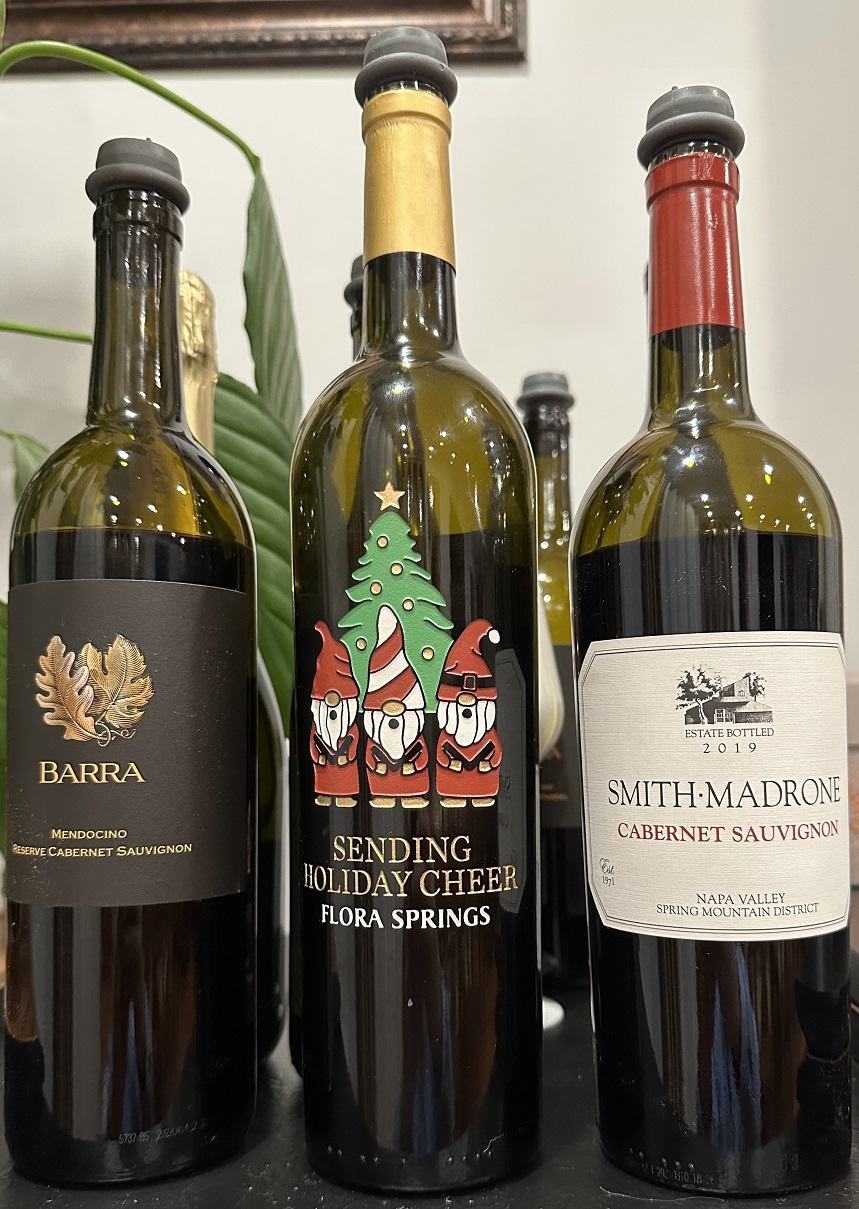
Barra Cabernet Sauvignon was the leanest of 3, but still had a perfectly recognizable Cabernet Sauvignon profile:
2021 Barra Reserve Cabernet Sauvignon Mendocino (14.5% ABV, $28, 18 months 30% new French oak, balance in neutral barrels)
Garnet
Eucalyptus, cherries, a hint of cassis
Eucalyptus, dark berries, cherries, cassis, well integrated tannins, perfect balance, medium-long finish.
8
Moving 80 miles southeast, we now arrive at the Flora Springs winery, located in the heart of the Napa Valley. Again, one of my favorite wineries in California, I wrote about their wines on multiple occasions.
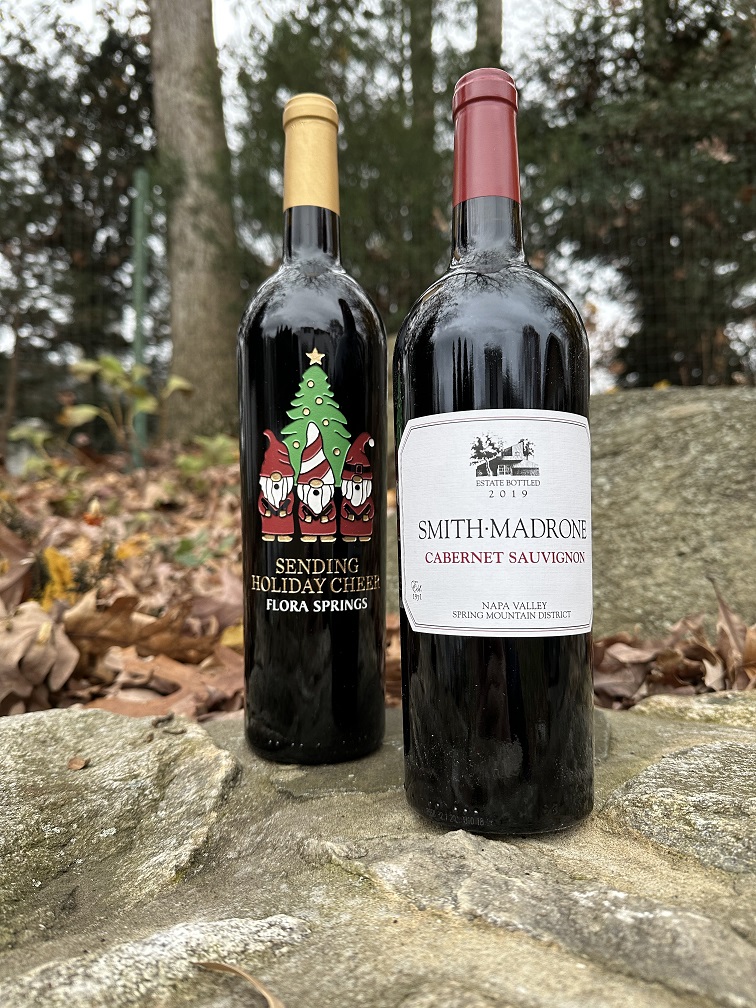
The wine I had an opportunity to taste was a special holiday release. Flora Springs is big on the holiday celebration, so this bottle features etched gnomes, perfectly appropriate for the holidays. But it is what’s inside that counts, and this wine was nothing short of spectacular.
2019 Flora Springs Red Wine Blend Napa Valley (14.5% ABV, $95, predominantly Cabernet Sauvignon, 18 months in 70% French and 30% American oak barrels)
Dark garnet
Cassis, mint, black tea, cassis is playing in and out – you can smell this wine forever. Cassis is prevalent, wow.
Burst of cassis at first, then tannins come in, offering some bitter notes around the otherwise perfect Cabernet core. A very powerful, delicious wine that needs time to soften up. Either decant for a few hours, or lose it in the cellar for 10 years. The winery says you can enjoy it through 2036 – I’m sure you can easily add another 20 years on top of that.
8/8+
Going back about 8 miles northwest, we now arrive at the Smith-Madrone, the winery located in the Spring Mountain district of Napa Valley. Smith-Madrone is yet another one of my favorite wineries, and the one I feel a bit guilty about as a writer. I wrote about Smith-Madrone wines on many occasions in this blog – 5 years ago, Smith-Madrone were my wines of choice to celebrate Thanksgiving; in 2019, Smith-Madrone Cabernet Sauvignon was my wine of the year. And I’m still yearning to write a post fully designated to the winery…
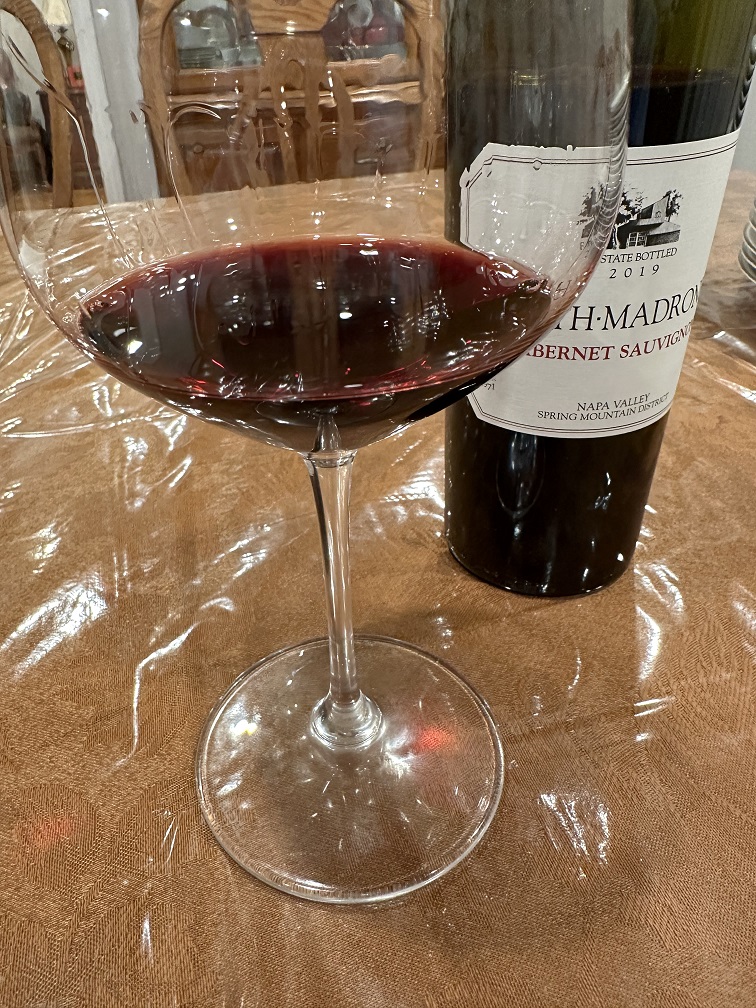
Nevertheless, Smith-Madrone Cabernet Sauvignon to me is one of the most textbook-proper, pure Cabernet Sauvignon wines there is. Not everyone would share my opinion – my sister-in-law with whom I was tasting these 3 Cabs, was preferring Flora Springs Cab, just for the sheer, unashamed beauty. But to me, a more subtle but very confident representation of the Cabernet Sauvignon by Smith-Madrone was just a perfection:
2019 Smith-Madrone Cabernet Sauvignon Spring Mountain District Napa Valley (14.3% ABV, $65, 83% Cabernet Sauvignon, 5% Merlot, 12% Cabernet Franc, 18 months in 55% new French oak)
Brilliant dark ruby
A perfection. A textbook Cabernet Sauvignon cassis, pure, perfectly precise cassis. You can think of a bell pepper – I’m not sure it is there, but it comes to mind.
The palate is amazing – cassis, eucalyptus, perfect minerality, a touch of the pencil shavings, salivating acidity. This is an impeccably balanced wine built for aging. In 10 years, it will be insanely good. In 20 – … well, I don’t want to even think about waiting that long…
9-, pure and superb.
If you like Cabernet Sauvignon, either one of these 3 wines will make you happy – each one perfectly representing their terroir and the vision of the winemaker, and yet unquestionably perfectly representing maybe the most noble grape of all.
So now you know what my secret passion, secret true wine love is. What’s yours?
Rioja Worth Seeking – El Coto de Rioja
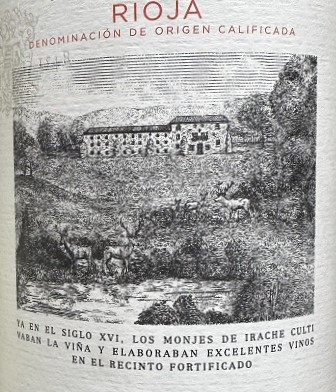 I love Rioja wines.
This is not a secret for anyone who has been following this blog for some time.
But despite such a strong proclamation, this love is not unconditional. Rather, it is very selective.
I have more of an exclusive club in Rioja. This is a club with a very limited membership. Anyone can apply, but only a select few can become members. Those in the club enjoy unconditional love and forgiveness for their little mistakes. For the rest of them… well, good luck making the cut.
I guess I need to change my opening line.
I’m a Rioja snob.
I love Rioja, but this love is very selective.
There, this would be a better opener.
The founding members of my exclusive club are CVNE with all of their lines (Vina Real, Imperial, Contino, …), La Rioja Alta, and Lopez de Heredia. Bodegas Tobias, Bodegas Beronia, and Bodegas Lan also have full membership.
Okay, let’s put another spin on this snobbish endeavor.
Rioja is a large region in Spain. There are about 14,800 grape growers, and about 574 wine producers in Rioja. That means lots of different styles and lots of different quality levels – even though all bottles will say “Rioja” on them. Seeing a bottle of Rioja doesn’t make me excited – seeing the name of a familiar producer who I know makes quality Rioja wine does. Hence my exclusive Rioja “club” – simply the list of my favorite Rioja producers.
What might be more important is that this “club” is actively taking applications (the approval rate is very low though), and I feel that it is time to formally add one more member there – El Coto de Rioja. El Coto wines were mentioned a few times in the blog already, but now let’s make it official.
El Coto de Rioja was founded in 1970 located in the town of Oyón. Over the 50 years of its history, El Coto de Rioja became the largest winery in Rioja, farming 1804 acres of estate vineyards. El Coto de Rioja plantings include 8 individual vineyards located across all Rioja DOCa sub-zones, such as Rioja Alta, Rioja Baja and Rioja Alavesa. One of the vineyards, Finca Carbonera, located in Rioja Alta, is the highest altitude vineyard in Rioja DOCa. In addition to all of the traditional Rioja red grape varieties, a significant portion of plantings are dedicated to the white grape varieties including new ones for Rioja – Verdejo, Chardonnay, and Sauvignon Blanc. El Coto de Rioja also built a winery directly in the vineyard, dedicated to the white wine production.
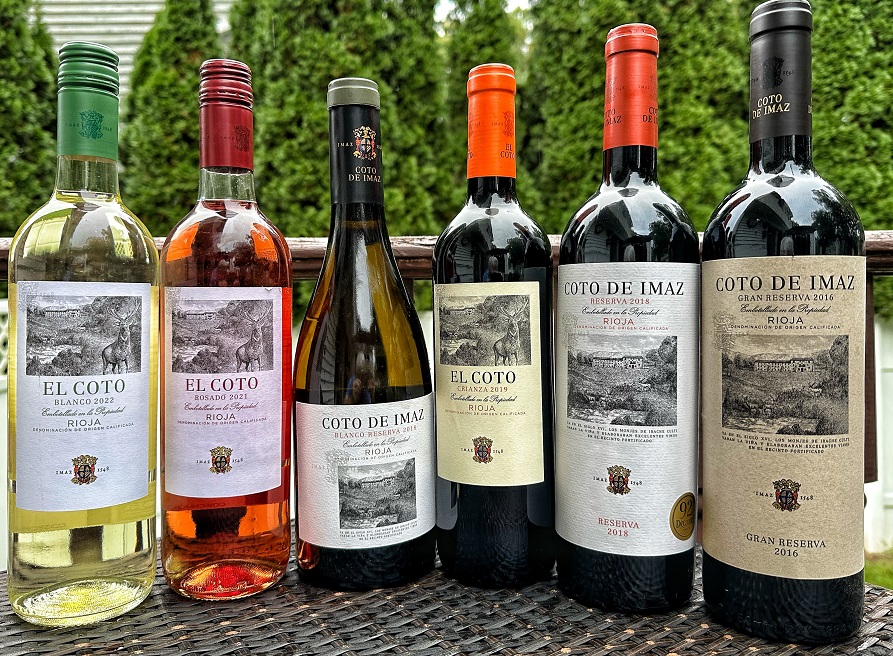
I had an opportunity to taste (samples) a range of wines from El Coto de Rioja – here are my notes:
2022 El Coto Coto de Imaz Blanco Rioja DOC (12% ABV, $11.99, 93% Viura, 4% Sauvignon Blanc, 3% Verdejo)
Pale green
An enticing nose with lemon, acidity and minerality, fresh and vibrant
Lemon, Whitestone fruit, crisp, clean, refreshing.
8, delicious.
2021 El Coto Coto de Imaz Rosado Rioja DOC (13.5% ABV, $11.99, 90% Tempranillo, 10% Garnacha)
Intense salmon pink
Beautiful, inviting, fresh strawberries
Fresh strawberries and cranberries on the palate, pleasant tartness, fresh and round
8, excellent
2018 El Coto Coto De Imaz Blanco Reserva Rioja DOC (12.5% ABV, $24.99, 100% Chardonnay, 12 months in new French oak)
Beautiful light golden color
A touch of butter and vanilla
A hint of butter, vanilla, Granny Smith apples, crisp, elegant, good acidity.
8, I want to try it in 5 years, I expect it to develop beautifully
2019 El Coto Imaz Crianza Rioja DOCa (14.5% ABV, $16.99, 100% Tempranillo, minimum of 12 months in American oak, at least 6 months in the bottle)
Garnet
Dark fruit, sapidity, gunflint, intense
Bright, uplifting, medium body, dark berries, smoke, crisp acidity, very “new world” in style, good balance, tannins show on the finish – will age and evolve well
8-
2018 El Coto Imaz Reserva Rioja DOCa (14.5% ABV, $22.99, 100% Tempranillo, minimum of 18 months in American oak, at least 18 months in the bottle)
Dark garnet
Dark fruit, earthy, being of herbs, medium intensity
Brilliant, classic Rioja, succulent cherries, cedar box, sage, salivating acidity intermingling with well integrated tannins, perfect balance.
8, delicious.
2016 El Coto Imaz Gran Reserva Rioja DOCa (14.5% ABV, $34.99, 100% Tempranillo, minimum of 24 months in American oak, at least 36 months in the bottle)
Dark garnet
A touch of minerality, cigar box, hint of cherries
Black fruit, concentrated, firm structure, well-integrated tannins, good acidity, good balance.
8, very good but will benefit from time in the cellar
I have to honestly say that while the red El Coto wines were good, I loved both whites and Rosé even more. The El Coto Rioja Blanco is a perfect quaffer any time you want a glass of refreshing white wine. Blanco Reserva is in the category of its own, a delicious Chardonnay rendition for any occasion when you crave a thought-provoking white wine.
El Coto de Rioja wines are well worth seeking – they are both delicious and still reasonably priced for the quality they deliver. And they are also widely available, so off you go to the store. Cheers!
Brilliance of the Bubbles
 Champagne, anyone?
Well, I’m not in the mood to celebrate anything going on in the world right now. But I still drink wine, and while Champagne = Celebration is deeply ingrained in our minds, here I’m just talking about Champagne as a type of wine, the same as white, red, and Rosé. And I need to further correct myself – I’m not even talking about Champagne, the sparkling wine produced only in the Champagne region of France. The subject of today’s post is generic “bubbles”, the sparkling wine produced elsewhere in the world.
Simplistic on the surface, “bubbles” is an interesting wine category. Nobody is born craving wine, wine is an acquired taste. Bubbles might be the next level of acquired taste compared to wine, especially if we can exclude social pressure from consideration. Classic Champagne typically boasts cut-through acidity and is expected to be devoid of any traces of fruit for the joy of purists. And god forbid any sweetness can be detected in the glass… Not the wine someone intuitively craves. But this is not the biggest issue with the “bubbles”. The bigger problem is that people are well-trained to recognize the word Champagne, and once they hear that word, whether they truly love the liquid in the glass or not becomes irrelevant – “ahh, it is Champagne!”.
As anecdotal evidence, my favorite example is Kevin Zraly’s Windows on the World wine classes. The last class in the series of 8 started with Champagne. 4 wines were poured blindly to the group of roughly 120 students. After tasting all 4 wines, we were asked to have a show of hands for our favorite Champagne. I don’t remember details about wines #1, #2, and #3, but there was a somewhat equal spread between these three wines. Wine #4, however, had barely any hands raised. As the wines were revealed, Kevin Zraly said “and this is why, people, you shouldn’t drink vintage Champagne” – wine #4 was Dom Perignon, creme de la cream of Champagne world. Have we known that we were drinking Dom Perignon, I guarantee that wine #4 would be adored by everyone.
Before you get any wrong ideas, let me assure you – this is not a Champagne-bashing post. I love good Champagne as much as any other hard-core Champagne aficionado is. 2002 Pol Roger Sir Winston Churchill Champagne was my wine of the year in 2016. I have enjoyed immensely Krug, both vintage and non-vintage. Champagne Lanson, Duval-Leroy, Piper-Heidsieck, Bollinger, and on, and on, and on. But the point I’m trying to make here is that when looking for bubbles, you shouldn’t hang up on Champagne and only Champagne – sparkling wines are made everywhere today, and there are lots and lots of very worthy bubbles you can enjoy, as long as you are willing to accept that great sparkling wines don’t have to come only from Champagne.
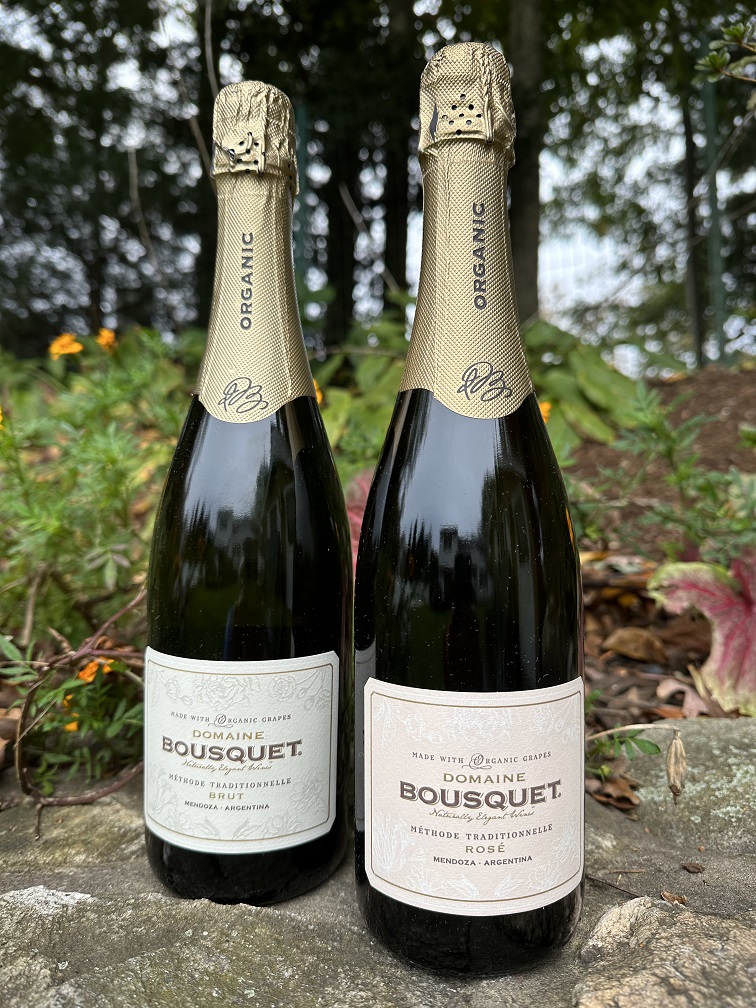
For an example of the great bubbles from outside of Champagne, let’s take a trip to Argentina. On a world scale, Argentina arguably didn’t reach yet the status of a world-class sparkling wine producer. And for me as a wine lover, this is very good news – it means I can still enjoy sparkling wines from Argentina at reasonable prices. Just to give you an example, we can look at the sparkling wines of South Africa, known as Cap Classique. Back 3 years ago, Graham Beck Brut Rosé Methode Cap Classique, one of my favorite sparkling wines from South Africa, could be found at my local wine shop for $16.99. The price two weeks ago? $30.99. So before it happens to Argentinian bubbles, let me bring you into the know.
Please meet Domaine Bousquet. Well, this might not be the correct way to introduce Domaine Bousquet here – if you are reading this blog regularly (are you??) then you already met Domaine Bousquet on multiple occasions. If you look at the Domaine Bousquet website, you will see that they present themselves as the #1 organic, regenerative and sustainable winery in Argentina. When I think of Domaine Bousquet, especially after tasting their wines, my first thought usually is “how do they do it???”. As an example of “how do they do it”, Domaine Bousquet offers USDA-certified organic wines (!) called Virgen that taste great and cost only $13 as the suggested retail price. And my latest discovery in the “how do they do it” category is two of their classic method sparkling wines.
I wrote about Domaine Bousquet sparkling wines before. Those were excellent wines produced using the Charmat method (secondary fermentation in the tank), the same method that is used in the production of Prosecco. These two new wines I’m talking about are produced using the classic method, with the secondary fermentation in the bottle – the same way classic Champagne wines are produced, hence the name Classic Method, a.k.a. Méthode Champenoise, a.k.a. Méthode Traditionnelle.


From the very first whiff, both wines were just spectacular. NV Domaine Bousquet Brut Organic Méthode Traditionnelle Mendoza Argentina (12% ABV, $18 SRP, 75% Chardonnay, 25% Pinot Noir, 6 months on the lees) had a perfect nose of freshly toasted bread, brioche and apples. The palate was followed with the same toasted bread notes, perfectly fine mousse, crispy profile with just apple notes, just a pure delight.
And NV Domaine Bousquet Brut Rosé Organic Méthode Traditionnelle Mendoza Argentina (12% ABV, $18 SRP, 75% Pinot Noir, 25% Chardonnay, 6 months on the lees) was even better – the wine had an absolute precision that only the best Champagne and sparkling wines possess. Salmon pink in the glass, freshly baked, just out of the oven toasted bread on the nose – I couldn’t and didn’t want to put my glass down for a few minutes. After appropriately admiring the bouquet, the first sip perfectly matched the expectations – fine mousse, cut-through acidity, brioche, green apples, perfect structure, impeccable balance.
If I were to pair dinner with these two wines, I would have fresh oysters and seafood with the Brut, and then a steak with the Brut Rosé – you can keep the salad.
Here are two brilliant sparkling wines from Argentina – organic and delicious. In a blind tasting, these two wines can safely challenge any Champagne or sparkling wines – and I would definitely put my money on the Domaine Bousquet wines to win the popular vote.
Taking the price into account, and the holiday season upon us, these are definitely case-buy recommendations – these wines are perfect as a gift and perfect to enjoy at any moment, knowing that you didn’t have to break the bank to get the pleasure.
Have you had these wines? What are your favorite sparkling wines outside of Champagne? Cheers!
Beaujolais Nouveau Est Arrivé! 2023 Edition
 Beaujolais Nouveau Est Arrivé!
Well, that happened almost 3 weeks ago, but I like the sound of “Beaujolais Nouveau Est Arrivé!”, so let me keep this title.
This might be discouraging, but I don’t have much new to say about the subject compared to what I typically say every year when I’m writing about Beaujolais Nouveau:
– originally more of a marketing gimmick, the Beaujolais Nouveau release became a worldwide celebrated phenomenon, largely thanks to the efforts of Georges Duboeuf, prominent wine negociant and producer.
– the wine is produced from the grape called Gamay in a French region called Beaujolais, neighboring ultra-famous Burgundy, from the grapes of this year’s harvest. Harvesting for the grapes for the Beaujolais Nouveau started on September 1st, so the wine made it from the grapevine to the bottle on your table in a mere 10 weeks.
– this year’s Beaujolais Nouveau was better than the last year. Note that I have said this literally every year for the past 5-7 years (or longer), so at this point you probably expect that this wine drinks at the level of DRC (my saving grace – I never had DRC, so I have no idea how far off I am).
If you want to learn more about Beaujolais Nouveau 2023, here is a link to a good article in Wine Spectator.

But seriously, the wine was simply excellent:
2023 Georges Duboeuf Beaujolais Nouveau AOP (13% ABV, $14.99) has a bright ruby color, a restrained nose of the freshly crushed fruit (no bubble gum, no hard candy – just a pure, pleasant vinous nose). A well-composed core of dark berries on the palate, raspberries and cherries, firm, tight, good structure (how about that structure – it is Beaujolais Nouveau I’m talking about here!) with good acidity and good balance. Drinkability: 8/8+
Every year, the bottles of Beaujolais Nouveau are adorned with specially designed labels, sometimes even multiple labels from the same producer for the same wine – I have no idea how that works. As I have been writing about Beaujolais Nouveau every year since this blog started, I can offer you a collection of labels starting with the 2010 vintage. Below is my little “show and tell”. By the way, in case you feel like it, choose your favorite label and share it in the comments (sorry, this is not a competition so no prizes will be awarded).
Here we go:


Beaujolais Nouveau 2023 has arrived, it is a reasonably priced, festive, and tasty wine. If you had one, I would love to hear your thoughts about this wine. If you haven’t tasted one yet – what are you waiting for? Cheers!
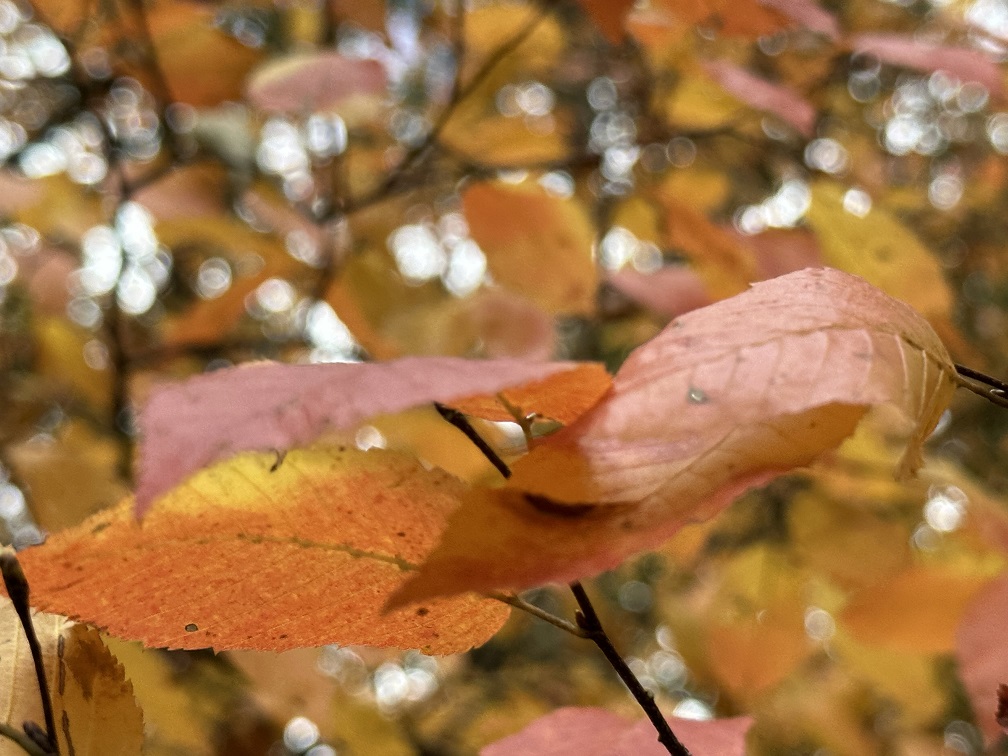
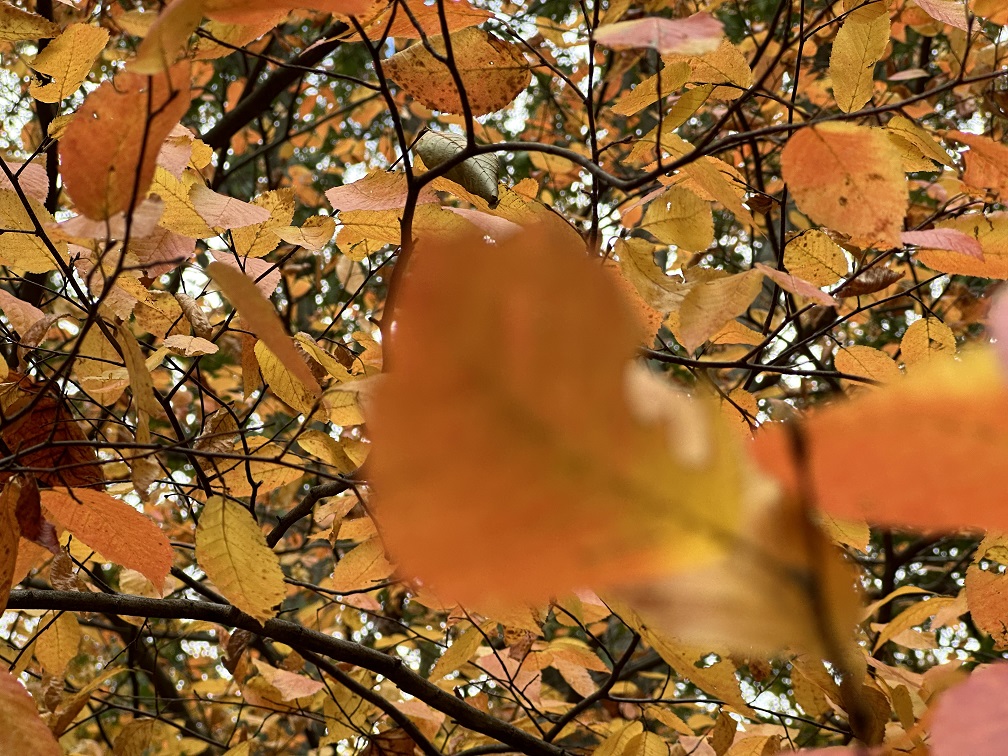
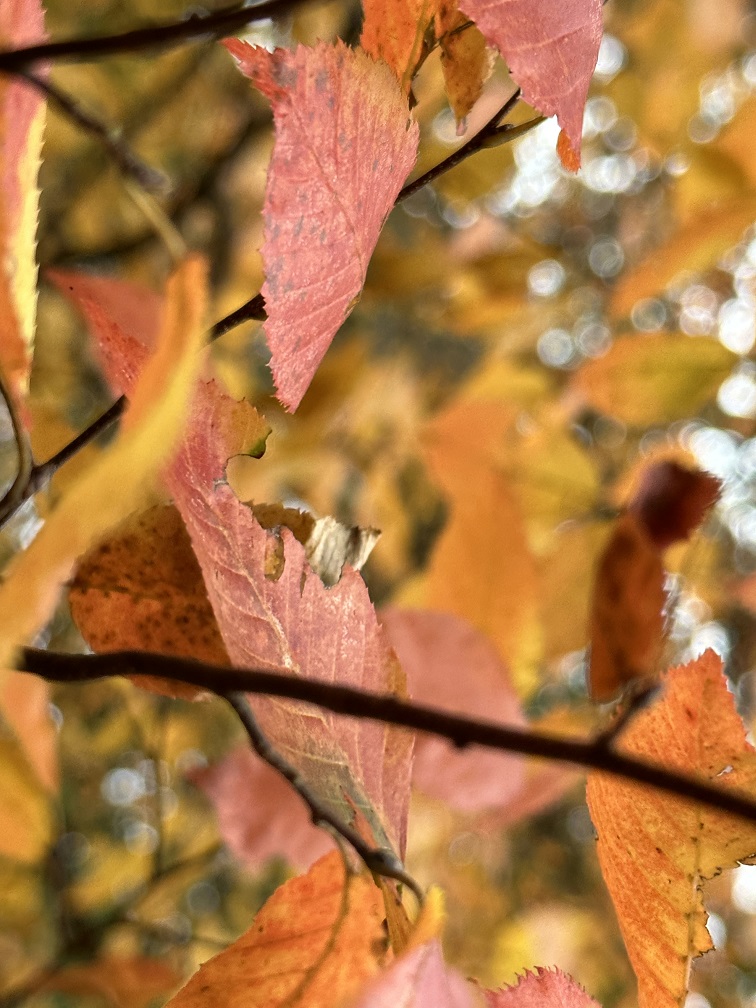
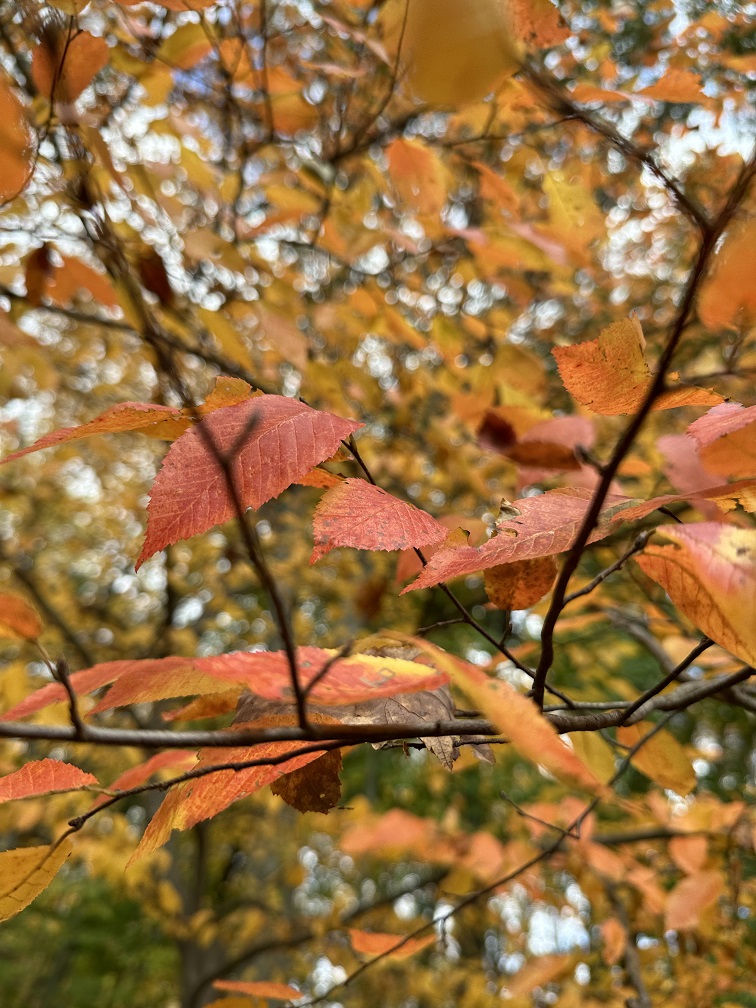
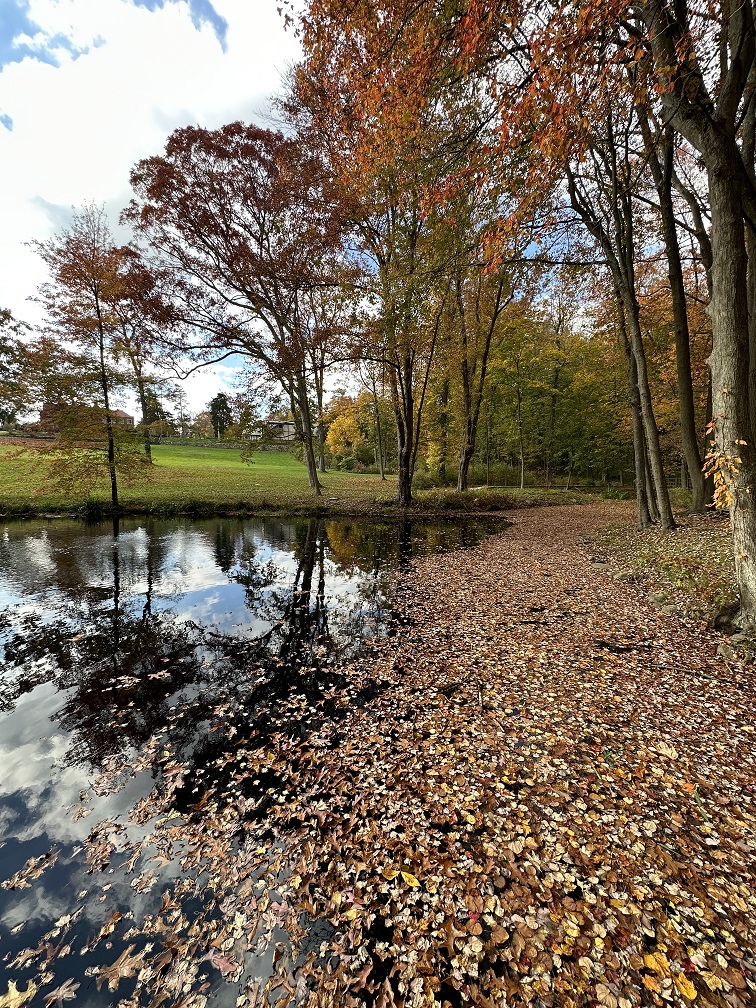
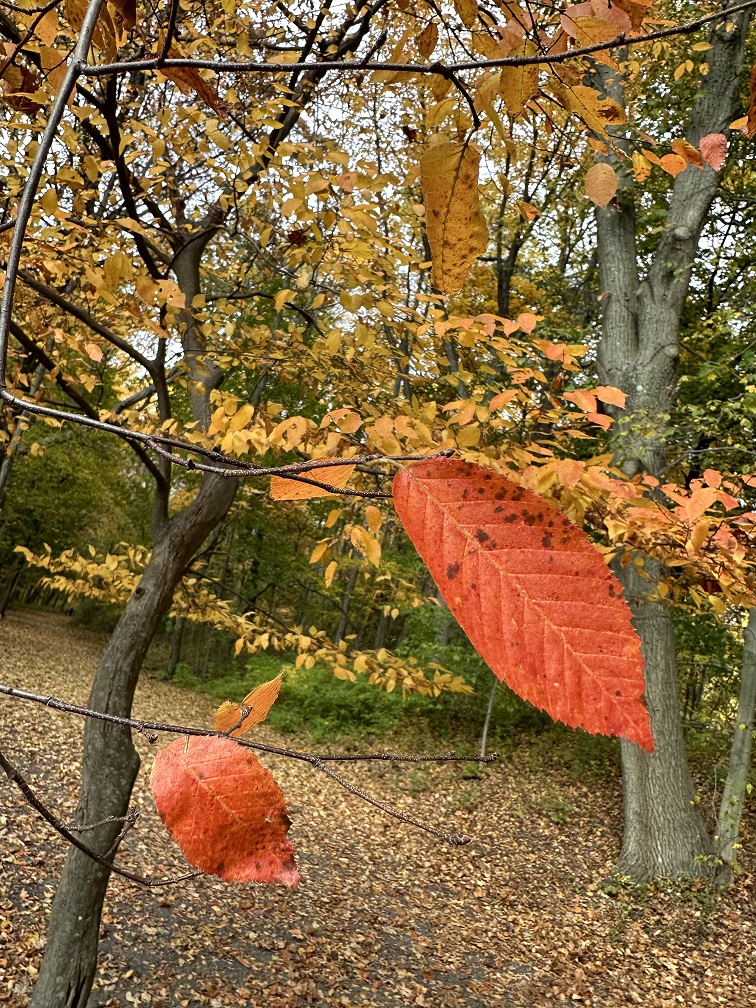
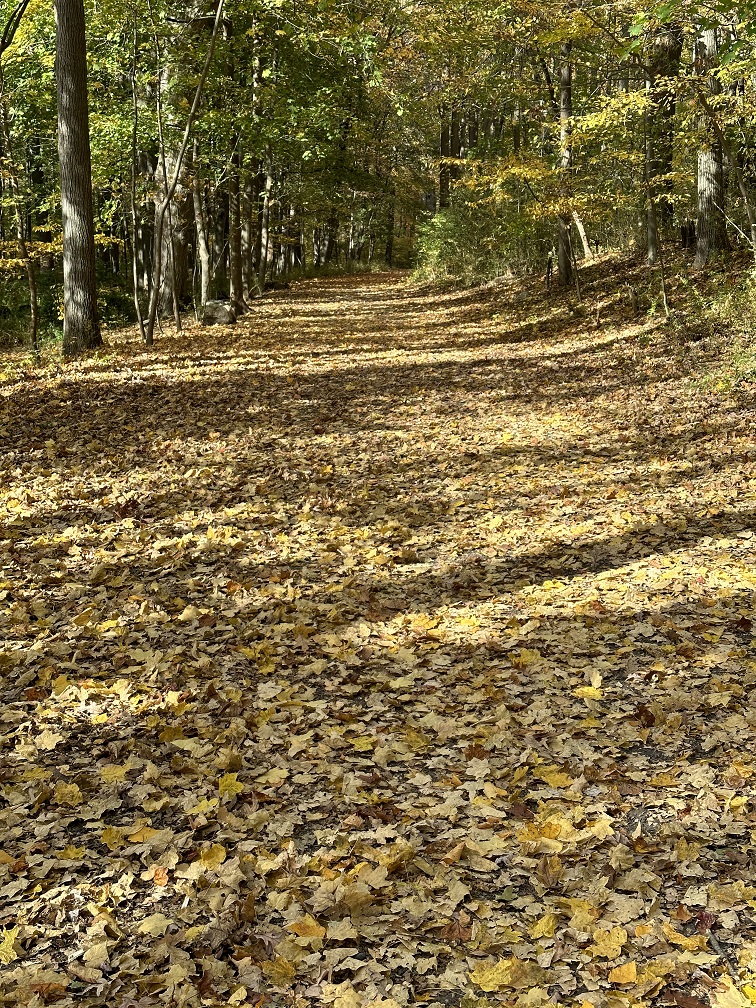
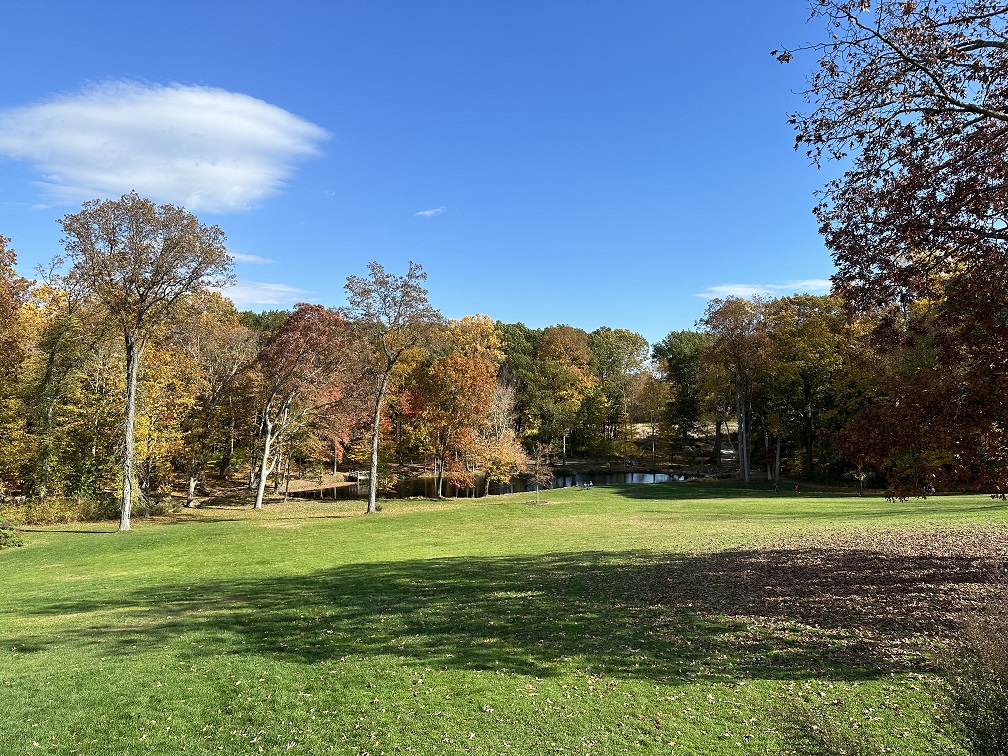
Just Some Fall Colors
2023 was an interesting year – on many levels (personal and not). Until it turned upside down about a month ago.
Wine is generally a happy subject. And I need to be in a happy state of mind to write about it, which I’m not. Which is sad, as this is not the wine’s fault.
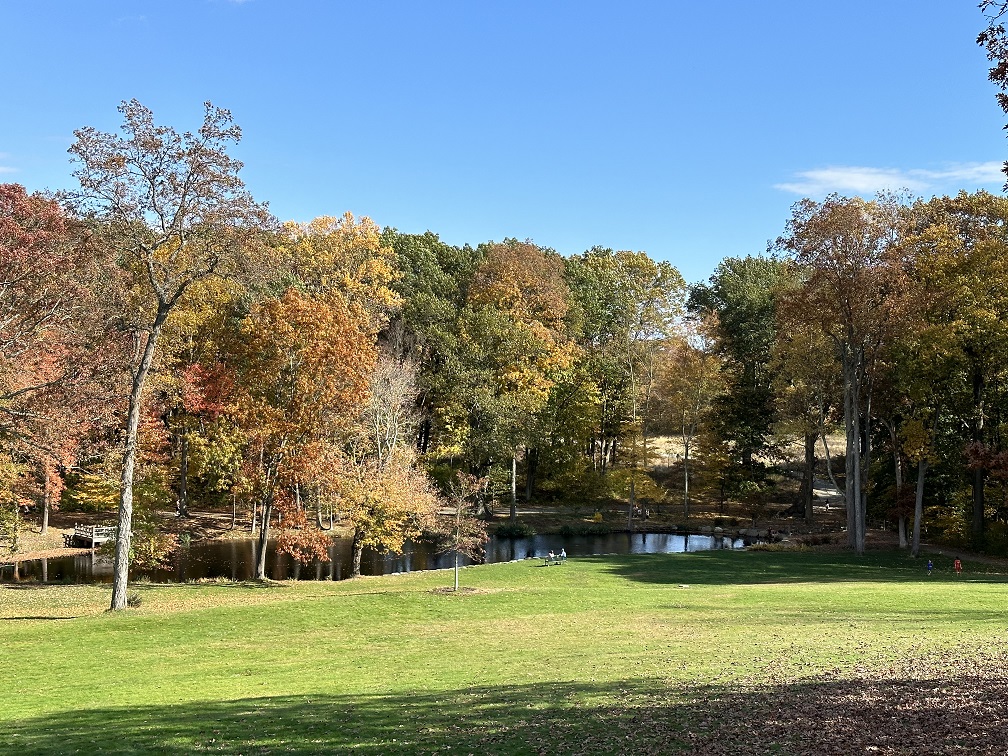
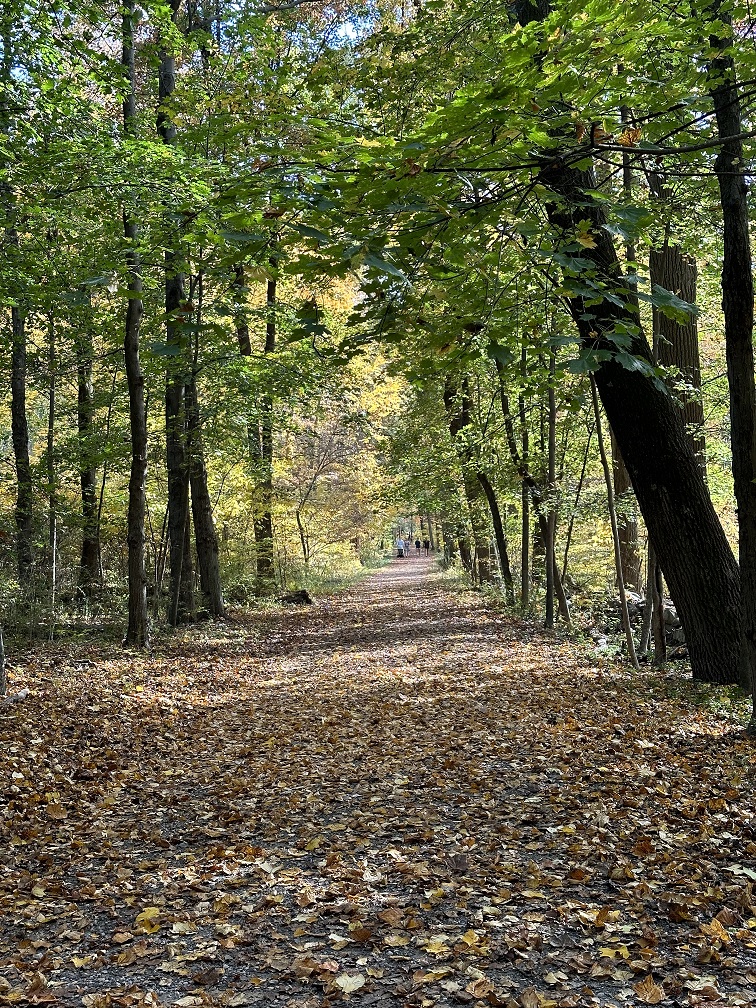
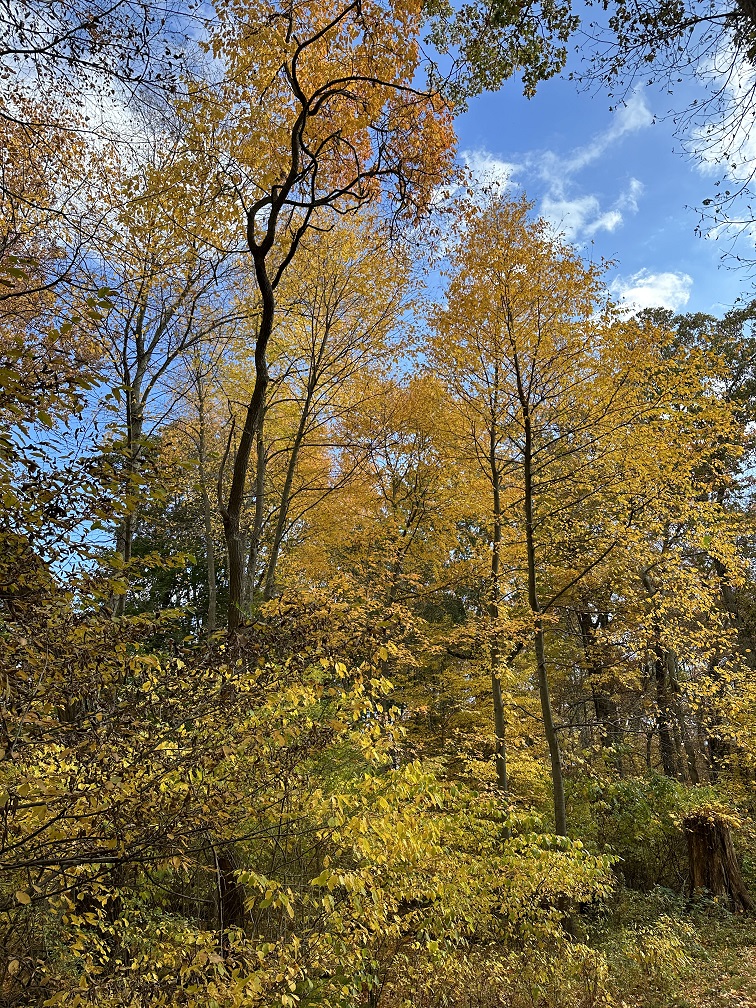
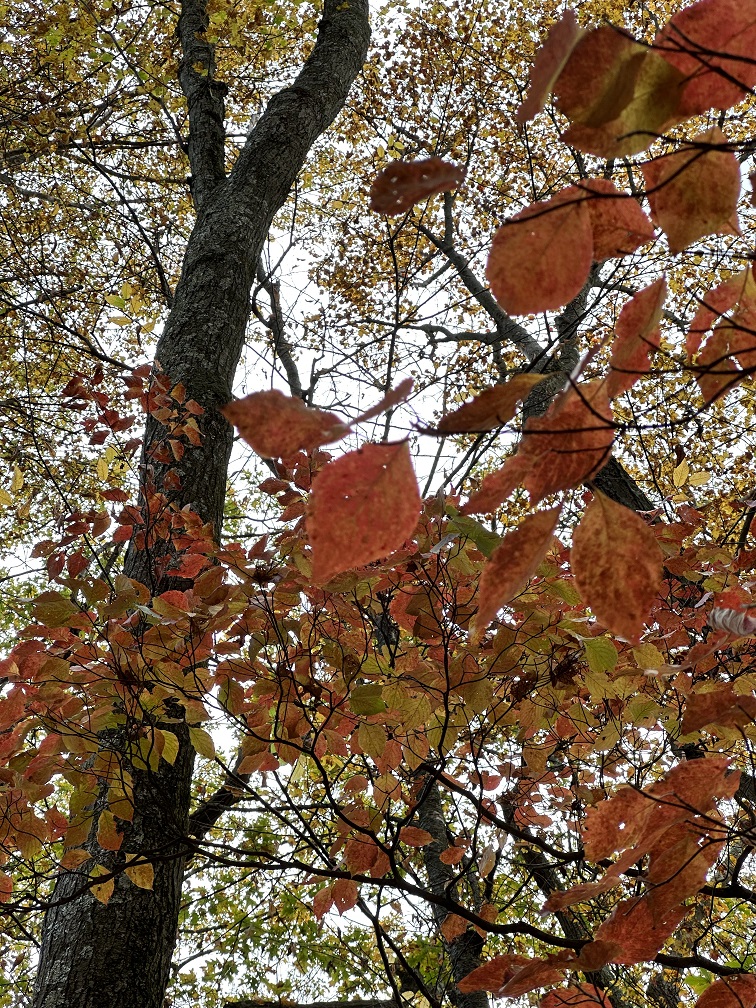
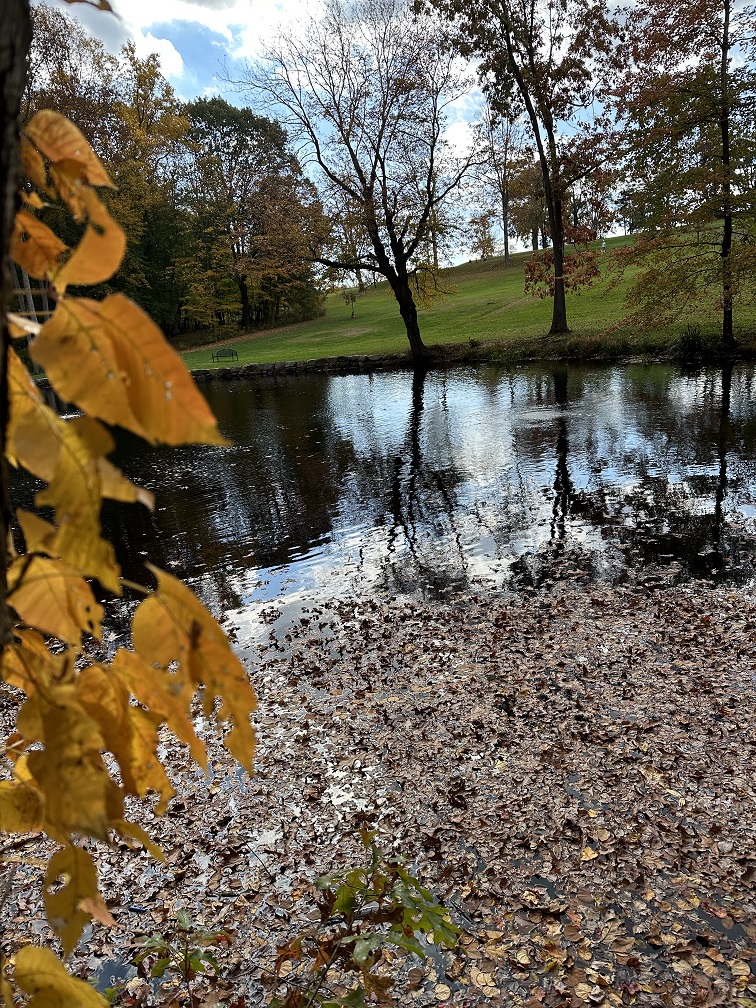
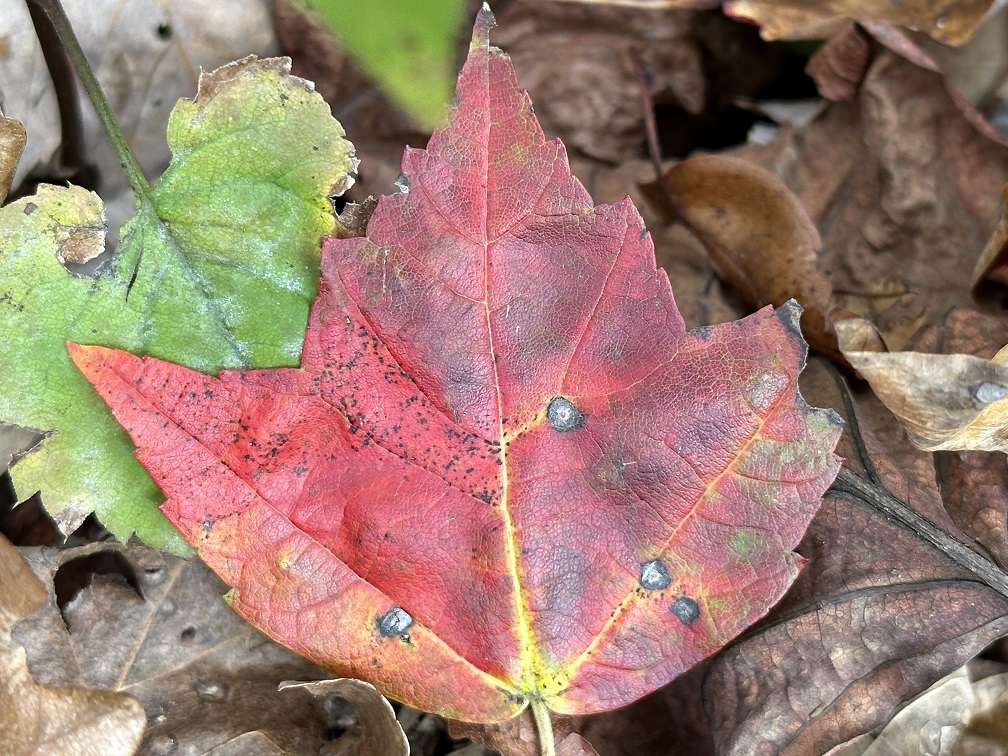
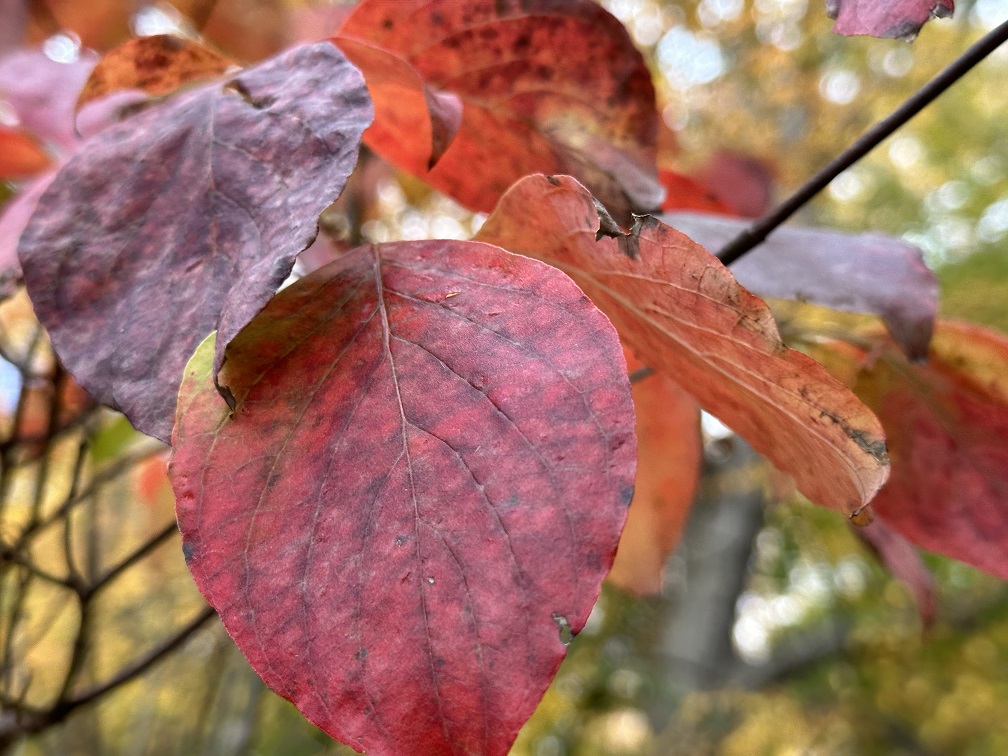
Anyway, I will try to ease up back into writing by sharing some of [practically traditional] impressions of the Fall in Connecticut.
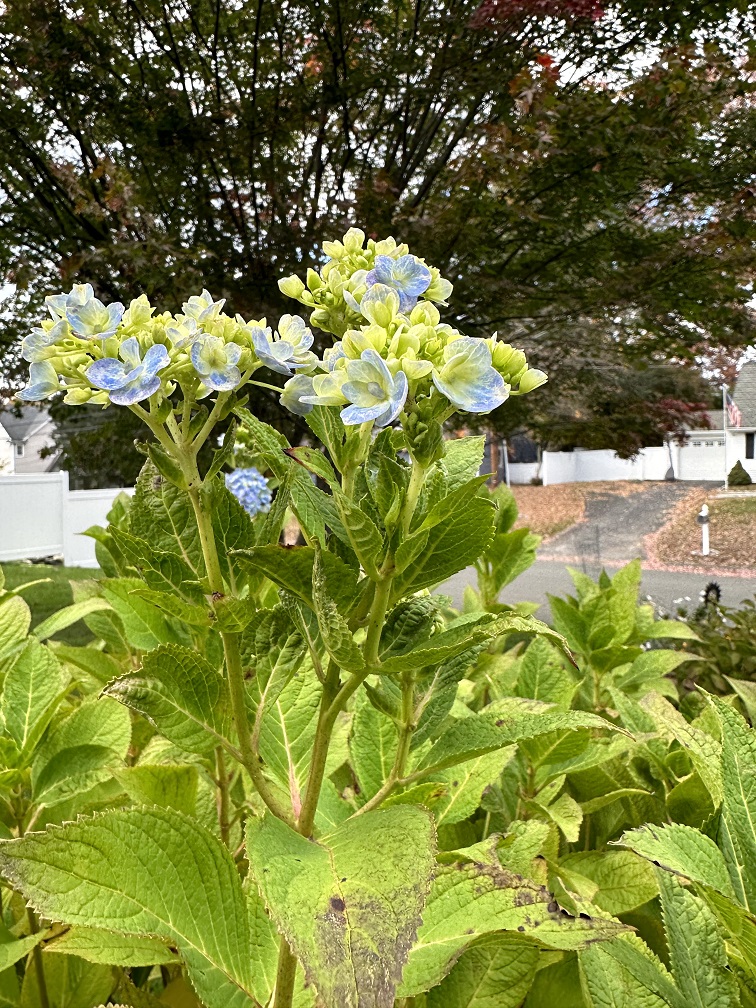
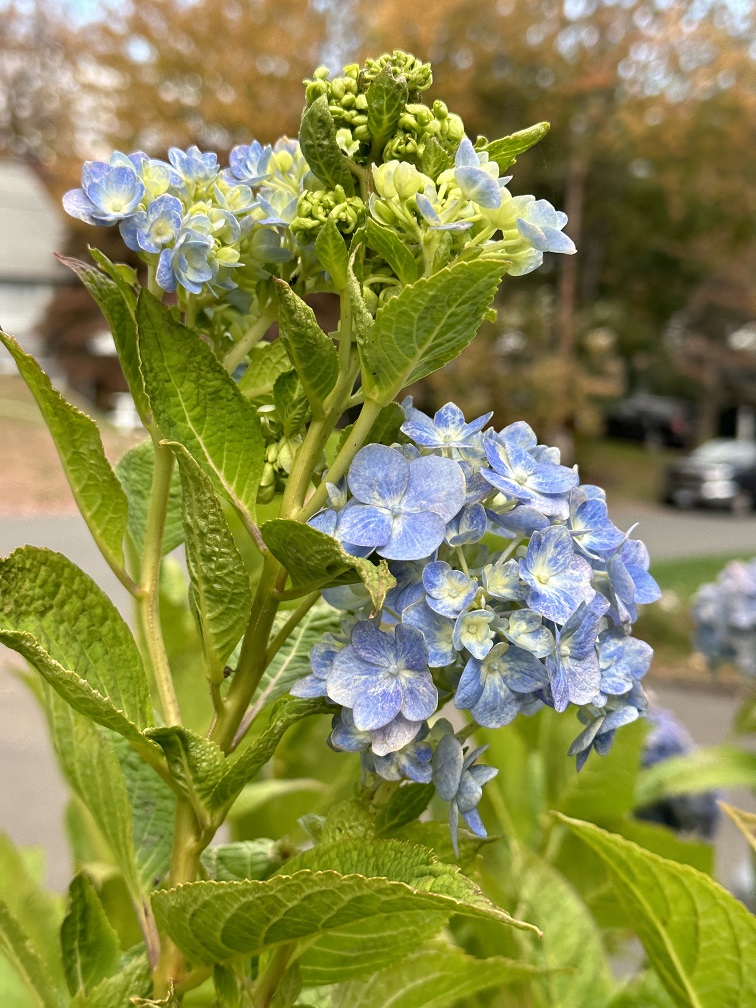
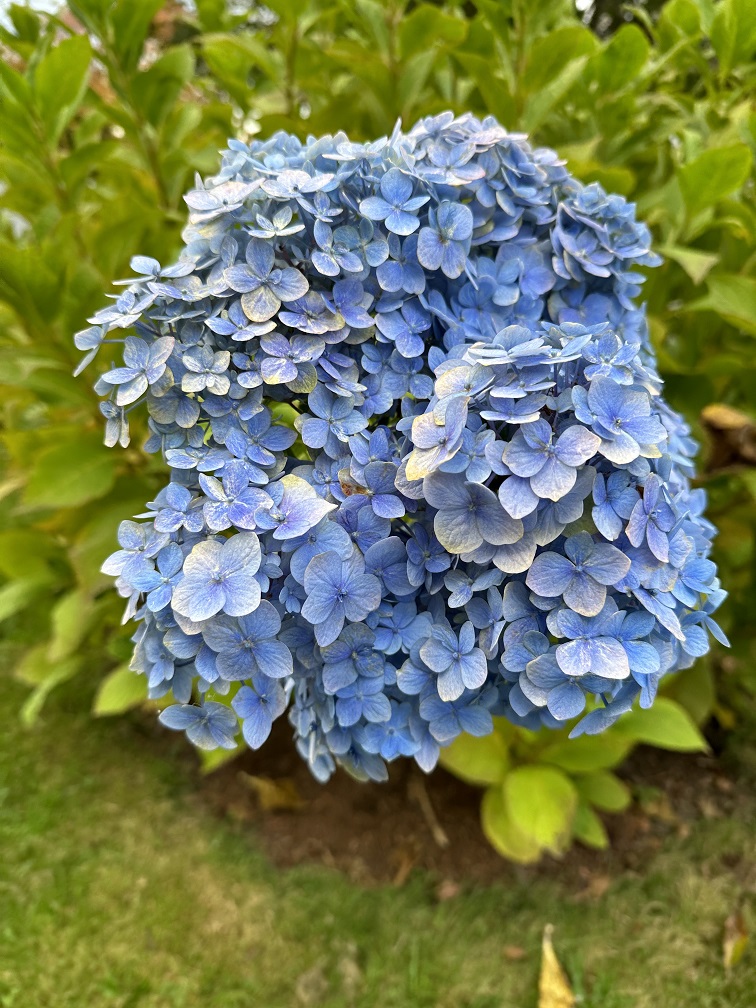
I have to say that this growing season was strange for many plants. For example, our beloved hydrangeas which reliably bloom every summer, produced literally no flowers – until the fall came, and beautiful balls of blue finally showed up – in October. The weather was also interesting going from 75F to 40F in a matter of two days. But we still got the colors – and this is what I’m happy to share here. Happy scrolling 🙂

Chilean Carménère – World-Class and So Hard To Choose
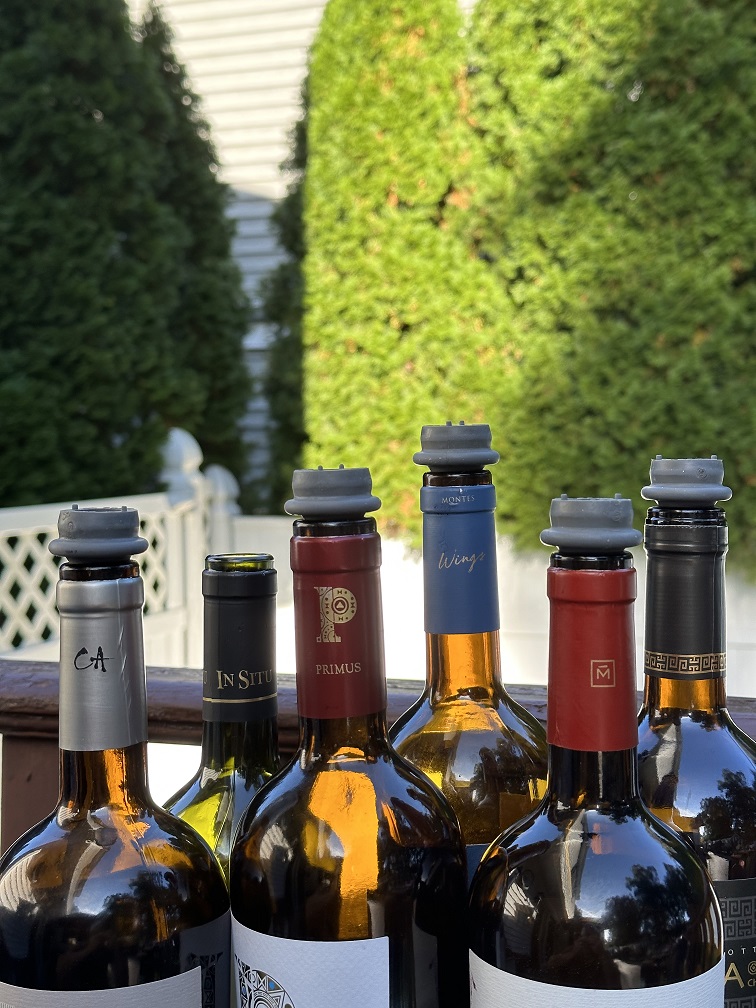 Is 30 years a lot of time or not, what do you think? It depends. If we compare 30 years to the approximate age of Earth at around 4 billion years, it is much smaller than a spec of dust. For a human, that’s quite a bit of time, subject to a personal perception. How about grapes?
Almost 30 years ago, in 1994, it was discovered that the Chilean Merlot grape is not exactly a Merlot. Approximately one-third of the plantings considered to be Merlot happened to be of Merlot’s almost extinct relative – the grape called Carménère. In 1994, there were only 25 acres left in France of the grape which used to be one of the important elements in the Bordeaux blend, now ready to disappear. This discovery also helped to explain the distinct taste of Chilean “Merlot”, loaded with so-called Pyrazines, the compound which leads to the pronounced green bell pepper characteristics in the wine, both in smell and taste.
Chilean winemakers gladly took ownership of the grape which they now could rightfully call “their own”, and the plantings expanded from around 9,000 acres in 1994 to almost 34,000 acres in 2014, eventually steadying at about 25,500 acres in 2021. Along the way, Chilean winemakers worked hard with this grape to literally get rid of the green bell pepper profile, creating a rounder, more fruit-forward wine. Their mission was a total success – for example, looking through the notes of my previous tasting of 7 Carménère wines 3 years ago, not a single wine had any mention of the green bell peppers. Nevertheless, it is interesting that now the pendulum has started swinging the other way, and Chilean winemakers have started thinking about bringing the green bell pepper profile back.
Nothing is instantaneous in the world of wine. Thinking about green bell pepper doesn’t mean it can elegantly show in the wine at will. At least among the 6 Carménère wines I just tasted, only one of them had a distant hint of bell peppers – but the important part was that all 6 were outright delicious. While I managed to choose a favorite, it was like splitting the hair.
Just to give you a perspective on where these 6 wines came from here is the map:
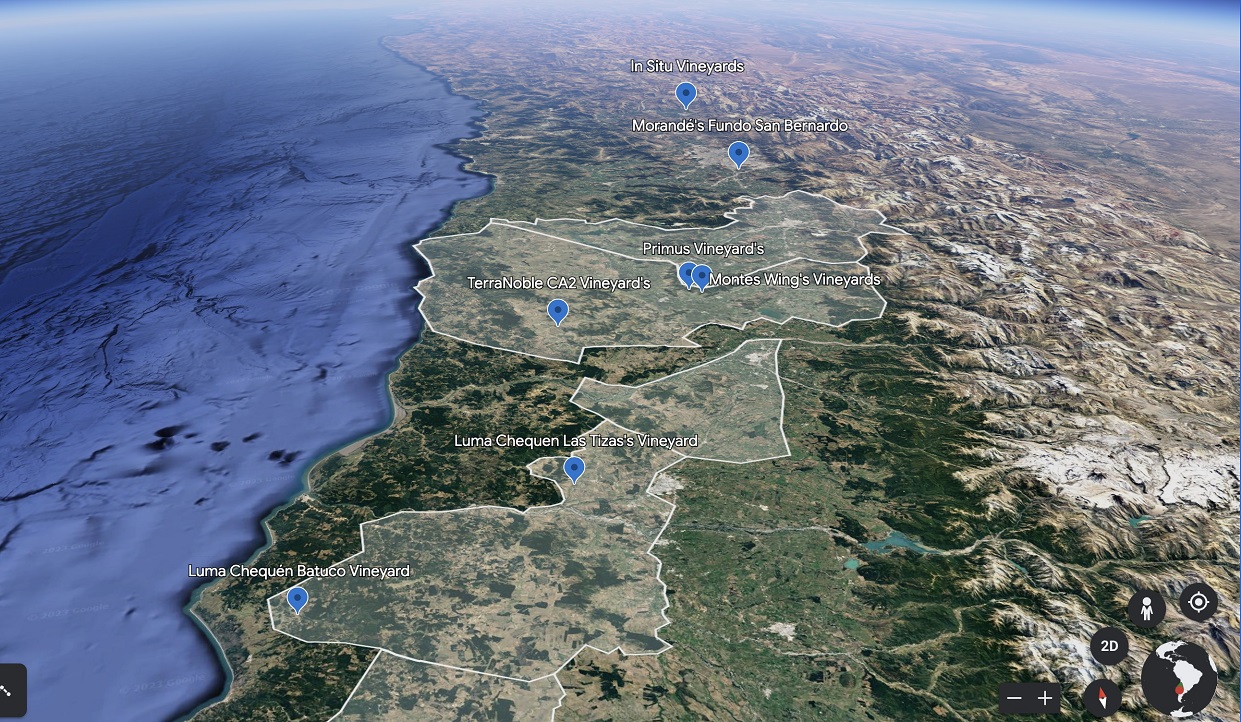 You can see here the proximity to the coast as well as get an idea of the altitude and overall terroir. While there seems to be a good variety of the terroir, all the wines were showing in a similar way – yes, with stylistic differences, but you could tell that the wines are related.
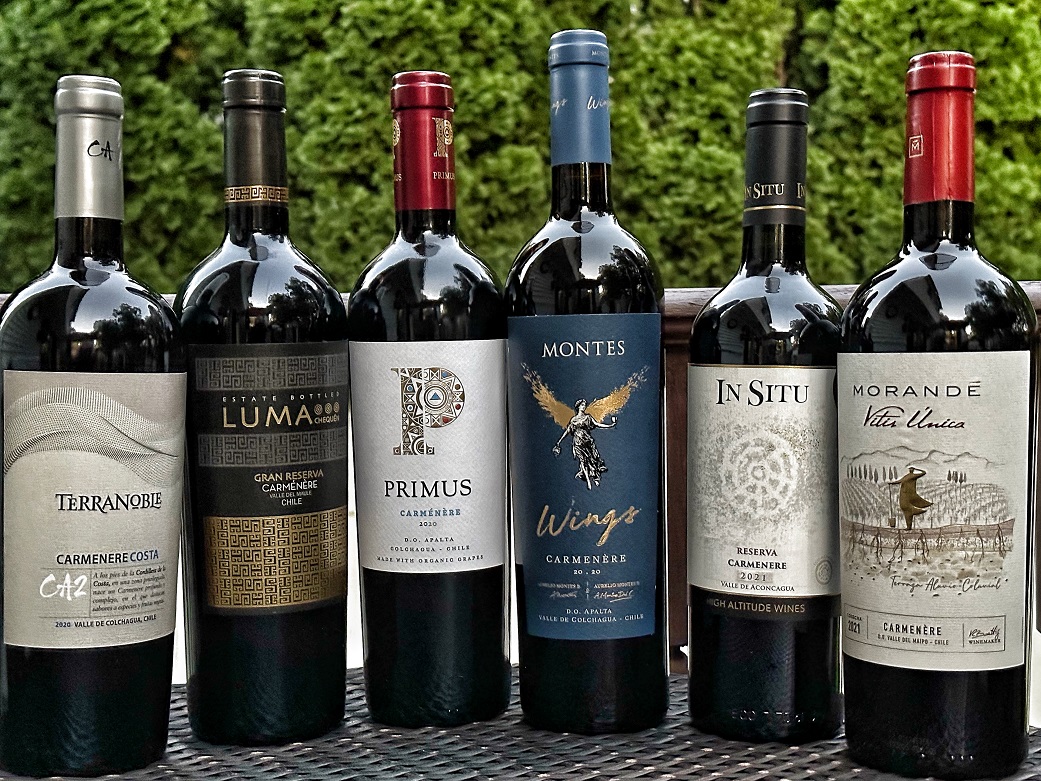
Here are my notes:
2021 Viña San Esteban In Situ Carménère Reserva Valle de Aconcagua DO (13% ABV, $13, 95% Carménère, 5% Cabernet Sauvignon, aged in for 12 months in 50% French and 50% American 225-litre oak barrels, 3+ months in the bottle) – In Situ Family Vineyards was established in 1974 by José Vicente. In 1994, the vineyards were replanted, and the modern winery was built. This certified sustainable winery produces a range of high-altitude wines in Aconagua Valley.
Dark garnet
Beautiful restrained nose of dark fruit, blackberries
Blackberries and raspberries on the palate, crisp acidity, tart, crisp, refreshing, well integrated but present tannins
8
2021 Morandé Vitis Única Carménère Valle del Maipo DO (13.5% ABV, $20, aged for 16 months in 80% in French oak foudres and 20% in new 225 liters French oak barrels) – Viña Morandé was founded in 1996, and went on to become one of the leading wine producers in Chile. The winery is truly innovative and “off-the-beaten-pass”, producing wines from Mediterranean grapes such as Cinsault, Carignan, and Garnacha, and using concrete eggs and large oak foudres for the aging of the wines. The winery was the first in Chile to produce late-harvest wine and the first in Chile to be recognized as 100% sustainable.
Dark garnet
Dark fruit, cedar, a hint of bell peppers
Tart cherries, black currant, zippy acidity, acidity on the finish.
8-/8
2020 TerraNoble CA2 Carménère Costa Valle de Colchagua DO (14.5% ABV, $36, aged 16 months, 42% in new 300-liter barrels, the rest in untoasted foudres) – TerraNoble is one of my favorite Chilean producers. I wrote extensively about TerraNoble in the past, covering particularly the full line of their Carmenere wines.
Dark Garnet, almost black
A touch of barnyard, warm spices, inviting, black currant
Bright, firm structure, cassis, distant hint of bell pepper, good balance, good acidity
8/8+
2020 InVina Luma Chequén Carménère Gran Reserva Valle del Maipo DO (13.9% ABV, $17, 12 months in oak barrels) – InVina was founded in 2007 by the Huber family and went on to become one of the premier producers in Maipo Valley
Dark garnet
Beautiful, nutmeg, sweet oak, superb. Best of tasting so far
Sophisticated, great bouquet, cassis, dark fruit, a touch of dark chocolate, excellent balance.
8+, the favorite of the tasting
2020 Primus Carménère Apalta DO (14.5% ABV, $21, organic grapes, 12 months in French oak barrels, 18% new) – Primus wines are a part of the Viñedos Veramonte, another one of my favorite Chilean producers. I also wrote about Primus Carménère wine extensively in the past, so this was one of the familiar wines in the tasting.
Dark garnet, almost black
Cassis, cassis leaf, sage, inviting, delicious
Dark, brooding, concentrated, earthy, well-integrated but present tannins, full body, needs a steak.
8+, superb on the day 3.
2020 Montes Wings Carménère Apalta DO (14.5% ABV, $55, 85% Carménère, 15% Cabernet Franc, aged for 16 months in 80% new and 20% second-use French oak barrels) – Feng Shui, Gregorian monks chants helping wines age – we can talk about Montes Winery forever. Instead, I will offer you to read my interview with the Founder and Chief Winemaker of Montes Winery Aurelio Montes Sr – here are Part 1 and Part 2 of our conversation.
Dark garnet, almost black
Sage, a hint of cassis, earthy
Bright, elegant, dark fruit, fresh acidity, seeet oak, eucalyptus, layered, luscious.
8+, as good as Luma
Here you are, my friends. Six excellent Carménère wines, making it very difficult to select a favorite. I settled on Luna Carménère Gran Reserva, but honestly, every one of these six are world-class wines I would be happy to drink any day. Do you have your favorite Carménère wines?
No Tricks, Only Treats
Halloween is almost here – are you excited? Did you start planning your Halloween party already? I’m here to help you take it to the next level.
How? Easy. You know that on these pages, wine is the answer, but what is the question?
Well, let’s just clear something up – if you are looking for the wine to pair with candy or deliver a candy-equal amount of sugar in every sip, I can’t help you. But if you believe that your Halloween plans call for a simply delicious sip all of your guests will enjoy, I have something for you.
But first, let’s talk about ghosts. What can be more Halloween-y than a ghost? Ghosts are scary, as they are nowhere and everywhere. Same as with people, ghosts can be mean, but they also can be friendly. And anything and everything can be a ghost. How about a winery? Can a winery be a ghost? If a winery is a ghost, does it mean it is haunted and you should be scared walking into it?
Okay, okay, there is nothing to be afraid of. At the end of the 19th century, there were close to 800 wineries in California. Prohibition, which started in 1920, assisted by the phylloxera epidemic had a dramatic impact on the striving wine business. In the 1933, when prohibition was repealed, only 40 wineries survived. Many of those that didn’t became ghostly encampments, giving birth to the term “ghost winery”.
Flora Springs Winery was founded in 1978 by Flora and Jerry Komes in Napa Valley. Winery’s property included such “ghost winery” – Charles Brockhoff Winery, originally constructed in 1885. That winery was abandoned by the family after prohibition. John Komes, son of Jerry and Flora, completely renovated the old winery which became his family home to this day.
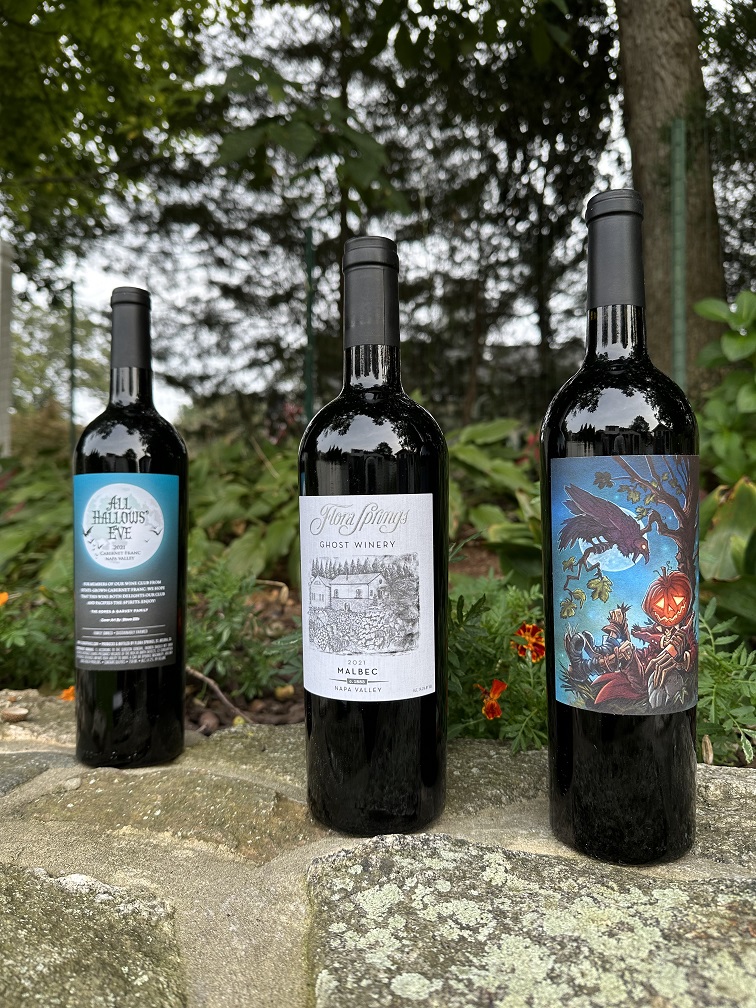
The ghostly past plays an important role at Flora Springs, especially at the time of Halloween, the only time of the year when ghosts are allowed to roam freely. With or without ghosts Halloween has been the subject of special attention at Flora Springs for the past 14 years. Throughout all these years, Flora Springs Winery always released special bottles, produced just for Halloween. Every Halloween bottle has a special label, different every year, designed by different artists. It is not only the label, it is also the grapes – for example, this year’s Halloween wines are made from Cabernet Franc and Malbec, and Flora Springs doesn’t produce any other single grape Cab Franc or Malbec wines. So yes, you can entertain your guests in a unique style.
I was lucky enough to taste samples of both Halloween wines Flora Springs has to offer this year.
Before we talk about wines, I would like to quote the description of the 2021 vintage from the Flora Springs website:
“The 2021 vintage in Napa Valley will be remembered for a smooth, uneventful growing season and harvest that produced low yields of intensely-flavored, small-sized grape clusters. The season started off with very little rain and continued as a dry, sunny summer led to a relatively cool fall with weeks of lovely weather. 2021 represented the second drought year in a row, and while concerning in the long term, the dry weather resulted in a more natural crop load on the vines, requiring less pruning and dropping of fruit. The resulting grapes were packed full of flavor leading to powerful, concentrated wines. ”


Now, let’s talk about Cab Franc.
The label for 2021 All Hallows Eve Cabernet Franc was produced by Steve Ellis, an artist who created illustrations for Marvel, DC, and many other franchises. This label is a perfect embodiment of the Halloween spirit, and it perfectly extends the collection of unique Halloween labels Flora Springs amassed over the year – take a look here, it is really fun. Here are my tasting notes for the wine:
2021 Flora Springs All Hallows Eve Cabernet Franc Napa Valley (14.2% ABV, $75, 18 months in French oak barrels, 350 cases produced)
Dark purple with a bright purple hue on the rim. And then it’s black
Inviting nose of sweet cherry and blueberry pie
More of the fresh blueberry pie profile with good acidity in the aftertaste, velvety, seductive, layered, smooth, very smooth – I guess luscious is a better word.
This is how California producers like to see Cabernet Franc. I’m missing pyrazines, my beloved bell peppers.
It shows a little bit lighter on the second day than on the first. 3rd day didn’t change much compared to the 2nd day. And then the bottle was empty
Drinkability: 8-/8, overall very good


And then there was Malbec. Napa Valley Malbec is quite rare and unique, and this wine didn’t disappoint – I also love the artistic rendering of the ghost winery on the label – it is simple and incredibly attractive at the same time.
2021 Flora Springs Ghost Winery Malbec Napa Valley (14.2% ABV, $60, 18 months in 60% French and 40% American oak barrels, 350 cases produced)
Dark garnet, practically black, but when low in the glass offers a beautiful dark purple hue
Succulent black raspberries on the nose
Inky, sweet cherries and cherry pit, a touch of sweet basil, beautiful textural presence, dark, concentrated, perfectly balanced.
Drinkability: 8+
There you are, my friends. A perfect set of wines to celebrate Halloween in style. Both wines are available at the Flora Springs website, and if you buy 3 bottles, you will get a $15 shipping – check the website for the details. And even if you don’t care about Halloween, these are just tasty wines for any occasion – and they will last for the next 10-20 years (the official winery recommendation is 10 years, but I believe they will easily last much longer).
Don’t be afraid of no ghost, especially if this ghost brings wine. Cheers!
A Quick Trip To Malta and a Few Rare Grape Sightings
Have you been to Malta?
I have not, but hey, this is a wine blog, remember? As I like to say, “Have wine, will travel” – we can get a tiny bit of Maltese experience with the help of Maltese wine.
I honestly don’t remember why was I searching for a Maltese wine, but let’s try to figure it out. I call myself a “collector of experiences”, and I like seld-made challenges. On this very blog, I have this table that lists all (probably “most” is a better word) of the winemaking countries in the world, and I’m always on the lookout for ways to add checkmarks to that table. I added a few new places this year, and I guess while I was at it, I decided to see what wines from what countries I might be able to find. Malta came up during the search, and I found the website called Malta Products which offers food and crafts from Malta, and also wine.
As I was looking through the available wines, to my delight, I realized that I could kill two birds with one stone. Not only can I put a checkmark next to the Malta name, but I can also advance my rare grapes hunt as I found wines made from the two new indigenous grapes.
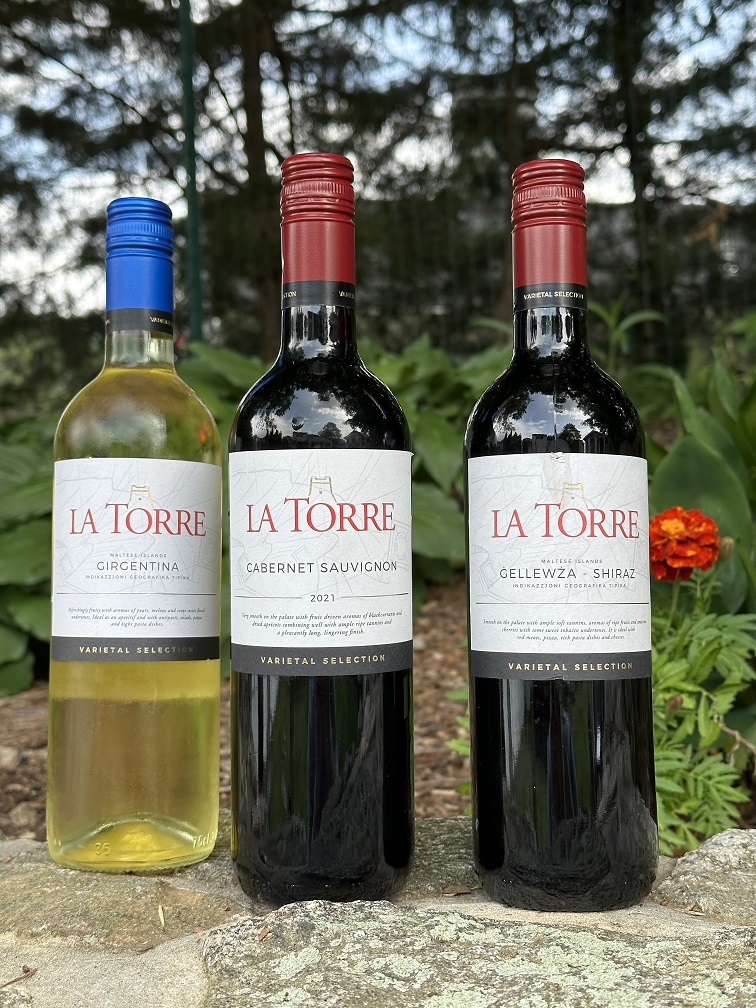


Long story short, I selected two inexpensive wines, one made with the local white grape called Girgentina – 2022 La Torre Girgentina Maltese Islands IGT. The second wine was a red blend containing another indigenous grape – Ġellewża – 2022 La Torre Ġellewża – Shiraz Maltese Islands IGT. The shipping was surprisingly reasonable, so I guess I spent a total of around $50 including shipping directly from Malta.
The wines showed up about 2 weeks later, but when I opened the box I found that instead of Ġellewża – Shiraz I got a bottle of Italian Cabernet Sauvignon from the same producer (La Torre). Considering how inexpensive the wine was, I decided that I would just let it be. On second thought, I decided to at least write to Malta Products customer service and let them know that they sent me the wrong bottle. After I sent them a picture of the wine I received, they apologized and said that they would fix it. I was not expecting anything more than a credit on the card, but instead, about a week later, the proper bottle showed up. It is easy to get cynical in the world we live in today, but then every once in a while we encounter people who actually take pride in the service they provide. If you ever feel like you want to visit Malta via Malta Products, you have my full, unquestionable endorsement.
I finally had an opportunity to try the wines at some point. Girgentina was excellent, bright, round, vibrant and delicious from the get-go. When I took a first sip of Ġellewża – Shiraz, I decided that it’s okay not to like every wine – it was not good [at all]. Not spoiled, but really not drinkable. About an hour later the wine transformed, and while it didn’t become magical, it became light, herbaceous, drinkable red, perfect for a hot summer day. While not a new grape or a place, the 2021 La Torre Cabernet Sauvignon Veneto IGT was simple and quaffable.
That was my quick trip to Malta and the addition of the two rare grapes.
As I’m trying to complete my Hexavin journey and reach that 600 grapes mark, the going doesn’t get any easier (expectedly, but I’m allowed to lament, am I). Or maybe I just like to complain, and it is not that difficult. There is a lot of work done around the world to bring back ancient grapes, to create new wines with a lot of pedigree and heritage, hundreds and hundreds of years of heritage. There are also new grapes, such as Solaris I just wrote about that help grape maniacs geeks move forward. Either way, here are more grapes I’m adding to the collection:
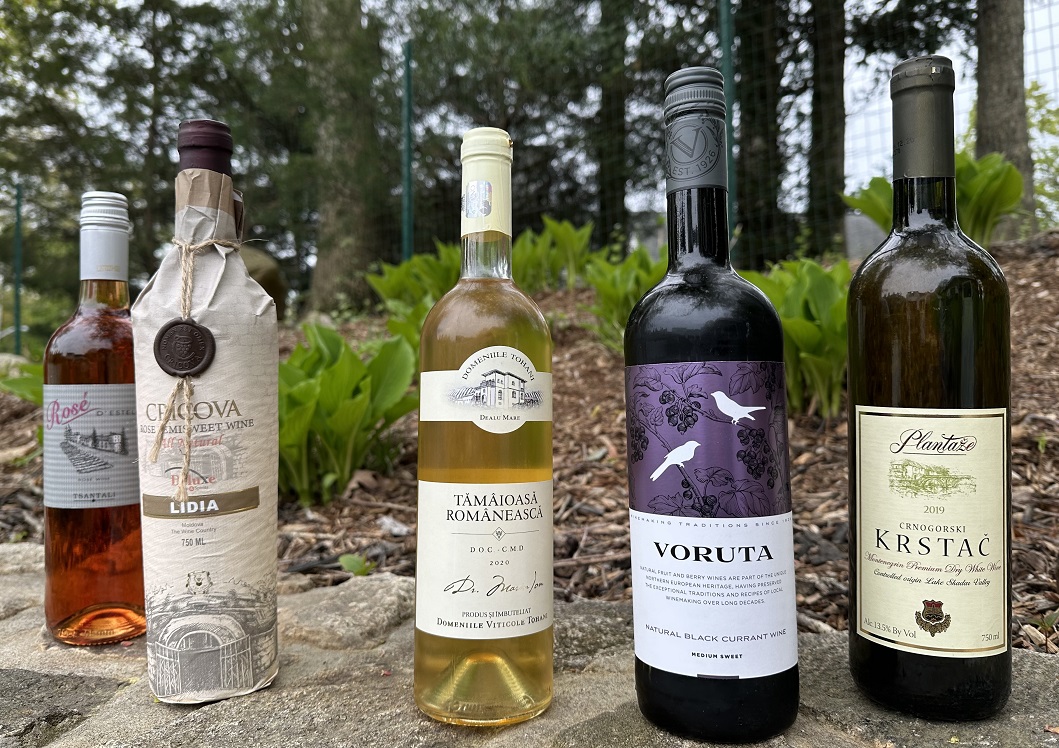


Moschomavro – NV Tsantali Rosé d’Estelle Greece – considering the non-vintage designation, I expected that it would fare worse, but it was drinkable.
Tămâioasă Românească – 2020 Domenile Tohani Tămâioasă Românească DOC Romania – you know that when you you are looking for a princess you might have to kiss a lot of frogs? This was one of them. Horrible.
Busuioacă de Bohotin – 2020 Domain Tohani Busuioacă de Bohotin semi-sweet wine Dealu Mare Region Romania – another surprise. While semi-sweet, the sweetness was nicely restrained and the wine was very tasty.
Krstač – 2019 Plantaže Crnogorski Krstač Montenegro – outstanidng. This was a delicious white wine in its own right. Crispy, focused, delicious.
The next four grapes were picked up last year at the Hudson Valley Wine and Spirits competition last year, where I was one of the judges. These are some interesting grapes, including the hybrid which doesn’t even have the name, only the numbers…
NY81.0315.17 – 2021 Weis Vineyards Perle Finger Lakes
Valvin Muscat – 2021 Milea Estate Vineyard Proceedo Hudson Valley
Regent – 2020 Milea Estate Vineyard Blaufrankish Hudson Valley
Obelin Noir – 2019 Christopher Jacobs Winery Deep Roots New York
Trebbiano Abruzzese – 2022 Masciarelli Trebbiano Abruzzo DOC – this was my recent discovery while working on the Masciarelly post – it appears that Trebbiano Abruzzese is different from the other types of Trebbiano and it is local only to the Abruzzo area…
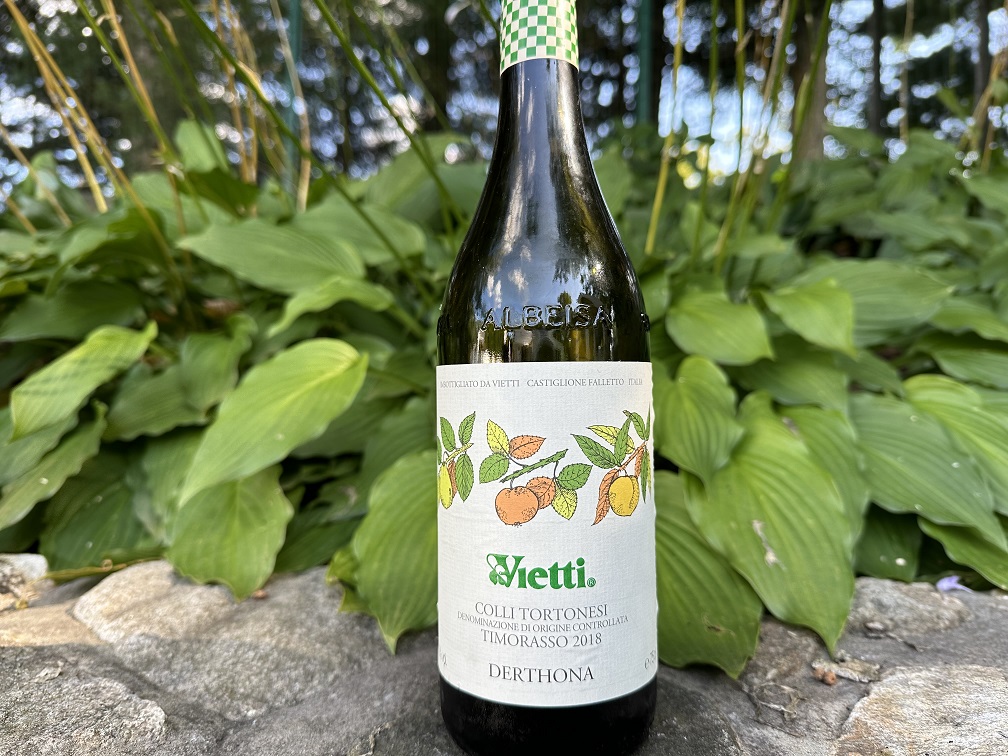
Timorasso – 2018 Vietti Timorasso Derthona Colli Tortonesi DOC – it appears that this grape was already accounted for as part of Giribaldi Cento Uve, so no additional count. The wine, however, was a sheer disappointment – undrinkable.
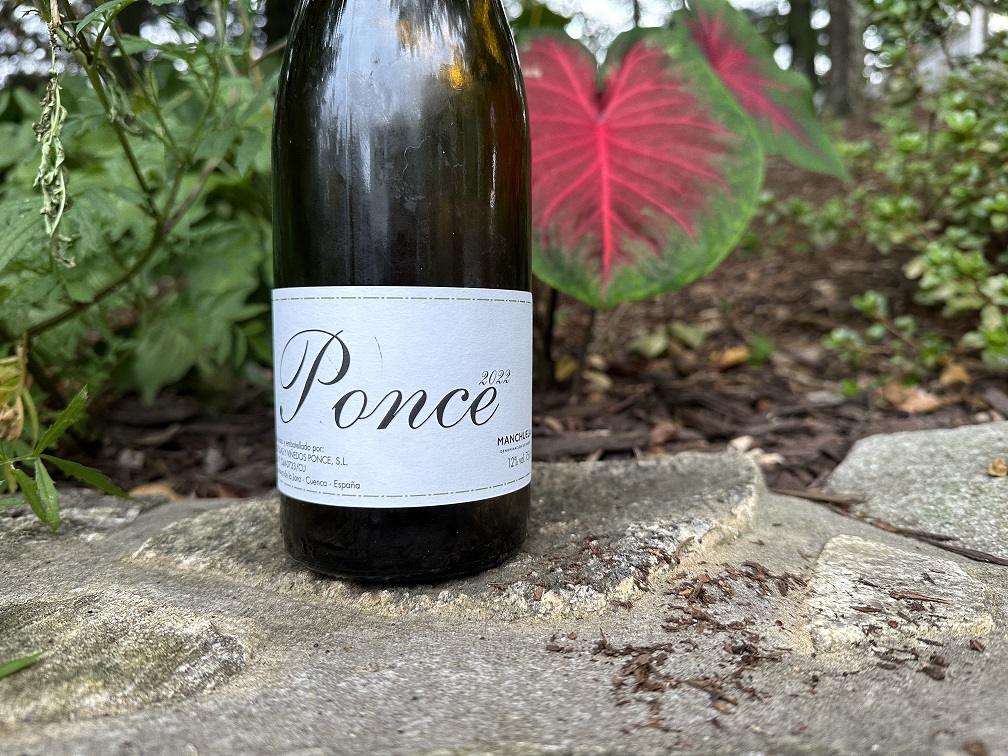
Albilla – 2022 Bodegas Ponce Manchuela DO – this was delicious wine, fresh and vibrant.
All in all, I’m increasing my grape count by 11, and now I’m within the last 10 push before reaching the 600 milestone. I have an easy way of solving this – using clones. I can add 20 clones of Chardonnay, Pinot Noir and Cabernet Sauvignon, all well documented on their usage. Should I do this? I’m not sure, but it is good to have options.
What are the wine artifacts you like to collect?
Last Bottle Sign Up ($10 credit)




 Talk-A-Vino