Archive
Wednesday’s Meritage – Wine Quiz Answer, Wine and Pregnancy, Impossible Food and Wine Pairings?, Don’t Diss The Chardonnay
 Meritage time!
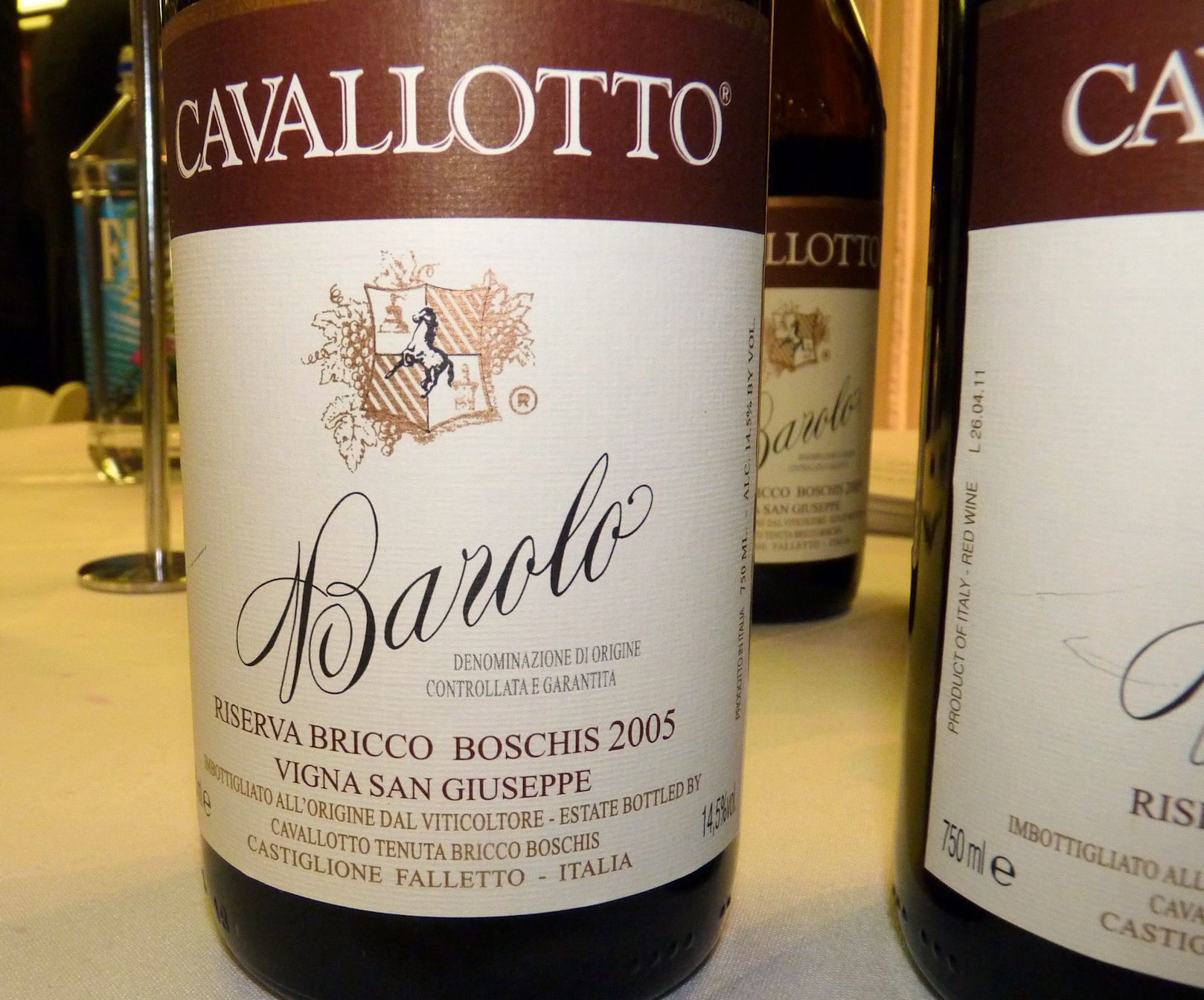
Let’s start from the answer to the Wine Quiz #62, Grape trivia – Nebbiolo. In the quiz, you were supposed to answer 5 questions about Italian grape called Nebbiolo. Here are the questions, now with the answers:
Q1: Explain the meaning of the name “Nebbiolo”
A1: The name “Nebbiolo” comes from the Italian word nebbia, which means “fog”, by association with foggy hills of Piedmont.
Q2: In one of the regions outside Piedmont, the wines are produced from Nebbiolo grapes in the style of Amarone – with grapes drying on the straw mats before they are pressed. Can you name that region?
A2: Valtellina in Lombardy. I was lucky to attend a special seminar on Sfursat di Valtellina Nino Negri wines where I learned for the first time about this type of production (here is the link to my post). There was also a mention of Nebbiolo-based Recioto wines from Veneto – as this was really an experimental effort by one of the winemakers, I can’t count that as a right answer.
Q3: True or False: Blending is not allowed for any of the wines produced from Nebbiolo grape in Piedmont region.
A3: False. While blending is prohibited for Barolo and Barbaresco wines, it is allowed in Ghemme and Gattinara (however, many winemakers prefer to make wines with 100% Nebbiolo grapes).
Q4: White grape used to be such a traditional blending partner for Nebbiolo that it was sometimes called White Barolo. Do you know the name of this grape?
A4: Arneis. Arneis was a popular blending partner for the Barolo wines in the past, and that gave it a name of White Barolo.
Q5: In the blind tasting setting, the wines made out of Nebbiolo can be very distinguishable even before you take a first sip. Do you know what is this distinct feature of Nebbiolo wines?
A5: Orange hue. It is very indicative feature of Nebbiolo wines, especially as they gain any amount of age. You can also distinguish young Barolo by tremendous amount of tannins ( typically), but that is only a feature of particular style of wine and not the grape, and it is whole another story.
There were lots of responses this time! We have two winners (drum roll, please): VinoInLove and Mika ( no web site) get unlimited bragging rights. Also Stefano, Jeff TheDrunkenCyclist and Oliver TheWineGetter all get honorable mention with 4 correct answers out of 5. Thank you to all participants! We have one more red grape to cover for now, and then we are switching to whites. Oh yes, you can start guessing now, what will be this last red grape – you will find out if you are right or not on Saturday.
And now, to the interesting stuff around vine and web!
First, I want to bring to your attention an interesting article about wine and pregnancy from Vinography blog. I don’t know if there are right and wrong here, my personal theory that everything is good in moderation – and any good thing taken out of proportion can and will become your enemy. Still, it is an interesting read, and don’t miss the comments section.
Now, two of the bloggers I follow posted “impossible food and wine pairing” questions. Dr. Vino asked about pairing of wine with anchovies, and the TheArmchairSommelier had a very interesting question about pairing of the summer salad (which contains among other ingredients watermelon, blueberries, honey and feta), which sounds delicious by itself, but presents a substantial challenge of finding the right wine. Visit both blogs and offer your advice, if you will – of course if you want to comment here, I will be very happy to have the discussion in this blog.
Last but not least – a murder story and the warning to those who diss the Chardonnay, as presented by W. Blake Gray – read it here, it is short…
This is all I have for you – the glass is empty. But refill is coming, as usual – and don’t forget that today is Wine and Whiskey Wednesday (like you need a reason to drink, ha). Cheers!
Wednesday’s Meritage – Wine Quiz Answer, WTSO Cheapskate Wednesday in Progress, How To Taste Wine and more
Meritage Time!
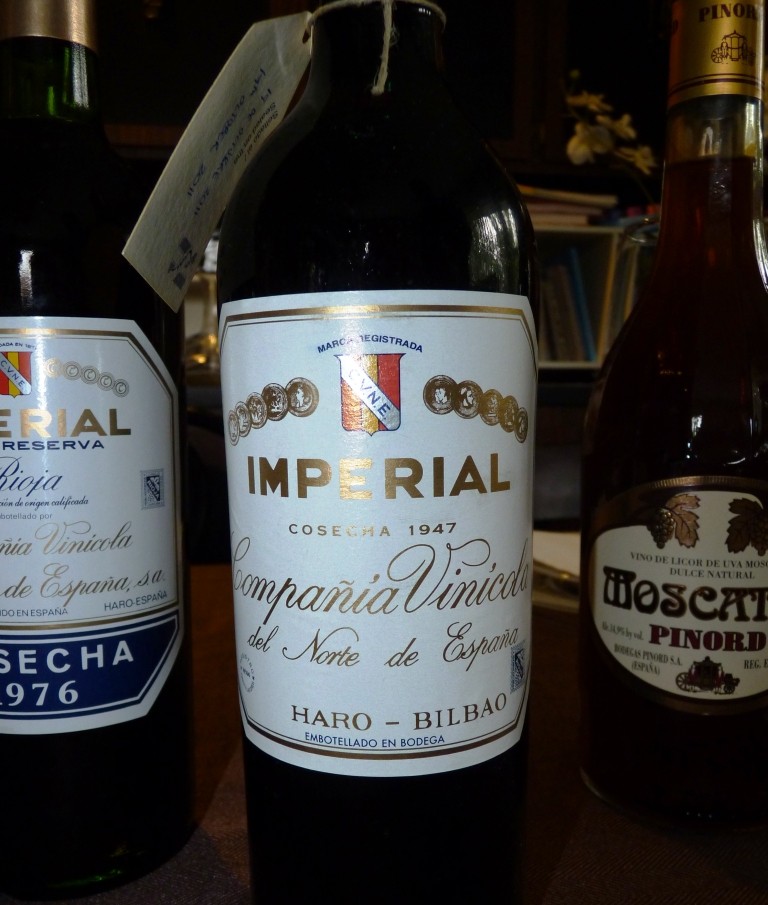 Let’s start with the answer to the wine quiz #61, grape trivia – Tempranillo. In the quiz, you were supposed to answer 5 questions about Tempranillo, the noble Spanish grape. Here are the questions with the answers:
Q1: What is the meaning of the name Tempranillo?
A1: Name Tempranillo comes from Spanish word temprano, which means “early”. Tempranillo typically ripens two weeks earlier compare to many other grapes.
Q2: Name 3 grapes, traditional blending partners of Tempranillo
A2: Traditionally, in Rioja wines, Tempranillo is blended with Mazuello, Grenache and Graciano.
Q3: What is common between Bodegas Muga, La Rioja Alta, Lopez de Heredia and Vina Real outside of the fact that all four are very famous Rioja producers and of course make wines out of Tempranillo?
A3: This was definitely a difficult question. What this four wonderful Rioja producers have in common is … location. All for wineries are located within walking distance from each other around old train station in Haro.
Q4: Tempranillo is used in production of the wine outside of Spain, which is at least equally famous to Rioja. Do you know what wine is that?
A4: Port. Tempranillo is known in Portugal under the name of Tinta Roriz, and it is one of the essential grapes in Port production.
Q5: Name two producers of Tempranillo wines – one is the most famous and another one is probably the most expensive.
A5: Another pretty difficult question. Vega Sicilia is definitely the most famous producer of Tempranillo wines with their flagship wine called Unico. And while it is quite expensive at $500+ per bottle, Dominio de Pingus makes probably the most expensive Tempranillo wines. Both wineries are located in Ribera del Duero region.
Based on the low participation in this quiz I can only say – people, you have to drink more Spanish wines (see, I’m only using bold font instead of capitalizing = screaming)! Especially from Rioja and Ribera del Duero. Anyway, as I said, at least two questions were quite difficult. We don’t have clear winner today, with Emil ( he doesn’t have a blog) coming the closest with about 3.5 points, so he definitely gets an honorable mention.
And now to the interesting stuff around vine and web!
First – don’t miss the WTSO Cheapskate Wednesday which is taking place today, June 19th. Yes, it is not super convenient to keep WTSO open in the browser and hit refresh all the time, but you have very few alternatives to that. You can also follow WTSO on Twitter – the only medium where new wine information is updated in real time. Make sure you have all your correct information on file with WTSO – shipping address and the credit card – otherwise you are risking to miss on the wine you want while you will be filling up the details (being there, done that). I posted many times before about WTSO events – if you are interesting in taking the look at the past sales, use this link.
Next, I want to bring to your attention an interesting article by Master Sommelier Tim Gaiser, called “How to taste wine”. I’m sure that many of you tried at various occasion to figure out what exactly is in your glass – it is a fun challenge to take random glass of wine, look, sniff, swirl, sip – and confidently say “Shiraz, Barossa, Penfolds, 1998 or 1999” and then find out that you’ve been right, or may be it was actually an Argentinian Malbec. Using techniques offered as part of any serious wine education (Master Sommeliers, WSET, Master of Wine, etc.) can actually increase your chances of being right. This article explains in good detail the approach to the blind tasting taken by Master Sommeliers.
If you are a Pinot Noir aficionado, this article might be for you. Written by Jay McInerney for Wall Street Journal, it is dedicated to David Hirsch of Hirsch Vineyards, one of the pioneers of Sonoma cool climate Pinot Noir.
Last but not least, here is an interesting blog post by W. Blake Gray, where he is talking about the study regarding cork taint. According to that study, 10% of the people actually prefer corked wines! For the first 10 minutes after I read it, I had mostly expletives roaming through my head – then I was able to compose myself and leave a [decent] comment. Yeah, well, no further comments – read it for yourself…
That’s all I have for you for today – the glass is empty! Refill is coming, and until the next time – cheers!
Wednesday’s Meritage – Wine Quiz Answer, Le Féret, En Premeur Tales, 1WD Giveaway and more
Meritage time!
Let’s start from the answer to the wine quiz #59, Grape Trivia – Zinfandel. In the quiz, you were supposed to answer 5 questions about California’s star grape, Zinfandel. 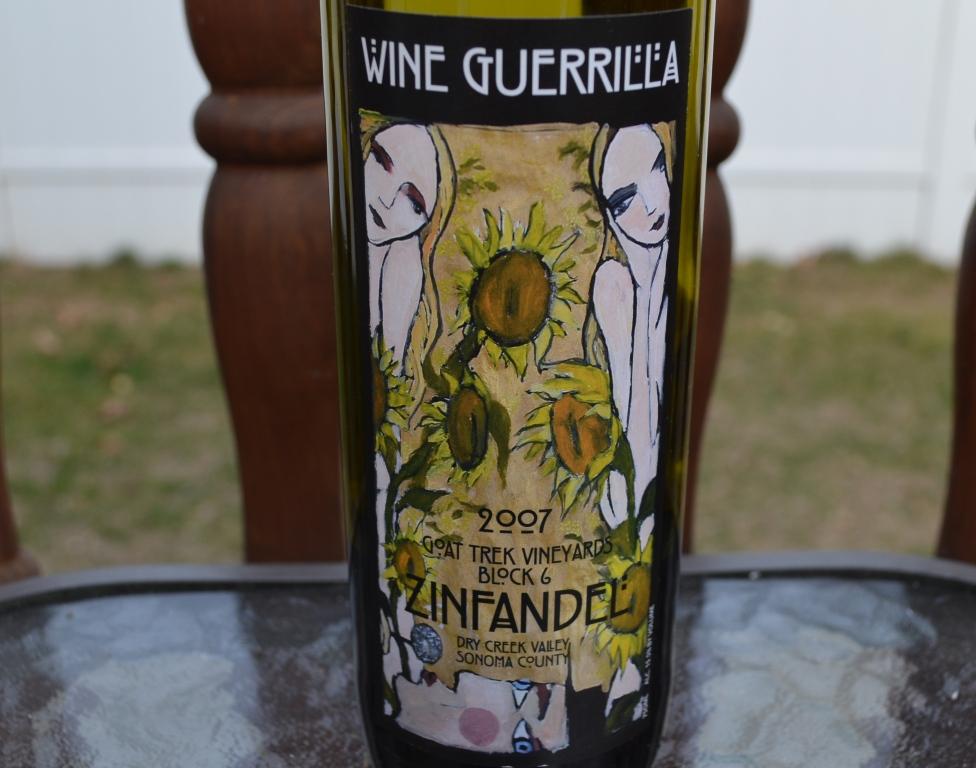
I know many people prefer to answer quizzes in the Google-free form – however, this Zinfandel quiz was somewhat of an exception. Let’s move on to the answers.
Q1: It was established recently that Zinfandel existed in Croatia under a different name, at least from the 15th century. Do you know what was that name?
A1. This was actually a tricky question. People, I mentioned Crljenak Kaštelanski right in the text of the quiz – I was hoping that this would be enough of a hint that this will not be a right answer. If someone will look into Wikipedia, you will be able to find that “After years of research and DNA testing of vines from vineyards across the globe, a single 90 year old grape vine from the garden of an elderly lady in Split, Croatia, provided the evidence to show that Zinfandel was a Croatian grape that has been known as Tribidrag since at least the 15th century.” So the correct answer for the question #1 is Tribidrag.
Q2: While Zinfandel typically listed on the label, very often some other grapes are added to the blend. Name one grape which can be considered a traditional blending partner of Zinfandel
A2: Petite Sirah. Look at the information on many Zinfandel wines, and you will often see at least some percentage of Petit Sirah to be a part of the blend.
Q3: Pink Zinfandel was discovered by accident. Can you explain how that happen, and possibly use the proper winemaking term for the “accident”
A3: Oops, sorry, I should’ve being checking my writing. It is actually White Zinfandel, not Pink, of course – pink is just a color… Anyway, I see that many of you figured out what I meant ( I will still correct the question) – yes, White Zinfandel was discovered as a result of the accident, which is called “stuck fermentation” – all the yeast dies and fermentation stopped before sugar was fully converted into the alcohol.
Q4: Two California winemakers are largely credited with putting red Zinfandel wines on the wine map. Can you name them?
A4: Most of you mentioned only the wineries – and the question was actually about the winemakers. But thedrunkencyclist was correct mentioning Ridge and Ravenswood – Paul Draper of Ridge and Joel Peterson of Ravenswood are largely considered the pioneers of California Zinfandel.
Q5: Most of the well known Zinfandel producers still make other wines from the different grapes. But there is one winery in California ( at least that I know of), which make nothing but Zinfandel wines. Can you name that winery?
A5: Yes, this was a tough question too. Most of the famous Zinfandel producers – Turley, Ravenswood, Rosenbloom, Seghesio, Robert Biale, and so on – are all producing other wines in addition to their great Zinfandels. The only winery I know of which produces Zinfandel and nothing but Zinfandel is Wine Guerilla – it is not for nothing they are calling themselves “An Art and Soul of Zinfandel”. Take a look at their line up – they are currently offering 13 different kinds of Zinfandel – and nothing but Zinfandel.
Summing it up, we don’t have winners this week, and Jeff, a.k.a. thedrunkencyclist gets an honorable mention with 3 correct answers out of 5.
Now, to the interesting stuff around vine and the web!
Have you heard of Editions Féret? I have to admit that I didn’t, not until I read a Wine Spectator article called “The Book that Defined Bordeaux“. It appears that the book, now called Editions Féret, or simply Le Féret, which started exactly 200 years ago as 84 pages travel guide, and had grown to become a 2,296 pages bible, largely defined Bordeaux wines, starting from famous 1855 classification – it was that book which rated the wines simply based on their prices in 1850, which was taken as a foundation of 1855 classification. Read the article, I think it is quite interesting.
According the post on Dr.Vino’s blog, it appears that during En Premeur, a primary Bordeaux event where new vintages are presented, one and the same wine can be “processed ” differently for the different groups of tasters – Americans will get the wine exposed to more of the new oak, and the same wine for the French audience will be finished to have more subtle showing of the fruit. Is it true? I have no idea. But it gets a final product into an interesting perspective – does it mean that one and the same Bordeaux wine can taste differently depending on where you will buy it ( in US or in Europe)? Hmmm…
Do you like giveaways? Of course you do, who doesn’t? So assuming that you do, please go and check this post at 1WineDude web site – if you leave a comment there, you will get a chance to wine one of the 5 memberships in the French Wine Society. I think it is not a bad deal, huh?
Last but not least – mark your calendars for June 19th – and make room in your wine cellars and their equivalents. Yep – WTSO is doing it again! Famous Cheapskate Wednesday is coming into town on June 19th – for more information please visit WTSO web site (you can find link in the “Buying Wine section to your right) or click this link.
That’s all I have for you for today, folks – the glass is empty. But refill is on on its way. Until the next time – cheers!
Wednesday’s Meritage – Wine Quiz Answer, Ageing of California Cabs, Is 0.05 an answer?, and more
Meritage time!
As usual, we are starting with the answer to the wine quiz #58, Grape Trivia – Syrah. In the quiz, you were supposed to answer 5 questions about Syrah, a.k.a. Shiraz.
Q1: Where is Shiraz?
A1: Shiraz is a town in Iran (previously Persia) where supposedly Syrah was originated.
Q2: Which white grape often plays a role of blending companion for Shiraz?
A2: Viognier is often added to both Syrah (Côte-Rôtie) and Shiraz. In many cases you can see Shiraz Viognier written on the labels of Australian wines.
Q3: One of the appellations below can be removed from the list – can you tell which one and why? For the answer to count, “why” explanation is required
A. Cornas, B. Côte-Rôtie, C. Crozes-Hermitage, D. Hermitage, E. Saint-Joseph
A3: Cornas. While Syrah is the only red grape allowed to be used in all of the appellations above, all appellations except Cornas also allow addition of white grapes (Viognier or Marsanne and Roussanne) to the final wine.
Q4: About 100 years ago, Syrah was a popular addition to the wines of one well known region – now this practice is totally illegal by the appellation rules. Do you know what region was that?
A4: Bordeaux. Syrah was a popular addition to Bordeaux wine, providing the structure and flesh. Of course the practice is illegal according to Bordeaux AOC rules, but it is still quite popular in the other regions, such as Australia, where you can often find Cabernet Sauvignon Shiraz wines.
Q5: Where do you think are the oldest in the world continuously producing Syrah vineyards are located? Can you guess the approximate age of the vines?
A5: Australia. It is very difficult to figure out who was first and who was not, as in the wine world, there are always multiple claims to the “first” and “oldest” bragging rights. Based on the information I came across in this forum discussion, the oldest Shiraz vines had being planted in 1846 in the Jacobs Creek area, and Schild Estate is producing the wine called Moorooroo Shiraz from those old vines.
And the winners are… The Drunken Cyclist (I think for 5 times in the row!). He got all 5 questions correctly – great job, Jeff! Very close right behind him (with 4.5 out of 5 points – very close in the area for Shiraz, but named a different country – is Barbie from Blindly Guessing Grapes. If you are not familiar with her blog – check it out, she is constantly challenging herself to taste and learn about different grapes, definitely worth your attention. Honorable mention goes to Red Wine Diva, who correctly answered 3 out of 5 questions. Great job all, enjoy your bragging rights!
And now, to the interesting stuff around the vines and the web!
First I want to mention an interesting post by Steve Heimoff, where he is talking about change in perception of what ageable California Cabernet Sauvignon is, from 1970s to today. Steve’s point is that back in the 70s, to be considered age-worthy, Cabernet was supposed to taste bad on the release – where this is definitely not the point now. Read it for yourself, and as usual, don’t forget to read through the comments section, as it contains a lot of interesting information.
Next subject is currently widely discussed in many alcohol-related blogs – NTSB (National Transportation Safety Board) recently came up with recommendation to lower allowed alcohol blood limit to 0.05 (down from 0.08 which is currently the limit). Both Steve Heimoff and W. Blake Gray wrote blog posts about it, which you can read here and here, advocating the idea that just lowering of the alcohol blood level will not be the solution for DUI-related accidents. They both covered the subject quite well, so I’m not going to repeat all of their arguments – but I recommend that you will read their posts, as in the end of the day, this relates to all of us and our ability to have a glass of wine with the meal in the restaurant.
There is also something else I want you to think about here. My friend Emil sent me a very interesting link tot he blog post titled “Survivorship Bias“. The post is very (very!) long and has nothing to do with wine – it is however a very (very!) worthwhile reading. This post is talking about the fact that when we analyze the problem, we tend to focus on successful outcome only, and we forget to carefully look on all the failed results and dead-end paths (it is impossible to give you a good summary in one sentence, you will be better off reading the post). The connection here? I believe that most of drunk-driving accidents were caused by the people whose blood alcohol level was far exceeding 0.08, forget 0.05. Majority of the people involved into DUI accidents never thought of what the allowed blood alcohol level is – 0.08, 0.05 or whatever, so lowering the limit will only allow to collect more fines and get in the way of more people’s lives – but it is not going to address the problem itself and reduce the number of drunk-driving related accidents. By no means I advocate or promote drunk-driving, this is definitely a serious problem which needs to be solved – but in order to solve this problem, it should be analyzed properly first, and this is what I believe this 0.05 recommendation is lacking.
And this is all I have for you for today. I think you are looking at lots of interesting reading, and if you want to discuss any of this “news”, this is what the comments section is for.
The glass is empty – but refill is on the way. Until the next time – cheers!
Wednesday’s Meritage – Wine Quiz Answer, Chardonnay Day, Wine Appellation Earth?, Best Blogging Tips and more
Meritage Time!
 First and foremost, let’s start with the answer to the wine quiz #57, Grape Trivia – Grenache. Below are the questions, now with the answers:
Q1: Name two grapes which are traditional blending partners of Grenache
A1: Yes, we are talking the famous GSM blends, and the blending partners of Grenache are Syrah (Shiraz in Australia) and Mourvèdre (known as Monastrell in Spain and often called Mataro in Australia).
Q2: Below is the list of countries which use Grenache in the winemaking. Sort the list by the area of Grenache plantings, from the highest acreage to the lowest:
A. Australia, B. France, C. Italy, D. Spain, E. United States
A2: The correct answer is France, Spain, Italy, US, Australia (so it will be BDCEA). The culprit here was Italy, in my opinion, there Grenache is known as Cannonau – I didn’t expect that Italy grows so much of it… Here is my source of data – an article at Wine Folly’s web site.
Q3: One winery in US is often credited with spearheading the success of Grenache in US. Can you name that winery?
A3: Tablas Creek winery in California – they imported Grenache cuttings from France to the US in 1990, and it was the beginning of great Grenache wines in US. Here is an excellent article about Grenache on Tablas Creek’s web site.
Q4: A few centuries ago, Grenache was a popular blending addition in one of the regions in France, until it became illegal by the AOC rules. Do you know what region was that?
A4: Actually, it was Burgundy, where addition of Grenache was popular way to add body to otherwise finicky Pinot Noir wines. Of course it is illegal practice for the long time.
Q5: Same as for the number of other grapes, Grenache exists in three different grape variations – Grenache Noir, Grenache Blanc and Grenache Gris. There is one wine where it is absolutely legal to use all three grapes as the part of the blend. Can you name that wine?
A5: Châteauneuf-du-Pape! Well, I should’ve post the question as “type of wine” – but in any case, Châteauneuf-du-Pape (CdP for short) AOC rules allow inclusion of all three different Grenache grapes into the same wine. I always thought that CdP allows 13 grapes to be blended together in production of CdP wines, but it appears that the rules has recently changed, and now there are 18 grapes which are all allowed for use as winemaker desires.
And the winner is…(drum roll)… The Drunken Cyclist with five correct answers! He is definitely on the winning streak for a while and once again he gets unlimited bragging rights. I want also to acknowledge The Winegetter, Red Wine Diva and Eat With Namie who all got 3 out of 5 questions right – definitely a commendable effort.
Now, to the interesting stuff around the web vine – boy, there is plenty to share!
First, sorry for the late notice, but tomorrow is 4th annual Chardonnay Day! Well, Chardonnay is not such a hard wine to get, right? You still got time to make sure you will celebrate in style, whatever your style is – Burgundy, Chablis, Big California, California-pretending-to-be-Chablis, I-am-unoaked-and-almost-like-Pinot-Grigio-chose-me – anyway, any kind of Chardonnay goes. And if you want to officially assert your participation, here is a link to the event page where you can officially join the ranks of Chardonnay aficionados.
Next, I want to bring to your attention an interesting post by Mike Veseth of The Wine Economist fame. The post is titled Is This the Beginning of Juice Box Wine? and it is talking about true globalization of wine in terms of production – one of the new wines from Barefoot called Impression and it is produced from the juice sourced from all over the world, so the wine doesn’t state any appellation on the label. What do you think of such approach to winemaking? Will this be a fluke, or will we see more of the wines from appellation Earth?
As you know, I’m a big fun of Stéphane Gabart’s blog, My French Heaven. I find his food pictures as some of the most incredible I ever come across, in the blogs or on Pinterest. Now Stéphane was very kind to write a blog post called “20 tips for stunning food photography“, which definitely worth your attention if you want to master your food picture taking skills. Also, as this is not the first time I refer to some of the “best tips and practices”, I decided to create a dedicated page for the Best Blogging Tips, where I will be collecting all the references like this one. If you have any suggestions as to what should be included in that “Best Blogging Tips” collection, please let me know – I hope to make it into a very useful resource for all.
Next subject is … beer! Yes, even in the wine blog there is a place for a beer. When you hear about the beer called Nuclear Tactical Penguin – is that the beer you would want to try? Well, okay, I don’t know about you, but I’m definitely interested. But turns out that this beer is practically impossible to get in US, so the best thing one can do is to enjoy it vicariously. This is what I did when I read this post at Wayward Wine blog. Outside of just great description of the beer, you can also learn about Frozen Beer category and how those beers are made – I think this reading will be well worth the time. Also, while looking for another beer from BrewDog company, this one called Sink the Bismark, I came across the list of 10 most expensive beers in the world! Now I want to try BrewDog’s The End Of History (55% ABV and still a beer!), but considering that it costs $765 for 330 ml, I will need a sponsor… anyone?
And last, but not the least subject for today – Wine Blog Awards finalists are finally announced. No, I didn’t make it to the list of finalists (sigh). But I would like to congratulate Jeff a.k.a. The Drunken Cyclist as he got into the finals in the Best Writing category. Anyway, this week is the public voting week, so you can cast your vote for the best blog here.
That’s all I have for you for today, folks. The glass is empty – but more wine is coming. Cheers!
Wednesday’s Meritage – Wine Quiz Answer, World Sherry Day, How To Start You Wine Book Project, Wine Blog Awards?
It is Meritage Time, and Meritage posts are back!
Let’s start from the answer to the wine quiz #56, What is it? In the quiz, you had a picture of wine-related object, and you were supposed to identify what is it and how it should be used. Here is the picture which was presented to you:

And here is the answer, in the form of another picture:
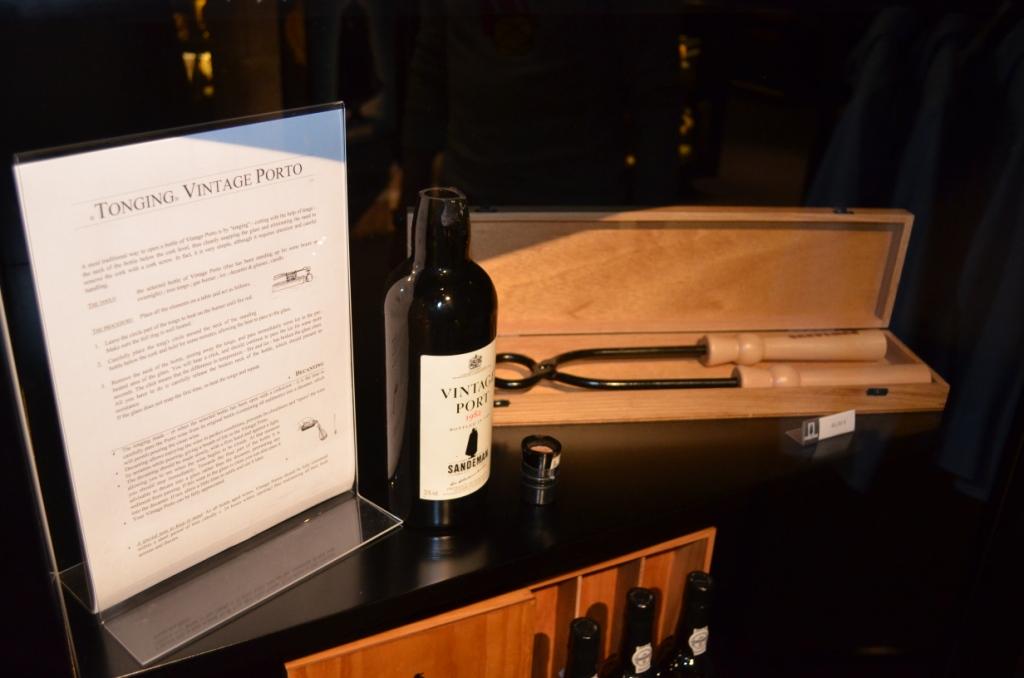
Port Tongs Display at Sandeman
The object is called port tongs, and they are used to open a bottle of vintage port or any old wine without fighting with the cork. The way to use it is this: you heat up the tongs until red hot, put it around the neck of the bottle underneath of the cork, hold it for some time, then remove and use cube of ice to go around the heated up circle – the glass cracks cleanly and can be removed now.
I really wanted to have such a device, ever since I read the post about old Rioja wines in PJ Wine blog – and now I do. I’m not sure how often or even when am I going to use this device, but – now I can if I want to (freedom is everything, right?)
I’m glad to say that we have two winners – both waywardwine and thedrunkencyclist correctly identified Port tongs in the picture, and the drunkencyclist provided perfect description for how port tonging is done. Congratulations to our winners – both of them get unlimited bragging rights.
Now, to the interesting stuff around the web. First, the World Sherry Day will start on Monday. This is going to be one long day, as it starts on May 20th and lasts through May 26th, but hey, that means that you can drink more sherry during one day. Find the place near you to celebrate, or just grab a bottle and indulge on the beverage which might be easily hundreds years old, and still affordable at the same time. If you need a crash course in Sherry, here is the link to one of my posts (I also plan to talk about sherry in more details at some point in the near future).
Dreaming of writing the wine book, you think you got something to say and you think you can convince people to share your vision? Then take a look at this post by Wink Lorch, where she is talking about her successful fundraising project on Kickstarter for her Jura wine book.
Last interesting note for you – if you remember, a while ago, many of us, wine bloggers, asked for your nomination for the Wine Blog Awards 2013 – and many of us got nominations, for which we profusely thank you, our readers. The interesting part is that the week of May 10 – 17 was designated as voting week for the public, after jury selects 5 finalist blogs for each category – here is the link to the rules for you. Today is May 15th, and it doesn’t look like finalist blogs had been selected and that public can vote on them. Oh well…
That’s all I have for you for today, folks. The glass is empty. Until the next time – cheers!
Wednesday Meritage – Wine Quiz Answer, Bordeaux 2012, Bottle Variations, Dishcrawl and more
Meritage time!
Let’s start with the answer for Wine Quiz #55, Grape Trivia: Pinot Noir. In the quiz you were supposed to answer five questions about Pinot Noir grape – here are the questions with the answers:
Q1: Can you explain the source and meaning of the grape’s name “Pinot Noir”?
A: Pinot Noir literally translates as “black pine”, due to the grape cluster’s resemblance of the pine cone.
Q2: True or False: Burgundy has the biggest plantings of Pinot Noir in France?
A: False – Champagne has much bigger area planted with Pinot Noir
Q3: Match the wine/producer with its country/region:
| A. Mt. Difficulty | 1. Burgundy |
| B. Evening Land | 2. New Zealand |
| C. Fleury | 3. Champagne |
| D. Hamilton Russell | 4. Oregon |
| E. Clos de Tart | 5. South Africa |
A: A2, B4, C3, D5, E1
Q4: Which major wine-producing country is literally unknown as a Pinot Noir producer?
A: Spain. There are literally no Pinot Noir wines coming out of Spain
Q5: From 1990 to 2010, annual Pinot Noir harvest in California increased approximately:
a. 2 times, b. 3 times, c. 5 times, d. 7 times, e. 9 times
A: According to the information you can find here, production of Pinot Noir went from 32,000 tons in 1990 to 147,732 in 2010 – thus correct answer is C, about 5 times.
Looking at the answers, it seems that everybody had no issues answering first 3 questions, but the last two proved to be more difficult. Nevertheless, we have 2 winners – armchairsommelier and vinoinlove both answered all questions correctly, so they get unlimited bragging rights. Jeff at thedrunkencyclist gets honorable mention with 4 correct Google free answers, as well as RedWineDiva also with 4 correct answers. Well done!
By the way, what do you think the theme of the next quiz will be? I’m going along the lines of major grapes, so what do you think is next?
Now, to the interesting stuff around the grapevine. Let’s start from Bordeaux 2012, or En Primeur 2012 event which recently took place in Bordeaux. This event takes place in the Spring of each year in Bordeaux, and this is the time when Bordeaux wines of previous year are offered for the future sales, and prices for those future sales are set. En Primeur 2012 was different from most of the prior years’ events – first, because Chateau Latour, one of the five famous First Growth producers, stopped participating in this events (from now on, they will only sell their wines when they are actually ready to drink, not the futures). Second interesting element – China’s appetite for Bordeaux is getting smaller, and now prices need to be corrected. Anyway, here is a summary by Jancis Robinson, offering her insight after attending the En Primeur 2012.
Now, I want to bring to your attention an interesting article about… bottle variations. No, I’m not talking about imperfections of the glass – I’m talking about the actual content, the wine, being different from bottle to the bottle. Here is the link – I think it is a very interesting reading.
Do you like beer? Yes, of course it is okay to like beer even if you are a wine lover. So if you like beer, here is an interesting site for you – BrewGene. It is both a web site and an app, which will allow you to find information on the beer, see what the others think about it, get recommendations for similar beers and more – I think this is pretty cool, so check it out.
Last but not least, a couple of food events – sorry, they are really only local events, but I want to mention them in any case. Dishcrawl, which I mentioned in my previous Meritage post, just announced a new event on June 11th, which will be taking place in Old Greenwich, Connecticut. As of the time of this writing, there were still 17 tickets available – if you are local in the area, or plan to visit around June 11th date – don’t miss out. Here is the link to the web site for you.
Another food related event is Taste of Westport, which will take place on May 2nd from 6 pm to 9 pm. Here is the link with lots of information about the event, all coming from OmNomCT blog which is a priceless source of information about all things food and drink in CT – if you live in Connecticut or in a close proximity, and you are not following this blog, you have to correct this mistake immediately.
And that’s about all I have for you, folks. The glass is empty. Until the next time – cheers!
Wednesday’s Meritage – Wine Quiz Asnwer, Balance in Wine, Malbec Day, Food Happenings and more
Meritage time!
Boy, is the glass full today… I got a lot of stuff to share, hopefully your glass is big enough.
First things first – here is the answer for the wine quiz #54, Grapes trivia – Merlot. In this quiz you were supposed to answer five questions related to the Merlot grape:
Q1: Merlot was named after a: A. town, B. person, C. bird, D. song
A: C, bird. The name “Merlot” comes after French “Merle”, which means “young blackbird” – the play is on the similarity of the color of Merlot grape and the bird.
Q2: Name the movie where Merlot was dissed on uncountable number of occasions
A: Sideways
Q3: One of the grapes from the list below was assumed to be a Merlot – but it was not. Do you know which grape was mistaken for the Merlot? Bonus question – name the country where confusion took place: A. Mourvèdre, B. Carignan, C. Carménère, D. Cinsault
A: C, Carménère – for a while, some of the wines produced in Chile were thought to be made out of Merlot – until 1990s, when genetic studies were conducted and concluded that the grape thought to be Merlot actually was Carménère.
Q4: Some place, some time ago, Merlot successfully crossed (by accident) with Cabernet grape, and formed a new grape which produces pretty unique wines. Can you name that grape?
A: Caberlot – a very unique grape growing in Tuscany, a cross of Cabernet Franc and Merlot. Wine is called Il Caberlot and produced by Il Carnasciale, only in magnum bottlings
Q5: Chateau Petrus in Pomerol, France makes some of the very best (and most expensive) wines in the world, and those wines are 100% Merlot. Then there is another 100% Merlot wine, made in another country, which is considered a successful competition to Petrus and done very well against it in a number of blind tastings. Can you name that wine?
A: This was definitely a controversial question, where more than one answer was expected. The wine I had in mind was legendary Masseto, a super Tuscan produced by Tenuta Dell’Ornellaia, but Tua Rita Redigaffe and Le Macchiole Messorio (also Super Tuscan wines) are equally qualified – all three made out of 100% Merlot and can give Petrus good run for the money.
Thus EatwithNamie becomes our champion, as she correctly answered all five questions, but thedrunkencyclist gets honorable mention with 4 correct answers out of 5. Great job and enjoy your unlimited bragging rights!
Now, to the interesting stuff around the net!
As you know, I’m a little REALLY obsessed with the concept of balance in wine, where all the taste components – acidity, tannins, fruit, alcohol – are in full harmony, and none of them stands out more than another. I remember once reading an article about “harmony points” in taste of the wine, and then for the long time I couldn’t find it again. So finally I spent time and found a lot of interesting reading materials evolving around the concept of “balance”. Here are two articles (first link and second link) regarding the reverse osmosis process which allows you to achieve precise alcohol content in wine, which seems to be completely changing the perception of balance – as an example, exact same wine tastes completely different at 13.5%, 14.1% and 14.5% alcohol. I think these articles are worth reading. On related subject, here is a link to the article from the Wine Spectator, talking about balance in wine – be sure to read through the comments section, there is a lot of interesting polemics among professionals and not.
Today is 3rd annual World Malbec day! Did you have your glass of Malbec yet? If you did not, don’t worry, you can still celebrate in style. Here is the link to the Malbec celebration events around the globe.
Now, a few words about food. First, here is an interesting article about five foods which can rev things up in the bedroom, coming from the Eat and Sip in the City blog. One out those five foods sounds a bit surprising to me – but read the post first, I wonder what you would think.
I also want to bring to your attention a series of events called Dishcrawl – you can buy a ticket for a certain date and time, which allows you to take a “tasting tour” of a group of restaurants located in close proximity to each other. You don’t know what restaurants you are going to until 48 hours prior to the event, so there is an interesting surprise element here. Tickets are reasonably priced – here is an example of the event in Greenwich, CT, which is unfortunately sold out – but you will get the idea.
And one more food-related note. The Capital Grille, one of my favorite restaurant chains, is starting their Spring $18 three course lunch – I took the advantage of these events in the prior years, and it definitely worth your attention.
That is all I have for you for today. The glass is empty. Until the next time – cheers!
Wednesday’s Meritage – Wine Quiz Answer, Wine Aging, Wine of 50 States, Food Photography and more
Meritage Time!
Let’s start with the answer for the wine quiz #53, grape trivia: Cabernet Sauvignon. This was the first in the new series of quizzes I hope to continue for a while – for the next few weeks, I plan to run questions around popular grapes. This time the subject was Cabernet Sauvignon, and here are the questions with the answers:
Q1: Which two grapes are the parents of Cabernet Sauvignon? A: For the long time prevailing theory was that Cabernet Sauvignon had some ancient roots – until DNA research showed that Cabernet Sauvignon originated in 17th century in France and it is a cross of Cabernet Franc and Sauvignon Blanc.
Q2: The world’s oldest Cabernet Sauvignon vines are located in (name winery and/or vineyard for extra credit):
A. Bordeaux
B. Chile
C. California
D. Australia – correct answer. Kalimna Vineyard Block 42 at Penfolds has 140 years old Cabernet Sauvignon vines.
E. Georgia
Q3: True or False: Since 2000, plantings of Cabernet Sauvignon increased in Bordeaux? A: False. Since 2000, Cabernet Sauvignon plantings had been decreasing and Merlot plantings increasing as Merlot is ripening about 15 days earlier than Cabernet Sauvignon and thus easier to use in the blends.
Q4: The second largest in the world plantings (by area) of Cabernet Sauvignon grapes are located in:
A. Australia
B. California
C. Chile
D. Hungary
E. Moldova – quite unexpectedly (for me, at least), this is the correct answer.
F. South Africa
Q5: Absolute majority of Bordeaux wines are blends. Name four grapes which are traditional blending companions of Cabernet Sauvignon in Bordeaux
A: Merlot, Cabernet Franc, Petit Verdot and Malbec are four major blending companions of Cabernet Sauvignon in Bordeaux.
There were many good answers this week, and we have three winners – The Drunken Cyclist, Red Wine Diva and Armchairsommelier all correctly answered all five questions, plus the Armchairsommelier also correctly identified the oldest Cabernet Sauvignon Vineyard. They get the traditional prize of unlimited bragging rights. Well done!
And now, to the interesting stuff around the net. Lets start from the subject of wine aging. Few days ago I shared my thoughts on the subject of wine aging – and then I noticed an article by Steve Heimoff talking about wine critic’s approach to recommending wines for aging (or not). Quite frankly, I don’t think I found any revelations in that article, but it sheds some light on the reason behind “drink after 2056” recommendations.
It is no secret that wine is made in all 50 states in US (it’s actually being like that for about ten years by now – I used to ask this question as part of fun trivia during my wine tastings) – but when Jancis Robinson is talking about it, it means that we actually went over the hump – here is her article in Financial Times where she is talking about new reality of wine making and wine consumption in United States.
I don’t know how many of you are familiar with El Bulli – the famous restaurant in Spain by world renowned chef Ferran Adria, a father and mother of molecular gastronomy. Visiting El Bulli was my dream for many many years, which is not going to materialize, as restaurant closed a few years ago. In one of the the Meritage issues last year I mentioned that wine list from El Bulli was available online (140 pages of wine goodness – if you are interested in taking a pick, my post still has a link to it) – now, as Bloomberg reports, El Bulli cellar was auctioned in Hong Kong for the total of $8.8M. The money raised will be used for the purposes of El Bulli foundation.
I was somewhat late writing this post today (ideally, I want Meritage posts to come out in the morning, but – oh well…) – and I’m glad I did, as I came across a wonderful post by Stefano Crosio about Food Photography. A Food Photography Primer is a great and very generous post which gives you step by step details on how to take amazing food pictures. And talking about that subject of food pictures, I need to share with you a healthy dose of the food porn form the blog I always drool over – My French Heaven. Warning – DO NOT click this link if you are hungry – please don’t, as I can’t be responsible for the consequences.
Okay, I’m sure you did click on that link, so my work is done here. The glass is empty. Refill is coming. Until the next time – cheers!
Last Bottle Sign Up ($10 credit)




 Talk-A-Vino