Archive
“Drops of God” – A Must Watch For Winelovers
Rest assured – I have not suddenly turned into a movie critic.
But we just inhaled 8 episodes of the Drops of God series on Apple TV+. Apparently, we were late to the party, as the series premiered more than 2 years ago. And yet I accidentally came across it through a reel on Instagram. Next thing, my wife and I couldn’t stop watching it.
Set in France and Japan, you might think that the series is all about wine. But wine is a canvas, a truly mesmerizing canvas for anyone who loves the elixir of life, it is still only a canvas. The series is about love, family, friendship, sacrifices, passion, and wine’s unique ability to make people’s life better, bring people closer, and connect them.
That’s all I can tell you without any spoilers. And here is an official trailer:
Please, do yourself a favor – start watching it tonight. Who knows, you might want to thank me in the morning, when you are done watching it.
Cheers! Santé! 乾杯!
P.S. For some reason, the YouTube video above appeared to be broken on some of the devices. Just in case, here is a link to the show on Apple TV+.
For the Love of Riesling
 I love Riesling.
What do winelovers do when they love the wine?
That’s easy.
We want to share that love.
The biggest reward for a winelover is to offer someone a glass of wine and hear them say “oh, it is good!”.
Sharing the wine is the most enjoyable part of drinking the wine. We want the other people to experience the same joy as we do, we want them to experience the pleasure only the wine can deliver.
As I said before, I love Riesling.
Riesling might be the most underappreciated white grape. It is one of the main 3 white grapes (Chardonnay, Sauvignon Blanc, and Riesling). Riesling wines are made everywhere in the world – Germany, Alsace, Australia, New Zealand, New York (Finger Lakes, Hudson Valley), Canada, Oregon, California, and so on – and yet many of the wine drinkers wouldn’t even openly admit that they like Riesling and that they are happy to drink it.
It is hard to tell why that is. Many people associate the word Riesling with the word “Sweet”. It is a big mistake, as it means, for example, that they never experienced bone-dry, tongue-twisting Rieslings from the Claire Valley in Australia. I would even dare to say that the majority of the well-made Rieslings are not sweet, unless they are purposefully made to be sweet, such as BA or TBA German Rieslings. The main trait of Riesling, similarly to all other wines, is balance. As long as the Riesling is balanced, it is one of the most enjoyable white wines you can imagine. And it pairs well with the wide range of food. I’m telling you – Riesling is one of the best white wines in the world.
The love for wine needs to be shared. And so earlier in the year, I decided to do a Riesling wine tasting. My audience (family, future in-laws) wanted to learn more about the wines, and I have decided that tasting a bunch of Rieslings will offer an excellent educational opportunity (was I right? I have no idea, but I know we had fun).
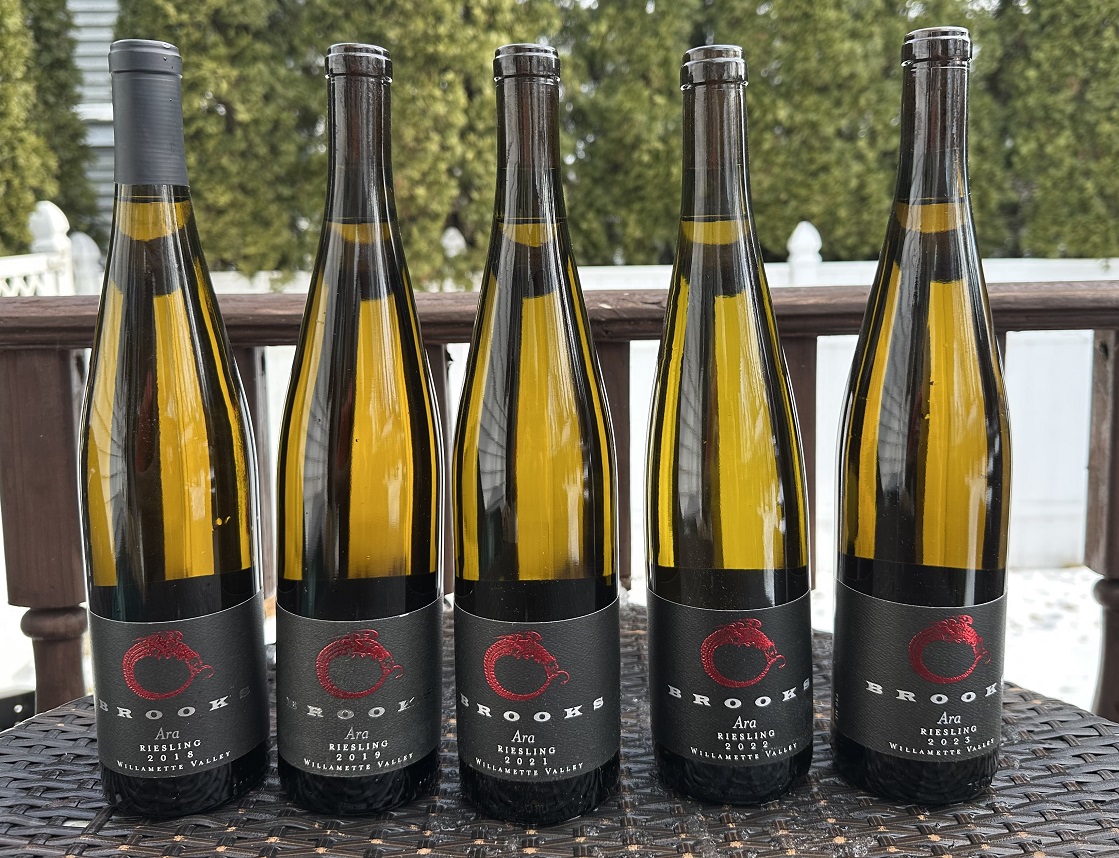
Ask me to name three of my favorite Cabernet Sauvignon producers, and I will quickly become frustrated – can I give you at least 10? 20 or 30 would be even better. The same would be for a Chardonnay, Syrah, and Tempranillo. When it comes to Riesling, however, that would be an easy task. Grosset from Australia. Smith-Madrone from California. Brooks from Oregon. This is my “top 3 Riesling producers” list. I would absolutely love to do a comparative testing of these 3 Rieslings, but I managed to get only 2. I got Smith-Madrone Rieslings first, and then when I got the idea for the tasting, I wrote to Brooks, and they were kind enough to send me a nice vertical of Brooks Rieslings. I also asked Ravines Wine Cellars from Finger Lakes for a similar set, but got no reply, so my tasting consisted of a vertical of Smith-Madrone Rieslings from 2018, 2019, 2021, and 2023, and Brooks Ara Riesling from 2018, 2019, 2021, 2022, and 2023 (both wineries didn’t produce wines in 2020).
It is important to note that Riesling can age very well, and aged Riesling is just a special experience. I did an online search and found out that it is rather hard to find aged Riesling anywhere, at least for the price I was willing to pay (age your Riesling, people, take my advice). I managed to find a bottle from 1997, which was seemingly in reasonable condition. At the same online store, I also managed to find a sparkling wine made out of Riesling, known in Germany as Sekt. I scored a bottle of Sekt at the same online store, and it became our first wine in the tasting.
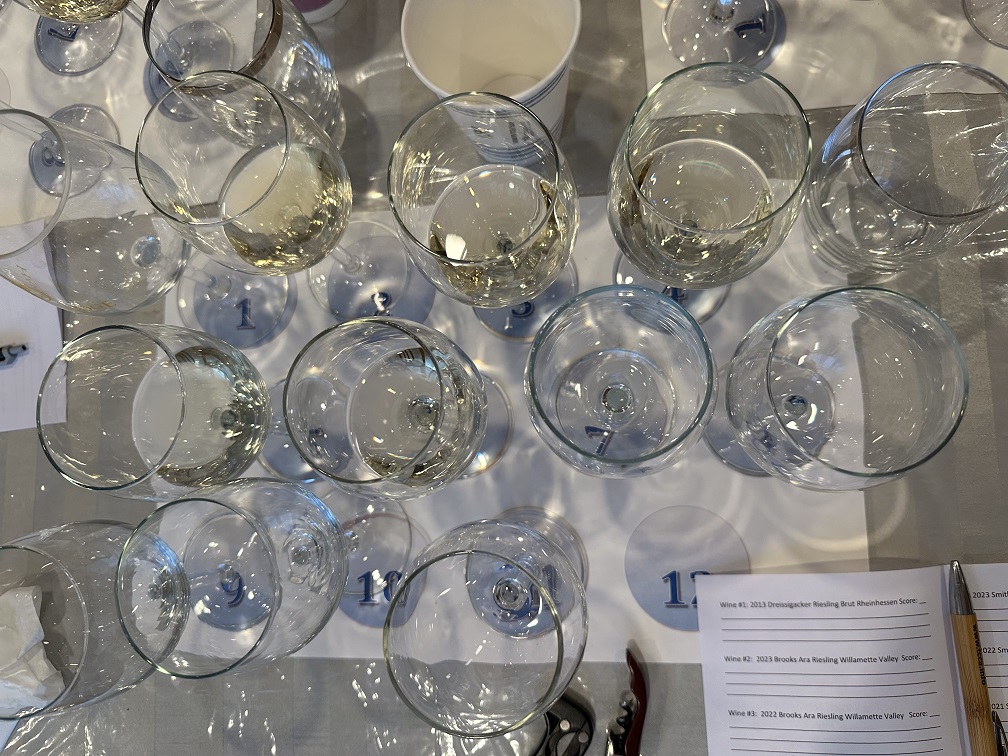
The tasting was non-blind as it had more of an educational purpose than anything else. Here is what transpired during the tasting (outside of the fact that I numbered Brooks Rieslings in the wrong order, so we tasted them from the older vintages to the newer, where I really wanted to go in the opposite direction):
Wine #1: 2013 Dreissigacker Riesling Brut Rheinhessen (12.5% ABV)
bubbles were still present, lemon, a touch of sugar, well balanced, very nice overall. Believe it or not, but this was the first Sekt that I liked.
8-
Wine #2: 2018 Brooks Ara Riesling Willamette Valley (14% ABV, 325 cases produced)
Beautiful color. Honey, petrol, explivit nose of tropical fruit
Great complexity, perfect balance, showing off an interplay of pear, apples, peach, even vanilla and quince. Delicious. 8
Wine #3: 2019 Brooks Ara Riesling Willamette Valley (13% ABV, 225 cases produced) – a very interesting wine, as my tasting notes for day 1 and upon re-tasting the next day differ dramatically.
Day 1: Very unusual, some honeydew, hint of pear. 8-
Day 2: Superb. Lean. Acidity is through the roof, fresh, crisp. Needs 20 years to become amazing. 8++
Wine #4: 2021 Brooks Ara Riesling Willamette Valley (12.5% ABV, 225 cases produced)
Day 1: Beautiful petrol and flowers on the nose
Fresh, petrol, complex, white fruit, excellent balance. 8+
Day 2: Petrol + earth. Beautiful, honey notes on the palate, much richer than ‘19. Still lean and mean. 8
Wine #5: 2022 Brooks Ara Riesling Willamette Valley (12.5% ABV, 150 cases produced)
Day 1: Flowers, touch of brown sugar
Most complex so far – wow, beautiful. 8+
Day 2: Petrol, hint of tropical fruit. Lemon with a touch of honey, lean, crisp, built for aging, let’s say another 20-something years. 8++
Wine #6: 2023 Brooks Ara Riesling Willamette Valley (12.5% ABV, 100 cases produced)
Day 1: Very muted nose. Palate is young, nice, concentrated. 8-
Day 2: Nose almost non-existent. Very lean palate with a hint of honey mixed with lemon. Need to develop for a long, very long time.
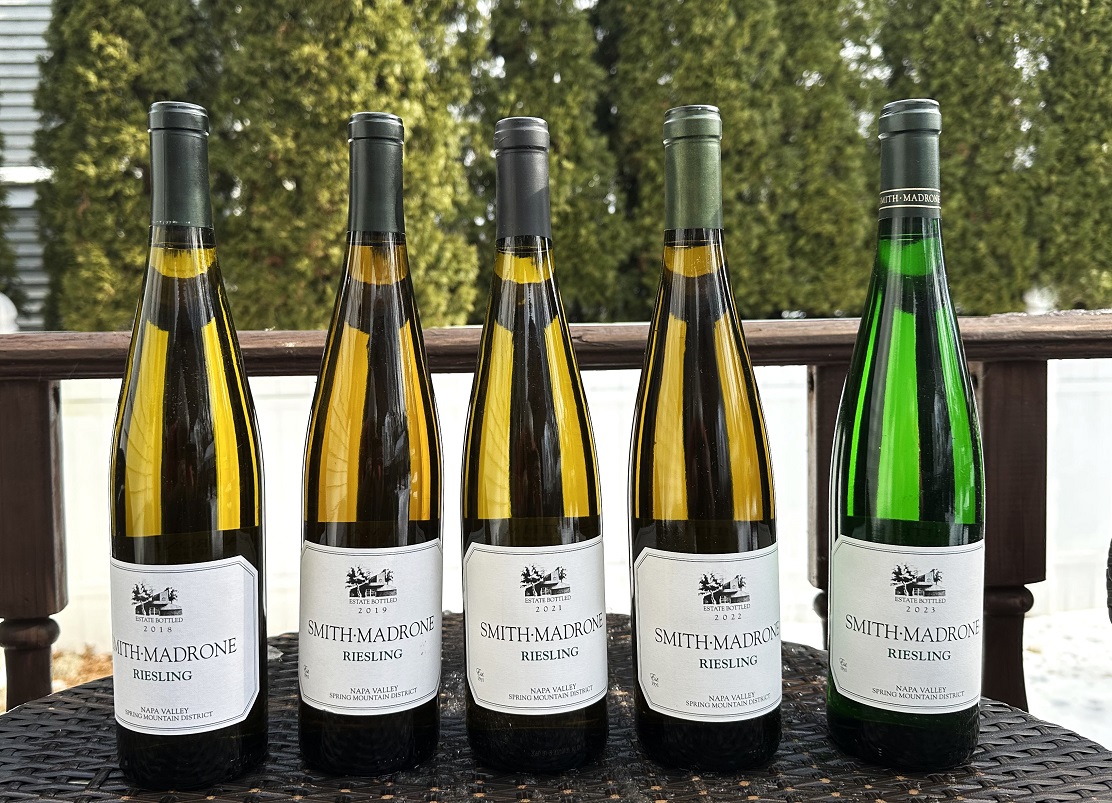
Wine #7: 2023 Smith-Madrone Riesling Spring Mountain (13.2% ABV)
Light color
Candy on the nose
White flowers, fruit medley, bitter orange, crisp, spectacular. 8+
Wine #8: 2022 Smith-Madrone Riesling Spring Mountain (13.2% ABV)
A touch of petrol
White fruit, white apples, delicious. 8+
Wine #9: 2021 Smith-Madrone Riesling Spring Mountain (13.2% ABV)
Petrol, beautiful
Lots of complexity, apples, excellent. 8
Wine #10: 2019 Smith-Madrone Riesling Spring Mountain (13.3% ABV)
Complex aromatics, flowers
Flowers on the palate, a touch of honey, beautiful, complex. 8+
Wine #11: 2018 Smith-Madrone Riesling Spring Mountain (13.3% ABV)
Beautiful, hint of petrol, white fruit.
Wow, playful, amazing. 8++
Wine #12: 1997 Dr. Fischer Ockfener Bockstein Riesling Kabinett Mosel (8% ABV)
Apple juice all the way, past prime. Still an interesting experience.


As always in such tastings, it is fun to figure out the group’s favorite wine. There were 8 of us tasting the wines, and everybody were asked to decide on 3 of their most favorite wines (mine were #11, #8, and #5), and then we took a vote. To my surprise, we had a clear winner after the first round – wine #8, 2022 Smith-Madrone Riesling, was everyone’s favorite, with wine #11, 2018 Smith-Madrone Riesling getting 5 votes. It was interesting that even wine #12, 1997 Riesling, got 3 votes (for me, it was an interesting experience, but not the wine I want to drink again).
As you can see from the notes above, I had a chance to re-taste the wines, this time at a bit of a slower pace. It is very clear that Brooks Rieslings needed more time to open, as you see that on the second day they showed a lot more of what they got, but even then, I believe they would benefit from another 20 years in the cellar, or maybe more.
As I’m writing this, I’m already dreaming of setting up the tasting of 20+ years old Rieslings. Give me Grosset, Brooks, Smith-Madrone, Zind-Humbrecht, and maybe Markus Molitor, from the early 2000s – and this would make it an absolutely amazing tasting. By the way, talking about dreams – what would your dream Riesling tasting include?
I can’t speak for my guests, but I really enjoyed the opportunity to taste such beautiful wines side by side. While both Brooks and Smith-Madrone perfectly exhibited my beloved petrol, Brooks Rieslings on average were a bit leaner than Smith-Madrone, while Smith-Madrone exhibited a richer bouquet on the palate. I’m saying this not in the comparative sense – each one of these wines would make me super-happy any time.
There you are, my friends – my Riesling experience. Do you like Riesling? What are your favorite “go-to” Rieslings?
and A Few Good Wines
Ohh, time flies (who knew? What a pathetic opening – I know, don’t say it.)
About a month More than 2 months ago, we hosted a party (about 40 people). When it comes to a party of this size, I never try to put out “the best stuff” at the beginning. Of course, I’m not talking about offering “plonk” to my guests – the wines will always be quality wines, those which I would be happy to drink every day – but they would be exactly that, “everyday”. So we started with some bubbles, whites, and Rosé. And then…
 Well, wait.
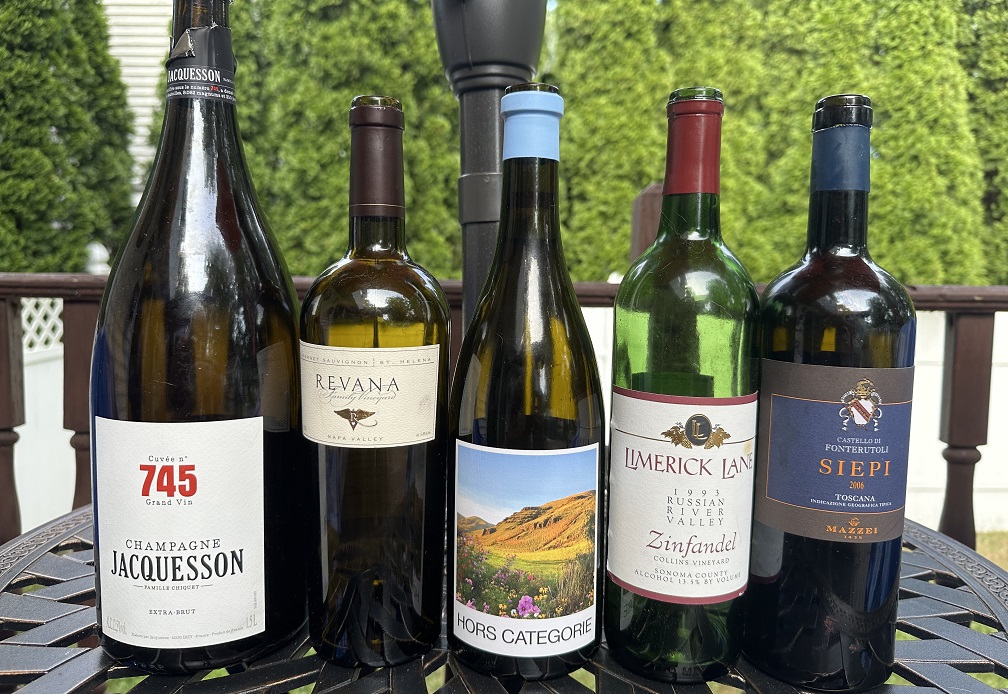
The first wine I want to mention was not in my “everyday” category – it was a magnum of the champagne that one of my friends brought to the party.
I never heard of Champagne Jacquesson before, so this was my first encounter with it – and I have to say it was a pleasant one.
NV Champagne Jacquesson Cuvée 745 Grand Vin Extra Brut (12.5% ABV, harvest 2017, disgorged in 2022)
Perfectly classic champagne with toasted notes packaged in the generous fine mousse, deliciously present on the palate. Cut through acidity leads to a clean finish with some lingering plumpness. This magnum didn’t last for too long.
Let’s get back to where I started. As the party gets going, and people have a bite to eat, there is always a moment to say to your wino-friends “hold on, let me bring something”. Whatever happens next is totally unpredictable, as in most cases, I don’t have a plan, or if I do, it would be a really vague one.
Here is what we ended up tasting:
2007 Revana Cabernet Sauvignon St Helena Napa Valley (14.8% ABV) – I got the bottle as a present for a friend way back. Was always waiting for the right moment… The wine was stunning. A beautiful Cabernet Sauvignon, fresh, layered, cassis all the way, on the nose and on the palate, silky smooth and balanced. The bottle was gone in no time, but it was thoroughly enjoyed.
2014 Hors Categorie Syrah Hors Categorie Vineyard Walla Walla Valley (14.1% ABV). I truly don’t know what the right moment Christophe Barone wines is. Hors Categorie Syrah is one of his very top wines (expensive too). The wine was classic “liquid rock” from Washington, with enough gunflint and smoke to almost feel you visited the range. What was interesting is how quickly the wine was changing in the glass – from more rock to more fruit and back. I’m not sure this was the right moment. I should have a few more bottles, and all can say that I’m not touching them for as long as possible…
1993 Limerick Lane Zinfandel Collins Vineyard Russian River Valley (13.5% ABV) – the wine from my Benchmark Wine loot. 30 years young, and beautiful. No, it was not fresh like it was made yesterday, it went all into the tertiary aromas and flavors, but the body was there, the fruit was there, the acidity was there, and therefore, there was lots and lots of pleasure.
2006 Mazzei Castello di Fonterutoli Siepi Toscana IGT (14% ABV, 50% Sangiovese, 50% Merlot) – another wine brought by a friend. I never had this wine before. This is perfectly on point, beautiful as only Italian wines can be, lots of sweet cherries, a touch of mint, silky-smooth, round, delicious.
Huh, a few wines wine experiences down, and so many more to go. I’m trying to catch up on sharing my wine experiences of this year (well, that’s hardly sufficient), so stay tuned.
An evening with friends, August 2025 Edition
I love to be the wine guy.
When someone says “I’ll cook, you bring wine”, I’m absolutely delighted to oblige. First, it is one of the greatest pleasures for the oenophile to choose wines for dinner. The only pleasure bigger than selecting wine is when your friend takes a sip and says “ah, this is delicious”. And of course, there is a side benefit of taking wine out of the house, where the wine is literally stored everywhere, but let’s leave that aside for a moment.
I generally don’t care too much about what exact dishes will be served. My goal is to have a wine “program”, to bring a range of experiences. If a particular wine doesn’t work with a particular dish, it is not a problem – we can enjoy food on its own, and wine on its own.
On Friday, we got together with friends for dinner, and I was happy to be the wine guy.
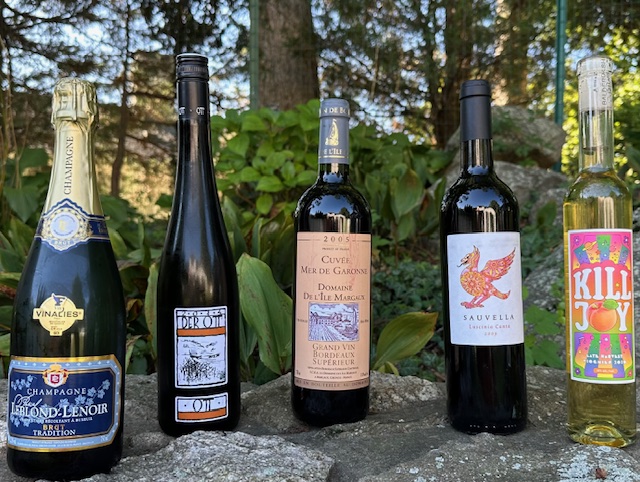
To play it simple, I decided to go with a “classic” line-up – bubbles, white, red, dessert. Here is what transpired.
My choice of bubbles was NV Champagne Pascal Leblond-Lenoir Brut Tradition (12.5% ABV). This is a very generous Champagne, it perfectly combines crispiness with generous body, apples and vanilla eloped with a fine mousse, delivering lots of pleasure with every sip. Everyone loved it, particularly being happy about this Champagne not being too acidic.
Next was the white wine – 2014 Ott Der Ott Grüner Veltliner Austria (12.5% ABV). White wine with age is a real joy, and this 11 years old wine unquestionably delivered. Whitestone fruit with a touch of petrol on the nose (yes, petrol, one of my favorite aromas). Round and elegant body, with more of the whitestone fruit, good earthy undertones, perfectly balanced and perfectly delicious.
Side note: Bernard Ott is one of the very best wine producers in Austria, practicing Biodynamic viticulture after visiting Domaine la Romanée Conti in 2006. And lastly, 2014 vintage was so difficult that no single vineyard wines were produced – I have to say this was a glorious wine from a difficult vintage.
Next, we opened 2009 Sauvella Luscinia Canta Costers del Segre DO (14.1% ABV, Syrah, Cabernet Sauvignon, Grenache). I was blown away by this wine last year (number 7 on the Top 24 of 2024 list) – and the wine continued over deliver. Delicious, generous and round, with wallops of fresh dark fruit, perfect structure and perfect acidity. The wine showed a touch more sweetness and plumpness compared to our second red wine – 2005 Domaine De l’Île Margaux Cuvée Mer de Garonne Grand Vin Bordeaux Supérieur (13.5% ABV, 33% Merlot, 33% Cabernet Sauvignon, 34% Petite Verdot).
This is the second time this year I have enjoyed this wine, which comes from a unique place, a small island in the middle of the Gironde River, overlooking the great estates of Margaux. Perfectly Bordeaux, perfectly on point – a bit leaner than the previous wine, with a precise Bordeaux profile – cassis, eucalyptus, cedar box, a hint of bell pepper, and firm structure with a delicious finish. A pure delight in the glass, and an excellent accompaniment for the lamb stew, which was served as a main course.
Dessert time! Liquid dessert it is.
I always love an opportunity to open a bottle of dessert wine, especially with a group that would appreciate it.
I went through a few options, and somehow decided on 2020 Balderdash Cellars Kill Joy Late Harvest Viognier Eden Valley, California (10% ABV). The wine had a beautiful nose of tropical fruit, and a tropical fruit medley on the palate, not too sweet and with perfectly cleansing acidity. “Ohh, it is so good” was the group’s sentiment.
Here you are, my friends. Happy dinner. Happy diners. Happy memories. And as I’m finishing writing this, I’m ready for a repeat.
Daily Glass: Double Lucky, Coast to Coast
Wine is meant for sharing.
How do you share the wine? Well, that depends.
Of course, everyone knows the best way. Get together around the table. Open the wine. Pour into glasses. Sip, savor, enjoy the conversation.
This is the best way. But sometimes, it is not the easiest way. For example, when one person lives on the East Coast and another on the West Coast. What is the best way to share the wine then? Yes, nowadays, it is easy to speak with your friends no matter where they are – and not only talk, but you can see each other too, that’s a given. But still, how do you share the wine?
If you are lucky, you both might have the same bottle of wine. And you can be even double-lucky – especially if you have the right bottle, such as No Girls Double Lucky #8.
Talking about all the luck(s), there are a few here at play. Both my friend Wendy and I had the same bottle of wine available to us. Moreover, we had the bottle from the same vintage – 2019. Now, barring all the bottle variations, we were basically sharing the exact same bottle of wine – never mind 2,500 miles apart, as Wendy lives in Seattle.
Double Lucky wine was released during the pandemic, in 2021, and I was lucky enough not only to get a bottle of the inaugural 2017 vintage (all people on the No Girls mailing list received a bottle of Double Lucky for free), but also to attend a zoom call with Christophe Baron, the creator and owner of Cayuse wines and of the Cayuse “side branches” such as No Girls, Horsepower and others, and Elizabeth Bourcier, the winemaker – you can find my detailed impressions here. If you will read that post, you will find out that I was rather torn on the 2017 vintage.
2018 Double Lucky fared a lot better in my book, and it even made it to the Top Two Dozen of 2022 as wine number 19. And now, the 2019.
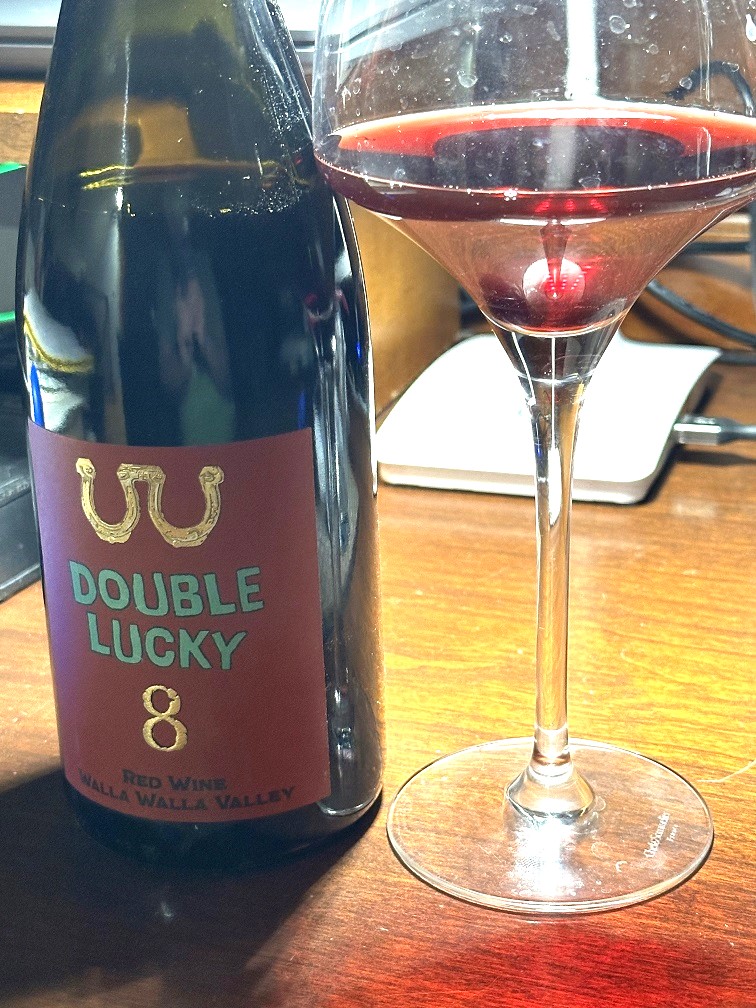
The 2019 No Girls Double Lucky #8 Walla Walla Valley (13.7% ABV, 34% Grenache, 33% Syrah, 33% Tempranillo, 21 months in neutral French oak) had a playful color, going from dark garnet to the crimson red, depending on the lighting. On the nose, on the first whiff, you can only talk about the rocks – the wine has a really profound minerality. Next, there is a hint of barnyard – just enough for those who like it, and we managed to agree with Wendy that we both love that little (or even not so little) funk on the nose – it makes the wine all the better (don’t talk to me about Brett). And then there were some cherries also present on the nose.
On the palate, the wine was all so interesting. We spoke with Wen for about 2 hours (wines, politics, families, popcorn, more wines – you know, just two friends catching up), and during these 2 hours, the wine kept changing. At first, the wine showed green bite, like chewing on the little branches of the wood (Elizabeth Bourcier is a big fan of whole cluster fermentation, and while it sounds wonderful, every time I hear the term, I almost cringe). After about 20 minutes, the green notes were gone, and the wine just had sweet cherries, olive tapenade, and rocks, lots of rocks. About an hour later, taking another sip, I suddenly discovered my beloved pepper! I love peppery notes of Syrah, this is an absolute hallmark in my book, so the wine definitely made me happy – and of course, it evoked memories of Michel Chapoutier Mathilda Shiraz, one of the most peppery Syrah renditions I ever tasted.
All in all, it was a great evening of wine and conversation – a double lucky we might even say, pun intended.
Never mind the distance – open a bottle and call your friends.
Until the next time – cheers!
Frustration of the Oenophile – Choosing Wine
First-world problems, I know. Nevertheless, let’s talk about them.
I guess we, oenophiles, are tender creatures. Doesn’t take much to get us frustrated. Wine not tasting the way we expect; not enjoying critic’s choice 100-points wine; close friends not sharing your excitement about the wine in the glass. We can go on and on about these little insignificant things, each one a source of the full-blown frustration. Oenophile’s frustration looks different every day. And mine right now might be the biggest one of all (remember – taste is subjective, so are the feelings) – inability to choose the wine.
Assuming I will be able to finish this post today, tomorrow we are celebrating Valentine’s Day – and what says “I love you” better than a luscious, voluptuous, sexy, and seductive bottle of wine? Forget flowers, flowers don’t stand a chance against such a bottle of wine. But what wine will be luscious, voluptuous, sexy, and seductive? The need to choose that wine properly becomes the cause of the ultimate frustration. But that’s not all, because merely in a week we have to deal with OTBN – Open That Bottle Night – and this is the ultimate “oenophile frustration” cause, as now we need to decide what bottle we kept not opening waiting for a special moment which might either never arrive or already be in the past?
Decisions, decisions, decisions. Trying to select the right bottle of wine for the occasion, you have only a few minutes to agree with yourself on the proper bottle. If you will not arrive at the decision within those few minutes, the next 2, 3, 4 days will be miserable. You are going to pull a bottle, look at it, think about it for a moment, sigh, and put it back. Then repeat the process over and over again, pretty much until you force yourself to feel that you got the right bottle. Possibly to change your mind again in a few hours, or even 20 minutes before the bottle needs to be opened. If you are an oenophile, and you are not going through this pitiful “decision paralysis”, I envy you and congratulate you. And for the rest of us – I share your pain.
So what wine should you select for Valentine’s Day? I already told you – it should be luscious, voluptuous, sexy, and seductive – or not. Of course, there is a big dependency on the food, but don’t try to achieve a perfect match – it’s okay to enjoy your food and wine independently. I have to say that I’m not a big fan of still Rosé wines for Valentine’s Day – yes, it matches the pink color of all the all V-day paraphernalia – but it might not deliver the pleasure you are looking for. I also would suggest avoiding “thought-provoking” wines – rare grapes, natural wines, skin-contact wines, wines from the forgotten corners of the Earth. On a normal day, I’m the first one to ask for an obscure wine, but for Valentine’s Day, wine should give you pleasure, elevate your mood, it should be easy to understand. If upon the first sip you will not say “ahh, this is good”, you’ve chosen the wrong wine – put the cork back and go fetch another bottle.
I love to have bubbles for Valentine’s Day – of course, nothing can beat the classic Champagne (and it perfectly can be pink), but you can’t go wrong with Cremants, Franciacorta, Trento DOC, Cava, and all other méthode champenoise wines. If you like white wines, Chardonnay is your best choice of white V-day wine, pretty much from anywhere in the world, as long as it is not a lifeless purposefully unoaked rendition.
And then, of course, the red. Ideally, the red should have an age on it, to truly deliver all that pleasure upon a first sip. Amarone, Brunello (I would avoid Barolo unless you perfectly know what you are doing), Cabernet Sauvignon and Bordeaux/Cabernet blends, Super-Tuscans, Spanish Grenache, Rioja from a good producer, Syrah and Zinfandel. I’m not trying to make other wines feel bad, but for Valentine’s Day, this is what I would pick from.
Here is actually what I picked – Champagne and Syrah from California – and I will tell you all about it later on.
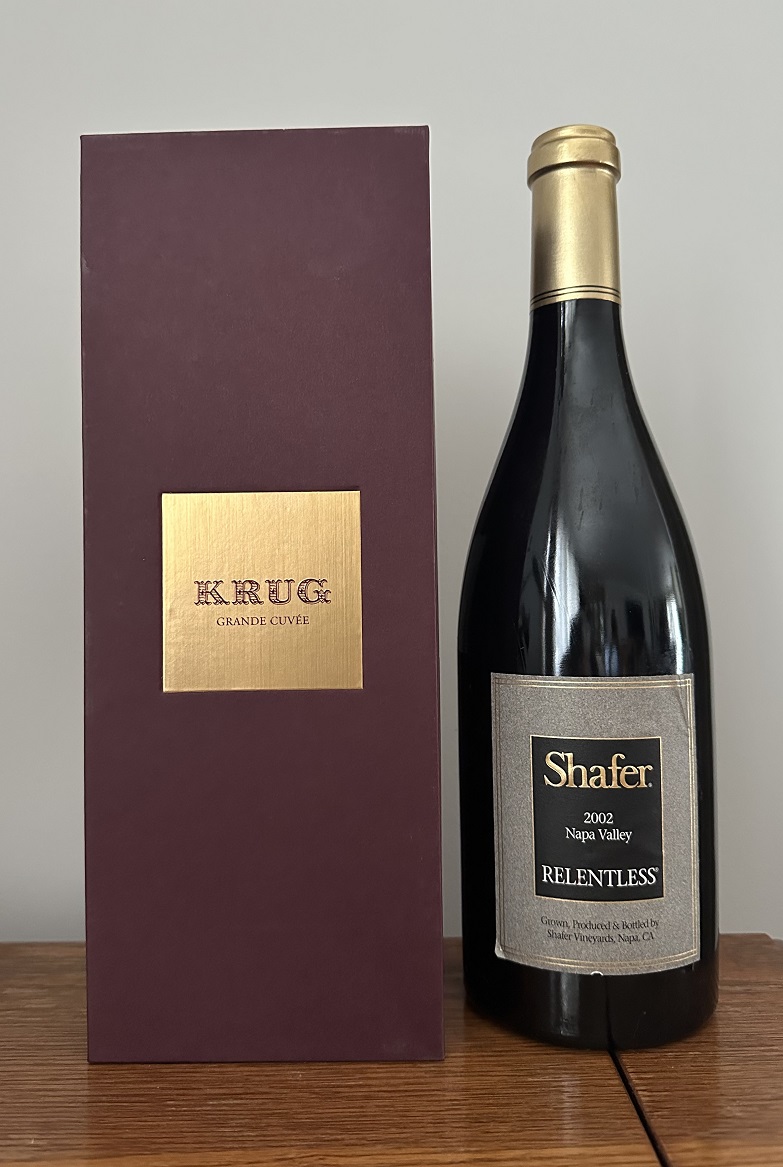
If you thought selecting wine for Valentine’s Day was frustrating, it is nothing in comparison with selecting the wine for OTBN.
OTBN (Open That Bottle Night) was invented in 1999 by Dorothy J. Gaiter and John Brecher, writers behind the Wall Street Journal’s wine column at that time. The purpose of the OTBN, which is always celebrated on the last Saturday in February, is to encourage wine lovers around the world to open that special, stashed far away bottle. We all have those bottles that can be categorized as “not today”. These wines typically exist in single quantities in our cellars and always have a memory attached to them.
This is what makes the selection process very difficult – to open or not to open? I have only one such bottle. What if I open it too early – I will never know how amazing it could become over the next 10 years? Once I open that bottle which was gifted by a dear friend, brought back from the amazing trip, acquired in the moment splurge, will my memories be lost forever? Should I just hold on to that bottle instead? Will I open this wine in the right company? Will people truly appreciate the sacrifice I’m making?
Frustrated, frustrated oenophile. It is hard to make wine decisions.
I hope you got my point. And I hope I helped you, at least a tiny bit, to select a proper bottle of wine, at least for Valentine’s Day. And please don’t ignore the OTBN – the right time to open a special bottle of wine is now – you never know, tomorrow the wine might be gone, or you might be gone. Truly, live in the wine moment – at least on the last Saturday in February.
Do you have frustrated oenophile moments of your own? Please share! And I wish you a happy, quick, and not-frustrating-at-all wine selection process, for all the special moments to come. Cheers!
Pleasures of Obscure and Difficulties to Express it in Words
German Pinot Noirs are hard to find in the US.
This story is not about Geman Pinot Noir, but the quest for one played a major role here.
I follow a group of wine-os on Twitter X who are swearing by Pinot Noir from Germany, particularly from Ahr, being the best Pinot Noir in the world, easily rivaling Burgundies in quality. Naturally, my interest was piqued and I started looking for the Pinot Noir from Ahr in the US. The problem is that Ahr is a tiny appellation to begin with, and given the popularity of Ahr Pinot Noir in Europe, this was not an easy task. I found Ahr Pinot Noir on Wine.com and confirmed with the group that it was a good producer. The wine itself was $56 or so, adding shipping and tax was making it even more expensive. Now, American Express credit card often has special offers for variety of merchants, Wine.com often being one of such merchants. I think the deal I registered for was $20 off a $100 purchase – considering that Wine.com shipping for 1 bottle is the same as for 3 (I think it is $20), it was a no-brainer – I just had to find a few bottles to reach $100 and get the discount.
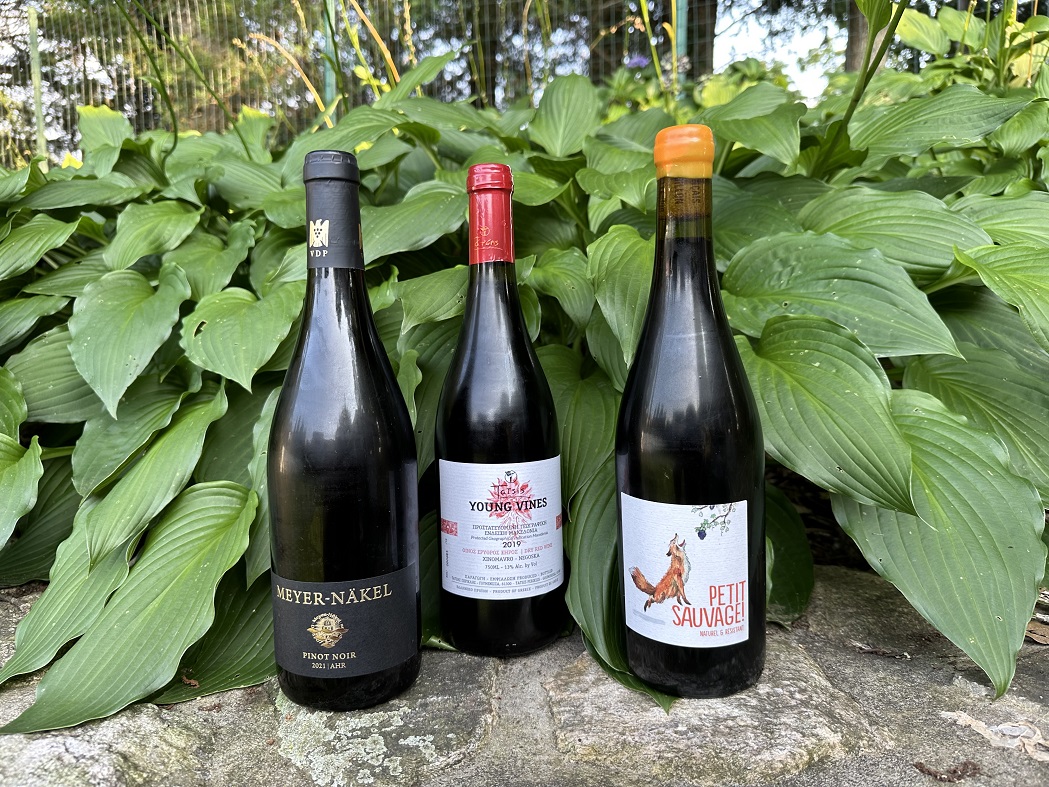
At first, I was looking at some of the familiar wines to add to that Ahr Pinot, but then it dawned on me that I might look for wines to add to my rare grapes collection, which is exactly what I did. In the picture below, you see an end result – a Pinot Noir from Ahr and two wines made from the grapes I have not tried yet.
As you might know, I have been a grape geek for a long time, ever since I was bitten by The Wine Century Club bug (probably close to 20 years by now). I’m always happy to taste the wines made from unknown grapes, whether I will be delighted or terrified – it is all a good experience. Also trying a wine made from an unknown grape is extra fun as you can always approach such a wine with an open mind having no references (read: constraints) of any kind.
The 2022 Petit Sauvage Rouge Vin de France (13% ABV) was made from the grape called Cabernet Cortis which I have never had before. Cabernet Cortis is a hybrid grape, created in 1982 in Germany by crossing Cabernet Sauvignon and Solaris, another hybrid grape (last year I tasted the wine made from Solaris in Sweden). The grape was developed to be better adapted to climate change as well as to be disease-resistant.
The wine was uniquely delicious. Some of the uniqueness I need to attribute to the fact that I was unable to describe the perceived qualities of this wine in English. Yes, you heard that right. My mother tongue is Russian, and while Russian is really not the language of wine, one of the Russian words was the best for describing this wine – терпкий (terpkii). The word describes both taste and textural sensation. To give you an idea of the best textural association, I have a strange question for you – have you ever licked velvet with your tongue? I’m serious. Have you ever seen a TV episode where Gary Vaynerchuk explains wine descriptors to Conan O’Brian and forces him to chew on a wet sock? Something like that, only without socks. So if you would ever try to lick a piece of velvet (make sure it is clean if you do), this would be the closest you would get to that descriptor.
I tried translating it using Google Translate, and the best I can get is “tart” – here are a few more options from the Russian-English dictionary: терпкий — tart, harsh, acerbic, acerb, acidy. None of these would do. As a wine descriptor, tart generally means acidic, and devoid of fruit. And this doesn’t describe the textural and taste sensation I experienced when tasting that wine. Tannins probably would work best, especially those called “velvety tannins”, but I’m still not convinced that this is the best way to describe the taste of this Cabernet Cortis wine. All in all, the wine was delicious, a little bit racy and gamey, but this was perfectly integrated into an overall taste profile. And I would gladly drink this wine again if I had a chance.
Well, the only way we can solve this is for you to find this wine, taste it, and explain to me how little I know about wine – I promise to listen, and will be happy to expand my wine vocabulary.
By the way, speaking about tart – the second wine, 2019 Domain Tatsis Xynomavro – Negoska Young Vines Macedonia Greece, made out of Negoska grape, was actually tart, it was tart beyond belief, and basically, not drinkable. It didn’t improve even after a few days. You do have to kiss a lot of frogs in life… But it’s okay, a part of the process.
Here you are, my friends. There are lots more of the rare grapes I need to report on, so stay tuned…
Guest Post: Want to Make Your 2024 Special Occasions Memorable? Consider these 10 Wines for Toasting
Today, I’m offering you a guest post by Kevin Fagan, a food & travel writer, based in New England with experience in the catering industry. Kevin is always on the lookout for the trendiest food spots and bars on his travels and also likes to keep his finger on the pulse of the latest news in the world of catering & restaurants.
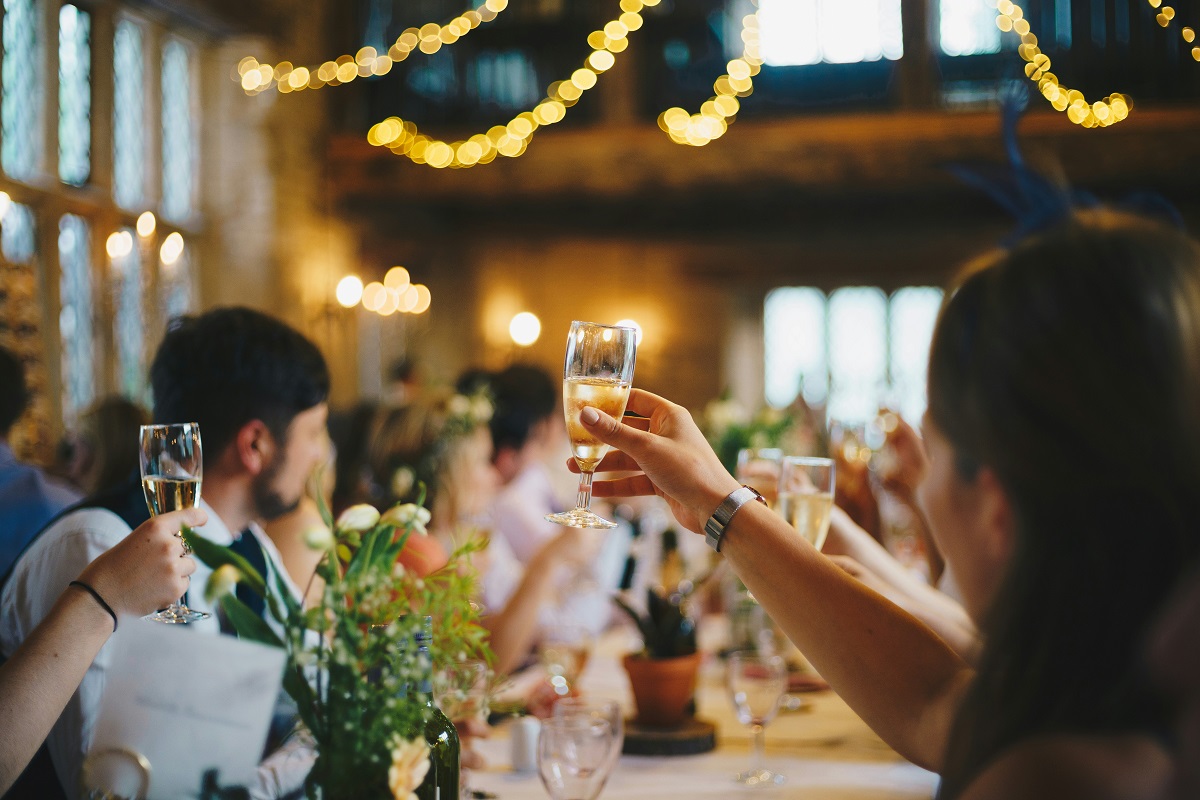
Whether it’s a Thanksgiving party or a wedding reception, giving a toast and having all your guests raise their glasses in unison is one of the most awaited moments of a celebration.
What matters most is not just any wine but the right wine, one that can elevate every sip and enhance the overall experience of the occasion. With the myriad of varieties in the market, selecting the perfect one for the toast may seem daunting.
This article is here to guide you through the top ten wines for a perfect toast. Consider the styles and flavors to ensure you make the right choice for your special occasion!
Prosecco
Originally from the Veneto region of Italy, this sparkling wine is a classic favorite for a joyful experience. Its light feel and refreshing bubbliness make it the perfect choice for toasting at a luxurious celebration. For example, a wedding reception at an elegant ballroom in Los Angeles certainly calls for a prosecco toast.
Prosecco to try: Bisol Jeio Valdobbiadene Prosecco Superiore DOCG
Cava
Magnificence meets excellence with this Catalan sparkling wine, made with Macabeo, Parellada, and Xarel-lo grape varieties. You don’t have to limit cava to toasting; you can use it for any occasion. Serve it with aperitifs and desserts or throughout a meal because it pairs well with almost anything.
Cava to try: Sigura Viudas Brut Reserva Heredad Cava DO
Port
With sweet notes and a luscious mouthfeel, this fortified wine is famous for its intensely rich flavor profile, which includes hints of dried fruits and spices. Apart from being a unique toasting choice, Port Wine pairs perfectly with desserts, especially chocolate-based ones and charcuterie platters, which is why it’s a great choice for savoring and sipping for your guests.
Port to try: Graham’s Six Grapes Reserve Port
Grenache
A blend of red berry flavors and mild spiciness makes Grenache a perfect match not just for giving a toast but also for serving with many dishes. Its Spanish and overall Mediterranean influences make it a perfect wine for holiday celebrations, especially those with dishes like roasted lamb, stews, and braised meats.
Grenache to try: Carlisle Grenache Rossi Ranch Sonoma Valley
Sauvignon Blanc
With crispy acidity and hints of soft herbs, jasmine, and honeysuckle aromas that lead to and reveal layers of citrus and melon, this complex wine will make for a great toast. Plus, Sauvignon Blanc is a great choice to contrast the heavy richness of celebration meals. If you like the zestier varieties, look for French bottlings or ones from New Zealand’s Marlborough region.
Sauvignon Blanc to try: Montes Sauvignon Blanc Limited Selection Leyda Valley DO
Riesling
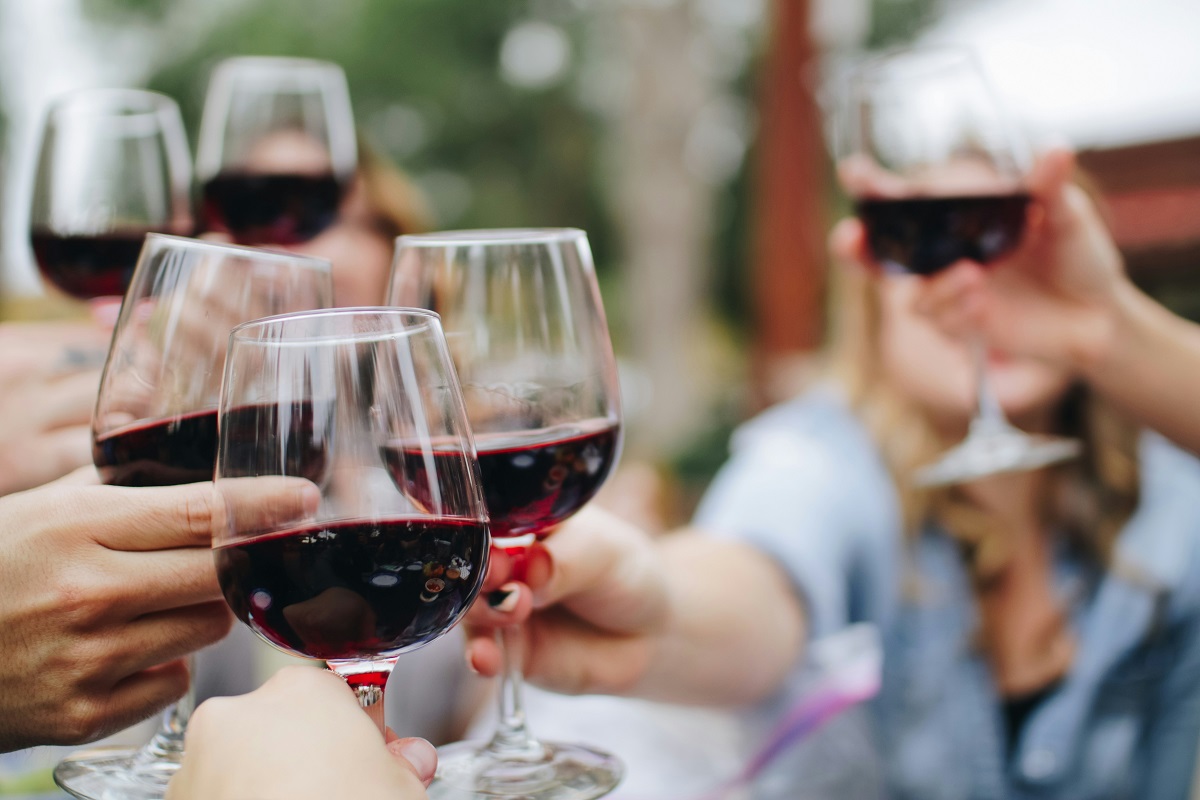
Riesling’s sweet, fruity notes make it a versatile choice for toasting and having your guests enjoy it with their meal. Its electric crackle of acidity and subtle sweetness give Rielsing a very distinct flavor profile, making it a highly cherished option among wine lovers. It is also a good alternative to the traditional varieties from France’s Alsace and New York’s Finger Lakes regions.
Reisling to try: Brooks Ara Riesling Willamette Valley
Chardonnay
Known to be among the most crowd-pleasing options, Chardonnay’s versatility and smooth finish make it one way to give an amazing toast while also pleasing your guests. This white wine also pairs well with many foods, including poultry, vegetables, and seafood, making it an excellent choice no matter what your palate desires.
Chardonnay to try: Balverne Chardonnay Russian River Valley AVA
Pinot Noir
Any holiday celebration means delicious meals. Whether it’s turkey with cranberry sauce or glazed ham, Pinot Noir’s bright acidity and red fruit flavors make it the perfect wine to enhance the flavors of a rich meal. So, it goes without saying that you can give a heartfelt toast while also leaving your guests’ tastebuds in awe.
Pinot Noir to try: Vino Vasai Pinot Noir Estate Reserve Chehalem Mountains
Beaujolais Nouveau
Made from the Gamay grape south of Burgundy, Beaujolais Nouveau is all things fresh, fruity, and festive. Since it was originally produced to toast the end of the harvest season, toasting couldn’t get any better than with this young and easy style of wine. This one, too, is a crowd favorite and pairs perfectly with a variety of dishes.
Beaujolais Nouveau to try: Georges Duboeuf Beaujolais Nouveau AOP

Champagne
We saved the best for last because Champagne is perhaps the most widely used sparkling wine for toasts. Filled with luxe and elegance, Champagne is a drink you would have to use for celebrations like lavish wedding receptions in a beach club, castle, theater, etc. Plus, it’s amazingly compatible with fish, poultry, red meats, shellfish, desserts, and more.
Champagne to try: Bruno Paillard Premiere Cuvée Champagne
Parting Thoughts
We hope this article has enlightened you about the various options available for giving the perfect toast. You don’t have to do what everyone else does and stick to champagne, although a classic will always remain a classic. Here’s to creating unforgettable memories while sipping on an exquisite selection of wines!
Latest Wine News and Updates
There is never a dull moment in the world of wine – and there is not enough time in the day to track all the latest happenings. Here is a collection of recent and most notable wine news and updates.
Mars – wine’s next frontier
Yes, it is Mars, the fourth planet from the Sun. What Mars has to do with wine? If you ask Elon Musk, a lot. A relentless entrepreneur now has his sights on the world of wine, and apparently, he found a way to connect wine with another one of his passions – space. It appears that the 4 years long study conducted at UC Davis demonstrated that grown in space, the grapes had shown great potential for developing unparalleled taste profile while offering a substantial yield per vine, enabling the production of top-level wines at somewhat reasonable prices. Elon Musk teamed up with Paul Hobbs who was a consulting winemaker on the UC Davis project, and now he is building a fully enclosed vineyard set that will be delivered to Mars using a Space XM rocket. The vineyard will be installed and managed by the robotic staff, and the first harvest is expected to take place in 2030. The wine will be fully processed on Mars up to the bottling stage and will be delivered to Earth by the same Space XM rocket. No other details are available at the moment.
Screaming Eagle is going to produce what?
Screaming Eagle, the most iconic of all California wineries is secretly working on a new project, and it is not wine. Starting in 2028, the top 10% of the Screaming Eagle mailing list customers will have an opportunity to purchase the Marijuana extract, dissolved in neutral spirit and packaged into 175 ml bottles. The Marijuana plants are growing right between the Cabernet Sauvignon vines at Screaming Eagle vineyards. The plants are harvested by hand and processed within 3 hours of arrival to the winery, to retain absolute freshness. By growing in such symbiotic conditions with grape vines, marijuana plants acquire unique tasting characteristics and the elixir earned lots of praise from the focus group involved in the testing of this new product. The availability will be extremely limited. The pricing had not been publicly disclosed yet.
Coravin + AI =
Coravin, the utmost innovator and maker of wine tech gadgets teamed up with Google and Nvidia to add AI technology to the new top-tier A+W wine preservation systems. Each A+W device will be equipped with a Nvidia chip and connected to the Google AI cloud. The A+W device will be conducting real-time organoleptic analysis of the wine and the results will be further processed by the AI cloud to be able to assess the aging of the wine and drinking habits of the Coravin customers. All collected data will be also shared with the producers. It is expected that the next model of A+W will be able to detect non-ideal serving conditions of the wine and heat, cool, or filter the wine as needed for the optimum taste while the wine is being poured. Coravin’s chief scientist also predicts that at some point the Coravin devices will become smart enough to talk to each other and share their owner’s stories.
Amazon wine
Amazon finally decided to join the wine fray and start producing its own wines. Well, it is too early to talk about Amazon vineyards – for now, Amazon teamed up with Washington’s hallmark producer, Chateau St. Michelle to produce wine under Amazon labels. Amazon decided to use creative names for their wines, so the inaugural release will see “Mine is Better” Merlot, “Mine is Bigger” Cabernet Sauvignon, “Bottoms Up” Chardonnay, and “Sugar Rush” dessert wine.
Also taking the wine story even further, all the wine mentions in the Kindle books will become clickable in the text and readers will be able to order wines mentioned in the books with one click directly from their Kindle device. Inadvertent orders might be a concern here, so 007 readers, beware – Bollinger Champagne recently increased in price…
Wine G to Z
A concern about Gen Z not being interested in wine had been widely circulated throughout wine industry publications. E & J Gallo Winery, the biggest wine producer in the US, decided not to leave the wine story of Gen Z to a chance. E&J Gallo developed a special application called WineGZ to allow Gen Zs to fully customize their wine experience. As project director, Lotta Drinkin, explained “Gen Zs of the verified drinking age based on their country of residence will be able to fully customize their wine experience by selecting grapes, type, material and shape of the bottles, and many other characteristics to their exact liking”. For example, the grapes can be chosen strictly based on the carbon footprint of the vineyards, the ESG rating of the country of origin, and the social score of the winemaker. There is a choice of material for the bottle from glass to plastic to cardboard to metal to clay, and the shape of the bottle can be round, rectangular, or even “upload your own design” shapes. Based on the initial raving feedback, this project is expected to revolutionize the relationship between Gen Zs and the wine industry.
That’s all I have for you for today, but more news is coming. Cheers to the wine news and updates!
Month in Wines – January 2024
Ahh, the difference between the picture in your head and the reality. I know that I’ve written “Month in Wines” posts in the past, to discuss the wines I had during a given month. What I didn’t realize was that the last “Month in Wines” post was written 9 years ago, in 2015. Oh well, such is life. Let’s get to our subject – the wines I had during January of this year.
I would say that January, and December for that matter, are usually a bit more special, as both months are centered around holidays and celebrations. For a variety of reasons, we got to celebrate New Year, our most favorite holiday, on 3 separate occasions, and every one of those celebrations involved bubbles and special wines. Here are my brief notes on what transpired in January 2024, sorted by the type of wines.
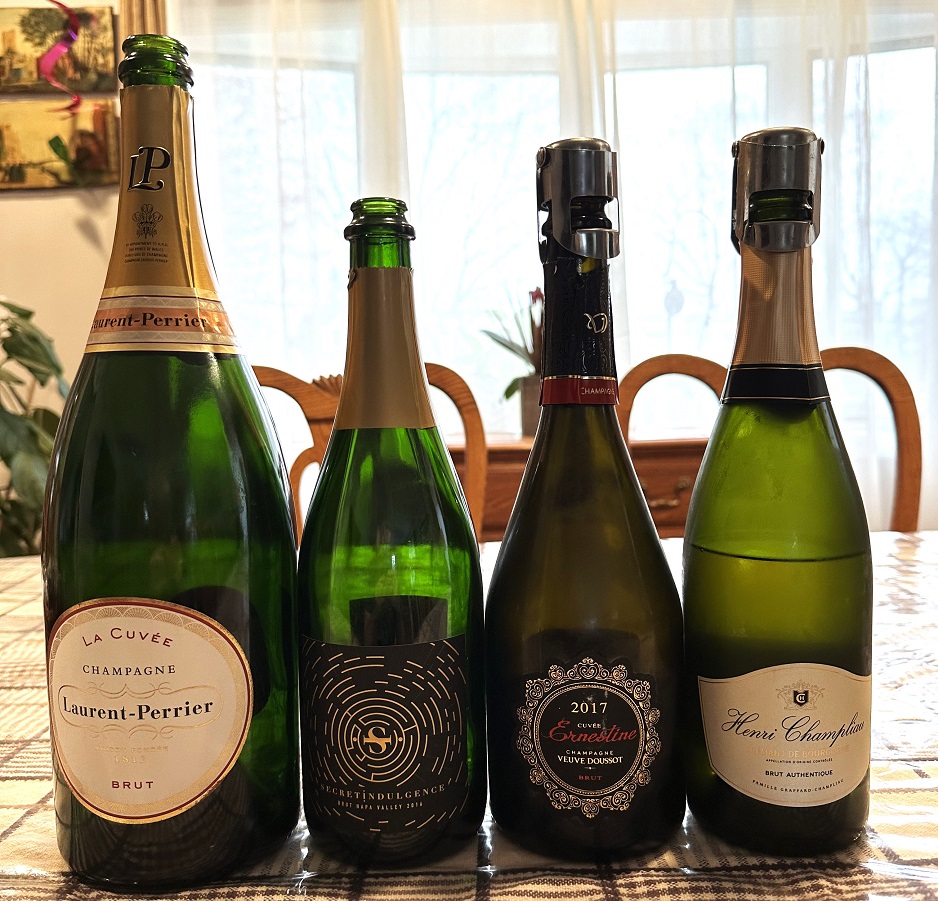
Some of the sparkling wines
Sparkling:
NV Veuve Clicquot Brut Champagne (12% ABV) – of course, no introduction is needed. As the most marketed Champagne brand, I find it annoying and thus drink rarely. We had a few bottles that my wife received as a present at work a few years back, so I decided to open one of them. The wine was not bad, I guess better than I expected. Not anything that would blow your mind off, but solid and drinkable (but not craveable if this is even a word).
NV André Chemin Brut Tradition Blanc de Noirs Champagne (12% ABV) – my favorite Champagne available from WTSO (or at least it used to be, great value at $26.99). Round, playful, beautiful toasty notes and perfectly balanced.
NV Laurent-Perrier La Cuvée Brut Champagne (12% ABV) – everything is better from the magnum right? Nice, clean, classic.
2016 Secret Indulgence Brut Blanc de Blancs Sparkling Wine Napa Valley (12.5% ABV) – a bit more substance than a typical Champagne. Just a touch more body, a bit more fruit, but overall perfectly restrained.
NV Maison Laudacius Cuvée Réservée Brut Méthode Traditionnelle Montlouis-sur-Loire AOP (12% ABV) – I grabbed this Cremant from the WTSO selection right before the holidays. This was nice and round, with clean acidity and just a touch of the fruit.
2017 Veuve Doussot Brut Cuvée Ernestine Champagne (12.5% ABV, 70% Pinot Noir, 30% Chardonnay, disgorged January 2022) – this one was just okay. Bubbles, but not much else to report.
NV Duval-Leroy Brut Reserve Champagne (12% ABV) – nice, round, clean, classic. A hint of apple, perfect acidity.
2011 Castello Bonomi Cru Perdu Millisimato Franciacorta (12.5% ABV) – excellent. Very generous, round, refreshing, a clean profile with a touch of fruit and a great substance.
2012 Charles Clément Brut Champagne (12% ABV, 60% Chardonnay, 20% Pinot Noir, 20% Pinot Meunier) – excellent specimen of a vintage Champagne. Toasted notes, brioche, fine mousse, all around delicious.
NV Henri Champliau Brut Authentique Crémeant de Bourgogne AOC (12.5% ABV, 85% Pinot Noir, 15% Chardonnay) – Zak, who brought this wine, mentioned that a “tik-tok sommelier” compared this wine with Veuve Clicquot and said that they are literally identical in the taste profile with this Cremant only costing a fraction of the Veuve. Upon first taste, we found no similarities, and the wine overall was kind of subpar, so we had to put it aside enclosed with the Champagne bottle sealer. The next day the wine was still not interesting. On the third day, it showed a much bigger body and became much more round and pleasant. I still don’t think the comparison with Veuve stands, but go figure…
NV Giacomo Scagliola SiFaSol Moscato d’Asti DOCG (5.5% ABV) – of course, this is a lightly fizzed sweet wine, but we had it as an aperitif, hence is it listed with other sparkling wines. When it comes to Asti wines, it is all about balance and acidity – and succulent white peaches in this wine were perfectly balanced by the lemony acidity, so overall the experience was light and refreshing.
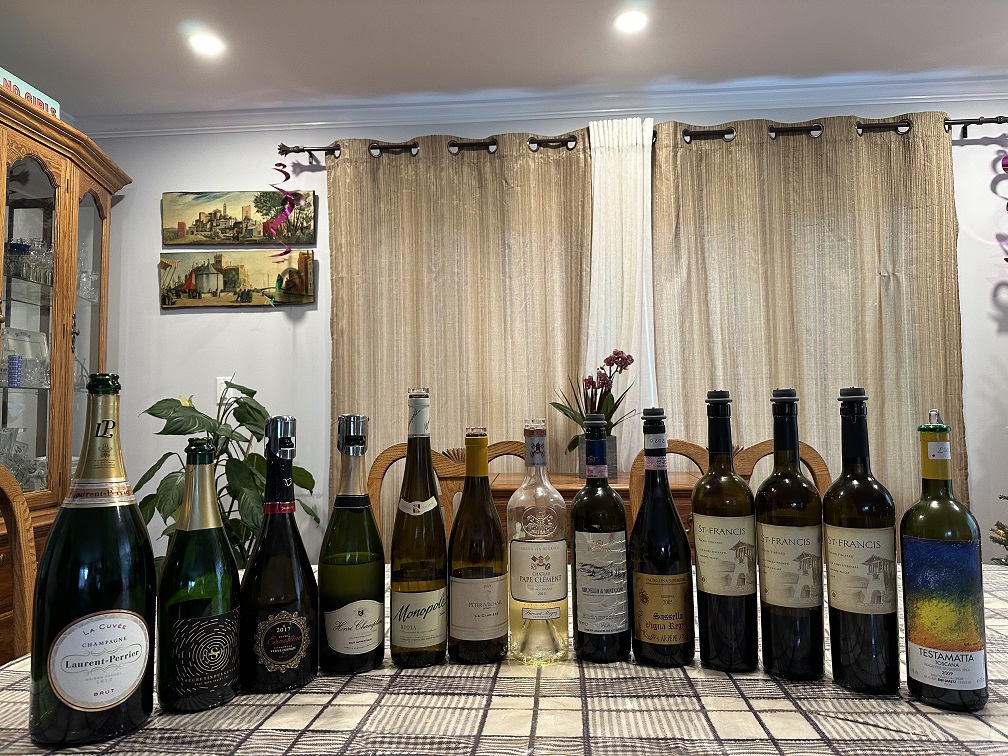
Final group
Whites:
2010 CVNE Monopole Rioja White Wine (13% ABV, 100% Viura) – I love unexpected [good] surprises, and this was definitely the one. I always enjoyed Monopole, the oldest white wine produced in Rioja (the first vintage was produced 110 years ago – in 2014) – but typically as a fresh, young wine. I kept one bottle as an experiment, not expecting anything special. The wine was excellent – not at the level of mature Riesling or a well-made white Burgundy, but it was good in its own class, with white-stone fruit, white plum, and lemon on the palate, and a tiny hint of oxidative/sherry notes, still with freshness and well noticeable acidity. Don’t know if it would age for much longer, and I was happy that I opened it now.
2015 Château Pape Clément Grand Cru Pessac-Leognan (14.5% ABV) – unlike the previous wine, this was not a good surprise. A very strange palate which I can’t even describe – kind of medicinal profile with basil and currant leaves, rather overwhelming. “Strange” would be the best descriptor.
2011 Peter Michael La Carrière Chardonnay Knights Valley Sonoma County (15.2% ABV) – another disappointing wine. 2011 was not a good year in California, and this wine was simply bitter and lacked any sort of balance.
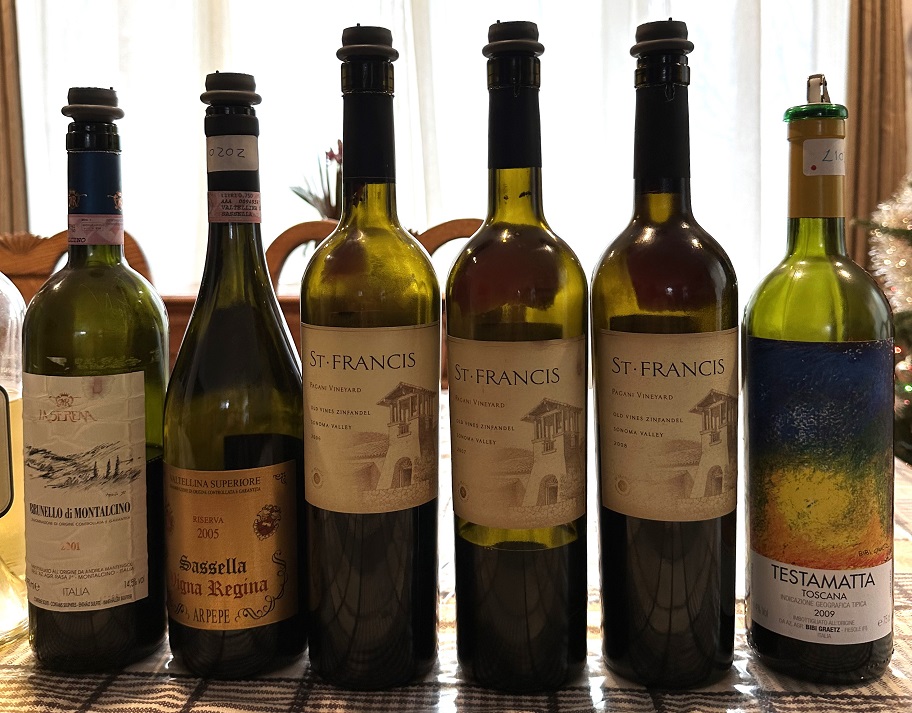
Reds
Reds:
2006 St. Francis Old Vines Zinfandel Pagani Vineyard Sonoma Valley (15.6% ABV) – I kept this trio for a while but decided that the time had come to drink them. All 3 wines were very similar, focusing on blackberries, a hint of cherries and fresh herbs, round and delicious. I can’t complain about either one – they were all gone very quickly.
2007 St. Francis Old Vines Zinfandel Pagani Vineyard Sonoma Valley (15.4% ABV) – 2007 was the biggest wine of the 3, still retaining the same core of the fruit and herbs, but more assertive in its expression on the palate.
2008 St. Francis Old Vines Zinfandel Pagani Vineyard Sonoma Valley (15.4% ABV) – possibly the most elegant of the 3. Again, same profile, but with more finesse and restraint, focused on elegance.
2009 Bibi Graetz Testamatta Toscana IGT (14% ABV) – I was hoping it would be great, and it was not. Another disappointment of the tasting.
2005 ArPePe Sassella Vigna Regina Riserva Valtellina Superiore DOCG (13% ABV) – I have a lot of respect for ArPePe wines, but for whatever reason, this was far from amazing. I would describe it as “lean”. It is possible that the wine was open during its “sleeping” phase, but I would never be able to find out now.
2001 La Serena Brunello di Montalcino DOCG (14.5% ABV) – this was an interesting experience. From the get-go, the wine was not bad, with a pleasant dark cherries profile and good acidity. It was lacking a body a bit, so we decided to decant it. The decanter didn’t make much of a difference, with the wine remaining pleasant but not exciting. During the next two days, the wine transformed, showing a powerful structure and becoming more assertive. This wine could probably wait for another 5-10 years. Oh well…
2016 Carlisle Two Acres Russian River Valley Sonoma County (14.9% ABV, Mourvèdre, Petite Sirah, Syrah, Pelourcin, Carignane, Alicante Bouschet) – a rare case of Carlisle missing the mark. I can only assume I opened the wine while it was in its “sleeping” phase – at the moment it was simply lacking balance, and it didn’t improve even over the next few days. Strange, but happens.
2010 Clarendon Hills Brookman Merlot Wine of Australia (14.5% ABV) – I saw a very discouraging review of this wine somewhere online (might be Vivino), but somehow was convinced that my experience would be very different. No such luck. If I would ever decide to present the list of the worst wines of the year, this would be definitely one of the top contenders. This was a wine that showed nothing – not on the nose, not on the palate. Not good…
2017 Quinta do Vale Dão DOP (13% ABV, 40% Touriga Nacional, 40% Tinta Roriz, 20% Alfrocheiro) – Portuguese wines represent amazing value, and this was a simple proof of that. For under $10, this wine was singing – fresh, succulent berries, perfectly integrated tannins, playful, delicious.


2009 Sauvella Luscinia Canta Costers del Segre DO (14.1% ABV, Syrah, Cabernet Sauvignon, Grenache) – Spain never ceases to amaze. An eclectic mix of grapes (who blends Cabernet Sauvignon with Syrah and Grenache?) delivering outstanding wine – fragrant, playful, full of fresh succulent dark fruit and herbs, well-integrated tannins and long finish. By the way, 2009 is a current release (available in the stores now) and thought-provoking.
2017 Campochiarenti San Nicola Riserva Chianti Colli Senesi DOCG (14.5% ABV) – classic and precise. Beautiful, layered Chianti with all the attributes – succulent dark cherries, sweet tobacco, leather, perfect minerality, wonderful bouquet and overall just a quintessential Italian wine.
2008 Achaval-Ferrer Quimera Mendoza Argentina (14% ABV, Malbec, Merlot, Cabernet Sauvignon, Cabernet Franc, Petit Verdot, 12 months in 40% new and 60% old French oak barrels) – my last bottle. I can’t recall why but I was not happy about the previous bottle opened a few years back, so I had a bit of trepidation opening this one on the last day of the month. The wine was just perfect. Roll-off-your-tongue smooth, velvety tannins, succulent cherries surrounded by the black fruit. Perfectly balanced and supremely delicious.
This concludes the story of January month in wines. As you can tell, there were clear highs and there were clear lows. How was your January in wines?
The work on a sequel has already started.
Cheers!
Last Bottle Sign Up ($10 credit)




 Talk-A-Vino