Archive
Reminiscing About Cabernet Sauvignon
 Yesterday we celebrated Cabernet Sauvignon Day. Well, I guess some people did, as I was drinking Tempranillo. But – grape holidays are an excellent opportunity to think about the grape we are honoring, and I’m happy to seize this opportunity.
As you probably know, it is hard for me to pick the favorites. If I were asked directly to name my favorite wine, I would never name any particular wine or grape as a favorite; my answer to this question always is “I love them all”. But deep inside, when nobody is asking, I know I would gravitate toward a good Cabernet Sauvignon when I can.
I’m very particular when it comes to Cabernet Sauvignon. This is one of the very few wines where I perfectly know what flavors I’m looking for. I need cassis, I need eucalyptus, I need a little bit of a bell pepper, and a touch of the cedar box would be nice too. If these flavors are not part of the core profile, I might still enjoy the wine, but I would never remember it as a Cabernet Sauvignon.
I decided to mentally challenge myself – recall my favorite Cabernet Sauvignon wines and associated experiences. Cabernet Sauvignon is one of the most popular wines in the world, produced by everybody and everywhere, so it is easy to name lots of producers. But this is not what I tried to do – I only thought about my most memorable encounters with the Cabernet Sauvignon, no point in regurgitating a bunch of Cabernet Sauvignon producer names.
Let’s see what came to my mind.
As only yesterday I wrote about the wines of Smith-Madrone, let’s start with that. Smith-Madrone has two Cabernet Sauvignon wines in its portfolio – Estate Cabernet Sauvignon and Cook’s Flat Reserve, each one delicious in its own right. Both are textbook Cabernet Sauvignon wines – my textbook that is, as both perfectly demonstrate the exact flavors – cassis, eucalyptus, bell pepper, cedar box. Just thinking about those wines makes me smile.
Next, how about Jordan? Jordan Vineyard and Winery in Alexander Valley in Sonoma produces only three things – “Chardonnay, Cabernet, and Hospitality”, according to John Jordan, winery owner. I had Jordan Cabernet Sauvignon on multiple occasions, and it never disappointed. It also has this classic profile, only with a bit more fat comared to Smith-Madrone, but thoroughly enjoyable on all occasions.
Then there is Kamen Estate. Unlike Smith-Madrone, I had Kamen Estate Cabernet Sauvignon only once during a group dinner we had in Danville in California. The wine was recommended by the wine director at Vine at Bridges, a wine bar/store at the Bridges restaurant. I don’t remember the exact taste profile, but I remember that I was blown away by the purity and beauty of that wine. I still have a bottle of 2006 Kamen Cabernet Sauvignon in the cellar, but finding the right moment to open that bottle will be mission impossible.
An interesting tidbit – thanks to the same wine guy at the Vine at Bridges who recommended Kamen to me, I discovered Field Recordings wines early on, way before they became a crowd favorite. The first Field Recordings wine I ever tried was Fiction, a wild blend of red grapes and not Cabernet Sauvignon at all – but, last year I opened Field Recordings The Armory, a 100% Cabernet Sauvignon wine for my guests. At first, I was not even planning to try it, but seeing how everyone likes it, I decided to give it a try. Whoa! Classic Cabernet profile was tremendously elevated, adding succulent wild blueberries to cassis, together with high intensity, high acidity mouthfeel. This was one of the most “energetic” Cabernet Sauvignon renditions I ever tasted.
The next wine is somewhat of a sad story. I discovered Louis M Martini Cabernet Sauvignon during Windows on the World wine school classes back in 2004, when Kevin Zraly said that Louis Martini delivers a lot in the glass for a very reasonable price. For many years, this was my go-to “around $20” Cabernet Sauvignon, until it was not – now winery makes over-priced, over-done Cabernet Sauvignon wines, but it is still the name I will remember fondly.
Okay, two more.
Beaulieu Vineyards, commonly abbreviated as BV, is another Cabernet Sauvignon staple I must mention. BV wines have this beautiful classic Cabernet Sauvignon profile enhanced with Rutherford dust. Well, basic BV wines might not give you the amount of pleasure you are looking for, but if you can get your hands on a bottle of Georges de Latour Private Reserve Cabernet Sauvignon, believe me, you will think that you have already made it to the winelovers’ heaven.
And lastly, bow to the dark side. Randy Dunn is well known for the wines of dark, brooding power. Dunn wines are not made to be consumed young. But if you are able to find a mature Dunn Howell Mountain Cabernet Sauvignon wine, that will be an amazing treat, weaving dark and brooding power on top of the classic Cab profile. I had an opportunity to drink Dunn Cabernet Sauvignon only a few times in my life, but boy, those were memorable moments!
Here you are, my friends – a little trip down the Cabernet Sauvignon memory lane.
What were your most memorable Cabernet Sauvignon wines?
An Evening of Pure Pleasure
Do you know what makes an oenophile’s heart melt and pound, what fills it with joy? Hearing their friends say after you pour the wine into their glasses
“Oh my god, this is so good!”
This brings a double pleasure – it is not only you now getting the pleasure from the aroma and the bouquet – but your friends also enjoying it as much as you do. Wine is meant for sharing, and this makes sharing so much more enjoyable…
Wine can never be taken for granted. Let’s remember that the wine continues changing even after bottling – each time we open the bottle, we find the content of the bottle in its unique state. Yes, we can hope that if you open all 12 bottles from the case at the same time, all wines will taste the same – but it is still a game of probabilities, with opportunities for the “bottle variation” to be increasingly more noticeable as the wine ages. And I’m not even talking about potential wine faults…
Next, there are expectations. Expectations are a big deal for the oenophile. Just one look at the bottle and an oenophile forms expectations – bottle appearance, place, producer, type of wine, vintage – everything is taken into account, and we know what to expect. It is the most joyous moment when the liquid in the glass meets expectations – and the most daunting when it does not (let’s not get to the corner case of Two Bucks Chuck, please). But there is more to the expectations in wine. One of the biggest challenges with wine expectations lies in the fact that it doesn’t matter how much you like the wine and how well your great expectations are met – everyone’s palate is different. It is hard learning to be okay with the fact that while you enjoy the wine immensely, your friend doesn’t care for it. It doesn’t make the wine bad. It doesn’t mean that you are wrong or did anything wrong. It simply means that taste is personal, you just need to learn to accept this simple fact of life – and not get upset.
You might wonder why I am talking about all this wine geek mumbo jumbo, why is that important? Simple. No matter how familiar you are with the wine you are pouring, or how many times you have had the wine from the same vintage and producer, when the wine reaches the glass, it is always the moment of revelation. Double that (triple? quadruple?) when you are poring wine for your friends. And even if you think that wine is perfectly perfect, you can never assume your friends will think the same. Wine can never be taken for granted.
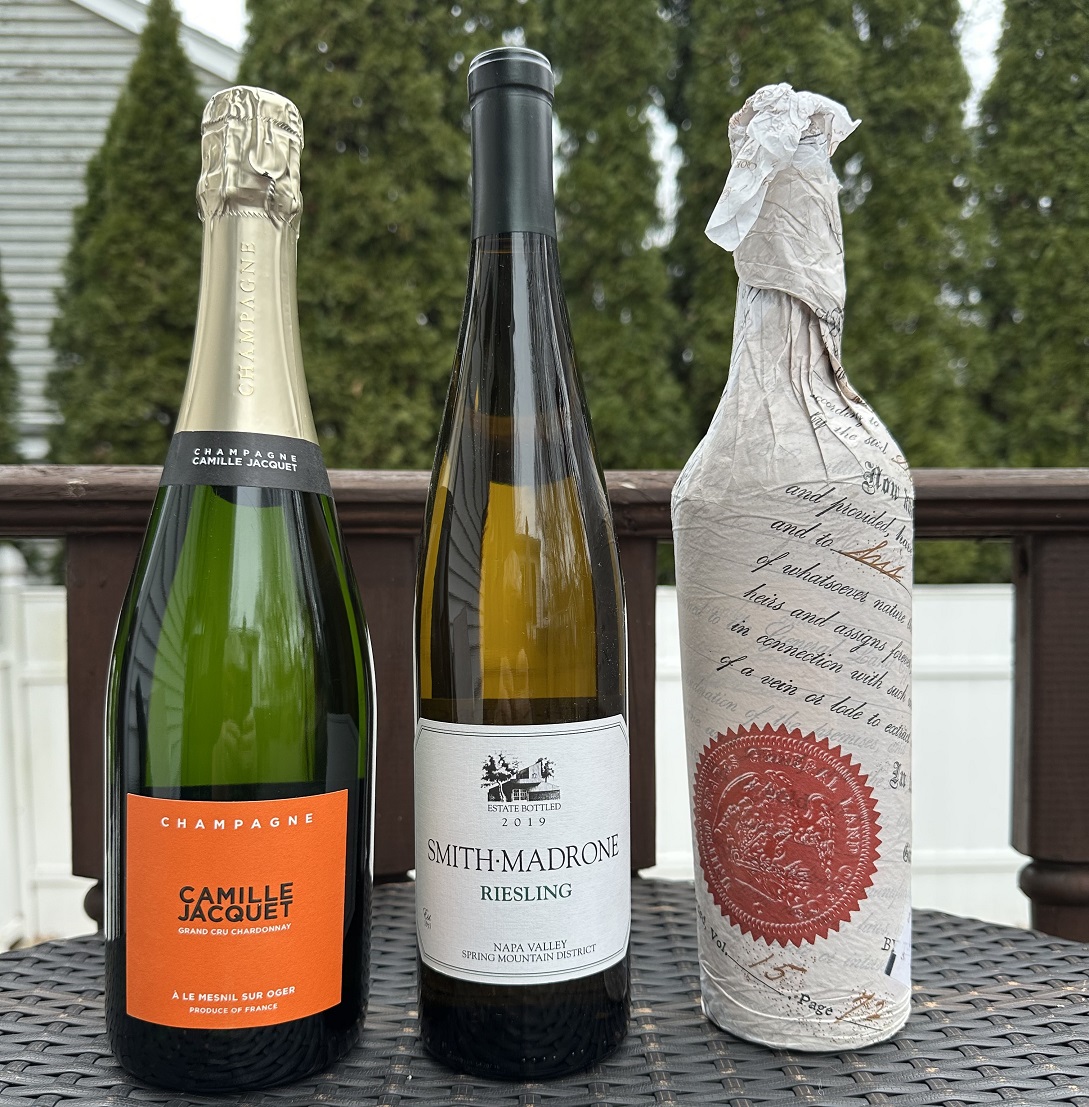 I guess I got lucky. At last weekend’s evening with our dear friends, I managed to hit a double “trifecta” :). Three delicious wines out of three, and my friends loved all three to the “oh my god, this is so good!” moment.
First wine – NV Champagne Camille Jacquet Brut Grand Cru Chardonnay A Le Mesnil-sur-Oger (12% ABV). I do not know the producer, but I had high expectations for this wine possibly for a silly reason. A small village Le Mesnil-sur-Oger is well known for the quality of its Chardonnay vineyards and a home to some of the best (if not the best ) Blanc de Blancs Champagnes in the world – Salon le Mesnil and Krug Clos du Mesnil. Knowing that Camille Jacquet Champagne comes from basically the same vineyard gave me high hopes (silly, as I said) for this Champagne. And my high expectations were perfectly met. Beautiful nose of toasted bread with a touch of apple, impeccably crisp, fresh and precise on the palate. The acidity was fully in check with the complexity of the toasted, baked goods on the palate, leading to an impeccable (yes, I know I already used that word) balance. “Oh my god, this is so good!” said my friends, and the wine disappeared in a jiffy.
Next, two beautiful wines from one of my favorite producers ever. Over the years, I wrote about Smith-Madrone wines extensively. Cooks’s Flat had been one of the Talk-a-Vino Top 10 Wines of the Year 2019 top wines (that year, I had 3 #1 wines, tell me about my inability to make decisions), and Smith-Madrone Cabernet Sauvignon was #3 on the Talk-a-Vino Top 23 of 2023. So I was very happy that I got the samples of Riesling and Cook’s Flat and was able to share both wines with my friends (I will also taste a nice vertical of Smith-Madrone Riesling, it will take a central stage on these pages soon).
Smith-Madrone Riesling is one of my favorite Rieslings in the world – it is one of the 3 if you are interested – Grosset Polish Hill Claire Valley Australia, Smith-Madrone from Napa Valley, and Brooks Ara from Oregon. This 2019 Smith-Madrone Riesling Spring Mountain District Napa Valley (13.3# ABV) was spectacular. First, it offered a tremendous pop of petrol on the nose – and nothing makes my Riesling lover’s heart happier than these petrol aromatics, coupled with a whiff of honeysuckle. On the palate, it was fresh, energetic, with a wide range of citrus flavors readily present, from Meyer lemon to oranges and mandarines, supported by clean acidity and a perfectly cleansing acidic finish. Delicious, and the second “oh my god, this is so good!” wine.


Finally, the 2018 Smith-Madrone Cook’s Flat Reserve Spring Mountain District Napa Valley (14.2% ABV, 87% Cabernet Sauvignon, 13% Cabernet Franc, 20 months in new French Oak). This wine is designated as “Reserve” and this is not random – it represents the best of the best Smith-Madrone makes, using the best plots, best grapes, and produced only in the best years. This wine also has a historical connection to the parcel of land where Smith-Madrone vineyards where replanted in 1972 – the tissue wrapping the Cook’s Flat bottle is a copy of a land grant document, signed by the President of the United States. Here is the description from the Smith-Madrone website:
“Cook’s Flat Reserve is a proprietary name for a wine that is the culmination of our 50 years of growing grapes and making wine in the mountains of the Spring Mountain District. The name refers to George Cook, the first owner of the property. ‘Cook’s Flat’ was the local oldtimers’ name for the eight-acre plateau-like vineyard block which was replanted in 1972.
The packaging expresses the property’s history and an uncompromising attention to detail. Each bottle is numbered and only around one thousand bottles are produced in each vintage. Each bottle is wrapped in tissue which has been printed with a multi-colored copy of the U.S. Land Office Patent which granted ownership to George Cook and was signed by President Chester Arthur on December 5, 1885. We proudly display the original at the winery.”
What I love about Smith-Madrone wines is textbook precision. So far literally everything I tasted from the winery had this textbook precision of flavor – Riesling is unmistakably Riesling, Chardonnay is unmistakably Chardonnay, Cabernet Sauvignon is unmistakably Cabernet Sauvignon.
This 2018 Cook’s Flat, a blend of Cabernet Sauvignon and Cabernet Franc, was also unmistakably a Cabernet. A core of black currant, a.k.a. cassis, and eucalyptus, supported by sweet tobacco and sweet oak, with a whiff of the bell pepper (love it). On the palate, the textbook flavors continued with succulent cassis, eucalyptus, a touch of mint and bell peppers, firm structure, perfectly integrated and perfectly present tannins, impeccable balance. Just a pure joy. “Oh my god, this is so good!” wine again disappeared in no time, with the last drops almost squeezed out of the bottle.
Here you are, my friends. An evening of pure pleasure – and a happy oenophile who managed to make his friends “oh my god, this is so good!” happy.
I have more happy stories to tell – stay tuned…
For The Love Of The Cab: Cabernet Deep Dive with Domaine Bousquet
I can’t speak for all oenophiles, but at least speaking about moi, there is one question that I dread the most:
What is your favorite wine?
This is not a question I ever want to hear – of course, as soon as people figure that you are “into wine”, this is the question everyone thinks is the most appropriate. And yet this is bad – scrap that – horrible question as it doesn’t have an answer. Or it has an answer – accepting that the answer will be different every time the question is asked.
Maybe a better question to ask is
What is your favorite wine today?
At least this is a question that I can answer.
Today, my favorite wine is Cabernet, or Cabernet Sauvignon and Cabernet Franc, to be more precise. Cabernet is what we are going to talk about today. And not just any Cabernet – all organic Cabernet from Argentina.
I have to admit that Cabernet Sauvignon is one of my most favorite wines not only today but on any day. I find a classic profile of cassis, eucalyptus, and bell pepper, sometimes accompanied by mint and anise simply magical. When I see Cabernet Sauvignon on the label, this immediately sets my expectations – and that is exactly where a huge disappointment opportunity lies. The wine might be very good, but if it is called Cabernet Sauvignon, and then doesn’t offer the aforementioned classic traits, that immediately becomes a letdown, sometimes even unjustifiably so. The good thing is that Argentinian Cabernet Sauvignon is usually very well versed in its classic expression, so it is generally a Cabernet Sauvignon that doesn’t disappoint.
Domaine Bousquet is one of the most impressive wine businesses in the world. I wrote about the history of Domaine Bousquet very extensively on these pages, so I’m not going to regurgitate everything that I already said – instead, I would like to suggest that you read this post, and also this one. However, I will illustrate my statement about the most impressive wine business with a few pictures. Here is what high altitude (1,200 m/4,000 ft) desert looked like in 1990 when Frenchman Jean Bousquet first fell in love with the area while on vacation in Argentina:
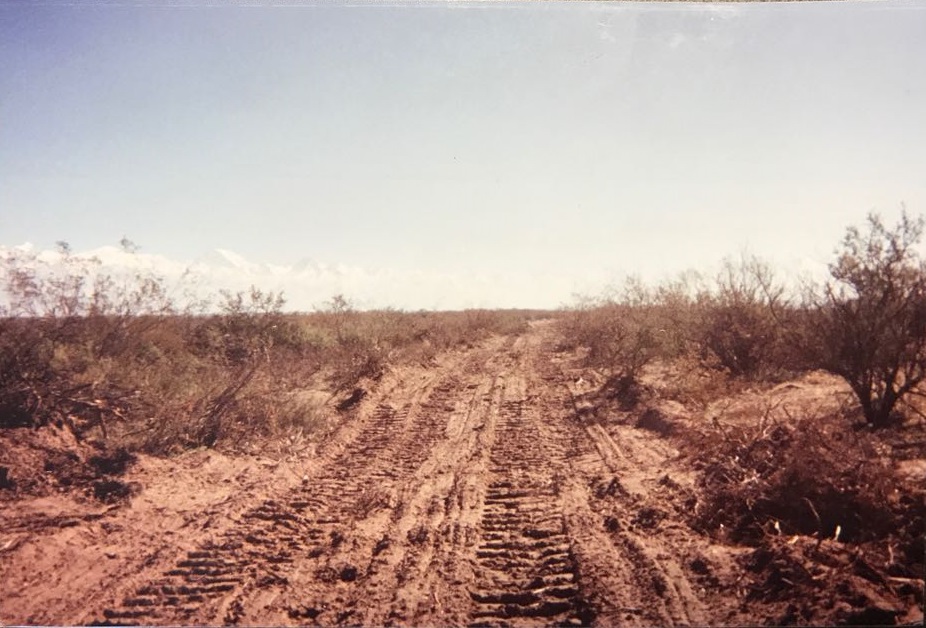
Source: Domaine Bousquet
Here is what it looks like today:
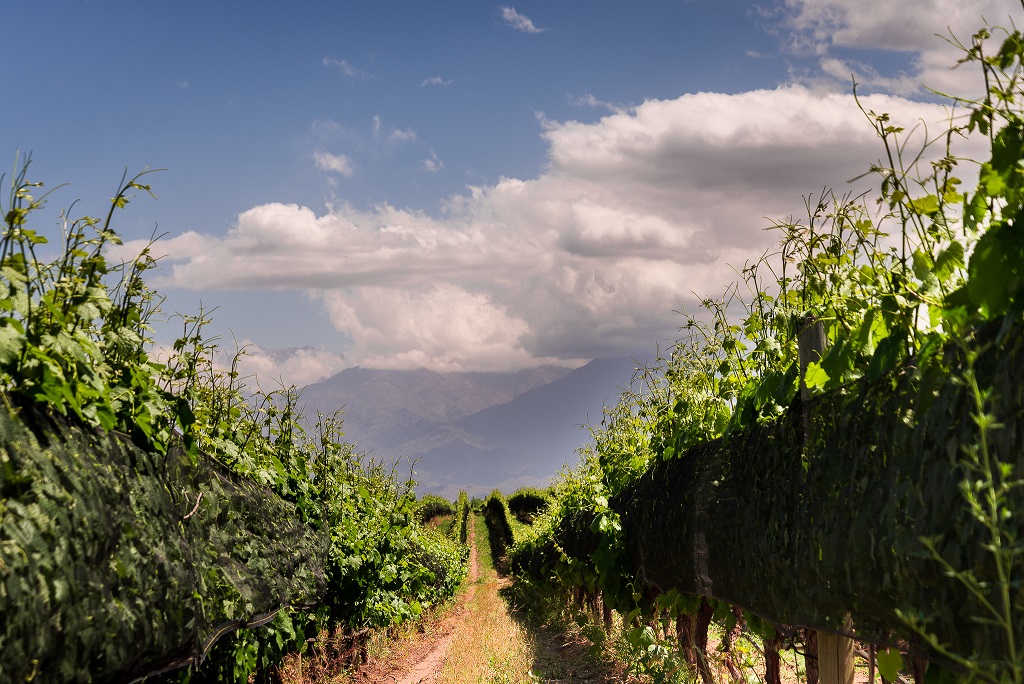
Source: Domaine Bousquet
Here is what domain Bousquet has accomplished in less than 30 years, after being formed in 1997:

Certified B corporation, certified regenerative organic, biodynamic, USDA organic… you can continue decoding the icons on your own. 5 million bottles are produced annually, and I never had a wine from Domaine Bousquet that I didn’t like. I rest my case.
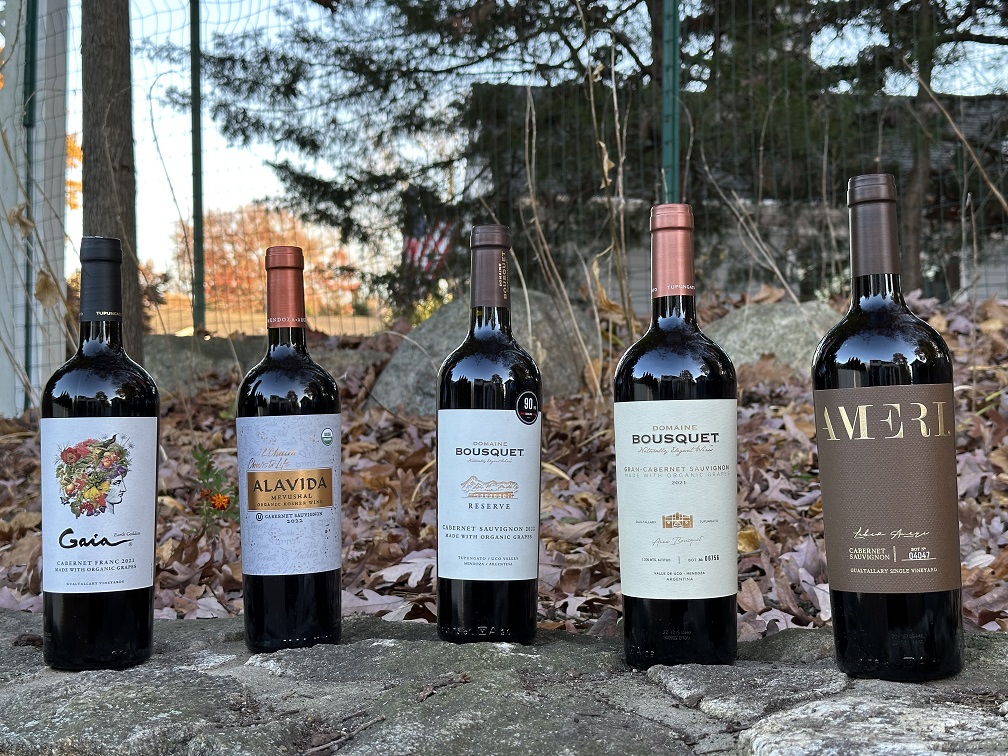
Today we are focusing on Cabernet wines from Domaine Bousquet. While Malbec might be a king of Argentinian wines, Cabernet Sauvignon probably is a royal prince. Argentinian Cabernet Sauvignon wines are world-famous and well sought after. Domaine Bousquet offers a full range of Cabernet wines, both in price and in style. I had an opportunity to taste through such a range, so here are my impressions.
Let’s start with Cabernet Franc first. I love the label for this wine, it is very lively and colorful.
2021 Domaine Bousquet Gaia Organic Cabernet Franc Uco Valley (14.5% ABV, $20, 100% Cabernet Franc, 10 months in used French oak)
Dark garnet
Classic, a distant hint of bell pepper, cassis, eucalyptus.
Cassis, soft tannins with firm structure, a touch of peppery notes, good acidity, excellent balance.
8, delicious and classic
Similar to Hebrew’s L’Chaim! Alavidaalso means To Life! in Spanish. USDA Organic (no SO2 added), unoaked, and Kosher wine is perfect not just for the holidays, but for any day.
2022 Domaine Bousquet Alavida Kosher USDA-Certified Organic Cabernet Sauvignon Uco Valley (14.5% ABV, $18, 100% Cabernet Sauvignon, no added SO2, Kosher)
Dark garnet, almost black
Dark fruit, a hint of dark chocolate
Fresh wild berries, playful, good mid-palate weight, herbs, a touch of sweet oak, excellent balance, delicious.
8, excellent
2022 Domaine Bousquet Cabernet Sauvignon Reserve Tupungato / Uco Valley (14.5% ABV, $18, 6-8 months in French oak, organic grapes, vegan friendly)
Dark garnet
Blueberries on the nose, a hint of eucalyptus
A touch of cassis, tart, a bit astringent, but still well balanced. Tannins are noticeable but well integrated.
7+, needs time
2022 Gran Bousquet Organic Cabernet Sauvignon Uco Valley (14.5% ABV, $25, 85% Cabernet Sauvignon, 15% Malbec, 10 months in French oak, 50% new, 50% used)
Dark garnet
Cassis and eucalyptus in the nose
Cassis, a touch of bell pepper, voluptuous, generous, perfectly balanced, excellent acidity; a delight.
8+, outstanding. This wine was a “California rendition” of Cabernet Sauvignon. Also at this price point, it is a steal.
Ameri is not just a single vineyard but also plot-specific wine made only in exceptional years.
2021 Domaine Bousquet Ameri Single Vineyard Organic Cabertnet Sauvignon Uco Valley (14.5% ABV, $36, 100 Cabernet Sauvignon, 12
months in French oak, 65% new, 35% used)
Dark garnet
Cassis, a hint of bell peppers, a whiff of a leather and sweet oak, complex and inviting.
The beautifully restrained palate leads with acidity, cassis, dark chocolate, well integrated tannins. Wine lost none of its freshness after 3 days. Can age for 25+ years. Outstanding.
8+, delicious. Old world, acidity-driven style, reminiscent of Bordeaux.
Here you are, my friends. 5 beautiful organic, high-altitude Cabernet wines, well worth seeking and enjoying.
Have you had Domaine Bousquet wines? What are your thoughts? Cheers!
Ode to Cab
 Ode to Cab.
Or we can just call it a Love Letter to Cabernet Sauvignon.
As an oenophile, I always try to maintain my “grape neutrality”. I can never name my favorite type of wine, never mind favorite wine. If you will hard press me against the wall with this question, I might say that it is Rioja, but the reality is a lot more complex than that.
If you search through articles in this blog, you will find a full range of wine styles and grapes. There are many blogs out there that cover specific region(s) or specific types of wine – but when I started writing close to 15 years ago, I knew that I would not be able to do that. This blog is about wine appreciation – any wine. “Wine should give you pleasure” – and so this is what my writing is primarily after – sharing the joy, the pleasure of wine, no matter what is the pedigree. Wines made from little-known grapes – Bobal, Trepat, Kekfrankos, Romorantin by tiny producers can give you as much pleasure as first growth Bordeaux, cult California, or best super-Tuscans. The liquid in the glass matters, and the only opinion that matters is yours and only yours – you can not enjoy the critic’s 100 points in your mouth.
This is my approach – try any wine with an open mind, and always be ready to be pleasantly surprised – or even blown away for that matter. And yet there is something about Cabernet Sauvignon that makes my heart race, especially coming from the producer I know or have heard of. Listen, I’m doing my best to tell you the truth, even though the “thought spoken is a lie”. But the brain gets all excited when I’m opening a bottle of the familiar Cabernet Sauvignon because I already know how good it can be. Very different from the excitement of the possible taste of DRC, Petrus, or Quintarelly (I’m yet to taste either) – because with those I wouldn’t know what to expect. But I do know what to expect from the well-made Cabernet Sauvignon that is ready to drink.
Even with the wines I happily call the favorites, I can’t tell you what I’m expecting to taste. I can’t describe my expectations when tasting La Rioja Alta, Ken Wright Pinot Noir, or Loacker Corte Pavone Brunello di Montalcino. I expect that I will like those wines as I know the producers and had their wines many times before – but I can’t tell you my exact expectations of the aroma or the taste of the wine. With Cabernet Sauvignon, I have very precise expectations of the aroma and the taste for me to like the wine. If I do not find the cassis (black currant) on both nose and palate when the bottle says “Cabernet Sauvignon” on it, there is no way I will like the wine, no matter how good the wine is for anyone else. Eucalyptus, mint, and a good structure are also expected, but with this some variations are possible. But when the expectations are met… the Cabernet Sauvignon is nothing but a pure, hedonistic pleasure.
So yes, deep down, Cabernet Sauvignon might be the most favorite wine of all – I just hope I will remember it next time I’m asked about my favorite wine.
Now, truth be told, I had a good reason for all this rambling about the beauty of Cabernet Sauvignon. A few weeks ago, I had an opportunity to conduct an accidental side-by-side tasting of the California Cabernet Sauvignon and the results were simply amazing.
With this tasting, we are taking a little trip. We will start in Northern California, where Barra of Mendocino is located. I wrote about their wines before, and now I have a few of the latest releases and I thought that Cabernet Sauvignon would be quite appropriate for the tasting.
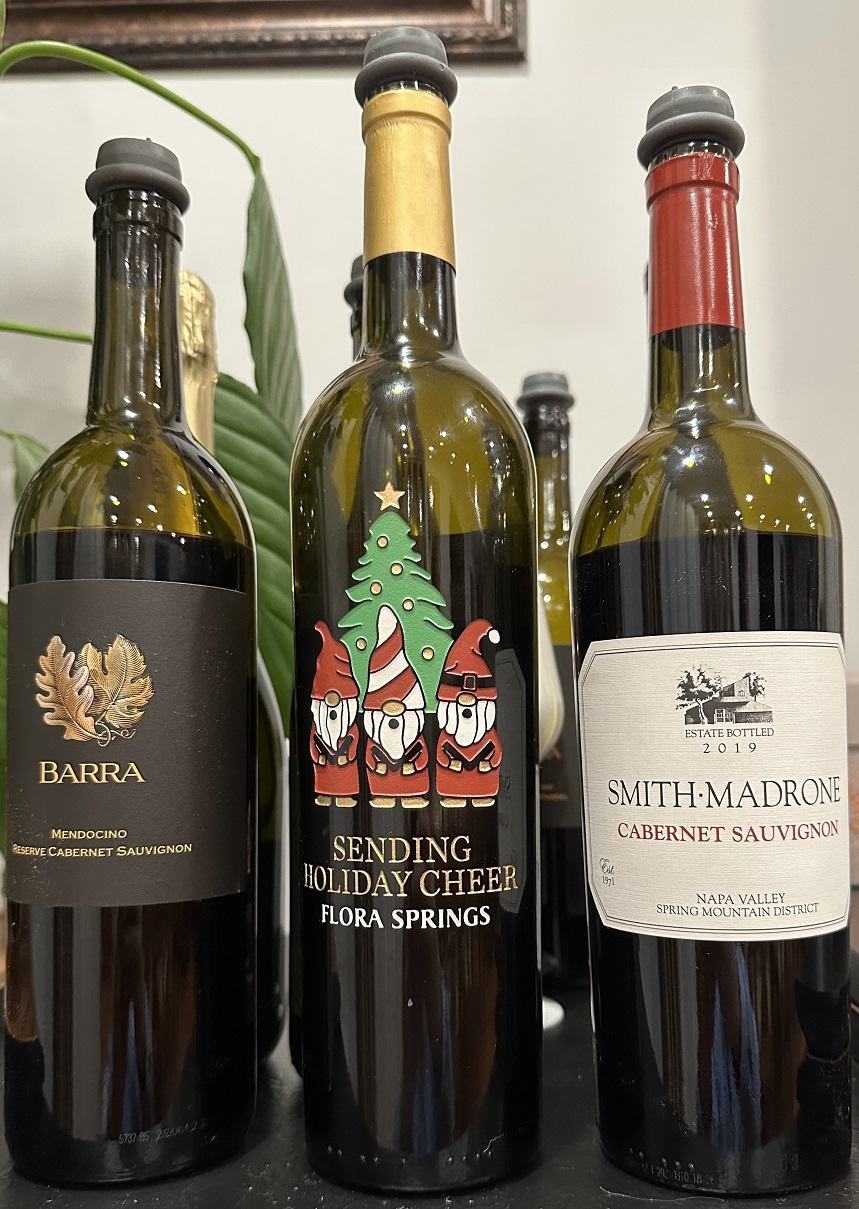
Barra Cabernet Sauvignon was the leanest of 3, but still had a perfectly recognizable Cabernet Sauvignon profile:
2021 Barra Reserve Cabernet Sauvignon Mendocino (14.5% ABV, $28, 18 months 30% new French oak, balance in neutral barrels)
Garnet
Eucalyptus, cherries, a hint of cassis
Eucalyptus, dark berries, cherries, cassis, well integrated tannins, perfect balance, medium-long finish.
8
Moving 80 miles southeast, we now arrive at the Flora Springs winery, located in the heart of the Napa Valley. Again, one of my favorite wineries in California, I wrote about their wines on multiple occasions.
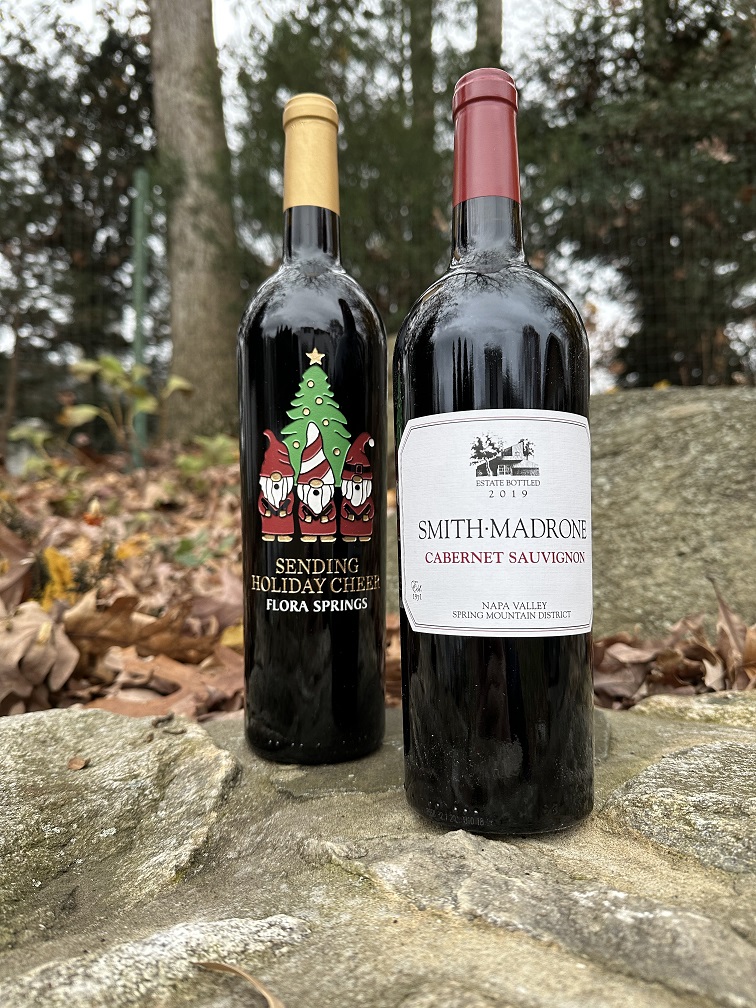
The wine I had an opportunity to taste was a special holiday release. Flora Springs is big on the holiday celebration, so this bottle features etched gnomes, perfectly appropriate for the holidays. But it is what’s inside that counts, and this wine was nothing short of spectacular.
2019 Flora Springs Red Wine Blend Napa Valley (14.5% ABV, $95, predominantly Cabernet Sauvignon, 18 months in 70% French and 30% American oak barrels)
Dark garnet
Cassis, mint, black tea, cassis is playing in and out – you can smell this wine forever. Cassis is prevalent, wow.
Burst of cassis at first, then tannins come in, offering some bitter notes around the otherwise perfect Cabernet core. A very powerful, delicious wine that needs time to soften up. Either decant for a few hours, or lose it in the cellar for 10 years. The winery says you can enjoy it through 2036 – I’m sure you can easily add another 20 years on top of that.
8/8+
Going back about 8 miles northwest, we now arrive at the Smith-Madrone, the winery located in the Spring Mountain district of Napa Valley. Smith-Madrone is yet another one of my favorite wineries, and the one I feel a bit guilty about as a writer. I wrote about Smith-Madrone wines on many occasions in this blog – 5 years ago, Smith-Madrone were my wines of choice to celebrate Thanksgiving; in 2019, Smith-Madrone Cabernet Sauvignon was my wine of the year. And I’m still yearning to write a post fully designated to the winery…
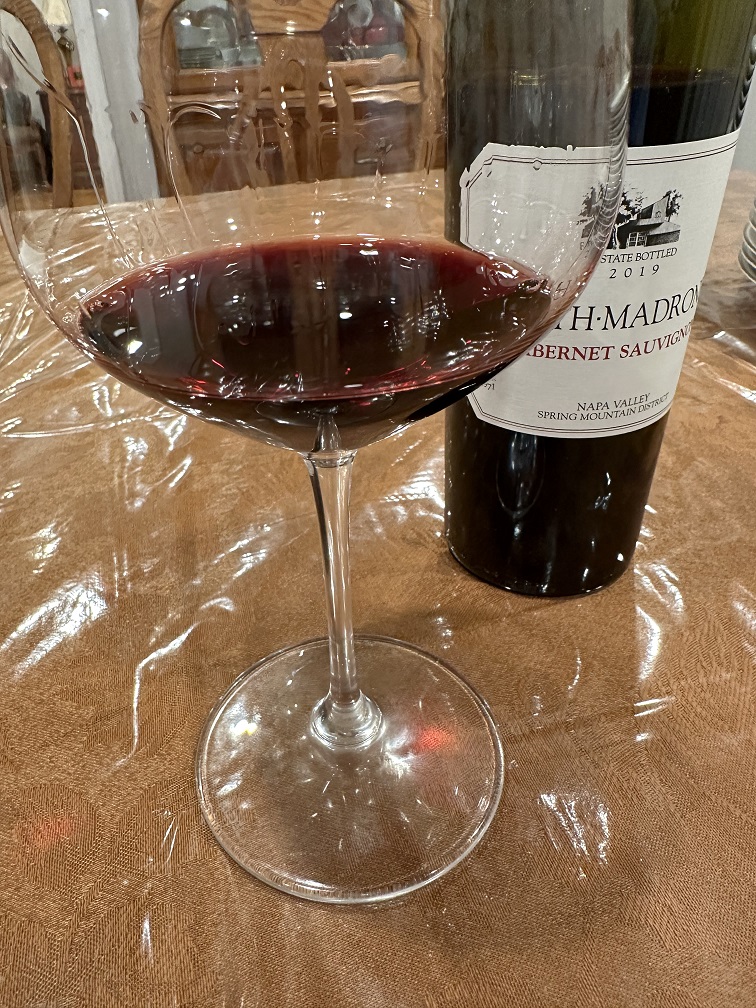
Nevertheless, Smith-Madrone Cabernet Sauvignon to me is one of the most textbook-proper, pure Cabernet Sauvignon wines there is. Not everyone would share my opinion – my sister-in-law with whom I was tasting these 3 Cabs, was preferring Flora Springs Cab, just for the sheer, unashamed beauty. But to me, a more subtle but very confident representation of the Cabernet Sauvignon by Smith-Madrone was just a perfection:
2019 Smith-Madrone Cabernet Sauvignon Spring Mountain District Napa Valley (14.3% ABV, $65, 83% Cabernet Sauvignon, 5% Merlot, 12% Cabernet Franc, 18 months in 55% new French oak)
Brilliant dark ruby
A perfection. A textbook Cabernet Sauvignon cassis, pure, perfectly precise cassis. You can think of a bell pepper – I’m not sure it is there, but it comes to mind.
The palate is amazing – cassis, eucalyptus, perfect minerality, a touch of the pencil shavings, salivating acidity. This is an impeccably balanced wine built for aging. In 10 years, it will be insanely good. In 20 – … well, I don’t want to even think about waiting that long…
9-, pure and superb.
If you like Cabernet Sauvignon, either one of these 3 wines will make you happy – each one perfectly representing their terroir and the vision of the winemaker, and yet unquestionably perfectly representing maybe the most noble grape of all.
So now you know what my secret passion, secret true wine love is. What’s yours?
Cabernet Sauvignon Reflections on Cabernet Day
Once people realize I’m into wine, 9 times out of 10 someone likes to pop the question – “So, what is your favorite wine”? I really dread this question because I can never answer it, and people think I’m full of pretense.
First, I like wine. Maybe “love” is an even better word. For me, wine is an all-inclusive concept – all types, all regions, all grapes. As long as wine gives pleasure, that is all I need. So it is really hard to pick a favorite. And even if I try, my answer will be different every time – you know how sometimes you are asked to name a favorite book or a favorite movie as an answer to the security question for the new account setup? I always wonder – who can answer that, and then really remember what they said in the first place? I know that it is not me.
But then maybe I had not been honest with myself and I do have a favorite?
It is possible that I’m overthinking such a basic question. But as one of the philosophers said, “Thought spoken is a lie”. In our thoughts, there is a true answer. But every time we try to give it, it is only an approximation – and that’s why the answer to this “favorite” question can be different every time.
Celebration of the International Cabernet Day made me think about this most popular grape in the world and also made me realize – that Cabernet Sauvignon wine might actually be my favorite wine.
How do I mean it?
I’m trying to assess my almost subconscious reaction to hearing about the wine – someone mentions it, I get a promotional email, wine at a restaurant, etc. I believe my brain gives Cabernet Sauvignon preferential treatment, compared to any other wine (interestingly enough, Brunello might be another wine with a similar reaction).
Let me try to explain it better. Let’s say I hear the name Rioja. You know perfectly well that I love Rioja. But just mention of Rioja doesn’t get me excited – I need to know the producer because there is only a handful of producers I trust to offer the wine I will enjoy. A similar story will be with Syrah, Chardonnay, Zinfandel, Riesling, Pinot Noir – I need to know the producer and the region, and then if I hear E. Guigal or M. Chapoutier, the Syrah all of a sudden becomes interesting.
This is not the same with Cabernet Sauvignon. Once I hear about Cabernet Sauvignon, I get instantly excited first, and then wonder about the producer, the region, and so on. I can’t explain this – this might be due to all the wine books I had read in the past. It might be due to the phenomenal encounters such as Vérité, Jordan, Smith-Madrone, Neyers, Kamen, Turley, Chateau Ste. Michelle, Revelry, Neyen, BV, Chateau Margaux and many, many, many others. I don’t know how this works, I’m just doing a bit of the self-searching and it seems to be that this is the case.
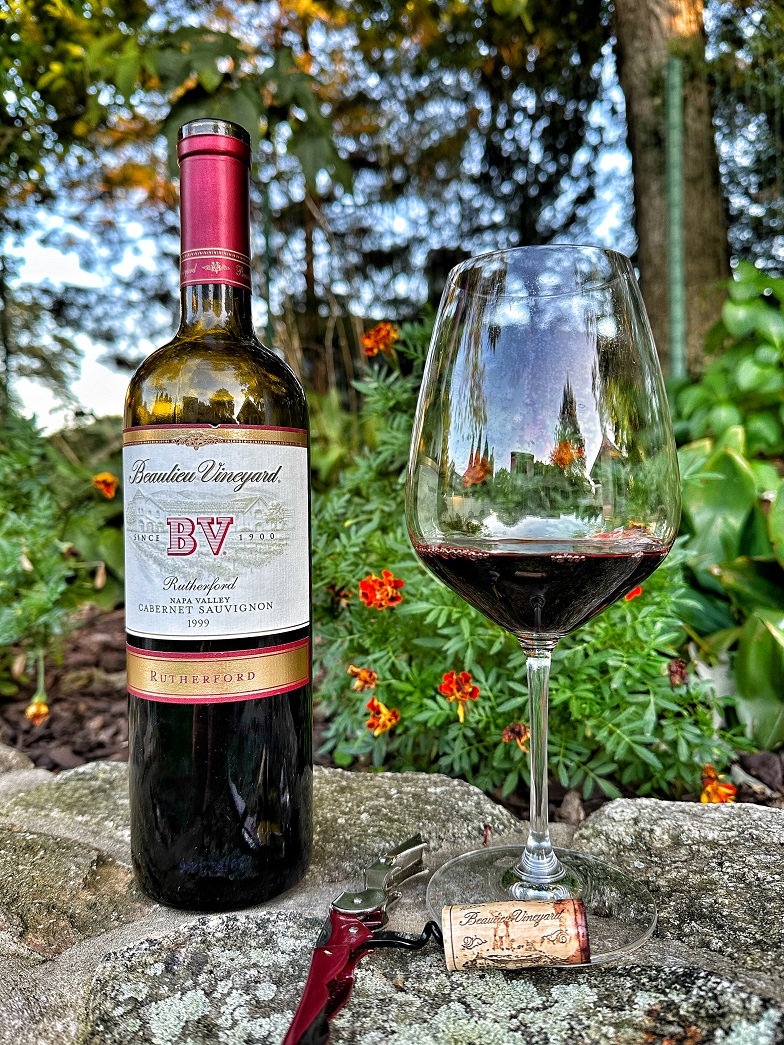
For today’s celebration, I decided to go with the 1999 Beaulieu Vineyards Cabernet Sauvignon Rutherford Napa Valley (13.8% ABV). Drinking this wine brought memories of visiting BV and tasting through the full lineup of wines, including Georges de Latour Private Reserve Cab and Cabernet Sauvignon clonal selections. Despite the 24 years of age, this wine was absolutely youthful and delicious – cassis and eucalyptus on the nose, more of the cassis and eucalyptus on the palate with the addition of cherries. Perfectly present texture, very enjoyable and easily noticeable tannins, perfectly balanced. This is the wine that puts a smile on your face (Drinkability: 8+/9-). Also, as I always maintain that well-made California Cabernet Sauvignon requires between 20 and 30 years of age to be fully enjoyed, and then I find a confirmation to that statement, so that puts another smile on my face.
Here, I said it – Cabernet Sauvignon might be my favorite wine.
But then remember – the thought spoken is a lie.
Daily Glass: Trial and Error, and Variety of Opinions
Drinking wine is complicated.
I guess I lost you right here and now.
Let’s try again.
Drinking wine is not complicated. Things preceding the wine getting into your glass are complicated. Deciding on the wine to buy, deciding on the wine to drink, deciding how long to keep the bottle before opening is complicated. Dealing with influences, both positive and negative is complicated. If you don’t see it that way – you are lucky. And if you do share my opinion, let me have your ear.
Today, let’s talk about influences. First, let’s take a look at the positive influences. A trusted friend said that the wine was amazing and you must try it. You visited your favorite, trusted wine store, and the salesperson recommended the wine. You saw a raving review for the wine on the website you already bought 10 excellent wines before. You obviously trust the recommendation and happily buy the wine. All is good, right?
Of course, all is good. Maybe not all, but almost all. What might not be good in such a beautiful picture? The expectations. Getting a recommendation from a trusted source sets your expectations. It sets them way, way too high. If your high expectations are not met upon the first sip that obviously creates disappointment. What was supposed to bring you instant joy is now making you upset. Your expectations now failed, and because it was a trusted source, it makes things even worse.
Before you get too upset, let’s think. Maybe the problem is not with the recommendation, but with the way you took it? This is wine, remember? Aeration, temperature, mood, food, environment – all affect the perceived taste of wine. Serve heavy red too cold, and the wine will become bitter. Serve it too hot, and you will be running away from the alcohol hit. Serve a 3 years old bottle of Howell Mountain Cabernet Sauvignon without decanting, and I literally guarantee you pain and disappointment. In wine, these little things matter.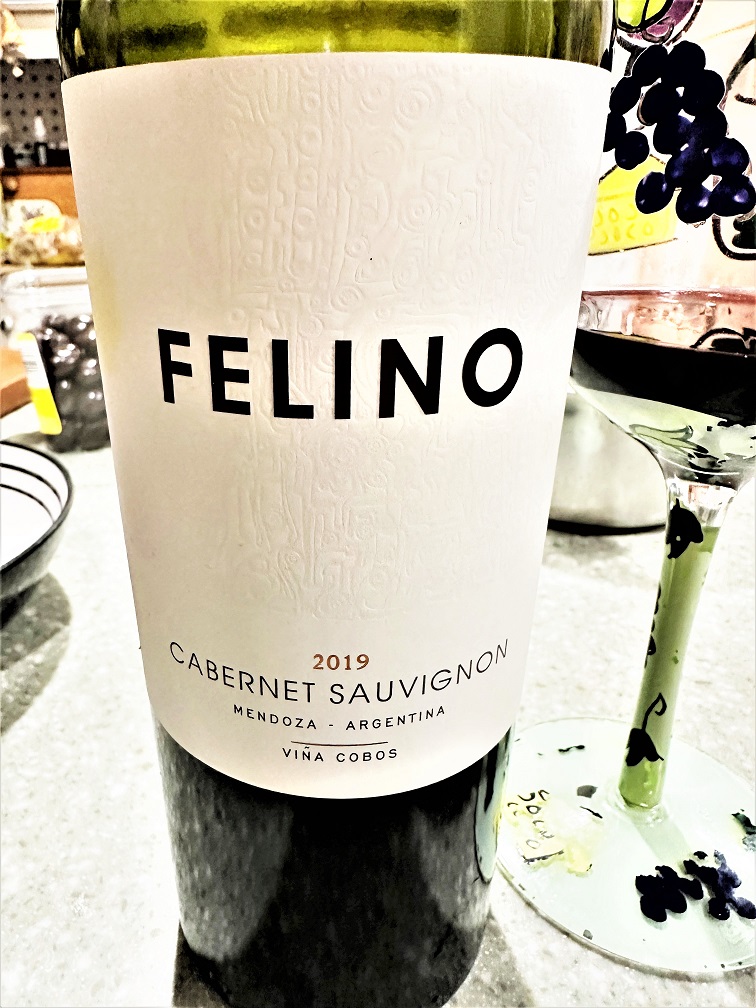
Case in point – 2019 Viña Cobos Felino Cabernet Sauvignon Mendoza (14% ABV, $6.98 ($22 original price), 100% Cabernet Sauvignon, aged for 8 months in oak barrels 10% new). A few months back, I got an email from Wine Exchange, with an offer no wine lover can resist – outstanding Cabernet Sauvignon which was originally priced at $22 and is now $6.98 as a black Friday promotion. I bought 6 bottles. A week or so later opened one and had a feeling of being duped – the wine didn’t show much of anything. I made a mental knot to remember that this was not the wine I can enjoy. Can you imagine my level of disappointment? Of course, at this price, nobody can really complain, but the disconnect between the trusted expert’s recommendation and the actual experience was too dramatic and definitely contributed to the feeling of disappointment.
Two weeks ago, I was looking for a bottle to open for a house guest and just came across this wine again – yeah, sometimes I suck as a host, I know. After my guest had a few glasses (I was not drinking that evening), I pumped the air out and put the bottle aside. The next evening, I was not looking forward to it, but I said I would just have a sip and then put the bottle aside to cook with. Wow. What a transformation. The wine was beautiful, it opened up, it had cassis, it had cherries, it was clean and succulent, exactly as the description promised. Do you see now what I’m talking about? The positive expectations were not met – I’m glad I didn’t stop at that moment of disappointment, but the overall experience could’ve turned out for the worst.
Now, let’s talk about the negative influence. When a trusted expert tells you that the bottle of wine is not good or that you will not like it – you listen. If this is the conversation in the wine shop before you buy the bottle, the outcome is clear – you would just not buy the bottle. And if you already own the bottle? Well, it is what it is then…
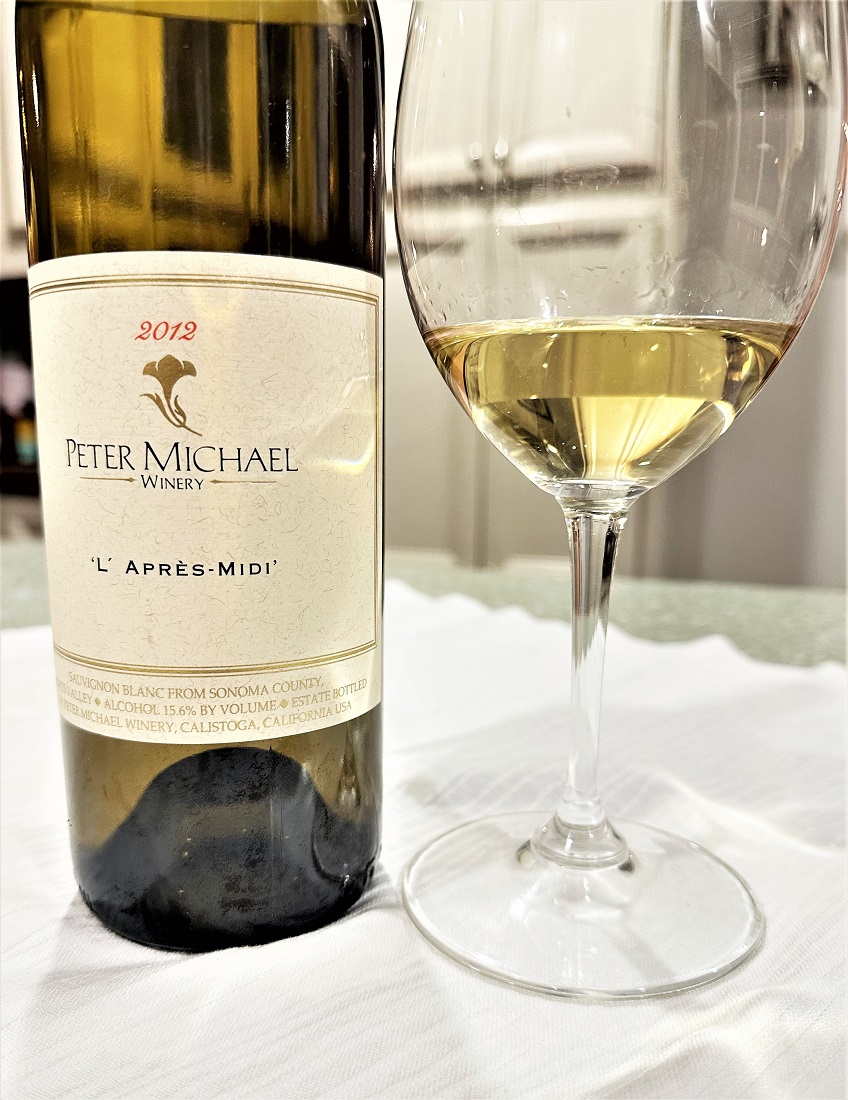
A few weeks ago, I spoke with my friend Zak (the wine store owner) who mentioned his recent experience with Peter Michael wine – he open a bottle of an older Peter Michael Sauvignon Blanc, and it was practically on the way out, actively developing tertiary aromas. A few days after this conversation, after a long day, I suddenly had an urge for a glass of white wine late in the evening. This doesn’t happen that often, but hey, obey your craving… After mindlessly pulling a few shelves in the wine cabinet, I came across the one with Peter Michael bottles. “Aha, this 2012 Peter Michael L’Après-Midi Estate Napa Valley (15.6% ABV, 95% Sauvignon Blanc, 5% Semillon, 8 months in French oak) is probably gone already anyway, why don’t I open that”.
“Whoa” was my instant reaction upon the first sip. 10 years old white wine from California, with 15.6% ABV… You would definitely expect the wine to turn, and yet it was fresh, complex, exuberant, brimming with juicy whitestone fruit, plump vanilla, and fresh acidity. Could my low expectations contribute to the elevated enjoyment? This is always a possibility, but I’m not sure. The wine was not comparatively good, it was simply good on its own. What made my experience different from Zak’s? I have no idea – it is a mystery. And this mystery is what makes wine so much fun.
There you are – an account of indecisive winelover dealing with influences and preconceived notions.
But for some reason, I don’t think my situation is unique. I’m sure you got your own stories – do tell…
A Weekend in [Great] Wines
 What is a great wine?
Does the wine made by a famous producer make it great? Does a high price make it great?
Wine should give you pleasure. Is there a measurable amount of pleasure to declare wine “great”? 5 units of pleasure? 25 units of pleasure?
Of course, “great” is a subjective definition. The infamous “the truth is in the eye of the beholder”. Every wine lover has their own way to declare wine great, and it is not just one way – there are many ways.
I love the harmony in the wine. The perfect balance of all the components. A unique flavor. A thought-provoking bouquet that makes you want to take a sip, and another sip, and try to understand. Or the wine which makes you disconnect from the world and all of its problems, and just get lost in your own thoughts. I also love the wine which perfectly matches your expectations.
I’m sure “expectations” is yet another loaded term, but if you are into the wine, for sure you have expectations when opening a bottle of wine. You expect to find freshly cut grass and maybe a proverbial “cat pee” on the bottle of Sancerre. I love gunflint on my young Chablis. I expect a good bottle of well-aged cold climate Chardonnay to show honey and apple notes. I want succulent cherries in my Brunello. And I need cassis in my Bordeaux, and gobs and gobs of cassis on my bottle of the Napa Cabernet Sauvignon. Don’t get me wrong – the wine can be great if it doesn’t match expectations at all, but this is the subject for another post.
That is what I want to talk about here – the wines matching expectations. The wines that were simply perfect. And a few others that were maybe not perfect, but still delicious.
The last Sunday was Father’s Day. I usually open a good bottle or a few in honor of the holiday, but this weekend of wines started a few days prior. My sister-in-law, who lives on Cape Cod, had her milestone birthday recently, and as she loves wine, I wanted to bring a few wines that would be worthy of a moment. She used to love California Pinot, but as of the last few years California Cabernet Sauvignon became the thing, so I grabbed a few bottles of Turley Estate Cabernet, which generally doesn’t disappoint. And of course, a few other bottles, as we had to drink something for 3 days, okay?


Before we got to the reds, there were whites. We started with 2020 Château Montet Blanc Bordeaux AOC (12% ABV, Sauvignon) which was a nice, middle-of-the-road, Bordeaux white wine, offering a hint of freshly cut grass and some Meyer lemons. We also opened a bottle of 2018 Alban Vineyards Viognier Edna Valley (14.9% ABV). It was nicely perfumy and complex on the nose, and quite big and powerful on the palate, with an interesting flavor that I could not discern – on overripe wild plum maybe. I tried this Viognier with the fresh oysters, but this was not necessarily a winning combination. Our last white was 2016 Turley The White Coat California (13.5% ABV, 40% Roussanne, 40% Grenache Blanc, 20% Vermentino) – a full-bodied, elegant white wine, plump and round on the palate, perfectly fresh and clean overall.


Summer asks for a Rosé, even though the weather was rather on the cool side – our choice of Rosé was 2021 Turley Zinfandel Rosé California (12% ABV), which was delicious. Strawberries and cranberries on the nose and on the palate, crisp, clean, refreshing – it had everything you want from Rosé.
And then there were reds. Some were more of the “placeholders”, the wines you open just to drink something before you get to the main program – as was 2021 Field Recordings Nouveau Edna Valley (12.9% ABV, Pinot Noir). Young, fresh, grapey, and tart, as you would expect from the Nouveau. We treated somewhat similarly 2018 Pedra Cancela Winemaker Selection Dão DOC (13% ABV, 40% Touriga Nacional, 30% Alfrocheiro, 30% Tinta Roriz), even though this is an excellent wine in its own right – dark fruit, cherries, nice minerality, medium body, fresh acidity, and overall good balance. 2016 Pedra Cancela was wine #7 on my Top 20 of 2020 list – I think I would prefer 2016 over 2018, but I need to try this wine again by itself and not “among others” before I will be able to form an opinion.
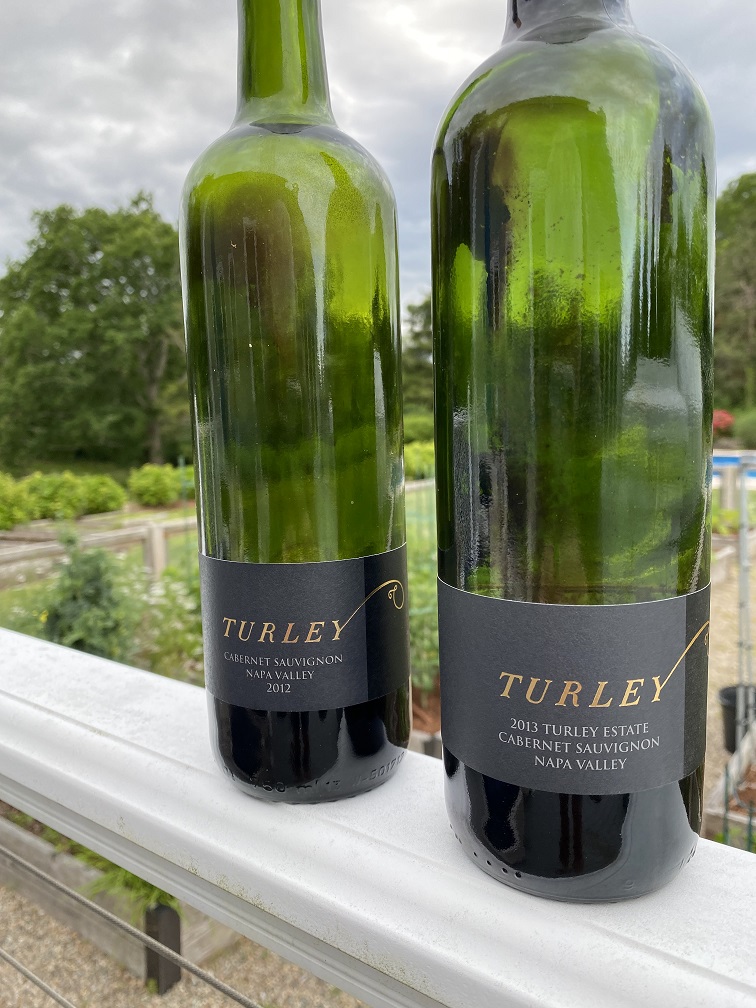
Next was the time for magic, so the bottle of 2012 Turley Estate Cabernet Sauvignon Napa Valley (14.1% ABV) was open. I have a long history with Turley Cabernet Sauvignon wines, ever since they debuted with the 2010 vintage – this post describes my perception of the 2010 vintage and also provides some details on my initially rocky relationship with this wine. The first 2 vintages were called “The Label”, becoming simply Turley Estate Cabernet Sauvignon starting from the 2012 vintage. The last time I tasted the 2012 Turley Cabernet Sauvignon was exactly two years ago – you can read the tasting notes here. These 2 years made a difference, and the wine was delicious from the get-go. Cassis on the nose and the palate, layered with soft tannins, generous and powerful. Upon opening, it was varietally correct and simply superb, worthy of a great wine designation.
You take a sip of wine, you think you discovered the perfection, and you are reveling in the happy state. Then you open another bottle, catch a whiff from the glass, take a sip, and wonder how the absolute happiness you experienced a second ago can be toppled? And yet this is exactly what happened when we opened the 2013 Turley Estate Cabernet Sauvignon Napa Valley (14.1% ABV). 2013 was almost the same as 2012 – except it was better refined, more elegant, cleaner. Cassis was beautifully pronounced supported by a touch of mint and a distant note of bell pepper. Perfectly on point, perfectly matching the expectations.


The next day I wanted to deviate a bit from the Bordeaux direction with 2015 AR PE PE Grumello Rocca de Piro Nebbiolo Valtellina Superiore DOCG (13% ABV). ARPEPE is an excellent producer in the Valtellina region in Italian Alps in Lombardy, crafting Nebbiolo wines. This wine had a beautiful vibrancy of the fresh cherries, not overripe, but just ripe enough, to offer an “unmistakably Italian” feeling on the first sip. Fresh, lip-smacking cherries, herbs, well-integrated but noticeable tannins – this wine offered a well-needed break from the power of California Cabernet Sauvignon. Unfortunately, a very short break as the bottle was gone in no time.


And then the story repeated itself. We opened 1998 Château Tournefeuille Lalande de Pomerol AOC (12.5% ABV, 70% Merlot, 30% Cabernet Franc), the wine I knew nothing about. I got this wine from Benchmark Wine Group a few years ago, for $30 or so. I simply got it based on the vintage and the price – the vintage is one of the few I try to collect, and the price was reasonable. First I was pleasantly surprised with the condition of the cork, which was intact – for a 24-year-old wine, this is not always the case. But then the whiff and the sip… Oh my… The precision of cassis was elevated on yet another level – don’t know how is that possible. The wine had pure, pristine cassis on the nose and the palate with a small addition of bell pepper and eucalyptus, a perfect round bouquet, a perfect balance of fruit, acidity, and tannins, just superb. After the first sip, I asked my sister-in-law what does she think about this wine by itself and in comparison with two of the previous bottles of Turley (we still had wine left there on the second day). She said that she really doesn’t want to make me upset, but she really likes it even more than the 2013 Turley Cab – and I’m fully agreeing with her. If I were to rate these 3 wines on my Drinkability scale, Turley 2012 would be an 8+, Turley 2013 is 9-/9, and the Château Tournefeuille is a solid 9 or maybe even 9+, and definitely a memorable experience.
It was not just the wine – the food and the views were quite good, despite somewhat gloomy weather during most of our visit. Local oysters were delicious. I had an opportunity to try the Swiss cheese called Tête de Moine, which also comes with its own special curler. The kabobs were delicious too. And the views of the ocean never get tiring.


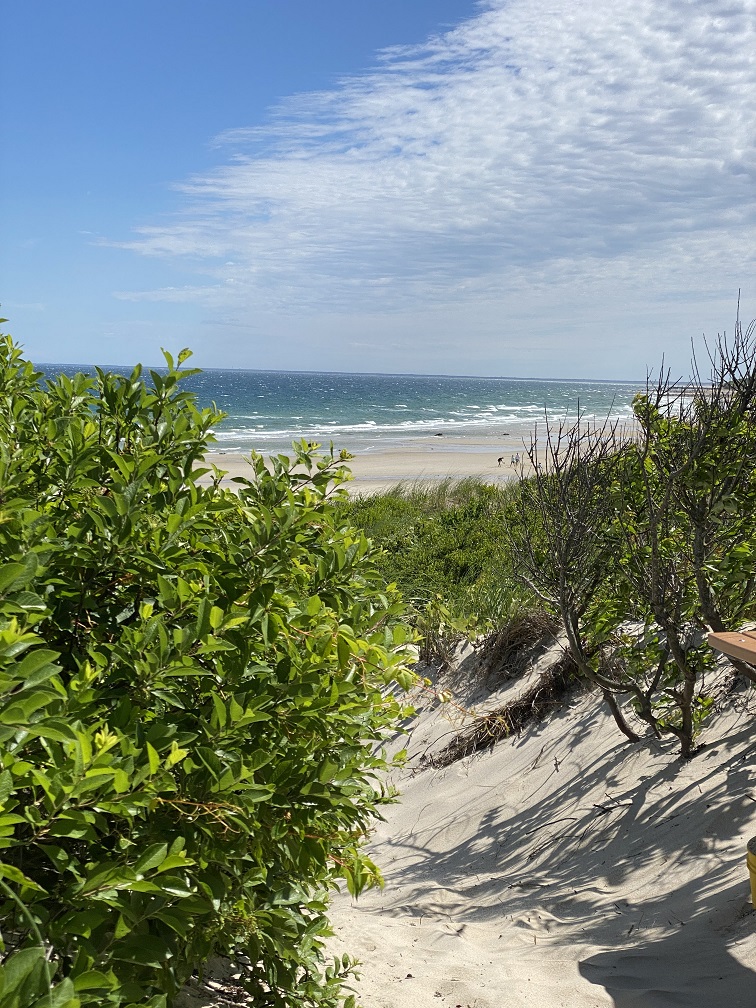
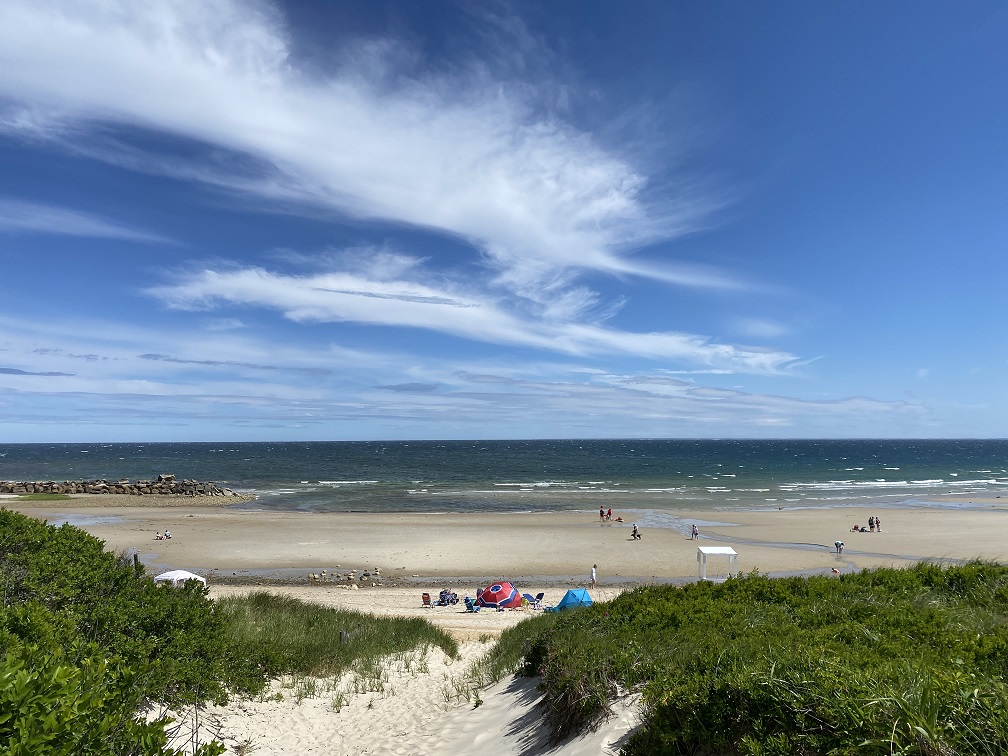
We came back home on Sunday, to have Father’s day dinner with the kids. Of course, Father’s Day celebration requires a special bottle of wine. I was thinking about opening the 2005 Jordan Cabernet Sauvignon Estate Alexander Valley (13.5% ABV) for a while at this point, so I decided that the celebration gives me a good enough reason to pull the cork, which I did. The last time I had this exact wine was in 2018 when I brought a bottle for a special wine dinner in Singapore. At that time the wine showed as overly sweet. 4 years later, the wine lost all of its sweetness, and now was showing as a classic Cabernet Sauvignon with cassis on the palate, but somehow now the wine was showing very lean and underwhelming. I think the wine could’ve further improved over the next 5-10 years, but as this was my last bottle, now there will be someone else who will make the discovery. I had this wine with a special burger from Darien Butcher Shop – I had fried egg, fried onion, and bacon as flavor enhancers with the burger, so the wine didn’t stand a chance to show well, but at least it was not fighting with the food.


That concludes my story of a few great wines. What are great wines in your book?
American Pleasures #6: A Tale of Two Cabs
Wine should give you pleasure – there is no point in drinking the wine if it does not. Lately, I had a number of samples of American wines, that were the delicious standouts – one after another, making me even wonder if someone cursed my palate. I enjoyed all of those wines so much that I decided to designate a new series to them – the American Pleasures.
California Cabernet Sauvignon.
Magical words for any wine connoisseur. Out of more than 100 grape varieties used in wine production in California, I would safely bet that Cabernet Sauvignon clout exceeds that of Chardonnay, Merlot, and Pinot Noir, and even including Pinot Noir in this list is a stretch. Cabernet Sauvignon is The One of California wines (if you are willing to disprove this with actual numbers, I will be happy to publish a correction, but until someone will step forward, this stands as unquestionable truth).
While we can agree that California Cabernet Sauvignon is an object of craving for uncounted many, it also should be recognized as an object of controversy. How do I mean it? Easy. There are probably 50 or so producers whose wines are impossible to get, due to both availability and pricing – you have to be on the mailing list with a waiting list stretching for 20 years or so, and once you get there you should be willing to pay $500++ per bottle of wine you will need to wait for another 10-15 years to enjoy. Alternatively, you need to be prepared to pay an upward of $500 per bottle and scour the internet daily looking for those special bottles.
On the flip side, you can join most of us walking into the wine store asking (begging?) for a good bottle of Cabernet Sauvignon under $20, trying not to notice the poorly hidden smirk on the face of the salesperson, who knows that we are on the quest for the impossible. If you like Cabernet Sauvignon and not buying those wines from your expense account, I’m sure you can relate to the experience firsthand. Even $50 per bottle doesn’t come with any guarantees. But – that number gives us hope. Yes, folks, it is possible to find a good bottle of Cabernet Sauvignon under $50. Let’s talk about it.


Lots of my wine learning and discoveries are linked to unimitable wine educator Kevin Zraly and his Windows on the World Wine School. I remember one of the lessons where we were talking about California Cabernet Sauvignon. One of the wines was particularly good, and I remember Kevin remarking that the wine was produced by Louis M Martini, who doesn’t charge nearly enough for the quality of the wines they produce. That reference got engraved in my memory literally forever, and Louis M Martini became somewhat of the safe bet when looking for reasonably priced and consistent California Cabernet Sauvignon.
Louis M Martiny winery was founded in 1922 when Prohibition was already in full swing. It was actually known as L.M. Martini Grape Products Company and was focused on the production of sacramental wines and concentrate for home winemaking. In 1933, expecting that Prohibition will end, the new winery building was constructed north of the town of Napa. This was the actual beginning of the Louis M Martini winery and pioneering role of the Martini family in the Californian wine industry, helping to establish Napa Valley Vintners Association in 1943, being one of the first to use wind machines to prevent frost in the vineyards, and being one of the first to bottle varietal Merlot in 1970.
Louis M Martini offers a substantial range of wines today, going way beyond standard Sonoma and Napa Cabernet Sauvignon offerings, including Cabernet Sauvignon from some of the best regions in Napa Valley such as Stagecoach Vineyard and Howell Mountain, as well as a number of Merlot, Malbec, Petite Sirah, and Zinfandel wines – unfortunately, most of those are priced well beyond the $50 we are talking about today. Sill, there is Sonoma Valley Cabernet Sauvignon which can be found at around $15, and Napa Valley Cabernet Sauvignon around $35. The Napa Valley bottling I tasted was simply outstanding with or without any regard to the price:
2016 Louis M Martini Cabernet Sauvignon Napa Valley (15.1% ABV, $40)
Garnet
Cassis, eucalyptus, baking spices
Roll of your tongue smooth, velvety, fresh cassis, perfectly ripe fruit but over, firm structure, long finish.
8+/9-, excellent, classic California Cabernet Sauvignon
If Louis M Martini can be called an iconic winery, then our next winery can be only referred to as the most iconic winery in Napa Valley. Charles Krug winery, established in 1861 in Napa Valley by Prussian immigrant Charles Krug was the very first winery in Napa Valley, the 540 acres estate which Charles Krug received via marriage. In 1943, an immigrant family from Italy, Mondavi, purchased the Charles Krug estate which had been run by the family now in 4th generation.
Charles Krug winery also offers a good number of wines, including Chardonnay, Malbec, Merlot, Zinfandel, and others, with Cabernet Sauvignon still being a flagship offering, including clonal selections (one of the Charles Krug Cabernet Sauvignon wines is called X Clone as it is produced as a blend of 10 Cabernet Sauvignon clones). I always wanted to try the Charles Krug wines, and finally, I was able to do so:
2017 Charles Krug Cabernet Sauvignon Napa Valley (14.1% ABV, $39, 87% Cabernet Sauvignon, 5% Merlot, 5% Petit Verdot, 3% Petite Sirah)
Dark garnet
Blueberry, blueberry jam, dark chocolate, pipe tobacco
A touch of nutmeg and cloves, much crispier on the second day, firm tannins, firm structure, good acidity.
8-/8, definite improvement on the second day.
Comparing these two Cabernet Sauvignon wines, Louis M Martini was a perfect pop and pour example, which is ultra rare among California Cabernet Sauvignon, where Charles Krug bottling definitely needed time.
Here you are, my friends. If you are looking for a good bottle of Cabernet Sauvignon under $50, there is still hope!
Seeking Cabernet
 Now, this is frustrating.
At the recent dinner with friends at Knife Pleat restaurant (amazing food!), I assumed my role of designated Wine Guy and was going through 20+ pages of the wine list. 1970 Solar di Samaniego Rioja Gran Reserva caught my eye – at $200, it represented an amazing value for a 51-year-old wine. After confirming with the Somm that the wine is still well drinkable, only more delicate than powerful, I had to wriggle an approval for spending $200 on a bottle (I was not paying).
After the wine made it into the glasses, it appeared that everyone was really enjoying the nose, which was complex and spectacular. The first sip of the wine, served at the cellar temperature, was met with more than subdued enthusiasm – let’s be honest here, it was rather a sigh of disappointment. There was nothing wrong with the wine, but it was well closed and at least needed the time to open up.
After a few attempts to enjoy the wine, my friend asked “can you recommend any big, round, smooth, and velvety wines”? It turns out a few years back when she just arrived in Irvine, she got a bottle of wine at the local store. The wine was on sale for about $20 a bottle, and all she remembers was Cabernet Sauvignon and that she really enjoyed the wine – but she has no idea about the producer, the vintage, or any other essential elements.
Have you been in a situation where a simple question can lead to literally complete paralysis while trying to answer it? This might be a situation where your knowledge becomes your big handicap, as you try to hastily dissect the complexity of such a simple question.
Basically, the question asks “can I recommend an amazingly good California Cabernet Sauvignon at a reasonable price to someone who is not a wine aficionado, but just want to occasionally enjoy a good glass of wine?” – how easy this should be to answer for the Wine Guy? For yours truly Wine Guy, not so easy.
Good California Cabernet Sauvignon might be one of the best pleasures on Earth. I’m talking about the wine which unequivocally extorts “oh my god” from the red wine lover after the first sip. Of course, this is a simple idea – but not so simple to provide a recommendation. We need to take into account price, availability, and readiness to drink. BV Georges de Latour Private Reserve might be amazing with proper age, but with the price of $100+ per bottle and pretty much undrinkable upon release, this is not the wine I can recommend. The same story would be with Kamen, one of the most amazing Cabernet Sauvignon wines I ever tasted. Textbook, Turley, or Waterstone would offer more reasonably priced options (under $50), but still, I don’t know how amazing these wines are upon release. Suggesting non-winos to decant will not work. Asking them to keep the wine in the cellar until it reaches perfection will not be received very well. That leaves us with only one option – we need to find a Cabernet Sauvignon which is delicious upon release.
In an attempt to rehabilitate me after (almost) an epic failure at the restaurant, I decided to look for the simplest solution – the wines from Trader Joe’s. Trader Joe’s wines rarely disappoint; they are light on the wallet and don’t require cellaring or decanting to be enjoyed.
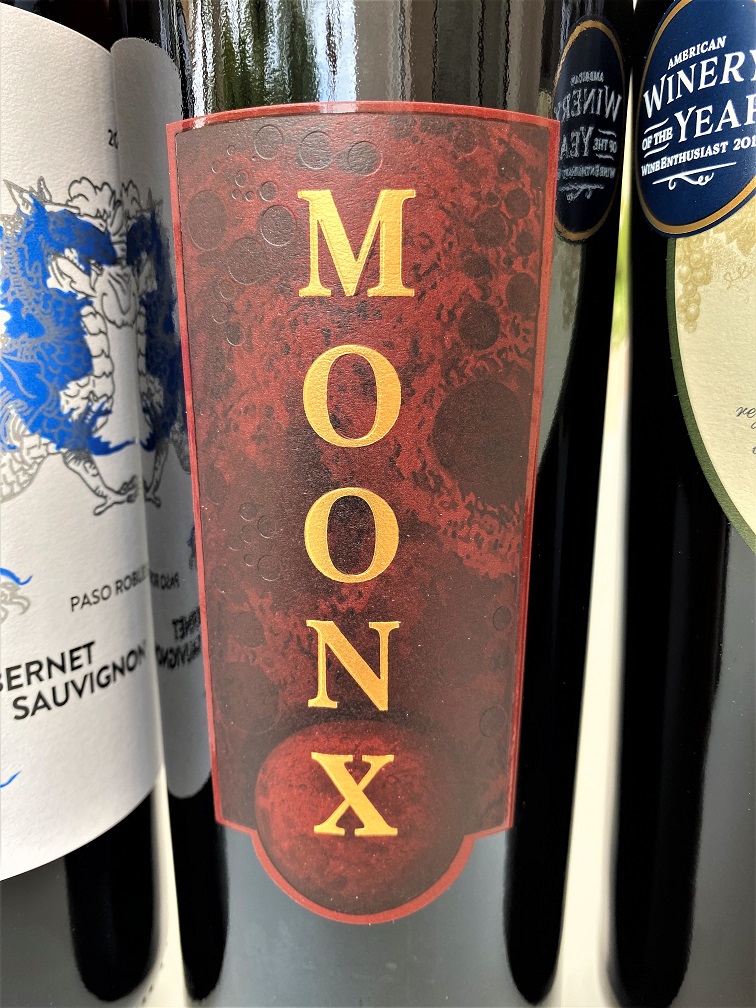
Trader Joe’s offers a good selection of Cabernet Sauvignon wines. Choosing the wines was a combination of prior experience and just good-looking labels – Justin makes outstanding wines in Paso Robles; you can’t go wrong with or beat the prices of the Bogle wines); I had MOONX wines before, and have good memories of them.
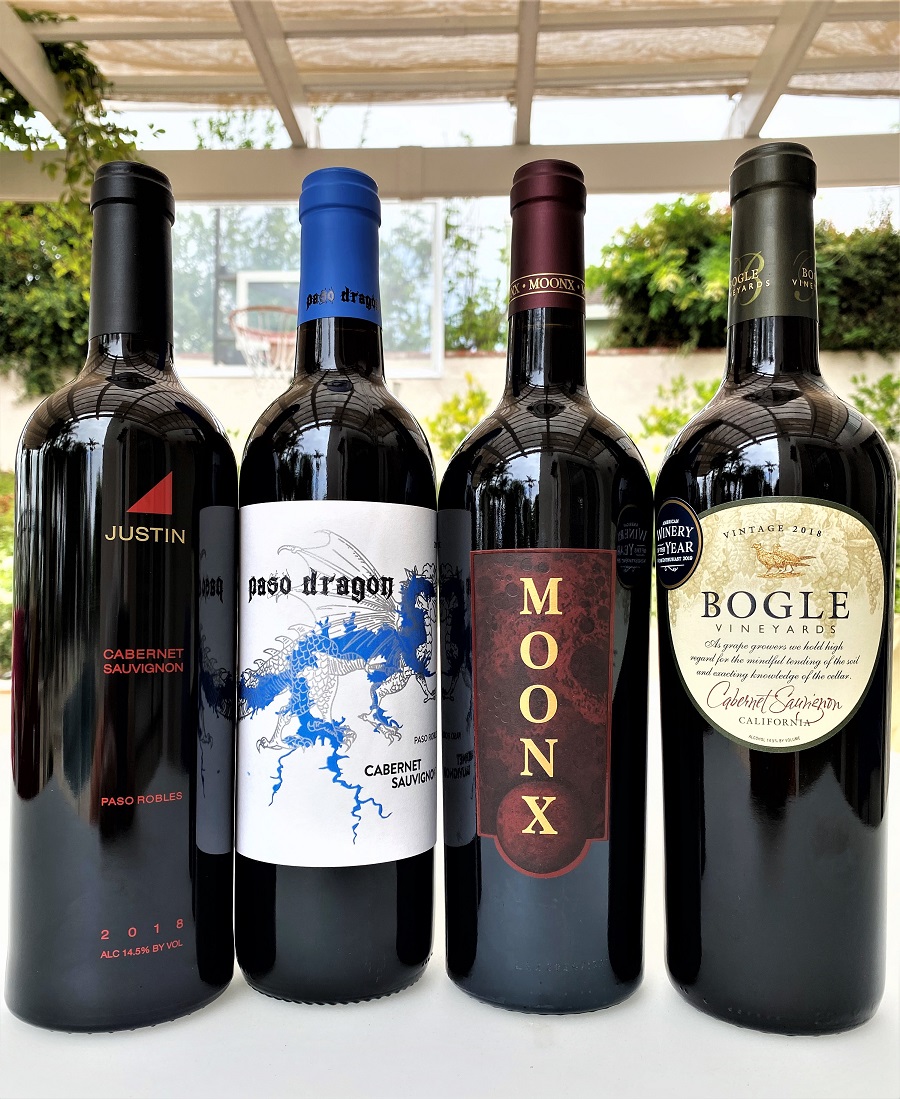
Here are the Cabernet Sauvignon wines from Trader Joe’s I offered to my friend to taste (notes are mine, of course):
2018 Paso Dragon Cabernet Sauvignon Paso Robles (13.5% ABV, $6.99)
Garnet
sage, blackberries, red and black fruit
Blackberries, herbs, medium body, clean acidity, nice finish with a touch of pepper
7+, a bit too weak for the Cab, but easy to drink wine. Can’t really identify as Cabernet Sauvignon.
2018 Justin Cabernet Sauvignon Paso Robles (14.5% ABV, $24.95)
Ruby
A touch of eucalyptus and mint, blackberries; second day – earthy and complex, a hint of gunflint.
A distant hint of cassis and tobacco
Second day: Classic cab is coming through, cassis and mint, clean acidity, crisp tannins.
8/8+, this wine needs at least 5, better yet 10+ years in the cellar to shine.
2018 Boggle Cabernet Sauvignon California (14.5% ABV, $7.99)
Light garnet
Bell peppers, a hint of cassis
Blackberry preserve with tobacco and a touch of coffee. More herbaceous than anything else.
7+, it is a drinkable wine, but might be the least Cabernet of the group.
2019 Moonx Cabernet Sauvignon California (13% ABV, $6.99)
Garnet
A touch of cassis, berries compote, a hint of bell pepper
Lodi fruit presentation, a hint of cinnamon, warm spices, sweet tobacco, berries preserve, a touch of fresh tannins, medium finish.
8-, easy to drink, good balance, pleasant, great QPR.
My friend’s favorite on the first day was Paso Dragon. MOONX was a favorite on the second day. She declared Justin “not bad” on the second day. And she was unmoved by Bogle on either day.
From my point of view, only Justin was worthy of Cabernet Sauvignon designation – give it time, and it will be a spectacular one. MOONX was very good too, but it didn’t necessarily scream Cabernet Sauvignon. We need to remember though that my friend’s love and desire for Cabernet is simply based on the good prior experience with the wine named Cabernet Sauvignon, but was that a classic Cab nobody would ever know.
There you go, my friends. Let’s go on the quest to find the best, varietally correct Cabernet Sauvignon, perfectly drinkable upon release, at a price that leaves 401k intact. Ready to offer recommendations? Be my guest…
Daily Glass: The More I Drink, The Less I Understand?
Wine is an enigma.
But you already know that.
The wine had been a serious object of obsession for more than 20 years for me. I went through multiple education programs. Read an uncounted number of wine books and articles. Most importantly, drunk a lot of wine – from the bottles, from the barrels, the juice of freshly harvested grapes and the juice which only had been fermented for a few days. Two days old wine and 80 years old wine. I taste roughly thousands of wines every year (with the help of trade tastings). Yes, the wine is an object of obsession. And yet, I would never say that I figured it out, that I fully understand it.
Wine is an enigma.
 The curse of wine is rather simple – until the cork is pulled (or unscrewed), you don’t know what to expect. A lot of wine bottles look ultimately attractive outside – bottle’s shape and weight play an important role, and then you got the label which, when properly done, is an ultimate seduction device. But once the cork is out, it is only the content that matters – and here we learn that not all the beauty from outside can be found on the inside. The worst part? Until the first sip, we have no way of knowing what we will find, even if we tasted and loved the wine before! Sadly, this is a classic case of any investment prospectus disclaimer – “past performance is no guarantee of the future results”. It is quite possible that you tasted and loved the wine before – nevertheless, every new bottle is a perfect screw up (or a beautiful surprise) opportunity. The wine is an enigma.
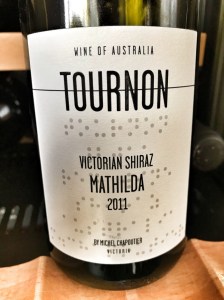
Back in 2014, I tasted 2011 Michel Chapoutier Tournon Mathilda Shiraz Victoria, Australia (13% ABV, $14.99) and was blown away by the beautiful purity of that Shiraz. The wine had a clean, herbs-driven profile full of freshly ground pepper – you really had to taste it to believe it. I was so impressed with that wine that it became wine #4 on my Top Dozen list in 2014. I got 6 bottles or so (at $14.99, a great QPR) and was slowly enjoying it over the years. But not always. I remember trying to impress a friend with this wine when I found it available in a restaurant in Florida by the glass. That simply did not work – the wine was flabby and mostly insipid. Then I had opened a bottle last year, only to be able to say “what just happened???”. The wine had just some single note fruit, no pepper, limited acidity, and in a word, was not fun. I was further put down with this wine last year after tasting the current vintage release at the trade tasting – that wine was insipid, cherry cough medicine style.
When I pulled my last bottle from the shelf a few days ago, the thought was – yeah, whatever, let’s just free up some space. Unscrew, pour, sip – oh, my, everything was back as when I fell in love with this wine – fresh pepper, sage, rosemary, intensely herbal with tasteful addition of ripe black plum – as wow wine as it can be. Don’t ask me for explanations or theories – as I said, the more I drink, the less I understand.
Wine is an enigma.
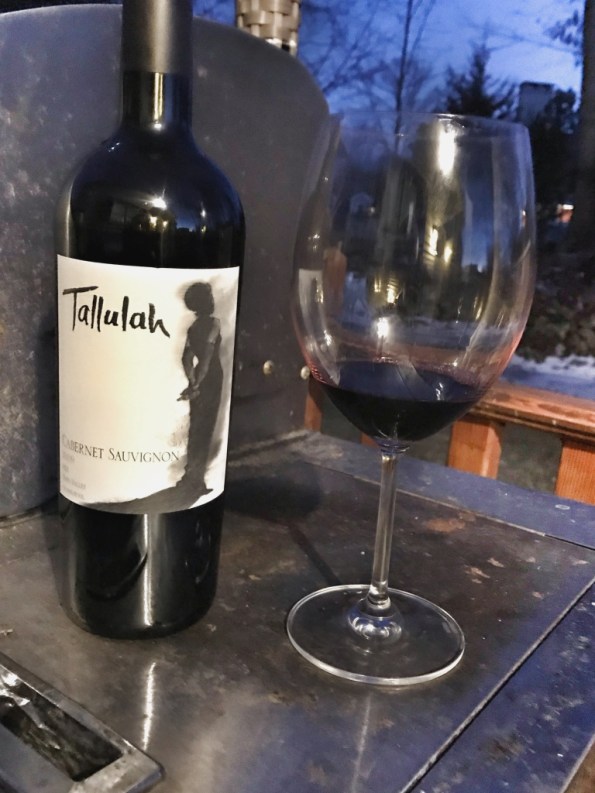
The second story is less unusual, but still in line with what we are talking about here. I got the 2009 Tallulah MD1 Cabernet Sauvignon Napa Valley (14.1% ABV, $75) after reading the skillfully crafted sales pitch by the folks at Benchmark Wine Company. What’s not to like there? Excellent winemaker, Mike Drash; beautiful label, great story of naming the wine after winemaker’s daughter, and maybe most importantly, the cult grape from the cult region – Cabernet Sauvignon from Napa Valley. The first experience with the wine was at the “ohh” level – tight, closed, by all means not ready. The next time I had the same wine was back in 2014, it fared better – I gave it 8- rating, but mostly for the potential, not so much for the actual pleasure delivered by the wine back then.
Looking for the wine to drink last Saturday with the steak (looking for the wine is a physical process of moving the shelves of the wine fridges in and out – I don’t have any record-keeping in place), I saw the bottle top with the characteristic “T” on it. Similar to the wine we discussed before, the thought was “well, why not – I need to free some space anyway”. The first sip solicited an instant “oh, wow” – a Cabernet perfection in the glass, vibrant cassis, eucalyptus, touch of cherries, sweet oak, perfect mid-palate weight, clean acidity, impeccable balance – the wine Napa Valley is so famous for was right there – in my glass.
While working on this post I looked for my previous notes on this wine, and I only found a short reference in the post about “Month in wines”, written precisely 5 years ago, in February of 2014. To my big surprise, in that post, I found the following line: “…definitely needed more time, let’s say, at least 5 years…” – the fact that I randomly pulled this MD1 bottle exactly 5 years after and the wine evolved beautifully – well, I guess, this is just a happenstance…
Wine is an enigma.
But that what makes it an ultimate fun.
Last Bottle Sign Up ($10 credit)




 Talk-A-Vino