Wednesday’s Meritage – Photo Quiz Answer, What to Drink In Casual Restaurant, Cost of Everyday Wine, Restaurant Wine List 101
Meritage time!
Last Saturday, instead of a traditional wine quiz, we had rather a photo quiz – I came back from San Diego, and asked if you can figure out what was pictured here:
 Of course the question seems easy when you actually know what it is, but in reality – probably not so much. Two people came very very close to the right answer – mimi suggested that this is a picture of the ship, and vinoinlove offered a “San Diego Harbor” as his guess. What you see in this picture is a reflection of the boats in the San Diego harbor. The picture is “undoctored”, no photoshop or anything, it is just the reflection of the boats standing in the dock. Here is the picture where you will see both the boats and the reflection – it attracted my attention first, and then I realized that the reflection would make it into a perfect picture on its own:

Boats on the Marina, San Diego
As this was still a quiz, I would like to declare both mimi and vinoinlove as winners! Great job!
Here are few more pictures from the San Diego trip which I hope you will enjoy:
Now, to the interesting stuff around the vine and the web!
Let’s start with an interesting analysis of the wine selection at the casual restaurants. When you go to the places like Olive Garden, Ruby Tuesday or Red Lobster, wine is probably not on top of your mind. However, all of those restaurants offer the wine lists, and W. Blake Gray took upon himself to analyze them by using the information available on the restaurant web sites, to see what is good, what is bad, what makes sense and what doesn’t. I don’t want to spoil it for you, but it is interesting to see that Chateau Ste. Michelle Riesling is one of the best common white wines among 4 different wine lists analyzed. I think this is an interesting read, so for all the details I suggest that you will take a look at the post here.
If you remember, last week I brought to your attention an interesting analysis of the prices of the wine which people would consider to be acceptable for the everyday wines. The post had a survey in it, which by now concluded, and based on the results of that survey the most popular price range for the everyday wines is … $5 to $12! This is how I voted, and this is exactly what I expected – but for more details and the analysis of the voting results, please visit the original blog post here.
Last for today, continuing the subject of restaurant wine lists, here is an excellent in-depth discussion of the restaurant wine lists done by one of my all time most favorite wine writers, Matt Kramer. Matt provides rationale for the wine lists to be composed the way they are, and also makes a suggestion on how you can navigate any wine list to find what you want to drink at the price you will be willing to pay. Definitely worth your attention, if you ask me.
And we are done here. The glass is empty – but the refill is on its way! Cheers!
A Perfect Day In San Diego
When I travel on the plane, I often skim through the airline magazine, such as Hemispheres on United, before I get to my beloved sudoku page. One of the articles I often pay attention to is “Three perfect days in a particular town”, which describes how you can potentially spend three days at some town, starting from the lodging, talking about attractions and dining options. Over the past 3 month, I was in San Diego in California twice, and came across a few places which I found worth talking about, thus I decided to come up with the similar post to those I mentioned before. Writing about 3 perfect days might get a bit too intense, so let me compose for you just one, potentially perfect, day. Here we go.
Let’s start with the place to stay. San Diego has no shortage of the hotels, of course. The reason for me to recommend the two hotels below is because I personally stayed in both and liked them very much. First option is the Residence Inn San Diego Downtown, located at 1747 Pacific Highway. Yes, it is the part of the chain of Marriott hotels, and while it is not unique, it nevertheless offers a great convenience of stay for the family, with all rooms being suites with kitchenettes. It is also located within walking distance from Little Italy area (lots of great restaurants!) and the number of attractions right by the water, like USS Midway Museum. This hotel is within 20-25 minutes walking distance to the Gas Lamp Quarters (lots of restaurants and great night life), and it is easy to get to and from the highway.
The second hotel I can recommend is called Kona Kai Resort and it is located on on 1551 Shelter Island Road. Even taking into account that hotel was undergoing renovation during my stay there, the location and the views were absolutely spectacular. Yes, I stayed at many beach-front hotels before, however, in case of Kona Kai, the combination of marina with numerous boats and the hill covered with the houses was one of the most tranquil settings I ever experienced in the hotel. Just sit in the chair and be transported away in the dreams… Small private beach, lots of different water sport activities, bonfires – the hotel definitely offers a lot for the very enjoyable stay.

Kona kai Marina View at Kona Kai Resort
Now, let’s talk about few things you can do. Of course San Diego Zoo, as well as Seaworld need no introduction, so I will not be talking about them. Also, if you are traveling with kids, don’t forget that Legoland is only about 40 minutes away from San Diego. However, I would like to bring to your attention a few of probably lesser known places. After breakfast (please see below for recommendation), head out to the Cabrillo National Monument. While you can think basedon the name that this is only a single structure, Cabrillo National Monument is actually a park, which offers stunning views of San Diego and San Diego harbor, the Lighthouse, a small military history museum and the number of hiking trails – you can easily spend a few hours there.


Depending on how much time you will spend at the Cabrillo National Monument, you might or might not be ready for lunch – in any case, you will find my suggestion below. After lunch, I have few more places for you to visit. First, the Balboa Park, which is a very interesting collection of botanical gardens, beautiful grounds and lots of different museums. Depending on how much time you will have available, there will be no problems to spend not only half day, but pretty much the whole day in the Balboa Park. One of the most stunning images for me was the Towering Moreton Bay Fig tree, with the root more resembling a dinosaur’s foot and towering crown disappearing high in the sky:
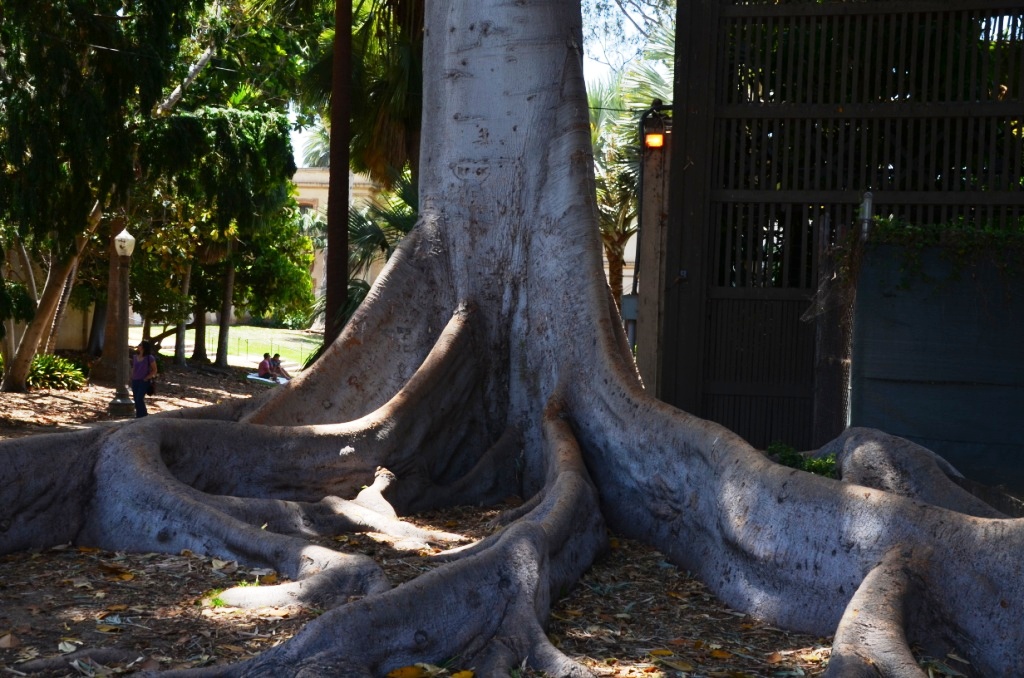
Towering Moreton Bay Fig Tree at Balboa Park
One feels really humbled walking around these magnificent trees.
Once you are done with the Balboa Park, I have the last attraction for you to see for the day – Sunset Cliffs. This is also a park, which offers stunning views of the ocean, as well as opportunity to surf and hike. To me, just sitting down and watching the waves, is enough of attraction on its own. And I would also guess from the name that the best time to visit the cliffs is during the sunset, but I didn’t have an opportunity to check this myself.


And now, let’s talk about food! As we are talking about the perfect day, I would like to share three recommendations with – yes, we are talking breakfast, lunch and dinner.


And now, it is time for lunch. I hope you are craving seafood, as the place I want to send you to is a fresh seafood heaven, very much resembling the New England, or rather even Cape Cod seafood joints, the hallmarks of the fresh seafood restaurants. With its unassuming and non-pretentious simplicity, Point Loma Seafoods reminds you of many of the Guy Fiery’s triple-D worthy establishments – inexpensive, always filled with people, offering great variety of seafood which is as fresh as it can be, with different styles of preparation. In the mood for sashimi? You got it. A plate of fried oysters or clams? No problems. A whole clam sandwich (this is what I had)? Here you go. Fresh fish, salads, soups, oysters, crab cakes – definitely there is a variety to chose from. Make sure you will allocate time, both to find parking and to wait in the line – but the wait is very manageable, the service is quite quick and efficient. I highly recommend you will include Point Loma Seafoods into your travel itinerary.

After all the walking, climbing, and may be swimming, kayaking and sun bathing, you probably feeling tired and reading for an exciting dinner. Your wish is my command. Let me suggest that you will take a short trip to Coronado Island, and find the place called Chez Loma (yep, we are going French again – how about that!).
Again, an interesting parallel with New England, as Chez Loma restaurant is located in the regular house-looking structure. Simple ambiance and chanson music definitely add to your mood. And the food… Well, before we talk about food, few words about the wine. The wine list has reasonable size and very reasonable prices, with most of the selections coming from California, France and New Zealand. For no particular reason, we started with NV Scharffenberger Mendocino County, California – simple wine, with nice touch of toasted apple on the nose, and good weight on the palate. This wine had a bigger body than typical NV Champagne would have, with the same toasted apple being a main theme. Overall, easy to drink and refreshing. Our second wine was delicious 2012 Matua Pinot Noir Marlboro New Zealand (13% ABV) – smokey nose, vibrant acidity, tart cherries on the palate, excellent balance – the wine was perfectly complementing the variety of dishes we had for dinner.


And then, there was food. For the appetizers, we went with the few different options. Ceviche “Verde” (rockfish, tomatillo sauce, avocado) was somewhat “off the beaten path”, very refreshing, with the avocado and tomatillo sauce adding an interesting touch. Escargot (mushroom, sweetbread, asparagus, garlic butter) was probably the best I ever had – somehow, all the elements worked together creating literally a sublime experience. Tartare of Beef (hand cut beef, shallots, horseradish, parsley, pomme frites) was another great appetizer. I fell in love with this dish in Paris, and ever since, when it is on the menu in the restaurant which I would trust to serve me a raw beef, I would go for it. This version was very nicely done, with the perfect flavor profile. And lastly, the Three Beets (yellow, striped and red, thyme vinaigrette, Bucheron goat cheese) was simply a music for the eyes – bright, colorful, and most importantly, very tasty! Perfect texture on the beets – not too hard and not mushy, just right, and an excellent pairing with very gentle goat cheese.


Couple of entrees I want to bring to your attention. Peppered Filet Mignon (tenderloin, black pepper crust, brandy sauce, potato puree, haricot vert) was perfectly cooked, with very fresh cracked black pepper, simply a perfection on the plate. And the Sea Scallops (vanilla infusion, cauliflower puree, bacon crisp, orange sauce) were perfectly done, with the right texture and delicious textural enhancement of cauliflower puree and bacon bits. Again, one of the best Sea Scallops dishes ever, and I have to tell you that 3 times out of 4, if the menu has Sea Scallops on it, this would be the dish I would take. For dessert, we shared Gingerbread (orange-caramel sauce), which was mostly a nicely done bread pudding. All in all, a great dining experience and I can’t recommend this restaurant high enough.


After leaving the restaurant, see if you will be able to get a quick tour of the historical Hotel del Coronado – it definitely worth a few moments of your time – seeing all the wooden paneling and lavishly appointed hallways. Note – you might have to look for the way to sneak in as a registered guest. Upon return to the hotel you are staying at, spend a few moments admiring San Diego and marina nightlights. It was a long day, but I hope it was a good one.


Here you have it, my friends – my version of the perfect day in San Diego. Whether you visited any pf the places I mentioned or not, I would love to know what you all think. Cheers!
Just For Fun, A Little Photo Quiz
I just came back home after a long business trip to San Diego, so I really don’t have time to come up with a good wine quiz for today. Instead, as I know that many of my readers love not just wine, but photography as well, I have a simple photo quiz for you. Take a look at the picture below, and let me know what do you think this is. The answer will come out on Wednesday, as usual.
Have fun, enjoy your weekend, and if you are in US – enjoy your long Memorial Day weekend, and say “thank you” and think of all the people who fought for our freedom. And if you have a chance, raise your glass as well. Cheers!
Another “How Do They Do It?” Set of Trader Joe’s Wines
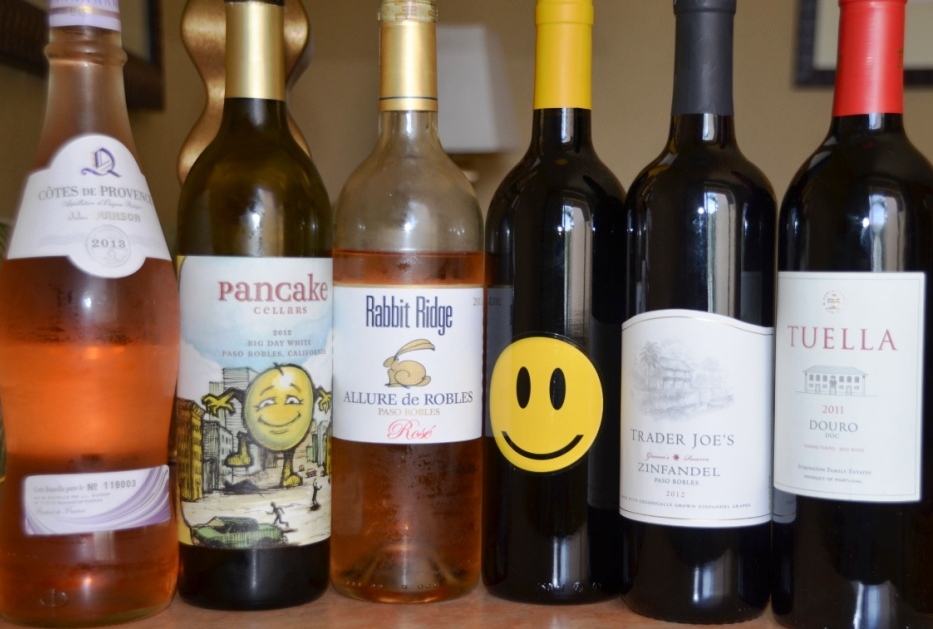 On the multiple occasions, I wrote about Trader Joe’s wines in this blog. I generally only can taste them when I travel, as Trader Joe’s stores in Connecticut can’t sell wine. Thus if I’m in the close proximity of the Trader Joe’s store, and schedule allows, I always make an effort to taste something new.
While Trader Joe’s wine selection generally includes wines at the different price levels, my focus is always on the most inexpensive wines. The rationale is simple – at $9.99 and above, there is a great selection of wines in my neighborhood wine store. At the same time, there is practically nothing in the $4.99 – $6.99 price range, thus it is very interesting how good (or how bad) such wines can be.
In general, I can’t complain about Trader Joe’s wines. My typical “success rate” is somewhat of the 3 out of 4 ratio – if I would taste 4 wines, at least 3 of them would be at “I want to drink it again” level. But this time, while in San Diego, California, I was simply blown away – 6 out of 6, 3 wines at $4.99 and 3 at $5.99, where perfectly drinkable wines which I would gladly drink again on any day! This was definitely a “how do they do it???” moment, as I would never expect, for instance, Rosé or Zinfandel from California to have such a QPR, to taste as good as they did considering the amount of money I had to pay for them.
Without further ado, let me present to you my 6 out of 6 set of “how do they do it?” wines from Trader Joe’s.
2012 Pancake Cellars Big Day White Paso Robles, California (13.5% ABV, $4.99, 37% Chardonnay, 23% Sauvignon Blanc, 15% Viognier, 15% Pinot Blanc, 10% Muscat Canelli) – I can only guess this is modeled after the Conundrum, only this wine I actually enjoyed (and it costs 1/4 of the Conundrum)! Very nice and refreshing nose of white fruit with herbal undertones. On the palate, nice, round, good acidity, white fruit, white apples, very good balance. While not the most complex, definitely very enjoyable! Drinkability: 7+/8-
2013 Rabbit Ridge Allure de Robles Rosé Paso Robles, California (13.5% ABV, $4.99, Mourvedre 49%, Grenache 26%, Syrah 25%) – you can safely assume that I had zero expectations opening a bottle of Rhone-style Rosé from California which cost $4.99. Boy, was I wrong. The wine was simply outstanding – bright, cheerful, full of strawberries and cranberries, perfect acidity – get it by the case to make your summer days super enjoyable. Drinkability: 8-
2013 J.L. Quinson Cotes de Provence AOP (12.5% ABV, $5.99) – same as the one above, zero expectations for Provence Rosé for $5.99 – sorry, the internal snob is speaking. First sniff and sip – wow, I’m convinced. Perfectly restrained, mineral, light, refreshing acidity – as classic as Provençal Rosé gets, only at half price or even less, depending on the bottle. Another case buy for the summer, in case you need my recommendation. Drinkability: 7+
2012 Oreana Wines Project Happiness Syrah California (13.5% ABV, $5.99) – see the happy face on the label? This is what this wine is – happy. No, this is not the most thought provoking Syrah you can drink, but it is simple, easy to drink, round and balanced, good fruit on the palate, a tiny bit of pepper. Throw in a little barbequed meat – and your face might look exactly as the one on the label. Drinkability: 7
2011 Symington Family Estate Tuella Douro DOC, Portugal (13.5% ABV, $5.99) – Douro wines are slowly but surely gaining their international reputation, so this is definitely a good deal of a very solid wine which you can also age. It was showing a little tight, with reserved fruit expression, but good overall balance and acidity. At this price, if you got some space in the cellar, forget a few bottles there – you might thank me in a 3-4 years. Drinkability: 7
2012 Trader Joe’s Grower’s Reserve Zinfandel Paso Robles (13.5% ABV, %4.99) – the first smell exhorts the “wow”. Good Zinfandel at $4.99 didn’t sound to me even as a remote possibility. And then this Grower’s reserve comes in – perfectly open, with clean smokey raspberries and blackberries, very round fruit expression on the palate, with the same smokey berries being very present and well matching the nose – the QPR on this wine simply goes through the roof. No, this wine doesn’t have the richness of Turley or Carlisle, but then you don’t need to cellar it for 10 years before you can really enjoy it. If you like Zinfandel – this is definitely the wine you have to experience. Drinkability: 7+/8-
I tip my hat to whomever is responsible for sourcing the wines for Trader Joe’s stores – to say “well done” is almost to say nothing – great job, and please keep doing it over and over again, to the delight of all the wine lovers out there. Cheers!
Cozymeal – A Unique Dining Experience
What I want to share with you today is a guest blog post written by Nanette Wong and Samad Nasserian, presenting unique and interesting dining concept Cozymeal. I like the concept, and I think it nicely expands your Friday (or any other) night dining options. Cozymeal is available today only in San Francisco and Northern California, but they plan to expand to East Coast very soon. Please read below and feel free to comment. Cheers!
Picture this: It’s Friday night, and you’ve made reservations at the hottest new restaurant in town. When you arrive, you still have to wait a little bit, despite making reservations. No big deal (sort of). Finally, you’re seated and everyone’s ordered. The food comes out, and it’s pretty good, but it’s a tiny space and you keep bumping elbows with everyone. It’s a little noisy too, so it’s hard to carry on a normal conversation. On the way out, splitting the bill gets complicated and everyone is a little frustrated with how it’s done. Does this scene sound familiar at all?
We’ve all experienced situations like this before, and that’s where Cozymeal comes in. Cozymeal is offering a new way of eating and enjoying the benefits of a restaurant, without the not so pleasant parts. Also, you can have the cooking classes with the chefs, so you can even eat the delicious foods you cook. Pretty cool right? It’s a complete foodie experience.

Here is how it works. Cozymeal is a trusted community of food lovers and home chefs who share their passion for food. In order to enjoy a Cozymeal, all you need to do is to browse through the offered Cozymeals, find the dining style you like (or a cooking class) and the date which works for you (or you can request the new date), book it and then come to enjoy a great evening of great food and conversation in cozy and comfortable setting – it is as easy as that!
There’s a wide array of meals offered. From Peranakan Food on a Boat to Old Style Nordic Cuisine to a French Country dinner, there’s a meal to fit everyone and anyone’s taste buds. And that doesn’t even cover all the cooking classes offered as well!
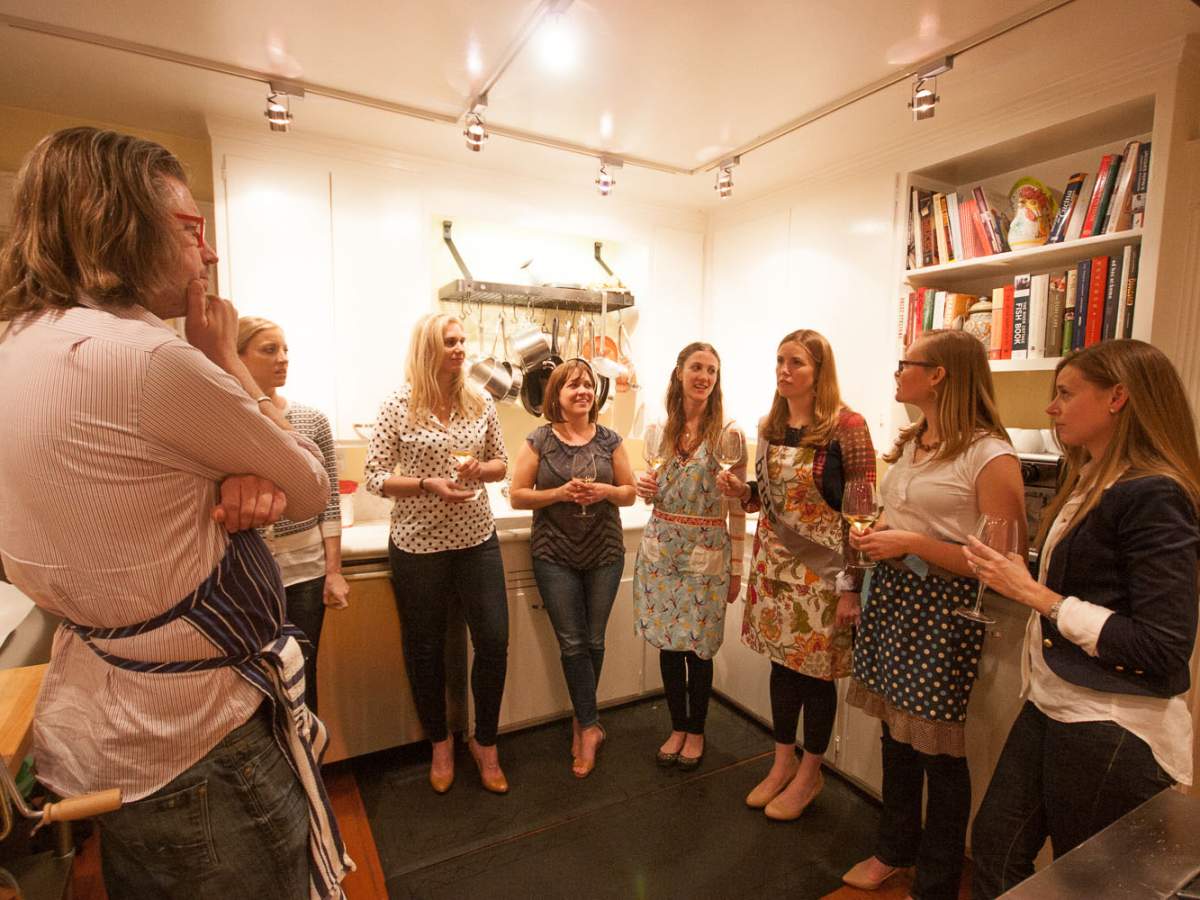
One of the most popular cooking classes currently offered is James’ Italian Comfort Meal cooking class, where you learn to make your own, fresh pasta! Located in the colorful Haight Ashbury neighborhood of San Francisco, professional chef James will teach class participants how to make a scrumptious egg tagliatelle, topped with slow cooked pork sugo.

And that’s not even the main course. The main course is a slow-cooked beef brisket, simmered in white wine and milk. The whole meal is rounded off with a creamy La Quesada (think if cheesecake met flan) and fresh, local berries.

Another unique dining experience is Desiree’s Peranakan Dinner on a Boat. With Desiree, you can enjoy a sunset dinner on her boat docked at the Berkeley harbor.
She is half Hainanese and half Peranakan, and offers an authentic fusion meal for Cozymeal diners. The meal starts off with crispy sardine puffs, followed by chicken nut stew and jasmine rice. A simple yet flavorful and traditional tofu dish also appears on the menu. And of course, can’t forget dessert, which are a sweet, fluffy Kaya puff.


What’s most interesting about the whole experience is that professional chefs, or really talented home cooks, not only put the effort into creating this meal, but they also welcome you into their home. You get to interact directly with them, chat about how they cooked the meal, and pretty much ask them whatever you want! (Can’t guarantee they’ll spill all their secrets though). This is also being a great benefit for travelers. How often had you traveled abroad, hoping to taste the authentic food of the nation, but are limited to restaurants. And let’s face it, the restaurants are probably catered to tourists. Now that we think about it, it’s kind of being in Diners, Drive-Ins, and Dives, where you’re Guy Fiery and the chef is sharing his food with you in his own home! Pretty awesome. Anthony Bourdain ain’t got nothin on you.
Cozymeal is growing rapidly and will be expanding to the East Coast very soon. If you are interested in becoming a Cozymeal host in the East Coast, West Coast or anywhere else, reach out to us by visiting our host page.
Check out Cozymeal here, or visit us on Facebook.
Wednesday’s Meritage – Wine Quiz Answer, Cost of Everyday Wine, National Chardonnay Day, What the MS Do?
 Meritage time!
Let’s start with the answer to the wine quiz #103, Grape Trivia – Blends, Part 3.
For the long time, the grape trivia series was focused on the single grapes. But now we are stirring things up, so all the questions in the quiz are about blends (well, even if it is a blend of one ), as most of the wines in the world are actually blends. This quiz’s focus was on the red grape blends, and as usual, it consisted of 5 questions.
Here are the questions, now with the answers:
Q1: As you know, Merlot is one of the Bordeaux stars. Below are some of the best Merlot wines Bordeaux can produce, but only some of them are made from 100% Merlot. Do you know what wines are those?
a. Château Le Pin, b. Château Petrus, c. Château Hossana, d. Château Certan Marzelle
A1: It really wasn’t a tricky question – I believe if you carefully read the question itself, it should be clear that more than one answer is possible. Another reason that this was not a tricky question is that two Châteaux from that list of four are growing only Merlot grapes thus they never produce a blended wine. So the correct answer is a and d – both Château Le Pin and Château Certan Marzelle grow only Merlot grapes thus their wines are always made out of 100% Merlot.
Q2: What is common between the following 3 Bordeaux producers: Château Trotte Vieille, Château Belle Assise, Château Le Bel
A2: While very unique and different for Bordeaux, all three of these Châteaux produce wines made from 100% Cabernet Franc grapes.
Q3: Wine lovers around the world are well familiar with so called GSM wines and their great range of expression, coming from Rhone valley in France, Australia, US and may other places. If we are to replace the Syrah in GSM blend with the Cinsault, which will produce powerful, dense, concentrated, long living red wines, where do you think such a wine most likely will come from? You need to name not just the country, but the exact region in order to get a full point here.
A3: Bandol! Mourvèdre grape is the star in Bandol, with Grenache and Cinsault often added to the blend, thus we can say that the abbreviation for the Bandol blend should’ve been MGC.
Q4: Sangiovese is a star grape of Italy, used in many regions and producing great range of wines. Montepulciano is another well known red Italian grape, most often associated with juicy, delicious and versatile wines made in the region of Abruzzo. If the wine is made as a blend of Montelpuciano and Sangiovese, often in 50/50 proportions (doesn’t have to be always 50/50), can you name the region where these wines would most likely come from?
A4: Rosso Piceno is the red wine from the Region Marche which is often made out of the 50/50 blend of Montepulciano and Sangiovese.
Q5: Below is the [partial] list of grapes which I personally call “Power Grapes” (I’m contemplating the blog post under the same name for a while). When used on their own (at a 100%, no blending), these typically black-skinned grapes produce powerful, dense, extremely concentrated wines, often with gripping tannins. For each grape below, can you identify the region(s) and the country(ies) making best known wines from those grapes? You don’t have to name all countries and the regions, one per grape is enough:
A5:
a. Alicante Bouschet – Alentejo in Portugal, Valencia in Spain
b. Sagrantino – Sagrantino is the unique grape in Montefalco DOCG in Umbria, Italy.
c. Saperavi – Georgia. Actually Saperavi has a wide range of expression, but it is very much capable of producing extremely dense and concentrated wines.
d. Tannat – Madiran in France and Uruguay
e. Vranec (or Vranac) – Macedonia and number of other Balkan countries.
When it comes to the results, all the respondents voiced their concern with the level of difficulty of the quiz. It was definitely unintentional, but I still can’t promise that “I wouldn’t do it again”. Anyway, the Wayward Wine came the closest to the winning with 4 correct answers out of 5, and I would like to acknowledge both asueba and vinoinlove for their great effort. Well done everyone!
Now, to the interesting stuff around the vine and the web!
First, I want to bring to your attention an interesting post and the poll at the Wine Curmudgeon blog, pondering at [almost] an eternal question – how much the everyday wine should cost? Yes, of course it all depends, but assuming that you drink wine as it gives you pleasure, what do you find to be a reasonable price of the bottle of wine? In this post, you will find both an analysis and the poll to share your opinion. The poll will be closed on May 22 and the results will be published on May 24th, so make sure to have your say before.
What kind of wine to you plan to open on Friday, May 23rd? Well, you can open any wine, with one condition – it have to be the Chardonnay! On Friday, May 23rd, we will be celebrating the National Chardonnay Day, so it is obvious that Chardonnay for Friday is in order. California, Virginia, Washington, New York, Chile, New Zealand or Burgundy – you got plenty of choice and no excuses not the celebrate the noble white grape.
[Updated after the original post date] It appears that it is Thursday, May 22nd that is an actual date for 5th Annual #ChardonnayDay celebration. As explained by Rick Backas, who started the celebration, the #ChardonnayDay is always celebrated on the last Thursday before the Memorial Day holiday in US, which this year is on the May 26th, thus #ChardonnayDay falls on the 22nd. My take? You get to drink Chardonnay for two days now. Yay!
Last for today, an interesting article by W. Blake Gray, conversing on the subject of the MS and what they do. As you can guess, considering that this is the wine blog, MS stands for Master Sommelier, one of the most educated group of people in the world of wine (at the moment, there are only 214 MS in the world). The blog post analyzes how many of the Master Sommeliers actually work the floor and help people to have best possible wine experiences in the restaurant. Take a look the post, it is an interesting read – and, as usual, don’t forget to read the comments section.
And we are done here. The glass is empty – but the refill is on its way! Cheers!
Lots of Wines, Zero Pretense – Enjoying Wine at Wine Steals in San Diego
 I love restaurants and wine bars, no questions (well, who doesn’t?). Yet every time I go to the restaurant where I expect to be ordering wine, I go out of my way to find the wine list beforehand and see what is there. No, it is not because I need to play the wine snob and see that a restaurant carries the wines worthy of my exquisite taste. Fine, I’m lying – I will give you 10% on that reason. But the rest of the 90%? I want to see if there is a wine which I can afford and still enjoy drinking at the same time. Yes, I’m a cheap bastard, and no, I’m not willing to pay any price to get what I want. If worst comes to worst, I have enough wine at home – I can just drink water at the restaurant. Considering that restaurants in many cases want to charge triple or more versus retail, I find this atrocious and not wiling to support it. So if I can see the wine list ahead of time, at least I know what to expect.
But – wouldn’t it be nice if the wines would be reasonably priced at the restaurant? Let’s say, the retail plus the fixed markup? I read about some of the restaurants which have this model, but I never been to one. Until now.
Enters Wine Steals San Diego (cue in happy music). No, this is not the place where you can learn how to steal wine or buy the illegal Screaming Eagle for 5 on the dollar. Wine Steals is actually a wine retail store, slash the wine bar. And quite honestly, I want to call them a “concept bar”, as for the sake of all of the oenophiles who don’t get to enjoy the wine in the restaurant because they can’t afford it, I really hope that the concept of Wine Steal will catch like a wild fire and the Wine Steals outlets will pop up all over the country. What is the concept, you ask? In a few words – honest, simple and perfectly reasonable pricing of the wine in the bar/restaurant setting. You can get the wine by the glass – okay, this is not unique, agreed. But you can also buy a bottle of wine at a very reasonable price (how about a bottle of 2005 Toro for less than $16), and have it served to you right at the restaurant for only $6? Yep – buy any bottle at a very reasonable and competitive retail price, and pay only $6 extra to have it served to you. And of course, whatever you will not finish, you can take home with you. So that almost feels like a steal to me – in the best possible sense of the word. How about that for the concept? Would you welcome Wine Steals in your neighborhood? I know I would, gladly and giddily.


While the most fun part (which you don’t get to do in a restaurant) is simply walking around the floor and simply choosing your bottle, we started from the two glasses of wine. Manorossa Negroamaro Lizzano DOP was definitely a fun wine, with perfect acidity, good fruit and enough depth to support the conversation. And then 2005 Dama de Toro Crianza Toro DO was simply spectacular – herbs and spices on the nose, nutmeg, lavender, sage, red and black fruit on the palate, more herbs, soft tannins and perfect balance – this was once delicious glass of wine (I liked it so much that I had to grab a few bottles to take them back home with me – as I said before, at around $17 with the tax, simply a [Wine] Steal). We also had 2010 Mahoney Vineyard Pinot Noir Carneros (about $20 for the bottle), which was just what you expect from the California Pinot Noir – hint of the smoke on the nose, nice dense dark fruit on the palate, concentrated and well balanced. And we finished the evening with Hidalgo Pedro Ximenez, a great value at $17.49 for the bottle – sweet plums on the palate, hint of dried figs, not overly sweet with nice balancing acidity.


Wine Steals also offers a very nice food menu, with various dips, cheese and meat boards, sandwiches, salads and pizzas. We had a cheese board and trio of the deeps which were simple but very tasty.
That concludes my exciting report. I hope the Wine Steals will become a concept, and will catch on everywhere. I think this is really a great way to enjoy wine worry-free in the bar setting, also knowing that you are getting a great deal. What do you think? Would you want to see a Wine Steals store open up around the corner? Comment away! Cheers!

Pinot Noir On The Go – At Vino Volo in Newark Airport
This is not the first tine I write about Vino Volo wine bar (you can find previous posts here). Just in case you are not familiar with Vino Volo, it is a great chain of the wine bars, offering all the wine lovers a refuge, alleviating dreadful and tiresome airport travel experience. Vino Volo is the place where you can sit down and enjoy a glass of good wine, or a tasting flight, at the reasonable price, accompanied by a tasty bite of food – a sandwich, olives, a little cheese platter and more.
Actually, this was my first time at Vino Volo wine bar at Newark airport. Generally, I’m flying in the morning, way before Vino Volo would be open, so I walked past the restaurant many times, only promising myself to hopefully come back at some point. This time, on the way to California, I had an early afternoon flight, so Vino Volo sounded like a perfect late lunch option.
As Vino Volo wine bars located in the different airports throughout the country, the wine offerings very often include local wines. You can expect to have an opportunity taste Texas wines while in Austin, and Virginia wines while in Washington, and Oregon wines in Portland. Typical selection on the Vino Volo wine menu would include 6-8 different wine flights, white, rose and reds. While Vino Volo in Newark didn’t offer any New Jersey wines (not sure I’m courageous enough even if they would), it was not easy to make a decision. Somehow, I settled on the Pinot Noir flight, which consisted three wines from Germany, Oregon and California. While I’m well familiar with Oregon and California Pinot Noirs, I have very limited (and until now, unsuccessful) exposure to the German Pinot Noirs – however, so many bloggers had being raving lately about German Pinot Noir wines, that I simply had to try it.

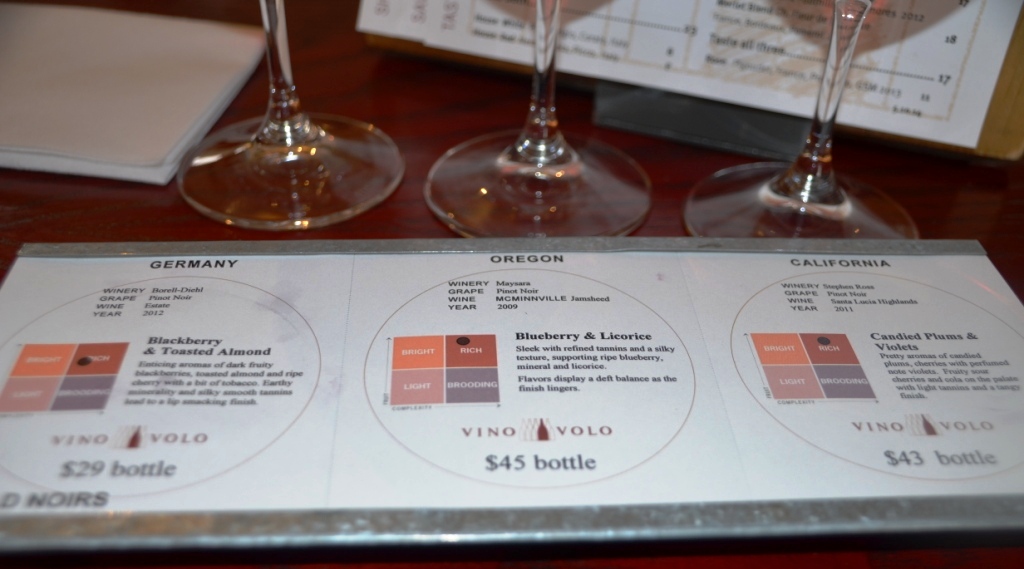 Here are my notes:
2012 Borell-Diehl Pinot Noir Estate, Germany
Color: Garnet
Nose: Blackberries, red fruit, clean, hint of minerality
Palate: Fresh, clean, bright acidity, very good balance, herbs, nice red fruit.
Verdict: Perfectly worked with my warm Tuscan chicken sandwich, great pairing. Overall very nice, food friendly wine. Drinkability: 7+
2009 Maysara Pinot Noir, McMinniville AVA, Oregon
Color: Ruby
Nose: Mocha, herbs, lavender, hint of root beer (I can’t believe I would say it, but Kirsten The Armchair Sommelier was right!)
Palate: Complex, delicious, nice acidity, good structure and backbone
Verdict: Also worked perfectly with the warm Tuscan chicken sandwich, very good wine overall. Drinkability: 8-
2011 Stephen Ross Pinot Noir, Santa Lucia Highlands, California
Color: Ruby
Nose: Concentrated, dark chocolate, pencil shavings, smoke, roasted plums
Palate: open fruit, bright, perfect balance, medium-long finish.
Verdict: didn’t work with the sandwich, but was delicious by itself. Drinkability: 8
There you have it – three excellent Pinot Noir wines on the go. Next time you are in the airport – remember, you have options. Vino Volo is continuing expanding, so there is a good chance that your airport experience will not be that dreadful after all. Cheers!
Vino Volo
Newark Airport
Terminal C, Gate 74
Phone: (973) 565-9250
Hours:
Monday – Saturday: 9 am – 9 pm, Sunday: 12 pm – 9 pm

Weekly Wine Quiz #103: Grape Trivia – Blends, Part 7
 The Wine Quiz series is not meant to intimidate. The whole idea here is to have fun and learn something new. When answering the questions, it is fully encouraged to use all available sources of information, including Google or any other search engine. There are no embarrassing answers – the most embarrassing thing is not giving it a try…
Welcome to the weekend and your new wine quiz!
We are continuing our grape trivia series, focusing on the blends, even if it is a blend of 1. White, Red, Rosé, Sparkling, Still, Fortified and Dessert – all goes. Oh yes, and we will blend in some regions and even wineries as well, just to make it more fun.
So how do you feel about red blends for today? I know, the temperatures in US and Europe are rising, but quite honestly, while I know that it is very popular and appropriate to set the wine preferences based on the temperature outside (red for the winter, whites and light red for the summer), I personally go by the mood and general desire, no matter what the thermometer says. So for today, it is reds.
And now, to the quiz!
Q1: As you know, Merlot is one of the Bordeaux stars. Below are some of the best Merlot wines Bordeaux can produce, but only some of them are made from 100% Merlot. Do you know what wines are those?
a. Château Le Pin
b. Château Petrus
c. Château Hossana
d. Château Certan Marzelle
Q2: What is common between the following 3 Bordeaux producers: Château Trotte Vieille, Château Belle Assise, Château Le Bel
Q3: Wine lovers around the world are well familiar with so called GSM wines and their great range of expression, coming from Rhone valley in France, Australia, US and may other places. If we are to replace the Syrah in GSM blend with the Cinsault, which will produce powerful, dense, concentrated, long living red wines, where do you think such a wine most likely will come from? You need to name not just the country, but the exact region in order to get a full point here.
Q4: Sangiovese is a star grape of Italy, used in many regions and producing great range of wines. Montepulciano is another well known red Italian grape, most often associated with juicy, delicious and versatile wines made in the region of Abruzzo. If the wine is made as a blend of Monteluciano and Sangiovese, often in 50/50 proportions (doesn’t have to be always 50/50), can you name the region where these wines would most likely come from?
Q5: Below is the [partial] list of grapes which I personally call “Power Grapes” (I’m contemplating the blog post under the same name for a while). When used on their own (at a 100%, no blending), these typically black-skinned grapes produce powerful, dense, extremely concentrated wines, often with gripping tannins. For each grape below, can you identify the region(s) and the country(ies) making best known wines from those grapes? You don’t have to name all countries and the regions, one per grape is enough:
a. Alicante Bouschet
b. Sagrantino
c. Saperavi
d. Tannat
e. Vranec (or Vranac)
Good luck, enjoy the quiz and your weekend! Cheers!
Rediscovering Chianti – Cool? Traditional? How about Fun and Tasty!
 What is the major pleasure of the wine journey? You never arrive! No matter how much you know, how many wines did you taste, how familiar you are with the producers, there is always something new, something unexpected, something to learn and discover. Case in point – Chianti. Say the word “Chianti” – what image comes to mind? Come on, don’t even start on Fiasco, please. The “image” here is more of “what do you think of the Chianti”? Outside of being (sometimes) a safe and inexpensive choice at the restaurant, or a no-brainer selection to accompany the pasta dinner, how often do you dream of a bottle of Chianti, left alone salivate at one thought of the particular bottle of Chianti wine? Yeah, I thought so. But – the wine is a never ending journey – so let’s take a look at what is going with the Chianti nowadays.
A few weeks ago I attended a Chianti seminar and tasting in New York. The goal of the seminar was simple – to convince the group of wine bloggers, writers and wine trade professionals that Chianti is cool. Actually, this was the request from the event organizer, Consorzio Vino Chianti, that the seminar attendees would tweet about the event using the hashtag #ChiantiCool. To showcase the “cool” factor, 6 wines which we tasted during the seminar were presented in the semi-blind way. Of course all the wines were Chianti, but we were not given the information about the producers – and all the bottles were wrapped in the tin foil, so nobody would get any ideas.
The very first wine we tasted simply put me on the offensive. It was so tremendously acidic, it was hard to enjoy it at all – some people in the audience claimed that this was a “traditional Chianti the way it should be” – well, may be, but this was not cool at all in my book. Going from one wine to another, it felt like the wines were slowly improving, with the wines #5 and #6 been quite decent. Here are the brief notes, for what it worth:
- Chianti DOCG Riserva 2010 (12.5% ABV, 80% Sangiovese, 10% Canaiolo, 10% Trebbiano) – dark ruby color. Pure ripe tart cherries on the nose, hint of earthiness, touch of herbs. Palate – astringent and acidic, ouch! Drinkability: 5
- Chianti DOCG Riserva 2010-(14% ABV, 80% Sangiovese, 15% Merlot, 5% Syrah) – Dark Ruby color, Caramel and blackberries on the nose. On the palate, some cherries in the back, lacks depth. Drinkability: 7-
- Chianti Rufina DOCG Riserva 2010 (12.5% ABV, 90% Sangiovese, 5% Canaiolo, 5% Colorino) – dark ruby color. Cherries, earthiness, similar to the wine #1. Prevalent biting acidity on the palate – definitely a food wine, more balanced than the wine #1, but lacks depth. Okay as food wine, not a sipping wine by all means. Drinkability: 7
- Chianti DOCG Riserva 2010 (13% ABV, 90% Sangiovese, 5% Canaiolo, 5% Colorino) – Dark ruby color. Interesting dustiness on the nose, herbs, cherries, touch of plum. On the palate, lots of tannins in front, soft acidity, some cherries. Drinkability: 7+
- Chianti Montalbano DOCG Riserva 2010 (13.5% ABV, 100% Sangiovese) – Dark garnet color. Beautiful legs from switling. On the nose, the wine is beautiful, complex, with nutmeg and herbs. On the palate, it is sweet and savory, with good fruit, many layers and very good balance. Drinkability: 8-
- Chianti Colli Fiorentini DOCG Riserva 2010 (14% ABV, 90% Sangiovese, 10% Cabernet Sauvignon) – Garnet color, a bit lighter than the others. On the nose, there is lots of earthiness, cherries and savory notes. Palate shows matching earthiness (great!), herbs (thyme, sage), perfect complexity and nice long finish. Drinkability: 8


I don’t know what was the principal of selecting wines for the seminar, but cool they were not really. Thus after the seminar ended, I was questioning the whole presence of myself at the event, especially considering that now I had to wait for another hour before the walk-around tasting would start. I definitely glad that I was there with Stefano (Clicks & Corks), as it made the wait a lot more palatable.
Without any expectations, we started our walk-around tasting with the table number one. The very first sip of the very first wine literally made me shake my head in disbelief. The wine was simply delicious (tasting notes will follow). And wine after wine after wine made me to go wow, and then wow and wow again. Power, finesse, clarity, perfect balance – literally each and every wine we tasted was at the top of the game. It was almost mind-boggling to hear the winemakers explaining that their wines are made in the traditional style. Yes, I get it – it is a traditional style, as many wines were made as a blend of Sangiovese, Canaiolo and Colorino, but then the Chablis-like minerality on the nose, coupled with the layered, luscious fruit instead of just leather and tobacco notes – I have a hard time calling this “traditional” – but I will gladly call these wines “cool!”.
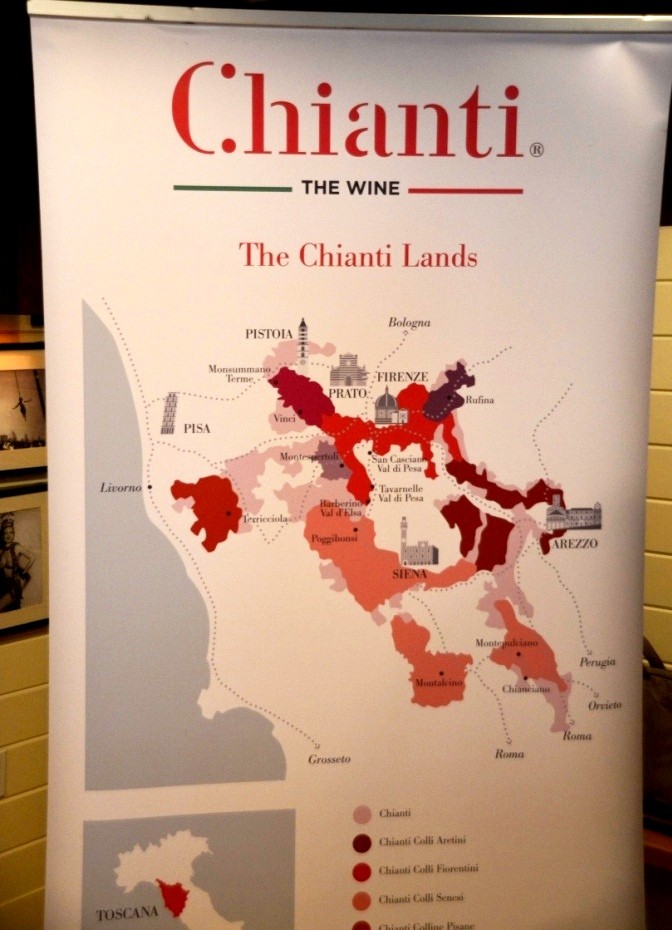
What gives, you ask? I think there are a couple of factors which are dramatically changing the story of the Chianti wines. First factor, or rather factors, are the modern winemaking techniques – in one word, the Quality. Better quality of the grapes, harvesting at a pick, reducing yield, improved fermentation capabilities, the barrels and tanks are better and cleaner, and so on. And then, it is the …. Terroir! When I commented to one of the winemakers that a few of his Chianti bottlings from the same year taste so incredibly different, he answer was “of course”. His property, which is about 100 acres in size, has 5 (!) different micro-climatic zones… Most of the people come to think of Tuscany, the land of Chianti, as something universally monolithic. Yes, with the idyllic moniker of “rolling hills of Tuscany”, but one and the same. At the same time, Chianti is a huge grape growing area, with probably a hundred of the sub-zones and microclimates, all producing “traditional”, but oh-so-different wines. In most of the cases, people can think of Chianti, Chianti Classico and Chianti Rufina, but actually Chianti is so much more than just these three regions – Colli Aretini, Colli Fiorentini, Colline Pisane, Colli Senesi, Montalbano, Montespertoli are some additional sub-zones, never mind single vineyards. Winemakers are learning all the time, what works and what doesn’t, and we are lucky to be able to taste the products of their labor of love.
Did I get you tired of my rambling by now? Okay, time to talk about wines. Below you will find the tasting notes. Yes, there were lost of wines, and they were so good! I also made an effort to extend above and beyond my simple “+++” ratings to give you more descriptors. I don’t throw those “+++” ratings easily – and here, a lot of wines were simply outstanding, table after table after table.
Here we go:
Azienda Agricola Corbucci – this was a very impressive start – very nice and approachable wines, made in the “drink any time” style
2012 Chianti DOCG “Corbucci” – ++, dry, leather, good acidity, a bit astringent
2012 Chianti DOCG “9Code” – +++, old vines, 7 days fermentation. fruit, earth, balance!
2009 Chianti DOCG Riserva “Corbucci” – +++, aged for 2 years in French barriques, excellent!
Azienda Agricola Emanuela Tamburini
2012 Chianti DOCG “Mauro” – +++, 90% Sangiovese, 10% Canaiolo, light, open, earthy nose. Very much Bordeaux in style on the palate.
2010 Chianti DOCG Riserva “Italo” – +++, aged for 24 mo in combination of cement tank and oak barrels, beautiful, open, layered
2008 Vin Santo del Chianti DOC “D’Incanto” – ++, oxidized style, aged in small open barrels for 5 years without topping off


Azienda Agricola La Cignozza
2010 Chianti DOCG – +++, 80% Sangiovese, 15% Canaiolo, 5% Mammolo, aged for 1 year in big barrels. Roasted meat on the nose, perfect acidity, dark fruit – excellent!
2008 Chianti DOCG Riserva – +++, 80% Sangiovese, 20% Canaiolo. Sweet open nose, nice fruit, multi-layered – outstanding!
Azienda Agricola Lanciola – harvesting by hand, 2 green harvests, 5 different microclimates within one vineyard!
2012 Chianti DOCG “Podere Elisa” – +++!
2012 Chianti Colli Fiorentini DOCG “Lanciola” – +++, outstanding, open
2011 Chianti DOCG Riserva “Podere Elisa” – +++ excellent!
2011 Chianti Colli Fiorentini DOCG Riserva “Lanciola” – +++, barnyard and roasted notes, wow!
2008 Vin Santo del Chianti Colli Fiorentini DOCG “Lanciola” – ++++, unoxidized style, caramel, apricot, candied fruit, perfect balance, wow!
Azienda Agricola Malenchini
2012 Chianti DOCG – +++, 5% Merlot, stainless steel, nice, light, smokiness, pleasant
2012 Chianti Colli Fiorentini DOCG – +++, 10% Canaiolo, smokiness, balance, power, a bit of tannins


Azienda Agricola Pietraserena – Arrigoni
2011 Chianti Colli Senesi DOCG “Poggio al Vento” – +++, Sangiovese/Syrah (10%), 1 year in barrique, 1 year in bottle. Restrained nose, beautiful!
2011 Chianti Colli senesi DOCG “Caulio” – +++, 100% Sangiovese, roasted nose, nice fruit, open, clean, easy to drink
2012 Chianti Colli Senesi DOCG – ++, 10% Canaiolo, cement tanks. Coffee, roasted notes, a little short on palate
Bindi Sergardi
2012 Chianti DOCG “Poggio al Sorbo” – +++, 100% Sangiovese, vineyard at 750 ft elevation, stainless steel, Raspberries and smoke, mocha, chocolate on the nose, clean and open palate
2012 Chianti Colli Senesi DOCG “Bindi Segrardi” – +++, red fruit, clean, elegant, beautiful
Cantina Sociale Colli Fiorentini Valvarginio
2010 Chianti Colli Fiorentini DOCG “Collerosso” – +++, organic wine, pure tobacco on the nose, same on the palate, beautiful balance
Cantine Fratelli Bellini – traditional and very good
2013 Chianti DOCG “Bellini” – ++-|, 5% Canaiolo, 5% Colorino, young, simple, easy to drink
2010 Chianti Rufina DOCG Riserva “Bellini” – ++-|, aged for 2 years in oak, nice, easy, simple, soft, touch of leather
Cantine L’Arco
2012 Chianti DOCG “L’Arco” – ++-|, 10% Merlot, touch of smoke
2011 Chianti DOCG “Principe del Sole” – ++-|, soft, round
2009 Chianti DOCG Riserva – ++-|, 10% Canaiolo, nice, soft
Castel di Pugna
2012 Chianti Colli Senesi DOCG “Ellera” – ++, simple, clean
2008 Chianti Colli Senesi DOCG “Ellera” – +++, excellent, sweet fruit, nice, elegant
2011 Chianti Superiore DOCG “Villa Cambi” – ++-|, nice, elegant, open
2007 Chianti Superiore DOCG “Villa Cambi” – +++, aged for one year in Tonnau, roasted fruit, plums, spices, excellent!
2008 Chianti Colli Senesi DOCG Riesrva “Ellera” – ++-|, 5% Canaiolo, nice, elegant, restrained
Castello del Trebbio
2013 Chianti DOCG – ++-|, Sangiovese/Canaiolo, stainless steel, brilliant ruby color, fresh berries, sweet fruit, good acidity, simple!
2009 Chianti Rufina DOCG Riserva “Lastricato” – +++-|, nice complexity, leather, spices, fresh, elegant


Le Fonti a San Giorgio
2012 Chianti DOCG – ++, 5% Pignatello, nice, soft, simple
2013 Chianti DOCG – ++, fresh, clean
2011 Chianti Montespertoli DOCG – ++, Sangiovese/Merlot, very goo, unusual garden herbs
2009 Chianti Montispertoli DOCG – +++, smokey blueberries, roasted notes, liquid steak, wow
2010 Chianti Montispertoli DOCG Riserva – ++3/4, 15% Merlot, nice, round, strawberries, good tannins, pepper, tobacco
Pietro Beconcini Agricola
2012 Chianti DOCG “Antiche Vie” – +++,excellent, clean, blackberries, mocha
2010 Chianti DOCG Riserva “Pietro Beconcini” – ++, cherries, nice, round, supple
Pieve De’ Pitti
2011 Superiore Chianti DOCG “Cerretello” – +++, Sangiovese/Canaiolo/Black Malvasia, nice, balanced, unusual fresh fruit notes
2010 Superiore Chianti DOCG “Cerretello” – ++++ nose/+++ overall. Nose – wild berries, perfect balance, fruit, very fresh overall
2009 Superiore Chianti DOCG “Cerretello” – +++-|, amazing nose – Barolo!
2008 Superiore Chianti DOCG “Cerretello” – +++, wild berries on the nose, perfectly powerful palate
2007 Vin Santo del Chianti DOC – ++, Trebbiano and San Colombano, aged in Chestnut wood, nice, could use a bit more acidity
Podere Volpaio – organic and beautiful
2010 Chianti DOCG “Volpaio” – ++, nice, simple
2010 Chianti DOCG “Terre De’ Pari” – +++, Beautiful, open, fruit on the nose, perfect balance on the palate, delicious tannins
2004 Chianti DOCG Riserva “Terre De’ Pari” – +++, Tobacco, smoke, barnyard on the nose – wow, beautiful
2001 Chianti DOCG Riserva “Terre De’ Pari” – +++, same as 2004, with even more complexity.


Ruffino
2012 Chianti DOCG – ++, nice, light, simple, good fruit
2012 Chianti Superiore DOCG “Il Superiore” – ++-|, nice, good fruit, good balance, good acidity
Val di Botte
2013 Chianti DOCG “Val di Botte”– ++, nice simple, $3 wholesale!!!
2012 Chianti [Classico] DOCG “Val di Botte” – +++, excellent, soft, round, clean, beautiful.
Villa Artimino
2012 Chianti DOCG – +++, nice, round, touch of smokiness, tobacco
2011 Chianti Montalbano DOCG – +++, pure minerality, gunflint, cherries, tobacco, earth, nice fruit, excellent balance
Overwhelmed? Well, I really wanted to share these notes. I don’t know if you read them at all, if you did not – just scroll back for a second, and then tell me – how often do you describe Chianti wine as “smoke, gunflint, wild berries, liquid steak, smokey blueberries, mocha, chocolate”? And yes, I had to use all of those descriptors – as this is what these wines were calling for. Is that cool? You bet. This is also traditional – but now, the beauty and diversity of Tuscan terroir shines through these wines. Don’t take my word for it – while I insist that Chianti now are fun and tasty (and cool!) wines, go grab a bottle and prepare to be blown away, as I had. Cheers!
Last Bottle Sign Up ($10 credit)




 Talk-A-Vino