Wednesday’s Meritage – Wine Quiz Answer, #VerdejoDay Tomorrow, French Laundry Story, Generous Pour Is Back!, Of Clones and Varietals, and more
 Meritage time!
Let’s start with the answer to the wine quiz #105, Grape Trivia – Blends, Part 9.
For the long time, the grape trivia series was focused on the single grapes. But now we are stirring things up, so all the questions in the quiz are about blends (well, even if it is a blend of one ), as most of the wines in the world are actually blends. As usual, there were 5 questions in the quiz.
Here are the questions, now with the answers:
Q1: Amarone, a powerful dry Italian wine, made out of the sun-dried grapes (appassimento), was actually a result of the accident (complete fermentation of all the sugar) during the process of making of the sweet wine in the same region. This sweet wine is still produced today, albeit in the very small quantities – but it used to be quite famous hundreds of years ago. Can you name this sweet wine?
A1: Recioto della Valpolicella. Recioto della Valpolicella, sweet wine from Valpolicella, was very well known and well recognized way before Amarone was discovered for the first time. While production of Recioto dramatically decreased over the last few decades, currently Recioto is in the revival and it is drawing more interest, both among producers and consumers.
Q2: These two red sweet wines are primarily made out of all three types of Grenache grapes – Noir, Gris and Blanc, but one of them also allows the use of Carignan grape. Can you name these two wines (I’m looking for the name of appellations, not particular producers) and also specify which one of the two allows the use of Carignan?
A2: As it almost became a tradition for me with this Blend series, here is yet another question where I goofed up. Yes, the sweet wines of Banyuls in France are made predominantly from Grenache grapes – Noir, Gris and Blanc, and Carignan is also an allowed grape in Banyuls. But then there are more than one appellation which uses all three Grenache grape types in production of the sweet wines – Riversaltes ( this was my intended answer), Maury and Rasteau would all fit the bill here. Anyway, I keep learning, and anyone who answered “Banyuls” is getting a point here.
Q3: This rare red dessert wine is made out of Nebbiolo grapes, and one of its characteristics is incredible aromatics. Can you name this wine?
A3: Barolo Chinato. This wine is made as Barolo, from the Nebbiolo grapes, but with the addition of aromatic herbs – it is a pure symphony in the glass.
Q4: This sweet wine, while typically made from the single grape variety, might claim the prize of “ultimate blend”, as it represents a blend of wines of many different ages, potentially tracing hundreds years of history in some of the bottling. Can you name this wine and explain about “hundred years of history”?
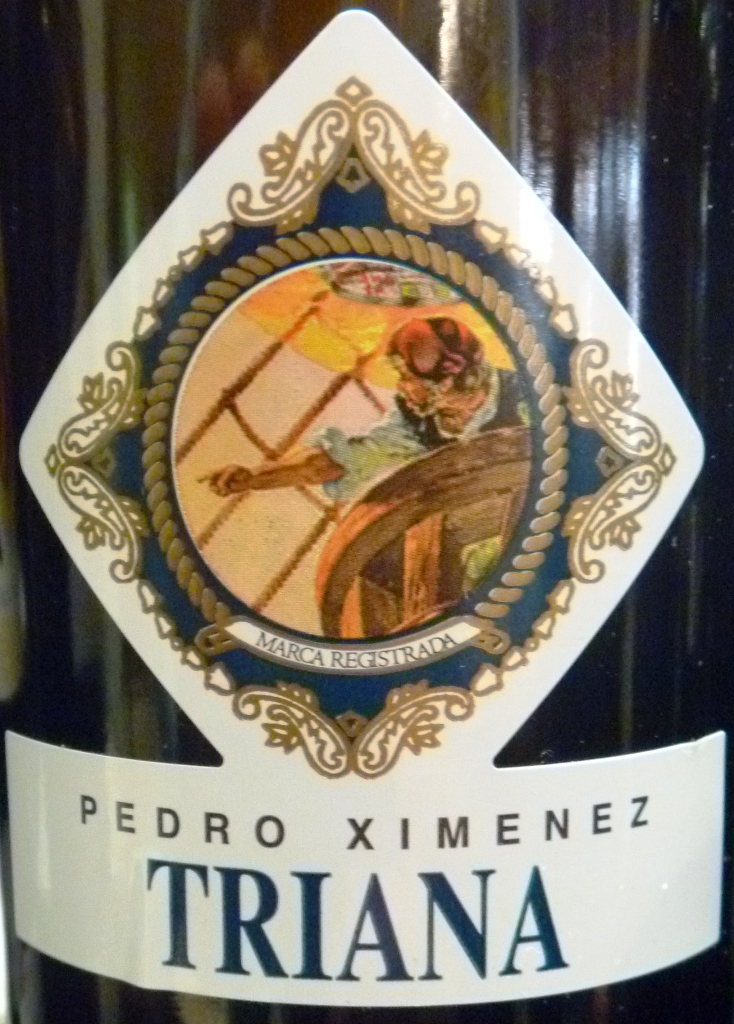
A4: Sweet Sherry, a.k.a Jerez, is typically made out of grape called Pedro Ximenez, and it is aged using so called Solera method – portion of the wine from the old (or oldest) barrel is bottled, and then the barrel is topped off with the younger wine. The barrel is never fully emptied and never cleaned, which means that even in the trace amount, but the very old wine is still present in the bottles, potentially going back to the year when the winery was built (and some of them are 250 years old…).
Q5: This delicious dessert white wine is made by the famed red wine producer in Napa Valley. The wine is made from the single white grape variety, estate grown in Napa Valley, which is of German/Austrian origin (and it is NOT Riesling). Name the grape, the wine and the producer.
A5: Silly me, I thought this would be a difficult question – nope : ). As many of you correctly answered, this dessert wine, called Eisrebe, is made by Joseph Phelps (the producer of famous red California wine called Insignia), from the grape called Scheurebe. A very delicious wine – try it if you will get a chance.
When it comes to the results, again – good participation and we have winners! Gene Castellino (no blog) and vinoinlove both correctly answered all 5 questions, thus they become the winners of this round and get the coveted prize of unlimited bragging rights! I want also to acknowledge Jennifer Lewis (no web site) who correctly answered 4 questions out of 5. Well done all!
Now, to the interesting stuff around the vine and the web!
Let me start from the bad news – for the second year in the row, Bordeaux vineyards experienced the hail storm, torrential rains and almost hurricane-strength winds. The areas around Médoc had been hit the most. I think we are [again] looking at a dim prospects of the 2014 vintage in Bordeaux… For more information (and the picture of hail, quite impressive) please click here.
And now, on a more positive side…. Tomorrow, June 12th, don’t forget to celebrate #VerdejoDay! As I understood from the comments to my post about upcoming #VerdejoDay festivities, Verdejo wines are not that unfamiliar to many of the wine lovers, so I’m sure you will have no problems either to join the festivities in person or at least find a bottle of Verdejo and have fun! I plan to be at the celebration in New York at Tavern 29, so if you will be there, please let me know – will be glad to meet and raise the glass together!
One of the most fascinating restaurants for me in US is French Laundry, located in Yountville, in the heart of Napa Valley. I never visited it, but I read a lot about the restaurant and its star chef, Thomas Keller. As with most of the other success stories, there is not much magic or luck in Thomas Keller’s success- it is only a lot of hard work and perseverance. The reason I’m talking about Thomas Keller is that I just came across a very interesting article about his recipe for success – you can read it for yourself here. And I really hope one day to write a blog post not just about success of the French Laundry, but about an actual dining experience there.
Wine [and steak] lovers, rejoice! The Capital Grille just announced a comeback of their Generous Pour program for the summer of 2014. Starting July 7th, 7 wines from California and Oregon, hand selected by The Capital Grille’s Master Sommelier George Miliotes, will be offered at The Capital Grille locations for $25. I always take advantage of this program, and I can’t recommend it higher to anyone who wants to have a great wine experience with their food.
Last but not least for today, I want to turn (again) to Matt Kramer, the columnist for the Wine Spectator. Matt Kramer recently wrote an excellent series about wines of Portugal, but I just want to bring to your attention one article from that series, where he is talking about the need for the mix of grape varietals in one vineyard, almost a field blend, either clonal or the real varietal, to produce great wines. This might be a very controversial positioning – but read the article for yourself and, of course, feel free to comment.
And we are done here. The glass is empty – but the refill is on its way! Cheers!
Magnificent Views and Delicious Food – The Mountain House in Woodside, California
 When it comes to selecting the restaurant for a dinner, especially if you have a time to plan it, the overall location and “the view” are important in that process. Thinking about my own experiences, most of my “views” had been of the water – sea, bay, lake, river – some type of water was involved most often. Dining out looking at the sea is definitely magnificent and memorable, but that shouldn’t limit your choices.
I remember about 5 years ago stumbling upon a restaurant in the San Francisco area, up on the mountain drive. We were just passing by, enjoying the beautiful drive through the redwoods park, but then we thought – hmmm, might be a good place for a dinner. The experience was wonderful (I didn’t have a blog at that time though 🙂 ), so I always wanted to come back and experience the place again. Finally, the opportunity presented itself during my very recent trip to San Francisco, and making reservation at The Mountain House was one of my top priorities of the trip.
In essence, your restaurant experience starts from the moment you enter the Redwoods park – well, mine did for sure. I don’t know about you, but when I look at the redwoods, straight as an arrow, and almost having no start and no finish, just going up into the sky, I almost feel an awe, a reverence. A slow drive while surrounded by those magnificent trees (the road has enough of the very tight curves and turns to ensure your ride will be slow), creates a certain atmosphere, it puts you in the very special mood. Once you arrive, if you are a few minutes early, you can fully admire those amazing trees. And if you want to feel it for the fullest, arrive really early with some spare shoes, drive about a mile past the restaurant and spend time on one of the hiking trails – the silence which you can experience while standing among those trees, is something which is only possible to feel in a very few places on Earth, especially for those of us who lives in the cities and towns.


Finally, you are in the restaurant and ready for the dinner. The best place to seat ( assuming you are there during the warmer times) is outside on the terrace. The terrace is completely screened, but you can see an open sky and the magnificent trees right above you, which greatly enhances your dining experience. Before we talk about food and wine, I would like to mention that the restaurant has a long history. It had been around since 1920s, and through all these years had only three owners. The present owners had been at helm for about 27 years – all of this history commands great respect in my book.
Okay, food time. Err, no. Let’s select the wine first. The wine list at The Mountain House is expectedly California-based, which doesn’t come as a surprise. Two things make me very happy with that list. First, the selection is very good, with enough variety, but not overwhelming. Second, a lot of wines are offered at a very reasonable prices, often at around double retail or even better. I couldn’t make up my mind between 2010 BV Rutherford (retail about $25, restaurant – $63), 2008 Ridge Zinfandel Lytton Springs (retail – about $40, restaurant – $72) and 2010 St. Clement Oroppas (retail – about $45, restaurant: $70), until Irene, Matr’D, confidently said – try Oroppas, you will not regret it.
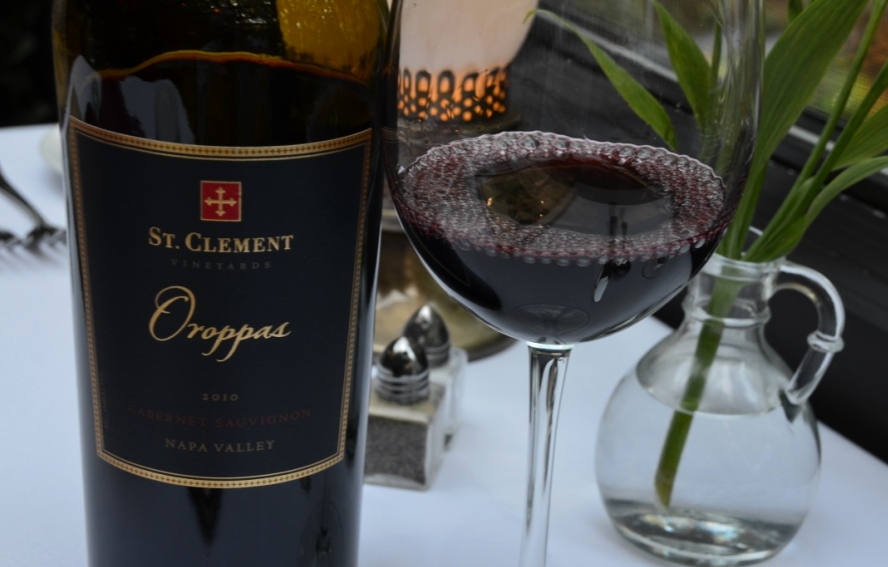
I had St. Clement wines before, and have a lot of respect for them. 2010 St. Clement Oroppas Cabernet Sauvignon Napa Valley (14.6% ABV) had beautiful dark garnet color in the glass. On the nose, the wine showed cassis, a hint of blueberries and a touch of espresso. And the palate… Boy, it is so hard to describe what was going on on the palate. On the palate, this wine was powerful and dense. Dark fruit, perfectly restrained, thick, practically chewy mouthfeel, perfectly structured and dry, and layered and silky smooth at the same time. The wine was at the level when you want to follow every sip with the words “mmm, this is good”. Drinkability: 9-
And finally, it is the time to talk about food! We started with Ahi Tartare Tacos (cucumber, avocado, tahini – miso vinaigrette with jicama slaw), which had very interesting Mediterranean flavor profile, I guess due to the tahini, and nice texture, based on large chunks of tuna and avocvado. We also had a simple Kale Salad (shredded brussells sprouts, marcona almonds, pecorino romano, lemon vinaigrette), which was very refreshing.


The Mountain House’s specialty is game, so it was easy for us to decide on the entreé. In a word, Tea Smoked Pheasant Breast (Apricot-Sherry wine Sauce and Mediterranean couscous) was outstanding – moist, delicious, with incredible flavor profile, very very tasty. And then the special of New Zealand Elk Medallions, prepared with cherry port reduction sauce and served with steamed vegetables, was simply spectacular – the meat was melting in the mouth, the sauce was perfectly complementing the meat, and the wine fully matching both the sauce and the meat – definitely one of the very best pairings I ever experienced. I also want to add that the wine was working very well with the first entreé, complementing the gaminess of the dish.


Despite the fact that we didn’t leave the morsel on the plate, we still decided to try the dessert, just to see if it would be on par with the delicious meal. Strawberry-Rhubarb crisp (vanilla ice cream) and Butterscotch Pot de Creme (creme fraiche, caramel and sea salt) were both very tasty, with me having a small preference towards Pot de Cream – salt and caramel are always good together. However I have to mention that this Por de Cream dessert was a bit too rich, so we couldn’t finish it.


Service was great, timely and attentive.
That concludes my report about The Mountain House. If you are in the area, you definitely don’t want to miss this restaurant – I’m sure you will enjoy it as much as I did. Cheers!
The Mountain House
13808 Skyline Boulevard
Woodside, CA 94062
(650) 851-8541
http://www.themountainhouse.com/

Month in Wines – May 2014
There was no shortage of the good and even great wines in May, including some potential candidates for the Top Dozen list. The spread of wines origin-wise was mostly even, from New Zealand to Italy to Spain, France and California. As usual, the list includes only the wines rated 8- or higher, with some lower rated wines included on the exception basis. Let’s take a look.
2011 Sueño Tempranillo Ribera Del Jucar DO, Spain (14% ABV, $19,99) – a classic, round Tempranillo – eucalyptus, cigar box, perfect balance. 8-
2012 Centanni Pecorino Offida DOCG, Italy (14.5% ABV) – a supple white, with lots of big flavors, very concentrated, but still refreshing. Quite unique and different. 8-
2012 Centanni Rosso Di Forca Rosso Piceno DOP, Italy (13.5% ABV) – One of the best Pop-and-Pour wines I ever had. From the moment the glass “cork” was pulled off, a luscious, luxurious, round and delicious wine, one sip after another. It was gone in no time… 9-
2010 Rio Maggio Rosso Piceno DOC (13.5% ABV) – Another excellent Rosso Piceno wine, but very different from the previous one – dark restrained fruit, a touch of cherry pit, excellent acidity. 8-
2012 Borell-Diehl Pinot Noir Estate, Germany – probably the first German Pinot Noir I liked. While not super-sophisticated, it was simple enough and food food friendly. 7+
2011 Stephen Ross Pinot Noir, Santa Lucia Highlands, California – Classic California Pinot, dark chocolate, pencil shavings, smoke, excellent balance. 8
2009 Maysara Pinot Noir, McMinniville AVA, Oregon – herbal profile on the nose, dark fruit, earthiness, balancing acidity. I can drink that every day. 8-
2012 Château Paul Mas Coteaux du Languedoc AOP (14,5% ABV, Syrah 85%, Grenache 10%, Mourvedre 5%) – dark fruit, earthiness, spicy cherries, pepper, espresso – lots of things going. Need time. 8-
2011 Château Paul Mas Clos de Savignac Grés de Montpellier (14.5% ABV, Mourvedre 50%, Syrah 30%, Grenache 20%) – Dark chocolate, loads of pepper, blueberries, perfectly balanced. 8
2012 Château Paul Mas Clos du Moulinas Pezenas Grand Terroir du Languedoc (14.5% ABV, 55% Syrah, 45% Grenache) – extremely complex, leather, tobacco, pepper, perfect balance, simply a wow. 9-
-

- Chateau Paul Mas Pizenas
-

- Chateau Paul Mas Clos de Montepelier
-
- Chateau Paul Mas Coteaux de Languedoc
-
- Rio Maggio Rosso Piceno
-

- Centanni Pecorino
-
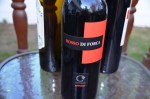
- Centanni Rosso di Forca
2012 Swedish Hill Reserve Chardonnay Finger lakes, New York (13% ABV) – Chablis-like personality, with the hint of gunflint on the nose, also showing of as nice restrained California wine, with vanilla and oak, and everything in balance. 8-
2012 Dr. Konstantin Frank Gewurztraminer Finger Lakes, New York (12.5% ABV) – beautiful honeysuckle and white peaches nose, coupled with exotic fruit and spices the palate, and most importantly, all nicely balanced. 8-
2013 Rabbit Ridge Allure de Robles Rosé Paso Robles, California (13.5% ABV, $4.99 at Trader Joe’s , Mourvedre 49%, Grenache 26%, Syrah 25%) – simple, balanced, delicious, surprising. Yes, this was a perfect summer wine from Trader Joe’s – get it by the case. 8-
2010 Cairdean Vineyards Malbec Nape Valley (14.2% ABV) – My first experience with California Malbec. Very unusual – socks (yep, you can think whatever you want of me), baking spices, lavender, fresh cookies, very elegant. 8
2010 Cairdean Vineyards Chardonnay Russian River Valley (13.9% ABV) – touch of vanilla and butter, toasted bread, soft and round. 8-
2012 Matua Pinot Noir Marlboro New Zealand (13% ABV) – this wine screams “classic Marlboro” all the way – smokey nose, cherry on the palate, light and at the same time savory profile with cut-through acidity. 8-
2005 Dama de Toro Crianza Toro DO (13.5% ABV) – wonderful complexity, makes you smell this wine indefinitely, and then you can spend eternity analyzing each sip – herbs, lavender, sage, nutmeg, red and black fruit – just a wonderful example of the wine [probably] at its peak. 9-
-

- Allure de Robles rose
-
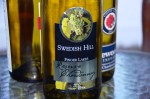
- Swedish Hill Chardonnay
-

- Dr, Konstantin Frank Gewurztraminer
-
- Matua Pinot Noir
-

- Cairdean Vineyards Malbec
-
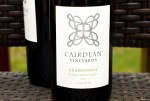
- Cairdean Vineyards Chardonnay
-
- Sueno Tempranillo
-
- Dama de Toro
2010 Freemark Abbey Cabernet Sauvignon Napa Valley (14.5% ABV) – great open Cabernet Sauvignon nose, bell peppers, black currants, very classic. Medium to full body on the palate, perfectly restrained, excellent balance. 8
2008 Tamaya Syrah Reserva Limari Valley, Chile (13.5% ABV) – this wine would perfectly impersonate a classic Northern Rhone Syrah – very restrained, dense, concentrates, pepper and spices on the palate, savory herbs. A Thought provoking wine. 8-
That completes my wine highlights report for May. Did you make any interesting discoveries in the last month? Did you have any of the wines I mentioned here? Cheers!
Weekly Wine Quiz #105: Grape Trivia – Blends, Part 9
 The Wine Quiz series is not meant to intimidate. The whole idea here is to have fun and learn something new. When answering the questions, it is fully encouraged to use all available sources of information, including Google or any other search engine. There are no embarrassing answers – the most embarrassing thing is not giving it a try…
Welcome to the weekend and your new wine quiz!
We are continuing our grape trivia series, focusing on the blends, even if it is a blend of 1. White, Red, Rosé, Sparkling, Still, Fortified and Dessert – all goes. Oh yes, and we will blend in some regions and even wineries as well, just to make it more fun.
Recently, we talked about sparkling, white and red blends. So how about sweet wines (blends, of course!) for today?
Let’s go!
Q1: Amarone, a powerful dry Italian wine, made out of the sun-dried grapes (appasimento), was actually a result of the accident (complete fermentation of all the sugar) during the process of making of the sweet wine in the same region. This sweet wine is still produced today, albeit in the very small quantities – but it used to be quite famous hundreds of years ago. Can you name this sweet wine?
Q2: These two red sweet wines are primarily made out of all three types of Grenache grapes – Noir, Gris and Blanc, but one of them also allows the use of Carignan grape. Can you name these two wines (I’m looking for the name of appellations, not particular producers) and also specify which one of the two allows the use of Carignan?
Q3: This rare red dessert wine is made out of Nebbiolo grapes, and one of its characteristics is incredible aromatics. Can you name this wine?
Q4: This sweet wine, while typically made from the single grape variety, might claim the prize of “ultimate blend”, as it represents a blend of wines of many different ages, potentially tracing hundreds years of history in some of the bottling. Can you name this wine and explain about “hundred years of history”?
Q5: This delicious dessert white wine is made by the famed red wine producer in Napa Valley. The wine is made from the single white grape variety, estate grown in Napa Valley, which is of German/Austrian origin (and it is NOT Riesling). Name the grape, the wine and the producer.
Good luck, enjoy the quiz and your weekend! Cheers!
#winechat Finger Lakes Wine Tasting – An Interesting Experience with Happy Ending
Here we go again – another #winechat experience. Lots of wines and lots of talking – with your fingers. The subject of this #winechat – wines of Finger Lakes region in New York.

Finger Lakes is a picturesque area in the upstate New York, very close to Canada, consisting of multiple lakes – technically, Finger Lakes consists of 11 lakes, but most of the people will be able to name only 3 or 4. Outside of being a popular tourist destination, Finger Lakes is actually one of the very first wine making areas in the US – the first winery was established in 1836, and by now the region has well over a hundred wineries.
Despite such a long history, the wines of the Finger Lakes region are still considered up and coming. For the most of the cases, consumers might be familiar with Finger Lakes Riesling, a bit of Gewurztraminer and some of the Icewine, with the Finger Lakes wines mostly available only in New York and some of the neighboring states. As of late ( last 2-3 years) the situation is slowly changing for the better, both in regards to quality and availability of the Finger Lakes wines. It is also important to note that the improvements I’m talking about concern both white and red wines, with the wineries such as Fox Run, Ravines and Charles Fournier delivering full spectrum of wines worth drinking and talking about.
When I got a note about #winechat dedicated to the Finger Lakes wines, I was hesitant at first regarding my participation. The reason was simple. Yes, the quality of the Finger Lakes wines is improving. However, about 4 years ago, when my daughter was going to Ithaca college, located right by the Seneca lake, I visited few of the nearby wineries, and was quite disappointed with the wines I tasted. Therefore, the prospective of tasting bunch of wines and not being able to write anything about them, was rather daunting. After the internal back and forth, I decided okay, let’s give it a try, and signed up for the #winechat. A few weeks later, the box arrived, containing the 8 bottles – 3 different Rieslings, 3 Chardonnays and 2 Gewurztraminer. From the whole set, I only recognized the name of Dr. Konstantin Frank as a producer I heard of before ( I never tried Gewurztraminer which was included in the tasting set).
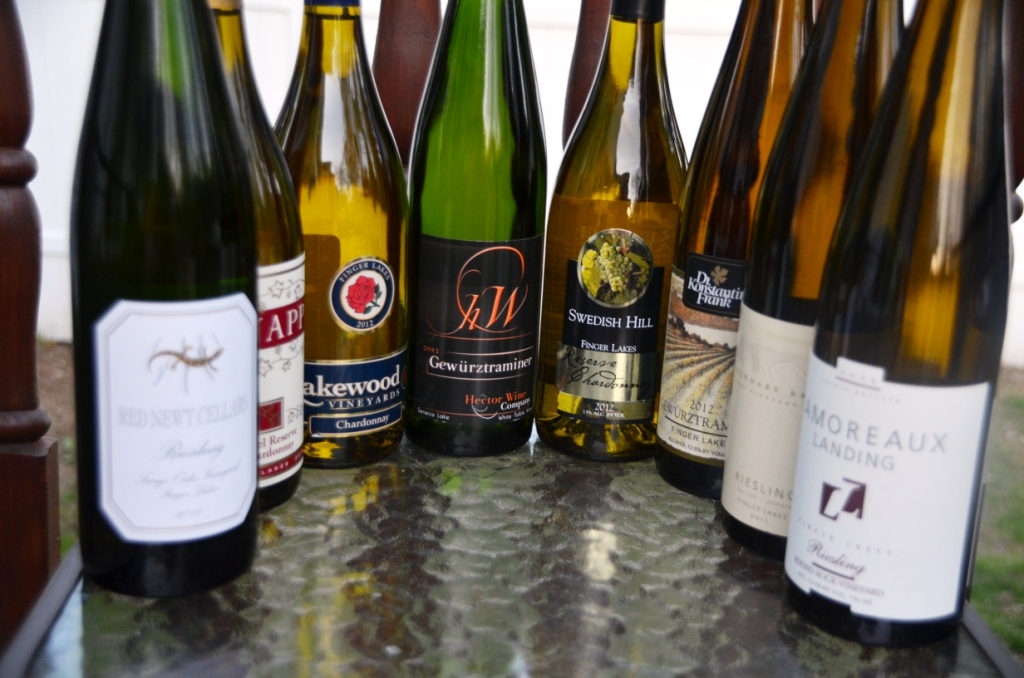
About a week later, it was the time to taste the wines. I freed up the space in the fridge and put all the bottles in to get them ready.
Talking about an “interesting experience”, let me explain what I mean (yes, I know – somehow, when you read “interesting”, you don’t expect anything good). The #winechat usually starts at 9 PM. But of course it would be quite challenging to taste 8 wines in the real time, take notes, and support many simultaneous “finger” conversations at the same time. Therefore, I decided to start an hour before, so I would have enough time to taste all the wines in the thoughtful fashion. I invited my friend Zak to share the tasting with me. We started from the Rieslings, then moved on to Chardonnays, and finished with Gewurztraminers. The first Riesling was okay, but then everything went downhill – the wines were simply from the series “nothing to write home about”, with the exception of Dr. Konstantin Frank Gewurztraminer – that was one and only highlight of the tasting. We kept looking at each other with Zak in disbelief, as this was definitely not expected from the set specially selected for the tasting. Needless to say, at the end of the tasting (I managed to participate in the chat, albeit not as enthusiastically as I normally would), I was rather disappointed. And I had 8 wines to finish or dump. What I decided to do, is to put them aside, and give them another chance, one by one. I used the gas canister (not sure I had much gas left though) to replace the air in all the bottles and put the corks back. One bottle went into the fridge, and the rest were standing, waiting for their term.
Now, for the really interesting part. The next day or a few days later, all, yes all the wines (okay, exclude Dr. Konstantin Frank from here, as it was good from the beginning) tasted better! I couldn’t believe it, and I couldn’t understand it – but they did. Better fruit, better balance, softer, smoother – all of them. Well, thinking about it, the Rieslings only improved a little bit or not at all, but the improvement was very noticeable for all Chardonnay wines. Giving it another thought, I think I’m finally starting to “get it”. When I open a bottle of wine, taste it and decide that it is not ready because it is too tight and closed, I’m generally not surprised, I ofthen expect it, and I put it aside to give a day or a few to open up without any commotion. In case of this Finger Lakes tasting, I had multiple wines opened at the same time, and especially all of the Chardonnays had the nice oak treatment, thus required time to open up – this is not my typical case, hence the issues I had. So bottom line is that I was [again] humbled around wine, and still have lots to learn. Well, not the worst problem to have in life, isn’t it?
I will let you decide how “interesting” my experience was. Below you will find tasting notes, both the initial ones, and those I added after re-tasting the wines in a few days.
Here we go:


2012 Red Newt Cellars Tango Oaks Vineyard Riesling (11.5% ABV)
C: practically clear
N: Initially: golden delicious apples, a bit grassy; 2/3 days later: white fruit
P: Initially: high acidity, not enough fruit, tropical fruit, mango; 2/3 days later: white flowers, hint of sweetness on the palate with nice acidity and addition of minerality.
V:nice, simple, 7/7+; Final: 7+/8-
2012 Lamoreaux Landing Wine Cellars Round Rock Riesling (12.7% ABV)
C: practically clear
N: Initial: candied walnuts, Later on: light, delicate, good white fruit
P: Initial: white fruit with grassy notes, minerality; Later on: a distant hint of Petrol, clean and fresh acidity, elegant, well balanced.
V: Initial: 7+, Final: 7+/8-
2011 Boundary Breaks Riesling Reserve #198 (8.9% ABV)
C: practically clear, almost transparent
N: Petrol (hint of)! white fruit, apricot, honeysuckle.
P: sweet (spatlese or may be even auslese level), needs more acidity, but not bad
V: needs savory food, 7/7+


2012 Knapp Barrel Reserve Chardonnay (13% ABV)
C: straw pale
N: Initially: closed, practically nothing. Later on: nice apple notes, touch of vanilla, pleasant and inviting.
P: Initially: touch of pineapple, white apples, neutral – drinkable, but not fully enjoyable. Later on: nice, cutting acidity, backbone of white fruit, touch of herbal bitterness, but quite round and refreshing. Minerality on the palate, like a limestone. Medium finish,
V: 7, Final: 7+/8-
2012 Lakewood Vineyards Chardonnay (13,9% ABV, 617 cases produced)
C: straw pale
N: Initially: minerality, pretty closed otherwise. 3 days later: very classic nose, with vanilla and toasted oak, nice and clean.
P: Initially: flat, malolactic obvious, touch of vanilla. After 3 days: excellent flavor concentration, good acidity, butter and vanilla, medium to full body, good balance.
V: initially: 6-, final: 7+/8-
2012 Swedish Hill Winery Reserve Chardonnay (13% ABV)
C: straw pale
N: Initial: hint of gunflint, minerality, white fruit. Later: Vanilla and oak, very inviting, with Chablis-like gunflint
P: Initial: oak, vanilla, flat, needs more acidity fruit, opened up reasonably , improved with time, butterscotch, still needs more acidity; 3 days later: great concentration of vanilla, apple and butter, nicely balanced with very persistent depth.
V: 7+, Final: 8-


2012 Hector Wine Company Gewurztraminer
C: Golden color
N: Initial: Beautiful, concentrated fruit; Later: Very pleasant nose of tropical fruit with some spiciness – guava, mango.
P: Initial: Lots of green notes, bitter, biting, not balanced. After 3 days: bitterness subsided, with only a hint left.
V: 6, Final: 7-
2012 Dr. Konstantin Frank Vinifera Wine Cellars Dr. Frank Gewurztraminer (12.5% ABV)
C: golden
N: beautiful fruit, inviting
P: perfect balance, fresh fruit, touch of spiciness, best of tasting
V: 8-
There you have it, my friends. To tell you the truth, I had a different take on the events in the tasting initially, but I’m glad I was able to figure it all out. And this story did have happy ending, as practically all the wines showed very well. Lessons learned – be humble, and give your wines a chance [to breathe].
Before we part, I would like to thank Finger Lakes Wine Alliance for providing the sample for review. Cheers!
Wednesday’s Meritage – Wine Quiz Answer, 21 Things You Probably Didn’t Know About In-N-Out, Another Wine Crisis in Numbers, Coravin Ouch
 Meritage time!
Let’s start with the answer to the wine quiz #104, Grape Trivia – Blends, Part 8.
For the long time, the grape trivia series was focused on the single grapes. But now we are stirring things up, so all the questions in the quiz are about blends (well, even if it is a blend of one ), as most of the wines in the world are actually blends. As usual, there are 5 questions in the quiz.
Here are the questions, now with the answers:
Q1: Some of the most expensive (on release, not at the auction) white wines in the world are made from one and the same grape. Can you name that grape?
A1: Chardonnay! When it comes to the white wines, they don’t get any more expensive that DRC Montrachet (about $4,000 on release), which is made out of 100% Chardonnay grape.
Q2: I’m sure you know Spanish red wines, but how well do you know Spanish white wines, which are equally delicious and exciting? Try to pair the white grapes below with the regions you think they best represent:
| a. Albariño | 1. Rioja |
| b. Hondurrabi Zuri | 2. Penedes |
| c. Verdejo | 3. Rias Baixas |
| d. Viura | 4. Txakoli de Bizkaia |
| e. Xarel-lo | 5. Rueda |
A2: A3, B4, C5, D1 and E2 are the correct combinations.
Q3: What is common between Seven Daughters White, Middle Sister Wicked White and Pancake Cellars Big Day White? Don’t dig too dip on this question, I’m only looking for a simple answer.
A3: If we look at all 3 wines, they are all represent blends of large number of different white grapes. Seven Daughters White: Pinot Gris, Orange Muscat, Symphony, Riesling, Gewurztraminer, Sauvignon Blanc, Chardonnay. Middle Sister Wicked White: 36% Chardonnay, 32% Chenin Blanc, 21% Gewurztraminer, 11% Other White. Pancake Big Day White: 37% Chardonnay, 23% Sauvignon Blanc, 15% Viognier, 15% Pinot Blanc, 10% Muscat Canelli. So the answer is that all three wines are the blends of large number of white grapes, and all three have Chardonnay as part of the blend.
Q4: When it comes to the white wines, this country is best known for its Riesling, Chardonnay and Semillon wines. If we will replace Semillon with Sauvignon Blanc, we will move to another country with these grapes being the best known trio. From which country to which country we are traveling here?
A4: Semillon makes wonderful, long aging wines in Hunter Valley in Australia, and New Zealand Sauvignon Blanc is an absolute staple, well known all around the world, so the answer is that we are traveling from Australia to New Zealand.
Q5: As you [most likely] know, the soccer (which is known as football for all living outside of US) World Cup will open up in less that 2 weeks in Brazil. This famous producer made a special version of its very well known blended wine just for the sparkling festivities of the great game celebration. Can you name this famous producer?
A5: This happened to be a culprit question, despite the fact that I did my best to give you hints, by using the words “famous producer” and “sparkling festivities”. Also the whole quiz was designated as white blend quiz. Nevertheless, everybody answered this question the same – Lidio Carraro. With my utmost respect to Lidio Carraro, I never heard of that producer before, and I don’t believe it makes any of the wines which we can call a “very well known blended wine”. So the right answer is… Tattinger! The famous French producer of Champagne (famous, blended, and sparking) produced a special NV Tattinger Brut Réserve FIFA World Cup Brazil 2014 Edition Cuveé to commemorate the World Cup competition.
When it comes to the results, we had a great participation in the quiz, but didn’t have a winner. I still would like to acknowledge Gene Castellino (no web site), vinoinlove and the drunken cyclist who all correctly answered 4 questions out of 5. Well done!
Now, to the interesting stuff around the vine and the web!
I have to honestly admit – I’m not a fan of the fast food joints. However, I have one exception, one technically a fast food place, which I’m happy to visit every time I have a slightest opportunity – In-N-Out Burger. This is a chain of the fast food restaurants, located mostly in California and [very] slowly expanding to the other states, where in general you can only see 3 items on the menu – burger, double burger ( called double-double) and cheeseburger. But their food is so fresh and so delicious, I’m ready to eat it at any time. I also know that In-N-Out Burger has secret menu, with the items like “animal style” – a special sauce with fried onions which can be put either on French fries or on the burger itself. But – I had no idea that you can actually order 7 different types of French fries, or that In-N-Out has its own academy (!) where employees get their training. My friend Pablo sent me a link to an excellent post, where you can read 21 lesser known facts about In-N-Out Burger – here is the link where you can find the post and get to know In-N-Out a bit better.
While looking for the interesting information to share with you, I came across a post on ABC News web site, which was talking about latest case of counterfeit wines in Italy. I found it a bit boring and not worthy of sharing here. However, one little item attracted my attention – it stated that it is considered that about 20% of the wine in the world is counterfeit. I ignored that statement, and then I came across the post on W. Blake Gray web site, where he was analyzing and explaining the absurdity of that 20% number – to reach the level of 20% of the world-wide wine production to be counterfeit, it would require for the counterfeit wines to be produced in the quantity bigger that the total yearly wine production of France – I really don’t see how that would be possible, unless you plan to make all your counterfeit wine out of the coca-cola powder. For more details of the analysis, please take a look at the original blog post.
And the last one for today. I would assume you heard about Coravin – the device (a wine preservation system, to be precise) which allows to extract the wine from the closed bottle and replace it with the inert gas. Using Coravin, you can technically extend the drinking of your prized bottles for the long time, being able to drink the wine one glass at a time. It turns out that in some cases, while using Coravin device, the bottles can blow up, causing the laceration and, obviously, loss of the prized wine. As reported by Dr. Vino, Coravin found the situation to be bad enough to stop all the sales of the device at the moment. For more information and to read the exact Coravin letter to the owners of the devices, please take a look here at Dr. Vino’s blog.
And we are done here. The glass is empty – but the refill is on its way! Cheers!
Celebrate #VerdejoDay on June 12th – And Discover Great White Wines!
 Here I come again with my rhetorical question – how many of you tasted Spanish white wine made from Verdejo grape – raise your hands? Yes, this was quite expected. Meanwhile, Verdejo wines are well worth your attention. Depending on the winemaking style, Verdejo wines can take on the full range of the expression, from light and refreshing to full bodied, complex and thought-provoking. I talked about my favorite Verdejo wines from Bodegas Shaya many times in this blog. 2009 Bodegas Shaya Habis Verdejo, (made from the grapes harvested from 100+ years old vines) was my wine #9 in the Top Dozen Wines of 2011, and 2008 Bodegas Shaya Old Vines Verdejo was one of the wine highlights in February of this year.
Another great example of Verdejo wine is Martinsancho Verdejo, which is produced in the quantity of less than 4,000 cases a year from the Martinsancho vineyard. Verdejo is a star indigenous white grape of Rueda region in Spain, tracing its history hundreds of years back, which became nearly extinct in the 1970s. These were the efforts of Angel Rodríguez of Martinsancho, who used the cuttings of Verdejo vines from the Martinsancho vineyard, to help bring the Verdejo wines back to the mainstream.
Now, what I want to bring to your attention is that instead of listening to me, you can actually go and experience the Verdejo wines on your own! Next Thursday, June 12th, is the #VerdejoDay, which will be celebrated both virtually and in the actual live events. If you live in a close proximity to New York, Chicago, Miami or Los Angeles, you can attend the Verdejo celebration in person. In all four cities, the parties will take place in the restaurants, where you will be able to taste various Verdejo wines (there will be 12 different wines served in NYC), experience Rueda regional cooking and have fun!
To read more about #VerdejoDay celebrations and Verdejo wines, please click here. To register to attend a #VerdejoDay celebration in one of the four cities, please use this link to EventBrite site.

Shaya
Even if you can’t attend one of the events, go find a bottle of Verdejo in your local wine store – and you can thank me later. Cheers!
Restaurant Files: Davanti Enoteca, Rama Thai and Sushi Ota in San Diego
In my previous San Diego post, I gave you my version of a perfect day in San Diego, where of course the food was a very important part of the experience. Today, I want to add a few more of the restaurant suggestions, just to expand your cuisine selection.
Let’s start with Davanti Enoteca in the Little Italy neighborhood. The restaurant is appropriately Italian for the Little Italy area – but if the word “Italian” brings up an image of mozzarella sticks or a pasta with meatballs, shoo those images away, as they have nothing to do with modern, exquisite, creative Italian dishes served at Davanti Enoteca.
When you look at the Davanti Enoteca restaurant on outside, it is hard to tell what to expect. Inside, the restaurant is nice and welcoming, and offers a number of sitting options including [unexpectedly large] completely enclosed patio, which creates a great dining atmosphere.
So you are situated inside, and it is the time to eat. How about some Focaccia di Recco (Ligurian style baked focaccia, fresh soft cow cheese…must add honeycomb) for the starter? Very different from what you might expect, this one comes with the layer of soft cheese baked into a paper- thin crust. Addition of honeycomb on top increases “deliciousness” ten-fold. When you take a bite of that focaccia, the foodie’s climactic moan can be easily heard at the table. To keep the excitement level high, how about some Mascarpone Polenta with pork ragout – every morsel as delicious as the Focaccia. And then how about some Bruschetta? No, not the traditional tomato and onion, but may be a Creamy Avocado Mousse Bruschetta will do? Very unique and different again. Keep in mind that both Bruschetta and Mascarpone Polenta might have different toppings on different nights – but I’m sure they will be every bit as tasty as the ones we had.


When you look at the list of entrees, one thing becomes clear – it will not be easy to make a choice. You definitely got options. For instance, a Polpo con Rafano (seared octopus, warm fingerling potato salad, marcona almonds, finocchiona, fresh horseradish aioli) – perfectly cooked octopus (not an easy task in itself), absolutely delicious with all the little condiments there on the plate – every bite makes you happy. Spada Davanti (grilled swordfish, toasted bread crumbs, calabrian chili, brussel sprouts, calabrian chilies, mint) – another home run.


Craving meat? Davanti Burger (special blend beef burger, bacon jam, roasted tomato, cheese curd, arugula, roasted garlic mayo, shoestring fries) – it is just a wow on the plate. I had a pleasure to experience the famous Boulud Foie Gras Burger – this Davanti Burger will give it a good run for the money, it is so juicy and delicious (and those shoestring fries are addictive!). And if you are in a mood for a steak – Bistecca con Cippolini e Funghi (grilled hanger steak, cippolini onion, grilled oyster mushroom, saba, salsa verde) is just what doctor ordered – succulent meat and great combination of flavors.


You know I have to talk about wine, right? Wine list at Davanti Enoteca is not large, but it has a good amount of interesting selections at reasonable prices. Focus is mostly on the Italian wines as one would expect. We had two wines that evening. 2012 Attems Sauvignon Blanc Venezia Giulia had an excellent herbaceous profile, both on the nose and the palate, with some notes of fresh cut grass and hint of grapefruit skin, only a delicate hint, and perfect acidity. Definitely very nice wine. Our choice of red, 2012 La Fiera Montepulciano d’Abruzzo was fresh and lovely, with the very pronounced, but soft tart cherry profile and a hint, a whiff rather, of a cherry pit – light and simple, and very versatile food wise.


When it came to the dessert, I honestly stopped paying attention to what exactly did we order – I know that I tried a few different desserts and they all were very tasty.


Let’s continue. So far, considering both San Diego restaurant posts, I offered to your attention mostly restaurants with European cuisine. I think it is time to change the direction and go towards Asia.
Rama Thai Restaurant is located in the Gas Lamp Quarters, a primary dining destination for people living in San Diego and visiting from afar. From the moment you set your foot inside the restaurant, you are transported – you know I like to use this term a lot when I talk about wines, and it simply means that your experience affects your emotional state, the way you feel at the moment. This is definitely the case with Rama Restaurant. The ambiance, lighting, decor, the music, pictures on the walls, muted sound of creek-running water, statues of Buddha – all of it puts you in a different mood.
And then, to our delight, the food perfectly matched the overall atmosphere. We started with the few appetizers. Satay Skewers (chicken and beef with peanut sauce and cucumber salad) was perfectly done, with peanut sauce being simply delicious. Same goes for Fresh Spring Rolls, which were super fresh and crunchy, also served with similar peanut sauce, with just enough heat to make it very tasty. The Pot Stickers (pork, ginger soy sauce) were not necessarily unique, but cooked just right.
For the entrees we went with a very nice selection of the dishes. While Pad Thai is generally considered “The Dish” in the Thai restaurants, my personal favorite is Drunken Noodle (flat rice noodles, thai basil, tomato, chili garlic, kai lan) – for me, it has some homey delicious feeling, this is my ultimate Thai comfort food, which I’m ready to eat any day. The next wow dish was called Garlic and Pepper (crusted chicken, beef or shrimp, sweet and spicy reduction) – we had the chicken version, and every bite was perfectly crunchy and just right spicy – I can highly recommend this dish. Salmon Panang curry (ka‑r lime leaves, green beans, cherry tomatoes) was very well balanced dish, with Panang curry flavors being present, but mild enough. Last, but not least were Pan Seared Sea Scallops (with sautéed spinach, chili sauce) – you know, when the scallop is seared and done just right, it needs no explanation to any scallops aficionado, so this was our case. All in all, great meal, and I can’t recommend this restaurant high enough as a whole experience, with ambiance being a big part of it (and great service). Sorry, have no pictures for you – to get the pictures, I would have to use the flash, and I really didn’t want to disrupt the atmosphere…

Last but absolutely not least for today is the Japanese restaurant called Sushi Ota (yes, we are continuing to explore the Asian cuisine of San Diego). Sushi Ota is considered to be one of the very best sushi restaurants in San Diego (4.5 stars based on 1676 reviews on Yelp, very impressive), so one would probably expect to find such a restaurant again in the Gas Lamp district or may be somewhere in downtown, surrounded by many other restaurants. When you drive to Sushi Ota, you take the highway exit, and the very next thing you do is start thinking if you had the right address written down, as you clearly see that you are in the area of car dealerships and small business offices, far away from the perceived “hot dining setting” by all means. But then GPS tells you that you have arrived, and you barely notice the name “Sushi Ota” on the sign of the tiny strip mall. Yep, you actually arrived to the one of the very best sushi joints in San Diego. I also hope you actually made a reservation at least few days in advance, because otherwise, you will need tremendous amount of luck to score even single sit by the bar.
At 5;30 pm, when the restaurant opens for dinner, it instantly gets at least half full, and it is a full house at 6 pm. What matter is that you got your table, so it is time to eat.
As a starter, we took a Tuna Tartar dish. This is not your average Tuna tartar – it is presented on top of tempura eggplant, and each one of the 4 pieces has different topping. This dish was done more of a single bite style (a big bite, I have to say), and really delicious.


Next up – Clam Miso Soup. It is a “kicked up” Miso soup as it contains a few clams in the traditional aromatic broth – definitely a nice touch.
 Our next selection (highly recommended) was the Spanish Mackerel sashimi. What you get is essentially the whole fish, with all the meat cut up in the small sashimi pieces. I like Mackerel sashimi in general, but it never tastes like the one we got at Sushi Ota. Typical mackerel sashimi is rather on the dry side, and can be even chewy. The one we had at Sushi Ota was succulent, sweet, soft and was literally melting in the mouth. Take a look at how it is served:
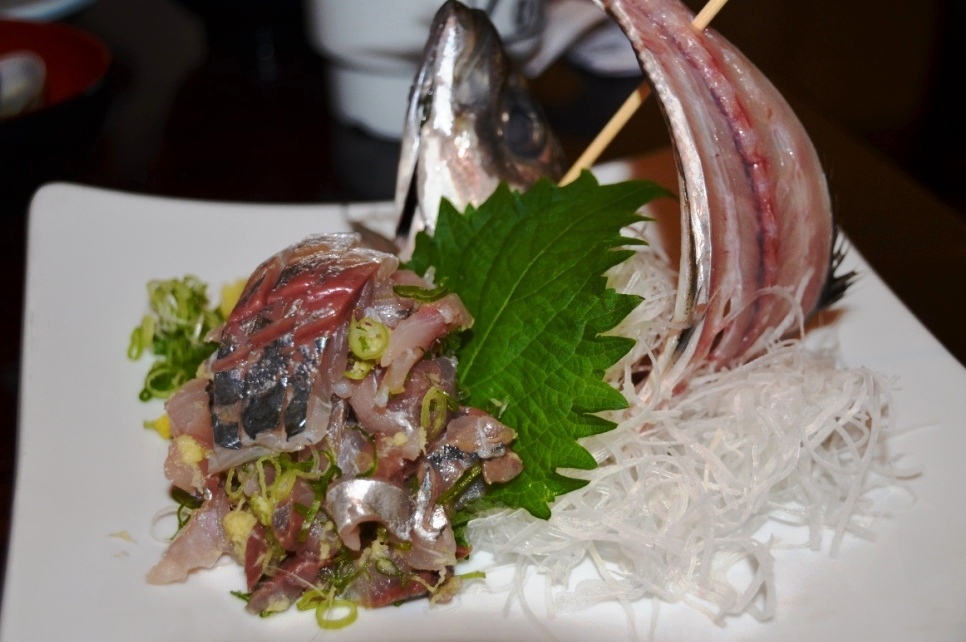 As you can see, you do get literally the whole fish. Wonder why you are get served the bones too? Well, once you done with the sashimi, the plate is taken away from you, only to be brought back in about 20 minutes after that fish skeleton was deep fried to the point that you can literally eat it like the potato chips! It is so tasty you literally can’t leave anything on the plate! Here you are:
 And then, of course, we had sushi. We got a few different rolls and Uni (uni, a.k.a., sea urchin, you can eat only when it is super-fresh, and that’s the way it is at Sushi Ota). For the rolls we got Double Double Tuna, which is a combination of spicy tuna and regular tuna on top, as well as Eel Roll – fresh and delicious. And to finish the meal, of course, the mochi ice cream – green tea and mango. All in all, an outstanding meal, which makes you to leave the restaurant with the promise to self to come back as soon as possible.


That’s all I got for you for today – more choices for your possible San Diego trip. If you have already or will visit any of these place, I would love to know what do you think. And until the next time – cheers!
Weekly Wine Quiz #104: Grape Trivia – Blends, Part 8
The Wine Quiz series is not meant to intimidate. The whole idea here is to have fun and learn something new. When answering the questions, it is fully encouraged to use all available sources of information, including Google or any other search engine. There are no embarrassing answers – the most embarrassing thing is not giving it a try…
Welcome to the weekend and your new wine quiz!
We are continuing our grape trivia series, focusing on the blends, even if it is a blend of 1. White, Red, Rosé, Sparkling, Still, Fortified and Dessert – all goes. Oh yes, and we will blend in some regions and even wineries as well, just to make it more fun.
We talked about red wine blends last time, so how about white grapes for today? Hearing no objections, let’s proceed.
Q1: Some of the most expensive (on release, not at the auction) white wines in the world are made from one and the same grape. Can you name that grape?
Q2: I’m sure you know Spanish red wines, but how well do you know Spanish white wines, which are equally delicious and exciting? Try to pair the white grapes below with the regions you think they best represent:
| a. Albariño | 1. Rioja |
| b. Hondurrabi Zuri | 2. Penedes |
| c. Verdejo | 3. Rias Baixas |
| d. Viura | 4. Txakoli de Bizkaia |
| e. Xarel-lo | 5. Rueda |
Q3: What is common between Seven Daughters White, Middle Sister Wicked White and Pancake Cellars Big Day White? Don’t dig too dip on this question, I’m only looking for a simple answer.
Q4: When it comes to the white wines, this country is best known for its Riesling, Chardonnay and Semillon wines. If we will replace Semillon with Sauvignon Blanc, we will move to another country with these grapes being the best known trio. From which country to which country we are traveling here?
Q5: As you [most likely] know, the soccer (which is known as football for all living outside of US) World Cup will open up in less that 2 weeks in Brazil. This famous producer made a special version of its very well known blended wine just for the sparkling festivities of the great game celebration. Can you name this famous producer?
Good luck, enjoy the quiz and your weekend! Cheers!
Daily Glass: California Gamay? How about it!
The process of selecting of the bottle to open sometimes can be very daunting – may be this? But I just had it few days ago. Than that? Well, today is not special enough day? Then what about that one? Nope, doesn’t feel right. In the end of the day (not literally), you just bite the bullet and say “this is it”. So the end result of my nerve wrecking selection process today was a bottle of … California Gamay from Field Recordings.
Now, class, who had the opportunity to taste California Gamay – raise your hands. Yep, I thought so. It is not that often that you hear about California Gamay. It is not even too often that you hear about Gamay been grown anywhere in US. Beaujolais? Of course, Gamay is one and only. Loire? Sure, also quite popular. Switzerland? Lesser known outside of Switzerland, but still – yes, it does quite well there. But California?
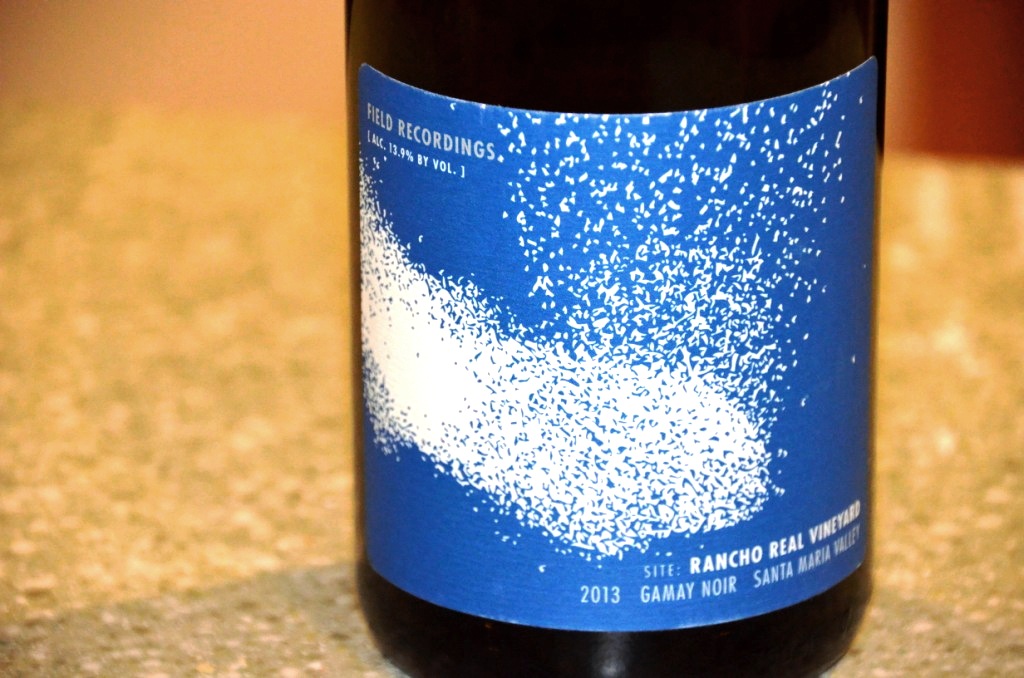
Well, so as they say, there is a first time for everything. Today was my first time to taste the California Gamay. 2013 Field Recordings Gamay Noir Rancho Real Vineyard Santa Maria Valley, California (13.9% ABV, 100% Gamay Noir, 6 month in Neutral Puncheons, 50% carbonic, 50% destemmed, 140 cases, Bottled: 04.19.2014) – very interesting. The nose was reminiscent of the Beaujolais Nouveau, but with the fruit being more mature and restrained, not as grapey. Very delicious and pronounced, similar to all other Field Recordings wines I had so far. And the palate… The palate was puzzling. It had a lot of fresh, ripe raspberries, good acidity and good balance, but there was something else which took me a while to figure out. And then it came down to me – the wine was still coming together. It was very similar to the Chenin Blanc which I had directly from the tank at the winery. Fermentation or not (I’m not a winemaker, so I can’t tell you exactly what it is, I can only describe to the best of my abilities), but this wine still needed time. This is why I highlighted above the date when the wine was bottled – so I was having the wine which was bottled only a bit more than a month ago – and it was noticeable. The wine was not bad by all means – but it would be very interesting to know, how would it taste when it would finally come together as a whole. Note to self – for the young wines, try to read the labels before, not after. Anyway, it was an interesting experience, and I will have to go with Drinkability of 7+, as the wine was still pleasant. Oh yes, of course it was my one and only bottle.
Have you had California Gamay before, or any US Gamay for that matter? What do you think? Also, have you had the wine which wwas not done yet? Comment away and cheers!
Last Bottle Sign Up ($10 credit)




 Talk-A-Vino