Liquid Pleasures Beyond Wine: Brandy
 During 2011 I wrote a number of posts for the project called The Art Of Life Magazine – of course talking about my favorite subject, wine. The project was closed and even the web site is down, but as I still like the posts I wrote, I decided to re-post them in this blog. Also, in that project, posts were grouped into the mini-series, such as “Best Hidden Secrets” and “Forgotten Vines”. The post I’m offering to you today was from the mini-series called “Liquid Pleasures Beyond Wine”, and the subject of this post is Brandy.
Also note that the series was written for a slightly different audience – I hope none of my readers will take offense in the fact that sometimes I’m stating the obvious…
As you could’ve expected based on the last post, we are going to explore the world of “liquid pleasures beyond wine”, the world of spirits. Let’s start with Brandy, as it is closest to the wine world. To be more precise, wine is a foundation of a Brandy.
Brandy is produced in many different countries, but we should start our journey in France, where it was originated. While Brandy is a generic name for any wine-based spirits, in France Brandy mostly exists under other noble (and protected) names, such as Cognac, Armagnac and Calvados.
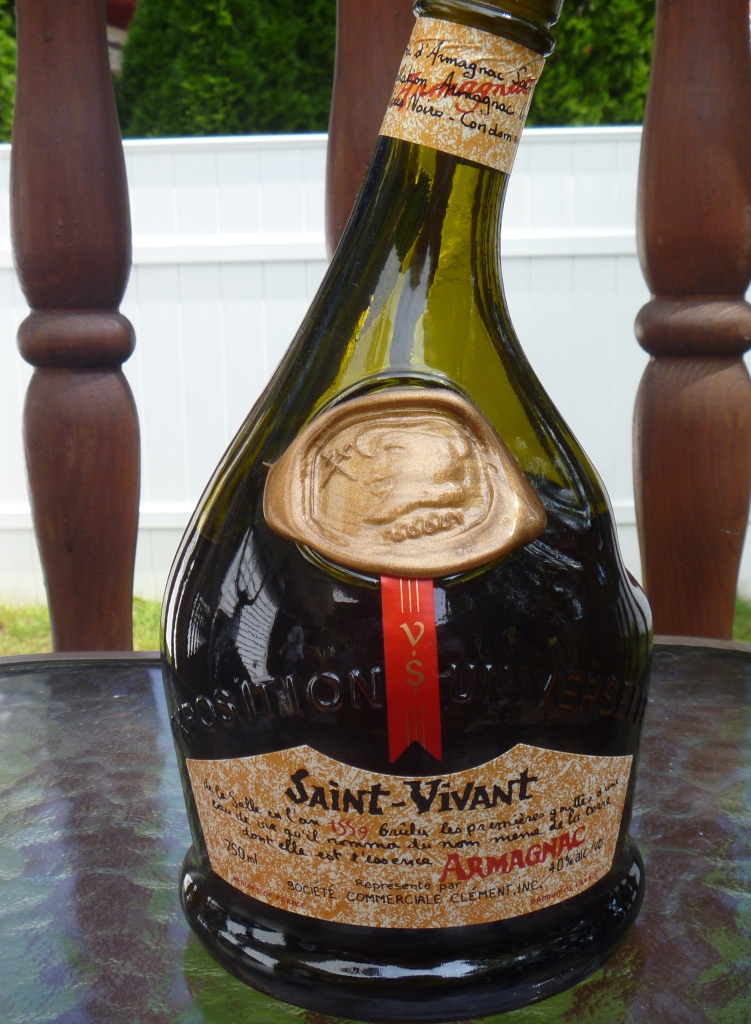
Of course Cognac is the most famous French spirit, however let’s start our journey from Armagnac, as historically it was the first region to produce brandy, starting in the 14th century. Armagnac is a region in the south of France, which has a status of AOC – it means that similar to the French wines, production of Armagnac is strictly regulated from start to finish. Armagnac is made out of grapes (about 10 different grapes can be used in production). Once grapes are harvested, pressed and fermented, the resulting liquid undergoes a process of single distillation, and then the spirit is placed into the oak barrels for aging. Armagnac’s age designation is similar to Cognac, which we will discuss a bit later in this post. Taking into account single distillation, Armagnac initially is harsher than the cognac, but it mellows down as it ages in the oak barrels for a minimum of two years.
Similarly to Armagnac, Cognac is also produced from the grapes (mostly Ugni Blanc, but some other grapes are also used). History of Cognac started in 16th century, when it was distilled from the local wine in order to withstand long ocean journey to the destination. Initially it was thought that after the ocean voyage, addition of water will convert spirit back to wine, but then it was found to be quite appealing on its own.
Same as the French wines regions, Cognac is an AOC, which is divided into 6 different zones, with Grand Champagne, Petite Champagne and Borderies being located in a middle of the appellation, and Fins Bois, Bon Bois and Bois Ordinaire surrounding them from all sides. Zone is usually designated on the bottle of cognac. There is also an additional designation of Fine Champagne, which is used if Grand Champagne and Petite Champagne are blended together. Again, same as with wines, the smallest appellation is the most restrictive as to what grapes can be used for the production of the cognac – for the cognac to be called Grand Champagne, all the grapes should be coming strictly from the Grand Champagne region, where for the bottle just labeled as Cognac, the grapes can come from anywhere within Cognac AOC.
In order to make cognac, it is necessary to start with wine. The grapes are harvested, pressed and fermented exactly in the same way as they would be for the wine production. Wine is typically fermented for 2-3 weeks, after which it undergoes process of double distillation (which removes harshness), and the resulting spirit is placed into the oak barrels (Limousine oak is typically used in cognac production) for aging. Cognac spends at least 2 years in the barrel, then it is typically blended with the cognac from different barrels and different ages to achieve persistent taste (here blending process is very similar to the one for the Champagne), and then it gets bottled. Of course some of the cognac spends 10, 15 and more years in the barrel, yielding a more mellow, more aromatic and complex beverage.
Looking at the bottle of cognac, you can always have an idea as for how long the cognac was aging in the barrel. If the label has letters VS (Very Special), it means that cognac spent at least 2 years in the barrel. VSOP (Very Special Old Pale) means that cognac was maturing for a minimum of 4 years, and XO (eXtra Old) has spent at least 6 in the barrel (but on average, XO is aged for about 20 years). There are some other designations, such as Napoleon, which typically designates age between VSOP and XO. One more interesting fact about cognac is that while there are about 200 producers, about 90% of the whole volume of the cognac attributed only to the four companies – Courvoisier, Hennessy, Martell, and Rémy Martin.
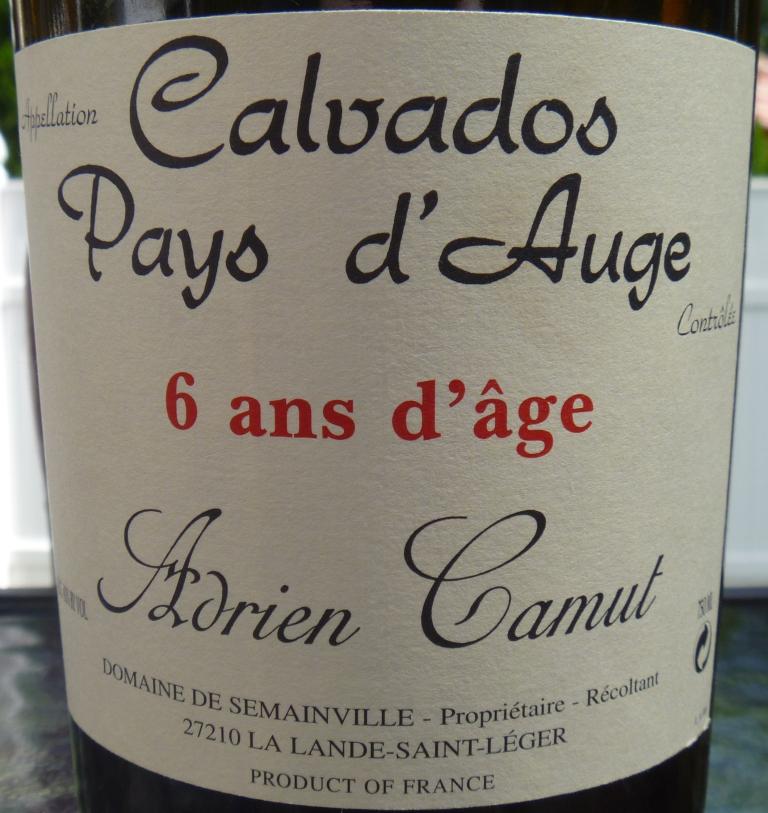 Our next stop is Calvados, where brandy is produced from apples. About 200 different types of apples (sweet, sour, bitter…) are used to produce Calvados. Production of Calvados started in 16th century, and it reached peak of popularity in 19th century, when grapes in the other regions were devastated by Phylloxera.
Production of Calvados starts from the harvesting of the apples, then pressing them and fermenting into dry apple cider. After that the liquid undergoes a process of distillation (both double and single processes are allowed), and then distillate is stored in the oak barrels for the further aging. Calvados should age for at least 2 years in the barrel before it can be released. In many cases it ages for anywhere from 2 to 6 years, but can go for 10, 15, 20 years and longer. Good Calvados, like the one from Adrien Camut, is a wonderful and fragrant drink, with hint of apples both on the nose and the palate, very balanced and delicious.
Leaving France, we have many potential Brandy destinations to visit – however, nobody can really compete with the France for the top spot in Brandy production. Nevertheless, we should mention a few other examples.
Georgia and Armenia started producing brandy in the 19th century, and taste-wise they were quite competitive with the actual French cognacs. They lost some of their edge after both countries became independent and experienced a lot of economic and political issues, but now they are slowly restoring their brandies back to the world class level. In both countries brandies are produced from grapes (wine). Just in case you are curious, you can look for Sarajishvili (Georgia) and Ararat (Armenia) brandies – both should be available in the stores.
I would like to mention two more brandies. First one, coming from Greece, is called Metaxa. It is a wine-based brandy, which is aged similarly to the French cognac, in the limousine oak barrels, and then blended with aged Muscat wine to create final product, which is typically very smooth and mellow (might be a touch too sweet, depending on your preferences).
Second one is coming from Italy and called Grappa. Grappa is made by fermenting of the grape must (skin, seeds and stems leftovers after wine production). Grappas are typically very strong with 53%-55% alcohol (typical brandy is 40%). As of the last 5-8 years, single grape grappas became very popular – and they have distinctive and delicate taste, despite still high concentration of alcohol.
There are many more countries to visit in our brandy journey – however, I hope you got the idea already. Enjoy a glass of your favorite brandy tonight – but if brandy is not your thing, please wait for the next post, where we will be talking about Whisky. Until then – cheers!
Looking for Liquid Pleasures Beyond Wine
 During 2011 I wrote a number of posts for the project called The Art Of Life Magazine – of course talking about my favorite subject, wine. The project was closed and even the web site is down, but as I still like the posts I wrote, I decided to re-post them in this blog. Also, in that project, posts were grouped into the mini-series, such as “Best Hidden Secrets” and “Forgotten Vines”. The post I’m offering you today was an opening post in the mini-series called “Liquid Pleasures Beyond Wine”.
Also note that the series was written for a slightly different audience – I hope none of my readers will take offense in the fact that sometimes I’m stating the obvious…
So far in this blog we mostly talked about wine, wine as an experience. We tried to uncover some of the hidden secrets of the wine world, such as Rioja, second labels of the famous wines, or French sparkling wines. We looked at the wines which were famous, then almost disappeared and now slowly coming back, such as Madeira and Jerez. We also searched for wine values, by comparing wines made from the same grape but coming from the different places. Did we explore enough the world of wines? Not really, we didn’t even touch the tip of a tip of an iceberg. Nevertheless, as we are looking for experiences, let’s take a step outside of the wine world, and let’s take a look at the other “liquid pleasures”.
I’m talking about the group which is collectively called “spirits”, otherwise also known as “distilled beverages”, which is a name which is used in Wikipedia. Overall distillation is a process of separating liquids with the different boiling points, and its application goes way beyond the world of alcoholic beverages. Distillation first was uncovered about 2000 years ago, but first use for production of the “spirits” happened less than a thousand years ago. When applied to the wine or any other fermented substance (meaning that some degree of alcohol is present in the liquid to begin with), the end result of distillation is a liquid with increased concentration of alcohol.
Historically, such high-alcohol liquids had various uses – one of the most important ones, which also has nothing to do with drinking the liquid, was medicinal. Strong alcohol is an excellent antiseptic; it is used in order to disinfect the area of the body, to kill any potential bacteria thus preventing any possible contamination. However, while this very important, such applications are completely outside of the scope of this blog, so let’s go back to the stuff we drink.
There are many different kinds of the spirits produced in the world. Some have more universal appeal and can be produced in many countries following the same basic methodology, but some can be also unique for particular place (but if it is any good, it is extremely hard to keep a secret). Let’s take a quick look at the various types of the spirits – we will discuss some of them in detail in the subsequent posts.
Let’s start with Brandy – brandy is a spirit which is produced from wine. This can be an actual grape wine, or it can be a fruit wine – both can be used for the production of brandy. For instance, Cognac and Armagnac are both made from the grapes, and Calvados, another famous French brandy, is made from apples. Brandy is produced in France, Spain, Italy (where it is known as Grappa), Georgia, Armenia, US, Mexico and many other countries.
Next spirit we need to mention is Whisky, which is made out of grains (barley, rye, wheat, corn). This group includes Scotch, which is made in Scotland, and then Whiskey, which can be made in many different countries – for instance, Irish whiskey is made in Ireland, and in US you can find both Whiskey, which is often made from rye, and Bourbon, which is corn-based. Whisky is also produced in Japan, India, Canada and other countries.
Then comes Vodka – made all around the world, from all possible ingredients. It is made in France, Russia, Poland, Italy, US, Canada and many other countries. It can be made from grapes, fruits, grains, potatoes and probably some other ingredients we can’t even think of. Vodka is often called a “neutral spirit” as it is typically produced flavorless (some flavor can be infused before bottling), and thus it is a popular component in many cocktails.
To complete the “big scale” list of spirits, we need to mention a few more. Tequila, which is produced from the Blue Agave plant, is a very popular spirit coming from Mexico. I can’t resist to mention Mezcal, which is also made in Mexico using Agave plants, but it has distinctly different taste (and very hard to find). Then we need to mention Gin, which is also a popular cocktail ingredient and has a very distinct taste as it is produced from Juniper berries. And last but not least comes Rum, which is produced from sugarcane, and yet another popular cocktail staple.
As we are looking for the great experiences, should we even look at all these “hard liquors” as they often called in the United States? Absolutely. Moderation is a key when it comes to alcohol (this universally applies to any kind of alcoholic beverages – beer, wine or spirits) – but once this is understood, one can definitely enjoy immense richness and variety of flavors coming from all these spirits. They definitely create a lot of great experiences and unique memories, and they bring lots of pleasure. In the coming posts, we will take a closer look at some of them – and until that time – cheers!
Daily Glass: Memorable Wines
 Wine = Memories. Well, okay, we need to correct that statement. Great Wines = Memories, now that is better. Of course we remember the wines we drink, and this is how the opinions are formed and this is how the wine list in the restaurant doesn’t look that intimidating anymore. But this should be characterized more as a general knowledge, not specifically as “memories”. Great wines, on the other hand (I’m not going to define the term “great wine” – this is highly personal, you define it for yourself), become memory anchors. We remember when, why and how, we remember who we shared it with, and we can retrieve those memories on the moment’s notice. That is what “great wine” can do to you.
Case in point – a great evening with friends, which had all three elements at its perfection – the wine, the food and the company. An evening, when the time flies so fast, you don’t understand how late it is already. And the wines – stunning, each one in its own right. We started with Gosset Grand Réserve Brut Champagne – a non-vintage Champagne from one of the old and classic producers. I have to honestly admit that I was never impressed with other Gosset wines in the past, but this Grand Réserve, poured from the magnum, was outstanding – round, creamy, yeasty just enough, with a touch of apple and fresh bread on the palate – an excellent start of the evening.
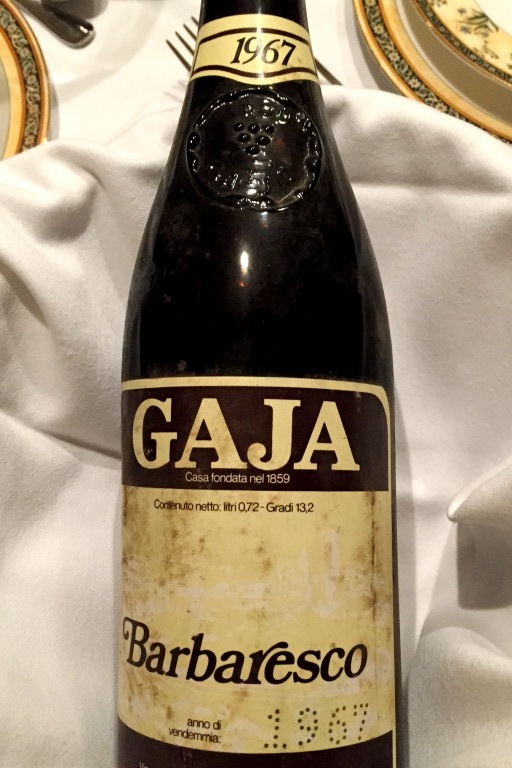
Then the awe inspiring, almost 50 years old 1967 Gaja Barbaresco was gently uncorked. It was not simple, as cork did crumble – but this is nothing which strainer and decanter can’t fix. The first whiff – nothing smells off, which is a great sign of relief. While we put the wine aside to let it breathe a bit, we reached out for another white – 2007 François Cazin Le Petit Chambord Cour-Cheverny AOC.
This is a rare French white wine made from 100% Romorantin grape. I remember a few years back trying this wine at a 10 years of age – and I remember been simply blown away by the exuberant beauty of this seemingly unassuming wine (new vintages retail at around $15 – the QPR is through the roof on this). The nose of that 2007 was amazing, with fresh white fruit, guava, mango, honeysuckle, lemon and lemon zest. On the palate, behind the first wave of Riesling-like appearance with touch of sweetness and tropical fruit notes, there were layers and layers of acidity and minerality. After about 10 minutes of breathing time, the wine was almost bone dry, very crisp and refreshing. I still have 3 bottles of the 2007, and now the trick will be to keep my hands away from them, as they still benefit from time.
Time to get back to that 1967 Barbaresco. We were somewhat waiting for the main course to start drinking it, and I was concerned that as it happens with many older wines, this wine might also succumb to the neverland if not consumed within that short window of time. Silly me. The wine kept going and opening for the next 2 hours. It had all those sweet plums, sapidity of the onion peel, minerality, all weaved around a well defined structure with perfect acidity and perfect balance. The “wows’ kept flowing until there was nothing left in the decanter – this was definitely a treat. And a perfect memory anchor, an experience which stays forever.


Our next wine was also very interesting and delicious in its own right, by fate or the accident made from the exact same grape as the Barbaresco, the Nebbiolo –2004 Ar.Pe.Pe Rocce Rosse Riserva, Valtellina Superiore Sassella DOCG, Italy. Valtellina red wines are typically made in the way similar to Amarone – with the grapes drying out after the harvest for about 120 days, and only then pressed and vinified. The Sassella Rocce Rosse from Ar.Pe.Pe stands apart, with Nebbiola grapes (locally known as Chiavennasca) left on the vine to raisin, and then pressed. Fresh, succulent plums and cherries on the nose and palate, together with effervescent lightness and firm structure (this might not make sense right away, but this is the way I perceive it), which I always find in Ar Pe Pe wines. Again, a delicious red.
Our last wine was 2003 Sella & Mosca Anghelu Ruju Rosso Passito Riserva Alghero DOC, Sardinia, Italy – very unique and interesting fortified wine, made out of partially sun-dried Grenache, locally known as Cannonau. This wine was mostly resembling the Port, with a hint of dried fruit on the nose, supported by perfectly balanced, soft body of plums and sweet oak, with perfect amount of sugar to make it a light dessert wine, but not an overbearing sweet monster.
Here we are – a perfect set of very memorable wines, compliments of dear friend Stefano (Clicks & Corks/Flora’s Table), and an evening with friends which will stay in memory, anchored by that 1967 Barbaresco. Considering that I’m finishing this post right on the Open That Bottle Night, I hope you increased your memory bank with some spectacular experiences, both of wines and the company – and I will be glad to hear about them. To the great life experiences! Cheers!
Coming Up This Saturday: #OTBN – Open That Bottle Night
 Just a quick reminder to all the wine friends, oenophiles, aspiring sommeliers and all the other folks who find wine to be an indispensable part of their lives – OTBN is here, so get your thinking hat on and go visit your cellar (those without a cellar can settle for the visit to the good wine store).
Open That Bottle Night, usually abbreviated as OTBN, is a movement created by Dorothy J. Gaiter and John Brecher, writers of the Wall Street Journal’s Tastings column. In the year 2000, they declared last Saturday in February to be a special night for the wine lovers – it should be the night when that special, cherished, admired, preserved, treasured bottle gets right on the table – and gets opened. The wine needs to be enjoyed – as the life is unpredictable, we should really create those special moments in the “now”, instead of waiting for them for the eternity.
Since its invention, OTBN became an international phenomenon, celebrated all over the world. This upcoming Saturday, February 28, 2015, is the last Saturday of February – so it is the time to get that special bottle ready and open. I don’t think you need any special instructions, but in case you feel like you need someone to tell you what to do, here is the link to the Wall Street Journal article which will give you the detailed instructions on how to enjoy OTBN.
I know you are hoarding more than one special bottle – it is the time to put at least one of them to the good use. If you care to share what you will be opening, this what the comment section is for. Open That Bottle! Cheers!
What To Drink During #ShirazWeek
 Yep, another wine holiday is upon us. This time, it is a week-long holiday, so you will surely get your opportunity to celebrate. What holiday, you ask? #ShirazWeek. Yep, the whole week dedicated to the Shiraz wines.
As we know, Shiraz is just a different name for the grape called Syrah, one of the most popular red grapes in the world. Today Syrah is literally growing everywhere – France, Spain, Italy, even Portugal, United States, Chile, Israel, South Africa, Australia and many others. But – what is the first country which comes to mind when you hear the word Shiraz? For me, the answer is simple – Australia.
Australia is one and only wine making country where you will not find wines called Syrah (well, may be you can, but with extreme difficulties). South Africa is probably next – most of South African Syrah wines are called “Shiraz”. For the rest of the world, Chile is often uses the name Shiraz, and you can find some of US wines called Shiraz as well (quite rare – Syrah prevails by a huge margin), and then it is Syrah all the way.
Shiraz is most popular red grape in Australia, with the plantings been second largest in the world after France. A quick question for you – do you know where the oldest, continuously producing Shiraz vines are located? Well, yeah, I’m sure it was easy to figure out in the context – yes, in Australia, in Barossa Valley, planted in 1847, now reaching a tender age of almost 170 years. Over the years Shiraz had its ups and downs, with the vineyards ripped out, including the old vines, with overproduction and quality problems – but it still remains Australia’s darling, and a world-class wine on its own, well worthy of a celebration. Shiraz is produced everywhere in Australia, but Barossa, Coonawarra, Clare Valley, Hunter Valley, Margaret River and McLaren Vale are probably the most famous regions for that wine.
Now, let’s talk about what to drink in honor of the #ShirazWeek. Of course I don’t think you should be drinking Shiraz for the whole week – but then you should do whatever you think is right – I’m merely here to provide some suggestions. As a self-made oenophile, I went through lots of Australian wines the bargain aisle has to offer – I had my fair share of Yellow Tail, Rosemount, Wolf Blass and Lindeman’s – the wines that comprise the glory and the curse of the Australian wine industry. But – I’m sure you don’t need my advice with that group. Let me instead suggest some names which I think would be worthy of your attention. The list below has no particular order – but these are all the producers I can related to, one way or the other. While some of these wines will be more expensive than the others, I don’t expect you to need to break the bank to taste any of them, so don’t be concerned.
-
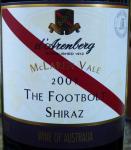
- d’Arenberg The Footbolt Shiraz McLaren Vale 2007
-
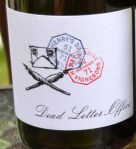
- Dead Letter Office Shiraz
-
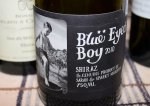
- Blue Eyed Boy
-
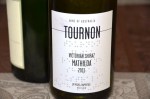
- Tournon Mathilda Shiraz
d’Arenberg – very well known producer in McLaren Vale, with many family generations involved in the winemaking. Footbolt Shiraz (under $20) and Dead Arm Shiraz (around $70) both worth your attention.
Jim Barry – Jim Barry is a well known producer in the Clare Valley. While they make a number of wines, the one I particularly recommend is Jim Barry McRae Wood ($50), a single vineyard Shiraz – very focused and delicious.
Two Hands Wines – their wines are exuberant, over the top, and never shy in alcohol – but they also manage to achieve an impeccable balance. Try whatever you can get your hands on. The wines are generally priced in the $30 – $100 range.
Mollydooker Wines – a wonderful producer in McLaren Vale. I love the way their wines are named – Carnival of Love, Blue Eyed Boy or Two Left Feet, for instance. Again, try anything you can get. Similarly to the Two Hands, their wines are priced in the $25 – $100 range.
Henry’s Drive – a producer in Padthaway in South Australia. I came across their Dead Letter Office Shiraz as a recommendation from Dorothy Gaiter and John Brecher, writers of the Wall Street Journal’s Tastings column, where 2005 Dead Letter Office Shiraz was rated as Delicious!, a highest honors in the Tastings column. I had an opportunity to taste and concur – and according to the Wine-Searcher, the 2005 is still available online at $26.
Pirramimma – a producer in McLaren Vale. I have to be honest – I never tried their wines, but – the 2005 Shiraz was listed in that exact same Tastings column with exact same Delicious! rating, hence my recommendation. I have a bottle of this wine, and will probably follow my recommendation soon.
Elderton Wines – another great producer from Barossa. I had an opportunity to try 2002 Elderton Command Shiraz, and this wine was simply stunning. It will set you back about $90 or so – but in that price category, it is well worth every penny.
M. Chapoutier – best known for their French Syrah wines, M. Chapoutier started producing Shiraz in Victoria, Australia in 2002. Tasting 2011 Domaine Tournon Mathilda Shiraz was literally a mind-blowing experience and it was one of my absolute favorite discoveries of the last year (here is my post). At less than $15, this might be the best Shiraz you can ever taste at a price.
There are lots and lots more Shiraz producers in Australia – as I said before, the list above only includes wines I can relate to, so feel free to suggest your favorites.
And just in case money are no object, I would like to suggest two Shiraz wines I didn’t have the opportunity to taste, but they should be able to provide a holistic experience, at least based on the price ($600+) and according to the people who tasted them. I’m talking about Penfolds Grange and Henschke Hill Of Grace Shiraz Eden Valley – both wines should be absolutely magnificent – but I will let you confirm or deny it in case you had the firsthand experience.
Now you are ready to celebrate the #ShirazWeek – and don’t forget to share your experiences on the AussieWine web site. Drop me a note too – I want to know what is in your glass and how do you like it. Cheers!
Valentine’s Day Wine Experiences
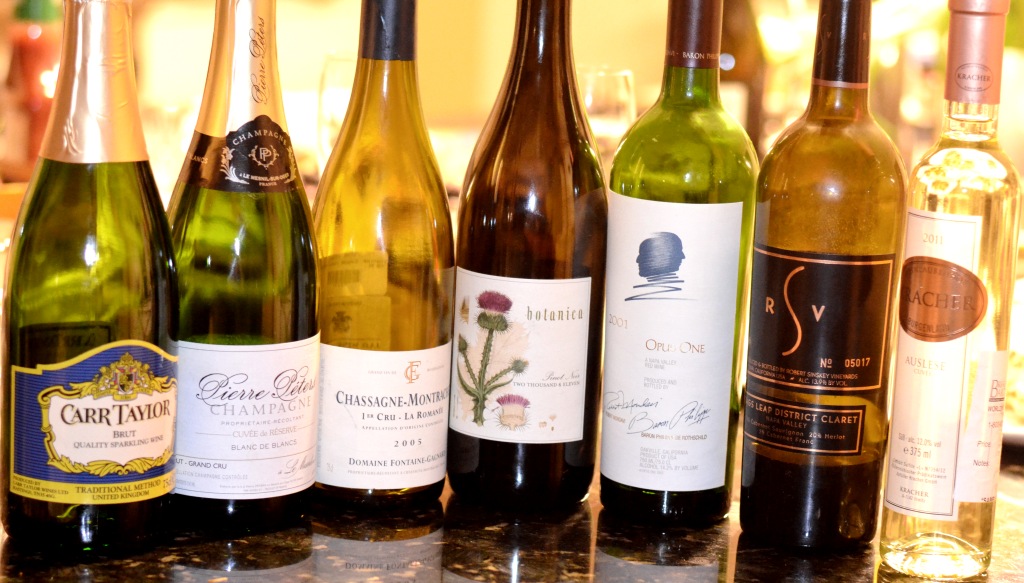 Last week I gave you some recommendations for the wines to serve on Valentine’s Day. Now, let’s see if I followed my own recommendations.
Of course the plan was to start the evening with the Champagne – and then there was a … but. I recently got my hands (told you many times before – I love my friends) on the very interesting sparkling wine from UK. What was the most interesting for me even before I tried the wine is that it contains one of the extremely difficult to find, rare grapes called Schönburger. As I mentioned last time regarding my quest to complete all the grapes in the original Wine Century Club application, Schönburger was one of those “last standing”, extremely difficult to find grapes – and the Carr Taylor Brut was the only wine containing Schönburger, which Wine-Searcher was able to find pretty much anywhere. In case you are curious, Schönburger is a rose grape created in 1979 in Germany as a cross of Pinot Noir, Chasselas and Muscat Hamburg, As an added bonus, the Carr Taylor Brut contained another grape I never heard of, another cross from Germany called Reichensteiner.
Okay, now that I provided a full disclosure, let’s talk about the wines. NV Carr Taylor Brut Sparkling Wine, England (12% ABV, $35) was an excellent start for the evening. Fine bubbles, very intense, very reminiscent of Champagne. Hint of toasted bread on the nose and may be a touch of almonds. The palate had all the toasted and yeasty notes, packaged together in compact but bright way – the wine had no sweetness, but nevertheless was perceived as a fuller body than a typical Champagne. I would gladly drink this wine again any time – if it would be available in US. Drinkability: 8-
Now it was the time for Champagne – Pierre Peters “Cuvée de Réserve” Brut Blanc de Blancs Champagne (12% ABV, $55) – very classic, a hint of brioche on the nose, and nice toasted notes on the palate. Quite honestly, after the first sparkling wine, I wanted a bit more life in the glass – this was clean and fine, but more of the usual. Drinkability: 7+
Our next wine was a white Burgundy. Considering my limited experience with Burgundy, I was concerned if 10 years old wine would hold well (all of you, Burgundy buffs, please stop laughing out there – I’m still learning), so the Valentine’s Day seemed to be quite a good occasion to find out. This 2005 Domaine Fontaine-Gagnard La Romanee, Chassagne-Montrachet Premier Cru, France (13.5% ABV, $65) was outright delicious – beautiful nose of fresh apples, and then apples and honey on the palate – full bodied, supple, with perfect lingering weight in the mouth – this was really a treat. Too bad it didn’t last – but this was definitely an excellent wine. Drinkability: 8
Time for the reds, don’t you think? Remembering the pleasure of the Antica Terra Ceras Pinot Noir (here is the post in case you missed it), I wanted to try another Pinot Noir from Antica Terra – this time it was 2011 Antica Terra Botanica Pinot Noir Willamete Valley (13.2% ABV, $75). The nose was very similar to the Ceras – cranberries, touch of forest floor, lavender, bright and intense. On the palate, this wine had much bigger shoulders than Ceras. Ceras Pinot Noir need no breathing time – it was ready to drink from the moment the bottle was opened. Botanica needed a bit of time. After about 20 minutes in the glass, it showed its structure, dark concentrated fruit, touch of coffee, earthiness, all with a perfect balance, and again, finesse. Drinkability: 8
And then there was Opus One. 2001 Opus One Napa Valley (14.2% ABV, $250). Quite honestly, when I learned that we will be opening Opus One, I was a bit concerned. Yes, this is one of the legendary California Cabernet Sauvignon wines, and yet when I tasted it before, I was not blown away. And when you are not visually excited about $250 bottle of wine, you feel that something is wrong with you, don’t you think? Bottle is opened, and wine is poured in the glass. Based on the color, the wine looks like it was bottled only yesterday – dark, very dark garnet. On the nose, the wine was somewhat muted but pleasant – touch of black fruit and eucalyptus. On the palate, the wine was simply closed – and aggressively tannic, with a touch of green brunches on the finish. Well, to the decanter, of course. After about an hour in decanter, the wine definitely changed for the better, showing touch of cassis and coffee notes on the palate – the tannins still stayed, but reduced, and the finish became spicy, peppery if you will – still not leading to the “wow” which you want to find in the bottle like that. Oh well. Drinkability: 7+
As we were waiting for Opus One to come around, another bottle was pulled out – 1996 Robert Sinskey Vineyards RSV Stag’s Leap District Claret Napa Valley (13.9% ABV, $55). This wine amply compensated for the Opus One shortcomings – in a word, it was delicious. Perfectly young appearance in the glass was supported by the fresh fruit on the nose. And the palate had cassis, touch of mint, mocha, sweet oak, silky smooth tannins, perfectly layered and perfectly balanced. This was Napa Valley Cabernet at its peak, and it was not afraid to show it. Drinkability: 8
Logically (Valentine’s Day!) we had to finish on a sweet note. This was my first experience with Austrian dessert wine, and it was also a first experience with Kracher – I only heard the name before, but never tasted the wines. 2011 Kracher Auslese Cuvée Burgenland, Austria (12% ABV, $22) had everything you want in the dessert wine and nothing you don’t – delicious light honey notes, lychees, vibrant acidity, lemon peel – it was an outstanding way to finish the evening. Drinkability: 8
That is the story of our Valentine’s Day wine experiences. Well, I can’t leave with the wines alone – the food was delicious too, so let me at least share some pictures – I spent time working on them, you know. Here we go:


And we are done here. So, what were your Valentine’s day wine highlights? Cheers!
What To Drink On Valentine’s Day
 I generally avoid holiday-related wine posts, and I do it for a number of reasons. First of all, every information source on the planet considers it to be their duty to produce some piece of writing with wine recommendations. And then for someone who drinks wine all the time, the holidays are not so much of a special occasion to have a reason to open a bottle of wine. Oh well – somehow I felt compelled to share my thoughts on the wines for the Valentine’s Day, hence this post…
Pink. Red. Extreme. Commercialized beyond belief, still increasingly so year after year. Heart-shaped to the point of insanity. There are many things which turn people away from the Valentine’s Day, and I can understand that. However, I take this holiday as an extra opportunity to celebrate love and life. All you need to do is to find your way – ignore pink paraphernalia, ignore meaningless cards, ignore conveyer belt – style experience at the restaurants – and celebrate love and romance as a pure meaning of this holiday.
Let’s agree that we will celebrate love and romance in our oenophile’s way, and let’s talk about wine – without wine on the table, celebration is … just another boring dinner, right? By the way, when I said “felt compelled” in the opening of this post, this was not entirely true. I also had a pleasure to be a guest at the Off the Vine Radio Show, talking with Benita and Latisha about … you guessed it – Valentine’s Day wines – thus as you can imagine, I gave some thought to the subject (and then yes, “felt compelled”). In case you have a bit of time, you can listen to that episode here.
What can I tell you about wines for the Valentine’s Day? First of all, if you have a plan already, it doesn’t matter what I have to say. If you have some specific celebratory dish in mind, and have a pairing ready – it doesn’t matter what I have to say. But if you are still thinking how to make this holiday special, then let me share my thoughts with you. But remember – drink what you like. The wine for the Valentine’s day doesn’t have to be pink, and it doesn’t have to be sweet. It has to be something which will give you pleasure – as simple as that.
The wine for the Valentine’s Day should have balance and it should have finesse. While thought provoking is good for the wine, on Valentine’s Day you should focus on romance and not on deciphering the complex flavors. Go after balance, finesse and simplicity. This is why I would never suggest, for instance, the natural wines of Frank Cornelissen or Jean-Pierre Robinot, or the dark magic of Randy Dunn with his Howell Mountain Cabernet Sauvignon – those wines will drain you emotionally, and it is a wrong angle for the Valentine’s day. Thus let’s talk about balance and finesse.
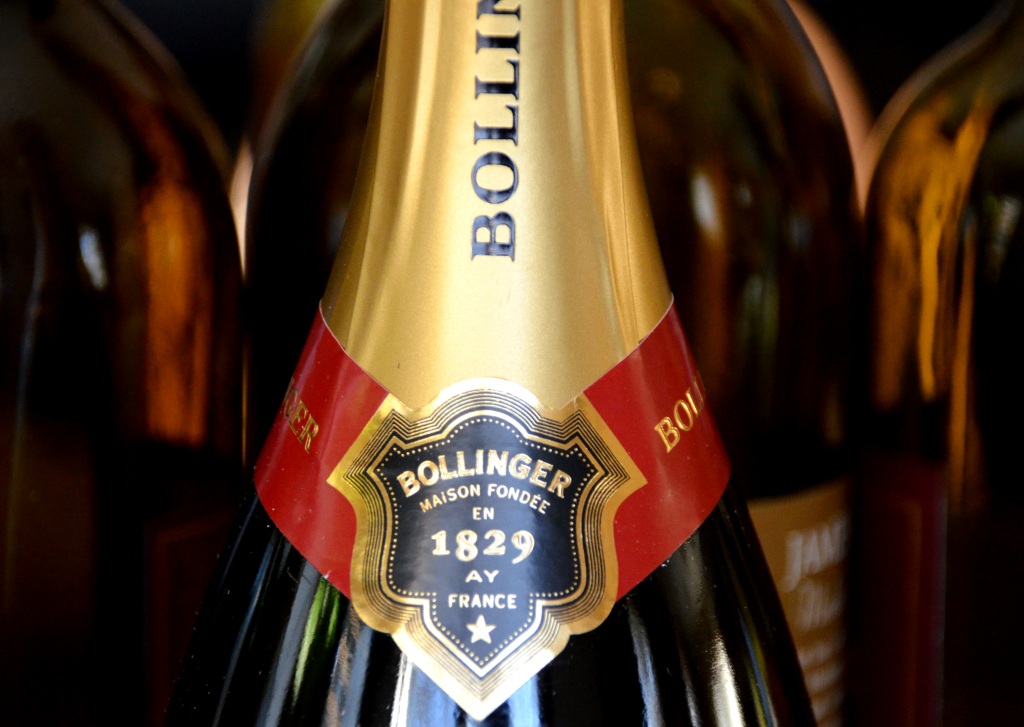
First wine I want you to consider is Champagne. As the very least, it can be an Italian Sparkling wine from Franciacorta or Trento, or some of the California sparklers. Prosecco, Cava and many other sparklers are simply not consistent enough, so for the Valentine’s Day, go with classic – remember – balance and finesse. For the Champagne, my choice would be Bollinger, as I think it is one of the finest non-vintage Champagnes, with lots of finesse. Ferrari from Trento and Bellavista from Franciacorta in Italy would definitely my next choice. But – I don’t want to forget California – Roederer Estate L’Ermitage, Schramsberg Rosé, J Cuvée 20 or any of the Gloria Ferrer sparkling wines would live you with a happy smile.
Moving on, let’s talk white wines. As we are looking for the balance and finesse, I have a few recommendations for you – and you might be surprised with these. For this holiday, I want you to step outside of your “usual circle”. My first recommendation is for the white wines of the Rhône valley in France. Yes, Rhône is mostly known for their reds, but the white wines there are equally stunning. For instance, try to find Domaine Saint Préfert Cuvée Speciale – I called this wine once “a symphony in the glass”. But in general, look for the Clairette or Grenache Blanc wines from Southern Rhône, or Marsanne/Roussanne from the North – those wines are often not easy to find, but they will deliver lots of balance, finesse and pleasure.
Let me give you a few more suggestions – equally difficult to find, but worth looking for. Viognier from Washington is a white wine worthy of celebrating love and romance with. Look for Mark Ryan or Willis Hall – their Viognier is nothing short of stunning. To close on the whites, here are 3 more rare beauties. First, 2 Sauvignon Blanc from … Italy: Gaja Alteni di Brassica and Poggio alle Gazze dell’Ornellaia – stunning balance and finesse. And the last one – Ken Forrester The FMC. You can’t go wrong with either one of these wines – go, start looking, you don’t have lots of time.
Now, we arrived at the red wine junction. Looking for the balance and finesse will dramatically reduce our choices. I would say, let’s go for Pinot Noir. I will limit my recommendations to this one grape only – and here is why. We are looking for the balance and finesse, right? Think about Cabernet Sauvignon from California – what would be the first word or words you would use to describe those wines – probably “big and powerful” – and this is not what I’m looking for suggesting the wines for the Valentine’s Day. Same goes for many Merlot, Syrah and Grenache wines – never mind the Petite Sirah. Even with my beloved Rioja – there are few wines, which will deliver that exact balance and finesse – La Rioja Alta Reserva Especiale would be definitely the one – and I highly recommend it. But for the Rioja – and then for Barolo, Brunello and even Super-Tuscan – as a general class, the probability of running into “big and powerful” is a lot higher than finding “balance and finesse”.
Talking about Pinot Noir, I wish I would recommend some of the classics to you – yes, the Burgundy – but unfortunately, my exposure to the Burgundy is way too limited, so you will need to ask your trusted wine merchant for the advice. Next up – California and Oregon. For the most of the time, California Pinot Noir will deliver exactly that – balance and finesse. To give you a few names, go look for Siduri, Loring Wine Company, Calera, Drew, Copain, Laetitia – but there are many others and it is hard to go wrong with California Pinot Noir. Oregon would be also a perfect choice – look for Adelsheim, Chehalem, Antica Terra, Evening Land – finesse is a middle name for the Oregon Pinot, so you will not be disappointed. And last but not least – don’t forget the New Zealand! Pinot Noir from Central Otago, Marlborough and Martinborough are typically well balanced and round, perfectly fitting our quest for finesse. Look for the wines from Craggy Range, Mt. Difficulty and Amisfield among the others.


Dessert time! People often underestimate how bad the dessert wines can be – one sip of the cloying, single-sugar-note wine would ruin the experience of an amazing dinner. You really have to put a lot of care in selecting the dessert wine which will have balance and finesse. Of course I would like to recommend Sauternes and Barsac wines for you, but again, my personal experience is very limited. I’m sure you can’t go wrong with Château d’Yquem – if you can afford it, go for it! What would be a bit easier to find (and afford) is a Port. Not just any Port – balance and finesse, remember – so go for a nicely aged Tawny, 20-, 30- or 40-years old. As Port ages, it loses power, and becomes fragrant and sublime, guaranteed to deliver lots of pleasure. Look for Rozes, Graham, Quinta do Noval – lot’s of excellent choices. Then of course, the king of the dessert wines – Riesling. For the special experience, I would only recommend to go to the BA and TBA levels – you know, the stuff which always comes in the small bottles. You see, it is very hard to mass-produce BA or TBA level Rieslings – you can’t harvest enough grapes at those sugar levels – thus it is hard to go wrong with BA or TBA Riesling from any producer. And the last recommendation for today – an Icewine. Not any Icewine, but I want to recommend my personal favorite – Inniskillin Cabernet Franc Icewine. This wine is vibrant, perfectly balanced and has lots of finesse – I guarantee you will finish your Valentine’s Day dinner on a high note with this wine.
Here you go, my friends – in the quest for the balance and finesse, these are some of my personal recommendations to enhance you Valentine’s Day experience. Let me know what do you think about my suggestions and feel free to provide your own. Happy Valentine’s Day and cheers!
Daily Glass: First, There Was A Smell
Drinking wine is a sensual experience. Okay, I can’t speak here for all the people who drink wine at one time or the other – but I’m sure that this selectively crazy passionate group, oenophiles, would wholeheartedly agree. Once the wine goes into the glass, of course the color matters first – but color is mostly a technical characteristic. The color can tell you what to expect – for instance, if a Chardonnay has rich golden, yellow color in the glass, you should prepare for the worst (the wine which will be well past prime). Or if a red wine looks almost black in the glass, get ready for the tannins encounter. Still, the most pleasure you can get from the color alone is to get excited – “look at this beautiful color!” type excited.
Your hedonistic pleasure starts with the smell. Technically, it starts and ends with the smell, as our taste buds don’t go beyond 4 (or 5) basic tastes, and even when you take a sip of the wine, it is still the sense of smell which leads you to the strawberries in that sip – but let’s not get technical here, we are talking about the pleasure. Yes, you start with the smell – it is the smell which takes you away and makes you go “wow”. It is the smell which grabs your attention and captivates you, and forces you to smell that wine again, and again and again. It is the smell which builds up the excitement and expectations of the first sip.
The first sip afterwards is a moment of truth – if you are lucky, the taste will match the smell and will take you to the oenophile’s heaven, at least for a moment. It doesn’t always work like that – more often than not, the excitement built by impeccable aromatics instantly dissipates after the first sip. But when you are in luck, this is how the wine memories are created.


What prompted this post was my undoubtedly lucky experience few days ago with two wines in the row, delivering that incredible combination of aromatics and taste. Sorry, I’m getting overly excited here, but the smell of the 2013 Hanna Sauvignon Blanc Russian River Valley ($15) was, in a word, spectacular. In the New World renditions, Sauvignon Blanc is very aromatic more often than not – but it would be typically aromatics of grapefruit and lemon, Here, from the get go, the glass was exuding with the aromas of the fresh cut grass and cat pee. Yes, I know that many people jump when the cat pee descriptor is used, but anyone who had owned a cat would perfectly understand what I’m talking about. And yes, cat pee is a known classic profile of Sancerre, the most classic Sauvignon Blanc of all. So this wine had it all, clean, bright and present on the nose – and the palate was beautiful, medium to full body, with fresh cut grass and touch of lemon peel. Definitely an outstanding example of California Sauvignon Blanc, now squarely engraved in my memory, right next to the Honig and Mara White Grass, which are always California Sauvignon Blanc staples for me. Drinkability: 8+
And then there was 2011 Antica Terra Ceras Pinot Noir Willamette Valley ($75). I’m not going to spend a lot of time talking about the winery – you can should read interesting stories on Antica Terra web site on your own. But this wine… Talking about attractive color, the wine was ruby with the light pinkish hue in the glass. And then the first smell… It was surreal. Here is where I fail as a wine writer, as I can’t give you the right set of words to describe the impressions from this wine. The smell had everything in it – the cranberries, forest floor, herbs and mushrooms – light, delicate and seductive, saying “and now, let’s take a sip…”. The palate was a natural, precisely fitted extension of the smell – all the same component, now packaged together. More cranberries, shallots and truffles, sage and lavender, minerality and whiff of the forest floor, effortlessly rolling off your tongue, delicate and present, with perfectly noticeable, silky texture and needless to say, perfect balance. This was for sure one of the most sensual wines I ever had. And yes, if you want to take this tasting note as an example “look at another moronic wine review” – I will still stand behind it, as this wine delivered lots and lots of pleasure. Drinkability: 9/9+
There you have it, my friends – two wines which will be etched in the memory for the very, very long time. I wish you all to have lots of sensual wine experiences and memorable wines. Cheers!
Dancing Flavors of Miami
With some of the blog posts, you spend literally days trying to come up with the post title where you can say to yourself “yes, I like it”. And then some just jump into your head – your task is to remember it, or better yet – write it down right then and there.
This was my case with the title of this post. I was [pretty much] lucky to spend almost two weeks in Miami and Miami Beach. Yes, I escaped the cold weather of Connecticut, but it was not a vacation, it was work – yeah, okay, I got me – I was still in Miami as opposed to back in New York or a Calgary, for instance. For someone who is a foodie, most (not all) of the business trips still allow some room for the favorite form of entertainment and exploration – finding the great restaurant experiences. This trip, I managed to come across 4 restaurants which I would like to write about – just in case travel will take you to Miami, whether for business or pleasure – these restaurants well worth your attention. Here we go.
Bali Café
A small place, I would say just a bit bigger than a typical “hole in the wall”, Bali Café serves Indonesian cuisine, as you might expect from the name. The restaurant is decorated very appropriately, creating an authentic feeling despite rather a constrained space. To be honest, I think this was my first ever experience with Indonesian cuisine, and it was definitely a positive one. The dishes on the menu had general “Asian flair”, especially if you will look at the large sushi selection. At the same time, spices were a bit different for many of the dishes, let’s say, from a typical Chinese or Thai restaurant.
I liked the restaurant so much that I managed to visit it twice during the week for lunch. First time I had the dish called Bihun Bakso Kuah – Indonesian style rice noodles with spinach and fish and meatballs in beef broth soup – the dish essentially consisted of two separate plates – the noodles and the soup, both delicious on its own and together.
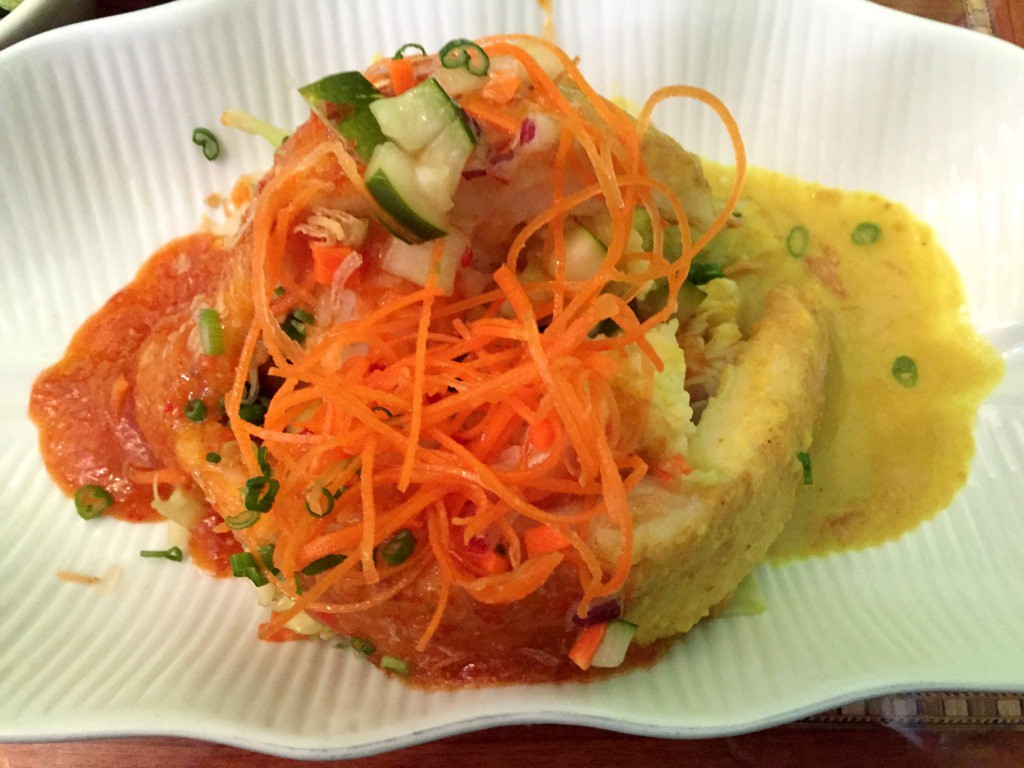
The second time I got Ikan Pesmol, a pan fried fish with stew in aromatic Indonesian spices, which was outstanding, a combination of curry and sweet chili pepper spices, delicious until the last morsel. You should definitely pay a visit to Bali Café if you are in the area. Keep in mind that the place is small, and accepts cash only (no credit cards).
Bali Café
109 NE 2nd Ave
Miami, FL 33131
Ph: (305) 358-5751

Cvi.Che 105
 The next restaurant I want to bring to your attention is called Cvi.Che 105, and it presents itself as a Peruvian restaurant. It is located very close to Bali Café, so it will be easy for you to visit both on the same day 🙂
As we had a dinner at Cvi.Che 105, let me start from the few words about the wines. The wine list is of a reasonable size, and it is very well composed, featuring good selection of wines evenly distributed over many regions, from New Zealand to Spain, Italy and France, to Napa and to Chile, all at a reasonable prices. We went with 2012 Sin Palabras Albariño Rias Biaxas (13% ABV, $34), which had a nice acidic profile with perfect limestone minerality, the one which makes Albariño such a great companion to any seafood dish.
We started with the grilled octopus as an appetizer. You know, it is very hard to describe the dishes in its perfection – I can’t be saying all the time “this was the best ever” dish, right? It is impossible that every new dish is “best ever”, so okay, this was not the best ever grilled octopus – but I’m not sure if I ever had a better grilled octopus. Perfect texture and outstanding flavor – if you like octopus, don’t waste your time, go and try it.
Next, very appropriately to the restaurant’s name, we had a ceviche called Ceviche Seafood Orgy, which was outstanding, with perfect flavor and interesting textural contrast provided by white beans and roasted corn kernels. Considering the successful experience with the main course, we simply had to go for the dessert. The Lucuma Cheesecake was good, but a bit lackluster in flavor. However, the Coconut Flan was exceptional, even considering the fact that I’m not a big fun of coconut – perfect flavor and texture.


I also want to mention an excellent service. You know, I like to conduct a “service level test” from time to time. Don’t get scared with the big words. All I do is ask the server for the wine recommendation and see if the most expensive wine will be the first recommended choice. In case of Cvi.Che 105, it was not – which in my book is a hallmark of an excellent service. All in all, the restaurant is highly recommended.
Cvi.Che 105
105 NE 3rd Ave
Miami, FL 33132
Ph: (305) 577-3454
http://www.ceviche105.com/

Cleo Restaurant
 Now we are moving a few miles east, from Miami to Miami Beach. The first restaurant I want to bring to your attention goes under a simple name Cleo, and this was the restaurant which made me to come up with the title of this blog post, as “dancing flavors” was the best way to describe my feeling after visiting the restaurant.
When we asked our waitress Molly to explain the wide variety of dishes and flavors on the menu, she said that the restaurant is best characterized as “Eastern Mediterranean” in its cuisine. Chef, who is of Moroccan descent, traveled quite a bit, and his cooking brings together flavors of Italy, Israel, Lebanon and other Mediterranean cultures. Combine that with an impeccable precision of execution, and you get into the foodie heaven (yep, it’s worth mentioning in bold).
First things first. The wine list at Cleo features a number of interesting selections from US, Italy, France, Israel and even Lebanon, and when I saw a Chateau Musar (the most famous producer in the Lebanon) wine on the list for $51, that was really an easy decision. 2011 Chateau Musar Jeune Red Bekaa Valley, Lebanon (13% ABV, $51, 50% Cinsault/35% Syrah/15% Cabernet Sauvignon) had an open nose of fresh red berries, medium to full body with good amount of spices, soft tannins and sweet oak, overall perfectly balanced and well supporting the wide range of flavors of our dinner.
The menu at Cleo is built somewhat in the tapas style, with lots and lots of “small plates”, delivering the fiery of flavors from the different regions. The job of selecting is not easy, as menu lists more than 30 selections of Mezzes dishes. Also keep in mind that while the small plates are small, they are quite filling so you really need to control yourself. We started with Lebaneh with Feta, which was served with probably the best pita bread I ever had (yeah, here I go again – “best ever”… but it was very tasty!). We continued with Dolmades, and then two sausages – Boudin Blanc with Truffle and Venison. Each and every dish was simply perfect, keep adding to that dazzling, fascinating dance of flavors.


Our main dish was Lamb Tagine (Apricots, Silan, Couscous, Sesame Seeds), very flavorful and delicious. And then, of course the dessert, and doesn’t matter that we were full already. Greek Yogurt (Greek Yogurt Gelato, Blood Orange Granite, Pine Nut and Rosemary Tuile, Local Honey) and Apple Almond Tarte (Roasted Apples, Almond Cream, Vanilla Gelato) were devoured in no time. Do you know that you can actually convince yourself that the dessert is very light and has no calories in it – if you really like it? Yep, we did it successfully.
Before we finish talking about Cleo, I have to also commend the service for the perfect attention – the dishes were showing up just on time, allowing us to fully enjoy one dish without worrying that another dish is already here and getting cold (out experience at another Miami Beach restaurant was quite opposite).
All in all, one of the best ever restaurant experiences – yes, it is a serious claim for a foodie, but I will stand by it, period.
Cleo
1776 Collins Avenue
Miami Beach, FL 33139
Ph: (305) 534-2536
http://sbe.com/restaurants/brands/cleo/

Chalán on the Beach
And I still have one more restaurant for you. To compare it with Cvi.Che 105 (never mind Cleo), this is definitely much, much simpler restaurant – however, it delivered a very pleasant dining experience, hence I feel compelled to share this experience with you. This restaurant is called Chalán on the Beach, and it is a Peruvian restaurant in its roots. Similar to Cvi.Che 105, ceviche is a staple here as well, coming in many varieties. We had fish and octopus ceviche, which was delicious, very refreshing. After the ceviche, which we shared, we made a mistake – we ordered each a separate dish. Yes, super tasty, but if I will tell you it ain’t the French restaurant portions, you better believe me.


Pescado Con Mariscos (seafood combination of fish, mussels, squid, octopus, and shrimp in a special mushroom seafood sauce) had a great flavor, perfectly prepared. While I would prefer seafood over meat 9 times out of 10 in a restaurant, I have to admit that the second entreé, Lomo Saltado (sauteed flap meat mixed with onions, tomatoes, and french fries with a side of white rice) was so succulent, with meat been perfectly seasoned and having a hint of smoke, that I would honestly say that it would be my entreé of choice when I will visit Chalán next time.
Restaurant features a very small wine list, but our drink of choice that night was red Sangria, which to my delight was not overly sweet. Also in case you wonder, we had to skip dessert, as to say that we were full would be an understatement.
Lastly, the service was once again excellent – friendly and timely. If you are looking for a great meal at an extremely reasonable price, don’t be dismayed by the simple looks of Chalán on the Beach – this is the place to eat.
Chalán on the Beach
1580 Washington Ave
Miami Beach, FL 33139
Ph: (305) 532-8880

And we are done here. If your travel will take you to Miami, I hope you will find my recommendations useful, and if you ever been to any of these restaurants, I would love to know what do you think. Cheers!
Wine On The Go, Spectacular Pairing, and Some Life Ramblings
 Life is an interesting thing (wow, what a deep opening thought, huh?). I was supposed to depart at 6 am on a direct flight from New York to Miami to attend the conference. Thanks to much-hyphed-but-never-really-happened blizzard, my flight was cancelled and I was automatically re-booked, now on the flight with the stop, connecting through Charlotte, North Carolina.
Charlotte. You know, there are some strong emotional words which I’m striving to avoid, whether conversing or writing. One of such words is “hate” – and I will explain the connection in a second.
I travel a lot, and I have interesting memories of the different airports and trips, some better and some worse. But – if there is an airport which I “hate”, that would be the Charlotte. The reason is simple – lots of memories of severely delayed flights, cancelled flights, indifferent customer service and even sleeping on the floor as no other options were available. Yes, I know – it is actually stupid to “hate” airport – but I wanted to explain my feelings when I saw that I’m connecting through the Charlotte.
Okay, so I have no choice (called my travel agent multiple times – no way no how, either I take the flight as it is, or just cancel the trip). Short uneventful ride to the La Guardia airport and I’m at the terminal C. It is probably been a few years since I used that terminal, so once I get through security and walking to the gate, and I’m literally saying “wow”. The terminal looks very modern, screens and everything. I stumble upon a cafe which has lots of seats, with an iPad standing in front of every seat. iPad can be used for ordering or just some limited internet browsing. The cafe features a very attractive looking menu with lots of food options, mostly written in French, the language of “love of sophisticated food”. And the wine list looks quite reasonable, both in terms of international selection and price. Yes, definitely not something I was expecting to find.
Anyway, it was kind of early for wine and I was not hungry, so this was mostly a “note to self” for next time I might be using the same airport. To my surprise, the flight departed on time (almost a miracle for the La Guardia airport), and arrived in Charlotte ahead of scheduled time.
Many times in the past while flying through the Charlotte I stumbled upon a little wine shop, more of a tasting room for the Yadkin Valley wines. My schedule never allowed me to actually visit it. Then I remember being at the Charlotte airport at the reasonable time, only to find that the store was gone. This time as I knew that I will be connecting through the Charlotte, I decided just in case to check if there are any of my favorite Vino Volo restaurants at the airport. Nope, there were none, but I found a wine bar called Beaudevin, with a number of raving reviews, including the mention in the very reputable Fodor’s travel guide as one of the 8 top wine destinations in the airports in the US. So the early arrival gave me enough time to stop by Beaudevin, which is conveniently located right in the middle of the terminal, in the section called Atrium.


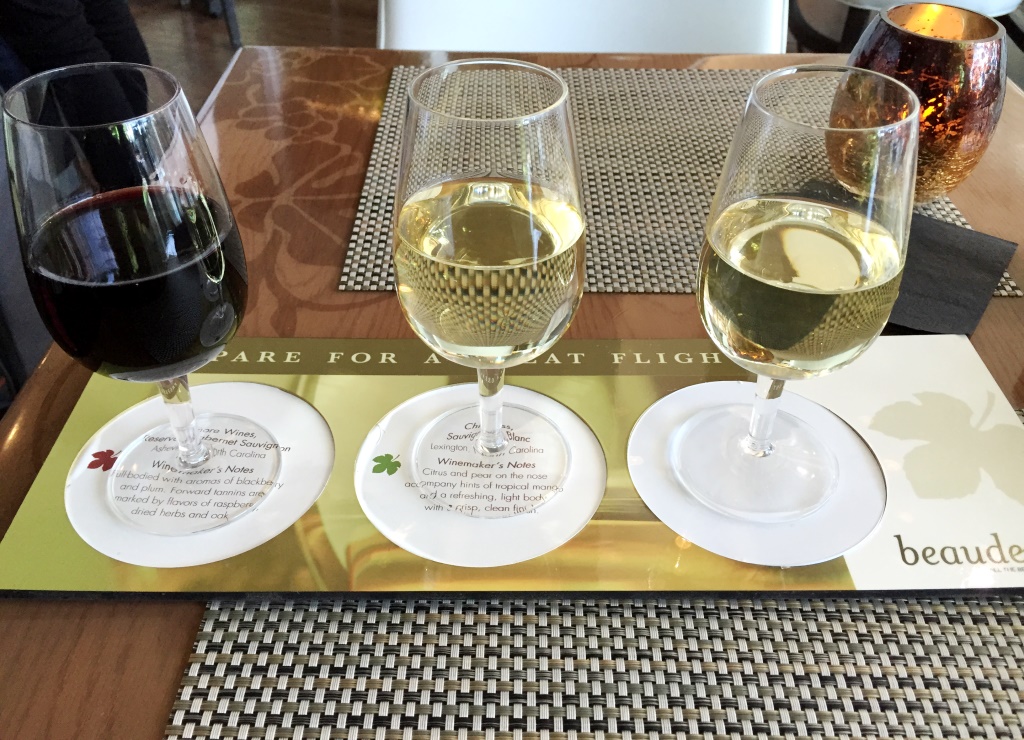
It appears that Beaudevin uses a similar model to the Vino Volo, offering wines both by the glass and as part of the tasting flights. To my delight, one of the featured flights consisted of North Carolina wines, and of course, this is what I went for.
Somehow it was stuck in my head that I recently read some rather negative reviews of North Carolina wines, so I approached these wines with a bit of trepidation. But – call it luck, fruit day or anything else, but I was rather blessed with a wonderful treat.
 https://talkavino.wordpress.com/wp-admin/post.php?post=13570&action=edit&message=10
The flight contained 3 wines, 2 whites and 1 red – Sauvignon Blanc, Viognier and Cabernet Sauvignon. I started with Sauvignon Blanc, and it was delicious, Viognier – delicious again, and then Cabernet Sauvignon – spot on! Here are the notes:
2011 Childress Sauvignon Blanc North Carolina (12.9% ABV) – Nose of white fruit, intense, with a touch of herbs, hint of fresh cut grass. On the palate, nice acidity, dry, tart, lemon notes, good minerality, medium to full body. This is an excellent summer wine – every sip makes you think of summer. Drinkability: 8-
2011 Childress Viognier North Carolina (13.9% ABV) – sweet candy on the nose, very intense, with the characteristic Viognier “perfume” showing in a distance. Compare to the nose, the wine is surprisingly restrained on the palate – hint of candied sweetness, white stone fruit, lychees. Excellent balance. Drinkability: 7+/8-
2012 Biltmore Reserve Cabernet Sauvignon North Carolina (13.6% ABV) – a welcoming nose of warm climate Cabernet Sauvignon, with sweet oak, vanilla, ripe blackberries. Very elegant on the palate, cassis, warm notes of red fruit, medium to full body, a touch of green bell peppers, luscious with soft tannins. Excellent balance. Drinkability: 8-
And now, let’s talk about the spectacular pairing. Beaudevin offers essentially a full restaurant menu – if you have a long connection, you can spend quite an enjoyable time there. As my time was limited, I decided on a Charcuterie salad (lettuce, prosciutto, dried cranberries, green beans, dried cheese), with the addition of smoked salmon.
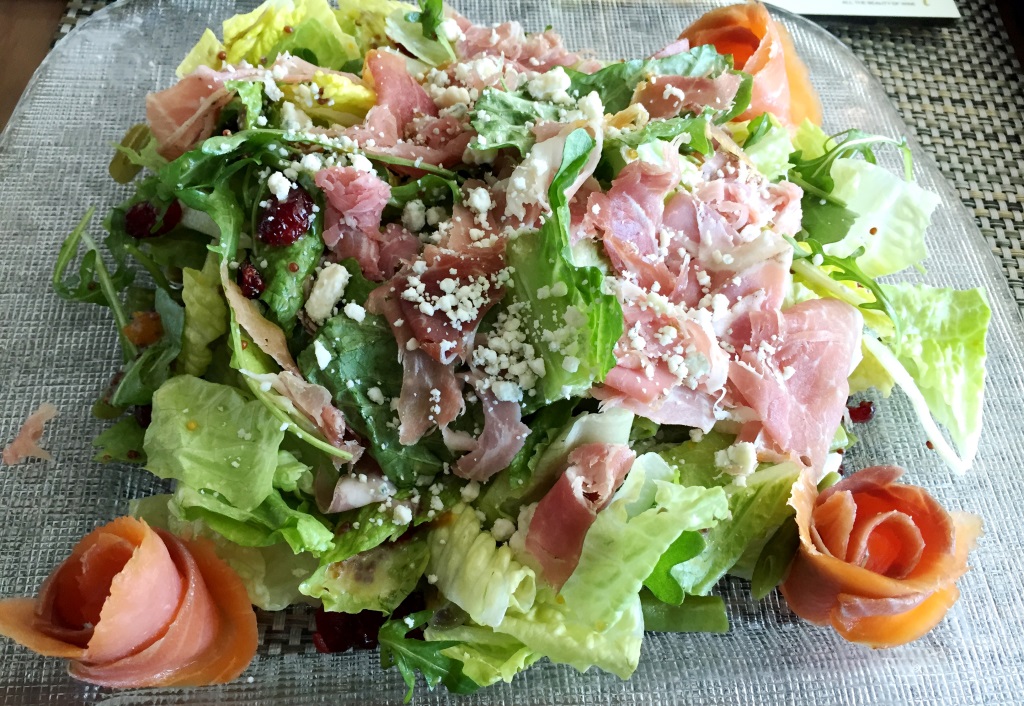
When it comes to the salad in general, I never even attempt to pair it with the wine – I believe generally it is not an easy undertaking. In my case here, I finished my “tasting” and “note taking” session, and I had the wine left, so I really had nothing to lose. I started from Viognier, and “wow” – the wine greatly complemented the sweet profile of the dried cranberries and dressing, so together it was almost a revelation. Next bite and sip, this time of Sauvignon Blanc – and yet another revelation – this time with the clean acidity cutting through the sweetness, contrasting and enhancing flavor. Last but not least, Cabernet Sauvignon perfectly complemented saltiness of the prosciutto and even smoked salmon – totally unexpected, but considering the soft and delicate profile of the wine, it was again a home run. Three wines out of three, working perfectly with one dish (salad!) – this was definitely not something I was expecting, but I’m glad I was able to experience it.
Life is an interesting thing. Cancelled flight led to the very pleasant and educational experience – life can take one thing away from us, and give us something else instead – for sure my case with this trip. Also, it is very interesting to see how the wine culture is changing in the US. From unfathomable plonk only 3–4 years ago (I would never think of ordering wine at the airport 4 years ago – beer would be my only choice), to the upscale wines and wine flights – we are definitely looking at the cultural shift, and I don’t know about you, but I’m very happy to see this happening. Heck, I might even start looking forward to my next trip through the Charlotte airport. Cheers!

Last Bottle Sign Up ($10 credit)




 Talk-A-Vino