Restaurant Files: Skipper Restaurant and Chowder House, Cape Cod
 And we are back again to the wonderful and relaxing Cape Cod. No, I’m not lucky enough to visit Cape Cod again, but I get to re-live some happy and tasty moments while writing this post.
Skipper Restaurant (full and official name: The Skipper Restaurant and Chowder House) first opened in 1936 in South Yarmouth, and it had been around ever since, opened from April to October. I’m not sure how we found The Skipper Restaurant last year – I guess by reading some of the online reviews, but I can tell you – when we were planning this year’s trip, visiting Skipper Restaurant was unquestionable, mandatory part of the Cape Cod vacation.
Skipper Restaurant serves quintessential New England food. I’m using the word “quintessential”, which sounds big and imposing, but to me, there are few dishes which say, or better yet, scream “New England” – New England Clam Chowder, Baked Seafood, Fish and Chips and Lobster Roll would be my perfect list. You can find all these dishes at the Skipper Restaurant, and boy, are they tasty!
When it comes to the New England Clam Chowder, I don’t know what places have better bragging rights than the Skipper Restaurant, which is a triple crown holder, as the winner of Cape Cod, Boston and Newport Chowder festivals. If you like New England Clam Chowder than Skipper Restaurant is a must stop for you, as the Clam Chowder doesn’t get any better than the one which is served here. It doesn’t have anything extra, like bacon – just cream, clams and potatoes, honest, dense and delicious. I know this picture will not do justice to the dish, but then taking pictures of the soup is not that easy in any case:
 It is not only seafood which is tasty at the Skipper Restaurant – they are also famous for the overabundant appetizer of onion rings – a very dangerous dish, as once you start eating those, you can’t stop! And the bread basket which shows up on the table first, belongs to the same “dangerous” category – I think we went through three of them before the main dishes arrived (and it was not because we had to wait for the long time 🙂 ).


And our main course included all the best dishes New England cuisine can offer – Baked Seafood Sampler, Fried Calamari, Fish and Chips and of course, the Lobster Roll:


Each and every dish was excellent in its own right – fresh, succulent, flavorful and delicious – let’s leave it like that to avoid excessive drooling on your part. And of course, I have to mention the service, which was friendly, attentive and helpful – exactly what you need to make it for the great restaurant experience.
If you plan to visit Skipper Restaurant (and if you are on the Cape Cod, I would say this is simply a must), just a bit of advice. The restaurant doesn’t accept the reservations, therefore you need to prepare to wait – but the experience worth the wait. If you are okay with an early dinner ( and considering the amount of food you will be offered, early dinner is a great idea), come to the restaurant at around 4:30 or 5 – your wait will be quite reasonable. Another “duh” advice – if you can, avoid Friday and Saturday nights – those are the busiest and your wait will be the longest.
We are done here, my friends. If you would like to experience quintessential New England cuisine, you don’t need to look further than Skipper Restaurant – I’m sure you will not be disappointed. Cheers!
The Skipper Restaurants and Chowder House
152 South Shore Drive
South Yarmouth, MA 02664
Phone: 508-394-7406
Sangria, Any Time You Want One
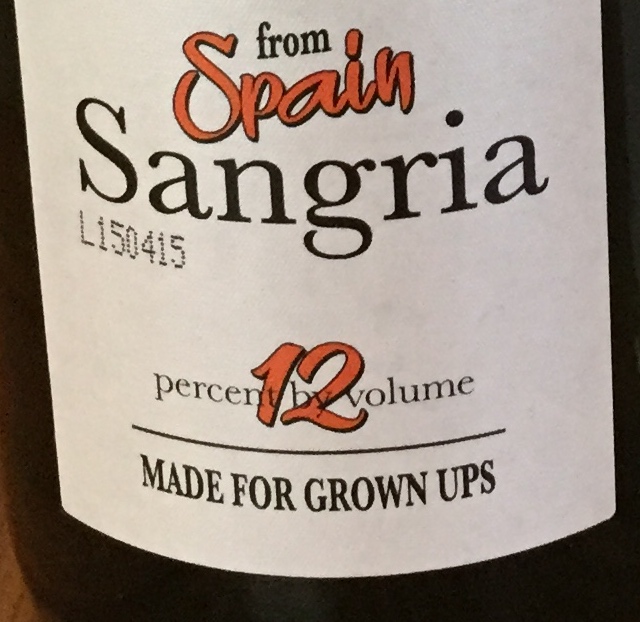 Sangria, anyone? Yes, I see happy smiles and people nodding. Sangria is a refreshing wine, a cocktail, if you will, which typically combines white or red wine with various fruit (oranges, apples, pineapples, lemon, strawberries and anything else your heart desires), often enhanced with a splash of brandy. Sangria originates in Spain and Portugal, and you can often find it served at many Spanish restaurants (but not only there).
While it sounds simple – wine and fruit, right? – making good tasting Sangria is an art. You don’t want Sangria to be too sweet, but you do want to have the fruit present. You need to start with the right wine (California Cabernet Sauvignon might be a bad choice), and you need to steep the fruit in the wine to achieve robust and satisfying flavor. I’m sure anyone who tried to make good tasting Sangria at home, or ordered one in a restaurant, would agree with me – it is easier said than done.
But what if I tell you that your quest for delicious Sangria just got a lot easier? Enters Joya™ – Joya™ Sangria from Spain, to be precise. I recently got a sample of White and Red Joya™ Sangria, and was delighted with what I tasted.

Joya™ White Sangria Spain (12% ABV, SRP $12.99/750, $29.99/3L box, Airén grape, all natural essences of fresh Mediterranean citrus fruit) – slightly muted nose of fresh white fruit, peaches and guava. Palate is perfectly balanced with white stone fruit, plums, refreshing grapefruit bitterness and touch of honeydew sweetness – you can add ice and fruit, or you can perfectly enjoy it as it is. Drinkability: 7+
Joya™ Red Sangria Spain (12% ABV, SRP $12.99/750, $29.99/3L box, Tempranillo, Garnacha, Bobal grapes, all natural essences of fresh Mediterranean citrus fruit) – freshly crushed red fruit on the nose, nice blackberries and dark plums on the palate with the orange peel and mint cutting through the mid-palate. Excellent balance. Playful and very enjoyable by itself, with or without any ice and fruit addition. Drinkability: 7+
While working on this short post, I also learned an interesting fact – the word Sangria on the bottle of wine is protected under EU law, and can appear only on the wines coming from Spain and Portugal.
There you have it my friends – delicious Sangria any time you crave one, also at a good price. Drop a bottle of Joya™ in the fridge and enjoy it. Be careful though – it is really easy to drink… Happy summer, folks! Cheers!
Towards More Sustainable Viticulture
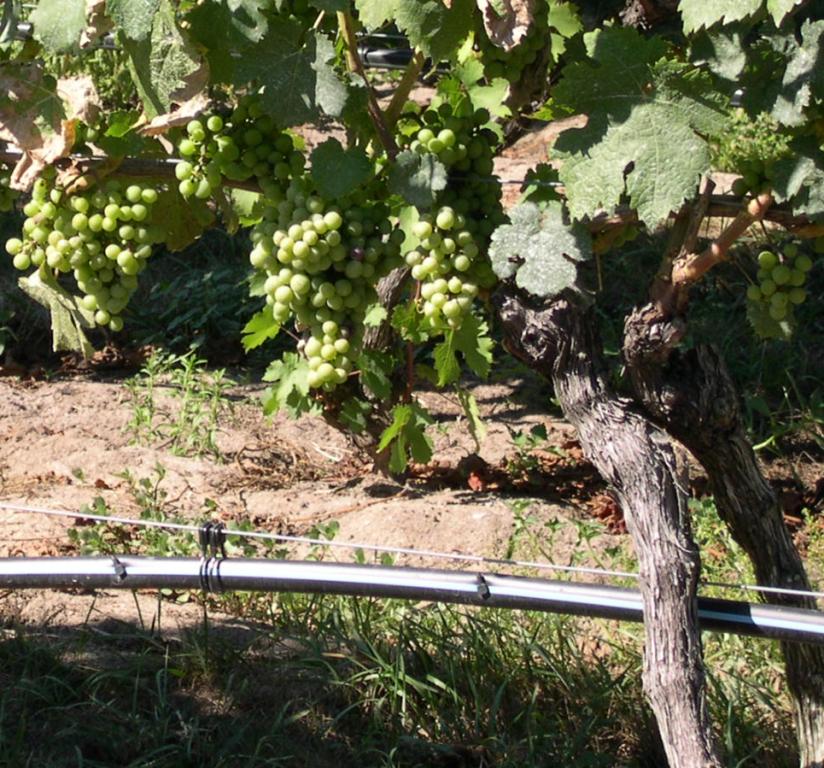 Today I’m offering to your attention a guest post which is a bit unusual for this blog – it is a lot more technical then we usually get here, on the pages of Talk-a-Vino. This blog post is written by Urška Krajnc (email: urska@eviti.co), Business developer of eVineyard, a vineyard management solution (and an App), helping viticulturists to grow better grapes. Hope you will find it interesting. Your comments and questions are definitely encouraged. Enjoy!
Agricultural production is one of the most important economic activities on Earth. The majority of human food originates from land, which must perform over time in a consistent manner and produce huge quantities of output. To meet the demands of the world’s growing population, farmers have to increase crop production and availability of food. This is nowadays achieved through the standardization of crops, genetic changes of plants, growth hormones and excessive use of pesticides. Many argue that changes in agricultural production are not going into the right direction. Therefore initiatives for more economical, environmentally and socially sustainable agriculture have emerged.
An important problem of the agriculture production are pesticides, which have negative impact on human health and environmental pollution. While inappropriate use of pesticides is literally directly threatening human lives in certain (usually less developed) areas of the world, it also counts for many indirect harmful effects on human health, ecosystem changes, etc. Pesticide spraying, for example, has a huge impact on the bee population in the country-side, while bees are the main pollinators of certain species of plants. In certain areas, the bee population has reduced by as impressive amounts as 30%. All this is leading to large environmental imbalances – as the pollination reduces, the flora will not flourish as it should anymore, and soon fauna will follow. And we’re a very part of that, even though we may not see it.
Similar story exists with water organisms, which are being killed by the over-usage of pesticides, drifted from the spray targets to the water flows. Pesticides affect human health also through the residues left in food, that can be toxic to humans. Grapes are believed to be among fruits with the highest level of pesticide residues. Not only in table grapes, but also in wine, several pesticides can be found, especially when the conventional production methods of wine are followed. Therefore in certain regions of the world, more sustainable and environmentally friendly agricultural production methods have developed to a larger extent. Alternative methods for large-scale growing are becoming feasible through the latest technology. The fact is that the food production needs optimization, and research has shown that an optimization can be only achieved if the resources that farmers use, are applied in a knowledgeable way.
Some of the countries are already taking steps towards the reduction of pesticides usage. France, for example, decided to reduce the amount of pesticide spraying by 50% in the time between 2008 and 2018. But even though there are national directives, and common sense leading more and more people to move away from pesticides, there are still situations where spraying is seen as necessary – and maybe in some cases it actually is, in order to avoid larger pollution later on, and to sustain the production that feeds our world today. However, a French winegrower from Burgundy probably wouldn’t agree, and would rather go to jail for a few weeks than to spray his grapevines with a pesticide that would consequently poison his soil for the generations to come. Even more, the first real cases against the corporations providing pesticides, are starting, as some people die of cancer which was clearly the consequence of long-term pesticide usage.
 The fact is that some of the pesticides are originating from military chemicals and the vast majority of them includes synthetically originated chemical compounds, developed to kill certain pests. Even here, the things are changing through the development of the natural fungicides, which don’t harm non-target pests, but work on fungus. Big steps were done also by science in predicting the disease outbreaks according to the environmental conditions, and using those predictions to spray selectively in order to prevent the diseases at the optimal time, instead of routine spraying. This scientific research is nowadays manifesting in practice through cost-effective solutions, based on sensors and data about the weather, and is targeted at the crops which are classically produced with large amounts of pesticides, like grapes.
Several wine producing countries – France, Spain and Italy under the EU agricultural policy, as well as Australia and United States of America, are systematically reducing the use of pesticides on grapevines for the last 15 years. The practical measures are taken to reduce pesticide residues and environmental pollution via usage restrictions of several dangerous pesticides and introduction of Integrated Pest Management approach. This approach has proven to reduce pesticides residues not only in wine, but also in the other agricultural products. Australian winegrowers have reduced the usage of pesticides through the use of technological solutions for strategic spray timing and through the use of more naturally produced pesticides. In the United States of America, the reduction of pollution is achieved through banning of several harmful pesticides and through the introduction of sustainable wine-growing practices, supported with the sensors and information technology, used to optimize other processes, such as irrigation. Similar practices are used throughout the Europe, which has seen a big increase in pesticide use in post World War II time, which is now decreasing.

In many European countries, the “Denomination of Origin” policies don’t allow irrigation and some other kinds of terroir manipulation in order to get the “DO” sign. But systems for smarter plant protection are always welcome and are already in place in most of the countries by big growers, with the adoption of technology now being done by smaller growers as well. Some winegrowers around the world went even a step further and applied organic wine production principals, due to the changes in market demands, led by the conscious consumers. In EU, 6.6% of the grape-growing area is treated as organic, from which one third of organic grape-growing area is in Spain. Unfortunately, on the other side of the world, in China, with rapidly growing grape production, a production and usage of pesticides is increasing.
A lot of solutions exist – we can spray very selectively by using sensors and computers that take into account the existent knowledge. We can completely avoid spraying in some cases, and in the other cases, we may use the natural fungicides that don’t harm the organisms, which were not targeted as harmful, like bees. It will take some time for all those solutions to become mainstream, but some parts of the world are already moving in that direction. It’s our, humanity’s, turn, to make healthy and sustainable future a reality. We’re not left with many other options anyway.
Wednesday’s Meritage: #MWWC19 Theme, Stumbling Upon and more
Meritage Time!
Let’s start with the theme for the new round of the Monthly Wine Writing Challenge, #19 (#MWWC19 for short). The winner of the previous round, Traveling Wine Chick, have chosen the theme, and it is (drum roll, please) … “Choice”. This theme sounds a lot simpler than many of the recent ones, such as “Crisis” or “Serendipity”, but there lies the challenge of making such a regular word a main element of the blog post. Well, good luck to all, and for all rules and regulations, please consult this post – most important is the submission deadline, which is September 14th, so you have enough time to get your creative juices flowing.
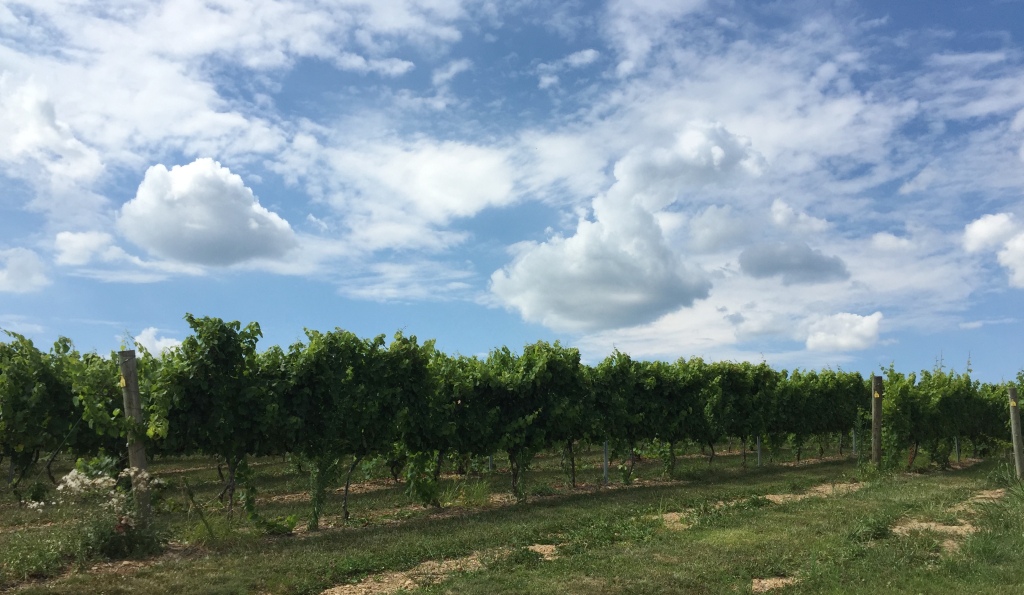
Just for your viewing enjoyment – a picture from the recent trip to the vineyard – more details later
Next I want to mention that Wine Bloggers Conference 2015 (WBC15 for short) will be starting on Thursday, August 13th, and it is taking place in the Finger Lakes region. Lately, Finger Lakes wineries had been producing the wines of notice, moving past excellent whites into the world of reds. I’m sure that all the attendees will be into a treat and will find quite a few surprises, such as Saperavi wines – I heard that they are delicious, and wineries have a hard time to keep them around (sell out very quickly). I will not be attending, but I wish to all the bloggers to have a great time and taste a lot of great wines. And I’m really curious what the location of WBC16 will be – I hope it will be the Texas, as Texas wines are nothing short of phenomenal and it is time for the people to get to know them.
Now, let’s talk about an interesting subject – promotion of your blog. When it comes to the blogging, most of us write because we enjoy it – but we also want to be found and our writing to be enjoyed by others, and that is what “blog promotion” is all about. I recently came across an interesting article called 30 ways to promote your blog posts, which contains wealth of great advice. Among other tools, I saw a mention of Stumble Upon, which I heard before, but never used. I checked with some of Connecticut bloggers on Facebook, and many people find Stumble Upon a great tool, so I decided to add this capability for the blog post sharing. I learned that WordPress.com used to offer the Stumble Upon sharing button, but not anymore – but then I came across this post which provides detailed instructions on how Stumble Upon button can be added. Without talking about promotion, I found lots of interesting articles with the help of StumbleUpon – here is one example for you – “22 Foods You’ve Probably Been Eating The Wrong Way Until Now“. If you use Stumble Upon, I would like to know what is your take on it. And by the way, I don’t know if you are aware of the two pages I have in this blog, under the menu of Resources – one of them is called Best Blogging Tips and second one is Technical Tips for Bloggers – I use those pages to collect interesting articles and “how to” as it relates to the blogging – check them out.
Last for today, really a local update – I made changes to the page called Grapes of the World, to properly reflect all the grapes I tasted so far in my Wine Century Club journey. Why is that important? Will tell you very soon.
And we are done here – the glass is empty – but the refill is on the way. Until the next time – cheers!
Restaurant Files: C Salt, A Wow Dining Experience on Cape Cod
 Cape Cod, a small strip of land off the coast of Massachusetts, is a vacation land. Of course people live on the Cape, as it is often abbreviated, throughout a year, but ask anyone about Cape Cod and the first reflection would be “vacation!”.
Cape Cod is located in the part of the USA which is collectively called New England, and I like to call it a quintessential New England. On Cape Cod, there is a tremendous focus on preserving that traditional “New England/Cape Cod” feeling. There is traditional style for everything – architecture, landscaping, re-purposing of the old houses as shops, bakeries and restaurants, and of course, the food itself.
When it comes to the food, it is not surprising that “traditional Cape Cod” cuisine is focused on the fresh seafood – remember, it is a strip of land surrounded by the water on all sides. So the seafood it is, and in most of the cases it is either deep fried or oven baked – we can also call it a part of that tradition. One more observation, while not directly food related (more of a cultural norm), as Cape Cod is an easy going vacation land, shorts and t-shirt are the most popular attire anywhere, including the restaurants.
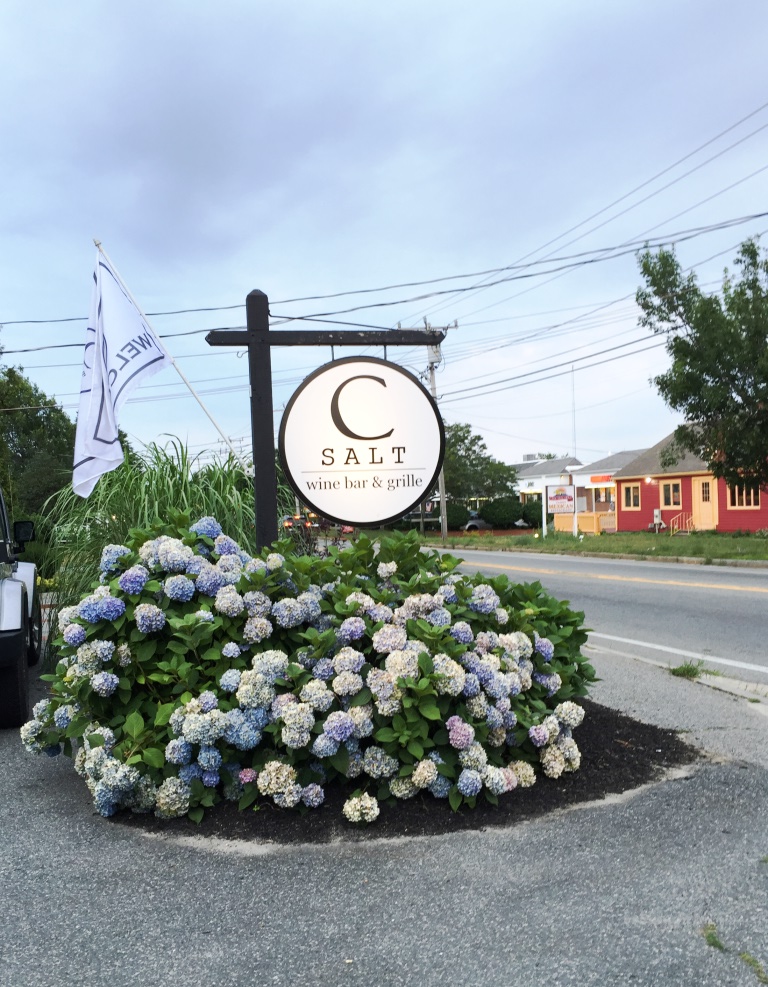
Every once in a while, even during the lazy Cape Cod vacation, you might want your dining experience to be more elevated (not the Michelin-star necessarily, but a bit more than just a casual comfort food – what do you say?). I’m glad to report that this is experience is not too difficult to find on the Cape, and I have a perfect example for you – C Salt Wine Bar and Grille in Falmouth.
On outside, the restaurant looks exactly as a re-purposed cape-style house – actually I think from the back you would even never guess that this is a restaurant. I also really like the fact that the restaurant had its own parking lot in the back, which is not usual on the Cape, and looking for the parking on the busy Main street is always a hassle. On the inside, the restaurant was rather small, so we were definitely glad that we made a reservation – the restaurant completely filled up withing 15 minutes of our arrival at 5:30.
First, of course, were the drinks and the wine. Pear Martini was not too sweet and refreshing – this is what I’m always looking for in the cocktail. Overall, the cocktail list had good variety, including few of the barrel aged cocktails. The wine list was also very good, with reasonable selection of the wines by glass and half bottles (excellent selection of half-bottles). Lots of wines were priced close to the double retail, which always wins points in my book. We settled for 2011 Waterbrook “Reserve” Merlot Columbia Valley , Washington, which was perfectly classic Bordeaux style, dry, earthy and nicely restrained, excellent overall. It also worked quite well with various dishes we had.


For the appetizers round, we settled on two dishes: Crispy Thai Calamari (Lightly Battered and Fried, Hot & Sour Vinaigrette, Baby Spinach, Mango Pea Shoots, Grapefruit, Cashew) and Sesame Hoisin Wings (Ten Lightly Breaded and Crisp Fried Chicken Wings with Sesame Hoisin Sauce). While Calamari and Wings sound pedestrian, it is all the matter of execution. I would say that our family are connoisseurs of the Calamari – if we are in the restaurant, and Calamari are on the menu, 9 times our of 10 we would order them. The Calamari dish at C Salt was outstanding – a very unusual combination with mango, grapefruit and spinach, but perfectly crisp despite the presence of the fresh fruit. Really a delicious dish.
For the wings, again – what can be unique and different, right? It appears that it is not just the sauce which can be different – in this case, the wings themselves were outstanding – not a tiniest drop of fat left, they were perfectly crispy and super tender – may be the best rendition of the chicken wings I ever had (bold statement, I know).


For the main course, each one of us got different dishes (but of course we shared the taste – we are a foodie family 🙂 ). I personally had Grilled #1 Sushi Grade Tuna (Sushi Grade Tuna Grilled Rare, Crispy Jasmine Rice Cake, Sesame Stir Fried Baby Bok Choy, Wasabi Vinaigrette, Soy Syrup, Pomegranate Syrup, Lime & Cilantro) – perfect quality fish, perfect execution, an outstanding balance of flavors, perfect amount of heat – very tasty. My wife had Five Hour Root Beer Braised Short Ribs (Caramelized Brussels Sprouts), which was a melt-in-your-mouth type of dish. Short ribs generally is one of my favorites – when cooked right (slowly), at home or at the restaurant, the flavor and texture are incredible – and this dish was a perfect example. Kids went for Statler Chicken Breast (Whipped Potato, Grilled Corn & Tomato Salad with Sriracha Aioli Drizzle, Pan Jus) and 8 oz. Grilled Filet Mignon (Organic Wild Mushrooms & Roasted Cipollini Onions, Choice of Sauce). Everybody cook chicken at home, so what can be exciting about chicken, right? Well, visit C Salt and try for yourself – chicken was delicious, great flavor, and grilled corn and tomato salad was just a perfect accompaniment.
The steak was perfect in its own right (I know I’m abusing the word “perfect”, but this is the right word to use here). The crust was perfectly crispy and satisfyingly salty to properly contrast sweetness of the meat. C Salt offers a choice of sauces for the steak, and the Cabernet reduction was simply elevating already very tasty bite to the next level. One of the very best steaks I ever had, period.
We also took two additional side dishes to share – Roasted Sweet Potato Steak Fries and Chef Style Whipped Potatoes (mashed potatoes with addition of bacon) – both were very tasty.


What is left? Dessert! We were quite full already, but considering the great experience we had with the meal, we had to try the desserts. “After Hours” Brownie (Ale Brownie, Irish Whiskey Ice Cream, C Salted caramel, Brown Sugar) was gooey and delicious. “Mason Jar” Chèvre Cheesecake (Creamy Goat Cheese, Lemon and Poppy Seeds, Rhubarb Raspberry Compote, Graham Cracker Streusel) was fluffy and light, and it was an excellent ending to our delicious experience.


I can’t end this post without commending our server, Sarah, for the wonderful, helpful, smiley and attentive service throughout the eventing. If you are looking for the upscale dining experience in the Cape Cod vacation land, visit C Salt Wine Bar and Grille, and leave me a thank you note after. Cheers!
C Salt Wine Bar & Grille
75 Davis Straits
Falmouth, MA 02540
Phone: 774-763-2954
http://www.csaltfalmouth.com/
Speak Up!
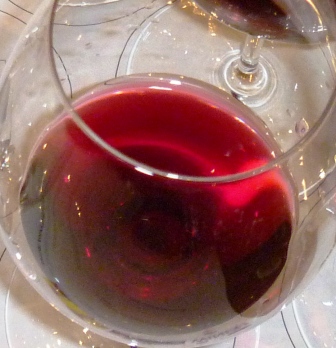 This post is not really a rant, even though it can be classified as one. I would rather see it as a plea – not directed at someone particular, but to anyone who enjoys even an occasional glass of wine.
Wine can be intimidating at times. Heck yes, wine is often intimidating. It has an aureole of mystique. It seems to demand the special knowledge to be enjoyed, the years and years of hard study. And quite often, the “exclusivity” notion is enforced by the very people whose job is to help, to make the wine less intimidating, to make sure that “the customer” will simply enjoy the glass of wine.
True – the wine, as any other discipline, has a great depth of technical knowledge. It is not easy to make a good bottle of wine; it is very difficult to make a great bottle of wine. You need to study for many years almost 24×7, learn the exact names of hundreds of small villages in Germany, to become a Master Sommelier (there are only a few hundreds of them in the world). All of it is true. But not necessarily unique – most of what humans do today in so called “work” requires lots of studying and lots of specialized knowledge.
But wine is yet again different. While it requires knowledge to produce and explain it to others, when it comes to its basic purpose – drinking, it is, whether by itself or with the food – it is very simple. Forget all the nuances of the taste. Forget all the fancy descriptors and ratings. When it comes to the content of your glass, it is really all binary – you either like it or not.
Nobody questions their own ability to decide whether they like the burger or not. Or any other food for that matter – in most of the cases, people have no issues declaring “this is good” or “this is bad”. But when it comes to the wine, majority start second-guessing themselves. People often sheepishly say “but I don’t know much anything about the wine”. This proverbial “luck of knowledge” is used as an excused to keep quiet. People are afraid to state their opinion around wine, as they don’t want to appear disrespectful, or even worse, totally ignorant and not worthy. At the same time, when someone takes a sip, they know immediately whether they like the wine or not.
Now, let me get to the “Speak Up” part. No, I’m not advocating that everyone will start proclaiming “this is crap” or “this is nectar” on the very first sip of the wine in the various situations. For example, if you will open a bottle of young red wine, immediately pour it into a glass and take a sip, your first reaction might be “this is too sweet!”. Give this wine 5 minutes to breathe, and your next sip often will be totally different experience, with earthiness, minerality and acidity. As another example, the first taste of the cold white wine might feel extremely acidic, but the wine will mellow out right after. So, no, “speak up” is not about always declaring your opinion right away.
What is important for me is that if you drink wine even on a semi-regular basis, you know what you like and what you don’t. In case when you don’t like the wine, you also know why is that – too acidic, too sweet, too wimpy, too tannic, doesn’t taste well with food. There can be lots of reasons for not liking the wine. And it is all fine – taste is personal, and two people next to the same bottle don’t have to share the same opinion; there is nothing to speak up about here. With one exception: when the wine is spoiled.
There are many possible issues with wine, which affect its taste – these are called “wine faults”, and the end result is what we call a spoiled wine – the wine which tastes bad. This is not the case “I don’t like it”, this is the case “it is spoiled” – and nobody should drink it. Have you ever tasted spoiled milk, when the sweetness of milk is replaced with the off putting smell and sour taste? What you do with the spoiled milk? Anything but drink it, right? There are many potential faults in wine – brettanomyces (often called “brett” for short), volatile acidity, oxidation, heat damage (so called “cooked wine”), cork taint and many others (in case you want to read more, here is Wikipedia link). Some of the faults are less offensive than the others – for instance, brett is associated with barnyard aromas (so called “funk”) in the wine, which some people love (yours truly would be one of them). But most of the faults really kill the taste of wine; spoiled wine doesn’t deliver any pleasure the wine is supposed to bring.
One of most prominent offenders is the cork taint – typically caused by the cork material which was not cleaned properly – and the result of the cork taint is called a corked wine. What gives it away first of all is an aroma of the old, wet, musty basement – you know that smell, I’m sure you do. But this is not the worst part. On the palate, the corked wine is sharp, bitter, and devoid of fruit – the fruit is nowhere to be found in the corked wine. Sometimes the smell might be very minor, but then the sharp palate will give this fault away. And corked wine is something which you are not supposed to drink. Nor you should let anyone to drink that. This is the case when you have to trust yourself – and speak up.
How many of you ever been in the situation when you tasted the wine (or just smelled it) and said to yourself “this is corked”? And then, even when you are 100% convinced it is corked, you just kept quiet – you didn’t want to offend the host, you thought “ahh, may be something is wrong with me”, “but people already had been drinking the wine from this bottle for a while, how it can be corked”? Been there, done that? It’s okay, this blog is truly a non-judgement zone, please share your experiences. But I’m seriously telling you, if I may – I insist – speak up. Trust yourself and speak up.
I’ve done this many times in many different settings. Sometimes, the corked bottle is one and only, and all you can do is just to dump it or put it aside to return to the wine store (please note – most of the reputable wine stores will take the corked wine back and refund your money – they are not losing anything either, as they also will return the wine to the producer). But the best case is when the other bottle of the same wine can be open instead – and it shows all the beautiful aromas and fruit the wine was supposed to have. This is the best learning experience, of course – but even if you didn’t have that experience, you still have to speak up.
You need to understand that by keeping silent, you are not doing anyone any favors. If you keep silent, you drink the wine which tastes bad. You let others drink the wine which tastes bad. You letting down the winemaker as well. In many (most) cases, the corked wine is not even producer’s fault. And if you and others end up drinking bad tasting wine, you might say to yourself “I will never buy this wine again” – and trust me, this is not what the winemaker had in mind when the wine was produced with love and care.
You have to speak up – and you got nothing to lose. If you are wrong, and the wine is not corked but simply need the time to breathe – so be it. But I’m sure that once you experienced the corked wine, you will be able to identify it again, so if you think the wine is corked, there is a very good chance that it actually is. Trust yourself and speak up. When the next bottle is open, and everybody sigh with relief and pleasure, your host will be the first to thank you. And if you will feel happy, leave me a comment too. Cheers!
Wine in Pictures
I don’t know about you, but I like “infographics” – lots of pictures and lots of facts to ponder at. Below is one such infographics, with quite a few interesting facts about wine. Did you know that the oldest preserved bottle of wine is nearly 1,700 years old? Have you ever heard about Snake Wine or Pumpkin Wine? Did you know that in some places in Australia the wine is cheaper than the bottled water? Well, take a look below…

Infographic brought to you by Ocado – Red Wine Infographic
Restaurant Files: Grand Experience at Bistro V in Greenwich, Connecticut
For the past 2 years, I had an opportunity to experience many great Connecticut restaurants, often in the group of passionate foodies (also known as bloggers), and to share those experiences with the world. Majority of our visits included food and wine, but I would say that food was always a star. Don’t get me wrong – we had a lot of wonderful cocktails and wines at most of the places we visited, but we had to connect food with wine on our own.
What would make dining experience “Grand”? To me, this is simple – proper pairing of food with the wine completely changes your dining experience. When the wine “works” with the food, the result is greater than the simple sum of two – it is totally different, elevated experience, a true celebration for your taste buds. This is exactly what I experienced at our recent visit to Bistro V & Pâtisserie in Greenwich, Connecticut. Every dish on the menu had its own wine pairing – and most importantly, not just a pairing, but very successful pairing.
Bistro V originally opened in 1980 on the busy Greenwich Avenue strip of shops and restaurants in Greenwich. In 2014, Marc and Evelyne Penvenne (originally from Burgundy, the owners of another successful Greenwich eatery, Méli-Mélo Crêperie & Juice Bar) took over the Bistro V and since then reintroduced it to their customers, maintaining dining experience as French classic as it can be.
We started our evening with the cocktail of Byrrh and Sparkling wine. Byrrh is something I never heard of before. According to Wikipedia, it is “an aromatised wine-based apéritif made of red wine, mistelle, and quinine”. Byrrh was created in 1860s, and it was very popular as an apéritif in Europe and US. It disappeared in US after the Prohibition, and was reintroduced back only in 2012. The cocktail of Byrrh and Monmousseau sparkling wine was excellent, light, refreshing and very easy to drink ( dangerously easy).


While we were enjoying our apéritif, two Hors D’oeuvres showed up, perfectly single bite size – tiny toasts with smoked salmon and similarly sized Paté toasts. Both worked extremely well with our sparkling apéritif.


As we situated at our tables, the bread baskets arrived. It is not for nothing there is a word Pâtisserie in the name of the restaurant. Baking is an indelible part of Bistro V, and while these were not the pastries, which Bistro V is famous for (well deserves a separate post), these rolls were incredible – fresh, yeasty, comforting, crusty, warm and fuzzy feeling-inducing. Nope, can’t describe it – but this bread alone is well worth the restaurant visit.
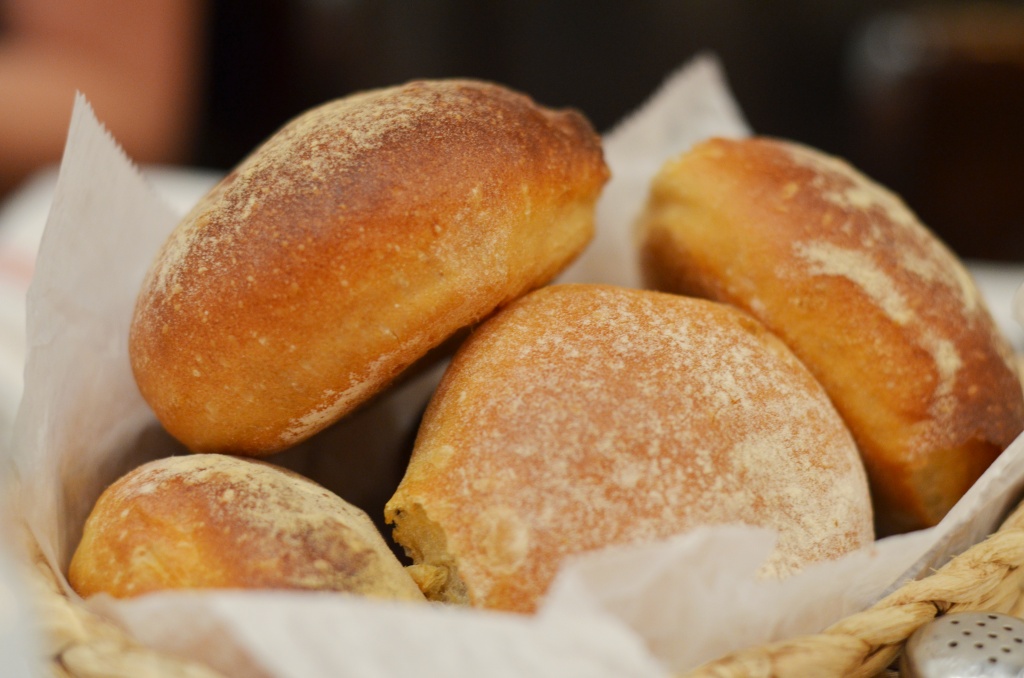 One fun part of been in a group of bloggers (besides the fact that no dish arriving at the table can be touched until multiple cameras with flash and without would be deployed for the good period of time – and also nobody would scream at you about using the flash) is that you get to see and do things which would be impossible if you just come to eat at the restaurant as a regular customer. For instance, to visit the kitchen. We were given an opportunity to step into the kingdom of the Executive Chef Erik Erlichson and snap a few pictures as the food was ready to be brought out – definitely a fun thing to do.
 Our dinner started with Watermelon Salad (Ricotts salata, Candy-pickled rind, pine nuts, baby arugula, lemon vinaigrette). The contrast of sweet watermelon and sharp cheese was perfect, and addition of peppery arugula and pine nuts provided both spicy undertones and the texture. The intended wine pairing was Barone Fini Pino Grigio from Veneto. I have to tell you that inner snob got in the way here, and I expressed my surprise with the Italian Pinot Grigio at the French restaurant to our server – as the result, my pour was very small and I finished it before salad arrived – I think they would work together well, but I was unable to establish that.
Our next dish was Chilled Maine Lobster (Court-Bouillon-poached, hearts of palm, radish, tomato, cilantro emulsion). With this dish, there was a slight inconsistency, which is probably unavoidable when serving tasting portions – the portions which had mostly the claws were excellent, but the other part of the body were rather chewy. But in any case, the dish paired perfectly with 2014 Domaine La Colombe Rosé, Provence, which was excellent, clean, with touch of strawberries and perfect balance.


Next up – the Iron Skillet Grilled Branzino (Shaved fennel in citrus emulsion, orange “oil”) – an outstanding presentation to begin with. Crispy skin and very tasty dish overall, with an excellent balance of flavor. Here we were first introduced to the range of wines from Lebanon. 2012 Ixsir Altitudes White, Lebanon (blend of Muscat, Viognier, Sauvignon, Sémillon) had a touch of white fruit on the nose, spicy balanced palate of white peaches and a hint of spices, overall an outstanding wine. The pairing was excellent, the wine really boosted the flavor of the dish, moving the whole experience to the next level.


Next dish was Crispy Hudson Valley Duck Breast (Salad of confit, snap peas, carrot ginger dressing) – this was simply a perfection on the plate – every component of the dish was excellent by itself and delicious together. The wine pairing was very surprising – Cabernet Sauvignon blend from France (I would rather expect to see a Pinot Noir with duck), but once again, the wine complemented the dish spot on, delivering the next level of hedonistic pleasure. “F” Cabernet Sauvignon by Dave Phinney, France (15% ABV) had nice red fruit, touch of herbs, dark fruit on the palate, mint, touch of earthiness, nice spice and excellent balance, making the high ABV absolutely unnoticeable.


At this point in the dinner my relationship with the server completely restored after the Pinot Grigio fiasco, and I got to taste the wine which was not a part of the wine program for the evening – 2012 Ixsir Altitudes Rosé, Lebanon, a blend of Syrah and Caladoc (a new grape for me!) which was excellent, crisp, with strawberries on the palate and clean acidity, very refreshing.
Question: have you come across a new phenomenon (for me, at least) – a natural mineral water from Bordeaux? I saw one recently at the wine store, and we got to taste one at the restaurant – we had Ô Muse Grand Cru de l’Eau Natural Mineral Water from Bordeaux, both still and sparkling. I wouldn’t claim that I noticed any difference with any other regular or sparkling water, but I still wanted to mention this as we should expect to see those more often.


Let’s get back to food. While all the dishes were outstanding, I still had a favorite of the evening – Versailles Steak Tartar (Filer Mignon pf grass-fed beef, house sauce, traditional condiments, baguette toasts) – my notes only say “wow! wow!” – do I need to say more? This dish was a fiesta of flavor, simply spectacular. If you like Steak tartar, you owe it to yourself to come and experience it at Bistro V. The wine pairing was absolutely spectacular as well. 2010 Ixsir Altitudes Cabernet Blend, Lebanon (blend of Cabernet Sauvignon, Syrah, Caladoc, Tempranillo) had the nose of herbs, tobacco, smoke and red fruit. The palate was concentrated, with the nice tannins, dark fruit, firm and well structured – an excellent wine overall.


Our dessert was very simple, but uniquely refreshing and delicious – Chilled Fruit Soup (Cedric’s frozen yogurt). It also paired perfectly with Pineau de Charentes, a fortified wine made from the lightly fermented grape must with addition of neutral Cognac brandy.


At the end of the evening, we had an opportunity to thank Executive Chef Erik Erlichson for the delicious meal and inundate him with questions.
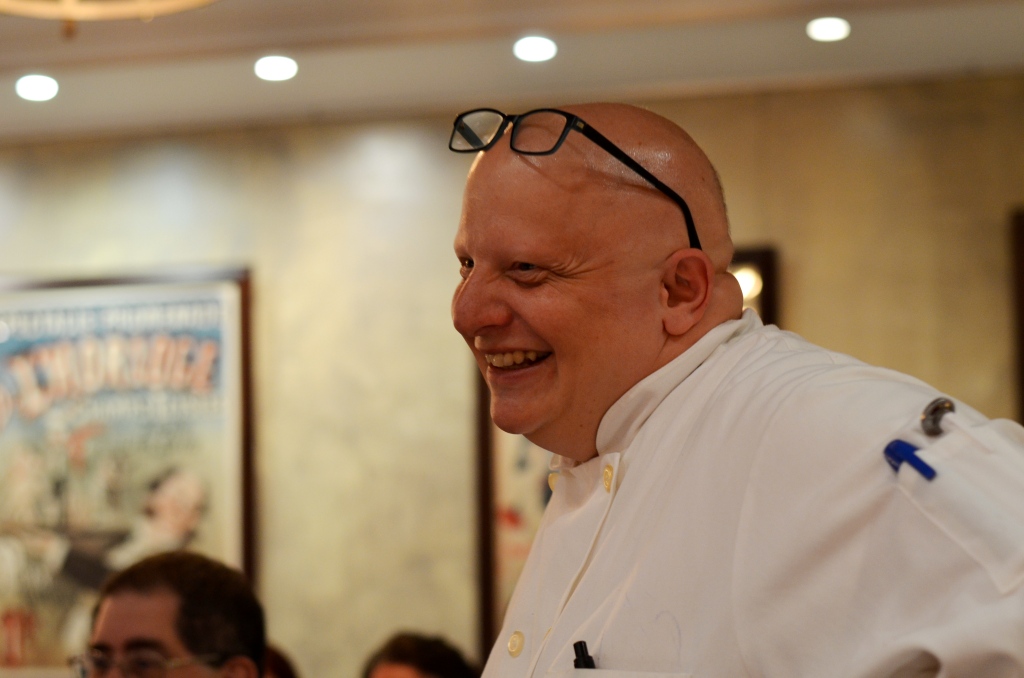 There you have it, my friends – Grand Experience at the Bistro V in Greenwich, Connecticut. If you live in the area or plan to visit, I highly recommend you will make Bistro V a part of your dining plans. Cheers!
Bistro V
339 Greenwich Avenue
Greenwich, CT 06
Phone: 203-661-6634
Crisis in Wine
 This post is an entry for the 18th Monthly Wine Writing Challenge (#MWWC18), with the theme of “Crisis”. Previous themes in the order of appearance were: Transportation, Trouble, Possession, Oops, Feast, Mystery, Devotion, Luck, Fear, Value, Friend, Local, Serendipity, Tradition, Success, Finish, Epiphany.
Let me ask you a question – do you associate wine with crisis? Not really? Ahh, you are even puzzled why I asked? Let me elaborate. This question is not about “business of wine” – that part is self-evident. Every business has its crisis moments. Some are relatively small, like broken truck with day’s harvest of grapes, leaked barrel or malfunctioning bottling line. Some are bigger, like hail storm during July or a frost in late May. Some are huge, like earthquake in Napa valley or phylloxera epidemic. But – business problems “come with the territory” – the only way to avoid them is not to be in the business at all.
Now, my question about wine and crisis is not about the business, it is about people who like to drink wine. I mean, really like it. Those who make wine into a passion. They often referred to as oenophiles. Or wine aficionados. Or wine geeks. Depending on the circumstances, also known as “wine guy” or a “wine gal”; it is not foreign for them to be called a “wine snob”. Anyway, if you belong to this category, you already identified yourself. If you don’t (but you’re still reading this blog, so thank you), you know who I’m talking about. So I have to tell you that we, oenophile (yes, I closely identify as one), go hand in hand with crisis. We readily create the crisis around the wine, then we work our hardest to resolve it – and we feel proud and relieved that we actually did. Need examples? Here we go.
A wine oenophile is invited to the party (no, this is not a beginning of the anecdote). The bottle of wine is selected, with love and care, very often from one’s cellar, and oenophile almost arrives at the destination, when the horror thought takes over – “what if this bottle is corked, what am I going to do then??? Why did I forget to bring a second bottle, just in case, why?”. If you been there, done that, raise your hand. Have you ever contemplated a fallback solution “if this bottle is bad, I know where the nearby store is so I can quickly drive there and pick up something else”? Yep, oenophiles are crisis-prone like that.
A dear and wine loving friend is coming over to the oenophile’s house. Peering at hundreds bottle strong cellar, the thought process starts – “I think this bottle of Pinot should be good. But I don’t think she is into Pinot too much. May be the Cab? No, that might not work with the meal… Or may be that 1990 will do??? And then Amarone? No, no, no! I DON’T HAVE THE BOTTLE TO OPEN!!!” Do you feel the drama? Do you see the crisis once again, which requires a quick action – unquestionably it will be averted, and oenophile and the friend will be happy (unless the bottle(s) will be corked, but we don’t want to even go there), but the crisis is clearly there.
The simplest form of oenophile’s crisis might take place during the daily ritual of opening the bottle for the regular evening – after touching and pulling out tens of the bottles (from that hundreds bottle strong cellar), the spine-chilling thought comes in: “I don’t have the bottle I can or want to drink right now, what do I do?!?!”
There are many more crisis moments we can talk about – the horrifying moment at the restaurant, where after the 5th scan of the wine list oenophile realizes that there is nothing there which one want to drink or can afford; the process of selecting wine to pair well with food; looking at the rare bottle in the shop and thinking that you must buy it now or you will never see that vintage again. I’m sure you got my point by now (or even well before now), and I’m sure you even feel pity towards that oenophile who have to deal with crisis all so often. But – that is the best form of crisis, as it is immediately forgotten at the first sound of the popped cork and whiff of aroma accompanied by the words “ahh, this is good”. This is one form of crisis which oenophiles are happy to have in their lives – and I’m sure many people will be too. Cheers!
Wednesday’s Meritage – #MWWC18 Theme, Decanter Top Wines 2015, New Spanish Wine Video and more
Meritage Time!
First and foremost, the theme of the Monthly Wine Writing Challenge #18 (#MWWC18) was announced by the winner of the previous round, Wayward Wine, and it is … “Crisis“. I don’t readily associate wine with crisis – thus I find this theme quite challenging. But so where many other themes before, and this is why it is called a “challenge”, so all we can do is to put on a crisis-handling hat and deal with it. Write, don’t wait – the submission deadline is Monday, July 27th, which is less than 2 weeks away… Crisis!
Decanter magazine is unquestionably one of the most influential publications in the wine consumer world. Every year, Decanter conducts a competition and recognizes the best wines in the multiple categories with both international and regional awards. In 2015, the most prestigious award, called International Trophy, was awarded to the 35 wines out of 15,929 wines submitted for the competition between December 2014 and May 2015 – that sure sounds very impressive. The most interesting part for me was the fact that Australia, France and South Africa heavily dominated that list of 35, with Italy and Portugal been barely present, and US, Germany, Austria and many other winemaking countries absent completely. In any case, this makes it an interesting read, so here is the link where you can find complete information about competition process and awards.
Wines from Spain, an organization promotes the knowledge about Spanish wines worldwide, started a new series of videos, aimed to educate wine consumers about Spanish wines. The first video in the series introduces four of the popular Spanish grapes, and promises to come back with a lot more information. The video is short (less than 3 minutes) and very cute, so I would suggest that it’s worth your time – you can find the video here.
That is all I have for you for today – the glass is empty, but the refill is on the way. Cheers!
Last Bottle Sign Up ($10 credit)




 Talk-A-Vino