Daily Glass: Red with Dessert
When ordering wine with dinner, especially eating by myself, I practically never think of wine and food together. I usually look for the wine which would be interesting and affordable, without regard to the color or style. As last night was probably my 4th dinner of the trip at the same hotel restaurant, I knew that my choices were limited – I already had some (didn’t want to repeat), and some where just out of my price range. After scanning the list back and forth multiple times, I finally settled on 2013 M. Chapoutier Petite Ruche Crozes-Hermitage AOC (€7.20 per glass at the restaurant).
That choice combined together a few of the favorites. First, Crozes-Hermitage is an appellation which encircles the famous, but tiny Hermitage, and the wines in both areas are made from the same grape – Syrah, one of my absolute favorites – with Crozes-Hermitage been a lot more affordable. Second, this wine was made by Michel Chapoutier, one of my favorite producers, who I had a pleasure of meeting (and still have a blog post about it in the works 😦 ). The wine was just absolutely delicious – expressive nose of lavender and red fresh berries, touch of smoke, luscious, velvety palate with perfect black pepper and red fruit core, clean acidity and perfectly balanced.

I was very happy with the wine just by itself, but it also perfectly matched the main course, which I was contemplating for almost the whole trip, somehow not finding the right moment for – Steak Tartar. I don’t know when and how it became one of my favorites – I still like to recount the story of my horror when I ordered it for the first time at one of the Paris restaurants (8 years ago), and the plate with simply chopped raw beef appeared in front of me. After mixing the beef up with all the condiments, I found it absolutely delicious, and I do ever since. You can find steak tartar in US restaurants, but for some strange reason served already mixed, so I was definitely happy to have the classic version where I’m in control. And yes, the wine was working with the dish just fine.

As I loved the wine very much, I was in the mood for another glass, which quickly appeared on the table. Now it was the dessert time, and all of a sudden I was on the mission to find a good pairing. Desserts and dry wines are a tricky combination – more often than not you can end up having sweetness fighting with structure and tannins of the wine. I didn’t feel like cheese (also pairing of cheese and wine is greatly overrated – it is actually very difficult to create matching combination). My only option seemed to be a chocolate cake, but with that I was a bit concerned that chocolate might overpower the wine which was luscious, but quite light. Thus I decided to ask for the advice of my waiter. I found his recommendation a bit surprising – a modern dessert which combines fresh raspberries with almond tartlets and vanilla cream. However, he had a point, suggesting that the fruity core of the wine (same raspberries) would match well with the fruit in the dessert. Well, why not?

The dessert arrived, I took the first bite and the sip of wine – and couldn’t hold a smile. The dish and wine worked together like a charm, perfectly complementing each other and blending together, with the peppery notes of wine adding an interesting twist.
There you have it – a story of successful red wine and dessert pairing, something I would be skeptical of before – but now I know. Love all this learning opportunities the world of wine holds for us – and may your glass never be empty. Cheers!
Missing Vino Volo at Newark Airport – Oeno is Just Not It
Don’t know if you can figure out from the title, but yes, this will be a rant. There were a few rants in this blog before (I even have a dedicated category for that) – and every time I contemplate the same question – “should I do it or not”. The problem with the rant is that while it is often a quick “feel good” solution for the “rantee”, it can theoretically have some consequences for the object of rant. But outside of the letting the steam to blow off from a bad experience, I see the rant as a criticism, and criticism is a good thing – it identifies problems which can be fixed (or not, of course). Okay, let me not making this post a rant about rant – let’s proceed to our subject.
I’m regularly traveling for business for the long time. As previously reported in this blog, the situation with food significantly improved at most of the US airports. And not only with food, but with wine as well – on a multiple occasions I wrote happy posts about Vino Volo stores available in many airports – including the one at Newark Airport in New Jersey (here is the link). At Vino Volo, you can always expect to find an interesting wine flight at a reasonable price, especially considering the airport location, and a tasty and thoughtful bite of food.
Now, as it happened last year, Vino Volo was kicked out of the Terminal C, and replaced by the restaurant called Oeno Wine Bar. Oeno tried to replicate Vino Volo’s model by offering wine flights as well as wine by the glass and by the bottle, and of course, food to go with it. So far so good, right?
First thing as you walk into Oeno is that nobody greets you. Okay, quite common at the airport. Next, you have to find the table, sit yourself, and start navigating the iPad on the stand which crowns every table at the restaurant. The iPad presents all the food and wine, grouped in the number of categories. 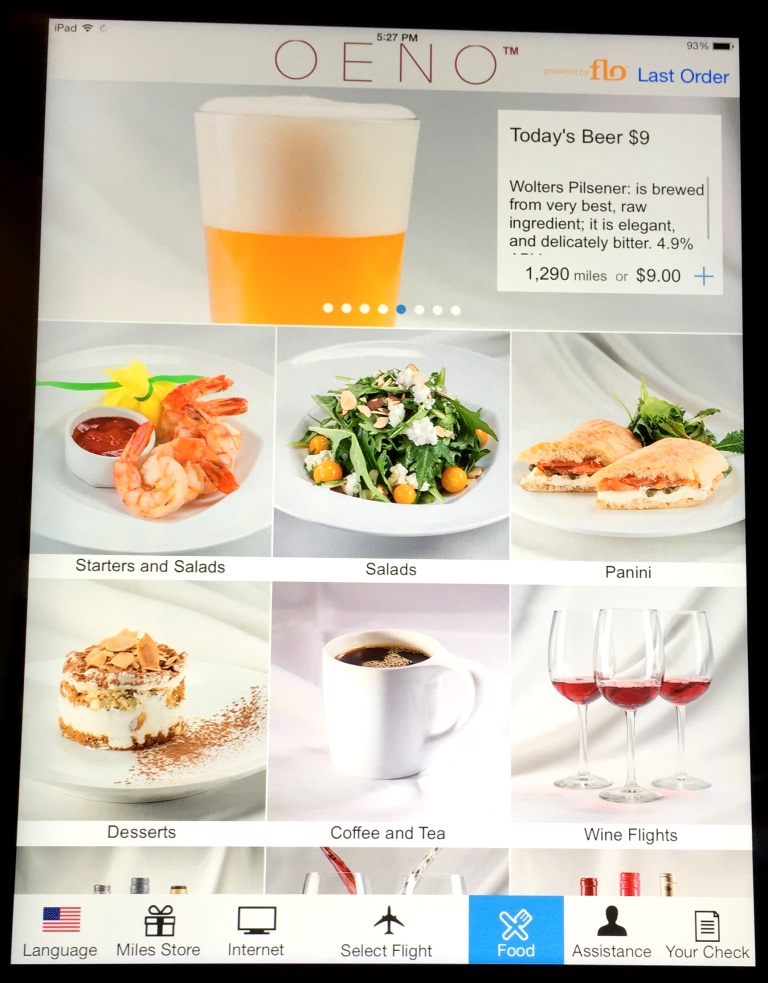
Now, as you try to dig into the wines, there are a few surprises which one runs into. First of all, the prices – there are 6 wine flights offered, priced either at $36 or $54 – most of the Vino Volo flights were priced under $25, so $54 for the tasting flight, seriously? The prices for the glass of wine range from $10 going into the $40s (not bad for the airport, right? – $40+ for a glass of wine on the go). But – for me, an oenophile who was served by Vino Volo very amicably, the biggest gripe is the full lack of information. Despite the fact that you have in front of you an iPad, an electronic device which allows to have pretty much an unlimited amount of information for each and every item offered, Oeno menu provides literally no relevant information. It seems that the only reason to offer the menus on the iPads is to make it easy to charge the customers in dollars or in frequent flyer currency – points/miles. Nobody cares also to provide a service with that, make sure people actually like what you are offering (yes, I mean “information” by the service).


Let me advance my gripe further. Considering complete lack of information, I decided to at least order something inexpensive, so I went with Jelu Pinot Noir, at $10.50 per glass. I couldn’t figure it out where the wine was from, as no information was available. After tasting something pretty much undrinakble – hot, unbalanced, biting wine – I had to look it up. It appears that this was a Pinot Noir from Argentina, and it also appears the the whole bottle cost as much in retail as I paid for the glass. Had I known that this was a Pinot Noir from Argentina, I would simply avoid ordering that – you can hardly go wrong with Malbec from Argentina at any price level, but when it comes to Pinot Noir, you better know the wine and/or producer.

Leaving the wine aside (as I did with my glass), the food was also marginally successful. I ordered a Smoked Salmon Panini. While I understand that Panini is a pressed sandwich, I didn’t expect that smoked salmon panini would be put under a hot press. Ever had hot smoked salmon? This is not the most delicious food in the world, as the heat accentuates the saltiness of the salmon, and really makes it marginally enjoyable. Never mind the price of $14.25 – for that amount of money, you can have 2 or even 3 excellent sandwiches in most of the European airports…
The iPad system at Oeno is really focused on getting money or miles (the points) out of you, at the same time providing as little service as possible, as you do everything on that iPad (you have to place an order and pay before anything gets to your table). To add insult to the injury, the tip of 20% is added to your payment at the time of the order (for some reason it is called “check-out”, even it is the first thing you have to do to get your food). The only service you get is your food placed in front of you, but nevertheless, you are paying as you are at a high end restaurant with great service.
And the last thing which I found extremely annoying: the push to get you to use your frequent flyer miles. If you travel enough, I’m sure you know that all those “rewards points” don’t come very easily, with the airlines constantly looking for the ways to reduce your frequent flyer benefits. Now, every item on the menu has price both in dollars and in miles. For the glass of Prosecco, you could elect to pay $14.10, or use 2,020 miles. As long as you don’t analyze the numbers, and have millions of frequent flyer miles in your account, you probably don’t care about “just 2000” miles. Now, think about this: if you have no status with United, to earn the same 2000 miles, you have to buy a $400+ ticket (it should be $400 before taxes and fees), as you are only getting 5 miles per dollar on United. If you are short 2,000 miles for your award ticket, you can buy them from United, at a measly price of $70 – but here you are, offered to spend that same 2,000 miles on a glass of bubbly instead of $14. And when you refuse to do so, you are asked to fill out a survey to explain why did you refuse the offer to pay with miles. Don’t know about you, but I find this preposterous.
Okay, let’s end this Friday rant. If you travel through Newark airport, and especially if you are an oenophile, I have only one recommendation for you – avoid Oeno. Unless someone at Oeno wakes up and makes changes to transform it into really a desirable destination, as Vino Volo was. Until then, take your hard earned money elsewhere, and – Vino Volo, I miss you very much… Cheers!
Oeno Wine Bar
Newark Liberty International Airport
Terminal C
Gates 70-89
Wednesday’s Meritage – Critic on Criticism, #MWWC19 Reminder, Wine and Food Festivals Abound, Allegrini Wine Dinner and more
Meritage Time!
First, I want to bring to your attention an interesting article by none less than Jancis Robinson, who wrote a very interesting piece called “Jancis Robinson on wine experts versus amateurs“, recently published in Financial Times. In the article, she is talking about the challenges professional wine critics face in today’s world, where literally everyone have an opinion about wines, and not afraid to share it. Definitely worth a few minutes of your time.
Next up – a Monthly Wine Writing Challenge Number 19 (#MWWC19) reminder – there is less than a week left in the current challenge (last day is September 14th), and if I’m not mistaken, there were very few submissions so far. I understand that theme is challenging – “Choice” can mean all and nothing at the same time – but this is why it is a challenge, and this is why your participation is required! If this can be a source of inspiration, here is the link to my own mumbling on the subject – I’m sure you can do better. Write up, people!
Now, last weekend of September might be challenging for the food and wine lovers, as multiple events will be competing for your time and attention:
Greenwich Wine and Food Festival 2015, presented by Serendipity, will take place September 23-26 in Greenwich, Connecticut – lots of celebrities, Food Network Chefs, wine, food contests and more are in the program. Here is the link for detailed information, tickets and more.
The 10th annual Newport Mansions Wine & Food Festival will take place on September 25-27, 2015 at The Elms, Rosecliff & Marble House mansions in Newport, Rhode Island. Food& Wine Magazine will be hosting the festivities, and there is a very long list of celebrities and celebrity chefs who will be in attendance there – Martha Stewart, Jacques Pepin and many others will be present, so you can expect lots of delicious food, great wines and fun time. Here is the link for detailed information.
Georgian Food and Wine Festival should take place in New York City on September 25-27 at Chelsea Markets. At this point, this is all information I have – I can’t even give you a link – but just in case, if you are in New York city, see if a visit to Chelsea Markets will fit into your schedule – this will be a free event and I’m sure you will not regret making it.
Now, a bit more of a local event, but on Tuesday, September 15th, Vespa restaurant in Westport, Connecticut, will be hosting an Allegrini wine dinner, where 5 different wines from Allegrini & Poggio al Tesoro estates will be paired with the dishes specially created by the Chef David White. Allegrini is well known producer our of Veneto in Italy (so yes, there will be Amarone on the list), and they also own Poggio al Tesoro vineyards in Tuscany. To get full information about the dinner and to reserve your spot, please visit Vespa Westport web site.
And the last one for today: WTSO, the best of the best in the world of the value wines, will conduct their famous “Anything Goes” Marathon on Monday, September 21st, starting at 9 AM US Eastern time. Wines will be offered in a rapid succession, new wines will be advertised only through the Twitter (no emails and no App notifications), no minimums to buy to get free shipping. But you better have all your information ready, as wines will be flying. If you are not already doing so, you might want to follow WTSO on Twitter. Happy hunting!
And this is all I have for you for today. The glass is empty, but the refill is on the way. Cheers!
Daily Glass: Pleasures of a Simple Côtes du Rhône
What do you think of Côtes du Rhône wines? Côtes du Rhône (I like to call them CdR for short) are some of my favorite home wines. A “little brother” of Chateauneuf-du-Pape, they often offer similar, may be a bit less expressive taste profile, usually at a fraction of a price. They are also quite versatile with food, offering a wide pairing range, from lamb to game to cheeses.
I was reminded today of how good these simple CdR wines can be. While traveling (I’m in south of France at the moment, near Nice), I asked for the local red wine at the restaurant. Red Provence (that would be a true local wine) are made in a very minuscule quantities, so it is not surprising that restaurant at a small hotel didn’t have any. I was offered to look at the wines from the neighboring territories, such as Côtes Du Rhône, and I ended up picking the cheapest wine on the menu. It so happened that 2013 Antoine Ogier Artesis Côtes du Rhône AOC (14% ABV, €21 at a restaurant) was an excellent choice. The wine had red fruit on the nose with a touch of lavender, very soft tannins on the palate, soft and silky profile, plums, touch of minerality and excellent acidity, overall very balanced. After about 30 minutes the wine also showed tobacco and touch of pepper on the palate – a very classic profile overall. Drinkability: 8-
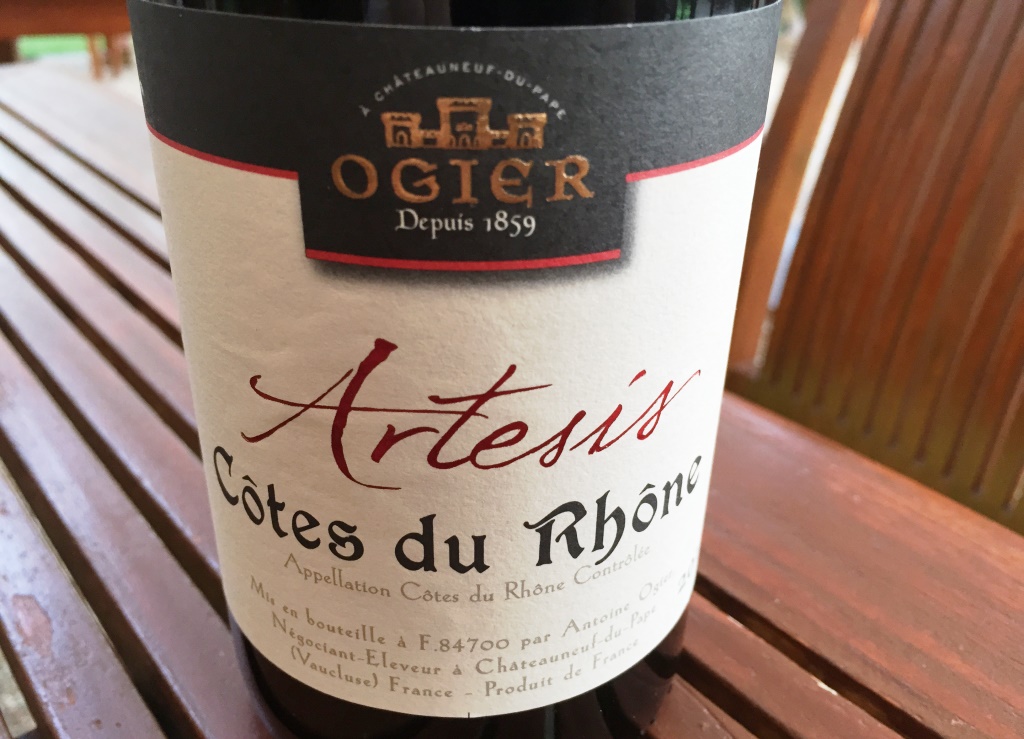
What was even better than just a nice glass of wine was that wine worked perfectly with food – this was an accidental success, as I didn’t think about the wine at all while ordering the food. The wine paired spot on with the Rabbit Pate, elevating each bite. It did the same thing with Grilled Veal with Creamy Mushroom Sauce. Believe it or not, but it was not even disturbed by an interesting dessert – a Pineapple Carpaccio (called on the menu “raw marinated pineapple”) with Lime Sorbet. All I can say that this was probably one of the most versatile wines I ever had – kudos to the winemaker for crafting such food friendly wines – I guess 155 years of history mean something.


Before we part, I want to live you with a couple of curiosities. Below you will see the back label of that bottle of wine, providing sulfates warning in 21 languages (I already shared that on Twitter). I find this interesting and a bit ridiculous (sorry – wine always contains sulfates, and no, they don’t cause the headache). The second picture shows an extremely thoughtful presentation of the condiments. I shared this on Twitter too, noting that I like the classy presentation, something which French mastered perfectly, only to be ridiculed by someone asking me if ketchup is a French food. Of course it is not, but think about how many times you were presented with the bottle of ketchup at a restaurant, only to think “where should I put it to – on the plate or directly on the fries” – by the way, both are equally uncomfortable choices? In this case, the problem is solved in the best possible way – here is your personal bottle, and you don’t need to deal with any puzzles, just enjoy your food.


Voilà! I’m done with my “notes from the road”. If you are in US, happy few last hours of the Labor Day holiday weekend. Until the next time – cheers!
The Drama of Choice
This post is an entry for the 19th Monthly Wine Writing Challenge (#MWWC19), with the theme of “Choice”. Previous themes in the order of appearance were: Transportation, Trouble, Possession, Oops, Feast, Mystery, Devotion, Luck, Fear, Value, Friend, Local, Serendipity, Tradition, Success, Finish, Epiphany, Crisis.
 Choice. Simple word, isn’t it? But think about how powerful the concept of “choice” is. Or better yet, think about how scary the word actually is – think about times when simple phrase “this is your choice” sent chills down your spine? Yep, “choice” is an interesting word.
Choice is closely related to the concept of freedom. When you don’t have freedom, you usually have no choice – well, except may be one – to fight for your freedom or not. Surprising or not, but sometimes we prefer not to have that freedom of choice. Life becomes so much easier when the choice is already made for you. This might not be the best choice (it rarely is) but then a person is happy as the life seems simpler. Choice is hard, choice is difficult, choice is emotionally and intellectually draining. When choosing, we can not know if we are making the “right choice”, and that makes us wary, frustrated, tired and unhappy. It important to understand that “do nothing” is also a choice, not an absence of it. We are choosing it – “doing nothing” doesn’t happen by itself – this is what we decide, we “do nothing” by choice.
We make choices every day, from the moment we wake up until we go to sleep. What to wear, what to eat, which book to read, which task requires our attention first, and which can wait. Most of the choices we make don’t have long term consequences – eggs Benedict versus scrambled eggs is important only for a few minutes you will enjoy your food. Black pants versus grey pants is not the matter as soon you step out of the house. But some of your choices can be extremely far reaching – taking or declining a job offer, going for the third child or not – these choices will shape your life and you will feel their effect for a long while.

Let’s now take a look at the winemaking. I would argue that a lot (most!) of choices made in the winemaking have long term consequences. The wine starts in the vineyard. Which grape to plant? Pinot Noir, Cabernet Franc or Aglianico? Pinot Noir, you said? Which clone? Dijon (which one then exactly), Pommard, AS–2? Now you are growing the grapes with numerous choices regarding irrigation, pruning, canopy management, protection against insects. 5 years down the road your are ready to harvest grapes to make the wine. Harvest date? Hand versus machine? How to crush? Choice of fermentation temperature? Choice of yeast – natural or synthetic? If synthetic, which one of the thousands available in the catalog? Malolactic fermentation or not?
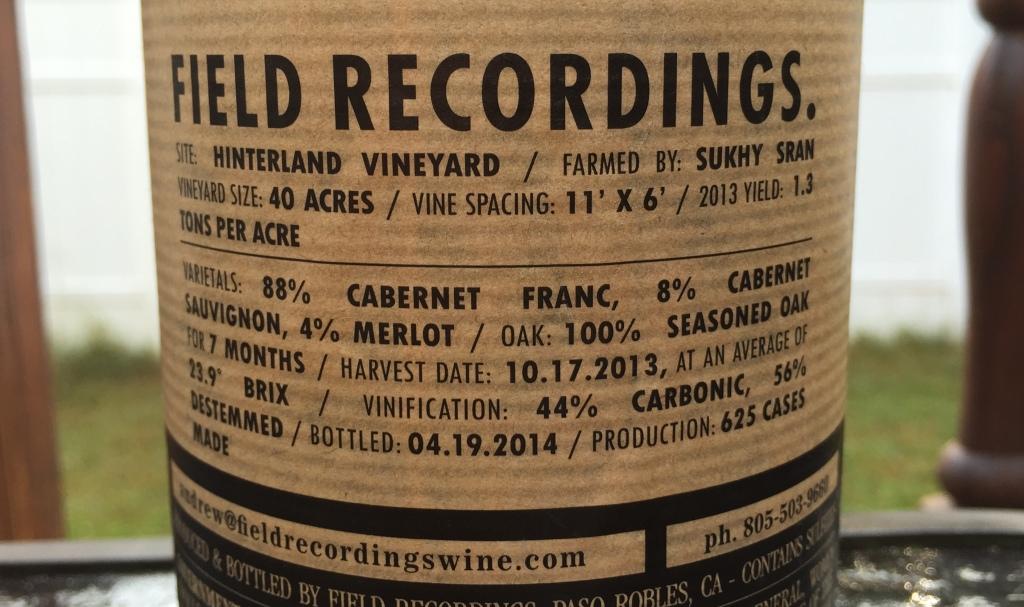
How to age – stainless steel, oak, ceramic, qvevri? For how long? New oak versus old, American versus French? What type of bottle should we use? Screw top, natural cork, synthetic? What is going to be on the label? Below is an example of choices made by the winemaker – captured in the format of the very informative back label – what grapes to use, how long to age, how to ferment – just a glimpse of all the choices which went into production of a bottle of wine…
 Choices, choices, choices… The effect of many choices will not be known for years, sometimes tens and tens of years, until someone will open a bottle of a 50 years old wine, take a sip and say “wow”. Only then we might know that we made right choice years back. Or not.
Yes, we face the drama of choice every day. You know what is important in dealing with this drama? Don’t look back. The choice is made, and it is a part of the past now. The worst thing you can do is to take yourself on the mesmerizing road of “what would’ve happen if I wouldn’t make that choice, if I would’ve chosen differently”. Here you have only one choice – to move forward. Yes, you can’t change or undo the past choices. But you can “do over” – it is always your choice. If you planted the wrong grape, you can replant vineyard with the new one. If you’ve chosen profession you are not happy with – make a choice to change that, learn something new and choose a new path.
You have no luxury of stopping. The very next moment, you will have to make a choice again. And again. And again. Life has an endless supply of the choices for us. Let’s embrace them. Cheers!
P.S. I will not be upset if you will find this post mumbling about nothing new or of substance. But I hope it will at least give ideas and will inspire someone else to choose to write a post for the #MWWC19…
How About Some Cabernet Franc for the #CabernetDay?
The time has come again to celebrate #CabernetDay. I’m really curious – when you hear the words Cabernet Day, what is the first wine (or grape) which comes to mind – is it Cabernet Sauvignon or Cabernet Franc? I would bet that at least two third of the people (if not more) would associate Cabernet Day with Cabernet Sauvignon – and can you blame anyone? While the most celebrated grape in the world comes from Bordeaux, most of Bordeaux wines are blends, so it is really California wine industry which brought Cabernet Sauvignon to such a star status in the wine world, making it an object of crave and desire.
I looked through my past #CabernetDay posts – most of them talk about Cabernet Sauvignon. Meanwhile, Cabernet Franc, a parent of Cabernet Sauvignon, deserves its own praise. You see, the success of Cabernet Sauvignon, especially the California Cabernet Sauvignon, created certain image, certain collective expectations of any wines which happened to have the name Cabernet Sauvignon on the label – we expect power, we expect concentration, we expect big body and silky layers. When it comes to Cabernet Franc, we still accept the wide range of expression – from spicy and light Loire or US East Coast renditions to the powerful and concentrated Bordeaux (rare) and California wines.
Cabernet Franc is still allowed to be different, without demand to adhere to the “international standard” based on the name. You can find a lot of green bell peppers, earthiness and even tree brunches in the Loire (Bourgueil, Chinon, Saumur-Champigny) or US East Coast Cabernet Franc, of course often emanating that wonderful black currant, (a.k.a. “cassis”). On another end of the spectrum are California renditions of Cabernet Franc, which try to eliminate the green bell pepper and make the wine more similar to traditional Cabernet Sauvignon. Either way, Cabernet Franc provides a bigger variety compare to Cabernet Sauvignon – I never said it is better, though.
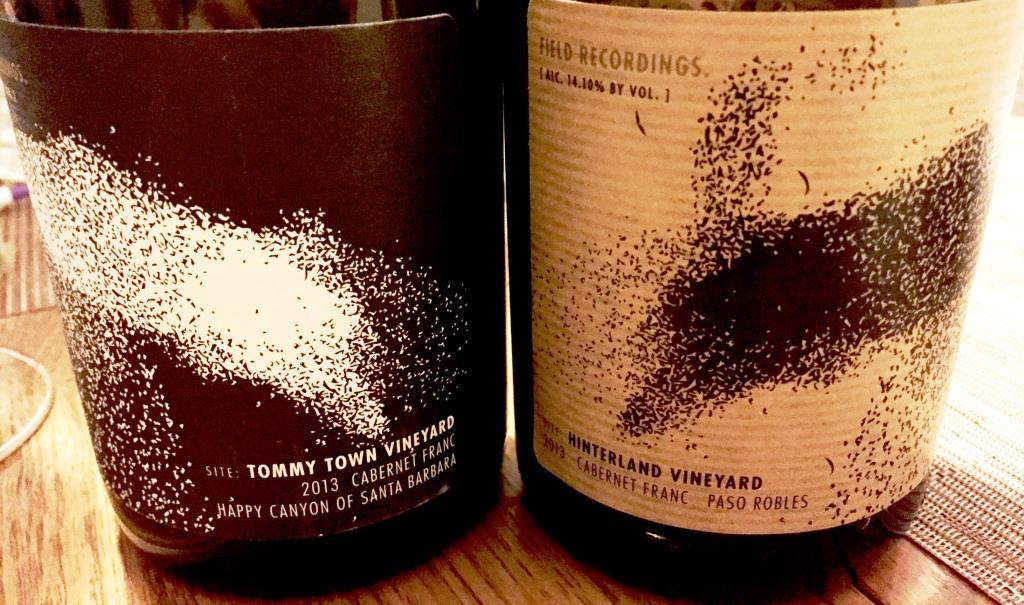 For today’s #CabernetDay celebration I’ve chosen a Cabernet Franc from California. Well, by accident, it happened to be Cabernet Franc for the second day in the row, and for both days it is a Cabernet Franc from one of my favorite producers – Field Recordings. 2013 Hinterland Vineyard Cabernet Franc Paso Robles (14.1% ABV, $18, 88% Cabernet Franc, 8% Cabernet Sauvignon, 4% Merlot), and 2013 Tommy Town Vineyard Cabernet Franc, Happy Canyon of Santa Barbara (14.3% ABV, $18, 100% Cabernet Franc) – two beautiful wines, celebrating a noble grape. The Hinterland Vineyard version was a bit more polished and round, and the Tommy Town Vineyard needed for the alcohol to blow off before it would show itself properly, but both wines had nice, long black currant-loaded finish, and I would gladly drink either one again (those were my only bottles…).
How did you celebrate the #CabernetDay? What was in your glass? Cheers!
Wine Dinner at Brasserie Louis
 I love traditions. I’m not talking about anything which is covered in dust and lasted for hundreds of years. I’m talking about simple life pleasures which you call traditions as long as it is something you do repeatedly, hopefully with joy and pleasure.
For about 5 years, we get together with group of friends for a weekend in August, which we call an “Adults Getaway”. The program for the “adults getaway” usually includes driving to an interesting small town within 200 miles radius, a wine tasting if there is a winery near by (doesn’t have to be a winery – one year we visited Hudson Distillery, for instance), a tasty dinner, a stay over at a nice B&B – but primarily lots great and fun time together.
When it comes to the tasty dinner, we usually try to control that experience as much as possible – that translates into finding local restaurant which will be willing to host us and work with us to create tasting menu, and ideally, allow us to bring our own wine which we will of course pair with the dishes on the menu.
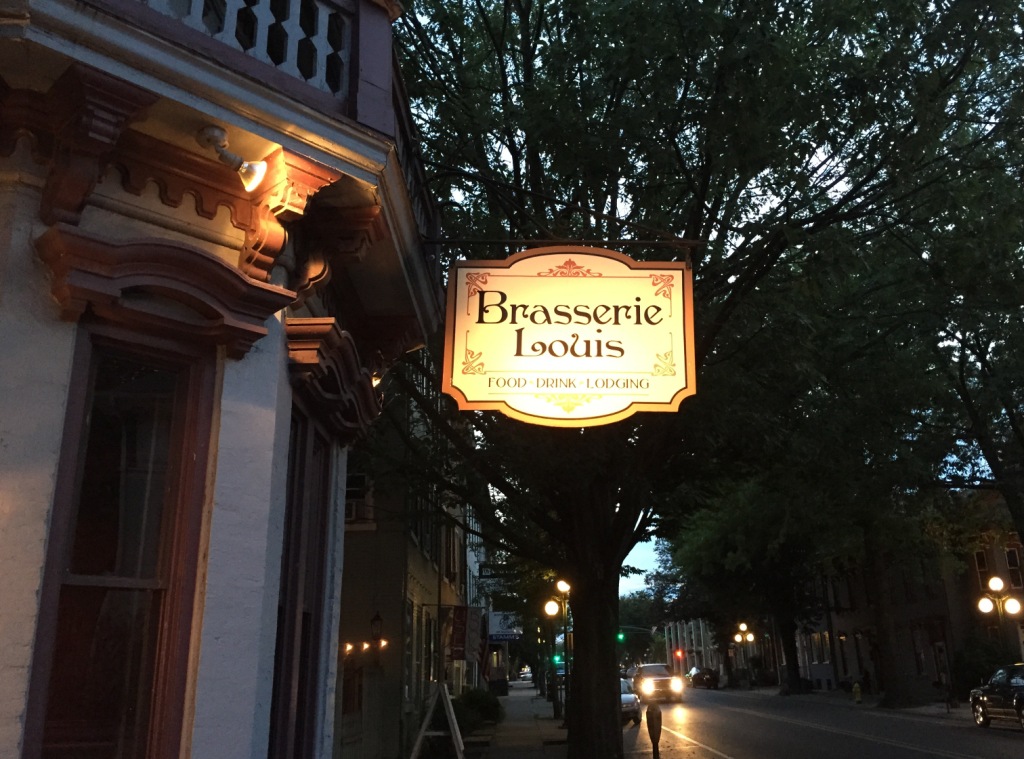 Few weeks ago we got together for our “adults getaway” at Lewisburg in Pennsylvania. Our “anchor” for the trip was visit to the local winery, Fero Vineyards, which will be a subject of a separate post. For the dinner we contacted a few local restaurants, and finally decided to have our dinner at Brasserie Louis.
We didn’t have any specific dining theme in mind, and the suggested menu we received from Scott, owner of Brasserie Louis, exceeded our expectations – 11 different dishes – the dinner looked very promising. Now we had to decide on the wine pairings and go have fun. 11 dishes doesn’t mean we have to have 11 wines – we settled on 7 wines, as two of the desserts really were calling for the two different wine pairings.
The day arrived and we all got together (overcoming some interesting difficulties, such as flat run-flat tire, which appears to be a serious ordeal, especially during long distance travel) and here is the account of the wine dinner with all the details.
Appetizers:
We started with Shrimp Ceviche (diced raw shrimp pieces in lime juice with cilantro, bell pepper, salt and pepper) – very nicely executed dish, great flavor, touch of heat. Our wine pairing was 2014 Fattoria Laila Verdicchio dei Castelli di Jesi DOC, Italy (13% ABV, $11) – wine had a good open profile with some flower and white fruit notes, but most importantly, it paired perfectly with the flavor of ceviche, complementing and enhancing the dish.


Our second dish was Wild Mushroom Tart (puff pastry with wild mushrooms, Gruyere cheese and shallots topped with greens and a balsamic glaze) – another excellent dish, with peppery arugula melding well together with the earthy mushrooms and adding lightness to the cheese. The wine pairing here was NV Anna Codorniu Brut Rosé, Spain (12% ABV, $13, 70% Pinot Noir, 30% Chardonnay) – one of my favorite Sparklers, Anna Codorniu always over-delivers, with good structure and good body. Here the pairing was also successful, with the wine complementing the dish very well.
Intermediate:
Our “in-between” dish was Harvest Salad (baby arugula with goat cheese, beets and candied walnuts tossed with a Champagne vinaigrette) – nice crunch, fresh, simple – and we used the same Anna Codorniu with this dish, and again, this was an excellent pairing.


And now, for the Main Course:
We started with Hand formed Crab Cake (lemon Beurre Blanc sauce, green pea risotto) – this was easily the best dish of the evening. You know how often crab cakes contain a lot of other “stuff”, various fillers (corn, peppers, etc)? This crab cake had just honest goodness of a pure, delicious crab meat – I only had anything similar in Maryland, which can be called a crab cake capital with its blue crab. This was just a “wow”dish. Our wine pairing was also excellent – 2013 Jean-Luc Colombo La Redonne Cotes du Rhone, France (13.5% ABV, $20, 70% Viognier, 30% Roussanne) – Jean-Luc Colombo is a very good producer out of Rhone, and this was one of his higher end wines – plump, full bodied, silky – complemented mild crab cake flavors spot on.


Next up – Black Sesame Crusted Yellowfin Tuna Steak (Yuzu teriyaki glaze) – the dish was nice and simple (tuna was a touch overcooked to my taste, I like it rare), and it paired very well with one of my all-time favorite red wines – 2013 Laetitia Estate Pinot Noir Arroyo Grande Valley, California (13.9% ABV, $20). Laetitia makes an excellent range of Pinot Noir wines, where Estate is an introductory level wine – which makes it perfectly ready to drink young. Delicious California Pinot Noir profile – smoke, plums, touch of earthiness – outstanding. The pairing worked quite well by complementing and enhancing the flavors of the dish.
We continued with Duck a l’Orange (pan seared duck breast, Grand Marnier reduction) – this was an okay dish (my piece of duck was slightly overcooked), but the sauce was excellent and fresh. We used the same Pinot Noir for the pairing, and wine and food worked together well.


Taking a break from the proteins, our next dish was Ratatouille (Provencal vegetable stew of zucchini, squash, wild mushrooms, onions, tomatoes, eggplant and sweet potatoes, touch of Parmesan cheese). This was the dish where the mastery of the Chef combined with amazing Pennsylvania vegetables (I’ve traveled all over East Coast – nothing beats PA vegetables, I’m dead serious) to bring out simply a perfection on the plate – vegetables still had a crunch, and the whole dish was just another “wow” experience.
Our choice of wine for the this and next 2 dishes was 2008 M. Chapoutier Domaine de Bila-Haut Occultum Lapidem Cotes de Roussillon Villages, France (14% ABV, $55/magnum). M. Chapoutier needs no introductions as one of the very best producers in Rhone, and this wine was outstanding – complex, with a touch of roasted flavors, great minerality, lavender. However, there was one problem – this wine didn’t pair well with Ratatouille, and it didn’t pair well with two other dishes. In some cases, it was indifferent (didn’t complement or contrast), and with Ratatouille it was even working against the dish. Well – it is what it is – we still enjoyed the wine and the food – just separately.
Our next dish was Lamb Chops (herb mustard crusted rack of lamb, minted demi-glace) – meat was nicely cooked, and of course lamb and mint jelly is a classic combination.
We finished our main course with Filet Mignon (grilled filet, scalloped potatoes and wilted spinach, truffled veal demi-glace) – the presentation was very interesting, with the steak knife put directly into each piece of the meat. The meat was cooked very well, and overall dish was tasty. And this was probably the only dish where Cotes de Roussillon wine paired marginally acceptable.
Finally, we are at Dessert!
We had two desserts to finish our evening. Strawberry Zabaione (egg yolks, sugar, Marsala wine, fresh strawberries) was very tasty and not too sweet. We paired it with NV Tütidì Brachetto Piemonte DOC, Italy (7% ABV, $12/1L). Brachetto is a lightly fizzed wine with a nice fruit notes, and it perfectly complements wide range of lighter desserts – and this was a case of a perfect pairing – they were delicious together.


We finished our dinner with Flourless Chocolate Cake, which was paired with Mount Palomar Limited Reserve Port, Temecula Valley, California (18% ABV, $38). Port and Chocolate – do I need to say more?


There you have it my friends – our wine dinner at Brasserie Louis in Lewisburg, Pennsylvania. What is left for me to do here is to say Thank You to the owner Scott, Chef Chris Rubino and all the staff at the restaurant who made sure we will have a great time. Cheers!
Brasserie Louis
101 Market Street
Lewisburg, PA 17837
Phone: (570) 524-5559
Facebook: Brasserie Louis
How Good Celebrity Chef’s Restaurant Can be? Mesa Grill in Las Vegas
 Have you ever watched any of the cooking competitions on the Food Network or any other food channels on TV and wondered – how good those chefs really are? Okay, I’m going too far – they must be good at cooking, that shouldn’t be questioned. But – many of those celebrity chefs own restaurants, and in some cases, multiple restaurants, and it is obvious that they don’t personally cook there on an average day, so how good those restaurants can be?
When it comes to the celebrity chefs, Bobby Flay is surely leading the pack. He is an Iron Chef, and he has his own show “Beat Bobby Flay”, where he is fiercely competes with guest chefs – no questions, Bobby Flay knows how to cook.
Bobby Flay owns multiple restaurants around the country. During my recent trip to Las Vegas, I stayed at Caesars Palace casino – which happened to be a home to one of Bobby Flay’s restaurants, Mesa Grill. As you can imagine, I had to use such opportunity to try it out.
We arrived at the restaurant at around 6:30 p.m., and to my surprise we were told that yes, no problems, you will have to wait only for 5 minutes (of course it was in a middle of the week, but still I was expecting a much longer wait). 5 minutes later we were sitting at the table.
 Let’s start from the wine list. The wine list was reasonably sized with good diversity – California, Washington, France, Italy, Spain. There were enough of the reasonably priced wines (under $50); overall, most of the wines were prices at the triple retail. Spanish wine selection was particularly good – Rioja, Ribera Del Duero, Priorat. We settled for 2012 Dominio de Pingus Psi (14% ABV, $85 restaurant wine list price, 100% Tempranillo). This wine comes from the vineyards neighboring the main vineyard of Dominio de Pingus, one of the most “cult” wineries in Spain. The wine was perfectly restrained, with the nose of dark black fruit, firm structure on the palate, young, but well integrated tannins, licorice and fresh acidity. Great wine to have with food and without (finding this wine in the stores might be a challenge though).
And now, let’s talk food. First, the bread basket appeared, featuring Jalapeño bread, raisin and walnut bread and corn bread. All bread was excellent, but Jalapeño bread was a particular standout, delivering nice kick few moments after you would finish chewing on it.
Our appetizer was Goat Cheese “Queso Fundido” (Rajas, Blistered Serrano Vinaigrette + Blue Corn Tortilla Strips), served with house made tortilla chips. Nice presentation, great flavor, touch of heat, very tasty.


There were lots of good choices for the main course – Sixteen Spice Chicken, Cascabel Chile Crusted Rabbit and Mango+Spice Crusted Tuna Steak all sounded very appealing, but I had to settle for Blue Corn Crusted Halibut (Warm Salsa Cruda, Sweet 100 Tomatoes, Kalamata Olives, Oregano + Jalapeno). Our waiter mentioned that Halibut was in the prime season, and somehow all the ingredients sounded very appealing, thus I had to go with it. The dish was just “wow” – great dance of flavors, very creative use of Kalamata olives to add saltiness instead of capers, perfectly cooked fish – delicious! As an added bonus I have to mention that our Tempranillo wine perfectly complemented the dish, enhancing the earthy profile – this happened to be a spot on pairing. We also enjoyed a side order of Roasted Corn (Chipotle Aioli, Lime Cilantro + Cotija) – I generally like this dish often called “Mexican Street Corn”, and the one at the restaurant was nicely done.

Choosing the dessert was also very hard – I wanted to ask for a bite of every dessert on menu, but then I had to bully down that inner kid and we only asked for one – Chocolate Cajeta Cake (Chocolate + Vanilla Swirl Ice Cream + Salted Chocolate Crunch) – the cake was a bit dense, but overall the combination with crunch and ice cream was very tasty.
Overall, this was an outstanding dining experience, and I’m glad to see that my fear of disappointment never materialized. Of course Las Vegas became a culinary mecca nowadays, but in itself this is no guarantee of an amazing meal – thus I’m glad to recommend Mesa Grill as well worthy your attention when you will have an opportunity. Another win for Chef Bobby Flay and a great meal for us. Cheers!
Mesa Grill
3570 Las Vegas Boulevard S
Las Vegas, NV 89109
Phone: (877) 346-4642
http://www.mesagrill.com/las-vegas-restaurant/
Rosé! It’s Good For Summer, And All Year Around
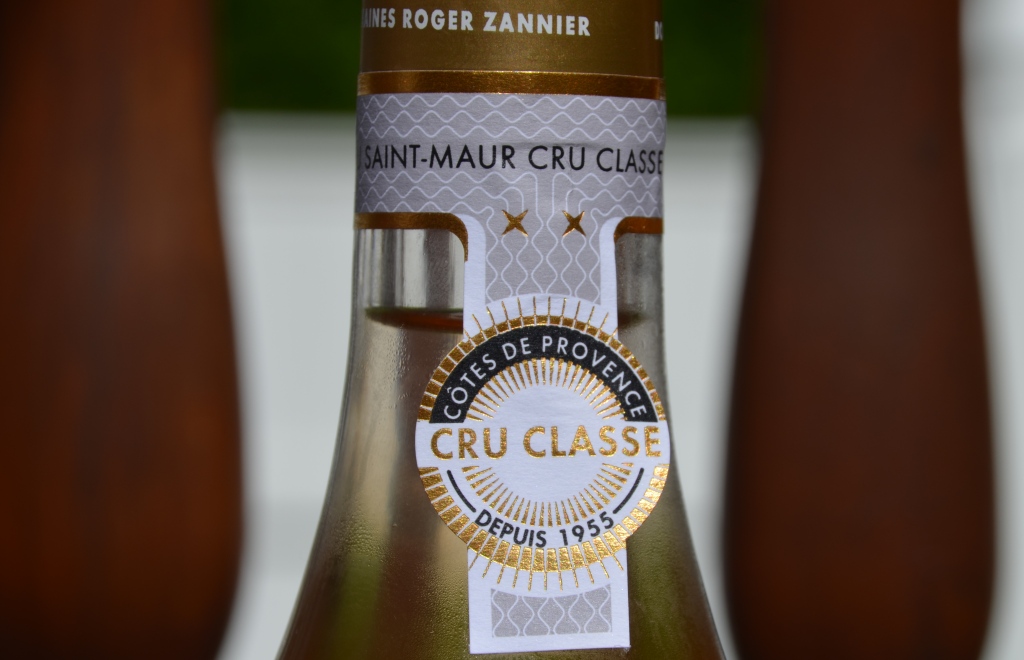 So tell me, dear reader – do you think Rosé is for summer, or is it a year-around wine? In January, when it is –10 outside, would you still reach for Rosè to drink with your dinner? No, you only need heavy reds, you say? But why? Your dinner menu doesn’t consist of 5 variations of the hearty beef stew, and so the wines you drink shouldn’t be just Cabernet Sauvignon from 5 different glasses.
Well, I think the real picture is not as bad as I’m hinting above. The same way as now literally every winery in the world added Rosé to their repertoire, wine drinkers developed better appreciation for Rosé, its light and playful character, and ability to complement wide variety of dishes.
And which region makes the most versatile Rosé? Provence, of course! Yes, Rosé is made everywhere nowadays, but when it comes to finesse and character, Provence Rosé is hard to beat.
I recently had an opportunity to taste the line of Rosé wines from Domains Roger Zannier, and it happened to be a great lesson in diversity of Provence Rosé.
Domains Roger Zannier Rosé line up consisted of three different wine, each one having its own unique personality. In a blind tasting I would never tell that the wines were made by the same producer. And the main quality – while extremely quaffable, these wines offer food for thoughts, they are asking you to focus and to figure out what you taste.
For what it worth, below you will find tasting notes for the Domains Roger Zannier wines – I hope the notes will illustrate my point:
2014 Domaines Roger Zannier Château Saint-Maur Cuveé M Rosé Côtes de Provence AOP ($25, 25% Grenache, 25% Tibouren, 25% Cinsault, 25% Syrah)
C: darkest of the 3, pink and nice
N:strawberries, fresh
P: very refreshing, good acidity, touch of strawberries, nice intensity
V: 8-
2014 Domaines Roger Zannier Château Saint-Maur L’Excellence Rosé Côtes de Provence AOP ($45, 30% Grenache, 30% Cinsault, 30% Mourvédre, 10% Rolle)
C: beautiful light pink
N: touch of red fruit, intense with finesse
P: perfect acidity, touch of lemon, and lemon zest, lots of strawberries, overall delicious
V: 8
2014 Domaines Roger Zannier Château Saint-Maur Clos de Capelune Rosé Côtes de Provence AOP ($65, 35% Grenache, 30% Cinsault, 20% Mourvédre, 15% Rolle)
C: salmon pink
N: clearly a red wine on the nose, cured meat, onion peel
P: savory, complex, but light. Definitely thought provoking
V: 8, different and intriguing. Try it for yourself.
Three wines, three unique and different taste profiles. And an important message – first of all, these are excellent, versatile wines. And then yes, they are pink (or mostly pink) in color.
Don’t let Rosé to hibernate away from your dinner table during fall and winter – no matter what temperature is outside, there is always place for a little Rosé in your glass. Cheers!
500!
 Here we are – another post about stats, right??? Before you click away, can I ask for a minute to explain myself? 500 has nothing to do with views, followers or any other blog statistics, no, not at all. These 500 has a bit more interesting meaning (dare I suggest so). It is actually not even 500 but 517 to be precise (but I think 500 looks cool in the title), and if you didn’t guessed it yet, I’m talking about the grape counter which appears in the right column of this blog, and it is also related to The Wine Century Club.
This post is well overdue – I submitted my Pentavini application back in March (didn’t hear anything yet). I was planning to write a few more posts explaining in greater detail how I finally got to cross the 500 grapes boundary before I would write this very post. One post was supposed to be about a great Hungarian wine tasting last June (2014) where I picked up 5 new grapes – that post never happened, unfortunately.
Finally I gave up on trying to catch up on all the “shoulda, coulda”, and moved right to this post.
When I started the Wine Century Club journey about 8 years ago, I couldn’t even imagine that I will get hooked on it so well; even when I crossed 300 grapes mark, I didn’t see it possible to get to the 500. Nevertheless, here I am, at 517, and I’m sure there will be more.
I know that many of my readers are participating in The Wine Century Club. For those of you who are not familiar with the concept, you can find all information here. The Wine Century Club is a free and open “self-guiding” group of “grape enthusiasts” (yes, you call us geeks) – people who obsess themselves with looking for and tasting as many grapes as possible – and of course having fun while doing that.
The grape hunting becomes an obsession when you scour the back label, producer web site and everything else possible on Internet to find information about the grapes used to make that bottle of wine. Once you figure out the grapes (if you are lucky enough to do it for the given wine and given vintage), your job is not done – you still have to figure out if you didn’t have already the same grape under a different name (simple example – Grenache and Garnacha), or may be this is still the same grape, only with a slightly different spelling. Once all the checks pass successfully, you can add the grape to you collection.
Today it is a lot easier to “collect the grapes”, compare to the time when I just started with the Century Club. Information is more readily available, and also there are lots more grapes which were almost extinct, but now reborn, replanted and becoming tasty differentiators for the winemakers. And more often than not, these obscure wines are a pleasure to drink. They often offer surprising depth of flavor and nuances which make this grape journey really a pleasant experience. I had wines made from Pigato, Pugnitello, Coda di Volpe, Bobal, Trepat, Listan Negro and many others, and they were delicious – what else do you need from a bottle of wine?
If you will get hooked on this Wine Century geekiness, you should know that there are some shortcuts you can take. Well, there is one shortcut which is legal – Giribaldi Cento Uve wine from Piedmont in Italy, which is made out of 152 varietals (though 50% of grapes in that wine are Nebbiolo, and the other 51% comprise 151 varietals) – however, you need to have at least the first level (100 grapes) to make this shortcut legal. I did took it, and you can read about it here.
Second shortcut exists, but it is illegal (The Wine Century Club rules prohibit using of it). Another Italian wine, Vino Della Pace Cantina Produttori Cormòns Vino Blanco, is made out of the whopping 855 varietals. This wine is produced from the experimental vineyard called The Vineyard of the World, where all those 855 (or more) varietals are growing together. Most of the information about this wine is available only in Italian, but if interested, search for it by the name, you will be able to find some bits and pieces (here is one reference for you). If you are curious to see the list of grapes, I got it for you here – you can count on your own. I have a bottle of this wine, but as usual, I don’t know what would be the right moment to open it (hopeless, I know).


Last piece of advice in case you will embrace this fun journey or you are already in, but stumbling: pay attention. Yes, pay attention to the back labels and wine descriptions. During recent Provence tasting I found out that there is a grape called Tibouren which is very often used in Provence Rosé – I would guess that I had it before, but never paid attention to. Another example – Turley Petite Sirah Library Vineyard. This particular wine is a treasure trove for the grape hunters. Here are the grapes which can be found in that bottle: Red – Petite Syrah, Peloursin, Cinsault, Syrah, Mission, Alicante Bouschet, Grand Noir, Carignan, Grenache, and Zinfandel; White – Muscat Alexandria, Muscadelle, Burger, and Green Hungarian. 14 different grapes in one bottle of wine, and many of them are very rare – not bad for a bottle of wine. And by the way, Turley Petite Sirah Library Vineyard is one delicious wine.
In case you might find it helpful, I recently updated the page which contains information about all the grapes I tried for The Wine Century journey, together with the names of the wines which I had. I have to admit that there are still 3 grapes from the original table (the one which I downloaded when I just started with the Wine Century Club) which I still was unable to try – Arvine Grosso, Irsai Oliver and Plavac Mali – they are extremely hard to find in the US. Well, the journey is not over…
What can I leave you with? Go get a bottle of wine made from the grapes which you never had before – there is a good chance you will enjoy it. The grape journey is one of the most fun journeys you can take – let’s drink to the never ending pleasures of discovery! Cheers!
Last Bottle Sign Up ($10 credit)




 Talk-A-Vino