A Journey of a Thousand Grapes
“A journey of a thousand miles begins with a single step”.
True that.
But sometimes, we have no idea about the journey. We just take a step without putting much thought into it. It is only later on, while looking back, we realize that those were not just some random steps. The journey is going on.
I don’t remember how I learned about The Wine Century Club almost 20 years ago. I guess someone mentioned that it might be something I might be interested in considering my love for wine.
The idea of The Wine Century Club is simple. Take an Excel table with the names of the grapes. Checkmark the grapes you tasted either by themselves or as a part of the blend. Once you checked 100 grapes (century), submit your application and become an official member of The Wine Century Club. And don’t lie – if you do, your palate will be cursed forever.
The table had something around 200 grapes in it, and marking 100 grapes in it was somewhat easy. I submitted my application in June of 2008 and received my certificate in a few months. Mission accomplished. Journey completed.
Ha!
By the time I received my membership certificate, the club evolved to add another level of membership – Doppel, requiring one to try 200 grapes. Okay, then, I can walk a little further, fine. Back to the Excel and wine sleuthing. By the time I submitted my doppel application, the club already had a Treble level (300 grapes). Back to the glass I go.
When I started the Talk-a-Vino blog around June/July of 2010, I was in the middle of the Treble journey, which I started documenting in the blog. One of the first blog posts was on the subject of Trebble journey, just trying to explain what is that I’m talking about.
300 grapes is a lot, right. Okay, finally, the mission is completed for real. Ohhh… Maybe not. Quattro. Pentavini. Hexavin (are you serious, people? Who can try 600 grapes????).
When I reached 500 grapes, I wrote a very happy post and started slowly moving toward the 600, knowing with absolute certainty that this would be it. 600 is very formidable, and yes, I heard that some people are moving toward 700, but there was not even an official designation for that status.
9 years after the 500 submission I finally reached the end of the journey – two days ago I submitted my Hexavin application. While looking for the submission rules that I somewhat forgotten since the last time, I looked at the membership page. Guess what I saw on the membership page…
700 (Heptavin), 800 (Otobis), 900 (Novem) and 1,000 (Millenary) varieties
How about that “end of the journey”, huh? Yep. A journey of thousand miles grapes is going to continue…
Don’t get me wrong. I’m not complaining. Neither I’m bragging. I’m simply documenting my journey on these pages – whether you also want to become a grape geek is entirely up to you. But if, by any chance, you do, then I might be able to help you in that journey.
Few things had been happening recently making this geeky rare grape inquisitive journey a little easier. First, the world is a little smaller now compared to 20 years ago. No, this is not an utter nonsense 🙂 give me a moment to explain. Of course, there are lots more people living in this world – but that is irrelevant to our subject. If you can’t find the wine with specific grapes in your country, you can order it online and not pay a fortune for the delivery. When I ordered Williamson and Magor tea from the UK to be delivered to the US about 25 years ago, about 2 pounds of tea cost $60, and shipping was another $60. Last year I ordered 2 bottles of wine from Malta, and shipping was close to $30. The wines from around the world are more accessible now.
The second, and more important factor, is two-fold, but it is all about grapes. All around the world, ancient grapes are actively brought back to life, some resurrected literally from the last vine left. New grapes are bred to be more disease-resistant or faring better with climate change. And the grape geek’s journey becomes a little easier and faster.
Just for fun of it, here are some of my latest additions to the rare grapes list with a few notes:


Folle Noire (red) – 2020 Château de Bellet Rouge Bellet AOP
Braquet (red) – 2020 Château de Bellet Rouge Bellet AOP
Vlahiko (red) – 2022 Glinavos Paleokerisio Ioannina IGP – very interesting orange lightly fizzed wine. This wine is a blend of Vlahiko and Debina (white) – I don’t mention Debina here as I had it before, but if you will find this wine, you might get two new grapes in this bottle.
Cabernet Cortis (red) – 2022 Petit Sauvage Rouge Vin de France – this wine was unique and interesting – you can learn more here.
Negoska (red) – 2019 Domain Tatsis Xynomavro – Negoska Young Vines Macedonia Greece
Orpicchio (white) – 2020 Dianella Orpicchio Toscana IGT – picked up this grape at the Three Bicchiery event earlier this year.
Amur (red) – 2017 Dr. Konstantin Frank Amur Finger Lakes – Unique grape, well suitable for cold weather.


A few grapes from the Balkans and Moldova – all wines are tasty and really inexpensive – if you want to find them, check The Liquor Barn:
Zupljanka (white) – Vrsacki Vinogradi Banatski Riesling Serbia
Kreazer (white) – Vrsacki Vinogradi Banatski Riesling Serbia
Žilavka (white) – 2019 Tikveš Žilavka Dry White Wine Macedonia
Băbească neagră (red) – 2018 Cricova Rară Neagră Moldova
Lidia (red) – NV Cricova Rose Semisweet Wine Lidia Moldova – it is called semi-sweet, but the wine has only a hint of sweetness. If you are a fun of Izabella grape, you really should try this one…
The next 5 grapes are from Hungary – please read more about the wines here:
Csókaszőlő (red) – 2022 Bussay Pince Csörnyeföldi Csókaszőlő Zala Hungary
Jakab Kadarka (red) – 2021/2022 Bóka Birtok Jakab Kadarka Tolna Hungary
Borsementa (white) – 2023 Turay Családi Pincészet Borsementa Hungary
Fekete Muskotály (red) – 2022 Szentezi Prince Fekete Muskotály Hungary
Turán (red) – 2020 Nyolcas és Fia Borház Turán
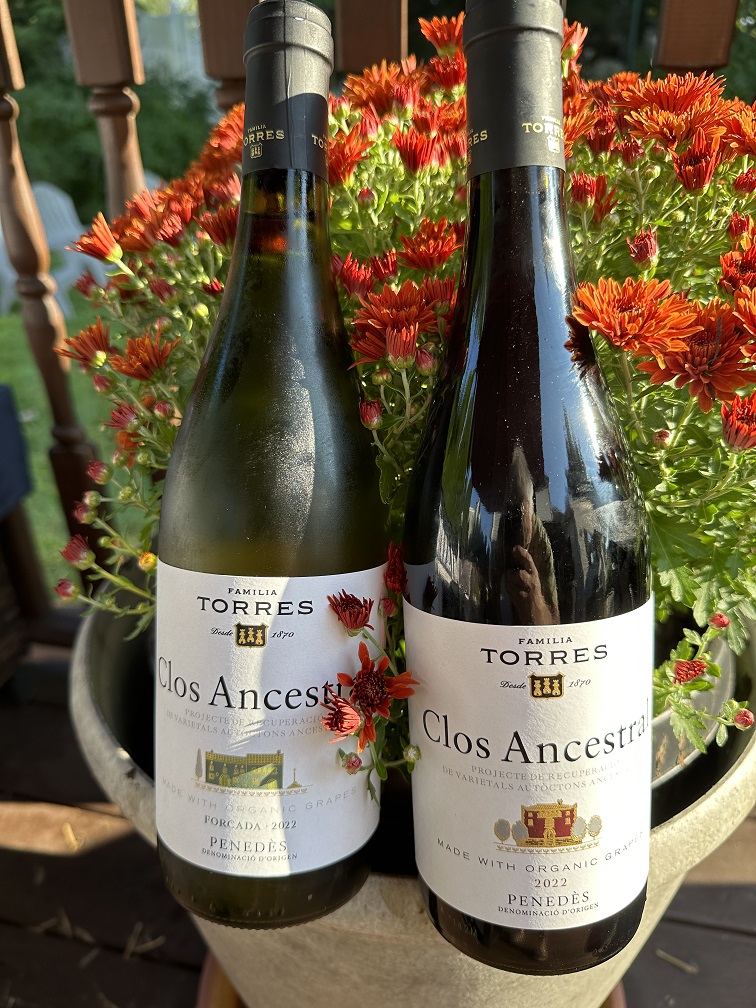 Now Spain comes into the play: as you can tell from the names of the wines, Clos Ancestral, these Spanish wines are celebrating resurrected ancient grapes, all courtesy of one of the largest wine producers in the world:
Forcada (white) – 2022 Familia Torres Clos Ancestral Forcada Penedès DO
Moneu (red) – 2022 Familia Torres Clos Ancestral Red Penedès DO


And here are two more interesting wines from France, not to be outdone:
Mourvedre Blanc (white) – 2021 UNAU Percheron 184 Mourvedre Blanc Vin de France
There is an interesting story behind the name of the wine: “UNAU is named after the female horse at the Fons-Sanatis estate – she is from the Percheron breed. 184 is the size in centimeters of the horse’s withers. Unau is 13 years old. The bottle is from the southwest of France – the cork from Roussillon and the labels are made of vine-plant leaves and stems. There is no use of foil in our packaging – we believe the container should be as environmentally conscious as the content.”
Souvignier Gris (white) – 2023 Petit Sauvage Blanc Vin de France
Also not showing here is one of my latest “strategic” discoveries. There are a few wines in this world produced from many – really many grapes. One such wine is Giribaldi Barolo Cento Uve, made from 152 grapes. Another wine is Vino Della Pace Cantina Produttori Cormòns Vino Blanco, produced from a whopping 855 varieties – while a fun reference, this wine can’t be used to advance your grape count. And then my latest discovery, the wine I had a pleasure tasting this year, Ramos Pinto Urtega from Portugal, produced from 63 grapes (there will be a separate post dedicated to this wine). So yes, there are some shortcuts you can make in this grape journey. And yet a thousand still sounds like an impossible goal.
The journey of a thousand miles begins with a single step. The journey continues one single step after another.
I’m fully enjoying my journey. Wanna come along?
For The Love Of The Cab: Cabernet Deep Dive with Domaine Bousquet
I can’t speak for all oenophiles, but at least speaking about moi, there is one question that I dread the most:
What is your favorite wine?
This is not a question I ever want to hear – of course, as soon as people figure that you are “into wine”, this is the question everyone thinks is the most appropriate. And yet this is bad – scrap that – horrible question as it doesn’t have an answer. Or it has an answer – accepting that the answer will be different every time the question is asked.
Maybe a better question to ask is
What is your favorite wine today?
At least this is a question that I can answer.
Today, my favorite wine is Cabernet, or Cabernet Sauvignon and Cabernet Franc, to be more precise. Cabernet is what we are going to talk about today. And not just any Cabernet – all organic Cabernet from Argentina.
I have to admit that Cabernet Sauvignon is one of my most favorite wines not only today but on any day. I find a classic profile of cassis, eucalyptus, and bell pepper, sometimes accompanied by mint and anise simply magical. When I see Cabernet Sauvignon on the label, this immediately sets my expectations – and that is exactly where a huge disappointment opportunity lies. The wine might be very good, but if it is called Cabernet Sauvignon, and then doesn’t offer the aforementioned classic traits, that immediately becomes a letdown, sometimes even unjustifiably so. The good thing is that Argentinian Cabernet Sauvignon is usually very well versed in its classic expression, so it is generally a Cabernet Sauvignon that doesn’t disappoint.
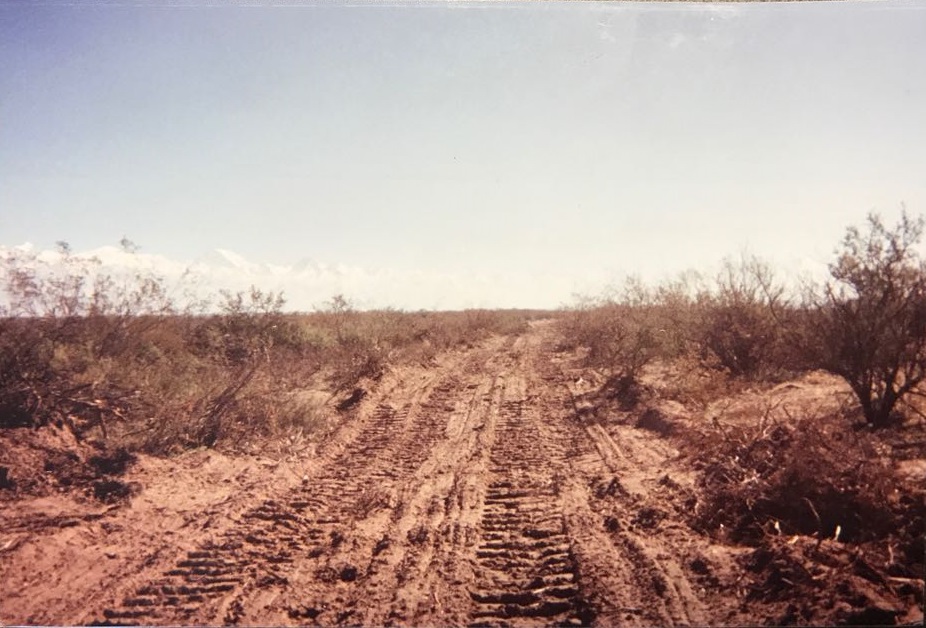
Domaine Bousquet is one of the most impressive wine businesses in the world. I wrote about the history of Domaine Bousquet very extensively on these pages, so I’m not going to regurgitate everything that I already said – instead, I would like to suggest that you read this post, and also this one. However, I will illustrate my statement about the most impressive wine business with a few pictures. Here is what high altitude (1,200 m/4,000 ft) desert looked like in 1990 when Frenchman Jean Bousquet first fell in love with the area while on vacation in Argentina:
Source: Domaine Bousquet
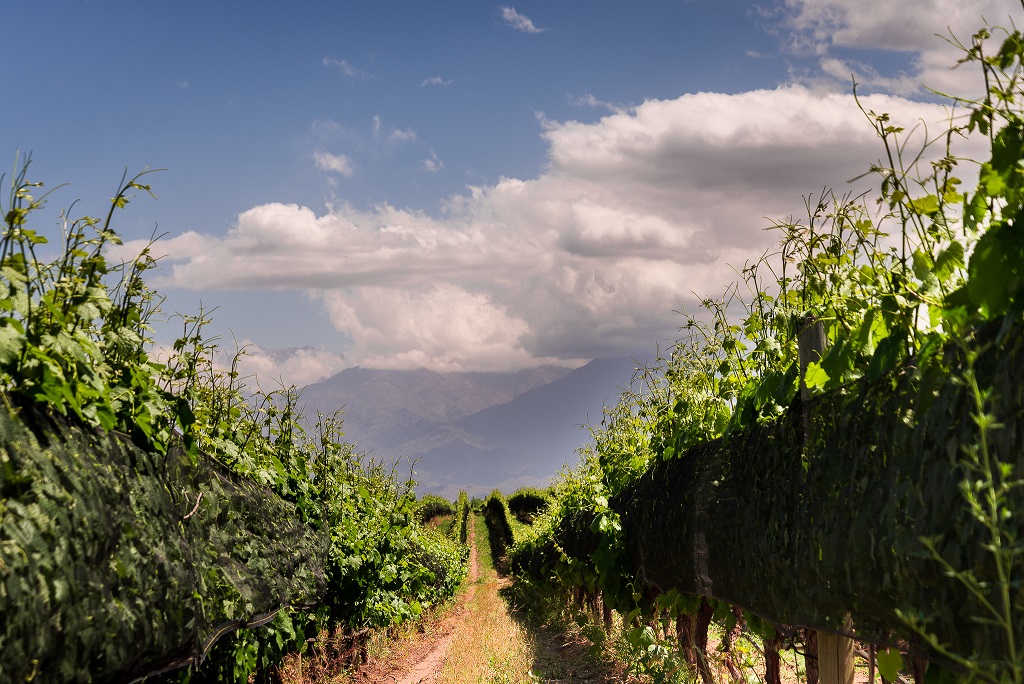
Here is what it looks like today:
Source: Domaine Bousquet
Here is what domain Bousquet has accomplished in less than 30 years, after being formed in 1997:

Certified B corporation, certified regenerative organic, biodynamic, USDA organic… you can continue decoding the icons on your own. 5 million bottles are produced annually, and I never had a wine from Domaine Bousquet that I didn’t like. I rest my case.
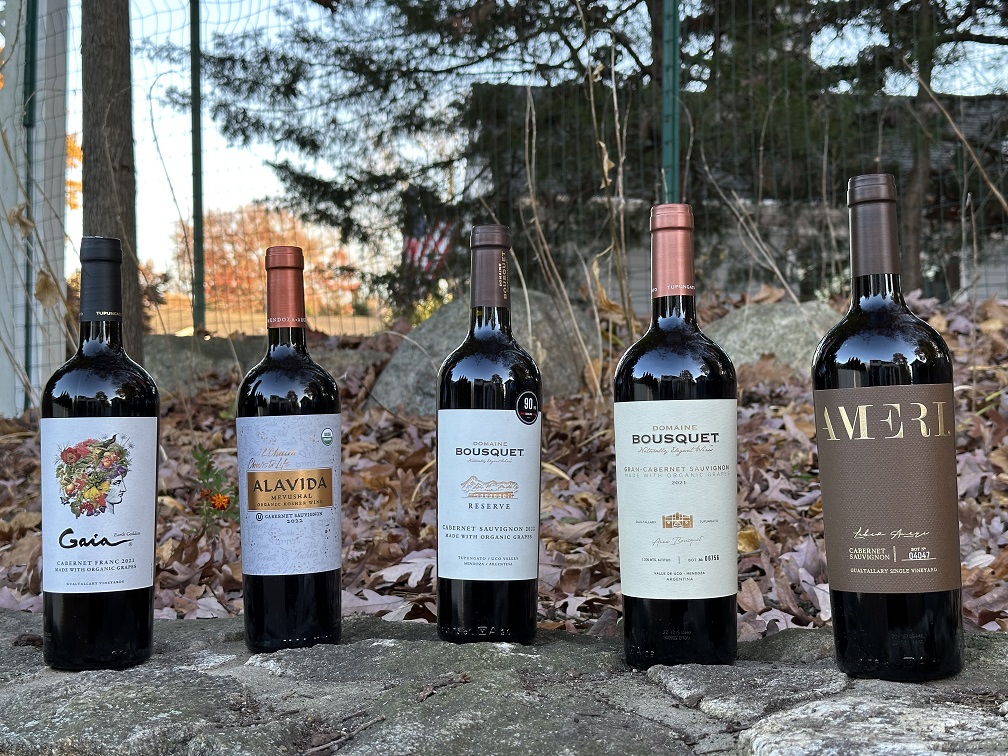
Today we are focusing on Cabernet wines from Domaine Bousquet. While Malbec might be a king of Argentinian wines, Cabernet Sauvignon probably is a royal prince. Argentinian Cabernet Sauvignon wines are world-famous and well sought after. Domaine Bousquet offers a full range of Cabernet wines, both in price and in style. I had an opportunity to taste through such a range, so here are my impressions.
Let’s start with Cabernet Franc first. I love the label for this wine, it is very lively and colorful.
2021 Domaine Bousquet Gaia Organic Cabernet Franc Uco Valley (14.5% ABV, $20, 100% Cabernet Franc, 10 months in used French oak)
Dark garnet
Classic, a distant hint of bell pepper, cassis, eucalyptus.
Cassis, soft tannins with firm structure, a touch of peppery notes, good acidity, excellent balance.
8, delicious and classic
Similar to Hebrew’s L’Chaim! Alavidaalso means To Life! in Spanish. USDA Organic (no SO2 added), unoaked, and Kosher wine is perfect not just for the holidays, but for any day.
2022 Domaine Bousquet Alavida Kosher USDA-Certified Organic Cabernet Sauvignon Uco Valley (14.5% ABV, $18, 100% Cabernet Sauvignon, no added SO2, Kosher)
Dark garnet, almost black
Dark fruit, a hint of dark chocolate
Fresh wild berries, playful, good mid-palate weight, herbs, a touch of sweet oak, excellent balance, delicious.
8, excellent
2022 Domaine Bousquet Cabernet Sauvignon Reserve Tupungato / Uco Valley (14.5% ABV, $18, 6-8 months in French oak, organic grapes, vegan friendly)
Dark garnet
Blueberries on the nose, a hint of eucalyptus
A touch of cassis, tart, a bit astringent, but still well balanced. Tannins are noticeable but well integrated.
7+, needs time
2022 Gran Bousquet Organic Cabernet Sauvignon Uco Valley (14.5% ABV, $25, 85% Cabernet Sauvignon, 15% Malbec, 10 months in French oak, 50% new, 50% used)
Dark garnet
Cassis and eucalyptus in the nose
Cassis, a touch of bell pepper, voluptuous, generous, perfectly balanced, excellent acidity; a delight.
8+, outstanding. This wine was a “California rendition” of Cabernet Sauvignon. Also at this price point, it is a steal.
Ameri is not just a single vineyard but also plot-specific wine made only in exceptional years.
2021 Domaine Bousquet Ameri Single Vineyard Organic Cabertnet Sauvignon Uco Valley (14.5% ABV, $36, 100 Cabernet Sauvignon, 12
months in French oak, 65% new, 35% used)
Dark garnet
Cassis, a hint of bell peppers, a whiff of a leather and sweet oak, complex and inviting.
The beautifully restrained palate leads with acidity, cassis, dark chocolate, well integrated tannins. Wine lost none of its freshness after 3 days. Can age for 25+ years. Outstanding.
8+, delicious. Old world, acidity-driven style, reminiscent of Bordeaux.
Here you are, my friends. 5 beautiful organic, high-altitude Cabernet wines, well worth seeking and enjoying.
Have you had Domaine Bousquet wines? What are your thoughts? Cheers!
Pleasures of Obscure and Difficulties to Express it in Words
German Pinot Noirs are hard to find in the US.
This story is not about Geman Pinot Noir, but the quest for one played a major role here.
I follow a group of wine-os on Twitter X who are swearing by Pinot Noir from Germany, particularly from Ahr, being the best Pinot Noir in the world, easily rivaling Burgundies in quality. Naturally, my interest was piqued and I started looking for the Pinot Noir from Ahr in the US. The problem is that Ahr is a tiny appellation to begin with, and given the popularity of Ahr Pinot Noir in Europe, this was not an easy task. I found Ahr Pinot Noir on Wine.com and confirmed with the group that it was a good producer. The wine itself was $56 or so, adding shipping and tax was making it even more expensive. Now, American Express credit card often has special offers for variety of merchants, Wine.com often being one of such merchants. I think the deal I registered for was $20 off a $100 purchase – considering that Wine.com shipping for 1 bottle is the same as for 3 (I think it is $20), it was a no-brainer – I just had to find a few bottles to reach $100 and get the discount.
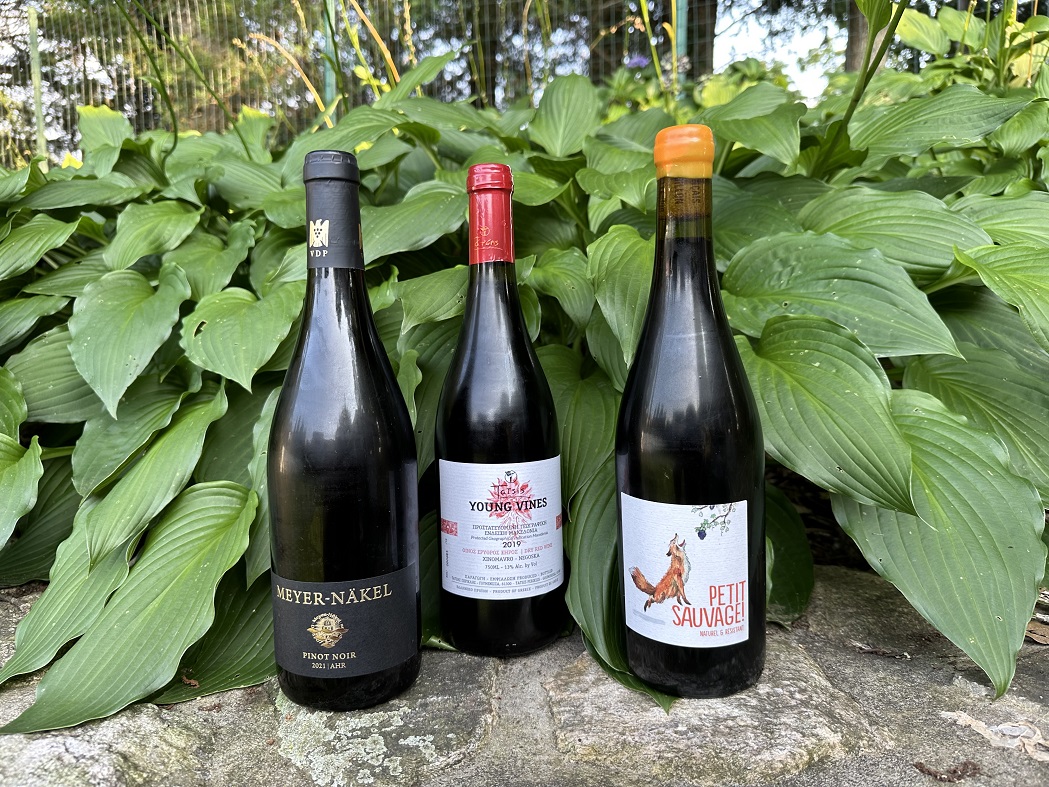
At first, I was looking at some of the familiar wines to add to that Ahr Pinot, but then it dawned on me that I might look for wines to add to my rare grapes collection, which is exactly what I did. In the picture below, you see an end result – a Pinot Noir from Ahr and two wines made from the grapes I have not tried yet.
As you might know, I have been a grape geek for a long time, ever since I was bitten by The Wine Century Club bug (probably close to 20 years by now). I’m always happy to taste the wines made from unknown grapes, whether I will be delighted or terrified – it is all a good experience. Also trying a wine made from an unknown grape is extra fun as you can always approach such a wine with an open mind having no references (read: constraints) of any kind.
The 2022 Petit Sauvage Rouge Vin de France (13% ABV) was made from the grape called Cabernet Cortis which I have never had before. Cabernet Cortis is a hybrid grape, created in 1982 in Germany by crossing Cabernet Sauvignon and Solaris, another hybrid grape (last year I tasted the wine made from Solaris in Sweden). The grape was developed to be better adapted to climate change as well as to be disease-resistant.
The wine was uniquely delicious. Some of the uniqueness I need to attribute to the fact that I was unable to describe the perceived qualities of this wine in English. Yes, you heard that right. My mother tongue is Russian, and while Russian is really not the language of wine, one of the Russian words was the best for describing this wine – терпкий (terpkii). The word describes both taste and textural sensation. To give you an idea of the best textural association, I have a strange question for you – have you ever licked velvet with your tongue? I’m serious. Have you ever seen a TV episode where Gary Vaynerchuk explains wine descriptors to Conan O’Brian and forces him to chew on a wet sock? Something like that, only without socks. So if you would ever try to lick a piece of velvet (make sure it is clean if you do), this would be the closest you would get to that descriptor.
I tried translating it using Google Translate, and the best I can get is “tart” – here are a few more options from the Russian-English dictionary: терпкий — tart, harsh, acerbic, acerb, acidy. None of these would do. As a wine descriptor, tart generally means acidic, and devoid of fruit. And this doesn’t describe the textural and taste sensation I experienced when tasting that wine. Tannins probably would work best, especially those called “velvety tannins”, but I’m still not convinced that this is the best way to describe the taste of this Cabernet Cortis wine. All in all, the wine was delicious, a little bit racy and gamey, but this was perfectly integrated into an overall taste profile. And I would gladly drink this wine again if I had a chance.
Well, the only way we can solve this is for you to find this wine, taste it, and explain to me how little I know about wine – I promise to listen, and will be happy to expand my wine vocabulary.
By the way, speaking about tart – the second wine, 2019 Domain Tatsis Xynomavro – Negoska Young Vines Macedonia Greece, made out of Negoska grape, was actually tart, it was tart beyond belief, and basically, not drinkable. It didn’t improve even after a few days. You do have to kiss a lot of frogs in life… But it’s okay, a part of the process.
Here you are, my friends. There are lots more of the rare grapes I need to report on, so stay tuned…
Asti: Everyday Wine You Love To Drink But Afraid To Admit It
 Let me ask you a favor: can you please be honest with me?
No, scrap that. Can you please be honest with yourself?
When/if you read this, can you honestly answer a question for yourself: do you like sweet wines?
Be honest with yourself. This is strictly between you and you. Nobody will ever know what you will say. But if you do, have at least the courage to admit it to yourself – “yes, I like sweet wines”.
We are afraid of sugar. When we consume it, we prefer not to even think of it. We are so ashamed at the thought that someone might think we like sugar. You are supposed to hate sugar. We are supposed to enjoy things that are not associated with sugar. Sugar is bad news. Period. This is why nobody would ever want to publicly admit they like sweet wines, as they are evil.
Even if you are not afraid to admit to your affection, sweet wines are a special category. It seems that even the smallest bottle is usually too big. And by the time the dessert is served, nobody wants to drink more wine. But leaving that aside, there is a critical element for the sweet wine to be called enjoyable. I’m sure you can easily guess it, but I will give you a moment to think about it.
Got it?
That element is important across all wines, but in the sweet wines it is really critical – and this element is balance. Balance of all elements can make or break any wine, but in sweet wines, it has to be impeccable for the wine to be enjoyable. The sweetness must be balanced by acidity. If it is not, the wine becomes simply cloying, and not enjoyable (yes, I’m talking about lack of acidity in the sweet wines – never tasted the one with too much acidity). And perfectly balanced sweet wine becomes an ultimate indulgence. Perfectly balanced sweet wine is so sensual, so seductive that… well, I better let your imagination run wild.
Now, is there a way to make this sweet wine experience better? Of course – what if we will add some fizz to this perfectly balanced sweet wine? And make it affordable? And reduce the amount of alcohol – not eliminate, but simply reduce? Would you enjoy it every day? I’m sure the answer is yes. And I have a wine to suggest which will perfectly fit this profile – Asti wines from Northern Italy.

Source: Consorzio Asti DOCG

Source: Consorzio Asti DOCG

Source: Consorzio Asti DOCG
Sweet wines of notice were produced around the towns of Asti and Alba in southeastern Piedmont as early as the 17th century using a grape called Moscato Bianco. It is possible that the wines were produced even earlier, as Moscato Bianco had been growing in Piedmont as long as the Piedmont’s king was, Nebbiolo. The Classic Method of Champagne production has traveled to Piedmont and the first sweet classic sparkling wine was produced in the region in 1870. After the Martinotti method of producing sparkling wines in the tank instead of the bottles was invented in 1895 by Federico Martinotti, it quickly displaced Methode Champenoise as less expensive and significantly less time-consuming. The same method is used in the production of Prosecco. Oh, and look at these beautiful vineyards…

Source: Consorzio Asti DOCG
In 1932, Consorzio per la Tutela dell’Asti (Consortium for the Protection of Asti) was established to develop and ensure the guidelines for the production of Asti wines, known at that time as Asti Spumante. Things were going well until Asti Spumante became a victim of its own success. After World War II, American soldiers coming back were bringing light, sweet, fizzy Asti wines with them, bringing a surge in popularity. As the history of many wine regions shows (Chianti, Amarone, Australian wines at the beginning of the 2000s), such an increase in demand leads to overproduction and a dramatic drop in quality – exactly what happened with the Asti wines which subsequently lost their popularity due to poor quality.
Moving forward, Asti had to redefine itself, step by step. When Asti Spumante DOC was promoted to DOCG status in 1993, producers decided to ditch the Spumante portion of the name, becoming simply Asti instead of Asti Spumante. Producers also changed their production methods and quality controls, often moving towards a less sweet, drier style. The consortium also established a maximum yield for the grapes’ harvest and minimum alcohol levels that need to be achieved after fermentation.
While Asti wines are perfectly enjoyable on their own, they also make one of the very best food-pairing wines. Craving spicy food? Asti will work perfectly with that. Something substantial and salty? Bring on the Asti. Maybe most importantly – and uniquely – Asti wines are incomparable when it comes to pairing with desserts. If you never experienced a glass of Asti with an apple tart or a peach cobbler, you are missing on some of the greatest pleasures in life – you really should try it next time.
As Consorzio is expanding its presence in the US, I had an opportunity to sit down (virtually) with Consorzio per la Tutela dell’Asti Director Giacomo Pondini and ask him a few questions about Asti wines. Here is what transpired in our conversation.
[TaV]: What is the history of wine production in the region? Is Moscato Bianco the only grape that has been cultivated in the region? What kind of wines were produced there before the introduction of sparkling wines in 1865?
[GP]: As in many other places around Europe, the Romans have imported the wine production in Piedmont. And since then, it has thrived. Beyond Moscato Bianco, the historical grapes in the region are red varieties: Barbera, Freisa, Nebbiolo. Probably the most important step towards a more modern style of winemaking, at that time, was made by Camillo Benso Conte di Cavour. Before becoming a fundamental politician in Italian history, he devoted himself to the production of a wine based on Nebbiolo, named Barolo. In the history of Asti wines, the production of vermouth has laid the economical basis for developing the sparkling wine industry, based on Moscato Bianco grapes.
[TaV]: What is the difference between Asti Spumante DOCG and Moscato d’Asti DOCG wines?
[GP]: The main difference lies in the pressure – Asti Spumante, a proper sparkling wine, has to have at least 3.5 bar pressure, while Moscato d’Asti, which is a fizzy wine, 2.5. Then the difference lies in the residual sugar, higher in Moscato d’Asti, where sugars are less fermented and, therefore also less alcohol.
[TaV]: I understand that Asti Spumante wines can be produced using Classic and Charmat methods. What are the styles of Asti Spumante wines produced in the region, the official classification?
[GP]: The classification goes from pas dosè to sweet. Historically speaking, the sweet typology was the only one allowed until 2017, when extra dry, dry, demi-sec were introduced. From 2020, pas dosé, extra brut and brut were also authorized.
[TaV]: What are the best food pairings for the Asti Spumante wines? I know that in Sauternes in France, the region famous for its sweet wines, it is possible to have a full dinner paired with sauternes wines, from appetizer through the dessert. Is it possible to do the same with the Asti Spumante wines? If yes, can you share a sample menu for such a dinner?
[GP]: We know that in many countries Moscato d’Asti and Asti spumante are paired with a wide range of food: from the traditional desserts to cheese, from barbecue to Thai soups, to raw fish and curry.

Source: Consorzio Asti DOCG
[TaV]: What is the annual production of the Asti Spumante wines across all styles and including both DOCGs? How many producers and grape growers are in the region? Any other statistics you would want to share?
[GP]: In 2022 the annual production has reached 102 million bottles, 60% Asti Spumante and 40% Moscato d’Asti. Around 3,000 grape growers and 250 producers.
[TaV]: What countries are the main importers of the Asti Spumante wines? What percentage of annual production is going for export versus domestic consumption?
[GP]: Export covers 90% of the production, both for Asti Spumante and Moscato d’Asti. The main export markets for Asti Spumante are the USA, Russia, Great Britain, and Germany; USA by far is the most important market for Moscato d’Asti.
[TaV]: What is ahead of the Asti Spumante wines, let’s say, over the next 10 years?
[GP]: In commercial terms, an increasing presence in the Asian markets, while also growing the value and the perception. And also, a reason to visit Langhe-Roero Monferato, the area of production in Piedmont, UNESCO world heritage.
[TaV]: Sustainability and organic viticulture – are they used in the region? What percentage of the producers practices sustainable viticulture? Same for the organic?
[GP]: Around 25% of the growers are sustainable or moving in that direction. As a Consorzio we have just started the process of becoming a “sustainable territory”, a certification that involves all the grape growers and wineries in our area of production.
[TaV]: If someone had never had an Asti Spumante wine, how would you convince that person to try the wine for the first time?
[GP]: The aromatic profile of Asti Spumante, as well as Moscato d’Asti, cannot be found in any other wine. An immediate pleasure that makes these wines suited for any pairing or in any joyful moment.
I had an opportunity to taste several Asti wines of different styles – dry (it is Asti dry, not Champagne Brut Nature dry), sweet, sparkling and still. Acidity rules the pleasure in Asti wines – as long as the wine has enough acidity, all of the sweet elements – peaches, apricots, apples, pears, honey – will appear utmost delicious. As a reference, here are the wines I tasted and am happy to recommend – the first two being the most favorite:
NV Acquesi Asti DOCG (7% ABV)
NV Capetta Asti DOCG (7% ABV)
NV BOSCA Esploro Secco (dry) Asti DOCG (11% ABV, sugar 17–23 g/l)
NV Giacomo Scagliola “SiFaSol” Moscato d’Asti Canelli DOCG (5.5% ABV)
NV Bersano Monteolivo Moscato d’Asti DOCG (5.5% ABV)
NV Cascina Cerutti Siri Sandrinet Moscato d’Asti DOCG (5.5% ABV)
NV Matteo Soria Bric Prima Bella Asti DOCG Extra Dry (12% ABV)
2022 Vittorio Bear Moscato d’Asti DOCG (5% ABV)
NV Sanmaurizio SATI Asti DOCG Secco (11.5% ABV)
NV Arione Asti DOCG Extra Secco (12.5% ABV)
NV Tosti Asti DOCG (12% ABV)
NV Bussi Piero Moscato d’Asti DOCG (5.3% ABV)
Before we part, let me ask you something.
Are you convinced now that sweet wines are not evil, or do you still need more convincing? Let’s do a simple math here. A typical glass of Asti wine contains between 8 and 12 grams of sugar (dry Asti will have only about 4, but let’s leave dry Asti aside for now). That same glass of Asti, at 5% ABV, will have about 7 grams of alcohol (1 standard wine glass is 5 oz, which is equal to 142 (rounded up) grams, 5% from 142 is 7.1). According to the formulae I presented in this post, considering that 1 gram of sugar has 4 calories, and 1 gram of alcohol has 7, that glass of Asti will cost you 4*12+7*7 = a whopping 97 calories. Plus lots and lots of pleasure. Considering that a can of Coke has 140 calories, what would you choose?
The choice is yours, of course, but my choice would be pleasure. Any day. Wine should give you pleasure, this is the only reason to drink it, and Asti is good at that.
The holidays are upon us. But even between the holidays, you have to celebrate every day whose name ends with the “y”. And please promise me that you will try a glass of Asti with dessert. You owe it to yourself. Please…
Let’s drink sweet wines and to the sweet wines. There is nothing to be ashamed of. Cheers!
American Pleasures #10: Meyye Wines
Wine should give you pleasure – there is no point in drinking wine if it does not. Lately, I have had a number of samples of American wines that were delicious standouts – one after another, making me even wonder if someone cursed my palate. I enjoyed all those wines so much that I decided to designate a new series to them – the American Pleasures.
And we are back to talk about more delicious American wines.
Rob Campbell got into winemaking in 1992 when he started helping his future father-in-law Bruce Tichenor at Story Winery in Plymouth, California. 20 years and three other careers later, Rob decided that it was the time to go into the winemaking all the way, taking over the wine-making at the Story Winery. While producing award-winning wines at the Story Winery, Rob realized that he could also produce ultra-premium wines, capitalizing on the success of his 2014 Zinfandel. When the family decided to sell Story Winery in 2019, Rob finally got an opportunity to start making the wines he had always dreamt of, and he founded Meyye Wines.

With Meyye Wines, Rob wanted to honor his Native American heritage. Rob Campbell is a member of the Federated Indians of Graton Rancheria (Coastal Miwok/Southern Pomo), the tribe is based in Rohnert Park, California, which lies within Sonoma County. Meyye (pronounced may-yea) means ‘bird’ in the Coastal Miwok language, and the first 4 wines that Rob started producing are all called after the birds native to the different regions where Rob was sourcing the fruit from, using native Miwok names for the birds. You can also appreciate the beauty of these wine labels which started as photographs taken by acclaimed wildlife photographer Steve Zamek, expertly rendered to create a three-dimensional representation of an image of each bird.
As Rob explains:
“Native Americans have been making wine in California for over 250 years. I descend from multiple Mission Indians who worked vineyards or made wine in three different California missions in the 19th century (Mission San Jose, Sonoma, and San Rafael). I’m intentionally using the Coast Miwok language since the language was considered ‘officially dead’ in the past, but my people are making a concerted effort to restore it. In addition to being ultra-premium wines that taste great, it’s my small way of preserving our language by sharing it with native and non-native people alike. “
I had an opportunity to taste 4 of Rob’s wines, and they were literally one better than the other. I’m also sure you would be able to recognize the names of the vineyards and appreciate the pedigree of these wines.
Here are my notes:
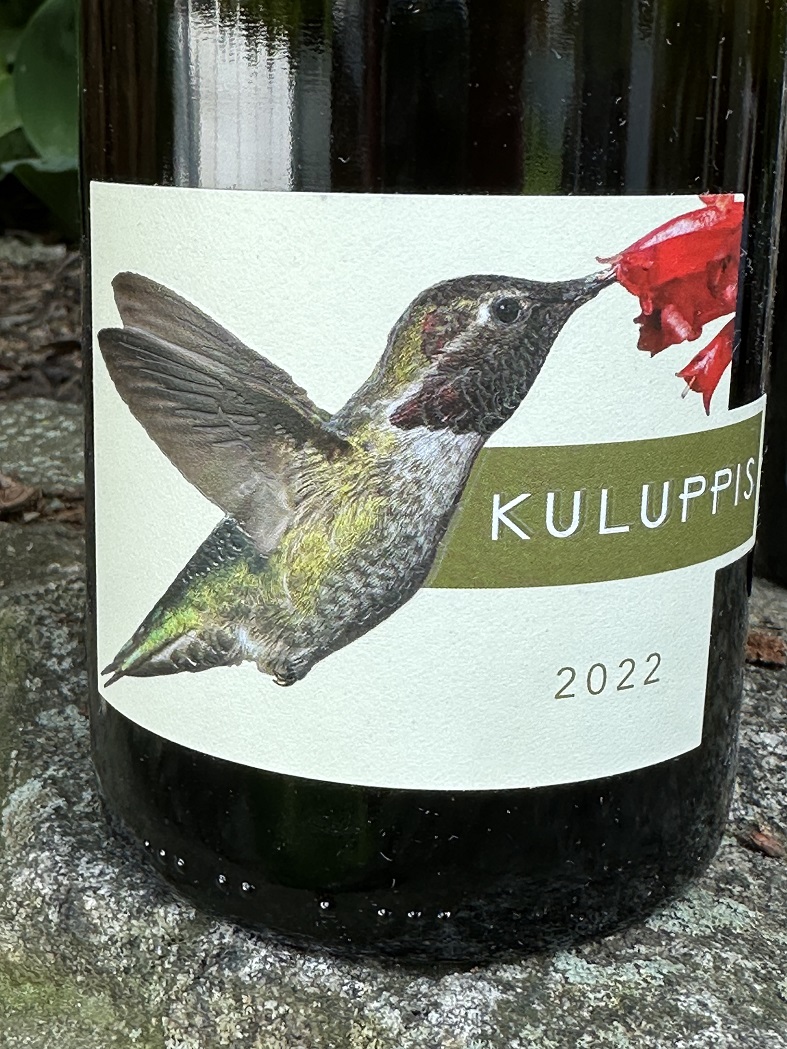
2022 Meyye Wines Kuluppis Chardonnay Sonoma County Los Carneros (13.7% ABV, $55, Sangiacomo vineyards, Kuluppis pronounced kuh-luu-pee; Anna’s hummingbird)
Light golden
Immediately upon opening – rich, opulent, butter, vanilla and tropical fruit on the nose, buttery toast on the palate, big, rich, hedonistic.
Literally 30 seconds later – a lot more restrained and leaner wine, all butter is gone, just some apples left. Well, no, there is still butter, just the toast is gone 🙂 nice and elegant, well balanced. Some perceived bitterness on the palate. Let’s see how it will develop.
Second day showed some honey notes and improved balance. Overall – excellent.
8+
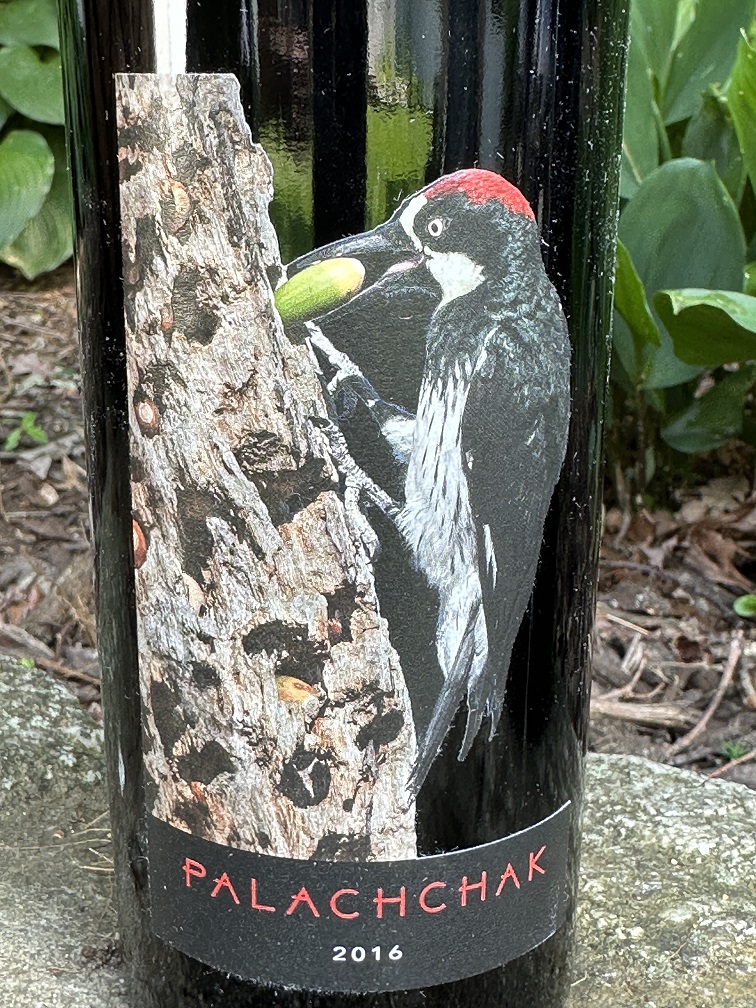
2016 Meyye Wines Palachchak Zinfandel Shenandoah Valley (15.5% ABV, $70, 90% Zinfandel, 10% Syrah, Palachchak pronounced pah-lah-chak; red-headed acorn woodpecker)
Dark chocolate and black currant, intense and beautiful
Blackberries and blueberries on the first day,
Dark chocolate with a touch of pepper, cherries, good structure, full body, clean acidity, good balance. Lasted for 4 days. Became a bit more round.
8
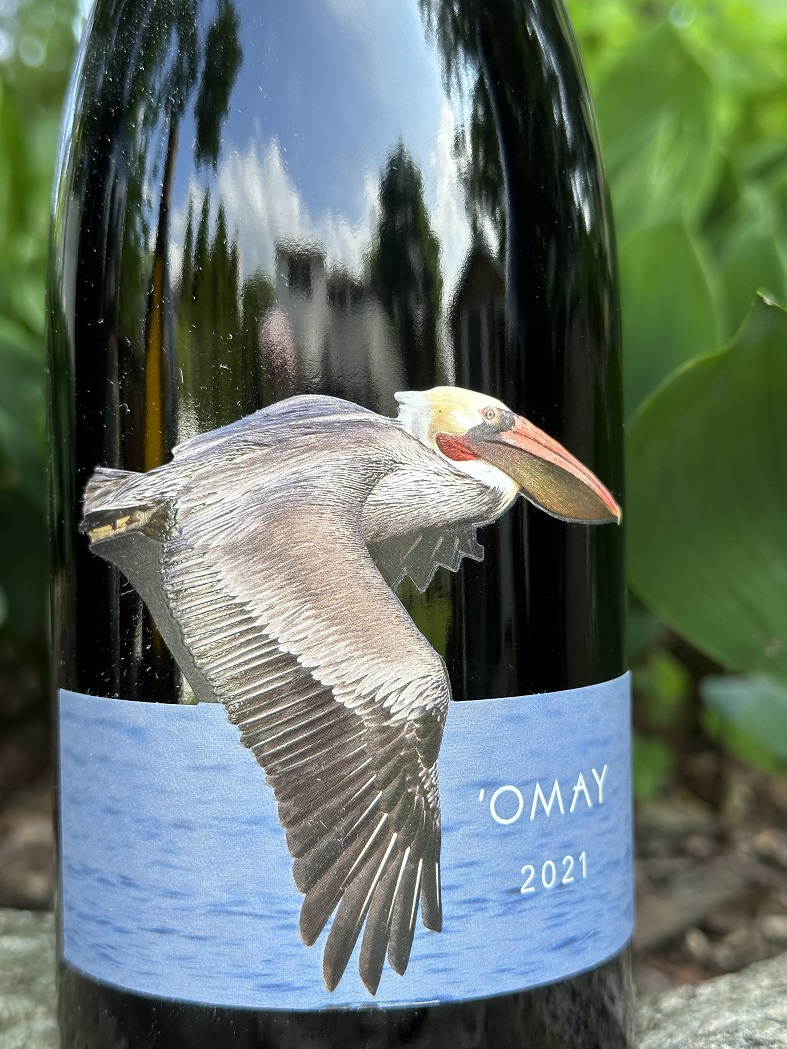
2021 Meyye Wines ‘Omay Pinot Noir Sonoma County Petaluma Gap AVA (13.9% ABV, $75, 100% Pommard Clone, Sangiacomo Vineyard, ‘Omay pronounced oh-may; brown pelican)
garnet
Smoke and plums, classic CA Pinot
Black Plums, violets, lavender, clean acidity, medium to full body – delicious.
8
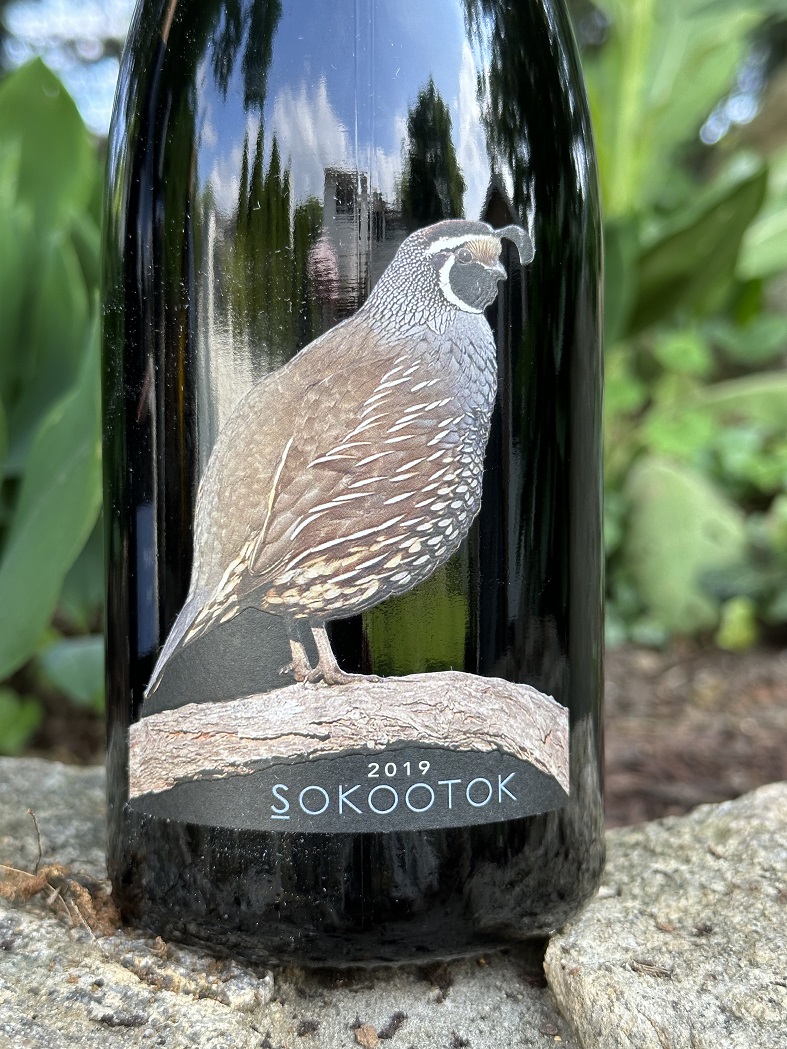
2019 Meyye Wines Sokootok Red Blend Sierra Foothills (14.5% ABV, $60, 50% Grenache, 28% Syrah, 10% Petite Sirah, 9% Counoise,
3% Zinfandel, Sokootok pronounced show-koh-tock; California quail)
Dark Ruby
Dark fruit, hint of minerality, sweet cherries, herbs
Black and red fruit, medium body, well-integrated tannins, good acidity, then tannins grip the finish – in a nice, but assertive way. This will develop nicely over the next 10-15 years.
8+, delicious.
Here you go, my friends. Another story of American Pleasures – delicious wines well worth seeking. And Meyye wines you will actually have to seek, due to their ultra-low production, so good luck to you.
Until the next time – cheers!
The Art Of Living Nobile – The Avignonesi Way
 Have you heard of Vino Nobile di Montepulciano? If you have – great, if you have not – don’t despair, this is what we want to talk about today. Not to confuse anyone, we will be talking here about wines produced near the town in Tuscany called Montepulciano, where the wines are made from the same grape that shines everywhere in Tuscany – Sangiovese, and not about the grape called Montepulciano.
Wines had been produced in the Montepulciano area for a very long time (it’s Italy to you), and in 1685 Montepulciano wine was declared a “king of all wines“. But it was not until the 1930th when the name “Nobile” made it on the wine label thanks to the efforts of winemaker Adamo Fanetti. From there on, the wines previously known as “special Montepulciano red wines” became known as Vino Nobile di Montepulciano.
Okay, what is this “Living Nobile” all about you might ask. Let’s talk about it.
I asked the glorified search engine, now also known as AI “What does it mean to live Nobile” – and here is the answer I received:
“To live nobile” means to live a life characterized by high moral principles, displaying qualities like kindness, integrity, generosity, and a strong sense of duty towards others, essentially embodying the idea of “nobility” in one’s actions and character; it signifies living with a focus on doing good and acting with dignity, rather than seeking personal gain or power.”
This seems to be reasonably clear, would you agree? But where is the connection to the wine?
Ahh, I thought you would never ask. Cue in Avignonesi, one of the premier wineries in the Vino Nobile di Montepulciano area, founded in 1974.
Avignonesi was instrumental in advancing the whole region forward, being the driving force behind Vine Nobile di Montepulciano becoming one of the very first regions in Italy to be awarded DOCG (Denominazione di Origine Controllata e Garantita) status, the highest level of quality in Italian wine denomination system, along with all the famous “B”s – Barolo, Brunello, and Barbaresco.
That is not all. Avignonesi today is a certified organic and biodynamic winery, and it is also a certified B Corporation since July of 2022. Now this gives is even better connection to the “live Nobile” concept as outlined above.
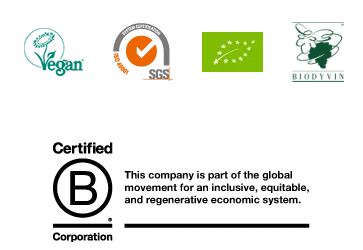
To become a B (B stands for Benefit) Corporation, a for-profit company has to be certified (every 3 years) to meet high level standards for social and environmental performance. As of February 2024, there were 8,254 certified B Corporations across 162 industries in 96 countries. Out of that total number, there are only 52 wineries, and Avignonesi is one of them.
Here are more helpful suggestions from the AI:
Wineries that become B Corps often commit to:
Using low impact farming methods
Managing resources responsibly
Treating their workforce, community, and natural surroundings fairly and responsibly
As you can tell, these are perfecly aligned with the “living Nobile” concept.

To promote “living Nobile” concept, Avignonesi recently engaged in an entire campaign promoting this concept. The winery also created a special release of their flagship 2014 Vino Nobile de Montepulciano wine adorned with a special label designed by the artist Amrita Marino. I had an opportunity to sit down (virtually) with Avignonesi CEO, Matteo Giustiniani, have him explain the concept behind “living nobile” and answer a few of my questions. Here is what transpired in our conversation:
[TaV]: Can you explain the idea behind ““living Nobile””?
[MG]: We always keep in mind our extra long-term vision: to be good ancestors, planting trees under whose shade we will never sit. Recently, we started asking ourselves how we could deeper connect with our consumers, deepening their understanding of the Nobile di Montepulciano appellation and bridging the gap in understanding the values that drive us in caring for each grape, each bottle, and every consumer, beyond all technical aspects that do remain fundamental to our striving for excellence.
And here it came! The Live Nobile communication platform: a veritable movement that brings wine into cultural conversations and gives it a fresh and renewed relevance. It tells us what living Nobile means, highlighting the importance of lightheartedness and enlisting the help of Amrita Marino to illustrate our points, supporting us in telling what Live Nobile is. For us, Live Nobile it’s sharing ravioli, saving seats, arriving on time, or celebrating small wins. Yet, it’s also about embracing slow living or it’s the impromptu refill; and again, it’s also the airplane mode and being the designated driver. But most important, looking forward, it’s everything we can recognize aligned to our deepest set of values, giving to us spectrum for so many facets and personal interpretations.
[TaV]: What is the inspiration behind these “artist label” releases?
[MG]: We see our featured artists to our greater end. Today it’s Amrita, but tomorrow it could be a visual artist, writer, photographer, or calligrapher. We are selecting key individuals to represent the aesthetic values of our platform, Live Nobile.
[TaV]: Why ten new labels for the 2014 release? Will all of these labels be available in all of the markets? What is the inspiration behind these labels?
[MG]: 10 labels as we are marking a decade since we first harvested grapes, giving through each label a visual life to our already imagined platform.
[TaV]: Do you plan to continue these special “artist label” releases? Will you have such a special release next year? Will you work with different artists for he subsequent releases?
[MG]: Absolutely, yes! We will have special releases next year (and the following ones) featuring a variety of creative people.
[TaV]: I’m assuming this 2014 is also considered a “vintage release”? The tech note you sent me is for the regular 2014 Vino Nobile di Montepulciano – was the wine with the artist labels simply a part of the same general 2014 batch, or were they specially selected?
[MG]: The 2014 Vino Nobile di Montepulciano was originally released as part of the standard vintage back in 2014. However, 10 years ago, we made the decision to set aside a very limited number of bottles to age in our cellar, and we are now re-releasing them with updated packaging. These bottles are still part of the general 2014 batch.
[TaV]: Were some wines released under the general label, and some reserved for the later release, bottled, stored at the winery, then recently labeled and offered as an “artist series”?
[MG]: Yes, this is correct
[TaV]: Or were these special-label wines from different plots/vineyards?
[MG]: No, same general batch.
As you can tell, living Nobile is simple, and we should all embrace this beautiful concept. You can learn more about living Nobile on the Avignonesi website, and also there you can see all ten artistic labels celebrating this special release.
So how were the wines? I had an opportunity to try both nicely aged classic Vino Nobile and a special treat – a super-Tuscan wine called Desiderio.
2014 Avignonesi Vino Nobile di Montepulciano DOCG (13.5% ABV)
Ruby with brickish hues
Leather, tobacco, a hint of a gunflint
Cherries, leather, roasted notes, earthy notes, good acidity, cherries on the finish.
Drinkability: 8, very nice

I think Desiderio wine deserves a little introduction, and I’m not going to regurgitate a perfect explanaton as it appears on Avignonesi website. Here it is:
“Desiderio was a bull which lived on Avignonesi’s Capezzine farm more than one hundred years ago. The largest bull in Tuscany at that time, this majestic animal helped define the Chianina cattle race, specific to the Bistecca Fiorentina. It came as a natural choice to dedicate this Merlot to the beloved bull as a testimony to the wines’ origin. This is Merlot from Tuscany at its best.
The iconic white bull is today an illustration of the vintage. There is more to the label than meets the eyes. Compare them with each other, and you will notice a few clues about the climate. Look at the sky, and you will understand whether it was cold, hot, or balanced and you can decipher many other hints.”
2020 Avignonesi Desiderio Toscana IGT Merlot (14.5% ABV, 100% Merlot, organic grapes)
Garnet
Cherries, eucalyptus
Dark cherries, firm structure, well integrated pleasant tannins, hint of bell peppers and cassis leaves, perfect balance, medium-long finish
Drinkability: 8+, excellent
The world will definitely be a better place if we would all adopt this simple “living Nobile” concept. Let’s try to do just that.
Everyday Bubbles: Prosecco FIOL
 It might be hot outside. It might be a holiday, birthday, or a celebration. Or you just might be craving something refreshing after a long day.
May I suggest a glass of cold wine?
Wait, we can make it even better – how about cold wine with refreshing bubbles? May I interest you in a glass of Prosecco?
Prosecco is so popular today that it is an easy choice when one wants to enjoy some fizz in a glass. At the same time, it is interesting to note that Prosecco’s real story only started in 1989, literally being sold door to door in London. For comparison, Champagne was already in demand by the kings more than 200 years before that. But just to put things into perspective – based on 2023 data, Prosecco produced 2.5 times more bottles than Champagne – 880 million versus 299 million, and there were 4 times more of the Prosecco bottles imported into the US in 2022 – 134 million versus 33.7 million.
While both Champagne and Prosecco belong to the category of sparkling wines, they are different in many ways – grapes, production method, blending, ability to age, prices, and so on. But we should look at them exactly as they are – these are two types of wines in two different categories, each one suitable for different life moments. Yes, even the cheapest Champagne is typically at least twice as expensive as Prosecco – but in wine, the price is not a guarantee of pleasure – we can enjoy a glass of Processo as much as we might enjoy a glass of Champagne. Heck, we might enjoy a glass of Prosecco a lot more than a glass of Champagne. First-hand example – I really enjoyed a glass of Aperol Spritz in Italy, made with a no-name Prosecco – and I was really not happy about seemingly the same glass of Aperol Spritz proudly made with Mumm Champagne while in France – no-name Prosecco in this particular case was way better than the coveted Mumm. Don’t get me wrong – by no means am I encouraging you to stop drinking Champagne and wholeheartedly switch to Prosecco – I’m merely suggesting that each one can have its own joyful moment. The wine has to give you pleasure, that’s what matters – and pleasure is subjective.
So today, let’s enjoy a glass (or two or more) of Prosecco, and I have a Prosecco for you in mind.
Let me present Prosecco FIOL to you – a beautiful rendition of Prosecco that is well worth seeking.
First, let’s talk about the name. As per Prosecco FIOL’s website:
FIOL (/fee-ol/ • noun)
a term of endearment for a young man, originating from the old Venetian Republic language (1400s), similar to “son” or “chap” in English.
Prosecco FIOL was started in 2011 by 3 lifelong friends – Giovanni, Gian Luca, and Pietro, who found a way to express their passion for the land and the Italian and Venetian way of life. It is interesting to note that the fruit for production of FIOL is selected from about 2,300 (not a typo!) farmers, accounting for a combined 14,800+ acres of vineyards and terroirs to achieve the perfect blend.
I had an opportunity to try both Rosé and regular Prosecco, so here are my impressions.
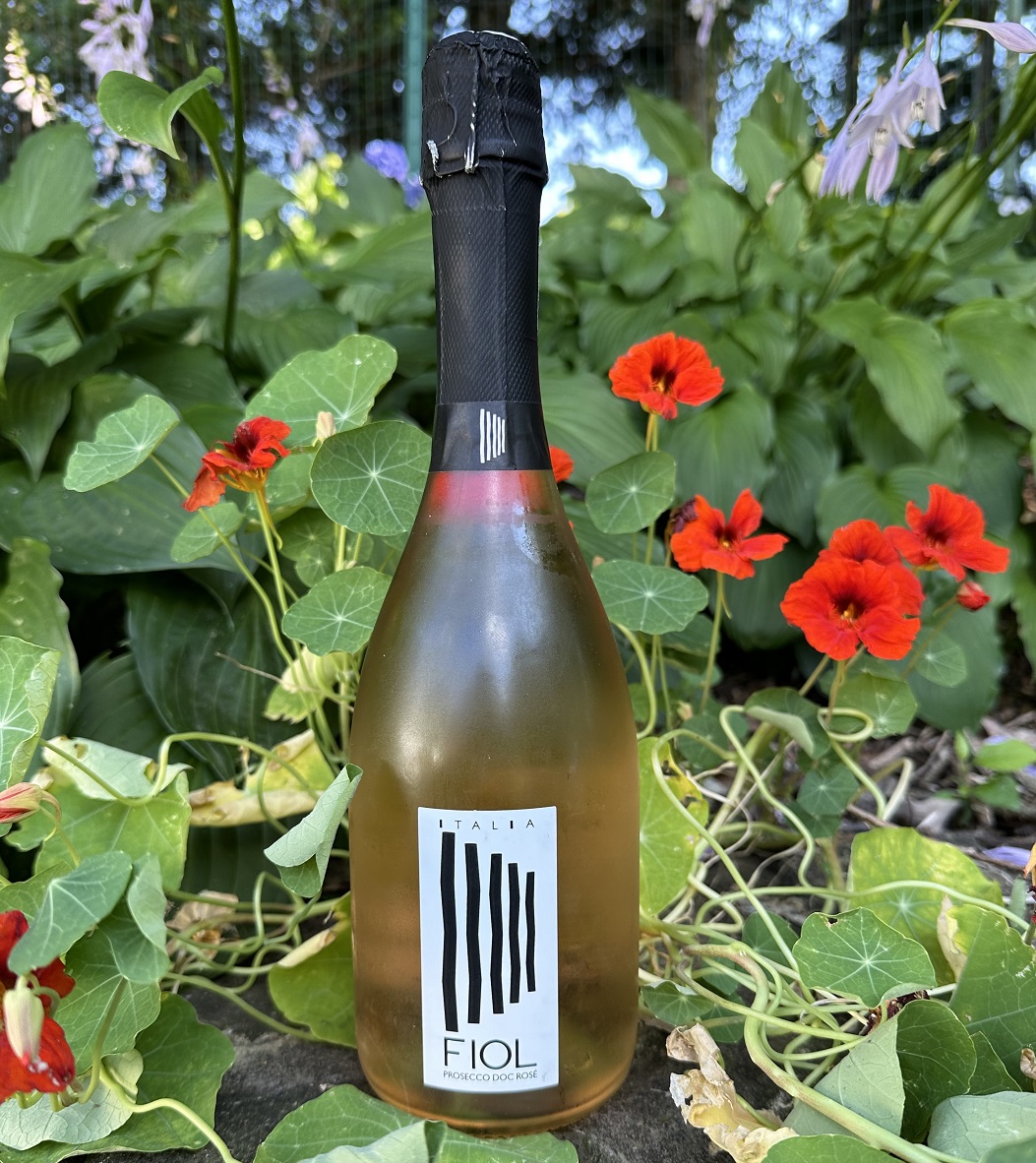
2021 FIOL Rosé Prosecco DOC Millesimato (11% ABV, $22, 85% Glera, 15% Pinot Nero)
Beautiful Salmon pink color
A whiff of strawberries on the nose, also a hint of strawberries on the palate, very generous mousse with lots of energy, a bit more plump than a typical brut champagne, exquisitely refreshing, and constantly encouraging another sip.
Superb.
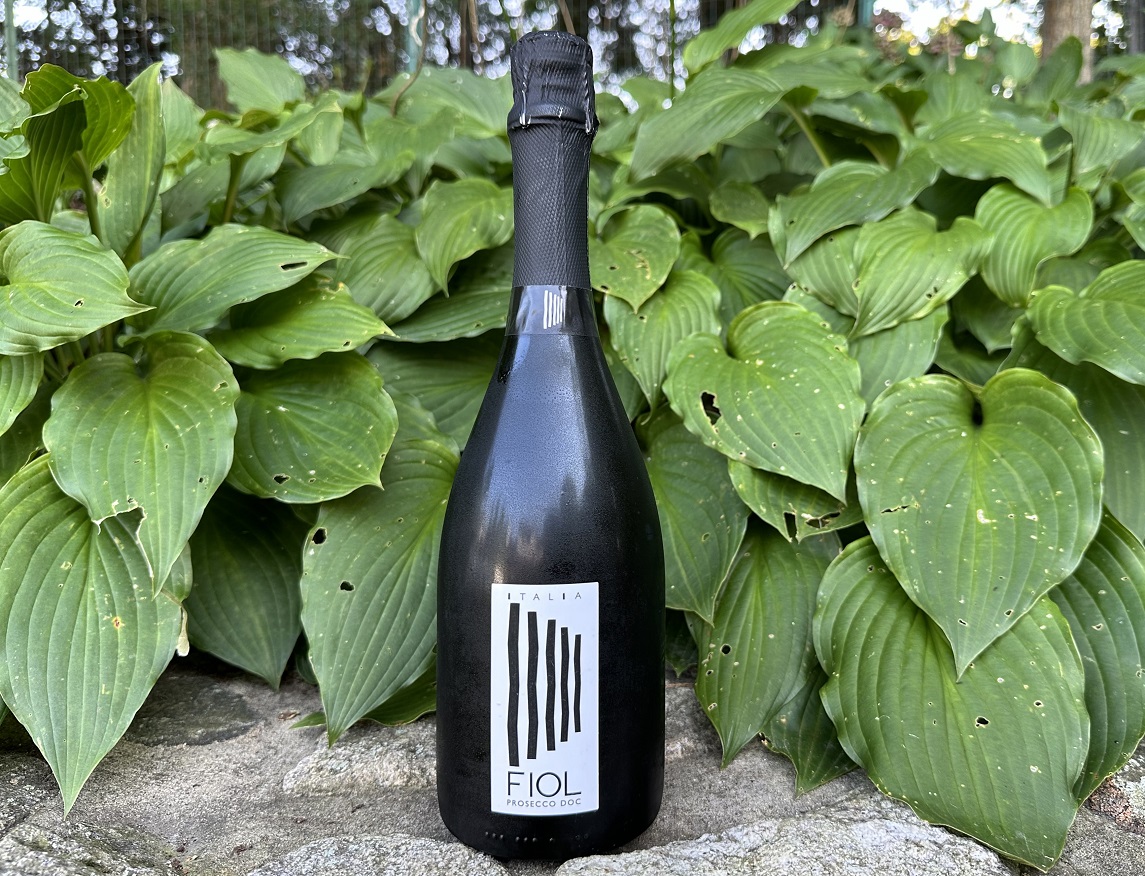
NV FIOL Prosecco Extra Dry Prosecco DOC (11% ABV, SRP $19/750 ml | $39/1.5 L)
Beautiful straw pale color, fine mousse
Apples, white flowers, fresh pear, light, inviting
Delicious apples on the palate, good body weight, light plumpiness, off-dry, long pleasant finish.
Made for a delicious Aperol, better than 90+ Prosecco
Here we go – two Prosecco bottlings, both delicious and perfectly suitable for everyday’s consumption without worrying about breaking the bank.
“Every day above ground is a great day”, so let’s celebrate it. With FIOL Prosecco in hand. Cheers!
Wines of Uruguay: Delicious, Interesting, Unique
Uruguay is the second-smallest country in mainland South America (only Suriname is smaller than Uruguay). It also has the highest level of education in South America, and the highest level of beef consumption in the entire world – and cows outnumber people in Uruguay 4 to 1.
Uruguay also makes world-class wines.
There are 14, 804 acres of vineyards in Uruguay, occupying an area a little bit bigger than Saint-Émilion in Bordeaux and a little bit smaller than Alexander Valley in California. Uruguay is the only South American winemaking country whose terroir is affected by the Atlantic Ocean. It is also interesting to note that the vineyards of Maldonado, the largest winemaking region in Uruguay, are planted above some of the oldest rocks on earth, the Río de La Plata craton, which is 2.5 billion years old. Currently, there are 168 wineries in Uruguay, producing 70 million bottles annually.

Bodega Garzón. Source: Uruguay Wine
Uruguay is best known for its Tannat wines, and Tannat occupies about 27% of all the area under vine in Uruguay. Actually, Merlot is the second most planted variety, followed by Cabernet Sauvignon, Cabernet Franc, Marselan, Sauvignon Blanc, Chardonnay, Albariño, and others. There are also six main winemaking regions in Uruguay – Northern Shore, Southern Shore, Metropolitan, Oceanic, Center, and North, each divided into subregions. There are also five distinctive terroirs across these six winemaking regions, influenced by the Atlantic Ocean, rivers, amounts of rain (these can differentiate widely), and winds.
For more grapey details and the latest statistics, I need to refer you to the Uruguay Wine website, where we will talk about delicious, interesting, and unique.
The last time I tasted Uruguayan wines was about a year and a half ago. This year, I had a “double exposure” to the wines from Uruguay – Tannat red wines at the beginning of the year, and then the whites a few weeks ago. So the delicious part is easy, as many of the wines were simply delicious. Interesting and unique require some explanations.
Typically, when it comes to food (and wine), “interesting” is rarely a positive descriptor. However, in our case, it is also not negative, and it really should be processed together with unique. The white wines were interesting, as while they were made from the familiar grapes (Riesling, Sauvignon Blanc, Viognier, Albariño), they didn’t taste much like familiar grapes, maybe with the exception of the Sauvignon Blanc and Viognier to some degree. Another unique trait of this group was in the fact that the wines kept evolving for probably 2 weeks after being first opened, mostly just getting better and rounder as time passed. I have some reflections on this in the notes, so this is what you will see below.
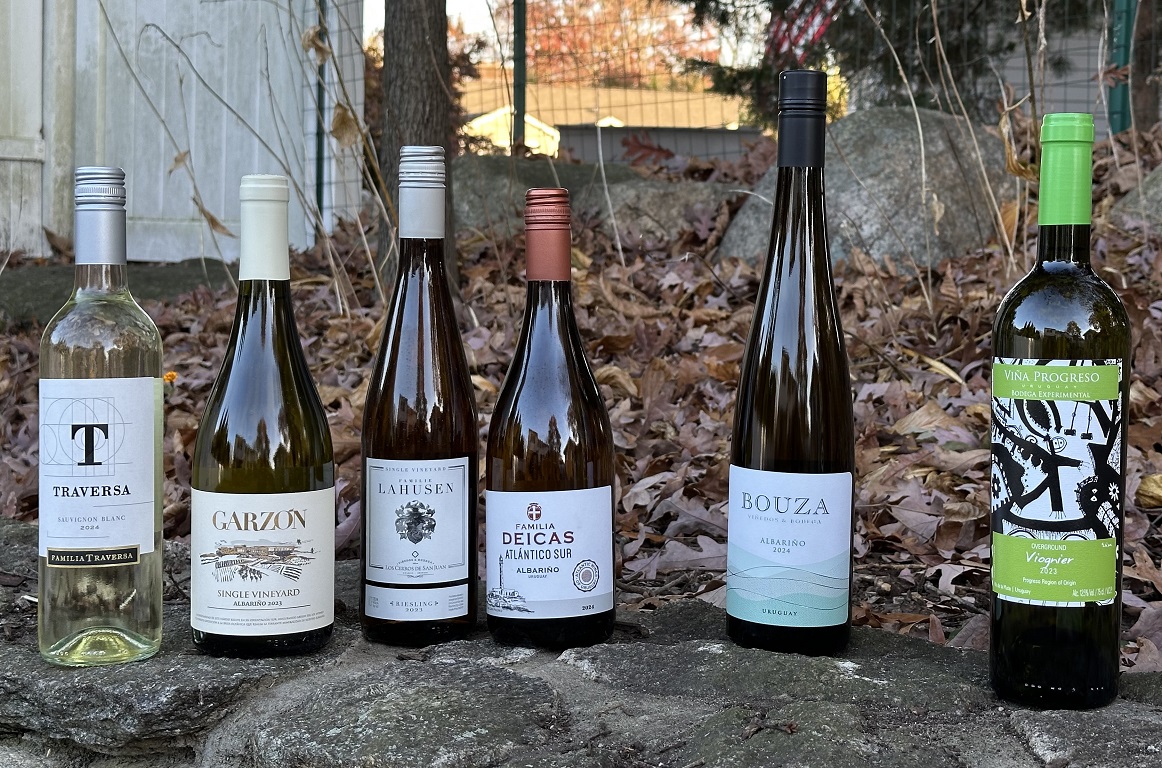
Here are my notes:
2023 Famile Lahusen Riesling Los Cerros de San Juan (12.3% ABV, $25) – the oldest winery in Uruguay, producing wines since 1854.
Straw pale
Herbs, Meyer lemon
Sweet fruit on palate, doesn’t taste like Riesling at all. Better tasting on the 3rd day, a bit more balanced.
Not bad, 7+
It actually became better over the next few days, getting to an 8- rating, but by no means this is your classic Riesling…
2024 Traversa Sauvignon Blanc Montevideo (13.5% ABV, $16)
Light Straw pale
Citrus, freshly cut grass, delicate, inviting
A touch of freshly cut grass, but mostly whitestone fruit on the 3rd day.
8-, enjoyable.
2013 Viña Progreso Bodega Experimental Overground Viognier Progreso Region (12.5% ABV, $26)
Straw pale
Interesting nose with a hint of brown butter notes, hints on plumpiness of the wine (day 3)
A hint of butter on the palate, quickly displaced by cut-through acidity. The wine had a lot more Viognier aromatics on the 1st day, but now feels like a nice Chardonnay (in blind tasting this would be my only guess)
8, very nice. One of my favorite whites of the tasting.
2024 Bouza Albariño Uruguay (12.5 % ABV, $28)
Straw pale
Perfumy, flowery nose with tropical fruit notes
Guava, a tropical fruit on the palate. Missing characteristic acidity and salinity. Not a bad wine, but doesn’t sing “Albariño” for me
7+
2023 Garzón Single Vineyard Albariño Maldonado (14% ABV, $35)
Light golden
Second day nose – hint of gunflint, butter, a distant hint of honey (first day the smell was not great)!
Second day palate – excellent, salinity, acidity, very much resembling a classic Albariño, still with a distant hint of kerosene, but now it can be ignored. The first day was chemically undrinkable.
8, needs time
2024 Familia Deicas Atlántico Sur Albariño Uruguay (12.3% ABV, $20)
Greenish/very light golden color
On the first day, the nose was very sweet. Second day- less sweet, tropical fruit.
Sweet but now with salinity coming through – this is on the second day. The first day the wine was cloyingly sweet.
7+, it is drinkable, but don’t try pairing oysters with it.
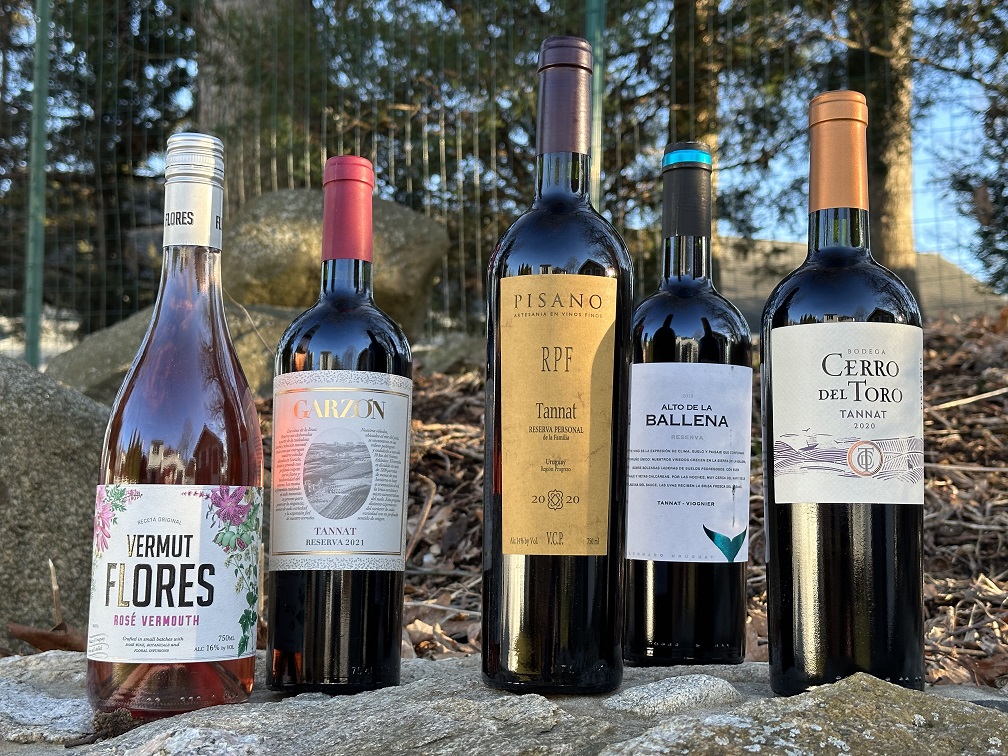
And now, for the reds:
2018 Alto de La Ballena Reserva Tannat Viognier Maldonado Uruguay (14% ABV, 85% Tannat, 15% Viognier)
Dark garnet, almost black
Dark cherries, tobacco, inviting
Tart cherries, minerality, crisp acidity, well integrated tannins, a bit of chalk, perfectly balanced
8+ – happy to see that I continue liking this wine the year after tasting it for the first time (last year’s notes can be found here)
2020 Cerro del Torro Tannat Maldonado Uruguay (15% ABV)
Dark garnet
A hint of a barnyard, herbs, dark fruit
Cherries, earthiness, pronounced minerality, a hint of tobacco, good acidity, tart finish.
7+/8-
2021 Garzón Tannat Reserva Uruguay (14% ABV)
Dark garnet
Ripe dark fruit, stony minerality, herbs, distant hint of barnyard
Dark fruit, espresso, cherries, firm structure, clean acidity, round, well balanced.
8-/8
2020 Pisano RPF Tannat Reserva Personal de la Familia Uruguay (14% ABV)
Dark Ruby
Red fruit, herbs, medium+ intensity
Tart, crisp, tart cherries, medium body, firm structure, cut-through acidity.
8-, food wine more than anything.
If you took a moment to glance at the notes, I’m sure you found them all – delicious, interesting, and unique. The whites definitely need some additional work, but they are unquestionably interesting, and I do mean it in a positive way. There are plenty of simply delicious wines from Uruguay, definitely worth seeking, so I hope that I encouraged you to give them a try when you have an opportunity. Cheers!
Beautiful Hungarian Wines, a Deep Immersion
Hungarian wines need no introduction to the wine lovers.
Or they actually might.
Hungary is one of the oldest wine-producing regions in the world, going back to the Roman times (also the Hungarian language is one of only three European languages outside of Latin that have wine terms in the language). It is not for nothing one of the better-known wine brands in Hungary is called Royal Tokaji. Tokaji, the dessert wine produced from the local white grape called Furmint, can give the run for money to the best BA and TBA Rieslings and best Sauternes. It used to be a treat suitable and available only for the royalty, with its official appellation classification predating Port by a few decades.
Then it all came to an abrupt halt. First, the Phylloxera epidemic which destroyed literally all vineyards in Hungary at the end of the 19th century. Then, as the wine industry started to recover, came two world wars, and the communist regime right after. Thus while we can say that Hungary has very old wine traditions, the Hungarian wine industry is very young, with its modern history not exceeding even 40 years.
I just came back after spending 4 days in Budapest, the capital city of Hungary. And while working 9-5 all 4 days, I still managed to get a good taste of the Hungarian wines, and I have to say that it was one delicious and very impressive experience. And even as most of these wines would be hard to find outside of Hungary (okay, that should be reasonably not difficult for the people in Europe, but very difficult in the US for sure), I still believe the experience is well worth sharing.
I will simply recount my experience in chronological order, as I was tasting the wines. And by the way, I made my inner grape geek very happy, by adding 5 new rare grapes to the collection.
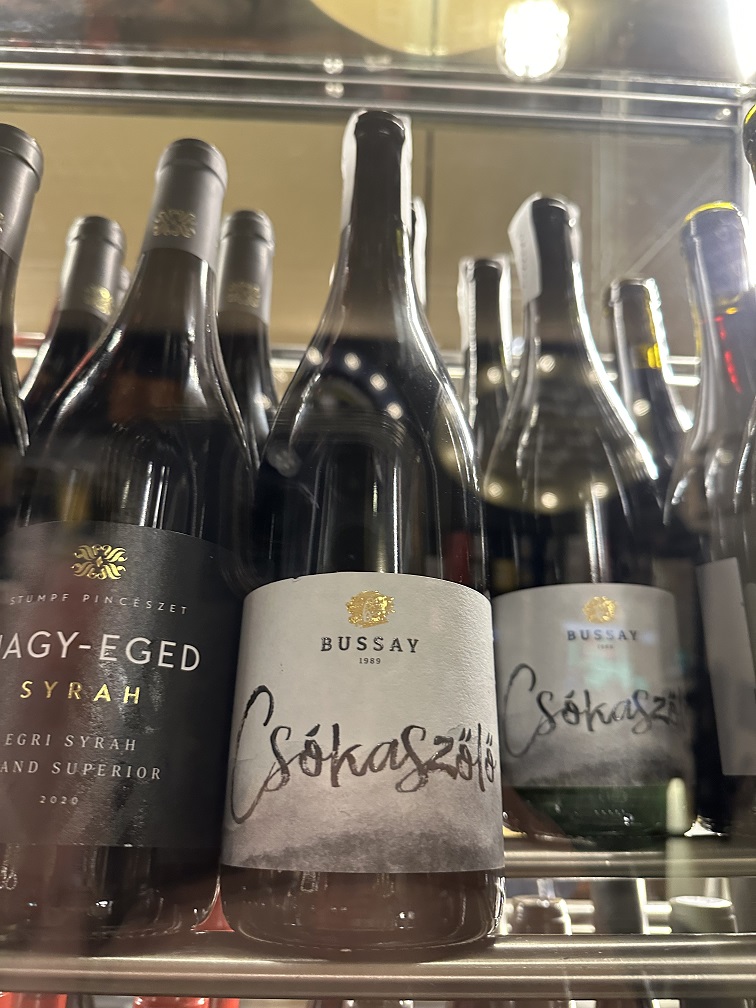
I started my “deep immersion” on Monday night at a dinner. The restaurant had a few interesting (read: made from rare grapes) wines which I was happy to order by the glass.
2022 Bussay Pince Csörnyeföldi Csókaszőlő Zala (11.5% ABV, certified organic, rare grape: Csókaszőlő)
Fresh herbal nose
Fresh acidity, Beaujolais-like mouthfeel, sour cherries, gamey, nice, food friendly
2021/2022 Bóka Birtok Jakab Kadarka Tolna (12.5% ABV, Jakab Kadarka, a.k.a. Jab Kadarka a.k.a. Italian Kadarka, rare grape: Jakab Kadarka)
Red fruit on the nose
Bigger and more round body than a previous one, dark fruit, good balance, good acidity, thoroughly pleasant
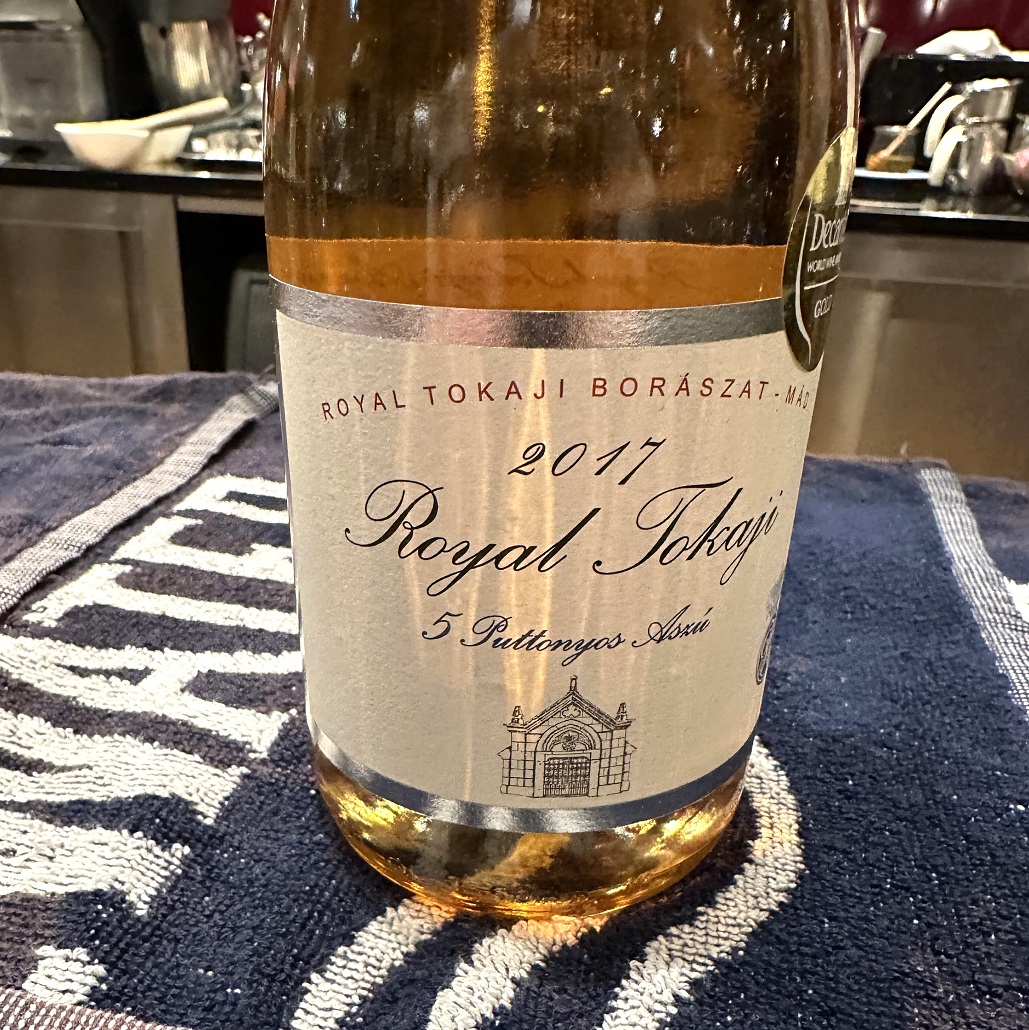
Upon returning to the hotel after dinner, I didn’t feel like going to sleep yet, so I decided to get a glass of wine, and the Tokaji looked very attractive – and at about $11 for a glass, a pure steal.
2017 Royal Tokaji Borászat Mad Royal Tokaji Aszú 5 Puttonyous (11% ABV)
Delicious nose of sweet, ripe fruit – white peach, pear, a touch of honey.
A symphony of flavor on the palate – beautiful ripe fruit, layers of flavor, perfect acidity, perfect balance, pure delight.
Superb.
On Tuesday, we had a short bus tour of Budapest, and our tour guide mentioned that if someone likes wine, he highly recommends visiting a wine bar called Vinlkli. The name was easy to remember – a cross between Vino and Bicycle, and the bar was also conveniently located about 2 minutes walking distance from the hotel where I was staying, so it was a no-brainer decision to visit the place. Boy, what a right decision that was…
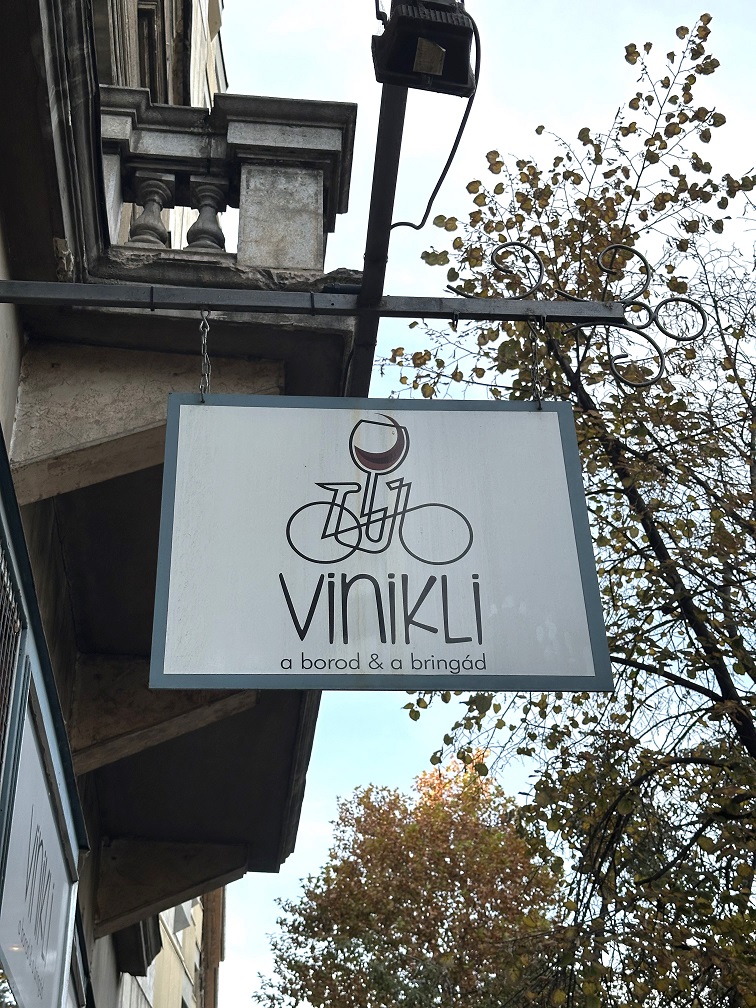
When I came over, there was literally no space to sit at this tiny bar. Not speaking the language, I got rather a cold shoulder from both bartenders, so I was intimidated, but determined. A space in the corner opened up so I was able to take it, and then I just pointed to the wine I wanted to taste strictly based on the label (there was no printed wine list of any sort, and I couldn’t understand anything written on the board hanging on the wall).
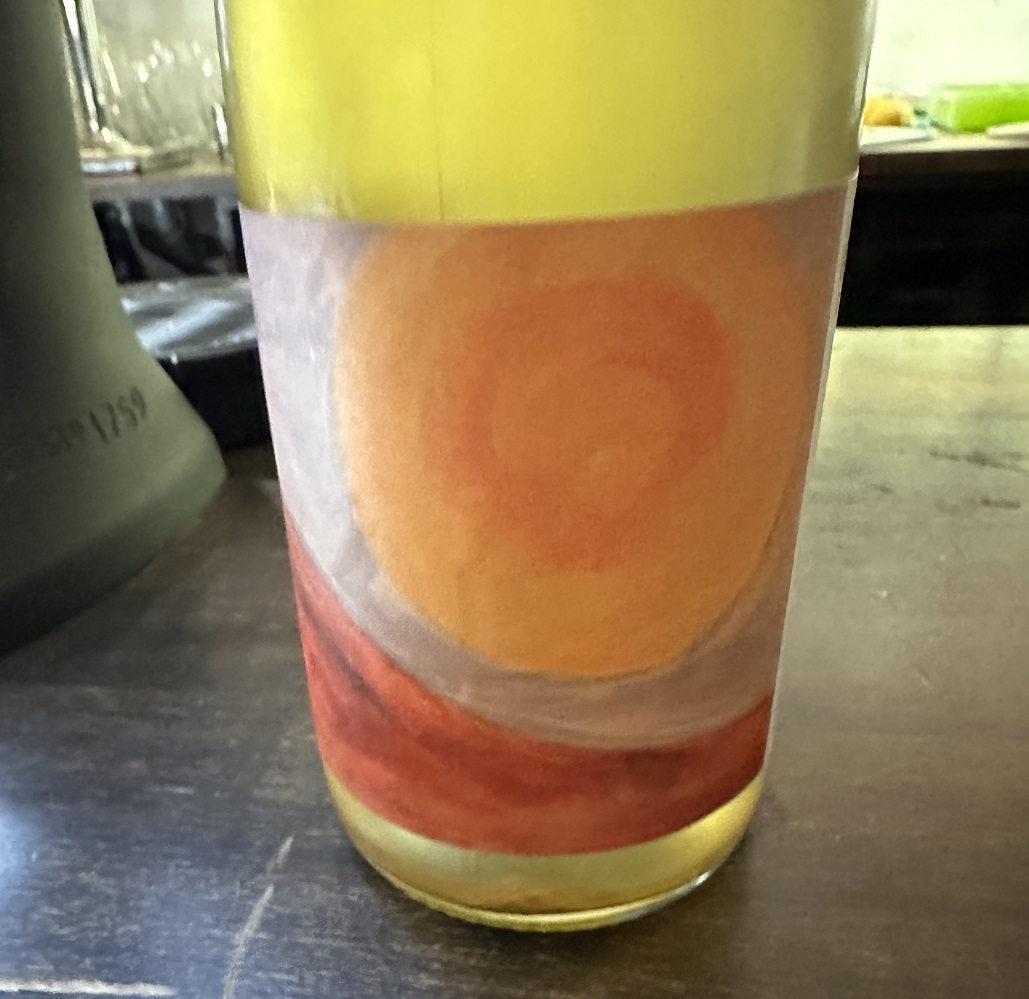
I happened to choose skin contact wine, and it was excellent:
2023 Turay Családi Pincészet Borsementa (11% ABV, 4 days with skin contact, natural wine, rare grape: Borsementa)
You can assume skin contact once you smell the wine – a touch of herbal notes on the nose with a hint of the freshly fermented fruit, following by lemon/apple/peppermint medley on the palate. Fresh, energetic, delicious.
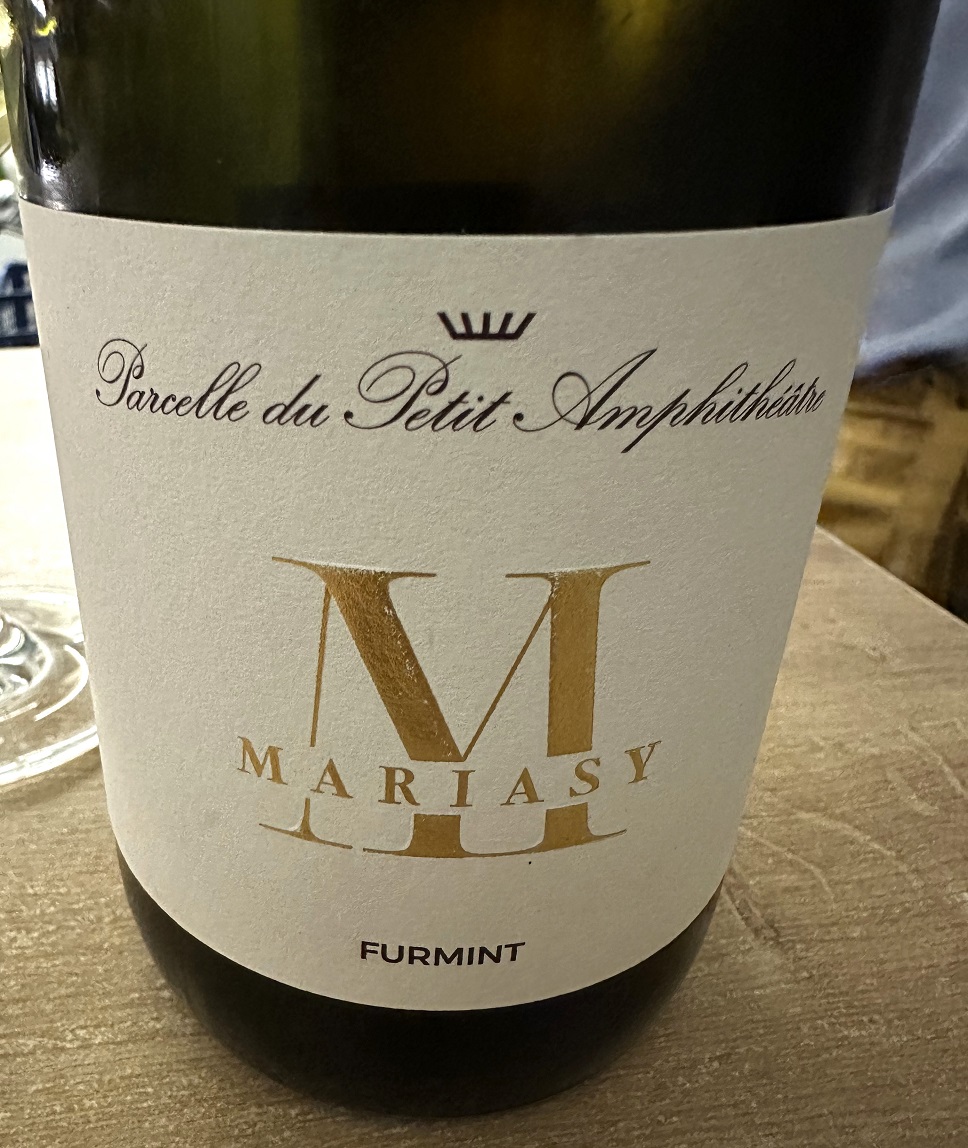
As a few more people left the bar, the bartender finally got a bit more time, and he understood that I was actually at the bar on purpose, so now he started suggesting wines to taste. Next wine white wine was literally out of this world:
2020 Mariasy Tokaji Furmint Hungary (13% ABV)
Wow. Is “blown away” is sufficient wine descriptor?
This wine was truly something else. A hint of honey on the nose, white fruit, fresh and inviting. The palate was mind-blowing – generous, plump, supple, crisp honey and lemon notes, layers and layers of pleasure. This will be easily a “wine of the year” contender. Just superb.
I’m literally salivating as I’m writing this post – I would love to have a glass of this wine right now. Just now.


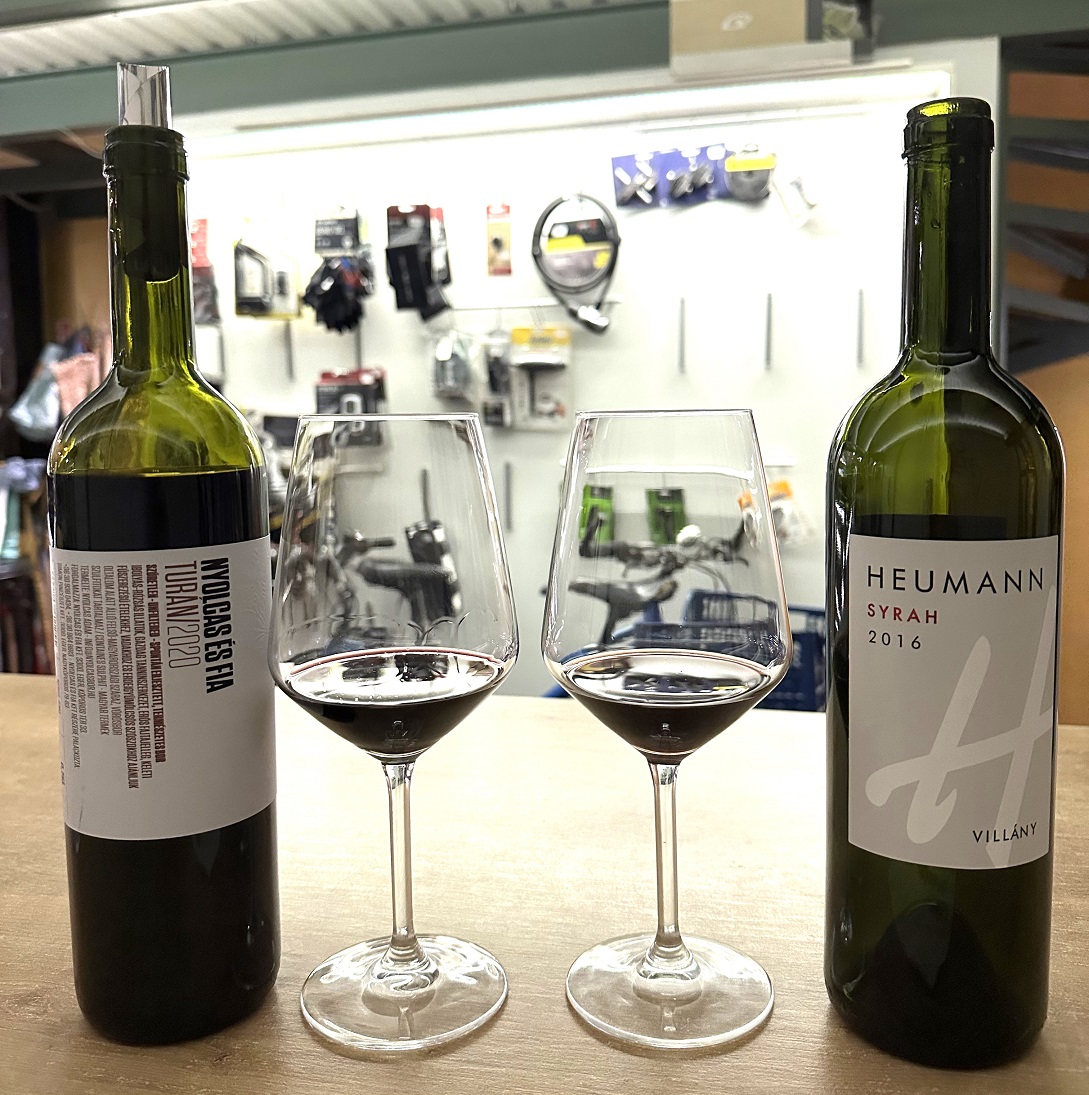
From here on, the new wines were arriving without interruption:
2022 Szentezi Prince Fekete Muskotály (12.5% ABV, rare grape: Fekete Muskotály)
This wine was light and fruity. Somewhat similar to Beaujolais Nouveau but with a bit more substance, loaded with fresh wild berries. Good acidity. Refreshing. Should be great with food.
2022 Sziegl Pince Kadarka Bisztró Hajós-Bahai Hungary (11% ABV)
Yet another light and fruity red, red fruit, simple, clean, light. Well balanced, good acidity.
2020 Nyolcas és Fia Borház Turán (13% ABV, rare grape: Turán)
Dark fruit on the nose, dark fruit on the palate, good mid-palate weight, good structure, excellent wine.
2016 Heumann Syrah Villányi Védett Eredetú Prémium (14% ABV)
Really was not expecting Syrah, but this was an excellent choice. Dark, concentrated, brooding, cherries, a hint of pepper, round, good balance, perfectly well drinkable.
Truth be told, I didn’t have much luck with the food at the restaurants. Yelp is unavailable in Hungary, and I find that TripAdvisor restaurant information is subpar, so the only option left is Google.
Through my search, I found a restaurant called Parisi 6. I almost skipped it at first, as I thought that based on the name it would be a French restaurant. But the menu suggested that this would be a traditional Hungarian restaurant, so I decided to give it a try on the last evening.
The food was excellent (finally had a goulash soup that I enjoyed), and the service was even better than the food if this is possible – ultra-friendly, attentive, and helpful.


Here are the wines we had at a restaurant:
2022 Skrabski Furmint (13% ABV, low histamine (!) wine due to a special strain of yeast used for fermentation)
Whitestone fruit on the nose, Chardonnay-like appearance on the palate, vanilla, fresh apples and hint of apples, fresh acidity. Food friendly.
2022 Szemes Villányi Cabernet Sauvignon Villányi Védett Eredetú Száraz Classicus Vörösbor (14% ABV)
I actually thought asked for a different red wine on the list (Kadarka), but somehow this wine appeared at our table, and the very first sip suggested that mistake or not, this was an excellent choice.
Beautiful core of dark berries, cassis, cassis, and a hint of bell pepper on the palate, round, medium to full body, delicious.
2023 Tokaj Nobilis Szôlôbirtok Kövérszölö Edes Fehérbor
I asked for the dessert wine to have at the end of the dinner. Our waiter suggested that Tokaji would be very expensive, and suggested that this wine would be a more reasonable but still a good choice. Wow. This wine literally delivered an experience. The wine was all into a sweet apple profile – ripe apple on the nose, ripe sweet apples on the palate, perfect sweetness balanced with perfect acidity. And the best part? Our dessert choice was apple strudel, and my oh my, was this a heavenly combination…
That’s my deep dive into Hungarian wines in a good amount of detail. If you have an opportunity, definitely look for the Hungarian wines, I’m sure you will not regret it.
And before we part, two more little tidbits of my experience in Budapest.
I walked a few times to the river, going past this building:
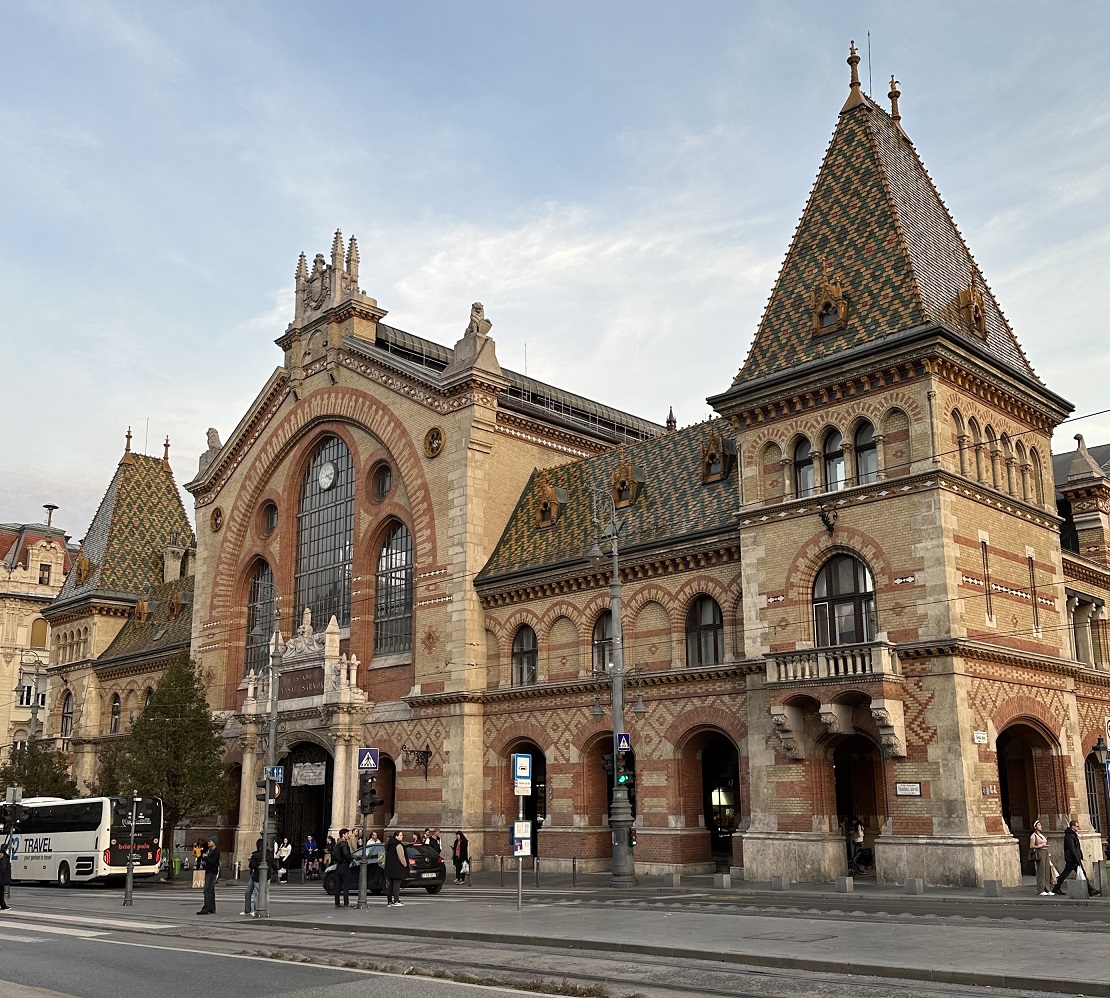
and thinking that this was a museum or some sort of historical building. On my last day, I was looking for a place to get some specialty Hungarian foods, such as Pick salami for example (when fresh, might be the best salami in the world). Somehow, google suggested that there is a supermarket inside that “historic building”. Surprised but obedient, I crossed the road and read the “Central Market” sign above the entrance! The building might be historic, but inside I found lots of small shops offering all types of Hungarian specialty food. The place was somewhat similar to Chelsey Markets in New York – if you ever visited you would get the idea. I was happy to find a pick salami to bring home and much more.
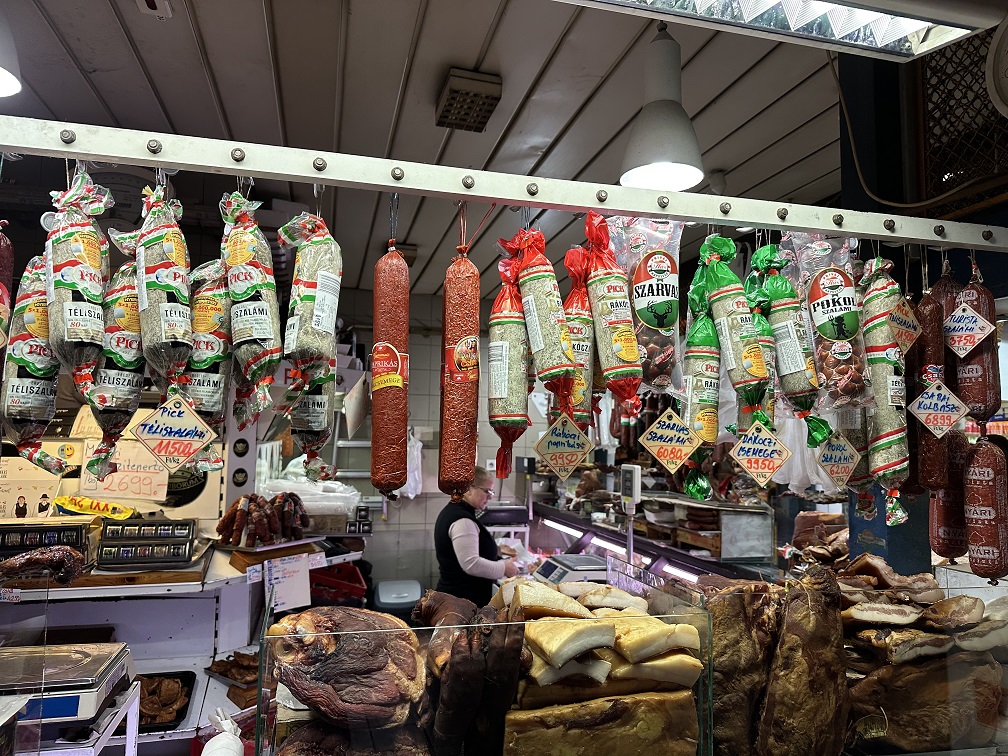
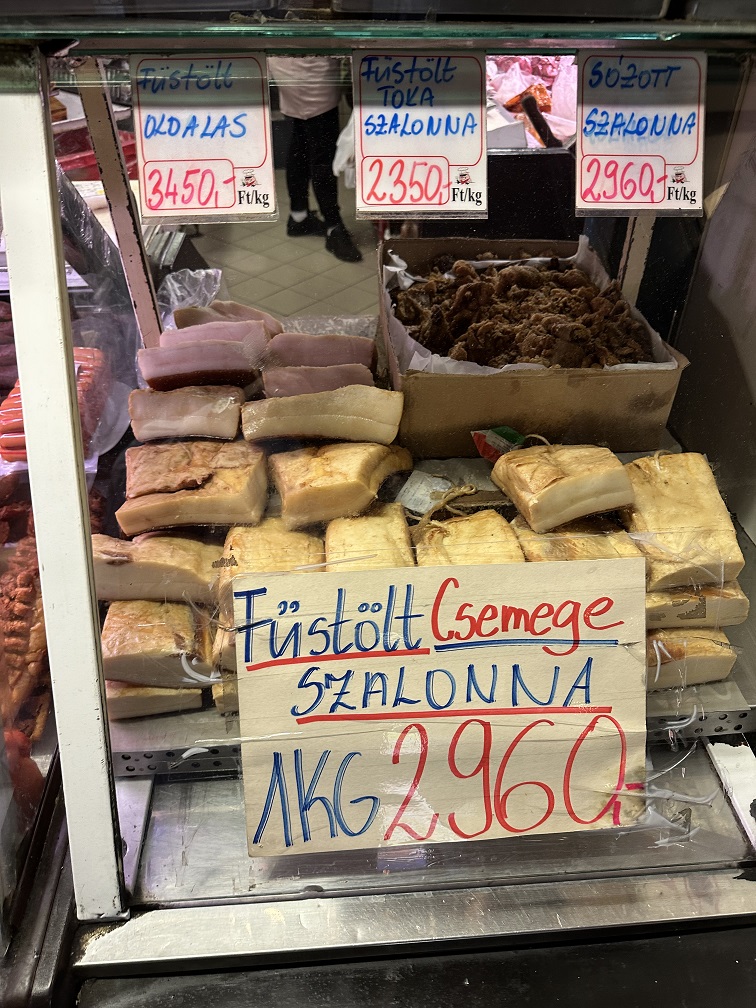
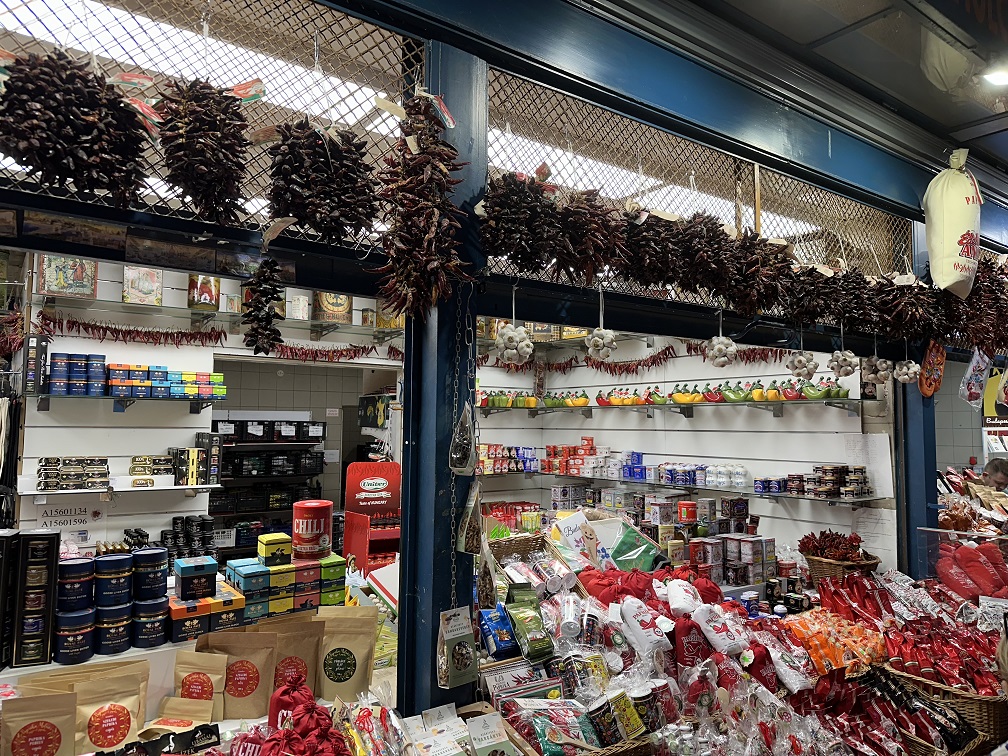
And last but not least, a few pictures of the beautiful Budapest town:




Budapest is a beautiful town, and Hungarian wines are delicious and evolving. Did I just set up your next travel itinerary or what? Cheers!
[Beaujolais] Nouveau Est Arrivé! 2024 Edition
Beaujolais Nouveau Est Arrivé!
Nouveau Est Arrivé!
Yes, it is the third Thursday in November, and it is an important day for those of us who still believe in the magic of wine – even if you shrug off the Beaujolais Nouveau as a marketing gimmick, you are still aware of the importance of the day, and whether you like it or not, consider yourself included 🙂
Every third Thursday in November and not a day earlier, Beaujolais Nouveau appears in wine stores around the world. Beaujolais Nouveau is the first wine of the new vintage in France, a young wine made to celebrate a new harvest. Georges Duboeuf is credited with making a centuries-old tradition into a marketing phenomenon more than 35 years ago – I’m not sure how much clout the celebration has today in the US, but it still has my attention.
Let me expand a bit on this. I’m traveling this week for work in Orlando, Florida. In Florida, wine is sold everywhere, from pharmacies to supermarkets to specialty wine stores. I visited the ABC Wines store (one of the popular wine retailers here, similar to Total Wines) at the beginning of the week and asked if they would be selling Beaujolais Nouveau on Thursday. The lady was not sure and suggested to call on Thursday to find out.
Today is that Thursday, and I started calling the store I visited on Monday. It took me four tries, but I finally got to a human. The lady on the phone said that they don’t have Beaujolais Nouveau at her store, but she was kind enough to check in the system and said that another ABC Wines store about 5 miles from the first one has it in stock.
Next, I decided to check if Whole Foods might have the wine in stock. I got to the human relatively quickly, but then the human said that she would go and check if they had Beaujolais Nouveau in stock. After 15+ minutes of music on hold, I decided that I would simply have to drive to the store to find out myself after I was done with work.
My first inclination was to drive to the ABC Wines location that was supposed to have the wine. After seeing that it would take me 35+ minutes to get there, I decided to try my luck with Whole Foods. Well, that didn’t work – no such luck. And now I was even further from ABC Wines which had the wine. Before giving up, I decided to make one more attempt – this time, with Trader Joe’s, which was only a mile away. A mile is not a mile in Florida, considering how overloaded the roads are and how long Florida traffic lights take… But nevertheless…
I arrived at Trader Joe’s, and found nothing after scouring the wine section for a few rounds. But unlike Whole Foods, in Trader Joe’s there is always someone you can ask (a floor manager). When I asked about Beaujolais Nouveau, there was a short pause during which I decided that there will be no Beaujolais Nouveau for me today, but then I heard – “hmmm, I think we got something last night, let me check”. 2 minutes later, the floor manager showed up with the bottle of Beaujolais Nouveau, which put a huge (huge!) smile on my face, and I thanked him profusely but managed not to hug him. After all, I was going to taste Beaujolais Nouveau on the day when it was released!
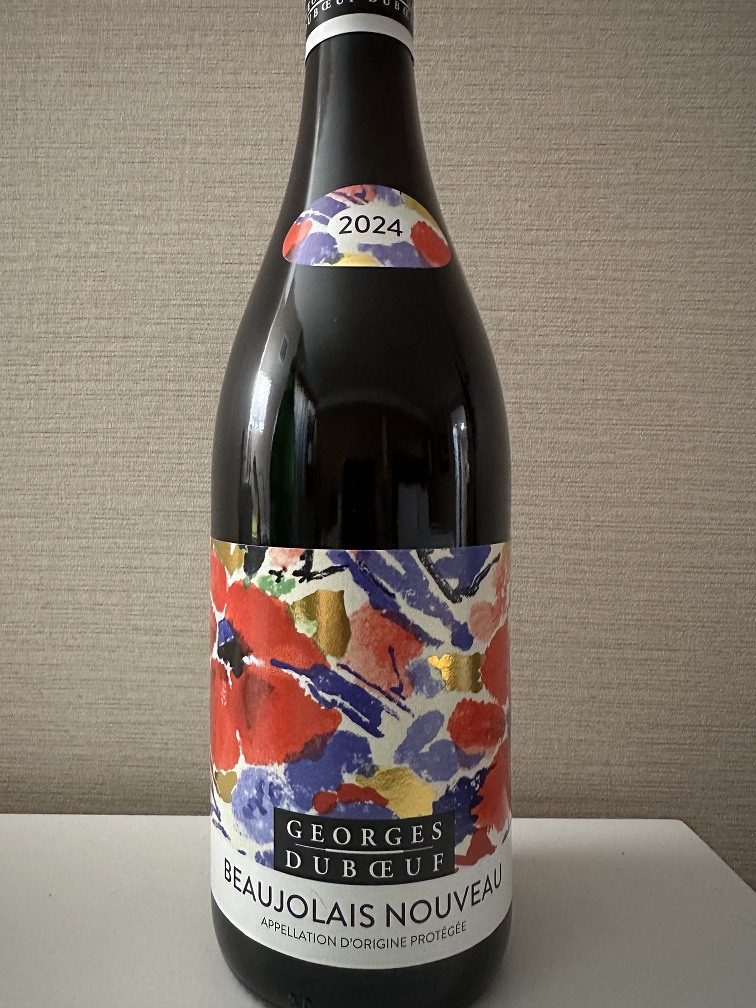
Every year I say that the quality of Beaujolais Nouveau gets better and better. I guess if I would sum up those statements, this Beaujolais Nouveau should taste better than DRC… I don’t know if it gets better every year anymore – at this point, I believe Beaujolais Nouveau got to the point of consistently high quality, good enough that I’m happy to drink it every year – at least Georges Duboeuf’s rendition for sure – here are my notes.
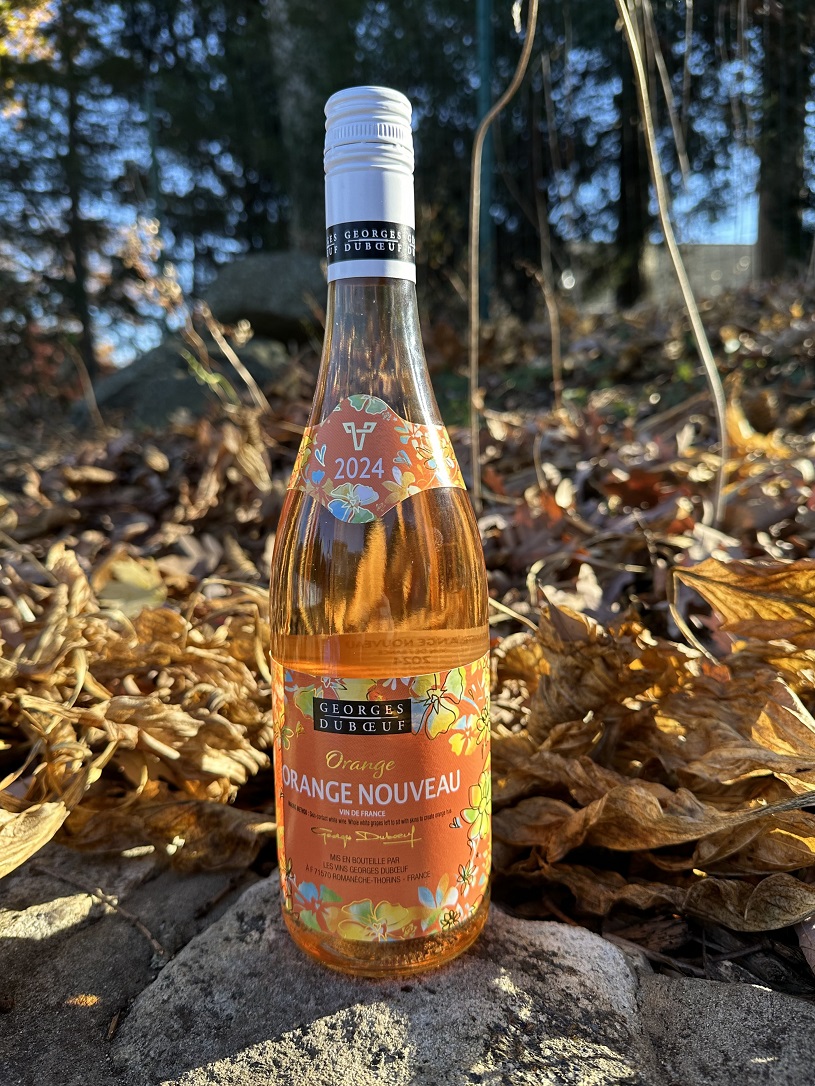


Lastly, here is a little treat for you:
Every year, the bottles of Beaujolais Nouveau are adorned with specially designed labels, sometimes even multiple labels from the same producer for the same wine – I have no idea how that works. As I have been writing about Beaujolais Nouveau every year since this blog started, I can offer you a collection of labels starting with the 2010 vintage. As Georges Dubouef is the one and only producer I was able to taste every year, below is my little “show and tell” limited only to the labels of Georges Duboeuf wines I tasted throughout the years. In case you feel like it, you can even choose your favorite label and share it in the comments (sorry, this is not a competition so no prizes will be awarded).
Here we go:


Beaujolais Nouveau 2024 has arrived, and if you haven’t tasted one yet – what are you waiting for? Taste it now and let me know what you think! Cheers!
Last Bottle Sign Up ($10 credit)




 Talk-A-Vino