Rediscovering Beaujolais
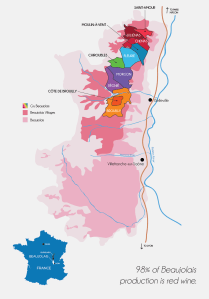
Source: Discover Beaujolais website
I remember learning about wine many moons ago at Kevin Zraly’s Windows on the World Wine School, where Beaujolais was one of the first French wine regions we discovered. We learned that there are general Beaujolais wines, which are not worth seeking, Beaujolais Villages, which are a bit better than the regular Beaujolais, and ten Cru wines (Brouilly, Chénas, Chiroubles, Côte de Brouilly, Fleurie, Juliénas, Morgon, Moulin-à-Vent, Régnié, and Saint-Amour) – and the Cru wines are something worth looking for.
There might be a few reasons why Cru Beaujolais wines are worth looking for – we should remember that Beaujolais is part of Burgundy, and thus it shares similar soils and climatic conditions as the rest of the Burgundy. Beaujolais wines are made out of Gamay Noir, not Pinot Noir, which is a king of Burgundy, but still – well-made Cru Beaujolais wines can offer a poor man’s alternative to its rarely affordable cousins.
But then there is this thing… Beaujolais Nouveau. The wine which became a glorious marketing success – and Achilles hill of Beaujolais wines. Beaujolais Nouveau became an international celebration of the new vintage, where the wine produced from the grapes just harvested a few months ago, hits the shelves of the wine stores worldwide on the third Thursday in November. While the success of Beaujolais Nouveau is unquestionable, its marketing message has a simple consequence – say “Beaujolais”, and most of the wine consumers immediately add the word “Nouveau” – overshadowing all the great Cru Beaujolais wines.
Yours truly is guilty as charged – in almost 10 years of blogging, I wrote about Beaujolais Nouveau literally every year – and I have only two posts covering Cru Beaujolais, after attending the tasting of the Duboeuf Cru Beaujolais portfolio back in 2012 (here are links to the Part 1 and Part 2 posts, if you are interested). I have to also say that the avoidance of Beaujolais wines was not conscious – there are few regions and types of wines which I intentionally avoid, such as generic Cotes du Rhone or similarly generic Argentinian Malbec – but the Beaujolais avoidance was rather subconscious.

Château de Bellevue. Source: CognacOne/Chateau de Bellevue
When I got the email from CognacOne, an importer with an excellent collection of French wines, introducing the new Cru Beaujolais wines from Château de Bellevue, something piqued my interest, and I got the sample of two Cru Beaujolais wines from Morgon and Fleurie.
Château de Bellevue was built at the beginning of the 19th century in the village of Villié-Morgon, with the addition of the cellar behind it in 1830. Today, Château de Bellevue is both the winery and Bed and Breakfast Inn. Château de Bellevue vineyards span 37 acres across a number of the Cru Beaujolais appellations (Moulin à Vent, Morgon, Fleurie, and Brouilly) – needless to say, Gamay Noir is the only grape which can be found there. While it is all Gamay grapes, the terroir rules, and wines from the different appellations are perfectly distinguishable.
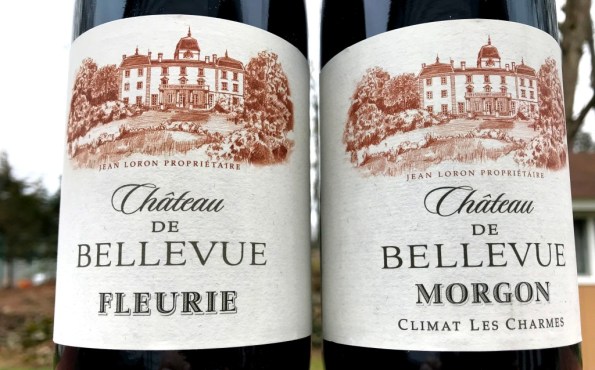
Here are the notes for the two wines I had an opportunity to try:
2015 Château de Bellevue Fleurie AOP (13% ABV, $25, aged 9 months in steel tanks)
Dark garnet
Crushed rock, iodine, underbrush, cherries
Medium plus body, crunchy berries, minerality, good tannins, good acidity, good balance
8, easy to drink, dangerous.
2015 Château de Bellevue Climat Les Charmes Morgon AOP (12.5% ABV, $25, aged 9-10 months (partially) in large French oak barrels)
Dark garnet
Raspberries, minerality, hot rocks
Nicely tart, well present tannins, tart cherries, excellent balance
8, a bit more earthy and bigger bodied, delicious.
Second day: 8+, the wine opened up magnificently, adding beautiful layers of fruit and spices.
Here you go, my friends. I know – too many wines, too little time – but I definitely intend on adding more Beaujolais wines to my cellar. How do Cru Beaujolais fare in your wine world? Cheers!
Wine Love: Lodi, California
 It is with the bittersweet feeling I confess my unconditional love to the wines of Lodi.
It is bittersweet, as on one side when the person is in love, they want to tell the whole world about it. On another side, I don’t want to tell the whole world about it – I want to keep it all to myself. I want Lodi to stay as a secret refuge for those who know. I want the Lodi wines to stay affordable, and the wineries to stay un-Napa – simple, humble, friendly, and worth visiting. But – this is not necessarily right for the winemakers of Lodi, who wants their wines to be known and drunk by the people, and therefore, it is my mission as a wine writer and wine aficionado to help with that, even risking that Lodi might not stay the same.
Bittersweet, yeah.
In general, Lodi is unknown and misunderstood. Wine lovers think that Lodi is only producing Zinfandel and high-power, high-alcohol fruit bombs. This can’t be any further away from the truth about what Lodi really is. So if this is what you thought of Lodi before, take it out of your head, and let me tell you what Lodi really is.
Historically, if California is an agricultural capital of the USA, Lodi is an agricultural capital of California. By the way, do you know where Robert Mondavi (yes, THAT Robert Mondavi) went to the high school? Yep, in Lodi. These are just fun facts, but now let’s get closer to the subject. Lodi is not about Zinfandel. First and foremost, Lodi is home to the Mediterranean grape varieties – Tempranillo, Sangiovese, Viognier, Albariño, Grenache, Cinsault, Syrah, Barbera, and many others. Lodi has a great climate for grape growing – it gets very hot during the day – temperatures in July/August can reach into the lover 100s – however, it cools off very nicely to “ohh, I need a jacket” on August night. That temperature range helps grapes to concentrate the flavor.
Lodi has sandy soils, which are not conducive for phylloxera, thus most vineyards in Lodi are planted on their original rootstocks. Lodi is home to some of the oldest continuously producing vineyards in the USA and in the world – for example, Carignane and Cinsault vineyards are 120+ years old, still bearing wine-worthy fruit. Lodi Rules, developed starting in 1992, became the standard of sustainable winegrowing in California (the same rules are even implemented at Yarden winery in Israel). And one of the most important elements – Lodi winemakers are some of the friendliest wine people you can find.
Until late 2016 I was square with the general public, equating Lodi with Zinfandel only. Then Wine Bloggers Conference happened, hosted in Lodi, and I was blown away by what I discovered upon arriving in Lodi. During that week I was also mesmerized by the attitude and hospitality of the winemakers, who took their time off the most important winemaking activity of the year – harvest – and spent time with the wine bloggers, sharing their love of the land. It is not only about the attitude – the absolute majority of the wines were tasted were delicious – I’m very particular in my expectations as to what good Syrah, Tempranillo, Barbera, or Albariño should taste like.
Two months after the wine bloggers conference I was in the Bay area on the business trip and had an open weekend. I tried to make some appointments in Napa, and when that didn’t work out, I went again to Lodi – had an amazing time tasting through the whole portfolios of Bokisch, Borra Vineyards, and Lucas Winery (the absolute beauty of 15 years old Lucas Chardonnay we tasted at the WBC16 speed tasting session still haunts me). I never wrote about that experience, but this is a whole another matter.

When I got an invitation from Snooth to join the virtual tasting session of Lodi wines, I almost jumped of joy – yes, I will be delighted to experience the Lodi wines, which are still hardly available outside of Lodi or California at the best (or is that a good thing :)?) Six wines, six producers, a unique and unusual set of grapes – what more wine aficionado can be excited about?
Below are my notes and thoughts about the wines. In case you want to follow along with the video of the virtual tasting, which provides way more information than I’m including here, here is the link for you.


2018 Acquiesce Winery & Vineyards Ingénue Mokelumne River AVA Lodi (13% ABV, $32, 35% Clairette Blanche, 35% Grenache Blanc, 20% Bourboulenc, 10% Picpoul Blanc, 350 cases produced) – Sue Tipton, winemaker and owner at Acquiesce Winery is known as a white wine specialist. She produces a range of wines made primarily out of the southern Rhone varieties.
Straw pale color
White stone fruit, candied fruit, concentrated
Day 1:
White stone fruit on the palate, good acidity, minerality, salinity
7+; it is really a 7+ out of respect to the wine which so many bloggers raving about. I clearly don’t get this wine, and no, it doesn’t give me pleasure.
Day 2-4:
Elegant, lemon and white peach notes, clean, good mid-palate weight, definitely resembling white Chateauneuf-du-Pape, uplifting, vibrant, perfectly balanced
8+; OMG. The wines can’t be any more different after being open for a few days. It changed dramatically, it opened up, it showed balance and elegance. This is an excellent wine, just give it 5-10 years to evolve (or longer).
2018 m2 Wines Vermentino Mokelumne River AVA Lodi (12.3% ABV, $20, 250 cases produced) – this Vermentino was unique and different in its show of minerality – it is quite rare for me to taste the wines like that.
Light straw pale, really non-existent color
Minerality-forward nose, granite, lemon undertones
Salinity on the palate, lemon, crisp acidity.
8-, tremendous minerality on this wine, it has more minerality than fruit. This wine also shows a bit more fruit after being opened for a few days, but it still retained all of its minerally character.


LangeTwins Winery & Vineyards 2018 Aglianico Rosé Lodi (13% ABV, $20, winery exclusive) – owned by the twin brothers, as the name says, LangeTwins is quite an unusual winery. Fun fact: their own production under LangeTwins label is quite small – however, as a contract winery their capacity to produce and store wines exceeds 2.2 million gallons. It is not the first time LangeTwins makes delicious Rosé from the Italian grapes – their Sangiovese Rosé has a cult following and impossible to get. This Aglianico Rosé is worthy of joining the cult ranks.
Beautiful pink color
Strawberries on the nose, nicely restrained, some minerality undertones
Delicate, balanced, perfect crunchy strawberries, crisp, refreshing
8, love this wine, would drink it any day
2016 Mettler Family Vineyards Pinotage Lodi (14.9% ABV, $25, winery exclusive, 350 cases produced) – not familiar with the winery, but seeing Pinotage on the label made me really wonder. Pinotage is a South African grape, which now produces much better wines than 20-30 years ago, but still with a very polarizing following (love/hate). This was my first taste of Pinotage produced outside of South Africa – and this was one unique and delicious wine.
Dark Garnet, almost black
Ripe blueberries, a touch of smoke, herbaceous undertones
Silky smooth, dark fruit, a touch of molasses, smoke, good textural presence, minerality, good acidity, good balance
8, lots of pleasure


2016 PRIE Winery Ancient Vine (1900), Block 4 Spenker Ranch Carignane Mokelumne River AVA Lodi (14.4% ABV, $29, 70 cases produced) – Just a thought if drinking the wines made from the grapes harvested from the vine which exists for 120 years, gives me quivers. An absolutely unique experience.
Bright garnet
Roasted meat, granite, chipotle
Great complexity, tart raspberries, rosemary, bright acidity, medium body, distant hint of cinnamon, excellent balance
8+/9-, it might sound like an oxymoron, but this wine is easy to drink and thought-provoking. Lots of pleasure in every sip
2016 Michael David Winery Ink Blot Cabernet Franc Lodi (15% ABV, $35, 85% Cabernet Franc, 8% Cabernet Sauvignon, 7% Petite Sirah, 65% 16 months neutral oak, 35% 16 months new French oak) – Michael David winery is known for its show of power in the wines. But when power is supported by elegance, that’s when you have an ultimate experience.
Dark garnet
Unmistakably Lodi, blueberries and blueberries compote, medium plus intensity, fresh
Lots of fresh berries – blueberries, blackberries, chewy, fleshy, well present. Touch of cinnamon, good acidity, overall good balance.
8, massive wine offering lots of pleasure. It just happened that soon after tasting, I had to leave the town for a business trip, so I just pumped the air out and left it standing on the floor. My wife didn’t have the opportunity to finish it, so when I came back 10 days later, I decided to taste it before I will pour it down the drain. To my horror surprise, the wine was still perfectly drinkable. That technically means that it has great aging potential, so maybe I need to lose a few bottles in my cellar.
Here you are, my friends. I hope I made you curious about the wines of Lodi. Definitely look for them in the store, but also keep Lodi in mind as your next winery excursion trip – just get ready to haul home a few cases of wine. Cheers!
Patches of Goodness – Introducing Ferzo
In Italian, Ferzo is a patch of fabric that is stitched together with others to create a sail. Let’s sail together into the world of wine.
Wine lovers are some of the happiest people in the world.
Don’t jump to any conclusions – the happiness starts before the bottle is open, not after the wine is consumed.
How I mean it? Let me explain.
I personally believe that travel is one of the best things people can do as a pastime. You get to experience a different culture, people, food, and lots more. Travel typically requires planning – money, time off work, finding someone to sit with your three dogs, water plants, feed goldfish … you get the picture. A successful trip requires one’s full, undivided involvement, from start to finish – and then it usually ends with happy memories.
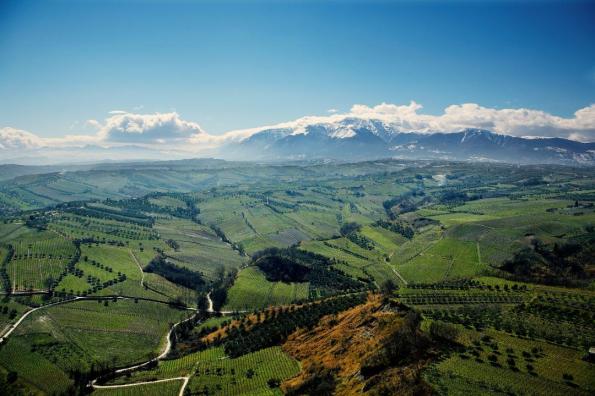
Wine lovers, on another hand, have it easy. It is enough to take a bottle of wine in your hands, and you are instantly transported. Your trip starts with the first look at the label, and then it is only limited by your imagination. The more you learn about the world of wine, the easier such travel becomes. You can instantly immerse into the culture, imagine visiting the vineyard, talking to the people, sitting in the tiny cafe with a glass of wine, just observing life as it happens. Sounds good? Can I take you on a trip right now, right at this moment? Of course, I know you are ready. I’m inviting you to visit Italy, the region called Abruzzo.
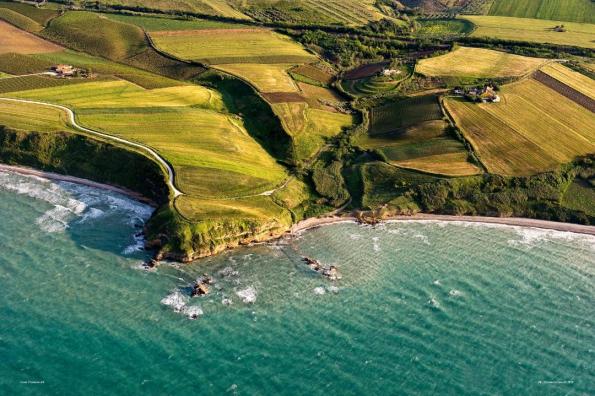
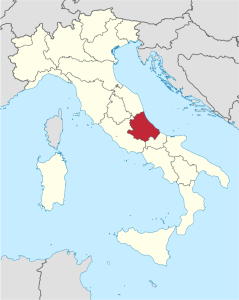 Abruzzo is a region in Central Italy, located along the Adriatic Sea coast. The territory of Abruzzo is about half of the size of the US state of New Jersey. However, the region boasts the biggest number of forests and parks compared to any other region in Italy, and thus sometimes it is referred to as “the lungs of Italy”.
There is nothing unique about winemaking in Abruzzo – it is only about a few thousand years old, on par with the rest of Italy. Well, jokes aside, the Abruzzo region is enclosed in the Apennines mountains, which historically provided natural defenses to the people living in the region – as well as ideal conditions for the winemaking.
Abruzzo wines became known internationally in the 17th century, largely thanks to the Spanish writer, Miguel de Cervantes, who praised the high quality of the region’s white wine, Trebbiano d’Abruzzo – however, today Abruzzo is first and foremost known for its red wine, Montepulciano di Abruzzo, produced from the grape called Montepulciano (try not to confuse it with the wine made in the Montepulciano village in Tuscany, which is made out of Sangiovese).
The wine is made is all four provinces of Abruzzo, however, the province of Chieti has the highest production of the four. While Montepulciano is a “king” of Abruzzo, the white grapes always played an essential role in the region. Today, the focus is shifting past the traditional Trebbiano towards until recently forgotten varieties, such as Pecorino, Passerina, and others.
Codice Citra is the largest winegrowing community in Abruzzo, uniting 3,000 winegrowing families from 9 different communes (wineries), collectively farming 15,000 acres of vineyards. Formed in 1973, Codice Citra had been making wines from the autochthonous varieties – Montepulciano, Trebbiano, Pecorino, Passerina and Cococciola.
With bottling capacity of 20,000 bottles per hour, you can imagine that Codice Citra produces quite a bit of wine. But this is not what we are talking about here. When you make wine year after year, you learn what works and what doesn’t. Little by little, you can identify the parcels of the vineyards, the patches, which produce different, maybe better grapes, year after year. And at some point, you decide – this patch is something special, maybe it deserves to be bottled on its own?


And that’s how Ferzo was born. Single grape wines, made from the plots with the vines of at least 20 years of age, representing the best Abruzzo has to offer – Montepulciano, Pecorino, Passerina and Cococciola. I had an opportunity to taste the line of Ferzo wines, graciously provided as samples by Donna White, and I was utterly impressed with the quality and the amount of pleasure each wine had to offer. Here are the notes:
Travel Diaries: Two Days in New York, or Pleasures of Being a Tourist
I live in close proximity of New York – 45 minutes by train – and I almost call it my “home town”. Each year, I get to visit the City, as it is typically called by locals (and to the best of my knowledge, “The City” primarily refers to Manhattan – New Yorkers, feel free to correct me) numerous number of times – business meetings, dinners, Broadway shows, wines tastings – you name it. But every one of those visits is purpose-driven – get in, do your thing, get out. Yes, I get to walk the streets, which I enjoy immensely and snap a few pictures, but still – the mind is set on “in and out”. “Can I sit on this bench for another ten minutes? No, because then you will miss the train. Get up and get going”.
To tell you the truth, the idea of staying in New York for a night was on my mind for a long time. Last week was a school break, for which we had no opportunity to make any plans. I looked around for a short notice vacation – flying would cost a fortune and would be mentally exhaustive (don’t get me going on my travel luck lately). Driving long distance with a rainy forecast for most of the East Coast didn’t look attractive even for a bit. And then the thought came – what about New York? My wife and our youngest daughter quickly agreed (older kids had no vacation that week anyway); we got lucky finding the room at Marriott Marquis, right in the middle of the Times Square – and with my Marriott status we even scored an upgrade, so we were definitely all set for a short New York getaway.
We decided to come over by train so we will not have to deal with the parking. After some deliberations, we decided to skip the most touristy things – city tour and the Broadway show, and just enjoy the City for what it is. Our mandatory program was short – Times Square, 9/11 Memorial, Jewish Heritage Musem and Central Park. Natural History Museum was also on the list, but with a bit of a lesser priority. With the hotel located right on the Times Square, the first requirement was easy – plus our upgraded room exceeded our expectations – we had the full view of the Times Square from the 45th floor, any second we wanted to see it – that alone made our vacation perfect.
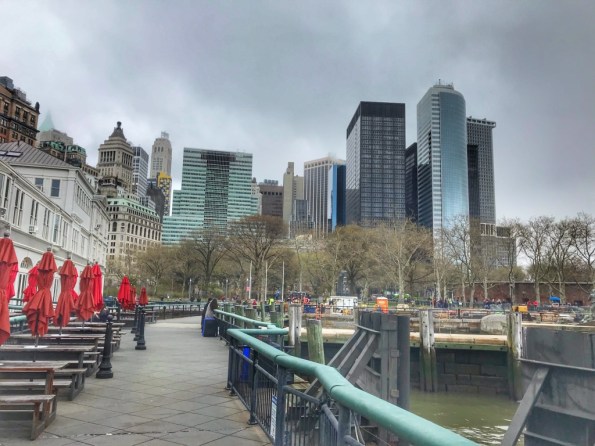
Despite the gloomy forecast, I have to say that the weather cooperated with us very well. The view of the World Trade Center building covered in the fog was rather unique, and overall gray weather was perfectly appropriate for the solemn mood of the 9/11 memorial and even Jewish Heritage Museum. And for the next day’s walk through Central Park we even had the sun coming out instead of the expected rain, so we really can’t complain about the weather at all. By the way – we made it to the Natural History Museum, but it seems that there were a lot (way too many) dinosaur fans in New York that day – the line to get into the museum to see T.Rex exhibition was stretching over the few of the neighboring streets, so we really decided to call it a day.
The fact that we stayed overnight in New York really changed the impression and perception of this vacation. Instead of fighting the traffic and crowds to get back home after dinner, the leisurely walk back to the hotel created a feeling of a real vacation, when you immerse into the life around you and lose the feeling of time. There was no feeling of the day trip, no feeling of being close to home – it was a real vacation, just somewhere in the world, in a place where time doesn’t exist and you don’t need to care about anything. We all really loved the experience of being a tourist almost in your hometown and will be looking forward to doing this again – in New York and not.
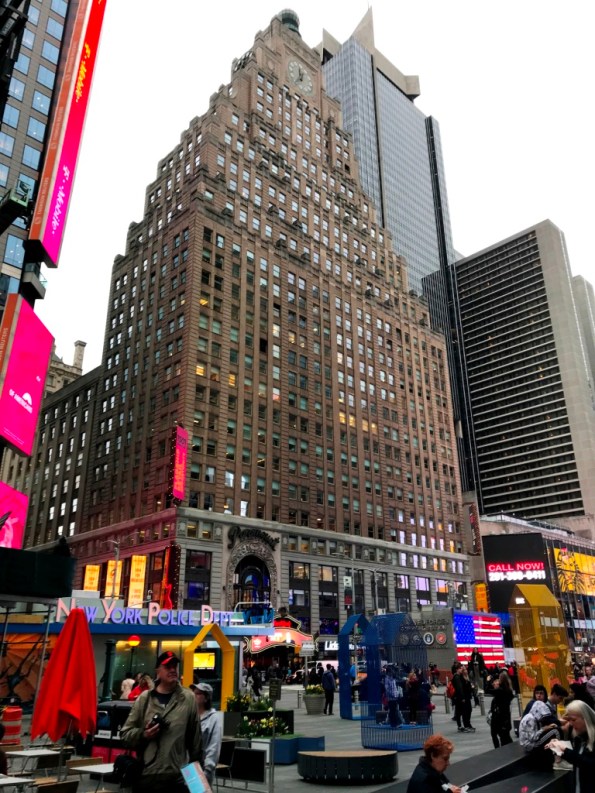
The only way I can share this experience with you is through the pictures. As I never know when to stop, here are some many pictures for you – definitely more than a few, but I’m only trying to share some of the moments of our [short] vacation. Hope you will enjoy them as much as I did while taking them. Cheers!
Lower Manhattan – The World Trade Center and around:




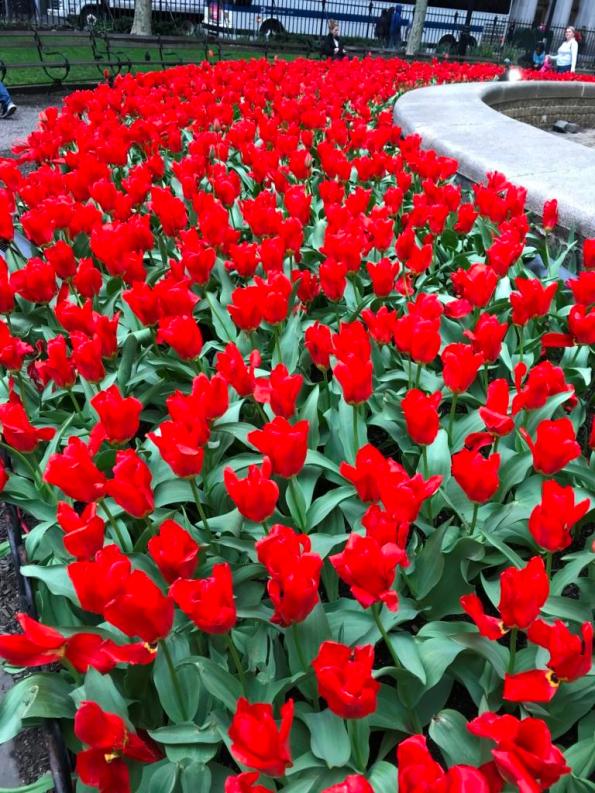
Somewhere in New York:



 Times Square – day, night, and around:







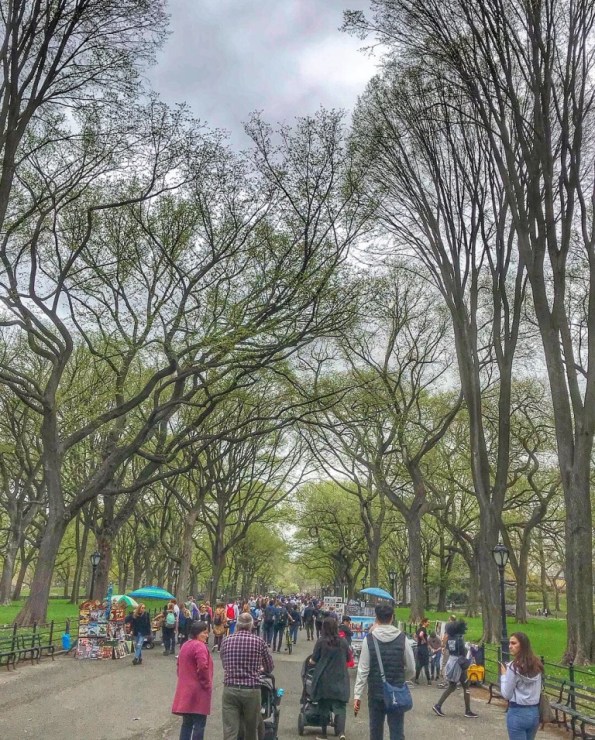
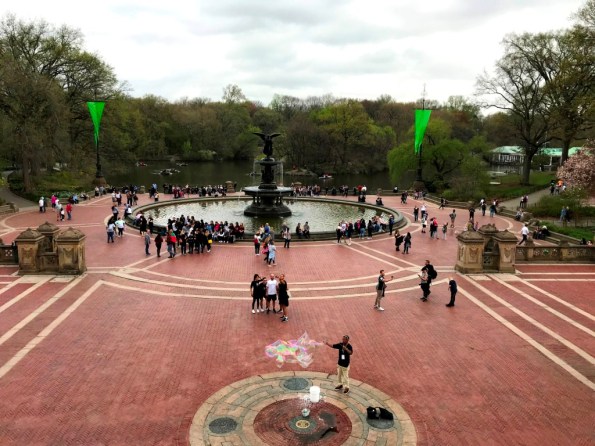
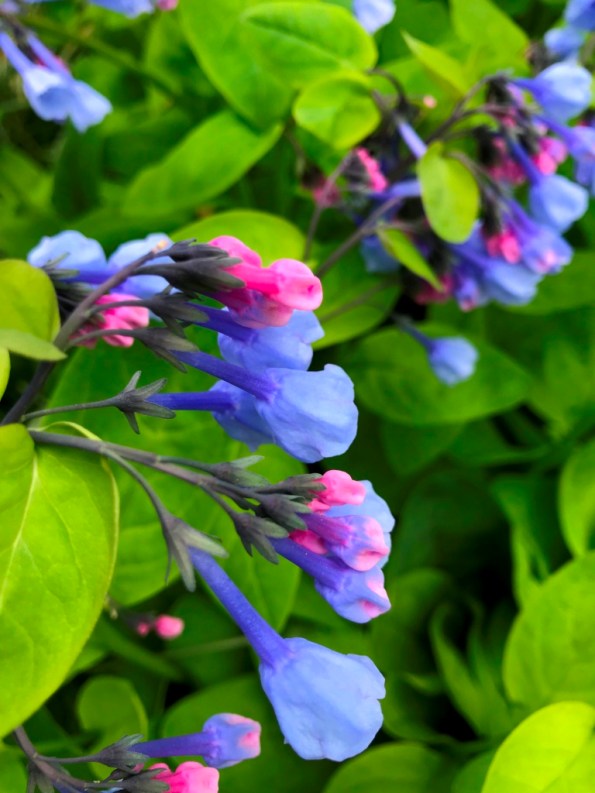
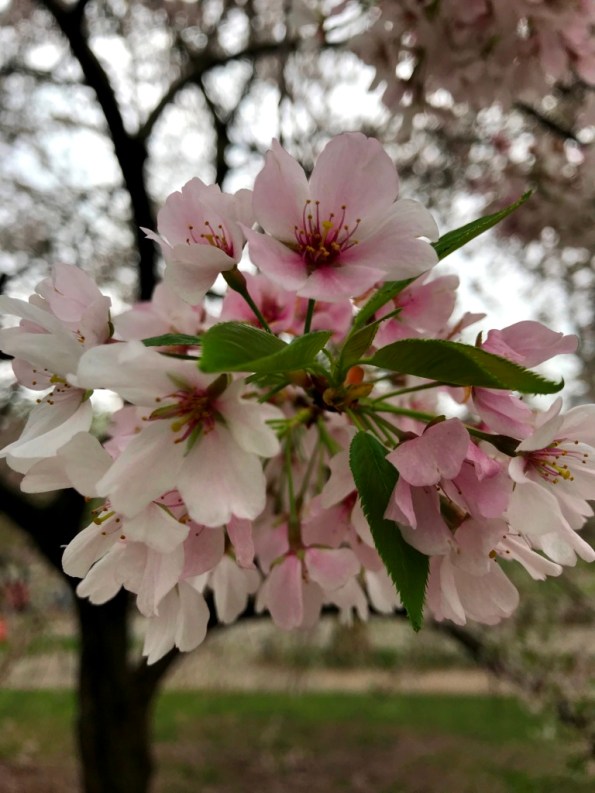
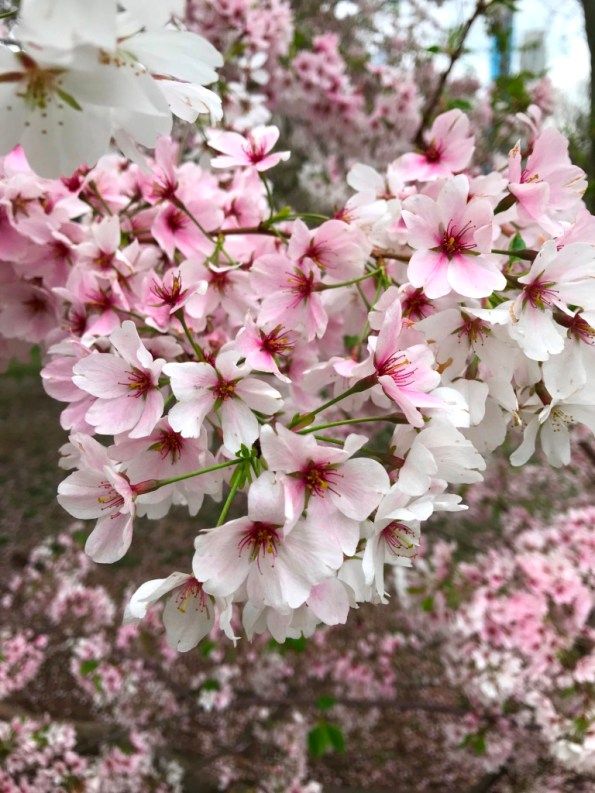
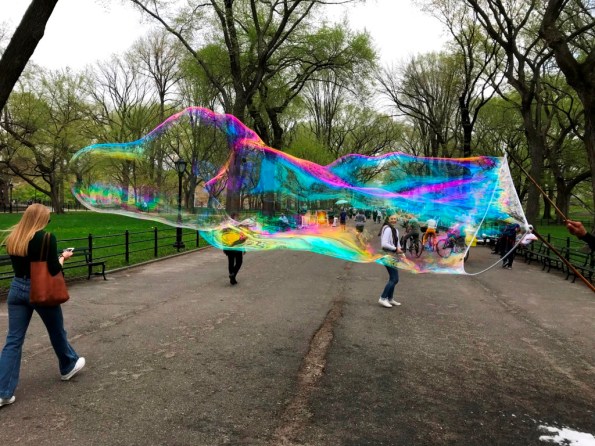
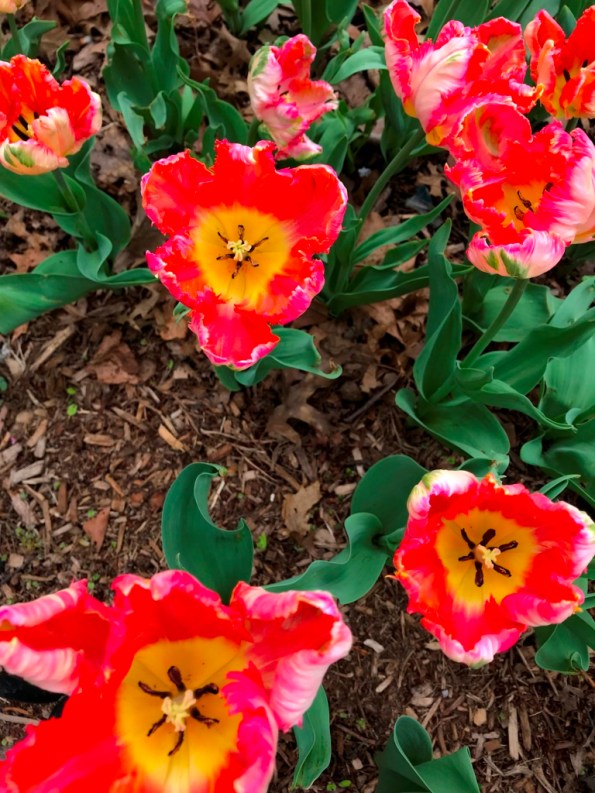
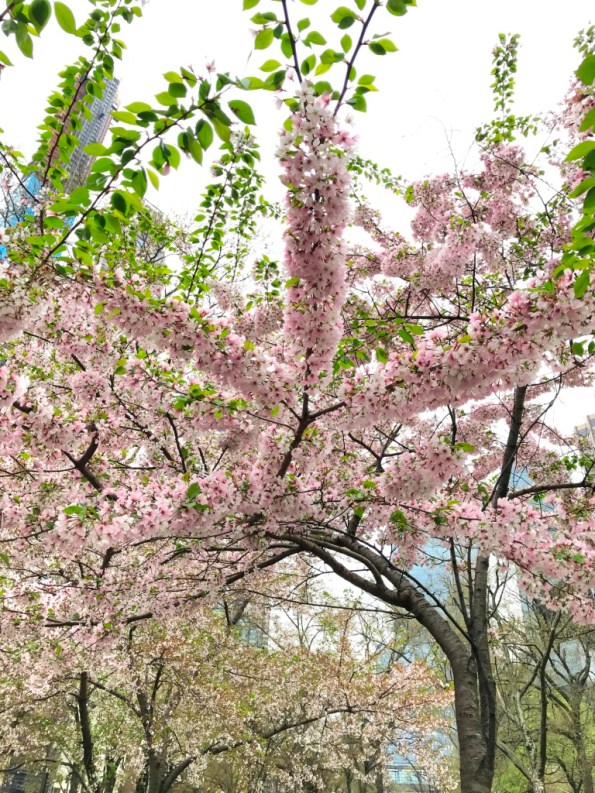
 Central Park:


Celebrate Malbec!
While performing the traditional morning ritual – checking in with all the social media sources, something caught my attention – ohh, I almost missed the Malbec Day, or to be even more precise, the World Malbec Day. So not to miss a celebration of one of the 10 major red grapes, let’s talk Malbec.
Today, when you hear “Malbec”, people instantly think “Argentina”. Yes, Argentina is the best-known source of the Malbec wines at the moment. However, Malbec story originated in France, where it was known initially under the name of Cot – this is the name which is still used in the wines of Cahors, the region in South of France, where Malbec was really a star for a long time. In Cahors, the wines were and still are required to contain at least 70% of Malbec – while popular in most of the other regions in France, there Malbec typically played a supporting role in the blends, such as Bordeaux, for example.
It was Argentina where Malbec really flourished starting at the end of the 19th century and became the star it is today. However, the popularity of Malbec goes way beyond Argentina, with excellent Malbec and Malbec-based blends coming from Australia, Chile, Israel, many regions in the USA, and other places. In Argentina, where Malbec is by far the most planted red grape (with more than 106,000 acres planted), the viticulture dramatically evolved over the years, with high altitude, ultra-premium bottlings being the latest craze.
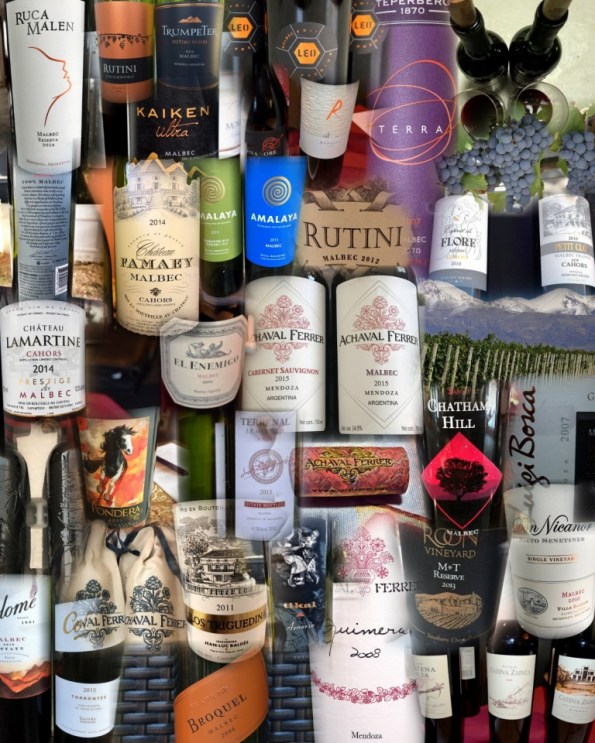
Over the years, Malbec was always present on the pages of this blog. Want to test your knowledge of Malbec? Here is the Malbec wine quiz for you. Looking to add some sensuality to your evening? How about Kaiken Malbec? Do you think you know Malbec? How about a blind taste challenge from one of the best in the business, Achaval-Ferrer? Everyone love Argentinian Malbec but don’t ignore the classics – Southwest of France can deliver amazing Malbec renditions, and I had a pleasure of tasting them more than once. Do you have a favorite Malbec bottle? The one which you are always happy to see in the store or a restaurant wine list? I can tell you that mine is Trapiche Broquel, which never disappoint.
Well, it is time to round it up and proceed with celebration. Do you have a favorite Malbec wine or wines? Feel free to share it with the world. Cheers!
Stories of Passion and Pinot, Year 2019
Back in 2014, during the Wine Bloggers Conference in Santa Barbara (my first WBC), I was listening to the panel discussion of the professional wine writers, who basically had only one message for all the bloggers – interviews, interviews, interviews. Of course, they were talking about integrity, writing skills and other important subjects, but the concept of “interview” was brought up multiple times, with all the explanations how to do it properly, what, why, where and so on.
At that point, I had been writing my blog for about 5 years, and the idea of the interview didn’t resonate. “I want to write about the wine, not about some conversations and other people opinions” was my prevailing thought. “Interviews? I don’t want to do no interviews” (use of broken English intended).
You don’t need to fast forward too far to see how everything changed. Next year, I was offered a meeting with a winemaker which I couldn’t attend, so I said “all right – can we have a virtual conversation?” – and the concept of “One of One With Winemaker” posts was born. Since then, I’ve done quite a few interviews, most of them virtual and a few are in person – if you are curious, here is the link for you to see them all. Yes, the “virtual” concept might be limiting, as you can’t explore an interesting angle which would come up in the conversation. However, as most of my questions are unique and specifically tailored for a particular conversation, virtual interviews remove intimidation, allowing people time to provide the best answers.

In 2016, I had a conversation with Carl Giavanti, who asked if I would be interested to create a series of interviews with Oregonian winemakers – and that became the beginning of the Stories of Passion and Pinot series, all connected under the “One on One” umbrella. In 2016, I had an opportunity to “talk” to Ken Wright of Ken Wright Cellars, David Nemarnik of Alloro Vineyard, Mike Bayliss of Ghost Hill Cellars, Wayne Bailey of Youngberg Hill Vineyards, Steve Lutz of Lenné Estate, and Don Hagge of Vidon Vineyard. In the same series, Knudsen Vineyards was profiled in 2017, and last year I had a conversion with Tony Rynders of Tendril Cellars. All of these wineries are from Oregon, and all of them share a common passion for the Pinot Noir, one of the most finicky grapes out there.
You probably guessed that I’m not writing this post just to give you a retrospective into the Talk-a-Vino interviews. Yes, I’m writing it to tell you that the Stories of Passion and Pinot will continue in 2019, again with the help of Carl Giavanti. The wineries we will look at in the near future are:
By the way, do you know what “Bells Up” means? Well, if you do – great, if you don’t – you will learn all about it soon.
To be continued…
For The Love Of Pasta – Pasta Carbonara, It Is
Do you have any secret food vices, the craves for something you shouldn’t eat? Here, I don’t have a problem sharing my secret – my secret crush is pasta.
Why is that a secret crush? Well, you really not supposed to like it. Pasta = Carbs, and Carbs = Bad For You. You don’t have to be Atkins or Keto aficionado – the message about the negative effect of carbs affecting one’s weight and overall health can be loudly heard everywhere. “Ahh, I stopped eating carbs and sugar, and I lost 30 lb and feel great!” And while I understand it, I’m always ready to embrace my secret indulgence – when making evening dinner plans, I’m quietly hoping someone in the family will say “how about pasta”? There is an ultimate level of comfort and pleasure in the simplicity of a properly boiled pasta (al dente) with or without a sauce (just give me some fresh Parmesan, don’t need even the sauce).
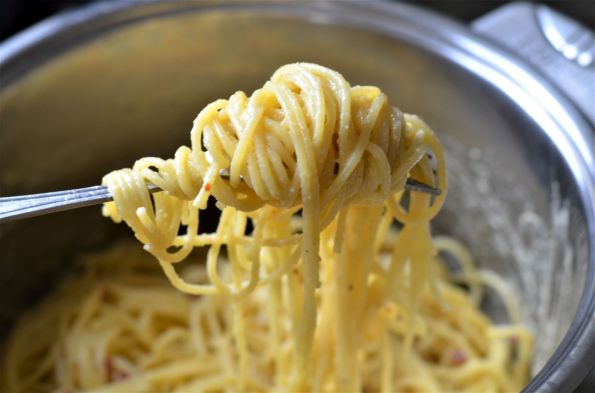
The reason is this “secret” is getting out now is simple. A few days ago I saw a post from Gambero Rosso that on April 6th we will be celebrating first ever #CarbonaraDay. Pasta Carbonara is one of my favorite ways to eat pasta, especially since discovering the Pasta Carbonara recipe by famous New York Chef, restaurateur, and Food Network’s Chopped judge, Marc Murphy.
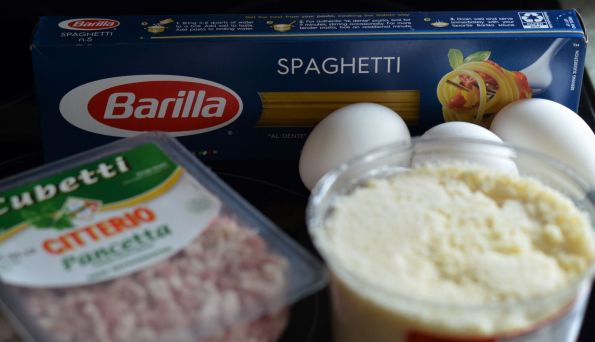
There is never a single recipe for a dish – no matter if the recipe is attributed as “classic”, “best” or “authentic”, there will be lots of variations making the same claim. Pasta Carbonara is no exception – lots of variations exist with heavy cream, peas, other vegetables and so on. What I love about Marc Murphy’s recipe is its rustic simplicity. Four basic ingredients (pasta, bacon, eggs, cheese), about 20 minutes for both preparation and cooking – and delicious meal the family can enjoy. I will not repeat the recipe in this post, you can find it at the link I shared, together with Marc’s story.
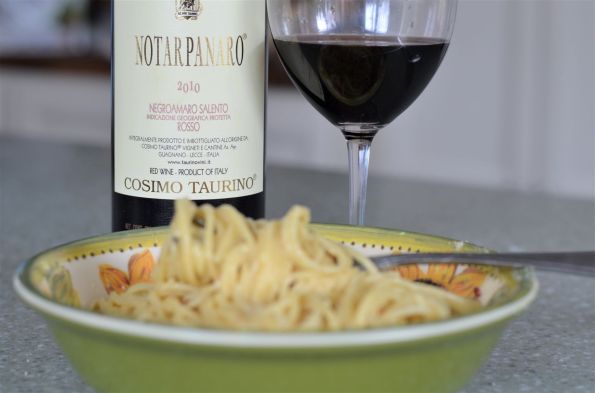
Can we have food without wine? Of course, but this is not very likely in this blog, especially if we are talking about an Italian dish. My decision to pair Pasta Carbonara with 2010 Cosimo Taurino Notarpanaro Negroamaro Rosso Salento IGP was not something long planned – I simply had a bottle open from the day before, and thus it was an easy decision. Negroamaro Salento might be one of the most food-friendly wines – those wines are usually supple and generous with fruit without going overboard, tannins are well integrated, earthy notes are quite noticeable, and acidity brings everything together – in this particular case, the wine was complementing pasta very well, enhancing the pleasure of every bite and sip.

Here you are, my friends, my Pasta Carbonara experience for the first #CarbonaraDay. I told you about my secret food crush – what about you? Cheers!
Latest Wine News and Updates
With the risk of repeating myself, I still have to say – we truly live through the wine revolution nowadays. This revolution takes on many forms. The wine quality is at the highest throughout the world, and it keeps getting better and better every year. Wine is made in far more places than ever before – who would’ve thought 10 years ago that England can produce world-class sparkling wines, rivaling the best Champagne? The wine has shaken off its traditional format of not only the bottle, but even the box, and it is available today in the can and in the keg. Heck, the wine today can be even mixed with CBD (Cannabis) so you can get high quickly and surely. Yep, it is the wine revolution time.
So with this, I want to share with you some of the latest and exciting developments taking place in the world of wine.
Let’s start with an interesting development around high-end wines. Have you ever noticed that many successful (and equally expensive) super-Tuscan wines have names ending in “aia” – Ornellaia, Sassicaia, Solaia – you see the trend, right? Turns out that a couple of the US retail giants – Walmart and Target, to be exact – decided to add high-end Italian wines to their portfolio, and surprisingly (or not?), both went with the super-Tuscan theme and named their new wines – can you guess – Targaia and Walmaia! Targaia is the blend of 70% Merlot and 30% Sangiovese, and Walmaia has a very interesting blend of 80% Cab Franc, 10% Sangiovese and 10% Carignan. 2016 will be the first vintage of Targaia, and Walmaia will debut with the 2015 vintage, both slated to hit the retail shelves later on this year. The release price for Targaia is set for $75, and Walmaia will open at $70 – great price for super-Tuscan wines, where a lot of well-known wines today are offered at the prices well north of $200 per bottle. Will “aia” do the magic trick for Target and Walmart? You will be the judge of it, once you will be able to get your hands on the bottle – hopefully it will not be too difficult, however, the production volumes had not been disclosed, as well as the source vineyards, so we will have to wait and see.
Our next update is about the Coravin, the famous wine preservation system which allows you to extend the life of your precious bottles and enjoy them over a longer period of time than otherwise would be possible. Of Coravin is a tool of choice of many wine writers, restaurateurs, sommeliers and all of the wine lovers, and it works perfectly for most of the wines – with Sparkling wines been a notable exception. And who wouldn’t like to have a small celebratory sip of Dom Perignon, while preserving the rest of the bottle for another special occasion? Coravin set out to solve the sparkling wine issue and reportedly invested more than $3M (USD) into the brand new lab in Switzerland. The initial design seemed to be successful, however, not really commercially viable, considering that the machine was a size of a small desk and weighed around 300 lb. Subsequent tests, however, showed that the researchers still have long ways to go, as the bottle of Dom Perignon shattered into the hundreds of little pieces while operated by the first smaller size prototype – luckily, nobody was hurt and the only loss was the one of a precious liquid. I’m sure Coravin researchers will not give up and sooner rather than later we will be able to enjoy a small pour of delicious Champagne while the rest of the bottle will be safely preserved.
Continuing the subject of bubbles, this next piece might surprise you. I’m sure everybody knows Grey Goose, the famous French vodka, a staple of any top shelf of any self-respecting bar. The problem with vodka is that it is typically relegated only as a mixing component in the cocktails, no matter how high the regard it has. Many vodka producers are trying to change this status quo, but it is usually done by simply infusing vodka with a certain flavor in an attempt to convert it into a sipping drink. Grey Goose decided to try something different, and partnered with Moët & Chandon to create … yes, the sparkling Vodka! The attempts to produce sparkling vodka using the Classic Method were unsuccessful, however, based on the initial reviews, the Charmat method worked just perfectly, with many critics simply raving about the experience. The sparkling Grey Goose vodka is packaged in gold-adorned classic Champagne bottles and it is already available at select retailers in the USA for about $200 per bottle (suggested retail price). While I don’t drink vodka as is, I’m definitely looking forward trying this unusual drink – would be curious in your opinion too.
Now let’s talk about cult wines. Not just any cult wines, but maybe the cult of the cults – Screaming Eagle. I’m sure you know that Screaming Eagle makes the most expensive Cabernet Sauvignon wine in the USA, priced at around $3500 if you can ever find a bottle. But do you know that this is not the most expensive wine made by Screaming Eagle? Until now, their most expensive wine was white – Sauvignon Blanc from Napa Valley, priced north of $4K, and equally impossible to get. Did you noticed I said “until now”? Screaming Eagle is set to beat its own record with the brand new offering to the mailing list members – Cabernet Sauvignon Rosé. It will be priced at $4999 for the mailing list members, and with only 30 cases produced (360 individually numbered bottles), this Screaming Eagle Rosé is expected to disappear in less than a minute after the members will be able to place their release orders. It seems that Rosé is an absolutely unstoppable category, with such heavyweights as Screaming Eagle joining the madness – I just hope not everybody will join their suit for the insane prices. And if you will be able to score a bottle, send me a note – I would looove to help you drink that.
Our last news for today is really from the “hard to believe” category, but I guess everything is possible… For about 10 years now, world famous UC Davis conducted the work to identify the effects of different types of music on the vines, grapes and the resulting wines. Fully independent test vineyards had been set up each with its own winery facilities, to ensure the same type of music is used through all of the stages of the winemaking, from the first bud break until the wine is pressed, aged and bottled. All facilities are outfitted with state-of-the-art Bose sound systems to ensure high-quality sound, both in the vineyards and inside the wineries. Chants, classical music, dance, hip hop, and heavy metal are used in the experiments, each one at its own, individual vineyard. All results are still being processed, and no conclusions had been made yet, however, a recent report from UC Davis really makes you wonder. It appears that after barrel-sampling wine from the vineyard subjected to the heavy metal music for 7 years in the row, visiting scholar, Dr. Drunkken, became extremely violent and attacked his colleagues, initiating an unprovoked, bloody fight. Dr. Drunkken was never previously known for any aggressive behavior, and after he spent a day subdued in the hospital bed, had literally no memories of an accident and couldn’t understand why his hands had been tied. It is completely unknown what triggered such behavior of a generally nice and gentle man, so it seems that researchers just got a lot more work to do. I don’t believe one single accident will derail the whole (expensive!) program, but I’m sure the new level of caution will be asked of everyone involved in this research.
That’s all I have for you today. Until the next time – cheers!
Valentine’s Day Experiences
 Cooking is the ultimate expression of love. This is always true, but even more though on Valentine’s Day, as the whole holiday is all about love – the holiday which exists since about the 5th century – it is really fun to celebrate something so deeply rooted in history.
Our personal love story was simple – yet, probably, equally uncommon – the love at first sight. It took three days since the moment we saw each other for the first time until everything was decided. So you can imagine that Valentine’s Day was always an important holiday for us. At first, we tried to follow to common path, working hard to score coveted restaurant reservation – until the dinner at one of the most expensive, and supposedly, best Italian restaurants in Connecticut, which we left asking each other “what was that???”. That was the end of our “eating out” Valentine’s Day celebrations, and the beginning of the “eat in” tradition.
One of the advantages of “eat in” celebrations is a much better wine program. You don’t need to desperately comb through the pages of the wine list, finding that you can’t afford any of the wines by the bottle you want to drink, and common sense preventing you from getting any of the wines by the glass which can be classified as a “seemingly affordable rip off”. Instead, you can spend hours combing through your own wine shelves, looking for the bottles which you will deem worthy of a special celebration – and which will also work with the menu you have in mind.

Martinelli Syrah which you see in the picture was a backup wine in case anything will be wrong with the Pinot. Now it is back in the cellar, waiting for its turn.
Last year’s celebration was about steak and Cab – obviously, I couldn’t repeat myself, so the search was on to find an appropriate protein replacement. Somehow that resulted in the duck breast – and what wine does the duck breast call for? Of course, the Pinot Noir!
Before we talk Pinot we need to talk bubbles. Bubbles don’t have to exclusively narrow down to Champagne. Champagne is a wonderful sparkling wine, perfectly appropriate for any celebration – but the world of wine moved up tremendously over the past 15-20 years. I don’t have any stats to prove this objectively, but I have a feeling in the USA at least a third of all wineries if not half of them produce sparkling wine – if not for the wide distribution, then at least for the wine clubs and tasting room visitors.
I also have to say that ever since I visited the Franciacorta region in Lombardy, Italy, Franciacorta sparkling wines became my go-to choice of bubbles for any special celebrations. In my mind, Franciacorta wines are very consistent, and today, as they honed their production methods to perfection, this translates into the “you can’t go wrong with” Franciacorta wines in general. La Valle was one of my top highlights of that Franciacorta trip and the La Valle Rosé really hit the cord then – and it continues to do now. This 2011 La Valle Brut Rosé Franciacorta was superb – fine mousse, delicious strawberries on the nose with the hint of the toasted bread, and more strawberries on the palate – a perfect opener for our evening.
Now, the Pinot time. Similar to the bubbles, Pinot Noir also enjoys quite a universal appeal around the world nowadays. There some regions, however, which do a better job than the others – and California Russain River Valley is definitely one of them. I tried 2007 Charles Mara Pinot Noir for the first time back in 2010. It was silky smooth and powerful at the same time. I was so impressed with this wine that it became the top wine of the inaugural Talk-a-Vino Top Dozen Wines list. I still had a bottle of 2007, and I decided that it would be a perfect choice for our Valentine’s Day dinner – and the wine didn’t disappoint. Now, 9 years later, this 2007 Mara Laughlin Road Ranch Pinot Noir Russian River Valley became even more round and less “in your face”. Characteristic California Pinot plums and smoke on the nose, succulent dark fruit on the palate with a hint of violets, perfect acidity, perfect balance, lots and lots of pleasure. And it also worked perfectly with the duck.


Let’s talk about the duck. I had it a number of times before, either made by friends or at the restaurant – but duck is rarely my go-to dish. The form of duck I cooked before was either duck legs as part of the Cassoulet or the whole duck as part of the Turducken. I never attempted cooking the duck breast before, so obviously was concerned with the outcome. After studying a number of recipes, I was concerned even more, as a number of commentators complained about rendering duck inedible even after repeated attempts, so I was really not sure about my own success.
I don’t know if it was a quality of the ingredient, Moulard Duck Magret, which I got at our local Fairway Market, or the cast iron pan, a combination of the above, or the beginner’s luck, but the duck breast came out perfectly. I also made a Port (you saw it in the picture above) and berries reduction, which elevated the nicely gamey taste of the duck breast and was a bridge to connect it all to Mara Pinot Noir – all in all, a delicious dinner. Nevermind the paper plate in the picture – everything in life has a story, but this is not the story for this blog post.
There you go, my friends – not a timely share, but still an experience worth sharing. If you still remember, I’m curious to know how was your Valentine’s Day dinner. Cheers!
OTBN 2019 – What a Night!
Open That Bottle Night (OTBN for short) is my favorite “wine holiday”. Of course, the absolute majority of celebrations in our lives – holidays (Mother’s Day, Father’s Day, Thanksgiving…), birthdays, weddings, anniversaries, promotions – include wine, but strictly in the supporting role. All the “grape days” are about wine, yes – but typically restricted to a specific grape. OTBN is a special day when the wine is a front and center of our celebration – OTBN is all about showing respect to those special bottles which all need the special, perfectly appropriate moment to be opened. OTBN allows us to say “the perfect moment has arrived” and just open That Bottle.
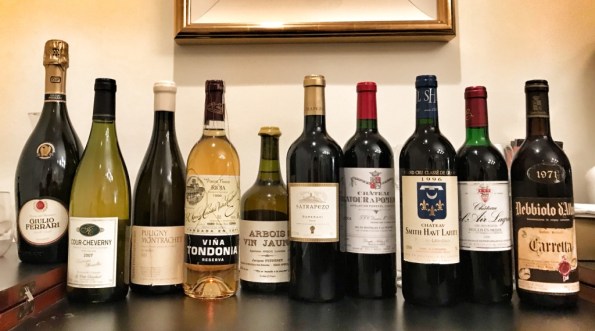
Almost full line up – few bottles are not shown
While I’m celebrating OTBN for a long time, this year’s event helped me to better appreciate the true purpose of this “holiday”. Okay, I have to say that I never had such a massive amount of wine opened for the OTBN – we went through 14 bottles – and each bottle was special in its own way. But until now, all of my OTBN experiences where strictly positive – the majority of the wines opened for OTBN were either at its peak or well drinkable at the moment but still promising to improve with time. But this year, in addition to absolutely stunning, mature, unparalleled wines we had wines which were either past prime or in the strange sleeping mode (yes, I’m an optimist), adding a good reason to follow the founding principals of the OTBN and pull the cork from That Bottle now.
Here are my notes for the wines we opened this year, together with a bit of explanation as to what made this wine special and my impressions.


2001 Giulio Ferrari Riserva del Fondatori Metodo Classico Trento DOC (100% Chardonnay)
Why: I was looking at this bottle for a long time. Ferrari makes some of the very best sparkling wines in Italy, and this is their flagship wine. At 18 years, it is a good age for the sparkling wine – and OTBN is a perfect reason to open a wine like that.
How was it: Amazing. Light bubbles, but the balance is amazing, light toasted notes, wow. The wine stayed fresh throughout the whole evening and was one of everyone’s favorites.
2013 Pierre-Yves Colin-Morey Puligny-Montrachet Le Trezin, Cote de Beaune
Why: Jim had multiple bottles of this wine and was worrying about Premox (Premature oxidation). Thus he put it out just to try.
How was it: Superb. delicious, classic burgundy, beautiful, elegant, round. Another one of the top choices for everyone.


2007 François Cazin Le Petit Chambord Cour-Cheverny AOC
Why: This is one of my favorite wines. When it was 10 years old, was literally blown away
How was it: Underwhelming. A touch of petrol, clean, good acidity, bud no bright fruit. Still delicious in its own way – I would gladly drink it any time. But – lucking the “umpf” which was expected… Still have 2 more bottles – will open later on and see.
2014 Damien Laureau Le Bel Ouvrage Savennières AOC
Why: Well, OTBN is an all-inclusive celebration. I rarely drink Savenniers, so it is always fun to experience something new.
How was it: Ok. For the 5 years old Chenin Blanc from the Loire, it was quite decent. Nice white wine – can’t say much more than that.


1996 Lopez de Heredia Viña Tondonia Blanco Reserva Rioja DOC
Why: why not? Lopez de Heredia is one of the very best Rioja Producers, and their Viña Tondonia Blanco might be one of the best white wines in Spain – at least from point of view of the wines which can age
How was it: A flop. Unless there was a flaw with this particular bottle, this wine was past prime and had no joy in it.
2015 Royal Tokaji The Oddity Hungary (100% Furmint)
Why: Furmit is the grape used in the production of the Hungarian Tokaji wines, some of the very best dessert wines in the world, easily rivaling the best Sauternes. Problem is – it is very difficult to prevent Furmit vineyards from the Noble Rot settling on the grapes – and thus it is rare – and difficult – to produce dry Furmint wine. Here comes The Oddity – dry Furmint wine.
How was it: Very good. Nice, clean, great minerality, balanced well-integrated palate, good acidity. Thank you, Lori, for this delicious find.
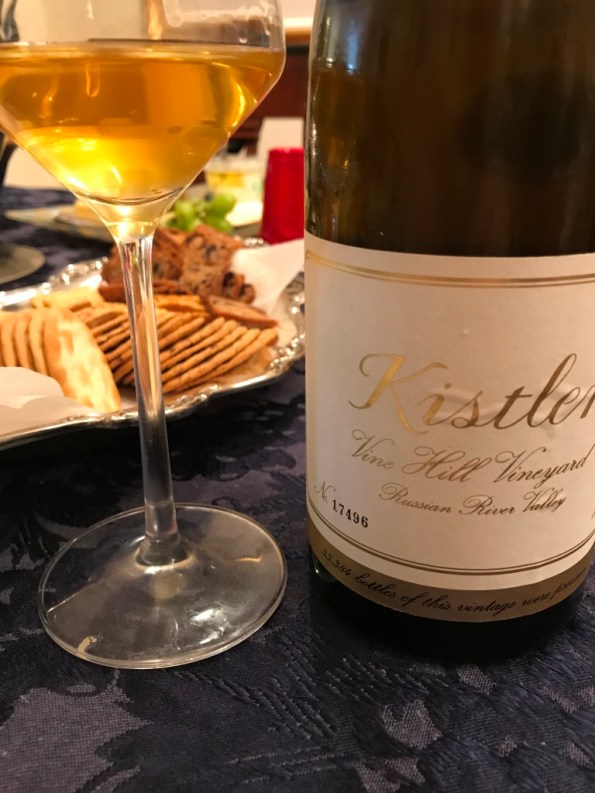
No filter – look at the color of this 24 years old Chardonnay
1995 Kistler Chardonnay Vine Hill Vineyard Russian River Valley
Why: Kistler is one of the best Chardonnay producers in California, so this alone is enough to include such wine into the OTBN line up. But then California Chardonnay rarely built to last for so long, so it was definitely the time to open this bottle.
How was it: Amazing. Almonds, apples, still present vanilla, a touch of smoke, good acidity – amazing for 24 years old white wine


2008 Jacques Puffeney Vin Jaune Arbois Jura
Why: Trying to explain the wine such as Vin Jaune to the uninitiated wine lovers presented an interesting challenge – I failed to explain what “oxidative” means. Anyway, putting this aside – Jura wines are rare. Vin Jaune wines are rare. Jacques Puffeney wines are beyond rare – 2014 was the last vintage which he commercially produced. This wine is absolutely OTBN worthy (thank you, Jim!)
How was it: Amazing. An oxidative nose which was also incredibly attractive, mature fruit, good acidity, elegant, present, delicious wine.
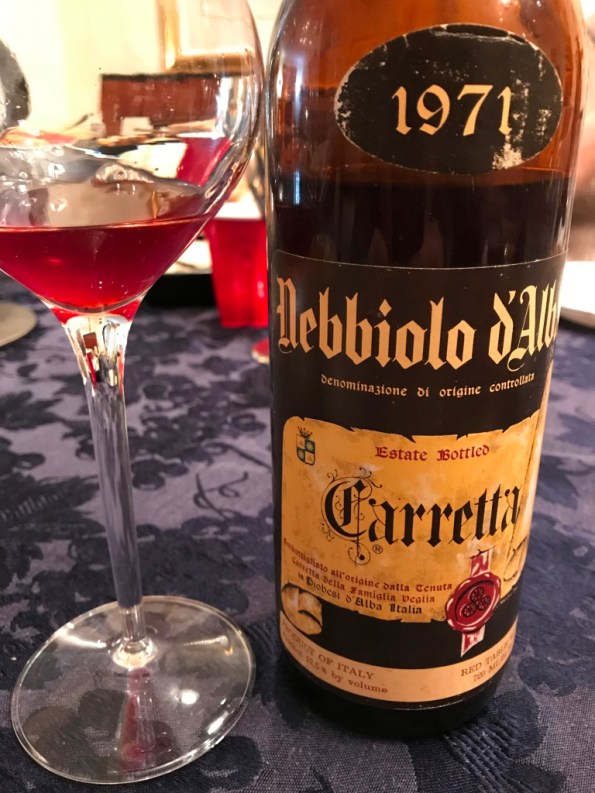
No filter – just look at the color of this wine! Amazing.
1971 Tenuta Carretta Nebbiolo d’Alba DOC
Why: 1971. Need we say more? Yes, the wine of such age is absolutely meant for OTBN.
How was it: Amazing, absolutely amazing. We poured it without decanting. The wine changed dramatically over the course of an hour. My first impressions were: pungent, with clean acidity, mature restrained fruit, still has lots of life left. Wow. About 15 minutes later, the wine totally changed and was the most reminiscent of a nice, concentrated Rosé – cranberries, a touch of strawberries, good acidity, very refreshing. Another 15 minutes made this wine most reminiscent of Jura red, a Poulsard if you will – light, great acidity, a touch of red fruit. Truly an amazing experience. And don’t forget to look at the color of this wine…


1986 Château Bel-Air Lagrave Moulis-en-Médoc AOC
Why: 33 years is a very respectable age for any wine – you really want to ask such wine “how ya doin”
How was it: Wow. Young, beautifully balanced, beautiful Bordeaux, just perfect. In a blind tasting, I would never identify this as a 33 years old wine. Yes, you can call me a failure.
1996 Château Smith Haut Lafitte Pessac-Léognan
Why: My exact question – why? Only because we could?
How was it: not ready. Needs time, mostly locked up. You would never think that 23 years old Bordeaux is not ready to drink, but it was not.


2004 Château Latour à Pomerol Pomerol AOC
Why: Same as previous wine – really, why?
How was it: Not ready. Closed nose, mostly cherries on the palate, need another 10-15 years.
2006 Telavi wine Cellar Satrapezo Saperavi Kakheti Georgia
Why: One of my most favorite Georgian wines. Limited production, a beautiful example of Georgian Saperavi. Most of the wine lovers are still unfamiliar with Georgian wines, so I really wanted to introduce this wine to the people.
How was it: Excellent. Still tight, beautiful fruit, big wine, could use more time. I was a bit concerned that this wine is reaching its peak – I was wrong. I’m sure another 5 years would do wonders here. Oh well…
2005 Weingut Petri Herxheimer Honigsack Scheurebe Trockenbeerenauslese Pfalz Germany (100% Scheurebe)
Why: For one, it is very appropriate to finish a great wine program with the dessert wine. And then how many of you even heard of Scheurebe? Scheurebe grape is a cross between Sylvaner and Riesling. It is quite rare, so yeah, a perfect choice for OTBN.
How was it: Spectacular. Not only it had great acidity which is essential in enjoyable TBA-level sweet wine, but it also showed a mix of honey and herbs – rosemary, sage, thyme – just an unbelievable concoction and ultimate pleasure in every sip. Thank you, Stef, for this treat.
Obviously, I can’t complain about such an amazing OTBN – however, as you saw, we had our share of disappointment. At the same time, the good greatly overweight the bad – 1971 Nebbiolo, 2001 Giulio Ferrari, 1995 Kistler, 2008 Vin Jaune, 1986 Bordeaux were all personal favorites and I would be glad to experience those wines again at any time.
Now that I told you about our OTBN, how was yours?
Last Bottle Sign Up ($10 credit)




 Talk-A-Vino