Hunting Down The Value
Wine and value – isn’t that a topic that is near and dear to every wine lover’s heart?
In the world of wine, “value” has lots of meanings – and to make it even more complex it also depends on a personal perspective. In the majority of the cases, value is relative. And while value concept is important and it is something we seek, it is the pleasure we are really after. We want to drink wine which gives us pleasure. Talking about value, we often refer to the concept of QPR – Quality Price Ratio – instead of just the value, as QPR simply stresses what we are looking for, the pleasure, the best possible experience for the money. In other words, we equate quality and pleasure. Maybe we should introduce a new concept – PPD – as in Pleasure Per Dollar? Hmmm… maybe not.
I was trying to find an example of absolute value in wine, and I don’t believe such a thing exists. Is $4.99 bottle a value? Unless you enjoy that wine, it is really not – if you don’t enjoy that $4.99 bottle, it is wasted $4.99. Is $200 bottle of wine is value? “Are you nuts???” I would expect a typical reaction being to such a price. Well, if this $200 bottle of wine is on the huge sale, and that wine typically sold, let’s say, at $300 – and this is something you will enjoy, and most importantly, can afford? Of course, it is a value. Then if you can easily afford it but don’t enjoy – this is again a waste of money.
There is another spin in our discussion of relativity of the wine value, where the value is not expressed directly in the money amount, but in comparison to the wines of similar styles. For example, I would say that an Israeli wine, Shiloh Mosaic, an [almost] Bordeaux blend in style, which retails around $60, can be easily compared to the $200+ Bordeaux blend wines from California, such as Vérité. At $60, Shiloh Mosaic is not an inexpensive wine, but nevertheless, if my comparison would hold true for you, it will become a great value in your eyes too.
And yet one more important detail about value – value is often defined in the categories – either price or wine type categories. I’m sure you heard quite often the wine is defined as a “great value under $30”, or a “great value for Pinot Noir under $100”. This simply means that someone who tasted a group of wines priced under $30, found that that particular wine tasted the best in that group. Don’t forget our general relativity of the value though – if you don’t drink Chardonnay, the best value Chardonnay under $30 has no bearing in your world.
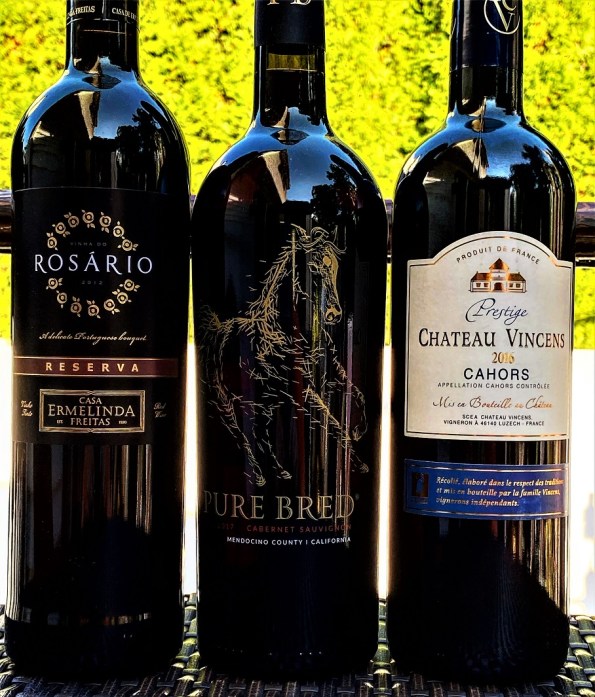
We can easily continue our theoretical value escapades, but let me give you an account of my recent encounter with great values, courtesy of Wines Til Sold Out. I’m sure most of you in the US are well familiar with WTSO, possibly the best wine flash sale operator. In addition to the standard offerings which change as soon as the current wine is sold out, WTSO offers so-called last chance wines, premium selection, and occasional offers of the wines at $9.99 – all of which can be acquired in single bottle quantities with free shipping. Two of my last value finds were $9.99 wines, and one of them (Cahors) was from the last chance wines selection, at $13.99.
All three of these wines were simply outstanding, especially considering the price. 2012 Casa Ermelinda Freitas Vinha Do Rosário Reserva Peninsula de Setubal (14% ABV, 70% Castelao, 10% Touriga Nacional, 10% Cabernet Sauvignon, 10% Syrah, 12 months in French oak) had a core of red fruit, good acidity, dark earthy profile a touch of coffee. Think about it – 8 years old wine, $9.99, delicious – is that a great value or what?
The 2017 Pure Bred Cabernet Sauvignon Mendocino County (14.2% ABV, 100% Cabernet Sauvignon) was an absolute surprise. At first, I got just one bottle, as Cabernet Sauvignon from California for $10 can’t be good apriori. On contrary to my expectations, the wine was generous and balanced, not jammy at all, with good undertones of the classic Cab – cassis and eucalyptus, and a pleasant herbaceous finish. Was if the best California Cabernet Sauvignon in absolute terms? Of course not. But at this price, it would give a perfect run for the money for many California Cabs priced under $30 – $40. I would say taste it for yourself, but WTSO is sold out of this wine at the moment.
Last but not least – 2016 Château Vincens Prestige Cahors (14.5% ABV, 80% Malbec, 20% Merlot, 10-15 months in French and American oak). This was just supremely delicious – earthy, with the core of dark fruit, densely and firmly structured, with a dollop of sweet tobacco on the finish – dark and powerful wine. I don’t know if Cahors wines returned yet to their old glory, but this is the wine I’m willing to enjoy on any day.
Here you have my excursion into the world of wine value, also known as QPR, and maybe in the future, as PPD? Hope I didn’t bore you to death. And by the way, what are your thoughts on wine values? Any great discoveries to brag about?
Wine Quiz #125: More Numbers In Wine
The Wine Quiz series is not meant to intimidate. The whole idea here is to have fun and learn something new. When answering the questions, it is fully encouraged to use all available sources of information, including Google or any other search engine. There are no embarrassing answers – the most embarrassing thing is not giving it a try…
Welcome to the weekend and your new wine quiz!
Our last quiz was about numbers in wine. You were given a series of numbers and asked to figure out what do they mean. I gave you a few hints in the accompanying text, from which I was hoping that you would be able to figure out that all these numbers are related to appellations. Here is the answer – as numbers, unfortunately, are just numbers, and it all depends on your source, I’m also including links for my sources of information:
- 250 – Number of AVAs in the USA – https://www.ttb.gov/wine/established-avas. Interestingly enough, this number is already incorrect – one more new AVA was approved, so the new count stands at 251.
- 1908 – The year second oldest appellation in the world, Dão in Portugal, was established – https://en.wikipedia.org/wiki/D%C3%A3o_DOC
- 360 – Number of AOCs in France – https://winefolly.com/deep-dive/looking-for-good-wine-start-with-the-appellation/
- 1 – the size of the smallest grand cru appellation in France – https://www.winemag.com/gallery/10-small-appellations/#gallery-carousel-2
- 1963 – The year DOC system was established in Italy – https://www.wine-searcher.com/wine-label-italy
Sadly, nobody even attempted to solve this quiz, so once again I’m keeping all the lofty prizes to myself.
This week’s quiz will be about … numbers again! I’m asking you to sort some data based on the underlying numbers. You will need to figure out what connects this data, and then sorting will be reasonably easy. Here we go:
Q1: Sort the following in the ascending order:
Arbois, Augusta, Douro, Rioja, Vernaccia di San Gimignano
Q2: Sort the following in the ascending order:
Balthazar, Goliath, Jeroboam, Magnum, Marie Jeanne, Melchizedek, Methuselah, Nebuchadnezzar, Rehoboam, Salmanazar, Solomon, Sovereign
Q3: From January to June 2020, Italy exported the highest amount of wine among all major wine-producing countries, at 577M liters (769M bottles). Sort this list of wine exports per country for the same period of time in descending order:
Argentina, Australia, Chile, France, Germany, Italy, New Zealand, South Africa, Spain, USA
Good luck, enjoy the quiz and your weekend! Cheers!
Beyond Kosher: Thinking of Israeli Wines
 I love pairing wine and holidays. It is always a fun exercise, as you need to find a way to explain your choices – how given wine enhances or at least relates to a given holiday (good luck with your Thanksgiving wine selections). Jewish holidays, which we are still in the middle of (Jewish New Year just arrived less than 2 weeks ago), are very helpful in that regard, as wine is simply a requirement here – most of the Jewish holidays require a glass of wine to be present and consumed.
When it comes to Jewish holidays, my approach is simple – I prefer to have on the table the wines made in Israel. But when I reach out to get an Israeli wine off the shelf, I can’t help it but think about all of the complexities of the Israeli wine landscape – what we are talking here is above and beyond of intricacies of making any fine wine. Making of the delicious wine is anything but complex – how to protect vines from the disease, when to harvest, what yeast to use, for how long to macerate, what to blend – lots and lots of decisions, each one affecting the end result, often dramatically. Production of Israeli wines deals with all of the same complexities but then adds a cherry on top – concepts of kosher and mevushal.
I remember visiting Israel about 15-17 years ago with a group of co-workers from the USA, at the resort on Mount Carmel. One of my colleagues pointed to a bottle of wine saying “this is amazing”. The wine he was pointing to was an Israeli wine, Yatir Forest, which was at a time a total surprise for me – I knew that this guy was really into wine and he was drinking very serious stuff, more of California cults and Bordeaux first growth, so this was unexpectedly high praise. I was absolutely unfamiliar with Yatir wines at that time (it would make me say “ahh, pretty please” now).
When we asked to open that bottle for us, we were surprised to hear that it will not be possible. Explanation? The food at the resort was kosher, and food includes wines. The resort just got a new person in charge of observing all the kosher laws and requirements in food preparation and service, and Yatir Forest was not kosher enough. That, my friends, is a problem which is unique to the Israeli wine scene – I’m not aware of any other winemaking region in the world where making tasty wine is not enough for that wine to reach the consumer, even the local one – this also complicates the imports quite a bit.
I’m not going to pretend to be an authority on the laws of kosher wines – I’m very far from it. I’m just here for the tasty wine. What I do know is that the kosher laws are quite intense and involved, whether it has to do with the food or the wine. While I understand that there is some rationale when it comes to the food, I don’t believe kosher requirements can materially affect the taste of wine. We also need to keep in mind that there are different levels of kosher types and certifications, and to top it all off, there is the Mevushal. In case you are not familiar, mevushal is somewhat of a process of pasteurization of the wine to allow for it to be served by a non-Jewish people at a restaurant or anywhere else. It appears that according to the kosher wine rules if the kosher wine is served by a non-Jew, it becomes non-kosher. Mevushal treatment solves that problem, allowing for the kosher wine to be served by a non-observing person without losing its kosher qualities.
To be labeled as Mevushal, the wine has to be heated up to 185 degrees Fahrenheit, essentially becoming pasteurized. As you understand, the exposure of the wine to such a high temperature result in the “cooked” wine – and very appropriately, in the old days Meviushal wines were simply undrinkable, at least by anyone who drinks the wine to enjoy it (as a matter of fact, the word “mevushal” means “cooked”). Lately, however, the wineries found new ways of making wine Mevushal without destroying it. One is a flash-pasteurization, where the wine is very quickly heated up to the same 185°F only for a few seconds. According to the Wine Spectator article, another method is even more interesting – it is called flash-détente, where instead of the wine, grapes are heated up to 190°F and then quickly cooled to the 80°F in the special machine. It would be an interesting experiment, but many wineries produce the same wine from the same vintage both as mevushal and non-mevushal – comparing such wines should be a fun project, don’t you think?
Now that we have Mevushal figured out, let’s take another look into the world of Kosher wines. Think about your favorite wine store – note, I’m speaking about the USA, your experience in France will be vastly different. As you walk in, you see the tags which help you find what you are looking for. Most likely, these tags are one of two types – either specifying a grape variety (Cabernet Sauvignon, Chardonnay, Pinot Noir) or the country and maybe a region – France, Italy, Burgundy, Spain, California, etc.. Somewhere in the corner, you will probably find the Kosher section, possibly right next to the Organic display. In that Kosher section, you will find predominantly Israeli wines with some additional bottles from California, France, maybe Australia, and Spain.
I can safely assume that you will be visiting that Kosher section only a few times a year, just around the Jewish holidays – okay, maybe you will make a special trip if you are invited to the Shabbat dinner by the observant family. Should you expect to find Israeli wines anywhere else in the store? Unlike California, France, Australia, and Spain, all of which you will find all around the store in the different varietal sections, Israeli wines will be confined to that specific Kosher section, 99 out of a 100. As Israel truly makes world-class wines, it is definitely a problem, as Israeli wines have a lot to offer. But what if Israeli wine is not Kosher, such as the wines produced by Vortman Winery – what can they do to make themselves found? Who will take a chance on the Israeli wine which can’t be placed in the Kosher section?
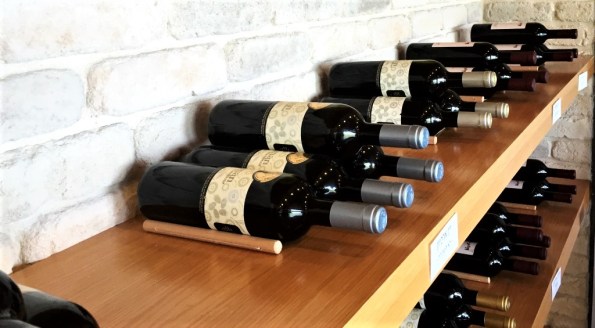
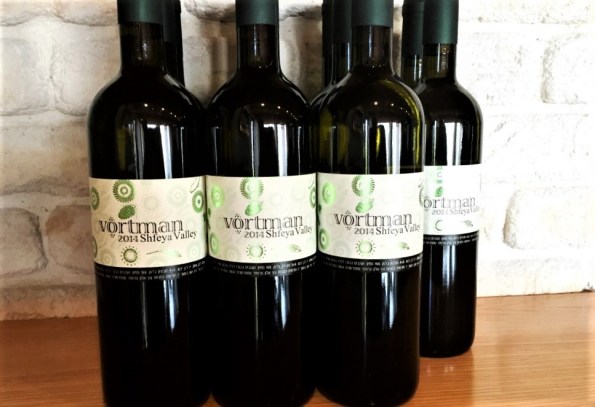


About 5 years ago, I had the pleasure of sitting across from Hai Vortman, the owner and winemaker at Vortman Winery. We were sitting in the Vortman winery tasting room, which was adjacent to his home in Haifa, enjoying magnificent views and superb wines. I was listening to Hai talking about the history of winemaking in Israel, particularly around the Carmel Mountain, which is considered one of the very best and oldest winemaking regions in Israel. Depending on the source, winemaking in Israel is from 3,000 to 5,000 years old, but this was not the point of our conversation. I learned that Baron Edmond de Rothschild recognized the viticultural potential of the Carmel Mountain region and founded Carmel Winery there in 1882, investing millions in the development of the vineyards and production of the wine. In 1900, Carmel Winery wine from Richon Le Zion area won the gold medal at the Paris World Fair, competing against classic French Bordeaux.
The first half of the 20th century was a tumultuous period for the Israeli winemaking – it was not until the last quarter of the century that Israeli winemaking started to rebound. Vortman Winery was founded in 2003 in Haifa in the basement of the family house, with the vision of producing organic wines from the grapes growing in the Shfeya Valley region of the Carmel Mountain. The first commercial vintage was in 2007. In 2009, Vortman started planting new vineyards in Shfeya Valley and converting old vineyards to organic viticulture, all based on dry farming, biodiversity, and full respect for the environment. Today, Vortman winery produces around 30,000 bottles a year – of the non-kosher wines.
Vortman wines we tried were delicious. 2014 Vortman Shfeya Valley White, a blend of Sauvignon Blanc and Semillon from 45 years old vineyard, was delicious, showing minerality, white fruit, crisp, clean, creamy, and refreshing, with a long finish. 2014 Vortman Prime Location Red, a blend of Merlot, Carignan, and Cabernet Franc (mostly stainless steel) was nicely restrained, earthy and fruity on the nose with a firm structure and an excellent balance. 2012 Vortman Shambur, a blend of Cabernet Sauvignon, Carignan, and Merlot (9 months in oak barrels) had a classic Bordeaux nose, great restraint on the palate with a nice core of tannins and great acidity. Nothing extra, nothing unnecessary, just a supremely precise wine. 2013 Vortman Carignan from 50 years old vines (7 months in new French oak) offered a burst of dark cherries on the palate and the nose and a perfect balance. Simply beautiful wines, one after another.
Now, the problem is that unless you plan to travel to Israel, you are out of luck with Vortman wines (hey, if any importers read this – do you want to bring some delicious Israeli non-kosher wines into the US?). Don’t despair, as Israel exports lots of tasty wines.


About 2 years ago, I had a sample of Yarden wines I never wrote about (yeah, I know). Yarden might be one of the best known Israeli wineries in the US, largely thanks to the efforts of the head winemaker Victor Schoenfeld, who is relentlessly promoting Yarden wines. Yarden is one of the brands of Golan Heights Winery, along with Gamla, Hermon, and Golan. Golan Heights winery was founded in 1984, and it is considered as one of the quality wine pioneers in Israel. Here are the notes for the wines I had an opportunity to taste:
2014 Galil Mountain ELA Upper Galilee (14% ABV, 61% Barbera, 30% Syrah, 5% Petit Verdot, 4% Grenache, kosher, non-mevushal)
Dark garnet, almost black
A bit of the stewed fruit on the nose, ripe plums
Clean, fresh on the palate, pepper, plums, baking spices, a touch of savory notes, good acidity, medium-plus body
7+/8-, initially the wine showed a touch of cork taint on the palate, some presence of a wet basement, which disappeared on the second day.
2016 Golan Heights Gilgal Rosé (13.5% ABV, 100% Syrah, kosher, non-mevushal)
Dark intense pink color
Touch of gunflint, oregano on the nose
Ripe spicy raspberries on the palate, more gunflint and granite notes, fresh finish of ripe fruit without been overly sweet, excellent concentration and presence, fuller body than most of Rosé. Delicious.
8, very pleasant
2017 Yarden Sauvignon Blanc Galilee (13.5% ABV, 2 months on French oak barrels, kosher, non-mevushal)
Straw pale color
Whitestone fruit and a touch of candied fruit on the nose, not typical for SB
The palate is restrained, with a hint of freshly cut grass, green apples, and some tropical fruit undertones. Good acidity, a hint of fresh-cut grass on the finish
8-, very good and pleasant rendition of SB
2016 Mount Hermon Indigo Galilee (14% ABV, cabernet sauvignon/Syrah blend, kosher, non-mevushal)
Dark garnet, almost black
Bright, inviting, freshly crushed red fruit, eucalyptus, raspberries, and blueberries on the second day, plus some dry fruit notes – figs
Wow. The first day was a little incoherent, but the second day is simply incredible. Beautiful supple blueberries and raspberries, excellent extraction, tobacco, dark chocolate, clean acidity, soft and round on the palate.
8+, excellent. Just let it breathe.
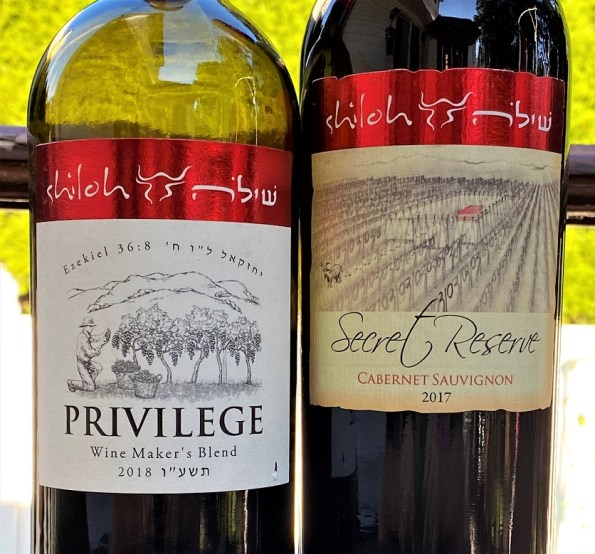
Before we are done here, I still need to talk about one more Israeli winery – Shiloh. I had been introduced to the Shiloh wines about 3 years ago, at a dinner in New York City. The wine we had, Shiloh Mosaic, was absolutely mind-blowing, it was #14 on my Top Wines list for 2017. Shiloh is the youngest winery out of the 3 we talked about today, founded in 2005. Shiloh vineyards are located in the area of the Shiloh river and Samarian hills. Based on the limited information available on the website, it seems that Shiloh produces wines from Chardonnay, Sauvignon Blanc, Cabernet Sauvignon, Cabernet Franc, Merlot, Malbec, Barbera, Grenache, Syrah, Petitte Sirah, and Petite Verdot grapes – of course, there might be others.
To celebrate Jewish New Year 5781, we opened two bottles of Shiloh wines. 2018 Shiloh PRIVILEGE Winemakes’s Blend (14% ABV, 74% Cabernet Sauvignon, 165 Syrah, 7% Cabernet Franc, 3% Grenache, kosher, mevushal) showed beautifully, offering soft red and black fruit, good minerality, soft tannins, and excellent balance. 2017 Shiloh Secret Reserve Cabernet Sauvignon (15% ABV, 100% Cabernet Sauvignon, 18 months in French oak, kosher, mevushal) was even better – a classic old world, rivaling any classic Medoc wine, full of cassis, eucalyptus, a touch of green bell pepper, silky smooth on the palate and extremely satisfying, a pleasure in the glass – this is the wine you need to experience, better yet, compare it against the best of Bordeaux in a blind tasting. It appears that many of the Shiloh wines are produced in both mevushal and non-mevushal styles – something which really calls for a blind tasting side by side.
Israeli wines are world-class, but they still need to be found by the wine consumer. Will you look for them?
Wednesday’s Meritage #148
Meritage Time!
I have an eclectic mix for you today. How eclectic? You be the judge.
Let’s start with Wine & Spirits Magazine Top 100 list of 2020. Every year, Wine & Spirits magazine comes up with the list of top 100 wineries of the year, which are all celebrated at the grand tasting event in San Francisco. This year the celebration will be virtual, and multi-staged. First, there will be Top 100 Sessions with the winemakers on that Top 100 list, taking place October 14-23. Then, as Top 100 wineries list of 2020 is already announced, there will be a celebratory event in November. Check any of the links above for more details.
I have to present the next update as oddly peculiar, but hopefully, some of you will find it fun. Do you like Oreos? Yes, the cookies. Well, whether you are a fan or not is not essential, but I’m sure you can appreciate an effort of tasting and rating 119 (yes, one hundred and nineteen) different types of Oreo cookies. Courtesy of my friend Emil, here is your full list. I’m not an Oreo connoisseur, but this was a fun reading nevertheless. Some of the tasting notes are nothing short of hilarious – “I’m not a big matcha guy, but I think these Oreos would be a lot better if they didn’t exist“.
Our next piece is not really the “news”, as this article is 16 years old (again, courtesy of Emil). Nevertheless, I feel compelled to share this article from New Yorker magazine, called The Ketchup Conundrum. This is a long read, so maybe bookmark it for the weekend, but it helps one to appreciate the depth and intricacies of the food marketing, even when you are talking about such basics as mustard and ketchup. Give it a try and tell me if you think it was worth sharing here or not.
Now, let’s move to the subject of sex and garlic. Worrying already? Don’t be! This article from Wine Spectator, “Sex and Garlic: New Weapons Against the Most Notorious Vineyard Diseases?”, talks about new experimental methods of protecting vineyards from powdery and downy mildews, some of the worst enemies of the grapevines. I don’t want to regurgitate the article here (it is also reasonable technical), but it is somewhat of a short read. The interesting part of the story that it took me a while to figure out what the “sex” part had to do with anything, as the word “sex” can be found in this article only once – in the title. Instead of telling you what sex has to do with the protection of the vineyards, I will let you figure it out on your own.
The last piece for today is about wine writing. Jancis Robinson, one of the best and most famous wine writers in the world, hosts an annual wine writing competition. The 2020 theme was “sustainability”. According to this short summary, 85 articles were submitted for the 2020 competition, out of which 75 were good enough to be published on the Jancis Robinson website. 18 articles were selected for the final round, out of which 2, not 1, were declared the winners. You can see all of the published entries here. Happy reading!
That’s all I have for you today. The glass is empty, but the refill is on the way. Cheers!
A Quick Trip To Germany
 Germany is one of the oldest wine-producing countries in Europe, tracing its roots to 100 BC. Believe it or not, but at some point, Germany and France were considered as the two best wine-producing countries in the world, with German Rieslings being traded and collected at the same level as Bordeaux and Burgundy. Germany made some strategic mistakes in the middle of the 20th century, producing large quantities of insipid sweet wines, and it is still trying to recover from those losses.
Thinking of German wines, what is the first wine which comes to mind? If you said Riesling, you are absolutely right. Riesling is a megastar, the grape which embodies German wines and maybe even Germany itself to many of the wine lovers. However, even in Germany, there is life after Riesling – for example, in the Pinot family – and these will be the wines which will be our tour guides today.
Let’s start with the white Pinot wine – Pinot Blanc. Pinot Blanc, also known as Weißer Burgunder, Weißburgunder, or Weissburgunder – all of which are different spellings for “White Burgundy”, where the grape presumably originated, is experiencing growing popularity in Germany. Its plantings nearly doubled in the past 10 years, and now Germany has the highest amount of Pinot Blanc plantings in the world.
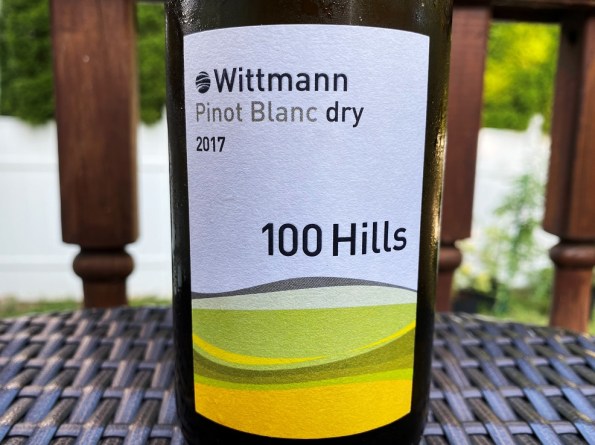
I recently saw a reference to German Pinot Blanc to be an understudy of the Chardonnay. Based on my experience with 2017 Wittmann 100 Hills Pinot Blanc dry Rheinhessen (12% ABV, $17), I would have to agree with this statement. The wine showed all the traits of the good Chardonnay except a touch of butter – however, vanilla, fresh apples, minerality, and clean acidity were tastefully weaved around the plump, texturally present core. (Drinkability: 8-). To give you a quick reference, the Wittmann family had been growing grapes in Westhofen for more than 350 years and 15 generations. The estate has been certified organic since 1990, and biodynamic since 2004.
Our travel in Germany is half done – and the second part of the journey might really surprise you. Germany is really not known among wine lovers as the land of red wines – and nevertheless, Germany has third in the world amount of plantings of one of the absolute darlings of the wine world. Care to guess what grape it is? Well, as it should be red, and you already know that we are talking about the Pinot family, this should be an easy guess – of course, it is Pinot Noir, better known as Spätburgunder in Germany.
Most of the Pinot Noir plantings in Germany are in the areas of Baden and Ahr, which is interesting as Baden is southernmost, and Ahr is one of the northernmost regions.
The wine we have chosen for our trip is coming from Baden, from the winery called Shelter, produced by husband and wife team, with harvest by hand and no use of herbicides or pesticides.
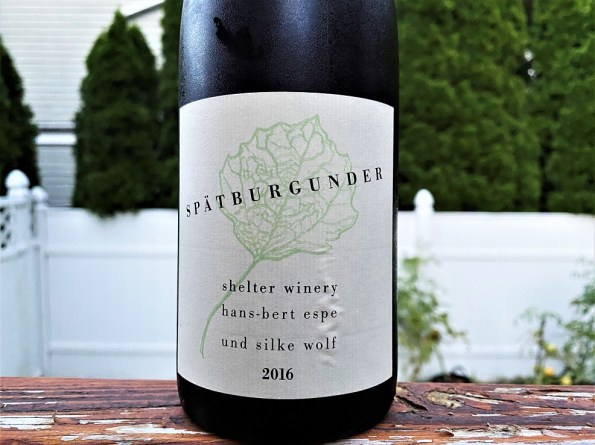
2016 Shelter Winery Spätburgunder Baden (13% ABV, $28) is unquestionably an old world wine, built with perfect precision. Gunflint, earth, smoke, cranberries, all in the lip-smacking, densely textured, tight package – this wine packs a lot of pleasure. (Drinkability: 8). I have to honestly say that this was my very first German Pinot Noir I was able to enjoy and I would happily recommend it to anyone who needs proof that Germany actually can create a tasty red wine.
There you have it, my friends – our little journey is over, but worry not – we will be traveling again very soon. Cheers!
Wednesday’s Meritage #147
Meritage Time!
Let’s start with some interesting developments in the world of celebrity wines. We just recently pondered at the topic with the fellow wine writers (you can watch it here), and I mentioned Château Miraval as one of the celebrity wines (Brad Pitt and Angelina Jolie) done right – with celebrities themselves very much involved in the process and website talking about wine passion instead of just trying to promote some irrelevant “merchandise”. It appears that the celebrity couple had ambitions going far beyond Provençal Rosé – after diligently working for 5 years, Fleur de Miraval Rosé Champagne is released to the market – at a hefty £290, according to The Drinks Business. This is a grower Champagne, produced by an apparent superstar Rodolphe Péters of the Pierre Péters estate in Le Mesnil-sur-Oger. I would love to try that Champagne, but at around $370, I can only hope someone wants to surprise me – holidays are coming? While still talking about the same celebrity couple, I also want to mention that I just learned about new wine on the completely opposite side of the spectrum – a new Rosé called Studio by Miraval, which can be found for a mere $15.
Moving along, let’s now touch on the subject of wine numbers. I don’t know about you, but I love numbers. What are the total plantings of Cabernet Sauvignon in the world? Are the plantings of Pinot Noir are rising or declining? Does anyone still plant Merlot? Which country has the biggest plantings of Syrah? Of course, this information is far less valuable compared to knowing which stock will double in the value tomorrow, but these are still the numbers I’m happy to ponder at. If you are sharing my excitement about wine numbers, a book called “Which Winegrape Varieties are Grown Where? A Global Empirical Picture” (2nd Ed) by Kym Anderson and Signe Nelgen, is published by the University of Adelaide Press in Australia, and it is freely available on the publisher’s website. What might be even more interesting, on the same website, you can find a collection of the wine-related datasets, including, for example, the Annual Database of Global Wine Markets, 1835 (!) to 2018, freshly updated in January of this year. Love the numbers? Hit those links!
Now, let’s talk about our new reality – the virtual one, where you can see, but can’t touch. It works well if you need to solve a business problem or debug a complex algorithm, but virtual wine doesn’t offer a satisfying experience (whatever way you want to twist that word). I don’t know if the folks at Taste The World were expecting the pandemic to be besieged upon us, or just had a good business hunch, but the idea behind this operation sounds really good. You have an opportunity to get a set of wines for the blind tasting, hand-selected by the group of Master Sommeliers, with the promise of perfectly representative wines for the different categories. Each set includes 6 different wines, and you can get it once for $90, which I believe is reasonable for this offering, or as a subscription. Whether you are looking for a cool gift for the wine lover in your circle, or study for WSET, this sounds like a great help. Don’t get me the Fleur de Miraval, I would be quite content with Taste The World set.
Last one for today – how about some wine videos? Wine Spectator just completed the voting for their annual Video Contest, and here you can find all the videos selected for the final round. With the pandemic-appropriate theme of “Wine at Home”, you will find some truly creative videos – well worth a few minutes of your time.
That’s all I have for you today. The glass is empty, but the refill is on the way. Cheers!
[Almost Weekly] Wine Quiz #124: Numbers in Wine
The Wine Quiz series is not meant to intimidate. The whole idea here is to have fun and learn something new. When answering the questions, it is fully encouraged to use all available sources of information, including Google or any other search engine. There are no embarrassing answers – the most embarrassing thing is not giving it a try…
Welcome to the weekend and your new wine quiz!
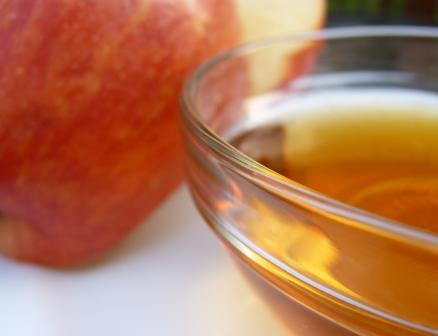
Before we will start with the quiz, I want to take a moment and say Shana Tova to all who celebrate Rosh Hashanah, the Jewish New Year. I wish everybody a healthy, sweet, and happy New Year 5781!
Now, back to the quiz.
Let’s start with the answers to the Wine Quiz #123. In that quiz, you were supposed to identify 7 wines by the image showing on the top of the foil capsule (or a screwtop). Below are the answers:


Sadly, nobody attempted to answer this quiz, so I will have to keep the prize.
Now, let’s talk about today’s quiz – it will be all about numbers.
Numbers are an indelible part of the wine world. How many tons of grapes were harvested? How many appellations are in China? How many bottles were produced? How many years Rioja Gran Reserva has to spend in the bottle before release? How many acres are in this vineyard? Numbers, numbers, numbers… So today’s quiz will be about numbers. Below is the set of numbers, which are all related to a particular aspect of viticulture. See if you can figure out what these numbers mean:
- 250
- 1908
- 360
- 2.1
- 1963
As I said, all of these numbers are related in some ways. Also, depending on the source, you might see a slightly different version of these numbers, but the deviation should be minor. Ahh, and by the way, one of the questions above has a clue. Oops – I’m wrong. Actually, there are two questions above with the clues, so you have two clues to solve this quiz.
Good luck, enjoy the quiz and your weekend! Cheers!
Serene Beauty of Cape Cod
The Cape Cod always was one of my favorite places to visit – I make no secret out of it. This year, it became literally the only place for us to visit to escape the maniacal joy of virtual confinement – and I have no complaints about it.
Mere three and a half hours ride and you are in the world which offers a chance to relax, unwind, and clear up your mind. Clearing up of the mind requires one to disconnect from the moment, to forget that reality exists. I can only envy people who can do this through meditation – I had a friend who would not even hear the doorbell ring once he was in his deep meditation. This is not me, unfortunately – I tried many times, but never was really able to disconnect from all the daily chatter. Thus I need the help of Mother Nature when looking for tranquility.
The three options which would work for me in that quest for tranquility would be the trees, the mountains, or the ocean.
Talking about the trees, I need a clean and open forest, full of 150 feet Eastern white pine trees – beautiful Redwoods would do the trick either. Have you had the pleasure of laying down on the thick layers of long pine needles, looking at the tall, impeccably vertical arrows touching the clouds far, far away? That is the feeling I’m talking about, but there is no place to experience it where I live.
Have you ever experienced the deafening quietness of the mountains? When the time stops, leaving you one on one with the universe, offering you an opportunity to get lost in your dearest thoughts and dreams? I have, on Mount Evans in Colorado – but this is 2,000 miles away.
That leaves us with the ocean. The closest beach is only 7 miles away from where we live, but to call that setting tranquil in any shape and form would be a huge exaggeration. The Cape, especially in the off-season, is offering unlimited amounts of tranquil bliss – just come and get it.
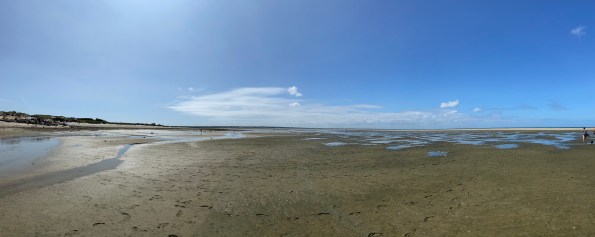
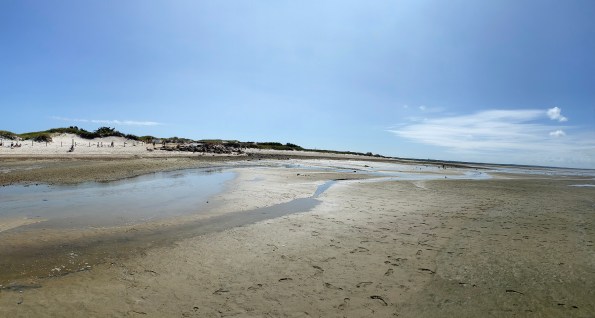
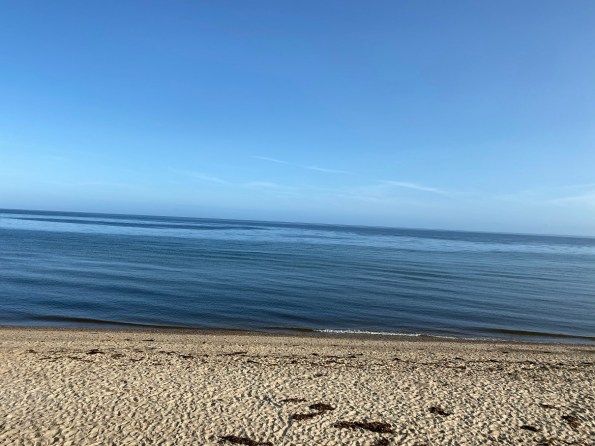
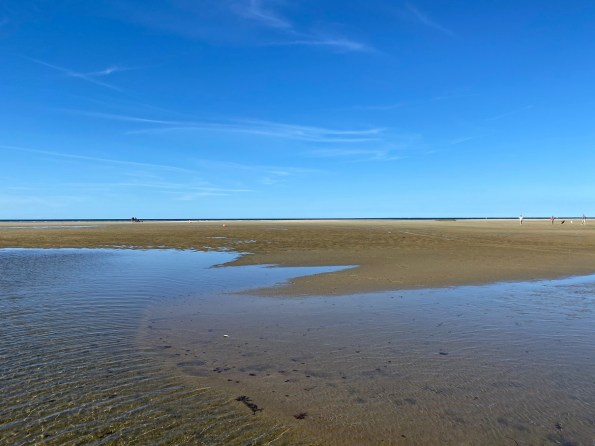
The Cape Cod is a narrow swath of land, extended into the Atlantic ocean – in no time you can move from one side of The Cape to another one, as the distance between the “coasts” ranges between 1 and 20 miles. We have family living in the town of Dennis, so this is where we stayed, the same as in the previous trips this year. In 3 days, we visited 5 or 6 different beaches – it appears that the town of Dennis (population under 14,000) offers a total of 20 (!) beaches on both sides of the Cape. While the beach is the beach at the end of the day, they all still have different charm – and some would even allow you to bring your car directly on the beach.
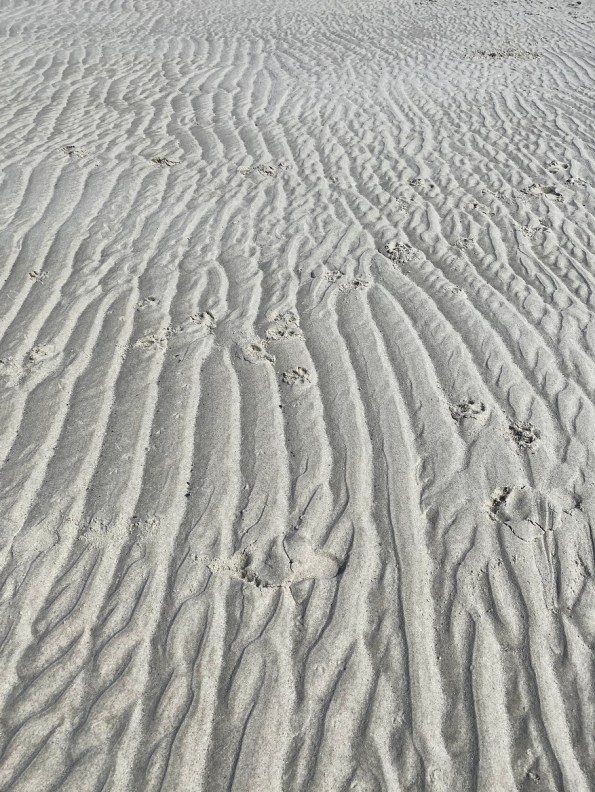
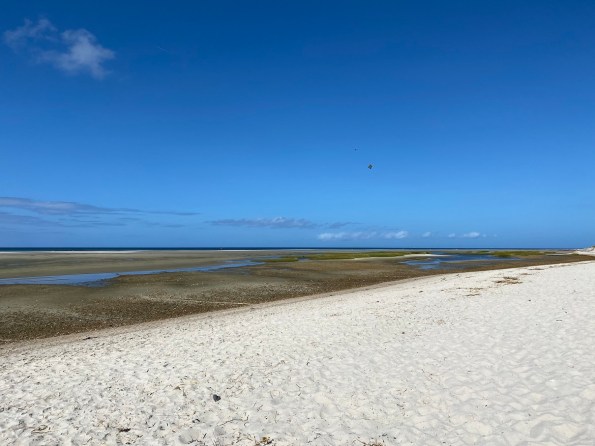
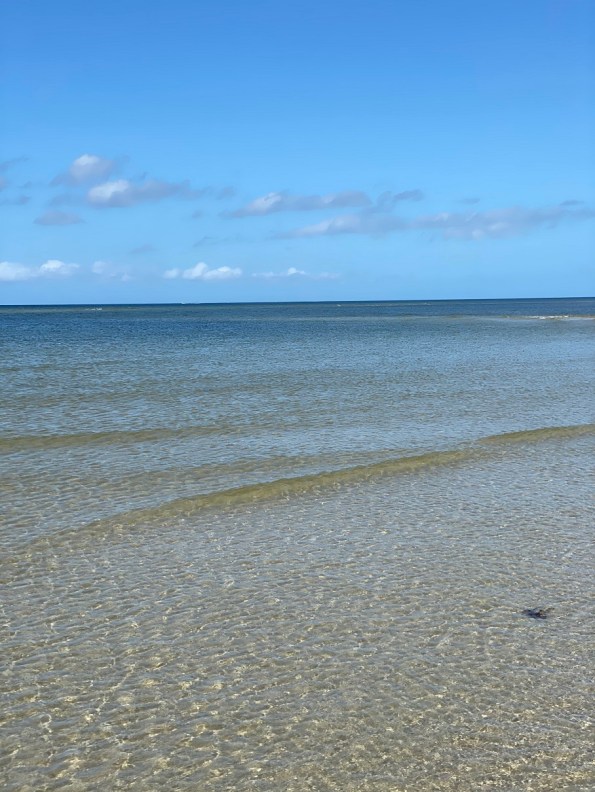
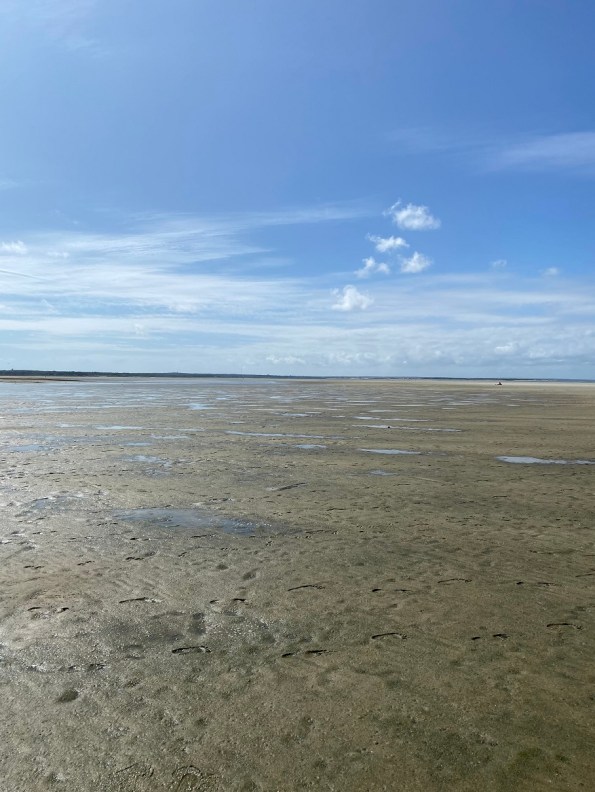
Combination of off-season (tourists are practically gone after the Labor Day weekend), warm weather, and low tide allowed us to enjoy hourlong walks with only sand and water in sight. A perfect place and time for self-reflection and pondering at life.
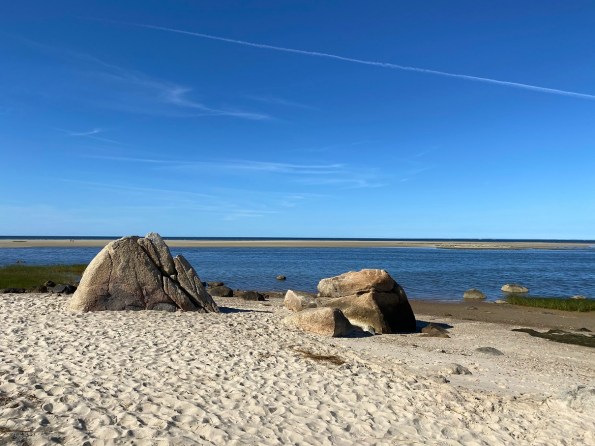
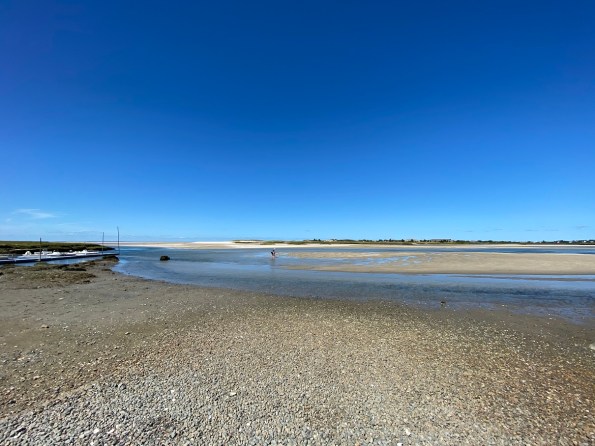
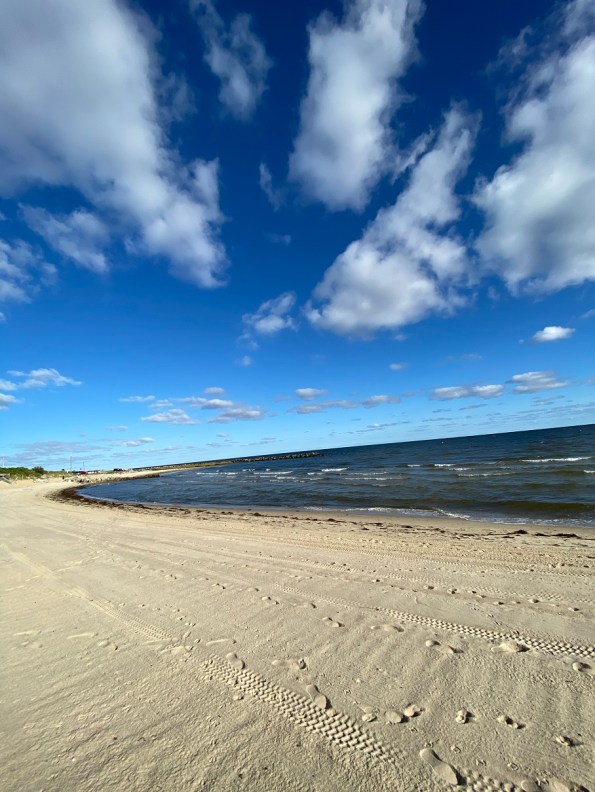
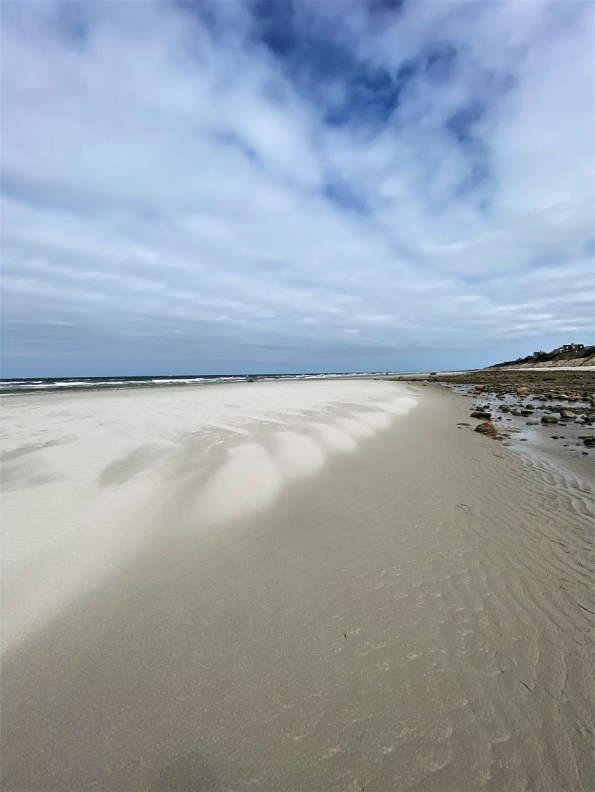
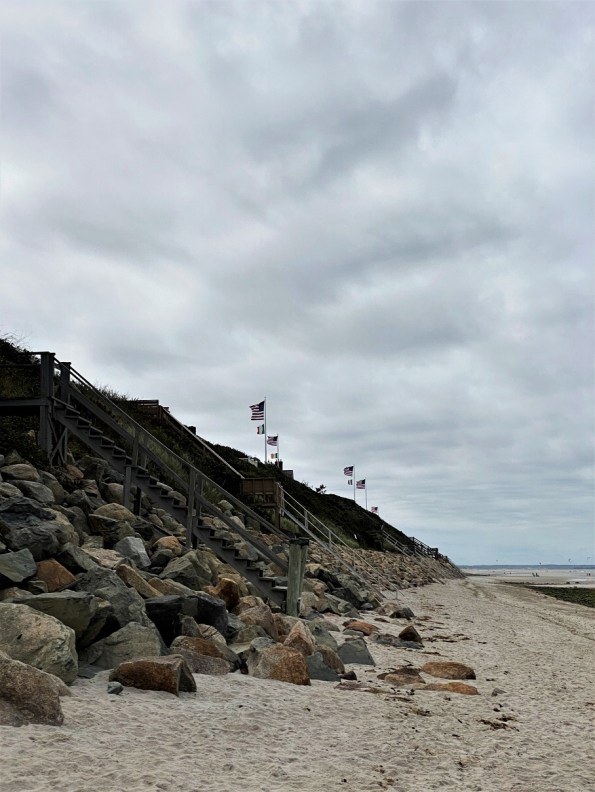
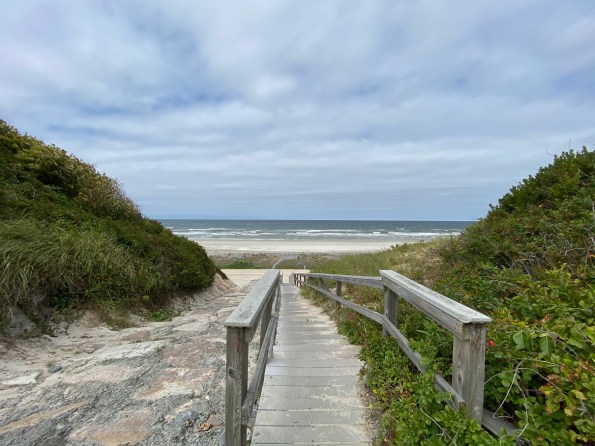
The only way I can share this experience with you is through the pictures, so here you have it, my friends.


A little flower intermezzo:


More of the water and sand:
 This is not the beach, obviously, but beautiful morning on the backyard:

And a few words about wines, as the wine was an unquestionable part of the daily routine. The 2014 Turley White Coat was an absolute delight, offering Chardonnesque complexity and layers of acidity and fresh fruit. 2010 Diadema Rosso Toscana, a blend of Sangiovese, Cabernet Sauvignon, Merlot, and Syrah, was offering a lot more than just a pretty bottle – plums, cherries, tobacco, mouthwatering acidity – delicious, nicely mature Italian wine treat. We also enjoyed the line of Terra Noble delicious renditions of Chilean Carmenere, which I just tasted before leaving for the Cape Cod over the virtual tasting (this will be a subject of the separate post).


And here is more of the Cape Cod beauty for you:
Wednesday’s Meritage #146
Meritage Time!
First, I’m sure I have some explaining to do – all of a sudden here is Meritage #146, while you can’t find #1, #50, or #145. I know I had not been contributing on the regular basis to this blog, and I would like to see how I can change that. Meritage posts were always an aggregation (Meritage) of interesting wine and food news, which were published on Wednesdays, hence the title. I counted all the Meritage posts in this blog during the 10+ years and found out that there were 145 of them published before. Previously, I would give you the synopsis of the post right in the title – going forward, I will substitute that with simply a number. Hope I managed to explain my logic, so now let’s proceed with the news.
Let’s start with some interesting developments in the world of Spanish wines. Classification of the Spanish wines appears to be simple – most of the wines are designated under a certain DO, which stands for Denominación de Origen, and then there are few other categories, such as the highest quality category in Rioja and Priorat, which are interesting enough are written differently but signify the same – it is DOCa for Rioja (Denominación de Origen Calificada) and DOQ (Denominació d’Origen Qualificada) in Priorat. Then you also have Vino de Pago, which signifies a single vineyard and a few other categories. It appears, however, that the simplicity is somewhat crumbling and more classifications had been sought to address different quality levels in Spanish wines. For example, you now have Corpinnat in Penedes, designating Cava made with organic grapes plus few other restrictions, or Vino de Villa and Vino de Paraje classifications which just had been launched in DO Bierzo. If you want to learn more, I would like to offer you this article on the Guild of Sommeliers website – it is definitely technical but well worth the effort of understanding the latest dynamics in the world of Spanish wines.
Ever heard of Tour de France, probably the greatest annual cycling race in existence? I’m sure you have, and if you need any technical details about the 2020 race, you can find it here. Many wine writers use this event simply as a canvas to talk about French wines from all the different regions, as cyclists race through them in the quest for glory. I want to offer you two of the Tour de France wine tours – one which is covering the whole race in one sitting, and another wine which is a series of posts. I don’t know if you are a cycling fan or not, but this is definitely an interesting way of exploring the world of French wines.
The year 2020 is absolutely unique in thousands of ways. Not for the things which happened during 2020, but maybe even to a larger extent, for the things which didn’t happen. Chowdafest 2020 would be one of such “things”. Chowdafest is one of my favorite culinary events in New England, usually taking place at the beginning of October, where thousands of Chowder lovers get together to taste and rate a large offering of the hearty soups, also known as “chowder”. With all of the fun of 2020, getting about 20,000 people together on the beach for a few hours doesn’t sound like a smart idea. But – it doesn’t mean that chowder lovers have to be deprived of their favorite treat. How? Easy. Please meet the brand new initiative of the Chowdafest – the Chowder Club. You can join the club for only $10 (not per month, just a one time $10). 24 restaurants in the program will supply their original chowder recipes and a professional chef will prepare them. You will have an opportunity to buy two different types of Chowder every month, at the $20 per quart of the chowder – if you don’t like the particular offering, you don’t have to buy anything. Initially, the chowders will be shipped only within the New England, but hopefully, they will expand nationwide. Make sure to read the FAQ section on the Chowder Club’s website as it provides additional information to what is listed on the Join Club page. I already signed up, so now I will have an opportunity to write about chowders 12 times a year instead of only once :).
Whatever happens, is for the better, right? Not always, yes – but sometimes it works. I wanted to get this post out last week, but that didn’t happen. On the flip side, however, I got a notification about the first Chowda Club offering, which will consist of two soups that won the Chowdafest in their respective categories for 5 years in the row – Pike’s Place from Seattle with its Classic New England Chowder and Our House Bistro from Winooski in Vermont with their Drunken Pumpkin Seafood Chowder. At the moment these chowders can be shipped only within New England – if you want to get yours, all the details can be found here – but hurry up, you can only order your chowder until September 18th.
One last news, more of a local kind – about this blog. Yesterday, I got a totally unexpected email from Corked Wines in the UK, informing me that I made it to their Top 101 wine writers list of 2020, and thus I can proudly display this logo:

I’m very humbled by this honor, but I wouldn’t lie to you, it was definitely a pleasant surprise. In case you would like to see the full list of awardees, you can find it here.
That’s all I have for you today. The glass is empty, but the refill is on the way. Cheers!
[Not Weekly At All] Wine Quiz #123: How Well Do You Know Your Wines?
The Wine Quiz series is not meant to intimidate. The whole idea here is to have fun and learn something new. When answering the questions, it is fully encouraged to use all available sources of information, including Google or any other search engine. There are no embarrassing answers – the most embarrassing thing is not giving it a try…
Welcome to the weekend and your new wine quiz!
Yes, the wine quizzes used to be a regular (weekly) feature on these pages – however, the last one was published more than 3 years ago, so it is clearly not. Still, let’s have some fun.
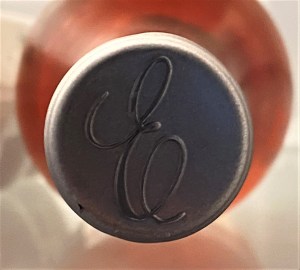
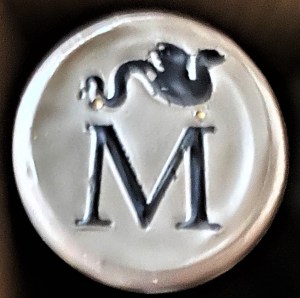
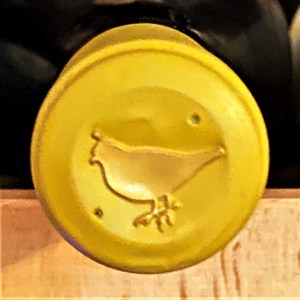
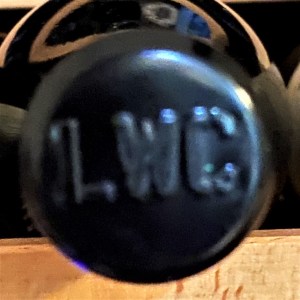
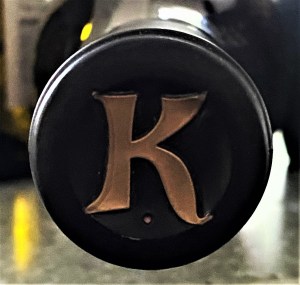
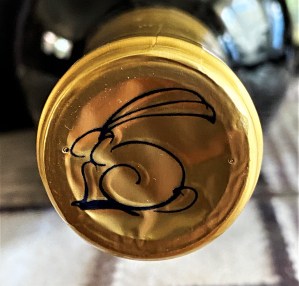
The subject of today’s quiz is about the element of the wine experience which is often overlooked – the top of the bottle. Of course, we are eager to get to the content of the bottle, so who would be paying attention to the element which typically stands between you and the delicious liquid in the glass. Meanwhile, you can often instantly identify the producer just by a quick glance at the top of the bottle. Below you will find pictures of the tops of the bottles – and your task is to identify the producers of these wines. As a hint, I can tell you that majority of the wines are produced in the US, and few of the producers are quite famous. Here we go:
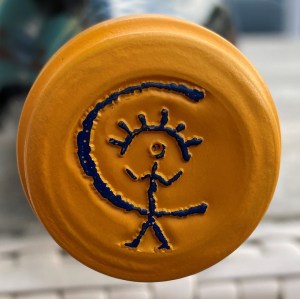
Good luck, enjoy the quiz and your weekend! Cheers!
Last Bottle Sign Up ($10 credit)