A Few Days In Florida
Last weekend we were lucky enough to avoid fighting with the cold here in Connecticut and instead spend the weekend with our friends in Naples, Florida. We had a great time so I want to share that with you – in the form of pictures, of course.




We were flying out of the La Guardia Airport, and our excitement started as soon as we walked from the garage into terminal B, as we were greeted with a stunning mosaic display. I was flying from La Guardia for the past 20+ years and all the time this was a dingy, run-down place you didn’t want to spend an extra minute at. In 2016, a huge construction project started, which seems to be almost complete right now, and the result is a beautiful, modern, stylish airport, very much comparable with some of the best in the world I had an opportunity to see. The terminal had lots of great food and shopping options, including even the F.A.O. Schwarz store! I was really excited to see the bear and Patrick The Pup!
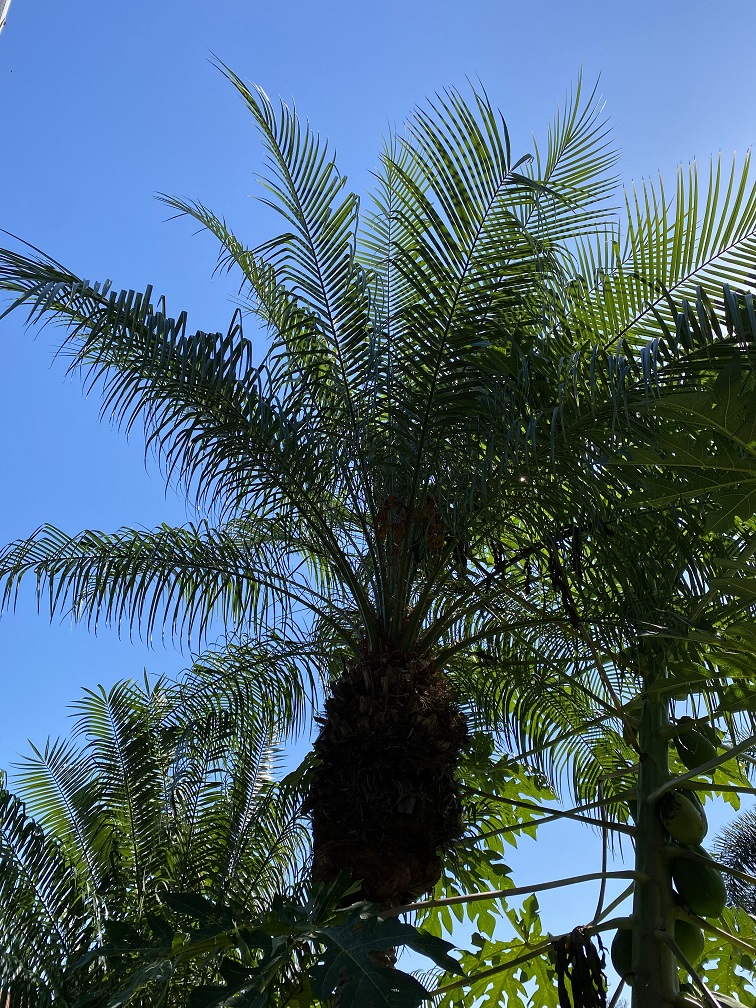

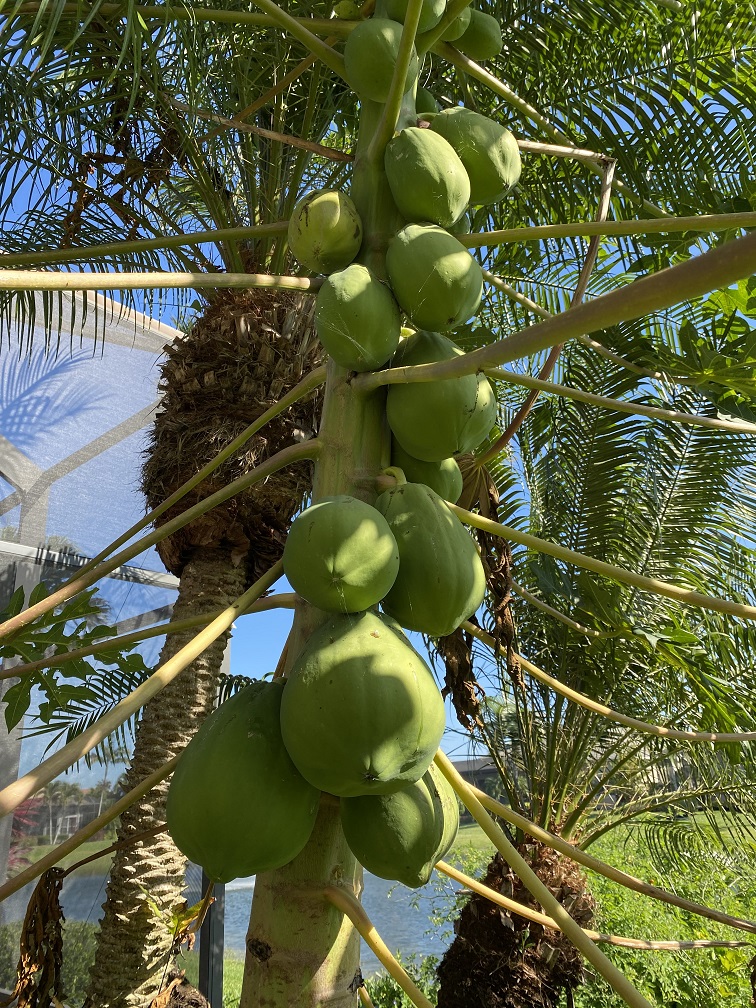


So what was exciting in Florida besides, of course, the warm, sunny weather, beautiful flowers, palm trees, and the beach? A few things. First, a huge tomato bush growing on our friends’ property. It turns out that the development where they bought the house was built on the land of an abandoned tomato farm. Apparently, the tomatoes found their way out and considering Florida’s consistently warm climate, instead of a plant these cherry tomatoes grew into the huge bush. There were lots and lots of tomatoes on that bush, and I can’t even describe how sweet they tasted.


Next was our very first experience of eating bananas directly from the tree. We are used to buying green bananas in the store which need some time to ripen. The taste of banana which was fully ripened on the tree is absolutely uncomparable with our store versions here in Connecticut – it has a different taste even with the acidity which I was able to taste very clearly. I’m generally not a big fan of bananas, but I couldn’t stop eating these.

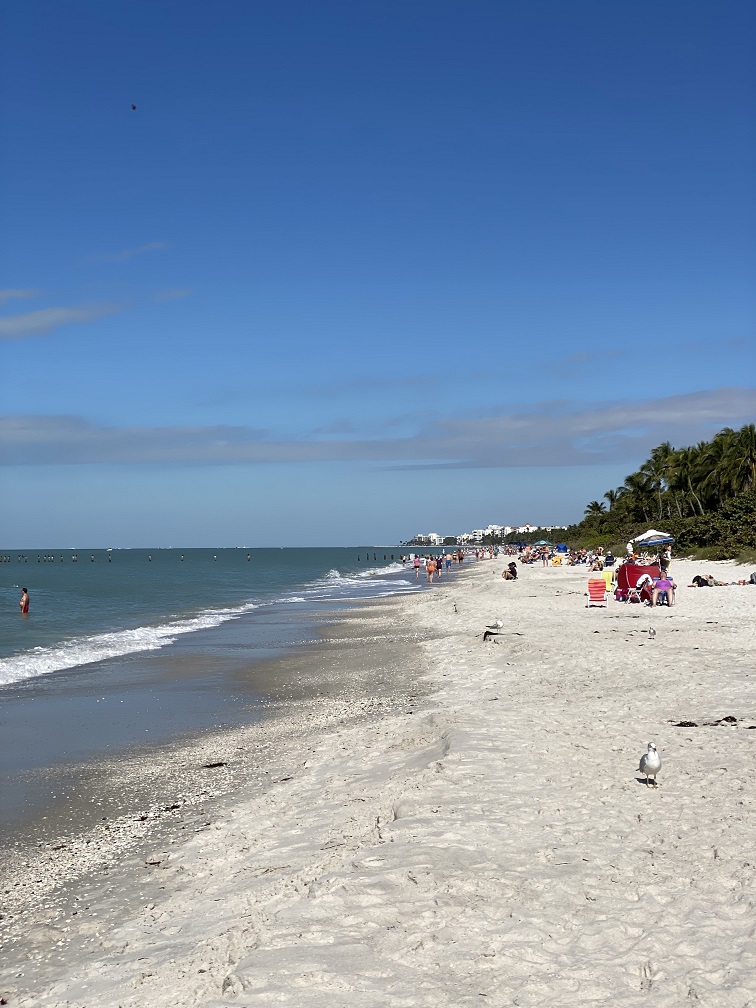
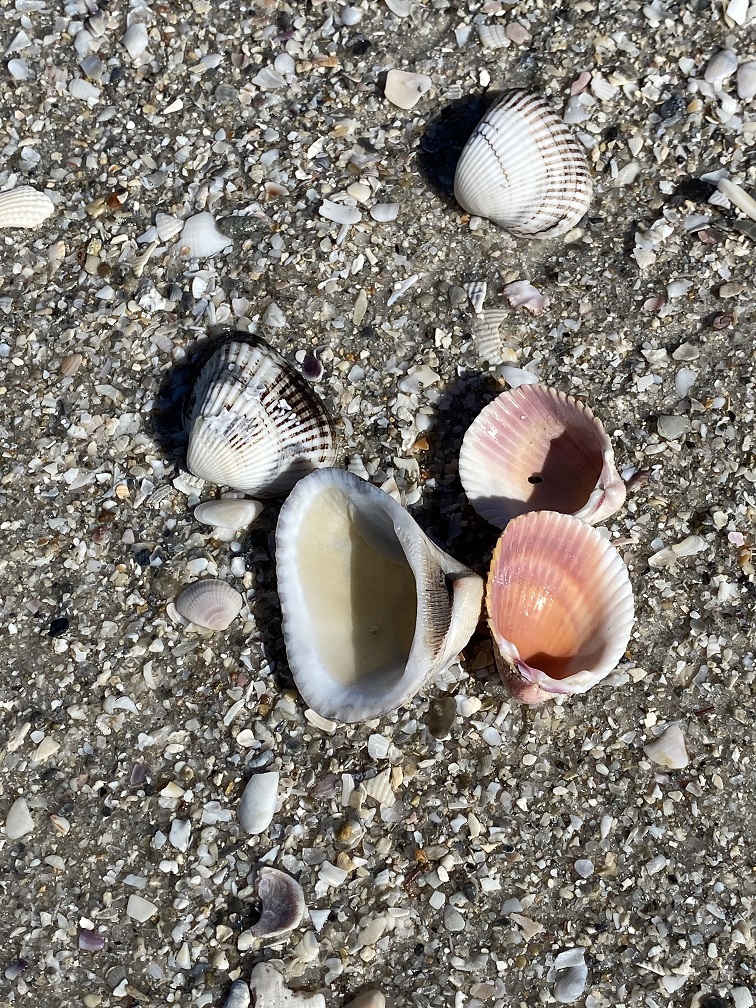
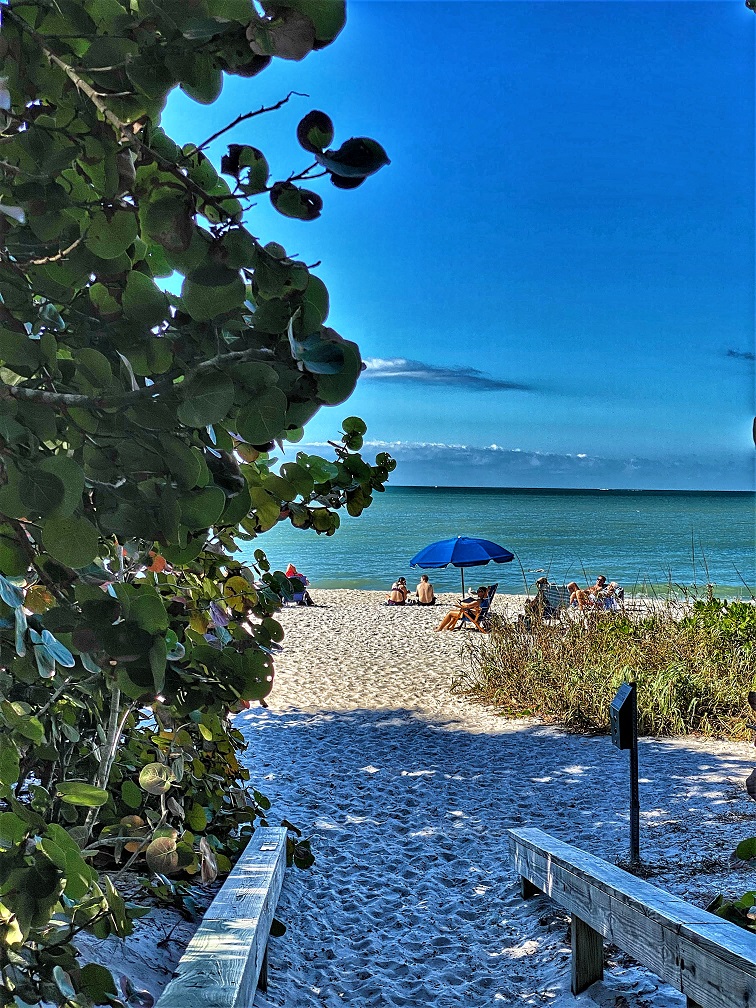
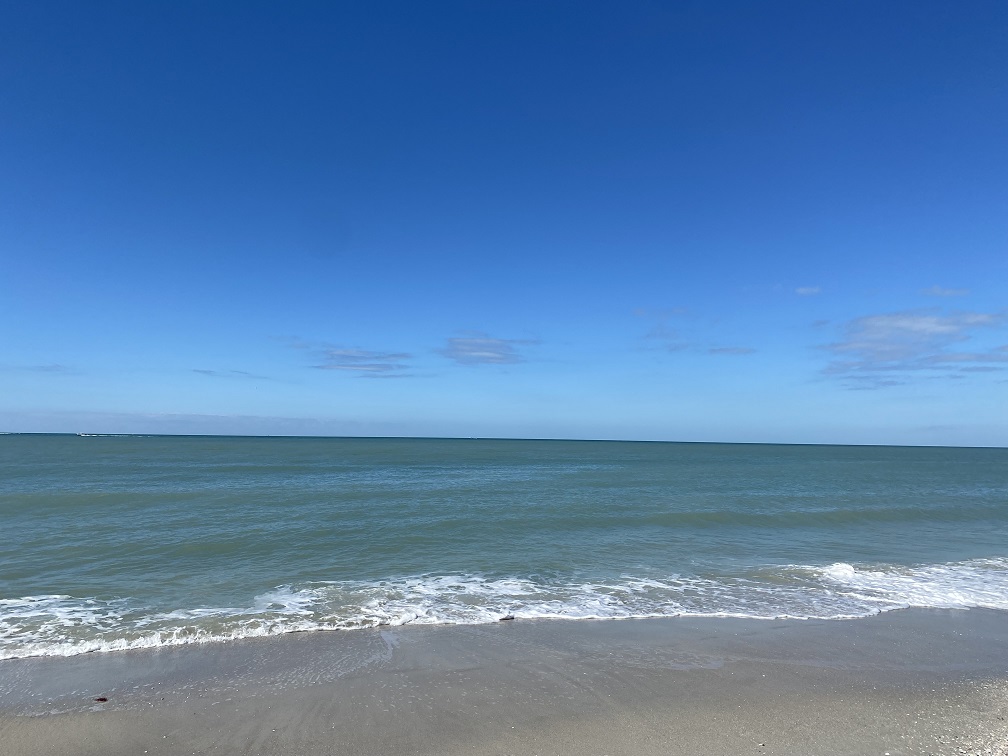
We enjoyed beautiful surroundings and beautiful sunsets.




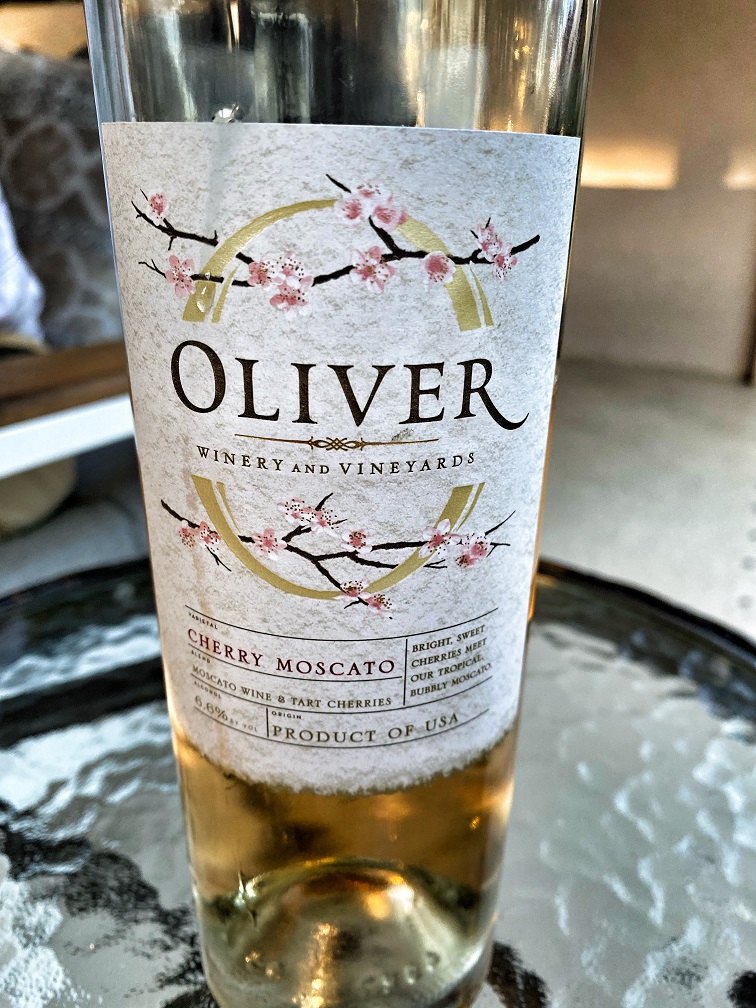
I was even able to add to my list of states I tried the wines from. I had a little bit of time and stopped by the local Total Wines store. These stores typically have a tiny section of “local wines”. In Florida, I obviously found the wines from Florida, but also from North Carolina, Virginia, and, to my joy, from Indiana! I got a bottle of Oliver Vineyards Cherry Moscato, which is a blend of Muscat Canelli and Muscat Alexandria with the addition of a little bit of the Montmorency cherries juice, produced in Bloomington, Indiana. At 6.6% ABV, the wine was very light and had an excellent acidity to balance off the sweetness, a perfect quaffer for any hot day. And of course, I was able to check out one more state in my Wines of 50 US states list.

Two days went by quickly, and we are back into the cold, but armed with new, heartwarming memories. Hope your travel will take you somewhere exciting very soon!
Daily Glass: A Rare Turley, And a Question of Wait
 I love Turley wines.
My first encounter with Turley was way back, maybe 20 years ago, when my friend and I were having dinner at a restaurant in Manhattan, and we saw a bottle of Turley on the wine list, probably a Juvenile Zinfandel or the Old Vines Zin, and it was one of the most affordable wines on the list, so we decided to try it. Right after the first sip, I remember we looked at each other and said ‘wow”. Turley became the love from the first sight sip for both of us, and when I go visit him, I always bring a bottle of Turley, which makes him very happy.
If you will ask a wine lover about Turley, most likely you will get an instant reaction “ahh, Zinfandel”. More advanced wine lovers might also add “oh yes, and Petite Sirah”. First and foremost, Turley Wine Cellars is known for its Zinfandels, and yes, the Petite Sirah. Altogether, Turley produces 50 wines from 50 different vineyards. And while an absolute majority of those wines are Zinfandels, there are few exceptions – two white wines, Sauvignon Blanc and the White Coat, Cinsault from 135 years old Bechthold Vineyard in Lodi, Casa Nuestra and Tecolote red blends, two Cabernet Sauvignon wines, and one Zinfandel Rosé, which sometimes is playfully identified as White Zinfandel (believe me, it is a proper Rosé, not a sweet plonk). With the exception of the Estate Cabernet, it is pure luck when any of these non-Zin, non-Petite Sirah wines are included in your allocation – doesn’t happen often.
Another question we can ask wine lovers – should Zinfandel wines be aged or consumed upon release? I don’t want to get too far into the woods by presenting such a broad question, but for the sake of simplicity here we are talking only about well-made wines from producers such as Turley, Carlisle, Robert Biale, Ridge, and similar. Again, posing this question to the wine lovers I heard the same answer from a number of well-qualified individuums: “I like my Zinfandel with some age on it”.
From my personal experience, mostly with Turley and Carlisle, I definitely appreciate the age on my Zins, but it also depends on the style of the wine. Turley Juvenile and Old Vines Zins are built to be enjoyed young, however, they are also perfectly capable of aging for 8-10 years with no issues. The majority of single-vineyard Zinfandels definitely benefit from aging, and best not being touched for the first 5-7 years upon release. The same applies to the Petite Sirah, probably even in the higher degree – it is better to wait for about 8-10 years to enjoy a bottle of Turley Petite Sirah.
Okay, so this is all nice, cool, and theoretical, but then, in reality, we don’t always follow our own best advice, don’t we?
I generally don’t open a new bottle of wine late in the evening. Yesterday, coming home after Taekwondo training, I realized that I crave a glass of wine. This is really a bad thought at around 9 pm because the process of selecting the bottle to open can take another 30 minutes or so. I have a lot of Turley bottles stored in the simple wine cage, which makes the selection process a lot easier as I don’t need to move the wine fridge shelves back and forth, so this is where I decided to look. I looked past most of the younger Zins – as you remember, I also like them with some age, and then I saw a bottle of 2018 Tecolote. It was pure luck that I had it, as it came via the special offer for the 2020 holiday season – this wine is typically available only in the tasting room. I never had this wine before, which provided a legitimate opportunity to ignore my own aging rules and simply open the bottle, which is exactly what I did.
Tecolote is a blend of 60% Grenache and 40% Carignane, both grapes harvested from dry-farmed Pesenti Vineyard in Paso Robles, from the vines planted in the 1920s. As this is a Catalon-inspired blend, and the grapes come from the specific plot in Pesenti vineyard which looks like an owl, the wine was called Tecolote, which is the Spanish word for “owl”.
Boy, was I happy with my decision… The first sniff of the 2018 Turley Tecolote Red Wine Paso Robles (15.9% ABV) was pure heaven – barnyard, forest underbrush, and spices. I know that the “barnyard” descriptor is polarizing, and deeply hated by some – I always love it, for sure on the red wines (never had it on the white), so I really enjoyed that aroma. On the palate, the wine had pure tart cherries, acidic, juicy, and succulent, fully supporting and continuing the initial enjoyment of the smell. I literally couldn’t stop refilling the glass until only about a third of the bottle was left.
And again I have to state that I’m happy that I left some of the wine for the second day, as the wine transformed. I usually preserve the wines by pumping the air out of the bottle. Sometimes I preserve the wines like that for 2,3,4,5 days, tasting the wine, pumping the air out, and leaving it until the next day. From my experience, I consider that each next day the wine still tastes good or even better than the day before is equivalent to the 5 years of aging. So if you don’t like the barnyard smell, don’t touch your Tecolote for another 5 years. When I opened the wine today, the barnyard smell was gone, and it was replaced by cherries and a telltale sign of Grenache in my book – dark chocolate. The wine also had cherries and dark chocolate on the palate and it was perfectly balanced and absolutely delicious (Drinkability: 9-). What is even more interesting, the wine paired very well with dark chocolate-covered raisins from Trader Joe’s and Italian truffled cheese. Go figure…
Here you are, my friends – a delicious wine, good when young, and perfectly capable of aging. If you can, go find your bottle…
Wednesday’s Meritage #158
 Meritage Time!
I’m back with the Meritage post, but without any promises to keep them going. 2022 will be a year of opportunism – if it happens – great, if it doesn’t – c’est la vie.
Most of the news in this Meritage issue will be self-centered – it will be all local, very local news about happenings in this blog. But first, let me start with the
Grape Holidays
Very important subject – we always need a reason to open a bottle, so grape days – or grape holidays, whatever you prefer – greatly help with that. WSET compiled a list of grape holidays for 2022 – this is an excellent reference for us all. At some point I will add such a list to the top menu, so you will never miss an important day. It seems that January is actually a dry month, and the very first grape holiday of 2022 will be International Furmint Day on February 1st. This will be challenging to celebrate, as Furmint is a star grape of Hungary and Hungarian wines are hard to find unless you are willing to celebrate with Tokaji. But if you think that Furmint might be difficult to celebrate, wait until October 14th to celebrate Prokupac Day, October 26th for the International Mavrud Day, and to top them all off, until the first of December to celebrate Maratheftiko Day – use google, I’m not here to make your life easy.
Vintage Charts
Vintage charts offer a great reference, giving you an idea for how long to keep a bottle or when you should consider drinking your special bottle. I have a Vintage Charts page on this site which I recently updated to make sure all the links are current and working. You can find the Vintage Chart collection here.
Stories of Passion and Pinot
If you ever looked at the top menu of this site, you possibly noticed a recently added menu item, Interviews. Under that menu, you will find a collection of winemaker interviews from around the world. One of the regions clearly stands out in the number of interviews – the Oregon section contains interviews with 13 winemakers. After spending a week in Oregon last summer and meeting with many winemakers face to face, I created a series of updates which are all published now. Here is the top link to the whole Stories of Passion and Pinot series – check out the post to read the original interviews and updates.
Top Wines
Before 2021 ended, just on time, I published my two-part list of top wines of 2021 – you can find all the lists via the Top Wine Ratings menu, or you can click here.
Year in Review
I also wrote somewhat of a reflection post, looking back at the happenings of 2021 – the good, the bad, and the ugly of that year. In that post I also made a detailed analysis of my Top Wines list, so you should look at the Top Wines list first before reading the year in review post.
Happening Now
I’m currently in a middle of an interesting experiment. This post, once published, will become the eighteenth consecutive post on this blog. So for the past 18 days, I published a post every day (well, the night would be more appropriate). Those are not “one picture, two words” posts. Those posts have 900 words on average (well, this one will be shorter), so they are posts with the substance (or at least I hope they are). To be entirely honest, it is not just an exercise in let’s-see-how-long-can-I-last – I have a huge backlog of posts that were supposed to be written last year and even the year before, so at the moment I’m simply forcing myself to complete the post before going to sleep, and though the body says “c’mon, let’s just go to sleep”, the brain says “you are not going anywhere until the publish button is pressed”. Sadly, this will not last much longer – we are going to visit friends in Florida (that’s good, not sad), and my work laptop, which I usually carry with me and use for all the writing on the road etc., didn’t survive the latest encounter with Microsoft update (using PG-13 language, I really despise Microsoft with a passion), and now I don’t have a computer to do the writing on the road. Oh well…
That’s all I have for you today. The glass is empty, but the refill is on the way. Cheers!
Sangiovese Games and Power of Words
 Okay, folks, this might be the scariest post I have ever written. This might lead to unsubscribes, unfollows, ostracism, and public shaming. Well, it is what it is.
Here it comes, my confession.
I don’t know how Sangiovese tastes like.
Here, I said it. You heard me right, and I can repeat. I do not know how Sangiovese tastes like.
Still here? Okay, then I would like to ask for a chance to explain.
I know how Cabernet Sauvignon tastes like. Whether it is produced in Bordeaux, California, Australia or Tuscany, I still expect to find cassis, maybe eucalyptus, maybe mint, maybe bell peppers.
I know how Pinot Noir tastes like. No matter whether it comes from Burgundy, South Africa, Oregon, New Zealand, or California, I still expect to find cherries, maybe plums, maybe violets, maybe some smoke.
I can continue – I know how Chardonnay tastes like (from anywhere), I know how Riesling tastes like (from anywhere), I know how Sauvignon Blanc tastes like (from anywhere). I still don’t know how Sangiovese tastes like.
While we are talking grapes, we are also talking about the power of words. As soon as we hear Cabernet Sauvignon, Pinot Noir, Chardonnay, Riesling, Sauvignon Blanc, we have an instant mental image, set our expectations, and the first sip of wine is judged against that mental image. Of course, we make regional adjustments – Pinot Noir from Oregon might offer dark chocolate, espresso, and mocha in addition to the cherries, but cherries will be there. Bordeaux (okay, it is usually a blend, so this might be a bad example) is expected to be leaner that’s California Cab, but it will still show that cassis core. And I still have no clue how Sangiovese should taste like.
I know how Brunello tastes. It is 100% Sangiovese, but it has its own unique taste profile with layers of tart cherries and cherry pits framed by oak notes and firm tannins. I know how Vino Nobile de Montepulciano tastes. It is also 100% Sangiovese, with tart cherries usually weaved around a core of acidity. I know how Chianti typically tastes. It has to be at least 80% Sangiovese, plus other grapes, and it will have the cherries usually surrounded by leather and tobacco.
Brunello, Vino Nobile, Chianti are renditions of Sangiovese, but they are references only to themselves. When I hear any of these names, I know what to expect. But I still don’t know how Sangiovese tastes like.
I don’t know if you ever had a chance to experience Shafer Firebreak. This wine used to be made from California Sangiovese (92%) with the addition of Cabernet Sauvignon (8%), the percentages are representative of the last vintage which was in 2003 (Sangiovese plantings were removed after that). This wine had nothing in common with any of the Italian Sangiovese renditions, but instead had a smoke, espresso, and powerful dark fruit. A very memorable rendition of Sangiovese – but not referenceable.


You might be annoyed at this point by me constantly repeating “I don’t know how Sangiovese tastes like” and wondering where I might be going with that. So this post was triggered by a few events. Last year, I got a few samples of Sangiovese from Castello di Amorosa. When I tasted them, they were reminiscent of Chianti, and I even had to open a bottle of Cecchi Chianti, which is an outstanding producer making Sangiovese wines with exemplary regional expressions, to compare. I also tasted a bottle of California Sangiovese which had only a name of Sangiovese, but really tasted more like a fruit compote mixed with a fruit cake. As the end result I realized that I have no idea how Sangiovese actually should taste like – and here I am, pondering at the subject with you, my dear reader (I hope someone is still reading this, eh?)
So let me take you a bit further with a few of the tasting notes and references.
First, I have to say that I probably found what can be considered a reference Sangiovese. Two years ago I had an opportunity to taste a range of wines from Cecchi, and one of the wines was called Sangiovese Toscana IGT. It was not Chianti of any kind, it was pretty much an unadulterated rendition of a pure Sangiovese from the motherland, from Tuscany, which was not even aged in oak, only 2 months in the bottle. Here are the notes:
2018 Cecchi Sangiovese Toscana IGP (13% ABV, $10)
Dark ruby
Cherries, coriander, sage
Light, bright, fresh cherries, crisp acidity, sweet basil, refreshing.
8+, can be perfect even on a summer day, but I can’t complain on a winter day either. Unique and different.
The wine was absolutely spectacular in its pristine beauty and an absolute steal for the money. Ever since I tasted this wine it became my reference for how pure Sangiovese might take like.
Now, the peculiar California Sangiovese I mentioned before was the 2017 Seghesio Venom. 100% Sangiovese from Rattlesnake Hill in Alexander Valley, 14.9% ABV, $55. Seghesio is a Zinfandel specialist, and they are good at that. If this wine would be called Zinfandel, I would have no issue with it. But under Sangiovese name, it makes me only wonder what possessed Seghesio to make a wine like that. A fruit compote with a bit of a structure doesn’t equate to Sangiovese in any shape and form. And at the price, if you just want to drink a California wine, it might be fine, but if you are looking for Sangiovese, just look elsewhere.
Well, you don’t need to look too far. Castello di Amorosa in Napa Valley is really focusing on bringing their Italian heritage to wines they craft in California. Yesterday I talked about their range of Pinot Noir wines, which was excellent. Their California Sangiovese can probably be called a glorious success as I even had to open a bottle of classic Chianti to compare the notes.


I tasted two Sangiovese wines from Castello di Amorosa (for the history of the Castello, which is very fascinating, I would like to refer you to the link I included above).
2017 Castello di Amorosa Sangiovese Napa Valley (14.7% ABV, $36)
Dark garnet
Plums, cherries, baking spices
Plums, tart cherries, light tannins, medium body, good structure, a hint of leather.
8-/8, it is reminiscent of the Chianti, nicely approachable, but will improve with time, judging by the late tannins on the finish on the second day.
2018 Castello di Amorosa Voyager Vineyard Sangiovese Napa Valley (14.5% ABV, $45, single vineyard)
Dark garnet
Smoke, granite, gunflint, tobacco, dark fruit, Very promising.
Tobacco, baking spices, cut through acidity, medium body. Very unusual. Needs a bit of time.
Tart cherries, a hint of vanilla, bright acidity. Reminiscent of Chianti, but not as earthy
8-
And then I opened a bottle of Cecchi Chianti and was pleasantly surprised how successful Castello di Amorosa was with their Californian Sangiovese rendition.
2017 Cecchi Chianti DOCG (13% ABV, $14)
Dark garnet
Herbs with a hint of cherries
Tart cherries, good acidity, fresh berry profile, medium body. Was earthy upon opening, but mellowed out after a few hours in the open bottle.
8-, easy to drink, nice.
As you can tell, the wines are similar, and I would call it a very successful effort.
Well, I still don’t know how Sangiovese should taste like, because this is all in the words. Unless we taste blind, we are bound by the power of words, and therefore our excitement and disappointment are fully dependent on those words. Was the Venom a bad wine? No, but it is an utter disappointment when called a Sangiovese. Thanks to Castello di Amorosa successfully offering a saving grace. While I still don’t know how Sangiovese should taste like, I’m willing to continue the quest for the tastiest rendition.
If you are still with me – thank you for reading and cheers.
Californian Stars, Italian Flair
 Californian stars.
Of course, we are talking about wines and grapes. What would those be?
I recently called California Cabernet Sauvignon a king. We can safely designate Chardonnay as a queen. But who would you call a prince? Capricious, spiky, moody royalty? Whatever grape you think of, the correct answer is Pinot Noir, because this is the grape I mostly would like to talk about today. And tell me if you think Pinot Noir is not qualified for the role of the royal prince – finicky, demanding, and unpredictable.
Okay, we got our stars for the day. Now, the Italian flair. How would you add the Italian flair to the Californian grapes?
There are a few options. For example, you can call your sparkling wine a Spumante. Or you can call your winery Castello, and build it in the form of a medieval Italian castle. You can also make wines out of Sangiovese – but this we will discuss later. Anyway, as you can see, you got options.
Vittorio Sattui, an Italian immigrant, founded St. Helena Wine Cellars in 1885. The business had to be closed due to the prohibition in 1920, but the Sattui family continued living at the winery. In 1975, Dario Sattui, great-grandson of Vittorio, restarted the family business by opening V. Sattui winery in St. Helena.
After finishing college, Dario traveled around Europe and became obsessed with medieval castles, monasteries, farmhouses. In 1993, Dario found the next home for his future winery – 171 acres parcel near Calistoga. In 1994, the construction began initially for the 8,500 sq. ft building without cellars. That slowly morphed into a 121,000 sq. ft. 13th-century Tuscan castle with 107 rooms, drawbridge, five towers, high defensive ramparts, courtyards and loggias, a chapel, stables, an armory, and even a torture chamber. Lots of bricks and artifacts were delivered directly from Europe to ensure the full authenticity of the castle. Castello de Amorosa (Castle of Love) opened its doors to visitors in 2007 after 15 years of construction.
I was fortunate enough to visit the Castello di Amorosa in 2017 as part of the Wine Bloggers Conference 2017 in Santa Rosa, so I can share (inundate is a better word, of course) my first-hand impressions:

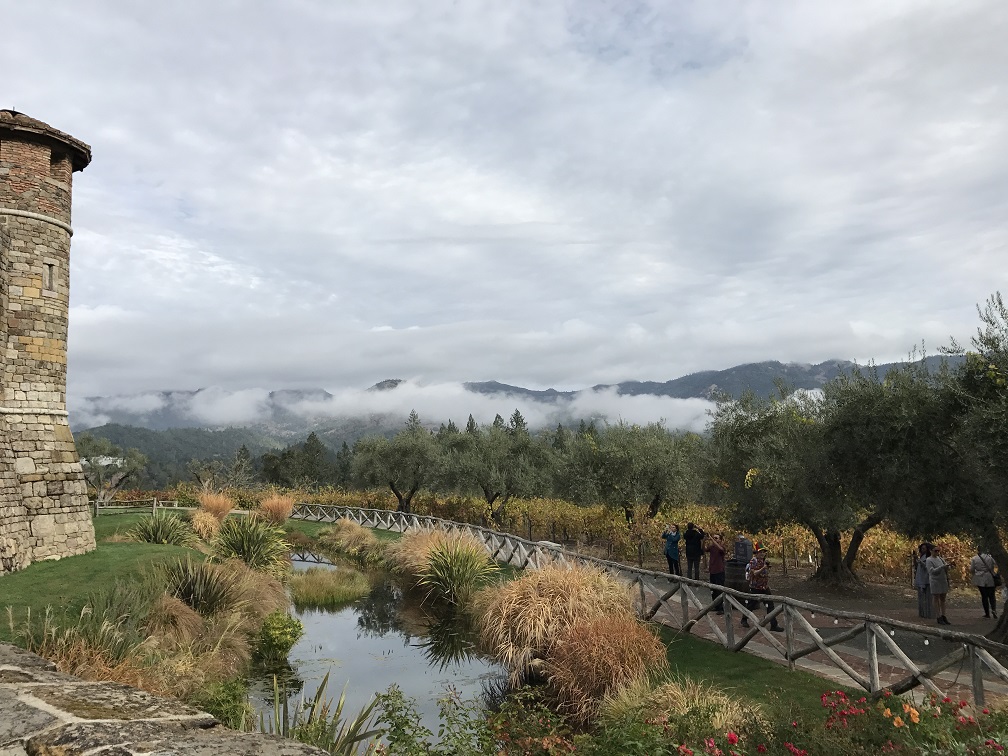


Thinking about misbehaving? Might not be recommended:


Touring the cellars:


The ceiling of the room where we had our tasting in 2017:

A bit of education – Napa Valley Regions:


Castello di Amorosa works with 14 vineyards, most of them in Napa and Sonoma, out of which 6 are estate vineyards. The focus of winemaking is on showcasing each individual terroir and on the small-batch production.
I had an opportunity to taste a range of Pinot Noir expressions from Castello di Amorosa, and I have to honestly say that I was very much impressed with what I found in my glass.


First, two sparkling wines, both produced using the classic method.
2017 Castello di Amorosa Spumante del Castello Brut Napa Valley (12.5% ABV, $39, 73% Chardonnay, 27% Pinot Noir)
Light Golden, fine bubbles
Toasted bread, apples, gunflint
Toasted bread, Granny Smith apples, more gunflint, great minerality, a touch of sweetness, bigger body than typical champagne.
8, excellent,
2017 Castello di Amorosa Spumante del Castello Brut Rosé Napa Valley (12.5% ABV, $49, 100% Pinot Noir)
Salmon pink, fine mousse
Steely strawberries, a hint of toast
Dry, crisp, strawberries, clean acidity, good minerality
8, excellent
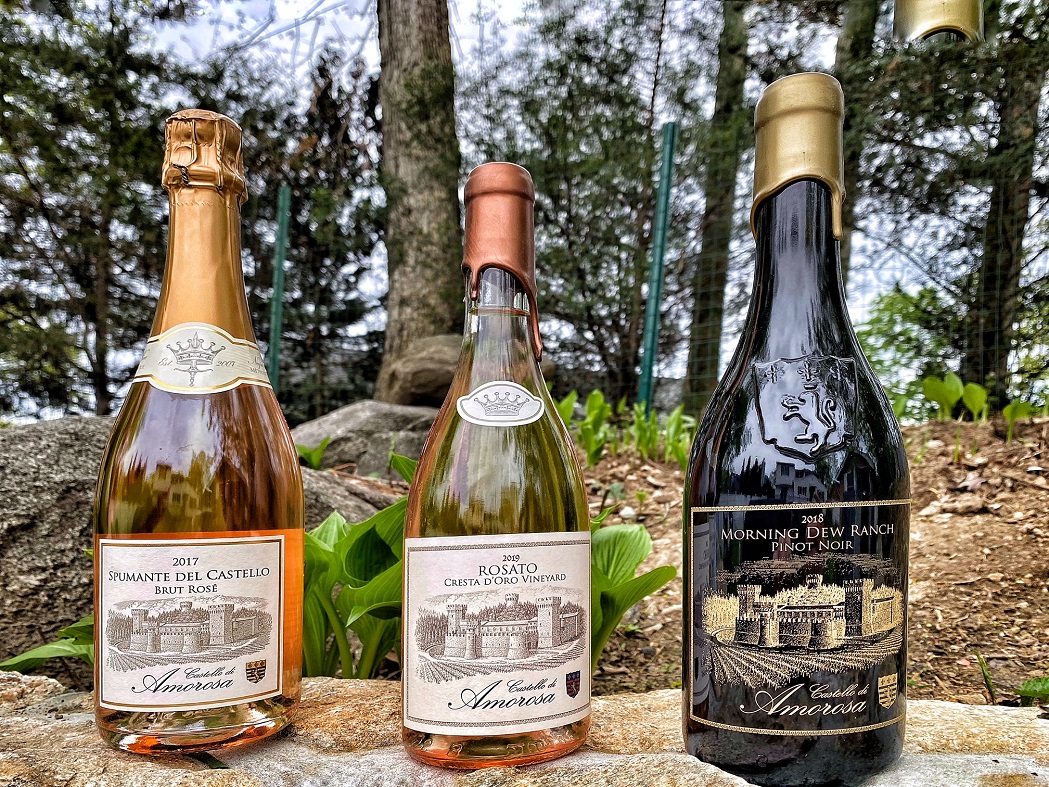
Next up, Rosé. The grapes for this wine come from the Green Valley area in the Russian River Valley AVA, and the wine is partially aged in concrete egg. I had an opportunity to taste both 2019 and 2020 vintages over a few months timeframe, and you can see that my tasting notes are almost identical for both wines. Somehow I missed including this wine into my 2021 top wines list, which makes me upset – this was one of the best Rosé wines and wines overall that I tasted during 2021.
2019 Castello di Amorosa Rosato Cresta d’Oro Vineyard Green Valley of Russian River Valley (13.6% ABV, $39, 100% Pinot Noir)
Light bright pink
Fresh ripe sweet strawberries, good intensity, inviting
Beautiful ripe strawberries, a touch of lemon, clean acidity, impeccable balance. Wow.
9-/9, one of the best Rosé I ever had. Just wow.
2020 Castello di Amorosa Rosato Cresta d’Oro Vineyard Green Valley of Russian River Valley (12.5% ABV, $39, 100% Pinot Noir)
Light bright pink
Fresh strawberries, a touch of herbs, crisp, inviting, and invigorating
Beautiful ripe strawberries, a touch of lemon, clean acidity, impeccable balance. Wow.
9, one of the best Rosé I ever had. Just wow. Superb.
Last up – Pinot Noir from Morning Dew Ranch in Anderson Valley. This vineyard was purchased in 2015 from Burt Williams, founder of the iconic William Selyem Winery. The 12-acre vineyard is in a very cool microclimate and divided into 9 blocks of Pinot Noir planted with DRC, 115, 777, Rochioli, 23, and 828 clones. All the blocks and clones give quite a bit of room to experiment to the winemaking team.
2018 Castello di Amorosa Morning Dew Ranch Pinot Noir Anderson Valley (13.1% ABV, $75, 11 months in Burgundian oak barrels)
Dark ruby
Somewhat unexpressive on the first day, a hint of fruit
Closed up, concentrated, dark fruit, not amazing
Classic Pinot on the second day – iodine, violets, underbrush
Beautifully elegant on the palate – good acidity, smoke, tobacco, fresh berries, cherries, firm structure combined with medium body, medium-long finish.
8+ second day, super-enjoyable.
Here you go, my friends – a little Italian oasis – scratch that – a large Italian Castle in the middle of Napa Valley, producing magnificent California wines. Castello di Amorosa is definitely a unique travel destination and a must-visit if you are ever in the area.
Rethinking Grenache with Wines of Cariñena
I love how the wine world affords us endless learning opportunities – as long as we are willing to learn, of course. Wine is an indelible part of the culture, thus learning about wine extends our understanding and appreciation of the world.
More often than not we simply focus on what’s in the glass – is it tasty, what is that peculiar flavor, do I want another sip or another glass. That is exactly how it should be – after all, wine is just grape juice. But if we are willing to take a step back, think about the wine in the glass, maybe read an article somewhere online or attend a webinar (which usually doesn’t cost anything), in addition to getting hedonistic pleasure from what is in the glass we might also get fascinated by the history and its strong connection to the wine.
The webinar I’m talking about here today took place almost a year ago (yes, I already confessed that I have a lot of catching up to do), but it is still worth talking about.
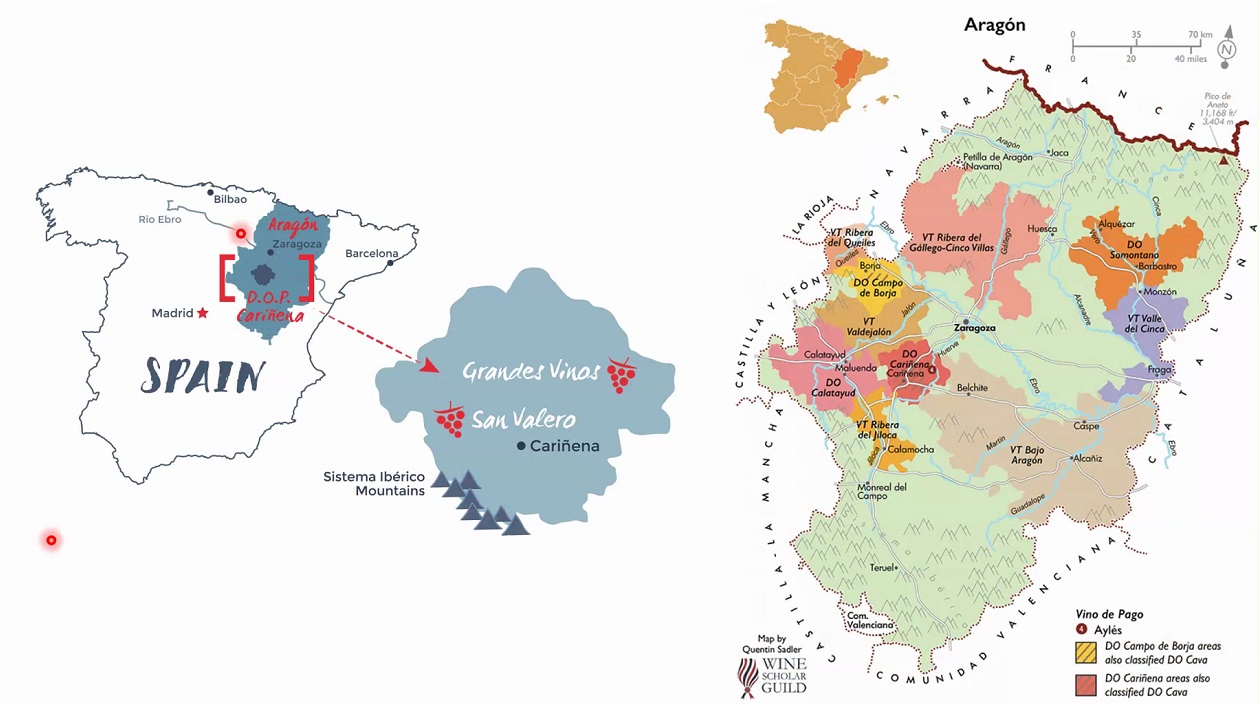
Cariñena is not the oldest winemaking region in the world, but with the first vineyards planted by the Romans around 50 BC, it is definitely old enough. As you can see on the map, Cariñena is located in the Aragon region in Spain. Before Spain became Spain in the last quarter of the 15th century, the Kingdom of Aragon held tremendous power in the 14th-15th centuries over a large portion of present-day eastern Spain, parts of what is now southern France, the Balearic Islands, Sicily, Corsica, Sardinia, Malta, Southern Italy and parts of Greece (source: Wikipedia). While this all should interest the historians, this is also relevant to our wine story. In 1415, King Ferdinand I of Aragon declared a preference for Cariñena wines “above all others.” The red wines of Cariñena were made out of Grenache, better known in Spain as Garnacha, and also known under one of its early synonyms as Tinto Aragonés (red of Aragon).
An interesting sidebar here for you: Sardinia claims that Grenache, locally known as Cannonau, originated in the island. It is entirely possible that it is actually true, and maybe Grenache made it from Sardinia to Cariñena where it became so famous – we have to leave it to the grape historians and detectives to unravel.


Going back to the Aragon Kingdom, what I never realized is that political influence is not limited to laws, money, and goods – the vines are also a subject of political influence. The Kingdom of Aragon presided over its territories and pushed down not only the laws but also grapevines, helping to spread Grenache into all kingdom-controlled territories. Grenache plantings appeared all over Spain, in Souther Rhone and Languedoc, and other areas. Way later, in the 18th century, Grenache also made it to Australia and South and North America, to become one the most planted red grapes in the world.
What is interesting about Grenache is that it doesn’t have its own varietal character. Cabernet Sauvignon and Merlot have bell pepper and cassis. Syrah has its signature black pepper. Grenache doesn’t have its signature profile. It perfectly adapts to a place, becoming a conduit for the terroir. For example, if you ever had Grenache from Washington (No Girls Grenache would be an excellent specimen), and some of the most classic Spanish Grenache such as Alto Moncayo, you would know the tremendous difference in taste profile – Grenache from Washington perfectly conveys the “liquid rock” of mostly volcanic soils, where Alto Moncayo would offer layers of dark chocolate and succulent berries – literally two wines from the different planets.
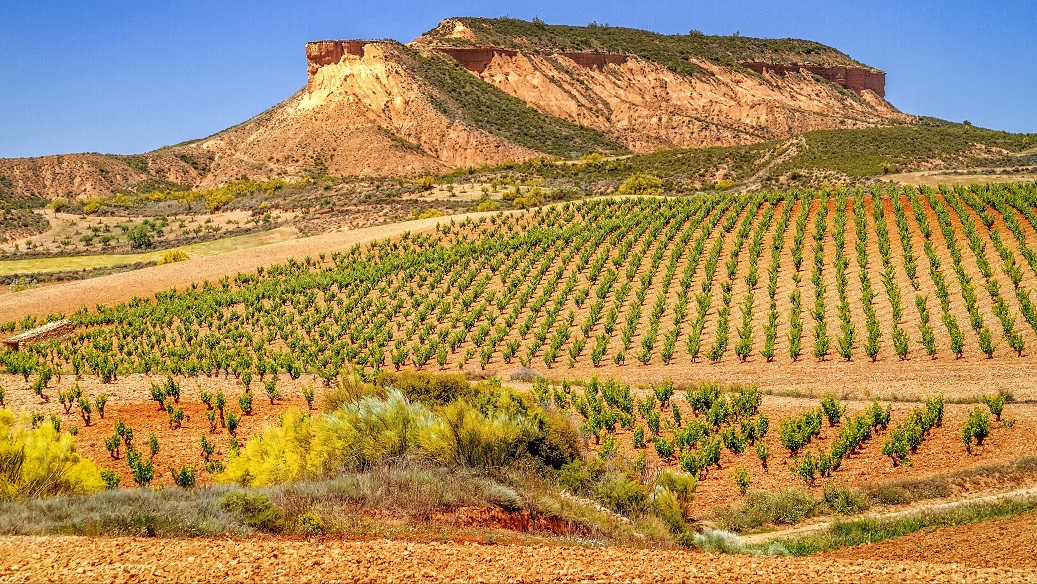
Source: Cariñena Wines
Cariñena is a perfect region for the grape growing – protected by the mountains, it offers long dry summers, cold winters, and very little rain, making the grapes work hard. Cariñena is also a mountainous region, with the majority of the vineyards located at the 1,300 to 2,800 feet elevation – that creates a significant diurnal variation which helps grapes to concentrate flavor. This rather harsh climate also plays a role of a great defender against vine diseases – while most of Europe was devastated by phylloxera in the late 19th century, Cariñena was largely unaffected.
A few more interesting facts about Cariñena. In 1909, King Alfonso XIII of Spain awarded Cariñena a city charter for their growers’ role in helping European vineyards recover from the phylloxera blight. The quality of Cariñena wines was also recognized in modern times when in 1932 it became the second wine region in Spain to receive the status of DO (Denomination of Origin) – the first one was Rioja. And Cariñena is the only region in Spain that has an eponymous grape – Cariñena, better known in the rest of Spain as Mazuelo and Carignan in the rest of the world. Cariñena is another native red grape grown in that region.
In 2016, Wine Enthusiast named Cariñena The Region To Watch, which since then became a slogan for the region, focusing on promoting its wines around the world.
As part of the webinar, I had an opportunity to taste two wines that are well representative of the capabilities of the region.
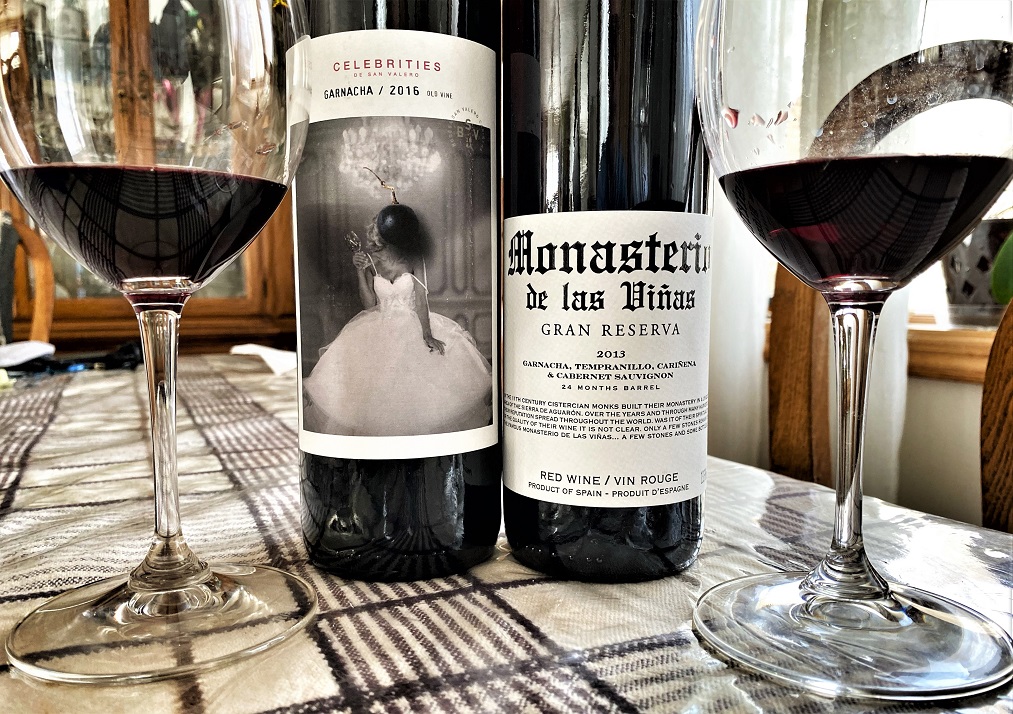
First wine was produced by Bodega San Valero. Bodega San Valero just celebrated 75 years, formed in 1944 by 66 partners. Today, Bodega San Valero works with 500 growers who farm 9,000 acres of vineyards, which represents 30% of the Cariñena DO. They also use 20,000 French and American oak barrels to produce the wines, and 100% of production is done on the property. I wrote about a number of Bodega San Valero wines in this blog, their Particular Grenache being one of my favorite Grenache renditions. This time, I had an opportunity to taste the 2016 Bodega San Valero Celebrity Grenache Old Vines Cariñena DO (14% ABV, $12.99). The wine had blackberries and chalk on the nose, with a hint of dried herbs. After about an hour in the open bottle, the wine became round, with dark fruit, strawberries, and blackberries, pronounced minerality and a touch of chocolate, crisp acidity, and mouthwatering finish. This was rather a food wine, but still nice and easy to drink.
While Grandes Vinos is taking its roots from a number of Cariñena cooperatives beginning from the 1950s, it was officially born in 1997. The cooperative comprises 700 winegrowers, farming more than 11,000 acres of vineyards spawning over 14 Cariñena districts and growing 10 grape varieties. Grandes Vinos produces wine under 9 different wine ranges. One of those wine types is called Igulp and it is a lightly sparkling grape beverage distributed in beer bottles – I would love to try that.
The wine I tried this time was from the Monasterio de las Viñas range. Monasterio de las Viñas pays homage to the actual monastery built by Cistercian monks in the 11th century, in a privileged place of the Sierra de Aguarón, well known for both their spirituality and high quality of their wines.
2013 Monasterio de las Viñas Gran Reserva Cariñena DO (13.5% ABV, $21.99, blend of Garnacha, Tempranillo, Cariñena, and Cabernet Sauvignon, 24 months in the barrels) had an uplifting, vinous nose, inviting and complex – it was creating great expectations about the wine. On the palate, the wine offered red and black fruit, round, good minerality, perfectly balanced, and perfectly integrated. Easy to drink and dangerous.
This was a great learning experience, making me take another look at the wines and try to see just past of what is in the glass. Let’s drink to the learning experiences of our lives, and may you never stop learning. Cheers!
Made With Organic Grapes: A Few Wines From Chile
Chile is a unique winemaking place.
So is each and every wine region in the world – each wine region, big, small, or tiny, can safely state the same – they all have something unique about them, aren’t they?
But really, Chile is unique.
Chile is literally the only wine region in the world untouched by the blight of phylloxera. While it is a big deal, it is not all.
It is easy to grow grapes organically in Chile. The absolute majority of the rain falls in winter, and Chilean vineyards generally enjoy the dry growing season. Dry growing season means no need to worry about fungi, which is where most of the “inorganic” efforts typically go. And Chilean winemakers take advantage of this fact, actively pursuing organic, sustainable, and biodynamic winemaking. Taking its inspiration from the association of organic winegrowers of New Zealand, leading Chilean wineries, such as Viña Emiliana, Odfell, Koyle, Viña Miguel Torres Chile, are all joining forces to create a similar organization that will help with the promotion of Chilean organic wines around the world.
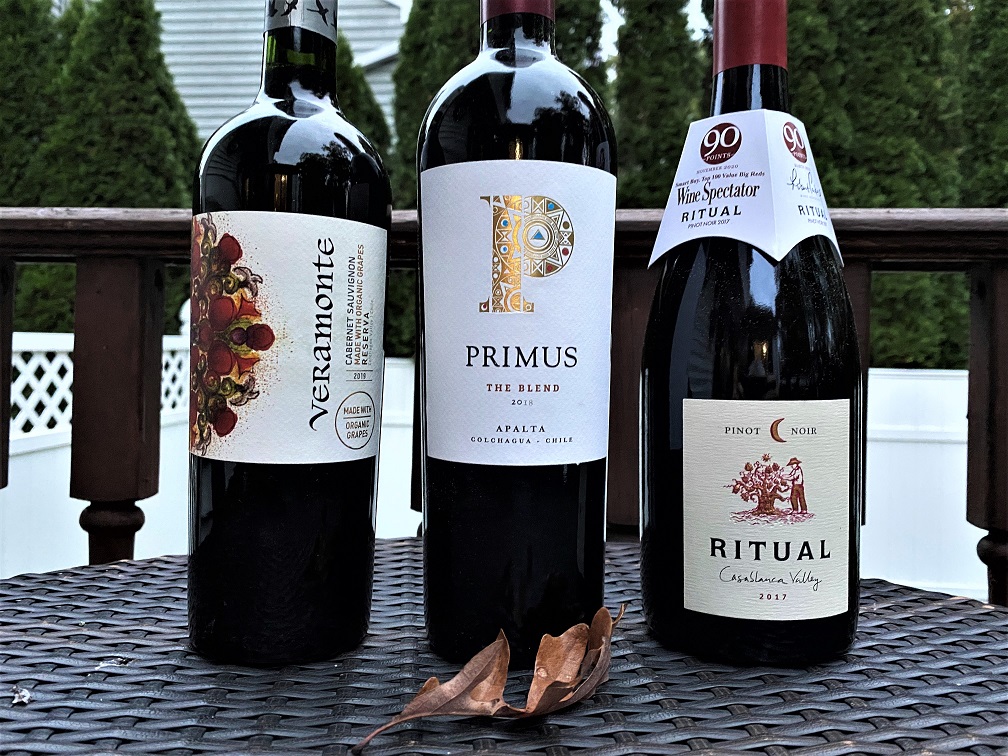
Let’s take a look at a few examples of Chilean organic wines.
Viñedos Veramonte was founded by Agustin Huneeus, a Chilean wine pioneer, in 1990, one of the first wineries in Casablanca Valley. Veramonte’s journey started with Sauvignon Blanc, gradually adding all of the traditional Chilean varieties – Cabernet Sauvignon, Carmenere, and more. In 2019, the winery obtained ECOCERT® organic certification, after 6 years-long journey. The project involved the conversion of more than 1,200 acres of vineyards in Casablanca and Colchagua valleys to organic and biodynamic farming (full Demeter’s biodynamic certification is the next goal). The wine I had an opportunity to taste was Veramonte Cabernet Sauvignon:
2019 Veramonte Cabernet Sauvignon Reserva Colchagua Valley (14% ABV, $11.99, made with organic grapes, Vegan, Certified Sustainable)
Dark garnet
Bell pepper, tobacco
A touch of cassis, tart, medium body, minerality, green notes
7/7+, I would prefer more fruit
The same Agustin Huneeus founded Primus winery more than 20 years ago. The word Primus comes from Latin and it means “the first” or “the first among others”. Primus was one of the very first to create the blend of Cabernet Sauvignon and Carmenere, which became the standard wine of the winery throughout all the years, joined by single-varietal Cabernet Sauvignon and Carmenere wines. The fruit for The Blend comes from Marchigue, a sub-region of Colchagua, and Maipo, from all-organic vineyards.
2018 Primus Red Blend Apalta Colchagua Valley (13.5% ABV, $18.99, 55% Cabernet Sauvignon, 20% Carménère, 10% Syrah, 5% Cabernet Franc, Vegan, Certified Sustainable)
Dark ruby
Cassis, Cherries
Soft, easy to drink, medium body, cassis, cherries, well balanced
8-, good aging potential
Ritual is located in the eastern corner of the Casablanca Valley, not far from the Pacific Ocean. All organic vineyards are surrounded by 6,000 acres of natural forest, which enforces biodiversity and helps with organic and sustainable farming. The estate approaches organic winemaking from all possible angles, making compost from stems and pomace, using cover crops to protect the soil, using sheep to mow the grass and fertilize. Everything in the vineyard and in the winery is done in full harmony with nature.
2017 Ritual Pinot Noir Casablanca Valley (13.5% ABV, $19.99, certified organic vineyards)
Dark garnet
Smoke, plums, minerality
Cherries, plums, violets, herbs, round, soft, restrained, good acidity, clean finish, perfectly balanced.
8, a long-haul wine. Should definitely improve over the next 5-7 years, might be considerably longer.
Here you are my friends – a few of the organic wines from Chile which you should feel good about drinking.
It is not just organic – Chile is leading the world in sustainable winemaking, and we will talk about it in a few days. Stay tuned…
.
Wine Lover Geeking Out: Pairing Soup and Wine
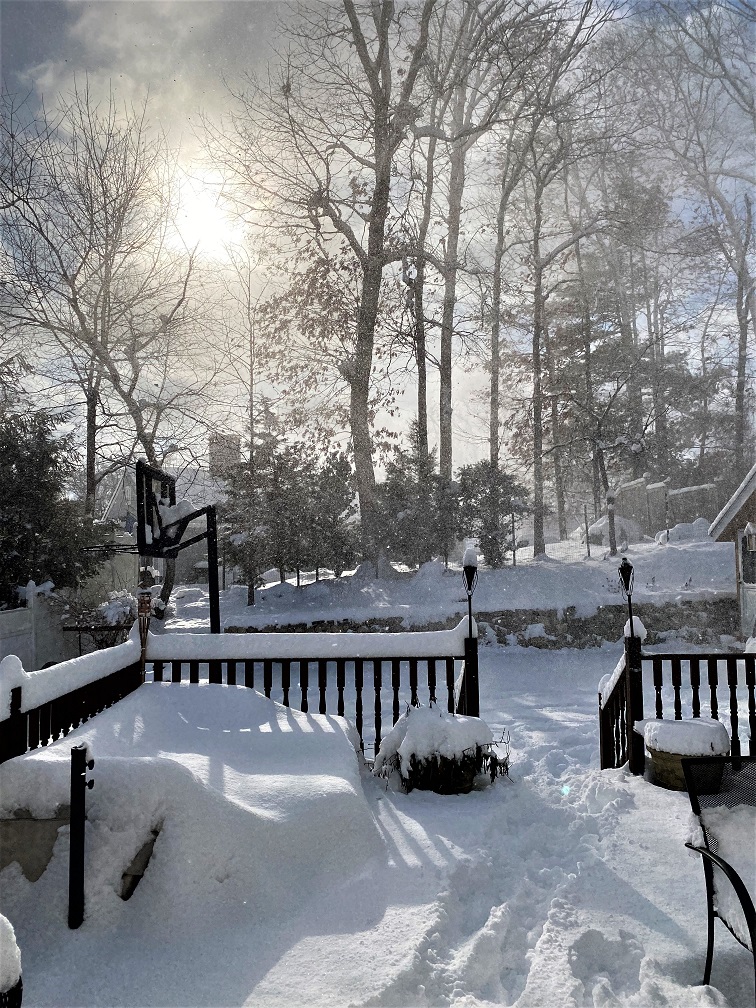 Finally, the snow was coming. Cold weather can be perfectly paired with the soup. So this was an easy equation to solve – snow means soup.
New England Clam Chowder is one of my all-time favorite soups. I’m generally happy with restaurant versions, but I have a recipe that is much lighter than a typical restaurant version, as it uses half and half instead of heavy cream. One day I might be able to share that recipe, but as this is not my recipe, I would need first to get permission. I can tell you that the main ingredients there are bacon, potatoes, celery, and good quality clams (so far I find that ocean clams are the best). And half and half as I mentioned before.
In the morning, I realized that I’m not sure what wine I should pair with this soup, and I decided to ask the wine folks on the twitter for a recommendation. This turned out into a fun conversation. Here are the recommendations I received (I will try not to miss any, but I can’t guarantee):
- lightly oaked, moderate-climate Chardonnay
- Austrian Gruner
- Siegerrebe, Pinot Blanc, and Chenin Blanc (from South Africa or Loire)
- Riesling or Pinot Blanc / Gris from Alsace
- Brut Sparkling
- Viognier (I missed this recommendation when it was originally sent)
- Ribolla Gialla, perhaps even a skin-contact (e.g. Gravner)
- Godello
- Manzanilla
Not a bad list, isn’t it?
My goal was to use what I have on hand and not to go to the store. This eliminated Austrian Gruner, Siegerrebe (had to use Google to learn about this obscure grape), Pinot Blanc, anything from Alsace, Ribolla Gialla, and especially Ribolla Gialla with skin contact (I wish I had a bottle of Gravner), Viognier, Godello, and Manzanilla. So the only 2 options I had from this list were lightly oaked Chardonnay and sparkling Brut. After careful consideration, I realized that I probably don’t have lightly oaked Chardonnay on hand either. And I didn’t feel like opening Champagne – besides, Champagne perfectly pairs with everything anyway, so this would not be a fun exercise anyway.
Then I realized that I have a few samples of Portuguese wines, as well as a few Sherries – this was enough to experiment, which is exactly what I did.

These are the wines I tried with the soup:
2020 Esporão Branco Colheita Alentejo (Antão Vaz, Viosinho, Alvarinho, 4 months on the lees) – didn’t work. Creamy and round wine clashed with the soup.
2020 Esporão Branco Reserva Alentejo (Antão Vaz, Arinto, Roupeiro, six months in stainless steel tanks and in new American and French oak barrels) – it worked! The pairing was complementary, probably because the wine had a good amount of clean acidity, and so it was the most food-friendly by definition.
2018 Esporão Tinto Colheita Alentejo (Alicante Bouschet, Touriga Nacional, Aragonez, Cabernet Sauvignon, Touriga Franca, 6 months in concrete tanks) -trying this wine with the soup was a mistake – can I leave it at that?
Gonzalez Byass Alfonso Oloroso – I had big expectations for this pairing, and it didn’t work. The combination was not bad – the wine and the soup simply stayed in their own worlds without impacting each other.
González Byass Solera 1847 Cream Dulce – big mistake. That sweetness of the wine just didn’t go well with the soup.
Here is my report on this simple experiment. I might try a few more combinations tomorrow and will update the post if I will encounter something exciting.
What would you pair a clam chowder with? What do you think of pairing soup and wine in general – does that even makes sense?
Passion and Pinot Updates: Bells Up Winery
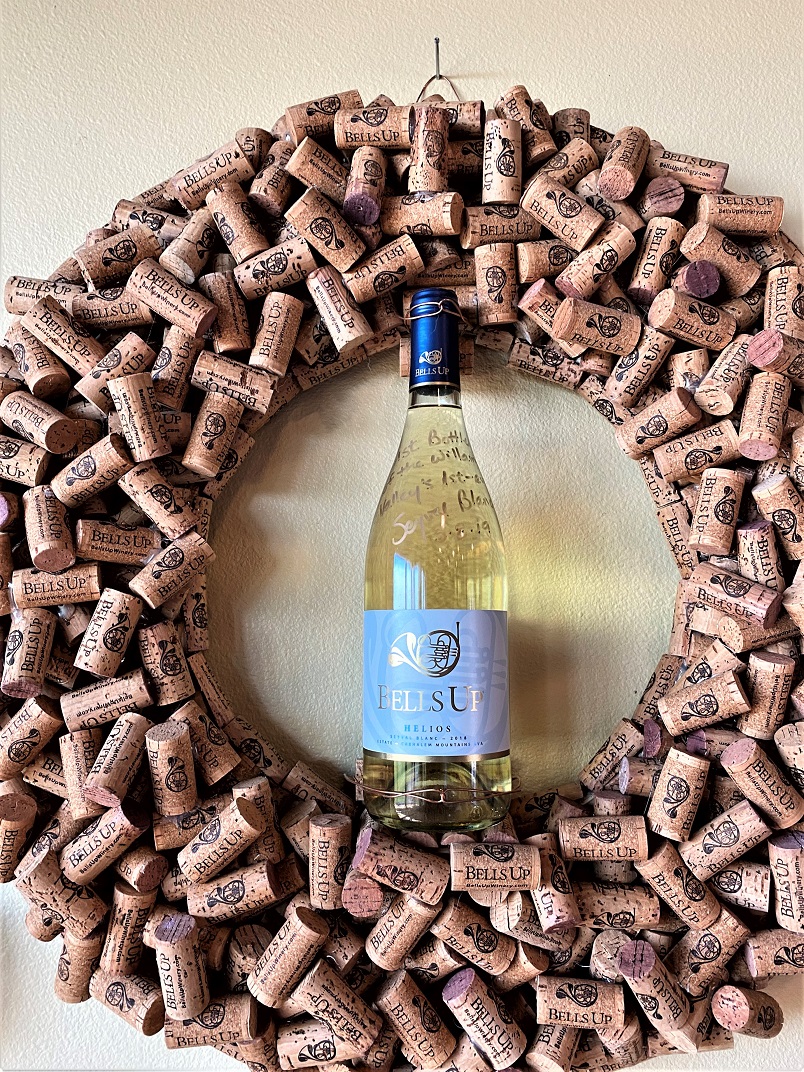 And then we arrived at “micro-boutique, un-domaine” Bells Up Winery, our final stop of the Oregon wine country touring.
Out of 13 wineries profiled in the Stories of Passion and Pinot series, Bells Up is the youngest one, having been founded in 2013, with the first vineyard plantings of Pinot Noir going into the ground in 2014. Despite being a young winery, Dave (the winemaker) and Sara (the Boss) Specter have a clear vision as to where they are going with their distinctly un-domaine wine – if you are curious why I keep saying “un-domaine”, I would like to direct you to the (virtual) interview I did with Dave in 2019 – he explains the concept of un-domaine very well.
Everything is distinctly un-domaine (see, you need to read that interview) at Bells Up. The vineyard with a gentle slope, the winery right in the middle of the vineyard, a simple but elegantly appointed tasting room with lots of fresh flowers and beautiful views of the vineyards. Here you go – pictures, pictures, pictures:
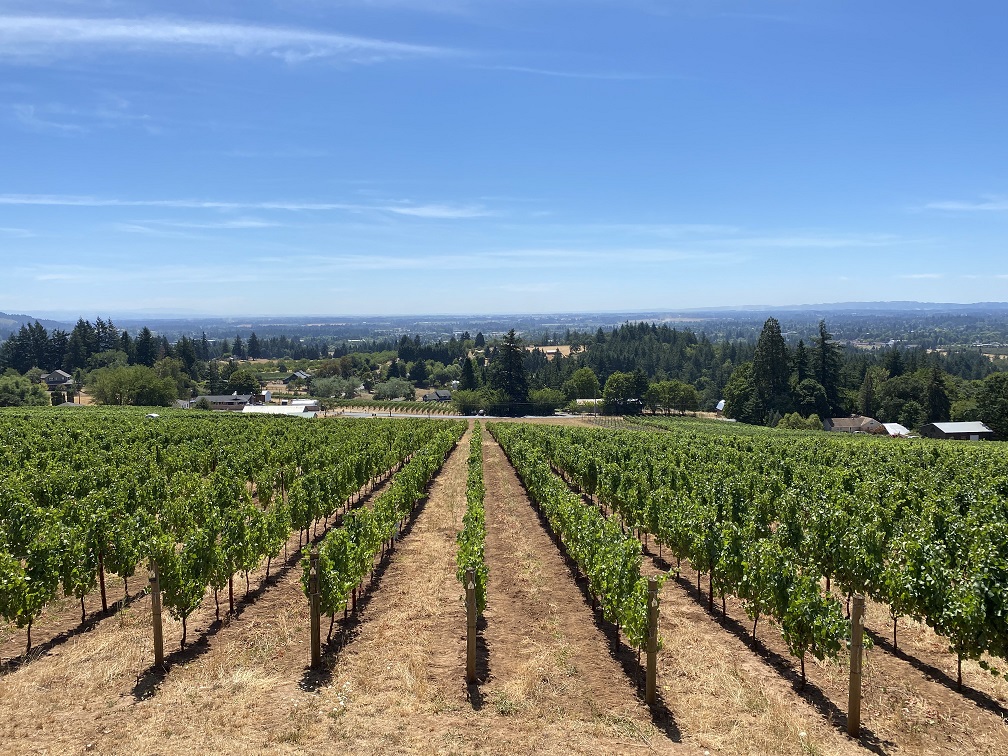


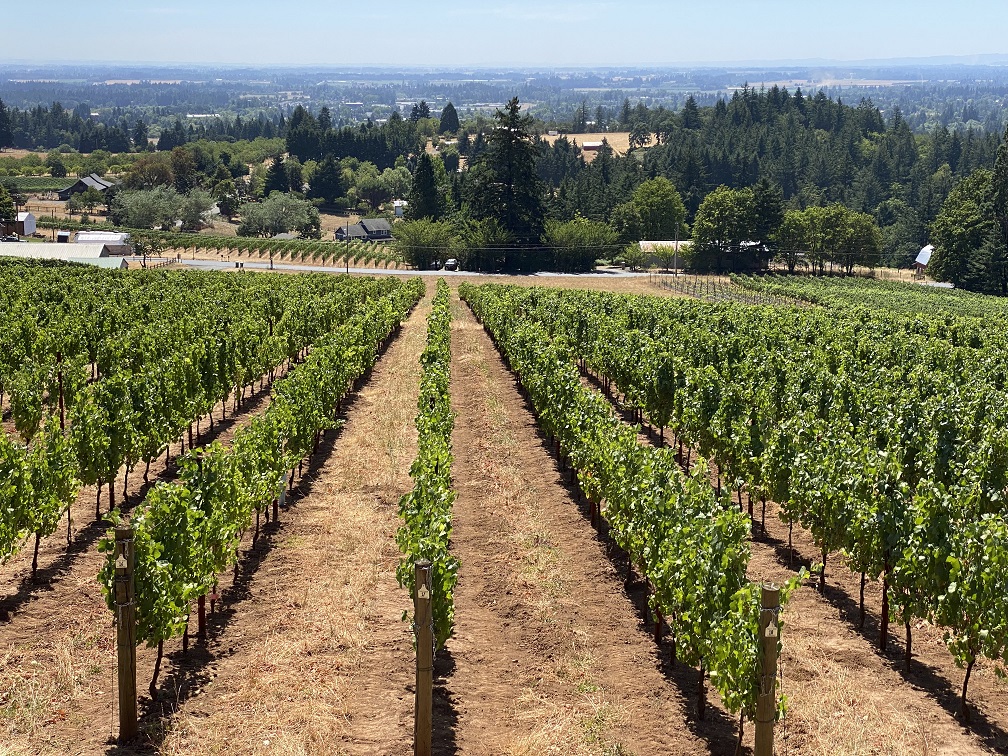
After admiring all the views we proceeded with lunch and tasting. Our lunch was prepared by Sara and while it was somewhat of a simplistic summer chicken salad, the amazing part was that this salad perfectly paired with the majority of wines we tasted – if you ever tried pairing the salad with wine, you would have to agree that achieving great pairing is very far from easy.
As I mentioned, Dave and Sara have a clear vision of the future direction for Bells Up. While Bells Up estate vineyard will be mostly planted with Pinot Noir, and by 2022 Bells Up plans to be at 100% estate fruit for all Pinot Noir bottlings, they have a clear plan for making Bells Up unique and different – growing and producing Pinot Blanc instead of the more commonly available Pinot Gris; being first in Willamette Valley with Seyval Blanc plantings; planting (out of all grapes!) a little known Italian grape Scioppettino; already offering Syrah and adding Cabernet Sauvignon in the 2020 vintage. “Unique and different” is a good description, in my opinion.
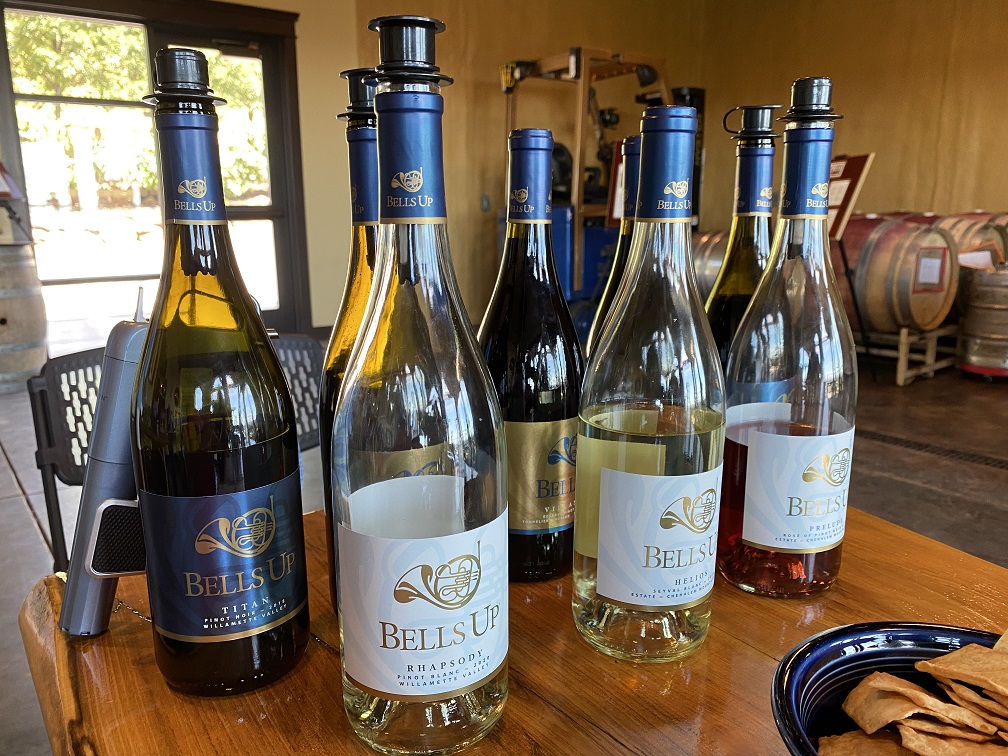


Before we talk about wines I would like to mention that none of the wine names you will see below are random. All the names have connections to the classical music pieces under the same name, and every choice of the name has an explanation as to why the particular piece was selected to connect with a given wine. If you are interested, there is even a Spotify playlist that includes all of the relevant music pieces – you can find that list directly on the Bells Up Our Wines page.
We started our tasting with Pinot Blanc:
2020 Bells Up Rhapsody Pinot Blanc Willamette Valley ($32)
Great complexity, lemon, gunflint
Great acidity, lemon, clean, crisp, refreshing
Perfect pairing with summer chicken salad
8, Excellent
We almost had to beg Dave to let us Seyval Blanc which was practically sold out. As a curiously interesting fact, Seyval Blanc plantings had to be protected by the net, as it happened that birds loved the grapes too.
2020 Bells Up Helios Seyval Blanc Estate Chehalem Mountains AVA ($40)
Gunflint, minerality,
Clean fruit, Meyer lemon, good acidity, good creaminess
Great with summer chicken salad.
8
Next up was Pinot Noir Rosé, the first Pinot Noir wine entirely produced from the estate fruit:
2020 Bells Up Prelude Pinot Noir Rosé Estate Chehalem Mountains AVA ($28)
Strawberries, nice minerality
Strawberries, bigger body than Provence, good acidity, perfect balance.
8-
We followed up with the selection of Bells Up Pinot Noir wines:
2018 Bells Up Titan Pinot Noir Willamette Valley ($44)
Plums, violets, sandalwood
Crisp, clean, crunchy cranberry profile, a hint of cranberries, good acidity on the finish.
8-
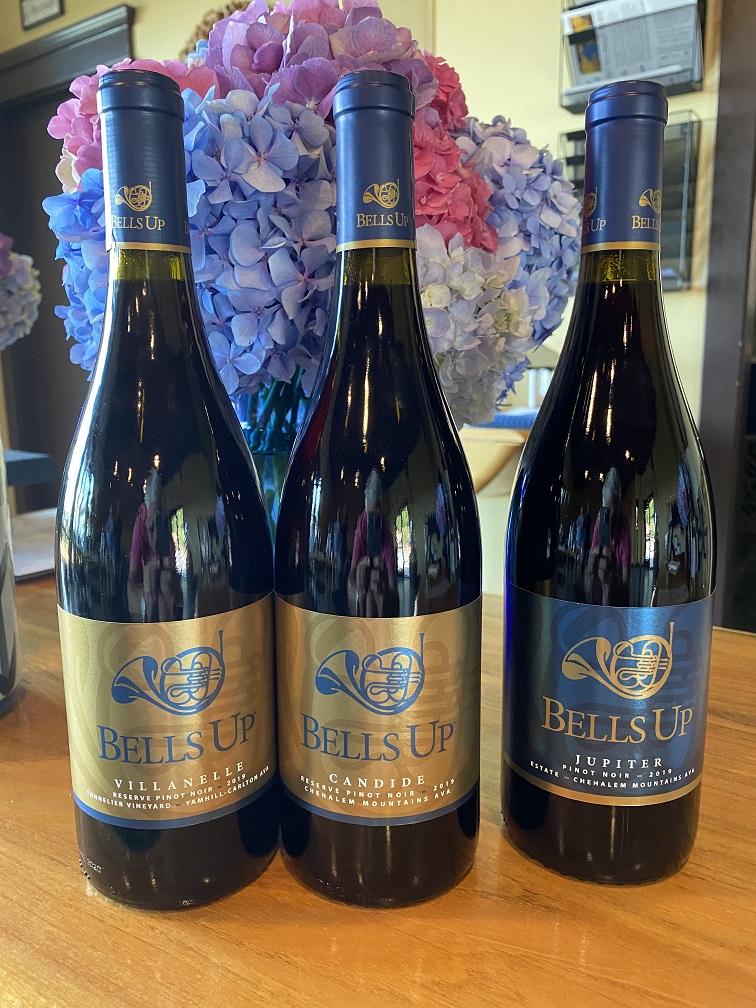
2019 Bells Up Candide Pinot Noir Reserve Chehalem Mountains AVA ($54, 12 months in French oak)
Floral, nutmeg, warm spices
Cherries, cut through acidity, black pepper, perfect balance, delicious
8
2019 Bells Up Villanelle Pinot Noire Reserve Tonnelier Vineyard Yamhill-Carlton AVA ($58, 12 months in French oak, final vintage)
Blackberry/raspberry, Marionberry
Cassis leaves, light crunchy cherries, well-integrated tannins, good acidity on the finish, delicious.
8
2019 Bells Up Jupiter Estate Pinot Noir Chehalem Mountains AVA ($48, 12 months in French Oak)
Underbrush, summer forest, cherries, a touch of tobacco
Crunchy cherries, clean, fresh, delicious
8
While this is not a video, here is Dave talking about Bells Up wines:
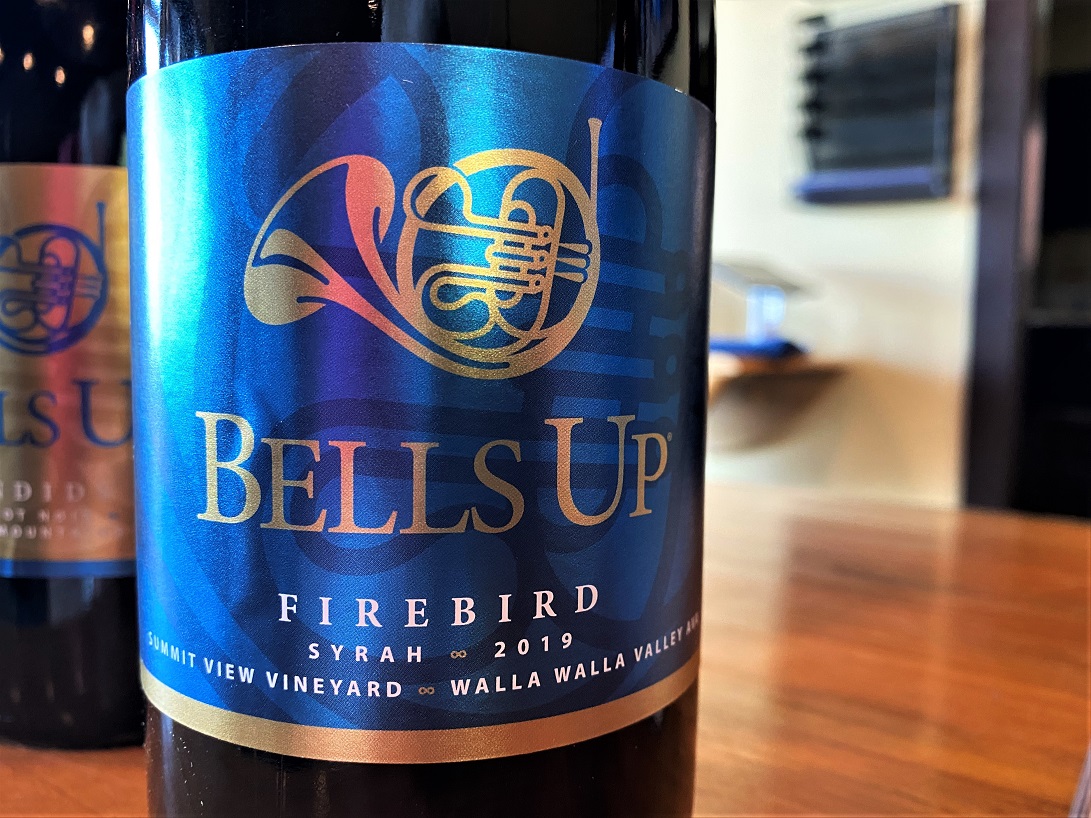
Bells Up Syrah was served with an amazing seedless grape pie. As Sara explained, everyone gives wines as presents in Willamette Valley, but tasty grape pie is almost equivalent to the hard currency when exchanging gifts with neighbors. As I said, the pie was superb, and to think that sweet pie would pair with Walla Walla Syrah? I really wouldn’t – and I would be mistaken.
2019 Bells Up Firebird Syrah Summit View Vineyard Walla Walla Valley AVA ($52, 12 months in French oak)
Blueberries and blackberries on the nose
Berries all the way, nicely balanced
8, Amazing pairing with seedless grape pie with cardamom
Again, we almost had to twist Dave’s arm to let us taste the future release of Cabernet Sauvignon:
2020 Bells Up New World Cabernet Sauvignon Reserve Summit View Vineyard Walla Walla Valley AVA ($68, 12 months in French oak, barrel sample)
A hint of green bell pepper
Cassis, a hint of black pepper on the finish, good, round, smoky undertones.
8-
Here you have the summary of our “un-domaine” experience – an excellent set of wines and super-friendly hosts. If you will find yourself touring Willamette Valley, add Bells Up winery to your “must visit” list.
This is the last update in the Passion and Pinot series. For now, that is.
Until next time…
This post is a part of the Stories of Passion and Pinot series – click the link for more stories…
Looking Back and Looking Forward, 2022 Edition
 Ahh, the self-reflection time.
The bad, the good, the ugly.
New Year resolutions.
Yada Yada Yada.
Okay, I know. Not the most enlightening post if I ever even write anything in that category. But hey, it is my blog. I write for myself, first and foremost. So as I get to set the rules here, I like to take a look back at the year which passed and get a little pleasure of re-living some of the best moments of otherwise not the brightest year.
New Experiences:
More often than not, I like to call myself a “collector of experiences” – I love those non-material things which you can add to your personal “been there, tried that” collection. While in absolute numbers these “achievements” sound dismal, under circumstances they are perfectly sufficient in my book.
Visiting new wine region
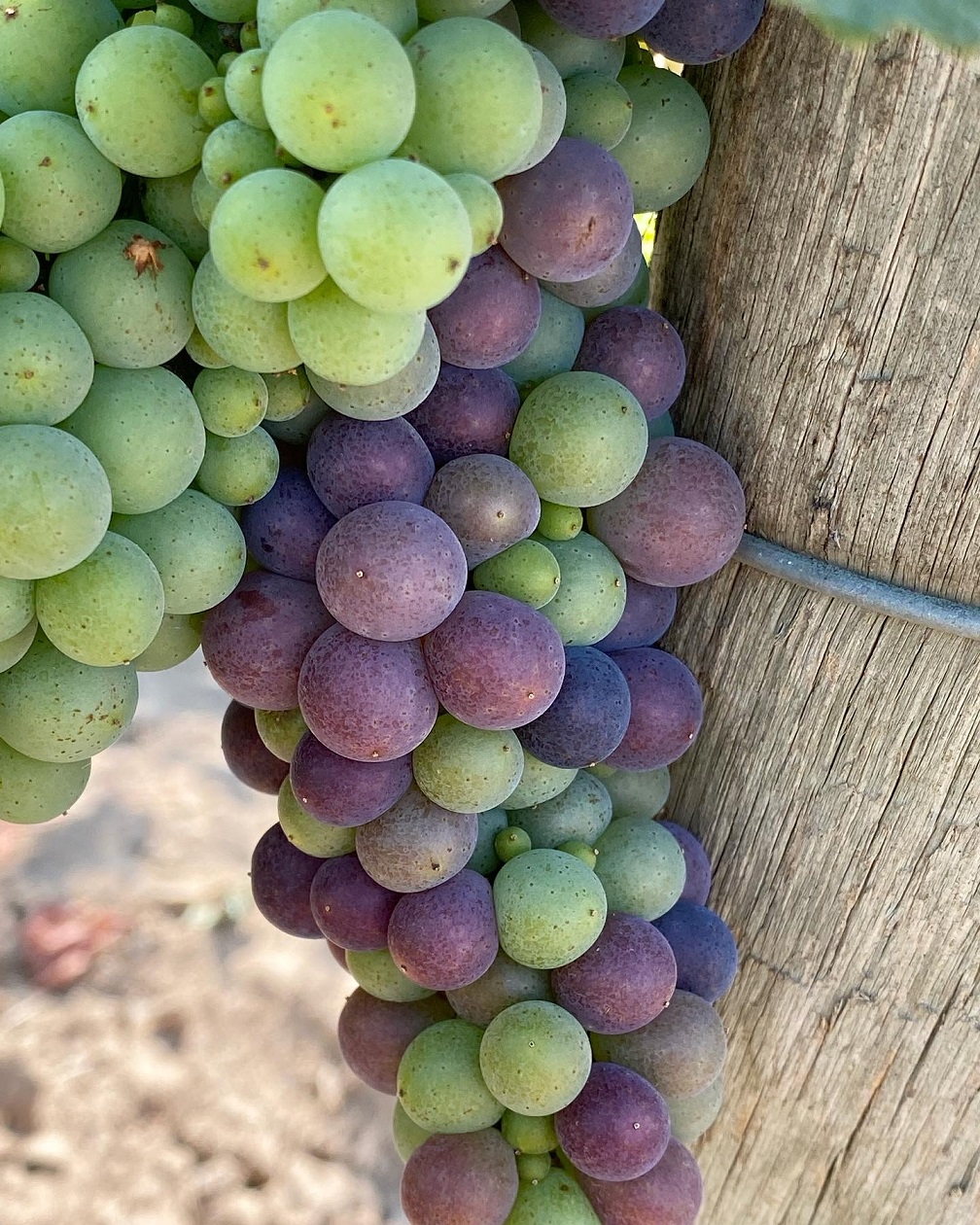
I visited Oregon on a number of occasions, and wrote about Oregon wines in this blog many times – but it was only 2021 when I set foot in the vineyard in Oregon, thanks to the Wine Media Conference 2021 held in Eugene, Oregon. Not only I visited a number of wineries in Oregon, but I also saw veraison for the first time, and tasted lots and lots of delicious wines, as reflected [dis]appropriately in the list of Top Wines of 2021 (more about it below).
Wine from the new state in the US
When I say that I’m collecting experiences, I mean exactly that – I keep track of how many wines from how many states I tasted, and in how many states I visited wineries. While Oregon was added to the list of states I visited the wineries at, I also tasted the wine from Michigan for the first time, and it was an excellent Cabernet Franc from Bel Lago. I keep my progress noted in this table in case you are interested.
Wine from the new country
Same as the wines of 50 United States, I also keep track of wines from different countries that I had an opportunity to taste. This year I added one of the oldest winemaking countries in the world to the list, after tasting the wines from Armenia. The wines were outstanding and Keush sparkling even made it into the Top Wines list. Same as with the 50 states, here is the table where I mark my progress.
More rare grapes
Ever since I had been bitten by The Wine Century Club bug, I had been hunting down rare grapes. This year I made possibly the slowest progress ever, but this journey is not getting any easier at this point. I only added 6 new grapes to the count (Cabernet Pfeffer, Voskehat, Khatouni, Areni, Yapincak, Ciass Negher), which now stands at the grand total of 561.
Top Wines 2021:
Same as every year, this was a fun project to go through the list (big word here – there is no such thing) of all the wines I tasted in 2021, and select 26 to be split into Second (generous) Dozen and the Top Dozen. Considering that visit to Oregon to be the biggest highlight of the year, it is not surprising that the top list is heavily skewed towards Oregon wines – still, it offers quite a bit of diversity as it is. My list of 26 is an easy one to analyze compared to all of the Top 100 lists I processed this year, so here is my distribution of the wines in the top list: Oregon – 8, California – 7, Spain – 5, Italy – 2, Argentina – 1, Armenia – 1, Pennsylvania – 1, Texas – 1. As you can see, France makes a notable absence, but the list clearly reflects my wine drinking habits – and I stand by all of my choices.
The year of Organic Grapes:
Made with Organic Grapes was one of the hot subjects in the blog (check the posts for yourself). In 2021, I tasted and wrote about multiple organic wines from multiple producers from Argentina, Chile, Italy, New Zealand, Spain – and I’m sure I will write about a lot more organic wines this year.
Catching up:
Much to my chagrin, I was really late with many of the posts, writing about events and tastings some of which were more than 2 years old. I really made an effort in December to clear up the backlog, turning it into one of the most prolific blogging months ever with 21 posts – in my almost 12 years of blogging there were very few months with 21 posts, and even fewer with 22. Catching up is not fun, but remembering about things you didn’t deliver is even less fun. There is more catching up to do, so I definitely hope I will be able to continue the streak.
What’s in the store for 2022:
My New Year resolution is not to have any New Year resolutions, so I can’t tell you really what’s ahead. Last year, I was keen on continuing the Wine Quiz and Wednesday Meritage series of posts, only to run out of steam somewhere in the middle of the year. So the plan for 2022 is to use a more opportunistic approach – there is no shortage of wine subjects worth writing about. I also need to up my wine game by paying more attention to French, Australian, and South African wines – I want to fill that gap for the 2022 Top Wines rendition.
* * *
Here we are, my friends. A quick revisit of 2021, and mostly hope for the good year 2022 with good surprises. I know that hope is not a strategy, but if I learned anything from my years of blogging, it would be proverbial “the road to hell is paved with good intentions”. So how was your 2021? Any plans for 2022? Cheers!
Last Bottle Sign Up ($10 credit)




 Talk-A-Vino