Wine Reflections on the Go, and Cognac Ramblings
 While in San Diego for work, I was on a very strange quest. I wanted to find cognac in miniature bottles (50 ml). Strange and dumb, you say? No problems, I accept the criticism. It is strange, but not criminal or immoral by any means, so let me continue my story.
I don’t know if you drink cognac, but if you do, you could’ve noticed that it is generally in a short supply, and often absurdly priced. Some stores carry no cognac at all. Some stores have a very limited selection, incomparable with other liquors – look at a typical tequila or bourbon selection – the ratio would be 10 to 1.
Why cognac all of sudden? A dear friend is coming over in a few weeks, and we always do a serious tasting of scotch/whiskey with her. What does “serious” mean? At any given moment I have 15–20 (or more, I honestly have no idea) bottles of whiskey open – some might be for 10 years – unlike wine, whiskey doesn’t care, nothing can change in the 46% – 70% ABV weather – as long as the bottle is closed well. This time around, the said dear friend said that she doesn’t want to do a scotch tasting, and would much prefer that we would change the subject – for example to the cognac.
While I love cognac, I prefer scotch for my occasional hard liquor sip. It is much more difficult to find a palatable, never mind tasty cognac which one also can afford – delicious whisky can still be acquired for less than $30, but drinkable cognac in that prices range is mostly a dream.
Okay, so back to that tasting. I set for myself a goal to have at least 15 different cognacs to taste, without spending a small fortune. I probably have 2 or 3 open. I procured two tasting sets (they are very hard to come around), and found one miniature of Courvoisier to include in the tasting, but that’s about it. So I went on the mission to find at least the main brands (Martell, Hennessy, Courvoisier, Remy Martin) and maybe some others – but seemed to be mission impossible in Connecticut and even in New Jersey.
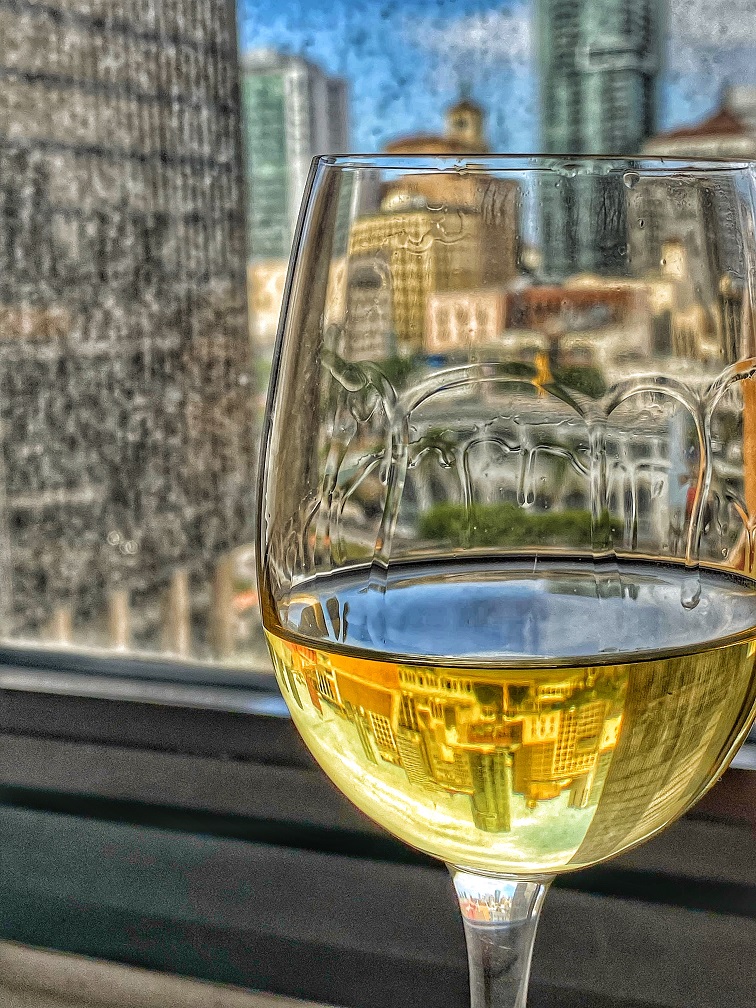
Wine Reflections, as promised
Which brings us to the wine store in San Diego. I honestly went to the wine store creatively called The Wine Bank to look for my cognac miniature bottles. Who goes to the store called The Wine Bank to buy cognac? Happy to be ostracized again, but if I would be looking for tequila, bourbon, or even gin believe me I wouldn’t leave the store empty-handed. But cognac? Nowhere to be found in any size.
The store was “much bigger on the inside” with a huge basement filled with wine shelves. So what should the wine lover do when he encounters wine heaven? At least take a look, right? Just a look. No touch. I promise. I was well behaved. But would you believe me if I would tell you that I left the store called The Wine Bank without buying a bottle? Even if you are naive, my reader(s?), don’t trust the wine lover visiting the wine store.
I was looking for something interesting, yet inexpensive. Interesting means I don’t readily have it at home and would love to drink often but drink rarely. And so I found my beloved Chinon (Cab Franc) and a white blend from the Rhône, $17 and $16 respectively.
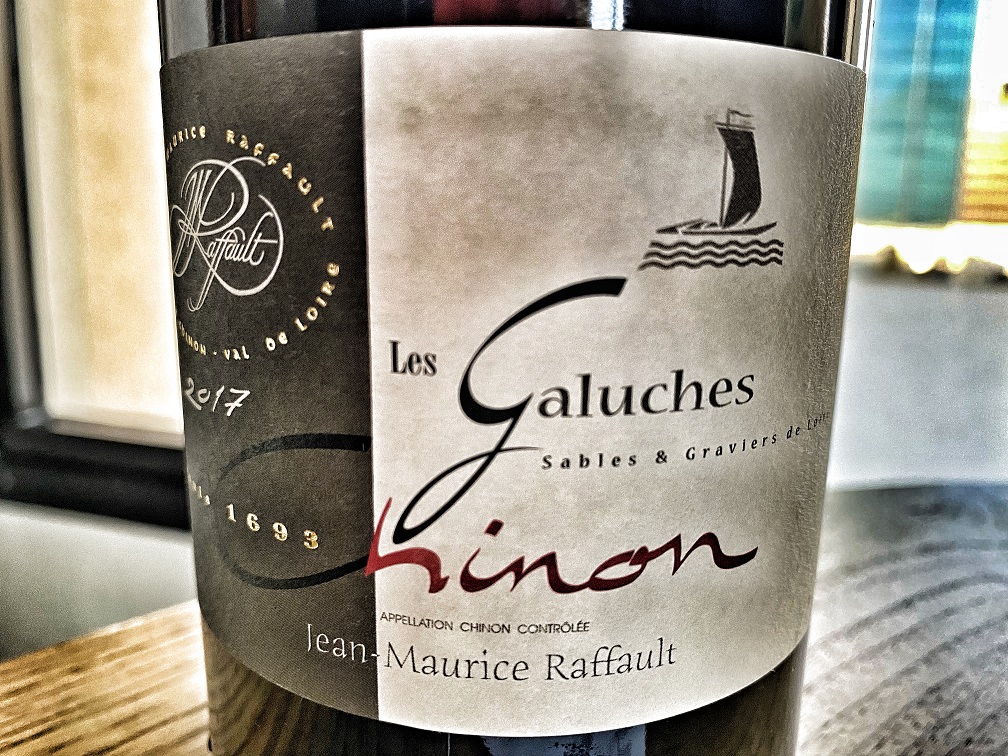
I really like Chinon wines, a classic, cold climate, old world renditions of Cabernet Franc. This wine was from the 2017 vintage, so it had 5 years of age on it. I previously had an amazing experience with Chinon wine from Olga Raffault, so now seeing the same name (Raffault family had been cultivating vines in Chinon for 14 generations!) together with the reasonable price has given the rationale for the decision.
I rarely drink white Rhône wines because there are very few of them available at most of the wine stores, and finding tasty ones is not an easy task as well. However, seeing 60% Roussanne on the back label – and Roussanne might be my favorite white grape – together with a reasonable price again made it an easy decision.
2017 Jean-Maurice Raffault Les Galuches Chinon AOC (13% ABV, $16.99, Les Galuches is the name of the vineyard, had been organically farmed since 2016) was interesting. When I just opened it, it had a beautiful classic nose with a touch of bell pepper, and an almost jammy load of the black currants on the palate, very generous. On the second day, the nose was somewhat closed, and black currants were still pleasant though somewhat scarce. On the third day the wine pretty much closed and offered mostly bell pepper and tart acidity. I don’t believe the wine turned – it should be either consumed upon opening or left alone for 10+ years to enjoy it later.
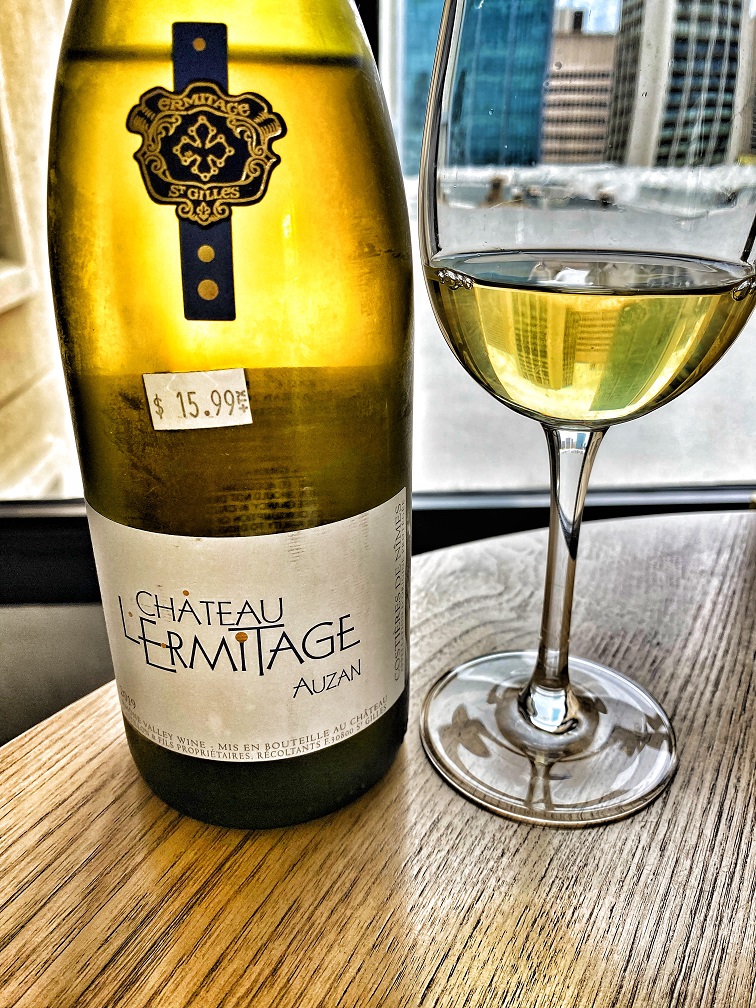
2019 Chateau L’Ermitage Auzan Blanc Costieres de Nimes AOP (13% ABV, $15.99, 60% Roussanne, 20% Grenache, 20% Viognier) was even more interesting. I chilled this wine first overnight in the fridge. When I opened it, I really wanted to like it, but I couldn’t. It was disjointed, with fruit and acidity randomly poking in different directions. As the wine warmed up, it became a lot more palatable and enjoyable, but the magic didn’t happen.
I left the wine bottle on the table overnight. When I tried it in the morning, I literally slapped myself on the forehead – this wine is 60% Roussanne, and Roussanne wines are showing much, much better at the room temperature or gently chilled compared to the full-blown “wine from the fridge”. The wine had gunflint on the nose, and boasted powerful, fully textured, plump, and round white stone fruit on the palate. A beautiful, classic, full-bodied Roussanne rendition.
Here you go, my friends – my wine (and cognac) reflections [directly and figurately] on the go. Drink well, whether you travel or not.
One on One With Winemaker: Lucio Salamini of Luretta
If you call yourself a wine lover, you definitely have an affinity for Italian wine. I have yet to meet a wine lover who doesn’t like Italian wine – there is such a range of wines coming from Italy, everyone can find at least something which speaks to their heart and palate.
By the same token, I’m sure that the knowledge of Italian wines is quite widespread among the wine-loving public. So let’s play a simple game. There are 20 administrative regions in Italy. I will give you the name of the region, and you will tell me one, the most famous wine associated with that region. Let’s start with Tuscany – what wine do you associate with Tuscany? Of course, you are correct, it is more than one – Chianti, Brunello, super-Tuscan. How about Piedmont? You are right again – Barolo and Barbaresco come to mind first. Veneto? Yes, correct – Valpolicella, and if you said Amarone, you get an extra point (I’m a sucker for a good Amarone).
Now, how about Emilia-Romagna? Are you drawing a blank? I can help you – a large region in northern-central Italy, right above Tuscany? Still nothing? If someone said “Lambrusco”, congratulations, it is actually the most famous wine coming out of Emilia-Romagna, but it is absolutely not the only one.
The winemaking region of Colli Piacentini is located in the western part of Emilia-Romagna, with winemaking history in Colli Piacentini going back to 2000 B.C. Colli Piacentini DOC covers about 9,000 acres of vineyards with various microclimates defined by mountains, hills, and river valleys. There are 16 DOCs within Colli Piacentini, with grape varieties ranging from the typical Italian varieties such as Barbera, Croatina, Malvasia, and Trebbiano to the international stars – Cabernet Sauvignon, Sauvignon Blanc, and others. It is interesting that Colli Piacentini DOC rules allow putting the name of some of the grape varieties on the front label, quite unusual for the old world.
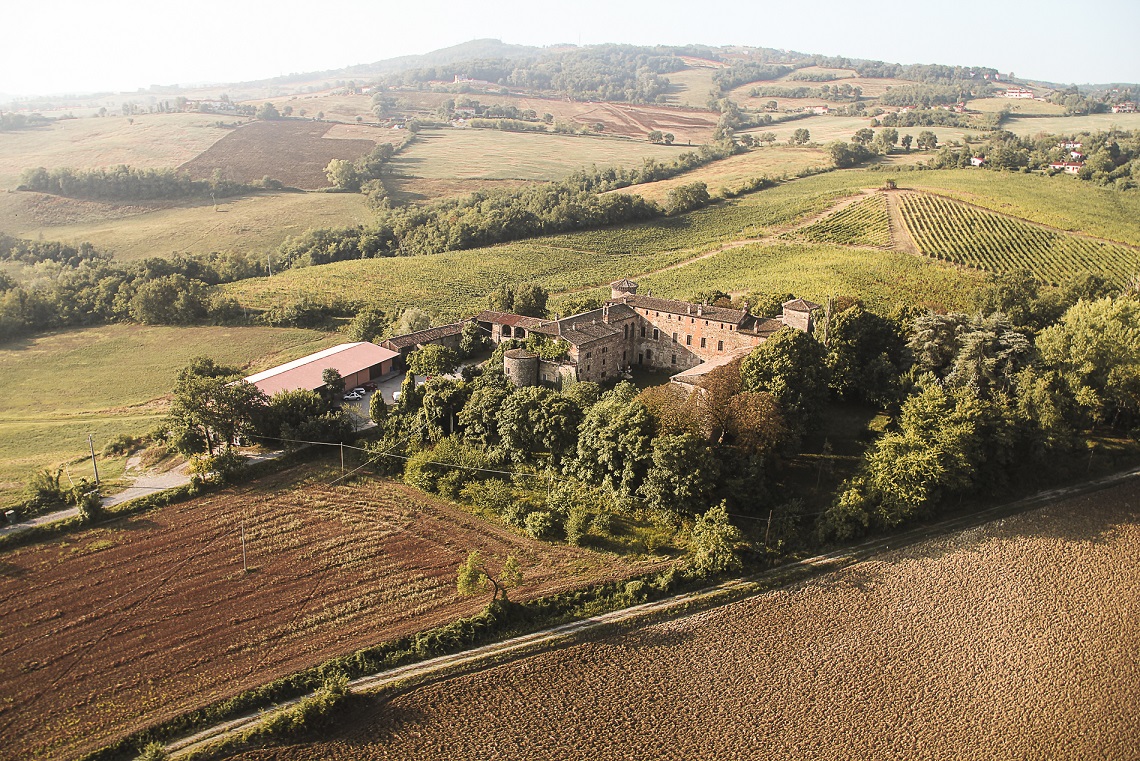
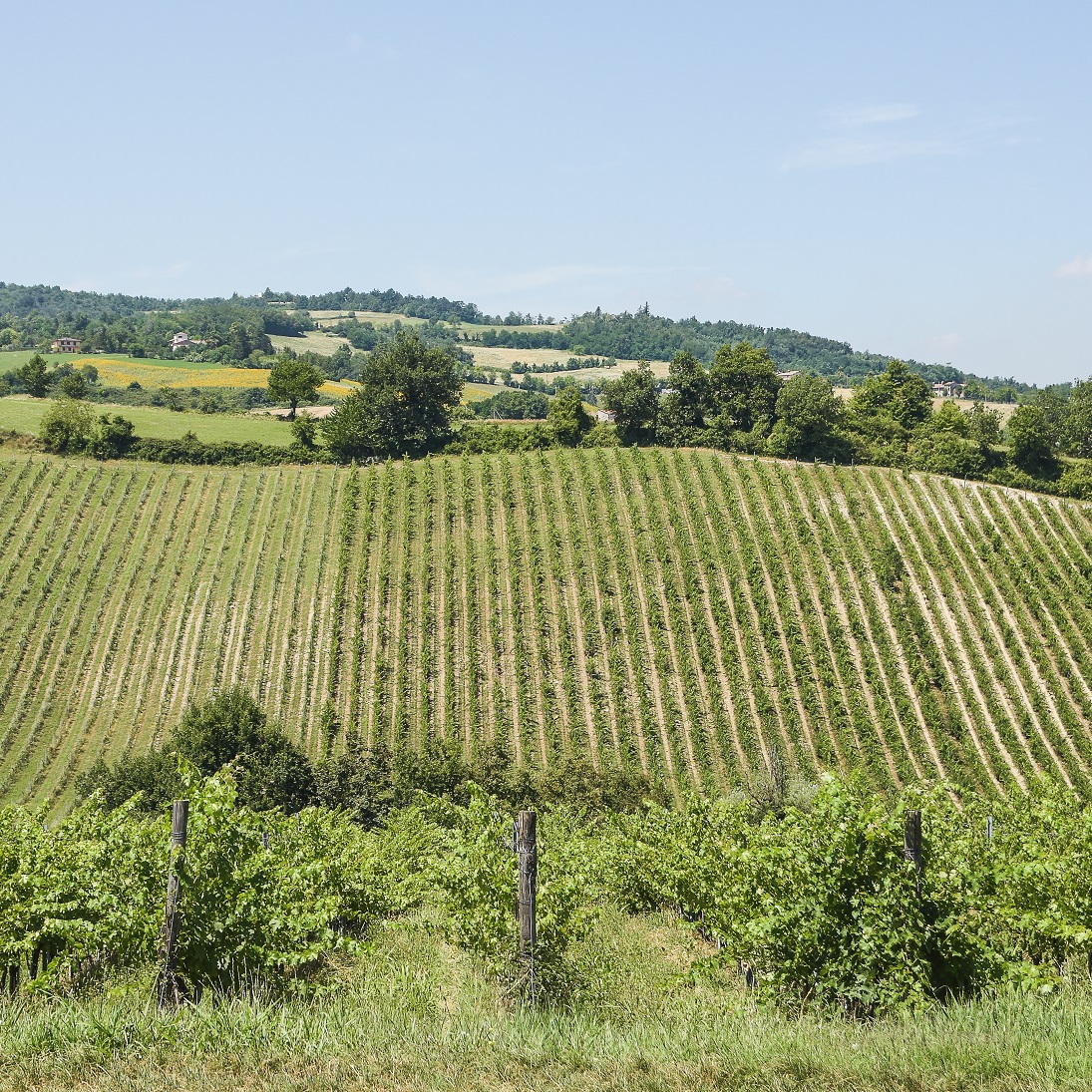
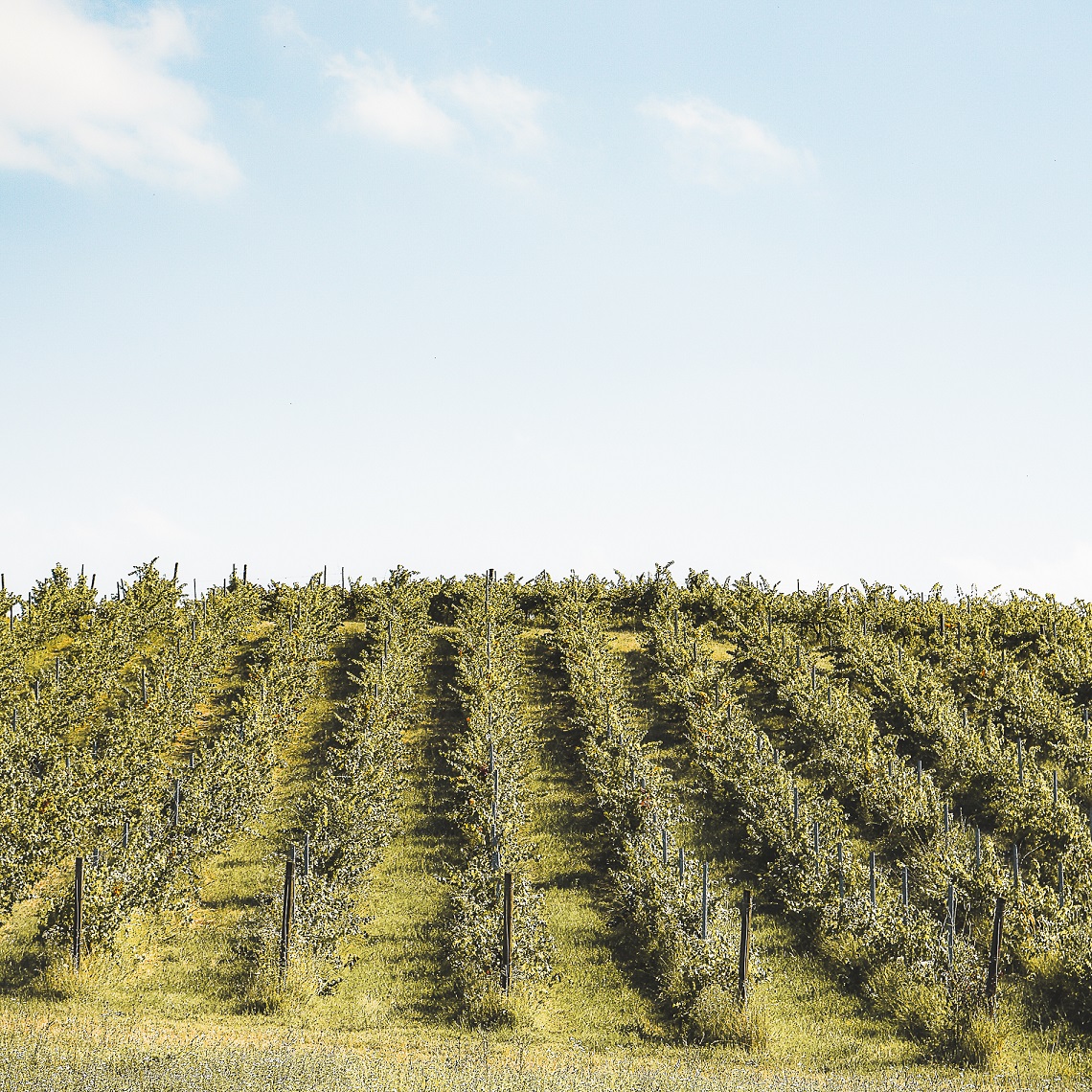
After spending some time in France and learning local agricultural traditions, Felice Salamini, a cattle breeder, came across the Castle of Momeliano, a fortress almost 1,000 years old, nestling in the hills of Emilian valley. This seemed to be an ideal place to grow grapes, make, and age wines, and in 1988 Luretta was born.
Luretta vineyards occupy 123 acres, surrounding Castle of Momeliano on the hill from 800 to 1,650 feet elevation. From the beginning, Luretta started using organic viticulture, with no herbicides, no synthetic fertilizers, and no irrigation. In 2000, Lureta obtained Italian certification for sustainable practices. Many of the French varieties – Cabernet Sauvignon, Merlot, Petitte Verdot, Pinot Noir – are growing there among the indigenous varieties – Barbera, Malvasia, Trebbiano, and many others.
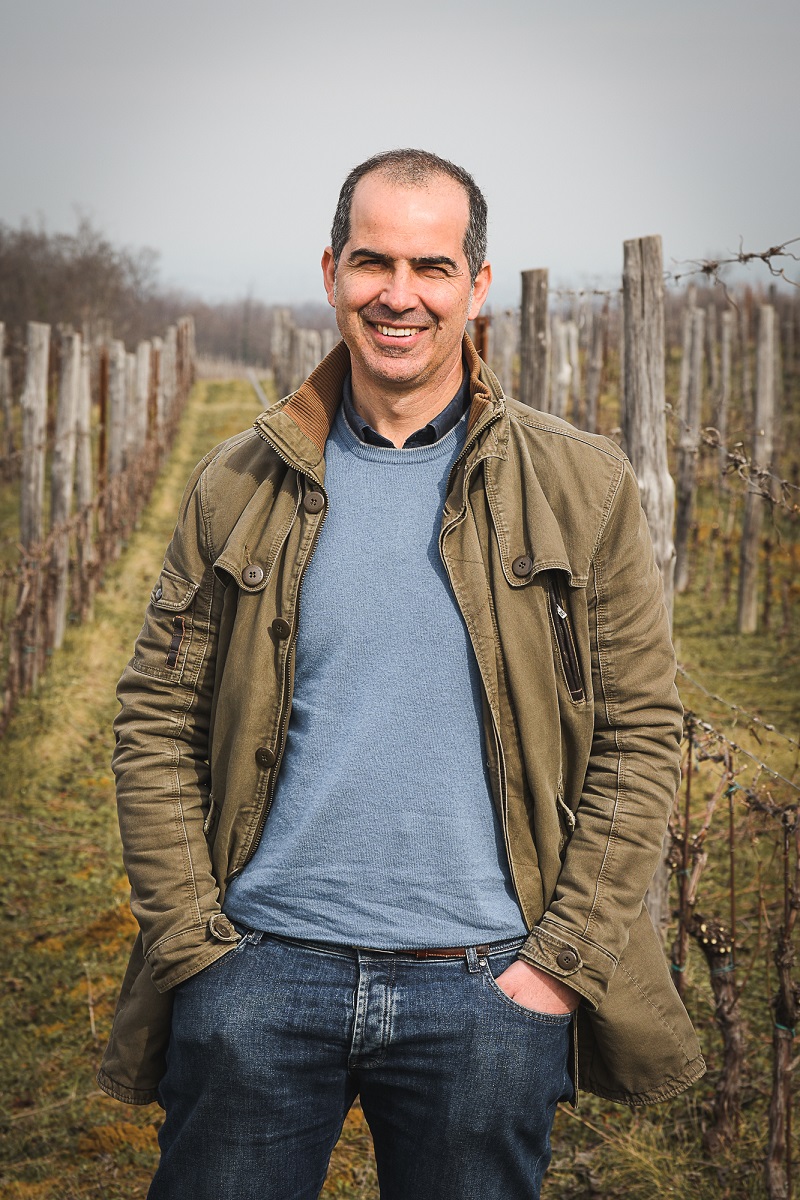
Lucio Salamini. Source: Luretta
Lucio Salamini, the second-generation owner of Luretta, is now leading the charge at the winery, working together with winemaker Alberto Faggiani, the longtime enologist at Jermann, overseeing the annual production of about 300,000 bottles. Each white, red, and sparkling wine produced by Luretta has its own unique story, showcasing the diversity of Colli Piacenti terroir. I had an opportunity to virtually sit down with Lucio and ask him a few questions – here what transpired in our conversation:
[TaV]: Let’s start with your website, which I find very interesting. Each wine has its own set of images associated with it on the website – how do you come up with those images?
[LS]: We really enjoy creating personalized and evocative image for the company. Usually we draft drawings that can create mental associations to get closer to the wine, that recalls its history, flavors, and characteristics, and then we embed them in our labels and throughout the website. We have always been believers of ‘mental’ pairings, so to create a match not just between a wine and a dish, but also a song, a climate, a mood, a season, a moment in the day or a moment in life. These drawings are vehicle for those impalpable connections.
[TaV]: One more question related to the same subject. Each wine also has a quote associated with that specific wine. How do you come up with those? What is the message you are trying to convey?
[LS]: It is a quote I like from a song, a book or a movie. These mental associations help me get deeply into the mood of that specific wine.
[TaV]: You have been farming organically since 2000. Have you ever considered biodynamic farming? What is your take overall on biodynamics?
[LS]: The company has been organic since almost the beginning of its practice, since the early 1990s. Then in 2011, Europe introduced the regulation of Organic Wine and we aligned to sustainable practices also for what concerns the processes in the cellar. However, we do not follow the Steiner philosophy of biodynamic agriculture. I do not often approve it but admire it as a whole concept and I think that this movement is too often carried followed in a superficial way that does not deserve. Biodynamic farming is a way of cultivating the land and making wine aimed to preserve nature and what people drink. It is an all-embracing philosophy and, as such, it should concern the whole lifestyle of the producer and his vision of the world. In this light, for me is not coherent to ship the wine on a boat or a plane to sell it on the other side of the world. But maybe let’s leave this controversy alone!
[TaV]: You have quite an international selection of the grapes – Pinot Noir, Sauvignon Blanc, Cabernet Sauvignon, etc. What made you plant international varieties in the first place? Do you find your terroir particularly conducive to the international varieties?
[LS]: We were pioneers in this area of Piacenza. We had to experiment first in order to understand better. Thus, planting International varieties was a part of a whole pioneristic phase that informed our practice since the beginning. Often, but not always, this has proved us right. Indeed, it is an area that is well suited to international vines as well as, of course, traditional vines.
Besides the drive to try and experiment, we also have a pure deep passion for international varieties.
[TaV]: In a blind tasting, if your Cabernet Sauvignon would be placed together with super-Tuscan, which wine do you think might win?
[LS]: In the autumn of 2021, there was this tasting by the famous critic Daniele Cernilli ( Dr. Wine ) where my cabernet came out very well, despite costing on average a third of the other bottles. And I was very proud of that, of course! In general, though, I believe that parallel tastings should not be done to see who wins but rather to understand and enjoy the differences between the various territories.
[TaV]: The same question as before, but let’s replace super-Tuscan with Napa Valley Cabernet Sauvignon – how do you think your wine would fare against those?
[LS]: I would say that whether the super Tuscans and Napa wines focus on food, power, softness and low acidity, my wine has more tertiary hints of evolution such as spices, aromatic woods, pepper, balsamic, and then, instead of looking for softness, it pushes towards a tannic acid balance in the mouth, underlining the sapid and mineral notes of Colli Piacentini, our soils.
[TaV]: Do you have any plans for additional international varieties – Syrah, for example?
[LS]: I have experimented over the years with plantings of Syrah, Grenache, Cabernet Franc and Petit Verdot. But they have not been successful. And the vineyards were either grubbed up or replanted, proving that not all varieties can adapt to these soils.
[TaV]: You are farming 123 acres of estate vineyards. Have you identified vineyard plots that perform better/different from the others? Do you have any plans for single-plot wines in the future?
[LS]: The map of the single vineyards with names, varieties, altitudes and soil differences will be ready in September. It is a project we have been working on since January. Broadly speaking, we have the autochthonous vines planted up to an altitude of 820 ft above sea level, characterized by the “Terre rosse antiche” (old red soils in English) soil, loaded with red clay.
The international vines, on the other hand, are planted in vineyards ranging from an altitude of 800 ft to 1400 ft above sea level, in the lands of lower Apennines, characterized by a greater concentration of limestone. Most of the vineyards are located within the small Val Luretta – which gives the name to the company- characterized by a temperate microclimate, protected from either spring frosts, summer heat waves and large concentrations of humidity thanks to a lucky flux of air that constantly blows in our lands.


Wine time!
I had an opportunity to taste 2 of Luretta’s wines.
2019 Luretta Boccadirossa Colli Piacentini DOC (13.5% ABV, $30, 100% Malvasia di Candia Aromatica) had beautiful golden color. A beautifully perfumed nose of wild flowers and tropical fruit was supported by the body which was plump and crisp at the same time, with white plums and lemon and a perfectly acidic finish. Overall, solid and delicious.
2018 Luretta Superiore Gutturnio DOC (14.5% ABV, $25, 50% Barbera, 40% Croatina, 9 months in wood) was as quintessential Italian as only the Italian wine can be. The nose of leather and cherries followed by the exquisite palate of sweet cherries, leather, and a hint of tobacco, layered, generous, earthy, and complex.
Here you are, my friends – unexpected, unconventional, and well worth seeking Italian wines, waiting to be discovered by wine lovers around the world. Cheers!
2 Regions, 3 Glasses, 1 Wine Geek
The assignment was simple. Compare 6 Cabernet Sauvignon wines from 2 famous winemaking regions in Chile. Find differences. decide on a favorite.
As with any assignment, let’s start with the theory.
Cabernet Sauvignon is unquestionably a king of Chilean wines – it is the best-known Chilean wine worldwide and it is the most widely planted red grape variety in Chile. It accounts for about 20%+ of all vineyard plantings in Chile, covering an area of about 99,000 acres, stretching through the entire country from north to south. At the same time, 97% of the Cabernet Sauvignon plantings are located in the Central Valley, spread between O’Higgins, Maule, and Metropolitan Region.
Narrowing it down to the wine-producing DOs, we are looking at the Maipo Valley and Colchagua Valley, two of the best-known Cabernet Sauvignon areas in Chile. These are also the two regions that are the subject of our assignment.
Maipo Valley is one of the oldest winemaking regions in Chile, with its terroir shaped by the Maipo River, which begins at the Maipo volcano, creating a patchwork of valleys at the elevation of 2,500 feet above sea level. Some of the areas in Maipo Valley see a minimal number of sunny days required for the red grapes to fully ripen, with a climate somewhat similar to Bordeaux.
Colchagua Valley lies about 80 miles south of the city of Santiago. Parts of the valley are crisscrossed by the Tinguinirica River, taking its roots from the volcano crater in the Andes, and descending from about 2,000 feet to the 360 feet of elevation above sea level. Colchagua Valley generally offers much warmer daily temperatures compared to the Maipo Valley.
Here are some of the views of the beautiful regions:
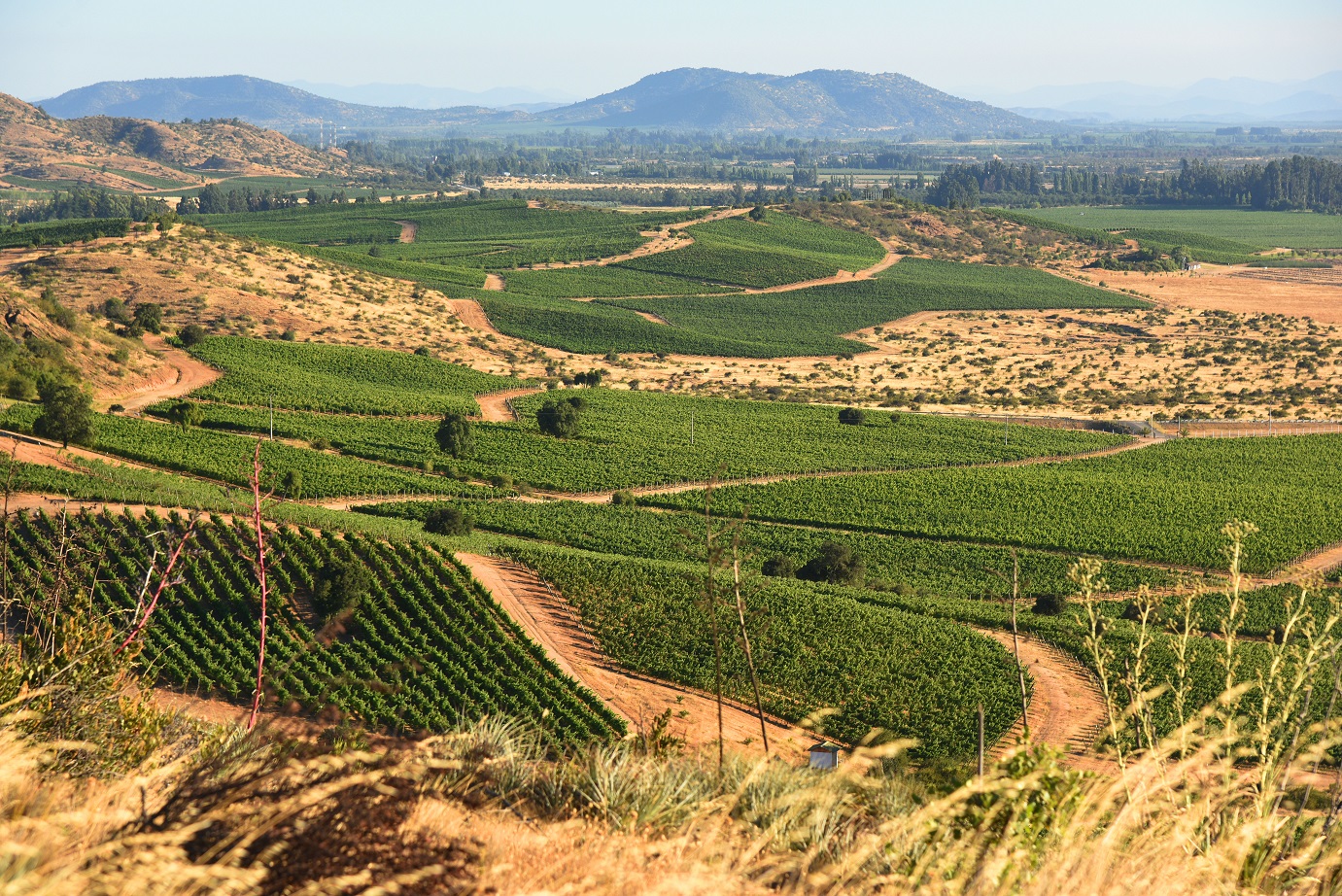
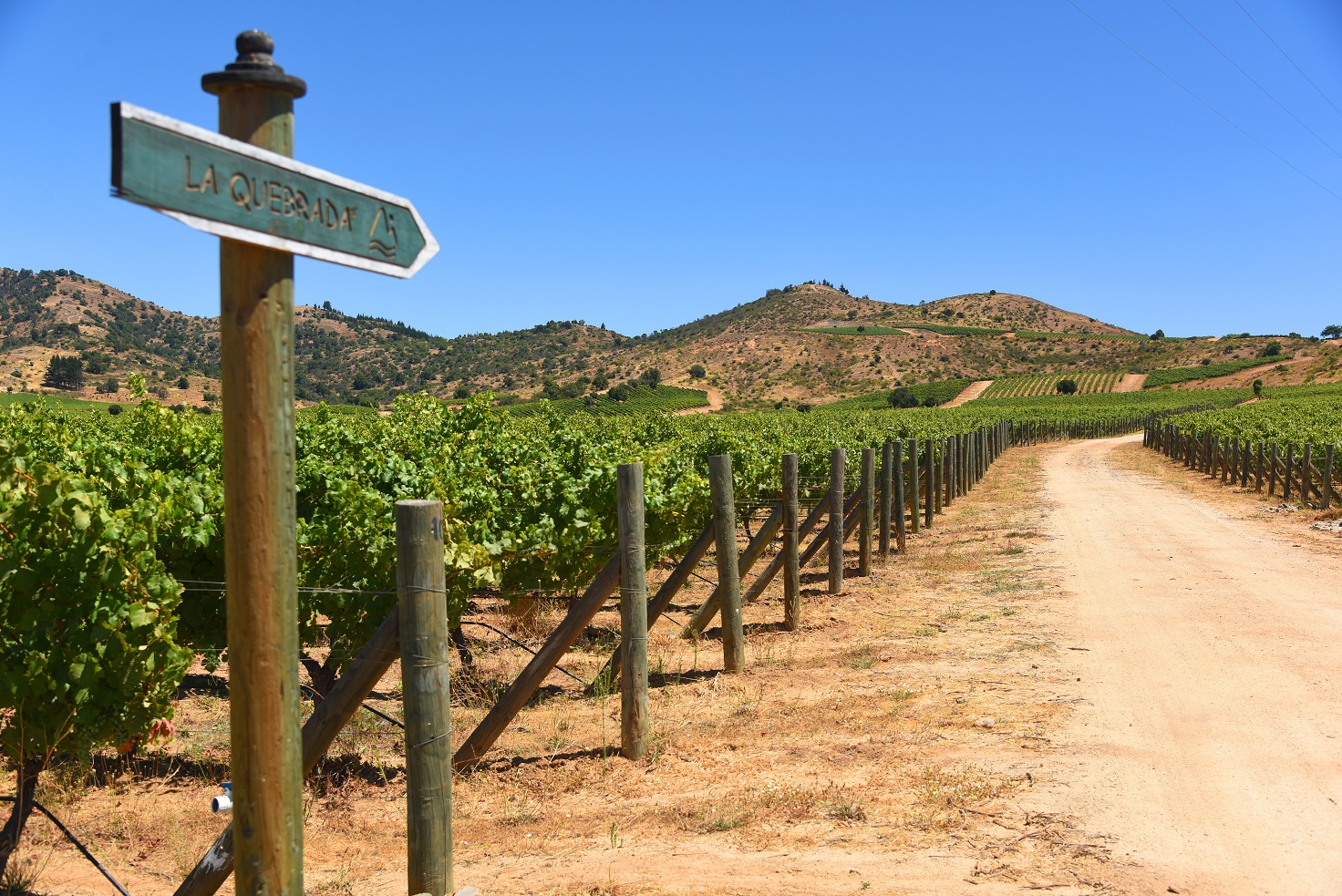
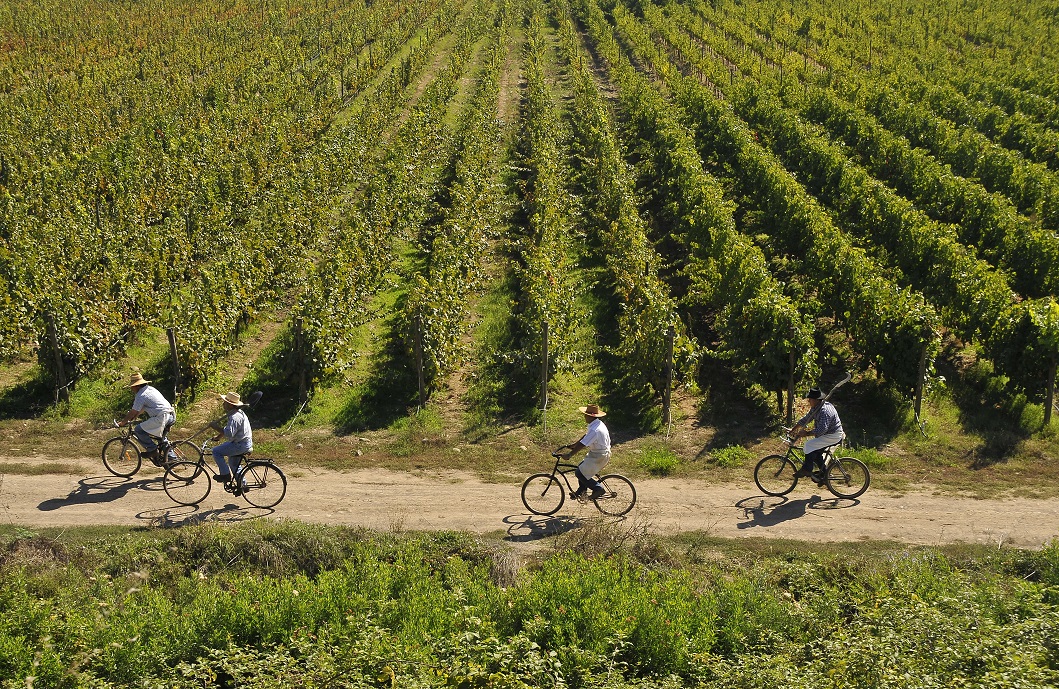
I’m purposefully avoiding descending into the discussion about the different soil types throughout both regions but of course, alluvial soils, colluvial soils, gravel, clay are all intermixed around both regions. I don’t believe I can intelligently speak to the effect of a given soil type as it comes to the resulting taste profile of the wine, but our main difference between the wines from the two regions should be driven by the warmer versus cooler climate and some differences in the elevation.
I hope this is enough of the theory and it is time to get to practice – the lab portion of our assignment.
This is where the inner geek came out guns blazing – and this is where everything all of a sudden became muddy and complicated.
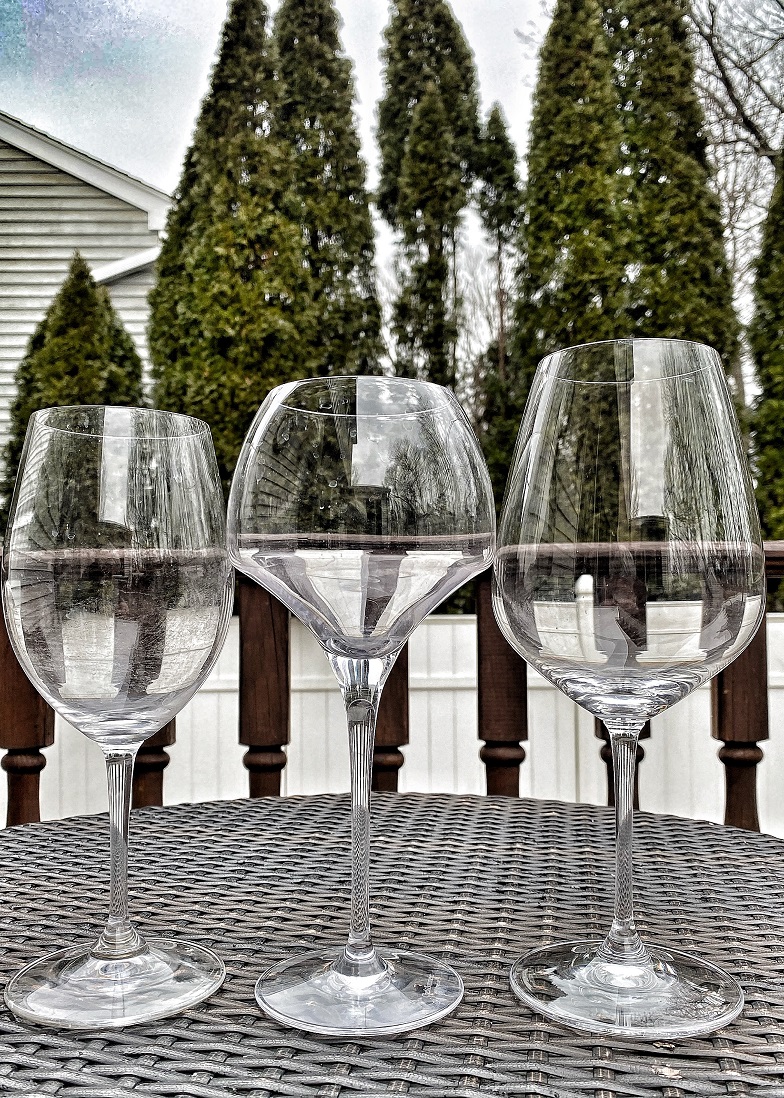
I decided that the challenge of comparing the 6 wines is insufficient, and to make things more fun, I decided to was possessed to try each wine from three different glasses: Glass 1- Riedel Universal tasting glass (this is the one typically offered at all of the wine tastings), Glass 2 – Chef & Sommelier Open’Up glass, one of most aesthetically pleasing glasses for the daily drinking, and Glass 3 – Riedel Radical Cabernet glass (my favorite glass for the Bordeaux varieties).
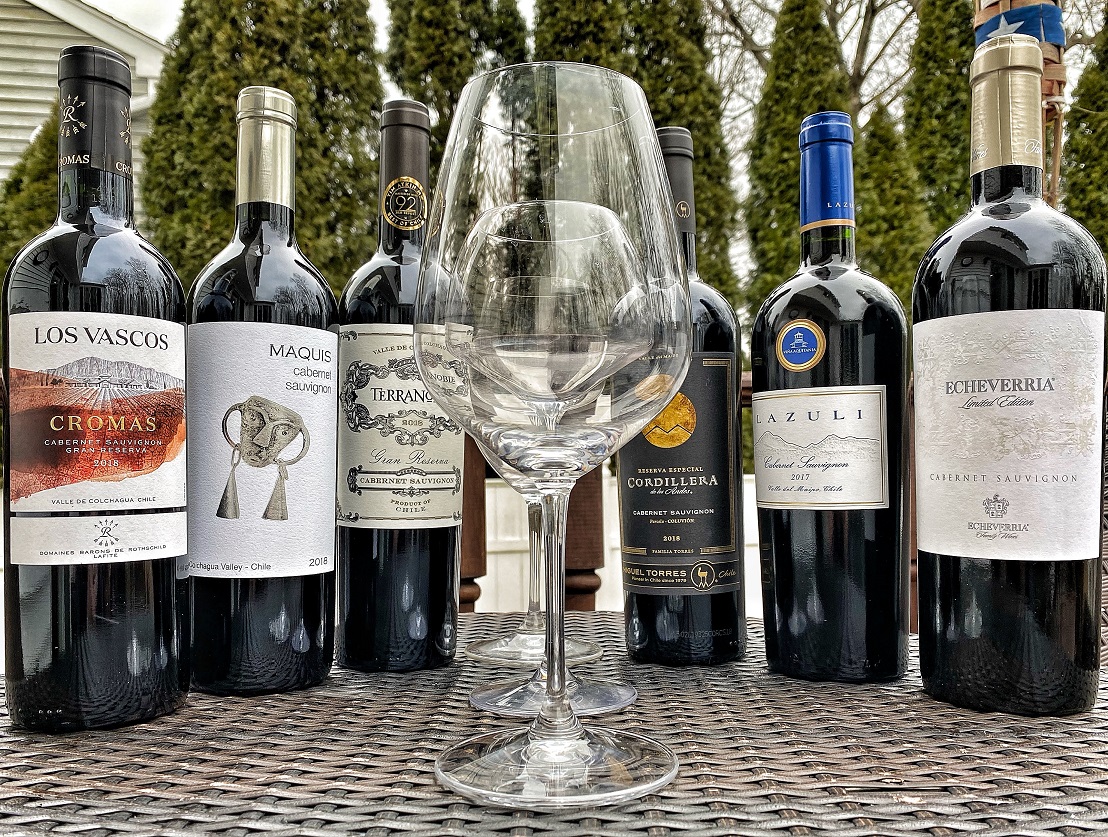
The wines I tasted all come from well-known producers. I was familiar with some prior to this tasting (Los Vascos, TerraNoble, Maquis) and I had a lot of Los Vascos and TerraNoble Cabernet wines in the past. Regardless, this was quite a respectful selection of the wines, expectedly illustrative to represent the two regions. Three of the wines were 100% Cabernet Sauvignon, and 3 had Cabernet Sauvignon as a dominant component.
To explain in more detail what I did: on the first day, I poured each one of the 6 wines into the 3 glasses – non-blind, one by one. I then tasted each wine from those 3 glasses – you will see the notes below, describing my perception of the same wine in each of the 3 glasses. The glasses had their effect, even though Radical Cab and Open’Up glasses offered mostly similar experiences. Open’Up glass required the bottom section to be sufficiently filled or the nose of the wine was becoming lost. All of the second and third day tastings were done only using the Universal tasting glass. Below you can see all of the tasting notes, from which it is very easy to conclude that I was unable to come to any meaningful conclusions and find any meaningful, region-conforming differences between the wines.
Here we go:
Team Maipo Valley:
2017 Lázuli Cabernet Sauvignon Valle del Maipo (14.5 ABV, $45, 100% Cabernet Sauvignon)
Garnet
Glass 1: dark fruit, concentrated, iodine, forest underbrush, pyrazine
Interesting. Quite restrained. Not a lot going on.
Glass 2: much less expressive, just a hint of pyrazine
It is showing better. No idea how. Crunchy berry, soft tannins, still not very expressive
Glass 3: dark fruit, more focused than glass 1, a hint of bell pepper
Similar to glass 2. Dark fruit, baking spices, lots of minerality. Not very much Caberneish if you ask me.
Day 2: not good
Day 3: Fruit showed up. Fresh berries and eucalyptus. Is this a Cab? Not sure. Is it drinkable? Sure, on the third day.
2018 Miguel Torres Cordillera Cabernet Sauvignon Reserva Especial de Les Andes Valle de Maipo (14% ABV, $20, 100% Cabernet Sauvignon)
Concentrated ruby with bright hues
Glass 1: very similar presentation to the first wine. Dark fruit, a hint of bell pepper, very distant hint, a touch of eucalyptus.
Definitely a Cabernet profile, more explicit than the previous wine. Eucalyptus, cassis, bell pepper practically non-existent.
Glass 2: this glass requires much higher pour to get to the aromatics.
The wine appears more refined and elegant on the nose than glass 1, more focused on eucalyptus and cassis.
Delicious, earthy cab. Good acidity, cassis, earthy and restrained.
Glass 3: interesting. Almost gets to the barnyard space. Definitely more earthy than glass 2.
The best experience. Dark fruit, cassis, pencil shavings, crisp tart finish.
Day 2: good
Day 3: excellent. Dark fruit, eucalyptus. Round tannins, good structure, dark and supple.
2016 Echeverría Cabernet Sauvignon Limited Edition Maipo Valley (14% ABV, $25, 85% Cabernet Sauvignon, 10% Syrah, 5% Carménère)
Dark Garnet
Glass 1: very concentrated. Dark fruit, sapidity, earthiness, a hint of eucalyptus. Interestingly enough, all 3 wines so far are really similar.
The nice initial appearance of the fruit is instantly replaced by tannins. Serious French Oak tannins, front of the mouth is locked.
Glass 2: a much more elegant appearance than Glass 1. A hint of eucalyptus and bell pepper.
Fruitier than the previous 2 wines, nice load of dark berries, and then it is all tannins. Again, the wine appears to be more elegant.
Glass 3: similarly elegant to glass 2. Eucalyptus, bell pepper, and a touch of black pepper.
Berries, eucalyptus, and tannins. Should be outstanding with the steak.
Day 2: Excellent
Day 3: very good, open fruit – but not very much of the cab? I liked it more on the day 2
Overall notes: all 3 wines are very similar on the nose, showing differently on the palate. Earthy, concentrated wines. All need time to open.


Now, team Colchagua Valley:
2018 Maquis Cabernet Sauvignon Gran Reserva Colchagua Valley (14% ABV, $20, 90% Cabernet Sauvignon, 6% Cabernet Franc, 3% Carmenere, 1% Petit Verdot)
Garnet
Glass 1: bright and clean aromatics, cassis, eucalyptus, a hint of bell pepper
Plums, a touch of cherries, not a textbook Cabernet Sauvignon
Glass 2: interesting. Volcanic undertones, gunflint, almost a hint of sulfur, fresh crisp berries
Better showing, brighter fruit, some bitter undertones appeared (whole cluster?)
Glass 3: somewhat similar to the glass 2, but a bit more restrained
Amazing how much glass matters. This is almost at the expected level of Cabernet Sauvignon – a hint of cassis, mint. Still very restrained.
I’m so confused that I had to wash the glass.
Re-taste: it is not bad, but didn’t make a difference. Still, dry restrained, with some bitter notes on the finish.
Day 2: tight and closed
Day 3: definitely better. Bitter notes are gone. But the whole presentation is plum/cherry, not so much of the Cab Sauvignon
2018 Los Vascos Cromas Cabernet Sauvignon Gran Reserva Colchagua Valley (14.5% ABV, $22, 85% Cabernet Sauvignon, 10% Syrah, 5% Carmenere)
Concentrated ruby
Glass 1: dark berries, a hint of cassis, vanilla, bell pepper might be a product of my imagination
Delicious. Fresh, open, clean, dark berries, cassis, bell pepper, eucalyptus. A pretty classic cab if you ask me. Best of tasting so far.
Glass 2: Cassis and mint, medium intensity
Delicious. Very similar to glass 1, somehow with a bit more intensity of the flavors.
Glass 3: very restrained, cassis, bell pepper, a touch of tobacco
Delicious. Exactly as two previous glasses. Happy to drink every day.
Day 2: not good. Tight, closed.
Day 3: lots of tobacco and smoke on the nose. Dark fruit, borderline bitter. I don’t get this wine
2018 TerraNoble Cabernet Sauvignon Gran Reserva Valle de Colchagua (14% ABV, $20, 100% Cabernet Sauvignon)
Garnet color
Glass 1: dark berries, eucalyptus
Delicious. Open, bright, good acidity, ripe fruit, not necessarily a textbook cab, but fresh and delicious.
Glass 2: dark berries, sapidity, earthy, a hint of bell pepper
Fresh, delicious, crisp berries, a touch of cherries, a bit of dark chocolate.
Glass 3: a hint of bell pepper, dark fruit, earthy
Bright, open, good structure of tannins. A cab? Maybe…
Day 2: good
Day 3: beautiful, supple, good tannins, good structure, open fruit, good finish.
On the day 2, my preferences were with these three wines:
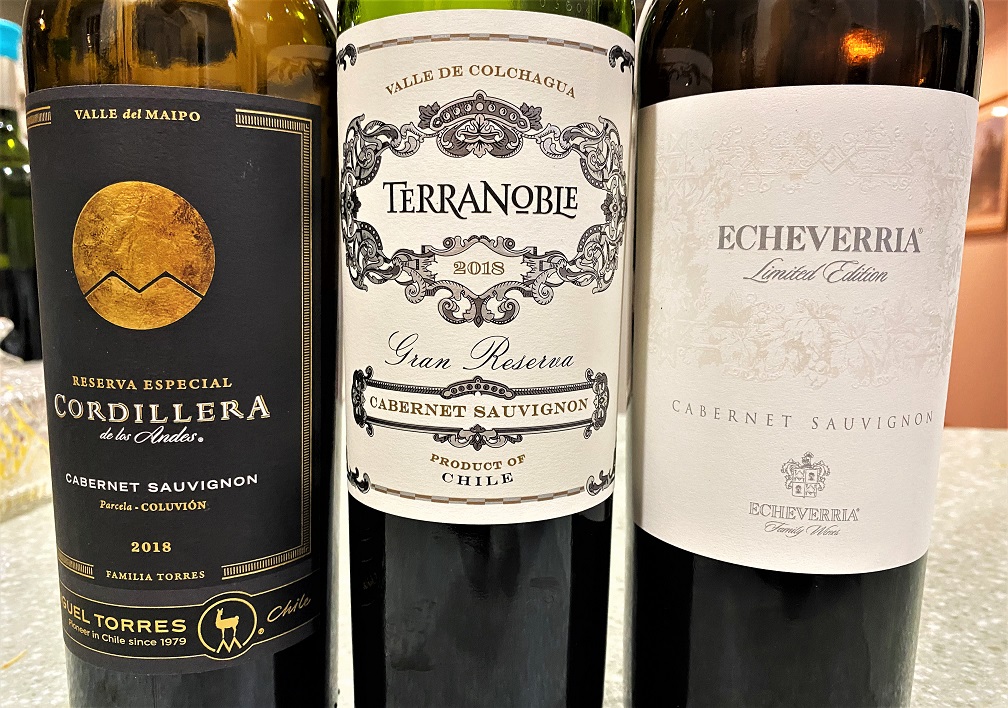
And then there were two. On the third day, I had two wines as my favorites – and they represented two regions.
For the final decision – Torres versus TerraNoble.
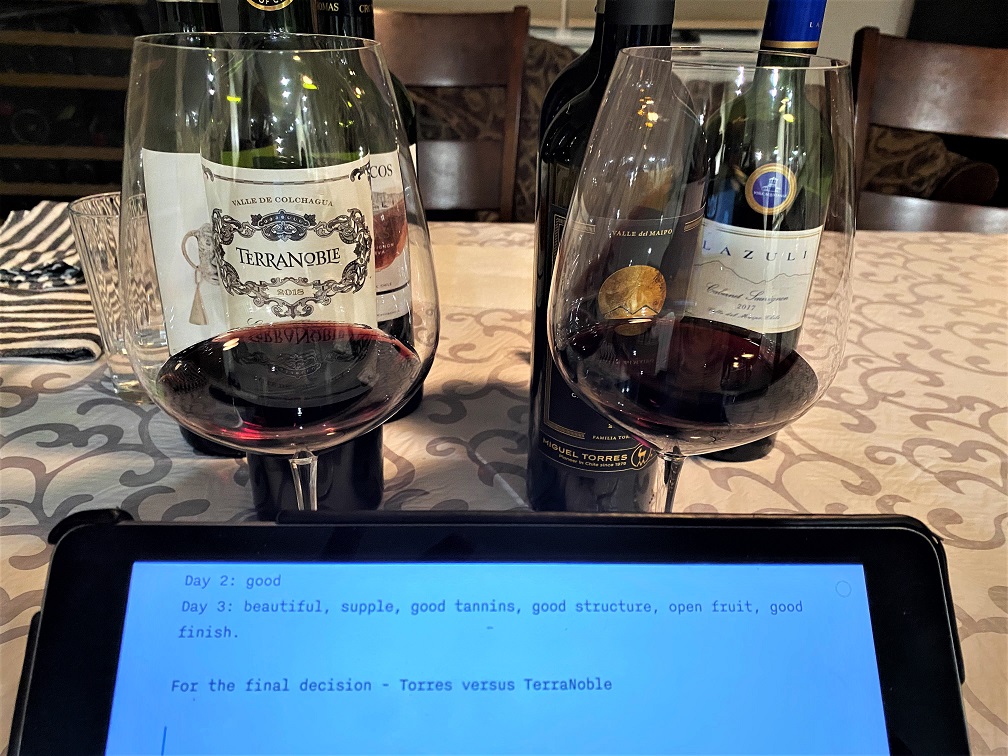
Wine geek at work
Nose: advantage Torres – dark chocolate, a hint of bell pepper. TerraNoble mostly closed
Palate: slight advantage Torres – better structure and better precision. Dark and concentrated. Will continue improving.
The winner: 2018 Miguel Torres Cordillera Cabernet Sauvignon Reserva Especial de Les Andes Valle de Maipo
So we can conclude that Maipo Valley won this strange competition, at least with a margin of error.
The assignment is complete. So what did we learn?
- Don’t play with your glasses, unless this is actually a goal of your exercise. Wine glasses matter and wine glasses
canwill confuse you. - Hey, wine glass matters.
- I probably should’ve done the blind tasting instead
- Chilean Cabs need time. Practically all showed better on the second day.
- I was unable to find the real differences between Colchagua and Maipo wines
Oh well. Play with your wine. Have fun. One way or the other, experience is still an experience, and as long as you desire, there is always something to learn.
Do you have a favorite Chilean Cabernet Sauvignon? Care to share? Cheers!
Stories and Passion and Pinot: Shane Moore of Gran Moraine
“Gran Moraine prides itself on producing experiential art in the form of Chardonnay, Pinot Noir and sparkling wines made to express the exquisite terroir of our Yamhill-Carlton Estate Vineyards.”
Experiential Art.
Not a bad way to introduce the winery, what do you think? Wine is art, all wine lovers can sign under such a statement, so “experiential art” sounds very near and dear to any wine lover’s heart.

Gran Moraine vineyard was planted in 2004 by Premier Pacific Vineyards in the Yamhill-Carlton district of Willamette Valley in Oregon, with 200 acres of hillside vines of Pinot Noir and Chardonnay. The vineyard took its name from moraines, glacial sediment left after the glacier movements in the last ice age. In 2013, the Gran Moraine Vineyard was acquired by Jackson Family and it is one of the 4 major properties owned by the Jackson Family in Oregon Willamette Valley.
I visited Gran Moraine last August and had an opportunity to taste a number of the wines and have a quick chat with the winemaker, Shane Moore. Then I followed up with the usual, virtual “conversation” and here is what transpired:
[TaV]: Was there a pivotal wine in your life?
{SM]: I’ve had plenty of wines that have possibly changed my life’s trajectory. However, I feel like the most pivotal wines in my existence have been those that seem to stop time. These wines provide my most fond wine moments and provide me with the most inspiration.
[TaV]: Is there a winemaker you would call your mentor? Someone you learned the most from as a winemaker?
[SM]: I think if I gave any specific shoutouts I’d be doing a disservice to so many of the amazingly talented and thoughtful winemakers I have had the pleasure to have worked with. Over my time I worked with and under at least 40 winemakers – I for sure learned a great deal from all of them. Another great group I both learned a lot and derived much inspiration from are the seasonal cellar workers we hire each year. With that I’m proud to say many have went on to become winemakers themselves.
[TaV]: Pinot Noir and Chardonnay wines are all about blocks and clones. How many clones of Pinot Noir and how many clones of Chardonnay do you grow? How many individual blocks do you identify for the Pinot Noir and Chardonnay?
[SM]: At the Gran Moraine Vineyard, there are 6 different clones of Pinot Noir and only 2 of Chardonnay. Every block is harvested and vinified separately. At any given time, there are around 100-120 different lots of wines. There are approximately 80 blocks – I don’t bring them all in – it’s too big of a vineyard for that – I bring in what I think of as around the top 30% of the acres.
[TaV]: Following up on the previous question – what is your approach to the blending of the final wines, both Pinot Noir and Chardonnay? Do you ever produce single block or single clone wines, and if you don’t do it now, do you have a plan to start producing such wines in the future?
[SM]: Blending final wines starts with having an abstract notion of the experience which you would like to have said “wine endue.” Then you purposely work within the parameters of the vineyard, the growing season and your production capabilities to craft something with that end goal in mind.
We will sometimes produce single clone or block wines when the wine is so profound that it would be a disservice to humanity to blend it away.
[TaV]: You already produce a few of the sparkling wines. What is your approach to harvesting the grapes for those wines – do you have specific plots which you designate for sparkling wines, or do you take an early pass through the vineyard prior to general harvest to get the grapes for the sparkling wine production?
[SM]: You know when you eat something so acidic that it makes your ears ring? I like to pick the fruit for sparkling wine when it’s just a little riper than that. We use specific blocks for the sparkling wine that are purposely farmed. Generally, these blocks are some of the most marginal sites on the vineyard; for example, north facing and heavier soils.
[TaV]: How much focus the sparkling wines program gets at Gran Moraine? Do you expect to produce more sparkling wines in the future, or you expect to stay at the level where you are at?
[SM]: Sparkling wine is currently about 15% of our production. I can see it growing some, it seems to be very popular.
[TaV]: Gran Moraine is a ~200 acres vineyard. If I understand it correctly, it is all planted with Pinot Noir and Chardonnay. Do you plan to plant any other grapes – Pinot Gris, for example, or will it stay strictly as it is right now?
[SM]: The suitable acres on the piece of land are pretty much planted out. I don’t think we’ll be grafting any of the Chardonnay or Pinot Noir over to anything else anytime soon.
[TaV]: When you make Gran Moraine Chardonnay, is there a specific style you are trying to achieve?
[SM]: I want the Chardonnay to have umami, electricity and tension. Of course, I also want it to be delicious.
[TaV]: Same question for the Gran Moraine Pinot Noir?
[SM]: With the Pinot I try to focus on it being beautiful and sleek creating power and complexity daftly by DJing with great music and surrounding it with happy people.
[TaV]: What are your favorite producers in Oregon? In the USA? In the world?
[SM]: Oregon: Adelsheim, Antica Terra, Antiquim Farm, Alexana, Belle Ponte, Brickhouse, Beaux Freres, Bethel Heights…..that’s just getting to the B’s! Too many really to mention – I’m always trading wine with people. I’m totally in love with Oregon wine.
USA: I’d have to go to CA and say some of my favorites there are Ridge, Drew, Papapietro Perry, Navarro, Hartford.
[TaV]: Is there a winemaker you would love to work with? A dream winemaker so to speak?
[SM]: Jean-Herve and Laurent Chiquet of Jacquesson. I hope they are listening. I’ve got ideas.
[TaV]: What’s ahead for Gran Moraine? Where do you see it in 10 years?
[SM]: We’ll probably be doing the same thing but hopefully with even more intention and weirder.
[TaV]: Is there a dream wine you always wanted to make? What would that be?
[SM]: A great New World Nebbiolo.


Here are the tasting notes for a few of the Gran Moraine wines I had an opportunity to taste during the visit:
Gran Moraine Brut Rosé Sparkling Wine Yamhill-Carlton (58% Pinot Noir, 41% Chardonnay, 6% Pinot Meunier)
Toasted notes on the nose
toasted bread, a touch of yeast, good acidity, crisp, clean
8, delicious
2018 Gran Moraine Chardonnay Yamhill-Carlton
A touch of honey notes, vanilla
Good acidity, good acidity, needs time
7+
2018 Gran Moraine Pinot Noir Estate
Brilliant fresh cherry notes, sage
Crisp, restrained, tart cherries and earthy notes, fresh tannins
7+
2017 Gran Moraine Upland Pinot Noir
Restrained nose, a touch of funk, cherries
Light palate, fresh, bright, cherries and cranberries
8-
Here you go, my friends. Another winery, another story of Passion and Pinot. Until the next time – cheers!
This post is a part of the Stories of Passion and Pinot series – click the link for more stories…
A Few Days In Seattle
 You know how you can look at something but not see it? Or think that you know something but really not knowing it at all?
I’m sure I don’t make much sense, but let me try explaining it better. I had been visiting Seattle for many years now, considering that Seattle had been a high-tech hub for ages. Seattle, Bellevue, Redmond, space needle, Pike’s Place. So in my mind, I was sure that I was well familiar with Seattle and all it has to offer to the visitors. I knew that in Pike’s Place there is a famous Russian-style eatery, Piroshky Piroshky, and that Pike’s Place Chowder, the winner of all of the New England Chowdafest competitions is also coming from Seattle. But turns out that lots of it was the knowledge, but not the experience. I knew that these places exist, but I actually never experienced them firsthand.
Until now.
I visited Seattle to attend a conference. That conference was actually supposed to take place 2 years ago, but as you are all acutely aware that happened to be the time that never was… The event was hosted by Amazon at their downtown offices, thus I guess for the first time I actually stayed in downtown Seattle and had a little bit of time to explore the city – and gain firsthand experience.
A picture worth a thousand words. So below you will see many, many thousands of words – in the form of the pictures of downtown, Pike’s Place, and the seaside.






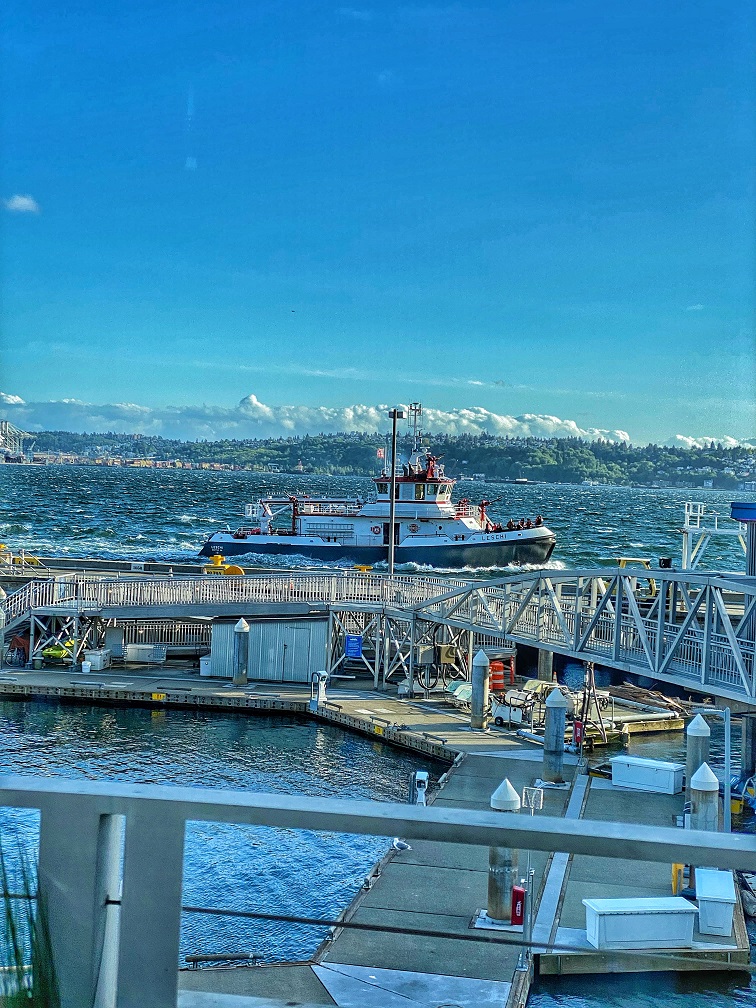

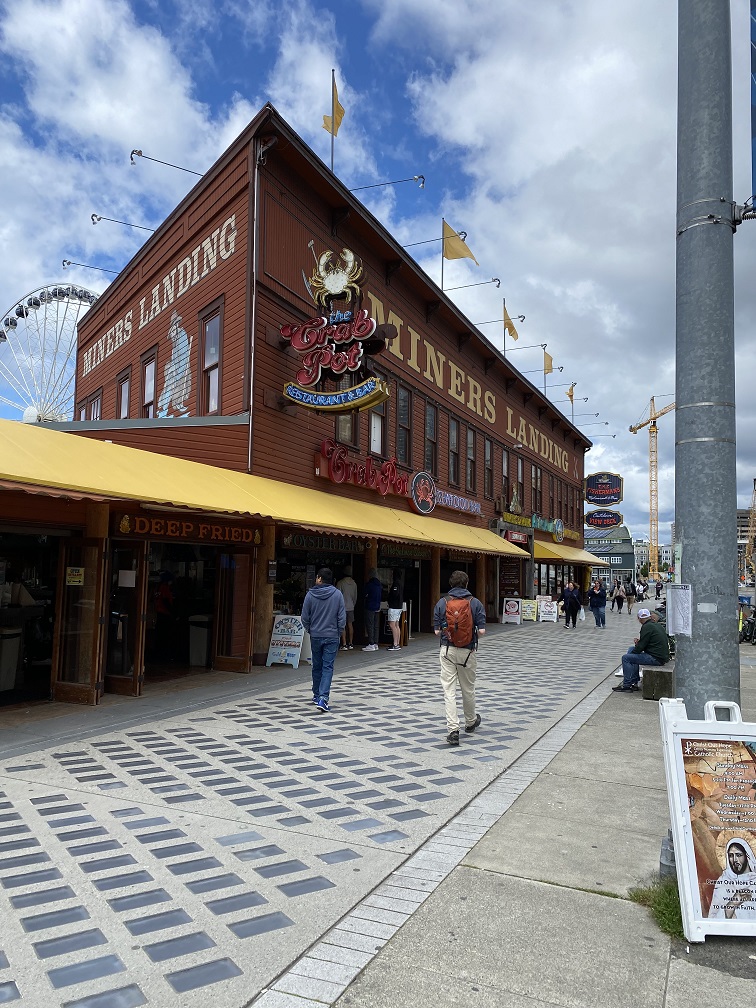





The original Starbucks at Pike’s Place
Now, a few more words about the food experiences.


Piroshky Piroshky had been around for 30 years, and it is definitely one of the staples of the Pike’s Place market, always adorned with a line of hungry guests. I was lucky as I walked up to the door because for some reason there was literally no line – or I simply was a jerk and cut people off without knowing. Either way, I tried two Piroshky, one with salmon, and one with beef and onion (the selection there is quite substantial, including sweets and vegan concoctions, but all the Piroshky are rather large, so there is a limit to how many you can have). Both were tasty, but I wouldn’t say that I was blown away. I would be happy to try them again but it is not something I would crave.
After trying to walk off all some of the calories of Piroshky I came across the Pike’s Place Chowder. I had an image of a nice-looking restaurant in my head, as Pike’s Place Chowder always competed in Chowdafest against actual restaurants – but the place was rather a “hole in the wall” style. Well, “hole in the wall” is synonymous with tasty food more often than not.
I never thought of it, but walking around Pike’s Place and looking at what is offered in all of the numerous eateries I was surprised by the similarities of the food offerings with what I would find on a typical visit to Newport or on Cape Cod, the quintessential New England – fried seafood of all sorts, fried oysters, clams, shrimp, scallops, fish, and yada yada yada. So the coast is a coast, whether the east or the west. Taking this revelation into account, it is not surprising that New England clam chowder was offered pretty much everywhere – and of course, it shouldn’t be surprising that Pike’s Place Chowder can successfully compete at the Chowdafest in New England.


Let’s go back to the Pike’s Place Chowder. The eatery also offers a full variety of seafood, fried and not. But as their menu boasts 8 or so different types of chowders, that is what I was interested in trying. Luckily, the restaurant offers sample packs, so I went for the 4 samples pack, as I was by myself and there is a limit to the amount of New England clam chowder one can consume (especially when two Pirozhki are still occupying the majority of the available stomach space). Another option was 8 samples pack, but that would be a waste of money and food. I decided to get New England clam chowder, Smoked Salmon chowder, Seared Clams chowder, and Market chowder (whatever the chef feels like on a given day). I got the sample pack to go for two reasons – there was absolutely no space to sit, and I still needed to lose at least 5–10 calories, so a walk to the hotel, albeit short, seemed like a good idea.
Remembering my Chowdafest experiences, Pike’s Place Chowder was never my top favorite, and nevertheless, for many years that I attended the Chowdafest, they have always won the New England Clam Chowder category. I only have two explanations for that phenomenon. Factor 1 – intimidation. They always bring a full display of medals to the competition, and when people see it, they are instantly inclined not to argue with success. I’m absolutely positive that same as with the wine if the tasting would be done blind, the results would be totally different. Factor 2 – customer service. At the Chowdafest, there is always a long line to each vendor’s stand. Pike’s Place always brings enough people to be able to carry their chowders around so the people wouldn’t have to wait in line.
See, I got really on a tangent here. As I got to my hotel room and took a first sip of the classic New England clam chowder, my first thought was “it’s okay, but this is not great” – hence the reminiscence on the subject of the Chowdafest. I can name a bunch of clam chowders (including the one which I make – yep, I have the nerve, I know) which I would unquestionably prefer – Grand Central Oyster’s Bar, Rory’s (a local restaurant in Darien, CT, always serving chowder with a tiny bottle of Sherry), and I’m sure many others. All four chowders were fun to try, with Seared Scallop chowder being my favorite. However same as with Piroshky Piroshky, I can eat it again, but that wouldn’t be something I would crave.
Now, to complete my culinary escapades in Seattle, here is one more, now truly unique experience.
I love the concept of “food in season”. Don’t get me wrong – I need my blueberries 365 days a year, whether they are grown locally in Maine or in Chile or Peru. But if you ever being to the “foodie heavens” in Europe – France, Switzerland, and the likes – there are always products which are only available for a short time – as, for example, white asparagus in Geneva which you can find on the restaurants’ menu only for about 3 weeks in the spring.

I never heard of Copper River Salmon before. Copper River is located in Alaska, and the salmon which is caught there is usually available in its fresh form only for a very short time in the spring, from mid-May through June. Copper River salmon is usually equated to the best Japanese marbled beef in its exquisite, luxurious flavor profile. Pier 66 Anthony’s seafood restaurant had just received their shipment of the Copper River Salmon two days prior to our visit, and it was on the dinner menu. We happened to dine at that restaurant on the last night in Seattle, so it was impossible to avoid such a rare treat.
Was that the best piece of salmon I ever had? Probably. It was soft, fluffy, airy, and full of flavor. This is probably something I would crave, and this is definitely the experience to remember. If anything, you should remember the name – Copper River Salmon – just in case the opportunity would present itself.
That’s my account of the few days in Seattle – well worth a visit even without taking the wine into account. But if you like wine like me, the visit to Seattle might be something you should simply crave. Why? I will tell you all about it in the next post…
Wednesday’s Meritage #160
 Meritage Time!
It’s been a while since I published one of these, but hey, life takes precedence. I don’t have a lot of the true wine news to share, but there are a few things I would like to highlight – you will have to pardon my SSP (for those not aware of the abbreviation, SSP stands for Shameless Self Promotion).
Oregon Wine Month
May is Oregon wine month! Basically, it means that during the month of May you are only allowed to drink wines from Oregon. What, you don’t have any on hand? Shame on you – and you have to go to the wine shop to fix this right now. But all the jokes aside, Oregon makes wonderful wines well worth celebrating. Pinot Noir, Chardonnay, Pinot Gris, Riesling, sparkling wines, Syrah, Cabernet Sauvignon, Cabernet Franc – we can go on and on. Oregon got something for every wine lover’s palate – Oregon wines are well worth seeking and enjoying, during Oregon wine month or at any other time.
Stories of Passion and Pinot
Stories of Passion and Pinot is one of the longest running series of posts on this blog. The series started in September 2016 via my collaboration with Carl Giavanti, a wine industry publicist. In this series, we are profiling Oregon winemakers who are obsessed with Pinot Noir via interviews. Currently, the series includes 21 posts, profiling 13 wineries and winemakers from Willamette Valley. I finally had the time to create a dedicated page for the whole series, which you can access through the top Interviews menu, or by clicking here. Also, I have a number of new interviews coming up on these pages, including Adesheim Vineyard, Gran Moraine, and WillaKenzie Estates.
More Interviews and More [Italian] Wines
Another “local” update. It seems that Italian wines are the wines I have the biggest exposure to, at least from the outreach point of view. Next week I will publish an interview with an Italian winemaker Lucio Salamini from Luretta in Colli Piacentini in Emilia-Romagna. I also lately had a number of delicious Italian wines from Tedeschi (including my eternal love, Amarone), San Felice who just celebrated 50 years since the production of Vigorello, the first “super-Tuscan” wine in Chianti Classico, and more. All of this is coming soon on these pages, so watch this space.
That’s all I have for you for today. The glass is empty, but the refill is on the way. Cheers!
Mother’s Day Escapades – 2022 Edition
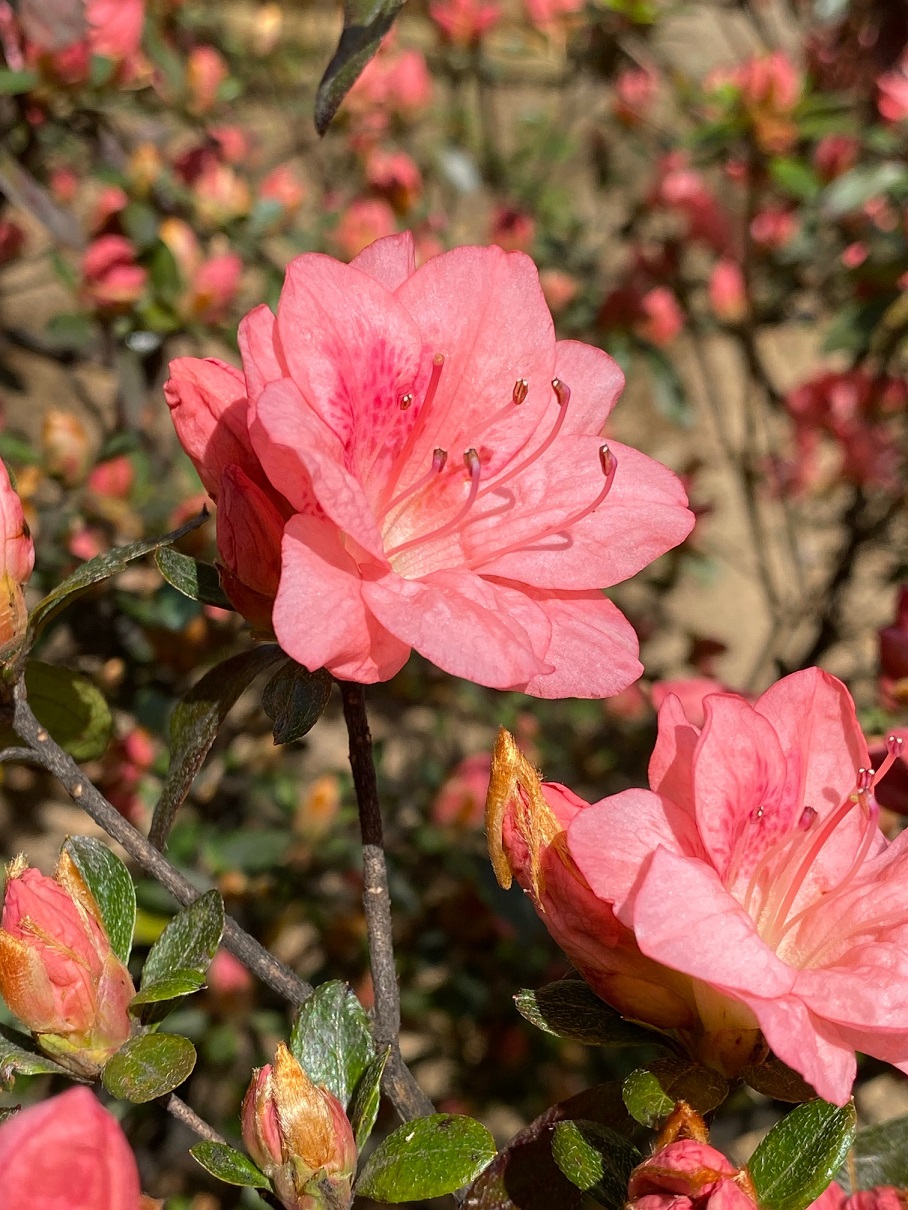 Sometimes, the best plan is to have no plans.
When it comes to holidays, I usually start sweating it long in advance. What wine is worthy of a celebration? What should I open to match up the holiday? What will everyone enjoy? This chain of thought usually is followed by a long process of opening wine cabinet doors and pulling shelves back and forth. Yes, I might have a loose idea of what should be available, but I still don’t remember where which wine is, so I have to really search for it. It’s a process, and more often than not I even manage to annoy myself with the “wine selection paralysis” of my own making.
Mother’s Day last Sunday was nothing like the usual. There were only 5 of us. My wife drinks very little wine as of late (or any alcohol for that matter), my mother-in-law prefers tequila, and my kids don’t like wine, so I didn’t have much to worry about in terms of the wine program. Also as spring is settling in here in Connecticut, there were lots to do outside – cleaning, building new raised beds, preparing for the soil and mulch delivery which were taking place the next day.
Coming back into the house after a few hours of work outside I realized that I’m craving a glass of white wine. The first bottle which grabbed my attention was unpretentious 2020 Domaine René Malleron La Vauvelle Sancerre. Sancerre is a rare guest in the house, as it is usually a more expensive version of Sauvignon Blanc than the others, and for my personal preferences, I find that I like a generic Loire Sauvignon more than a typical Sancerre. I’m not even sure how I got this bottle, I’m assuming it was something I found through a WTSO offer.


Never mind this “not liking of Sancerre” – this bottle was superb. Fresh, floral, and a touch grassy on the nose, it delivered exactly the same profile on the palate – bright, elegant, round, crisp, clean, thirst-quenching, and delicious.
I was thinking about opening the bottle of Syrah for dinner. While looking for a particular bottle to open, I came across this 2004 Vaucher Père et Fils Gevrey-Chambertin. Of course, this is Burgundy and not a Syrah, but there is nothing wrong with celebrating with Burgundian Pinot Noir instead of Californian or Washington Syrah, especially considering that I was looking at this bottle for a while.


This happened to be another successful choice for a few reasons – it was at its peak, probably about to start the journey down. While it tasted good at the moment, it was also a timely decision as I’m not sure it would be still enjoyable a few years down the road. The wine had smoked plums and cherries on the nose, and more of the same darker fruit profile on the palate, introducing the notes of dried fruit, but still having enough freshness to be enjoyed. The wine also well complemented the burgers, which were our main dish. Those were good burgers – Peter Luger burgers from our local Darien Butcher Shop (DBS for short), and good burgers are well worthy of a good glass of wine.
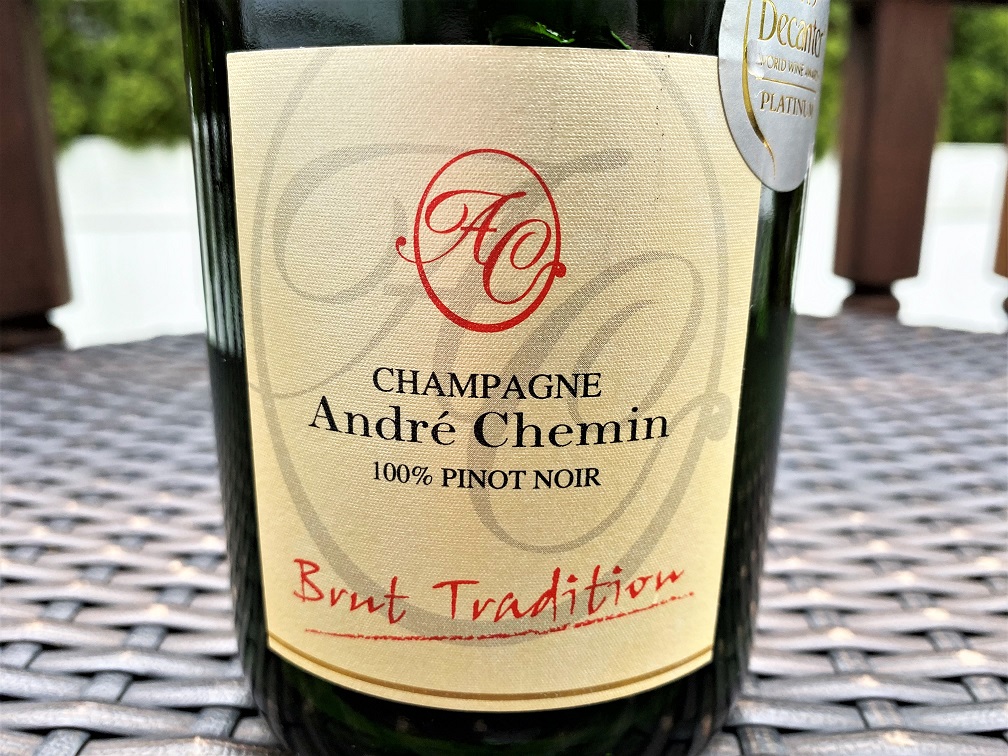
As a surprise, my daughter requested a Mimosa while dinner was in the making. I don’t have a lot of bubbles in the house, so at the moment I didn’t have any Prosecco or a Cava which would be my preferred choice for this purpose. I opened a bottle of one of my favorite everyday Champagne – NV André Chemin Brut Tradition Champagne, which is made with 100% Pinot Noir. While the girls enjoyed their Mimosas, I was happy to have a few glasses of this delicious wine – a perfect combination of freshly toasted bread and yeasty notes, crisp, refreshing, and satisfying.
Here it is, a full account of a celebration in the wine terms. It was definitely unusual for this household to drink only French wines, and also classic French wines – Burgundy, Champagne, and Sancerre – in one sitting. Interestingly enough I believe all three wines were procured through WTSO, which is simply a fun fact I would like to mention.
Father’s Day is coming in about a month – it might be the time to start worrying about my wine choices…
New Zealand Wines – Beyond Pinot Noir and Sauvignon Blanc
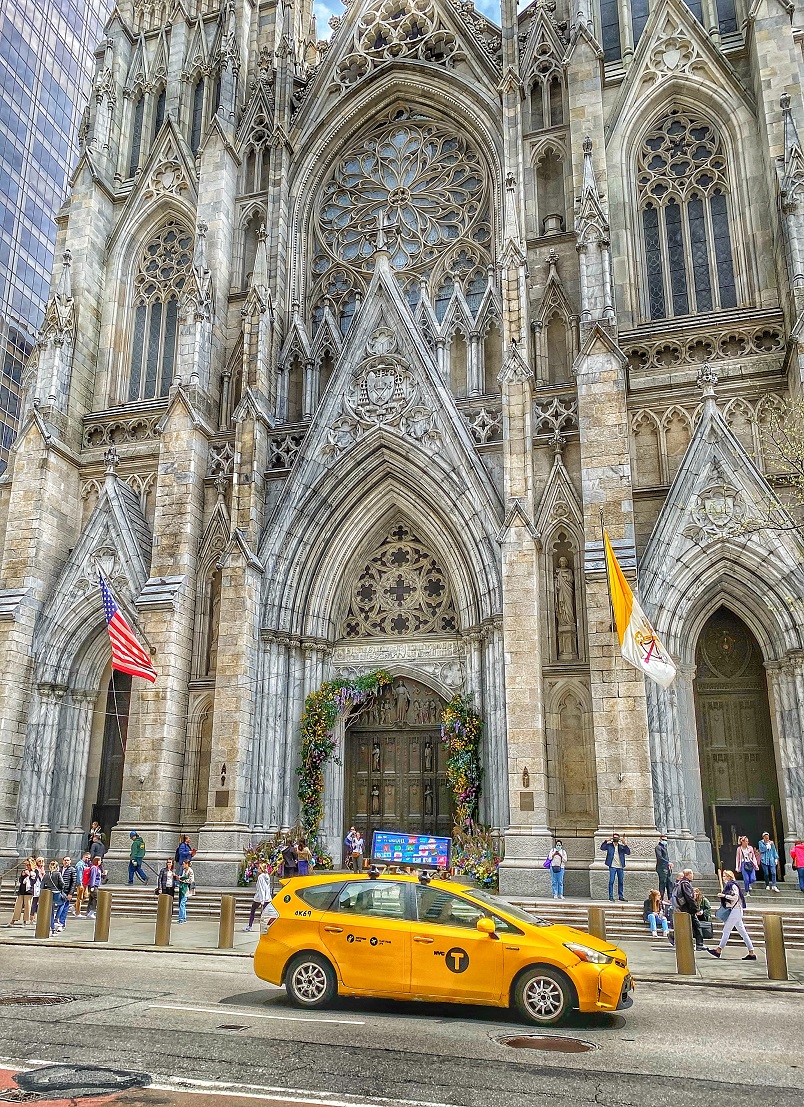 Let’s say we will stop a random wine lover and will ask what is the very first wine which comes to mind if we would talk about California? I guarantee you that Cabernet Sauvignon and maybe Chardonnay would be the first associations. What about Australia? Shiraz, no doubts. Argentina will serve as a reference to Malbec, and most likely the Rioja would be the first association for Spain. Meanwhile, each one of these countries and regions successfully produces wines from literally hundreds of the grapes.
Now, what would be the first wine association for New Zealand? If you said Sauvignon Blanc or Pinot Noir, I would fully agree with you. Meanwhile, the New Zealand wine scene offers so much more than those two grapes which had been farmed successfully for more than 100 years. New Zealand leads the wine world in terms of sustainability and organic winemaking (here is the post from the last year, for example). And, of course, New Zealand Bordeaux blends and Syrah had been on wine lovers’ horizons for many years, but coming fresh from the New Zealand wine tasting in New York, I can’t help it to comment on the diversity of the wines represented in the tasting.
Well beyond the traditional Sauvignon Blanc and Pinot Noir, we had an opportunity to taste Chardonnay, Riesling, red Bordeaux blends, Syrah, sparkling wines, skin-fermented wines, natural wines, and more.
I had about 1.5 hours to taste about 60 wines, walking around and self-pouring – I think I managed to complete this task with some degree of success – whatever you can understand while spending 1.5 minutes per wine on average. While the tasting format and setting were comfortable, I still had a few gripes about it. First, an absolute majority of the white wines were too warm. This was the second tasting in the day, so I don’t know for how long the bottles were standing on the table, but they should’ve been put in the wine chillers at least, even without ice. I’m sure tasting white wines too warm was detrimental for many assessments. My second gripe was with the food – while the food was carried out all the time, most of those little bites had spice/flavor profiles not conducive to tasting subtle wines such as Pinot Noir. I took a few bites at first but quickly stopped paying attention to the food as I understood that it was skewing the palate in the wrong direction.
Before I will leave you with all of my tasting notes (for what it is worth), I want to mention a few favorites.


First, the natural, unfiltered Carrick Winery The Death of von Tempsky Riesling Central Otago was a riot. Yes, it was the wine for the wine geeks, but it invoked association with some of the best natural wine producers, such as Jean-Pierre Robinot and Frank Cornelissen, and every sip was absolutely thought-provoking.
Then there was the Bordeaux blend from Te Mata Estate Winery Coleraine Hawke’s Bay, which was superb – perfectly on point, varietally correct, and delicious. These were my only two 5-rated wines (I didn’t use my traditional rating system, so I stayed with the suggested “5-star” approach, but of course, had to expand it by using “+” and “-“).
Two of the Syrah wines were outstanding, with Bilancia la Collina Syrah Hawke’s Bay offering a purity of the black pepper profile, which was simply superb. And Neudorf Vineyards Neudorf Home Block Moutere Chardonnay Nelson completes the list of top favorites with its perfectly balanced profile of everything which a good Chardonnay should have – apples, vanilla, honey, a hint of butter – everything.
There were lots more absolutely delicious wines, so without further ado, here is the list of wines I tasted, sorted by the regions – with my brief notes.
Auckland
2018 Kumeu River Wines Kumeu River Estate Chardonnay Auckland – Crisp, acidic, tart apples on the finish. Interesting wine. Not the wine we taste. 3
2015 Tantalus Estate Écluse Reserve Auckland ((Cabernets/Merlot/Malbec) – Beautiful Bordeaux blend. Elegant, round, powerful. 4+
Central Otago
2014 Aurum Organic Amber Wine Central Otago – Tasty, but should be colder? Not as impressive as expected. 3
2019 Burn Cottage Burn Cottage Vineyard Pinot Noir Central Otago – Beautiful Pinot nose, plums, lavender, elegant. Tart, cherries, good acidity, good midpalate weight. Elegant. 3+
2020 Carrick Winery The Death of von Tempsky Riesling Central Otago – Wow. Acidity, depth, appearance. Wine for the geeks. Amazing. 5
2016 Domaine Thomson ‘Surveyor Thomson’ Pinot Noir Single Vineyard Central Otago – Super tart. Very lean. 2
2020 Felton Road Calvert Pinot Noir Central Otago – Beautiful Pinot nose. Plums, cherries, inviting and elegant. Round, delicious palate, good balance. 4
2018 Grasshopper Rock Earnscleugh Vineyard Pinot Noir Central Otago – Beautiful nose, touch is smoke. Elegant at first, but the finish is lean and tart. Food wine. 2
NV Quartz Reef Methode Traditionnelle Brut Central Otago – Delicious. Bread, yeast, toasted notes. Superb. 4
2020 Rippon Gewurztraminer Central Otago – Okay (not really). 2-
2020 Te Kano Blanc De Noir Central Otago – Bright floral nose, tropical fruit. Tart fruit on the palate, I would like a bit less sweetness. 3
2020 Te Kano Fume Blanc de Noir Central Otago – Restrained, a hint of fruit. Clean acidity at first, but then super acidic on the finish. Probably good with oysters. 2
2015 Ostler Lakeside Riesling Spatlese Waitaki Central Otago – Excellent. Gunflint, petrol. Good balance of sweetness and acidity. 4+
2019 Valli Waitaki Vineyard Pinot Noir Central Otago – Beautiful smokey nose. Elegant, clean, good presence. One of the best Pinot in the tasting. 4+
2020 Valli Waitaki Vineyard Riesling Central Otago – Not bad. Food friendly. Classic Riesling. 3+


Gisborne
2020 Millton Vineyards & Winery Te Arai Chenin Blanc Gisborne – Sour apples on the nose, lemon tart. Tart lemon on the palate, nice, elegant. 4-
Hawke’s Bay
2019 Alpha Domus The Barnstormer Syrah Bridge Pa Triangle Hawke’s Bay – Superb. A hint of barnyard on the palate and nose, a touch of pepper. Pronounced tannins on the finish. 4+
2019 Bilancia la Collina Syrah Hawke’s Bay – Beautiful nose, rose petals, a hint of pepper. Superb. Black pepper, crisp, light, elegant. 4+
2018 Decibel Wines Malbec Gimblett Gravels Hawke’s Bay – Elegant at first, but could benefit from a bit more body. Tannins are very explicit. Needs time. 3
2017 Smith & Sheth CRU Heretaunga Chardonnay Hawke’s Bay – Delicious. Perfect balance, a hint of gunflint, elegant, restrained. 4+
2018 Te Mata Estate Winery Coleraine Hawke’s Bay (Cabernet Sauvignon/Merlot/Cabernet franc) – Perfectly Bordeaux blend all the way, balanced, cassis, round, delicious. Will improve with time. 5-
Marlboro
2019 Astrolabe Wrekin Chardonnay Marlborough Southern Valleys – Delicious. Round, good fruit, good acidity. Excellent chard rendition. 4
2021 Brancott Estate Classic Sauvignon Blanc Marlborough – A classic NZ Sauvignon Blanc! Cassis, fresh grass, bigger palate than I expected, a little plump. Nose – 5+, palate – 4
2020 Churton Sauvignon Blanc Organic Marlborough – Ok. Superacidic. 2
2020 Clos Henri Vineyard Petit Clos Sauvignon Blanc Marlborough Wairau Valley – Very nice. Sancerre style. Freshly cut grass, flowers, perfect balance. 4
2021 Dashwood Sauvignon Blanc Marlborough – Classic nose with restraint, mostly grass. The palate is too sweet. 2
2021 Deep Down Wines Organic Sauvignon Blanc Marlborough – Sancerre-like elegance. Crisp but a bit too acidic. 3-
2019 Dog Point Vineyard Sauvignon Blanc ‘Section 94’ Marlborough Wairau Valley – Crisp, tart. Tangy. Interesting. 3
2017 Giesen Single Vineyard Clayvin Chardonnay Marlborough Southern Valleys – Excellent. Crisp, well balanced, delicious. 4-
2020 Glover Family Vineyards Zephyr Agent Field Blend Marlborough Wairau Valley (Sauvignon Blanc, Riesling, and Gewürztraminer) – Excellent. Wine for geeks, very tasty. Tart, crispy, tangy. Wine for geeks for sure. 4


2017 Greywacke Vineyards Greywacke Chardonnay Marlborough Wairau Valley – Gunflint, butter, vanilla. Not bad, but need to be a bit more balanced. 3+
2017 Hans Herzog Estate Mistral Marlborough (Viognier/Marsanne/Roussanne)- Interesting. Not my wine. 2
2021 Jules Taylor Sauvignon Blanc Marlborough – Elegant nose, a hint of fresh-cut grass. Nice, elegant, but a bit tart. 3
2020 Jules Taylor OTQ Single Vineyard Sauvignon Blanc Marlborough Southern Valleys – Interesting. Softer than a typical NZ SB, not bad. 3
2021 Tohu Awatere Valley Sauvignon Blanc Marlborough – Elegant, restrained nose, good palate, classic. 4
2021 Loveblock TEE Sauvignon Blanc Marlborough Awatere Valley – Horrible? A nose and palate of spoiled oranges. 1
2019 Mahi Pinot Noir Marlborough Wairau Valley – Lean. A bit underwhelming, but drinkable. 3
2021 Stoneleigh Sauvignon Blanc Marlborough Wairau Valley – Excellent. Classic. Clean, a touch of grass, cassis, a touch of grapefruit. Delicious. 4
2019 Te Whare Ra Single Vineyard Riesling ‘D’ Marlborough Wairau Valley – Beautiful! Crisp, tart apples on the finish. A very apple-forward version. 3+
2021 Vavasour Wines Sauvignon Blanc Marlborough Awatere Valley – Elegant, but the acidity is too much – the wine should be colder. 3
2021 Villa Maria Private Bin Sauvignon Blanc Marlborough – Superb. Delicious. Classic, fresh, crisp. 4
2019 Villa Maria Single Vineyard Taylors Pass Pinot Noir Marlborough Awatere Valley – Nice, elegant, good round fruit. 3
Martinborough
2018 Ata Rangi Pinot Noir Martinborough – Elegant nose with a hint of smoke. Elegant on the palate, but a bit too lean. 3
2019 Dry River Wines Dry River Riesling Martinborough – A riot. Petrol on the nose, nice, elegant, good acidity, good fruit. Delicious Riesling. 4
Nelson
2020 Neudorf Vineyards Neudorf Home Block Moutere Chardonnay Nelson – Outstanding. Perfectly balanced. Lemon, apples, a remote hint of butter. Excellent. 4+
2021 Seifried Estate Grüner Veltliner Nelson – Elegant, classic Gruner. Herbal nose, round grassy feel on the palate with some Meyer lemons in the mix. Great effort. 4
Northland
2020 The Landing Chardonnay Northland – Delicious. Apples, a hint of vanilla, round, very elegant. 4+
Waipapa
2021 Waipara Springs Pinot Gris Canterbury / Waipara – Nice. A bit too sweet. 3
2021 Waipara Springs Sauvignon Blanc Canterbury / Waipara – Ok. 3
2020 Black Estate Home Pinot Noir Canterbury / Waipara – Interesting. Unusual. Tannic. 3
2018 Mountford Koyamo Pinot Noir Canterbury / Waipara – Excellent. Clean, classic, perfectly balanced, elegant. 4
2018 Mt. Beautiful Winery Pinot Noir Canterbury / Waipara – Not bad. Too lean and tannic. 2
2018 Pegasus Bay Sauvignon Semillon Canterbury / Waipara – Interesting nose, gunflint. Crisp palate. 3+
2018 Pyramid Valley North Canterbury Chardonnay Canterbury / Waipara – Not bad. Middle of the road Chardonnay. 3
2018 The Boneline Iridium Canterbury / Waipara (Cabernet Sauvignon, Cabernet Franc & Merlot) – Iodine and rocks on the nose. The palate is a bit underwhelming. 3
Wairarapa
2019 Borthwick Vineyards Paddy Borthwick Right Hand Pinot Noir Wairarapa – Interesting nose – plums with a distant hint of barnyard. Round, powerful, expressive, peppery. More of Oregon style. 4+
There you are, my friends – New Zealand wines beyond Sauvignon Blanc and Pinot Noir. New Zealand wines are not easy to find in the USA but are well worth seeking. Cheers!
Celebrate Spring and Creativity with Aridus Wines
 Spring is here in Connecticut. There is still some frost on the cars’ windshields in the morning, but the greens are popping out everywhere, daffodils abound, and cherry trees look pretty in pink. It still feels surreal with the horrible events unfolding in Ukraine, but yes, the Spring has arrived.
Okay, so we acknowledged the Spring, now let’s talk about wines and creativity.
Spring is not only about flowers. Spring is also about new wine releases, such as the one from Aridus Wine Company in Arizona.
Aridus is a family winery in southeastern Arizona, the area where the majority of Arizona’s grape growing is concentrated. Aridus, which means in Latin “dry or arid”, is a young family winery, built on the passion and the desire to make world-class wine. The winery started by purchasing 40 acres of farmland in the Turkey Creek area in 2009. In 2012, a state-of-the-art winery was built, first making wines from the grapes brought in from the vineyards in Arizona, New Mexico, and California. The white grapes were first planted on the estate’s land in 2015, followed by the red grapes in 2017, all using sustainable farming methods.
The white grapes are already used in the estate wines, such as Sauvignon Blanc and Viognier. Being curious about the estate red grape program, I asked Lisa Strid, the Aridus winemaker, when does Aridus plan to produce estate red wines, and here is the answer I received: “We are in the process of transitioning over to estate reds – our first vintage of reds from the vineyard was in 2019 when the Cabernet Sauvignon was on its third leaf. However, I’m not certain as yet whether we’ll be bottling that as 100% estate. We weren’t sure what yields would look like, so in order to ensure we’d have enough Cab for the vintage, we also purchased a few tons from our favorite grower in New Mexico. So it may wind up being a blend for the Aridus tier, and we’ll almost certainly do an estate bottling for the Barrel Select Tier. We just bottled the 2018 Cab Sauv two weeks ago, so it will be at least another year before we actually bottle and release the 2019.
I tasted Aridus wines last year, and I was impressed with the quality. This year, I had an opportunity to taste Aridus wines again, and now I’m impressed not only with the quality but with the creativity. How so? I thought you would never ask – but thank you for this question. To answer I will do something which I generally work very hard to avoid – directly citing the tasting notes. But in this case, the description of the 2019 Aridus Viognier from the tasting notes is simply perfect and worth quoting:
“This year, we conducted extensive testing both in the vineyard and the winery in order to better understand the optimal conditions for growing and fermenting this fruit from our unique corner of the winegrowing world. In the vineyard, we tested a range of UV–blocking netting. We had noticed that since this variety tends to hang below the canopy, it is particularly susceptible to sunburn. We netted two rows each with: 1) a thick bee and wasp netting; 2) Chromatinet Red 30% UV blocking; and 3) Chromatinet Gray 30–35% UV
blocking. These lots were picked separately once they hit brix targets and fermented in identical stainless steel barrels. In the winery, we experimented both with yeast and with fermentation vessels. It is our standard practice to ferment whites in stainless steel, but this year we decided to ferment a control in stainless steel, an experimental lot in a sandstone jar, and another in an acacia wood barrel. In 2018 we performed extensive yeast trials and had alit upon Ferm Aroma White as our favorite of all the yeasts tested. This year, one of our technical reps asked if we wouldn’t mind testing Christian Hansen Jazz direct inoculation yeast on a white variety, and we decided Viognier was the best option. When the bulk of the
Viognier arrived at the winery, we pressed it all to one large tank before racking it off to each of the vessels for fermentation to ensure homogenous juice to best assess the differences between the lots. All in all, we wound up with eight separate trial lots. We definitely found ourselves gravitating towards certain treatments over others (we unanimously loved the sandstone jar), but when it came time to blend, we found that we loved the way that all the lots tasted blended in proportion to the volumes of each of the trials.”
Protecting grapes from sunburn using different methods? Deciding on the best fermentation vessel and playing with the yeast? Aridus might be a young winery, but I would say that older wineries should definitely take notice, especially considering the climate change which is not going to go anywhere.

Moving on from creativity to the glass, here are my notes for the 4 wines I tasted:
2021 Aridus Sauvignon Blanc Cochise County Arizona (13.3% ABV, $35, 90% stainless steel, 10% 4 months in oak, 100% estate fruit)
Straw pale, almost translucent
Tropical fruit, golden delicious apples, round, intense
Tropical fruit, initial sweetness impression quickly replaced by crisp, vibrant acidity, with acidity on the finish. I would say it is Torrontés in the blind tasting, but still, a nice wine.
Drinkability: 8-, easy to drink. A crowd-pleaser – I opened this bottle during dinner with friends – both of my friends loved this wine, and even my kids, who generally don’t drink wine, said that it was excellent.
2019 Aridus Viognier Cochise County Arizona (14.4% ABV, $35, 19 months in oak, 100% estate fruit)
Straw pale
Nicely floral and perfumy on the nose, round, inviting, medium ++ intensity
Round, restrained, elegant, plump, roll-off-your tongue, good acidity
Drinkability: 8-/8, nice and elegant. Was improving over a few days as the bottle was open.
2018 Aridus Syrah Cochise County Arizona (14.5% ABV, $46, 90% Syrah, 10% Viognier, 32 months in oak, 50% new, 50% neutral)
Dark garnet
The nose of plums, cherries, and meat stew
Medium body, tart, firm structure, some underripe dark fruit. Under-extracted for my palate – I want a bigger body on this wine.
Drinkability: 7+, needs time – these were 1st-day impressions
In 4-5 days, 8/8-, round, good amount of fruit, good balance
2019 Aridus Graciano Cochise County Arizona (16.6% ABV, $46, 99% Graciano, 1% Petit Verdot, 16 months in oak)
Dark garnet
Beautiful intense nose, plums, earth, smoke, sage, complex
Cherries, plums, well-integrated tannins, firm structure, generous, layered, perfectly balanced
Drinkability: 8/8+, outstanding. This was my personal favorite from the tasting, offering a good Rioja impersonation. Very well done.
Here you are, my friends. Spring, wine, and creativity. I will gladly drink to all.
Wine News and Updates
When it comes to the wine world, there is never a dull moment – things are happening all the time. Today, the world of wine is indelible from the world of technology, with no shortage of exciting products. Wine is also a business, big and important business, again, with no shortage of exciting developments. Let’s take a look at some of the latest business and technology wine news from around the globe.
Let’s start with something unexpected – cars. Cars and wine should never be mixed together – driving is one of the most dangerous tasks humans routinely perform, and it requires a clear sober head. So what can we talk about here? Let me tell you. last week Elon Musk made an interesting announcement. As Tesla feels the heat of the serious competition from all leading automakers, the electric carmaker decided to differentiate itself with the addition of an (albeit optional) reverse osmosis accessory which can remove alcohol from wine. This option, available exclusively for models S and X, would add about 5 grand to the list price of the vehicle. but the opportunity to enjoy your precious Latour or Harlan during the ride can not be passed on lightly. Open the compartment, pour in the bottle, and the spout on the dashboard will become operational once the alcohol is removed from the wine. Based on preliminary market data, Tesla has a hard time fulfilling all the requests for the accessory. We shall see if the other manufacturers will follow the suit.
The next news is almost a no-brainer. It is the one from the series “how I didn’t think of it before”. Coca-Cola company entered into a partnership agreement with Bacardi USA to produce a range of Rum and Coke products. The product line will include all possible permutations of Coke (Diet, Zero, and the others) with the full line of Bacardi rums – light rum, dark rum, and the others. The new product is expected to hit the store shelves at the end of May, just in time for the grilling season. Retail prices will start at $20 for the 4 pack, with consumers already waiting impatiently for the product. I’m really curious how Pepsi will respond, if ever – is Rum and Pepsi even a thing?
Our next news comes from the wine glassware leader, Riedel, which never stops innovating. As you know, Riedel glasses are developed to enhance the aromas of a specific type of wine – Pinot Noir, Cabernet Sauvignon, Chardonnay, and many other wines have glasses of the specific shape offering the best sensory experience to the wine drinkers. The only disadvantage of the wine-specific glasses is that you need to have them all on hand, as you never know what bottle of wine you will decide to open, and even storing so many different glasses might become a challenge in itself. To address the issue, it appears that for the past 10 years, Riedel was secretly working on a project with the United States Air Force Research laboratory to develop a glass that can change its form based on the request from the smartphone app. The glass is made of some smart material – again, the exact details and fiercely guarded – which responds to the electric impulses from the control module embedded in the stem and changes its shape as needed. The glass will appears soon in the wine catalogs, with the expected price tag of $750 for two – it is expected that the price will drop over the next 2-to 3 years as production will increase.
Can we talk about wine today and not talk about NFTs (Non-fungible tokens)? Of course not. Gallo family company, which had been producing wines in California since 1933, teamed up with Beeple, one of the most famous NFT artists in the world. to produce a series of unique labels, each one of them having its unique value, as is always the case with NFT art. About 14,000 cases of the 2021 Gallo Hearty Burgundy will be adorned with Beeple’s artwork and will be available at select retailers around the USA. Gallo will dictate the initial price for the NFT-labeled bottles, but the retailers will be allowed to sell the wine in the auction-like model, with 25% of the extra money going back to Gallo. These NFT-labeled bottles are expected to be a big hit with consumers, and reportedly many wine producers around the world, such as Torres in Spain, Concha y Toro from Chile, Cavit from Italy are in talks with NFT artists to create their own collections.
Our last news piece might be the most bazaar of them all. As you know, Korbel Champagne Cellars in California produces wine in California under the Champagne brand (California Champagne). Based on the source speaking on condition of anonymity, Bernard Arnault, top executive of the French luxury goods conglomerate LVMH (Louis Vuitton Moet Hennesy), got fed up with Champagne’s name being used outside of the Champagne region in France alongside coveted LVMH brands such as Krug, Dom Perignon, and Ruinart, and announced that LVMH entered into the definitive agreement to acquire Korbel at an undisclosed amount. The deal is subject to the approval of the boards of directors of both companies, expected to be closed in 6 months. Once the deal is complete, Korbel California Champagne will be renamed the Korbel California Sparkling wine.
That’s all the news I wanted to share at the moment. Cheers!
Last Bottle Sign Up ($10 credit)




 Talk-A-Vino