Wednesday Meritage #162
 Meritage Time!
Here is your [extremely irregular] update on the interesting wine (and food) happenings that recently grabbed my attention. Let’s start with some local updates first.
New stories of Passion and Pinot
Last week I published a new interview in the Stories of Passion and Pinot series – this time with David Adelsheim, one of the early pioneers of the Oregon Pinot revolution. This is one of the very best interviews in the series and will be well worth a few minutes of your time – if you will crave a glass of Pinot after reading it, I’m not responsible for it. There are 15 interviews plus multiple updates in the series, and more interviews and updates are up and coming in the series – my conversations with Erik Kramer of WillaKenzie and Bill Sanchez of Potter’s Vineyard will be published soon.
Yelp 100 Top Restaurants
Yes, I’m mostly writing about wine in this blog, but I love food and I’m actually a “yelper”, both as a user of and as a contributor to the popular Yelp website. I rely on Yelp’s recommendations when I travel, and I go out of my way to write a review after visiting a restaurant (I rarely review other businesses or attractions). Yelp recently released a list of the 100 most popular restaurants around the US – it is a fun reading to see what the others like, so you might want to spend a few minutes browsing through. Who knows, maybe you will see your favorite eatery among the top 5…
This Day In Wine History
I love data. It doesn’t have to be anything useful. Just data, information, facts – especially if it concerns subjects that are near and dear to my heart – like wine. As a data collector, do you want to know what happened in the history of wine on a specific day of the month – let’s say, February 1st? Now you can, with the help of the website called This Day in Wine History. For example, I just learned what happened on February 1st. According to the website, “February 1, 1141: On this day, the foundation of Barone Ricasoli, Italy, was laid. The Tuscan winery is the oldest one still in business in Italy”. Or here is another February 1st event: “February 1, 1801: On this day, John June Lewis, Sr was born. He is known as the first African-American winemaker in the United States”. The information on the website is not limited to the singular date events – you can find in-depth articles about the history of the wine decanters or all you wanted to know about widow Clicquot, one of the key figures in the history of Champagne. Check it out, I have a suspicion that you might find it useful and entertaining.
OTBN – Open That Bottle Night
It is never too early to talk about one of my favorite wine holidays – Open That Bottle Night, or OTBN for short. This year, OTBN, which is celebrated on the last Saturday in February, will fall on February 25th. I wrote about OTBN numerous times so if you are not familiar with the concept please click on the link. For the rest of us, the game is on, and it is not too early to start thinking about those special bottle(s) that are waiting and begging to be opened. Yep, start looking in that cellar… If you are anything like me, that special bottle decision will not come with ease…
That’s all I have for you for today. The glass is empty, but the refill is on the way. Cheers!
Stories of Passion and Pinot: David Adelsheim
 For those of us, eternal optimists and romanticists, who also happen to be wine lovers, wine always has a story. A glass of good wine always solicits an emotional response, and we truly believe that passion trumpets the world of wine. To create a wine that can move emotions, passion must be one of the key ingredients.
In the wine world, passion alone will not get you very far. It needs to be supported by hard labor. Unwavering resolve. Gumption and belief that you can not fail. Or so I learned by talking with winemakers in Oregon who made Pinot Noir their passion, growing it sometimes in places where nothing is supposed to grow. These conversations became the series that I called Stories of Passion and Pinot – in these stories you can see for yourself what that passion means.
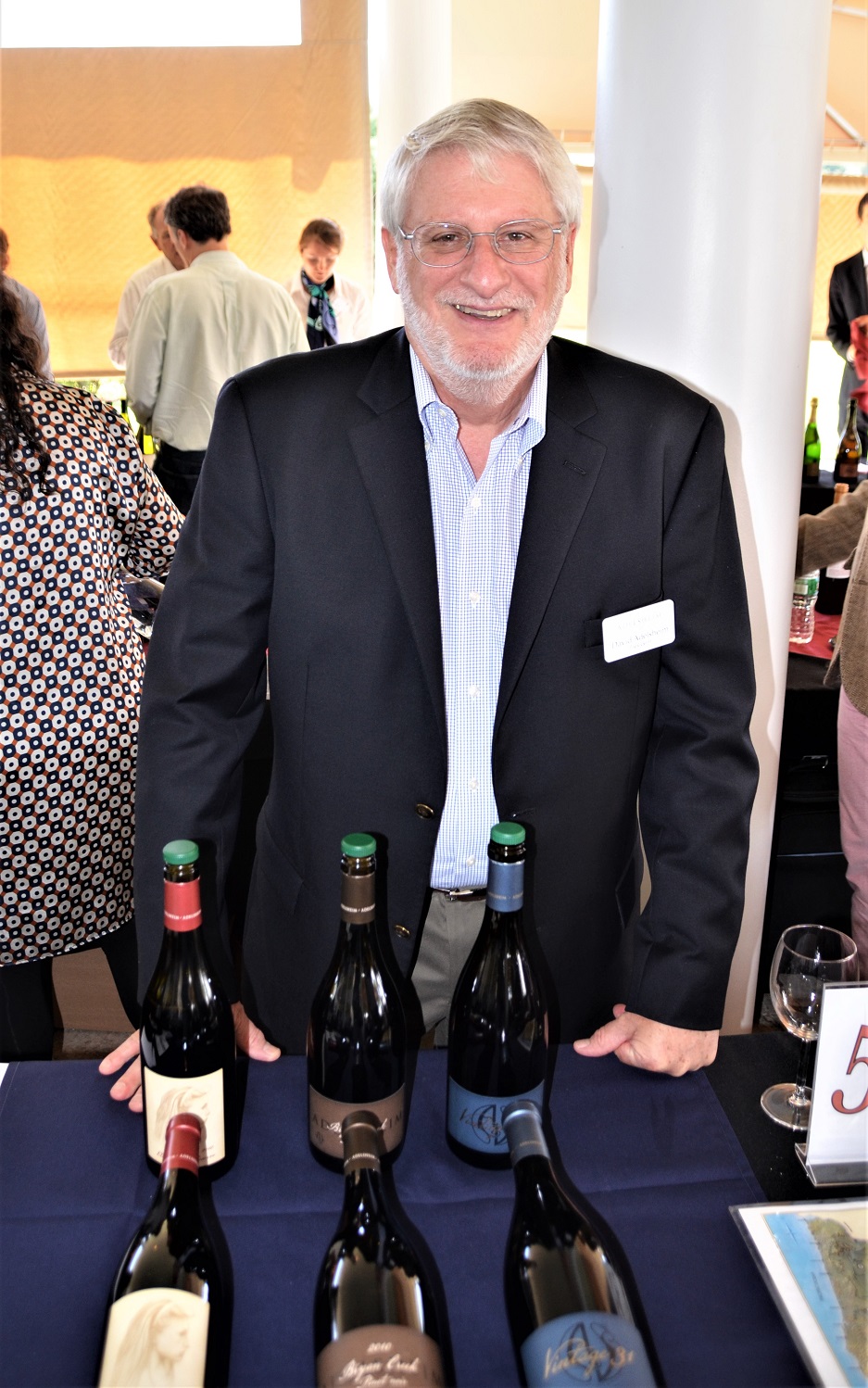
Among winemakers, there are those who rightly deserve to be called pioneers. They come first, building the road that others can follow. David and Ginny Adelsheim were such pioneers, planting some of the first Pinot Noir vines in Willamette Valley in 1971, starting Adelsheim Vineyard, and never looking back. I had the pleasure of briefly meeting David about 10 years ago at a trade wine tasting in Connecticut and tasting some of his wines. A few months ago, Carl Giavanti helped me to actually have a conversation with David and ask him a few questions albeit virtually. David’s achievements over the 50 years and his role in promoting Oregon wines and bringing them to the world stage are nothing short of legendary and very hard to capture in a short interview format – but I believe it still will be well worth a few minutes of your time.
[TaV]: You learned a lot over the 50 years. If you would start the winery again, would you do something differently?
[DA]: Probably, I’d try to focus more attention on the quality of wines we produced and the fiscal stability of the winery. Or hire a winemaking consultant and a CFO, who could do those things, since my time is probably better spent helping the industry and selling wine.
[TaV]: Over the course of your winemaking career, what were your favorite vintages and why?
[DA]: I don’t really have favorite vintages because it was my job to be excited about every vintage. There are vintages, like 2021, where the weather cooperated, and the vineyard and winery logistics were easy. There are vintages, like 1983, 1988, 1990, 1999, 2005, 2012, and 2019, where the wines received great scores from the critics. There are vintages, like 1986, 1991, 1997, 2007, 2013, where the wines got so-so scores, but with time became glorious. There have been a couple of disastrous vintages like 1984 that, with time in bottle, became better than I would have expected. And then there are a few vintages, like 2003, 2006, 2009, and 2015, that ended up being very ripe.
[TaV]: Not to go too far on this tangent, but what is your opinion of biodynamic winemaking?
[DA]: Our vineyards are not biodynamically farmed, and our winery does not follow biodynamic principles. All our vineyards are LIVE-certified as is our winery. In addition, we use no herbicides in our vineyards.

Quarter Mile Lane Vineyard. Source: Adelsheim Vineyard
[TaV]: Adelsheim Vineyard farms about 200 acres in Chehalem Mountains AVA with a large variety of soil types and microclimates. Based on your experience, is this the time to think about establishing additional sub-AVAs?
[DA]: The 1979 regulations establishing the system of American Viticultural Areas is not rigorous enough. The word “wine” does not appear, no expertise is required to submit a petition, and there is no top-down guidance to ensure a logical, helpful system of AVAs. It is time to help everyone, from consumers to our own winemakers, understand the connection between where grapes come from and how a wine smells and tastes. In the Chehalem Mountains, we have undertaken a project to define distinct neighborhoods of wine, using a winemaker tasting panel working under the guidance of a researcher in Burgundy. If we are able to define such neighborhoods, just by tasting single vineyard wines, the wineries in the Chehalem Mountains area will have to decide whether to petition for additional nested, nested-AVAs (like Ribbon Ridge and Laurelwood District) or devise a better way to communicate with the public.
[TaV]: What are the oldest Adelsheim wines in the winery’s cellar?
[DA]: We have an extensive library that is supposed to contain examples of every wine we’ve ever produced, included from 1978, our first vintage.
[TaV]: How are they holding up?
[DA]: I haven’t tasted the 1978s in a pretty long time. The estate Pinot noir was served at our 40th anniversary in 2011. I was surprised that had held up. The whites – an estate Chardonnay and a WA Sémillon – are, of course, pretty oxidized but both still have fruit. And I bet that the two WA Merlots are pretty stunning – I can’t remember when I last tried one.
[TaV]: Over the last 4-5 years, significant efforts were made to protect the origins of Willamette Valley wines, such as the case against Copper Cane from California. How widespread is this problem, and what more needs to be done to better protect the Oregon wine industry?
[DA]: The Copper Cane case is getting resolved, I believe. But it illustrates that there are people, who would like to take advantage of the geographic brands we created – like Oregon and Willamette Valley. We saw a Chilean Pinot noir, bottled by a company with “Oregon” in their brand name. That’s illegal under TTB rules, but where’s the enforcement? Of course, I believe that the Willamette Valley AVA should have stricter rules – a 100% requirement to use the varietal name and 100% to use the Willamette Valley AVA or its nested AVAs. But proposing that to the 2019 legislature ended up splitting the industry so there’s little appetite for a second round any time soon.
[TaV]: Last year, the EU awarded Protected Geographical Indication status to Willamette Valley. Is that sufficient to protect the Oregon wine industry as a whole, or more needs to be done?
[DA]: We probably should figure out how to protect the name “Willamette Valley” in China and, perhaps, other parts of the world. Napa isn’t going through the work of protecting the names of their nested AVAs with the EU, so we probably don’t have to do that either.
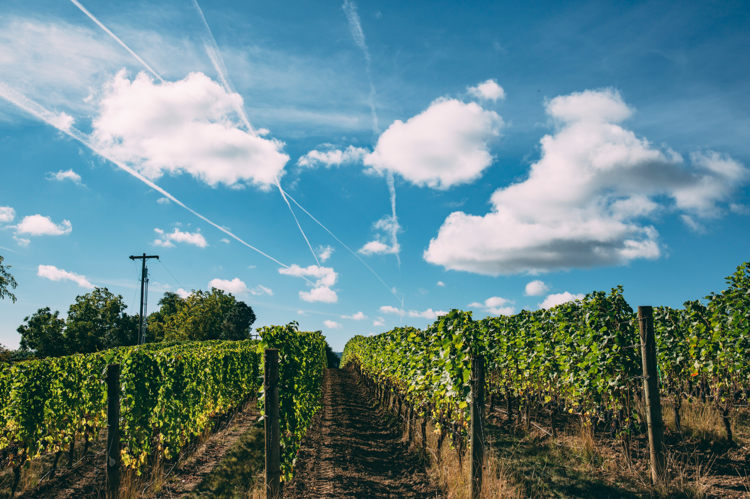
Calkins Lane Vineyard. Source: Adelsheim Vineyard
[TaV]: Should Oregon also receive a PGI status?
[DA]: Probably, yes. But someone will need to volunteer to complete the incredibly long application and the revisions required. It took Harry Peterson-Nedry ten years to get the EU to grant Willamette Valley TGI status. The Oregon Wine Board should do that application. But probably doesn’t have the bandwidth.
[TaV]: You are often referred to as an ambassador of Oregon wines to the world. Are Oregon wines well recognized worldwide?
[DA]: Well, the top wines from the Willamette Valley (mostly Pinot noirs) are starting to be recognized in markets that can afford them. The problem is that they are being called “Oregon,” which leads to confusion of consumers. We need to stop using “Oregon” when we’re referring only to the wines of the Willamette Valley.
[TaV]: What are the main exporting countries for Willamette Valley Pinot noir?
[DA]: Number 1 is Canada, followed by the UK and Japan, followed by Sweden and Denmark. Other Asia markets (Korea, Singapore, Taiwan, the Philippines) are growing as are Caribbean markets. In the EU, there are countries that can afford WV PNs – Germany, France, Italy, Holland, Belgium in particular. But they continue to focus primarily on French, German, and Mediterranean wines.
[TaV]: What needs to be done to make Willamette Valley wines better known internationally?
[DA]: Education of the importers about our region and the brands available in the particular country. Once enough wineries have representation, then we can start educating the media and the trade. Finally, once the wines are available in stores and restaurants, with stories appearing in wine and lifestyle media, then we can start education consumers.
[TaV]: What are the main problems facing the Willamette Valley wine industry, now, and say, over the next 20 years?
[DA]: You mean besides global climates change, which threatens all of today’s top wine regions. Well, beyond that, we need to ensure that Oregonians are buying the State’s successful wineries, not just wine companies from outside the State and, often, outside the country. You can’t talk about Avis being the best rental car company if it’s owned by Hertz.
[TaV]: What would be your advice to the young winemakers who are just getting started?
[DA]: They don’t seem to need my advice. They have figured out the pathway to starting their own brand – start at the bottom, working for others. Buy grapes and rent space to make tiny amounts of amazing wine. Grow slowly, never making enough wine, always over-delivering on quality. Don’t borrow capital. Once they have a strong reputation and a successful brand, they can start thinking about their own vineyards, and way down the road, their own bricks-and-mortar winery.
[TaV]: If you could select just “one thing” you’d like to be remembered for, let’s call it your legacy trademark, what would that one thing be?
[DA]: Heck if I know; you pick one:
1973 – Worked with Bill Blosser, Dick Erath and others to map where grapes could be grown in Yamhill County, which led to the saving of YC hillsides for agriculture; and adoption of a similar approach in other counties
1973-1977 – Drafted the strict Oregon Labeling Regulations, lobbied the industry to support and the OLCC to adopt them
1974 – Realized the importance of PN & CH clones in Burgundy while an intern at the Lycée Viticole in Beaune
1974-1983 – Helped establish the clonal importation & evaluation programs at OSU
1975 – Coordinated the importation of clones from Alsace, including first Pinot blanc in the U.S.
1976 – Coordinated the importation of clones from ANTAV, including first Gamay noir in the U.S.
1977 – Participated in the effort to pass legislation to establish the TWRAB
1982 – Wrote petitions to establish the Willamette Valley and Umpqua Valley AVAs
1983-1993 – Led the discussion program at the Steamboat PN Conference each summer
1987 – Requested Raymond Bernard send clones of Chardonnay (incl 95) and Pinot noir (incl 667 and 777) to OSU
1987 – Helping Robert Drouhin find and buy land for DDO
1987/8 – Responsible for the Burgundians attending first and second IPNC
2000 – Cofounded OPC with Pat Dudley
2002 – Wrote the petition to establish the Chehalem Mountains AVA
2003 – Led the lobbying effort to change OWAB to OWB
2005 – Drafted extensive amendments to the labeling regulations
2005 – Helped lead the effort to rebuild the WVWA into one of the U.S.’s most important wine marketing organizations
2014 – Founded Chehalem Mountains Winegrowers
2015 – Proposed and led the creation of the first Chardonnay Technical Tasting that has elevated the style of WV Chardonnay
2015 – Leader in the effort to pass legislation to limit the number of non-sales-related events at wineries
2016 – Helped envision Willamette Valley: the Pinot Noir Auction
2019 – Leader in the lobbying effort for stricter regulations for varietal content and origin for WV wines, which failed
2020-202? – Envisioned and played a leadership role in the Neighborhoods Project for the region of the Ribbon Ridge, Laurelwood District and Chehalem Mountains AVAs
2021 – Conducted and edited the Founders’ Stories for Adelsheim’s 50th anniversary
2022/3 – Working with Josh Bergstöm on a technical winemaker event for Pinot noir
[TaV]: It seems that your motto is “never stop”, and for sure when it is necessary to advocate for and advance the Willamette Valley wine industry. What special Willamette Valley wine projects are you involved in now?
[DA]: I mentioned the Neighborhoods Project, focused on Pinot noirs from the Ribbon Ridge, Laurelwood District and the Chehalem Mountains AVAs back under question #5. I’m finishing up video interviews of the Founders of the first ten wineries in the Willamette Valley. Short versions are on our winery’s website (“Founders’ Stories.”) Videos of the entire interviews are in the Linfield University Wine History Archive. I’m working with other winemakers to create a way to come together and taste each other’s wines, so that the Pinot noirs of the Willamette Valley can evolve in a thoughtful way. Yeah, and the book… everyone says I need to write a book, and maybe I will.
Here you are – another addition to the Stories of Passion and Pinot. I hope you enjoyed this encounter with the winemaker’s passion and maybe even learned something new.
Until the next time…
P.S. For more stories of Passion and Pinot please visit the series’ main page.
Top Two Dozens of 2022
Year started. The year ended. What happened in between? Lots of things, many of them… well, you know. You live here too.
As it has been a tradition since this blog started, it is time to sum up the year in wines (well, the time was at least a week ago… I know…). The quintessential exercise in pain and pleasure. It gives me great pleasure to relive the great moments enabled and enhanced by all the wonderful wines. It gives me great pain having to decide on what wines should be on this list, and what should be the wine of the year. Lots of great moments, lots of uneasy decisions.
The original thought behind my very first Top Wines list was to come up with the 10 best wines. Even on the first try, I realized that I can’t stay within this limit of 10, and the limit was changed to 12 (hence a Dozen). Next came the realization that even 12 is not enough, and thus for most of the years my lists consist of 2 dozen wines, but even that often is not enough, so the final count can be 25, 26, and even more.
The criteria for inclusion into the Talk-a-Vino top list is simple – the wine has to be memorable. It should be easy to recall when, where, why, and even with whom I shared that wine, and what emotions did the wine solicit.
Oh yes, as I love analyzing the other Top Wine lists, let me give you the stats for the Top Talk-a-Vino wines of 2022. Total of 26 wines, 19 reds, 3 whites, 2 fortified, 1 sparkling, and 1 pink (it is not a Rosé, it is skin contact white). 6 wines are from California, 5 from Spain, 5 from France (interestingly enough, all from Bordeaux), 4 from Italy, 2 from Portugal, 2 from Washington, 1 from Australia, and 1 from New York.
That’s all there is to it. Without much further ado, let’s get to our list:


25. 2020 Field Recordings Domo Arigato Skin Contact Pinot Grigio Central Coast – a stunning concoction, almost magical. 2 of us finished the bottle and said “what just happened? where did this wine go? “. It is elegant, balanced, complex, and magical. Oh yes, I already said that.
24. 2012 Bodegas Excelencia Los Frontones Crianza Sierras de Málaga DO – one of the memorable surprises of the trip to Malaga. I had no idea that Bordeaux varieties can be the main grapes in the winemaking region in Spain – and then there was this beautiful 10-year-old fresh and delicious Bordeaux blend. If you are in Malaga, please ignore the dismissive comments “ahh, it is just local” – this is what you want to drink.
23. 2020 Rosina’s Barbera Hudson River Region New York – I have the good fortune of being invited as a wine judge for the annual Hudson Valley Wine and Spirits competition. This Barbera from New York was dark, smokey, and powerful – and a totally unexpected surprise.
22. 2017 Quinta do Vale Dao DOP Portugal – No matter what Portugal continues to be the spelling for the wine values. This $6.99 red was simply stunning – round, generous, impeccably balanced. In a blind tasting, this wine would easily put to shame many of the $100 bottles. Don’t take my word for it – I dare you to check it for yourself…
21. Bodega Callejuela Oloroso Origen Callejuela Jerez-Xérès-Sherry DO – this wine was simply singing from the glass. Sherry might be the most complex wine in the world, and when it is done right, like this fine specimen… Oh boy, that’s lots of pleasure. But then put it next to the charcuterie… And you might think you accidentally made it to heaven…
20. 2018 Turley Tecolote Red Wine Paso Robles – of course everyone knows Turley Zinfandels, but Turley’s prowess extends way beyond that variety. Turley wines are notoriously hard to get, and Tecolote, a Spain-inspired blend of Grenache and Cariñena might be one of the most difficult ones to procure. If you will be lucky enough to come across it, get as many as you can – the lip-smacking voluptuous goodness of this wine is something to be experienced.
19. 2018 Double Lucky #8 Walla Walla Valley – one of the latest Cayuse projects, created under the No Girls line and crafted by Elizabeth Bourcier, was introduced to wine lovers in 2021, in a midst of covid. I found the introductory 2017 to be too powerful and too concentrated, the absolute “liquid rock” rendition. 2018 was surprisingly approachable, definitely powerful but balanced enough to be enjoyable even at this young age.


18. 2017 San Felice Bell’Aja Bolgheri Superiore – A beautiful example of super-Tuscan, with my notes (overdue to be published) saying “beautifully elegant, perfectly layered and scrumptious”. A pure pleasure.
17. 1997 Chateau Montelena Saint Vincent Red Wine Napa Valley – Sangiovese from Napa Valley is always a surprise. The Sangiovese-based blend from Chateau Montelena should count as a double surprise, as this is not the grape the winery is known for. The wine was well-structured and delicious, didn’t disappoint at all.
16. 2016 Hacienda Calavia Reserva Rioja DOC – When you drink good Spanish Rioja while in Spain this shouldn’t be surprising, right? And nevertheless, I was surprised at how unquestionably perfect, unquestionably Riojan this wine was, offering a beauty of the dark berries and cigar box. Clean, assertive, classic, delicious.
15. 2013 Campochiarenti Passione Divina Vini Storiche Toscana IGT – Sunningly beautiful pure Sangiovese from Campochiarenti. If you like Italian wines, especially the Brunello level, I’m sure you experienced that moment when you take a sip of the wine and it literally sends jitters all over your body. The wine that almost affects you on a physical level (no, I’m not talking about being drunk). I don’t know how to properly express it, but again, if you are an Italian wine aficionado, I’m sure you know what I’m talking about. And if you are not, then consider becoming one.
14. 2019 Chateau L’Annonciation Saint-Emilion Grand Cru – if you find a classic Bordeaux in a bottle of Bordeaux – should that be surprising? A delicious pop’n’pour classic Bordeaux – should I say more?
13. 2018 Alto Moncayo Veraton Campo de Borja – your palate knows delicious, isn’t it? This wine is as stunning as it is delicious from the moment you pull the cork. Layers of goodness, succulent fruit, perfect amount of tannins to support the structure. If you looking for instant pleasure, this is the wine to open.
12. 2006 Trabucchi d’Illasi Amarone della Valpolicella – Everyone here knows that I love Amarone. But – it doesn’t mean that I love any bottle which says “Amarone” on it. I’m very particular about the balance in Amarone, and this wine delivers everything – dried fruit, fresh fruit, perfect power and perfect acidity. If I could only procure a case (or 5) of this wine…
11. 2019 BARRA of Mendocino Petite Sirah Mendocino – surprise is always a good way to create lasting memories. Petite Sirah is one of my all-time favorites grapes, but more often than not it requires time to be enjoyable, lots and lots of time. This wine was just perfectly ready the moment the cork was pulled out. dark concentrated, layered, well structured, perfectly balanced, and ready to deliver the pleasure on the moment’s notice.
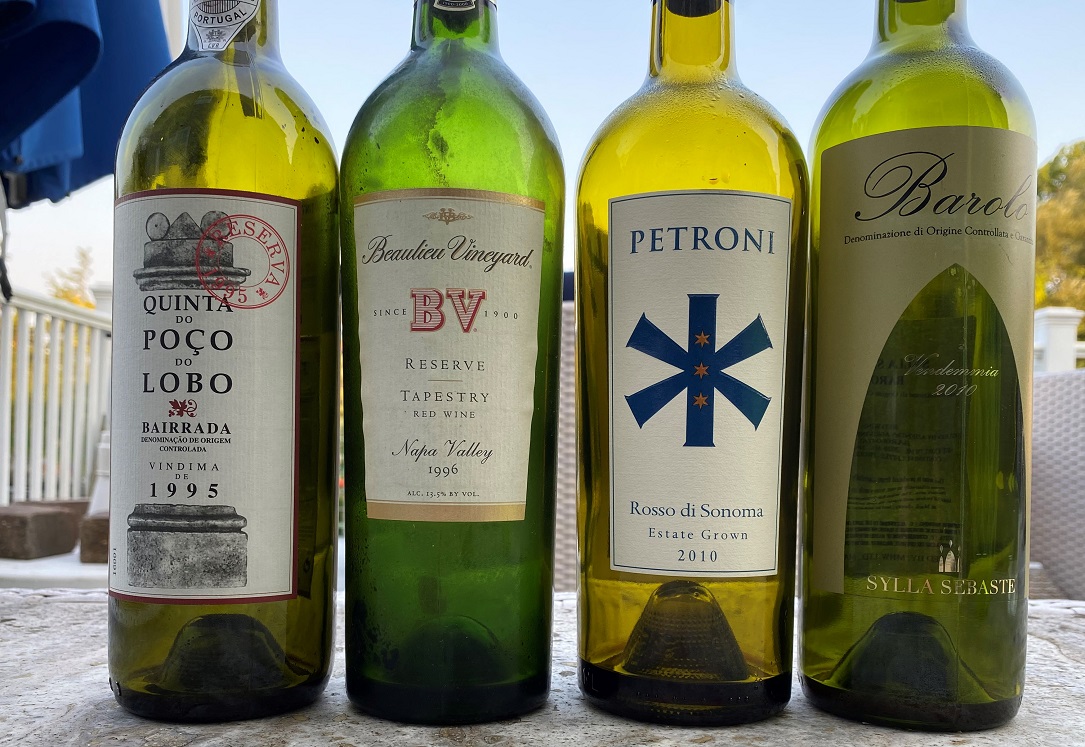
all great wines, but only Petroni made the cut
10. 2010 Petroni Rosso di Sonoma Sonoma Valley – what happens when the Italian makes wine in California out of Sangiovese and Cabernet Sauvignon? A super-Californian! This was my last bottle, luckily snatched from WTSO. Beautiful, layered, delicious wine.
9. 2008 Altesino Brunello di Montalcino Montosoli – well-aged Brunello should be on every wine lover’s “try before you die” list. This was simply an experience, the experience you want to go on and on and on, sip after sip. Pure, unadulterated pleasure.
8. 2007 François Cazin Le Petit Chambord Cour-Cheverny AOC – another case of the “last bottle”. I was slowly depleting my stash of this Loire white, made from the rare grape called Romorantin. Every bottle showed differently over the years, but this one was the ultimate reward. Honey, flowers, and perfectly fresh acidity. Ahhh…
7. 1998 d’Arenberg Cabernet Sauvignon High Trellis McLaren Vale – spectacular. Still young, fresh, and loaded with gobs of cassis and cherries. An absolute beauty with much more time left.
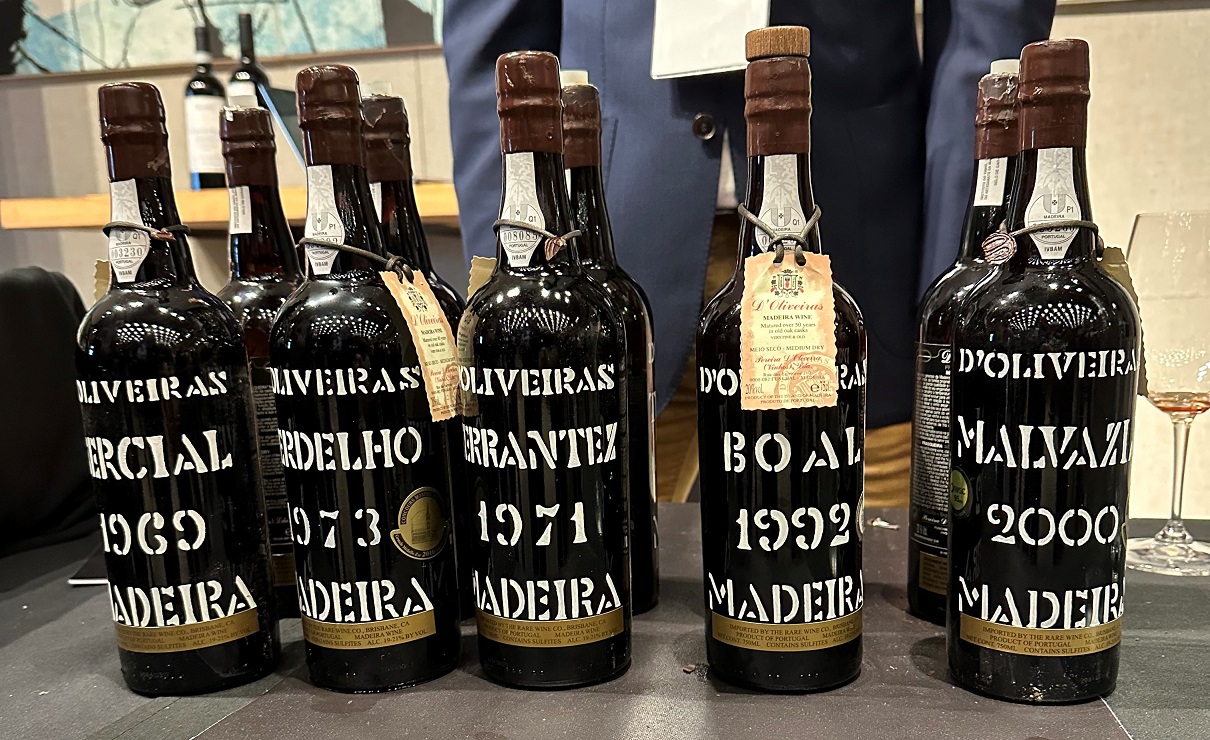
6. 1969 Oliveras Cercial Madeira – I now think that Madeira might be the most interesting wine in the world. Think about it – the wine had everything done to it – heat, oxidation, everything. And then when you open it, it is ageless, it is vibrant, it is alive, and it can last forever. If I need one New Year resolution here, it might be “drink more Madeira!”
5. 1998 Château Tournefeuille Lalande-de-Pomerol – what a beauty! This might be a year of the classic Bordeaux for me. Cassis, cassis, more cassis. Layered, round, seductive, and luscious. I’m ready to meet with it again at any time.
4. NV Lanson Le Green Label Organic Champagne – this was my first encounter with Champagne Lanson, and I was duly impressed with precision and finesse. This Green label organic was my favorite, offering a perfect balance of yeast, toasted bread and cleansing acidity – every sip encouraging you to take another. An absolute beauty.
3. 2013 Alban Roussanne Edna Valley – Roussanne might be my favorite white grape (pssst… don’t tell that to Chardonnay and Riesling). Well-made Roussanne offers this round, beautiful, present, silky mouthfeel that no other white grape can. And when this Roussanne is made by the California Rhone Rangers pioneer such as Alban, it becomes an absolute pleasure trip. If you can find this wine – don’t miss it.
2. 1997 Château Haut-Piquat Lussac Saint-Émilion – more stunning Bordeaux. This is the fifth bottle of Bordeaux on this top list, but it is only reminiscent of the year, this was not by intent, but rather a surprising realization. Still perfectly fresh, balanced, firmly structured, and precise. I wish humans would age like this.


Cue in “yes, I did it again”. Because I’m guilty as charged. I didn’t want to take upon myself the burden of decision regarding the top wine, and tossing the coin would be simply not fair to either of the wines. But this is my blog, my rules. hence two #1 wines of 2022. Here we go:
1. 2018 Revelry Vintners Reveler Columbia Valley – I was blown away with my first sip. I think if I will count repetitive words in this post, “precision” would come out on top. And so this was yet another precise, delicious, spot-on, love-at-first-sight Bordeaux blend, powered by Washington’s rocky, lava-laden soil. The word “superb” doesn’t describe this wine.
1. 2020 Abadia Retuerta L’Domaine Ribera Del Duero – I know Abadia Retuerta Ribera del Duero reds, but I never heard of their white wines. My trip to Spain brought this revelation on the last day – this Sauvignon Blanc-based blend was absolutely spectacular – it would well compete with Chablis with its clean acidity, gunflint, firm structure, and pure, refreshing mouthfeel. This wine is absolutely world-class, ready to compete with the best of the best white wines can offer.
Now we are done, my friends. The presentation of Talk-a-Vino Top Wines of 2022 is complete. What were your most memorable wines of 2022? Cheers!
Happy New Year 2023!

Source: Pixabay
Happy New Year 2023 to everyone! Health, peace, happiness, lots of amazing wines and lots and lots of memorable moments and experiences for everyone! Cheers!
Neyen, The Spirit Of Apalta
What do you think of Chilean wines? Have you had Chilean wines which took your breath away?
While you ponder that, let’s talk about Chilean wines.
Nobody can question today’s grandstanding of the Chilean wines in the world. According to Wikipedia, Chile is 7th largest wine producer in the world and 5th largest exporter – the ranking positions change every year, but there is a clear growth trend for Chilean wines, both in terms of volume and value. And Chile is one of the worldwide leaders in sustainable and organic viticulture, setting a clear example for the rest of the wine-producing world.
Not changing the subject, but what do you think of organic wines? I remember that 10-12 years ago, organic wines were few far and between, and those proudly displaying “organic” on the labels were largely undrinkable. The situation changed, mostly unnoticeably, and I can say that today at least 25% of the wines I get to drink during a year are made with organic grapes, and this number is definitely higher if we are talking about the samples I receive for the reviews.
If we are touching memory lane, who remembers Chilean flagships, Fronterra and Concha y Toro Cabernet Sauvignon and Chardonnay available for around $10 in 1.5L size? Those were the stars of any party, taste being much less important than the price. And again, slowly but surely this all changed, and Chilean wines now commend the full respect of wine lovers around the world, on the level of prized Bordeaux, Napa Cabs, and Brunellos.
Now, the reason behind this little Chilean wine excerpt is my recent encounter with pure pleasure – you know how much I value that element of wine drinking – the wine should give pleasure, otherwise, what is the point of drinking it. The wine I want to share with you today is the 2017 Neyen Apalta Estate Chile (13.5% ABV, $64.99, 50% Cabernet Sauvignon, 50% Carmenere, 14 months in 225L French oak barrels, 6 months in 3,000L foudres).
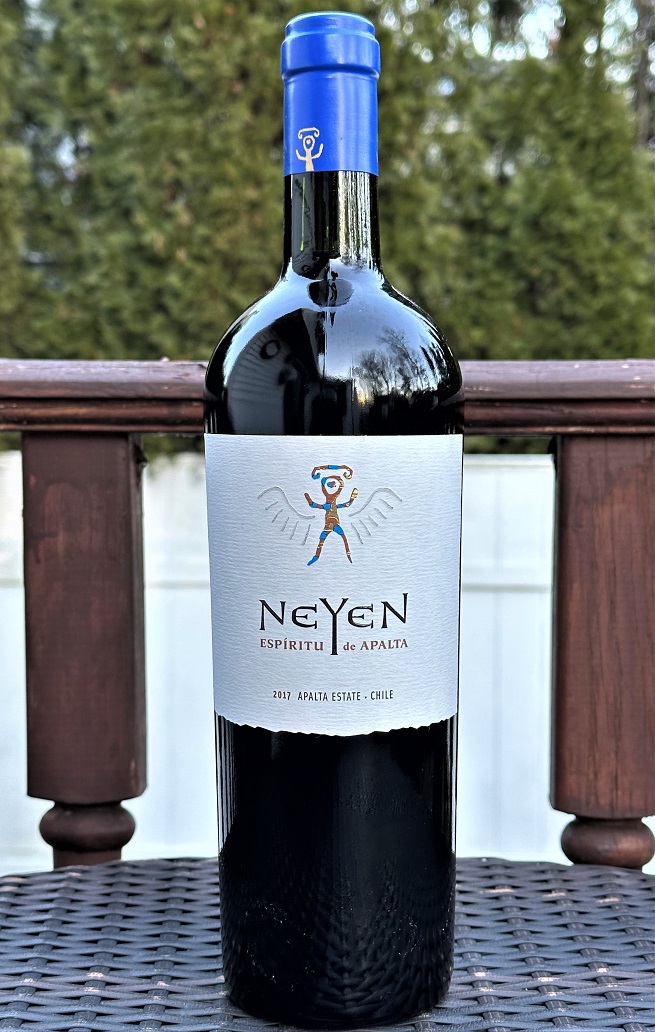
Neyen is a unique estate, a parcel of land situated between the Andes Mountains and the Coastal Range. Cabernet Sauvignon vines were planted there in 1889, joined by Carmenere in 1936. Soils at this organically farmed, low-intervention vineyard provide good drainage, and the semi-arid climate allows for the slow ripening of the grapes, maybe with the assistance of the Neyen, the Spirit of Apalta. Grapes are harvested by hand at the first light, sorted, destemmed, and subjected to the magic of winemaking. In most of the years, the blend stays at a consistent 50% Cabernet Sauvignon and 50% Carmenere, even though in some of the years different proportions are used.
When I opened the bottle and poured the first glass, I was really unconvinced. The wine was drinkable but didn’t incite any “oh my god” reactions which I expected at least based on the price. I pumped the air out and put the bottle aside for the evening.
The next day, I pulled the stopper out, poured a glass and the very first whiff brought the sacred “oh wow”. The cassis and eucalyptus were enveloping the senses, making it impossible to put the glass down and promising a lot more to come with the sip. Wine requires time to be enjoyed, you can’t hurry it. Finally, after a minute or so of just enjoying the aroma, I went for a sip. To my delight, the aromatic experience continued in full force on the palate. More cassis, more eucalyptus, layers of dark fruit, and silky, soft tannins were making the taste buds dance. The experience was taking me precisely between the worlds – the precision and structure of the old world Bordeaux was perfectly coupled with the youthful exuberance of the new world Napa Cab. Don’t get me wrong – this wine doesn’t need Bordeaux or Napa references, this wine perfectly exists in a class of its own, a perfect combination of ungrafted French Cabernet Sauvignon from 130 years old vines and Chile’s own Carmenere. (Drinkability 9-)
Here you are, my friends. A superb Chilean wine that is sure to bring a smile to your face. With holidays or without, winter or summer – this wine has a lot to give. Magic of the Neyen, the Spirit of Apalta? I will let you find the bottle and decide on your own.
By the way, how about the question I asked you at the beginning? Can you name some Chilean wines that took your breath away?
The Case for $3.49 Wine
My latest (hopefully the last for the year) travel took me to Washington, DC. After arriving in the evening, I wanted a glass of wine and a bite to eat. The restaurant at the hotel was closed. I’m sure it would have been easy to find a place to eat nearby, but Whole Foods right across the street offered a different option.
I walked into the store only thinking about the food. But the entrance took me directly to the wine section, so obviously, I had to stop and look around. There were definitely some interesting options available, including some Virginia wines. And then I saw Cabernet Sauvignon for $3.49. When I travel, I love to explore the wine options, especially the cheap inexpensive wines, so the wine looked absolutely irresistible.
When in Europe, I’m very confident about such inexpensive wines – chances for disappointment are quite low. The US is a different story. Trader Joe’s is the only place where you can find wines for $4-$5, and sometimes you win, and sometimes you learn. Of course, Trader Joe’s has its own $3.49 wine, Charles Shaw, formerly known as Two Buck Chuck. I had Two Buck Chuck before, and my curiosity was satisfied. Now I needed to find out how this $3.49 wine would fare.
Before we talk about this particular wine let’s talk about the concept of inexpensive (cheap?) wine. “Cheap wine” sounds almost offensive so let’s use the gentler “inexpensive” term.
I’m sure a lot of serious wine lovers in the US would frown upon the wine at such a low price. They might get a bottle for cooking, but even then there is a well-known adage that you should cook with the wine you will enjoy drinking. But beyond cooking, to buy a bottle for $3.49 to drink or entertain friends would be a big “no-no”.
My case for such an inexpensive wine would be for both uses, of course assuming the wine is palatable – this is clearly the most important requirement. Cooking is no brainer – when I make a beef roast in a slow cooker for 7 hours, I honestly believe that whether I will use a $3.49 bottle, or $349 bottle of La Joie Vérité, it wouldn’t make a detectable difference, so even if one can afford it, the question is why.

Now the friends’ entertainment aspect is also essential. You see, I have a group of friends who all love wine. I would never offer $3.49 wine to these friends at dinner, with the exception of maybe a curiosity sip. I’m always ready to open whatever bottle I have in the cellar when we get together, with no exceptions. And then I have other friends, who I love equally as much, but who don’t care about wine at all. $349 wine would not make them excited even the tiniest bit and would be clearly a waste of wine (not even talking about the money).
Don’t get me wrong – this is not for the lack of trying. Believe me, I tried. We don’t need to single out those really expensive bottles, as nobody tries to show off or prove any points. There are plenty of absolutely amazing wines under $20 which would bring me literally into the nirvana state – and would never extort even the hint of “wow” from my friends, just at the best a polite “hmmm, this is nice”. Serving a $3.49 bottle under such circumstances makes absolutely perfect sense – especially if you, the wine snob in disguise approve that $3.49 bottle.
Those of you who know me well already figured that I wouldn’t go into such a diatribe if I wouldn’t have the $3.49 wine I want to bring to your attention. But of course…
Non-vintage Three Wishes American Cabernet Sauvignon (13% ABV, $3.49), produced by Three Wishes Vineyards in California – in a few words, well-balanced and inoffensive – or maybe smooth is a better word. This is not a concentrated Napa Cab, which instantly takes ownership of your palate – this wine is mellow, it has black and red berries to offer, it is not sweet, and it has a good amount of acidity. Yes, it is simple. Yes, it is not thought-provoking. But for the price, there are plenty of people who enjoy an occasional unpretentious glass of wine who would be absolutely delighted with this wine. What’s important is that majority of the wine drinkers should be either unaware of the price, or simply grow up above the wine snob level. This is unfortunate, but wine is really one of those products where people are afraid to spend too little (and this can be the subject of another post). Bottom line – if you are simply looking for a glass of wine with your meal and not for the wine experience – you can get it with this wine.
And now I rest my case.
Daily Glass: Unexpectedly Stunning
Expect the unexpected.
When people hear that beaten up “expect the unexpected”, I’m sure in at least 80% of the cases, the expectations are negative. “Expect the unexpected” generally implies that one should always be prepared to deal with seemingly unexpected and often hostile circumstances.
In the wine world, we might want to adjust the “expect the unexpected” ever so slightly. By its nature, wine is always unexpected. Bottle variations, spoiled wine (think corked, for example), serving temperature, ambiance, food, company – everything affects the taste of wine – and I’m not even talking about root and flower days. Every bottle is a mystery – even if you had that same wine from the same producer and the same vintage 100 times before, when you are looking for pleasure you should open the bottle with trepidation. Every bottle is a mystery, and you never know what you will find inside.
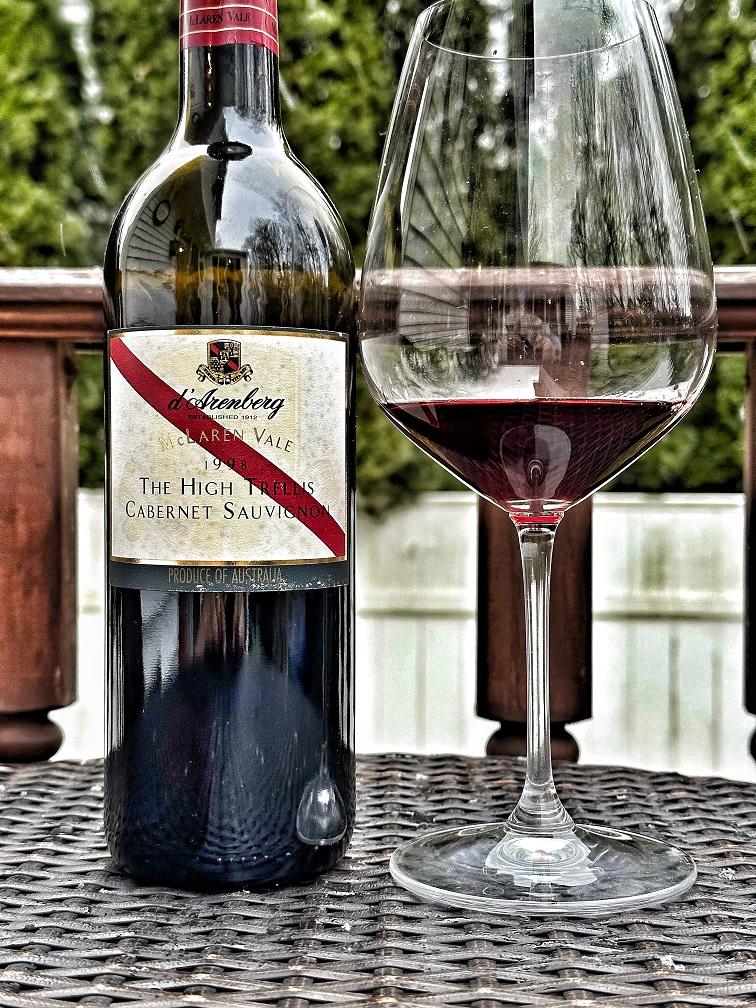
I already had this exact wine before. 1998 d’Arenberg Cabernet Sauvignon High Trellis McLaren Vale was number 16 on my top 20 wines of 2020 list. 1998 is one of the special years in my book, so I’m always on the lookout for affordable 1998 wines. I came across this specific wine at the Benchmark Wine Group wine store, and at $19 per bottle, it was well worth the risk. Of course, d’Arenberg is an excellent producer and I trust their wines – but aging the wine changes a lot of things and nobody can truly predict what would happen with wine as the result of the aging.
When it comes to aged wines, when everything works well, the expectations are resembling the bell curve. In the optimal case, we expect the wine to gradually improve, then stay at its peak, and then gradually decline. But every bottle has its own bell curve associated with it – how long will it take for the wine to reach the top of the peak, for how long the wine will stay at the peak, when the wine will start declining – every bottle has its own story, and nobody can predict how a particular bottle of wine would behave. This makes drinking aged wines great fun – you never know what you will find behind the cork. This also makes drinking the aged wines a source of frustration – until you successfully pull the cork out, take a sip, and smile happily, the frustration lingers.
You are unquestionably doubling this frustration when you are opening the aged wine you already enjoyed before. In general, before you open the wine, you base your expectations on the reputation of the producer, the region, the winery, and maybe on the vintage. Once you tasted the wine, you acquire the frame of reference, so when you will be opening the bottle of the same wine as you already had, your expectations are based on your prior experience – “ahh, I liked it before, I hope the wine will be as good as it was the last time”.
The last Sunday, we had a good reason to open a bottle from the 1998 vintage, so this was the bottle I decided on – for no particular reason, the decision formed in the head by itself. I used the ah-so to gently extract the cork, only to find out that I had no reason to worry, and the regular corkscrew would do just fine – the cork was in very good shape.
Once in the glass, the color increased the hopes for the enjoyable experience – dark ruby, not a hint of brickish color which old reds might acquire. And the first whiff from the glass put absolutely all the worries away. Ripe cassis, eucalyptus, a touch of sweet oak – the aroma was beautifully enticing, seducing you only as the Cabernet Sauvignon can. And the palate… The palate completed this mesmerizing experience, offering ripe dark fruit, cassis, still fresh and firm structure, a beautiful herbal bouquet, and a perfect balance. Not to try to take anything from the Australian wines, this was a Napa Cab-like experience. (Drinkability: 8+/9-).
I pumped the air out and couldn’t get to the wine for the next two days. On the third day, I poured a glass, this time expecting that the wine is gone. To my total surprise, the wine closed up, now more resembling the young Brunello, perfectly firm, dense, and cherry-forward. The fact that the wine was perfectly fine 3 days after being opened gives me hope that the wine will be good at least for another 15 years – and this time around yes, I have another bottle.
Here is my story of the sudden pleasure. Do you like aged wines? Are you intimidated by aged wines? Do you also expect the unexpected? Let me know what you think.
Until the next time – cheers!
When in Spain…
My last trip to Europe was in September 2019. Next were the 3 strange years (you know what I’m talking about). And then suddenly I had to come to Europe for work meetings for 2 straight weeks – first week in Spain, then in France. It honestly felt very strange, visiting Europe after such a long break, but I’m afraid I will start sounding very stupid if I will continue complaining…
Before we talk about Spain – I love sunsets and sunrises around the planes – I’m sure you know that there will be quite a few pictures in this post, so here you go…


So what one does do upon arrival to Spain? Okay, I have no idea what people actually do when they come to Spain. And my course of action is largely independent of the destination – I need to find sparkling water for my hotel room, as this is the form of water I always prefer. And of course, being in Europe, I need to check the prices of wine and probably get a bottle or two for the room.
Arriving in Malaga on Sunday didn’t really help with things. Why? I don’t know if this is very typical of Spain (I suspect so) or just for Malaga, but no matter what Google says the absolute majority of the supermarkets are closed (as well as most of the regular stores). I made 2-3 attempts to rely on Google’s recommendations only to find places closed. I almost gave up but decided to give it one more try. This walk was successful, and I ended up with 3 bottles of wine, 3 bottles of seltzer, and some other provisions to make hotel room life more fun (glad I had a little fridge in the room).
Of course, the point of the excursion was not just to get the wine, but also to see the prices and selection. A good number of wines were priced in the range which doesn’t exist in the USA, no matter what and where you are buying – from €2.50 to €4. You can also see a variety of “Tetrapak” wine options, priced extremely reasonably, barely a €1 for a liter and similar prices for the six-packs. Definitely beats “wine-in-the-can” prices in the US which can easily exceed an obnoxious $10 for a can and more.
Later in the week I managed to get to a supermarket, so you can see the price observation in the pictures below. It is interesting the Albariño wines were priced almost at the level of the prices in the US – while many of the wines were available for a “buck fifty” or so. Go figure…
Anyway, I settled for two bottles of red and one white, each under €4.


After getting back to my room, I happily enjoyed both of the reds, which both happened to be Tempranillo wines. I did like 2017 Félix Solís Winery Viña Albali Reserva Valdepeñas DO (13% ABV) a bit more as it was perfectly approachable from the get-go, with elegant dark fruit and spices. The 2019 Bodegas Los Llamos Señorio de Los Llamos Tempranillo Valdepeñas DO (12.5% ABV) was a bit more restrained and needed more time to open. Both wines lasted pretty much through the entire week by just putting the cork back. The 2021 Sitial Verdejo Rueda DO (13% ABV) was opened a few days later, and it was a perfectly happy Verdejo rendition with a touch of freshly cut grass and lemon, fully matching the expectations.


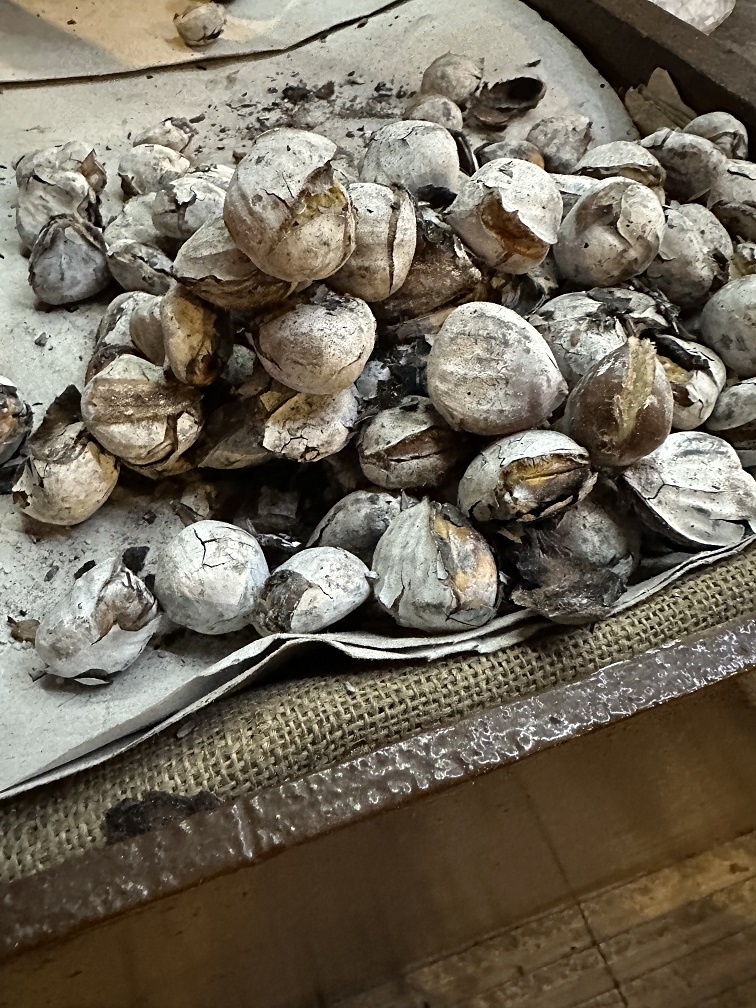
After my colleagues arrived in the evening, we took a little stroll to the historical town, where in addition to the very enjoyable walk and pleasant sightseeing I came across one of the tastiest discoveries of the entire trip – roasted chestnuts.
Before you say “duh”, let me explain. Of course, I read many times that roasted chestnuts are “the thing”. I tried to roast them at home in the oven – never happy with the result. Yes, it might be me, might be the chestnuts we get in the US, might be the method. Nevertheless, the chestnuts were in my “I don’t get it” book.
Walking in Malaga, first I noticed the smell. The delightful smell of food and smoke. And then we saw the street vendors, roasting chestnuts in the little stands, looking similar to the hot dog stands in Manhattan. That aroma in the air… absolutely dreamy…
But what’s more important is that the taste was sublime. You take this warm chestnut in your hands, break the thin shell and enjoy the crumbly, slightly sweet and barely starchy “nut” which falls apart in your mouth. I’m salivating as I’m writing this – that food experience pretty much beats Jamon in my book.

This was my first time visiting Spain, so of course, it was nice to see the words of others materialize in the Jamon abundance everywhere – little stores, restaurants, everywhere. I love how those sandwiches are presented – it is really hard to walk by and not get one.


Speaking of food, I found an unexpected dish to be interestingly widespread – Russian Salad. We had it with the catering during lunches and I saw it on the menu of a number of restaurants and even in the eateries at the airport.
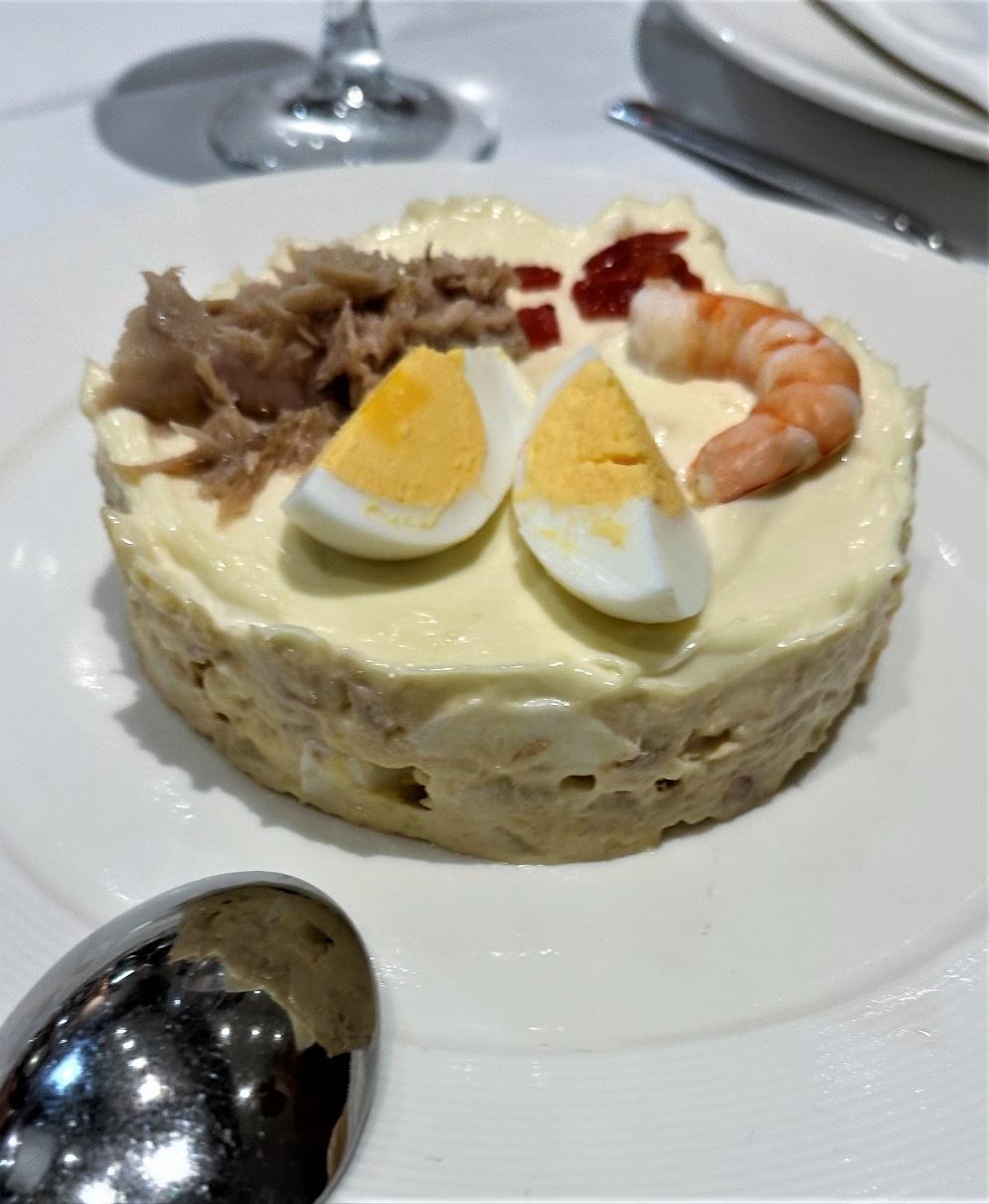
I don’t know if this dish is popular only in Malaga or in Spain overall – Malaga used to be very popular among Russian tourists, and this might have something to do with this dish. Anyway, if I was able to dissect correctly, the salad consists of boiled potatoes, eggs, salmon, and mayo. It was quite tasty on a few occasions I had it.
Now, let’s talk more about wines. We had an event dinner at the restaurant in the old town. The wine was simply offered by the color – white or red – with a sheepish comment by the waiter “ohh, the red is local”. I decided to start with the white and to say that I thoroughly enjoyed my choice would be an understatement. This 2021 Bodegas Barbadillo Castillo de San Diego Palomino Fino (13% ABV) had a deep inviting nose of whitestone fruit with minerally undertones, and the palate had a great depth of white plums and sage with the roundness and plumpness which I typically observe on the best renditions of the Roussanne. Outstanding.
Then, of course, I asked to try the red, not having much of an expectation remembering the shy enforcement.


Wow! I couldn’t understand what was happening. I was supposedly drinking local Malaga wine which I know nothing about, but we are in Spain – how come this wine tastes like a perfectly round, exuberant, in-your-face Bordeaux at its peak? What is this all-around beautiful cassis doing in the local Malaga wine? Something happened to my palate? When I got a chance to look at the back label of this 2012 Bodegas Excelencia Los Frontones Crianza Sierras de Málaga DO (13.5% ABV), things got back to normal – Cabernet Sauvignon, Cabernet Franc, Tempranillo, and Syrah. I did a bit of the reading afterward and it appears that the Malaga area had a lot of French winemaking influence, hence the use of Bordeaux varieties. For the 10 years old, this wine was absolutely in its prime and absolutely enjoyable.
Later during the week, I had another enjoyable encounter with local Malaga wine – 2018 Bodegas Pérez Hidalgo Vega del Geva Sierras de Málaga DO (14% ABV), a blend of Syrah, Cabernet Sauvignon and Merlot. A bit tighter than the previous wine, but still very much cassis and eucalyptus forward, round, layered, and delicious.
My last evening in Malaga was full of pure, hedonistic pleasure – but this deserves a post on its own.


Here you are, my friends. I have to declare my first visit to Spain a success, and I truly hope to be back in the near future.
Guest Post: How to Enjoy a Glass of Wine By Yourself
Today, I’m offering you a guest post by Darshan Somashekar, a serial entrepreneur. He previously founded Drop.io, which was sold to Facebook, and Imagine Easy Solutions which was sold to Chegg. He recently started Solitaired, to connect brain training to classic games.
Having drinks with your friends is great! But have you ever enjoyed a glass of wine by yourself?
People often see drinking alone as a cry for help or a way to escape life. Honestly, that’s the case most of the time.
But it doesn’t have to be – especially if the drink is sophisticated, like a bottle of wine. Wine is one of those things you can enjoy on your own without feeling weird about it – if you know what you’re doing.
Feeling inspired? Read on to learn some tips for enjoying wine by yourself like a pro.
1. Enjoy your glass of wine with some music

Source: Pixabay
The type of music I’m referring to here is not that record you’ve listened to over a thousand times. Find a playlist that speaks to you and play it in the background while you enjoy a glass of your favorite red or white varietals.
For example, while enjoying a Château Subercaseaux Bordeaux Rouge 2014, I’d play a classic like “The days of wine and roses” by Bobby Darin. Enjoying a glass of Casillero del Diablo Rosé? Then you’d listen to “Summer Wine” by Nancy Sinatra & Lee Hazelwood. “How does the wine taste” by Barbra Streisand is perfect for enjoying a Casillero del Diablo Cabernet Sauvignon.
As you sip, feel the music and the flavors come together harmoniously, allowing the two to engulf your senses. You’d be surprised how doing this can improve the taste of the wine.
2. Savour the flavors

Source: Pixabay
This time, without the music, take tiny sips from your glass to really taste each flavor as it hits your taste buds. Don’t drink the wine out of the bottle before it’s had a chance to open up. Then, bring your glass to your nose and take a whiff, breathing in the smells that waft up from the glass. What aromas are you getting? Do you smell fruit? Earth? Citrus? Tropical Fruit? The smell can tell you a lot about what you’ll taste next. Now you’re ready to drink!
3. A special delicacy
Is there a recipe you’ve always wanted to try? Perhaps there is a dish that has been on your menu list, but you’ve been putting off ordering it.
A lovely time to satisfy your cravings for that special meal would be while sipping a glass of wine on your own – it’s the perfect way to treat yourself. Some awesome classic wine and food combos include champagne and Oysters, Cabernet Sauvignon & Steak, Sauternes & Foie Gras, Provence Rosé & Niçoise Salad, Chianti & Lasagna Bolognese.
Plus, a glass of wine can take away any unappetizing tastes that the dish may have left in your mouth. Yeah, a wine glass can really come in handy.
4. Play a game
I am definitely not talking about a drinking game like quarters on a pool table. Come on, a glass of wine is too sophisticated for that. Think chess, checkers, or even a classic game of cards like the Solitaire game, and now they even come with a customized deck featuring wine selections. How fun is that!
These games are entertaining and can occupy your mind while you sip a nice glass of red wine or a full-bodied white varietal.
5. Spend time in nature

Source: Pixabay
Imagine this…..you are on your patio in your backyard or at a park bench, sipping your favorite white wine and enjoying the sound of the birds chirping around you.
Everything is quiet except for the soft murmur of conversation from other people in the park nearby or the rustling of the leaves in the trees above you. You can’t beat that ambiance.
6. Giving yourself some TLC ( Tender Loving Care)

Source: Pixabay
Another brilliant idea for enjoying a glass of wine by yourself is to treat yourself to a period or two of self-love. Run a bath, light some candles, and pour yourself a glass of wine. Slip into the tub and feel yourself relax as the warm bubbles envelope your body.
Sip your wine as you soak in your bath. The wine will make you warm and fuzzy, while the bath will make you feel melty and soft.
Then, you can doze off to sleep after the bath cleanses your body of toxins and release all your stress. Enjoy!
7. Watch Netflix and Chill
Can you tell we love Netflix? We watch it all the time – with wine, of course! You get a certain satisfaction from watching a good TV series while sipping a glass of your favorite white or red wine. Why not do that – with yourself? We strongly suggest you watch episodes of Master of None or Aziz Ansari’s stand-up specials while sipping a glass of Pinot Gris or Pinot Noir!
One more tip for you: change the routine now and then! Drinking wine alone can get stale if you keep doing the same thing over and over.
So, switch it up! Add a new flavor to the mix, step into nature, listen to new music, play a game, or change venues. There is no end to the possibilities – enjoy!
Beaujolais Nouveau 2022 Edition
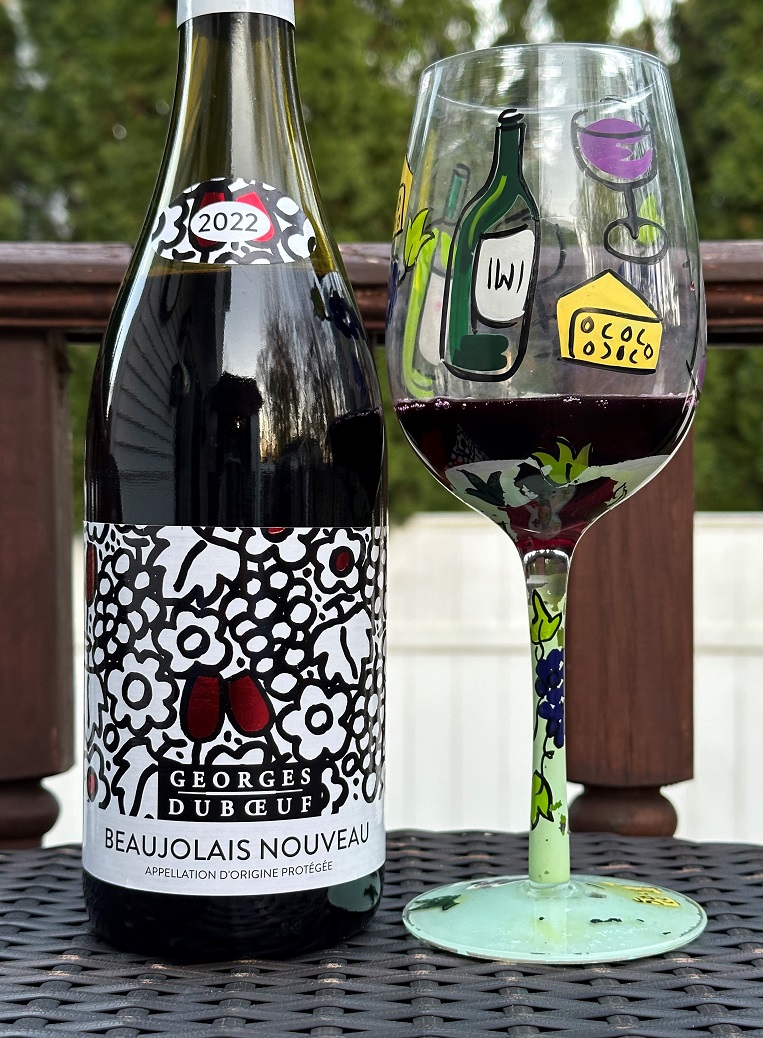 I would typically start this post with Beaujolais Nouveau Est Arrivé! and go out of my way to have the post out on the third Thursday in November when Beaujolais Nouveau is officially released. As this is posted a few days after the third Thursday in November, it is a bit late to announce its arrival.
As luck would have it, I was in France on that third Thursday. While at the hotel restaurant in Toulouse, I asked the waitress if they had Beaujolais Nouveau available – and the answer was a short “no”. When I mentioned that we were supposed to celebrate the arrival of the Beaujolais Nouveau, I got a shoulder shrug back, clearly stating “I have no idea what you are talking about”.
Beaujolais Nouveau is a multifaceted phenomenon. Firstly, it is the wine of a new harvest. Secondly, it should be an indicator of the quality of the vintage. Thirdly, it is a celebration of the new harvest, universally supported throughout the world in the past years. And fourthly, many consider Beaujolais Nouveau a marketing gimmick and simply refuse to get anywhere near that bottle.
I like traditions. As such, I’m happy to celebrate the arrival of Beaujolais Nouveau on the regular basis, simply celebrating the wine of the new harvest. How far back this tradition goes and whether it was really created as a marketing ploy to sell mediocre wine is not something that concerns me. We always need more things to celebrate in our lives, and Beaujolais Nouveau offers this perfect celebration opportunity.
2022 Beaujolais Nouveau seems to stand out in a few different ways. On the positive side, I like the label – it is different from the previous years and I find it very elegant. On the negative side, we have price and availability.
I just went through all of the Beaujolais Nouveau notes from the past years – practically every year I had 2, 3, or sometimes 4 wines to taste. From 2010 until 2020, Georges Duboeuf Beaujolais Nouveau was priced from $8.99 to $10.99. In 2021, it cost $12.99. In 2022 it became $15.99. I always buy my Beaujolais Nouveau wines at the same store, so the pricing is consistent. I understand the inflation, but a 30% increase from the last year? That is a little obnoxious. And there was only one Beaujolais Nouveau available this year. If this wine is a harbinger of the things to come, it doesn’t make me feel very good.
So how was the wine, you ask?
2022 Georges Duboeuf Beaujolais Nouveau AOP (13% ABV, $15.99) had a dark garnet color, very concentrated. Bright and inviting nose of the freshly crushed fruit. The palate was exuding fresh raspberries and blackberries, all tightly packaged with a good amount of energy and supported by crisp acidity. Unlike some of the previous years, I didn’t experiment with the temperature, and the wine was perfectly drinkable at room temperature over the 3 days after it was first opened.
I checked my notes from the previous years, and almost every year I see in my notes “this might be the best Beaujolais Nouveau ever”. This year will not be an exception – once again, this might be the best Beaujolais Nouveau I ever tasted. Drinkability: 8.
Here you can compare the 2022 label with the labels from the previous years. While least colorful, this might be the most elegant label ever – but you be the judge of it. If you care to share your impressions, I would love to hear what you think.
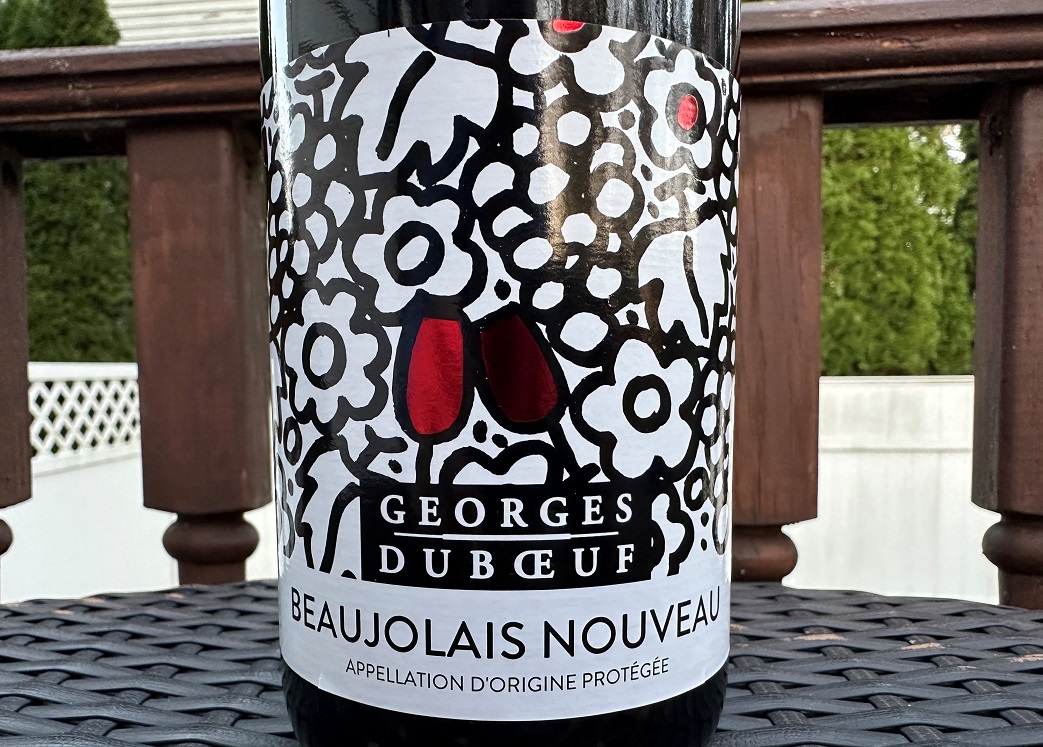
Beaujolais Nouveau 2022 has arrived, It might be a precursor of the harvest of the century. It might be the most interesting Beaujolais Nouveau ever. Let’s wait until Beaujolais Nouveau 2023 to find out. Cheers!
Last Bottle Sign Up ($10 credit)




 Talk-A-Vino