Oak Hills Restaurant: Great Food, Great Wine
I recently shared with you my take on the Madonia restaurant in Stamford. Few weeks after visiting Madonia, we went to another restaurant with the similar type of cuisine – Mediterranean with Italian flair. This restaurant is called Oak Hills Restaurant on the Green and it is located in Norwalk, Connecticut, at the Oak Hills Park (it is actually a municipal golf course).
When the restaurant is located on the golf course, what do you think it can come with? Of course, the view! We were sitting outside on the terrace, overlooking beautiful greens. Yes, you can watch the crowd French style, sitting right in a middle of the street with cup of coffee or glass of wine. Or you can just relax and admire the serenity around you – this is where the golf course is simply a good place to be.
First, let me say a few words about the wine. The wine list was short, but had a few good values. My eye stopped at Barbi Rosso di Montalcino – at $40/bottle, this was quite reasonable wine to get, considering that it retails at around $20.
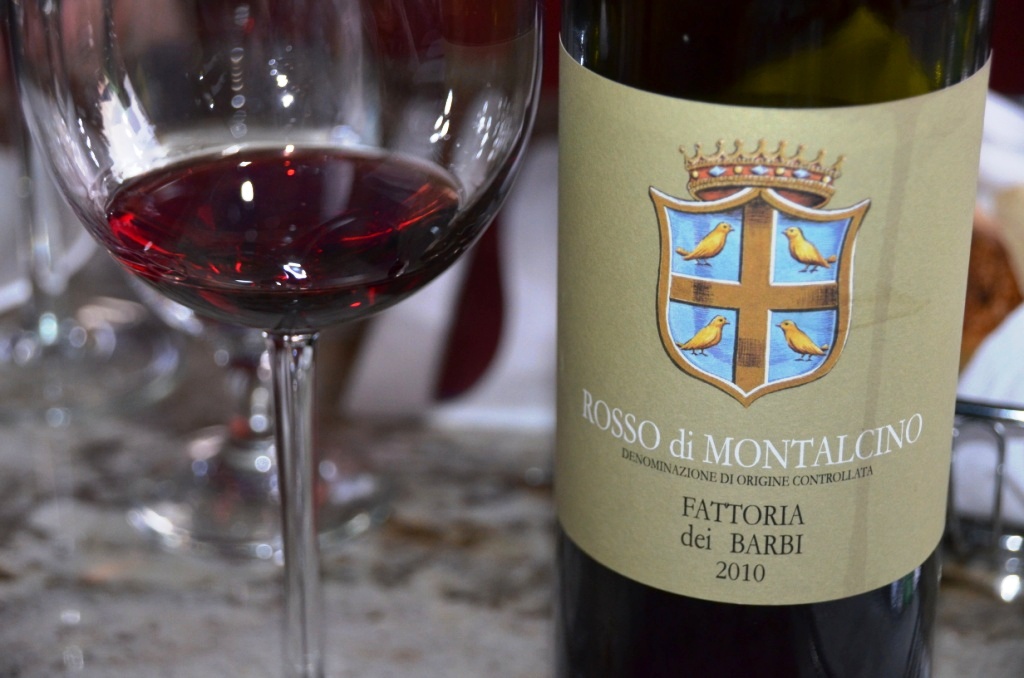
Barbi Rosso di Montalcino
This 2010 Fattoria dei Barbi Rosso di Montalcino DOC was very nice, ready to drink from the get go. Light ruby color in the glass, rustic nose of light cherries with hint of leather, more cherries on the palate, perfect acidity, soft and round – this wine was perfectly fitting our appetizers. For the appetizers, we had a few dishes, here are two of the memorable ones:
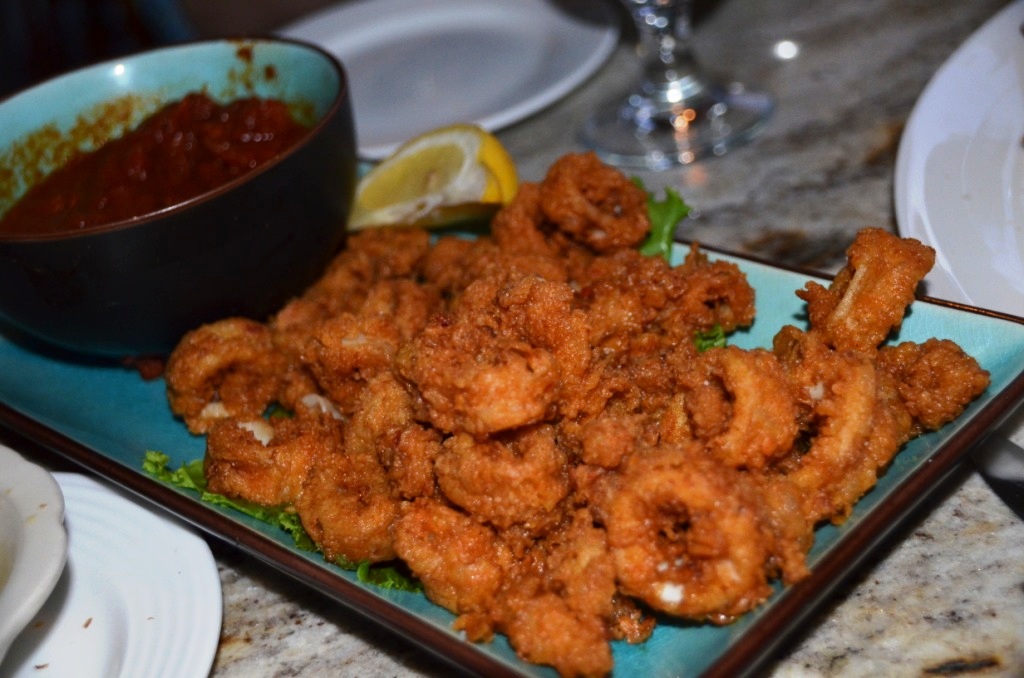
Fried Calamari
Calamari were perfectly done, with just the right amount of breading, crispy with perfect texture, and delicious sauce with just enough bite.
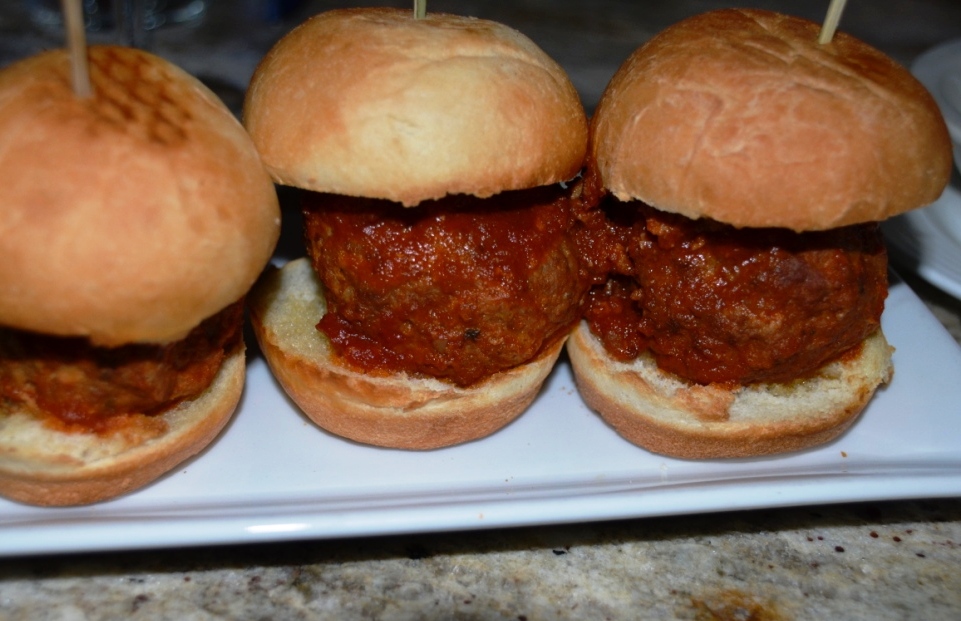
Meatball Sliders
Generous meatballs paired perfectly with our Rosso di Montalcino wine.
Then it was time to get another bottle of wine. We decided to continue with the same wine – but Omar, Maître D and co-owner of the restaurant, insisted that we would get the big brother of the Rosso di Montalcino, the Brunello. It was listed on the wine list for $80 (still a good price), but he offered us the wine at the same price as the first one, so we couldn’t resist. The wine also came with the story – Omar told us that in the very old times (1300s), Barbi family were the assassins in the village of Montalcino, and they were offered the land in exchange of promise to stop killing people (which they did). I tried to find some confirmation of this story on the internet ( including Fattoria Barbi’s web site), but was unsuccessful. If you heard anything about it, I would be very curious to learn more.
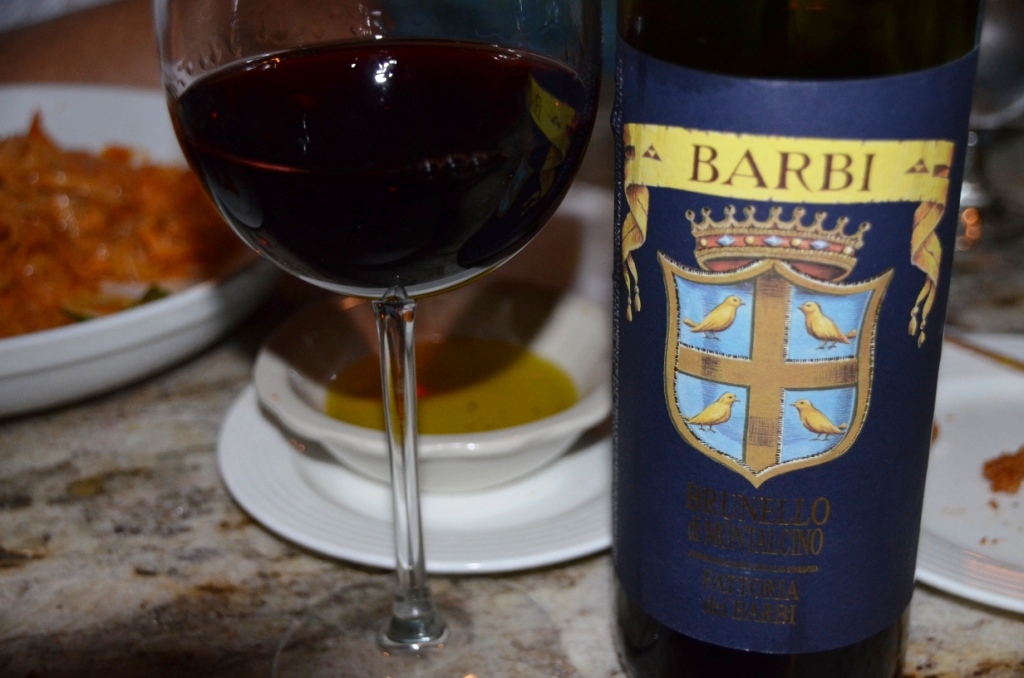
Barbi Brunello di Montalcino
This 2006 Fattoria dei Barbi Brunello di Montalcino DOCG was decanted for a short period of time. Dark garnet color in the glass, invigorating nose of the dark fruit and spices, full bodied, slightly chewy, dense wine on the palate, with lots of dark fruit, cherries and blackberries, touch of tobacco, powerful, but well balanced tannins – this was definitely a great wine.
Here are couple of examples of our entrees:
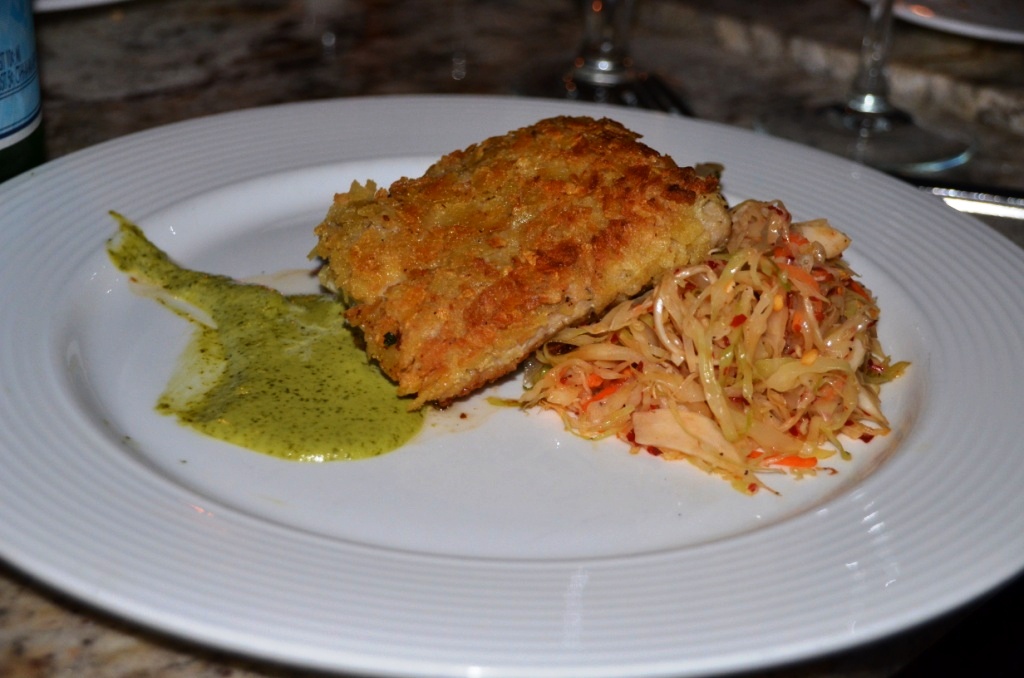
Potato Chip Crusted Mahi Mahi
My wife got this potato-chips encrusted Mahi Mahi. I can tell you – my wife is very picky about her fish – and she said this was probably the best fish she ever had. I have to agree with her – it was absolutely delicious.
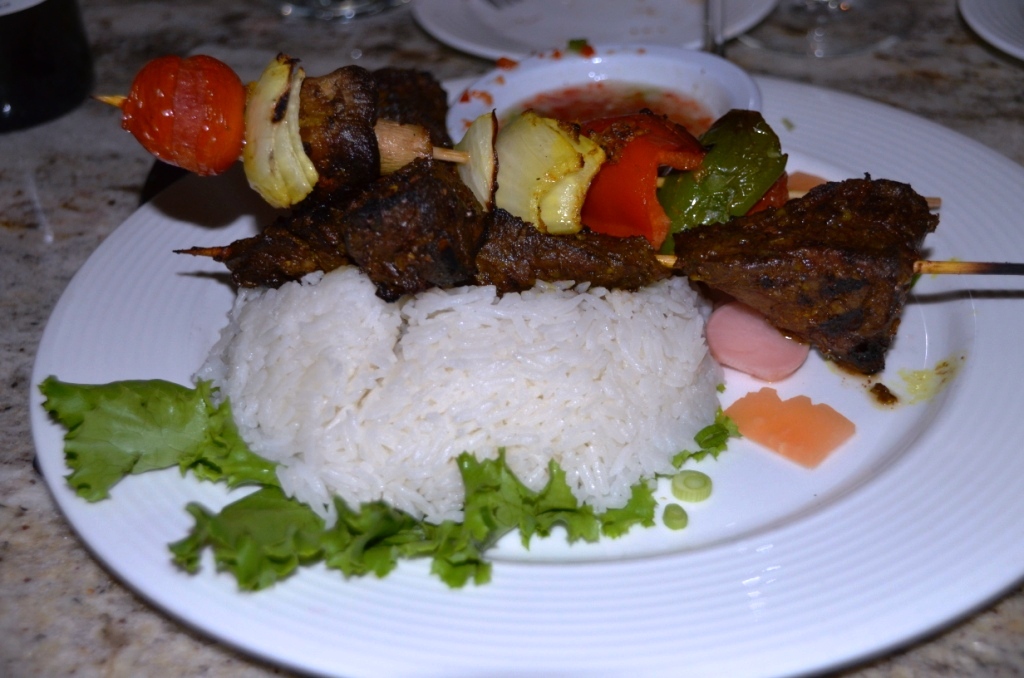
Thai style Kabob
I’m generally skeptical about beef kabob (you need lamb or pork for the best tasting kabob – both chicken and beef have a tendency to come out too dry) – but this execution was just perfect! Meat was perfectly tender, with wonderfully refreshing Thai-style spicy sauce. Definitely an excellent dish.
And then of course was dessert:

French Cannoli
Imagine Italian Cannoli, only with the French crepe instead of the typical Cannoli crust – with banana cream filling, covered with chocolate sauce and scoop of ice cream on top. I rest my case.
All in all, this was a great experience – all is left to do it so thank Chef Vinny La Forte for the delicious meal.
Until the next time – cheers!
Oak Hills Restaurant on the Green
165 Fillow Street,
Norwalk, CT, 06850
(203) 855-1800

Weekly Wine Quiz #71: Grape Trivia – Albariño

Albariño grapes, as shown in Wikipedia
Welcome to the weekend and your new wine quiz!
We are continuing our grape trivia series, still focusing on the white grapes, and today’s subject is Albariño.
According to the legend, Albariño was brought to Galicia region of Spain some time in the 12th century, of course by nobody else but monks. But it was not until almost the end of 20th century that Albariño wines became well known and well recognized in the world. Albariño is the main grape in the Rias Baixas region of Spain. Rias Baixas became a DO (Denominación de Origen is Spanish definition of the quality of agricultural products, similar to AOC in France) for Albariño in 1980. The rules had to change after Spain joined European Union, which doesn’t allow DO definitions for the single grape, so the new rules had being put in place in 1988, allowing for a number of other grapes, such as white grapes Loureira blanca, Treixadura, Caiño blanca, Torrontés and Godello, to be included into Rias Baixas DO wines.
Albariño makes perfect summer white wines. It usually combines very expressive aromatics of bright white fruit, with zesty, lemony and dry palate, making it perfectly drinkable by itself or with the wide array of summer dishes. While Albariño is literally considered to be the most important Spanish white grape, it is also successfully growing now in the other countries, such as Argentina, United States and others. In Portugal, Albariño had being known for the very long time under the name of Alvarinho, where it is often used in making of the Vinho Verde wines.
And now, to the quiz!
Q1: Explain the origin of the name Albariño
Q2: What kind of food is typically expected to be paired with Albariño?
Q3: When Albariño was first planted in California?
a. 2000
b. 1996
c. 1992
d. 1988
Q4: For the long time, winemakers in Australia thought that they are making Albariño wine – until it was recently found that due to the mistake, what they thought they planted as Albariño is not Albariño at all, but a totally unrelated grape. Do you know what grape it was?
Q5: Val do Salnés is one of the sub-regions in Rias Baixas, making wines from Albariño grapes. True or False: to be labeled Albariño Val do Salnés, the wine must contain 100% Albariño grapes
Good luck, enjoy the quiz and your weekend! Cheers!
Daily Glass: Take Your Journey, Any Time: Odisea Wines
One of the most fascinating aspects of wine is its ability to change your emotional state. Best steak in the world will only pick you up during those 15 minutes you will spend enjoying it. Yes, if the meal was “an experience”, it might stay with you forever, but still, it is very hard, for instance, to enjoy your steak during 2 – 3 hours of quiet time in the evening (never mind five evenings in a row).
Wine is different. You can start from admiring it in the glass – color, nose, legs – and then slowly move on to the first sip, and go on from there, simply observing and enjoying the transformation for a while. But this is not all. Wine, unlike many other foods, very often comes with the stories. Stories of the people who made it, or who started making it 500 years ago. You can learn about their dreams, their aspirations, their hard work. Yes, there was a lot of hard work involved in making of that steak – but it is very hard to make a unique and emotional story out of it.
What is the point of this rambling? Let me explain. Over the last three days we undertook a journey, right in the comfort of our living room (okay, actually, we were mostly sitting outside on the deck, but this is besides the point). Not just any journey, an odyssey. Lead by the Odisea Wine Company out of California, we traveled through unusual grape varieties and unique sensual expressions. Odisea Wine Company was created in 2004 by two friends, Adam Webb and Mike Kuenz, and it is focused on making the wines from “Rhone and Iberian grape varietals grown in California”.


Here is my account of this odyssey:
2009 Odisea Veritable Quandary, California (13.5% ABV; 25% Syrah, 17%Grenache, 17% Tempranillo, 14% Petite Sirah, 12% Field Blend, 12% Alvarinhao, 3% Carignane; 850 cases made) – dark garnet color, nose of dark fruit and touch of dark chocolate. Velvety palate of plums, touch of warm spices, profile of a classic Spanish Grenache, only slightly more restrained. Round, soft, perfectly balanced. Drinkability: 8
2009 Odisea Devil’s Share, California (13.9% ABV; 48% Syrah, 30% Grenache, 14% Mourvedre, 6% Petite Sirah, 2% Viognier; 335 cases made) – dark garnet color. Needs time to come to its senses (slightly disjointed on the first sip with acidity going sky high). Cherries and herbs on the nose. Spices, hint of barnyard, sage, dark fruit, raspberries, may be a touch of tobacco notes – very round, balanced and pleasant, with the long finish. A dangerous wine once it is opened… Drinkability: 8
2010 Odisea Unusual Suspects, California (13.9% ABV; 50% Carignane, 25% Tempranillo, 15% Grenache, 10% Cinsault; 600 cases made) – dark ruby color in the glass. Fresh raspberries on the nose, with the hint of tobacco. Some raspberries on the palate, but then green, almost vegetative notes (not the tree brunches, more of a hay, dry grass style), supported by tobacco and a savory profile. Warm feeling on the palate, good acidity in the back, very soft tannins over a medium finish. This wine begs for food, but nothing as sharp or as powerful as steak – it would be good with a veal roast, a slow cooked beef stew or roasted eggplant. Drinkability: 7+
I bought these wines online a while ago at the Wade’s Wines, I guess mostly based on the unusual names – and most of them are still available, at $16.99 or so, in case if you are interested in taking the journey for yourself. In any case, I’m glad I had mine. Cheers!
Wednesday’s Meritage – Wine Quiz Answer, Don’t Forget to Vote!, 2013 Harvest Started in France, and more
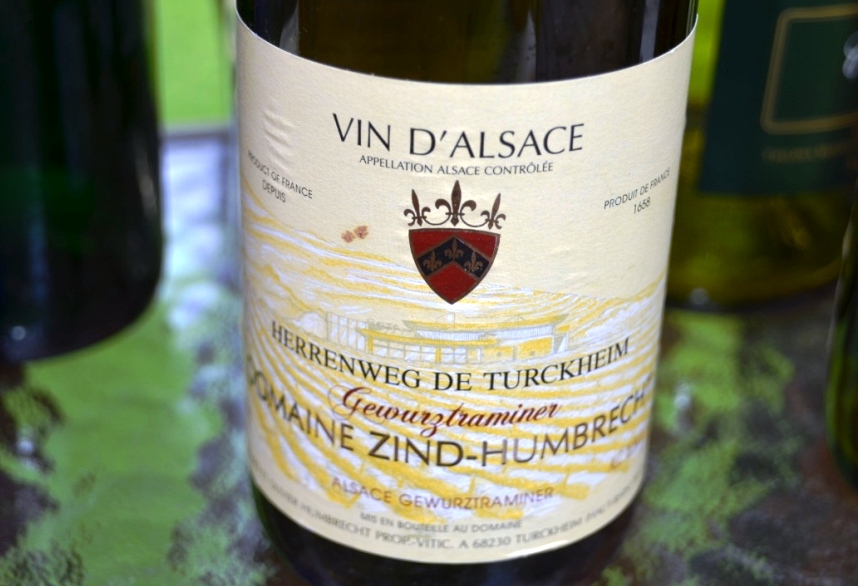
Zind-Humbrecht Gewurztraminer
Meritage time!
First, let’s start with the answer for the wine quiz #70, grape trivia – Gewurztraminer.
In the quiz, you were supposed to answer 5 questions about white grape called Gewurztraminer. Here are the questions, now with the answers:
Q1: Where Gewurztraminer was supposedly originated? Name the grape which was a precursor of Gewurztraminer
A1: Gewurztraminer is a result of genetic mutation of the grape called Traminer. Traminer grape takes its name from the town of Tramin, located in the South Tyrol in Northern Italy (Alto Adige).
Q2: Explain the meaning of the name Gewurztraminer
A2: “Gewurz” means spicy in German. But the “spicy” reference here is for the extreme aromatics of the grape and not to taste of the grape itself, so in the direct translation Gewurztraminer stands for Spicy Traminer.
Q3: Unlike many other grapes, if the French wine is made out of Gewurztraminer, you can easily know that just by looking at the bottle. Why is that?
A3: Alsace, unlike any other AOC in France, requires the name of the grape varietal to be shown on the label. While most of the Alsace wines are typically bottled in the tall narrow bottles called vin du Rhin, one look at the label will tell you exactly the type of the grape the wine is made out of.
Q4: Which area in California produces best Gewurztraminer wines:
a. Monterey County, b. Alexander Valley, c. Russian River Valley, d. Anderson Valley
A4: Anderson Valley (“best” is subjective, but I seem to find a number of sources pointing to Anderson Valley)
Q5: Wine Spectator calls wines rated in 95-100 range Classic (the highest and the most prestigious category). True or False: there are no Gewurztraminer wines with Classic rating
A5: False. There are couple of Gewurztraminer wines with 98 ratings, and in excess of 30 wines overall in the Classic rating range.
Now, when it comes to the answers, we have an interesting situation. All the respondents answered all the questions correctly, except for the Q3 – typical answer was based on the unique shape of the bottle, but the problem is that most of the wines from Alsace share the same bottle shape – however, nobody pointed to the label and the major difference in the labeling laws between Alsace (based on the grape) and the other AOCs (based on geographic location). Thus we don’t have a winner in this weeks’ quiz – but hey, there is always another quiz.
Now, to the interesting stuff around the vine and the web!
First and foremost – please don’t forget to cast your vote for your favorite post in the Monthly Wine Writing Challenge #2! The theme of the challenge was “Trouble”, and despite the initial troubles with the trouble, quite a few bloggers took a stub at the theme. ArmchairSommelier was hosting this month’s challenge, and she will announce the winner on August 24th. To read all of the submissions, and most importantly, to vote, please use this link.
Another interesting opportunity to “vote” for you – W. Blake Gray asked his readers to vote on what country which makes their favorite wine. You don’t have to think to hard about “the one”, as you can vote for up to 3 favorites. So far based on the voting results, the clear leaders are France, USA and Italy – but you should definitely vote and see for yourself – here is the link to the blog post.
While it sounds way too early (it is still an August!), the 2013 harvest already started in in Roussillon in France. An interesting fact is that this year actually has a late start due to the cold spring, and the picking usually starts 10-15 days earlier. Here is a link to the article where you can find all the details.
That’s all I have for you for today, folks. The glass is empty – but refill is on its way. Until the next time – cheers!
Madonia Restaurant: Good Food, Great Wine
 I like to write about restaurant experiences. In general, I do it only when I’m really wowed. And for just plain restaurant reviews I typically use Yelp. However, recently I discovered Urbanspoon – well, I knew about Urbanspoon for a while already, but I didn’t know that, unlike Yelp and TripAdvisor, Urbanspoon actually allows you to link your blog post to the particular restaurant’s page, which to me is somewhat of a game-changer. Taking this into account, you should expect to see more restaurant “reviews” in this blog. Well, let’s make it straight – I’m not going to convert into a restaurant critic. My reviews will [continue to] comprise of a bunch of pictures and a few words about food and wine. But I will make an effort to write more posts about our restaurant experiences.
And here we go…
The restaurant I want to talk about today is called Madonia and it is located in Stamford, CT. The restaurant defines its food as Modern Mediterranean – however, looking at the menu, I would simply classify it as Italian, considering the prevalence of the traditional Italian dishes. The restaurant is also offering a “tasting menu” featuring seasonal ingredients.
Talking about food, nothing was really stunning or even simply standing out – with the exception of the white bean spread served with the bread, which was outstanding and gone in two seconds. We ordered a number of dishes (some pictures are below), and all of them shared the same trait [unfortunately] – they were good but plain. All the food was perfectly cooked – but real seasoning, the “umph”, was missing, while it was greatly desired.
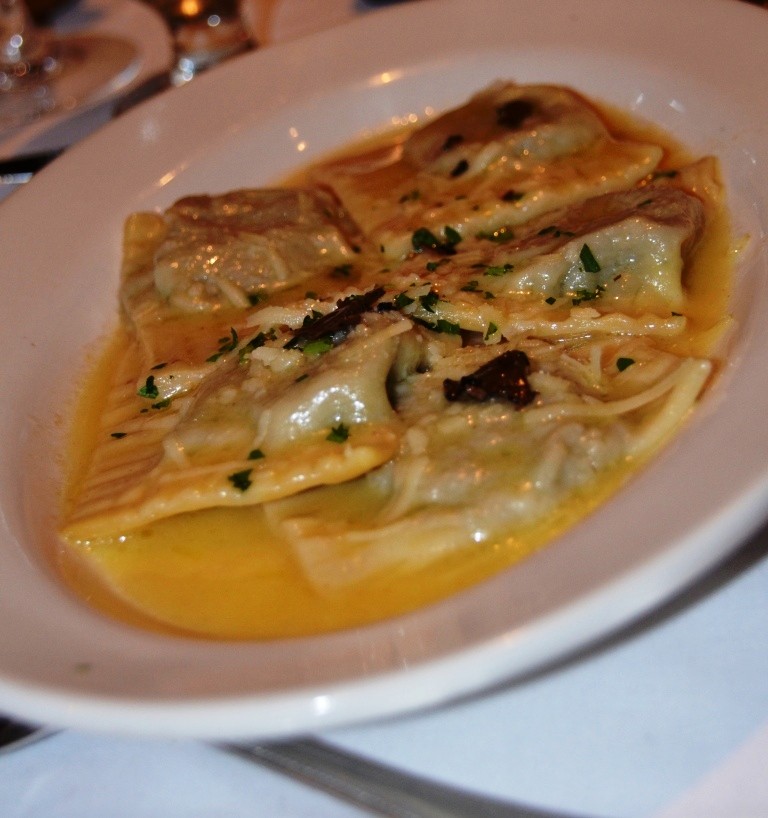
Mushroom Ravioli
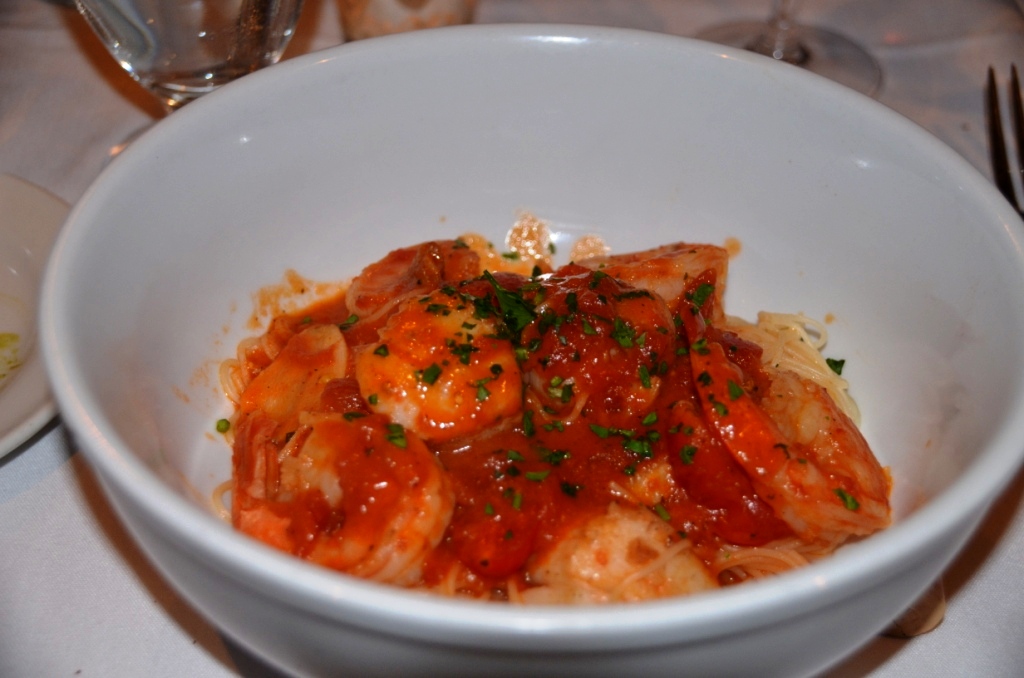
Capellini with Shrimp and Scallops
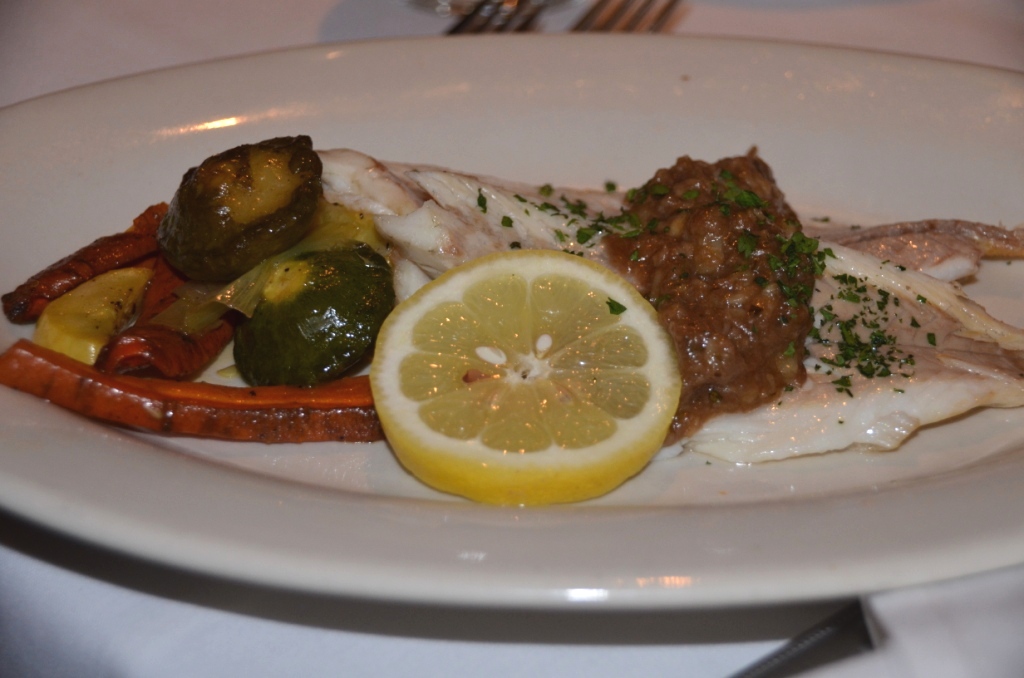
Branzino

Chicken Milanese
The wines, luckily, represented a different story. First of all, the wine list was well priced (there is enough selection of decent wines in the proximity of $30, which is not often in restaurants). Chef (and owner) Enzo is quite passionate about the wines, and he likes to please his guests. We started talking about wine, and Enzo mentioned that he has a number of wines that are not on the list, and which he will be glad to offer to us. One of those wines was called Shatter, a Grenache wine out of France.
I heard of Shatter before, I believe I read a rave review in one of the blogs (sorry, it’s been a while). Shatter is a joint project of Dave Phinney, the winemaker at Orin Swift Cellars, and Joel Gott, the winemaker at the eponymous winery. My initial thought was “no, thank you, I don’t want this wine”. First, I don’t like the style of Orin Swift wines – one of their most famous wines is called Prisoner, a Zinfandel blend, which I find over-extracted. Second, I lost my love of French Grenache – I definitely prefer the Spanish Grenache style, in general, more velvety and round than the French and less biting. But then, considering our other options, the fact that I heard about the wine before and the great price ($45) – oh well, we decided to give this wine a try – and we happened to hit the home run.
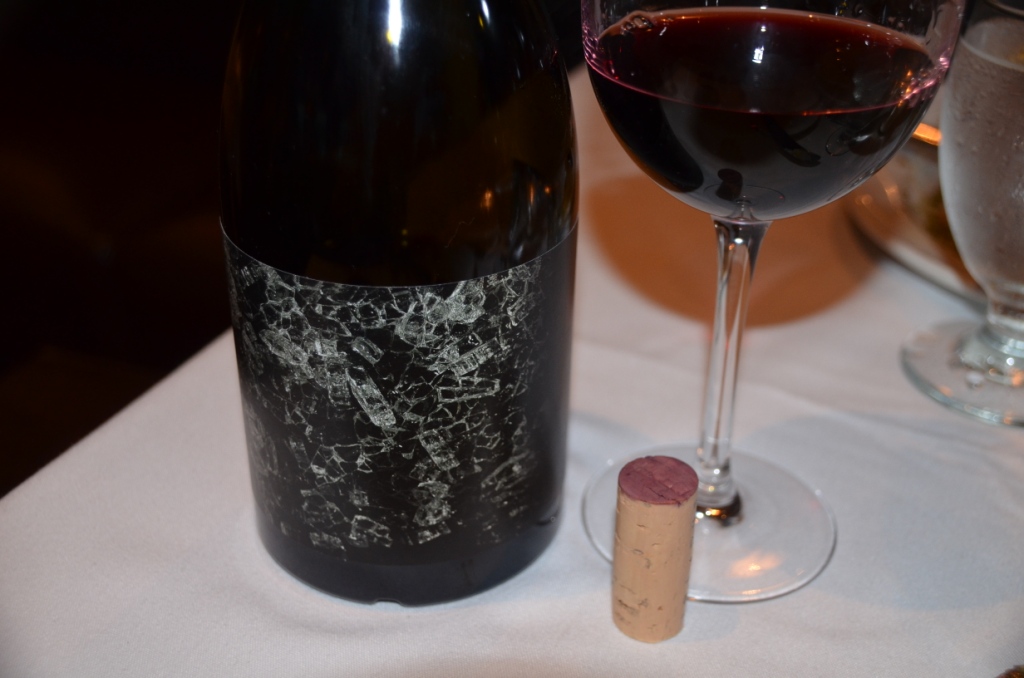
Shatter
2011 Shatter Grenache Vin de Pays des Côtes Catalanes, France (15.9% ABV, 100% Grenache, 10 months in French oak, 30% new) – dark garnet color in the glass, nose of dark fruit with a hint of espresso beans. On the palate, velvety texture with blueberries and cherries prevalent, a touch of spice, few peppery notes, dark chocolate, firm structure, supple tannins, perfect acidity, and overall very balanced. I have to say, surprisingly balanced (again) for 15.9% ABV. Drinkability: 8
Then there was dessert, and so here are more food pictures for you:


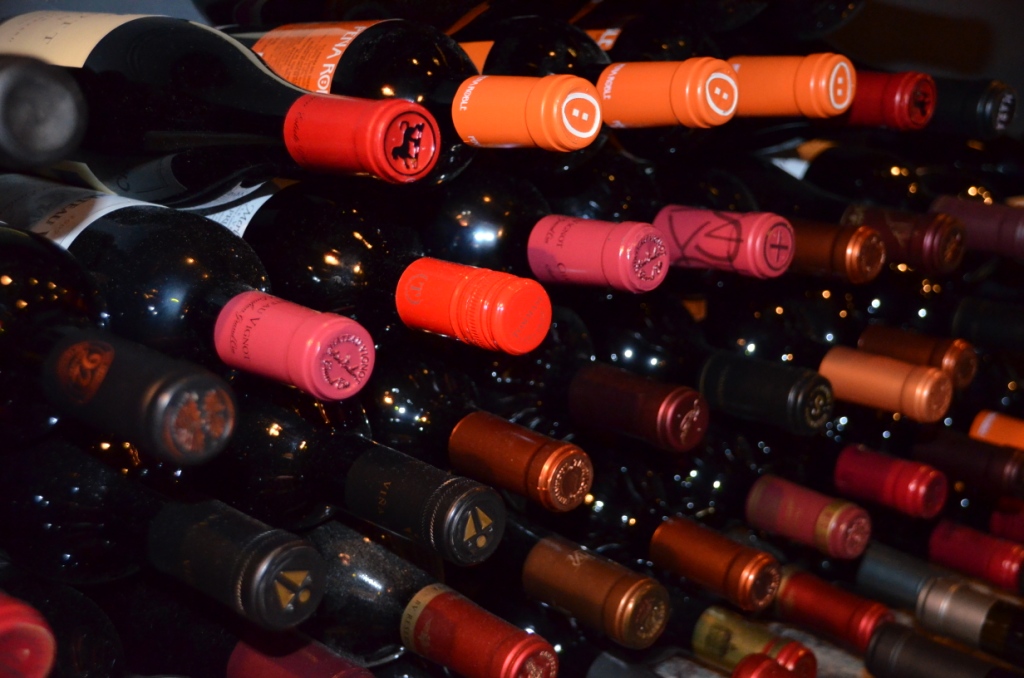
Overall, it was a good meal, definitely anchored on the great wine experience. And we plan to come back, as Enzo showed us his secret wine room – the room is used both as a cellar and the place for the special wine dinners. You can eat surrounded by wine – don’t think I know of any other restaurant in Stamford where you can do the same. Yes, we will be back…

Ready for wine dinner
That’s all I have for you for today, my friends. Cheers!
Madonia
1297 Long Ridge Rd
Stamford, CT 06903
(203) 322-8870
https://www.madoniarestaurant.com/

Wines, Wines, Wines – Part 2
As promised, here is the second part of the Wines, Wines, Wines post. In the first part, we talked about great Riesling and Gewurzrtraminer wines, with some extra value wines and Prosecco. Let’s continue our “memorable wine extravaganza” with a couple of Chardonnays.
Chardonnay
It is so interesting how things work in life. You might walk past say, a picture, every day, and never notice it. And then all of a sudden you say “what is it? Was it always here, or is it something new??”, and people around you look at you like you have two heads or something. Where am I going with this? Give me a minute, I will make my point.
Couple of month ago I got a bottle of Chardonnay, accompanied by the words “try it, it is pretty good”. I’m a sucker for good Chardonnay (yeah, true, you can substitute “Chardonnay” with any other varietal – I’m just a sucker for any good wine, but this can be a subject for a different post). But this Chardonnay was from New Zealand. And New Zealand in by book is the land of Sauvignon Blanc and Pinot Noir – but not really a Chardonnay. So I finally got the bottle opened and … wow.

Seresin Chardonnay
2008 Seresin Chardonnay Reserve Marlboro New Zealand (13.5% ABV, 11 month in oak). The symbol of the hand on the label has a deep meaning. Quoting few words from Seresin Estate web site, “The hand is a symbol of strength, gateway to the heart, tiller of the soil, the mark of the artisan, and embodies the philosophy of Seresin Estate”. Here are my tasting notes for this wine: Outstanding, classic. Perfect nose of vanilla and white apples, just right. Very balanced fruit on the palate – hint of butter, vanilla, oak, good acidity – one of the most balanced Chardonnays ever. Drinkability: 8+
Oh yes, you are still waiting for me to connect to the opening sentence about passing by and not seeing things around for the long time, right? As of very recently, as I walked in the New Zealand isle in the store, I noticed all of a sudden that almost every producer now features Chardonnay in addition to Sauvignon Blanc and Pinot Noir. When did it happen, how long this was the case with New Zealand Chardonnays – I don’t have any idea, but based on this experience, I definitely want to try more.
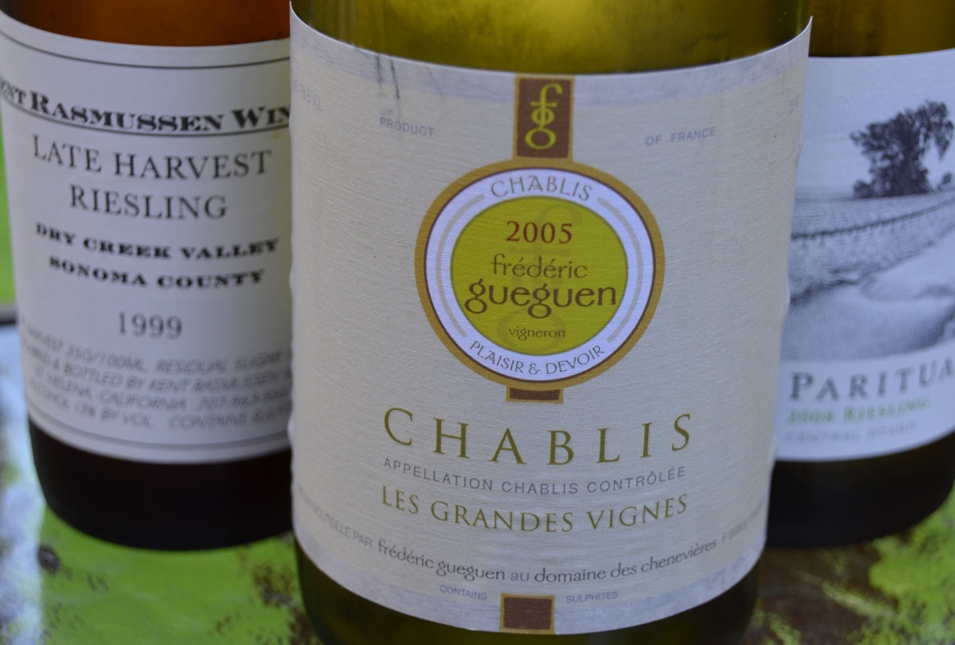
Frédéric Gueguen Chablis
2005 Frédéric Gueguen Chablis Les Grandes Vignes (13% ABV) – I don’t have a lot of experience with Chablis overall. I had a few bottles of Chablis here and there, but never was really impressed with it (I never had Chablis of a Grand Cru or even Premier Cru level). I don’t know what possessed me to get this wine from the Benchmark Wine Company, I guess it was in the right price range ( under $20), and somehow caught my attention. Then I read somewhere, that Chablis requires on average about 10 years of age in the bottle to really start transforming and going past the initial “steely acidity” flavor profile to get to the next level. And then I tried this Frédéric Gueguen wine – wow. Here are my tasting notes: some darker yellow color, but not quite golden yet. Amazing nose, reminiscent of Côte-Rôtie – almost a touch of sulfur (think freshly burnt matches), or even more of a smell of a hot piece of granite on a summer day, a “roasted rock”. Side note: pardon my naive definition here – I recently learned that professionals call it a “gunflint” – but I will not use this term as it doesn’t lead to any associations for me. Perfect complexity on the palate – white fruit, vanilla. Lots and lots of minerality. Full bodied and very balanced, excellent wine overall. Drinkability: 8+
Pinot Noir
And we are moving along to the Pinot Noir wines – both of the wines below were excellent:

Siduri Pinot Noir
2011 Siduri Pinot Noir Sonoma County (13.1% ABV) – perfectly clean California Pinot – good smokey nose, with a touch of red fruit aromas. Light cherries on the palate, hint of earthiness, medium body, perfect acidity, very clean and balanced. Drinkability: 8-
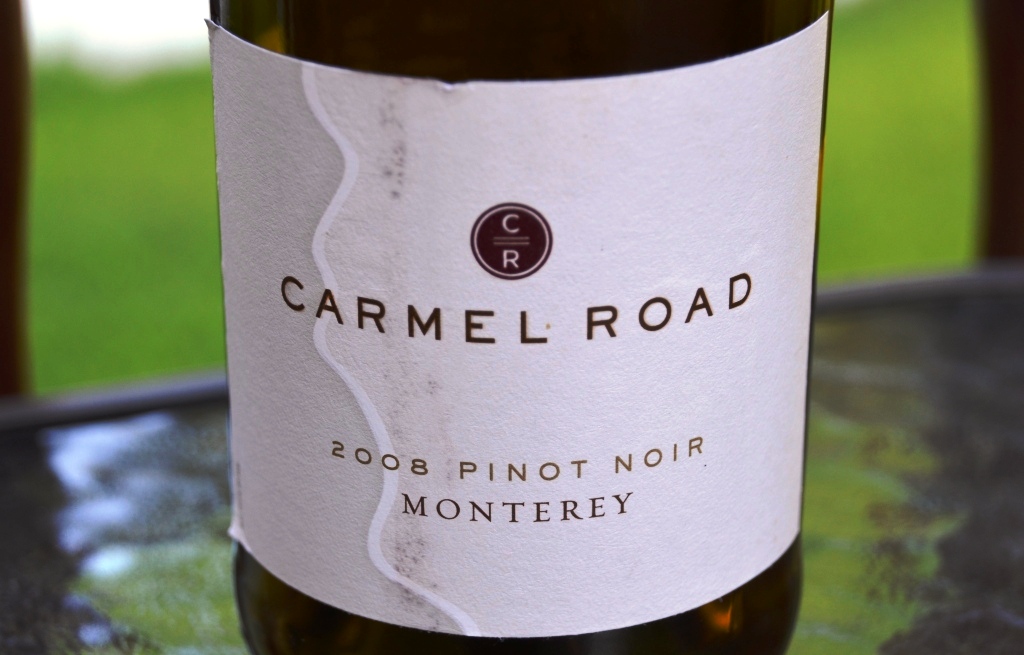
Carmel Road Pinot Noir
2008 Carmel Road Pinot Noir Monterey (14.0% ABV) – outstanding. Bright ruby color in the glass, raspberries and hint of smokiness on the nose. Raspberries, cranberries and cherries on the palate. Medium to full body. Excellent acidity, overall perfectly balanced. Drinkability: 8+
Cabernet Franc
I have only one wine for you here, but it was mind blowing.
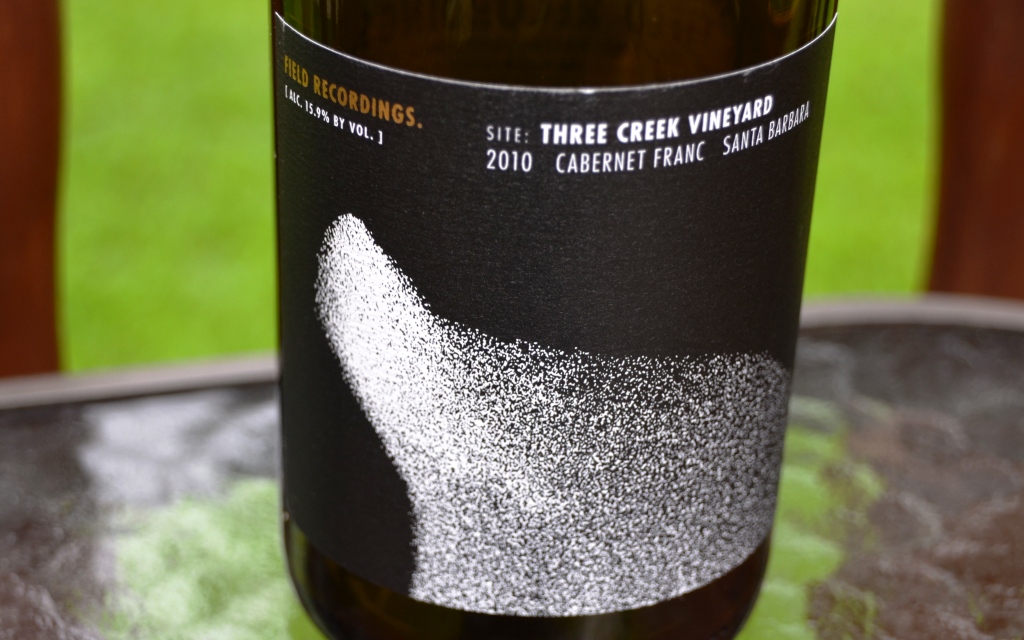
Field Recordings Cabernet Franc
2010 Field Recordings Three Creek Vineyard Cabernet Franc Santa Barbara (15.9% ABV, 90% Cabernet Franc, 10% Malbec, 18 month in French oak) – spectacular. If you read this blog on the regular basis, you know that I’m very impartial to the wines of Field Recordings – but this is not my fault, it is Andrew Jones’ fault ( Andrew Jones is the winemaker behind Field Recordings). This wine had beautiful garnet color in the glass. The nose was clean and open, withhint of black currant and other red fruit. The palate is stunning with black currant, cherries, touch of black pepper, dark chocolate, perfect acidity, soft and supple tannins, all in the format of full-bodied wine. Perfect balance of fruit, acidity, tannins and alcohol – which is pretty amazing at 15.9% ABV. Drinkability: 9
Last, but not least – Syrah
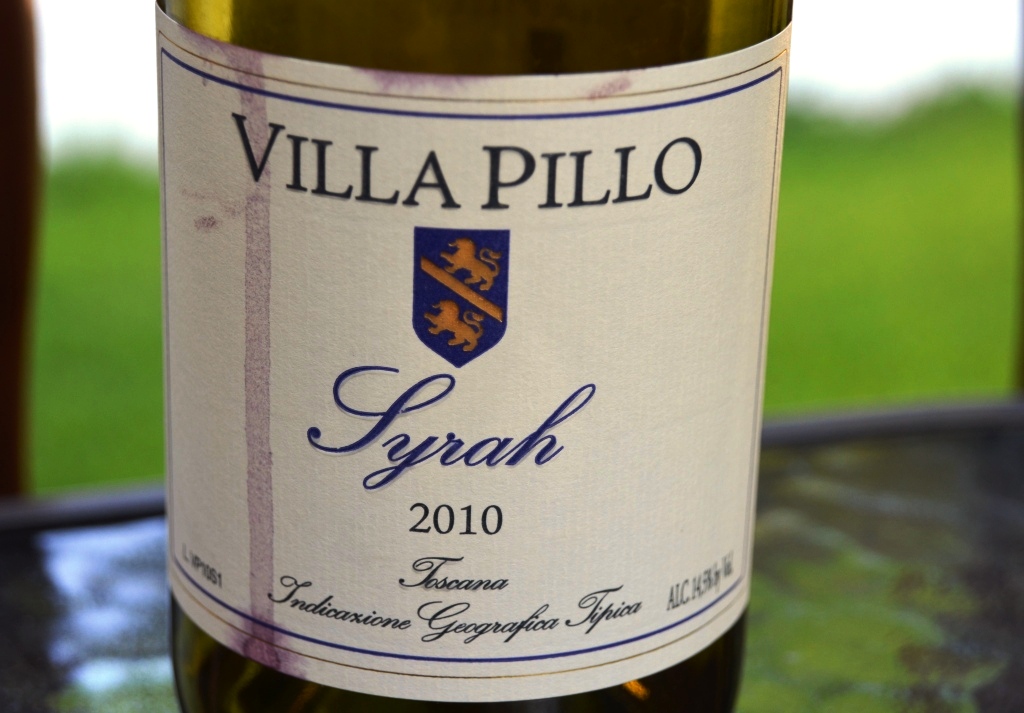
Villa Pillo Syrah
Appearance of the large amount of Italian Syrah wines is also somewhat of a revelation, similar to the one I mentioned at the beginning of this post. All of a sudden I start noticing that there are more Italian Syrah wines showing in the wine stores, and people are just talking more about them, in the blogs and otherwise.
2010 Villa Pillo Syrah Toscana IGT (14.5% ABV) – we got this wine when we visited Millbrook Winery in New York (this will be a subject of a separate post), as they are importing this and a number of other wines from Italy. Tasting notes: Dark garnet color in the glass. Nose of dark fruit and dark chocolate. Outstanding on the palate – hint of pepper, cherries, plums and raspberries, more dark chocolate. Full bodied, with the velvety texture weaved over firm structure. Drinkability: 8
Whew, we are done here! Enjoy the rest of your weekend and cheers!
Weekly Wine Quiz #70: Grape Trivia – Gewurztraminer
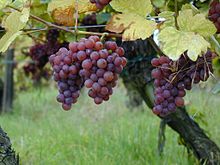
Gewurztraminer grapes, as shown in Wikipedia
Welcome to the weekend and your new wine quiz!
We are continuing our grape trivia series, still focusing on the white grapes, and today’s subject is Gewurztraminer.
Gewurztraminer, which often spelled with umlaut, Gewürztraminer, is a very interesting white grape for variety of reasons. Even starting with the appearance – take a look at the picture – does it look white to you? Nevertheless, similar to Pinot Gris, it is considered to be the white grape, as its skin color ranges from pinkish to the reddish. Gewurztraminer has about 1000 years of history, and it is growing pretty much all over the world in literally each and every wine producing country – yet it is very seldom that any of the oenophiles would rave about their Gewurztraminer experiences.
It is difficult to grow, as it tends to have high sugar content and low acidity, which doesn’t bode well for the well balanced wines – and for that reason, it also performs better in the cooler climates. Its characteristic trait is extreme aromatics – on the nose, Gewurztraminer wine usually exhumes with aromas of white flowers, lychees, peaches and tropical fruits. Gewurztraminer wines can be made in the range of styles, from very dry to the full power dessert wine. For the well made Gewurztraminer wines, the combination of extreme aromatics and balanced body, whether dry or sweet, creates very memorable experience – yes, this would hold true from absolute majority of the wines, of course – but I would say that Gewurztraminer wines very seldom have middle ground in their showing – they are either great, or they are really bad, with the very few which you will place into “well, it’s okay” category.
Most of the best in the world Gewurztraminers come from Alsace in France, but you can also find very good wines in Germany, Austria, Italy, California and probably some other places (in a lot of cases the wines will be made only for the local consumption and you would never hear about them). One more curious fact I want to point to before we get to the quiz is that Gewurztraminer is probably one of the most promiscuous grapes, having been used more often than most of other grapes in creation of different crosses – Flora, Traminette, Ortega, Irsai Oliver and many others are not clones, but actual purposeful crosses of Gewurztraminer with the other grapes.
Now, to the quiz!
Q1: Where Gewurztraminer was supposedly originated? Name the grape which was a precursor of Gewurztraminer
Q2: Explain the meaning of the name Gewurztraminer
Q3: Unlike many other grapes, if the French wine is made out of Gewurztraminer, you can easily know that just by looking at the bottle. Why is that?
Q4: Which area in California produces best Gewurztraminer wines:
a. Monterey County
b. Alexander Valley
c. Russian River Valley
d. Anderson Valley
Q5: Wine Spectator calls wines rated in 95-100 range Classic (the highest and the most prestigious category). True or False: there are no Gewurztraminer wines with Classic rating
Good luck, enjoy the quiz and your weekend! Cheers!
Wines, Wines, Wines
A couple of weeks ago, an interesting (concerning, rather?) thought came in – this is the wine blog. I’m doing my best to keep you entertained and informed, with all the weekly quizzes and potpourri wine news (a.k.a. Wednesday’s Meritage), but I don’t do enough of the core wine blogging stuff – namely, the wine reviews. No, I don’t have a plan to address this radically – say, but introducing a new weekly topic or so. But during the past month, I had quite a few wines worth talking about, so this is exactly what I’m going to do – write a post to review those wines. Well, yeah, I guess you are already reading this very post… The usual warning – there will be pictures,… many pictures…
It is still summer, so let’s start with super-quaffable Prosecco. It is not even Prosecco, it is pretty much a complete cocktail in the bottle. The wine is made by Mionetto, a well known Prosecco producer in Valdobbiadene region in Italy.
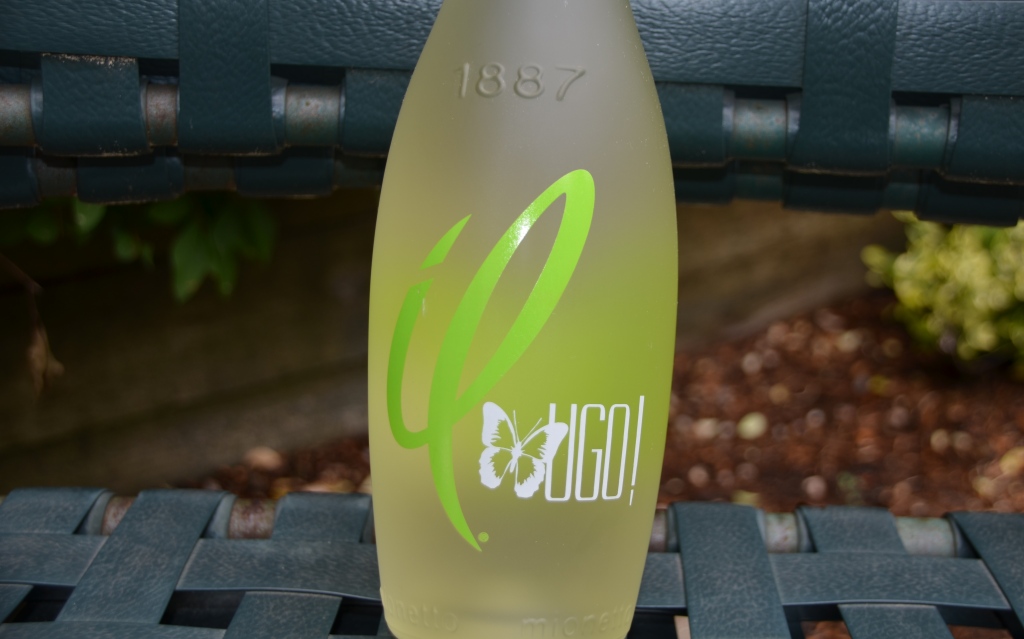
Mionetto Il Ugo
Mionetto Il Ugo, a blend of Prosecco with elderflower blossoms and wildflowers – bright and uplifting on the nose, touch of sweetness with a charismatic bitterness and enough acidity – it is so refreshing, you don’t want to put the glass down. Yes, I know, the purists will disagree – but this is an outstanding wine in my book. Drinkability: 8
Now, a couple of value wines for your consideration. These wines come from Chile under the brand name of the Beach Kite. While you can’t find this information on the wine label, Beach Kite is presumable affiliated with 90+ Cellars. 90+ Cellars has a similar model of operation to Hughes Wines and Oriel (at least the two that I’m familiar with), which is: find good wines which well-known wineries have a hard time selling, bottle under your own private label, and sell for the reasonable price at around $20. Beach Kite seems to be more of a “second label” to the 90+ Cellars wines, considering the price of $7.99 per bottle. But – don’t judge the wine by its price.


2012 Beach Kite Sauvignon Blanc Central Valley Chile (13% ABV) had herbaceous nose, and zesty grapefruit on the palate, a bit more restrained compare to the typical New Zealand Sauvignon Blanc, but still fruit forward next to Sancerre. Refreshing, with good acidity. Drinkability: 7
2012 Beach Kite Pinot Noir Central Valley Chile (13% ABV) – simple, round, good red fruit on the nose and the palate, touch of plums, good acidity – perfect sipping wine for a hot summer day. Drinkability: 7
Next I want to talk about few wines, sorted by the grape.
Riesling
While this is not how I rate the wines, but I would say that I had two Rieslings which were outstanding, and one which was … just spectacular.
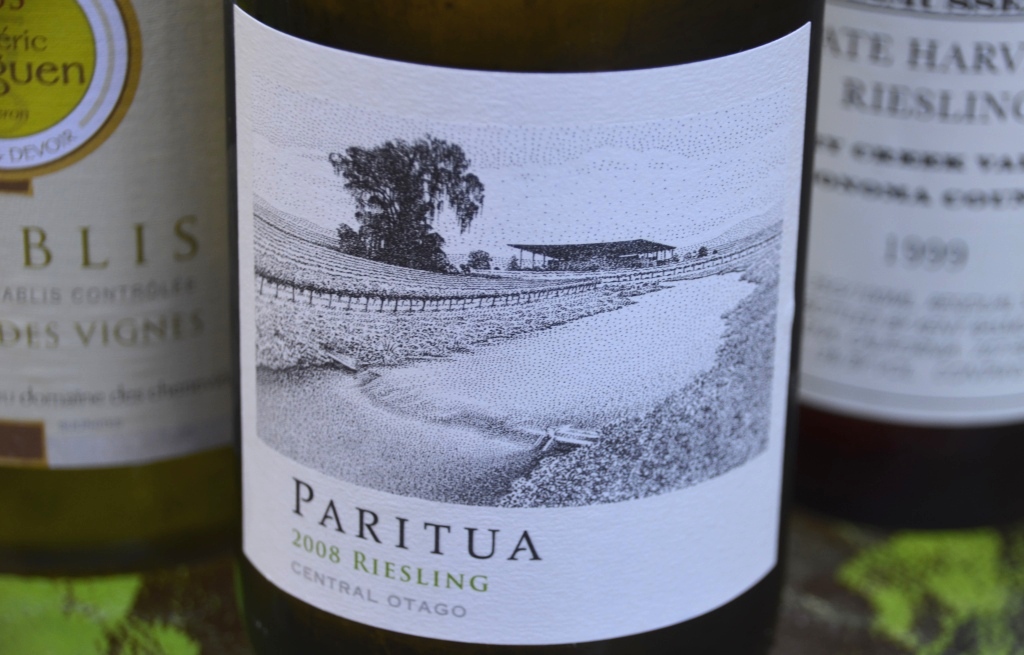
Paritua Riesling Central Otago
2008 Paritua Riesling Central Otago New Zealand (11.5% ABV). I got this wine for $6/bottle at Last Bottle Wines. I was questioning myself a bit when placing an order for this wine, as I never heard of Riesling from Central Otago – a region in New Zealand known for their world-class Pinot Noir, but not Riesling. I’m glad I took my chances and got this wine, as it was outstanding. Perfect ripe peach flavors on the nose with the hint of petrol (yes, I know some people are not very happy about this flavor, but I personally love it). Very delicate on the palate, with some honey and apricot notes, perfect acidity and very restrained sweetness. This New Zealand Riesling would rival many of the German Rieslings at Kabinett level. One night we had it with Thai food, and [as expected] it paired perfectly. Drinkability: 8


2005 Eitelsbacher Karthauserhofberg Riesling Spatlese Mosel-Saar–Ruwer (9% ABV) – what I value the most in Riesling (any Riesling) is balance. My sweet tooth is not any smaller than the one any sweets lover would have out there. But I can’t take bottomless sweetness in the wine – I need acidity to come and play it supportive and refreshing role right next to the sweetness. This Riesling is perfectly balanced, with excellent acidity – and showing no signs of age. Just had an interesting revelation – may be I should replace my “drinkability” ratings with “quaffability”, as this wine was not just drinkable, it was perfectly quaffable. Anyway, I digress. This is not the first Riesling I had from Eitelsbacher Karthauserhofberg – and it seems to be a very interesting winery – but I need to refer you to the Riesling expert Oliver TheWinegetter if you want to learn more. Here is a link to the comment Oliver left on one of my previous posts where he is talking about this winery. Drinkability: 8+

Kurt Rasmussen Late Harvest Riesling
1999 Kurt Rasmussen Late Harvest Riesling Dry Creek Valley (13%ABV) – I’m not sure I can do justice to this wine trying to describe it. In a word – spectacular. Liquid viscous dark gold in the glass, honey, honeydew, caramelized pecan, apricot notes all over, both on the nose and the palate – and perfectly balanced (I’m know I’m abusing this one), with still bright supporting acidity. Drinkability: 9
Next up – Gewurztraminer
To be honest, I don’t drink Gewurztraminer all that often. I find a lot of Gewurztraminer wines to be all over the place in terms of taste – many of them have wonderful nose, but then on the palate the wine often doesn’t appear to be “together”, it shows up quite disjointed. But – not this wine.
Zind-Humbrecht Gewurztraminer
Domain Zind-Humbrecht is one of the best producers in Alsace, probably best known for its Pinot Gris wines. Just to put things in perspective, 36 wines of Domain Zind-Humbrecht have classic ratings from Wine Spectator (95-100), including perfect score 100 point 2001 Pinot Gris. Well, this is not the wine I’m talking about here.
2002 Domaine Zind-Humbrecht Herrenweg de Turckheim Gewurztraminer Alsace (15.5% ABV) – I got two bottles of this wine at Bottle King in New Jersey on a big sale for about $20 each – this wine typically retails for $60 or so. I had a bottle few years back, and was not impressed. So when I pulled this bottle out, I was not expecting much ( it was more like “yeah, let’s free some space in the wine fridge”). My, was I wrong! In one word, I have to use again my abused wine definition of the day – spectacular. Dark golden color, beautiful nose of candied apricot, perfect honey tones on the palate, fresh acidity, more candied apricot, perfectly balanced. Drinkability: 9
Food break
Tired of wine? Let’s make a short break for some food pictures. First, I promised to Food and Wine Hedonist that when I will make Elotes according to his recipe, I will share my impressions. Elotes is Mexican street food which is essentially a grilled corn with spicy mayo and Cotija cheese – this is precisely what I did and it was tasty! For the recipe, use the link above, and here are the pictures:


Yes, I continue admiring my “mangal”, a special charcoal grill – here are few pictures for your drooling pleasure:


You know what – I think this is enough for one post. Let’s stop here. In the next post – Chardonnay, Cabernet Franc, Pinot Noir and may be something else.
To be continued…
Wednesday’s Meritage – Wine Quiz Answer, #WBW80, #MWWC2, GMO Wines???, Harvest Marathon and more
 Meritage time!
Let’s start with the answer for the wine quiz #69, grape trivia – Viognier. In the quiz, you were supposed to answer 5 questions about the white grape called Viognier.
Here are the questions, now with the answers:
Q1: Viognier stands pretty unique among all white grapes as it is often added or can be added as blending component during the production of the red wines around the world. Do you know the name of the red grape it typically accompanies?
A1: Syrah. Viognier is allowed to be added to the red Syrah wines of Côte-Rôtie (up to 20%), and Shiraz Viognier wines are quite popular in Australia.
Q2: Name the source of essentially the best and most long-living Viognier wines in the world
A2: Château-Grillet. Château-Grillet is so called Monopole, as it is both an AOC and the single winery. Château-Grillet is known to produce some of the best, long living Viognier wines ever. Château-Grillet is surrounded by another Viognier-only appellation, Condrieu, which also makes great Viognier wines, but the answer I was looking for here is Château-Grillet.
Q3: Viognier became so popular in the United States, that one of the states even called it “an official grape of the state”. Do you know which state it is?
a. California, b. New York, c. Texas, d. Virginia
A3: Virginia! In 2011, Viognier was named an “official grape” of the state of Virginia.
Q4: Wine Spectator calls wines rated in 95-100 range Classic (the highest and the most prestigious category). True or False: there are no Viognier wines with Classic rating
A4: False. There is a number of Condrieu wines rated in the range of 95 – 98 (98 so far was the highest rating for Viognier wines)
Q5: Based on DNA research, Viognier has an unlikely cousin in Italy, which is not even the white grape, but red. Can you name that “cousin”?
A5: There is almost always a slight element of controversy with all this DNA research data. According to DNA research information in Wikipedia, Viognier is shown “to be closely related to the Piedmont grape Freisa and to be a genetic cousin of Nebbiolo” – thus both Freisa and Nebbiolo are correct answers here.
We had lots of great answers for this quiz, and we have winners! Considering the absolute precision on the answer for the second question (Château-Grillet), Jeff a.k.a. TheDrunkenCyclist is our Grand Winner today, but both Julian at VinoInLove and Kirsten at TheArmchairSommelier are also the winners of this wine quiz #69. Winners get their due share of unlimited bragging rights, but I definitely want to thank all participants – great job!
And now, to the interesting stuff around the vine and web!
I have few of mostly the reminders for you today.
Today, August 14th – Wine Blogging Wednesday event, #WBW80 – Dry Rosé. There is still some times left to drink Rosé and submit your post! For all the details please click here.
This coming Friday, August 16th – deadline for submission for the Monthly Wine Writing Challenge #2, with the theme called Trouble. You can find all the rules here. There is still time, get your trouble under control and write! Use #MWWC2 hash tag your submission.
Tomorrow, Thursday, August 15th – Last Bottle 2013 Harvest Madness Marathon is taking place! If you like get great wines at unbelievable prices, this event is for you! Starting at 9 AM Pacific time, new wines will be sold at LastBottle web site at neck-breaking speed. Last Bottle model is similar to WTSO – no e-mail announcements, and they don’t even use twitter, so you have to refresh your browser all the time. There is one difference though – there are no minimum quantities to buy to get free shipping. The event will continue for 2 days, and all the wines will be shipped during few weeks after the event. If you are not buying wine at Last Bottle – you really missing lots of great deals. It is free to subscribe to their web site – but if you are not a subscriber and want to become one, send me an e-mail so I will subscribe you – you will get $5 credit (yes, true, and I will get $20, but then of course you can subscribe someone else…).
Last but not least for today is an interesting article by W. Blake Gray which caused my quick and short reaction – WTF?! Seriously? Here is a post in The Gray Report, where W. Blake Gray is talking about an article in Wine Spectator advocating the idea of … noting else but GMO wines! I might be over-reacting, but after reading this article I was split-hair close to canceling my subscription. Well, read it for yourself and let me know what do you think.
That’s all I have for you for today, folks. The glass is empty – but the refill is coming. Until the next time – cheers!
Rosé – Still Misunderstood and Looking for Love?
This Wednesday, August 14th, is the Wine Blogging Wednesday event, where all wine bloggers get the chance to share their thoughts and experiences related to the designated theme. The theme of this upcoming Wine Blogging Wednesday event, or WBW for short, is Rosé – here are the details of the announcement. This is what this blog post is all about.
How often do you drink Rosé? Do you think Rosé is fully understood and appreciated by the consumers en mass? I’m afraid that many wine drinkers still have a notion that Rosé is either sweet, or strictly seasonal, or mostly inferior, or all of the above. I remember being in France about 7 years ago, in November, and ordering a bottle of Tavel in a restaurant. My French colleague gave me a look, and then said sternly “just keep in mind, you are ordering a summer wine” – of course he has an excuse as a Burgundy buff, but still – even in France, people often see Rosé as seasonal wine, not as a wine you can drink all the year around. In the US, yo would rarely find Rosé on the main shelves – they are usually setup on a side, ready to be replaced by the holiday wines, and slowly moving to the “closeout bins” as summer comes to an end.
Many people judge Rosé by the color, which reminds them of White Zinfandel, and think it is a sweet wine. I have seen many people come to taste the wines at the store and refuse the glass of Rosé simply saying “no, thank you, I don’t drink sweet wines”. It really takes time to convince them that the wine they are refusing is actually perfectly dry, refreshing and food friendly – and not only during summer, but all year around.
Having presented this pinkish “doom and gloom” to you, I actually have to admit (happily) that over the past 3-4 years, the situation is changing to the better. Even as a seasonal wine, there is really an abundance of Rosé offered in the wine stores. More and more wineries and winemakers now include Rosé as part of their standard offering, year in, year out. This happens in France, this happens in Georgia, this happens in California, Greece, Italy, Spain, New York and many other places.
The great thing about Rosé is that they are some of the easiest wines to drink – and some of the food-friendliest. Rosé typically has a flavor profile of a light red wine, with strawberries, cranberries and onion peel being some of the main characteristics – it also lacks the punch of tannins as skin, seeds and stems contact is minimized during the winemaking. At the same time, Rosé typically has savory complexity coupled with acidity which is usually a bit less than the acidity of a dry white wine. Overall, it is easy to drink and food friendly – what else do you need from wine? Of course I’m not advocating that the whole world should start drinking only Rosé at this point – but Rosé definitely has its own permanent (not seasonal!) place on the shelves of the wine stores and in your wine cellars.
Let me now give you two great examples of Rosé wines.
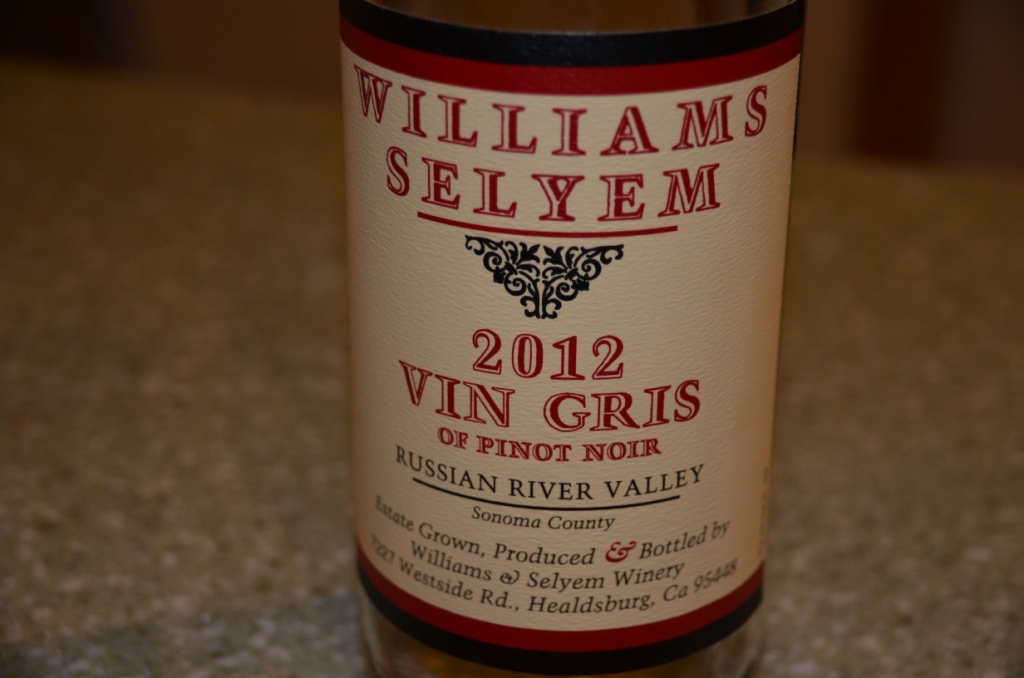
Williams Selyem Vin Gris of Pinot Noir
2012 Williams Selyem Vin Gris of Pinot Noir Russian River Valley (12.9% ABV) – bright concentrated pink color, reminiscent of cranberry juice. Strawberries and cranberries on the nose, same on the palate, lots of strawberries and cranberries, very dry, perfect acidity, very balanced overall and very easy to drink. Drinkability: 8-

Antica Terra Erratica
2011 Antica Terra Erratica Willamette Valley Oregon (13.1% ABV) – another 100% Pinot Noir Rosé. What a treat! Perfectly bright strawberry red in color, nice nose of raspberries and cherries. First the wine opened into a light Pinot Noir, showing some smokiness and earthiness, then evolved into into bright strawberry and onion peel wine, classic Rosé, and then it was gone… Drinkability: 9-
There you have it, my friends. Open a bottle of your favorite Rosé, pour a glass and enjoy – however remember – sometimes Rosé is too easy to drink… Oops, did we just finished this bottle? Cheers!
Last Bottle Sign Up ($10 credit)




 Talk-A-Vino