Archive
Wine and Beer Lovers, Unite, or Marrying Hops and Grapes
Sacrilege? Possible. Should I be ostracized by beer and wine aficionados alike, and this very blog been banned forever from their reading lists? I will leave it to aficionados to decide. I’m merely doing what I’ve always done in this blog – sharing my experiences, those which I deem worth sharing. That’s all there is to it.
When I got email from Andrew Jones, the winemaker behind one of my favorite labels, Field Recordings, advertising something called “Can Club”, the decision was quick – “yada, yada, yada – I have to do it” (the “yada” part is here to explain how much attention I was paying to the exact email content). Then I glanced over the following: “ Pure, free-run rose from a pair of our westside Paso Robles vineyard partners, mostly Grenache. 100% whole cone citra hops [sic] were added prior to canning. The results, a super refreshing elixir, combining your love of Provence with a touch of Belgian brew. I have a tough time explaining it because it isn’t like anything I have tried before. It’s impossible for me to properly analyze. I just want to drink it.“, and the next thought was “whatever. I have no idea what he is talking about, and I don’t care”. So yes, I signed up.
Few days ago, the door bell rung, and FedEx guy asked me to sign for something which rather resembled the set of engineering drawings – “hmmm, what is it” was my first thought. And then it downed on me (“this box contains alcohol” sign was a good cue) – aha, the can club?! I liked the unorthodox presentation so much that I even shared the puzzle on twitter, asking people to guess how the object in the picture can relate to the wine:
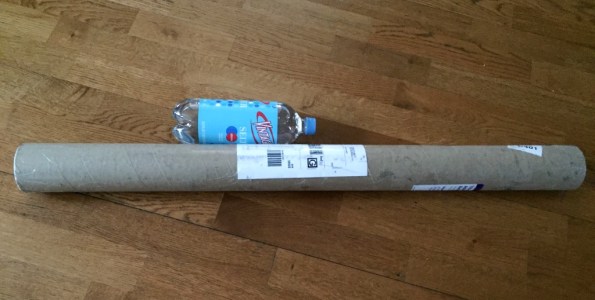 The most prevalent idea was “poster”, so I had to share an answer a few hours after:
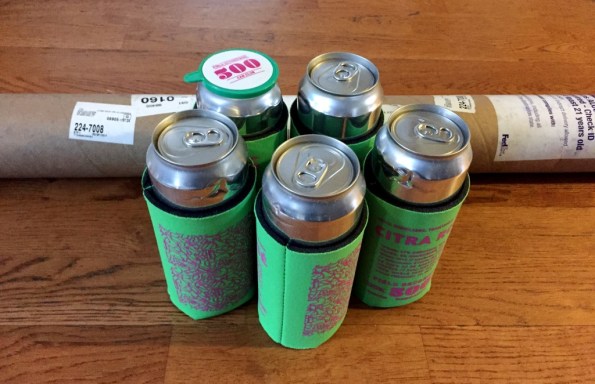 And then I opened the can. The liquid in the glass had an appeal of a perfect Rosé. Classic salmon pink color. On the nose, it was perfectly Provençal Rosé – touch of strawberries, hint of onion peel, refreshing minerality, touch of lemon. And the palate was, once again, perfectly Provençal – strawberries, touch of lemon, fresh, crispy. With the tiny beer bite on the finish. You know, the one which you get from the fruity, light Belgium beer. You don’t have to believe me, but I only read Andrew’s exact words when I sat down to write this post. “love of Provence with a touch of Belgian brew” – wow. It would be rare, very rare case that my take on the wine would match its description with such a precision . And then I have to fully agree with Andrew on one other thing – “ I just want to drink it“.
![Field Recordings Citra Rosé can sleeve [label]](https://i0.wp.com/talk-a-vino.com/wp-content/uploads/2016/04/citra-rosc3a9-can-sleeve-label.jpg?w=186&h=248&ssl=1 "Citra Rosé can sleeve [label]")

![Field Recordings Citra Rosé can sleeve [label]](https://i0.wp.com/talk-a-vino.com/wp-content/uploads/2016/04/citra-rosc3a9-label.jpg?w=212&h=248&ssl=1 "Citra Rosé [label]")
What can I tell you about this 2015 Field Recordings Citra Rosé Paso Robles (13.1% ABV, $14 retail/$10 club – 500ml can, 67% Grenache, 22% Picpoul Blanc, 8% Mourvédre, 3% Syrah)? It was delicious, perfectly combining the best of both beer and wine worlds – crisp, fresh, bright, thoughts provoking. Dangerous as well – as the wine comes in the can, you pretty much treat it as a single serving – while it actually contains more than 3 standard glasses of wine. But I think the taste is well worth that danger. And until you will get your hands on one of those cans, my words are all you got, so yes, take my word for it.
I want to raise my glass to never ending creativity and courage. Beer and wine lovers, rejoice! Cheers!
One on One with Winemaker: Marcello Lunelli of Ferrari Trento
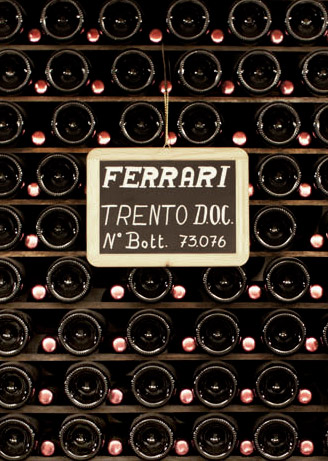
Source: Ferrari Winery web site
I’m sure Ferrari wines don’t need long introduction to any oenophile. Giulio Ferrari started eponymous winery in 1902 in the mountainous region in Northern Italy called Trento. He was the first person in Italy to plant substantial quantities Chardonnay, which he personally brought from France, and then started production of the “Classic Method” sparkling wines, inspired by the French Champagne. In 1952, Giulio Ferrari had chosen Bruno Lunelli to become his successor at the winery, and this was the beginning of the second chapter of Ferrari’s history. The rest is, yes, history, and you can read it for yourself here.
Over the years, Ferrari received numerous accolades, including most recent ones, “Sparkling Wine Producer of the Year 2015” from Tom Stevenson in the UK and “European Winery of the Year” from Wine Enthusiast magazine in the US. I had an opportunity to [virtually] sit down with Marcello Lunelli, Ferrari’s winemaker, and ask him a few questions – you can read our conversation below:
Q1: Ferrari is considered a symbol of the Italian Art of Living. What this “Italian Art of living” concept includes, how would you define it?
A: My family is incredibly proud that Ferrari as a brand is considered a symbol of the Italian Art of Living internationally. Whether it is being served at the Quirinale, home of the President of the Italian Republic, or used to toast celebrated events in the world of fashion, sport, cinema, culture, or design, Ferrari represents that hugely evocative emotional blend of tradition, sense of place, inherent quality, and the poetic virtues of our most cherished way of life.
The Italian Art of Living embodies the passion for beauty, taste and elegance; the ability to embrace innovation while respecting traditions; and a zest for life that is the very soul of the Italian spirit.
I firmly believe that the success of Italian wine is due to a unique love affair that exists in many countries for our way of life, our food, our rich and unique history, and the traditions of our culture. Beauty and pleasure are mutual to one another and Ferrari wines has joined together with fashion and design brands as ambassadors of the Italian lifestyle.
Q2: How is riddling done at Ferrari – still by hand or with use of the machines?
A: In the Ferrari winery we still do 1/3 of the riddling by hand, in particular, all the vintage wines and reserves. The rest is done with use of the machines.
Q3: Typical “house cuvée” at the Champagne house is a blend which might include about a 100 so called Vin Clairs, still wines coming from different vineyards and vintages. Does Ferrari have similar approach in the production of the non-vintage sparkling wines?
A: We do have a similar approach in the production of non-vintage sparkling wines. The biggest work in the vineyards and in the cellar is to keep separate each single homogeneous zone production in order to create the best cuvée.
Non-vintage sparkling wine cuvée includes grapes coming from vineyards within the Trentodoc denomination, which means only in Trentino region and it is created with 70/80 different base wines. Moreover vintage sparkling wine is made with grapes coming only from our own vineyards and it is a result of 40/60 diverse base wines of the same year.
Q4: Ferrari is promoting sustainable viticulture. Do you have any plans to become all organic, or at least to produce an organic wine?
A: One of the core philosophies of the Lunelli Group and Ferrari Winery is the advancement of sustainable practices throughout all our vineyards. We believe that by practicing sustainable farming techniques we not only improve the quality of our wines but protect and preserve our majestic environment and improve significantly the health and safety of our farmers. Indeed we strive to make sustainability a cultural heritage for all of our grape growers.
All of the vineyards owned by my family including those of the Ferrari winery and Tenute Lunelli are cultivated according to organic agricultural principles and in the near future they will all be organic. At the moment we are already producing an organic certified red still wine, Aliotto from our estate in Tuscany.
Q5: Considering that you share common name with the world famous car manufacturer, did you ever try to create a business relationship with Ferrari the car maker?
A: We are glad to share common name with an iconic brand such as Ferrari Maranello and to have a very good relationship with them. We are also proud to have in our photo gallery of famous moments, striking pictures of Grand prix ceremonies celebrated with Ferrari wines.
We both work throughout the world in promoting the very best of Made In Italy.
Q6: What was your most difficult vintage at Ferrari and why?
A: One of the most difficult vintages was 2014 due to a very long and intense rainfall during the growth cycle of the vine which presented a great challenge in vineyard management to ensure healthy grapes for the harvest. It is in a very complex year like 2014 that man, his work and his vision make the difference.
Q7: What is the oldest Ferrari wine you have in the cellar? What was the oldest Ferrari wine you tasted?
A: The oldest Ferrari wines already disgorged are from the sixties, when Giulio Ferrari and Bruno Lunelli were still working in the winery. The oldest Ferrari, still on the lees, is 1972 vintage, which is also the first vintage of Giulio Ferrari Riserva del Fondatore.
I was lucky enough to taste the first vintage of Giulio Ferrari Riserva del Fondatore. It was amazing, well balanced mature notes with an unexpected youth, fruit of our Trentino territory, Trentodoc mountain agriculture which allows for both longevity and youthfulness.
Q8: Do you have a favorite vintage of Ferrari wines?
A: My favorite vintage is Giulio Ferrari Riserva del Fondatore 1995 for two reasons: first of all because it is considered the vintage of the century where power, elegance, longevity and freshness are combined in one single wine and all these factors are in a perfect and unshakeable balance. Secondly this vintage has a personal affection because I had the good fortune to start to work at Ferrari in 1995.
Q9: Do you only use two varieties in the winemaking – Chardonnay and Pinot Noir – or do you use any others, such as Pinot Meunier, for instance?
A: We use Chardonnay and Pinot Noir grapes separately for white wine making in order to create all our 100% Chardonnay Ferrari wines and the Ferrari Perlé Nero, our 100% Pinot Noir, blanc de noirs. For our Rosé we use both the grape varieties: Pinot Noir, using the Rose making-process, which gives body and structure to wines and Chardonnay which provides elegance and freshness.
Q10: Do you produce or do you have any plans to produce still wines?
A: Ferrari Winery creates a remarkable collection of Trentodoc sparkling wines, yet the Lunelli Group also includes a series of elegant and long-lived still wines, under the brand, Tenute Lunelli. This brand embraces wines from three regions, each superbly suited to the production of winemaking grapes: Trentino with its mountain viticulture; Tuscany with the rolling Pisan hills and Umbria which reveals herself in the small, fascinating DOCG of Montefalco. All our still wines are representative of our standards of high quality with the ability to demonstrate the variety of our diverse lands; this is the incredible richness of the Italian wine industry. Respect for the land and sustainability are today common core values in all our brands. Besides the Estates and Ferrari, the Lunelli Group is made up of a distillery, Segnana, a mineral water, Surgiva.
Q11: Do you have any favorite Champagne wines, or any sparkling wines for that matter?
A: Champagne Bollinger and Cuvée Sir Winston Churchill Pol Roger which embody the characteristics I love in sparkling wines; elegance, refinement and longevity.
Q12: When you are not drinking Ferrari wines, what are your favorite wines, from Italy or anywhere in the world?
A: When I do not drink Ferrari I drink my favorite red still wines from Sangiovese grapes and Nebbiolo grapes: Brunello di Montalcino and Barolo. When I choose Barolo I always have discussion with my father because he prefers Barbaresco, with less power but more elegance.
And we are done here, my friends. I think this was quite fascinating and interesting conversation, adding an interesting detail to what you might already know about Ferrari wines – for sure this was very informative for me. I have to admit that I would looooove to try that 1972 Giulio Ferrari Riserva del Fondatore – well, the man can dream, right?
I didn’t have any new wines to taste to leave you with some tasting notes, but if this conversation made you thirsty, here are the links to my older posts about Ferrari Brut Classico and Ferrari Perlé. Cheers!
One on One with Winemaker: Aurelio Montes of Montes Winery, Part 2
As promised, here is the continuation of our conversation with Aurelio Montes Sr – Founder and Chief Winemaker of Montes Winery. You can find first part of the interview here.
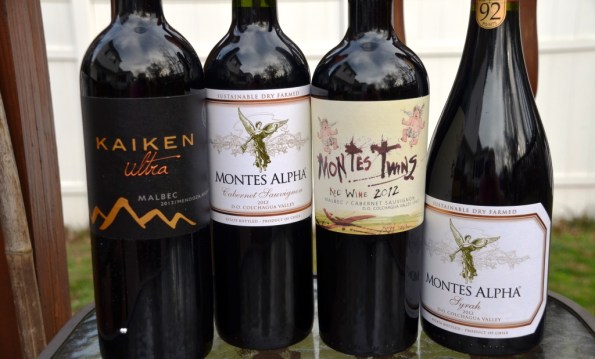 While the first part offered insight into unique (and unexpected) areas such as using of Feng Shui principles and Gregorian Chants at the Montes winery, this second half of the interview is also full of interesting details about present and future of Chilean winemaking. Here we go:
Q7: Do you use natural yeast in production of your wines?
A: Not for white varieties, although we have made Chardonnay trials in coastal areas, but in most cases result in that we obtain a very slow and long fermentation, which jeopardizes the final quality of the wine.
We prefer to use selected yeasts in white varieties, which ensure us a good rate of fermentation, working at low temperatures and retaining maximum aromatic potential of the wine.
In the case of reds it is different. We love to work with natural yeast when possible. They tend to express terroir better than the selected ones. However, much will depend on the conditions of the season, that is, if the season was very warm and the fruit arrives to the winery with a very high potential alcohol, we then prefer to use selected yeast that will ensure a good end fermentation. In the case of very rainy seasons, where the grapes arrive at the winery in bad conditions with some presence of fungi, we prefer to don´t take any risk and use selected yeast as well.
Under normal harvest of red grapes, without rain during maturity or heat peak’s that can cause an exaggerated increases in sugar content, we can then use natural yeast, maintaining important regimes of oxygen during fermentation and also moderated temperatures, in order to not stress these yeasts that behave in some cases very sensitive when the conditions are adverse during fermentation.
Q8: Montes Alpha had been a pioneer in many areas of winemaking in Chile. Particularly, it was the first winery to produce Syrah wines. How would you describe your Syrah compare to Northern Rhone, California or Australian wines?
A; Our Syrah, because of the natural conditions, and some winemaking policies, is different to Rhone or Australian Syrah. Ours is midway between the two mentioned valleys. It is ripe but not as jammy as the Australian one…is austere but still far more friendly and approachable than the Rhone style. This puts us in a perfect position, in terms of quality, and in fact my opinion is that the best New World Syrah comes from Chile
Q9: What was your most favorite vintage of Montes Alpha Syrah and why?
A: I think the 2006 vintage was a very good harvest, where this wine was well known. But I feel that the 2012 was even better. We had a very good season in terms of absence of spring frosts, an accumulation of rain water which enabled us to reach harvest with a low level of risk, and also a free of summer rains and reasonable temperatures. In particular, our Syrah from Apalta that comes from mountain grown fruit behaved very well, controlling a balanced amount of clusters per vine, allowing us to concentrate fruit color and body. Elegance and aromatic complexity found in the Apalta Syrah is really incredible. From this estate also comes the Syrah that goes to our Icon Folly made 100% out of Syrah.
Q10: In the wine world, there is always a conversation of the “next big grape”, which is usually country and region specific – like Sauvignon Blanc in Argentina, for instance, or Chardonnay in Oregon. Is there a “next big grape” for Chile?
A: I like to believe that the Carmenère can be our “next big grape”. But we struggled to position it, despite the efforts the sector makes. Chile has a high level of quality in this variety, considering various valleys and different heights, in the central and even coastal areas of Chile. After this many years of experience we must remain vigilant and continue working and learning in order to deliver the best quality Carmenère in the world.
I would like to add that recently Chile also has been making quite some noise on varieties such as Pais, Cinsault, Muscat, Grenache, Carignan, etc. In this last varieties with very good results.
In our case we crafted the Outer Limits line, which allows us to be more adventurous, dreamers, and let our imagination fly to experiment;
However I believe that the Cabernet Sauvignon is still the king of varieties that Chile has. Not only well renowned for the great quality but also because it represents the productive power and essence of the Chilean wine.
Q11: Does Montes Alpha have plans for the new grapes to be planted? Anything you are experimenting with right now?
A: We are not closed to the possibility. We are always looking for new things, but today to plant new surface is a sensitive issue. Chile is going through a time of overstock of wine, which forces us to be cautious about increasing our production. In the northern hemisphere the situation is similar, which puts us at a critical point.
Without adding the irrigation problem that the viticulture is facing around the world, which forces us to be very astute at this point. Today, more than planting new varieties on new surfaces, we are willing to replace those varieties and vineyards that do not meet our expectations, and replace this to try some new things.
For example, we have had very good reviews on our Tempranillo and Tannat 2015, after years of testing and harvesting dates, and exploring winemaking forms. Maybe we can do something about those varieties in the near future.
We are also touring various new areas as Cachapoal Valley, in search of a distinctive variety with unique quality and expression. Is under this inspiration that we have found and made quite interesting things, such as Pink Moscatel from Curtiduría, or a Pais from Lolol and other interesting projects that currently are still in the oenological kitchen … but this strategy of seeking other wine realities has given us many satisfactions to myself and the team.
Q12: when you are not drinking Chilean wines, can you give me a few examples of your favorite wines, regions and producers?
A: In terms of wines, if I were to pick an outstanding wine I would choose an Ornellaia Masseto. And if I could delight and reward myself with another, it could be an old vintage of Pétrus.
And we are done with the interview. It is time to take a look at another two Alpha Montes wines I tasted:


2012 Montes Alpha Syrah Colchagua Valley, Chile (14.5% ABV, $25)
C: very dark garnet, almost black
N: blueberries, violet, sage, fresh, touch of tobacco
P: silky smooth, round, roll-of-your-tongue, restrained, nice minerality, balanced fresh berries, touch of spice, touch of sweet licorice, excellent overall balance
V: 8, easy to drink, will greatly evolve
2012 Kaiken Ultra Malbec Uco Valley, Argentina (14.5% ABV, $25)
C: dark garnet, practically black
N: concentrated, dark fruit, plums, violet, tar, tobacco, very, very inviting – super sexy, first analogy
P: wow, concentrated fruit, luscious, polished, layered, round, balanced, great dark power, well integrated tannins
V: 8+, outstanding, wow and dangerous (and sexy! – I rarely designate wines like this, but … of well, I will wait for you to try it)
And we are finally done here. I hope you enjoyed our conversation as much as I did, and may be even learned something new. Until the next time – cheers!
One on One with Winemaker: Aurelio Montes of Montes Winery
 Things in life often connect in most unexpected ways. Few years ago I read an article about the ways music affects the winemaking. I was unable to find that article or much references ever since. Many times I came across the wine with an interesting label and somewhat peculiar name of Montes Alpha – but I never tasted one.
Few weeks ago I got a note about wine samples from the winery called Montes Alpha from Chile. That note also mentioned Gregorian Chants and Feng Shui been essential elements in wine production at that very winery. This was enough to send my curiosity through the roof and ask for more information – and talk about the way things connect in life, right?
Who can better answer questions wine and winery questions if not the winemaker? I gladly used an opportunity to [yet again] sit down (yes, virtually) with the winemaker and send the barrage of questions his way. I have to tell you that all my questions were answered well in depth – and I think you will find this conversation interesting too. Here is our dialog with Aurelio Montes Sr – Founder and Chief Winemaker of Montes Winery.
Q1: I understand that your winery was built using Feng Shui principles. Are there any specifics in using Feng Shui specifically for the wineries? Do you have any followers from other wineries who came to learn from Montes Alpha experience?
A: We seek to apply the principle of balance and harmony of space in our winery. If you live and / or work in nice balance places, the energy will continue their natural rhythms and will lead to welfare in all its aspects.
It is in this sense, it was incorporated as a fundamental principle in the early stages of design and construction of our winery, the inclusion of all basic elements such as water, metal, wood, stone, etc., in accordance with the principles of this Asian discipline, to ensure this harmony and above all a positive atmosphere.
For example at the entrance to the building is the wooden bridge over a small lagoon, whose water flows toward the building. A fundamental principle of Feng Shui is that prosperity will only come if the water, which represents energy, flows into the center of the building, rather than away from it.
I understand that no other winery has incorporated the Feng shui principle. In our case, one of our founders, Douglas Murray, was always fascinated with this concept and idea of building a harmonious winery and wine with our environment, therefore we hired the advise of an expert in this field to introduce the principles of feng shui in the foundations of our construction.
Q2: Did you apply or can you even apply Feng Shui principles in the design of the vineyards?
A: Feng shui is related to harmonize spaces. In our case it was considered to harmonize the spaces between the vineyards, winery and of course, our people. To get, as a result, the best wine we can possibly achieve. I believe that in a balanced environment, all pieces come together to perfectly to achieve a greater result.
I am not an expert on the subject though, and not sure how Feng shui can be applied to the vineyard. However our vineyards are planted according to quality policies, soil conditions, variety, etc. I believe that the harmony in the management of our vineyards is the result of the best possible quality grapes we can achieve, keeping always in mind the sustainable conditions.
Q3: I heard about Gregorian chants at the winery. How and where do you use them?
A: The Gregorian chants play constantly in the icon barrel room of our winery at our La Finca de Apalta Estate. The wine seems to enjoy it and I love it. In my opinion, besides the physical effect on wine, it does have an important effect on people’s moods and they work with more happiness and confidence. It keeps us calm in the cellar.

Q4: Did you try to test the effect of Gregorian chants on aging of the wines by creating a “control group” of same exact wine from same exact vintage and aging it under regular conditions (no music), and then comparing the two wines in the blind tasting?
A: For long now I have been interested in the effects of music in wine. I am happy to share with you a study we funded at Heriot Watt University about the effect of background music in wine tasting.
In terms of wine tasting the “control” with no music at all had a score 20% lower than the tasting held in presence of music.
Q5: Did you experiment with impact of music on the grapes in the vineyard? I remember reading about some of the experiments in that area, and I wonder if you have any information you can share here
A: Not yet and I don’t know of anyone that has done it. I presume there are so many uncontrollable variables such as temperature oscillation, different weather conditions, etc that would make it difficult to assess the particular influence of music in the vineyards.
Q6: Montes Alpha is certified Sustainable winery. Do you have any plans to become an organic or may be even biodynamic winery?
A: From our beginnings, our philosophy has been to produce wines of the highest quality, always concerned with the care of the environment, developing a sustainable viticulture in all stages of winemaking.
We believe sustainability covers a broader spectrum and a larger concept than being only an organic or biodynamic winery. It not only concerns the caring of our vineyards and the environment that surrounds it, but also the legacy that we leave for the next generations. We are very careful with our habitat, natural resources and above all improving conditions for the community.
Being sustainable also takes care of the social aspects of our workers – having a profitable operation permitting us to offer a stable place to work.
We also minimize our use of energy and treat our waste-water to reuse it in the irrigation of our vineyards.
Having said all the above we still have some plans to develop a line of biodynamic wines in a few years. We have also moved forward in improving our carbon footprint, becoming one of the few carbon neutral wineries in Chile. We have not only traveled to improve our carbon footprint but also to significantly reduce the use of pesticides and replace them with more friendly environmental agents.


No, we are not done yet with the interview, but I don’t want to overload you with an information. I can also bet you are thirsty now, so let me present to you two of the Montes Alpha wines I had an opportunity to taste:
2012 Montes Alpha Montes Twins DO Colchagua Valley (14% ABV, $15, 50% Cabernet Sauvignon, 50% Malbec)
C: very dark garnet, almost black
N: a bit of funk, herbs, blackberries, hint of black currant, inviting
P: good dark fruit, chalk, firm structure, pencil shavings, tart acidity on the finish, restrained. Next day the wine acquired some umami complexity with notes of tobacco.
V: 8-/8, an excellent wine hiding under simplistic packaging; outstanding QPR
2012 Montes Alpha Cabernet Sauvignon Colchagua Valley (14% ABV, $25, 90% Cabernet Sauvignon, 10% Merlot)
C: dark garnet, almost black
N: cedar, cassis, classic
P: cassis, dark fruit, clean, round, soft
V: 8, outstanding, round, easy to drink
Here you go, my friends. Do you use Feng Shui in your life? What do you think of wine and music? And of course, did you have any of the Montes Alpha wines? I have two more wines to talk to you about, and continuation of our conversation with Aurelio Montes Sr. to share, so stay tuned.
To be continued…
Looking Back and Looking Forward
 I’m sure you guessed from the title and the timing of this post that I want to talk about past year 2015 and freshly minted 2016. Yep, I’m predictable like that, you are correct.
So how was 2015 for 2015 for Talk-a-Vino in my own eyes? Great, but challenging. Very challenging. 2016 will be equally difficult, with great potential to be even more challenging, a lot more.
Sure, I will explain. Nothing happened with my love of wine or passion for blogging – both are as strong as ever. What I had (and will have) a problem with is time – my main line of work (the one which pays the bills, you know) is incomparably busier than two years back, and finding quiet time for the labor of love is now not easy at all. No, I’m not complaining, just explaining the change in cadence of the posts coming out.
Talking about 2015, there were few new things which I started doing. During the year, I was offered a few opportunities to meet with the winemakers, and was unable to find time – this is how the concept of virtual interviews came to life. I realized that even when I can’t sit down with the person in the same room, I can still ask questions – and get great answers. I also offered to profile wine apps for any of the app producers who would be interested, and so far had 3 posts in that series – by the way, the offer still stands if anyone is interested.
From the things which I didn’t like so much, but they still happened in 2015, was stopping the series of the Saturday wine quizzes. I had lots of fun creating those, but reached the point when it became very difficult to create challenging, but fun questions, so I had to stop the series, at least for the time being.
What should you expect in 2016? I definitely will continue the virtual interviews – as a matter of fact, one of them is coming out very shortly. I also have good number of posts which I really should’ve written last year, but did not. There were wine dinners, there were tastings, there were winery visits which never made it into the posts. However, the subjects are still worth taking about, so you should expect to see some of those “posts from the past”. I don’t know if I will make a series out of those posts (as an engineer, I like to organize things, may be even more than necessary), add short intro to those posts, or simply put them out without any regards to the “past” – no matter, they will still appear on Talk-a-Vino pages.
2016 is on, so let’s raise the glass to all the fun things which are ahead of us. Cheers!
My Favorite Wine?
Once people establish that I’m a wine snob [connoisseur, aficionado, oenophile – please insert one more appropriate], very often I hear one of the most dreadful, intimidating, difficult questions an oenophile can get – “so tell me, what is you favorite wine?”. When I shrug the question off and say “sorry, I don’t have one”, the usual continuation is “oh, come on, you must have one”.
It is hard to explain that my answer is not a coyly, flirting attempt to exaggerate my self-worth, but I think it would be true for any oenophile – it is impossible to name one wine and to say “this is it, this is my only favorite wine”. I’m not even talking about one specific wine from one specific producer, and it is not even one specific grape – either way you spin it, oenophile is always ready to give you a short and concise list of favorite 100 wines. Note that the longer the conversation will be, the longer the list will become. It should be much easier to answer question about the dream wine – the wine one obsessively wants to try – of course there always many on that list too, but at least for me it is easy to single out one dream wine – DRC (yes, I know that Domaine de la Romanée-Conti makes more than one wine, but I’m not picky, you know…).
It is really hard to pick the favorite wine as the more you taste, the wider your “circle of knowledge” becomes – and you are bound to find gems in every little cornier of the vast winemaking world, with hundred thousands new wines produced every year. To top that diversity off, even for one and the same person taste of wine is very subjective, affected by mood, weather, company and myriad of other factors. No, it is an impossible question.
Now, I want to offer you something instead. At the end of every year I make an effort to reflect on the wines I had a pleasure experiencing, and to summarize it in “Top Wines” post. So far I produced 5 such posts, which I call “Top Dozen”. I managed to keep those posts to a dozen only in 2010 and 2011, and then 2012 – 2014 all included two dozens of the top wines. As it is time to write the same for the 2015, let me reflect a bit on the past posts and give you a list of Top 10 wines from 2010 – 2014. While I always state that those top lists are given in random order, the wine #1 is always thought through, so those choice are not random. Lo and behold, here are the Top 10 Talk-a-Vino wines of 2010 – 2014:


2010
2. Rozes Over 40 Years Old Port ($90). My best port ever. I can close eyes and imagine the smell and taste of this wine – multiple layers, tremendous complexity and great opportunity to reflect on life when the finish lasts for 15 minutes. Find this wine and experience for yourself.
1. Mara Laughlin Road Ranch Pinot Noir 2007, Russian River Valley ($45). Incredibly balanced, silky smooth wine, very powerful and round. Alcohol content is 15.6%, and it can’t be noticed unless you read the label. Great wine now, will improve with some cellar time. Find it if you can.
2011
2. 2001 Masi Mazzano Amarone della Valpolicella ($130) – this was an Amarone I’m constantly looking for and can’t find. Stunning nose of the raisined fruit, a dried fruit extravaganza – with powerful, structured and balanced body – not a glimpse of overripe fruit which is so common in the nowadays Amarone. Truly beautiful wine for the special moments.
1. 2010 Fiction Red Wine Paso Robles by Field Recordings ($20) – First and foremost, it is a smell which doesn’t let you put the glass down. Fresh flowers, meadows, herbs, fresh summer air – it is all captured in the smell of this wine. On the palate, this wine shows bright red fruit, like raspberries and cherries, all perfectly balanced with a great finesse. Any time you want to experience beautiful summer day, reach out to that wine.
2012
2. 1947 Imperial Gran Reserva Rioja ($400) – 65 years old wine – still bright and youthful. This was one amazing experience – tasting the wine of such an age, and finding that you can really like it without looking for any age discounts. Fruit was still bright, all wrapped into cedar box and eucalyptus notes, with soft tannins and fresh acidity.
1. 2010 Phantasi Oregon White Wine ($100, Magnum price in the restaurant) – wine geeks, rejoice! This is your wine! If you read this blog for a while, you already know that I’m self-admitted wine snob. But – you probably also know that compare to the wine snob, I’m somewhat of a 100-fold wine geek. I would try absolutely any wine and I purposefully seek odd and unusual bottles.
When this wine was offered to us in the restaurant $100 for a magnum, this was an offer I couldn’t pass by. And what the wine it was! This is 100% Roussanne wine from Oregon, made by Antica Terra – unfortunately, you can’t even find any information about this wine on the winery web site.
The wine was served at the room temperature. Deep, pungent, concentrated – in the blind tasting (actually blind, so you would not be able to see the color in your glass) I’m sure this wine would be easily identified as red. Good acidity, good balance, very food friendly – and very unique.
2013
2. 2005 Frédéric Gueguen Chablis Les Grandes Vignes – I remember almost making fun of someone else using the word “gunflint” in the wine description. And here I am, taking a first sniff of this wine with the first word coming to my mind … gunflint! That sensation of gun powder-like smell, the smoke was incredible – and it was very pleasant at the same time. Tremendous minerality, lemony notes and some apples, clean and vibrant acidity and perfect balance. This wine was definitely an experience.
1. 1970 Quevedo White Port – even people in Portugal are not aware of the aged white Port – I witnessed a few surprised looks when talking to the people about white Port which is aged. This wine might be never bottled, as I’m sure it is hard to create a category from pretty much a single barrel of wine. Nevertheless, the ultimate complexity of this wine, coupled with the visual snapshot of tasting it in the Quevedo Port cellar (cue in all the aromatics and mysterious atmosphere), makes for an ultimate experience which will stay in memory forever.
2014
2. 2007 Pago Marqués de Griñon Emeritus, DO Dominio de Valdepusa ($75) – until I tasted this wine, yes, I knew that Spain produces good wines from the international grape varieties, such as Cabernet Sauvignon. But at such level? This wine was a true revelation – classic Cabernet Sauvignon with cassis, mint, eucalyptus and finesse.
1. 1966 Louis M. Martini California Mountain Pinot Noir ($NA) – I had no expectations when I opened the bottle of the 48 (!) years old wine. To be more precise, I was not expecting anything good. What I found in my glass was simply mind blowing – still fresh, still elegant, perfectly recognizable as Pinot Noir and delicious! This was the first wine ever to receive a 10 rating from me – I hope it tells you something.
Producing this Top Dozen list is somewhat of a daunting task, as the opportunity to second guess oneself is truly boundless – but then this exercise becomes a source of great pleasure as you get to re-live the whole year.
I understand you still don’t know what my favorite wine is (that makes at least two of us), but with the list above you know at least a bit more, don’t you? In case you are interested in seeing complete TaV “Top Dozen” lists, here are the links for 2010, 2011, 2012, 2013 and 2014.
Keep in mind that whether you consider yourself an oenophile or not, creating a top ten (insert your number) list is always fun, so take piece of paper, pour yourself glass of wine, and get to re-live the year through the wines and all the memories connected to them. Yes, the wine is an emotional connector. Happy reflections!
Unexpected Wines of Macedonia
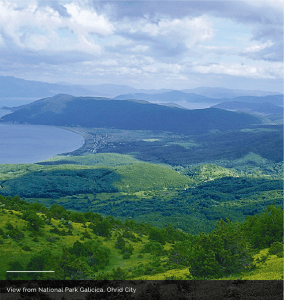
Macedonia landscape – View from National Park Galicica. Source: Wines of Macedonia Web Site
Macedonia (The Republic of Macedonia, to be precise) is a small country right in a middle of Balkan Peninsula in Europe. While it exists under its current name only since 1991, it is one of the oldest countries in Europe, tracing its history for more than 7,000 years. Similar to its neighbors – Turkey, Greece and others – Macedonia also has very long wine history, but still remains “one of the Europe’s last undiscovered wine country”, as stated on Wines of Macedonia web site.
Macedonia has about 62,000 acres of vines planted, split between 3 regions and 16 wine districts. There are 28 grape varietals growing there, equally split between white and red. The climate in Macedonia is a cross between Mediterranean and Continental with warm, dry summer and fall, which definitely helps with wine production.
Okay, enough of the facts – you can read that all on your own. Now let me explain the “unexpected” part of the title. In my mind, Macedonian mostly associated with indigenous grapes, such as Vranec (there are 7 indigenous grapes in Macedonia at the moment). When I was offered a sample of Macedonian wines, I was hoping to find something new and unusual, and may be even advance my grape count.
When the box arrived and was opened, to my surprise I found inside a bottle of Rkatsiteli and a bottle of Merlot. Rkatsiteli to me is a Georgian variety (yes, I heard that it is growing in some of the Balkan countries). And Merlot – don’t think we need to discuss the origins of that. I don’t know what I was expecting, but Merlot and Rkatsiteli definitely surprised me. Both wines came from the region called Tikveš, which is the biggest wine region out of three in Macedonia. Well, of course I tasted the wines, and below you can find my thoughts:


2014 Stobi Rkatsiteli Tikveš, Macedonia (12.3% ABV, $12, 100% Rkatsiteli)
C: Pale straw
N: touch of minerality, white peaches, candied lemon zest, overall very inviting
P: lemony acidity, underripe green apple, nice creaminess, touch of minerality, medium+ body, clean
V: 7+, food wine – fresh seafood, oysters
2009 Bovin Merlot Barrique Tikveš, Macedonia (14% ABV, $N/A, 12 month in Macedonian oak)
C: dark garnet, almost black
N: delicious dark chocolate, ripe fruit, hint of black currant, blueberries
P: medium to full body, baking spices, slightly overripe cherries, short finish.
V: I had this wine over the period of a few days. Here is the conclusion from the initial tasting: 7-, beautiful nose; interesting taste components on the palate, but not coherent together. Two days later, the wine became surprisingly coherent, rounded up and showed an silky dark power and excellent balance, so the final verdict is 7+/8-.
There you have it, my friends – two wines, may be unexpected, but well drinkable. Next time if you see a wine from Macedonia on the shelf – give it a try, you might be pleasantly surprised. Cheers!
China Food and Wine Experiences
For the first time ever, my business took me to China. Not only China, but it was also my first visit to Asia, so definitely a new experience. Of course, I read and heard many China food-related stories from people, but as we all know, there is a big difference between the two – “virtual” and “real-life” experiences are vastly different, especially when it comes to something which you put into your mouth.
During the week in Beijing, I had an opportunity to try many different dishes and visit a number of restaurants. One challenge is that for most of the restaurants I visited, I don’t have their English names or addresses, so what I will share with you will be mostly a collection of impressions, primarily in the pictures, without many useful references for you in case you will be visiting China any time soon. But I hope at least you will get an idea for what to expect, especially if you grew up on mostly European food. I also plan another post which will be just about the “tourist” experiences, for things outside of the food per se.
The first restaurant I visited was a “Noodle House” type if I’m not mistaken, and it was located right around the corner from the Sheraton Great Wall hotel where I was staying.


The main dish at Noodle House was, of course, the noodles, but before we got to them we also had lots of appetizers. Pork belly with roasted garlic and Quail eggs was particularly tasty, and it became only better with time, as it had its own heat and garlic continued cooking. Noodles were good, but hard to finish after all the food prior. Chicken with peanuts (as opposed to traditional cashew nuts in the US) was also very tasty.


Now, I have to mention the first experience (well, the actual “first” was undrinkable wine at the reception, but that we will skip). When I poured myself a glass of Chinese Chardonnay (at a happy hour), I had no expectations – just curiosity. First sip, and – wow – not bad at all! 1421 Gold Chardonnay Xinjiang China had a characteristic nose of Chardonnay, with a touch of vanilla. The palate had a touch of golden apples, vanilla, good acidity – overall, very enjoyable. I like the brand’s description on the 1421 website: “1421….the year Admiral Zheng He, leading one of the largest fleets ever seen, sailed to many, many parts of the world. Wine much like travel, has served as a link between different cultures, people and countries. Today at the beginning of the 21st century, 1421 follows the same mission as Admiral Zheng He, sharing his spirit for a better world.” – the Chardonnay I had was definitely the wine worth sharing.


My next experience was a first encounter with the traditional Peking Duck, a whole duck seasoned and roasted in a special oven, with its crispy skin being the most sought-after delicacy. The place we went to, Dadong Roasted Duck Restaurant, defines itself as an Artistic Concept Food, and it does it – “Artistic Concept” – very successfully – in ambiance, food presentation, service – all the elements are there, definitely a world-class restaurant.


Of course, my encounter with the restaurant started with the wine list, which was something to look at. The list was very substantial, with a wide range of offerings, adequately priced for the “concept restaurant”. I don’t remember which exact Bordeaux wine was that, but it was priced at a measly ¥28,000 (the ¥ symbol depicts Chinese Yuan, often also called RMB), which would translate into roughly $4,800. You could also have Penfolds Grange for only ¥7,200, which would be roughly $1,200 – which is almost reasonable (hope it was not a young vintage).


So after hopelessly scanning the wine list for a few minutes, I finally discovered what I was looking for – a small section of Chinese wines. Luckily, I already was given the name of one of the best wines in China (according to the local sources, of course) – the wine called Changyu, and there it was on the list. There was no vintage listed, but there were three wines offered with different “age” – 1, 3 and 5 years. I’m not sure what it means, but one year old looked as good to me as all others, and at ¥196 ($33) I felt very comfortable with my choice, whether the wine would be good or bad.


Turns out that Changyu was the oldest commercial winery in China, started in 1892, then of course significantly destroyed in 1949 and now getting back to their roots. The only thing I was able to figure out from the label was that the wine was made out of the grape called Cabernet Gernischt, which, according to the article by Jancis Robinson, is actually a Carmenere. I couldn’t figure out the vintage or any other details, but I can tell you that this Changyu Red Wine Blend Ningxia, China was simply outstanding – a delicious nose of black currant with a touch of mint, and a perfectly balanced body of the classic Bordeaux blend which is ready to drink – nothing green, just cassis, eucalyptus, firm, good structure, welcoming pinch of tannins, good acidity, and perfect balance. I got 2 bottles of Changyu at duty-free, so probably there will be another post on the subject.
While I was working through the wine list, my host was navigating through much bigger book – here is the look of the menu at Dadong restaurant:


I can only say “kudos to my host” for being able to select anything from a book of that size – I would probably spend half a day flipping through the pages. Anyway, we started our dinner with a couple of exotic appetizers. Both were vegetables, one had sweet sauce and was crunchy, maybe some sort of squash, but cooked very lightly? The second one was somewhat reminiscent of pickled mushrooms in texture but didn’t have a pickled taste. Both of course had a beautiful presentation. Then the duck arrived, was quickly presented to us (yes, I forgot to take a picture) and then it was sliced table-side. The only part which made it to the table was the duck breast, with maximum skin exposure, as this is the most prized part. I was explained that the proper way to eat duck is to take the top part which is mostly skin, dip in the sweet crunchy beans (more reminiscent of sugar), then sweet soy-based sauce, and then put it in your mouth, where it literally melts – it seriously disappears without much chewing effort. The second way is to take a paper-thin pancake and assemble a tiny taco if you will, by combining a few slices of duck with thinly sliced vegetables and addition of the sauce – and this is how it is mostly consumed.


Once we were done with the main course, first the branch with tiny mandarins appeared, beautifully presented on top of a bowl with ice – when it showed up, it looked like the smoke was coming from the plate. For my dessert, I decided to try a pastry filled with cream made with fruit called Durian. Durian is known to have a taste that is extremely polarizing to the people – only love/hate with nothing in between. Imagine the taste of raw onion, rather intense pungency of the shallot, mixed with strawberry cream – that would give you an approximation of the taste of that dessert. I personally liked it, but I can easily see how lots of people wouldn’t even touch it.


I’m not planning on giving you the daily report on our eating, but I still want to include a few pictures of probably the best lunch we had – two different dim sums and then a simple shrimp dish:


The next traditional cooking style we experienced was so called Hot Pot. The idea is that you have a special cooking vessel, which looks like a sombrero hat, if you will, with the channel filled with aromatic broth, and the middle section containing burning charcoal, which quickly brings broth to a boil. Technically, the channel is split into two parts, so you can have spicy and non-spicy broth separately – however, no matter what, by the end of the evening it becomes all the same.
You can order very thinly sliced meat (pork, beef, lamb), vegetables and noodles. You cook it all in the broth, and then you have a choice of dipping sauce. To be entirely honest, hot pot is not my thing – the meat, which is cooked for 10-15 seconds, has no flavor and simply becomes the vessel to eat the dipping sauce. Vegetables should be dumped in for a longer time, and then it is really hard to find them in the boiling murky liquid. This is not the worst food I ever had, but still – I had to have it twice, and only marginally enjoyed it both times.


I’m almost done with my China food stories. We experienced one more Roasted Duck restaurant, called Xile Village Roasted Duck Restaurant, located in the brand spanking new shopping mall.


Here the duck was sliced in 3 different ways – just the skin, the top of the breast with skin and meat, and mostly meat pieces. At this restaurant, mustard was also served as a condiment for the duck breast, which was quite tasty. There were lots of dishes before the roasted duck arrived, as it takes 50 minutes for it to cook. My highlights here were delicious shrimp and very very tasty eggplant (one of the best vegetable dishes I had in China). Also, once all the meat was carefully cut off the duck, the carcass was chopped up and deep fried – nothing goes to waste 🙂


Okay, I hope I didn’t bore you to death – but I’m finally done. There you have it, my friends – my Chinese food and wine escapades. I plan to share some traveling advice regarding China in the next post. If any of these pictures triggered any thoughts – you know where the comment section is. Cheers!
Celebrate Merlot!
Let me ask you something – what is your relationship with Merlot? Are you still under the influence of Miles?
Believe it or not, but movie Sideways had an impact on consumer’s attention to Merlot – up until two years ago, I couldn’t see Merlot wines on the shelves of my neighborhood wine store – simply for the luck of demand.
But situation is changing, and people are happily asking for and drinking Merlot again. Over the past 2 month, I had at least 4 Merlot or predominantly Merlot wines, which were outstanding, from Bordeaux, Napa Valley, Long Island New York and Macedonia:


Merlot deserves an utmost respect as it makes wonderful wines on its own (Petrus or Masseto, anyone?), and it also plays perfectly well in the blends.
November 7th is an International Merlot day, and all you have to do is to find a bottle of your favorite Merlot, open it, [invite your friends over – however, this is entirely optional], and have fun. Better yet, find a bottle of Merlot you never had before, and be surprised. By the way, how are your Merlot skills? Do you think you know everything about black-skinned grape? You can test your knowledge with the Grape Trivia quiz which I used to run every Saturday – here is the one about Merlot.
Merlot is well worth your attention, so please don’t be Miles. And if you got a second, leave a note for me below about your favorite Merlot wine. Cheers!
Month in Wines – September and October 2015
If there is one neglected topic in this blog, it is the “month in wines” series, which I managed to produce quite regularly during 2014 and before. I will do my best to fix this, so if you see “June Wines” blog post in December, you would know why. This also means that these “caught up” posts will be even longer than usual – but again, now you know why.
There were lots of interesting wines during September and October, so here is a glimpse into what was pouring – well, it is a long “glimpse”, as I’m trying to cover 2 month at once, so please bear with me.
2014 Notte Italiana Prosecco DOC (11% ABV, kosher) – simple and easy, good acidity. 7
2013 Via Semi Sweet Sparkling Wine, Israel (10.7% ABV, kosher, 50% Gewurztraminer, 50% Viognier) – the inner snob said “it will not be good”, and was ashamed. The wine had nice balance of sweetness and acidity, very pleasant and simple. 7+
2013 Fero Vineyards Dry Riesling, Pennsylvania (11.5% ABV) – still need to write a post about visiting Fero Vineyards. In any case, this was nice and classic, good acidity, nice touch of honey and honeysuckle, but just a touch. 7+
2012 Carlisle The Derivative Sonoma County (14.2% ABV, 54% Semillon, 30% Muscadelle, 16% Palomino) – delicious. Bright white fruit on the nose, more of the same on the palate with clean acidity. 8-
2013 Carlisle Compagni Portis Sonoma Valley (13.9% ABV, blend of Gewurztraminer, Trosseau Gris and Riesling) – another delicious Carlisle white. Fresh and bright on the nose, medium to full body on the palate, with an impeccable balance of fruit and acidity. Ahh, and the new grape – Trosseau Gris. 8
2015 The Crossings Sauvignon Blanc Awatere Valley Marlboro (13% ABV) – literally summer in the bottle. Fresh, exuberant, a pure delight. And the first wine I had of 2015 vintage. 8
2014 Left Coast Cellars White Pinot Noir Willamette Valley (14.2% ABV) – one would never think to find white wine made out of the red grape outside of Champagne, right? This was a beautiful surprise – fresh, vibrant, crisp, good white fruit, medium body, excellent balance and complexity. 8-


It appears that this is all I had for the whites – note to self – need to drink more white wines… Anyway, the rest are the red wines.
2013 Valcantara Old Vine Garnacha, Cariñena DO, Spain (13.5% ABV) – closeout deal at my local wine store ($7.99) – however the wine is outstanding. Classic Garnacha with plums and dark chocolate. Good acidity and easy to drink. 8-
2013 Alighieri Rubino del Marchese Toscana IGP (12% ABV) – another closeout deal, same price as previous wine. There was an interesting bottle variation as the first bottle was just all about acidity and not much about fruit, but the second bottle was much more balanced. Quite enjoyable, especially at the price. 7
1997 Le Ragose Valpolicella Ripasso Classico Superiore (12.5% ABV) – it showed age, but was still well drinkable. Lots of tertiary aromas, touch of dried fruit, but still with a good core of acidity. 8-
2011 ARFI Gabriel Cabernet Sauvignon Judean Hills, Israel (13.1% ABV, kosher) – not a bad rendition of Cab, but was a bit too sweet for my palate – I would like it to be a bit more balanced. 7
2014 The Crossings Pinot Noir Awatare Valley Marlboro, New Zealand (14% ABV) – very good example of Pinot Noir from Marlboro. Good balance of fruit and acidity, all the Pinot traits. 7+
2005 Viña Real Rioja Crianza (13.5% ABV) – classic Rioja, no sign of age. ‘Nuf said. 8
2005 Block 213 Merlot Oakville Napa Valley (13.5% ABV) – was opened for the “Merlot Month”, and I’m glad I did – it was right at the pick, if not starting to decline a bit. Still quite enjoyable, good body, good amount of fruit, cassis. 8-
2012 Nissley Naughty Marietta Semi-dry Red Wine Lancaster Valley, Pennsylvania (12% ABV) – and again inner snob was ashamed. While the wine shows some level of sweetness, it is perfectly balanced with acidity and tannins, very pleasant wine after all. 7+
2013 Field Recordings Hinterland Vineyard Cabernet Franc Paso Robles (14.1% ABV, $18, 88% Cabernet Franc, 8% Cabernet Sauvignon, 4% Merlot) – nicely polished and very classic. 8-
2013 Field Recordings Tommy Town Vineyard Cabernet Franc, Happy Canyon of Santa Barbara (14.3% ABV, $18, 100% Cabernet Franc) – a bit rough initially, but came down to its senses after time in the glass. 7+
only a few more, I promise…
2005 Château Gravat Médoc AOC (13% ABV) – still have one last bottle from the case. Only now, 10 years later, this wine is losing the grip of green chewy branches and starts showing ripe fruit and overall power. Patience is a virtue of the wine lover. 7+/8-
2005 Bodegas Ignacio Marin Barón de Lajoyosa Gran Reserva Cariñena DO, Spain (13% ABV, 50% Garnacha, 30% Tempranillo, 10% Cariñena, 10% Cabernet Sauvignon) – perfectly structured, firm, fresh, dark fruit, delicious. 8-
2009 Wente Vineyards Small Lot Petite Sirah Livermore Valley, California (13.7% ABV, $35) – one of my absolute favorite wines – dark, polished, lots of power and structure, delicious till the last drop. You can get this beauty only at the winery, so if your plans will take you to the Livermore valley, do yourself a favor… 8
2011 Turley Duarte Zinfandel Contra Costa County (15.6% ABV) – delicious, classic, dark and brooding. 8
2007 Verve Syrah Columbia Valley (14.5% ABV) – spot on – touch of spices, pepper, violet, dark fruit, delicious. This one comes with regret – I should’ve get lots, lots more during Last Wine Bottles marathon… 8
2007 Waterstone Cabernet Sauvignon Napa Valley (14.5% ABV, $22) – I don’t care whether this wine contains any of the Harlan fruit or not – this is simply delicious, outstanding California Cab which you can’t beat in value. Classic, clean, loads of black currant, perfect balance. 8+
2009 Domaine Fond Croze Cuvée Shyrus Côtes du Rhône (14% ABV, $29.99/1.5L, 100% Syrah) – delicious rendition of the old world Syrah – pepper, lavender, dark fruit, all intermingled and balanced. 8-


2010 Turley Zinfandel Tofanelli Vineyard Napa Valley (15.8% ABV) – I couldn’t stop smelling this wine for good 10 minutes. I didn’t want to drink it – I wanted for smell to last for as long as possible. Can’t describe it – it had everything the wine lover would want from the glass of wine. There, I said it. Incredible. On the palate, the wine had lots of dark fruit and spices, structure and power. Then is closed up and opened only on the second day. This would definitely evolve – I wish I had another bottle… 8+/9-
2012 Turley Cabernet Sauvignon Napa Valley (14.1% ABV) – an opposite to the previous wine. At first, it was practically closed. After a while, it showed all the traits of the great California Cab – black currant, a bit of dust, firm and delicious. 8
2010 Zaca Mesa Syrah Santa Ynez Valley (13.5% ABV) – if I would have to name 10 best Syrah producers in US, Zaca Mesa would be definitely in the top half of that list. Perfectly layered, with dark fruit, pepper, spices, smooth, balanced and absolutely delicious. 8+
Believe it or not, but we are finally done. What were your wine highlights as of recent? Cheers!
Last Bottle Sign Up ($10 credit)




 Talk-A-Vino