Archive
Style and Substance – Rouge Brasserie & Oyster Bar in Greenwich, CT
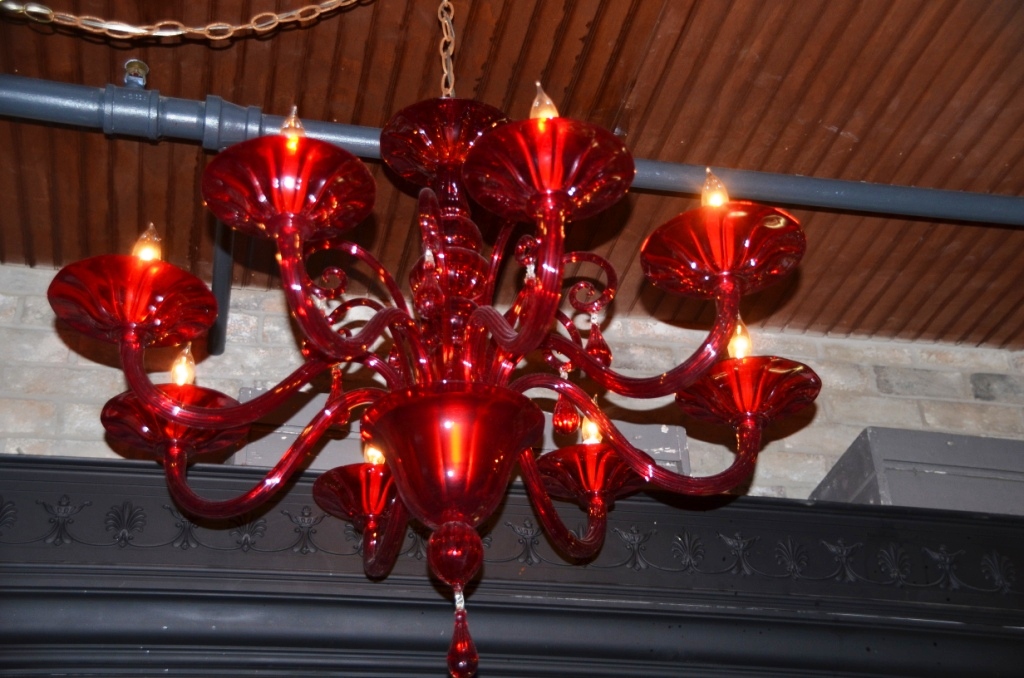
Before you get to this post, just a little word of caution – if you are hungry, can I ask you to go eat first? Please?
Let me ask you a question: when it comes to the restaurants, how often can you recall the exact decor of the restaurant? Well, let me be careful with this – of course this question is intended for the foodies and not for the interior design majors. We typically remember great food and wine experiences (yes, extremely bad experiences get stuck in the head too – I still remember the worst spaghetti in my life in the little restaurant by the Lake George). Sometimes the exceptional service is also staying with you. But I would bet that decor for the most cases would be the last thing you would remember, especially if you visit the restaurant only once. But then there are exceptions. I still remember old Tavern on the Green, with all its imperial embellishments, or the wonderful Belgium restaurant we visited on Aruba, called Le Dome, which had 4 different dining rooms, each decorated in its own unique style. Why am I asking all the questions about remembering the decor? Please read on, you will see in a second.
Okay, so the goal of this post is not to take you on the memory lane, but to share our recent dining experience at the new restaurant in Greenwich, Connecticut called Rouge Brasserie & Oyster Bar. We happened to come in a bit before our dining companions, so I had a little bit of time to walk around. The unique decor and variety of styles within somewhat of a limited space were strikingly different from most of the places I’d been to. The way the different sections were appointed were going from country French to cozy corner to the Royal French – all tastefully decorated and oh so different. Yes, as usual, I plan to inundate you with pictures, so take a look:


As it almost became customary, we started our evening at the bar. While the list of cocktails at Rouge is not too long, everything we had was very well made and very refreshing. Brigitte Bardot (cognac, fresh Lemon, sugar, raspberries and champagne) and Broken Heart Margarita (tequila, elderflower liquor, fresh sour, cointreau, raspberry grape & pink peppercorn) were both done just right, not too sweet (I’m really not a big fun of the sweet cocktails), withgood amount of alcohol, but very balanced at the same time. And it was just fun sitting by the shiny, well lit bar and watch Kelly compose the tasty concoctions.
Before we talk about food, I need to say a few words about the wine. I didn’t get a chance to see the wine list, so obviously I can’t comment on it – but during the evening, we were drinking two wines which were both, shall I say it, surprisingly outstanding. Our white wine was 2012 Domaine Saint-Lannes Côtes de Gascogne IGP (80% French Colombard, 20% Gros Manseng) – perfect nose of the bright white fruit, very inviting, light and round on the palate, with white apples, touch of lemon, dry and refreshingly crisp, excellent balance (Drinkability: 8). May be the fact that the white wine was good was not all that surprising, but for the red… Our red wine was 2010 Chateau Gobert Bordeaux AOC. Can you point to the “surprising” part just based on the name? I remember when I was just starting with wine, which was a bit more than 10 years ago, the year 2000 was declared the “Vintage of the Century” in Bordeaux, and I decided to try those best wines, buying Bordeaux AOC wines for $7 in the discount supermarket in New Jersey. When I tried to drink those wines, which were green, branch-chewy and plain harsh, for the life of me I couldn’t understand how that can be a great wine (of course I would never admit it in public). As I was learning about the wines, and especially listening to the Kevin Zraly’s explanations about circles of quality, I realized that basic Bordeaux, sourced from the grapes from the whole region, in general is something to avoid. Now, at the dinner, the red wine was poured (I didn’t see the label), and my first impression was “wow, this is very nice” – soft dark fruit on the nose, quite fruit forward on the palate, but without much exuberance or going over the top – some plums, ripe raspberries, touch of green bell pepper in the back, soft tannins, nice acidity, overall very balanced (Drinkability: 8-). When I saw the label, my first reaction was “Really?” – for a few seconds, I couldn’t believe this was actually a basic Bordeaux red wine. I will have to start paying attention to the Bordeaux AOC wines again, as this was one eye opening experience. And I want to complement whomever selected these wines for the restaurant – great choice!


Okay, time to talk about the food! In a word, we were treated royally at the Rouge – it was literally no holds barred type of dinner – everything you can think of was on the table – the caviar, the oysters, the lobster, and lots more.
First, our bread arrived in the form of tiny, but ohh so tasty baguettes, accompanies by the butter, fresh young radishes and cornichons:


From our appetizer course, the very first dish was Fish Eggs and Chips (house made potato chips, Crème fraîche) – as you can see from the name, it was a play on “Fish and Chips”, only instead of the actual fish we had something which could’ve become a fish – both black and red caviar was sprinkled over the house made potato chips:


I understand the word play here, and the dish overall was interesting – but I would probably use something more neutral as a medium instead of potato chips – some kind of white bread crackers or even crispy water crackers would play better with the saltiness of the caviar. But again, I can’t complain about the caviar as a starter – not at all.
When you start with the caviar, what is the next thing you should expect? The best selection of the fresh seafood, of course. And the best it was! Plateux De Fruits De Mer had fresh oysters, fresh clams, lobster tails and claws, and prawns, accompanies by the trio of sauces (shrimp cocktails, mayo with herbs and onion/vinegar for the oysters). Fresh and immaculate, one of the best seafood platters I ever had. I’m generally not a big fun of fresh clams – and these were delicious.


Seafood platters can be served in different types of restaurants, but nobody would argue that with Escargots Bourguignon (shallot parsley butter) we are getting into the real French traditional cooking. The escargot were excellent, succulent and satisfying. My only complaint was that I would serve the escargot separately from the toast, as the toast was completely soaked in butter in and out, but then I heard a number of people praising that exact butter-soaked toast. Anyway, this was definitely a delicious appetizer.


From French Classic to the French Classic – our next dish was Classic Steak Tartare (hand cut prime filet with charred country toast) – I tried steak tartare in Paris for the first time, and while I was scared with the plate put in front of me (raw ground beef was glaring at me, asking “will you dare put me in your mouth”), once that raw ground beef was mixed with all the condiments, it became one of my favorite dishes of the French cuisine. In our case, the steak was already premixed, so all we had to do was to put it on the toast and enjoy – which is exactly what we did! It was very tasty.


Our last appetizer was Warm Onion Tart (tomato confit & nicoise olives) – if you look at the size of that thing, it was literally the whole pizza! It turns out that the restaurant inherited a real pizza oven from one of the restaurants located before in the same space, so they definitely took a full advantage of that. That tart was delicious, withcrispy crust, and mild bitterness of arugula perfectly complementing sweetness of the onion. Great dish!


This was the end of our appetizer round, and while we were quite well fed already, the best was yet to come.
Our entrees included:
Skate Meuniere (parsley new potatoes, lemon brown butter) – outstanding, perfectly cooked fish, very meaty, nice lemony bite, without any fish aftertaste (you know, like the one you get sometimes from tilapia or catfish). This dish made many of us wonder why we don’t eat skate more often.
Moules Frites (white wine, garlic & fine herbs) – may be the best mussels ever. The sauce was soooo tasty, we had to request [lots of] additional bread. Simply delicious. Mussles were also served with very tasty french fries.
Short Rib Bourguignon (red wine sauce with pearl onions & truffled potatoes) – is there any other food in this world which spells “comfort” better than the slow cooked meat? Probably not. We were really full at this point, but nobody could resist that voluptuous (interesting word to describe the cooked meat, huh?), succulent meat. Sauce was exceptional, just perfectly savory without any unnecessary sweetness. Great finish to our wonderful meal.
Well, of course there was a dessert – luckily a small one, but super tasty! Chocolate French Custard was just perfect, not too sweet, with the very light and fluffy texture. And by the way, while we were at dessert, I learned something new! It appears that when you eat dessert (at least the one like this custard), you are supposed to turn the spoon upside down in your mouth, so the tongue with all its tastebuds will get in contact with the food, and not with the back of the spoon. I had no idea!


Last, but not least at all, we had a chance to talk to and express our heartfelt Thanks to the Executive Chef Josh Moulton, the mastermind behind this exceptional experience, Diego, our Maître D’, and Fabiana, the designer who created all that exceptional style I described at the beginning of this post.


If you will have an opportunity, I definitely recommend that you will ignore all my writing and go experience Rouge on your own. For those who are too far away, sorry, but you will have to take my word for it – this was definitely an outstanding meal, with great style and substance. Cheers!
Disclaimer: I attended the restaurant as a guest of management. All opinions are my own.
Rouge Brasserie & Oyster Bar
230 Mill Street
Greenwich, CT 06830
Phone: (203) 813-3555

Month in Wines (and Whiskeys and …) – November 2013
 It is time to summarize yet another month in wines. This month, I decided to extend this summary to whiskeys and beyond, as I managed to make a number of very interesting discoveries.
Talking about wines, there were two clear standouts – Pinot Noir from South Africa and white Burgundy, but generally, there were quite a few good wines. Here we go:
2010 Clos du Val Cabernet Sauvignon Napa Valley (13.5% ABV) – nice round fruit, good acidity, hint of cassis on the nose and palate, soft tannins, light and balanced. 8-
2009 Chamonix Pinot Noir Reserve Franschhoek South Africa (13.5% ABV) – phenomenal. Muscular, powerful, intimidating – it attacks you with the dark smoky fruit right from the first sniff. An extremely pronounced gunflint, which has an effect of the light on the moth – you just can’t stop smelling this wine. Dark power on the palate, intense, dense, structured, full bodied and shameless. 9-
2008 Basel Cellars Merriment Estate Red Wine Pheasant Run Vineyard Walla Walla Washington (14.57% ABV) – Nice Bordeaux-style blend. Lots of depth, dark fruit, firm structure, good acidity and balance overall. 8-
2007 Mount Palomar Charbono Temecula Valley, California (13.2% ABV) – Mount Palomar is one of my all times favorite producer from the Temecula Valley. This wine was probably at it’s peak. Perfect nose of ripe raspberries. Raspberries and blueberries on the palate, dark chocolate, medium to full body, overall welcoming and heart-warming. Perfect. 8+
2011 Siduri Pinot Noir Sonoma County (13% ABV) – nice and clean. Beautiful nose of light cherries with a touch of herbal notes, a sage profile. Light, perfectly integrated fruit on the palate – fresh cranberries and tart cherries, nice underpinning of a touch of mint and sage. Easy to drink and delightful. 8
2010 Cala de Poet Maremma Toscana IGT, Italy – total surprise from Trader Joe’s considering the price of $5.99. Dark plums and herbs on the nose, tart raspberries, eucalyptus and dark chocolate on the palate, firm structure and nice tannins, very balanced. 8-
2012 Cecilia Beretta Brut Millesimato Prosecco Superiore Coneglian Valdobbiadene DOCG, Italy (11% ABV) – another surprise from Trader Joe’s – tiny refreshing bubbles, notes of fresh apple on the nose, round and roll-of-your-tongue on the palate with more of the fresh apple and yeast notes. Excelllent sparkling wine (and a great value at $9.99). 8-
2013 Georges Duboeuf Beaujolais Nouveau (12% ABV) – Georges Duboeuf Beaujolais Nouveau literally gets better and better every year. Young, fresh and inviting on the nose, with lots of juicy cherries. Very concentrated on the palate, with good, tightly knit, firm body, fruit and acidity fully in check, excellent balance. 8-
2004 Jade Mountain Syrah Napa Valley (14.6% ABV) – this was a total surprise. It was my last bottle from the case, and couple of the previous bottles were hinting that they are getting past prime. When I saw this bottle (unexpectedly) on the wine cabinet’s shelf, the first thought was “oops”. The first sniff and the first sip immediately proved me wrong. Fresh, dark fruit on the nose, same on the palate – nice, round, supple blackberries, dark chocolate, touch of espresso, full body, integrated tannins, overall excellent balance. Now I wish I had more left. 8
2003 Neyers Cabernet Sauvignon Neyres Ranch – Conn Valley Napa Valley (14.5% ABV) – one of my favorite cabernet Sauvignon wines. A classic, cassis nose with a touch of bell peppers. Dark fruit on the palate, more cassis with some blackberries, round, warm and supple. Full body, acidity and tannins are in check. Excellent balance. 8
2006 Clos Pepe Estate Pinot Noir Sta. Rita Hills, California (14.5% ABV) – Dark garnet color, nice touch of smoke on the nose, cherries. Classic California Pinot Noir. Fresh cherries on the palate, medium to full body, round tannins and acidity. Drinkability: 8
2005 Domaine Laleure-Piot Pernand-Vergelesses AOC, Burgundy (13% ABV) – I have no idea how this bottle ended up in my cellar. I also had no expectations, as previously I had bad luck with older white Burgundies. Boy, what a treat this wine was! Pale yellow in the glass, hint of an apple and gunflint on the nose. Touch of vanilla and more fresh apples on the palate, round, inviting, effervescent but perfectly present. Delicious! 8+
Whew, done with wines!
Regarding the whiskeys – I already had a separate post about them, but I want to specifically include them here:
Catskill Distilling Company Wicked White Whiskey – this is six-grain (corn, wheat, buckwheat, rye, smoked corn, malt), un-aged whiskey. Absolutely spectacular nose and flavor – complete impression of delicate single-grape grappa with round sweet fruit and all around delicious. You have to taste it to believe it.
Catskill Distilling Company Most Righteous Bourbon (70% corn, 20% rye, and 10% malt) – round, clean, caramel, butterscotch, all perfectly balanced together. One of the best bourbons I ever tasted.
Catskill Distilling Company One and only Buckwheat (80% buckwheat, 20% small grains) – unique and different. Nose is absolutely unusual, reminiscent of sun flower oil. Viscous, roll-of-your-tongue delicious concoction. Great complexity, another drink you have to taste to believe it.

Last but not least – Gin! Yes, I know – if you ask an audience of 10 “who likes Gin”, you might be lucky if you will get one enthusiastic “yes”. However, this Gin was truly something else.
Caledonia Spirits Barr Hill Gin, locally produced in Vermont, made out of Juniper berries and honey – absolutely spectacular on the nose and the palate, with the refreshing scent of juniper berries and a touch of honey sweetness. Perfect balance. Ability to convert people – two of the gin haters became gin lovers after they tasted this nectar. If you will have an opportunity – find it and taste it for yourself, and let me know if you will become a convert too.
And we are done here. If you tasted any of the wines and spirits I mentioned – don’t be shy, and comment away. And just as a feature preview, the next up in the “best wines” posts is my personal Top Dozen wines of 2013. Don’t miss it… Cheers!
Overwhelmed…
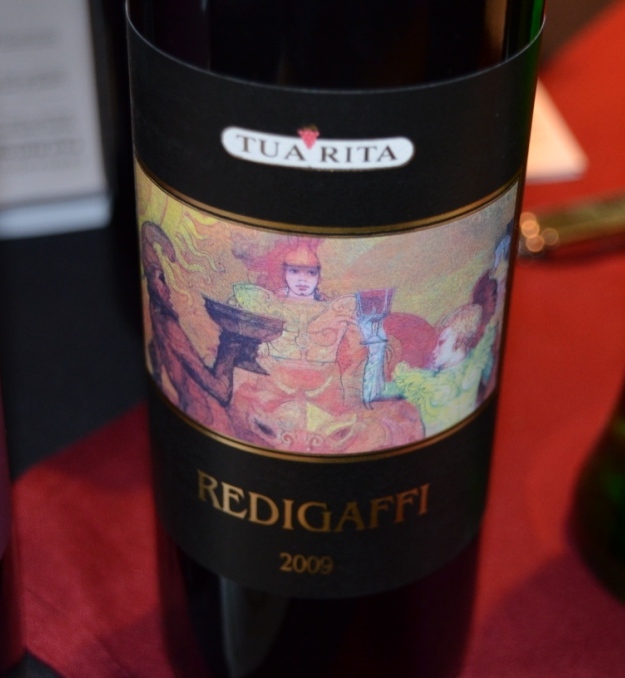
Tua Rita Redigaffi 2009
I don’t know how this works for you, but sometimes (lots more often than I want to) I find it very difficult for blogging to keep up with the life. Once you are bitten by the blogging bug, even the routine experiences always raise the question in your mind – “does it worth a blog post”. And the answer is often “yes” (it is your personal blog after all, your life’s journal). But from the “yes” answer to the blog post your happy with, there is a thorny road, filled with sudden and unexpected traps, gaps, and changes of directions – the thing called “life”. Life gets in the way, and the unwritten posts become the heavy load, as pleasant as a toothache, drilling your brain with similar persistence “and remember, you still didn’t write that blog post… Yeah… What is wrong with you, huh? Come on already”.
As you might be able to deduce from this lengthy prelude, this blog post will be one of those, supposed to be written a while ago, but coming to life only now. Well, I still think it still has a merit, but you tell me.
At the beginning of September, I was lucky enough to attend 4 trade wine tastings in the row. The trade tastings are conducted by the wholesalers and distributors for the wine trade – retailers and restaurateurs – to introduce new wines coming to the market. These trade tastings are very large in size – they might consist of 100 tables, each table featuring 6-10 different wines, so total number of wines can be easily in 600-800 range. Nobody can taste each and every of the 600 wines within 4 hours which is the typical duration of the tasting – you have to chose what do you want to taste.
Now that I described the trade tasting to you, let me ask you a question – let’s just conduct a mini poll with only one question – do you think the trade tasting is a hard work, or it is all fun, and all the attendees are there just to drink free wine and have a good time?
Now, let’s rephrase the question:
Let me tell you – it is a hard work. You only have a few seconds to evaluate wine. You don’t have the time for the full assessment – most importantly, even if you try to do the full assessment, you don’t have the time to write down your notes after you sip, swish, suck the air, swish again, spit, move to the next. After 5 Barolos in the row, your mouth becomes completely numb, and you need somehow to restore your taste buds. You grab a piece of Parmesan cheese (either that or a sip of a cold sparkling wine), and your taste buds gradually recover, only to be hit again and again. By the end of the 4 hours, you are really overwhelmed, but generally happy.
So the four trade tastings I attended were definitely overwhelming, but exciting at the same time, as I had an opportunity to taste wines I would never be able to taste otherwise, like, for instance, Tua Rita Redigaffi. Of course when you focus on quantity, the quality might suffer – as the desire is to taste as many wines as possible, looking for unique profiles and new discoveries, it is obvious that something has to give. So in my case, I didn’t even try to write down full wine descriptions or rate the wines on my standard 10 points scale. To move fast from wine to wine, I used the “+” signs where + technically means “well, ok”, ++ means “very good”, and +++ means “excellent”. I guess “+++” should be equivalent to my standard 8 rating, but the problem is that thinking about actual numerical ratings for me requires time, and using this system of pluses was allowing me to move from wine to wine a lot quicker. Oh yes, and to stay with my traditional system of half points, I also used half of the plus sign (-|) to mark the wines which I thought were better than, let’s say, ++, but not as good as +++.
So below you will find a huge (I’m not kidding) list of wines I liked during the 4 tastings I attended. Absolute majority of those wines are +++ wines, but yes, you will see wines with other ratings too. I also sometimes used a single word or very short sentences to convey my impressions better, so you will see it reflected in the list below. Additionally, when available, I listed the grapes and some additional information about the wine.
Before I will let you ponder at the list and look for the familiar wines, I want to present some of my general conclusions based on those 4 tastings. Here we go:
- One must be humble around wine and never make any assumptions as to taste and value of the wine without actually tasting it. My experience with Cloudy Bay Sauvignon Blanc is an example of that (before tasting it, I couldn’t understand why would anyone pay for it double+ price of any other New Zealand Sauvignon Blanc – now I do).
- Once you cross $60 (approximately), California Cabernet Sauvignon become “one better than the other”.
- Looks like 2010 was a great year in California, for sure for Cabernet Sauvignon – I didn’t taste a single bad wine from that vintage.
- I have a problem with California Chardonnay. It seems that all the complainers about too much oak, vanilla and butter finally had their way. Now, it is practically impossible to find those big and buttery wines, and most of the California Chardonnays produced today are dull, have no character and overall universally boring. Somebody, please change (fix) that!!!
Ready to look at the list? Hold on, here are some pictures of the wines in the tastings:
I feel inclined to still add a few more comments, this time just explaining the logic of what you will find in the list. I was choosing the wines to taste based on the few factors:
1. Price – yes, I wanted to taste many expensive wines – go ahead, blame me for it.
2. Uniqueness – I don’t know when and if ever again I will have an opportunity to taste Tua Rita Redigaffi or Catena Zapata Adrianna single vineyard Malbec (both wines are part of my Must Try List) – so of course I made an effort to taste those wines.
3. Wines with rare grapes – as I continue my Wine Century journey, I still always look for the grapes I didn’t taste before. This time I added 4 – Moscatel Morisco, Sauvignon Gris, Kountouro Blanc and Tribidrag
4. Otherwise I was just following the lead of my friend Zak who was tasting wines for his store.
And (ready for it?), here is the list of the wines I tasted, sorted by the country – but I’m warning you – continue at your own risk – you might get overwhelmed too…
Reminder – unless otherwise noted, all the wines below are +++ wines, thus these are all the wines really liked, and it is only a fraction of what we had to work through…
Now – enjoy and cheers!
Beaujolais Nouveau 2013 – Well Worth Your Attention
It that time of the year again – the festive labels are lining up in front of the wine stores to remind us that we are entering into literally a six week of non-stop celebrations – Thanksgiving, Christmas, New Year, friends, families, holiday parties. With its festive label, coming out every third Thursday in November, Beaujolais Nouveau signifies both arrival of the wines of the new harvest, and the arrival of the holidays.
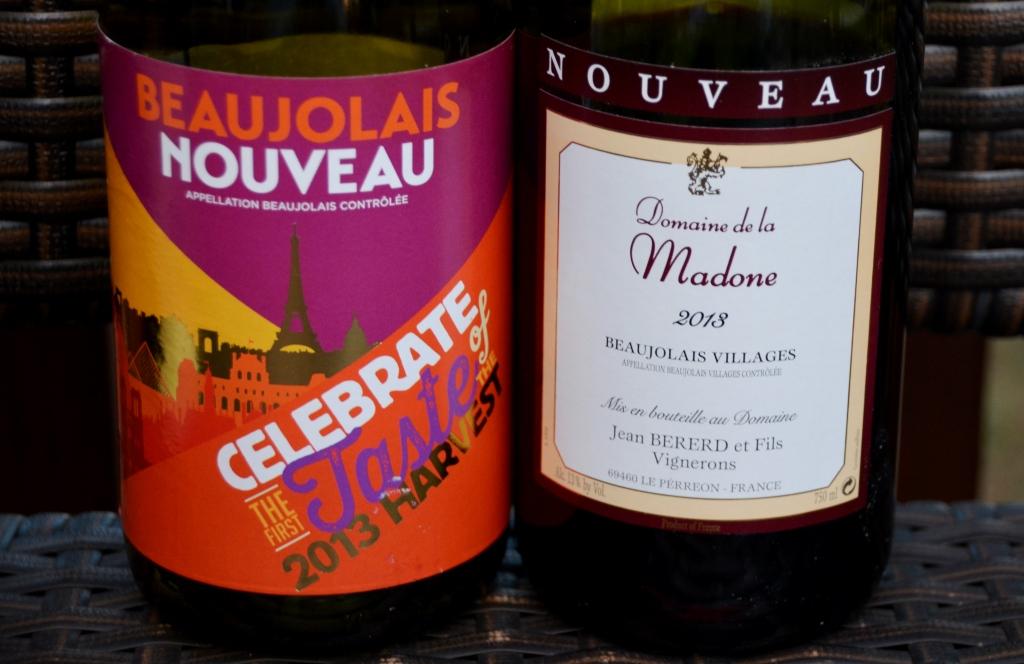
Beaujolais Nouveau Arrived!
The tradition of celebration of the new harvest with the wines of Beaujolais is well more than hundred years old. It became linked to the third Thursday of November in 1985, and then little by little, became a huge marketing success. That huge success became the worst enemy of the wine, with the producers starting to make soulless, insipid wines, void of any substance – and Beaujolais Nouveau phenomenon almost died at the very end of 20th century, with people simply ignoring the wines as only a marketing ploy.
Luckily, over the last few years, the situation started to change to the better, or I would even dare to say, to the “much better”. The wine behind festive labels started to show substance and character. I think Beaujolais Nouveau offers a very unique opportunity for the wine lovers, as you can taste every new vintage of the same wine, and compare – something which is rather difficult to do with many other wines – and you can see how the wine is changes year over year.
This year I had an opportunity to taste two different Beaujolais Nouveau wines – one from Georges Duboeuf, and another one from Jean Bererd & Fils, Domaine de la Madone – technically a Beaujolais Villages Nouveau, which is a different AOC designation, but for all intents and purposes it is produced in the same way as a regular Beaujolais Nouveau.
Can the wine be made better and better every year? Of course the question is way too generic to have an answer, but I can tell you that in case of Georges Duboeuf Beaujolais Nouveau, the answer is “yes”. I was quite happy with the 2012 wine, but I think this year it is even better. The 2013 Georges Duboeuf Beaujolais Nouveau (12% ABV, $10.99) showed beautiful dark purple inky color in the glass. The nose was full of bright fresh fruit – ripe cherries, succulent raspberries, some violets. The palate came in quite restraint and structured, even firm – good fruit presence of the same dark cherries and ripe raspberries, but not over the top, showing of respectfully mature, concentrated wine with good acidity and medium finish. Depending on the serving temperature, the acidity was more of less noticeable, and overall the wine showed well balanced. Definitely recommended for your Thanksgiving table, perfectly attune to the Harvest celebration. Drinkability: 8-
The 2013 Jean Bererd & Fils Domaine de la Madone Beaujolais Villages Nouveau (13% ABV, $10.99) had very similar inky purple color in the glass. On the nose, it exhibited very similar notes of dark cherries and raspberries. And yes, the palate profile was very similar, but somehow, while the wine was perfectly drinkable and enjoyable, also showing firm structure, I was unable to find the right temperature when acidity was fully in check and harmony with the rest of the wine. Still, not a bad wine by all means. Drinkability: 7
When it comes to Thanksgiving, which we are about to celebrate, my choice of wine tends to be all-American – Chardonnay, Pinot Noir, Zinfandel – but nevertheless, I love opening the celebration with the glass of Beaujolais Nouveau – that clearly sets the mood to the Holidays, which have arrived.
Did you happen to taste Georges Duboeuf or any other Beaujolais Nouveau wines? What do you think? Happy Holidays and Cheers!
Beauty of Montefalco Rosso and Power of Sagrantino
About two month ago (yes, I know, I’m the speedy one) I was invited to participate in the virtual tasting. The subject – Italian wines. To be more precise, the wines from Umbria, made out of the grape called Sagrantino.
I never participated in the virtual tasting before, so I was not sure how it was going to work. The idea was simple. I will get the wine, which should be opened and tasted in parallel with the winemakers, who will be doing it live on ustream. Of course I gladly agreed to take part in this wine drinking tasting.
The subject was wines from Umbria, from the region called Montefalco. Actually, it was not just one tasting, but two – one for the wines called Montefalco Rosso, and the second one for the wines called Montefalco Sagrantino.
It appears that Sagrantino is an Italian indigenous grape, which seems to be cultivated in Umbria for at least 500 years, if not longer. However in the 1960s it became literally extinct, and if it would not be the effort of the few winemakers, Sagrantino would be gone completely from the winemaking scene.
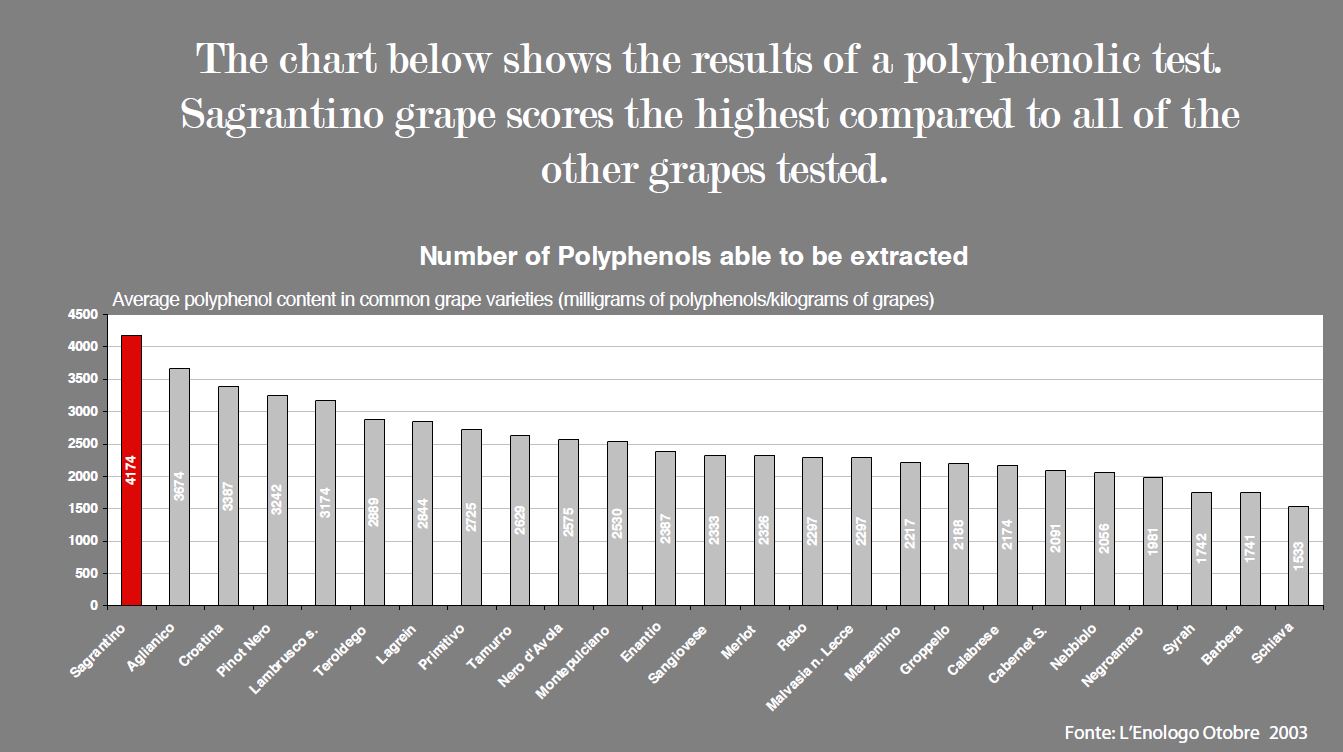
Sagrantino has dark and very thick skin, which results in very tannic and concentrated wines, literally black in color when young. Sagrantino has the highest polyphenolic content among most of the red grapes, if not among all red grapes in the world (take a look at the chart below). Just to get technical for a second, polyphenols (also called phenolic compounds) is a large group of chemical compounds, responsible for color, texture and mouthfeel of the wine (think tannins!), and the group also includes medically beneficial elements, such as reservatrol. As usual, I have to refer you to Wikipedia for additional reading, but I hope you get the point here.
My wines arrived few days before the tasting. As luck would have it, the day which the wines spent on the UPS truck, was one and only day in September when temperature outside reached 96F (extremely atypical for Connecticut in September). When I took the wines out of the box, I could feel that they are quite warm – on average, my wine thermometer showed all the bottles to be at around 84F, so I was obviously concerned… I opened a number of bottles the next day, and to my big relief, the was no sign of heat damage (I quickly closed the wines back using the gas canister) – I was ready for the tasting.
First day of tasting was dedicated to the wines called Montefalco Rosso. Montefalco Rosso wines typically are Sangiovese based, with the addition of 10% – 15% Sagrantino and 10%-15% Merlot and Cabernet Sauvignon. We had an opportunity to taste through 5 different wines:
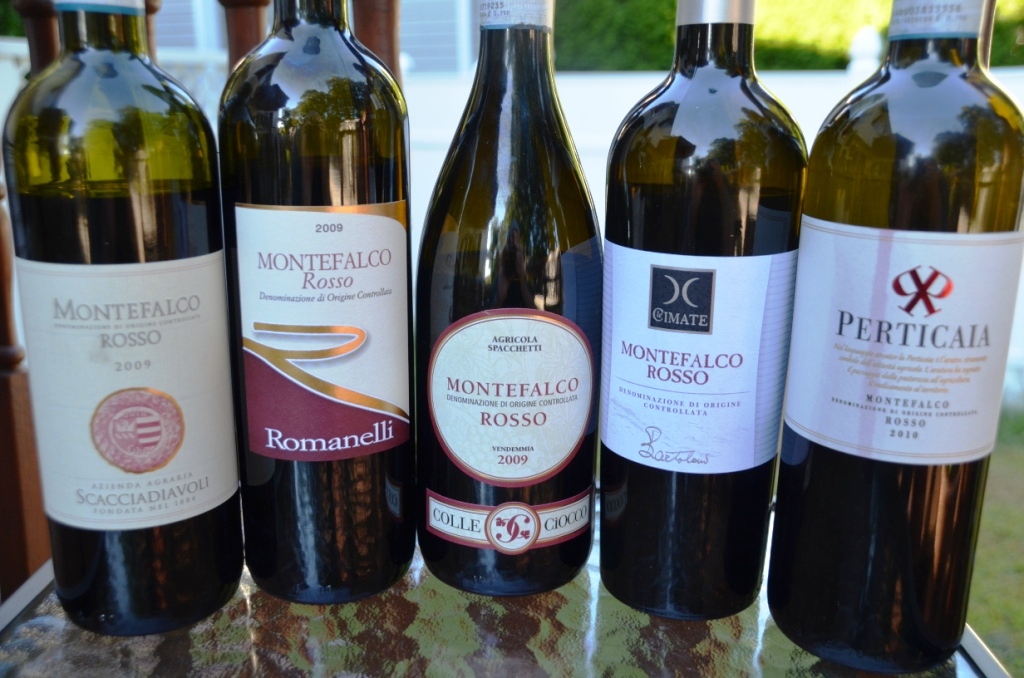
At the specific time, the ustream broadcast started with live tasting, where the panel of winemakers from all 5 wineries were talking about their wines and answering the questions. The ustream broadcast was accompanied by the live twitter exchange among all the participants in the tasting. The twitter stream was used to ask panelists the questions, share tasting notes and impressions. Definitely was interesting to see and hear the diversity of opinion both from the panel, and from the audience on twitter. To be entirely honest, the most difficult part was to do a few things at once – taking my own notes, talking to the people on twitter and listening to the panelists – difficult, but well worth it!
Below are my notes for the 5 Montefalco Rosso wines we tasted (as you will see, not necessarily taken exactly during that live tasting session).
2009 Romanelli Montefalco Rosso DOC (14.5% ABV, Sangiovese 65%, Sagrantino 15%, Merlot 10%, Cabernet Sauvignon 10%, 12 month French oak, 6 month in the bottle) – good dark fruit, easy to drink. Drinkability: 7
2010 Perticaia Montefalco Rosso DOC (13.5% ABV, Sangiovese 70%, Sagrantino 15%, Colorino 15%, 12 month in stainless steel, 6 month in the bottle) – day 2 notes – outstanding. Dark inviting fruit with a hint of sage on the nose, spicy cherries (cherries + black pepper) on the palate, with tobacco notes in the background. Delicious! Drinkability: 8+
2010 Le Cimate Montefalco Rosso DOC (14.5% ABV, Sangiovese 60%, Sagrantino 15%, Merlot 15%, Cabernet Sauvignon 10%) – was perfectly drinkable 6 (!) days after opening the bottle. Spectacular. Supple, ripe cherries, perfect acidity, espresso and dark chocolate, powerful, balanced. Drinkability: 8+
2009 Scacciadiavoli Montefalco Rosso DOC (14% ABV, 60% Sangiovese, 15% Sagrantino, 25% Merlot, 12 month French oak, 6 month in bottle) – Excellent. Dark, spicy earthy nose with some gaminess. Excellent minerality and dark fruit on the palate. Drinkability: 8+
2009 Colle Ciocco Montefalco Rosso DOC (14% ABV, Sangiovese 70%, Sagrantino 15%, Merlot 15%, 12 month in oak barrels, 4 month in the bottle) – nice soft red fruit on the nose, sweet and supple fruit on the palate, good acidity, soft tannins. Drinkability: 7+
The next day we had the tasting of Montefalco Sagrantino wines. Montefalco Sagrantino wines are made out of 100% Sagrantino grapes. The tasting was done in the same format – panel of winemakers discusses the wines live via ustream, and twitter followers taste and discuss in parallel.
It was recommended to open wines one hour before the tasting. Considering how massive those wines are, I would think the right suggestion would’ve been to open them in the morning. I don’t know if it could make the difference, but I have to admit that my experience was rather frustrating during the live tasting. For the most of the wines, I couldn’t get any of the flavor descriptors and impressions, compare to what was exposed by the other twitter tasters. For instance, Arnaldo Caprai was showing literally as corked, where the other tasters had violets, black tea and other nice things to say. Literally only one or two wines cooperated with me during tasting. But – most of them came back nicely right after (see the notes).
Below are my notes for the Montefalco Sagrantino wines (all wines are 100% Sagrantino).
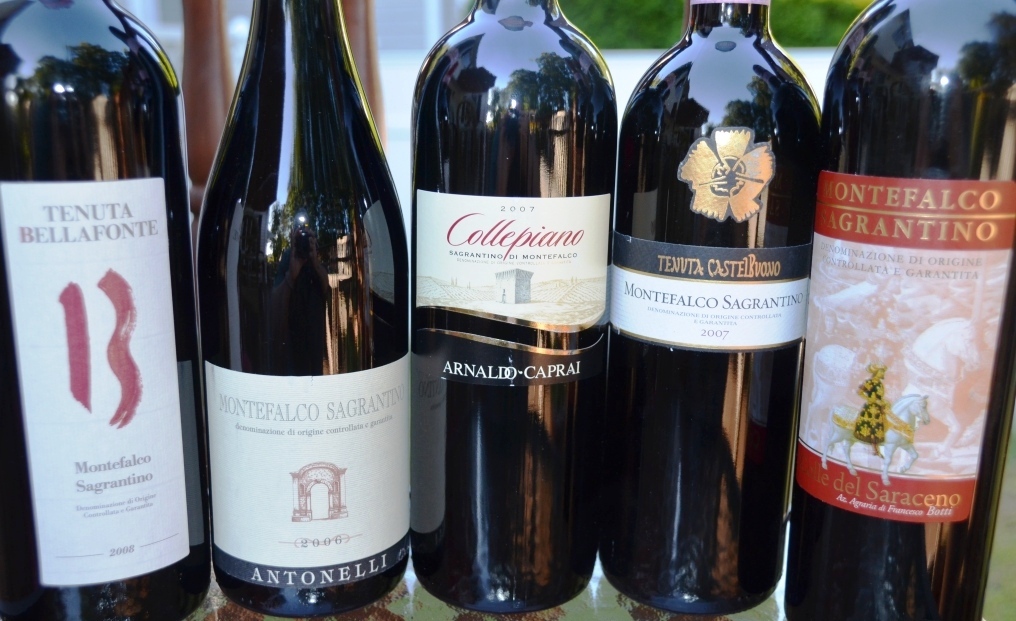
2006 Antonelli Montefalco Sagrantino DOCG (14.5% ABV, 15 month in oak, 12 month in the bottle) – Dark fruit on the nose, same on the palate, very restrained. I’m sure needed more time. Drinkability: 7+
2007 Caprai Collepiano Montefalco Sagrantino DOCG (14.5% ABV, 20-24 month in French oak barrique, minimum 6 month in the bottle) – opened on 09/17, then closed with the argon canister. Reopened on 09/23. Concentrated, very dark. Initially gave an impression of being mildly corked. After 3 days finally started to open up into something interesting. Very substantial tannins ( more of stem/seeds tannins than oak). Dark fruit with undertones of leather and black tea. Drinkability: 8-
2007 Tenuta Castelbuono Montefalco Sagrantino DOCG (14.5% ABV, 28 month in oak, 10 month in the bottle) – dark supple fruit on the palate, very powerful, a wine with “broad shoulders”. Beautifully opened over the next few days, showing roasted meat notes on the palate, good acidity, excellent balance. Drinkability: 8-
2008 Tenuta Bellafonte Montefalco Sagrantino DOCG (14% ABV, 36 month in large barrels, 10 month in bottle) – wine was first tasted on 9/17, then closed with gas canister. Reopened on 9/25. Powerful, concentrated, almost black color in the glass. Nice fruit undertones, cassis and plums, with more tannins coming in later. Overall delicious and “dangerous” wine. Drinkability: 8
2008 Colle del Saraceno Montefalco Sagrantino DOCG (14.5% ABV, 12 month stainless steel, 12 month French oak barriques, 6 month in the bottle) – this wine unfortunately showed signs of the heat damage. N/R.
All in all, this was a great experience. The virtual tasting format was pretty well done, and I definitely will be looking forward to more virtual wine tastings in the future. And for the wines – my notes are above, and I definitely recommend looking for Montefalco wines – both Rosso and Sagrantino well worth your attention. Cheers!
Disclaimer: The wines were provided complementary by the PR agency. All opinions are my own.
Axial Vinos – Spanish Wine Intro
A while ago I got an email from the Axial Vinos marketing, informing me that two of the Spanish wines from Axial Vinos portfolio had been recently added to the Trader Joe’s wine selection. I was also asked if I would accept a sample of the wines. As you might now, I have a difficult relationship with the samples – I don’t actively solicit them, and I consider each request individually. To be entirely honest, I had less than a handful of requests for sending the samples, and so far I didn’t reject any. I don’t have a strong criteria for rejection, it would probably have to be something like a Crane Lake of Sutter Home, for me to say “no, thank you”, but nevertheless, that makes me feel better.
As the wines which were offered to me were Spanish wines, which are some of my favorites in the world, of course I said “yes, please”. A few weeks later, the wines arrived, and then I had an opportunity to taste them – and now I would like to share my impressions with you.
Before we get to the wines, a few words about Axial Vinos. It appears that Axial Vinos is an export company, which works with the wineries in different regions of Spain, where it sources all of their wines. Axial Vinos portfolio includes more than a dozen of different wineries, located in all the leading regions, such as Ribera Del Duero, La Rioja, Penedes and others.
Now, let’s talk about the wines. From the get go, I really liked the packaging:
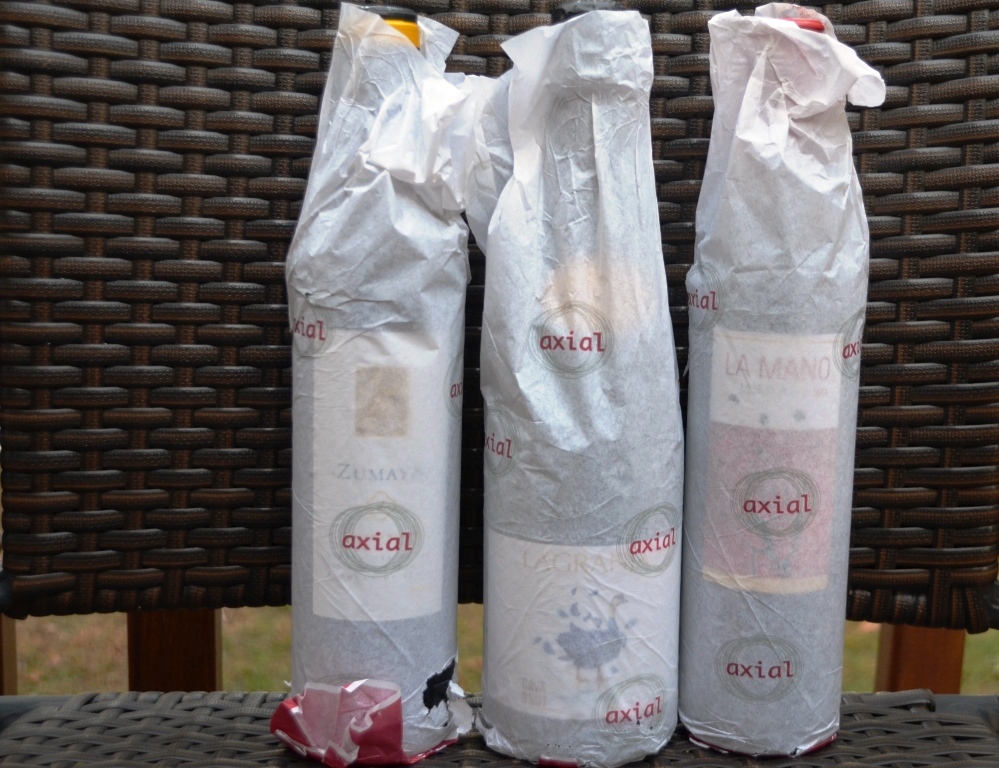
You know, this additional layer of paper, wrapped around the bottles, enhances an element of mystery. Wine in the bottle is always a mystery, this is what makes it such fun – you really don’t know what is there, behind the cork, so your imagination can run wild, simply based on all the visual cues – the shape of the bottle, the label, the capsule. Here you can’t clearly see even those details, so the mystery multiplies.
But of course the next step is to unwrap the bottles (and admire the labels):
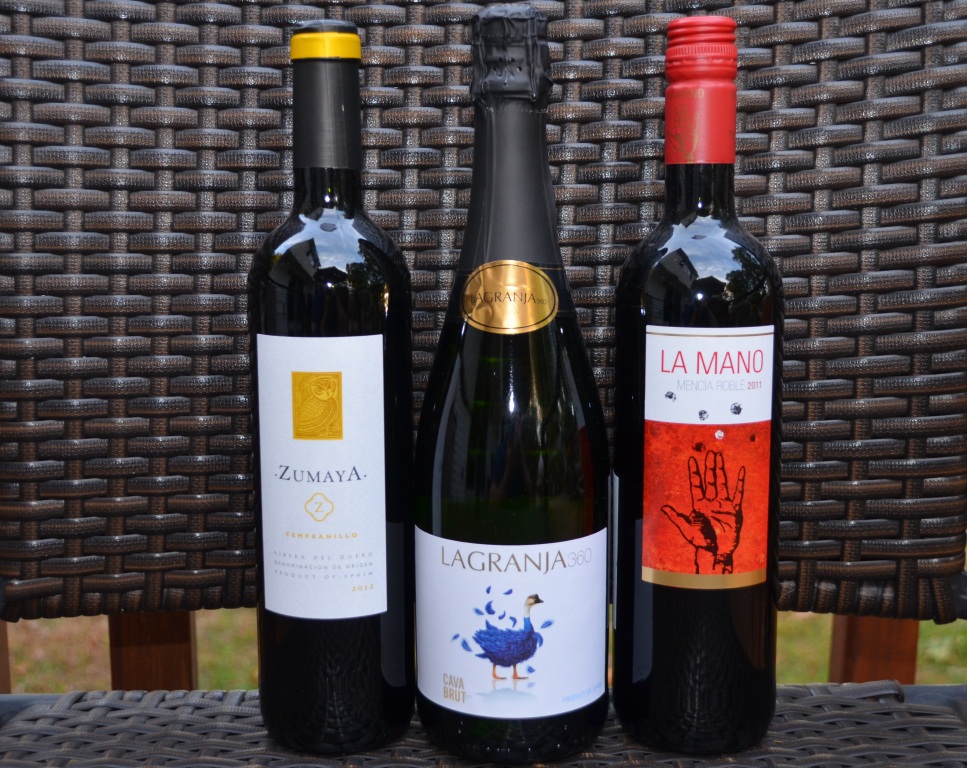 Okay, so we are done looking at the bottles, let’s talk about the content.
2012 Zumaya Tempranillo Ribera del Duero DO (13.5% ABV, 100% Tempranillo) – nice and simple, food friendly wine. Hint of dark fruit on the nose, some blackberries and espresso notes on the palate. Tannins are soft and light, good acidity, good balance. Easy to drink. Drinkability: 7
2011 LA MANO Mencía Roble Bierzo DO (13% ABV, 100% Mencía) – what I like about Mencía-based wines as a whole is energy. Somehow all the Mencía wines I tasted to the date have this universal bright and uplifting character. This wine had nice, freshly pressed juice on the nose with the prevailing aromas of the fresh cherries. Similar cherries/plum profile on the palate, simple, clean, medium body, round dark fruit, easy to drink. Drinkability: 7+
NV La Granja 360 Cava Brut (11.5% ABV, 70% Xarel-lo, 30% Parellada) – simple and elegant, perfectly refreshing, just a touch of sweetness, good acidity, very balanced overall. Drinkability: 8-
All in all, this 3 wines can serve as a perfect introduction into the wonderful world of Spanish wines. To all the lucky people who can buy their wines at Trader Joe’s (Trader Joe’s in Connecticut doesn’t sell wines, so I’m not one of them), I highly recommend not to miss on all these wines. Considering that the Turkey Day is coming, I believe all three wines will pair quite well with the Thanksgiving feast, and I’m sure you will not break the bank to get them. If you will try or have tried these wines already – let me know what do you think.
That’s all I have for you for today, folks. Enjoy your Friday – and the weekend is coming! Cheers!
Indian Cuisine Deep Dive, At Aladin Indian Bistro in Norwalk, CT
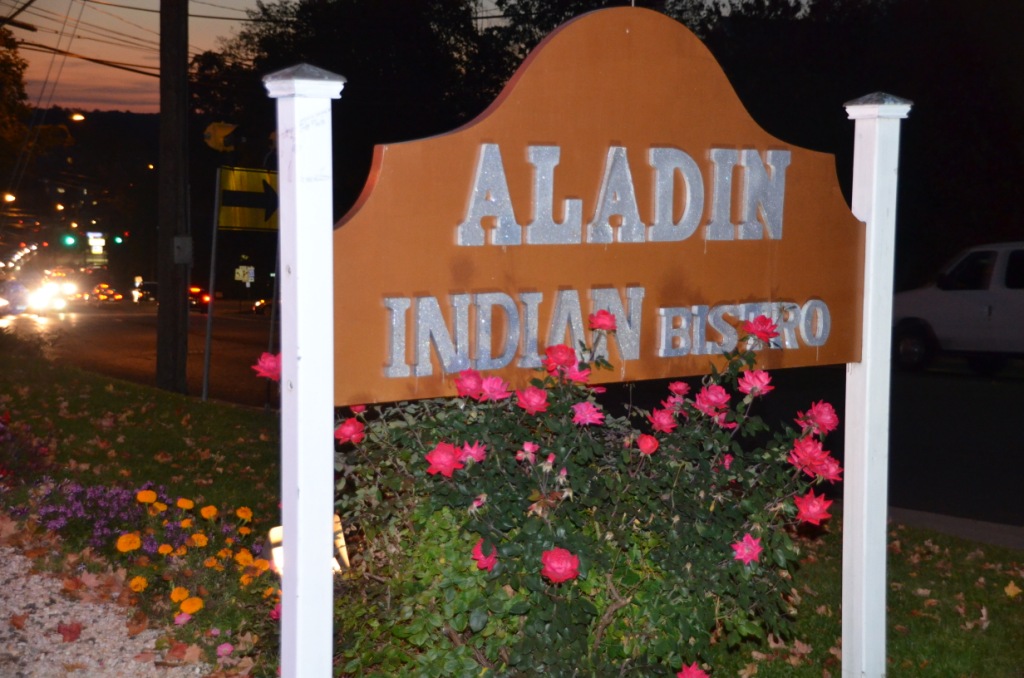 Do you know what is curry? Well, may be you do, but it appears that I didn’t. To be more precise, I thought I knew – and I didn’t. Anyway, the explanation is coming down below – keep reading and looking at the pictures.
Aladin Indian Bistro located at the busy intersection in Norwalk, CT, literally around the corner from one of the best food stores in the area, Stew Leonard’s. Despite the busy intersection part, there is plenty parking in the back, which definitely helps. I don’t know about you, but when I’m thinking about going to the restaurant, parking is probably one of my very first concerns – I need to know if I will be circling around the busy street for half an hour or not, so again, I’m talking about important stuff here.
The Aladin’s interior is nicely appointed, with wood and leather, with enough space between the tables, and comfortable and inviting lighting.
 As we got situated at our table, the neverending array of food started to appear. First, it was Papadum, the thin crisp flatbreads, made out of yellow lentil flour right at the restaurant – very tasty on its own and with the sauces. By the way, as I consider this visit more of a personal learning of the Indian cuisine, I will include here the links to the relevant articles on Wikipedia – here is the one for Papadum. We were also served a trio of accompanying sauces – Mint sauce, Braun Tamarind sauce and Onion Vinegar relish – all worked very well with papadum.


Our first dish was Spiced Sea Bass Pakoda (Sea Bass Fritters. Chili Yogurt sauce) – tender pieces of fish, deep fried in a special batter. This dish was quite successful in texture and had very mild spicy profile. I also really liked the presentation. By the way, continuing our education here, Pakoda ( often spelled as Pakora) is the common name for the deep fried snack in India and other Asian countries – here is your link to Wikipedia to learn more.


Next dish was Artichoke-Scallion Pakoda (Roasted eggplant Tamarind aioli). Unfortunately, it was really dry and chewy – it looks pretty, though.

Artichoke-Scallion Pakoda
Ahh, almost forgot – of course we were drinking wine. The wine list at Aladin is small, but I found it to be quite appropriate for the type of cuisine the restaurant is serving. There is a good selection of the both light whites and reds, also the prices look quite reasonable. Overall we had 3 different wines during the course of a dinner. For the white, we had 2011 Chateau Ste. Michelle Saint M Riesling, Pfalz, Germany – very nice, simple, some honeydew notes on the palate, with a good amount of acidity and touch of sweetness, very refreshing – and most importantly, working quite well with practically all the dishes. Our first red was 2012 Gougenheim Malbec, Mendoza, Argentina – simple red, with some good acidity and light raspberries profile. Later on we switched to the 2012 900 Grapes Pinot Noir Marlborough, New Zealand – nice Pinot Noir profile, with some plump cherries both on the nose and the palate, may be a touch too sweet, but working well with the dishes.
Our dinner continued with the trio of Chicken Kebabs – done in three different styles, all pieces perfectly tender, moist and juicy. When I cook myself, I generally avoid chicken kebab, as I typically have a hard time trying not to dry it out. The kebab which we were served, was probably one of the very best I ever had.

Chicken Kebab
The next dish was probably one of the most favorite in the group – it is probably enough to say that we asked for the refill a couple of times. The dish was Karari Bhindi (Crispy okra with red onion, cilantro and green chili), as we called it a “crispy okra salad” – a perfect combination of spices and crunchy texture, very tasty.


Appearing next were a few dishes. Bagar Dal (yellow lentil flavored with cumin, curry leaves, fresh garlic and dry chili) was very tasty, and so was Rogan Josh Traditional (Goat with tomato curry with a hint of Yogurt):


Just to go on with our overall theme of learning, here is the link for Dal (a thick stew made out of dried legumes) and Rogan Josh – an aromatic lamb or goat-based stew. I don’t get to eat goat all that often, so it was an interesting experience and overall a very tasty dish.
Next up – Signature Lamb Dampak (tender Lamb cubes cooked in a sealed copper vessel) – this was a bit more familiar than the previous dish, very flavorful and aromatic, perfectly going over the jasmine rice, an excellent dish overall:


And then we had bread! Well, if you are familiar with the Indian cuisine, you know that I’m talking about Naan. It is generally served hot, and it is one of my very favorite types of bread you can get in the restaurant. It perfectly accompanies all of the stew-like dishes, and it literally melts in your mouth. We went through quite a few baskets of Naan, as you can never get enough of it.


Remember I asked you if you know what curry is? This was the question which Chef Roy, the Executive Chef and Owner of Aladin, asked us during one of his appearances:
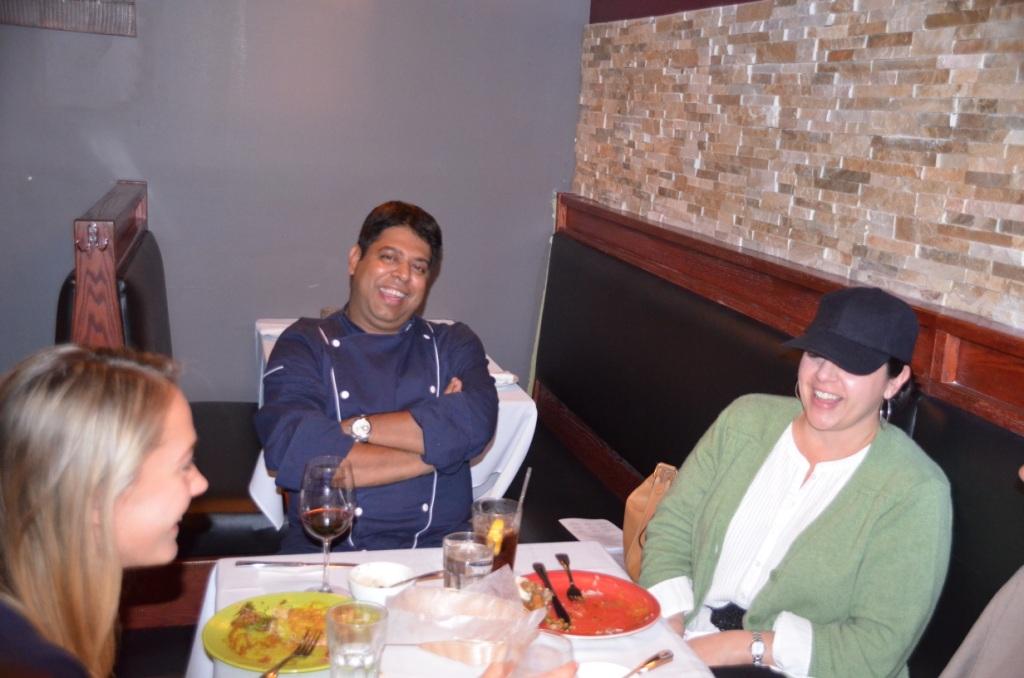
Chef Roy talking to some of our dining crew
I felt that the question is probably not as straight-forward as it seemed, but nevertheless, my answer was “of course! it is a spice!”. Well, this is exactly where I was wrong. Curry is a way of cooking with multitude of spices, but not the spice on its own! There all sorts of curry spices, all widely used in the cooking throughout the Asia, and they often share some common ingredients, like coriander and cumin, but overall, all those curries are different depending on the country and the dish which they will be used for. Apparntly “curry spice” as a nomenclature, was created a few hundred years ago, to sell a common blend of spices to the Westerners, as Asian-style cooking was becoming popular in Europe. And again, I have to refer you to the Wikipedia if you want to learn more.
Just to share my personal learning with you, I also learned that coriander is a seed of… cilantro! I love cilantro in everything, and I use coriander quite often, especially when it comes to the Fall cooking (roasted butternut squash soup is one example) – but I had no idea they are related! Live and learn…
Anyway, there are still a few dishes worth mentioning. We had Tawa “Surf n Turf” (combination Tandoori kebab platter of meat and seafood), very tasty:


There were more dishes, but I honestly lost track at that point of what was what, so here are the pictures (but I remember that everything was tasty!):


And, of course, the desert! Traditional Rice Pudding, nice, creamy, may be a touch too sweet for my taste, but still very refreshing after such an extensive meal:

Rice Pudding
All in all, this was an excellent “deep dive” into the world of the Indian cuisine, very unique and different. And as usual, the last thing left to do is to thank Chef Roy and his staff for the excellent meal and great education. Cheers!
Disclaimer: I attended the dinner as a guest of management. All opinions are my own.
Aladin Indian Bistro
36 Westport Ave
Norwalk, CT 06851
Phone: (203) 939-9040

[Mind Boggling] Price of Wine
I’m again [lucky bastard] in Portugal, and get to enjoy this beautiful country. Of course one of the first places I have to visit is a supermarket, to see what’s new in the wine section (you can find some illustrations for my first encounter here). My eyes stop on the bottle of wine from the unknown region for me – Tejo. There were both red and white wines, standing next to each other, so I decided to grab both.

Let me give you description of the wines.
2012 Enóloga Antonina Barbosa Vinho Branco Tejo Vinho Regional (12.5% ABV, made from the Portuguese grape called Fernao Pires): Light yellowish color in the glass. Spectacular perfumed nose, resembling some of the best French Viognier – shows bright perfumed fruit, very elegant, not over the top. Very round and delicate on the palate, touch of apricot, peach and white apple, fresh acidity, perfectly dry and balanced. Drinkability: 8
2012 Enóloga Antonina Barbosa Vinho Tinto Tejo Vinho Regional (13% ABV, a blend of Aragonez, Castelao and Cabernet Sauvignon): Ruby red color in the glass. Fresh fruit nose, shows nice ripe concentrated fruit and a touch of earthiness. On the palate, very restrained, dry, touch of tart cherries, some earthiness and light tannins presence. Good acidity and good overall balance. Drinkability: 7
So we are looking at two good wines. Now, let me ask you a question. Based on the description above, how much these wines should cost?
I will give you a few seconds to think about.
And a few more seconds.
And a few more.
Ready? What do you think?
Okay, we can skip the drum roll, but let me know if you expected to see this number.
€1.29 each.
A whooping €1.29.
I think this is pretty impressive, that such a level of quality can be achieved at such a price of the wine. This wine is a private label, made for the Pingo Doce stores, by the Falua winery. Of course as this is the case with the private labels, no additional details can be found on the winery web site.
I also learned about relatively new designation for the Portuguese wines – Tejo Vinha Regional, which was created in 2009 to be used in the Ribatejo region. Ribatejo DOC (higher classification) is retained for some specific areas of the region.
That’s all I have for you for now. There were many other great wines, food and very special experiences, like Port barrel tasting all the way to the 1970 – this all hopefully will be shared in this blog in the orderly fashion.
So, can you top my quality/price ratio? I will let you think about it. Cheers!
Wines, Wines, Wines
A couple of weeks ago, an interesting (concerning, rather?) thought came in – this is the wine blog. I’m doing my best to keep you entertained and informed, with all the weekly quizzes and potpourri wine news (a.k.a. Wednesday’s Meritage), but I don’t do enough of the core wine blogging stuff – namely, the wine reviews. No, I don’t have a plan to address this radically – say, but introducing a new weekly topic or so. But during the past month, I had quite a few wines worth talking about, so this is exactly what I’m going to do – write a post to review those wines. Well, yeah, I guess you are already reading this very post… The usual warning – there will be pictures,… many pictures…
It is still summer, so let’s start with super-quaffable Prosecco. It is not even Prosecco, it is pretty much a complete cocktail in the bottle. The wine is made by Mionetto, a well known Prosecco producer in Valdobbiadene region in Italy.
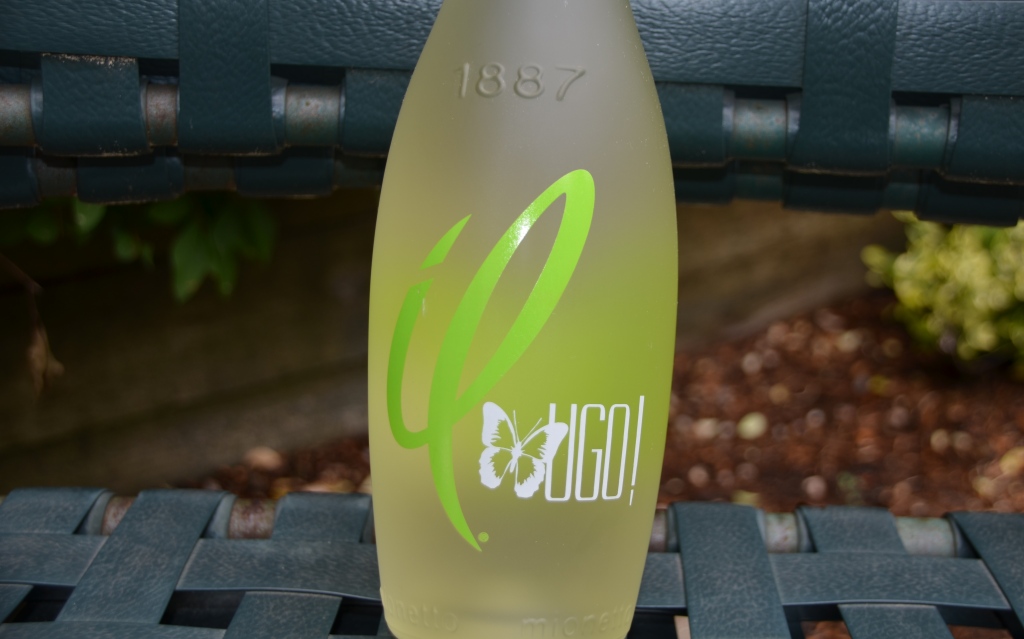
Mionetto Il Ugo
Mionetto Il Ugo, a blend of Prosecco with elderflower blossoms and wildflowers – bright and uplifting on the nose, touch of sweetness with a charismatic bitterness and enough acidity – it is so refreshing, you don’t want to put the glass down. Yes, I know, the purists will disagree – but this is an outstanding wine in my book. Drinkability: 8
Now, a couple of value wines for your consideration. These wines come from Chile under the brand name of the Beach Kite. While you can’t find this information on the wine label, Beach Kite is presumable affiliated with 90+ Cellars. 90+ Cellars has a similar model of operation to Hughes Wines and Oriel (at least the two that I’m familiar with), which is: find good wines which well-known wineries have a hard time selling, bottle under your own private label, and sell for the reasonable price at around $20. Beach Kite seems to be more of a “second label” to the 90+ Cellars wines, considering the price of $7.99 per bottle. But – don’t judge the wine by its price.


2012 Beach Kite Sauvignon Blanc Central Valley Chile (13% ABV) had herbaceous nose, and zesty grapefruit on the palate, a bit more restrained compare to the typical New Zealand Sauvignon Blanc, but still fruit forward next to Sancerre. Refreshing, with good acidity. Drinkability: 7
2012 Beach Kite Pinot Noir Central Valley Chile (13% ABV) – simple, round, good red fruit on the nose and the palate, touch of plums, good acidity – perfect sipping wine for a hot summer day. Drinkability: 7
Next I want to talk about few wines, sorted by the grape.
Riesling
While this is not how I rate the wines, but I would say that I had two Rieslings which were outstanding, and one which was … just spectacular.
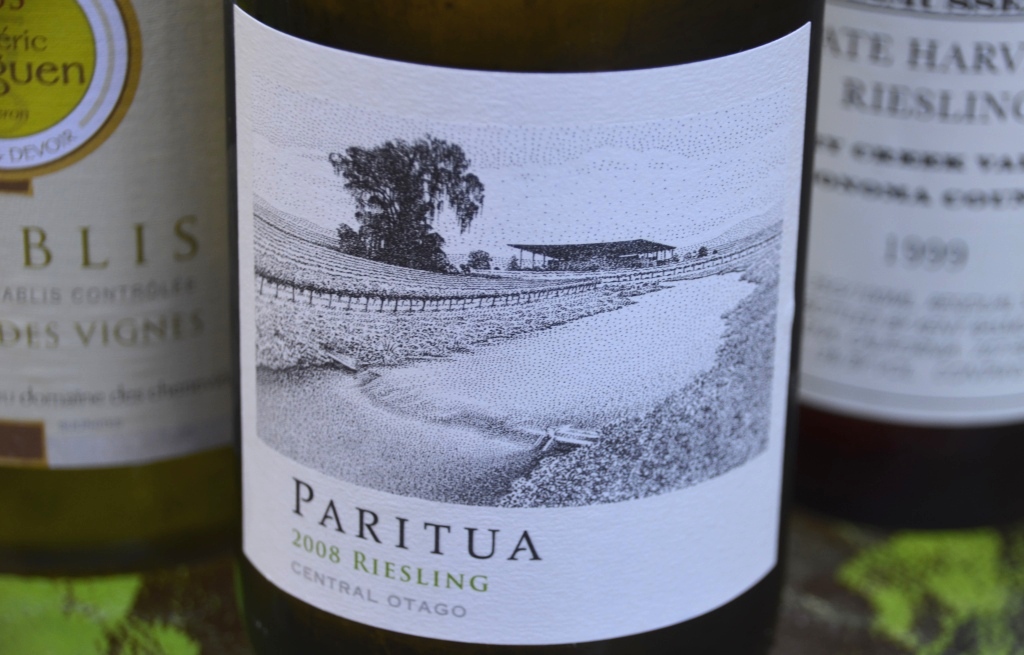
Paritua Riesling Central Otago
2008 Paritua Riesling Central Otago New Zealand (11.5% ABV). I got this wine for $6/bottle at Last Bottle Wines. I was questioning myself a bit when placing an order for this wine, as I never heard of Riesling from Central Otago – a region in New Zealand known for their world-class Pinot Noir, but not Riesling. I’m glad I took my chances and got this wine, as it was outstanding. Perfect ripe peach flavors on the nose with the hint of petrol (yes, I know some people are not very happy about this flavor, but I personally love it). Very delicate on the palate, with some honey and apricot notes, perfect acidity and very restrained sweetness. This New Zealand Riesling would rival many of the German Rieslings at Kabinett level. One night we had it with Thai food, and [as expected] it paired perfectly. Drinkability: 8


2005 Eitelsbacher Karthauserhofberg Riesling Spatlese Mosel-Saar–Ruwer (9% ABV) – what I value the most in Riesling (any Riesling) is balance. My sweet tooth is not any smaller than the one any sweets lover would have out there. But I can’t take bottomless sweetness in the wine – I need acidity to come and play it supportive and refreshing role right next to the sweetness. This Riesling is perfectly balanced, with excellent acidity – and showing no signs of age. Just had an interesting revelation – may be I should replace my “drinkability” ratings with “quaffability”, as this wine was not just drinkable, it was perfectly quaffable. Anyway, I digress. This is not the first Riesling I had from Eitelsbacher Karthauserhofberg – and it seems to be a very interesting winery – but I need to refer you to the Riesling expert Oliver TheWinegetter if you want to learn more. Here is a link to the comment Oliver left on one of my previous posts where he is talking about this winery. Drinkability: 8+

Kurt Rasmussen Late Harvest Riesling
1999 Kurt Rasmussen Late Harvest Riesling Dry Creek Valley (13%ABV) – I’m not sure I can do justice to this wine trying to describe it. In a word – spectacular. Liquid viscous dark gold in the glass, honey, honeydew, caramelized pecan, apricot notes all over, both on the nose and the palate – and perfectly balanced (I’m know I’m abusing this one), with still bright supporting acidity. Drinkability: 9
Next up – Gewurztraminer
To be honest, I don’t drink Gewurztraminer all that often. I find a lot of Gewurztraminer wines to be all over the place in terms of taste – many of them have wonderful nose, but then on the palate the wine often doesn’t appear to be “together”, it shows up quite disjointed. But – not this wine.
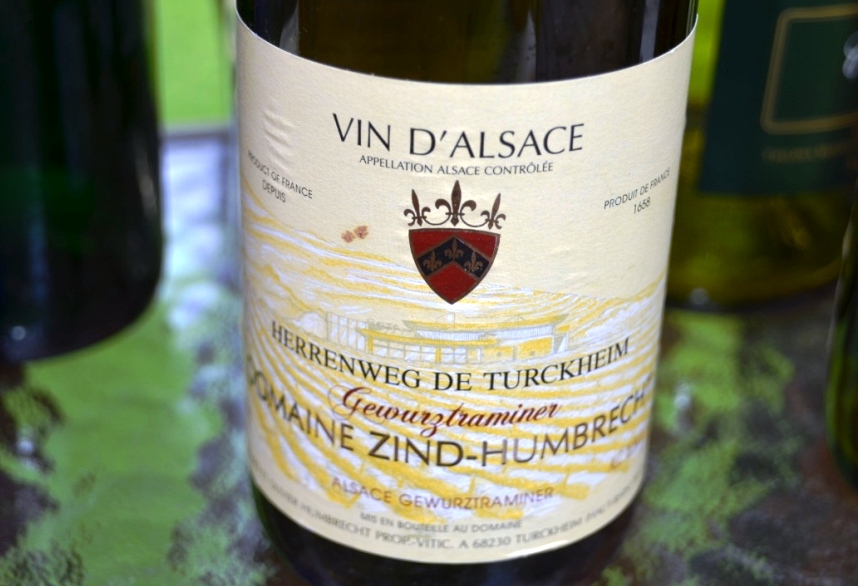
Zind-Humbrecht Gewurztraminer
Domain Zind-Humbrecht is one of the best producers in Alsace, probably best known for its Pinot Gris wines. Just to put things in perspective, 36 wines of Domain Zind-Humbrecht have classic ratings from Wine Spectator (95-100), including perfect score 100 point 2001 Pinot Gris. Well, this is not the wine I’m talking about here.
2002 Domaine Zind-Humbrecht Herrenweg de Turckheim Gewurztraminer Alsace (15.5% ABV) – I got two bottles of this wine at Bottle King in New Jersey on a big sale for about $20 each – this wine typically retails for $60 or so. I had a bottle few years back, and was not impressed. So when I pulled this bottle out, I was not expecting much ( it was more like “yeah, let’s free some space in the wine fridge”). My, was I wrong! In one word, I have to use again my abused wine definition of the day – spectacular. Dark golden color, beautiful nose of candied apricot, perfect honey tones on the palate, fresh acidity, more candied apricot, perfectly balanced. Drinkability: 9
Food break
Tired of wine? Let’s make a short break for some food pictures. First, I promised to Food and Wine Hedonist that when I will make Elotes according to his recipe, I will share my impressions. Elotes is Mexican street food which is essentially a grilled corn with spicy mayo and Cotija cheese – this is precisely what I did and it was tasty! For the recipe, use the link above, and here are the pictures:


Yes, I continue admiring my “mangal”, a special charcoal grill – here are few pictures for your drooling pleasure:


You know what – I think this is enough for one post. Let’s stop here. In the next post – Chardonnay, Cabernet Franc, Pinot Noir and may be something else.
To be continued…
Wednesday’s Meritage – Wine Quiz Answer, How To Make Wine Into a Cult, Interesting Videos, Few Reminders and more
 Meritage Time!
First and foremost, the answer to the weekly wine quiz #67, grape trivia – Pinot Gris, a.k.a. Pinot Grigio.
In the quiz, you were supposed to answer 5 questions about Pinot Gris grape – here are the questions, now with the answers.
Q1: Name Italian Pinot Grigio wine which is considered a golden standard of Pinot Grigio in the United States (people really ask for it by name).
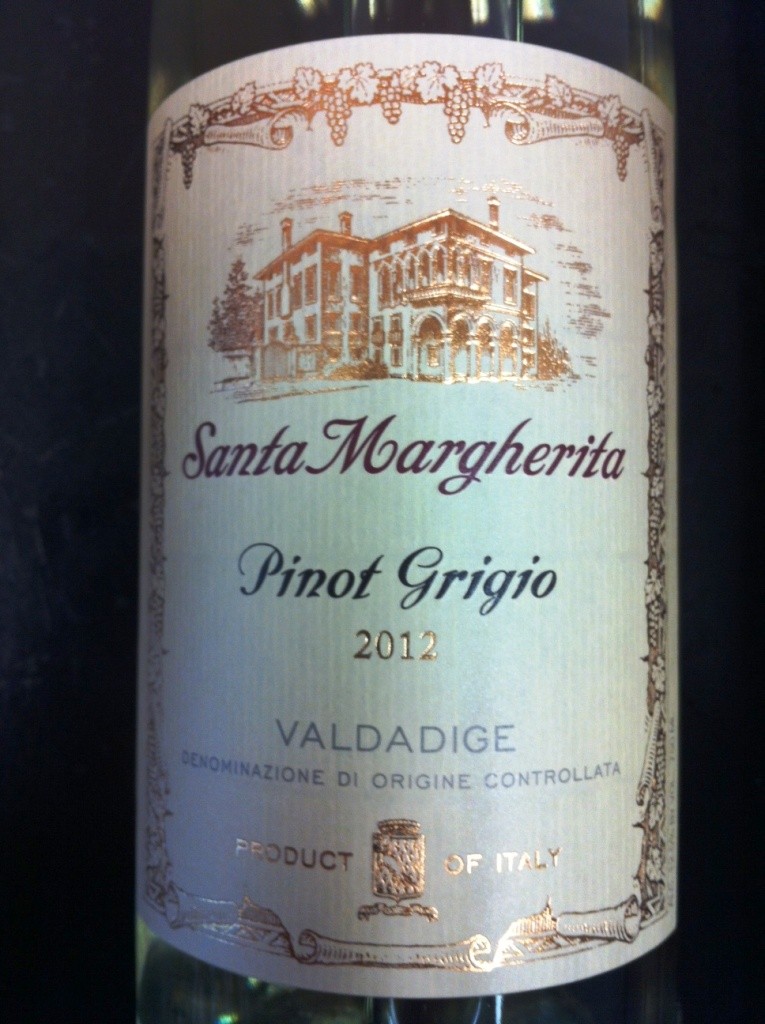
A1: Santa Margherita. In the 1979, a few cases of Santa Margherita were shipped to US by Billy Terlato, the wine importer. The marketing campaign in the 1980s happened to be pure genius ( I guess, I didn’t witness the campaign, but I can see the results) – the rest was history. In 2006 Santa Margherita alone sold 8.5M (that’s millions to you) bottles of Pinot Grigio worldwide, 65% in US. Mind-boggling, if you ask me… You can find some additoinal interesting information in this Imbibe.com article.
Q2: Name two famous regions in France which used to make wines out of Pinot Gris, but not anymore
A2: Both Burgundy and Champagne used to make Pinot Gris wines in the 18th century. Nowadays, both regions still grow Pinot Gris, but practically never use it for the mainstream winemaking.
Q3: When do you think Pinot Gris was first planted in Oregon?
a. 1947, b. 1966, c. 1978, d. 1990
A3: 1966. David Lett of Eyrie Vineyards planted first Pinot Gris vines in Oregon in 1966.
Q4: Wine Spectator calls wines rated in 95-100 range Classic. True or False: there are more classically rated Pinot Gris wines than Sauvignon Blanc?
A4: True. There are quite a few Pinot Gris (no Pinot Grigio, of course) with very high ratings, including 2001 Zind-Humbrecht Pinot Gris Alsace Clos Windsbuhl Sélection des Grains Nobles, which got 100 points. The highest of Sauvignon Blanc ratings belongs to 2005 Didier Dagueneau Pouilly-Fumé Pur Sang (97 points), and overall there are very few Sauvignon Blanc wines in the Classic ratings range.
Q5: During early 2000s, producers in Alsace had to change the way the Pinot Gris wines were typically labeled (you can still find the old name on the bottles from 1990s and before). Do you know what was changed and why? As an added bonus, please explain the origin of the old name.
A5: As with many grapes, the story is quite interesting. Pinot Gris originated in Burgundy, some time in 12th century. From there, it made it to Hungary, and then in 16th century it made it to Alsace, now under the name of Tokay d’Alsace. At the same time, Tokay ( Tokaj to be precise) is the name used for one of the best Hungarian wines, so in 1993 the agreement was reached in EU to phase out the use of “Tokay” in Alsace, which was completed in 2007.
I’m glad to tell you that we have the winner this time! Jeff, a.k.a. The Drunken Cyclist, nailed all 5 questions – he also did it Google-free, which deserved a special commendation – however I can only offer a double amount of the typical prize – unlimited bragging rights. Double unlimited? Not sure how that should work… but great job Jeff!
Now, to the interesting stuff around the vine and web!
First, here is an interesting story for you on how to make the wine into a cult wine. The story was published in the Drinks Business online magazine, so it is written more a trade article, but it makes an interesting reading nevertheless.
Now, I have two important reminders for you:
August 14th – Wine Blogging Wednesday event, #WBW80 – Dry Rosé. All you need to do is to write a blog post pertinent to the subject, and submit it to the host. For all the details please click here. Let’s make it a success!
August 16th – deadline for submission for the Monthly Wine Writing Challenge #2, with the theme called Trouble. You can find all the rules here. I personally have big trouble with this trouble, so I’m not sure if you will see an article from me… Oh well – I’ve seen a few submissions already, and they were worth the trouble!
Thanks to the tweet from the fellow oenophile Peter L. Zachar (@PeterZachar ), I came across an interesting series of videos about Bordeaux. Recorded by James Cluer, Master of Wine, the series is presenting some of the greatest estates in Bordeaux. Below is the first video of the series, and you can follow it from there.
And this is all I have for you for today. The glass is empty – but the refill is coming. Open something great tonight, and until the next time – cheers!
Last Bottle Sign Up ($10 credit)




 Talk-A-Vino