Archive
Wine Bloggers Conference 2014: Live Wine Blogging
I’m continuing my stories from the Wine Bloggers Conference 2014 (here are the links to the Day 1 and Day 2 posts). The subject of this post is tasting of the wines in the time-constrained scenario, or the Live Wine Blogging sessions (also some attendees called it “speedtasting”).
When it comes to the wine tastings of the large scale, I pride myself with being a professional. I’m attending trade wine tasting events for many years, and I don’t have any issues being faced with 300-400 wines in only 3 -4 hours of time. No problems. You use spitton, and you are very decisive about what you want and don’t want to try. I also take pictures and very minimal notes (typically the “+” signs with few descriptors) to designate the wines I like.
The Live Wine Blogging Session was yet a very new and different experience. All attendees sit at the round tables. Each table has a number in the middle. Winemakers are ready with their wines and information in hand. As soon as the host says “go”, winemakers approach the tables they are next to, start pouring their wines and talk about them. 4 minutes 30 seconds into this, the host shouts a “30 seconds warning”, and on the 5 minutes mark the next instruction is “winemakers, go to the next table” (next table with the higher number it is). The session lasts for 50 minutes – 10 wines, 5 minutes per wine.
This is the “Live Blogging Session” – so the bloggers are expected to share their impressions live in real time as they taste the wines. What do you think about the 5 minutes time allotment for this task? I found it quite challenging. Yes, 5 minutes is more then plenty to figure out if you like the wine or not. But to come up with some reasonable impressions and taste descriptors (don’t think “nice wine” is a good qualifier) and to share them with the world with the 140 characters limit is not a simple task in my opinion. I don’t know how the winemakers felt, but for sure I was exhausted by the end of each 50 minute session.
Another feature of this live wine blogging exercise is complete unpredictability – the only known factor is the color of the wine which will be served in the session (White and Rose or Red). The wines come from all over the world, and there are lots of participating wineries, so at every table attendees only get to taste a fraction of the total selection available for the session. The wines also represented a broad range of price points – from $10 simple Washington Riesling to the $125 rare California Cabernet Sauvignon.
I did my best to adhere to the principal of the “live blogging” and posted all notes on twitter as we tasted the wines, in real time (if interested, look for twits with #wbc14 hashtag). For what is worth, below are the notes as they appeared on Twitter, with the small processing I did to make them more concise. To give you a “live” example, here is how the twits looked like in the real time:
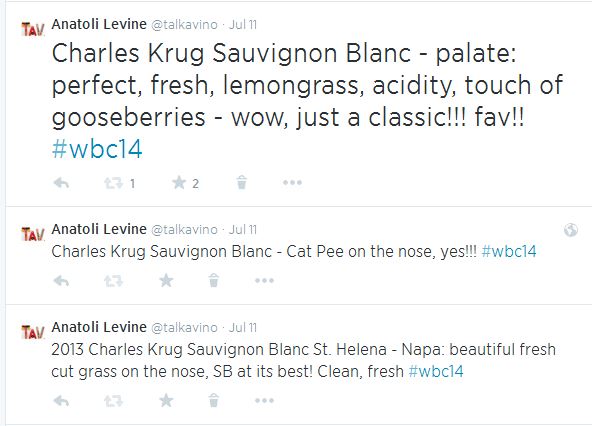 Here are my notes for the white wines (each line represents a separate twit, so mostly I had 2 twits per wine, with some exceptions):
2013 Main & Geary Chardonnay Sonoma – beautiful nose, tropical fruit, apple, touch of vanilla and green apple on the palate
2012 Cornerstone Cellars Sauvignon Blanc Napa Valley – a lot of white fruit on the nose, palate: touch of grass, steely acidity
Cornerstone Cellars Sauvignon Blanc is made to age. long finish, very acidic. Food wine
2013 Aridus Viognier Arizona (!) – beautiful nose, classic floral Viognier – wow palate! Very elegant (despite a touch of heat)
also nice saltiness on the palate, great complexity. Most favorite so far
2012 Alta Maria Vineyards Chardonnay Santa Maria Valley – great nose, nuttiness, vanilla, touch of butter
closed on the palate, Chablis like acidity. needs time!
2012 Fess Parker Viognier Santa Barbara County – nice nose, minerality and gunflint. Sweet fruit on the palate, very balanced, short-med finish
finish is longer than I thought, nice acidity. Very good overall
2011 Scratchpad Chardonnay Central Coast – label and the bottle – creativity through the roof!!!
Chablis-like nose, minerality, touch of vanilla, but the palate is somewhat single dimensional. Malo noticbl
2012 Pacific Rim Riesling Columbia Valley, WA – Sweet nose, nice acidity, good fruit – but overall doesn’t resemble Riesling
it is a nice wine for $10, but it wouldn’t pass for Riesling if I crave one. Okay summer wine
2013 Urban Legend Grenache Blanc Capay Valley – beautiful nose, white ripe fruit, fresh, clean
fresh palate, good acidity, white stone fruit, minerality – very pleasant. Medium finish
2012 Uproot Grenache Blanc Santa Ynez Valley – restrained nose, nice minerality, melon, earthiness
palate: acidity, spices, nutmeg, minerality, clean, refreshing. very Good overall
2013 Charles Krug Sauvignon Blanc St. Helena – Napa: beautiful fresh cut grass on the nose, SB at its best! Clean, fresh
Cat Pee on the nose, yes!!!
palate: perfect, fresh, lemongrass, acidity, touch of gooseberries – wow, just a classic!!! fav!!
Charles Krug Sauvignon Blanc was definitely my most favorite wine of that session. Aridus Viognier from Arizona was most unique (I don’t get to taste too many wines from Arizona). The “prize” for most creative design goes to the Scratchpad Chardonnay, taking into account both the cool label and a little pencil which hangs of the bottle top – unfortunately, the taste didn’t fully support the creativity of the bottle.
And here are the reds:
2012 Garnet Vineyards Estate Farmed Pinot Noir Sonoma Coast – beautiful ruby color, touch of smoke, earthy, herbaceous
beautiful sweet fruit on the palate, young gripping tannins, pomegranate, slight heat in the back
long sweet finish. Needs a bit of time (2012)
Vineyard 511 2010 Cabernet Sauvignon Diamond Mountain – dark garnet color, sweet plums and cassis on the nose, touch of eucalyptus
beautiful! Great density, soft, approachable, with firm tannins, perfect acidity. will evolve greatly
Rodney Strong Vineyards 2011 Symmetry Meritage – open herbaceous nose, touch of red fruit, raspberries
nice Bordeaux blend, cherries, firm structure, firm tannins
2011 Rios de Chile Reserve Carmenere – barnyard, smoke, complexity on the nose, bacon and roasted meat
beautiful, round,concentrated, dark fruit, herbs, spices
2006 Jordan Winery Cabernet Sauvignon – beautiful nose, open fruit, touch of earthiness, cassis, the same on the palate. Perfect Cab!
2010 Jordan Winery Cabernet Sauvignon – wow, open, explicit nose, eucalyptus, soft fruit, wow again. young tannins
2010 Adelaida Cellars Touriga Nacional – mind blowing nose, beautiful fresh fruit, wild berries – strawberries and blueberries
spectacular palate of fresh berries, firm, concentrated, excellent balance. Great wine
2011 Danza Del Sol Cabernet Franc Temecula Valley – varietally correct nose, touch of cassis and eucalyptus, green bell pepper
great palate, fresh fruit, balancing tannins and acidity. An excellent effort
2012 Ferrari Carano Siena fresh berries nose with hint of smoke and tobacco
sweet fruit on the palate, some cherries, round and delicious. Excellent balance
2011 Carr Winery Cabernet Franc Santa Ynez Valley interesting nose – mineral, with some cherries, eucalyptus, cassis
soft, delicious palate, with more eucalyptus, cassis and greens bell pepper. Perfectly balanced and soft
2010 Grassini Wines Estate Cabernet Sauvignon on the nose, young fruit with some smokiness, minerality
lots of sweet fruit on the palate (too much for me), mocha, good structure
2011 Taken Red Wine Napa Valley – blueberries and blackberries on the nose, nicely restrained
palate – delicious, perfect acidity, firm tannins, good structure, right amount of fruit and excellent balance
The red wines line up was very impressive, it is hard to pick the favorite. The Adealida Touriga Nacional from Paso Robles was probably the most unusual (my first 100% Touriga Nacional wine from US), and very tasty. Jordan is always a stand out for me, and both 2006 and 2010 were delicious. My wine of the day was still the Vineyard 511 – a rare treat from the Diamond Mountain district (tiny area of 500 acres in size) in Napa Valley, perfectly structured and impeccably balanced wine; the conversation with Ed and Irene Ojdana who makes the Vineyard 511 Cabernet Sauvignon was a pleasure in itself. I also have to mention Taken Red wine from Napa Valley, which was simply put on our table after the session concluded – this was an excellent wine, created by Carlo Trinchero and Josh Phelps, both coming from the very well respected winemakinig families in California.
Here we are – two speedtasting, live wine blogging sessions. I know that this exercise is very polarizing for many attendees – some hate it, and some love it. I’m in the latter category, and I definitely enjoyed the sessions and already looking forward to the repeat at the next year’s conference. What do you think – would you love it or hate it? Cheers!
Wine Bloggers Conference 2014 (#WBC14), Day 2
Yet another ambitious project hitting the dust. I was determined to write blog post updates in the morning of the very next day of the Wine Bloggers Conference – and as you can see, it didn’t happened – I’m back home in Connecticut (nope, not even that – I’ actually on vacation in Cape Cod, and Wine Bloggers Conference 2014 is fading in the metaphorical rear view mirror. Nevertheless, I will finish this the way I initially envisioned – as a series of the blog post about WBC14. Let’s get to it…
 Friday was the first full day of Wine Bloggers Conference 2014 (WBC). My impressions in a few words? Overwhelmed. Is there a word for “more than overwhelmed”? The pace of learning, connecting, tasting, analyzing, networking, mingling and tasting more, more and more was incredible. Here is what was happening throughout the day – brunch (yep, a 10 AM brunch) with Portuguese wines and dishes from Brazil, India, Japan and Portugal – 11 wines and 12 different dishes. Then the opening of the conference and a keynote by Corbett Barr. A panel session with Santa Barbara County winemakers (rather founding fathers of the winemaking in Santa Barbara). Speed tasting of the 10 white wines in 50 minutes (very intense). A breakout session called “How The Pros Taste”, which included both the Pros and the wines. An excursion to the mystery destination (yes, with more wines). The Wine Tourism in North America Expo (yep, with more wines to taste), an unofficial before-party in one of the hotel suites before the actual official after-party, and then finally (oh yes, the best for last!), an official after-party, hosted by Jordan and J Wineries. So, how is that for a day for you? Pretty full schedule, huh? I will leave speed tasting and our mystery excursion for the separate posts, but for the rest of the program, here are my quick impressions.
Brunch with Portuguese food and wine was the very first in our day’s program. As I wrote a few times about Portuguese food and wines before, I would definitely agree that both Portuguese wines and cuisine are well worth the attention. At the brunch, we had an opportunity to experience 11 different wines (both white and red), as well as 12 different dishes. If you take a historic perspective on Portugal, hundreds of years ago, Portuguese influence was spread all over the world. To show that world-wide influence, the dishes in the brunch we coming from the different regions which came into a close encounter with Portuguese culture – namely, the dishes from Brasil, India, Japan and Portugal itself (of course!) were part of our brunch. I will not inundate you with all the details of the dishes and wines (despite taking the detailed notes) – I just want to mention two of my favorite wines. For the whites, 2012 Julia Kemper Branco Dão DOP was delicious, with touch of grass and flowers, very interesting nose, light and simple on the palate. As an added bonus, this wine also added one more rare grape to my collection, Encruzado. From the reds, 2010 Quinta do Romeu Colheita Douro Tinto was my favorite, with very nice dark fruit, medium body, open and round, and good balance. And for the rest of it – here are the pictures of the wines and dishes.
Next up – the conference officially opened with the keynote from Corbett Barr. Listening to Corbett Barr, an entrepreneur whose business, Fizzle, was built starting from the blog, was very relevant at the wine bloggers conference – if not as a role model, definitely as a success model his talk was reaching to the heart and soul of all the attendees (and if someone would tell me that it was not, I would question your premise of being at the bloggers conference). 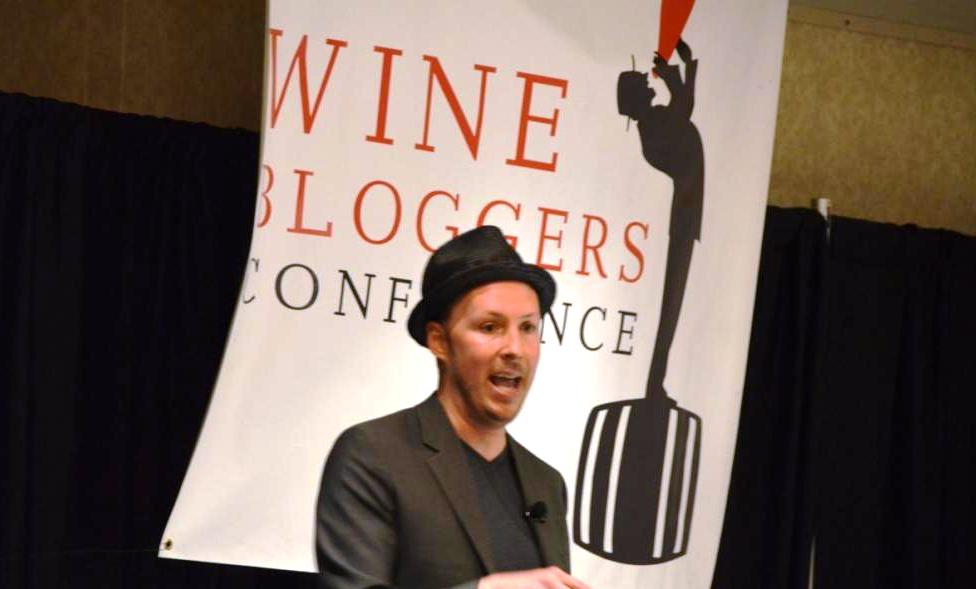 After telling his personal story, Corbett offered a number of do’s and dont’s for building the successful blog and converting it to the business. In short, here are the main ideas:
- Character Trumps Credentials – your passion is more important than many technical accolades and certifications you can achieve. Yes, the certifications are important, but it is passion, will and tenacity which will be a foundation of your success.
- Be different. Stand out. Don’t blend in. Yes, you have to find your own way, don’t be “one of many”.
- Find what works. Don’t repeat exact same thing over and over again, expecting that magically what was not working 100 times, will work on 101st. If something doesn’t work, looks for what will – but keep going.
- Hope is not a marketing strategy. Find where your readers are and figure out how to get in front of them.
- Your blog is not your business. Understand what your business is. The blog is just a tool to help your business, but not the business by itself.
- Keep going, constantly evolving. If you will continue looking for what works and improve all the time, you will [almost magically] leapfrog at some point to your success.
- Mastermind 101 – “You are the average of the five people you spend the most time with” – Jim Rohn. Talk to the people who “get it”. If you will talk to “achievers”, you will [at some point] becoe one yourself.
This is a very lose approximation of what Corbett Barr had to say, but I hope I was able to give you at least the basic idea. And for more information, head over to his web site and read, read, read.
Our day continued with the panel session of Santa Barbara winemakers. Session was moderated by Larry Shafer, the winemaker behind the Tercero label, and it brought together the people who were instrumental in starting and growing Santa Barbara wine industry – Richard Sanford, Ken Brown, Rick Longoria and Bob Lindquist. We learned about the Santa Barbara wine region which started in 1968 with the Santa Barbara Winery, and had grown into the prominent producer of Pinot Noir and Rhone-style wines. 40 different grape varieties are growing today in Santa Barbara area, and a lot of Santa Barbara grapes are shipped to Paso Robles and Napa and used in the coastal blends. Passion, friendship and love to the beautiful Santa Barbara wine region is something which was clearly showing through the words of all the winemakers.
Our next session was the speed tasting of white wines and Rose, which I will be talking about separately – I can only tell you that it was a fun exercise.
You know what else is great about the wine bloggers conference? You get to taste the wines which are not necessarily are even yet available to the general public. Case in point – a unique Viognier, Marsanne, Roussane blend from … Argentina – 2012 Hand of God Fingerprint Series Sobremesa Vineyard VRM White Blend. The wine is in the process of being brought to the United States, and nevertheless we had an opportunity to taste this aromatic, big and well structured white wine, which was simply poured by the winemaker while we were walking from one session to another.


The last session of the day was a so called breakout session, where we had to chose between three different sessions running in parallel in the different rooms. I decided to go and learn “How the Pros Taste”. This session was a panel discussion led by Steve Heimoff, the wine writer who is now the Director of PR for Jackson Family wines, Joe Roberts, a.k.a. 1 Wine Dude, and Patrick Comiskey, senior editor for Wine & Spirits magazine. The idea of the panel was to discuss the ways of the professionals tasting tens of thousands of wines every year, and issues they are facing – and I think the panel did the fine job with issues and challenges. Talking about the “ways” was a bit less successful – I would expect the panelists to explain more of a “how to”, their methods for assessing the wines in the mass quantities – which didn’t take place. And then we tasted 4 wines, 3 of which we selected by the panelists, and one “double blind”, unknown even to the panelists. The selected wines were supposed to represent the unique view point of each panelist, the wines which are “best of the breed” and emotionally engaging. Considering that, I would highly question the rationale of including very obscure wines in this “representative” tasting, but this is mostly what happened. The 2012 Yves Leccia Patrimonio Blanc, a Vermentino wine from Corsica, had nothing but the acidity and didn’t speak to me at all. It didn’t create nor demonstrated any emotional connection. 2013 Poet’s Leap Riesling Washington, while might be typical for Washington, didn’t deliver much pleasure either, and it didn’t connect with the Washington Rieslings as I know them from the Chateau St. Michelle or Snoqualme. Again, I would highly question inclusion of such a wine as “exemplary”. The red wines fared a lot better. 2011 Cambria Clone 4 Pinot Noir Santa Maria Valley was quintessentially Californian, with beautiful nose of smoked cherries, exemplary palate full of forest floor, gentle fruit and perfect balance. Our double-blind wine surprised everybody, including the esteemed panel – clean cherries and acidity were pointing in the direction of Montepulciano from Italy, and the wine happened to be an Yangarra Grenache McLaren Vale from Australia – but it was a very tasty wine. All in all, this was an interesting session, but I would like to see it done differently, more focused on classic methods and classic wines (definitely for the whites).


And then we had a mystery bus excursion. I will keep it a mystery until the next post (trust me, it was good enough for the separate post). When we came back in the evening, we still faced … yes, you guessed it – more wine! The Wine Tourism Throughout North America expo was focused mostly on California wines (or may be I was too tired to notice anything else). I tried a few wines, out of which 2010 Mad Hatter Napa Valley was clearly a stand out – dense and concentrated, with layered fruit, it had a lot of dark power (similar to its color), very drinkable now, but holding also a great promise to evolve. This wine was made by the famed Andy Ericsson (Screaming Eagle, Harlan, Favia and many others). Few other interesting wines were 2007 Terra Valentine Spring Mountain District Cabernet Sauvignon Napa Valley, very clean and classic. 2011 Steven Kent Vinery Cabernet Franc Livermore Valley was perfectly on the mark with beautiful cassis undertones, and 2012 Vasco Urbano “Norm” Grenache Livermore Valley was luscious and delicate, with nice fresh fruit on the nose and the palate.


The “before-Party” for after party was generously hosted by Banfi folks in one of the hotel suites, and the highlights were mostly Italian wines with the few of the wines from Washington state. The 2013 Pacific Rim Chenin Blanc Yakima Valley was perfectly balanced and had an excellent fresh white fruit, a bit of mineral notes and rounding acidity. The Sartori di Verona Ferdi Bianco Veronese IGT was very unique and unusual, an Amarone-style wine (100% Garganega grapes, dried for 40 days on straw mats), with big fruit notes, full body and somewhat sharp acidity.


And last, but not least – an offical after-party, hosted by J Vineyards and Jordan! Both J and Jordan are some of my favorite wines in general, and what a treat it was! Probably unsurprisingly, I was a bit tired after such a day, so I didn’t take too many pictures. But the wines were outstanding. J were pouring both of their sparklers, the White and Rose, as well as the Pinot Noir. And Jordan… How about a full vertical of the Jordan Cabernet Sauvignon Alexander Valley from 2002 until the 2008, including 2005 and 2006 in both 750 and magnum sizes! All the wines, including 2002, tasted fresh and delicious – again, no detailed notes (if you want to blame me for the luck of attention, be my guest). I was especially happy to see that 2002 showing absolutely no signs of age, and 2005 being delicious with still powerful tannins – I have a few bottles of 2005 in the fridge and it seems that I have no reason to touch the for a good while. 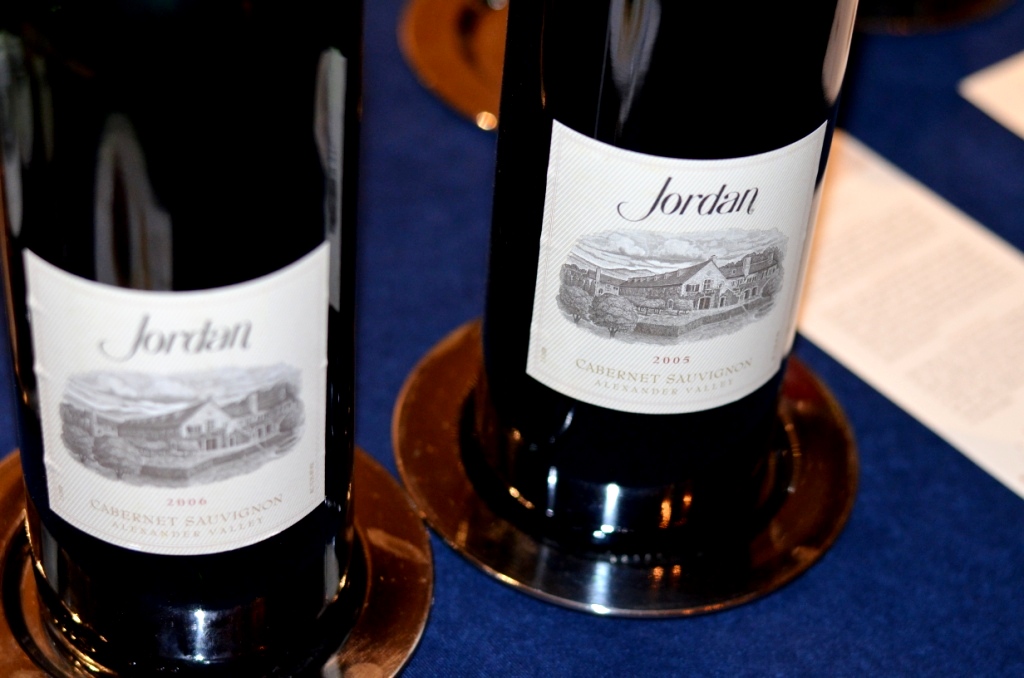 For what it worth, this was an attempt to give you an idea of the happenings in the first day of Wine Bloggers Conference (two more posts will be coming). Hope you are still reading this, and if you are, I want to thank you for your patience. Just one question, if I may – after reading this post, did it make you want to come to the #WBC15, or stay away from it as far as possible? Let me know! Cheers!
P.S. For some reason, this was one of the most difficult posts I ever wrote for this blog… But I’m glad I finished it.
Wine Bloggers Conference 2014 (#WBC14), Day 1
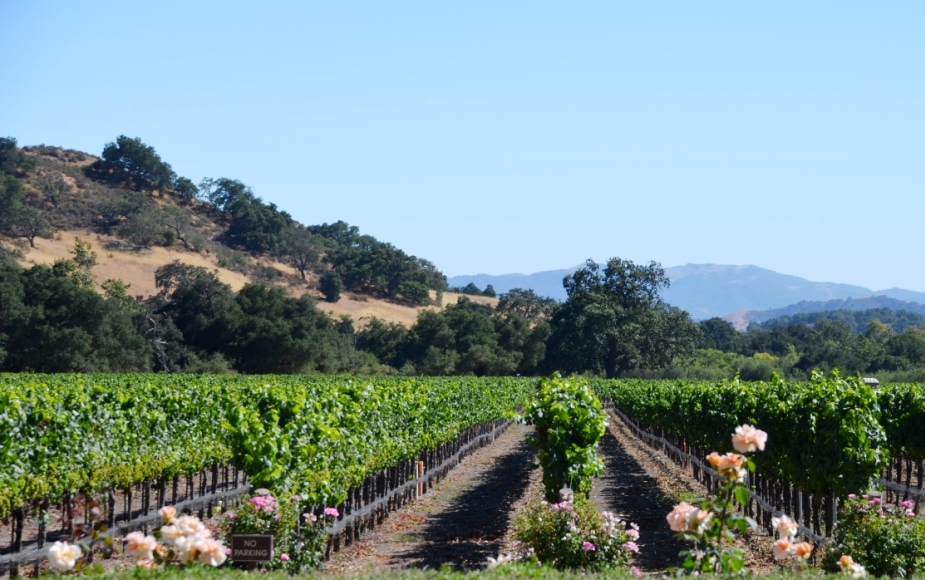 I’m attending the Wine Bloggers Conference 2014 in Santa Barbara, California, and what I will try to do is to give you a brief round up of my daily experiences. This is my only hope to have some level of concise picture of what was happening at the conference – there are way too many wines to taste and way too many experiences to have – unless I do this daily, it will all blur together next week.
In case you are not familiar with the event, Wine Bloggers Conference is exactly what the name says – an event where wine bloggers, wine writers and wine producers get together and discuss all the aspects of the “wine media”. Now in its 7th year, the Wine Bloggers Conference (WBC for short) is taking place in different locations, generally related to the wine production, and this year the location is Santa Barbara county. This is my first WBC event (had been contemplating for a while), so many things are new to me. That’s all I have for the intro, if you are interested in more details, please take a look at the WBC web site.
Here is what I managed to do on my first day. I started the trip early in the morning (at about 3:30 AM) to get from New York to Santa Barbara. The two hours delay, thanks to United (my beloved airline with love/hate relationship), didn’t help, but still didn’t derail may plans, only made me to move a bit faster. Arrived, got a car (with additional unexpected delay now courtesy of Hertz) and then started driving to the Zaca Mesa winery, my first destination. Took the wrong turn, ended up on the beautiful mountain-side drive, so things started to turn to the better.
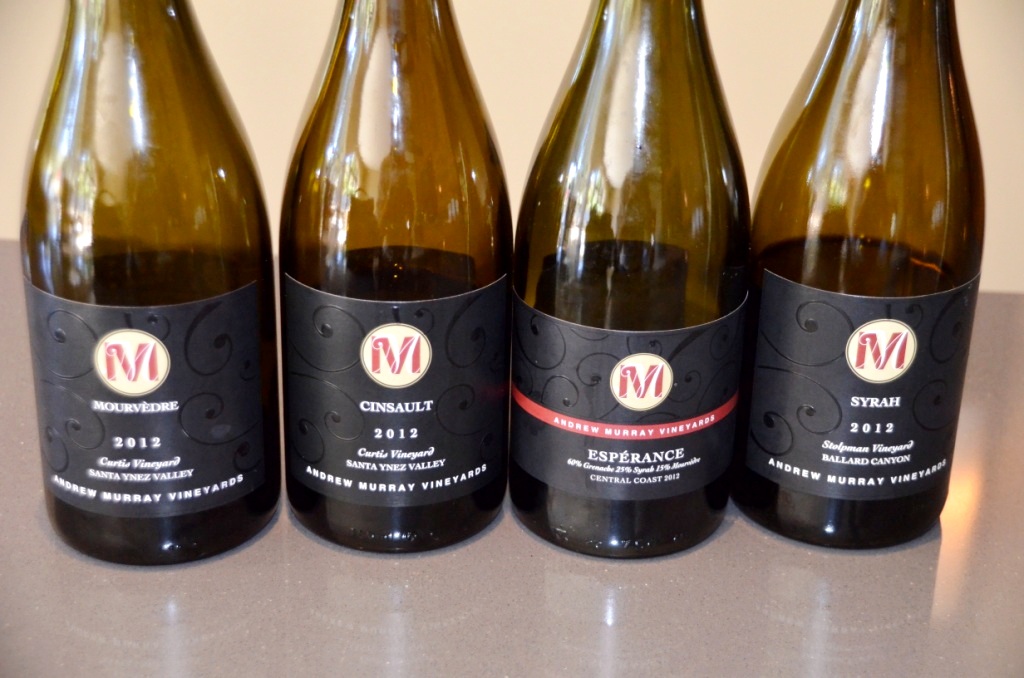
I managed to visit three wineries which we were on my list for Santa Ynez Valley – Zaca Mesa, Fess Parker and Andrew Murray. I will not give you full details of the tastings now (will reserve for the separate post), but I can tell you that all three wineries had some absolutely outstanding wines (outstanding enough to force me to break my resolve not to buy any wines during this trip). Syrah was a star at Zaca Mesa, Pinot Noir was outstanding at Fess Parker, and I was blown away by the rendition of all the Rhone varietals (Cinsault, Mourvedre, Syrah and Viognier) at Andrew Murray Vineyards – here is one picture for you:
After the tour of the wineries, I arrived to the hotel, and later on went for the expo and reception, where we had an opportunity to taste wines (surprise) and look at some innovative products.
As with any conferences and expos, we were offered a number of giveaways. Here is the most thoughtful one – bottle of water with attached travel pack of advil, for the “morning after”:

Water and Advil, how thoughtful!
Before I wil present the highlights of the tasting, let me tell you about couple of interesting product presentations. First, there was a Sonic Decanter – the device which subjects the bottle of wine to the sound energy for about 35 minutes, which completely changes the taste profile of wine. First I wanted to dismiss it as a simple gimmick, but after tasting the wine before and after, I found out that it actually works and changes the taste. If this is a good thing or a bad thing, I will let you decide after the separate post.

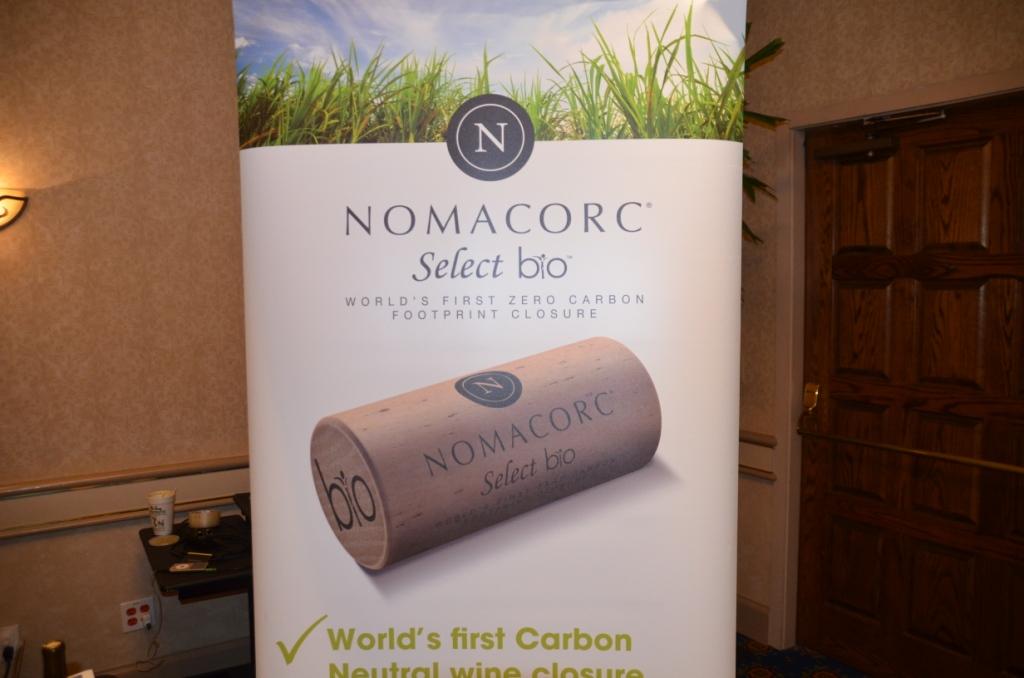 Another interesting presentation was given by Nomacork, a producer of the engineered cork. This cork is made out of the real cork tree, but it is not just a piece of the bark, it is made out of the actual cork tree material, and it can be engineered to allow different levels of oxygen exposure to the wine. To show how it works, the folks at Nomacork had a tasting of the same wine, 2012 Viognier, bottled at the same exact time with two different corks, allowing different levels of the oxygen penetration. The wine which was allowed more oxygen was showing considerably better, so this definitely works. The advantage of Nomacork is consistency, as it eliminates bottle variation, ability to control oxygen intake and the fact that it is still made from the natural material (versus Stelvin screw top, for instance) – and it is the cork which you will have to pull out and not just screw off. The disadvantage to me – I like the natural cork, and I like bottle variation, that mystical element in wine. But – as anyone else, I don’t like tainted wine… So I really can’t make up my mind on this.
And now, few of the wine highlights. Here is what I liked during the tasting – I can only give you “best memory effort” notes, as there were no paper handouts of any sort, so I had to rely only on my camera and the memory. Still, these are the wines which stood out.
2012 Ken Brown Chardonnay Nielson Vineyard Santa Maria Valley – beautiful, classic Chardonnay, with all the flavors being present and in balance – vanilla, butter, toasted bread, perfect acidity.
2013 Tercero The Outlier Gewurztraminer Santa Barbara County – I was very impressed – Gewurztraminer is one of the most difficult grapes to achieve balance, and this wine had it – touch of spice, touch of floral notes, creamy and round – an excellent wine.
2011 Alta Maria Vineyards Pinot Noir Santa Maria Valley – classic California Pinot Noir, good concentration, very well balanced.
2010 Baehner Fournier Vineyards Solus Cabernet Sauvignon, Santa Ynez Valley – classic, concentrated, hint of green bell peppers, delicious overall.
2011 Santa Barbara Winery Primitivo Joughin Vineyard, Santa Ynez Valley – another surprise – excellent, balanced wine, muted raspberries and good concentration, good acidity. Very solid effort.
2010 Ken Brown Pinot Noir Rancho La Vina Vineyard, Sta. Rita Hills – excellent California Pinot Noir – dark power and finesse.
2012 Alma Rosa Pinot Noir La Encantada Vineyard, Sta. Rita Hills – another excellent California Pinot Noir – perfect fruit and perfect balance.
2011 Longoria Tempranillo Santa Ynez Valley – and yet another surprise. Excellent Tempranillo, more on the level of Toro than Rioja or Ribera del Duero – powerful, dense, but well balanced and not over the top. I’m happy do discover more of the old world grapes perfectly executed on the US soil.
That concludes my report about the first day of the conference. Stay tuned, as we are only getting started : ). Cheers!
International Tempranillo Face Off – USA Fares Well
 Thinking about Tempranillo, what wines come to mind first? Rioja is an unquestionable champion, with its bright fruit expressions packaged into eucalyptus laden cigar box. Ribera del Duero is definitely next, with its perfect, firm structure, and then Toro, with layers upon layers of power. Tempranillo has one of the most synonyms, most of which point back to the different areas in Spain, so it is given that outside of three regions we just mentioned, the grape is very popular all around Spain. And then… well, there is not much outside of Spain. Portugal, where Tempranillo is known under the names of Aragonez and Tinta Roriz, is the only internationally renown source of Tempranillo wines outside of Spain – even then mostly using Tempranillo as a part of the blend. Australia and a few other countries also experiment with the grape – but I’m not sure they produce something worth bragging about.
And then, of course, there is the USA. Tempranillo made it into the California at the beginning of the 20th century, but really didn’t find much success there as a single varietal wine. You can find some of the Tempranillo made in the southern California, in places like Temecula Valley, but those wines are little known outside of the wineries which produce them. On a big scale, Texas probably is having the biggest success with Tempranillo in USA, where the grape is considered a signature state grape, and Tempranillo wines produced by many wineries. But our conversation today will not be about Texas Tempranillo – we are going a lot further North on the map, to the state of Oregon.
No, Oregon is not an internationally renowned source of Tempranillo wines, not yet anyway. However, while I was recently participating in the #winechat about Oregon Pinot Noir, someone mentioned Tempranillo as one of the grapes in Oregon which might have a bright future. As I’m very partial to the Tempranillo wines with the great love of Rioja, that piqued my interest. Tempranillo? From Oregon? Really? How good can that be? I was told that Abacela winery in Oregon produces excellent Tempranillo wine. I reached out to the winery, and – got the bottle to taste. But – I didn’t want to taste this wine on its own – I wanted to create some frame of reference. Yes, I would love to get the Texas Tempranillo, but – that would take a lot of time. Of course the best available source of Tempranillo wines is Spain, so I decided to get a few different wines from Spain. I purposefully avoided Rioja – those wines are rarely 100% pure Tempranillo, and the winemaking style is very specific to Rioja, so it wouldn’t be a good reference. Ribera del Duero wines also might be a bit too specific for this exercise, and Toro wines pack way too much power. I looked for generic Tempranillo renditions in my local wine store, and came up with two bottles from Spain – one from Navarra and one from La Mancha.
Before we talk about our “face off”, let me say a few words about our competitor from USA – Abacela winery. According to the winery’s web site, Abacela name comes from “an ancient and now almost obsolete verb, ‘abacelar’ common to three Iberian languages-Spanish, Galician and Portuguese-and which means “to plant a grape vine.”” Abacela winery started in 1992, when Earl and Hilda Jones purchased a 19th century property in Umpqua Valley in Southern Oregon. This purchase was the result of a very long and intense research on the climate, soil and landscape, to find the place ideally suited to produce a Tempranillo wine on par with the best Spanish Tempranillo. If you are interested to see how the pursuit of passion looks like, read the section called Story on Abacela web site – I wish the other wineries will give you even half of the information about their wines and vineyards.
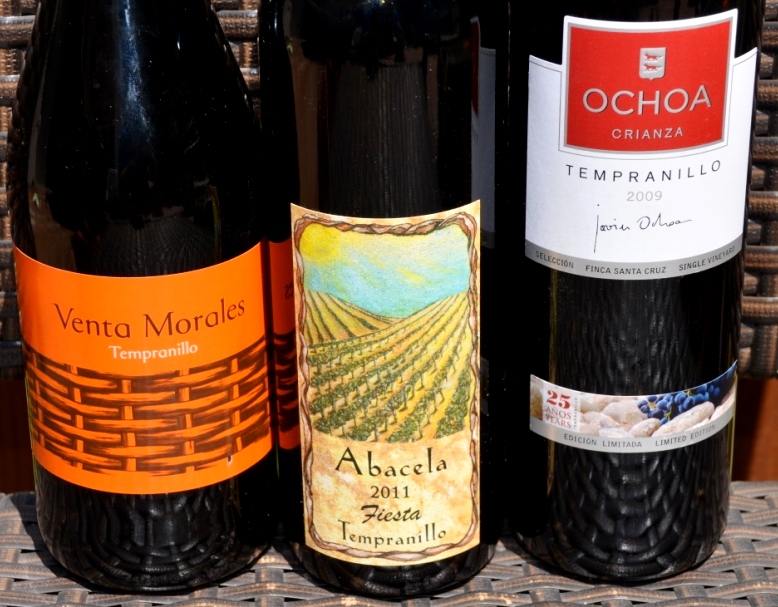
Our tasting, which I proudly called Face Off, was very simple – I sat down with my wife to try these three wines. We tried the wines in the exact order as you will see it below.


Here are the detailed notes:
2010 Venta Morales Tempranillo La Mancha, Spain (13.5% ABV, $7.99)
Color/visual: Dark garnet, almost black. Very substantial legs
Nose: Baking spices, ripe plums, touch of earthiness
Palate: Prunes, touch of figs, nice acidity, slight imbalance at midpalate
Verdict: Shows slightly “overboard”. Drinkability: 7
2011 Abacela Fiesta Tempranillo Umpqua Valley, Oregon (13.6% ABV, 17 months in barrel, $23)
Color/visual: Garnet, noticeable rim variation as well as legs
Nose: dark chocolate, herbs
Palate: Very elegant, nice fresh fruit, good acidity, very noticeable cherries, present tannins, medium to long finish
Verdict: overall very nice wine. Should be able to stand up against Ribera del Duero. Drinkability: 8-
2009 Bodegas Ochoa Finca Santa Cruz Tempranillo Crianza Limited Edition, Navarra, Spain (13.5% ABV, aged 1 year in American oak, $15.99)
Color/visual: Garnet color, very slight rim variation, noticeable legs
Nose: Touch of sweet fruit, sweet cherries, eucalyptus
Palate:Elegant, perfectly balanced, soft sweet fruit, tobacco, smoke, incredible textural complexity, touch of dust
Verdict: An outstanding Tempranillo, one of the very best I ever tried. Drinkability: 8
As you can see, Abacela Tempranillo definitely worth its salt soil, and I would highly recommend it (if you can find it). I also want to note that Abacela Fiesta is only an introductory Tempranillo – they produce another 3 wines out of Tempranillo, plus a full range of very unusual for the Oregon (or even USA) wines, such as Tannat, Dolcetto and Tinta Amarela – full list looks very impressive and tempting.
As for my little Tempranillo competition, we are done here. Have you ever had an “unusual” Tempranillo wine? Have you ever tried Abacela Tempranillo or any of their wines? What do you think? Cheers!
Beauty of Chardonnay and The Game of the Blind Tasting
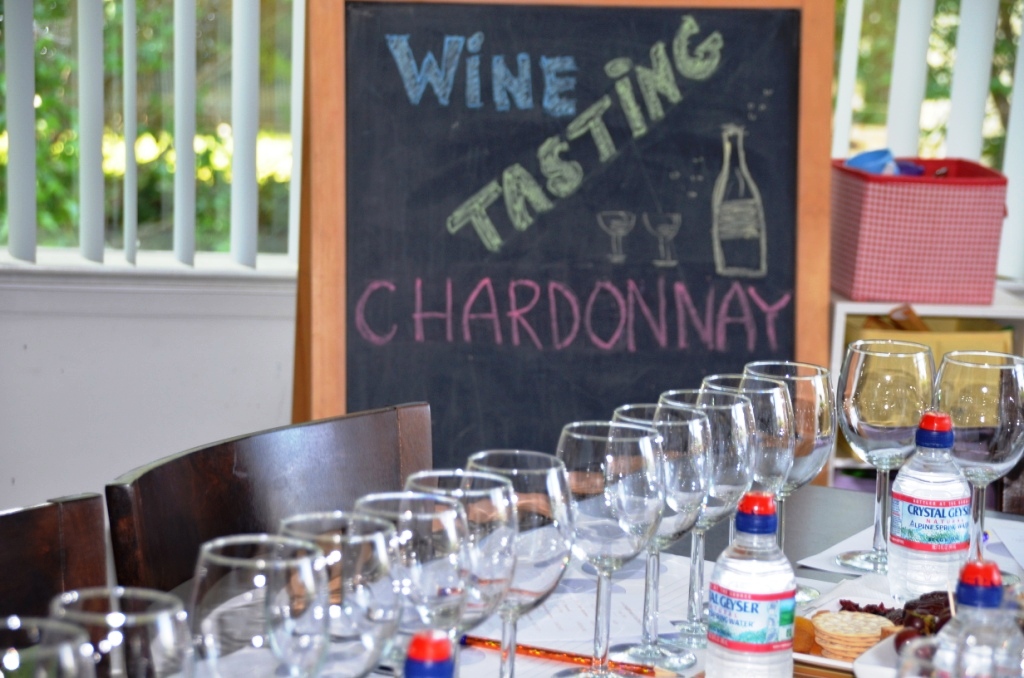 Blind tasting is probably one of the most favorite pastimes of any oenophile – especially when it is done in the non-competitive and non-intimidating manner, let’s say as a part of the fun evening with friends. While the words “blind tasting” sound simplistic, there are actually multiple options of it, all with the varying levels of difficulty. The most difficult type is a double blind tasting – you are just given a random glass of wine, and you have to identify the grape(s), the place, the vintage and possibly even the producer – this is the level at which the Court of Master Sommeliers plays, the ultimate challenge so to speak. The next level down would be a regular blind tasting – there would be at least one common factor between all the wines – let’s say, they all will be made out of Cabernet Sauvignon grape. Or they all might be the Bordeaux wines. While the level of a challenge is unquestionably lower that in the previous case, this type of tasting is great for assessment of the wine without an influence of the external factors, such as producer, label, region, etc. I also call it “an ultimate wine snobbery squasher”, as looking at the bottle of your supposedly favorite wine and realizing you just thought it was terrible (while you had no idea what was in your glass), is really a humbling experience.
My recent blind tasting experience was yet different. It was mostly the regular blind tasting, as it had a theme – Chardonnay, but it was also more limited, may be even “framed” is the right word – we knew all 10 Chardonnay wines which were present in the tasting, so it was not really wide open. And to make it more fun, we tried to identify each wine we tasted, and of course, look for the group’s favorite. To avoid crowding the table too much, we split the tasting into two sets of 5, and then we went over our notes to come up with our guesses – and then, of course, there was the moment of truth – when the bottles were revealed.


Chardonnay needs no introduction, of course. One of the most popular white grapes in the world, with literally every wine producing country having its stake in satisfying the thirst of Chardonnay lovers around the globe. I would dare to say that left alone, Chardonnay is great at expressing the terroir, the soil and climate of the area where it was growing, may be better than most of the other white grapes (may be Riesling can contest that). From the gravely soils of New Zealand to the expressive ‘gunflint” minerality of Chablis, biting acidity of Champagne, the round goodness of the mature Burgundy, to the warm and toasty expressions (sigh – hard to find it anymore) of California – Chardonnay rules them all. Our tasting was extremely representative of this world-wide phenomena – California, Long Island, Burgundy, Italy, Hungary, New Zealand and Australia were all present! Not a bad line up, huh?!
Okay so let me tell you about the wines. First, I will give you my notes, together with the guesses I made as we were going along. Once we completed the tasting of all 10 wines, we had a bit of time to think through and to complete our tasting cards to say what was what. And then of course, we unwrapped the bottles for the “moment of truth”.
Here are my notes as we went along with the tasting:
#1: Touch of butter, green apples, a bit harsh, tannins, young, lots of tannins. 7+/8-. Not sure what it can be.
#2: Minerality (gunflint) on the nose, green apple, great acidity, good balance. Classic. 8. Positive it is a Burgundy
#3: Fresh flowers on the nose, caramel, butterscotch, fig, pears, unusual, apples. 7/7+. I’m sure this is Long Island, no questions.
#4: Savory nose, oxidized, past prime, lost fruit. N/R. Considering the group, must be the Mersault (it is a well known and very unfortunate problem for the producers in Mersault – starting from some time in 2000, their wines lost ability to age and oxidize very quickly).
#5: Mint, rosemary, thyme on the nose, touch of oak, apples, very delicate profile, nice tannins, slightly off balance. 7+/8-. Australia?
#6: Butterscotch on the nose! Vanilla, amazing, very balanced, apples, vanilla, beautiful! 8. I’m quite convinced it is Hungary – I had this wine before and I believe this is the one.
#7: Beautiful nose! White fruit, lychee, spiciness on the palate, apples, delicate fruit. 8+. Not sure what it can be.
#8: Minerality, very unusual, herbs, – sorry for possibly putting some people off, but – a dog poop! (Yeah, I know, sounds crazy – but I’m speaking from experience as a dog owner), salty, herbal, acidic profile, more minerality on the palate. 8-. Again, not sure. Need to think about it.
#9: Candy on the nose, noticeable malolactic fermentation on the palate, and then acidity, acidity, acidity. 7. Not sure.
#10: Minerality, hint of butter, a bit too sweet, not enough acidity, not balanced. 6. No idea.
That was the end of the tasting. Now, we took a bit of time to compose our thoughts and come up with our “final answer”. As this was not a competition, it was also okay to consult each other. I was quite convinced about wines #3, #4 and #6, so it was making my task easier. Also my friend Zak was positive about #7 being Jermann, as he recently tasted that wine. The rest had to fall in place after some thinking. Now, the drum roll, please…
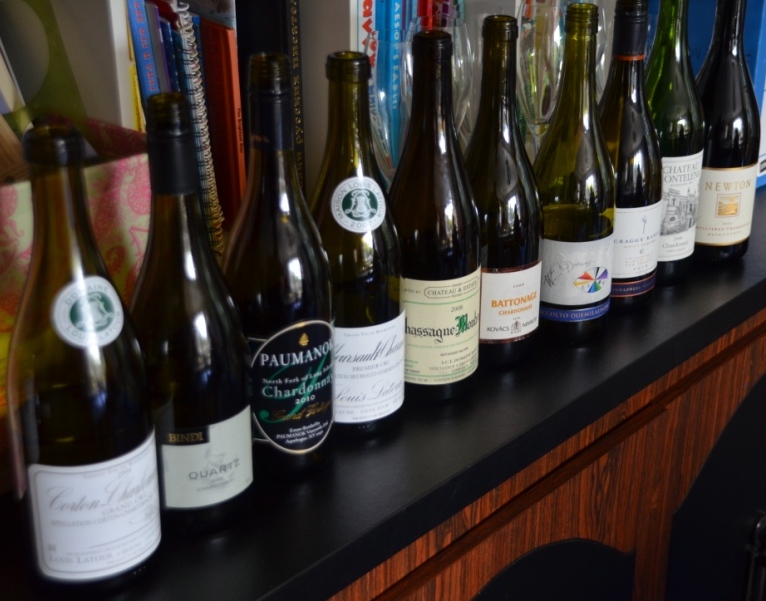 And the wines were:
1. 2006 Louis Latour Cortone-Charlemane, Burgundy
2. 2009 Bindi Quartz, Australia
3. 2010 Paumanok Grand Vintage Estate Chardonnay, Long Island, NY
4. 2007 Louis Latour Mersault-Charmes, Burgundy
5. 2008 S.C.E. Domaine Ramonet Chassagne-Montrachet, Burgundy
6. 2008 Kovács Nimród Winery Battonage Chardonnay, Hungary
7. 2011 Jermann W… Dreams … Chardonnay, Italy
8. 2008 Craggy Range Kidnappers Vineyard Hawkes Bay, New Zealand
9. 2008 Chateau Montelena Chardonnay, Napa Valley
10. 2008 Newton Unfiltered Chardonnay, Napa Valley
With a bit of knowledge and a bit of luck, I managed to get all the wines correctly with the exception of Bindi and Chassagne-Montrachet, which I got in reverse – it is interesting how I thought that #2 was a classic Burgundy, and it turned out to be an Australian wine. We also did a popularity vote, which was won by the Newton Chardonnay – quite awkward, as this was my least favorite wine. My favorite was probably the Jermann, but it is hard to pick a favorite from such a group of outstanding wines. It is also very interesting how different and unique the wines tasted, greatly demonstrating their terroir- and winemaking style-driven differences. Here are all the wines we tasted again, now in more detail for the labels:
And then, of course, there was food – lots of wonderful, home made dishes. It will take too much time to describe it all, so I will just leave you with the few pictures.


Now, I have a bit of the strangely sad part to share (nothing terrible, don’t worry). To complement all the wonderful Chardonnays, I brought a bottle of Sherry to add to our dessert list. 2011 Bodegas Alvear Pedro Ximemez de Añada Montilla-Moriles DO – the wine was excellent, more or less along the lines of what I would expect from Pedro Ximenez – considering the age, it was young and nicely balanced, both with sweetness and acidity. Where is the sad part? Take a look at the picture of that bottle:
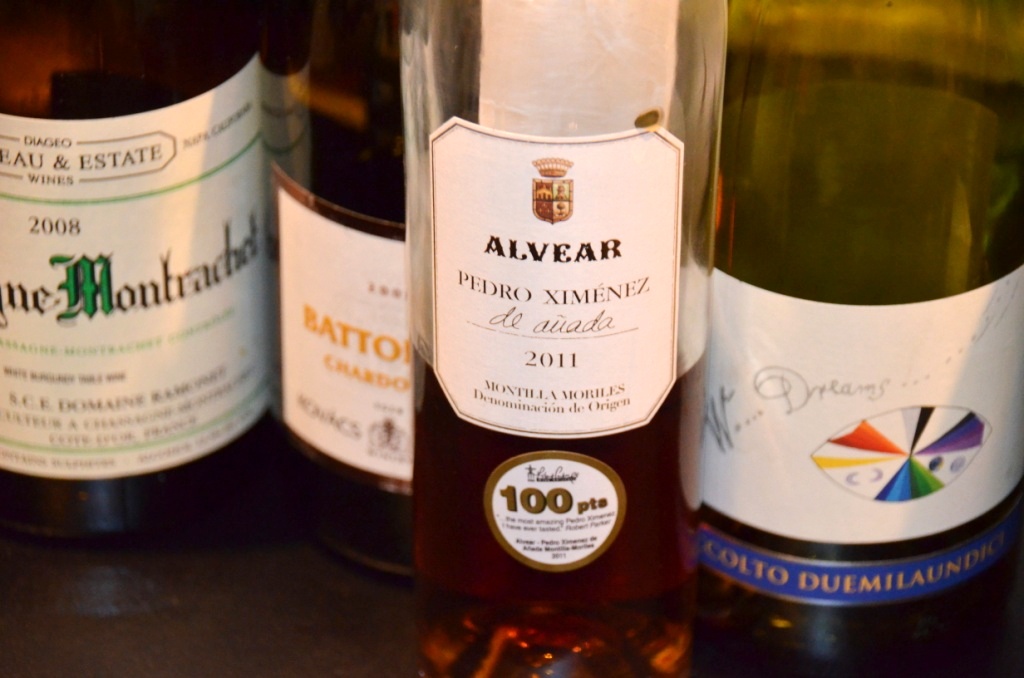
Bodegas Alvear PX de Añada
See that sticker “RobertParker 100 pts”? Yes, this was the 100 points rated wine from Robert Parker!!!!! First time I tried anything rated 100 points by one of the biggest wine critics in the world!!! And I have nothing to write home about it. The wine was good – but I don’t remember it as being earth-shattering. Not sure what to take out of it, but surely feels strange. My only consolation is that I have another bottle of the same wine – and I will keep it for as long as I can before drinking it again – may be then I will be able to see what Robert Parker found in this wine.
That concludes my report on the wonderful game of Chardonnay tasting. We had a great time, and I think restricting the level of “blindness” in this tasting was a very interesting twist, making that blind tasting exercise even more enjoyable. Until the next time – cheers!
Beautiful Land, Beautiful Wines, and Pursuit of Passion – #WineStuidio Experience with ZGR Imports
Once again, I’m starting the blog post with rhetorical and repetitious opening: have you ever had… (I can imagine some of you rolling your eyes and may be even clicking away… but let me finish, nevertheless) the wines from the region called Le Marche in Italy? With high degree of confidence, I would guess that many of you would say “no” – while better known in Italy and in Europe, wines of the Region Marche are not all that familiar to the wine consumers in US – but it is what we will be talking about here.
Region Marche is located in the Central Italy, up on the Adriatic Sea. As many other areas in Italy, Marche boasts beautiful hills, serene beaches and old city citadels, the towers and the walls which you can see when you drive along any of the highways and the roads. And of course, you can find wine and olive oil pretty much everywhere.


When I visited Marche for the first time about 9 years ago, the area was known best for its white wine called Verdicchio. Verdicchio is actually a white grape, which is known to produce slightly perfumed, brightly acidic, medium bodied wines. Two of the best production areas for Verdicchio are Verdicchio de Castelli di Jesi DOC and Verdicchio di Matelica DOC. When it comes to the reds of Le Marche, I was not all that impressed at that time. Rosso Piceno, one of the most popular red wines in Marche, a blend of Montepulciano and Sangiovese, which I tasted during my visit, was rather simplistic. Lacrima di Morro d’Alba, one of the indigenous red grapes of Le Marche, was also rather unimpressive, with the wines coming through as too acidic and too light. All in all, my first encounter with the wines of Le Marche left me with great impression of Marche’s whites, and so-so opinion of the reds. Another conclusion we can make that I simply was not very lucky with my selection of red wines.
It was then. Now, a bit more than a month ago, I participated in the virtual educational event on twitter called #WineStudio. In the past, I wrote a number of times about #WineChat events, where people get together for the virtual wine tasting on Wednesday night. The difference between #winechat and #WineStudio is that #WineChat events are usually a single-time events (one hour on Wednesday night starting at 6 PM Pacific/9 Eastern), but #WineStudio events usually span the period of three weeks, with one hour long sessions every Tuesday nights at 6 PM Pacific/ 9PM Eastern. And another (most important) difference between two events is #WineStudio’s focus on education, on presentation of the wine region and the host itself, where the host can be wine importer or a distributor.
While I definitely had a delay with this post (this time it was not really a procrastination – life was simply getting in the way), as it often happens, the delay was helpful. Last week Matt Kramer published a wonderful article in the Wine Spectator, called “The Most Powerful Force in Fine Wine Today“, where he was explaining the role and importance of the wine importers in educating wine consumers and creating the appreciation, demand and overall market for the fine wine. One of the major traits all of the successful wine importers have in common is passion. It is the passion for the wine region, passion for the winemakers, passion for the wines what makes them successful. And passion for the Le Marche – the land, the people, the wines – was clearly showing in conversation with Jonathan Zeiger, the principal at ZGR Imports, our host for the Le Marche #winestudio event.
Jonathan’s company solely focuses on the wines of Le Marche, and I can tell you, that focus and the passion were clearly showing in the wines. Jonathan explained that while Verdicchio is well known and well established, the rising star in the region is the white grape called Pecorino (yes, it is the grape and not the cheese). The wine which we tasted, clearly supported that claim. 2012 Centanni Pecorino Offida DOCG, Italy (14.5% ABV) – the wine started as acidic and grassy, and when warmed up a bit, became creamy and round. It became a a supple white, with lots of big flavors, very concentrated, but still refreshing, and quite unique and different. Drinkability: 8-
And the reds… Both red wines were designated as Rocco Piceno, and both were the blends of Sangiovese and Montepulciano – but this is where the similarities end. To say that I was blown away by the first taste of Centanni Rosso di Forca would be an understatement. 2012 Centanni Rosso Di Forca Rosso Piceno DOP, Italy (13.5% ABV) – one of the best Pop-and-Pour wines I ever had. From the moment the glass “cork” was pulled out, it was a luscious, luxurious, round and delicious wine, one sip after another. Loads of fruit, silky smooth tannins, perfectly present texture, velvety mouthcoat (are you salivating by now?), perfect balance. Drinkability: 9-.
During the last session of the event we tasted 2010 Rio Maggio Rosso Piceno DOC (13.5% ABV) – excellent wine, but very different from the previous one – dark restrained fruit, a touch of cherry pit, perfect acidity. The wine was very restrained, but equally elegant at the same time – it was very vinous, if that makes sense to you as a descriptor, and thought provoking. Drinkability: 8-
There you have it, my friends. You should really follow the passion – the passion of the people who make the wine, and the passion of the people who go out of their way to bring those wines to you – and that quest for passion will never fail you. Discover the passion – and you will drink well. Cheers!
From Languedoc, With Love and Pride – Wines of Paul Mas
 Talking about wines of Languedoc, with the risk of being boring, let me mention a few of the basic facts about the region. Languedoc is the biggest single wine-producing region not only in France, but also in the world. According to Wikipedia, only 13 years ago (in 2001), Languedoc was producing more wine than entire United States. Another important distinction of Languedoc is the fact that it practically has no restrictions on the type of grapes which can be grown there. While Mourvedre, Syrah, Cinsault and Grenache might be main red varietals, pretty much any of the international varietals are also permitted and grown in Languedoc. While such a liberal approach encourages winemaking, its flip side is that a lot of wines are produced under the designation of Vin de Pays d’Oc, which technically stands for “country wines”, a step below in classification compare appellation-specific wines (AOC wines such as Bordeaux, Pomerol, Medoc, etc.).
What this all means to the wine consumer? Value. For the long time, Languedoc had being known as a hidden gem, a secret source of excellent wines which you can enjoy every day, without the need for the special occasion (I actually wrote a post about Languedoc as one of the wine world hidden secrets – you can find it here).
Let me explain why we are talking now about Languedoc wines. A short while ago, I was invited to participate in the virtual tasting of the wines of Chateau Paul Mas. Paul Mas family had been making wines in Languedoc since 1892. Jean-Claude Mas, the 4th generation winemaker, set out to expand farther the family vineyards and winemaking business overall. Starting in 2000, Domaines Paul Mas plantings increased from about 86 acres to 440 acres of vineyards, and it has another 2000 acres under the contract. Just to give you few more facts, in 2006 Jean-Claude was awarded the title of International Mediterranean Entrepreneur of the Year by Ernst and Young; in 2008, he was named one of the Top 30 Winemakers of Tomorrow by L’Express magazine in France.
Domaines Paul Mas vineyards are planted with more than 25 varieties including Syrah, Grenache, Cabernet Sauvignon, Merlot, Viognier and Chardonnay. Obviously, there is a wide range of wines produced under the Domaines Paul Mas label, including some of the widely successful everyday wines such as Arrogant Frog.
The focus of our tasting was on the single vineyard wines of Chateau Paul Mas. Guillaume Borrot, the winemaker of the Chateau Paul Mas, who was presenting the wines during the virtual tasting, touted them as “affordable luxury”. And the wines were actually made to support this claim. Even the bottle itself, Burgundian in shape and very heavy, was supporting the “luxury” claim. And the fact that all three wines we tasted are available in retail for less than $25 each, definitely makes them affordable.
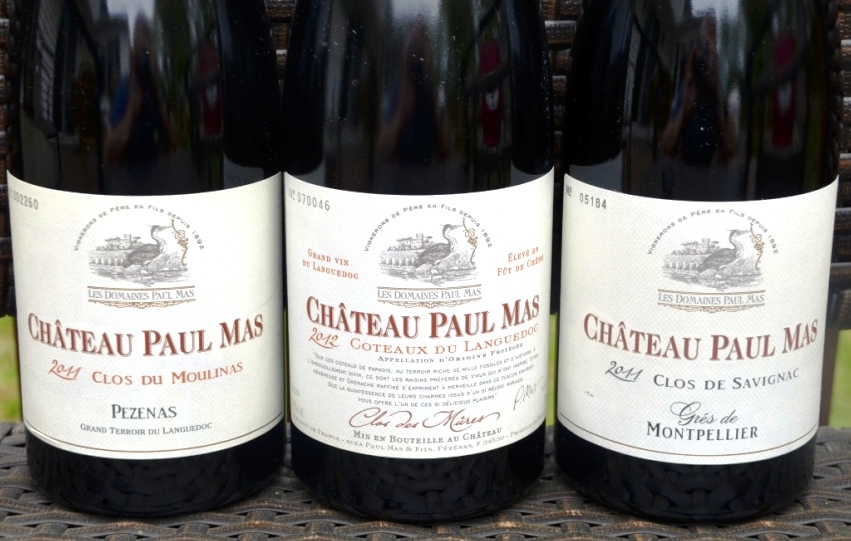
Well, it is not the look and weight of the wine bottle which will determine the “luxurious” designation. It is the wine itself which should support that claim – and all three wines perfectly delivered. Dense, concentrated and balanced, all well made and ready to be consumed now, or 5-10 years down the road – if you have enough patience though. Here are the more detailed notes on the 3 wines we tasted:
2012 Château Paul Mas Clos des Mures Coteaux du Languedoc AOP (14.5% ABV, 85% Syrah, 10% Grenache, 5% Mourvedre, 10 month aged in oak)
Color: Dark Garnet
Nose: Dark fruit, touch of spices, earthiness
Palate: Spicy cherries, touch of pepper, earthy profile, espresso, soft tannins, medium-long finish.
Verdict: Needs time, should develop nicely. Drinkability: 8-
2011 Château Paul Mas Grés de Montpellier Clos des Savignac Coteaux du Languedoc AOP (14.5% ABV, 50% Mourvedre, 30% Syrah, 20% Grenache, 2 month aged in oak barrels)
Color: Practically black
Nose: Rich, dark chocolate, ripe blueberries, spices
Palate: Loads of pepper, dark ripe fruit, blueberries, perfect balance.
Verdict: Delicious! Drinkability: 8
2011 Château Paul Mas Pezenas Clos du Moulinas Coteaux du Languedoc AOP (14.5% ABV, 55% Syrah, 45% Grenache, 12 month aged in oak barrels, 3,500 cases produced)
Color: Very dark garnet, almost black
Nose: Loads of fruit, nice, open, touch of earthiness
Palate: Earth, hint of sweet fruit, loads of complexity, leather, tobacco, pepper, perfect balance, wow!
Verdict: My favorite wine of the tasting, Has great potential. Drinkability: 9-
There you have it – an encounter with everyday luxury wines, made with love and pride in Languedoc. Some of these wines should be available in US, so make sure to look for them.
Have you had Domaines Paul Mas wines before? Do you have any favorites? What do you think about Languedoc wines in general? Cheers!
Month in Wines – May 2014
There was no shortage of the good and even great wines in May, including some potential candidates for the Top Dozen list. The spread of wines origin-wise was mostly even, from New Zealand to Italy to Spain, France and California. As usual, the list includes only the wines rated 8- or higher, with some lower rated wines included on the exception basis. Let’s take a look.
2011 Sueño Tempranillo Ribera Del Jucar DO, Spain (14% ABV, $19,99) – a classic, round Tempranillo – eucalyptus, cigar box, perfect balance. 8-
2012 Centanni Pecorino Offida DOCG, Italy (14.5% ABV) – a supple white, with lots of big flavors, very concentrated, but still refreshing. Quite unique and different. 8-
2012 Centanni Rosso Di Forca Rosso Piceno DOP, Italy (13.5% ABV) – One of the best Pop-and-Pour wines I ever had. From the moment the glass “cork” was pulled off, a luscious, luxurious, round and delicious wine, one sip after another. It was gone in no time… 9-
2010 Rio Maggio Rosso Piceno DOC (13.5% ABV) – Another excellent Rosso Piceno wine, but very different from the previous one – dark restrained fruit, a touch of cherry pit, excellent acidity. 8-
2012 Borell-Diehl Pinot Noir Estate, Germany – probably the first German Pinot Noir I liked. While not super-sophisticated, it was simple enough and food food friendly. 7+
2011 Stephen Ross Pinot Noir, Santa Lucia Highlands, California – Classic California Pinot, dark chocolate, pencil shavings, smoke, excellent balance. 8
2009 Maysara Pinot Noir, McMinniville AVA, Oregon – herbal profile on the nose, dark fruit, earthiness, balancing acidity. I can drink that every day. 8-
2012 Château Paul Mas Coteaux du Languedoc AOP (14,5% ABV, Syrah 85%, Grenache 10%, Mourvedre 5%) – dark fruit, earthiness, spicy cherries, pepper, espresso – lots of things going. Need time. 8-
2011 Château Paul Mas Clos de Savignac Grés de Montpellier (14.5% ABV, Mourvedre 50%, Syrah 30%, Grenache 20%) – Dark chocolate, loads of pepper, blueberries, perfectly balanced. 8
2012 Château Paul Mas Clos du Moulinas Pezenas Grand Terroir du Languedoc (14.5% ABV, 55% Syrah, 45% Grenache) – extremely complex, leather, tobacco, pepper, perfect balance, simply a wow. 9-


2012 Swedish Hill Reserve Chardonnay Finger lakes, New York (13% ABV) – Chablis-like personality, with the hint of gunflint on the nose, also showing of as nice restrained California wine, with vanilla and oak, and everything in balance. 8-
2012 Dr. Konstantin Frank Gewurztraminer Finger Lakes, New York (12.5% ABV) – beautiful honeysuckle and white peaches nose, coupled with exotic fruit and spices the palate, and most importantly, all nicely balanced. 8-
2013 Rabbit Ridge Allure de Robles Rosé Paso Robles, California (13.5% ABV, $4.99 at Trader Joe’s , Mourvedre 49%, Grenache 26%, Syrah 25%) – simple, balanced, delicious, surprising. Yes, this was a perfect summer wine from Trader Joe’s – get it by the case. 8-
2010 Cairdean Vineyards Malbec Nape Valley (14.2% ABV) – My first experience with California Malbec. Very unusual – socks (yep, you can think whatever you want of me), baking spices, lavender, fresh cookies, very elegant. 8
2010 Cairdean Vineyards Chardonnay Russian River Valley (13.9% ABV) – touch of vanilla and butter, toasted bread, soft and round. 8-
2012 Matua Pinot Noir Marlboro New Zealand (13% ABV) – this wine screams “classic Marlboro” all the way – smokey nose, cherry on the palate, light and at the same time savory profile with cut-through acidity. 8-
2005 Dama de Toro Crianza Toro DO (13.5% ABV) – wonderful complexity, makes you smell this wine indefinitely, and then you can spend eternity analyzing each sip – herbs, lavender, sage, nutmeg, red and black fruit – just a wonderful example of the wine [probably] at its peak. 9-


2010 Freemark Abbey Cabernet Sauvignon Napa Valley (14.5% ABV) – great open Cabernet Sauvignon nose, bell peppers, black currants, very classic. Medium to full body on the palate, perfectly restrained, excellent balance. 8
2008 Tamaya Syrah Reserva Limari Valley, Chile (13.5% ABV) – this wine would perfectly impersonate a classic Northern Rhone Syrah – very restrained, dense, concentrates, pepper and spices on the palate, savory herbs. A Thought provoking wine. 8-
That completes my wine highlights report for May. Did you make any interesting discoveries in the last month? Did you have any of the wines I mentioned here? Cheers!
#winechat Finger Lakes Wine Tasting – An Interesting Experience with Happy Ending
Here we go again – another #winechat experience. Lots of wines and lots of talking – with your fingers. The subject of this #winechat – wines of Finger Lakes region in New York.

Finger Lakes is a picturesque area in the upstate New York, very close to Canada, consisting of multiple lakes – technically, Finger Lakes consists of 11 lakes, but most of the people will be able to name only 3 or 4. Outside of being a popular tourist destination, Finger Lakes is actually one of the very first wine making areas in the US – the first winery was established in 1836, and by now the region has well over a hundred wineries.
Despite such a long history, the wines of the Finger Lakes region are still considered up and coming. For the most of the cases, consumers might be familiar with Finger Lakes Riesling, a bit of Gewurztraminer and some of the Icewine, with the Finger Lakes wines mostly available only in New York and some of the neighboring states. As of late ( last 2-3 years) the situation is slowly changing for the better, both in regards to quality and availability of the Finger Lakes wines. It is also important to note that the improvements I’m talking about concern both white and red wines, with the wineries such as Fox Run, Ravines and Charles Fournier delivering full spectrum of wines worth drinking and talking about.
When I got a note about #winechat dedicated to the Finger Lakes wines, I was hesitant at first regarding my participation. The reason was simple. Yes, the quality of the Finger Lakes wines is improving. However, about 4 years ago, when my daughter was going to Ithaca college, located right by the Seneca lake, I visited few of the nearby wineries, and was quite disappointed with the wines I tasted. Therefore, the prospective of tasting bunch of wines and not being able to write anything about them, was rather daunting. After the internal back and forth, I decided okay, let’s give it a try, and signed up for the #winechat. A few weeks later, the box arrived, containing the 8 bottles – 3 different Rieslings, 3 Chardonnays and 2 Gewurztraminer. From the whole set, I only recognized the name of Dr. Konstantin Frank as a producer I heard of before ( I never tried Gewurztraminer which was included in the tasting set).
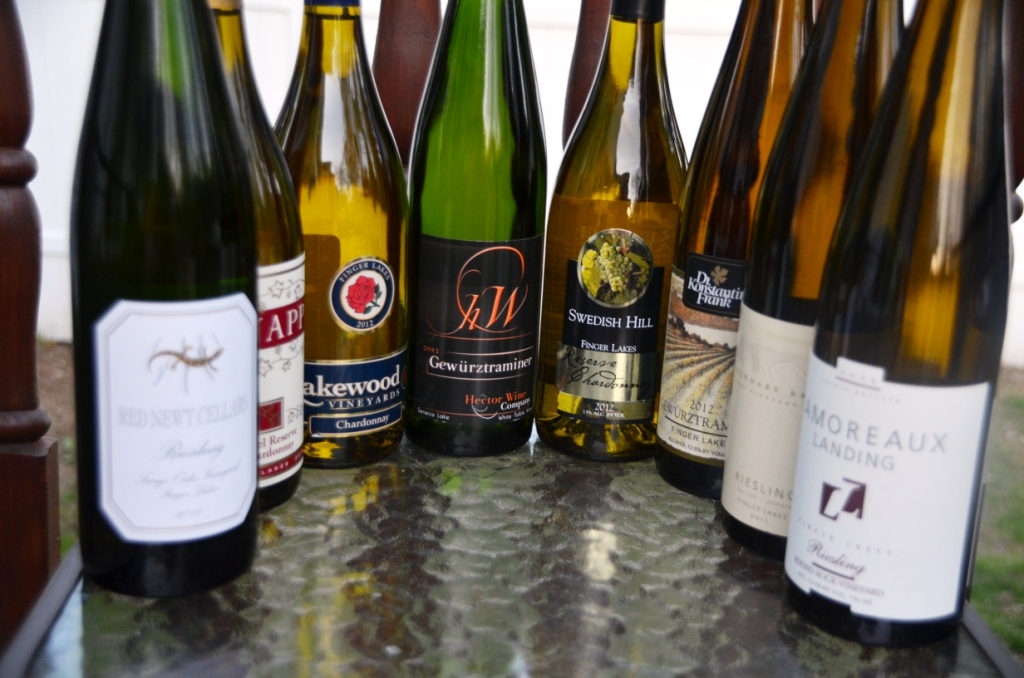
About a week later, it was the time to taste the wines. I freed up the space in the fridge and put all the bottles in to get them ready.
Talking about an “interesting experience”, let me explain what I mean (yes, I know – somehow, when you read “interesting”, you don’t expect anything good). The #winechat usually starts at 9 PM. But of course it would be quite challenging to taste 8 wines in the real time, take notes, and support many simultaneous “finger” conversations at the same time. Therefore, I decided to start an hour before, so I would have enough time to taste all the wines in the thoughtful fashion. I invited my friend Zak to share the tasting with me. We started from the Rieslings, then moved on to Chardonnays, and finished with Gewurztraminers. The first Riesling was okay, but then everything went downhill – the wines were simply from the series “nothing to write home about”, with the exception of Dr. Konstantin Frank Gewurztraminer – that was one and only highlight of the tasting. We kept looking at each other with Zak in disbelief, as this was definitely not expected from the set specially selected for the tasting. Needless to say, at the end of the tasting (I managed to participate in the chat, albeit not as enthusiastically as I normally would), I was rather disappointed. And I had 8 wines to finish or dump. What I decided to do, is to put them aside, and give them another chance, one by one. I used the gas canister (not sure I had much gas left though) to replace the air in all the bottles and put the corks back. One bottle went into the fridge, and the rest were standing, waiting for their term.
Now, for the really interesting part. The next day or a few days later, all, yes all the wines (okay, exclude Dr. Konstantin Frank from here, as it was good from the beginning) tasted better! I couldn’t believe it, and I couldn’t understand it – but they did. Better fruit, better balance, softer, smoother – all of them. Well, thinking about it, the Rieslings only improved a little bit or not at all, but the improvement was very noticeable for all Chardonnay wines. Giving it another thought, I think I’m finally starting to “get it”. When I open a bottle of wine, taste it and decide that it is not ready because it is too tight and closed, I’m generally not surprised, I ofthen expect it, and I put it aside to give a day or a few to open up without any commotion. In case of this Finger Lakes tasting, I had multiple wines opened at the same time, and especially all of the Chardonnays had the nice oak treatment, thus required time to open up – this is not my typical case, hence the issues I had. So bottom line is that I was [again] humbled around wine, and still have lots to learn. Well, not the worst problem to have in life, isn’t it?
I will let you decide how “interesting” my experience was. Below you will find tasting notes, both the initial ones, and those I added after re-tasting the wines in a few days.
Here we go:


2012 Red Newt Cellars Tango Oaks Vineyard Riesling (11.5% ABV)
C: practically clear
N: Initially: golden delicious apples, a bit grassy; 2/3 days later: white fruit
P: Initially: high acidity, not enough fruit, tropical fruit, mango; 2/3 days later: white flowers, hint of sweetness on the palate with nice acidity and addition of minerality.
V:nice, simple, 7/7+; Final: 7+/8-
2012 Lamoreaux Landing Wine Cellars Round Rock Riesling (12.7% ABV)
C: practically clear
N: Initial: candied walnuts, Later on: light, delicate, good white fruit
P: Initial: white fruit with grassy notes, minerality; Later on: a distant hint of Petrol, clean and fresh acidity, elegant, well balanced.
V: Initial: 7+, Final: 7+/8-
2011 Boundary Breaks Riesling Reserve #198 (8.9% ABV)
C: practically clear, almost transparent
N: Petrol (hint of)! white fruit, apricot, honeysuckle.
P: sweet (spatlese or may be even auslese level), needs more acidity, but not bad
V: needs savory food, 7/7+


2012 Knapp Barrel Reserve Chardonnay (13% ABV)
C: straw pale
N: Initially: closed, practically nothing. Later on: nice apple notes, touch of vanilla, pleasant and inviting.
P: Initially: touch of pineapple, white apples, neutral – drinkable, but not fully enjoyable. Later on: nice, cutting acidity, backbone of white fruit, touch of herbal bitterness, but quite round and refreshing. Minerality on the palate, like a limestone. Medium finish,
V: 7, Final: 7+/8-
2012 Lakewood Vineyards Chardonnay (13,9% ABV, 617 cases produced)
C: straw pale
N: Initially: minerality, pretty closed otherwise. 3 days later: very classic nose, with vanilla and toasted oak, nice and clean.
P: Initially: flat, malolactic obvious, touch of vanilla. After 3 days: excellent flavor concentration, good acidity, butter and vanilla, medium to full body, good balance.
V: initially: 6-, final: 7+/8-
2012 Swedish Hill Winery Reserve Chardonnay (13% ABV)
C: straw pale
N: Initial: hint of gunflint, minerality, white fruit. Later: Vanilla and oak, very inviting, with Chablis-like gunflint
P: Initial: oak, vanilla, flat, needs more acidity fruit, opened up reasonably , improved with time, butterscotch, still needs more acidity; 3 days later: great concentration of vanilla, apple and butter, nicely balanced with very persistent depth.
V: 7+, Final: 8-


2012 Hector Wine Company Gewurztraminer
C: Golden color
N: Initial: Beautiful, concentrated fruit; Later: Very pleasant nose of tropical fruit with some spiciness – guava, mango.
P: Initial: Lots of green notes, bitter, biting, not balanced. After 3 days: bitterness subsided, with only a hint left.
V: 6, Final: 7-
2012 Dr. Konstantin Frank Vinifera Wine Cellars Dr. Frank Gewurztraminer (12.5% ABV)
C: golden
N: beautiful fruit, inviting
P: perfect balance, fresh fruit, touch of spiciness, best of tasting
V: 8-
There you have it, my friends. To tell you the truth, I had a different take on the events in the tasting initially, but I’m glad I was able to figure it all out. And this story did have happy ending, as practically all the wines showed very well. Lessons learned – be humble, and give your wines a chance [to breathe].
Before we part, I would like to thank Finger Lakes Wine Alliance for providing the sample for review. Cheers!
Another “How Do They Do It?” Set of Trader Joe’s Wines
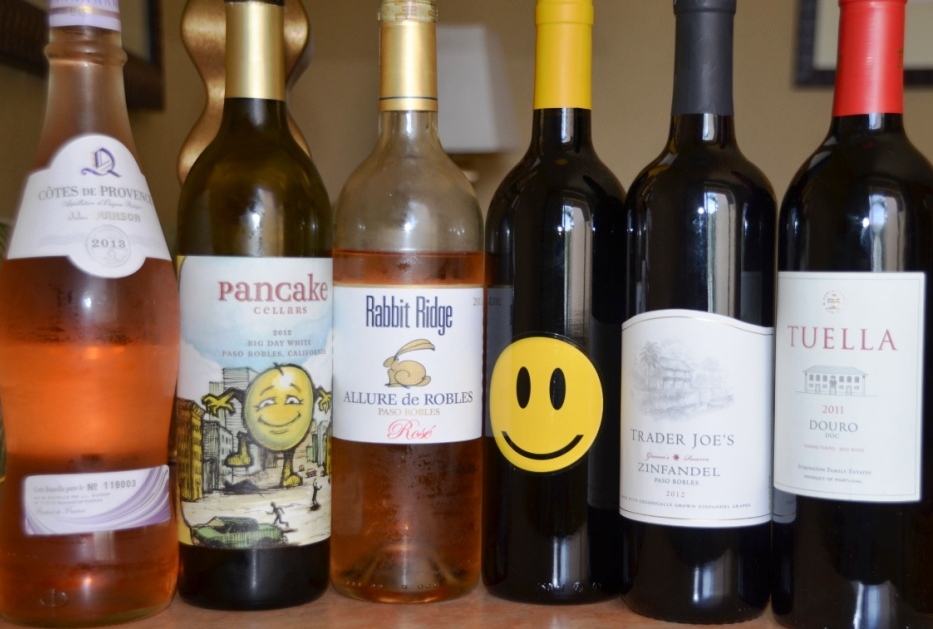 On the multiple occasions, I wrote about Trader Joe’s wines in this blog. I generally only can taste them when I travel, as Trader Joe’s stores in Connecticut can’t sell wine. Thus if I’m in the close proximity of the Trader Joe’s store, and schedule allows, I always make an effort to taste something new.
While Trader Joe’s wine selection generally includes wines at the different price levels, my focus is always on the most inexpensive wines. The rationale is simple – at $9.99 and above, there is a great selection of wines in my neighborhood wine store. At the same time, there is practically nothing in the $4.99 – $6.99 price range, thus it is very interesting how good (or how bad) such wines can be.
In general, I can’t complain about Trader Joe’s wines. My typical “success rate” is somewhat of the 3 out of 4 ratio – if I would taste 4 wines, at least 3 of them would be at “I want to drink it again” level. But this time, while in San Diego, California, I was simply blown away – 6 out of 6, 3 wines at $4.99 and 3 at $5.99, where perfectly drinkable wines which I would gladly drink again on any day! This was definitely a “how do they do it???” moment, as I would never expect, for instance, Rosé or Zinfandel from California to have such a QPR, to taste as good as they did considering the amount of money I had to pay for them.
Without further ado, let me present to you my 6 out of 6 set of “how do they do it?” wines from Trader Joe’s.
2012 Pancake Cellars Big Day White Paso Robles, California (13.5% ABV, $4.99, 37% Chardonnay, 23% Sauvignon Blanc, 15% Viognier, 15% Pinot Blanc, 10% Muscat Canelli) – I can only guess this is modeled after the Conundrum, only this wine I actually enjoyed (and it costs 1/4 of the Conundrum)! Very nice and refreshing nose of white fruit with herbal undertones. On the palate, nice, round, good acidity, white fruit, white apples, very good balance. While not the most complex, definitely very enjoyable! Drinkability: 7+/8-
2013 Rabbit Ridge Allure de Robles Rosé Paso Robles, California (13.5% ABV, $4.99, Mourvedre 49%, Grenache 26%, Syrah 25%) – you can safely assume that I had zero expectations opening a bottle of Rhone-style Rosé from California which cost $4.99. Boy, was I wrong. The wine was simply outstanding – bright, cheerful, full of strawberries and cranberries, perfect acidity – get it by the case to make your summer days super enjoyable. Drinkability: 8-
2013 J.L. Quinson Cotes de Provence AOP (12.5% ABV, $5.99) – same as the one above, zero expectations for Provence Rosé for $5.99 – sorry, the internal snob is speaking. First sniff and sip – wow, I’m convinced. Perfectly restrained, mineral, light, refreshing acidity – as classic as Provençal Rosé gets, only at half price or even less, depending on the bottle. Another case buy for the summer, in case you need my recommendation. Drinkability: 7+
2012 Oreana Wines Project Happiness Syrah California (13.5% ABV, $5.99) – see the happy face on the label? This is what this wine is – happy. No, this is not the most thought provoking Syrah you can drink, but it is simple, easy to drink, round and balanced, good fruit on the palate, a tiny bit of pepper. Throw in a little barbequed meat – and your face might look exactly as the one on the label. Drinkability: 7
2011 Symington Family Estate Tuella Douro DOC, Portugal (13.5% ABV, $5.99) – Douro wines are slowly but surely gaining their international reputation, so this is definitely a good deal of a very solid wine which you can also age. It was showing a little tight, with reserved fruit expression, but good overall balance and acidity. At this price, if you got some space in the cellar, forget a few bottles there – you might thank me in a 3-4 years. Drinkability: 7
2012 Trader Joe’s Grower’s Reserve Zinfandel Paso Robles (13.5% ABV, %4.99) – the first smell exhorts the “wow”. Good Zinfandel at $4.99 didn’t sound to me even as a remote possibility. And then this Grower’s reserve comes in – perfectly open, with clean smokey raspberries and blackberries, very round fruit expression on the palate, with the same smokey berries being very present and well matching the nose – the QPR on this wine simply goes through the roof. No, this wine doesn’t have the richness of Turley or Carlisle, but then you don’t need to cellar it for 10 years before you can really enjoy it. If you like Zinfandel – this is definitely the wine you have to experience. Drinkability: 7+/8-
I tip my hat to whomever is responsible for sourcing the wines for Trader Joe’s stores – to say “well done” is almost to say nothing – great job, and please keep doing it over and over again, to the delight of all the wine lovers out there. Cheers!
Last Bottle Sign Up ($10 credit)





