Archive
Weekly Tasting with Wines Til Sold Out – The Wines
A few weeks ago I wrote about the new feature from the unimitable Wines Til Sold Out – a Weekly Tasting. Every week, there is a new set of 4 wines available for you with all the extra fun information – history, stories, pairing recommendations and more – like your personal sommelier visits the house for a fun and entertaining evening. I didn’t have a chance to taste the wines as I was living for a business trip, so I only introduced the concept – now it is time to talk about the wines.
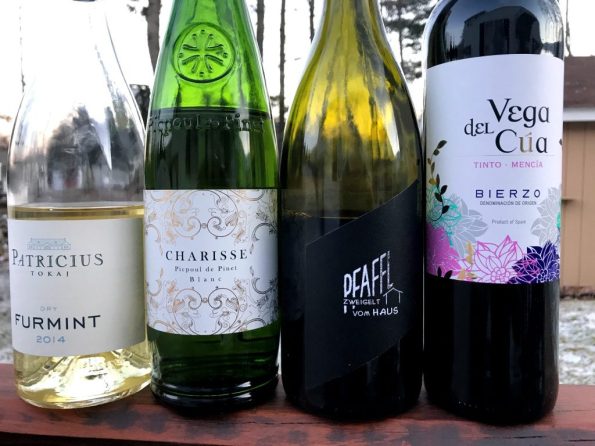 The set which I got was really right up my alley – I love all of the lesser known grapes and appellations.
White grape Furmint is a star – but only in Hungary, and mostly in the world-famous dessert wines called Tokaji. Dry Furmint is difficult to produce, as most of the plantings are very susceptible to the noble rot due to the climatic conditions.
Another white grape, Picpoul de Pinet, is only growing in France, and it is quite rare even in that same France. Zweigelt is not necessarily rare, but definitely a lesser known grape from Austria, capable of delivering superbly playful wines. And Mencía is currently in the search of an identity, which usually makes it fun to taste – you never know what you will find.
For what it worth, here are my notes:


2014 Patricius Tokaj Furmint (12% ABV)
C: light golden
N: touch of petrol and honeysuckle, guava, medium intensity
P: more petrol, lemon zest, nice green undertones, almonds, pear, excellent minerality, good acidity
V: 8, very playful with nice complexity.
2016 Charisse Picpoul de Pinet Blanc AOP (12.5% ABV)
C: straw pale, green undertones.
N: Apple, perfume, white peach, jasmine flowers.
P: restrained, touch of herbal notes, good minerality, pomelo, crisp acidity
V: 8-/8, very nice, food-friendly, will complement a wide range of dishes.


2015 Pfaffl Zweigelt vom Haus Niederösterreich Qualitätswein aus Österreich (12.5% ABV)
C: dark garnet, almost black
N: eucalyptus, blackberries, forest underbrush
P: clear black pepper backbone, more blackberries, touch of sapidity. Unusual
V: 8-, needs time to open ( was much better on the 2nd and 3rd days).
2015 Vega del Cúa Tinto Mencía Bierzo DO (13.5% ABV)
C: dark garnet
N: tobacco and barnyard, both are very pronounced.
P: sweet cherries, hint of tobacco. Very unusual profile as the fruit is initially perceived as sweet, and then it quickly subsides without acidity kicking in. Very short finish.
V: 7, not my favorite – but it might need more time…. 7+ second day, more of an 8- after 5 days (using air pump to preserve the wine). A lot more integrated after 5 days, showing nice pepper notes and much longer finish.
Here you are, my friends. Furmint was definitely a favorite, but I truly can’t complain about this set of wines – this was definitely a fun tasting. Kudos to Wines Til Sold Out for bringing up yet another great service for the wine lovers. Get your weekly tasting set today, invite your friends over, and go have some fun! Cheers!
Cooking as an Ultimate Expression of Love, or Early Valentine’s Day Experiences
I’m always happy to admit that Valentine’s Day is one of my favorite holidays. Of course this is a personal statement, and of course, I perfectly understand that I’m lucky to be able to say it wholeheartedly, as this is not a universal truth.
Outside of presents (which is fun), overpriced flowers and cheesy cards (nevermind all the heart-shaped chocolates, I don’t even want to mention those), Valentine’s Day is all about food and wine. Many years ago, we ditched the tradition of oversubscribed and underdelivering restaurants, offering strictly timed moments of celebration in favor of homemade dinners, which also include the whole family.
Valentine’s Day dinners at home offer a lot of pleasure in itself – you get to contemplate and select the menu, and you have an opportunity to touch lots and lots of bottles until you grab the one which somehow, magically, will become “it”. And then you get to cook that dinner, and most importantly, if everything works as you are hoping it will, you get an extra dose of happiness looking at the happy faces around the dinner table. By the way, if you need any wine recommendations for the Valentine’s Day, I wrote a few of them in the recent years – here and here are two of my favorite ones.
This year, Valentine’s Day dinner came in early – we will be leaving for vacation exactly on the February 14th, thus in order to maintain the tradition of family celebration, the dinner had to take place earlier – on Sunday before the Valentine’s Day. And so the next idea was – why don’t we start early on Sunday, let’s say with a nice breakfast?
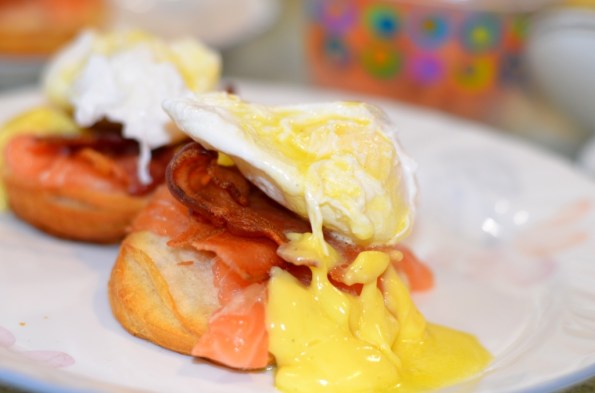
What is your favorite celebratory breakfast meal? Eggs Benedict is definitely one of my favorites, so that was an easy decision. Smoked salmon is one of my favorite choices for the eggs benedict, so the prep for the breakfast started two days prior, first by making smoked salmon (you can find the recipe here).
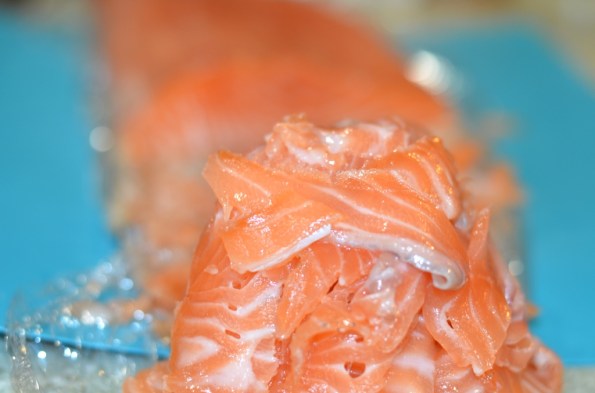
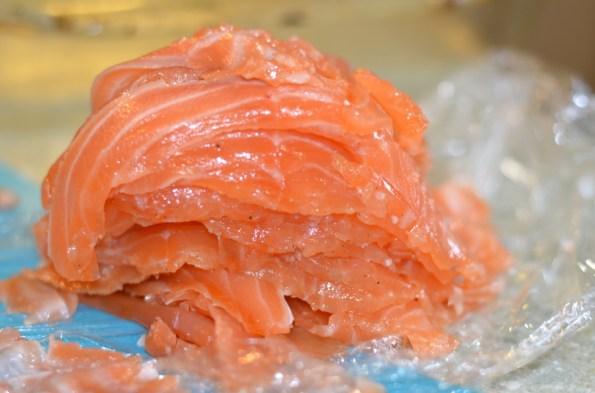
This is Valentine’s Day dinner, so we need to up the game, right? What can elevate breakfast better than some crispy bacon? Yep, bacon it is!
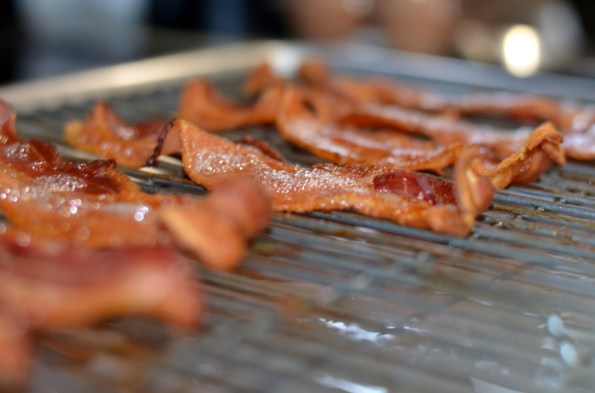
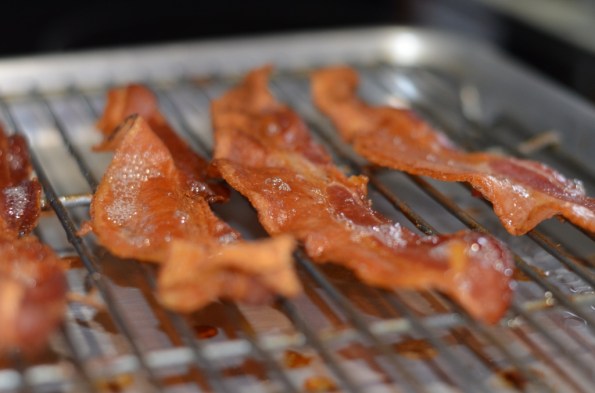 Traditional Eggs Benedict are served on top of the English muffin. Truth be told, I don’t like English muffin – not with eggs benedict, not by itself. So my choice of bread? A fresh biscuit. I have friends who can easily whip a batch of biscuits on a moment’s notice, but I have my limits – thus buttermilk biscuits by Pillsbury work just perfectly for me.

Next, we need to make the Hollandaise sauce. It is somewhat of a tedious process, involving a double-boiler and some serious skills – unless you have a recipe from Suzanne, which is very simple and guarantees a perfect result – as long as you follow it precisely. The Hollandaise came out perfect, both taste and texture, so last prep step was to poach some eggs. All you need to do is to get hot water with vinegar to borderline boil (it shouldn’t be actively boiling, so take your time to adjust the heat) in a deep skillet, then carefully crack the eggs, set the timer and voilà. To my shame, I have to admit this is where I failed – I set the timer for 10 minutes (this is what I read in one of the recipes online), and this was a mistake – I completely overcooked the eggs. I believe the right time would be 5 minutes at the most.
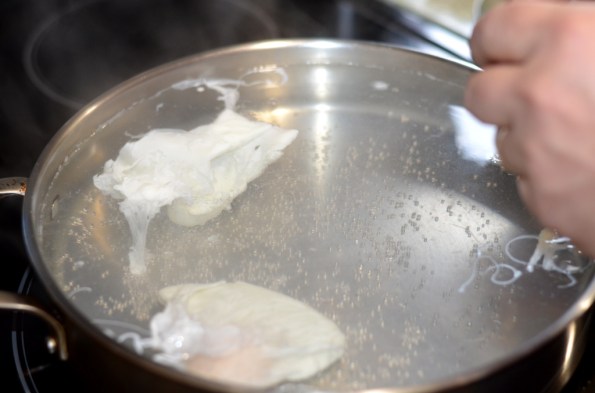
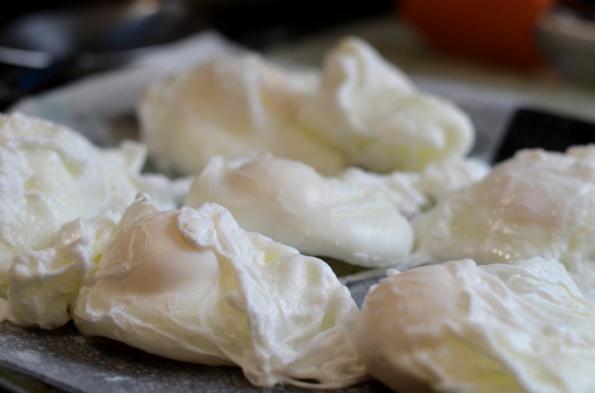
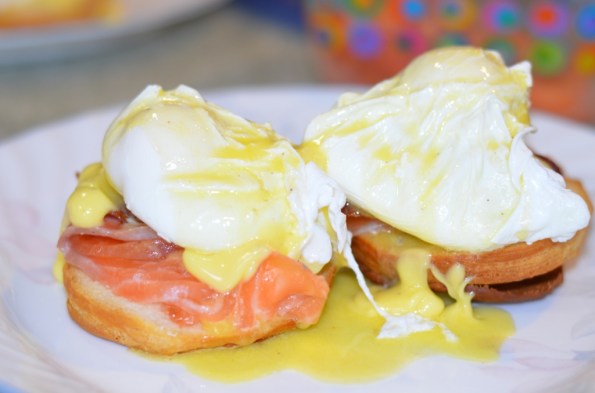
Another important step – let the eggs cool off after cooking (ice bath recommended) – I didn’t do it, and as the result, Hollandaise was not covering the eggs properly – oh well, it was still really tasty. So the last step was to assemble the Eggs Benedict – the biscuit on the bottom, then smoked salmon, bacon, egg, and Hollandaise.
Now it is time to make dinner. More often than not, simplicity is your friend when it comes to food. Going the simple route, our Valentine’s Day dinner plan was simple – steak and potatoes.
For the potatoes, we have a recipe where potatoes are thinly sliced on the mandoline, then slices are stacked at the little angle and fried – it is a great recipe except that my fingers and mandoline are not great together, but love requires sacrifices, right?


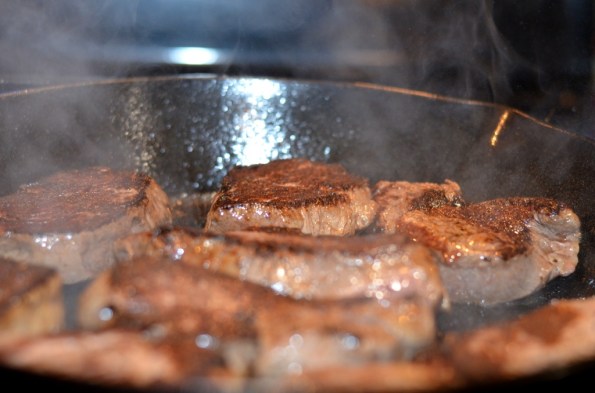
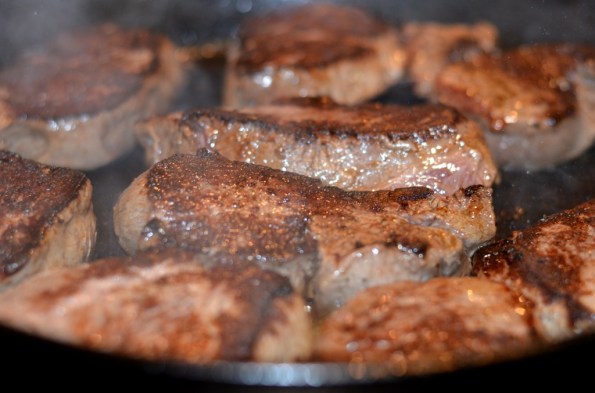
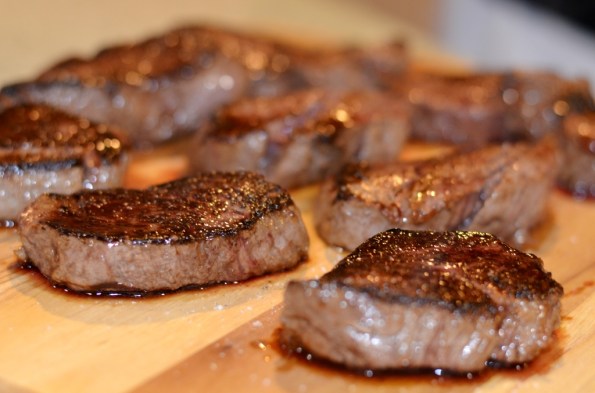
And for the steak – you can’t beat the simplicity of the pan-fried filet mignon:
Where there is steak, there is also wine. As I mentioned, after spending good 20 minutes going through the different shelves of the wine coolers, I pulled out the bottle which happened to deliver an insane amount of pleasure – 2005 Neyers AME Cabernet Sauvignon Napa Valley.


I like to know critics scores for the wines, but only out of curiosity – my buying decisions are not based on those scores at all. Besides, my own take on the wine rarely correlates with the critic’s opinion. Except for this wine – when I read Robert Parker’s description, to my surprise and delight, it was well aligned with the way I perceived it – so here is Robert Parker’s take on this 2005 Neyers AME:
” 93 points Robert Parker’s Wine Advocate
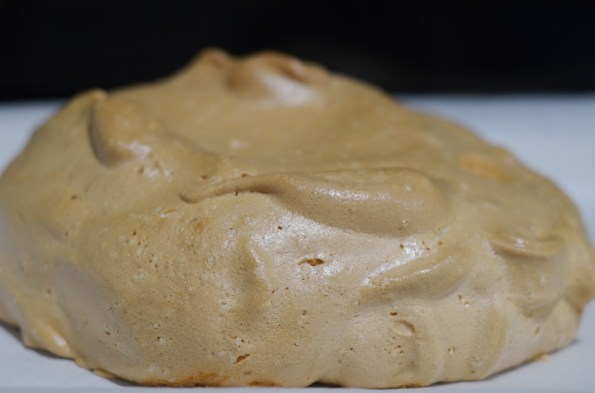
 Here you are, my friends – our early Valentine’s Day dinner experience. Happy Valentine’s Day! Cheers!
Discover Wines of South Africa
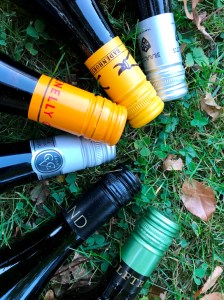 Let me start with a question: when was the last time you had South African wine? You can take a few minutes to ponder at it – but I would bet that if you are a wine consumer in the USA, there is a very good chance that the answer will be “hmmm, never”. But if “never” or “many years ago” is your answer, we need to change that.
The winemaking history in South Africa goes back to the 17th century, when immigrants from Europe brought the vine cuttings with them, as they’ve done in all other places. South African wine story somewhat resembles most of the Europe, as it also includes the phylloxera epidemic and replanting of the vineyards. Unfortunately for South African winemakers and the rest of us, the wine story of South Africa also had heavy political influence, with apartheid, KWV monopoly, and resulting boycott from most of the countries for the majority of the 20th century (here is an article on Wikipedia if you want to learn more). The new chapter for South African wines opened up in the 1990s, with the end of apartheid and subsequent changes in all areas of life, winemaking included.
In the past, South Africa was best known for its Chenin Blanc wines, which was also called Steen. Another grape South Africa was famous for was Pinotage – dinking of the Pinotage wines was likened by some wine critics to the drinking of the “liquified rusty nails”. On much brighter note, while talking about the past, I want to mention Klein Constantia Vin de Constance – the nectar of gods (don’t take my word for it – find it and try it), made from Muscat de Frontignan grapes and favorite wine of the French emperor Napoleon Bonaparte, who was buying it by the barrel (legend has it that it was Napoleon’s deathbed wish wine).
Today South Africa offers lots more than a typical wine consumer would expect. The South African wines are often described as “old world wines masquerading as new world wines”, and this is perfectly showing in the wide range of the wines. You really need to try for yourself South African Chardonnay, Sauvignon Blanc, Pinot Noir, Cabernet Sauvignon, Merlot, Shiraz, and don’t skip the Chenin Blanc, especially if it is an FMC by Ken Forrester. You shouldn’t skip even Pinotage, as it dramatically evolved compared to the old days. The old world winemaking foundation really shows through many of the South African wines today, and they are always ready to surprise a curious wine drinker.
Case in point – our recent virtual tasting on Snooth. We had an opportunity to taste 6 white wines, well representing South African grapes, styles and regions. The tasting included 3 out of the 4 most popular white grapes in South Africa (Chenin Blanc, Chardonnay, and Sauvignon Blanc) – the second most planted grape, Colombard, is used primarily in the brandy production. Another interesting fact for you – until 1981, there was no Chardonnay planted in South Africa, which makes it all more impressive (read my notes below). Two of the Chardonnays and Sauvignon Blanc from the tasting were simply stunning, and the rest of the wines were perfectly suitable for the everyday drinking. What is even better is that you don’t need to rely on my notes if you want to discover what South Africa is capable of – Snooth offers that exact set of 6 wines for purchase, at a very reasonable price of $79.99 for the whole set.
Here are my notes from the tasting:


2016 Glenelly Glass Collection Unoaked Chardonnay WO Stellenbosch (13.5% ABV, $20, 100% Chardonnay)
C: straw pale
N: Beautiful, vanilla, touch of guava, fresh, medium+
P: good acidity, granny smith apple, crisp, maybe a bit too restrained now, lemony acidity on the finish
V: 8, excellent now, but I definitely want to see it evolve.
2016 De Wetshof Estate Limestone Hill Chardonnay WO Robertson (14% ABV, $16, 100% Chardonnay)
C: light golden
N: complex, vanilla, popcorn, medium intensity. Nose clears up as the wine breathes. Golden delicious and honeysuckle appeared. Delicious nose.
P: quite restrained, touch of Granny Smith apples as opposed to the golden delicious. Perfect acidity, vanilla, fresh.
V: 8, will evolve. Definitely an interesting wine.
2016 Badenhorst Family Wines Secateurs Chenin Blanc Swartland WO Steen (12.5% ABV, $15, Chenin Blanc with a sprinkling of Palomino and another secret grape)
C: straw pale
N: interesting, yeast, touch of white stone fruit
P: crisp, restrained, mostly lemony, acidic notes
V: 7, too simple and single-dimensional


2016 Raats Original Chenin Blanc Unwooded WO Stellenbosch (12.5% ABV, $16, 100% Chenin Blanc)
C: straw pale+
N: inviting, medium plus, minerality, hint of peach
P: clean acidity, interesting touch of pear and white plum with acidic finish
V: 7+, interesting wine, by itself and with food.
2014 Thelema Sutherland Sauvignon Blanc WO Elgin (13% ABV, $20)
C: light golden
N: lots of minerality, touch of gunflint, touch of grass (distant hint), white stone fruit as the wine is opening up – doesn’t resemble SB at all
P: crisp, clean, lemon acidity, very restrained, mineral-driven, limestone. Almost astringent. Needs food.
V: rated it first 7+/8-, noting “will be interesting to see how the wine will open up”. More playful after 30 min in the open bottle. Interesting. After two days, this clearly became 8/8+ wine
2016 The Wolftrap White WO Western Cape (13.5% ABV, $12, Viognier 42%; Chenin Blanc 37%; Grenache Blanc 21%)
C: light golden
N: lemony notes, grass
P: a little too simplistic, mostly lemony notes. Drinkable, not great
V: 7, too simple, might work better with food
South African wines are definitely here, at the world-class level. If you pride yourself as a wine lover, they are all ready for your undivided attention.
Rioja Versus Rioja – Will One Tempranillo More?
The time has come for a battle, where the brother will go against the brother and the blood will spill … – oops, let’s cull the drama before it sets in – it is the wine we are talking about, and if anything will be spilled, it will be the wine – but I promise to be very careful, as red wine is not easy to get off the clothes.
Today, in honor of the International Tempranillo Day, we will put glass to glass some of the best of the best in Rioja’s World. These wines are truly the siblings (brothers or not), as both wines are produced by Compañía Vinícola del Norte del España (the Northern Spanish Wine Company), also known as CVNE, and also sometimes referred to as Cune, due to an interesting style of writing used on the labels.
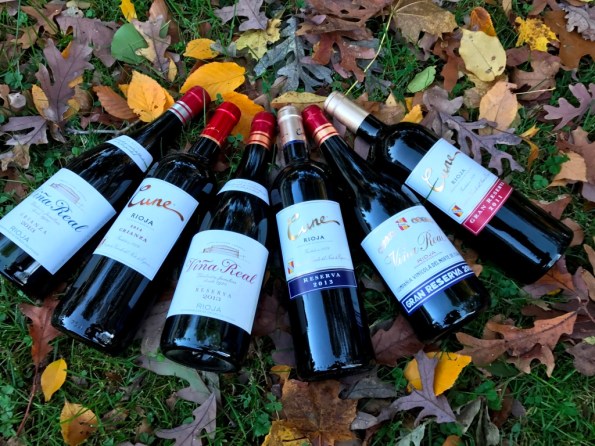
Wines were produced in Spain forever. However, the story of Rioja as we know it, started in the late 19th century, after phylloxera epidemic wiped out most of the vines in Bordeaux, but England’s thirst for Claret Bordeaux was so famous for, was at its pick. Producers in Rioja wanted to become a new source of Claret, and some of the most ambitious producers even set up their new operations right by the train station in Haro, to ensure the best transport for their wines (you can read more here).
CVNE was created by two brothers in 1879, and the ownership stays in the family even today. In 1920, Viña Real line of wines was started to produce Rioja in new, modern style. CVNE owns about 1360 acres of vineyards, located in Rioja Alavesa and Rioja Alta. Both appellations have similar soils and Atlantic coastal climate exposure, however, Rioja Alta vineyards are located at the higher altitudes than Rioja Alavesa, which shows in the resulting fruit.
Before we will enter the battle, we need to establish some ground rules, to make sure that our fighters are in the same “weight category”. The rules are not difficult: there are 4 main varieties which can be used in Rioja – Tempranillo, Garnacha, Graciano and Mazuelo (Carignan). Together, these 4 varieties should represent at least 85% of the blend or 95% of grapes are destemmed; there are few other grapes allowed to be used in the leftover percentage. Crianza wines should be aged for at least 2 years ( 6 months in the cask); Reserva – 3 years (12 months in the cask); Gran Reserva – 5 years (18 months in the cask).
Okay, now that we set the rules, let the fight begin.
Battle Crianza:


2014 Cune Crianza Rioja DOCa (13.5% ABV, $13, 85% Tempranillo, 15% Garnacha and Mazuello, appellation Rioja Alta)
C: Garnet
N: earthy smell, freshly crushed blackberries, acidity, cedar box,
P: medium body, pronounced minerality, restrained fruit, clear acidity, tart cherries, soft, round, hint of tobacco, asking for food
V: 8-, restrained and tart, definitely improved after a few hours of breathing
2013 Viña Real Crianza Rioja DOCa (13.5% ABV, $15, 90% Tempranillo, 10% Garnacha, Graciano and Mazuello, appellation Rioja Alavesa)
C: Garnet
N: surprisingly different, dark fruit, touch of tobacco, touch of sweetness
P: medium+ body, firm structure, cherries and tart of cherries pit, even brighter acidity than a previous wine, more present mouthfeel
V: 8-, a touch fruitier and more round than previous wine. Different but equally good.
Conclusion: Tie. You can definitely taste the difference – Cune Crianza is more restrained and tight, and Viña Real is more round and fruity from the get-go. Slight difference in age and vintage might play a role. The wines would ask for a different food, but otherwise, they are equally good wines.
Battle Reserva:


The Reservas match fair and square – same vintage, same age in barrel, very similar grape composition
2013 Cune Reserva Rioja DOCa (13.5% ABV, $28, 85% Tempranillo, 15% Garnacha, Graciano and Mazuello, appellation Rioja Alta)
C: dark garnet
N: medium+ intensity, leather, touch of sweet plum, cedar box, very inviting
P: medium weight, tart, acidic, a bit of sour cherries, explicit tannins. Needs time.
V: started opening after one hour in the open bottle. More fruit showed up, perfect structure, very pleasant. Excellent overall. 8+/9-
2013 Viña Real Reserva Rioja DOCa (13.5% ABV, $32, 90% Tempranillo, 10% Garnacha, Graciano and Mazuello, appellation Rioja Alavesa)
C: dark garnet
N: medium- intensity, touch of the forest floor, mushrooms, tobacco, eucalyptus
P: cherries, cigar box, medium+ presence on the palate, crisp acidity, very pronounced French oak tannins, needs a lot of time
V: more approachable than the previous one, but still should improve with time – get a case and forget it. Also a great improvement after an hour. Wow. Superb. 8+/9-
Conclusion: Advantage Viña Real. The wines are clearly stylistically different. Appellation might play a role, and the winemaking technique, of course. I slightly preferred Viña Real, as it was a bit more round versus more austere Cune.
Battle Gran Reserva:


Here we have different vintages (both considered excellent, but I think 2010 has a slight edge up over 2011), different appellations and different grape compositions.
2011 Cune Gran Reserva Rioja DOCa (13.5% ABV, $47, 85% Tempranillo, 10% Graciano, 5% Mazuello, appellation Rioja Alta)
C: dark garnet, practically black, with Ruby rim
N: dark fruit, roasted meat notes, sage, eucalyptus
P: forthcoming tannins, tar, cherry, tart, with lip-smacking acidity, really long finish.
V: 8+, within 20 minutes of opening, not ready even remotely. After about 3 hours in the open bottle, the wine became opened up enough to become delicious.
2010 Viña Real Gran Reserva Rioja DOCa (13.5% ABV, $47, 95% Tempranillo, 5% Graciano, appellation Rioja Alavesa)
C: dark garnet, just a shade lighter than the previous wine
N: more open than previous wine – blackberries, graphite, pencil shavings, cedar box, iodine
P: incomparably more drinkable, fresh cherries, open, bright, perfect structure, eucalyptus, nicely integrated tannins
V: 8/8+, you feel the need for time, but the wine is a lot more approachable
Conclusion: Advantage Cune. First, nobody should drink 2010 Gran Reserva now. It is simply a waste. Buy it at a great price, and put it aside for another 15-20 years, especially from the outstanding vintage such as 2010. Just to explain the result here, I slightly preferred the firm structure of Cune versus fruity appeal of Viña Real.
As you can see, we didn’t find a winner of our Tempranillo battle – all 6 wines Tempranillo perfectly, as one would expect from such a great producer as CVNE.
I wish wine would be the only real battle we ever have to fight – wouldn’t that be great? Enjoy your glass of Tempranillo, no matter where it came from and celebrate the noble grape of Spain! Cheers!
Daily Glass: An Australian Score
I pride myself with very wide wine horizon. I scout wines from literally everywhere in the world – China, Japan, Croatia, Bulgaria or Hawaii – bring it on, the more obscure, the better, I will be happy to try them all.
Nevertheless, a majority of my daily drinking evolves around Italy, Spain, and California, with a little injection of France. The rest of the wine regions make a very sporadic appearance at our house – without any prejudice or malicious intent – just stating the fact.
Nevermind China and Japan, which are still going through an adolescence as wine producing countries – let’s talk about Australia instead. About 20 years ago Australia was leading wine imports in the USA. As you would enter a wine store, you were greeted with countless Australian wine selections.
Today, Australian wines are relegated to the back shelves, and they are definitely not on top of the wine consumer’s mind (in the USA for sure). Ups and downs are hard to analyze in the wine world (think of the devastating effect of the movie Sideways on Merlot consumption), and such an analysis is definitely not the point of this post, no matter how interesting such a discussion could’ve been.
As I stated before, Australian wines are rare guests at our table, and this is not deliberate – I enjoyed lots and lots of excellent Australian wines, and have an utmost respect to what this country can deliver. I’m always ready to seize an opportunity to try an Australian wine, especially if it comes with a recommendation.
Such recommendation can present itself in lots of different ways – a friend, a magazine, an Instagram post, a tweet – or an offer from the Last Bottle Wines, especially during the Last Bottle’s infamous Marathon events. During the Last Bottle Marathon, you can buy the wines in single bottle quantities, which I like the most as you can create your own tasting collection quickly and easily.


If the wine is offered for sale by the Last Bottle, it definitely serves as an endorsement for me. The folks at Last Bottle know the wines – if they offer something, it means the wine really worth trying. During the last Marathon, the 2015 Gemtree Uncut Shiraz McLaren Vale (14.5% ABV) attracted my attention. I don’t know what made me click the “buy” button – the name “Gemtree” (sounds interesting, isn’t it?), or the word ‘Uncut” (again, this somehow sounds cool to me as well), but I did click that button quickly. You see, you only have a split second to get the wine – you blink, you lose – and I scored the bottle of this Australian Shiraz.
I pulled the bottle from the wine fridge, twisted the top and poured into the glass. Dark ruby color, a whiff of the blackberries. The palate had a tremendous amount of salinity over the crunchy blackberries – I guess this was an effect of drinking this wine at a cellar temperature. But it was still attractive. While admiring the simple label I saw the word which made me very curious – “Biodynamic”, and then the back label provided lots more information about how this wine was made. To me, “sustainable” is a very important wine keyword, and whatever extras “biodynamic” entails, the biodynamic wine is always a sustainable wine – and it is definitely important for me.
After warming up, the wine became generous, layered, showed soft tannins and perfect crunchy backbone of dark fruit with some dark chocolate notes and touch of a spicy bite – all perfectly balanced and delicious (Drinkability: 8+). The name “Gemtree” kept me intrigued, and the picture on the label was very attractive in its simplicity, so I went to the Gemtree Wines website to learn a bit more. I rarely quote from the winery websites, but I think in this case this is quite appropriate (here is the link to the source):
“This is our Gemtree story…
There was once a tree. Not the tallest tree, nor the oldest tree, but a tree that had put its roots in just the right part of the paddock. Here the soil was deep and layered – sometimes hard and rocky, elsewhere soft and sandy – and the wind had just enough room to move, and even the rain – when it was kind enough to visit – would fall evenly and gently.
Because of its favoured position, the grasses grew tall against its trunk, and the wild flowers were easily encouraged to grow closely around it, and the insects and birds that looked to trees for shelter and for vantage, eagerly moved in.
One day a farmer approached the tree and wondered: “You do not grow the strongest, nor the fastest, so why is it that you grow the best fruit?”
The tree let the answer whisper through the wind in its branches: “If I am shown a patient mind and a gentle hand, if I am left to follow the rhythms of my seasons – to rest in Winter; to revive in Spring; to make busy in Summer; and to provide in Fall – then I can offer fruit that tastes not just of the ground upwards, but also of the sky downwards, and of everything around me.”
The farmer thought to himself: “This is truly a Gemtree – it takes only what it can give back to the land, it contributes to its surroundings, and it provides for those that live around it.”
This is the heart of the Gemtree story: growing better wine ~ naturally.“
Here you are, my friends. I don’t know how often you drink Australian wines, but Gemtree is definitely the name to keep in mind for your next round of wines from down under – I think you will be happy with your score. Cheers!
Three Beautiful Rosé To Fit Any Budget
Can I give you a small piece of wine advice? I promise it will be short and simple. Here it goes: if you are looking for an excellent value wine, look for the wines of Domaines Paul Mas from France. That’s it. End of the advice. And I can pretty much finish the post right here as this was my main point for today.
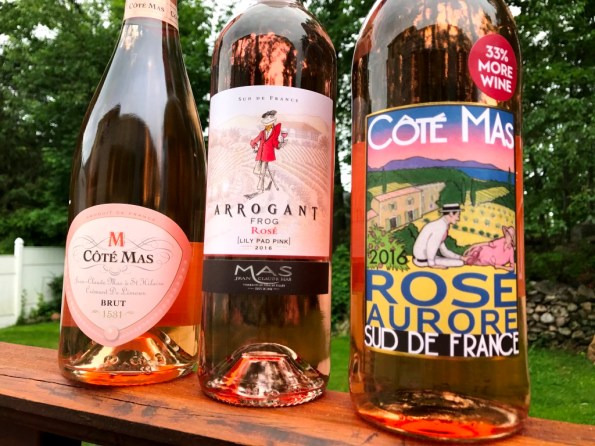
I discovered the wines of Paul Mas 4-5 years ago, and ever since, they were my perennial favorites. Red, White, Rosé, Sparkling – I tried many of the wines (here are a few links – reds, sparkling) and they always delivered – at a great QPR, whether you are buying them at a store or at a restaurant. “Affordable luxury” is a perfect definition for Paul Mas wines, as these wines deliver a great value – without the need to rob the bank or borrow from 401k.
The story of Domaines Paul Mas started in 1892 in the small town of Pézenas in Languedoc (Pézenas’s fame is usually associated with the famous French playwright Molière). The modern part of the history of Domaines Paul Mas, however, is associated with Jean-Claude Mas, who fell in love with winemaking at the age of 3 (yep, and if you want the whole story, you can read it here). Jean-Claude Mas is often credited as a pioneer who is working hard to change the winemaking in Languedoc from the focus on the quantity to the focus on the quality, to bring Languedoc to the old glory of 2000 years of winemaking.
The wines I want to talk about today are happened to be all … Rosé. I don’t know if this is an effect of summer, but it seems that the pages of this blog are lately nicely colored in pink. Nevertheless, the wines below are well worthy of your attention and deliver a great value which is really hard to beat. Here we go:


2016 Paul Mas Rosé Aurore Pays d’Oc (13% ABV, $8, 1L, 30% Cinsault, 20% Syrah, 50% Grenache Noir)
C: beautiful pale pink, light salmon
N: touch of fresh strawberries, gentle, medium intensity.
P: strawberries all the way, perfect balance, nice, refreshing, clean.
V: 8, outstanding, just perfect.
2016 Arrogant Frog Rosé Lily Pad Pink Pays d’Oc (13% ABV, $8, 100% Syrah)
C: bright pink, intense but without getting into reddish hues
N: strawberries, medium intensity.
P: strawberries with touch of lime, good acidity, good balance.
V: 7+, perfect everyday Rosé
NV Coté Mas Rosé Brut Crémant de Limoux (12% ABV, $15, 70% Chardonnay, 20% Chenin Blanc, 10% Pinot Noir)
C: beautiful bright pink
N: toasted bread notes, crisp, fresh
P: fresh, clean, lemon, tart strawberries
V: 8, outstanding Rosé sparkling, will compete with any Champagne
Have you had any of these wines? Are they a great value or what? Let me know! Cheers!
Enjoy Your Summer A Little Bit More – With Rosé from WTSO
Is summer the best time of the year? Well, I love all seasons, but with the right weather, summer might be the most enjoyable. Can we enjoy it “better”? Of course – with a glass of Rosé in your hand.
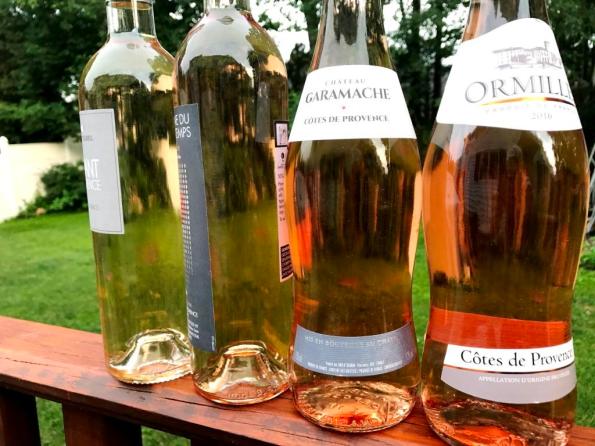
There is something special about the Rosé. We eat with our eyes first, and we drink that way too. If you think about color of the white wine, you get the range from literally a clear water to a dark gold – white wine is fun to look at, but the color of it doesn’t provoke much thought, unless you are in a blind tasting setting. Similar story with the reds – the color goes from the bright ruby to literally black, but again, the color doesn’t bring that much of the visual pleasure.
Rosé is a totally different game. The shades of pink go from the onion peel to salmon to copper to electric pink, and just a visual effect of the bottle of Rosé is appealing and uplifting, it says “the world looks a little bit better now, isn’t it”? We don’t always carry around those pink-colored glasses which improve our life’s outlook, but the bottles of Rosé can have the same effect. Who is with me? Yep, go pour yourself another glass.
So we agreed that Rosé itself can make our summer better. Can we further improve that? Of course! With the help of Wines ‘Til Sold Out, commonly known as WTSO. WTSO provides tremendous service to all of the wine lovers – it finds great wines at amazing prices – and passes savings to all of us. To make our summer even better than it is, WTSO is offering a special Côtes de Provence Rosé 4-pack collection, which you can find here.
I had an opportunity to taste these wines and here are my impressions:
2016 Famille Négrel Diamant de Provence Côtes de Provence (12.5% ABV)
C: pale, very pale pink
N: minerality, gunflint, ocean breeze
P: beautiful fresh profile, touch of underripe strawberries, crisp acidity, nice salinity, excellent balance. Appears very light, but very present in the glass.
V: 8, very nice, perfectly enjoyable, and guaranteed to remove at least 5 degrees off the thermometer.
2016 Château Garamache Côtes de Provence (12% ABV)
C: light salmon pink
N: muted, touch of green leaves
P: savory, good lemony acidity, but missing on the overall package. Acidic finish, needs more fruit.
V: 7-, should be good with food – salad comes to mind.
2016 Château Gassier Ormilles Côtes de Provence (13% ABV)
C: beautiful pink color, rose gold
N: onion peel, strawberries, medium intensity, inviting
P: ripe strawberries with touch of honey, a bit of perceived sweetness, perfect balance, delicious.
V: 8/8+, quintessential Provence. When I think “Provence”, this is a taste profile I expect
2016 Domaine du Garde Temps Tourbillon Vielles Vignes Côtes-de-Provence (12.5% ABV, 50% Cinsault, 30% Grenache, 20% Syrah)
C: bright salmon pink
N: onion peel and savory strawberries
P: fresh, crisp, tart strawberries, beautiful palate cleanser, excellent balance.
V: 8, nicely present wine, good weight in the mouth, excellent for summer and not only. Needs about 20 minutes to breath.
Enjoy your summer and drink Rosé! Cheers!
Daily Glass – Pinot Grigio To Ask For By Name
 Blind tasting is probably the most difficult part of any of the Guild of Sommeliers examinations. It is one thing to memorize the names of the hundreds of the German villages producing Riesling. It is an entirely different thing to be able to distinguish, let’s say, Cabernet Sauvignon and Merlot, and identify a possible region, vintage and even a producer.
As with anything humans do, blind tasting also has its own set of “tricks” associated with it. Some of them perfectly legitimate – for instance, Nebbiolo wines (Barolo, Barbaresco, etc) typically have red brick hue in the glass, even when young, so this is a great “giveaway” for the blind tasting. Or the fact that the tannins from the American oak are perceived more in the back of the mouth, versus the French oak, which comes in front.
But then some of the “tricks” have nothing to do with the characteristics of the wine. Here is one, a statement by the Master Somms running the exam: “we will never pour Pinot Grigio for your blind tasting”. Pretty good hint, right?
To a degree, Pinot Grigio became a victim of its own success. Santa Margherita Pinot Grigio became an overnight sensation in 1979, driving demand for the Pinot Grigio wines in the USA. That, in turn, led to the appearance of the great number of “imitations”, Italian Pinot Grigio which had no bouquet or a flavor but was very easy to drink and affordable. Fast forward on, and Italian Pinot Grigio became the “wine to ignore” for any self-respecting oenophile, next in line to White Zinfandel.
But let’s not forget that Pinot Grigio is simply an Italian name for the grape known throughout the world as Pinot Gris. As soon as one hears Pinot Gris, I’m sure Alsace comes to mind first, and then, of course, the Oregon. Alsatian Pinot Gris is extremely well respected among wine lovers, beautiful when young and amazing with some age on it. Oregon Pinot Gris is beautifully crisp, clear and flavorful, and as such, a popular choice for the wine consumers as well. So why can’t Italian Pinot Gris, err, Pinot Grigio be a well respected and delicious wine?
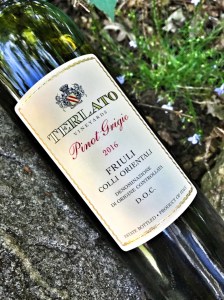
Well, it can. There are many producers who make Italian Pinot Grigio a wine worth seeking and drinking – for instance, how about Elena Walch or Livio Felluga – if you never had their Pinot Grigio, this is a mistake which you need to correct ASAP. And here is one more Pinot Grigio which you need to ask for by name – the one made by Terlato.
Terlato is a very well respected wine importer – and by the way, Tony Terlato was responsible for the overnight success of Santa Margherita, creating that Pinot Grigio phenomenon in the USA. Terlato Family also goes beyond just importing, producing the wines under their own label around the world. The wine I suggest you will look for is Terlato Vineyards Pinot Grigio from Friuli. It is very different from the mainstream – in Terlato’s own words, “First we pioneered Pinot Grigio. Now we’ve revolutionized it”.
Friuli region is nestled in the foothills of the Alps, in a close proximity to the Adriatic sea, which creates great winegrowing conditions. Add to that poor soils and hillside vineyards with 20-30 years old vines, harvested by hand in the small plots, and you’ve got an excellent foundation for making a delicious wine.
Here are my notes from the tasting of this wine:
2016 Terlato Vineyards Pinot Grigio Friuli Colli Orientali DOC (13% ABV, $22.99)
C: light golden
N: intense, minerally, touch of honeysuckle, white stone fruit and fresh brioche, very promising.
P: crisp acidity, touch of gunflint, pronounced lemon, touch of freshly cut grass, medium body softly coating the mouth. Great complexity.
V: 8/8+, wow, very impressive.
Here you are, my friends. Next time you are looking for a bottle of wine, you might want to include Pinot Grigio into your shopping list. Trust the producer, and you might uncover something new to enjoy. Cheers!
Discovering Portuguese Wines, One Winery at a Time – Esporão
Portuguese wines used to be an oenophile’s best secret. Portugal is rather a small country with very good climate for grape growing, lots of slopes and poor soils to force the roots to go deep in search for nutrition. People in Portugal heavily relying on their own agriculture – very little of the food products are imported, and the wines were for the long time produced mostly for the consumption inside the country. Add here a long and successful winemaking history (thousand years give or take a few) and lots of indigenous grapes (actually, the most of them are), and you have a recipe for excellent wines which are hardly known anywhere.
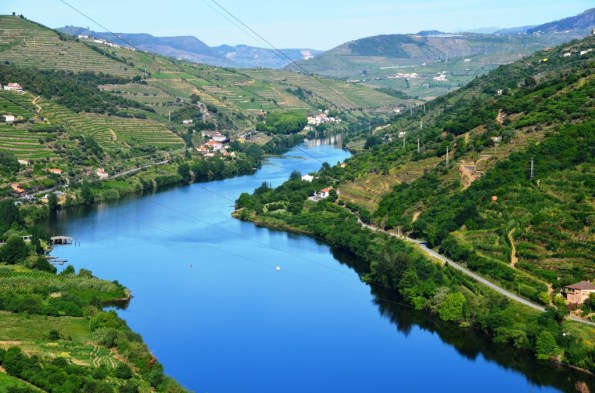
In today’s global economy, where love to the liquid grapes has no boundaries, it is hard to keep something like this as a secret. All of us, lucky travelers, who manage to visit Portugal and haul the wines back by suitcases and boxes, are obviously only helping for this secret to be … well, much less of a secret. And thus today let me contribute to the secrets-free wine world and talk about Portuguese wines produced by the company called Esporão. (take a look at their website to see beautiful viewcams of the vineyards and olive tree orchards).
Herdade do Esporão boundaries were established in 1267, which definitely gets it in the group of some of the oldest estates in Europe, in the region of Alentejo, about 100 miles southeast of Lisbon. The estate remained virtually unchanged until it was purchased by José Roquette in 1973. It is now run by his son João Roquette, who upholds his father’s winemaking traditions. In 2008, Esporão expanded into the Douro Valley with the purchase of the Quinta dos Murças estate which traces its history back to 1714. Quinta dos Murças vineyards are located on the slopes with the elevations of 262 – 1312 feet above sea level, in the Cima Corgo sub-region which is one of the most coveted in the Douro.
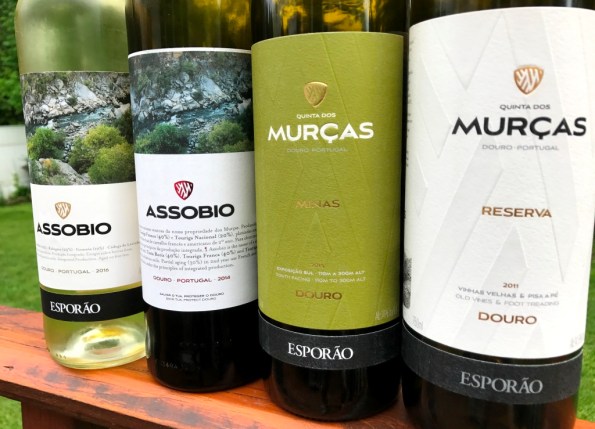
While I would love to talk about many different wines produced by Esporão, today our focus is on the Esporão wines from Quinta dos Murças. Here is what I had an opportunity to taste:
2016 Quinta dos Murças Assobio White Douro Valley, Portugal (12.5% ABV, $13, 30% Viosinho, 25% Verdelho, 25% Rabigato, 10% Gouveio, 10% Códega do Larinho)
Straw pale. Touch of lemon and white stone fruit on the nose, touch of grapefruit zest, medium+ intensity. Good crispy acidity on the palate with round, almost plump body, touch of green apple. Drinkability: 8-
2015 Quinta dos Murças Assobio Red Douro Valley, Portugal (13.5% ABV, $13, 40% Touriga Nacional, 30% Tinta Roriz, 30% Touriga Franca)
Dark garnet, restrained nose, crunchy raspberries, sweet oak undertones, very serious tannins on the palate, French oak, excellent balance, round, very tasty. Drinkability: 8+, best QPR in the tasting
2015 Quinta dos Murças Minas Douro Valley, Portugal (14% ABV, $25, Touriga Nacional, Touriga Franca, Tinta Francisca, Tinta Roriz, Tinta Cão)
Dark garnet color, fresh jammy cherries, baking spices, medium intensity, touch of barnyard, restrained palate, tart cherries, good acidity, excellent balance, Drinkability: 8. Added Bonus – new grape, Tinta Francisca
2011 Quinta dos Murças Reserva Douro Valley, Portugal (14% ABV, $45, Touriga Nacional, Touriga Franca, Tinta Roriz, Tinta Amarela, Tinta Barroca, Sousão)
Almost black. Medium intensity, black fruit medley on the nose, eucalyptus, sage, wow – delicious.
Round layered palate, spices, dark fresh fruit, good acidity, outstanding. Drinkability: 9-
Have you tasted Esporão wines? What is your opinion of Portuguese wines? Do you have any favorites? Cheers!
Come For The Name, Stay For The Wines: Murrieta’s Well in Livermore Valley
 “Your Day Just Got Better” – how fun is it to read something like this? Even if it is written on the cardboard box [ahem, full of wine]? Ahh, sorry. Especially(!) if it is written on the box full of wine!
When I was invited to participate in the Snooth virtual tasting of the wines of Murrieta’s Well, something bothered me in that name. Something very familiar, but I really I couldn’t get a grip as to what it was – until I started working on this post and figured out that Murrieta was referring to Joaquin Murrieta, a Mexican miner turned hero/bandit to avenge his wife in the first half of 19th century. Growing up I remember been moved by a beautiful music and singing in one of the very first rock-opera produced in the former USSR, called “The Star and Death of Joaquin Murrieta” (Звезда и смерть Хоакина Мурьеты). That is what my brain was trying to associate with – but again, this only became obvious after I started working on the post.
Similarly to the Joaquin Murrieta himself, the Murrieta’s Well vineyards go back to the early 1800s. In 1884, Louis Mel purchased the estate, built the winery and planted new vineyards using cuttings brought directly from France, from none less than Chateau d’Yquem and Chateau Margaux. In 1933, he sold the estate to his friend Ernest Wente, and ever since the estate was a part of the Wente properties. Actually, the winery received name “Murrieta’s Well” only in 1990 when it was revived, and from there on the modern history of Murrieta’s Well started. Rest assured that you can still find very old and still producing vines as part of the Murrieta’s Well vineyards.
Before we talk about the wines, let me ask you a sidebar question. Let’s say you are visiting Northern California on business and staying somewhere between San Francisco and San Jose. Let’s assume you have a bit of a free time and want to visit a winery. Outside of the city wineries, which can be found today in many places, what do you think would be the closest “wine country” for you to visit? If you said Napa, it is a wrong answer! Yes, you can go to the Santa Cruz mountains and visit Ridge (good choice), but – your best bet will be Livermore Valley! You will find a good number of excellent producers in Livermore Valley, all within 45 minutes ride (not talking about California traffic here, sorry). If you will go, make sure to include Murrieta’s Well and Wente on your short list.
Now, let’s talk about making the day better – I think kind folks at Murrieta’s Well know how this can be done. When you open the box and first thing you see is a written note “Your Day Just Got Better“, whatever the day you had before, it immediately gets better :). Then you see the bottles, packed with meticulous care, and feel even better. Meticulous care obviously goes not only into the packing, but first and foremost, into the wines themselves. Winemaker Robbie Meyer believes in the art of blending, and I can tell you, one of the flagship blends, The Spur, was my favorite wine of the tasting. Robbie Meyer’s philosophy is to harvest and vinify all the grapes separately, and then combine them into the final blend.


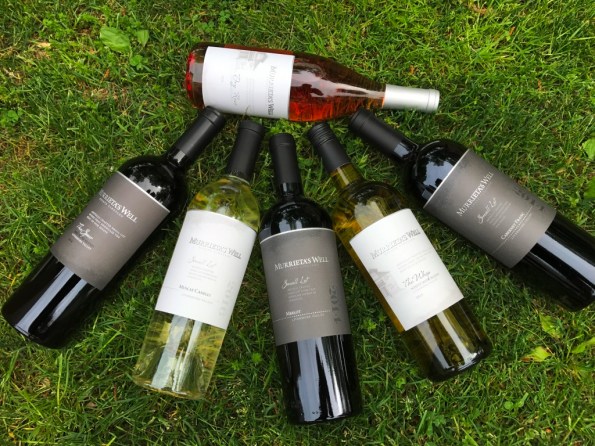 For what it worth, here are my tasting notes for the wines:


2016 Murrieta’s Well Dry Rosé Livermore Valley (14.1% ABV, $30, 55% Grenache, 45% Counoise)
C: pale pink
N: intense, fresh, strawberries and strawberries leaves,
P: perceived sweetness but perfectly dry, underripe strawberries, nice and round
V: 7+/8-
2015 Murrieta’s Well The Whip Livermore Valley (13.5% ABV, $24, 30% Sauvignon Blanc, 30% Semillon, 30% Chardonnay, 7% Viognier, 3% Muscat Canelli)
C: straw pale
N: touch of perfume, tropical white fruit, guava, medium intensity,
P: touch of sweetness, nicely restrained, good acidity in the back, more tropical fruit, good balance
V: 7+
2016 Murrieta’s Well Muscat Canelli Livermore Valley (14.2% ABV, $35, 100% Muscat Canelli, 100 cases produced)
C: light straw
N: perfumy, intense, sweet, intense white fruit
P: grapefruit, grapefruit zest, good acidity, round
V: 7+, excellent summer wine


2014 Murrieta’s Well Small Lot Merlot Livermore Valley (14.1% ABV, $48, 90% Merlot, 7% Cabernet Sauvignon, 3% Petit Verdot)
C: Garnet
N: medium plus intensity, touch of sweet cherries and earthiness, mint, touch of cassis, overall very inviting.
P: good earthy fruit, cassis, medium to full body, touch of sweet oak, outstanding overall
V: 8+, excellent, delicious wine
2014 Murrietta’s Well Small Lot Cabernet Franc Livermore Valley (14.1% ABV, $58, 88% Cabernet Franc, 6% Cabernet Sauvignon, 6% Petit Verdot)
C: dark garnet)
N: touch of vanilla and mint, black and red fruit, medium intensity
P: touch of black currant, vanilla, chewy structure, baking spices, medium to full body.
V: 7+, I like my Cabernet Franc to be a bit leaner, but a very good wine overall.
2014 Murrieta’s Well The Spur Livermore Valley (13.5% ABV, $30, 45% Cabernet Sauvignon, 22% Petite Sirah, 14% Petit Verdot, 10% Merlot, 9% Cabernet Franc)
C: dark garnet
N: crunchy raspberries, intense, tobacco, sage
P: round, layered, black currant, silky smooth, touch of sweet tobacco, eucalyptus, fresh acidity, impeccable balance
V: 8+, this wine would make me happy any day
Whether Joaquin Murrieta was an avenger, hero or bandit – it is hard to tell. We don’t even know if he was just a legend. But – the wines named in his honor are real, and you should definitely look for them. Cheers!
Last Bottle Sign Up ($10 credit)




 Talk-A-Vino