Archive
Thanksgiving Day Experiences – 2020 Edition
 2020. What a year.
Thanksgiving is my favorite holiday, as it revolves around family, food, wine, and friends. Close friends, who are more a family. Friends we celebrated Thanksgiving together with for the past 29 years. And 2020 managed to put a damper on that too, among a vast array of destruction this year will leave behind. Thanksgiving 2020 was about immediate family, food, and wine.
But even in 2020, the proverbial silver lining can be found. This probably was the most relaxing Thanksgiving ever. The menu was dramatically reduced – the family of 4 doesn’t need much of the elaborate appetizers and a vast array of side dishes, so cooking was mostly stress-free. Mostly, however, is a keyword here, as the cooking of the turkey became an unintended study of the operations of our oven.
I’ve cooked the turkey using most of the possible ways over the years, with the exception of deep-frying – roasted, roasted in the bag, turducken, deboned and roasted, smoked (smoked was the house favorite for the past 3 years). I’m also a big fan of slow cooking when you cook low and slow for a long time, so we decided that this was the way to go this year. Turkey was all buttered up with cavity stuffed with aromatics (garlic, lemon, celery, herbs), and the turkey went into the oven at around midnight at 200°F. Or at least I thought that it was 200°F. In the morning, the thigh registered only 152°F (you really need 185°F there) – this is when we decided to check the temperature in the oven using the same meat thermometer, and found out that it was at least 20 degrees lower, barely reaching 180°F, which greatly extends cooking time. We spent the next 6-7 hours playing with that temperature until we finally reached the desired doneness. 40 minutes at 450°F uncovered rendered a beautiful bird with crispy skin. So as long as you trust your oven, slow cooking is the way to go. Added benefit – the best ever turkey gravy, made from the drippings (here is the link to the recipe in case you need one).


The rest of the food prep caused no heartburn, everything came out quite well. We did the same stuffing for the second year in a row. While the recipe is very simple (but it takes time), the result is simply a delightful dish loved by everyone. One more standout was Nantucket Cranberry Pie, which is incredibly simple to make but yet again, the result is superb.
What didn’t work well at all (every occasion needs a flap, right?) was my attempt to recreate childhood memories. I ordered black caviar from Costco (yes, guilty as charged), which came pre-packaged with Creme Fraiche and tiny blinis (a dollar-coin-sized Russian pancakes). First, the caviar itself was just so-so, both in texture and in the taste. But following the instructions and serving it with blinis was a complete disaster, as those dry nibbles resembling poorly made English muffins were, in a word, disguising, both in the taste and texture, especially the texture. Talk about disappointments… But as I said, this was the only flap.
And then there were wines. Over the years, I developed an “All-American” approach to my Thanksgiving wine selection. 2020 was not an exception, and I decided to open definitely more than we could drink, but still have fun with the wines.


Two out of four wines came as part of the mystery pack from Last Bottles which were offered during Thanksgiving. I always missed that deal, but this year I managed to grab the 12 bottles for $144, which made it a great deal. So far I tried 5 bottles out of those 12, and they were all excellent, so the white and Rosé were coming from that set. Vinum Cab Franc was a sample that I received as a preparation for the upcoming #CabFrancDay celebration. I also managed to get cellar-aged Cayuse as part of this year’s offering (directly from Cayuse), so I decided that it might make the Thanksgiving celebration quite special. And yes, it did…
For what it worth, here are my wine notes:
2017 Casino Mine Ranch Vermentino Shenandoah Valley (14.1% ABV)
Light golden
Honeysuckle, white flowers, inviting
Delicious. Whitestone fruit and tropical fruit, a touch of honey undertones, Gewurz-like spiciness, good acidity, good balance.
Should play well with food (pre-dinner notes)
8-, it was good with food
2018 Azur Rosé Napa Valley (12.5% ABV)
Gold with a copper hue
Similar to the previous wine, honeysuckle, ripe strawberries
Good acidity, strawberries all the way, fresh, vibrant, full of energy. Excellent.
8-/8, tremendous acidity on the second day. Worked well with food.
2016 Vinum Cellars The Scrapper Cabernet Franc El Dorado (15.18% ABV, $35, 26 months in 2 year French Oak)
Dark garnet
Red and black fruit, a touch of black currant
Black currant, dark chocolate, sweet cherries
8, good balance, well-made wine.
2011 Cayuse Syrah En Cerise Vineyard Walla Walla Valley (13.9% ABV)
Dark garnet, almost black
Liquid rocks, a touch of barnyard, iodine, can’t stop smelling
Liquid rock, tart cherries, tar, pepper, iodine, firm structure, layers and layers of flavor. Wow.
9-/9. Surprising pairing – worked amazingly well with Nantucket cranberry pie. Worked well with turkey as well.
As you can tell, the wine program was a complete success – and I definitely can’t complain about spending the holidays with just the closest family
That’s my Thanksgiving story. Hope you had fun too!
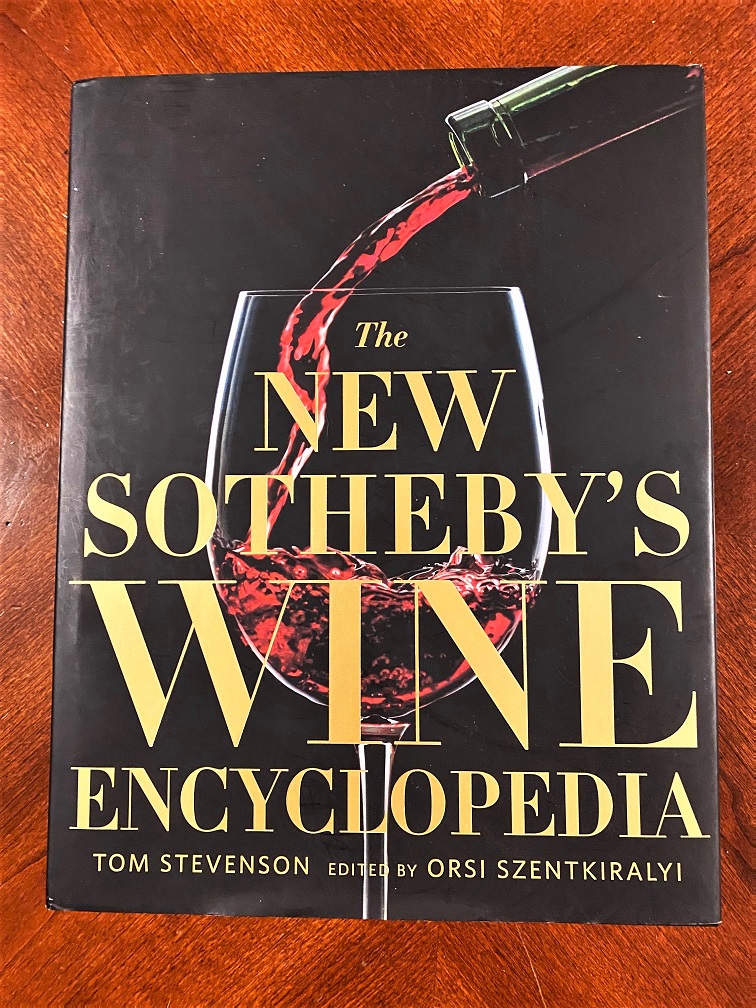
The New Sotheby’s Wine Encyclopedia – A Must Have For A Winelover
 Do you like wine books?
Better question: do you read wine books?
Wine book is the next best “wine thing” after the wine itself – assuming you drink wine for pleasure, and not for the effects of alcohol. Reading the wine book gives you the pleasure of learning about your favorite subject, it is available to you any time you want it, and you don’t have to limit your consumption. There is also an ultimate pleasure of nesting in the favorite chair with a book in your hands, and turning off all the annoyances of the world at least for some time.
Only who reads the books today, right?
We live in the times when Google knows all the answers, or at least it pretends that it does, so we can search, find, read, and instantly forget whatever information we obtained. Depending on your luck, that information might be totally wrong or irrelevant, but that can be a subject for the whole other conversation. But when we reach out to Google, we think that we are saving time and doing ourselves a favor by simplifying our lives – all of it instead of opening the book and actually reading to learn and understand. But oh, who has time to read. Hey, google…
Today I want to bring your attention to the book which you don’t have to read. Yep, you heard me right. You don’t really have to read it. But you must have it. Makes no sense? Oh yes, it does.
You want to have “The New Sotheby’s Wine Encyclopedia” by Tom Stevenson edited by Orsi Szentkiralyi because this is not some general book, this is an encyclopedia. An encyclopedia is a tool. You use it when you need an answer to a question. You use it when you want to deepen your knowledge of a particular subject, be it history of winemaking, wines of Fitou AOC, differences between Cordon de Royat and Geneva Double Curtain vine training systems, or what to do if your wine smells like burnt rubber.
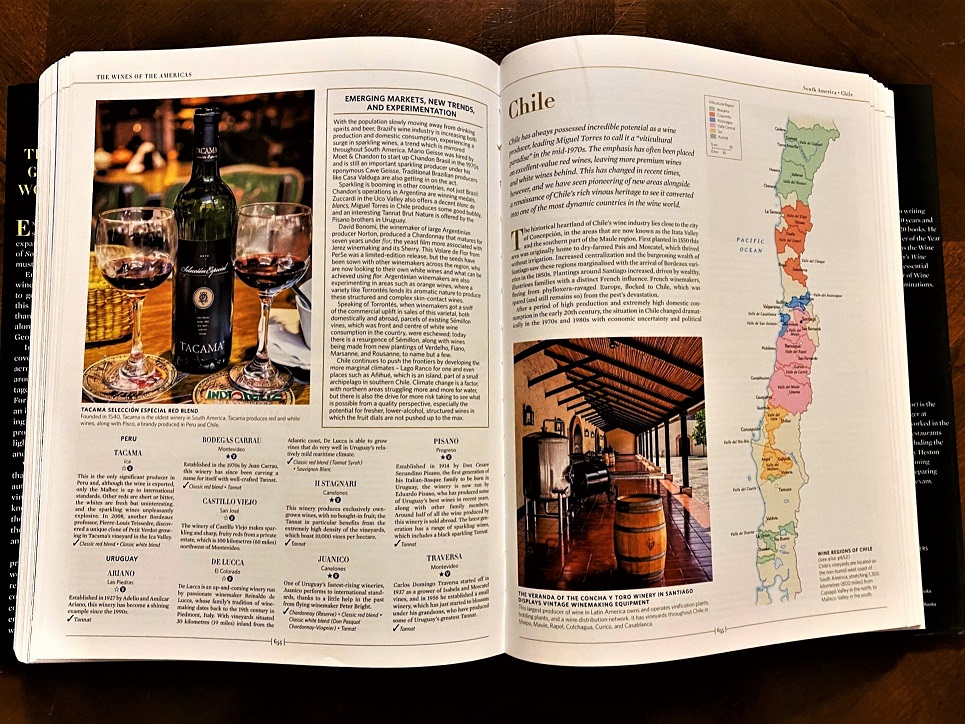
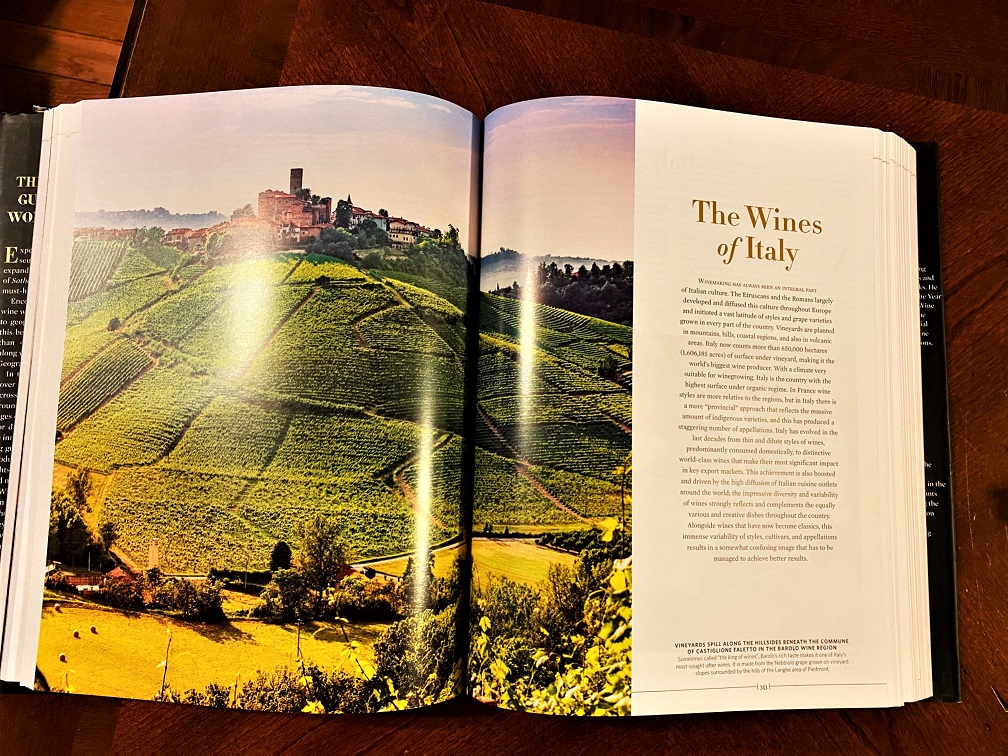
This is not a pocket-size book, but this is what makes it great. 800 beautifully illustrated pages (the book is published by the National Geographic, so great imagery is rather expected). This is a sixth edition of the book, containing more than 400 photographs, 120 National Geographic maps, and there is hardly a wine subject or a wine region that escapes the attention of the author.
It was interesting for me to see is a difference in the coverage of the different wine regions – to illustrate what I mean, see the picture below:

If you will look at clips from left to right, the first and the biggest set of pages is covering France, the next small section is dedicated to Italy, the next, even tinier, is Spain, and the last a bigger one is wines of the United States. But really, no wine region is left uncovered, even including such exotic winemaking destinations as China, India, and Japan.
My favorite part might be the last section of the book, called Micropedia. This section is a collection of wine terms and abbreviations. Yes, you can find many of these terms with the help of Google, but it might not be that easy. For example, the very first term explained in the Micropedia is ABC. If you search for “wine ABC” online, the first page which will come up will most likely be dedicated to the ABC wine store (it was for me, at least) – while the ABC used in the wine speak typically means Anything But Chardonnay or Anything But Cabernet. So if you want to know what ABC stands for, or agrafe, rondelle, or uvaggio for that matter, The New Sotheby’s Wine Encyclopedia will save you lots of time and effort (don’t take my word for it, go search for those terms).
Whether you want to learn about appellation you never heard of, the history of winemaking, or see the map of wine regions in Slovenia, this is the book which you will find the most helpful, no matter what your question is. You can find this book on Amazon and Barnes & Noble, and you can thank me later for the advice. I’m off to read about Madeira. Cheers!
The New Sotheby’s Wine Encyclopedia was provided to me as a sample, free of charge. Opinions are my own.
Wednesday’s Meritage #150
Meritage Time!
In the last issue of Meritage (#149) we talked about Italian police uncovering the crime ring focused on the production of the fake Sassicaia. While essential in its own right, this should be designated as a child’s play comparing with what’s coming. This week the wine press was overflowing with the news that the most famous wine fraudster of modern time, Rudy Kurniawan, is about to be released from jail. This article on wine-searcher is full of predictions for Kurniwan spreading his wings after deportation and doing again what he does best – making fake wine. I guess we will see, but the lovers of the first-growth and DRC should probably take notice.
Tre Bicchieri Gambero Rosso tasting in New York is one of my favorite wine events to attend – this year, it was the last grand wine tasting I managed to attend before covid took the world under its blanket. I don’t think we will have an opportunity to taste the Tre Bicchieri 2021 winners next year, but at least we can read about them in the Tre Bicchieri magazine. I can give you a few of the interesting stats – for example, 46,000 wines were tasted, 467 wines were awarded Tre Bicchieri, and 1,800 wines received Due Bicchieri Rossi award. You can also read about 12 special awards such as Bubbles Of The Year which went to 2011 OP Pinot Nero Dosaggio Zero Farfalla Cave Privée Ballabio, or Meditation Wine Of The Year which went to 1976 Vernaccia Di Oristano Antico Gregori – Contini. Don’t know about you, but I would loooooove to taste Meditation wine of the year…
When it comes to wine, is 20 years a long period of time or not? Of course, it depends. In today’s world, everything is changing fast, and while particular wine in the bottle might only barely start its aging after 20 years, the same 20 years bring a lot of change to the world of wine and wine culture at large. This article by Richard Hemming MW published at JancisRobinson.com looks into some of the changes in wine production, wine consumption, and more.
You know what time of the year this is, right? Yes, the holidays are coming! While the holidays are great, they also bring with them uneasy questions – presents. Presents are difficult and finding some suggestions always helps. If you have a wine lover in your life (and you probably do if you are reading this), here is one list I can recommend to flip through – you might find some good ideas there.
Last but not least – another grape holiday is almost upon us. On Monday, November 9th, we will be celebrating Tempranillo! Tempranillo is one of my absolute favorites, whether in its Rioja, Ribera del Duero, or Toro rendition – but Tempranillo today is one of the most planted and most popular grapes in the world, so you can look for it well beyond Spain. California, Washington, Oregon, Texas, Australia all produce delicious Tempranillo wines. Get your favorite bottle ready and make sure to share your Tempranillo experiences with the world on November 9th.
That’s all I have for you today. The glass is empty, but the refill is on the way. Cheers!
Wednesday’s Meritage #149
Meritage Time!
Let’s start with something you already knew, and hopefully, participated in – if not, it is not too late: do you know that October is #MerlotMe month? Way before social media was a thing, one mediocre movie (Sideways, 2004) almost killed Merlot wine sales in the USA. I remember about 8-10 years ago, a friend of mine who has a wine store didn’t have a single bottle of wine with Merlot name on the label at his wine store – nobody would buy it. The situation is much better today, but still, while some of the very best wines in the world – Petrus, Le Pin, Masseto are made exclusively from Merlot, Merlot wines still need everyone’s help to restore its pre-sideways status. You still have time to grab a bottle of Merlot from your favorite producer (need advice? how about L’Ecole No 41 or Duckhorn) and join the celebrations.
Wine can often be considered an art form. For example, Sassicaia, one of the very best super-Tuscan wines Italy has to offer. If you ever had a sip of this wine, you would agree that it is transformational, and might have a similar effect as looking at the beautiful painting. Art forms are often subject to imitations – this is actually a bad choice of the term – counterfeiting is what I’m talking about. At $300+ per bottle, Sassicaia represents a lucrative target for the counterfeiting – and that what some folks in Italy thought too. Italian police were working for more than a year to catch counterfeiting Sassicaia ring in Northern Italy – you can read the full story in the Wine Spectator article.
We grow from the adversities – this is a known fact. The poorer the soil, the harder vines have to work, the better fruit they will bear. When humans have to concur the obstacles, they grow, invent, persevere, and overcome. Humankind at the moment is fighting with the silent, invisible killer, COVID – but looking for the proverbial “silver lining”, we (humans) continuing to move forward, and whatever we invent to deal with the virus, is helping us advance far beyond that singular task. Case in point – dealing with vine diseases, such as powdery mildew. It turns out that the same UV light which is effective against the virus is effective in the fight against powdery mildew. Take the UV light source, put it on the robot tractor, and let it roam the vineyards during the night – problem solved. Or at least the solution looks very promising. For more details, read this article.
The last one for today is not even the news. It is simply a powerful story. An account of the fighting and winning against one of the most powerful forces on Earth – wildfire. This is a terrifying read, but I can’t recommend it highly enough – the story of the Smith family, defending their Smith-Madrone winery and vineyards against the recent Glass Fire, is a must-read in my opinion. You can find it here.
That’s all I have for you today. The glass is empty, but the refill is on the way. Cheers!
Let Your Palate Lead The Way
Wine can be intimidating.
Scrap that.
Wine is intimidating.
I’m always the first to disagree with the exact words I just wrote, but go watch the movie Somm, and tell me if you agree. Don’t have time to watch the movie? Go read about the German wine quality system, and then try to explain it to someone. Yes, wine is intimidating.
And no, it is really not.
If you are on a quest for the world’s most coveted wine expert title, such as the Master Sommelier – thinking of wine will keep you up at night. But if you want to casually enjoy a glass of wine, there is nothing intimidating about it.
Wine is simple. Wine is binary. You either like it or not. There is nothing else to it.
All you need to learn about the wine is to … trust your palate. Let your palate lead the way. It can be unnecessarily difficult, as humans generally are easily intimidated and influenced – “everyone likes it!”, “I paid $100 for this bottle”, “the experts said it was the vintage of the century”, “there were only 500 bottles produced”, yada, yada, yada. And nevertheless, the wine is personable, the wine is individual, it is only you who can tell if you like the wine or not – no matter what anyone else thinks or says. If you will learn to trust your palate, the intimidation will be gone out of wine at that very moment.
The best (and possibly the only) way to deal with this intimidation is through the blind tasting. When you are presented with a random glass of wine, you have no options but just to form your own opinion – swirl, sniff, sip, spit, repeat – say whatever you want, but all the external influences are out. It will be your own palate which will tell you “yeah, can I have more, please”, or “never again”. The value of the blind tasting goes even further than just conquering the wine intimidation – it also helps to deal with preconceived notions. Do you have a friend who keeps saying at every occasion “boy, I hate Chardonnay, how much I hate it”? Now imagine that person praising the delicious wine in their glass, only to find out that that was that exact Chardonnay they thought is the worst wine ever? In the wine world, blind tasting is the ultimate judge and jury, and your palate is all you got to rely on – and thus you have to simply trust it, as you are you.
Learning with and about your palate is not necessarily simple. Yes, you can go to the store, get a bunch of wine and create your own blind tasting – but it might be difficult not to cheat, right? How about leaving that arrangement to the professionals? Cue in the Palate Club.


Palate Club offers an opportunity to learn about your palate through the blind tasting – and then use that knowledge to find the wines which might better match your preferences. The way it works is this. You start by ordering a tasting kit. You can start with the red or white wines, and the cost of the kit at the moment of this writing is $49. The kit arrives neatly packed in the box, with 4 half-size bottles (375 ml) wrapped and numbered.
The next thing to do is to download the Palate Club app on your phone, install it, and create your profile. Once you have done that, you are ready to discover your palate’s wine preference. After you taste the bottle, you need to rate it using the app. The process is very simple as you have to rate the wine between the 1 and 5 stars. Once you rate the wine, you get a page with all the information about that particular wine. Once you will rate all four wines in your set, you will get your initial wine palate profile.


In your palate profile, you will find characteristics such as oak, fruitiness, acidity, and other – along with explanations for the numbers in your palate profile. Every time you will rate another bottle, the values in your profile will change accordingly – what you see below in the picture, are the new values after I rated the wine number 5. Right on your profile page, you will also receive recommendations for the wines to try. As palate Club is a wine club, you can also sign up for the regular wine deliveries which will be based on your preferences.


Blind tastings are always fun – and I never do too well in them. For what it worth, below are my notes and the names of actual wines – you can see that I got ways to go to work on my blind tasting skill:
#1: California Pinot? Plums, smoke, medium to light body. Touch of an alcohol burn (wine: 2014 Pinot Noir Carneros)
#2: Not sure. syrah? Clean acidity, nice round fruit, Rutherford dust, good power. California Cab? (wine: 2015 Côtes du Rhône Réserve)
#3: Chianti? Nice cherries, needs a bit more body. I would rate it 3.5… why is that never a thing? (wine: 2014 Chianti Classico)
#4: California Cab or Cab blend? Dark fruit, baking spices, good acidity, round tannins. A touch of the alcohol burn, similar to the first wine (wine: 2015 Mendocino Zinfandel)


Now, let’s go back to the major point of this post – trusting your own palate to avoid intimidation by the bottle of wine. Would the Palate Club help you reach this goal? In my honest opinion – yes. Of course, the profile which you create has limited value outside of the Palate Club, as outside of the Palate Club nobody rates fruitiness and tannins of the wine on the 100 points scale. However, the fact that you can get your friends together and play with your wines and learn your wine liking and not liking is really something to appreciate and enjoy. Blind tasting holds the ultimate wine truth, and with the palate Club’s help, you can uncover it – and learn a thing or two about your own palate. I think this is a win-win. What do you think?
Wine Quiz #126: Which One Does Not Belong
The Wine Quiz series is not meant to intimidate. The whole idea here is to have fun and learn something new. When answering the questions, it is fully encouraged to use all available sources of information, including Google or any other search engine. There are no embarrassing answers – the most embarrassing thing is not giving it a try…
Welcome to the weekend and your new wine quiz!
Our last quiz was about numbers in wine. What I asked you to do is to figure out the logic (numbers) behind the items listed in the question, where each item has some sort of number associated with it, and then sort those numbers in the required order. Below are the questions, now with the answers:
Q1: Sort the following in the ascending order:
Arbois, Augusta, Douro, Rioja, Vernaccia di San Gimignano
Answer: the above list represents the very first appellations designated in the respective countries. The right order is:
Douro (1756), Rioja (1925), Arbois (1935), Vernaccia di San Gimignano (1966), Augusta (1980)
Q2: Sort the following in the ascending order:
Balthazar, Goliath, Jeroboam, Magnum, Marie Jeanne, Melchizedek, Methuselah, Nebuchadnezzar, Rehoboam, Salmanazar, Solomon, Sovereign
Answer: These are bottle sizes, so the right order is (with the link to the source):
Magnum (1.5L), Marie Jeanne (2.25L), Jeroboam (3L), Rehoboam (4.5L), Methuselah (6L), Salmanazar (9L), Balthazar (12L), Nebuchadnezzar (15L), Solomon (18L), Sovereign (26.25L), Goliath (27L), Melchizedek (40L)
Q3: From January to June 2020, Italy exported the highest amount of wine among all major wine-producing countries, at 577M liters (769M bottles). Sort this list of wine exports per country for the same period of time in descending order:
Argentina, Australia, Chile, France, Germany, Italy, New Zealand, South Africa, Spain, USA
Answer: As you know these are the wine exports, all you needed to do is to find the right source of data. In today’s world, absolute truth doesn’t exist, so my source of information is the Italian online publication called Wine by Numbers, freely available for download. Here is the answer:
Italy 577M
France 455.7M
Spain 345M
Chile 225M
Australia 154.3M
Germany 120M
Argentina 84M
New Zealand 78.3M
South Africa 55.7M
USA 54M
I’m happy to report that we had one player who decided to take this quiz – Jason Brandt Lewis. He correctly answered question #2, so he definitely gets an honorable mention!
Okay, for today’s quiz, let’s play another wine game – what doesn’t belong? Below are three questions. In each question, you will see a list of items that all have a common thread – only one or two (not more than 2) of those items simply don’t belong there. Can you identify what the lists are and what item(s) don’t belong and why? Here you go:
Question 1:
Cork taint
Maderization
Mercaptan
Oxidation
Sapidity
Question 2:
Salta
Patagonia
Jujuy
La Rioja
Atacama
Catamarca
Question 3:
Madeira
Marsala
Banyuls
Port
Sherry
Sauternes
I think today’s quiz is the easiest so far, so I’m looking forward to congratulating many winners!
Good luck, enjoy the quiz and your weekend! Cheers!
Procrastination and Carménère
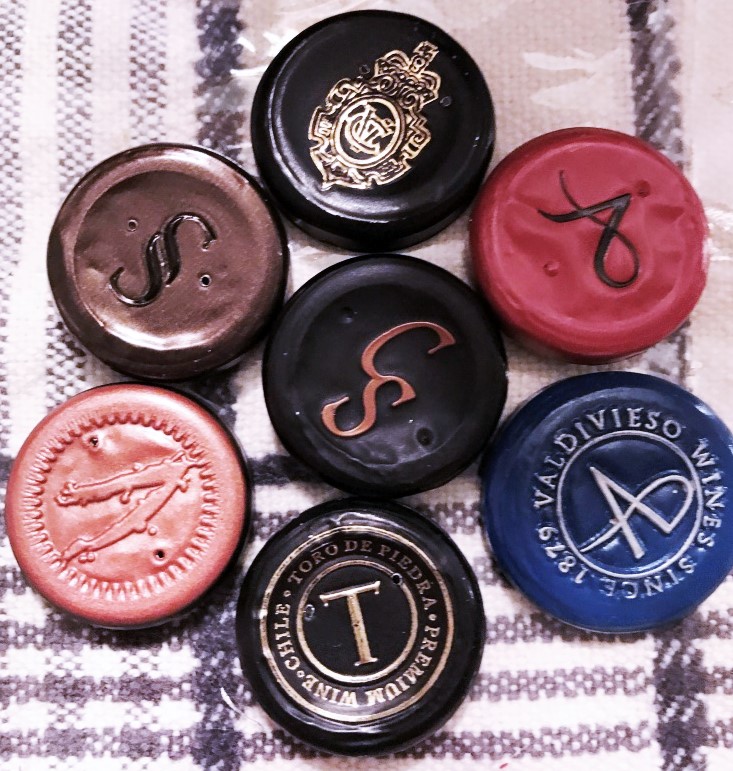 Let me quickly put you at ease – procrastination has nothing to do with Carménère. Unfortunately, it has to do with yours truly, and this blog been behind on the content for years.
It happens a lot more often than I would even want to admit to myself – I attend a great tasting or an exciting dinner with the winemakers. I would typically leave the event excited and with lots of ideas for the post. I would start writing and envisioning that post in my head for the next day, two, five, ten… One out of five will probably make it onto these pages, and the rest will continue playing in the head until it will convert into permanent guilt. I would look at my blog to-do list and feel that pain of unaccomplished over and over again. Sometimes, I would break through and write that long overdue post – and sometimes, you just accept that guilt, you know…
How far back it would be appropriate to go for some untimely post? If you know, please tell me. This is the wine we are talking about – who knows what vintages people hold? As long as I have the notes, it is all good, right. Feel free to disagree, but I’m going three years back today, to experience again some tasty Carménère…


As I wrote a post about my recent experience with the world-class TerraNoble Carménère line, I recalled the Carménère tasting which was organized three years ago by Snooth (I wrote about many Snooth tastings in the past, but somehow managed to miss this one). In the tasting, we heard from 7 producers and tried their Carménère wines. For what it worth now, three years later, here are my notes:
2015 Viña Casa Silva Cuvee Colchagua Carmenere Colchagua Valley (14% ABV, $15, blend of grapes from Casa Silva’s Los Lingues vineyard in the Andes and the Lolol vineyard in the Costa zone, 8 months in French oak)
Dark garnet color, restrained nose, herbal nose, mineral notes, granite. On the palate, tobacco, nicely restrained, earthy, herbal, good acidity, dark fruit. Overall, nice. Needs time. Pioneer of Carmenere in Colchagua, started in 1892. Carmenere overall started in Colchagua
2015 Siegel Single Vineyard Los Lingues Carmenere Colchagua Valley (14% ABV, $28.99, 8 months in French oak)
dark garnet, inky, color. Herbal in your face on the nose, pure currant, rutherford dust. Very concentrated on the palate, lots of oak, restrained. Needs time.
2014 Viña Carmen Gran Reserva Carmenere Colchagua Valley (14% ABV, $15, 90% Carmenere, 7% Carignan and 3% Petite Verdot, aged 10 months in French oak barrels, 2 months in the bottle)
The oldest winery in Chile, founded in 1850. Practically black in color. Chocolate, coffee on the nose, sage, dark fruit. Open on the palate, sweet cherries, tobacco, perfectly balanced. Round, delicious. Best of tasting so far.
2015 Viña Requingua Toro De Piedra Carmenere Gran Reserva Maule Valley (14% ABV, $15, 12 months in French and American oak barrels)
Dark garnet color, herbal, funky nose, forest underfloor. Round on the palate, fresh herbal notes, sage, sweet cherries, blackberries. Good balance, very approachable.
2012 Valdivieso Single Vineyard Carmenere Valle de Peumo ($23, 12 months in French oak barrels, 35% new)
Almost black in color. Dark concentrated nose, currant leaves, very herbaceous, a touch of pepper. Sweet fruit on the palate. I can’t decide if this wine is corked on not. The nose says corked, palate says not. Need to give it a bit of time.
2014 Viña Ventisquero Grey Single Block Carmenere Trinidad Vineyard Maipo Valley (14% ABV, $22, aged for 18 months in French oak barrels, 34% new and 66% second and third use, 8 months in the bottle)
Practically black in color. Interesting nose, a touch of cabbage stew on the nose (in a good sense), funky nose, meaty. The palate follows on, beautiful pepper, black currant, delicious. Another favorite of the tasting.
2013 Valdivieso Caballo Loco Grand Cru Apalta Colchagua Valley ($35, 55% Carmenere, 45% Cabernet Sauvignon, aged 18 months in 100% French oak casks)
BAB, dark garnet color. Touch of funk on the nose, mocha, dark chocolate, touch of herbal notes. Delicious palate – pepper, tobacco, black currant, herb garden, clean acidity. Best of tasting overall.
I definitely find this interesting how 4 of the TerraNoble Carménère wines were all at the top of the game, and as you can tell from my notes here, many of these Carménère wines still have ways to go. But – unquestionably, Chile takes its star grape seriously, and there is a lot for us, winelovers, to enjoy, now and in the future.
With this post I also get to reduce my feeling of guilt, if at least by a hair – but I’m still happy. I hope I deserve another glass. No matter, I’m going to pour it anyway. Cheers!
Wine Under Lockdown
It feels strange to admit that our invisible enemy still holding most of the world hostage. When all of the lockdowns started in Europe at the beginning of March, I was still holding on to our airline tickets and hotel reservations for the long-anticipated, lovingly-planned family trip to Italy at the beginning of July, thinking (not hoping!) that the world will get back to normal in the mere 4 months. The depth of my shortsightedness might be staggering, but let’s leave that discussion for another time.
The House of Townend is one of the oldest wine stores in the UK, tracing its history since 1906. As the wine sellers, the folks at the House of Townend know very well what is hot and what is not during the pandemic, in the UK and in Europe overall. Their recent press release from about a month ago offers the following tidbit:
“In the 2019 March-June period, the most popular drinks sold by the wine merchant were Prosecco and white wines. The spring period normally brings a taste for fizzy, lighter wines. This was also reflected in 2018.
In the same period in 2020, lockdown caused a considerable shift in drinking habits. House of Townend’s top 10 wines included 6 red wines – the top products being Pinot Noir and Malbec. Malbec, in particular, has been popular in both Google Search history and House of Townend’s sales data, rising over 2570% in unique sale purchases in the lockdown period (23rd March-July 5th 2020) in comparison to the same time last year. ”
Two thousand five hundred seventy percent increase in sales of Malbec during the lockdown – how about that? I wonder if this phenomenon has an explanation (specifically such an increased interest to Malbec) – for sure I can’t offer you one.
As controlling spending during lockdown is also essential, House of Townend came up with interesting infographics, showing how much wine £10 can buy:
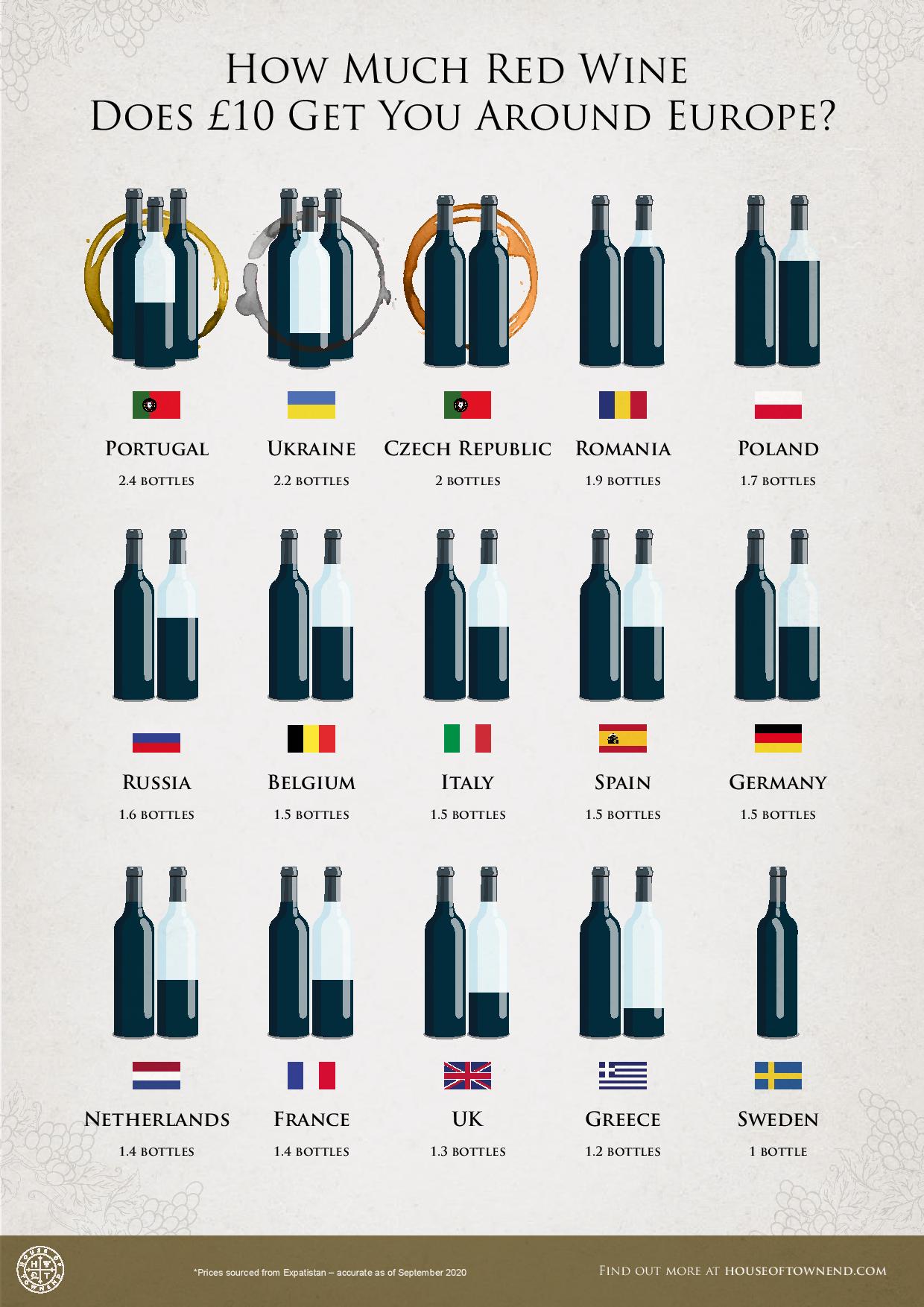 As you can see, the same £10 would allow you to drink in Portugal twice as much red wine as in Sweden.
I saw a fun poster somewhere on social media, saying that “wine is the glue which holds this sh!tshow together” – that might well be the case?
Cheers, my friends!
Carménère – Lost, Found, Evolved, Delightful
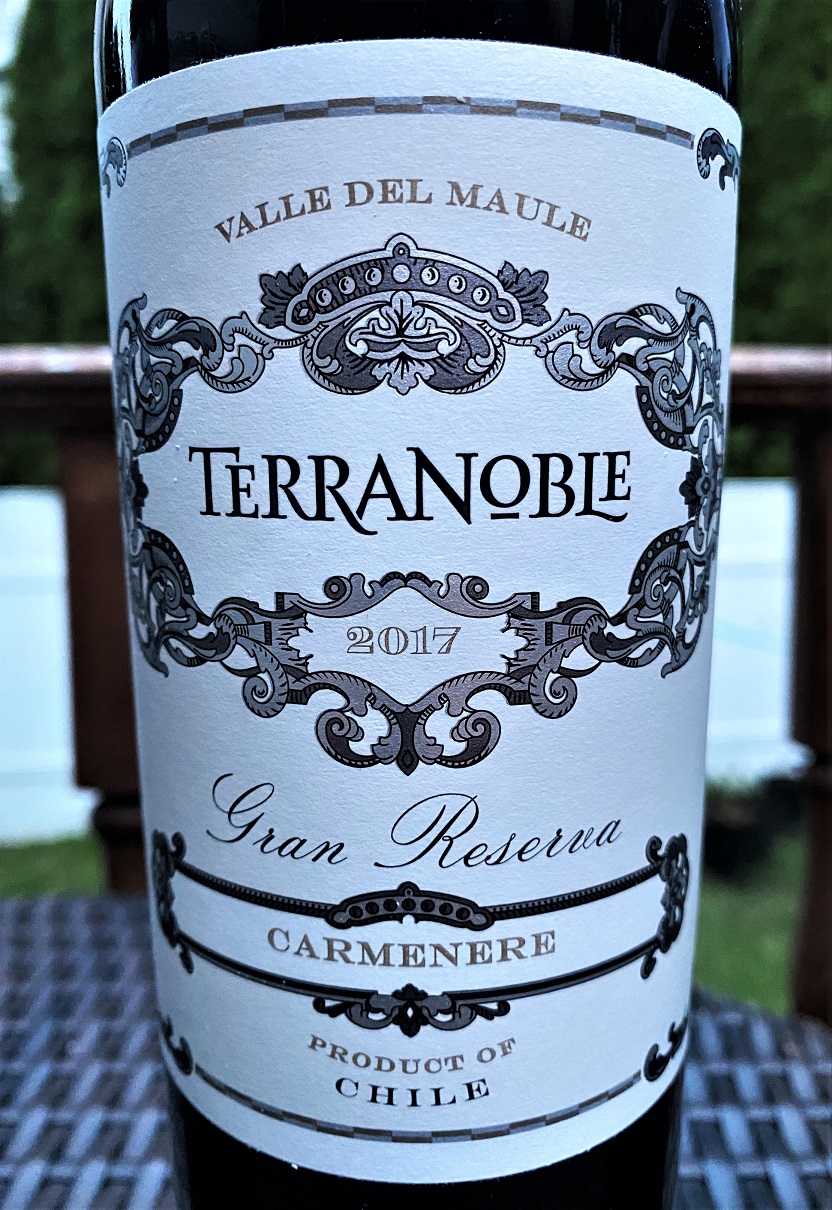 According to the 2012 edition of the famous Wine Grapes book (written by Jancis Robinson, Julia Harding, and Dr. José Vouillamoz), there are 1368 grapes used in winemaking. It would be a safe bet to say that each one of those grapes has its own story. Of course, not all of those stories would be dramatic and exciting, but I’m sure some would read as a good detective story, probably without much of the shootouts.
Carménère is a perfect candidate for such a story. When Bordeaux ruled the wine world – which would be in the middle of 1800th – Carménère (which translates from French as crimson, identifying a beautiful color of the grapes) was one of the “big six” Bordeaux varieties, comprising all of the Bordeaux wines – Cabernet Sauvignon, Cabernet Franc, Merlot, Malbec, Petite Verdot, and Carménère. Carménère is related to Cabernet grapes, but historically it is not very clear if Carménère was some type of clone of Cabernet, or if it was the other way around.
The phylloxera epidemic of 1867 put a damper on all the wine production in France and forced vignerons to replant all of the vines on the Phylloxera-resistant rootstock. Carménère is not an easy grape to grow in the Bordeaux climate, and it was pretty much abandoned and considered extinct at the beginning of the 20th century.
Meanwhile, in 1850th, immigrants brought many of the French grapes with them to Chile, where the grapes started to strive in the warm and dry climate offered by the Andes mountains. In 1980th, Merlot became a star of Chilean winemaking, abundantly producing inexpensive wines that became well known in the world. It was noticed that the taste of the Chilean Merlot differs from the traditional Merlot and that Merlot was considered to be a Chilean-specific clone. Or at least it was until 1994 when visiting French scientist, Jean Boursiquot noticed that Chilean Merlot has different leaves and grape clusters from the traditional Merlot, and was able to show that this was not the Merlot, but long-extinct Carménère, which successfully made it to Chile in the 1850s with all the Bordeaux grape cuttings.
From that time, Carménère went on to become Chile’s own star grape, and answer to another French variety, Malbec, which Argentina made its own. As Phylloxera never made it to Chile, Chilean Carménère was even brought back to France, but it is not an easy grape to deal with, so it never regained its past glory in Bordeaux.
TerraNoble winery (Terra Noble means “Noble Land”), was founded in 1993 by a group of friends. From the beginning, TerraNoble focus was on producing high-end wines in Maule Valley, and the winery quickly established itself as a boutique producer of Chilean Merlot. After Chilean Merlot was identified as Carménère, TerraNoble continued focusing on the variety.
TerraNoble sustainably (certified sustainable since 2019) farms today about 750 acres, which comprises 4 vineyards in Maule Valley, Colchagua Valley, and Casablanca Valley. The winery produces a full range of wines you would expect a Chilean winery to produce – Chardonnay, Sauvignon Blanc, Cabernet Sauvignon, Merlot, Syrah – but Carménère is unquestionably the darling of TerraNoble, as presented by Marcelo Garcia, TerraNoble’s winemaker, during the virtual tasting a few weeks back.
While browsing Sotheby’s New Wine Encyclopedia by Tom Stevenson, I came across a small insert about Chilean Carménère, where it was mentioned that Carménère is site-specific to the extreme – you need to work hard to find the right location for Carménère to vines to deliver the best result. TerraNoble approach to Carménère is based exactly on this notion – site-specific Carménère wines. As we mentioned before, Carménère is a close relative of the core Bordeaux varieties – Cabernet and Merlot and has a similar taste profile as well. It is similar, but not the same, obviously. A typical Carménère has a much higher concentration of the aroma compound called pyrazines, which is often associated with the pronounced taste of the green bell pepper – here is a good article that explains pyrazines in depth. Green pepper is good for cooking and the salad, but probably not so much in wine. Also, when left unsupervised, Carménère has a tendency to develop a high concentration of the tannins. While someone might enjoy a big powerful wine with pronounced green bell pepper aromatics and powerful tannin structure, the appeal is not universal and this is what Chilean winemakers had to deal with.
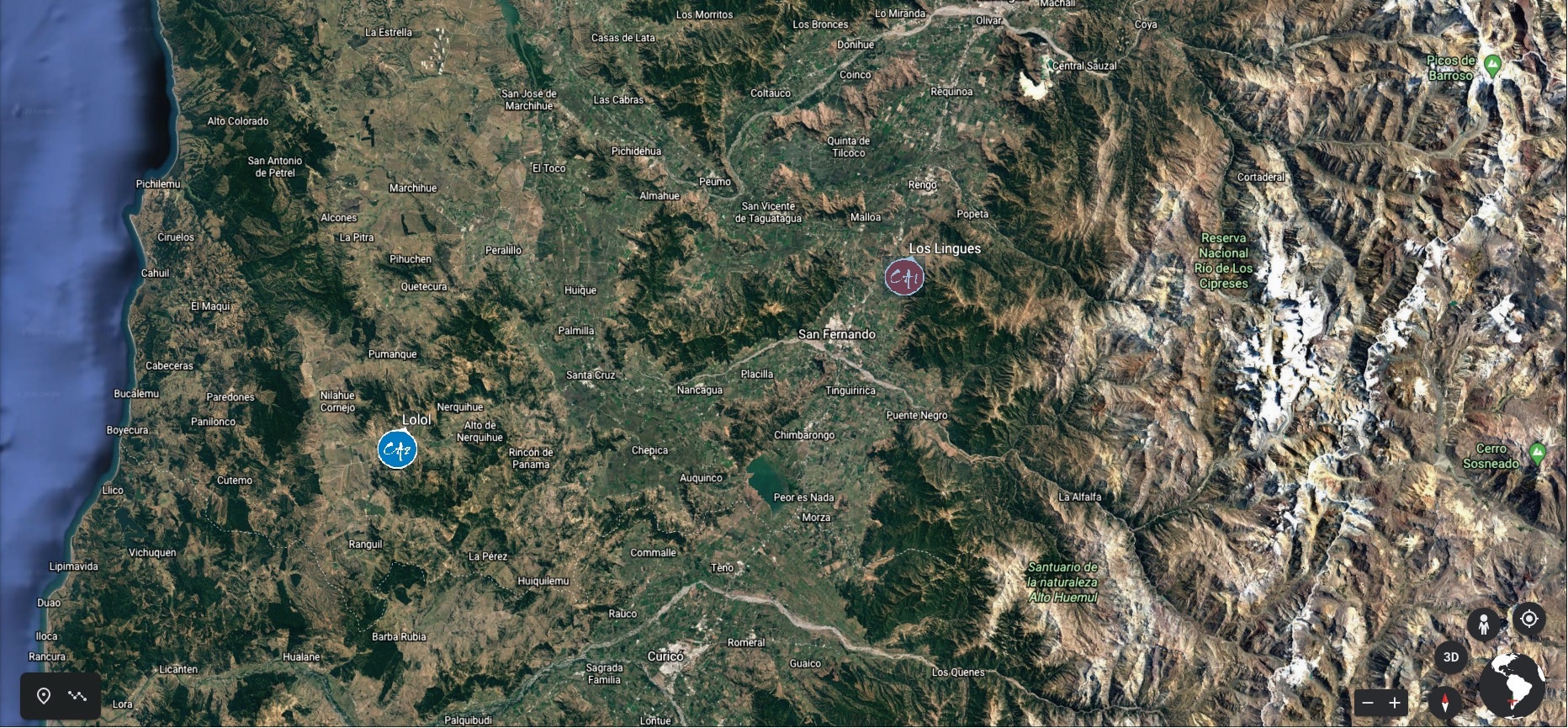
TerraNoble CA project vineyards. Source: TerraNoble
In 1998, TerraNoble released Gran Reserva Carménère to the international markets. The grapes for this wine were coming from the La Higuera Vineyard in Maule Valley, near San Clemente. This wine still remains the winery’s flagship. I had been a fan of TerraNoble wines for a long time, after discovering them back in 2004. To the best of my memory, 2003 TerraNoble Carménère Gran Reserva was quite enjoyable, but I don’t have any detailed notes in that regard.
Following its Carménère calling, TerraNoble planted two new Carménère vineyards in Colchagua Valley – in 2004, Los Cactus Vineyard, about 25 miles from the coast, and in 2005, Los Lingues Vineyard, about 35 miles further inland, on the outskirts of Andes mountains. These two vineyards became a home to the special project called CA – producing two 100% Carménère wines using absolutely identical vinification at the winery, different only in the source of the grapes – CA1 from the Andes, and CA2 from the coast. The first wines in the CA project were released in 2009.
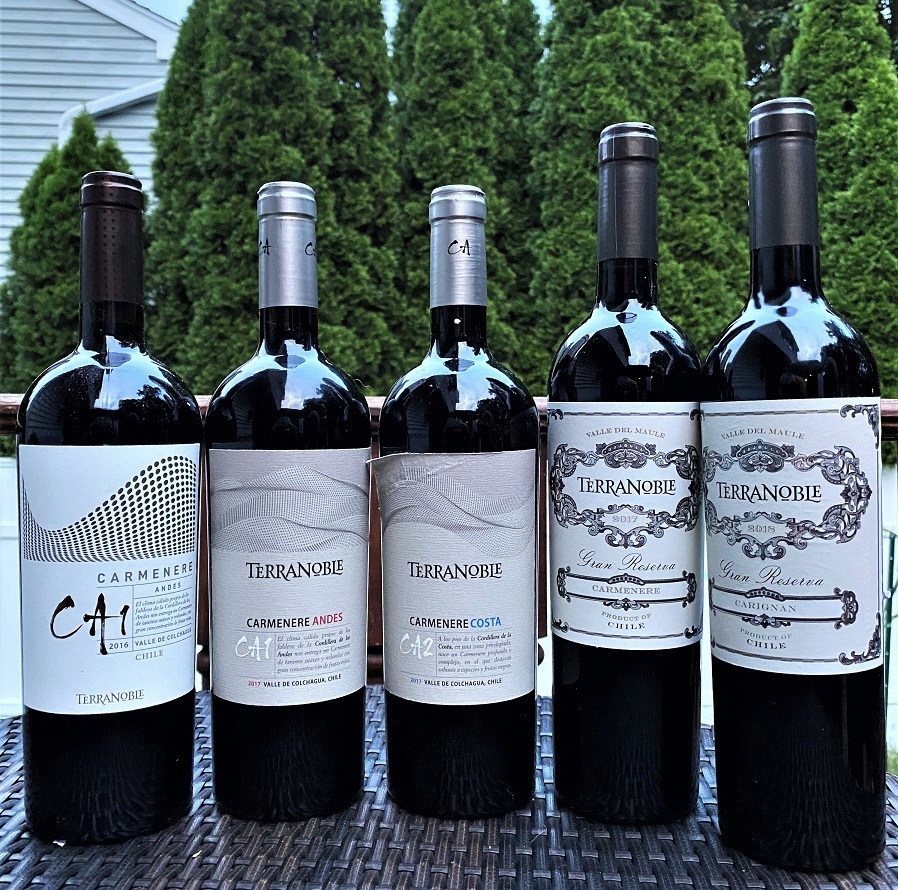
The goal of the project was to showcase the capabilities of Carménère grapes. With winemaking techniques identical for both wines, different taste profiles were only influenced by the different growing conditions, the terroir – soil and climate most of anything. How different are the wines? We had an opportunity to taste a few of the CA project wines, and they were demonstrably different. Here are my notes from the tasting.
We started with the tasting of the flagship Carménère
2017 TerraNoble Carmenere Gran Reserva Maule Valley, Chile (14% ABV, $18.99, aged 75% in previously used French oak barrels, 25% in untoasted casks, 6 months in the bottle)
Dark garnet
Currant leaves, blackberries
Bright red fruit, good acidity, soft, easy to drink, medium body, medium finish.
8-, nicely approachable from the get-go. 8 after a few hours.


Then we had an opportunity to compare two of the vintages of CA1 wines (from the Andes), and then CA1 and CA2 from the same vintage – again, you can see how different the wines are:
2016 TerraNoble CA1 Carmenere Andes Valle de Colchagua, Chile (14% ABV, $24.99, aged 85% in new and twice used French oak barrels, 15% in untoasted oak casks for 14 months, 12 months in the bottle)
dark garnet
touch of barnyard, dark fruit
black currant, a touch of bell peppers, noticeable french oak tannins, peppery, chewy tannins, big body
7+/8- initially, 8 after a few hours. Excellent, powerful wine.
2017 TerraNoble CA1 Carmenere Andes Valle de Colchagua, Chile (14% ABV, $24.99, aged 85% in new and twice used French oak barrels, 15% in untoasted oak casks for 14 months, 12 months in the bottle)
dark garnet
tobacco, currant leaves, pepper, dense and concentrated
good acidity, peppery notes, blackberries, concentrated
7+/8- initially, 8 in a few hours. Delicious.
2017 TerraNoble CA2 Carmenere Costa Valle de Colchagua, Chile (14% ABV, $24.99 aged 85% in new and twice used French oak barrels, 15% in untoasted oak casks for 14 months, 12 months in the bottle)
dark garnet
currant more noticeable
softer than the previous wine, but showing more of the green notes. black currant
7+/8- initially, 8 in a few hours.
 We finished our tasting with a somewhat unexpected wine – Carignan. Carignan is another ancient French grape, this one coming from Rhône valley. Chile has very old Carignan vineyards (some are 120+ years old), however, for the longest time, Carignan was used by the farmers to make very strong, but not really drinkable alcohol. Carignan’s popularity started increasing around 2000. Another interesting fact about Carignan is that it is mostly growing in the small (and old) vineyards, where the vineyards became a part of a natural biodiverse habitat, which includes other plants and animals.
TerraNoble Carignan grapes were sourced from the vineyard planted in 1958 in Maule Valley close to the ocean, using dry farming. The wine was partially aged in the concrete eggs.
2018 TerraNoble Carignan Gran Reserva Melozal, Maule Valley, Chile (13.5% ABV, $18.99, aged 50% in concrete egg, 50% in untoasted oak casks, 6 months in the bottle)
Dark Ruby
touch of licorice, distant hint of candied fruit
tart fresh cherries, good acidity, medium body, simple, easy, and pleasant. Might be a summer quaffer
7+
Here you are, my friends – TerraNoble tells the story of modern-day Chilean Carménère. The evolution of the Carménère wines is still ongoing, with TerraNoble winemakers starting to experiment with concrete eggs and amphorae, and who knows what else is coming to push the grape which Chile made its own even further. One thing for sure – winelovers are in for lots of pleasure.
Wine Quiz #125: More Numbers In Wine
The Wine Quiz series is not meant to intimidate. The whole idea here is to have fun and learn something new. When answering the questions, it is fully encouraged to use all available sources of information, including Google or any other search engine. There are no embarrassing answers – the most embarrassing thing is not giving it a try…
Welcome to the weekend and your new wine quiz!
Our last quiz was about numbers in wine. You were given a series of numbers and asked to figure out what do they mean. I gave you a few hints in the accompanying text, from which I was hoping that you would be able to figure out that all these numbers are related to appellations. Here is the answer – as numbers, unfortunately, are just numbers, and it all depends on your source, I’m also including links for my sources of information:
- 250 – Number of AVAs in the USA – https://www.ttb.gov/wine/established-avas. Interestingly enough, this number is already incorrect – one more new AVA was approved, so the new count stands at 251.
- 1908 – The year second oldest appellation in the world, Dão in Portugal, was established – https://en.wikipedia.org/wiki/D%C3%A3o_DOC
- 360 – Number of AOCs in France – https://winefolly.com/deep-dive/looking-for-good-wine-start-with-the-appellation/
- 1 – the size of the smallest grand cru appellation in France – https://www.winemag.com/gallery/10-small-appellations/#gallery-carousel-2
- 1963 – The year DOC system was established in Italy – https://www.wine-searcher.com/wine-label-italy
Sadly, nobody even attempted to solve this quiz, so once again I’m keeping all the lofty prizes to myself.
This week’s quiz will be about … numbers again! I’m asking you to sort some data based on the underlying numbers. You will need to figure out what connects this data, and then sorting will be reasonably easy. Here we go:
Q1: Sort the following in the ascending order:
Arbois, Augusta, Douro, Rioja, Vernaccia di San Gimignano
Q2: Sort the following in the ascending order:
Balthazar, Goliath, Jeroboam, Magnum, Marie Jeanne, Melchizedek, Methuselah, Nebuchadnezzar, Rehoboam, Salmanazar, Solomon, Sovereign
Q3: From January to June 2020, Italy exported the highest amount of wine among all major wine-producing countries, at 577M liters (769M bottles). Sort this list of wine exports per country for the same period of time in descending order:
Argentina, Australia, Chile, France, Germany, Italy, New Zealand, South Africa, Spain, USA
Good luck, enjoy the quiz and your weekend! Cheers!
Last Bottle Sign Up ($10 credit)




 Talk-A-Vino