Archive
Speak Up!
 This post is not really a rant, even though it can be classified as one. I would rather see it as a plea – not directed at someone particular, but to anyone who enjoys even an occasional glass of wine.
Wine can be intimidating at times. Heck yes, wine is often intimidating. It has an aureole of mystique. It seems to demand the special knowledge to be enjoyed, the years and years of hard study. And quite often, the “exclusivity” notion is enforced by the very people whose job is to help, to make the wine less intimidating, to make sure that “the customer” will simply enjoy the glass of wine.
True – the wine, as any other discipline, has a great depth of technical knowledge. It is not easy to make a good bottle of wine; it is very difficult to make a great bottle of wine. You need to study for many years almost 24×7, learn the exact names of hundreds of small villages in Germany, to become a Master Sommelier (there are only a few hundreds of them in the world). All of it is true. But not necessarily unique – most of what humans do today in so called “work” requires lots of studying and lots of specialized knowledge.
But wine is yet again different. While it requires knowledge to produce and explain it to others, when it comes to its basic purpose – drinking, it is, whether by itself or with the food – it is very simple. Forget all the nuances of the taste. Forget all the fancy descriptors and ratings. When it comes to the content of your glass, it is really all binary – you either like it or not.
Nobody questions their own ability to decide whether they like the burger or not. Or any other food for that matter – in most of the cases, people have no issues declaring “this is good” or “this is bad”. But when it comes to the wine, majority start second-guessing themselves. People often sheepishly say “but I don’t know much anything about the wine”. This proverbial “luck of knowledge” is used as an excused to keep quiet. People are afraid to state their opinion around wine, as they don’t want to appear disrespectful, or even worse, totally ignorant and not worthy. At the same time, when someone takes a sip, they know immediately whether they like the wine or not.
Now, let me get to the “Speak Up” part. No, I’m not advocating that everyone will start proclaiming “this is crap” or “this is nectar” on the very first sip of the wine in the various situations. For example, if you will open a bottle of young red wine, immediately pour it into a glass and take a sip, your first reaction might be “this is too sweet!”. Give this wine 5 minutes to breathe, and your next sip often will be totally different experience, with earthiness, minerality and acidity. As another example, the first taste of the cold white wine might feel extremely acidic, but the wine will mellow out right after. So, no, “speak up” is not about always declaring your opinion right away.
What is important for me is that if you drink wine even on a semi-regular basis, you know what you like and what you don’t. In case when you don’t like the wine, you also know why is that – too acidic, too sweet, too wimpy, too tannic, doesn’t taste well with food. There can be lots of reasons for not liking the wine. And it is all fine – taste is personal, and two people next to the same bottle don’t have to share the same opinion; there is nothing to speak up about here. With one exception: when the wine is spoiled.
There are many possible issues with wine, which affect its taste – these are called “wine faults”, and the end result is what we call a spoiled wine – the wine which tastes bad. This is not the case “I don’t like it”, this is the case “it is spoiled” – and nobody should drink it. Have you ever tasted spoiled milk, when the sweetness of milk is replaced with the off putting smell and sour taste? What you do with the spoiled milk? Anything but drink it, right? There are many potential faults in wine – brettanomyces (often called “brett” for short), volatile acidity, oxidation, heat damage (so called “cooked wine”), cork taint and many others (in case you want to read more, here is Wikipedia link). Some of the faults are less offensive than the others – for instance, brett is associated with barnyard aromas (so called “funk”) in the wine, which some people love (yours truly would be one of them). But most of the faults really kill the taste of wine; spoiled wine doesn’t deliver any pleasure the wine is supposed to bring.
One of most prominent offenders is the cork taint – typically caused by the cork material which was not cleaned properly – and the result of the cork taint is called a corked wine. What gives it away first of all is an aroma of the old, wet, musty basement – you know that smell, I’m sure you do. But this is not the worst part. On the palate, the corked wine is sharp, bitter, and devoid of fruit – the fruit is nowhere to be found in the corked wine. Sometimes the smell might be very minor, but then the sharp palate will give this fault away. And corked wine is something which you are not supposed to drink. Nor you should let anyone to drink that. This is the case when you have to trust yourself – and speak up.
How many of you ever been in the situation when you tasted the wine (or just smelled it) and said to yourself “this is corked”? And then, even when you are 100% convinced it is corked, you just kept quiet – you didn’t want to offend the host, you thought “ahh, may be something is wrong with me”, “but people already had been drinking the wine from this bottle for a while, how it can be corked”? Been there, done that? It’s okay, this blog is truly a non-judgement zone, please share your experiences. But I’m seriously telling you, if I may – I insist – speak up. Trust yourself and speak up.
I’ve done this many times in many different settings. Sometimes, the corked bottle is one and only, and all you can do is just to dump it or put it aside to return to the wine store (please note – most of the reputable wine stores will take the corked wine back and refund your money – they are not losing anything either, as they also will return the wine to the producer). But the best case is when the other bottle of the same wine can be open instead – and it shows all the beautiful aromas and fruit the wine was supposed to have. This is the best learning experience, of course – but even if you didn’t have that experience, you still have to speak up.
You need to understand that by keeping silent, you are not doing anyone any favors. If you keep silent, you drink the wine which tastes bad. You let others drink the wine which tastes bad. You letting down the winemaker as well. In many (most) cases, the corked wine is not even producer’s fault. And if you and others end up drinking bad tasting wine, you might say to yourself “I will never buy this wine again” – and trust me, this is not what the winemaker had in mind when the wine was produced with love and care.
You have to speak up – and you got nothing to lose. If you are wrong, and the wine is not corked but simply need the time to breathe – so be it. But I’m sure that once you experienced the corked wine, you will be able to identify it again, so if you think the wine is corked, there is a very good chance that it actually is. Trust yourself and speak up. When the next bottle is open, and everybody sigh with relief and pleasure, your host will be the first to thank you. And if you will feel happy, leave me a comment too. Cheers!
Crisis in Wine
 This post is an entry for the 18th Monthly Wine Writing Challenge (#MWWC18), with the theme of “Crisis”. Previous themes in the order of appearance were: Transportation, Trouble, Possession, Oops, Feast, Mystery, Devotion, Luck, Fear, Value, Friend, Local, Serendipity, Tradition, Success, Finish, Epiphany.
Let me ask you a question – do you associate wine with crisis? Not really? Ahh, you are even puzzled why I asked? Let me elaborate. This question is not about “business of wine” – that part is self-evident. Every business has its crisis moments. Some are relatively small, like broken truck with day’s harvest of grapes, leaked barrel or malfunctioning bottling line. Some are bigger, like hail storm during July or a frost in late May. Some are huge, like earthquake in Napa valley or phylloxera epidemic. But – business problems “come with the territory” – the only way to avoid them is not to be in the business at all.
Now, my question about wine and crisis is not about the business, it is about people who like to drink wine. I mean, really like it. Those who make wine into a passion. They often referred to as oenophiles. Or wine aficionados. Or wine geeks. Depending on the circumstances, also known as “wine guy” or a “wine gal”; it is not foreign for them to be called a “wine snob”. Anyway, if you belong to this category, you already identified yourself. If you don’t (but you’re still reading this blog, so thank you), you know who I’m talking about. So I have to tell you that we, oenophile (yes, I closely identify as one), go hand in hand with crisis. We readily create the crisis around the wine, then we work our hardest to resolve it – and we feel proud and relieved that we actually did. Need examples? Here we go.
A wine oenophile is invited to the party (no, this is not a beginning of the anecdote). The bottle of wine is selected, with love and care, very often from one’s cellar, and oenophile almost arrives at the destination, when the horror thought takes over – “what if this bottle is corked, what am I going to do then??? Why did I forget to bring a second bottle, just in case, why?”. If you been there, done that, raise your hand. Have you ever contemplated a fallback solution “if this bottle is bad, I know where the nearby store is so I can quickly drive there and pick up something else”? Yep, oenophiles are crisis-prone like that.
A dear and wine loving friend is coming over to the oenophile’s house. Peering at hundreds bottle strong cellar, the thought process starts – “I think this bottle of Pinot should be good. But I don’t think she is into Pinot too much. May be the Cab? No, that might not work with the meal… Or may be that 1990 will do??? And then Amarone? No, no, no! I DON’T HAVE THE BOTTLE TO OPEN!!!” Do you feel the drama? Do you see the crisis once again, which requires a quick action – unquestionably it will be averted, and oenophile and the friend will be happy (unless the bottle(s) will be corked, but we don’t want to even go there), but the crisis is clearly there.
The simplest form of oenophile’s crisis might take place during the daily ritual of opening the bottle for the regular evening – after touching and pulling out tens of the bottles (from that hundreds bottle strong cellar), the spine-chilling thought comes in: “I don’t have the bottle I can or want to drink right now, what do I do?!?!”
There are many more crisis moments we can talk about – the horrifying moment at the restaurant, where after the 5th scan of the wine list oenophile realizes that there is nothing there which one want to drink or can afford; the process of selecting wine to pair well with food; looking at the rare bottle in the shop and thinking that you must buy it now or you will never see that vintage again. I’m sure you got my point by now (or even well before now), and I’m sure you even feel pity towards that oenophile who have to deal with crisis all so often. But – that is the best form of crisis, as it is immediately forgotten at the first sound of the popped cork and whiff of aroma accompanied by the words “ahh, this is good”. This is one form of crisis which oenophiles are happy to have in their lives – and I’m sure many people will be too. Cheers!
[May Not Be The Best In The World But] Great Gifts For Dad
During 2011 I wrote a number of posts for the project called The Art Of Life Magazine – of course talking about my favorite subject, wine. The project was closed and even the web site is down, but as I still like the posts I wrote, I decided to re-post them in this blog. To tell you the truth, if I would write such a “Father’s Day Gifts” post today, I would write it differently. But I can always write it differently some other time, and for now – here is the original.
Note that the series was written for a slightly different audience – I hope none of my readers will take offense in the fact that sometimes I’m stating the obvious…
Considering that Father’s Day is rapidly approaching, let’s talk about gifts for Dad. Even if Father’s Day is not celebrated in your country, remember – any day is a great day to get a present for your hard-working Dad.
This is the wine blog, so of course our gift suggestions will be related to the wine. And while I’m sure everybody wants to buy the best gift ever, not all of us can afford that ideal present, so let’s look for a few options in different price categories. Let’s start.
Under $15:
You think it is impossible to get a great bottle of wine under $15? Think again. Here are two suggestions:
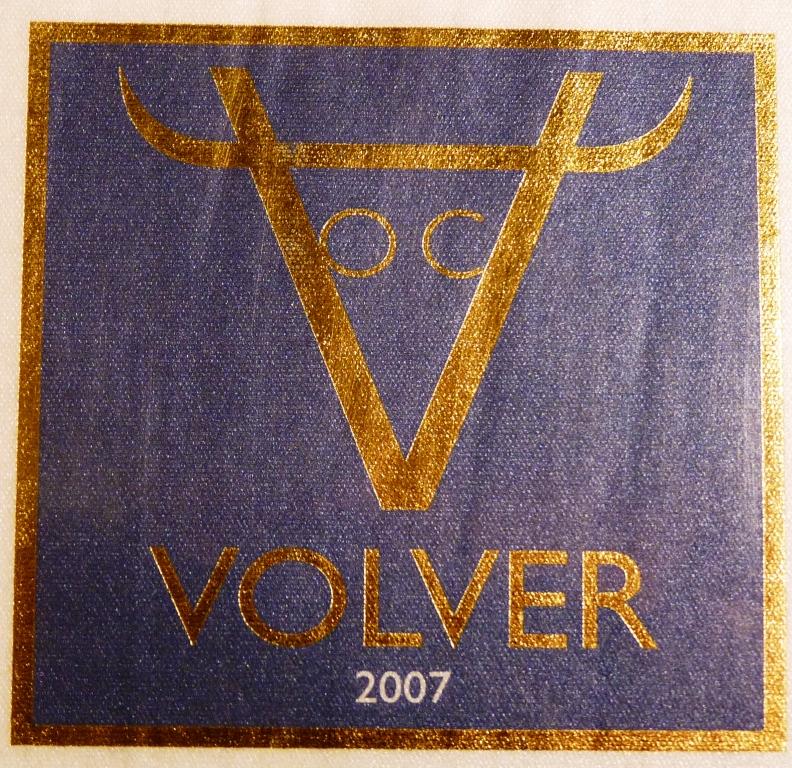
What: Bodegas Volver La Mancha DO, Spain
Why: This is a serious man’s wine. There is nothing wimpy about this wine. It has super-broad shoulders, it is bone dry, and it has strong tannins grip, strong as dad’s handshake. At the same time, it is very balanced and elegant, and if you will try it with a mildly sharp cheese with some fig jam on top of it, you might find heaven on earth.
What: Le Petit Chambord Cour-Cheverny, Loire, France
Why: Same as the one before, this is the wine for a real man. Brighter than sun acidity, supported by good fruit, very balanced. Another trait which many dads possess – it needs patience, as it will greatly improve with age. Give it 10-15 years and prepare to be amazed.

Under $100:
A different game, seems to be lots of choices, but it is not always the case. Let’s look at some suggestions.
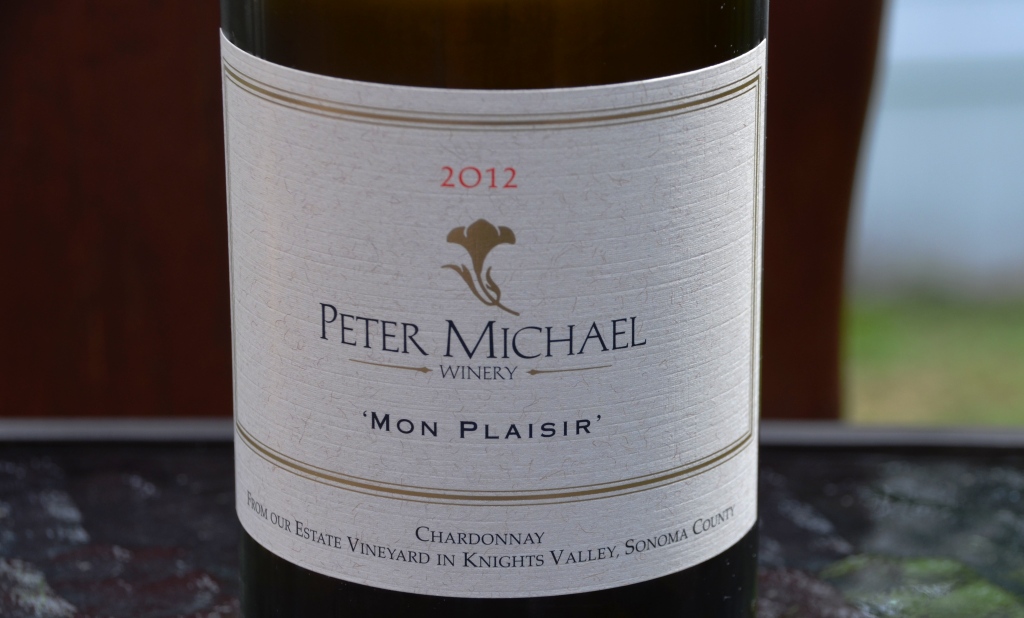
What: Peter Michael Chardonnay (there are many options, but either one will do).
Why: When Dad will try this wine, he will experience [very strong] emotions. Who knows, he might even cry. This wine will remind him of his true love – wife, if he is happily married, and his dreams – if he is not. Incredibly balanced, with all components (fruit, acidity, vanilla, toasted oak, tannins) being in perfect harmony. Once Dad will experience this wine, it will be one and only Chardonnay he will be willing to drink.
What: Adrien Camut Calvados 6 years old
Why: It is reminiscent of a Dad in a tuxedo. Calvados is a cognac’s relative, only made out of apples. Calvados has the same alcohol content as cognac, but it is not aggressive at all compare to many cognacs which are. It is pure elegance and class, exactly as a man in tuxedo feels like.

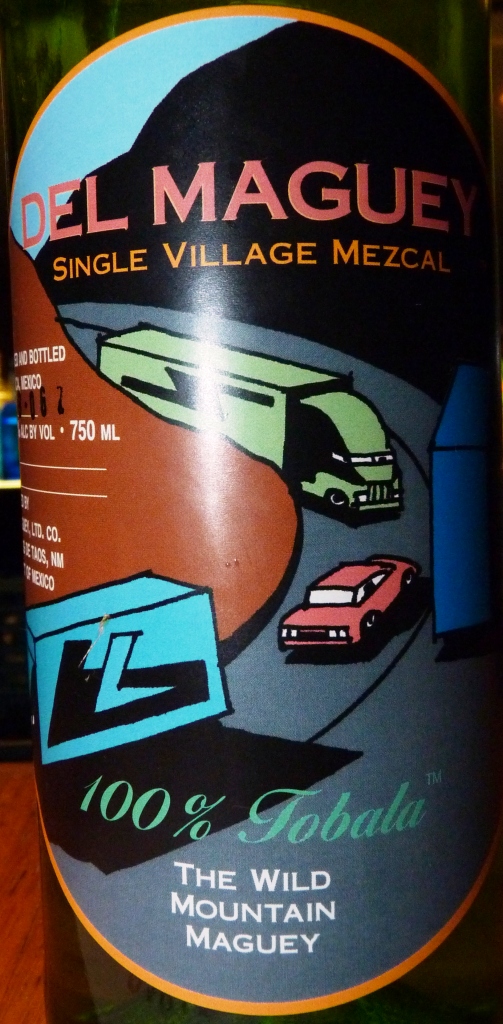
What: Del Maguey Single Village Mezcal
Why: Because it will make Dad to think of adventure. May be he will finally go to safari, after dreaming about it for more than 20 years. May be Dad will recall the warmth of campfire under an open starry sky. Pleasant roughness paired with deep smoke flavor – it will make dad’s heart to pump faster and happier.
Unlimited, or at least above $3000
This is the category for those who has everything – but even when you have everything, something is probably still missing… Let’s look for some options – and I guarantee you, it will not be easy to find.
What: Taylor-Fladgate Scion Very Old Port
Why: Because I want one for myself? Okay, but on a more serious note, this port is made out of the pre-Phylloxera grapes in approximately 1855, so this wine is about 160 years old! It is awe-inspiring for any wine lover, and to say it has limited availability would be an understatement. But – if you can afford it, make an effort, find it – and Dad will thank you profusely.


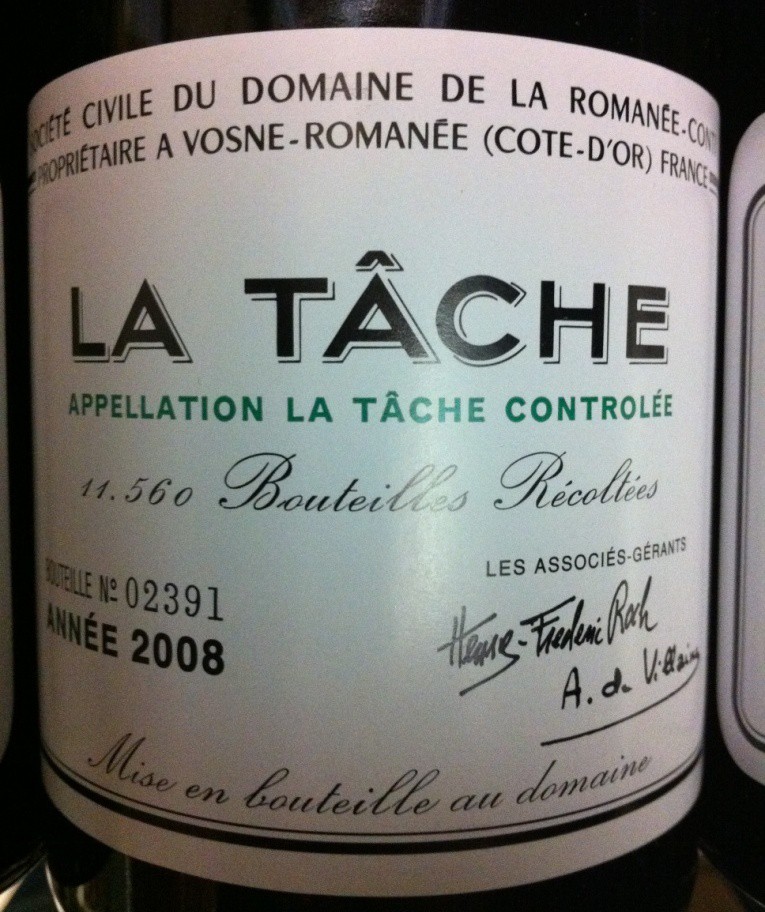
What: Domaine De La Romanee-Conti La Tache, Burgundy, France
Why: Because I want this one too? Domaine De La Romanee-Conti, or DRC for short, makes literally the most amazing wines in the world. These wines are literally impossible to find, so it you will present such a bottle to Dad, I’m sure he will really appreciate the sacrifice(s) you had to make to get it for him.
Our session is over – hope I was able to help! Good luck with all the presents, and Happy Father’s Day to all the Dads out there!
Magnificent Portugal
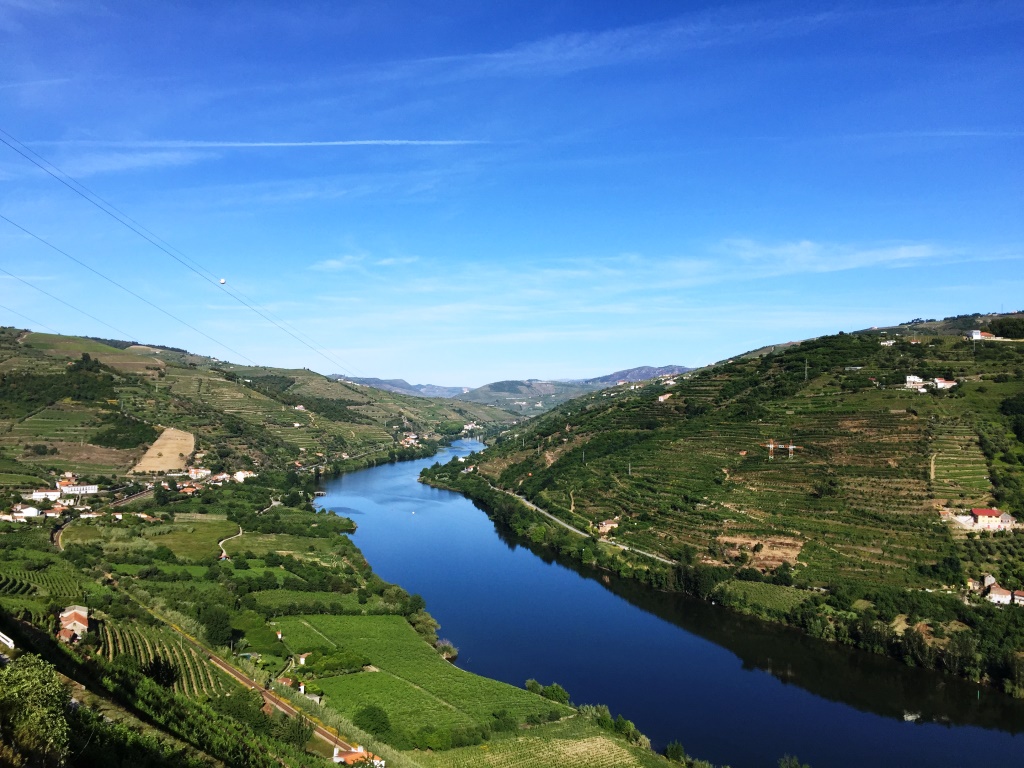 Two years ago I was lucky to discover the Portugal. A beautiful country with wonderful people, great wines and delicious food. This year, I had an opportunity to experience the Portugal again, and once again I want to share my experiences with you as much as possible. There will be a few posts, as there is absolutely no way to squeeze all the impressions into one (nothing is impossible, yes, but I’m sure none of you are interested in a post with a hundred+ pictures and ten thousand words), but still please prepare to be inundated with the pictures. Let’s go.
I want to start from the wonderful trip we had on Sunday. I’m subscribed to the updates from the wine travel web site called Winerist. An email I received from the Winerist about a week before my scheduled departure contained a section about wine trips in … Douro, Portugal! How could they know, huh? This was my very first time using the service, so not without trepidation I filled up booking form for the tour called “Wine Tasting & Sightseeing in the Douro Valley” (€95 per person), requesting the specific date – actually, the only free day I had during the trip. I was informed that my credit card will be charged only after the trip availability will be confirmed with the local provider. Two days later the confirmation arrived with all the tour provider information and pickup time (the pickup is arranged at any of the hotels in Porto). The day before the trip, I got a call in my hotel room from JoÃo, who informed me that the pickup will take place next day at 9:10 am in front of the hotel’s lobby.
The next day, a red minivan showed up exactly at 9:10 am (at least according to my watch), however the first thing JoÃo did after introducing himself in person, was to apologize for arriving at 9:12 instead of 9:10 – from which I figured that we will have fun in our tour. This is exactly what happened – after picking up two more people for the total of 8 passengers, off we went to immerse into the beauty of Portuguese nature, culture, food and wine. I will not give you a detailed account of everything we heard during of almost 11 hours of out trip (we were supposed to come back at 6:30 pm, but nobody was in a hurry, so we came back very close to 8 pm) – that would make it for a long and boring post. But I will do my best to give you a good idea of what we saw and experienced.
Our first stop was at a small town called Amarante. On the way there, our guide and driver had to really work hard – out of our group of 8 people, 2 of us needed all explanations in English, and the rest of the group was from Brazil, so JoÃo had to alternate between Portuguese and English – have to say he had no issues doing that for the duration of the trip. The second problem JoÃo had to deal with was … a marathon, which forced closure of many roads, so he had to find his way around. Well, that was also a non-issue, so we successfully arrived to Amarante. Our intended destination was the church of São Gonçalo (St. Gonçalo), which had an interesting story of the saint whose name is associated with male fertility. I had to admit that I missed some parts of the explanation regarding the origins of this belief, but the bottom line is very simple. Inside of the church, there is a statue of St. Gonçalo, with the hanging rope. Any male who needs help with the fertility, have to pull that rope twice, but not more (don’t know if it would be equivalent to the Viagra overdose?). Besides, the Priest gets very unhappy when people get crazy with that rope, so all the pulling should be done quietly and without attracting unnecessary attention. I guess that same fertility power led to the appearance of so called St. Gonçalo cakes, which you will see below – I’m assuming the picture is self-explanatory. No, I didn’t try one, nor did anyone from our group, so can’t tell you how it tastes. After leaving the church, we had around 20 minutes to walk around the town, before we had to leave to our next destination.


Our next stop was the town of Lamego, which is one of the biggest in the Douro valley. As food was an essential part of our tour, first we visited a place called A Presunteca. I would probably characterize it as a food and wine store, somewhat geared towards tourists. No, “tourist trap” would be rather diminutive, as the food and wine were genuinely good and prices were absolutely on par with any other store. We had a taste few of the local sausages and cured meets, as well as cheese. We also had an opportunity to taste some of Porto and dry wines, as well as sparkling – the Peerless sparkling wine was excellent, on par with any good Cava or Cremant. I also really liked a Niepoort Dry White Port. If we wouldn’t have to spend the next half of the day in the hot car, I don’t think I would’ve left without a nice chunk of a cured meet, but oh well…


Next we got into a race with a long (very long!) line of honking old Minis, and we lost the race despite creative local street navigation by JoÃo. We still successfully arrived to our next destination – Cathedral of Santa Maria, Lady of Remedy. According to the explanations, the beautiful structure was erected as promised by the Bishop to show a gratitude for sparring the city of Lamego from the Black Plague. There are more than 600 steps which lead to the Cathedral on top of the hill, which people seeking the cure for the illnesses often concur on their knees. We walked around the cathedral and then used the steps to get down to the town level, admiring the beautiful view and exquisite architectural elements, also with the great use of traditional Portuguese painted ceramic tiles. This place needs some serious restoration work, but it is still absolutely magnificent.
Our next stop was for lunch. The restaurant called Manjar do Douro was located very close to the bottom of the staircase we ascended from. It was somewhat resembling a big dining hall, with many groups occupying communal style tables. The bread, cheese and cold cuts were outstanding. For the entree I’ve chosen veal, as still was suffering from the fish overload from the night before (more about it in another post). This was rather a mistake, as the meat was really chewy (well, the sautéed vegetables were excellent). We had a few wines with the meal. 2014 Incantum Vinho Branco had inviting nose of a white fruit, a bit more tamed fruit on the palate, overall very enjoyable (and added another grape to my collection, Sìria). The 2013 Incantum Douro Tinto was nice, but a bit simplistic. As JoÃo learned from our conversation that I was all into wines, he showed me a few of his favorite wines, one of them you can see below in the picture (no, we didn’t try it).


Our next stop was finally a full immersion into the wine world of Douro. After about an hour driving, we arrived at Quinta do Tedo. Vincent Bouchard of the Bouchard Père & Fils fame from Burgundy, fell in love with the Quinta do Tedo vineyards (can you blame him? take a look at the pictures), located at a crossing of River Douro and River Tedo, and he bought the vineyard in the early 1990s. 1992 was the first vintage produced by the Quinta do Tedo. The vineyards, located on the hilly slopes around the picturesque River Tedo, consist of the vines of 30 to 70 years old. Quinta do Tedo makes only red wines, but they make both dry wines and number of Port styles. Winery’s logo has a picture of the bird on it – according to the local traditions, the birds would show up to eat the grapes when they are perfectly ripe, so that bird on the label signifies perfectly ripe grapes.
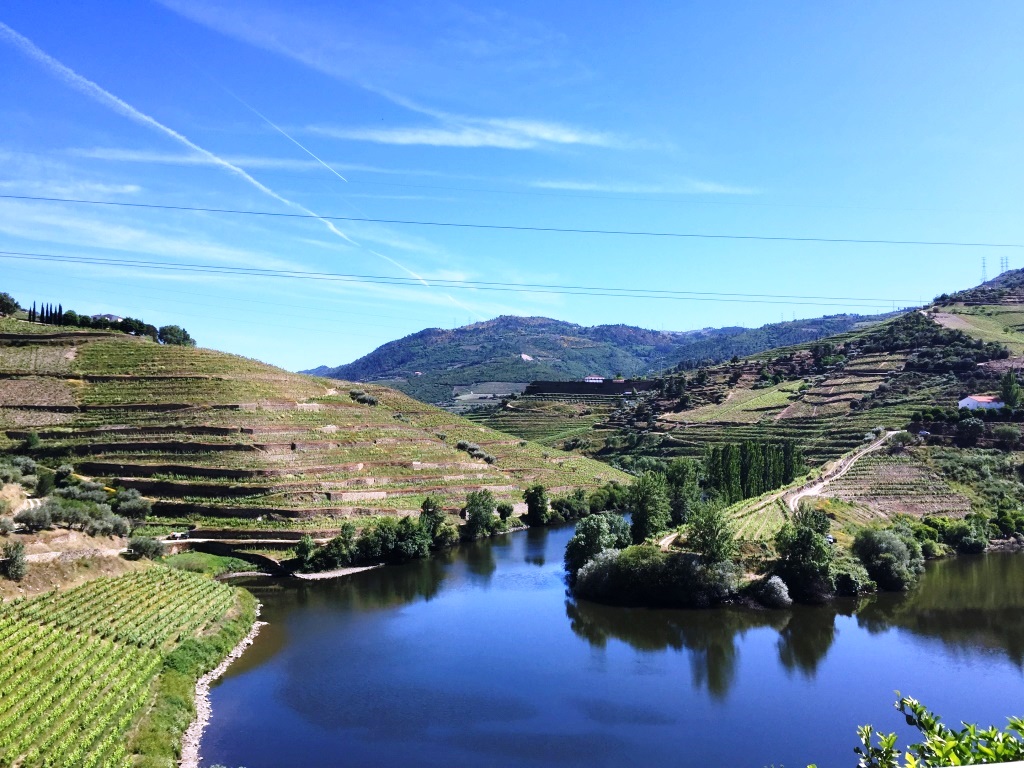

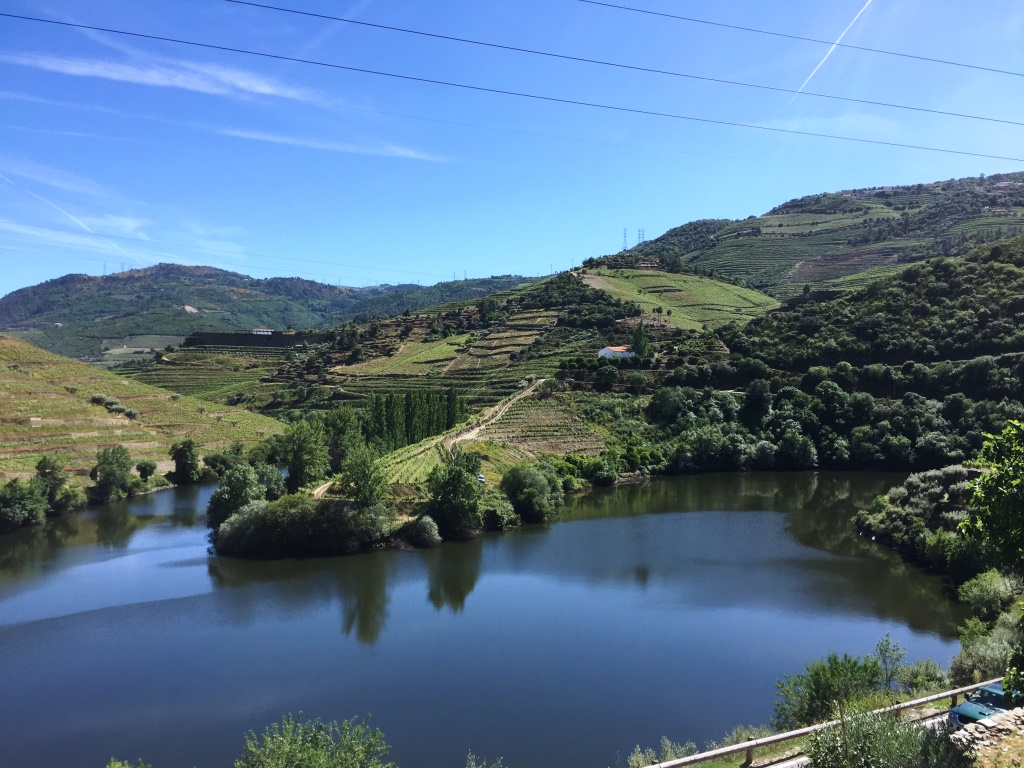 The winery still uses all of the old traditions of winemaking – the grapes are harvested by hand, into the small baskets to prevent them crushing under its own weight. The grapes are fully destemmed, and then are crushed using the … feet, yes, exactly as you expected. Grapes are stomped over the course of a few days by the men. The juice flows into the tanks (no pumping), where it is fermented for two days (in case of port production) or longer, and from there on the wines are made according to the style. Ahh, and I need to mention that the vineyards of Quinta do Tedo are certified organic. Also note that it is illegal to irrigate vines in Douro, so you can say that all of the producers in Douro are using dry farming methods.


I love the fact that wine offers endless learning opportunities – every time you talk to someone passionate, you learn something new. Let me tell you why I’m talking about it. As you might know, all the wine production in Douro is regulated by so called Douro Institute (IVDP). This is a very powerful organization, which assess all the wines made in Douro, both Port and regular dry wines, to make sure that winery’s declaration is up to the right level. I was always under impression that it is IVDP then which declares vintage year for Port. Turns out I was wrong – it is actually up to the winery to declare a vintage year (however it would be an IVDP will confirm or reject the designation). 2010 was an excellent year, and many Port houses produced Vintage Port. Then there was 2011, which was not just good, but simply spectacular. But if you mention 2009, people raise their arms defensively – it was not a good year. Nevertheless, it didn’t stop Quinta do Tedo from producing delicious 2009 Vintage Port, including their single vineyard flagship, Savedra.
The learning didn’t stop there. Our guide very simply explained concept of the so called LBV, or Late Bottled Vintage Port, which has the year designation similar to the vintage port, but typically costs a fraction of price (and something which I couldn’t figure out for a while). It appears that concept of LBV is as follows. The wine is first made with the intent of becoming a Vintage Port – 2 days fermentation which is stopped with neutral brandy, then about 2 years of aging in stainless steel or neutral oak tanks. After that the port is sent to the IVDP to get the vintage approval – and if it fails to get the approval, it is aged for another 2 years or so, and then bottled as LBV. Simple, right?
Of course it was not all talking – there was also tasting. Technically our official tasting included only two types of port, but you know how that works – once the passion starts talking, the tasting becomes “no holds barred” event.
We started with two of the dry wines. The 2011 Quinta do Tedo Tinto Douro was what can be called a “BBQ Wine” – nice fresh fruit profile, with some depth, but limited power, allowing for easy sipping. But the second wine was the whole different story. 2011 was so good that the winery simply decided to skip the Reserva level, and to make Grand Reserva only. Wine spent 22 month in French oak. The level of finesse on that 2011 Quinta do Tedo Grand Reserva Savedra Douro was unparalleled, something which you really have to experience for yourself – elegant dark fruit, spices and touch of fresh herbs on the nose (you can smell the wine for the very, very long time). On the palate, the wine is multilayered, dark, full-bodied and powerful, and it combined firm structure with silky smooth goodness. At €25, it can be only classified as a steal – or definitely a tremendous value, if you prefer that definition.
We also tasted 2010 Quinta do Tedo LBV, which was absolutely delicious, with good amount of sweetness and fresh acidity, making it perfectly balanced; Quinta do Tedo 20 Years Old Tawny had beautiful complexity with hazelnut and almonds, and dry fruit sweetness. Elegance of 2009 Quinta do Tedo 2009 Vintage was simply outstanding – fragrant nose and very balanced palate. That was one delicious tasting, that is all I can tell.


We need to round up here – and I thank you if you are still reading this. Good news is that after that tasting where I think we spent double the time versus the original plan we went back to the hotel, with one last stop to suck in the greatness of the Douro River – so no more words here, just a few pictures.
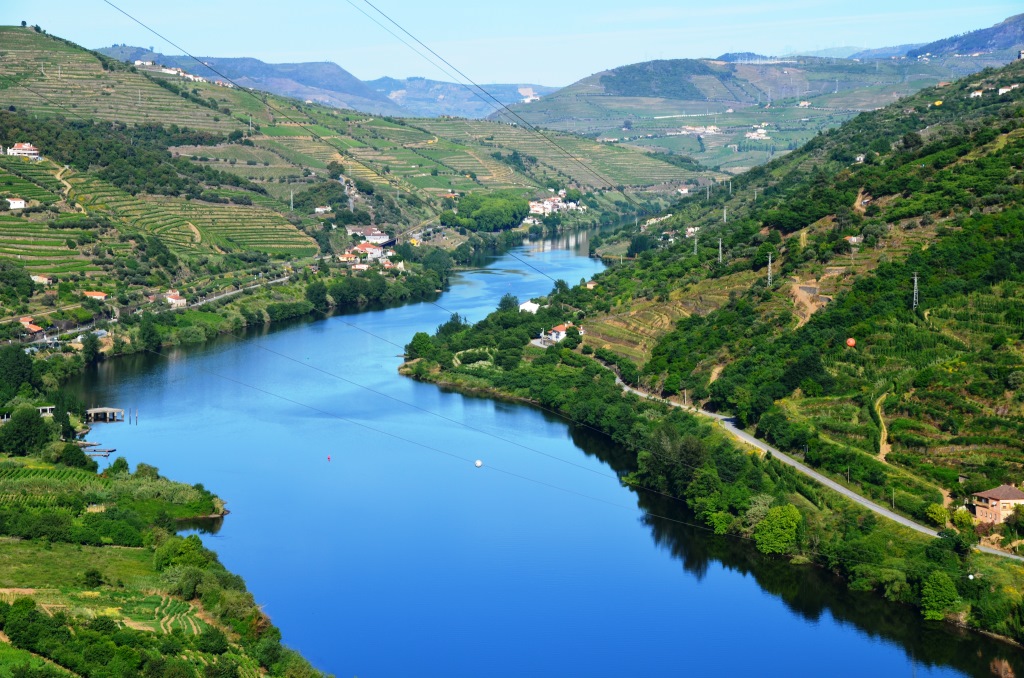
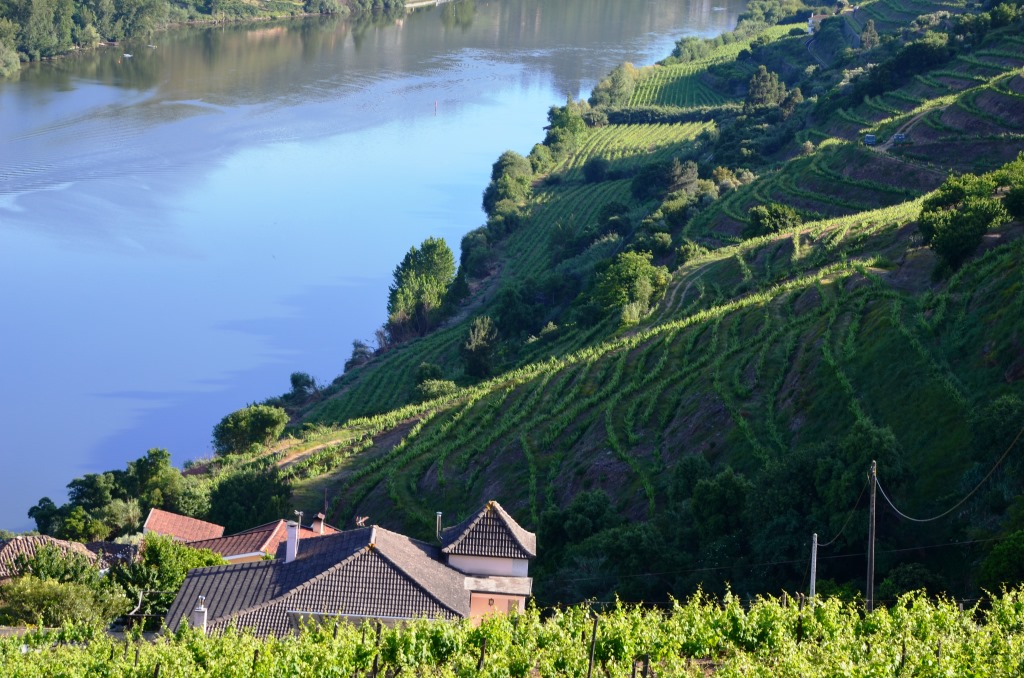
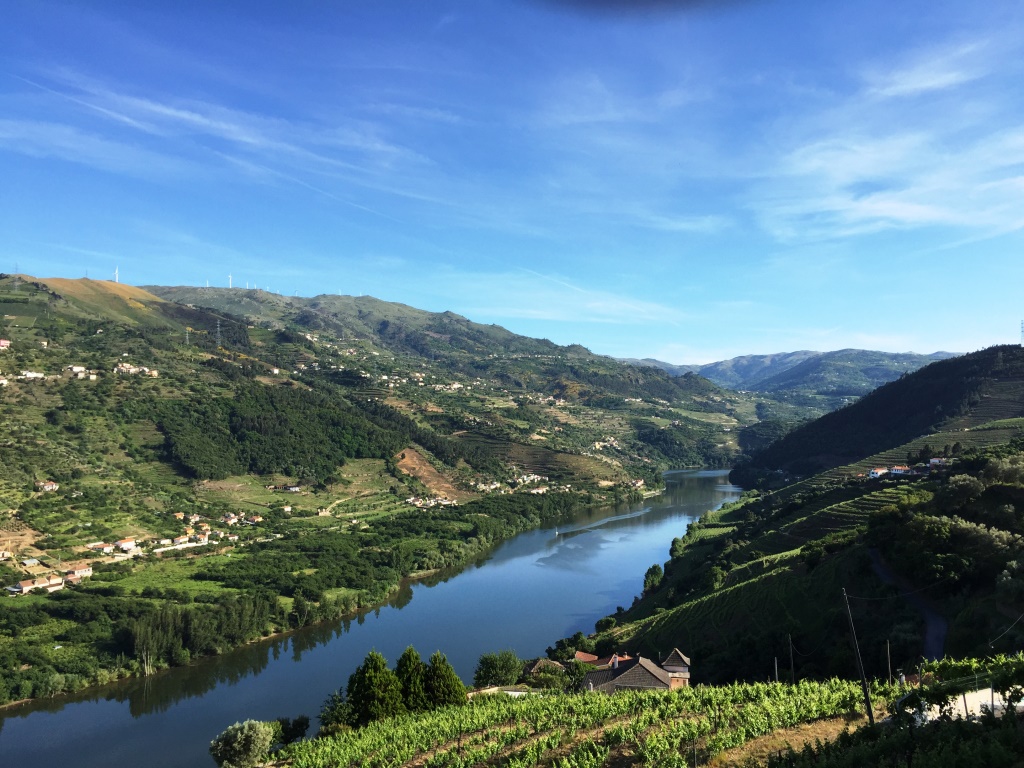
And we are done (can you believe it?). If your travel will take you to Portugal, I would highly recommend that you will give the LivingTours a try – I think this is the best way to explore that magnificent country. Also keep in mind that Winerist offers a variety of the wine tours in many regions, so do check them out.
As for my Portugal escapades – I’m only getting warmed up. Prepare to be inundated further. Until the next time – cheers!
Of Wine And Balance
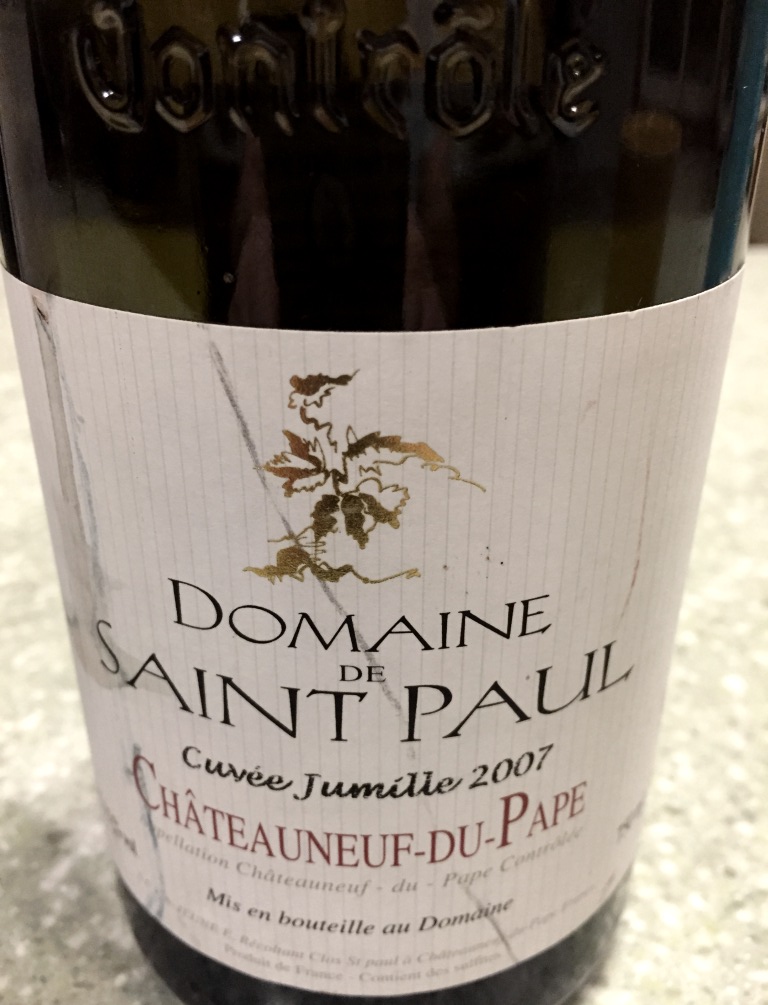 When assessing the wine, there are many characteristics which are important. The color, the intensity and the type of the aromas on the nose, the bouquet, body and flavors on the palate, the finish. When I’m saying “important”, I don’t mean it in the form of the fancy review with “uberflowers”, “dimpleberries” and “aromas of the 5 days old steak”. All the characteristics are important for the wine drinker thyself, as they help to enhance the pleasure drinking of the wine.
One of the most important wine characteristics for me is balance. Well, I’m sure not only for me, otherwise the organizations such as IPOB (In Pursuit Of Balance) wouldn’t even exist. Of course as everything else around wine, the concept of the balance is highly personable – or is it? What makes the wines balanced? What does it even mean when we say that “the wine is balanced”? This is the big question, and I don’t mean to ponder at it at a great depth, as this is a purposefully a short post. But nevertheless, let’s just take a quick stub at it, shall we?
In my own definition, the wine is balanced when all the taste components are, well, in balance. Okay, don’t beat me up – we can replace the word “balance” with the word “harmony”. In a typical glass of a red wine, you will find acidity, fruit and tannins (which is mostly a perceived tactile sensation in the form of drying feeling in your mouth). You will also often find other flavors such as barnyard, toasted oak or burning matches, which are typically imparted by the vineyard’s soil and/or a winemaking process, choice of yeast, type of aging and so on. But – in the balanced wine, nothing should stand out – you don’t want to taste only fruit, only tannins or only acidity – you want all the components to be in harmony, you want them to be complementing each other, enhancing the pleasure you derive from drinking of the wine.
And then you got an alcohol. On one side, I should’ve listed the alcohol above, as one of the components of the taste – alcohol often can be associated with the perceived “weight” of the wine in your mouth, which we usually call a “body”. Alcohol can be also related to the so called “structure”. But the reason I want to single out an alcohol is because way too often, we tend to use it to set our expectations of the balance we will find in the glass of wine, as this is the only objective, measured descriptor listed on the bottle. You might not taste the “raspberries and chocolate” as the back label was promising, but if it says that the wine has 14.5% “Alcohol by Volume” (ABV), this would be usually very close to the truth. Of course there is a correlation in the perceived balance and the alcohol in the wine – if you taste alcohol in direct form when you drink wine, it will render the wine sharp, bitter and clearly, unbalanced. But – and this is a big but – can we actually use the ABV as an indicator of balance, or is it more complicated than that?
When IPOB started, this was their premise – search for the wines with lower alcohol content (don’t know if it still is). Typical ABV in the old days was 13.9% (there were also tax implications of crossing that border). So should we automatically assume that any wine which boasts 14.5% ABV will not be balanced? I do have a problem with such approach. I had the wines at the 13.5% ABV, which were devoid of balance – including one from the very reputable Napa producer who will remain unnamed. And then there is Loring Pinot Noir, where ABV is dancing right under 15% (at 14.7% to 14.9%). Pushing envelope even further, you got Turley and Carlisle Zinfandels, where ABV is squarely stationed between 15% and 16% (occasionally exceeding even that level). Have you tasted Loring, Turley or Carlisle wines? How did you find them? To me, these wines are absolutely spectacular, with balance been a cornerstone of pleasure.
What prompted this post was the wine I had yesterday – 2007 Domaine de Saint Paul Cuvée Jumille Chateauneuf-du-Pape (95% Grenache, 5% Muscardin), which was absolutely delicious, and perfectly balanced, with round, smokey, chocolatey profile. The wine also had a touch of an interesting sweetness on the finish, which prompted me to look carefully at the label – and then my eyes stopped at 15% ABV, with the first thought was “this is amazing – I don’t find even a hint of the alcohol”. Judging by this ABV number alone, the “alcohol burn” would be well expected.
Yes, the notion of the balance is personal. Still – what makes the wine balanced? Can we say that some types of grapes, such as Grenache or Zinfandel, for instance, are better suited to harmoniously envelope higher alcohol levels? Is it all just in the craft, skill, mastery and magic of the winemaker? I don’t have the answers, I only have questions – but I promise to keep on digging. Cheers!
Wine Gifts – A Practical and Pragmatic Guide, Part 2
 Here we go again – as promised, a continuation of our Wine Gift Guide (here is the link for the first part, where we were talking specifically about wine as a gift). Please remember our guiding principals – practical and pragmatic. Know what your gift recipient needs or wants. Measure it up for yourself – would you be happy getting the same exact gift. Spend the money as you would for yourself, not as you would think you have to spend to look good.
The theme of today’s installment of the Wine Gifts Guide is Wine Gadgets, often also called Wine Accessories. This category includes everything which helps you to handle the wine or the bottle, and the whole idea behind gadgets is that they help to enhance the pleasure of drinking wine. An elegant glass, a beautiful decanter, an easy to use wine opener, a pourer which protects the bottle’s label, your hands, and white tablecloth – all are the tools helping you to enjoy wine to its fullest.
The subject of gadgets is much bigger than the wine itself – there are myriads of them. Remember, you are presenting the gift to the person you care about. Know what the person needs, or even more importantly, what the person already has. As it was mentioned in the previous installment, getting the second bottle of your favorite wine is never a problem. Getting 3rd set of glasses the recipient has no room for, which will end up in the basement and will never be used, is not what you want, period. Think before you buy. On the positive side, many wine accessories are often small and inexpensive, so they make ideal “stocking stuffers” or can be easily combined for a bigger gift. Last note before we talk about particular gadgets – I wrote about some of the wine gadgets before (wanted to create a whole series, but that didn’t work), so here is the link where you will find detailed references to the accessories I will mention below. Let’s go.
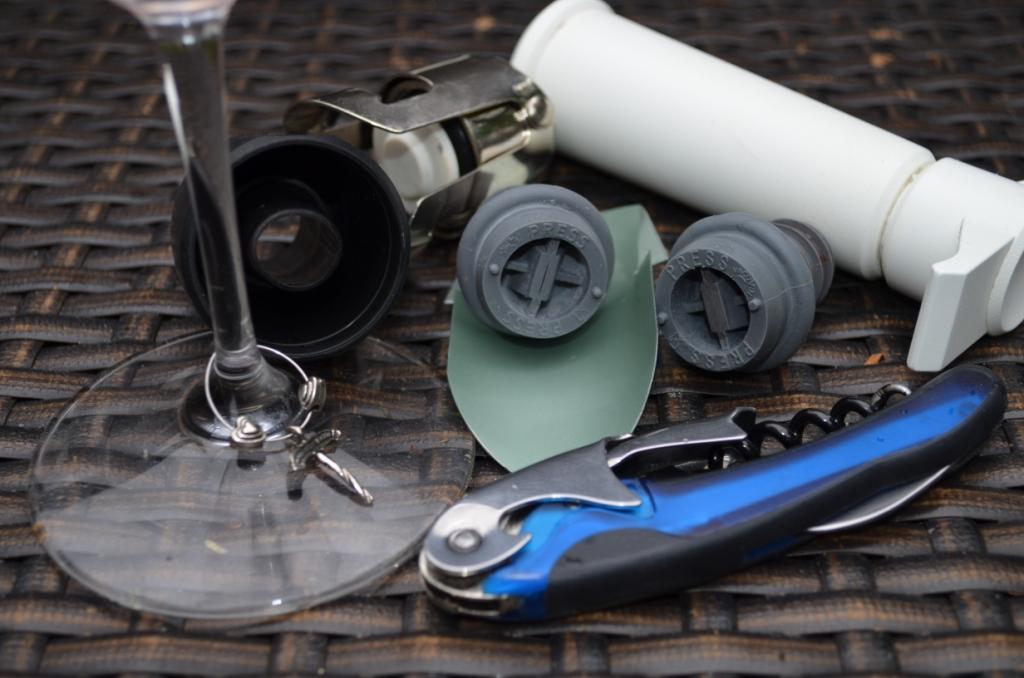
- Wine Glasses. Often an excellent gift, best if you know that the other person needs them – wine glasses are bulky and require dedicated storage space. There are multitudes of glasses available. Yes, you can go to the extreme of varietal-specific top notch glasses from Riedel, which will set you back about $50 a piece. You can also get a universal Riedel tasting glass at around 1/4th of that, or you can get 5 Zwiesel glasses for the same amount. You don’t have to get Riedel varietal glasses – 95+% of the people (I’m generous here) will not notice the difference – but of course do what you think is right. And measure it up for yourself. Example – I don’t like Riedel O stemless glasses – therefore, I will never give them to someone as a present. Okay, I think we are clear on this subject.
- Wine Decanters. I love decanters, I own 3 of them. In some cases, you simply need them (think Barolo). Even if you don’t really need the decanter, it typically adds to the pleasure of wine consumption. Don’t buy decanter by the price – if it looks good for you, get it. Nobody will feel the difference in the wine decanted in the $30 and $130 decanters.
- Wine Pourers. I personally love those – they greatly contribute to the enjoyment of wine by preventing the spills, red circles on the tablecloth and red fingers. They are also small, so it shouldn’t be a problem for anyone. Some pourers also serve as aerators, so you get the double bonus.
- Wine Opener. An interesting category. Yes, there are always new fancy designs, promising to simplify that tough task of opening that bottle of wine. But then so-called “waiter corkscrew” is all you need to open 95% of the bottles… Unlike pourers or wine charms, you generally don’t need a lot of bottle openers (it helps to have more than one, though, as you can always forget where did it go). So again, this is the category where it helps to know what the recipient wants or needs. Also remember that they can be bulky. And – the worst part – some of them don’t work by design, plain and simple. Know what you are getting…
- Wine Preservers. I love my Vacuvin, and I use it daily. But – you really need only one, as they are extremely durable. Then again, maybe you want to give your dear friend a Coravin ($250) – it is your choice. Generally, wine preservation solutions are good to have, so go for it.
- Wine Stoppers. If you find something super-cool – go for it. But remember that average wine aficionado has about 10 or 15 of those already stuffed in all the corners of the cabinets. Unless yours is amazing, there is a good chance that it will end up last in line – and nobody needs to use 16 bottle stoppers at once.
- Wine Chillers. Some look nice (like the frozen sleeve ones) and they actually work. A lot of wine chillers don’t work. I don’t like the icicles, and any electronic chiller is an absolute waste of money and storage space (I have mine stuffed in the corner of the closet – used it once – if you need it, I will ship it to you). Remember that bucket of ice with water will get any wine to the proper drinking temperature in 25 minutes tops – and it doesn’t take any space until you actually have to use it.
- Wine Charms. These are typically the least offending – they are tiny, can be stored easily anywhere, and kind of fun at the parties.
- Wine carriers. I like this category. They often come handy when traveling with wine, so yes, this gets my vote. Make sure they are actually sized right and can accommodate bottles of different sizes – I have one which will not take a burgundy shaped bottle no matter what, so make sure to check the one you are planning to get.
- Wine Luggage. It is generally expensive and would make a great gift – only if you know that the other person actually wants it. Taking a specific piece of luggage to travel with wine requires determination – find out before you will spend money on something which will never be used.
- Wine storage solutions. This is a broad and generally useful category – if the other person wants it and needs it. Wine storage solutions are usually bulky – know that the person will be able to fit that 36-bottle wine rack or a wine fridge. This type of present usually requires full coordination on both sides. In this category, avoid tiny wine fridges (6 bottles or less) – they take space, and their utility value is non-existent. As soon as you will store 6 bottles, you will end up with additional 24 requiring storage. It’s a rule, remember it.
- Eclectic gifts, or gifts for geeks. Okay, you will be surprised how many accessories can fit into this category. Port Tongues. Porrón. Wine Thermometer. There is no limit to the unusual gifts – and they are generally fine, but you better know your gift recipient. The person who drinks Chardonnay with the cube of ice might not really appreciate the concept of Porrón, so be discerning if you are looking into this category.
- What no to get. Anything which promises to manipulate the taste of wine (outside of decanters and pourers/aerators) by putting it in contact with something, or subjecting it to heat, cold and voodoo dolls – those products are a waste of money. In general, if you don’t want something for yourself, don’t give it as a present – that simple.
I honestly think I exhausted my list. Yes, there are many more wine accessories which I didn’t cover here ( open any wine accessories catalog) – but I hope that I gave you some of the ideas which might help you in your wine gift shopping, where it is not that difficult to get lost.
And … we are done for today, but we are not done with the subject. To be continued…
Pleasures of the #GrapeDay – Delicious Tempranillo
 Once again I’m confessing my love for the “grape holidays” – knowing that the day has a special dedication to the specific grape variety makes selection of the wine to drink a much easier process. It also creates a feeling of the “special moment”, thus forcing you to open that-special-bottle-saved-for-the-special-occasion. Last grape holiday, the #GrenacheDay, prompted me to open a special bottle which was a lucky occasion, as the wine was about to turn over the hill.
Two days ago we were celebrating Tempranillo, a noble grape of Spain. Tempranillo is the most planted red grape in Spain, with the best and most famous wines coming from Rioja, Ribera del Duero and Toro regions. But over the last decade, Tempranillo lost its status of Spain’s exclusive treasure – it spread all over the world, with Australia, Texas, Oregon, California, Washington and other regions producing world-class wines.
Now, to select the bottle of wine for the proper celebration, one have to go to their own cellar or the local wine store – of course, with the exception of the lucky ones who live in a close proximity of the right winery. Unless you actually live in Texas, Oregon or Washington, your chances of finding those Tempranillo wines in the store are pretty much non existent. So for me, the choice was simple – Spain. I love Spanish wines, especially Rioja – and my cellar shows that. For the most of the day, my plan was to open the Rioja bottle in the evening – I was thinking about 2003 La Rioja Alta Vina Alberdi, which I had before and it was outstanding, despite a very difficult growing year. But then many of the twitter friends stated that they plan to open Ribera del Duero wines – and it got me thinking – do I have any options? Not a lot, but I do have a few bottles of Ribera del Duero, so actually, why not?
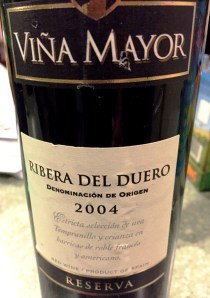
The bottle I pulled was 2004 Viña Mayor Reserva Ribera del Duero DO (13.5% ABV, ~$20). I was under impression that I wrote about this wine before in this blog – nope, I didn’t. The 2004 was an excellent year in Ribera del Duero, and Viña Mayor is an excellent producer. You put two and two together and what do you get? Five, of course! I love it when my wife takes a sip of the wine and says “wow” – one thing is to enjoy the wine by yourself, and it is totally different experience when someone else shares your enthusiasm – and it is not easy to impress my wife that much. Beautiful dark fruit on the nose, touch of herbs. The palate is just “wow” – multiple layers of fruit, touch of espresso, firm, dense, perfectly present, youthful, fresh, excellent acidity and overall very balanced. I’m glad I have another bottle – but it will have to wait for a while. Drinkability: 8+
There you have it, my friends – another successful grape holiday. How was your #TempranilloDay? Share your special moments, don’t be shy!
By the way, in case you are wondering – the next grape holiday is coming! #ZinfandelDay is on November 19th – luckily, you still have a bit of time to prepare. Cheers!
Taste Of Wine – Engineering Approach
This was one of my early blog posts – almost 4 years ago, I was blogging only for about 4 month, and had probably 1.5 readers (okay, fine, may be 1.7). This is one of my most favorite blog posts in this blog, which I think is still very relevant. Therefore, as I’m incredibly behind my publishing plans, I would like to share it with you on this rainy [in Connecticut] Thursday – and of course I would love to hear your comments. Cheers!
Beaujolais Nouveau 2013 – Well Worth Your Attention
It that time of the year again – the festive labels are lining up in front of the wine stores to remind us that we are entering into literally a six week of non-stop celebrations – Thanksgiving, Christmas, New Year, friends, families, holiday parties. With its festive label, coming out every third Thursday in November, Beaujolais Nouveau signifies both arrival of the wines of the new harvest, and the arrival of the holidays.
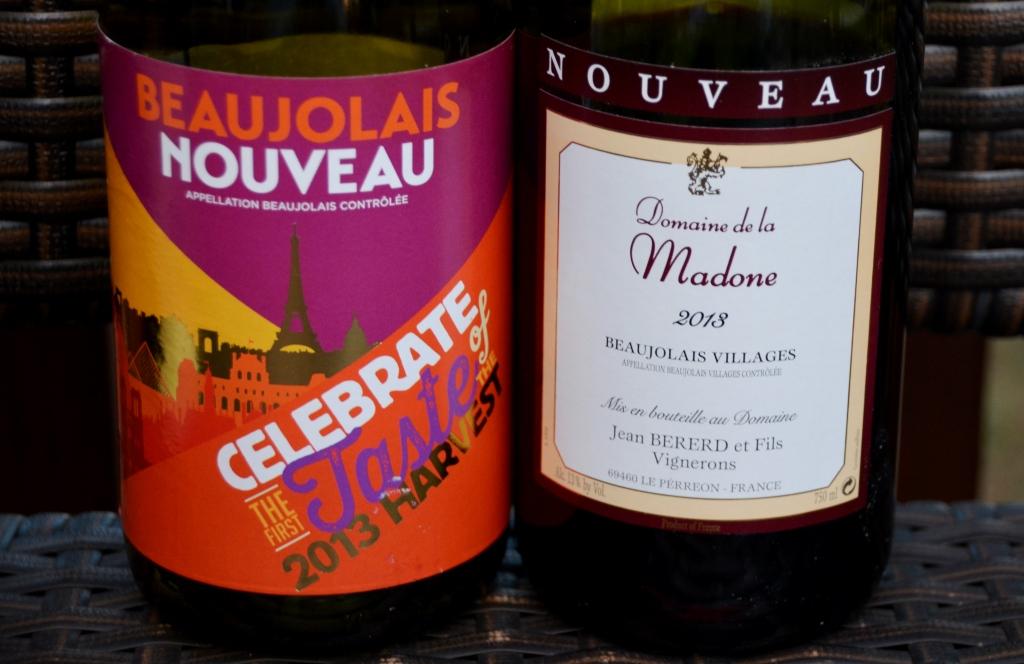
Beaujolais Nouveau Arrived!
The tradition of celebration of the new harvest with the wines of Beaujolais is well more than hundred years old. It became linked to the third Thursday of November in 1985, and then little by little, became a huge marketing success. That huge success became the worst enemy of the wine, with the producers starting to make soulless, insipid wines, void of any substance – and Beaujolais Nouveau phenomenon almost died at the very end of 20th century, with people simply ignoring the wines as only a marketing ploy.
Luckily, over the last few years, the situation started to change to the better, or I would even dare to say, to the “much better”. The wine behind festive labels started to show substance and character. I think Beaujolais Nouveau offers a very unique opportunity for the wine lovers, as you can taste every new vintage of the same wine, and compare – something which is rather difficult to do with many other wines – and you can see how the wine is changes year over year.
This year I had an opportunity to taste two different Beaujolais Nouveau wines – one from Georges Duboeuf, and another one from Jean Bererd & Fils, Domaine de la Madone – technically a Beaujolais Villages Nouveau, which is a different AOC designation, but for all intents and purposes it is produced in the same way as a regular Beaujolais Nouveau.
Can the wine be made better and better every year? Of course the question is way too generic to have an answer, but I can tell you that in case of Georges Duboeuf Beaujolais Nouveau, the answer is “yes”. I was quite happy with the 2012 wine, but I think this year it is even better. The 2013 Georges Duboeuf Beaujolais Nouveau (12% ABV, $10.99) showed beautiful dark purple inky color in the glass. The nose was full of bright fresh fruit – ripe cherries, succulent raspberries, some violets. The palate came in quite restraint and structured, even firm – good fruit presence of the same dark cherries and ripe raspberries, but not over the top, showing of respectfully mature, concentrated wine with good acidity and medium finish. Depending on the serving temperature, the acidity was more of less noticeable, and overall the wine showed well balanced. Definitely recommended for your Thanksgiving table, perfectly attune to the Harvest celebration. Drinkability: 8-
The 2013 Jean Bererd & Fils Domaine de la Madone Beaujolais Villages Nouveau (13% ABV, $10.99) had very similar inky purple color in the glass. On the nose, it exhibited very similar notes of dark cherries and raspberries. And yes, the palate profile was very similar, but somehow, while the wine was perfectly drinkable and enjoyable, also showing firm structure, I was unable to find the right temperature when acidity was fully in check and harmony with the rest of the wine. Still, not a bad wine by all means. Drinkability: 7
When it comes to Thanksgiving, which we are about to celebrate, my choice of wine tends to be all-American – Chardonnay, Pinot Noir, Zinfandel – but nevertheless, I love opening the celebration with the glass of Beaujolais Nouveau – that clearly sets the mood to the Holidays, which have arrived.
Did you happen to taste Georges Duboeuf or any other Beaujolais Nouveau wines? What do you think? Happy Holidays and Cheers!
And All The Fuss About Wine Reviews…
 Few days ago I read an article by Joe Roberts, talking about wine reviews. The article, called “Does The Wisdom Of The Crowd Provide Better Wine Reviews Than The Experts?“, and the subsequent comments were evolving around the role of the “crowd-sourcing” in the wine reviews from the sites such as Cellar Tracker versus traditional wine critics and wine experts, the value of wine ratings and all the other critical analysis of wine. Instead of commenting in the thread, I decided to express my thoughts in the form of this post.
Warning – this might be long. You might want to arm yourself at least with one glass of wine. Or more…
It is very interesting to observe “are the wine reviews and wine critics relevant” discussions to periodically flare up all over the blogosphere and all of the digital media. Some of those discussions and opinions are quite antagonistic, from “death of Wine Advocate predicted” to “the number of wine bloggers will decrease dramatically” to “blind tasting puts wine experts to shame again”. Some of them are supported by some facts and findings which authors deem indisputable. And some are written just purely for the entertainment or quick publicity purposes.
For all of us obsessed with wine, the subject of wine ratings and wine reviews is near and dear to the heart. The world seems to rotate around those 98s, A and B, 4 stars and all other metrics. Meanwhile, majority of the wine consumers couldn’t care less. Based on the number of studies, people buy wine based on the label, advice of the store associate and the price. By the way, the price factor is funniest of all (should be a subject of a separate post) – when we buy for ourselves, we always want to find $10 wine which will taste like a $100; when we need to bring a present, we ask for the advice to find the best wine at the top of our budget, and then spend a few extra bucks just not to look cheap. In any case, very few consumers concern themselves with the ratings which are abundantly displayed in many stores (interestingly enough, there are quite a few stores nowadays which are doing away with all those rating displays). Yes, the people who buy more expensive wines are interested to know what the experts think about the wine they are about to shell $50, $80, or a $150 for. Of course wine collectors track all those ratings as they are stock tickers (well, they kind of are). But considering the world of wine, those people are an absolute minority (okay, don’t bring up the 80/20 or 90/10 – that is not the subject of the post).
So Joe Roberts argues that Cellar Tracker ratings might replace all the expert opinions simply because they are the crowd sourced and it is proven by many sources, which Joe is citing, that crowd-sourcing is the way to go in today’s world. It is stated that the crowd-sourcing works because it is proven by TripAdvisor, Yelp, Amazon and thousands of other sources soliciting people opinions. Well, may be, but it depends. Let’s look at Yelp, as the food world is probably more related to the wine world than travel or gadget shopping.
Different people review restaurant on Yelp, and for the most of the cases the reader of the review doesn’t know anything about the writer. But if you think about an average restaurant, a lot of aspects of the review are based on the common sense. The understanding of the “good service” is pretty much universal. The understanding of “clean” versus “dirty” is also quite universal. “Run down” is pretty well understood. When the food is served cold, or you have to wait for 30 minutes for a cup of coffee, you don’t have to be an expert to universally recognize it. And if you ordered steak in a restaurant, I have reasonable expectations that you know how good steak tastes like.
No, you can’t take the ratings on Yelp for granted. People get upset, people get unreasonable – true. But this is where crowd-sourcing works the best. If a restaurant on Yelp has four stars out of five, based on the average of a 150, or 300, or better yet, 1000 reviews, you know that your chances of good experience are pretty high. If the restaurant has five stars based on 3 reviews, you know that means nothing in terms of your potential experience. The fact that that restaurants are judged on the multitude of factors, many of which are universal and even independent of the type of restaurant (clean Thai restaurant with good service is not any different from clean steakhouse with good service), gives you a certain level of reliability of the crowd-sourced ratings.
Wine is different. There is no foundation to all those ratings, outside of smell, taste and ability to deliver pleasure. But – “tastes good” is highly individual. If someone only likes to drink California Cabernet, convincing the person that this Sagrantino was a great wine might be difficult. Now, if you look at the crowd-sourced ratings, like Cellar Tracker offers, it means nothing, as based on the rating alone you can’t align your base with the people who wrote the reviews. You don’t know if the person who rated that St. Joseph Syrah at 78 simply doesn’t like barnyard undertones, or the wine is actually bad. You have to read the review to try to figure out what is wrong with the wine, and why the reviewer didn’t like it, may be he was just in a bad mood or had the wrong food with it.
When it comes to the wine critics, the situation is different. Yes, I know, the most famous of them are periodically accused of bias and various forms of dishonesty, but this is not relevant here. As the critics, they are able (and expected) to judge the wine objectively. Also, wine critics typically have their area of expertise, like James Suckling focusing on Italian wines, Steve Heimoff on California or Allen Meadows on Burgundy. I’m not trying to say that if a critic rated the wine at 95, it means that this will be a great wine for you no matter what – but at the same time, that objective persistency, consistency of the ratings and narrow focus of the critic allows you to align the base, and then have a quick opinion, a probability of liking the wine based on the given rating by a known critic. I don’t buy my wines based on the ratings, and I’m not willing to pay $100 more for the bottle of Cabernet only because Parker gave it 96 versus the wine next to it with only a 90 rating – but that rating allows me to establish a frame of reference.
Let’s look at the big picture. We can see an increased interest to wine all over the world. We also see an increased wine production all over the world. People “en mass” are increasingly more comfortable and more knowledgeable about the wine, especially if we are talking about Millenials and younger generations. And that does lead to the reduced role of “The Wine Critic” (Wine Spectator, Wine Advocate, etc). But – the need for the critical information about the wine is increasing, and as people gain more knowledge and learn to trust their own palates, they are willing to take wine advice from the lesser figures than Parker or Suckling, and they are willing to take it from many different sources – blogs, twitter, web sites and other digital media outlets. People are building their own tribes. This is where Cellar Tracker comes to play – but only for the people who are inside, only for the people who uses the service and is able to align the base. My personal “wine experts” tribe consists of many bloggers I started following over the years, one by one. Reading their posts, tasting the wines they are talking about, having a dialog, I was able to build my alignment, little by little, one glass at a time. I know that I can rely on and willing to take Jeff’s (the drunken cyclist) advice for the Pinot Noir, or Oliver’s (the winegetter) for German Rieslings, Julian (VinoInLove) and Stefano (Clicks & Corks) for any of the Italian wine, or Alissa (SAHMmelier) for the wines of Texas. This is not my unique experience – I truly believe this “tribe concept” works for everybody, more and more so.
Are you still with me? Wow, I really have to thank you for sticking along. Let’s round this up. No, the wine world is not going to rotate around Cellar Tracker. Yes, the role of The Wine Critic will decrease, but in the end of the day we will still have more of them. There will be ever increasing number of people who will be willing to share their experiences (and sometimes put it in the form of numbers), and there will be ever increasing number of people willing to take that advice. Crowd-sourcing? Kind of, but very different. May be “Tribe-sourcing” is the word. The world of wine is big, and it is only getting bigger – I think we all can perfectly get along.
Don’t know about you, but I need a glass of wine. Cheers!
Last Bottle Sign Up ($10 credit)





