Archive
China Food and Wine Experiences
For the first time ever, my business took me to China. Not only China, but it was also my first visit to Asia, so definitely a new experience. Of course, I read and heard many China food-related stories from people, but as we all know, there is a big difference between the two – “virtual” and “real-life” experiences are vastly different, especially when it comes to something which you put into your mouth.
During the week in Beijing, I had an opportunity to try many different dishes and visit a number of restaurants. One challenge is that for most of the restaurants I visited, I don’t have their English names or addresses, so what I will share with you will be mostly a collection of impressions, primarily in the pictures, without many useful references for you in case you will be visiting China any time soon. But I hope at least you will get an idea for what to expect, especially if you grew up on mostly European food. I also plan another post which will be just about the “tourist” experiences, for things outside of the food per se.
The first restaurant I visited was a “Noodle House” type if I’m not mistaken, and it was located right around the corner from the Sheraton Great Wall hotel where I was staying.


The main dish at Noodle House was, of course, the noodles, but before we got to them we also had lots of appetizers. Pork belly with roasted garlic and Quail eggs was particularly tasty, and it became only better with time, as it had its own heat and garlic continued cooking. Noodles were good, but hard to finish after all the food prior. Chicken with peanuts (as opposed to traditional cashew nuts in the US) was also very tasty.


Now, I have to mention the first experience (well, the actual “first” was undrinkable wine at the reception, but that we will skip). When I poured myself a glass of Chinese Chardonnay (at a happy hour), I had no expectations – just curiosity. First sip, and – wow – not bad at all! 1421 Gold Chardonnay Xinjiang China had a characteristic nose of Chardonnay, with a touch of vanilla. The palate had a touch of golden apples, vanilla, good acidity – overall, very enjoyable. I like the brand’s description on the 1421 website: “1421….the year Admiral Zheng He, leading one of the largest fleets ever seen, sailed to many, many parts of the world. Wine much like travel, has served as a link between different cultures, people and countries. Today at the beginning of the 21st century, 1421 follows the same mission as Admiral Zheng He, sharing his spirit for a better world.” – the Chardonnay I had was definitely the wine worth sharing.


My next experience was a first encounter with the traditional Peking Duck, a whole duck seasoned and roasted in a special oven, with its crispy skin being the most sought-after delicacy. The place we went to, Dadong Roasted Duck Restaurant, defines itself as an Artistic Concept Food, and it does it – “Artistic Concept” – very successfully – in ambiance, food presentation, service – all the elements are there, definitely a world-class restaurant.


Of course, my encounter with the restaurant started with the wine list, which was something to look at. The list was very substantial, with a wide range of offerings, adequately priced for the “concept restaurant”. I don’t remember which exact Bordeaux wine was that, but it was priced at a measly ¥28,000 (the ¥ symbol depicts Chinese Yuan, often also called RMB), which would translate into roughly $4,800. You could also have Penfolds Grange for only ¥7,200, which would be roughly $1,200 – which is almost reasonable (hope it was not a young vintage).


So after hopelessly scanning the wine list for a few minutes, I finally discovered what I was looking for – a small section of Chinese wines. Luckily, I already was given the name of one of the best wines in China (according to the local sources, of course) – the wine called Changyu, and there it was on the list. There was no vintage listed, but there were three wines offered with different “age” – 1, 3 and 5 years. I’m not sure what it means, but one year old looked as good to me as all others, and at ¥196 ($33) I felt very comfortable with my choice, whether the wine would be good or bad.


Turns out that Changyu was the oldest commercial winery in China, started in 1892, then of course significantly destroyed in 1949 and now getting back to their roots. The only thing I was able to figure out from the label was that the wine was made out of the grape called Cabernet Gernischt, which, according to the article by Jancis Robinson, is actually a Carmenere. I couldn’t figure out the vintage or any other details, but I can tell you that this Changyu Red Wine Blend Ningxia, China was simply outstanding – a delicious nose of black currant with a touch of mint, and a perfectly balanced body of the classic Bordeaux blend which is ready to drink – nothing green, just cassis, eucalyptus, firm, good structure, welcoming pinch of tannins, good acidity, and perfect balance. I got 2 bottles of Changyu at duty-free, so probably there will be another post on the subject.
While I was working through the wine list, my host was navigating through much bigger book – here is the look of the menu at Dadong restaurant:


I can only say “kudos to my host” for being able to select anything from a book of that size – I would probably spend half a day flipping through the pages. Anyway, we started our dinner with a couple of exotic appetizers. Both were vegetables, one had sweet sauce and was crunchy, maybe some sort of squash, but cooked very lightly? The second one was somewhat reminiscent of pickled mushrooms in texture but didn’t have a pickled taste. Both of course had a beautiful presentation. Then the duck arrived, was quickly presented to us (yes, I forgot to take a picture) and then it was sliced table-side. The only part which made it to the table was the duck breast, with maximum skin exposure, as this is the most prized part. I was explained that the proper way to eat duck is to take the top part which is mostly skin, dip in the sweet crunchy beans (more reminiscent of sugar), then sweet soy-based sauce, and then put it in your mouth, where it literally melts – it seriously disappears without much chewing effort. The second way is to take a paper-thin pancake and assemble a tiny taco if you will, by combining a few slices of duck with thinly sliced vegetables and addition of the sauce – and this is how it is mostly consumed.


Once we were done with the main course, first the branch with tiny mandarins appeared, beautifully presented on top of a bowl with ice – when it showed up, it looked like the smoke was coming from the plate. For my dessert, I decided to try a pastry filled with cream made with fruit called Durian. Durian is known to have a taste that is extremely polarizing to the people – only love/hate with nothing in between. Imagine the taste of raw onion, rather intense pungency of the shallot, mixed with strawberry cream – that would give you an approximation of the taste of that dessert. I personally liked it, but I can easily see how lots of people wouldn’t even touch it.


I’m not planning on giving you the daily report on our eating, but I still want to include a few pictures of probably the best lunch we had – two different dim sums and then a simple shrimp dish:


The next traditional cooking style we experienced was so called Hot Pot. The idea is that you have a special cooking vessel, which looks like a sombrero hat, if you will, with the channel filled with aromatic broth, and the middle section containing burning charcoal, which quickly brings broth to a boil. Technically, the channel is split into two parts, so you can have spicy and non-spicy broth separately – however, no matter what, by the end of the evening it becomes all the same.
You can order very thinly sliced meat (pork, beef, lamb), vegetables and noodles. You cook it all in the broth, and then you have a choice of dipping sauce. To be entirely honest, hot pot is not my thing – the meat, which is cooked for 10-15 seconds, has no flavor and simply becomes the vessel to eat the dipping sauce. Vegetables should be dumped in for a longer time, and then it is really hard to find them in the boiling murky liquid. This is not the worst food I ever had, but still – I had to have it twice, and only marginally enjoyed it both times.


I’m almost done with my China food stories. We experienced one more Roasted Duck restaurant, called Xile Village Roasted Duck Restaurant, located in the brand spanking new shopping mall.


Here the duck was sliced in 3 different ways – just the skin, the top of the breast with skin and meat, and mostly meat pieces. At this restaurant, mustard was also served as a condiment for the duck breast, which was quite tasty. There were lots of dishes before the roasted duck arrived, as it takes 50 minutes for it to cook. My highlights here were delicious shrimp and very very tasty eggplant (one of the best vegetable dishes I had in China). Also, once all the meat was carefully cut off the duck, the carcass was chopped up and deep fried – nothing goes to waste 🙂


Okay, I hope I didn’t bore you to death – but I’m finally done. There you have it, my friends – my Chinese food and wine escapades. I plan to share some traveling advice regarding China in the next post. If any of these pictures triggered any thoughts – you know where the comment section is. Cheers!
Reflecting on the Beautiful Fall Colors
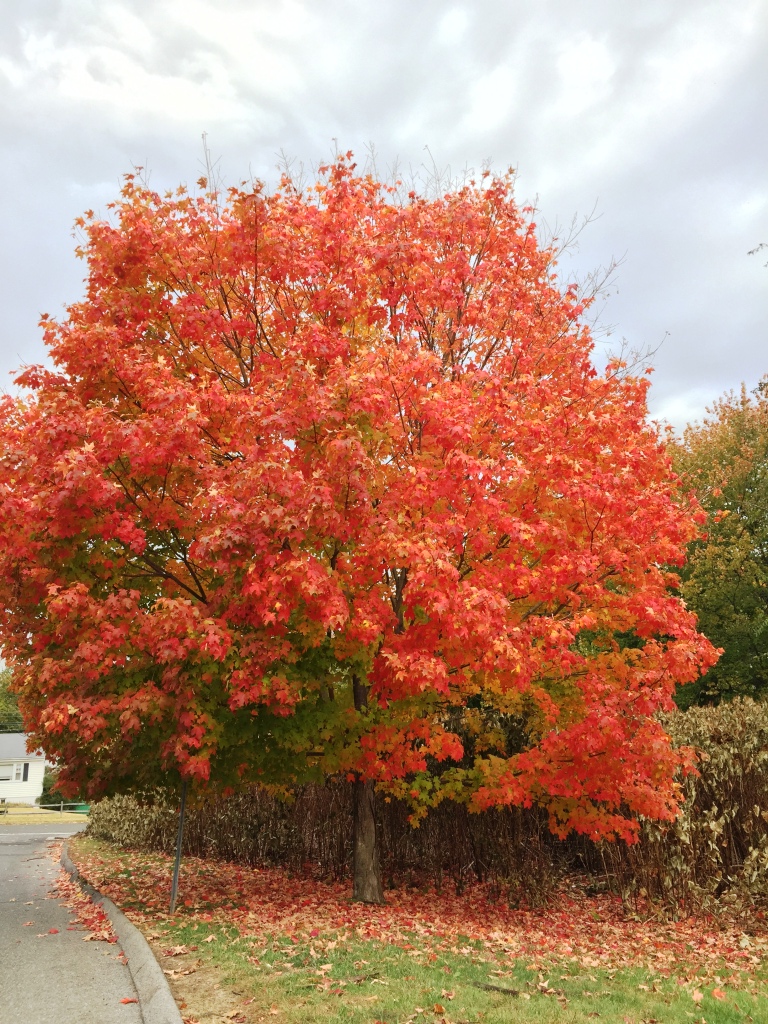
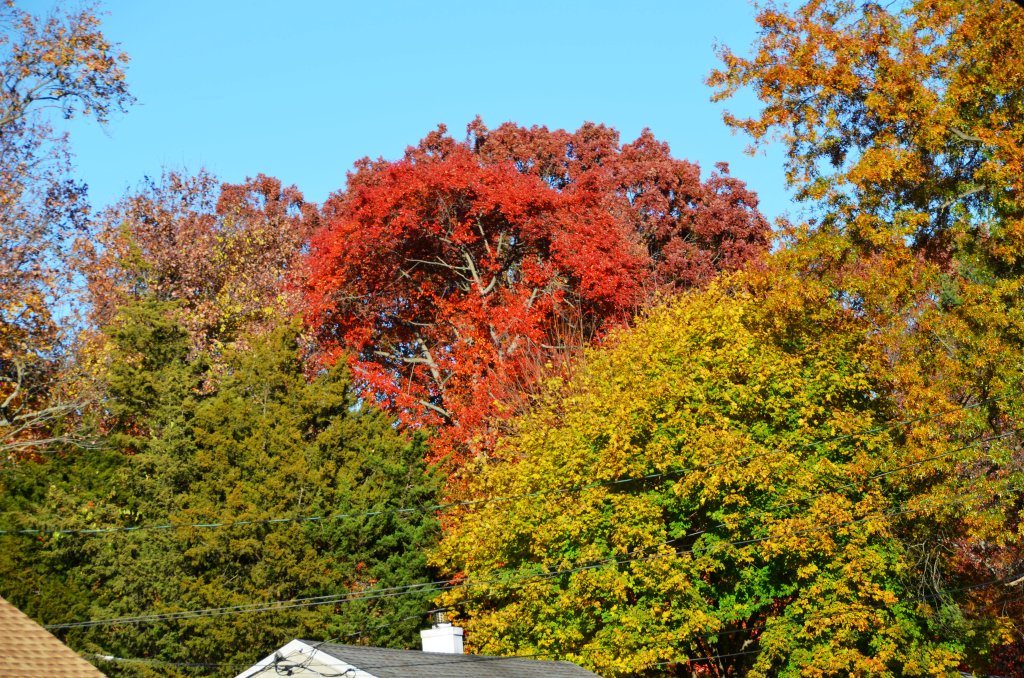
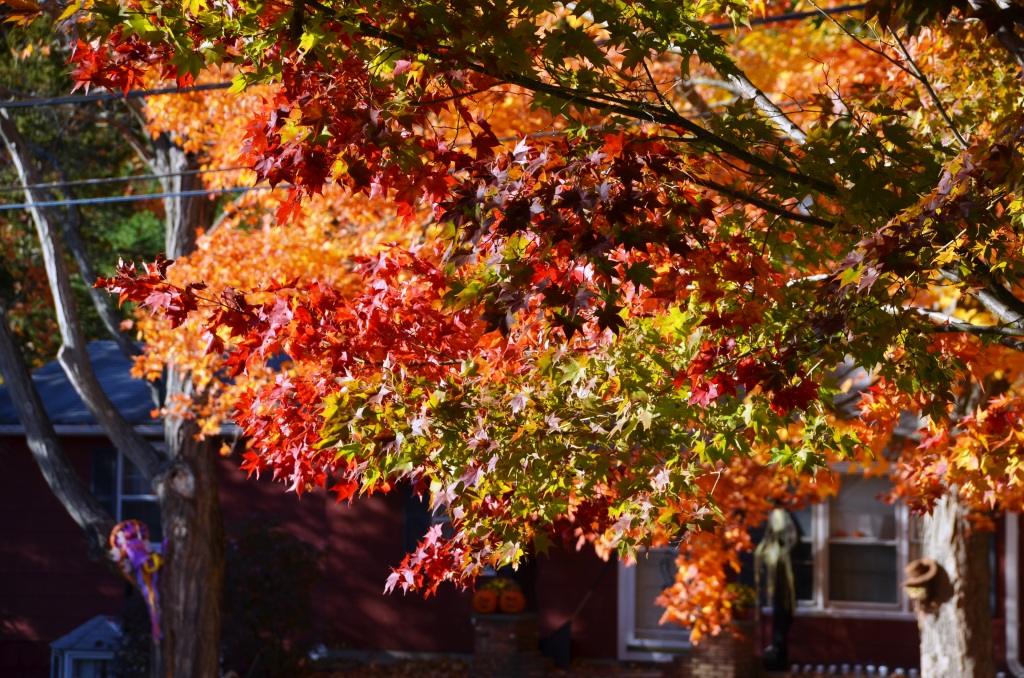
Fall is most beautiful time in New England – people often plan special trips from around the country to embrace that Fall beauty, when leaves take on unimaginable colors. This year, though, I was worrying that we will not get to experience that beauty fully. September was way warmer than usual, and by the end of the month most of the trees were as green as in June, so my fear was that the leaves will go from green to brown, depriving us of the breathtaking exuberance of colors.
This had been challenging year so far. While the work had been exciting and interesting, it required a lot bigger investment of time, as we are trying to get into the new areas – and time is not something which is easily scaling or expanding. The end result is a great reduction in time left to spend on this very blog. The year also happened to be extremely emotionally challenging, but of course this is simply part of life.
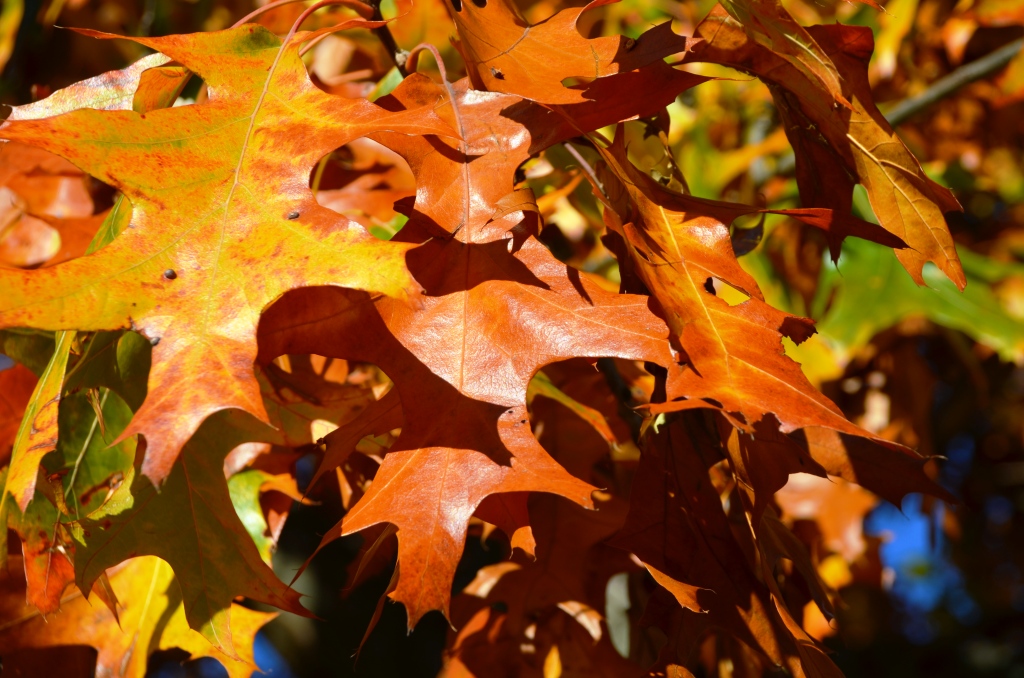
Beautiful, sparkling, unstoppable abundance of colors arrived in October, delivering endless “eye candies” with every look outside. I found time for a slow walk around the neighborhood with my daughter and my camera, trying to capture myriad little moments mother nature always ready to share with us. Now I want to share that beauty with you, just in case you need a little sparkle in your life. Cheers!



















Feel at Home in the Old Dominion: Luxury B&B’s in Virginia Wine Country
Today I would like to offer to your attention yet another guest post written by Stef Schwalb, Director of PR and Marketing at BnBFinder.com. October is Virginia Wine Month, so just in case you are contemplating a last minute getaway to the “Napa of the South”, you might find information below quite helpful. Note – it is not only about places to stay – the innkeepers also share their favorite wine recommendations. Here we go…
The Old Dominion State is celebrating the 27th year of Virginia Wine Month this October, and the region is definitely on its way up as a desired destination for all wine lovers. With more than 250 wineries participating in the event in one way or another, and the media buzz surrounding the area due to its exquisite scenery and record-breaking sales of 2015, now is the ideal time to check out the Virginia wine. Of course in addition to sipping, you’ll need a place to stay – here is a handful of B&B’s that are great finds in Virginia wine country.

Iris Inn Bed and Breakfast
Iris Inn Bed & Breakfast in Waynesboro, VA is located on 12 wooded acres in the Blue Ridge Mountains. Overlooking the Shenandoah Valley, the inn was designed with comfort in mind. With beautiful mountain views and a woodsy feel, the modern facility features spacious accommodations with expansive outdoor decks; king beds; Wi-Fi; flat-screen HDTVs; DVD players; refrigerators; writing desks; private baths with hairdryers; and cozy sitting areas. A full gourmet breakfast is served in the great room each morning and includes an enticing entrée along with homemade breads, coffee, juice, and fruit. There is also a “bottomless” cookie jar situated on the sideboard and beverages are available at check-in time. Convenient to numerous local attractions, including the Shenandoah Valley, Blue Ridge Parkway, Skyline Drive, Charlottesville, The University of Virginia, Monticello, and several local wineries, Iris Inn is an excellent home base for exploring the region. The inn also offers several wine packages, including Sip & Spa, Sip & Simmer (a cabin dinner), Sip & Slip on Your Boots (hiking), Sip & Saddle (horseback riding), and Sip & Scribble (for aspiring writers). Some wineries located near the inn include King Family Vineyards, Flying Fox Vineyard, and Afton Mountain Vineyard.
Innkeeper Heidi Lanford recommends King Family Vineyard’s blended medium-bodied red, Meritage 2007. “And any vineyard’s Viognier in central VA is excellent,” says Heidi, “as this perfumed white is gaining world acclaim as Virginia signature grape.” One must try a Cabernet Franc, since the grape grows so well in this area, she continues, “we like the Cabernet Franc Reserve from Afton Mountain Vineyard.”

The Inn at Meander Plantation
Situated near Orange, VA in Locust Dale, The Inn at Meander Plantation is a historic B&B located one hour from Washington DC, Fredericksburg, and Charlottesville. The elegantly furnished, pet-friendly accommodations offer triple-sheeted king or queen beds with luxury linens, down comforters, and pillows; large private bathrooms; lavish microfiber bath robes; bottled water; hairdryers; clock radios with CD players and an assorted selection of CDs; Keurig coffeemakers; gas or wood-burning fireplaces; and air conditioning. Each morning, the complimentary breakfast includes a daily entree choice between sweet and savory options, a fresh fruit plate, and muffin or sweet bread. The inn also has a popular restaurant onsite that features a delicious 4-course dinner made from local produce and served strictly with the best of Virginia wines. Since the innkeepers/owners Suzie Blanchard and Suzanne Thomas work so closely with local wineries, the expansive wine list is quite unique. Guests can also indulge in the Virginia Wine Country Special package as well as tasting coupons for select local wineries. This charming Madison County country inn is just a short drive to Monticello and Montpelier, the celebrated residences of presidents Thomas Jefferson and James Madison (respectively).
Suzanne recommends Gray Ghost Vineyards and Winery in Amissville – “I love their Chardonnay Reserve, Ranger Reserve, and of course, their amazing, award-winning Adieu dessert wine”; Reynard Florence Vineyard in Barboursville – “I’m very fond of their Petit Manseng, an excellent example of this white varietal, which is my personal favorite white wine”; and Ducard Vineyards (in Etlan, located in the northern part of Madison County ) – “I like the Popham Run Red Blend and the C’est Trop, a unique red dessert wine.”

Oaks Victorian Inn Bed and Breakfast
Built in 1889 and listed on the National Register of Historic Places, The Oaks Victorian Inn Bed and Breakfast is at home in the quaint historic town of Christiansburg, VA. This classic Queen Anne Victorian bed and breakfast inn seamlessly combines Victorian elegance with modern day amenities within the backdrop of its stunning surroundings. It features six spacious guestrooms, each comfortably appointed with antique furnishings, private baths, and personal refrigerators with complimentary beverages. Select accommodations feature claw-foot tubs, fireplaces, body showers, and jetted Jacuzzi tubs. There is also a separate facility, The Garden Cottage with gazebo, that has a bathroom complete with sauna and shower, a 400-gallon private hot tub, a microwave, and a refrigerator with complimentary beverages. Guests enjoy downtime in the parlor and library onsite, and they can also relax and take in the scenic landscape on the large wrap-around porch lined with rockers, comfy chairs, and small tables for wine, cheese, and other goodies. The property is highlighted by meticulous landscaping, a fish pond, gorgeous perennial gardens, and oak trees that are more than 300 years old. Just two miles off I-81 in the center of New River Valley near Roanoke, the inn is a quick ride to Blacksburg, Floyd, Roanoke, the Blue Ridge Parkway, and more. The gracious hospitality and unforgettable breakfasts are hallmarks of The Oaks Victorian. With the Virginia is for Wine Lovers Times 2 Package, wine lovers can stay two consecutive nights at the B&B and receive two pairs of tasting passes to the innkeepers’ favorite local wineries – Whitebarrel Winery in Christiansburg and Beliveau Estate Winery in Blacksburg.
At Whitebarrel, the Chambourcin, which used to be called 325 AD, is a favorite of innkeeper Linda Wurtzburger. “And for a white, my favorite is Yesterday’s Song, which is a Chardonnay.”
Missing Vino Volo at Newark Airport – Oeno is Just Not It
Don’t know if you can figure out from the title, but yes, this will be a rant. There were a few rants in this blog before (I even have a dedicated category for that) – and every time I contemplate the same question – “should I do it or not”. The problem with the rant is that while it is often a quick “feel good” solution for the “rantee”, it can theoretically have some consequences for the object of rant. But outside of the letting the steam to blow off from a bad experience, I see the rant as a criticism, and criticism is a good thing – it identifies problems which can be fixed (or not, of course). Okay, let me not making this post a rant about rant – let’s proceed to our subject.
I’m regularly traveling for business for the long time. As previously reported in this blog, the situation with food significantly improved at most of the US airports. And not only with food, but with wine as well – on a multiple occasions I wrote happy posts about Vino Volo stores available in many airports – including the one at Newark Airport in New Jersey (here is the link). At Vino Volo, you can always expect to find an interesting wine flight at a reasonable price, especially considering the airport location, and a tasty and thoughtful bite of food.
Now, as it happened last year, Vino Volo was kicked out of the Terminal C, and replaced by the restaurant called Oeno Wine Bar. Oeno tried to replicate Vino Volo’s model by offering wine flights as well as wine by the glass and by the bottle, and of course, food to go with it. So far so good, right?
First thing as you walk into Oeno is that nobody greets you. Okay, quite common at the airport. Next, you have to find the table, sit yourself, and start navigating the iPad on the stand which crowns every table at the restaurant. The iPad presents all the food and wine, grouped in the number of categories. 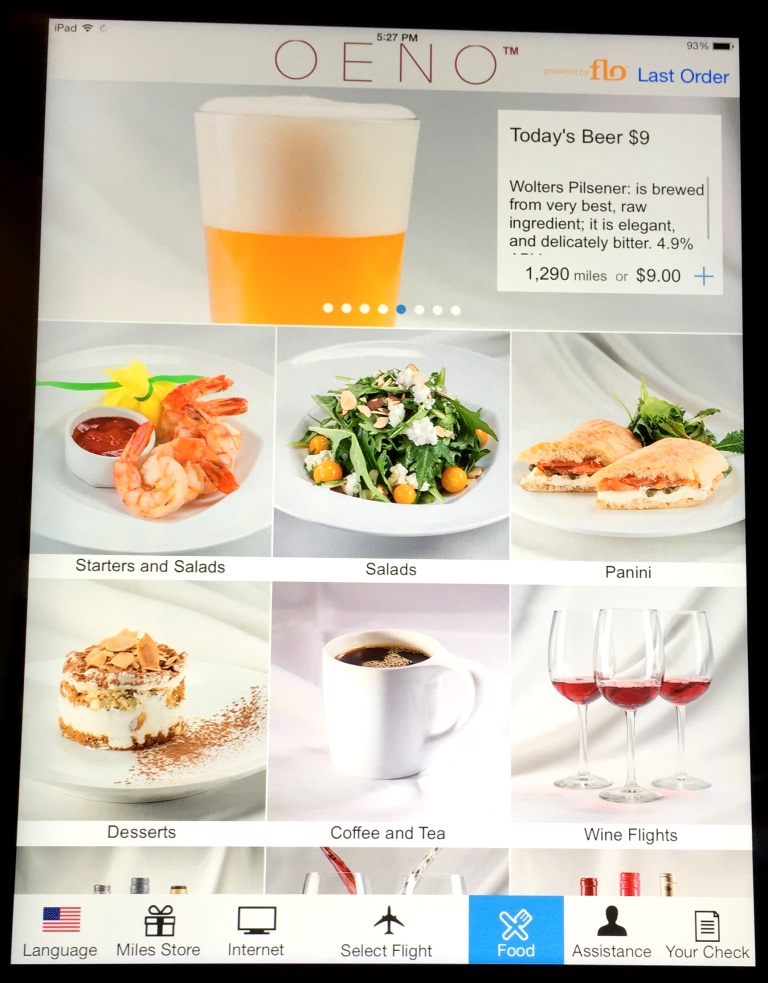
Now, as you try to dig into the wines, there are a few surprises which one runs into. First of all, the prices – there are 6 wine flights offered, priced either at $36 or $54 – most of the Vino Volo flights were priced under $25, so $54 for the tasting flight, seriously? The prices for the glass of wine range from $10 going into the $40s (not bad for the airport, right? – $40+ for a glass of wine on the go). But – for me, an oenophile who was served by Vino Volo very amicably, the biggest gripe is the full lack of information. Despite the fact that you have in front of you an iPad, an electronic device which allows to have pretty much an unlimited amount of information for each and every item offered, Oeno menu provides literally no relevant information. It seems that the only reason to offer the menus on the iPads is to make it easy to charge the customers in dollars or in frequent flyer currency – points/miles. Nobody cares also to provide a service with that, make sure people actually like what you are offering (yes, I mean “information” by the service).


Let me advance my gripe further. Considering complete lack of information, I decided to at least order something inexpensive, so I went with Jelu Pinot Noir, at $10.50 per glass. I couldn’t figure it out where the wine was from, as no information was available. After tasting something pretty much undrinakble – hot, unbalanced, biting wine – I had to look it up. It appears that this was a Pinot Noir from Argentina, and it also appears the the whole bottle cost as much in retail as I paid for the glass. Had I known that this was a Pinot Noir from Argentina, I would simply avoid ordering that – you can hardly go wrong with Malbec from Argentina at any price level, but when it comes to Pinot Noir, you better know the wine and/or producer.

Leaving the wine aside (as I did with my glass), the food was also marginally successful. I ordered a Smoked Salmon Panini. While I understand that Panini is a pressed sandwich, I didn’t expect that smoked salmon panini would be put under a hot press. Ever had hot smoked salmon? This is not the most delicious food in the world, as the heat accentuates the saltiness of the salmon, and really makes it marginally enjoyable. Never mind the price of $14.25 – for that amount of money, you can have 2 or even 3 excellent sandwiches in most of the European airports…
The iPad system at Oeno is really focused on getting money or miles (the points) out of you, at the same time providing as little service as possible, as you do everything on that iPad (you have to place an order and pay before anything gets to your table). To add insult to the injury, the tip of 20% is added to your payment at the time of the order (for some reason it is called “check-out”, even it is the first thing you have to do to get your food). The only service you get is your food placed in front of you, but nevertheless, you are paying as you are at a high end restaurant with great service.
And the last thing which I found extremely annoying: the push to get you to use your frequent flyer miles. If you travel enough, I’m sure you know that all those “rewards points” don’t come very easily, with the airlines constantly looking for the ways to reduce your frequent flyer benefits. Now, every item on the menu has price both in dollars and in miles. For the glass of Prosecco, you could elect to pay $14.10, or use 2,020 miles. As long as you don’t analyze the numbers, and have millions of frequent flyer miles in your account, you probably don’t care about “just 2000” miles. Now, think about this: if you have no status with United, to earn the same 2000 miles, you have to buy a $400+ ticket (it should be $400 before taxes and fees), as you are only getting 5 miles per dollar on United. If you are short 2,000 miles for your award ticket, you can buy them from United, at a measly price of $70 – but here you are, offered to spend that same 2,000 miles on a glass of bubbly instead of $14. And when you refuse to do so, you are asked to fill out a survey to explain why did you refuse the offer to pay with miles. Don’t know about you, but I find this preposterous.
Okay, let’s end this Friday rant. If you travel through Newark airport, and especially if you are an oenophile, I have only one recommendation for you – avoid Oeno. Unless someone at Oeno wakes up and makes changes to transform it into really a desirable destination, as Vino Volo was. Until then, take your hard earned money elsewhere, and – Vino Volo, I miss you very much… Cheers!
Oeno Wine Bar
Newark Liberty International Airport
Terminal C
Gates 70-89
How Good Celebrity Chef’s Restaurant Can be? Mesa Grill in Las Vegas
 Have you ever watched any of the cooking competitions on the Food Network or any other food channels on TV and wondered – how good those chefs really are? Okay, I’m going too far – they must be good at cooking, that shouldn’t be questioned. But – many of those celebrity chefs own restaurants, and in some cases, multiple restaurants, and it is obvious that they don’t personally cook there on an average day, so how good those restaurants can be?
When it comes to the celebrity chefs, Bobby Flay is surely leading the pack. He is an Iron Chef, and he has his own show “Beat Bobby Flay”, where he is fiercely competes with guest chefs – no questions, Bobby Flay knows how to cook.
Bobby Flay owns multiple restaurants around the country. During my recent trip to Las Vegas, I stayed at Caesars Palace casino – which happened to be a home to one of Bobby Flay’s restaurants, Mesa Grill. As you can imagine, I had to use such opportunity to try it out.
We arrived at the restaurant at around 6:30 p.m., and to my surprise we were told that yes, no problems, you will have to wait only for 5 minutes (of course it was in a middle of the week, but still I was expecting a much longer wait). 5 minutes later we were sitting at the table.
 Let’s start from the wine list. The wine list was reasonably sized with good diversity – California, Washington, France, Italy, Spain. There were enough of the reasonably priced wines (under $50); overall, most of the wines were prices at the triple retail. Spanish wine selection was particularly good – Rioja, Ribera Del Duero, Priorat. We settled for 2012 Dominio de Pingus Psi (14% ABV, $85 restaurant wine list price, 100% Tempranillo). This wine comes from the vineyards neighboring the main vineyard of Dominio de Pingus, one of the most “cult” wineries in Spain. The wine was perfectly restrained, with the nose of dark black fruit, firm structure on the palate, young, but well integrated tannins, licorice and fresh acidity. Great wine to have with food and without (finding this wine in the stores might be a challenge though).
And now, let’s talk food. First, the bread basket appeared, featuring Jalapeño bread, raisin and walnut bread and corn bread. All bread was excellent, but Jalapeño bread was a particular standout, delivering nice kick few moments after you would finish chewing on it.
Our appetizer was Goat Cheese “Queso Fundido” (Rajas, Blistered Serrano Vinaigrette + Blue Corn Tortilla Strips), served with house made tortilla chips. Nice presentation, great flavor, touch of heat, very tasty.


There were lots of good choices for the main course – Sixteen Spice Chicken, Cascabel Chile Crusted Rabbit and Mango+Spice Crusted Tuna Steak all sounded very appealing, but I had to settle for Blue Corn Crusted Halibut (Warm Salsa Cruda, Sweet 100 Tomatoes, Kalamata Olives, Oregano + Jalapeno). Our waiter mentioned that Halibut was in the prime season, and somehow all the ingredients sounded very appealing, thus I had to go with it. The dish was just “wow” – great dance of flavors, very creative use of Kalamata olives to add saltiness instead of capers, perfectly cooked fish – delicious! As an added bonus I have to mention that our Tempranillo wine perfectly complemented the dish, enhancing the earthy profile – this happened to be a spot on pairing. We also enjoyed a side order of Roasted Corn (Chipotle Aioli, Lime Cilantro + Cotija) – I generally like this dish often called “Mexican Street Corn”, and the one at the restaurant was nicely done.

Choosing the dessert was also very hard – I wanted to ask for a bite of every dessert on menu, but then I had to bully down that inner kid and we only asked for one – Chocolate Cajeta Cake (Chocolate + Vanilla Swirl Ice Cream + Salted Chocolate Crunch) – the cake was a bit dense, but overall the combination with crunch and ice cream was very tasty.
Overall, this was an outstanding dining experience, and I’m glad to see that my fear of disappointment never materialized. Of course Las Vegas became a culinary mecca nowadays, but in itself this is no guarantee of an amazing meal – thus I’m glad to recommend Mesa Grill as well worthy your attention when you will have an opportunity. Another win for Chef Bobby Flay and a great meal for us. Cheers!
Mesa Grill
3570 Las Vegas Boulevard S
Las Vegas, NV 89109
Phone: (877) 346-4642
http://www.mesagrill.com/las-vegas-restaurant/
Restaurant Files: Skipper Restaurant and Chowder House, Cape Cod
 And we are back again to the wonderful and relaxing Cape Cod. No, I’m not lucky enough to visit Cape Cod again, but I get to re-live some happy and tasty moments while writing this post.
Skipper Restaurant (full and official name: The Skipper Restaurant and Chowder House) first opened in 1936 in South Yarmouth, and it had been around ever since, opened from April to October. I’m not sure how we found The Skipper Restaurant last year – I guess by reading some of the online reviews, but I can tell you – when we were planning this year’s trip, visiting Skipper Restaurant was unquestionable, mandatory part of the Cape Cod vacation.
Skipper Restaurant serves quintessential New England food. I’m using the word “quintessential”, which sounds big and imposing, but to me, there are few dishes which say, or better yet, scream “New England” – New England Clam Chowder, Baked Seafood, Fish and Chips and Lobster Roll would be my perfect list. You can find all these dishes at the Skipper Restaurant, and boy, are they tasty!
When it comes to the New England Clam Chowder, I don’t know what places have better bragging rights than the Skipper Restaurant, which is a triple crown holder, as the winner of Cape Cod, Boston and Newport Chowder festivals. If you like New England Clam Chowder than Skipper Restaurant is a must stop for you, as the Clam Chowder doesn’t get any better than the one which is served here. It doesn’t have anything extra, like bacon – just cream, clams and potatoes, honest, dense and delicious. I know this picture will not do justice to the dish, but then taking pictures of the soup is not that easy in any case:
 It is not only seafood which is tasty at the Skipper Restaurant – they are also famous for the overabundant appetizer of onion rings – a very dangerous dish, as once you start eating those, you can’t stop! And the bread basket which shows up on the table first, belongs to the same “dangerous” category – I think we went through three of them before the main dishes arrived (and it was not because we had to wait for the long time 🙂 ).


And our main course included all the best dishes New England cuisine can offer – Baked Seafood Sampler, Fried Calamari, Fish and Chips and of course, the Lobster Roll:


Each and every dish was excellent in its own right – fresh, succulent, flavorful and delicious – let’s leave it like that to avoid excessive drooling on your part. And of course, I have to mention the service, which was friendly, attentive and helpful – exactly what you need to make it for the great restaurant experience.
If you plan to visit Skipper Restaurant (and if you are on the Cape Cod, I would say this is simply a must), just a bit of advice. The restaurant doesn’t accept the reservations, therefore you need to prepare to wait – but the experience worth the wait. If you are okay with an early dinner ( and considering the amount of food you will be offered, early dinner is a great idea), come to the restaurant at around 4:30 or 5 – your wait will be quite reasonable. Another “duh” advice – if you can, avoid Friday and Saturday nights – those are the busiest and your wait will be the longest.
We are done here, my friends. If you would like to experience quintessential New England cuisine, you don’t need to look further than Skipper Restaurant – I’m sure you will not be disappointed. Cheers!
The Skipper Restaurants and Chowder House
152 South Shore Drive
South Yarmouth, MA 02664
Phone: 508-394-7406
Time To Travel: Experience Wine-Friendly Inns
Today I would like to offer to your attention a guest post written by Stef Schwalb, Director of PR and Marketing at BnBFinder.com. I don’t know about you, but I love staying at the Bed and Breakfast Inns when I travel for fun. All those B&Bs offer so much charm and personality, it is totally different and much more relaxing experience compare to any of the major hotel chains. And as this is a wine blog, of course, we will be talking about wine-friendly places. Here we go…
At long last, it’s time for summer travel, and thankfully, there are several destinations where oenophiles will feel right at home. In fact, it may surprise you to know that B&B’s across the country are not only located in several industry hot spots, but many also offer amenities with wine lovers in mind.

Image courtesy of Inn on Lake Granbury & Jumping Rocks Photography
Granbury, TX is located in the heart of the Texas Hill Country, a region that’s increasingly becoming ripe for wine tourism, and Granbury’s Historic Town Square provides travelers with plenty to enjoy, including outdoor activities such as golfing and biking, live theater, concerts, fine dining restaurants, specialty shops, festivals and wine tours. Plus, a visit to the D’Vine Wine of Texas store includes onsite winemaking, daily tastings, and more. All of this is found within a short distance of Inn on Lake Granbury. Situated on three acres of landscaped gardens, this cozy lakefront retreat offers guests unique, upscale accommodations, ranging from elegant rooms and luxurious suites to fully-furnished guest house rentals. Each one features hardwood floors, European decor with Hill Country accents, heated bathroom floors, steam showers, stone fireplaces, outdoor porches and balconies. In the morning, guests can indulge in a five-course breakfast, and in the afternoon, there’s an enticing wine and appetizer hour too. Other amenities include a saltwater pool with waterfall, conference facility, and plenty of personalized services. Romantic walks down the winding pathways to the edge of Lake Granbury, coupled with relaxing on the bluff beneath stunning live oak trees overlooking the lake, make this wine country retreat more than memorable.
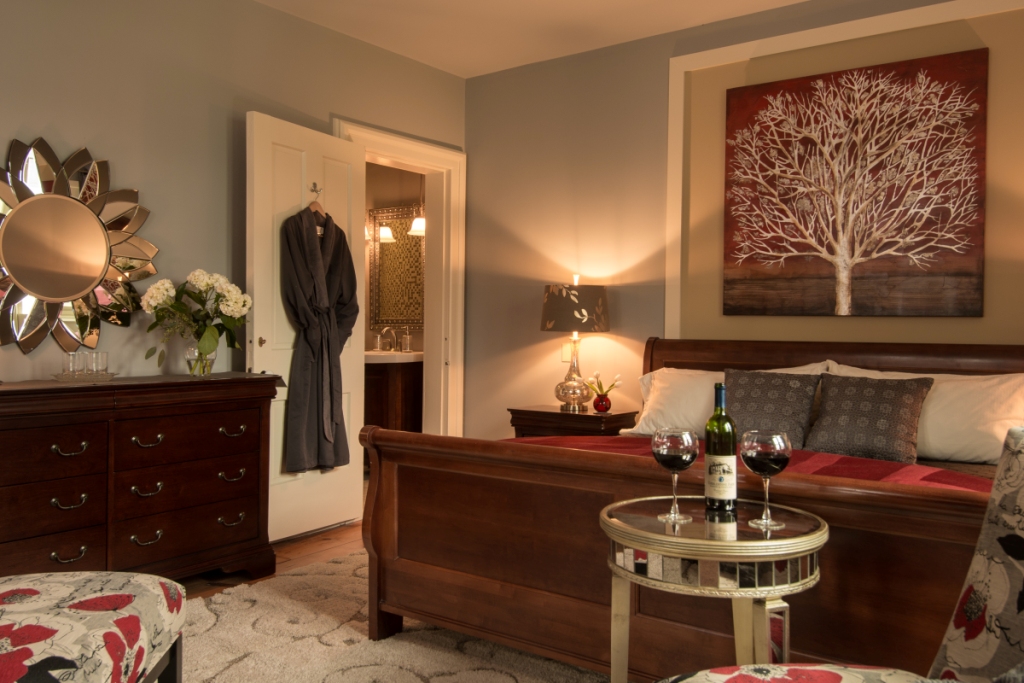
Image courtesy of The Inn at Gothic Eves & Jumping Rocks Photography
The Finger Lakes region of New York is fast becoming a go-to destination for wine lovers. Initially known just for its renowned Rieslings, the area continues to expand in varietal offerings as well as things to do for travelers headed to there. Whether it’s fishing in spring, swimming and boating in summer, skiing in winter or foliage tours in the autumn, visitors will find a wine to pair with every season and activity, including the many hiking trails and overlooks to breathtaking waterfalls. Centrally located to the Seneca and Cayuga Lakes’ Wine Trails, Watkins Glen International Race Track, and the Taughannock Falls State Park, The Inn at Gothic Eves in Trumansburg, NY is a great place to take it all in. This historic B&B, built in 1855, features eight luxurious suites, six of which are named after wines including Riesling, Syrah, and Bordeaux. All accommodations come with private baths, fireplaces, fine linens, sitting rooms, wet bars, period furnishings and modern amenities including flat-screen TVs. The plush accommodations perfectly complement the comfort guests enjoy at the onsite spa, complete with hot tubs and massage treatments. It’s an ideal spot for relaxation and revitalization. Each morning breakfast is made from fresh local produce and organic ingredients for a farm-to-table meal. Situated close to Cornell University and Ithaca College, The Inn at Gothic Eves is also a popular destination for families of college students.

Image courtesy of Stanford Inn by the Sea & Christine Gustafson
Mendocino, CA is a paradise for nature lovers, foodies, and arts and culture enthusiasts alike. Visitors can enjoy outdoor activities in breathtaking scenery, attend a variety of music and arts festivals, and best of all, indulge in culinary adventures including wine and craft beer tastings year-round. There are 100 wineries in the county, so ensuring a good night’s sleep is paramount for the palate. At the pet-friendly Stanford Inn by the Sea, guests stay nestled atop a meadow overlooking the beautiful Mendocino Bay in comfy accommodations that feature wood-burning fireplaces, private baths, and exquisite views. Quality of life is what it’s all about at this eco-resort. Here cyclists and paddlers can find their groove on the Big River and beyond at Canoe & Bicycles too!, while those looking to recharge physically and mentally can head to the Wellness Center for spa services, yoga, gardening and cooking classes, nature tours and more. The inn’s certified organic gardens serve as the primary ingredients for the Ravens’ Restaurant’s exceptional vegetarian cuisine that could easily convert even the most hardcore of carnivores. The menu is also complemented by an award-winning wine list that focuses on the finest selections from Mendocino County. These wines are primarily organic or produced according to traditional methods, without the use of synthetic chemicals, fertilizers, or pesticides. If you find one you like it’s easy to enjoy more since many of the wines are also available for purchase at the inn’s store onsite.
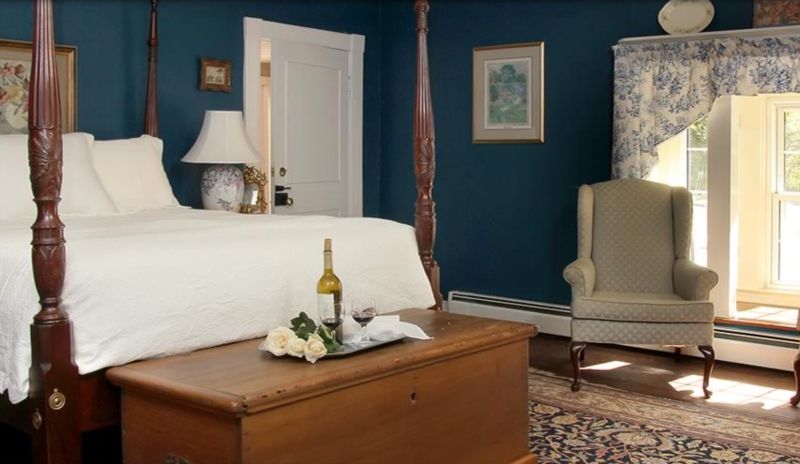
Image courtesy of Prospect Hill Plantation Inn & Wowi Zowi Photography
Charlottesville, VA is for wine lovers, and as the “Napa Valley of the East Coast,” there are numerous vineyards to visit as well as a plethora of activities travelers can enjoy during their stay. History comes alive at historic sites such as Thomas Jefferson’s home at Monticello and the University of Virginia, while the arts and entertainment scene flourishes at downtown marquees that features both local artists and famous names. Outside the city, the scenic countryside provides an idyllic drive over winding hills and low mountains punctuated by exquisite vistas of open space. Hiking and biking trails and kayaking the James or Rivanna attract the active crowd, and nature fans find the appeal of roadside orchards a huge draw during harvest time. Speaking of which, we’d be remiss not to mention the Monticello Wine Trail and area’s award-winning small-batch breweries you’ll find along the Brew Ridge Trail. At the elegant Prospect Hill Plantation Inn, the oldest continually occupied frame manor-house plantation in the state, the Findley Family will provide all the guidance you need to navigate the area – in addition to comfy accommodations that feature private entrances and baths, working fireplaces, air-conditioning, and a full gourmet breakfast in bed. Most rooms also include revitalizing whirlpool tubs. The onsite restaurant features a creative menu, with a distinctly European character that is influenced by the season and the availability of fresh, local, and organic ingredients. Situated on 40 stunning acres, the breathtaking grounds of this authentic 1700’s former wheat plantation are just 15 miles from downtown and within 30 miles of more than 25 boutique wineries.
Dancing Flavors of Miami
With some of the blog posts, you spend literally days trying to come up with the post title where you can say to yourself “yes, I like it”. And then some just jump into your head – your task is to remember it, or better yet – write it down right then and there.
This was my case with the title of this post. I was [pretty much] lucky to spend almost two weeks in Miami and Miami Beach. Yes, I escaped the cold weather of Connecticut, but it was not a vacation, it was work – yeah, okay, I got me – I was still in Miami as opposed to back in New York or a Calgary, for instance. For someone who is a foodie, most (not all) of the business trips still allow some room for the favorite form of entertainment and exploration – finding the great restaurant experiences. This trip, I managed to come across 4 restaurants which I would like to write about – just in case travel will take you to Miami, whether for business or pleasure – these restaurants well worth your attention. Here we go.
Bali Café
A small place, I would say just a bit bigger than a typical “hole in the wall”, Bali Café serves Indonesian cuisine, as you might expect from the name. The restaurant is decorated very appropriately, creating an authentic feeling despite rather a constrained space. To be honest, I think this was my first ever experience with Indonesian cuisine, and it was definitely a positive one. The dishes on the menu had general “Asian flair”, especially if you will look at the large sushi selection. At the same time, spices were a bit different for many of the dishes, let’s say, from a typical Chinese or Thai restaurant.
I liked the restaurant so much that I managed to visit it twice during the week for lunch. First time I had the dish called Bihun Bakso Kuah – Indonesian style rice noodles with spinach and fish and meatballs in beef broth soup – the dish essentially consisted of two separate plates – the noodles and the soup, both delicious on its own and together.
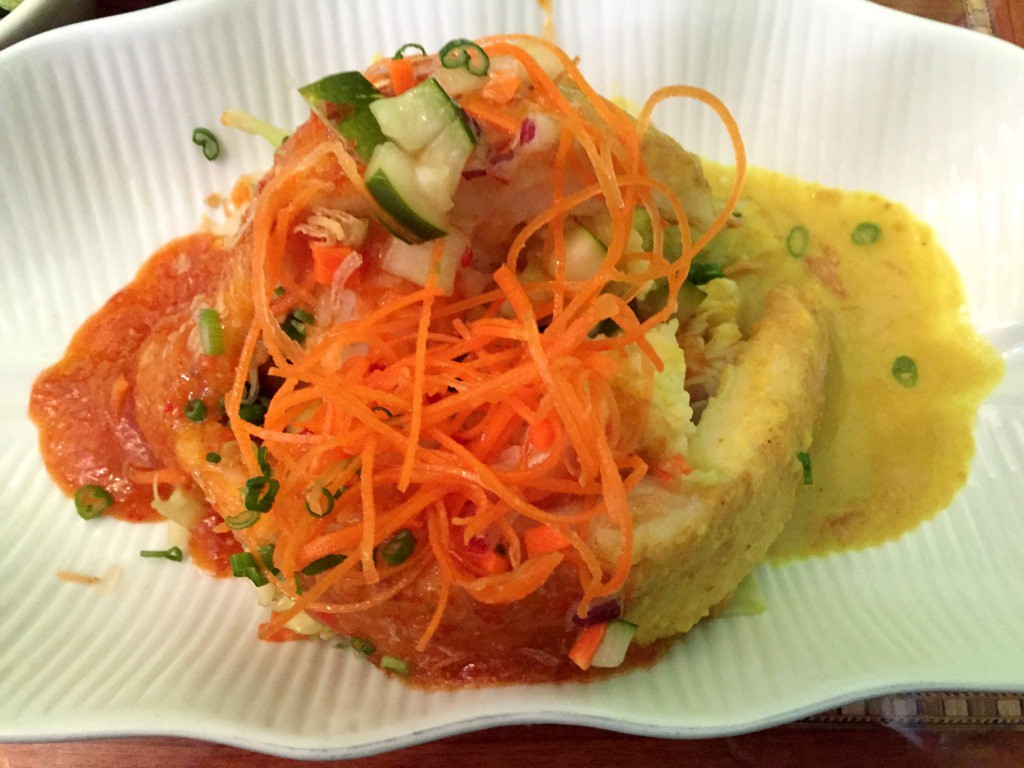
The second time I got Ikan Pesmol, a pan fried fish with stew in aromatic Indonesian spices, which was outstanding, a combination of curry and sweet chili pepper spices, delicious until the last morsel. You should definitely pay a visit to Bali Café if you are in the area. Keep in mind that the place is small, and accepts cash only (no credit cards).
Bali Café
109 NE 2nd Ave
Miami, FL 33131
Ph: (305) 358-5751

Cvi.Che 105
 The next restaurant I want to bring to your attention is called Cvi.Che 105, and it presents itself as a Peruvian restaurant. It is located very close to Bali Café, so it will be easy for you to visit both on the same day 🙂
As we had a dinner at Cvi.Che 105, let me start from the few words about the wines. The wine list is of a reasonable size, and it is very well composed, featuring good selection of wines evenly distributed over many regions, from New Zealand to Spain, Italy and France, to Napa and to Chile, all at a reasonable prices. We went with 2012 Sin Palabras Albariño Rias Biaxas (13% ABV, $34), which had a nice acidic profile with perfect limestone minerality, the one which makes Albariño such a great companion to any seafood dish.
We started with the grilled octopus as an appetizer. You know, it is very hard to describe the dishes in its perfection – I can’t be saying all the time “this was the best ever” dish, right? It is impossible that every new dish is “best ever”, so okay, this was not the best ever grilled octopus – but I’m not sure if I ever had a better grilled octopus. Perfect texture and outstanding flavor – if you like octopus, don’t waste your time, go and try it.
Next, very appropriately to the restaurant’s name, we had a ceviche called Ceviche Seafood Orgy, which was outstanding, with perfect flavor and interesting textural contrast provided by white beans and roasted corn kernels. Considering the successful experience with the main course, we simply had to go for the dessert. The Lucuma Cheesecake was good, but a bit lackluster in flavor. However, the Coconut Flan was exceptional, even considering the fact that I’m not a big fun of coconut – perfect flavor and texture.


I also want to mention an excellent service. You know, I like to conduct a “service level test” from time to time. Don’t get scared with the big words. All I do is ask the server for the wine recommendation and see if the most expensive wine will be the first recommended choice. In case of Cvi.Che 105, it was not – which in my book is a hallmark of an excellent service. All in all, the restaurant is highly recommended.
Cvi.Che 105
105 NE 3rd Ave
Miami, FL 33132
Ph: (305) 577-3454
http://www.ceviche105.com/

Cleo Restaurant
 Now we are moving a few miles east, from Miami to Miami Beach. The first restaurant I want to bring to your attention goes under a simple name Cleo, and this was the restaurant which made me to come up with the title of this blog post, as “dancing flavors” was the best way to describe my feeling after visiting the restaurant.
When we asked our waitress Molly to explain the wide variety of dishes and flavors on the menu, she said that the restaurant is best characterized as “Eastern Mediterranean” in its cuisine. Chef, who is of Moroccan descent, traveled quite a bit, and his cooking brings together flavors of Italy, Israel, Lebanon and other Mediterranean cultures. Combine that with an impeccable precision of execution, and you get into the foodie heaven (yep, it’s worth mentioning in bold).
First things first. The wine list at Cleo features a number of interesting selections from US, Italy, France, Israel and even Lebanon, and when I saw a Chateau Musar (the most famous producer in the Lebanon) wine on the list for $51, that was really an easy decision. 2011 Chateau Musar Jeune Red Bekaa Valley, Lebanon (13% ABV, $51, 50% Cinsault/35% Syrah/15% Cabernet Sauvignon) had an open nose of fresh red berries, medium to full body with good amount of spices, soft tannins and sweet oak, overall perfectly balanced and well supporting the wide range of flavors of our dinner.
The menu at Cleo is built somewhat in the tapas style, with lots and lots of “small plates”, delivering the fiery of flavors from the different regions. The job of selecting is not easy, as menu lists more than 30 selections of Mezzes dishes. Also keep in mind that while the small plates are small, they are quite filling so you really need to control yourself. We started with Lebaneh with Feta, which was served with probably the best pita bread I ever had (yeah, here I go again – “best ever”… but it was very tasty!). We continued with Dolmades, and then two sausages – Boudin Blanc with Truffle and Venison. Each and every dish was simply perfect, keep adding to that dazzling, fascinating dance of flavors.


Our main dish was Lamb Tagine (Apricots, Silan, Couscous, Sesame Seeds), very flavorful and delicious. And then, of course the dessert, and doesn’t matter that we were full already. Greek Yogurt (Greek Yogurt Gelato, Blood Orange Granite, Pine Nut and Rosemary Tuile, Local Honey) and Apple Almond Tarte (Roasted Apples, Almond Cream, Vanilla Gelato) were devoured in no time. Do you know that you can actually convince yourself that the dessert is very light and has no calories in it – if you really like it? Yep, we did it successfully.
Before we finish talking about Cleo, I have to also commend the service for the perfect attention – the dishes were showing up just on time, allowing us to fully enjoy one dish without worrying that another dish is already here and getting cold (out experience at another Miami Beach restaurant was quite opposite).
All in all, one of the best ever restaurant experiences – yes, it is a serious claim for a foodie, but I will stand by it, period.
Cleo
1776 Collins Avenue
Miami Beach, FL 33139
Ph: (305) 534-2536
http://sbe.com/restaurants/brands/cleo/

Chalán on the Beach
And I still have one more restaurant for you. To compare it with Cvi.Che 105 (never mind Cleo), this is definitely much, much simpler restaurant – however, it delivered a very pleasant dining experience, hence I feel compelled to share this experience with you. This restaurant is called Chalán on the Beach, and it is a Peruvian restaurant in its roots. Similar to Cvi.Che 105, ceviche is a staple here as well, coming in many varieties. We had fish and octopus ceviche, which was delicious, very refreshing. After the ceviche, which we shared, we made a mistake – we ordered each a separate dish. Yes, super tasty, but if I will tell you it ain’t the French restaurant portions, you better believe me.


Pescado Con Mariscos (seafood combination of fish, mussels, squid, octopus, and shrimp in a special mushroom seafood sauce) had a great flavor, perfectly prepared. While I would prefer seafood over meat 9 times out of 10 in a restaurant, I have to admit that the second entreé, Lomo Saltado (sauteed flap meat mixed with onions, tomatoes, and french fries with a side of white rice) was so succulent, with meat been perfectly seasoned and having a hint of smoke, that I would honestly say that it would be my entreé of choice when I will visit Chalán next time.
Restaurant features a very small wine list, but our drink of choice that night was red Sangria, which to my delight was not overly sweet. Also in case you wonder, we had to skip dessert, as to say that we were full would be an understatement.
Lastly, the service was once again excellent – friendly and timely. If you are looking for a great meal at an extremely reasonable price, don’t be dismayed by the simple looks of Chalán on the Beach – this is the place to eat.
Chalán on the Beach
1580 Washington Ave
Miami Beach, FL 33139
Ph: (305) 532-8880

And we are done here. If your travel will take you to Miami, I hope you will find my recommendations useful, and if you ever been to any of these restaurants, I would love to know what do you think. Cheers!
Wine On The Go, Spectacular Pairing, and Some Life Ramblings
 Life is an interesting thing (wow, what a deep opening thought, huh?). I was supposed to depart at 6 am on a direct flight from New York to Miami to attend the conference. Thanks to much-hyphed-but-never-really-happened blizzard, my flight was cancelled and I was automatically re-booked, now on the flight with the stop, connecting through Charlotte, North Carolina.
Charlotte. You know, there are some strong emotional words which I’m striving to avoid, whether conversing or writing. One of such words is “hate” – and I will explain the connection in a second.
I travel a lot, and I have interesting memories of the different airports and trips, some better and some worse. But – if there is an airport which I “hate”, that would be the Charlotte. The reason is simple – lots of memories of severely delayed flights, cancelled flights, indifferent customer service and even sleeping on the floor as no other options were available. Yes, I know – it is actually stupid to “hate” airport – but I wanted to explain my feelings when I saw that I’m connecting through the Charlotte.
Okay, so I have no choice (called my travel agent multiple times – no way no how, either I take the flight as it is, or just cancel the trip). Short uneventful ride to the La Guardia airport and I’m at the terminal C. It is probably been a few years since I used that terminal, so once I get through security and walking to the gate, and I’m literally saying “wow”. The terminal looks very modern, screens and everything. I stumble upon a cafe which has lots of seats, with an iPad standing in front of every seat. iPad can be used for ordering or just some limited internet browsing. The cafe features a very attractive looking menu with lots of food options, mostly written in French, the language of “love of sophisticated food”. And the wine list looks quite reasonable, both in terms of international selection and price. Yes, definitely not something I was expecting to find.
Anyway, it was kind of early for wine and I was not hungry, so this was mostly a “note to self” for next time I might be using the same airport. To my surprise, the flight departed on time (almost a miracle for the La Guardia airport), and arrived in Charlotte ahead of scheduled time.
Many times in the past while flying through the Charlotte I stumbled upon a little wine shop, more of a tasting room for the Yadkin Valley wines. My schedule never allowed me to actually visit it. Then I remember being at the Charlotte airport at the reasonable time, only to find that the store was gone. This time as I knew that I will be connecting through the Charlotte, I decided just in case to check if there are any of my favorite Vino Volo restaurants at the airport. Nope, there were none, but I found a wine bar called Beaudevin, with a number of raving reviews, including the mention in the very reputable Fodor’s travel guide as one of the 8 top wine destinations in the airports in the US. So the early arrival gave me enough time to stop by Beaudevin, which is conveniently located right in the middle of the terminal, in the section called Atrium.


It appears that Beaudevin uses a similar model to the Vino Volo, offering wines both by the glass and as part of the tasting flights. To my delight, one of the featured flights consisted of North Carolina wines, and of course, this is what I went for.
Somehow it was stuck in my head that I recently read some rather negative reviews of North Carolina wines, so I approached these wines with a bit of trepidation. But – call it luck, fruit day or anything else, but I was rather blessed with a wonderful treat.
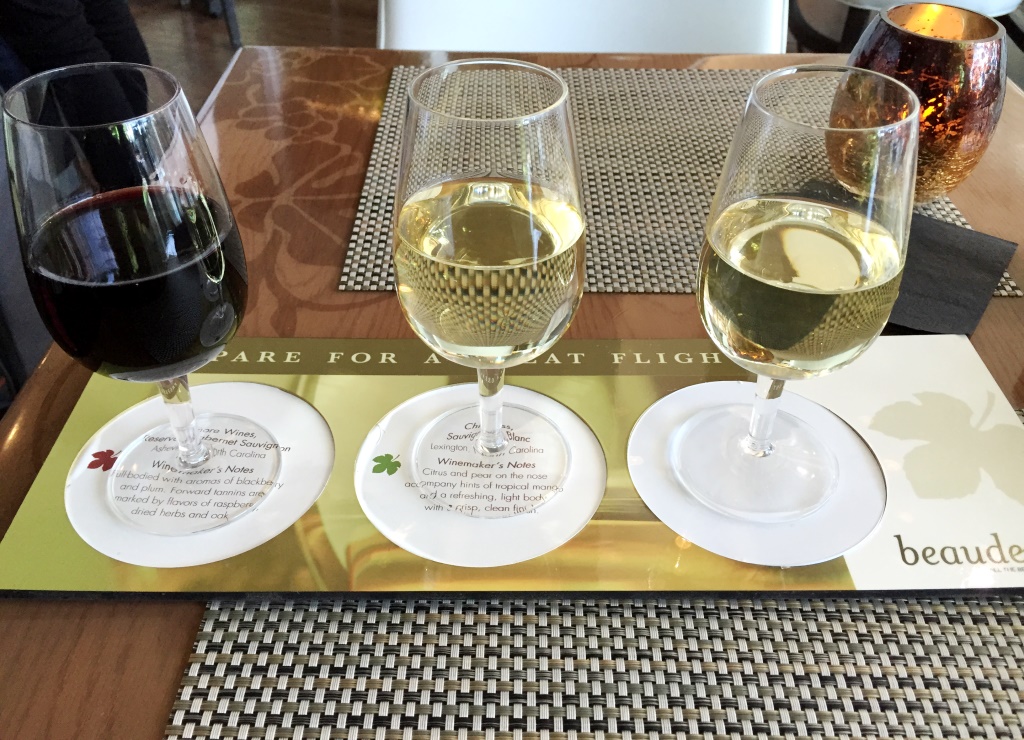 https://talkavino.wordpress.com/wp-admin/post.php?post=13570&action=edit&message=10
The flight contained 3 wines, 2 whites and 1 red – Sauvignon Blanc, Viognier and Cabernet Sauvignon. I started with Sauvignon Blanc, and it was delicious, Viognier – delicious again, and then Cabernet Sauvignon – spot on! Here are the notes:
2011 Childress Sauvignon Blanc North Carolina (12.9% ABV) – Nose of white fruit, intense, with a touch of herbs, hint of fresh cut grass. On the palate, nice acidity, dry, tart, lemon notes, good minerality, medium to full body. This is an excellent summer wine – every sip makes you think of summer. Drinkability: 8-
2011 Childress Viognier North Carolina (13.9% ABV) – sweet candy on the nose, very intense, with the characteristic Viognier “perfume” showing in a distance. Compare to the nose, the wine is surprisingly restrained on the palate – hint of candied sweetness, white stone fruit, lychees. Excellent balance. Drinkability: 7+/8-
2012 Biltmore Reserve Cabernet Sauvignon North Carolina (13.6% ABV) – a welcoming nose of warm climate Cabernet Sauvignon, with sweet oak, vanilla, ripe blackberries. Very elegant on the palate, cassis, warm notes of red fruit, medium to full body, a touch of green bell peppers, luscious with soft tannins. Excellent balance. Drinkability: 8-
And now, let’s talk about the spectacular pairing. Beaudevin offers essentially a full restaurant menu – if you have a long connection, you can spend quite an enjoyable time there. As my time was limited, I decided on a Charcuterie salad (lettuce, prosciutto, dried cranberries, green beans, dried cheese), with the addition of smoked salmon.
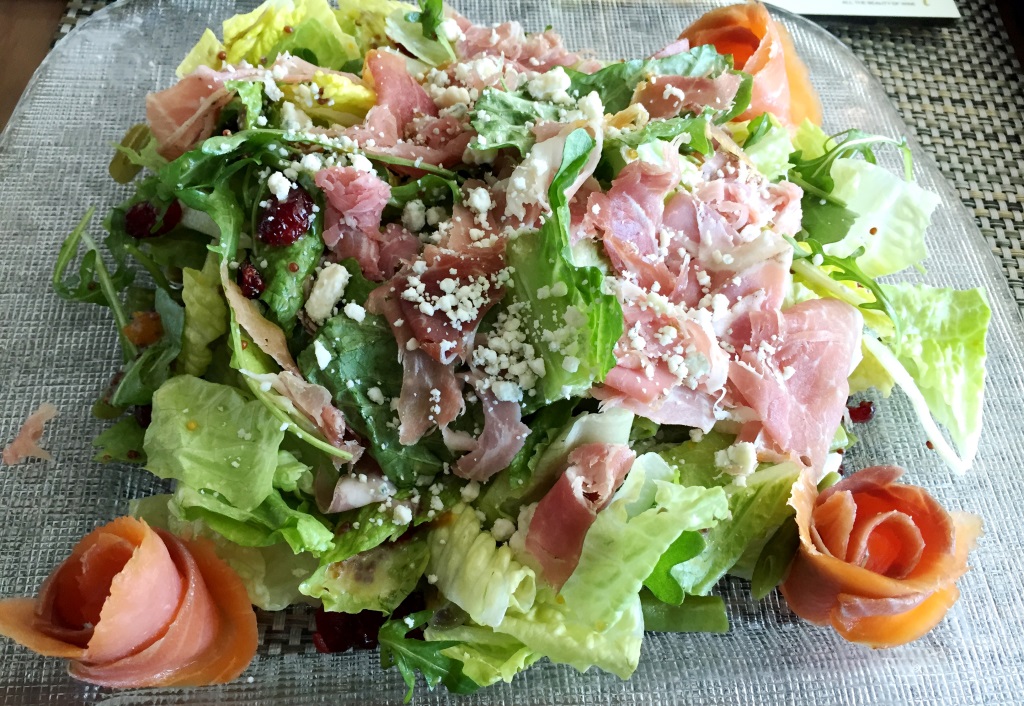
When it comes to the salad in general, I never even attempt to pair it with the wine – I believe generally it is not an easy undertaking. In my case here, I finished my “tasting” and “note taking” session, and I had the wine left, so I really had nothing to lose. I started from Viognier, and “wow” – the wine greatly complemented the sweet profile of the dried cranberries and dressing, so together it was almost a revelation. Next bite and sip, this time of Sauvignon Blanc – and yet another revelation – this time with the clean acidity cutting through the sweetness, contrasting and enhancing flavor. Last but not least, Cabernet Sauvignon perfectly complemented saltiness of the prosciutto and even smoked salmon – totally unexpected, but considering the soft and delicate profile of the wine, it was again a home run. Three wines out of three, working perfectly with one dish (salad!) – this was definitely not something I was expecting, but I’m glad I was able to experience it.
Life is an interesting thing. Cancelled flight led to the very pleasant and educational experience – life can take one thing away from us, and give us something else instead – for sure my case with this trip. Also, it is very interesting to see how the wine culture is changing in the US. From unfathomable plonk only 3–4 years ago (I would never think of ordering wine at the airport 4 years ago – beer would be my only choice), to the upscale wines and wine flights – we are definitely looking at the cultural shift, and I don’t know about you, but I’m very happy to see this happening. Heck, I might even start looking forward to my next trip through the Charlotte airport. Cheers!

Wines of the World – A Sequel Challenge
Yesterday I posted about the challenge of trying the wines from all 50 states in US and visiting wineries in those 50 states. One of the comments had a suggestion – how about the wines of the world? Really, how about it?
It is not that simple even to create the list of wine-producing countries of the world. Considering that the wine is at its peak of popularity, many countries are entering the winemaking arena. Yes, of course, there is a core of the wine-producing countries – about ten or so – but based on the data in Wikipedia (which also differs between different articles), about 60 countries produce the wines in the world today, give or take a few.
I wanted to find a good map to illustrate the wineries concentration around the world, but that didn’t happen, so here is the map of the winemaking areas according to the Wikipedia article:

Source: Wikipedia
Now, how many of you tried the wine from Algeria or Thailand (well, I know that Oliver did)? I’m sure those are not easy to find in your local wine boutique. I would argue that the typical [good] wine store in US would have the wines from about 15 countries; some of the best stores will probably account for about 20 at a time. Thus if you really want to try the wines from many different countries, you will have to make an effort.
Is that a worthwhile effort? That is strictly a personal question. I’m genuinely curious how the different wines taste like, so I’m excited to try the wines pretty much from anywhere. Should you expect to find great wines? You definitely will – I had many mind-blowing wines from Serbia, Croatia, Lebanon, Israel, Georgia and other lesser known wine-making countries. Of course you will encounter a lot of plonk along the way, that is also given. So, should you take upon this challenge? I can’t answer that question – as I said, this is strictly driven by the personal interest, so you be the judge.
If you are curious where do you stand now, use this word document to track your progress. As a reference, I can tell you that at this point, I tasted wines from 36 different countries out of 58 listed in the document, and visited wineries in 6 (yeah, need to travel more…). What would be your score?
Below is the table showing my exact list of wines and wineries per country.Challenge yourself! Cheers!
Last Bottle Sign Up ($10 credit)




 Talk-A-Vino