Archive
For the Love of Riesling
 I love Riesling.
What do winelovers do when they love the wine?
That’s easy.
We want to share that love.
The biggest reward for a winelover is to offer someone a glass of wine and hear them say “oh, it is good!”.
Sharing the wine is the most enjoyable part of drinking the wine. We want the other people to experience the same joy as we do, we want them to experience the pleasure only the wine can deliver.
As I said before, I love Riesling.
Riesling might be the most underappreciated white grape. It is one of the main 3 white grapes (Chardonnay, Sauvignon Blanc, and Riesling). Riesling wines are made everywhere in the world – Germany, Alsace, Australia, New Zealand, New York (Finger Lakes, Hudson Valley), Canada, Oregon, California, and so on – and yet many of the wine drinkers wouldn’t even openly admit that they like Riesling and that they are happy to drink it.
It is hard to tell why that is. Many people associate the word Riesling with the word “Sweet”. It is a big mistake, as it means, for example, that they never experienced bone-dry, tongue-twisting Rieslings from the Claire Valley in Australia. I would even dare to say that the majority of the well-made Rieslings are not sweet, unless they are purposefully made to be sweet, such as BA or TBA German Rieslings. The main trait of Riesling, similarly to all other wines, is balance. As long as the Riesling is balanced, it is one of the most enjoyable white wines you can imagine. And it pairs well with the wide range of food. I’m telling you – Riesling is one of the best white wines in the world.
The love for wine needs to be shared. And so earlier in the year, I decided to do a Riesling wine tasting. My audience (family, future in-laws) wanted to learn more about the wines, and I have decided that tasting a bunch of Rieslings will offer an excellent educational opportunity (was I right? I have no idea, but I know we had fun).
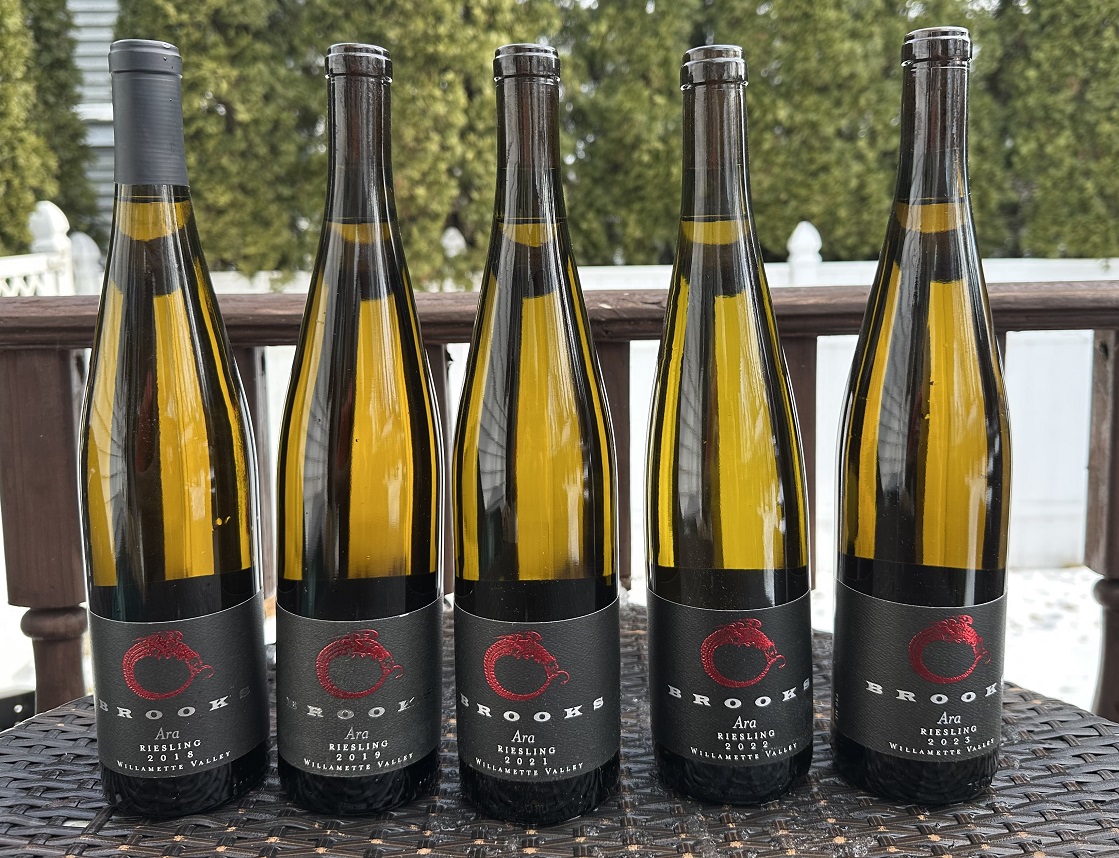
Ask me to name three of my favorite Cabernet Sauvignon producers, and I will quickly become frustrated – can I give you at least 10? 20 or 30 would be even better. The same would be for a Chardonnay, Syrah, and Tempranillo. When it comes to Riesling, however, that would be an easy task. Grosset from Australia. Smith-Madrone from California. Brooks from Oregon. This is my “top 3 Riesling producers” list. I would absolutely love to do a comparative testing of these 3 Rieslings, but I managed to get only 2. I got Smith-Madrone Rieslings first, and then when I got the idea for the tasting, I wrote to Brooks, and they were kind enough to send me a nice vertical of Brooks Rieslings. I also asked Ravines Wine Cellars from Finger Lakes for a similar set, but got no reply, so my tasting consisted of a vertical of Smith-Madrone Rieslings from 2018, 2019, 2021, and 2023, and Brooks Ara Riesling from 2018, 2019, 2021, 2022, and 2023 (both wineries didn’t produce wines in 2020).
It is important to note that Riesling can age very well, and aged Riesling is just a special experience. I did an online search and found out that it is rather hard to find aged Riesling anywhere, at least for the price I was willing to pay (age your Riesling, people, take my advice). I managed to find a bottle from 1997, which was seemingly in reasonable condition. At the same online store, I also managed to find a sparkling wine made out of Riesling, known in Germany as Sekt. I scored a bottle of Sekt at the same online store, and it became our first wine in the tasting.
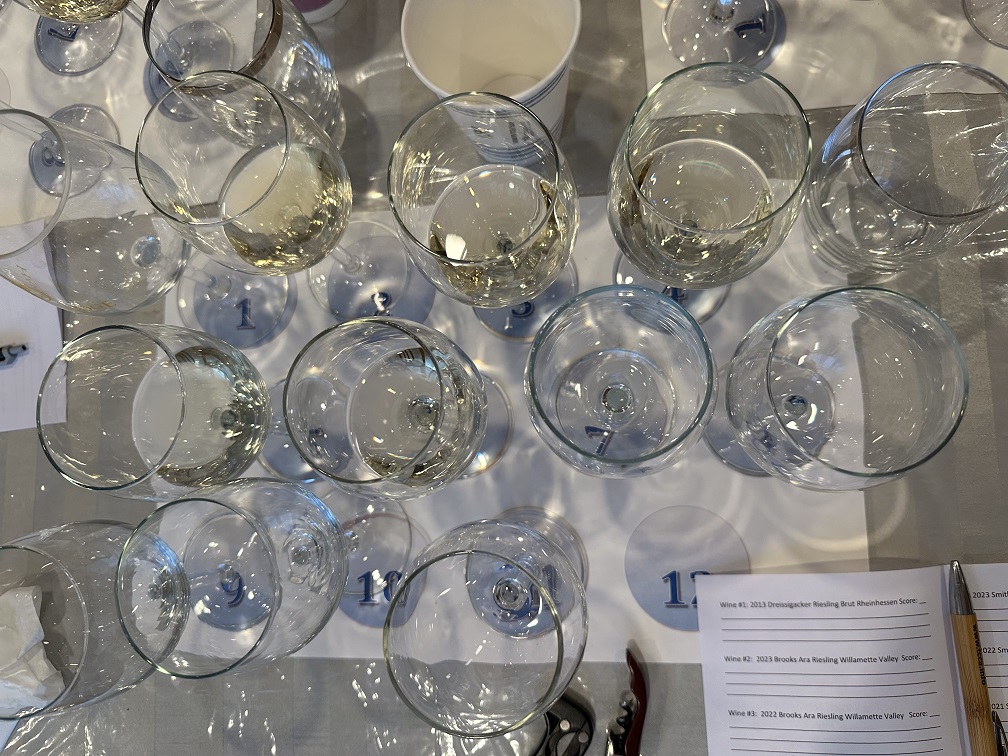
The tasting was non-blind as it had more of an educational purpose than anything else. Here is what transpired during the tasting (outside of the fact that I numbered Brooks Rieslings in the wrong order, so we tasted them from the older vintages to the newer, where I really wanted to go in the opposite direction):
Wine #1: 2013 Dreissigacker Riesling Brut Rheinhessen (12.5% ABV)
bubbles were still present, lemon, a touch of sugar, well balanced, very nice overall. Believe it or not, but this was the first Sekt that I liked.
8-
Wine #2: 2018 Brooks Ara Riesling Willamette Valley (14% ABV, 325 cases produced)
Beautiful color. Honey, petrol, explivit nose of tropical fruit
Great complexity, perfect balance, showing off an interplay of pear, apples, peach, even vanilla and quince. Delicious. 8
Wine #3: 2019 Brooks Ara Riesling Willamette Valley (13% ABV, 225 cases produced) – a very interesting wine, as my tasting notes for day 1 and upon re-tasting the next day differ dramatically.
Day 1: Very unusual, some honeydew, hint of pear. 8-
Day 2: Superb. Lean. Acidity is through the roof, fresh, crisp. Needs 20 years to become amazing. 8++
Wine #4: 2021 Brooks Ara Riesling Willamette Valley (12.5% ABV, 225 cases produced)
Day 1: Beautiful petrol and flowers on the nose
Fresh, petrol, complex, white fruit, excellent balance. 8+
Day 2: Petrol + earth. Beautiful, honey notes on the palate, much richer than ‘19. Still lean and mean. 8
Wine #5: 2022 Brooks Ara Riesling Willamette Valley (12.5% ABV, 150 cases produced)
Day 1: Flowers, touch of brown sugar
Most complex so far – wow, beautiful. 8+
Day 2: Petrol, hint of tropical fruit. Lemon with a touch of honey, lean, crisp, built for aging, let’s say another 20-something years. 8++
Wine #6: 2023 Brooks Ara Riesling Willamette Valley (12.5% ABV, 100 cases produced)
Day 1: Very muted nose. Palate is young, nice, concentrated. 8-
Day 2: Nose almost non-existent. Very lean palate with a hint of honey mixed with lemon. Need to develop for a long, very long time.
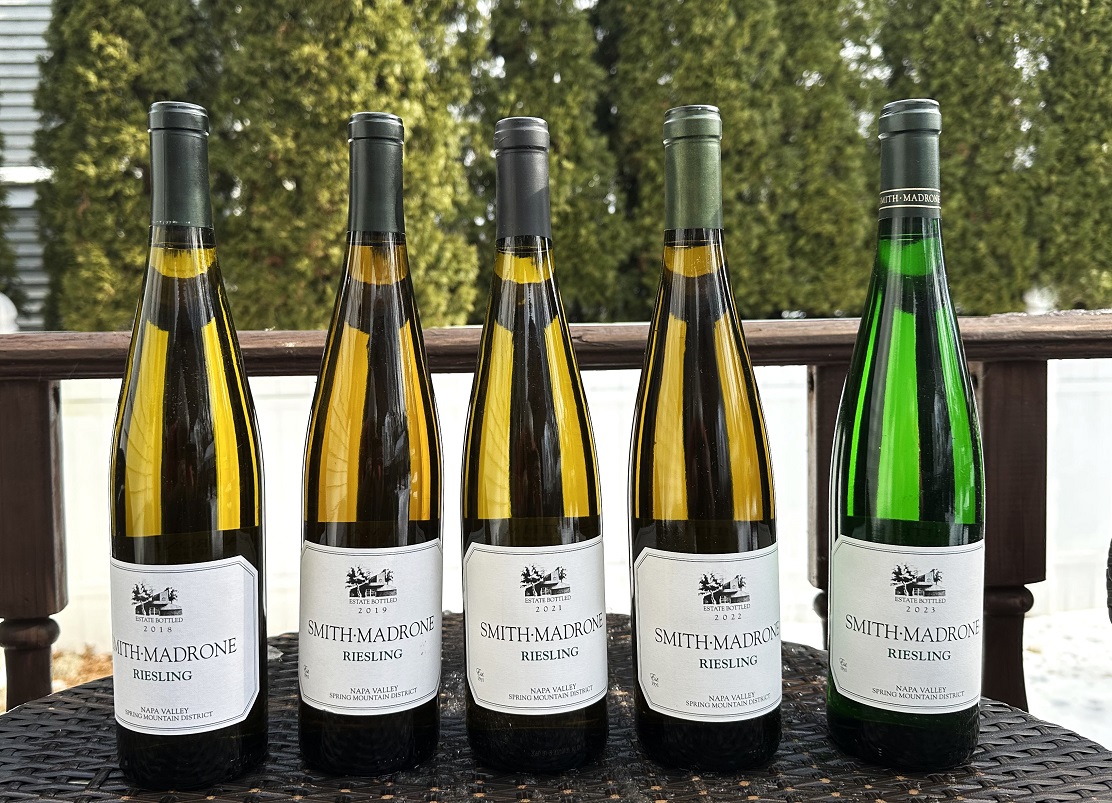
Wine #7: 2023 Smith-Madrone Riesling Spring Mountain (13.2% ABV)
Light color
Candy on the nose
White flowers, fruit medley, bitter orange, crisp, spectacular. 8+
Wine #8: 2022 Smith-Madrone Riesling Spring Mountain (13.2% ABV)
A touch of petrol
White fruit, white apples, delicious. 8+
Wine #9: 2021 Smith-Madrone Riesling Spring Mountain (13.2% ABV)
Petrol, beautiful
Lots of complexity, apples, excellent. 8
Wine #10: 2019 Smith-Madrone Riesling Spring Mountain (13.3% ABV)
Complex aromatics, flowers
Flowers on the palate, a touch of honey, beautiful, complex. 8+
Wine #11: 2018 Smith-Madrone Riesling Spring Mountain (13.3% ABV)
Beautiful, hint of petrol, white fruit.
Wow, playful, amazing. 8++
Wine #12: 1997 Dr. Fischer Ockfener Bockstein Riesling Kabinett Mosel (8% ABV)
Apple juice all the way, past prime. Still an interesting experience.


As always in such tastings, it is fun to figure out the group’s favorite wine. There were 8 of us tasting the wines, and everybody were asked to decide on 3 of their most favorite wines (mine were #11, #8, and #5), and then we took a vote. To my surprise, we had a clear winner after the first round – wine #8, 2022 Smith-Madrone Riesling, was everyone’s favorite, with wine #11, 2018 Smith-Madrone Riesling getting 5 votes. It was interesting that even wine #12, 1997 Riesling, got 3 votes (for me, it was an interesting experience, but not the wine I want to drink again).
As you can see from the notes above, I had a chance to re-taste the wines, this time at a bit of a slower pace. It is very clear that Brooks Rieslings needed more time to open, as you see that on the second day they showed a lot more of what they got, but even then, I believe they would benefit from another 20 years in the cellar, or maybe more.
As I’m writing this, I’m already dreaming of setting up the tasting of 20+ years old Rieslings. Give me Grosset, Brooks, Smith-Madrone, Zind-Humbrecht, and maybe Markus Molitor, from the early 2000s – and this would make it an absolutely amazing tasting. By the way, talking about dreams – what would your dream Riesling tasting include?
I can’t speak for my guests, but I really enjoyed the opportunity to taste such beautiful wines side by side. While both Brooks and Smith-Madrone perfectly exhibited my beloved petrol, Brooks Rieslings on average were a bit leaner than Smith-Madrone, while Smith-Madrone exhibited a richer bouquet on the palate. I’m saying this not in the comparative sense – each one of these wines would make me super-happy any time.
There you are, my friends – my Riesling experience. Do you like Riesling? What are your favorite “go-to” Rieslings?
An Evening of Pure Pleasure
Do you know what makes an oenophile’s heart melt and pound, what fills it with joy? Hearing their friends say after you pour the wine into their glasses
“Oh my god, this is so good!”
This brings a double pleasure – it is not only you now getting the pleasure from the aroma and the bouquet – but your friends also enjoying it as much as you do. Wine is meant for sharing, and this makes sharing so much more enjoyable…
Wine can never be taken for granted. Let’s remember that the wine continues changing even after bottling – each time we open the bottle, we find the content of the bottle in its unique state. Yes, we can hope that if you open all 12 bottles from the case at the same time, all wines will taste the same – but it is still a game of probabilities, with opportunities for the “bottle variation” to be increasingly more noticeable as the wine ages. And I’m not even talking about potential wine faults…
Next, there are expectations. Expectations are a big deal for the oenophile. Just one look at the bottle and an oenophile forms expectations – bottle appearance, place, producer, type of wine, vintage – everything is taken into account, and we know what to expect. It is the most joyous moment when the liquid in the glass meets expectations – and the most daunting when it does not (let’s not get to the corner case of Two Bucks Chuck, please). But there is more to the expectations in wine. One of the biggest challenges with wine expectations lies in the fact that it doesn’t matter how much you like the wine and how well your great expectations are met – everyone’s palate is different. It is hard learning to be okay with the fact that while you enjoy the wine immensely, your friend doesn’t care for it. It doesn’t make the wine bad. It doesn’t mean that you are wrong or did anything wrong. It simply means that taste is personal, you just need to learn to accept this simple fact of life – and not get upset.
You might wonder why I am talking about all this wine geek mumbo jumbo, why is that important? Simple. No matter how familiar you are with the wine you are pouring, or how many times you have had the wine from the same vintage and producer, when the wine reaches the glass, it is always the moment of revelation. Double that (triple? quadruple?) when you are poring wine for your friends. And even if you think that wine is perfectly perfect, you can never assume your friends will think the same. Wine can never be taken for granted.
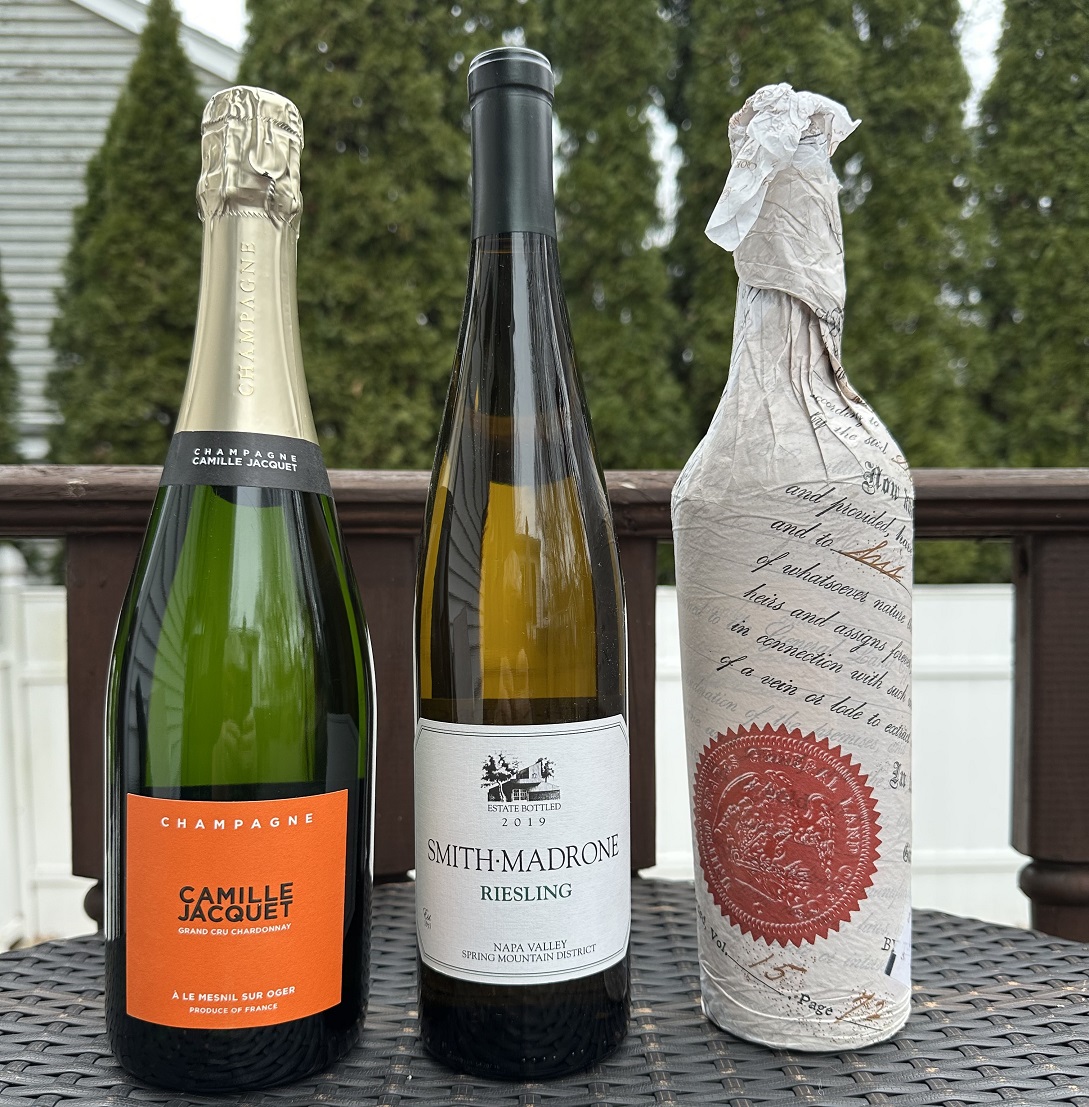 I guess I got lucky. At last weekend’s evening with our dear friends, I managed to hit a double “trifecta” :). Three delicious wines out of three, and my friends loved all three to the “oh my god, this is so good!” moment.
First wine – NV Champagne Camille Jacquet Brut Grand Cru Chardonnay A Le Mesnil-sur-Oger (12% ABV). I do not know the producer, but I had high expectations for this wine possibly for a silly reason. A small village Le Mesnil-sur-Oger is well known for the quality of its Chardonnay vineyards and a home to some of the best (if not the best ) Blanc de Blancs Champagnes in the world – Salon le Mesnil and Krug Clos du Mesnil. Knowing that Camille Jacquet Champagne comes from basically the same vineyard gave me high hopes (silly, as I said) for this Champagne. And my high expectations were perfectly met. Beautiful nose of toasted bread with a touch of apple, impeccably crisp, fresh and precise on the palate. The acidity was fully in check with the complexity of the toasted, baked goods on the palate, leading to an impeccable (yes, I know I already used that word) balance. “Oh my god, this is so good!” said my friends, and the wine disappeared in a jiffy.
Next, two beautiful wines from one of my favorite producers ever. Over the years, I wrote about Smith-Madrone wines extensively. Cooks’s Flat had been one of the Talk-a-Vino Top 10 Wines of the Year 2019 top wines (that year, I had 3 #1 wines, tell me about my inability to make decisions), and Smith-Madrone Cabernet Sauvignon was #3 on the Talk-a-Vino Top 23 of 2023. So I was very happy that I got the samples of Riesling and Cook’s Flat and was able to share both wines with my friends (I will also taste a nice vertical of Smith-Madrone Riesling, it will take a central stage on these pages soon).
Smith-Madrone Riesling is one of my favorite Rieslings in the world – it is one of the 3 if you are interested – Grosset Polish Hill Claire Valley Australia, Smith-Madrone from Napa Valley, and Brooks Ara from Oregon. This 2019 Smith-Madrone Riesling Spring Mountain District Napa Valley (13.3# ABV) was spectacular. First, it offered a tremendous pop of petrol on the nose – and nothing makes my Riesling lover’s heart happier than these petrol aromatics, coupled with a whiff of honeysuckle. On the palate, it was fresh, energetic, with a wide range of citrus flavors readily present, from Meyer lemon to oranges and mandarines, supported by clean acidity and a perfectly cleansing acidic finish. Delicious, and the second “oh my god, this is so good!” wine.


Finally, the 2018 Smith-Madrone Cook’s Flat Reserve Spring Mountain District Napa Valley (14.2% ABV, 87% Cabernet Sauvignon, 13% Cabernet Franc, 20 months in new French Oak). This wine is designated as “Reserve” and this is not random – it represents the best of the best Smith-Madrone makes, using the best plots, best grapes, and produced only in the best years. This wine also has a historical connection to the parcel of land where Smith-Madrone vineyards where replanted in 1972 – the tissue wrapping the Cook’s Flat bottle is a copy of a land grant document, signed by the President of the United States. Here is the description from the Smith-Madrone website:
“Cook’s Flat Reserve is a proprietary name for a wine that is the culmination of our 50 years of growing grapes and making wine in the mountains of the Spring Mountain District. The name refers to George Cook, the first owner of the property. ‘Cook’s Flat’ was the local oldtimers’ name for the eight-acre plateau-like vineyard block which was replanted in 1972.
The packaging expresses the property’s history and an uncompromising attention to detail. Each bottle is numbered and only around one thousand bottles are produced in each vintage. Each bottle is wrapped in tissue which has been printed with a multi-colored copy of the U.S. Land Office Patent which granted ownership to George Cook and was signed by President Chester Arthur on December 5, 1885. We proudly display the original at the winery.”
What I love about Smith-Madrone wines is textbook precision. So far literally everything I tasted from the winery had this textbook precision of flavor – Riesling is unmistakably Riesling, Chardonnay is unmistakably Chardonnay, Cabernet Sauvignon is unmistakably Cabernet Sauvignon.
This 2018 Cook’s Flat, a blend of Cabernet Sauvignon and Cabernet Franc, was also unmistakably a Cabernet. A core of black currant, a.k.a. cassis, and eucalyptus, supported by sweet tobacco and sweet oak, with a whiff of the bell pepper (love it). On the palate, the textbook flavors continued with succulent cassis, eucalyptus, a touch of mint and bell peppers, firm structure, perfectly integrated and perfectly present tannins, impeccable balance. Just a pure joy. “Oh my god, this is so good!” wine again disappeared in no time, with the last drops almost squeezed out of the bottle.
Here you are, my friends. An evening of pure pleasure – and a happy oenophile who managed to make his friends “oh my god, this is so good!” happy.
I have more happy stories to tell – stay tuned…
White Wines, Simple and Complex
Is there a definition for simple wine? What about the complex? I’m sure every wine lover can offer their own definition, and everyone will be correct in their own right.
We are not here to search for an absolute truth. We are just having a casual conversation.
In many cases, “simple” would just refer to the price. People don’t want to stress “inexpensive” or “cheap”, they would just say “yeah, I’m just having a glass of this simple wine”.
Another possibility is referring to the taste of wine as “simple” – the wine which is quaffable, but not exciting, not thought-provoking, something you would drink because it is just conveniently available. By no means “simple” implies “bad” – it is still a good wine, but that simplicity makes it a perfect accompaniment for let’s say, a pepperoni pizza or a loaded hot dog. In many cases, simple wine is all you want.
I understand that the title of this post might be a bit misleading, as simple can’t be complex at the same time. But – I have a reason for that. If you will, I’m trying to share a bit of a puzzle here.
Before I will explain the puzzle, let me share my general take on modern wines. I’m talking here about the wines made anywhere in the world, by winemakers who want to make a quality wine – at any price point. I’m talking about the overall quality of the winemaking. Healthier vineyards around the world bear better-quality grapes. A better understanding of the unique composition of the vineyards. A better understanding of the winemaking process. A better understanding of how to keep the winery clean. An increased body of winemaking knowledge. All of these are contributing factors to the better quality of wine which I perceive with many of the simple, everyday wines.
Where am I going with this and what the quality of wines has to do with simple wines? Here it is. I tasted 4 new sample wines for this post. One of them was perfect from the get-go. Three others were well-maid, but not my favorites. After playing with each one of those 3 for a few hours, I put back the corks and the screwtops and left the wines on the countertop for about a week. After that I reluctantly moved those wines into the fridge, thinking that I will taste them one more time later before discarding them.
About a month or so later, I remembered that I have those wines in the fridge, and I should decide what to do with them. To my great surprise, each one of the 3 showed much, much better. The wines became actually delightful, and instead of just discarding the wines, I slowly finished them with pleasure. Here is your puzzle – how and why these simple wines improved, despite not being even stored properly. My only thought is that the answer is probably quite complex, but it probably has something to do with the better quality of the wines – and that’s how it is connected to the diatribe above.
Here are the wines I tasted.
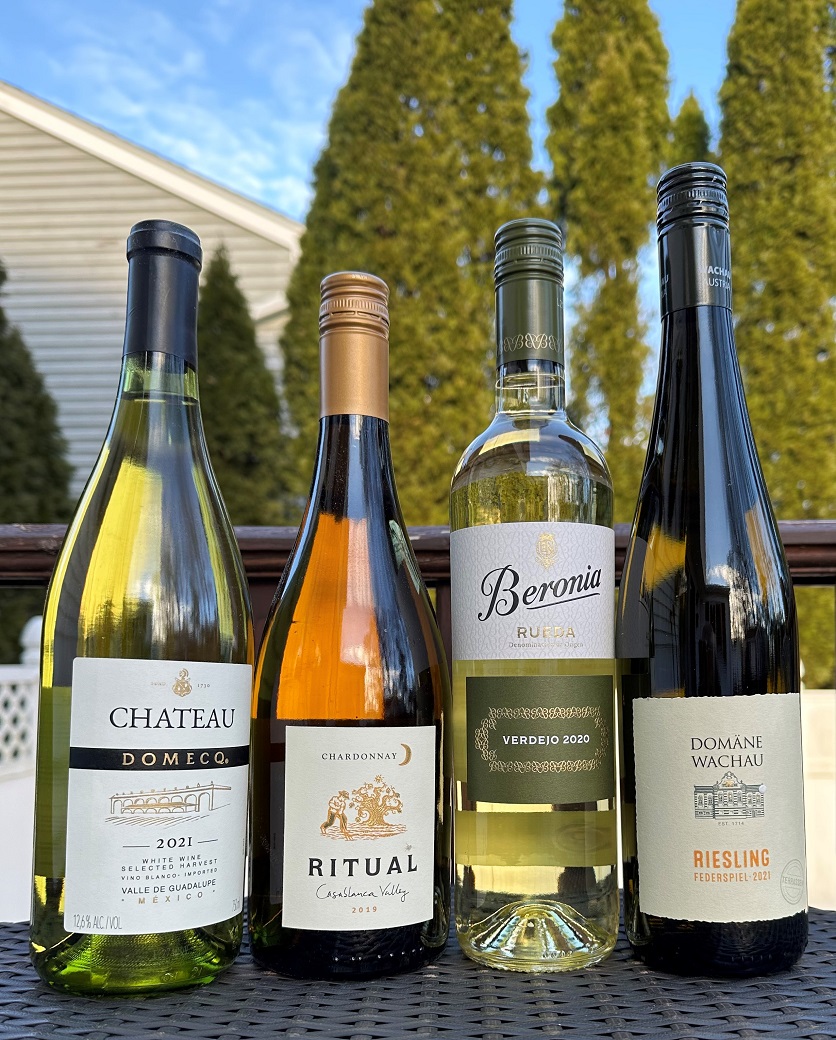
First, 2019 Ritual Chardonnay Casablanca Valley Chile (13.5% ABV, $20.99, organic grapes, certified sustainable). Ritual is an organic wine producer from Chile. I had Ritual wines in the past, and I liked them quite a bit. This Chardonnay, however, was the least exciting out of the four – until those 30+ days later:
Light golden with greenish hue
Gunflint, steel, Whitestone fruit
Green apple, tart, crisp, herbaceous, a touch of smoke. Medium to full body, powerful
7+, needs food, almost asking for a steak.
Second try: outstanding. Better integrated, showing customary Chardonnay apple and vanilla, more round and very well balanced.
Drinkability: 8/8+
Next, 2020 Bodegas Beronia Verdejo Ruedo Spain (13.5% ABV, $13.99, vegan). Bodegas Beronia is a well-known Rioja producer, who also makes wines in Rueda. I had their Rueda bottlings in the past, and always liked them. While initially faring just a bit better than the Ritual, this wine also improved after 30+ days in the fridge:
Light golden
Lemon, sapidity, medium+ intensity
Meyer lemon, lemon zest, crisp, tight and refreshing, good acidity.
8-, an easy supper but will go well with light appetizers.
Second try: the wine became more round, better integrated and better balanced.
Drinkability: 8
From Spain we are moving to Austria – 2021 Domäne Wachau Riesling Federspiel Austria (12% ABV, $18.99, certified sustainable). Domäne Wachau is one of the very best producers in Austria, offering a tremendous range of single vineyard and village wines. I had Domäne Wachau Grüner Veltliner in the past, but this was my first encounter with the Riesling:
Light golden
Meyer lemon, a touch of honey, pleasant
Honey, pear, lemon, beautifully round with cleansing acidity and acidic finish. Delicious.
8/8+, delicious. There was nothing left for the second try 🙂
For our last wine, we are traveling back to the Americas, to Mexico this time – 2021 Chateau Domecq White Wine Valle de Guadalupe México (12.6% ABV, $13.99, 60% Chardonnay, 40% Viognier, fermented and aged in 2nd use French oak barrels for 6 months) – my first encounter with the producer, and possibly the first white wine from Mexico.
Light golden
Heavy nose with sapidity and roasted notes. In a double-blind tasting (black glass) this wine would perfectly qualify as red
Interesting. Unusual. I think Chardonnay and Viognier just have their own lives in this wine.
After a few minutes in the glass, the nose didn’t dissipate, but the palate became a lot cleaner – plump round wine with notes of vanilla and a hint of tropical fruit. Not a bad effort at all.
Drinkability: 8-, unusual.
Second try: after 30+ days, sapidity and roasted meat notes were gone, and similarly to the previous two wines, it became more round and better integrated.
Drinkability: 8-/8
Here you are, my friends – simple wines with a complex story. I might be making things more complicated for no reason – you might be right about that. But if I can make one conclusion from this experience – even if you don’t like the wine, give it a second chance. You might be positively surprised by an outcome.
Celebrate Riesling!
I have to admit, I’m missing most of the grape holidays lately. While checking the Twitter feed today, I was surprised to find out that today we celebrate International Riesling Day. Considering the fact that I never wrote a post about Riesling Day, I couldn’t resist an opportunity to reminisce about my Riesling experiences.
Riesling is one of the 3 main white grape varieties – Chardonnay, Sauvignon Blanc, and Riesling. Of course, there are lots more white grape varieties in the world, but in terms of plantings and production volumes, these three grapes are way ahead of all other white grapes. However, despite the “main variety” consideration, Riesling’s position in the wine world is rather peculiar.
Riesling is capable of a full range of expressions, from bone dry and acidic Rieslings of the Clare Valley in Australia to the dense and viscous late harvest Rieslings made in different parts of the world. Germany, which has about 38% of all Riesling plantings in the world, is typically associated with Riesling – however, there is hardly a wine-producing region in the world where Riesling wines are not made – Germany, Austria, Alsace, Australia, New Zealand, Canada, California, Washington, Oregon, New York – Riesling is literally produced everywhere. And yet walk into any wine store of your choosing – Riesling is typically relegated to the far corner of the store which almost nobody would visit. You can barely find any Riesling on the restaurant’s wine lists. And many consumers are often shy about their love for Riesling as it is almost shameful to be seen with a glass of Riesling in public.
I don’t fully understand the cause of this phenomenon. Germany’s overcomplicated labeling laws might play a role. The fact that it is very difficult to assess the level of sweetness of a bottle of Riesling also plays a role – put a few of the Kabinett Rieslings in the row and see how different the sweetness levels will be where you expect them all to be about the same.
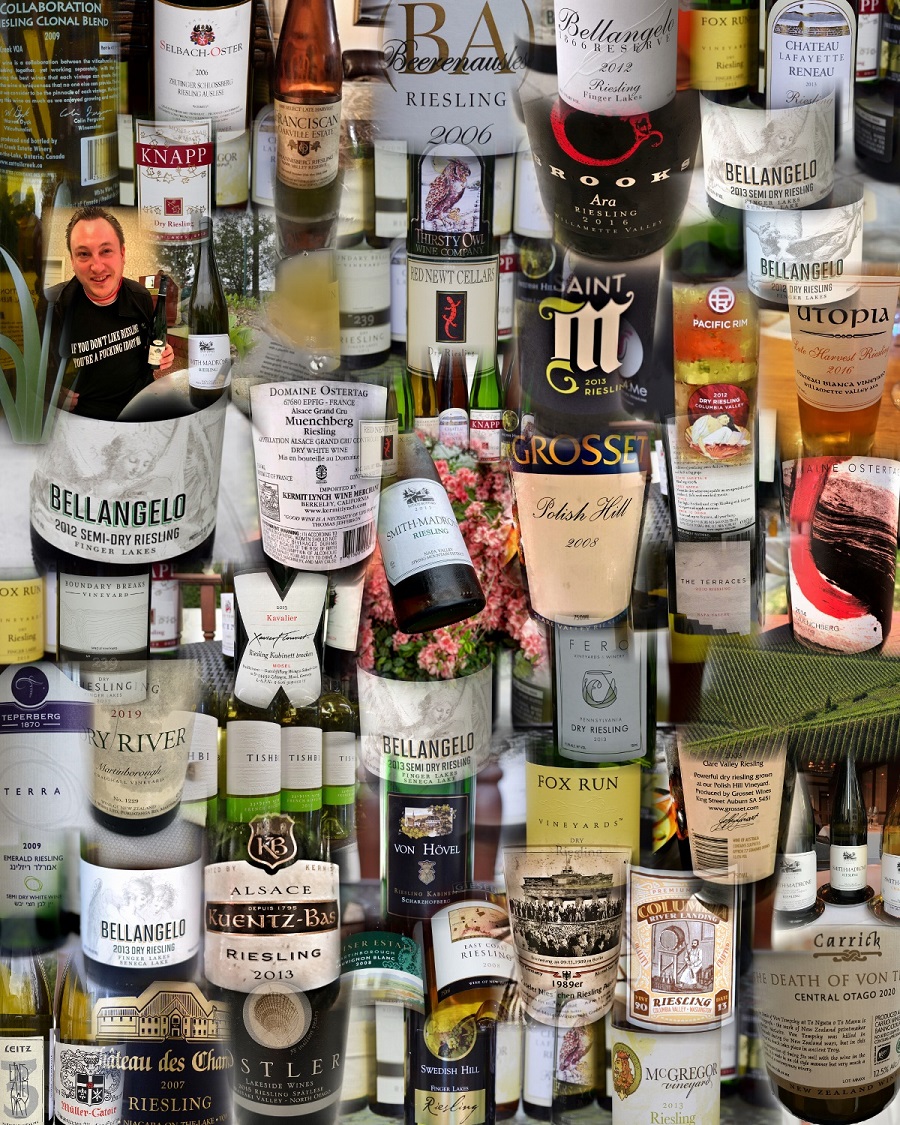 But those of us who trust our own palate and are not afraid of being seen with a glass of Riesling in our hand are typically in for a treat. The everpresent hint of honey, maybe pears, white flowers, and honeysuckle, supported by the cleansing acidity, and hopefully my favorite, a hint of petrol make these wines an absolute delight in my book. Most of the Rieslings also age very well – to understand the pleasure of the 20-30 years old Riesling you simply need to taste one for yourself – the words are very limited in describing the pleasure.
Over the years, I had plenty of delicious Rieslings. And yet if you would ask about the most memorable ones, I would easily give you 3. First, Brooks Ara Riesling from Oregon, which I tasted during a few of the Wine Bloggers Conferences – a pure standout. My next choice would be Smith-Madrone Riesling, which is rather surprising coming from Spring Mountain District in Napa Valley in California – nobody would ever associate California with Riesling, and yet you have a live, delicious proof.
And then, of course, there are Clare Valley Rieslings from Australia. Grosset Polish Hill Riesling from Clare Valley might be a quintessential pleasure, with its high energy, brilliant acidity, intertwined with the fruit – another wine that needs to be tasted to believe it.
I have come across many other excellent renditions of Riesling, but the three I just mentioned are definitely my personal standouts.
What do you think of Rieslings? Do you have your favorite Rieslings which you care to share with everyone?
Happy Reisling Day!
Beyond Kosher: Thinking of Israeli Wines
 I love pairing wine and holidays. It is always a fun exercise, as you need to find a way to explain your choices – how given wine enhances or at least relates to a given holiday (good luck with your Thanksgiving wine selections). Jewish holidays, which we are still in the middle of (Jewish New Year just arrived less than 2 weeks ago), are very helpful in that regard, as wine is simply a requirement here – most of the Jewish holidays require a glass of wine to be present and consumed.
When it comes to Jewish holidays, my approach is simple – I prefer to have on the table the wines made in Israel. But when I reach out to get an Israeli wine off the shelf, I can’t help it but think about all of the complexities of the Israeli wine landscape – what we are talking here is above and beyond of intricacies of making any fine wine. Making of the delicious wine is anything but complex – how to protect vines from the disease, when to harvest, what yeast to use, for how long to macerate, what to blend – lots and lots of decisions, each one affecting the end result, often dramatically. Production of Israeli wines deals with all of the same complexities but then adds a cherry on top – concepts of kosher and mevushal.
I remember visiting Israel about 15-17 years ago with a group of co-workers from the USA, at the resort on Mount Carmel. One of my colleagues pointed to a bottle of wine saying “this is amazing”. The wine he was pointing to was an Israeli wine, Yatir Forest, which was at a time a total surprise for me – I knew that this guy was really into wine and he was drinking very serious stuff, more of California cults and Bordeaux first growth, so this was unexpectedly high praise. I was absolutely unfamiliar with Yatir wines at that time (it would make me say “ahh, pretty please” now).
When we asked to open that bottle for us, we were surprised to hear that it will not be possible. Explanation? The food at the resort was kosher, and food includes wines. The resort just got a new person in charge of observing all the kosher laws and requirements in food preparation and service, and Yatir Forest was not kosher enough. That, my friends, is a problem which is unique to the Israeli wine scene – I’m not aware of any other winemaking region in the world where making tasty wine is not enough for that wine to reach the consumer, even the local one – this also complicates the imports quite a bit.
I’m not going to pretend to be an authority on the laws of kosher wines – I’m very far from it. I’m just here for the tasty wine. What I do know is that the kosher laws are quite intense and involved, whether it has to do with the food or the wine. While I understand that there is some rationale when it comes to the food, I don’t believe kosher requirements can materially affect the taste of wine. We also need to keep in mind that there are different levels of kosher types and certifications, and to top it all off, there is the Mevushal. In case you are not familiar, mevushal is somewhat of a process of pasteurization of the wine to allow for it to be served by a non-Jewish people at a restaurant or anywhere else. It appears that according to the kosher wine rules if the kosher wine is served by a non-Jew, it becomes non-kosher. Mevushal treatment solves that problem, allowing for the kosher wine to be served by a non-observing person without losing its kosher qualities.
To be labeled as Mevushal, the wine has to be heated up to 185 degrees Fahrenheit, essentially becoming pasteurized. As you understand, the exposure of the wine to such a high temperature result in the “cooked” wine – and very appropriately, in the old days Meviushal wines were simply undrinkable, at least by anyone who drinks the wine to enjoy it (as a matter of fact, the word “mevushal” means “cooked”). Lately, however, the wineries found new ways of making wine Mevushal without destroying it. One is a flash-pasteurization, where the wine is very quickly heated up to the same 185°F only for a few seconds. According to the Wine Spectator article, another method is even more interesting – it is called flash-détente, where instead of the wine, grapes are heated up to 190°F and then quickly cooled to the 80°F in the special machine. It would be an interesting experiment, but many wineries produce the same wine from the same vintage both as mevushal and non-mevushal – comparing such wines should be a fun project, don’t you think?
Now that we have Mevushal figured out, let’s take another look into the world of Kosher wines. Think about your favorite wine store – note, I’m speaking about the USA, your experience in France will be vastly different. As you walk in, you see the tags which help you find what you are looking for. Most likely, these tags are one of two types – either specifying a grape variety (Cabernet Sauvignon, Chardonnay, Pinot Noir) or the country and maybe a region – France, Italy, Burgundy, Spain, California, etc.. Somewhere in the corner, you will probably find the Kosher section, possibly right next to the Organic display. In that Kosher section, you will find predominantly Israeli wines with some additional bottles from California, France, maybe Australia, and Spain.
I can safely assume that you will be visiting that Kosher section only a few times a year, just around the Jewish holidays – okay, maybe you will make a special trip if you are invited to the Shabbat dinner by the observant family. Should you expect to find Israeli wines anywhere else in the store? Unlike California, France, Australia, and Spain, all of which you will find all around the store in the different varietal sections, Israeli wines will be confined to that specific Kosher section, 99 out of a 100. As Israel truly makes world-class wines, it is definitely a problem, as Israeli wines have a lot to offer. But what if Israeli wine is not Kosher, such as the wines produced by Vortman Winery – what can they do to make themselves found? Who will take a chance on the Israeli wine which can’t be placed in the Kosher section?
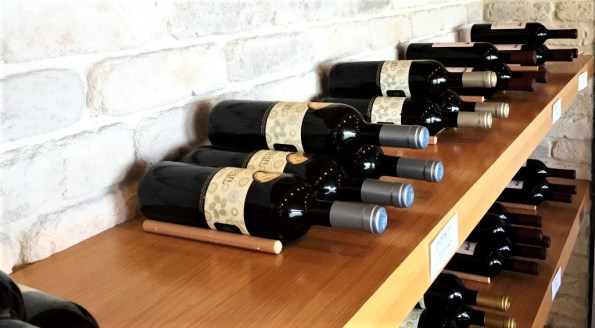
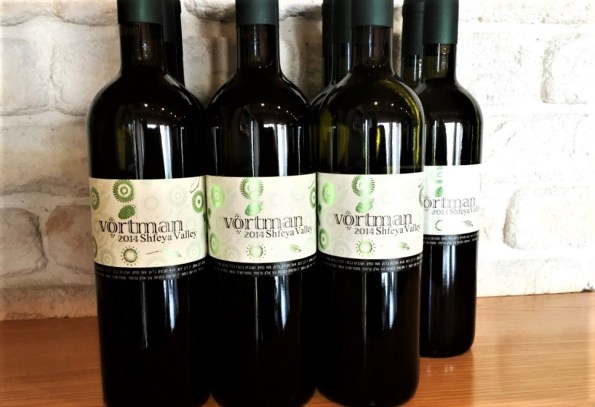


About 5 years ago, I had the pleasure of sitting across from Hai Vortman, the owner and winemaker at Vortman Winery. We were sitting in the Vortman winery tasting room, which was adjacent to his home in Haifa, enjoying magnificent views and superb wines. I was listening to Hai talking about the history of winemaking in Israel, particularly around the Carmel Mountain, which is considered one of the very best and oldest winemaking regions in Israel. Depending on the source, winemaking in Israel is from 3,000 to 5,000 years old, but this was not the point of our conversation. I learned that Baron Edmond de Rothschild recognized the viticultural potential of the Carmel Mountain region and founded Carmel Winery there in 1882, investing millions in the development of the vineyards and production of the wine. In 1900, Carmel Winery wine from Richon Le Zion area won the gold medal at the Paris World Fair, competing against classic French Bordeaux.
The first half of the 20th century was a tumultuous period for the Israeli winemaking – it was not until the last quarter of the century that Israeli winemaking started to rebound. Vortman Winery was founded in 2003 in Haifa in the basement of the family house, with the vision of producing organic wines from the grapes growing in the Shfeya Valley region of the Carmel Mountain. The first commercial vintage was in 2007. In 2009, Vortman started planting new vineyards in Shfeya Valley and converting old vineyards to organic viticulture, all based on dry farming, biodiversity, and full respect for the environment. Today, Vortman winery produces around 30,000 bottles a year – of the non-kosher wines.
Vortman wines we tried were delicious. 2014 Vortman Shfeya Valley White, a blend of Sauvignon Blanc and Semillon from 45 years old vineyard, was delicious, showing minerality, white fruit, crisp, clean, creamy, and refreshing, with a long finish. 2014 Vortman Prime Location Red, a blend of Merlot, Carignan, and Cabernet Franc (mostly stainless steel) was nicely restrained, earthy and fruity on the nose with a firm structure and an excellent balance. 2012 Vortman Shambur, a blend of Cabernet Sauvignon, Carignan, and Merlot (9 months in oak barrels) had a classic Bordeaux nose, great restraint on the palate with a nice core of tannins and great acidity. Nothing extra, nothing unnecessary, just a supremely precise wine. 2013 Vortman Carignan from 50 years old vines (7 months in new French oak) offered a burst of dark cherries on the palate and the nose and a perfect balance. Simply beautiful wines, one after another.
Now, the problem is that unless you plan to travel to Israel, you are out of luck with Vortman wines (hey, if any importers read this – do you want to bring some delicious Israeli non-kosher wines into the US?). Don’t despair, as Israel exports lots of tasty wines.


About 2 years ago, I had a sample of Yarden wines I never wrote about (yeah, I know). Yarden might be one of the best known Israeli wineries in the US, largely thanks to the efforts of the head winemaker Victor Schoenfeld, who is relentlessly promoting Yarden wines. Yarden is one of the brands of Golan Heights Winery, along with Gamla, Hermon, and Golan. Golan Heights winery was founded in 1984, and it is considered as one of the quality wine pioneers in Israel. Here are the notes for the wines I had an opportunity to taste:
2014 Galil Mountain ELA Upper Galilee (14% ABV, 61% Barbera, 30% Syrah, 5% Petit Verdot, 4% Grenache, kosher, non-mevushal)
Dark garnet, almost black
A bit of the stewed fruit on the nose, ripe plums
Clean, fresh on the palate, pepper, plums, baking spices, a touch of savory notes, good acidity, medium-plus body
7+/8-, initially the wine showed a touch of cork taint on the palate, some presence of a wet basement, which disappeared on the second day.
2016 Golan Heights Gilgal Rosé (13.5% ABV, 100% Syrah, kosher, non-mevushal)
Dark intense pink color
Touch of gunflint, oregano on the nose
Ripe spicy raspberries on the palate, more gunflint and granite notes, fresh finish of ripe fruit without been overly sweet, excellent concentration and presence, fuller body than most of Rosé. Delicious.
8, very pleasant
2017 Yarden Sauvignon Blanc Galilee (13.5% ABV, 2 months on French oak barrels, kosher, non-mevushal)
Straw pale color
Whitestone fruit and a touch of candied fruit on the nose, not typical for SB
The palate is restrained, with a hint of freshly cut grass, green apples, and some tropical fruit undertones. Good acidity, a hint of fresh-cut grass on the finish
8-, very good and pleasant rendition of SB
2016 Mount Hermon Indigo Galilee (14% ABV, cabernet sauvignon/Syrah blend, kosher, non-mevushal)
Dark garnet, almost black
Bright, inviting, freshly crushed red fruit, eucalyptus, raspberries, and blueberries on the second day, plus some dry fruit notes – figs
Wow. The first day was a little incoherent, but the second day is simply incredible. Beautiful supple blueberries and raspberries, excellent extraction, tobacco, dark chocolate, clean acidity, soft and round on the palate.
8+, excellent. Just let it breathe.
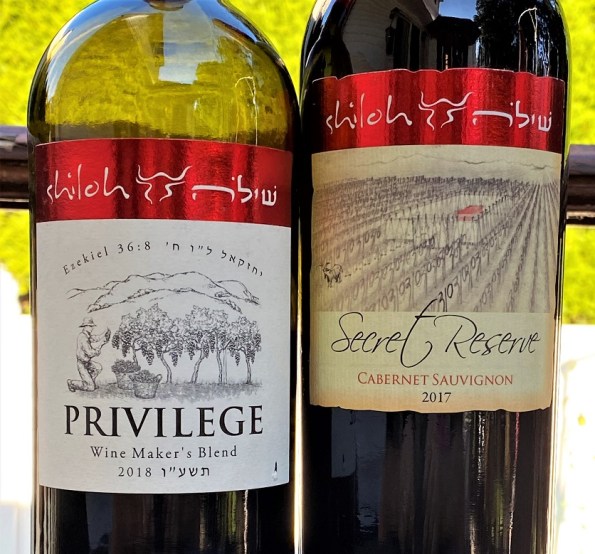
Before we are done here, I still need to talk about one more Israeli winery – Shiloh. I had been introduced to the Shiloh wines about 3 years ago, at a dinner in New York City. The wine we had, Shiloh Mosaic, was absolutely mind-blowing, it was #14 on my Top Wines list for 2017. Shiloh is the youngest winery out of the 3 we talked about today, founded in 2005. Shiloh vineyards are located in the area of the Shiloh river and Samarian hills. Based on the limited information available on the website, it seems that Shiloh produces wines from Chardonnay, Sauvignon Blanc, Cabernet Sauvignon, Cabernet Franc, Merlot, Malbec, Barbera, Grenache, Syrah, Petitte Sirah, and Petite Verdot grapes – of course, there might be others.
To celebrate Jewish New Year 5781, we opened two bottles of Shiloh wines. 2018 Shiloh PRIVILEGE Winemakes’s Blend (14% ABV, 74% Cabernet Sauvignon, 165 Syrah, 7% Cabernet Franc, 3% Grenache, kosher, mevushal) showed beautifully, offering soft red and black fruit, good minerality, soft tannins, and excellent balance. 2017 Shiloh Secret Reserve Cabernet Sauvignon (15% ABV, 100% Cabernet Sauvignon, 18 months in French oak, kosher, mevushal) was even better – a classic old world, rivaling any classic Medoc wine, full of cassis, eucalyptus, a touch of green bell pepper, silky smooth on the palate and extremely satisfying, a pleasure in the glass – this is the wine you need to experience, better yet, compare it against the best of Bordeaux in a blind tasting. It appears that many of the Shiloh wines are produced in both mevushal and non-mevushal styles – something which really calls for a blind tasting side by side.
Israeli wines are world-class, but they still need to be found by the wine consumer. Will you look for them?
Good When Young, Good With Age
It’s what you crave, people.
And right now, I’m craving Riesling.
Wine cravings are an interesting phenomenon. Or not. I guess food cravings work in exactly the same way. It appears to be all of a sudden, the desire for a certain food – french fries (oh wait, I always crave french fries), fried chicken, steak, scallops, lasagna, broccoli (really, you say? Yep, I can bet someone is craving broccoli right now). Is it really so unprovoked, so out of blue, or is it our subconscious at play here, collecting little cues here and there?
It is getting warm now, but that alone is not the reason to crave Riesling. But what if I read about other people enjoying the Riesling, with food and without – would that count as an invisible cue? I don’t know, but I can clearly imagine myself with a glass of cold Riesling in hand, don’t even need to close my eyes.
In the world of white wine, Riesling is unquestionably a part of “big three” – Chardonnay, Sauvignon Blanc, and Riesling. At the same time, if you think about typical wine store, Chardonnay and Sauvignon Blanc would take the prime real estate, the most central position on the shelves – and Riesling would be typically relegated to the far-most corner, with a little “Germany” sign next to it, or maybe in the “other whites” section. And it is a pity because scandalously delicious Riesling is produced practically everywhere – Alsace, Australia (Grosset would be an amazing example), New Zealand, Israel, California (how about some Smith-Madrone), Oregon (Brooks Rieslings are sublime), Washington (Chateau Ste. Michelle does an excellent job), and I’m not even talking about New York state or Niagara-on-the-Lake in Canada.
It is not only the hedonistic pleasure that the glass of well-made Riesling readily delivers on its own. Riesling is one of the most versatile food wines – it pairs well with a wide range of dishes and cuisines. And then Riesling has an ability to age not just well, but extremely well. Let’s bring back again the big three. Yes, you can age many of the Chardonnay wines, but rarely for 30, 40, 50 years – I’m sure there are some exceptions, probably in Burgundy, but still, this is not common. Sauvignon Blanc would fare even worse than Chardonnay. But well-made Riesling? 30 years will not be even the age – it will be still youthful and vibrant, with ease.
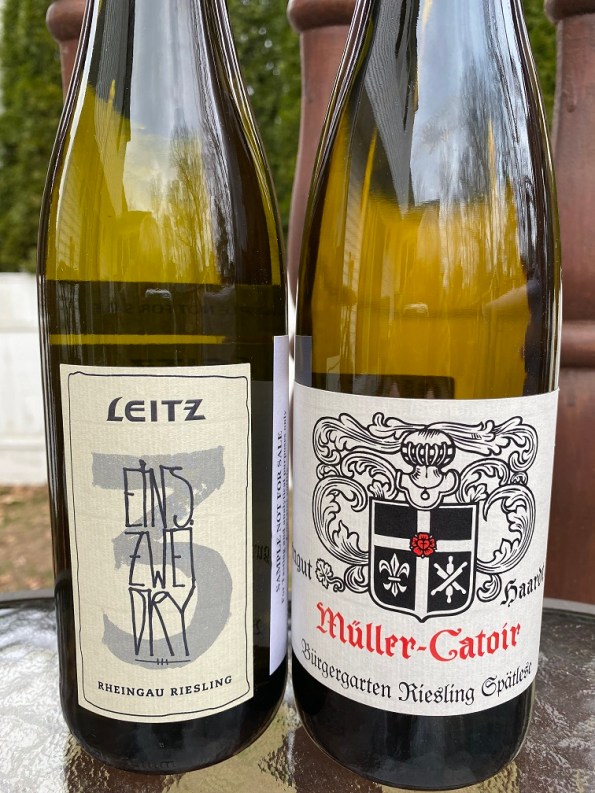
I didn’t have any 30 years old Rieslings recently, but I got two samples with 4 and 8 years of age, and both fared equally well – while even 8 years might be a stretch for many white wines. 2016 Leitz Eins-Zwei-Dry Riesling Trocken Rheingau (12% ABV) was produced by Weingut Leitz, where the family winemaking traditions go back to 1744; 2012 Müller-Catoir Bürgergarten Riesling Spätlese Pfalz (9% ABV) was produced at the Weingut Müller-Catoir which, interestingly enough, was also founded in 1744.
It is interesting that both wines were produced at the wineries with the 9th generation of winemakers (duh – the wineries were founded in the same year, I know). Both wines are pure Riesling wines, both come from the hillside vineyards with some unimaginable slopes. 2016 Riesling is designated as dry, and 2012 is a Spätlese-level, which means that the grapes had a higher sugar content when harvested.
I’m sure you wonder how were the wines? Well, yes, both were delicious. Both were a characteristic Riesling, with honey, honeysuckle, and a touch of lemon on the nose. Of course, Spätlese was sweeter, but not by much. And it is always the acidity which makes or breaks Riesling – both wines showed perfectly balancing, fresh, vibrant acidity. Bottom line – both were equally delicious and ready to be enjoyed on their own or support any food. As for the age… what age? I will be happy to try both in 10 (or 20) years – and I’m sure I would enjoy them very much.
What is your take on Riesling? Do you have any favorites wines or regions? Do tell! Cheers!
When in Canada … Drink Local, and Visit LCBO
 Truth be told, I love visiting foreign countries. Ability to do that without flying is a huge bonus. So if you live in the Northeast USA, the only foreign country one can visit without flying is Canada – and if you live in the South of the USA, you better really love driving. However, I start getting off the tangent here, so let’s get closer to what I really wanted to talk about.
I don’t know how many times I visited Canada in the past 20 years – really a lot, as it is so close. I had a lot of business meetings there, which would be typically 2-3 days in and out – those would usually involve flying. I’ve done a lot of vacations and long weekend giveaways. Here comes the strange part – with the exception of one trip, I never bought wine in Canada before (outside of restaurants and duty-free shops, where I would typically buy Scotch and not wine). And that one exception was our vacation a few years ago, when we stumbled across beautiful wine region of Niagara-on-the-Lake (more details here and here), and bought a good number of wines at the wineries – I even broke the Canadian law (unknowingly), which apparently prohibits one from moving the wines across province’s borders.
A recent meeting took me to Toronto, and of course, being a wine geek I am, and remembering great experience of a few years back, I definitely wanted to taste some local wines. If I wouldn’t be a blogger who also like to read other blogs, I’m sure I would be quite oblivious to the ways one can obtain a retail alcohol in Canada – but thanks to my wine blogging friends from Canada, like Bill @ Duff’s Wines, I knew the magic word – LCBO! Whatever the acronym stands for, I understood that this is the key word for one looking to buy a bottle of wine. While walking from the train station to the hotel, I saw the magic word written on the store – and this was the “aha moment” – I’m going to have some fun!
If you are into wine, I’m sure you will understand the “Disneyland for adults” analogy for the wine lover at a wine store – especially when it is as large, brightly lit and spacious as the LCBO store I visited. Aisles and aisles of treasures, some under the glass, but still ohh so visible and attractive – good wine store is the place wine lover has a problem leaving on their own. You really need to have a serious reason to walk out of the wine store – it is so much more appealing to look and look and look.
It was definitely interesting to look at the wine selection and the prices – but my end goal was to get a few of the local wines, which means Niagara Peninsula in this particular case, however without spending much money. I ended up with three wines – the Riesling, as I simply love Riesling, and this is the grape which folks in Canada know very well how to handle right; Pinot Noir from Inniskillin, simply because I love Inniskillin, and I had some good Canadian Pinot Noir wines before; and Cabernet Franc, simply because I love the grape, and I had very good experience with Château des Charmes in the past.


When I started writing this post, I found out that all three wines come from the different sub-appellations in Niagara. Here are my notes:
2015 Reif Estate Riesling Niagara River VQA (12% ABV, CAD 13.95)
C: Straw pale color
N: Touch of petrol on the nose, honey notes
P: Touch of honey on the palate with cut through clean acidity. Excellent balance, very nice overall
V: 7+, very good wine
2015 Inniskillin Niagara Estate Pinot Noir Niagara Penninsula VQA (13% ABV, CAD 15.95)
There is an interesting story with this wine. I was very much looking forward to trying it. When I twisted the cup off, I didn’t hear the traditional crackling noise of breaking of the cup off the ring, and it also opened very easily. My first thought was that the someone opened the wine before, but this was very strange. I poured a little taste, tried it – didn’t like it at all. Decided that somehow wine got opened prior, and obviously it was not drinkable anymore. In two days, just before throwing out the bottle, I decided to taste it one more time – and to my amazement (and delight), the wine came around to a fresh and crisp Pinot Noir – a favorite of this tasting:
C: Garnet
N: touch of tobacco and underripe cherries
P: fresh herbs, tart cherries, touch of smoke, good structure, crisp, medium finish
V: 8-, very enjoyable
2015 Château des Charmes Cabernet Franc Niagara-on-the-Lake VQA (13% ABV, CAD 15.95)
C: Dark garnet, almost black
N: Fresh berries, freshly crushed blueberries, open, inviting
P: balanced fresh blueberries on the palate – not overripe, but nicely tart, with good acidity. Tobacco showed up on the second day, still perfectly drinkable, nice wine.
V: 7+
And now, for your viewing enjoyment, here are some of the wines observed at LCBO. It was fun to see lots of high-end wines. Bordeaux selection was definitely better than the Burgundy, and France definitely trumpeted California. But anyway, here you can see it with your own eyes:
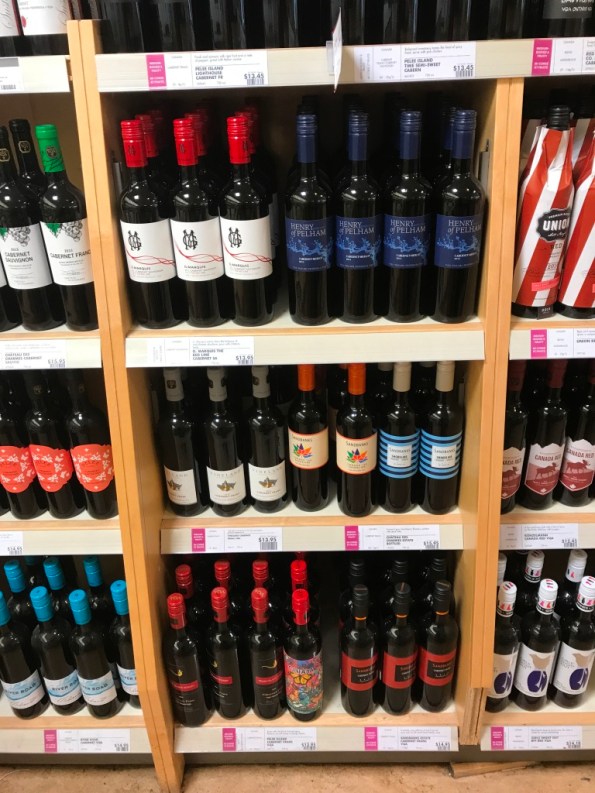
Niagara VQA wines
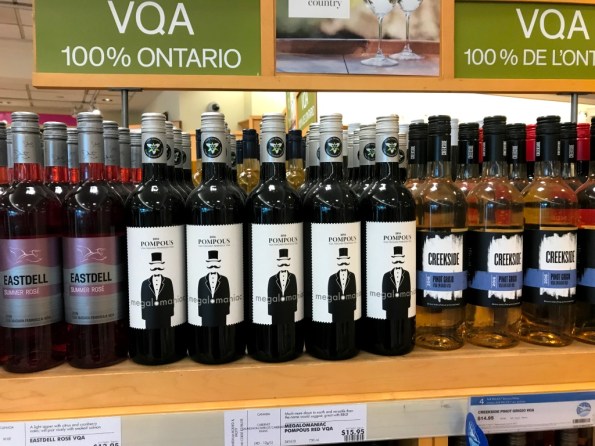
Canadian wines – cool labels
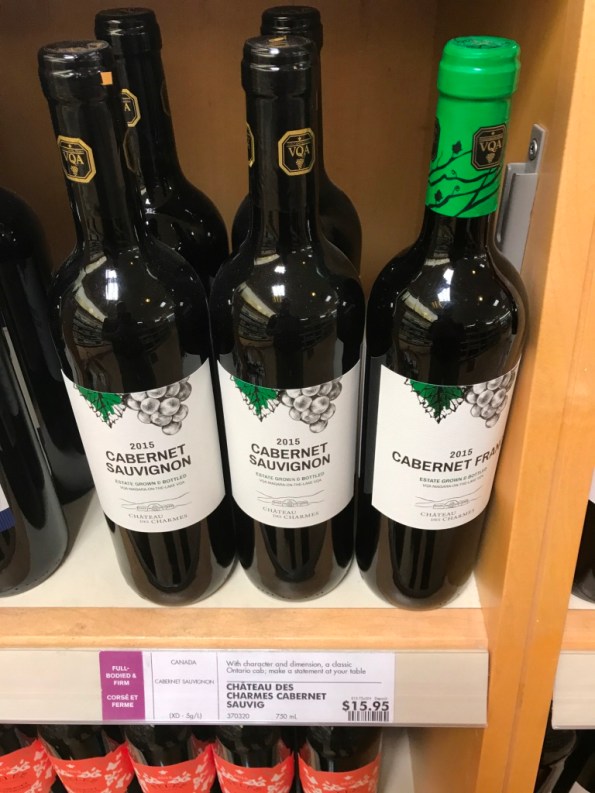
Chateau des Charmes Cabernet
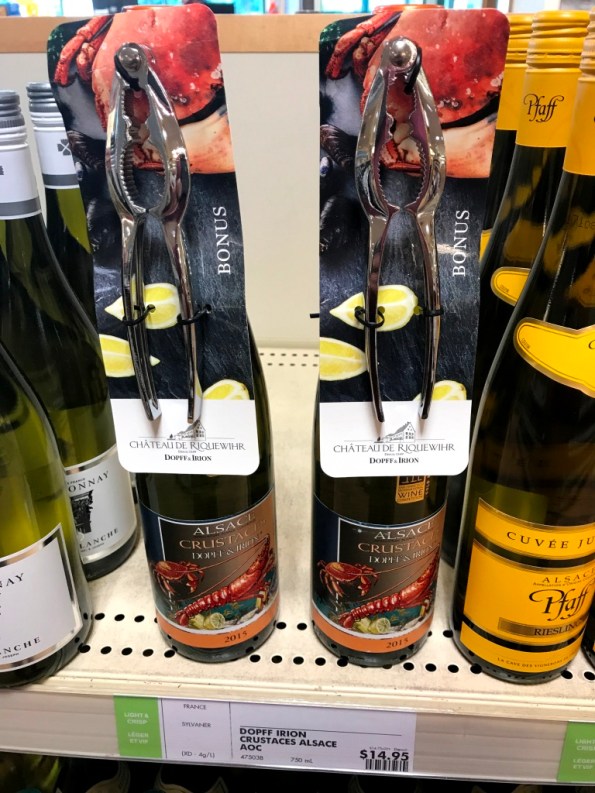
Alsace wines – ready for that crab
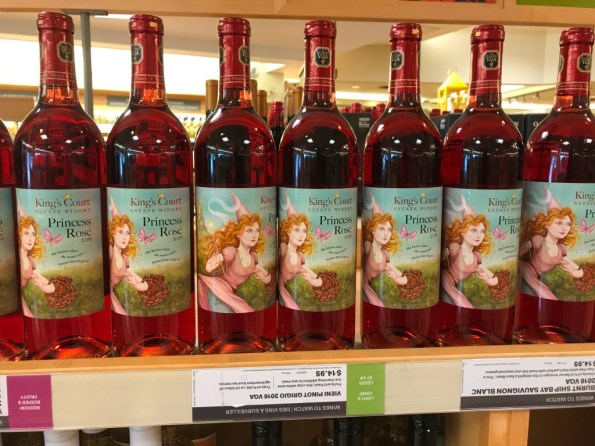
Canadian Rosé
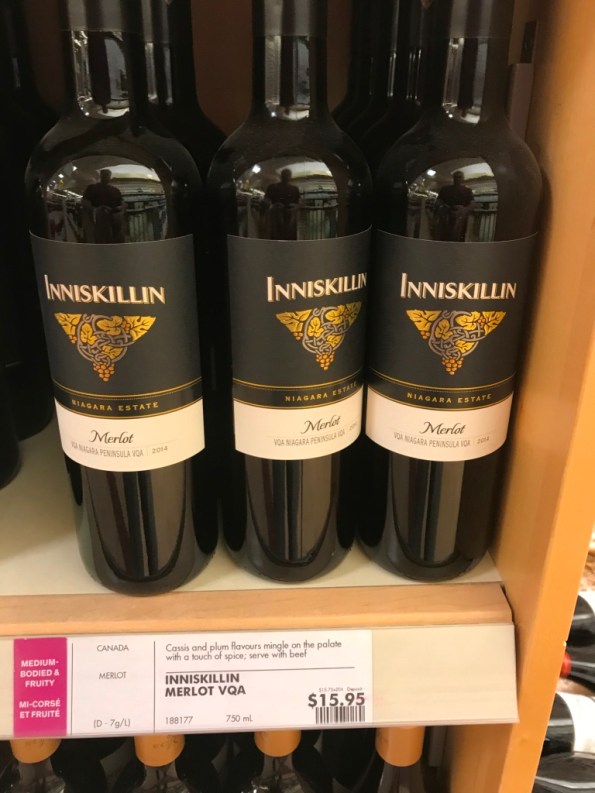
Inniskillin Merlot
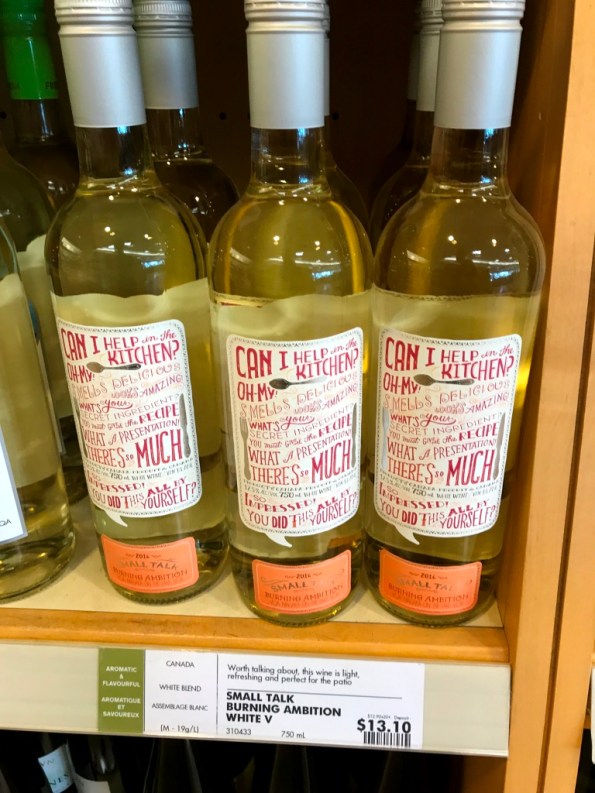
Canadian wines – more cool labels
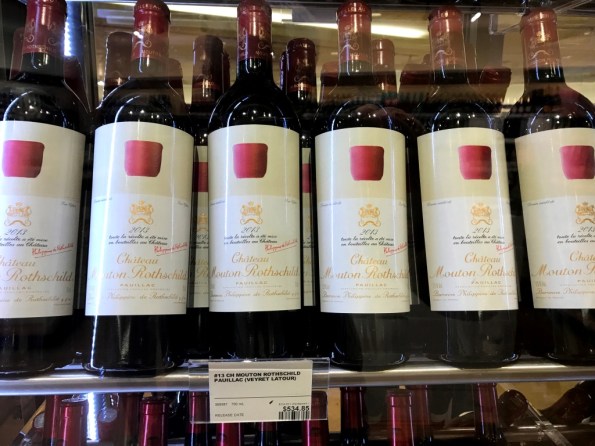
Château Mouton-Rothschild
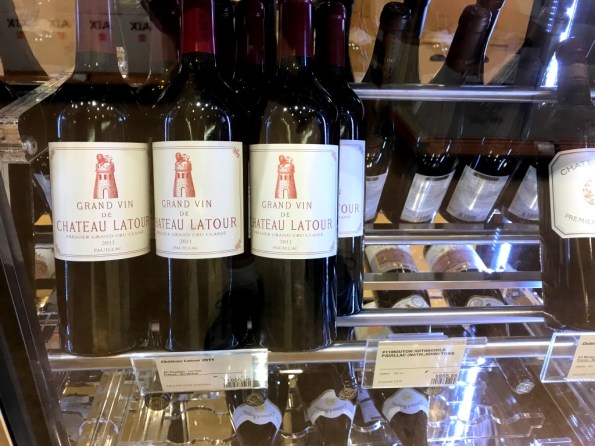
Château Latour
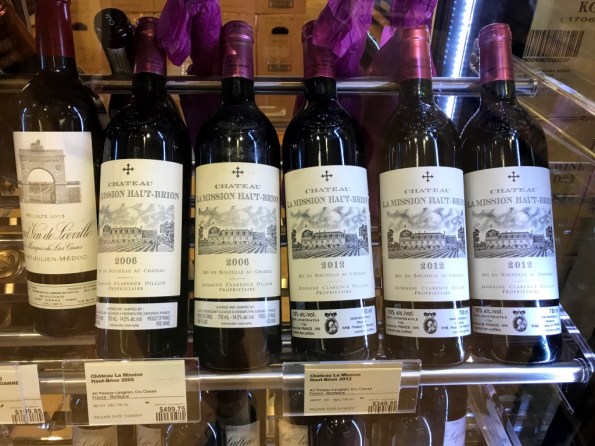
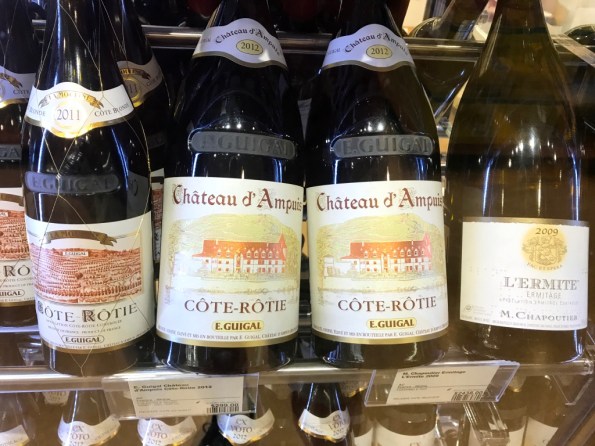
Château d’Ampuis Côte-Rôtie
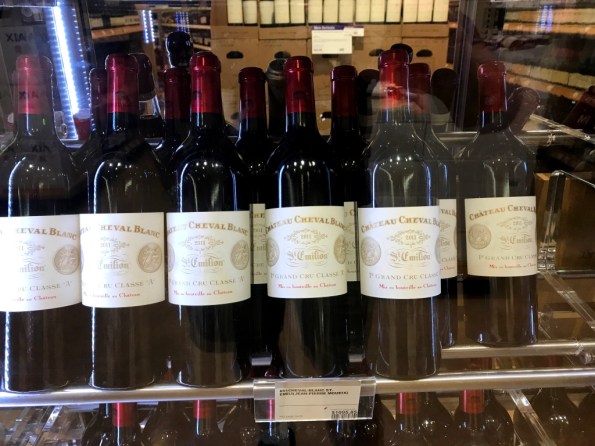
Château Chaval Blanc
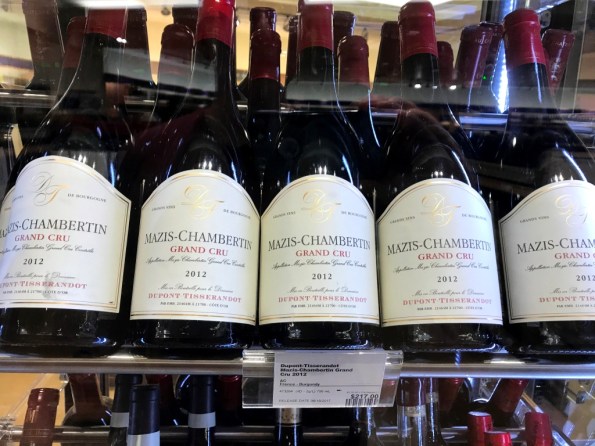
Mazis-Chambertin Burgundy
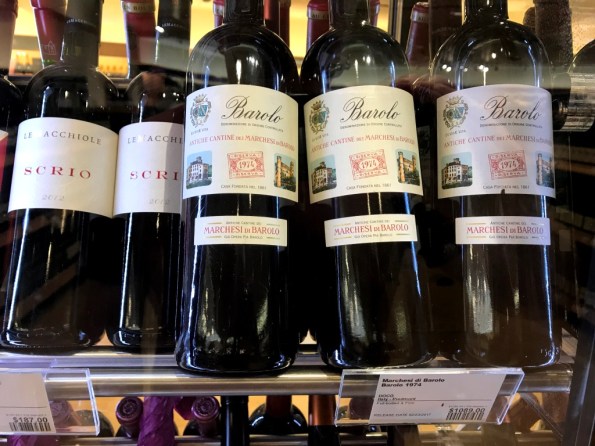
Marchesi di Barolo
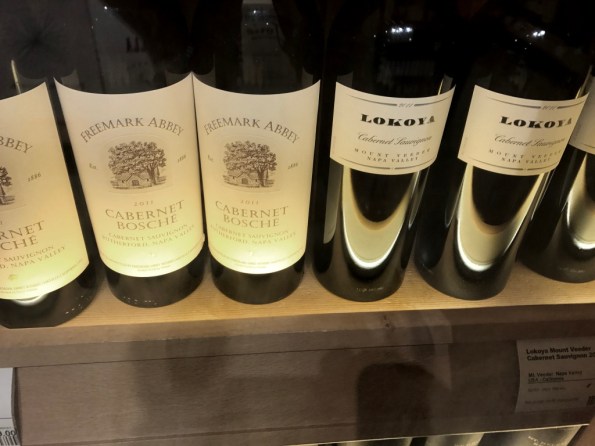
Lokoya Cabernet Sauvignon
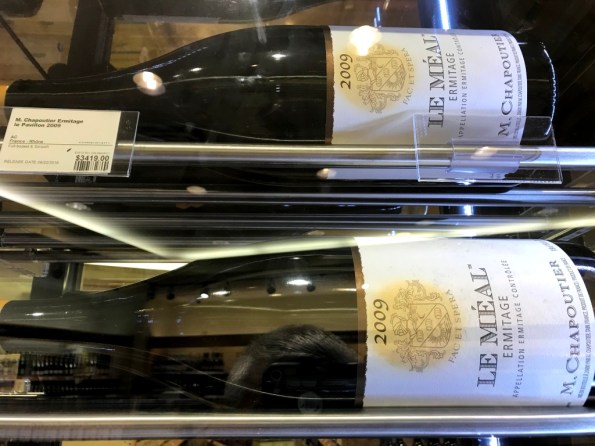
Le Méal Hermitage
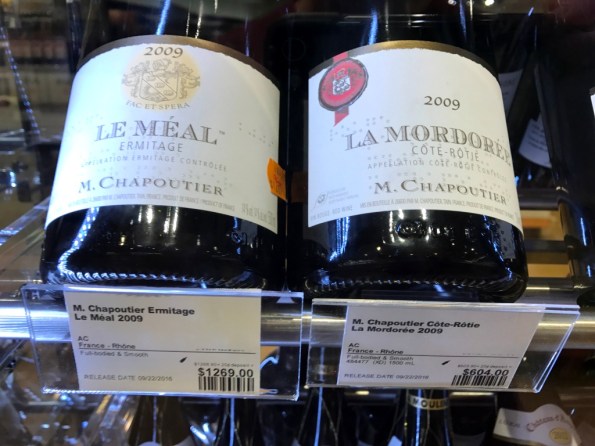
Le Méal and La Mordorée
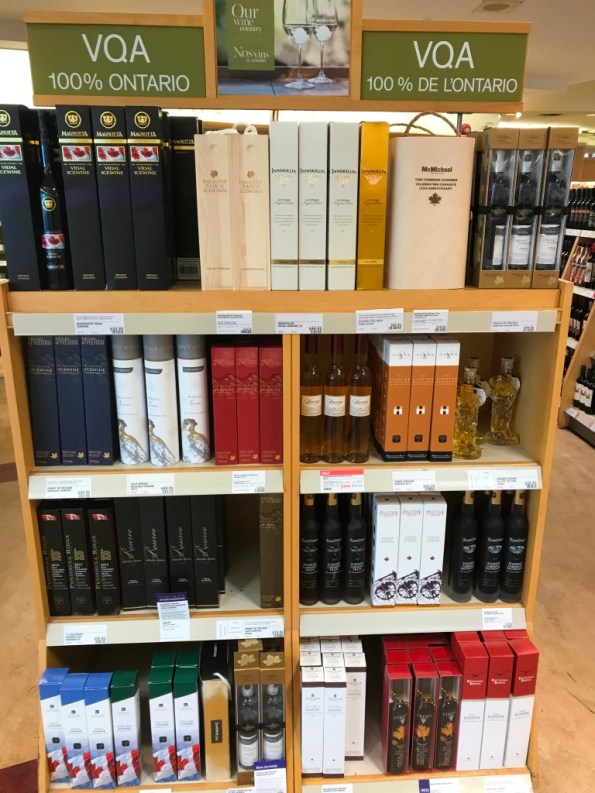
Jewels of Canada – Ice Wines
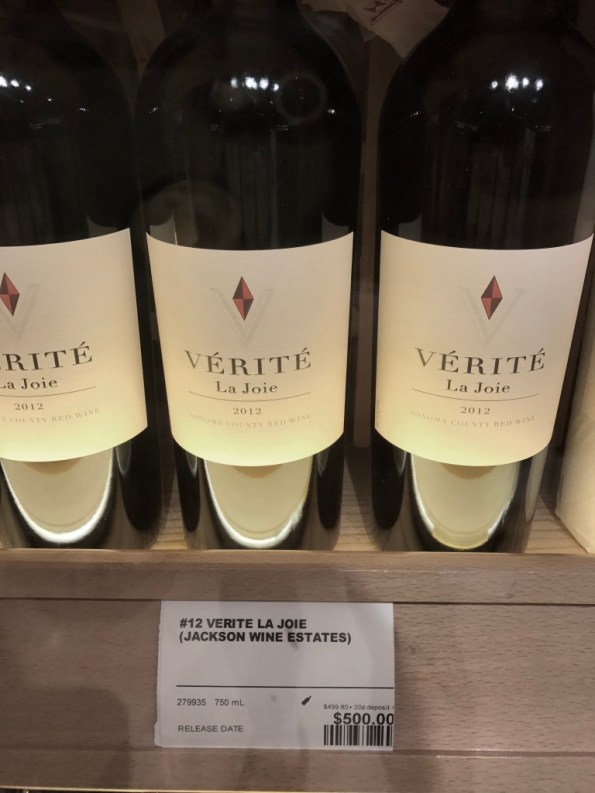
Vérité La Joie
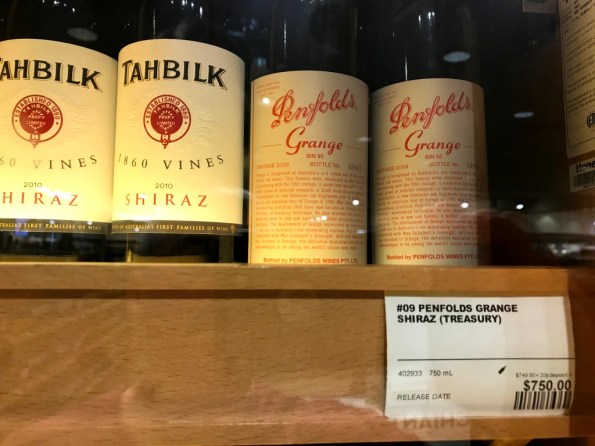
Tahbilk and Penfolds Grange
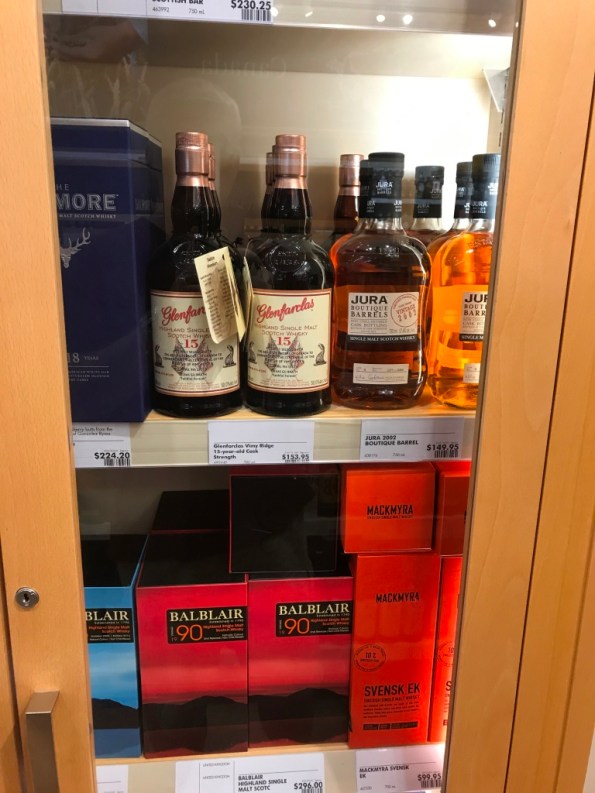
Scotch Selection at LCBO
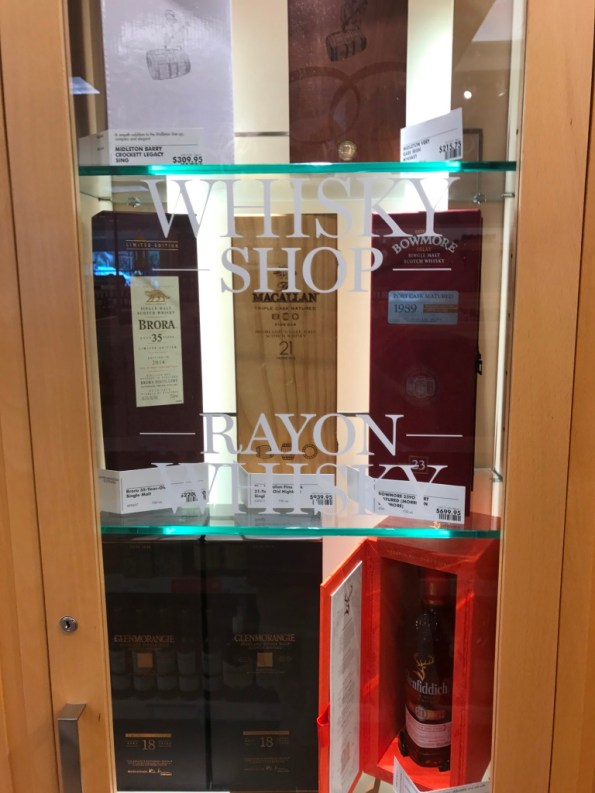
High End Scotch Selection at LCBO
There you have it, my friends. When traveling, drink local. And yes, when in Canada, go and visit the LCBO – just make sure you have enough time for it. Cheers!
Remembering Last Summer – Fero Vineyards in Pennsylvania
 Does it make sense to write about a winery visit a year after? Well, I will leave you to ponder at that question, and will just go ahead with my post.
We have a tradition which we keep going for many years now – adults getaway. One weekend in August, we all get together for the two days of food, wines, laughter and simply enjoying each other’s company. These trips usually take place within reasonable driving distance (3 hours or less) for all people in the group (we all live in a close proximity to the New York city), and winery is always a good choice for the first stop.
Lucky for us, oenophiles, the wine bug caught up everywhere in the US, so there is no shortage of interesting wineries to visit along the East Coast of the United States. Our choice last year was the winery in Central Pennsylvania, called Fero Vineyards and Winery. The choice was not random – one of the grapes they use in the wine production is Saperavi. This is definitely not a common choice – however, a rapidly (I think) growing trend among Eastern USA winemakers, in Finger lakes and other regions. Having been exposed to many amazing Georgian wines, where Saperavi is a king, I was very intrigued at a perspective of tasting the local rendition of such wines.
Had all the arrangements made to meet with Chuck Zaleski, a winery owner and winemaker at Fero. Chuck was taking time for this off his busy schedule, as he was participating in the town fair where he was pouring his wines.
Just curious – do you think everything is going boringly well, or do you expect a twist in this story?
So yes, the twist happened – in the form of a flat tire. About 70 miles down the road, the familiar sound appeared – anyone who had a flat tire knows what I’m talking about; if you never had one – keep it this way. Not a problem, I thought – while the spare tire is very awkwardly located in Toyota Sienna, under the cabin floor, right in a middle – at least I knew where it was. Next ten minutes of jumping around the car ended up in a grim realization – the spare tire was not there. Angry call to the dealer (luckily, it was Saturday) lead to a discovery – all wheel drive Toyota Sienna cars don’t have a spare tire as there is no space for it – instead, they are equipped with run-flats. To make long story short, after arriving with the smoldering tire to the closest dealership and waiting for about 3 hours, we were able to get on our way (of course I fully realize this was still a very lucky outcome).
As we were at least 3 hours behind the schedule, the decision had to be made – should we visit Fero (Chuck, of course, was not there) or forget it all together, just drive to our B&B and relax after such an ordeal. I’m glad the love of wine prevailed and we decided to stop by the Fero Vineyards first.
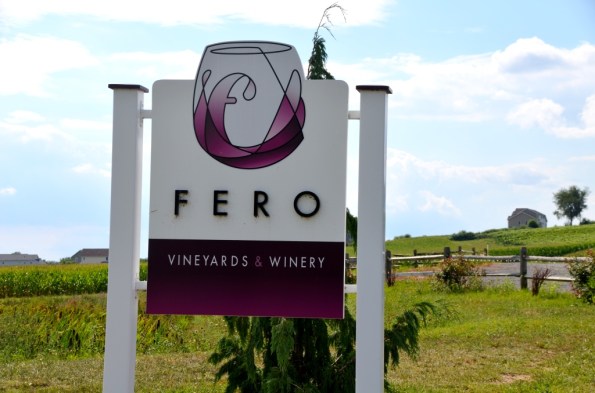
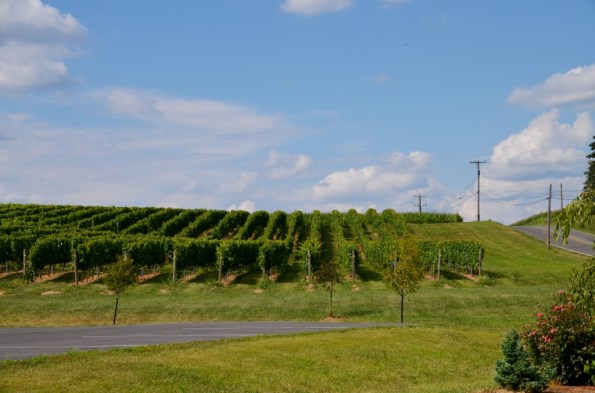 If you will look at the line up of the Fero Vineyards wines, you would find the closest match in Germany or Austria – of course with the addition of Saperavi. Despite the fact that we didn’t manage to meet with Chuck, he still took care of us, by leaving a bottle of Saperavi for us to taste, as the winery was sold out of their last vintage. We tasted through almost a complete portfolio of Fero wines, so here are the highlights for what I liked the most (as usual, there were too many wines, too little time):
2013 Fero Vineyards Grüner Veltliner Pennsylvania – dry, crisp
2013 Fero Vineyards Dry Riesling Pennsylvania – German style, nice minerality, good fruit
2013 Fero Vineyards Pint Noir Pennsylvania – dry, classic nose, crisp, very nice
2013 Fero Vineyards 1812 Lemberger Pennsylvania – crisp, crushed red fruit, pepper
2012 Fero Vineyards Pinot Gris Pennsylvania – nice, simple
2014 Fero Vineyards Pinot Noir Rosé Pennsylvania – residual sweetness, light, balanced, excellent overall
2014 Fero Vineyards Semi-dry Riesling Pennsylvania – excellent, nice touch of sweetness
Fero Vineyards Concord Pennsylvania Table Wine – yes, this is rather sweet, but if you like Concord, this was a classic, restrained and delicious
2013 Fero Vineyards Pinot Gris Pennsylvania – crisp, minerality, excellent
2013 Fero Vineyards Estate Lemberger Pennsylvania – roasted fruit, good concentration, excellent
Fero Vineyards Late Harvest Riesling Pennsylvania – nice touch of petrol, good touch of sweetness, excellent overall
2013 Fero Vineyards Saperavi Pennsylvania – excellent, nice concentration, tannins, crushed blackberries, pepper notes


I’m definitely intrigued by this Saperavi wine. Fero Saperavi has a character of its own, as you can see from my tasting notes above. I would love to taste it side by side with its Georgian counterparts, of course blind. And let’s keep in mind that Saperavi grows in the Balkans (never tasted it), Finger Lakes (also never tasted it), and probably some other places I can’t even think of. Can someone please put together an exciting blind tasting? Or this might be a great subject for the #winestudio session…
Well, I still have a few bottles of Fero wines left, including 2013 Saperavi (courtesy of Chuck, yes) – but I want to give it at least a few more years. See, this is how oenophiles build their excitement…
And we are done here. If you are looking for the great East Coast wines, Fero Vineyards must be on your short list. And who knows, may be you will be lucky enough to taste their Saperavi. Cheers!
Riesling, Oh Riesling – Finger Lakes Riesling Deep Immersion with #WineChat
 There is nothing obscure about Riesling. Unquestionably one of the “big three” white grapes (Chardonnay, Sauvignon Blanc and Riesling). Celebrated through various social media events – “The Summer of Riesling”, “Riesling Month”. An established, de-facto pairing for the Asian or any spicy cuisine for that matter. “Fastest growing white wine in America”. And nevertheless, one of the most unknown, under-appreciated and misunderstood wines, if you ask me.
Walk into any general wine store, and try to find Riesling wines. Are they right in the first aisle, next to the California Chardonnay and Sauvignon Blanc? Nope. Oh yes, a lot of Rieslings come from Europe, so they definitely will be right next to the Burgundy and Loire. Oops – not here again? Here they are – in the back of the back, a side aisle, a small section, ask the sales guy, he will show you. And this is not limited to the wine stores only – most of the restaurant wine lists have one or two Riesling wines, usually in the cheapest group. Similar story in most of our cellars – how many bottles of Riesling do you have on your shelves? A few? And this is despite the fact that Riesling is one of the most age-worthy wines in the world…
So how do these two realities of “one of the fastest growing” and “last row seat” co-exist? I think perception has a lot to do with this. Since Riesling can be sweet, and often it is praised for its sweetness, consumers are stuck in the notion Riesling = Sweet. Take a look at the Wine Spectator ratings – highest rated Kabinett Riesling (typically showing only a hint of sweetness) got 93 points; and then 8 (eight!) Rieslings got 100 points (the absolute top) rating – by the way, it is 8 of only 75 wines which got 100 points from Wine Spectator – and all 8 are Trockenbeerenauslese, the highest sweetness designation. Thus for lots and lots of wine drinkers, Riesling is a dessert wine, and while we love dessert wines a lot more than we are willing to admit, the dessert wine designation means “only for the special moments”.
Can this perception be changed? Of course. How? By educating people. This was one of the reasons for the International Riesling Foundation (IRF) to be created in 2007. The idea behind foundation was exactly this – to make people aware of what Riesling has to offer, and to help people better understand Riesling wines. One of the outcomes of the IRF efforts became the Riesling Taste Profile. According the the specification of that profile, four taste categories are defined – Dry, Medium Dry, Medium Sweet and Sweet. Based on the given set of parameters (sugar, acid and pH), the IRF developed a technical chart which allows winery to estimate how the consumers will likely perceive the wine across the 4 defined taste categories. After that, the winery can print that taste profile on the label (you can see an example at the very beginning of this post) – and then the consumer can quickly set the expectations just by glancing at the label.
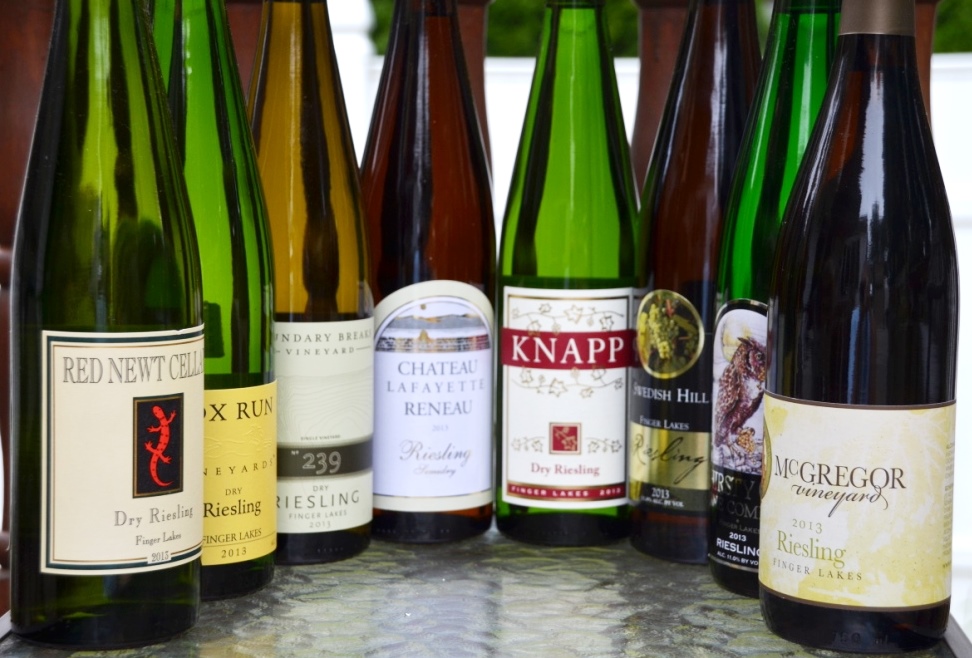
Well, it is good to have an informative label, but when it comes to the wine world, seeing doesn’t really equates to believing. But tasting does. This is where the #winechat comes to the rescue. Last week, a group of enthusiastic oenophiles had a chance to dive deeply into the world of 2013 Finger Lakes Riesling, by tasting through the 8 different wines and sharing the excitement with each other. And the wines were definitely very exciting, full of pleasure in every sip. Finger Lakes region in New York deserves all of your attention – but I already shared my thought about the region at length in the two earlier posts this year, so I will have to refer you to those (first Finger Lakes #winechat and the post about Bellangelo wines).
Below are my notes regarding the individual wines. These notes are based on the longer evaluation of the wines than we would otherwise have during the 60 short minutes of the #winechat, so if you are talking part in another #winechat session on that subject, I suggest you will start tasting your wines now. One last note regarding the wines. As this is my third encounter with the Finger Lakes wines this year, I would like to offer two “bits of wisdom” based on that experience:
- Don’t over-chill.
- Let ’em breathe.
Terroir, minerality are important components of Finger Lakes wines – by serving the wines a bit warmer than you normally would, say at around 50F, and letting them breathe for may be an hour, you will do yourself a big favor and will find a lot more pleasure in every sip. At least I did. Without further ado, here are the 8 beautiful wines:
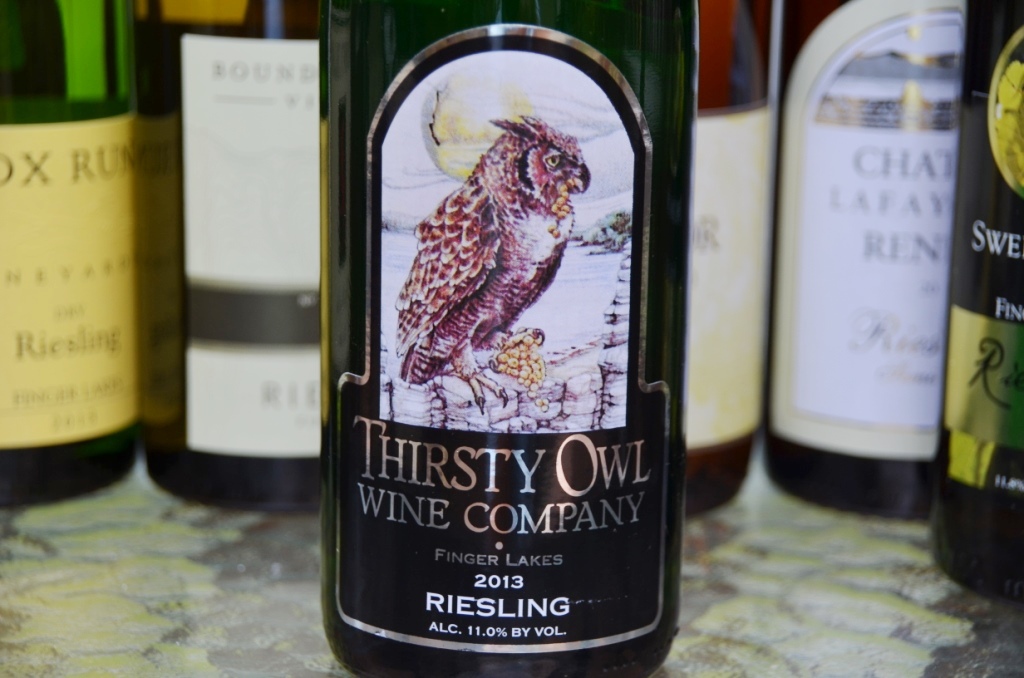 2013 Thirsty Owl Wine Company Riesling Finger Lakes (11.0% ABV, $14.95). IRF scale not shown. On the nose, touch of minerality (gunflint), apricot. Overall nice and restrained. Palate: Clean , crisp acidity, touch of honeysuckle, golden delicious apple. Medium finish, overall very refreshing. Drinkability: 8-
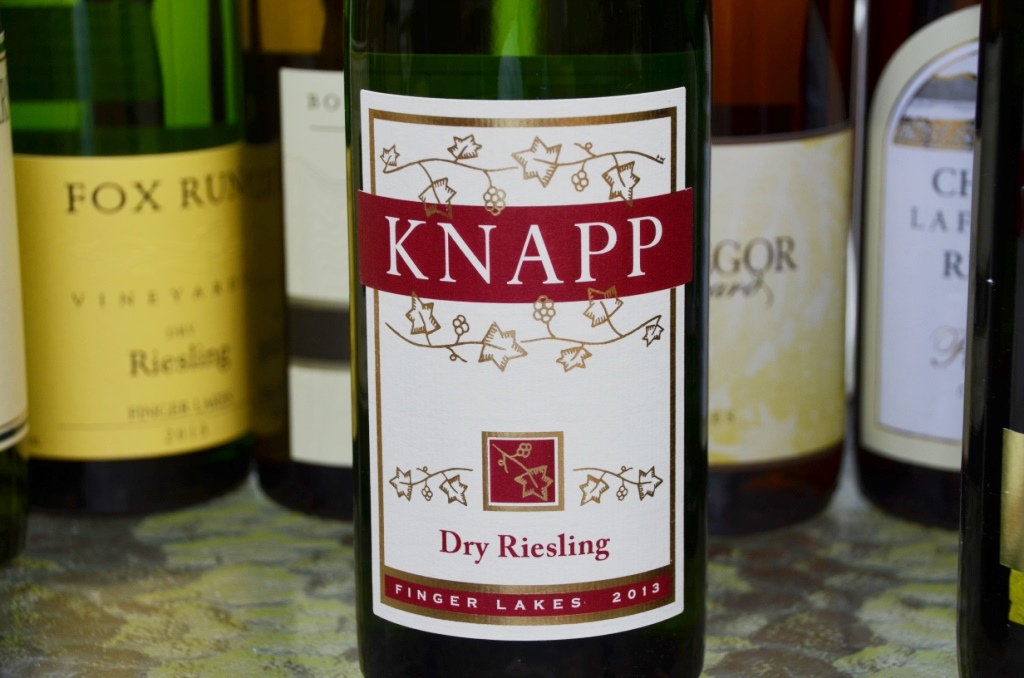 2013 Knapp Dry Riesling Finger Lakes (12%ABV, $15.95) – On the IRF scale, this wine is at the lower part of the Medium Dry style. White apples, honey and lemon on the nose. On the palate, candied lemon peel with fresh lemon juice, complemented by the cut-through acidity. Medium finish, overall a nicely balanced wine. Drinkability: 7+
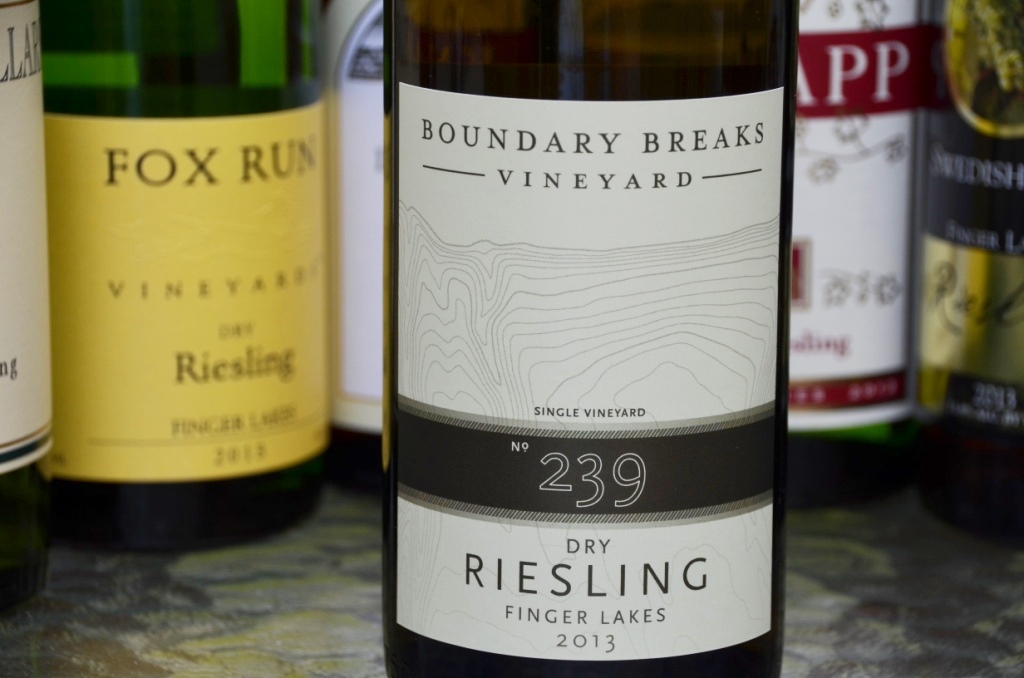 2013 Boundary Breaks Vineyard #239 Dry Finger Lakes (11.6% ABV, $19.95) – right in the middle of “dry” on the IRF scale. This is my second encounter with Boundary Breaks Riesling, and I find that this wine needs breathing time to show itself. Initially, closed on the nose, then opening to show distant hint of lemon, touch of minerality. On the palate – wave of sweetness first, with cut through acidity, lingering for a bit and then finishing dry. Tasting at a later time adds some fresh apple and more minerally undertones. Drinkability: 7+
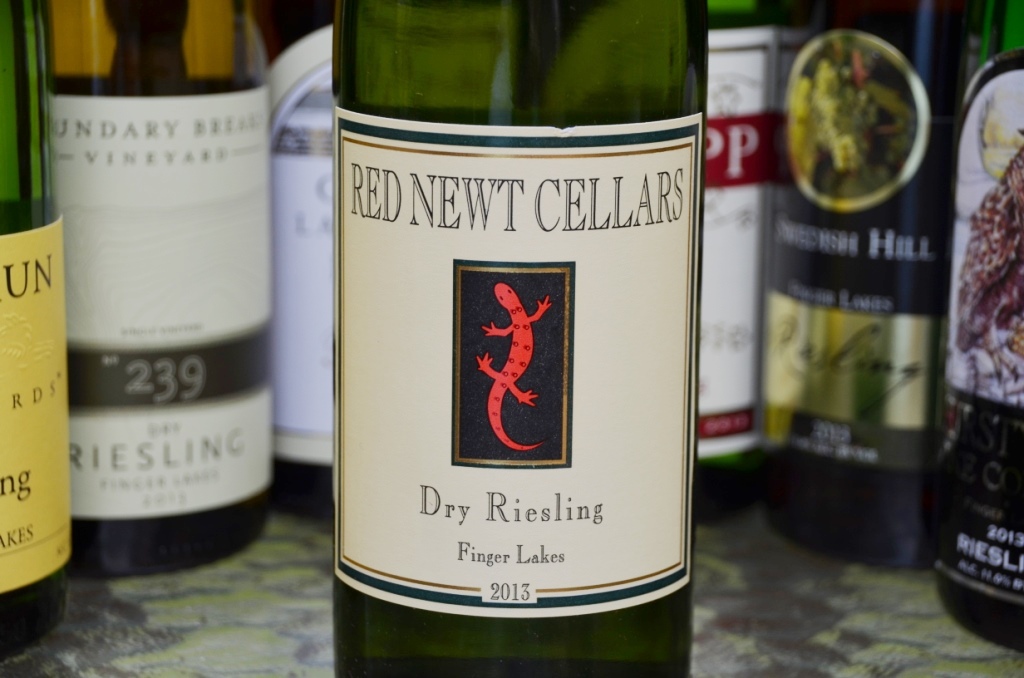 2013 Red Newt Cellars Dry Riesling Finger Lakes (11.8% ABV, $17.00) – right in the middle of “dry” on the IRF scale. On the nose, shows minerality, touch of fresh grass. hint of fresh lime, overall very intense. On the palate – nutmeg, hint of mango, fresh herbs and lemon, crisp, dry. Excellent balance and overall very pleasant. One of my very favorites from the tasting. Drinkability: 8
 2013 Swedish Hill Riesling Finger Lakes (11.8% ABV, $15.99) – IRF scale not shown. Fresh white fruit on the nose, touch of candied lemon. Nose quite intense. On the palate – rich, velvety, ripe peach with touch of fresh lemon, clean acidity, excellent finish (medium plus). Texturally quite unique. Drinkability: 8-
 2013 Fox Run Vineyards Dry Riesling Finger Lakes (11% ABV, $17.99) – According to IRF scale, the wine is right on the border between Dry and Medium Dry. On the nose, subdued notes of peach and honey, touch of lemon, intense. Palate is elegant, mineral-driven, with green apple, touch of Meyer lemon, overall dry and very balanced. Drinkability: 8
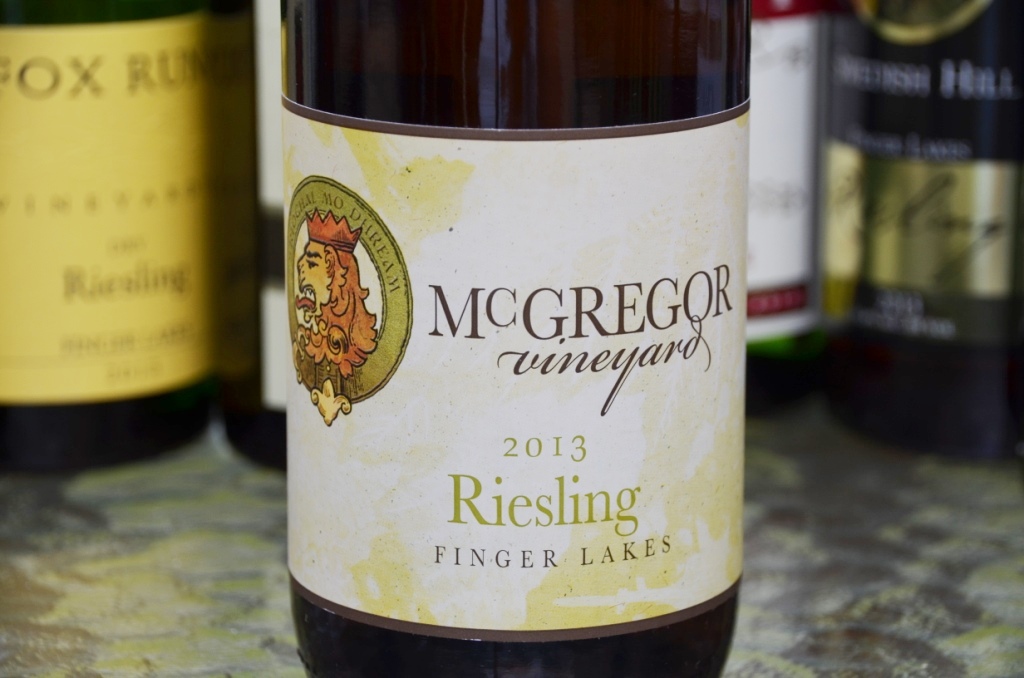 2013 McGregor Vineyard Riesling Finger Lakes (10.5% ABV, $19.99) – IRF scale is not used. A lot is happening on the nose – cantaloupe, honeysuckle, candied orange, openly sweet and intense. On the palate – ripe apricot, honey, ripe white apple, elegant acidity, perfectly refreshing, very good balance. Drinkability: 8-
 2013 Chateau Lafayette Reneau Riesling Semidry Finger Lakes (11.5% ABV, $14.99) – IRF scale is not used. On the nose – rhubarb, floral, touch of grass, white apple. On the palate – honeysuckle, ripe peach, touch of minerality and grass, lemon zest, clean acidity, excellent balance, soft and round mouthfeel. Another top favorite from the tasting. Drinkability: 8
Here we go – 8 great wines, and the region for you waiting to be discovered. September is still on, and it is an official Finger Lakes Riesling month – make an effort to find your new love – a versatile ( and affordable!) wine which you can drink now or put away to enjoy in a few years (or 10 or 20, this is entirely up to you). Cheers!
Wednesday’s Meritage – Wine Quiz Answer, Few Words About Wine Blogging, FLX Riesling #WineChat Tonight and more
Meritage time!
Let’s start with the answer to the wine quiz #113: Grape Trivia – Pinot Blanc.
In the quiz, you were supposed to answer 5 questions about white grape from the Pinot family, Pinot Blanc.
Here are the questions, now with the answers:
Q1: Below is the list of some of the countries growing Pinot Blanc. Sort this list by the area plantings of the Pinot Blanc, from the lowest to the highest:
a. Austria, b. France, c. Germany, d. Italy
A1: Might come as a bit of a surprise, but the correct sequence, based on the 2010 data, is France (3,230 acres), Austria (4,785), Italy (7,715) and Germany (9,675)
Q2: Wine Spectator calls wines rated in 95-100 range Classic (the highest and the most prestigious category). True or False: there are Pinot Blanc wines rated in the Classic category
A2: True. By a very slim margin, but there are 2 Pinot Blanc wines with the 95 rating (there are plenty in the Outstanding, 90-94 range). As a matter of fact, one of those 95 pointers comes from the New World – 2009 Erath Pinot Blanc Dundee Hills Sweet Harvest from Oregon got that “classic” rating in April 2011 issue.
Q3: In Europe, Pinot Blanc was often confused with and often treated during winemaking the same as _______
A3: Chardonnay. Historically, Pinot Blanc was growing side by side with Chardonnay, and was often confused for one. Similar to Chardonnay, it can be made in both unoaked and oaked styles with equal success.
Q4: In California, the grape which was brought in as a Pinot Blanc, in reality happened to be ____?
A4: Melon de Bourgogne, French grape used in the production of Muscadet wines.
Q5: True or False: from 2000 to 2010, worldwide plantings of the Pinot Blanc dropped more (percentage-wise) than the plantings of its sibling, Pinot Gris, have increased.
A5: False. From 2000 to 2010, the plantings of Pinot Blanc dropped by about 15%, while the plantings of Pinot Gris more than tripled worldwide.
When it comes to the results, I’m glad to say that the number of players took a stub at this quiz – but, somehow the quiz happened to be somewhat difficult (I usually miss the difficulty in my own assessment, unfortunately). Nobody was able to answer all the questions correctly, but I would like to acknowledge Next Stop TBD who got correct answers for 3 questions out of 5. Thank you all for playing!
Now, to the interesting stuff around the vine and the web!
Alfonso Cevola, who writes an excellent blog “On the wine trail in Italy”, shared his sad outlook on the wine blogging community with the post titled Wine Blog Death Watch: Two wine blogs that are bright lights in a forest of darkness. Well, it is not all doom and gloom in that blog post. First, Alfonso introduces two new wine blogs which he likes. And may be most importantly, speaking from the 9 years of blogging experience, he also gives an advice to the wine bloggers. His advice is very short and concise, and I would dare to say, literally the best you can get. Alfonso has only six bullet points, so taking just the key items themselves, here is a summary of what he suggests: “Write for yourself. Read great writers. Do not look at stats. Write consistently. Don’t follow the trends. Find your niche.” Touche. I can only add “amen”.
Tonight we will take a deep dive into the world of Finger Lakes Rieslings – the #winechat with 8 producers, 8 excellent wines from the 2013 vintage – join the conversation! The logistics are as usual – at 9 PM eastern, open a twitter client and search for #winechat – from there, the conversation is on, and don’t forget to use hashtag #winechat on all your tweets.
Do you know that when you drink the wine (or any alcohol for that matter), you should have water in between the glasses? It supposed to prevent hungover (some of the latest research suggests that it might not be true, who knows), and water is generally good for you. Some of the creative types designed nested glasses which would simplify this task for you – both wine and water are readily in your hand at any time, wine glass on top of the water glass. You can read about this glasses in the Dr. Vino’s blog post.
Got a bit of time on your hands? Wine Spectator is running an annual wine video contest, and you can help to decide who made the best video. Wine Spectator selected 9 videos as the finalists, so your job would be simple – watch those videos and decide who will be the Grand Prize winner. Here is the link to the page for you to watch the videos and take vote.
And we are done here. The glass is empty – but the refill is on its way! Cheers!
Last Bottle Sign Up ($10 credit)




 Talk-A-Vino