Archive
Re-post: Affordable Luxuries of the Wine World: Garnacha versus Grenache
During 2011 I wrote a number of posts for the project called The Art Of Life Magazine – of course talking about my favorite subject, wine. The project closed, but I still like the posts I wrote, so I decided to re-post them in this blog. Also, in that project, posts were grouped into mini-series, such as “Affordable Luxuries” you see here – I will continue re-posting them from time to time.
If you are interested as to “why now”, it is simple – Friday, September 21st is International #GrenacheDay – and I don’t have time to write the whole new post. I think this re-post will fit the bill quite well. Here it is.
 So far we talked about and compared Hermitage and Crozes-Hermitage wines, as well as sweet wines in our quest for “affordable luxuries” of the wine world. If you remember, Hermitage and Crozes-Hermitage are made out of the grape called Syrah. Today we are going to talk about Syrah’s brethren (totally unrelated, though), the grape which is often blended together with Syrah – we are going to talk about Grenache.
Grenache is one of the main winemaking red grapes in the world. It used to be the most planted red grape in the world, with biggest planting area being in Spain (Spain actually has the biggest area planted with grapes in the entire world). Grenache, which is known under the name of Garnacha in Spain, lost its “biggest plantings” status in Spain as a lot of vineyards were replanted with other grapes, such as Tempranillo, Cabernet Sauvignon and Merlot, and France took “the most planted” helm now.
Grenache is used in winemaking both by itself and as part of the blend. In Spain, Grenache, or rather Garnacha, is main ingredient of the blend in wines of Priorat, many of which have cult status, such as Clos Mogador. In another region, Campo de Borja, it produces amazing single grape wines, for instance, at Bodegas Alto Moncayo. In France, it is a key ingredient in wines of Southern Rhone, with Chateauneuf-du-Pape being most famous – there it is typically blended with Syrah. It is also used in production of Rose wines in Provence. In Australia, it is used in so called GSM wines, where GSM is simply an abbreviation for Grenache Syrah Mourvedre, three grapes used in production of the GSM wines. In California, it is very successfully used in production of the Rhone-style wines mostly in the Central Coast area, with many of the wines also achieving a cult status (which simply means that production is limited and wines are very hard to get – of course because they are good). As usual, you can take a look at the Grenache article in Wikipedia, which provides great depth of information.
When it comes to “affordable luxuries”, there are plenty of wines which can be compared. As this is Grenache versus Garnacha battle, let’s focus on pure Grenache wines. Of course blends would be fun to look at as well, but finding some of the better ones is a challenge in itself, so let’s stay our course.
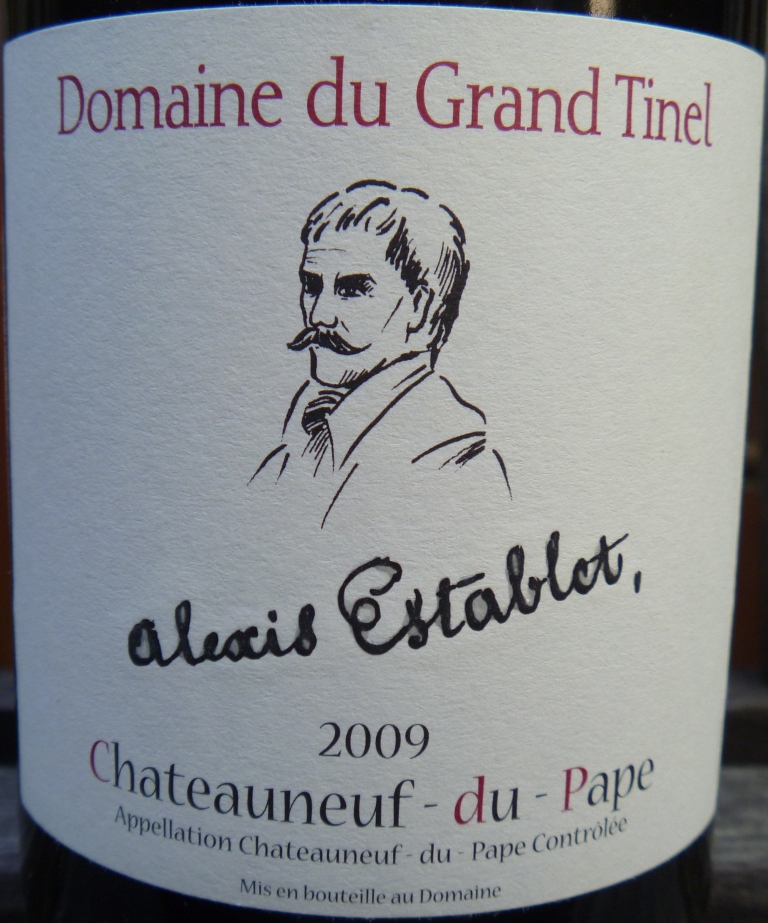
So today’s contenders are: 2009 Bodegas Borsao Tres Picos Garnacha Campo de Borja from Spain and 2009 Domaine du Grand Tinel Cuvee Alexis Establet Chateauneuf-du-Pape from France. It can’t get any better than that – we have here if not two of the best, then at least two of the most classic areas to produce Grenache wines. Both wines are 100% Grenache – which is very unusual for Chateauneauf-du-Pape, where blend can contain up to 13 different grapes.
 Let’s start with 2009 Domaine du Grand Tinel Cuvee Alexis Establet Chateauneuf-du-Pape. The wine is unfortunately way too young (give it 8-10 years, if you have enough patience, of course), but it was very drinkable from the get go – at least you get a punch of tannins at about 10 seconds after the first sip. It is very classic Grenache, with purple color, violets on the nose, and perfect balance of fruit and acidity. Don’t want to repeat myself, but it will be gorgeous – given enough time to mature.
2009 Bodegas Borsao Tres Picos Garnacha Campo de Borja is a full bodied wine, with hint of earthiness on the palate, with lots of dark fruit and hint of pepper. You can also detect violets, hint of cedar, spice box and tar. With supple tannins and medium finish, this wine is more approachable now than the previous one, but will also improve with time.
Is one of those wines better than the other? It is very hard to tell. And for the affordable luxuries, Tres Picos Garnacha costs about $12, and Domaine du Grand Tinel is about $70, so make your choice. And while you will be deciding, I’m going to raise my glass to the pleasures of wine discoveries – cheers!
Thank You, The Capital Grille!
 Huge wine selection, also see the discounts on spirits.
 This is not the first time I’m writing a happy post about one of my favorite restaurants, The Capital Grille – here are the links to the previous two posts, from 2010 and from 2011. This post will not be an exception – we had a great time [again].
Everybody in the family like steaks (okay, the oldest used to love steak – now she is trying to become a vegetarian) – but most of the time we make it at home. However, in August, we have a happy occasion, our wedding anniversary, which gives us a good reason to go to a restaurant – but this is not the only reason to visit Capital Grille. Two more reasons: Generous Pour program and Stamford Restaurant Week. I guess we are simply lucky, as The Capital Grille runs their special wine program, called Generous Pour, from July until the beginning of September – for $25, you can taste 9 different wines, specially selected by the Master Sommelier George Milotes. And The Capital Grille usually participates in Stamford Restaurant week, which typically runs for two weeks before the Labor Day- at participating restaurants, you can have a full dinner for about $30 per person! Do I need to give you any more reasons? I thought so.
As I usually do with the restaurant posts, I will give you mostly pictures and then of course all of my notes on the wines, which were quite good overall.
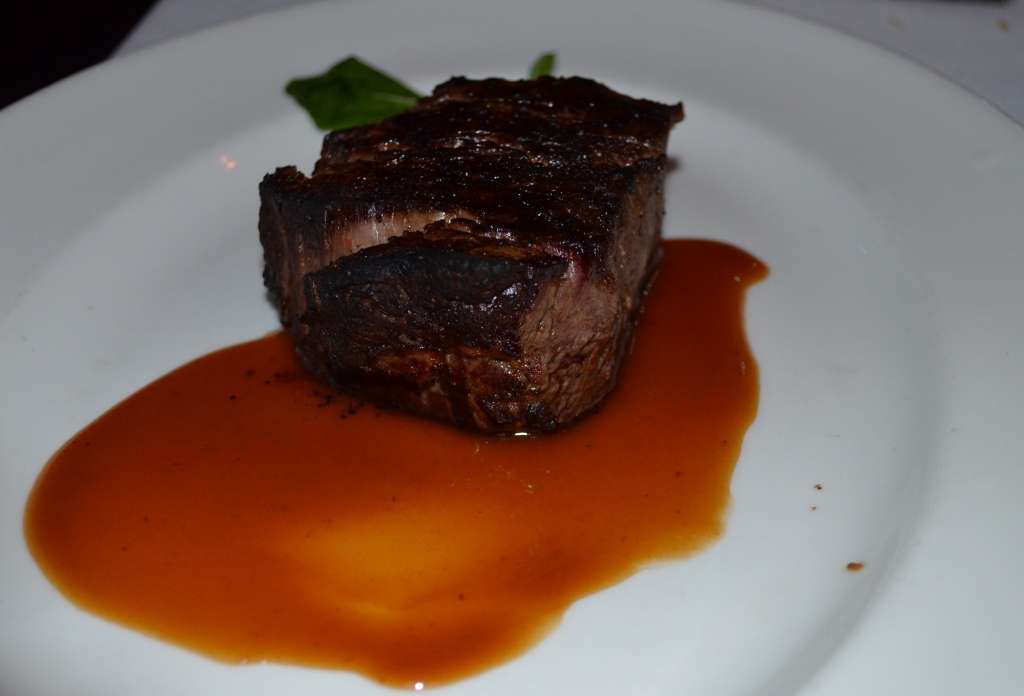
We had calamari as our shared appetizer (one of the kids’ favorite foods) – I don’t have a picture for you, but they were delicious. Then for the main course, we had 3 different kinds of steak. Kids opted for Fillet Mignon:
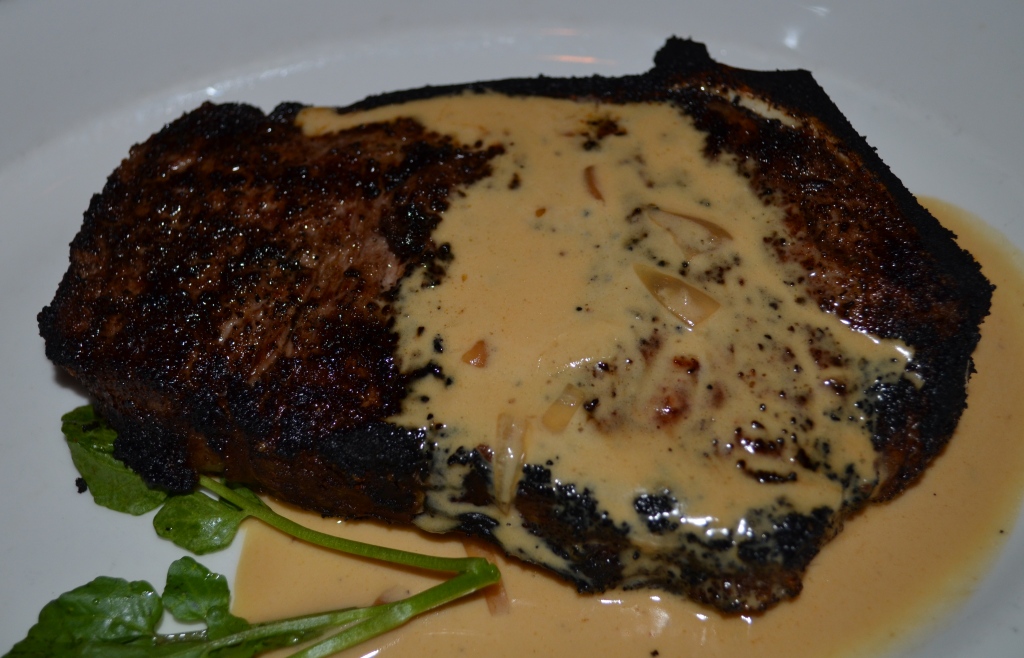
I had Kona-rubbed sirloin strip:
And my wife went for Tornedos – a cut of beef I can never remember, so here is the link for you if you need to know exactly what it is:
 All the steaks were masterfully prepared and came also with the tasty sides, like creamy spinach, garlicky mashed potatoes and wild mushrooms – as empty plates look extremely unappetizing in the pictures, I will spare you that sight, but believe me the plates were clean.
Let’s talk about the wines now, and we will finish your [drooling?] session with the dessert.
The wine program was presented exactly in the order below, and wine was always available throughout the entire course – I should mention that we had great service.
Here are my notes on the nine wines we had:
NV Lunetta Sparkling Rose, Trentino, Italy – very nice, crisp, tiny fizz, strawberries, hint of cranberries, good acidity. Refreshing. Drinkability: 7+
2009 Gary Ferrel Chardonnay, Carneros – Beautiful, touch of sweetness, butter and vanilla on the nose, same on the palate with additional hint of peach. Very balanced. Perfectly complemented spicy calamari. Drinkability: 8+
2008/09 Simčič Rebula, Roriska Brda, Slovenia – Earth and lemon on the nose, literally not a touch of fruit. Beautiful and hard to describe on the palate, very pronounced “just ripe” strawberries (more of a wild strawberries). Perfect acidity, touch of salt and savory undertones. Drinkability: 8-
2009 Chateau du Pin, Bordeaux, France – Limited fruit expression on the nose. Nice cherries, soft, good acidity on the palate, tannins unnoticeable (should have more). This wine didn’t exhibit a sense of place – not the Bordeaux wine I would expect. Interestingly enough, it didn’t work with steak – probably due to lack of tannins. This wine was drinkable, but not memorable at all. My least favorite in the entire lineup. Drinkability: 7
2007 Villa Mt Eden Pinot Noir Reserve, Russian River Valley – Amazing. Pinot Noir at the next level. Nose of a Pinot, with earthiness, smokiness, spices, cedar box. More of the same on the palate with the addition of ripe dark plums. In a blind tasting, I could possibly confuse this wine with the Rioja. Worked perfectly with the steak. Best of tasting. Drinkability: 9-
2007 Conn Creek Anthology Napa Valley – Beautiful classic Cabernet Sauvignon – cassis, eucalyptus, touch of blueberries, soft tannins. Perfectly drinkable now, but will improve with time. Drinkability: 8
2008 Ferrari-Carano Mountain Reserve, Alexander Valley – Nice progression from the previous wine. If Anthology was a delicate Cab, this wine was in-your-face California Cabernet. Blueberry jam on the nose (but no alcohol burn!), very fruit forward – in a good sense. Beautifully balanced, dark fruit on the palate, dark chocolate and herbs. Drinkability: 8+
2009 Falesco Assini Rosso, Umbria – Beautiful toned down read wine, black cherries, perfect acidity, noticeable profile of herbs and spices, very complex. Drinkability: 8
2006 Kanu Kia Ora Chenin Blanc, Stellenbosch, South Africa – Light and effervescent, without overpowering sweetness. Apricot pit and apricot notes, very good acidity. Paired very well with cheesecake. Drinkability: 7+
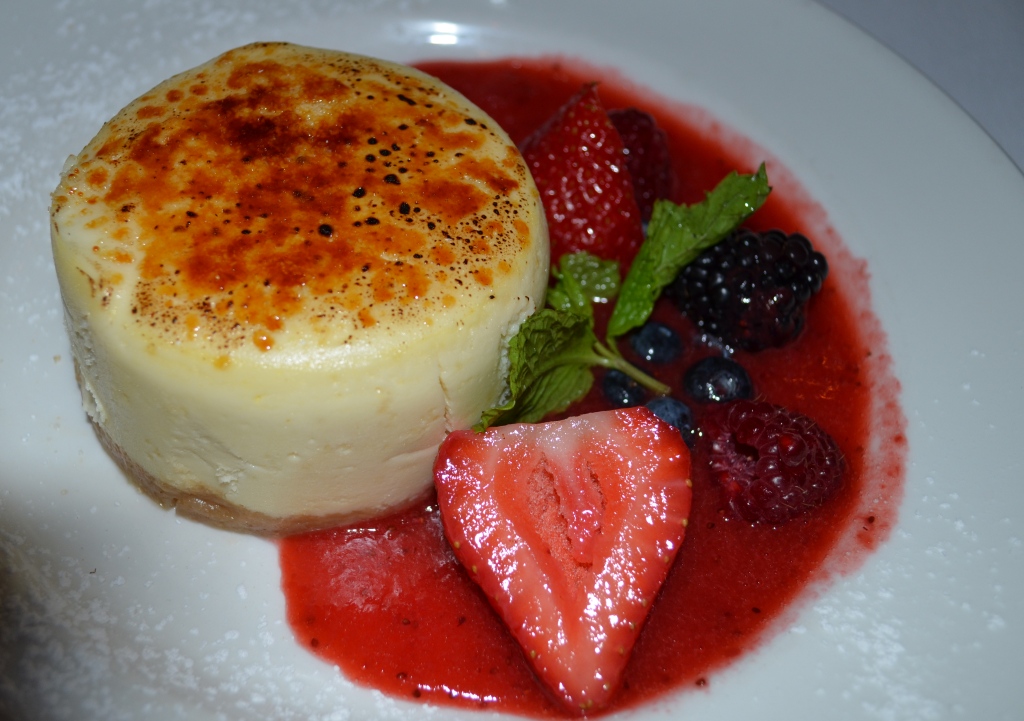
And now – the dessert! In general, I’m somewhat indifferent to the cheesecake – yes, it is nice, but it would be one of my last choices in the restaurant. Except the Cheesecake in The Capital Grille – if you never had one, go to The Capital Grille near you, skip the steak and just order the cheesecake – it will be a divine experience. Okay, fine, don’t skip the steak, because it is really good – but whatever you do, leave some room for cheesecake. As they usually say, picture worth a thousand words:
That’s all I have for you, folks – sorry you had to live vicariously through this post, but you really shouldn’t – here is a link to The Capital Grille web site, find one near you. Cheers!

Ten Cabernet Sauvignon Facts For The Cabernet Day

Cabernet Sauvignon Grapes, Wikipedia
Today (or it might be yesterday, depending on when I will finish this post), on August 30th, we are celebrating Cabernet wines, which include some of the most coveted and sought-after wines in the world.
For this event, I want to talk a bit about Cabernet wines in general. While Cabernet wines often include both Cabernet Sauvignon and Cabernet Franc grapes, I want to focus today on the wines which have Cabernet Sauvignon as the only or at least a primary ingredient – I should save something (Cabernet Franc, to be precise) for an easy post next year, shouldn’t I?
For what it worth, here are ten facts about Cabernet Sauvignon – some might be actual facts, and some might be… myths? I will let you be the judge…
- Cabernet Sauvignon grape is relatively young, first appearing in 17th century as the result of the cross between Cabernet Franc and Sauvignon Blanc grapes (hence the name).
- Cabernet Sauvignon grapes are very small with the thick skin, which means that the ratio of seeds and skin versus pulp is quite high, leading to lots of tannins being extracted during maceration process. More tannins = bigger wine, which usually also can age for a long time, but on a flip side needs an additional breathing time to open up.
- Cabernet Sauvignon wines are successfully made all over the world, but the best known regions are Bordeaux, California, Tuscany and Australia. These main regions are closely followed by Argentina, Chile, Israel, Spain and South Africa.
- Typical flavor profile of Cabernet Sauvignon wines include black currant (Cassis), green bell peppers and eucalyptus (not necessarily all at the same time).
- Not all the Bordeaux wine are predominantly Cabernet Sauvignon based. The wines made in Médoc and all the sub-appellations (situated on the left bank of Garonne river) are actually based on Cabernet Sauvignon (70% is quite typical). The wines made on the right bank of Dordogne river are predominantly Merlot wines (typically containing about 70% of Merlot grapes). Some of the most successful Bordeaux wines, such as Chateau Petrus and Le Pin, are actually made out of Merlot.
- The oldest continuously producing Cabernet Sauvignon vines in the world are located in Australia – it is Block 42 of the Kalimna Vineyard in the Barossa Valley, which belongs to Penfolds. It is assumed that the vines were planted between 1886 and 1888, which will give us an approximate age of 125 years.
- Typical California Cabernet Sauvignon wine needs about 13 years to reach its peak (see, I told you – patience is one of the important traits of oenophile).
- Malbec was the most popular grape in Bordeaux until early 18th century, when it was replaced by Cabernet Sauvignon.
- Cabernet Sauvignon holds the title of most expensive wine ever sold in the world. An Imperial (6L = 8 bottles) of 1992 Screaming Eagle Cabernet Sauvignon was sold at the auction (proceeds went to charity) for $500,000 in year 2000.
- When it comes to pairing with food, there are two combinations which are typically stand out. Cabernet Sauvignon and steak are usually go very well together, and same is true for Cabernet Sauvignon and dark chocolate (be advised – your mileage might vary).
That’s all I have for you for today, folks. I have to admit that I didn’t get a chance to drink Cabernet today (I promise to compensate tomorrow) – but I really want to know what was in your glass for the Cabernet day? Please comment below. Cheers!
Waterstone Cabernet Sauvignon Experience, And A Few Words About Food
 If I’m not mistaken, last week was literally the first week in Connecticut when evenings became enjoyable – which also meant that we could have a family dinner outside!
Dinner outside is one of the little pleasures of suburban life, when you can get to enjoy the food twice. Not that cooking the food on the stove is not enjoyable – but somehow, doing it outside on the open fire creates the whole separate feeling. And then the whole process of having food outdoors also brings different level of pleasure – I don’t know about you, but whenever possible, in a restaurant I ask for the table outside, to be able to enjoy both food and the weather, and here I don’t even need to ask anyone to get the table outside!
Yes, I will get to the Waterstone cab in a second (after all, that should be the subject of the post, right?) – but let me talk about the food for a moment. Our local Fairway had jumbo shrimp and fillet Mignon on sale, so the menu was a no-brainer. Of course you have to have something green on the grill, so I think asparagus is one of the best greens you can grill:
 I have a feeling that the recipes’ page is coming up in this blog – little by little, I learned to make a few dishes consistently well, so I think sharing the recipes makes sense (but let me sleep on it). One important thing about my recipes – more often than not, I don’t use the exact measure. I can’t tell you to use a quarter of teaspoon of salt, a half of it or the whole one – I just rely on a “gut feeling” for “enough or not”. For the asparagus, I use a dash of salt, black pepper, granulated garlic, olive oil and a splash of balsamic – mix it all together and let it “marinate” for 30 minutes or so. And then of course the key part is not to overcook the asparagus, so it will retain the crunch. I typically have a grill at 400°F and put the asparagus down for 1 minute, turn around, and keep it for another minute – and it is done.
I made shrimp on a skewer. You need to clean the shrimp, and marinate it for 30 minutes to an hour in the fridge (don’t marinate for too long, or it will become a mush). For the marinade ( considering I had 1 pound of shrimp) I used about 1/4 of a cup of olive oil, 4 -5 minced garlic cloves, juice of one lemon ( you can add wine vinegar also, if you want) and a couple of Penzey spices – I used Cajun and Lemon Pepper. About 2 minutes on each side at the same 400°F grill, and … voila:
 This shrimp was probably one of the best I ever had ( and made) – I also think kids were in the violent agreement with me – no shrimp survived the evening.
And the steak – everybody can make steak on the grill, so there is not much to talk about – here is the picture for you:

Quite honestly, I should’ve used more salt – but this you probably can’t tell it from the picture. I rehabilitated myself the next day by generously using Montreal seasoning mix, but I don’t this is important in the context of this blog.
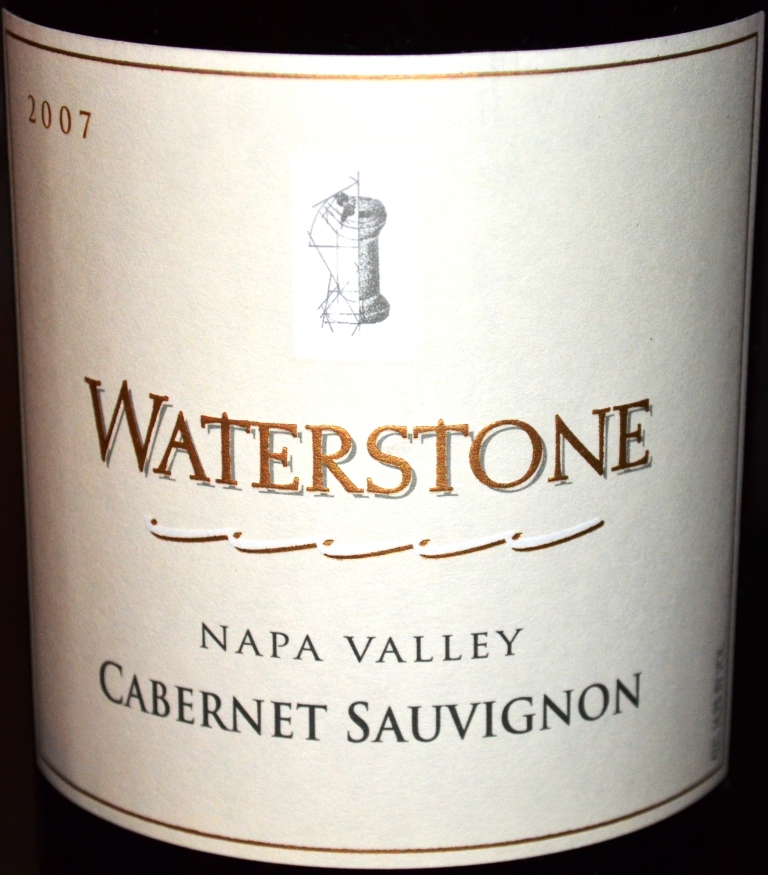 And then, of course, there was wine. First I read about Waterstone Cabernet Sauvignon in the e-mail from the Benchmark Wine Company, where it was listed as one of the “stuff favorites”. Further checking on internet seemed to be hinting at connection between Harlan Estate, producer of one of the absolute top (“cult” is the word) California wines and Waterstone Cabernet Sauvignon – the rumor which Jancis Robinson unequivocally dismisses.
Whether the rumor is true or not is not that essential – Benchmark’s recommendation along with unpretentious label was enough to build my expectations (okay, I’m lying about the rumor – of course I want this wine to be made out of Harlan’s juice, at about 1/30 of a price of the bottle of Harlan Estate). Interestingly enough, if you will read about the Waterstone Winery, which was established in 2000, it doesn’t own any vineyards, which means that grapes should be sourced from the other vineyards, so the whole idea of wine being made out of Harlan juice, entirely or at least partially, is not that impossible. Anyway, with all those expectations, I was still taking my time, until Zak (owner of Cost Less Wines) told be that he only has about 10 bottles left, so … (he took a pause after “so”) I realized that the time has come.
As you can see from the picture below, I approached entire matter of experiencing the Waterstone very seriously, using my “special occasions only” Cabernet set from Reidel (we have enough glasses for the regular use, and those Reidel glasses don’t last long):
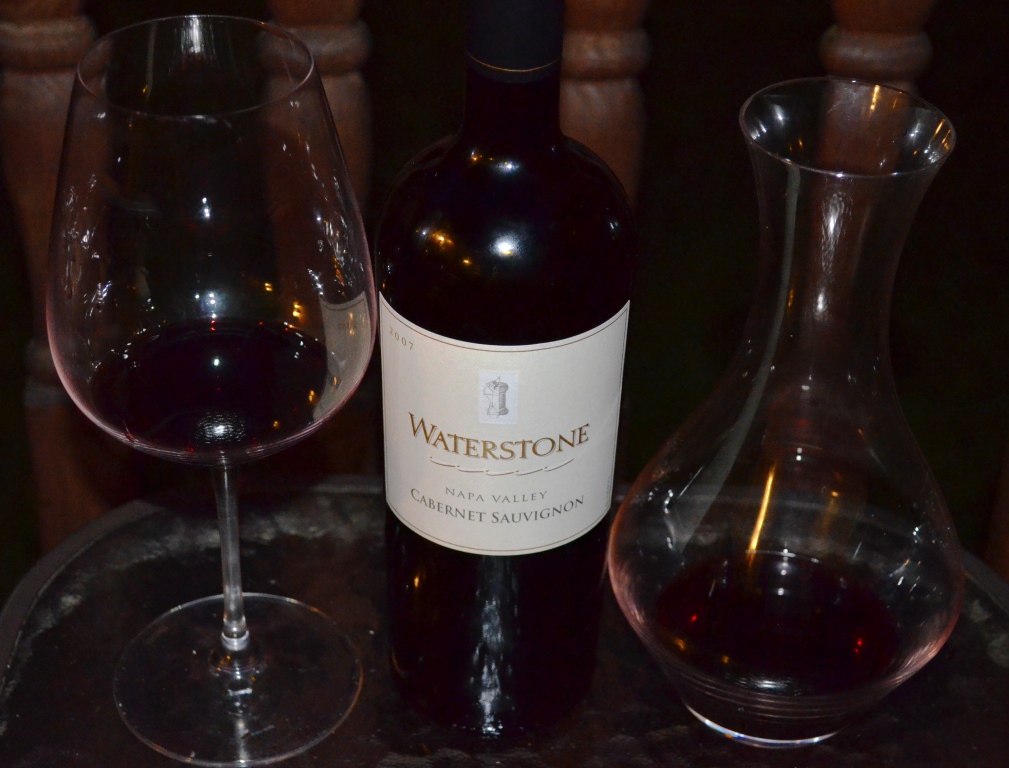
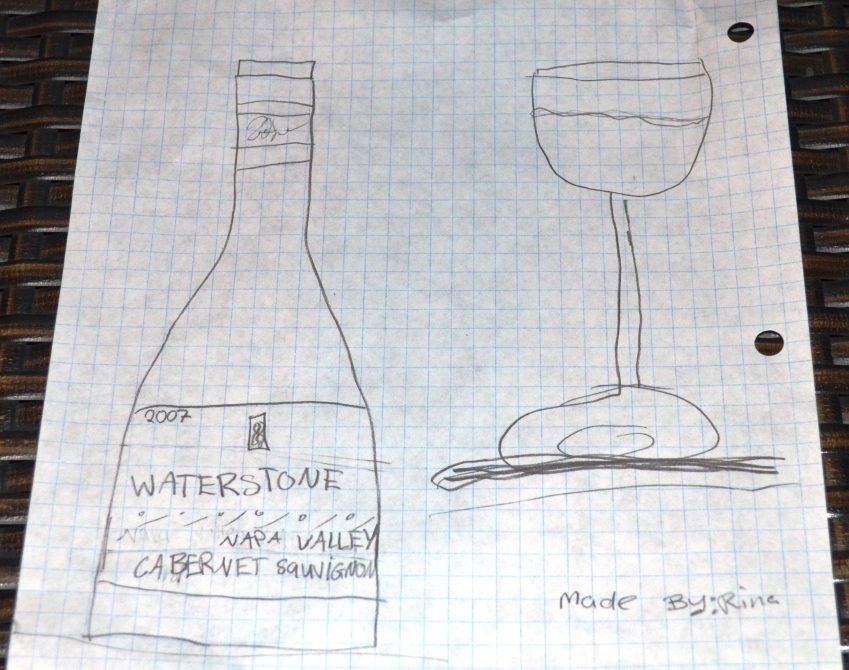
Every time I use these special Reidel glasses, the first smell sensation I get is the one of a wet dog – I guess I don’t know how to use them properly… That smell has nothing to do with the wine, and it disappears after a few sips, but it sure gets in the way of your first impression. Well, let’s talk about the wine. This 2007 Waterstone Cabernet Sauvignon Napa Valley (14.5% ABV, $27.99) has 80% Cabernet Sauvignon, 16% Merlot, 3% Cabernet France and 1% Petite Verdot, and it was aged in french oak barrels for 22 months. The wine had a perfect nose of blueberries. Not blueberry pie or blueberry jam, but a clean, perfect, balanced nose of fresh berries. This was followed by nice dark fruit on the palate, luscious and round, with some eucalyptus and touch of licorice, excellent balance of tannins, acidity and fruit. Drinkability: 9-. It is interesting to note that the wine was a bit all over the place on the second day, and I had nothing for the third day ( while I expect that it probably would taste better). Here is an artistic rendering of the event by my daughter:
 There you have it, folks. I think this is the wine to buy by the case, if you can find it, of course. If you tasted this wine, I will be glad to compare notes. If you didn’t taste it yet, try to find it – and then I will be glad to compare notes. Cheers!
P.S. you can also consider this post as an early contribution for #CabernetDay which is coming up on Thursday, August 30th.
Wednesday’s Meritage – Wine Quiz Answer, Wine Blog Awards, 1368 grapes, and more
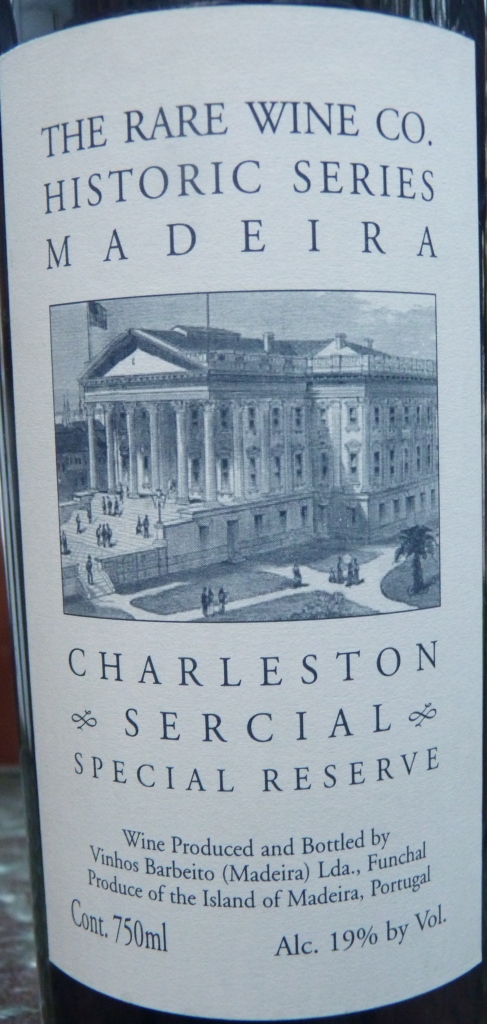 Happy Wine Wednesday everyone! Hope that all the WBC2012 attendees recuperated by now and again consider wine as something enjoyable and not as a chore.
It is Meritage time, so let’s start from the answer for the Wine Quiz #25 – Extreme Wines. The question was about wines which are not destroyed by heat, but instead, are “made” by it. And the right answer is… Madeira! Madeira wine, which was discovered as a by-product of a long sea journeys of the wine barrels, is commercially made using the method called estufagem, where wine is heated up to 130F for at least 90 days. If you haven’t tried Madeira recently, you should, as the Madeira is currently in the process of revival, and it has a lot to offer.
And now for the sipping, errr – wine news section. Wine Blog Awards winners had been announced at WBC12 – here is the list. Congratulations to all the winners!
Decanter magazine just announced that Wine Grapes book is ready to be published. The book is written by Jancis Robinson and the team, and it provides information on 1,368 (!) wine grapes – looks like I got long ways to go in my Wine Century quest.
For those of us who missed Wine Bloggers Conference 2012, here is the summary by Tom Warks. I know that The Drunken Cyclist also attended WBC2012 – I will be very interested in reading his prospective on the conference.
Quick reminder for the upcoming wine holiday (NJVinoMan, please take notice : ) ): 3rd Annual Cabernet Day (#CabernetDay hash tag on Twitter) will be celebrated on August 30th – I hope you have enough time to decide on that special bottle.
That’s all for today, folks. Cheers!
Craving Acidity
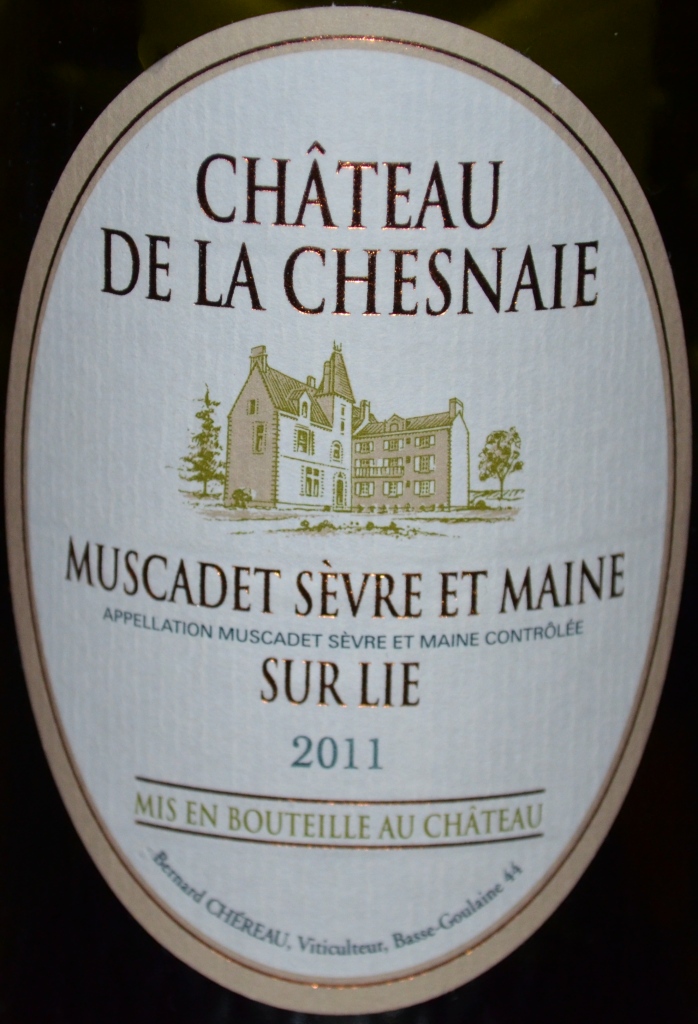 I’m not complaining – complaining is futile, as things always can be worse than they are. I’m just stating – this is not my kind of weather. I don’t like it. I don’t like this stuffed hot air, so dense that it can be cut with the knife.
Don’t think cutting air with knife would be very effective. I guess there are better tools for making that hot stuffy air less noticeable. One of the best ones I know is acidity. No, I don’t mean rubbing myself all over with the slice of lemon, or drinking copious amounts of the lime juice. Of course I’m slowly nudging towards the main subject of this blog – wine. And one of the wines which possesses this refreshing, “hot-air-cutting” acidity is Muscadet from Loire.
Serious Fun With Wines
In case you are wondering about the “serious fun” versus “not so serious fun”, somehow this title just got stuck in my head when I thought about this post, and I decided not to fight that. Also, when you have Gaja, Ornellaia, Turley, Bertani and whole bunch of other interesting wines, I think “serious fun” is a good way to put it. And to stress even further how serious the fun was, I’m even using different style of pictures for this post instead of usual “just label” style (and yes, you are right, I also use an opportunity to play with my new camera).
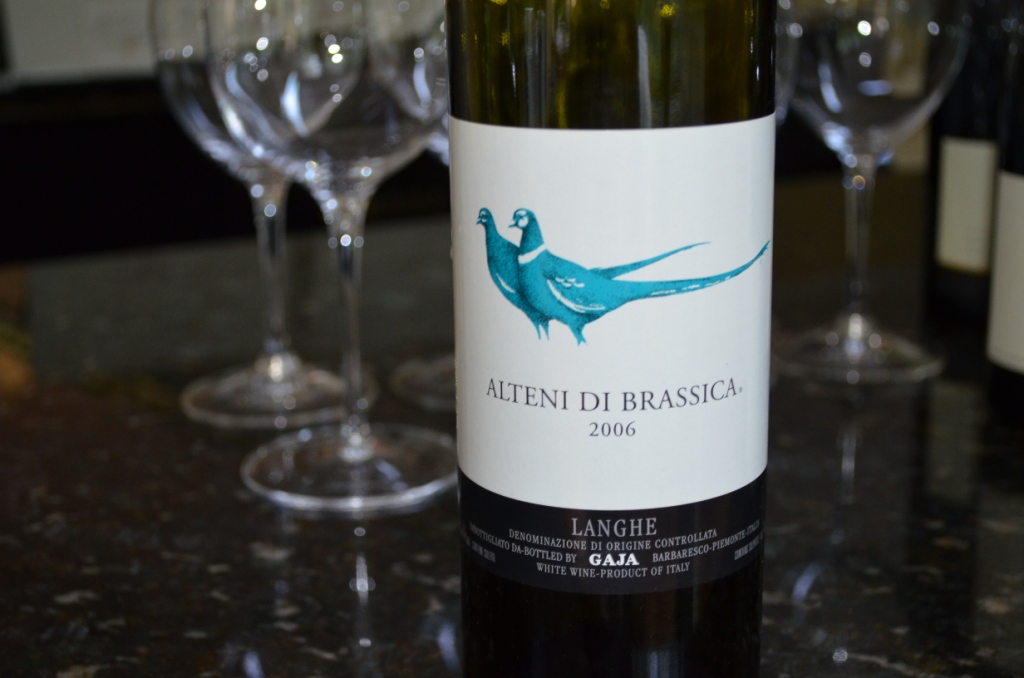
What is your first thought when you see the name like Gaja on the wine list? I don’t know about you, but in majority of the cases I would expect to see a red wine there. Yes, I can think of Gaja Chardonnay, and only because it typically looks at least as an affordable possibility on the wine list, as opposed to the Gaja red wines, which are not. So the wine we had was a white wine made out of …(wait for it)…Sauvignon Blanc!
2006 Gaja Alteni di Brassica Langhe DOC, Italy was a total surprise. Mineral nose, with wet stone, smoke and heavy grass. Touch of white fruit on the palate, more stone, touch of lemon, perfectly balanced. Finish lasted for 3 minutes, if not longer! Very beautiful wine. Drinkability: 9
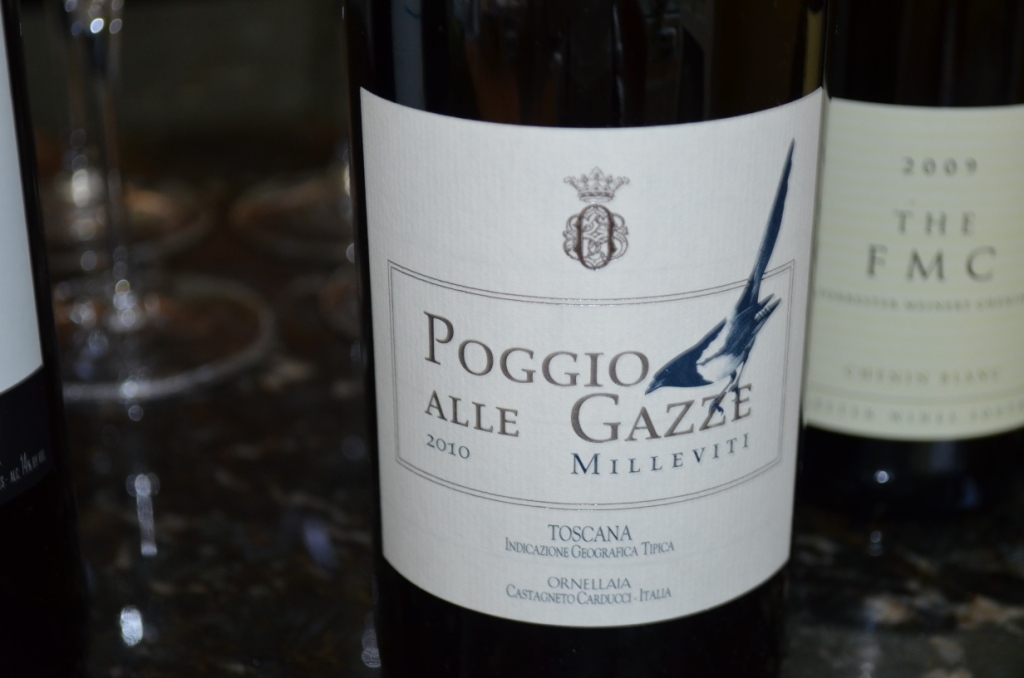
The next wine we had was also coming from a very respectful Italian producer, Tenuta dell’Ornellaia. And the wine was…yes, white again! The grape? Yep, Sauvignon Blanc. 2010 Poggio alle Gazze dell’Ornellaia, Toscana IGT was simply delicious, with perfumed nose of lychees and white apple. Palate was exhibiting nuts and ripe apple. Very long finish with some tropical fruit notes coming in later on. Bright, round, amazing! Drinkability: 9
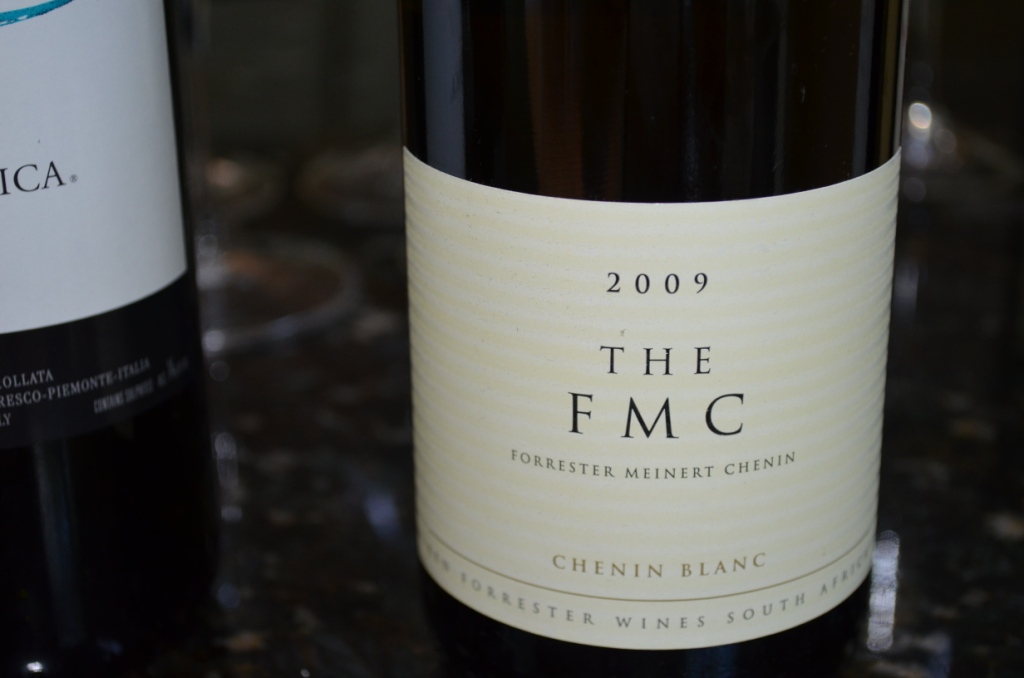
We continued our “whites’ extravaganza” with 2009 Ken Forrester The FMC ( (Forrester Meinert Chenin), South Africa. This wine was made out of the Chenin Blanc grape. While Chenin Blanc is one of the signature white French grapes from Loire, it also makes great wines around the world. It does particularly well in South Africa, where it is also known under the name Steen. This particular The FMC wine is a single vineyard flagship wine of Ken Forrester, one of the oldest producers in South Africa. This wine had a beautiful nose very similar to a typical chardonnay – nutty with some acidity, bright yellow color, very round. Drinkability: 8+

Done with whites. Before switching to the reds, we had a different, very unusual wine – as you can judge from the color above, this wine is not called “Orange” for nothing. Orange wine is one of the latest trends, where skin of the white grapes is left in the contact with juice during maceration. This imparts a nice deep yellow/orange color, hence the name, orange wine. This wine also was not some fly by night experimental plonk. 2008 Marani Satrapezo 10 kvevri, Georgia (100% Rkatsiteli grape, all coming from specific block of the Kondoli vineyard) was made in a traditional Georgian style with maceration for 20-25 days in historical clay vessel called Kvevri.
The wine had beautiful orange color. On the nose it had aromas of a bright fresh apricot. Palate was dry, full bodied, vegetative with enough brightness, touch of apricot but no sweetness whatsoever. After three hours in decanter the wine softened considerably – this wine definitely would benefit from a few years in the cellar. Drinkability: 8
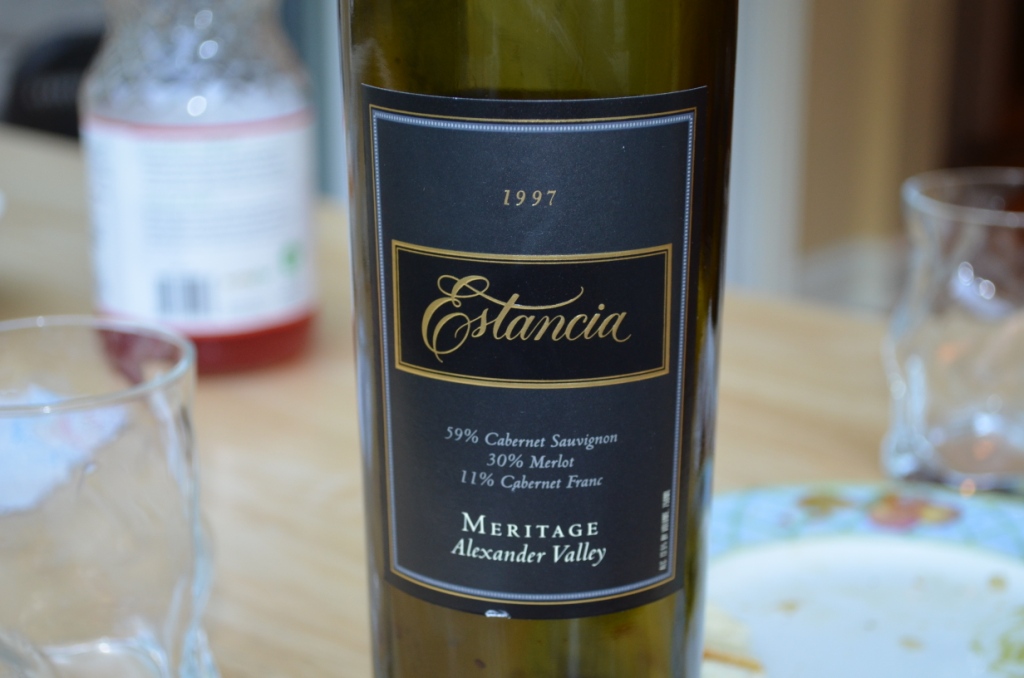 Okay, we are finally switching to reds – with it’s own set of surprises. We started from 1997 Estancia Meritage Alexander Valley (Cabernet Sauvignon/Merlot/Cabernet Franc blend). The wine had perfect color – dark, concentrated ruby red. Eucalyptus, wet stone, dust and raspberries on the nose. Bright red and black fruit on the palate with cassis, eucalyptus and licorice – perfect balance, nice, soft tannins. Drinkability: 8+
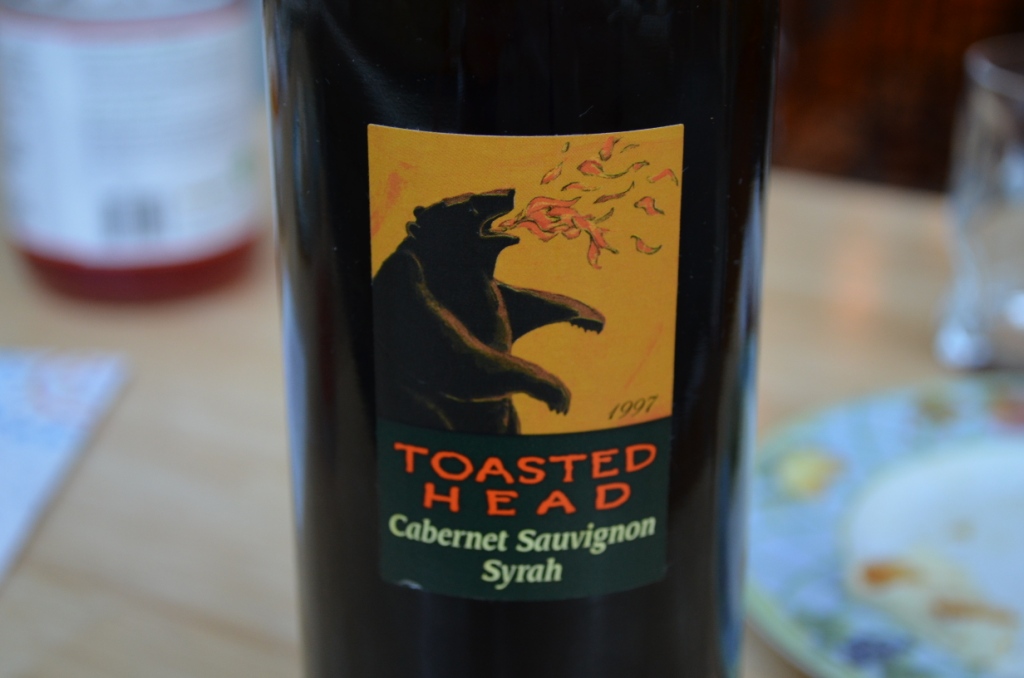 This was probably the biggest surprise of the evening – 1997 Toasted Head Cabernet Sauvignon Syrah California. Generally, Toasted Head makes simple everyday wines – which you generally are not going to age. This wine was simply lost in the cellar, and we opened it to taste but with the full readiness to dump it. To our astonishment (too strong of a word, but – why not), the wine had perfect acidity, bright youthful color, good black fruit, soft tannins and a touch of cassis. Drinkability: 8
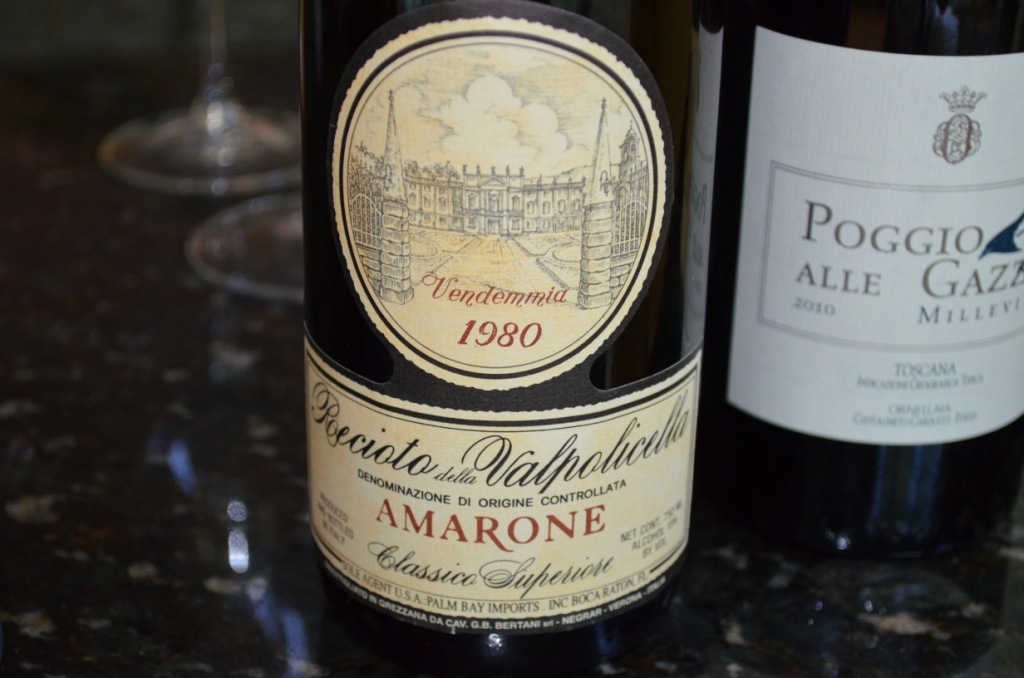
The next wine was Giribaldi Cento Uve – but this will be a subject of a separate post, so I will skip my tasting notes for that wine. And the next wine was the one … we killed – it sounds way too strong, I know – but please read on. Amarone are typically big enough wines, so we decided to decant this wine – without even tasting it first (but the nose was perfect!). This was a [big] mistake. After 3 hours in decanter, the wine became barely drinkable. Another 30 minutes later, the fruit came back, both on the palate and the nose, only to disappear shortly after. Note to self – be careful with decanting. Considering this experience, I will not give this wine any rating – it simply wouldn’t be fair.
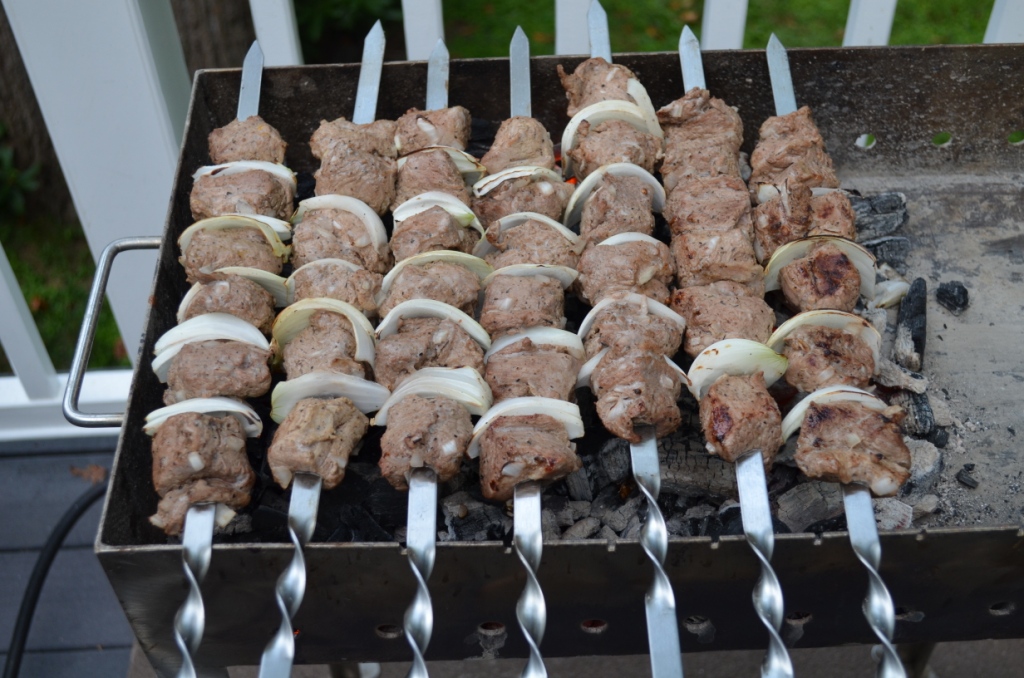
As you might expect, we didn’t just drink – we had a lot of good food as well. Just to give you an example, here is lamb kabob in the process of making:
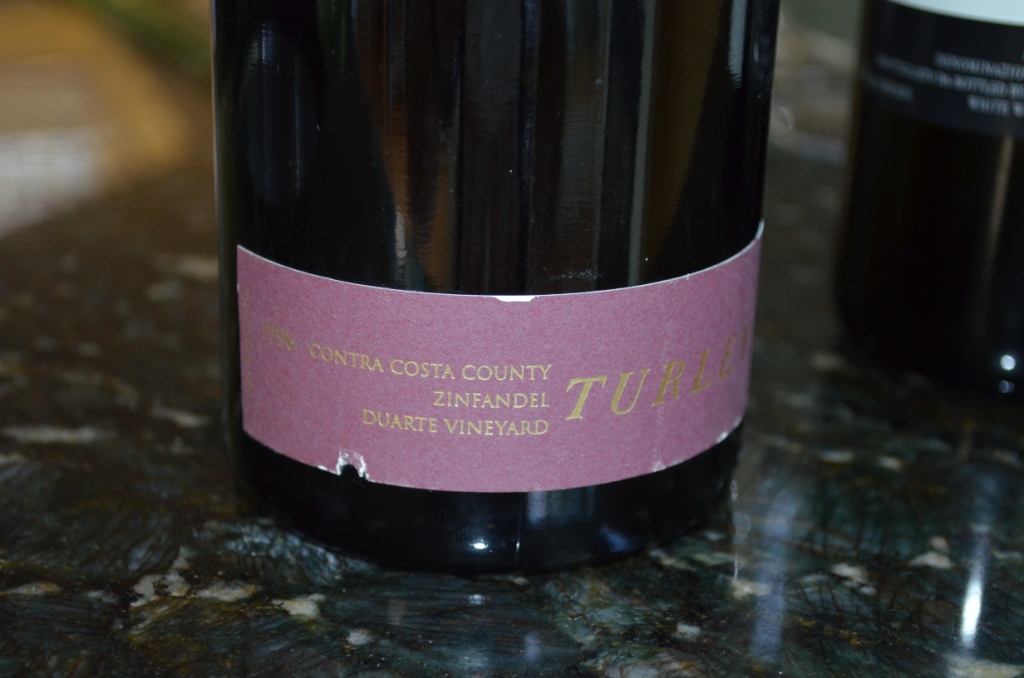
To complement the lamb, we had 1996 Turley Duarte Zinfandel – nice fruit, raspberries on the nose and the palate, hint of jammy fruit later on, plus some eucalyptus. Very good overall balance for the wine at 15.4% ABV. Drinkability: 8-
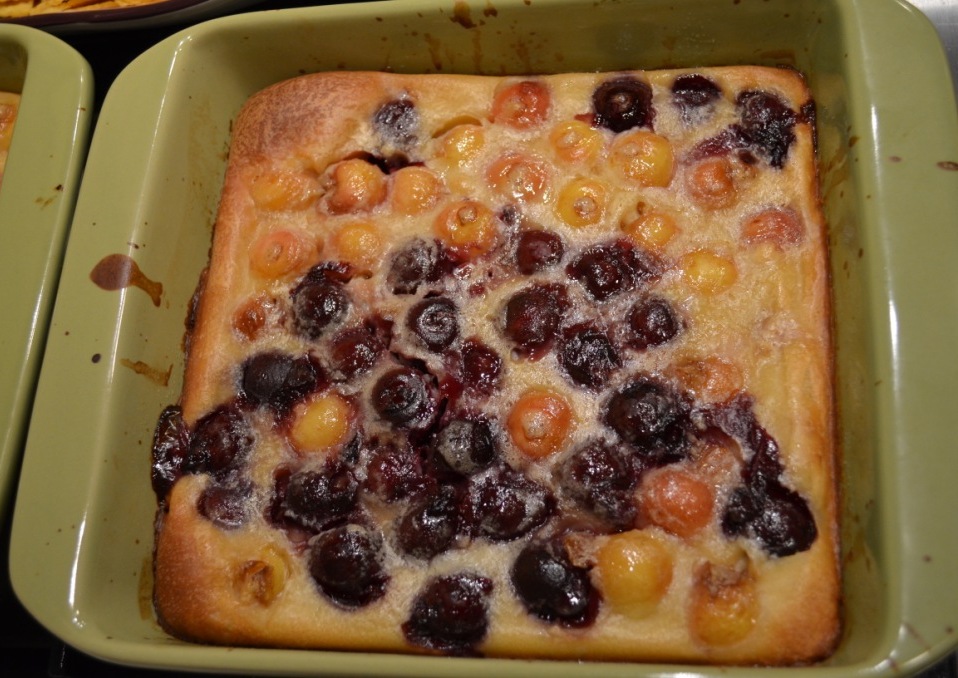
And then of course there was a dessert – Clafoutis (no further comments, just look at the picture):
This was definitely a great experience. Pretty rare case when all the wines worked very well and were absolutely delightful – if I can only re-taste that Amarone… Well, may be one day. Wishing you great wine experiences! Cheers!
Crus of Beaujolais, Year 2011 – Part 2
I like sequels, Well, in the movies – sometimes, not so much. But when it comes to the writing, whatever you forgot to say in the first part, you can say in the second, and feel good about it, claiming that this was the intent from the get go.
What I didn’t mention in the first post about great tasting of Georges Duboeuf 2011 Beaujolais portfolio is that red Beaujolais make one of the best red wines for summer – they are typically light in alcohol (if you noticed, 13% ABV was the most for all wines mentioned in the first post), and they also taste the best when they are slightly chilled. Considering how hot this summer is across pretty much the whole US territory, I hope this will help you to find a good red wine for the hot day, because sometimes it just have to be red.
In the first post, I described a self-guided part of tasting. That tasting was followed by the lunch, both of which (tasting and the lunch) taking place at db Bistro Modern, one of the restaurants of the famous chef Daniel Boulud.
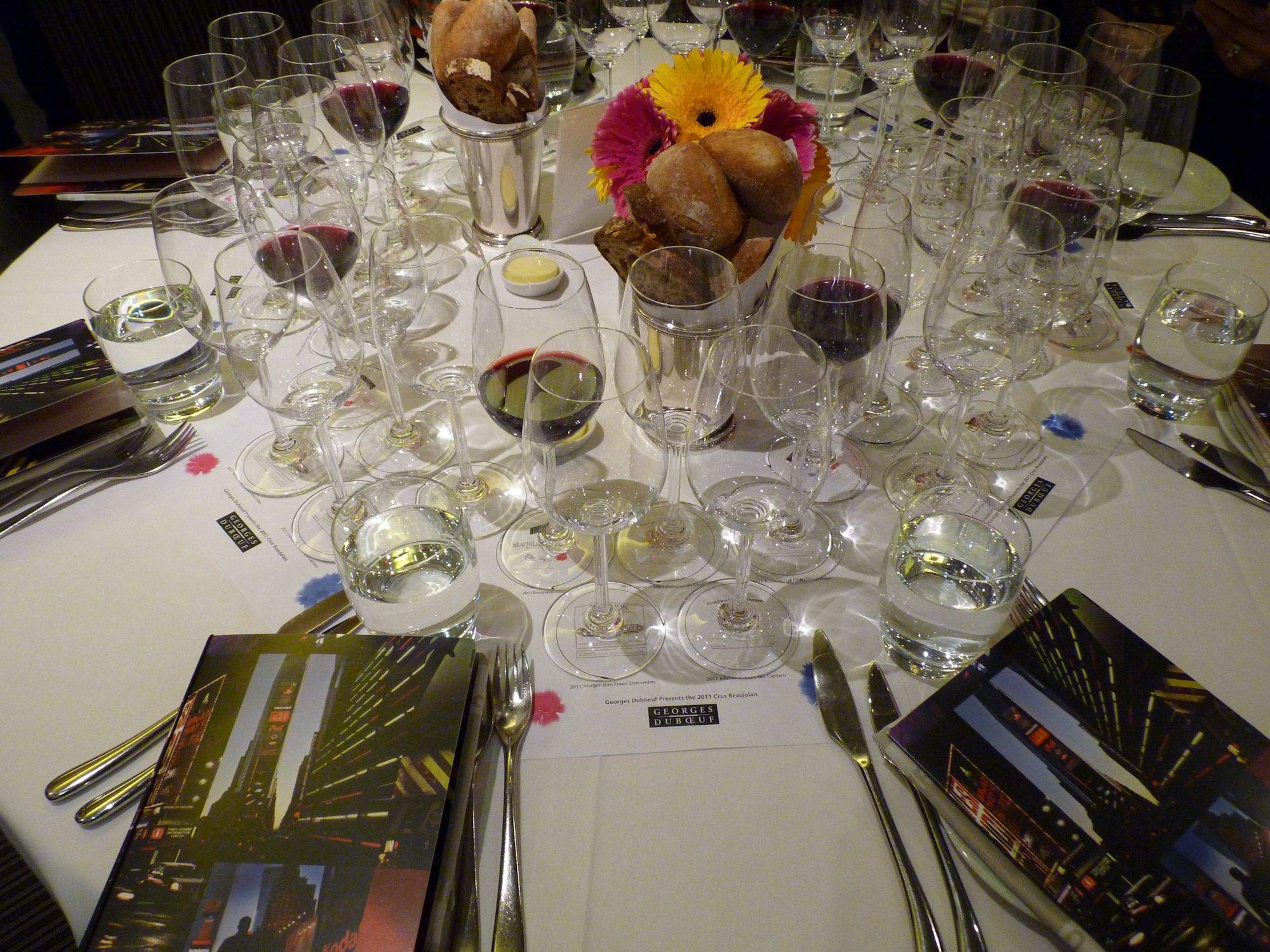
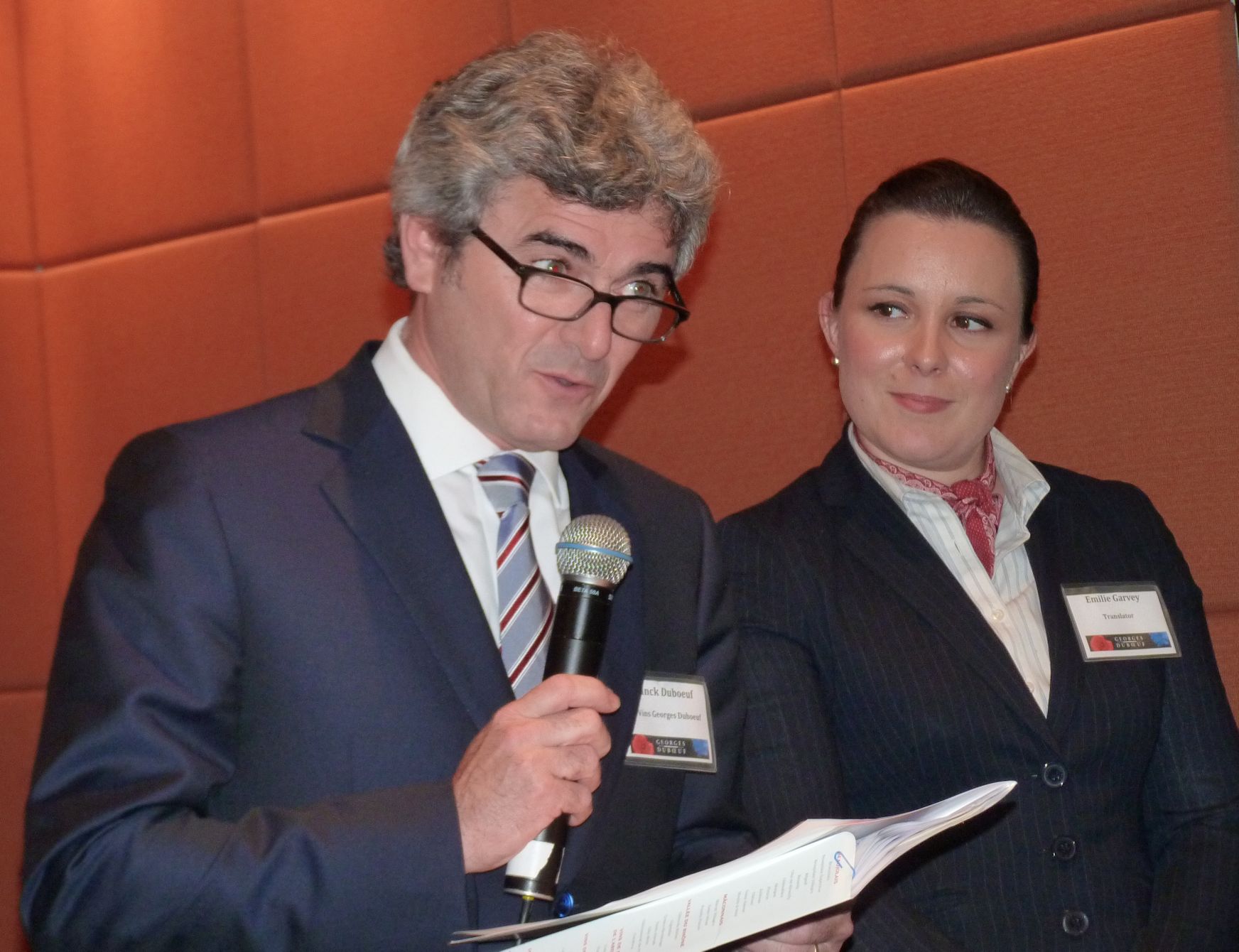
Georges Duboeuf opened the event with presentation of 2011 vintage. Here is my best effort transcript of what he said (remember, I’m not a professional journalist, I’m only pretending): “2011 was a great year. Budding started in April, then flowering started in June, and then harvest started August 22nd and lasted for two weeks. Some areas experienced periods of drought. Overall, grapes reached very good level of ripeness. 2005 and 2009 (considered best in a very long time) were good, but 2011 might be even a little bit better than 2009. Throughout the vintage, there are lots of black cherry and earthy notes.”

After Georges Duboeuf’s presentation, the first dish was served – “Legumes du Marche” – Young Garden Vegetables, Fromage Blanc Dressing, Lavender Honey Vinaigarette.
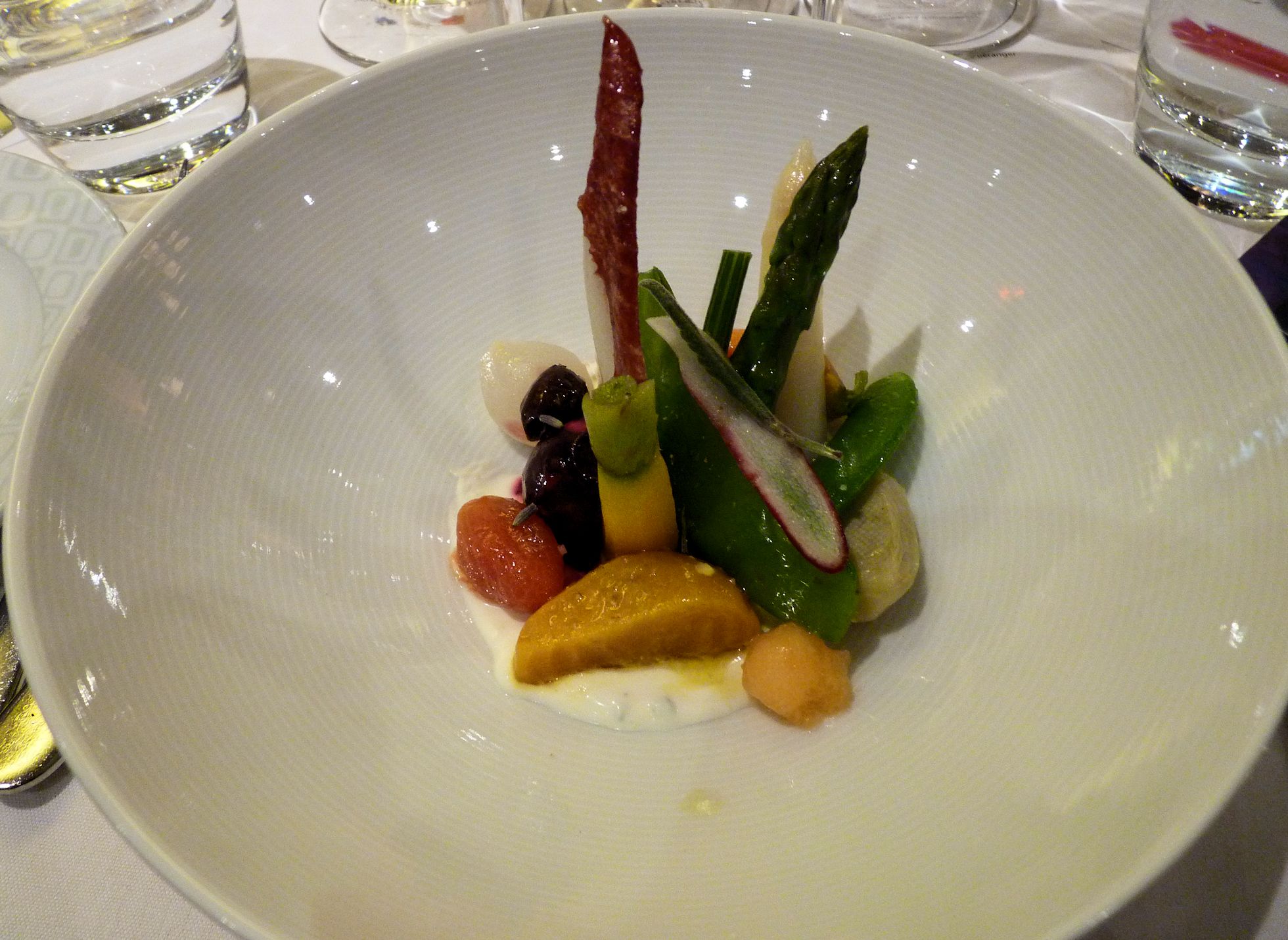
This dish was paired with 2011 Georges Duboeuf Beaujolais-Villages, and it worked together very well by wine complementing soft and earthy flavors of the vegetables.
Next, Frank Duboeuf presented two white wines, Macon-Villages and Pouilly-Fuisse (please see detailed note below). He said that 2011 was equally good year for both whites and the reds, which is a very rare situation. I didn’t take the detailed notes though, as I was preoccupied with parallel discussion at the table and delicious pairing of wine and food ( bad journalism : ( )
White wines were served with the next course, Seafood Risotto – Black Sea Bass, Scallops, Squids, Cockles, Fennel, Tomato Confit “Fumet” Emulsion.

Pouilly-Fuisse worked perfectly well with risotto, which was a unique experience for me. Creaminess of risotto cancelled out some sharpness of the chardonnay, creating next level of experience.
For the next course, Georges Duboeuf presented two red wines, Morgon and Julienas. He described Morgon as having “violet, cassis, kirsch on the nose, same flavors on the palate. A lot of structure. This wine will age very well”. Regarding Julienas, he said that “it is a very special wine, it has great personality. 2011 was a lot like 2009. This particular wine had the biggest success over the last 5-6 years. It was very critical to expand the vineyard (by 4 acres) for the success of this wine. This is a very noble wine with great aging potential. The wine was bottled a week before, right before the event”.
These two reds accompanied the last course of the meal – Duo of Beef – Braised Short Ribs, Beef Tenderloin, Spring Vegetables, Sauce Bordelaise.
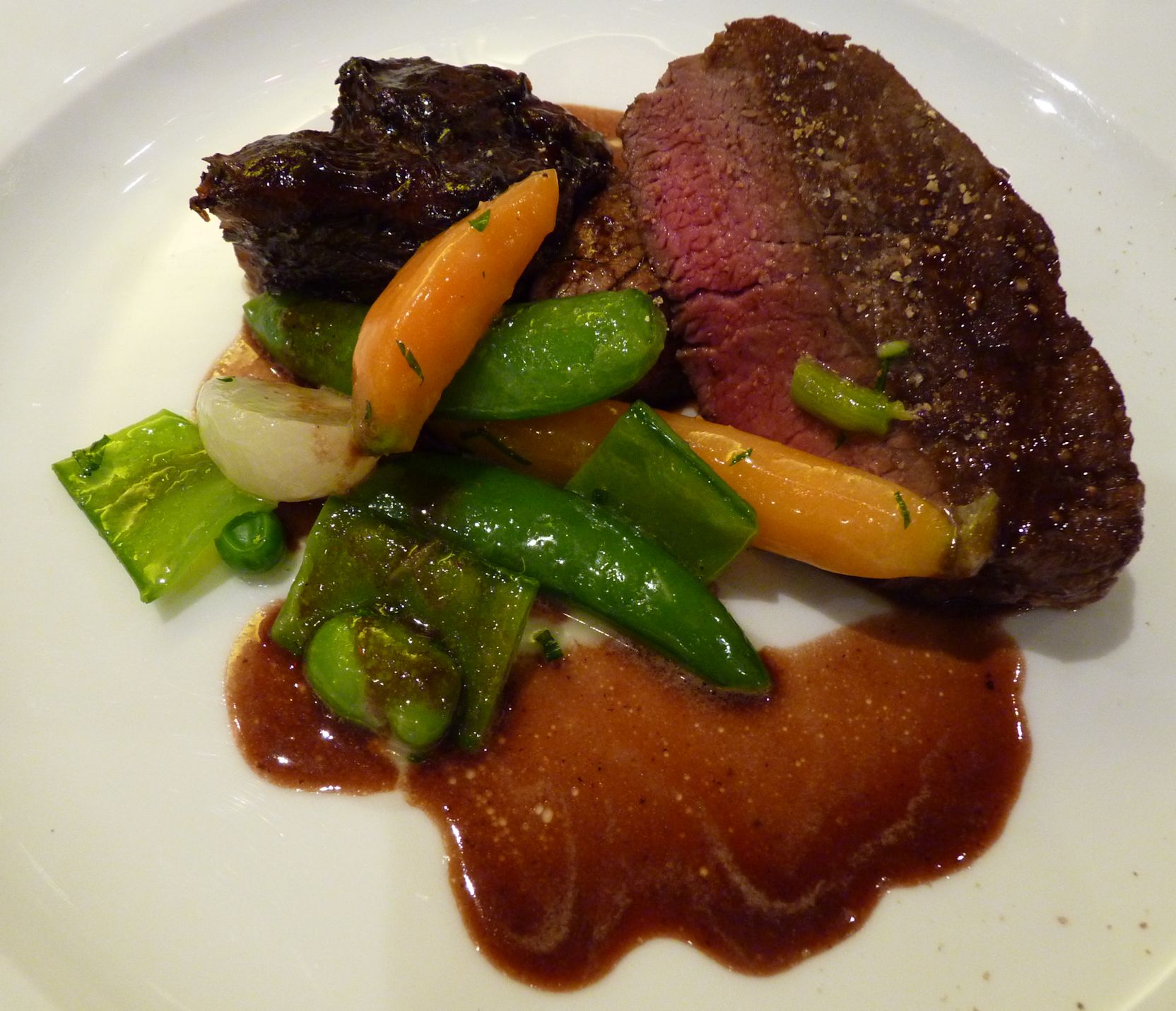
I have to tell that while both food and wine were delicious in its own right, they didn’t work together, so the pairing was not successful by not elevating the whole meal to the next level. But I also have to admit that both food and wine really didn’t bother each other too much – they were really two absolutely parallel experiences without a merge or a collision (which is often the case when wine and food don’t work together).
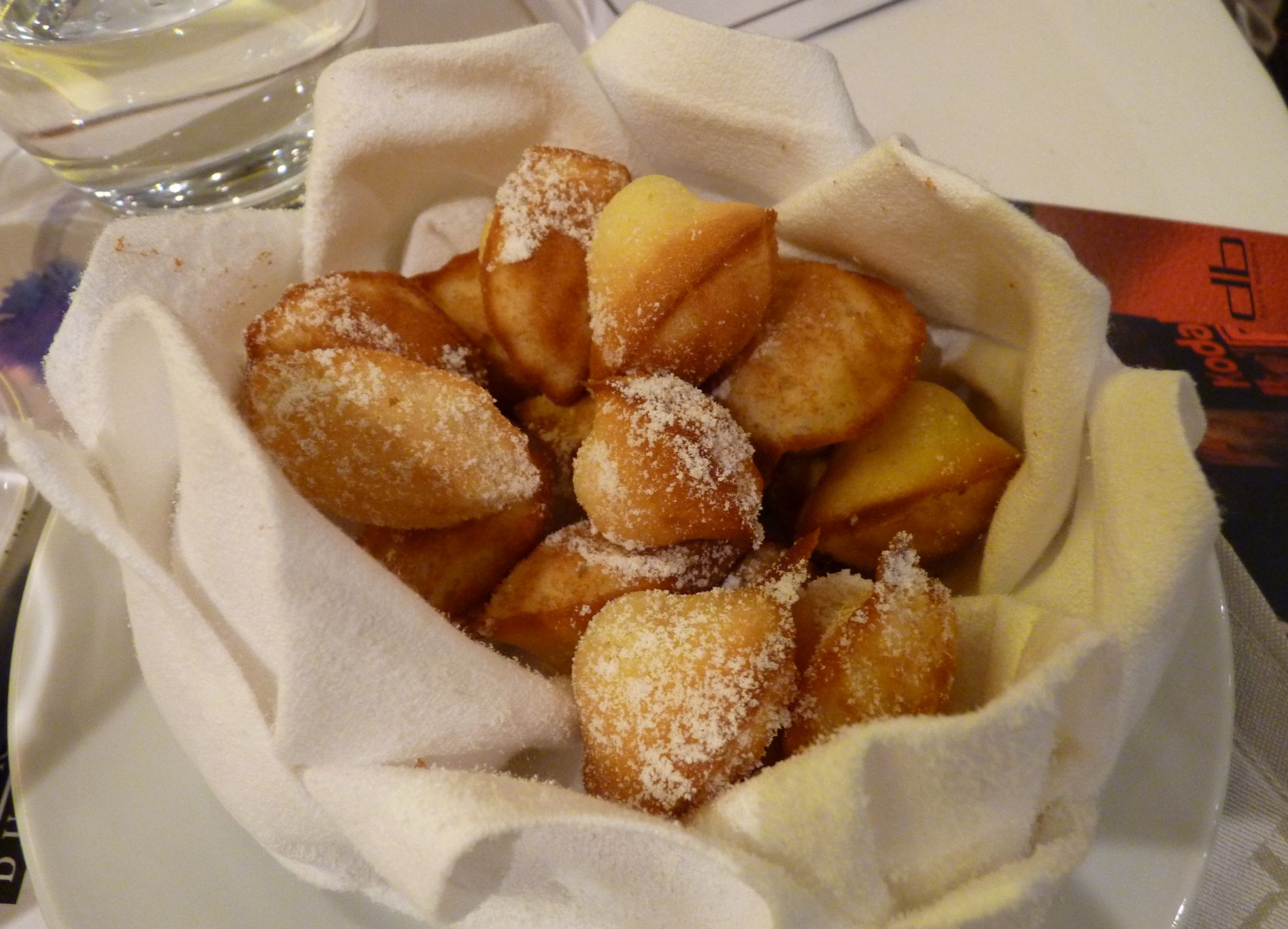
And then…there was a dessert, which was delicious and not paired with any wines (I also have no idea how this little cookies should be called, but it was very hard to stop eating them).
Here are the detailed notes for the wines:
2011 Georges Duboeuf Macon-Villages Domaine Les Chenevieres, Maconnaise, France (100% Chardonnay, SRP: $13.99, 12.5% ABV, 5000 cases produced) – Very nice, hint of hazelnut and citrus on the nose, good fruit, good balance, good acidity, hint of white apples, touch of vanilla and touch of oak on the palate. (Drinkability: 7+)
2011 Georges Duboeuf Pouilly-Fuisse Domaine Beranger, Maconnaise, France (100% Chardonnay, SRP: $17.99, 13% ABV, 3500 cases produced, 1200 imported) – this wine comes from the best area, the actual town of Pouilly-Fuisse. This wine had more pronounced chardonnay qualities than the previous wine – vanilla, touch of citrus and oak notes, excellent balance. (Drinkability: 8- )
2011 Georges Duboeuf Beaujolais-Villages, Beaujolais, France (100% Gamay, SRP: $9.99, 12.5% ABV) – very nice, good balance, a little tartness on the palate, but good overall. (Drinkability: 7)
2011 Georges Duboeuf Morgon, Domaine Jean Descombes, Beaujolais, France (100% Gamay, SRP: $15.99, 13% ABV) – good acidity, fresh fruit, light, soft, a bit too grapey to be great – but should improve with time. (Drinkability: 7)
2011 Georges Duboeuf Julienas Chateau des Capitans, Beaujolais, France (100% Gamay, SRP: $18.99, 14% ABV) – excellent depth, good power, good body, excellent balance. (Drinkability: 8)
All in all, it was one great event, both in the information and experience. Summer is still on, my friends – go find a bottle of Beaujolais to kick it off after a long day. And make an extra effort to find one of Georges Duboeuf wines – it will well worth it. Cheers!
One Viognier, Two Viognier
Viognier. A white grape, with more than 2000 years of history, and nearly extinct by 1965 with only 8 acres of plantings left in Northern Rhone – for the full history of the grape you can refer to this article in Wikipedia.
By the way, can you pronounce that “Viognier”? I’m not trying to insult the intelligence of my readers, but this french word is anything but easy. If you need a little help, here is a very short video for you:
If you wonder why are we all of a sudden talking specifically about Viognier (after all, there are other 9,999 grapes supposedly growing in the world), the reason is simple. Yesterday was Wine Blogging Wednesday event number 78, hosted by Frank Morgan from Drink What You Like blog, and the event was dedicated to Viognier, which sprung back to life and now successfully grows pretty much all over the world.
Viognier is no stranger on this blog. Two years ago, I was able to taste Virginia Viognier at Chrysalis Vineyards – it was very good. Then I had probably my best Viognier experience ever at the Lavinia wine store in Geneva – there I tried 2009 Domaine Georges Vernay Condrieu, a classic Viognier from Norther Rhone (it was outstanding with Drinkability rating of 9).
For this WBW78 tasting I had a few prerequisites. For one, I would love to taste Virginia Viognier – but it is not available in Stamford, CT. For the second one, I knew that I don’t want to taste California Viognier. Why? First, about two month ago, I had bad experience at a number of wineries in Temecula Valley in California. Second, there some some advantages in writing this blog post somewhat late – you can refer to the work of others. Please read the description of Rosenblum 2008 Kathy’s Cuvee in the blog post by the fellow blogger Gwendolyn Alley, especially the last part: “…finishes tart and savory yet cloying”. No further comments.
I definitely wanted to have classic Condrieu Viognier – but that is typically not a cheap option. Thanks to the advice of Zak from Cost Less Wines, I ended up with two bottles of Viognier – one from France, and another one from Australia.
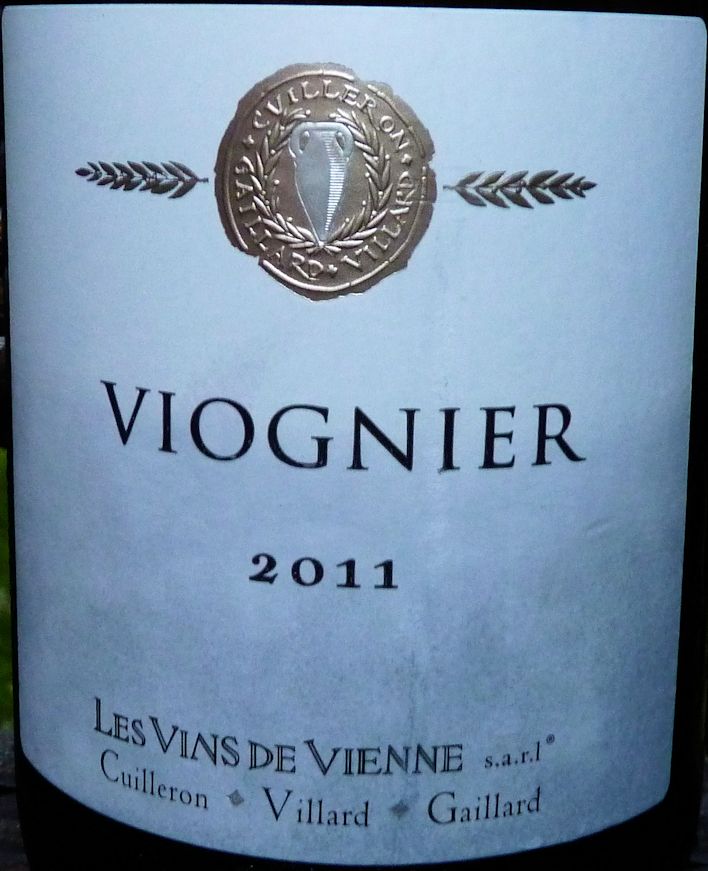 My Viognier #1 was 2011 Les Vines de Vienne Viognier ($19.99, 13% ABV). Interestingly enough, this wine was made in the region surrounding the town of Vienne in Northern Rhone region of France – one of the legends has it that this town (Vienne) gave the name to the grape itself (Viognier). Another interesting fact is that Les Vines de Vienne wines are product of obsession of the three wine makers – read more about it here.
I didn’t plan any dinner or an event around this Viognier tasting, so I decided to pair it with a few random things I could grab from the fridge. But before we will talk about pairing, let’s talk about the wine itself. Here are the tasting notes “in progress”. Nice golden color, beautiful nose of green apple and orange zest. There is clean residual sweetness on the nose. One the palate – touch of sweetness, lemon tartness, golden delicious apple, perfect acidity. As wine opens up, sweetness disappears and acidity kicks in. Perfectly refreshing and balanced, very clean. Drinkability: 8+. Taking into account the results of tasting on the second day, I want to note that it is important not to over-chill this wine. Taken directly from the fridge on the second day, the wine had slightly unpleasant sharpness, a bite, which disappeared as soon as the wine warmed up a bit.
As I said, the food pairings were rather a game than anything thought through and planned. I tried this wine with slow roasted Jalapeno ( our local Fairway had selection of large size Jalapenos, which were a killer after being slow roasted on a grill) – the wine was not enough to remove the heat of Jalapeno (fire hose was more appropriate for that). Wine worked very well with French goat cheese called Crottin de Champcol. It perfectly complemented grilled yellow squash and worked nicely with grilled asparagus.
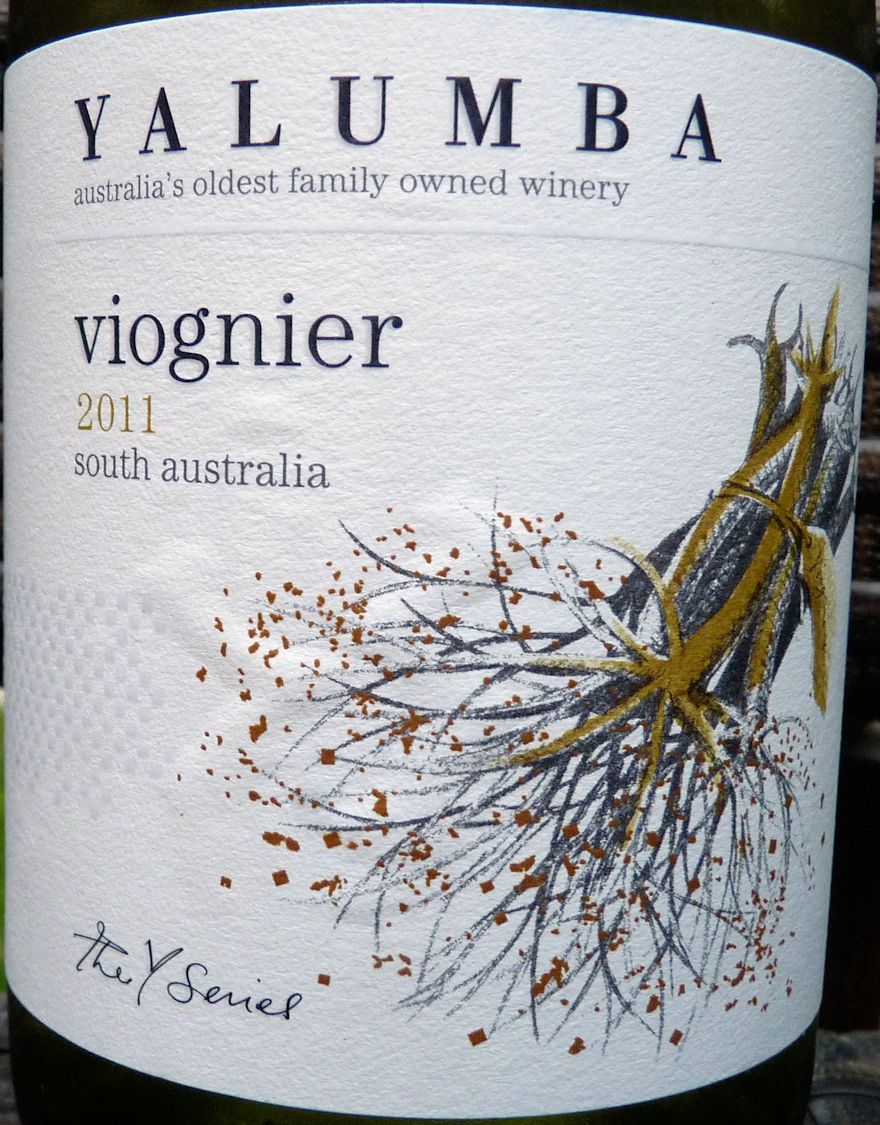 Viognier #2 was 2011 Yalumba Viognier South Australia ($11.99, 13.5% ABV). A touch darker in color than the #1, less bright. Nose of pear, herbs, white peaches and mango, more exuberant than the wine #1, but not to the point of being overwhelming. On the palate, there was more fruit than in the wine #1, but it was predominantly white grapefruit. While the wine was showing round enough, there was not enough acidity. Drinkability: 7.
None of the previous food pairings worked well. With Jalapeno, the wine was showing very acidic. It was too fruity against goat cheese, and didn’t do anything to asparagus, and grilled squash was the only okay pairing for this wine. Still, I think this is quite reasonable wine for the money.
This concludes my report about Viognier experience. I would highly recommend the Les Vins de Vienne Viognier – the wine is definitely worth seeking, especially considering that anything comparable and coming directly from Condrieu will cost you three times more.
So, how about you? Did you have Viognier yesterday? I hope you did, and if you did not… what are you waiting for? You should be on the way to the store now. Cheers!
Weekly Wine Quiz #9 – What Is In The Name?
 For today’s wine quiz, let’s talk about grapes, or more precisely, about the grape names. Just to make sure wine consumers are sufficiently confused, one and the same grape is called something completely different in various regions around the world. For instance, the grape which we know as Pinot Noir, is also known as Pinot Nero in Italy, Pinot Franc in the eastern-European countries, Spätburgunder in Germany and Blauburgunder in Austria.
Tempranillo is a grape which is used in production of many wonderful wines all over the world. It is particularly popular in Spain, where it is used to produce magnificent Rioja and Ribera del Duero wines, as well as in Portugal and many other countries. Tempranillo also has one the largest numbers of synonyms compare to the majority of other grapes, which makes it a good subject for today’s quiz.
Below you can see a number of grape names which are synonyms with Tempranillo – all except one. Can you identify which one is it?
Have fun! Cheers!
Last Bottle Sign Up ($10 credit)




 Talk-A-Vino