Archive
Woodinville Wineries: Des Voigne Cellars
This post is a continuation of the series about my winery experiences in Woodinville, Washington. Here are the links for the first three posts – introduction, Elevation Cellars and Pondera Winery.
… and I entered the world of music at the Des Voigne Cellars. Soft jazz music was playing in the background, as I was greeted by the big white dog – of course I started the visit from getting acquainted with the winery dog first – ear-scratching is usually the best way. Melissa, who owns the winery together with her husband Darren (the winemaker), was smiling with relief from behind the counter, happy to see that we made friends.
There was no doubts that music ruled here – it was not only in the air, but also on the labels and inside the glass:
 If you can, spend a few seconds and look at these labels in detail. Both the graphics and the names of the wines are created by Darren, the winemaker, and these definitely join the list of most creative labels I ever saw. And the wines were on par with the labels.
We started with the 2013 Des Voigne Cellars The Groove White Columbia Valley (Chardonnay, Marsanne, Rousanne, Viognier) – vibrant and fresh on the nose, and perfectly clean and simple on the palate. This is the wine to enjoy any time, with or without the food – you just can’t go wrong with it, and at $18, it is simply a steal. Well, almost – with 43 cases production, it’s not going to stay around for too long. Drinkability: 7+
The 2010 Des Voigne Cellars The Groove Red Columbia Valley (43% Syrah, 36% Sangiovese, 17% Cabernet Franc, 4% Petit Verdot) had a very welcoming nose with touch of spice, more spices weer present on the palate with some roasted notes. Another excellent effort, and again a great QPR at $20 (your chances are a bit better with this wine – 210 cases produced). Drinkability: 7+
The next round was very interesting as well – take a look below:
 I was trying to figure out if there should be a correlation between the choice of label (a performer or an event) and the wine itself, but didn’t come to any conclusions. If you tasted these wines, I would be interested in your opinion on this subject.
2012 Des Voigne Cellars San Remo Sangiovese Columbia Valley (100% Sangiovese, Candy Mountain Vineyard) – my first experience with Washington Sangiovese – and a very pleasant one. Nice, clean and simple wine, medium body, some interesting cherry undertones. Definitely playful and resembling the original Sangiovese (the Italian version), only in the lighter package and more fruit driven. Drinkability: 7+
2012 Des Voigne Cellars Duke Zinfandel Walla Walla (95% Zinfandel Walla Walla, 5% Malbec Wahluke Slope) – yet another “first” encounter – first time ever I was tasting Washington Zinfandel. Very nice rendition, unusual nose, showing classic Zinfandel’s smokey raspberries on the palate, light, clean and well balanced. Drinkability: 7+
2010 Des Voigne Cellars Montreux Syrah Columbia Valley (96% Syrah Weinbau Vineyard, 4% Cabernet Sauvignon Dionysus Vineyard) – Finally, the first Syrah of the tasting (out of the 3 wineries – somehow, I expected to see it a lot more often) – inviting nose of red fruit, touch of coffee, baking spices and lavender on the palate, overall very clean and balanced. Drinkability: 8-
Do you want to see more cool labels? Here you go:

2010 Des Voigne Cellars “Untitled” Columbia Valley (57% Cabernet Franc, 29% Syrah, 14% Petit Verdot) – if previous three wines can be characterized as “playful”, these two were the serious hitters. This wine showed excellent concentration, powerful and firm structure, clean Cabernet Franc profile with cassis and bell peppers, as well as grippy tannins. I think it will perfectly open up in about 5-7 years, so you will need to give it time. Drinkability: 8-
2010 Des Voigne Cellars Duet Columbia Valley (94% Cabernet Sauvignon Dionysus Vineyard, 6% Merlot Bacchus Vineyard) – unusually perfumy nose, soft and round on the palate, with good depth – perfectly drinkable now, no need to wait. Drinkability: 7+
So we had the music record, musical events and performers and the musical notations – what’s left is someone to put this all together – The Composer:

2011 Des Voigne Cellars The Composer Wahluke Slope (99% Malbec, 1% Syrah, both from Weinbau Vineyard) – this was a delicious, light and round wine, with good amount of fresh red berries on the palate – simple and very pleasant. Drinkability: 8-
My musical excursion completed, and it was the time to move. The next winery was the only one on my original list, which I planned to visit from the beginning. Short drive around the buildings (moving from Building B to Building E), and I walked into the winery called …
To be continued…
Woodinville Wineries: Pondera Winery
 This post is a continuation of the series about my winery experiences in Woodinville, Washington. Here are the links for the first two posts – introduction and Elevation Cellars.
“What other winery do you recommend I should visit here?” I asked Steve before leaving. “Pondera”, he said. Okay. Short, very short walk from the building A to the building B, and I entered the tasting room of Pondera Winery.
I was greeted by Mel, one of the three owners of the Pondera winery. Pondera is focused on Bordeaux varietals, and it achieved a substantial recognition as a Bordeaux blends producer. As we were woking through the tasting, Mel proudly showed me a collection of gold medal-winning wines – 7 of Pondera wines received double gold medals in the blind tasting competition. Pondera 2009 Prima Donna red wine was recognized as one of the Top 100 wines of Northwest – not a small achievement by all means.
The tasting started from the 2013 Pondera Chardonnay Sagecliff Vineyard Columbia Valley. The wine had a subtle nose of vanilla, and more of the same on the palate. The wine spent 7 month on the lees, and while it had a creamy mouthfeel, the mid-palate was a bit heavy for my taste. Drinkability: 7
The next wine was 2011 Pondera Cabernet Franc Columbia Valley (90% Cabernet Franc, 10% Merlot) – the nose was rather muted, but the palate had a classic cassis and bell peppers – nice, clean and round, with a good balance. Drinkability: 7+
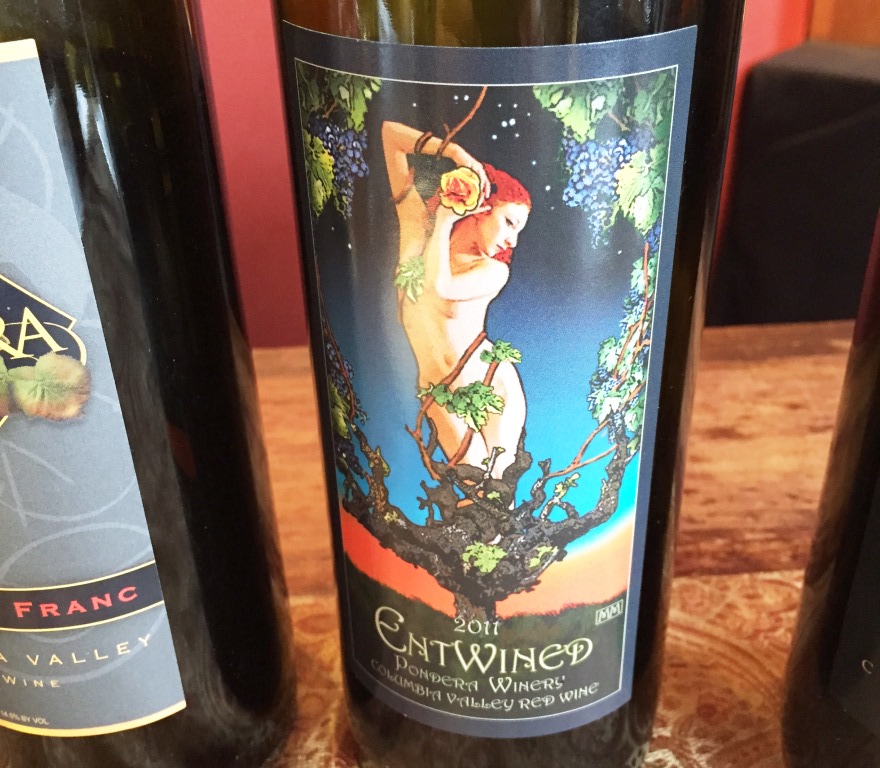
2011 Pondera Entwined Columbia Valley (57% Merlot, 26% Cabernet Sauvignon, 13% Cabernet Franc, 4% Malbec) showed as a classic Bordeaux blend – if I would sniff the glass without knowing what is inside, I would definitely think of classic Bordeaux, made in a bit more of a fruit-forward style, but still quite restrained. The wine showed equally well on the palate – cassis, blackberries, touch of chocolate, clean acidity – and asking for a bit of time with very noticeable tannins. The only non-classic Bordeaux component was a beautiful label. Drinkability: 8-
2011 Pondera SVS Number One Columbia Valley (59% Cabernet Sauvignon, 30% Merlot, 10% Cabernet Franc, 1% Malbec) was yet another classic Bordeaux rendition. Yes, I’m guilty of abusing the word “classic” here, but this was my true impression. Soft, round, clean and perfectly classic. Drinkability: 8-
2011 Pondera Malbec Stillwater Creek Vineyard Columbia Valley (97% Malbec, 3% Cabernet Sauvignon) was, in a word, outstanding. Round, soft, polished, with delicious blueberries and blackberries – this was one of the very few wines I didn’t use the spittoon for in the tasting. Just a pure pleasure. Drinkability: 8+
The last wine was a special treat – 2009 Pondera Prima Donna Columbia Valley (Merlot, Cabernet Franc, Malbec, Cabernet Sauvignon) was made only once, in the exceptional year (2009) only from the 2 exceptional barrels. Delicious, classic Bordeaux style, big, powerful, with chewy tannins and long life perspectives in the cellar (if you can get a bottle, there is). Drinkability: 8
Here you go, my friends. A wonderful Bordeaux blend experience – if you are looking for the bright, delicious, cassis-loaded glass of joy, jot down the name Pondera Winery, and see if you can find a bottle or two. Meanwhile, I’m off to continue my Woodinville discovery journey, stepping literally 5 feet to the left into another door…
To be continued…
Woodinville Wineries: Elevation Cellars
 This is the continuation of the posts about Woodinville wineries – the first part can be found here.
As I walked out of the car, literally the very first winery sign I saw was for the Elevation Cellars. The name sounded appealing, so it was an easy decision – looks like a perfect spot to begin the tastings.
Inside the space looked very much like an upscale large garage with the nice wooden door, but with the addition of shiny stainless steel tanks, as well as some oak barrels. I asked if I can taste the wines (of course – what kind of question is that if the tasting room sign says “Open”, right?), and also explained that I’m a wine blogger, which was taken somewhat matter-o-factly – but very friendly in any case.
We started tasting from 2013 Elevation Cellars Imperium Riesling Lawrence Vineyard Columbia Valley AVA. The Riesling had a very interesting profile with a touch of sweetness and some interesting minerality – it was actually resembling the Washington Riesling I didn’t appreciate during the pro tasting at WBC14 – however, the Elevation Cellars Riesling had an overall round and balanced profile with pleasant tartness in the finish, so overall I liked it quite a bit. Drinkability : 7+
Next I had the 2010 Elevation Cellars Cabernet Sauvignon Stillwater Creek Vineyard Columbia Valley AVA – this wine was almost a perfection in the glass, with clean and classic cassis aroma on the nose. On the palate, the wine was restrained, fresh acidity and medium to full body (lighter than most of the California Cabs would be), overall very round. Definitely an excellent wine for all occasions. Drinkability: 8
Our next wine was a perfect Bordeaux blend with the cool label – 2011 Elevation Cellars Jammin’ Red Blend Red Mountain and Columbia Valley AVA. I can’t describe it any better than to say “perfect Bordeaux blend” again – and in need of time. Cassis, touch of green bell pepper, very noticeable tannins in front of the mouth. Delicious and drinkable now, but it will definitely evolve further. Drinkability: 8-
2010 Elevation Cellars Merlot Stillwater Creek Vineyard Columbia Valley AVA was exactly what you should expect from Washington Merlot – it was bigger than the Washington Cabernet Sauvignon. Coffee and espresso notes, powerful tannins, great depth and again, the need of time. Give this wine 5-6 years, and you will not be able to put your glass down. Drinkability: 8-


I would think you would agree that the tasting looked quite good already, but we continued with more treats.
2009 Elevation Cellars Monolith Bordeaux Blend Hedges Vineyard Red Mountain AVA – absolutely delicious. Again, a clean nose of cassis, concentrated red and black fruit, chewy tannins, round and powerful. I learned that 2009 was an excellent year in Washington, and this wine was pretty much an exemplary rendition of the vintage. We also had an opportunity to drink this wine in the restaurant at dinner other night, and it was an absolute favorite of everyone. Drinkability: 8+
Before I will tell you about the last wine, I have to mention my main treat of the visit – a conversation with Steve Stuart, the winemaker and the owner of Elevation Cellars. At he time of my visit, Steve was working at the winery – there were some issues in the morning with some of the equipment breaking up and subsequent need of cleanup – but he was asked to talk to me, the blogger, so I felt like a real VIP : ). You can read the full story on the Elevation Cellars web site, but to give you a quick round up, Steve is an engineer, and he still works as an engineer during the week, and spending his weekends at the winery, following his passion. I didn’t want to take up too much of his already busy day, so I only asked Steve if he is using natural or cultured yeast for the fermentation, and he gave me an interesting answer (which makes a lot of sense). As an engineer, he likes to be able to control things, so he uses the cultured yeast. But it is not the need of control for the need of control itself – as a small winery, he really can’t afford for the fermentation to fail. When he is using the cultured yeast, he is certain that fermentation will start and finish. We also talked about few other things, but this was my most memorable takeaway. Then I asked if I can take his picture, and Steve agreed, albeit with some degree of resistance :).

Steve Stuart, winemaker and owner at Elevation Cellars
The wine which Steve has in his hand, which we enjoyed drinking together, was truly a special treat – 2010 Elevation Cellars Reserve Cabernet Sauvignon Stillwater Creek Vineyard Columbia Valley AVA. Steve found out that one of the barrels of 2010 Cabernet Sauvignon was showing substantially better than the others – that barrel was bottled separately to become the Reserve Cabernet Sauvignon. My notes for this wine are very simple – wow! It was very much similar to the standard 2010 Cabernet Sauvignon – only with all the taste elements greatly amplified. Cassis, structure, balance – simply a wow wine. Drinkability: 8+
This sums up my first experience with the Woodinville winery – more posts will follow. Cheers!
[Wednesday’s] Meritage – Wine Quiz Answer, Merlot is Back, Harvest Everywhere, About Yelp and more
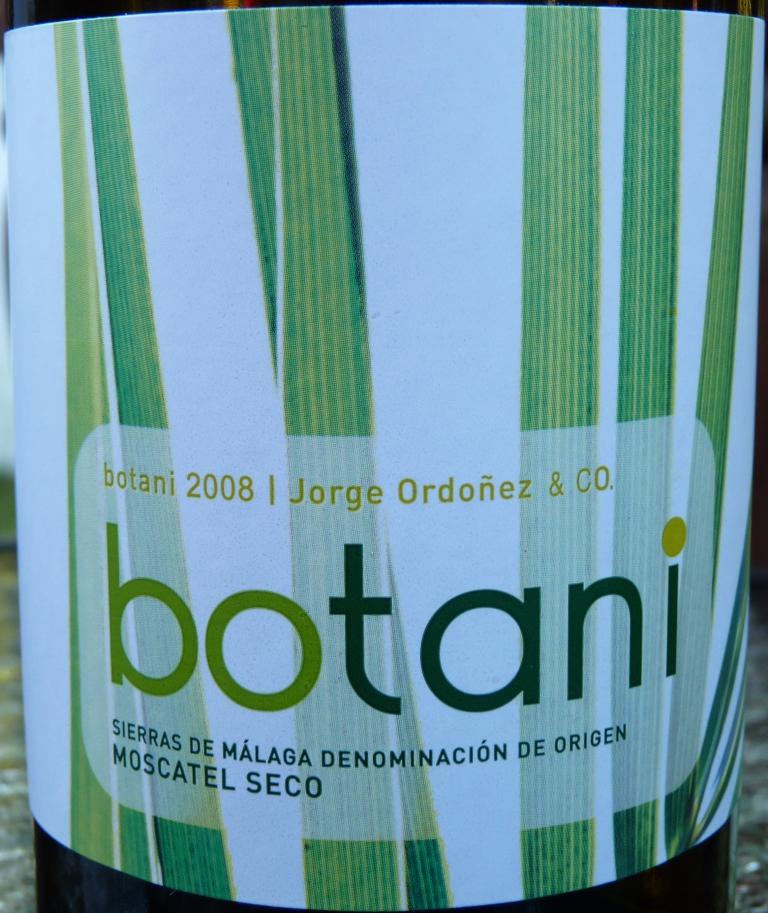
Botani Moscatel Seco Sierras de Malaga DO 2008
Meritage time!
Let’s start with the answer to the wine quiz #115: Grape Trivia – Muscat.
In the quiz, you were supposed to answer 5 questions about one of the oldest cultivated grapes – Muscat.
Here are the questions, now with the answers:
Q1: This Italian wine, made out of the Muscat of Alexandria grapes (which has a different local name), is quite unique in having a given vintage receive top ratings from all main Italian wine publications, including Gambero Rosso, Slow Wine, Bibenda and Veronelli. Can you name this wine?
A1: Donnafugata produces dessert wine called Ben Ryé, made out of Zibibbo grapes, which is the local name for Muscat of Alexandria. Ben Ryé typically gets awarded highest ratings by various Italian publications, year in and year out.
Q2: This Muscat wine was the last solace of exiled Emperor, Napoleon Bonaparte. Can you name the wine and the country where it was made?
A2: This legendary wine is Klein Constantia Vin de Constance from South Africa
Q3: Which one doesn’t belong and why?
a. Banyuls, b. Beaumes de Venise, c. Frontignan, d. Rivesaltes
A3: Banyuls – while Banyuls is known for its dessert wines, same as the three other AOCs, Grenahce Noir is the main grape used in Banyuls, not the Muscat which dominates the others.
Q4: Muscat wines often get very high ratings from the reviewers. Based on Wine Spectator Classic wines (95 – 100 rating), which country do you think has the most Muscat wines rated as Classic:
a. Australia, b. France, c. Italy, d. Portugal,
A4: It might come as a surprise, but this country is the Australia – 9 out of 10 Muscat wines with topmost ratings are from Australia, including a 100 points Campbells Muscat Rutherglen Merchant Prince Rare NV.
Q5: Which should be excluded and why?
a. Muscat of Alexandria, b. Muscadelle, c. Moscato Giallo, d. Muscat of Hamburg, e. Morio Muskat
A5: This was a bit of a tricky question – actually 2 grapes don’t belong – Muscadelle, which has nothing to do with Muscat, and Morio Muskat, which is a blend of Sylvaner and Pinot Blanc.
When it comes to the results, we had no winners, unfortunately, but I’m glad to see Oliver the winegetter back in the game. There is always the next time!
Now, to the interesting stuff around the vine and the web!
Let’s start with … Merlot! Merlot is back, and to make sure everyone will notice, October is designated as the Merlot month! If you think about it, Merlot never left, and Chateau Petrus didn’t switch all of a sudden to the Cabernet Sauvignon as a main grape. Still, Merlot wines are now demanded by name, so it is definitely a reason to celebrate. Drink it, talk about it, write about it – just don’t be indifferent about it. Here is the web site which will help to plan your Merlot festivities.
Harvest is under way in many parts of the Northern Hemisphere, so here are few of the updates. Long stretch of a warm weather in September greatly helped vintners in Burgundy and Bordeaux. The summer was cold and rainy in both regions, and the hailstorms didn’t help either. However, warm and steady September weather greatly improved the overall outlook; while the 2014 vintage is not expected to exceptional, both Bordeaux and Burgundy expecting good results. White Burgundy look especially promising in many appellations, including Chablis. Here are the links with more details – Burgundy and Bordeaux. California weather was quite opposite compare to France – very hot and dry summer forced an early harvest start in the Northern California, with some estates picking up grapes as early as July 29th – one of the earliest starts in a decade. Here is the link with more information about California harvest.
When I’m looking for the good restaurant, especially in the unfamiliar area, my first choice of information source is usually one and the same – Yelp. I generally can’t complain, and for majority of the cases I’m quite happy with Yelp recommendations – I’m sure it saved me from the number of a bad experiences. This is why it is even more upsetting to read about the issues businesses face with Yelp forcing them to take advertizing deals or be punished by artificial manipulation of ratings. Unfortunately, this is what happens when shareholder value becomes the purpose of business existence and trumpets the relationship with the real customers (which eventually drives company out of business). Case in point – the restaurant called Botto Bistro in San Francisco, which refused to badge with Yelp’s demand for advertizement placement, and instead started fighting back with Yelp by undermining the core of the Yelp’s existence – the rating system. The restaurant requested all of their patrons to leave negative one-start reviews, which people did. Take a look at the this article which lists a lot of examples of such a one- star “negative” – or rather super-funny – reviews. Yelp have to get its business integrity together, or it will disappear.
If you are actually a writer, how often do your read your writing, edit it, then read again and edit again? You don’t need to answer this question, but the number of the read/edit cycles is better be substantial if you want to end up with the quality outcome. Here is an interesting article by Jo Diaz, where he talks about the importance of the editor and the editing process. It is clear that most of us are not going to hire an editor for our “labor of love” blog posts – however, the editing still remains an essential part of the “writing well” process, and you really should find the way to implement it.
And we are done here. The glass is empty – but the refill is on its way! Cheers!
Weekly Wine Quiz #115: Grape Trivia – Muscat
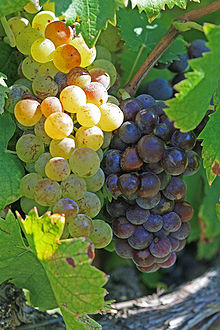
Muscat blanc à Petits Grains and Muscat Noir. Source: Wikipedia
The Wine Quiz series is not meant to intimidate. The whole idea here is to have fun and learn something new. When answering the questions, it is fully encouraged to use all available sources of information, including Google or any other search engine. There are no embarrassing answers – the most embarrassing thing is not giving it a try…
Welcome to your new wine quiz!
We are continuing our grape trivia series, and today’s subject is the grape called Muscat.
Going through The Wine Century Club journey, I always make an effort to figure out if the seemingly new grape is actually not a localized name for the grape which I already counted. Muscat is always one of the biggest challengers; trying to figure out all those name interconnections is often quite tedious. Only now, when I set to work on this quiz, I realized why is that.
It appears that Muscat has a lot of very unique characteristics, which makes it one and only in many instances (think about your own grape ranking – is Muscat stands appropriately high in it? Stop it, don’t bring out the Moscato d’Asti subject…). Let me give you a few facts. Muscat is one of the oldest grapes used in winemaking, with its history going back thousands and thousands years back. According to some theories, Muscat considered to be one of the very first domesticated grapes, and it is possible that majority of the Vitis Vinifera grapes are offspring of Muscat.
Muscat is actually a family, which includes about 200 different grapes – no wonder it is hard to figure out which one is which. Muscat grapes are grown both for winemaking and for the table grape consumption, which again makes it very unique (most of the Vitis Vinifera grapes are produced for winemaking only). Muscat is often imagined as a white grape variety, which is true for the majority of the grapes – however, red, blue and black Muscat grapes are also part of the family. To continue making everything just a bit more complicated, you can’t tell the color by just the name – unless you know it already. It is easy to figure out that Grenache is a red grape, and Grenache Blanc is white, or that Pinot Noir is a red and Pinot Blanc is white. Talking about Muscat, you have to know that Muscat of Alexandria is white, and Muscat of Hamburg is red, often called Black Muscat.
Considering such a long history and diversity, it is not surprising that Muscat is growing pretty much everywhere in the world, and it is used in production of the whole range of wines, starting from sparkling (Moscato d’Asti), going to the dry (Spanish Moscatel wines come to mind), and of course, sweet, both regular and fortified – Australia, France, Italy, South Africa and many others greatly excel here. While yes, there are about 200 grapes in the Muscat family, four varieties can be identied as “main” – Muscat blanc à Petits Grains, Muscat of Alexandria, Muscat of Hamburg and Muscat Ottonel. Many Muscat grapes, which you know under their unique names will be simply local names for some of these “main” varietals. For instance, Moscato d’Asti is a Muscat blanc à Petits Grains, and Spanish Moscatel is actually a Muscat of Alexandria.
All the different varieties of Muscat have different growing characteristics and challenges – for instance, Muscat of Alexandria has a tendency to overproduce and needs to be controlled in the vineyard; Muscat Ottonel is a palest of the all Muscat grapes and ripens the earliest. What is common between all the Muscat grapes is aromatics, the characteristic “musky” aroma. Muscat generally very easily accumulates sugar and has naturally low acidity, thus it doesn’t age for too long on its own – but fortified wines, of course, can live literally forever.
And now, to the quiz!
Q1: This Italian wine, made out of the Muscat of Alexandria grapes (which has a different local name), is quite unique in having a given vintage receive top ratings from all main Italian wine publications, including Gambero Rosso, Slow Wine, Bibenda and Veronelli. Can you name this wine?
Q2: This Muscat wine was the last solace of exiled Emperor, Napoleon Bonaparte. Can you name the wine and the country where it was made?
Q3: Which one doesn’t belong and why?
a. Banyuls
b. Beaumes de Venise
c. Frontignan
d. Rivesaltes
Q4: Muscat wines often get very high ratings from the reviewers. Based on Wine Spectator Classic wines (95 – 100 rating), which country do you think has the most Muscat wines rated as Classic:
a. Australia
b. France
c. Italy
d. Portugal
Q5: Which should be excluded and why?
a. Muscat of Alexandria
b. Muscadelle
c. Moscato Giallo
d. Muscat of Hamburg
e. Morio Muskat
Good luck, enjoy the quiz and the rest of your weekend! Cheers!
Thank you, #GrenacheDay
September 19th was yet another “wine holiday” – the Grenache Day. Grenache, which is known in Spain as Garnacha, needs no introduction for the oenophiles. One of the most planted red grapes in the world. A star of Châteauneuf-du-Pape, Priorat, California, Australia and many other countries and regions. A grape with the middle name “rich and opulent” (when was the last time you had a lean Grenache wine? No rush, think about it…). If big wines are your territory, Grenache is definitely your grape.
So what this “thank you” all about? Easy, let me explain. When I know about the certain “grape day”, I usually try to honor it by opening the wine made with that specific grape. Considering the connotation of the “holiday”, I also look for the somewhat of a special bottle. I’m not saying that I would casually open DRC for the Pinot Day (I wish I would have that choice), but still, it should be an interesting bottle. Talking about the holiday at hand, #GrenacheDay, I realized that Grenache is grossly underrepresented in my cellar. Cabernet, Pinot Noir, Syrah, Tempranillo, Zinfandel – plenty of choice, Grenache – not so much. Searching through the shelves, I noticed the bottle of 2006 Pax Cuvée Moriah. Checked the back label – 88% Grenache, definitely qualifies as Grenache for me. 2006 is considered young in my book, but – either that or some random non-grenache bottle. Done.
 Okay, so here is our wine – 2006 Pax Cuvée Moriah Sonoma County (15.9% ABV, 88% Grenache, 6% Mourvedre, 3% Syrah, 2% Counoise, 1% Roussanne). Cork is out, pour in the glass, swirl, smell. Beautiful. Bright fruit, spices, herbs – a delicious promise. On the palate, great concentration, big, texturally present, roasted meat and bright cherries, clean acidity, an excellent wine overall. Drinkability: 8+
I stepped away from my glass with a small amount of wine left in it. Come back 15-20 minutes later, ready to finish. Swirl, sip – the wine is past prime. Touch of stewed fruit and over-ripe plums. The wine completely transformed. So here is the “thank you” part. If it wouldn’t be for the “grape day”, I would still be waiting for the right moment. Only to find out at some point that all the pleasure was gone, without been experienced. Thanks to the #GrenacheDay, we were able to experience this wine still at its peak (it was only a tiny amount in the glass which turned around).
Let’s raise the glass to the grape holidays, the experience savers. Cheers!
[Wednesday’s] Meritage – Wine Quiz Answer, High Tech Gadgets, Wine in Numbers and more
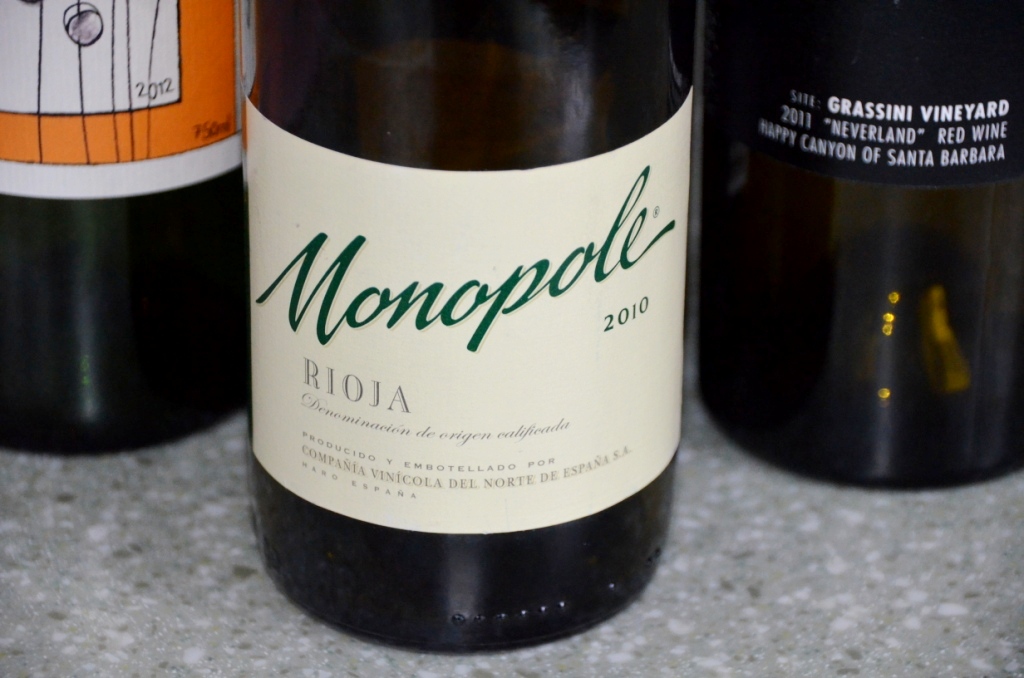
Cvne Rioja Monopole
Meritage time! Yes, I know it is a Thursday, but…
Let’s start with the answer to the wine quiz #114Grape Trivia – Viura / Macabeo.
In this quiz, you were supposed to answer 5 questions about white grape called Viura in Rioja region of Spain, known as Macabeo through the rest of Spain and in Roussillon in France.
Here are the questions, now with the answers:
Q1: Which one doesn’t belong and why:
a. Chardonnay, b. Sauvignon Blanc, c. Trebbiano, d. Verdejo
A1: Trebbiano. The rest of the grapes are growing in Rioja and allowed to be blended with Viura in white Rioja wines.
Q2: True or false: Viura is one of the 10 most planted white grapes in the world
A2: True. According to 2010 data, there were 102,615 acres of Macabeo planted worldwide, which gives it a number 8 spot among the white grapes.
Q3: Wine Spectator calls wines rated in 95-100 range Classic (the highest and the most prestigious category). True or False: there are no Viura/Macabeo-based wines rated in the Classic category
A3: False. I was able to find one (but only one!) white Rioja – 1918 Bodegas Marqués de Murrieta (yep, 1918!) rated at 95 point. But – one is more than none…
Q4: Which grape is missing: Chardonnay, Macabeo, Malvasia, …, Xarel-lo
A4: Parellada. All of the white grapes above are allowed to be used in production of the Cava.
Q5: Fill the gaps: If Macabeo is blended with Grenache Blanc and Malvasia, the resulting wine is most likely a ___from_____ ; if Macabeo is blended with Grenache Blanc and Grenache Gris, the resulting wine probably a ___ from ___.
A5: White Rioja from Spain; a wine from Roussilon in France (can be both red and white).
When it comes to the results, we have a winner! apuginthekitchen answered all 5 questions correctly, so she gets to coveted prize of unlimited bragging rights! Well done!
Now, to the interesting stuff around the vine and the web!
Let’s talk about some useful gadgets and uneasy thoughts. When you are about to step out of the restaurant or the friends house, and before you get into your car, do you ever get that tough question, a whim of the uneasy thought on your mind – “did I drink too much”, or in the semi-scientific terms, “what is my blood alcohol level”? Of course you can rely on the common sense and watch the amount you drink (and you should), or have a designated driver (but still control that amount). But we live in the era of technology, don’t we? Yes we do. And if you happened to have an Android phone or tablet, you will be able to take the guesswork out that “BAC level” estimate, and use a little device called DrinkMate. Plug it into your phone, breathe into it- and an application will tell you exactly what your BAC is. The device is finishing up the Kickstarter campaign (they have already twice exceeded the goal), so jump in if you want one – here is the link with the information.
Next up is one of my very favorite subjects – numbers, and more numbers. Based on the article in Wines and Vines, it appears that the number of the wineries in US exceeded 8,000 – it stands at 8,049 as of September 1, 2014. The biggest growth is happening in Oregon, where the number of wineries increased by 10% in the last year. Still, Oregon is trailing Sonoma County, which has 782 wineries, with total number of wineries in California standing short of half of the total US amount at 3,798. I suggest you will head over to the original article for many more interesting numbers.
In the last week’s meritage I mentioned the Wine Video contest run by the Wine Spectator magazine. The contest concluded, and the winner was the video about Norton, the most American grape. Here is the link to the final contest information.
The last one for today is an interesting article from the new professional wine blog called SWIG. When I started reading the wine blogs years ago, I found it very surprising that many blog posts are written in rather an antagonistic fashion, and critical notes and comments are often flying in multiple directions. This post at SWIG, called “How To Respond to Attacks And Criticism in the Wine Industry”, is a very useful guide to the best course of action if you are the subject of such an attack. The idea can be well extended outside of the wine industry specifically, so it makes a good general reading on the subject.
And we are done here. The glass is empty – but the refill is on its way! Cheers!
Riesling, Oh Riesling – Finger Lakes Riesling Deep Immersion with #WineChat
 There is nothing obscure about Riesling. Unquestionably one of the “big three” white grapes (Chardonnay, Sauvignon Blanc and Riesling). Celebrated through various social media events – “The Summer of Riesling”, “Riesling Month”. An established, de-facto pairing for the Asian or any spicy cuisine for that matter. “Fastest growing white wine in America”. And nevertheless, one of the most unknown, under-appreciated and misunderstood wines, if you ask me.
Walk into any general wine store, and try to find Riesling wines. Are they right in the first aisle, next to the California Chardonnay and Sauvignon Blanc? Nope. Oh yes, a lot of Rieslings come from Europe, so they definitely will be right next to the Burgundy and Loire. Oops – not here again? Here they are – in the back of the back, a side aisle, a small section, ask the sales guy, he will show you. And this is not limited to the wine stores only – most of the restaurant wine lists have one or two Riesling wines, usually in the cheapest group. Similar story in most of our cellars – how many bottles of Riesling do you have on your shelves? A few? And this is despite the fact that Riesling is one of the most age-worthy wines in the world…
So how do these two realities of “one of the fastest growing” and “last row seat” co-exist? I think perception has a lot to do with this. Since Riesling can be sweet, and often it is praised for its sweetness, consumers are stuck in the notion Riesling = Sweet. Take a look at the Wine Spectator ratings – highest rated Kabinett Riesling (typically showing only a hint of sweetness) got 93 points; and then 8 (eight!) Rieslings got 100 points (the absolute top) rating – by the way, it is 8 of only 75 wines which got 100 points from Wine Spectator – and all 8 are Trockenbeerenauslese, the highest sweetness designation. Thus for lots and lots of wine drinkers, Riesling is a dessert wine, and while we love dessert wines a lot more than we are willing to admit, the dessert wine designation means “only for the special moments”.
Can this perception be changed? Of course. How? By educating people. This was one of the reasons for the International Riesling Foundation (IRF) to be created in 2007. The idea behind foundation was exactly this – to make people aware of what Riesling has to offer, and to help people better understand Riesling wines. One of the outcomes of the IRF efforts became the Riesling Taste Profile. According the the specification of that profile, four taste categories are defined – Dry, Medium Dry, Medium Sweet and Sweet. Based on the given set of parameters (sugar, acid and pH), the IRF developed a technical chart which allows winery to estimate how the consumers will likely perceive the wine across the 4 defined taste categories. After that, the winery can print that taste profile on the label (you can see an example at the very beginning of this post) – and then the consumer can quickly set the expectations just by glancing at the label.
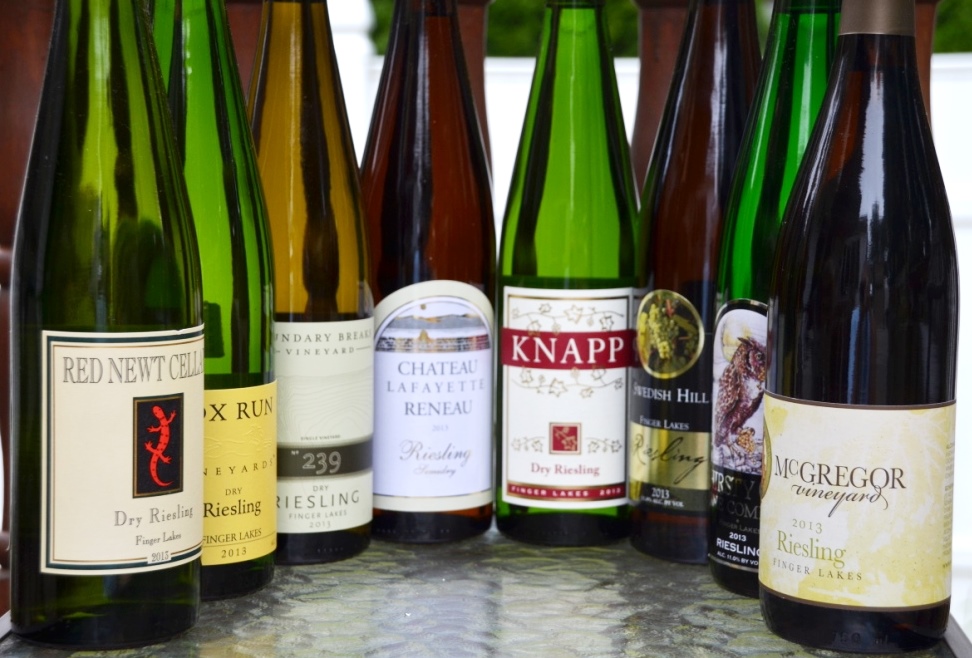
Well, it is good to have an informative label, but when it comes to the wine world, seeing doesn’t really equates to believing. But tasting does. This is where the #winechat comes to the rescue. Last week, a group of enthusiastic oenophiles had a chance to dive deeply into the world of 2013 Finger Lakes Riesling, by tasting through the 8 different wines and sharing the excitement with each other. And the wines were definitely very exciting, full of pleasure in every sip. Finger Lakes region in New York deserves all of your attention – but I already shared my thought about the region at length in the two earlier posts this year, so I will have to refer you to those (first Finger Lakes #winechat and the post about Bellangelo wines).
Below are my notes regarding the individual wines. These notes are based on the longer evaluation of the wines than we would otherwise have during the 60 short minutes of the #winechat, so if you are talking part in another #winechat session on that subject, I suggest you will start tasting your wines now. One last note regarding the wines. As this is my third encounter with the Finger Lakes wines this year, I would like to offer two “bits of wisdom” based on that experience:
- Don’t over-chill.
- Let ’em breathe.
Terroir, minerality are important components of Finger Lakes wines – by serving the wines a bit warmer than you normally would, say at around 50F, and letting them breathe for may be an hour, you will do yourself a big favor and will find a lot more pleasure in every sip. At least I did. Without further ado, here are the 8 beautiful wines:
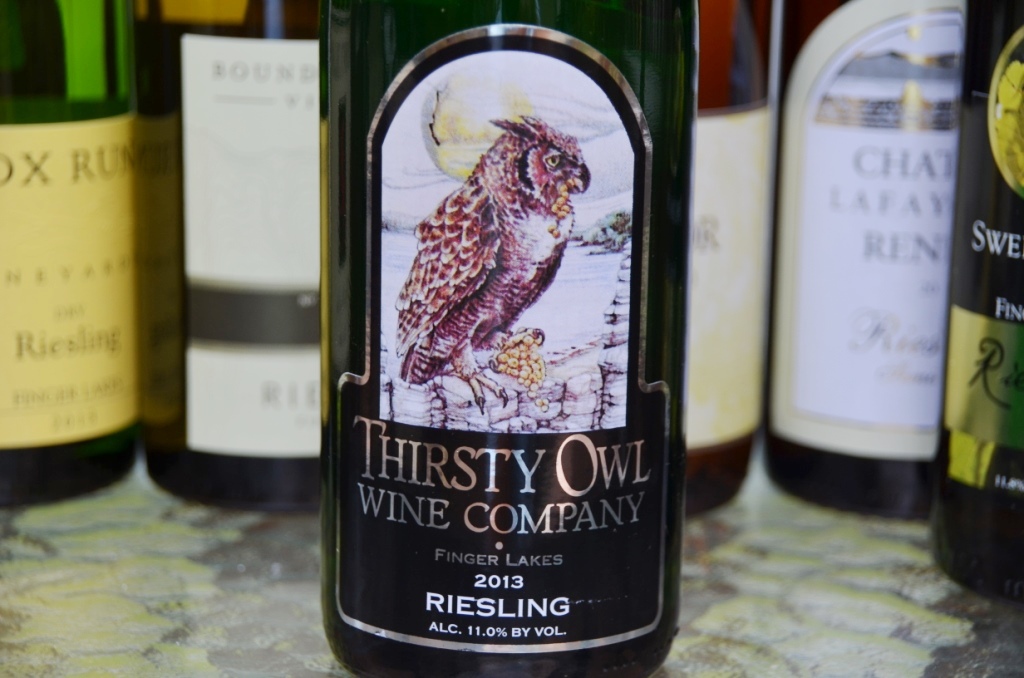 2013 Thirsty Owl Wine Company Riesling Finger Lakes (11.0% ABV, $14.95). IRF scale not shown. On the nose, touch of minerality (gunflint), apricot. Overall nice and restrained. Palate: Clean , crisp acidity, touch of honeysuckle, golden delicious apple. Medium finish, overall very refreshing. Drinkability: 8-
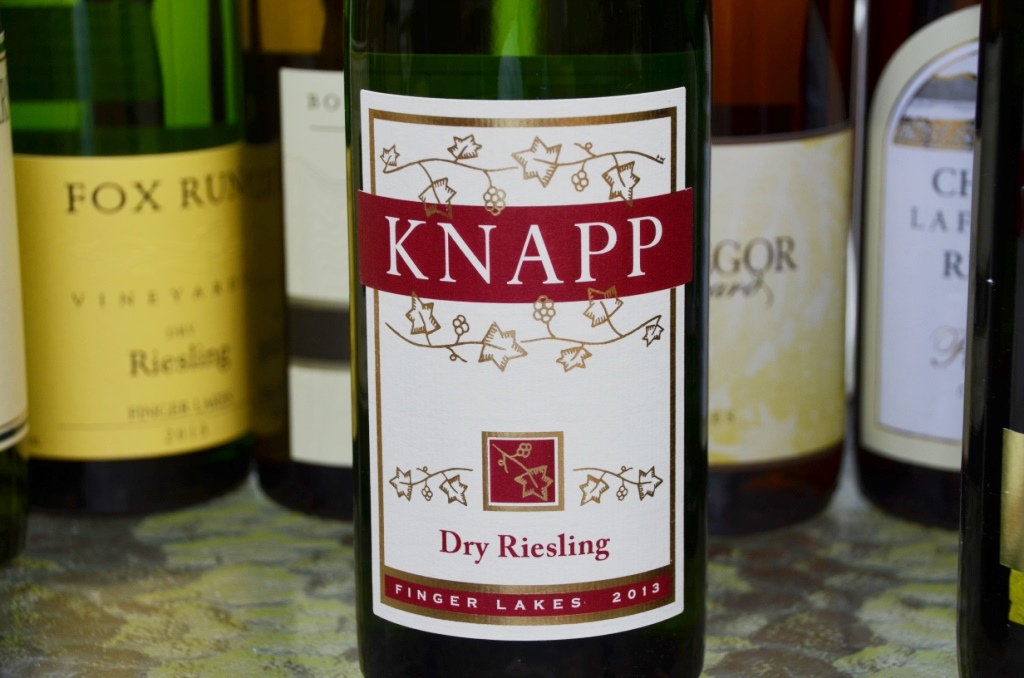 2013 Knapp Dry Riesling Finger Lakes (12%ABV, $15.95) – On the IRF scale, this wine is at the lower part of the Medium Dry style. White apples, honey and lemon on the nose. On the palate, candied lemon peel with fresh lemon juice, complemented by the cut-through acidity. Medium finish, overall a nicely balanced wine. Drinkability: 7+
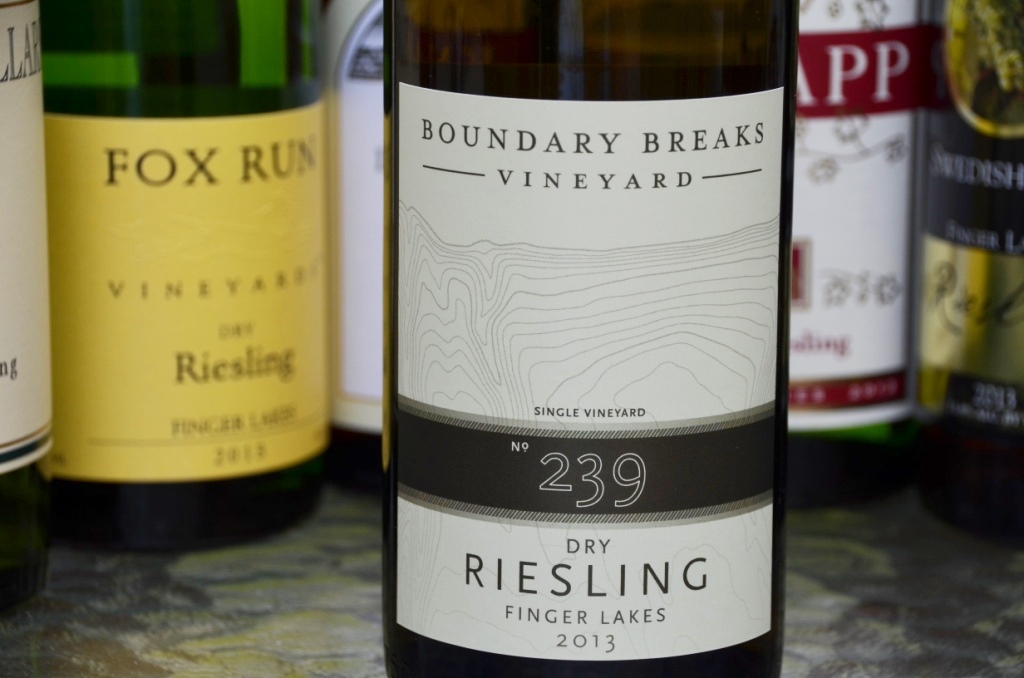 2013 Boundary Breaks Vineyard #239 Dry Finger Lakes (11.6% ABV, $19.95) – right in the middle of “dry” on the IRF scale. This is my second encounter with Boundary Breaks Riesling, and I find that this wine needs breathing time to show itself. Initially, closed on the nose, then opening to show distant hint of lemon, touch of minerality. On the palate – wave of sweetness first, with cut through acidity, lingering for a bit and then finishing dry. Tasting at a later time adds some fresh apple and more minerally undertones. Drinkability: 7+
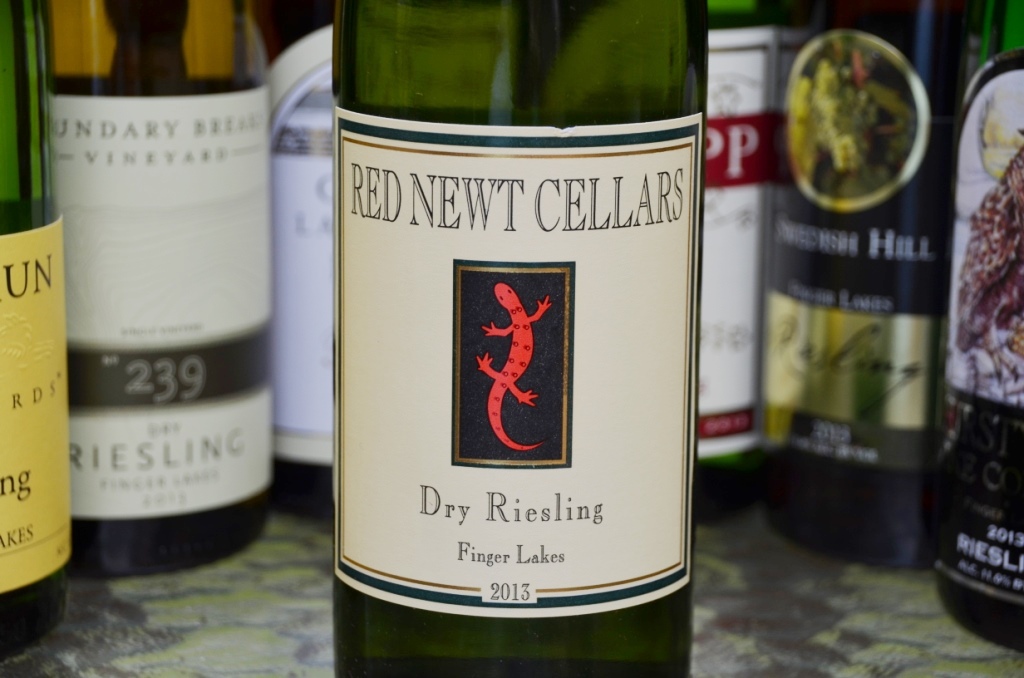 2013 Red Newt Cellars Dry Riesling Finger Lakes (11.8% ABV, $17.00) – right in the middle of “dry” on the IRF scale. On the nose, shows minerality, touch of fresh grass. hint of fresh lime, overall very intense. On the palate – nutmeg, hint of mango, fresh herbs and lemon, crisp, dry. Excellent balance and overall very pleasant. One of my very favorites from the tasting. Drinkability: 8
 2013 Swedish Hill Riesling Finger Lakes (11.8% ABV, $15.99) – IRF scale not shown. Fresh white fruit on the nose, touch of candied lemon. Nose quite intense. On the palate – rich, velvety, ripe peach with touch of fresh lemon, clean acidity, excellent finish (medium plus). Texturally quite unique. Drinkability: 8-
 2013 Fox Run Vineyards Dry Riesling Finger Lakes (11% ABV, $17.99) – According to IRF scale, the wine is right on the border between Dry and Medium Dry. On the nose, subdued notes of peach and honey, touch of lemon, intense. Palate is elegant, mineral-driven, with green apple, touch of Meyer lemon, overall dry and very balanced. Drinkability: 8
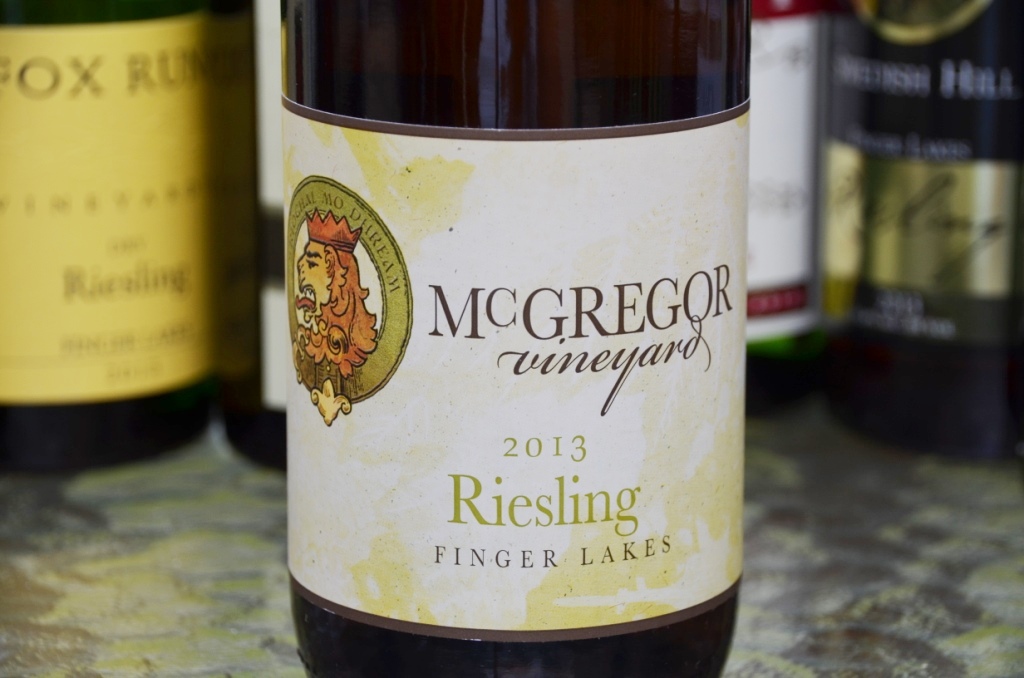 2013 McGregor Vineyard Riesling Finger Lakes (10.5% ABV, $19.99) – IRF scale is not used. A lot is happening on the nose – cantaloupe, honeysuckle, candied orange, openly sweet and intense. On the palate – ripe apricot, honey, ripe white apple, elegant acidity, perfectly refreshing, very good balance. Drinkability: 8-
 2013 Chateau Lafayette Reneau Riesling Semidry Finger Lakes (11.5% ABV, $14.99) – IRF scale is not used. On the nose – rhubarb, floral, touch of grass, white apple. On the palate – honeysuckle, ripe peach, touch of minerality and grass, lemon zest, clean acidity, excellent balance, soft and round mouthfeel. Another top favorite from the tasting. Drinkability: 8
Here we go – 8 great wines, and the region for you waiting to be discovered. September is still on, and it is an official Finger Lakes Riesling month – make an effort to find your new love – a versatile ( and affordable!) wine which you can drink now or put away to enjoy in a few years (or 10 or 20, this is entirely up to you). Cheers!
Weekly Wine Quiz #114: Grape Trivia – Viura / Macabeo
Viura/Macabeo grapes. Source:Wikipedia
The Wine Quiz series is not meant to intimidate. The whole idea here is to have fun and learn something new. When answering the questions, it is fully encouraged to use all available sources of information, including Google or any other search engine. There are no embarrassing answers – the most embarrassing thing is not giving it a try…
Welcome to your new wine quiz!
We are continuing our grape trivia series, and today’s subject is the white grape Viura, also known as Macabeo.
I know what you are thinking – we are going from “not so popular”, like we did with Müller-Thurgau and Pinot Blanc, to practically obscure. You probably want to say “I never heard of the grape and never had any wine made with it!”. Well, let’s see. Have you had any Cava, a sparkling wine from Spain, during the last summer? Macabeo is a part of the blend. How about white Rioja? If you actually never had white Rioja, you have to correct it as soon as possible (go on, run to the store, I will wait here). Look for Cvne Monopole Rioja (100% Viura), the oldest white wine in Spain, produced since 1915, or for any of the R. Lopez de Heredia whites, like Viña Tondonia or Viña Gravonia – those wines might change your view of the world forever (well, the wine world, of course). But – let’s get back to the grape itself.
Viura is the name of the grape used in Rioja (interesting fact: until 1975, there were more white wines produced in Rioja than the reds). The same grape is known in the rest of Spain as Macabeo, and as Macabeu and Maccabéo in Roussillon in France. Viura has a few interesting traits, which make it to stand out among others white grapes. First, it is considered to be resistant to Phylloxera, and it was widely planted in Spain after the Phylloxera devastation. It also can withstand oxidation better than many other grapes, which makes it a favorable variety for the prolonged barrel aging, where some exposure to oxygen is inevitable. At the same time, as Viura grows in the very tight clusters, it needs hot and dry climate to fully ripen, otherwise it is susceptible to mildew and rot – to get the best results the grape often requires extensive pruning and lots of attention in the vineyard. But – good white Rioja is a magnificent wine, with incredible aromatics and delicious bouquet, and can age and gain complexity for decades – it is well worth the trouble! In addition to white Rioja, Macabeo also plays main role in production of Cava, famous Spanish Sparkling wine. And we shouldn’t forget the Roussillon region in France – Macabeo is an important contributor to many different types of wines produced there.
And now, to the quiz!
Q1: Which one doesn’t belong and why:
a. Chardonnay
b. Sauvignon Blanc
c. Trebbiano
d. Verdejo
Q2: True or false: Viura is one of the 10 most planted white grapes in the world
Q3: Wine Spectator calls wines rated in 95-100 range Classic (the highest and the most prestigious category). True or False: there are no Viura/Macabeo-based wines rated in the Classic category
Q4: Which grape is missing: Chardonnay, Macabeo, Malvasia, …, Xarel-lo
Q5: Fill the gaps: If Macabeo is blended with Grenache Blanc and Malvasia, the resulting wine is most likely a ___from_____ ; if Macabeo is blended with Grenache Blanc and Grenache Gris, the resulting wine probably a ___ from ___.
Good luck, enjoy the quiz and your weekend! Cheers!
Wednesday’s Meritage – Wine Quiz Answer, Few Words About Wine Blogging, FLX Riesling #WineChat Tonight and more
Meritage time!
Let’s start with the answer to the wine quiz #113: Grape Trivia – Pinot Blanc.
In the quiz, you were supposed to answer 5 questions about white grape from the Pinot family, Pinot Blanc.
Here are the questions, now with the answers:
Q1: Below is the list of some of the countries growing Pinot Blanc. Sort this list by the area plantings of the Pinot Blanc, from the lowest to the highest:
a. Austria, b. France, c. Germany, d. Italy
A1: Might come as a bit of a surprise, but the correct sequence, based on the 2010 data, is France (3,230 acres), Austria (4,785), Italy (7,715) and Germany (9,675)
Q2: Wine Spectator calls wines rated in 95-100 range Classic (the highest and the most prestigious category). True or False: there are Pinot Blanc wines rated in the Classic category
A2: True. By a very slim margin, but there are 2 Pinot Blanc wines with the 95 rating (there are plenty in the Outstanding, 90-94 range). As a matter of fact, one of those 95 pointers comes from the New World – 2009 Erath Pinot Blanc Dundee Hills Sweet Harvest from Oregon got that “classic” rating in April 2011 issue.
Q3: In Europe, Pinot Blanc was often confused with and often treated during winemaking the same as _______
A3: Chardonnay. Historically, Pinot Blanc was growing side by side with Chardonnay, and was often confused for one. Similar to Chardonnay, it can be made in both unoaked and oaked styles with equal success.
Q4: In California, the grape which was brought in as a Pinot Blanc, in reality happened to be ____?
A4: Melon de Bourgogne, French grape used in the production of Muscadet wines.
Q5: True or False: from 2000 to 2010, worldwide plantings of the Pinot Blanc dropped more (percentage-wise) than the plantings of its sibling, Pinot Gris, have increased.
A5: False. From 2000 to 2010, the plantings of Pinot Blanc dropped by about 15%, while the plantings of Pinot Gris more than tripled worldwide.
When it comes to the results, I’m glad to say that the number of players took a stub at this quiz – but, somehow the quiz happened to be somewhat difficult (I usually miss the difficulty in my own assessment, unfortunately). Nobody was able to answer all the questions correctly, but I would like to acknowledge Next Stop TBD who got correct answers for 3 questions out of 5. Thank you all for playing!
Now, to the interesting stuff around the vine and the web!
Alfonso Cevola, who writes an excellent blog “On the wine trail in Italy”, shared his sad outlook on the wine blogging community with the post titled Wine Blog Death Watch: Two wine blogs that are bright lights in a forest of darkness. Well, it is not all doom and gloom in that blog post. First, Alfonso introduces two new wine blogs which he likes. And may be most importantly, speaking from the 9 years of blogging experience, he also gives an advice to the wine bloggers. His advice is very short and concise, and I would dare to say, literally the best you can get. Alfonso has only six bullet points, so taking just the key items themselves, here is a summary of what he suggests: “Write for yourself. Read great writers. Do not look at stats. Write consistently. Don’t follow the trends. Find your niche.” Touche. I can only add “amen”.
Tonight we will take a deep dive into the world of Finger Lakes Rieslings – the #winechat with 8 producers, 8 excellent wines from the 2013 vintage – join the conversation! The logistics are as usual – at 9 PM eastern, open a twitter client and search for #winechat – from there, the conversation is on, and don’t forget to use hashtag #winechat on all your tweets.
Do you know that when you drink the wine (or any alcohol for that matter), you should have water in between the glasses? It supposed to prevent hungover (some of the latest research suggests that it might not be true, who knows), and water is generally good for you. Some of the creative types designed nested glasses which would simplify this task for you – both wine and water are readily in your hand at any time, wine glass on top of the water glass. You can read about this glasses in the Dr. Vino’s blog post.
Got a bit of time on your hands? Wine Spectator is running an annual wine video contest, and you can help to decide who made the best video. Wine Spectator selected 9 videos as the finalists, so your job would be simple – watch those videos and decide who will be the Grand Prize winner. Here is the link to the page for you to watch the videos and take vote.
And we are done here. The glass is empty – but the refill is on its way! Cheers!
Last Bottle Sign Up ($10 credit)





