Archive
Parent, Secret Power, Unsung Hero
You just read the title of this post. What do you think we will be talking about? Of course, it can be a story about a person who had all those great qualities – but this is the wine blog, right? Can all those qualities belong to a grape?
Let’s see. Parent – this is simple. When two grapes are crossed, they will give birth to the new grapes, and, of course, we can call both of the original grapes parents. Unsung hero? This is typically someone who can quietly come to the help of others and solve the big problem or save a life. Apart from saving a life, a grape can be very instrumental in assisting others to do their best, bringing out their best qualities while remaining literally unknown. For example, helping to make delicious wine as part of the blend. Now, the secret power? Every once in a while a person can be on a secret mission and save the world, all alone, “solo” – James Bond meets Wonder Woman, anyone? Okay, okay, I’m only talking about making delicious wines, all by itself, solo.
Now, as we are talking about the grape, can you think of one which would fit this description? There are thousands of grapes used in winemaking, so theoretically, there is more than one grape that will fit this profile, but I would dare to say that one grape might stand above others in all these roles. Know what I’m about to say? There is a good chance you do – you probably guessed it already – I’m talking about Cabernet Franc.
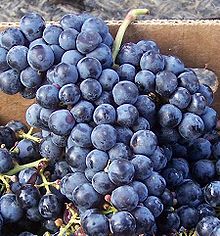
Cabernet Franc grapes, as shown in Wikipedia
It is hard to tell when Cabernet Franc became known as a grape variety. It is definitely old, probably not as old as Chardonnay, which can trace its history all the way to the 11th century, but still older than most other grapes. While Cabernet Franc is typically associated with Bordeaux and Loire, it appears that it originated from the Basque Country in Spain, from where it spread through the south of France and reached Bordeaux.
How Cabernet Franc is a Parent? Based on DNA research, Cabernet Franc was a parent of Cabernet Sauvignon, Merlot, and Carménère – a good group of kids, isn’t it?
How is it an unsung hero? Cabernet Franc ripens at least one week earlier than Cabernet Sauvignon. It can reach phenolic ripeness in the years when Cabernet Sauvignon will not, and thus in the blend, it will be a savior – this is why it was always so loved in Bordeaux, an insurance policy of sorts. While the tasting profile of Cabernet Franc is somewhat similar to Cabernet Sauvignon, it is typically softer and less tannic than its more famous offspring, so it makes the blend more approachable.
The Secret Power? When used in European wines, it is often unknown that the wine is made out of Cabernet Franc. For instance, Chateau Cheval Blanc, one of the most famous Bordeaux wines, is made predominantly out of the Cabernet Franc – but this is not widely known outside of the circle of wine aficionados. How about Olga Raffault Chinon? Chinon, a region in the Loire, is one of the best sources of delicious Cabernet Franc wines, but you have to simply know that. Coming to the new world, Cabernet Franc is not so secret anymore, as you can see it on the label, but I still can let you in on one little secret – this is one of the most versatile red grapes you can find. Talking about the United States, for instance, it is practically the only red grape which can consistently deliver delicious red wines both in California and in New York – and we don’t need to be so confined – Washington and Oregon are doing quite well with the Cabernet Franc, and so do Massachusets, New Jersey, and even Rhode Island. And let’s not forget Canada, where the grape goes beyond dry reds and offers some of the most stunning dessert wines – Cabernet Franc Ice Wine.
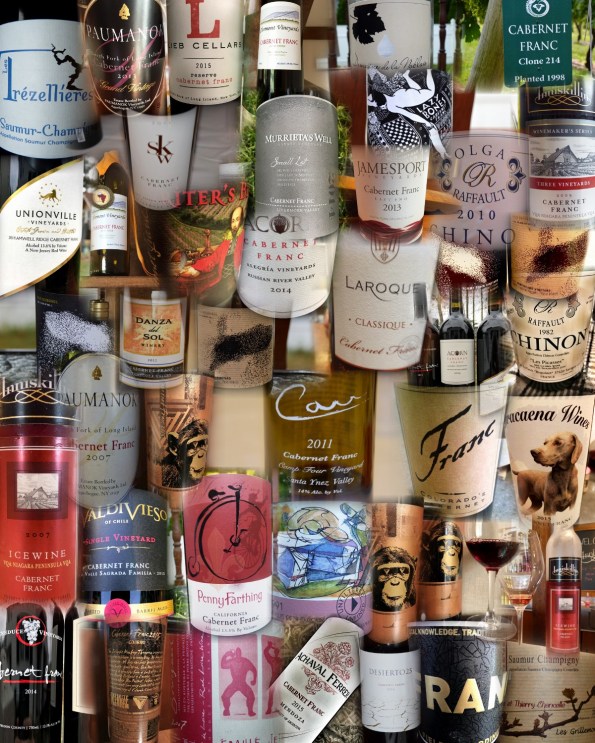
December 4th is when we celebrate this unique variety with the #CabFrancDay. The whole Cabernet Franc extravaganza is a product of the obsession of one person – Lori Budd, who singlehandedly started this grape holiday in 2015. Lori expresses her love for the grape not just by talking about it – she also makes her own Cabernet Franc wine in Paso Robles under the Dracaena Wines label. This year I was able to try the Dracaena Wines Cabernet Franc at the wine bloggers conference, and I can tell you that while I’m very particular about Cabernet Franc wines (prefer more old-world style than new), I really enjoyed Lori’s rendition.
Grape holidays are always fun – you have a good reason to open a special bottle that was stashed in the corner, and share your love for the grape with the world. Cabernet Franc’s celebration is important beyond that simple joy. Take a look at the Wikipedia article – it says that Cabernet Franc is “principally grown for blending with Cabernet Sauvignon and Merlot in the Bordeaux style, but can also be vinified alone”. The Vins de Bordeaux website says that Cabernet Franc “is the ultimate complimentary grape variety”. While this is true, Cabernet Franc is great for blending, this is also the grape which is excellent by itself, and we should recognize and acknowledge that, and change that perception of a “blending grape”.
This year, I had a great experience with beautiful Cabernet Franc wines from all over the world – 1982 Olga Raffault Chinon, Achaval-Ferrer Cabernet Franc from Argentina, Lieb Cabernet Franc from Long Island, New York, Dracaena Cabernet Franc from Paso Robles, and many others. But to celebrate Cabernet Franc Day in style, I had an opportunity to open 3 more wines especially for the holiday – for one, representing both coasts of the USA – and, surprisingly enough, representing both styles of Cabernet Franc, the old world and the new world.


2014 ACORN Alegría Vineyards Cabernet Franc Russian River Valley (12.5% ABV, $38, 93% Cabernet Franc, 2% Malbec, 2% Merlot, 2% Petit Verdot, 1% Cabernet Sauvignon and Tannat, 18 months in barrel) was uniquely Californian in style – in many ways. Alegría Vineyards are Certified Sustainable, which is really the way now for many vineyards in California, with a lot of manual labor-intensive effort going into helping grapes to achieve their best potential. All the wines ACORN produces are made as field blends, where different grapes are co-fermented together, according to the century-old field-blend vineyard traditions. The result was beautifully balanced, fruit-forward wine, boasting pure cassis flavors, supported by the medley of the red fruit and perfect acidity. The wine was clean and delicious.
Two more wines were a total surprise for me. These two Cabernet Franc wines were both made in New Jersey. I have very little experience with New Jersey wines, and that experience was not necessarily all positive, so yes, I didn’t have much expectation as I was pulling the corks, just a hope that the wines would be at least palatable.


While Unionville Vineyards were planted only in 1987 and the winery opened its doors to the public in 1993, the land where the vineyards a located was farmland even before the 1850s. As farmland, it went through many different plantings and such – peach orchard, apple orchard, dairy farm, grains, and horses – but returned to the fruits with the first grapevine plantings in 1987 – this is when the story of Unionville Vineyards started.


Beneduce Vineyards is located in the same Hunterdon County as Unionville Vineyards. Chardonnay, Riesling, and Gewurztraminer are the main white grape varieties at Beneduce Vineyards, and the list of reds includes Pinot Noir, Blaufränkisch and, of course, Cabernet Franc.
Celebrate Zinfandel – 2017 Edition
– “Would you like a glass of Zinfandel”?
– “ahh, sorry, I don’t drink sweet wines”
Have you ever witnessed such dialog, at a bar, restaurant or a tasting? For all of us, oenophiles, the word “Zinfandel” has only one meaning – dense, smokey, brooding, concentrated red wine, with a good amount of fruit and spice. However, for many wine drinkers, the descriptor associated with the Zinfandel is “white” – and the white zinfandel, indeed, is a sweet wine, and it still confuses people.
Zinfandel is often called “an American grape”, despite the fact that it came to America from Croatia (or maybe Italy), where it had a few names on its own. From point of view of the science, Crljenak Kaštelanski, Tribidrag, Primitivo and Zinfandel are all different names for the same grape. From point of view of the producers – not so much, but this is not the subject of to0day’s post.
Zinfandel is really an American phenomenon. It shows the best results in California, and there it can be produced pretty much in any AVA. Napa Valley and Dry Creek Valley are considered two of the top AVAs for Zinfandel. However, last year I visited Lodi as part of the wine bloggers conference, and I absolutely fell in love with the Zinfandel wines Lodi produces.
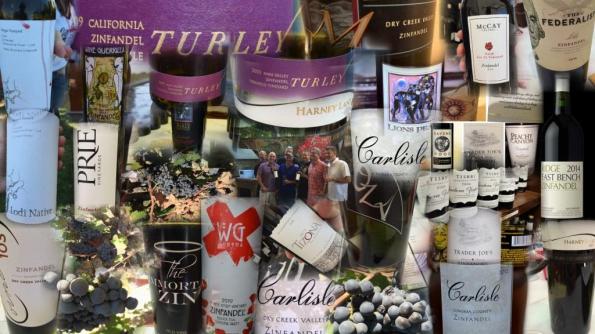
Forty percent of all Zinfandel in California is growing in Lodi, which is rightfully crowned as “Zinfandel Capital”. Lodi is a home to some of the oldest Zinfandel vineyard, dating back to 1888. Lodi also has 750 growers tending to 110,000 acres of the vines. In 2013, winemakers in Lodi started the project called “Lodi Native” – 6 winemakers set the minimalist rules to how the wine can be made, and all 6 winemakers followed the same rules regarding fermentation, use of oak and ageing, so you can taste the difference in the vineyards which bore fruit, unadulterated. Last year I had an opportunity to taste all of the Lodi Native Zinfandel wines, which were pronouncedly different – hopefully, I will still write that post one day…
Good Zinfandel wines might be called the most playful red wines – my favorite descriptor for Zinfandel is “smokey raspberry”, and I’m always very happy to find that in the glass. Even when the label says “Zinfandel”, there are typically few other grapes added to the blend, often in minuscule quantities – Petite Sirah, Cinsault, Alicante Bouschet are all popular blending partners of Zinfandel. There are lots of Zinfandel producers, but I have my own list of personal favorites which I’m happy to share, in no particular order: Carlisle, Rober Biale, St. Francis, Turley, Harney Lane, Bruce Patch, Ridge.
How did you celebrate Zinfandel Day? Who is your favorite producer? Cheers!
Rioja Versus Rioja – Will One Tempranillo More?
The time has come for a battle, where the brother will go against the brother and the blood will spill … – oops, let’s cull the drama before it sets in – it is the wine we are talking about, and if anything will be spilled, it will be the wine – but I promise to be very careful, as red wine is not easy to get off the clothes.
Today, in honor of the International Tempranillo Day, we will put glass to glass some of the best of the best in Rioja’s World. These wines are truly the siblings (brothers or not), as both wines are produced by Compañía Vinícola del Norte del España (the Northern Spanish Wine Company), also known as CVNE, and also sometimes referred to as Cune, due to an interesting style of writing used on the labels.
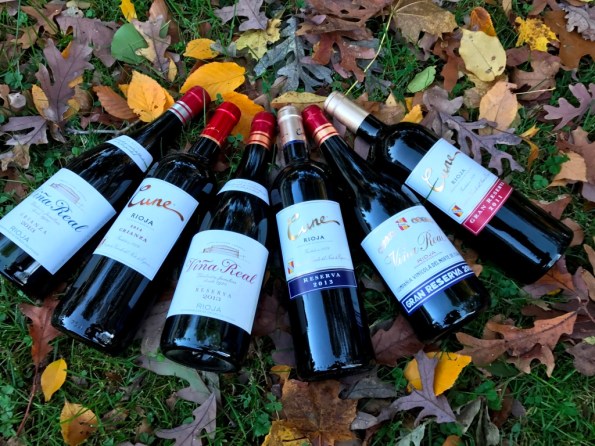
Wines were produced in Spain forever. However, the story of Rioja as we know it, started in the late 19th century, after phylloxera epidemic wiped out most of the vines in Bordeaux, but England’s thirst for Claret Bordeaux was so famous for, was at its pick. Producers in Rioja wanted to become a new source of Claret, and some of the most ambitious producers even set up their new operations right by the train station in Haro, to ensure the best transport for their wines (you can read more here).
CVNE was created by two brothers in 1879, and the ownership stays in the family even today. In 1920, Viña Real line of wines was started to produce Rioja in new, modern style. CVNE owns about 1360 acres of vineyards, located in Rioja Alavesa and Rioja Alta. Both appellations have similar soils and Atlantic coastal climate exposure, however, Rioja Alta vineyards are located at the higher altitudes than Rioja Alavesa, which shows in the resulting fruit.
Before we will enter the battle, we need to establish some ground rules, to make sure that our fighters are in the same “weight category”. The rules are not difficult: there are 4 main varieties which can be used in Rioja – Tempranillo, Garnacha, Graciano and Mazuelo (Carignan). Together, these 4 varieties should represent at least 85% of the blend or 95% of grapes are destemmed; there are few other grapes allowed to be used in the leftover percentage. Crianza wines should be aged for at least 2 years ( 6 months in the cask); Reserva – 3 years (12 months in the cask); Gran Reserva – 5 years (18 months in the cask).
Okay, now that we set the rules, let the fight begin.
Battle Crianza:


2014 Cune Crianza Rioja DOCa (13.5% ABV, $13, 85% Tempranillo, 15% Garnacha and Mazuello, appellation Rioja Alta)
C: Garnet
N: earthy smell, freshly crushed blackberries, acidity, cedar box,
P: medium body, pronounced minerality, restrained fruit, clear acidity, tart cherries, soft, round, hint of tobacco, asking for food
V: 8-, restrained and tart, definitely improved after a few hours of breathing
2013 Viña Real Crianza Rioja DOCa (13.5% ABV, $15, 90% Tempranillo, 10% Garnacha, Graciano and Mazuello, appellation Rioja Alavesa)
C: Garnet
N: surprisingly different, dark fruit, touch of tobacco, touch of sweetness
P: medium+ body, firm structure, cherries and tart of cherries pit, even brighter acidity than a previous wine, more present mouthfeel
V: 8-, a touch fruitier and more round than previous wine. Different but equally good.
Conclusion: Tie. You can definitely taste the difference – Cune Crianza is more restrained and tight, and Viña Real is more round and fruity from the get-go. Slight difference in age and vintage might play a role. The wines would ask for a different food, but otherwise, they are equally good wines.
Battle Reserva:


The Reservas match fair and square – same vintage, same age in barrel, very similar grape composition
2013 Cune Reserva Rioja DOCa (13.5% ABV, $28, 85% Tempranillo, 15% Garnacha, Graciano and Mazuello, appellation Rioja Alta)
C: dark garnet
N: medium+ intensity, leather, touch of sweet plum, cedar box, very inviting
P: medium weight, tart, acidic, a bit of sour cherries, explicit tannins. Needs time.
V: started opening after one hour in the open bottle. More fruit showed up, perfect structure, very pleasant. Excellent overall. 8+/9-
2013 Viña Real Reserva Rioja DOCa (13.5% ABV, $32, 90% Tempranillo, 10% Garnacha, Graciano and Mazuello, appellation Rioja Alavesa)
C: dark garnet
N: medium- intensity, touch of the forest floor, mushrooms, tobacco, eucalyptus
P: cherries, cigar box, medium+ presence on the palate, crisp acidity, very pronounced French oak tannins, needs a lot of time
V: more approachable than the previous one, but still should improve with time – get a case and forget it. Also a great improvement after an hour. Wow. Superb. 8+/9-
Conclusion: Advantage Viña Real. The wines are clearly stylistically different. Appellation might play a role, and the winemaking technique, of course. I slightly preferred Viña Real, as it was a bit more round versus more austere Cune.
Battle Gran Reserva:


Here we have different vintages (both considered excellent, but I think 2010 has a slight edge up over 2011), different appellations and different grape compositions.
2011 Cune Gran Reserva Rioja DOCa (13.5% ABV, $47, 85% Tempranillo, 10% Graciano, 5% Mazuello, appellation Rioja Alta)
C: dark garnet, practically black, with Ruby rim
N: dark fruit, roasted meat notes, sage, eucalyptus
P: forthcoming tannins, tar, cherry, tart, with lip-smacking acidity, really long finish.
V: 8+, within 20 minutes of opening, not ready even remotely. After about 3 hours in the open bottle, the wine became opened up enough to become delicious.
2010 Viña Real Gran Reserva Rioja DOCa (13.5% ABV, $47, 95% Tempranillo, 5% Graciano, appellation Rioja Alavesa)
C: dark garnet, just a shade lighter than the previous wine
N: more open than previous wine – blackberries, graphite, pencil shavings, cedar box, iodine
P: incomparably more drinkable, fresh cherries, open, bright, perfect structure, eucalyptus, nicely integrated tannins
V: 8/8+, you feel the need for time, but the wine is a lot more approachable
Conclusion: Advantage Cune. First, nobody should drink 2010 Gran Reserva now. It is simply a waste. Buy it at a great price, and put it aside for another 15-20 years, especially from the outstanding vintage such as 2010. Just to explain the result here, I slightly preferred the firm structure of Cune versus fruity appeal of Viña Real.
As you can see, we didn’t find a winner of our Tempranillo battle – all 6 wines Tempranillo perfectly, as one would expect from such a great producer as CVNE.
I wish wine would be the only real battle we ever have to fight – wouldn’t that be great? Enjoy your glass of Tempranillo, no matter where it came from and celebrate the noble grape of Spain! Cheers!
Time to Celebrate Grenache – 2017 Edition
This year, I managed to miss lots of the “grape day” celebrations. Well, life takes precedence. But – we have enough grapes to celebrate, and I’m glad to partake in festivities in honor of one of my most favorite grapes – Grenache, a.k.a. Garnacha, and sometimes a.k.a. Garnatxa (hmmm, should I also mention Cannonau?).
Grenache is one of the most versatile grapes I know, and the word “versatile” here truly has multiple meanings. Grenache does perfectly in the “old world”, producing delicious wines in France (think Southern Rhone and Languedoc), all over Spain, and Sardinia in Italy. It reaches incredible heights in the “new world”, producing cult level wines in Australia and the USA (Sine Qua Non, anyone?). Grenache wines are delicious in its purity, made out of 100% of the grape; Grenache also performs splendidly in a band, often known as GSM (Grenache-Syrah-Mourvedre) blend, where it can play multiple roles, from leading to minor and supportive. Yes, it is one versatile grape.
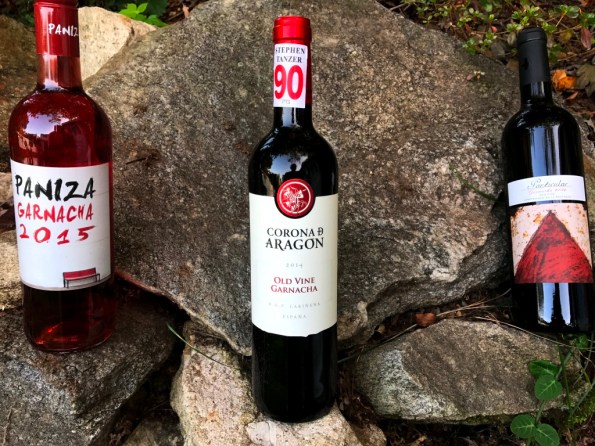
When it comes to Grenache, especially on its special day, the province of Aragon in Northern Spain deserves special mention. It is widely considered that the Kingdom of Aragon was a birthplace of Grenache, and from there the grape took on to Italy and France, before conquering the rest of the world. In Aragon, 4 wine regions – DOs of Cariñena, Somontano, Calatayud, and Campo de Borja – produce what we can call a “classic Grenache” (I guess “classic Garnacha” would sound more appropriate), boasting some of the oldest Grenache vines in the world.
We can’t celebrate with an empty glass, can’t we? For this special day, I would like to share with you the notes for 3 of the “classic Garnacha” wines, coming exactly from the DO Cariñena in Aragon:


2015 Paniza Garnacha Rosé Cariñena DO (13% ABV)
C: deep pink
N: fresh strawberries, berries and leaves
P: fresh strawberries all the way, succulent, generous and round. Perfect presence in your mouth.
V: 8-/8, delicious wine
2014 Bodegas San Valero Particular Garnacha Cariñena DO (14%ABV)
C: garnet
N: fresh plums, mocha, eucalyptus, inviting
P: tart cherries, clean acidity, fresh present tannins, touch of blackcurrant, a bit of white pepper
V: 8-, perfectly playful, very good wine.
2014 Corona D Aragon Old Vine Garnacha Cariñena DO (13.5% ABV)
C: very dark garnet, practically black
N: sandalwood, spices, dark chocolate, touch of roasted meat
P: medium body, good acidity, touch of cherries, fresh, hint of dark chocolate
V: 7+/8-, nice rendition
What is in your glass? How do you celebrate the noble grape? Happy Grenache Day! Cheers!
Geekiest Way to Celebrate #MalbecWorldDay – #WineStudio Blind Tasting with Achaval-Ferrer
 Starting in 2011, April 17th is the day when we celebrate Malbec – one of the noble French grapes, which almost disappeared in France, but found its new life in Argentina, where it became a star. I don’t want to bore you with the Malbec history – you can read it on your own in many places, including few posts in this very blog (here is a bit about the history of the Malbec grape, and here you can take a Malbec quiz).
Typical “grape holiday” celebration usually includes an opening of an upscale (high end, memorable, etc) varietally correct bottle. Our today’s celebration was a bit different, as it was based on the concept of pure, unadulterated, geeky wine lovers’ fun – a blind tasting, and, of course, guessing.
This blind tasting was a part of the educational program run by the WineStudio during the month of April. In case you are not aware of the Wine Studio, it is a brainchild of Tina Morey, and it is wine education and marketing program which helps to expand people’s wine horizon and help them discover new regions, new grapes and new wines. April program, quite appropriately (April is designated as a Malbec wine month), was focused on the wines of Achaval-Ferrer, one of the very best wine producers from Argentina.
To facilitate the blind tasting, all the participants received a set of two bottles, some wrapped in colorful foil, and some in the black plastic – mine were the second type:


About an hour before the session I opened the bottles to let the wines breathe a little, as it was suggested by the organizers. And then the session started.
Of course, this was not the usual blind tasting. There are many ways to run the blind tasting, some of them quite extreme – for instance, tasting the wine without any known information from the black glass – an extreme sensual challenge. Going less extreme, in a typical blind tasting you will have at least some kind of limits installed – Pinot Noir grape, for instance, or wines of Pauillac. Our #winestudio blind tasting was on one side a lot less challenging, as we knew that the wines were made by Achaval-Ferrer, so we didn’t expect to find Petite Sirah in any of those bottles, and we even knew the vintage years, 2013 and 2012. At the same time, for sure for me, it was almost more challenging, as I was trying to guess the wines based on what I knew about Achaval-Ferrer and thinking about what they might want to showcase in the tasting, instead of focusing on the actual wines.
 We were asked to evaluate wines using WSET Level 3 tasting grid (you can find it here if you are curious). Here is a summary of my tasting notes – I’m distinguishing the wines by their vintage:
Wine 2013
APPEARANCE
Clarity: clear
Intensity: deep
Colour: garnet
NOSE
Condition: clean
Intensity: medium
Aroma characteristics: touch of funk, mint, underbrush, blackberries
Development: youthful
PALATE
Sweetness: off-dry
Acidity: medium+
Tannin: medium
Alcohol: medium
Body: medium+
Flavour intensity: medium+
Flavour Characteristics: cassis, eucalyptus, mint, blackberries
Finish: medium-
CONCLUSIONS
Quality level: outstanding
Level of readiness for drinking/potential for ageing: can drink now, but has potential for ageing
Wine 2012
APPEARANCE
Clarity: clear
Intensity: deep
Colour: garnet
NOSE
Condition: clean
Intensity: medium+
Aroma characteristics: tar, tobacco
Development: developing
PALATE
Sweetness: off-dry
Acidity: medium+
Tannin: medium
Alcohol: medium
Body: medium+
Flavour intensity: medium+
Flavour Characteristics: red and black fruit, salinity, raspberries, anis
Finish: medium
CONCLUSIONS
Quality level: outstanding
Level of readiness for drinking/potential for ageing: can drink now, but has potential for ageing
As it is usually the case with the blind tastings, I didn’t do well. I really wanted the wines to be pure Malbec and Cab Franc, and this is what I included into my final guess:
then, of course, I second guessed myself and changed the answer:
When the bottles were finally unwrapped, we found this beautiful Bordeaux blend called Quimera been our Quimera for the night – it is no wonder every back label of Quimera explains the name: “Quimera. The Perfection we dream of and strive for. The search for an ideal wine”.


The wines were 2013 and 2012 Quimera, both classic Bordeaux blends, but with a high amount of Argentinian star variety – Malbec. Both vintages had the same composition: 50% Malbec, 24% Cab Franc, 16% Merlot, 8% Cab Sauv and 2% Petit Verdot. Just as a point of reference, I still have a few bottles of 2008 Quimera, and that wine has 40% of Malbec. Both wines were beautiful, but very different in its own right – and they will for sure age quite nicely. This was definitely a treat and yet another testament to the great wines Argentina is capable of producing.
Here you go, my friends. Another great night at #winestudio, celebrating the grape well worth a celebration. Next Tuesday, April 25, we will be tasting Achaval-Ferrer Cabernet Franc, their new single-varietal bottling – been Cab Franc aficionado, I can’t tell you how excited I am. Join the fun – see you at 9 pm! Cheers!
Celebrate Tempranillo! 2016 Edition
Tempranillo is one of the most popular red grapes in the world, requiring no introduction to the wine lovers, now even less than before. The star grape of Spain, a foundation of the timeless beauty of Rioja, finess of Ribera del Duero and dark raw power of Toro. Today (if I manage to publish this post before midnight) is International Tempranillo Day, the day when we acknowledge this early ripening grape, capable of bringing lots and lots of pleasure to the wine lovers everywhere.
I discovered Tempranillo in 2010, at the wine seminar at the PJ Wine store in Manhattan – and fell in love with it. And how you can not, after tasting 1964 Rioja Gran Reserva, which was still young and exuberant. I was seeking Tempranillo ever since, trying it at every occasion – some encounters happier than the others.
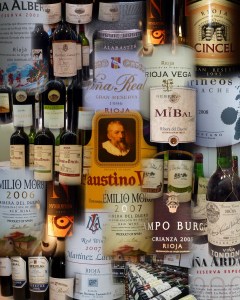
What interesting in this journey is that when I discovered Tempranillo for myself, my world was squarely limited to Spain, and even inside Spain, it was all about Rioja, Ribera del Duero and a little bit of Toro. I was always happy to celebrate the Tempranillo Day, so here is the collage which I produced based on the wines I knew, back in 2011:
 To my total delight, it appears that my Tempranillo worldview was inexcusably narrow. Texas, Oregon, Napa Valley and my newfound oenophile’s heaven, Lodi, are all producing world-class, delicious, complex, exciting Tempranillo wines. I heard about Tempranillo in Australia; never tried them, but now I’m a believer – great Tempranillo wines don’t have to be only from Spain. Thus I created a new collage, to better represent my latest discoveries:
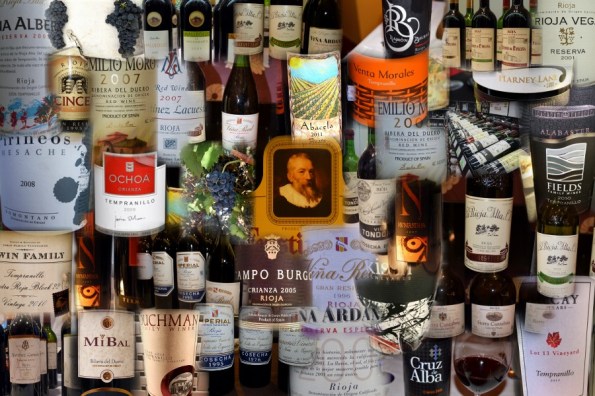 Abacela from Oregon, Duchman from Texas, Irwine Family from Napa, Bokisch, McCay, Fields, Harney Lane from Lodi – lots and lots of tasty discoveries over the past few years – I hope you had your share of Tempranillo fun too.
Do you have your favorite Tempranillo wines? Where are they from? Who is the producer? Tell the world about them. Cheers!
Fun #GrenacheDay Celebration on Snooth
Does Grenache, a.k.a. Garnacha, deserves its own celebration? It used to be the third most planted red grape in the world (in the year 2000), and the most planted red grape in Spain; now it is 5th most planted red grape in the world, and second most planted in Spain. In this particular case, size might not matter (how many of you drunk the wines made from Airen, the most planted white grape in the world?) – what important is that Grenache is an essential part of lots of amazing wines, coming from everywhere in the world – France, Spain, California, Washington, Australia, Italy, there is really no limit here. Grenache is capable of amazing solo performances (think Clos Erasmus, Sine Qua None, No Girls), but more often than not, it is a great team player (Chateauneuf-du-Pape, Southern Rhone, Australian GSM and thousands of others).
Yes, Grenache is worthy of a celebration. Grenache wines are quite mendable at the hands of the winemaker, giving you a wide range of expressions. What is even more important, unlike Cabernet Sauvignon, even budget level Grenache wines (read: less than $10 a bottle) are very enjoyable, especially when they come from Spain. And don’t forget that under the word “Grenache” there can be three different grapes – Grenache Blanc, Grenache Gris (rare), and Grenache (or Garnacha Tinta).
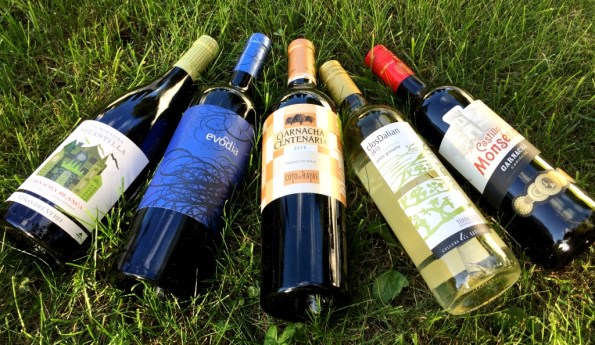
A large group of “winos” assembled last night on Snooth, one of the leading online wine communities, to discuss virtues of Grenache grapes and, of course, to taste some Grenache wines. All the Grenache wines in the tasting came from Spain, two white Grenache Blanc and three of the 100% Grenache reds. Not only the wines were tasty, all of them also represented great value and great QPR, all priced under $14. The discussion was hosted by Master Sommelier Laura Maniec and Master of Wine Christy Canterbury – but to be very honest, the online discussion felt to me more like a wine bloggers conference attendees’ reunion, with lots and lots of familiar “voices” in the chat room, so I had a hard time paying attention to the presentation and was more focused on multiple dialogs taking place at the same time. Either way, it was a great fun, and wines perfectly supported the conversation.
Here are my notes for what we had an opportunity to taste:


2015 Cellers Unio closDalian Garnacha Blanca Terra Alta DO (12.5% ABV, $9, 100% Garnacha Blanca)
C: pale straw
N: intense, aromatic, white stone fruit, citrus
P: white fruit, lemon, herbal undertones, good acidity, fresh
V: 7+, very nice, food friendly (many people in the chat craved oysters)
2013 La Miranda Secastilla Garnacha Blanca Somontano DO (13.5% ABV, $14, 4 month in French Oak)
C: light golden
N: intense, vanilla, freshly crushed berries, golden yellow raisins, borderline Riesling profile with touch of petrol
P: plump, good body weight (medium to full), crisp acidity on the finish, round, firm structure – outstanding
V: 8, excellent overall


2015 Castillo de Monséran Garnacha Cariñena (13% ABV, $9)
C: dark Ruby
N: intense, freshly crushed berries, young
P: sweet fruit (restrained, not overly) with surprising structure and good acidity on the finish. Distant touch of earthiness and smoke.
V: 7+, simple and pleasant
2015 Evódia Varietal de Aragon Red Wine (15% ABV, $9, 100 years old vines, high elevation 2400–3000 ft)
C: Dark Garnet
N: very intense pure nose of fresh blueberries and blueberry pie, you don’t even need to be next to the glass
P: layered, soft, velvety, roll-off-your-tongue mouthfeel, fresh black fruit in background
V: 7+, needs time
2014 Coto de Hayas Garnacha Centenaria Campo de Borja DO (14% ABV, $14, 100% Grenache, more than 100 years old vines, 4 months in French oak)
C: garnet
N: lavender, anise, cherries, fresh, intense
P: smoke, earthiness, sage, roasted meat, sweet fruit and tobacco finish, wow; added peppery notes on the second day
V: 8+, outstanding complexity, amazing value
I would like to thank kind folks at Snooth for arranging this fun tasting and providing such an excellent selection of the value Grenache wines.
How did you celebrate #GrenacheDay? What was your most memorable Grenache wine ever – if you have one of course? Cheers!
Celebrate Malbec!
This very blog exists for more than 6 years, so in my mind, I’m sure I’ve written about pretty much everything, especially when it comes to such a heart-warming subject as grape holidays.
Only it turns out I have not.
Sunday, April 17th is 6th (!) annual celebration of World Malbec Day. So how many times over those 6 special occasions I’ve written a post for the Malbec Day? Aha, you got that. Zero.
Well, this is incorrect. None for the previous five, but we are talking about Malbec today, so the problem is finally fixed.
Thinking about grapes with long and turbulent history, Malbec might be the most prolific example of such. Taking its roots in Middle Ages, being a choice wine of the kings, shining in Bordeaux and all over the France and then literally disappearing from the face of the earth, but luckily, finding its second, and very prosperous life in Argentina – not too many grapes can brag about such an adventurous life. By the way, if you are curious about the events I mentioned here, you can test your knowledge of Malbec with this quiz, or you can just jump straight to the answers.
Starting from the second half of 19th century, Malbec found its new home in Argentina. Consistently dry climate of Mendoza happened to be just what Malbec needed to strive. As there are two sides to everything, the ideal growing conditions lead to overproduction and subsequently dull wines. It was not until the 1980s that Malbec commanded proper attention for the quality instead of quantity, and slowly became one of the darlings of the wine world – depending on who you would talk to, Malbec is considered the hottest wine at the moment. Starting from the bottom of Andes in Mendoza, plantings of Malbec are now extending to the higher and higher elevations, offering new range of expression of already delicious wines.
Argentinian Malbec wines are easy to like for many palates – while appearing big and powerful in the glass with its inky, almost black color, Malbec wines are usually round, soft and mellow, avoiding spikes of tannins and acidity which often upset wine drinkers looking for relaxing glass of wine. Interestingly enough, Malbec from other regions, such as Cahors in south of France, shows totally differently and often offers very forceful personality, so if you are looking for that soft and mellow Malbec, you might want to ask for the Argentinian Malbec by name.
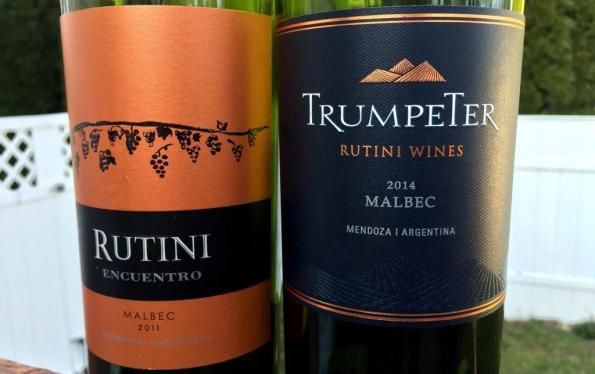
Today I want to bring to your attention two Malbec wines I had pleasure of tasting recently. It is not the first time I’m talking about Rutini wines from Argentina in this blog – here you can find my interview with Mariano Di Paola, winemaker at Rutini wines, as well as tasting notes for few other Rutini wines. Here are the notes for the two Malbec wines:
2014 Rutini Trumpeter Malbec Mendoza Argentina (14% ABV, SRP $11.99)
C: dark garnet
N: freshly crushed fruit, sage, savory notes
P: clean, earthy, tart cherries with hint of licorice, touch of sweet tobacco
V: 7+/8-, nice, refreshing, round, great QPR
2011 Rutini Encuentro Malbec Mendoza Argentina (13.5% ABV, SRP $18.99)
C: dark garnet, inky
N: roasted notes, tar, cherries, warm, inviting, touch of barnyard
P: soft, round, sweet berries, concentrated, good acidity, perfect balance. Became dark and concentrated on the day 2/3.
V: 8, very enjoyable, easy to drink; will evolve with time – you should forget few bottles in the cellar…
Here you are, my friends. Celebrate Malbec, this grape definitely worth your attention. Cheers!
#WineChat, #WineChat, #WineChat, #WineChat!
I guess you are thinking that I accidentally fell asleep at the keyboard, and the same word was repeated multiple times in the title. Or may be I’m working on the new wine riddle. Well, no, I’m not asleep and I’m not good at creating riddles. But over the next few days, there will be 4 different #WineChats or #WineChat style events which I would like to bring to your attention.
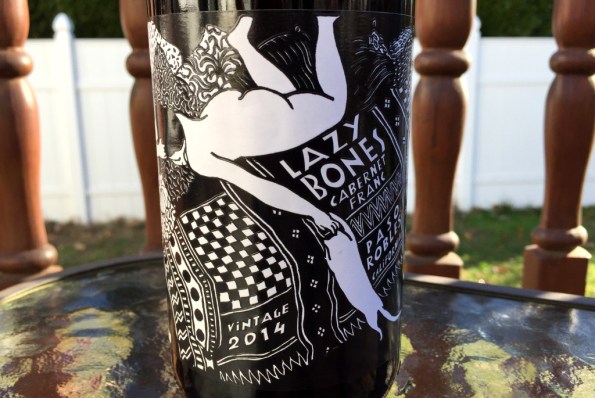
First, on Friday, December 4th (which is today!), we will be celebrating Cabernet Franc, one of the noble grape varietals and one of the “parents” of the Cabernet Sauvignon. This #CabFrancDay celebration is started by Lori and Michael of Dracaena Wines, and the culmination point of the celebration will be a live #WineChat on Twitter, starting at 8 PM Eastern time. The celebration is easy to join – pour yourself a glass of Cabernet Franc (you got lots of choices – Bordeaux, Loire, Languedoc, California, Australia, New York state, Oregon, Argentina and many other regions), open Twitter and chat away.
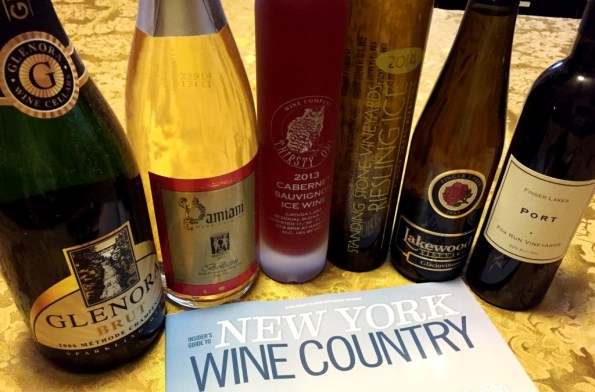
Next virtual event will take place on Wednesday, December 9th, 7 – 8 PM Eastern – Finger Lakes Wine Alliance will conduct its traditional Sparkling and Dessert Wines tasting. The event will take place on Twitter using hash tag #FLXwineVT, together with the live broadcast on UStream. 6 wineries will participate in the tasting – Damiani Wine Cellars, Fox Run Vineyards, Glenora Wine Cellars, Lakewood Vineyards, Standing Stone Vineyards and Thirsty Owl Wine Company.
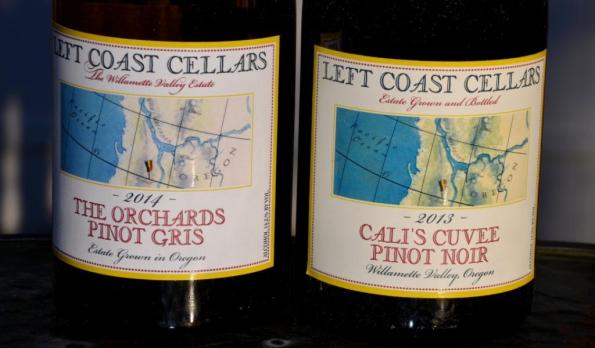
After you and your fingers will take one hour break, it will be a time to join a #WineChat! At 9 PM Eastern, Luke McCollom, General Manager, Viticulturist and Founding Wine Maker of Left Coast Cellars from Oregon will be discussing “the advantages of a single vineyard estate”. All you need to do to join the conversation, which I’m sure will be very interesting (I published a two-part interview with Luke McCollom a short while ago – part 1 and part 2), is to open Twitter and join the conversation with the hash tag #WineChat.
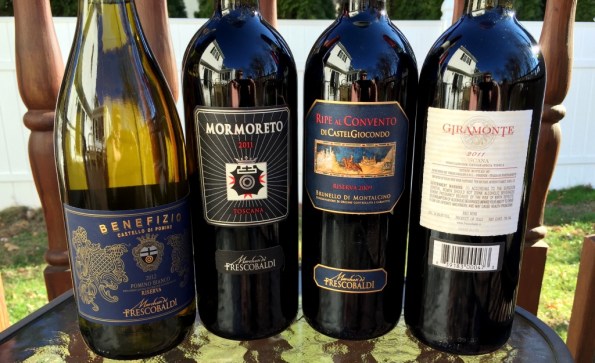
Last but not least, on Thursday, December 10th, there will be a virtual tasting of 700 year old Marchesi de’ Frescobaldi’s “CRU wines from its signature estates (Castello di Nipozzano, Castello di Pomino, Tenuta di Castelgiocondo, Tenuta di Castiglioni)”. The tasting will start at 1 PM Eastern (was originally scheduled for 2 PM), and it will be done as a live broadcast over UStream. Tasting will be conducted by Lamberto Frescobaldi, President and 30th generation of Marchesi de’ Frescobaldi. Join in!
I hope you will find time to join at least one tasting – the conversations at those events are always live and entertaining. Until the next time – cheers!
Last Bottle Sign Up ($10 credit)




 Talk-A-Vino