Archive
Craving Bordeaux Again
Source: Cru Bourgeois
If you listen to the stories of oenophiles, learning how they become who they are (oenophiles, wine lovers, it is), you will hear often that their world was changed with the first sip of that coveted First Growth (best of the best in Bordeaux wines), or another Bordeaux bottle of the similar pedigree – this might not be the story of millennials, but for sure it is the one for the older generations.
As I started getting into the wines, I developed utmost respect to the Bordeaux wines first by reading all possible books and articles about the Bordeaux greatness – this was well before China put the Bordeaux world upside down. This was also happening around the Vintage of the Century in the year 2000, when each and every magazine was going nuts about the greatness of that said vintage. At that time it was still possible to buy Chateau Latour for about $90, which was completely unthinkable to me as a spending on a single bottle of wine.
My first experience with Bordeaux was $6 or $7 Bordeaux AOC or Bordeaux Superiore AOC wine, acquired at a local supermarket in New Jersey – I’m sure I don’t need to describe to you how those wines tasted like – think green branches, lots and lots of green branches, and don’t add any fruit…
Needless to say that this type of experience, coupled with prices for the better Bordeaux wines increasing faster than disappearing TGV train and discovering that the wine world is bigger than anyone’s imagination with more wines to try than there are days in an average human life, put a damper on my interest to Bordeaux wines. Don’t get me wrong – I was privileged to taste Chateau Margaux 2000, and it was beyond amazing, along with lots of other absolutely delicious Bordeaux wines. But the end result is that you will practically never find me in the Bordeaux aisle at the wine store – I will drink Bordeaux if offered or recommended, but will not proactively seek it on my own.
Until now.
Back in June, I was lucky to be invited to Cru Bourgeois virtual tasting. First of all, that means that I had to drink a lot of Bordeaux wines. Leaving that aside, it was also interesting to find women winemakers behind all of those wines – and practically all of them representing their multi-generational winemaking families.
Before we talk about wines which made me craving Bordeaux again, let’s talk about Cru Bourgeois, as this is not just some random designation.
Origins of the Cru Bourgeois go back to the Middle Ages, so you can imagine that it is impossible to give it due respect in the few lines of the blog post. According to the official Crus Bourgeois description, “The bourgeois were inhabitants of the “bourg” of Bordeaux, a town of merchants and craftsmen. During the period of English rule, they acquired rights and privileges, including exemption from taxes on the sale of the wines from their vineyards both locally (Guyenne) and abroad.
By the fifteenth century, enriched by international commerce, the bourgeois of Bordeaux were able to acquire the finest properties in the region, which gradually acquired the name of “Crus des Bourgeois”.”
Cru Bourgeois classification significantly predates the the famous 1855 Bordeaux classification, but it also went through multiple turbulent times affected by French Revolution and later on by the Great Depression of 1929. In the early 19th century, Cru Bourgeois classification included about 300 producers; 248 Crus Bourgeois were listed in 1858 (divided into 3 categories); in 1932, Bordeaux wine brokers designated 444 Crus Bourgeois.
Source: Crus Bourgeois
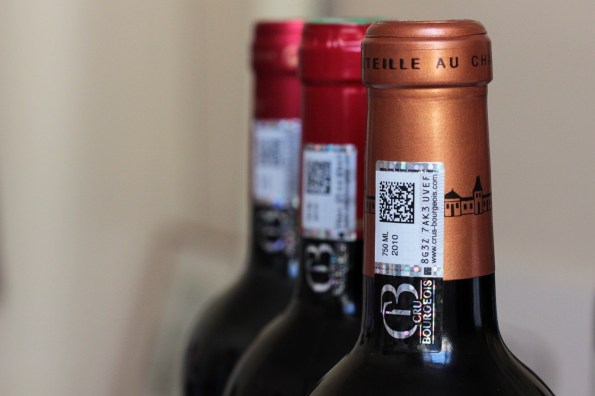
Fast forward, the latest chapter in Crus Bourgeois history started in 2010, when union of the Crus Bourgeois du Médoc finalized its new quality procedures and published its first official selection of the Crus Bourgeois producers. The whole idea behind the Cru Bourgeois classification is to control quality and ensure that the Cru Bourgeois sticker on the bottle gives consumers piece of mind. Crus Bourgeois du Médoc classification covers 8 AOCs – Médoc, Haut-Médoc, Listrac-Médoc, Moulis en Médoc, Margaux, Saint Julien, Pauillac and Saint Estèphe. If producers from those appellations would like to be listed in the official Crus Bourgeois classification, they have to apply for it, pass the inspection and continue operating within the quality requirements of the classification – otherwise, their status will be revoked. Each bottle from the officially classified Chateaux carries a secure sticker which can be easily scanned to obtain all authentic information about producer, vintage and the wine.


To give you an idea about the process, for the 2013 classification, 251 producers were selected from 400 applications – as you can tell, obtaining Crus Bourgeois status is not guaranteed. Few more numbers – Crus Bourgeois production for 2013 stood at about 20 million bottles, representing about 26% of the total wine production in Médoc. For the past 6 vintages (starting from 2008), total Crus Bourgeois du Médoc production was about 166 million bottles. Well, if you need more facts and numbers, you can continue reading on the official Crus Bourgeois du Médoc web site.
Now, let’s talk about the virtual tasting. It was done in the usual format, over the UStream, with live chat and ability to ask questions, which was, of course, a big part of fun. Seven producers represented seven Crus Bourgeois regions (out of 8 – very nice coverage). Every winemaker had a few minutes to introduce themselves and their wines – I did my best to capture at least a few words coming from each presenter – this is easier said than done, so below are the results of my efforts together with detailed tasting notes (except one wine – you will see below). Overall, very impressive level of quality.
Here we go:
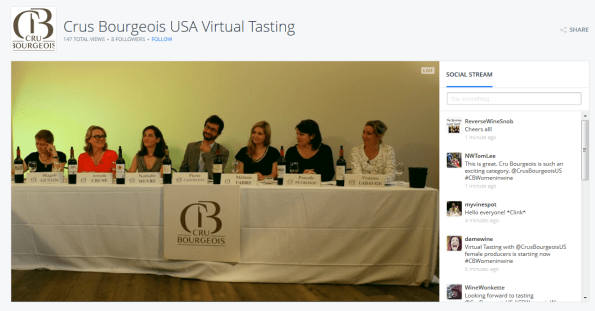
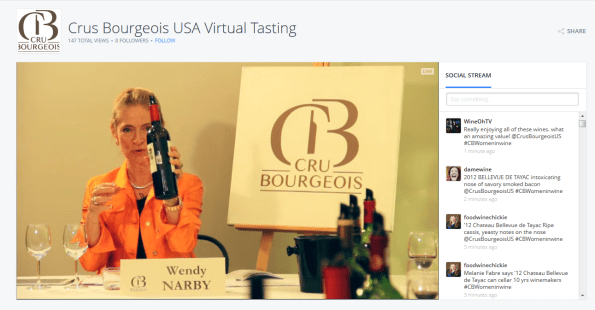
Magali Gyuon – the wines should be drunk at the right time – only 2009 ch la Cardonne is available on US market. 2012 is an exception. It is very good At the moment. It will close in 1–2 years, and then it will reopen in about 4 years – I have to say that this is perfectly resonates with my viewpoint on the wines – I truly believe that many wines have their “close up”, “sleeper” periods and if you are unlucky to open wine in such a period, you might not be able to enjoy it at all. This is why you always need to buy more than one bottle 🙂
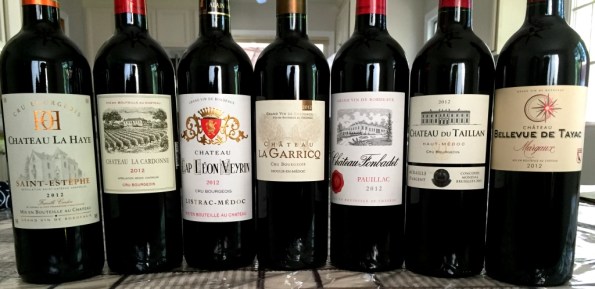
2012 Château La Cardonne Médoc AOC (13% ABV, $25, 50% Merlot, 45% Cabernet-Sauvignon, 5% Cabernet Franc, 12 mo in French oak)
C: garnet
N: warm, inviting, dark berries, cassis, sage
P: round, supple, touch of green undertones, but good balance overall. Acidity on the finish even on the day two.
V: 7+, rating unchanged on the second day
Armelle Cruse – Château has open door policy. Studied in California, and she wanted to reintroduce the same style in Bordeaux. First women to become a winemaker in the family (out of 5 girls).
2012 Château du Taillan Haut-Médoc (14.5% ABV, $25, 70% Merlot, 20% Cabernet Sauvignon, 10% Cabernet Franc, 12 mo in French oak)
C: dark Ruby
N: fresh fruit, warm, open
P: fruit core, but finish is very tart, almost bitter. Needs time? yes! Much more round and approacheable on the second day; dark concentrated fruit.
V: 7- first day, 8- on the second day – much improved, tannins subsided, fruit appeared
Nathalie Meyre, has B&B at the château, winery in the family for 6 generations
2012 Château Cap Léon Veyrin Listrac-Médoc (13.5% ABV, $30, 60% Merlot, 35% Cabernet Sauvignon, 5% Petit Verdot, 12 mo in French oak)
C: dark garnet, almost black
N: freshly crushed cherries, touch of the savory notes
P: supple, fresh, good acidity, cherries, touch of white pepper, good balance, excellent spicy aftertaste
V: 8-, excellent wine, this verdict stands on the second day, may be the wine is a bit softer, but still with a good balance.
Pierre Cazeneuve represented his mother, who is the winemaker. Has strong marketing presence on Internet.
2012 Château La Garricq Moulis-en-Médoc (13% ABV, $21, 48% Merlot, 40% Cabernet Sauvignon, 12% Petit Verdot, 12 in French and American oak)
C: dark garnet
N: warm, inviting, cassis, eucalyptus,
P: Classic, cassis, green bell pepper, perfect balance, perfect tannin core on the finish – just right.
V: 8, excellent right now and has a great promise of aging; 8+/9- on the second day.
Mélanie Fabre – taking care of the vineyard and also a winemaker, works in partnership with parents. Makes the wine she likes – fruit forward and balanced.
2012 Château Bellevue de Tayac Margaux AOC (13% ABV, $30, 70% Merlot, 20% Cabernet Sauvignon, 10% Petit Verdot, 12-18 mo ageing )
C: dark garnet, almost black
N: roasted meat, smoke, dark, brooding, tar, pencil shavings
P: dark fruit, more roasted meat, good concentration, excellent balance
V: 8, excellent, second day is equally good. Round.
Pascals Peyronie – small property works very hard and can produce wines at the reasonable price ( I have cheaper than the famous neighbors). Society of women in winemaking, 12 members, formed in 1994, first organization in France.
2012 Château Fonbadet Pauillac AOC (13% ABV, $54, 65% Cabernet Sauvignon, 35% Merlot, 16-18 mo in French oak)
C: dark garnet
N: borderline corked, can’t evaluate
Violaine Labauge – involved in the marketing of the wine. The Château belongs to the same family for 3 centuries. Wine is made to be enjoyable now but can be cellared for 10–15 years.
2012 Château La Haye Saint-Estèphe AOC (13.5% ABV, $20, 50% Merlot, 45% Cabernet Sauvignon, 5% Petit Verdot, 12-14 mo in oak)
C: dark garnet, almost black
N: mostly closed, touch of fruit and kitchen spices
P: nice touch of cherries, pencil shavings, soft, round, explicit minerality, good acidity, good balance
V: 7+/8-, rating stands the second day.
That’s all I have for you for today, my friends. I’m glad to find some great values coming from Bordeaux – I’m sure more is to come. What were your recent Bordeaux discoveries? How often do you drink Bordeaux wines? What do you think of them? Put that comments section to the good use! Cheers!
One On One With Winemaker: Michel Rolland
To anyone inside of the wine circles, the name “Michel Rolland” needs no introduction. If you enjoy an occasional glass of wine but don’t dig deep, very deep into what is behind the label, it will probably tell you nothing. Unlike Araujo, Bryant Family, Harlan, Staglin – right? All of these are the cult wines from California, revered, adored and drooled upon by many wine connoisseurs. Let’s not forget Tenuta dell’Ornellaia from Italy, Angélus and Ausone from St-Emilion and l’Evangile from Pomerol. In case you didn’t know, Michel Rolland, classically trained French winemaker, is behind these and hundreds (I’m not exaggerating – search for his name on Wikipedia) of other wines. He is a consulting winemaker, sometimes also referred to as “flying winemaker”, who made wine on all continents and all possible and impossible corners of the world.
When I got an invitation for lunch with Michel Rolland, who was visiting New York to introduce some of his newest wines, I was excited at first, and then bummed. The lunch was overlapping with the Jura wine tasting, which I was planning to attend for a very long time. So as a last resort, I asked if I can meet with Michel Rolland after the lunch so I can ask him a few questions. To my absolute delight, kind folks at Deutsch Family, a wine importer company hosting the event, managed to arrange the time for me right after the lunch to sit down and talk to Michel Rolland.
As you understand by now, unlike most of my virtual interviews in this “one on one” series, this was a real face to face conversation, with a real handshake and visible emotions. At first, I was thinking about recording our conversation. That probably would be okay, but I never did this before, and fighting with technology in front of the busy man who was doing me a favor didn’t feel right. So I did what I always do – I prepared my questions in advance. After a subway ride and a brisk walk, I arrived – on time – and shake hands with the legend. We sat at the table, three different glasses of red wine appeared on the table. And conversation started – here is what we were talking about, with the precision of my fingers hitting the screen of the trusted iPad:
Q1: You made wine all over the world. Is there one place or one wine which was your absolute favorite?
“No. I like the challenge, so every time I’m going to the new place, it is very exciting.”
Q2: What was your most difficult project and why?
“To make wine, we need soil, grapes, and weather. When the weather is not playing, it is very difficult. There were 2 places which were the most difficult. First one was India – everything is great except the climate. India has only 2 seasons – dry and wet. Another one was China – extreme climate, very difficult to make wines. In the project in China, years 1,2 and 3 had no frost, then in the year 4 we decided not to cover the vines, and half of the vineyard became dead.”
Q3: You are known to create big and bold style wines. At the same time, it seems that wines with restrained are more popular today. Did you make any changes to your winemaking style to yield to the popular demand?
“After 43 years in this job, it is good that I have style. So the style is what the market is asking – the wines are made to be sold, so we have to follow tendencies in the market. Even that not everything is changed at the same time, it is more of the evolution and adhering to the fashion. The wine to drink tonight is not the one to be stored for 10–15 years. So the wine have to be made more enjoyable younger, and this is what we do.”
Q4: Where there any projects which you rejected and if yes, why?
“Yes, of course, but it doesn’t happen very often. The biggest concern is the relationship with the team. Day to day in the cellar and field it is the team – if the relationship with the team is not good, I prefer to leave. For sure if nobody is happy, then it is better to leave. I never refused project because it is too challenging. In Chile, 25 years ago the variety called Sauvignonne had to be used, which was hard – and I didn’t refuse the project because it was challenging. So the relationship is the major part.”
Q5: Again, appealing to your worldwide expertise, what do you think is the hottest new wine region today, if there is one?
“We have to look back – we have new world and old world. France, Italy, Spain – being there before. Then came US, then South America. Chile, and Argentina is growing the fastest now. Then there is New Zealand and Australia. But I think the area around the Black Sea, which was historically there, is very promising. Now Turkey, Georgia, Armenia, Russia all started making really good wines and we will see great wines coming from there. I [actually] currently work in Turkey, Russia, Bulgaria.”
Q6: What are the most undervalued wine regions in the world today, if there are any left?
“One of the most difficult countries to make and produce wines is South Africa – great wines which sell well only in UK, but very difficult everywhere else.”
Q7: What do you think of natural wines, which are very often are very opposite in style to “big and bold”
“We can’t fight against natural wines, but all the wines are natural [laughing], minimal intervention. We have to slow down with all the chemicals, but the wines should be made to be good wines – a lot of “Bio” is done only for marketing, so if it is done smart, it is good. I have small estate Val de Flores in Argentina which is for 8 years is completely “bio”, so yes, I support that.”
Q8: What are the latest projects you are working on?
“The one in Tuscany (Maremma) running by the German family, they have a wonderful vineyard and wonderful winery, and now making very good wines.”
Q9: You are a role model and a teacher for many in the wine world. Who were your role models and teachers?
“When I began my job my mentor was Émile Peynaud. It was another era. When I began the oenology, we were not speaking about quality. The goal was to avoid problems. I discussed this a lot with Peynaud. Peynaud was convincing people to do better in the cellar, to have clean wines, to use better material. It was very difficult, but Peynaud was great dealing with the people, so I learned a lot from him, including the patience for dealing with people. I often said that my job is 80% psychology, and 20% oenology, this is what I learned from Peynaud.”
Q10: What are the new trends in the wine world? What wine consumers should expect to see and experience over the next few years?
“I think people like more and more approachable, and gentle wines – full bodied, but gentle. The big problem I see is that during the 90s, I did a lot of work where we dramatically improved quality. In the 2000s, we drunk best wines we could. What I don’t like now that everybody is going after cheaper and cheaper wines – we can still do good wines, but not better than in the previous years. In the end, the wine is a business, so I don’t want to see people reduce quality just to survive.”
 As you can imagine, Michel Rolland didn’t come to the New York to talk to me. He was promoting his latest project, the wines of André Lurton which he helped to create. André Lurton is the winemaker in Bordeaux whose family winemaking heritage goes back more than 200 years, and who is not only known as a winemaker but also was very instrumental in advancing Bordeaux wine industry, including creating of the new appellations.
Here is the story of how Michel Rolland started working with André Lurton (don’t you love wines with the story?):
“Lurton is one of the last projects. I had an interview on the radio, and the journalist asked me if I have any regrets. I said at 65 years old, I don’t have a lot of regrets. When making wines, you get to meet wonderful people from all over the world. So the regret is “why I never met this guy” – one of such people is André Tchelistcheff – I met his wife, but never met him. And then the journalist asked me “who else”. So I said in Bordeaux, there is André Lurton, who I never met and worked together.
3 hours after the interview I received a call from Andre Lurton who said: “come and meet me”. Now we are working together.
So what we are doing is looking after the future, what can we produce for the people. We have to make approachable wines – still with the ability to age, but more approachable. “
This was the end of my conversation with Michel Rolland. We spoke for about 45 minutes, and it was clear that Michel had to continue on with his day. But there were still three wines standing in front of me, so I had to go through the speed tasting and only capture general impressions, there was no time for detailed notes. Here are my brief notes:
2012 Château Bonnet Réserve Rouge Bordeaux ($14.99, Merlot/Cabernet Sauvignon blend) – beautiful tobacco nose, fresh fruit, soft, round – clearly Bordeaux on the palate, green notes, restrained. Green notes do get in the way, though.
2012 Château de Rochemorin Rouge Pessac-Léognan ($33.99, Cabernet Sauvignon/Merlot blend) – beautiful, classic Bordeaux, great finish, some presence of the green notes
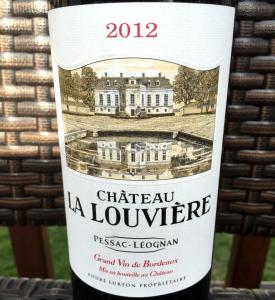
2012 Château La Louviére Rouge Pessac-Léognan ($74.99, Cabernet Sauvignon/Merlot/Petite Verdot), new oak, open fruit on the nose, lots of complexity, very beautiful, layers, delicious finish. Overall delicious wine, my favorite of the tasting. This wine was polished and concentrated, and I would love to drink it every day.
What is interesting for me here (besides the clear proof that I’m a wine snob who prefers expensive wines) is that there is a clear progression of taste and pleasure in this three wines – the price was increasing accordingly, and this is how things are quite often in the wine world.
After an encounter like this one, and the pleasure of talking with the legend, if blogging would be my job, I would gladly proclaim “I love my job”. But even without it, I still would proudly say that I love blogging as it makes possible conversations like this one, which is priceless for any oenophile. Cheers!
Restaurant Files: Tabard Inn in Washington DC
 Do you like restaurants with charm? In a lot of cases, people go to the restaurant for the good food and good service. Don’t get me wrong – these are my priorities too. But for me, experiencing a pleasure of just “being inside” is a great bonus too. You walk in, just glance around and say “ahh, I like it here” – this is what I mean by “charm”. You are at the restaurant, waiting for your dining companions to arrive, then you are walking to your table, get seated and situated, and all that time you are thoroughly pleased with surroundings and the atmosphere – I hope you get what I’m talking about here.
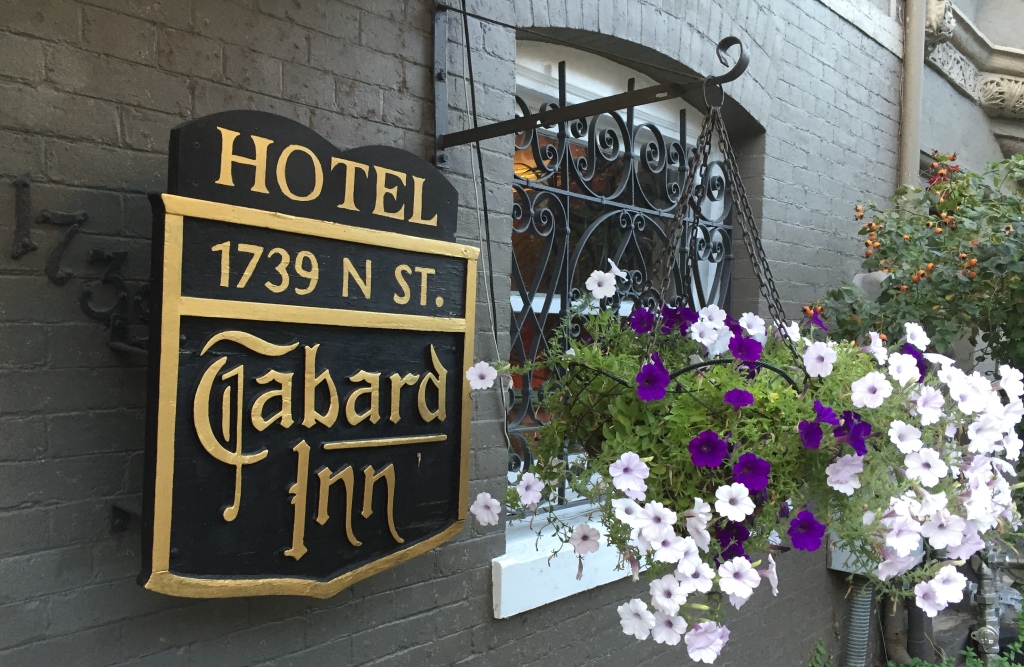
If you happened to be in the Washington DC, and would like to visit a restaurant with the charm, I got a recommendation for you – Tabard Inn Restaurant in the area known as Dupont Circle. The restaurant is located inside of the actual hotel (I would designate it more as a B&B) under the same name – Tabard Inn, with the rooms available throughout the three adjacent townhouses – but as I didn’t have a pleasure staying there, we are, of course, will be talking only about the restaurant.
I’m assuming you got my point about the atmosphere and ambiance (relaxing, pleasant, “old glove” comfortable), so let’s talk about food and wine – starting with the wine of course. I really liked the wine list at Tabard Inn – lots of good selections with reasonable prices. The wine list was well rounded internationally, so we managed to make two very interesting ( and highly successful!) choices. For the white, we had 2013 Sigalas Santorini Assyrtiko Santorini, Greece (14% ABV, 100% Assyriko, $55 at the restaurant). The group I was dining with typically prefers red wines. However, after trying this wine, the waiter had a hard time to keep the open bottle on the table – the wine was disappearing very quickly. Delicious nose of the white fruit, same white fruit on the palate, crisp, refreshing, medium-bodied, perfectly round – this was one excellent wine (Drinkability: 8).


I managed to surprise myself with the choice of red. It is seldom that I would consciously choose Bordeaux at the restaurant, don’t ask me why. Somehow this wine caught my eye – 2006 Bordeaux for $52. 2006 was a good year in Bordeaux, so why not? When the wine arrived, there was a nice surprise – it was from even a better vintage, one of the best from the 2000 decade – 2005. 2005 Chateau La Croix St André, Lalande-de-Pomerol (13% ABV, 80% Merlot, 20% Cabernet Sauvignon and Cabernet Franc), was at the peak of maturity. Stunning depth of dark fruit with spices, black currant, eucalyptus, classic, concentrated and delicious (Drinkability: 8+).
While Tabard Inn restaurant is not necessarily advertised as “farm-to-table”, the menu is focused on the seasonal ingredients and changes all the time. As the group, we usually like to share some appetizers, but somehow this time around, everybody were really focused on conversation (and the wine 🙂 ), so pretty much no food sharing took place. That simply means that I can only tell you about the dishes I selected for my dinner.


For the appetizer I had Tuna Tartar – very tasty, served with the sesame crisps. My main dish was Gumbo (Andouille sausage, shrimp, chicken confit, swordfish, fried oysters) – overall it was tasty, but when I hear “Gumbo”, my first thought is “Louisiana Gumbo” – the dish I had was lacking spicy heat for my personal preference (try to guess if I left anything on the plate because of that).


I had dessert in both standard and liquid forms. I’m a sucker for a bread pudding in any form, so when I heard that dish mentioned by our waiter, I had no choice – and it was very tasty. For the liquid dessert we shared a bottle of 2014 Elio Perrone Sourgal Moscato d’Asti Piedmont DOCG, which was perfectly balanced, not overly sweet, with fine bubbles and nicely refreshing, just a right finish for an excellent dinner.
Looking for the restaurant with the ambiance, charm, great wine list and delicious, seasonally-appropriate food in Washington, DC? I think I just told where to find it. Cheers!
Tabard Inn
1739 N St NW
Washington, DC 20036
Phone:(202) 785-1277
http://tabardinn.com/restaurant/
Daily Glass: France, New Jersey, Oregon
 Glass of wine (or two, but who’s counting) is a standard daily routine at our house (most of the time anyway). Hence these “Daily Glass” posts, where I talk about those “everyday” wines. What I’m trying to stress here that it is really an “everyday” wine phenomenon, as opposed to the wine dinners, birthday, holidays and other special occasions.
In today’s post I want to talk about my recent “everyday” wine experiences, which included wines from France, New Jersey and Oregon. I’m sorry, what are you saying? You never heard of the New Jersey wines? Really? Okay, fine, you got me. New Jersey wines are not my everyday wines either. But the wines are made in New Jersey, and some of them are pretty good wines, I have to admit.
Anyway, let’s talk about those recent “everyday” wines – shall we?
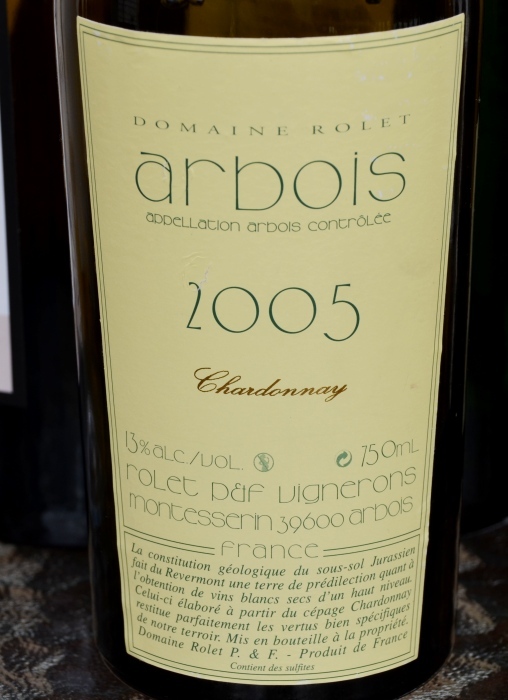 Let’s start with the two wines from France. First, 2005 Domaine Rolet Chardonnay Arbois AOC, Jura (13.5% ABV, $20?) – yes, a pretty rare bird – the wine from Jura. I got two bottles few years ago at the store in Massachusetts. This was my second bottle, and while I’m sure the wine would still can go on and on, I thought that 10 years should be good enough to open it. After initial whiff of oxidation on the nose (quite typical for Jura), the wine opened into delicious, balanced Chardonnay. White fruit on the nose, touch of vanilla. Clean acidity, Chablis-like minerality, touch of lemon and Granny Smith apples, perfectly fresh and balanced. Drinkability: 8-
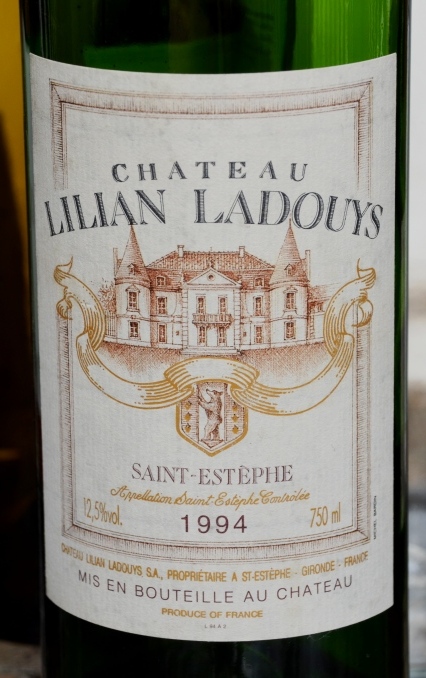 Next wine was really an unexpected treat. I have to admit – I rarely drink Bordeaux. Inexpensive Bordeaux often under-delivers. And I really don’t want to experiment with $50 wines; $120+ wines are out of my league for the everyday consumption. But with this particular wine, the story was much simpler – “try before buy” is the best thing since the sliced bread, people! Stopped by my local favorite wine store, Cost Less Wines, for the traditional Saturday tasting. Lester, who usually runs the tastings, poured the wine from the decanter and warned me – “you might not like it”. 1994 Chateau Lilian Ladouys Saint-Estéphe (12.5% ABV, $15) – this is just a tasting, how bad can it be? First smell – amazing, mature wine with complex, fragrant bouquet. First sip – wow, dried fruit, hazelnut, spices, distant hint of cinnamon, fresh acidity – a perfect package. Turns out that the first bottle opened for the tasting was somewhat off, this is what prompted Lester’s warning. This wine was decanted for 2 hours, and it was perfect – I don’t know how much life it still has, but considering the way it was drinking, it definitely has a few more years to enjoy it. Drinkability: 9
And now, the moment you’ve been waiting for – New Jersey wines. Let me ask you something – what would be your expectations of the New Jersey wines? Yes, New Jersey is better known for its humongous malls, Jersey Shore or evenly spaced, monotonically numbered highway exits. Wines? Not something people would readily associate with the Garden State. I also had sad prior experience with one of the New Jersey wines, which I simply deemed “undrinkable”, so when I was asked if I want to participate in the virtual tasting of New Jersey wines, my first inclination was “thank you, but no”. After a second (or a fifth) thought, there was “well, may be?” moment, so I said – sure, will be glad to.
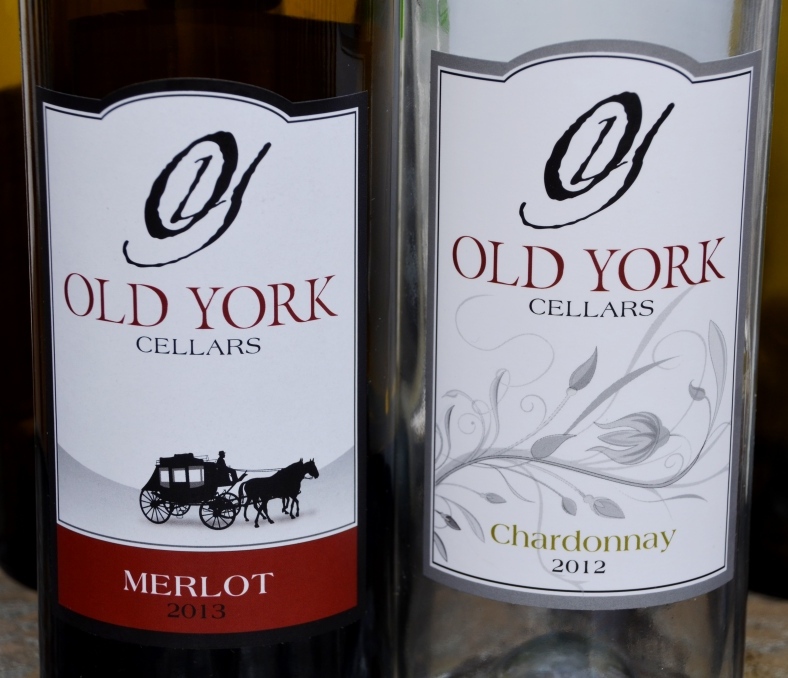
You would understand my skepticism even better if I will tell you that the wines offered for the tasting were not anything less than the classic varietals – Chardonnay and Merlot. I’m very particular with the flavor profile of both, as from my experience, it is very easy to screw up the respective wines. Okay, so the winery in point – Old York Cellars. Vineyards at Old York Cellars were planted in 1979, and the winery was first to produce commercial wines in New Jersey in 1981. Today winery produces about 6,200 cases from the 18 different grape varieties with Vidal Blanc, Cabernet Sauvignon and Marechal Foch been most popular among the customers. We learned these and many other interesting facts during the #VirtualVines twitter session with winemaker Scott Gares, who had been making wines for more than 20 years – “it’s the family business” he twitted.
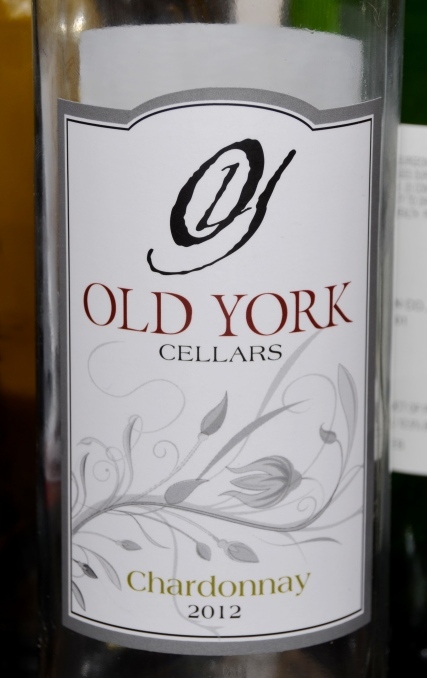 Now, let’s talk about the wines. First, 2012 Old York Cellars Chardonnay (under 12% ABV, $18). When I just pulled the cork and poured wine into the glass, the first sip was simply not good. There was lots of salinity and soap, so my first thought was “here we go again” (referring to my prior experience with NJ wine). Oh well, let’s see what will happen. 30 minutes later, it was totally different wine. Touch of vanilla showed up on the nose. On the palate, the wine opened up into a clean, classic Chardonnay, plump, medium to full body, vanilla, apples and touch of butter on the palate, excellent balance. Don’t know why the wine started like it did, but the transformation was very impressive. I was upset when the bottle was finished, would love to have another sip. Drinkability: 8
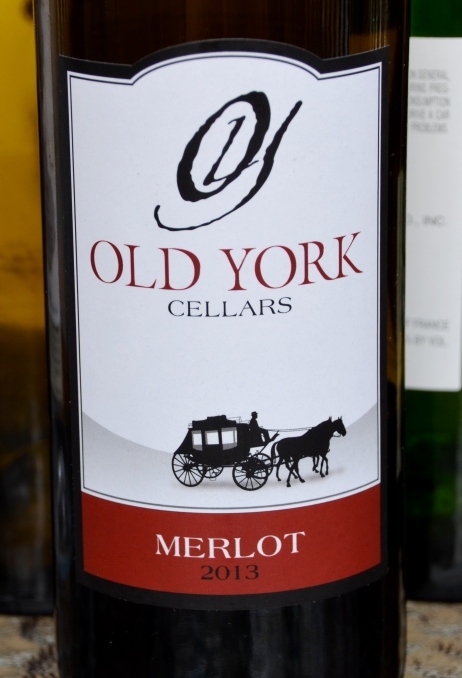 Next wine was 2013 Old York Cellars Merlot (15.5% ABV, $18). From get go, this was one tasty wine. Dark fruit on the nose (without characteristic cassis though). On the palate, very interesting smoke and spice, with undertones of mudrooms and forest floor, and well present sapidity. A thought provoking red wine. Full bodied and concentrated, with excellent balance. What was also very interesting is that at 15.5% ABV, the alcohol was extremely well integrated – it was not showing on the nose or on the palate. Drinkability: 8-
So here are two wines which greatly exceeded my expectations – you know, it is the sip of the wine which becomes an ultimate truth. Perception holds a lot of power in the world of wine – but more on this later in the separate post. For now I can only recommend that if you will have an opportunity, try the Old York Cellar wines – at least I plan to continue doing that.
 The last wine for today – 2011 Brick House Vineyards ‘Cuvée du Tonnelier’ Pinot Noir, Ribbon Ridge, Oregon (13% ABV, $45). Lately, I come across many wines made with biodynamic grapes – most of them are really good wines, but I’m still trying to form an opinion if those are just lucky accidents or a trend. Also, label specifically says that the wine is made with Biodynamic® grapes – Biodynamic with upper case and registered trademark symbol next to it – is “Biodynamic” like “Champagne” now? Anyway, the wine was delicious – a classic Pinot Noir nose with smoke and mushrooms, bright fresh fruit on the palate, very clean, round, perfectly balanced – a new world wine, yes, but perfect finesse and elegance. Biodynamic or what, but it was one tasty wine. Drinkability: 8
And we are done here. Have you had any of these wines? Have you ever had wines from New Jersey? What do you think of Biodynamic wines? If you are willing to talk, I’m ready 🙂 Cheers!
Note: Old York Cellars wines where supplied as a media sample. All opinions are my own.
[Wednesday’s] Meritage – Wine Quiz Answer, Merlot is Back, Harvest Everywhere, About Yelp and more
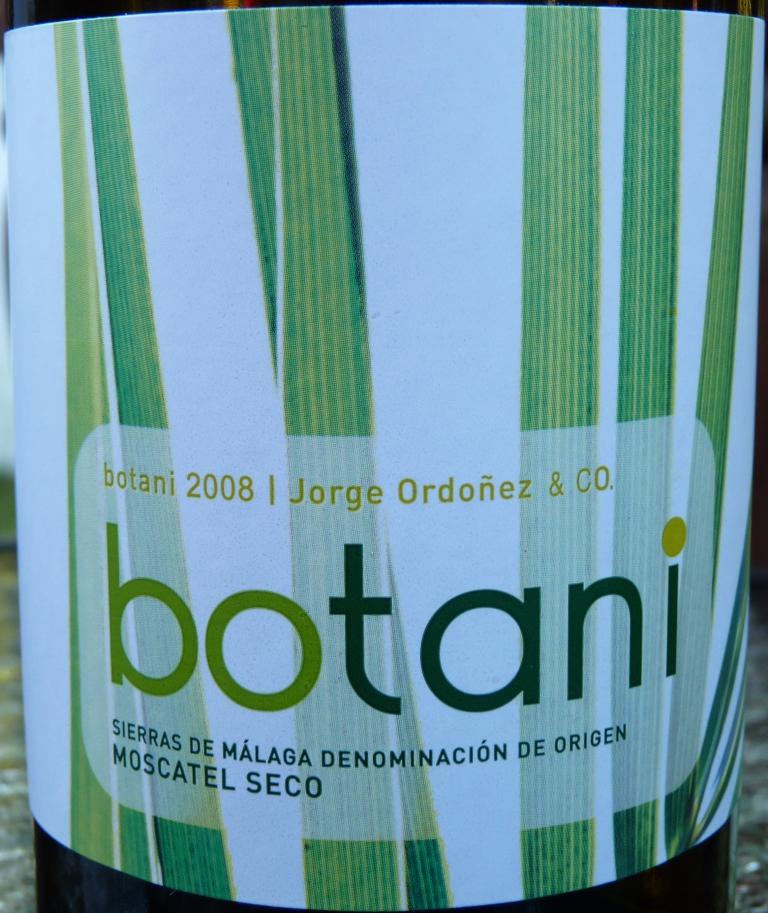
Botani Moscatel Seco Sierras de Malaga DO 2008
Meritage time!
Let’s start with the answer to the wine quiz #115: Grape Trivia – Muscat.
In the quiz, you were supposed to answer 5 questions about one of the oldest cultivated grapes – Muscat.
Here are the questions, now with the answers:
Q1: This Italian wine, made out of the Muscat of Alexandria grapes (which has a different local name), is quite unique in having a given vintage receive top ratings from all main Italian wine publications, including Gambero Rosso, Slow Wine, Bibenda and Veronelli. Can you name this wine?
A1: Donnafugata produces dessert wine called Ben Ryé, made out of Zibibbo grapes, which is the local name for Muscat of Alexandria. Ben Ryé typically gets awarded highest ratings by various Italian publications, year in and year out.
Q2: This Muscat wine was the last solace of exiled Emperor, Napoleon Bonaparte. Can you name the wine and the country where it was made?
A2: This legendary wine is Klein Constantia Vin de Constance from South Africa
Q3: Which one doesn’t belong and why?
a. Banyuls, b. Beaumes de Venise, c. Frontignan, d. Rivesaltes
A3: Banyuls – while Banyuls is known for its dessert wines, same as the three other AOCs, Grenahce Noir is the main grape used in Banyuls, not the Muscat which dominates the others.
Q4: Muscat wines often get very high ratings from the reviewers. Based on Wine Spectator Classic wines (95 – 100 rating), which country do you think has the most Muscat wines rated as Classic:
a. Australia, b. France, c. Italy, d. Portugal,
A4: It might come as a surprise, but this country is the Australia – 9 out of 10 Muscat wines with topmost ratings are from Australia, including a 100 points Campbells Muscat Rutherglen Merchant Prince Rare NV.
Q5: Which should be excluded and why?
a. Muscat of Alexandria, b. Muscadelle, c. Moscato Giallo, d. Muscat of Hamburg, e. Morio Muskat
A5: This was a bit of a tricky question – actually 2 grapes don’t belong – Muscadelle, which has nothing to do with Muscat, and Morio Muskat, which is a blend of Sylvaner and Pinot Blanc.
When it comes to the results, we had no winners, unfortunately, but I’m glad to see Oliver the winegetter back in the game. There is always the next time!
Now, to the interesting stuff around the vine and the web!
Let’s start with … Merlot! Merlot is back, and to make sure everyone will notice, October is designated as the Merlot month! If you think about it, Merlot never left, and Chateau Petrus didn’t switch all of a sudden to the Cabernet Sauvignon as a main grape. Still, Merlot wines are now demanded by name, so it is definitely a reason to celebrate. Drink it, talk about it, write about it – just don’t be indifferent about it. Here is the web site which will help to plan your Merlot festivities.
Harvest is under way in many parts of the Northern Hemisphere, so here are few of the updates. Long stretch of a warm weather in September greatly helped vintners in Burgundy and Bordeaux. The summer was cold and rainy in both regions, and the hailstorms didn’t help either. However, warm and steady September weather greatly improved the overall outlook; while the 2014 vintage is not expected to exceptional, both Bordeaux and Burgundy expecting good results. White Burgundy look especially promising in many appellations, including Chablis. Here are the links with more details – Burgundy and Bordeaux. California weather was quite opposite compare to France – very hot and dry summer forced an early harvest start in the Northern California, with some estates picking up grapes as early as July 29th – one of the earliest starts in a decade. Here is the link with more information about California harvest.
When I’m looking for the good restaurant, especially in the unfamiliar area, my first choice of information source is usually one and the same – Yelp. I generally can’t complain, and for majority of the cases I’m quite happy with Yelp recommendations – I’m sure it saved me from the number of a bad experiences. This is why it is even more upsetting to read about the issues businesses face with Yelp forcing them to take advertizing deals or be punished by artificial manipulation of ratings. Unfortunately, this is what happens when shareholder value becomes the purpose of business existence and trumpets the relationship with the real customers (which eventually drives company out of business). Case in point – the restaurant called Botto Bistro in San Francisco, which refused to badge with Yelp’s demand for advertizement placement, and instead started fighting back with Yelp by undermining the core of the Yelp’s existence – the rating system. The restaurant requested all of their patrons to leave negative one-start reviews, which people did. Take a look at the this article which lists a lot of examples of such a one- star “negative” – or rather super-funny – reviews. Yelp have to get its business integrity together, or it will disappear.
If you are actually a writer, how often do your read your writing, edit it, then read again and edit again? You don’t need to answer this question, but the number of the read/edit cycles is better be substantial if you want to end up with the quality outcome. Here is an interesting article by Jo Diaz, where he talks about the importance of the editor and the editing process. It is clear that most of us are not going to hire an editor for our “labor of love” blog posts – however, the editing still remains an essential part of the “writing well” process, and you really should find the way to implement it.
And we are done here. The glass is empty – but the refill is on its way! Cheers!
Weekly Wine Quiz #78: Grape Trivia – Petit Verdot
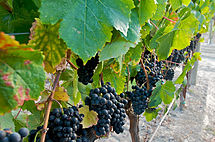
Petit Verdot, as shown in Wikipedia
The Wine Quiz series is not meant to intimidate. The whole idea here is to have fun and learn something new. When answering the questions, it is fully encouraged to use all available sources of information, including Google or any other search engine. There are no embarrassing answers – the most embarrassing thing is not giving it a try…
Welcome to the weekend and your new wine quiz!
We are continuing our grape trivia series, and we are back to the red grapes! Today’s subject is Petit Verdot.
Origins of Petit Verdot are unknown, and according to one of the theories, the grape came to Bordeaux region in France with ancient Romans. Petit Verdot is a very tricky grape in the vineyard – its early budding makes it susceptive to the early spring dangers, such as frost. Its very late ripening puts it in danger of the same frost and some of the diseases, At the same time, small berry with thick skin offers a lot of concentrated tannins and structure when it ripens properly.
This tricky behavior in the vineyard with tendency to underripe, results in Petit Verdot sometimes even not included in the final blend in Bordeaux wines. However, the grape behaves a lot more consistently in the warmer climates. Petit Vedot made it to Australia in 1800s, and it is successfully growing in most of the wine making countries around the world (Spain, Italy, US, Chile, Argentina, New Zealand), producing the best results in the warmer climates. in the US, it is growing in many regions across the country, from New York to Texas to California to Oregon. At its best, Petit Verdot produces dense, powerful, concentrated and age-worthy wines.
And now, to the quiz!
Q1: Explain the meaning of the name Petit Verdot
Q2: Name four grapes, main blending partners of Petit Verdot in France
Q3: True or False: Australia’s plantings of Petit Verdot far exceed the plantings of Petit Verdot in France
Q4: While Petit Verdot is a difficult grape to work with, two events were major contributors to the demise of Petit Verdot in Bordeaux. Can you name those two events?
Q5: While it is not impossible to find a pure 100% Petit Verdot wines made in Bordeaux, those wines are rather the exceptions. What is the typical percentage of Petit Verdot in Bordeaux blends?
Bonus question: what was your personal encounter with Petit Verdot? Do you have any memorable bottles?
Good luck, enjoy the quiz and your weekend! Cheers!
Weekly Wine Quiz #73: Grape Trivia – Sémillon

Sémillon grapes affected by noble rot, as shown in Wikipedia
Welcome to the weekend and your new wine quiz!
We are continuing our grape trivia series, still focusing on the white grapes, and today’s subject is Sémillon.
Sémillon is a white grape, once considered the most planted grape in the world. One interesting fact is that the origin of Sémillon is not easy to pinpoint – while working on this quiz, I went through quite a few articles on Internet and even books, and it is hard to find any historical data outside of the fact that Sémillon was very popular in the early 19th century throughout the world. In the early 19th century, over the 90% of all grape plantings in South Africa was Sémillon – considering its popularity, it was simply called Wyndruif, the “wine grape”. Today, Sémillon occupies roughly 1% of the grape plantings in South Africa. It is still the most planted white grape in Bordeaux, where it is used in the production of most of the white wines, from dry wines of Pessac-Léognan, Graves and Entre-deux-mers, to the spectacular dessert jewels of Sauternes and Barsac. Sémillon plantings exist in many other winemaking countries – Australia, Chile, Italy, New Zealand, California and Washington in US – but you rarely hear about Sémillon, as it is mostly used as a blending grape. Well, this might be changing – but we will not be talking about it in the quiz.
The issue with Sémillon is that under normal growing conditions, it tends to produce plump and dull wines, the wines which are not showing much of the aromatics and have very low acidity. When the grape is forced to work hard, it can produce amazing wines. In Sauternes, Sémillon is typically affected by Botrytis cinerea, the noble rot, which leads to the shriveling of the grapes which concentrates the sugar – dessert wines produced from such shriveled grapes are some of the best in the world (Châteaud’Yquem, anyone?) – they also make some of the longest living wines in the world, being capable of ageing for 100 years and beyond. In Australia’s Hunter Valley region, the grapes are exposed to the harsh climate with the high level of humidity, which leads to the grapes accumulating high level of acidity. Hunter Valley Sémillon is known to age very well, and the wines also improve with age quite significantly.
And now, to the quiz!
Q1: Name a grape, primary blending partner of Sémillon
Q2: Below is the list of years. There is something common between all of them (and of course it has a relationship with Sémillon) – do you know what is common among those years?
1930, 1952, 1964, 1974, 2012
Q3: Ture or False: Sauternes produces only sweet wines
Q4: Name a key factor for the great tasting dry Sémillon wines
Q5: What is Semageddon?
There is nothing wrong with answering even only one question from the quiz – your participation is always appreciated! Also, without any regard to the questions, please share your personal experiences with Sémillon wines.
Good luck, enjoy the quiz and your weekend! Cheers!
Second Dozen (And Some) of 2012
 Anywhere you look, people are summing up their experiences for the year which will become history in the mere 5 days. “The best thing I did last year”, “the best thing I ate”, “the best trip I took”, “the best picture” and so on and so forth.
This very blog is not an exception to that “the best thing I had” phenomenon. I have my top dozen wines summarized for 2010 and 2011, and now it is time for 2012. But I have to tell you that this year I have an issue. Last two years I managed to identify precisely 12 wines I wanted to include in my “Top” list. This year, it appears that I tasted so many great wines, that I feel that the limit of 12 is too constraining – hence this post, where I will share with you the second dozen (or more) of wines which caused an “aha” moment, and stirred my memory and emotions. In the other words, these are the wines which I would gladly (very gladly) drink at any time. As usual, all the wines will be linked to the original posts in case such post exists, and I will provide pricing information where I can. Here we go.
26. 2011 Walnut Block Wines ‘Collectables’ Sauvignon Blanc, Marlboro, New Zealand ($11.99). In general, I like New Zealand Sauvignon Blanc – may be I had a few that I didn’t really care for, but for the most of the cases I really enjoy that fresh in-your-face acidity with bright fruit underpinning and fresh cut grass. This wine happened to be single best New Zealand Sauvignon Blanc I had last year, perfectly matching the description I just provided.
25. 2012 Flat Creek Estate Winery Viognier, Texas ($NA) – that experience of drinking literally just blended wine was first and unique, and the wine was excellent. I will be very happy to get a bottle of the released 2012 Flat Creek Estate Viognier and compare the notes.
 24. Domaine Ste. Michelle Cuvee Brut NV ($10.99) – one of the best sparkling wines I tasted throughout the year. It is perfectly brut, perfectly acidic and perfectly balanced. I really want to see this wine in the blind tasting, against any of the $30-$40 Champagne – so many people will lose their bets, swearing that they just tasted a perfect glass of Champagne, and finding out that it was a domestic sparkler. Next time you see it on the shelf – do me a favor, pick up a bottle and let me know what you think (you can thank me later).
23. 2010 Anakena Indo Sauvignon Blanc, D.O. San Antonio Valley, Chile ($15) – A perfect Sauvignon Blanc for my palate. Beautiful fruit and acidity combination, a touch fruitier than NZ Walnut Block, but absolutely refreshing.
22. 2005 Giribaldi Cento Uve Langhe DOC ($75) – Very much Barolo-like (no wonder – 50% of the grapes are Nebbiolo), but they didn’t use for nothing 152 grapes to produce this wine – this is a very perfumy Barolo, with a lot of floral notes. No, I didn’t taste all those grapes by themselves, but sheer number of grapes (152) used in production of this wine is enough to put you at awe.
21. 2009 Craggy Range Te Kahu Hawkes Bay, New Zealand ($25) – Craggy Range is an area in New Zealand which became a source of the great wines, and it also know for the cost of land being dirt cheap about 30 years ago, and becoming absolutely unaffordable nowadays. This wine is an excellent Bordeaux blend, except that you don’t need to wait for 15-20 years before you can enjoy a glass – you can just open and pour. Perfect fruit and perfect balance – if you didn’t try this wine before, and you like Bordeaux style, you just owe it to yourself to find the bottle and enjoy it.
20. 2008 Torres Atrium Merlot, Penedes, Spain ($26 in the restaurant) – this was total surprise – the wine was suggested to us in a restaurant in Florida, as previous two choices were unavailable. We didn’t have much expectations – until the first sip. Dark fruit, soft, supple and round, perfect acidity, long finish. The second surprise came when we saw the bill – I never had a wine of this quality in the restaurant for $26. My only issue – this wine is only available for restaurants, and even my friend Zak who owns wine store, can’t get this wine. If you can – send me a note…
19. Abrau-Durso Semi-Dry NV, Russia ($12.99) – Never heard of this wine until this year, and it appears that this is a very old Russian “Champagne” house which was supplying sparkling wines for Tzar. Didn’t have much expectations before trying this wine – and it was delicious. Touch of sweetness, perfectly refreshing and supple – this actually will be the sparkler I plan to pour to ring the New Year in.
18. 2009 Wente Small Lot Petite Sirah, Livermore Valley, California ($35) – Wente Small Lots Grenache was #6 on my Top 2011 list. This year I opened Petite Sirah – an absolute beauty, silky smooth, dark fruit, perfect acidity and tannins, very balanced. It is unfortunately only available from the winery or through the club, but if you are in the area, don’t miss it.
17. 2009 Sant’Elena Pinot Grigio, Friuli, Italy ($18.99) – Yes, I’m a wine snob – as the result, Pinot Grigio is typically not the wine which would be served in my house. And Pinot Grigio is usually not the wine I would include into any of the “high regad lists”. Except when it is truly outstanding. And this wine is exceptional. Yes, it is called Pinot Grigio – but this is only due to the grape used in production of this wine. Otherwise, this is an “orange wine” – dense, concentrated, with dark white fruit, very complex and thought provoking.
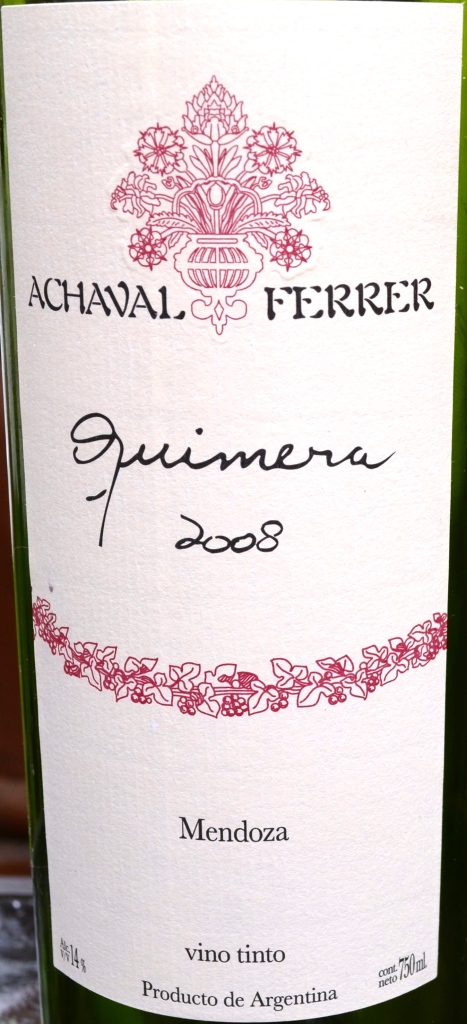 16. 2008 Achaval-Ferrer Quimera Mendoza, Argentina ($24.99) – I wanted to try wines of Achaval-Ferrer for a very long time, but they are not exactly affordable on a given day. Thanks to WTSO ( who else?), I was able to get few bottles of this Bordeaux blend called Quimera, and boy, was that a great wine. Dense and powerful, with lots of dark fruit, very delicious. And – it will definitely improve with time, so I’m glad I still a few bottles left.
15. 2009 Beaulieu Vineyard Reserve Tapestry Red Blend Napa Valley ($60) – it seems that I discovered so many worthy great Bordeax blends this year, from all the different regions. Yet this BV Tapestry squarely hold place on its own – dark, robust, classic, with all the cassis and eucalyptus flavors you want, it rolls on your tongue and delivers pleasure, as you expect your wine to do.
 14. 2006 Laetitia La Colline Pinot Noir, Arroyo Grande Valley, California ($24.99) – I can’t believe I didn’t put this wine into the top dozen. When you take a sip of wine, it usually generates a reaction. It can be “hmm, this is nice”, “hmm, I should let it breathe”, “hmm, I need some food”, “hmm, now I need steak”. And then there are wines where you reaction has no hmms in it, it is “I need a refill now, before this deliciousness is all gone”. This Laetitia La Colline Pinot Noir is exactly that type of wine – round and delicious from the get go, you just want you rglass to last for long, very long time.
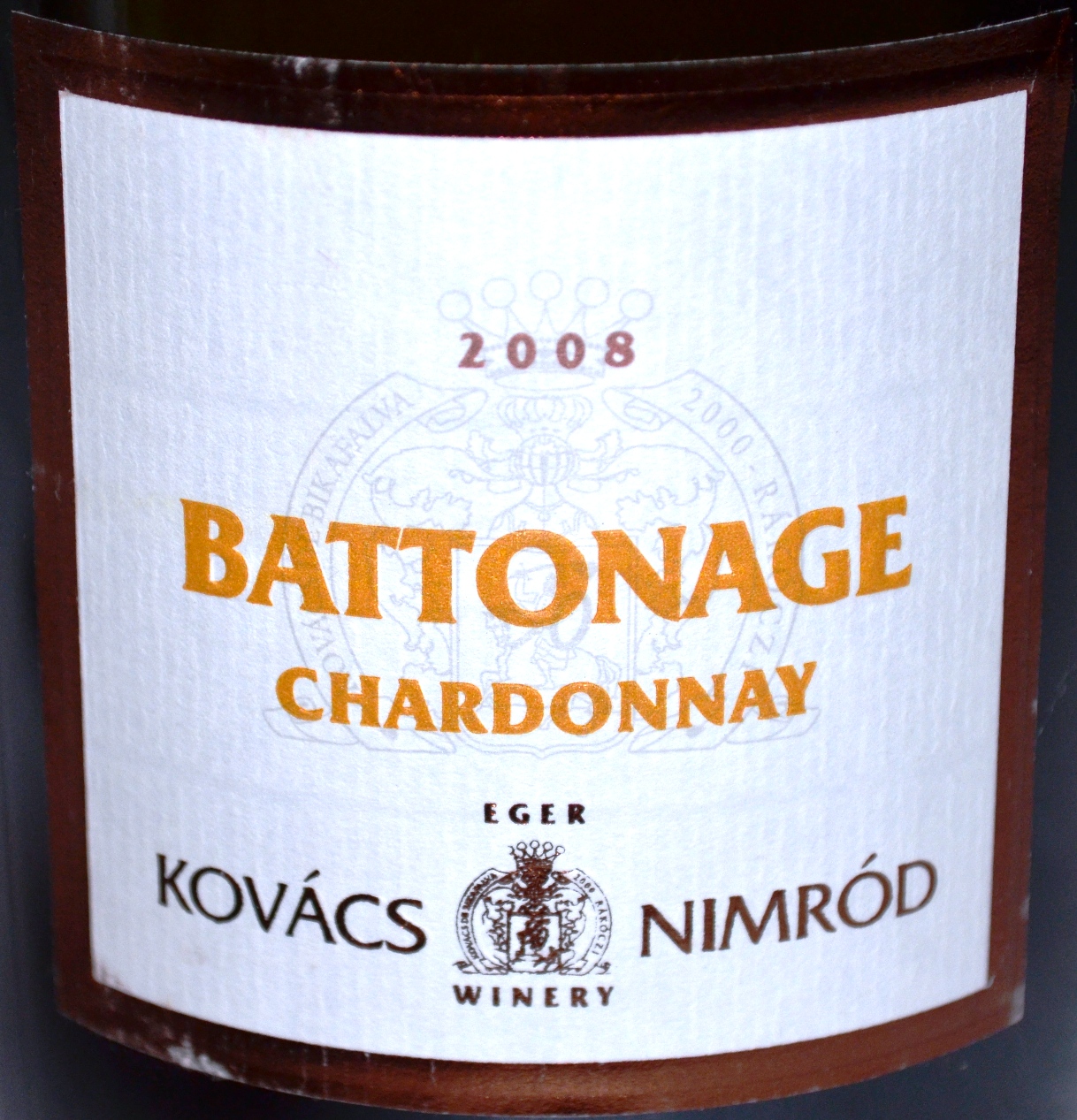
13. 2008 Kovacs Nimrod Battonage Chardonnay, Eger Winery, Hungary ($20.99) – I love Chardonnay – and I so rarely get to enjoy it, unfortunately. I don’t have any deep cellars of Burgundy, and a lot of wineries in California and outside are trying to make Chardonnay to taste like Pinot Grigio – beats me. Luckily, not this Chardonnay from Hungary. This wine greets you the nose with vanilla and butter, and perfectly supports that round package on the palate – more vanilla, more butter, toasted oak, golden delicious apples – just the Chardonnay I want to drink.
That’s all for today, folks – will be happy to hear your thoughts. Have you tried any of the wines above? Did you like them? And yes, my Top Twelve of Twelve is coming out very soon. I’m not going to spoil a surprise for you, but I’m sure you will find my Wine of the Year choice a bit unusual (if you want to guess, write your ideas down in the comments section). Cheers!
Daily Glass: Margaux Experience
 Few days ago we had a magnificent experience with two great Bordeaux wines from Margaux Appellation (I love my friends!). Margaux appellation is located on the left side of Gironde river in Medoc, and it is a home to so called First Growth, Chateau Margaux, and it also has the biggest number of classified second and third growth out of all other appellations in Bordeaux. Cabernet Sauvignon, Merlot, Cabernet Franc and Petit Verdot are the main grapes used in the wine production.
Two wines we had with the dinner were 1998 Chateau Palmer (classified third growth) and 2001 Chateau Lascombes (classified second growth). We decanted both wines for about an hour, just to get them to open up. Chateau Palmer showed lots of white truffles on the nose from the get go, and those white truffles stayed with the wine until the last drop. Chateau Lascombes started very tight, and opened up little by little to show some black truffles on the nose.
I can’t help but to mention that Chateau Palmer has a great web site, where you can find information about wines from the past vintages going back to 1959. The 1998 Chateau Palmer we were drinking was composed of 52% Merlot, 43% Cabernet Sauvignon and 5% Petit Verdot. If you like wines with the little age on them, this wine was just amazing. White truffles on the nose, white truffles on the palate. Round and polished, with great structure and tannins which are not firm already, but have enough grip if you swish the wine around in the mouth for a few moments. Good acidity, overall very balanced. One word description – delicious. Drinkability: 9-.
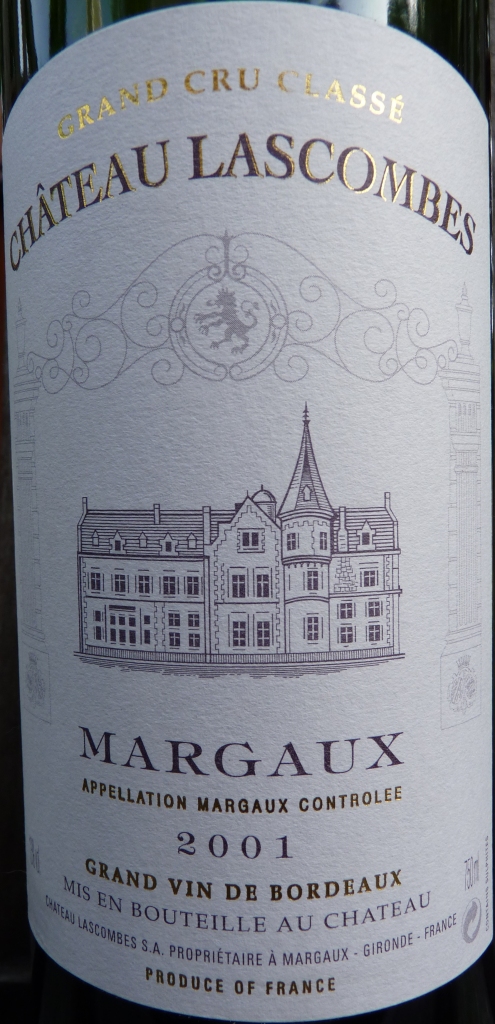 Chateau Lascombes was three years younger, but of course that age difference has little meaning when it comes to wines which can last for 50 years or longer – growing conditions would have much bigger effect. 1998 had nice and dry summer, and 2001 had very hot summer and rainfall right before the harvest time (here is the link to the wine information on the Chateau Lascombes web site). This is all interesting, right? Well, okay – not that we could taste it in the wine. 2001 Chateau Lascombes was big and powerful. Hint of black truffles lasted for a while after the wine was open, but it was not present on the palate. The wine was very structured, still with the firm tannins and lots of dark fruit on the palate, very balanced. Drinkability: 8.
This was definitely a great experience with magnificent wines (I can’t thank Emil enough!). I don’t know how I would do in a blind tasting, but it was very interesting to find great similarities in the wines made in a close geographic proximity and technically having very similar terroir. White truffles or black, but the wines were similar on the nose, which I find fascinating – it was the first time I tasted wines of such level effectively back to back, so it was a great learning moment.
That’s all for now, folks. I wish you great wine discoveries – cheers!
Great [Accidental] Experience: Chateau Leoville Poyferre
 I recently mentioned that I started to write a series of posts for The Art Of Life Magazine. Currently, the series is covering Best Hidden Secrets of the Wine World, and last post was dedicated to the second labels. As the whole notion of the second labels was originated in France, of course my intent was to talk about one of the “second label” wines from Bordeaux.
I decided to go with Chateau Leoville Las Cases Clos Du Marquis, which is a second label of Chateau Leoville Las Cases Grand Vin de Leoville. 2005 was available ( and it was a great year), and I ordered (online) the Clos du Marquis for about $50 – of course I would be glad to go with second label of Chateau Latour, but that would ring about $500, which was definitely not budgeted for this exercise.
So I got the wine, it was the right year, and it was Chateau Leoville, so I tasted it for the post. Then I started working on the post, and of course I wanted to mention both first and the second label. This time I used the full name of the wine, Chateau Leoville Poyferre, and when I failed to find it as a second label, I finally understood that something is off! Well, it was a rare case of “off” to my benefit. Actually Chateau Leoville Poyferre which I got instead of Clos De Marquis is a first label (second label for this wine is called Château Moulin Riche), never mind the fact that it costs twice as much as Clos De Marquis was. I ended up getting another, real second label wine for The Art Of life Post, as talking about this wine would not help the goal of the article (La Croix de Beaucaillou was also not bad, as you can read for yourself in that post).
As everything in life has two sides, tasting this wine was also good and bad. The good part was in the fact that this wine, 2005 Chateau Leoville Poyferre from Saint Julien in Medoc, was outstanding. To describe it in the few words, it is muscles and power in a perfect balance. Perfect balance of dark fruit, spices, eucalyptus, tannins and acidity, however all in need of time. This wine needs another 10-12 years to really shine. Don’t get me wrong – it is perfectly enjoyable now – but it begs you to give it time to evolve. I would put drinkability to 9.
Where is the bad part, you ask? The bad part is that at $100 a bottle, it was truly an accidental experience – this is outside of my wine budget, so I will have to hope for another lucky mistake (yeah, fat chance). Oh well, I’m glad I had this experience and I was able to share it with you. Until the next time – cheers!
Last Bottle Sign Up ($10 credit)




 Talk-A-Vino