Archive
Wine Bloggers Conference 2014 (#WBC14), Day 2
Yet another ambitious project hitting the dust. I was determined to write blog post updates in the morning of the very next day of the Wine Bloggers Conference – and as you can see, it didn’t happened – I’m back home in Connecticut (nope, not even that – I’ actually on vacation in Cape Cod, and Wine Bloggers Conference 2014 is fading in the metaphorical rear view mirror. Nevertheless, I will finish this the way I initially envisioned – as a series of the blog post about WBC14. Let’s get to it…
 Friday was the first full day of Wine Bloggers Conference 2014 (WBC). My impressions in a few words? Overwhelmed. Is there a word for “more than overwhelmed”? The pace of learning, connecting, tasting, analyzing, networking, mingling and tasting more, more and more was incredible. Here is what was happening throughout the day – brunch (yep, a 10 AM brunch) with Portuguese wines and dishes from Brazil, India, Japan and Portugal – 11 wines and 12 different dishes. Then the opening of the conference and a keynote by Corbett Barr. A panel session with Santa Barbara County winemakers (rather founding fathers of the winemaking in Santa Barbara). Speed tasting of the 10 white wines in 50 minutes (very intense). A breakout session called “How The Pros Taste”, which included both the Pros and the wines. An excursion to the mystery destination (yes, with more wines). The Wine Tourism in North America Expo (yep, with more wines to taste), an unofficial before-party in one of the hotel suites before the actual official after-party, and then finally (oh yes, the best for last!), an official after-party, hosted by Jordan and J Wineries. So, how is that for a day for you? Pretty full schedule, huh? I will leave speed tasting and our mystery excursion for the separate posts, but for the rest of the program, here are my quick impressions.
Brunch with Portuguese food and wine was the very first in our day’s program. As I wrote a few times about Portuguese food and wines before, I would definitely agree that both Portuguese wines and cuisine are well worth the attention. At the brunch, we had an opportunity to experience 11 different wines (both white and red), as well as 12 different dishes. If you take a historic perspective on Portugal, hundreds of years ago, Portuguese influence was spread all over the world. To show that world-wide influence, the dishes in the brunch we coming from the different regions which came into a close encounter with Portuguese culture – namely, the dishes from Brasil, India, Japan and Portugal itself (of course!) were part of our brunch. I will not inundate you with all the details of the dishes and wines (despite taking the detailed notes) – I just want to mention two of my favorite wines. For the whites, 2012 Julia Kemper Branco Dão DOP was delicious, with touch of grass and flowers, very interesting nose, light and simple on the palate. As an added bonus, this wine also added one more rare grape to my collection, Encruzado. From the reds, 2010 Quinta do Romeu Colheita Douro Tinto was my favorite, with very nice dark fruit, medium body, open and round, and good balance. And for the rest of it – here are the pictures of the wines and dishes.
Next up – the conference officially opened with the keynote from Corbett Barr. Listening to Corbett Barr, an entrepreneur whose business, Fizzle, was built starting from the blog, was very relevant at the wine bloggers conference – if not as a role model, definitely as a success model his talk was reaching to the heart and soul of all the attendees (and if someone would tell me that it was not, I would question your premise of being at the bloggers conference). 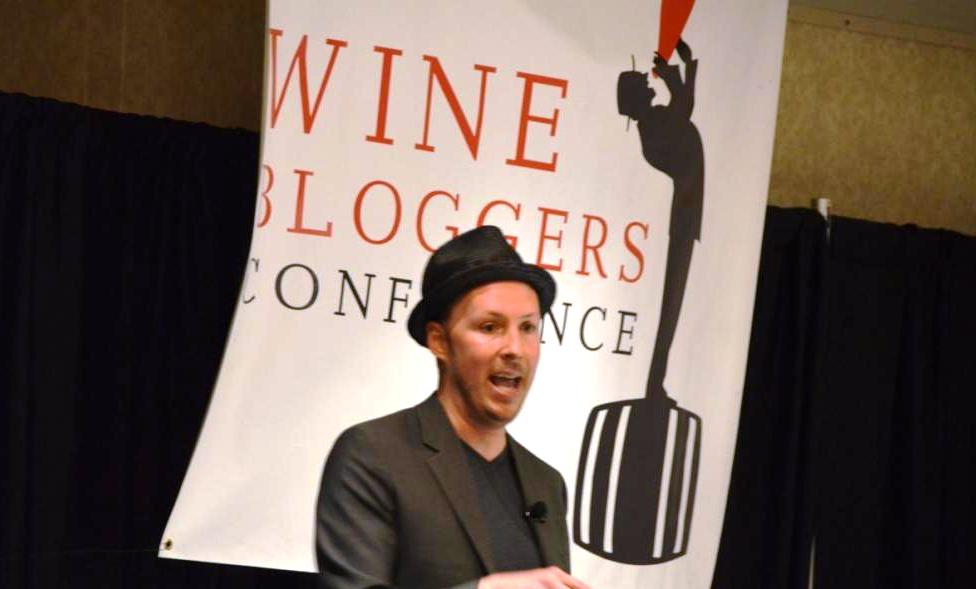 After telling his personal story, Corbett offered a number of do’s and dont’s for building the successful blog and converting it to the business. In short, here are the main ideas:
- Character Trumps Credentials – your passion is more important than many technical accolades and certifications you can achieve. Yes, the certifications are important, but it is passion, will and tenacity which will be a foundation of your success.
- Be different. Stand out. Don’t blend in. Yes, you have to find your own way, don’t be “one of many”.
- Find what works. Don’t repeat exact same thing over and over again, expecting that magically what was not working 100 times, will work on 101st. If something doesn’t work, looks for what will – but keep going.
- Hope is not a marketing strategy. Find where your readers are and figure out how to get in front of them.
- Your blog is not your business. Understand what your business is. The blog is just a tool to help your business, but not the business by itself.
- Keep going, constantly evolving. If you will continue looking for what works and improve all the time, you will [almost magically] leapfrog at some point to your success.
- Mastermind 101 – “You are the average of the five people you spend the most time with” – Jim Rohn. Talk to the people who “get it”. If you will talk to “achievers”, you will [at some point] becoe one yourself.
This is a very lose approximation of what Corbett Barr had to say, but I hope I was able to give you at least the basic idea. And for more information, head over to his web site and read, read, read.
Our day continued with the panel session of Santa Barbara winemakers. Session was moderated by Larry Shafer, the winemaker behind the Tercero label, and it brought together the people who were instrumental in starting and growing Santa Barbara wine industry – Richard Sanford, Ken Brown, Rick Longoria and Bob Lindquist. We learned about the Santa Barbara wine region which started in 1968 with the Santa Barbara Winery, and had grown into the prominent producer of Pinot Noir and Rhone-style wines. 40 different grape varieties are growing today in Santa Barbara area, and a lot of Santa Barbara grapes are shipped to Paso Robles and Napa and used in the coastal blends. Passion, friendship and love to the beautiful Santa Barbara wine region is something which was clearly showing through the words of all the winemakers.
Our next session was the speed tasting of white wines and Rose, which I will be talking about separately – I can only tell you that it was a fun exercise.
You know what else is great about the wine bloggers conference? You get to taste the wines which are not necessarily are even yet available to the general public. Case in point – a unique Viognier, Marsanne, Roussane blend from … Argentina – 2012 Hand of God Fingerprint Series Sobremesa Vineyard VRM White Blend. The wine is in the process of being brought to the United States, and nevertheless we had an opportunity to taste this aromatic, big and well structured white wine, which was simply poured by the winemaker while we were walking from one session to another.


The last session of the day was a so called breakout session, where we had to chose between three different sessions running in parallel in the different rooms. I decided to go and learn “How the Pros Taste”. This session was a panel discussion led by Steve Heimoff, the wine writer who is now the Director of PR for Jackson Family wines, Joe Roberts, a.k.a. 1 Wine Dude, and Patrick Comiskey, senior editor for Wine & Spirits magazine. The idea of the panel was to discuss the ways of the professionals tasting tens of thousands of wines every year, and issues they are facing – and I think the panel did the fine job with issues and challenges. Talking about the “ways” was a bit less successful – I would expect the panelists to explain more of a “how to”, their methods for assessing the wines in the mass quantities – which didn’t take place. And then we tasted 4 wines, 3 of which we selected by the panelists, and one “double blind”, unknown even to the panelists. The selected wines were supposed to represent the unique view point of each panelist, the wines which are “best of the breed” and emotionally engaging. Considering that, I would highly question the rationale of including very obscure wines in this “representative” tasting, but this is mostly what happened. The 2012 Yves Leccia Patrimonio Blanc, a Vermentino wine from Corsica, had nothing but the acidity and didn’t speak to me at all. It didn’t create nor demonstrated any emotional connection. 2013 Poet’s Leap Riesling Washington, while might be typical for Washington, didn’t deliver much pleasure either, and it didn’t connect with the Washington Rieslings as I know them from the Chateau St. Michelle or Snoqualme. Again, I would highly question inclusion of such a wine as “exemplary”. The red wines fared a lot better. 2011 Cambria Clone 4 Pinot Noir Santa Maria Valley was quintessentially Californian, with beautiful nose of smoked cherries, exemplary palate full of forest floor, gentle fruit and perfect balance. Our double-blind wine surprised everybody, including the esteemed panel – clean cherries and acidity were pointing in the direction of Montepulciano from Italy, and the wine happened to be an Yangarra Grenache McLaren Vale from Australia – but it was a very tasty wine. All in all, this was an interesting session, but I would like to see it done differently, more focused on classic methods and classic wines (definitely for the whites).


And then we had a mystery bus excursion. I will keep it a mystery until the next post (trust me, it was good enough for the separate post). When we came back in the evening, we still faced … yes, you guessed it – more wine! The Wine Tourism Throughout North America expo was focused mostly on California wines (or may be I was too tired to notice anything else). I tried a few wines, out of which 2010 Mad Hatter Napa Valley was clearly a stand out – dense and concentrated, with layered fruit, it had a lot of dark power (similar to its color), very drinkable now, but holding also a great promise to evolve. This wine was made by the famed Andy Ericsson (Screaming Eagle, Harlan, Favia and many others). Few other interesting wines were 2007 Terra Valentine Spring Mountain District Cabernet Sauvignon Napa Valley, very clean and classic. 2011 Steven Kent Vinery Cabernet Franc Livermore Valley was perfectly on the mark with beautiful cassis undertones, and 2012 Vasco Urbano “Norm” Grenache Livermore Valley was luscious and delicate, with nice fresh fruit on the nose and the palate.


The “before-Party” for after party was generously hosted by Banfi folks in one of the hotel suites, and the highlights were mostly Italian wines with the few of the wines from Washington state. The 2013 Pacific Rim Chenin Blanc Yakima Valley was perfectly balanced and had an excellent fresh white fruit, a bit of mineral notes and rounding acidity. The Sartori di Verona Ferdi Bianco Veronese IGT was very unique and unusual, an Amarone-style wine (100% Garganega grapes, dried for 40 days on straw mats), with big fruit notes, full body and somewhat sharp acidity.


And last, but not least – an offical after-party, hosted by J Vineyards and Jordan! Both J and Jordan are some of my favorite wines in general, and what a treat it was! Probably unsurprisingly, I was a bit tired after such a day, so I didn’t take too many pictures. But the wines were outstanding. J were pouring both of their sparklers, the White and Rose, as well as the Pinot Noir. And Jordan… How about a full vertical of the Jordan Cabernet Sauvignon Alexander Valley from 2002 until the 2008, including 2005 and 2006 in both 750 and magnum sizes! All the wines, including 2002, tasted fresh and delicious – again, no detailed notes (if you want to blame me for the luck of attention, be my guest). I was especially happy to see that 2002 showing absolutely no signs of age, and 2005 being delicious with still powerful tannins – I have a few bottles of 2005 in the fridge and it seems that I have no reason to touch the for a good while. 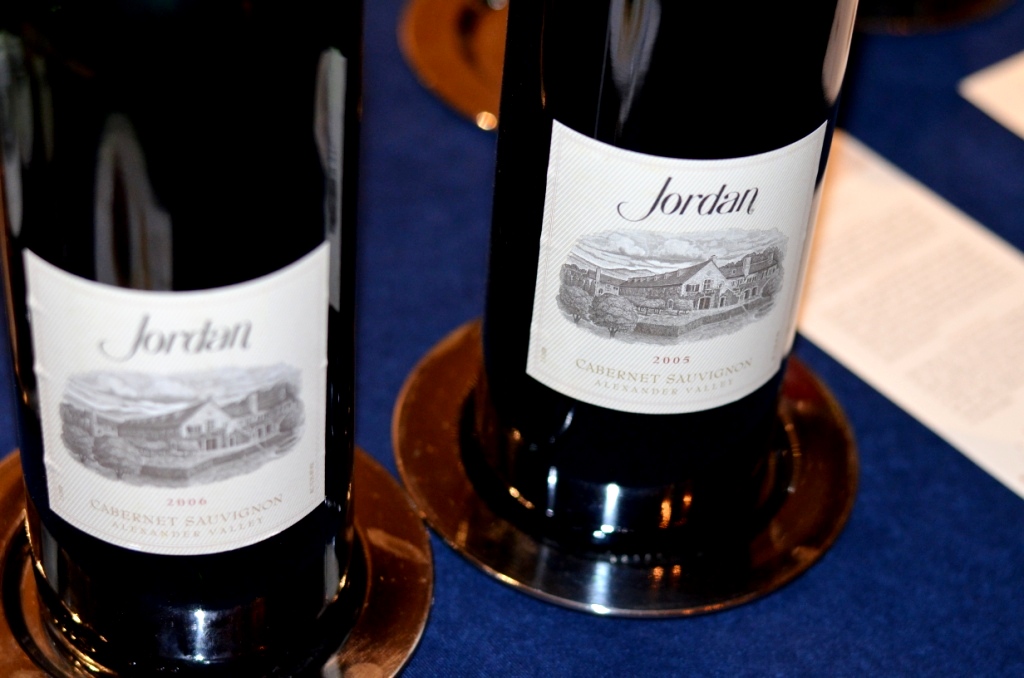 For what it worth, this was an attempt to give you an idea of the happenings in the first day of Wine Bloggers Conference (two more posts will be coming). Hope you are still reading this, and if you are, I want to thank you for your patience. Just one question, if I may – after reading this post, did it make you want to come to the #WBC15, or stay away from it as far as possible? Let me know! Cheers!
P.S. For some reason, this was one of the most difficult posts I ever wrote for this blog… But I’m glad I finished it.
Restaurant Files: Modern Classic or Classic Modern? Carl Anthony Trattoria in Monroe, CT
 When it comes to the Italian cuisine, or probably any cuisine for that matter, what constitutes a “classic cuisine” for you? Old familiar dishes, which stay unchanged for many many years (if it works, don’t touch it)? And then another question is what is the “modern cuisine”? You change the recipe all the time, just to make sure you use ingredients which are “in vogue” (like pork belly or Brussels sprouts today)? Or do you take the familiar dish and put a spin on it? If you ask me, I’m all for the “tasty” – I’ve had classics such as fried calamari or mozzarella sticks done in many unusual ways, so I generally don’t trouble myself with classification “classic versus modern” – if it tastes good, that’s all I want (okay, it is definitely a bonus when food also looks good).


Let me explain why I am taking about this classic/modern relationship. Few weeks ago we visited restaurant called Carl Anthony Trattoria in Monroe, Connecticut. The restaurant had been around for 15 years, and while it has a decidedly Italian flair, the menu represents that exact combination of classic and modern dishes I’m talking about here. You know what – forget this classic and modern – creative is the right word – and I think you will agree with me when we will be talking about food. But – let’s start with cocktails and wine.
The cocktail list was very creative (aha, see, I used that word again) – and here are some of the cocktails we tasted: Mambo Italiano (Averno Amaro, muddled mint and lemons, ginger ale), Black Cherry Mojito (Cruzan Black Cherry Rum, muddled mint and cherry), Cucumber Gimlet (Pearl Cucumber-fresh basil, lemon and lime juice on the rocks) and Clementine Caipirinha (Leblon Cachaça, St. Germain, clementine, orange & lime). Caipirinha was nice, but not necessarily my favorite – I simply prefer more lime.


The highlight of the cocktail extravaganza was the concoction called Campfire (graham cracker glass rim drizzled with chocolate syrup, Smirnoff Fluff Vodka, Baileys, flaming marshmallows). While I didn’t taste it, I captured it in the making:


When it comes to the wine, we didn’t really get a chance to look at the wine list, the wine were preselected for our dinner. The choice of red was 2011 San Giuseppe Pinot Noir Veneto IGT (12% ABV). I’m yet to find a Pinot Noir (or a Pinot Nero as it is typically called) from Italy which I would like – this was definitely not the one. This wine was flat and boring – it was drinkable, but really had no life in it (Drinkability: 7- ). The white wine, 2012 Donnachiara Fiano de Avelino DOCG Montefalcione (13% ABV) was very good – sweet fruit on the nose, plump, open, with touch of minerality and fresh cut grass, nice acidity (Drinkability: 8- ).


And now, to the food!
We started with the two appetizers: Bleu Chips (hand-cut potato chips, gorgonzola fonduta, fig jam, bacon) – a delicious combination, and besides – who can say no to the potato chips? And then the “Original” Balsamic Calamari – the name says it all – it is fried calamari, drizzled with the balsamic reduction – a somewhat unexpected, but a very tasty combination.


Our dinner continued with more appetizers. First, Heirloom Tomato Salad Bruschetta, where you could actually taste a difference in the tomatoes (many times I bought so called heirloom tomatoes in the store which tasted exactly the same as regular tomatoes). Next dish, Charred Hierloom Carrots (straciatella cheese, cilantro-honey citronette) was one of my favorites, as it was simple, yet delicious (I since made the carrots on the grill in the same style, and everybody loved them). Kobe Meatballs (tomato sauce, garlic bread) were very nice, but not necessarily better or worse many other well-made meatballs ( which to me means that they shouldn’t be too dense, and these were just fine). Burrata (bacon jam, pepperoncino) was traditionally delicious, but my very favorite appetizer was Fig & Beet (baby greens, goat cheese ricotta, onion, wildflower honey toasted oats, marcona almonds, Vincotto) – I’m very impartial to the beets salad in any shape and form, and the flavor combination of the beets, marcona almonds and figs was just spot on.


Next we had two entrees family style. “Loaded Baked Potato” Gnocci (hand-made potato pasta pillows, smoked bacon, broccoli, Italian cheddar) was can’t-stop-eating-this delicious and incredibly satisfying. I would even say “homey”, but – this is a descriptor for the next dish. Italian “Ramen” (hand-made noodles, chicken broth, local egg, parmigiano, pepperoncino) had such a surprising simplicity to it, nevertheless the whole table went “wow” after the first sip. I don’t know if chef Sam used some kind of magic potion on this soup, but despite the hot day, this soup was literally warming up the whole body and soul, and this dish alone will definitely worth a separate trip as the temperatures will stop dropping. Our last entree was served on individual plates, and consisted of Pig Roast (slow roasted “Porchetta alla Romana”, broccoli rabe, pickled farm stand tomato) and Wild Ivory King Salmon (spicy spinach, Sultana raisin vinaigrette, walnut romesco aioli). The Pig Roast was perfectly done – meat was falling apart, while the skin was delightfully crisp. And the Ivory King Salmon? Wow. This was my very first encounter with the white salmon – delicious, mild flavor profile, again, very comforting and satisfying.


Believe it or not, but we still got dessert after such a meal. Blueberry Upside-down cake was every morsel delicious. Then Coffee & Doughnuts. I can tell you that in general, I’m not a fan of doughnuts. But this cappuccino/chocolate semifreddo sauce was beyond delicious, it was divine – together with the doughnut, it was one incredible flavor combination. And the Quattro Crème Brûlée? You must love this dish for the presentation alone – and as a bonus, it was outright delicious.


As usual, we had an opportunity to talk to the Executive Chef and Owner Sam DeVillis:
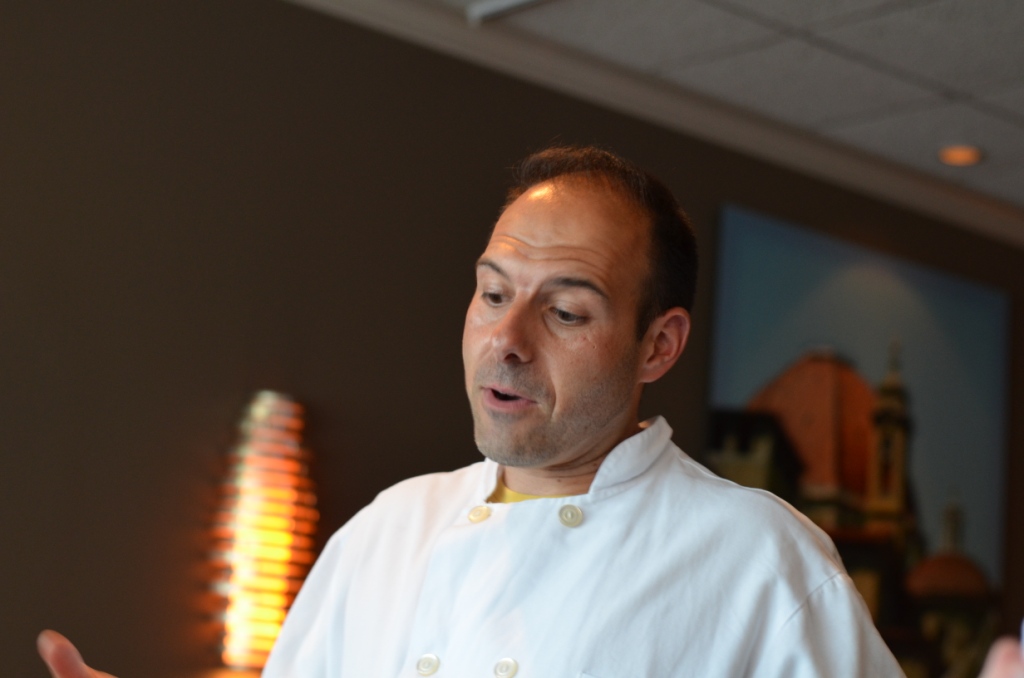
and of course we thanked him wholeheartedly for the spectacular meal.
There you have it, my friends. I can’t tell you if our dinner was more of a classic or modern, but it was top notch creative, and in and out delicious. As Carl Anthony Trattoria celebrates its 15th anniversary this year, I can only wish Chef Sam and his team best of luck to continue satisfying all the demanding foodies for many many years ahead. Cheers!
Disclaimer: I visited the restaurant as a guest of the management. All opinions are my own.
Carl Anthony Trattoria
Clocktower Square
477 Main St
Monroe, CT 06468
(203) 268-8486
http://www.carlanthonys.com/index.htm

Wine Bloggers Conference 2014 (#WBC14), Day 1
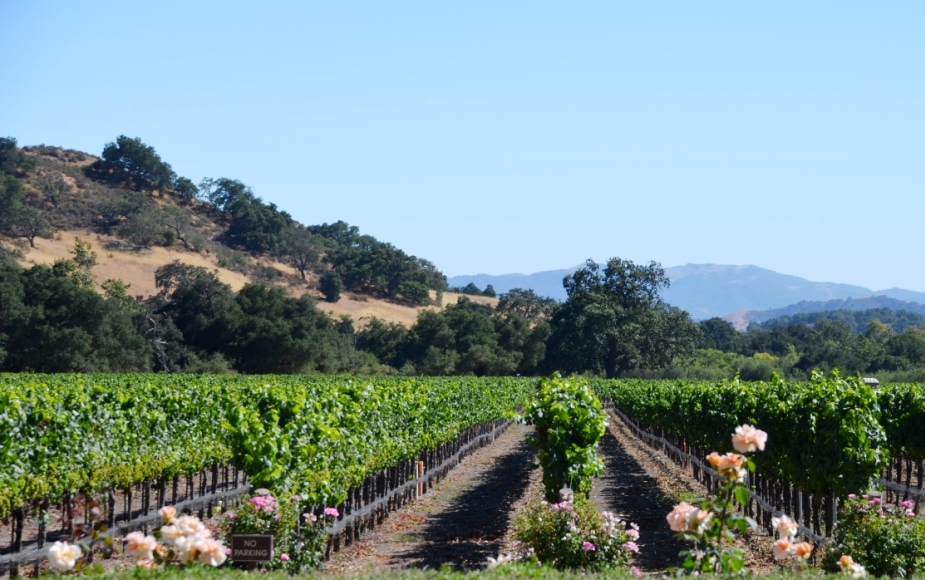 I’m attending the Wine Bloggers Conference 2014 in Santa Barbara, California, and what I will try to do is to give you a brief round up of my daily experiences. This is my only hope to have some level of concise picture of what was happening at the conference – there are way too many wines to taste and way too many experiences to have – unless I do this daily, it will all blur together next week.
In case you are not familiar with the event, Wine Bloggers Conference is exactly what the name says – an event where wine bloggers, wine writers and wine producers get together and discuss all the aspects of the “wine media”. Now in its 7th year, the Wine Bloggers Conference (WBC for short) is taking place in different locations, generally related to the wine production, and this year the location is Santa Barbara county. This is my first WBC event (had been contemplating for a while), so many things are new to me. That’s all I have for the intro, if you are interested in more details, please take a look at the WBC web site.
Here is what I managed to do on my first day. I started the trip early in the morning (at about 3:30 AM) to get from New York to Santa Barbara. The two hours delay, thanks to United (my beloved airline with love/hate relationship), didn’t help, but still didn’t derail may plans, only made me to move a bit faster. Arrived, got a car (with additional unexpected delay now courtesy of Hertz) and then started driving to the Zaca Mesa winery, my first destination. Took the wrong turn, ended up on the beautiful mountain-side drive, so things started to turn to the better.
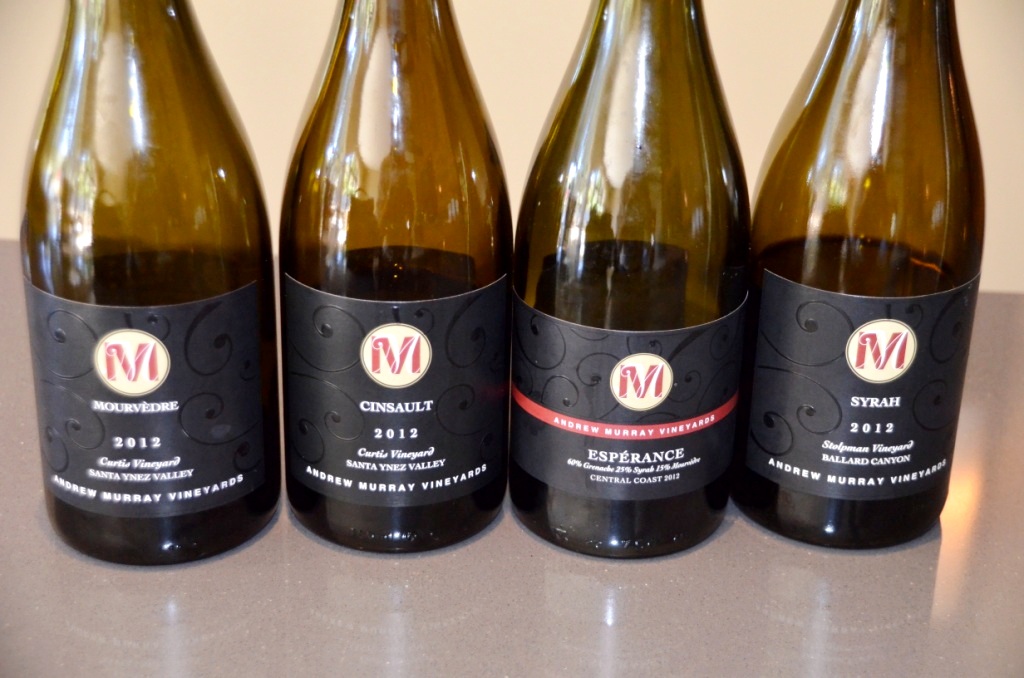
I managed to visit three wineries which we were on my list for Santa Ynez Valley – Zaca Mesa, Fess Parker and Andrew Murray. I will not give you full details of the tastings now (will reserve for the separate post), but I can tell you that all three wineries had some absolutely outstanding wines (outstanding enough to force me to break my resolve not to buy any wines during this trip). Syrah was a star at Zaca Mesa, Pinot Noir was outstanding at Fess Parker, and I was blown away by the rendition of all the Rhone varietals (Cinsault, Mourvedre, Syrah and Viognier) at Andrew Murray Vineyards – here is one picture for you:
After the tour of the wineries, I arrived to the hotel, and later on went for the expo and reception, where we had an opportunity to taste wines (surprise) and look at some innovative products.
As with any conferences and expos, we were offered a number of giveaways. Here is the most thoughtful one – bottle of water with attached travel pack of advil, for the “morning after”:

Water and Advil, how thoughtful!
Before I wil present the highlights of the tasting, let me tell you about couple of interesting product presentations. First, there was a Sonic Decanter – the device which subjects the bottle of wine to the sound energy for about 35 minutes, which completely changes the taste profile of wine. First I wanted to dismiss it as a simple gimmick, but after tasting the wine before and after, I found out that it actually works and changes the taste. If this is a good thing or a bad thing, I will let you decide after the separate post.

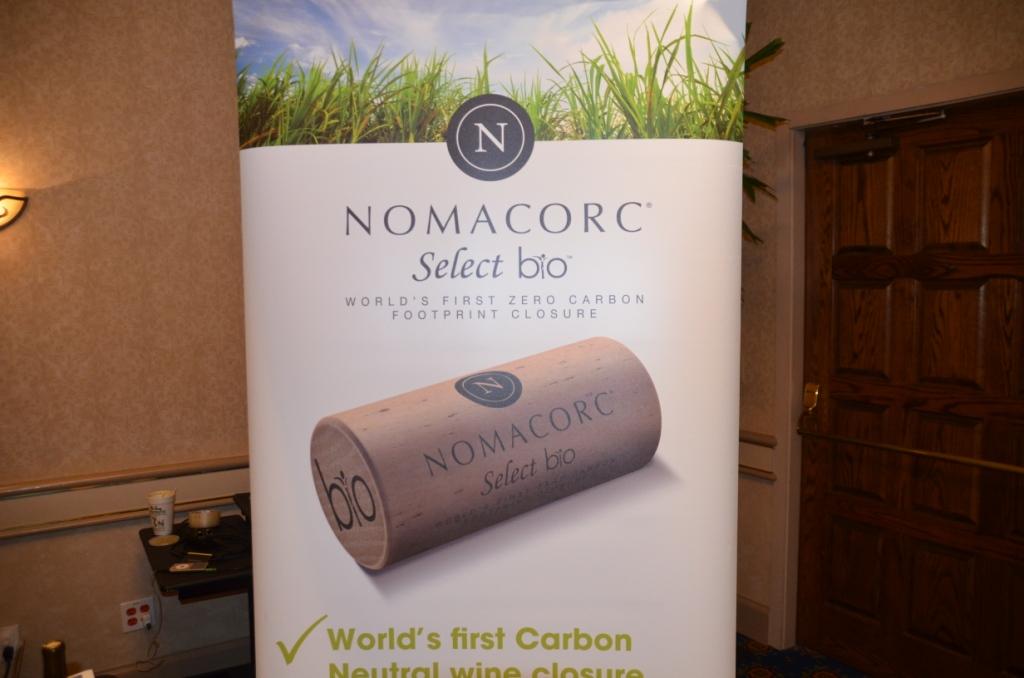 Another interesting presentation was given by Nomacork, a producer of the engineered cork. This cork is made out of the real cork tree, but it is not just a piece of the bark, it is made out of the actual cork tree material, and it can be engineered to allow different levels of oxygen exposure to the wine. To show how it works, the folks at Nomacork had a tasting of the same wine, 2012 Viognier, bottled at the same exact time with two different corks, allowing different levels of the oxygen penetration. The wine which was allowed more oxygen was showing considerably better, so this definitely works. The advantage of Nomacork is consistency, as it eliminates bottle variation, ability to control oxygen intake and the fact that it is still made from the natural material (versus Stelvin screw top, for instance) – and it is the cork which you will have to pull out and not just screw off. The disadvantage to me – I like the natural cork, and I like bottle variation, that mystical element in wine. But – as anyone else, I don’t like tainted wine… So I really can’t make up my mind on this.
And now, few of the wine highlights. Here is what I liked during the tasting – I can only give you “best memory effort” notes, as there were no paper handouts of any sort, so I had to rely only on my camera and the memory. Still, these are the wines which stood out.
2012 Ken Brown Chardonnay Nielson Vineyard Santa Maria Valley – beautiful, classic Chardonnay, with all the flavors being present and in balance – vanilla, butter, toasted bread, perfect acidity.
2013 Tercero The Outlier Gewurztraminer Santa Barbara County – I was very impressed – Gewurztraminer is one of the most difficult grapes to achieve balance, and this wine had it – touch of spice, touch of floral notes, creamy and round – an excellent wine.
2011 Alta Maria Vineyards Pinot Noir Santa Maria Valley – classic California Pinot Noir, good concentration, very well balanced.
2010 Baehner Fournier Vineyards Solus Cabernet Sauvignon, Santa Ynez Valley – classic, concentrated, hint of green bell peppers, delicious overall.
2011 Santa Barbara Winery Primitivo Joughin Vineyard, Santa Ynez Valley – another surprise – excellent, balanced wine, muted raspberries and good concentration, good acidity. Very solid effort.
2010 Ken Brown Pinot Noir Rancho La Vina Vineyard, Sta. Rita Hills – excellent California Pinot Noir – dark power and finesse.
2012 Alma Rosa Pinot Noir La Encantada Vineyard, Sta. Rita Hills – another excellent California Pinot Noir – perfect fruit and perfect balance.
2011 Longoria Tempranillo Santa Ynez Valley – and yet another surprise. Excellent Tempranillo, more on the level of Toro than Rioja or Ribera del Duero – powerful, dense, but well balanced and not over the top. I’m happy do discover more of the old world grapes perfectly executed on the US soil.
That concludes my report about the first day of the conference. Stay tuned, as we are only getting started : ). Cheers!
How Do You Describe Coffee Smell In Words – Visiting Shearwater Organic Coffee Roasters
 Seriously, I really mean it as a question – how do you describe coffee smell? I’m asking here the people who cherishes or may be even worships the good cup of coffee – how one can describe that “pick-me-up” goodness when you walk into the room and smell freshly brewed, real, delicious coffee made with love? It is hard, right? You can describe the effects of that smell (invigorating, uplifting, awakening…), but not the smell itself. But – if you are into the coffee, it is enough to say “the wonderful smell of fresh coffee”, and we understand each other. And let me throw in a few pictures for the good measure…
When I walked into the shop of Shearwater Organic Coffee Roasters in Trumbull, CT, I felt like a kid in the toy store. It was all about coffee – the smell, the coffee makers, huge bags of coffee beans – it was all coffee, coffee, coffee. Shearwater Coffee Roasters has a very simple mission – to let people experience the best possible single origin organic coffee, one small batch at a time. This is a loaded sentence, so let me explain it in a few more words.
Let’s start with “organic“. All the coffee roasted at the Shearwater is USDA certified organic. The coffee comes from all of the world, from Guatemala., Colombia, Ethiopia, Costa Rica and other places, but only from the producers which had being certified by USDA as organic. USDA Organic requirements cover full lifecycle of the coffee production, from the soil and trees handling until the green coffee beans will be packaged for shipping. That organic certification also includes the Fair Trade Certification, which means that the people who grow the coffee are treated properly. Additionally, the Shearwater production process and the whole facility had being also certified by the USDA, so the final product which goes into the little yellow bags is in and out USDA Certified Organic.


Now, a few words about “single origin“. The best way to explain the concept is in the analogy with wine – this is the wine blog after all! Single Origin is really an equivalent of the appellation, or in some cases it can equated to the estate or even single vineyard. Same as grapes, the coffee is a product of mother nature – it exist in multiple varieties, and its taste will be affected by the soil type, the climate, the amount of water, the altitude – yes, you can call it a “coffee terroir” – and if coffee beans are treated properly from the bud breaking until it will make it into your cup, you will be able to taste it.
Now, the “small batch“: that simply means that coffee is processed (i.e., roasted) one small batch at a time. How small? 20 pounds to be exact. 20 pounds of fresh coffee beans are roasted at a time. That’s it – only 20 pounds. Working in the small batches, you have much better control over the process, and you can ensure that all the beans are roasted uniformly. And you can also make each batch to taste individually different. Which gets us to the last term I want to explain – “best possible”.
The “best possible” coffee combines everything which we talked about before – the organic, single origin, the small batch – but it is also a process of Artisan Coffee Roasting. At the heart of the Shearwater operation, supporting the passion of Ed Freedman, the Head Roaster, is the highly efficient machine called Diedrich IR-12, an infrared coffee roaster. This machine allows very efficient control of the temperature during the roasting cycle (which is very short – takes about 14 minutes to produce medium roast coffee), and the roasting process can be fitted exactly for each and every varietal and type of coffee, to allow it to achieve its fullest potential! How about that for the “best possible” coffee? As I said, I’m fully relying on pictures to share my excitement, so here is the machine:


The machine is controlled manually, but it allows full recording of the process (time/temperature changes ) on the computer, so for each batch it is known precisely how it was produced and how the process can be adjusted if and when necessary. On the pictures below you will see Ed Freedman explaining what happens during different stages of the roasting process and how it is recorded on the computer:


The process starts from the green coffee beans been loaded inside, and the temperature gradually increased until you hear coffee to start crackling, pretty much like popcorn. Once you hear that noise, depending on the type of roast you are producing (light, medium, French etc.), you will have to decide for how much longer to continue the process. Also you can all the time have the visual of the progress:
Once you are done, the coffee goes out of the roasting chamber and now it should be cooled off very quickly, to make sure it is not going to roast any more:


Once the coffee is cooled off, it goes into the bin to rest – the coffee needs to rest at least for 2 days before it can be packaged and sold:
 That’s it! Short 14 minutes, 20 lb of the green coffee beans become 17 lb of the wonderful roasted coffee, and you have a room full of delicious invigorating smell as a an added bonus. And you can also check what kind of roast did you achieve, using this simple set of the colored circles (of course you can buy a machine for $10,000 which will do that for you, but Ed feels quite happy with the circles : ) ):


That concludes my story about the Shearwater Coffee Roasters. They are located in Trumbull, Connecticut, so if you live close by or visiting the area, that might be a good place for you to visit (they sell all the coffees and coffee makers right at the shop). If you are not local, but still want to experience Artisan single origin organic coffee at its best, you can order directly from Shearwater web site.
I hope I managed to make your Monday morning – no, I can’t deliver the smell, but I hope I gave you enough coffee pictures so you can add the smell on your own. Oh yes, the cup of fresh coffee sounds divine – time to make one. Cheers!
Beauty of Chardonnay and The Game of the Blind Tasting
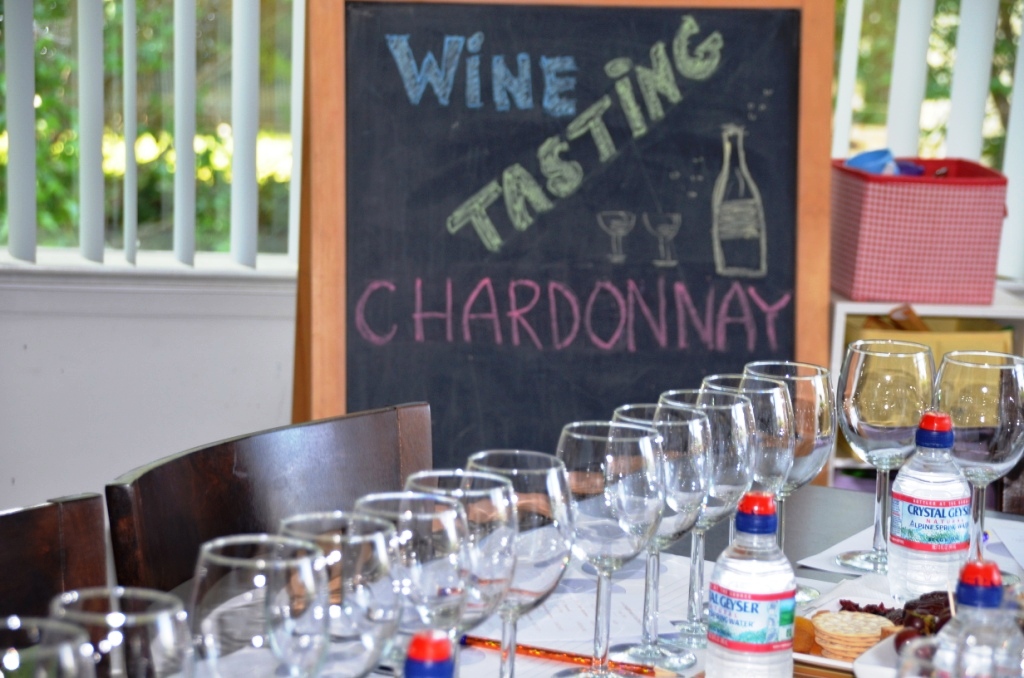 Blind tasting is probably one of the most favorite pastimes of any oenophile – especially when it is done in the non-competitive and non-intimidating manner, let’s say as a part of the fun evening with friends. While the words “blind tasting” sound simplistic, there are actually multiple options of it, all with the varying levels of difficulty. The most difficult type is a double blind tasting – you are just given a random glass of wine, and you have to identify the grape(s), the place, the vintage and possibly even the producer – this is the level at which the Court of Master Sommeliers plays, the ultimate challenge so to speak. The next level down would be a regular blind tasting – there would be at least one common factor between all the wines – let’s say, they all will be made out of Cabernet Sauvignon grape. Or they all might be the Bordeaux wines. While the level of a challenge is unquestionably lower that in the previous case, this type of tasting is great for assessment of the wine without an influence of the external factors, such as producer, label, region, etc. I also call it “an ultimate wine snobbery squasher”, as looking at the bottle of your supposedly favorite wine and realizing you just thought it was terrible (while you had no idea what was in your glass), is really a humbling experience.
My recent blind tasting experience was yet different. It was mostly the regular blind tasting, as it had a theme – Chardonnay, but it was also more limited, may be even “framed” is the right word – we knew all 10 Chardonnay wines which were present in the tasting, so it was not really wide open. And to make it more fun, we tried to identify each wine we tasted, and of course, look for the group’s favorite. To avoid crowding the table too much, we split the tasting into two sets of 5, and then we went over our notes to come up with our guesses – and then, of course, there was the moment of truth – when the bottles were revealed.


Chardonnay needs no introduction, of course. One of the most popular white grapes in the world, with literally every wine producing country having its stake in satisfying the thirst of Chardonnay lovers around the globe. I would dare to say that left alone, Chardonnay is great at expressing the terroir, the soil and climate of the area where it was growing, may be better than most of the other white grapes (may be Riesling can contest that). From the gravely soils of New Zealand to the expressive ‘gunflint” minerality of Chablis, biting acidity of Champagne, the round goodness of the mature Burgundy, to the warm and toasty expressions (sigh – hard to find it anymore) of California – Chardonnay rules them all. Our tasting was extremely representative of this world-wide phenomena – California, Long Island, Burgundy, Italy, Hungary, New Zealand and Australia were all present! Not a bad line up, huh?!
Okay so let me tell you about the wines. First, I will give you my notes, together with the guesses I made as we were going along. Once we completed the tasting of all 10 wines, we had a bit of time to think through and to complete our tasting cards to say what was what. And then of course, we unwrapped the bottles for the “moment of truth”.
Here are my notes as we went along with the tasting:
#1: Touch of butter, green apples, a bit harsh, tannins, young, lots of tannins. 7+/8-. Not sure what it can be.
#2: Minerality (gunflint) on the nose, green apple, great acidity, good balance. Classic. 8. Positive it is a Burgundy
#3: Fresh flowers on the nose, caramel, butterscotch, fig, pears, unusual, apples. 7/7+. I’m sure this is Long Island, no questions.
#4: Savory nose, oxidized, past prime, lost fruit. N/R. Considering the group, must be the Mersault (it is a well known and very unfortunate problem for the producers in Mersault – starting from some time in 2000, their wines lost ability to age and oxidize very quickly).
#5: Mint, rosemary, thyme on the nose, touch of oak, apples, very delicate profile, nice tannins, slightly off balance. 7+/8-. Australia?
#6: Butterscotch on the nose! Vanilla, amazing, very balanced, apples, vanilla, beautiful! 8. I’m quite convinced it is Hungary – I had this wine before and I believe this is the one.
#7: Beautiful nose! White fruit, lychee, spiciness on the palate, apples, delicate fruit. 8+. Not sure what it can be.
#8: Minerality, very unusual, herbs, – sorry for possibly putting some people off, but – a dog poop! (Yeah, I know, sounds crazy – but I’m speaking from experience as a dog owner), salty, herbal, acidic profile, more minerality on the palate. 8-. Again, not sure. Need to think about it.
#9: Candy on the nose, noticeable malolactic fermentation on the palate, and then acidity, acidity, acidity. 7. Not sure.
#10: Minerality, hint of butter, a bit too sweet, not enough acidity, not balanced. 6. No idea.
That was the end of the tasting. Now, we took a bit of time to compose our thoughts and come up with our “final answer”. As this was not a competition, it was also okay to consult each other. I was quite convinced about wines #3, #4 and #6, so it was making my task easier. Also my friend Zak was positive about #7 being Jermann, as he recently tasted that wine. The rest had to fall in place after some thinking. Now, the drum roll, please…
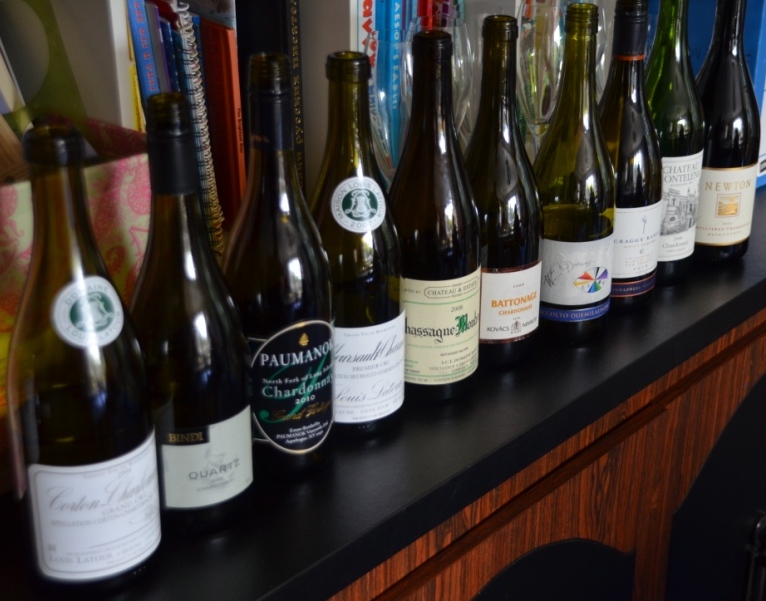 And the wines were:
1. 2006 Louis Latour Cortone-Charlemane, Burgundy
2. 2009 Bindi Quartz, Australia
3. 2010 Paumanok Grand Vintage Estate Chardonnay, Long Island, NY
4. 2007 Louis Latour Mersault-Charmes, Burgundy
5. 2008 S.C.E. Domaine Ramonet Chassagne-Montrachet, Burgundy
6. 2008 Kovács Nimród Winery Battonage Chardonnay, Hungary
7. 2011 Jermann W… Dreams … Chardonnay, Italy
8. 2008 Craggy Range Kidnappers Vineyard Hawkes Bay, New Zealand
9. 2008 Chateau Montelena Chardonnay, Napa Valley
10. 2008 Newton Unfiltered Chardonnay, Napa Valley
With a bit of knowledge and a bit of luck, I managed to get all the wines correctly with the exception of Bindi and Chassagne-Montrachet, which I got in reverse – it is interesting how I thought that #2 was a classic Burgundy, and it turned out to be an Australian wine. We also did a popularity vote, which was won by the Newton Chardonnay – quite awkward, as this was my least favorite wine. My favorite was probably the Jermann, but it is hard to pick a favorite from such a group of outstanding wines. It is also very interesting how different and unique the wines tasted, greatly demonstrating their terroir- and winemaking style-driven differences. Here are all the wines we tasted again, now in more detail for the labels:
And then, of course, there was food – lots of wonderful, home made dishes. It will take too much time to describe it all, so I will just leave you with the few pictures.


Now, I have a bit of the strangely sad part to share (nothing terrible, don’t worry). To complement all the wonderful Chardonnays, I brought a bottle of Sherry to add to our dessert list. 2011 Bodegas Alvear Pedro Ximemez de Añada Montilla-Moriles DO – the wine was excellent, more or less along the lines of what I would expect from Pedro Ximenez – considering the age, it was young and nicely balanced, both with sweetness and acidity. Where is the sad part? Take a look at the picture of that bottle:
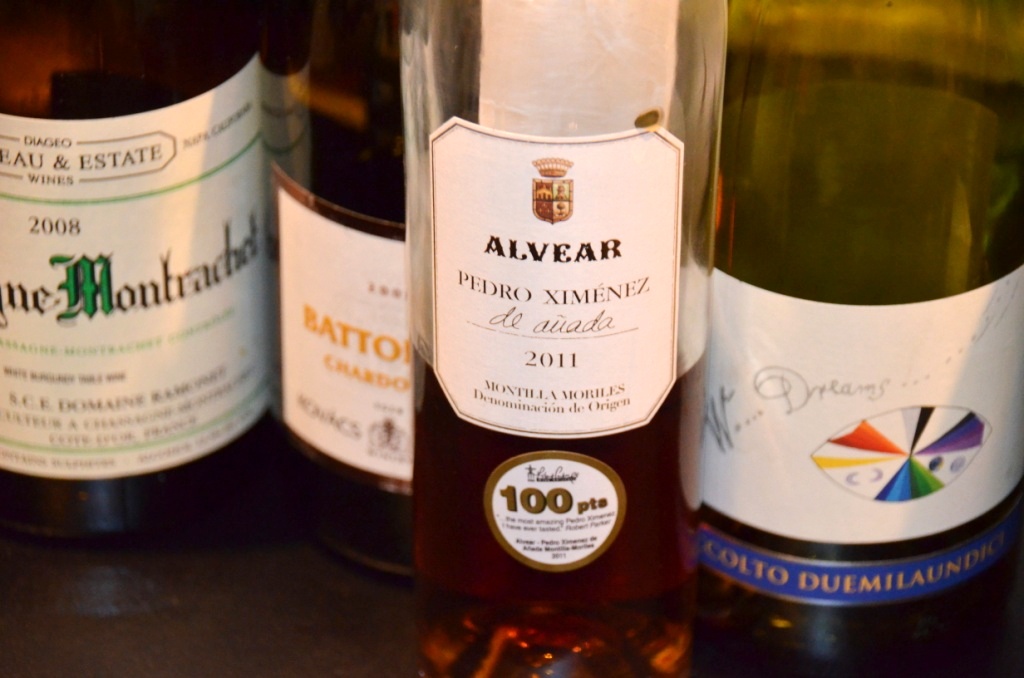
Bodegas Alvear PX de Añada
See that sticker “RobertParker 100 pts”? Yes, this was the 100 points rated wine from Robert Parker!!!!! First time I tried anything rated 100 points by one of the biggest wine critics in the world!!! And I have nothing to write home about it. The wine was good – but I don’t remember it as being earth-shattering. Not sure what to take out of it, but surely feels strange. My only consolation is that I have another bottle of the same wine – and I will keep it for as long as I can before drinking it again – may be then I will be able to see what Robert Parker found in this wine.
That concludes my report on the wonderful game of Chardonnay tasting. We had a great time, and I think restricting the level of “blindness” in this tasting was a very interesting twist, making that blind tasting exercise even more enjoyable. Until the next time – cheers!
Restaurant Files: Canoe Restaurant in Atlanta – Great Food, And Close Encounter With The Rare Bird
Think about your best restaurant experiences – what do they consist of? Of course the company is first and foremost – if you are in the wrong company, nothing will taste or appear right – this is given. So outside of the company, food, wine, service, views, decor, ambiance – all play a role, these are all essential factors of your great restaurant experience.
As I mentioned many times before, when traveling, I always look for the opportunity to experience new restaurants. My last trip to Atlanta, Georgia was not an exception by all means – of course I looked for a good restaurant to visit. I used Yelp as my reference source, and it worked quite well. Canoe restaurant, located in the Vinings neighborhood, was well worth the 4.5 stars yelp rating out of 626 reviews (this was the number of reviews at the time of our restaurant visit).
I read in some of the reviews that the Canoe Restaurant had a perfectly romantic appeal. It definitely had, especially considering how dark it was in the dining room (hooray to all the FlashLight apps on the smartphones, we would be left hungry without them). But on a more serious note, the restaurant is situated right by the river, with luscious greens and smart lighting making an outside look like it was a Thomas Kinkade’a painting. My photos will not do any justice to that outside setting, but I hope they will give you an idea of beauty and tranquility.


Going back to our dinner, while everybody were looking at the menus, I grabbed the wine list (what a surprise, right?). That wine list…. How can I describe it… It was probably the best wine list I ever held in my hands – there was an incredible amount of the excellent wines (that it not necessarily unique), priced in a very (did I say “very”?) appealing way. Moreover, one line in that list almost made me speechless – the rare bird was there, and it looked almost, almost – for the group of like-minded friends – affordable. Take a look below – can you spot the rare bird I’m talking about?

I’m assuming you found it – yes, it is the Screaming Eagle. Of course $850 is an exorbitant amount of money for the bottle of wine, but considering that this wine is simply impossible to find at any price, it might not sound that bad – I have a few friends who would simply jump at such an opportunity. But I was not with those friends, so as you can imagine, I was left salivating about such a close encounter with this rare bird.
Have you ever got excited of seeing something, took a picture, and only later on, looking at the picture, noticed that there was a more to see in the object of your “excitement-driven” photograph? This was precisely my case. Only looking at. The picture I realized that the Screaming Eagle bottle was actually a second label of this cult wine, called Second Flight (it doesn’t make a difference from point of view of the opportunity of trying this rare wine). Then also noticed lots of other cult wines being present in that list, such as Harlan and many others, many at a extremely reasonable price (for example, Peter Michael Le Pavots retails for $175 – $225 on the wine list is a steal). Anyway, I think I have a great incentive to go back to Atlanta, and drag a couple of friends along.
Enough about the wines we didn’t drink, let’s talk about the wines we had. For the white, we got the 2012 Sigalas Assyrtiko-Athiri, Santorini, Greece – touch of minerality on the nose, white stone fruit, refreshing palate with crisp acidity and more of the white stone fruit undertones. Our choice of red was 2011 Chehalem Three Vineyards Pinot Noir from Oregon – nice smokey nose, good fresh red fruit on the palate, some raspberries and sweet cherries, good acidity and good overall balance. It was nice and easygoing wine to drink, and it complemented well most of the group’s dinner selections.


Now, let’s talk about the food. Our waiter (we had a great service, by the way) explained that the restaurant’s specialties are the game and seafood. Somehow, I felt like embracing seafood (we only scored 9 pm reservation, so it was rather a late dinner), and I didn’t regret that at all. For the started, I had an Grilled Australian Octopus (Chorizo, Peppers, Horseradish Tomato Broth) – the octopus was perfectly cooked and it was chewy just enough to preserve the texture, and very tasty overall. For the entree, I went with Bacon Wrapped George’s Bank Monkfish (Asparagus, Brioche, Grape Tomato Vinaigrette), which was absolutely delicious – perfectly cooked, the flaky fish was melting in the mouth, and the vegetables were nicely fitting in.


And then it was the time for a dessert. Our waiter, who brought the dessert menu, mentioned that restaurant’s pastry chef was a genius, so after such an endorsement I had to change my mind (I wanted to skip the dessert altogether). With the dishes such as Caramelized Goat’s Cheese Cake (Bourbon Cherries, Balsamic) or Rhubarb Crisp (Strawberry Ice Cream, Oatmeal Crunch), it was almost impossible to decide on something. I ended up taking Popcorn Ice Cream Sundae (Canoe’s Cracker Jack), which was absolutely delicious and very unusual. Freshly made vanilla ice cream with chocolate covered popcorn and caramel sauce – this might be one of the possible spellings for “nirvana”.
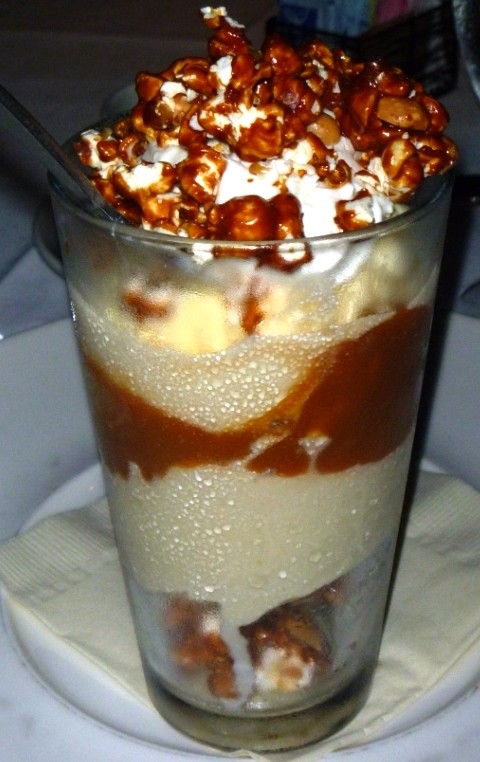
To conclude my report of the wonderful dining experience, I can only say that this was an excellent and very memorable meal, and if your travel plans will take you to Atlanta, I highly recommend you will find the time to visit the Canoe Restaurant – and you can thank me later. Cheers!
Canoe Restaurant
4199 Paces Ferry Road, SE
Atlanta, Georgia 30339
(770) 432-2663

Magnificent Views and Delicious Food – The Mountain House in Woodside, California
 When it comes to selecting the restaurant for a dinner, especially if you have a time to plan it, the overall location and “the view” are important in that process. Thinking about my own experiences, most of my “views” had been of the water – sea, bay, lake, river – some type of water was involved most often. Dining out looking at the sea is definitely magnificent and memorable, but that shouldn’t limit your choices.
I remember about 5 years ago stumbling upon a restaurant in the San Francisco area, up on the mountain drive. We were just passing by, enjoying the beautiful drive through the redwoods park, but then we thought – hmmm, might be a good place for a dinner. The experience was wonderful (I didn’t have a blog at that time though 🙂 ), so I always wanted to come back and experience the place again. Finally, the opportunity presented itself during my very recent trip to San Francisco, and making reservation at The Mountain House was one of my top priorities of the trip.
In essence, your restaurant experience starts from the moment you enter the Redwoods park – well, mine did for sure. I don’t know about you, but when I look at the redwoods, straight as an arrow, and almost having no start and no finish, just going up into the sky, I almost feel an awe, a reverence. A slow drive while surrounded by those magnificent trees (the road has enough of the very tight curves and turns to ensure your ride will be slow), creates a certain atmosphere, it puts you in the very special mood. Once you arrive, if you are a few minutes early, you can fully admire those amazing trees. And if you want to feel it for the fullest, arrive really early with some spare shoes, drive about a mile past the restaurant and spend time on one of the hiking trails – the silence which you can experience while standing among those trees, is something which is only possible to feel in a very few places on Earth, especially for those of us who lives in the cities and towns.


Finally, you are in the restaurant and ready for the dinner. The best place to seat ( assuming you are there during the warmer times) is outside on the terrace. The terrace is completely screened, but you can see an open sky and the magnificent trees right above you, which greatly enhances your dining experience. Before we talk about food and wine, I would like to mention that the restaurant has a long history. It had been around since 1920s, and through all these years had only three owners. The present owners had been at helm for about 27 years – all of this history commands great respect in my book.
Okay, food time. Err, no. Let’s select the wine first. The wine list at The Mountain House is expectedly California-based, which doesn’t come as a surprise. Two things make me very happy with that list. First, the selection is very good, with enough variety, but not overwhelming. Second, a lot of wines are offered at a very reasonable prices, often at around double retail or even better. I couldn’t make up my mind between 2010 BV Rutherford (retail about $25, restaurant – $63), 2008 Ridge Zinfandel Lytton Springs (retail – about $40, restaurant – $72) and 2010 St. Clement Oroppas (retail – about $45, restaurant: $70), until Irene, Matr’D, confidently said – try Oroppas, you will not regret it.
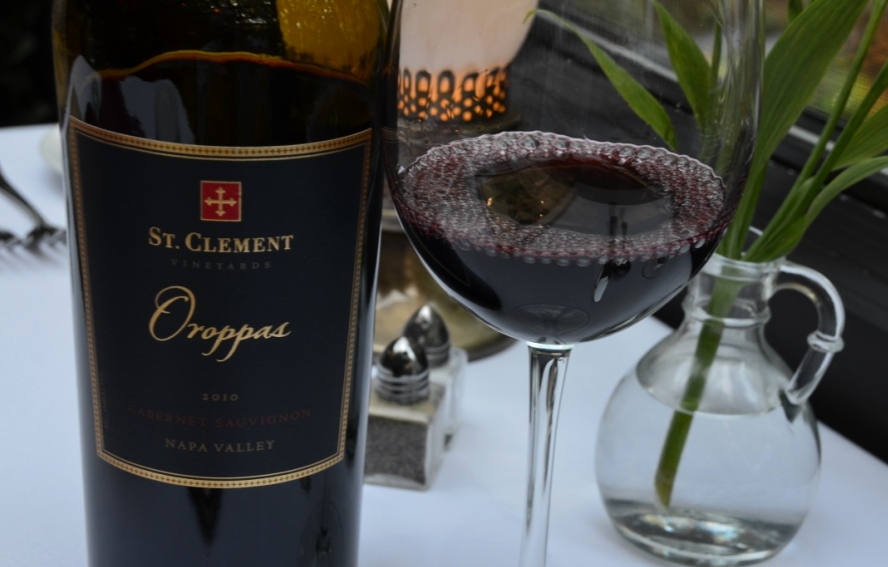
I had St. Clement wines before, and have a lot of respect for them. 2010 St. Clement Oroppas Cabernet Sauvignon Napa Valley (14.6% ABV) had beautiful dark garnet color in the glass. On the nose, the wine showed cassis, a hint of blueberries and a touch of espresso. And the palate… Boy, it is so hard to describe what was going on on the palate. On the palate, this wine was powerful and dense. Dark fruit, perfectly restrained, thick, practically chewy mouthfeel, perfectly structured and dry, and layered and silky smooth at the same time. The wine was at the level when you want to follow every sip with the words “mmm, this is good”. Drinkability: 9-
And finally, it is the time to talk about food! We started with Ahi Tartare Tacos (cucumber, avocado, tahini – miso vinaigrette with jicama slaw), which had very interesting Mediterranean flavor profile, I guess due to the tahini, and nice texture, based on large chunks of tuna and avocvado. We also had a simple Kale Salad (shredded brussells sprouts, marcona almonds, pecorino romano, lemon vinaigrette), which was very refreshing.


The Mountain House’s specialty is game, so it was easy for us to decide on the entreé. In a word, Tea Smoked Pheasant Breast (Apricot-Sherry wine Sauce and Mediterranean couscous) was outstanding – moist, delicious, with incredible flavor profile, very very tasty. And then the special of New Zealand Elk Medallions, prepared with cherry port reduction sauce and served with steamed vegetables, was simply spectacular – the meat was melting in the mouth, the sauce was perfectly complementing the meat, and the wine fully matching both the sauce and the meat – definitely one of the very best pairings I ever experienced. I also want to add that the wine was working very well with the first entreé, complementing the gaminess of the dish.


Despite the fact that we didn’t leave the morsel on the plate, we still decided to try the dessert, just to see if it would be on par with the delicious meal. Strawberry-Rhubarb crisp (vanilla ice cream) and Butterscotch Pot de Creme (creme fraiche, caramel and sea salt) were both very tasty, with me having a small preference towards Pot de Cream – salt and caramel are always good together. However I have to mention that this Por de Cream dessert was a bit too rich, so we couldn’t finish it.


Service was great, timely and attentive.
That concludes my report about The Mountain House. If you are in the area, you definitely don’t want to miss this restaurant – I’m sure you will enjoy it as much as I did. Cheers!
The Mountain House
13808 Skyline Boulevard
Woodside, CA 94062
(650) 851-8541
http://www.themountainhouse.com/

Restaurant Files: Davanti Enoteca, Rama Thai and Sushi Ota in San Diego
In my previous San Diego post, I gave you my version of a perfect day in San Diego, where of course the food was a very important part of the experience. Today, I want to add a few more of the restaurant suggestions, just to expand your cuisine selection.
Let’s start with Davanti Enoteca in the Little Italy neighborhood. The restaurant is appropriately Italian for the Little Italy area – but if the word “Italian” brings up an image of mozzarella sticks or a pasta with meatballs, shoo those images away, as they have nothing to do with modern, exquisite, creative Italian dishes served at Davanti Enoteca.
When you look at the Davanti Enoteca restaurant on outside, it is hard to tell what to expect. Inside, the restaurant is nice and welcoming, and offers a number of sitting options including [unexpectedly large] completely enclosed patio, which creates a great dining atmosphere.
So you are situated inside, and it is the time to eat. How about some Focaccia di Recco (Ligurian style baked focaccia, fresh soft cow cheese…must add honeycomb) for the starter? Very different from what you might expect, this one comes with the layer of soft cheese baked into a paper- thin crust. Addition of honeycomb on top increases “deliciousness” ten-fold. When you take a bite of that focaccia, the foodie’s climactic moan can be easily heard at the table. To keep the excitement level high, how about some Mascarpone Polenta with pork ragout – every morsel as delicious as the Focaccia. And then how about some Bruschetta? No, not the traditional tomato and onion, but may be a Creamy Avocado Mousse Bruschetta will do? Very unique and different again. Keep in mind that both Bruschetta and Mascarpone Polenta might have different toppings on different nights – but I’m sure they will be every bit as tasty as the ones we had.


When you look at the list of entrees, one thing becomes clear – it will not be easy to make a choice. You definitely got options. For instance, a Polpo con Rafano (seared octopus, warm fingerling potato salad, marcona almonds, finocchiona, fresh horseradish aioli) – perfectly cooked octopus (not an easy task in itself), absolutely delicious with all the little condiments there on the plate – every bite makes you happy. Spada Davanti (grilled swordfish, toasted bread crumbs, calabrian chili, brussel sprouts, calabrian chilies, mint) – another home run.


Craving meat? Davanti Burger (special blend beef burger, bacon jam, roasted tomato, cheese curd, arugula, roasted garlic mayo, shoestring fries) – it is just a wow on the plate. I had a pleasure to experience the famous Boulud Foie Gras Burger – this Davanti Burger will give it a good run for the money, it is so juicy and delicious (and those shoestring fries are addictive!). And if you are in a mood for a steak – Bistecca con Cippolini e Funghi (grilled hanger steak, cippolini onion, grilled oyster mushroom, saba, salsa verde) is just what doctor ordered – succulent meat and great combination of flavors.


You know I have to talk about wine, right? Wine list at Davanti Enoteca is not large, but it has a good amount of interesting selections at reasonable prices. Focus is mostly on the Italian wines as one would expect. We had two wines that evening. 2012 Attems Sauvignon Blanc Venezia Giulia had an excellent herbaceous profile, both on the nose and the palate, with some notes of fresh cut grass and hint of grapefruit skin, only a delicate hint, and perfect acidity. Definitely very nice wine. Our choice of red, 2012 La Fiera Montepulciano d’Abruzzo was fresh and lovely, with the very pronounced, but soft tart cherry profile and a hint, a whiff rather, of a cherry pit – light and simple, and very versatile food wise.


When it came to the dessert, I honestly stopped paying attention to what exactly did we order – I know that I tried a few different desserts and they all were very tasty.


Let’s continue. So far, considering both San Diego restaurant posts, I offered to your attention mostly restaurants with European cuisine. I think it is time to change the direction and go towards Asia.
Rama Thai Restaurant is located in the Gas Lamp Quarters, a primary dining destination for people living in San Diego and visiting from afar. From the moment you set your foot inside the restaurant, you are transported – you know I like to use this term a lot when I talk about wines, and it simply means that your experience affects your emotional state, the way you feel at the moment. This is definitely the case with Rama Restaurant. The ambiance, lighting, decor, the music, pictures on the walls, muted sound of creek-running water, statues of Buddha – all of it puts you in a different mood.
And then, to our delight, the food perfectly matched the overall atmosphere. We started with the few appetizers. Satay Skewers (chicken and beef with peanut sauce and cucumber salad) was perfectly done, with peanut sauce being simply delicious. Same goes for Fresh Spring Rolls, which were super fresh and crunchy, also served with similar peanut sauce, with just enough heat to make it very tasty. The Pot Stickers (pork, ginger soy sauce) were not necessarily unique, but cooked just right.
For the entrees we went with a very nice selection of the dishes. While Pad Thai is generally considered “The Dish” in the Thai restaurants, my personal favorite is Drunken Noodle (flat rice noodles, thai basil, tomato, chili garlic, kai lan) – for me, it has some homey delicious feeling, this is my ultimate Thai comfort food, which I’m ready to eat any day. The next wow dish was called Garlic and Pepper (crusted chicken, beef or shrimp, sweet and spicy reduction) – we had the chicken version, and every bite was perfectly crunchy and just right spicy – I can highly recommend this dish. Salmon Panang curry (ka‑r lime leaves, green beans, cherry tomatoes) was very well balanced dish, with Panang curry flavors being present, but mild enough. Last, but not least were Pan Seared Sea Scallops (with sautéed spinach, chili sauce) – you know, when the scallop is seared and done just right, it needs no explanation to any scallops aficionado, so this was our case. All in all, great meal, and I can’t recommend this restaurant high enough as a whole experience, with ambiance being a big part of it (and great service). Sorry, have no pictures for you – to get the pictures, I would have to use the flash, and I really didn’t want to disrupt the atmosphere…

Last but absolutely not least for today is the Japanese restaurant called Sushi Ota (yes, we are continuing to explore the Asian cuisine of San Diego). Sushi Ota is considered to be one of the very best sushi restaurants in San Diego (4.5 stars based on 1676 reviews on Yelp, very impressive), so one would probably expect to find such a restaurant again in the Gas Lamp district or may be somewhere in downtown, surrounded by many other restaurants. When you drive to Sushi Ota, you take the highway exit, and the very next thing you do is start thinking if you had the right address written down, as you clearly see that you are in the area of car dealerships and small business offices, far away from the perceived “hot dining setting” by all means. But then GPS tells you that you have arrived, and you barely notice the name “Sushi Ota” on the sign of the tiny strip mall. Yep, you actually arrived to the one of the very best sushi joints in San Diego. I also hope you actually made a reservation at least few days in advance, because otherwise, you will need tremendous amount of luck to score even single sit by the bar.
At 5;30 pm, when the restaurant opens for dinner, it instantly gets at least half full, and it is a full house at 6 pm. What matter is that you got your table, so it is time to eat.
As a starter, we took a Tuna Tartar dish. This is not your average Tuna tartar – it is presented on top of tempura eggplant, and each one of the 4 pieces has different topping. This dish was done more of a single bite style (a big bite, I have to say), and really delicious.


Next up – Clam Miso Soup. It is a “kicked up” Miso soup as it contains a few clams in the traditional aromatic broth – definitely a nice touch.
 Our next selection (highly recommended) was the Spanish Mackerel sashimi. What you get is essentially the whole fish, with all the meat cut up in the small sashimi pieces. I like Mackerel sashimi in general, but it never tastes like the one we got at Sushi Ota. Typical mackerel sashimi is rather on the dry side, and can be even chewy. The one we had at Sushi Ota was succulent, sweet, soft and was literally melting in the mouth. Take a look at how it is served:
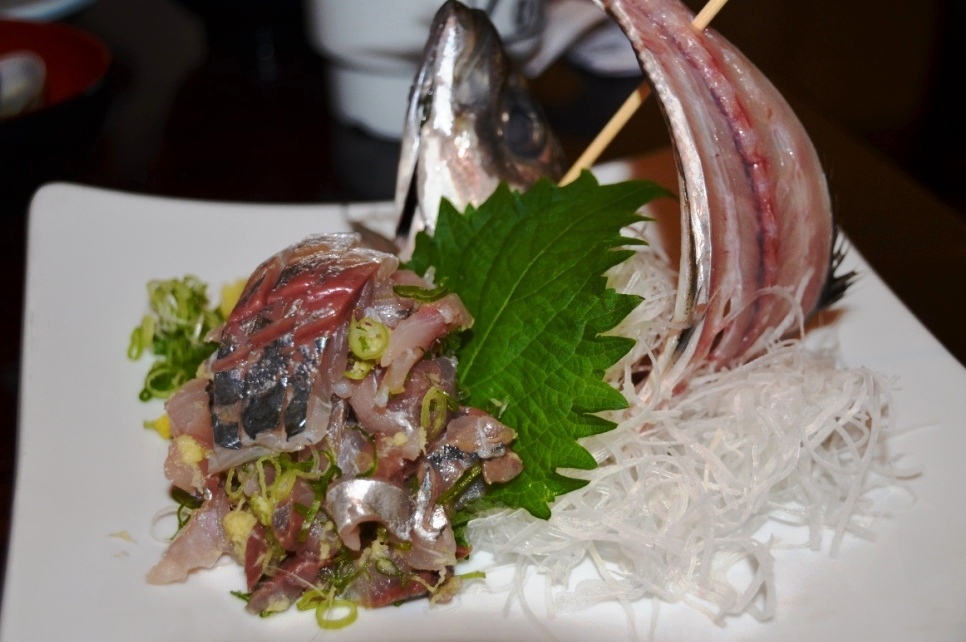 As you can see, you do get literally the whole fish. Wonder why you are get served the bones too? Well, once you done with the sashimi, the plate is taken away from you, only to be brought back in about 20 minutes after that fish skeleton was deep fried to the point that you can literally eat it like the potato chips! It is so tasty you literally can’t leave anything on the plate! Here you are:
 And then, of course, we had sushi. We got a few different rolls and Uni (uni, a.k.a., sea urchin, you can eat only when it is super-fresh, and that’s the way it is at Sushi Ota). For the rolls we got Double Double Tuna, which is a combination of spicy tuna and regular tuna on top, as well as Eel Roll – fresh and delicious. And to finish the meal, of course, the mochi ice cream – green tea and mango. All in all, an outstanding meal, which makes you to leave the restaurant with the promise to self to come back as soon as possible.


That’s all I got for you for today – more choices for your possible San Diego trip. If you have already or will visit any of these place, I would love to know what do you think. And until the next time – cheers!
A Perfect Day In San Diego
When I travel on the plane, I often skim through the airline magazine, such as Hemispheres on United, before I get to my beloved sudoku page. One of the articles I often pay attention to is “Three perfect days in a particular town”, which describes how you can potentially spend three days at some town, starting from the lodging, talking about attractions and dining options. Over the past 3 month, I was in San Diego in California twice, and came across a few places which I found worth talking about, thus I decided to come up with the similar post to those I mentioned before. Writing about 3 perfect days might get a bit too intense, so let me compose for you just one, potentially perfect, day. Here we go.
Let’s start with the place to stay. San Diego has no shortage of the hotels, of course. The reason for me to recommend the two hotels below is because I personally stayed in both and liked them very much. First option is the Residence Inn San Diego Downtown, located at 1747 Pacific Highway. Yes, it is the part of the chain of Marriott hotels, and while it is not unique, it nevertheless offers a great convenience of stay for the family, with all rooms being suites with kitchenettes. It is also located within walking distance from Little Italy area (lots of great restaurants!) and the number of attractions right by the water, like USS Midway Museum. This hotel is within 20-25 minutes walking distance to the Gas Lamp Quarters (lots of restaurants and great night life), and it is easy to get to and from the highway.
The second hotel I can recommend is called Kona Kai Resort and it is located on on 1551 Shelter Island Road. Even taking into account that hotel was undergoing renovation during my stay there, the location and the views were absolutely spectacular. Yes, I stayed at many beach-front hotels before, however, in case of Kona Kai, the combination of marina with numerous boats and the hill covered with the houses was one of the most tranquil settings I ever experienced in the hotel. Just sit in the chair and be transported away in the dreams… Small private beach, lots of different water sport activities, bonfires – the hotel definitely offers a lot for the very enjoyable stay.

Kona kai Marina View at Kona Kai Resort
Now, let’s talk about few things you can do. Of course San Diego Zoo, as well as Seaworld need no introduction, so I will not be talking about them. Also, if you are traveling with kids, don’t forget that Legoland is only about 40 minutes away from San Diego. However, I would like to bring to your attention a few of probably lesser known places. After breakfast (please see below for recommendation), head out to the Cabrillo National Monument. While you can think basedon the name that this is only a single structure, Cabrillo National Monument is actually a park, which offers stunning views of San Diego and San Diego harbor, the Lighthouse, a small military history museum and the number of hiking trails – you can easily spend a few hours there.


Depending on how much time you will spend at the Cabrillo National Monument, you might or might not be ready for lunch – in any case, you will find my suggestion below. After lunch, I have few more places for you to visit. First, the Balboa Park, which is a very interesting collection of botanical gardens, beautiful grounds and lots of different museums. Depending on how much time you will have available, there will be no problems to spend not only half day, but pretty much the whole day in the Balboa Park. One of the most stunning images for me was the Towering Moreton Bay Fig tree, with the root more resembling a dinosaur’s foot and towering crown disappearing high in the sky:
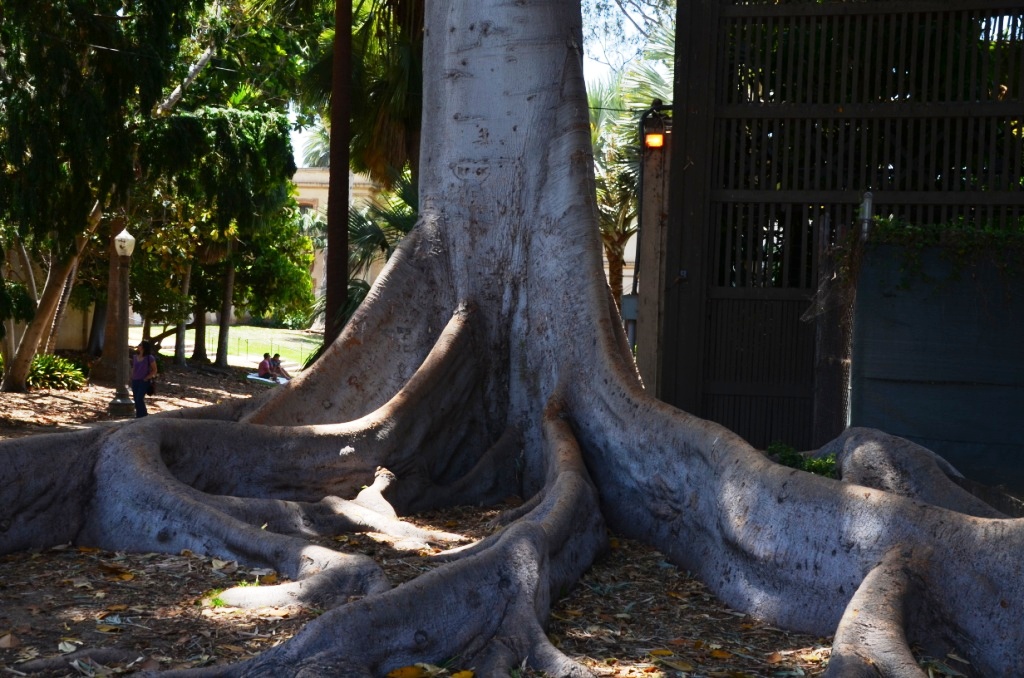
Towering Moreton Bay Fig Tree at Balboa Park
One feels really humbled walking around these magnificent trees.
Once you are done with the Balboa Park, I have the last attraction for you to see for the day – Sunset Cliffs. This is also a park, which offers stunning views of the ocean, as well as opportunity to surf and hike. To me, just sitting down and watching the waves, is enough of attraction on its own. And I would also guess from the name that the best time to visit the cliffs is during the sunset, but I didn’t have an opportunity to check this myself.


And now, let’s talk about food! As we are talking about the perfect day, I would like to share three recommendations with – yes, we are talking breakfast, lunch and dinner.


And now, it is time for lunch. I hope you are craving seafood, as the place I want to send you to is a fresh seafood heaven, very much resembling the New England, or rather even Cape Cod seafood joints, the hallmarks of the fresh seafood restaurants. With its unassuming and non-pretentious simplicity, Point Loma Seafoods reminds you of many of the Guy Fiery’s triple-D worthy establishments – inexpensive, always filled with people, offering great variety of seafood which is as fresh as it can be, with different styles of preparation. In the mood for sashimi? You got it. A plate of fried oysters or clams? No problems. A whole clam sandwich (this is what I had)? Here you go. Fresh fish, salads, soups, oysters, crab cakes – definitely there is a variety to chose from. Make sure you will allocate time, both to find parking and to wait in the line – but the wait is very manageable, the service is quite quick and efficient. I highly recommend you will include Point Loma Seafoods into your travel itinerary.

After all the walking, climbing, and may be swimming, kayaking and sun bathing, you probably feeling tired and reading for an exciting dinner. Your wish is my command. Let me suggest that you will take a short trip to Coronado Island, and find the place called Chez Loma (yep, we are going French again – how about that!).
Again, an interesting parallel with New England, as Chez Loma restaurant is located in the regular house-looking structure. Simple ambiance and chanson music definitely add to your mood. And the food… Well, before we talk about food, few words about the wine. The wine list has reasonable size and very reasonable prices, with most of the selections coming from California, France and New Zealand. For no particular reason, we started with NV Scharffenberger Mendocino County, California – simple wine, with nice touch of toasted apple on the nose, and good weight on the palate. This wine had a bigger body than typical NV Champagne would have, with the same toasted apple being a main theme. Overall, easy to drink and refreshing. Our second wine was delicious 2012 Matua Pinot Noir Marlboro New Zealand (13% ABV) – smokey nose, vibrant acidity, tart cherries on the palate, excellent balance – the wine was perfectly complementing the variety of dishes we had for dinner.


And then, there was food. For the appetizers, we went with the few different options. Ceviche “Verde” (rockfish, tomatillo sauce, avocado) was somewhat “off the beaten path”, very refreshing, with the avocado and tomatillo sauce adding an interesting touch. Escargot (mushroom, sweetbread, asparagus, garlic butter) was probably the best I ever had – somehow, all the elements worked together creating literally a sublime experience. Tartare of Beef (hand cut beef, shallots, horseradish, parsley, pomme frites) was another great appetizer. I fell in love with this dish in Paris, and ever since, when it is on the menu in the restaurant which I would trust to serve me a raw beef, I would go for it. This version was very nicely done, with the perfect flavor profile. And lastly, the Three Beets (yellow, striped and red, thyme vinaigrette, Bucheron goat cheese) was simply a music for the eyes – bright, colorful, and most importantly, very tasty! Perfect texture on the beets – not too hard and not mushy, just right, and an excellent pairing with very gentle goat cheese.


Couple of entrees I want to bring to your attention. Peppered Filet Mignon (tenderloin, black pepper crust, brandy sauce, potato puree, haricot vert) was perfectly cooked, with very fresh cracked black pepper, simply a perfection on the plate. And the Sea Scallops (vanilla infusion, cauliflower puree, bacon crisp, orange sauce) were perfectly done, with the right texture and delicious textural enhancement of cauliflower puree and bacon bits. Again, one of the best Sea Scallops dishes ever, and I have to tell you that 3 times out of 4, if the menu has Sea Scallops on it, this would be the dish I would take. For dessert, we shared Gingerbread (orange-caramel sauce), which was mostly a nicely done bread pudding. All in all, a great dining experience and I can’t recommend this restaurant high enough.


After leaving the restaurant, see if you will be able to get a quick tour of the historical Hotel del Coronado – it definitely worth a few moments of your time – seeing all the wooden paneling and lavishly appointed hallways. Note – you might have to look for the way to sneak in as a registered guest. Upon return to the hotel you are staying at, spend a few moments admiring San Diego and marina nightlights. It was a long day, but I hope it was a good one.


Here you have it, my friends – my version of the perfect day in San Diego. Whether you visited any pf the places I mentioned or not, I would love to know what you all think. Cheers!
Cozymeal – A Unique Dining Experience
What I want to share with you today is a guest blog post written by Nanette Wong and Samad Nasserian, presenting unique and interesting dining concept Cozymeal. I like the concept, and I think it nicely expands your Friday (or any other) night dining options. Cozymeal is available today only in San Francisco and Northern California, but they plan to expand to East Coast very soon. Please read below and feel free to comment. Cheers!
Picture this: It’s Friday night, and you’ve made reservations at the hottest new restaurant in town. When you arrive, you still have to wait a little bit, despite making reservations. No big deal (sort of). Finally, you’re seated and everyone’s ordered. The food comes out, and it’s pretty good, but it’s a tiny space and you keep bumping elbows with everyone. It’s a little noisy too, so it’s hard to carry on a normal conversation. On the way out, splitting the bill gets complicated and everyone is a little frustrated with how it’s done. Does this scene sound familiar at all?
We’ve all experienced situations like this before, and that’s where Cozymeal comes in. Cozymeal is offering a new way of eating and enjoying the benefits of a restaurant, without the not so pleasant parts. Also, you can have the cooking classes with the chefs, so you can even eat the delicious foods you cook. Pretty cool right? It’s a complete foodie experience.

Here is how it works. Cozymeal is a trusted community of food lovers and home chefs who share their passion for food. In order to enjoy a Cozymeal, all you need to do is to browse through the offered Cozymeals, find the dining style you like (or a cooking class) and the date which works for you (or you can request the new date), book it and then come to enjoy a great evening of great food and conversation in cozy and comfortable setting – it is as easy as that!
There’s a wide array of meals offered. From Peranakan Food on a Boat to Old Style Nordic Cuisine to a French Country dinner, there’s a meal to fit everyone and anyone’s taste buds. And that doesn’t even cover all the cooking classes offered as well!
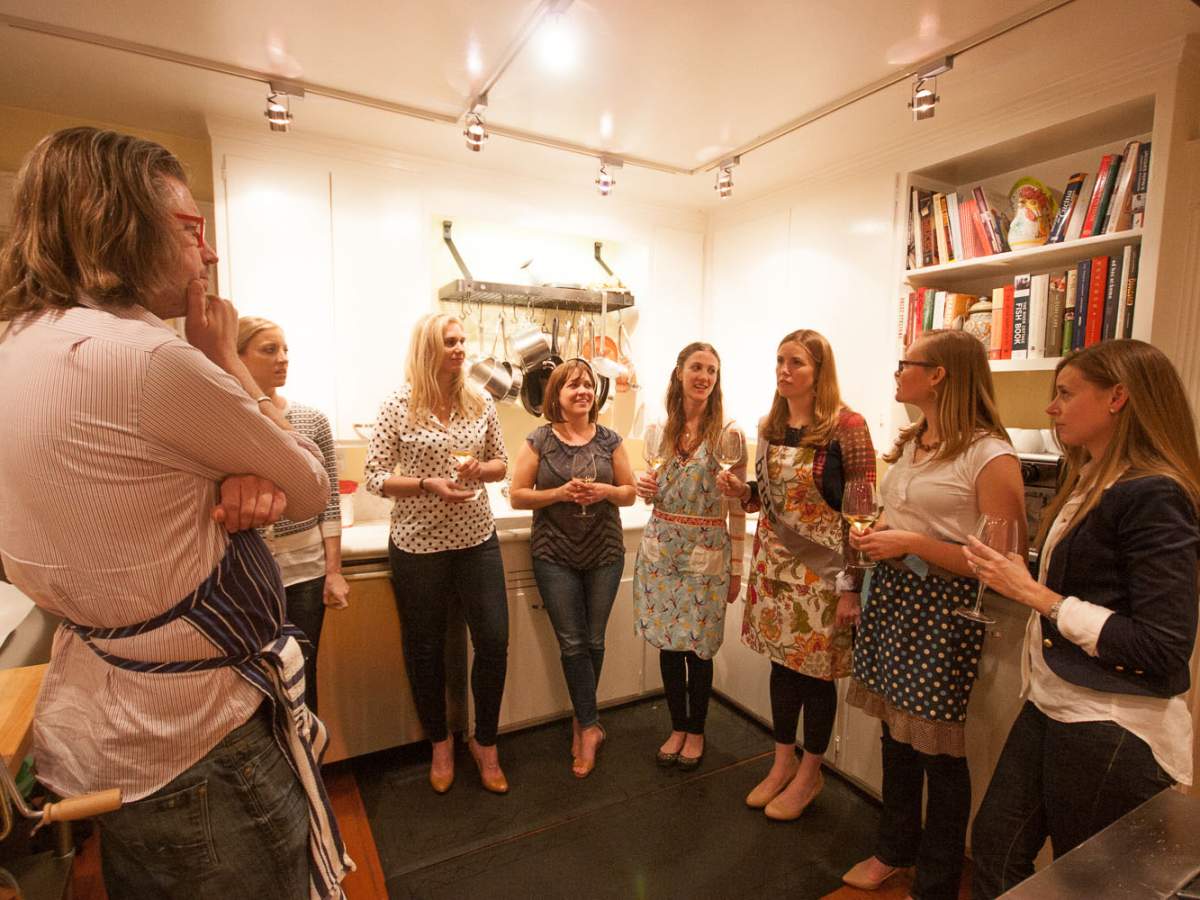
One of the most popular cooking classes currently offered is James’ Italian Comfort Meal cooking class, where you learn to make your own, fresh pasta! Located in the colorful Haight Ashbury neighborhood of San Francisco, professional chef James will teach class participants how to make a scrumptious egg tagliatelle, topped with slow cooked pork sugo.

And that’s not even the main course. The main course is a slow-cooked beef brisket, simmered in white wine and milk. The whole meal is rounded off with a creamy La Quesada (think if cheesecake met flan) and fresh, local berries.

Another unique dining experience is Desiree’s Peranakan Dinner on a Boat. With Desiree, you can enjoy a sunset dinner on her boat docked at the Berkeley harbor.
She is half Hainanese and half Peranakan, and offers an authentic fusion meal for Cozymeal diners. The meal starts off with crispy sardine puffs, followed by chicken nut stew and jasmine rice. A simple yet flavorful and traditional tofu dish also appears on the menu. And of course, can’t forget dessert, which are a sweet, fluffy Kaya puff.


What’s most interesting about the whole experience is that professional chefs, or really talented home cooks, not only put the effort into creating this meal, but they also welcome you into their home. You get to interact directly with them, chat about how they cooked the meal, and pretty much ask them whatever you want! (Can’t guarantee they’ll spill all their secrets though). This is also being a great benefit for travelers. How often had you traveled abroad, hoping to taste the authentic food of the nation, but are limited to restaurants. And let’s face it, the restaurants are probably catered to tourists. Now that we think about it, it’s kind of being in Diners, Drive-Ins, and Dives, where you’re Guy Fiery and the chef is sharing his food with you in his own home! Pretty awesome. Anthony Bourdain ain’t got nothin on you.
Cozymeal is growing rapidly and will be expanding to the East Coast very soon. If you are interested in becoming a Cozymeal host in the East Coast, West Coast or anywhere else, reach out to us by visiting our host page.
Check out Cozymeal here, or visit us on Facebook.
Last Bottle Sign Up ($10 credit)





