Archive
Top Highlights From Gambero Rosso Tre Bicchieri 2015
 At this point, you most likely already read a number of reviews from Gambero Rosso 2015 (here are the links for the John and Stefano posts, the two that I know of), so it will be difficult for me to add much there. Considering that lots of hard work is already done by the others, I will take an easy path and this year will limit my post only to the 10 (or so) of the personal highlights. But before we will get to those, a couple of notes.
First of all, just in case you didn’t read the other posts and in case you are not familiar with Tre Bicchieri, let me explain what Tre Bicchieri is all about. In 1986, an Italian food  and wine magazine was created under the name of Gambero Rosso (in translation from Italian it simply means “red shrimp”, and it comes after the name of the tavern in Pinocchio). Starting in 2002, the magazine introduced the rating of the Italian wines using the symbol of glasses (Bicchieri), with 3 glasses (Tre Bicchieri) being the highest rating. This rating proved to be successful and demanded, and since then the Gambero Rosso created a special event, called Tre Bicchieri, to celebrate all those best wine Italy has to offer. Tre Bicchieri events take place around the globe, and the event I attended was in New York (it was the third Tre Bicchieri event I attended in the past 3 years, all in New York).
For the next note, here comes the rant. Yes, Tre Bicchieri is a great event which gives an opportunity to taste some of the best Italian wines. But in terms of the overall organization, this is one of the worst wine tastings I ever attended. I have two major problems with the event. Just so you understand the size of the event – there were 185 producers showing between 1 and 3 wines each, which would roughly equate to 350 wines. First problem is that all the producers were not organized by the region. And they were not organized alphabetically by the producer, oh no, that would be too logical, right? Instead, the tables were arranged in the alphabetical order of the … distributors! So the wine from Tuscany stands next to the wine from Sicily. What makes it even worse is that the numbering of the tables is not straightforward, so the table #142 can be next to the table #50; to make matters even more interesting, some of the distributors who pour the wine, don’t have enough people to cover all the separate tables, so some of the tables had been simply “pulled in” to have #122 to be nested between #42 and #43 – makes it easy to find, eh?
This story was the same for the past 3 years I attended the event – but I still can’t get used to it and still find it very annoying.
The second problem was probably even more annoying, and for all I remember, it is getting worse, year after year. The problem can be expressed with one word (okay, two) – wine glasses. Puzzled? Let me elaborate. When you arrive to the event and show your registration, you get a little piece of paper, which is your coupon for the wine glass (! only at Gambero Rosso!). You come to the counter and exchange your coupon for the glass. All is good so far. Now, you start tasting, which means that white, red and even dessert wines get to be poured into the same glass – after 50 – 60 pours, the glass has traces of wine all over it, inside and outside, and what you can do at the regular wine tasting is to put your glass aside and go get a fresh glass. Makes sense, right? But not at the Tre Bicchieri. They bring best wines of Italy for a special tasting – but they can’t procure enough glasses for the people who would want to get a fresh glass to be able to do so. Believe me – I tried, was almost screamed at. I don’t remember having this problem 2 years ago; I was able to get a clean glass with the organizers intervention last year, but this year – no, was told to go away by the multiple people. Of course I appreciate been invited to the event where you can taste the best Italian wines, yes, for free – but I just think that organizers must make an effort to match the level of the wines with the overall level of the event.
Okay, I vented, so it is the end of the rant. Now let’s talk about the wines.
As you tell from the title, I want to mention here only the highlights. Before we talk about those, a few general notes.
- No, I didn’t taste all 350+ wines. May be someone did, but no, that was not me.
- There were lots and lots of truly spectacular wines, as you would expect at an event like Tre Bicchieri, where only the best wines are presented. But don’t assume that I found all wines to be spectacular. Some were just good, some were just okay, and a few I regarded in my personal notes as “terrible”. Taste is personal, and that’s okay.
- I want to reiterate it again – while there were lots of wines and wineries worth mentioning, I’m purposefully limiting this post only by 10 – they might not be all around the best, but they were the most memorable. Oh yes, these are not the wines – these are rather 10 wineries – yep, guilty as charged.
- As usual in the overwhelming tastings like this, I’m using the “plus” ratings. “+++” should stand for Excellent, but trust me, I had more than a fair share of “++++” spectacular.
Okay, now we are ready – here we go.
I want to start with one of my favorite wines which I was very happy to find at the Tre Bicchieri event – Podere Il Carnasciale Caberlot from Tuscany. This wine is made out of unique, “self-created” but officially recognized grape called Caberlot, which came to being as a cross between Cabernet Sauvignon and Merlot. First time I tasted this wine was 2 years ago, and it was a love at first sight, errr, taste. The wine is produced in minuscule quantities and only made in magnums – and needless to say, very hard to find. We tasted the following wines:
2012 Poderel Il Carnasciale Carnasciale, Tuscany – +++. excellent, old world style
2010 Poderel Il Carnasciale Caberlot, Tuscany – ++++, wow! classic Bordeaux blend, spectacular taste profile
2011 Poderel Il Carnasciale Caberlot, Tuscany – ++++, similar to the 2010, only with more tannins
There were lots of other great wines coming from Tuscany ( just think about all the super-Tuscans), so I had to limit myself in what to include in this post. Here is one more winery where I was literally blown away by the quality – Azienda Agricola I Luoghi:
2010 Azienda Agricola I Luoghi Campo al Fico, Bolgheri Superiore – ++++, wow!
2011 Azienda Agricola I Luoghi Ritorti, Bolgheri Superiore – ++++, beautiful, clean
2011 Azienda Agricola I Luoghi Fuori Solco, Bolgheri Superiore – ++++, 100% Cabernet Sauvignon, wow!, precision!
Moving from Tuscany up north to Piedmont, Michele Chiarlo was perfectly representative of the area. Yes, there were other Barolo present in the tasting, but some were boring, and some where plain undrinkable due to the tannin attack (not just attack, a juggernaut rather). This wine was just perfect.
2010 Michele Chiarlo Barolo Cerequio, Piedmont – ++++, outstanding, clean, lavender, herbs
Continuing to explore the Northern Italy, we are now moving to Trentino, where we can find one of my favorite Italian Sparkling wines, Ferrari. While Ferrari wines are very hard to find in US, they are well worth seeking. Ferrari had 3 wines presented at the Tre Bicchieri, one better than another:
2004 Ferrari Trento Brut Giulio Ferrari Riserva del Fondatore – ++++, spectacular, notes of fresh dough, bread, yeast
2006 Ferrari Trento Brut Lunelli Riserva – ++++, very unique sparkling wine, undergoing maturation process in the oak casks, silky smooth palate
2007 Ferrari Trento Brut Perlé – ++++, beautiful!
Representing Campania, a few delicious wines. First, a beautiful white:
2013 Pietracupa Fiano di Avelino, Campania – ++++, fresh fruit on the nose, perfect palate with lemon and tart apples
And then the red and the white from the Fattoria Alois:
2011 Fattoria Alois Trebulanum Casavecchia, Campania – +++, rare grape, powerful tannins
2013 Fattoria Alois Pallagrello Bianco Caiati, Campania – +++, nice, acidic, clean, with some oily notes, unique and different. Plus, a new grape – Pallagrello Bianco.
A few wines from Puglia:
2012 Torrevento Castel del Monte Rosso Bolonero, Puglia – +++-|, fruity, open, beautiful ripe raspberries
2012 Torrevento Primitivo di Manduria Ghenos, Puglia – +++-|, playful, notes of tobacco and cedar
and
2012 Tenute Eméra Sud del Sud Salento IGT – +++, very good, soft approachable, reminiscent of Gamay, chocolate mocha notes
2013 Tenute Eméra Qu.ale Salento IGT – ++++, spectacular, great palate – not only this wine was outstanding, it was also a part of the very interesting project called Wine Democracy, which is all about making great affordable wines for the people and taking care of our little planet. Great cause, great wine.


Now, I need to mention another one of my favorite Italian producers – Jermann. Jermann wines represent Friuli Venezia Giulia, and I think these are some of the most thought-provoking Italian wines you can find. And as a side benefit, many of Jermann wines will age extremely well.
2012 Jermann W…. Dreams…. Friuli Venezia Giulia IGT – +++-|, spectacular, Chablis nose, light palate
2012 Jermann Vintage Tunina Friuli Venezia Giulia IGT – ++++, complex, delicious
2013 Jermann Pinot Grigio, Friuli Venezia Giulia IGT – +++
We are already at 9, and there are yet a few more wines I have to mention. I guess I’m really bad at math and self-control. Oh well, I hope you are still with me – here are few more wines, wineries and regions.
A very interesting wine from Lazio:
2012 Principe Pallavicini Casa Romana Rosso Lazio IGT – ++++, outstanding claret, perfectly classic
And then an excellent wine from Veneto. Of course Veneto is best known for its Amarone. And those who can’t afford Amarone, should settle for the Valpolicella, often made from the same set of grapes (Corvina/Molinara etc.). I generally not a big fun of Valpolicella, as I hadn’t been successful in finding the Valpolicella wines which would speak to me. Until now.
2012 Musella Valpolicella Superopre DOCG – ++++, simple, clean, with dried fruit on the palate, excellent! Wine is produced biodynamically, and probably the most amazing part is cost, at about €5! For the price, this is simply a stunning wine.
I would feel bad if I wouldn’t have at least one wine to mention from Sicily, where volcanic soils produce unique minerally-driven wines.
2013 Cantine Rallo Beleda Alcamo Catarratto, Sicily – ++++, spectacular, touch of sweetness, full body
And we are going to finish with some sparkling wines from Emilia-Romagna. There were lots of sparkling wines at the tasting, and many of them were outstanding. However, these wines really stood apart for me, as they were produced from the grape which generally commands very little respect – Lambrusco, and they were pretty much on par with any classic Champagne.


2013 Cantina Della Volta Lambrusco di Sorbara Rimosso, Emilia-Romagna – +++, excellent, fresh, crisp
2010 Cantina Della Volta Lambrusco di Modena Brut Rosé, Emilia-Romagna – ++++, classic Champagne nose
2010 Cantina Della Volta Lambrusco di Modena Brut, Emilia-Romagna – +++, excellent!
Yep, this is the end of my report. As I said before, this is only a small excerpt from a great selection of spectacular wines – but I have to draw the line somewhere. I’m curious in your opinion if you had any of these wines. Cheers!
Liquid Pleasures Beyond Wine: Brandy
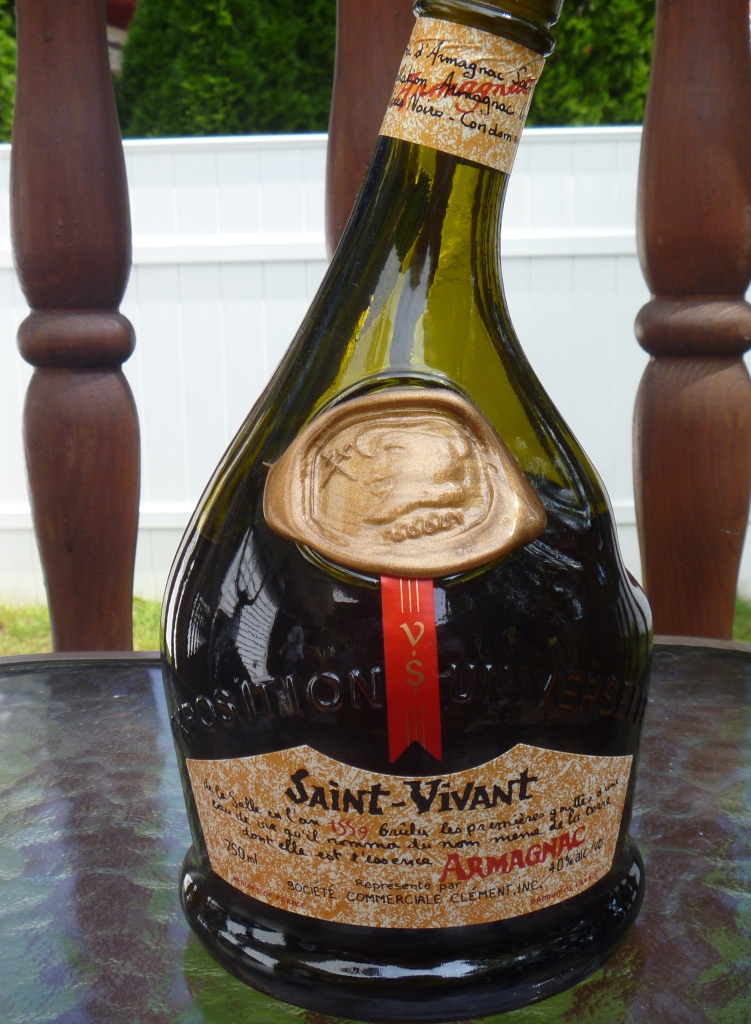 During 2011 I wrote a number of posts for the project called The Art Of Life Magazine – of course talking about my favorite subject, wine. The project was closed and even the web site is down, but as I still like the posts I wrote, I decided to re-post them in this blog. Also, in that project, posts were grouped into the mini-series, such as “Best Hidden Secrets” and “Forgotten Vines”. The post I’m offering to you today was from the mini-series called “Liquid Pleasures Beyond Wine”, and the subject of this post is Brandy.
Also note that the series was written for a slightly different audience – I hope none of my readers will take offense in the fact that sometimes I’m stating the obvious…
As you could’ve expected based on the last post, we are going to explore the world of “liquid pleasures beyond wine”, the world of spirits. Let’s start with Brandy, as it is closest to the wine world. To be more precise, wine is a foundation of a Brandy.
Brandy is produced in many different countries, but we should start our journey in France, where it was originated. While Brandy is a generic name for any wine-based spirits, in France Brandy mostly exists under other noble (and protected) names, such as Cognac, Armagnac and Calvados.
Of course Cognac is the most famous French spirit, however let’s start our journey from Armagnac, as historically it was the first region to produce brandy, starting in the 14th century. Armagnac is a region in the south of France, which has a status of AOC – it means that similar to the French wines, production of Armagnac is strictly regulated from start to finish. Armagnac is made out of grapes (about 10 different grapes can be used in production). Once grapes are harvested, pressed and fermented, the resulting liquid undergoes a process of single distillation, and then the spirit is placed into the oak barrels for aging. Armagnac’s age designation is similar to Cognac, which we will discuss a bit later in this post. Taking into account single distillation, Armagnac initially is harsher than the cognac, but it mellows down as it ages in the oak barrels for a minimum of two years.
Similarly to Armagnac, Cognac is also produced from the grapes (mostly Ugni Blanc, but some other grapes are also used). History of Cognac started in 16th century, when it was distilled from the local wine in order to withstand long ocean journey to the destination. Initially it was thought that after the ocean voyage, addition of water will convert spirit back to wine, but then it was found to be quite appealing on its own.
Same as the French wines regions, Cognac is an AOC, which is divided into 6 different zones, with Grand Champagne, Petite Champagne and Borderies being located in a middle of the appellation, and Fins Bois, Bon Bois and Bois Ordinaire surrounding them from all sides. Zone is usually designated on the bottle of cognac. There is also an additional designation of Fine Champagne, which is used if Grand Champagne and Petite Champagne are blended together. Again, same as with wines, the smallest appellation is the most restrictive as to what grapes can be used for the production of the cognac – for the cognac to be called Grand Champagne, all the grapes should be coming strictly from the Grand Champagne region, where for the bottle just labeled as Cognac, the grapes can come from anywhere within Cognac AOC.
In order to make cognac, it is necessary to start with wine. The grapes are harvested, pressed and fermented exactly in the same way as they would be for the wine production. Wine is typically fermented for 2-3 weeks, after which it undergoes process of double distillation (which removes harshness), and the resulting spirit is placed into the oak barrels (Limousine oak is typically used in cognac production) for aging. Cognac spends at least 2 years in the barrel, then it is typically blended with the cognac from different barrels and different ages to achieve persistent taste (here blending process is very similar to the one for the Champagne), and then it gets bottled. Of course some of the cognac spends 10, 15 and more years in the barrel, yielding a more mellow, more aromatic and complex beverage.
Looking at the bottle of cognac, you can always have an idea as for how long the cognac was aging in the barrel. If the label has letters VS (Very Special), it means that cognac spent at least 2 years in the barrel. VSOP (Very Special Old Pale) means that cognac was maturing for a minimum of 4 years, and XO (eXtra Old) has spent at least 6 in the barrel (but on average, XO is aged for about 20 years). There are some other designations, such as Napoleon, which typically designates age between VSOP and XO. One more interesting fact about cognac is that while there are about 200 producers, about 90% of the whole volume of the cognac attributed only to the four companies – Courvoisier, Hennessy, Martell, and Rémy Martin.
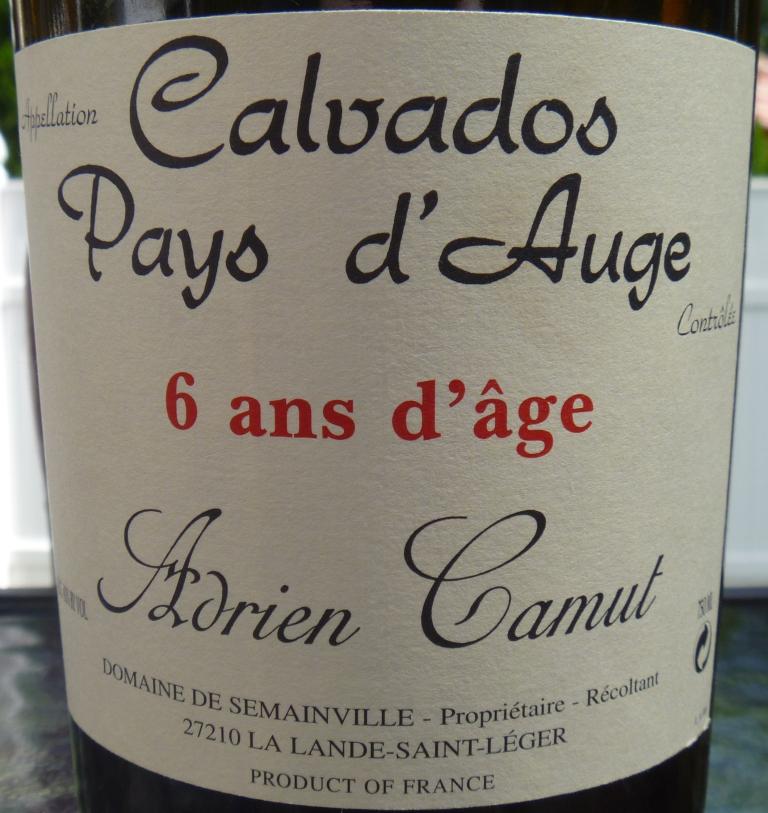 Our next stop is Calvados, where brandy is produced from apples. About 200 different types of apples (sweet, sour, bitter…) are used to produce Calvados. Production of Calvados started in 16th century, and it reached peak of popularity in 19th century, when grapes in the other regions were devastated by Phylloxera.
Production of Calvados starts from the harvesting of the apples, then pressing them and fermenting into dry apple cider. After that the liquid undergoes a process of distillation (both double and single processes are allowed), and then distillate is stored in the oak barrels for the further aging. Calvados should age for at least 2 years in the barrel before it can be released. In many cases it ages for anywhere from 2 to 6 years, but can go for 10, 15, 20 years and longer. Good Calvados, like the one from Adrien Camut, is a wonderful and fragrant drink, with hint of apples both on the nose and the palate, very balanced and delicious.
Leaving France, we have many potential Brandy destinations to visit – however, nobody can really compete with the France for the top spot in Brandy production. Nevertheless, we should mention a few other examples.
Georgia and Armenia started producing brandy in the 19th century, and taste-wise they were quite competitive with the actual French cognacs. They lost some of their edge after both countries became independent and experienced a lot of economic and political issues, but now they are slowly restoring their brandies back to the world class level. In both countries brandies are produced from grapes (wine). Just in case you are curious, you can look for Sarajishvili (Georgia) and Ararat (Armenia) brandies – both should be available in the stores.
I would like to mention two more brandies. First one, coming from Greece, is called Metaxa. It is a wine-based brandy, which is aged similarly to the French cognac, in the limousine oak barrels, and then blended with aged Muscat wine to create final product, which is typically very smooth and mellow (might be a touch too sweet, depending on your preferences).
Second one is coming from Italy and called Grappa. Grappa is made by fermenting of the grape must (skin, seeds and stems leftovers after wine production). Grappas are typically very strong with 53%-55% alcohol (typical brandy is 40%). As of the last 5-8 years, single grape grappas became very popular – and they have distinctive and delicate taste, despite still high concentration of alcohol.
There are many more countries to visit in our brandy journey – however, I hope you got the idea already. Enjoy a glass of your favorite brandy tonight – but if brandy is not your thing, please wait for the next post, where we will be talking about Whisky. Until then – cheers!
Looking for Liquid Pleasures Beyond Wine
 During 2011 I wrote a number of posts for the project called The Art Of Life Magazine – of course talking about my favorite subject, wine. The project was closed and even the web site is down, but as I still like the posts I wrote, I decided to re-post them in this blog. Also, in that project, posts were grouped into the mini-series, such as “Best Hidden Secrets” and “Forgotten Vines”. The post I’m offering you today was an opening post in the mini-series called “Liquid Pleasures Beyond Wine”.
Also note that the series was written for a slightly different audience – I hope none of my readers will take offense in the fact that sometimes I’m stating the obvious…
So far in this blog we mostly talked about wine, wine as an experience. We tried to uncover some of the hidden secrets of the wine world, such as Rioja, second labels of the famous wines, or French sparkling wines. We looked at the wines which were famous, then almost disappeared and now slowly coming back, such as Madeira and Jerez. We also searched for wine values, by comparing wines made from the same grape but coming from the different places. Did we explore enough the world of wines? Not really, we didn’t even touch the tip of a tip of an iceberg. Nevertheless, as we are looking for experiences, let’s take a step outside of the wine world, and let’s take a look at the other “liquid pleasures”.
I’m talking about the group which is collectively called “spirits”, otherwise also known as “distilled beverages”, which is a name which is used in Wikipedia. Overall distillation is a process of separating liquids with the different boiling points, and its application goes way beyond the world of alcoholic beverages. Distillation first was uncovered about 2000 years ago, but first use for production of the “spirits” happened less than a thousand years ago. When applied to the wine or any other fermented substance (meaning that some degree of alcohol is present in the liquid to begin with), the end result of distillation is a liquid with increased concentration of alcohol.
Historically, such high-alcohol liquids had various uses – one of the most important ones, which also has nothing to do with drinking the liquid, was medicinal. Strong alcohol is an excellent antiseptic; it is used in order to disinfect the area of the body, to kill any potential bacteria thus preventing any possible contamination. However, while this very important, such applications are completely outside of the scope of this blog, so let’s go back to the stuff we drink.
There are many different kinds of the spirits produced in the world. Some have more universal appeal and can be produced in many countries following the same basic methodology, but some can be also unique for particular place (but if it is any good, it is extremely hard to keep a secret). Let’s take a quick look at the various types of the spirits – we will discuss some of them in detail in the subsequent posts.
Let’s start with Brandy – brandy is a spirit which is produced from wine. This can be an actual grape wine, or it can be a fruit wine – both can be used for the production of brandy. For instance, Cognac and Armagnac are both made from the grapes, and Calvados, another famous French brandy, is made from apples. Brandy is produced in France, Spain, Italy (where it is known as Grappa), Georgia, Armenia, US, Mexico and many other countries.
Next spirit we need to mention is Whisky, which is made out of grains (barley, rye, wheat, corn). This group includes Scotch, which is made in Scotland, and then Whiskey, which can be made in many different countries – for instance, Irish whiskey is made in Ireland, and in US you can find both Whiskey, which is often made from rye, and Bourbon, which is corn-based. Whisky is also produced in Japan, India, Canada and other countries.
Then comes Vodka – made all around the world, from all possible ingredients. It is made in France, Russia, Poland, Italy, US, Canada and many other countries. It can be made from grapes, fruits, grains, potatoes and probably some other ingredients we can’t even think of. Vodka is often called a “neutral spirit” as it is typically produced flavorless (some flavor can be infused before bottling), and thus it is a popular component in many cocktails.
To complete the “big scale” list of spirits, we need to mention a few more. Tequila, which is produced from the Blue Agave plant, is a very popular spirit coming from Mexico. I can’t resist to mention Mezcal, which is also made in Mexico using Agave plants, but it has distinctly different taste (and very hard to find). Then we need to mention Gin, which is also a popular cocktail ingredient and has a very distinct taste as it is produced from Juniper berries. And last but not least comes Rum, which is produced from sugarcane, and yet another popular cocktail staple.
As we are looking for the great experiences, should we even look at all these “hard liquors” as they often called in the United States? Absolutely. Moderation is a key when it comes to alcohol (this universally applies to any kind of alcoholic beverages – beer, wine or spirits) – but once this is understood, one can definitely enjoy immense richness and variety of flavors coming from all these spirits. They definitely create a lot of great experiences and unique memories, and they bring lots of pleasure. In the coming posts, we will take a closer look at some of them – and until that time – cheers!
Daily Glass: Memorable Wines
 Wine = Memories. Well, okay, we need to correct that statement. Great Wines = Memories, now that is better. Of course we remember the wines we drink, and this is how the opinions are formed and this is how the wine list in the restaurant doesn’t look that intimidating anymore. But this should be characterized more as a general knowledge, not specifically as “memories”. Great wines, on the other hand (I’m not going to define the term “great wine” – this is highly personal, you define it for yourself), become memory anchors. We remember when, why and how, we remember who we shared it with, and we can retrieve those memories on the moment’s notice. That is what “great wine” can do to you.
Case in point – a great evening with friends, which had all three elements at its perfection – the wine, the food and the company. An evening, when the time flies so fast, you don’t understand how late it is already. And the wines – stunning, each one in its own right. We started with Gosset Grand Réserve Brut Champagne – a non-vintage Champagne from one of the old and classic producers. I have to honestly admit that I was never impressed with other Gosset wines in the past, but this Grand Réserve, poured from the magnum, was outstanding – round, creamy, yeasty just enough, with a touch of apple and fresh bread on the palate – an excellent start of the evening.
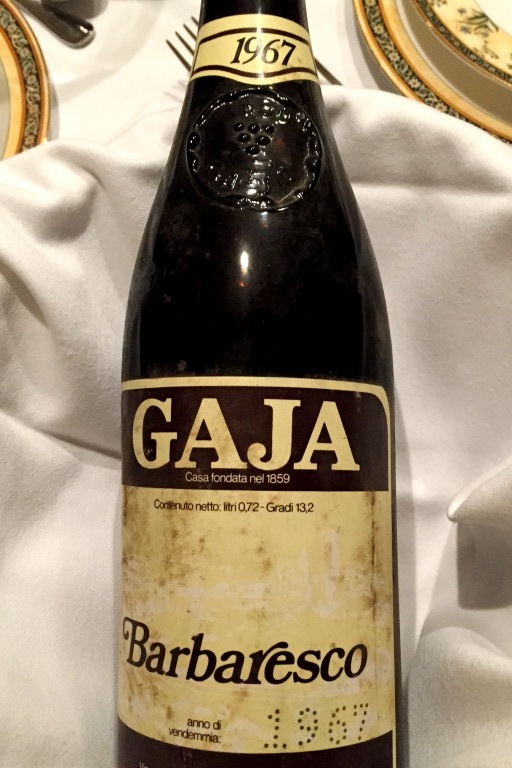
Then the awe inspiring, almost 50 years old 1967 Gaja Barbaresco was gently uncorked. It was not simple, as cork did crumble – but this is nothing which strainer and decanter can’t fix. The first whiff – nothing smells off, which is a great sign of relief. While we put the wine aside to let it breathe a bit, we reached out for another white – 2007 François Cazin Le Petit Chambord Cour-Cheverny AOC.
This is a rare French white wine made from 100% Romorantin grape. I remember a few years back trying this wine at a 10 years of age – and I remember been simply blown away by the exuberant beauty of this seemingly unassuming wine (new vintages retail at around $15 – the QPR is through the roof on this). The nose of that 2007 was amazing, with fresh white fruit, guava, mango, honeysuckle, lemon and lemon zest. On the palate, behind the first wave of Riesling-like appearance with touch of sweetness and tropical fruit notes, there were layers and layers of acidity and minerality. After about 10 minutes of breathing time, the wine was almost bone dry, very crisp and refreshing. I still have 3 bottles of the 2007, and now the trick will be to keep my hands away from them, as they still benefit from time.
Time to get back to that 1967 Barbaresco. We were somewhat waiting for the main course to start drinking it, and I was concerned that as it happens with many older wines, this wine might also succumb to the neverland if not consumed within that short window of time. Silly me. The wine kept going and opening for the next 2 hours. It had all those sweet plums, sapidity of the onion peel, minerality, all weaved around a well defined structure with perfect acidity and perfect balance. The “wows’ kept flowing until there was nothing left in the decanter – this was definitely a treat. And a perfect memory anchor, an experience which stays forever.


Our next wine was also very interesting and delicious in its own right, by fate or the accident made from the exact same grape as the Barbaresco, the Nebbiolo –2004 Ar.Pe.Pe Rocce Rosse Riserva, Valtellina Superiore Sassella DOCG, Italy. Valtellina red wines are typically made in the way similar to Amarone – with the grapes drying out after the harvest for about 120 days, and only then pressed and vinified. The Sassella Rocce Rosse from Ar.Pe.Pe stands apart, with Nebbiola grapes (locally known as Chiavennasca) left on the vine to raisin, and then pressed. Fresh, succulent plums and cherries on the nose and palate, together with effervescent lightness and firm structure (this might not make sense right away, but this is the way I perceive it), which I always find in Ar Pe Pe wines. Again, a delicious red.
Our last wine was 2003 Sella & Mosca Anghelu Ruju Rosso Passito Riserva Alghero DOC, Sardinia, Italy – very unique and interesting fortified wine, made out of partially sun-dried Grenache, locally known as Cannonau. This wine was mostly resembling the Port, with a hint of dried fruit on the nose, supported by perfectly balanced, soft body of plums and sweet oak, with perfect amount of sugar to make it a light dessert wine, but not an overbearing sweet monster.
Here we are – a perfect set of very memorable wines, compliments of dear friend Stefano (Clicks & Corks/Flora’s Table), and an evening with friends which will stay in memory, anchored by that 1967 Barbaresco. Considering that I’m finishing this post right on the Open That Bottle Night, I hope you increased your memory bank with some spectacular experiences, both of wines and the company – and I will be glad to hear about them. To the great life experiences! Cheers!
Coming Up This Saturday: #OTBN – Open That Bottle Night
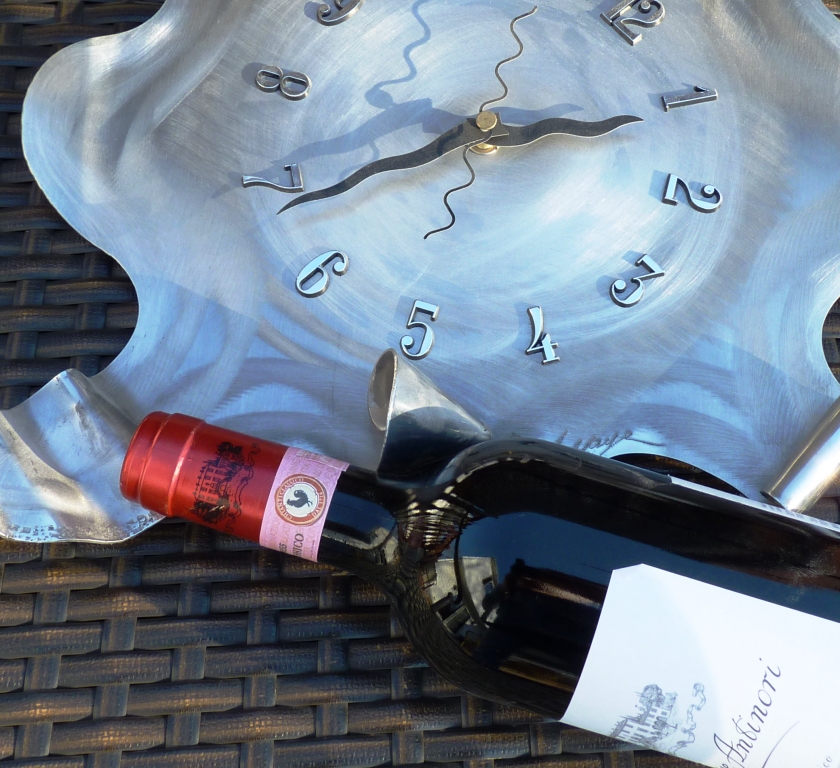 Just a quick reminder to all the wine friends, oenophiles, aspiring sommeliers and all the other folks who find wine to be an indispensable part of their lives – OTBN is here, so get your thinking hat on and go visit your cellar (those without a cellar can settle for the visit to the good wine store).
Open That Bottle Night, usually abbreviated as OTBN, is a movement created by Dorothy J. Gaiter and John Brecher, writers of the Wall Street Journal’s Tastings column. In the year 2000, they declared last Saturday in February to be a special night for the wine lovers – it should be the night when that special, cherished, admired, preserved, treasured bottle gets right on the table – and gets opened. The wine needs to be enjoyed – as the life is unpredictable, we should really create those special moments in the “now”, instead of waiting for them for the eternity.
Since its invention, OTBN became an international phenomenon, celebrated all over the world. This upcoming Saturday, February 28, 2015, is the last Saturday of February – so it is the time to get that special bottle ready and open. I don’t think you need any special instructions, but in case you feel like you need someone to tell you what to do, here is the link to the Wall Street Journal article which will give you the detailed instructions on how to enjoy OTBN.
I know you are hoarding more than one special bottle – it is the time to put at least one of them to the good use. If you care to share what you will be opening, this what the comment section is for. Open That Bottle! Cheers!
What To Drink On Valentine’s Day
 I generally avoid holiday-related wine posts, and I do it for a number of reasons. First of all, every information source on the planet considers it to be their duty to produce some piece of writing with wine recommendations. And then for someone who drinks wine all the time, the holidays are not so much of a special occasion to have a reason to open a bottle of wine. Oh well – somehow I felt compelled to share my thoughts on the wines for the Valentine’s Day, hence this post…
Pink. Red. Extreme. Commercialized beyond belief, still increasingly so year after year. Heart-shaped to the point of insanity. There are many things which turn people away from the Valentine’s Day, and I can understand that. However, I take this holiday as an extra opportunity to celebrate love and life. All you need to do is to find your way – ignore pink paraphernalia, ignore meaningless cards, ignore conveyer belt – style experience at the restaurants – and celebrate love and romance as a pure meaning of this holiday.
Let’s agree that we will celebrate love and romance in our oenophile’s way, and let’s talk about wine – without wine on the table, celebration is … just another boring dinner, right? By the way, when I said “felt compelled” in the opening of this post, this was not entirely true. I also had a pleasure to be a guest at the Off the Vine Radio Show, talking with Benita and Latisha about … you guessed it – Valentine’s Day wines – thus as you can imagine, I gave some thought to the subject (and then yes, “felt compelled”). In case you have a bit of time, you can listen to that episode here.
What can I tell you about wines for the Valentine’s Day? First of all, if you have a plan already, it doesn’t matter what I have to say. If you have some specific celebratory dish in mind, and have a pairing ready – it doesn’t matter what I have to say. But if you are still thinking how to make this holiday special, then let me share my thoughts with you. But remember – drink what you like. The wine for the Valentine’s day doesn’t have to be pink, and it doesn’t have to be sweet. It has to be something which will give you pleasure – as simple as that.
The wine for the Valentine’s Day should have balance and it should have finesse. While thought provoking is good for the wine, on Valentine’s Day you should focus on romance and not on deciphering the complex flavors. Go after balance, finesse and simplicity. This is why I would never suggest, for instance, the natural wines of Frank Cornelissen or Jean-Pierre Robinot, or the dark magic of Randy Dunn with his Howell Mountain Cabernet Sauvignon – those wines will drain you emotionally, and it is a wrong angle for the Valentine’s day. Thus let’s talk about balance and finesse.
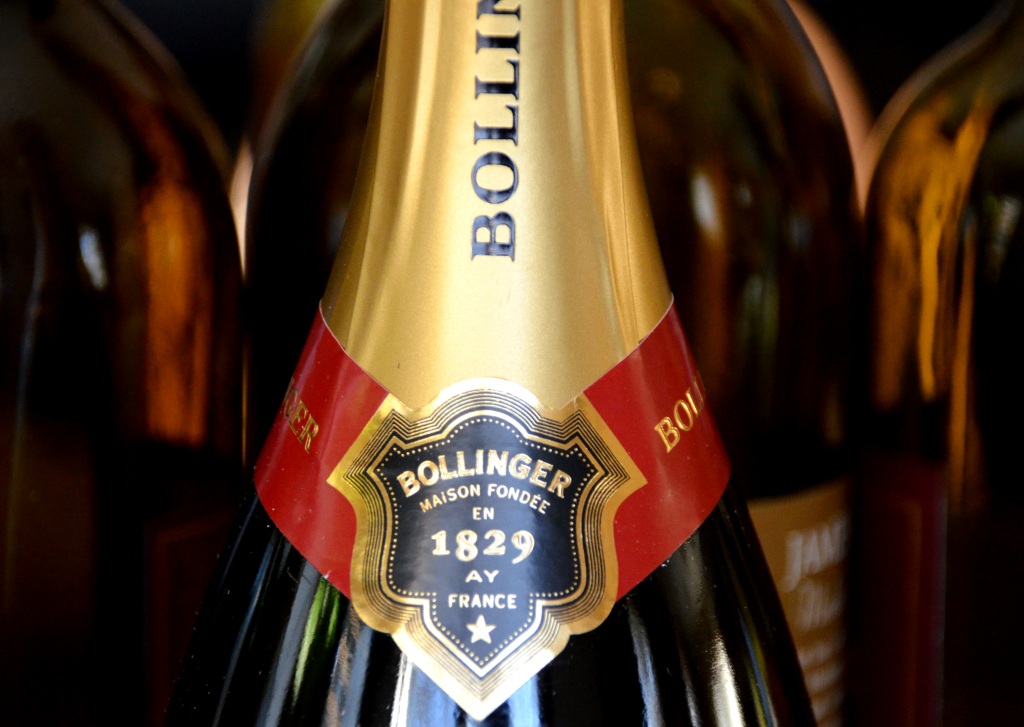
First wine I want you to consider is Champagne. As the very least, it can be an Italian Sparkling wine from Franciacorta or Trento, or some of the California sparklers. Prosecco, Cava and many other sparklers are simply not consistent enough, so for the Valentine’s Day, go with classic – remember – balance and finesse. For the Champagne, my choice would be Bollinger, as I think it is one of the finest non-vintage Champagnes, with lots of finesse. Ferrari from Trento and Bellavista from Franciacorta in Italy would definitely my next choice. But – I don’t want to forget California – Roederer Estate L’Ermitage, Schramsberg Rosé, J Cuvée 20 or any of the Gloria Ferrer sparkling wines would live you with a happy smile.
Moving on, let’s talk white wines. As we are looking for the balance and finesse, I have a few recommendations for you – and you might be surprised with these. For this holiday, I want you to step outside of your “usual circle”. My first recommendation is for the white wines of the Rhône valley in France. Yes, Rhône is mostly known for their reds, but the white wines there are equally stunning. For instance, try to find Domaine Saint Préfert Cuvée Speciale – I called this wine once “a symphony in the glass”. But in general, look for the Clairette or Grenache Blanc wines from Southern Rhône, or Marsanne/Roussanne from the North – those wines are often not easy to find, but they will deliver lots of balance, finesse and pleasure.
Let me give you a few more suggestions – equally difficult to find, but worth looking for. Viognier from Washington is a white wine worthy of celebrating love and romance with. Look for Mark Ryan or Willis Hall – their Viognier is nothing short of stunning. To close on the whites, here are 3 more rare beauties. First, 2 Sauvignon Blanc from … Italy: Gaja Alteni di Brassica and Poggio alle Gazze dell’Ornellaia – stunning balance and finesse. And the last one – Ken Forrester The FMC. You can’t go wrong with either one of these wines – go, start looking, you don’t have lots of time.
Now, we arrived at the red wine junction. Looking for the balance and finesse will dramatically reduce our choices. I would say, let’s go for Pinot Noir. I will limit my recommendations to this one grape only – and here is why. We are looking for the balance and finesse, right? Think about Cabernet Sauvignon from California – what would be the first word or words you would use to describe those wines – probably “big and powerful” – and this is not what I’m looking for suggesting the wines for the Valentine’s Day. Same goes for many Merlot, Syrah and Grenache wines – never mind the Petite Sirah. Even with my beloved Rioja – there are few wines, which will deliver that exact balance and finesse – La Rioja Alta Reserva Especiale would be definitely the one – and I highly recommend it. But for the Rioja – and then for Barolo, Brunello and even Super-Tuscan – as a general class, the probability of running into “big and powerful” is a lot higher than finding “balance and finesse”.
Talking about Pinot Noir, I wish I would recommend some of the classics to you – yes, the Burgundy – but unfortunately, my exposure to the Burgundy is way too limited, so you will need to ask your trusted wine merchant for the advice. Next up – California and Oregon. For the most of the time, California Pinot Noir will deliver exactly that – balance and finesse. To give you a few names, go look for Siduri, Loring Wine Company, Calera, Drew, Copain, Laetitia – but there are many others and it is hard to go wrong with California Pinot Noir. Oregon would be also a perfect choice – look for Adelsheim, Chehalem, Antica Terra, Evening Land – finesse is a middle name for the Oregon Pinot, so you will not be disappointed. And last but not least – don’t forget the New Zealand! Pinot Noir from Central Otago, Marlborough and Martinborough are typically well balanced and round, perfectly fitting our quest for finesse. Look for the wines from Craggy Range, Mt. Difficulty and Amisfield among the others.


Dessert time! People often underestimate how bad the dessert wines can be – one sip of the cloying, single-sugar-note wine would ruin the experience of an amazing dinner. You really have to put a lot of care in selecting the dessert wine which will have balance and finesse. Of course I would like to recommend Sauternes and Barsac wines for you, but again, my personal experience is very limited. I’m sure you can’t go wrong with Château d’Yquem – if you can afford it, go for it! What would be a bit easier to find (and afford) is a Port. Not just any Port – balance and finesse, remember – so go for a nicely aged Tawny, 20-, 30- or 40-years old. As Port ages, it loses power, and becomes fragrant and sublime, guaranteed to deliver lots of pleasure. Look for Rozes, Graham, Quinta do Noval – lot’s of excellent choices. Then of course, the king of the dessert wines – Riesling. For the special experience, I would only recommend to go to the BA and TBA levels – you know, the stuff which always comes in the small bottles. You see, it is very hard to mass-produce BA or TBA level Rieslings – you can’t harvest enough grapes at those sugar levels – thus it is hard to go wrong with BA or TBA Riesling from any producer. And the last recommendation for today – an Icewine. Not any Icewine, but I want to recommend my personal favorite – Inniskillin Cabernet Franc Icewine. This wine is vibrant, perfectly balanced and has lots of finesse – I guarantee you will finish your Valentine’s Day dinner on a high note with this wine.
Here you go, my friends – in the quest for the balance and finesse, these are some of my personal recommendations to enhance you Valentine’s Day experience. Let me know what do you think about my suggestions and feel free to provide your own. Happy Valentine’s Day and cheers!
Daily Glass: First, There Was A Smell
Drinking wine is a sensual experience. Okay, I can’t speak here for all the people who drink wine at one time or the other – but I’m sure that this selectively crazy passionate group, oenophiles, would wholeheartedly agree. Once the wine goes into the glass, of course the color matters first – but color is mostly a technical characteristic. The color can tell you what to expect – for instance, if a Chardonnay has rich golden, yellow color in the glass, you should prepare for the worst (the wine which will be well past prime). Or if a red wine looks almost black in the glass, get ready for the tannins encounter. Still, the most pleasure you can get from the color alone is to get excited – “look at this beautiful color!” type excited.
Your hedonistic pleasure starts with the smell. Technically, it starts and ends with the smell, as our taste buds don’t go beyond 4 (or 5) basic tastes, and even when you take a sip of the wine, it is still the sense of smell which leads you to the strawberries in that sip – but let’s not get technical here, we are talking about the pleasure. Yes, you start with the smell – it is the smell which takes you away and makes you go “wow”. It is the smell which grabs your attention and captivates you, and forces you to smell that wine again, and again and again. It is the smell which builds up the excitement and expectations of the first sip.
The first sip afterwards is a moment of truth – if you are lucky, the taste will match the smell and will take you to the oenophile’s heaven, at least for a moment. It doesn’t always work like that – more often than not, the excitement built by impeccable aromatics instantly dissipates after the first sip. But when you are in luck, this is how the wine memories are created.


What prompted this post was my undoubtedly lucky experience few days ago with two wines in the row, delivering that incredible combination of aromatics and taste. Sorry, I’m getting overly excited here, but the smell of the 2013 Hanna Sauvignon Blanc Russian River Valley ($15) was, in a word, spectacular. In the New World renditions, Sauvignon Blanc is very aromatic more often than not – but it would be typically aromatics of grapefruit and lemon, Here, from the get go, the glass was exuding with the aromas of the fresh cut grass and cat pee. Yes, I know that many people jump when the cat pee descriptor is used, but anyone who had owned a cat would perfectly understand what I’m talking about. And yes, cat pee is a known classic profile of Sancerre, the most classic Sauvignon Blanc of all. So this wine had it all, clean, bright and present on the nose – and the palate was beautiful, medium to full body, with fresh cut grass and touch of lemon peel. Definitely an outstanding example of California Sauvignon Blanc, now squarely engraved in my memory, right next to the Honig and Mara White Grass, which are always California Sauvignon Blanc staples for me. Drinkability: 8+
And then there was 2011 Antica Terra Ceras Pinot Noir Willamette Valley ($75). I’m not going to spend a lot of time talking about the winery – you can should read interesting stories on Antica Terra web site on your own. But this wine… Talking about attractive color, the wine was ruby with the light pinkish hue in the glass. And then the first smell… It was surreal. Here is where I fail as a wine writer, as I can’t give you the right set of words to describe the impressions from this wine. The smell had everything in it – the cranberries, forest floor, herbs and mushrooms – light, delicate and seductive, saying “and now, let’s take a sip…”. The palate was a natural, precisely fitted extension of the smell – all the same component, now packaged together. More cranberries, shallots and truffles, sage and lavender, minerality and whiff of the forest floor, effortlessly rolling off your tongue, delicate and present, with perfectly noticeable, silky texture and needless to say, perfect balance. This was for sure one of the most sensual wines I ever had. And yes, if you want to take this tasting note as an example “look at another moronic wine review” – I will still stand behind it, as this wine delivered lots and lots of pleasure. Drinkability: 9/9+
There you have it, my friends – two wines which will be etched in the memory for the very, very long time. I wish you all to have lots of sensual wine experiences and memorable wines. Cheers!
Daily Glass: A Super-Local Pinot
 While talking to a friend on Facebook, she asked: “would like to try a local Pinot Noir”? Care to guess my response? Yeah, a dumb question, you know what I said – “of course” and “yes, please” (insert an appropriate number of exclamation points on your own). Mentioning that she will be sending the wine in a few days, she reiterated again – it will be a local Pinot Noir, or may be even rather a super-local.
As my friend lives in Silicon Valley in California, my thought was – okay, of course it will be a California Pinot Noir, so “local” means produced locally in California. I was of course curios what exact Pinot Noir it will be, but hey, patience is a virtue of a oenophile, isn’t it?
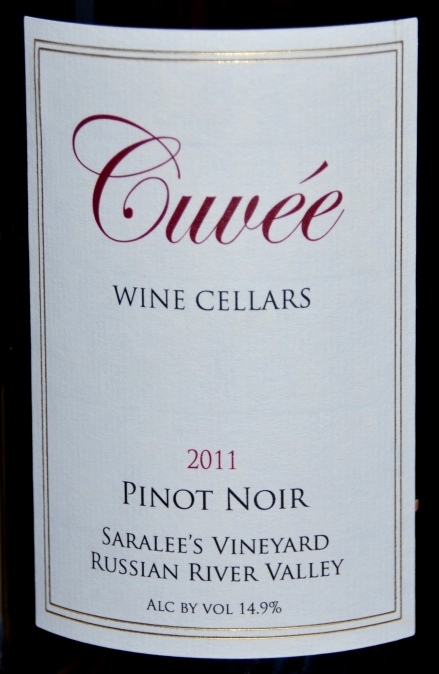
The package arrived, with the bottle of California Pinot Noir in it. 2012 Cuveé Wine Cellars Pinot Noir Saralee’s Vineyard Russian River Valley (14.9% ABV). Okay, so I’m sure that most of you never heard of Cuveé Wine Cellars – but the wine has Russian River Valley designation, so that’s the whole “local California” story, you ask?
Well, the wine actually is super-local. While the grapes were harvested in Russian River Valley, the wine was made locally in Silicon Valley, in the town of San Carlos, a small town near San Jose, where Cuveé Wine Cellars is located. As it often happens, especially with the urban wineries, the driving force behind Cuveé Wine Cellars is passion – and you can check their story on the Cuveé Wine Cellars web site.
How was the wine? In a few words – delicious with a great aging potential. When I opened it on the first day, the aromatics of Pinot Noir were incredible, one of the most pronounced California Pinot I ever had a pleasure to smell – forest floor, smoke, mushrooms, licorice – all very concentrated. The palate was well supporting the aroma, with silky-smooth, rich texture. Very concentrated (using the word again, sorry), with lots of fruit, chocolate, the same mushroom undertones and good acidity. But honestly, it was a bit too much. Don’t get me wrong – there was no jammy fruit or sharp biting alcohol in this wine – but you know how sometimes you are looking for the subtlety of the favors, for a bit more grace and mystery? My wish was granted on the day 3, when wine still had all the aromatics, but the palate became more mellow and intricate. Drinkability: 8+
That’s my story of the super-local Pinot – and an ode to the great friends. Cheers!
Top Twelve of 2014
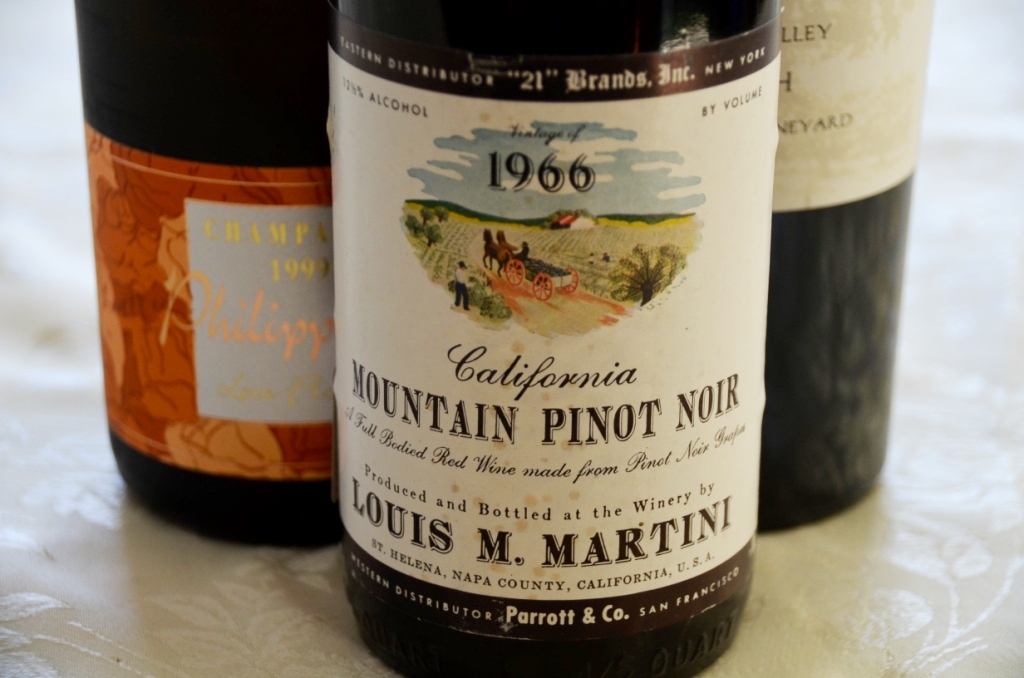
1966 Louis M. Martini Pinot Noir
And here we are – Talk-a-Vino Top Dozen of [most memorable] wines from 2014. I already presented to you the second half of the top list (here is the link), together with all the explanations regarding rationale and all the dos and don’ts, so instead of repeating myself, let me jump directly to the wines. If you still need explanations, use the link above.
12. 2005 Domaine Philippe Bornard Arbois Pupillin La Chamade Ploussard, Jura, France ($50) – To a degree, this wine was representative of a great Jura tasting I attended. As most of Jura reds, it had an impression of lightness masking a great level of complexity – fruit, herbs, minerality, sapidity – a very impressive package. It is not easy to find, but worth looking for.
11. NV Ayala Champagne Brut Majeur ($32) – one of my very favorite Champagnes. It has everything I want in the Champagne – yeastiness, toasted bread, apples, clean and vibrant acidity – with all the elements coming in the “just enough” amount. A perfect Champagne sip every time – try it for yourself.
10. 2012 Centanni Rosso Di Forca Rosso Piceno DOP, Italy ($19) – I was familiar with the wines of Marche region in Italy for a while – but my preference was always with the Marche whites – until I tasted this wine. Luscious, layered, with impeccable aromatics and complexity – delizioso!
9. 2010 Marco Sambin Marcus Veneto IGT ($NA) – A soulful wine – is that a good enough description?
8. 2010 Vineyard 511 Cabernet Sauvignon Diamond Mountain ($125) – Stunning California Cabernet Sauvignon – restrained and tightly weaved, as you would expect from the mountain – side fruit, and then balance, balance, balance.
7. NV Foggy Ridge Serious Cider, Virginia ($16) – discoveries, discoveries, discoveries – 2014 was anything but short on those. Who knew that cider (just think about the word – somehow, the mental picture doesn’t equate to “greatness”) can be so amazing? Phenomenal acidity, coupled with such a firm structure and effervescent lightness that you say “wow” and pour yourself another glass. Seek hard cider, people, as it has greatness!
6. 2012 Mark Ryan The Dissident Columbia Valley ($34) – yet another wine chosen to represent a great discovery of 2014 – wines of Washington state. This wine was a quintessential representation of Cabernet Sauvignon blends I tasted during the visit, with a pure cassis expression and impeccable balance. Yes, I’m abusing the “balance” descriptor, nevertheless – a beautiful wine.
5. 2011 Fekete Béla Olaszrizling, Somló, Hungary ($25) – yet another discovery: there is lots more to the Hungarian wines than Tokaji and Egri Bikavér (red wine also called Bull’s Blood). It appears that Hungary has lots of volcanic soils, and the winemakers there can bring it on (yep, the famed “terroir”) to the forefront of your glass. This wine was complex, mineral driven with the pure gunflint notes, and simply delicious.
4. 2011 Michel Chapoutier Tournon Mathilda Shiraz Victoria, Australia ($14.99) – you could see my raving mentions of this wine in a many posts throughout the year. Sorry, but I can’t help it – this wine is so unique and different, with such a purity of the peppery expression of Syrah – you can’t help it but to say “wow” with every sip.
3. 2012 Willis Hall Viognier Columbia Valley ($22.99) – may be the best Viognier I ever had. If not The Best (this is a very hard nomenclature when it comes to wines), but definitely one of the very best. Perfumy nose and elegant, silky smooth body. Simply delicious.
2. 2007 Pago Marqués de Griñon Emeritus, DO Dominio de Valdepusa ($75) – until I tasted this wine, yes, I knew that Spain produces good wines from the international grape varieties, such as Cabernet Sauvignon. But at such level? This wine was a true revelation – classic Cabernet Sauvignon with cassis, mint, eucalyptus and finesse.
1. 1966 Louis M. Martini California Mountain Pinot Noir ($NA) – I had no expectations when I opened the bottle of the 48 (!) years old wine. To be more precise, I was not expecting anything good. What I found in my glass was simply mind blowing – still fresh, still elegant, perfectly recognizable as Pinot Noir and delicious! This was the first wine ever to receive a 10 rating from me – I hope it tells you something.
And we are done here, my friends – the last post of 2014! I wish you happy, healthy, joyous and peaceful 2015, full of amazing discoveries!
Happy New Year 2015!
Top Wines of 2014 – Second Dozen
 Here we go again – another year is winding down in a mere 2 days. Thus the time has come to summarize all the great wine experiences of the 2014. It is always fun, and it is always a challenge – was that wine worthy of the “Top Wines” list? Or may be the other one? You know, this is my personal list, so trying to conduct a voting wouldn’t really help, it still will be up to me to decide. But at this point this is a tradition (no, I’m not looking for an easy play on the Monthly Wine Writing Challenge, where “Tradition” is an actual theme of the challenge #14) – I created the Top Wines lists in all the years this blog existed – here are are links for 2010, 2011, 2012 second dozen, 2012, 2013 second dozen and 2013 top – so 2014 will not be an exception.
Let’s make things clear. This list doesn’t have any technical merit. It doesn’t have any price merit. I’m not trying to be fair to all regions. The wines included into this “Top” list created an emotional connection. They were thought provoking. They made me to say “wow”, may be multiple times. And they created memories, they didn’t leave me indifferent. So in reality, this is the list of most memorable wines of 2014 – here, I said it.
For the past two years instead of being a “top dozen” list, the list rather includes two dozen of wines, and sometimes even a few more. I do get to taste a lot of wines throughout the year, so I don’t feel that I have to constrain the list to the 12 wines only – hence the two separate posts. Well, and I have to say that even for the memorable wines, the list is not all encompassing by any means. Lots and lots of very worthy wines were left outside of this list – but they all live on the pages of this blog. And the last few words about the information you will see below. If I wrote about the wine in the past, you will see a link. Also, in the past, I was requested a few times to provide the retail prices for the wine. I will gladly comply, where possible, however, there might be some unavoidable omissions.
Here we go:
24. 2012 Villa Bellangelo 1866 Reserve Riesling Finger Lakes ($32) – this probably was the best one out of the group of excellent wines from Villa Bellangelo and a number of other wineries from Finger Lakes. To be entirely honest, I chose this wine to rather represent my discovery of the Finger Lakes wine region as world-class wine producing area. I had a number of Finger Lakes wines in 2014, and they were simply one better than the other. This particular wine had a beauty of Riesling with all the restrained white fruit notes, supported by excellent minerality and acidity – just the wine you want to drink all the time.
23. 2010 Bodegas Rafael Cambra Soplo Valencia DO ($11, 100% Alicante Bouschet) – beautiful, powerful and playful. A unique grape, often used only for the blending, as it adds color, produced powerful and delicious wine.
22. 2007 Ferrari Perlé Trento DOC, Italy ($35) – simply delicious sparkling wine. If I would drink sparkling every day, Perlé would be one of the top contenders. Round and perfectly balanced in every drop.
21. 2010 Le Tourmentin Valais AOC, Switzerland ($NA, blend of Pinot Noir, Cornalin, Humagne Rouge, Syrah) – delicious old world wine – bright fruit and the wine cellar aromatics. Outstanding. Wish it would be available in US…
20. 2011 Navaherreros Blanco de Bernabeleva Vinos de Madrid DO ($14.99, 50% Roussanne, Albillo, Macabeo) – big, plump and balanced – ripe white fruit in the firm package, with minerality and baking spices complexity.
19. 2013 La Garagista Coup de Foudre White Pétillant Naturel, Vermont ($NA, 100% Brianna) – this was my first experience with Pétillant Naturel wines – sparkling wines where the first fermentation is finishing in the bottle. The wine was refreshing, with perfect minerality, and thought provoking, with each sip begging to take another. A great discovery of 2014.
18. 2011 Adega Pedralonga Albariño, Rias Baixas, Spain ($22) – an incredibly sophisticated Albariño – lots of minerality, a fresh sea breeze, delicious fruit and perfectly balancing acidity – a beautiful and unique wine. You really have to try it for yourself – if you can find it.
17. 2010 Lenné Estate Pinot Noir Yamhill-Carlton AVA, Oregon ($45) – I had a number of delicious Oregon Pinot Noir wines, all of a great power and finesse, so it was really a learning experience. I chose Lenné to represent this discovery, as the wine was outstanding – different, dark, concentrated, with explicit minerality, herbs and perfect balance.
16. NV Mumm Napa Brut Prestige, California ($20) – a Champagne precision – acidity, elegance, touch of fresh apple, perfectly balanced. California Sparkling wines give a great run to Champagne for the money, and this Mumm sparkler is one of the best examples. Whatever you are celebrating, this wine will perfectly complement it.
15. 2010 St. Clement Oroppas Cabernet Sauvignon Napa Valley ($45) – Delicious Cabernet Sauvignon, classic Napa Valley rendition – fruit forward but restrained enough to let the balance shine – tannins, acidity, fruit – everything in a perfect harmony.
14. 2007 Teixar Garnatxa Vella Montsant DO ($75) – a textbook Grenache. Dark chocolate, ripe fruit – all tightly put together on the firm, muscular body. A hedonistic pleasure.
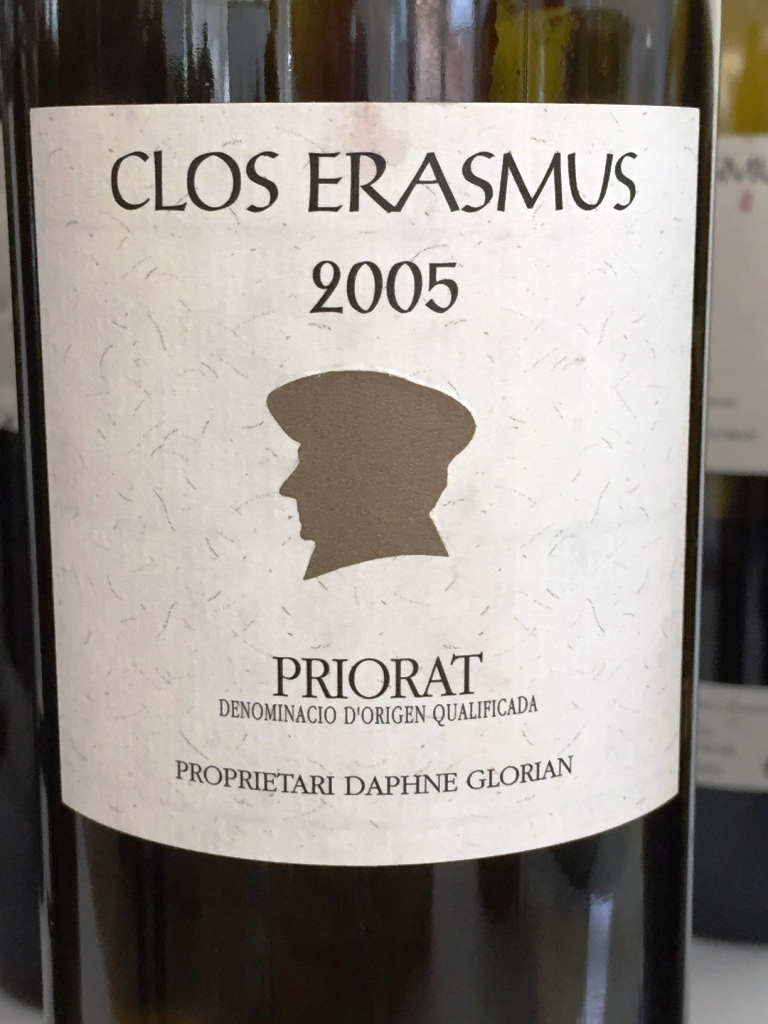
13. 2005 Clos Terrasses Clos Erasmus Priorat DOCa ($1,000) – elegant, beautiful, tremendously complex – what else can I tell you? A delicious wine! I don’t get to drink Priorat wines too often, and much more rarely I drink the wines at this price level. However – and you don’t have to believe me – I was first simply blown away by the taste of this wine, and only then I learned about the cost, which is a result of 100 points Parker rating and practically an absence of this specific vintage on the market. Either way, I’m glad I got to taste it.
Before we part, one more note – the wines are numbered, but only for the purposes of the count itself – outside of the wine #1, which is the most memorable wine of the year, the number in the list doesn’t mean much. In other words, it doesn’t mean that I like wine #15 more than wine #20 – I’m sure you got my point.
Have you had any of these wines? What do you think of them?
To be continued…
Last Bottle Sign Up ($10 credit)




 Talk-A-Vino