Archive
Daily Glass: Cab And The Whole Nine Yards
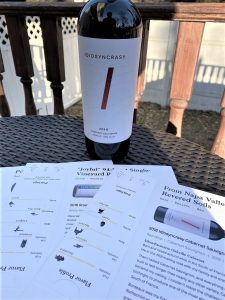 I’m sure you are well familiar with the phrase “The whole 9 yards” – technically translating into “lots of stuff”. You know what the fun part is? Nobody knows where this expression came from. There is a lot of research, a lot of “true origin” claims and an equal amount of disparaging remarks about the other side not knowing a squat about the subject (which seems to be the sign of times, sigh). We are not here to research or discuss the expression – my intention is to talk about a delicious Cabernet Sauvignon, but I will also give you the whole nine yards of related and unrelated “things”.
Everything started with a simple task – I was in need of the present for a friend’s birthday. My typical present is a bottle of wine of the birth year vintage (1977). However, it is getting more and more difficult to find the wine of such an old vintage at a reasonable price or even at all. After spending some time with Wine-Searcher and Benchmark Wine website, and finding nothing but a few bottles of the vintage Port, I decided that it is the time for the plan B, which means simply finding an interesting bottle of wine.
Next problem – where should I look for an interesting bottle of wine? Online seems to be the most obvious choice – but just to make things more interesting, I have to tell you that my gift recipient owns two liquor stores – yep, surprising him is not a trivial task.
Do you have an American Express credit card? Of course, you are wondering what it has to do with our story? It is most directly related. If you have the American Express credit card (AMEX for short), and if you ever looked at your account online, you probably saw the section called Amex Offers & Benefits. In that section, you can find 100 special offers, allowing you to earn additional points or save money on different items you can buy with the AMEX card. I have a good experience with these offers, these are real savings, so I have a habit of periodically logging into the account and scrolling through the offers. One of the offers I saw quickly attracted my attention – save $50 on a $150 purchase at WineAccess. I don’t know about you, but this sounds like a very good deal for me.
I was not familiar with Wine Access, so I got to the website to see if I can actually put this offer to good use. First thing I saw on the site is that $120 or 6 bottles purchase includes shipping, and if you are buying wine online, you know that shipping cost is one of the most annoying elements of the wine buying experience, so this made deal even sweeter – in case I can find something interesting.
I can’t tell you why and how, I first decided to search for Grosset, one of the very best Australian Riesling producers, and to my surprise and delight, I found Grosset Riesling available. So now I needed to add something else to reach my target number – $150.
I found an interesting Bordeaux, and next, I noticed a red blend from the Three Wine company in Napa, one of my favorite producers. My excitement happened to be premature, as once I started the checkout process, created an account and set my shipping address in Connecticut, I found out that I can’t complete my purchase as Three Wine red blend can’t be shipped to Connecticut (don’t you love US wine laws?).
I had to restart my search, and now I noticed Napa Cabernet Sauvignon called Idiosyncrasy – never heard of it, but Oakville Cab for $25 (this was a 50% discount off a standard price of $50) – why not to try one? I got two bottles, one for me, and one for my friend – done and done.
Once the order was placed I decided to check what exactly I just bought. I did a search for the Idiosyncrasy Cabernet online. I didn’t find too many references, but I did find a post which was very critical of the wine, saying that it was thin, and under-extracted Cabernet Sauvignon, absolutely no worthy of $43 which author paid for the wine. I also learned that this wine was specially produced for the Wine Access wine club by the well-known winemaker.
Truth be told – I don’t like wine clubs. What I learned about the wine, didn’t add confidence to my decision. Oh well – now I just had to wait for the shipment to arrive.
I didn’t have to wait for a long, the box showed up on the doorstep in a few days. Upon opening, I found not only 6 bottles which I ordered, but also neat, well-designed information cards – you can see it here:


Each card offered the story related to the wine, pairing suggestions, ideal drinking window put on the bottle tag which could be easily separated from the page and hang on the bottle in case you store it in the cellar. The back of the info card offered space for personal notes. Again, very well designed – would make any oenophile happy.
I read the story of the Idiosyncrasy Cabernet Sauvignon – it was written from the first person, as winemaker talked about his experience and how he came to the creation of this wine specifically for the Wine Access wine club. While the winemaker mentioned his work at Quintessa, Lail, Dalla Valle, and Purlieu, his latest adventure, his name was not found anywhere on the page. I had to figure out that his name was Julien Fayard by visiting Purlieu website.


Nice paper and story are important, but the truth is in the glass. Remembering the bad review, I poured the glass of 2016 Idiosyncrasy Cabernet Sauvignon Oakville Napa Valley (14.9% ABV), ready to be disappointed. To my delight, I was not. The keyword to describe this wine would be “elegant”. Varietally correct nose with touch cassis and mint. On the palate, the wine was rather of Bordeaux elegance – less ripe but perfectly present fruit, a touch of bell pepper, firm structure, perfect balance (Drinkability: 8/8+). Was this the best Cabernet Sauvignon I ever tasted? It was not. Was it the wine I would want to drink again? Absolutely, any day. Was it a good value at $25? This was a great value at $25, and even at $50, it would still be a good value.
Here you go, my friends – a story of the Cabernet Sauvignon and the whole nine yards. Cheers!
Daily Glass: Pizza and Wine
 What do you think of pizza and wine – a perfect combo, right? Let’s talk about it.
On Friday, kids requested pizza. I’m generally not craving pizza (unless it is Frank Pepe White Clam), but I don’t object to it too much. Especially when I have two wine samples which should work well with pizza – Prosecco and Barbera.
The world loves sparkling wines, with consumption growing consistently year over year – you can find some interesting stats here. For the last few years, Prosecco bypassed Champagne as the world’s best selling sparkling wine in terms of volume – a bottle of Champagne is at least 3-4 times as expensive as Prosecco, so in terms of revenues, Champagne is still ahead. But let’s not get hung up on numbers.
Prosecco is made from the grape called Glera (the grape itself used to be called Prosecco, but it was renamed to make Prosecco a protected name, similar to Champagne). Prosecco is made using the method called Charmat (patented in 1907), where the second fermentation is taking place in the pressure-sealed tank as opposed to the bottle in Méthode Traditionnelle. Fermenting in the tank allows to significantly reduce the cost of the sparkling wine, as the whole process is a lot less labor-intense.
In 1919, Antonio Franco founded the Cantine Franco winery in Valdobbiadene in Northern Italy. In 1966, his son Giovanni (Nino) renamed the winery into Nino Franco di Franco Giovanni and went on producing white and red wines. In 1971, Nino’s son Primo, who studied enology, began working at the winery, focusing on sparkling wines – this was a pivotal moment, converting Nino Franco into the Prosecco powerhouse it is today.
Prosecco’s success is not given – it is a result of belief, hard work, obsession, and dedication. This year marks the 30 years since Prosecco first appeared on London markets, and it had not been even that long since its introduction in the USA (1992/1993) – all largely thanks to the efforts of people such as Primo Franco and Gianluca Bisol. Think about the success of this simple sparkling wine in just 30 years – it is definitely something to be proud of.
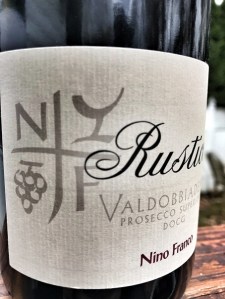
Before I share my tasting notes for Nino Franco Prosecco Rustico Valdobbiadene Superiore DOCG (11% ABV, SRP $19.00, 100% Glera), I want to mention that there are two occasions to celebrate as it relates to this wine. One is more general – it is the 100th anniversary of the Nino Franco wine company, a great achievement in itself. The second one is directly related to the wine, and it is even more impressive – Nino Franco Prosecco Rustico became the wine #1 on the Wine Enthusiast Top 100 wines of the year 2019. Wine Enthusiast folks review tens of thousands of wines every year – to snatch the top position of the 100 most impressive wines of the year is not an easy fit and serious accomplishment.
How was the wine? Upon opening and pouring into the glass, the wine first filled the glass (I was using standard Riedel wine glass, not the flute) with a foam – not just a little “hat”, but almost a full glass of foam. The nose had very expressive aromatics of apple, peach, and guava. The palate was fresh and crisp, with more of the apple notes, tiny bubbles, and good acidity. All-around a good Prosecco, definitely more voluptuous and assertive than many. (Drinkability: 7+/8-).
Okay, now it is the Barbera time. Barbera is one of the well known Italian grapes primarily growing in Piedmont. Barbera d’Asti or Barbera del Monferrato would be a perfect accompaniment for a pizza, but the Barbera we are talking about today hails from … Lodi in California.
I never get tired of expressing my love and admiration of the Lodi wine region in California. Lodi is uniquely un-Napa in most everything – from the winemaker attitudes and low-key wineries to the focus on the Mediterranean grape varieties. Lodi is often considered to be a land of Zinfandel, but truth be told, Tempranillo, Syrah, Sangiovese, Cinsault, Carignan, Albarino, Grenache Blanc are really running the show there. And Barbera, let’s not forget Barbera.
Barbera wines are clearly outshined in Piedmont by the famous siblings, Barolo and Barbaresco, both produced out of Nebbiolo grape. I was unable to find the fresher set of data, but at the beginning of the 21st century, Barbera was the third most planted grape in Italy after Sangiovese and Montepulciano. Barbera grapes are naturally high in acidity, and it is acidity which often needs to be tamed when it comes to Barbera wines. Compared with the finicky Nebbiolo, Barbera does quite well in the new areas, so over the past 30 years, it spread through Australia, Argentina, California, Israel, Texas and other places where this grape was never known before.


Starting from 1860, the land where Oak Farm Vineyards is located was simply a farm in the Lodi region of California where the cattle were raised. In 2012, Dan Panella, third-generation California farmer, replanted 60 acres of the old vineyard on the property, and this was the beginning of the modern history of the Oak Farm Vineyards. There is a wide range of wines produced at the winery starting from California staples Chardonnay, Sauvignon Blanc, Cabernet Sauvignon, and Zinfandel to the hardcore Italian range of Fiano, Barbera, Primitivo, and Sangiovese.
It is 2017 Oak Farm Vineyards Barbera Lodi California (15% ABV, $25, mostly Barbera with a small percentage of Petite Sirah for color and structure, 20 months in French, American, and Caucus (24% new) oak barrels) that we are talking about today. In a word, the wine was superb – dark garnet color, intense nose of cherries and tobacco, and mind-boggling concentration and interplay of flavor in every sip – cherries, tar, tobacco, roasted meat, perfect balancing acidity and 100% delicious wine. (Drinkability: 8). I would greatly drink this wine again at any time – with or without the food.
Oh, I guess I promised you some pizza. Yes, there was cheese and bacon/mushroom/onion pizzas. I have to say that prosecco was rather ambivalent to either, but Barbera worked quite well with the combination pizza.
There you have it, my friends. Italy meets California and vice versa, in many ways. But the important part is two delicious wines which you should find and experience for yourself. Cheers!
Daily Glass: Oh, Turley
I remember discovering Turley Zinfandel many years ago for the first time at the pre-theater dinner in New York with my friend Henry. I wouldn’t tell you now if I heard something about Turley before we picked the bottle of Turley the off the wine list, or if it was just a happy accident. I just remember our reaction of a pure “wow” at how beautiful the wine was. Ever since that discovery, Turley wine almost became our secret handshake – when I show up with a bottle of Turley at my friend’s house, I get an understanding smirk and a nod – “you did good, buddy”.
Once the Turley was discovered, the very next question was – how can I get it. This is where I learned about the concept of the wine mailing list, starting with the waitlist (I talked about all those terms before – if you need a refresher, the link is here). I believe Turley was one of the first if not the first of the wine lists I signed up for (meaning, got on the waiting list for the mailing list). Turley also happened to be the very first mailing lists I got accepted to – to my big surprise and delight, as the wait was not that long (a few years).
In case you are not familiar with Turley and don’t readily share into the excitement of the subject, here is a brief introduction. Turley Wine Cellars is a winery in Napa Valley in California, which specializes in Zinfandel and Petite Sirah. The winery was started in 1993 by Larry Turley, who was actively working in the wine before and developed a serious passion for Zinfandel and Petite Sirah, especially for the old vine Zinfandel (some of Turley vineyards are continuously producing since the late 1800s). Today, Turley produces 47 different wines from 50 different vineyards throughout Napa Valley, Paso Robles, Lodi, Amador Couty and other regions in California. You can find Turley wines in the stores and the restaurants, but they are scarcely available, as while they are making 47 different wines, most of the wines are produced in the hundreds of cases only, so the best way to get Turley wines is by signing up for the mailing list. One more thing I want to mention, as it is important to me – even with all the [rightly deserved] fame (they are definitely one of the top 5, or maybe even top 3 Zinfandel producers in the USA), Turley wines are still affordable on the mailing list, with some of the wines still priced at $20, and with absolution majority of the wines costing under $50 (Hanes Vineyard Zinfandel is probably the only exception at $75).
Since I got on the mailing list, Turley wines became my favorite present for the wine-loving friends. Every time we meet, my friend Patrick gets a bottle of Turley to take home to Switzerland – it is an equal exchange though, as I always get a bottle of unique and interesting Swiss wine – not something you can casually find here in the US. I also love the reaction such a present causes when people look at the bottle. I brought Turley for my friend Oz when we met in Singapore, and I handed it to him when we were finishing dinner. I perfectly remember huge, ear to ear smile on his face when he saw the bottle, and his exact words sharing the excitement with his friends “look, he got me a Turley!”. Lots of fond memories associated with Turley, in a variety of ways.
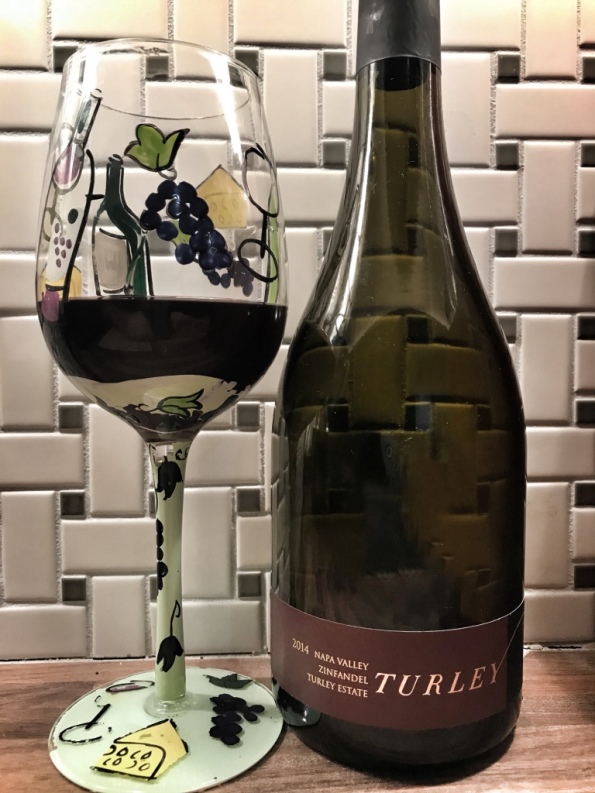
What caused this outpour of Turley love? Opening of the bottle of 2014 Turley Estate Zinfandel Napa Valley. How can I describe it? To me, a well made Zinfandel should have a perfect core of raspberries and blackberries with the addition of spices – it should have restrained sweetness and not be jammy. If you drink Zinfandel often, you know that what I just described is difficult to find. This wine had exactly that. A perfect core of ripe, succulent raspberries and blackberries, covered in pepper, sage, sweet tobacco and eucalyptus. Perfectly dry, with a firm structure and layers and layers of flavor. This is the wine you say “ahh” after every sip, and you say “ohh” when the bottle gets empty. And to complete my description, note that 15.6% ABV was not noticeable at all. A perfect balance and pure pleasure is what makes this wine so special.
Here it is, my wine love story of the day. What’s yours? Cheers!
Friday Night Wine
Isn’t Friday the best day of the week? Or to narrow it down even more – isn’t Friday night the best time of the week?
I know, it is considered lame. The right thing to do is to love Mondays, as this is your new chance to make a difference, and yada yada yada. Whatever.
So really, isn’t Friday night great? Especially when you don’t need to go anywhere. You don’t need to entertain anyone. The whole weekend lies ahead. Life is good.
Does such quiet Friday night deserve a special wine? This is a tough question, especially for someone who drinks wine only on the special occasions, such as days which names end with “y”. I can actually argue this both ways – I guess it only depends if you feel like making it special, or treat it as any other day and just open a random bottle. Well, but still – quiet Friday night is special, so a special bottle feels appropriate more often than not.
Finding the right bottle for the Friday night is an as difficult exercise as selecting a bottle for any special holidays or birthdays. On one side, it is the Friday night – on another side, it is just a Friday night, one of the 52. A Friday is not a special enough occasion to pull one of your most prized bottles, but you do want to celebrate the weekend coming, so it should be at least something unique and different.
It is hard to figure out how the brain decides on the bottle. After about 10 minutes of pulling the wine fridge shelves back and forth, I came across the 2011 Cahors, and the brain (or whatever is there) said: “that will do”.

2011 Jean-Luc Baldès Triguedina Clos Triguedina Cahors AOP (14.5% ABV, 85% Malbec, 10% Merlot, 5% Tannat) was one of my favorite discoveries of the past year while attending the Wines of Southwest of France event. I had only one bottle, but that is the same story with the absolute majority of my cellar, so I typically go through the regretful “second thoughts” process no matter what I decide to open.
Boy, was that a lucky decision… This wine had everything one can desire to make any day special – from the first smell to the first sip to the last sip; a perfect oenophile wine. Its major quality, outside of balance, was a tremendous range of expression. The nose started with a little funk, a touch of the barnyard, and fresh berries. The palate offered an exquisite bouquet and an ability to travel in the instant. The first sip squarely established – I’m not sitting on my deck anymore, I’m now in the winery’s cellar, breathing the vinous aromas which accumulated there during the centuries.
The wine continued evolving, offering tobacco, fresh blackberries, a touch of pepper, dark power, dark magic, and layers of pleasure. The acidity, the tannins, the fruit – everything was there in complete harmony. I call such wines a “vinous vino”, as these are the only words which come to mind. The wine was a beautiful rendition of Malbec – unquestionably an “old world”, and unquestionably delicious. If Cahors wines produced back in the middle ages were anything similar to this Clos Triguedina wine, I fully understand why it was so popular in Europe and Russia.
There you are, my friends. I hope your Friday night was filled with pleasure, just like mine was. Do you think Friday night wine should be special? What would you open to celebrate a quiet Friday night? Cheers!
Daily Glass: The More I Drink, The Less I Understand?
Wine is an enigma.
But you already know that.
The wine had been a serious object of obsession for more than 20 years for me. I went through multiple education programs. Read an uncounted number of wine books and articles. Most importantly, drunk a lot of wine – from the bottles, from the barrels, the juice of freshly harvested grapes and the juice which only had been fermented for a few days. Two days old wine and 80 years old wine. I taste roughly thousands of wines every year (with the help of trade tastings). Yes, the wine is an object of obsession. And yet, I would never say that I figured it out, that I fully understand it.
Wine is an enigma.
 The curse of wine is rather simple – until the cork is pulled (or unscrewed), you don’t know what to expect. A lot of wine bottles look ultimately attractive outside – bottle’s shape and weight play an important role, and then you got the label which, when properly done, is an ultimate seduction device. But once the cork is out, it is only the content that matters – and here we learn that not all the beauty from outside can be found on the inside. The worst part? Until the first sip, we have no way of knowing what we will find, even if we tasted and loved the wine before! Sadly, this is a classic case of any investment prospectus disclaimer – “past performance is no guarantee of the future results”. It is quite possible that you tasted and loved the wine before – nevertheless, every new bottle is a perfect screw up (or a beautiful surprise) opportunity. The wine is an enigma.
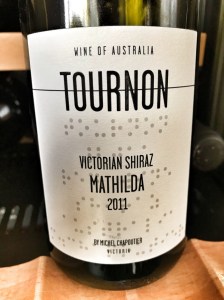
Back in 2014, I tasted 2011 Michel Chapoutier Tournon Mathilda Shiraz Victoria, Australia (13% ABV, $14.99) and was blown away by the beautiful purity of that Shiraz. The wine had a clean, herbs-driven profile full of freshly ground pepper – you really had to taste it to believe it. I was so impressed with that wine that it became wine #4 on my Top Dozen list in 2014. I got 6 bottles or so (at $14.99, a great QPR) and was slowly enjoying it over the years. But not always. I remember trying to impress a friend with this wine when I found it available in a restaurant in Florida by the glass. That simply did not work – the wine was flabby and mostly insipid. Then I had opened a bottle last year, only to be able to say “what just happened???”. The wine had just some single note fruit, no pepper, limited acidity, and in a word, was not fun. I was further put down with this wine last year after tasting the current vintage release at the trade tasting – that wine was insipid, cherry cough medicine style.
When I pulled my last bottle from the shelf a few days ago, the thought was – yeah, whatever, let’s just free up some space. Unscrew, pour, sip – oh, my, everything was back as when I fell in love with this wine – fresh pepper, sage, rosemary, intensely herbal with tasteful addition of ripe black plum – as wow wine as it can be. Don’t ask me for explanations or theories – as I said, the more I drink, the less I understand.
Wine is an enigma.
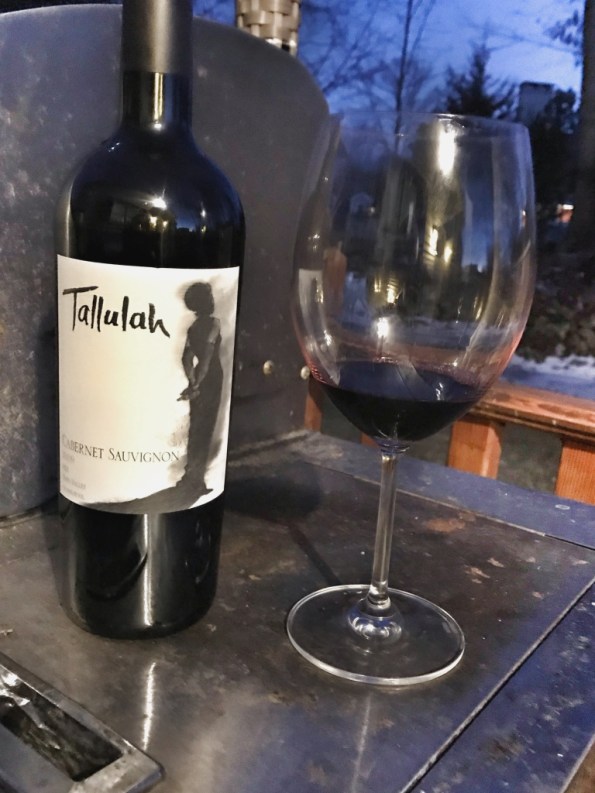
The second story is less unusual, but still in line with what we are talking about here. I got the 2009 Tallulah MD1 Cabernet Sauvignon Napa Valley (14.1% ABV, $75) after reading the skillfully crafted sales pitch by the folks at Benchmark Wine Company. What’s not to like there? Excellent winemaker, Mike Drash; beautiful label, great story of naming the wine after winemaker’s daughter, and maybe most importantly, the cult grape from the cult region – Cabernet Sauvignon from Napa Valley. The first experience with the wine was at the “ohh” level – tight, closed, by all means not ready. The next time I had the same wine was back in 2014, it fared better – I gave it 8- rating, but mostly for the potential, not so much for the actual pleasure delivered by the wine back then.
Looking for the wine to drink last Saturday with the steak (looking for the wine is a physical process of moving the shelves of the wine fridges in and out – I don’t have any record-keeping in place), I saw the bottle top with the characteristic “T” on it. Similar to the wine we discussed before, the thought was “well, why not – I need to free some space anyway”. The first sip solicited an instant “oh, wow” – a Cabernet perfection in the glass, vibrant cassis, eucalyptus, touch of cherries, sweet oak, perfect mid-palate weight, clean acidity, impeccable balance – the wine Napa Valley is so famous for was right there – in my glass.
While working on this post I looked for my previous notes on this wine, and I only found a short reference in the post about “Month in wines”, written precisely 5 years ago, in February of 2014. To my big surprise, in that post, I found the following line: “…definitely needed more time, let’s say, at least 5 years…” – the fact that I randomly pulled this MD1 bottle exactly 5 years after and the wine evolved beautifully – well, I guess, this is just a happenstance…
Wine is an enigma.
But that what makes it an ultimate fun.
Daily Glass: Farmhouse Wines – The Wines You Knew California Can Produce
Memories are often unpredictable and illogical when you try to understand by what rhyme of reason a certain event, situation or circumstances get remembered. Sometimes, I can remember tiny and totally irrelevant details, I guess in lieu of something really important. Moving along.
California had been the major wine superpower for more than 40 years (if we would count starting from the 1976 Judgement of Paris events), so I’m sure many of you are puzzled about the title. California wines are unquestionably amazing, no matter which of more than 4600 wineries would produce them. California wines come in a tremendous range of styles and grape varieties, producing delicious wines from the grapes you wouldn’t even think are growing in California (Palomino, Corvina, Nebbiolo, Tinta Cão anyone?), and have a cult following, with wine lovers casually waiting for 8-10 years on the waiting list for the mailing list. Yes, California is well known for its incredible wines.
What California is not known for today is inexpensive wines. If you are willing to spend at least $20 per bottle, or better yet, you are willing to spend at least 5 times that or just add a zero to that number, that is an easy game. Almost an easy game, I should say, as you would also need to wait for at least 5 or 10 years to fully enjoy that $200 bottle. However, naming a California wine under $12 (somehow I think $12 is a good number for anyone looking for a good value wine for any night, not just for a Tuesday night), which consistently delivers, is not an easy task. My mind can’t go much past Bogle Petite Sirah, which is consistently good and usually priced in $9.99 – $11.99 range – but I’m failing to readily name another California wine in the same value category.
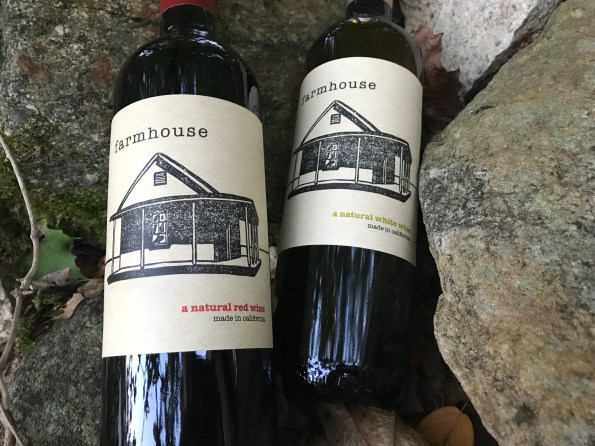
When I was offered to try two of the Farmhouse wines, I hesitated for a brief moment. As a matter of policy, I never write reviews for the samples I don’t like, and $10.99 bottle of wine from California sounded suspicious. The fact that it was produced by the Cline Cellars, who I respect very much, and that the wines were made using sustainable viticulture, tipped the scale towards accepting the offer.
The very first smell and sip of the Farmhouse Red extorted a “wow” and instantly triggered an obscure memory – absolutely not related to the wine. I don’t exactly know you, my reader at the moment, but it is quite possible you were only learning to walk when one of the big 3 struggling at a time Detroit automakers, Chevrolet, released newly redesigned Chevy Malibu sedan. At that time, back in 1997, Japanese cars really swept clean the mainstream family car category. Chevrolet was so proud to release a competitive car that they came up with the slogan for that new release of Malibu: “The Car You Knew America Could Build“. I have no memories of that car, of course, but the slogan got stuck in my head – and it instantly popped up after the first sip of the Farmhouse wine, remembering that the wine is only priced at the suggested retail of $10.99. This is a lot, a lot of wine for the money – especially the California wine.
There is even better spin to the Farmhouse wines – the wines are produced using sustainable farming methods, a farming discipline called Green String Farming, which is defined as “”natural process agriculture”. It’s about keeping the soil and plants healthy and free from pesticides and artificial chemicals. Overall, it’s about producing the highest quality grapes with the healthiest vines.” Delicious, sustainably farmed, extremely reasonably priced California wine – I’ll just rest my case.


Here are my more detailed tasting notes:
2017 Farmhouse Natural White Wine California (12.5% ABV, $10.99, 41% Palomino, 25% Muscat Canelli, 22% Roussanne, 6% Viognier, 1% Riesling)
Light Rosé gold color
Whitestone fruit, guava, a touch of honey.
Peach, white plum, lemon, touch of minerality, fresh, vibrant, excellent acidity, lots (lots!) of wine for the money. 8-/8
2017 Farmhouse Natural Red Wine California (14% ABV, $10.99, blend of Zinfandel, Syrah, Carignane, Mourvèdre, Petit Sirah)
Dark garnet
Dark chocolate, fresh raspberries, sage
Cloves, a tiny bit of cinnamon, pepper, ripe plums, excellent acidity, excellent balance. 8-/8
Two California wines, perfect for every day, easy to drink and afford – what else can you ask for? Cheers!
Daily Glass: The Beauty of Aged Wine
Many wine critics and professionals alike insist that majority of the wines should be drunk while young, and only a few, less than 5% of all the wines produced, can be successfully aged. Well, I can’t speak about the percentages here – I’m a wine consumer, not a wine statistician – but I do like the majority of my wines aged.
Why do people age the wines? There are many reasons. Collectors age wines because they might (and many definitely will, if you pick right) increase in price. Well, that is not the type of wine aging which is worth our attention here, so let’s leave it aside. Many people age wine because they have a special memory attached to those bottles – birth year, memory of the trip, given by a special friend, signed by the winemaker – the OTBN was invented specifically for those people (I’m one of “those people” too, never sure if the moment is already right, or if it can become “righter”). And then there are those who believe that the wine might will improve with age, and therefore, willing to put some bottles aside and wait for the right moment, which we often refer to as “wine at its peak”.
When we finally open that aged bottle of wine, we enjoy it more often than not. There are many reasons and many ways in which we enjoy that aged wine – some of those are purely related to the taste, which we expect to change for the better; some of those reasons are purely emotional. Drinking 50 your old wine at your 50th birthday is definitely a moving experience – the wine might not be perfect, but hey, it is as old you are, give it some respect! Drinking the wine brought from the trip to Italy 20 years ago is guaranteed to send you down the memory lane, letting you re-live those special moments and recreate its pleasure. The wine might not even taste that great (yeah, I knew I should’ve spent another $50), but who cares – those were the times! But the best of all is when, after the aging, we actually get to drink the wine which evolved and got to its peak.
Very often we praise the aged wine for how youthful it tastes (it is especially true of the wines under the screwtop, which pretty much don’t age at all while closed). Assuming the wine was tasty from the very beginning, this is great and deserves full respect, but this is not really what we want when we are tasting the aged wine. We are looking for the next level of taste, for the wine at its peak, for the wine which evolved. We want the wine to deliver a truly special tasting experience, we are looking for the whole bouquet instead of just individual aromas, we are looking for the interplay of complexity which young wine can rarely offer. We are looking for the wine which can possibly become a life-changing experience. We are looking for the wine which can be pondered at, which can stop the conversation and just let the wine lovers be.
A few days ago, a friend was coming over, and it was right before her birthday. Of course, when someone is coming to the house for a dinner, my worry is always to have the right wine for the occasion. So I asked my wife what year our friend was born, and when I heard “1986”, my immediate thought was – “hmmm, I think I have a bottle”. Memory served me right, and the desired bottle was retrieved.


So the bottle at hand was 1986 Chateau Cordeillan-Bages Pauillac AOC (12.5% ABV, $54.97). After inspecting the cork, I decided to try the regular corkscrew first, before getting out the two-prong opener. It actually worked fine, as you can see. Next was the sigh of relief after a quick sniff – no sign of any faults, and off the wine went into the decanter, both to avoid the sediment and to add to the aesthetics (the wine simply looks grander in the decanter, isn’t it?).
Once in the glass, the first sniff simply extorted the “OMG”. The complexity of the aromas was mind-boggling. Rutherford dust, smoke, roasted meat, cassis, minerality, baking spices, graphite, an incredible bouquet. The palate showed soft dark fruit, clean acidity, fresh, vibrant, graphite, well-integrated tannins, pencil shavings, all with the super-sexy, velvety texture. The 32 years old wine – incredible, and it was a conversation stopper. (Drinkability: 9+).
Trying to understand how and where I got this bottle, I figured that I have to thank PJWine, one of my favorite wine stores in New York, for that. The wine is produced at the Chateau Cordeillan-Bages, a tiny property of only 5 acres in Pauillac, planted with 80% of Cabernet Sauvignon and 20% of Merlot. The property is owned by the Cazes family of the Chateau Lynch-Bages fame (5th growth in the 1855 classification), and it also hosts a 2 Michelin star restaurant and a Relais & Chateaux hotel. The Chateau Coreillan-Bages wine is typically only offered at the restaurant, but the Cazes family decided to make a library release to the public, and PJWine buyers were at the right time in the right place – the rest was a history.
Here you are, my friends – a beautiful wine and a special experience. Do you have the aged wine stories of your own? Share them below. Cheers!
Daily Glass: An Australian Score
I pride myself with very wide wine horizon. I scout wines from literally everywhere in the world – China, Japan, Croatia, Bulgaria or Hawaii – bring it on, the more obscure, the better, I will be happy to try them all.
Nevertheless, a majority of my daily drinking evolves around Italy, Spain, and California, with a little injection of France. The rest of the wine regions make a very sporadic appearance at our house – without any prejudice or malicious intent – just stating the fact.
Nevermind China and Japan, which are still going through an adolescence as wine producing countries – let’s talk about Australia instead. About 20 years ago Australia was leading wine imports in the USA. As you would enter a wine store, you were greeted with countless Australian wine selections.
Today, Australian wines are relegated to the back shelves, and they are definitely not on top of the wine consumer’s mind (in the USA for sure). Ups and downs are hard to analyze in the wine world (think of the devastating effect of the movie Sideways on Merlot consumption), and such an analysis is definitely not the point of this post, no matter how interesting such a discussion could’ve been.
As I stated before, Australian wines are rare guests at our table, and this is not deliberate – I enjoyed lots and lots of excellent Australian wines, and have an utmost respect to what this country can deliver. I’m always ready to seize an opportunity to try an Australian wine, especially if it comes with a recommendation.
Such recommendation can present itself in lots of different ways – a friend, a magazine, an Instagram post, a tweet – or an offer from the Last Bottle Wines, especially during the Last Bottle’s infamous Marathon events. During the Last Bottle Marathon, you can buy the wines in single bottle quantities, which I like the most as you can create your own tasting collection quickly and easily.


If the wine is offered for sale by the Last Bottle, it definitely serves as an endorsement for me. The folks at Last Bottle know the wines – if they offer something, it means the wine really worth trying. During the last Marathon, the 2015 Gemtree Uncut Shiraz McLaren Vale (14.5% ABV) attracted my attention. I don’t know what made me click the “buy” button – the name “Gemtree” (sounds interesting, isn’t it?), or the word ‘Uncut” (again, this somehow sounds cool to me as well), but I did click that button quickly. You see, you only have a split second to get the wine – you blink, you lose – and I scored the bottle of this Australian Shiraz.
I pulled the bottle from the wine fridge, twisted the top and poured into the glass. Dark ruby color, a whiff of the blackberries. The palate had a tremendous amount of salinity over the crunchy blackberries – I guess this was an effect of drinking this wine at a cellar temperature. But it was still attractive. While admiring the simple label I saw the word which made me very curious – “Biodynamic”, and then the back label provided lots more information about how this wine was made. To me, “sustainable” is a very important wine keyword, and whatever extras “biodynamic” entails, the biodynamic wine is always a sustainable wine – and it is definitely important for me.
After warming up, the wine became generous, layered, showed soft tannins and perfect crunchy backbone of dark fruit with some dark chocolate notes and touch of a spicy bite – all perfectly balanced and delicious (Drinkability: 8+). The name “Gemtree” kept me intrigued, and the picture on the label was very attractive in its simplicity, so I went to the Gemtree Wines website to learn a bit more. I rarely quote from the winery websites, but I think in this case this is quite appropriate (here is the link to the source):
“This is our Gemtree story…
There was once a tree. Not the tallest tree, nor the oldest tree, but a tree that had put its roots in just the right part of the paddock. Here the soil was deep and layered – sometimes hard and rocky, elsewhere soft and sandy – and the wind had just enough room to move, and even the rain – when it was kind enough to visit – would fall evenly and gently.
Because of its favoured position, the grasses grew tall against its trunk, and the wild flowers were easily encouraged to grow closely around it, and the insects and birds that looked to trees for shelter and for vantage, eagerly moved in.
One day a farmer approached the tree and wondered: “You do not grow the strongest, nor the fastest, so why is it that you grow the best fruit?”
The tree let the answer whisper through the wind in its branches: “If I am shown a patient mind and a gentle hand, if I am left to follow the rhythms of my seasons – to rest in Winter; to revive in Spring; to make busy in Summer; and to provide in Fall – then I can offer fruit that tastes not just of the ground upwards, but also of the sky downwards, and of everything around me.”
The farmer thought to himself: “This is truly a Gemtree – it takes only what it can give back to the land, it contributes to its surroundings, and it provides for those that live around it.”
This is the heart of the Gemtree story: growing better wine ~ naturally.“
Here you are, my friends. I don’t know how often you drink Australian wines, but Gemtree is definitely the name to keep in mind for your next round of wines from down under – I think you will be happy with your score. Cheers!
Daily Glass: Monday Night Escapades
Is there a special wine fitting every day of the week? I would guess that for many, Friday and Saturday are considered special nights, as it’s the weekend, and people think of drinking something better (higher end). Sunday is still the weekend, so the higher calling might still be in order.
But what about Monday? Does your choice of wine for Monday depend on your general outlook on life? “I love Mondays” … said not that many people, but isn’t it great that it is the first day of the week and we have the whole new week ahead of us, with lots of things to do, places to visit and people to meet? I guess one’s personal take on Mondays does depend on one’s take on life, so I will leave it for you to ponder at and if you have any words of wisdom to share, please do so after the beep … err in the comments section below.
I have two wine-related experiences from Monday which I want to share. First, I finally got to open the Field Recording’s Can Club shipment. What’s a big deal, you ask?


Field Recordings is one of the most innovative wineries I know. Small winery in Paso Robles, California, a brainchild of Andrew Jones, a vigneron, who started his career as a grape grower, first and foremost. Ever since I tried his Fiction Red, I became a passionate fan and I’m religiously following everything Filed Recordings does.
A few years ago, Field Recordings started experimenting with the wine in the can. Going beyond just the wine in the can, they also finishing their wines with the beer hops which creates truly a different experience. As soon as the “Can Club” was opened, I joined it. The wines were always good, but the shipments themselves went through a number of changes in the format, and pretty much every shipment had some little (and different) issues associated with them. Until now.
Once I opened the box, my very first reaction was “wow”. In my humble opinion, Field Recordings, under their Alloy Works brand, achieved perfection in the packaging of the canned wine. Simple, elegant, sturdy, economical, easy to handle – unpacking this shipment was absolutely a delightful experience. Ask any oenophile, the first thing which gets everyone excited is the opening of those boxes. With this delivery, Field Recordings Can Club achieved shipping nirvana – I hope they will continue it moving forward.
I can’t tell you much about the wines, as they needed to get chilled and went straight into the fridge; I can only mention that this shipment included 2 cans each of Weissland, sparkling dry hopped Chardonnay; Martian Galaxy – a dry-hopped, sparkling rose, a blend of Gamay and Mourvedre Martian Vineyard in Los Alamos; and Sangria, a blend of freshest, cold-pressed juice cocktail of cranberry, blood orange and lemon from Yes Cocktail Company mixed with Zinfandel from Old Potrero Vineyard. I don’t know about you, but I’m very excited to try these wines – and will report on the experience afterward.
 Now, let’s talk about that Monday night wine. Outside of special events, I never know in advance what am I going to open. Deciding on the bottle of wine is somewhat of a frustrating experience (first world problems, I know). Numerous bottles get touched and looked at, then rejected for a myriad of reasons. Finally, one is pulled out – usually for no other reason than “oh well, maybe this will do”. This time around the bottle happened to be Turley Cabernet Sauvignon called The Label.
Turley is not known as the Cabernet Sauvignon powerhouse – it is a coveted and well sought-after Zinfandel producer for the most. A few years ago, Turley finally got into the Cabernet Sauvignon wines and produced the wine which was called “The Label” – named after the words of Larry Turley, the proprietor at Turley Winery, who always said that Cabernet Sauvignon drinkers simply “drink the label”.
I don’t know if this should be considered funny or strange, but it appears that 2011 Turley The Label already was my choice of Monday wine – almost 4 years ago, in January of 2014 (here is the post). I really loved the wine then, but it evolved much further this time around. From the get-go, this 2011 Turley The Label Cabernet Sauvignon Napa Valley (13.4% ABV) showed a beautiful medley of the succulent berries, both on the nose and the palate – blackberries, blueberries, and black currant, tastefully accompanied by mint and eucalyptus and supported by clean acidity (Drinkability: 9-). It was reminiscent of a perfect Turley Zinfandel, fresh and playful – with a character of its own. Last time I said I want to taste this wine in 10 years. After almost four we are going in the right direction – I should have one more bottle somewhere so I will have to be careful to avoid any Monday blues prompts to open this wine until its due time.
What is your perfect Monday wine? Cheers!
Daily Glass – Pinot Grigio To Ask For By Name
 Blind tasting is probably the most difficult part of any of the Guild of Sommeliers examinations. It is one thing to memorize the names of the hundreds of the German villages producing Riesling. It is an entirely different thing to be able to distinguish, let’s say, Cabernet Sauvignon and Merlot, and identify a possible region, vintage and even a producer.
As with anything humans do, blind tasting also has its own set of “tricks” associated with it. Some of them perfectly legitimate – for instance, Nebbiolo wines (Barolo, Barbaresco, etc) typically have red brick hue in the glass, even when young, so this is a great “giveaway” for the blind tasting. Or the fact that the tannins from the American oak are perceived more in the back of the mouth, versus the French oak, which comes in front.
But then some of the “tricks” have nothing to do with the characteristics of the wine. Here is one, a statement by the Master Somms running the exam: “we will never pour Pinot Grigio for your blind tasting”. Pretty good hint, right?
To a degree, Pinot Grigio became a victim of its own success. Santa Margherita Pinot Grigio became an overnight sensation in 1979, driving demand for the Pinot Grigio wines in the USA. That, in turn, led to the appearance of the great number of “imitations”, Italian Pinot Grigio which had no bouquet or a flavor but was very easy to drink and affordable. Fast forward on, and Italian Pinot Grigio became the “wine to ignore” for any self-respecting oenophile, next in line to White Zinfandel.
But let’s not forget that Pinot Grigio is simply an Italian name for the grape known throughout the world as Pinot Gris. As soon as one hears Pinot Gris, I’m sure Alsace comes to mind first, and then, of course, the Oregon. Alsatian Pinot Gris is extremely well respected among wine lovers, beautiful when young and amazing with some age on it. Oregon Pinot Gris is beautifully crisp, clear and flavorful, and as such, a popular choice for the wine consumers as well. So why can’t Italian Pinot Gris, err, Pinot Grigio be a well respected and delicious wine?
Well, it can. There are many producers who make Italian Pinot Grigio a wine worth seeking and drinking – for instance, how about Elena Walch or Livio Felluga – if you never had their Pinot Grigio, this is a mistake which you need to correct ASAP. And here is one more Pinot Grigio which you need to ask for by name – the one made by Terlato.
Terlato is a very well respected wine importer – and by the way, Tony Terlato was responsible for the overnight success of Santa Margherita, creating that Pinot Grigio phenomenon in the USA. Terlato Family also goes beyond just importing, producing the wines under their own label around the world. The wine I suggest you will look for is Terlato Vineyards Pinot Grigio from Friuli. It is very different from the mainstream – in Terlato’s own words, “First we pioneered Pinot Grigio. Now we’ve revolutionized it”.
Friuli region is nestled in the foothills of the Alps, in a close proximity to the Adriatic sea, which creates great winegrowing conditions. Add to that poor soils and hillside vineyards with 20-30 years old vines, harvested by hand in the small plots, and you’ve got an excellent foundation for making a delicious wine.
Here are my notes from the tasting of this wine:
2016 Terlato Vineyards Pinot Grigio Friuli Colli Orientali DOC (13% ABV, $22.99)
C: light golden
N: intense, minerally, touch of honeysuckle, white stone fruit and fresh brioche, very promising.
P: crisp acidity, touch of gunflint, pronounced lemon, touch of freshly cut grass, medium body softly coating the mouth. Great complexity.
V: 8/8+, wow, very impressive.
Here you are, my friends. Next time you are looking for a bottle of wine, you might want to include Pinot Grigio into your shopping list. Trust the producer, and you might uncover something new to enjoy. Cheers!
Last Bottle Sign Up ($10 credit)




 Talk-A-Vino