Archive
WBC16: Overwhelmed Even Before The Day One
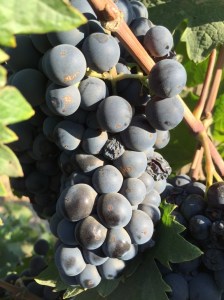 Yet another ambitious plan goes nowhere. While attending the Wine Bloggers Conference 2016 in Lodi, I had a great idea of posting a recap of the prior day in the morning. No need to start checking for the missing posts from me – none of it happened. Every day was so packed from dawn to dusk that what seemed to be a great idea didn’t survive the test of the reality. Yes, I probably could muscle a few lines in, but it would come at the expense of the great time talking to the fellow bloggers, which was the trade off I didn’t want to make.
So here we are, the conference is over, so now I will do my best to share my perspective of the events as they took place. Here we go.
I took a flight early morning on Thursday to arrive to San Francisco. After getting the rental car, my first stop was in Napa, at Oxbow Public Market, where I met for lunch Danielle Irwin and her husband Derek. Oxbow Public Market is a very interesting place, conceptually somewhat close to the Chelsea Markets in New York, only built in modern, contemporary style, with lots of small artisan shops and restaurants, offering food and wine, fresh produce, coffee and whatever else your heart desires. Great place to stop by if you are looking for a break during your winery visits.
It was a great pleasure to meet Danielle and Derek face to face. I had been virtually talking to Danielle for a while – she is writing her blog Danielle Dishes The Vineyard Dirt at Naggiar Vineyards in Sierra Foothills, where her husband Derek is the winemaker. Derek is a vigneron who is involved in a lot of vineyard and winery projects, and he also produces his own wines under Irwin Family Wines label. I had a pleasure of tasting his Tempranillo, which was the first California Tempranillo I ever tasted. Conversation with Derek was an excellent introduction into the Lodi wines, as he gave me some ideas for what to expect there.
A hour an a half later, after a ride along route 12 which I wouldn’t call pleasant (lots of stop and go traffic, not a fun ride) I arrived to the Hampton Inn in Lodi, which became home outside of home for the next 3 days.
The first event of the night was the conference opening reception at the Mohr Fry Ranch, sponsored by Lodi Wine. With that reception came my first real encounter with Lodi wines.
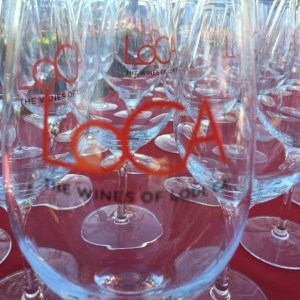
Until coming to Lodi, I only knew it as a source of many Zinfandel wines. And then there was a perception of hot, high alcohol wines, based on the tasting of occasional Cabernet Sauvignon with Lodi regional designation. Yep, that’s all I had on Lodi in my head.
The very first taste of the Lodi wine broke that perception. By the end of the tasting, it was shattered completely and didn’t exist anymore.


I stopped at the table of the Fields Family Wines, and the very first white wine I tasted was 2015 Fields Family Wines Clay Station Vineyard Grenache Blanc Lodi. I never tasted Grenache Blanc from California, let alone the fact that it is coming from one of the hottest regions (yep, sense my fear?) – yet the wine had clean acidity, touch of minerality, restrained fruit – a great start.
You know what – now I’m afraid to bore you away with all this “acidity and restrained fruit”, but this was the trait of literally every Lodi wine I had an opportunity to taste – there were no fruit bombs, there were no hot wines, there were delicious, well made world-class wines, made with love and care. I just have to tell you this, as it was really an overarching impression over the three days of tasting, so now I will [try to] avoid repeating myself all the time.
Have to be honest – the next red wine I approached with trepidation (huh, like the previous one I did not, right). Tempranillo from Lodi? I already told you that I had good experience with Irwin Family Tempranillo from Napa, but it was one particular wine, which doesn’t guarantee anything in a long run. And if you are reading this blog for a while, you know my passion for the Spanish Tempranillo wines – and now in my mind I was facing a clear opportunity to be disappointed. First sip of this 2010 Fields Family Wines Tempranillo Lodi put all my doubts to rest – the wine had a nose of black fruit and spices, and it was dark and brooding on the palate, with those espresso notes so characteristic in the wines of Toro in Spain. An outstanding rendition by all means, and I would love to see it in a blind tasting against the actual Toro wines.
2010 Fields Family Wines Estate Grown Syrah Lodi was an excellent example of the cold climate Syrah – touch of roasted meat, dark fruit, spicy with clean acidity – great rendition of another one of my favorite grapes. 2011 Fields Family Wines Estate Grown Syrah Lodi added more complexity and more roasted meat, all with perfect balance. 2010 Fields Family Wines Petitte Sirah Lodi was simply outstanding, offering silky smooth, velvety texture, supple ripe black and blue fruit with enough acidity in the core to make the wine perfectly balanced. As you can tell, Fields Family Wines provided a splendid introduction into the wines of Lodi.


My [now exciting] Lodi wine deep dive continued at the next table. Successful first experience should’ve really put me at ease – and still, an Albariño on the label triggered a subconscious alarm – Lodi doesn’t leave the impression of the Rias Baixas (not that I visited Spain, unfortunately, but just a mental image of coastal region), so “just in case, prepare for the worst”, the concerned brain said. This happened to be really a needless worry. 2015 Harney Lane Albariño Lodi had a a nose of white fruit and excellent acidity on the palate, which is the typical characteristic of the Spanish Albariño. 2013 Harney Lane Tempranillo Lodi was a bit lighter than the Fields Tempranillo version (it was also 3 years younger), but still preserving the core of dark fruit and good acidity. 2013 Harney Lane Lizzy James Vineyard Old Vines Sinfandel Lodi was as classic as Lodi Zinfandel can be – blueberries, blackberries, spices – very tasty.
I could continue tasting Lodi wines as there were many more winemakers present. However, there is something you need to know about Wine Bloggers Conference. In addition to all of the program events, there are always lots and lots of activities taking place somewhere around the WBC space. Call them private tastings or what, but this is something to pay attention to. Thus we left the reception, and after a short drive arrived at a house where Troon Vineyards tasting was taking place.


Troon Vineyards started in Southern Oregon in 1976 (vines were planted in 1972). I’m sure that when you hear “Oregon wine”, your first thought is Pinot Noir – nevertheless, Troon Vineyard doesn’t produce any Pinot Noir wines, and instead focuses on Mediterranean grape varietals (and Zinfandel). Another interesting fact is that many of the Troon wines (especially the whites) are co-fermented, meaning that different varietals are fermented together at the same time, as opposed to fermenting separately and blending afterwards.
I tried a number of Troon wines, with the two favorites been 2015 Troon Blue Label Longue Carabine, Applegate Valley, Southern Oregon (blend of Vermentino, Viognier, Marsanne and Roussanne) – touch of perfume on the nose, medium to full body with expressive minerality and good acidity. 2013 Troon Black Label M*T Reserve, Applegate Valley, Souther Oregon (blend of Malbec and Tannat) had nose of black fruit with dark core and good structure, medium to full body and good balance.
The last stop of the long day (remember, I left the house at 5 am in the Eastern time zone) was at the Rodney Strong Vineyards party, which was luckily taking place right at the hotel.


Rodney Strong winery had been producing wines in Sonoma for more than 50 years and would well deserve its own post to talk about their long history (the oldest vineyard at Rodney Strong was planted in 1904) and their achievements. But for the sake of this post, let me just talk about few of their wines I had an opportunity to enjoy.
2015 Estate Sauvignon Blanc, Charlotte’s Home, Northern Sonoma was excellent – grassy nose, fresh, crisp and restrained palate, with just a touch of grass and lemon – delicious and very refreshing. 2009 Ramey Platt Vineyard Chardonnay Sonoma Coast was a stand out (no wonder Ramey Chardonnay was one of Decanter magazine’s 10 best Chardonnay wines in the world outside of Burgundy) – classic intense vanilla nose, vanilla apple and pear on the palate, excellent balance and excellent overall. As an extra bonus, the wine was poured from double-magnum (3L) bottle. In case you are wondering about connection here, David Ramey is a consulting winemaker at Rodney Strong.


The reds of Rodney Strong provided an amazing finish to the very long but very exciting day. 2013 Davis Bynum 2013 Jane’s Vineyard Pinot Noir Dijon Clone 115 Russian River Valley was a classic California Pinot Noir – with plums and smoke, soft and round. 2010 Rodney Strong Symmetry Meritage Alexander Valley is one of the very best Bordeaux blends from California – again, classic, classic, classic – cassis, green bell pepper, mint, perfect structure, absolutely delicious wine. The last three reds were flagship single vineyard Cabernet Sauvignon wines – 2009 Rodney Strong Alexander’s Crown Single Vineyard Cabernet Sauvignon Alexander Valley, 2013 Rodney Strong Rockaway Single Vineyard Cabernet Sauvignon Alexander Valley and 2013 Rodney Strong Brothers Single Vineyard Cabernet Sauvignon Alexander Valley. Considering the end of a very long day, I’m not going to give you any details on the notes other than that all three were classic Cabernet wines, pure, varietally correct and delicious – I would love to drink those at any day.
If you are still with me, aren’t you tired reading this post? I’m tired even writing it – but we are done here. My first WBC16 report is over – and more to follow. Cheers!
To be continued…
Wednesday’s Meritage – WBC16, Up and Coming in this Blog and more
Meritage Time!
First and foremost – Wine Bloggers Conference 2016 (WBC16) is starting this Thursday, August 11th in Lodi, California. Most importantly – I’m flying Thursday morning to attend it! While wine is of course an important part of the event, what I’m really looking forward to is connecting with fellow bloggers. Being around of wine blogosphere for 6 years allowed me to make many friends. While I met some bloggers in person, many are still only virtual, and based on registration list I hope to add some faces to the names.
I’m also looking forward to learning more about wines of Lodi, which I have rather a limited exposure to. And the so called “Speed Tasting/Live Blogging” sessions are something I enjoyed very much at WBC14, so I’m definitely looking forward to doing it again. I will do my best to report on the WBC16 escapades, but it will not be easy, as an event gets quite overwhelming. In any case, if you are attending WBC16, I hope to meet you face to face.
Now, I need to tell you – lots of Pinot Noir is coming to this blog in the near future. I just finished working on the series of interviews with Oregon winemakers, and we all know that Oregon is a Pinot Noir capital of the United States. There is lots of passion, wit and hard work, which I can’t wait to share with you all – along with some tasting notes. Expect to see this series posted throughout September/October time.
Talking about blogging plans, we will be also talking about Italian wines. And not just Italian wines in general, but one of my most favorite Italian wines – Amarone. Cesari Vineyards, a family-owned winery in Veneto, was one of the Amarone pioneers, formed in 1936. To celebrate 80 years of producing great wines, Cesari Vineyards reached out to the group of wine bloggers, so look for the blog posts, tweets and pictures coming out under the hash tag of #IAMarone.
And we are done for today. The glass is empty – and it takes a lot more time for the refill to arrive nowadays – but the refill is still on the way. Cheers!
Restaurant Files: Catch That [Food] Truck – Cheesy Gourmet of Melt Mobile
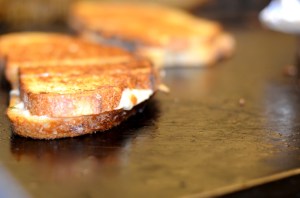 Who likes cheese, raise your hands! And now, who likes grilled cheese sandwich, raise your hands! Well, even if you didn’t raise your hand, as you think that grilled cheese is for the kids only, I will then appeal to your inner kid. You can try denying it, but I know that presented with crunchy, ooey, gooey, melty goodness, most of us can’t resists it.
As a foodie, one thing you usually do is follow the other foodies and listen to their stories. This is how you learn about what is going on, what are the latest trends, what are the hottest restaurants – all in all, you are in the know. Living in Stamford, Connecticut, I heard about Melt Mobile for the long time – a food truck with a fame of taking a homey simplicity of the grilled cheese and converting it into the object of rave and desire. Interestingly enough, visiting a hot (pun intended) food truck might be even harder than a restaurant – you always know where the restaurant is, so you can align the visit to your schedule. The food truck, on another hand, can appear and disappear in a whiff, making long term planning, well, rather hard. So as you can deduce from the above, I was only reading about it, but never tasted Melt Mobile’s food.


Thus when I had an opportunity to finally taste the Melt Mobile fare together with the blogging friends, I couldn’t let it pass.
Metl Mobile’s story started about 4 years ago, when two long time friends Darlene Anderson and Diana Hall combined business prowess and cooking skills, and realized that there might be a melted cheese in their future. Darlene and Diana appeared on the “3 Days to Open with Bobby Flay” episode on Food Network, where they had lots of fun and not so fun challenges thrown at them. Fast forward to today, with two of the Melt Mobile food trucks in operation, and franchising opportunity being in the high demand, I would say they are doing great – and retaining very humble and super-friendly attitude.
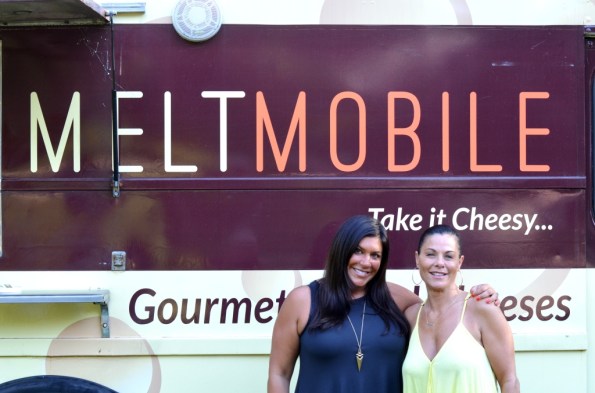
Diana and Darlene
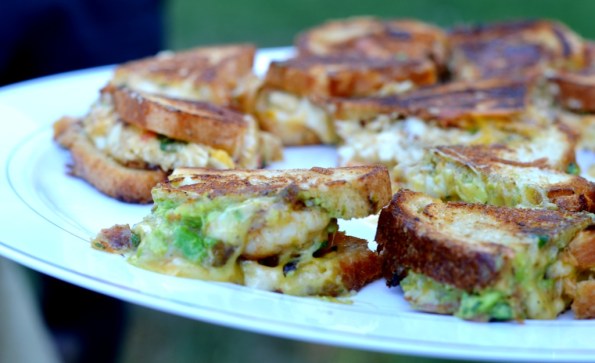
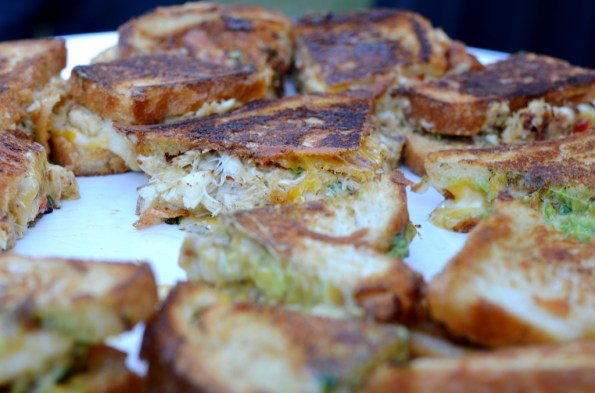
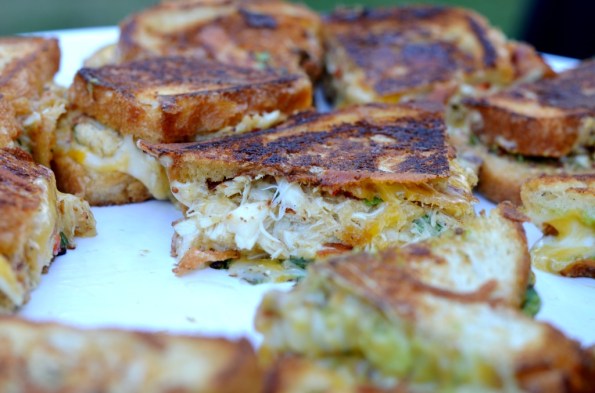
During our dinner, I had an opportunity to taste through the most of their menu, as well as many specialty dishes, and I have to tell you – grilled cheese sandwich is a dangerous thing. Same as the concept of a “dangerous wine” – the wine so tasty you can’t stop drinking it – these seemingly simplistic grilled cheese sandwiches are so tasty, it is literally impossible to stop eating them. If you stop random people on the street and ask them to describe grilled cheese sandwich, I’m sure majority will stay with simplicity of golden bread, melted cheese and may be a side of tomato soup. Diana’s unbound imagination really took this comfort food to the next, fully gourmet level, as you will see in a second. Fair warning – if you are hungry, stop reading right now, go feed yourself and only then come back. I accept no responsibility for any fainting or nervous breakdowns caused by the pictures of the ooey gooey goodness below. Yep, consider yourself warned.
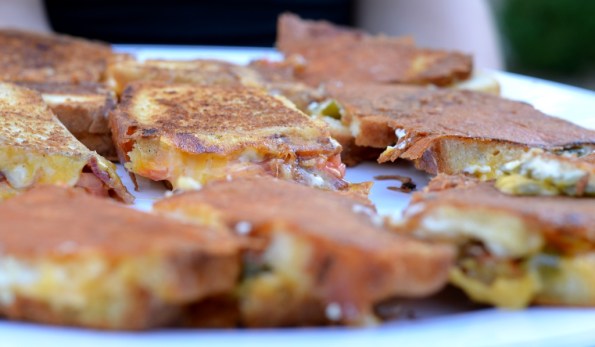
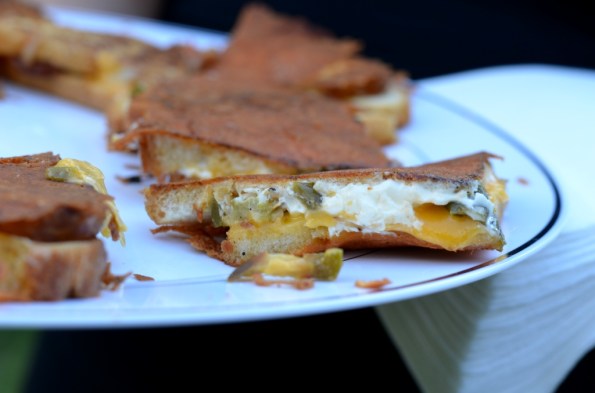
We started with Original Melt with Bacon (Bacon, Vermont Cheddar, Monterrey Jack, Mozzarella and Gruyere on Country White Bread) and Jalapeño Popper Melt (Vermont Cheddar, Cream Cheese on Cheddar Crusted Country White) – both very tasty, Jalapeño melt delivering a nice kick.

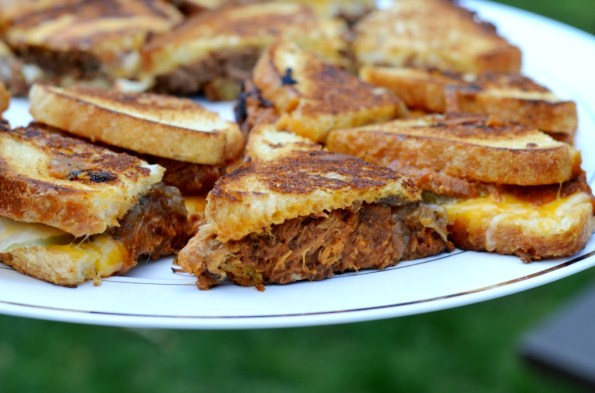
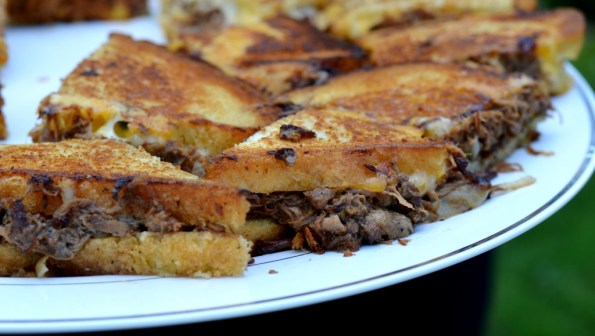
 Next up were The Pork-U-Pine (Tillamook Cheddar, BBQ pulled Pork, caramelized Onions, and sliced Dill Pickles on buttery grilled Country White) and Short Rib Melt (Braised Beef Short Ribs, Caramelized Onions on an Original Melt – Vermont Cheddar, Monterrey Jack, Mozzarella and Gruyere on Country White Bread). Pork-u-Pine was very generous and tasty, and Short rib melt was simply outstanding – you know that goodness of the slow roasted meat, combined now with melted cheese? Don’t think I need to talk further.
 With such a tasty food, I even developed a courage to ask if I can pick inside the kitchen (yes, in the food truck) to snap a few quick pictures – and I was actually allowed to do so:


The next two sandwiches were beyond spectacular. I unquestionably love mushrooms in any form. Mushrooms with cheese are even better than just mushrooms. Add a drop of truffle oil? Heaven on Earth, period. That is how the White Truffle Melt (Mascarpone Cheese, Fontina, Truffles and Mushrooms on Tuscan bread) was – amazing flavor, a absolute delight for any mushroom aficionado. And Meatball 3 Cheese Squeeze (Diana’s Meatballs in Marinara, Fresh Mozzarella, Pecorino Romano, Parmigiano Reggiano and Fresh Basil on Tuscan Bread)? I don’t even know how to describe it. Take the absolutely best Italian meatball – soft, fluffy, generous, flavorful – best you can imagine – then multiply the flavor by ten and put it between two slices of golden crusted bread a add a bit of the melted cheese. Just amazing. Might start drooling as I write this.
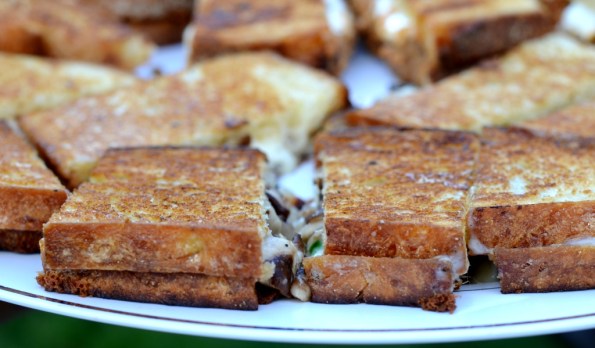
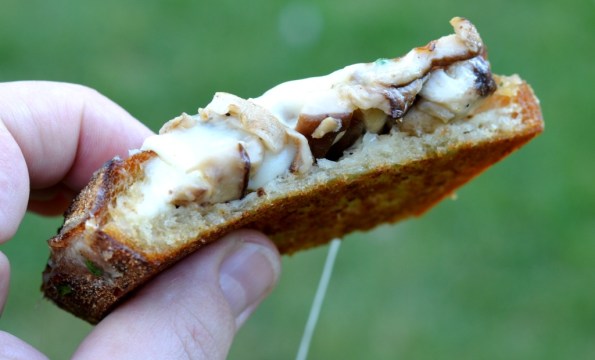
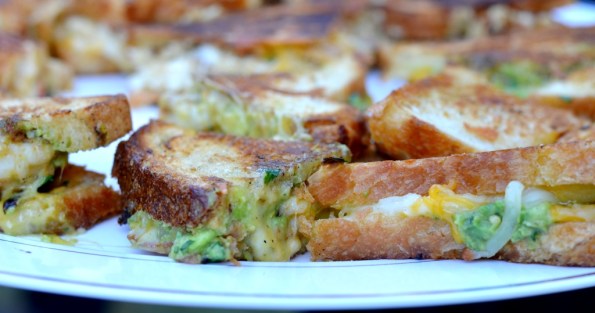
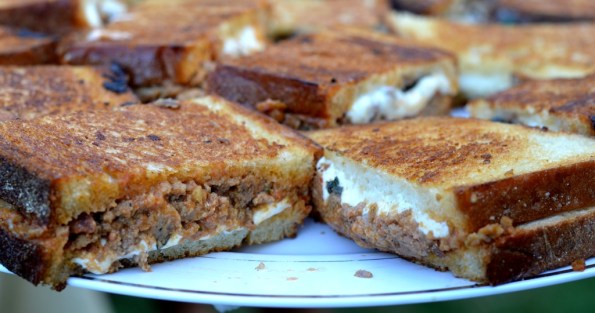 Meat sounds as a natural companion for the grilled cheese sandwiches, but seafood is also not a slouch in this game – Blackened Shrimp Melt (Blackened Shrimp with Guacamole and Tomato on an Original Melt) and
Maryland Melt (Panko Crusted Jumbo Lump Crab Cake, Lemon Caper Aioli, Micro Arugula on an Original Melt) were simply superb – great favor, great texture – delicious.
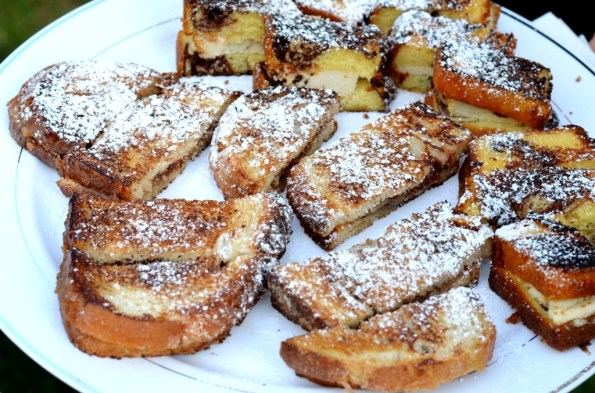
 Do you think dessert can be grilled? If you said “yes”, you are absolutely right – we had a pleasure of trying The Fluffernutter (Caramelized Bananas, Marshmallow Fluff, Belgian Chocolate and Peanut Butter on crunchy Tuscan Bread dusted with powdered Sugar) and Cheesecake Melt (Creamy NY Cheesecake, Sandwiched between grilled Marble Pound Cake dusted with Powdered Sugar) – I can’t even tell you if I had a favorite, this was really a super-delicious ending to the great evening.
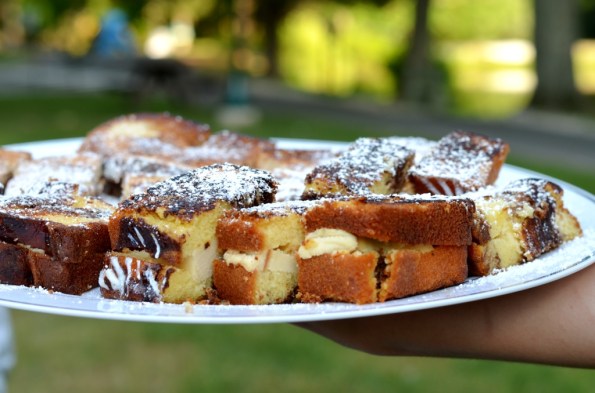
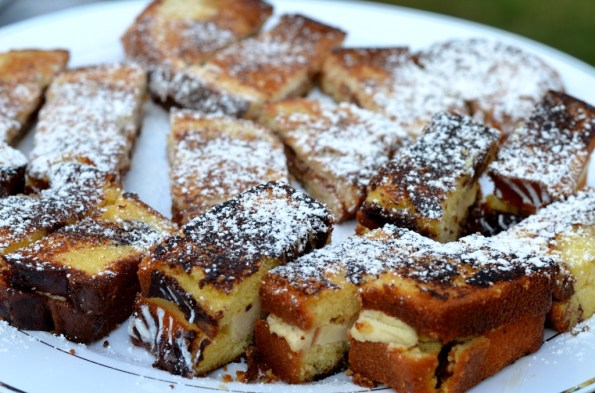
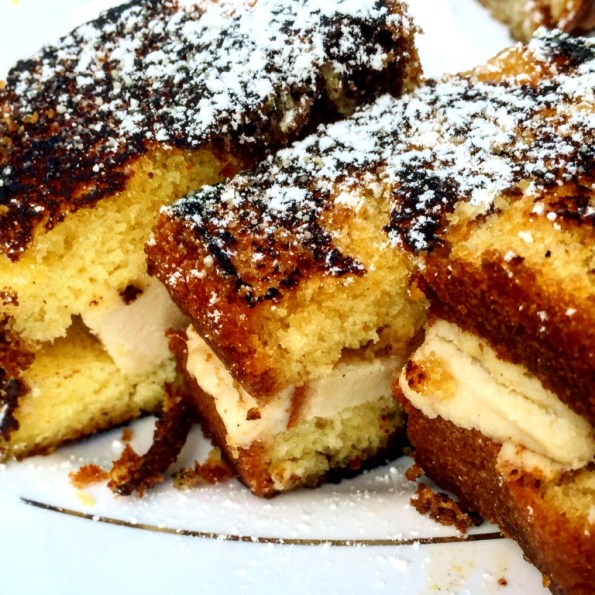
That’s all I have for you, my friends. I can make a fair assumption that I made you hungry after reading this. If you live somewhere in the lower Connecticut or New York, you can use some of the Melt Mobile’s social media handles listed below to see where you can find them. For the rest of you? Come on over, this food worth a special trip! Cheers!
Melt Mobile
Stamford, CT
Ph: (203) 667-1971
Web: Melt Mobile
Facebook: MeltMobile
Twitter: @Melt_Mobile
Restaurant Files: Omakase Experience at Nobu Las Vegas
As a bona fide foodie, I heard the word “omakase” many times. I had a vague idea that this is the term for the Japanese multi course meal, but that was all I knew about it.
During recent trip to Las Vegas, I stayed at the Caesars Palace, and had to walk every day past Japanese restaurant called Nobu. Nobu is a restaurant empire of the world renowned Chef Nobuyuki Matsuhisa, so temptation was building – and I succumbed to it.
I had no reservation, of course (getting reservation for many Las Vegas restaurants is mission impossible), but as in most of the Japanese restaurants, you can often score seat in the sushi bar – exactly where I ended up.
In absolute majority of cases, I prefer to taste lots of different dishes at the restaurant instead of having a lot of one – thus going for the tasting menu was a natural choice. I decided on Nobu Signature Omakase, which consisted of the 8 different courses. And to make the experience complete, I also took the suggested sake pairing course, so every dish was accompanied by a different sake.
Now, there was a bit of a challenge for a foodie. As I was sitting at the sushi bar, all the dishes we handed over by the array of sushi chefs. Each dish had a long list of ingredients, and between the overall noise (high), the pronunciation and the fact that all those chefs were busy, I couldn’t possibly capture the names of the dishes, nor the ingredients. Practically same thing was happening with the sake – names and descriptions were given very quickly, and short of asking to spell out the names, there is a limit to how many times one can repeat “excuse me, what did you say is the name of it”?
As the result, I had to play an internet sleuth, looking for pictures and using my rough notes, trying to figure out what exactly I was eating and drinking. While doing this, I found an interesting reference for many Sake terms – here is the link. Below you will find an overview of my experience – mostly in pictures, with some slivers of the names of the dishes and some of my impressions. Here we go:
Very first dish, handed down to me very quickly, was Deep Fried Fish Salad, served with Onigoroshi sake, aged for 10 years with the sounds of classical music (supposedly helps sake to mellow out)- nice, crisp, very refreshing. Salad was tasty, however not amazing.

Fried Fish Salad
Next up was Sashimi Salad with Lettuce Handrolls, which was served with a bit of a sweeter sake (nope, no idea about the name) . Vegetable roll was a masterpiece of flavor, I would eat it at any time. Tiny fried shrimp – wow. Salmon – spectacular.
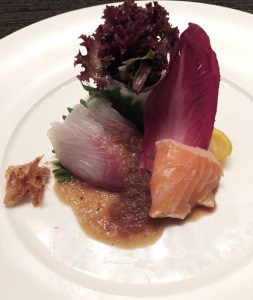
Next dish was Chef’s Sushi Assortment, which was served with with Hokusetsu Onigoroshi “Devil Killer” sake (with a bit of a spicy finish).
What I appreciated about the dish is that all the sushi pieces already had soy sauce and wasabi – exactly in the amount as Chef intended. Tuna was phenomenal. Picked ginger – wow. Great flavor on everything. Fried crunchy rice with caviar – delicious.

Next course was a Chef’s Sashimi Assortment, served with Hokusetsu Junmai sake. A pure wow dish, start to finish. Green ball you see in the picture is pickled Japanese peach – used to clean the palate, and it was delicious. Perfect sake. Toro Tartar with Wasabi Miso Sauce was divine – just give me a bowl and leave me alone. Yep, close the door, I said. All in all, one spectacular dish.


This was the end of the “appetizer” round, and the next two dishes were rather en entree style.
First, Black Cod Miso, which was served with Nobu ‘The Sake’ TK 40 sake from Nobu’s private stock. The sake was super complex and delicious. The cod was full of flavor and was melting in the mouth. Great dish.

Black Cod Miso
Next dish was Beef Toban Yaki, with beef sautéed in sake in ceramic cooking vessel (Toban). It was an okay dish – large sprout-like mushroom was a bit difficult to chew. However, the meat meat was tender and tasty.
 Last dish was Miso Soup, served in traditional Japanese style without a spoon. I was a bit surprised with the soup served in a standard black and purple plastic jar, commonly used at any simple Japanese restaurant. Soup was good, but again, nothing stood out about it. And yes, I didn’t think I should take a picture of it.
I was unable to capture the name of the dessert, nor the name of the dessert sake with fruit which was served together with it. Both were delicious, so the Omakase experience was finished on the high note.


There you go, my friends. A delicious, truly delicious experience, which I would be happy to repeat at any occasion. If you would have an opportunity to experience Omakase dining at Nobu, I can’t recommend it high enough. Cheers!
Nobu (at Caesars Palace)
3570 Las Vegas Boulevard South
Las Vegas, NV 89109
Ph: (702) 785-6628
http://www.noburestaurants.com/las-vegas-caesars-palace/experience/
Few Memorable Wines
As wine is a daily beverage at our house, the supply of it should be regularly renewed, to support that [tasty] habit. I really make an effort to stay in under $15 range for that daily enjoyment (yep, I’m a cheap bastard like that), so this is how most of the wines are acquired.
But then, of course, the are special occasions (like Monday, for instance – it happens only once a week, right? – okay, kidding), which require special wines, so I’m always on the hunt for the interesting wines, whether through the mailing lists (for those that you must have, like Turley or Carlisle), specials at the store or online (thank you, Universe, for the WTSO and Last Bottle). Those special wines disappear inside the wine fridge, and I have lots of fun trying to remember where is what, as I have no record keeping system of any sort, to ensure maximum frustration when looking for a specific bottle.
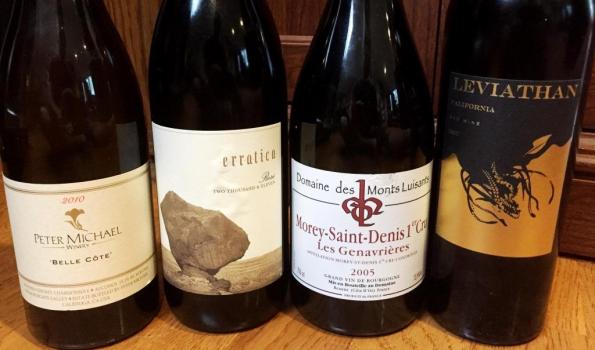
And then there are days when it is really appropriate to jolt that memory, and moreover, force oneself to make a decision about what bottles deserve to be opened, to celebrate the occasion.
We had a good occasion to celebrate very recently, with the group of close friends, so the bottles were pulled, opened and savored. And memories were created.
Here is what we drunk, more or less in this order:


2013 Carlisle Grüner Veltliner Steiner Vineyard Sonoma Mountain – Carlisle is one of my absolute favorite wine producers in California, who makes a range of single vineyard Zinfandel, Syrah and Petite Syrah wines, all representing an outstanding value (most of the wines are under $40). Best way to acquire Carlisle wines is to be on the mailing list (you can sometimes get lucky with the store, but this is quite difficult). While most of the Carlisle wines are red, they also produce few of the whites, which are delicious. I had the same 2013 Grüner last year, and it was great. With another year of age, it became amazing – yes, the star Austrian white grape can grow in California, and very successfully. The wine showed a backbone of herbaceous flavors, but elevated with the bright white fruit and perfect balance. Can’t find you a generic reference, as the wine was rather unique – but if you will ever see a bottle at the store, don’t miss your chance.
Next up was 2010 Peter Michael Belle Côte Chardonnay Sonoma County – what can I tell you? Peter Michael is one of the most coveted producers in California. Just to give you an idea, Peter Michael wines were served at the White House dinner when Queen of England was visiting – not a bad reference, what do you think? To say that the wine was delicious would be an understatement. Fragrant, tongue-coating, luscious and layered. Layers were intertwining, going through all classic Chardonnay elements of vanilla, golden delicious apples, very distant hint of butter, and back to vanilla. This is definitely a special occasion wine – it also manifests in the price ($90) – but then there is always that special moment worth it, you know?
You can’t have a party today without Rosé, can’t you? Of course not. And that Rosé must be special too. Which is easy with 2011 Antica Terra Erratica Rosé Oregon. I came across Antica Terra after tasting their Phantasy wine at a restaurant (it was my wine of the year in 2012). Antica Terra is a very interesting winery in Oregon, with the winemaker honing her skills under none other than Manfred Krankl of the Sine Qua Non. If only Antica Terra wines would be a bit cheaper… Well, let’s go back to that Rosé. It was a full power wine – there was nothing subtle there – but instead there was a perfect parade of the fresh, juicy cranberries and ripe strawberries, with spices and mineral notes – outstanding.


Remember I thanked Universe for Wine Til Sold Out (WTSO)? Had a reason to thank them again after opening the bottle of 2005 Domaine des Monts Luisants Les Genavriéres Morey-Saint-Denis Premier Cru. Technically, I have an insatiable thirst for the Burgundies – but the problem is that most of the inexpensive ones rather disappoint – and expensive ones – well, I don’t get to drink those. This is where WTSO comes to the rescue – I got this bottle for $50 – of course this is not cheap, but it is special occasions we are talking about here – and this is much better than its retail of close to a $100 or so. The wine was absolutely stunning – bright, sweet, ripe and savory cherries, whole bouquet of herbs, firm structure, clean acidity and perfect balance. A wow wine for sure.
And then there was Leviathan. If you are a wine geek, that name might have a meaning for you. In case it doesn’t, let me try another approach. Ever heard of Screaming Eagle? The most cult out of all cult California Cabernet Sauvignon wines? Until a few years ago, Screaming Eagle wines were made by Andy Ericsson. Leviathan was actually one of Andy Ericsson’s own projects, which was considered for a while to be a second label of Screaming Eagle – which is incorrect, as the second label of Screaming Eagle is the wine called Second Flight. This 2007 Leviathan California Red was outstanding – dark, brooding, with classic flavors of cassis and mint, layered and complex. I decanted it for an hour, which was the right move – but still, this wine is just a baby and needs to rest for a while. Luckily, I do have a second bottle, and even luckier, I have no idea where it is hiding from me, so it is safe for a while.


I hope you see a clear progression here – Grüner, Chardonnay, Pinot Noir Rosé, Pinot Noir, Cabernet Sauvignon – we are increasing the depth and concentration with every next wine. So what would you continue this line up with, just for the finishing touch? I’m sure there are few options here, but my decision was … California Zinfandel.
Not just any Zinfandel, but Carlisle – which means lots of dark power. This 2012 Carlisle Zinfandel Montafi Vineyard Russian River Valley was almost a natural continuation of Leviathan – dark berries, sage, round and smooth – it is amazing how Carlisle wines don’t give out the alcohol level of 15.9% – you don’t even think about it until you look for it on the label. Delicious.
And now, to round up the evening? Port! Last year I was lucky to visit Quinta do Tedo, a winery in Douro valley which was founded by the Bouchard family of Burgundy fame. I brought back a few wines, and this 2010 Quinta do Tedo Late Bottled Vintage Porto was one of them. The wine was perfectly delicious – sweet fruit but not a tad hair over the balance – you have a mouthfeel of garden fresh berries, with their natural sweetness, and nothing extra. This was a beautiful finish for our special evening.
I’m glad we have special days in our lives, so we can have such memorable celebrations. I had a bit of time to reflect on this stupendous group of wines, and I figured that I actually had a favorite – that Burgundian wine was simply flawless – I don’t know if the wine was at a peak, will it further evolve or will it start to decline – but what I had was spectacular.
I would like to leave you with this, my friends. What were your memorable wines as of late? Cheers!
Solitude: In Quest for Unattainable?
Solitude. An interesting word, isn’t it? Is it something good or is it something bad? Let’s see what the dictionaries think of solitude:

If we think of solitude as a feeling of isolation, this clearly doesn’t sound good. We, humans, are social creatures. We want to connect, communicate, love, laugh, interact. Feeling isolated is really opposite to feeling connected and engaged, so let’s leave it as that – feeling isolated is not what we want, so this is not the solitude we want to talk about.
 Let’s then talk about solitude as the “state in which you are alone usually because you want to be“. Every once in a while, our connected sensors become overloaded. Too many things to do, too many tasks to finish. The new things which must be done arrive without any regard to the things which we are still doing. We are going somewhere all the time, without even understanding the direction, or what is even worse, without understanding of why we are going there.
Solitude is our way out. Have you ever been up in the mountains, where there are no other sounds outside of gentle murmur of leaves and muted whisper of wind? How does it feel? Or may be instead of the mountains, you prefer to stand by the ocean, listening to the dreamy sounds of the slowly pulsating waves? With every wave gently crawling up the sand line, the tension becomes less, the mind becomes clearer, and our energy replenished.
The challenge is that unless we are a lucky few, most of us can’t just magically happen to be by the ocean or up in the mountains when we need it the most. And to take things further to the dark side, most of us now live in the constant state of over-socializing. Think about all the tweets we have to respond to, facebook statuses and instagrams to like, snapchats and periscopes to watch. If we thought we were overloaded before, how can we describe our state now? The state of solitude, which we need for our own well-being, is more ephemeral than ever before. Yes, it is literally unattainable.
While we are talking about life, this is a wine blog after all. Tell me the truth – you knew that I will turn it all to the wine, didn’t you?
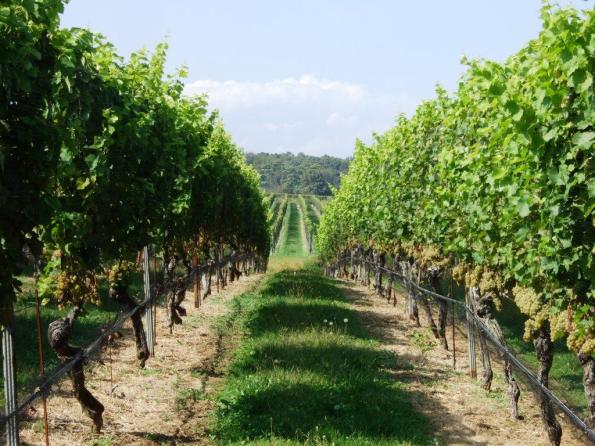
How does the wine relates to the solitude, you ask? To begin with, think about the wine while it is being made. We are seeking solitude by the ocean or up in the mountains – but have you ever stood between the rows vines on a quiet day, without talking or looking at your phone? Did you feel relaxed and restored just by standing there? 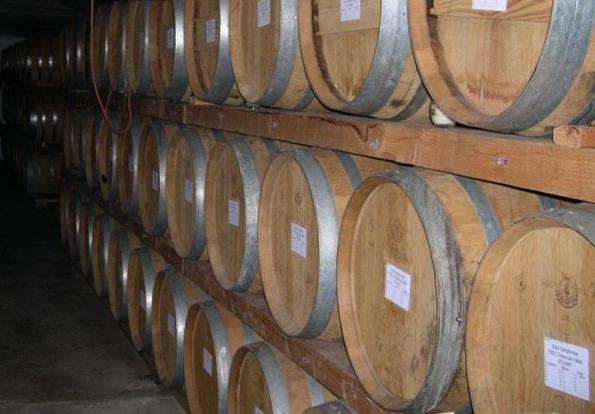
Or have you ever stood in the middle of the dimly lit cellar, breathing the wine smell and admiring the silence, thinking about the wines, quietly and patiently laying there? The wines spend month and month in that perfect solitude, left to themselves, to age and mature, before they will see you again.
And then there is may be the best and easiest moment of solitude any wine lover can experience at any time. Yes, wine is meant to be shared, and it is wonderful when you are in the company of the people who share you passion. But think about that moment when you take a sip of wine, and for that exact moment, the world stops, it doesn’t go anywhere, it becomes quiet. You are left one on one with that wine. You ponder at it. You reflect. You are one on one with yourself, in your moment of solitude, brought to you by that sip of wine.
I remember being in the Rioja seminar, and listening to our guide talk about his experience sharing the bottle of 80 years old Rioja (from 1922) with the group of friends (also wine professionals). He said that they poured the wine and had a sip, and the table was quiet for the next 5 minutes. Nobody wanted to say anything. Everybody were transposed. And they were in their moment of solitude.
Let me leave you with that. Have you ever found your moment of solitude in the glass of wine? I hope you did, and if not – don’t worry, it will come. Just give it time.
This post is an entry for the 26th Monthly Wine Writing Challenge (#MWWC26), with the theme of “Solitude”. Previous themes in the order of appearance were: Transportation, Trouble, Possession, Oops, Feast, Mystery, Devotion, Luck, Fear, Value, Friend, Local, Serendipity, Tradition, Success, Finish, Epiphany, Crisis, Choice, Variety, Pairing, Second Chance, New, Pleasure, Travel
Expanding My Wine Map of Argentina
Let’s start with the question: name winemaking region in Argentina, other than Mendoza. You have 5 seconds. Fine, take 10. Your time is up! Hmmm, no answer, huh?
May be I couldn’t hear and you said “Uco Valley”? That would be a good answer, though Uco Valley is a high altitude sub-appellation in Mendoza. But don’t feel bad; as a bare minimum, it makes two of us – Mendoza was the only appellation I knew in Argentina until a few weeks ago.
 Then I was offered to try a few Argentinian wines from the appellation I never heard of – Salta, located all the way up in the northwest. In addition to unknown appellation, the wines were coming from the high altitude vineyards – not just high, but the highest in the world. I’m always interested to learn about the effect of extreme conditions on the grapes and wines. Poor soils and lack of water make vines to work hard, which is then manifested in flavor. High altitude usually means a large difference in day and night temperatures, which makes grapes to concentrate flavors. So yes – new region and high altitude vineyards – I’m definitely game.
The wines I got to try were produced by two wineries, both part of Hess Family Wine Estates collection. Wine production at Bodegas Colomé dates all the way back to 1831, when the winery was built high in the Andes Mountains. The pre-phylloxera Malbec and Cabernet Sauvignon vinies were brought in directly from Bordeux in 1854, and they still produce fruit today, which is used for the Reserva wines. Today, Bodegas Colomé sustainably farms highest elevation vineyards in the world, including Altura Máxima, located at the 3,100 meters (about 10,170 feet) above sea level (mind boggling, if you ask me).
The second winery, Amalaya, is much, much younger – it was founded in 2010 as a project by Bodegas Colomé, with the idea to grow more than just signature Malbec and Torrontés, but the other old world varietals as well (like Cabernet Franc, for instance). It was built high up in the desert, where nothing was growing before. I like this quote from the winery web site, I think it explains well the philosophy behind it and explains the colorful labels: “Amalaya means «Hope for a Miracle» in native language. the miracle is revealed from the heart of the Cafayate desert in a mystical and magic way, in order to provide us vines with excellent quality. The holistic circle embodies the fertility of the «pachamama» or «mother earth».”
I had an opportunity to try Malbec and Torrontés wines produced by Amalaya and Bodegas Colomé – below you will find my tasting notes:


2015 Amalaya Malbec Salta Argentina (13.9% ABV, $16, 85% Malbec, 10% Tannat, 5% Syrah, 5,900 feet above sea level)
C: Dark garnet, practically black
N: black truffles, ripe plums, touch of cinnamon, licorice, warm, inviting
P: lighter than expected, medium body, a bit of back burn on the palate, under extracted?, unbalanced. After 2 days, the wine leveled out and became more balanced, with dark core.
V: 7- initially, 2 days after opening – 7, wine improved.
2015 Amalaya Torrontés/Riesling Salta Argentina (13% ABV, SRP: $12, 85% Torrontés, 15% Riesling, 5,500 feet above sea level)
C: light straw pale, just a touch darker than water
N: exuberant, intense, lots of ripe tropical fruit, guava, mango
P: crisp, clean, good acidity, good balance, grassy notes after warming up
V: 7+, very good, refreshing wine


2013 Colomé Estate Malbec Salta Argentina (14.9% ABV, SRP: $25, 100% Malbec, 4 high altitude vineyards from 5,600 to 10,100 feet)
C: dark Garnet, practically black
N: intense, ripe fruit, plums, cherries, touch of roasted meat
P: polished, silky smooth, fine grain tannins, dusty mouthfeel, tar, dark restrained fruit, needs time to open,
V: 8/8+, good aging potential
2015 Colomé Estate Torrontés Valle Calchaquí Salta Argentina (13.5% ABV, SRP: $15, 100% Torrontés, vineyards altitude from 5,600 to 10,100 feet)
C: straw pale
N: lightly perfumed, restrained, touch of tropical fruit, hint of lemon
P: continues to be restrained, elegant, fresh clean and balanced, touch of white fruit with good acidity, good structure
V: 8, elegant white wine, definitely a next level for Torrontés, great QPR
As you can tell from my notes, these were good wines. Would I claim that I clearly saw the effects of the high altitude? No, not at all. To make such an observation would probably require a tasting (blind) of seemingly similar wines, produced at the different altitudes – may be someone will come up with such a tasting, that would be cool. In any case, these were interesting wines and I’m glad I had an opportunity to try them. Have you had any of these wines? What are your thoughts? Cheers!
And This Is Why I Love Spanish Wines
Yes. Confessed uncountable number of times, in this blog and everywhere (want proof? Click here, here, here, here or here).
I love Spanish wines. Never tried to hide it, so no, there is nothing to look for in the closet.
Spain is one of the so called “Old World” wine countries, with biggest grape area plantings in the world and one of the highest volumes of the wine production. But of course this is not the reason for my high sentiment towards Spanish wines. What is important, however, that if we will take 10 random wines produced in any country, in about the same price range, I will find the most of the wines to my liking out of those hypothetical 10 among Spanish wines – compare to any other region. Another equally important point for me is the value – Spanish wines offer one of the best values in the world; not only that – they are possibly the best QPR wines in the world. For example, if you will compare 1964 Rioja, which is still perfectly drinkable today and still can be found for less than $150, to majority of the wines of the similar age but from the other regions, most of them will not come anywhere close in the amount of pleasure they deliver, never mind the cost.
And then we have to talk about innovation and drive forward. Spanish wines are not standing still. Styles are changing, wine quality is improving, new and unexpected grapes are made into delicious wines. To make this conversation more practical, let me share with you some of my recent Spanish wine encounters.
Today, Albariño needs no introduction. The star white grape of the Rias Baixas region in Northern Spain is known to produce wines with explosive acidity and profile of salinity, which makes them an ideal companion to oysters and anything seafood for that matter. While Albariño wines are generally very good, there is one word I would rarely associate with them – finesse. Or at least I was not, until I had an opportunity to try these two Albariño.


2014 Bodegas LA VAL Albariño Rias Baixas D.O. (12% ABV, SRP $17, 2 month sur lie) had greenish/straw pale color; intense and open nose of minerals, wet stone and lemon. On the palate, the wine was plump with invigorating acidity, intense lemon finish, crisp, fresh – excellent overall (Drinkability: 8).
2014 Viña Moraima Albariño Rias Baixas D.O. (12.5% ABV, SRP $19, 7 month sur lie) had light golden color. Nose was very unusual, with candied lemon, intense, tropical, guava notes. On the palate, the wine showed remote hint of sweetness, full body, round and layered with hint of salinity, good acidity. This was definitely the next level of Albariño, thought provoking and different. (Drinkability: 8)
As you can see, Albariño is really starting to deliver on the next level, and I can’t wait to see how far it can go. What is interesting, however, is that all of the best Spanish white wines – to my knowledge, of course – are made from the indigenous varieties – Albariño, Godello, Verdejo and Viura would be the “major four”. The situation is slightly different for the reds, where the local stars, Tempranillo and Garnacha, are joined by the international best, such as Cabernet Sauvignon and Merlot. Going back to the whites, outside of some experimental plantings, Riesling, Sauvignon Blanc and Chardonnay are nowhere to be found in Spain, yes? Well, that would be my statement as of the month ago, but not anymore.


Enters Hacienda de Arínzano. Having tasted recently Hacienda de Arínzano Rosé, which was outstanding, I know that Pago de Arínzano, first Pago (highest denomination of quality in Spain) in Northern Spain, can produce excellent wines. Still, this 2014 Hacienda de Arínzano Chardonnay Pago de Arínzano DOP (13.5% ABV, SRP $19.99, 100% Chardonnay. 12 month French oak barrels – 30% new) far exceeded my expectations. From the first smell the wine in the glass was screaming “Chardonnay” – touch of vanilla, hint of golden delicious apples, just classic Chardonnay. The palate reaffirmed the “classic Chardonnay” impression – fresh, open, creamy, with perfectly balanced white fruit, vanilla, distant hint of butter, perfect amount of acidity – a delicious world-class Chardonnay which I would be glad to drink at any time – and almost a steal at this price. Drinkability: 8+.
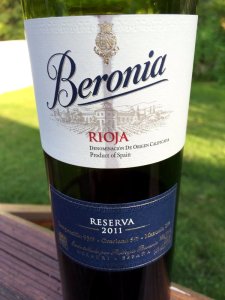 We talked about new wines and new styles. Let’s talk about quality now – well, not the quality per se, but let’s talk about changing mindset. If you would ask me “should I open 5 years old Rioja Reserva”, my immediate answer would be “absolutely not – give it at least another 5 years to enjoy it fully”. By law, Rioja Reserva has to spend at least 1 year aging in the barrel, and most of the producers age it for much longer, so the resulting wines typically should be given ample time in the bottle to evolve. But once again I was proven wrong. I opened the bottle of 2011 Bodegas Beronia Rioja Reserva (14% ABV, SRP $21, 94% Tempranillo, 4% Graciano, 2% Mazuelo, 18 month in barrel, 20 month in the bottle) and was absolutely blown away. Concentrated nose of dark fruit, cigar box and eucalyptus was supported by bright, dense, perfectly structured palate, with dark fruit and touch of sweet oak. This was definitely one of the best PnP (Pop ‘n Pour) wines I ever experienced, and a nice surprise. Drinkability: 8+
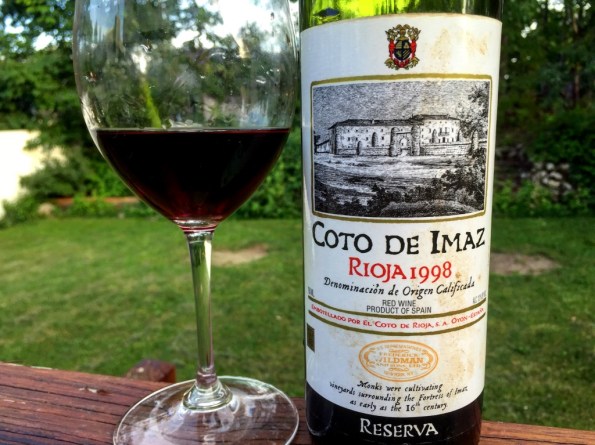
I want to mention one more beautiful Rioja wine – this one with a bit more age on it. I like it when I have a reason to open a nice bottle of wine, which otherwise would be still laying down and waiting for the “perfect moment”. The special reason was my son’s high school graduation, and as he was born in 1998, this was the first 1998 bottle I pulled out of the wine fridge (well, I’m not telling all the truth – this was the one I knew the exact location of).
To begin with, I was impressed with the state of the cork on this 18 years old wine – it was perfect, showing literally no age on it whatsoever. 1998 Coto de Imaz Rioja Reserva (13% ABV, 100% Tempranillo) still had enough freshness on the nose, with the notes of ripe plum, and the palate had ripe fruit with the distant hint of sweetness without any tertiary aromas, good acidity, medium to full body and excellent balance. I’m sure this wine would go on happily for many years. Drinkability: 8+
Okay, we are done here. Do you think I explained my passion for Spanish wines well enough? Great wines, great values, great QPRs, and lots and lots of pleasure – what is not to love? If you had any of the wines I mentioned here, I would love to know your opinion. Until the next time – cheers!
Daily Glass: Not Your Mother’s Pinot Grigio
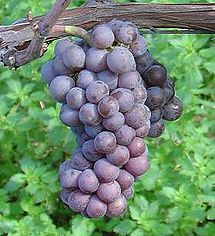
Pinot Gris grapes. Source: Wikipedia
Of course I don’t know your mother, and of course I don’t know her wine preferences. But assuming a general motherly image, cue in a hot summer day, I would make a pretty safe bet that refreshing beverage in the glass in her hand is a white wine. Continuing playing it safe, I would expect that white wine to be very easy to drink, unoffensive and simple, so traditional Pinot Grigio (think Santa Margherita) would perfectly fit the bill.
Now, what do you think would happen if after crushing the grapes, the juice will be left in the contact with skins for, let’s say, 24 hours? Yes, of course Pinot Grigio is a white wine, at least typically it is. But to give you a little hint, take a look at the picture of the grapes – this are not random grapes, these are exactly the Pinot Grigio grapes – or as they are known throughout the most of the world, Pinot Gris. Gris here stays for “gray”, this is how we can perceive the color of these grapes.
With this little hint – what do you think now about that juice left in contact with the skins for 24 hours? If you said that you expect it to gain some color, you are absolutely right. Here is an example of an end result for you:
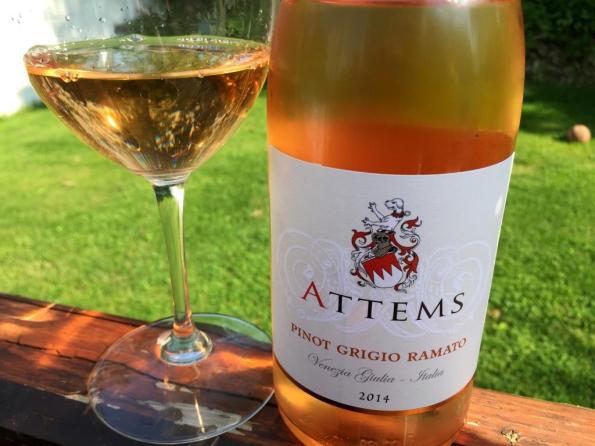 Isn’t it beautiful? The 24 hours of skin contact gave this wine this orange hue, which technically makes this wine a part of the “orange wines” craze. I don’t have an intention of getting into the “orange wine” debate, but I can tell you that it is not only the color which is different here. Before we talk about the taste of this 2014 Attems Pinot Grigio Ramato Venezia Giulia IGT (12.5% ABV, $18, 100% Pinot Grigio, stainless steel and barriques), let me give you a short explanation about the name of the wine and its color, from the winery’s web site: “Attems Pinot Grigio Ramato continues a tradition of the Republic of Venice, since “ramato,” or coppery, was the term that referred to Pinot Grigio in contracts. A special vinification practice led to the use of this term: the must remains in contact with the skins for 24 hours and this practice gives the wine a very distinctive coppery hue“.
It was not only the color which was different. The wine had a nose of intense honey, but the palate was dry and crisp – if anything, reminding a lot more of a great Provence Rosé with a hint of strawberries and an onion peel. An excellent and thought provoking wine, whether for the hot summer day or for any day when you crave a nice glass of wine. Drinkability: 8.
That’s all I have for you for today, my friends. White, Rosé, Orange, Red – enjoy whatever is in your glass and happy Independence Day for those in the USA. Cheers!
Restaurant Files: Off The Chart Experience at Portside Tavern in Hyannis
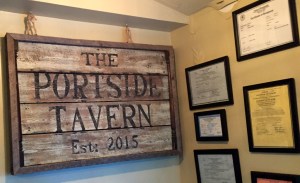 Yes, I love food. This never been a secret in this blog. And yes, I get overly excited when I come across really tasty experiences.
Concept of “food” is multidimensional. At home, tasty food and family (and friends) around the table is usually all you need. Mix in a bit of ambiance and a glass of a good wine, and you got a great experience, right there.
When it comes to visiting the restaurant, you need a bit more than just food for the great and memorable experience – good service is important; another element which is near and dear to me is cost. This is not even the “cost” in the absolute terms – it is more the perceived value which matters, the infamous “price/performance” – an amazing burger for $20 might be a great experience, and tasteless, rubbery steak for $15 will not be the one.
As you can see in the title of this post, I want to talk about “off the chart” experience. The source of this exuberant designation was our recent visit at the Portside Tavern in Hyannis on Cape Cod (love weekend getaways, even with 5 hours in traffic). To go along the lines of a great experience in the restaurant, I was with the family, food was amazingly tasty, service was great, and the value was unbeatable – that’s all.
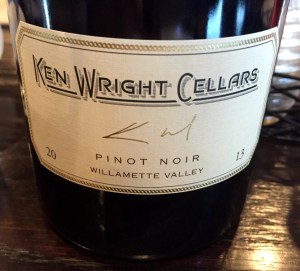 First, of course, was the wine. Don’t get me wrong – the restaurant also offers full bar with interesting cocktails, but my attention was on the wine list, which offers lots of great options, both by the glass (most of the wines priced in $7 – $12 range), and by the bottle (prices starting from $30 and some even for less). I couldn’t pass by the 2013 Ken Wright Pinot Noir Willamette Valley for $50 – talk about value – even if you can find this wine in retail, which is not easy, it will cost you at least $25, so I consider $50 at the restaurant to be a great value. After a bit of the breathing time, the wine was gorgeous, dense and powerful, with the signature Oregon aromatics of earth and cocoa.
Next, there was a pure indulgence from start to finish. Chowder (Local clams, new potatoes, applewood smoked bacon, cream) was not too heavy, not too thick, very well balanced in flavor.
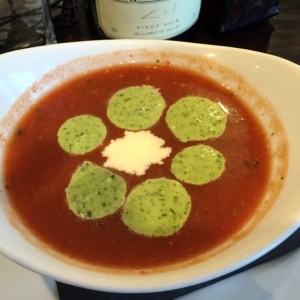
Watermelon Gazpacho (Sweet basil drizzle, whipped feta) was different and refreshing – outstanding on any hot day, light, and again, very tasty.
One of my favorite ways to cook chicken wings is to slow roast them at a low temperature (say 215ºF or so) – they develop great flavor and then easily fall off the bone this way. I was happy to find the same style chicken wings at the restaurant – Confit Chicken Wings (Choice of harissa, rhubarb BBQ, or sweet basil sauce – we chose BBQ sauce) were super-tasty and the chicken wings were literally melting in the mouth. Continuing to deliver a great dining pleasure was Poutine (House cut fries, cheddar curds, foie gravy) – love this interpretation of French fries. This rendition was on par with best of the best I had in Quebec – flavor, texture, cheese, gravy – everything was just spot on. Finishing our divine appetizer experience was perfectly executed Mac & Cheese (Gemelli, local cheeses, buttered crumbs) – again, very tasty.


Our main course dishes were equally delicious. Chicken Risotto (Asparagus, prosciutto, baby tomatoes, balsamic reduction) was very well executed, great smokey flavor, nice contrast of balsamic, very tasty. Half-Pound Burger (Caramelized onions, bacon, garlic aioli, tomato jam, brioche) had an excellent fresh beef flavor, was cooked as requested and overall was very enjoyable.


Cuban (Braised pork, ham, Gruyere, dijon aioli, house-made pickle, grilled french bread) was done exactly as I like it – good amount of meat, flat pressed bread, great combination of flavors – one of the best Cuban sandwich experiences. It was also served with a side of Wedge salad (one of the available choices), which is one of my favorite salads any time I see one. Grilled BBQ Chicken Pizza (Bacon, red onion, cheddar) was delicious, good crust and again, great flavor combination.


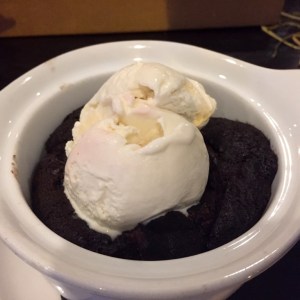
As you can imagine, we were absolutely full at this point. But considering how good all the food was, we had to try at least one dessert. After back and forth, we settled on Double Chocolate Cookie (Vanilla Ice Cream), which was more resembling a chocolate lava cake, and was instantly devoured with the help of four spoons.
 There you have it, my friends. If travel will take you to Cape Cod, make sure not to miss Portside Tavern – and then leave me a thank you note here. Cheers!
Portside Tavern
72 North Street
Hyannis, MA 02601
Ph: 508-534-9600
http://www.theportsidetavern.com
Last Bottle Sign Up ($10 credit)




 Talk-A-Vino