Archive
Daily Glass: An Australian Score
I pride myself with very wide wine horizon. I scout wines from literally everywhere in the world – China, Japan, Croatia, Bulgaria or Hawaii – bring it on, the more obscure, the better, I will be happy to try them all.
Nevertheless, a majority of my daily drinking evolves around Italy, Spain, and California, with a little injection of France. The rest of the wine regions make a very sporadic appearance at our house – without any prejudice or malicious intent – just stating the fact.
Nevermind China and Japan, which are still going through an adolescence as wine producing countries – let’s talk about Australia instead. About 20 years ago Australia was leading wine imports in the USA. As you would enter a wine store, you were greeted with countless Australian wine selections.
Today, Australian wines are relegated to the back shelves, and they are definitely not on top of the wine consumer’s mind (in the USA for sure). Ups and downs are hard to analyze in the wine world (think of the devastating effect of the movie Sideways on Merlot consumption), and such an analysis is definitely not the point of this post, no matter how interesting such a discussion could’ve been.
As I stated before, Australian wines are rare guests at our table, and this is not deliberate – I enjoyed lots and lots of excellent Australian wines, and have an utmost respect to what this country can deliver. I’m always ready to seize an opportunity to try an Australian wine, especially if it comes with a recommendation.
Such recommendation can present itself in lots of different ways – a friend, a magazine, an Instagram post, a tweet – or an offer from the Last Bottle Wines, especially during the Last Bottle’s infamous Marathon events. During the Last Bottle Marathon, you can buy the wines in single bottle quantities, which I like the most as you can create your own tasting collection quickly and easily.


If the wine is offered for sale by the Last Bottle, it definitely serves as an endorsement for me. The folks at Last Bottle know the wines – if they offer something, it means the wine really worth trying. During the last Marathon, the 2015 Gemtree Uncut Shiraz McLaren Vale (14.5% ABV) attracted my attention. I don’t know what made me click the “buy” button – the name “Gemtree” (sounds interesting, isn’t it?), or the word ‘Uncut” (again, this somehow sounds cool to me as well), but I did click that button quickly. You see, you only have a split second to get the wine – you blink, you lose – and I scored the bottle of this Australian Shiraz.
I pulled the bottle from the wine fridge, twisted the top and poured into the glass. Dark ruby color, a whiff of the blackberries. The palate had a tremendous amount of salinity over the crunchy blackberries – I guess this was an effect of drinking this wine at a cellar temperature. But it was still attractive. While admiring the simple label I saw the word which made me very curious – “Biodynamic”, and then the back label provided lots more information about how this wine was made. To me, “sustainable” is a very important wine keyword, and whatever extras “biodynamic” entails, the biodynamic wine is always a sustainable wine – and it is definitely important for me.
After warming up, the wine became generous, layered, showed soft tannins and perfect crunchy backbone of dark fruit with some dark chocolate notes and touch of a spicy bite – all perfectly balanced and delicious (Drinkability: 8+). The name “Gemtree” kept me intrigued, and the picture on the label was very attractive in its simplicity, so I went to the Gemtree Wines website to learn a bit more. I rarely quote from the winery websites, but I think in this case this is quite appropriate (here is the link to the source):
“This is our Gemtree story…
There was once a tree. Not the tallest tree, nor the oldest tree, but a tree that had put its roots in just the right part of the paddock. Here the soil was deep and layered – sometimes hard and rocky, elsewhere soft and sandy – and the wind had just enough room to move, and even the rain – when it was kind enough to visit – would fall evenly and gently.
Because of its favoured position, the grasses grew tall against its trunk, and the wild flowers were easily encouraged to grow closely around it, and the insects and birds that looked to trees for shelter and for vantage, eagerly moved in.
One day a farmer approached the tree and wondered: “You do not grow the strongest, nor the fastest, so why is it that you grow the best fruit?”
The tree let the answer whisper through the wind in its branches: “If I am shown a patient mind and a gentle hand, if I am left to follow the rhythms of my seasons – to rest in Winter; to revive in Spring; to make busy in Summer; and to provide in Fall – then I can offer fruit that tastes not just of the ground upwards, but also of the sky downwards, and of everything around me.”
The farmer thought to himself: “This is truly a Gemtree – it takes only what it can give back to the land, it contributes to its surroundings, and it provides for those that live around it.”
This is the heart of the Gemtree story: growing better wine ~ naturally.“
Here you are, my friends. I don’t know how often you drink Australian wines, but Gemtree is definitely the name to keep in mind for your next round of wines from down under – I think you will be happy with your score. Cheers!
Hold The Pizza – I Just Want The Wine: Masciarelli Villa Gemma
At the age of 20, Gianni Masciarelli was helping with the harvest in Champagne. At the age of 26, in 1981, he started making his own wines in the Italian region called Abruzzo. 1984 was the first release of the Villa Gemma Rosso wine, truly a different take on the Montepulciano wines.
Montepulciano is the main grape of Abruzzo (not to be confused with Montepulciano in Tuscany, which is the name of the village where the wines are made from Sangiovese grape). Late in the 20th century, Montepulciano d’Abruzzo became one of the most exported Italian wines – it was dry, it was simple, it was quaffable and, of course, good for pizza.
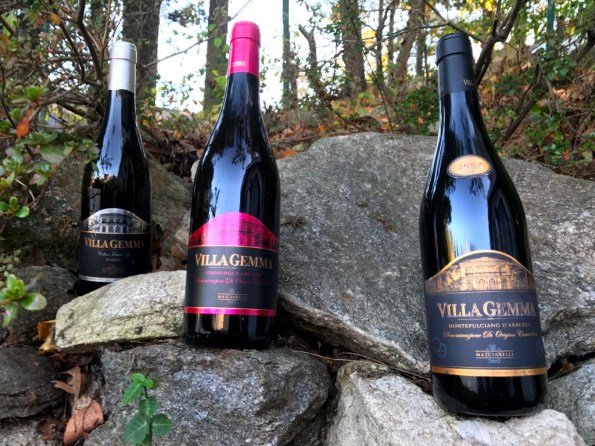
Gianni Masciarelli had his own, pioneer view on how the Montepulciano wines should be made. He introduced the Guyot training system for the vines in Abruzzo. He was the first to start using French oak barrels in the production of Montepulciano d’Abruzzo and Trebbiano d’Abruzzo, showing the world that Montepulciano can go way beyond just a “pizza wine” qualities. Today, Masciarelli estates are run by Marina Cvetic Masciarelli, late wife of Gianni Masciarelli; the vineyards spawn 350 acres and produce about 1.1M bottles of wine across 5 different lines.
Recently, I had an opportunity to taste a few of the wines from the Villa Gemma line, and here are my notes:
2016 Masciarelli Villa Gemma Blanco Colline Teatine IGT (13% ABV, $17.99, 80% Trebbiano d’Abruzzo, 15% Cococciola, 5% Chardonnay)
C: light golden
N: a touch of fresh grass, a hint of white stone fruit, a hint of gunflint, medium intensity
P: crisp, refreshing, crunchy, touch of lemon, slightly underripe peaches, very clean, medium finish
V: 8-, craving food, excellent overall. Trebbiano d’Abruzzo and Cococciola also extended my grape hunting collection
2016 Masciarelli Villa Gemma Cerasuolo D’Abruzzo DOC (13.5% ABV, $14.99, 100% Montepulciano)
C: intense, ripe strawberry pink
N: pure strawberries, fresh, succulent strawberries
P: fresh, tart, restrained, lightweight, clean strawberry profile, good overall balance
V: 8, simply delightful. An excellent Rosé for any time of the year
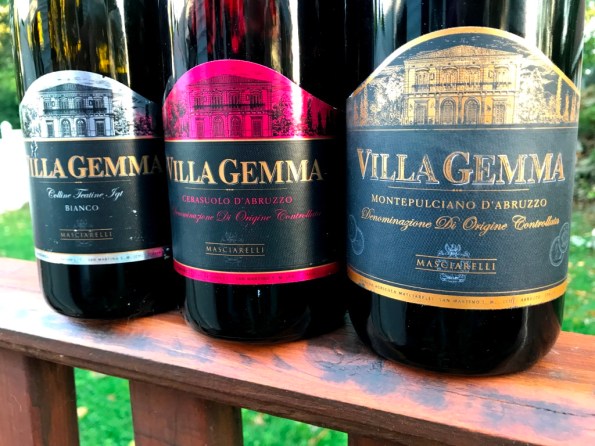
2007 Masciarelli Villa Gemma Montepulciano D’Abruzzo DOC (14.5% ABV, $89.99, 100% Montepulciano, aged 18-24 months in oak barriques, total 36 months))
C: Dark garnet
N: fresh cherries, anis, mint, blackberries
P: soft, generous, round, fresh acidity, touch of leather, cherries and cherry pit, generous tannins on the finish.
V: 8, excellent wine, unmistakably Italian, supremely delicious.
These wines were absolutely delicious in their own right. I seriously don’t know about pizza – you can probably pair anything with pizza, from two buck chuck to the Screaming Eagle and Petrus – but you really don’t have to. These three wines from Masciarelli Villa Gemma would perfectly complement any dinner – appetizers, salads, and mains – these wines pack a serious amount of pleasure. Don’t take my word for it – try them for yourself. The pizza is entirely optional. Cheers!
South Africa’s Top 10 Méthode Cap Classique Wines
Today I want to bring to your attention a guest post by Brittany Hawkins – for more information about Brittany, please see the bottom of this post.

Source: Wikipedia
Most of us know that real Champagne only comes from Champagne, France.
Some of us also understand that there is a significant difference in the processes used to make Champagne versus many other sparkling wines. But there are other bubbly wines that are made in the tradition of Champagne, which is known as méthode classique.
If you didn’t know this, we will fill you in on the details in a moment, but do know that this little fact is at least one part of the secret behind why South Africa’s MCC (Méthode Cap Classique) wines are so highly sought after?
What Makes MCC So Special?
When you drink a South African MCC, there are at least two key differences between it and the majority of other sparkling wines.
First, as alluded to above, MCCs are made in the traditional Champagne way. This means that the wine is fermented a second time in the bottle (not a tank, like some sparkling wines) using a solution of yeast and sugar. The bottle is left anywhere from 1 ½ to 3 years during the second fermentation. This process is what carbonates the wine.


So, when you open up a bottle of MCC, you are about to enjoy the closest thing on earth to Champagne other than Champagne itself. In fact, South African MCCs are truly rivaling French champagnes due to the quality of their grapes and wine makers.
However, while South African MCC is made méthode classique, it has some unique South African markers. Particularly, as a result of the warmer climate and consistent temperatures of the South African wine country, MCCs tend to be fruitier in character than Champagne and many other sparkling wines, creating unique tasting profile.
Now, let’s give you a run-down of the top 10 MCCs South Africa has to offer.
- Simonsig Cuvée Royale Blanc de Blancs 2012
Simonsig Wines in Stellenbosch is home to the very first South Africa Méthode Cap Classique.
It should come as no surprise, then, that we name Simonsig at the top of our list. In the 2017 Cap Classique Challenge, they had two double gold medal winners, as well as other medalists.
We have to agree with the judges of the annual competition in saying that Simonsig’s Cuvée Royale Blanc de Blanc from 2012 is number 1 on the list.
- Simonsig Woolworth’s Pinot Noir Rosé 2015
Produced by Simonsig only for Woolworth’s, this MCC Pinot Noir Rosé offers that fruity quality mentioned above, with a crispness sure to deliver a pleasing and refreshing experience.
- Domaine des Dieux Claudia Brut 2011
Tucked away in the foothills of the Hemel-en-Aarde Ridge mountains, Domaine des Dieux is a boutique wine farm with very impressive, award-winning wines. Also a gold medalist in the 2017 Cap Classique, Domaine des Dieux’s Claudia Brut MCC will not disappoint.
Made from a predominantly Chardonnay and Pinot Noir base grown in a cooler climate than average South African wine, this MCC will deliver a bit fuller, more austere flavor.
- Boschendal’s Brut Rosé NV
Boschendal farm, in the heart of the Stellenbosch wine country, is one of the oldest wine farms in the country, founded in 1685. Today, it is committed to biodiversity and sustainability.
Boschendal’s award-winning MCC, the Brute Rosé brings together Pinot Noir, Chardonnay, and Pinotage to create a unique, versatile blend that is as tasty to the tongue as it is pleasing to the eye. All the grapes and wine used to produce it come directly from their farm.
- Graham Beck Brut Rosé 2012
The Graham Beck Robertson estate is situated in the cool Breede River Valley. They specialize in Cap Classique wines and have a cellar devoted purely to its making and are known for producing some of the best Méthode Classique in the world.
They have numerous award-winning MCCs, but their Brute Rosé recently won gold for best of 2017.


- J.C. Le Roux Scintilla 2011
J.C. Le Roux is considered to be one of the leading producers of MCC in all of South Africa. Located in the Devon Valley of Stellenbosch, they are considered a house of bubbly, producing top brands of Cap Classique – Scintilla and Desiderius Pongracz. While most of their MCCs are exquisite, we highly recommend you try their Scintilla 2011.
- Babylonstoren Sprankel 2012
Babylonstoren is another wine farm committed to biodiversity, sustainability with many ways for guests to interact with their farm and winery.
Their award winning MCC, their 2012 Sprankel, is composed of Chardonnay grapes which are carefully chosen from various different vineyards with ideal altitudes. They bring these grapes together to create an MCC with a vibrant and crisp fruity flavor with hints of citrus and passion fruit.
- Laborie Brut 2011
Established in the 1700’s, Laborie has been operating as a world class wine farm for some decades now.
Their award-winning Laborie Brut was made with tender loving care, allowed to mature on its lees for 24 solid months before it was disgorged and bottled.
- Stellenbosch Infiniti Brut
A name well established as one of the greats of the South African wine estates, it should come as no surprise that Stellenbosch produces a superb MCC. Their Infiniti Brut will give you a unique MCC experience, with warm nutty flavors with a hint of citrus.
- Bon Courage Jacques Buére de Blancs 2010
Located in the cooler region of Robertson valley, Bon Courage Estate is home to both locally and internationally recognized and acclaimed wines.
Their line of MCC’s, the Jacques Bruér line, all undergo at least 36-48 months of yeast contact before disgorgement. The Blanc de Blanc is especially exquisite.
For more information on South African Wine farm tours and how to visit them when in South Africa Explore Sideways has all the information you will ever need.
 About Brittany Hawkins:
Brittany’s passion for food and wine began in her hometown, Napa Valley, California, where she grew up immersed in the wine industry. After receiving a degree from DePauw University, she began her career in Silicon Valley in the advertising and marketing industries. Brittany moved to Cape Town 3 years ago where she launched Explore Sideways and has since been able to marry her interests in food, wine, travel and tech to create transformative experiences around the world.
Daily Glass: Monday Night Escapades
Is there a special wine fitting every day of the week? I would guess that for many, Friday and Saturday are considered special nights, as it’s the weekend, and people think of drinking something better (higher end). Sunday is still the weekend, so the higher calling might still be in order.
But what about Monday? Does your choice of wine for Monday depend on your general outlook on life? “I love Mondays” … said not that many people, but isn’t it great that it is the first day of the week and we have the whole new week ahead of us, with lots of things to do, places to visit and people to meet? I guess one’s personal take on Mondays does depend on one’s take on life, so I will leave it for you to ponder at and if you have any words of wisdom to share, please do so after the beep … err in the comments section below.
I have two wine-related experiences from Monday which I want to share. First, I finally got to open the Field Recording’s Can Club shipment. What’s a big deal, you ask?


Field Recordings is one of the most innovative wineries I know. Small winery in Paso Robles, California, a brainchild of Andrew Jones, a vigneron, who started his career as a grape grower, first and foremost. Ever since I tried his Fiction Red, I became a passionate fan and I’m religiously following everything Filed Recordings does.
A few years ago, Field Recordings started experimenting with the wine in the can. Going beyond just the wine in the can, they also finishing their wines with the beer hops which creates truly a different experience. As soon as the “Can Club” was opened, I joined it. The wines were always good, but the shipments themselves went through a number of changes in the format, and pretty much every shipment had some little (and different) issues associated with them. Until now.
Once I opened the box, my very first reaction was “wow”. In my humble opinion, Field Recordings, under their Alloy Works brand, achieved perfection in the packaging of the canned wine. Simple, elegant, sturdy, economical, easy to handle – unpacking this shipment was absolutely a delightful experience. Ask any oenophile, the first thing which gets everyone excited is the opening of those boxes. With this delivery, Field Recordings Can Club achieved shipping nirvana – I hope they will continue it moving forward.
I can’t tell you much about the wines, as they needed to get chilled and went straight into the fridge; I can only mention that this shipment included 2 cans each of Weissland, sparkling dry hopped Chardonnay; Martian Galaxy – a dry-hopped, sparkling rose, a blend of Gamay and Mourvedre Martian Vineyard in Los Alamos; and Sangria, a blend of freshest, cold-pressed juice cocktail of cranberry, blood orange and lemon from Yes Cocktail Company mixed with Zinfandel from Old Potrero Vineyard. I don’t know about you, but I’m very excited to try these wines – and will report on the experience afterward.
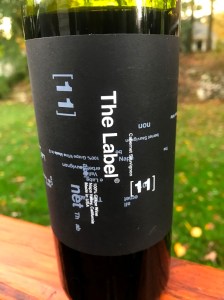 Now, let’s talk about that Monday night wine. Outside of special events, I never know in advance what am I going to open. Deciding on the bottle of wine is somewhat of a frustrating experience (first world problems, I know). Numerous bottles get touched and looked at, then rejected for a myriad of reasons. Finally, one is pulled out – usually for no other reason than “oh well, maybe this will do”. This time around the bottle happened to be Turley Cabernet Sauvignon called The Label.
Turley is not known as the Cabernet Sauvignon powerhouse – it is a coveted and well sought-after Zinfandel producer for the most. A few years ago, Turley finally got into the Cabernet Sauvignon wines and produced the wine which was called “The Label” – named after the words of Larry Turley, the proprietor at Turley Winery, who always said that Cabernet Sauvignon drinkers simply “drink the label”.
I don’t know if this should be considered funny or strange, but it appears that 2011 Turley The Label already was my choice of Monday wine – almost 4 years ago, in January of 2014 (here is the post). I really loved the wine then, but it evolved much further this time around. From the get-go, this 2011 Turley The Label Cabernet Sauvignon Napa Valley (13.4% ABV) showed a beautiful medley of the succulent berries, both on the nose and the palate – blackberries, blueberries, and black currant, tastefully accompanied by mint and eucalyptus and supported by clean acidity (Drinkability: 9-). It was reminiscent of a perfect Turley Zinfandel, fresh and playful – with a character of its own. Last time I said I want to taste this wine in 10 years. After almost four we are going in the right direction – I should have one more bottle somewhere so I will have to be careful to avoid any Monday blues prompts to open this wine until its due time.
What is your perfect Monday wine? Cheers!
Spain’s Great Match – Rare Grapes, Delicious Wines, Great Values
Source: Wines from Spain USA
I discovered the real greatness of the Spanish wines about 10 years ago, thanks to the wonderful seminar at maybe the best source of the Spanish wines in New York – the PJ Wine store. I had an occasional Rioja here and there before, but tasting through the full line of best of the best in Rioja, starting from the legendary 1964 vintage, was a true eye opener, and ever since, Spanish wines hold a special place in my winelover’s heart. If I need an ultimate solace in the wine glass, yes, 9 out of 10, it will be a Rioja.
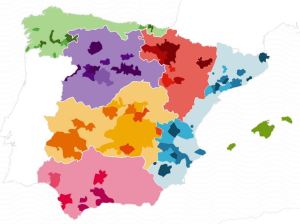
Spain has the biggest vineyard area plantings in the world, so no matter how great Rioja is, Spain is so much more than just the Rioja. As I became a big fan of the Spanish wines (search this blog under the “Spanish wine” category), it became truly fascinating to follow all the changes and see the appearance of the totally new regions and reincarnation of the ancient, authentic grapes – Spain is home to about 400 grape varieties, out of which only about 20 can be considered “mainstream”.
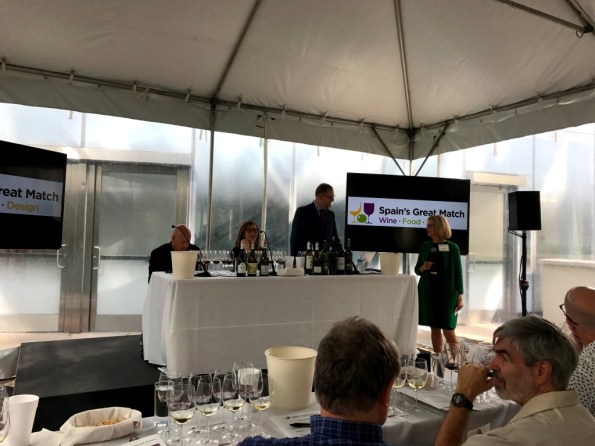
What is the better way to learn about new wines if not the [big] wine tasting? Thanks to the Wines from Spain USA, the 24th annual “Spain’s Great Match – Wine, Food, Design” event offered exactly that – a big wine tasting (more than 300 wines), educational wine seminars and authentic Spanish food.
I had a pleasure of attending these events for the last few years, including the special 30th Anniversary of Spanish wines in the USA, where the incredible tasting in the main seminar included once-in-a-lifetime wines such as 2005 Clos Erasmus from Priorat, a Robert Parker 100-points rated wine. Every year’s event offered unique and different educational opportunities as well as the tasting of the latest and greatest wine releases from all major Spanish regions.
The first seminar offered during this year’s event was focused on the Spain’s rare grapes. Ask a winelover to come up with the list of the commonly used Spanish grapes – I’m sure that going beyond Tempranillo, Garnacha (Grenache) and Albariño will be challenging. Some of the adventurous wine geeks might add Graciano, Viura, and Verdejo. Meanwhile, remember – 400 varieties – versus 6 which we just mentioned. Spanish winemakers definitely got some options.
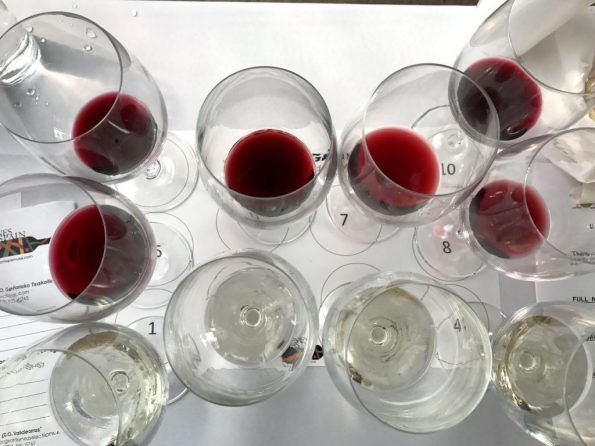
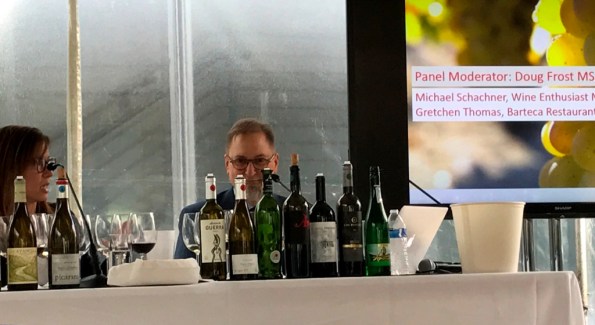
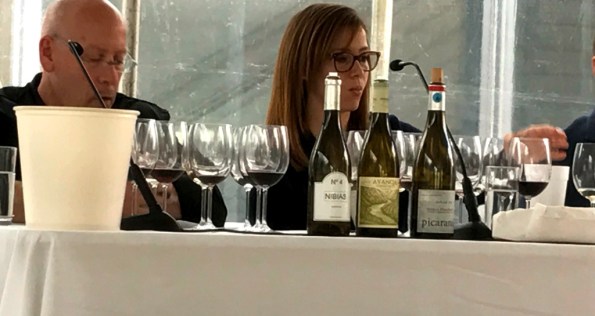
So the first seminar, led by Doug Frost, one of the only 4 people in the world who are both Master Sommelier and Master of Wine, Gretchen Thomson, Wine Director for Barteca Restaurant Group, overseeing the largest in the country portfolio of Spanish wines, and Michael Schachner, Spanish and South American Editor for Wine Enthusiast Magazine, addressed exactly this issue. We had an opportunity to taste and discuss 10 wines made from the little known Spanish grapes.
 As some of you might know, I’m a grape geek myself. The little box in the upper section of the Talk-a-Vino web page shows a counter for the number of grapes I had an opportunity to taste, so from the 10 grapes we tasted, I found only one I didn’t have before. The wines were interesting, however, I would not necessarily agree with the choice of wines to showcase particular grapes – but I wouldn’t stand a chance against such a distinguished panel of experts, so you can dismiss this statement. 🙂
Anyway, for what it worth, below are my tasting notes. Don’t have any good pictures for you, as I had no opportunity to take pictures of these wines in between the different events. Here we go:
2016 Ameztoi Txakolina D.O. Getariako Txakolina (Grape – Hondarrabi Zuri)
Beautiful nose, fresh, lemon notes, herbs, inviting. Crisp, cut through acidity, touch of fizz, would perfectly match oysters, seafood, most reminiscent of Mucadet.
2014 Bodega Chacón Buelta D.O. Cangas (grape: Albarín Blanco, new grape for me)
Off-putting nose – strong gasoline, aggressive herbal notes. The palate is interesting – lychees, pear, appears almost oxidative/”orange”.
2016 Avancia Cuvée de O D.O. Valdeorras (grape: Godello)
Intense nose, white stone fruit, nicely restrained, peaches undertones with clean acidity on the palate with clean acidity – excellent
2014 Bodegas Maranones Picarana D.O. Viños de Madrid (grape: Albillo Blanco, high altitude vineyards, 2000–2500 feet, barrel fermented)
Open, intense, touch of gunflint, reminiscent of Chardonnay, apples, vanilla – excellent. Plump, Marsanne-like on the palate, touch of tannins, very nice overall
2016 Armas de Guerra Tinta D.O. Bierso (grape: Mencía)
Intense, freshly crushed berries on the nose. Outstanding on the palate, tannins, burst of pepper, crisp, dry, very little fruit, medium body. Very interesting and different expression of Mencía.
2011 Raúl Pérez Prieto Picudo V.T. Castilla y Léon (grape: Prieto Picudo)
Delicious nose, open berries, sweet oak, overall on the nose – classic California. Lots going on on the palate – touch of sweetness, blackberries, nice swing of tannins, medium+ body.
2015 Bermejo Listán Negro D.O. Lanzarote (grape: Listán Negro, 13% ABV)
Smelling a cement truck – just fresh cement, plus intense herbal notes. Chipotle, poblano peppers dominate noticeably dusty palate – unique and different. (Too unique?)
2015 Ànima Negra ÀN V.T. Mallorca (grape: Callet)
Fresh open nose, fresh blueberries, and strawberries. Funky undertones on the palate, aggressive tannins (French oak), limited fruit. Interesting food wine
2014 Mustiguillo Finca Terrerazo Pago El Terrerazo (grape: Bobal)
Closed nose. A tiny hint of fruit, more perceived than real. Tight palate, noticeable oak, touch of cherries, good balance of fruit and acidity. Needs time. Want to try again in 10–15 years.
2013 Torres Cos Perpetual D.O.Ca. Priorat (grape: Cariñena)
Nice nose, cherries, dark chocolate, fresh leaves undertones. Aggressive tannins, green notes (tree branches), initial sweet notes immediately followed by astringent profile.
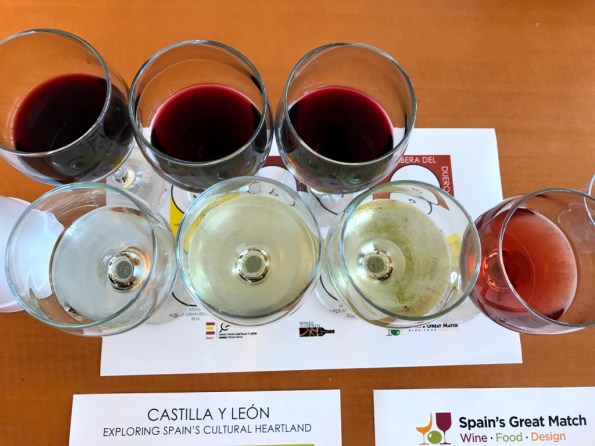
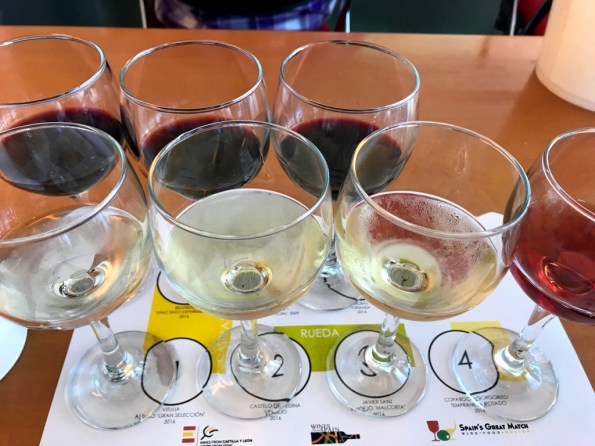
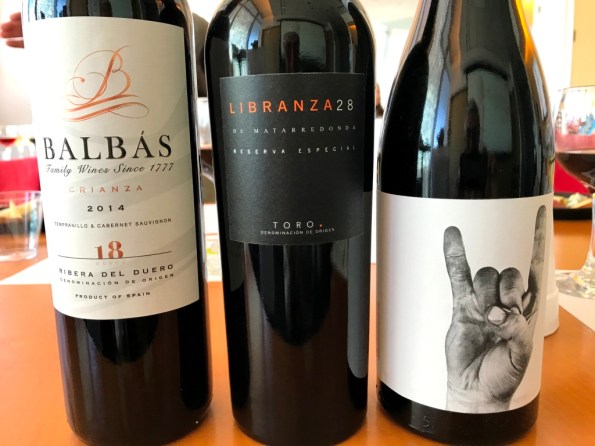
Our next seminar was dedicated to the wines and culture of the Castilla y León, an administrative region in the Northern part of Spain. Castilla y León includes a number of winemaking regions – some of the best, essentially – Ribera del Duero, Toro, Rueda among others. The seminar was led by charismatic Marnie Old – I have to honestly say that this was one of the very best wine seminars I ever attended – great delivery, lots of energy, excellent presentation.
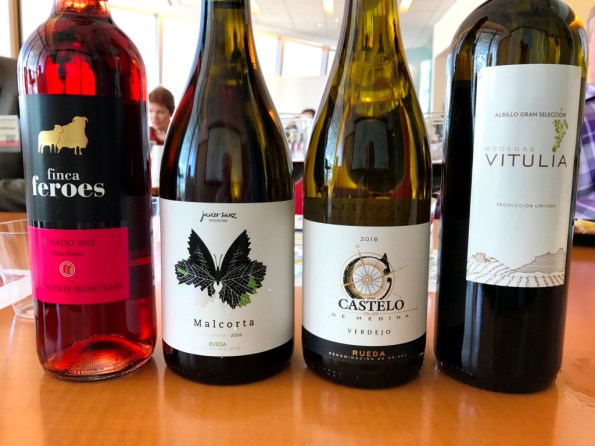
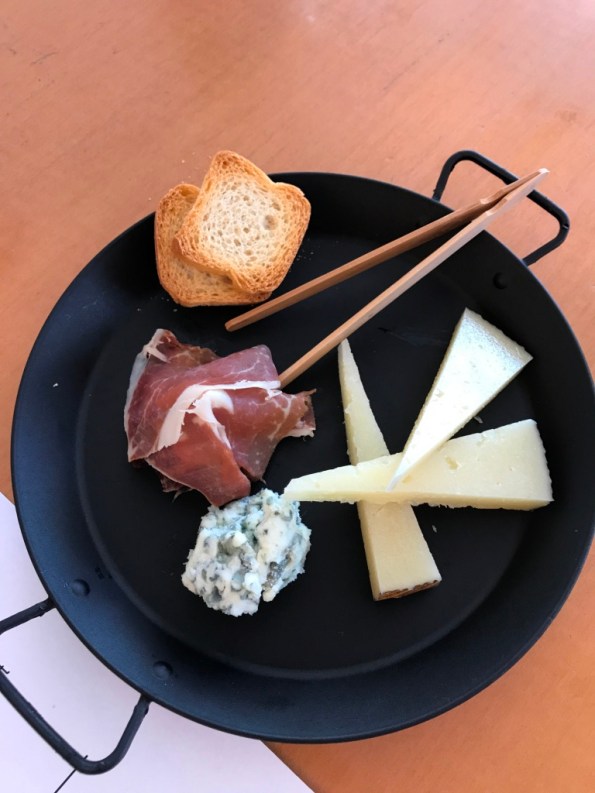
We had an opportunity to taste 7 different wines and also try some of the Castilla y León authentic foods – a few kinds of cheese (Valdeon, a blue cheese, was my favorite), Jamon (Jamón Guijuelo, to be precise) and more. I really didn’t care for the Rosé, so below you will find the notes for the wines we tasted:
2016 Bodegas Vitulia Albillo Gran Selección Vino de la Tierra de Castilla y León ($18, 12.5% ABV, 100% Albillo Mayor)
Simple, crisp, acidic, refreshing. Plus another new grape.
2016 Bodega Castelo de Medina Verdejo Rueda D.O. ($19.95, 13.5% ABV, 100% Verdejo)
White stone fruit, intense, fresh, floral fruit on the nose. Palate is dominated by the herbs, similar to Sancerre, lemon, medium body, very nice
2016 Bodega Javier Sanz V Malcorta Rueda D.O. (13% ABV, $26, 100% Verdejo Malcorta)
Javier Sanz’s effort is dedicated to restoring pre-phylloxera vineyards – this is where the fruit for this wine came from. The nose is a pure wow – intense, camphor oil, sandalwood, rosemary. Palate is delicious, perfectly balanced, candied lemon, nutmeg, medium+ body, clean acidity, an excellent wine. Yes, and another new grape.
2016 Vino Bigardo Tinto Experimental (100% Tinta de Toro) – an interesting wine. Made by a rebel winemaker, who doesn’t want to make the wine according to the appellation laws, so the wine is unclassified. 20–100 years old wine, 45 passes during the harvest, micro-fermentation. Nose has lots of young, bright fruit, freshly crushed berries, reminiscent of Monastrell, unusual. Young fruit on the palate, but with undertones of stewed fruit, hint of the roasted meat. This is experimental wine all right, but this is not a successful wine in my book.
2009 Bodegas Matarredonda Libranza 28 Reserva Especial DO Toro ($45, 100% Tinta de Toro, ungrafted vines, on average 70 years old)
Spicy nose with a whiff of cinnamon, sweet oak, classic Cabernet nose overall. On the palate very tight, the real Toro, powerful, dark fruit, nice – but needs time. Pairs surprisingly outstanding with the local Valdeon Blue Cheese.
2014 Bodegas Balbás Crianza Ribera Del Duero D.O. ($27.99, 90% Tempranillo, 10% Cabernet Sauvignon, 18 months in French oak barrels)
This wine comes from one of the founding estates in the region, established in 1777.
Dusty nose, muted fruit, distant hint of dried cherries. On the palate – cherries, cherry pit, roasted meat, coffee, great concentration, fresh, clean – very good wine overall.
I was registered for two more seminars, but then there were lots of wines to taste, so I decided to proceed with the tasting. Below are mentions of the wines I liked. I have separated the wines into my top choices (both white and red), and then separately sparkling (Cava), white and red wines I feel comfortably happy to recommend. For what it worth, here we go:


Top wines:
2016 Bodega Javier Sanz V Malcorta Rueda DO ($26) – see my notes above, definitely was the star
2014 CVNE Monopole Blanco Seco Rioja ($22) – Monopole is one of my favorite white Rioja in general, but this wine is taken to the next level by spending some time in oak – lots of increased complexity. Delicious.
2013 Bodegas Prineos Garnacha DO Somontano ($12.99) – round and delicious. Great value
2011 Bodegas Beronia III a.C. Beronia DOCa Rioja ($79.99) – 70 years old vines. Unique and beautiful, produced only in exceptional vintages. standout.
2015 Bodegas Garcia Carrión Mayoral Reservado DOP Jumilla ($12.99, Syrah/Cabernet Sauvignon/Petit Verdot) – a standout. Perfectly balanced, great flavor profile and QPR which can’t be beat.
2014 El Coto Crianza DOCa Rioja ($13) – an incredible value, perfectly soft and round
2008 El Coto de Imaz Gran Reserva DOCa Rioja ($44) – perfectly drinkable, but can still age. Delicious and a great value.
2010 Gratavinum GV5 DOCa Priorat ($80) – excellent wine
Also very good:


Cava:
NV Anna de Codorniu Blanc de Blancs Brut Reserva DO Cava ($14.99) – never disappoints. Great value.
NV Anna de Codorniu Brut Rosé DO Cava ($14.99) – one of my perennial favorites.
2010 Parés Baltà Cava Blanca Cusiné DO Cava ($40) – very good quality, comparable to vintage Champagne.
NV Segura Viudos Reserva Heredad DO Cava ($25) – another one of my favorites. Delicious.
2010 Torelló 225 Brut Nature Gran Reserva DO Cava ($35) – very good


White:
2016 Bodegas Sommos Las Bas Gewürztraminer DO Somontano ($25.99) – Gewurtztraminer is a tough grape for making a round, balanced wine – and this one was exactly that.
2015 Baigorri Barrel Fermented White DOCa Rioja ($30) – very nice
2016 Bodegas Beronia Viura DOCa Rioja ($14.99) – clean, refreshing
2016 El Coto Blanco DOCa Rioja ($11) – outstanding and an excellent value
2013 Bodegas Enate “Chardonnay 234” Enate DO Somontano ($12.99) – classic, very good.


Rioja:
2013 Bodegas Muga Reserva DOCa Rioja ($28) – one of the iconic producers, very good wine.
2011 Marqués de Riscal Reserva DOCa Rioja ($18) – excellent value
2005 Marqués de Riscal Gran Reserva DOCa Rioja ($48) – very good
2010 Marqués de Riscal Baron de Chirel Reserva DOCa Rioja ($79) – very good
2011 Bodegas Faustino V Rioja Reserva DOCa Rioja ($15) – very good value
2005 Bodegas Faustino I Rioja Gran Reserva DOCa Rioja ($35) – another very good QPR example
2012 Bodegas Beronia Reserva DOCa Rioja ($19.99) – excellent
2008 Bodegas Beronia Gran Reserva DOCa Rioja ($31.99) – excellent, and great value
2012 El Coto de Imaz Reserva DOCa Rioja ($24)
2008 Viñedos y Bodegas Sierra Cantabria Finca El Bosque DOCa Rioha ($95) – probably the most expensive wine in the tasting, and it is not ready to drink. Needs time, lots of time.
2007 Señorio de San Vicente San Vicente DOCa Rioja ($52, new grape – Tempranillo peluda)


Other red:
2016 Bodegas Sommos Merlot DO Somontano ($25.99)
2012 Bodegas Viñas Del Vero Secastilla DO Somontano ($44.95)
2009 Bodegas Paniza Artigazo Edición Limitada DOP Cariñena ($24..99)
2010 Bodegas Corral Don Jacobo Rioja Reserva DOCa Rioja ($22) – delicious and a great value
2014 Bodegas Volver DO LaMancha ($16) – one of my perennial favorites, big and powerful
2012 Finca Villacreces Ribera del Duero DO ($35) – this wine never disappoints – perfect example of what Ribera del Duero is capable of
2013 Bodegas Hacienda Monasterio, Ribera del Duero DO ($40) – delicious
2015 Bodegas Garcia Carrión Mayoral Chester DOP Jumilla ($12.99, Monastrell/Petite Verdot)
2014 Bodegas Garcia Carrión Pata Negra Apasionado ($12.99, Monastrell/Petit Verdot/Cabernet Sauvignon/Syrah)
2014 Torres Salmos DOCa Priorat ($35) – very good
2015 Teso La Monja Almirez DO Toro ($52) – still needs time
2007 Teso La Monja DO Toro ($25) – nice, but definitely needs time
And then, of course, there was food. Cheese and olives were a staple, and many other dishes were carried out all the time. I also discovered my new favorite sparkling mineral water – Vichy Catalan. It is sold at some of the stores, such as Fairway Market, so if you like sparkling water, you might want to give it a try.


That’s all I have for you, my friends. Spain’s Great Match is an annual event, so even if you missed this year, you should definitely plan to attend the next – you can see a full schedule here. Also, if you live in or will visit Chicago, you can still attend it on November 2nd. Either way – drink more Spanish wines, my friends! Cheers!
For The Love of Chowder – 2017, 10th Anniversary Edition
Last Sunday, October 1st, we had fun. Too-much-of-a-good-food, coma-inducing fun. The 10th Annual Chowdafest was on – the biggest and the busiest of them all (well, maybe not “all”, as I attended only last 3 – but for sure the busiest of the 3).
When I saw traffic slowing down on I-95 about two miles away from our exit, I jokingly said to my wife “see, they are all coming to the Chowdafest”. As we kept driving slower and slower, eventually pretty much succumbing to a complete halt, the smile disappeared from my face. The joke was on me, as yes, this was the traffic getting into the exit of the Sherwood Island Park, and it was moving really, really slow.
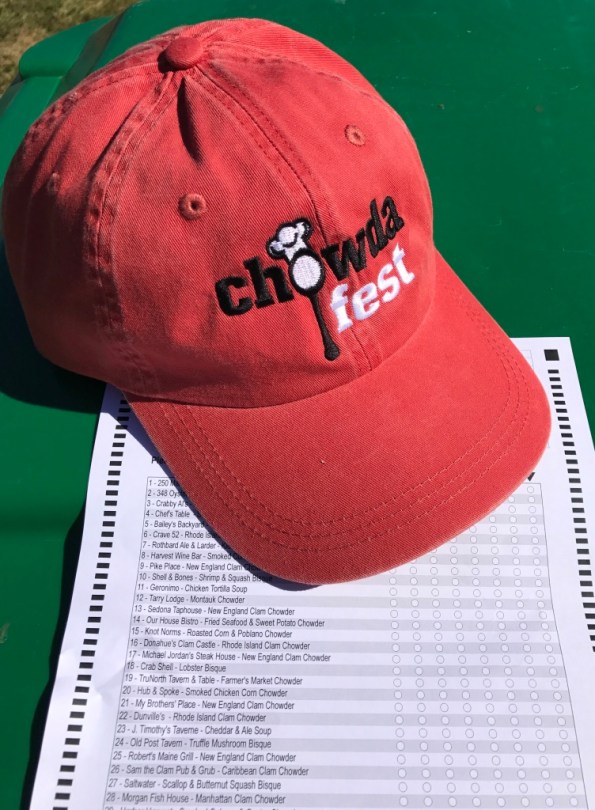 All the fears of looking for parking for a long time quickly disappeared once we managed to actually enter the park, and then to find the parking within a minute. A quick walk, getting your hand stamped and – hello, chowder!
What can I tell you about Chowdafest 2017, outside of the fact that it was a great fun? The format was somewhat the same as the last 2 years I attended – there were again 40 restaurants, competing for the “best” title. In addition to 4 of the staples – Classic New England, Traditional (Rhode Island and Manhattan), Creative and Soup/Bisque, the new category for added for the Vegetarian Chowder. Everybody had a ballot and a pencil and were rating chowders on the scale from 7 to 10.5. The ballots were processed right at the event (I saw that magic for the first time – there are few pictures for you down below), and the winners were announced two days after the event – you can see the names of the winning restaurants here.
Unlike last year, the weather was amazing. And I guess the weather, coupled with a great promotion and the 10th Anniversary nature of the event, really drove a lot of people over. Some of the lines required 10+ minutes waiting, but I really can’t complain, as everything was flowing very efficiently. Here it is, the weather and the people:


What a day!


You can’t ask for a better weather

Beautiful day, isn’t it?
Overall, everything offered was very solid – of course, some were better than the others, but the level was quite high – I only had 4 soups rated at 7, and 3 out of those 4 had a burned flavor. Many soups were really, really delicious. in addition to all the chowders, there were lots of other food offered for tasting – potato chips, cheeses, sodas, iced teas, juices, ice cream – there was definitely something for everyone. Here are my notes – in pictures, of course:


These are some of my favorite decorations:


Pouring chowder requires focus!
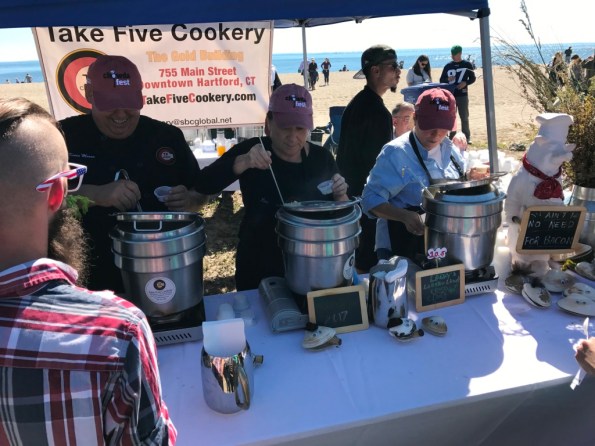
… and smile
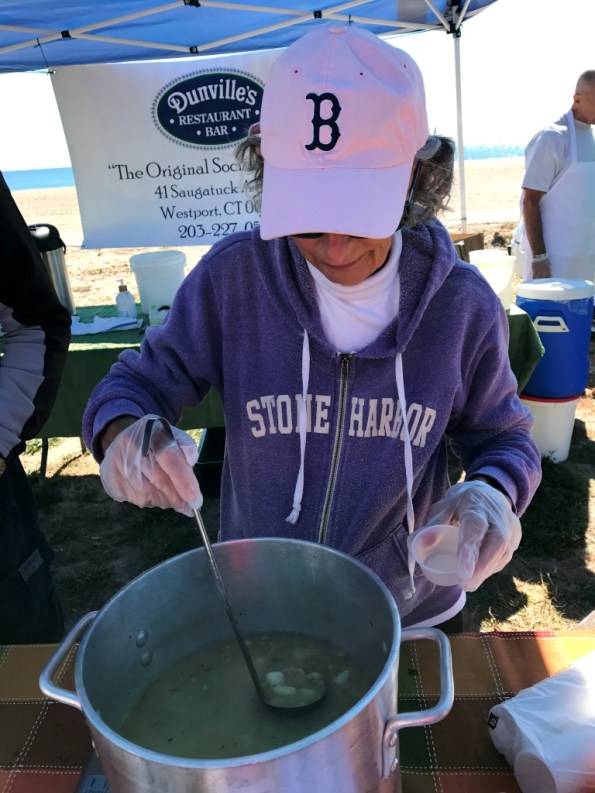 Now, some of my absolute favorites:
Our House Bistro from Winooski, VT – all those condiments, super-tasty:


Truffle mushroom bisque from Old Post Tavern in Fairfield, CT and traditional chowder from Two-fifty Market in Portsmouth, NH:


Here are the winners in the traditional category – Pike’s Place from Seattle, WA:


Last but not least, may be the biggest surprise of the day – vegetarian Smoked Corn & Squash Chowder from Harvest Wine Bar in Westport, CT:


Here you can see all the results getting tallied in the real time by the folks from Blum Shapiro:


Here you can see my vote (yep, with a few stains on it):
 Comparing my thoughts with public opinion, I’m very happy to see Our House Bistro winning Creative Chowder category with Fried Seafood & Sweet Potato Chowder, and with Old Post Tavern taking top spot in the Vegetarian category with Truffle Mushroom Bisque and Harvest Wine Bar taking second place in the same category with Smoked Corn & Squash Chowder.
I can also get on board with B.R.Y.A.C taking the second spot in Classic New England Chowder category, but Pike’s Place winning that category for the 3rd year in the row simply baffles me – their chowder was overdone – super round and super creamy, it lacked the real burst of flavor of the classic New England clam chowder which both B.R.Y.A.C and Two-Fifty Market had perfectly visible. My only theory is that people get intimidated with all the medals at the Pike’s Place stand, and simply don’t want to be wrong when they think that so many people were right before.
Anyway, this one is done and we can already start thinking (and drooling) about Chowdafest 2018 – I know it is early, but still, mark your calendars for Sunday, September 30th, and see you there!
Last Bottle Sign Up ($10 credit)




 Talk-A-Vino