Archive
Open That Bottle Night 2017 – What A Night!
Let’s say you have a bottle of an excellent wine. Do you know how to make it better than it is? I guarantee you this works every time, so listen carefully. You share it with a friend. Yes, that makes any excellent wine into an amazing one. Works like a charm.
Saturday, February 25th was Open That Bottle Night (OTBN for short) – the night when there is no bottle in your cellar which is off limits. If you are not familiar with OTBN, you can read more here. What made my OTBN twice as special was the visit by Oliver and his wife Nina.
For me, the decisions around wine are never easy. I typically buy wine in the single bottle quantities (okay, maybe four at the most, when I need to get a free shipping from WTSO) – thus any bottle can qualify as a special one. As an exception to my long and almost painful decision process, for this OTBN I had a very clear idea – 1982 Olga Raffault Chinon, of which I had a single bottle. The bottle out of the wine fridge and ready for the prime time.
This is what I was looking at after cutting the top foil:
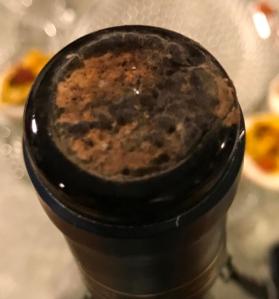 As you can tell, this is not very encouraging. However, if you like older wines and get an opportunity to open them, you know that the state of the top of the cork is nothing to fret about. More often than not, behind most terrible looking mildew there is a delicious wine.
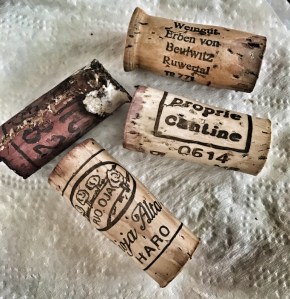
As this was 35 years old wine, I didn’t want to take any chances and used the two-prong opener to pull the cork out. This turned out to be an unnecessary precaution – while cork looked red throughout, it was perfectly firm and came out as a single piece without any crumbling – here is our OTBN corks collection, the red one is the one I’m talking about:
 And for the wine… what can I tell you… This 1982 Olga Raffault “Les Picasses” Chinon, Loire looked perfectly fresh in the glass – not a sign of losing color. Here are the two glasses, one is with 1982 Cabernet Franc, the second one is with 2014 – care to guess which glass contains 1982?
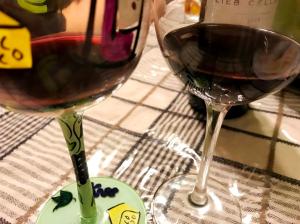 Yes, the one on the left is with 1982 wine, but I believe you would agree that the color shows perfectly young. The nose and the palate were an incredible study in Cabernet Franc flavor profile 101. The wine opened full of bell pepper – both on the nose and the palate. In about 10 minutes, the bell pepper was gone – and what was left was pure, unadulterated black currant – stunning, full flavorful black currant, also known as cassis if we want to use traditional French terminology. The wine had perfect structure, firm, with fresh acidity, almost crisp – and loads and loads of black currant. This was truly a treat.


We followed with a beautiful rendition of Ruchè – 2012 Poggio Ridente Ruchè di Castagnole Monferrato DOCG San Marziano (organic grapes). Ruchè is a little known red grape, cultivated in the Monferrato region in Piedmont, capable of making very concentrated wines. This particular bottle, brought by Oliver and Nina directly from Italy, was fresh and open, with nicely restrained palate with mostly herbal flavors, and a twist – dried mango undertones. Nina was the one to identify the dried mango, while I was desperately trying to figure out what that strange flavor was – but that was a spot-on descriptor. An outstanding wine by all means.
Our next wine was 1989 Kaseler Nies’chen Riesling Auslese Mosel-Saar-Ruwer. No issues with the cork (makes me happy). Still fresh, clean light golden color (28-years old wine!). The nose and the palate were singing in unison here, and the music was simple – peaches and apricots. Slightly underripe peaches and fresh, plump apricots. The balance of sweetness and acidity was impeccable – the wine was fresh and alive, without any sign of age. Wow.
As an added bonus, the grapes for this wine were harvested in November of 1989 – the year and a month when Berlin Wall was demolished – and this is what the label of this wine commemorates.


Our OTBN night didn’t finish there. You would expect us to go to something nice and sweets after such a beautiful Riesling, right? In the conversation, it came out that Oliver doesn’t like Tempranillo wines. Being a Spanish wine buff, I had to fix that immediately, so I had to pull out the big guns. 2001 La Rioja Alta Viña Ardanza Rioja Reserva Especial was absolutely beautiful from the get-go – cedar box and eucalyptus on the nose, soft and gentle cherries on the palate, fresh, round. I hope I made Oliver a convert – but will see about that the next time we will meet.
There you are, my friends. A stunning OTBN with great wines and great company. Hope you enjoyed your OTBN as much as we did – feel free to share your OTBN stories below. Cheers!
Just in: Another Wine Auction From Invaluable
This is a guest post, or may be rather a last minute guest announcement from Invaluable, the company wich runs wine auctions. This is truly a last minute, as the auction starts tomorrow. But – if you got some spare change, you can use it to get that bottle of Pétrus…
Invaluable teaming up with Waddington’s, a fine wine auction house in Canada, over the next week to auction off almost 700 exceptional lots from an international collection. Waddington’s experience in auctioning dates back to 1841. There are three different auctions in the upcoming week: Fine & Rare Wine, Fine Spirits, and Fine wine.
These three auctions by Waddington’s take place on February 25 and the 28th. We’ll be auctioning off nearly 700 wine and rare wines and spirits. Saturday’s auction begins at Toronto’s Nota Bene Restaurant where Chef David Lee will prepare an exquisite three-course lunch before we launch into the auction. This auction is followed by two auctions on the 28th; the first offers fine spirits and the second offers fine wines.


Here are a few noteworthy lots from the upcoming events:
Lot 87: CHÂTEAU PÉTRUS 2009
Estimated Price: $19,900 – $23,100
Quantity: 6, Size: 750ml
Notes: This 100% Merlot has a dense plum/purple color and a sweet nose of mulberries, black cherries, some subtle toast and licorice as well as a floral element. A wine of great intensity, a multidimensional mouthfeel and full-bodied, stunning concentration, the 2009 Petrus is everything one would expect of it.
Lot 1: Armagnac Chateau de Laubade
Estimated Price: $1,100 – $1,300
Quantity: 1, Size: 750ml
Notes: Bottled in 1948, in original wooden box
Lot 76: Screaming Eagle Cabernet Sauvignon
Estimated Price: $7,300 – $8,500
Quantity: 1
Notes: The blend of 88% Cabernet Sauvignon, 10% Merlot, and 2% Cabernet Franc was bottled in 1999. It boasts an opaque purple color along with a gorgeously pure nose of creme de cassis, charcoal, and floral characteristics. The wine is opulent, dense, and rich, with exceptional purity, a viscous texture, and impressive underlying tannin that frames its large but elegant personality.
We have a variety of wine and spirits along with collectibles up for auction daily, so stay up to date with Invaluable; you never know what you’ll find.
Stories of Passion and Pinot: Looking Back and Looking Forward
Back during the fall of the last year, I ran a series of posts talking about passion and Pinot Noir. Pinot Noir is a finicky grape which, I can only guess, has some enchanting properties – for the winemakers and wine lovers alike. Pinot Noir has an ability to grab you and never let you go – once discovered, it becomes an object of obsessive desire: winemakers go out of their way to make the best Pinot Noir wine, and oenophiles go out of their way to find it.
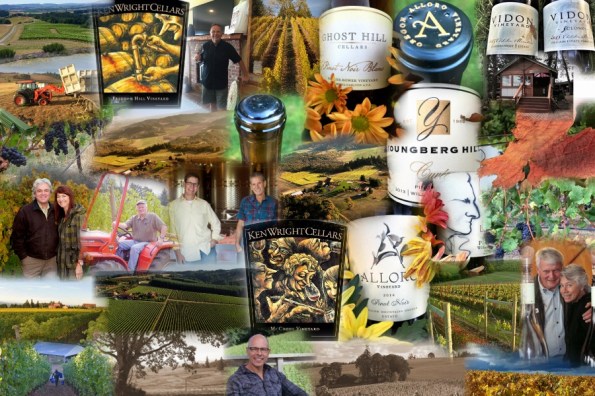
To give you the best examples of Pinot Noir’s passion and obsession, I decided to [virtually] sat down with a pioneer, a rocket scientist, a soil fanatic, biodynamic believer and some true farmers – all of them from Oregon. Through our conversations, I wanted to convey the unwavering belief in the magic of that little black grape, Pinot Noir.
We talked with Ken Wright of Ken Wright Cellars, David Nemarnik of Alloro Vineyard, Mike Bayliss of Ghost Hill Cellars, Wayne Bailey of Youngberg Hill Vineyards, Steve Lutz of Lenné Estate and Don Hagge of Vidon Vineyard – the passion was easy to see, through their words and through their wines.
The essential Pinot Noir map includes four major players – Burgundy, California, New Zealand and Oregon. Out of these four, Oregon usually beats Burgundy in consistency, and often California and New Zealand in finesse. That consistency and finesse don’t go unnoticed – and not only by wine consumers but by the big domestic and international wine businesses and investors as well. Big businesses are great, but – they are, first and foremost, big businesses – and passion is often replaced just by pragmatic business needs and shareholders value.
The wine quality and creativity is on the upswing around the world, and while consumers are driving this trend with an ever increasing thirst for the wine, nothing can be taken for granted – the wines have to find the consumers, and convince them that they are worth paying for.
The big business interest and more and better wines – what does it mean for the Oregon wine industry, the passion and the Pinot Noir? To answer this question, I asked once again for the help of Carl Giavanti of Carl Giavanti Consulting, wine marketing and PR firm, who reached out to the Willamette Valley Wineries Association. As you can imagine, I had more than one question, so here I would like to share with you what I have learned.
First three questions were answered by Anthony King, 2017 President of WVWA Board of Directors and General Manager of the Carlton Winemaker’s Studio:
[TaV]: Willamette Valley squarely joined the ranks of world-class wine regions. Does it mean that everything is great, or you still have big issues to solve on your agenda?
[AK]: Willamette Valley is certainly on the rise and we are all thankful for the attention. Our biggest issue is to continue to share the spotlight with the other classic regions of the world without losing our roots, our authenticity, and collaborative spirit.
[TaV]: It seems that lately big corporations are paying lots of attention for the WV wineries – or rather money, as for example, Jackson Family which acquired 3 WV wineries over a short period of time. Are you concerned with this development? Do you think it might change the soul and spirit of WV wines?
[AK]: Most of us are flattered by the attention that our wines, vineyards, and wineries have been getting from producers all over the world. JFW, in specific, has invested heavily, but have done so with a soft touch and an eye towards the community and their neighbours. In the end, the region will have diversity that consumers will ultimately benefit by. Our hope, however, is that this interest doesn’t drive vineyard and fruit prices into a range that makes the hands-on artisan winemaking that has made Oregon so special too expensive for entry.
[TaV]: There are many white grapes which can be called “next frontier” for the WV wineries – Pinot Gris (yes, okay, this is an old news), Chardonnay, even Riesling. However, if we look at the red grapes, WV wineries are a “one trick pony”, only working with Pinot Noir. Do you see any problems with that? is there a next big red grape for the WV, or is it not necessary?
[AK]: Great question. I don’t think that any of us, as winemakers, regret that we are working with Pinot noir in such an ideal locale. It presents a lifetime of challenges and, hopefully, rewards. Although much more rare, Gamay can be thrilling and has been successful planted alongside Pinot noir. Syrah, too, has a lot of potential, making compelling, Northern Rhone style reds in warmer years. Cooler-climate Italian reds could have potential as well. We’ve already seen an increase in planting of these “other reds,” but the more dramatic shift is (as you mentioned) towards focusing on whites and sparkling wine, which are very well suited to this climate. Ultimately, I foresee increased experimentation with a range of red varieties in the warmer sites in the Willamette Valley in the short-term; time and the weather will tell what succeeds.
The rest of the questions were answered by Emily Nelson, Associate Director for Willamette Valley Wineries Association.
[TaV]: What percentage of WV wineries are LIVE certified? Do you see this number dropping, increasing, staying the same?
[EN]: In 2016, there are 13,170 Oregon vineyard acres certified sustainable, which is 48% of total planted acres in the state. 8,218 acres are LIVE Certified, which is 30% of total planted acres. We do see the number of certified sustainable vineyard acres increasing year after year. As the home of the nation’s most protective land use policies, the first bottle recycling law, and the highest minimum wages for farm workers, it’s fitting that the Oregon wine industry is committed to sustainable farming and winemaking practices.
For LIVE Certified acres in particular, the number has increased annually from 2,368 acres in 2007 to 8,218 acres today.
[TaV]: How important is Biodynamic viticulture for the WV wine industry? Do you see more wineries embracing it?
[EN]: Biodynamic viticulture in Oregon has also steadily increased over the years, from 289 certified acres in 2007 to 1,585 certified acres today. It is an important component of our sustainable character in the region, reinforcing our belief that agriculture in general and viticulture in particular can flourish in harmony with our natural environment. In general, Demeter Biodynamic certification is in accord with many practices that characterize the certification of organic farms. However, certain practices are unique to Biodynamic agriculture, including managing the whole farm as a living organism; maintenance of a healthy, diverse ecosystem that includes not only the earth, but as well the cosmic influences and rhythms of which the earth is a part; and use of the Biodynamic preparations to build soil health through enlivened compost.
[TaV]: Are there any new wineries showing up in the WV? If yes, is there a trend there (more than the last 5/10 years, less than the last 5/10 years, the same?
[EN]: Yes! Our number of wineries in the region has climbed over the last five to ten years. We had about 110 wineries in the Willamette Valley in the year 2000. By 2010 that had more than doubled to 300 wineries. And now in 2016 our most recent census shows 531 wineries in the region. People are drawn to grape growing and winemaking here for many of the same reasons that brought our pioneers in the 1960s—unique climate and soils ideally suited to Pinot noir and a wine industry culture that celebrates collaboration, inventiveness, and land stewardship.
[TaV]: Do you see a lot of foreign capital coming into the WV winemaking industry (buying, partnering, starting new wineries)? Again, is there a trend?
[EN]: There is a trend of outside investment in the Willamette Valley wine industry, and it speaks to the quality of the wines being produced here. We see Burgundian investors who’ve found the New World home of Pinot noir, as well as those from Washington and California who are expanding their premium Pinot noir brands with Willamette Valley wines.
[TaV]: Last question – are there any new and coming, or may be old but coming around wineries wine lovers should watch for? Anything which makes you particularly excited?
[EN]: We’re particularly excited about a few things here: first, many of our pioneering wineries are handing the reigns down to second generation winegrowers and owners. The children who grew up in the vineyards and cellars of the wineries who put our region on the map are now at the helm. They continue to innovate and improve, so watching their brands and their wines flourish and evolve is a thrill. Second, we’re excited about the Burgundian presence in the Valley. French winemakers who come here to experience the Oregonian version of their time-honored grape offer unique expressions of the wines and outside confirmation that there’s something really special happening here. Lastly, we’re excited about new winemakers just entering the industry, who contribute a vibrant sense of experimentation and energy to the Valley.
All the good things come to an end, so this was the last of the conversations in the Passion and Pinot series – for now, at least. As I said before, Pinot Noir has some very special properties, making people fall in love with it and not letting them go. And whether you agree or disagree – you know what to do. Until the next time – cheers!
P.S. Once again, here are the links to the web sites for the wineries profiled in this series:
Alloro Vineyard: www.allorovineyard.com
Ghost Hill Cellars: www.ghosthillcellars.com
Ken Wright Cellars: www.kenwrightcellars.com
Lenné Estate: www.lenneestate.com
Youngberg Hill Vineyards: www.youngberghill.com
Vidon Vineyard: www.vidonvineyard.com
Coffee and Wine – Ultimate Twins?
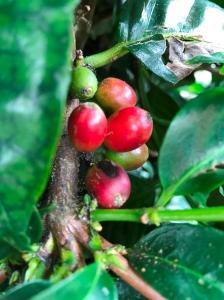 I know that many of the wine lovers live by the principal “coffee in the morning, wine in the evening”. The sad part is that for many, coffee is just a source of the jolt, the charge for the day, so it is expected to be strong and bitter, to deliver that “wake up punch”. But it is not what the coffee should be – while coffee bean has no genetic relationship with the grape, spiritually, it offers the same qualities: it can be as nuanced as wine, and should be consumed for pleasure – I’m also assuming here that this is why one drinks wine, looking for pleasure.
Before I will make an effort to prove to you my “twin” statement, I want to mention first that this post is also an answer to the last Weekly [Wine] Quiz #122. The object in the picture is coffee – these are so-called coffee cherries, and the coffee beans are inside of those cherries. Red coffee cherries are the ripe ones, and once they reach that color, they will be picked – but more about it later. For now, I’m happy to say that we had a number of winners – Kirsten (The Armchair Sommelier), Bill (Duff’s Wines), Anthony (Oz’s Travels) and Danielle (Naggiar Vineyards) all correctly identified coffee cherries in that picture – congratulations to the winners, you all get the prize of unlimited bragging rights!
The reason coffee came to the forefront on the wine blog, is simple. Well, it is more than one. First of all, I love coffee. Growing up, I was spoiled – not with the best coffee beans necessarily, but rather with one of the very best preparation methods for the coffee – so called Turkish coffee, where the coffee is made without letting the liquid to boil. Second, I just came back after spending the week on Hawaii’s Big Island, a home to one of the very best coffees in the world – Kona coffee. See, I simply had to talk about the coffee.
So what is going on in the coffee world today that it starts resembling the wine world so much? You be the judge:
Terroir and Origin Protection.
There is a growing understanding that similar to wine grapes, it matters where the coffee beans are growing. Hawaiian Kona region is a 26 miles stretch of land along the coast of Pacific Ocean, with the elevations from 800 to 3000 feet above sea level. All Kona coffee can be harvested only within that stretch of the land – any addition of the coffee beans from outside of the designated borders will render the whole batch of coffee not eligible for “100% Kona Coffee” label. Jamaican Blue Mountain designation has similar protection, as I’m sure many other places around the world. 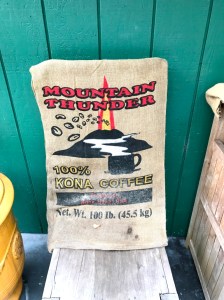
Ancient trees.
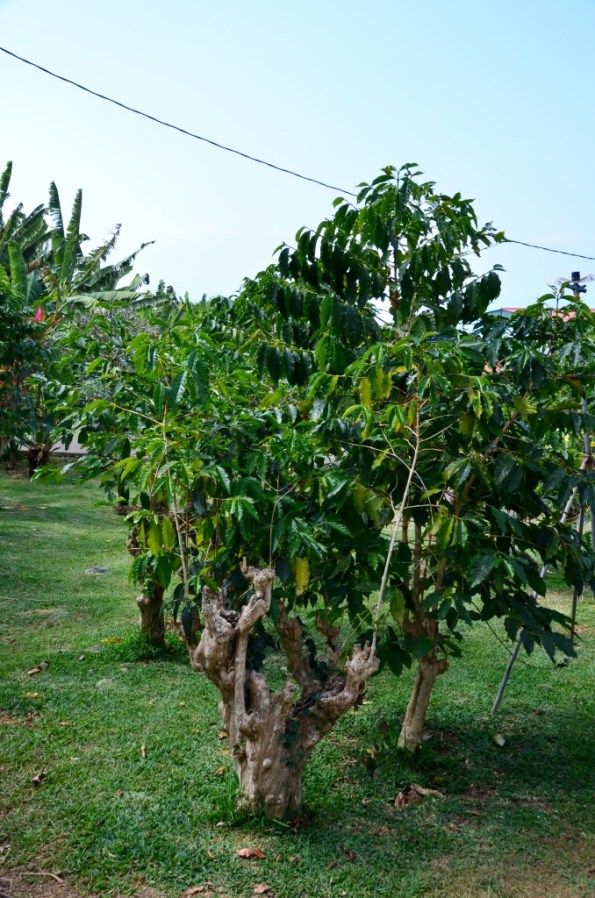
In winemaking, “old vines” refers to the vines which can reach the age of 100+ and still produce delicious grapes. With proper care, coffee trees can do the same – the ones you see below are more than 110 years old (planted in 1900), and they are expected to produce good fruit for at least another 20 years:
Vintage designations, aging and blending.
An absolute majority of the wines specify their vintage on the bottle, the year when the grapes were harvested, and we all know – vintages matter, not all vintages are created equal, by the powerful hand of Mother Nature. I never heard of vintages in conjunction with the coffee – until now. If any of you are Nespresso fans, there is a good chance you recently received an email, offering Nespresso’s 2014 vintage (!) – here you can find the description of that coffee. I will take a liberty to quote a few lines from the description:
“Nespresso experts selected promising fresh Arabica beans from the lush Colombian Highlands and stored them under certain controlled conditions to create a whole new sensory experience” – aged for 3 years.
“Nespresso experts selected a more sophisticated split roasting technique. One part of the beans was roasted lighter to protect the specific elegant aromas of these precious coffee, and the other part was roasted darker to reveal the maturity of the taste and enhance the richness of the texture” – blending!
Harvesting by hand.
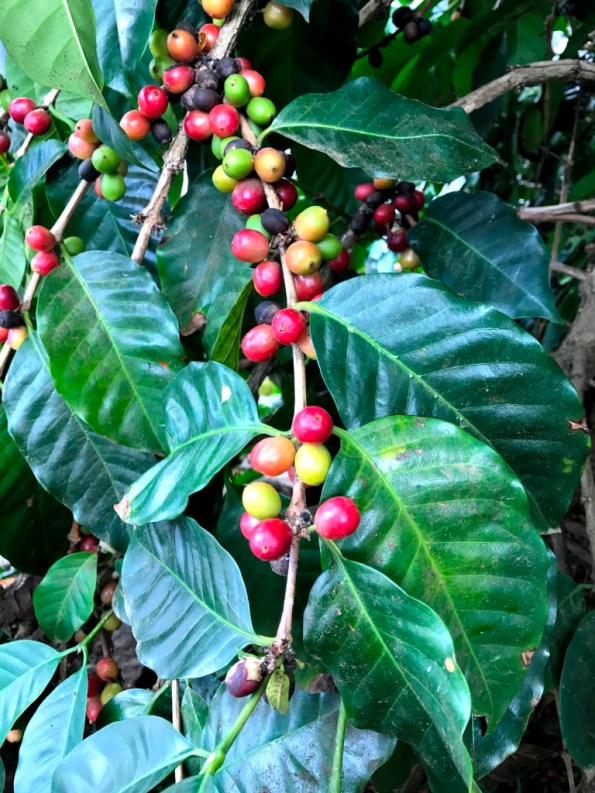
Kona coffee is always harvested by hand. The major difference here, of course, that during the coffee’s growing season, which is typically July through February, the coffee is harvested 4-5 times, were in most cases grapes are harvested only once. Nevertheless, the Kona coffee is harvested by hand, picking only red ripe coffee cherries and leaving greens to continue ripening in the cluster.
 I hope you see my point about similarities between coffee and wine, and I think coffee producers are only starting following the steps of the winemakers – for instance, I’m sure we will see more single cru designations for the coffee, more blending and more aging. While production process of coffee and wine are very different, the similarities conjugate again in a major way once the final products reach the consumers. Both coffee and wine deliver pleasure. And it is all in the taste – the nuanced, seductive goodness, which delivers excitement to the taste buds and challenges the brain.
What is uniquely different between coffee and wine is what happening with each product in the “last mile”. The “last mile” literally non-existent in the world of wine – once the wine lands in the hands of the consumer, it is necessary only to open the bottle and enjoy. Yes, the consumer still can affect the taste – try rich California Cabernet served ice-cold – you will see what I’m talking about – but still, the consumer actions are minimally impactful around the wine.
With the coffee, it is a totally different story – even if properly roasted, the coffee still has to be prepared by the consumer, and opportunities to totally destroy the taste are boundless. But – this probably deserves its own post (or two).
That’s all I wanted to share with you for now. Are you a coffee drinker? Do you drink it only for the jolt, or do you actually seek pleasure in that cup? Cheers!
Champagne! Champagne! Conversation with A.J. Ojeda-Pons of The Lambs Club
While some of us insist that Champagne is an everyday wine, majority treat it as a “special occasion” only. Of course, every day with the name ending in “day” is worthy of a special celebration, but jokes aside, most of us need a good reason to pop the cork on that tickling, gently foaming, playful and refreshing nectar.
Lucky for all “special occasion” folks, one such special occasion is almost upon us. What can accentuate “love and romance” better than a glass of bubbly? Yes, bring the Champagne as Valentine’s Day is only a week away!
 To help you celebrate and maybe even answer a question or two which I’m sure you always had, I [virtually] sat down together with A.J. Ojeda-Pons, sommelier at The Lambs Club, one of the popular New York restaurants by the Food Network’s best-dressed star and Iron Chef Geoffrey Zakarian. I need to mention that in addition to being a WSET Advanced Sommelier, A.J. knows a thing or two about style – in 2014, he was the official winner of the U.S. Best Dressed Somm contest by Penfolds and GQ Magazine. And the Champagne? Just take a look at the A.J.’s LinkedIn profile, which says “Drink Champagne Every Day”!
Here is what transpired in our conversation:
[TaV]: Champagne is perfectly appropriate for any celebration, however, it is most often associated with Valentine’s Day – well, after the New Year, of course. When celebrating Valentine’s Day, would you recommend Champagne as the one and only choice of dinner wine, or would you use it just as an opener and then continue with whites and reds?
[A.J.]: Ah! My motto is “Drink Champagne Every Day,” so I often have a whole meal drinking just Champagne. Besides, drinking champagne before a meal is the most civilized thing you could do.
I know that it may be hard for some people to drink bubbles throughout a meal, but if you tailor your menu choices with the champagne that you are drinking, you can have an amazing experience (Think Crudos, Oysters, Fish or Seafood Tartare, Veal, Rabbit or Fish and avoiding red sauces or rich, creamy preparations). Otherwise, if you can’t commit, plan to drink the Champagne for at least half of the dinner and then switch for your main courses. In regards to desserts, champagne could sometimes be a total clash (due to its crispness and acidity) but a nice sorbet or fruit-based dessert will do.
[TaV]: To continue the previous question, just in case you suggested to stay with Champagne all the way, can you make some recommendations for different Champagne or Sparkling wines to complement a three course meal, including dessert? I’m talking not so much about particular producer names, but more about the styles and types of the sparkling wines.
[A.J.]: I like to drink a champagne that has more complexity throughout a full meal, so in that case I would go straight to a vintage champagne, even though it is always more expensive. You will benefit from the extended period of aging, it will have more nuanced layers and complex flavors, and will make it easy to pair with different flavors in various dishes.
[TaV]: Now, let’s actually talk about names. Splitting into three price categories – under $20, $20 to $60 and my favorite, “the sky is the limit”, what are the special Champagne and sparkling wines would you recommend to our readers in each price category?
[A.J.]: For the under $20 category, you won’t find any champagne in the market, unless it is a half bottle, but for that price point you are better off selecting other sparkling wines that are made in the méthode Champenoise. There are not a lot out there, if you can find them, because generally they are not exported or their production is very limited.
For example, from Italy you could try to get Franciacorta from the Lombardy region, from producers like Berlucchi, Il Mosnel or Mirabella. From the Veneto, you could try Il Buglioni spumante, and don’t forget that the Dolomites produce great sparkling, like Castel Noarna and Endrizzi. In Spain you can find great Cava from producers like Gramona, Mestres and Naveran.
If you are really in love with French sparkling, Crémant de [Bourgogne] (Veuve Ambal, Clotilde Davenne), [Jura] (Domaine de la Renardière, Rolet Père & Fils) [Alsace] (Albert Mann, Pierre Sparr or [Limoux] (Tocques et Clochers, Paul Mas) is your answer.
In the $20-60 sweet spot, you’re going to have the majority of Champagne options, from producers like Benoit Lahaye, Laurent Perrier, Dhondt-Grellet, Andre Clouet, Ayala, Billecart-Salmon, Aubry, Deutz, Henriot… open the floodgates!
Sky is the limit… yes, always! Find the Tête de Cuvées from Billecart-Salmon (Le Clos Saint-Hilaire), Pol Roger (Sir Winston Churchill), Charles Heidsieck (Blanc de Millenaires), Krug (Clos de Mesnil) and of course, Moët & Chandon (Cuvée Dom Pérignon).
[TaV]: What do you think of Grower’s Champagne? It is often hard to find, and if you can find it, it usually comes with very little information – is Grower’s Champagne worth seeking?
[A.J.]: Grower Champagne is by far my favorite type of champagne. Yes, they are hard to find at some stores but you can actually purchase quite a few online, if your state allows. Think about it, they ?own the land, they farm it, quite often respecting nature to the T, they produce and sell their own champagne, they don’t sell the fruit to big houses or mass producers. I stock on these a lot.
There are many styles to look forward to and many small producers that just are thrilled to share their farmer love in the language of a great bottle of champagne.

The Club Mezz at The Lambs Club
[TaV]: Over the past few years I had a number of delicious encounters with so-called Pét Nat sparkling wines – what do you think of them? Is this a fad, or will we see more of them? Do you offer Pét Nat at your restaurant?
[A.J.]: These are fun and can be quirky, but really excellent options to explore. I don’t think they are a fad, but you will see them more often in natural wine bars. They’re versatile with food, I must say.
We carry a couple at The Lambs Club and we offer on-and-off a choice by the glass depending on the season. I like them a lot. They are approachable, easy drinking and they also have a variety of styles from different countries. My favorite from California: Birichino, New York State: Channing Daughters, and from France: Chahut et Prodigues and Taille aux Loups!
[TaV]: In your opinion, what is the ideal vessel to serve the Champagne in? Is it the ever so popular flute, or should we rather serve and drink Champagne from the standard white wine glasses?
[A.J.]: Avoid flutes like the Black Plague. They are indeed obsolete, although they are alright for Prosecco. A regular white wine glass will be much better and, in fact, many crystal/glass makers have completely changed the shape of flutes to more white wine glass-shaped. You will be able to experience a lot more of the aromas of the champagne. Great champagne deserves a great glass. I prefer larger Burgundy or Bordeaux glasses for Vintage champagne.
[TaV]: What are your most favorite Champagne producers, if you have any?
[A.J.]: I have so many that I will need an extra page (back to my motto and hashtag, #DrinkChampagneEveryDay) but, here’s a few: Dhondt-Grellet, Billecart-Salmon, Agrapart, Savart, Tarlant, Robert Moncuit, Delamotte, Krug, Guillaume Sergent, Pierre Moncuit, Besserat de Bellefon…
[TaV]: Can you share your most mesmerizing Champagne experience, or most memorable Champagne bottle you ever had?
[A.J.]: It was a Heidsieck Monopole 1945. I was working a collector’s dinner and they had brought so many incredibly old vintage champagnes, but this one was my eye opener. All I could think about was ‘drinking this back then when the war finally ended.’ Seriously.
[TaV]: Last question – do you have a favorite Champagne quote? You know, like the famous [supposedly] Napoleon’s quote “Champagne! In victory one deserves it, in defeat one needs it” – do you have one (or more) which you like the most?
[A.J.]: Yes!!! Always a current quote from the poet Paul Claudel: “In the little moment that remains to us between the crisis and the catastrophe, we may as well drink a glass of champagne.”
There you have it, my friends. Hope you will find our conversation interesting, but most importantly – you don’t have to wait for the Valentine’s Day to get some fizz on. Pop that cork already, will you? Cheers!
Last Bottle Sign Up ($10 credit)




 Talk-A-Vino