Archive
Weekly Wine Quiz #73: Grape Trivia – Sémillon

Sémillon grapes affected by noble rot, as shown in Wikipedia
Welcome to the weekend and your new wine quiz!
We are continuing our grape trivia series, still focusing on the white grapes, and today’s subject is Sémillon.
Sémillon is a white grape, once considered the most planted grape in the world. One interesting fact is that the origin of Sémillon is not easy to pinpoint – while working on this quiz, I went through quite a few articles on Internet and even books, and it is hard to find any historical data outside of the fact that Sémillon was very popular in the early 19th century throughout the world. In the early 19th century, over the 90% of all grape plantings in South Africa was Sémillon – considering its popularity, it was simply called Wyndruif, the “wine grape”. Today, Sémillon occupies roughly 1% of the grape plantings in South Africa. It is still the most planted white grape in Bordeaux, where it is used in the production of most of the white wines, from dry wines of Pessac-Léognan, Graves and Entre-deux-mers, to the spectacular dessert jewels of Sauternes and Barsac. Sémillon plantings exist in many other winemaking countries – Australia, Chile, Italy, New Zealand, California and Washington in US – but you rarely hear about Sémillon, as it is mostly used as a blending grape. Well, this might be changing – but we will not be talking about it in the quiz.
The issue with Sémillon is that under normal growing conditions, it tends to produce plump and dull wines, the wines which are not showing much of the aromatics and have very low acidity. When the grape is forced to work hard, it can produce amazing wines. In Sauternes, Sémillon is typically affected by Botrytis cinerea, the noble rot, which leads to the shriveling of the grapes which concentrates the sugar – dessert wines produced from such shriveled grapes are some of the best in the world (Châteaud’Yquem, anyone?) – they also make some of the longest living wines in the world, being capable of ageing for 100 years and beyond. In Australia’s Hunter Valley region, the grapes are exposed to the harsh climate with the high level of humidity, which leads to the grapes accumulating high level of acidity. Hunter Valley Sémillon is known to age very well, and the wines also improve with age quite significantly.
And now, to the quiz!
Q1: Name a grape, primary blending partner of Sémillon
Q2: Below is the list of years. There is something common between all of them (and of course it has a relationship with Sémillon) – do you know what is common among those years?
1930, 1952, 1964, 1974, 2012
Q3: Ture or False: Sauternes produces only sweet wines
Q4: Name a key factor for the great tasting dry Sémillon wines
Q5: What is Semageddon?
There is nothing wrong with answering even only one question from the quiz – your participation is always appreciated! Also, without any regard to the questions, please share your personal experiences with Sémillon wines.
Good luck, enjoy the quiz and your weekend! Cheers!
Wednesday’s Meritage – Wine Quiz Answer, Oh No, Don’t Lose The Bottle, Wine Prices, Reminders and more

Donna Paula Torrontés
Meritage time!
First, let’s start with the answer for the wine quiz #72, grape trivia – Torrontés.
In the quiz, you were supposed to answer 5 questions about white grape called Torrontés. Here are the questions, now with the answers:
Q1: Name three varietals of Torrontés growing in Argentina
A1: Torrontés Riojano, Torrontés Sanjuanino, and Torrontés Mendocino
Q2: Wine Spectator calls wines rated in 90-94 range Outstanding. True or False: there are no Torrontés wines with Outstanding rating?
A2: True. The highest rated Torrontés from Bodega Colomé has a rating of 88 points.
Q3: As established by DNA analysis, Torrontés is a cross of two grapes. One of them is Muscat of Alexandria. The second grape played an important role in the early days of winemaking in the United States. Do you know what grape it is?
A3: Mission. Torrontés is a cross of Muscat of Alexandria and Mission grape, which used to be widely planted in California in the 1800s.
Q4: Most of the Torrontés is growing in pretty unique conditions, for most of the plantings being at a high altitude. Name one problem which needs to be controlled for the production of the high quality wines.
A4: Overproduction. Torrontés enjoys almost ideal growing conditions, with dry mountain air, no diseases and plenty of water – but that doesn’t allow grapes to concentrate the flavor and produce high quality wines.
Q5: True or False: Torrontés produces both dry and dessert wines
A5: True. Santa Julia, Susana Balbo and number of others produce Late Harvest Torrontés wines.
Talking about the results, I was glad that there we people who said that they had Torrontés before and they like it. And of course there were those who said that they never had it before – I hope this quiz will make at least one person curious enough to go and find a bottle of Torrontés to try – this shouldn’t be difficult at all. We have only one person who attempted to answer the questions – while Linda from Foxress didn’t answer all the questions correctly, she definitely gets an honorable mention for attempting to solve the quiz.
Now, to the interesting stuff around the vine and the web!
Boy, there are lots of things to talk about. First, I came across an interesting article by Chris Kassel, who writes an outstanding blog called “Intoxicology Report” – if you enjoy the high level of language sophistication almost to the point of reading challenge (for me it is), read Chris’s blog, I promise you will not regret. In this article, Chris shared his view on the latest series of commercials themed “Lose the Bottle” and produced by Black Box Wines. I don’t want to take away from your pleasure of reading Chris’s hilarious comments, so I recommend you will read the article first, and then watch the commercials.
Next, Steve Heimoff ponders at the high prices of the brand new wines in their first release (here is the link to the blog post). Steve is talking about new Central Coast wine made by Raj Parr (famous sommelier at RN74 in San Francisco) and released at measly $90/bottle; he is trying to figure out the logic and reason behind such a high introductory price. My personal view on the price of wine is that any price is possible, but in the free market, you have to have enough people willing to pay the money, and if you do – good for you, and if you don’t – you are out. The post is definitely an interesting read, and make sure to read through the comments, some of them being quite interesting.
Another post from Steve Heimoff is an excellent set of instructions for the perfect day in Napa Valley. I like his take on the tasting at the most of Napa vineyards nowadays (“slurp 3 of something for $25”), so if you are planning a Napa getaway, make sure to read this post which will help to improve the experience.
Now, a friendly reminder: you need to possess your possessions – the Monthly Wine Writing Challenge #3 with the theme “Possession” is still on, with the deadline for submissions on September 23rd. Get possessed and write. All the rules and other important information can be found here.
Do you like Spanish wines? Do you live in New York City or in a close proximity of? Don’t miss Spanish Wine Festival 2013, taking place on October 4th at The Metropolitan Pavilion. This will be your great opportunity to experience Vega Sicilia, Emilio Moro, Clos Mogador, Clos Martinet, multiple Rioja verticals and many other outstanding wines. Click here for all the details.
And the last update for today. I changed my Top Wine Ratings page ( I mentioned it in the post yesterday), and I also added the menu links for my top dozen wines for 2010, 2011 and 2012 – for all of you who likes the lists, these are a few more to play with.
That’s all I have for you for today, folks. The glass is empty – but refill is on its way. Until the next time – cheers!
Weekly Wine Quiz #72: Grape Trivia – Torrontés

Torrontés grapes, as shown in Wikipedia
Welcome to the weekend and your new wine quiz!
We are continuing our grape trivia series, still focusing on the white grapes, and today’s subject is Torrontés.
How often do you drink Torrontés? Do you know at least what country it is coming from? Yes, I understand that my choice of the grape for today’s quiz might be questionable – Torrontés is not a mainstream grape by all means. But as we are continuing with the white grapes, and the last white grape we talked about was the spanish grape called Albariño, the choice of Torrontés as a subject for today’s quiz is almost automatic for me.
Torrontés has a relatively short history, first appearing under its name in the second half of the 19th century in Argentina. Originally it was thought that Torrontés came from Spain, where there is a grape with the same name, but it appears that the two have nothing in common. While Torrontés plantings only amount to the 10% of total grape plantings in Argentina, it yields about 20% of the total wine production. Torrontés today is mostly growing in Argentina with some small plantings appearing on the other side of the Andes, in Chile. Torrontés wines typically have very expressive aromatics, more of a floral nature, coupled with crisp acidity on the palate, which makes them a great accompaniment to the wide variety of dishes. Best Torrontés wines come from the regions of Salta and Cafayate, where grapes are growing at the altitude of 5,000 ft (~1700 m) above sea level.
And now, to the quiz!
Q1: Name three varietals of Torrontés growing in Argentina
Q2: Wine Spectator calls wines rated in 90-94 range Outstanding. True or False: there are no Torrontés wines with Outstanding rating?
Q3: As established by DNA analysis, Torrontés is a cross of two grapes. One of them is Muscat of Alexandria. The second grape played an important role in the early days of winemaking in the United States. Do you know what grape it is?
Q4: Most of the Torrontés is growing in pretty unique conditions, for most of the plantings being at a high altitude. Name one problem which needs to be controlled for the production of the high quality wines.
Q5: True or False: Torrontés produces both dry and dessert wines
Even if you don’t feel like answering the questions in the quiz, I’m curious to know if you had Torrontés wines, and if you did, what do you think of them.
Good luck, enjoy the quiz and your weekend! Cheers!
Weekly Wine Quiz … Break!

Grapes!
It is Saturday, the weekend is ahead of us, and it is typically the time for the new wine quiz (I even have a tiny glimpse of selfish hope that may be you even “expected” one). Thereare plenty of grapes we can still talk about in meaningful ways, but for today, I want to take a little break, and just reflect back on our Grape Trivia series run.
Below you will find the list of the grape trivia quizzes included into the series so far. There are links for both quiz and the answer, feel free to play with them any way you want. And as always, any thoughts, comments and suggestions will be most appreciated!
The quizzes will resume next Saturday. Enjoy your weekend and cheers!
Red grapes:
WWQ #53 – Cabernet Sauvignon – Answer
WWQ #55 – Pinot Noir – Answer
WWQ #60 – Sangiovese – Answer
WWQ #61 – Tempranillo – Answer
White grapes:
WWQ #65 – Sauvignon Blanc – Answer
WWQ #66 – Chardonnay – Answer
WWQ #67 – Pinot Gris – Answer
WWQ #68 – Chenin Blanc – Answer
WWQ #70 – Gewurztraminer – Answer
Wednesday’s Meritage – Wine Quiz Answer, #MWWC2 Winner, #MWWC3 Theme, Cabernet Day and more
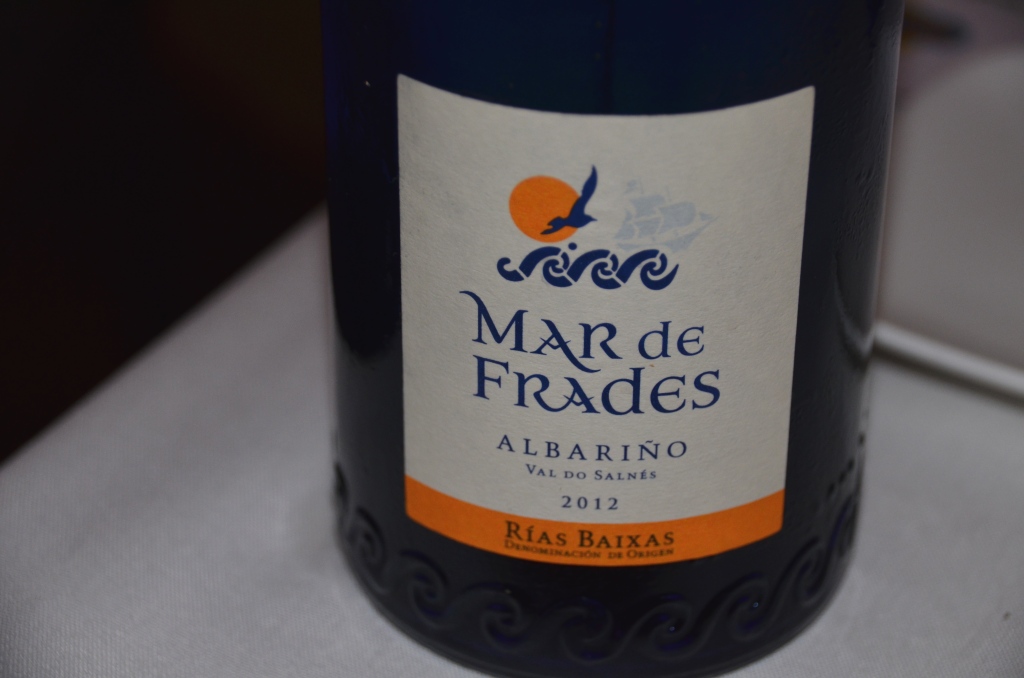
Mar de Frades Albarino
Meritage time!
First, let’s start with the answer for the wine quiz #71, grape trivia – Albariño.
In the quiz, you were supposed to answer 5 questions about white grape called Albariño. Here are the questions, now with the answers:
Q1: Explain the origin of the name Albariño
A1: The theory is that the Albariño was brought to Spain from Germany’s Rhine region and it is a relative of Riesling. Thus Alba-Riño stands for “white from Rhine”
Q2: What kind of food is typically expected to be paired with Albariño?
A2: Seafood! Rias Baixas, the region where Albariño strives, is fully embraced by the Atlantic ocean, so seafood is a local specialty, and Albariño is known to perfectly complement it.
Q3: When Albariño was first planted in California?
a. 2000, b. 1996, c. 1992, d. 1988
A3: b, 1996. In 1996, Kathryn and Michael Havens of Havens Wine Cellars visited Rias Baixas and fell in love with Albariño. They brought it back to the US and started the first plantings. Albariño was officially registered in California in the year 2000.
Q4: For the long time, winemakers in Australia thought that they are making Albariño wine – until it was recently found that due to the mistake, what they thought they planted as Albariño is not Albariño at all, but a totally unrelated grape. Do you know what grape it was?
A4: Savagnin.
Q5: Val do Salnés is one of the sub-regions in Rias Baixas, making wines from Albariño grapes. True or False: to be labeled Albariño Val do Salnés, the wine must contain 100% Albariño grapes
A5: False. Interestingly enough, for the wine to be labeled Rias Baixas DO, it should be 100% Albariño, but for any other sub-regions, it is enough to use only 70% of the Albariño grapes.
I’m glad to report that we have a winner this time! Linda from Foxress is taking home the unlimited bragging rights today. Well done!
Now, to the interesting stuff around the vine and the web!
I’m sure you’ve seen this already, but our Monthly Wine Writing Challenge has a new Queen! Sally from My Custard Pie won the #MWWC2 with this blog post. Congratulations!
Let me ask you a question. How possessive you are? Do you possess your wines, or maybe your wines possess you? Or may be your wines are possessed? If I were you, I wouldn’t go down to that cellar…yeah. Why am I all of a sudden so possessed with the possession? Because Possession is the theme of the #MWWC3! Here is the formal announcement with all the rules and dates. Sharpen your mind and your pencil, blow the dust off your keyboard – and write, write, write! The submission deadline is Monday, September 23rd.
Last minute reminder – tomorrow, August 29th, is 4th annual Cabernet Day! Open the bottle of Cabernet and join the festivities. Hope you will enjoy whatever you will be drinking, and if it will be extra good – let the world know about it – blog, Facebook, Twitter, Pinterest – there are so many ways today to let the world know that you are happy!
I also have two articles to share with you. Interestingly enough, I just realized that these two articles are essentially completely opposite to each other. In the first article, Harvey Steiman, Wine spectator’s Editor at Large, talks about scientific advancements in the world of wine. He talks about DNA testing being used to detect faults in wine, and then he also talks about micro-oxygenation, that makes the wines more soft and round. Fault detection might be good, but do you want your wines to be soft, round and … the same? I personally would prefer the wine with character over the dull and round, but of course you can decide for yourself.
Second article talks about the archaeological project in Italy, where the group of scientists it trying to recreate the way the wine was made thousands of years ago – no chemicals, no reverse osmosis, no micro-oxygenation – just the pure goodness of nature. Somehow, I like this. But again, read the article and decide for yourself.
That’s all I have for you for today, folks. The glass is empty – but refill is on its way. Until the next time – cheers!
Weekly Wine Quiz #71: Grape Trivia – Albariño

Albariño grapes, as shown in Wikipedia
Welcome to the weekend and your new wine quiz!
We are continuing our grape trivia series, still focusing on the white grapes, and today’s subject is Albariño.
According to the legend, Albariño was brought to Galicia region of Spain some time in the 12th century, of course by nobody else but monks. But it was not until almost the end of 20th century that Albariño wines became well known and well recognized in the world. Albariño is the main grape in the Rias Baixas region of Spain. Rias Baixas became a DO (Denominación de Origen is Spanish definition of the quality of agricultural products, similar to AOC in France) for Albariño in 1980. The rules had to change after Spain joined European Union, which doesn’t allow DO definitions for the single grape, so the new rules had being put in place in 1988, allowing for a number of other grapes, such as white grapes Loureira blanca, Treixadura, Caiño blanca, Torrontés and Godello, to be included into Rias Baixas DO wines.
Albariño makes perfect summer white wines. It usually combines very expressive aromatics of bright white fruit, with zesty, lemony and dry palate, making it perfectly drinkable by itself or with the wide array of summer dishes. While Albariño is literally considered to be the most important Spanish white grape, it is also successfully growing now in the other countries, such as Argentina, United States and others. In Portugal, Albariño had being known for the very long time under the name of Alvarinho, where it is often used in making of the Vinho Verde wines.
And now, to the quiz!
Q1: Explain the origin of the name Albariño
Q2: What kind of food is typically expected to be paired with Albariño?
Q3: When Albariño was first planted in California?
a. 2000
b. 1996
c. 1992
d. 1988
Q4: For the long time, winemakers in Australia thought that they are making Albariño wine – until it was recently found that due to the mistake, what they thought they planted as Albariño is not Albariño at all, but a totally unrelated grape. Do you know what grape it was?
Q5: Val do Salnés is one of the sub-regions in Rias Baixas, making wines from Albariño grapes. True or False: to be labeled Albariño Val do Salnés, the wine must contain 100% Albariño grapes
Good luck, enjoy the quiz and your weekend! Cheers!
Wednesday’s Meritage – Wine Quiz Answer, Don’t Forget to Vote!, 2013 Harvest Started in France, and more
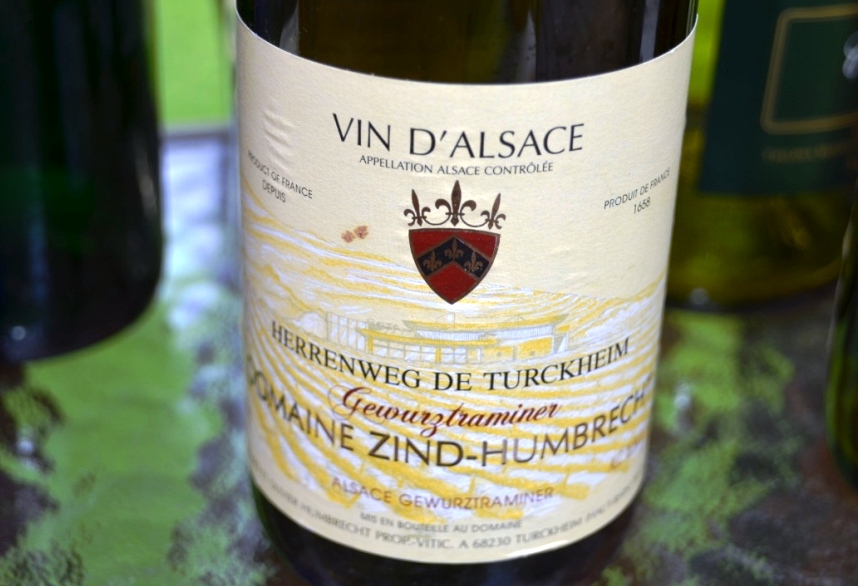
Zind-Humbrecht Gewurztraminer
Meritage time!
First, let’s start with the answer for the wine quiz #70, grape trivia – Gewurztraminer.
In the quiz, you were supposed to answer 5 questions about white grape called Gewurztraminer. Here are the questions, now with the answers:
Q1: Where Gewurztraminer was supposedly originated? Name the grape which was a precursor of Gewurztraminer
A1: Gewurztraminer is a result of genetic mutation of the grape called Traminer. Traminer grape takes its name from the town of Tramin, located in the South Tyrol in Northern Italy (Alto Adige).
Q2: Explain the meaning of the name Gewurztraminer
A2: “Gewurz” means spicy in German. But the “spicy” reference here is for the extreme aromatics of the grape and not to taste of the grape itself, so in the direct translation Gewurztraminer stands for Spicy Traminer.
Q3: Unlike many other grapes, if the French wine is made out of Gewurztraminer, you can easily know that just by looking at the bottle. Why is that?
A3: Alsace, unlike any other AOC in France, requires the name of the grape varietal to be shown on the label. While most of the Alsace wines are typically bottled in the tall narrow bottles called vin du Rhin, one look at the label will tell you exactly the type of the grape the wine is made out of.
Q4: Which area in California produces best Gewurztraminer wines:
a. Monterey County, b. Alexander Valley, c. Russian River Valley, d. Anderson Valley
A4: Anderson Valley (“best” is subjective, but I seem to find a number of sources pointing to Anderson Valley)
Q5: Wine Spectator calls wines rated in 95-100 range Classic (the highest and the most prestigious category). True or False: there are no Gewurztraminer wines with Classic rating
A5: False. There are couple of Gewurztraminer wines with 98 ratings, and in excess of 30 wines overall in the Classic rating range.
Now, when it comes to the answers, we have an interesting situation. All the respondents answered all the questions correctly, except for the Q3 – typical answer was based on the unique shape of the bottle, but the problem is that most of the wines from Alsace share the same bottle shape – however, nobody pointed to the label and the major difference in the labeling laws between Alsace (based on the grape) and the other AOCs (based on geographic location). Thus we don’t have a winner in this weeks’ quiz – but hey, there is always another quiz.
Now, to the interesting stuff around the vine and the web!
First and foremost – please don’t forget to cast your vote for your favorite post in the Monthly Wine Writing Challenge #2! The theme of the challenge was “Trouble”, and despite the initial troubles with the trouble, quite a few bloggers took a stub at the theme. ArmchairSommelier was hosting this month’s challenge, and she will announce the winner on August 24th. To read all of the submissions, and most importantly, to vote, please use this link.
Another interesting opportunity to “vote” for you – W. Blake Gray asked his readers to vote on what country which makes their favorite wine. You don’t have to think to hard about “the one”, as you can vote for up to 3 favorites. So far based on the voting results, the clear leaders are France, USA and Italy – but you should definitely vote and see for yourself – here is the link to the blog post.
While it sounds way too early (it is still an August!), the 2013 harvest already started in in Roussillon in France. An interesting fact is that this year actually has a late start due to the cold spring, and the picking usually starts 10-15 days earlier. Here is a link to the article where you can find all the details.
That’s all I have for you for today, folks. The glass is empty – but refill is on its way. Until the next time – cheers!
Weekly Wine Quiz #70: Grape Trivia – Gewurztraminer
Gewurztraminer grapes, as shown in Wikipedia
Welcome to the weekend and your new wine quiz!
We are continuing our grape trivia series, still focusing on the white grapes, and today’s subject is Gewurztraminer.
Gewurztraminer, which often spelled with umlaut, Gewürztraminer, is a very interesting white grape for variety of reasons. Even starting with the appearance – take a look at the picture – does it look white to you? Nevertheless, similar to Pinot Gris, it is considered to be the white grape, as its skin color ranges from pinkish to the reddish. Gewurztraminer has about 1000 years of history, and it is growing pretty much all over the world in literally each and every wine producing country – yet it is very seldom that any of the oenophiles would rave about their Gewurztraminer experiences.
It is difficult to grow, as it tends to have high sugar content and low acidity, which doesn’t bode well for the well balanced wines – and for that reason, it also performs better in the cooler climates. Its characteristic trait is extreme aromatics – on the nose, Gewurztraminer wine usually exhumes with aromas of white flowers, lychees, peaches and tropical fruits. Gewurztraminer wines can be made in the range of styles, from very dry to the full power dessert wine. For the well made Gewurztraminer wines, the combination of extreme aromatics and balanced body, whether dry or sweet, creates very memorable experience – yes, this would hold true from absolute majority of the wines, of course – but I would say that Gewurztraminer wines very seldom have middle ground in their showing – they are either great, or they are really bad, with the very few which you will place into “well, it’s okay” category.
Most of the best in the world Gewurztraminers come from Alsace in France, but you can also find very good wines in Germany, Austria, Italy, California and probably some other places (in a lot of cases the wines will be made only for the local consumption and you would never hear about them). One more curious fact I want to point to before we get to the quiz is that Gewurztraminer is probably one of the most promiscuous grapes, having been used more often than most of other grapes in creation of different crosses – Flora, Traminette, Ortega, Irsai Oliver and many others are not clones, but actual purposeful crosses of Gewurztraminer with the other grapes.
Now, to the quiz!
Q1: Where Gewurztraminer was supposedly originated? Name the grape which was a precursor of Gewurztraminer
Q2: Explain the meaning of the name Gewurztraminer
Q3: Unlike many other grapes, if the French wine is made out of Gewurztraminer, you can easily know that just by looking at the bottle. Why is that?
Q4: Which area in California produces best Gewurztraminer wines:
a. Monterey County
b. Alexander Valley
c. Russian River Valley
d. Anderson Valley
Q5: Wine Spectator calls wines rated in 95-100 range Classic (the highest and the most prestigious category). True or False: there are no Gewurztraminer wines with Classic rating
Good luck, enjoy the quiz and your weekend! Cheers!
Wednesday’s Meritage – Wine Quiz Answer, #WBW80, #MWWC2, GMO Wines???, Harvest Marathon and more
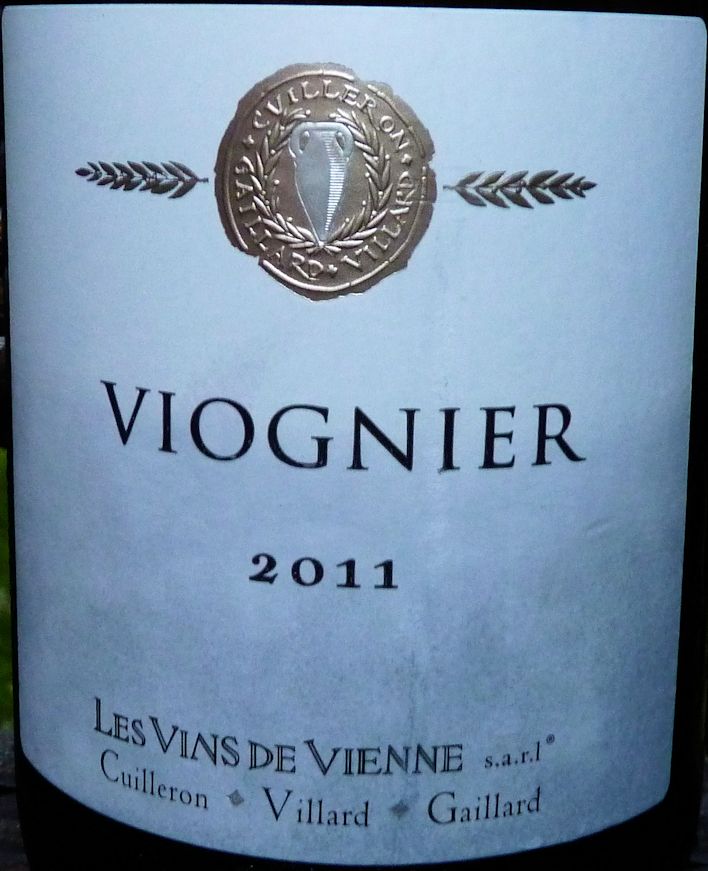 Meritage time!
Let’s start with the answer for the wine quiz #69, grape trivia – Viognier. In the quiz, you were supposed to answer 5 questions about the white grape called Viognier.
Here are the questions, now with the answers:
Q1: Viognier stands pretty unique among all white grapes as it is often added or can be added as blending component during the production of the red wines around the world. Do you know the name of the red grape it typically accompanies?
A1: Syrah. Viognier is allowed to be added to the red Syrah wines of Côte-Rôtie (up to 20%), and Shiraz Viognier wines are quite popular in Australia.
Q2: Name the source of essentially the best and most long-living Viognier wines in the world
A2: Château-Grillet. Château-Grillet is so called Monopole, as it is both an AOC and the single winery. Château-Grillet is known to produce some of the best, long living Viognier wines ever. Château-Grillet is surrounded by another Viognier-only appellation, Condrieu, which also makes great Viognier wines, but the answer I was looking for here is Château-Grillet.
Q3: Viognier became so popular in the United States, that one of the states even called it “an official grape of the state”. Do you know which state it is?
a. California, b. New York, c. Texas, d. Virginia
A3: Virginia! In 2011, Viognier was named an “official grape” of the state of Virginia.
Q4: Wine Spectator calls wines rated in 95-100 range Classic (the highest and the most prestigious category). True or False: there are no Viognier wines with Classic rating
A4: False. There is a number of Condrieu wines rated in the range of 95 – 98 (98 so far was the highest rating for Viognier wines)
Q5: Based on DNA research, Viognier has an unlikely cousin in Italy, which is not even the white grape, but red. Can you name that “cousin”?
A5: There is almost always a slight element of controversy with all this DNA research data. According to DNA research information in Wikipedia, Viognier is shown “to be closely related to the Piedmont grape Freisa and to be a genetic cousin of Nebbiolo” – thus both Freisa and Nebbiolo are correct answers here.
We had lots of great answers for this quiz, and we have winners! Considering the absolute precision on the answer for the second question (Château-Grillet), Jeff a.k.a. TheDrunkenCyclist is our Grand Winner today, but both Julian at VinoInLove and Kirsten at TheArmchairSommelier are also the winners of this wine quiz #69. Winners get their due share of unlimited bragging rights, but I definitely want to thank all participants – great job!
And now, to the interesting stuff around the vine and web!
I have few of mostly the reminders for you today.
Today, August 14th – Wine Blogging Wednesday event, #WBW80 – Dry Rosé. There is still some times left to drink Rosé and submit your post! For all the details please click here.
This coming Friday, August 16th – deadline for submission for the Monthly Wine Writing Challenge #2, with the theme called Trouble. You can find all the rules here. There is still time, get your trouble under control and write! Use #MWWC2 hash tag your submission.
Tomorrow, Thursday, August 15th – Last Bottle 2013 Harvest Madness Marathon is taking place! If you like get great wines at unbelievable prices, this event is for you! Starting at 9 AM Pacific time, new wines will be sold at LastBottle web site at neck-breaking speed. Last Bottle model is similar to WTSO – no e-mail announcements, and they don’t even use twitter, so you have to refresh your browser all the time. There is one difference though – there are no minimum quantities to buy to get free shipping. The event will continue for 2 days, and all the wines will be shipped during few weeks after the event. If you are not buying wine at Last Bottle – you really missing lots of great deals. It is free to subscribe to their web site – but if you are not a subscriber and want to become one, send me an e-mail so I will subscribe you – you will get $5 credit (yes, true, and I will get $20, but then of course you can subscribe someone else…).
Last but not least for today is an interesting article by W. Blake Gray which caused my quick and short reaction – WTF?! Seriously? Here is a post in The Gray Report, where W. Blake Gray is talking about an article in Wine Spectator advocating the idea of … noting else but GMO wines! I might be over-reacting, but after reading this article I was split-hair close to canceling my subscription. Well, read it for yourself and let me know what do you think.
That’s all I have for you for today, folks. The glass is empty – but the refill is coming. Until the next time – cheers!
Weekly Wine Quiz #69: Grape Trivia – Viognier
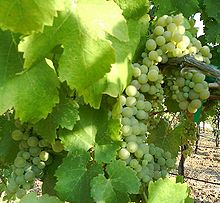
California Viognier grapes, as shown in Wikipedia
Welcome to the weekend and your new wine quiz!
We are continuing our grape trivia series, still focusing on the white grapes, and today’s subject is Viognier.
Talking about turbulent history here. Viognier is one of the oldest known white grapes in the world, with the first mentions attributed to the 280 AD. It is considered that Romans brought it to France from Croatia (of course the region was called differently in those times, but it is still geographically correct). Historically, Viognier wines were mostly made in the Northern Rhone region in France, and they were quite popular in the 1800. However, by the 1965, there were only 8 acres (!) planted in the world, producing minuscule amount of wine.
Viognier‘s renaissance started in 1980s, when the grape was brought into the United States and Australia. From that time on, the interest to the grape increased and even skyrocketed in the 21st century worldwide, with the plantings in France alone increasing 100-fold. Now Viognier is growing in pretty much every major winemaking country in the world, including Spain with some experimental plantings in Rioja area. In the United States alone, the grape is becoming more and more popular, and not only in California, but also in the states such as Texas and Virginia, producing very interesting wines (take a look at my notes from Viognier tasting in Texas).
Viognier at its best produces wines with very perfumy, floral nose, which are firm, structured and full bodied on the palate, with peach and apricot flavors often being most noticeable. The challenge of Viognier lies in the fact that the grape is naturally low in acidity, so if it is not ripen properly, it will produce sweet and not very drinkable plonk. One of the reason for Viognier to do much better nowadays is greatly improved winegrowing and winemaking techniques, which allow to produce great tasting wines more consistently.
And now, to the quiz!
Q1: Viognier stands pretty unique among all white grapes as it is often added or can be added as blending component during the production of the red wines around the world. Do you know the name of the red grape it typically accompanies?
Q2: Name the source of essentially the best and most long-living Viognier wines in the world
Q3: Viognier became so popular in the United States, that one of the states even called it “an official grape of the state”. Do you know which state it is?
a. California
b. New York
c. Texas
d. Virginia
Q4: Wine Spectator calls wines rated in 95-100 range Classic (the highest and the most prestigious category). True or False: there are no Viognier wines with Classic rating
Q5: Based on DNA research, Viognier has an unlikely cousin in Italy, which is not even the white grape, but red. Can you name that “cousin”?
Good luck, enjoy the quiz and your weekend! Cheers!
Last Bottle Sign Up ($10 credit)




 Talk-A-Vino