Archive
For the Love of Riesling
 I love Riesling.
What do winelovers do when they love the wine?
That’s easy.
We want to share that love.
The biggest reward for a winelover is to offer someone a glass of wine and hear them say “oh, it is good!”.
Sharing the wine is the most enjoyable part of drinking the wine. We want the other people to experience the same joy as we do, we want them to experience the pleasure only the wine can deliver.
As I said before, I love Riesling.
Riesling might be the most underappreciated white grape. It is one of the main 3 white grapes (Chardonnay, Sauvignon Blanc, and Riesling). Riesling wines are made everywhere in the world – Germany, Alsace, Australia, New Zealand, New York (Finger Lakes, Hudson Valley), Canada, Oregon, California, and so on – and yet many of the wine drinkers wouldn’t even openly admit that they like Riesling and that they are happy to drink it.
It is hard to tell why that is. Many people associate the word Riesling with the word “Sweet”. It is a big mistake, as it means, for example, that they never experienced bone-dry, tongue-twisting Rieslings from the Claire Valley in Australia. I would even dare to say that the majority of the well-made Rieslings are not sweet, unless they are purposefully made to be sweet, such as BA or TBA German Rieslings. The main trait of Riesling, similarly to all other wines, is balance. As long as the Riesling is balanced, it is one of the most enjoyable white wines you can imagine. And it pairs well with the wide range of food. I’m telling you – Riesling is one of the best white wines in the world.
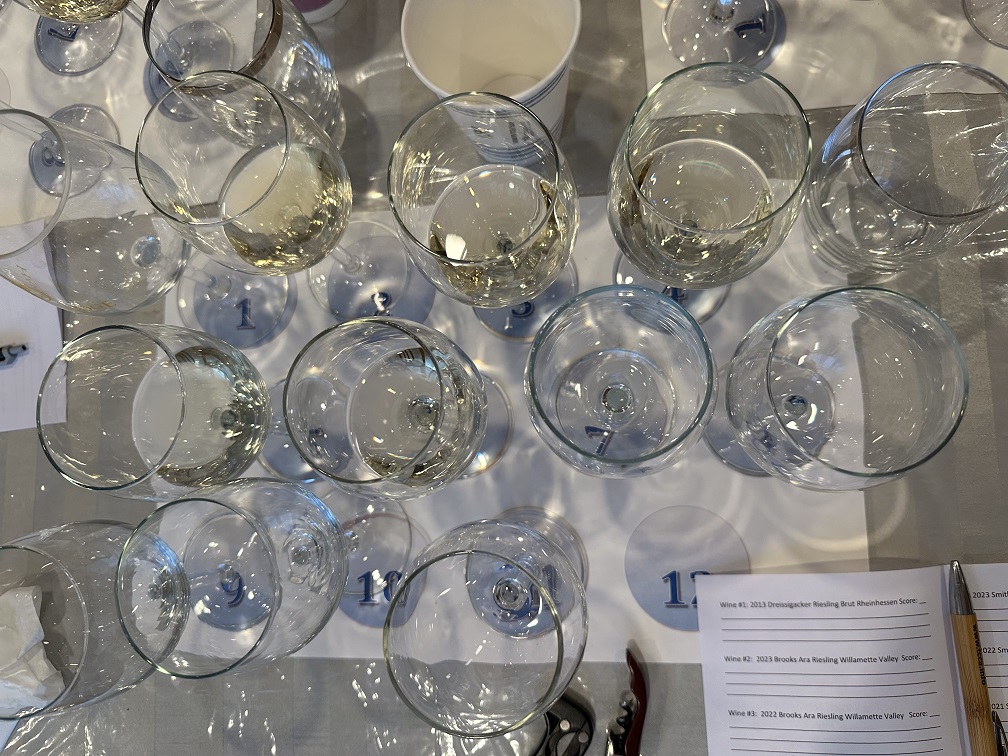
The love for wine needs to be shared. And so earlier in the year, I decided to do a Riesling wine tasting. My audience (family, future in-laws) wanted to learn more about the wines, and I have decided that tasting a bunch of Rieslings will offer an excellent educational opportunity (was I right? I have no idea, but I know we had fun).
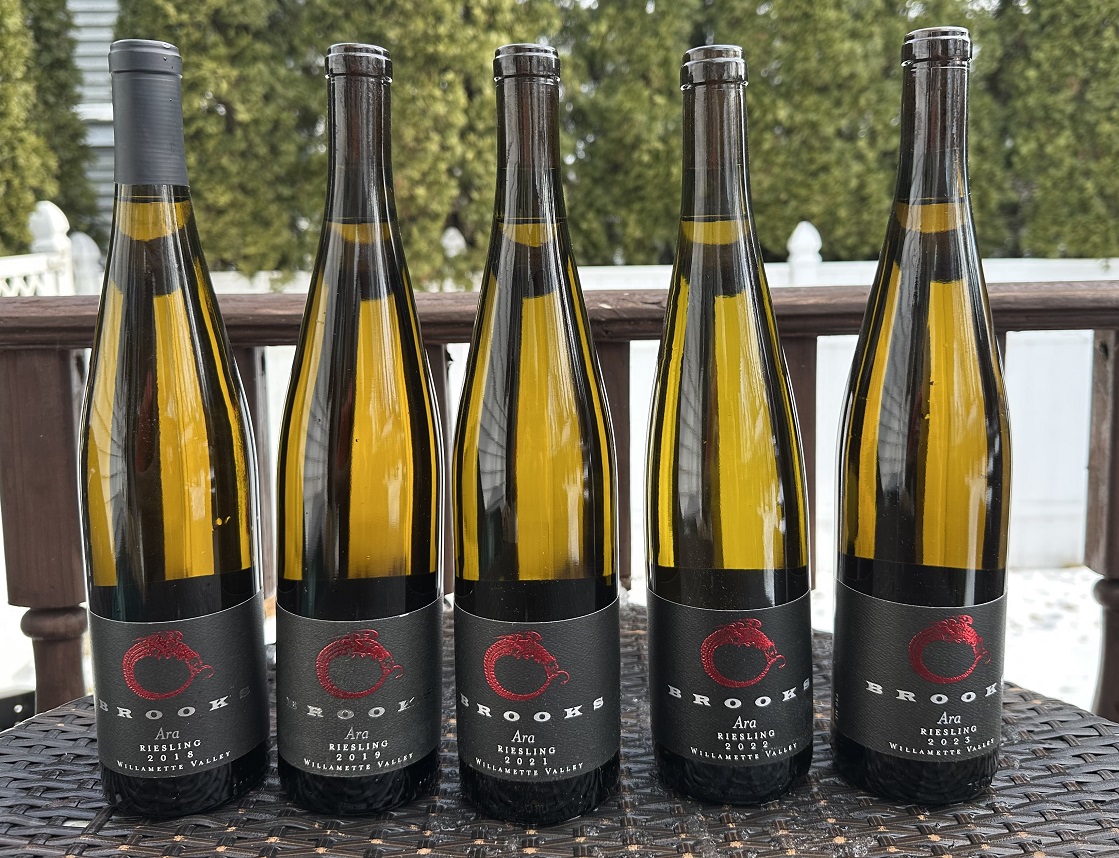
Ask me to name three of my favorite Cabernet Sauvignon producers, and I will quickly become frustrated – can I give you at least 10? 20 or 30 would be even better. The same would be for a Chardonnay, Syrah, and Tempranillo. When it comes to Riesling, however, that would be an easy task. Grosset from Australia. Smith-Madrone from California. Brooks from Oregon. This is my “top 3 Riesling producers” list. I would absolutely love to do a comparative testing of these 3 Rieslings, but I managed to get only 2. I got Smith-Madrone Rieslings first, and then when I got the idea for the tasting, I wrote to Brooks, and they were kind enough to send me a nice vertical of Brooks Rieslings. I also asked Ravines Wine Cellars from Finger Lakes for a similar set, but got no reply, so my tasting consisted of a vertical of Smith-Madrone Rieslings from 2018, 2019, 2021, and 2023, and Brooks Ara Riesling from 2018, 2019, 2021, 2022, and 2023 (both wineries didn’t produce wines in 2020).
It is important to note that Riesling can age very well, and aged Riesling is just a special experience. I did an online search and found out that it is rather hard to find aged Riesling anywhere, at least for the price I was willing to pay (age your Riesling, people, take my advice). I managed to find a bottle from 1997, which was seemingly in reasonable condition. At the same online store, I also managed to find a sparkling wine made out of Riesling, known in Germany as Sekt. I scored a bottle of Sekt at the same online store, and it became our first wine in the tasting.
The tasting was non-blind as it had more of an educational purpose than anything else. Here is what transpired during the tasting (outside of the fact that I numbered Brooks Rieslings in the wrong order, so we tasted them from the older vintages to the newer, where I really wanted to go in the opposite direction):
Wine #1: 2013 Dreissigacker Riesling Brut Rheinhessen (12.5% ABV)
bubbles were still present, lemon, a touch of sugar, well balanced, very nice overall. Believe it or not, but this was the first Sekt that I liked.
8-
Wine #2: 2018 Brooks Ara Riesling Willamette Valley (14% ABV, 325 cases produced)
Beautiful color. Honey, petrol, explivit nose of tropical fruit
Great complexity, perfect balance, showing off an interplay of pear, apples, peach, even vanilla and quince. Delicious. 8
Wine #3: 2019 Brooks Ara Riesling Willamette Valley (13% ABV, 225 cases produced) – a very interesting wine, as my tasting notes for day 1 and upon re-tasting the next day differ dramatically.
Day 1: Very unusual, some honeydew, hint of pear. 8-
Day 2: Superb. Lean. Acidity is through the roof, fresh, crisp. Needs 20 years to become amazing. 8++
Wine #4: 2021 Brooks Ara Riesling Willamette Valley (12.5% ABV, 225 cases produced)
Day 1: Beautiful petrol and flowers on the nose
Fresh, petrol, complex, white fruit, excellent balance. 8+
Day 2: Petrol + earth. Beautiful, honey notes on the palate, much richer than ‘19. Still lean and mean. 8
Wine #5: 2022 Brooks Ara Riesling Willamette Valley (12.5% ABV, 150 cases produced)
Day 1: Flowers, touch of brown sugar
Most complex so far – wow, beautiful. 8+
Day 2: Petrol, hint of tropical fruit. Lemon with a touch of honey, lean, crisp, built for aging, let’s say another 20-something years. 8++
Wine #6: 2023 Brooks Ara Riesling Willamette Valley (12.5% ABV, 100 cases produced)
Day 1: Very muted nose. Palate is young, nice, concentrated. 8-
Day 2: Nose almost non-existent. Very lean palate with a hint of honey mixed with lemon. Need to develop for a long, very long time.
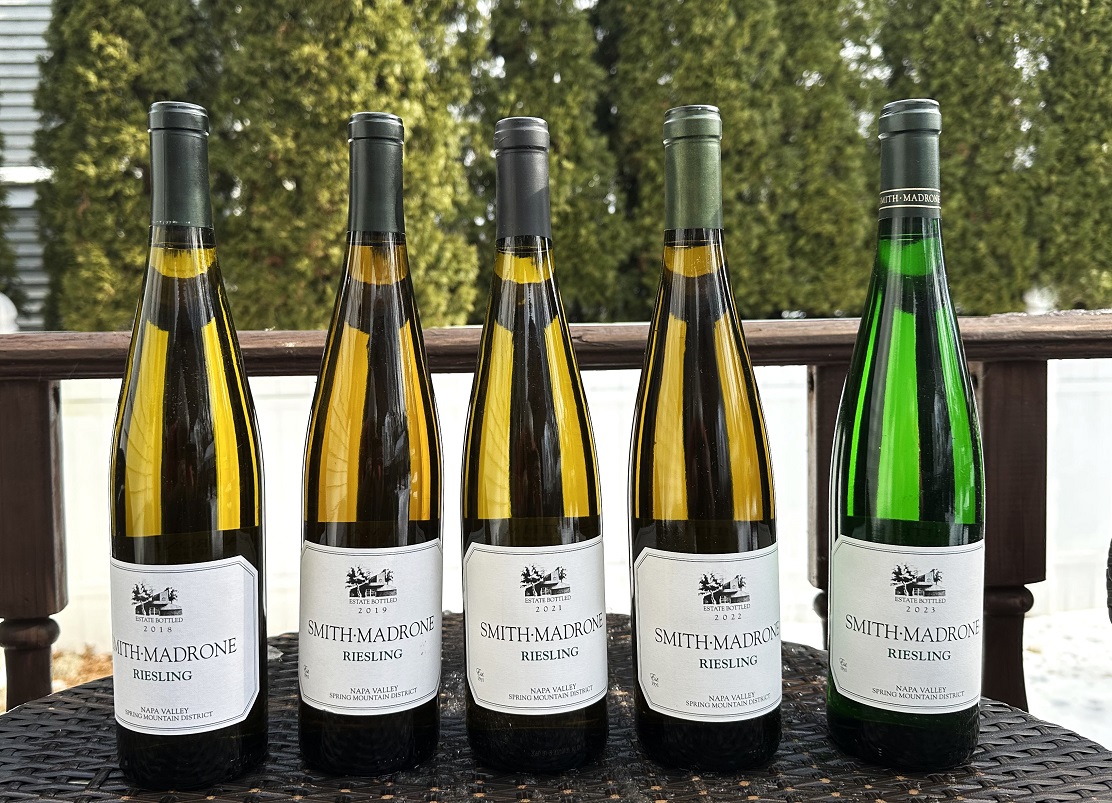
Wine #7: 2023 Smith-Madrone Riesling Spring Mountain (13.2% ABV)
Light color
Candy on the nose
White flowers, fruit medley, bitter orange, crisp, spectacular. 8+
Wine #8: 2022 Smith-Madrone Riesling Spring Mountain (13.2% ABV)
A touch of petrol
White fruit, white apples, delicious. 8+
Wine #9: 2021 Smith-Madrone Riesling Spring Mountain (13.2% ABV)
Petrol, beautiful
Lots of complexity, apples, excellent. 8
Wine #10: 2019 Smith-Madrone Riesling Spring Mountain (13.3% ABV)
Complex aromatics, flowers
Flowers on the palate, a touch of honey, beautiful, complex. 8+
Wine #11: 2018 Smith-Madrone Riesling Spring Mountain (13.3% ABV)
Beautiful, hint of petrol, white fruit.
Wow, playful, amazing. 8++
Wine #12: 1997 Dr. Fischer Ockfener Bockstein Riesling Kabinett Mosel (8% ABV)
Apple juice all the way, past prime. Still an interesting experience.


As always in such tastings, it is fun to figure out the group’s favorite wine. There were 8 of us tasting the wines, and everybody were asked to decide on 3 of their most favorite wines (mine were #11, #8, and #5), and then we took a vote. To my surprise, we had a clear winner after the first round – wine #8, 2022 Smith-Madrone Riesling, was everyone’s favorite, with wine #11, 2018 Smith-Madrone Riesling getting 5 votes. It was interesting that even wine #12, 1997 Riesling, got 3 votes (for me, it was an interesting experience, but not the wine I want to drink again).
As you can see from the notes above, I had a chance to re-taste the wines, this time at a bit of a slower pace. It is very clear that Brooks Rieslings needed more time to open, as you see that on the second day they showed a lot more of what they got, but even then, I believe they would benefit from another 20 years in the cellar, or maybe more.
As I’m writing this, I’m already dreaming of setting up the tasting of 20+ years old Rieslings. Give me Grosset, Brooks, Smith-Madrone, Zind-Humbrecht, and maybe Markus Molitor, from the early 2000s – and this would make it an absolutely amazing tasting. By the way, talking about dreams – what would your dream Riesling tasting include?
I can’t speak for my guests, but I really enjoyed the opportunity to taste such beautiful wines side by side. While both Brooks and Smith-Madrone perfectly exhibited my beloved petrol, Brooks Rieslings on average were a bit leaner than Smith-Madrone, while Smith-Madrone exhibited a richer bouquet on the palate. I’m saying this not in the comparative sense – each one of these wines would make me super-happy any time.
There you are, my friends – my Riesling experience. Do you like Riesling? What are your favorite “go-to” Rieslings?
Beautiful Wines of Smith-Madrone
I love the wines of Smith-Madrone.
I’m not even trying to make it a secret.
Yes, I’m biased. But I’m not ashamed of it.
Stu Smith and his brother, Charlie, founded the winery in 1971 in the Spring Mountain District of Napa Valley. When Stu was buying a property overflowing with trees, he was told that he was making the mistake of his life. But the best wines are born out of conviction – add perseverance, gamption, hard work, ingenuity, and imagination – just get all of these ingredients, and you might also be able to make some beautiful wines.
I told you that I love the wines of Smith-Madrone. Usually, love doesn’t require proof. But if you insist, I have one – not only I wrote about wines of Smith-Madrone on multiple occasions, but their wines had been included in my Top Wines of the Year lists 4 times – #11 in 2018 (Riesling), #1 (Cook’s Flat Reserve) and #14 (Riesling) in 2019, #3 in 2023 (Cabernet Sauvignon), and #4 in 2024 (Cook’s Flat Reserve). I don’t have any other wines that so consistently appear in the Top Wines lists.
For many years, Smith-Madrone produced only three wines – Riesling, Chardonnay, and Cabernet Sauvignon, with the addition of the Cook’s Flat Reserve Cabernet Sauvignon in exceptional years. A few years back, Rosé and Cabernet Franc joined the collection, and I was dying to try them ever since. This year, I finally got my hands on the wines (I rarely ask for samples, but this was one of such rare moments – I did ask…), so now I can share my tasting notes with you.
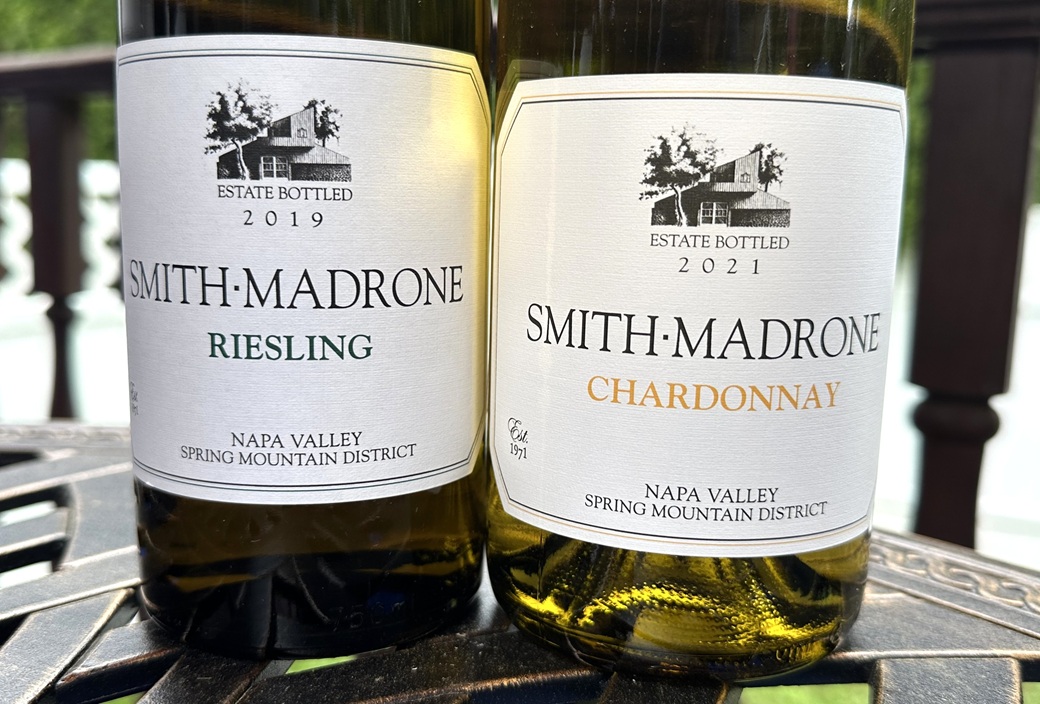
2019 Smith-Madrone Estate Riesling Spring Mountain District Napa Valley (13.3% ABV)
Light golden
Petrol mixed with honey and honeysuckle, a pure aromatherapy in the glass for a Riesling lover. Crisp, bright, honey with lemon in perfect harmony, clean and crisp finish with lots of energy.
9, a pure delight.
2021 Smith-Madrone Estate Chardonnay Spring Mountain District Napa Valley (14% ABV, 10 months in 50% new French oak)
Brilliant golden color
White plums and a touch of vanilla on the nose, a distant hint of gunflint (the wine is almost at room temperature). Apples, a touch of honey, vanilla, more apples, and a cleansing acidity. Delicious.
8+/9-, superb.


2023 Smith-Madrone Estate Rosé Spring Mountain District Napa Valley (14.2% ABV, 50% Merlot, 50% Cabernet Franc)
Beautiful, bright crimson red
Tart cherries, fresh, on the nose. Light, inviting, elegant.
Beautiful tart cherries on the palate, well present, round, delicious.
8+, delicious Rosé with character
2021 Smith-Madrone Estate Cabernet Franc Spring Mountain District Napa Valley (14.7% ABV, 89% Cabernet Franc, 11% Cabernet Sauvignon, 18 months in 60% new French oak)
Dark garnet
Ripe black currant, dark chocolate, fat, juicy, exciting. Delicious, black currant, dark chocolate, a rich California Cab Franc style, bell pepper came in later, together with a beautiful black pepper note, spicy and delicious.
8+/9-
Truth be told, I also got a sample of the 2021 Cabernet Sauvignon – but this is one of my most favorite Cabernet Sauvignons ever, so I couldn’t muster the courage to open the bottle yet, and will be waiting for the right occasion later this year – maybe a Thanksgiving celebration, as I did back in 2018.
I think both Rosé and Cabernet Franc are great additions to the portfolio. Both are produced in small quantities (131 cases of Rosé, 153 cases of Cabernet Franc), and Rosé is already gone (duh, summer is ending), but the Cab Franc is still available. And if we are talking about new additions, maybe we will see a sparkling wine one day? Or wait, I might have even a better idea – how about some late harvest Riesling? Knowing the quality of Smith-Madrone Riesling, if they were ever to produce a dessert-level Riesling, I’m sure it would be an absolute delight. Oh well, maybe one day…
Here you go, my friends. I hope you had a chance to discover the wines of Smith-Madrone for yourself. If you have not, head over to the Smith-Madrone website, admire the scenery of beautiful mountain vineyards, and get a few bottles for yourself to enjoy. I guarantee you will not regret it. Cheers!
An Evening of Pure Pleasure
Do you know what makes an oenophile’s heart melt and pound, what fills it with joy? Hearing their friends say after you pour the wine into their glasses
“Oh my god, this is so good!”
This brings a double pleasure – it is not only you now getting the pleasure from the aroma and the bouquet – but your friends also enjoying it as much as you do. Wine is meant for sharing, and this makes sharing so much more enjoyable…
Wine can never be taken for granted. Let’s remember that the wine continues changing even after bottling – each time we open the bottle, we find the content of the bottle in its unique state. Yes, we can hope that if you open all 12 bottles from the case at the same time, all wines will taste the same – but it is still a game of probabilities, with opportunities for the “bottle variation” to be increasingly more noticeable as the wine ages. And I’m not even talking about potential wine faults…
Next, there are expectations. Expectations are a big deal for the oenophile. Just one look at the bottle and an oenophile forms expectations – bottle appearance, place, producer, type of wine, vintage – everything is taken into account, and we know what to expect. It is the most joyous moment when the liquid in the glass meets expectations – and the most daunting when it does not (let’s not get to the corner case of Two Bucks Chuck, please). But there is more to the expectations in wine. One of the biggest challenges with wine expectations lies in the fact that it doesn’t matter how much you like the wine and how well your great expectations are met – everyone’s palate is different. It is hard learning to be okay with the fact that while you enjoy the wine immensely, your friend doesn’t care for it. It doesn’t make the wine bad. It doesn’t mean that you are wrong or did anything wrong. It simply means that taste is personal, you just need to learn to accept this simple fact of life – and not get upset.
You might wonder why I am talking about all this wine geek mumbo jumbo, why is that important? Simple. No matter how familiar you are with the wine you are pouring, or how many times you have had the wine from the same vintage and producer, when the wine reaches the glass, it is always the moment of revelation. Double that (triple? quadruple?) when you are poring wine for your friends. And even if you think that wine is perfectly perfect, you can never assume your friends will think the same. Wine can never be taken for granted.
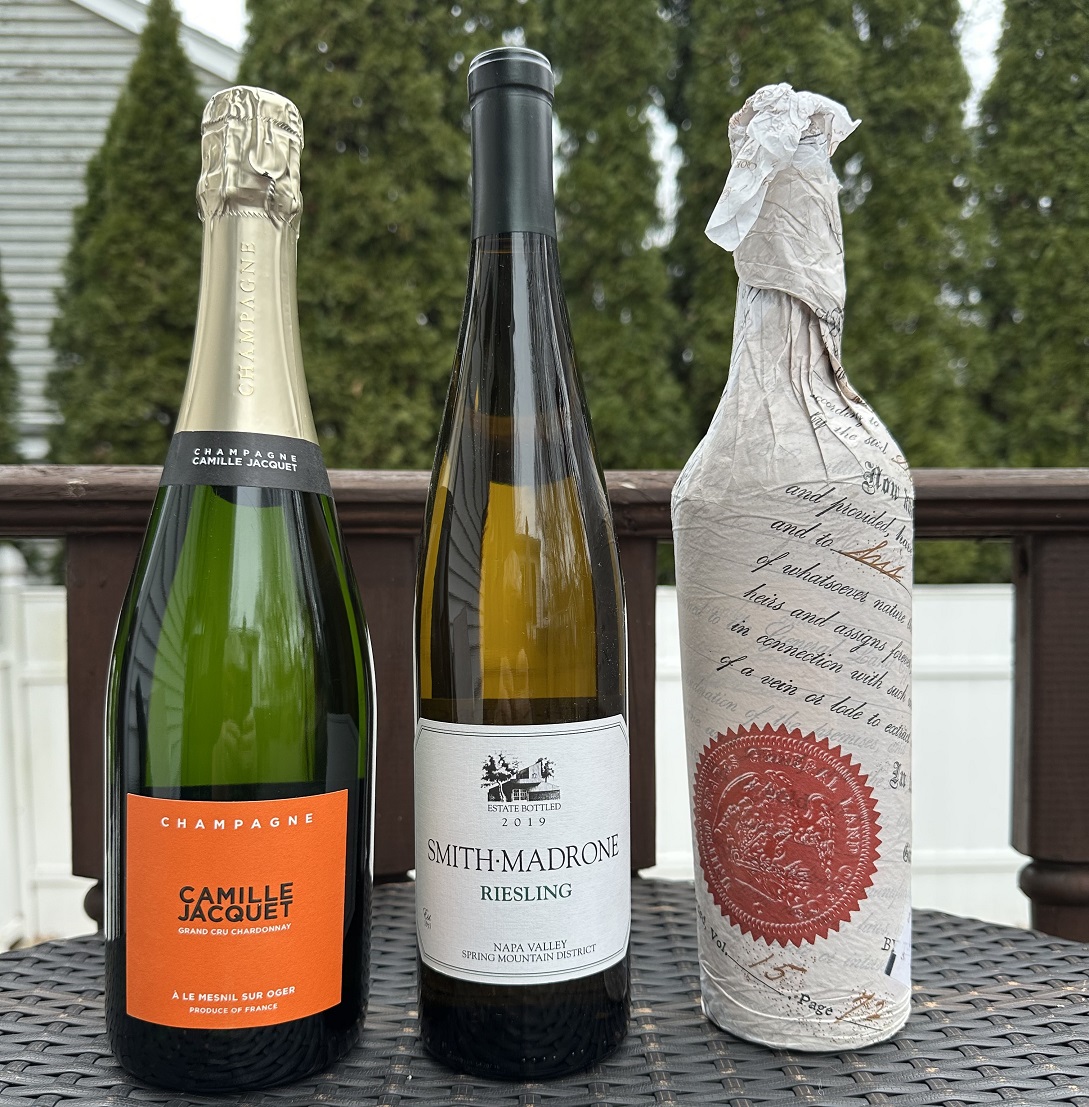 I guess I got lucky. At last weekend’s evening with our dear friends, I managed to hit a double “trifecta” :). Three delicious wines out of three, and my friends loved all three to the “oh my god, this is so good!” moment.
First wine – NV Champagne Camille Jacquet Brut Grand Cru Chardonnay A Le Mesnil-sur-Oger (12% ABV). I do not know the producer, but I had high expectations for this wine possibly for a silly reason. A small village Le Mesnil-sur-Oger is well known for the quality of its Chardonnay vineyards and a home to some of the best (if not the best ) Blanc de Blancs Champagnes in the world – Salon le Mesnil and Krug Clos du Mesnil. Knowing that Camille Jacquet Champagne comes from basically the same vineyard gave me high hopes (silly, as I said) for this Champagne. And my high expectations were perfectly met. Beautiful nose of toasted bread with a touch of apple, impeccably crisp, fresh and precise on the palate. The acidity was fully in check with the complexity of the toasted, baked goods on the palate, leading to an impeccable (yes, I know I already used that word) balance. “Oh my god, this is so good!” said my friends, and the wine disappeared in a jiffy.
Next, two beautiful wines from one of my favorite producers ever. Over the years, I wrote about Smith-Madrone wines extensively. Cooks’s Flat had been one of the Talk-a-Vino Top 10 Wines of the Year 2019 top wines (that year, I had 3 #1 wines, tell me about my inability to make decisions), and Smith-Madrone Cabernet Sauvignon was #3 on the Talk-a-Vino Top 23 of 2023. So I was very happy that I got the samples of Riesling and Cook’s Flat and was able to share both wines with my friends (I will also taste a nice vertical of Smith-Madrone Riesling, it will take a central stage on these pages soon).
Smith-Madrone Riesling is one of my favorite Rieslings in the world – it is one of the 3 if you are interested – Grosset Polish Hill Claire Valley Australia, Smith-Madrone from Napa Valley, and Brooks Ara from Oregon. This 2019 Smith-Madrone Riesling Spring Mountain District Napa Valley (13.3# ABV) was spectacular. First, it offered a tremendous pop of petrol on the nose – and nothing makes my Riesling lover’s heart happier than these petrol aromatics, coupled with a whiff of honeysuckle. On the palate, it was fresh, energetic, with a wide range of citrus flavors readily present, from Meyer lemon to oranges and mandarines, supported by clean acidity and a perfectly cleansing acidic finish. Delicious, and the second “oh my god, this is so good!” wine.


Finally, the 2018 Smith-Madrone Cook’s Flat Reserve Spring Mountain District Napa Valley (14.2% ABV, 87% Cabernet Sauvignon, 13% Cabernet Franc, 20 months in new French Oak). This wine is designated as “Reserve” and this is not random – it represents the best of the best Smith-Madrone makes, using the best plots, best grapes, and produced only in the best years. This wine also has a historical connection to the parcel of land where Smith-Madrone vineyards where replanted in 1972 – the tissue wrapping the Cook’s Flat bottle is a copy of a land grant document, signed by the President of the United States. Here is the description from the Smith-Madrone website:
“Cook’s Flat Reserve is a proprietary name for a wine that is the culmination of our 50 years of growing grapes and making wine in the mountains of the Spring Mountain District. The name refers to George Cook, the first owner of the property. ‘Cook’s Flat’ was the local oldtimers’ name for the eight-acre plateau-like vineyard block which was replanted in 1972.
The packaging expresses the property’s history and an uncompromising attention to detail. Each bottle is numbered and only around one thousand bottles are produced in each vintage. Each bottle is wrapped in tissue which has been printed with a multi-colored copy of the U.S. Land Office Patent which granted ownership to George Cook and was signed by President Chester Arthur on December 5, 1885. We proudly display the original at the winery.”
What I love about Smith-Madrone wines is textbook precision. So far literally everything I tasted from the winery had this textbook precision of flavor – Riesling is unmistakably Riesling, Chardonnay is unmistakably Chardonnay, Cabernet Sauvignon is unmistakably Cabernet Sauvignon.
This 2018 Cook’s Flat, a blend of Cabernet Sauvignon and Cabernet Franc, was also unmistakably a Cabernet. A core of black currant, a.k.a. cassis, and eucalyptus, supported by sweet tobacco and sweet oak, with a whiff of the bell pepper (love it). On the palate, the textbook flavors continued with succulent cassis, eucalyptus, a touch of mint and bell peppers, firm structure, perfectly integrated and perfectly present tannins, impeccable balance. Just a pure joy. “Oh my god, this is so good!” wine again disappeared in no time, with the last drops almost squeezed out of the bottle.
Here you are, my friends. An evening of pure pleasure – and a happy oenophile who managed to make his friends “oh my god, this is so good!” happy.
I have more happy stories to tell – stay tuned…
Ode to Cab
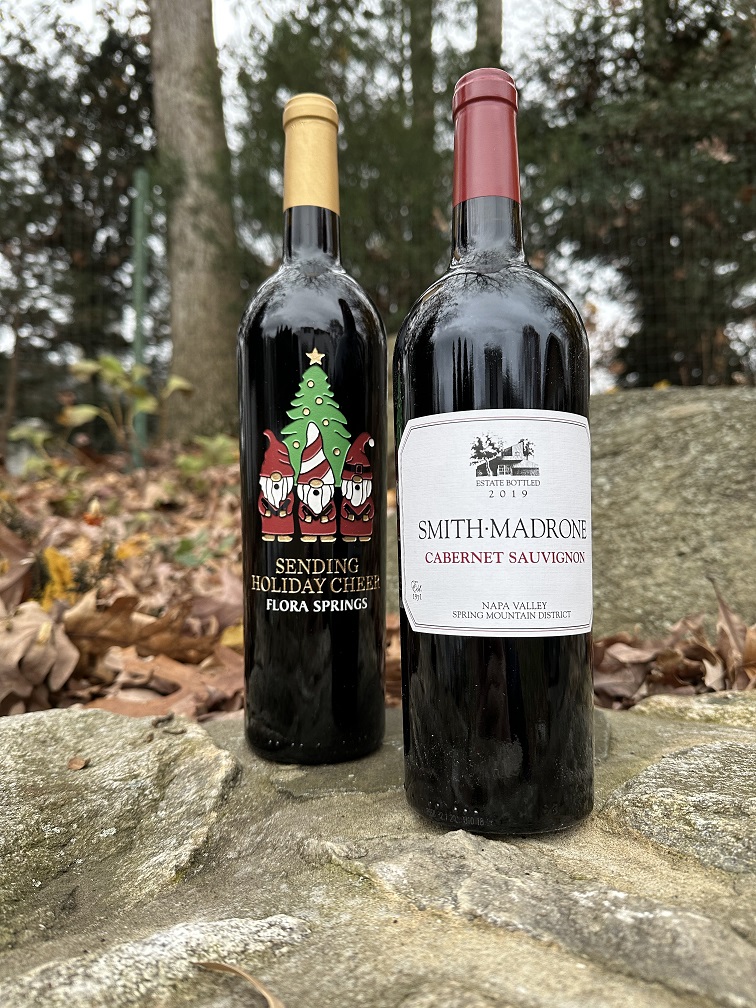 Ode to Cab.
Or we can just call it a Love Letter to Cabernet Sauvignon.
As an oenophile, I always try to maintain my “grape neutrality”. I can never name my favorite type of wine, never mind favorite wine. If you will hard press me against the wall with this question, I might say that it is Rioja, but the reality is a lot more complex than that.
If you search through articles in this blog, you will find a full range of wine styles and grapes. There are many blogs out there that cover specific region(s) or specific types of wine – but when I started writing close to 15 years ago, I knew that I would not be able to do that. This blog is about wine appreciation – any wine. “Wine should give you pleasure” – and so this is what my writing is primarily after – sharing the joy, the pleasure of wine, no matter what is the pedigree. Wines made from little-known grapes – Bobal, Trepat, Kekfrankos, Romorantin by tiny producers can give you as much pleasure as first growth Bordeaux, cult California, or best super-Tuscans. The liquid in the glass matters, and the only opinion that matters is yours and only yours – you can not enjoy the critic’s 100 points in your mouth.
This is my approach – try any wine with an open mind, and always be ready to be pleasantly surprised – or even blown away for that matter. And yet there is something about Cabernet Sauvignon that makes my heart race, especially coming from the producer I know or have heard of. Listen, I’m doing my best to tell you the truth, even though the “thought spoken is a lie”. But the brain gets all excited when I’m opening a bottle of the familiar Cabernet Sauvignon because I already know how good it can be. Very different from the excitement of the possible taste of DRC, Petrus, or Quintarelly (I’m yet to taste either) – because with those I wouldn’t know what to expect. But I do know what to expect from the well-made Cabernet Sauvignon that is ready to drink.
Even with the wines I happily call the favorites, I can’t tell you what I’m expecting to taste. I can’t describe my expectations when tasting La Rioja Alta, Ken Wright Pinot Noir, or Loacker Corte Pavone Brunello di Montalcino. I expect that I will like those wines as I know the producers and had their wines many times before – but I can’t tell you my exact expectations of the aroma or the taste of the wine. With Cabernet Sauvignon, I have very precise expectations of the aroma and the taste for me to like the wine. If I do not find the cassis (black currant) on both nose and palate when the bottle says “Cabernet Sauvignon” on it, there is no way I will like the wine, no matter how good the wine is for anyone else. Eucalyptus, mint, and a good structure are also expected, but with this some variations are possible. But when the expectations are met… the Cabernet Sauvignon is nothing but a pure, hedonistic pleasure.
So yes, deep down, Cabernet Sauvignon might be the most favorite wine of all – I just hope I will remember it next time I’m asked about my favorite wine.
Now, truth be told, I had a good reason for all this rambling about the beauty of Cabernet Sauvignon. A few weeks ago, I had an opportunity to conduct an accidental side-by-side tasting of the California Cabernet Sauvignon and the results were simply amazing.
With this tasting, we are taking a little trip. We will start in Northern California, where Barra of Mendocino is located. I wrote about their wines before, and now I have a few of the latest releases and I thought that Cabernet Sauvignon would be quite appropriate for the tasting.
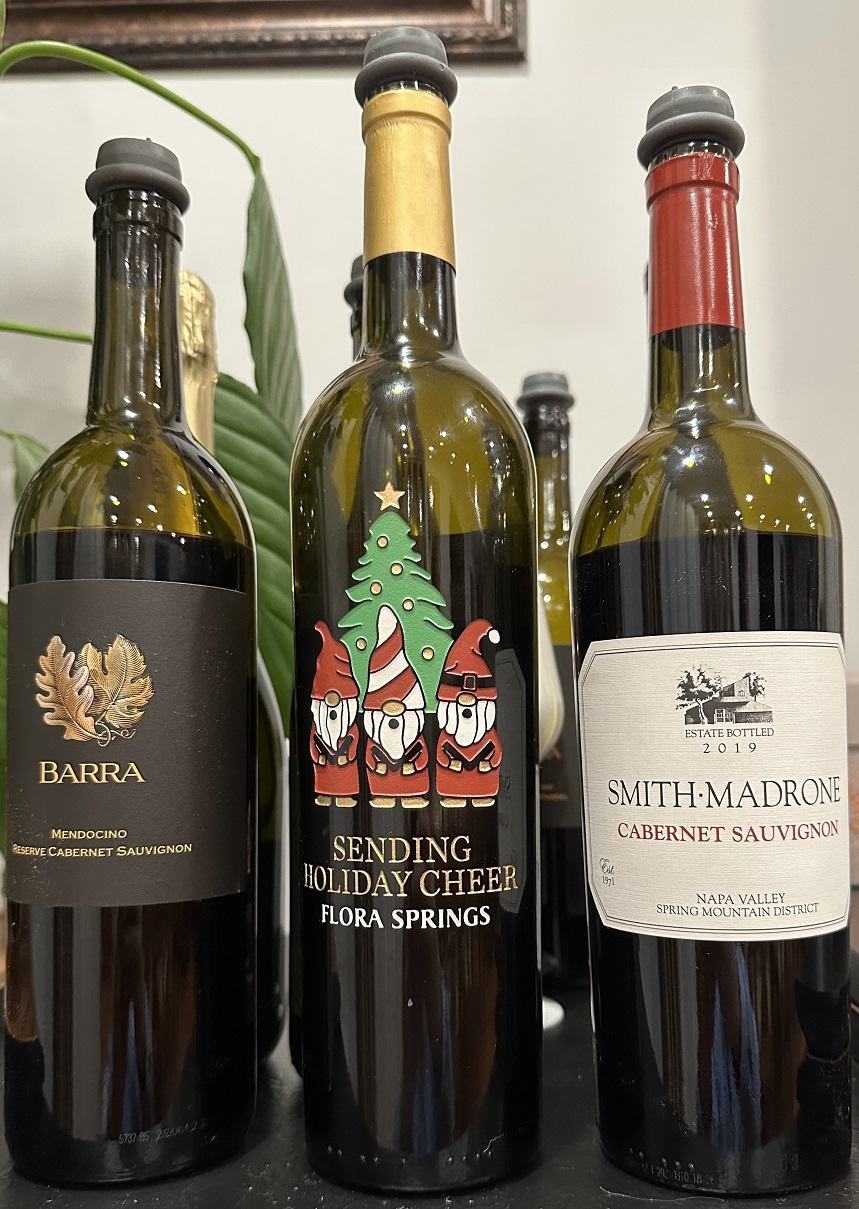
Barra Cabernet Sauvignon was the leanest of 3, but still had a perfectly recognizable Cabernet Sauvignon profile:
2021 Barra Reserve Cabernet Sauvignon Mendocino (14.5% ABV, $28, 18 months 30% new French oak, balance in neutral barrels)
Garnet
Eucalyptus, cherries, a hint of cassis
Eucalyptus, dark berries, cherries, cassis, well integrated tannins, perfect balance, medium-long finish.
8
Moving 80 miles southeast, we now arrive at the Flora Springs winery, located in the heart of the Napa Valley. Again, one of my favorite wineries in California, I wrote about their wines on multiple occasions.
The wine I had an opportunity to taste was a special holiday release. Flora Springs is big on the holiday celebration, so this bottle features etched gnomes, perfectly appropriate for the holidays. But it is what’s inside that counts, and this wine was nothing short of spectacular.
2019 Flora Springs Red Wine Blend Napa Valley (14.5% ABV, $95, predominantly Cabernet Sauvignon, 18 months in 70% French and 30% American oak barrels)
Dark garnet
Cassis, mint, black tea, cassis is playing in and out – you can smell this wine forever. Cassis is prevalent, wow.
Burst of cassis at first, then tannins come in, offering some bitter notes around the otherwise perfect Cabernet core. A very powerful, delicious wine that needs time to soften up. Either decant for a few hours, or lose it in the cellar for 10 years. The winery says you can enjoy it through 2036 – I’m sure you can easily add another 20 years on top of that.
8/8+
Going back about 8 miles northwest, we now arrive at the Smith-Madrone, the winery located in the Spring Mountain district of Napa Valley. Smith-Madrone is yet another one of my favorite wineries, and the one I feel a bit guilty about as a writer. I wrote about Smith-Madrone wines on many occasions in this blog – 5 years ago, Smith-Madrone were my wines of choice to celebrate Thanksgiving; in 2019, Smith-Madrone Cabernet Sauvignon was my wine of the year. And I’m still yearning to write a post fully designated to the winery…
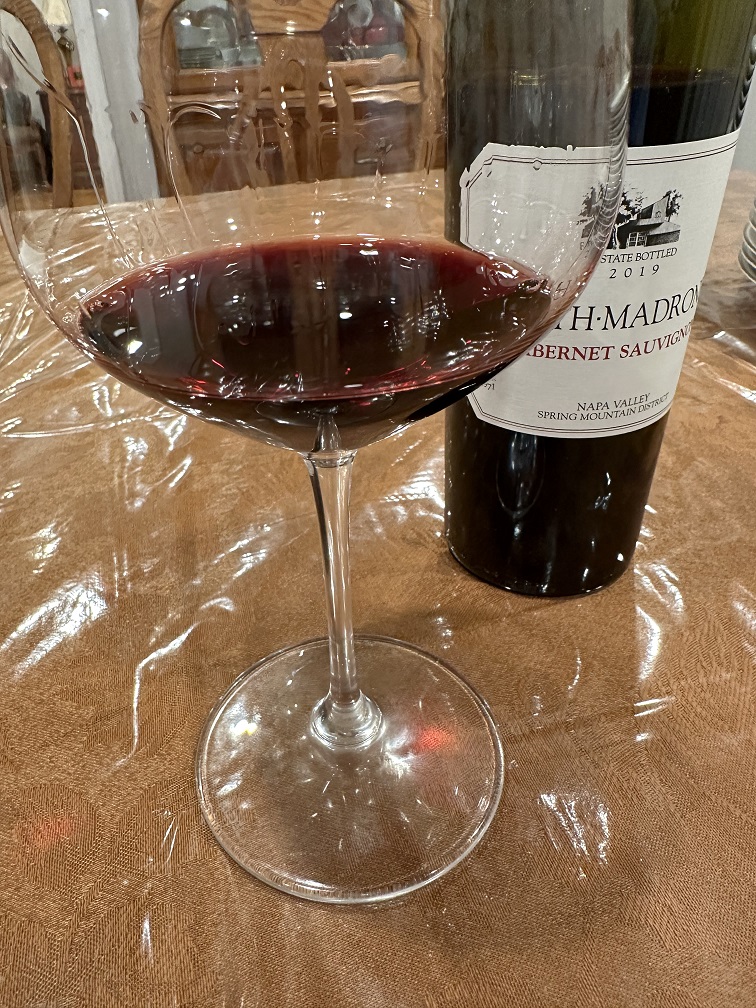
Nevertheless, Smith-Madrone Cabernet Sauvignon to me is one of the most textbook-proper, pure Cabernet Sauvignon wines there is. Not everyone would share my opinion – my sister-in-law with whom I was tasting these 3 Cabs, was preferring Flora Springs Cab, just for the sheer, unashamed beauty. But to me, a more subtle but very confident representation of the Cabernet Sauvignon by Smith-Madrone was just a perfection:
2019 Smith-Madrone Cabernet Sauvignon Spring Mountain District Napa Valley (14.3% ABV, $65, 83% Cabernet Sauvignon, 5% Merlot, 12% Cabernet Franc, 18 months in 55% new French oak)
Brilliant dark ruby
A perfection. A textbook Cabernet Sauvignon cassis, pure, perfectly precise cassis. You can think of a bell pepper – I’m not sure it is there, but it comes to mind.
The palate is amazing – cassis, eucalyptus, perfect minerality, a touch of the pencil shavings, salivating acidity. This is an impeccably balanced wine built for aging. In 10 years, it will be insanely good. In 20 – … well, I don’t want to even think about waiting that long…
9-, pure and superb.
If you like Cabernet Sauvignon, either one of these 3 wines will make you happy – each one perfectly representing their terroir and the vision of the winemaker, and yet unquestionably perfectly representing maybe the most noble grape of all.
So now you know what my secret passion, secret true wine love is. What’s yours?
Wednesday’s Meritage #149
Meritage Time!
Let’s start with something you already knew, and hopefully, participated in – if not, it is not too late: do you know that October is #MerlotMe month? Way before social media was a thing, one mediocre movie (Sideways, 2004) almost killed Merlot wine sales in the USA. I remember about 8-10 years ago, a friend of mine who has a wine store didn’t have a single bottle of wine with Merlot name on the label at his wine store – nobody would buy it. The situation is much better today, but still, while some of the very best wines in the world – Petrus, Le Pin, Masseto are made exclusively from Merlot, Merlot wines still need everyone’s help to restore its pre-sideways status. You still have time to grab a bottle of Merlot from your favorite producer (need advice? how about L’Ecole No 41 or Duckhorn) and join the celebrations.
Wine can often be considered an art form. For example, Sassicaia, one of the very best super-Tuscan wines Italy has to offer. If you ever had a sip of this wine, you would agree that it is transformational, and might have a similar effect as looking at the beautiful painting. Art forms are often subject to imitations – this is actually a bad choice of the term – counterfeiting is what I’m talking about. At $300+ per bottle, Sassicaia represents a lucrative target for the counterfeiting – and that what some folks in Italy thought too. Italian police were working for more than a year to catch counterfeiting Sassicaia ring in Northern Italy – you can read the full story in the Wine Spectator article.
We grow from the adversities – this is a known fact. The poorer the soil, the harder vines have to work, the better fruit they will bear. When humans have to concur the obstacles, they grow, invent, persevere, and overcome. Humankind at the moment is fighting with the silent, invisible killer, COVID – but looking for the proverbial “silver lining”, we (humans) continuing to move forward, and whatever we invent to deal with the virus, is helping us advance far beyond that singular task. Case in point – dealing with vine diseases, such as powdery mildew. It turns out that the same UV light which is effective against the virus is effective in the fight against powdery mildew. Take the UV light source, put it on the robot tractor, and let it roam the vineyards during the night – problem solved. Or at least the solution looks very promising. For more details, read this article.
The last one for today is not even the news. It is simply a powerful story. An account of the fighting and winning against one of the most powerful forces on Earth – wildfire. This is a terrifying read, but I can’t recommend it highly enough – the story of the Smith family, defending their Smith-Madrone winery and vineyards against the recent Glass Fire, is a must-read in my opinion. You can find it here.
That’s all I have for you today. The glass is empty, but the refill is on the way. Cheers!
Top Wines of 2019
And now, it is the time for the Talk-a-Vino Top Wines of 2019. In a bit of broken logic, most of the explanations to the Top Wines list can be found in the 2019 Second Dozen post – here we are continuing where we stopped before – from the wine #12 all the way to the wine #1 – or, maybe, it is wines?


12. 2015 Field Recordings Foeder Old Portero Vineyard Arroyo Grande Valley ($32) – we started the second dozen with the Field Recordings Cabernet Sauvignon (in the can). By the pure accident (feel free not to believe me, but I just realized what happened as I started to write this post), we open the Top list with another wine from the Field Recordings. This wine is a blend of 50% Syrah, 35% Zinfandel, and 15% Mourvèvedre. In the best traditions of the Field Recordings wines, the aromatics of this wine are simply stunning – luscious, dense and layered liquid can make one salivate just at a thought of it.
11. Channing Daughters “Orange” style wines Long Island, New York ($25 – $42) – here comes trouble – it is not one wine, it is actually 5 of them. We visited Channing Daughters Winery on the South Fork of Long Island in October, and our host, Steve, was kind enough to run our group through the most of the Channing Daughters’ portfolio. The winery makes 5 “orange” wines – Ramato, Ribolla Gialla, Research Bianco, Meditazione and The Envelope – each wine is stunning in its own right. These wines might not be crowd-pleasers, but if you are seriously into the wines, or identify as a wine geek, these are the wines to seek.


10. 2017 Knudsen Vineyards Pinot Noir Reserve Dundee Hills Willamette Valley ($70) – Knudsen Vineyards is one of my most favorite producers in Oregon. I had the pleasure of tasting Knudsen wines from the last three vintages, and outside of the fact that these are textbook Oregon Pinot Noir, dark, powerful, and concentrated, I love to see the progression. As the vines are aging, the wine gains a bit more complexity, year after year. These are the wines to watch, for sure.
9. 2005 Giulio Ferrari Riserva del Fondatory Metodo Classico Trento ($140) – One of the very best sparkling wine producers in the world, Champagne included. Giulio Ferrari is just a perfection of the vintage sparkling wines – beautifully complex and perfectly fresh and bright at the same time. No, this is not the wine for everyday consumption (unless you have an expense account and then I beg your pardon), but next time you want to celebrate something in your life, maybe skip the obvious (move over, Dom Perignon) and try to find this bottle.
8. 1995 Navarro Correas Coleccion Privada Cabernet Sauvignon Mendoza ($15) – a total surprise of the tasting – an unknown (to me, at least) 24 years old red wine, showing no age and perfectly presenting itself as a varietally correct Cabernet Sauvignon. It definitely makes me want to try a current vintage.


7. 2018 Tenuta Ammiraglia Alìe Rosé Toscana IGT ($20) – delicious wine, presented in a beautiful setting (check the link). Rosé is made everywhere, but this wine definitely stands apart is perfectly memorable. Special bottle and special glass make the wine ever more enjoyable, but then the wine itself has a perfect combination of beauty and presence, and easily get stuck in your head.
6. 2006 Jermann Vintage Tunina Venezia Giulia IGT ($60) – Not all white wines can age with grace. This wine was a perfect example of white wine that can age. It only gained complexity, this bouquet of apricot, apricot pit, vanilla, and spices, all wrapped in a tight and almost a full-bodied package. I can close my eyes and imagine the taste of this wine in my mouth – not a simple fit.


5. 2015 Bodegas LAN Xtrème Ecológico Crianza Rioja DOC ($15) – I love Rioja. At the same time, I’m very particular about the Rioja and what I like and what I don’t like – the word “Rioja” on the label doesn’t mean anything to me unless I know the producer – or I’m willing to give a new wine a try. While I know of Bodegas LAN, I never heard of Xtrème, and I never tasted before Rioja made with organic grapes. This wine was almost a revelation, it had everything I like about Rioja, with the lip-smacking acidity, fresh cherries, and cigar box, but it also had layers and layers of delight. Great wine, and at a price you will be really challenged to find something which would taste better.
4. 2018 Regueirón Éntoma Godello Valdeorras DO ($50+) – lately, I find myself using the expression “beyond categories” more often. I can’t find a better way to present this wine, as it is truly in a league of its own. This is one of the single-vineyard wines from the new project of Victor Urrutia of CVNE fame. This tiny production Godello presents itself as a grand cru Chablis, with the gunflint, minerality and all of the classic Chardonnay characteristics – but it also has an energy of the tightly wound spring, ready to jump out of your hand. It will not be easy to find this wine, but boy, if you will, you are into lots of pleasure.


3. “This line was intentionally left void” – keep reading, you will see why.
2. “This line was intentionally left void” – see below:
This year I have a problem [again]. I can’t decide on wine #1. Below are my three top wines – interestingly enough, even those three had a “sibling” contender which could literally take their spot. At the rate the wine is evolving around the world, it might be even more difficult to decide on the top wine in the coming years. But you know what? I will gladly accept the challenge. For now – here are the three top wines of 2019:
1. 2013 Smith-Madrone Cook’s Flat Reserve Spring Mountain ($225) – this might be how you spell “phenomenal”. This wine was a pure pleasure. Pure, hedonistic, unadulterated pleasure. This is the wine at the level of magic – you take a sip, you whisper “wow”, you quietly reflect on what is happening, immersing into the moment. Then you take another sip and repeat. Yes, magic.
1. 2016 Tara Red Wine 2 Syrah Atacama Chile ($40) – this wine should be experienced to believe it. This is the wine from the place where the vine is not supposed to grow. Atacama desert. Nevermind the desert. But the salinity of the soil is such that nothing should be growing there. But these vines do. And these 6 years old vines (vineyard planted in 2010) produce the wines of complexity which requires no oak (the wine was not aged in oak) to stop you in your tracks after the first sip. A textbook (ohh, sorry, I like this word a little too much, I know… but still) Syrah – pepper, dark fruit medley, lavender. Seriously, this is one incredible wine.
1. 2017 Peju Province Winery The Experiment Napa Valley ($100) – talk about mindblowing. There is something in the Napa Valley Cabernet Sauvignon. I already talked about magic in this post, and maybe it simply appears so for my palate – but the perfection of this wine is nothing short of “wow”. Again “textbook”? Yes, you can say so. Black currant, licorice, a touch of mint. The fruit is succulent, and it appears in full harmony with tannins and acidity. Balance, balance, balance. This wine is truly unique as it is 2 years old, aged in the new oak – and nevertheless, is perfectly drinkable from the get-go. Did I say “wow” already?
Here you are – the presentation of the Talk-a-Vino Top Wines of 2019 is now complete.
What were your most memorable wines of 2019? Embrace the power of happy thoughts… Cheers!
Thanksgiving with Smith-Madrone, And a Few More Delights
Holidays are all about pleasure. The pleasure of the company. The pleasure of food. The pleasure of wine. As the very least, they should be.
Let me tell you about the pleasures of my recent Thanksgiving – in one picture:

If this would be an Instagram, I could end my post here, but in this blog, I can add a few words, right?
Let’s talk about the wine first. Everyone has their ideas as what is the best Thanksgiving wine. Some talk about how difficult it is to pair any wine with the Thanksgiving table, due to the large variety of dishes and often prevalent sweet flavors (this is not universal, of course). I have a very simplistic view of the wine and food pairing – give me tasty food and good wine, and if they don’t work together – no problems, I’m happy to consume them one by one. Difficult or not, pairing is not the focal point of my Thanksgiving wine selection. I really have only one strong preference for the Thanksgiving wines – they should be all American. Thanksgiving we celebrate here in the USA is all about this country, and so the wine should match that. And thinking about American wines, you understand how easy it is nowadays to have all-American wine experience.
How many of you heard of Napa Valley? Okay, I see that look, this was a stupid question, I know. But let me go on. How many of you heard of Spring Mountain District? Okay, I see your facial expression changing to say “hmmm, I’m not so sure”. And the last question – how many of you heard of Smith-Madrone? Okay, don’t feel too bad, at the end of the day it is one of the about 400 wineries located in the Napa Valley, so of course, one can’t know all of them. But – this is why I’m talking about it – this is the winery you might want to get better acquainted with.
Smith-Madrone is one of the oldest wineries in Napa Valley, started by brothers Stuart and Charles Smith in 1971. Smith-Madrone property is about 200 acres, with some parts of the vineyards planted more than 100 years ago, all located near the top of the Spring Mountain in Napa Valley. The name Smith-Madrone combines the family name with the name of the evergreen Madrone trees, prominently growing at the property. Well, instead of me trying to regurgitate the past and present of the Smith-Madrone winery, let me direct you to this article – it is a good story, well worth a few minutes of your time.

When was the last time you had Napa Valley Riesling? If you answered “never”, it could’ve been my answer too – until I discovered this Smith-Madrone Riesling. Riesling is simply not a common grape for the Napa Valley, but Smith-Madrone produces the absolutely beautiful rendition of the famous grape. It might be due to the mountain fruit – all the Smith-Madrone vineyards located at the altitude of 1300 to 2000 feet, with slopes reaching 34%. Sustainable dry farming and winemaking practices also play a role, but one way or the other, the 2015 Smith-Madrone Riesling Spring Mountain District Napa Valley (12.9% ABV, $32) was just delicious. varietally correct both on the nose (honeysuckle, a touch of tropical fruit, lemon, apples) and the palate, which was beautifully balanced with golden delicious apples, a touch of honey and acidity. To make me ultra-happy, the Riesling is sported a distant hint of petrol, which is my pet peeve.
2015 Smith-Madrone Chardonnay Spring Mountain District Napa Valley (14.4% ABV, $40, 10 months in French oak) was equally beautiful. Again, the wines of that styling I call in my book “classic”. A touch of vanilla and apples on the nose, a distant hint of butter, continuing with the same vanilla and white apples on the palate. Clean acidity, noticeable minerally undertones, restrained, balanced – a very classic example of “how to do chardonnay right”.
With the risk of sounding very boring and repetitive, I have one more classic wine for you – 2014 Smith-Madrone Cabernet Sauvignon Spring Mountain District Napa Valley (13.9% ABV, $52, 85% Cabernet Sauvignon, 8% Cabernet Franc, 7% Merlot, 70% new French oak, 30% one-year-old French oak for 18 months). How classic was this wine? Bordeaux-classic. The mountain fruit was shining, showing great restraint. This was not an exuberant typical Napa Cab – lean, tight, well-structured, with cassis both on the nose and the palate, the wine was very enjoyable now, and it will be equally or more enjoyable in 30 years.
So that was my main wine story on the Thanksgiving day. The rest was about the food – starting the smoker as 9 am in the 21°F weather (about -6°C), and then watching the turkey slowly getting to the right temperature. The silver lining of that cold weather was the fact that instead of 4-4.5 hours in the smoker, it took about 6 hours to get that big bird to the right doneness – and slower cooking results in more tender and more flavorful meat. A glass of Smith-Madrone Riesling was adding to the cooking enjoyment.


After celebrating Thanksgiving at our house, we went to see our close friends in Boston. What I love about that house is that there are always a few of the older wine bottles laying somewhere on the shelf. You never know what you will find in the older bottle, but that is what makes it fun, isn’t it?


The first bottle I opened was 2007 Tishbi Cabernet-Petite Sirah Shomron Israel (12% ABV, 70% Cabernet Sauvignon, 30% Petite Sirah). Judging by the pronounced brickish, almost orange, color, my first thought was “this probably fully turned”. And it was not! Complex nose of dried fruit and herbs was supported by plums and prunes forward, but balanced palate. Good amount of acidity, tertiary aromas – this was a very enjoyable glass of wine. Only one glass, I have to say – by the time I wanted the second, the wine was gone.
Without much thinking, I pulled another wine, realizing later that I opened another wine from the same vintage – 2007 Marani Kondoli Vineyards Saperavi-Merlot Kakheti Georgia (13.5% ABV). This wine couldn’t be more different from the previous 2007 – dark garnet color, not a sign of any aging, tight, fresh, blackberries and blueberries on the nose and the palate, firm, fresh and young. I’m really curious about how much longer this wine could’ve last.
One last wine to mention – 2010 Massandra White Muscat Crimea Ukraine (16% ABV). Massandra winery roots go back to the old Tsar’s Russia in late 1800, but their cellars hold wines from the 18th century (if you are not familiar with Massandra wines, here is an article by Jancis Robinson). Massandra is best known for sweet fortified Muscat wines, like the one we tasted. To me, this 2010 was most reminiscent of a Sherry, and not necessarily an ultra-balanced one. But then the same Jancis Robinson’s article says that Massandra wines require 45-60 for the full maturity, so I guess the wine tasted within the expectations…
Spring Mountain District in Napa Valley, Israel, Georgia, and Ukraine – not a bad wine play for the holiday, what do you say?
Here you go, my friends. I will leave you with some beautiful wines to look for. And how was your Thanksgiving, if you still remember it? Cheers!
Last Bottle Sign Up ($10 credit)




 Talk-A-Vino